Thursday, 26 November 2020

Peter Barber Architects adds terraced houses to estate in south London

Sandpit Place housing by Peter Barber Architects

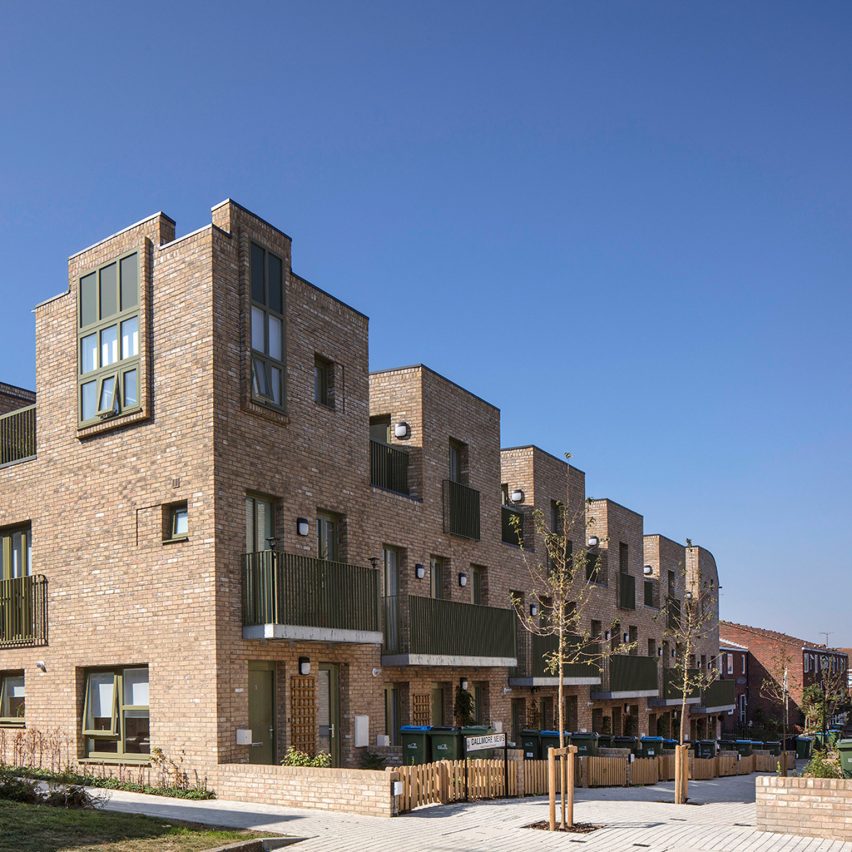
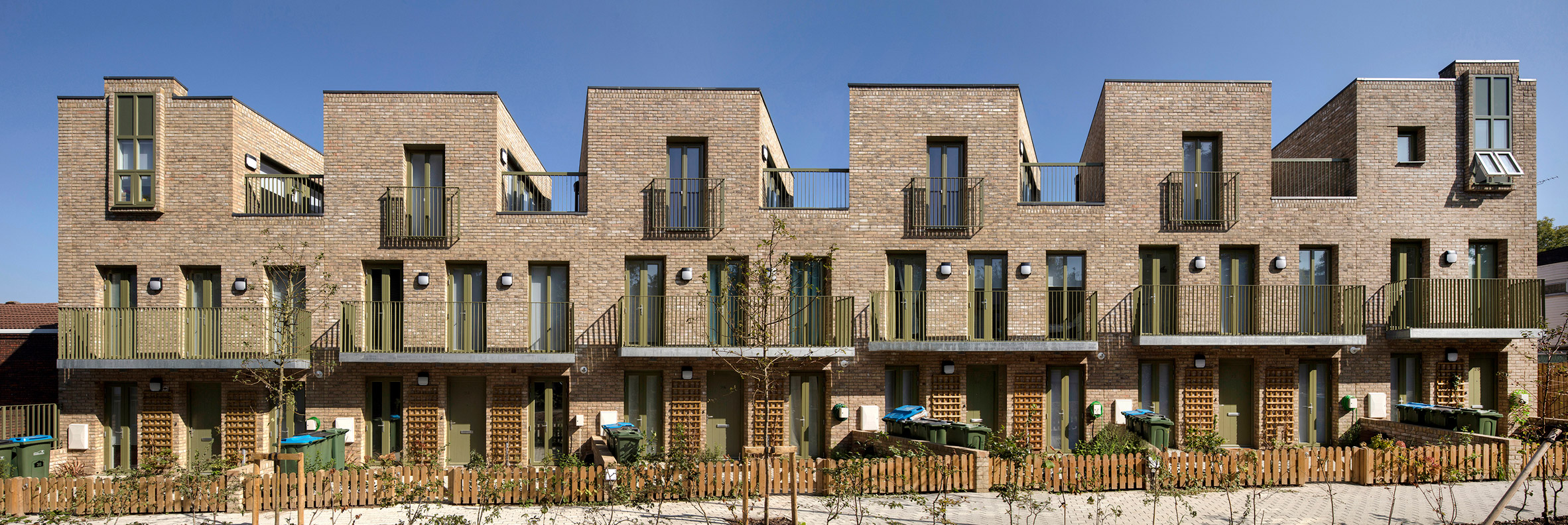
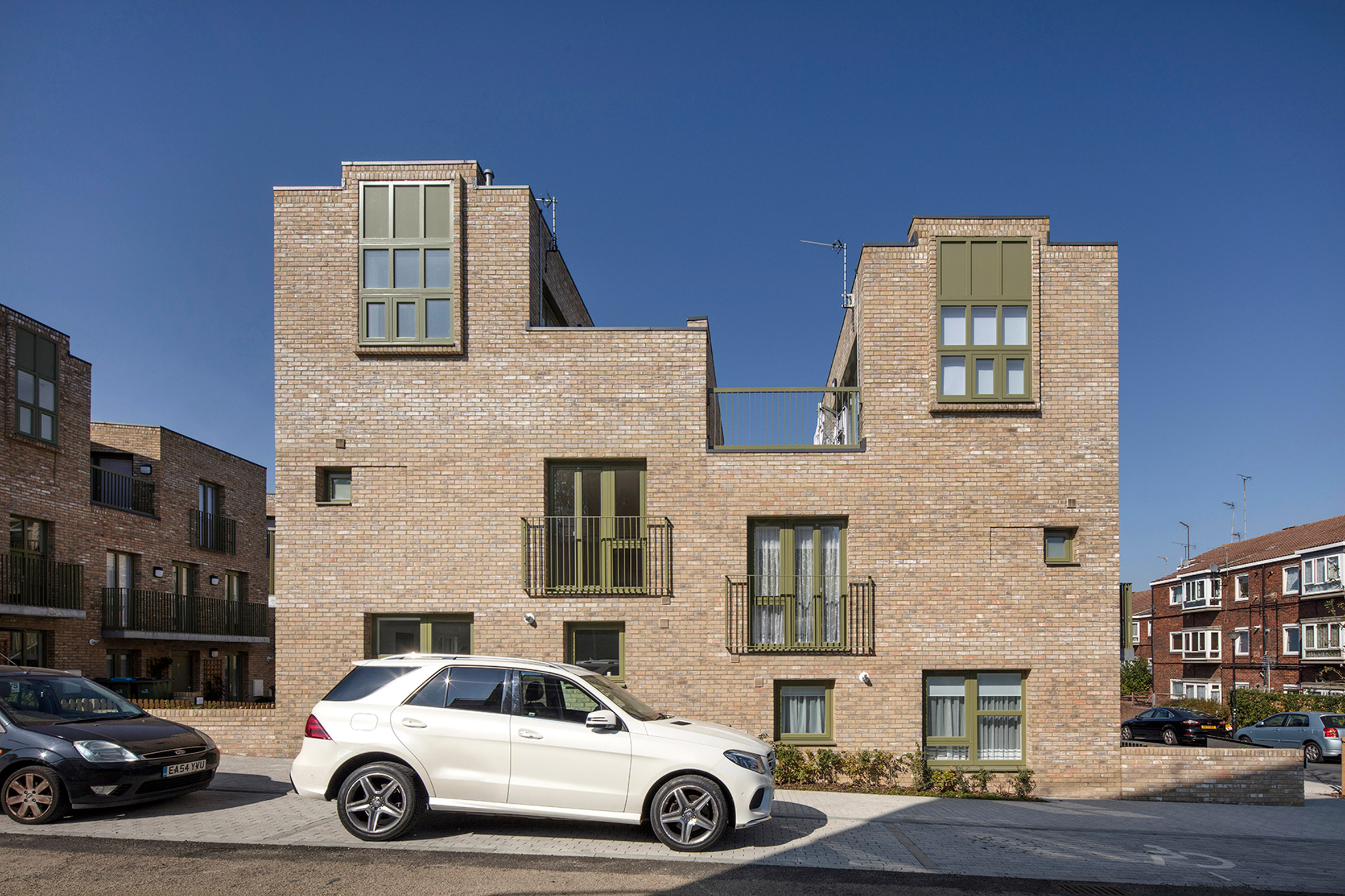
Peter Barber Architects has created six terraces of brick housing in Chalton, south London, for Greenwich-council owned developer Meridian Home Start.

Named Sandpit Place, the development contains 32 homes in three rows of back-to-back terraced houses. Like the studio's nearby Rochester Way scheme the homes were built for Meridian Home Start and will be available to those working locally at discounted rents.
Sandpit Place by Peter Barber Architects
Peter Barber Architects arranged the houses in six terraces

"The project is street-based terraced housing," explained Peter Barber Architects founder Peter Barber. "To some extent, the houses themselves borrow their layout from Victorian mews houses," he told Dezeen.

"Being pretty square in plan and stepping back at the rear to allow light and ventilation and private roof terraces instead of back gardens."
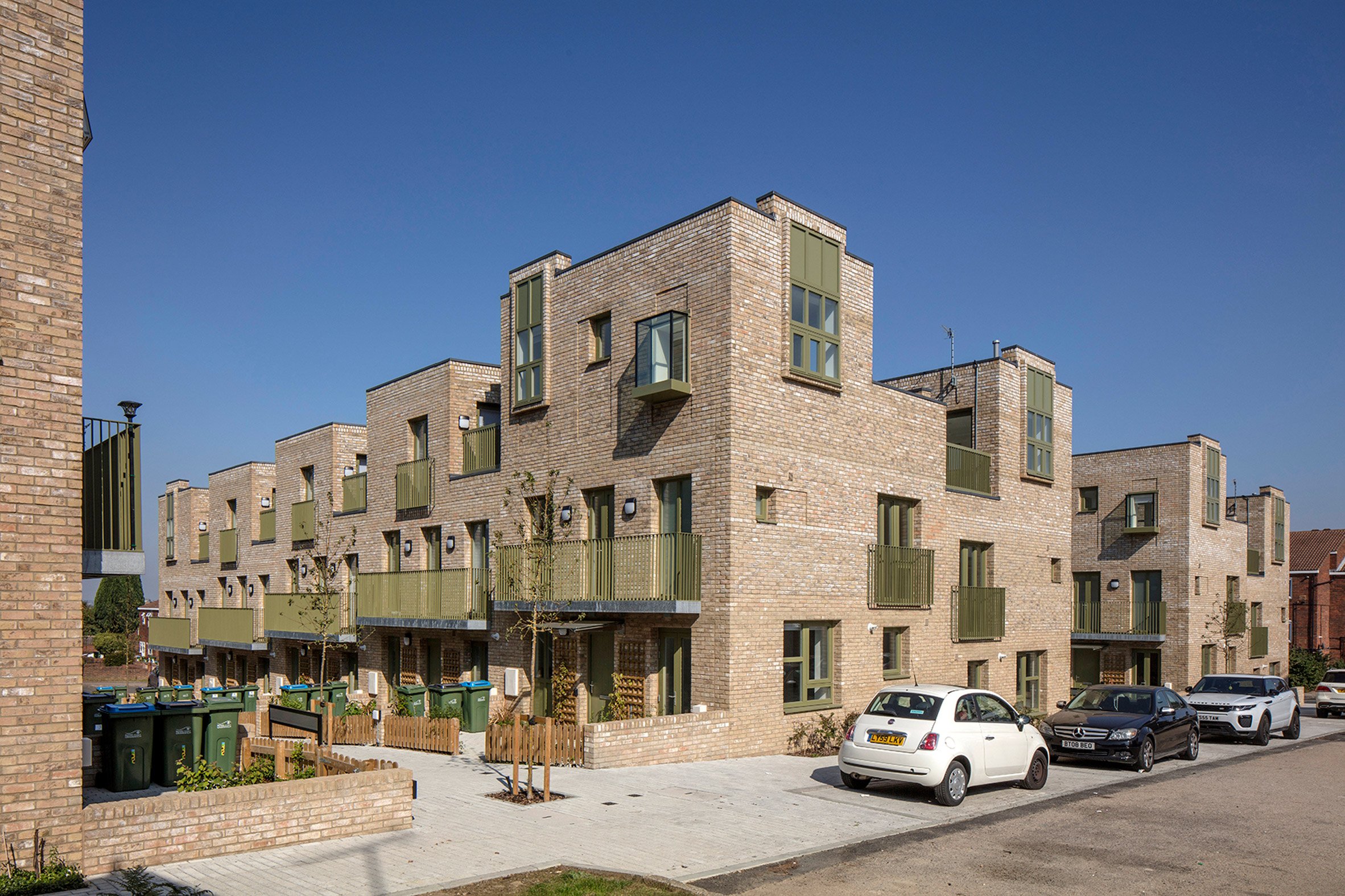
Brick housing in London
Pedestrian mews divide the housing terraces

The development was built on a previously walled-in site that contained a disability resource centre.

Peter Barber Architects arranged the 30 two-bed houses and two one-bed homes on a series of pedestrian streets that were designed to open up the site and connect the homes to the existing estate.
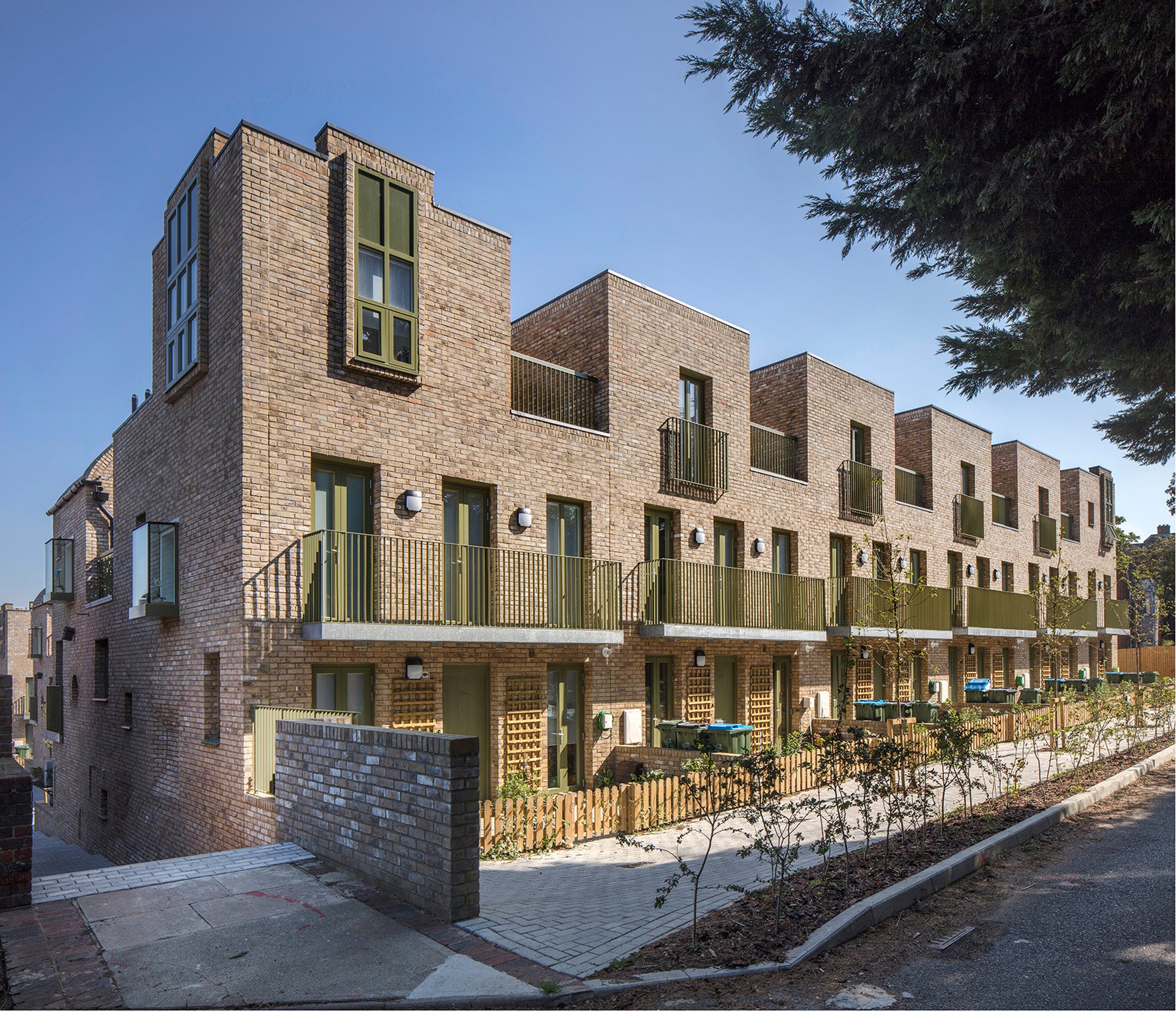
Front gardens in Peter Barber Architects housing
Each home has a front garden

"Our project is arranged in a ladder of streets which provide a handy cut-through for people... to the bus stop, corner shop and out to the main road," said Barber.

"The new streets we have made link to existing streets and public routes," he continued. "That way we hope it might help it to feel like part of the neighbourhood and that people living close by feel connected with it, and newcomers might settle in more readily."
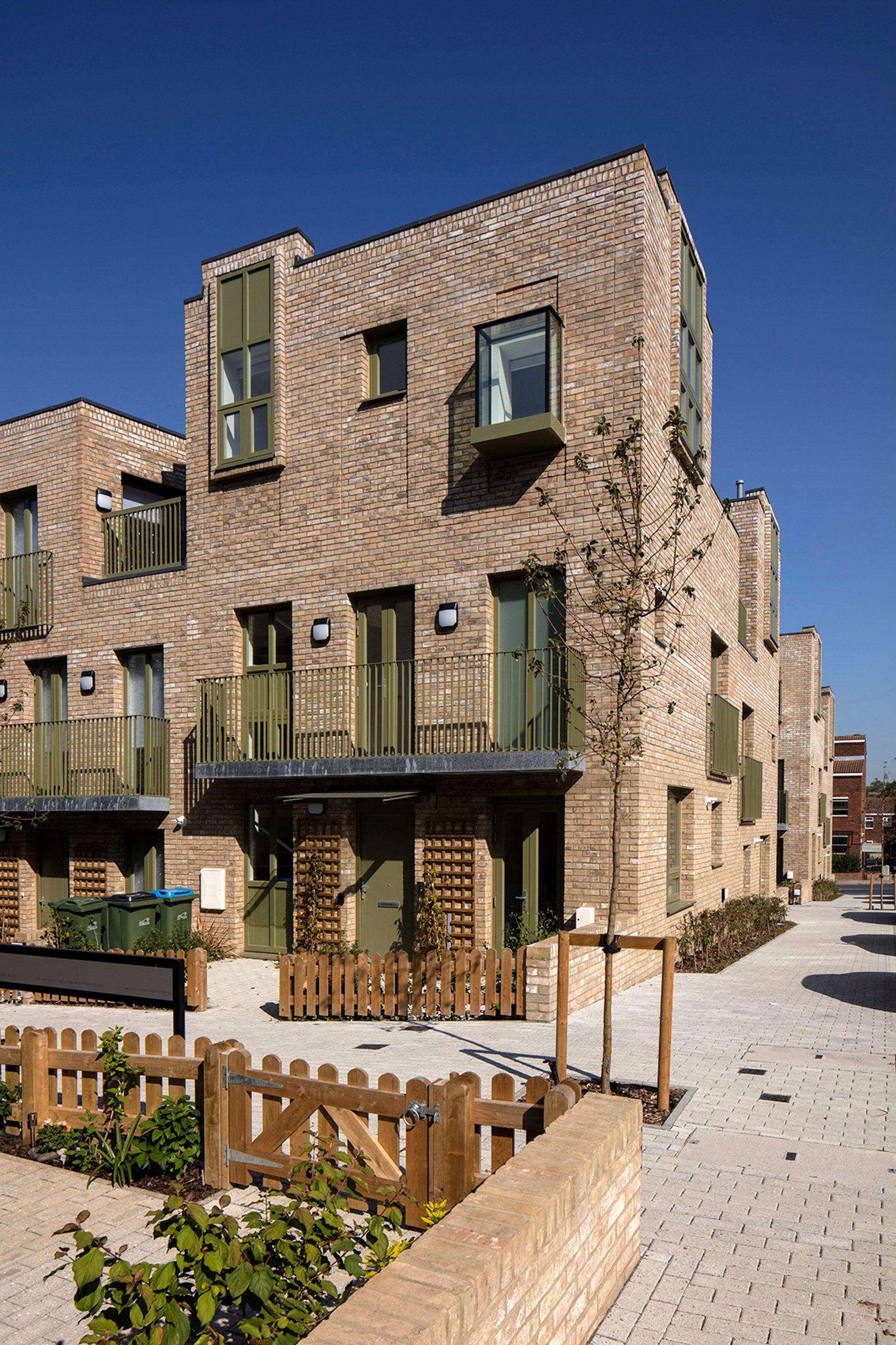
Housing in south London
Bedrooms on upper floors have roof terraces

The majority of the homes have an open plan kitchen and dining room on the ground floor as well as a toilet, with a bedroom and bathroom on the first and an additional bedroom on the second floor.

All of the bedrooms open out onto a terrace, with many having access to two. All of the homes also have small privates spaces alongside the pedestrian streets.
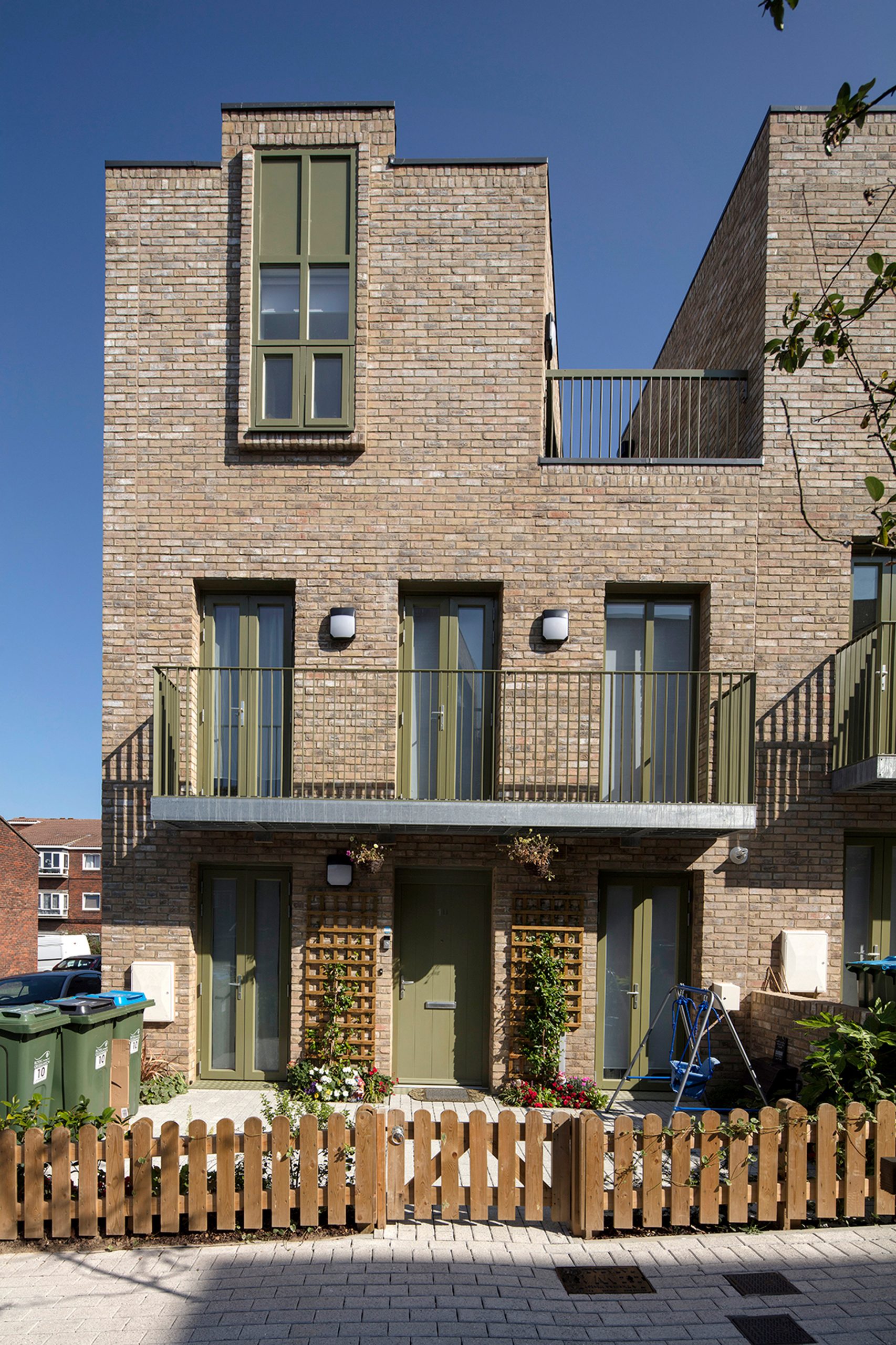
Three-storey terraced house
Each home is three storeys

"People in each house have loads of outside space – a front garden, balconies and two rear courtyard/roof terraces. Each house has some outside space that feels quite public and some that feels very secluded," said Barber.

"We like terraced houses because of the way that they make an edge to the street. At Sandpit Place we have given people big front gardens," he continued. "People are starting to sit out – there are paddling pools, baby bouncers, pots with flowers, bikes and loads of other stuff. They are starting to look lived in."
Sandpit Place
New pedestrian streets provide access across the site

The Sandpit Place development demonstrates Peter Barber Architects' belief that street-based housing is the key to creating more homes in London.

"We think that the street is the basic building block of the city and that urban housing should be laid out in streets," explained Barber.

"Over the years we have experimented with numerous house/housing types – mansion blocks, cottage flats, terraced housing, courtyard housing and back to backs. This mews variant is the most recent and we think is quite a good model for medium density lower rise street-based housing."

In London, Peter Barber Architects has previously completed five terraces of affordable homes in Greenwich, a housing scheme fronted with brick arches in east Londona reinterpretation of Victorian back-to-back housing in Stratford and a terrace of mews houses that feature oriel windows in Finsbury Park.

Photography is by Morley Von Sternberg.

The post Peter Barber Architects adds terraced houses to estate in south London appeared first on Dezeen.


from Dezeen https://ift.tt/3l8L407

OPPO X 2021 is a shapeshifting phone that grows to the size of a tablet

OPPO X 2021 expanding smartphone

Chinese electronics company OPPO has revealed a concept smartphone, called the X 2021, which expands by rolling out its screen on a miniature conveyor belt.

Companies from Samsung to Motorola, Microsoft and Huawei have tried to achieve a similar size-changing effect through the much-hyped novelty of folding screens.

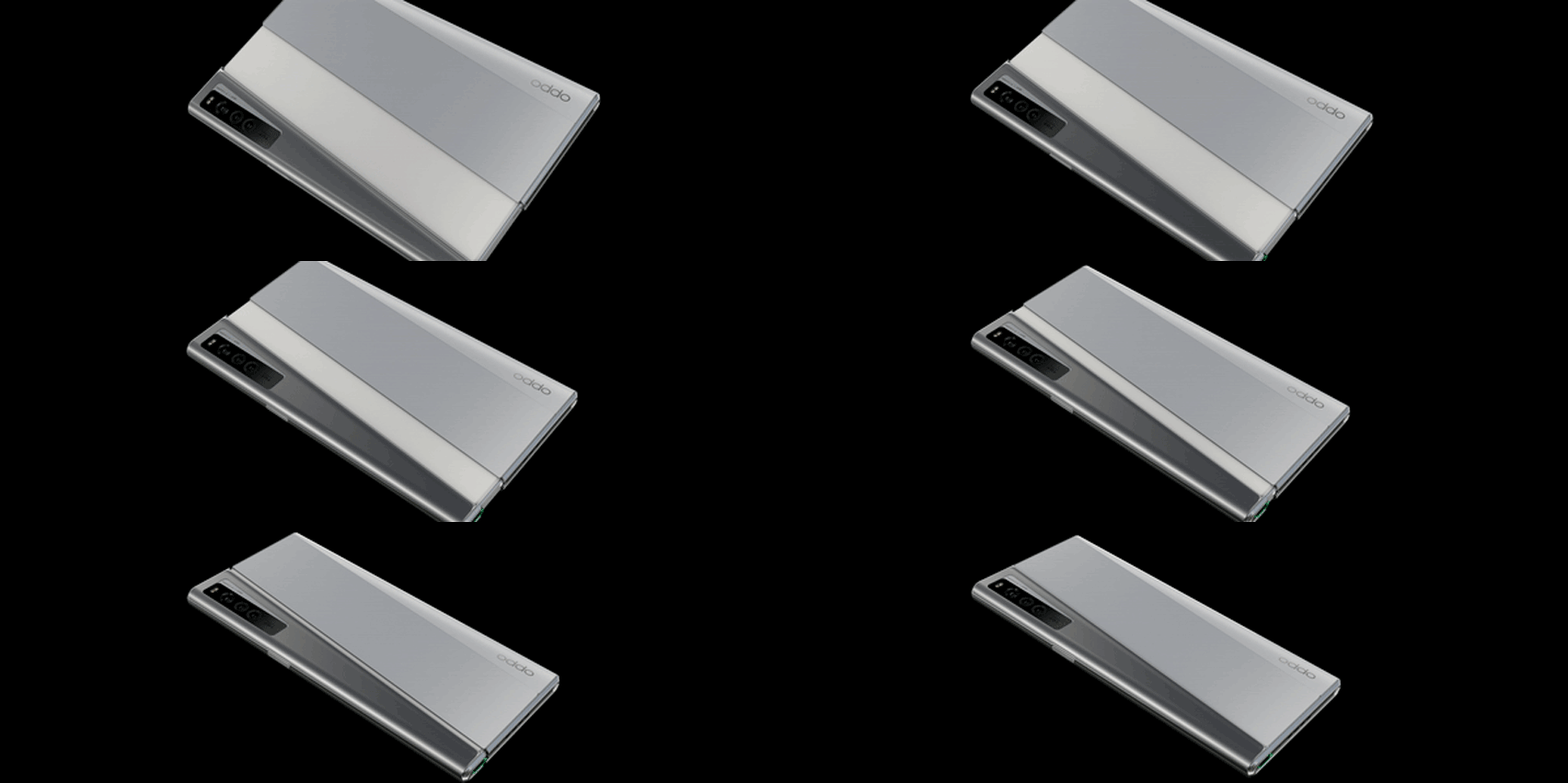
But the OLED screen in the X 2021 simply unfurls like a scroll, growing from 17 centimetres to 18.7 centimetres at the slide of a button.

OPPO's expanding smartphone
The phone expands into a tablet by sliding a button on the side

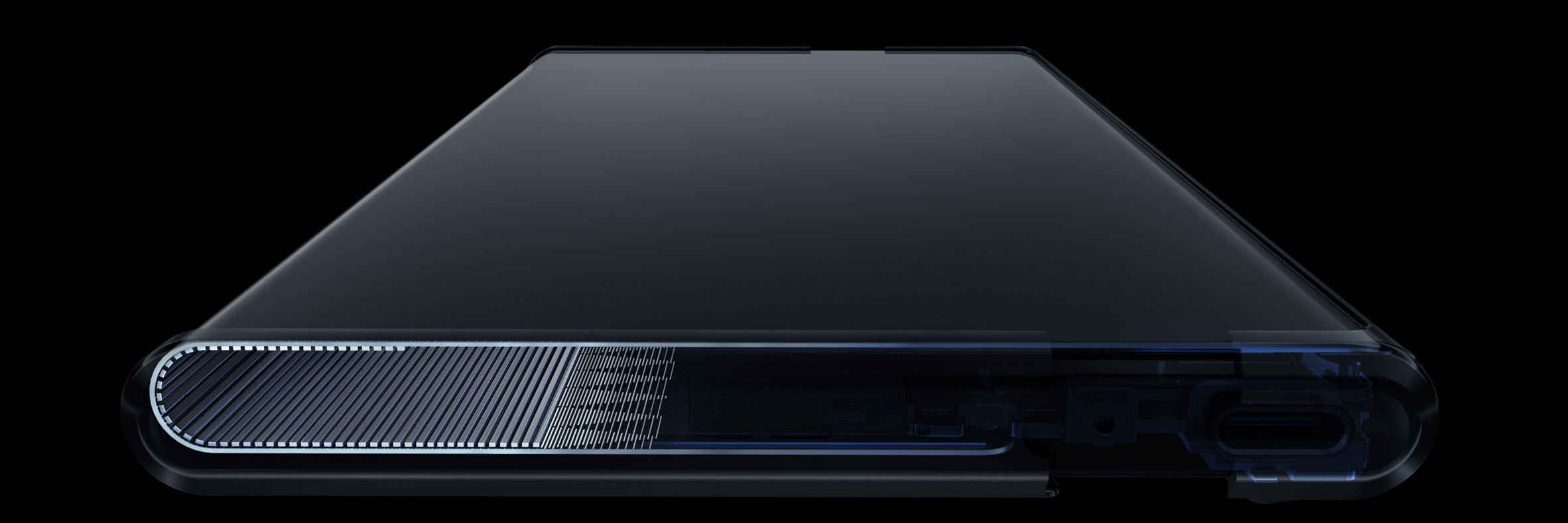
This is possible through a trio of technological innovations, centred around the roll-out mechanism.

The flexible OLED screen is laminated onto a steel "warp track", which resembles a conveyor belt or the tracks of a tank, allowing it to be rolled out when needed while strengthening it and maintaining its shape.

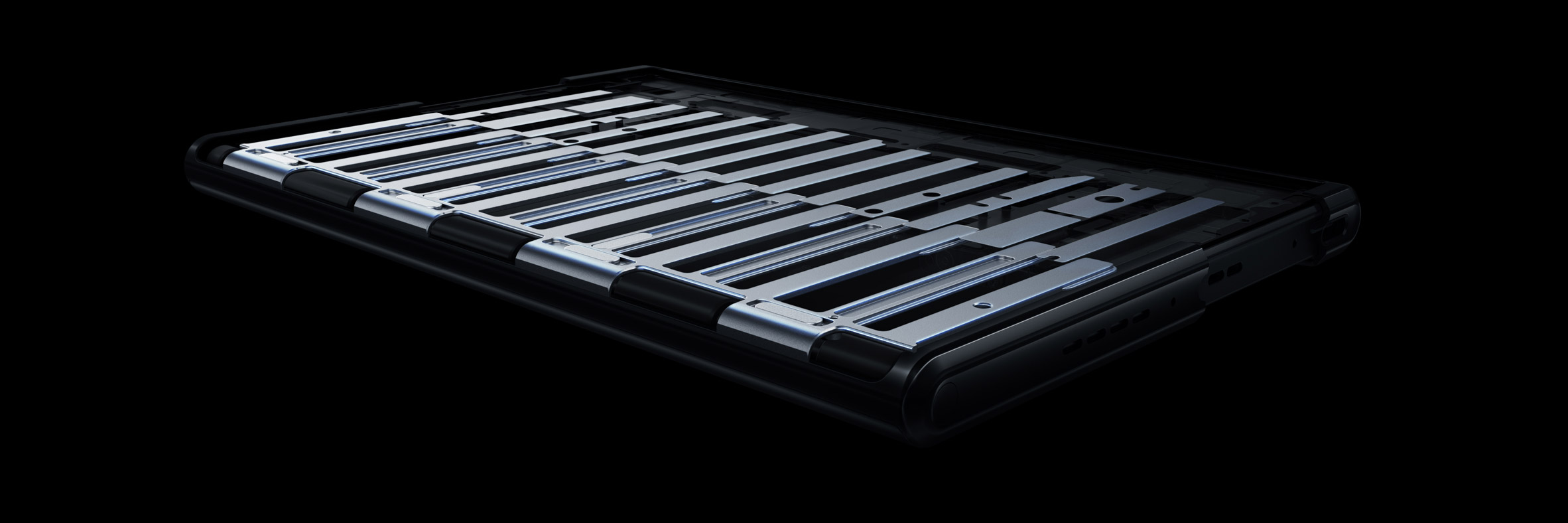
A "two-in-one plate" makes up the body of the phone, which essentially consists of comb-like units that are interlaced to form a single surface behind the screen.

When moving into tablet mode, these are cleaved apart to accommodate the display's expansion, while always leaving a certain number of "teeth" supporting the centre of the display to prevent it from collapsing inward.

Warp track of the OPPO X 2021 expanding smartphone
A steel warp track reinforces the flexible OLED screen

This process is powered through two "roll motor powertrains" that allow the display to retract and extend smoothly.

"Two drive motors built into the handset generate a constant force output that is used to retract and extend the display," an OPPO representative told Dezeen.

"This design ensures that, as the display moves, stress is equally distributed. Even a sudden pull or push will not damage the display."

2-in-1 plate of the OPPO X 2021 expanding smartphone
The two-in-one plate can split apart to accommodate and support the growing display

Thanks to a series of high precision sensors, the images on the screen are able to automatically adapt to the width of the display as it expands.

The display itself is "infinitely variable", meaning it can be set to any number of desired sizes for gaming or reading ebooks, as long as they fall within the device's specs.

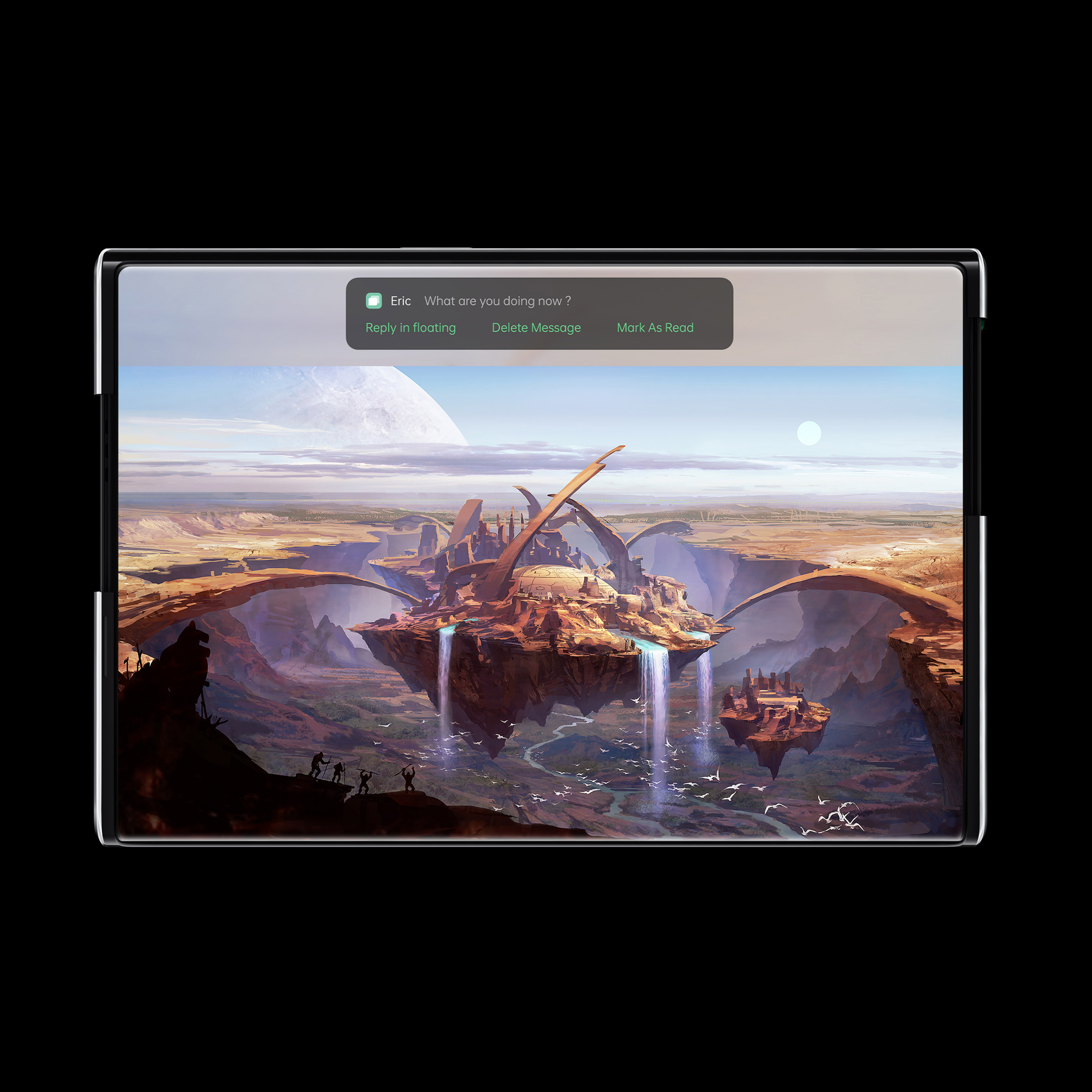
Gaming on OPPO's expanding smartphone
The tablet-sized screen is designed for gaming and reading ebooks

"Compared with the fixed screen size of a folding screen, the on-the-go adjustment of the rollable screen promises endless possibilities and can even enhance office productivity and entertainment experiences," said OPPO.

"The phone automatically adjusts to full-screen viewing according to the size of the video, providing a more comfortable reading experience that's close to the size of a book and it can display a full, text message pop-up window while playing games without affecting the game screen."

OPPO's expanding smartphone
The device shrinks back down to the size of a phone in one smooth motion

Although the x 2021 was presented at OPPO's Inno Day, the company has stated that there are no immediate plans to make it commercially available.

Previously, fellow Chinese electronics company TCL has proposed a similar concept, although it has not yet created a functioning product.

LG has already integrated rolling screen technology into the OLED R TV, which can be retracted into its base when not in use.

All images are courtesy of OPPO.

The post OPPO X 2021 is a shapeshifting phone that grows to the size of a tablet appeared first on Dezeen.


from Dezeen https://ift.tt/3mcT1Ts

OMA and Hassell completes top-heavy WA Museum Boola Bardip in Perth

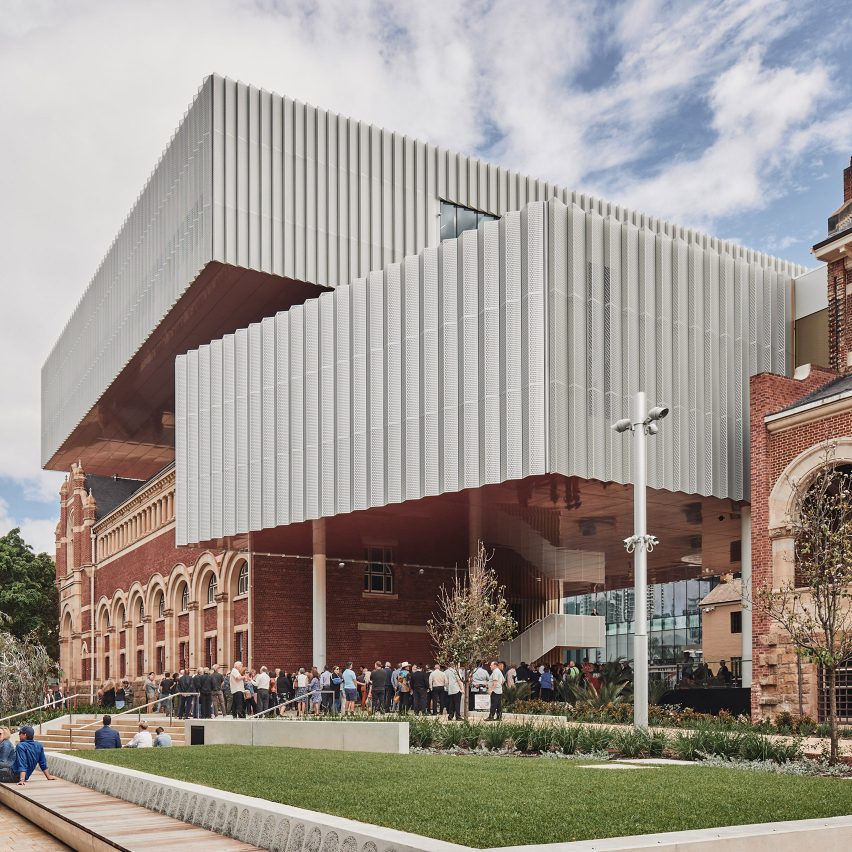
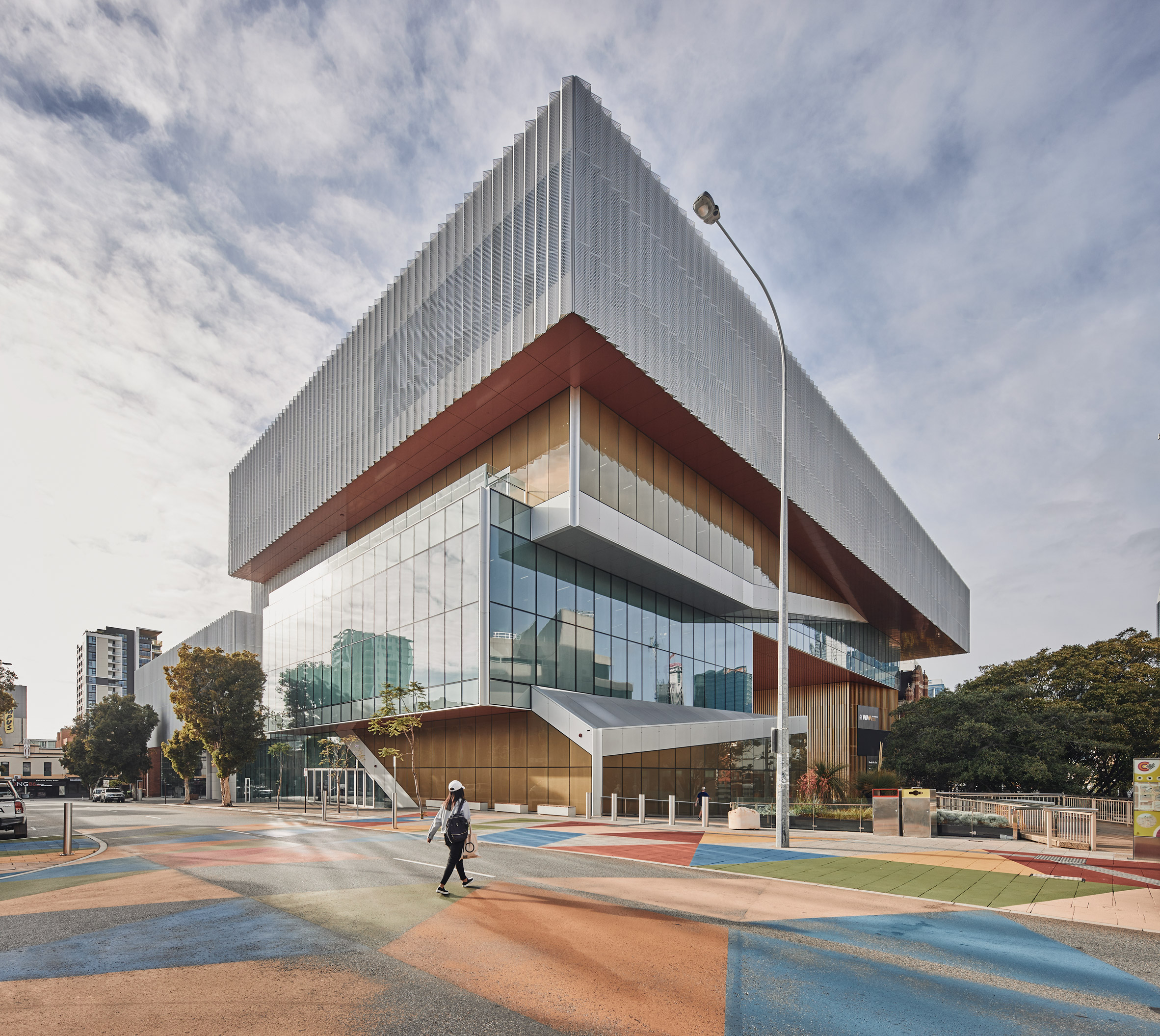
The front facade of WA Museum Boola Bardip in Perth by OMA and Hassell

Architecture firms OMA and Hassell have renovated a group of old buildings in Perth, Australia, and stitched them together with protruding metal-clad structures to create the WA Museum Boola Bardip.

The top-heavy museum celebrates the history and contemporary culture of Western Australia and is intended as a new landmark for Perth Cultural Centre – a group of cultural institutions in the city.

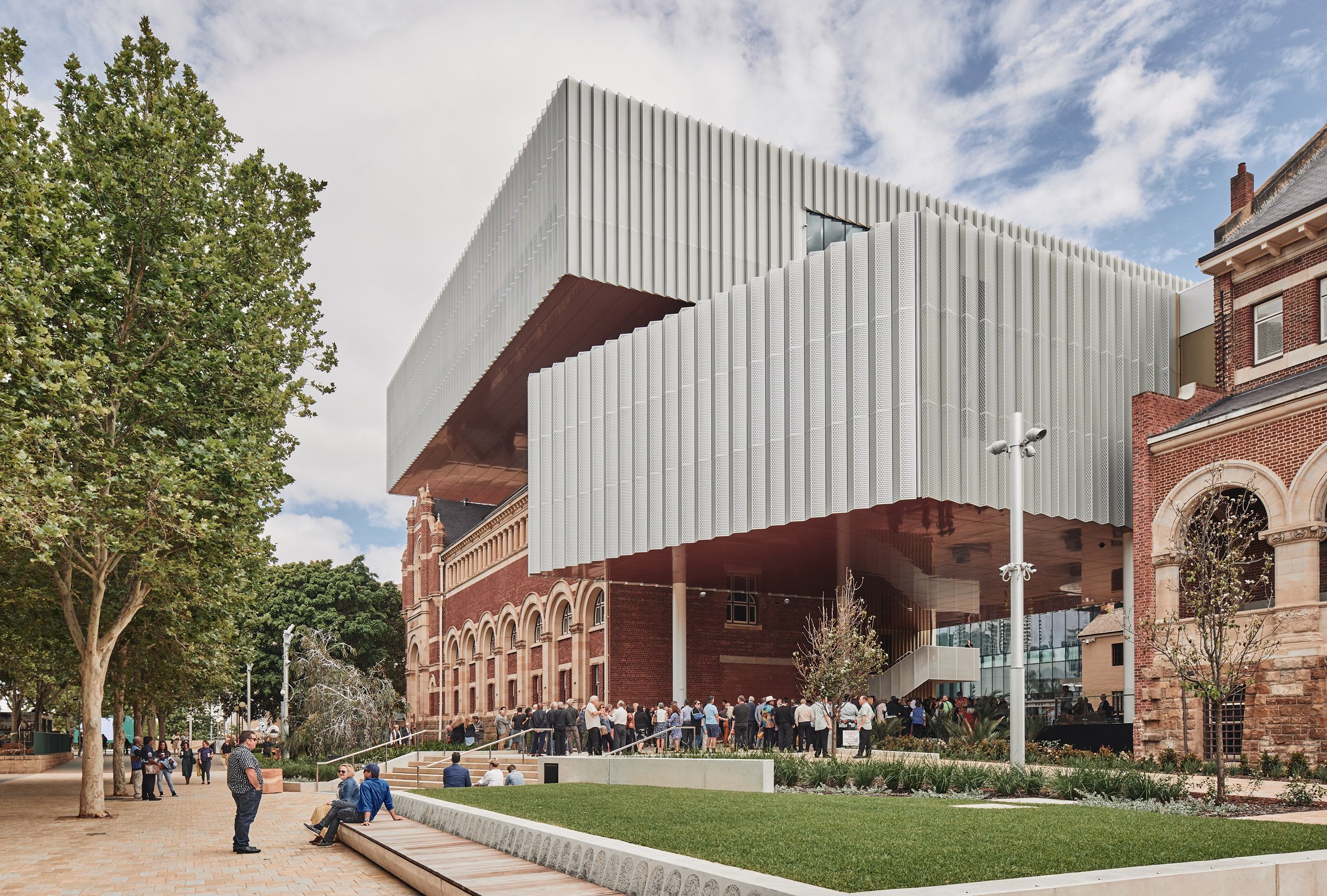
The exterior of WA Museum Boola Bardip by OMA and Hassell
WA Museum Boola Bardip marries heritage buildings with contemporary structures

WA Museum Boola Bardip preserves five existing heritage buildings on the site that date back as far as the 19th century and links them with contrasting, contemporary structures that protrude between them.

This top-heavy form was developed by OMA and Hassell to establish a "unique architectural identity" for the museum that simultaneously embodied the diversity of its contents.

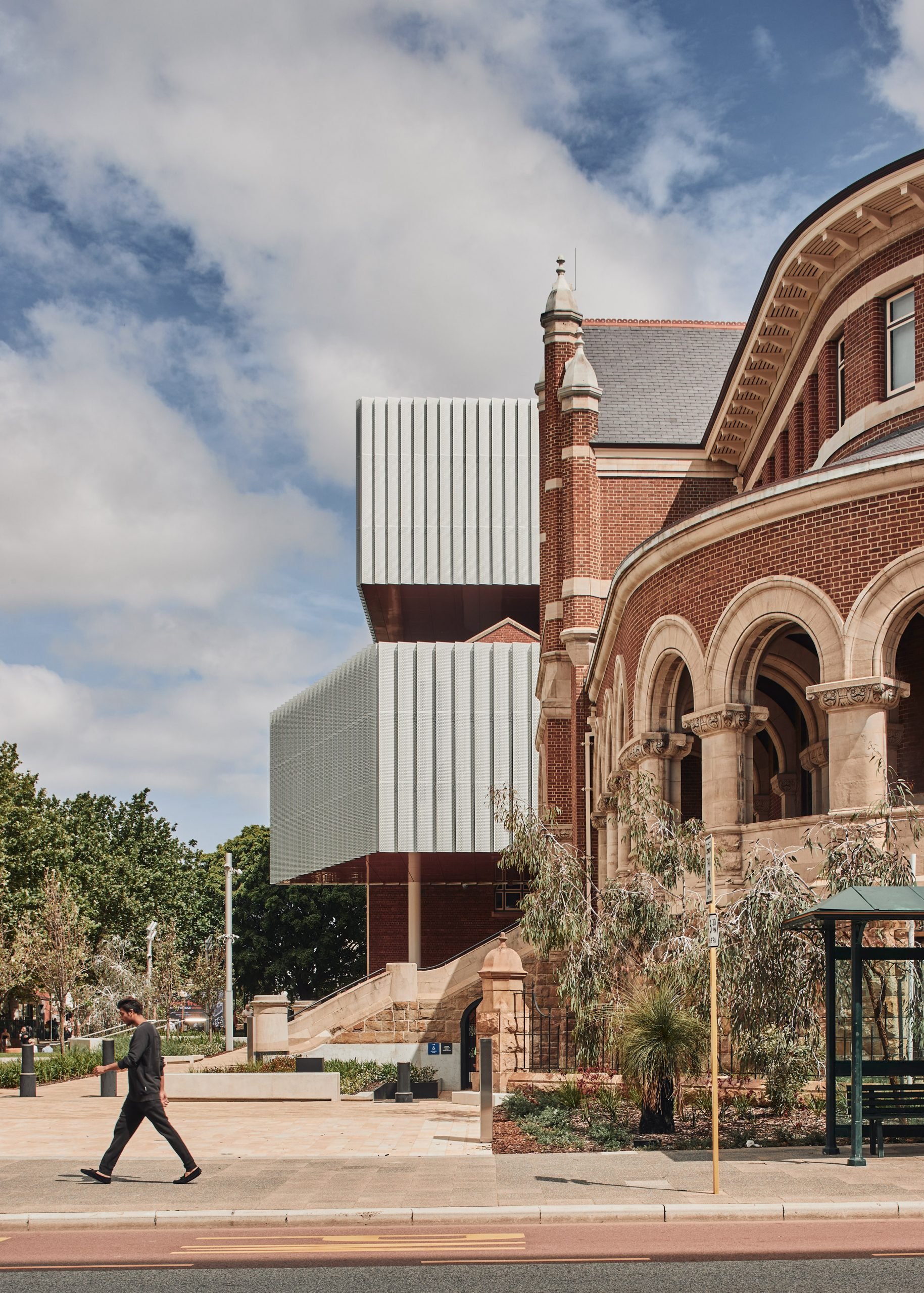
The exterior of WA Museum Boola Bardip by OMA and Hassell
The new volumes project from all angles

"The museum is deeply rooted in Western Australia," explained OMA's managing partner, David Gianotten. "We are proud to have created an architecture where the state's culture is passed on and continuously made," he said.

"The museum carefully combines and embraces historic and contemporary architecture to provide opportunities for exploration, sharing of ideas, and ongoing storytelling," added Mark Loughnan, principal of Hassell.

"We are proud to have designed a new and unique architectural identity that also opens and connects generously to its context and the city."

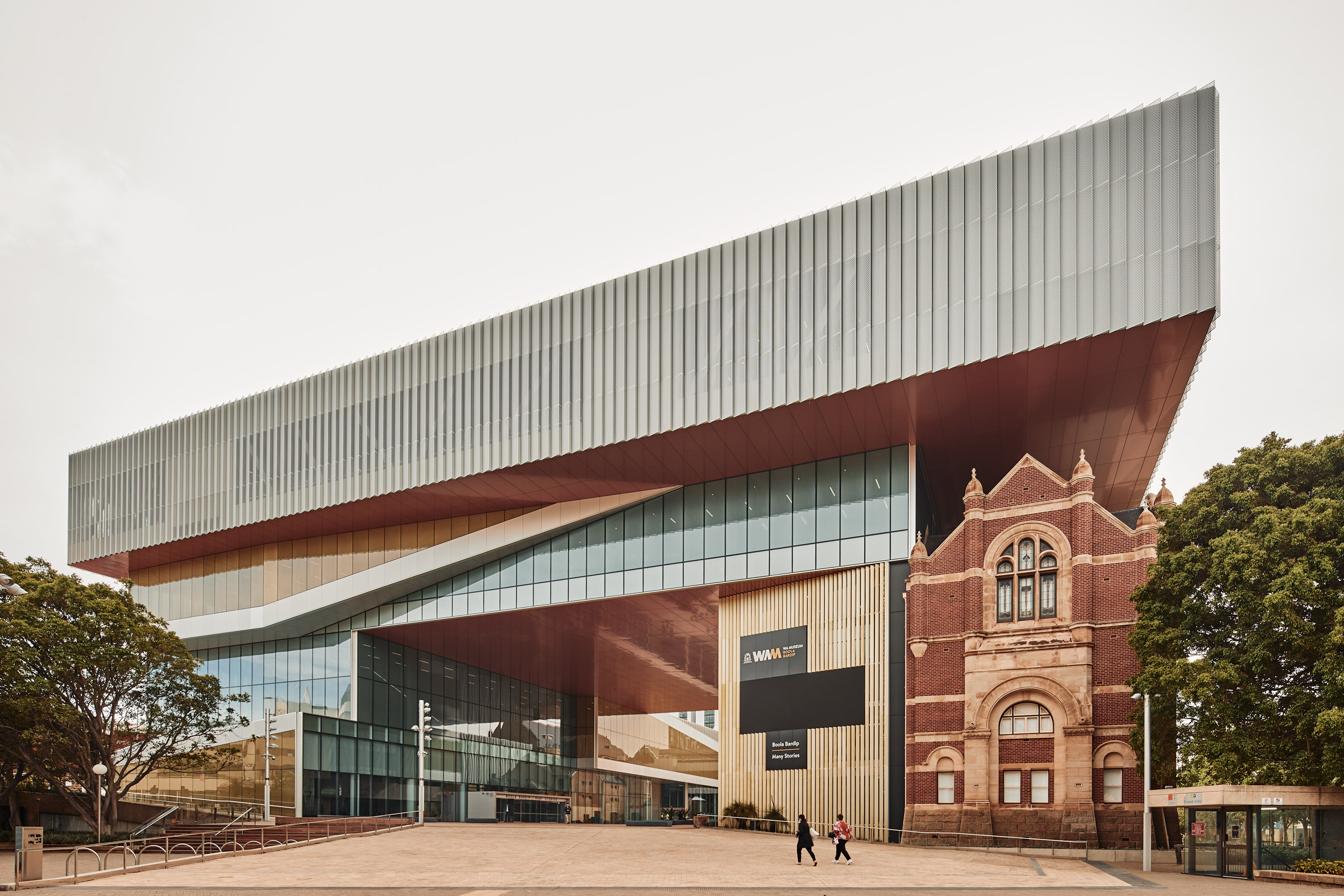
Main entrance of the WA Museum Boola Bardip by OMA and Hassell
It was designed by OMA and Hassell to have a "unique architectural identity"

OMA and Hassell first revealed their proposal for WA Museum Boola Bardip in 2016. It was commissioned as a replacement of an original museum on the site that had closed.

It measures three times the size of the old building, featuring eight permanent galleries and a temporary gallery for touring shows, alongside education spaces, retail areas and a cafe.

The historic buildings that form part of the museum include two mid-19th century structures called Old Gaol and Jubilee Building, and the early 20th century Art Gallery, Hackett Hall, and State Library reading room.

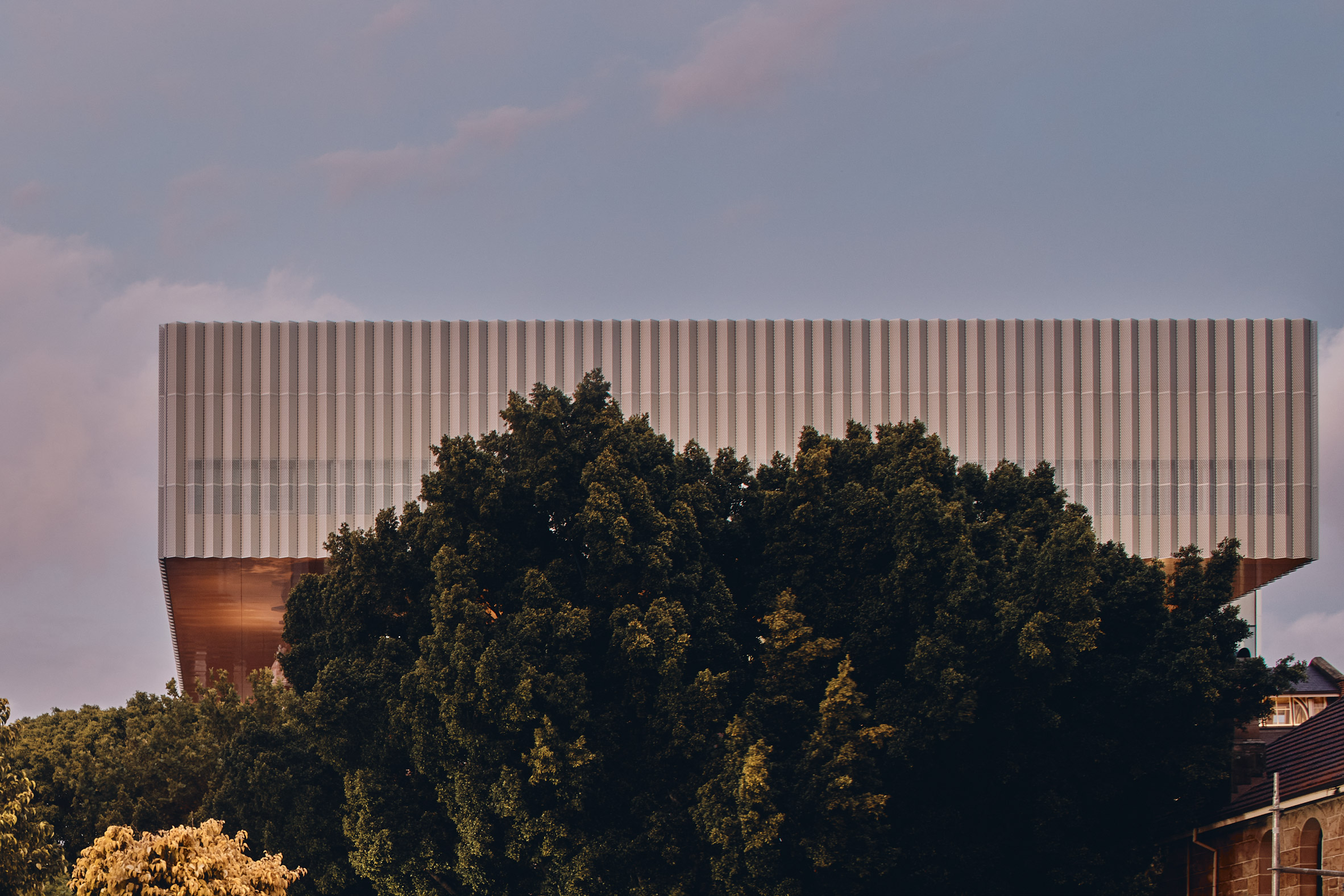
Their ornate facades, which have all been preserved, are contrasted against the new exhibition spaces that are wrapped by contemporary perforated-metal cladding and vast areas of glazing. The perforated metal filters in dappled light and makes the museum glow outwards at night.

The rear of the WA Museum Boola Bardip by OMA and Hassell
Glass and perforated metal enclose the new structures

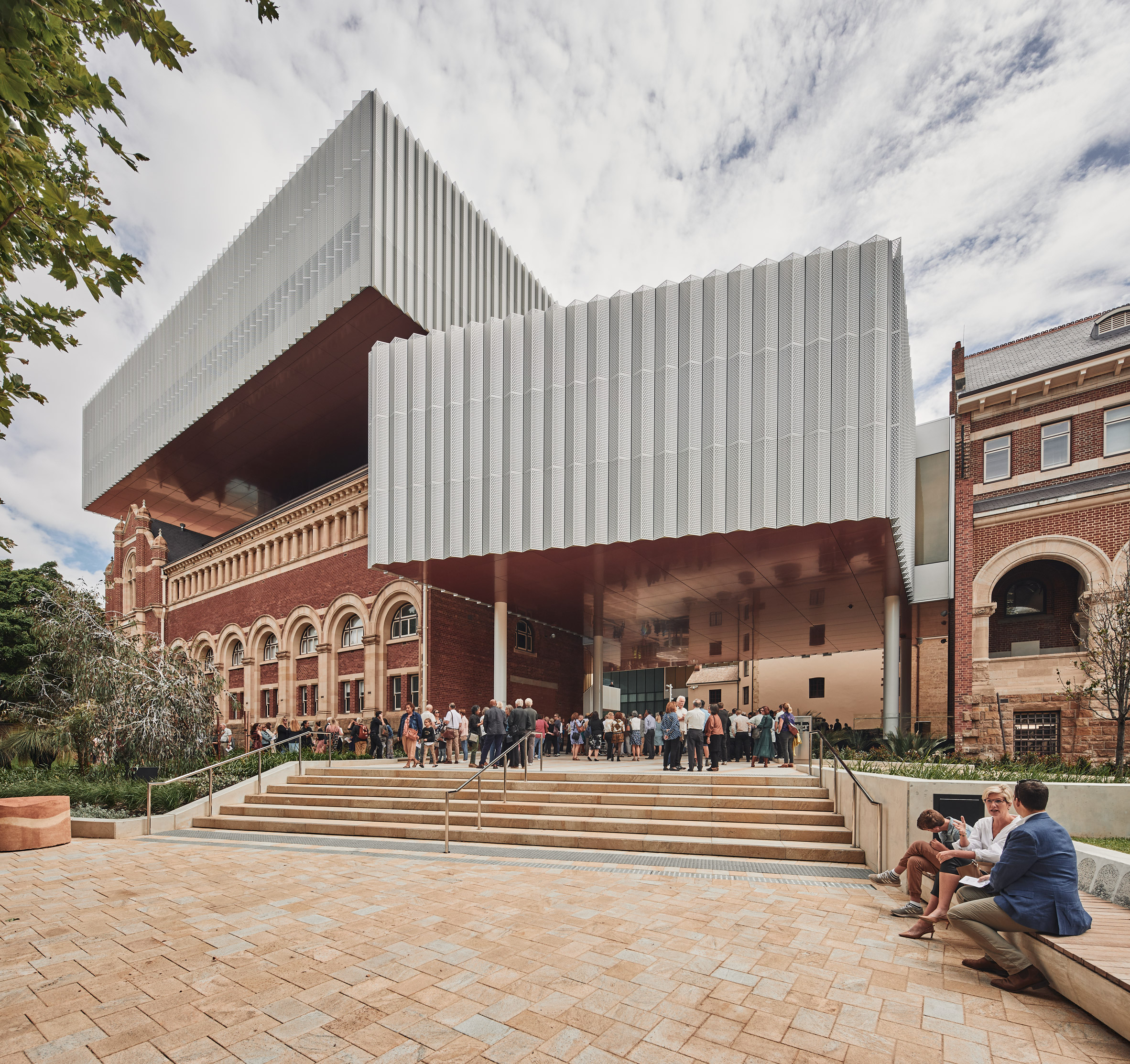
Below where the cantilevers of the new structures meet old buildings, OMA and Hassell have landscaped a large sheltered plaza.

Named the City Room, this space is the museum's centrepiece and will be open for public events and activities hosted by the museum and other institutions in Perth Cultural Centre.

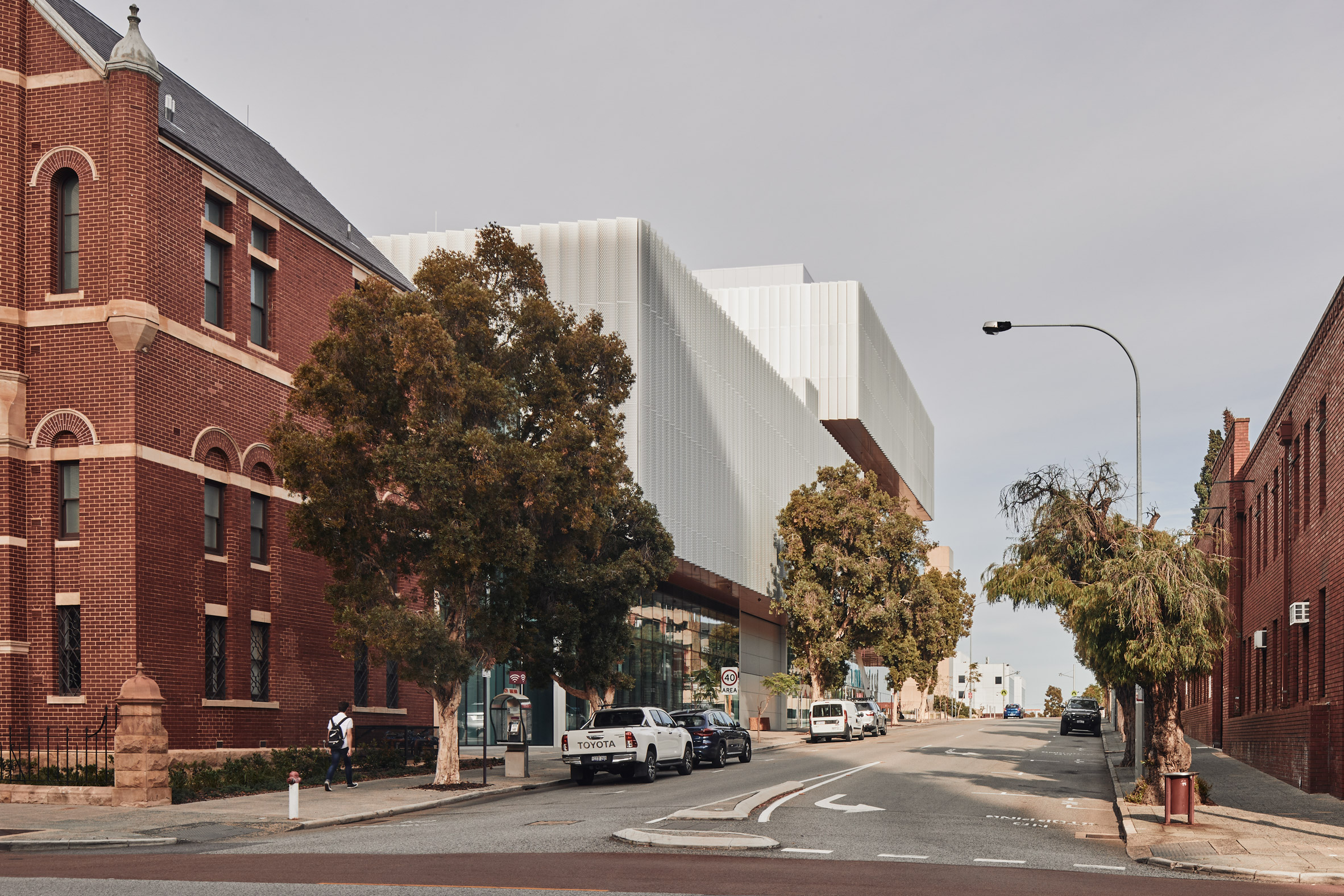
A street view of the WA Museum Boola Bardip by OMA and Hassell
All of the adjoining old buildings' facades were preserved

Inside, the refurbished historic buildings and new structures are woven together two intersecting circulation loops – one that extends vertically and one that wraps the buildings horizontally.

These loops offer multiple routes around the museum and encourage visitors to explore and meander freely through the museum.

The perforated-metal cladding of the WA Museum Boola Bardip by OMA and Hassell
The perforated-metal cladding is designed to filter in light

WA Museum Boola Bardip was created by OMA and Hassell in partnership with managing contractor Multiplex.

The museum's name features the words Boola Bardip, which means "many stories" in Noongar – an Australian Aboriginal language spoken by the Noongar community in Western Australia. It was selected in collaboration with the WA Museum Aboriginal Advisory Committee and the museum's Whadjuk Content Working Group to pay homage to the heritage of Australia's First Nations.

A public plaza has been landscaped below the cantilevering structures

Elsewhere in Australia, OMA is currently developing the Wollert Neighbourhood Centre – a mix of retail and cultural facilities that will be built in the town of Whittlesea.

Nearby in Melbourne, Australian studio Hassell is collaborating with Rogers Stirk Harbour + Partners and Weston Williamson on the design of five new metro stations that are expected to complete in the next five years.

Video is by Michael Haluwana of Aeroture and photography is by Peter Bennetts, courtesy of Hassell + OMA.

The post OMA and Hassell completes top-heavy WA Museum Boola Bardip in Perth appeared first on Dezeen.


from Dezeen https://ift.tt/364NFDX

Honext develops recyclable construction material made of cellulose fibres from waste paper

Barcelona-based startup Honext has developed a sustainable construction board material made from a combination of enzymes and cellulose taken from the waste streams of paper production.

The material is made from what Honext describes as an "untapped resource": cellulose residue taken from cardboard and paper waste generated at paper mills.

This paper has already gone through several reuse cycles, meaning that the remaining cellulose fibres are too short to be bound together in order for it to be made into paper again.

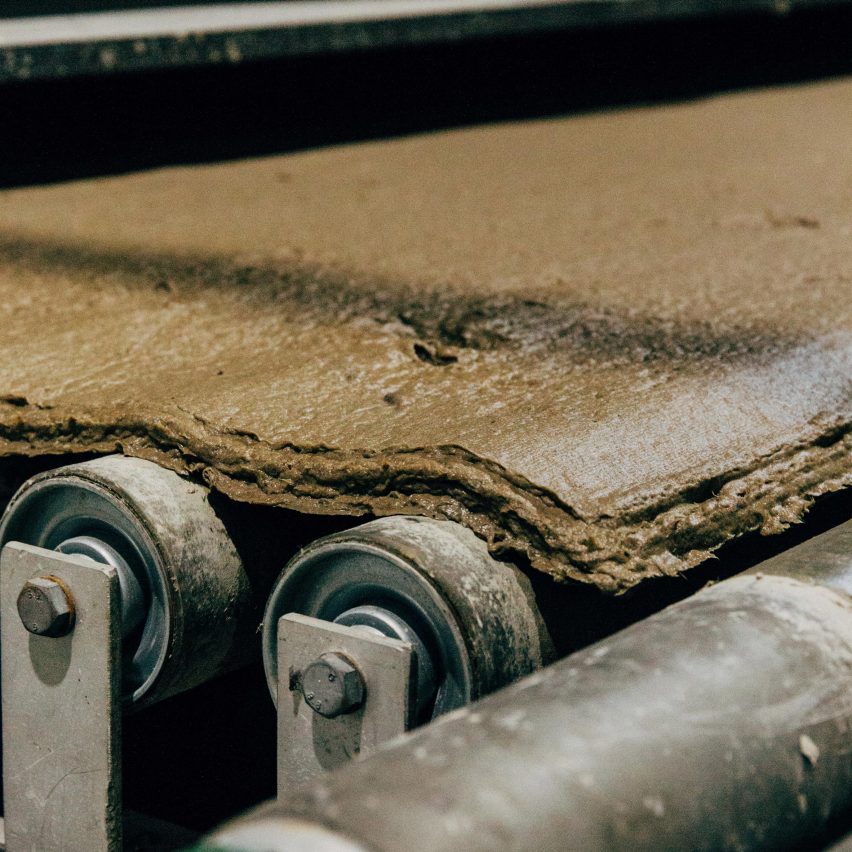
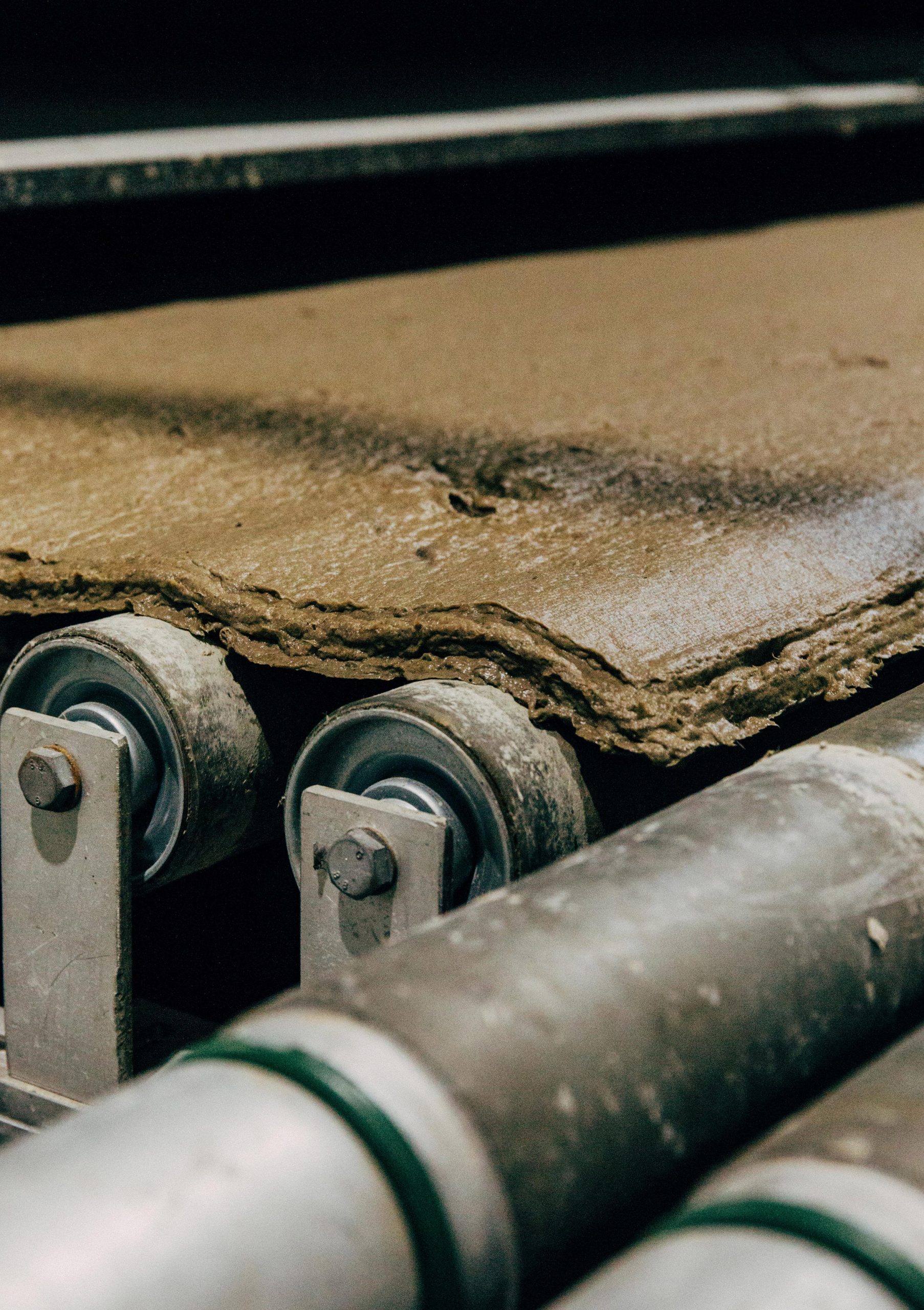
Honext develops recyclable construction material made of cellulose fibres from waste paper
Honext's material is made of enzymes and cellulose taken from paper production

As a result, these fibres would typically end up in landfill or be burnt – a process that creates an estimated seven million tons waste globally each year.

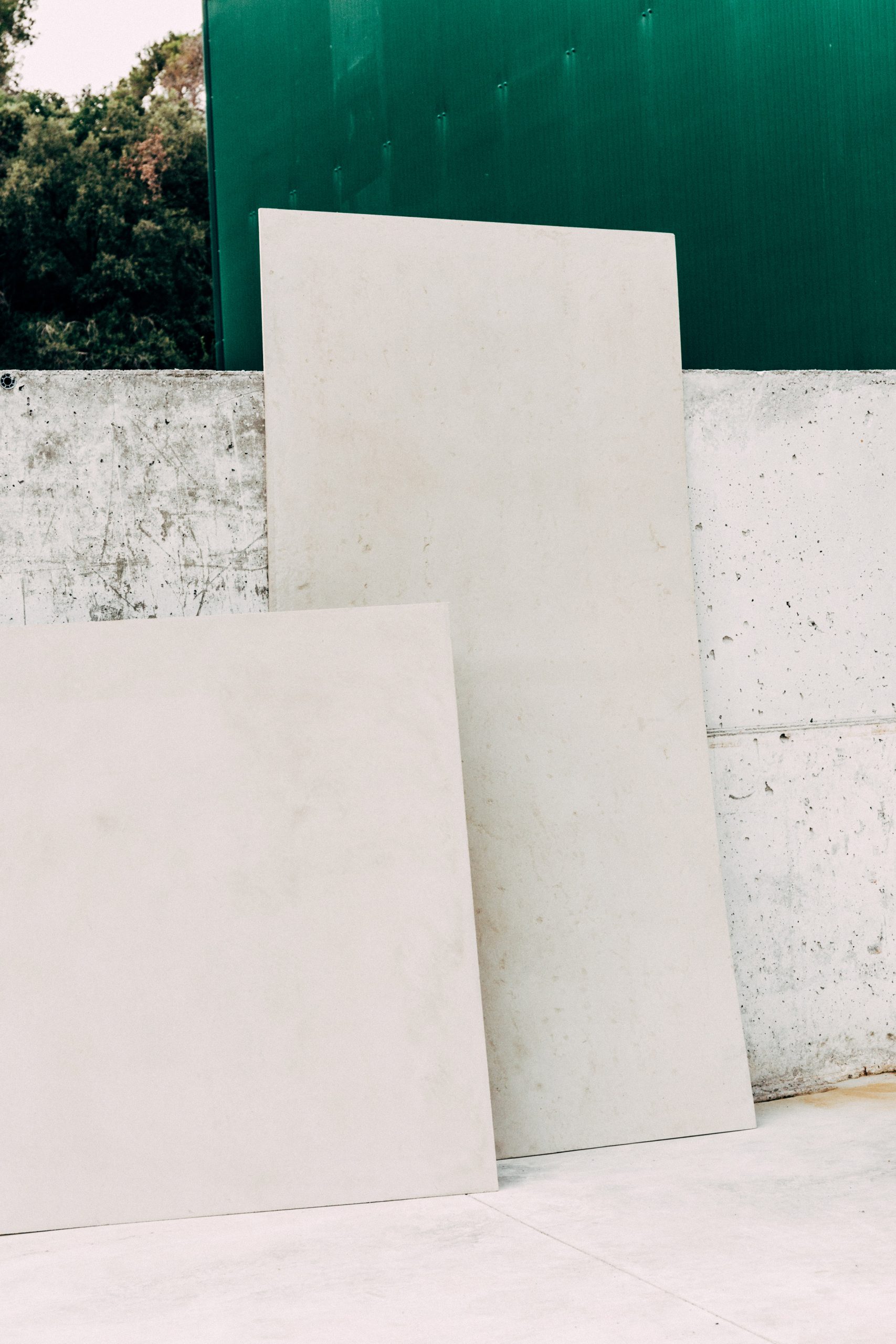
Honext, however, saves this material from becoming waste by turning it into construction boards for interior partitioning or cladding.

The company mixes together waste cellulose fibres with water and enzymes – depending on the quality of the waste, a mixture of 50 to 75 per cent paper sludge and 25 to 50 per cent cardboard waste is used.

By adding certain enzymes during the production process, Honext creates stronger bindings between the short cellulose fibres without having to use non-recyclable resins.

This enzymatic treatment is key to the process, as fibres of this length – less than five millimetres – can't usually be held together without resins or other gluing additives for use in the construction industry.

Honext's construction board material is made of cellulose fibres from waste paper
The board is made using cellulose fibres that would otherwise go to landfill or be burnt

Non-toxic additives are also added to improve the board's UV resistance. This material mixture is then compressed and shaped into a wet board, before the board is fed through a drying tunnel.

After it has dried, any remaining water is evaporated through high airflow and temperature, leaving the final result.

Honext's construction board material is made of cellulose fibres from waste paper
Adding enzymes to the material binds the short cellulose fibres together

This production method also makes the board emissions-free, says Honext. Unlike similar materials like MDF or drywall, it does not emit any harmful particles.

The cellulose board is also lighter, more flexible and has greater sound absorption than these materials.

"We need to close the loop on the cellulose product life cycle and start seeing this type of waste for what it really is: an untapped resource," said Honext CEO Pere Merino.

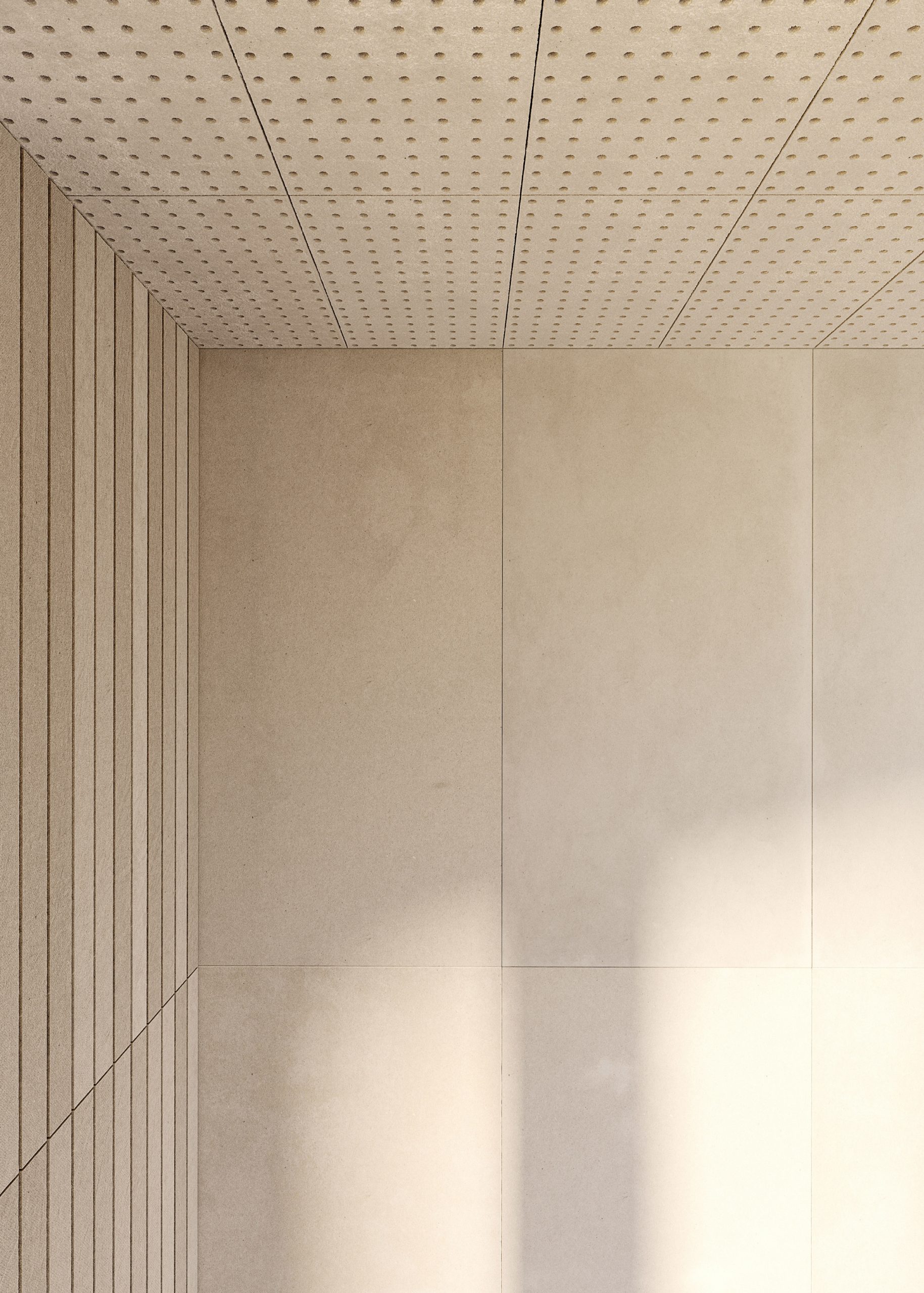
Honext's material can be used in construction for interior partitioning or cladding
The construction boards can be used for interior partitioning or cladding

In addition to making the material itself as sustainable as possible, Honext also aims to make the production process carbon neutral.

Manufactured in Vacarisses – a village in the province of Barcelona, Spain – Honext's cellulose material is produced using gas and electricity generated from the digestion of the town's waste, while any water used is reused in a closed circuit.

Once the material has reached the end of its life, it is fed back into the production pipeline to create a new set of boards. This process also strips the material of any coating or finish applied by the constructor.

"It makes no sense to manufacture a 100 per cent recyclable material in a way that is not aligned with its sustainability component," said Merino. "Ours is a carbon-neutral process that can be endlessly replicated at no cost to the planet."

Honext's material can be used in construction for interior partitioning or cladding
Unlike similar materials like MDF or drywall, Honext's cellulose board does not emit any harmful particles

The next step in the development of Honext's material is to find leading architects and designers who will use its boards in building projects in order to demonstrate its potential.

Similar endeavours to create sustainable construction materials have seen Scottish startup Kenoteq launch the K-Briq building brick, which is unfired and made of 90 per cent construction waste.

The K-Briq, which took 10 years to develop, generates less than a tenth of the carbon emissions in its manufacture than a regular brick.

Like Honext, designers Rowan Minkley and Robert Nicoll created an eco-friendly alternative to MDF and chipboard using waste potato peelings.

The resulting material, playfully called Chip[s] Board, is biodegradable post-use and, unlike MDF, doesn't contain formaldehyde or other toxic resins and chemicals.

The post Honext develops recyclable construction material made of cellulose fibres from waste paper appeared first on Dezeen.


from Dezeen https://ift.tt/37aZnfv

Dezeen presents four online talks for Design Miami 2020

Dezeen has teamed up with Design Miami, Perrier-Jouët, Miami Design District and Uribe Schwarzkopf to livestream a series of talks as part of the annual festival.

Called Dezeen x Miami Design Talks, the collaboration comprises four live conversations broadcast on Dezeen between 27-29 November 2020.

Mexican architect Tatiana Bilbao, Austrian design studio Mischer'Traxler and Miami Design District owner Craig Robins are among the guests who will speak to Dezeen's founder and editor-in-chief Marcus Fairs.  

Design Miami is an annual fair that draws an international crowd of collectors, designers and curators to the southeastern US city for a 10-day celebration of design and commerce.

Due to the coronavirus pandemic, a number of Design Miami 2020 events will be taking place online, alongside a programme of physical exhibitions and activities.

Here is the full schedule of Dezeen x Miami Design Talks:

3:00pm, Friday 27 November: In conversation with Craig Robins

Marcus Fairs will speak to entrepeneur Craig Robins, who is the owner of Miami Design District.

The commercial neighbourhood, which is located north of midtown in Miami, Florida, was home to the very first instalment of the fair and is also hosting the 2020 edition.

Robins will reflect upon on the evolution of the district and unveil some of the new inititives that are due to launch in the area.

5:00pm, Friday 27 November: Design Miami 2020

At the heart of the fair is an exhibition curated by Design Miami's director of global exhibitions Jillian Choi and curatorial director Aric Chen.

Fairs will speak to Choi in a live interview about the exhibition's theme: America(s), which takes a provocative look at alternative American identities.

3:00pm, Saturday 28 November: In conversation with Mischer'Traxler

Fairs will return on Saturday to interview Vienna-based design studio Mischer'Traxler, which created the main installation for the festival.

In this exclusive interview, the duo will share the story behind the work and elaborate upon their process.

The interview will be followed by an exclusive video preview of the installation.

3:00pm, Sunday 29 November: Miami – a Latin American Design Capital

Tatiana Bilbao, Venezualan-born architect Carlos Zapata and Ecuadorian developer Joseph Schwarzkopf will feature in a panel on Latin American architecture and its relationship with Miami.

The conversation will explore how the city of Miami came to be informally known as "the capital of Latin America".

All times are UK time.

The post Dezeen presents four online talks for Design Miami 2020 appeared first on Dezeen.


from Dezeen https://ift.tt/379sksf