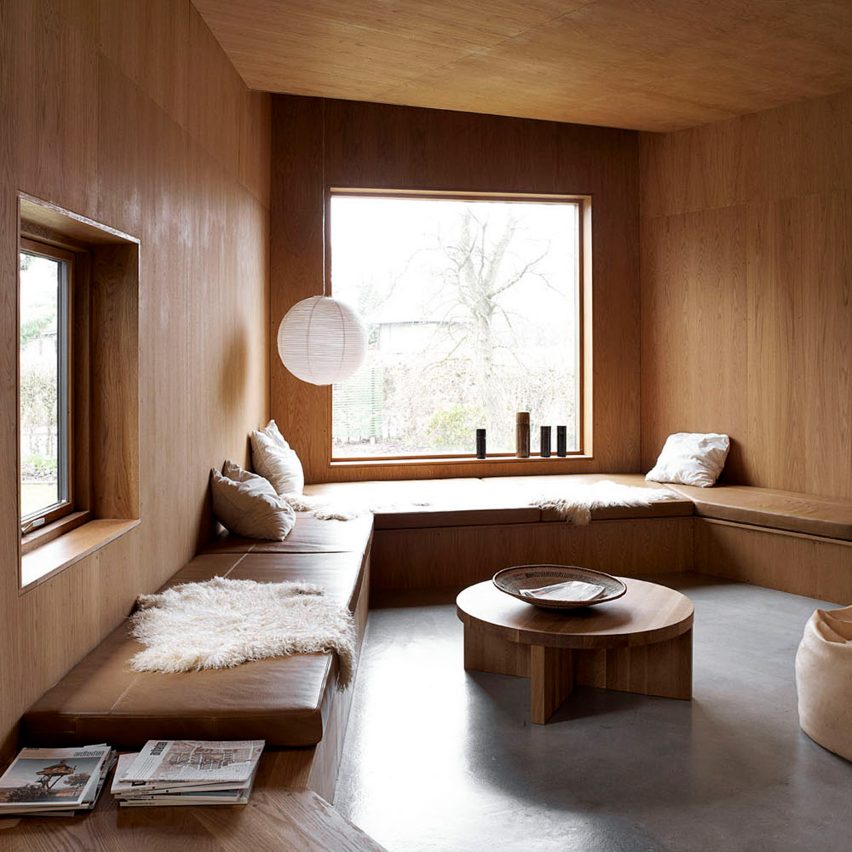
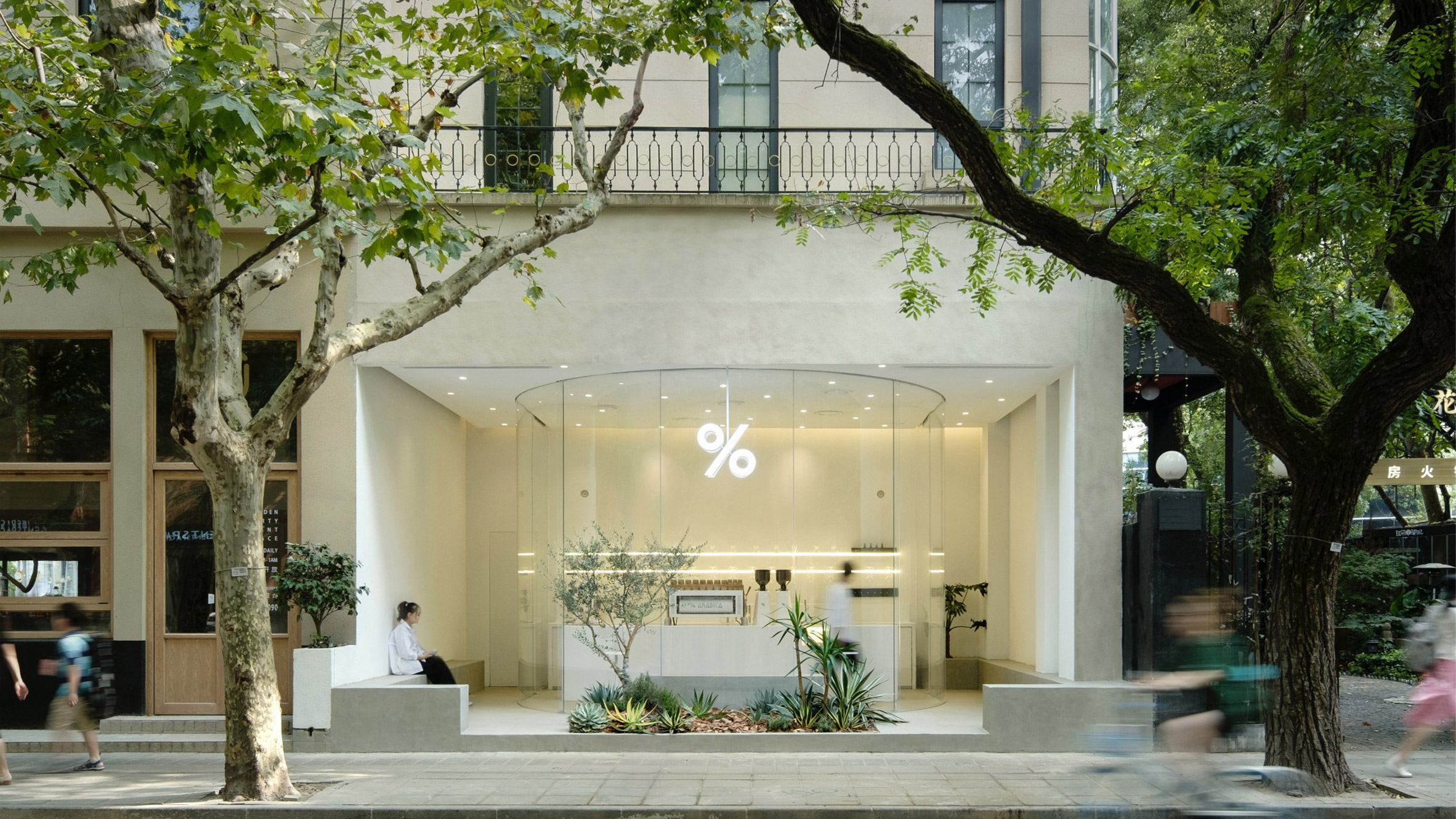
Villa Weinberg in Denmark by Mette and Martin Weinberg is just one of the homes included in the round up.
Built in the 1940s, the cottage in Aarhus is almost entirely lined with oiled oak boards. It boasts bench seating around the periphery of the room topped with luxurious tan-leather cushions and woolly throws.
Other living rooms in the round up feature fireplaces, an olive-green sofa, wood burners and a daybed dressed with a patchwork blanket – making them the perfect living rooms to escape winter.
Dezeen Weekly is a curated newsletter that is sent every Thursday, containing highlights from Dezeen. Dezeen Weekly subscribers will also receive occasional updates about events, competitions and breaking news.
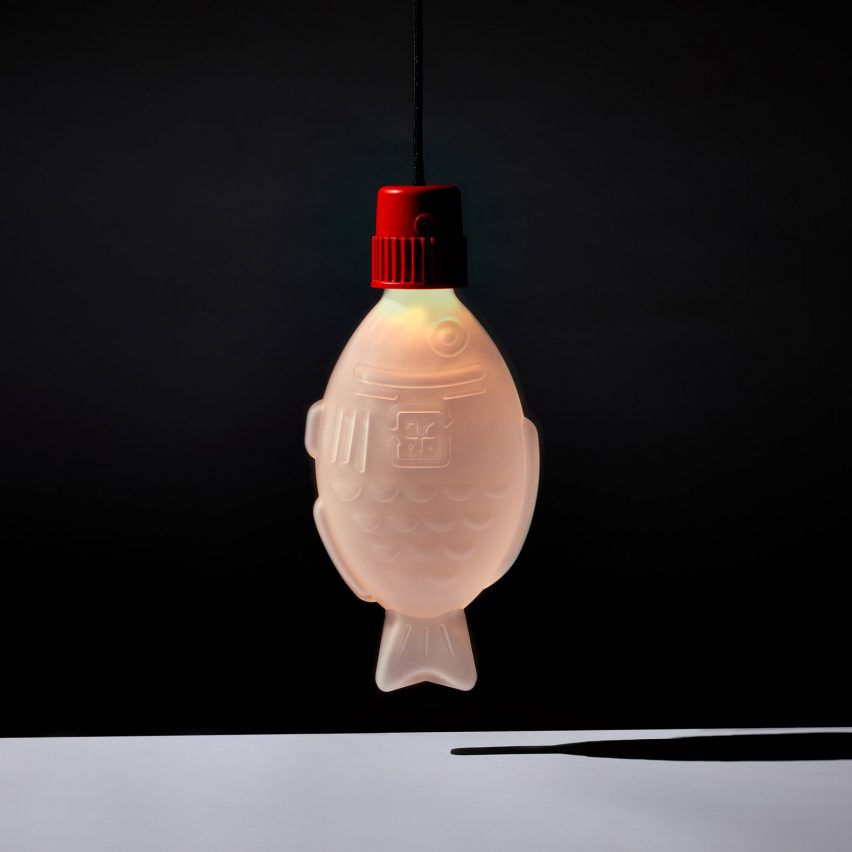
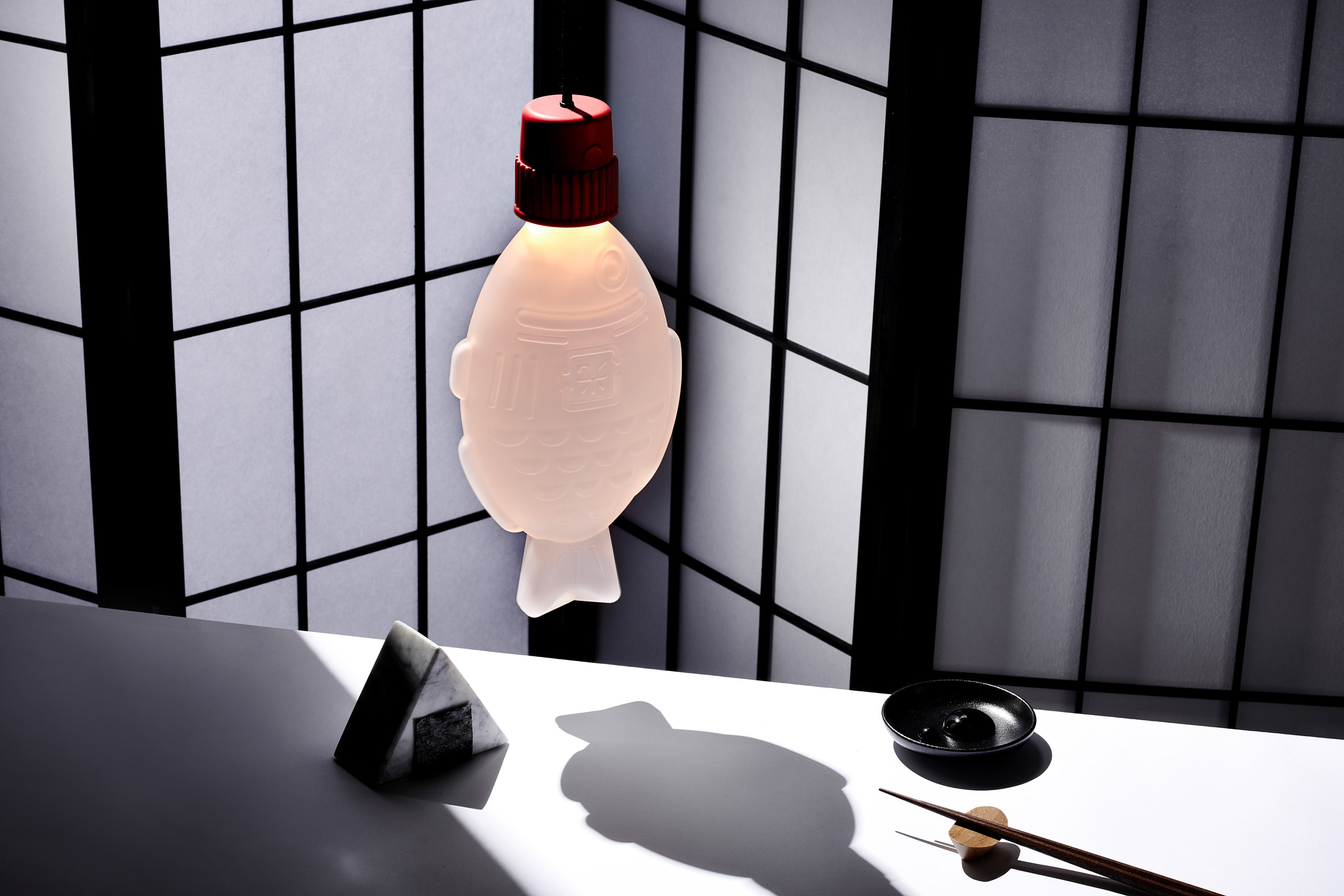
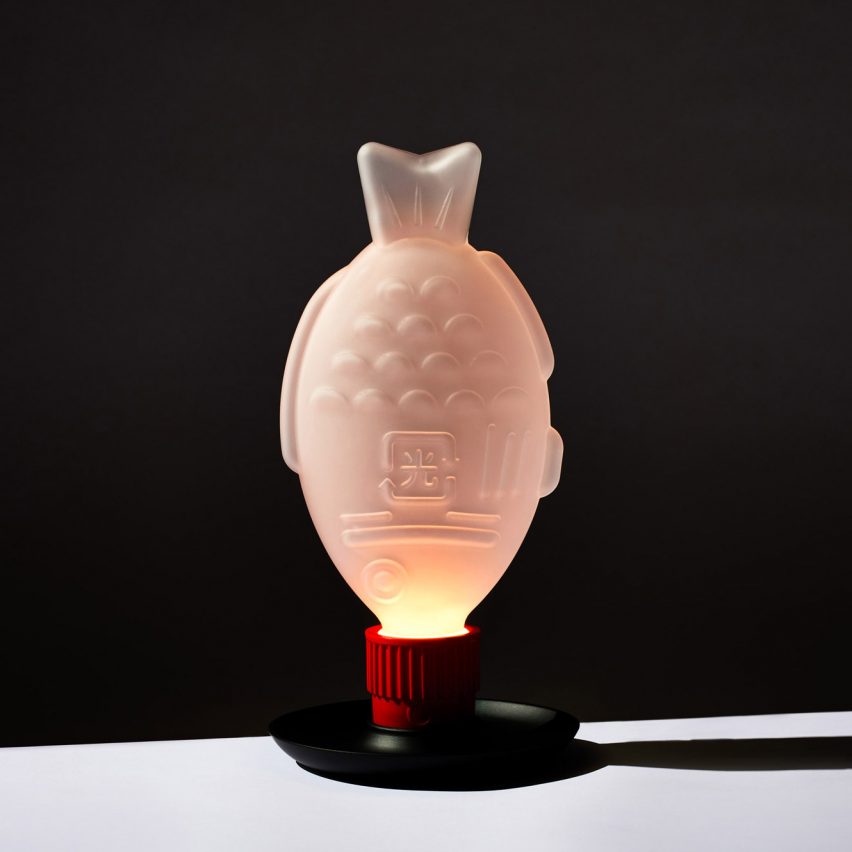
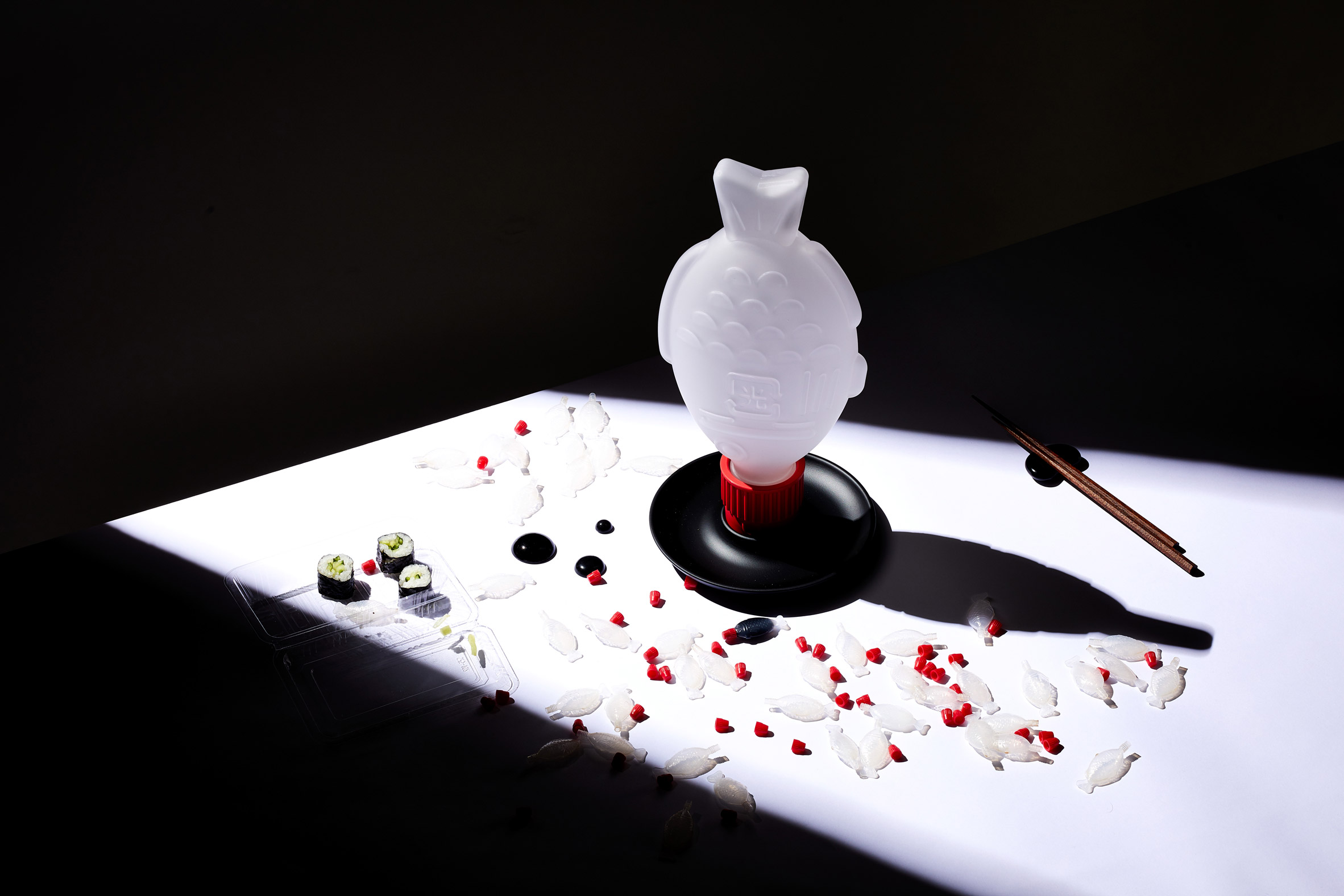
Sydney-based design studio Heliograf, founded by Angus Ware and Jeffrey Simpson, created its playful Light Soy Pendant Light to highlight the often ignored sources of plastic pollution – such as the fish-shaped soy sauce bottles that come with sushi.
The Light Soy Pendant Light is modelled on soy sauce bottles
Each lamp is made from mouth-blown glass and features powder-coated aluminium accessories. The lights come in biodegradable packaging made from upcycled sugarcane fibre, and the designers direct a share of revenue to ocean cleanups, environmental education and sustainable design initiatives.
The mains-powered ceiling light also has a bespoke aluminium ceiling canopy that was inspired by soy sauce. The modular designs means parts can be swapped out or upgraded, including the signature red cap that unscrews from the fish shaped-lamp.
"Through our design practice and our partnership with 1% For the Planet we want to show that small things matter and that good design can make a difference," Ware said.
About Dezeen Showroom: Dezeen Showroom offers an affordable space for brands to launch new products and showcase their designers and projects to Dezeen's huge global audience. For more details email showroom@dezeen.com.
The futuristic graphics and illustrations of Thukral & Tagra will feature on a new watch for Rado, which the Indian art and design studio is currently developing with the Swiss watch brand.
To coincide with Rado Design Week on Dezeen next week, artists Jiten Thukral and Sumir Tagra will unveil the concept behind their design for a watch that offers a new perspective on time. They call it True Square Over the Abyss.
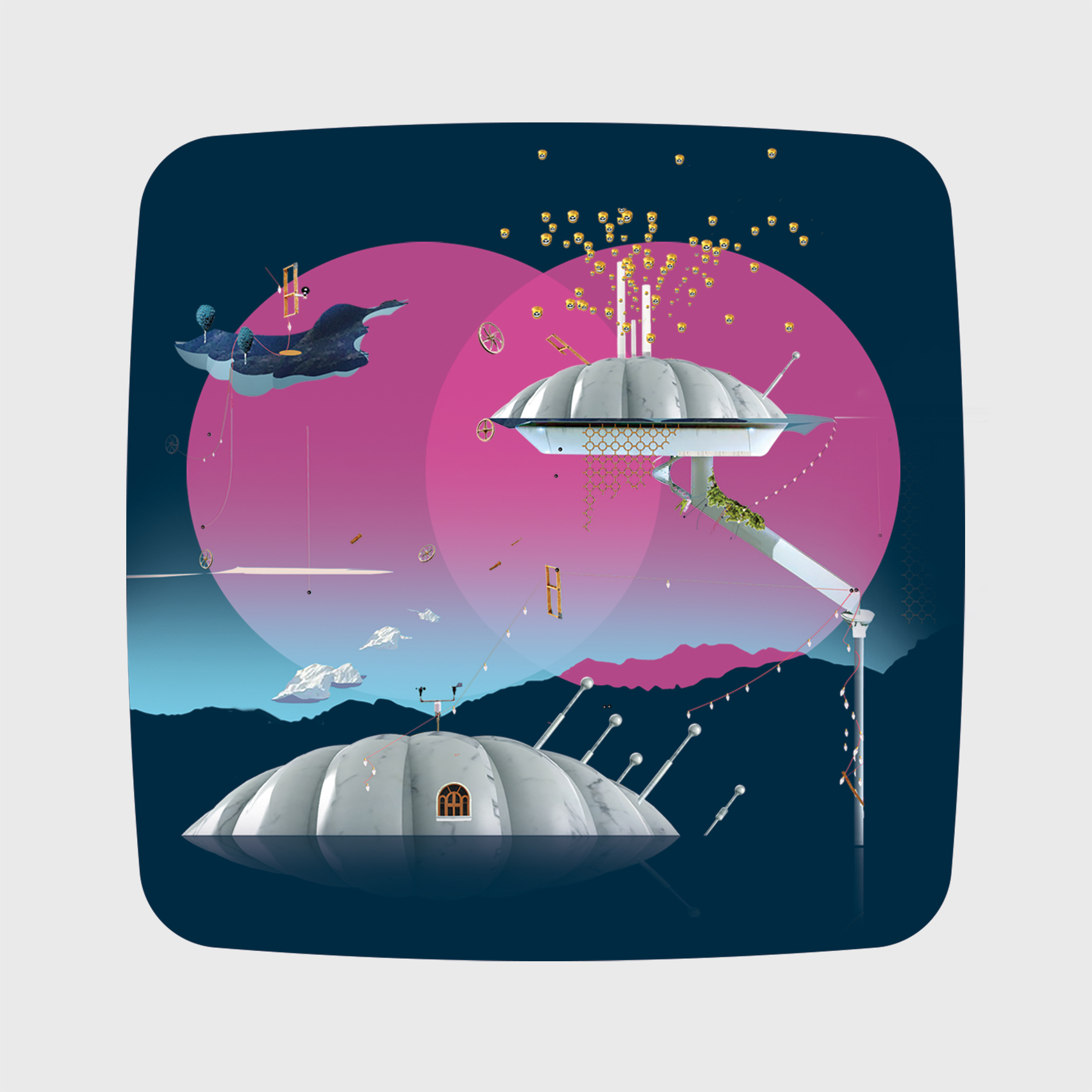
True Square Over the Abyss will feature overlapping dials, rather than hands, as depicted in this concept drawing
Instead of regular hands, the analogue display will be made up of two overlapping dials, allowing the wearer to think about the time in other countries around the world besides their own.
As these dials move, they will create ever-shifting patterns across the watch face. On the rear of the watch case, the pair will add an image from their ongoing Dominus Aeries painting series.
These highly complex artworks explore visions of the future but are laced with references to the past. They show forms of civilisation, yet they are devoid of any signs of life.
The rear will feature an image from Thukral & Tagra's Dominus Aeries series
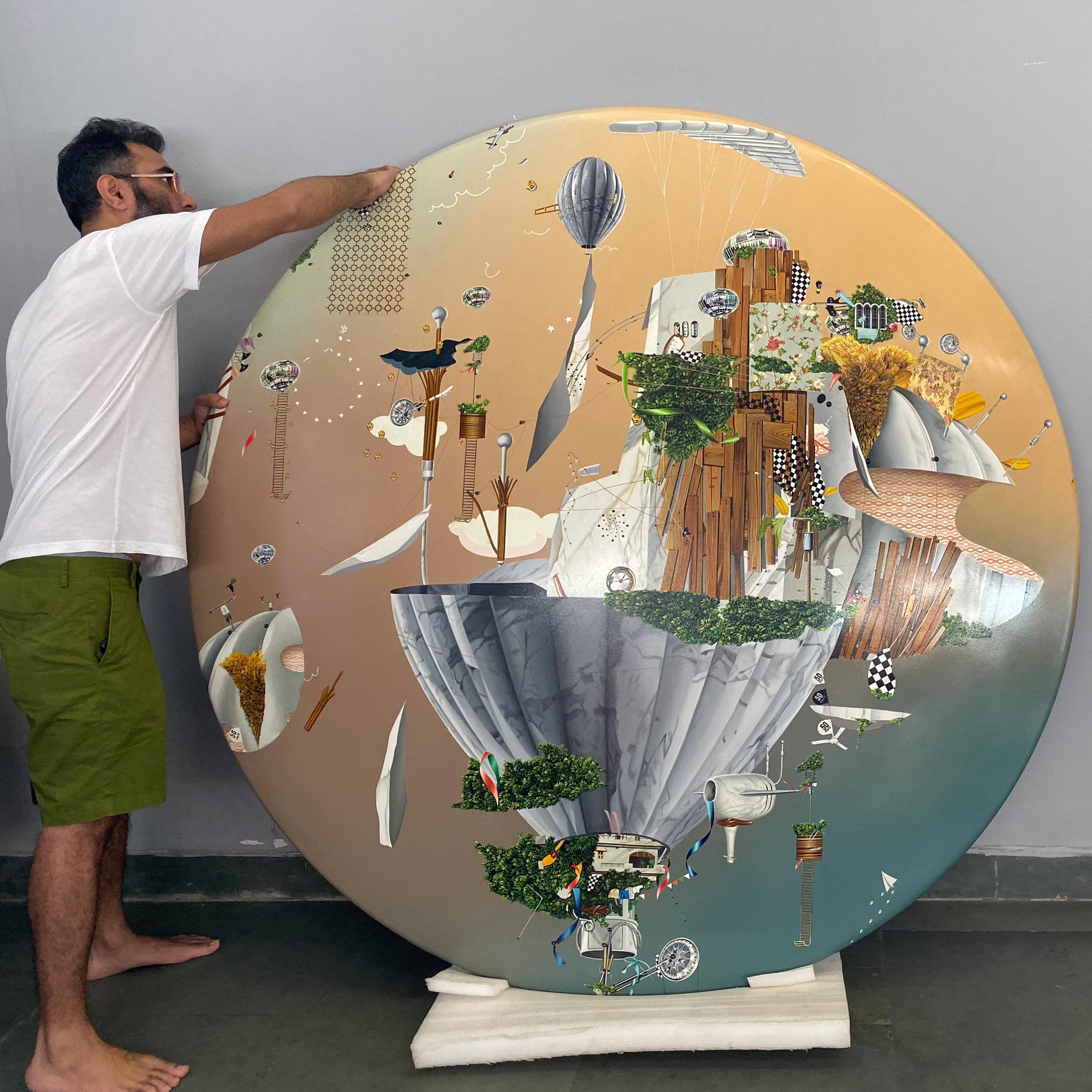
This series is typical of Thukral and Tagra's artworks. Described as "exuberant and darkly humorous", their paintings, sculptures and installations explore themes of identity and globalisation through colourful, playful imagery.
They consist of fictional architecture and landscapes interlaced with references to Indian mythologies and mass consumer culture.
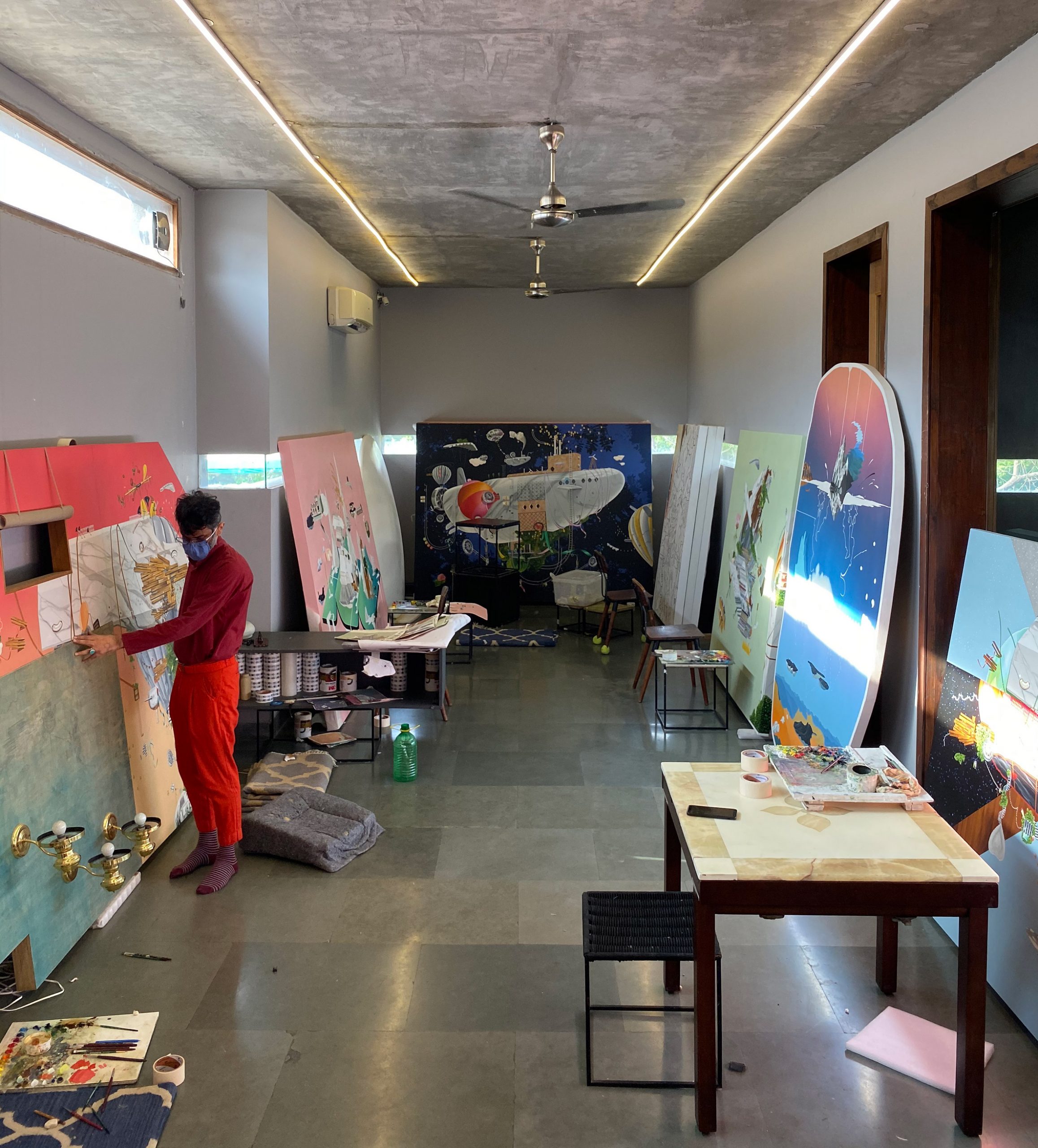
Jiten Thukral and Sumir Tagra create their artworks in a studio in New Delhi
Based in New Delhi, Thukral and Tagra have been collaborating for more than 15 years. Their work has been exhibited by the Centre Pompidou in Paris, the Mori Art Museum in Tokyo and the Asia Pacific Triennial.
This collaboration with Rado will open up their work to a new audience.
The watch they are creating will be square – a style that has become iconic for Rado. Rooted in the brand's heritage, this shape is characteristic of every watch in the signature True Square collection.
They explore themes of identity and globalisation through colourful, playful imagery
Thukral and Tagra are one of four design studios contributing to Rado Design Week, a week of virtual content hosted exclusively on Dezeen from 30 November to 4 December.
Italian duo Formafantasma, British designer Tej Chauhan and Japanese studio YOY have also designed watches for Rado's True Square collection.
More details about all the watches will be unveiled during Rado Design Week, when Dezeen will broadcast a video about each watch as well as live interviews with Rado CEO Adrian Bosshard and each of the designers involved. Click here to see the schedule.
Dezeen Showroom: Sydney-based studio Heliograf looked to the iconic soy fish packets you get with sushi for its Light Soy Table Lamp, which it designed to draw attention to the harm single-use plastic is doing to our oceans.
The idea was born when designers Jeffrey Simpson and Angus Ware, who both live by the coast, enjoyed some sushi and realised how much plastic waste came from just one meal.
The small plastic soy packages that come with sushi informed the lamp
Light Soy Table Lamp, which is made from mouth-blown borosilicate glass in the shape of soy sauce packaging, has power-coated aluminium accessories and comes in plastic-free, biodegradable packaging.
"We chose to flip the disposability of the original on its head by using premium materials and making something that will be treasured, not trashed," Simpson said.
The rechargable table lamp is modular, which allows parts to be swapped out and upgraded, and has an aluminium base and USB-C charging battery. Light Soy Table Lamp also comes in a pendant version and was longlisted for Dezeen Awards 2020 in the lighting design category.
For each lamp sold, Heliograf has pledged to remove 50 pieces of plastic from the ocean.
About Dezeen Showroom: Dezeen Showroom offers an affordable space for brands to launch new products and showcase their designers and projects to Dezeen's huge global audience. For more details email showroom@dezeen.com.
"We tried to set the date in the period that is considered by experts to be the lowest risk," said Luti.
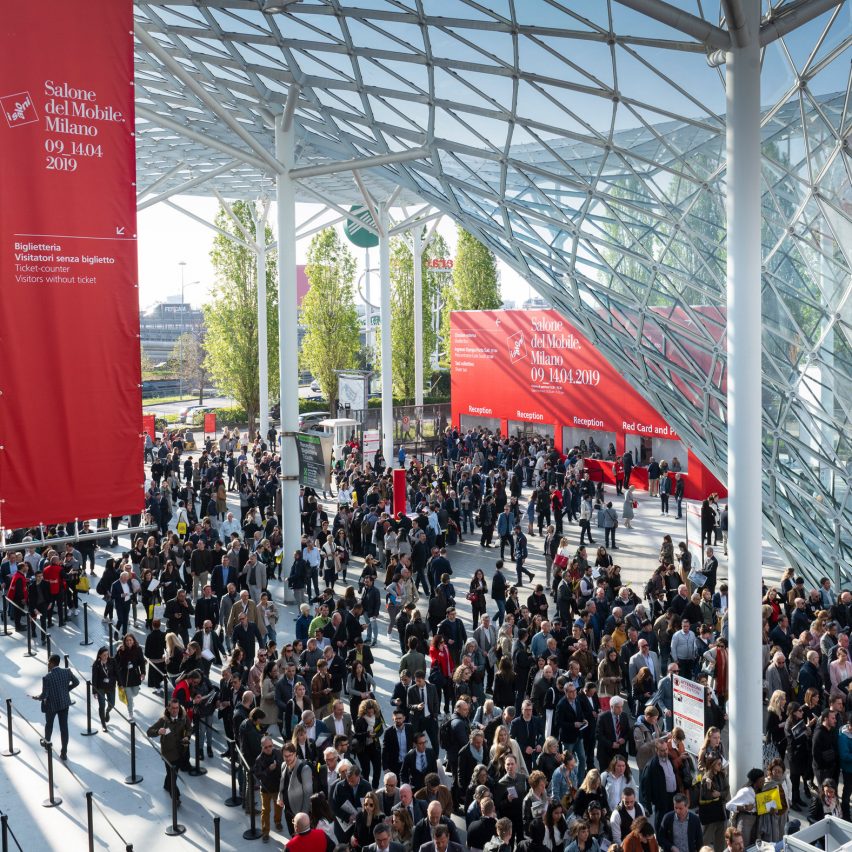
The move will see the fair, which celebrates its 60th anniversary in 2021, staged in the autumn for the first time since 1989.
The fair, which is the biggest and most important furniture show in the world, is traditionally held in April, although the 2020 edition was first moved to June, and then cancelled altogether, due to the impact of the coronavirus pandemic.
The first Salone del Mobile was held in September 1961. It moved to its current April slot in 1990.
It is thought that the hundreds of independent "fuorisalone" events that take place across Milan alongside the fair will follow suit and move to September.
Together the fuorisalone events and the Salone del Mobile are informally known as Milan design week, drawing around 500,000 people to the northern Italian city each year.