"I wanted to show how relevant and timeless erotic poetry is as a whole and bring different voices into it," Favre told Dezeen. "I wanted the final selection to be a mix of eras, genders, sexual orientations and tones."
The founders of design house The Brooklyn Home Company have created a hotel in New York's Finger Lakes region that draws on their summers growing up on Canandaigua Lake.
The Lake House on Canandaigua is named after its location on one of the 11 long and narrow lakes that form the region aptly named the Finger Lakes.
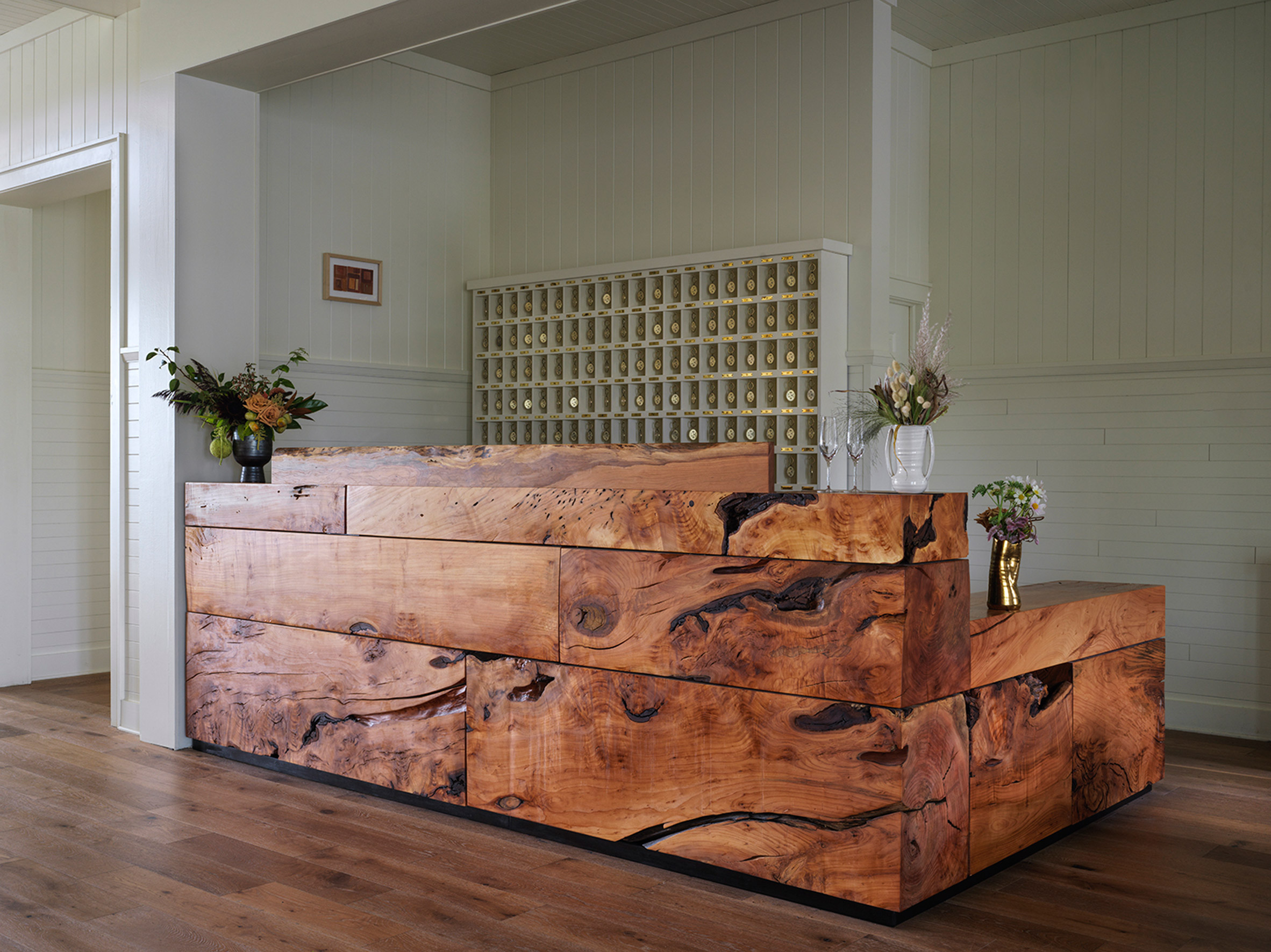
Above: a monolithic wood reception desk anchors the hotel lobby. Top image: The Lake House on Canandaigua is designed with an ambiguous style
The brother and sister founders of The Brooklyn Home Company, whose family previously owned a motor-lodge on the same plot, enlisted New York-based Studio Tack to work on a new project to reinvigorate the site.
"We wanted to create something special for the community and also something that would put the Finger Lakes on the map as a destination," said The Brooklyn Home Company founder William Caleo, who runs the firm with his sister, designer Lyndsay Caleo Karol and her artist husband Fitzhugh Karol.
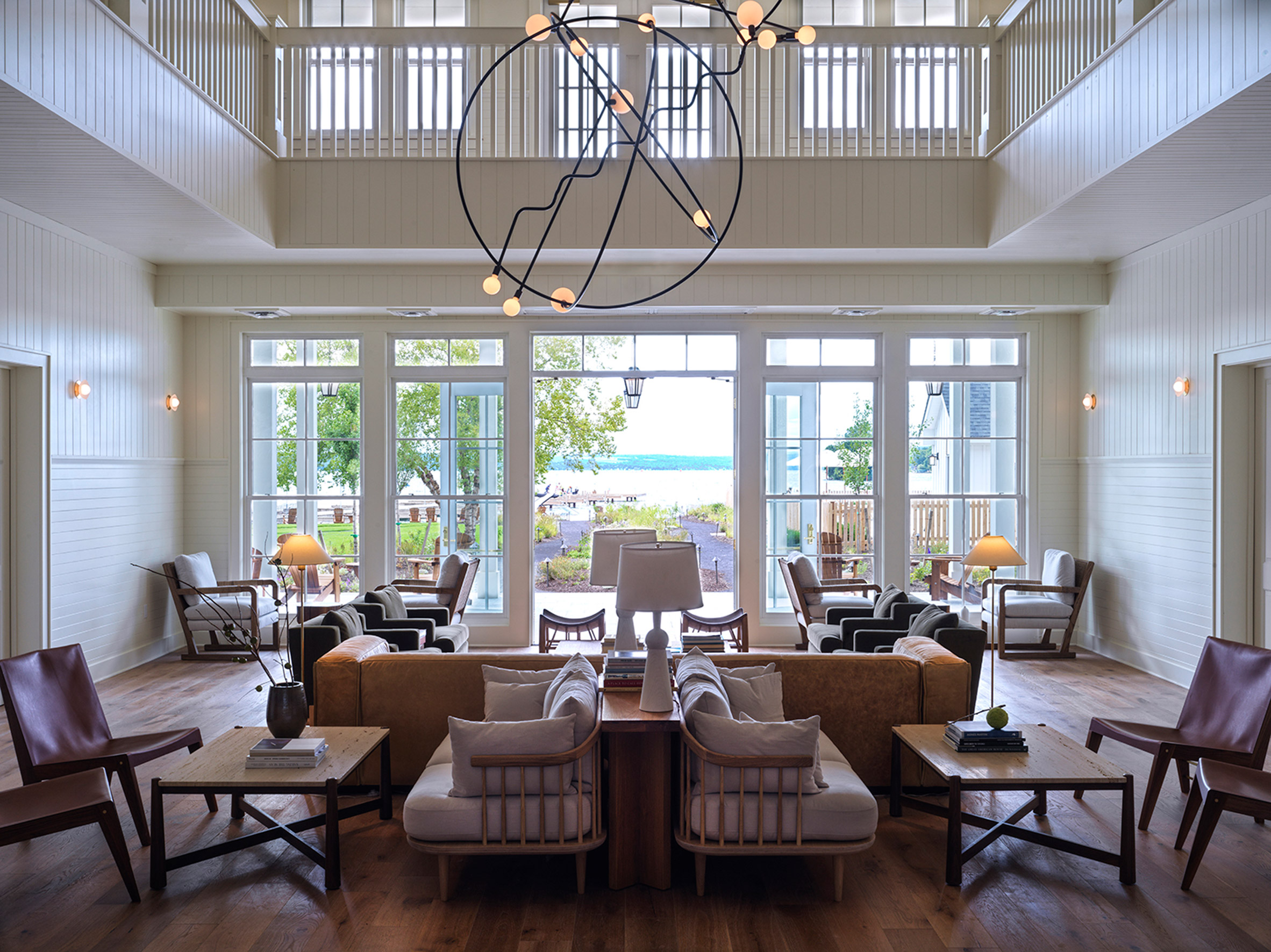
The lounge-style lobby has an eclectic mix of furniture and baskets filled with rugs
"We grew up in this place, one of the greatest natural environments in this country, with the best crystal clear lakes and rolling, green hills," Caleo explained.
"But, the Finger Lakes, with all its natural beauty, was relatively geographically unknown as a place," he said. "We wanted to change that. Guests from around the world deserved to see this place."
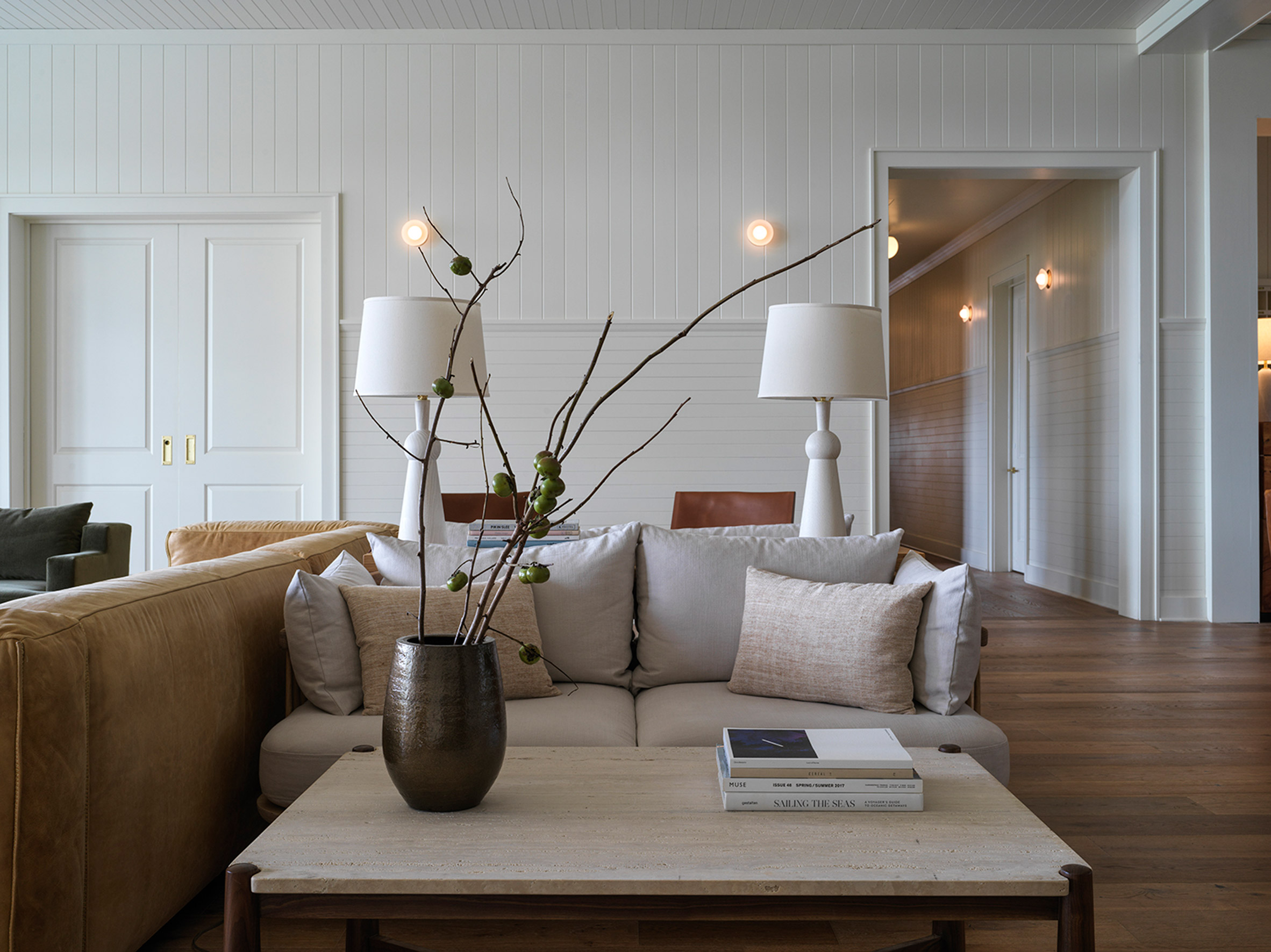
The decor includes muted textiles, leather and wood
Built from the ground up, The Lake House on Canandaigua contains a number of buildings, including the main hotel with 125 guest rooms and suites, a timber frame events space for weddings and daily yoga classes, the casual Sand Bar, The Rose Tavern Restaurant and The Lake House Spa by Soveral.
There is also a swimming pool and an outdoor hot tub where guests can relax with views of the lake all year round, and a gym.
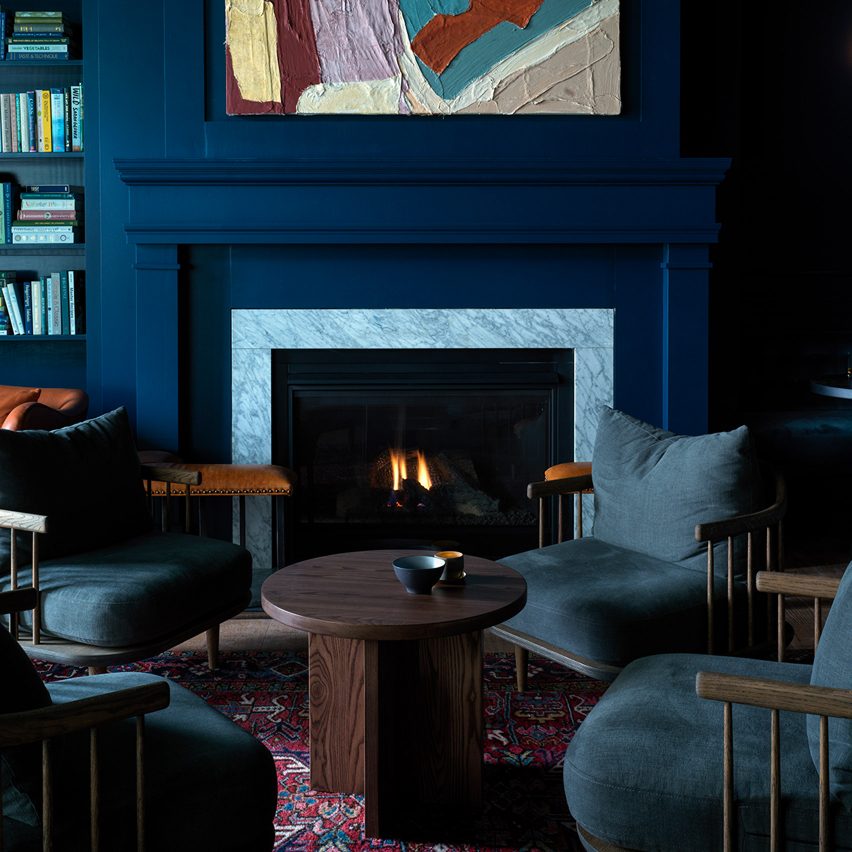
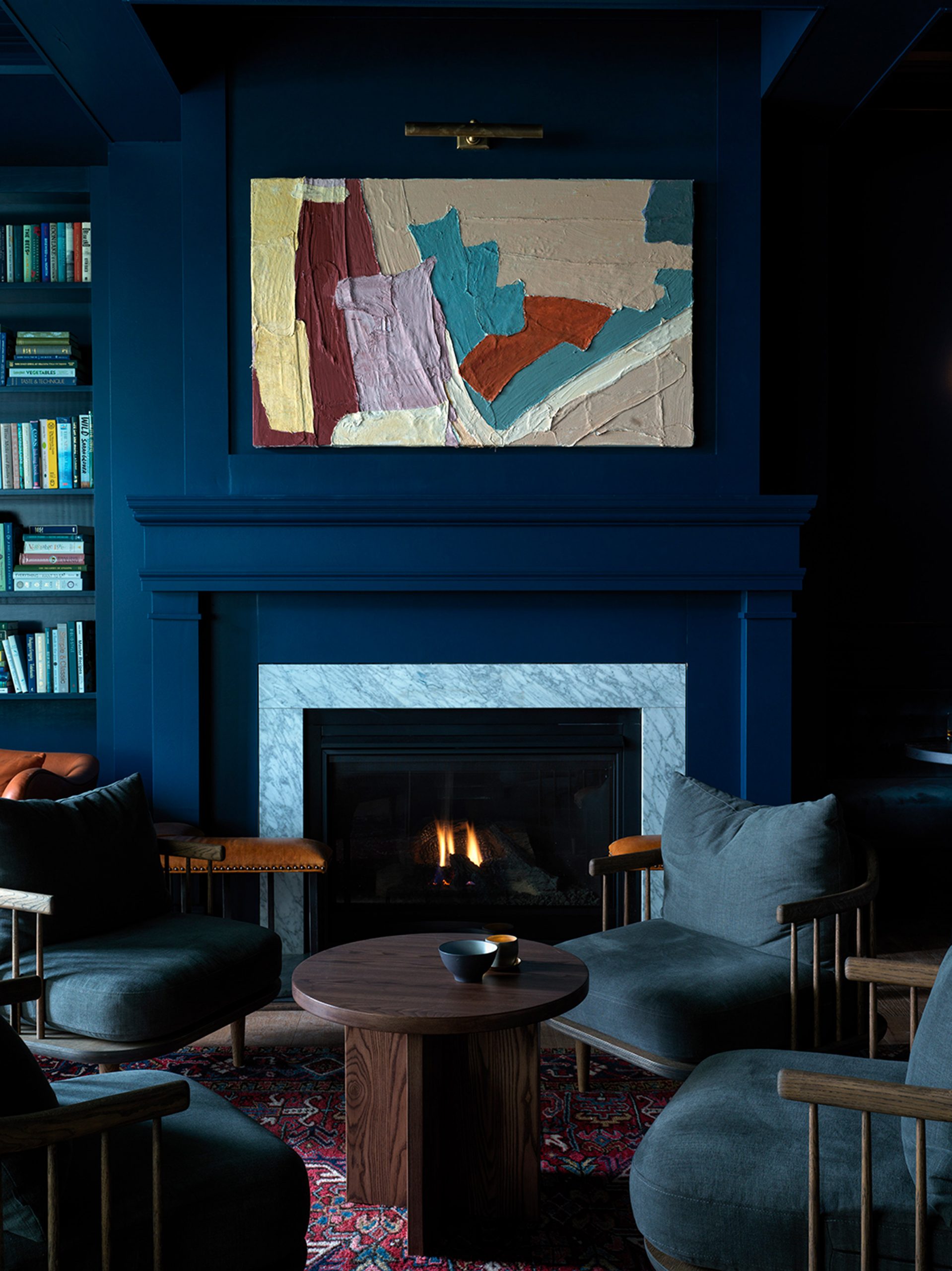
A moody library with a log fire adjoins the lobby
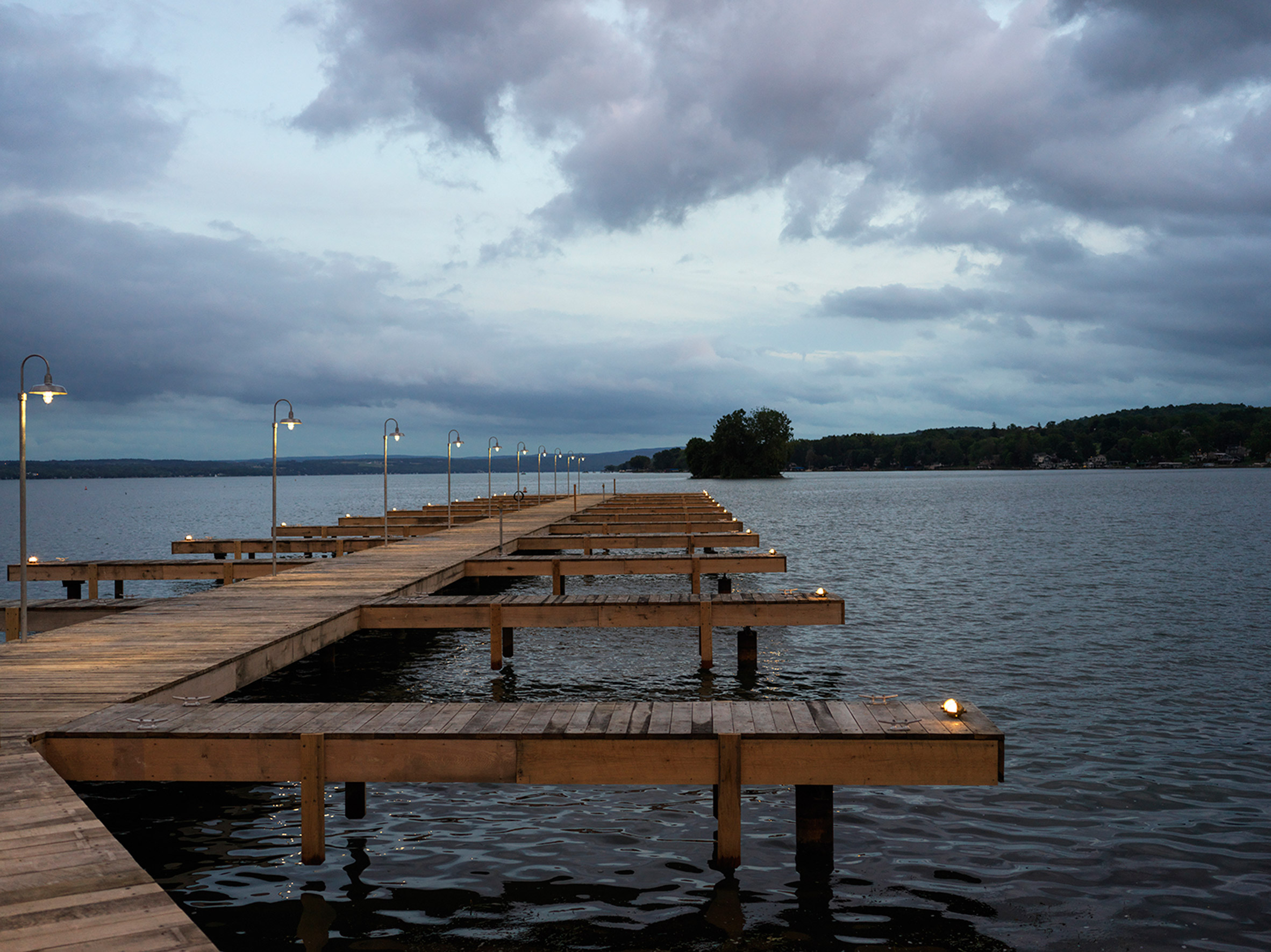
Running along the rear of the property is a private boardwalk for water sports on the lake, or to enjoy fishing and a series of firepits for making s'mores.
"Our concept for the design was inspired by our summers growing up on the same lake," Caleo added. "We wanted the hotel to feel like a home so when guests check in it feels familiar immediately."
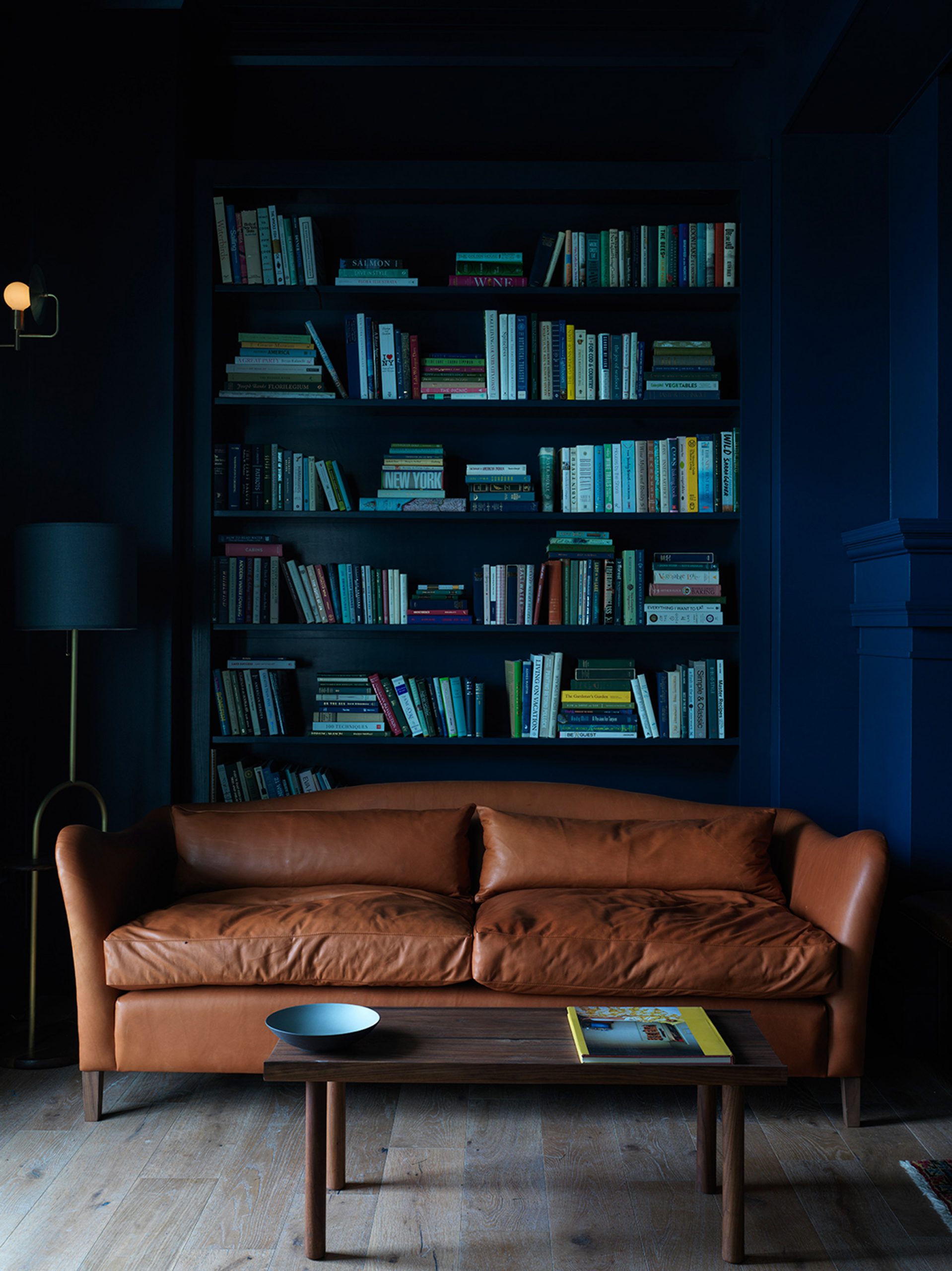
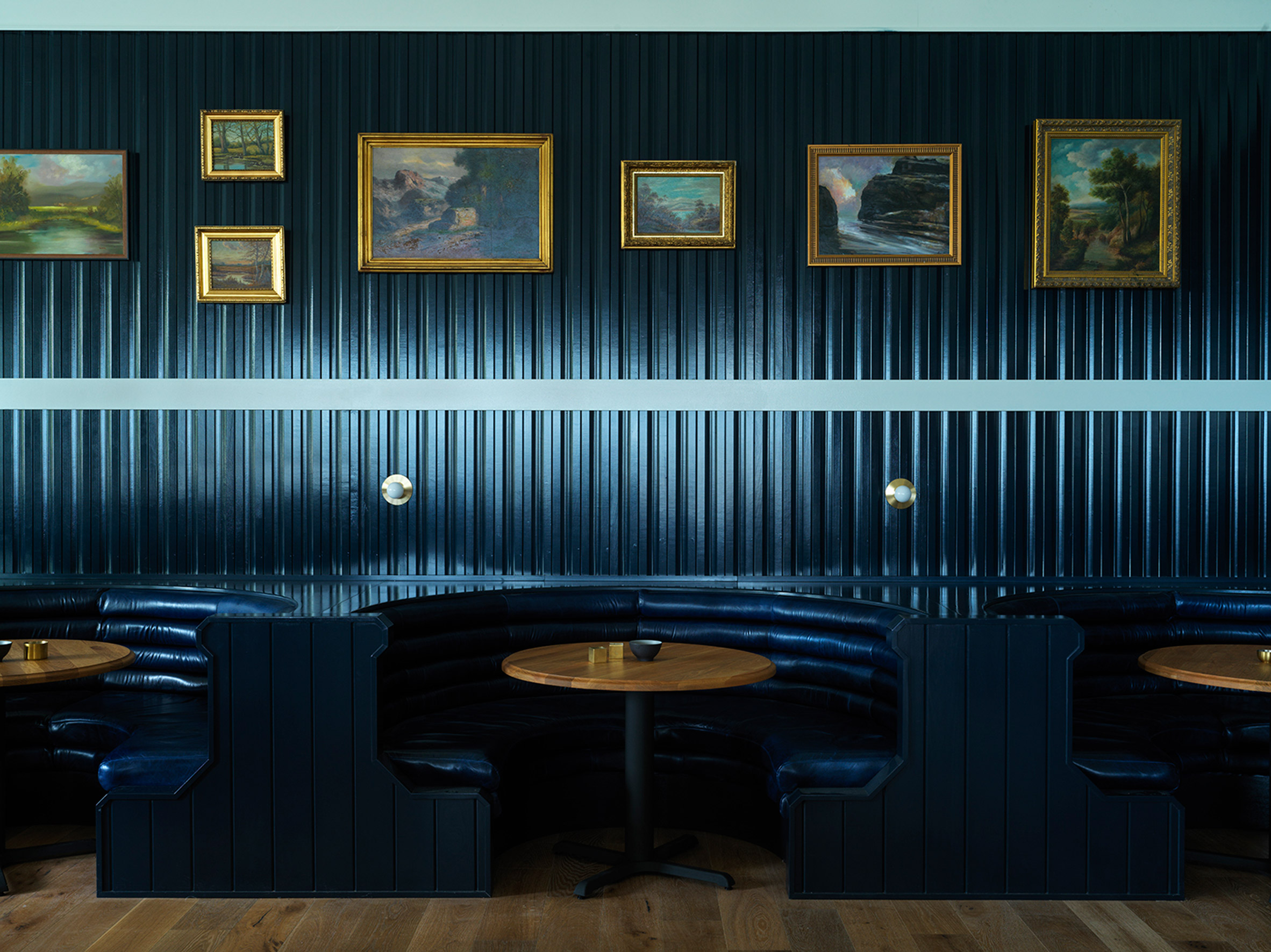
It features dark blue walls and stacks of books for guests to read
"It was also important for us to connect guests to the lake and show how beautiful and pristine this region is, whether by sitting on the deck in an Adirondack chair or reading a book in the library overlooking the water," he continued.
White-painted and gabled structures that form the 109,745-square-foot (10,196-square-metre) complex are intended to be undefinable. Studio Tack partner Ruben Caldwell explained the aim was to create buildings that could have been built one hundred years ago.
Dark hues continue in The Rose Tavern restaurant
"The design concept revolves around trying to capture some of that narrative and history, then project and imagine it forward into the distant future," he told Dezeen. "The physical manifestations of this concept evolved from an idea of bridging the past and future."
"The goal was to suggest a place that had long existed, perhaps a beloved family home, that had been carefully updated over the years," he told Dezeen.
"When you inhabit these spaces, you are a part of something that came before and are invited to become a part of something new."
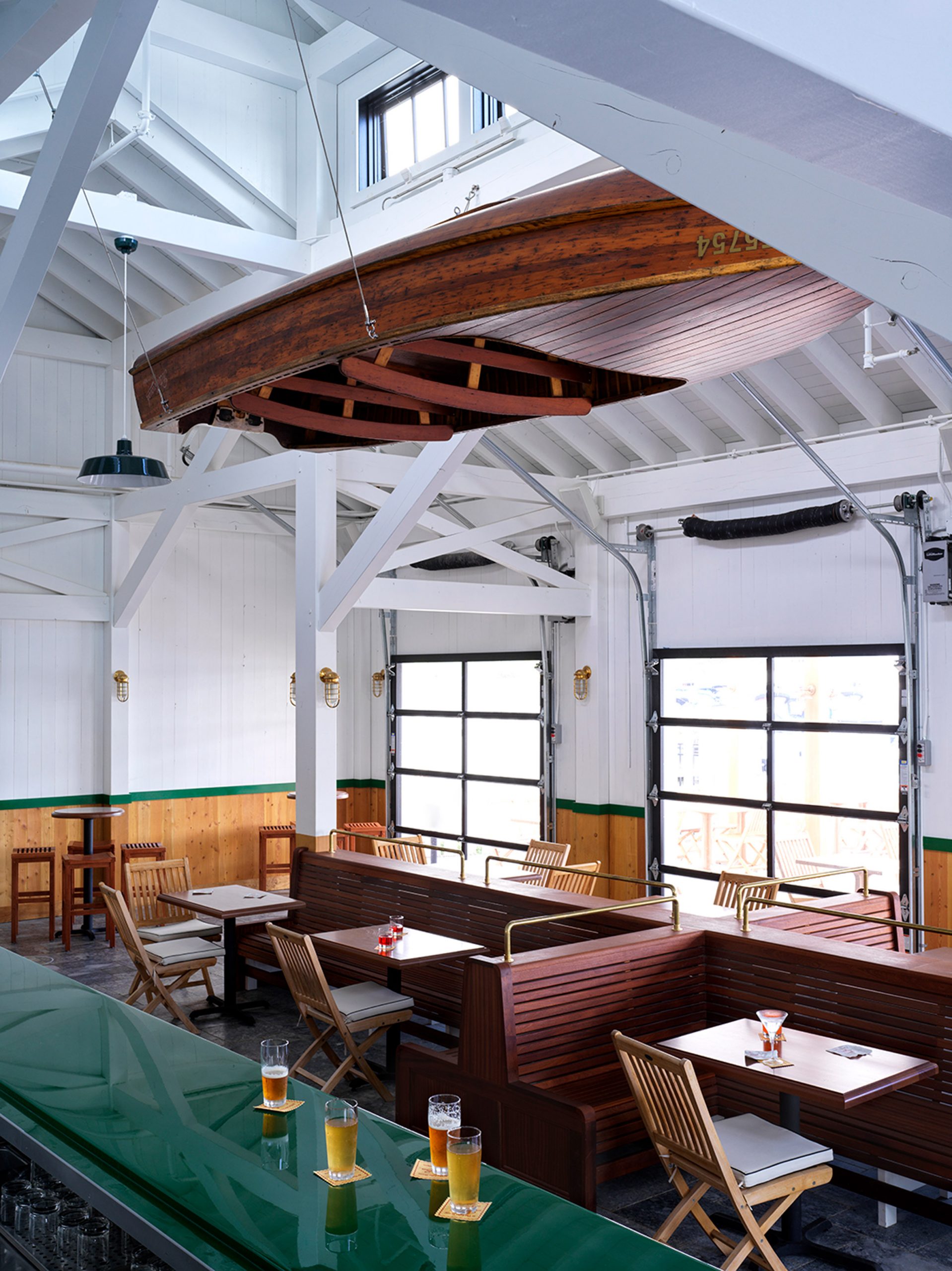
The Sand Bar provides a more casual eatery by the water
"The site is intended to allow for exploration, and it was important that the spaces not be monolithic in their perspectives," Caldwell added. "We imagined a family coming back year after year and finding something new each time."
This concept continued inside where the design team have created a series of cosy spaces with eclectic furnishings.
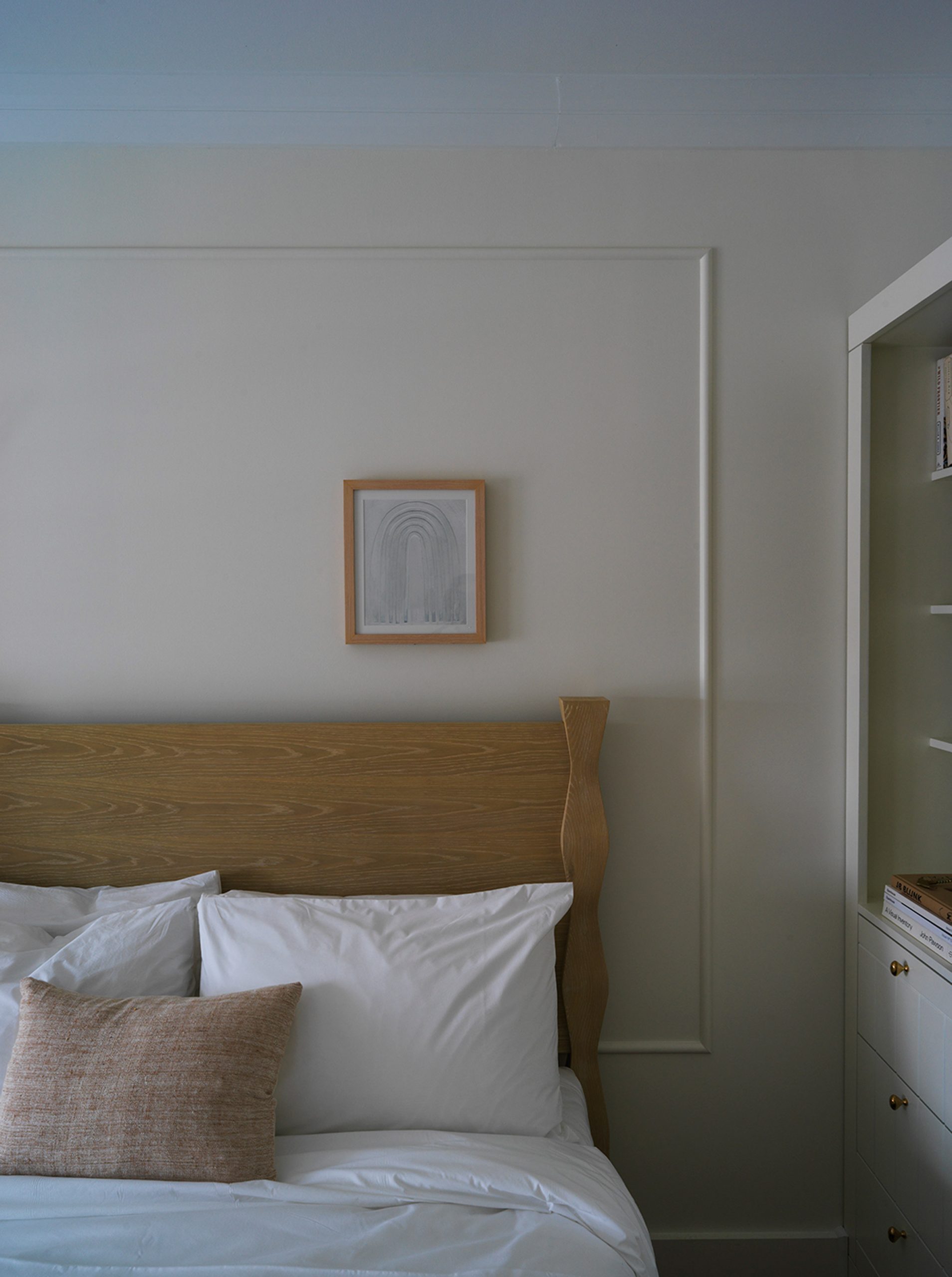
Off-white walls and rustic, pale wood furniture create cosy guest suites
The entrance leads into a bright white lobby featuring a monolithic reception desk, and a lounge-style layout composed of leather and wood furnishings, and baskets stacked with rugs. Accessed from here, is the library and bar painted in contrastingly dark tones and warmed by a log fire.
"At a more detailed scale we were interested in exploring materials such as wood and canvas that suggest a utilitarianism that is simultaneously comfortable and familiar," Caldwell said. "Our interest more broadly was in using familiar materials in ways that invite a closer look and moment of reflection."
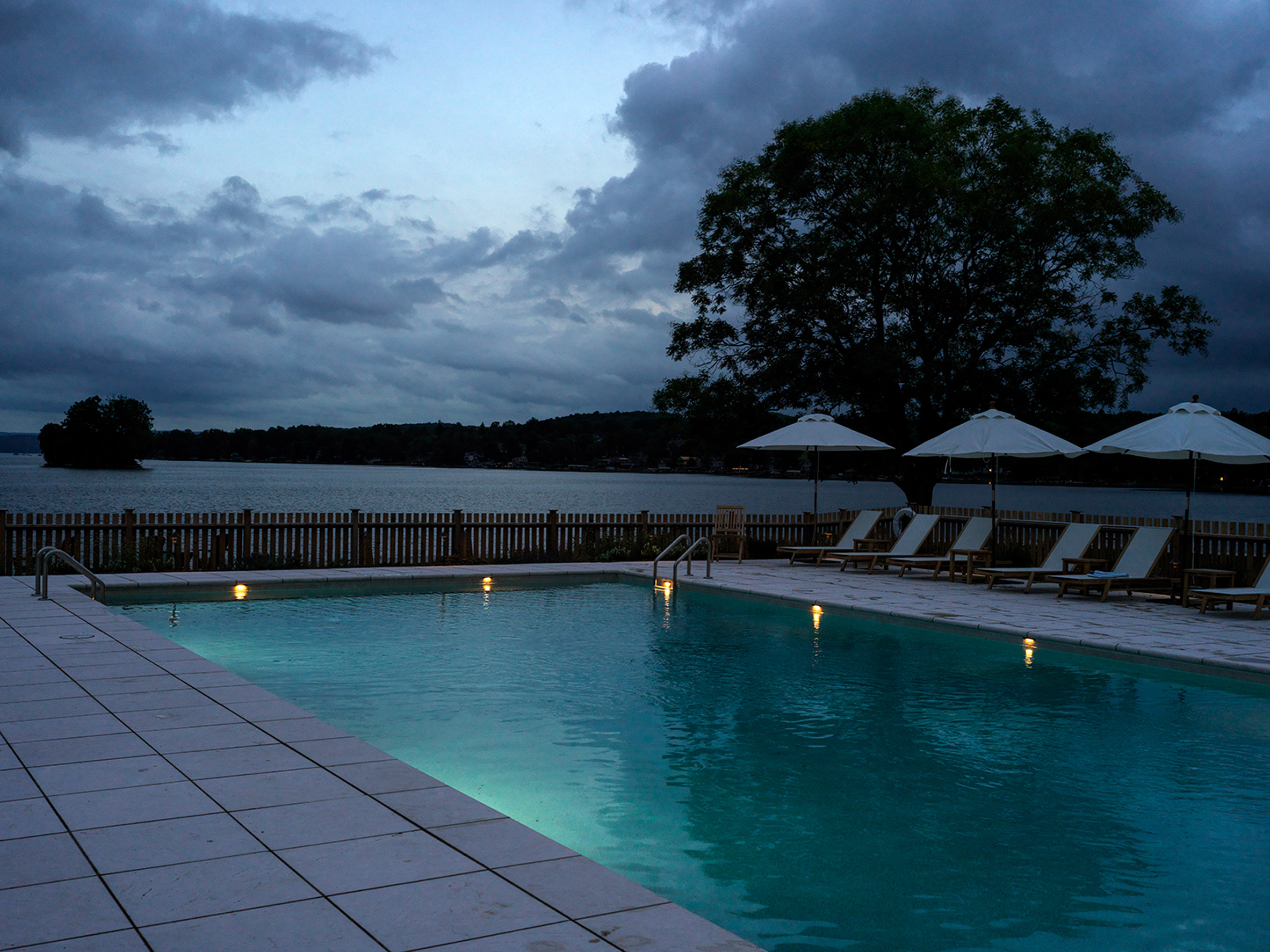
A swimming pool and a hot tub overlook the lake
Off-white-painted walls feature in the bedrooms, with matching built-in storage and hooks for hanging clothes. Muted hues are complemented by rustic, pale wooden four-poster bedframes and bedside tables.
The team created a variety of bedrooms, including the Double Queen and the signature Lakeside King Suite. The latter features a cosy lounge with a fire and glass doors that open onto a terrace with views to the lake.
A private boardwalk is used for water sports and fishing
Designers: Studio Tack and The Brooklyn Home Company Architect: SWBR Architects Construction team: LeChase Construction Owner ans operator: The Sands Family Hospitality partner: Preferred Hotels Executive chef: Scott Riesenberger Spa partner: Alexandra Soveral
Furniture including lighting, tables and storage have been added to Dezeen Showroom, which is an affordable space for brands to launch products and showcase their designers and projects to Dezeen's huge global audience.
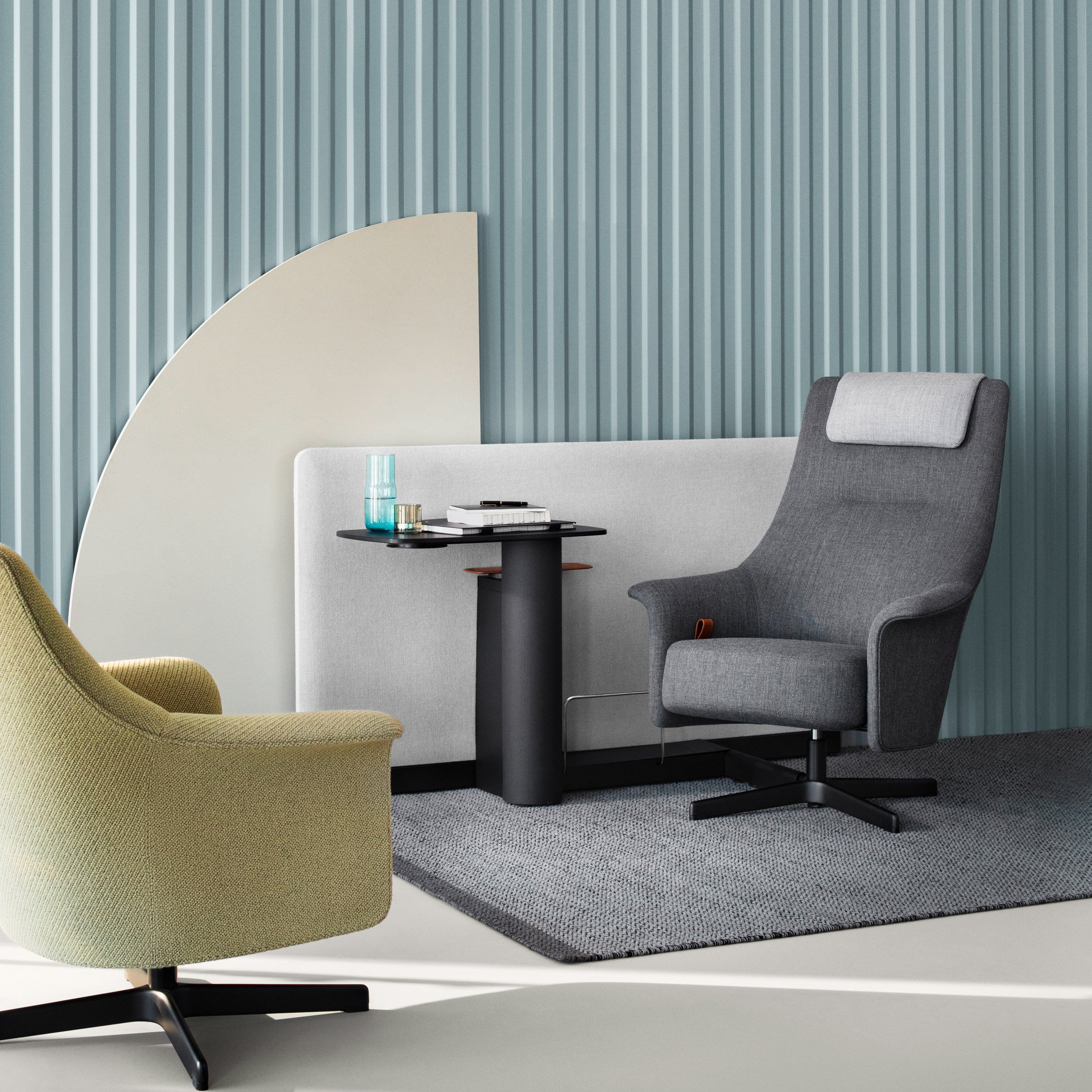
The collection includes a rotating table, an acoustic partition and the Active Chair, which has a seat-tilting mechanism that allows users to tailor the chair to upright or more relaxed positions.
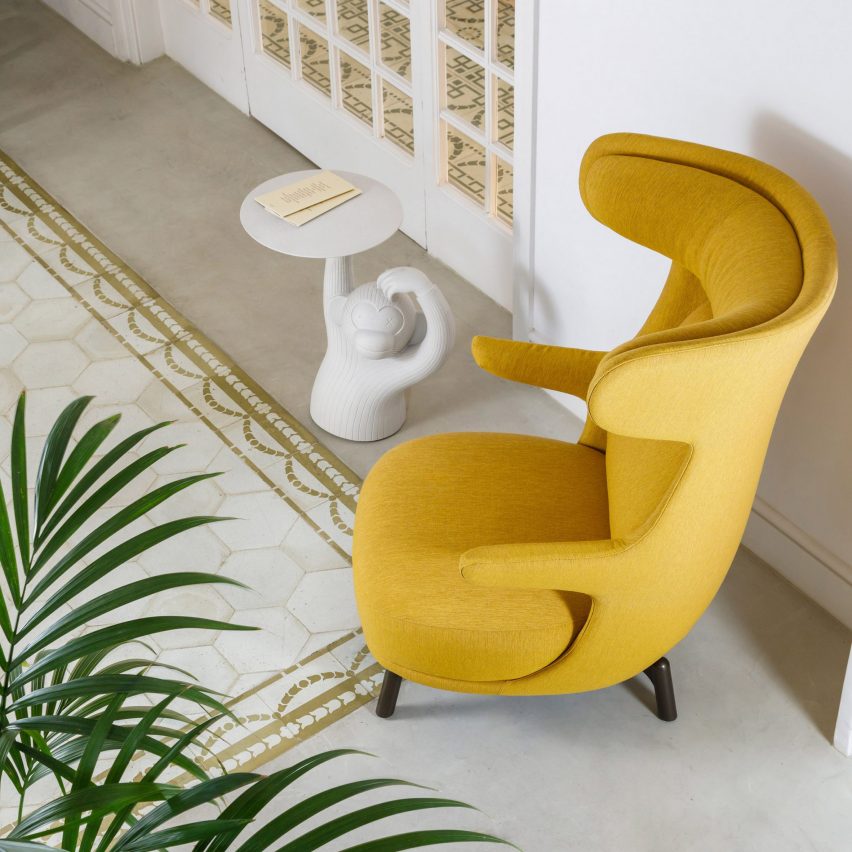
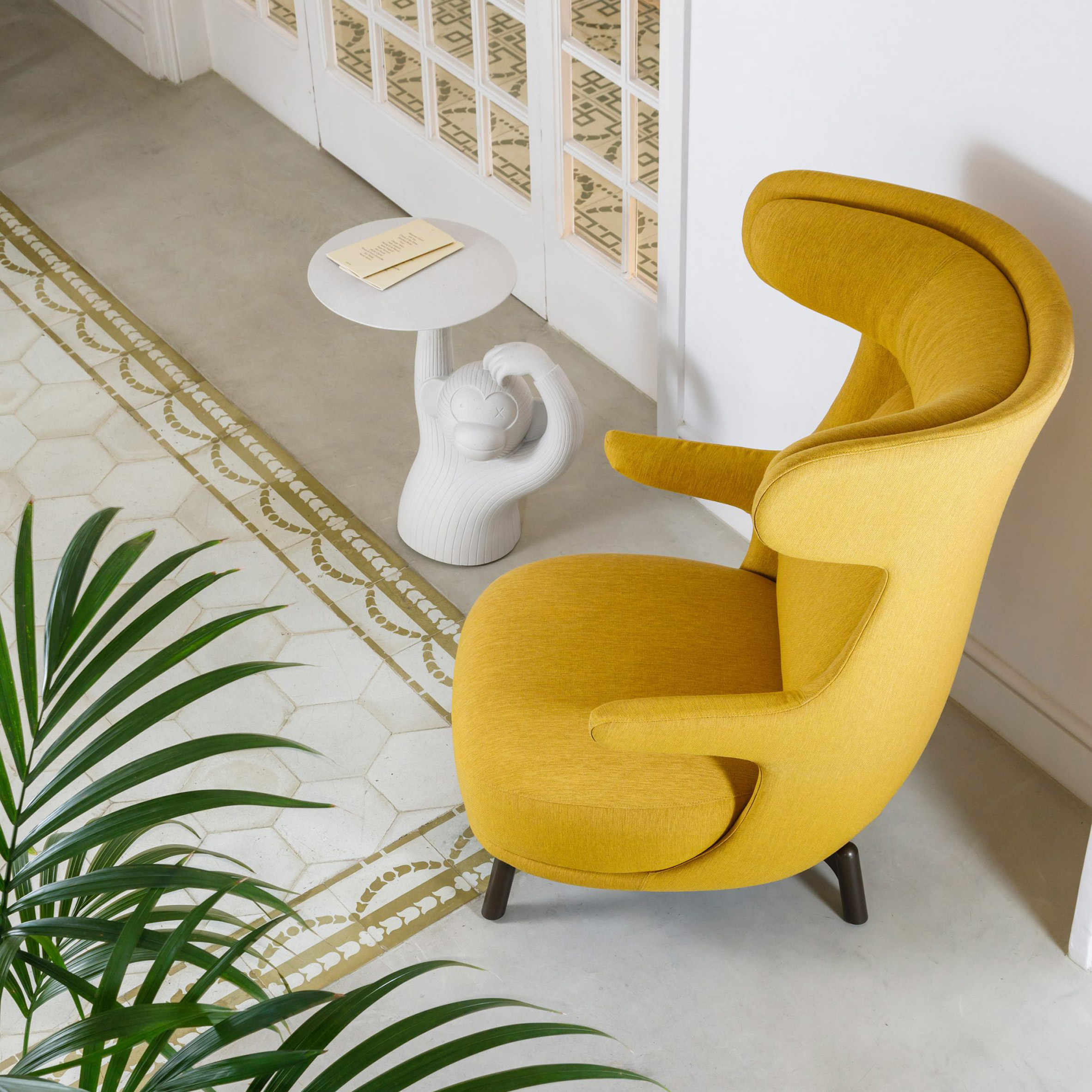
Furniture brand BD Barcelona showcases its Monkey side table, which has been designed by Spanish designer Jaime Hayon.
The table is made from one single piece of concrete and takes the form of a monkey holding a plate above its head with one hand and scratching its head with the other.
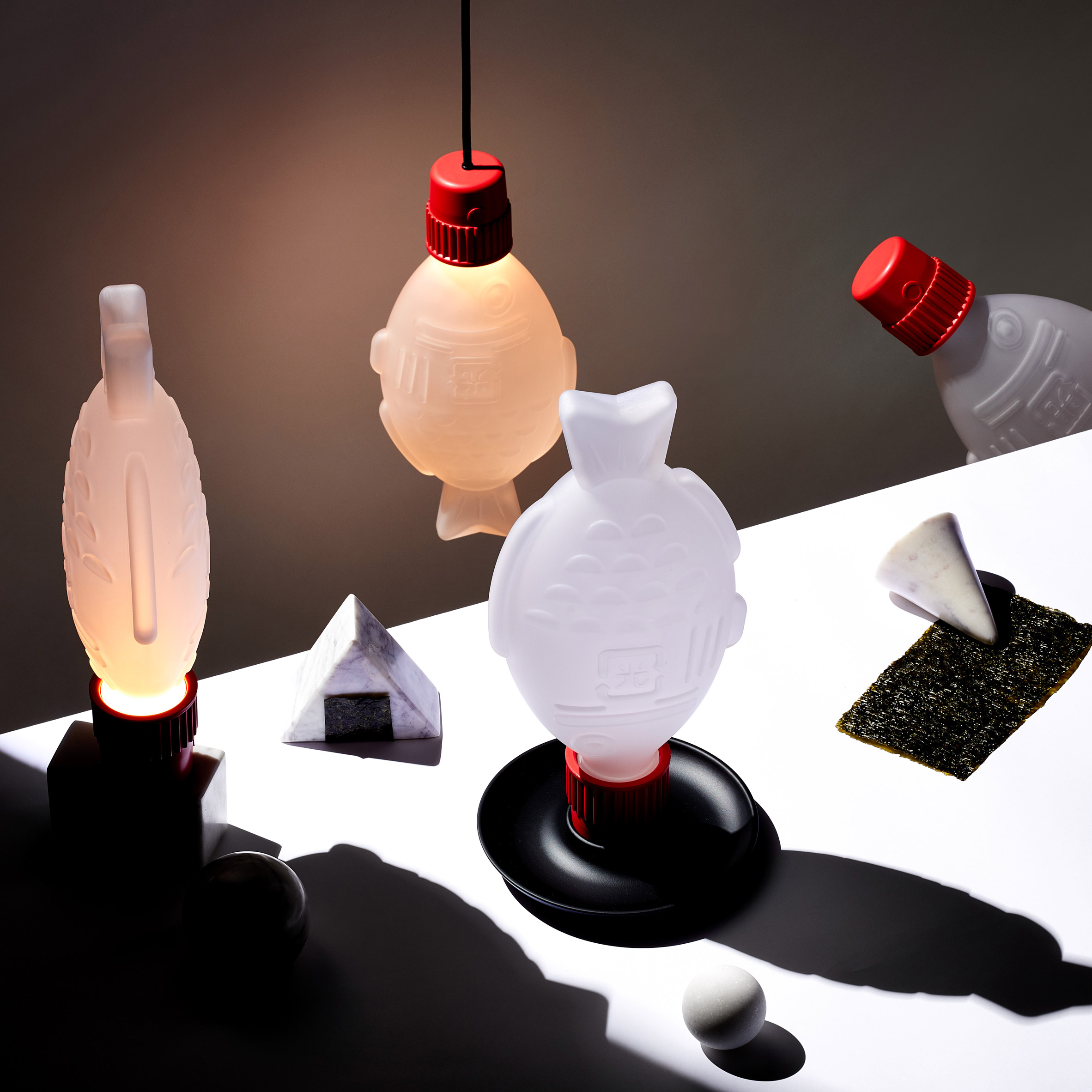
The modular ceiling light has been designed so that parts can be swapped out or upgraded, including the signature red cap that unscrews from the top of the light.
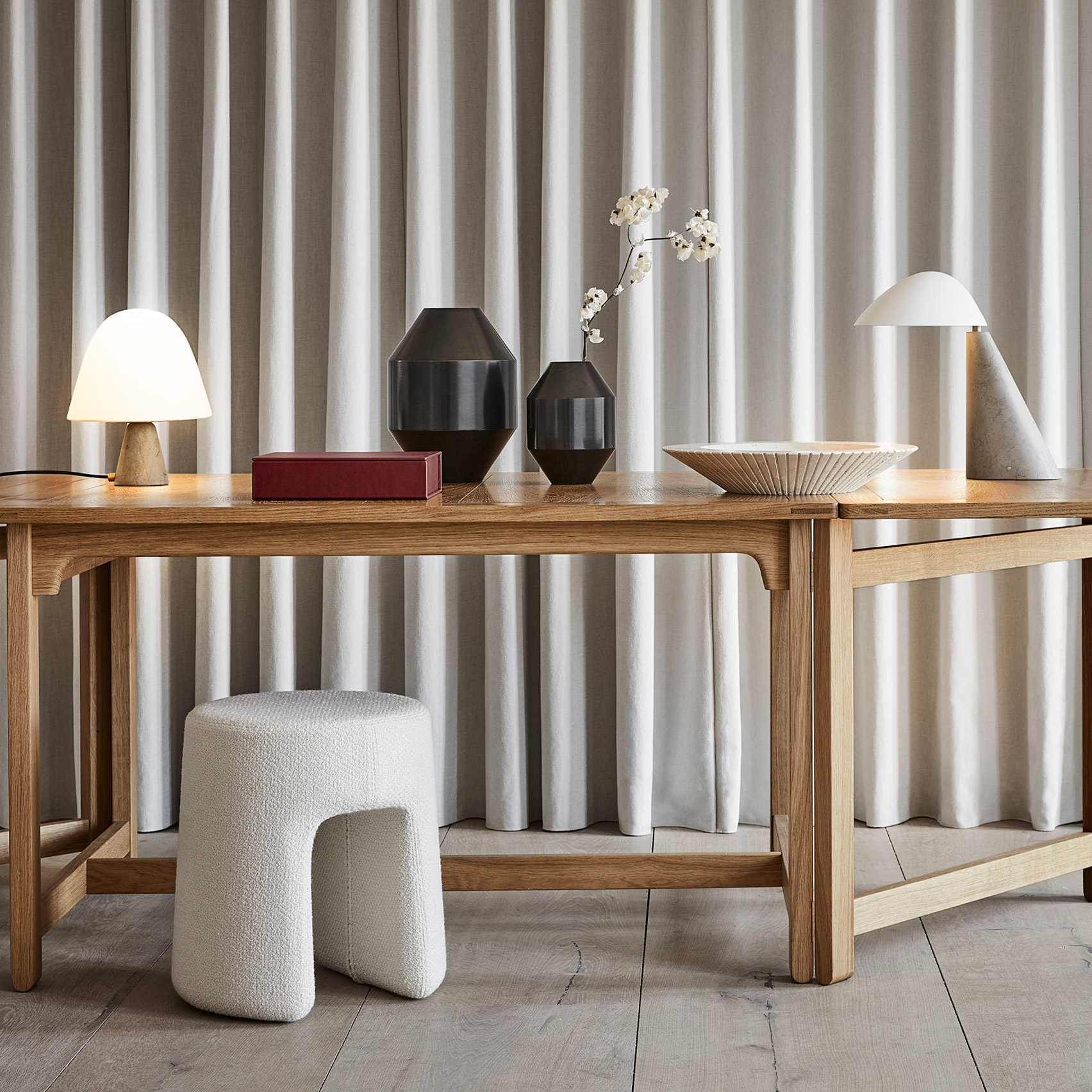
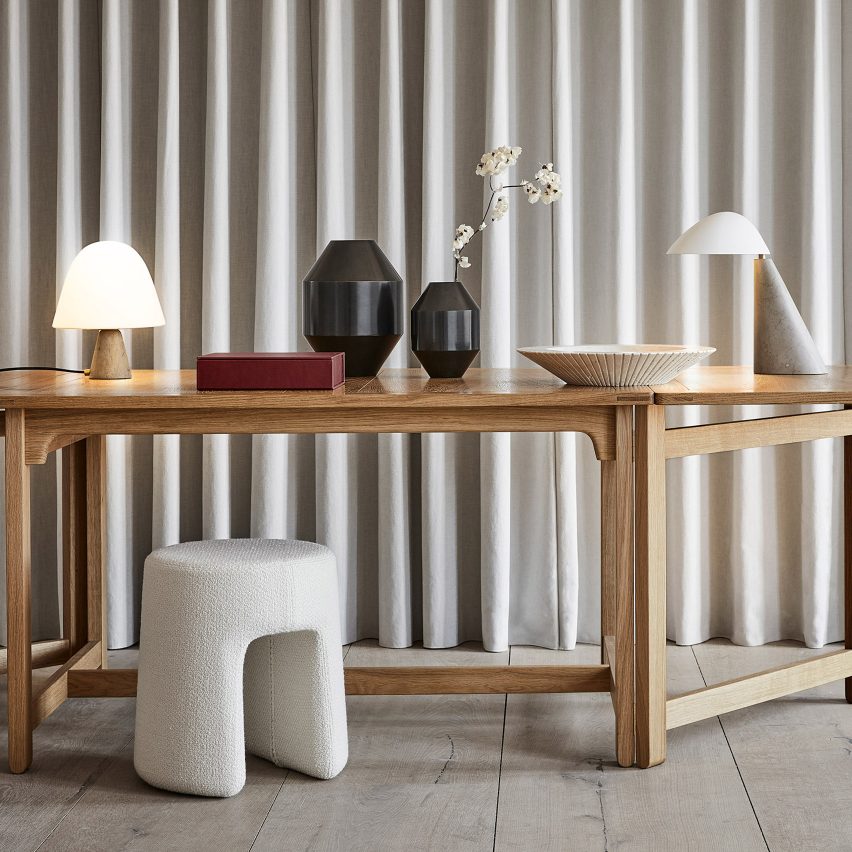
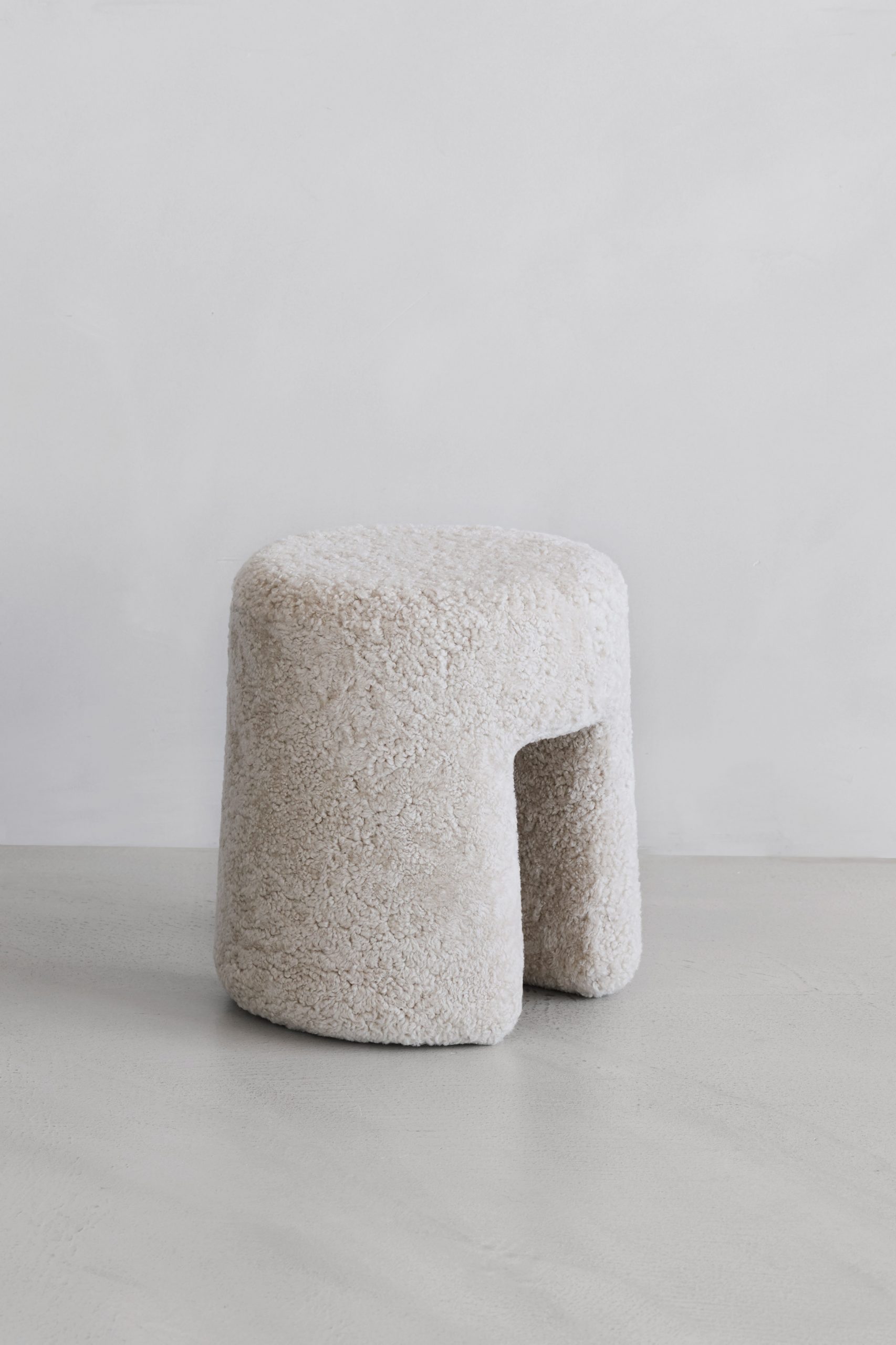
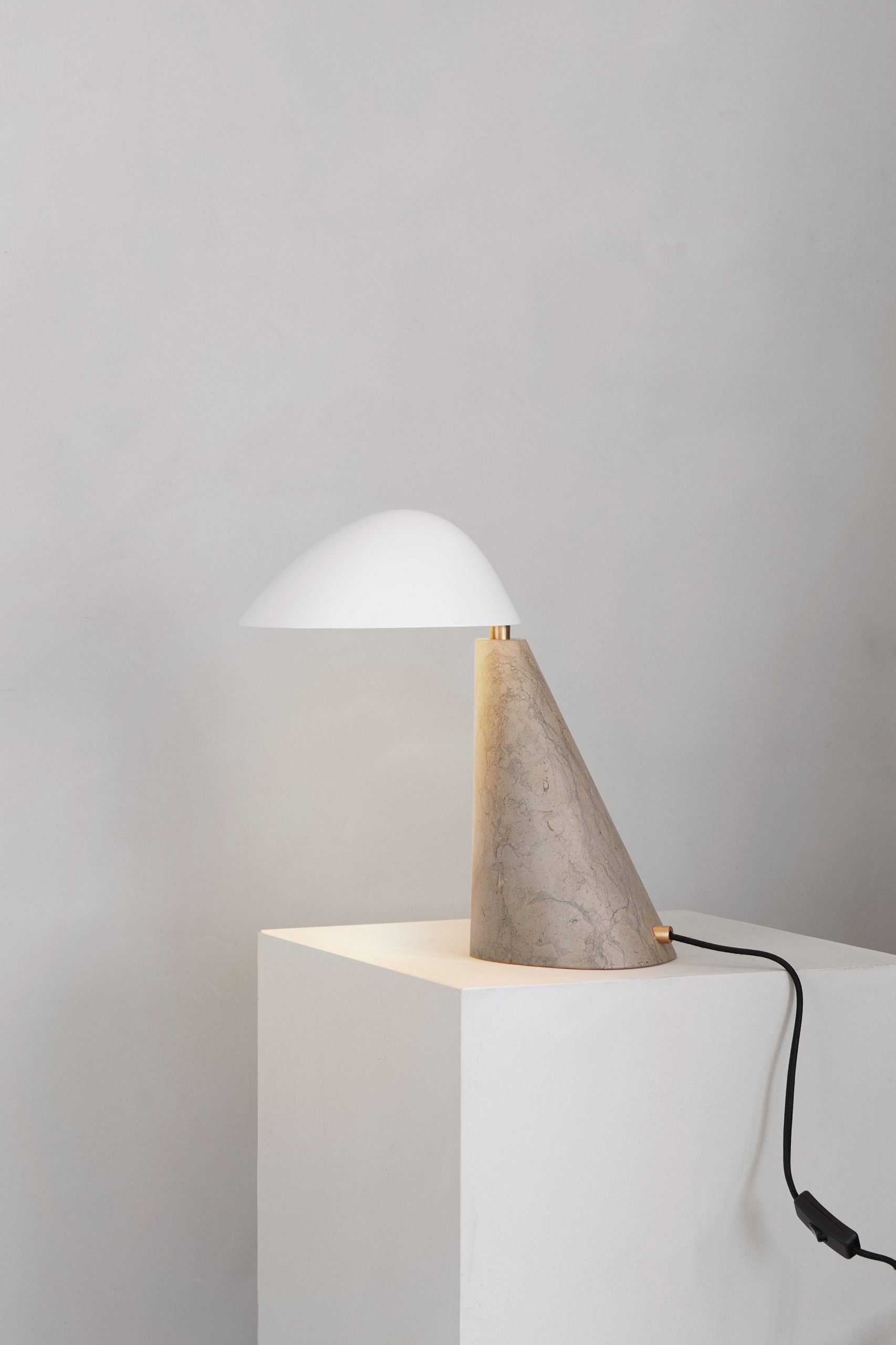
The collection includes Space Copenhagen's sculptural Fellow Lamp and the woolly Sequoia Pouf, as well as Danish designer Maria Bruun's minimalist Islets Side Table.
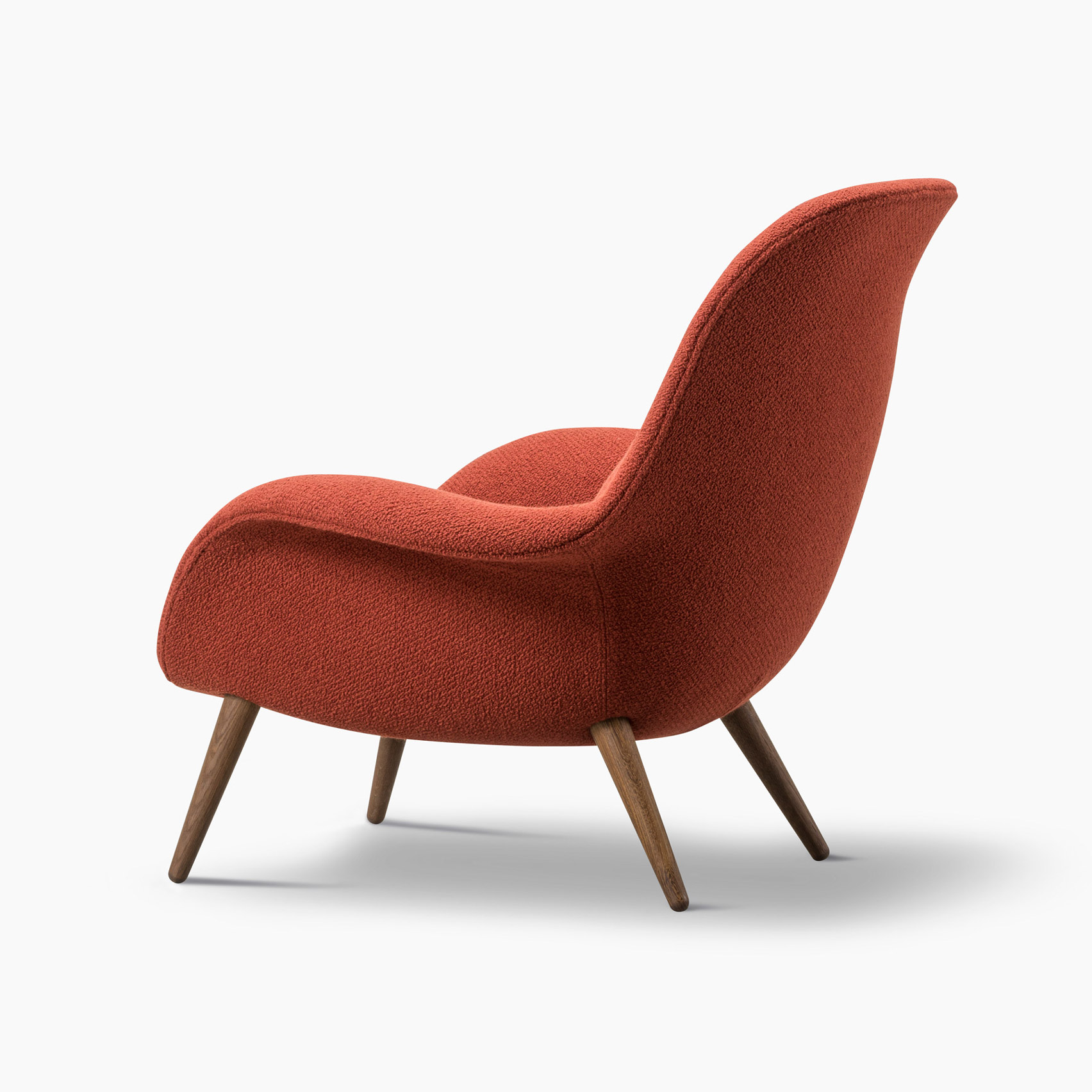
Fredericia also showcases a collection of Swoon chairs designed by Space Copenhagen, which have been designed as hybrids of lounge chairs and armchairs.
The collection is intended for use in hotel lobbies, restaurant reception areas, bars, lounges and private homes.
Philadelphia-based designer John Pomp presents the Calla Chandelier, which features iridescent disc-shaped lights informed by calla lilies.
The organic and geometric design of the chandelier is created through hand-blown pieces of glass that are suspended from a three-tiered, adjustable solid-brass armature.
Dezeen Showroom offers an affordable space for brands to launch new products and showcase their designers and projects to Dezeen's huge global audience.
As well as benefiting from exposure to Dezeen's three million monthly website visitors, products featured on Dezeen Showroom will be included in our Dezeen Daily newsletter sent to 170,000 subscribers and benefit from Dezeen's incredible SEO.
Dezeen has the highest SEO ranking of any design website with a domain authority of 87, according to SEO analytics service Moz, meaning products listed on Dezeen Showroom are more likely to be found by searchers, while links from Dezeen Showroom to your site will be more valuable than from any other design site.
Posts will remain on the Showroom section indefinitely and will not incur renewal fees once the initial payment has been made for the listing.
The Complements collection is designed for longevity and, as its name suggests, intended to accompany Fredericia's main furniture ranges to help users "create a look and feel for an entire interior".
Above: the Sequoia Pouf. Top image: an overview of the Complements collection
Through collaborating with different designers, the collection sees Fredericia experiment with textures, colours and compositions that stray from its traditional designs and use timber and leather.
Highlights include Space Copenhagen's sculptural Fellow Lamp and the woolly Sequoia Pouf, alongside Maria Bruun's minimalist Islets Side Table that has a deliberately simple structure.
Space Copenhagen's sculptural Fellow Lamp
"Drawing on our legacy of working with wood and leather, we've explored other materials with textures, colours and compositions that bring an extra dimension to the atmosphere," said Fredericia.
"The result is a celebration of materiality in well-considered concepts that are refined, authentic, inviting and crafted to last."
About Dezeen Showroom:Dezeen Showroom offers an affordable space for brands to launch new products and showcase their designers and projects to Dezeen's huge global audience. For more details email showroom@dezeen.com.
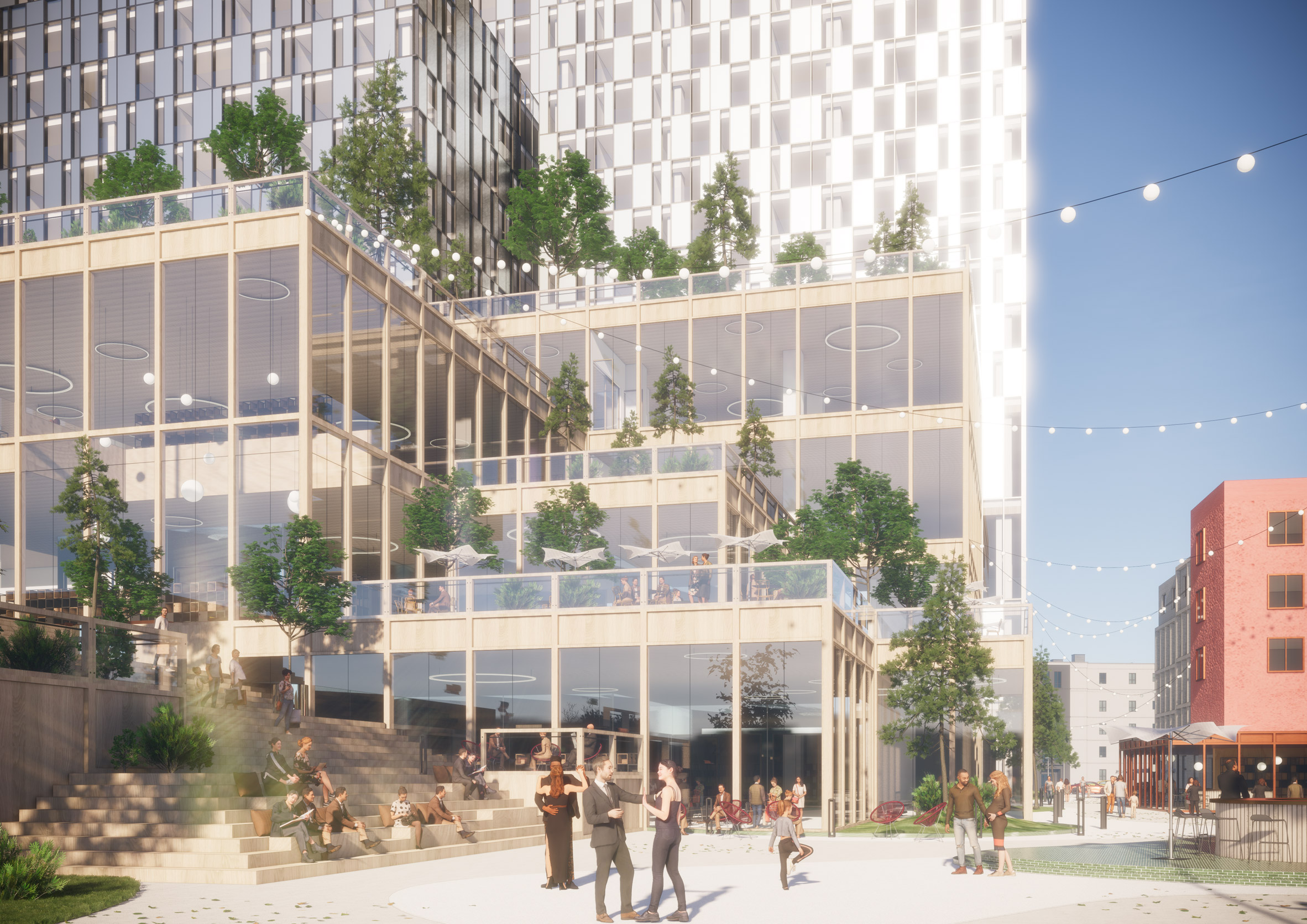
A cluster of towers and timber buildings will be swathed by greenery in Seoul Valley, a mixed-use scheme that Danish studio Henning Larsen has proposed for South Korea's capital.
The 360,644-square-metre development is intended to transform an inaccessible site in the Yongsan District and will incorporate courtyards that link up with MVRDV's Seoul Skygarden.
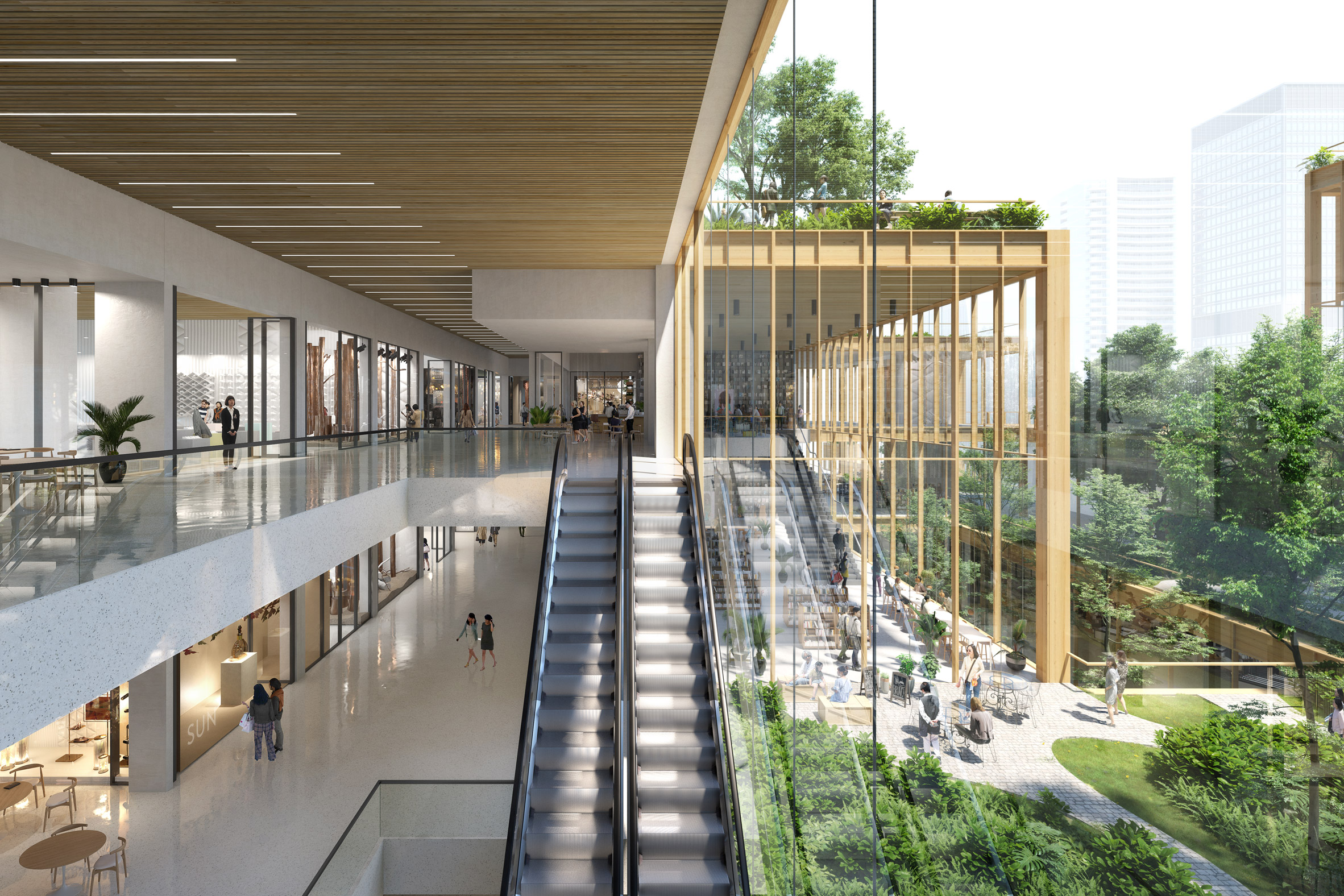
Among its facilities will be shops, workshops and a conference centre, alongside towers containing hotels, offices and apartments – designed by Henning Larsen with local architect Siaplan and retail consultant Benoy.
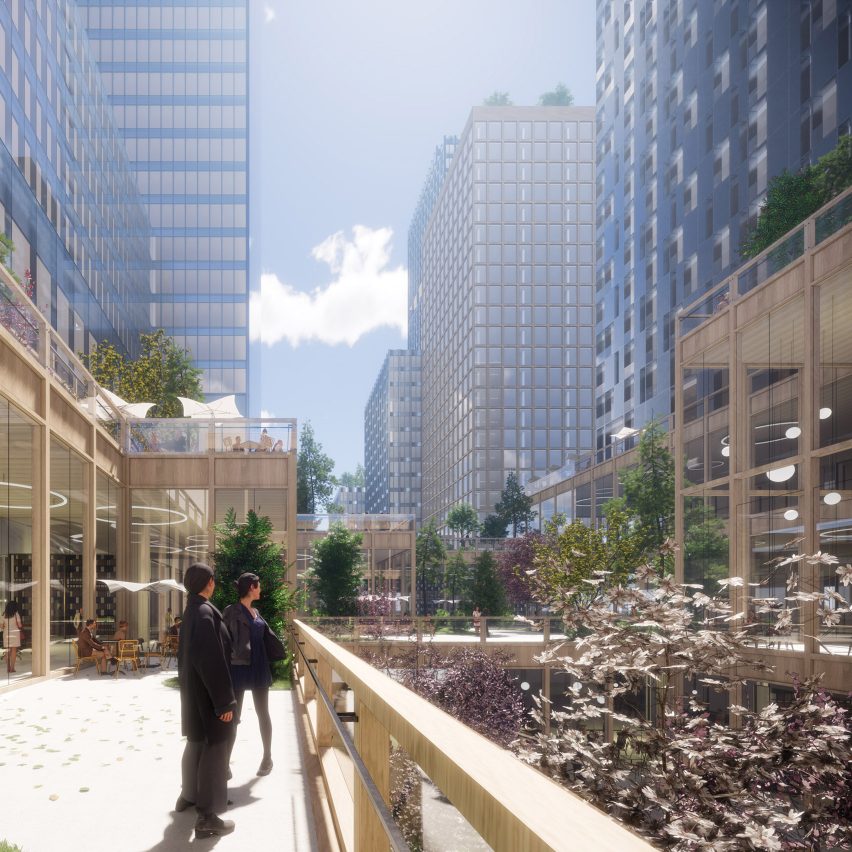
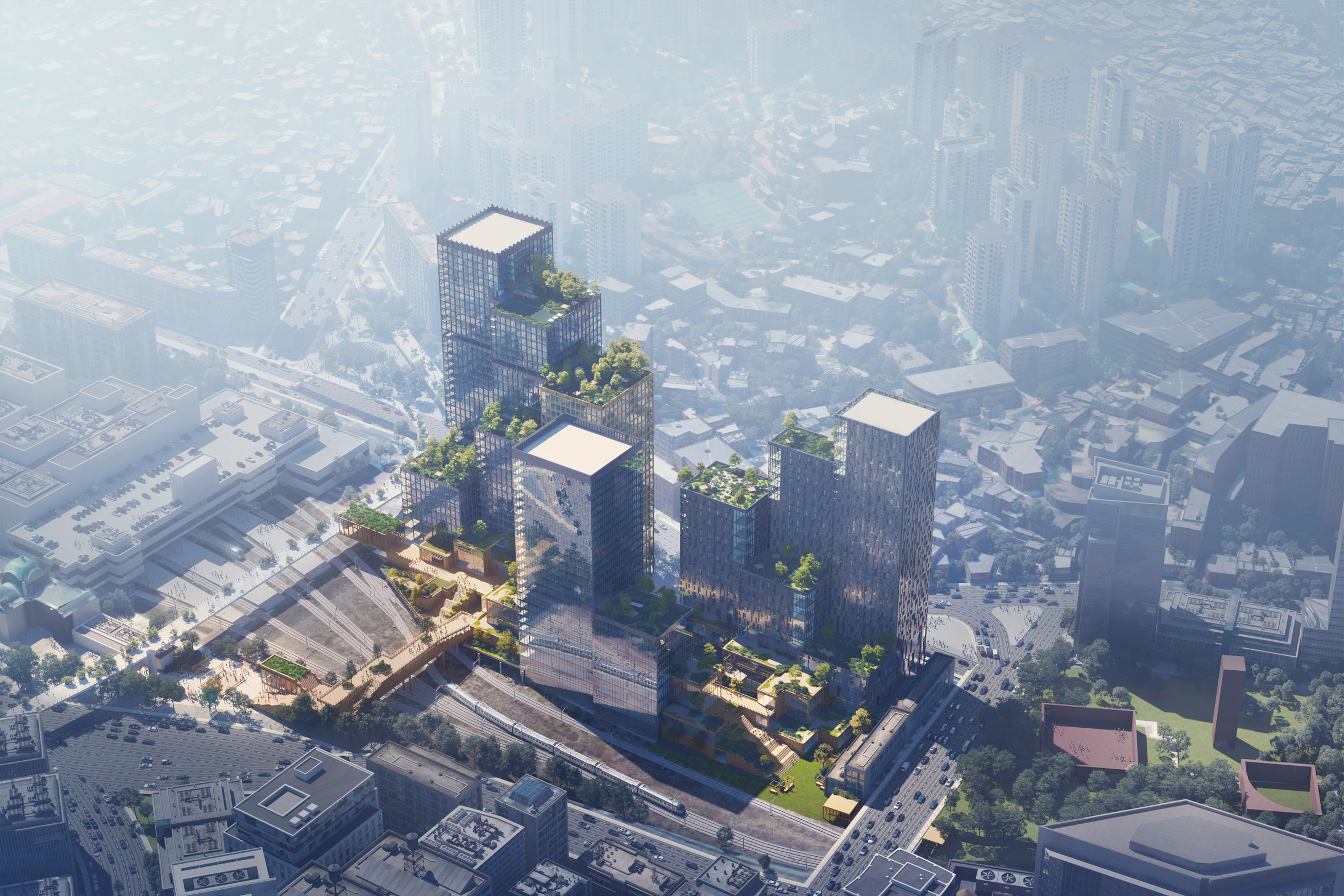
Above: Seoul Valley will be built in Yongsan District. Top image: it will combine small timber buildings with towers
Henning Larsen's design was the winning proposal in a competition for Seoul Valley, selected over entries by the likes of MVRDV and SOM. It is due to enter the schematic design phase in 2021.
Once complete, it will form a part of a wider masterplan to transform a long, isolated stretch of land sandwiched between Seoul Station's rail yards and an eight-lane motorway.
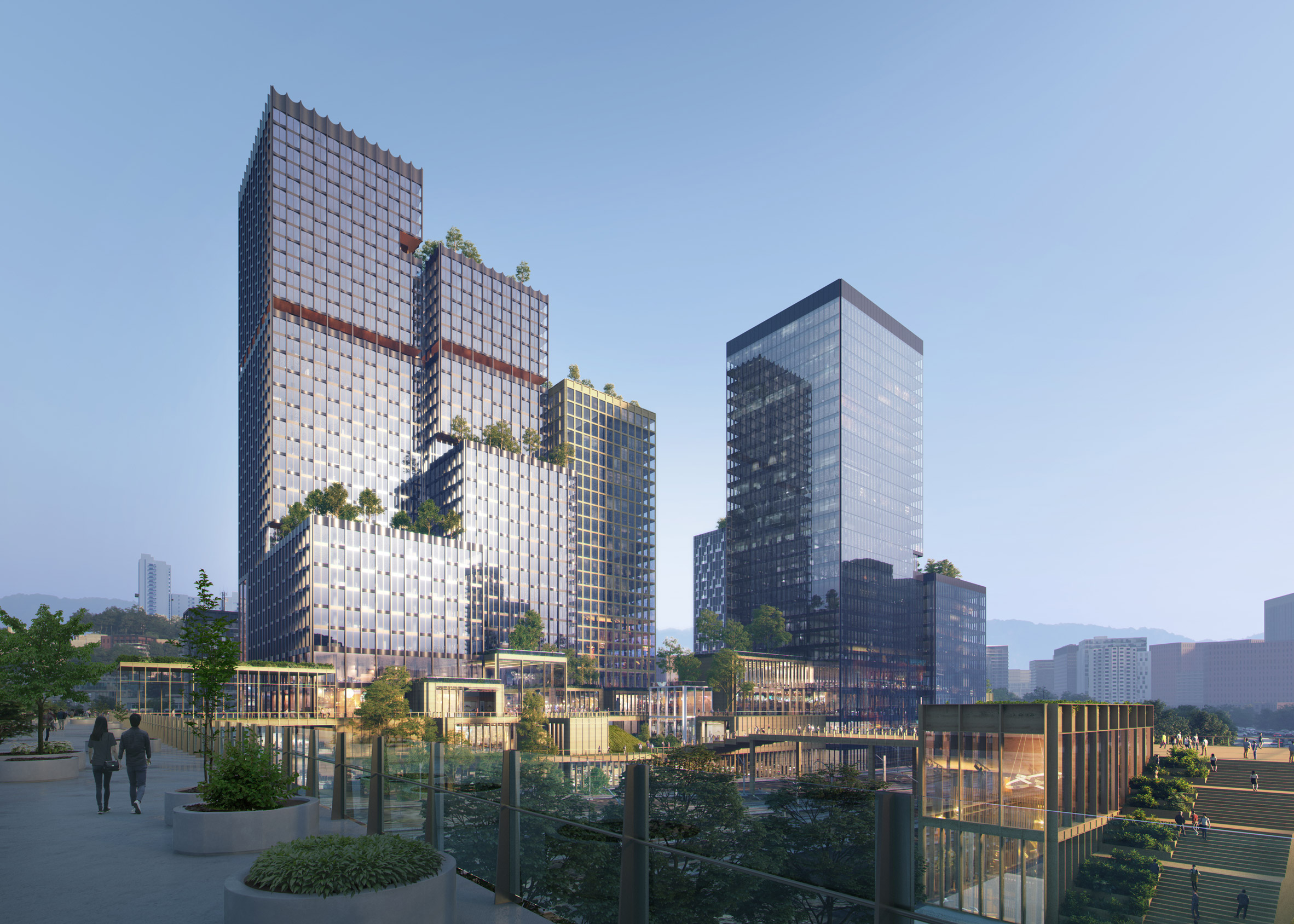
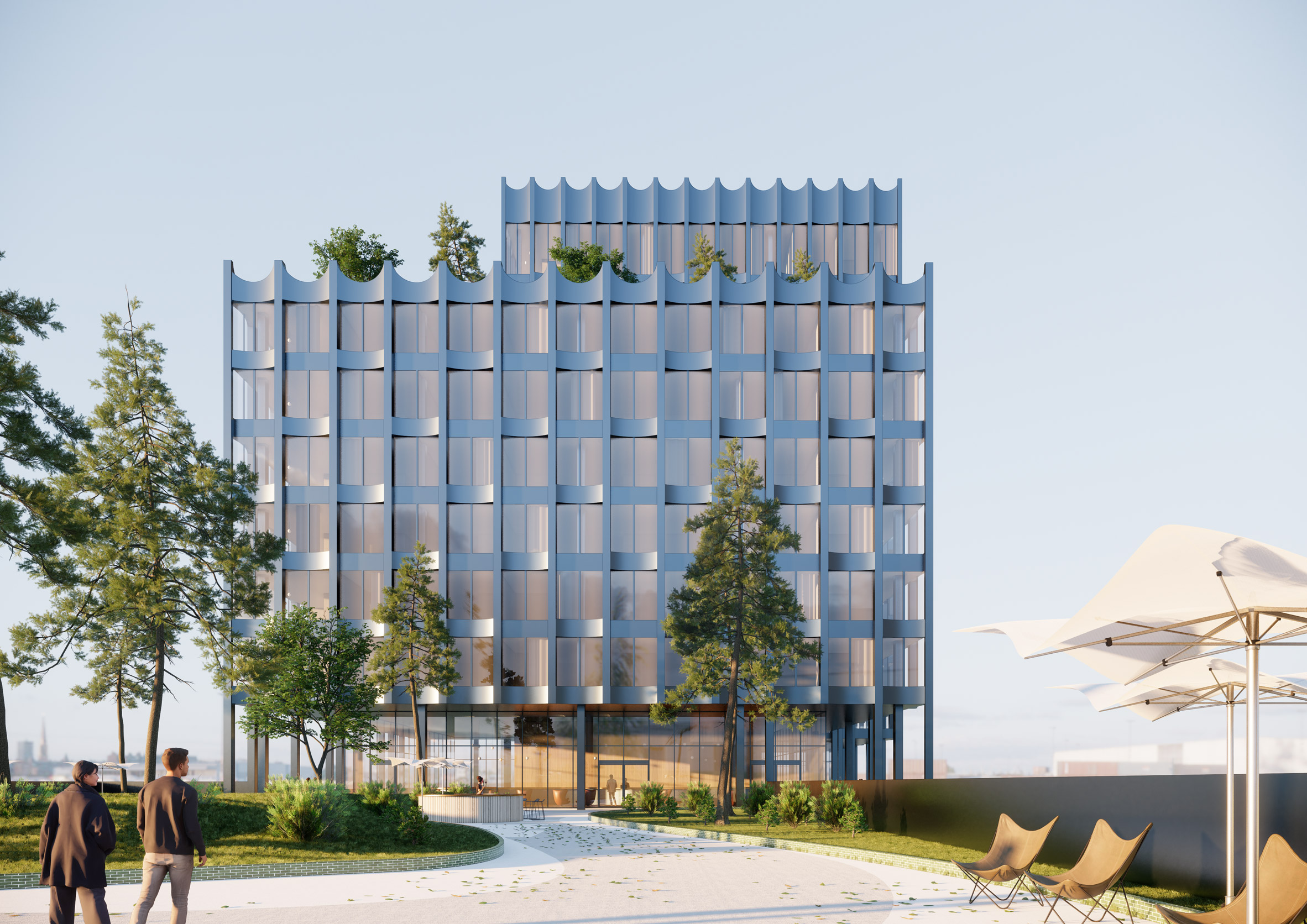
The cluster of towers will contain hotels and offices
"The area around the Seoul Station is a future development area where the rail tracks will be covered and new commercial and financial districts will rise," said Nina la Cour Sell, partner at Henning Larsen.
"This district will form the northernmost part of that plan. Until now the site has been an inaccessible island in the city – with the new development it will be both an attraction and an urban shortcut in the busy area," she told Dezeen.
Retail spaces and workshops will be contained in the smaller buildings
Henning Larsen's design for Seoul Valley attempts to reconcile the contrasting scales of architecture in Seoul, ranging from the city's small traditional villages and gardens to contemporary skyscrapers.
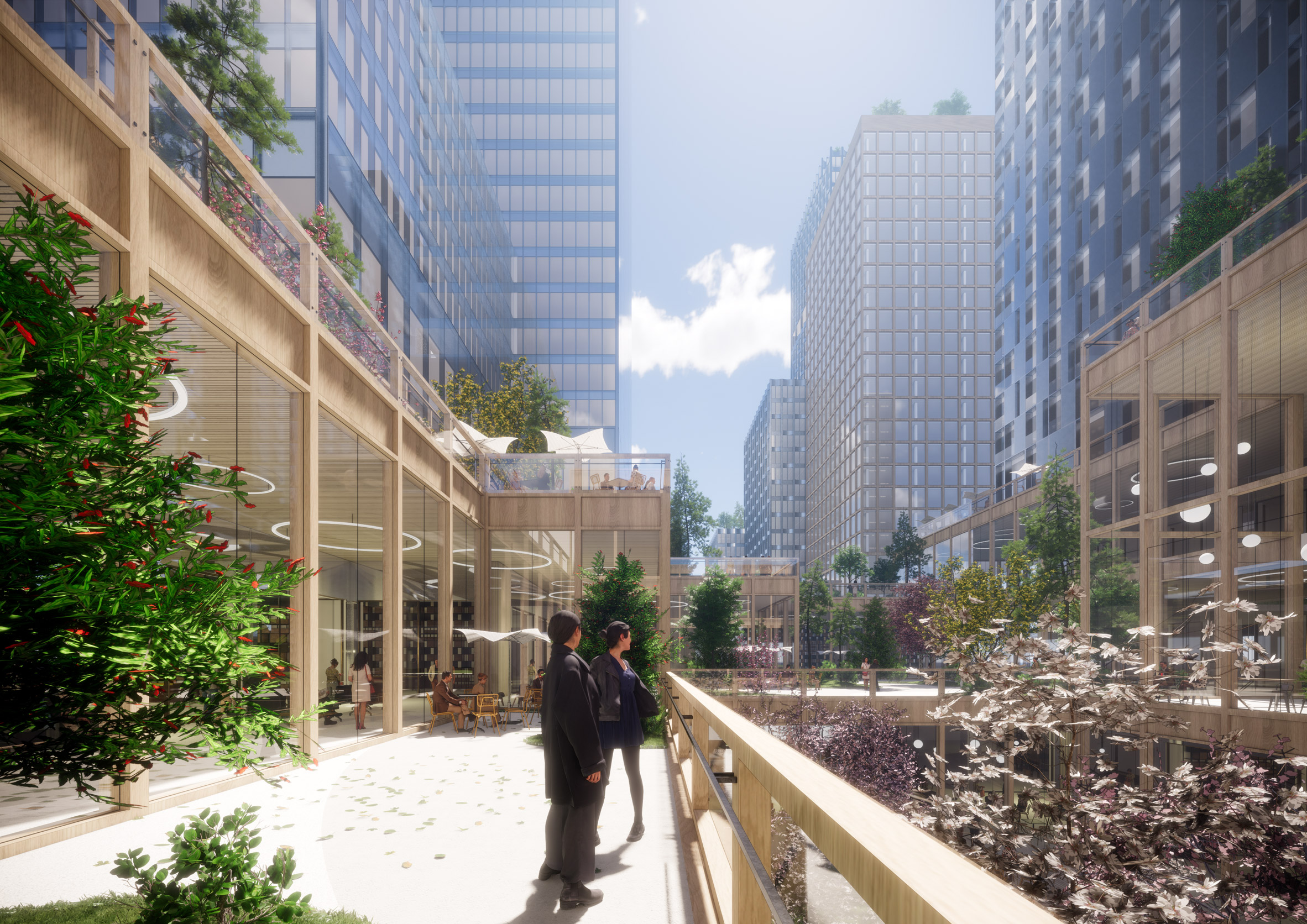
It combines a group of towers visible within the city's skyline with a series of smaller developments that will be staggered around gardens and courtyards to ensure the scheme is human in scale.
There are plans to build small buildings from timber
"With Seoul Valley, we were interested in developing a scheme that merged the outsized scale of the city today with the small patchwork structures of its past," explained Jacob Kurek, Henning Larsen's partner in charge.
"By dissolving the scale at the public levels, we not only make it feel more livable but nod towards the beautiful structures of old Seoul. Our hope is for Seoul Valley to become a home to not just high-end shops but also craftsmen and artisans."
Courtyards will be positioned around all the facilities
Details of the building's materiality are to be decided, though each tower is expected to have unique but complementary facade treatments, offering variety while ensuring they read as "one family".
To help minimise the environmental impact of the scheme, there is an ambition for a large portion of the smaller spaces to be built with sustainably-sourced timber.
Greenery will be used to boost wellbeing and air quality
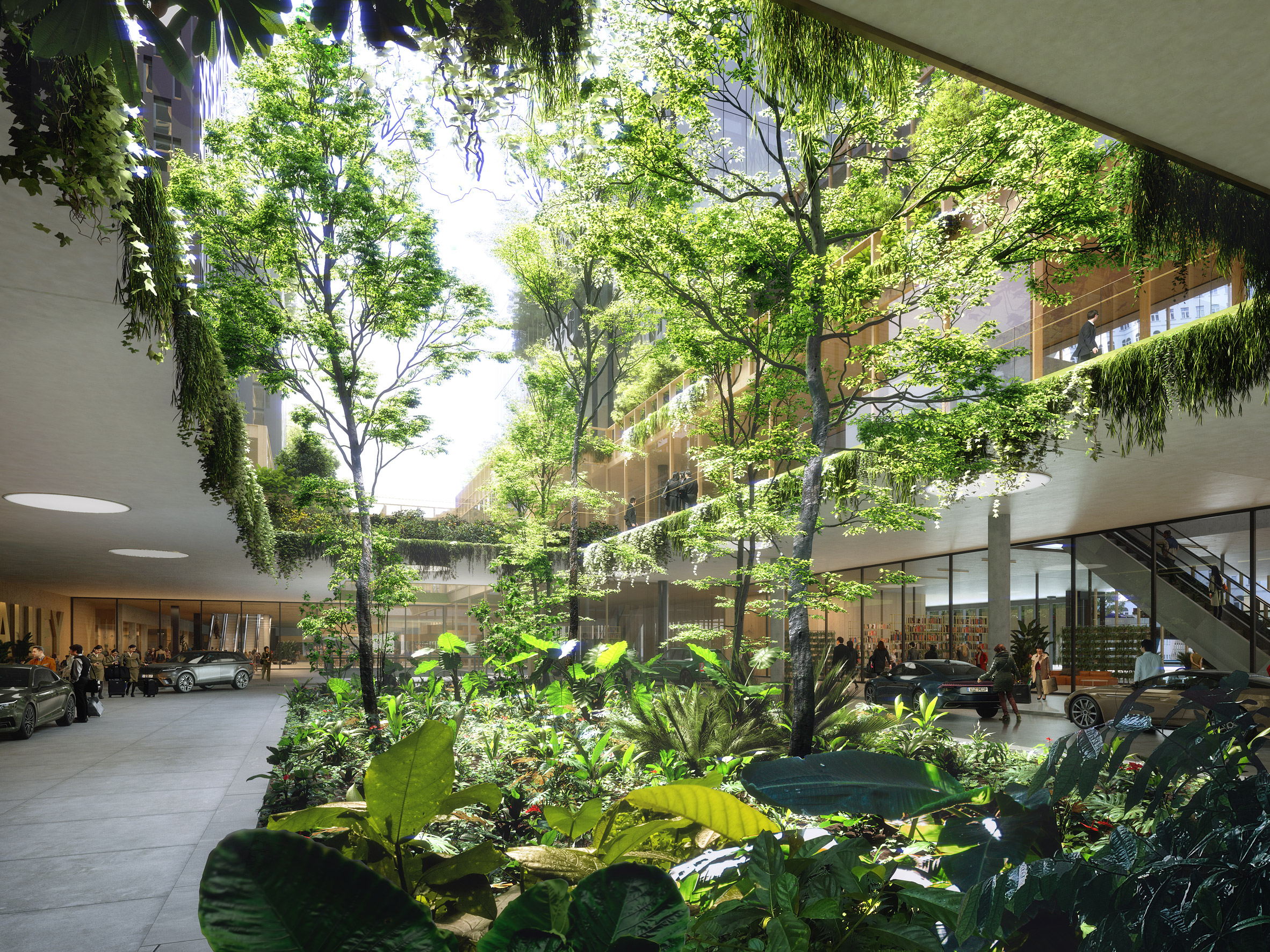
Greenery and landscaping will play a key role in the development, with courtyards, gardens and buildings interiors filled with plants nestled throughout.
This includes a plant-filled podium below the towers that will be landscaped to improve local air quality and support biodiversity, health and wellbeing. It will feature three layers, named the Biospheric Layer, Percolation Layer and Conscious Layer, which will feature different plants species with varying benefits.
Terraces will also be incorporated on the upper levels of the towers to help connect occupants to nature and offer them respite from the bustle of the city.