Monday, 30 November 2020

OEO Studio gives Copenhagen restaurant Kadeau a cosy revamp

Kadeau Copenhagen by OEO Studio

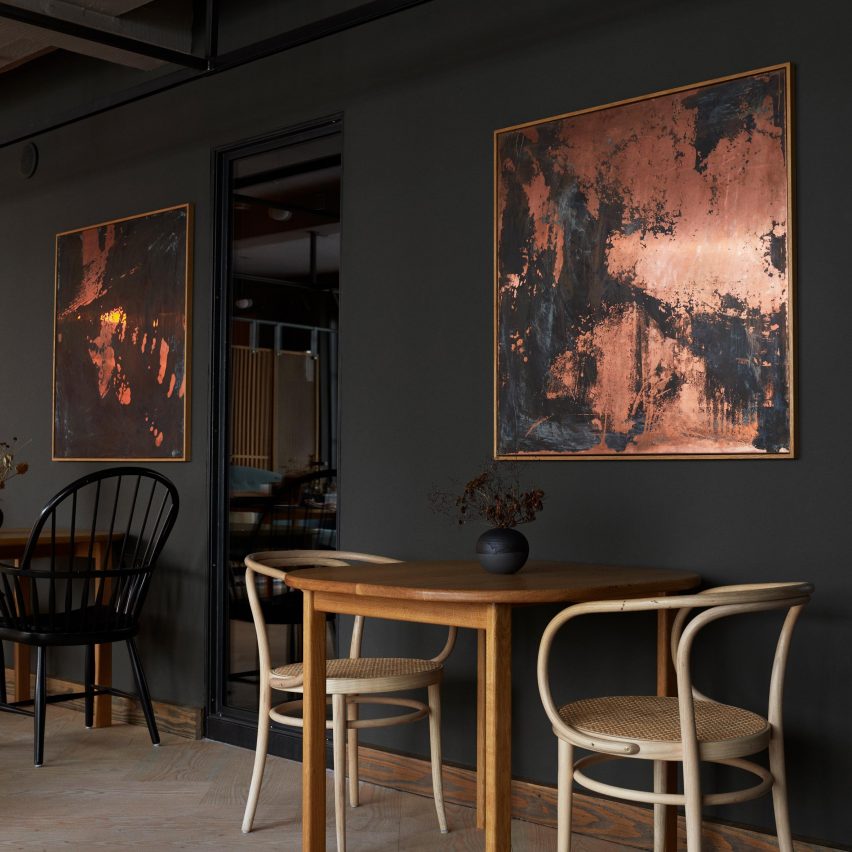
OEO Studio has worked with a palette of dark tones and earthy shades to redesign the interior of a Michelin-starred Copenhagen restaurant.

The locally-based interiors studio designed the interior of Kadeau's Copenhagen outpost when it first opened, back in 2015, but has now returned to give the space a change in ambience.
Kadeau Copenhagen by OEO Studio
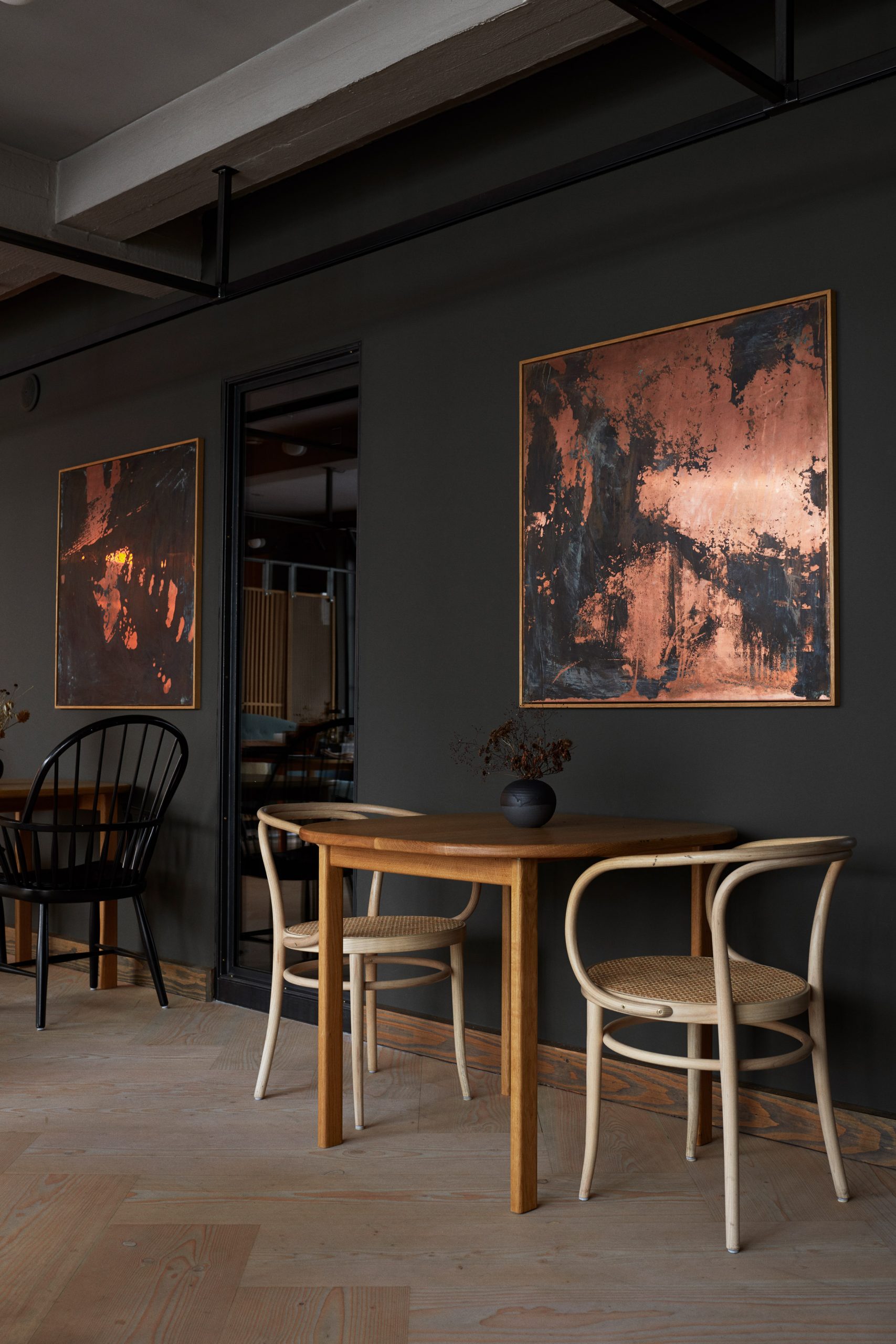
Kadeau's new interior features a palette of dark tones and earthy shades

The new interior uses the same design language but creates a warmer and more tactile experience for diners, combining shades of dark grey and red with materials like terracotta, brass and oak.

"The original design was exactly what we had envisaged, yet as a designer there are always things you want to do slightly differently or even re-design if given the chance," explained OEO Studio co-founder Thomas Lykke.
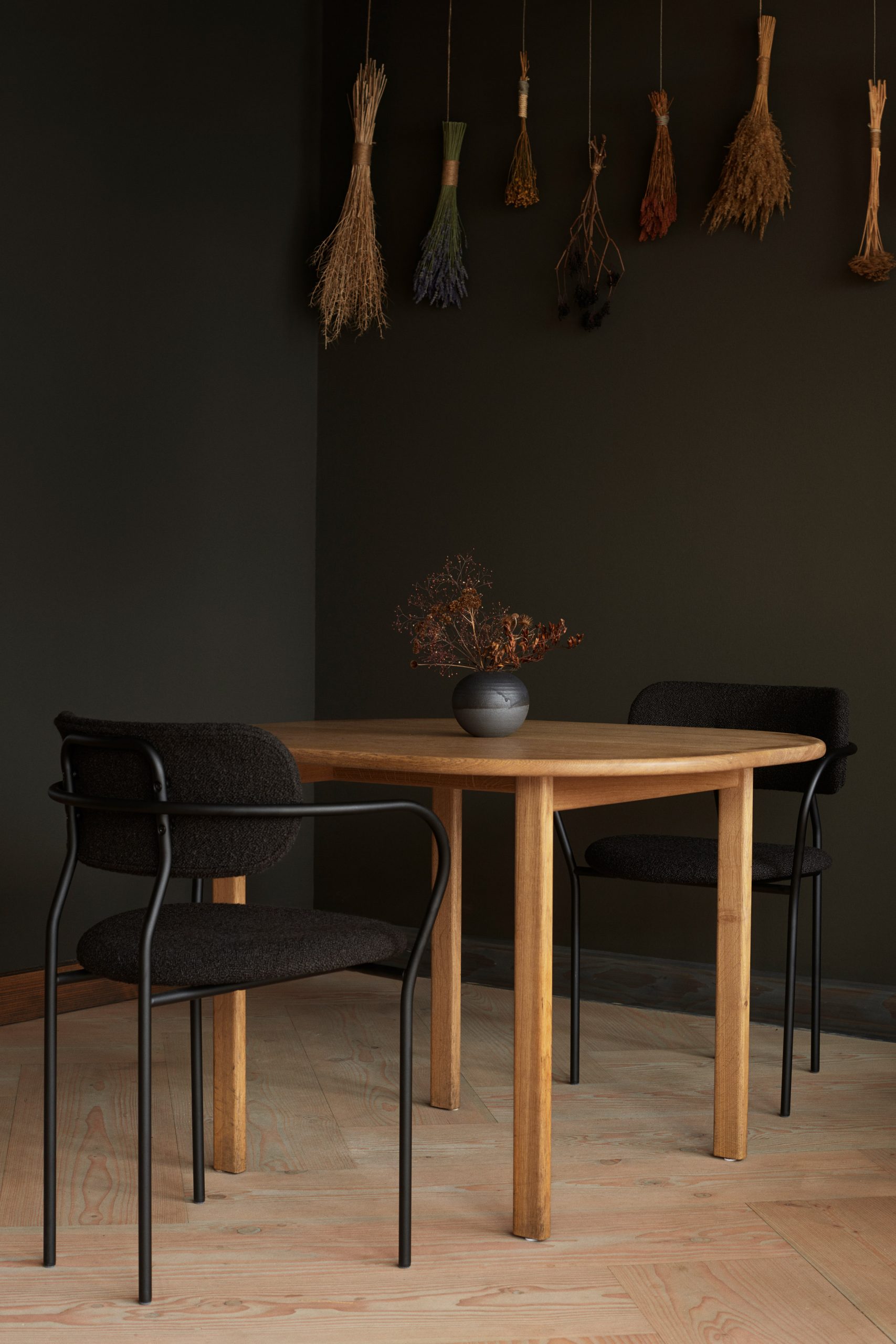
Dark walls in Kadeau Copenhagen by OEO Studio
The aim was to create a warmer and more tactile experience

"When head chef Nicolai Nørregaard called, I thought now is the time to improve and create an even more extraordinary experience for the guests of Kadeau and create an even more charismatic and welcoming design," he added.

The redesign is announced before you even enter the restaurant – the once-blue door is now painted in a soft red shade. To enter, visitors must ring a bell and wait for someone to greet them.
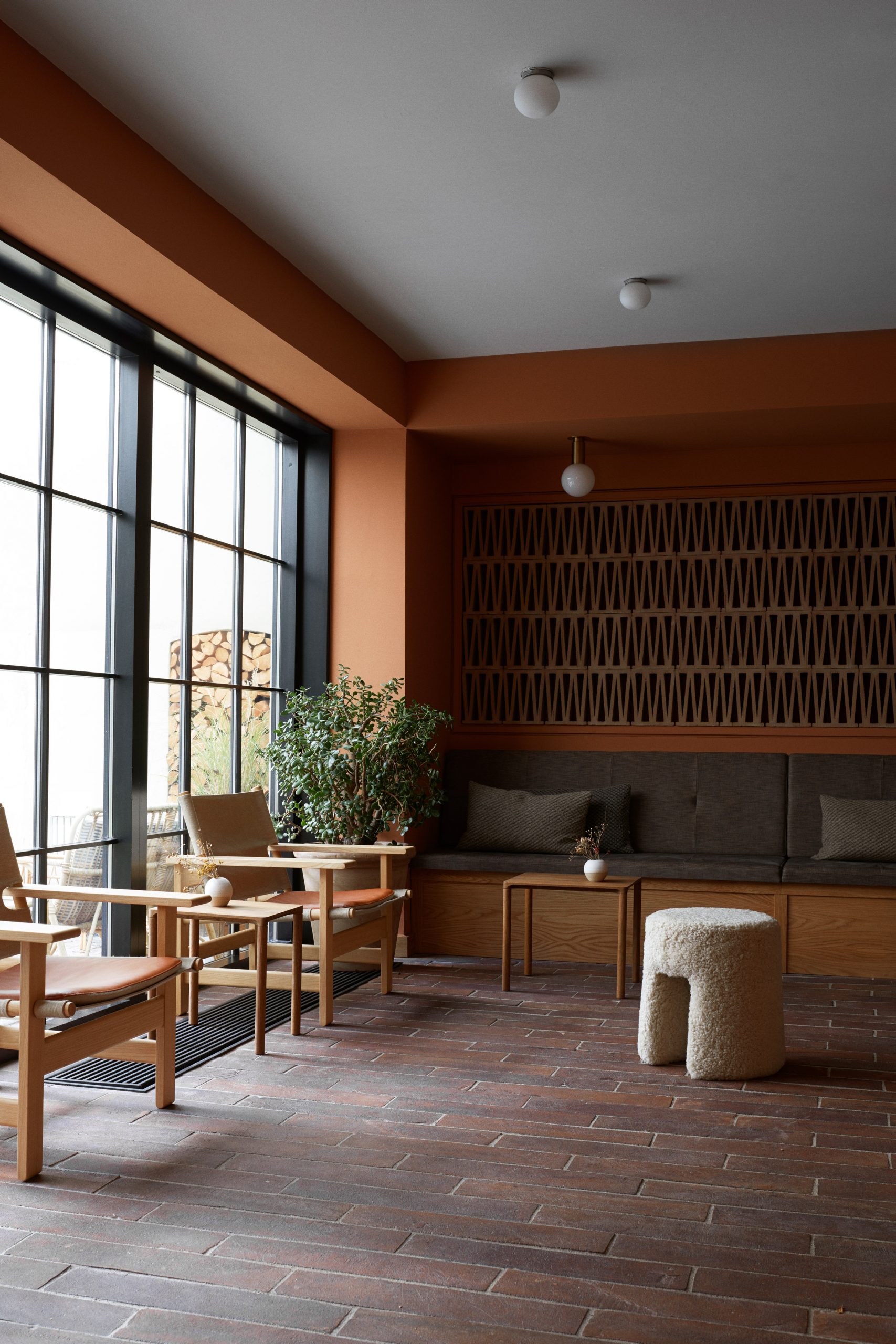
Lounge in Kadeau Copenhagen by OEO Studio
The newly extended lounge features a backdrop of red walls and terracotta bricks

Inside, spaces have been slightly reconfigured as well as restyled. The lounge is now larger, with red walls to match the entrance.

Mutina's sandy-toned Celosia bricks create a zigzag-patterned backdrop to this space, offering a textural contrast to the Kolumba brick floor.
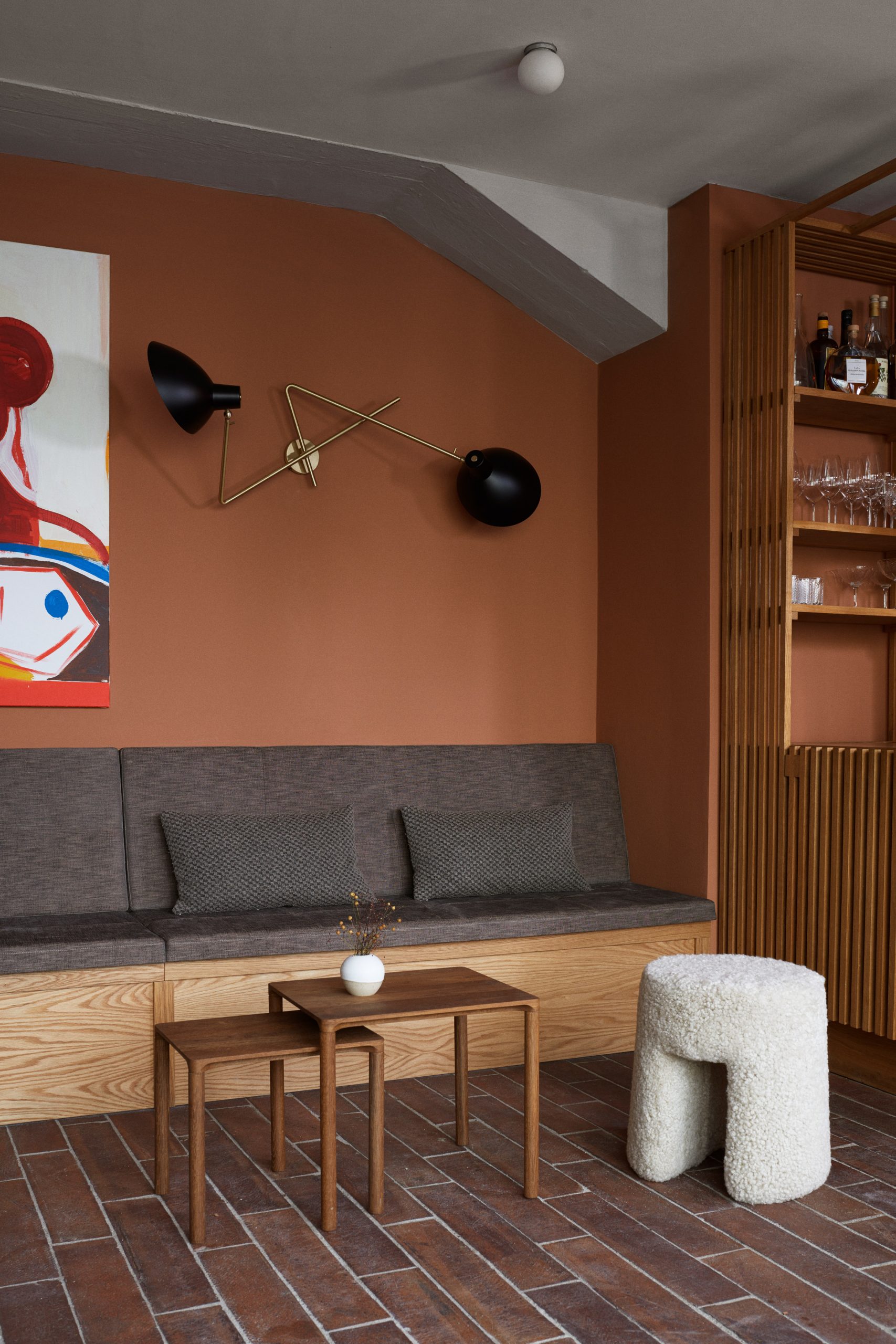
Terracotta-coloured lounge in Kadeau Copenhagen by OEO Studio
Details include wooden chairs, fleece-covered stools and brass wall lights

Seating here is provided by a dark-upholstered banquette, wooden lounge chairs and fleece-covered stools.

Other details include brass wall lights by Scandinavian brand Astep and colourful paintings by Tehran-born, Copenhagen-based artist Farshad Farzankia.
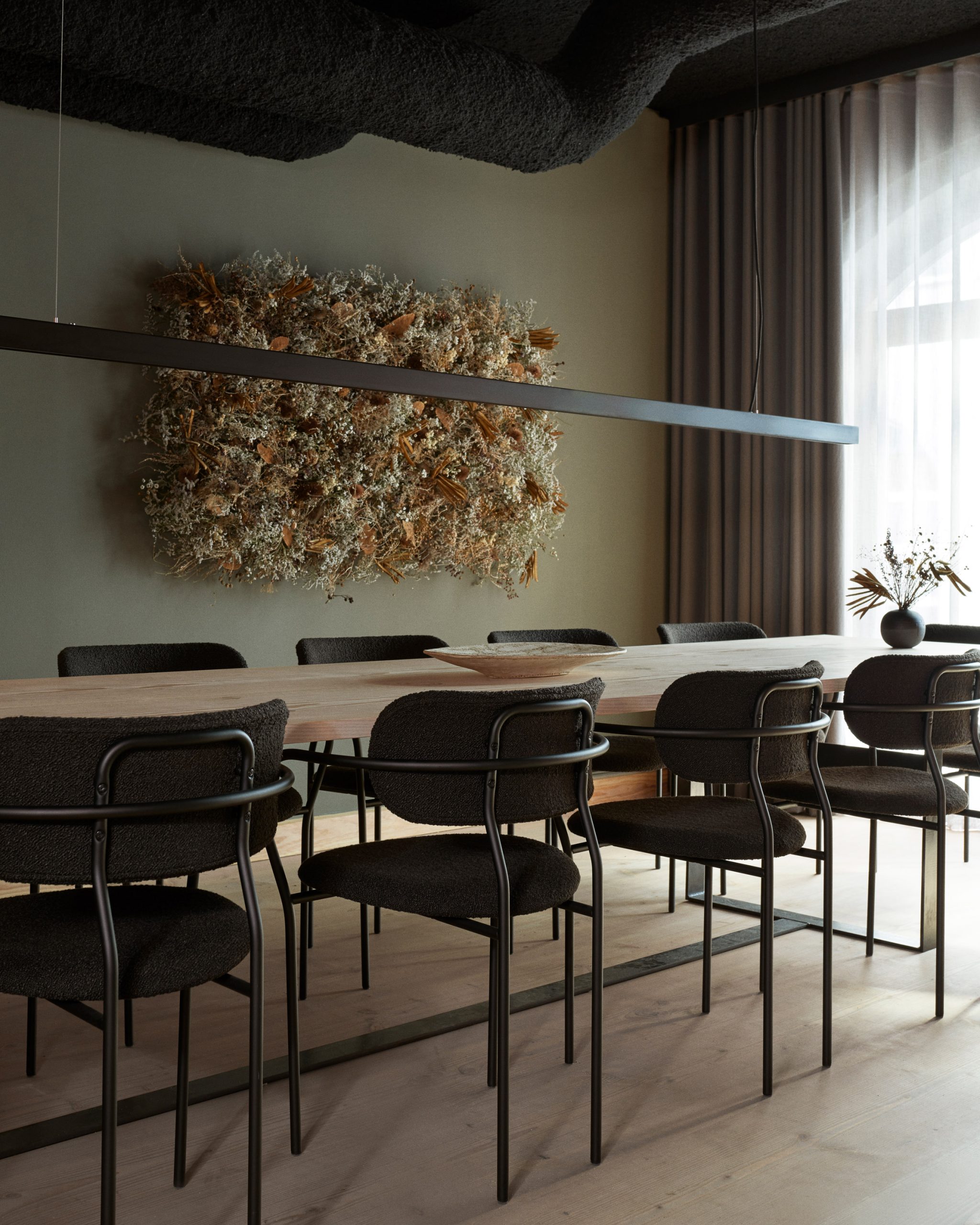
Private dining room in Kadeau Copenhagen by OEO Studio
A private dining room feature a table made from a huge plank of wood

Elsewhere, OEO Studio was asked to create an entirely new space – a private dining room, with room for up to 14 guests.

This space is defined by a large dining table, made using a huge plank of Dinesen timber. The chairs are one of OEO studio's own designs – the Coco Armchairs, manufactured by Gubi. There's also an open-service kitchen and a cabinet filled with preserved fruits, herbs and wine.
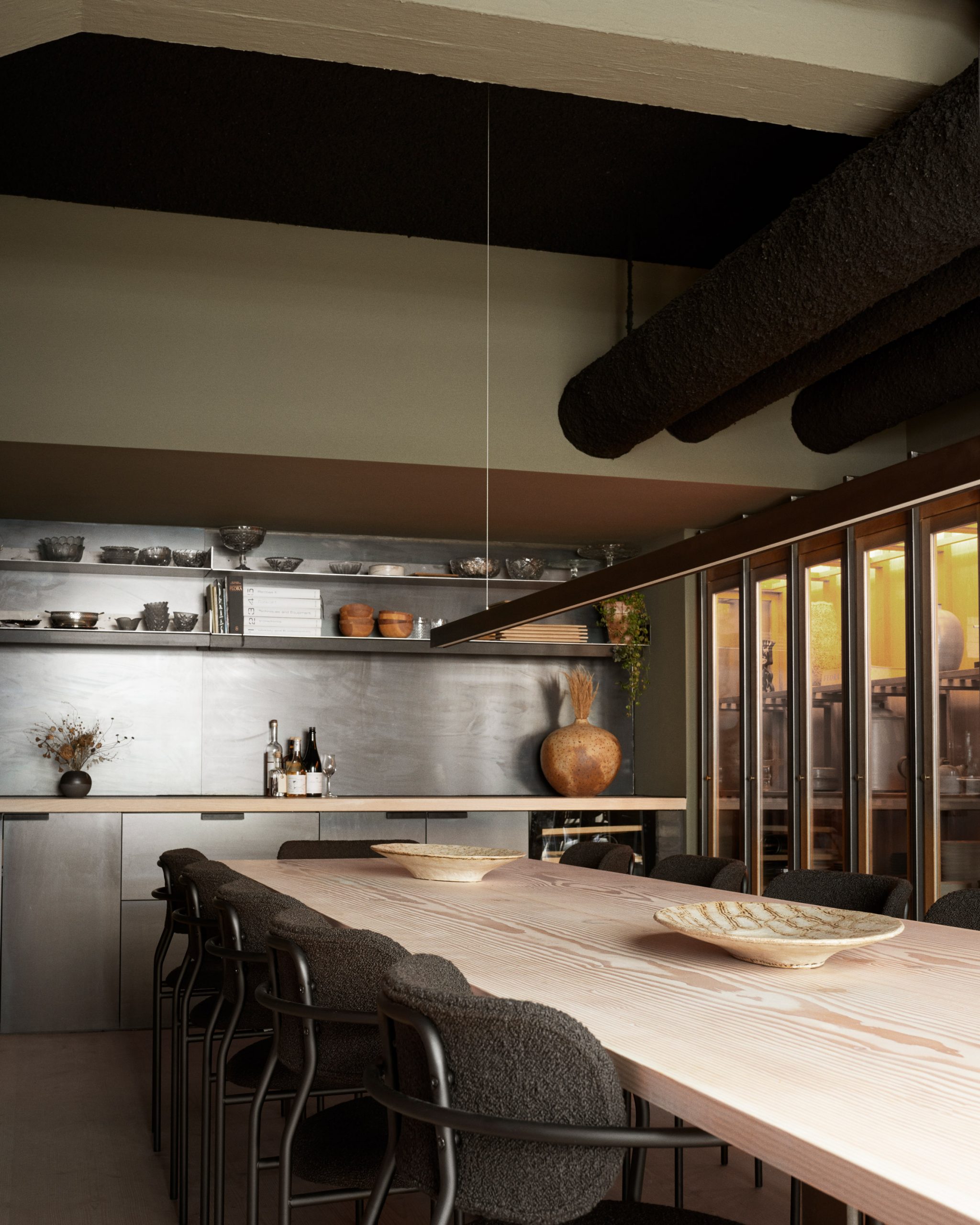
Private dining room of Kadeau in Copenhagen
This room features its own open-service kitchen

In the main dining room, darker walls help to creates a cosier atmosphere.

Notable new additions include oak waiter stations, topped with granite from the island of Bornholm (where Kadeau's original restaurant is located). A wine room has also been created, featuring iron-framed doors and windows.

A greenhouse is also being added to the restaurant, due to open in 2021. This will extend the dining area, offering views out to the garden.
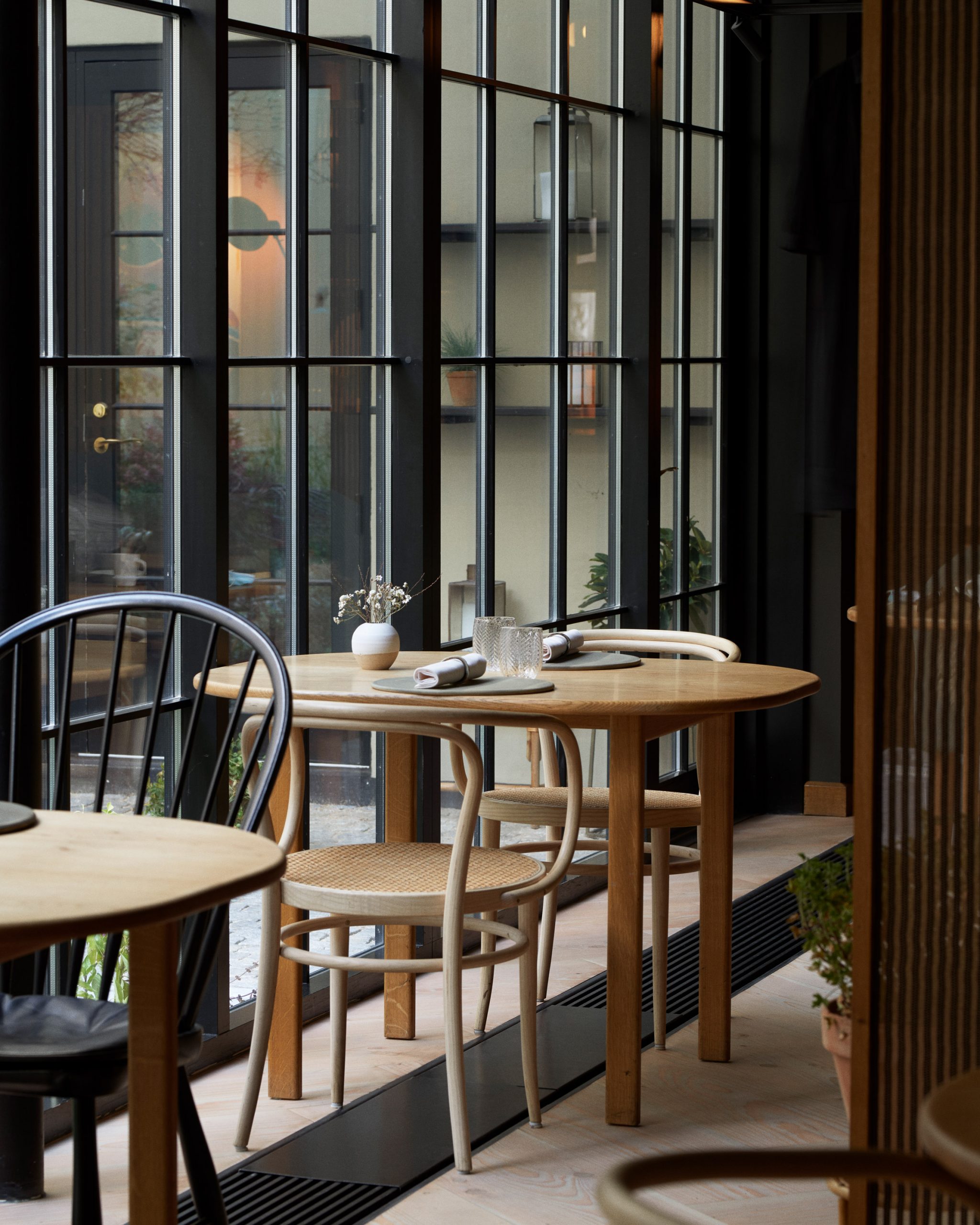
Main dining room of Kadeau in Copenhagen
The main dining room has also been upgraded with new colours

Kadeau is not the only restaurant that OEO Studio has designed in Copenhagen; the studio is also behind Sticks’n’Sushi and the newly opened Hija de Sanchez Cantina.

However, it is a project that co-founders Thomas Lykke and Anne-Marie Buemann hold in high regard.

"Kadeau and the people behind this project have a special place in our hearts and we are extremely proud of the space," adds Lykke.
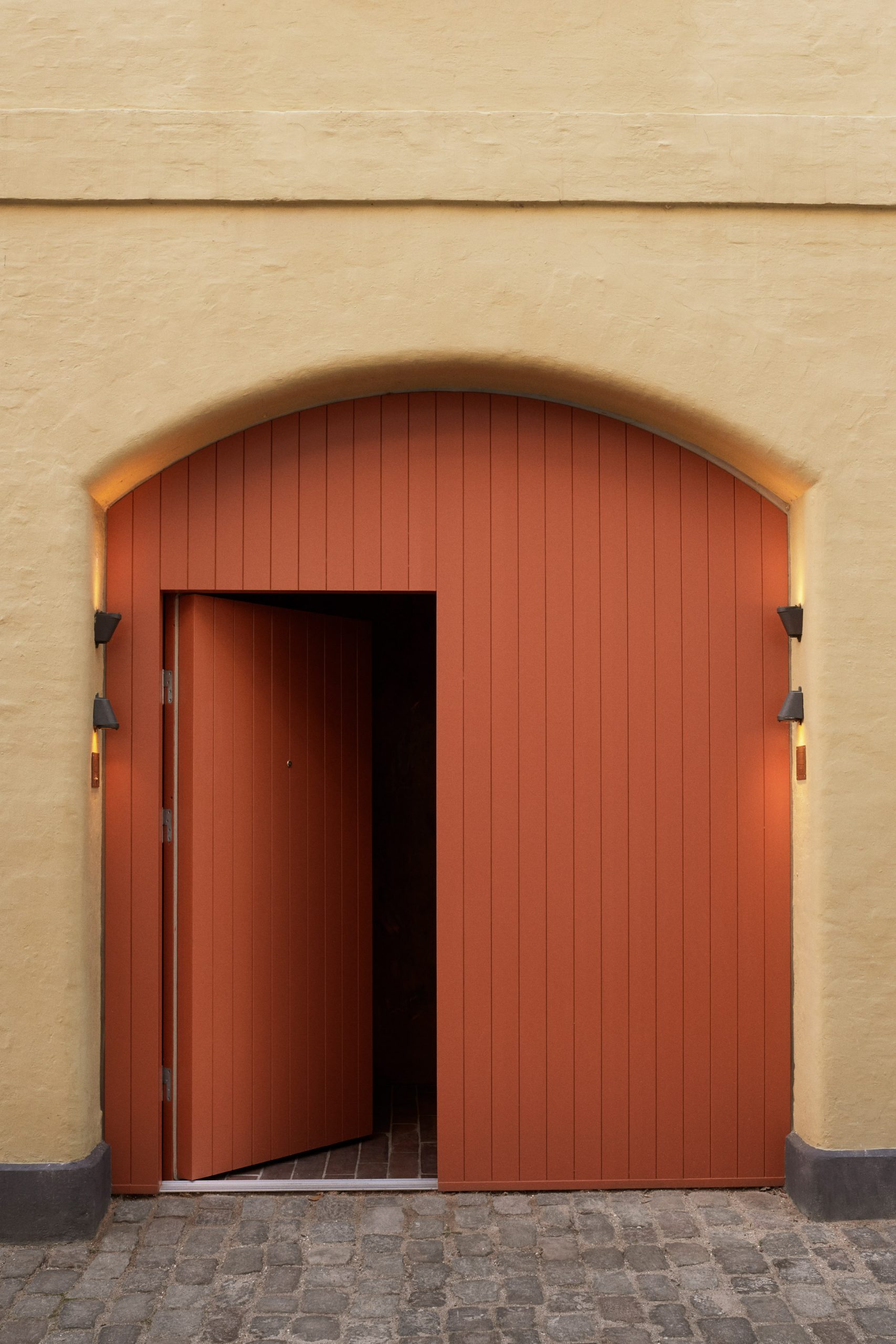
Entrance to Kadeau Copenhagen by OEO Studio
The restaurant entrance is now red, rather than blue

Other recent projects by OEO Studio include Inua, a restaurant in Tokyo headed up by former Noma chef Thomas Frebel.

Photography is by Michael Rygaard.

The post OEO Studio gives Copenhagen restaurant Kadeau a cosy revamp appeared first on Dezeen.


from Dezeen https://ift.tt/3o9mKgo

Sunday, 29 November 2020

Kurt Hollander photographs "shimmering architecture" in Colombian rainforest city

Shimmering architecture photography by Kurt Hollander

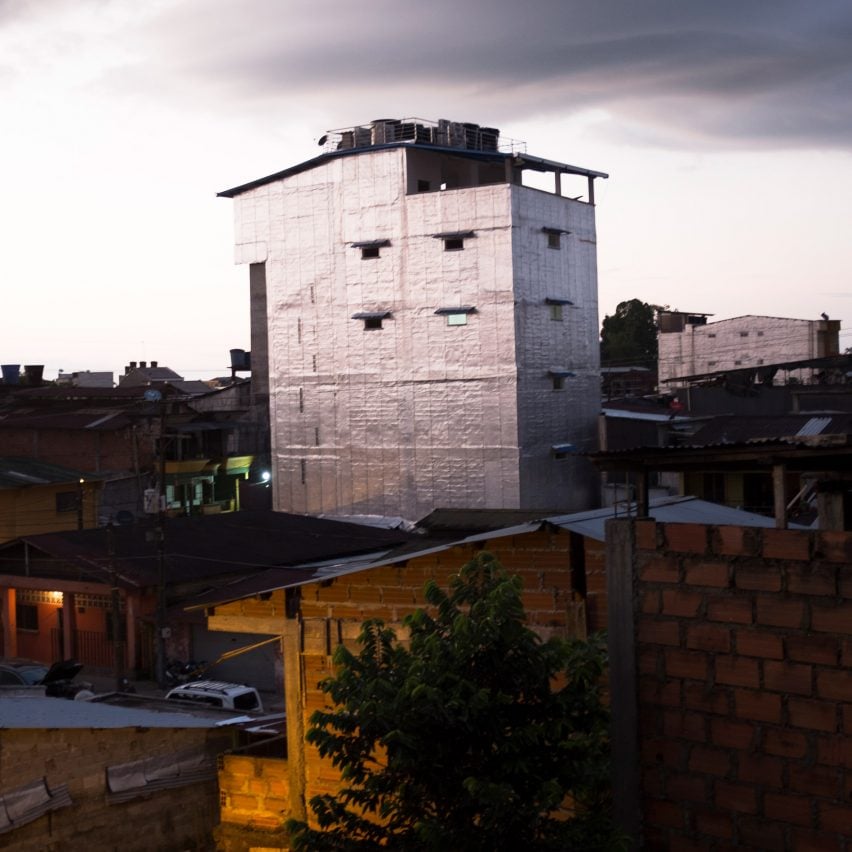
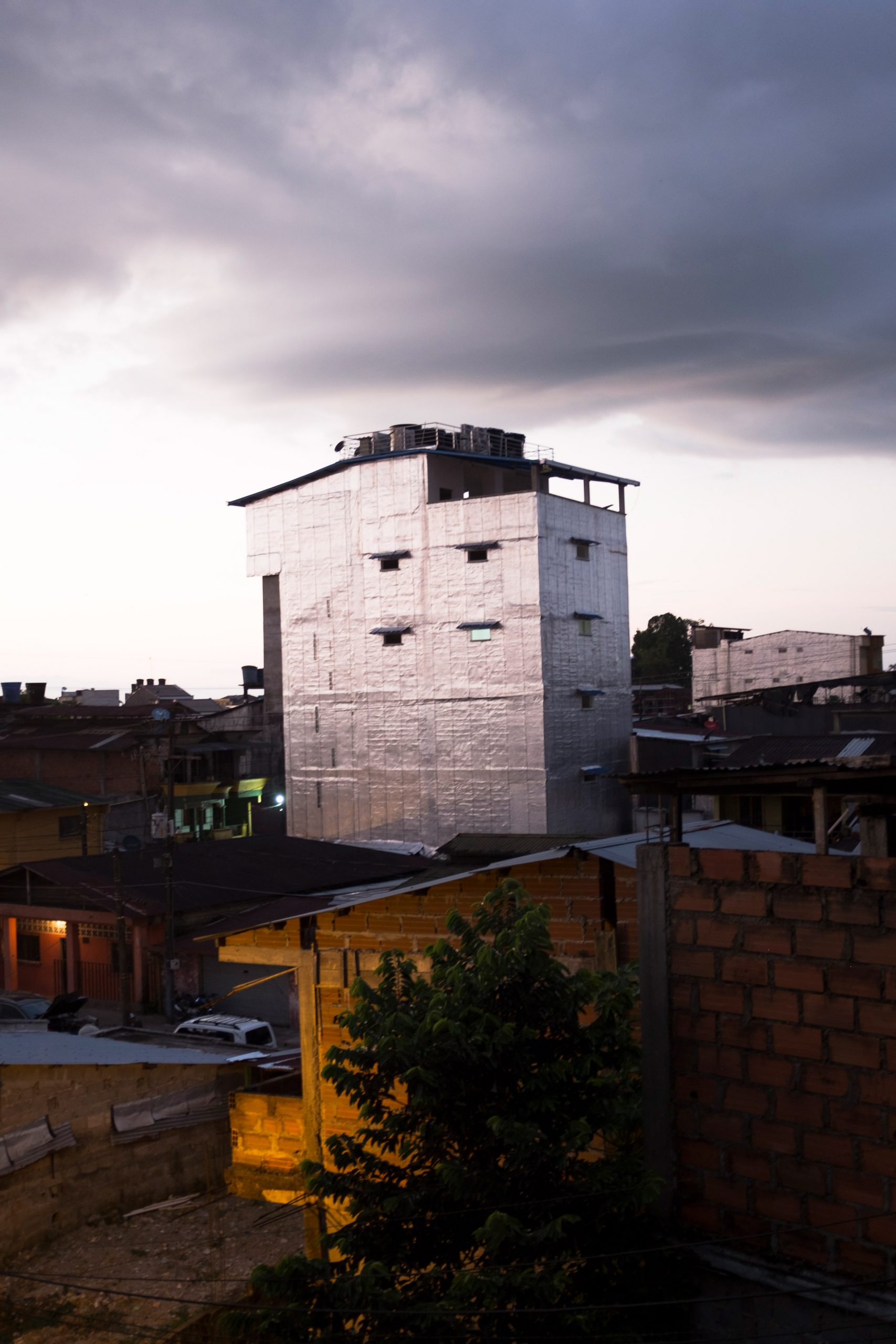
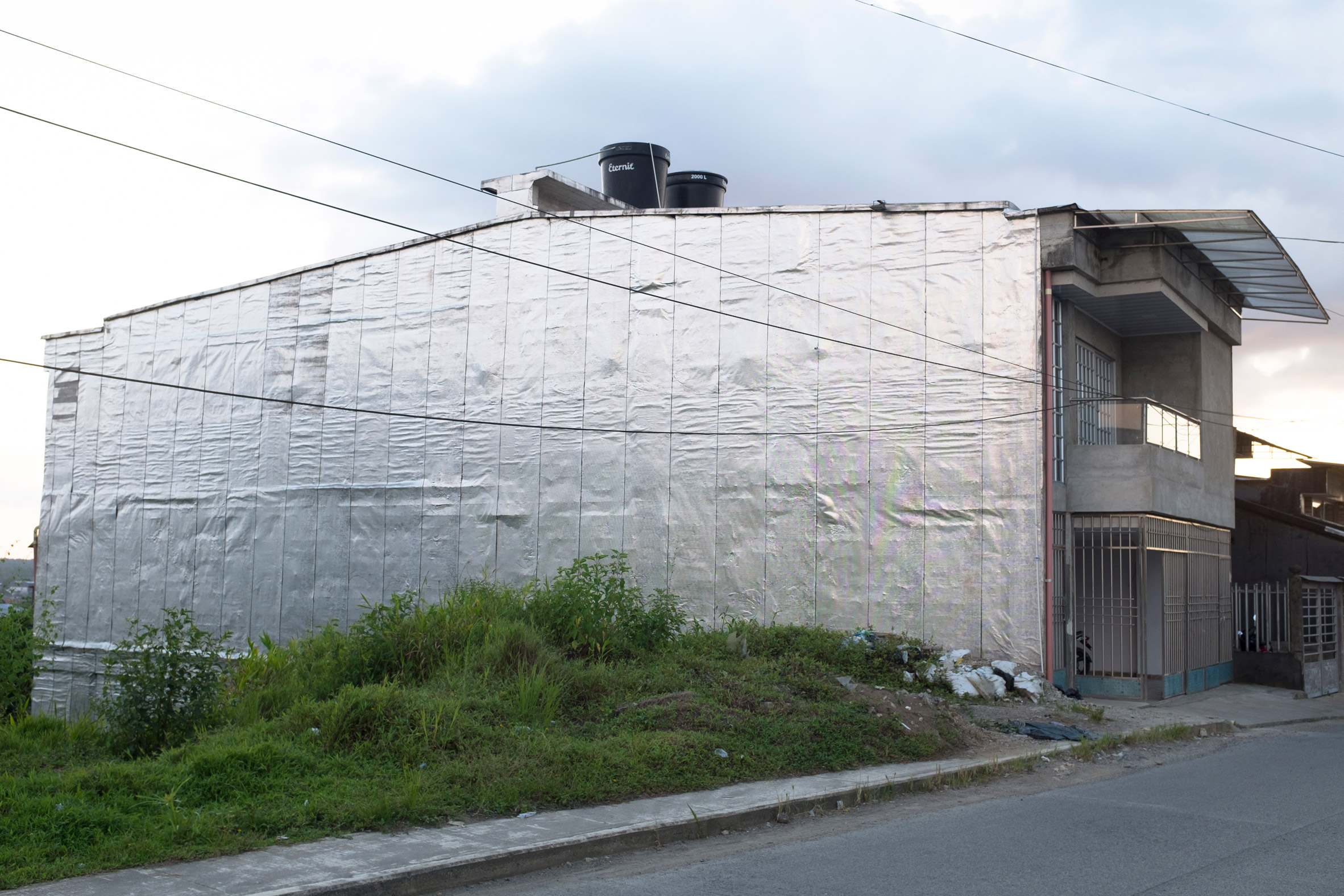
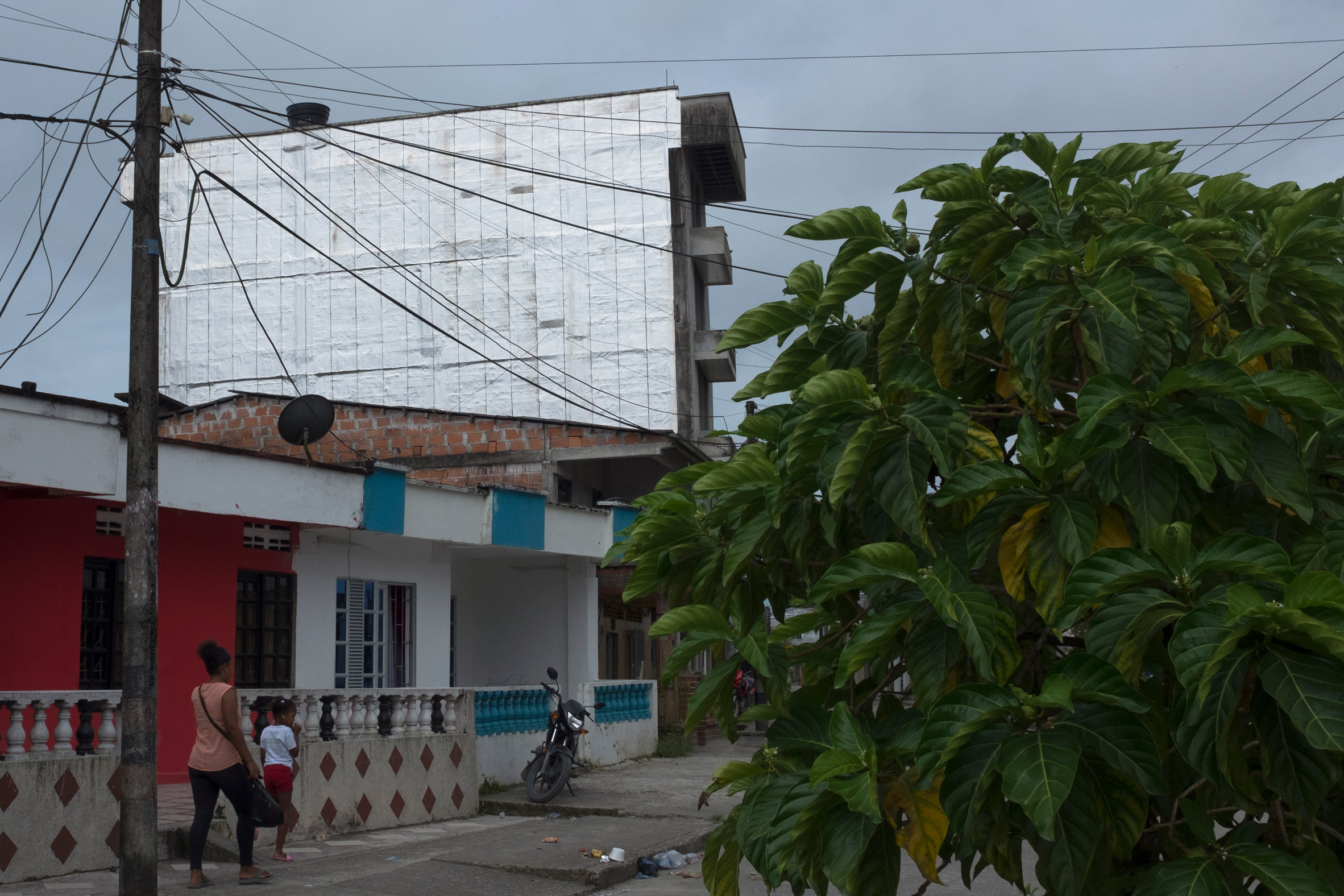
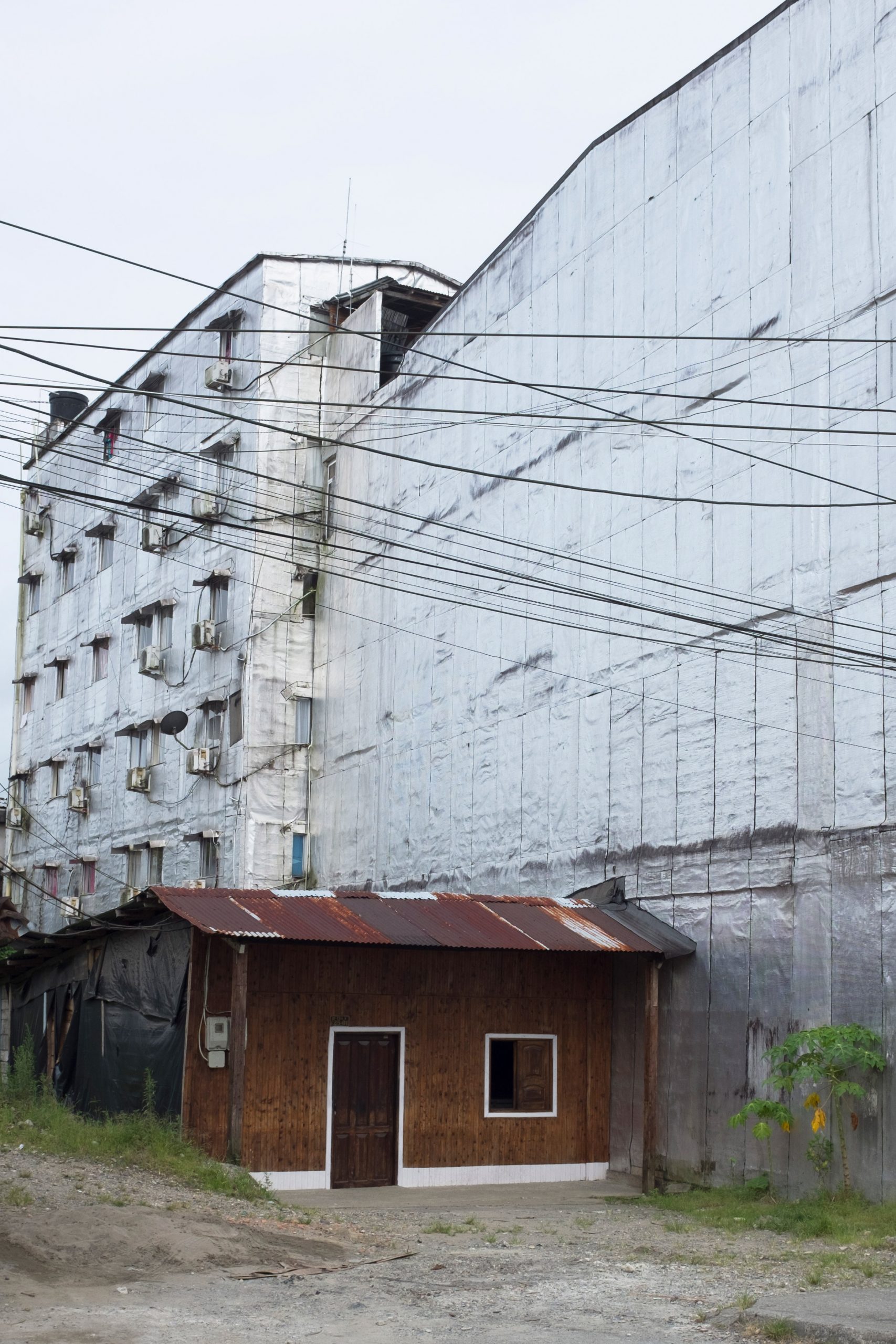
American photographer Kurt Hollander's latest photo series focuses on the aluminium-clad homes in the Colombian city of Quibdo, which he has termed shimmering architecture.

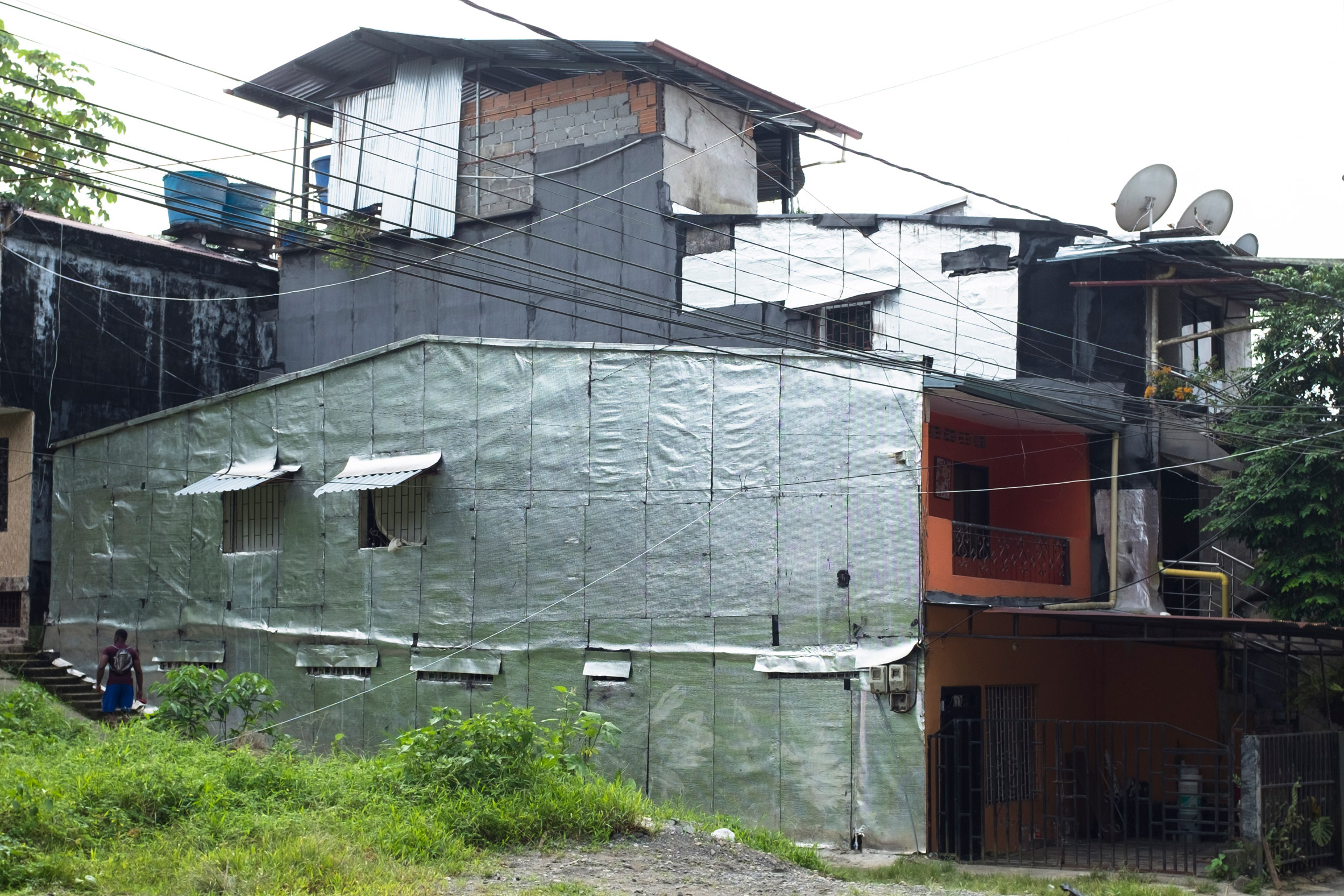
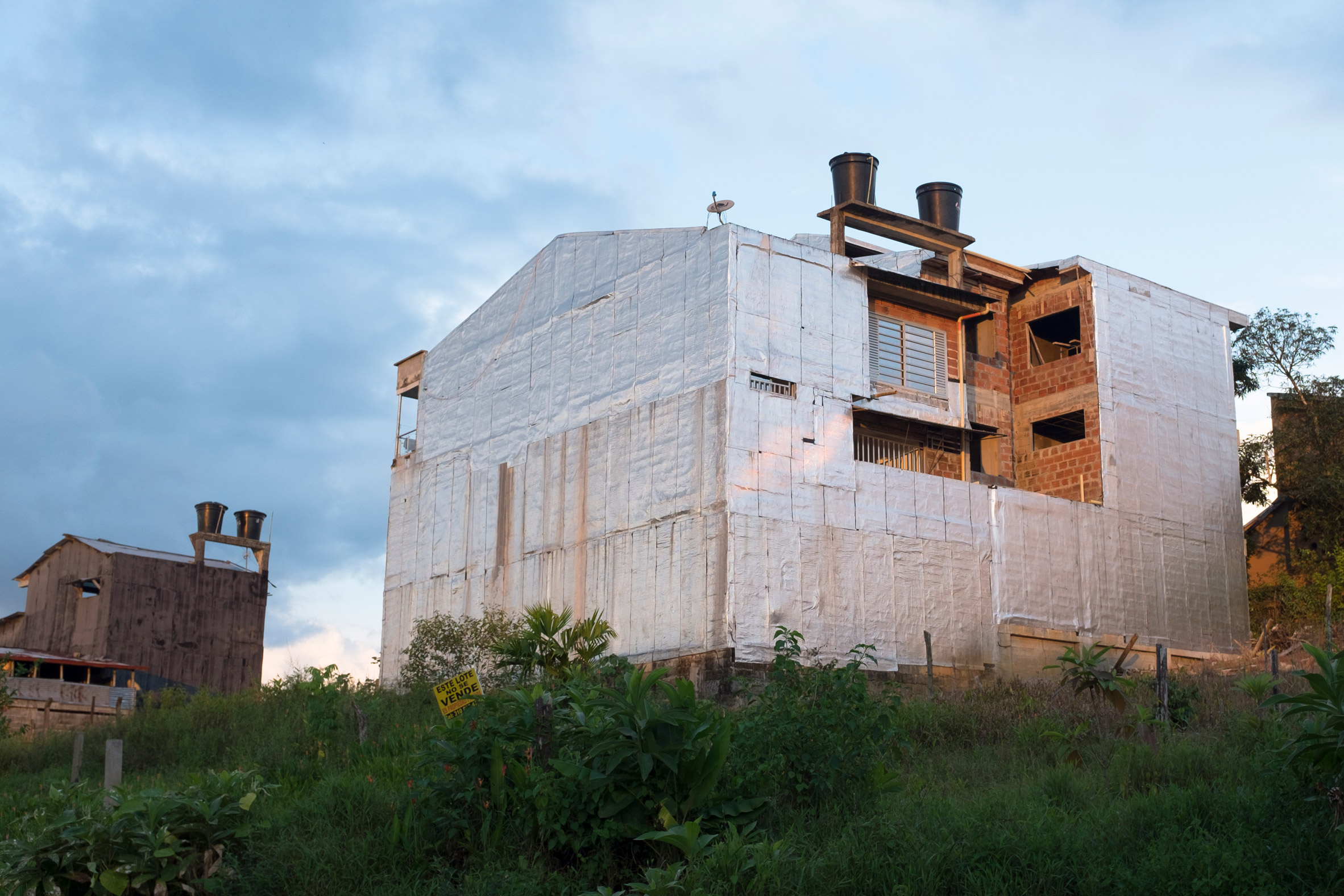
The collection of photos documents a series of buildings in the city of Quibdo, located within the rainforest in west Colombia, that are clad with self-adhesive aluminium sheeting to protect them from the local climate.

Hollander first spotted the shimmering architecture from an aeroplane on his way to visit Quibdo.

Aluminium-clad homes in Quibdo
Kurt Hollander photographed the aluminium-clad homes in Quibdo

"On a two-week-long escape from the pandemic lockdown in Cali, my current city of residence, I travelled to Quibdo, a rainforest city in Colombia populated mostly by Afro-Colombians and indigenous people," said Hollander.

"As I was flying in, the sun broke through the clouds and dozens of buildings wrapped in self-adhesive asphalt with an aluminium foil surface lit up and began to shimmer in the sunlight, something which, as far as I know, doesn't exist in any other Colombian city or elsewhere," he told Dezeen.

Shimmering architecture
Hollander termed this shimmering architecture

Made for protecting flat roofs, the asphalt and aluminium sheeting has a practical purpose of protecting concrete and breeze blocks from the wet and bright, tropical weather. However, Hollander also believes that the shiny finish is desirable in a city that has a long connection to mining.

As with previous modern building components, like stainless steel mosquito screens, aluminium sheeting has become a status symbol in the city.

Aluminium sheeting on buildings in Colombia
The aluminium sheeting protects the buildings from tropical weather

"Quibdo is in precious metal territory – mines around the town have long provided gold and platinum to the world, all that glitters is good, and this holds true for local architecture, as well," explained Hollander.

"Just as zinc roofs and stainless steel mosquito screens on windows became a symbol of social mobility in a land of local, natural materials, imported aluminium siding on buildings has become a recent status symbol used to convert concrete or brick buildings into shiny, sexy structures."

Shimmering architecture photography by Kurt Hollander
Hollander believes the sheeting is also a status symbol

The aluminium sheeting highlighted to Hollander the contrast between the traditional homes in the city that were created from local materials and the buildings made from concrete than needed additional protection.

"Quibdo retains strong roots to traditional architecture, with dozens of homes made from wood, bamboo cane and palm leaves and built on stilts to avoid flooding when the nearby Atrato river overflows," said Hollander.

"I was immediately struck by the contrast between the traditional architecture made with natural material obtained from, and blending into, the surrounding forest, and the shiny metal buildings that looked like an invasion of space-age, alien lifeforms."

Shimmering architecture photography by Kurt Hollander
The sheeting is extremely visible

The photographer believes that this shimmering architecture highlights the contradictions occurring within the mining city.

"I am a big fan of vernacular architecture and of repurposed materials but, in addition, these shimmering monuments to modernity also serve to highlight the deep contradictions between the abundant natural resources of the region and the social aspirations of the city's inhabitants," he said.

"This new trend can also be seen as an experimental solution for climate-crisis architecture, a kind of platinum spacesuit built to withstand the most extreme weather conditions on earth."

Shiny building in Colombia
It is applied across many building facades

Hollander is a fine art and documentary photographer from New York City who is based in Cali, Colombia.

He previously photographed Santo Domingo's "extravagant love motels" and the Colombia-based sets for erotic video chats.

The post Kurt Hollander photographs "shimmering architecture" in Colombian rainforest city appeared first on Dezeen.


from Dezeen https://ift.tt/2Jl6b2f

Industrial grating forms display fixtures inside Edition cannabis dispensary in Toronto

Edition X cannabis dispensary in Toronto has display counters made from industrial grating

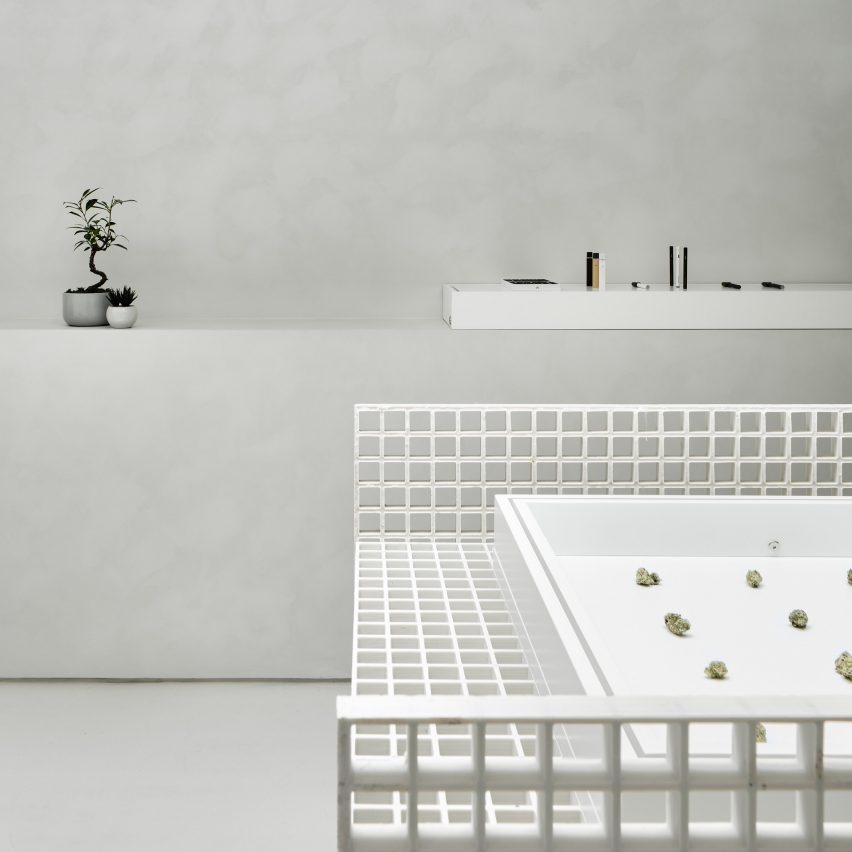
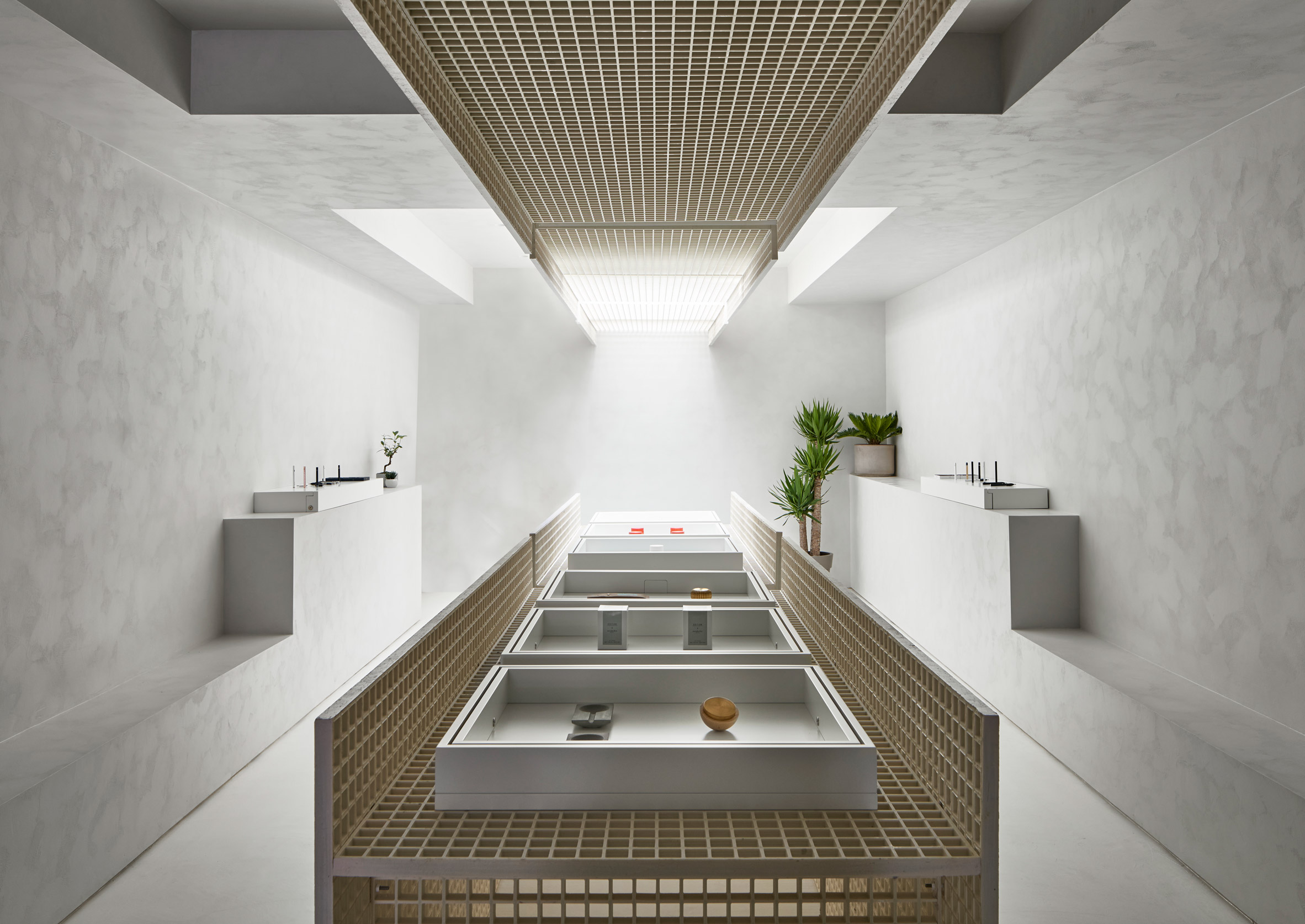
Architecture firm StudioAC has used sheets of industrial grating to make striking gridded display counters for this minimal cannabis dispensary in Toronto.

Edition sells a curated selection of cannabis strains and smoking accessories, including items such as bongs, grinders, ashtrays and rolling papers.

Edition X cannabis dispensary in Toronto has display counters made from industrial grating
Edition features a pared-back interior

Studio AC was, from the outset of the project, keen to reimagine how these products are presented inside the company's store.

The studio wanted to do away with typical shelves or display units and instead create something that could be described as a "retail sculpture".

"We wanted to produce a singular design element, a sculpture of sorts that has its own aesthetic quality and massing that simultaneously is inspired by existing conditions while also setting out to define new ones," said the studio.

Edition X cannabis dispensary in Toronto has display counters made from industrial grating
Display fixtures are made from industrial grating

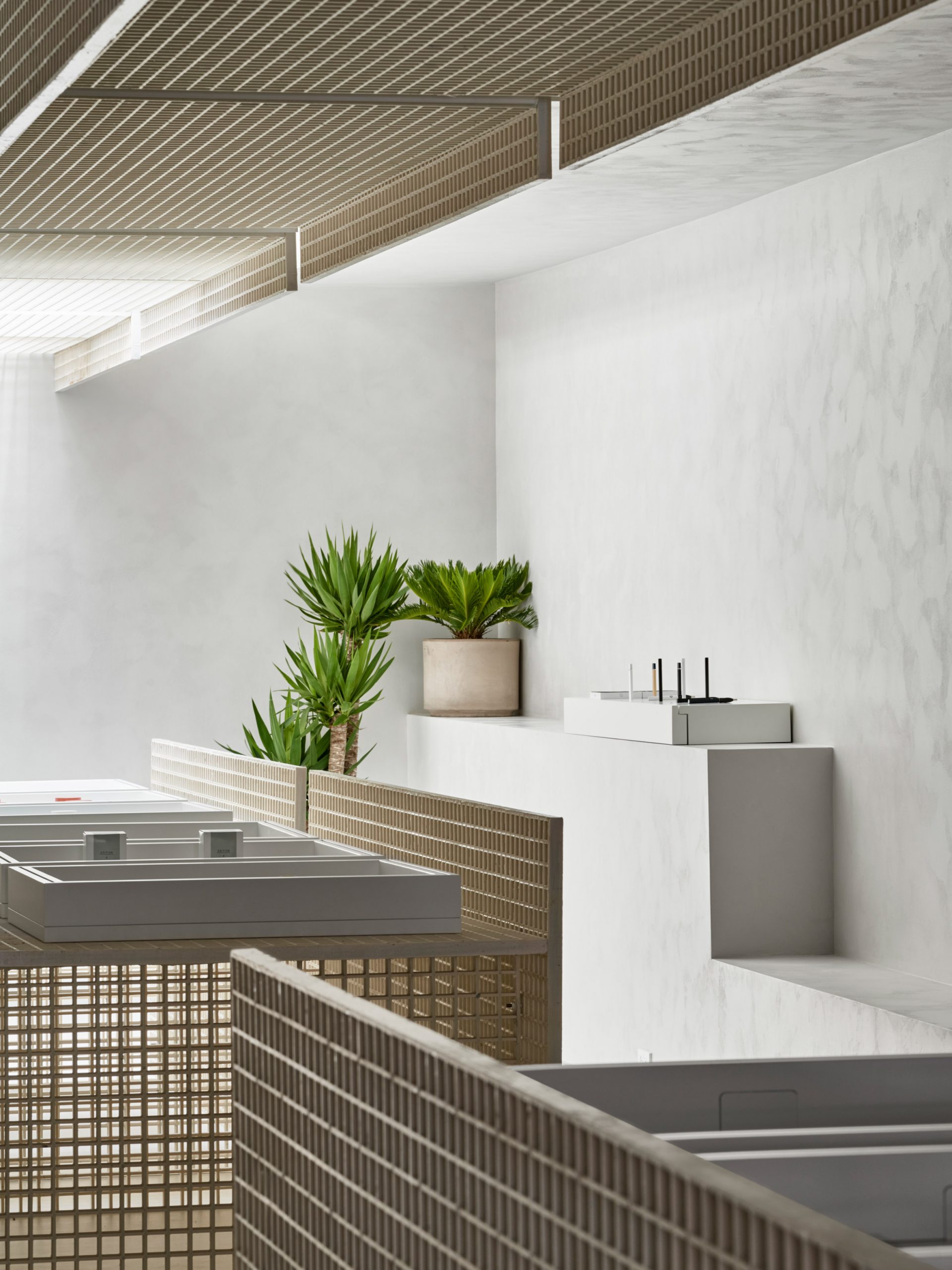
White sheets of industrial grating have been used to make a sequence of chunky counters, which are arranged to run in a single line down the middle of the store.

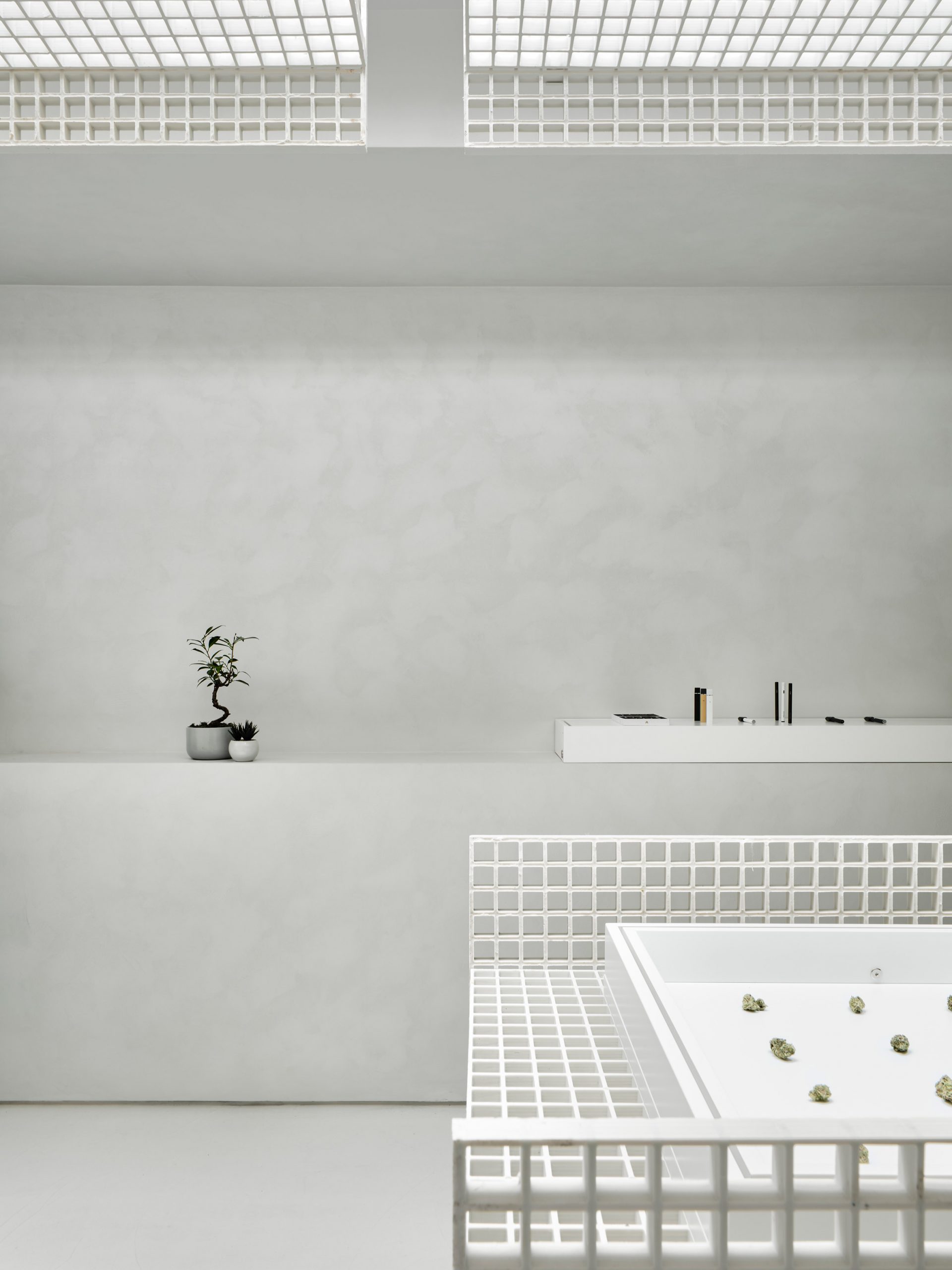
Edition's merchandise is displayed on top of the counters in shallow white trays.

"[The grating] has a unique self-supporting structural ability and an enticing visual quality that screens and filters light, producing moments of opacity/transparency depending on one's vantage point," the studio explained.

"These qualities, along with the material's relative affordability, allow for larger design gestures to be executed within a modest budget."

Edition X cannabis dispensary in Toronto has display counters made from industrial grating
Merchandise is presented on white trays

The same grating material has been used to create a suspended ceiling directly above the central counter. By lowering a section of the ceiling, the studio hoped to "compress" the store and foster a feeling of intimacy amongst visitors.

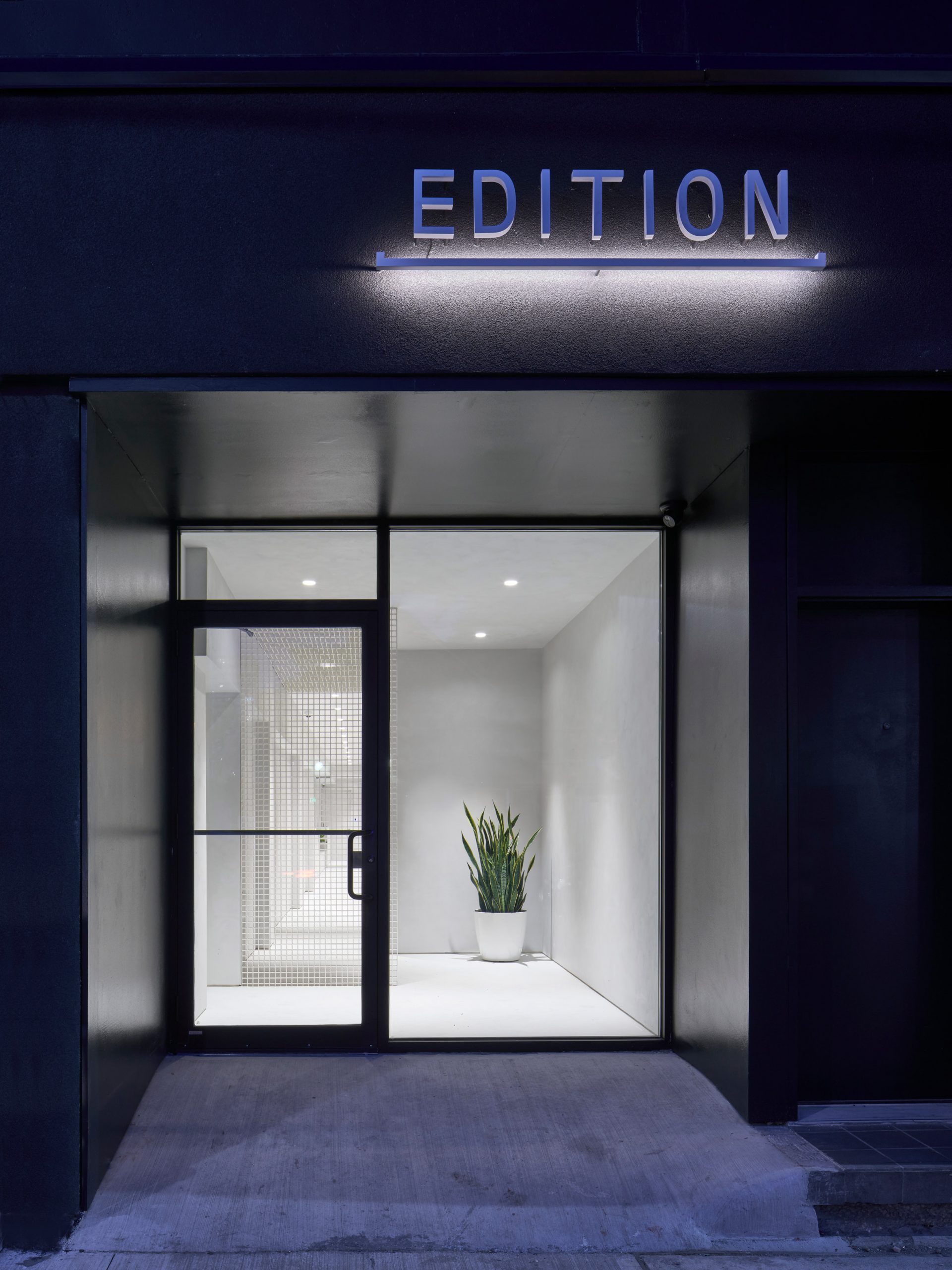
A grated screen has also been erected in the entryway.

A handful of products are showcased on stepped platforms that butt up against the peripheral walls of Edition.

To keep the space otherwise simple, the studio has washed surfaces in lime paint – the only splash of colour comes from a couple of potted plants that have been sparingly dotted throughout the store as decor.

Exterior of Edition X cannabis dispensary in Toronto
Industrial grating has also been used to make a screen in the dispensary's entryway

Studio AC was established in 2015 and is led by Andrew Hill and Jennifer Kudlats. The firm's Edition project joins a growing number of design-focused cannabis dispensaries that have opened in recent years.

Others include Serra in Portland, where products are presented inside greenhouse-like display cases. There's also Dosist in Los Angeles, which is decked out in a soothing mix of white-washed maple wood and limestone to reflect the connection between cannabis and wellness.

Images courtesy of Doublespace Photography.


Project credits:

StudioAC team: 
Jon Miura, Jennifer Kudlats, Andrew Hill
Builder: Stein + Regency Construction Management

The post Industrial grating forms display fixtures inside Edition cannabis dispensary in Toronto appeared first on Dezeen.


from Dezeen https://ift.tt/3ljAZ0r

Terracotta tiles add warmth to Wiltshire farmhouse kitchen by Emil Eve Architects

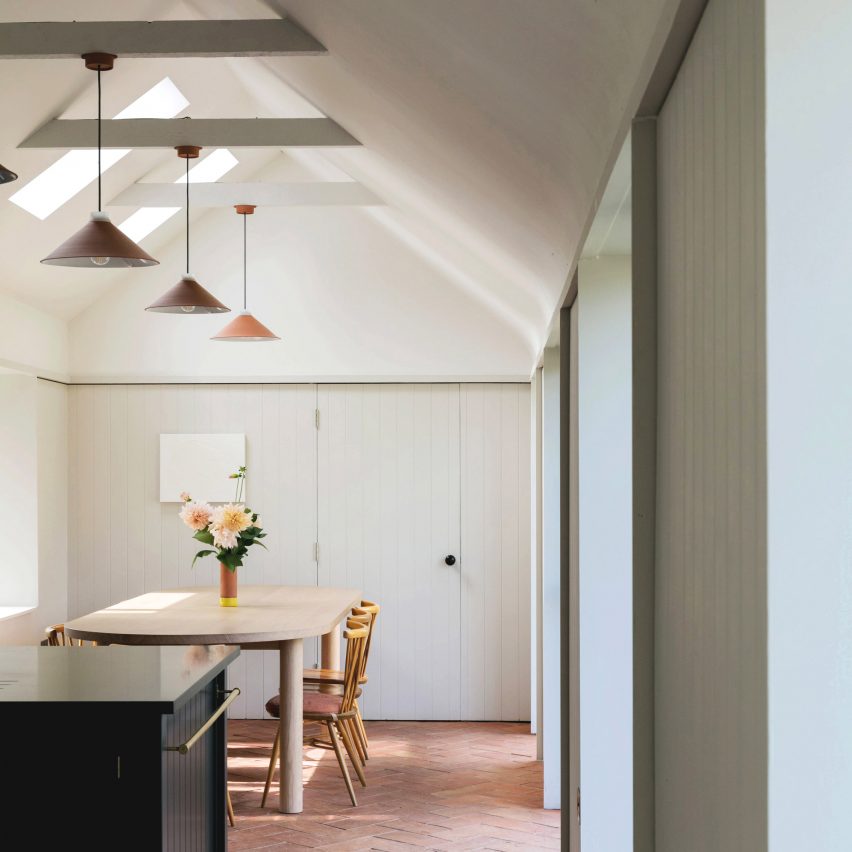
Dining room interior at Farley Farmhouse by Emil Eve Architects

Emil Eve Architects has extended a farmhouse in Wiltshire, England, by adding a kitchen that features terracotta tiles both inside and out.

Called Farley Farmhouse, the project involved infilling a portion of unused outdoor space, to create more space for cooking and dining.

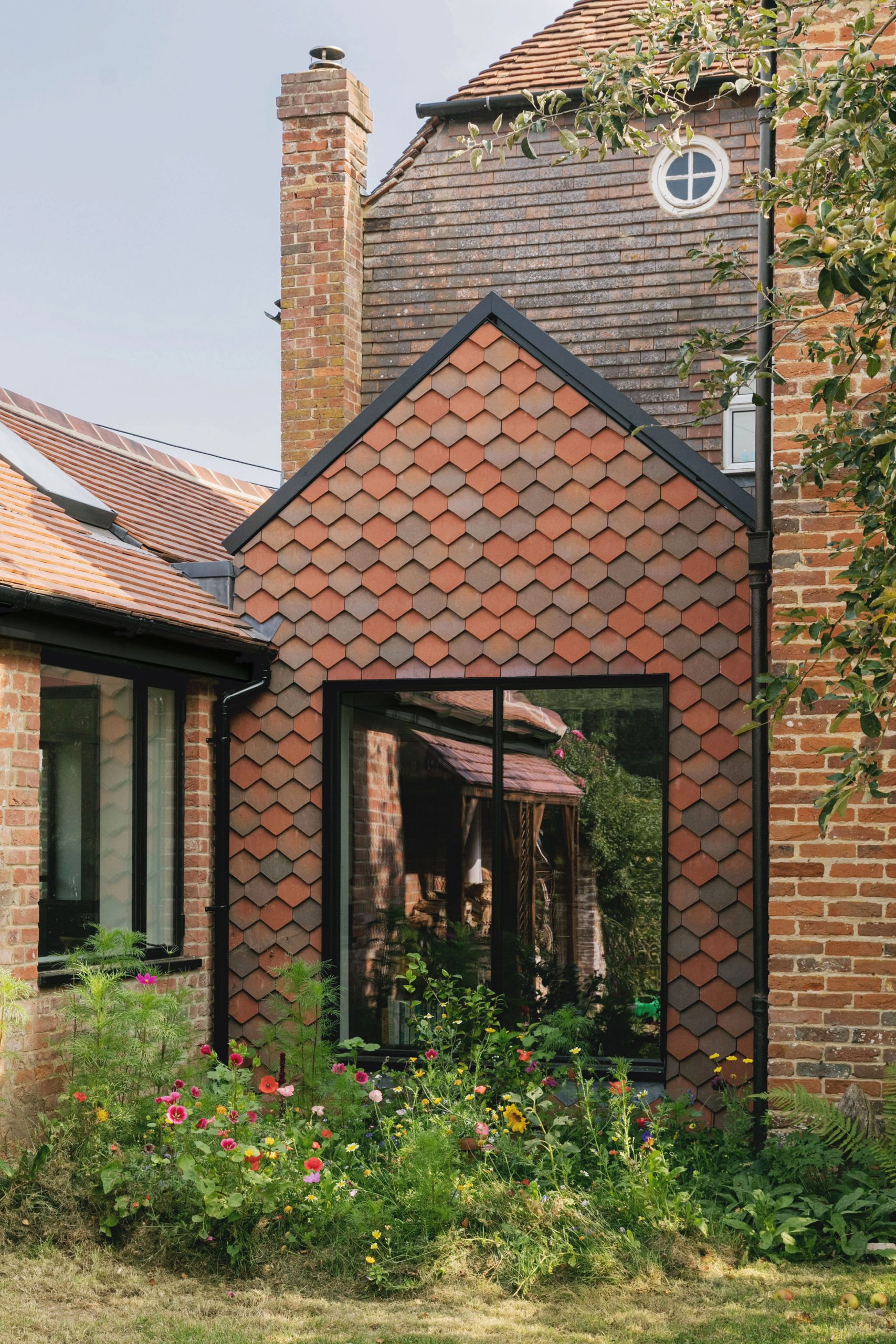
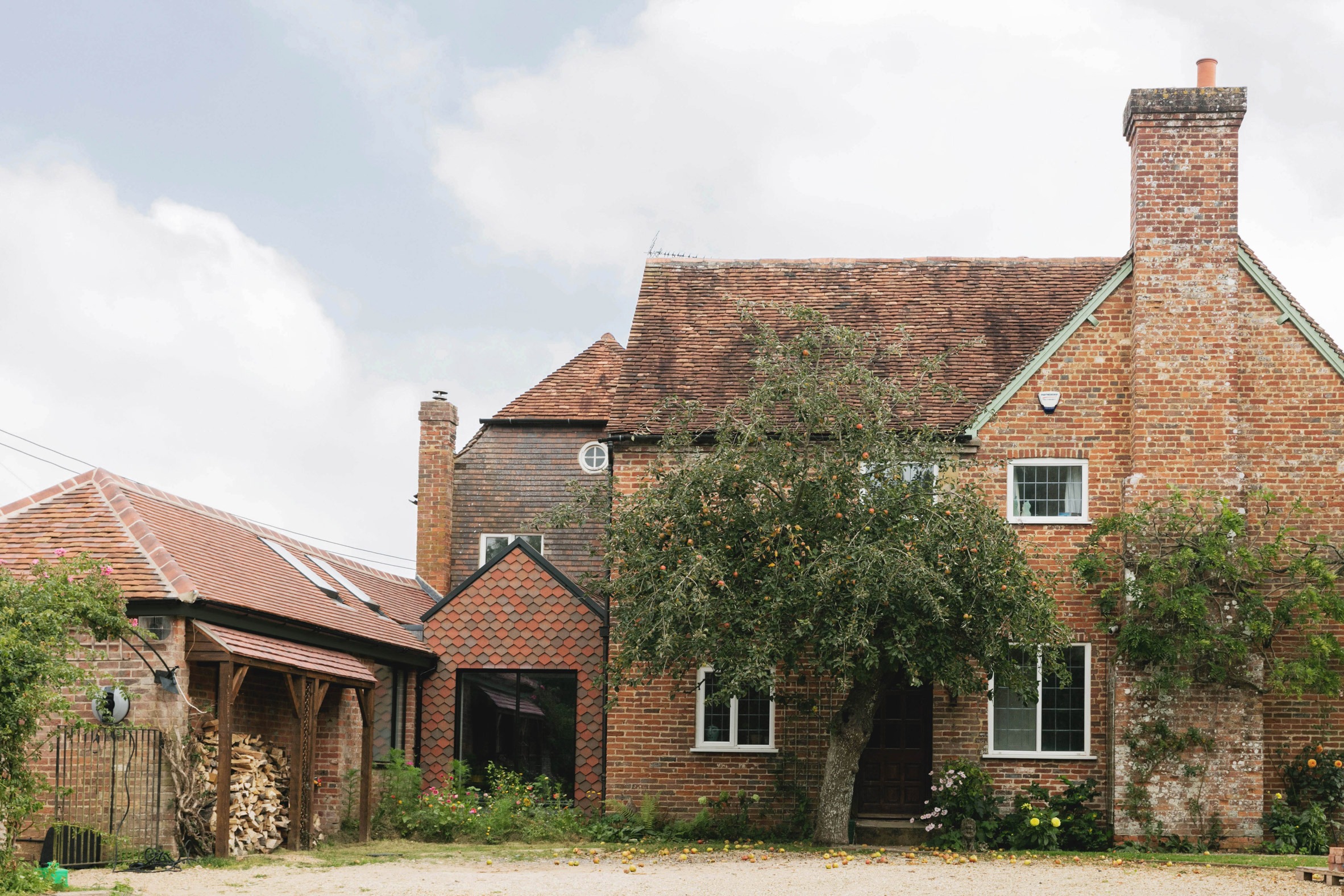
Gable facade of Farley Farmhouse by Emil Eve Architects
Terracotta arrowhead tiles clad the new gable facade

"The existing kitchen was tiny and completely out of proportion to the house," said Emma Perkin, who co-directs Emil Eve Architects with partner Ross.

"It did not meet the needs of our clients, who love to cook."

Dining area in Farley Farmhouse by Emil Eve Architects
The flooring and lighting are also made from terracotta

Like many English farmhouses, the house already comprised various buildings of different sizes. What they all had in common was a material palette dominated by terracotta, in the form of both bricks and tiles.

Emma and Ross decided to continue this tradition, by creating a new terracotta insertion. Their design involved upgrading and extending the existing utility wing and fronting it with a new tile-clad gable.

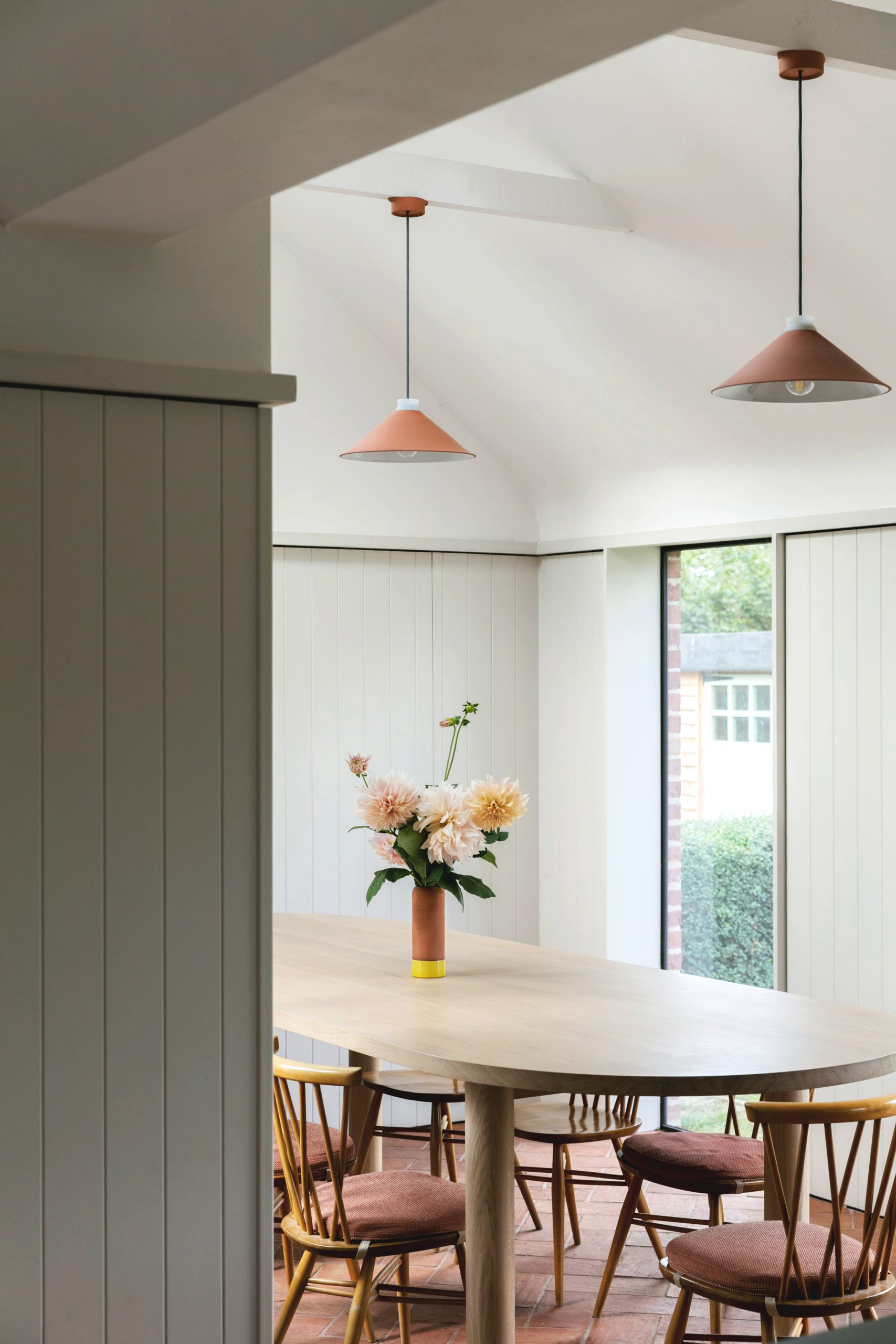
Dining table of Farley Farmhouse by Emil Eve Architects
The extension gives the house a larger kitchen and dining space

"We loved the arrangements of different roof pitches and forms of the existing house and wanted to create an addition that was harmonious with these in form and materiality," Emma told Dezeen.

"The earthy and textured palette became the main starting point when considering the materials we would use both internally and externally."

Steel-framed glazing in Farley Farmhouse by Emil Eve Architects
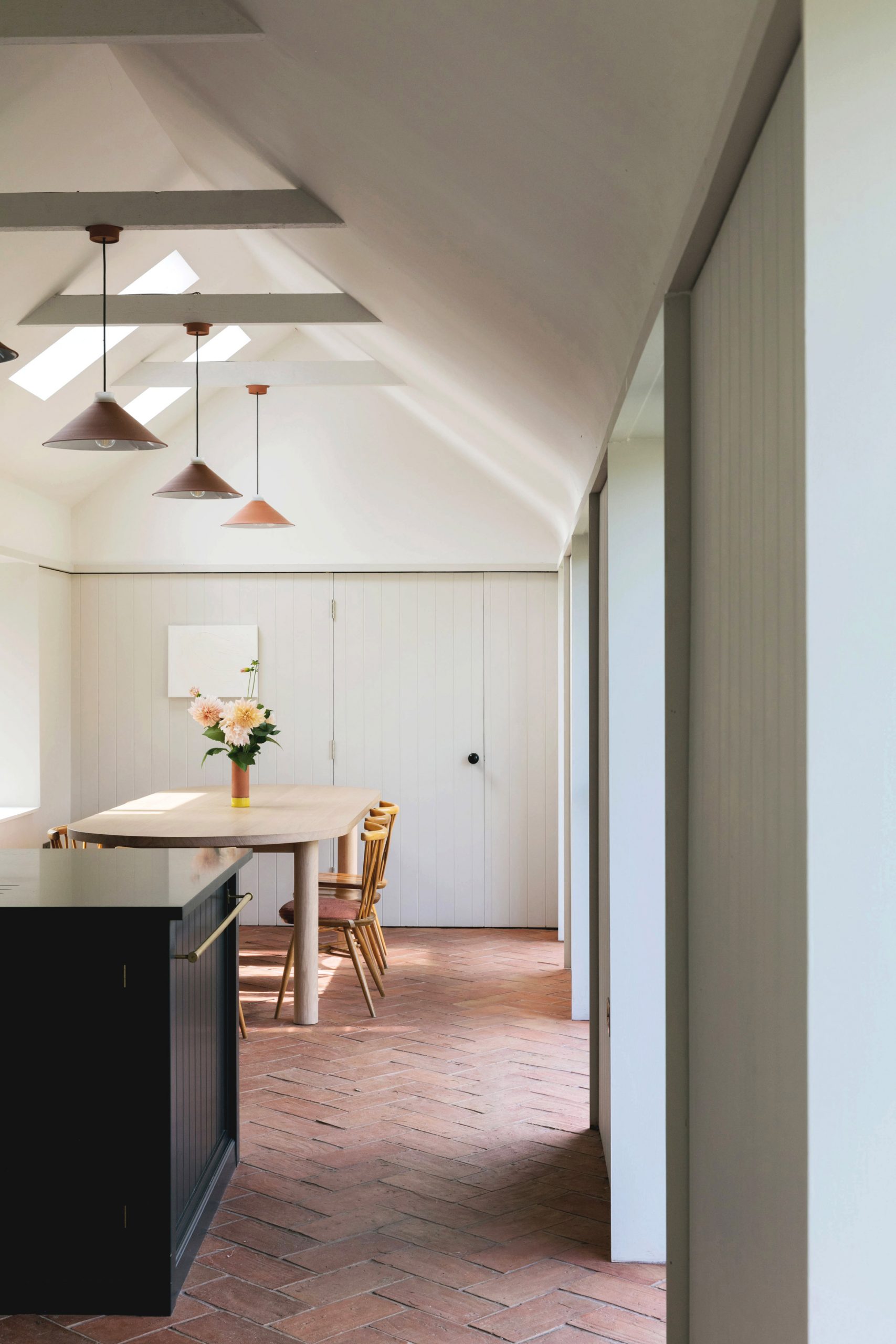
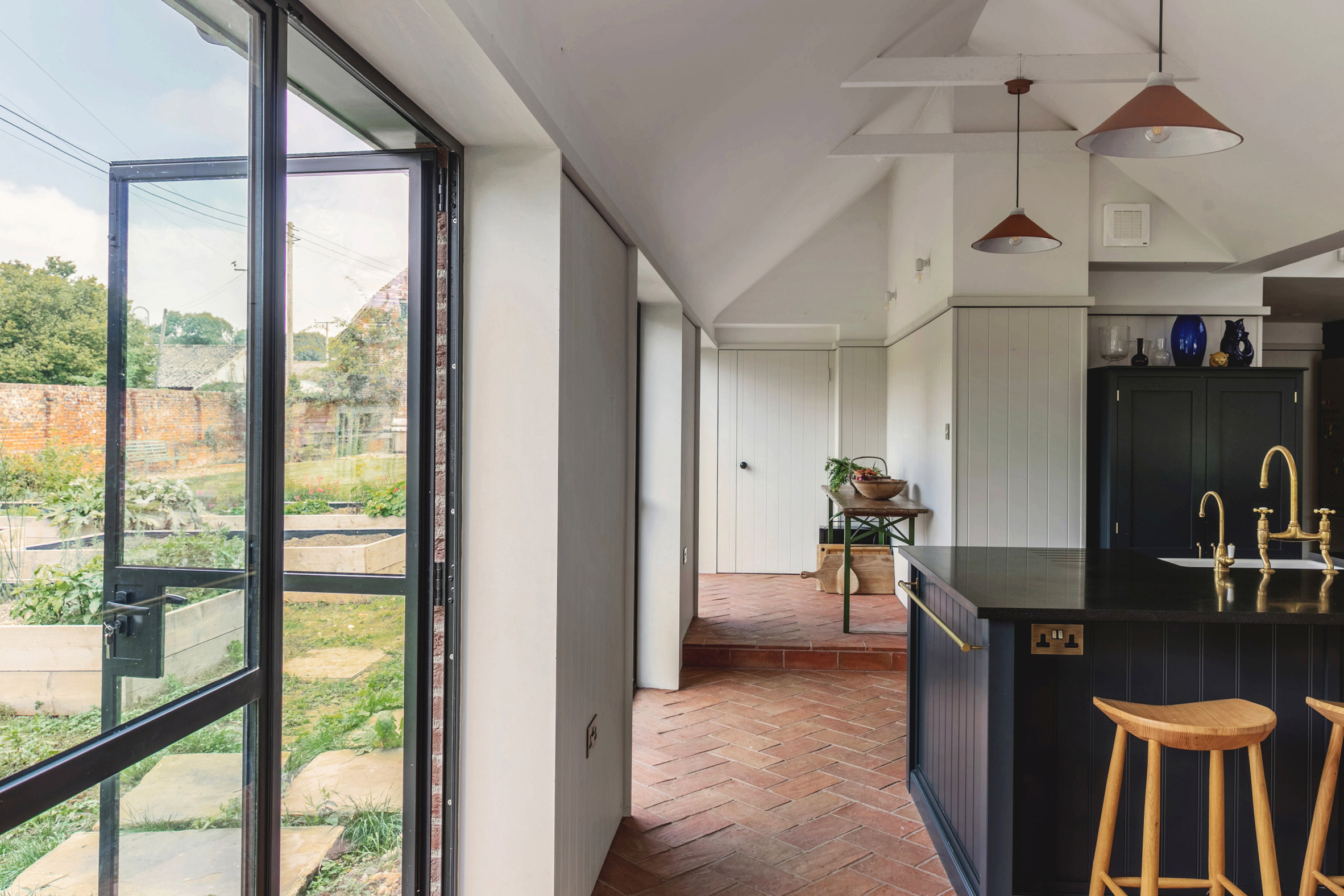
The kitchen centres around a dark-painted island unit

They chose arrowhead tiles for the exterior, which create hexagon shapes in a variety of tones. This creates a contemporary feel, giving the extension some visual difference from the rest of the building.

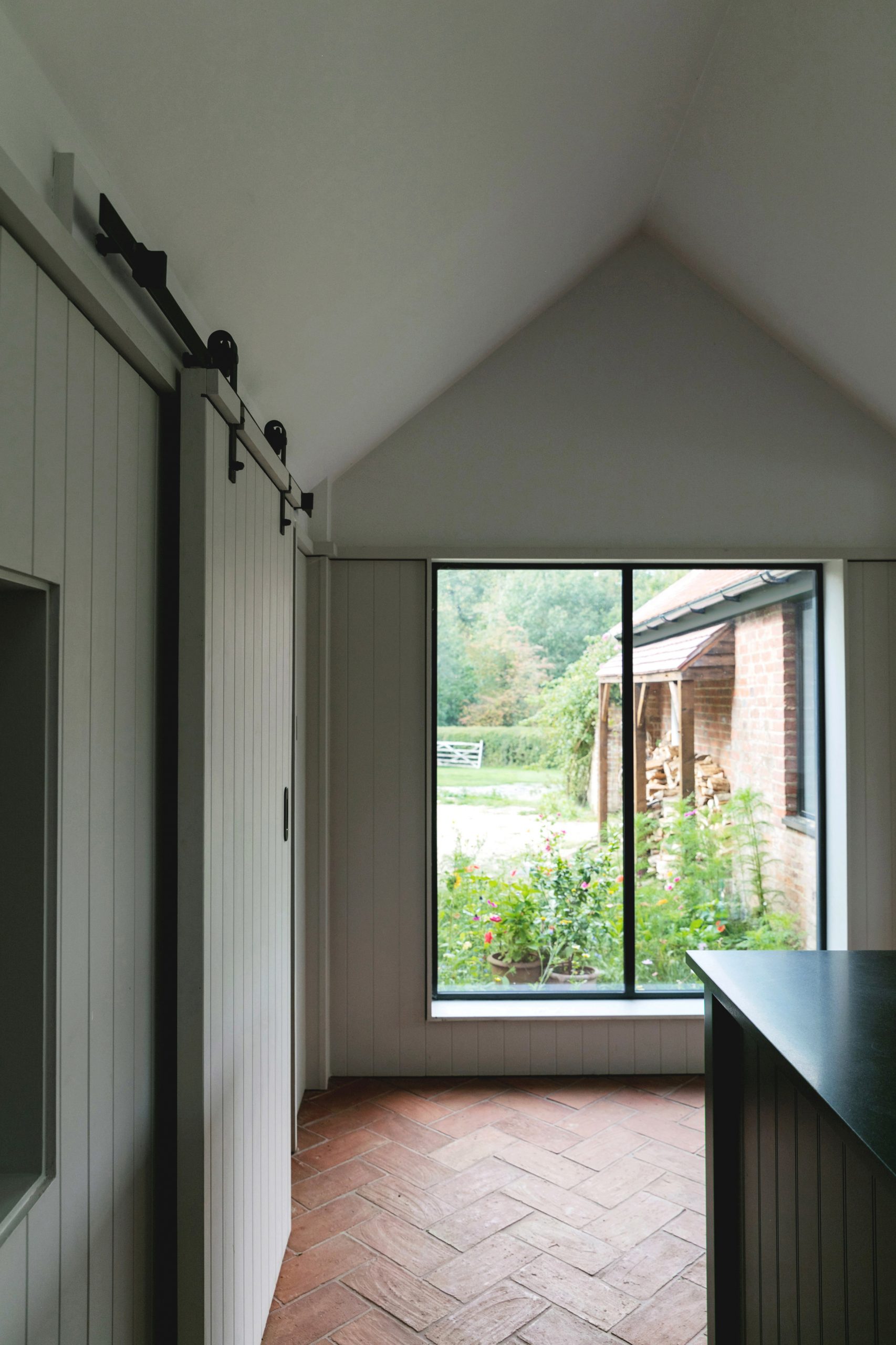
The palette continues inside, where rectangular tiles create a herringbone pattern on the floor. Similarly, pendant lights hanging from the wooden roof beams are also made from clay.

Window of Farley Farmhouse by Emil Eve Architects
The walls are lined in timber panels

Other details offer a similar mix of contemporary and traditional styles.

The walls are lined in timber panels, referencing existing wainscotting elsewhere in the house. They are painted in a neutral, green-toned shade that complements the materials palette.

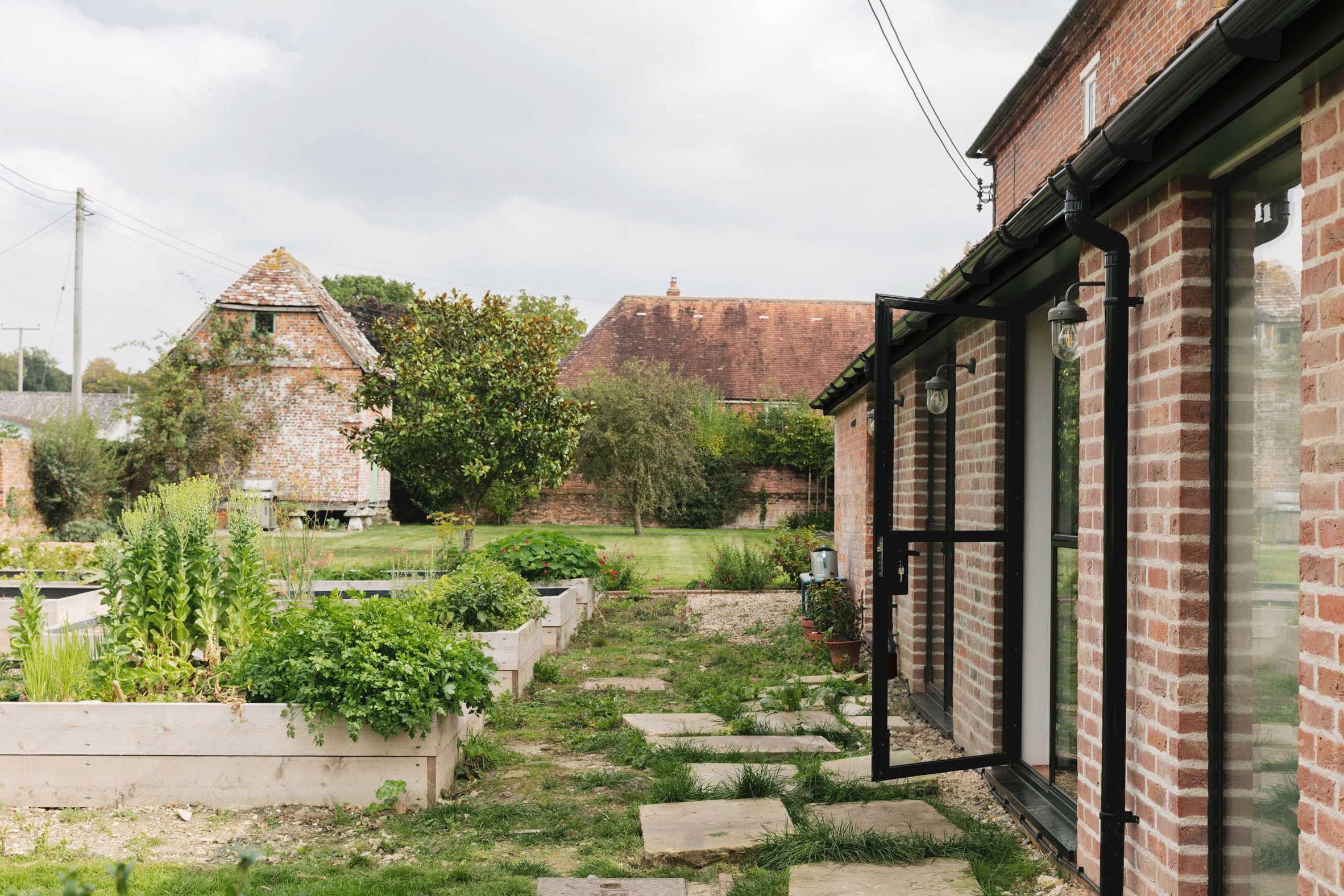
Meanwhile, the glazing is more modern, with door and windows surrounded by slender black frames and powder-coated steel sills.

The kitchen centres around a dark-painted island unit with a slate worktop, while a wooden table creates a space where up to eight can dine together.

Garden at Farley Farmhouse by Emil Eve Architects
Door and windows feature slim black frames

The project began before the Covid-19 pandemic. The clients – a couple with one young child, and others away at university – had bought the property as a second home, allowing them to escape London at the weekends.

During the period of national lock-down, the family made this home their base. This proved so successful, they decided to make it their permanent home.

"Lockdown life gave them the opportunity to reassess their priorities," added Emma. "Now have a kitchen and dining room, which allows them to fully enjoy their house."

Exterior of Farley Farmhouse by Emil Eve Architects
The extension slots into a previously unused outdoor space

Emma and Ross founded their studio in 2009, in east London. Their other projects include the conversion of a Victorian warehouse and the Caro Somerset lifestyle store.

Photography is by Mariell Lind Hansen.

The post Terracotta tiles add warmth to Wiltshire farmhouse kitchen by Emil Eve Architects appeared first on Dezeen.


from Dezeen https://ift.tt/2VfiUWU

Tatiana Bilbao to feature among panellists exploring Latin American architecture for Dezeen x Miami Design Talks

Dezeen x Miami Design Talks

The final instalment of Dezeen x Miami Design Talks will be a panel discussion about the relationship between the city of Miami and Latin American architecture. Watch here from 3pm London time.

Moderated by Dezeen's founder and editor-in-chief Marcus Fairs, the panel will comprise Mexican architect Tatiana Bilbao, Venezuelan-born architect Carlos Zapata and Ecuadorian architectural developer Joseph Schwarzkopf.

Miami has often been referred to in the media as "the capital of Latin America". This live conversation will explore the influences that the city has on Latin American architecture and vice versa.

Tatiana Bilbao

Bilbao is the director of architecture practice Tatiana Bilbao Estudio, which she set up in 2009. Her work is characterised by a sensitive approach to design that integrates social values and embraces collaboration.

For example, in 2019, Bilbao teamed up with 32 architects and studios to created low-cost housing designs as part of an innovative community development in Hidalgo, Mexico.

Prior to founding her firm, Bilbao was an advisor to Mexico City's Ministry of Development and Housing.

Alongside practising as an architect, Bilbao also holds a teaching position at Yale University School of Architecture.

Joseph Schwarzkopf

Schwarzkopf is the general manager of Uribe Schwarzkopf, a Quito-based development firm that has worked with international architects such as Jean Nouvel, BIG and Moshe Safdie.

The family-run company, which has developed over 200 buildings in Quito over the course of fifty years, aims to use design as a catalyst for positive change.

Zapata is an award-winning Latin American architect and principal of the New York-based firm Carlos Zapata Studio.

Carlos Zapata

The studio's work ranges from master planning and architectural design, to interiors and furniture design.

Projects have included professional sports arenas to airport concourses to commercial high rises to private homes.

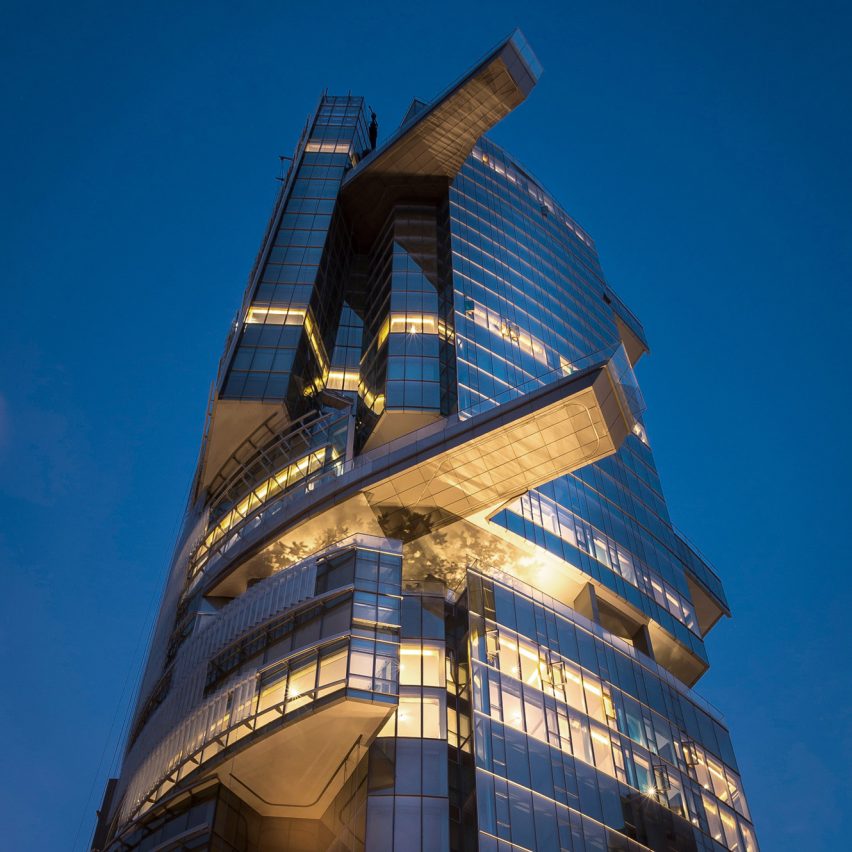
He also recently completed a 24-storey glass residential building in Quito that appears to be split in two. The project was a collaboration between Zapata and Uribe Schwarzkopf.

The full programme for the Dezeen x Miami Design Talks collaboration can be found here.

The post Tatiana Bilbao to feature among panellists exploring Latin American architecture for Dezeen x Miami Design Talks appeared first on Dezeen.


from Dezeen https://ift.tt/2Ji3A9s