Thursday, 8 July 2021

The Butterfly Effect is a bridge to help insects cross the road

The Butterfly Effect

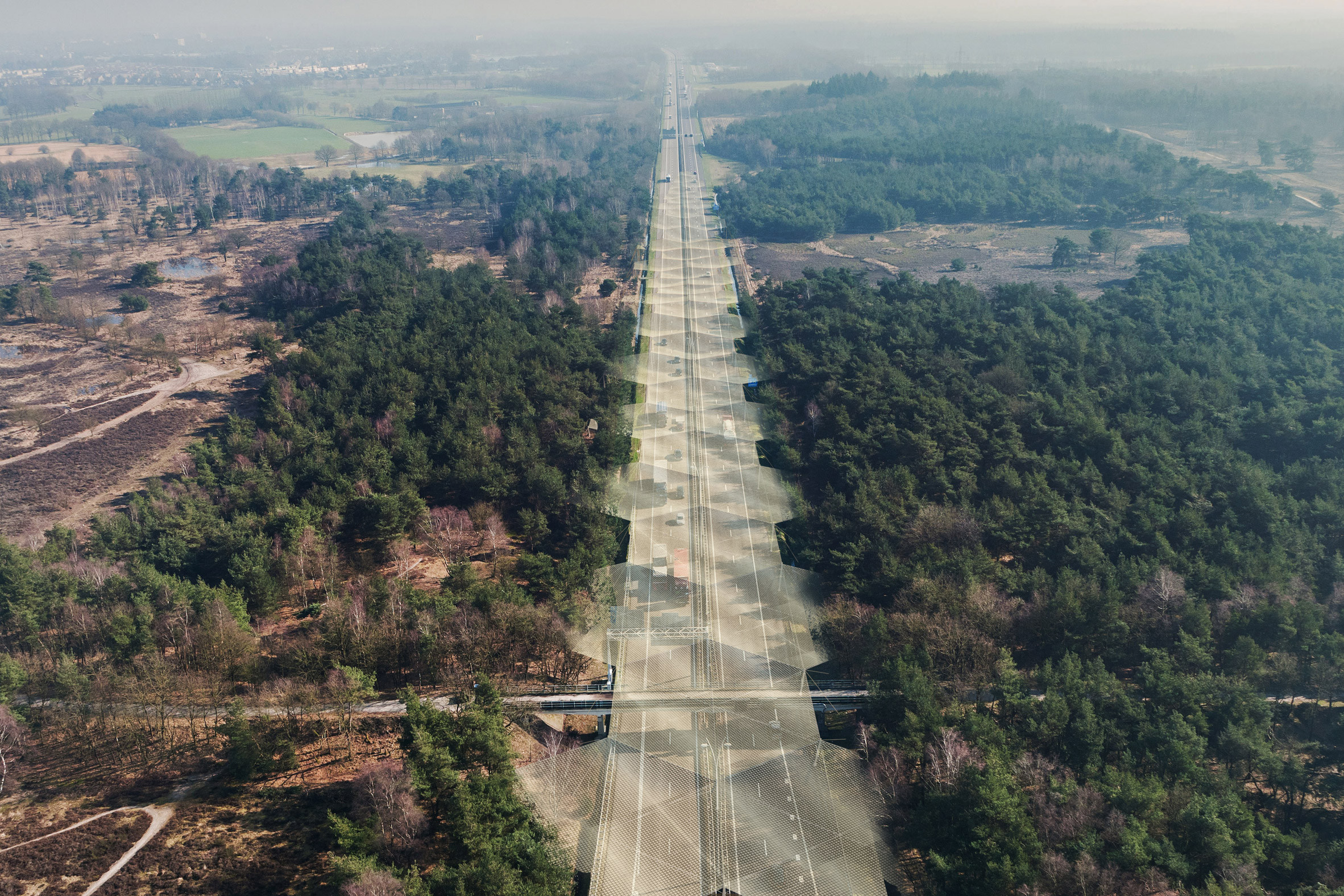
VenhoevenCS, DS Landschapsarchitecten and Studio Solarix have designed the Butterfly Effect, a proposal to stretch a treetop-level web over a Dutch motorway to provide insects with cleaner air above roads.

Currently a conceptual design, the project is a proposal for the Our Energy Our Landscape design challenge organised by Kunstloc Brabant, a cultural programme in the Netherlands' North Brabant province.

The Butterfly Effect is in the Netherlands
The studios have released renderings of the proposal

Dutch design studio VenhoevenCS collaborated with landscape architecture agency DS Landschapsarchitecten and solar energy firm Studio Solarix to imagine a membrane of solar panels that could span a road.

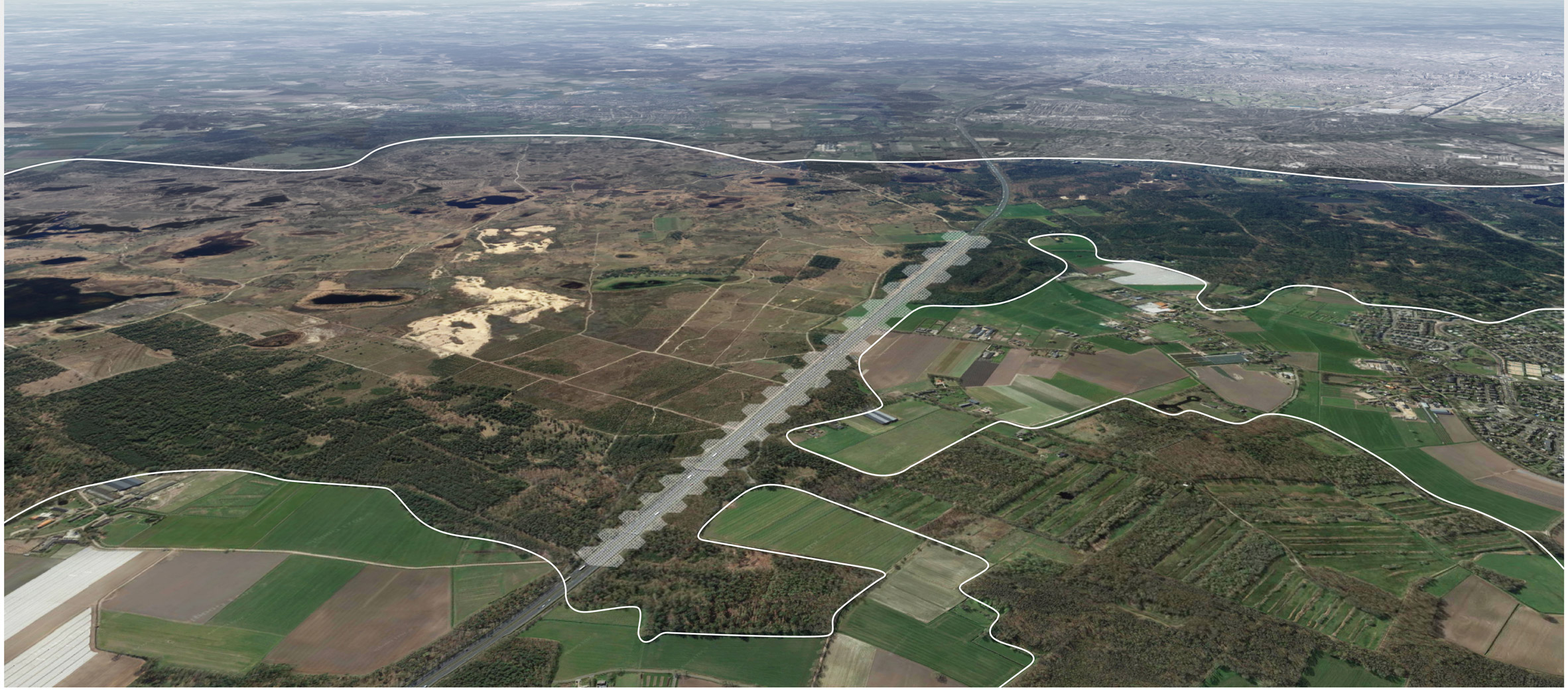
Called the Butterfly Effect, the web could be suspended across the A67 motorway on the Strabrechtse Heide, a natural heathland area in North Brabant, although its inventors said the concept could be replicated anywhere.

The project is to promote insect pollination
A web would be suspended across the motorway

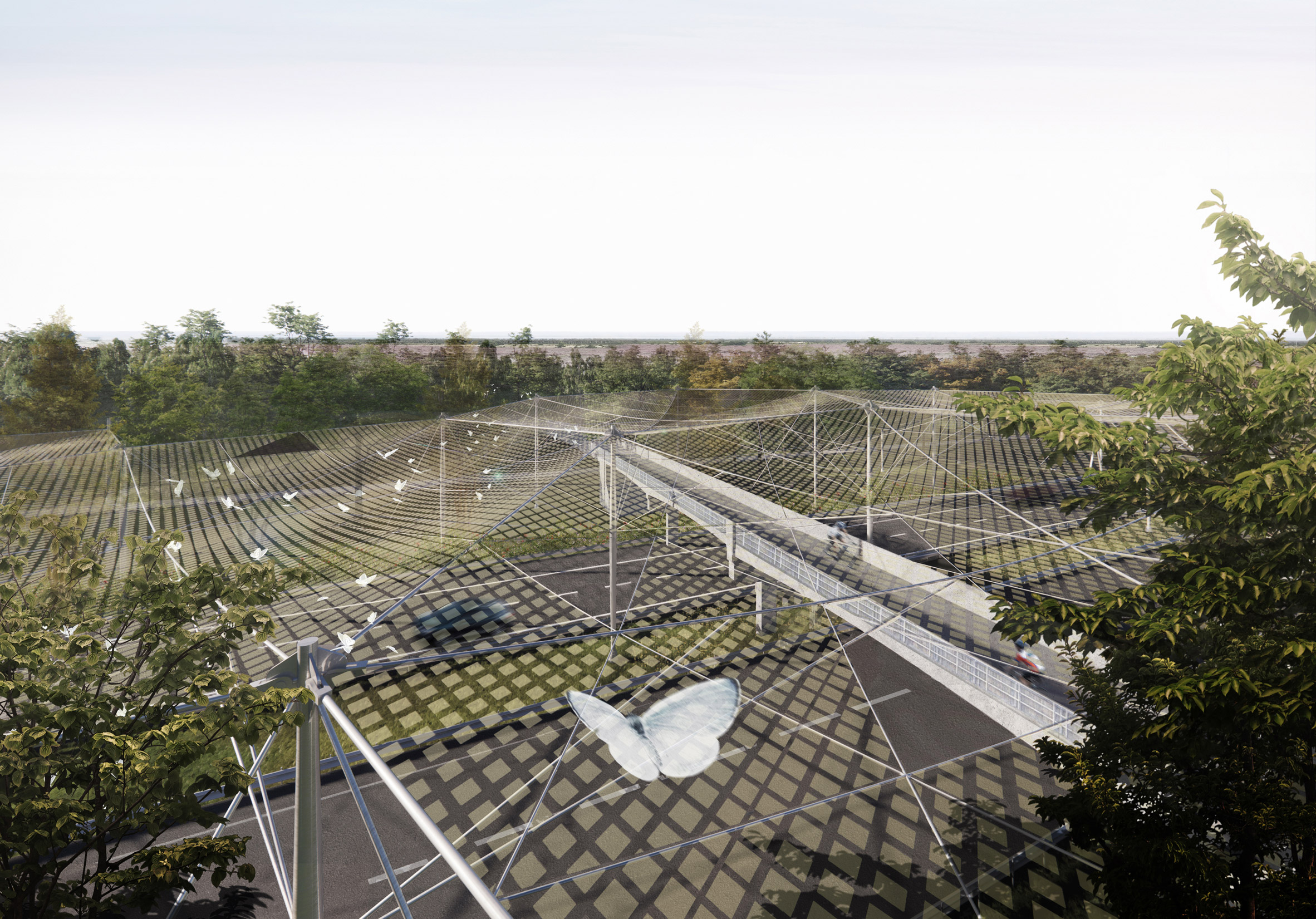
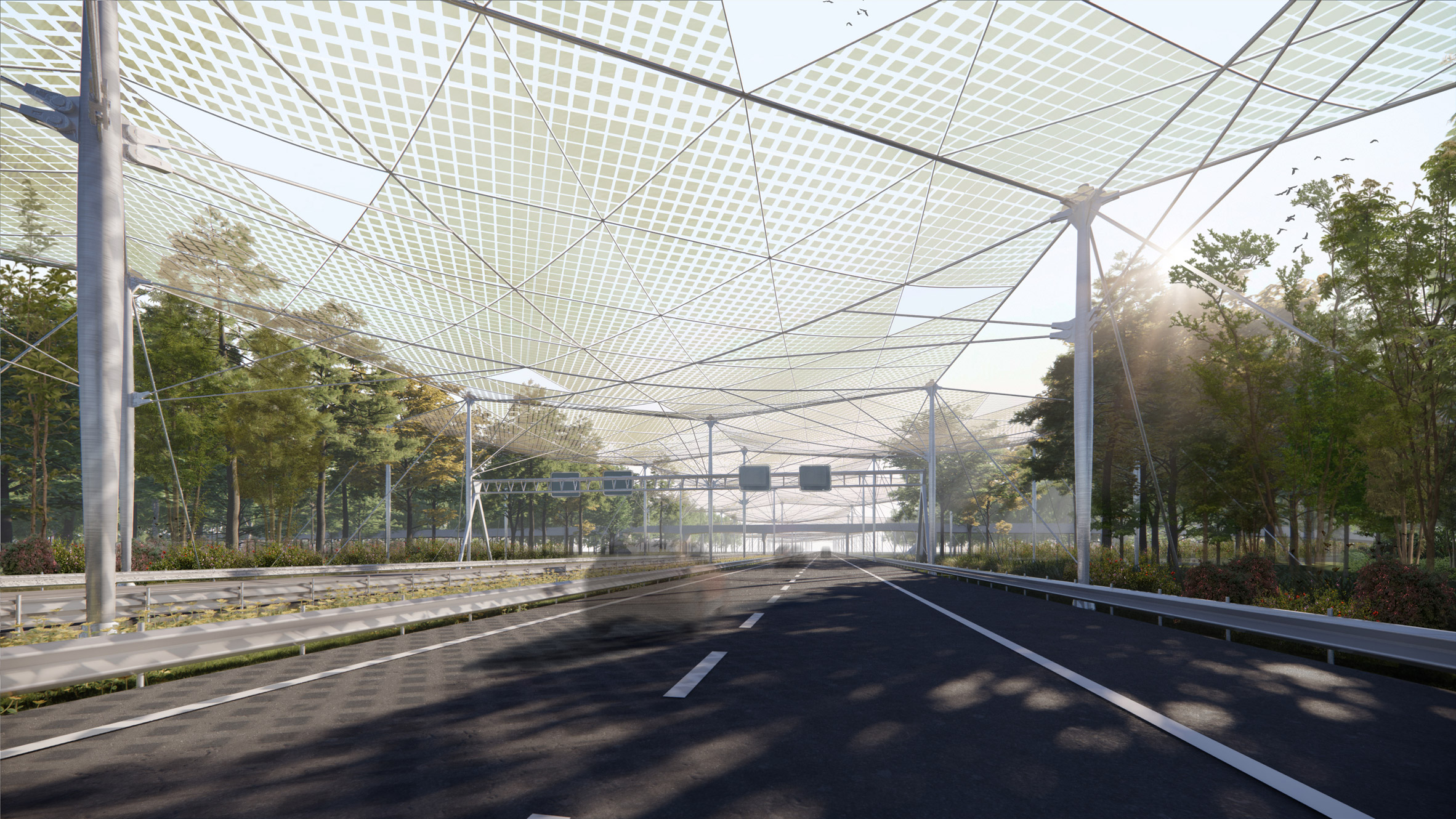
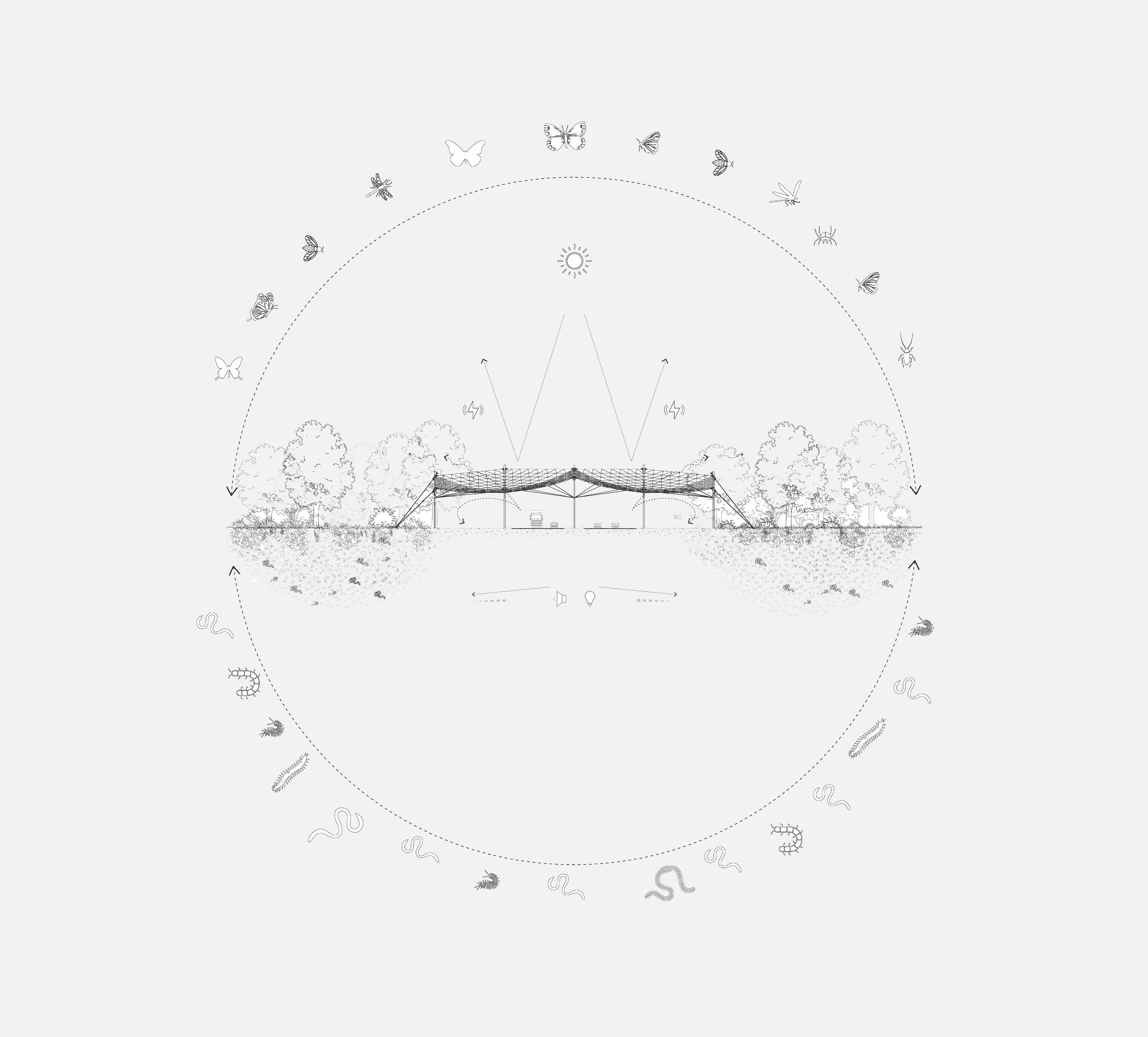
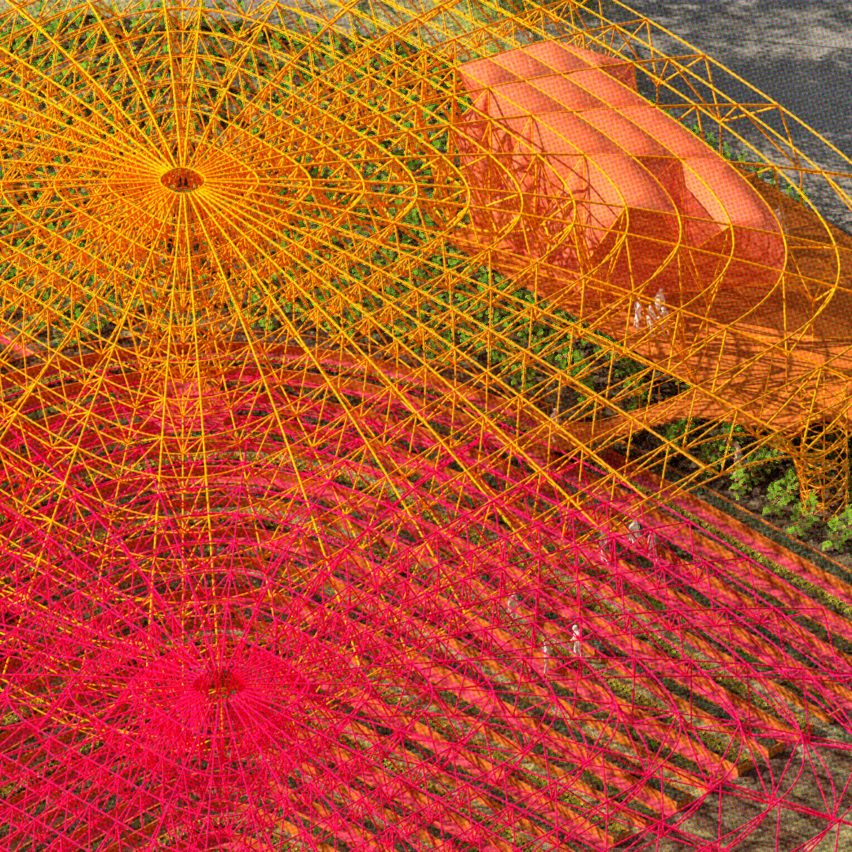
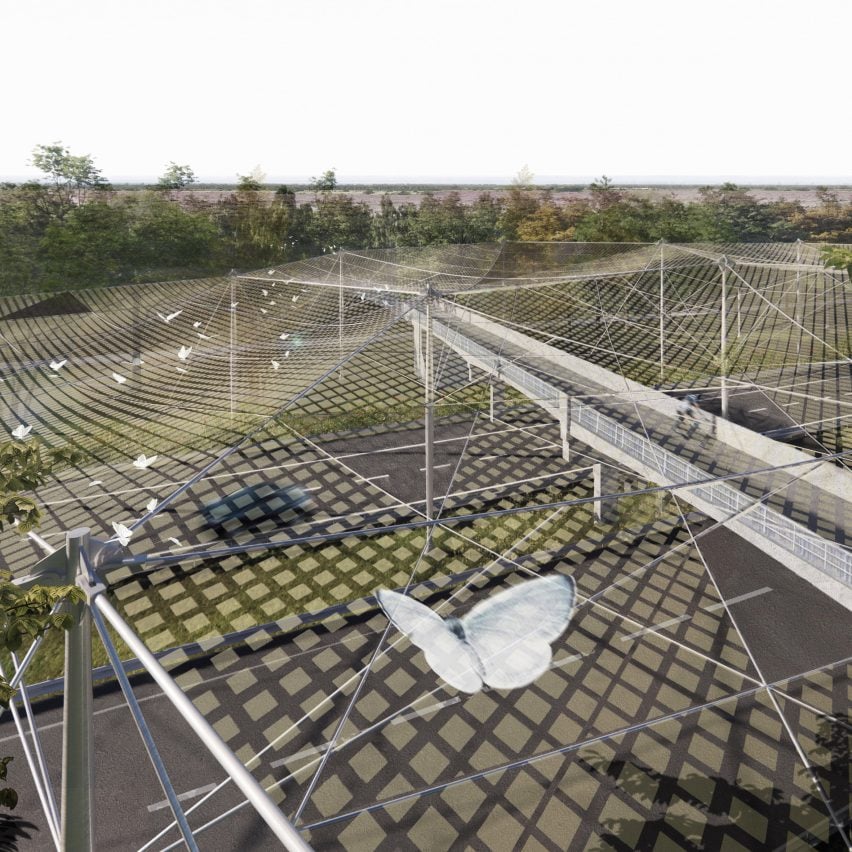
Connected to trees on each side by steel columns, the web would stretch across the motorway and provide clearer air space for insects to cross the road above the traffic below.

"A motorway forms a huge barrier for many insects as the vortexes and currents in the air caused by traffic are deadly to them," VenhoevenCS architect and director Cécilia Gross told Dezeen.

"Research has shown that many insects, such as the Alcon Blue butterfly, only dare to cross the motorway when there is a traffic jam and the air is still," she added.

The solar-panelled web
Shadows formed by the web's hexagonal structure would produce a unique driving experience

According to VenhoevenCS, 85 per cent of the world's food is dependent on insect pollination.

The Butterfly Effect would reduce the disruptive air currents produced by cars and encourage insects to travel across the road and pollinate plants.

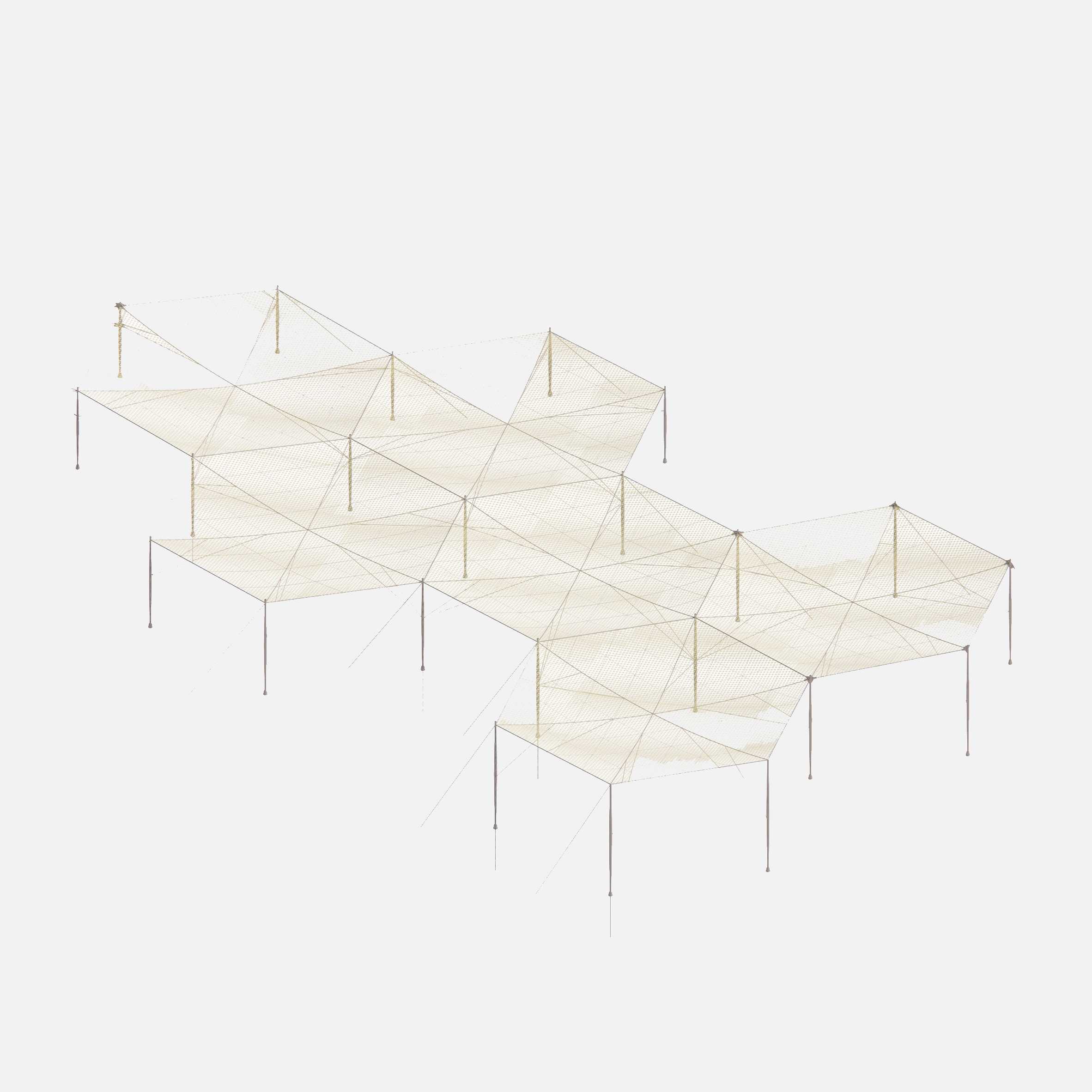
Made up of hexagonal photovoltaic modules, the web's design is informed by a bee's honeycomb and would create a large surface area of solar panels that could convert sunlight into energy.

The designers expect that the technology for translucent photovoltaic surfaces will soon be available.

"The first generation of these energy-generating surfaces will consist of a thin translucent photovoltaic membrane," said Gross.

"Looking ahead we expect that developments mean that the next generation of these surfaces could see them being created from textiles, given the textile industry is already working on energy-generating fibres."

The Butterfly Effect
The web could stretch in every direction

Pollution would also be decreased as the nitrogen and particulates released by traffic would remain in the roadside woodland and act as a fertilizer for the soil.

This enriched soil would encourage further tree and vegetation growth, leading to a quieter motorway with noise reduced by dense woodland.

Biodiversity caused by the web
The bridge would encourage biodiversity

Gross explained that the Butterfly Effect's hexagonal structure means that the web could grow in any direction and could become a wider tool in urban landscapes such as above railways.

"It could be used as a blueprint in places where there is noise pollution, a lot of particulate matter or a high energy demand," said Gross.

"It will become a symbol of the type of energy generation that should be a priority, something that gives a helping hand to small ecosystems and in doing so contributes to a large-scale approach to climate change and biodiversity loss."

The Butterfly Effect could be replicated anywhere
The project could be replicated above vast expanses of space

VenhoevenCS is a Dutch design office founded by Ton Venhoeven in 1995 with a focus on sustainable architecture. The firm recently revealed designs for a timber aquatic centre for the Paris 2024 Olympics.

DS Landschapsarchitecten is an Amsterdam-based architecture and urban planning company. Studio Solarix is a solar energy company, also based in the Dutch capital.

Other sustainable architecture includes a university building in Georgia, America, topped by a giant photovoltaic canopy.

The renderings are courtesy of VenhoevenCS, DS Landschaparchitecten and Studio Solarix.

The post The Butterfly Effect is a bridge to help insects cross the road appeared first on Dezeen.


from Dezeen https://ift.tt/3AFGbo9

Hyundai's claim of flying cars by 2030 features in today's Dezeen Weekly newsletter

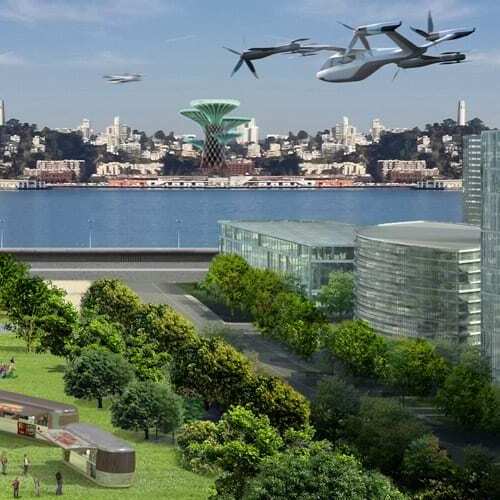
The latest edition of our Dezeen Weekly newsletter features the chief executive for operations at Hyundai, Michael Cole, who says that flying cars will be in our cities "by the latter part of this decade".

South Korean automaker Hyundai, which is developing a flying taxi with Uber, expects electric flying cars to be seen in cities before the end of the decade.

Cole told the Society of Motor Manufacturers and Traders conference that, "urban air mobility will offer great opportunity to free up congestion in cities, to help with emissions, whether that's intra-city mobility in the air or whether it's even between cities".

Readers aren't convinced. One asked: "What could go wrong?"

Reschio estate in the summer
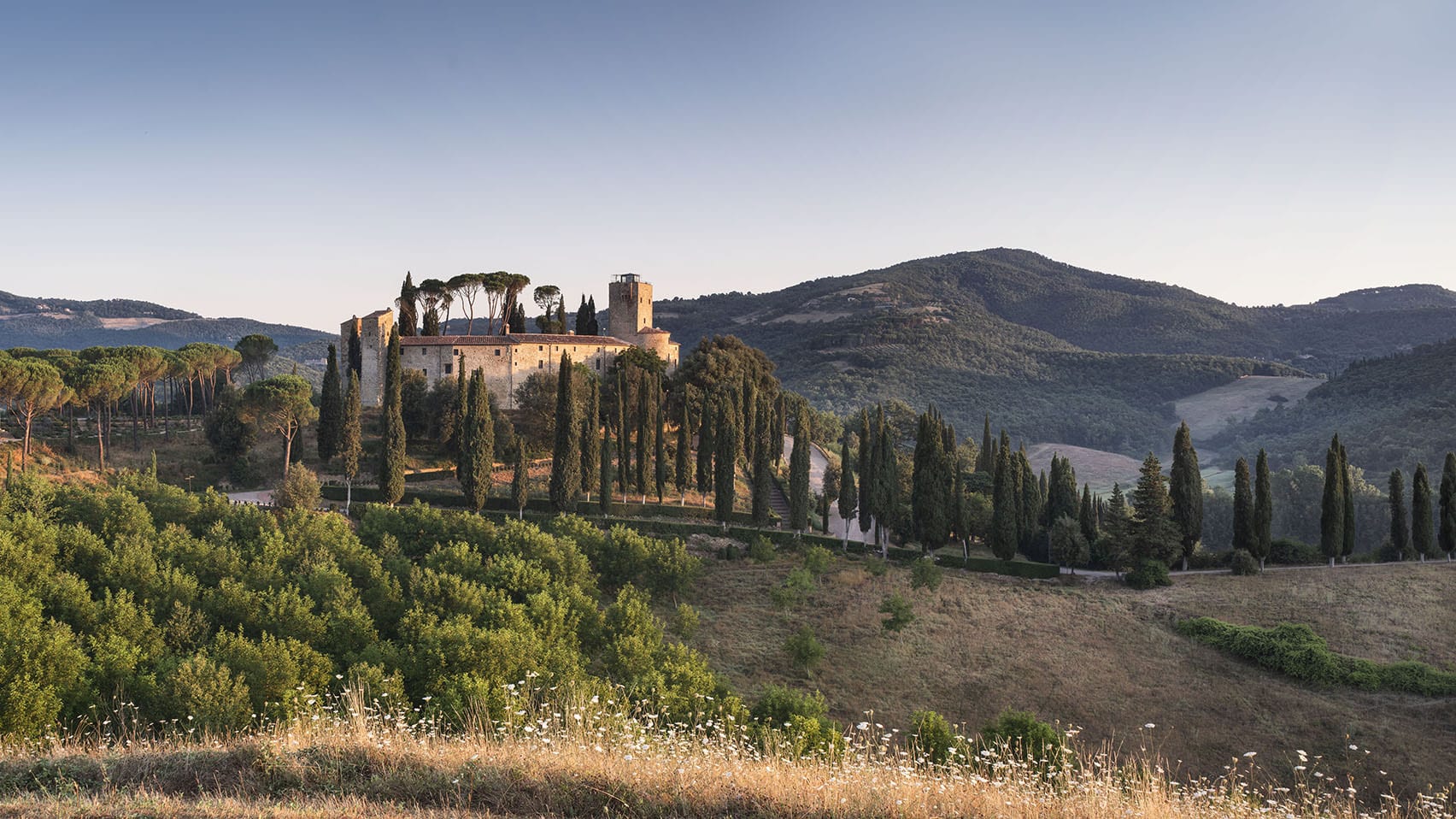
Bolza family turns 1,000-year-old Italian castle into Hotel Castello di Reschio

Other stories in this week's newsletter include the restoration of a 10th-century castle, a concrete art pavilion in South Korea that will be used to display sculptures by Álvaro Siza, and our pick of ten Scandi-style living rooms that play with textures and showcase natural materials.

Subscribe to Dezeen Weekly

Dezeen Weekly is a curated newsletter that is sent every Thursday, containing highlights from Dezeen. Dezeen Weekly subscribers will also receive occasional updates about events, competitions and breaking news.

Read the latest edition of Dezeen Weekly. You can also subscribe to Dezeen Daily, our daily bulletin that contains every story published in the preceding 24 hours.

Subscribe to Dezeen Weekly ›

The post Hyundai's claim of flying cars by 2030 features in today's Dezeen Weekly newsletter appeared first on Dezeen.


from Dezeen https://ift.tt/3AKgL99

Visual shows supertall skyscraper designed by OMA for New York's Billionaire's Row

OMA supertall

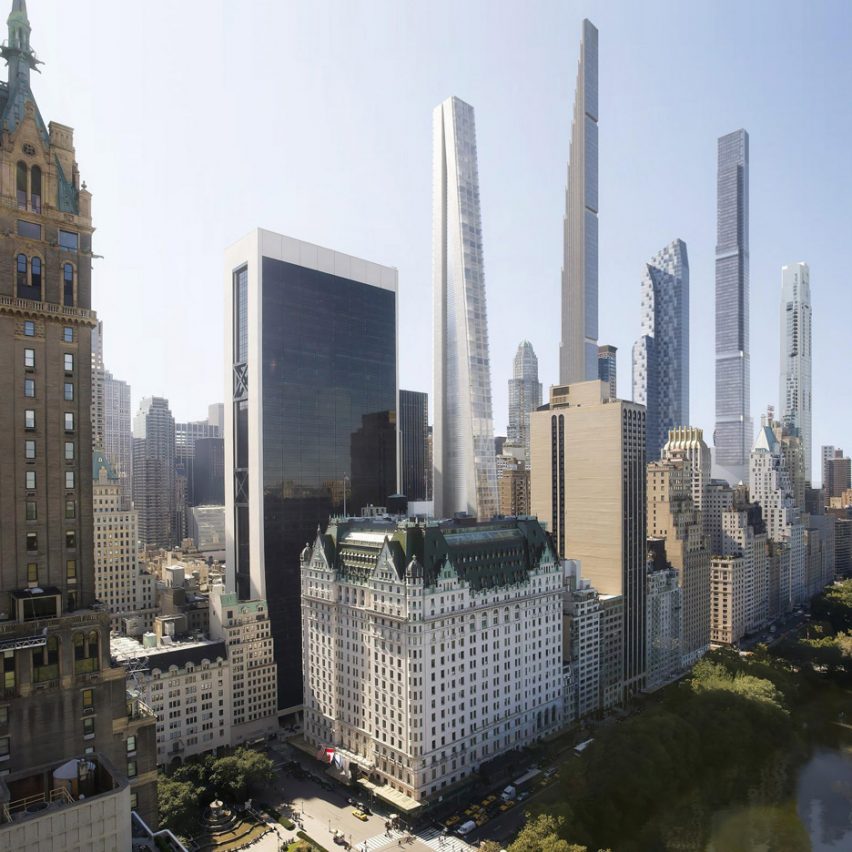
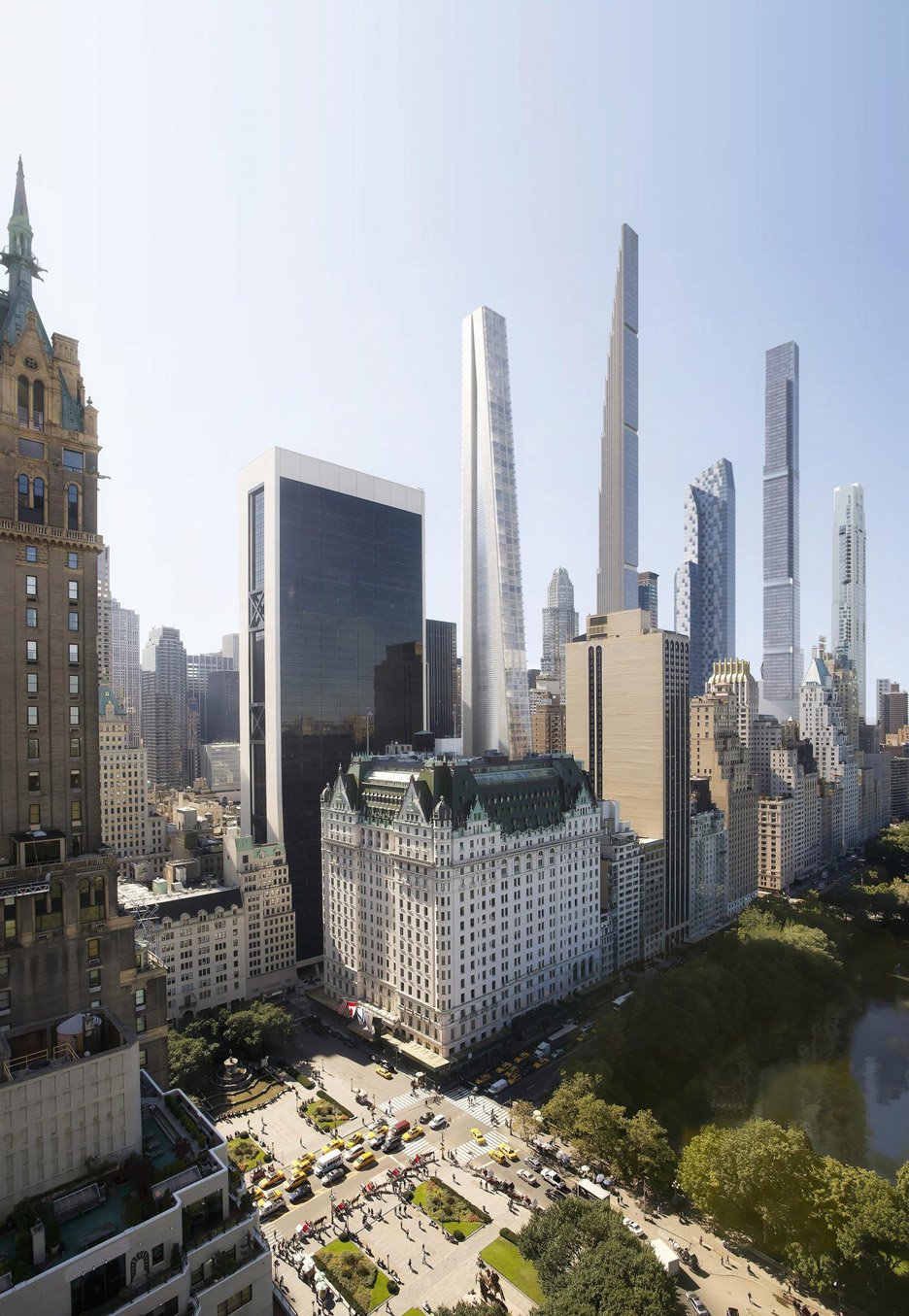
A render produced by architecture firm OMA depicts a new supertall skyscraper proposed for 41-47 West 57th Street on New York's Billionaire's Row.

The mixed-use high-rise, which is at the centre of the visual, would be 1,100 feet high (335 metres) and overlook Central Park in Midtown Manhattan, local pro-development publication YIMBY reported.

Plans submitted to the New York City Department of Buildings outline a wedge-shaped 63-storey skyscraper that would house 119 residential units, a 158-room hotel and restaurant, and almost 206,000 square feet (19,000 square metres) of commercial space.

Developer Sedesco is also reportedly seeking a zoning authorisation for more floor space than initially approved for the site.

In return for over 52,000 more square footage (4,830 square metres), Sedesco would make improvements to the elevators for 57th Street's F train subway station.

Render of a New York supertall skyscraper by OMA
OMA's render shows a wedge-shaped supertall near central park

This is part of New York's Zoning for Accessibility program, a new scheme announced in April 2021 where the Metropolitan Transportation Authority (MTA) can offer incentives to private developers looking to build near stations in return for accessibility improvements made during construction.

Supertall would join Billionaire's Row

OMA hasn't released any information about the as-yet-unnamed supertall skyscraper for 41-47 West 57th Street.

If built, the high rise would join several other supertall buildings on Billionaire's Row, the nickname given to the cluster of residential skyscrapers cropping up at the southern end of Central Park on or near 57th Street.

Several of these towers are included in the OMA render, including the already completed 953-feet-high (290 metres) 220 Central Park South by Robert AM Stern and 111 West 57th Street, a 1,421 feet (433 metres) super-skinny supertall by SHoP Architects due to complete later this year.

Central Park Tower, a 1,550-foot (472-metre) supertall by Adrian Smith + Gordon Gill is also nearing completion on Billionaire's Row and is set to become the tallest residential building in the world.

The Rafael Viñoly-designed supertall skyscraper 432 Park Avenue, which made headlines earlier this year after residents complained of floods and elevator problems, is also on Billionaire's Row.

Recent projects in and around New York by OMA include a pair of residential towers on the waterfront in Brooklyn and plans for the first US outpost of The Centre Pompidou in Jersey City.

The main image is by OMA.

The post Visual shows supertall skyscraper designed by OMA for New York's Billionaire's Row appeared first on Dezeen.


from Dezeen https://ift.tt/3yECcGS

University of California, Los Angeles architecture students showcase end-of-year projects

University of California

A project that explores how architects are 'storytellers for the environment' and prefabricated housing systems designed for future mobility are included in Dezeen's latest school show by students from the University of California, Los Angeles.

Also included is a project that addresses fire resilience in California and one that focuses on the role that cultural identity plays in architecture today.


University of California, Los Angeles

University: University of California, Los Angeles, UCLA School of the Arts and Architecture
Course: Master of Architecture (M.Arch), Master of Science in Architecture and Urban Design (M.S.AUD), Bachelor of Art in Architectural Studies (B.A.)
Tutors: Kutan Ayata, Neil Denari, Georgina Huljich, Mariana Ibañez, Jeffrey Inaba, David Jimenez Iniesta, Jimenez Lai, Jason Payne, Heather Roberge, Natasha Sandmeier, Mohamed Sharif and Nathan Su

Statement:
"UCLA Architecture and Urban Design is a champion of ideas and their articulate expression. Our exceptional faculty teach students to engage the world around them, see ideas as productive forms of response, and leverage design and writing to express newly curated perspectives.

"Through rigorous inquiry, we interrogate contemporary architectural and urban issues and propose possible futures with equal measures of expertise, optimism and vision. These ideas are grounded in a critical engagement with the history and theory of architecture and the future contingencies of contemporary culture.

"Rumble is our end-of-year exhibition. It is an opportunity to discuss individual projects within a larger context of contemporary ideas and discourses, revealing how the questions and projects that motivate us have matured and developed under the direction of our talented students and the collective stewardship of faculty. Below is a snapshot of student work from Rumble 2021. Visit our website to learn more."

University of California, Los Angeles

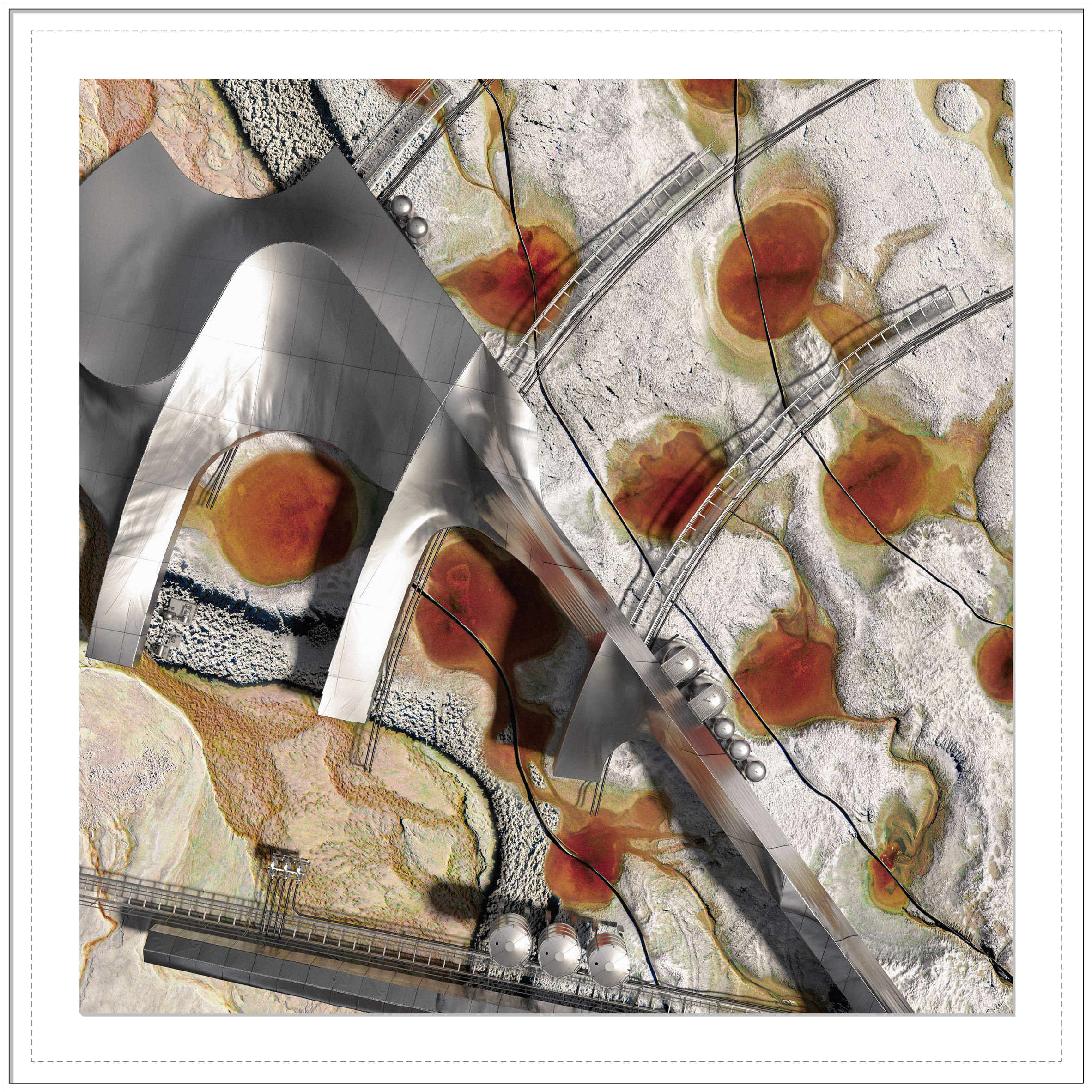
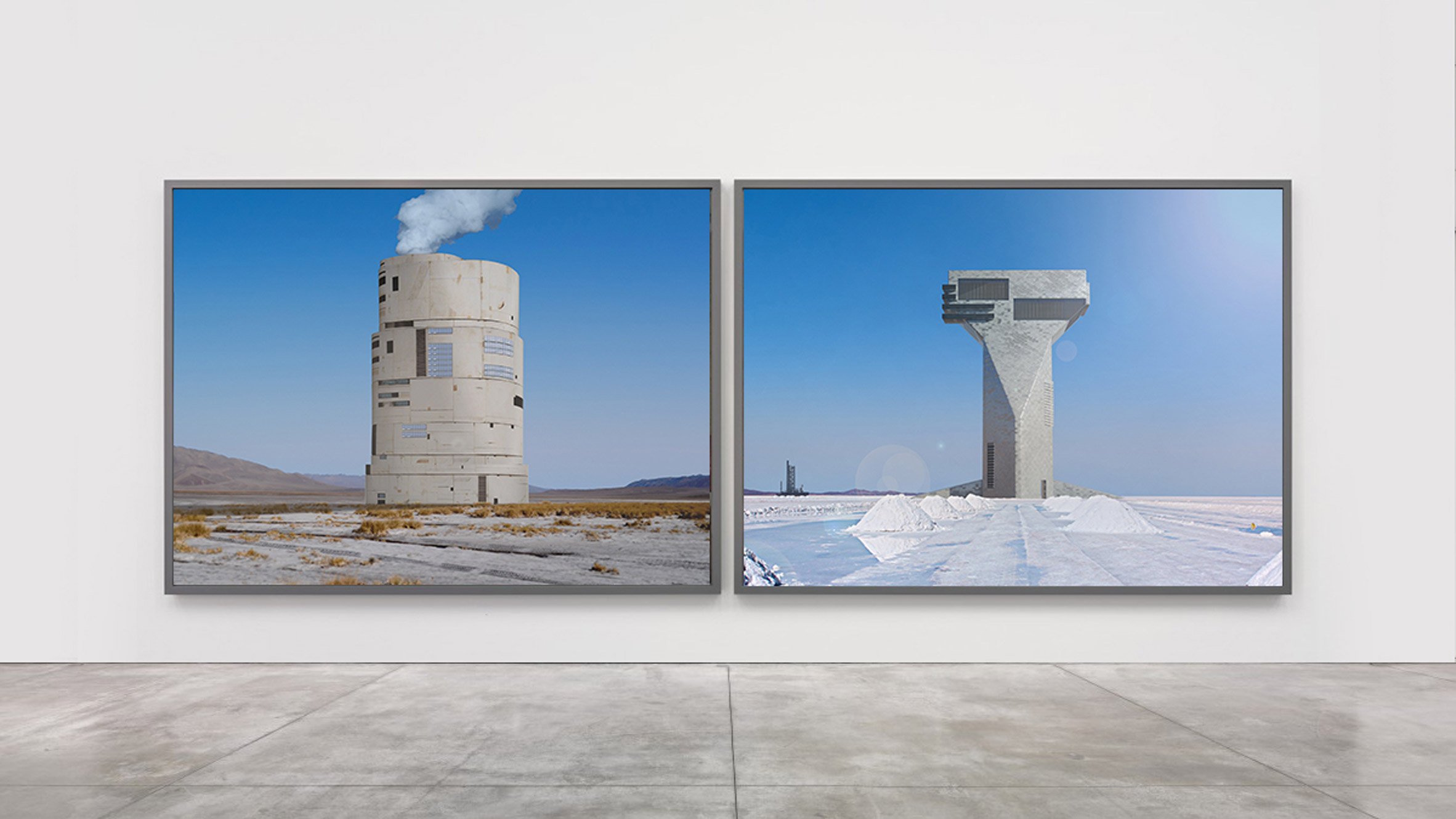
Saline Dreams 4*: Ecoinfrastructural Architecture by Nate Waddell

"This project involves the engineered ecology and resultant aesthetic implications of the Los Angeles Department of Water and Power's Dust Mitigation Project at Owens Lake – a large site in eastern California of significant environmental, historical, political, and infrastructural significance.

"Until recently the largest single source of dust pollution in the US, the studio examines control methods developed by LADWP to manage this complex landscape: a complex synthesis of fields, pools, plants, animals, microorganisms, chemicals, minerals, roads, berms, dams, plumbing, power lines, grading, gravel, roads, sensors, and salt that is only partially visible to the human eye. The effects of these reworkings of the landscape are striking, inevitably aesthetic in their expression."

Student: Nate Waddell
Course:
M.Arch.
Tutor:
Jason Payne

University of California, Los Angeles

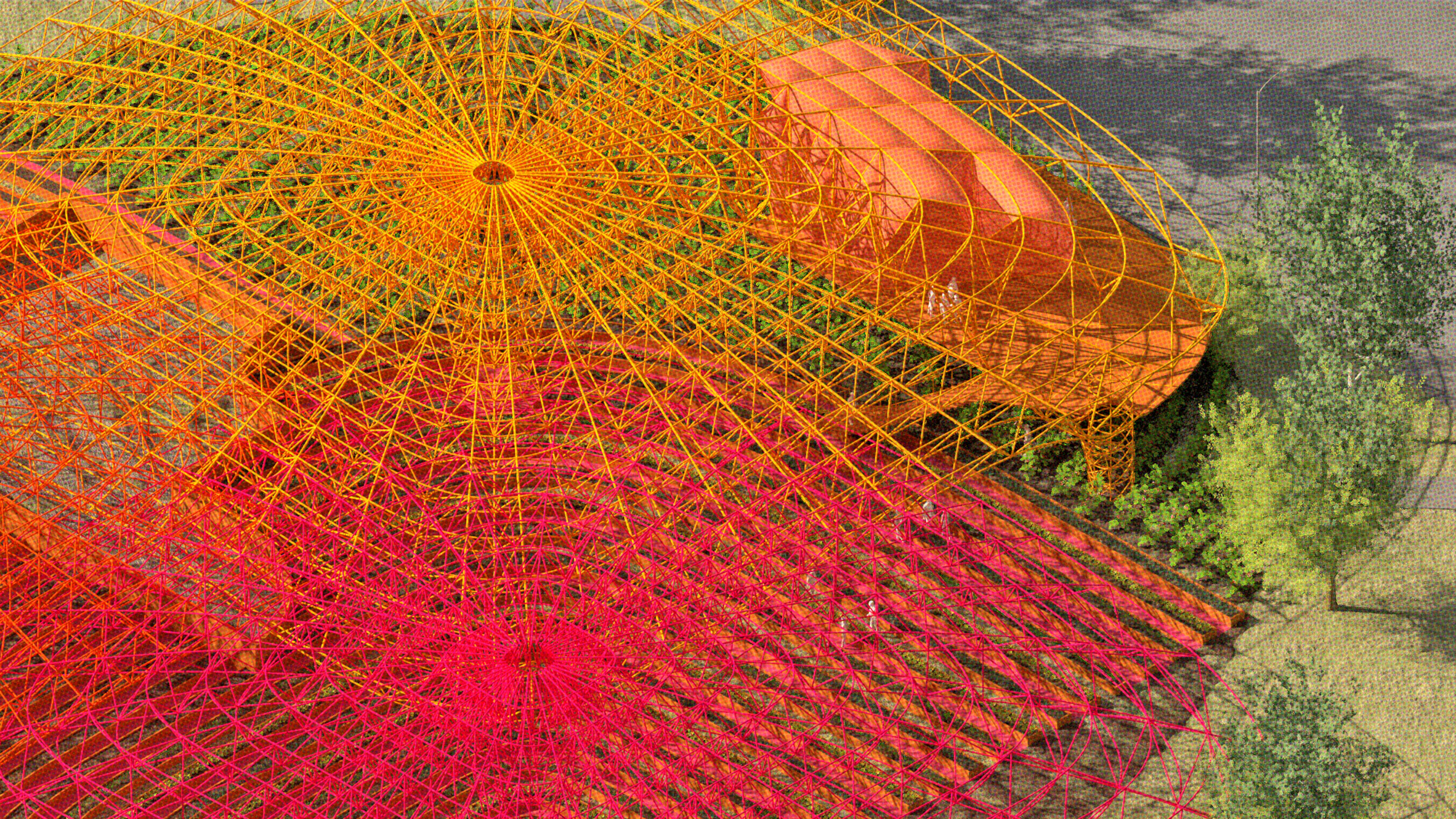
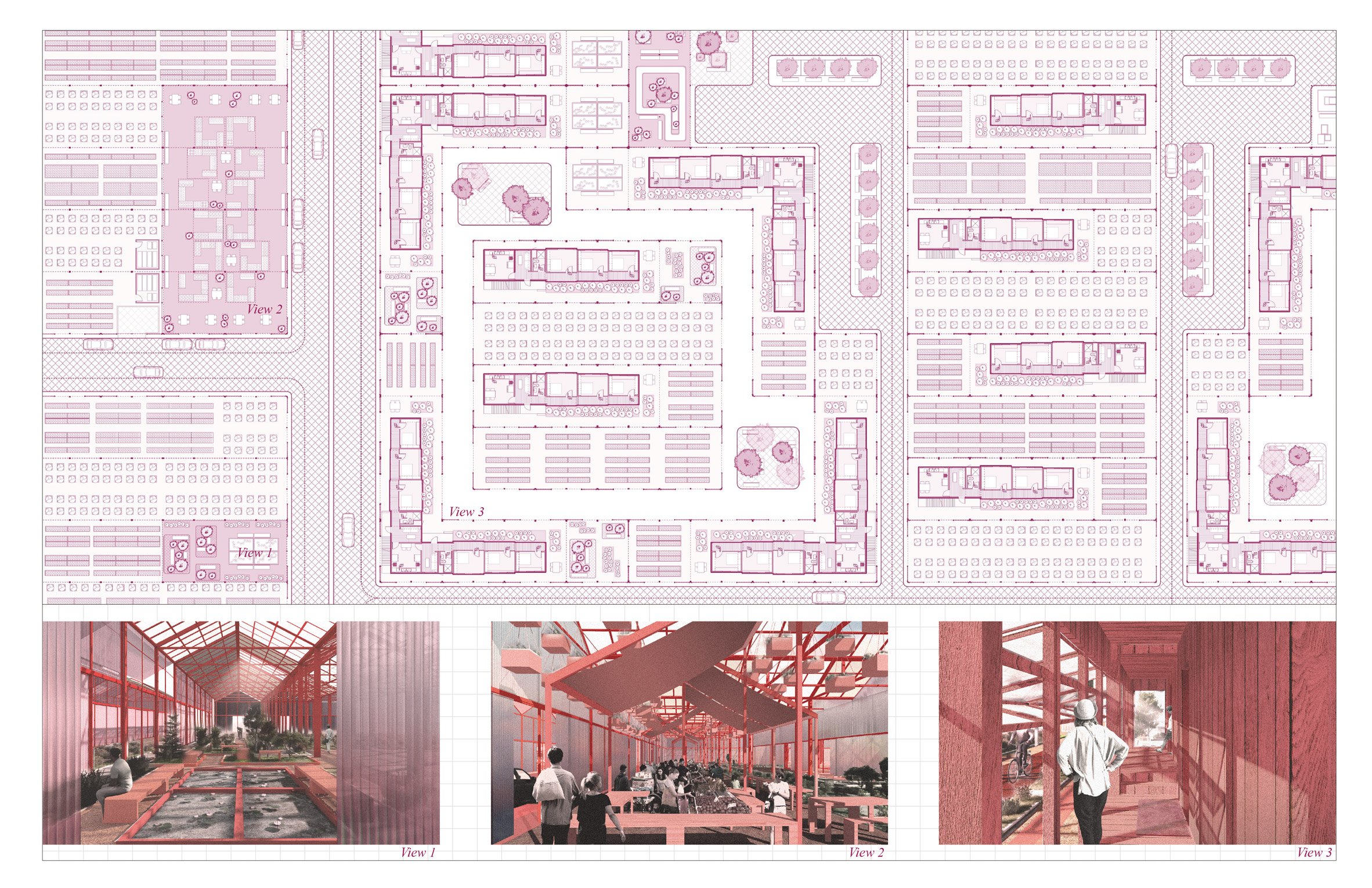
Digging and Flying by Lauren Mitchell

"Let's start at the first principles: architecture as the mediation between earth and sky. To build, one must – generally, but not continuously – excavate a substructure, then erect a superstructure. In this total act of construction, managing forces through engineering allow us to make decisions (design process) on how we engage with geo-kinetics like gravity and rotation.

"I believe that architecture is always about digging and flying. This studio dramatises that relationship and has developed a community garden and food hall located on Devonwood Park in the San Fernando Valley."

Student: Lauren Mitchell
Course: 
M.Arch.
Tutor:
Neil Denari

University of California, Los Angeles

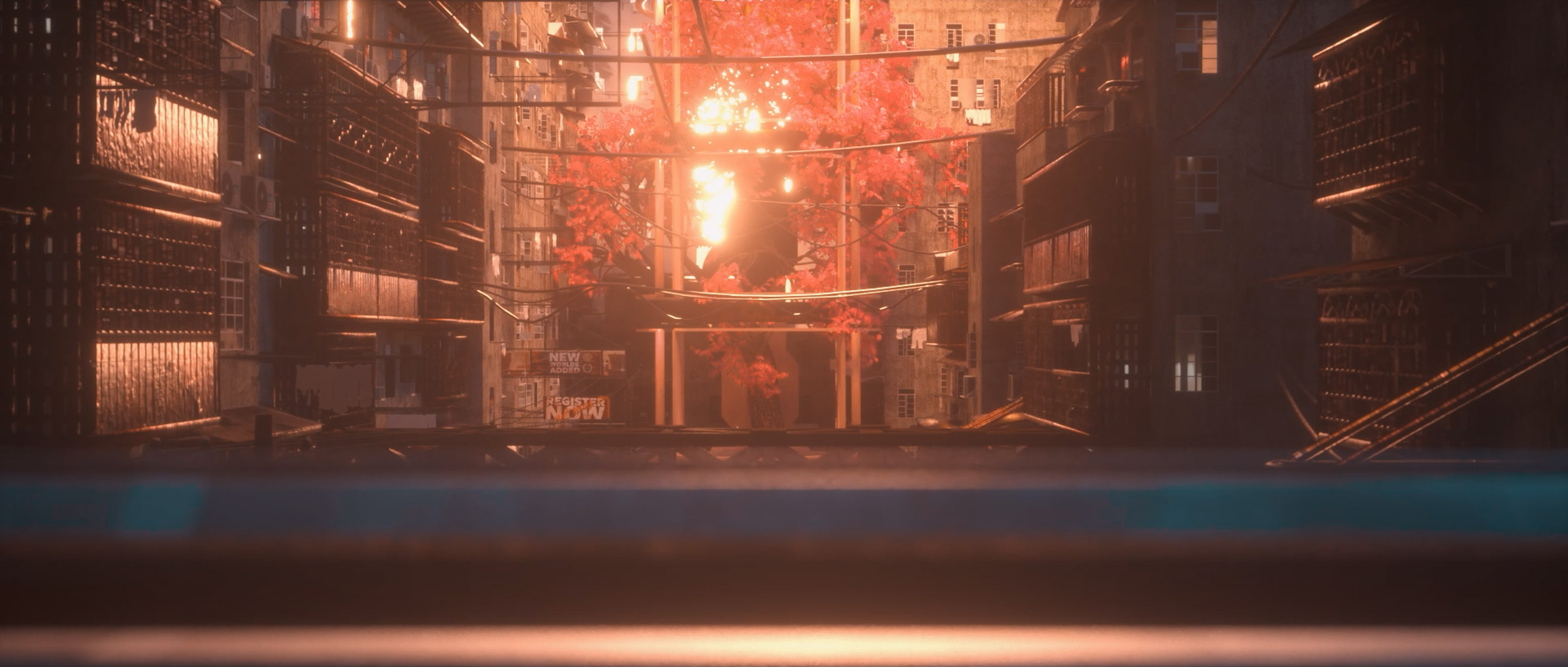
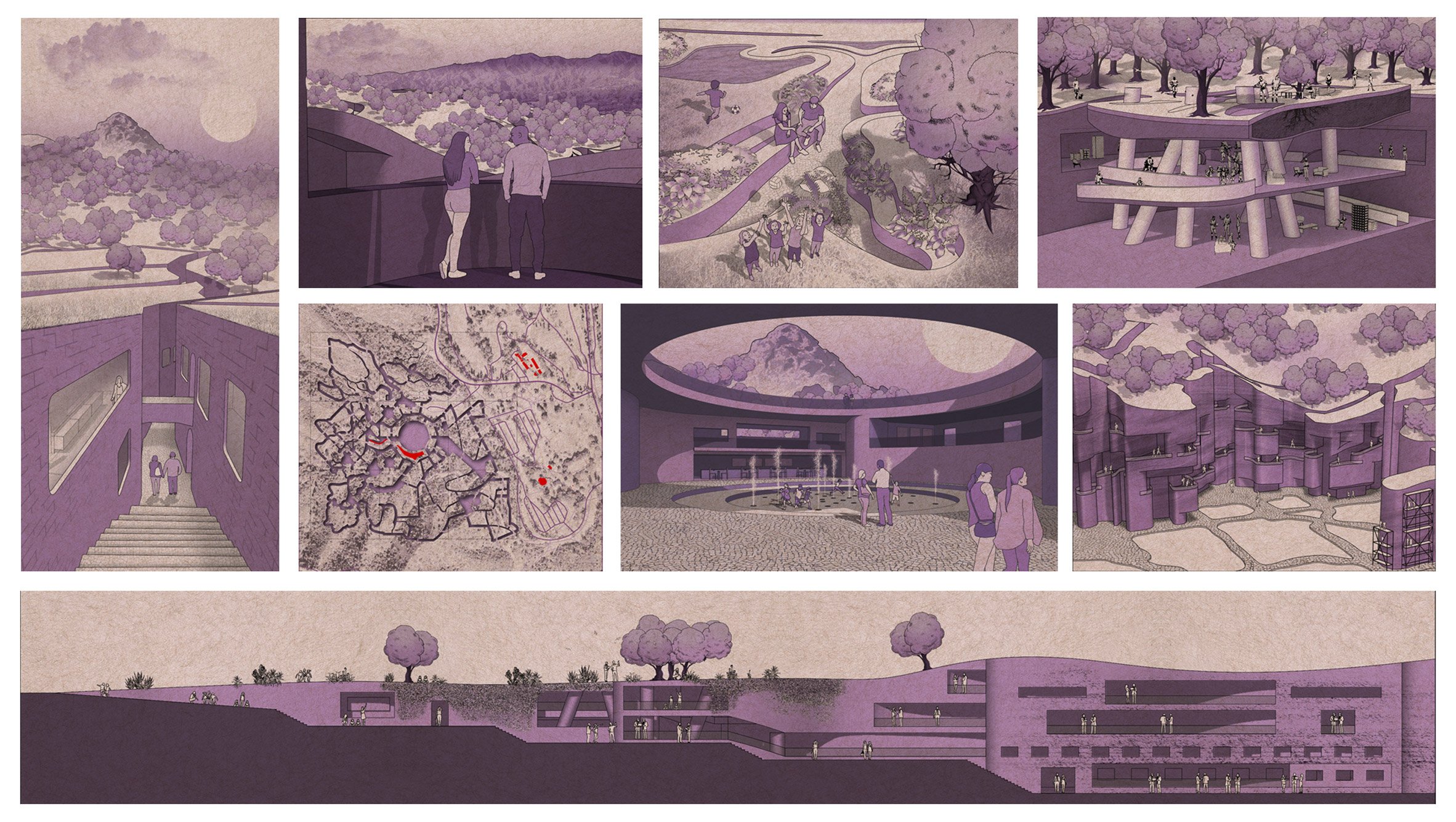
Stranger Than Fiction Two: Earthrise by Maira Yasir and Yuxin Tian

"Blending technological innovation with visual storytelling and worldbuilding, this studio gives rise to worlds and stories that ask fundamental questions about how our lives weave between myth and machine, fact and folklore, between ecology and allegory.

"Architects have always been storytellers for the environment, and this past year of global transformation proves that there is no better time than now to champion the futures we want and to advocate, through the story, a world of possibility and hope. Wander by Maira Yasir and Yuxin Tian takes us on a journey through the landscapes of memory in search of a shared childhood experience."

Student: Maira Yasir and Yuxin Tian
Course: 
M.S.AUD
Tutor:
Natasha Sandmeier and Nathan Su

University of California, Los Angeles

Climate Caravan: Mobility is Resilience by Misty (Yufei) Liang and Monica (Yixuan) Zhang

"Housing production is encumbered financially and environmentally by the private land to which it is tied. To decouple home and land from its associated notions of permanence, this studio proposes prefabricated housing systems designed for future mobility and new community organisations afforded by unit aggregation.

"Migration scenarios articulate critical stances regarding how and where we might live, the relationships between units, the adaptability and aesthetics of this future housing, and its relationship to existing infrastructure. Accepting the inevitability of migration as a form of climate adaptation and resilience, this studio imagines our future climate caravans."

Student: Misty (Yufei) Liang and Monica (Yixuan) Zhang
Course: 
M.Arch.
Tutor:
Heather Roberge

University of California, Los Angeles

Common(s) Ground by Owen Bradbury Aranda, Alexander Morris and Nick Kleinberg

"Common(s) Ground investigated the various forms of negotiation among individuals, the communities they belong to, and the private and public entities that regulate and participate in their spatial reality. This project focused on the complex relationships between public space, infrastructure and buildings in order to develop new models for living and sharing."

Student: Owen Bradbury Aranda, Alexander Morris and Nick Kleinberg
Course: 
B.A.
Tutor:
Mariana Ibañez
Email:
nickkleinberg@gmail.com

University of California, Los Angeles

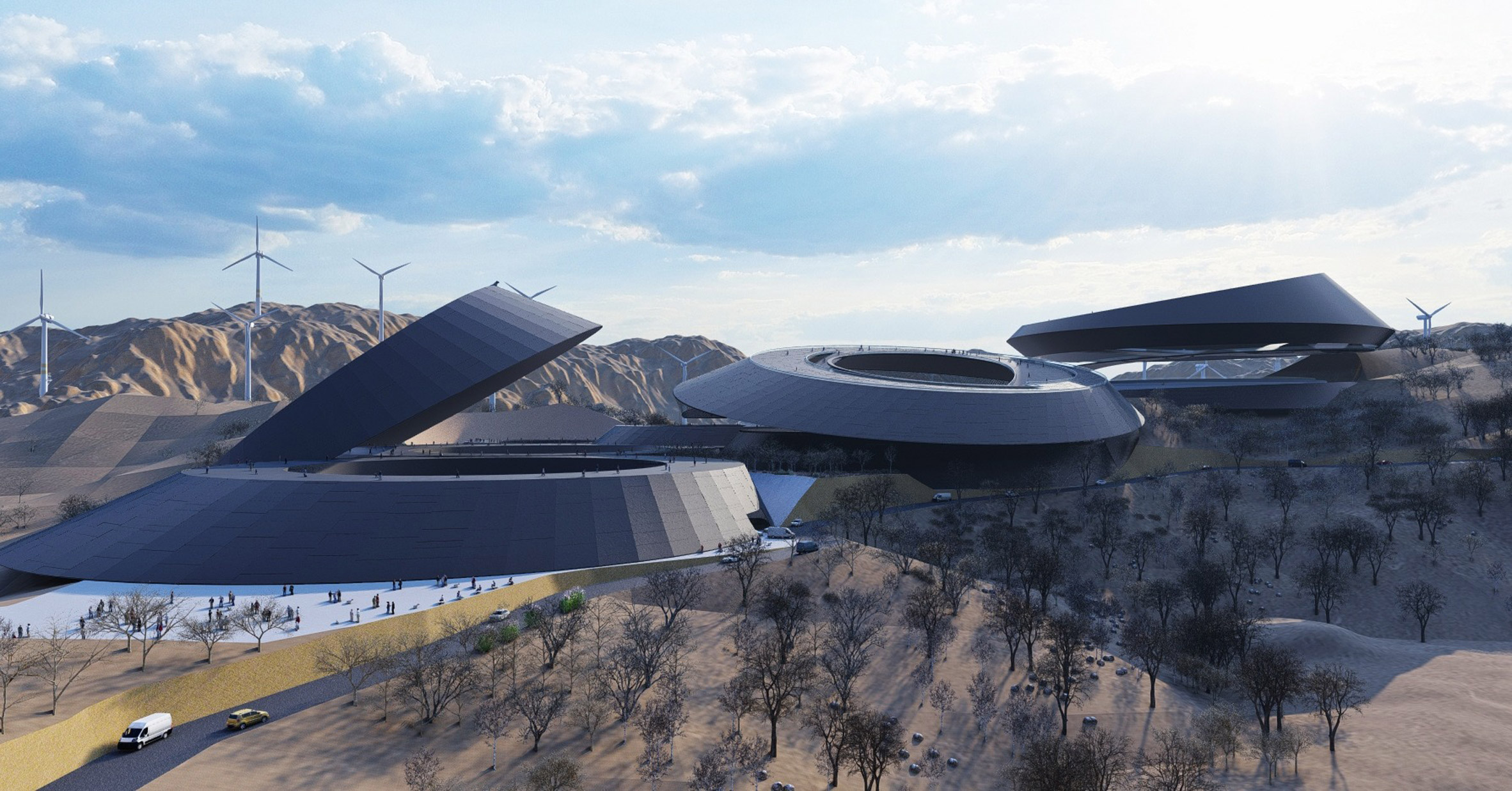
Future (Hi)stories of the City by Morgan Jacobs and Xavier Ramirez

"Architecture as a built form is a clumsy medium to speculate on the present. The slow pace of its becoming material, the convoluted manner of its medium, the unmeasurable immaterial qualities it radiates makes architecture an insufficient tool to shape and counter the daily transformations of our world.

"The reality is that architectural speculation is perpetually stuck between its incapacity to effectively influence and frame rapidly evolving conditions of the present and the unpredictable context of future existence.

"Similarly, the speculations at the scale of the city operate between now and eventual, as one must presently consider the conditions of a distant future for the city and beyond to take hold, for the evolving conditions to unfold.

"Instead of projecting yet another set of new future visions, this project established a vantage point in 2060 and documented speculative (hi)stories of the next 40 years. This project by Morgan Jacobs and Xavier Ramirez documents the transformation of Nevada lithium extraction fields into a national park."

Student: Morgan Jacobs and Xavier Ramirez
Course: 
M.Arch.
Tutor:
Kutan Ayata

University of California, Los Angeles

FireLand by Byeong Uk (Daniel) Lee, Hanxue Wu, Tianyang Xu

"In recent years, Los Angeles Metropolitan Region – a place naturally predisposed for wildfire activity with its hot and dry Mediterranean climate and rugged topography, has seen a dramatic increase in wildfire intensity and frequency.

"These changing environmental conditions pose an urgency of addressing this wildfire risk by encouraging the reframing of conventional urban design and planning techniques through contemporary models more dynamic, more elastic and more faceted than conventional static plan-based ones. One of two parallel studios, FireLand addressed the question of fire-risk reduction and fire-resilience in California across a range of perspectives."

Student: Byeong Uk (Daniel) Lee, Hanxue Wu and Tianyang Xu
Email: hxwu@g.ucla.edu, Architecture1214@163.com and leebu1837@g.ucla.edu
Course: M.S.AUD
Tutor:
Jeffrey Inaba and David Jimenez Iniesta
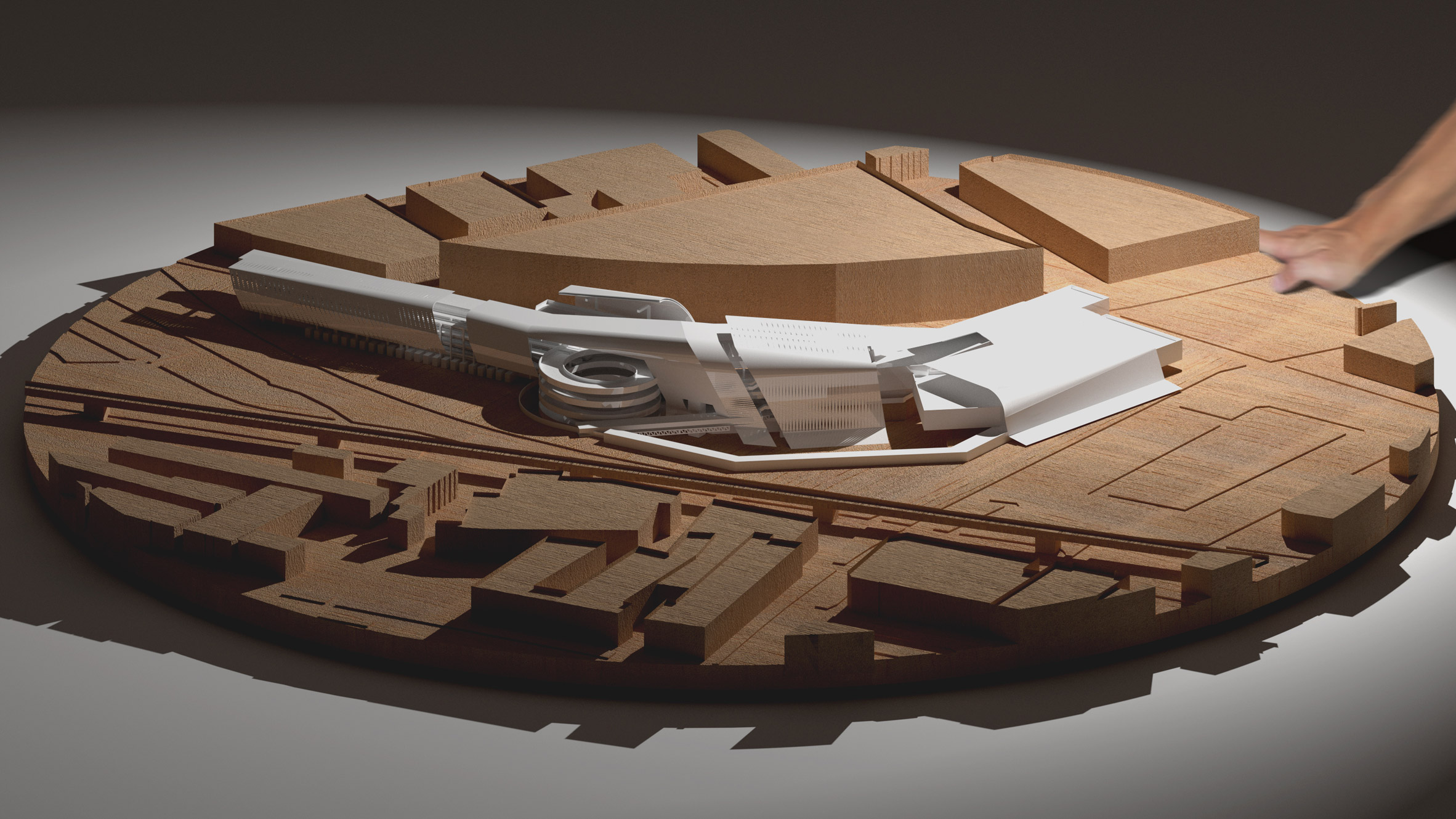

University of California, Los Angeles

Drive-In/Drive-Thru by Dylan Hart

"Learning from ancient urban plazas – confluences of voids, market stalls and city stages – the brief for this studio cross-bred two automobile-reliant programs: a multiplex drive-in theatre and a 90,000 GSF food distribution centre.

"In Drive-In/Drive-Thru multiplex, the movement of cars and people are elevated to equal importance, forcing the occupation and design of vast and variegated building sections to reside in a realm beyond landscape urbanism. The broad array of resultant project types signal a new kind of urbanism, one where land is transformed into the ground and in turn into variants of landform urbanism."

Student: Dylan Hart
Email:
Dylanhart0520@gmail.com
Course:
M.Arch.
Tutor: 
Mohamed Sharif
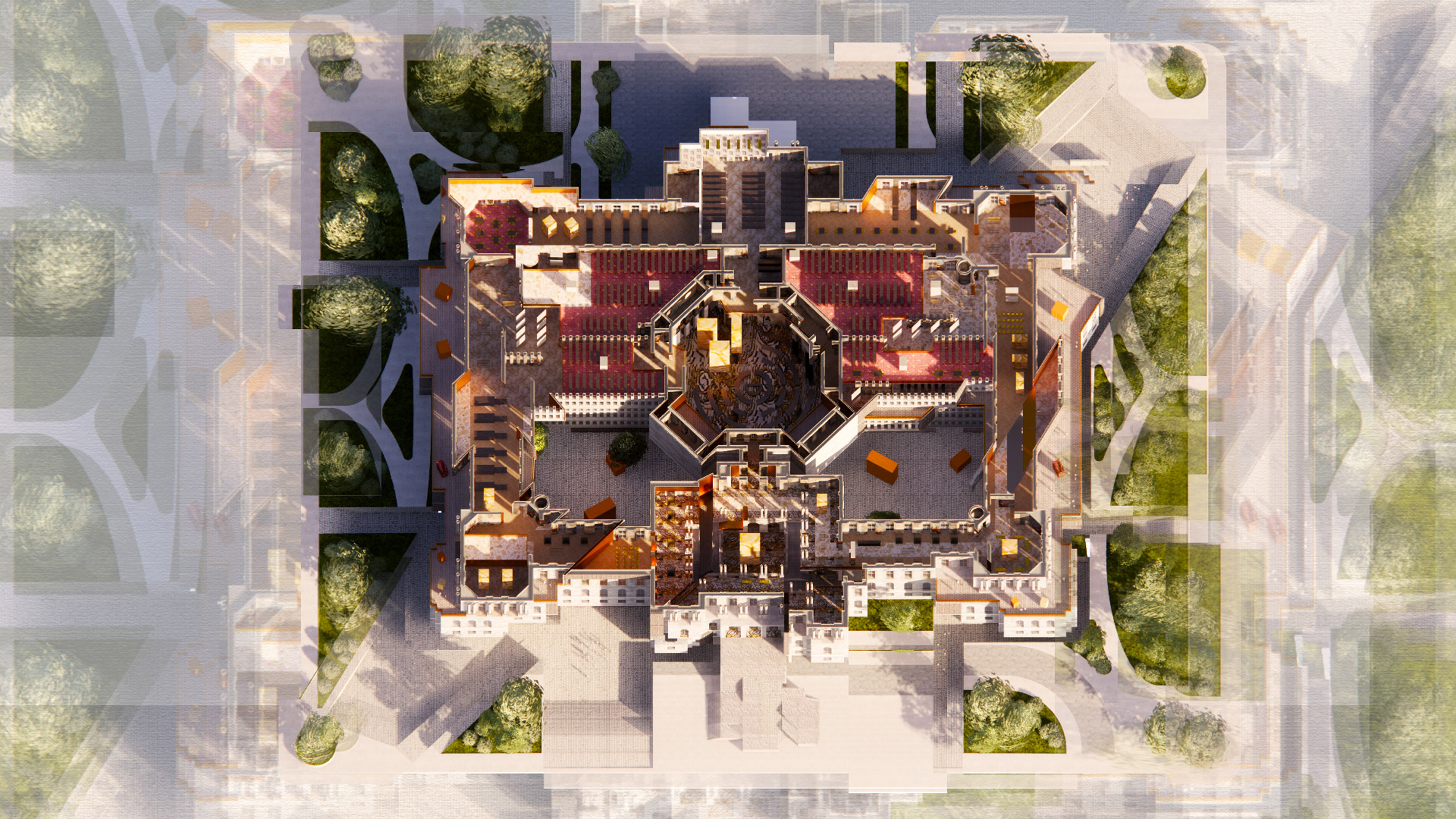

University of California, Los Angeles

Sin Nombre [Nameless]: The New National Museum of the American Latino by Samantha Radice and Bella Rosa

"Capitalising on the large social and cultural processes currently unfolding in America, this studio questioned what role cultural identity plays – and should play – in today's architectural environment. Cultural identity is meant to be that of the individual, for instance, that of the architect. And collective identity is that of a particular, though loosely defined group such as the LatinX Community.

"This project aims to encourage a conversation which doesn't shy away from a formal and aesthetic agenda, but attempts to locate and integrate its possible radical project within a larger cultural and sociopolitical context."

Student: Samantha Radice and Bella Rosa
Course:
M.Arch.
Tutor:
Georgina Huljich
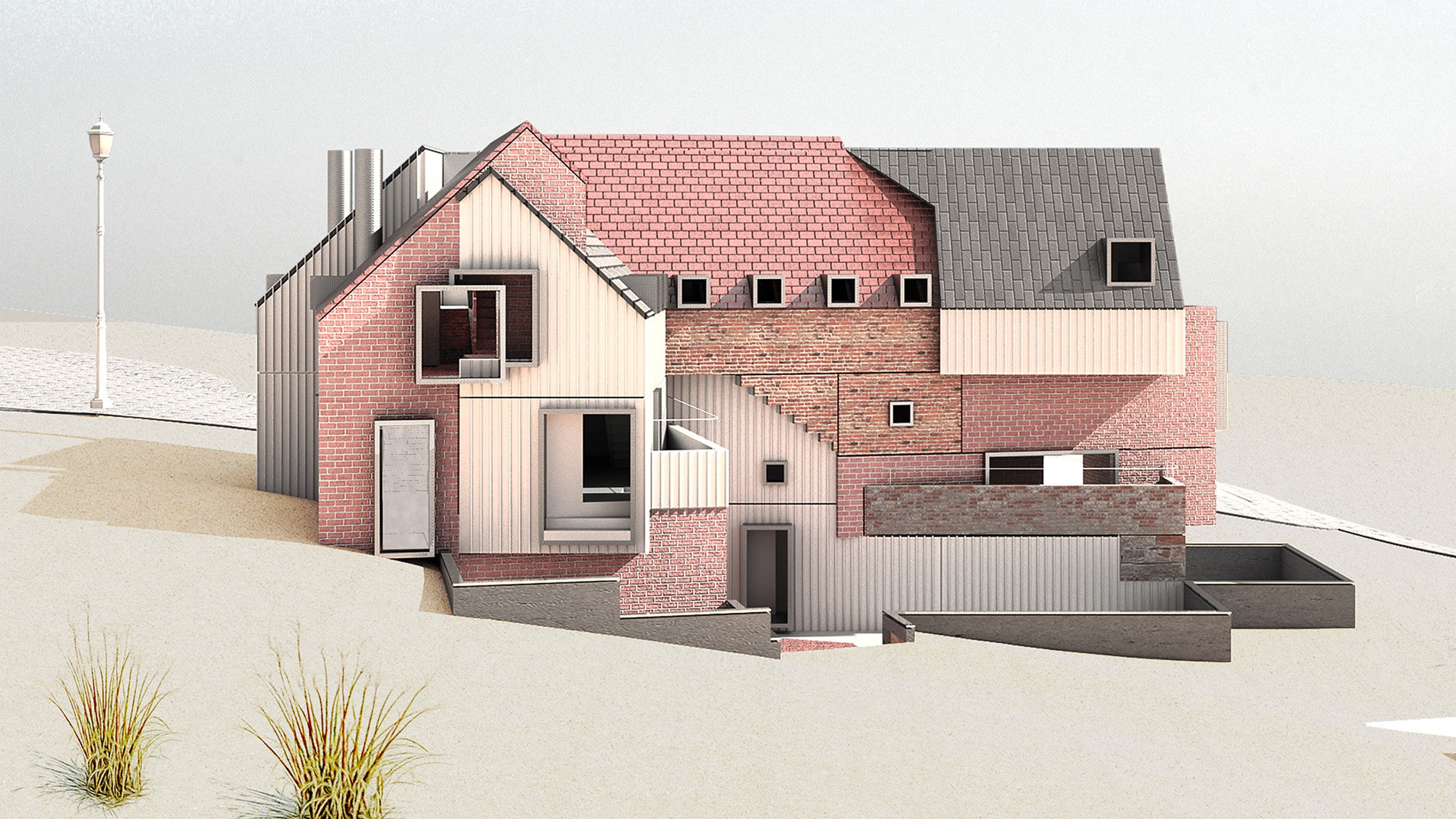

University of California, Los Angeles

The Family Portrait: Drama is the Diagram by Cullen Fu

"Family drama, though commonplace and seemingly insignificant, is as old as human history and as impactful as culture-defining works of literature. In 2020, the global pandemic Covid-19 forced many people to work from home. Consequently, almost every domicile has had to experience some degree of heightened exposure with family members.

"This increased togetherness could either be a healing space to alleviate existing issues between family members or a pressure-cooker to rapidly intensify past drama. This project explored single-family homes. Reflecting upon family drama, students generated organisational diagrams, wrote archetypal arcs and represented narratives with storyboards of the house."

Student: Cullen Fu
Course: M.Arch.
Tutor:
Jimenez Lai


Partnership content

This school show is a partnership between Dezeen and University of California, Los Angeles. Find out more about Dezeen partnership content here.


The post University of California, Los Angeles architecture students showcase end-of-year projects appeared first on Dezeen.


from Dezeen https://ift.tt/3hs9J1e
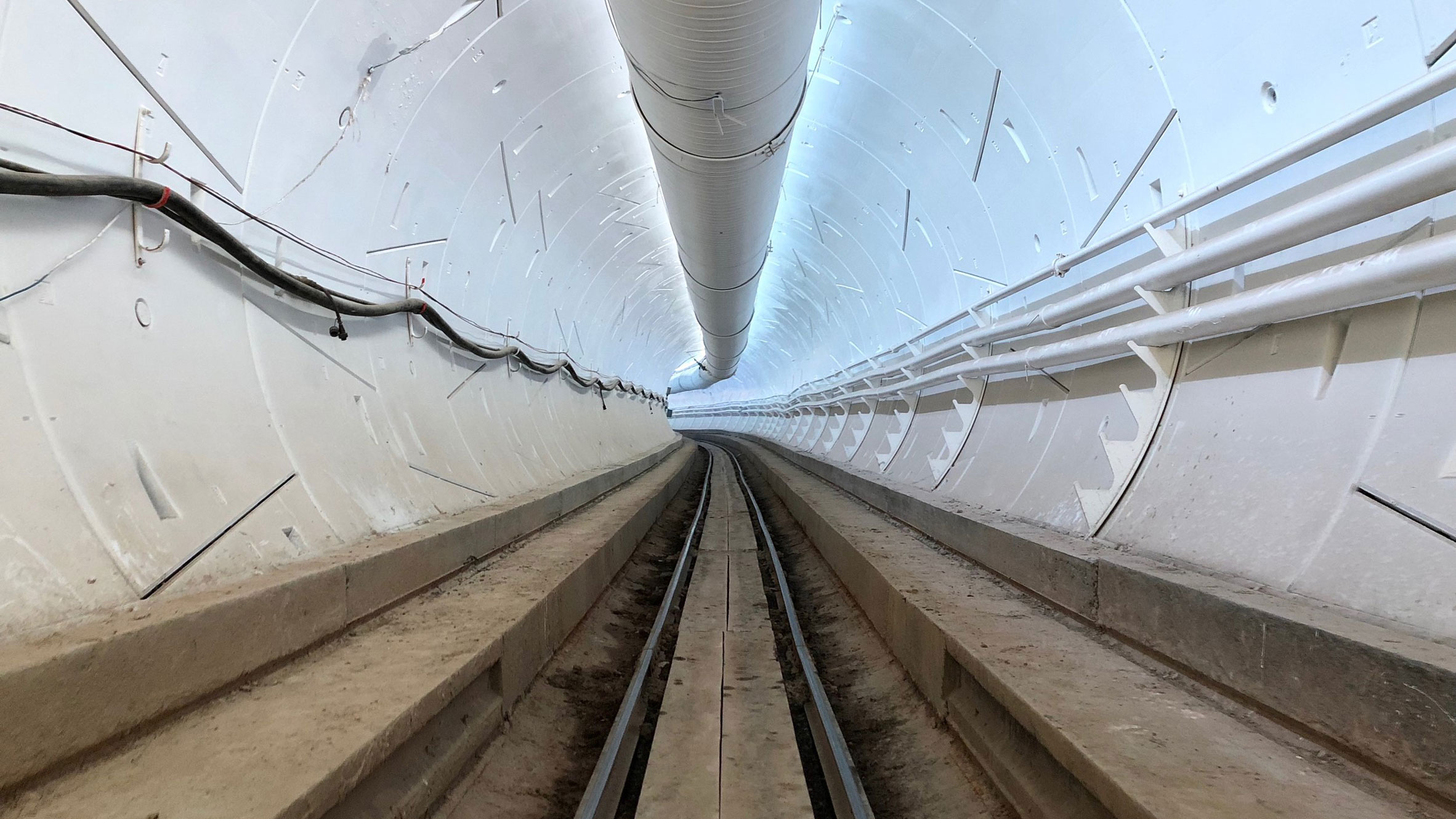
Elon Musk submits bid to build beach tunnel transport system in Florida

Boring Company tunnel

Fort Lauderdale has voted to approve a proposal from Elon Musk's tunnelling firm Boring Company to build an underground transit loop connecting the downtown part of the Florida city to its beachfront.

Fort Lauderdale's mayor Dean J Trantalis tweeted on 7 July that city officials had accepted the proposal from the Boring Company to undertake the infrastructure project.

"Other firms have 45 days to submit competing proposals," added Trantalis. "This could be a truly innovative way to reduce traffic congestion."

Called the Las Ollas Loop, the tunnel would allow cars to drive underground to the beach instead of travelling along the road at surface level.

Underground loop proposed as alternative to railway

"Fort Lauderdale and the Boring Company made initial contact early this year to discuss underground alternatives to the construction of a high-rise commuter rail bridge over the New River," the City of Fort Lauderdale said in a statement.

Fort Lauderdale is a coastal city 40 kilometres north up the coast of Florida from Miami. It has a population of 1.8 million and is a popular tourist destination.

"The underground transit loop would provide quicker and more efficient access between downtown and the beach as well as alleviate street-level traffic," added the City of Fort Lauderdale.

Two test tunnels built so far

Technology entrepreneur Musk founded the Boring Company in 2016 in response to his personal frustration with road congestion in Los Angeles. He imagined a system of tunnels that would allow people to travel at high speeds in driverless cars fixed on rails.

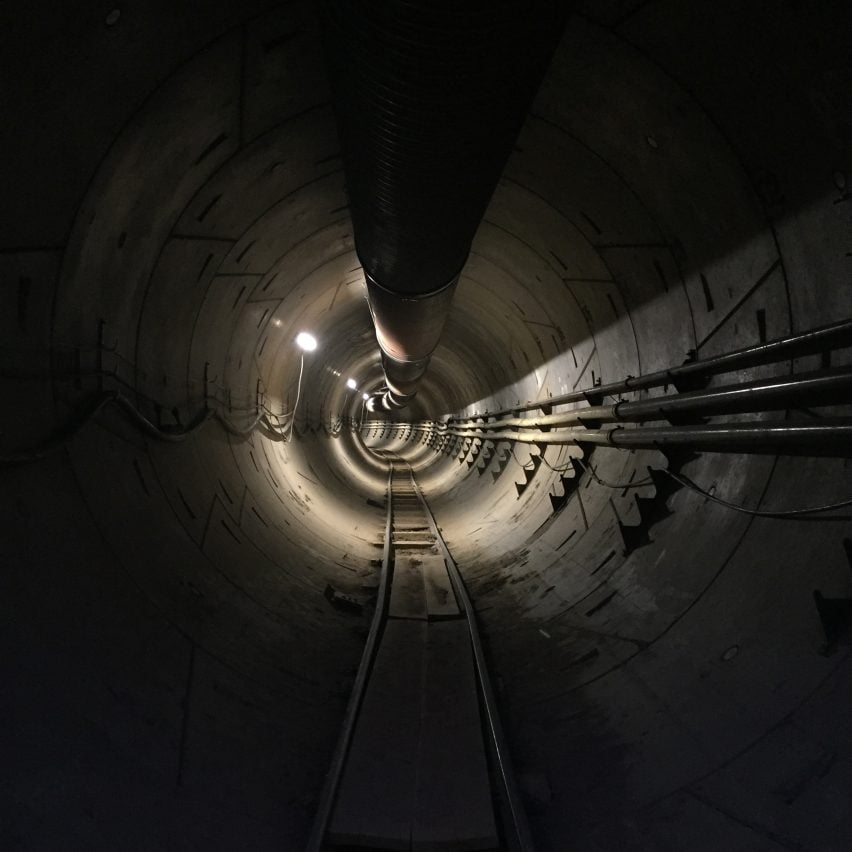
However, the design has evolved during testing and now involves a tunnel wide enough to accommodate a single Tesla – the electric car developed by one of Musk's other companies – being driven through manually.

The Boring Company's tunnel in Hawthorne, California
Elon Musk drove a Tesla through the first test loop in Hawthorne

Musk unveiled the first test tunnel in 2018 in Los Angeles County, starting at the car park of his space rocket company SpaceX and emerging 1.83 kilometres away in Hawthorne.

A second test tunnel loop has been built under the Las Vegas Convention Centre (LVCC).

Tunnels offered as alternative to public transport

The LVCC Loop, which opened last month, runs 1.7 miles (2.7 kilometres) and has three stations. The Boring Company claims it reduces a 45-minute walk to a two-minute underground journey.

"The Vegas system consists of two one-way tunnels in which passengers are whisked in regular Teslas between three stations," said the City of Fort Lauderdale.

"Unlike a subway system, the number of cars can vary based on demand and passengers can go directly to their destination without multiple stops in between."

Musk has received criticism in the past for attempting to develop a private system that negates the benefits of public transport such as buses and subways, which allows people to travel en masse to reduce congestion and the reliance on personal vehicles.

The Las Ollas Loop has also drawn concern over risks of flooding and sinkholes, as Fort Lauderdale is only 2.7 metres above sea level with a geology of karst limestone topped by sandy soil. The coast is also prone to hurricanes and storm surges.

Howver, in a recent interview with Dezeen the design curator and educator Jan Boelen named Musk the world's greatest living architect.

"He is building the biggest infrastructures around us," said Boelen. "And he's not even asking anybody permission for that. He's just doing it."

Images via the Boring Company.

The post Elon Musk submits bid to build beach tunnel transport system in Florida appeared first on Dezeen.


from Dezeen https://ift.tt/3yzRzAb