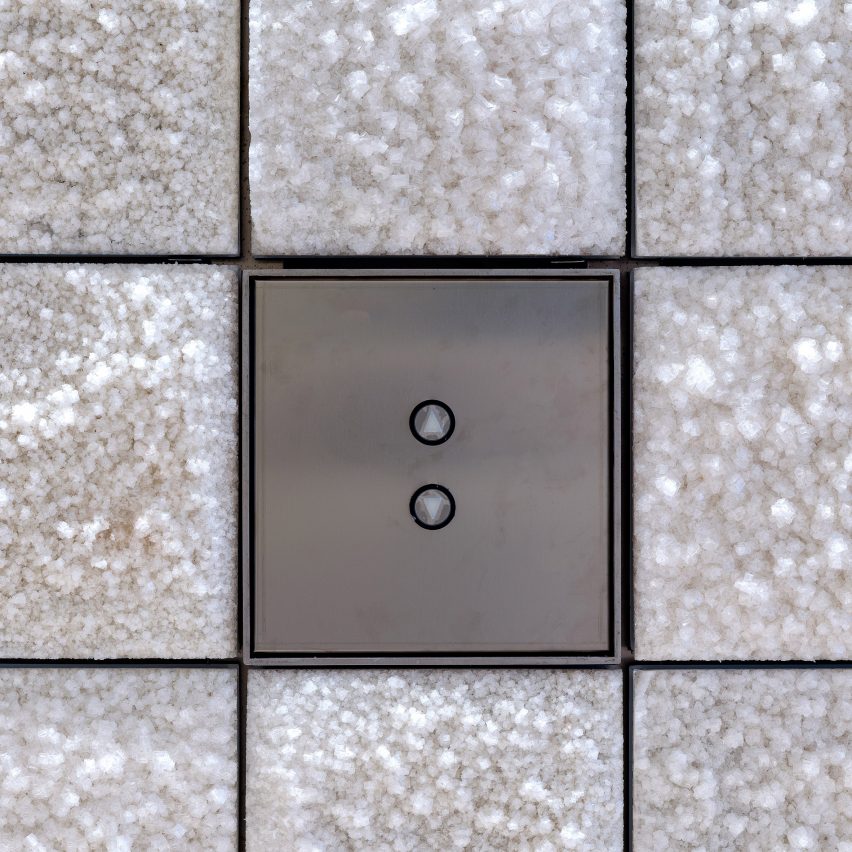
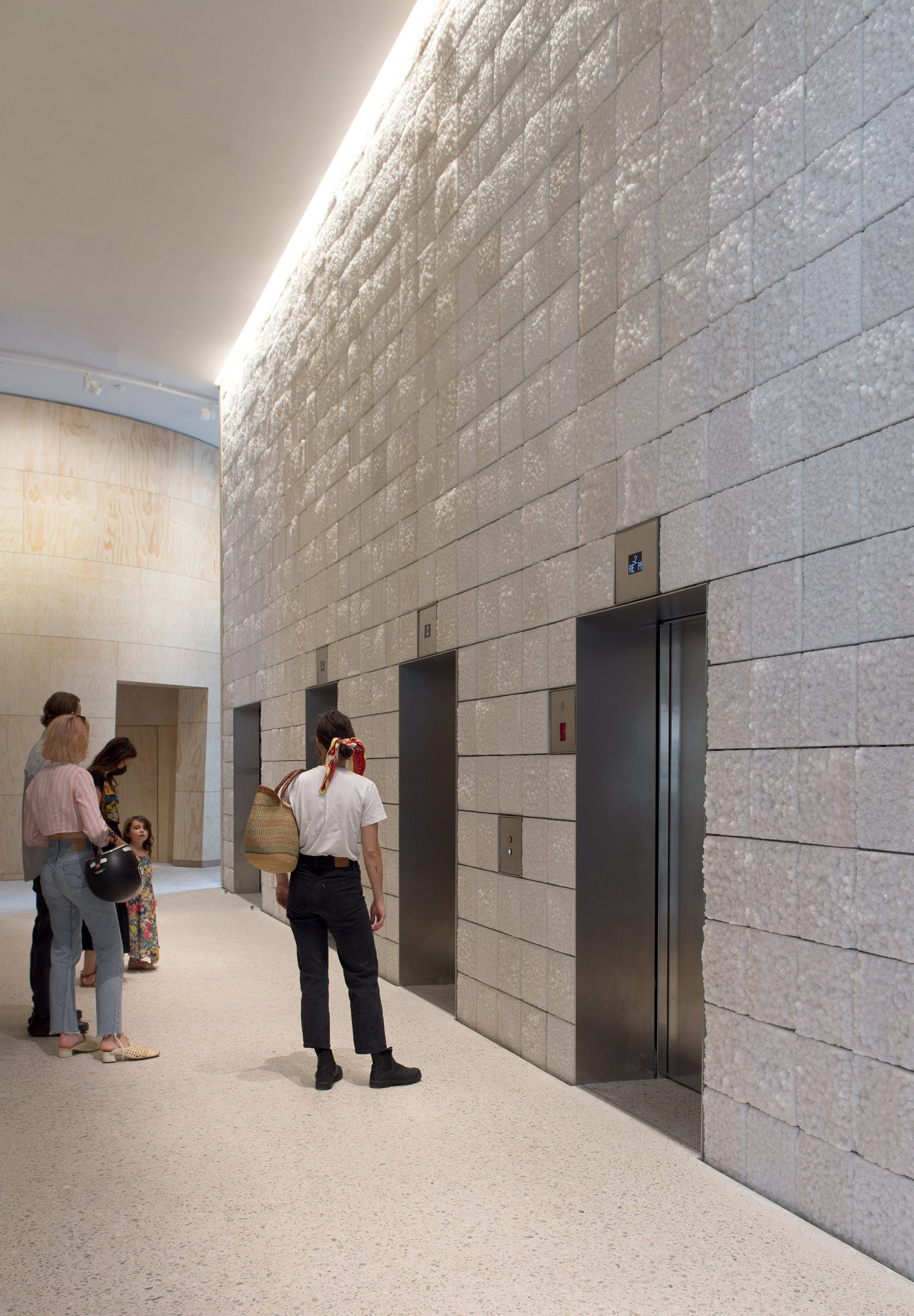
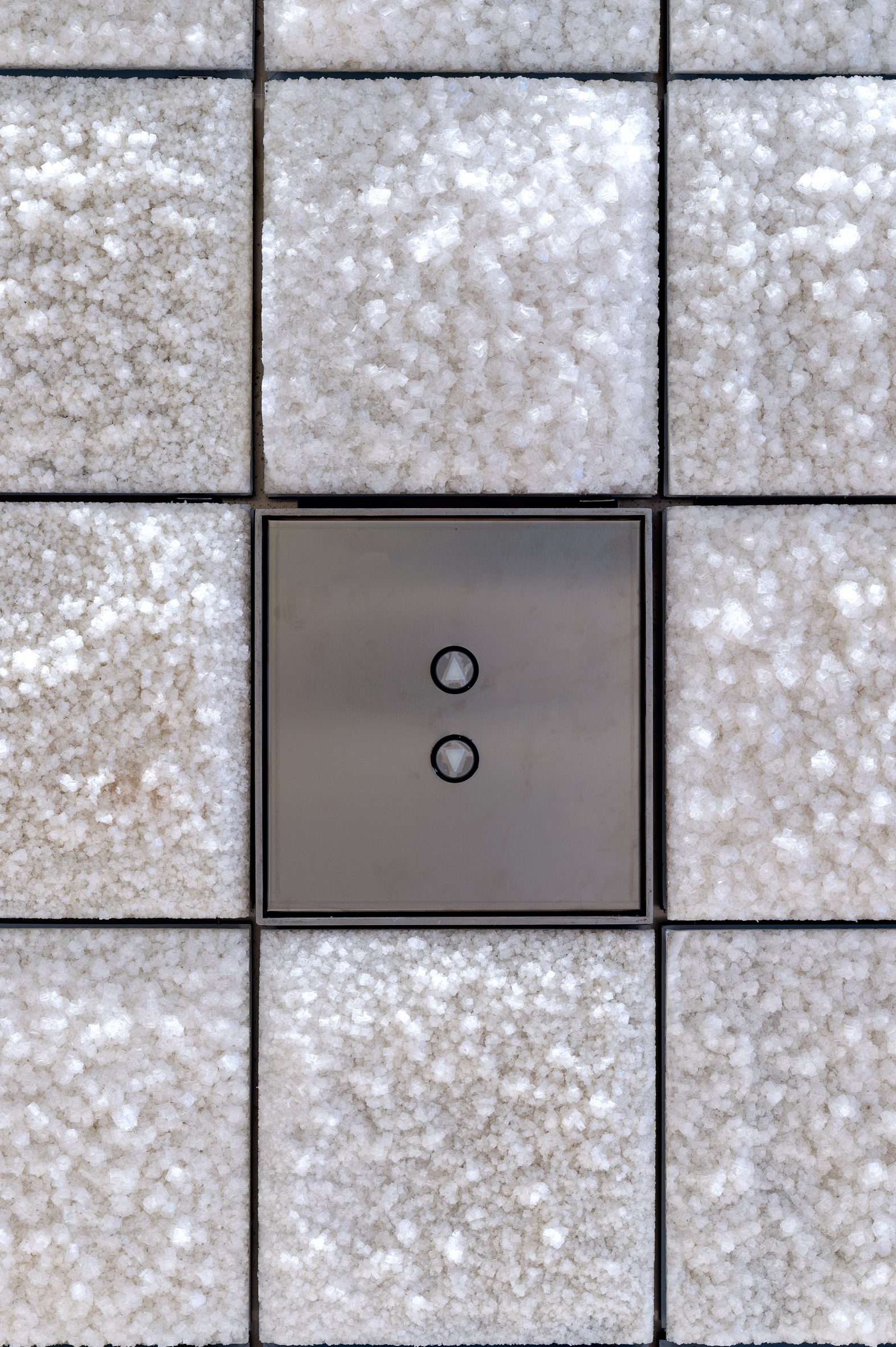
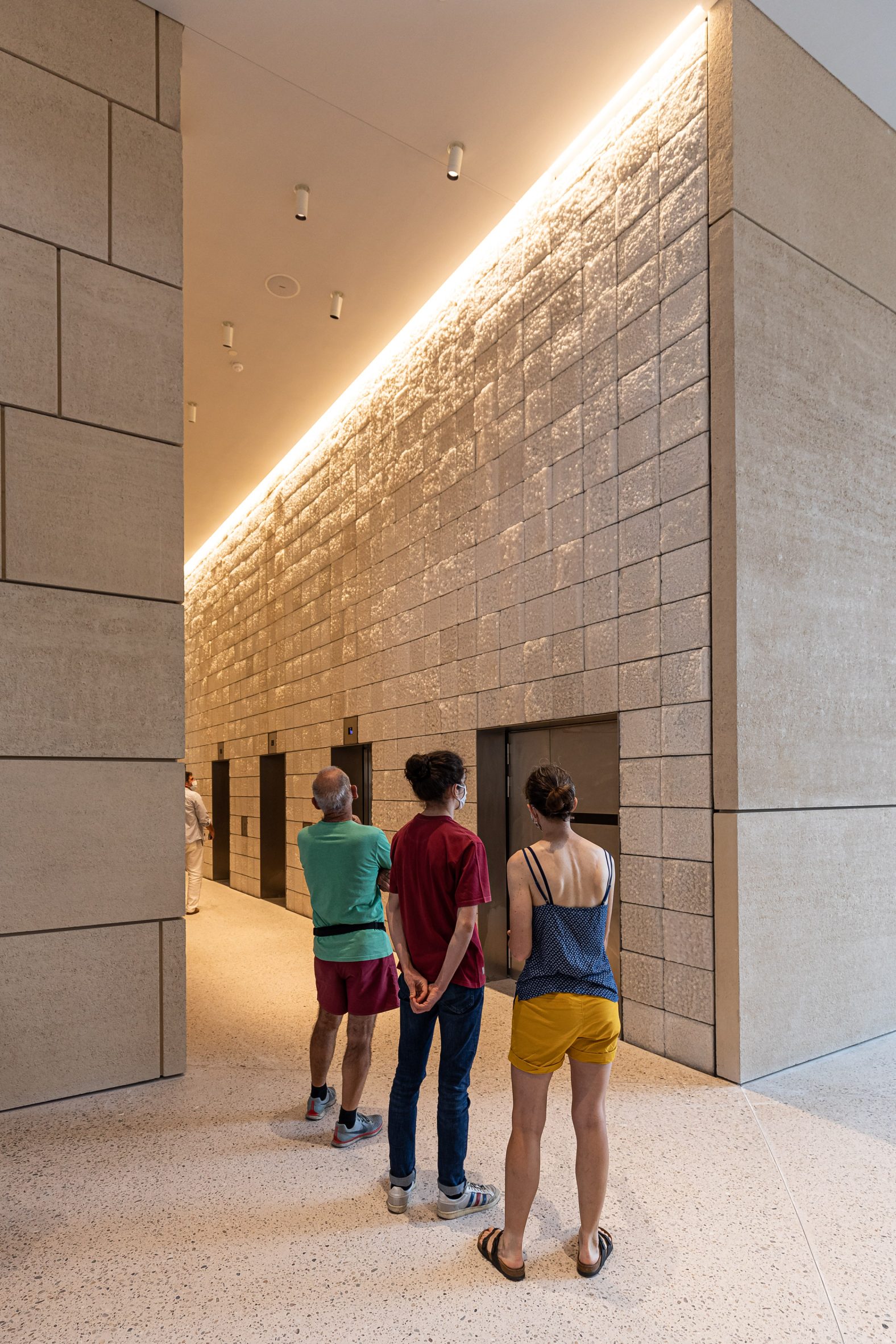
Lift lobbies have been clad in thousands of salt panels produced in the ancient salt flats in the nearby Camargue nature reserve.
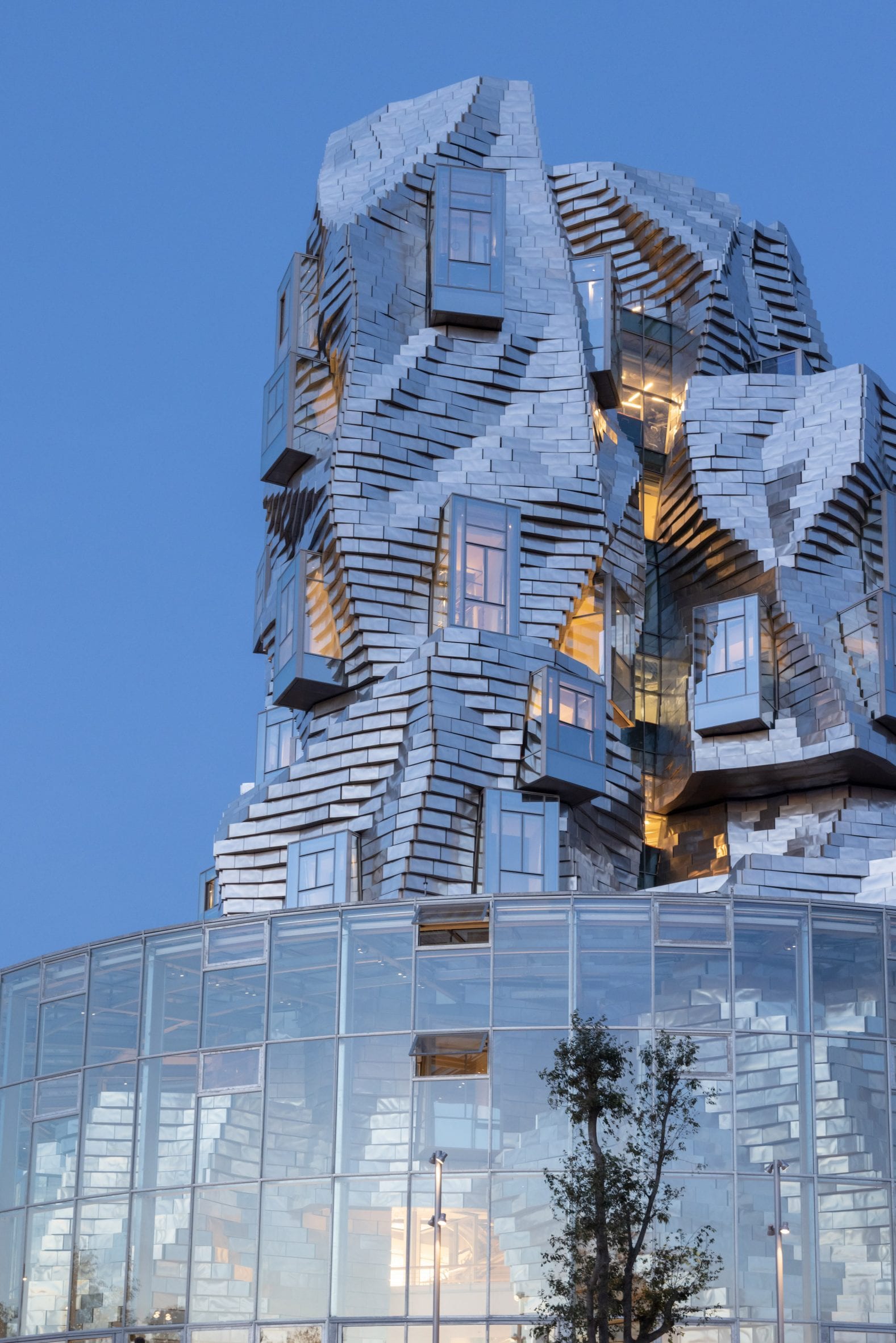
The exterior of Frank Gehry's tower for Luma Arles is clad in stainless steel. Photo is by Iwan Baan
Algae from the Camargue, which is the delta of the river Rhône, have been used to produce interior finishes for the building's toilets while sunflower stems have been turned into acoustic panels for the bar.
The materials have been developed by Atelier Luma, a "circular design lab" based at the vast Luma Arles campus in the south of France.
Salt panels clad lift lobbies in The Tower
"Many materials were developed and applied in the building," said Jan Boelen, artistic director of Atelier Luma.
"The building was conceived in 2006 and the work started in 2014," said Boelen, who established the design lab when the Gehry building was already under construction.
"Atelier Luma was founded in 2016. So we were running behind."
Using local materials enhances the connection with the region
Luma Foundation founder Maja Hoffmann agreed to let the lab replace off-the-shelf interior finishing materials specified by Gehry's team with a palette of locally produced products.
This was done to enhance its connection with the region and improve the environmental credentials of the building, which is built of concrete and steel and clad in stainless steel panels.
"Maja took the decision to stop the process of the interior and see what we could do," Boelen said.
The salt is sourced locally
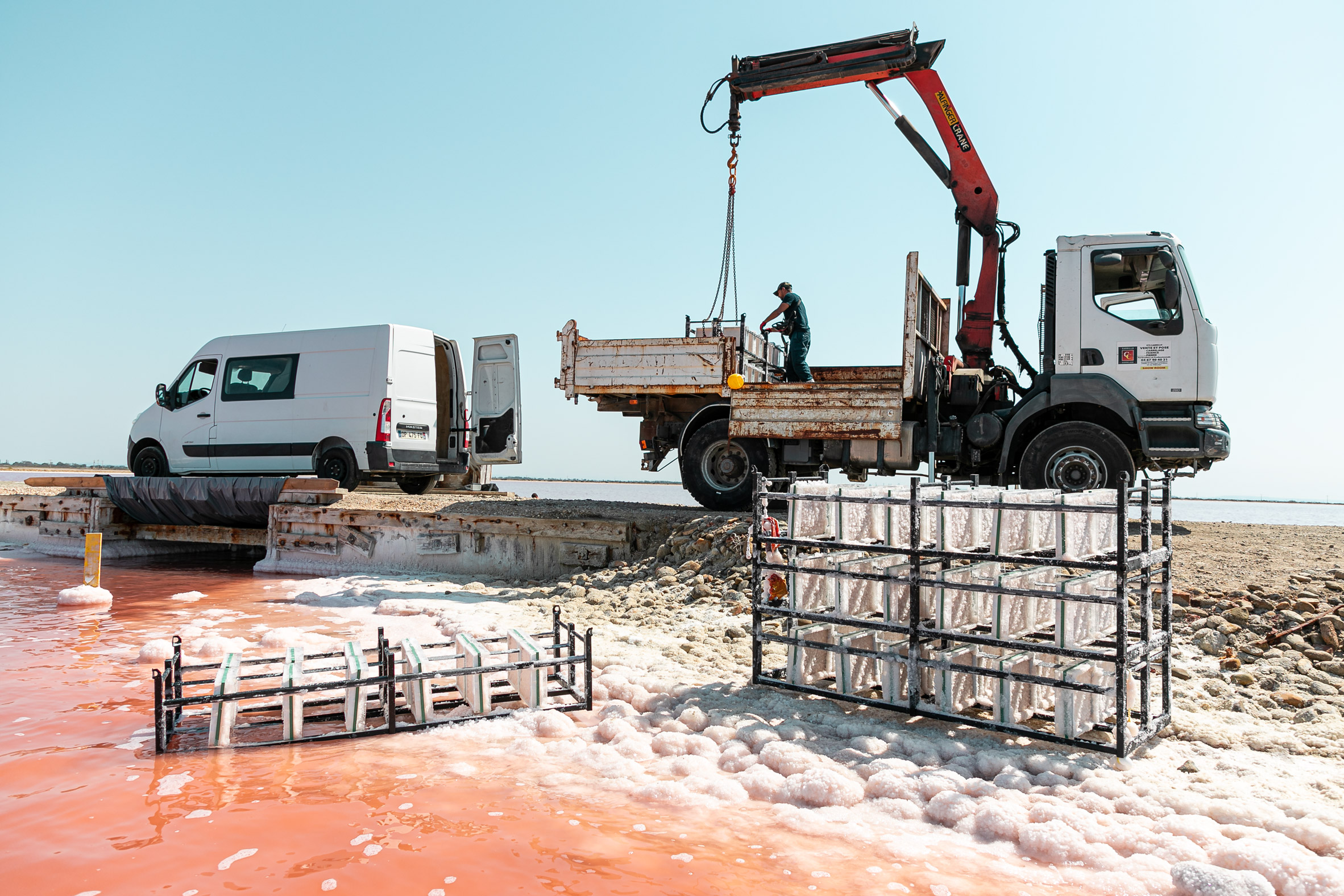
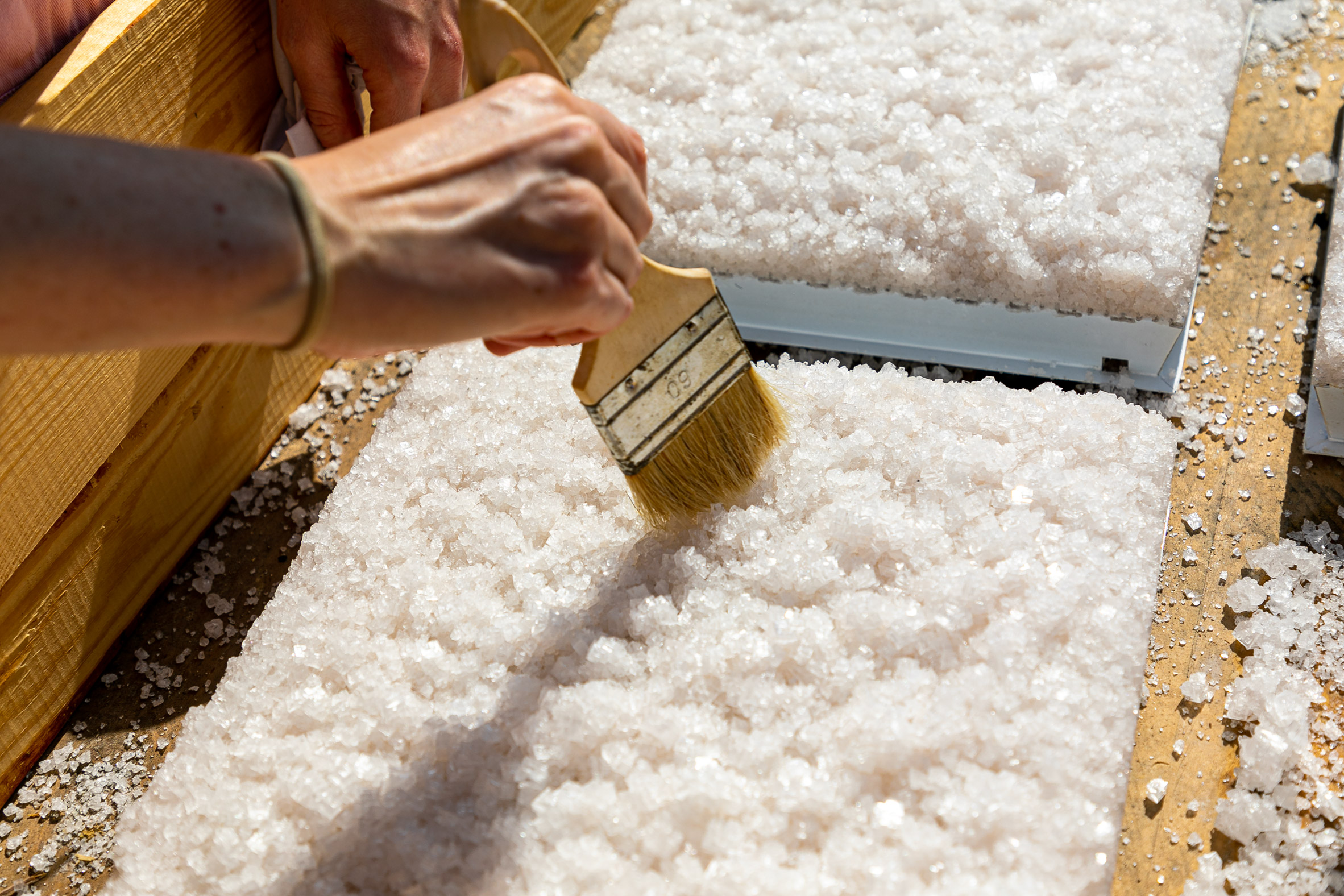
For the salt panels, designers at Atelier Luma developed a way of growing salt crystals on metal mesh placed underwater in the extensive salins, the Camargue salt flats that have been used to evaporate the mineral since antiquity.
"We came up with a solution for a material that really grows itself by crystallisation over two weeks," said Boelen. "No energy is added. It's only sun and wind that is creating these panels."
Salt crystals were grown onto metal frames underwater
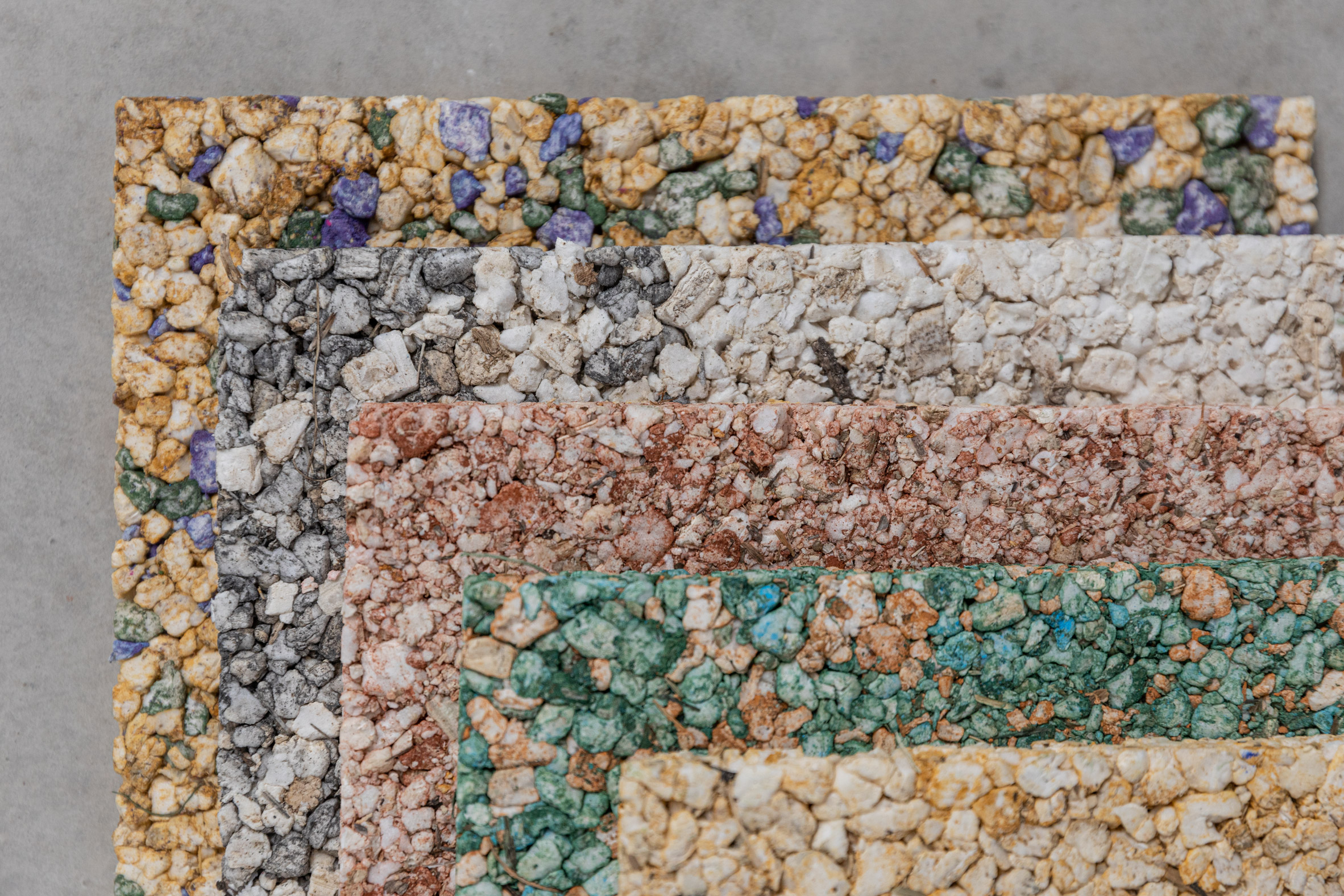
The ground-floor bar in the 56-metre-high building is clad in a thin acoustic material made from sunflower waste. Grown locally, the sunflower's seeds are pressed to make biofuel that powers the building.
The rest of the plant is usually thrown away but Atelier Luma has used the waste to produce a cork-like material that has good insulating properties.
"If you have concrete spaces, one of the problems is acoustics," said Boelen. "You can use polystyrene foam or another foamy material made from fossil fuels. But you can also use the leftovers of sunflowers".
Sunflower waste is used for sound-proofing in the bar
Atelier Luma, which is based in a repurposed industrial building at the Luma Arles campus, has developed a local supply chain to produce the insulation and is also developing bioplastic made from sunflower waste.
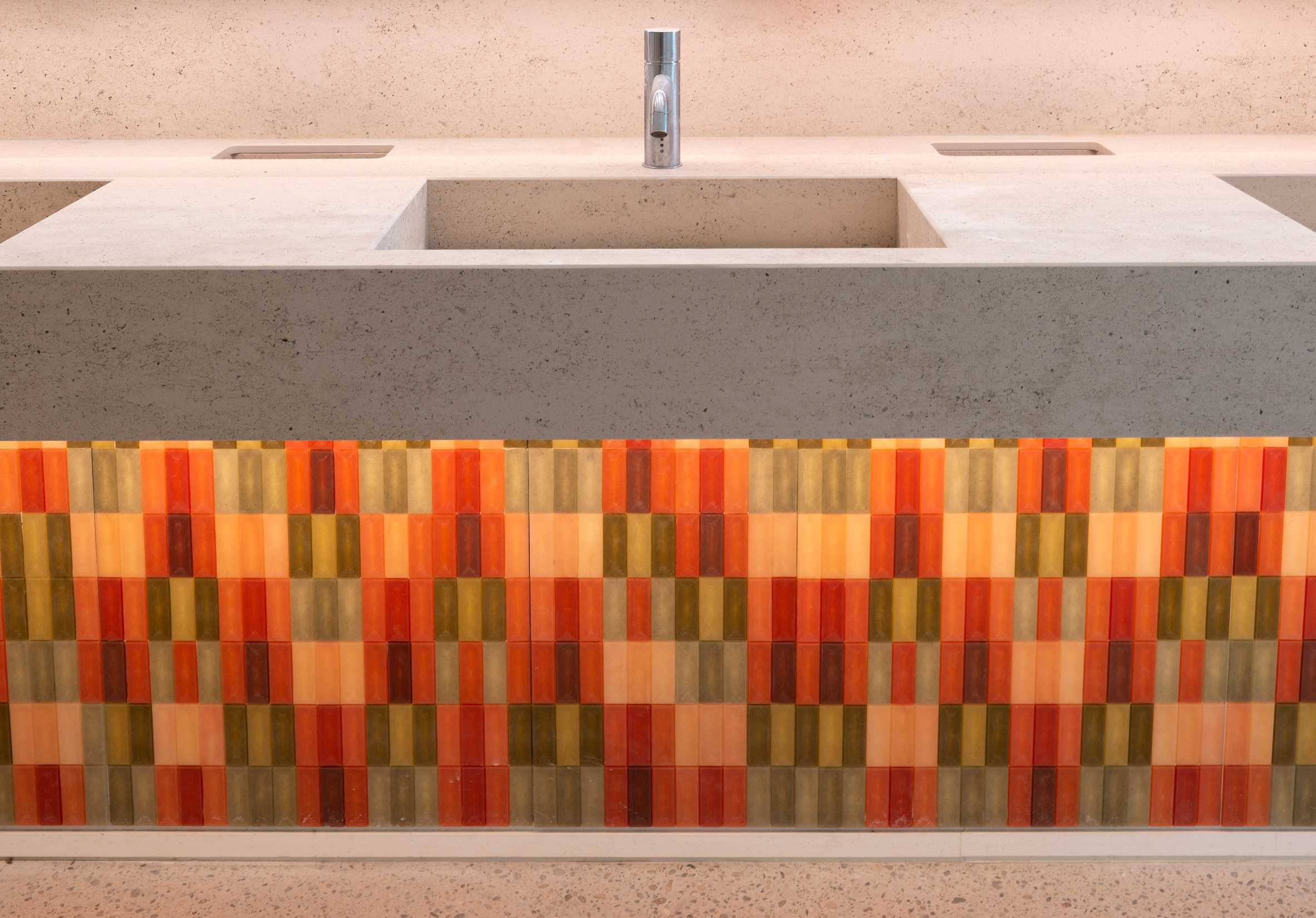
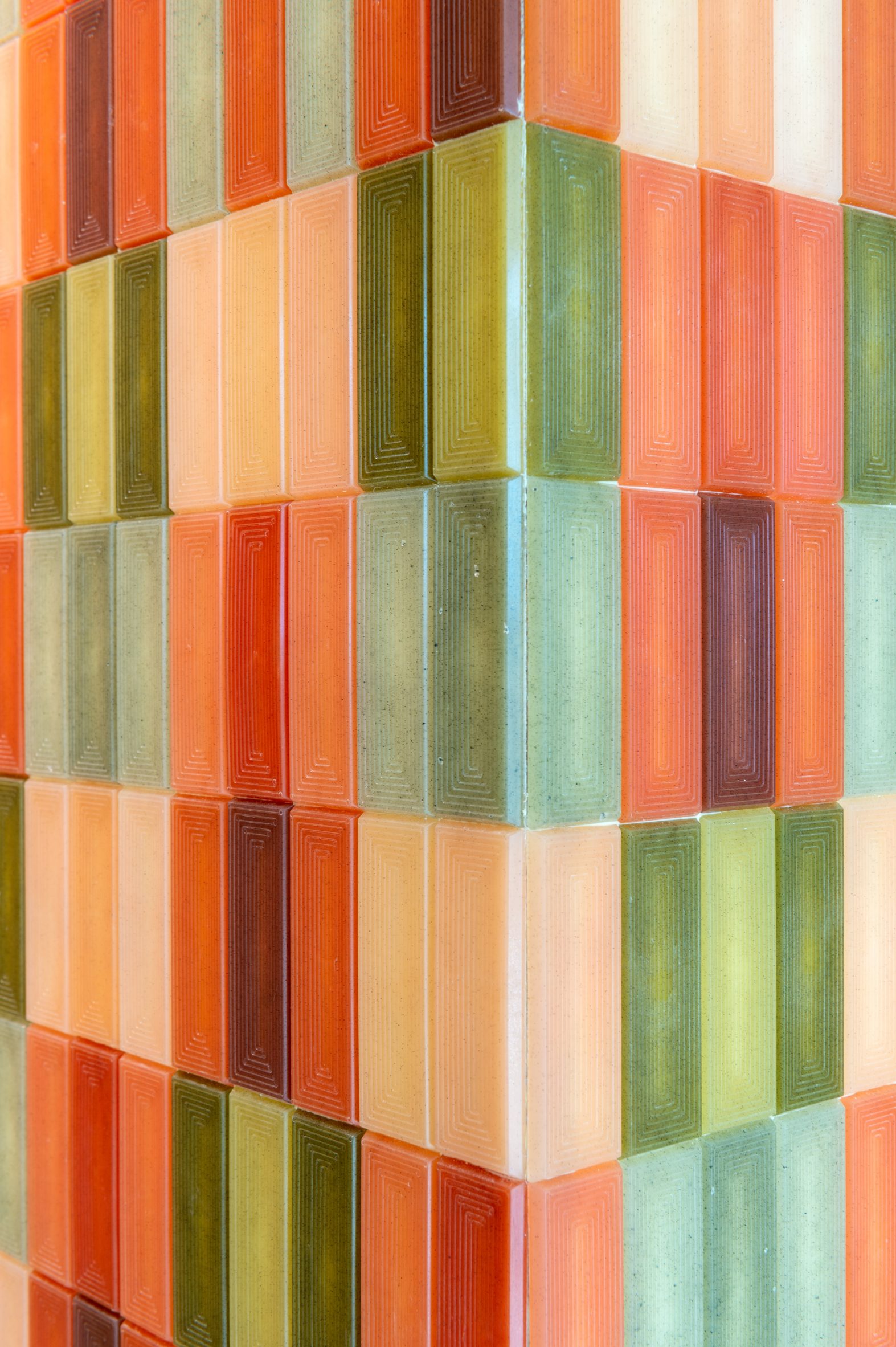
The toilets at The Tower are finished in multicoloured tiles made from algae harvested in the salt flats.
Algae grow "enormously fast, and they consume CO2 in order to grow," said Boelen. "So they are absorbing CO2. They are capturing and containing CO2."
Algae tiles clad the toilets in The Tower
Waterborne algae come in a variety of colours including pink, which gives the Camargue marshes and the flamingoes that feed off the plant their distinctive rosy hue.
The Tower features 30,000 injection-moulded algae tiles in 20 colours that were developed as part of Atelier Luma's Algae Platform.
"The algae grow by absorbing the carbon and producing a starch that can be used as a raw material for bioplastics or binding agents," they said. "The waste product is oxygen."
The injection-moulded tiles come in 20 colours
Boelen's team of 20 designers and researchers has received certification allowing its biomaterials to be used in construction projects and is now looking for partners to help commercialise them.
"These materials are now ready for the market," he said. They can be produced and distributed for other purposes. "
"We are looking for partnerships and investors who want to team up with us to distribute these materials to produce them. We are also looking for other regions in the world where this model of building materials locally can be employed."
The Tower opened last month
Gehry's building opened along with the rest of the 27-acre Luma Arles complex last month. In an interview with Dezeen, the Los Angeles-based architect claimed environmental issues were "taken into account as best I can."
Sustainable elements include natural ventilation of the building's circular glazed podium and renewable power from an on-site biodiesel plant and solar panels.
However, details of the building's carbon footprint have not been disclosed. The team did not submit the building for environmental certification under the voluntary French HQE programme.
"We fit into [the environmental agenda]," the Canadian-American told Dezeen. "But I can't explain it."
"I respond to every fucking detail of the time we're in with the people we live with, in this place," said the 92-year-old when asked about the building's environmental performance.
Carbon revolution
This article is part of Dezeen's carbon revolution series, which explores how this miracle material could be removed from the atmosphere and put to use on earth. Read all the content at: www.dezeen.com/carbon.
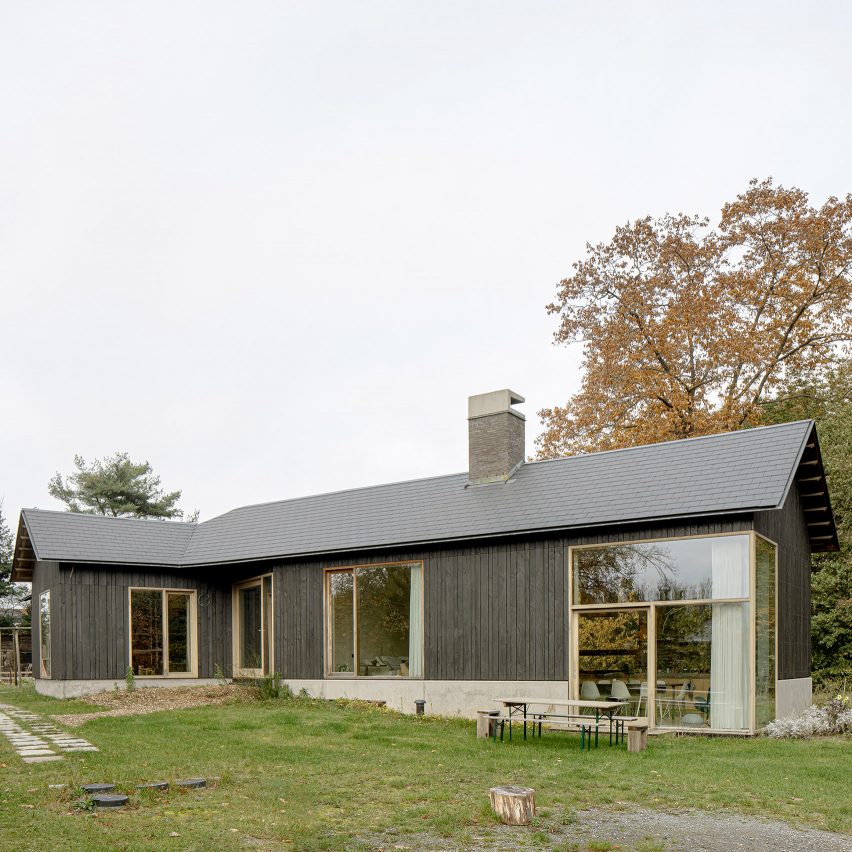
Belgian practice Graux & Baeyens Architecten has renovated and extended a 1960s chalet in Destelbergen, adding a new series of light-filled living spaces raised atop a concrete plinth.
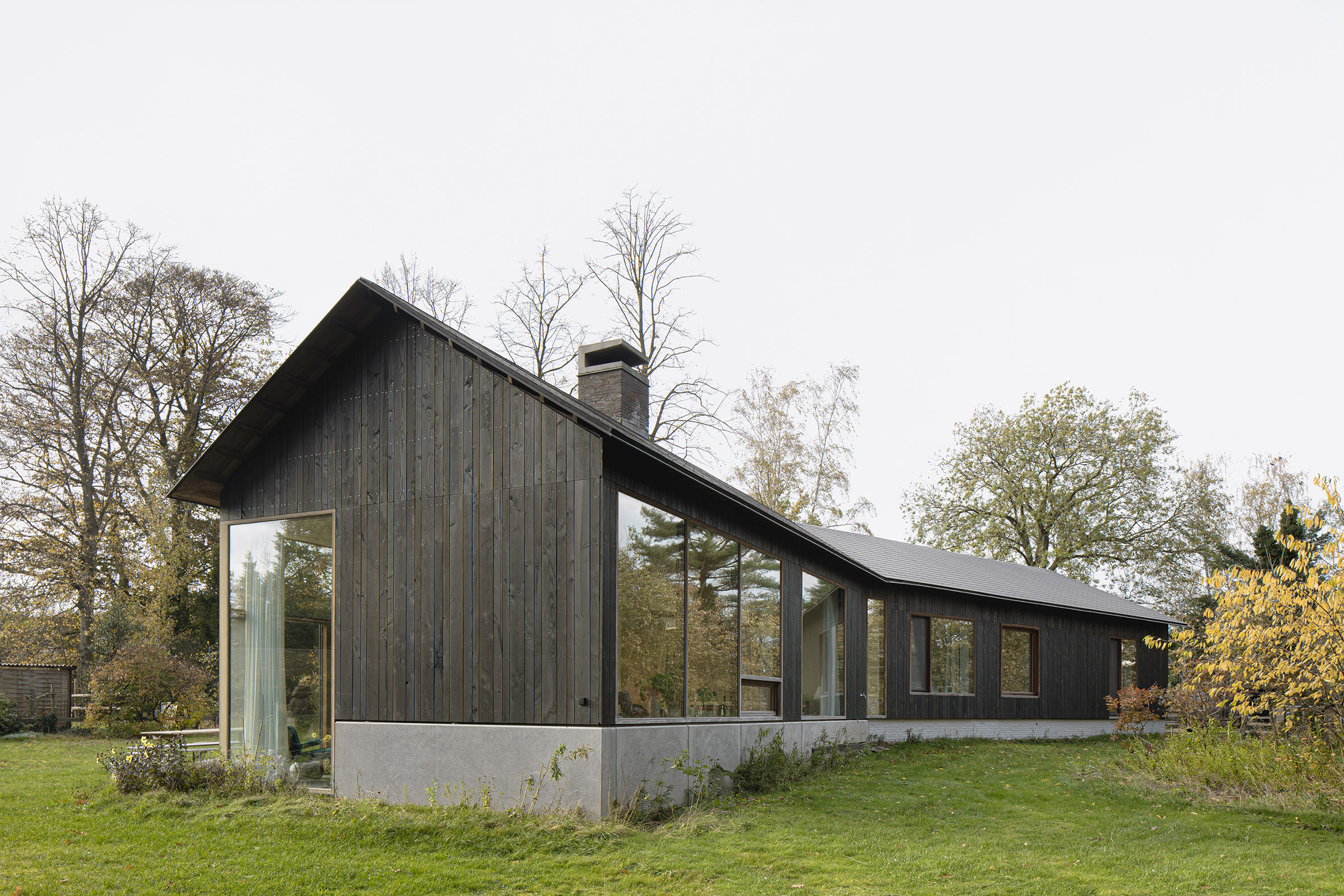
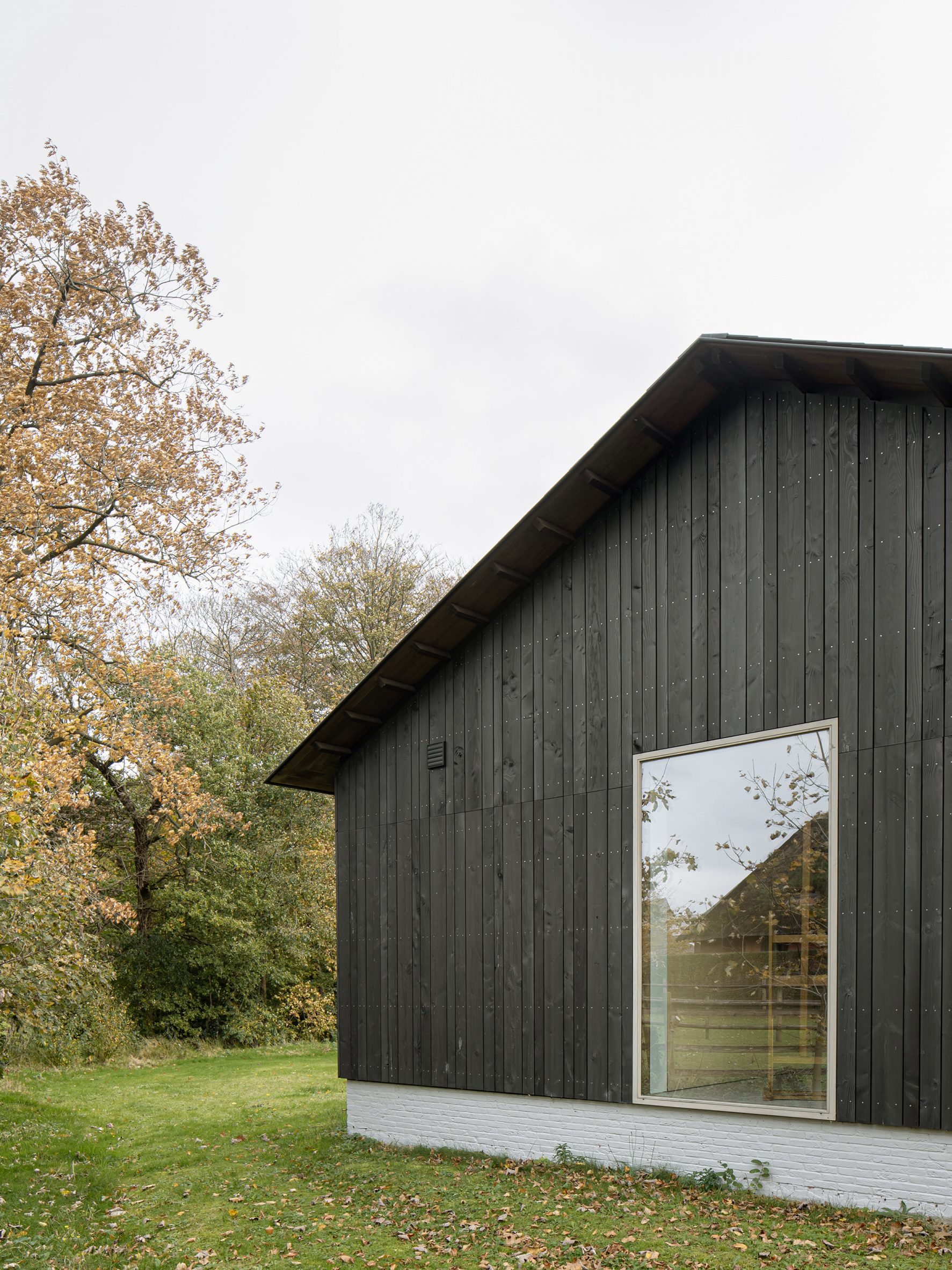
Designed as a family home for one of the Ghent-based practice's co-founders, Basile Graux, the new extension has been blended into the existing structure by wrapping everything in grey plywood-plank cladding.
Top: the studio renovated and extended a 1960s chalet. Above: the home was clad in grey plywood
"We absolutely wanted to avoid the clash between old and new, and so the basic idea was born for a harmonious extension of the existing structure," explained the studio.
The natural split between the original house and the new addition has been interpreted as two wings – a "day wing" to the south containing living, kitchen and dining spaces, and a "night wing" to the north containing bedrooms and bathrooms.
A window punctuates the grey wood facade
"The existing part – the night wing – became a more introverted area, and the extension a generous, light-filled day wing," described the studio.
The new wing sits at a slight angle to the old to maximise the angle of sunlight into the spaces, and the resulting triangular area between the two wings forms an entrance hall.
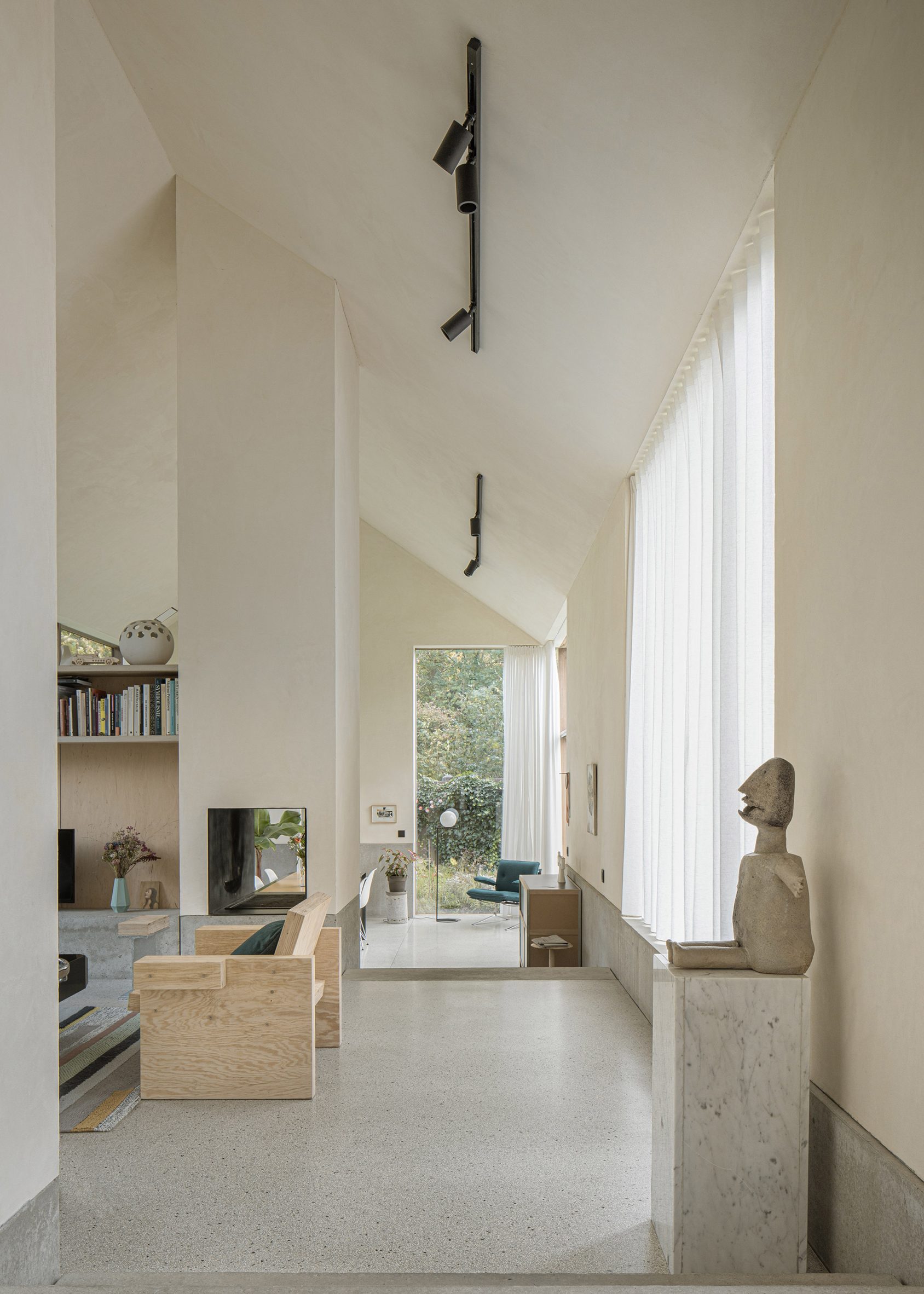
Terrazzo covers the floor of the interior
Almost all of the existing structure was kept intact, with its smaller openings and lower ceiling heights used to create a more intimate atmosphere in the night wing.
The most dramatic change is a new corridor that bisects the original structure and frames views into the new wing. This is wide enough to double as an informal social or play space.
Following a gentle slope in the landscape, the new wing steps downwards into a sunken concrete base, expressed externally as a concrete plinth that mirrors the white brick base of the original chalet.
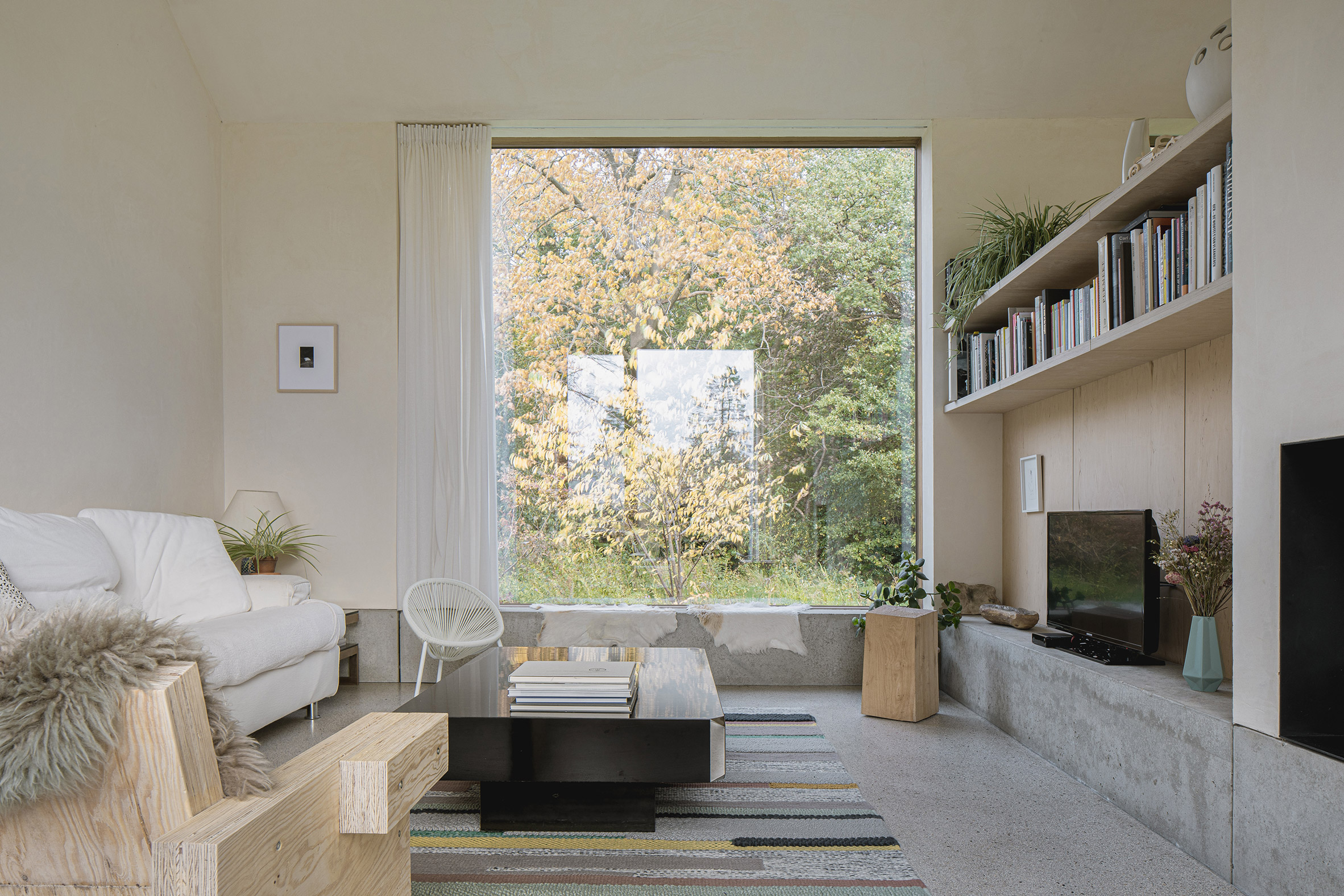
This concrete base creates a low datum around the interior, doubling as long benches and window sills and visually extending to the central fireplace in the lighter day wing.
It has a sunken living space
Large timber-framed windows capture views out towards the surrounding countryside, with a glazed section wrapping around the southern corner where a sliding door opens out onto a small area of decking.
Unlike the old wing's lower ceilings, the gable roof in the new wing is expressed internally and finished in white plaster, further emphasising the feeling of space.
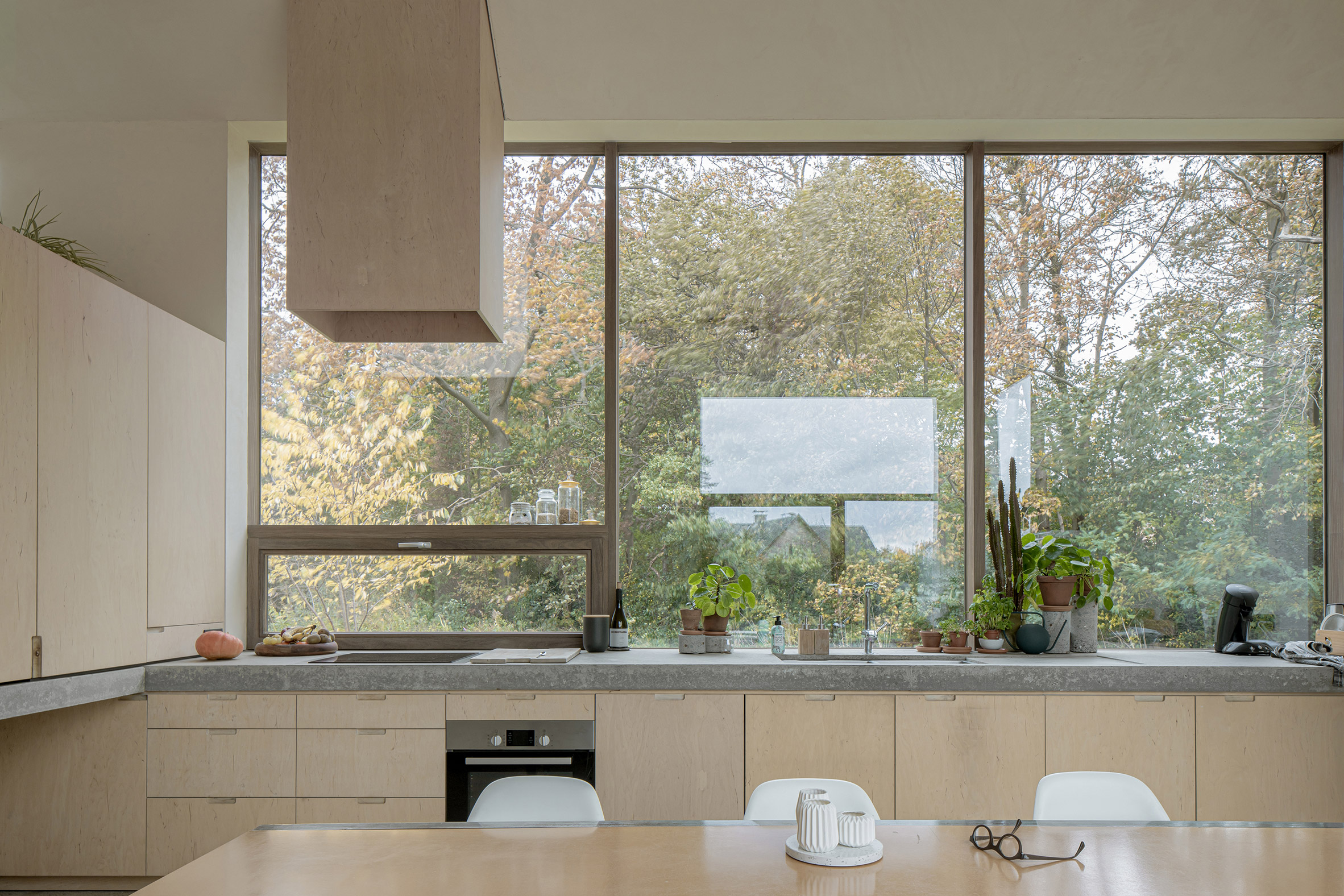
The kitchen has a plywood finish
"In contrast to the withdrawn character of the old wing, the openness of the day wing is contrasted up to the ridge of the gable roof, with large ceiling-high windows that perfectly frame the surroundings," Graux & Baeyens said.
Digital twins are starting to transform the way that cities are designed and managed, according to experts.
The technology, which involves creating a digital clone of a real-world object or system, is revolutionising the fields of healthcare, manufacturing and logistics. It is now having a profound impact on architecture and urbanism too.
"I see it as being a very powerful way of developing, evolving and designing our cities," said Mansoor Kazerouni, global director of buildings for Canadian architecture, engineering and planning firm IBI Group.
"The ability to create a digital representation of a building, a neighbourhood or an infrastructure network is powerful because it can inform decision-making throughout the lifecycle of that thing, starting with the design phase," he told Dezeen. "Simulating data in a digital twin allows us to optimise our design."
Chinese company 51World has created a digital twin of Shanghai which covers 1,448 square miles
A digital twin can be used to monitor the status of its physical counterpart and predict how it will behave in the future.
The technology has advanced so far that it's now possible to clone entire cities, for example, Chinese company 51World has created digital twins of Shanghai and Singapore. Architects and designers believe this will revolutionise the design and operation of buildings, transport systems, streetscapes and more.
What sets a digital twin apart from a standard 3D model is that it is linked to a live stream of data, which allows it to evolve in tandem with its real-world sibling.
This means it can offer an accurate analysis of what is happening in the real version, but also to test future performance and assess possible risks. This creates opportunities to improve efficiency, mitigate environmental impact and reduce costs.
"There's the opportunity for the computer to effectively play out hypothetical scenarios," said Adam Davies, partner at Foster + Partners. "That becomes really interesting in understanding and projecting how a building might perform."
Market to reach $48.2 billion by 2026
The use of digital twins is expected to grow extensively in the coming years. A recent study predicts the market will grow from $3.1 billion in 2020 to $48.2 billion by 2026.
This fast-growing trend can be attributed to the increasing availability of data, fuelled by a demand for the knowledge it can provide.
With the rise of the internet of things, sensor technology is increasingly being installed in our homes and workplaces, as well as the physical infrastructure that surrounds us. Meanwhile, cloud computing makes it easier than ever for data to be shared across different devices and networks.
As a result, businesses and other organisations have been able to build up huge volumes of data. Not all of this is private either – online sources such as the London Datastore are making live data readily available to anyone who wants to use it.
The world's first 3D-printed stainless steel bridge is embedded with sensors that send data to a digital twin, to measure and analyse the structure's performance
A digital twin unlocks the potential of this data, allowing users to gain greater understanding and control over a business, system or environment.
"What everybody wants is more control, more knowledge, more data," said Gijs van der Velden of Amsterdam-based technology company MX3D, who together with The Alan Turing Institute has created a digital twin of the world's first 3D-printed stainless steel bridge, as a way of testing its performance.
"With more data you can more easily build these twins. And the more you have, the more people understand how valuable they are," he told Dezeen.
"It will be a movement; we cannot yet understand how fast that's going to go. We will see these kind of representations of everything around us, just like Google Earth."
Digital twins used across industry sectors
Up until now digital twins have been most widely used in the manufacturing industry, with aerospace and automotive leading the way.
NASA has long been building digital twins to test and monitor the performance of its space vehicles. In Formula One, McLaren and Red Bull are among teams using digital twins to create real-time models of race cars in action. Meanwhile companies including BMW, Google and Tesla have all integrated digital twins into vehicle development.
With the Living Heart Project, Dassault Systèmes showed how digital models of organs can be used to test different drugs and medical devices
In healthcare, digital twins offer opportunities to test out different forms of treatment, reducing the risk of harm to a patient.
A team at Dassault Systèmes created a virtual model of a human heart, which is used for designing new medical devices and analysing drug safety, while researchers at Linköping University Hospital have created digital twins of diseases including breast cancer and influenza, to improve diagnosis and treatment.
However, the use of digital twins in architecture, construction and infrastructure has been steadily rising.
Meanwhile in London, Foster + Partners is using a robot dog to collect data for a digital twin of a building under construction in Battersea. The firm has also set up a system of sensors at its office campus to create an intelligent digital model of its own day-to-day operations.
Foster + Partners has created a digital twin of Battersea Roof Gardens, a project under construction in London, using data gathered by Boston Dynamics' robot dog
"At Foster + Partners, we have a vision of a more integrated approach in future buildings, where the deployment of sensor technology is considered in conjunction with more traditional architectural design moves," said Adam Davies, who is leading the company's digital twin programme.
"If we can demonstrate the potential of this technology to clients and collaborators, and help them understand the value, then we will be able to deploy it more broadly."
Advancement of digital twin software
The popularisation of digital twins is closely linked to the continued development of advanced software platforms.
Leading technology companies including GE Digital, Microsoft, Siemens and Dassault Systèmes have all created digital twin software. In a recent interview with Dezeen, Anne Asensio, vice president of design experience at Dassault Systèmes, described this technology as "a huge revolution for the future".
Innovators in this field include Chicago-based Cityzenith, which has launched a software program specifically for the built environment. SmartWorldPro is set up to facilitate the design and management of buildings and other forms of real estate.
Cityzenith's SmartWorldPro platform is designed specifically for the design and management of real-estate
Cityzenith's founder and CEO, Michael Jansen, told Dezeen his long-term ambition is to change the model from a closed software package to an open platform, so that it can be used by multiple users. The company is working with some of the developers behind Google Earth, with a view to developing a kind of digital-twin equivalent.
"It's now a platform that can scale, so why just scale it to just one customer?" said Jansen.
"We're starting to think about approaching and working directly with cities and their intermediaries, to give them SmartWorld for free and allow their commercial building owners to tap into it."
Gaming engines bring digital twins to life
Software like SmartWorldPro becomes even more powerful when used in combination with a gaming engine such as Unity Pro or Unreal Engine.
Typically used to develop video games, this type of software can be used to turn digital twins into immersive 3D simulations that users can freely explore, just as they would in a game like Fortnite.
"People are finding a need for gaming engines in the digital twin conversation because of this idea of contextualising data," explained David Weir-McCall of Epic Games, the company behind Unreal Engine.
"Data outside of the context of the building can sometimes be hard to understand or interpret," he said, "but gaming engines have the power to translate data into a real-time environment that can be understood by the end user. We're a viewpoint into that database."
Cognite's technology systems harness digital twins for managing industrial infrastructure
Unreal Engine is already being used by a number of digital twin providers in the design and management of buildings and infrastructure.
For example, China's Tencent has built a digital twin of Shanghai's hospital network, which allows resources to be effectively allocated, while Norwegian company Cognite uses digital twins to manage the safety and efficiency of oil and gas infrastructure.
City twins offer huge potential
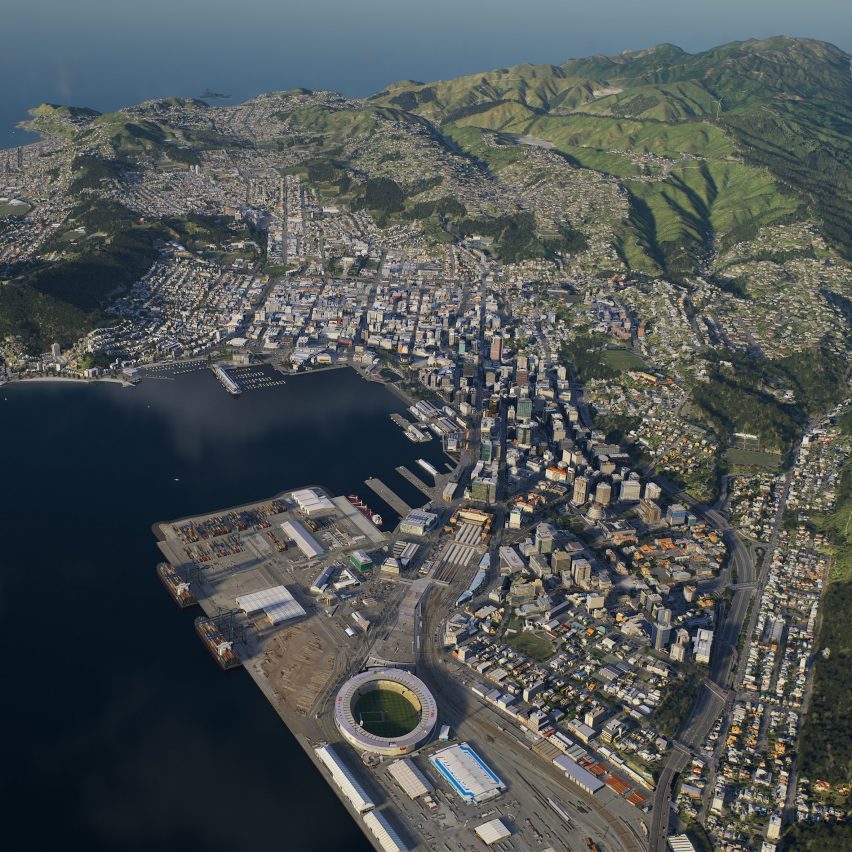
51World's twins of Shanghai and Singapore, which were also created using Unreal Engine, suggest how digital twins can become more multifunctional and multiuser.
Powered by data from satellites, drones and other sensors, these city twins are used for range of uses, from assessing risks of natural disasters like flooding, to testing the impact of new buildings.
Initially, this twin will be used to better understand the city's transport capacity – covering everything from cycle sensor data and car park availability to air traffic – but BuildMedia also wants to expand its use into architecture.
BuildMedia's digital model of Wellington, New Zealand, is being used by the city council as a platform for decision making
Tim Johnson, BuildMedia's technical director, believes this kind of high-resolution digital twin can become an effective marketing tool for new developments.
"By visualising the data in an understandable format, you're creating a really good public interface tool," he told Dezeen. "You can take these very complex projects in architecture or urban planning and present them to the public in a way that is visually spectacular."
Creating a digital twin ecosystem
For those looking to investigate the potential of digital twins, a network of support is growing.
The Centre for Digital Built Britain operates a government-supported National Digital Twin programme, with a vision for creating an ecosystem of connected digital twins across businesses and organisations.
Sarah Hayes, the outreach lead for the programme, believes the sharing of data is key to improving how the UK's infrastructure is "built, managed, operated and eventually decommissioned".
"We see digital twins as a way of improving decision making," Hayes told Dezeen.
"A city is effectively a system of systems – water, electricity, housing, schools, hospitals, prisons, natural environment – it all fits together," she said. "When you start to connect the datasets from these digital twins, you can build a bird's eye view of a city, which gives you better information about the consequences of your decisions."
Hayes urges those interested in this technology to sign up to Digital Twins Hub, an online community of digital twin users able to offer support and guidance.
From bubble-like workspaces in an ancient Chinese hutong to an art installation in the Swiss mountains, we've rounded up 10 of the best mirrored buildings from Dezeen's archive.
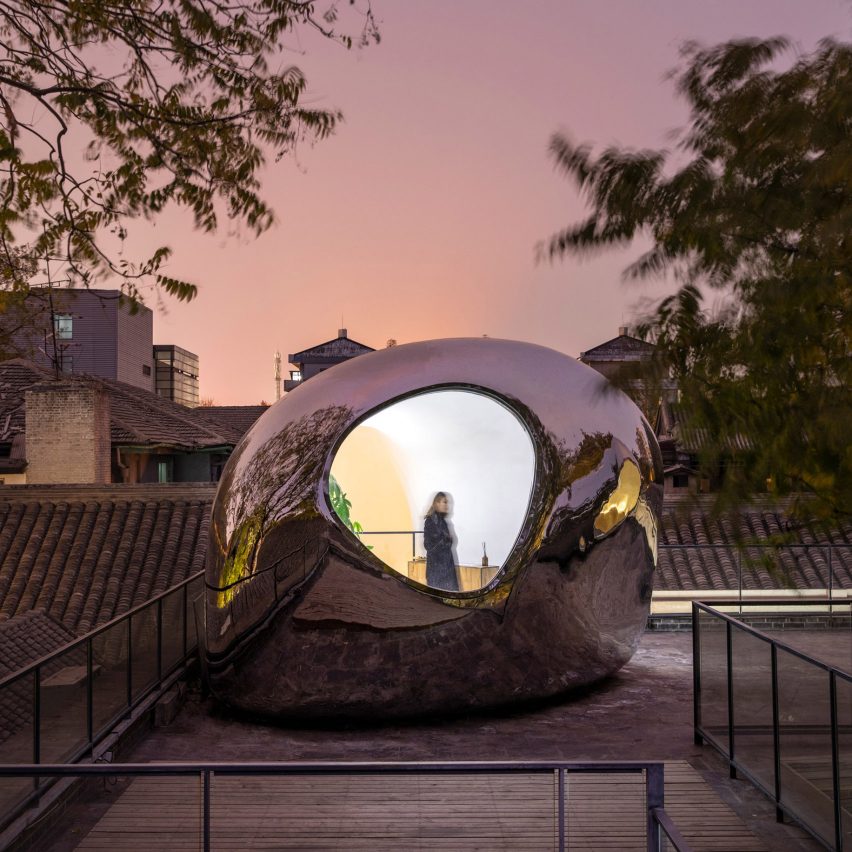
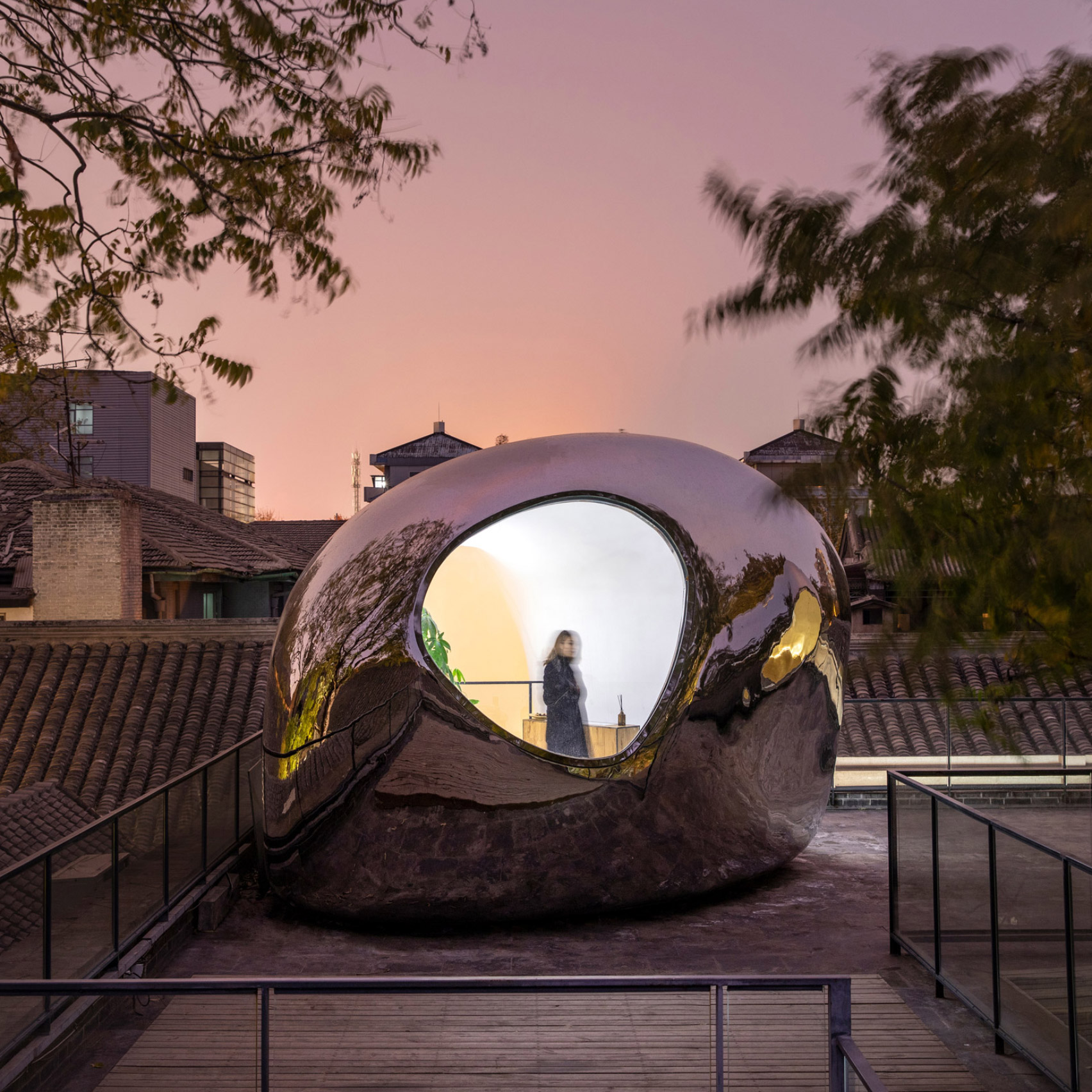
While renovating a courtyard house in one of Beijing's historic hutongs, MAD added two curved workspaces to the roof that are enclosed by smooth, mirrored stainless steel.
The studio's aim was to introduce a contemporary aesthetic to the site without "interrupting the existing urban fabric", so reflective steel cladding was chosen to help the new structures blend in with it.
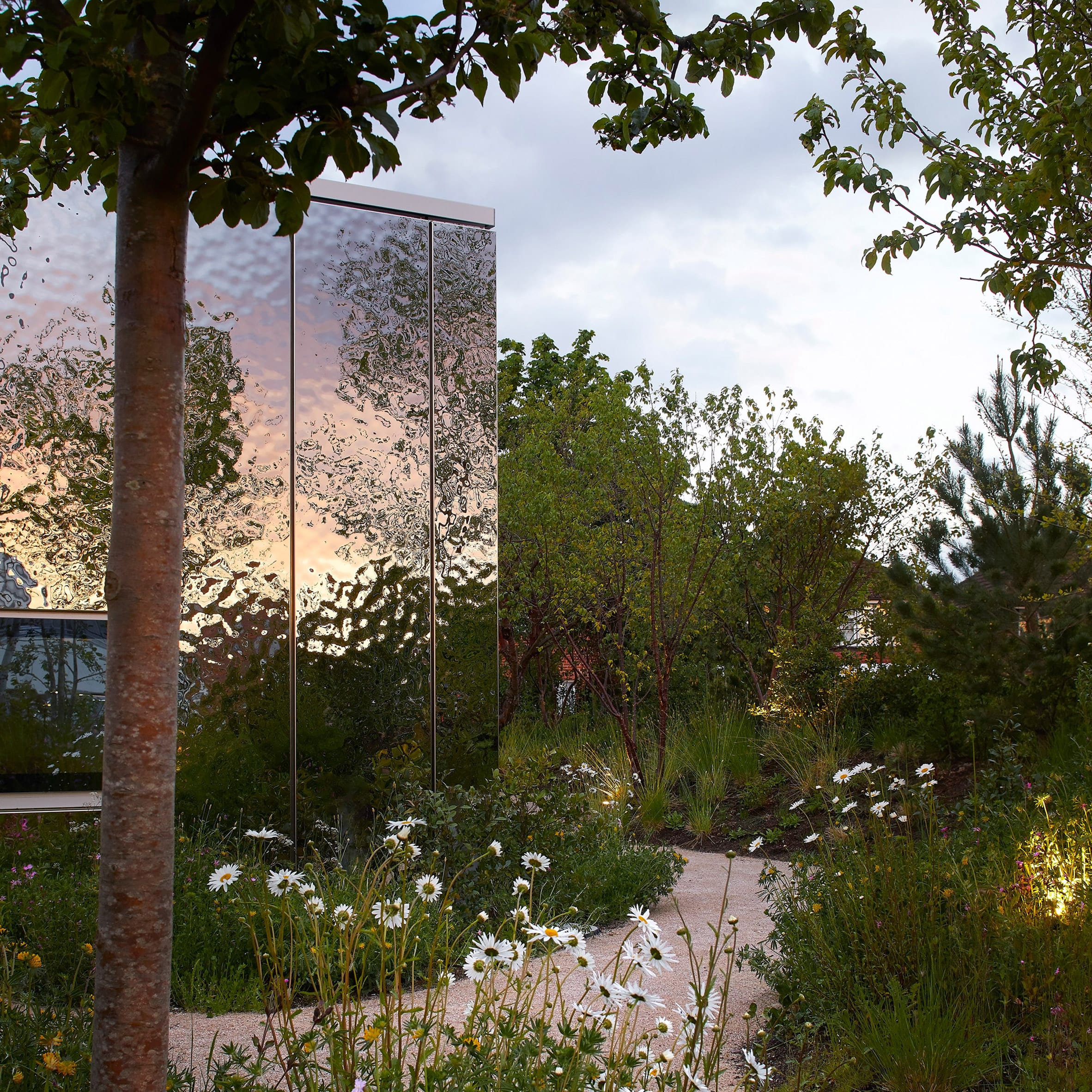
Polished stainless steel cladding with a hammered surface wraps around portions of Maggie's Southampton, a cancer care centre designed by AL_A to camouflage within the surrounding gardens.
The distortions in the surfaces create impressionistic reflections of the planting while also preventing the optical illusion of continued space, stopping birds from colliding with the structure.
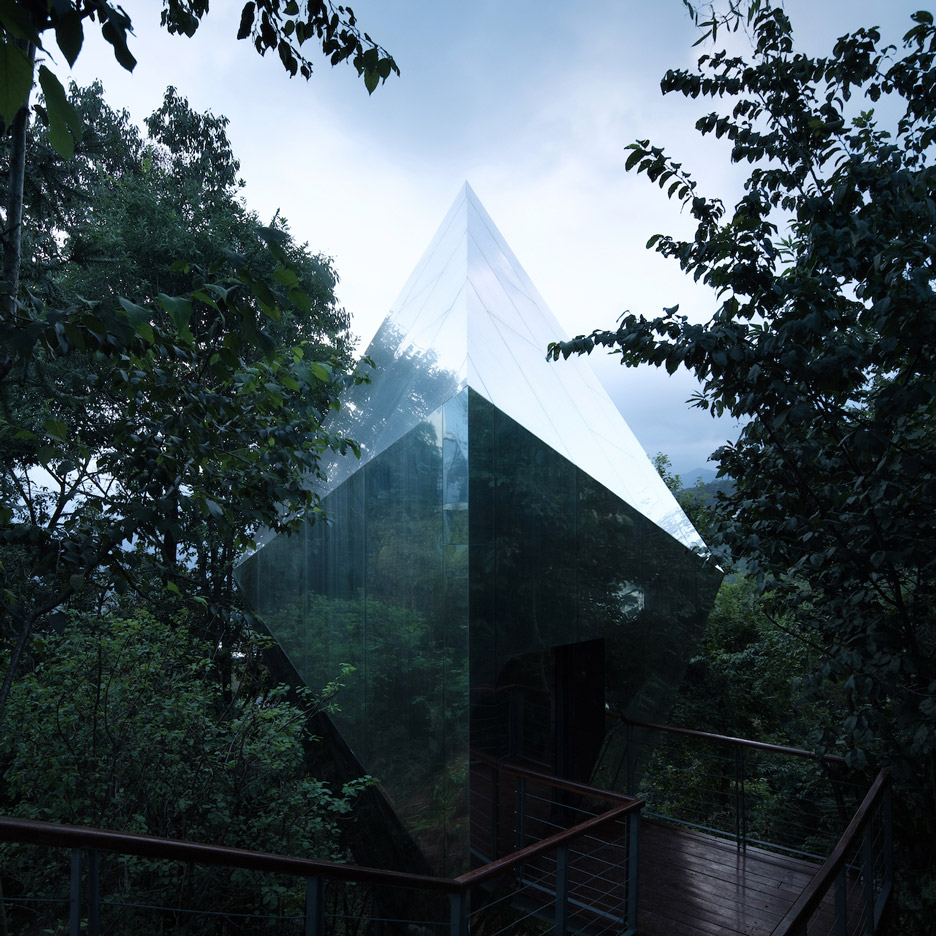
This pointed spaceship-like cabin is one of 18 dwellings that Chinese architecture studios Wiki World and Advanced Architecture Lab designed for a hotel scattered on a mountainside in Yichang.
They are all built from cross-laminated timber in various shapes and sizes, and were finished with reflective cladding to help them reflect the verdant mountainscape.
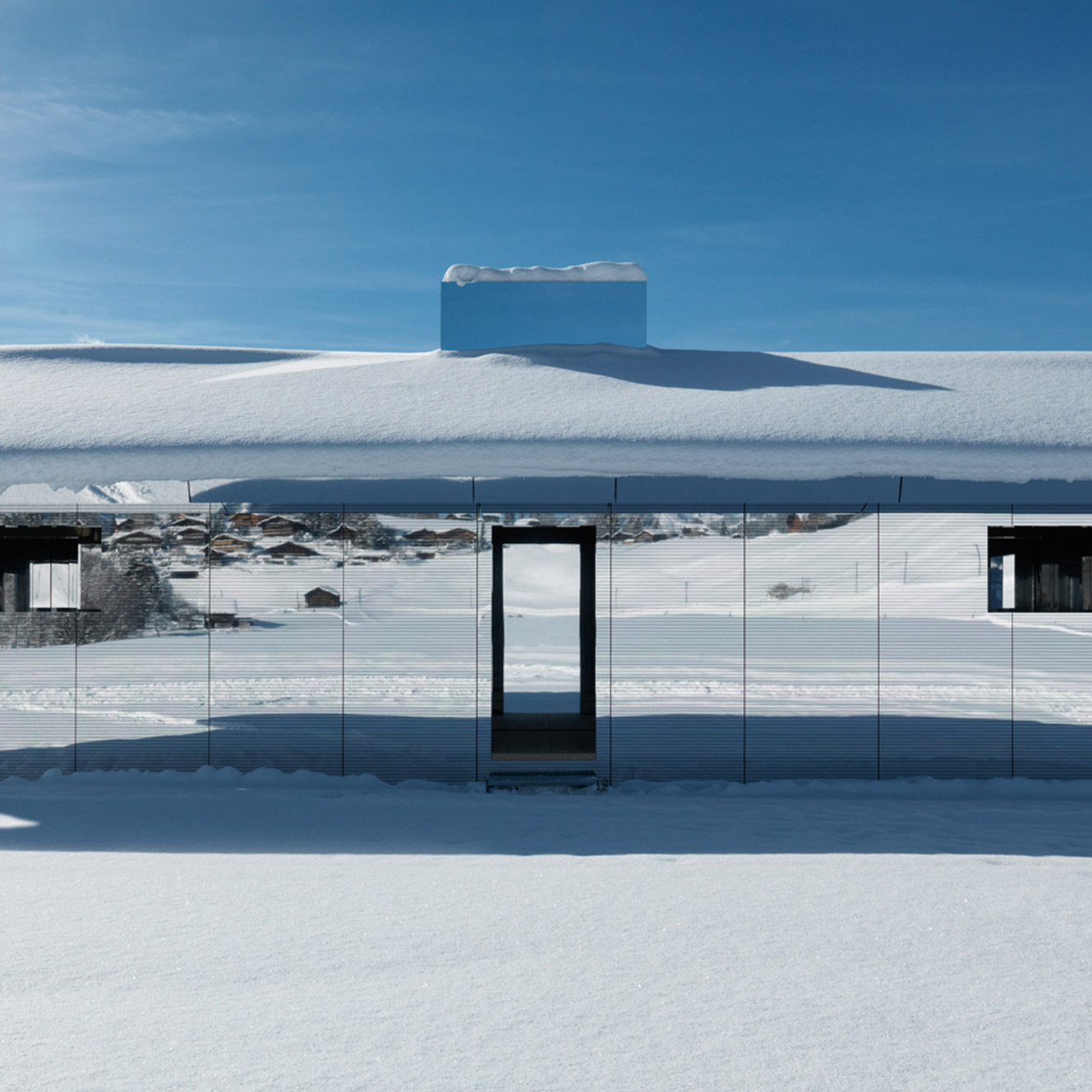
American artist Doug Aitken used mirrors to cover almost every surface of the Mirage house – an art installation in the Swiss mountains. This includes the interiors of the structure, which creates a kaleidoscopic viewing effect for visitors.
The structure is modelled on the Californian ranch houses developed in the 1920s and 1930s. To protect birds from colliding with the house, horizontal black lines are installed every three centimetres on the facade to counter the distraction of the reflective surfaces.
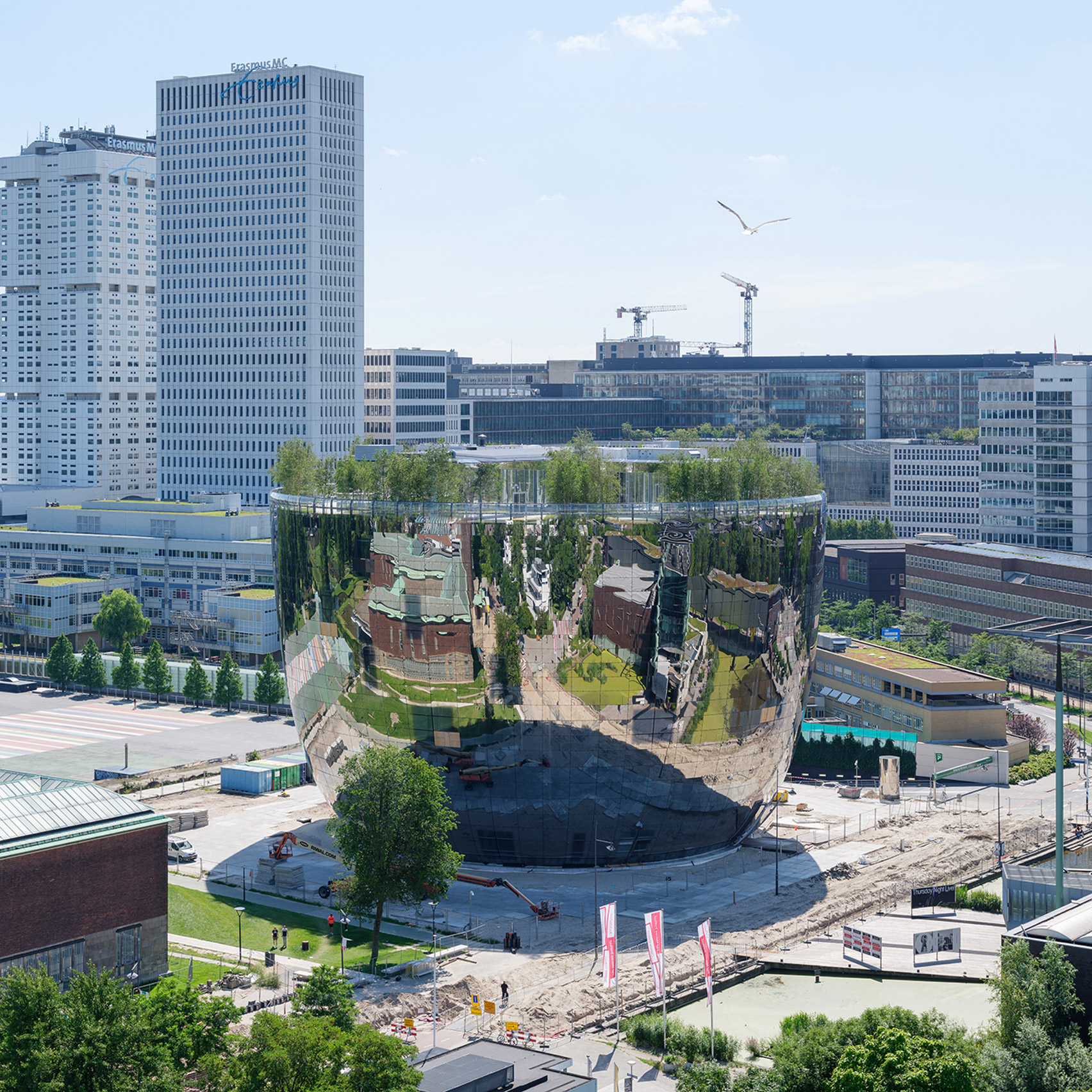
Over 1,500 curving mirrors enshroud the Depot Boijmans Van Beuningen, the world's "first publicly accessible art depot" that MVRDV recently completed in Rotterdam.
The idea behind the cladding was to help the building become "fully integrated into its surroundings" by reflecting passersby, changing weather and the surrounding city skyline.
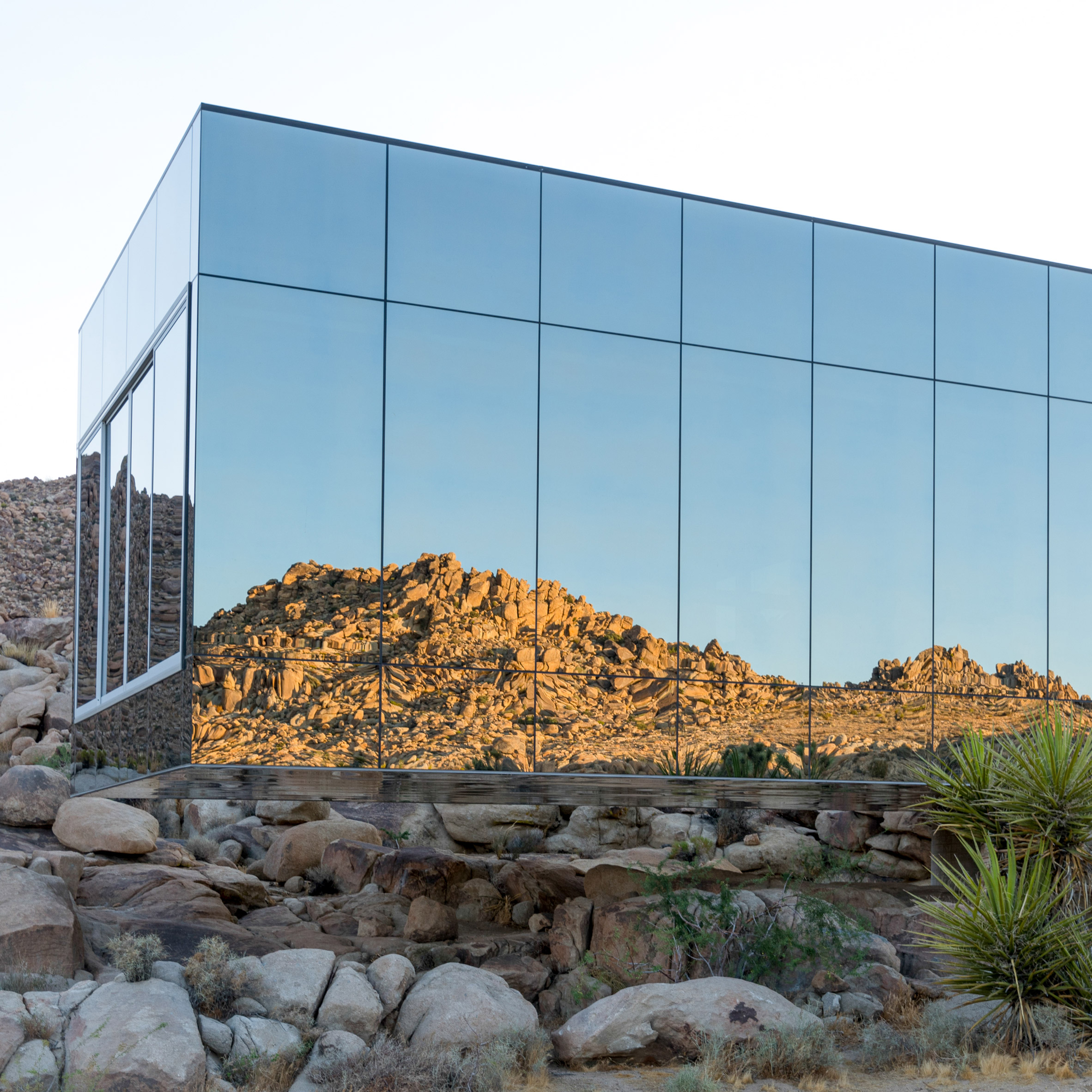
This long steel-framed dwelling near Joshua Tree National Park is clad in a mirrored, tempered glass that is typically used for skyscrapers. It is elevated above the ground on concrete columns, forming a cantilever at one end.
From the inside, the glass walls provide panoramic views of the surroundings to be enjoyed from a 30-metre-long indoor swimming pool that runs through the dwelling.
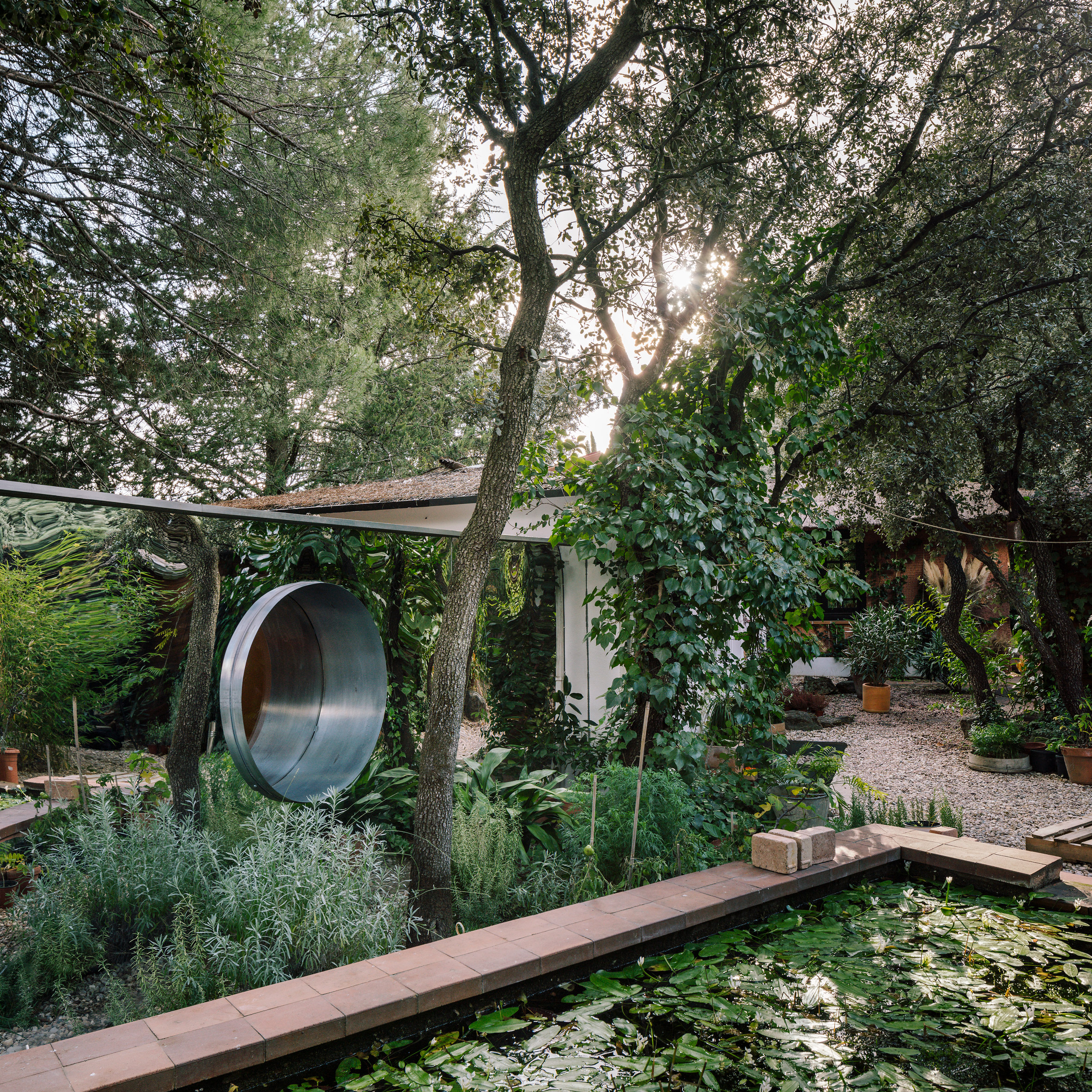
Mirrored sheets of methacrylate – a type of thermoplastic – envelop this residential extension in Madrid and take on the green tones of the surrounding leafy foliage.
The extension was designed by architecture practice Delavegacanolasso to be almost indistinguishable within its setting. Its only noticeable element is a large porthole in its front elevation.
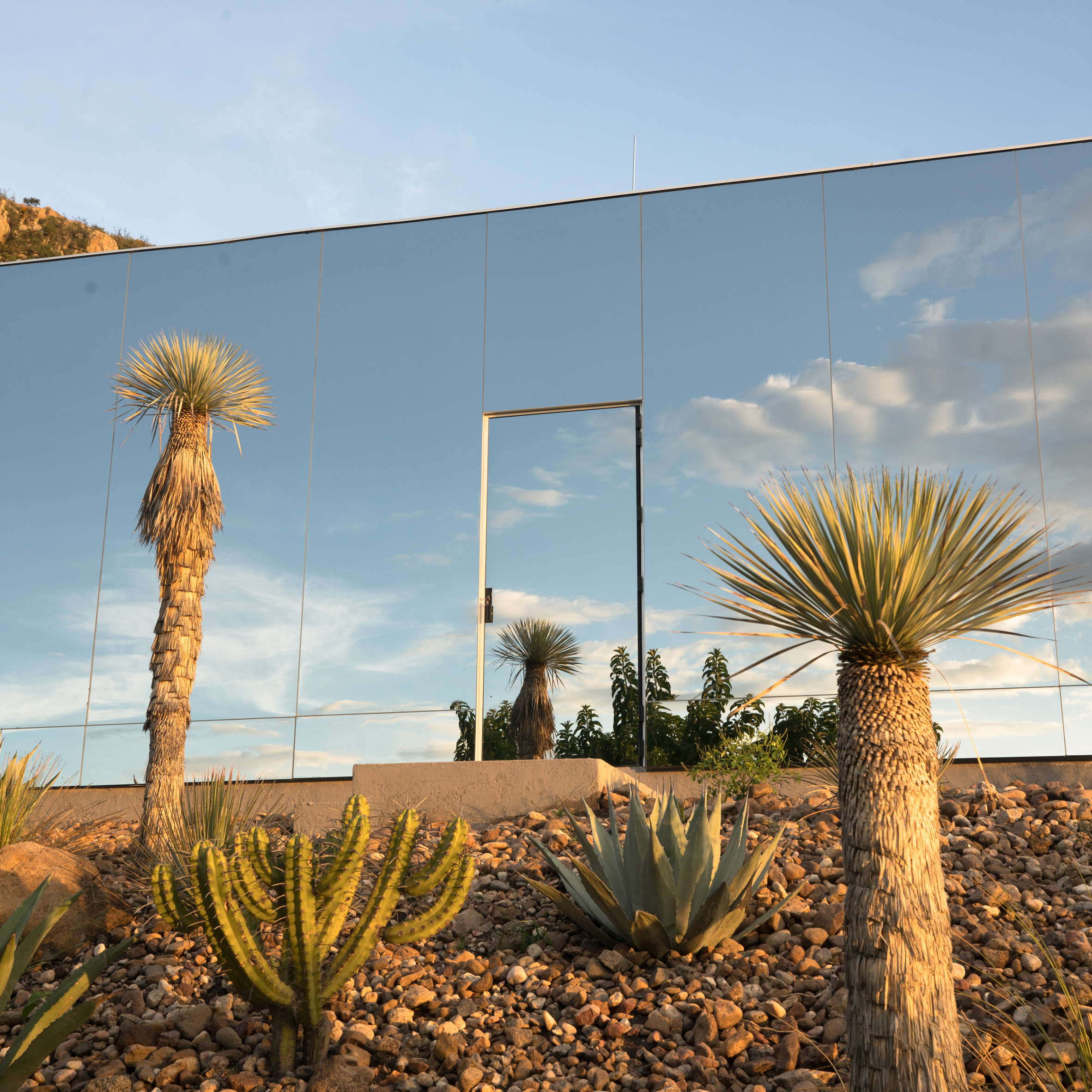
Casa Etérea is a holiday home hidden on the slopes of an extinct volcano in Mexico. Its main facade is covered in mirrors and it relies on solar power and harvested rainwater to function.
It was designed by Prashant Ashoka to act as an extension of the environment by reflecting changing light and seasons. However, a patterned, ultraviolet coating makes the structure visible to passing birds while remaining invisible to humans.
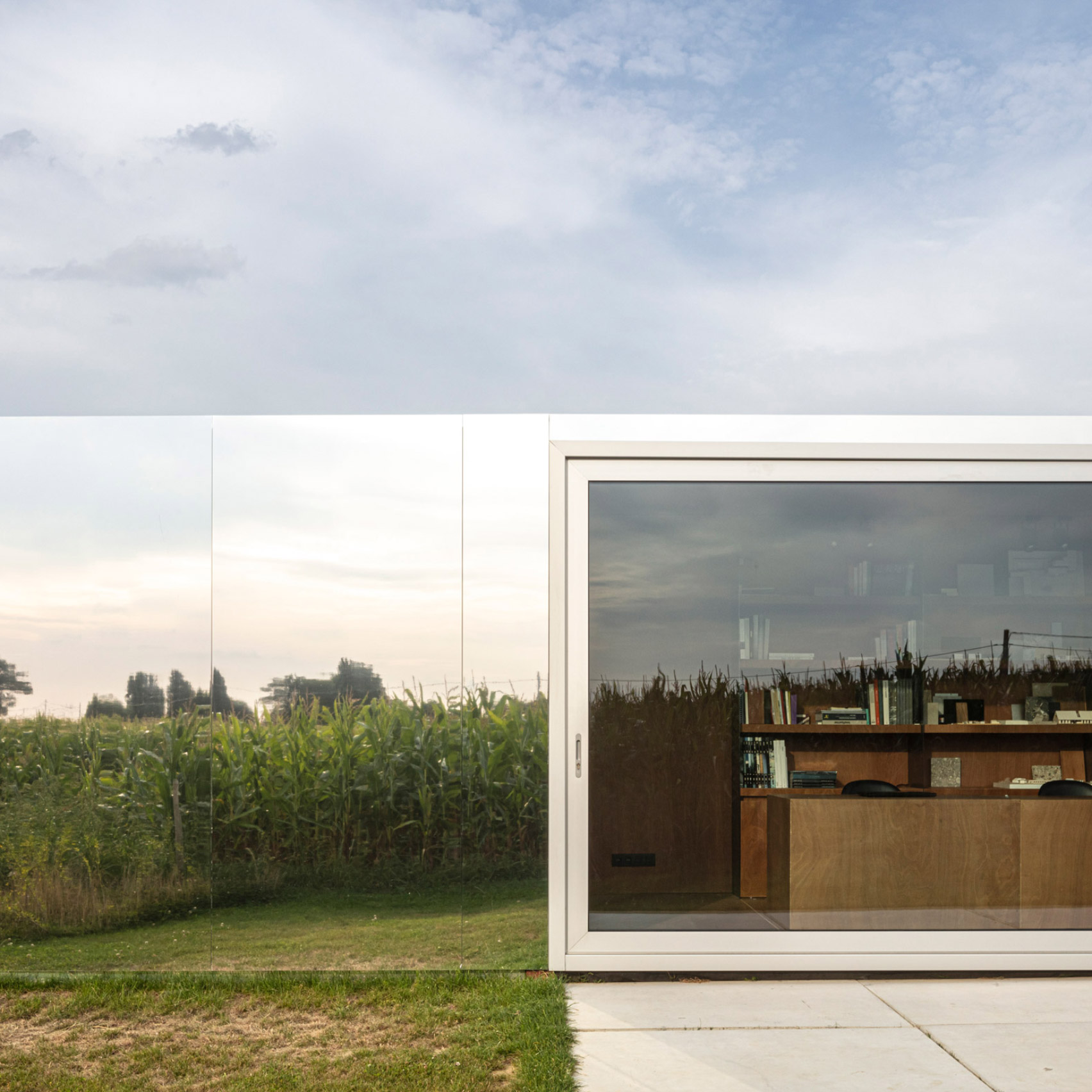
Cowes is one of two mobile studios that TOOP Architectuur built for itself in Belgium from repurposed shipping containers.
Located in Westouter, it is covered almost entirely in mirrors excluding two large glazed openings. According to the studio, this is intended to reduce the office's visual impact and let the "landscape speak at its maximum".
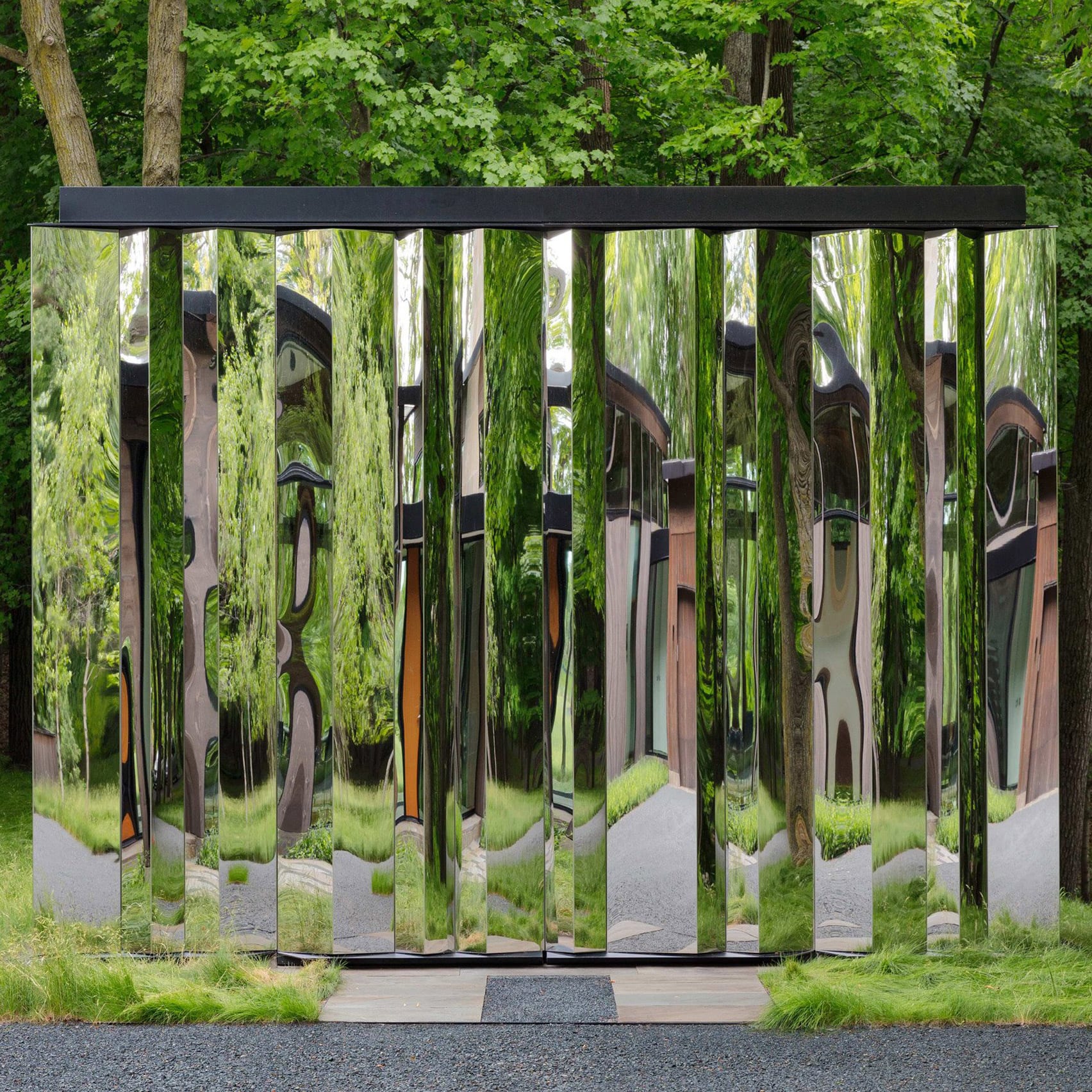
In a wooded site in Minnesota, Altus Architecture + Design built a mirrored shed alongside a low-lying house clad in cedar.
The shed is covered in folded panels of polished stainless steel and is described by the studio as a "counterpoint to the house that dissolves into the woods".
Dezeen Showroom: Belgian brand IVC Commercial has added two new clay-inspired carpet styles to its Rudiments collection, which references the natural flooring of the past.
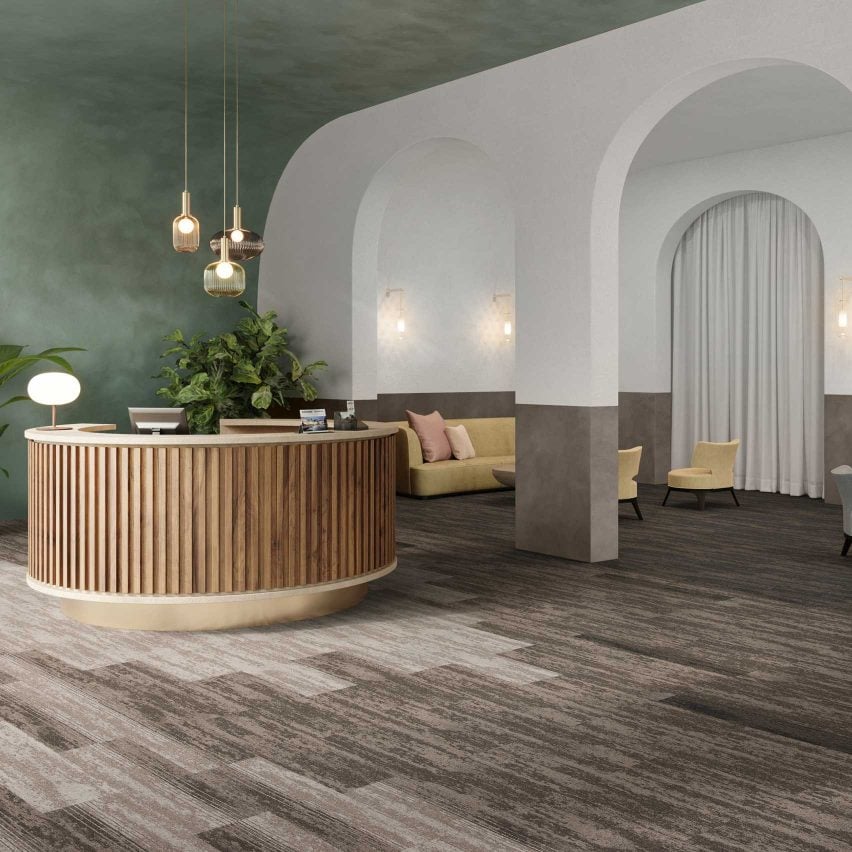
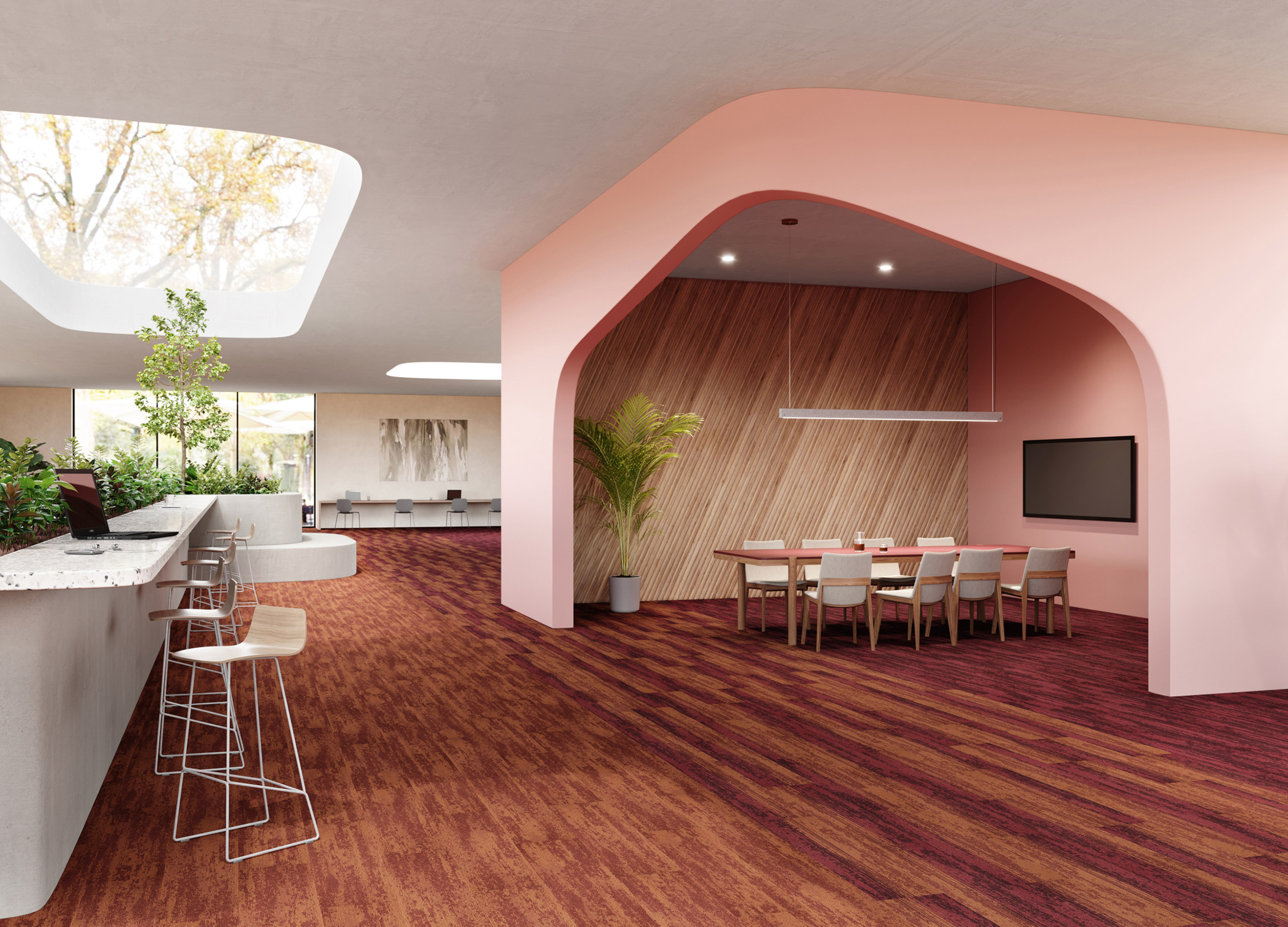
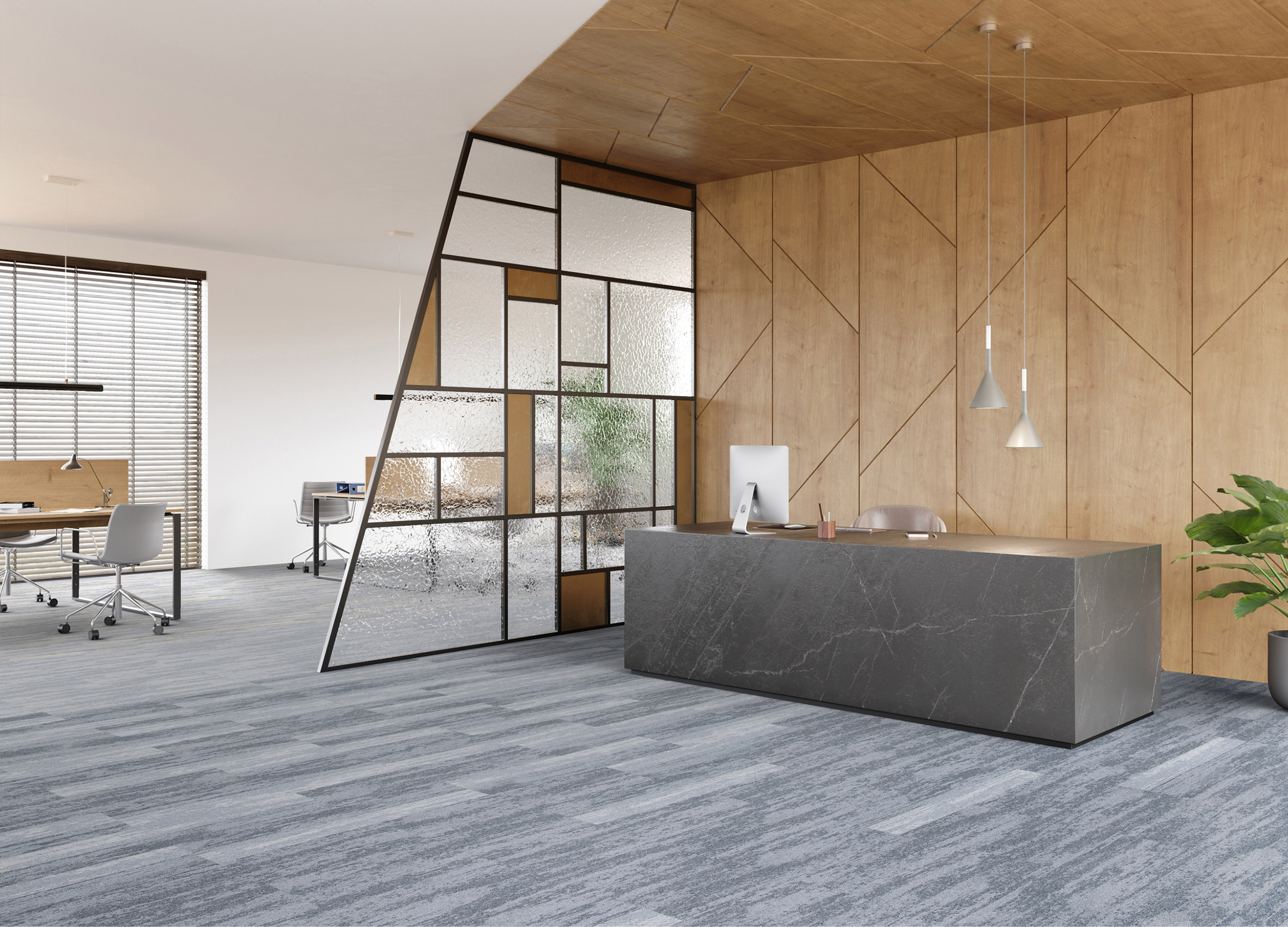
Clay's pattern is evenly distributed all over the tile, so the style is suitable for adding texture to large areas, while Clay Create tiles feature more of a gradient of colour.
The carpet tiles are made of solution-dyed nylon and come in planks of 25 by 100 centimetres.
The carpet tiles bring an organic pattern into office environments
Clay and Clay Create can be used together or in isolation. Alternatively, they work well in combination with other styles in the Rudiments range, which all share the same 12-colour palette.
The collection is meant to bring an organic feeling into office environments, with styles inspired by historical flooring materials such as hewn stone and jute.
About Dezeen Showroom:Dezeen Showroom offers an affordable space for brands to launch new products and showcase their designers and projects to Dezeen's huge global audience. For more details email showroom@dezeen.com.
Dezeen Showroom is an example of partnership content on Dezeen. Find out more about partnership content here.