Saturday, 10 July 2021

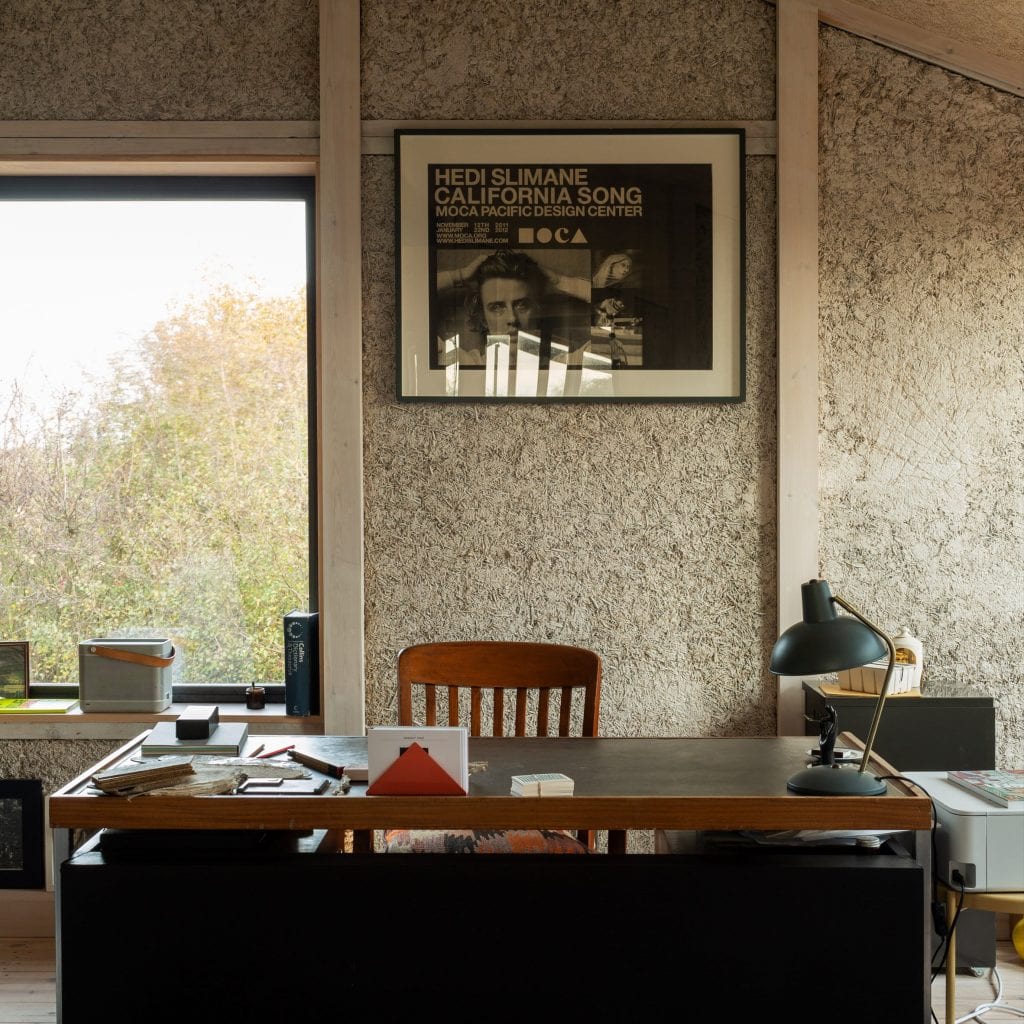
Ravi Handa designs his own wine bar called Stem in Montreal

Reclaimed materials found during demolition work have been preserved and used as decoration in this Montreal wine bar called Stem that's designed and co-owned by Ravi Handa Architect.

Named Stem, the wine bar was completed earlier in 2020 near September, a cafe and surfboard workshop designed by the same architect in Montreal's Little Burgundy neighbourhood.

Wine bar in Montreal covered by wooden slats
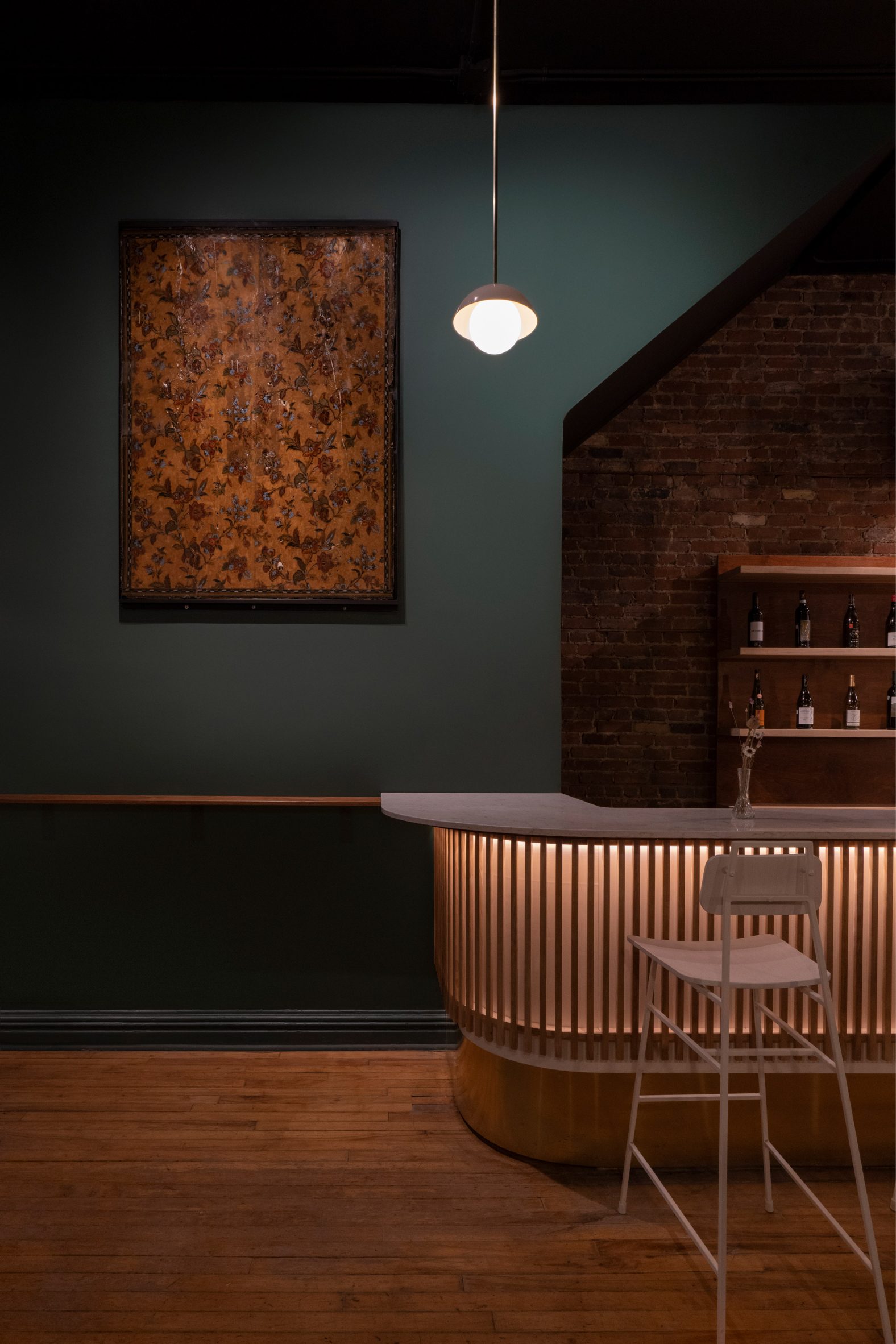
A piece of vintage wallpaper now hangs by the bar's entrance

Upon learning that a vacant space near September cafe would be taken up by a big-box pizza chain, the architect teamed up with some partners to lease the space themselves.

"There was an uproar in the community and we [September] along with other local businesses on the block didn't want a multinational chain as a neighbour," Handa told Dezeen.

"There was a great deal of pressure to create something soulful and anchored to place since we had convinced our landlords to break with a brand that we felt was perhaps void of soul and rather generic," he added.

Wine bar in Montreal with wood slat screen
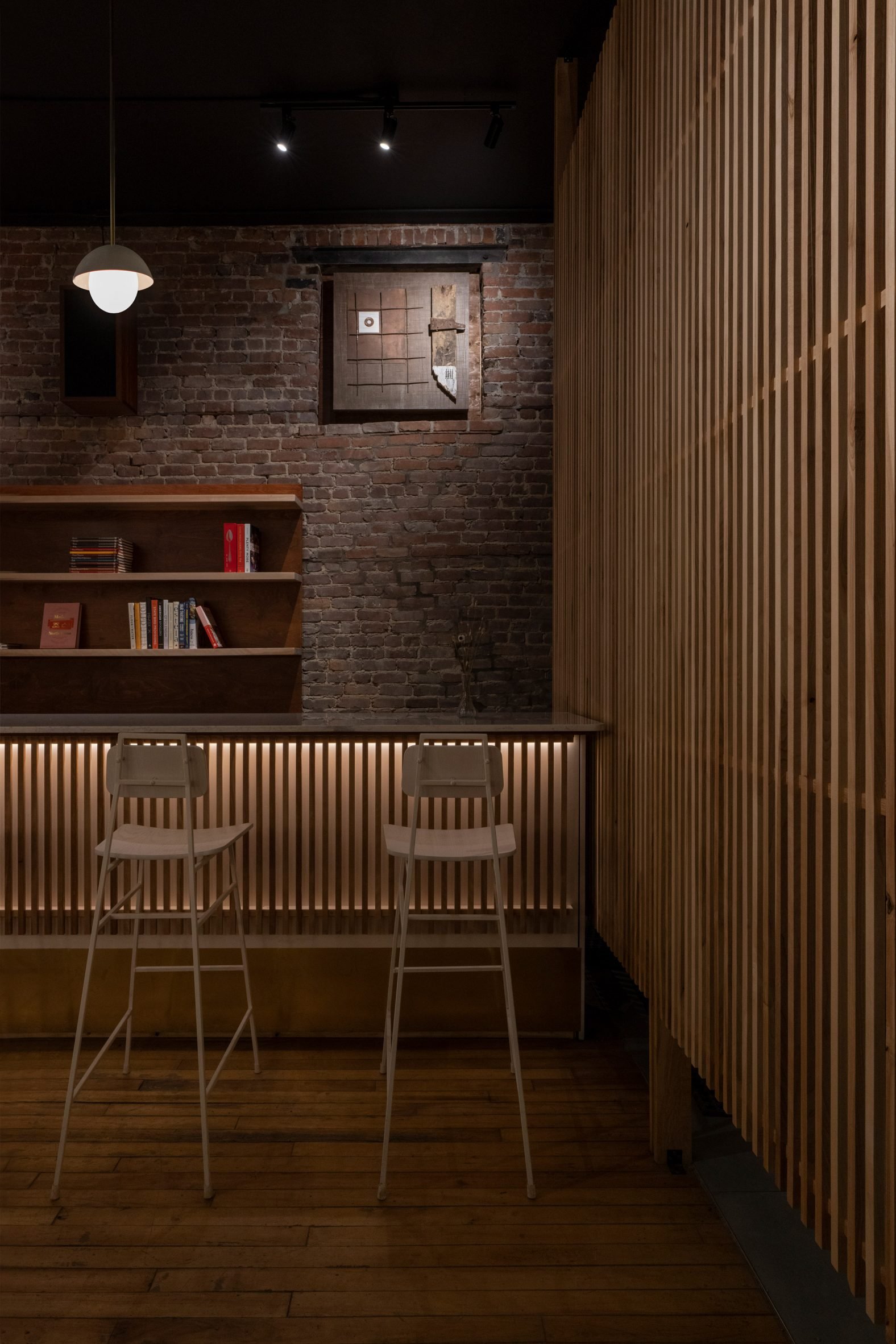
Materials found on-site during demolition have been turned into artworks

Handa envisioned an establishment that would draw cues from the cafe, offering a casual place for neighbours to gather in a nighttime setting.

"As a partner, and because the business is physically linked to an already successful business, I was more emotionally invested in the design process than usual," he said.

"While the spirit of the cafe is reflected in the wine bar's fine lines and warm palette, the new space has an identity of its own, using the stem as a source of inspiration."

Slim slats of wood, intended to represent wine glass stems, are a recurring motif in the interiors.

Wine bar in Montreal with a slatted privacy screen
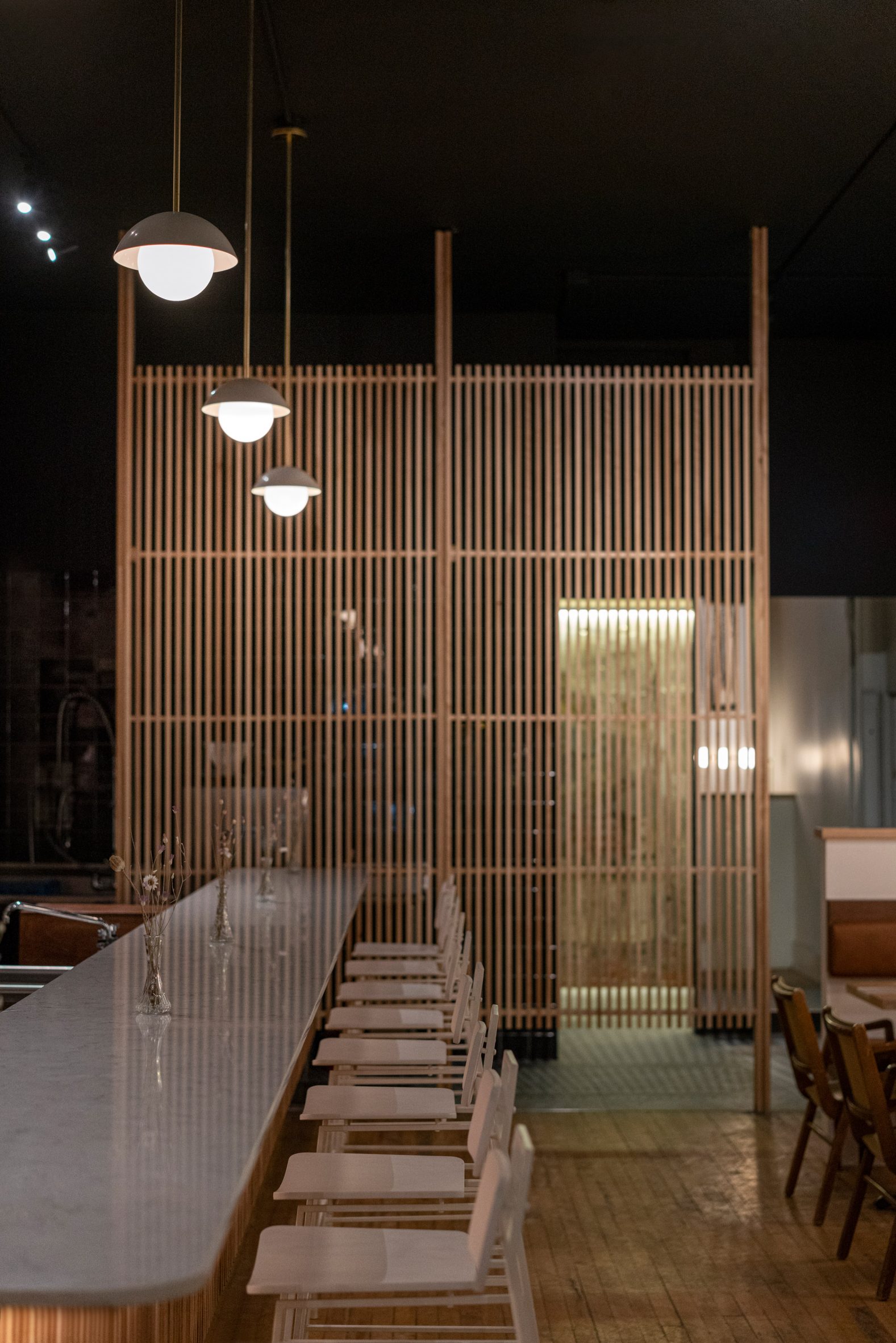
A privacy screen separates the tasting room from the back-of-house

During the demolition of the existing space, several finishes and pieces of various materials were found and repurposed as artworks for the finished space.

"Scraps of wood and metal were collected in collaboration with artist and friend Jeremy Le Chatelier, who incorporated them into works of art," the architect said.

The long, narrow space features some walls painted in a dark green colour that was chosen based on a piece of vintage, hand-painted wallpaper that was found on site.

Elsewhere, the existing brick demising walls are exposed in a nod to the area's industrial past.

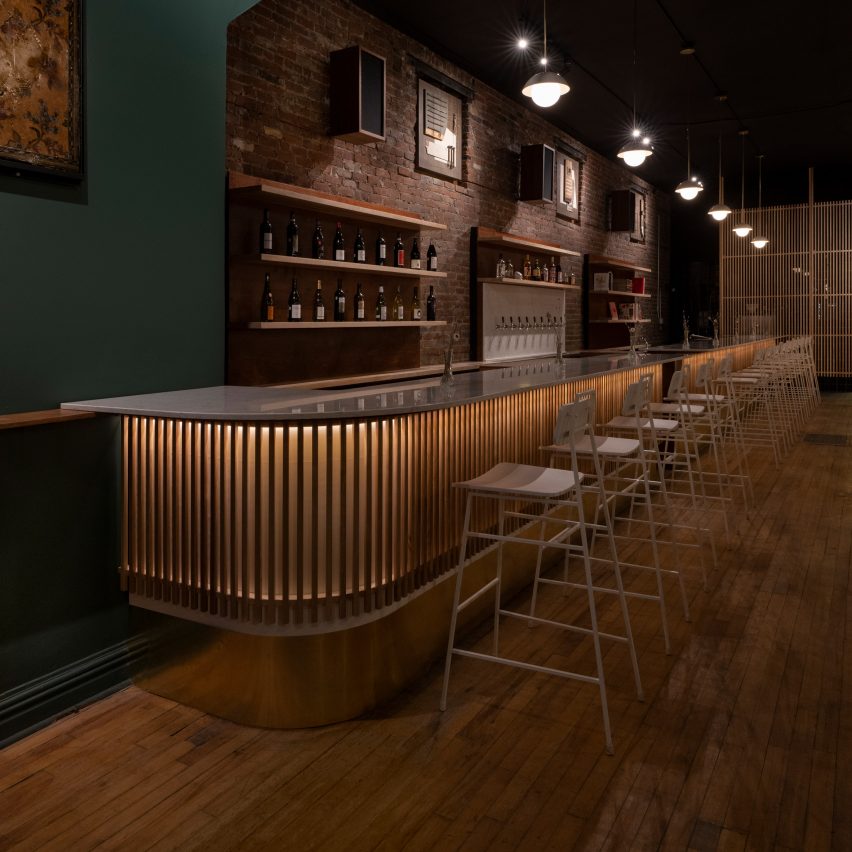
Bar seating in Montreal wine bar Stem
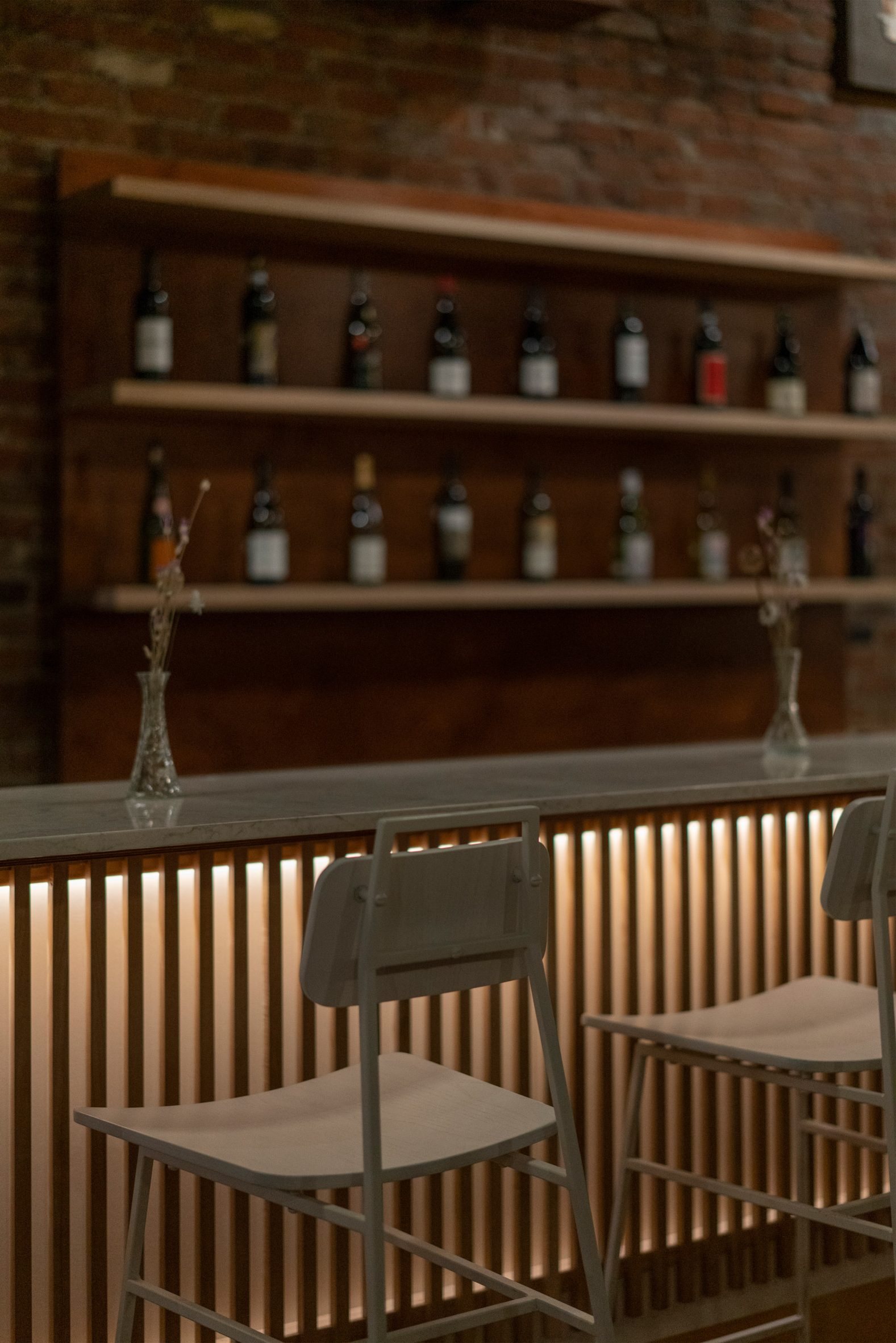
Thin strips of wood that line the space are meant to look like the stem of a wine glass

Thin wooden slats cover the bar itself, a motif that is also found in a privacy screen that separates the back-of-house spaces from the tasting room.

"[The screen] conceals the washroom and dishwashing area, without alienating workers from the lively energy in the bar," said architect.

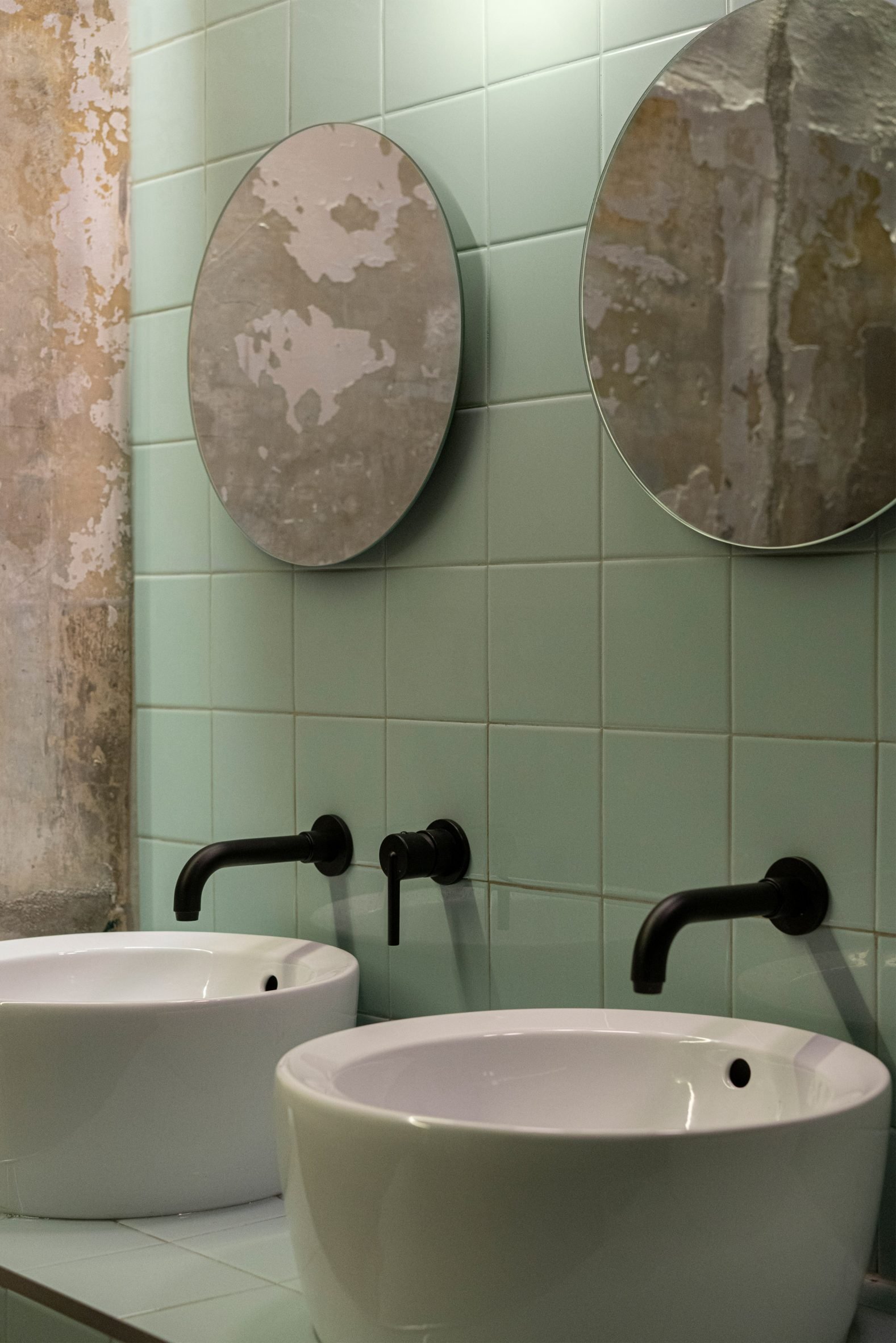
Bathroom with mint green tiles and exposed concrete
New finishes contrast the existing walls in the bathroom

In the restroom, a concrete wall was left in its original condition, contrasting the new tiles and fixtures that were installed during the renovation.

In an effort to support local brands and designers, the architect sourced furniture and lighting from within the city's tight-knit design community. The lights are by a Luminaire Authentik and the furniture was designed by Atelier Appareil, the furniture arm of Appareil Architecture.

Other projects in Montreal include a newly opened coworking space by Ivy Studio and a retro coffee bar downtown by Ménard Dworkind.

The photography is by Olivier Blouin.

The post Ravi Handa designs his own wine bar called Stem in Montreal appeared first on Dezeen.


from Dezeen https://ift.tt/3hOIxbC

New Design University presents 10 student design projects

New Design University

A cafe/exhibition designed to explore veganism and a multifunctional sailing space are included in Dezeen's latest school show by students at New Design University.

Also included is an urban food platform created to educate people on sustainable food supply and a series of designs reimagining the often neglected sanitary facilities in schools.


New Design University

University: New Design University
Course: Master Interior Design and Visual Communication
Tutors: Christine Schwaiger, Christian Prasser, Dieter Spath, Christa Stürzlinger and Vali Potmesil

Statement:

"With the master's degree in interior design and visual communication, the New Design University (NDU) in Sankt Pölten offers a programme that is unique in Europe. It builds on a highly interdisciplinary and practical combination of interior and graphic communication design.

"Through the interdisciplinary exchange, students equally deepen and expand the competencies of their respective backgrounds in architecture, interior design, graphic and communication design. The freedom to experiment creatively and process-oriented is an essential starting point for any design exercise.

"Multiple cooperations with private and public partners enable studies based in the economic reality, working with internationally leading corporations like Laufen Bathrooms, as in the four projects shown below. Additionally, six master projects working on various briefs between food and sailing are exemplary for the range of the programme."

New Design University

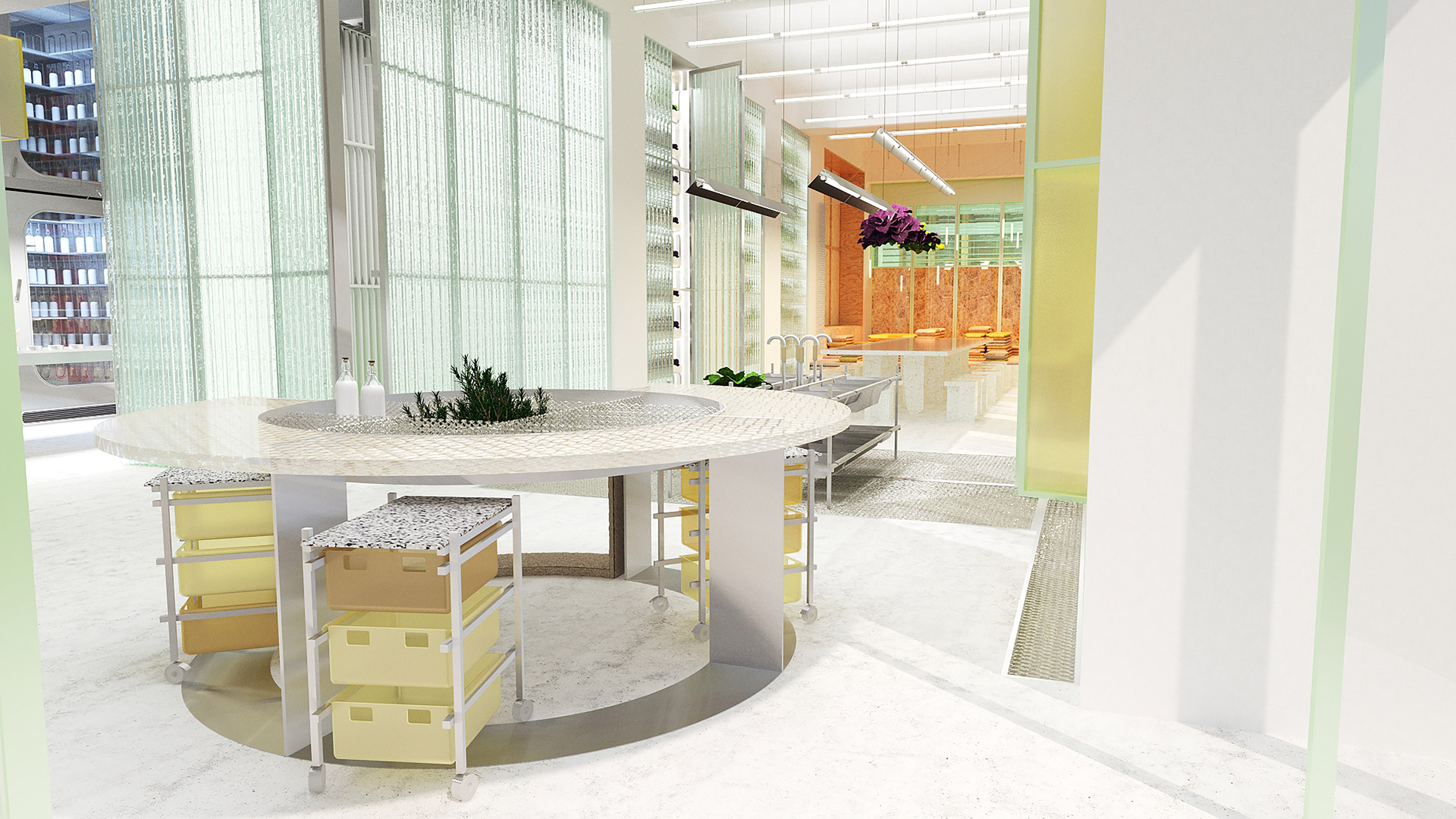
Etage liquide common ground (floor) by Julia Lackner

"The etage liquide is an urban food platform that produces sustainable groceries and distributes knowledge, and therefore creates value. It provides a vision of an urban food supply model that describes a new way of producing food locally in the urban realm.

"By combining the potential of growing food indoors with a lively, creative, social atmosphere, a contemporary spatial concept is produced. A deep understanding of natural resources and their preservation is a key aspect of the concept. The etage liquide is an urban hub for people, plants and worms that dissolves the border between private and public to create a space of symbiosis."

Student: Julia Lackner
Course: Masters of Interior Design and Visual Communication
Tutors: Christine Schwaiger
Email: julia.gabriele.lackner@gmail.com

New Design University

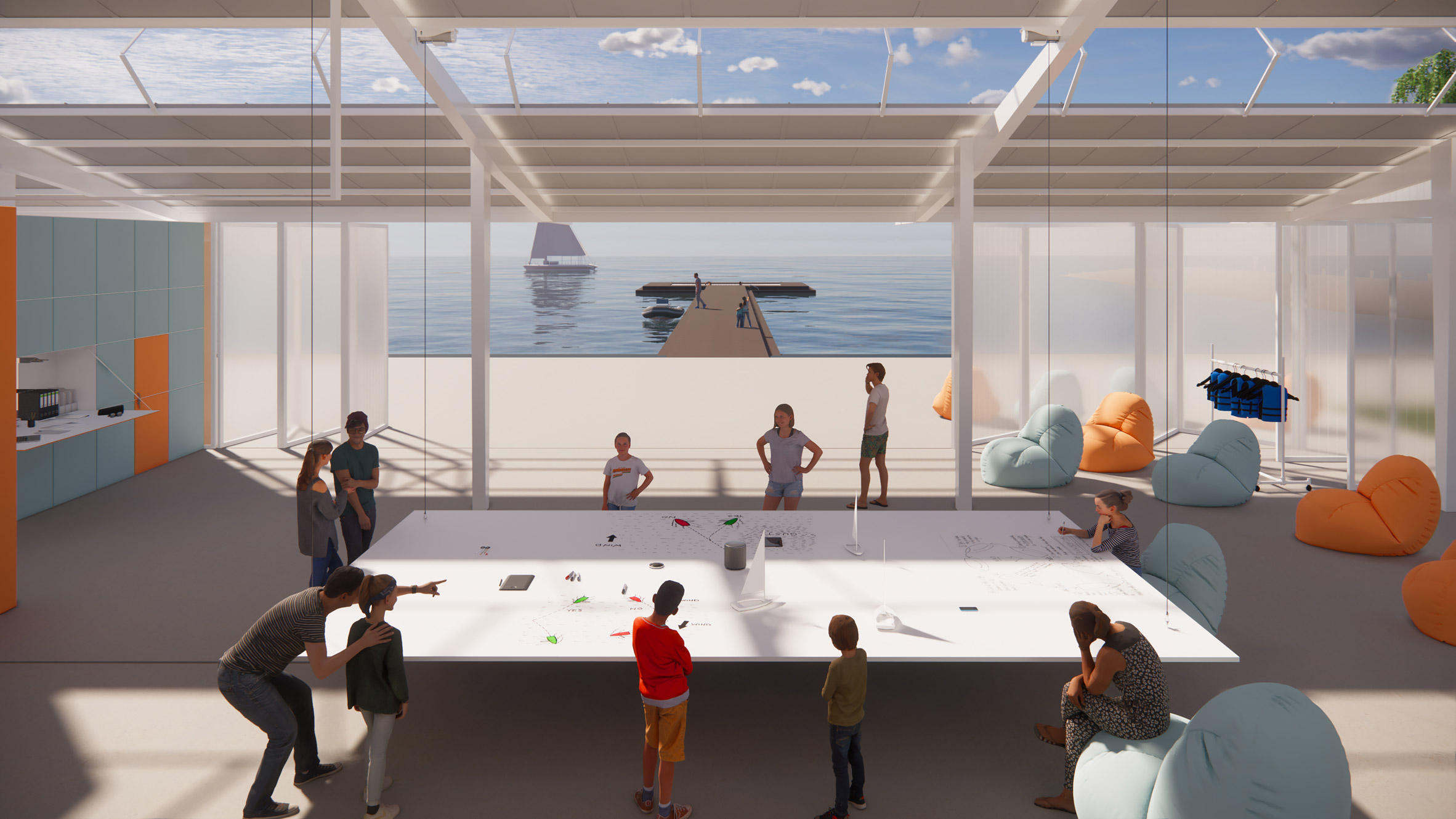
The Harbour project by Luca Szabó

"The Harbour project promotes a sailing school at Lake Balaton in Hungary. It provides a multifunctional space for the world of sailing. Since various sailing schools are distributed around the lake, the Harbour project would serve as the centre of sailing education for young competitors, with well-known professional sailors and trainers invited every week to provide practical and theoretical training.

"The centre incorporates teaching, leisure and boat maintaining activities. The surrounding site is designed in continuity with the interior, to create a pleasant and practical place for boats and sailors."

Student: Luca Szabó
Course: Masters of Interior Design and Visual Communication
Tutors:
Christian Prasser
Email:
szaboluca96@gmail.com

New Design University

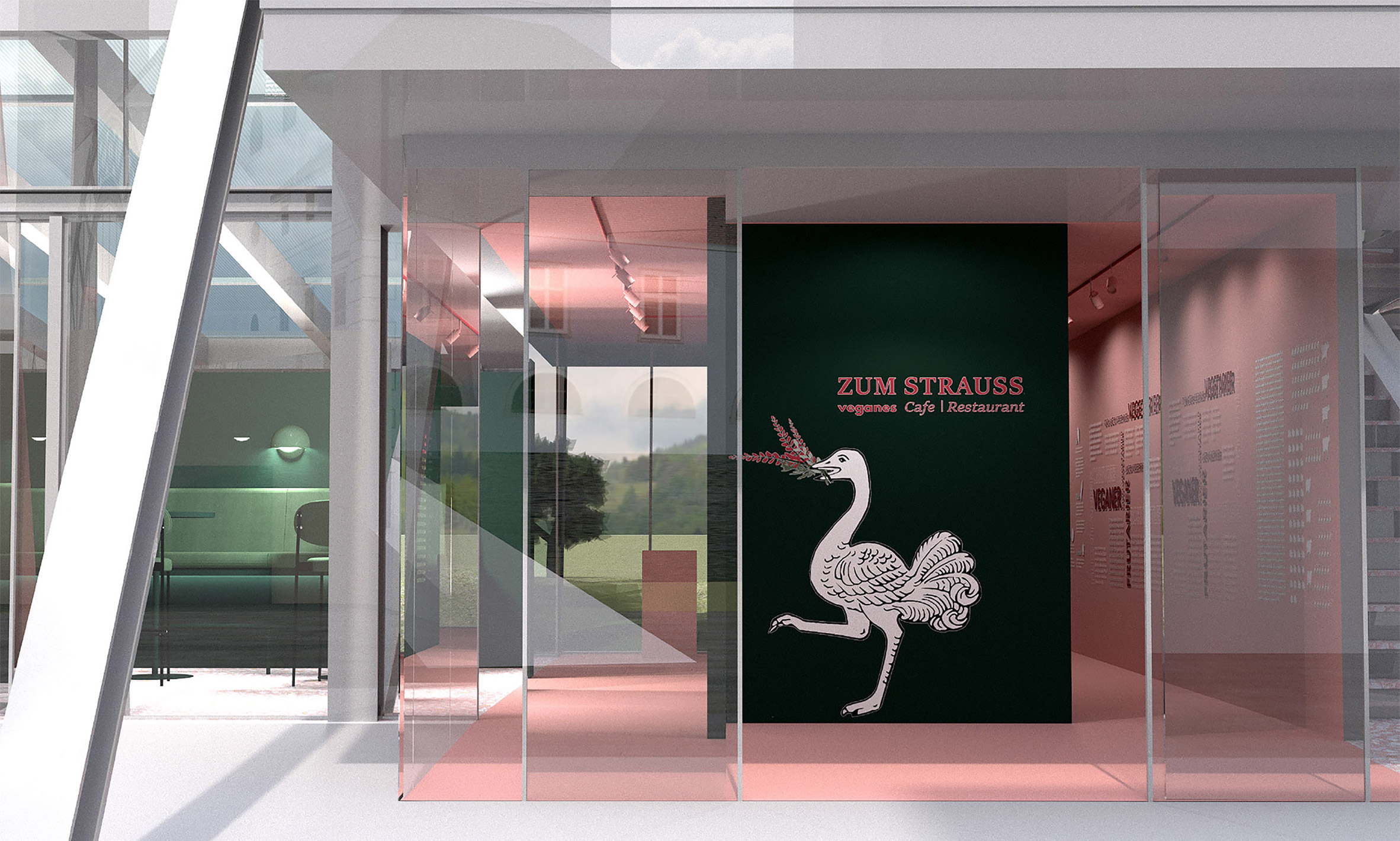
Zum Strauss – Vegan Cafe and Restaurant by Daniela Scheich

"In a glasshouse directly above the river, the red and green colour code guides the design concept so it can be seen from afar. The concept is a cafe and restaurant that offers exclusively vegan and regional dishes. Nevertheless, Zum Strauss is a restaurant for everyone, with the help of plant-based meat and fish dishes as meat lovers should also be invited.

"In the exhibition area, prejudices against veganism are to be discussed, to make visitors think and rethink. For it is not about abandoning animal products completely, but about their reduced and conscious enjoyment. For the good of animals, the environment and our health."

Student: Daniela Scheich
Course: Masters of Interior Design and Visual Communication
Tutors:
Dieter Spath
Email: 
daniela.schelch@gmail.com

New Design University

Eego Co Space by Irene Schacherhofer

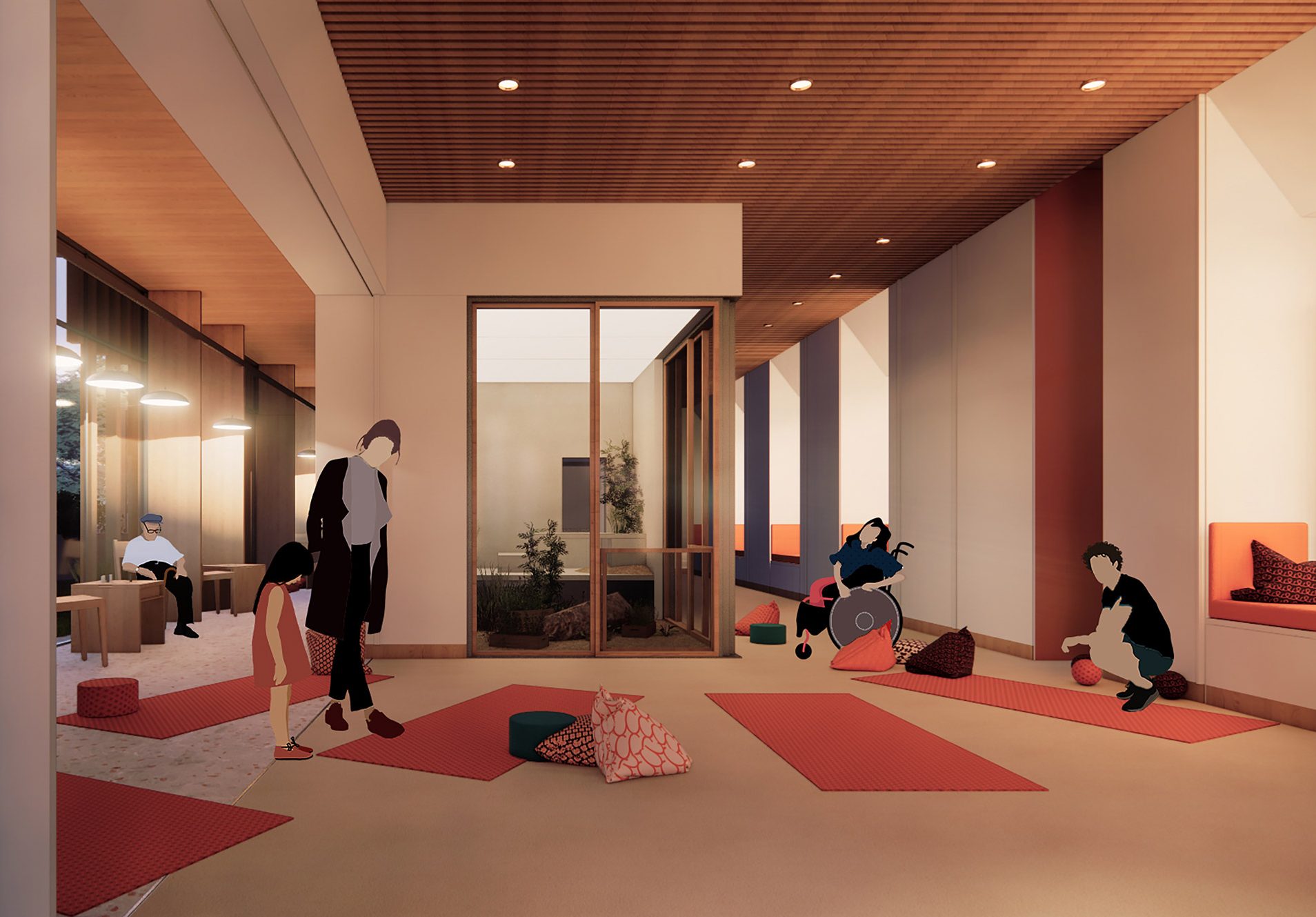
"Ergo Co Space deals with the concept and design of a space for a shared occupational therapy practice. The health concept prioritises the connection to nature as well as social interaction and reintegration. The spatial focus lies particularly on the implementation of a partitioned space concept, allowing for several simultaneous activities without mutual interference.

"Additionally, meeting and silent areas are provided, where users and visitors can meet informally for therapies and stay in a communicative setting resembling an enhancing atmosphere."

Student: Irene Schacherhofer
Course: 
Masters of Interior Design and Visual Communication
Tutors:
Christine Schwaiger
Email: irene.schacherhofer@gmx.at

New Design University

Lumo by Carmen Petterbauer

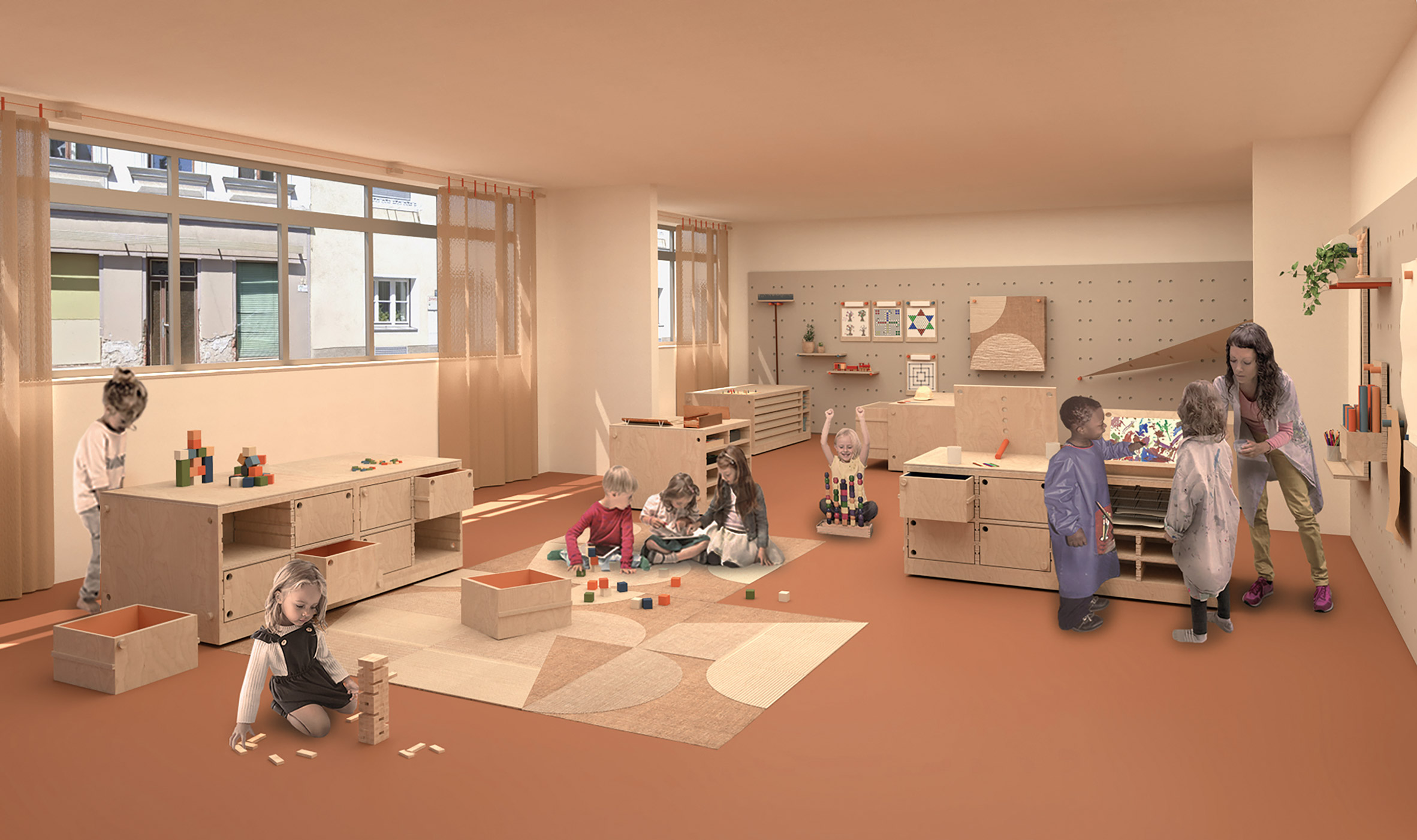
"Lumo is a variable furniture and space concept which can be implemented in most existing kindergartens and preschools in urban areas, independent of group sizes. It facilitates a holistic education and enables a completely new way of thinking and practice, in terms of creativity and independence of children aged three to six years.

"Lumo aims to dissolve spatial boundaries. The idea is based on reform pedagogical approaches and thus becomes an interdisciplinary project that combines pedagogy, interior architecture and design. It creates a new spatial experience for children and educators."

Student: Carmen Petterbauer
Course:
Masters of Interior Design and Visual Communication
Tutors:
Christian Prasser
Email:
 carmenpetterbauer@icloud.com

New Design University

New Swing – The Clubhouse Golfpark Klopeinersee by Katharina Rudolf

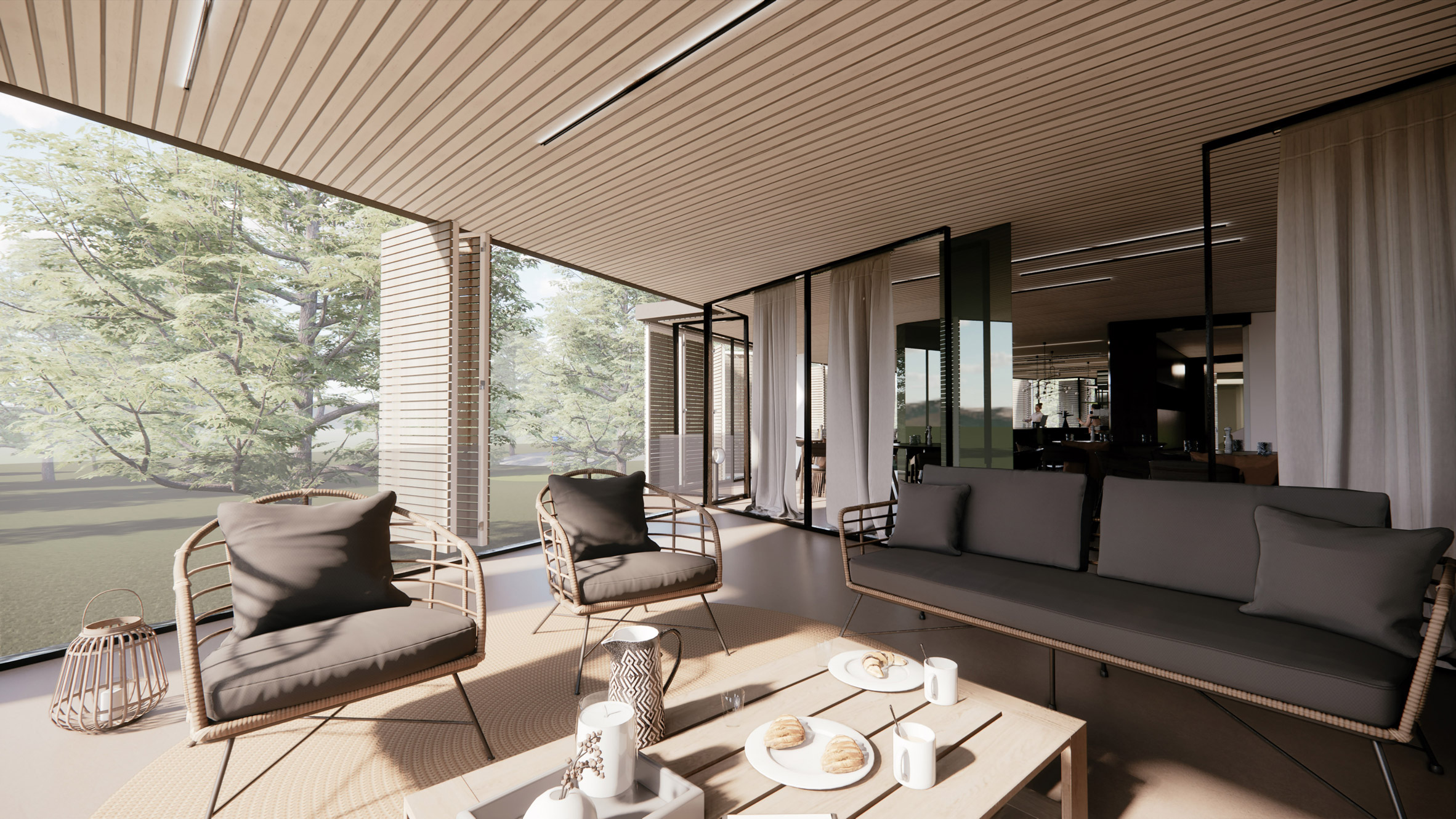
"The idea is not only to optimise the use of this building but also to include the aspect of its graphic design. I renewed the corporate design and made it more youthful without neglecting the traditions of golf.

"An intelligent spatial layout distinguishes the restaurant as a focal point. The locker rooms and toilets are placed according to practical considerations, the shop becomes inviting, and the secretary's office remains in place but is given a well-lit room. The newly acquired upper floor will also provide spacious multi-purpose rooms and suites for overnight guests."

Student: Katharina Rudolf
Course: Master Interior Design and Visual Communication
Tutors:
Christian Prasser
Email:
hello@studiok8.at

New Design University

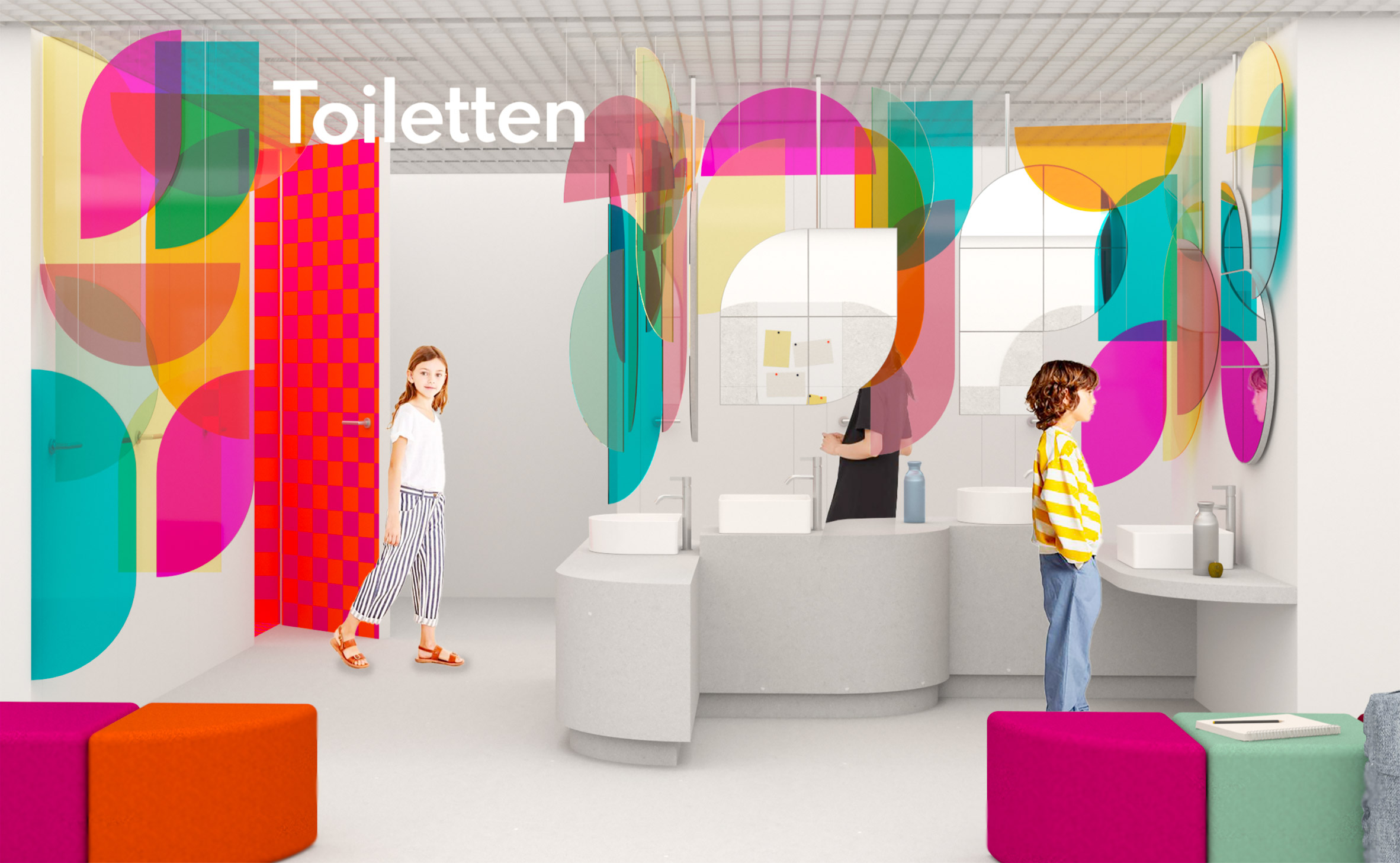
"Zero Zero" Projekt  by student group LAUFEN x NDU

"As part of the general theme of the Austrian Architecture Days: Living, Learning, Space, first year student projects are exhibited at the Laufen Space Vienna. Students analysed the often neglected sanitary facilities in schools and proposed new design approaches. The focus was not only on functional but also on social aspects and the importance of these spaces as informal meeting spaces in schools.

"Especially since the increased discussion on gender and inclusivity, places like toilets with their binary designation have come under scrutiny. The prototypical projects are on show at Laufen Space Vienna until next year."

Student: Projekt Laufen x NDU, Hannah Dittrich, Leonie Georgopoulos, Lisa Hirsch, Julia Heinzelmaier, Sarah Passian, Mona Matula, Lea Abel, Sophia Buchmüller, Bianca Gangl, Miray Gedik, Sophie Kuhn, Melissa Muthsam, Roxana Penaloza Mendias and Joana Makosch
Course: Master of Interior Design and Visual Communication
Tutors:
Christine Schwaiger, Christa Stürzlinger and Vali Potmesil

New Design University

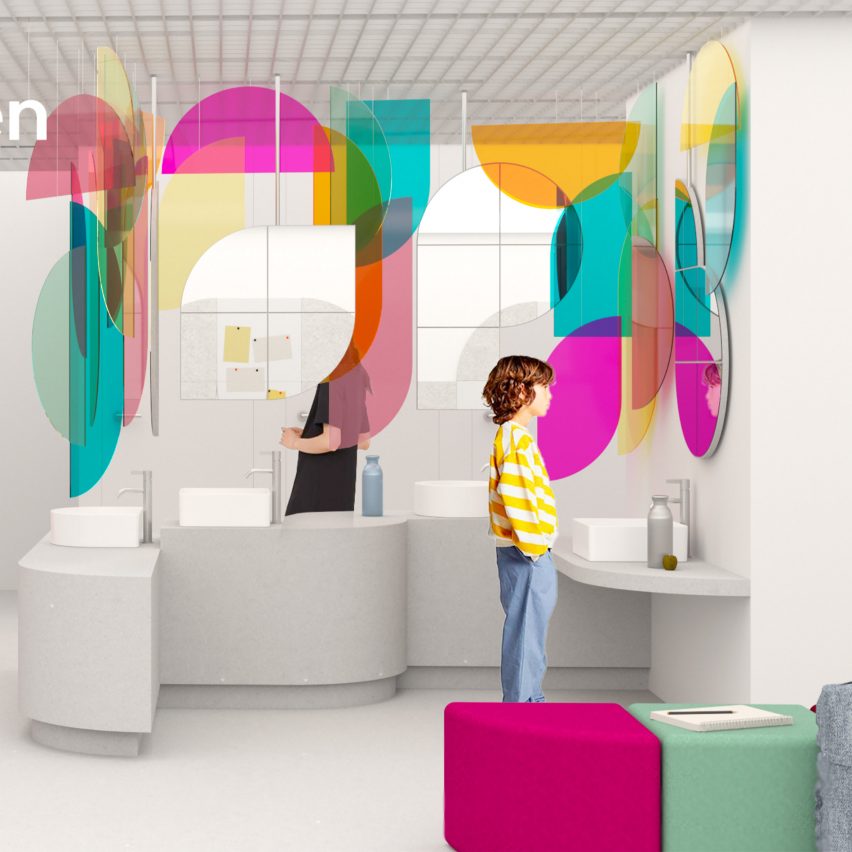
Musterschule by Leonie Georgopoulos and Lisa Hirsch

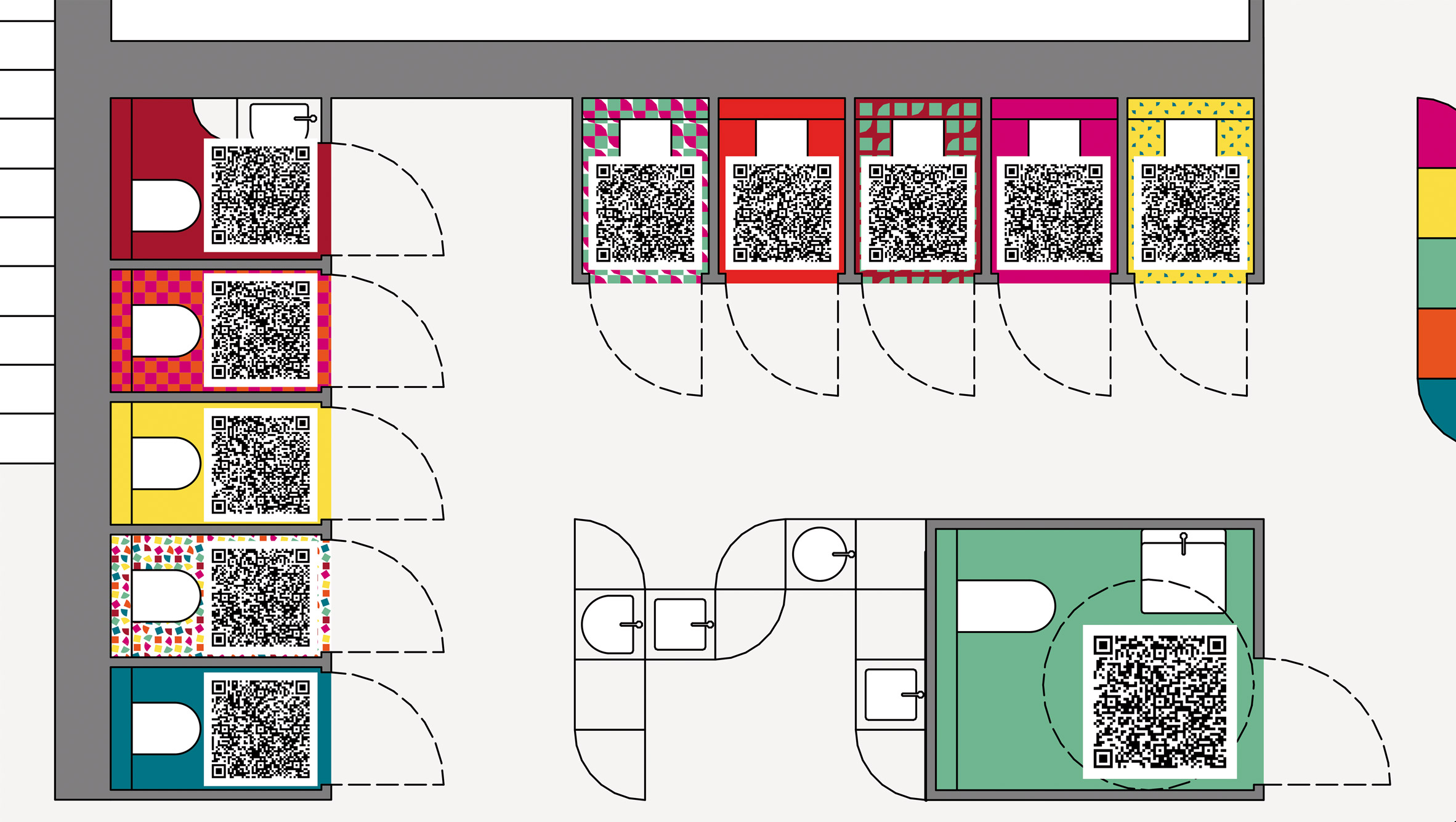
"This modular design concept for gender-neutral sanitary spaces is designed for a school with pupils aged ten to 18 years. The concept focuses on the implementation of the communicative atmosphere of a marketplace. The open floor plan generates circulation and provides an essential meeting point in the school.

"Please scan the QR-Code for an inside view! Based on interviews with pupils of a Viennese school, urinals were abandoned due to hygiene and body size aspects. The basic shapes, square and quadrant, form spatial elements in various combinations. The layering of transparent planes creates a visual screen."

Students: Leonie Georgopoulos and Lisa Hirsch
Advisor: Christine Schwaiger, Christa Stürzlinger and Vali Potmesil
Course: Design Studio 2 – graduate
Email: leonie.georgopoulos@gmail.com and LisaHirsch@gmx.at

New Design University

The Art of Diversity by Hannah Dittrich and Sarah Passian

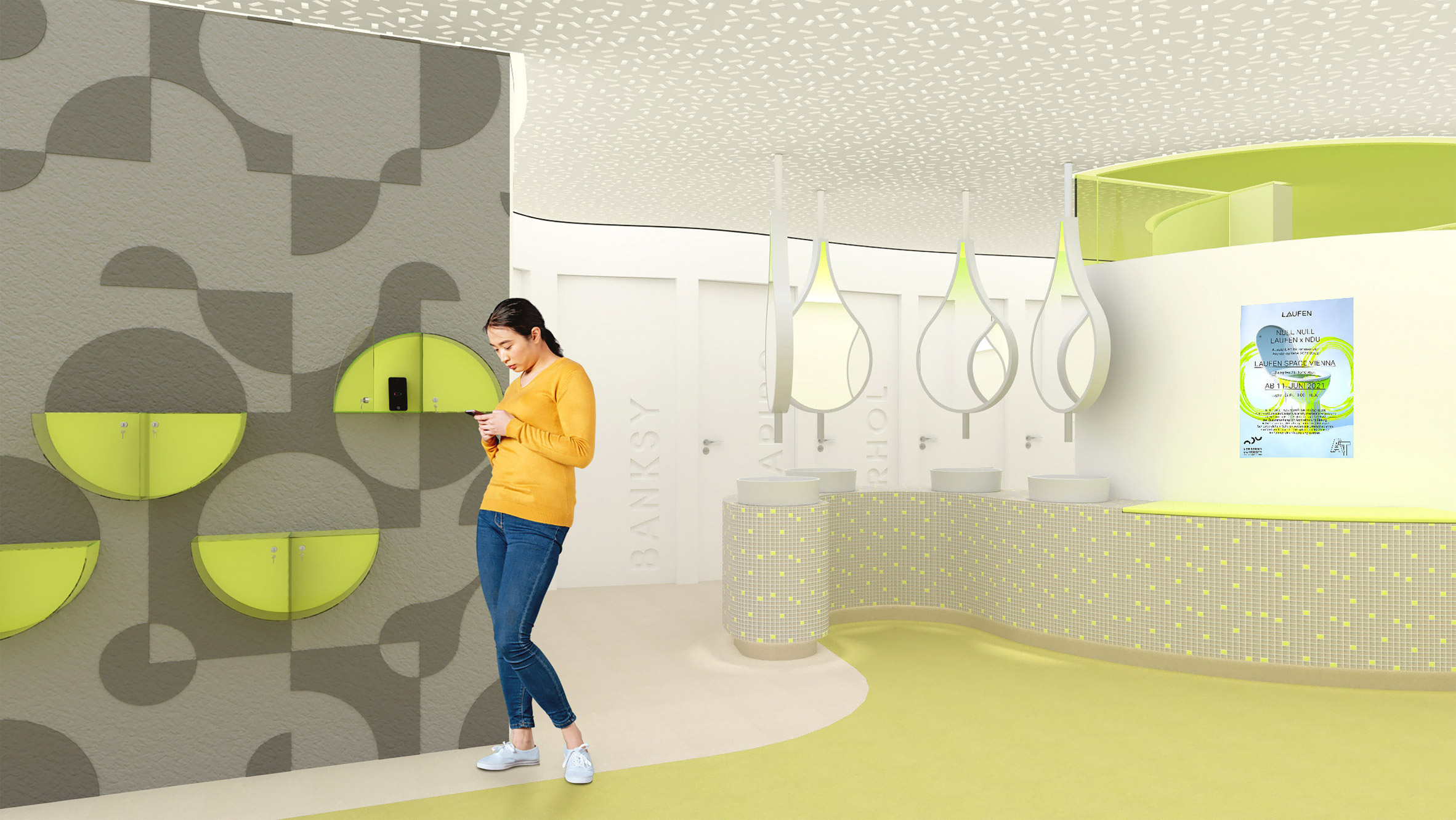
"This project for a school with a focus on artistic education proposes an open floor plan without any gender-specific segregation. The central element – a spiral-shaped station with washbasins and an enclosure for three urinals – is accessible from all sides and provides a bench for additional social interactions.

"Each toilet cell is dedicated to another influential artist boards attached to the inside of the doors provide additional information. Coloured patterns from a wide and diverse spectrum are applied to the walls to match the selected artists."

Students: Hannah Dittrich and Sarah Passian
Advisor:
Christine Schwaiger, Christa Stürzlinger and Vali Potmesil
Course:
Design Studio 2 – graduate
Email:
dittrich.hannah@gmail.com and sarah.passian@gmail.com

New Design University

Edu-pipes by Mona Matula and Julia Heinzelmaier

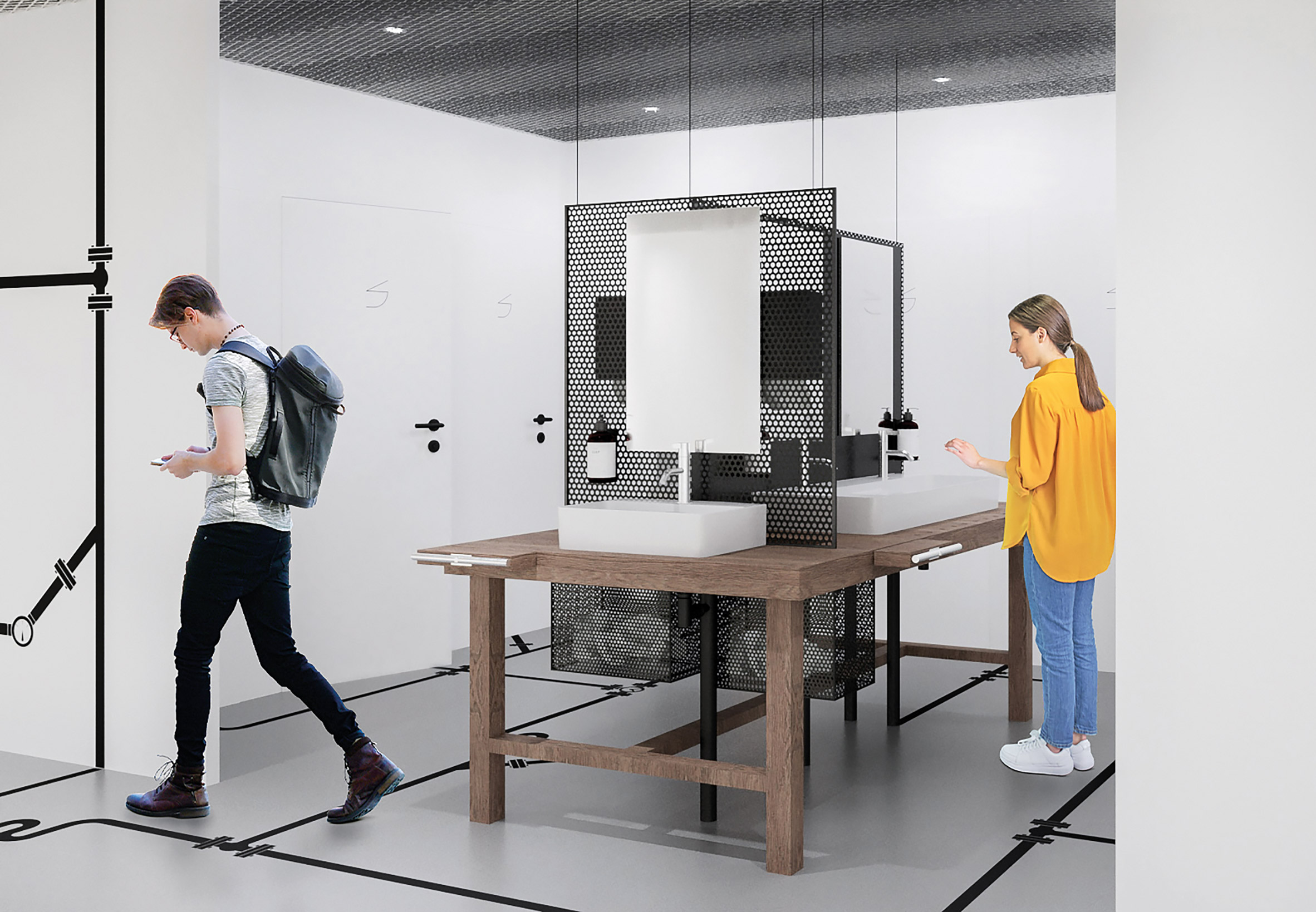
"Even today, more boys than girls take the path of technical education. This imbalance, together with the gender issue, raises the question of how open the sanitary facilities in a technical school can be to create a place to stay but also to provide the necessary privacy.

"The central element is a washstand, inspired by a workbench designed to reflect the technical focus of the school's curriculum. Wayfinding is based on a piping system and the graphics of technical drawings, which also provide educational support."

Students: Mona Matula and Julia Heinzelmaier
Advisor:
Christine Schwaiger, Christa Stürzlinger and Vali Potmesil
Course:
Design Studio two – graduate
Email:
julia.heinzelmaierborg@gmail.com and info@monamatula.at


Partnership content

This school show is a partnership between Dezeen and the New Design University. Find out more about Dezeen partnership content here.

The post New Design University presents 10 student design projects appeared first on Dezeen.


from Dezeen https://ift.tt/3yKQPrU
Fraher & Findlay creates "ghostly" row of terraces by mimicking neighbouring buildings

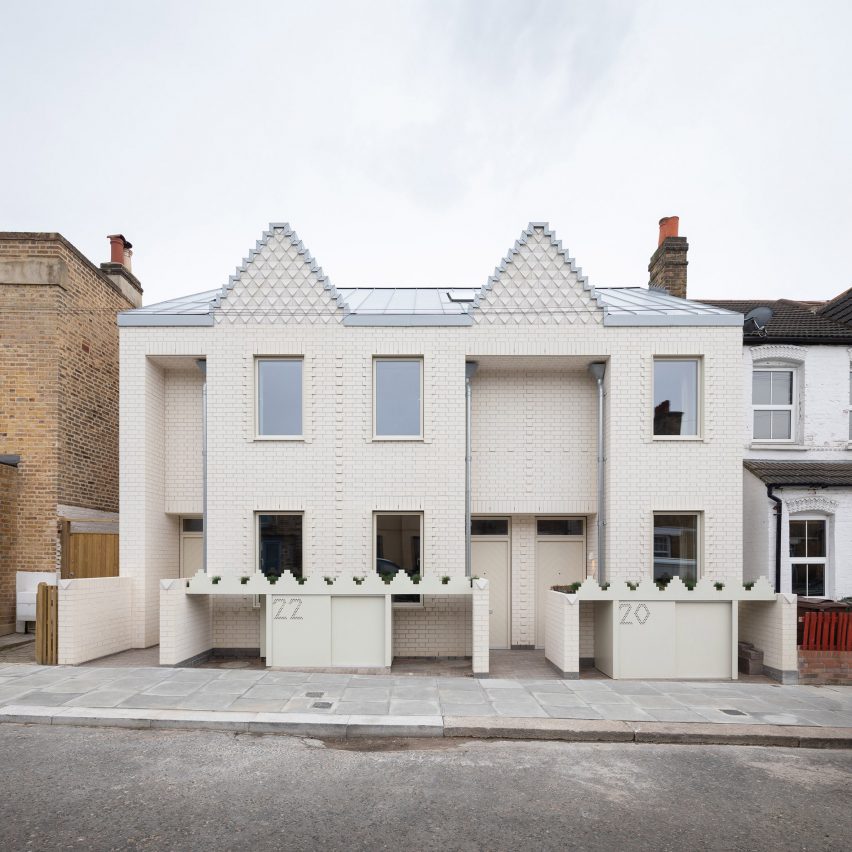
The white brick Ghost Houses by Fraher & Findlay

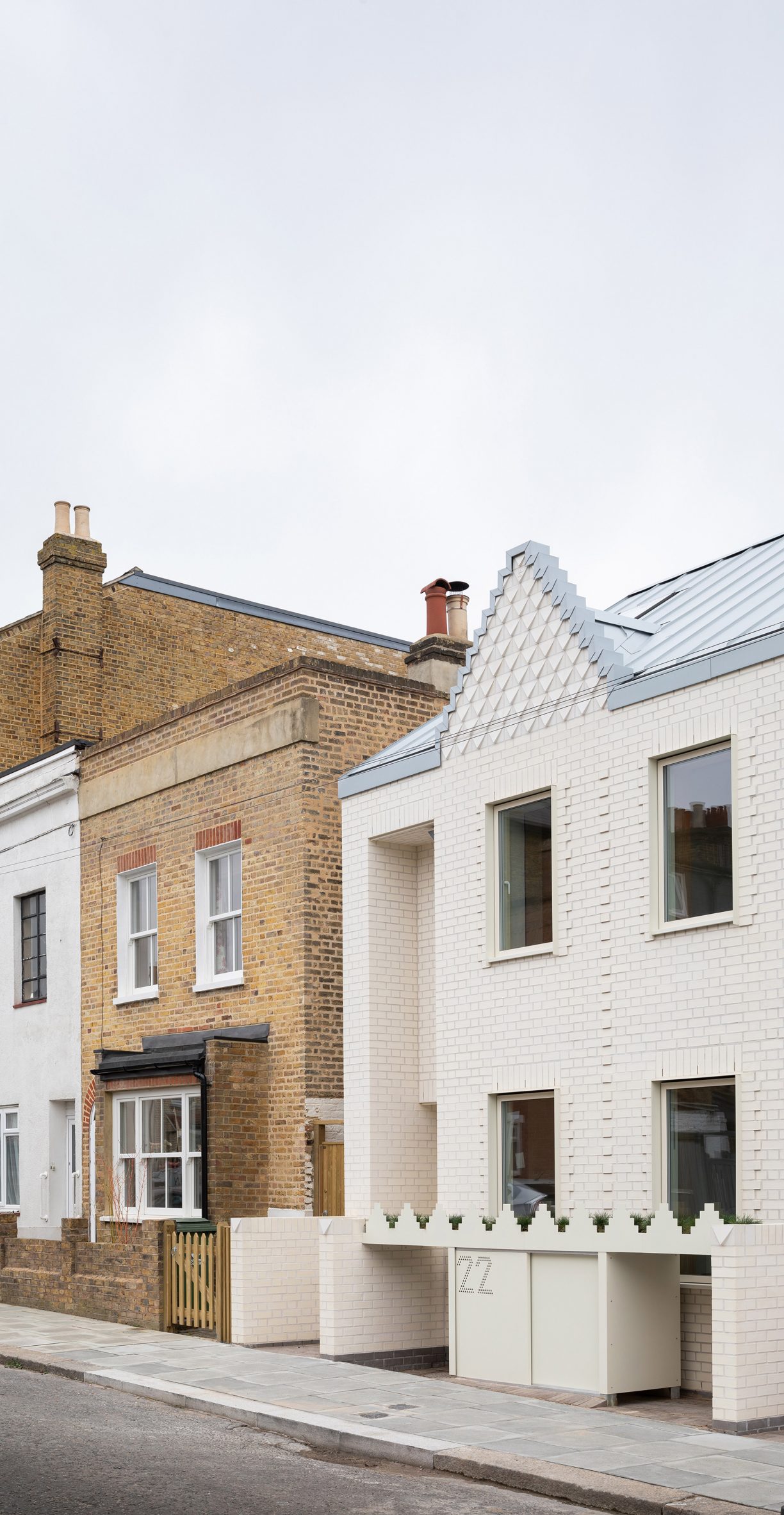
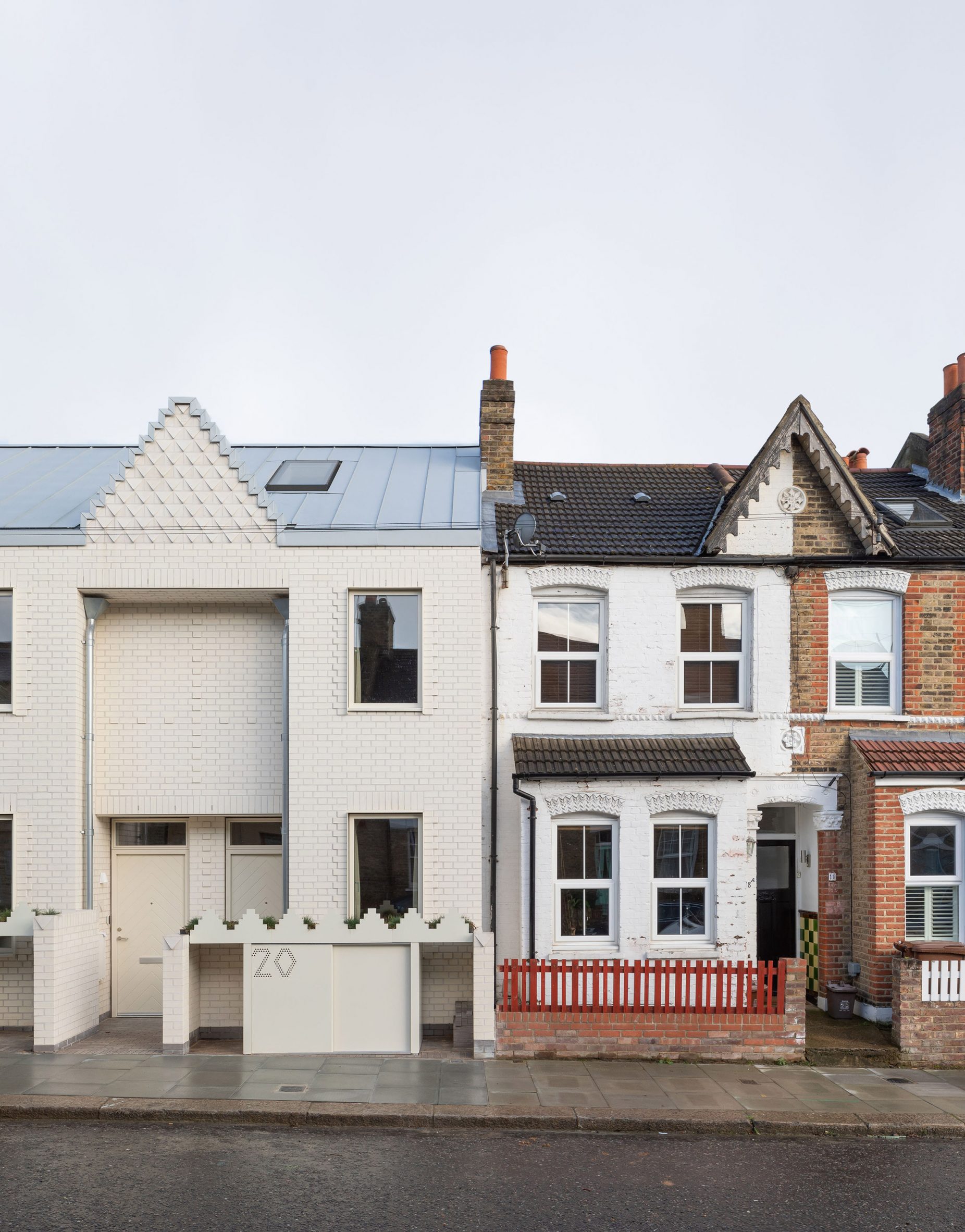
Stepped "gingerbread" gables and textured white brickwork animate the facade of Ghost Houses, a development of three slim terraced homes in Nunhead, London by Fraher & Findlay.

London studio Fraher & Findlay acted as the client, architect and contractor for the project, which replaces a detached late Victorian house and an adjacent car park and is intended as a prototype for future infill projects.

White brick terraced houses in London
Fraher & Findlay has created a trio of white terraced homes in London

The form of the Ghost Houses was led by a concept of "casting" its neighbours – creating deep reveals where they have projecting bays and mimicking their brick detailing in an all-white design.

The gable of the roof is mirrored in a run of miniature gables atop the front yards of the homes, where a perforated cast-concrete pattern creates large door numbers.

"With so much argument and confusion about what is an appropriate contextual response and how a new building should reflect its context, we almost wanted to create a veil that didn't try to be something else," Fraher & Findlay partner Lizzie Fraher told Dezeen.

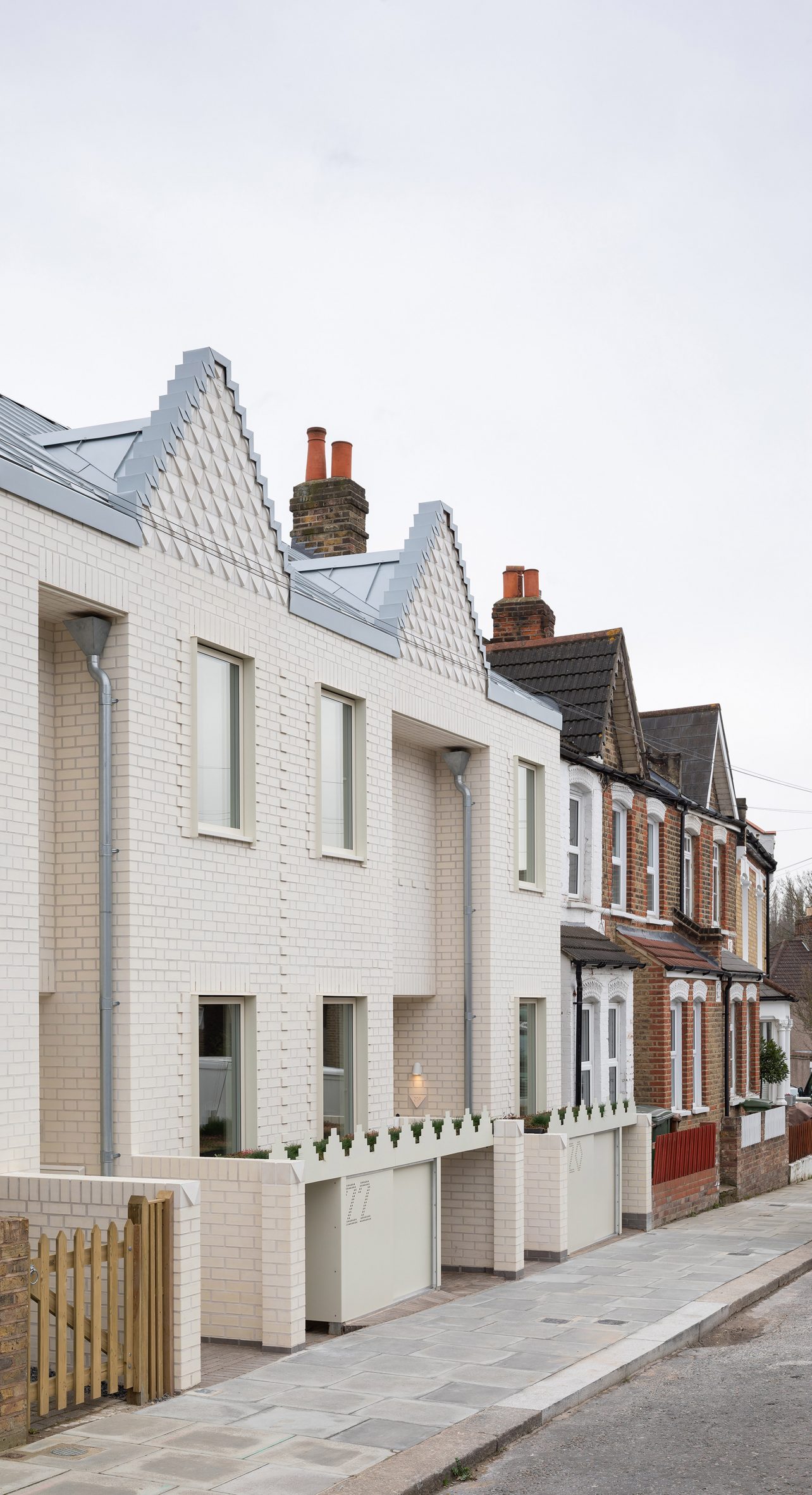
A row of terraced brick houses in London
Textured white bricks cover the facades

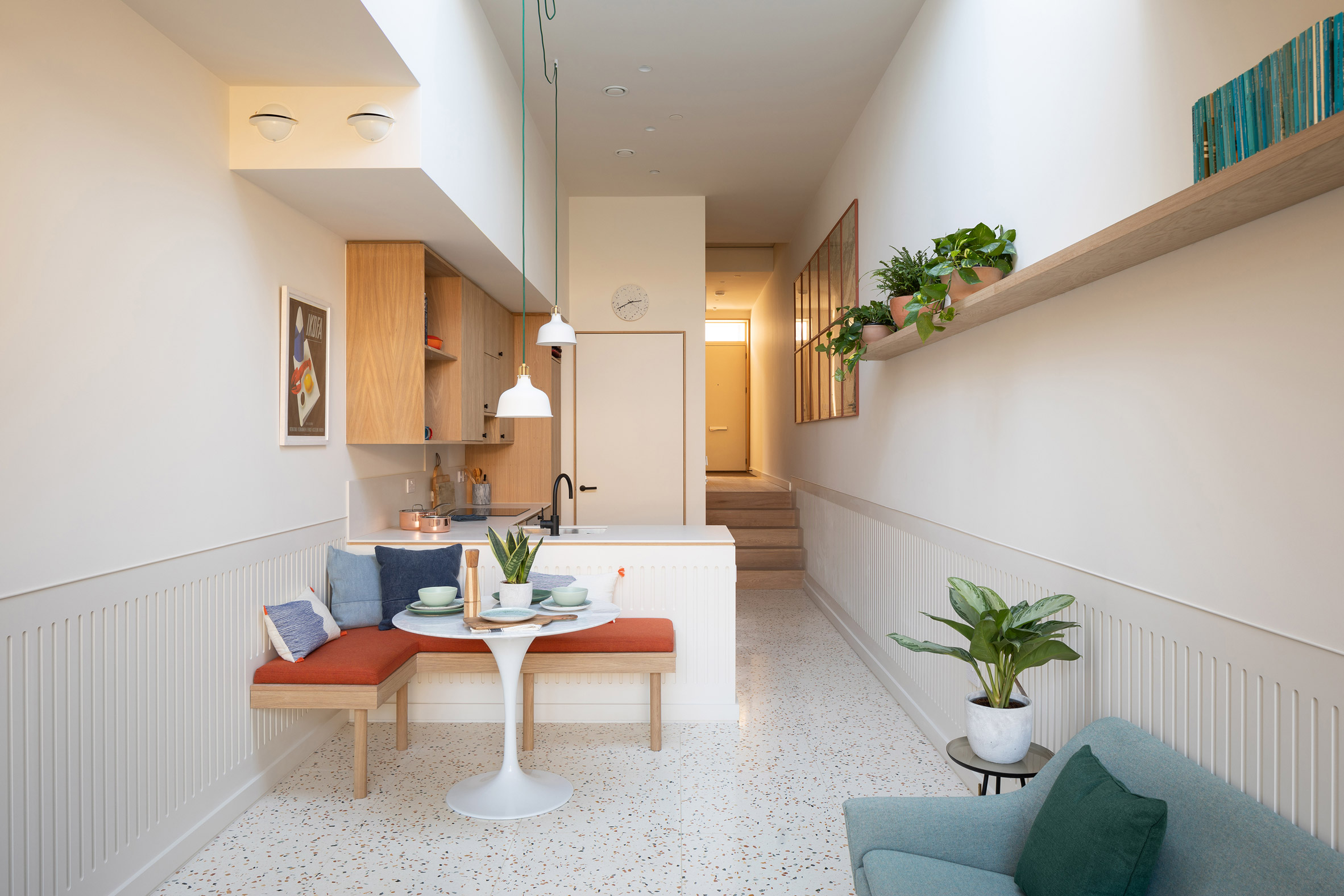
Grappling with narrow floor plans, the layout of the Ghost Houses has been designed as a challenge to typical terrace-home layouts, which the practice described as "often dark, long and inefficient."

"There is often very little flexibility in how we conceive what is a comfortable, 'habitable' space," Fraher said.

"We wanted to design spaces that were not the conventional proportions that you expect of a home."

A row of terraced brick houses in London
They are designed to resemble casts of their neighbours

Several elements aim to bring in this sense of space and light. Each of the long, thin floor plans is opened up by a "social staircase" at its centre, panelled with oak and featuring perforated-metal landings to allow visibility between floors.

At ground floor level, the spine of each house has become a long corridor that frames views of the garden as soon as you enter, illuminated by a large skylight.

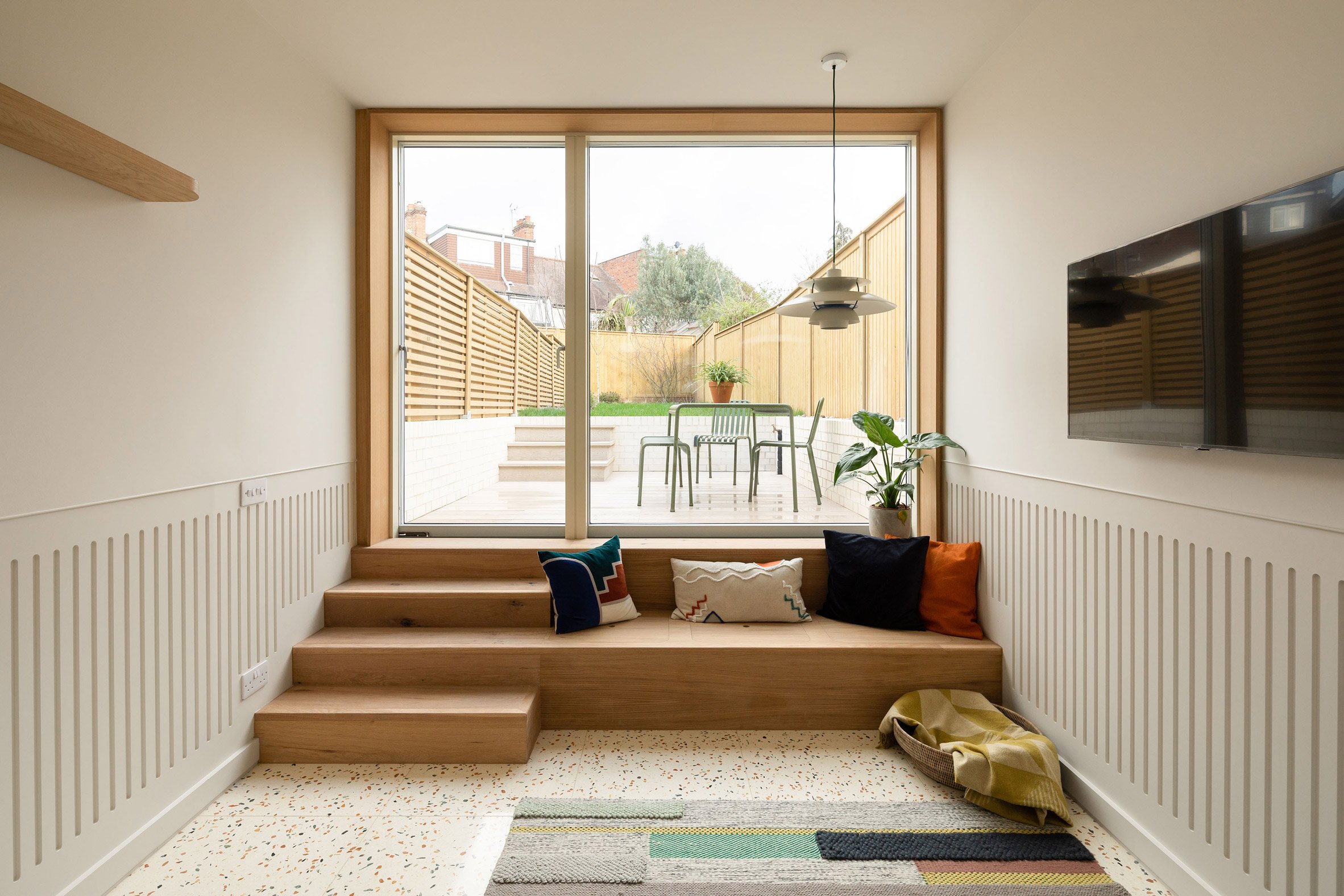
Facing the street is a snug and study space, while at the rear of the home the floor level drops to maximise the ceiling height of the kitchen, dining and living space.

It steps back up to the level of the garden via wooden steps which double as informal seating.

An open-plan kitchen and dining room
The homes have long, thin floor plans

Two bedrooms and a bathroom occupy the first floor, and a smaller attic space contains an additional bedroom and study area.

Computer-modelled and CNC-cut joinery has been used for the white and pale-wood interiors, while zinc was chosen as a roof finish to further the building's "ghostly" appearance.

A floor-to-ceiling glass door to a reargarden
Views of the garden are framed through large windows

Other projects by Fraher & Findlay include the extension of a house in South London by the architect Walter Segal, which follows the self-build principles of the existing home.

The photography is by Adam Scott.

The post Fraher & Findlay creates "ghostly" row of terraces by mimicking neighbouring buildings appeared first on Dezeen.


from Dezeen https://ift.tt/3r2pbnN

Ten fresh living spaces with white interiors

White interiors

Interiors that are (almost) completely white can have a calming, minimalist feel. For our latest lookbook we have collected ten examples from the Dezeen archive, ranging from an Australian penthouse to a Japanese-informed apartment in Barcelona.

While most of these interiors also feature some colour, what unites them is their bright white walls and mostly wooden floors. The lack of paintings and other wall hangings could have felt cold and sparse, but instead creates an almost monastic, peaceful feeling.

Book collections in vibrant colours liven up some of these monochrome rooms, while others feature one detail in a contrasting hue or add tactile accessories to create more visual interest.

This is the latest roundup in our Dezeen Lookbooks series providing visual inspiration for the home. Previous roundups include Scandi-style living rooms, loft conversions by architects and L-shaped kitchens.


Penthouse M by CJH Studio

Penthouse M, Australia, by CJH Studio

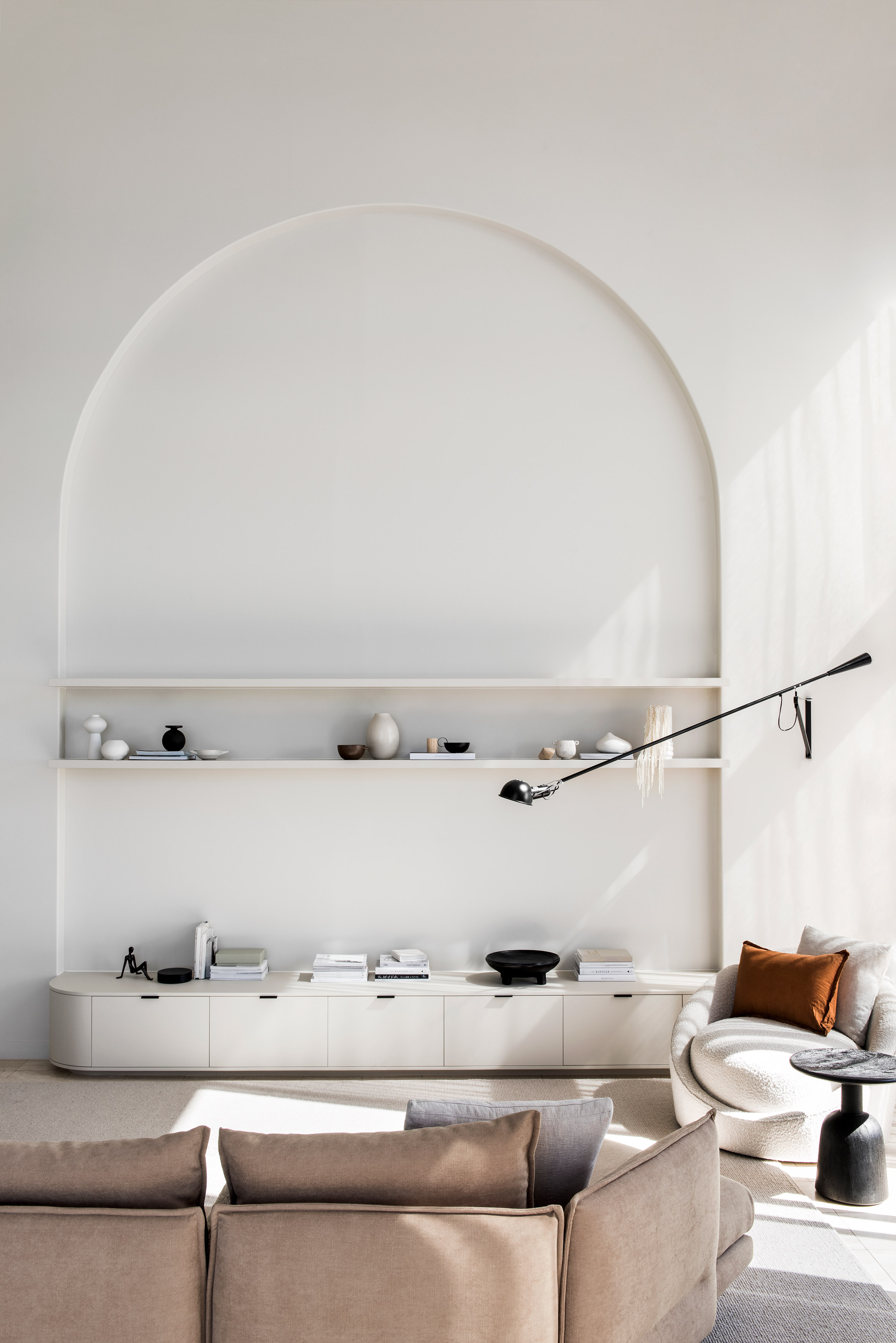
In this penthouse on Australia's Gold Coast, beautifully curved shapes are used to add interest to the almost entirely white interior.

Beige tones and black details were added to contrast against the white and to create a luxurious atmosphere by using a restrained colour palette. Flos' adjustable 265 Wall Lamp hangs above a Macbeth side table in black hemlock wood.

Find out more about Penthouse M ›


Urgell apartment

Urgell Apartment, Spain, by Bach Arquitectes

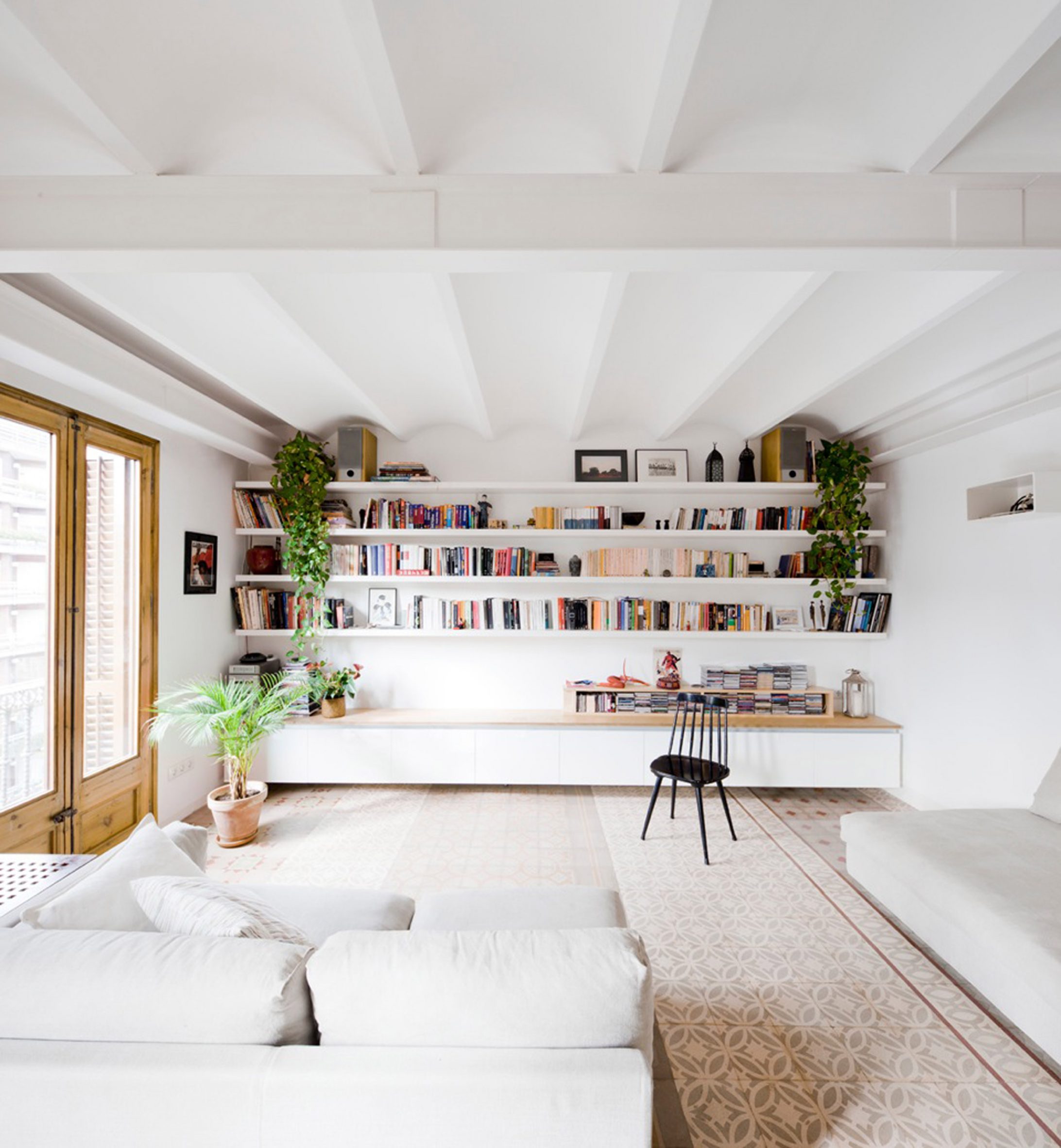
Bach Arquitectes' interior design for the Urgell Apartment in Barcelona features salvaged tiles, which add a decorative touch to this living room with its white walls and white sofas.

An extensive book collection and a selection of plants create a warm, welcoming feel, while a contrasting black dining chair from Safeveih adds a darker note to the interiors.

Find out more about Urgell Apartment ›


The House on Drolet Street by Asgoneau Design

House on Drolet Street, Canada, by Dominique Jacquet and Anne Sophie Goneau

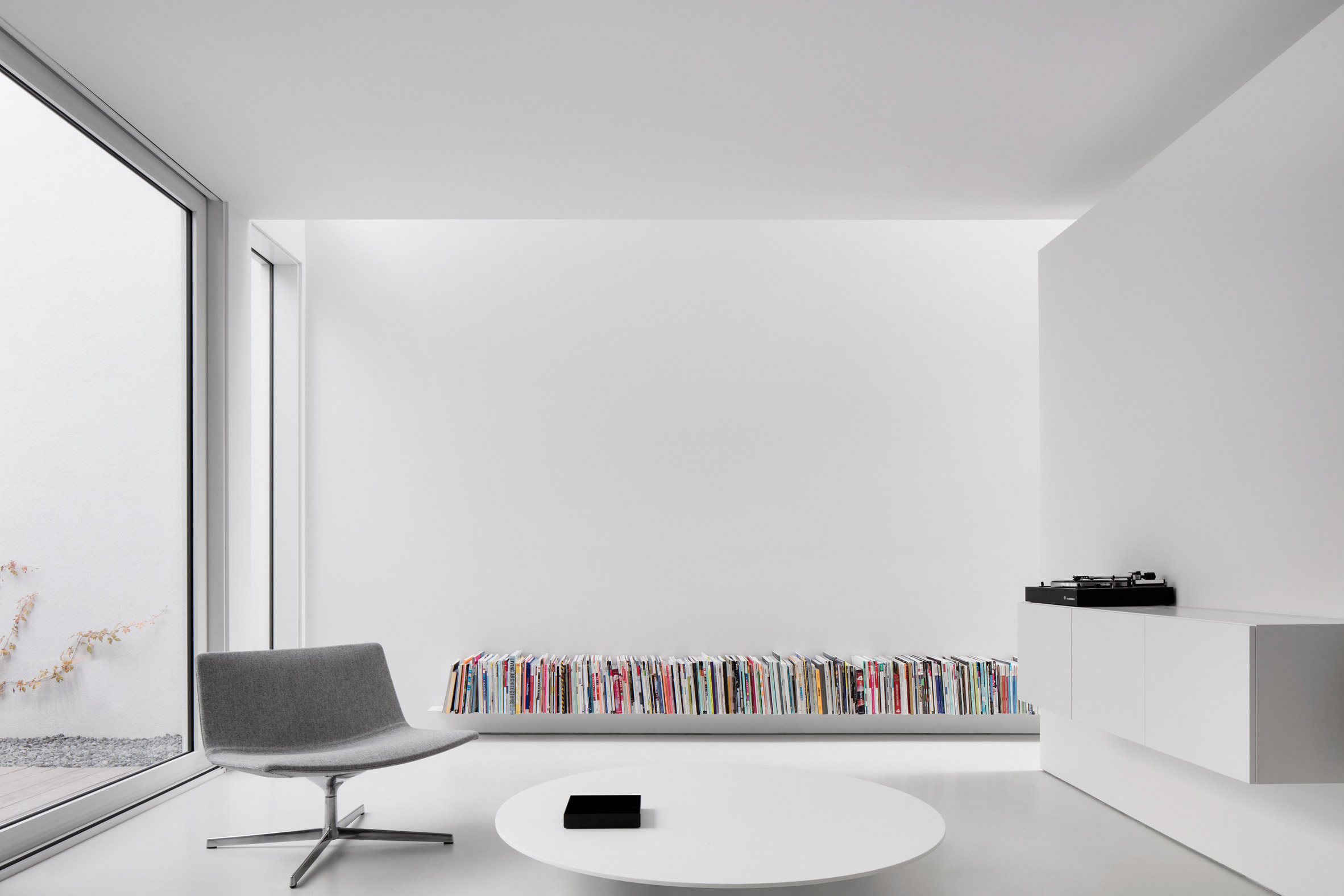
It doesn't get simpler than this interior in House on Drolet Street: white walls, white floors, and mostly white furniture, as well as a Catifa Lounge Chair in grey from Arper.

An LP-player is the reason for the only splash of colour in the room, a collection of vinyl records that sit next to the empty wall. Rather than feeling boring, the sparseness of the decoration allows the listener to relax and focus on the musical experience in this music corner.

Find out more about House on Drolet Street ›


White interior with wooden floor

House 23, US, by Vondalwig Architecture

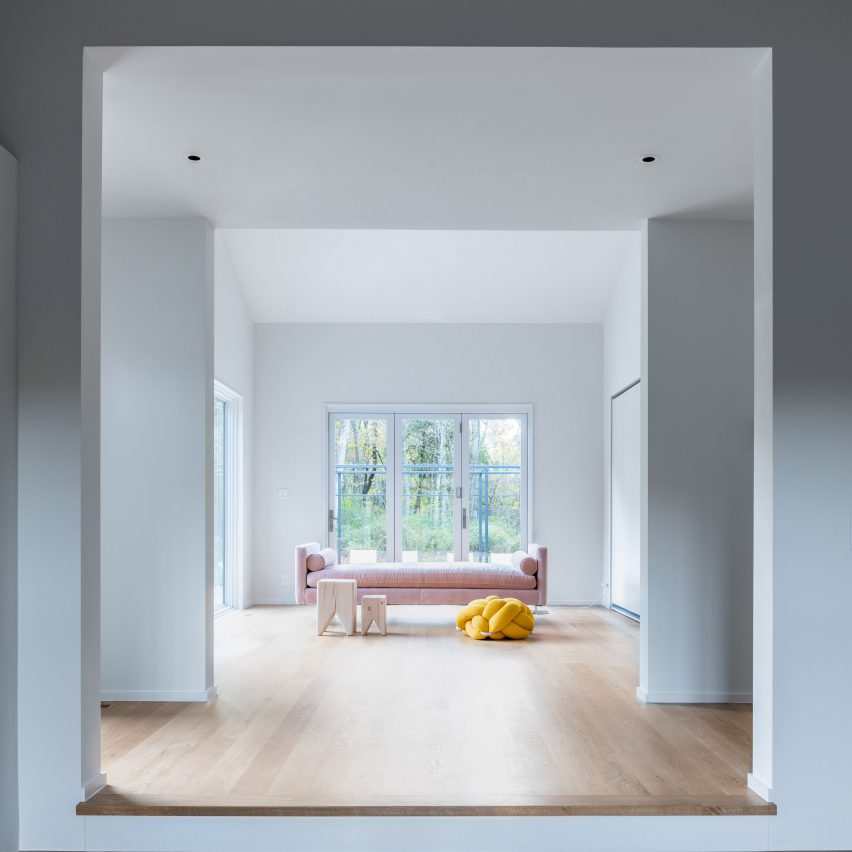
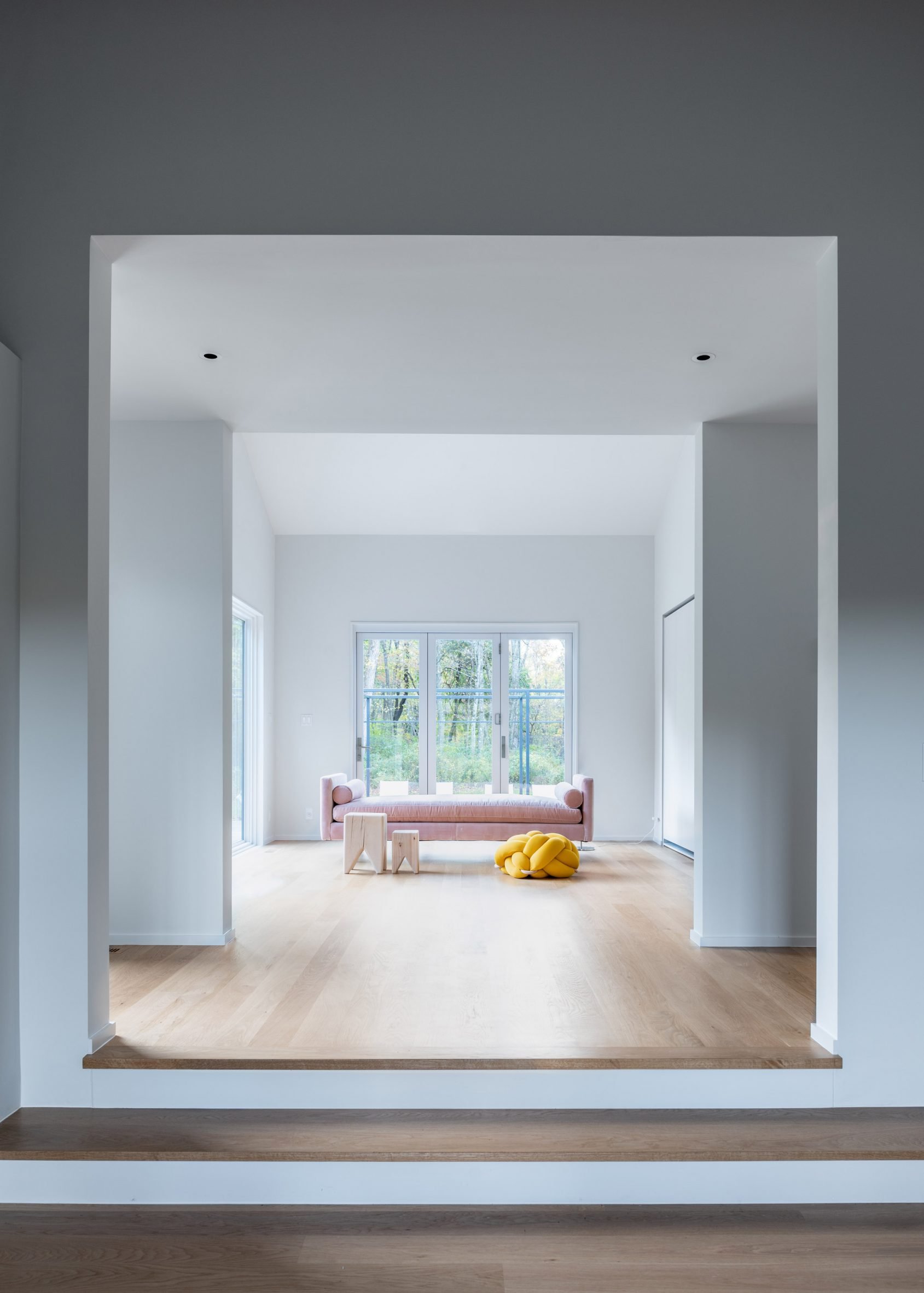
The exterior of House 23 in New York is clad in blackened wood, in sharp contrast to its white interior. In the sitting room, a pale-pink daybed stands out against the white walls, and a Kalon Stump Wood stool matches the wooden floor.

The yellow Nordic Round Knot Stool from Homary is perfectly juxtaposed against the sofa. The two colours are almost opposite each other on the colour wheel, making them a good match according to colour theory.

Find out more about House 23 ›


116 and 118 Sorauren by Ancerl Studio

116 Sorauren and 118 Sorauren, Canada, by Ancerl Studio

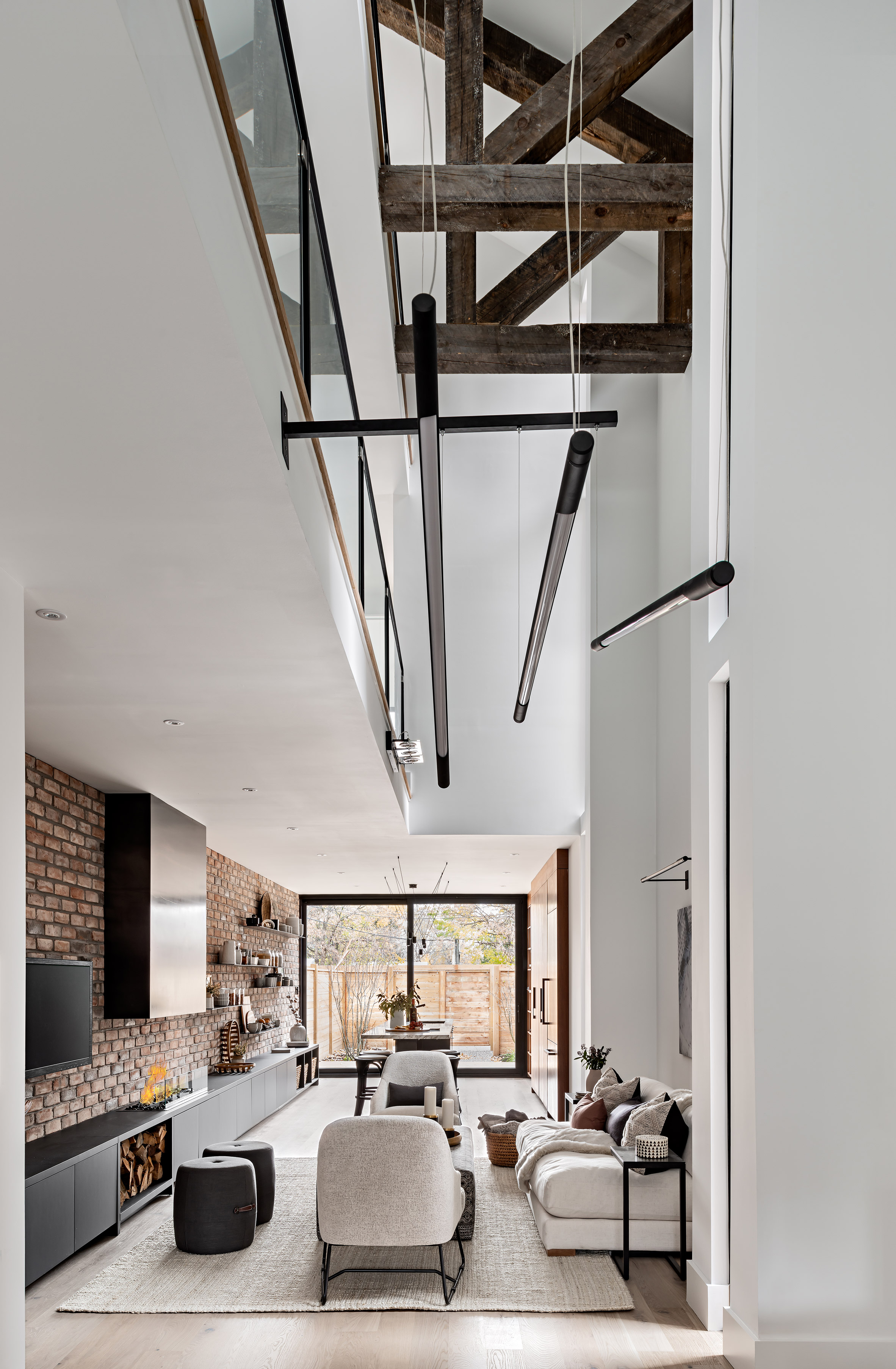
Ancerl Studio designed this pair of Toronto houses to look like a single building. Inside, a variety of finishes – including steel, reclaimed wood and weathered bricks – give the white-painted interiors a more organic touch.

A deep sofa and comfortable chairs in beige and off-white pick up the white of the walls and ceiling.

Find out more about 116 Sorauren and 118 Sorauren ›


Living space and terrace in House and the River by After Party

House and the River, Lithuania, by After Party

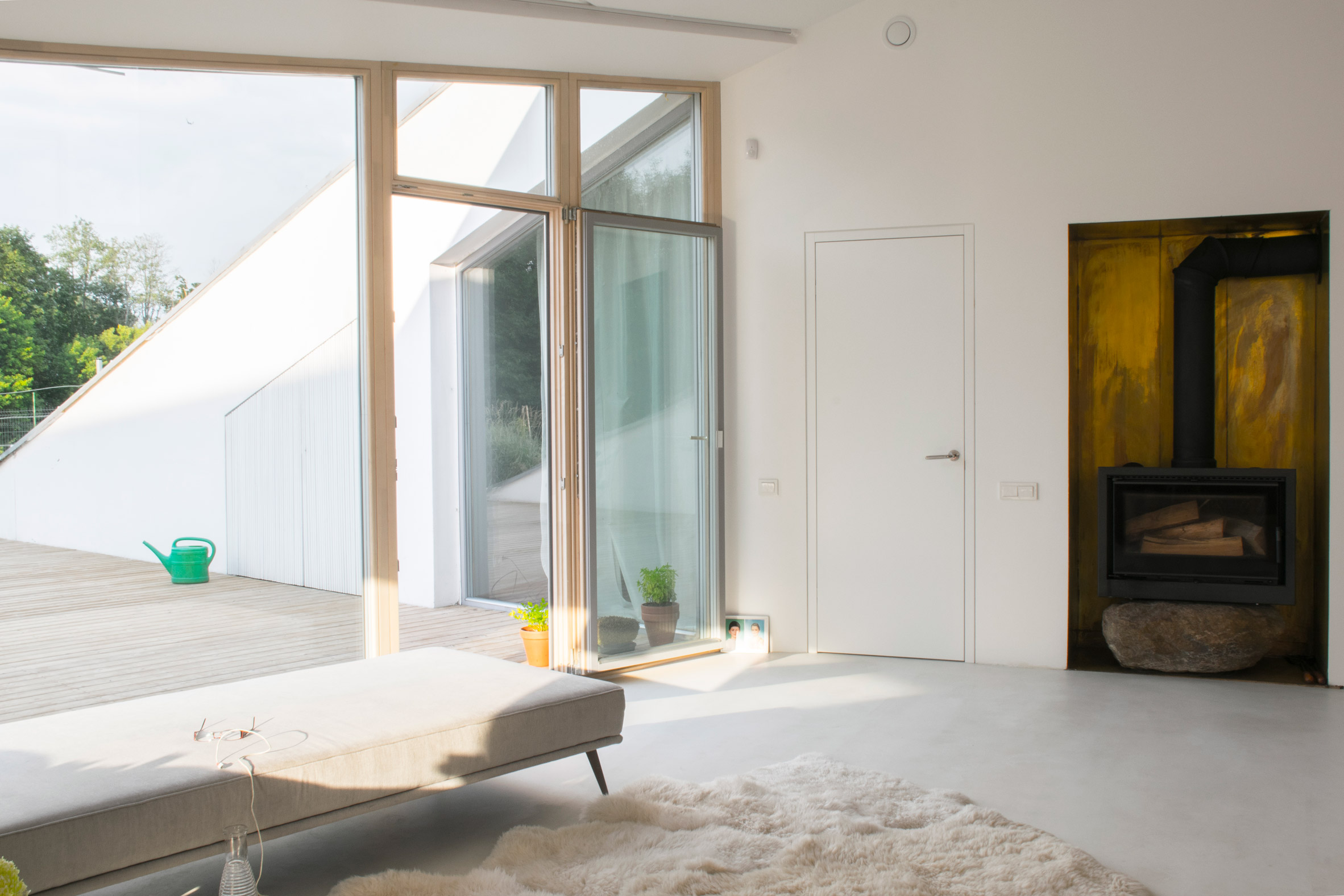
This characterful creek-side home in Lithuania features a pink kitchen, but most of its interiors are soothing white. In the living space, an off-white daybed sits next to a cosy cream rug.

While the floors and walls are white, the space surrounding the fireplace, which sits on a boulder, has been painted gold to create an eye-catching detail.

Find out more about House and the River ›


Akari House by Mas-aqui

Akari House, Spain, by Mas-aqui

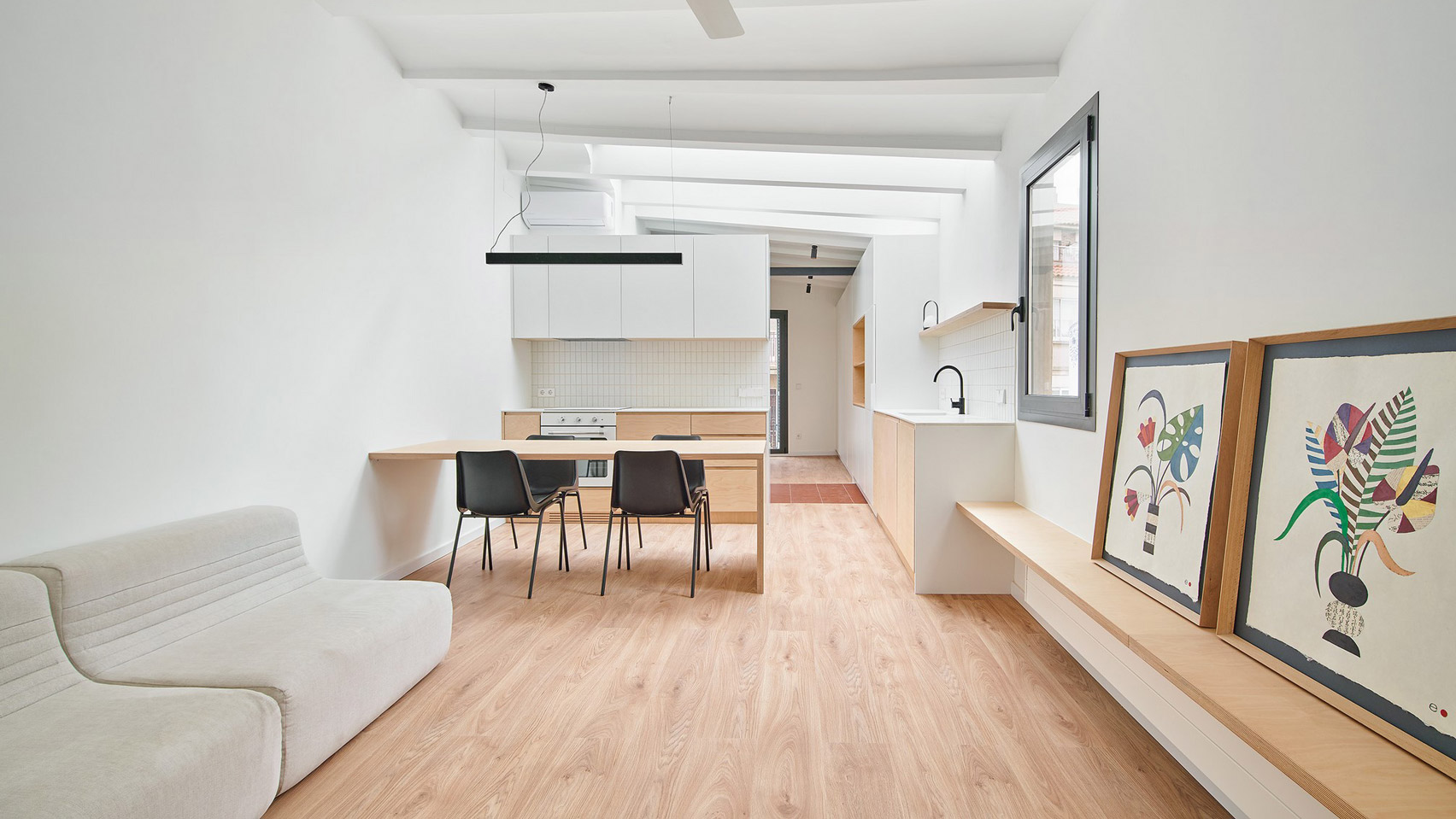
Named after the Japanese term for light, the bright Akari House lives up to its name. In the open-plan kitchen and living room, a low off-white sofa sits against one wall, with a clear view of two flower paintings on a floating wood shelf on the opposite side.

A white ceiling fan and white tiles completes the pale interior, which also features built-in wooden furniture and a wood floor.

Find out more about Akari House ›


White dormitory

White Dormitory, Japan, by Case-Real

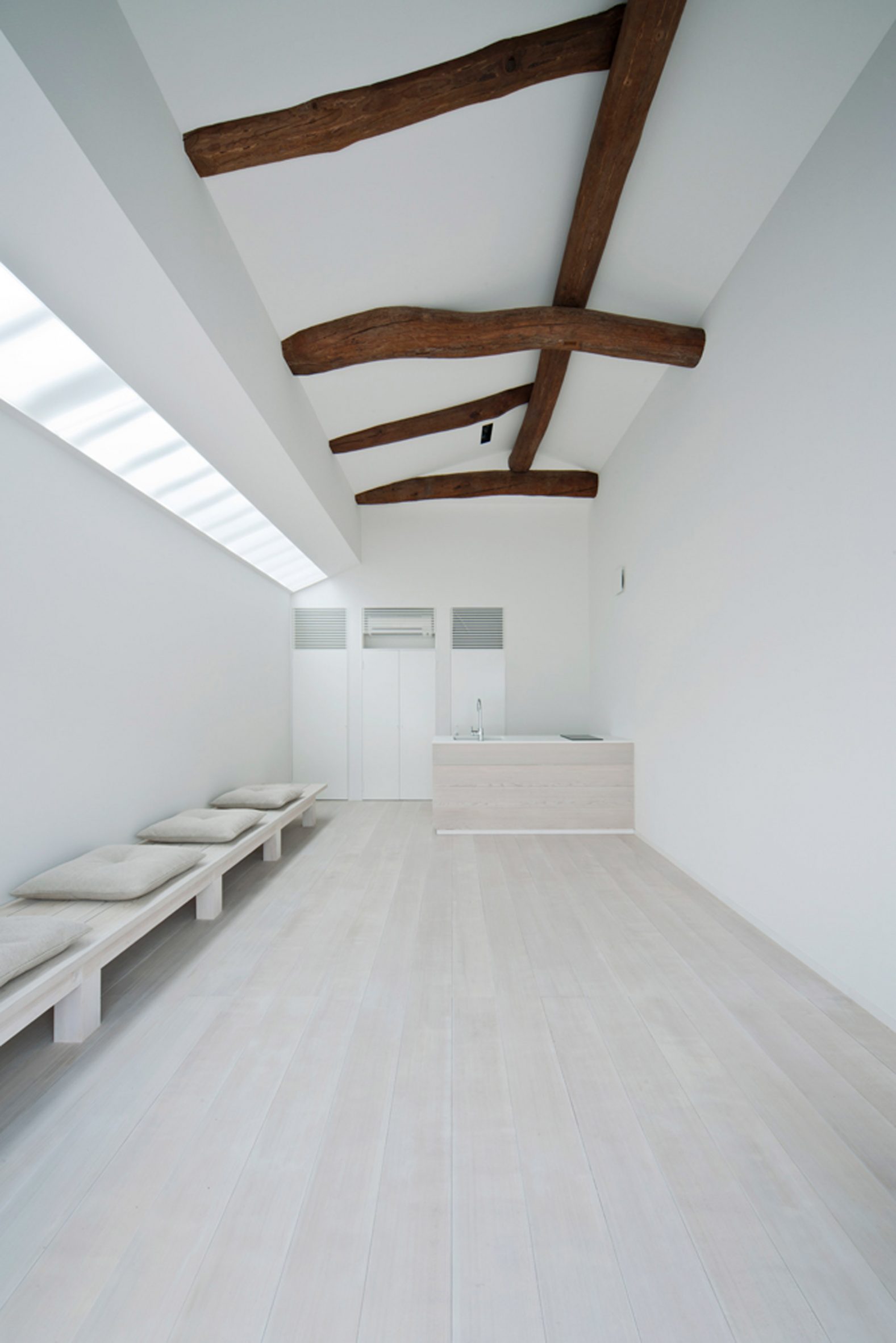
White Dormitory provides accommodation for three restaurant workers on Teshima Island, Japan. Its three bedrooms all have their own kitchen area and feature white-washed wood floors.

Pale wood benches with sage-green pillows and brown ceiling beams soften the room and give it a more rustic feel.

Find out more about White Dormitory ›


Soho Loft by Julian King Architect

Soho Loft, US, by Julian King

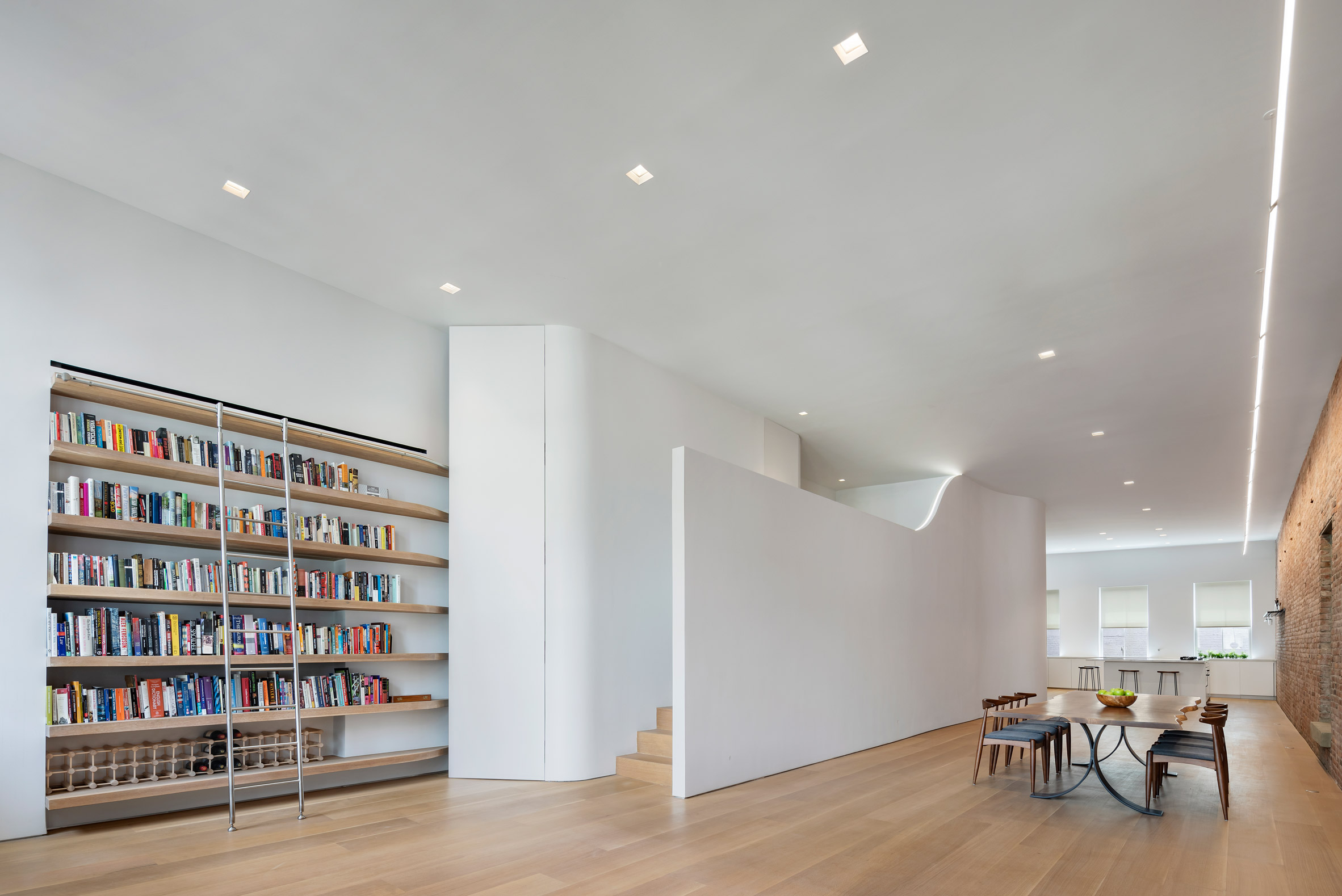
A sculptural white wall adds a bit of drama to the clean, simple interior of this Soho loft designed by Julian King.

A tall bookshelf with a rolling ladder provides the only colour in the room, which also has a dining area with a live-edge walnut table and wooden chairs.

Find out more about Soho Loft ›


XS House by ISA

XS House, US, by ISA

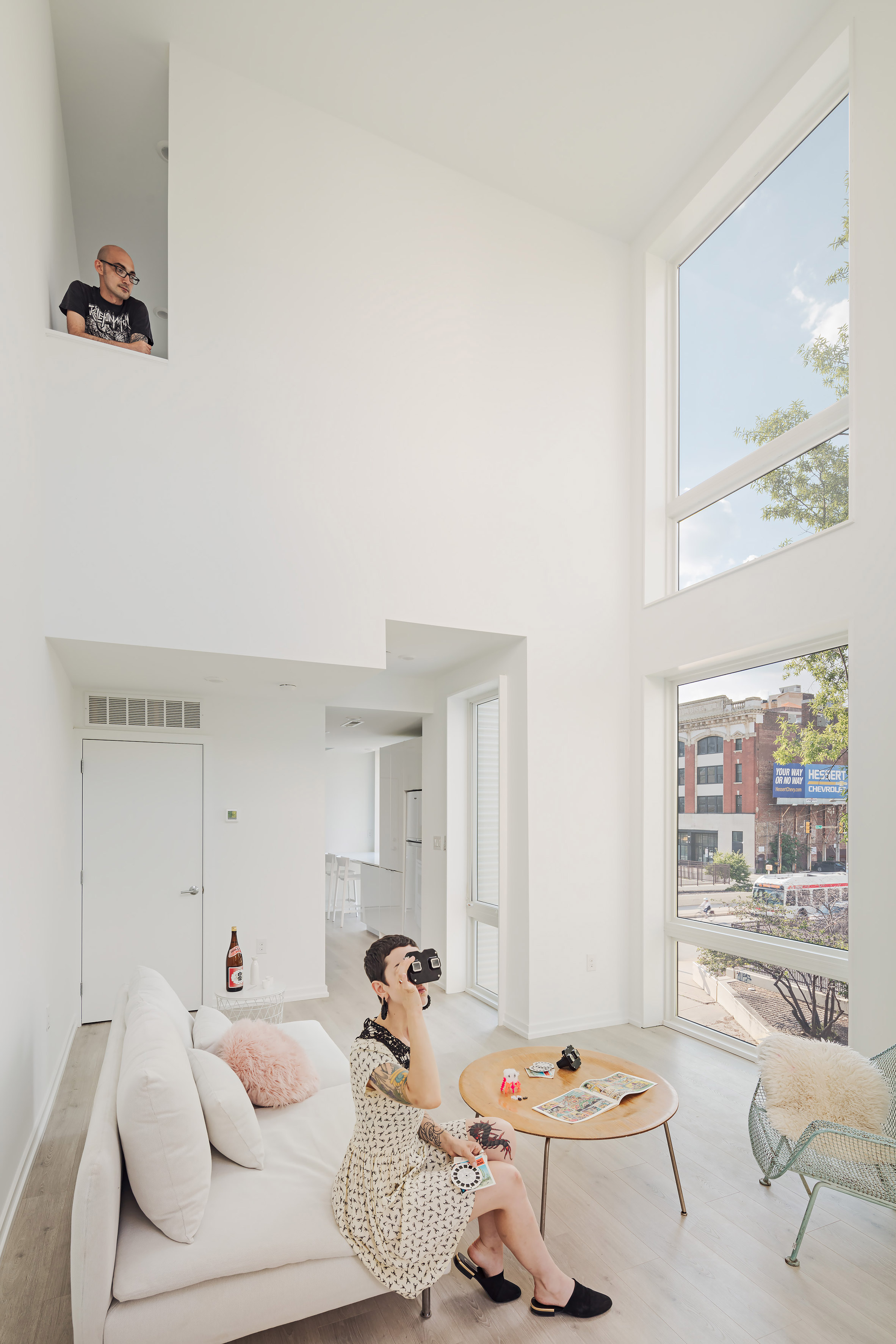
Built on a site with an "extremely narrow" footprint, this flat in the XS apartment complex has a bright open-plan living and dining room.

A fluffy throw in a pale pink colour decorates a white sofa that matches the apartment's walls, which feature clever geometrical cut-outs to open up the space.

Find out more about XS House ›


This is the latest in our series of lookbooks providing curated visual inspiration from Dezeen's image archive. For more inspiration see previous lookbooks showcasing Scandi-style living rooms, loft conversions by architects and L-shaped kitchens.

The post Ten fresh living spaces with white interiors appeared first on Dezeen.


from Dezeen https://ift.tt/2VnuOkx

See how hemp is cultivated, processed and used to build a house in this movie

This short film shows how hemp was grown on a Cambridgeshire farm and turned into construction materials that sequester carbon.

The movie was made at Margent Farm, which was bought by film producer Steve Barron to grow hemp for his own home on the property.

It shows how fast-growing hemp was planted, harvested and processed into hempcrete and bioplastic cladding on the home, which is called Flat House.

Hemp
Hemp has been cultivated for centuries in many societies

The woody inner section of the plant's stem, called shives, was processed into hempcrete by chopping it up and mixing it with lime. It was used at Flat House as a non-load-bearing wall infill and insulation material.

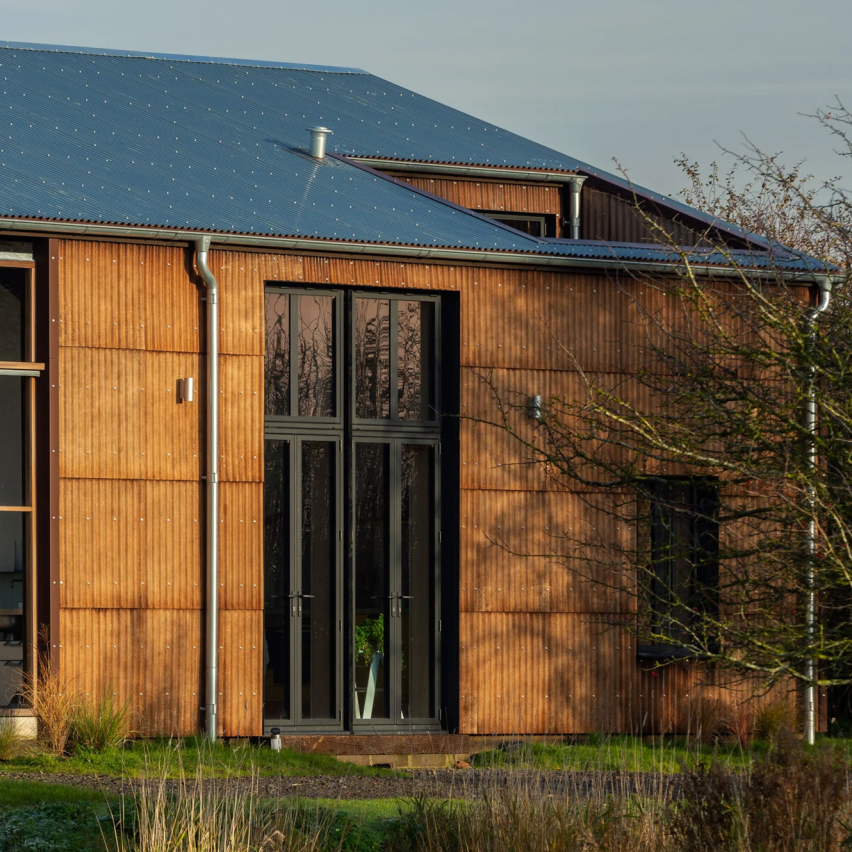
Hemp-based bioplastic was used to clad the outside of the home. This is made from the strong outer fibres of the plant's stem mixed with bio-resin and pressed into corrugated sheets.

Fast-growing hemp is a highly versatile raw material as well as an effective way of sequestering atmospheric carbon, according to Cambridge university researcher Darhsil Shah, who advised Barron on how to make construction materials from the plant.

"Numerous studies estimate that hemp is one of the best CO2-to-biomass converters," Shah told Dezeen in an interview last month. "It's even more effective than trees."

"Industrial hemp absorbs between 8 to 15 tonnes of CO2 per hectare of cultivation," he explained. "In comparison, forests typically capture 2 to 6 tonnes of CO2 per hectare per year depending on the number of years of growth, the climatic region, the type of trees."

Barron estimated that the house stores 24 tonnes of atmospheric carbon that was absorbed by the hemp via photosynthesis as it grew.

"The house is pretty much made of hemp and it has locked in atmospheric carbon," Barron told Dezeen, adding that it took 100 days to grow the hemp on eight acres, or 3.2 hectares, of land. "I guess that's 24 tonnes of carbon," he said.

Hemp architecture
Hempcrete panels were left exposed to add texture and warmth to Flat House

Hemp is becoming increasingly sought-after by architects looking for natural, carbon-storing products. However, UK farmers are battling to legally cultivate the crop.

Hemp farmers need a hard-to-obtain Home Office licence to grow hemp, which is restricted by drug-control laws.

This is despite the fact that industrial hemp, which is a variety of cannabis, contains very low levels of the psychoactive agent tetrahydrocannabinol (THC) that is present in sister plant marijuana.

"We've probably had three or four hundred architects who have emailed us," said Barron. "They're desperate for a natural material and a carbon-zero way of building houses. Everybody's looking for it. The market's definitely there but it needs deregulation."

The video was produced by Oliver Barron.


Carbon revolution

This article is part of Dezeen's carbon revolution series, which explores how this miracle material could be removed from the atmosphere and put to use on earth. Read all the content at: www.dezeen.com/carbon.

The sky photograph used in the carbon revolution graphic is by Taylor van Riper via Unsplash.

The post See how hemp is cultivated, processed and used to build a house in this movie appeared first on Dezeen.


from Dezeen https://ift.tt/3hTZnWT