Sunday, 11 July 2021

Yellow Cloud Studio completes kitchen refurbishment for hosting at-home supper clubs

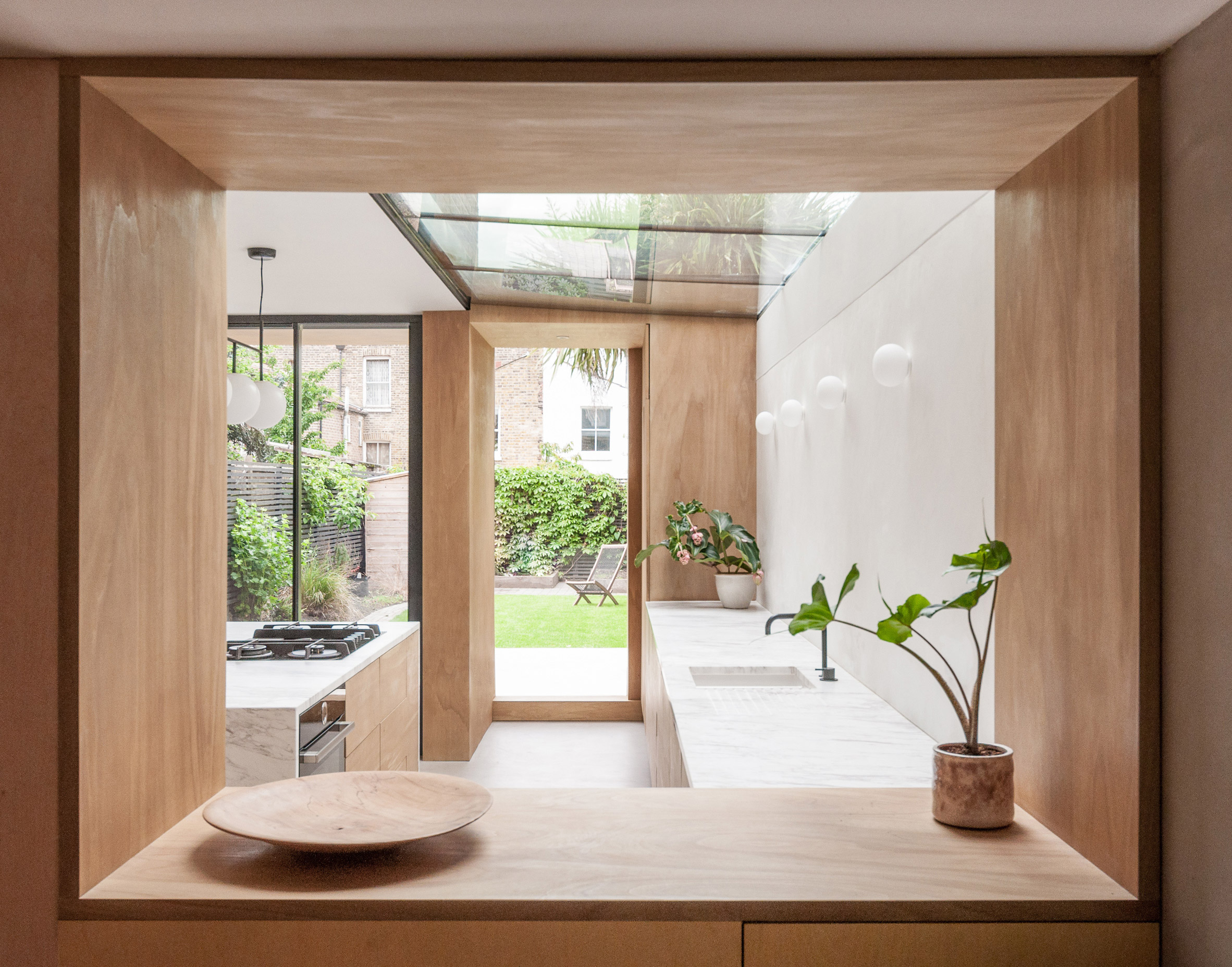
A view into a white-walled kitchen

Yellow Cloud Studio has refurbished and extended the lower ground floor of a terraced house in north London to create a bright kitchen and dining space for a professional chef.

The studio, headed by architects Eleni Soussoni and Romanos Tsomos, was approached by the chef to create a large kitchen for hosting pop-up dinners at the house in Lower Clapton.

A view into a white-walled kitchen in London
Above: Yellow Cloud Studio has added a bright kitchen to a London home. Top image: it sits within a lower ground floor extension

The Rushmore House project involved reorganising the terraced property's lower ground floor to provide spaces for socialising alongside the kitchen.

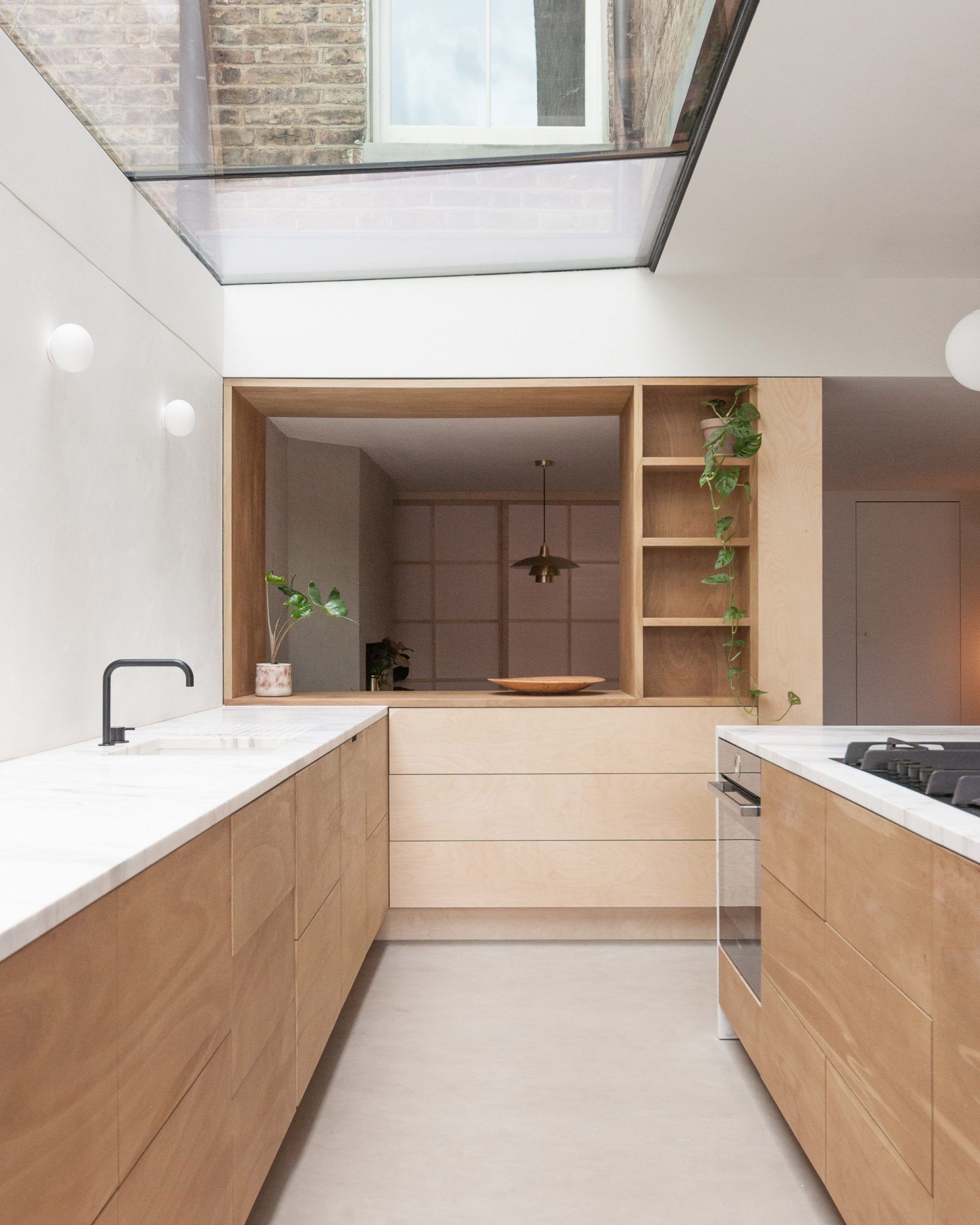
A new skylight above the food preparation area illuminates the chef at work, while carefully positioned openings throughout the floor plan ensure guests can see the meal being prepared.

Different light and materials were used throughout the newly formed series of interconnected spaces to give each area a distinctive character.

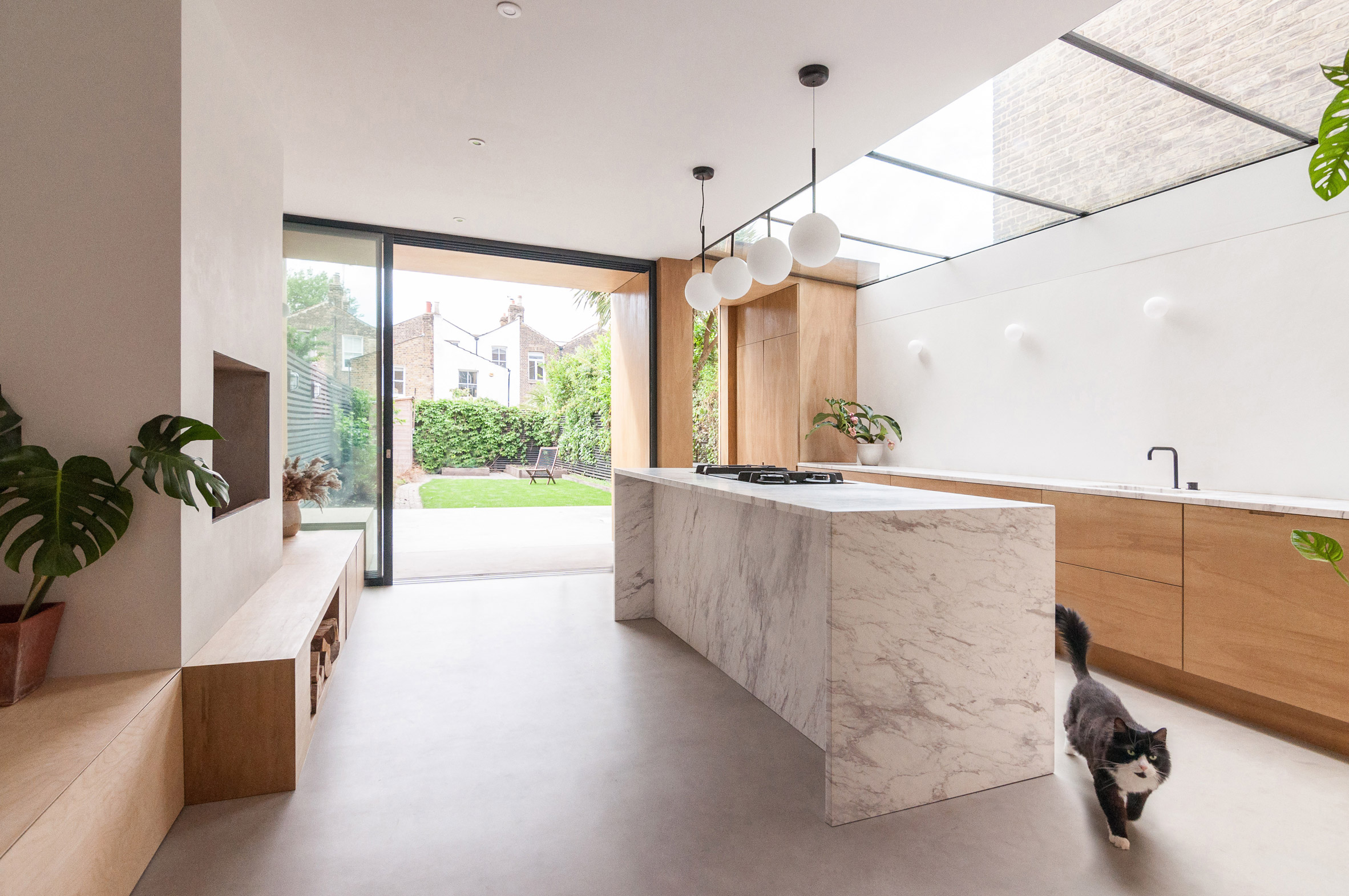
A kitchen with a marble island and wooden cabinetry
The space is designed to host pop-up dinners

"The architecture places emphasis on the experience of the space by the user," said Yellow Cloud Studio.

"Natural light, high ceilings and lighter tones of materiality in the kitchen enhance the ritual of preparation and express hygiene, while the lower ceiling and darker tonality of the dining area create a more atmospheric space for eating."

A white kitchen with a marble island and wooden cabinets
Concrete flooring connects the kitchen to the dining space

The kitchen is reached by descending a wooden staircase from the ground floor. Instead of a typical balustrade, the architects used metal mesh to provide a view of the space as guests approach.

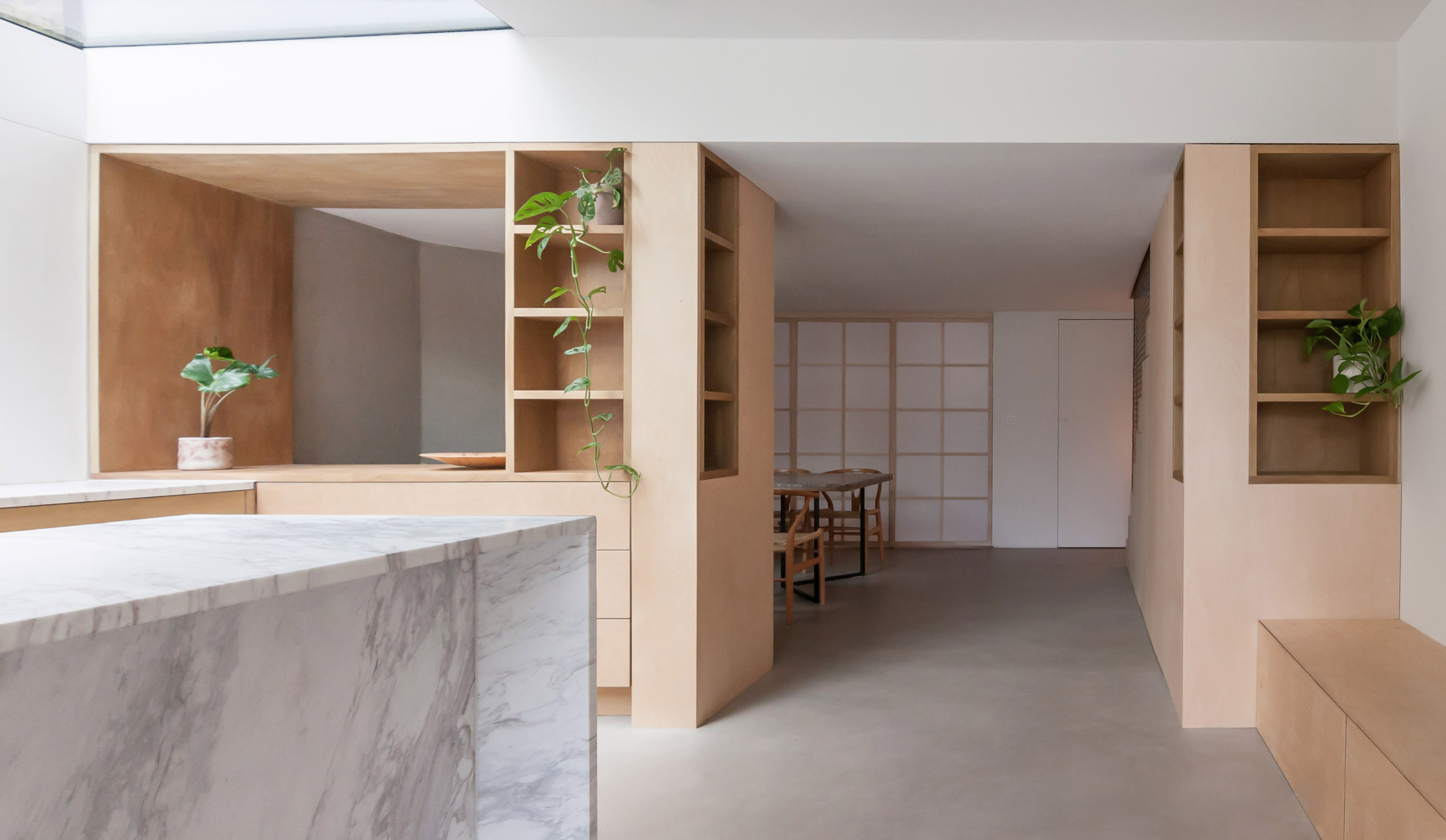
At the bottom of the stairs is the dining area, which is lined on one side by Japanese-style shoji screens. The screens are fitted with translucent fabric that allows light to filter through from the adjoining front room.

A kitchen with wooden cabinetry
A skylight brightens the food preparation area

The front room provides an additional space for socialising and is lined with plywood cabinets containing the client's extensive record collection.

At the rear of the space, floor-to-ceiling sliding glass doors open onto the back garden and a fixed window provides views out from the kitchen area.

A timber canopy that wraps around the glazing protects the interior from the elements when the doors are open. The roof also shelters a small seating area that connects visually with a bench inside.

Concrete flooring that flows through from the kitchen to the patio connects the internal and external spaces, while the weatherproofed plywood canopy creates visual consistency with the units and joinery inside.

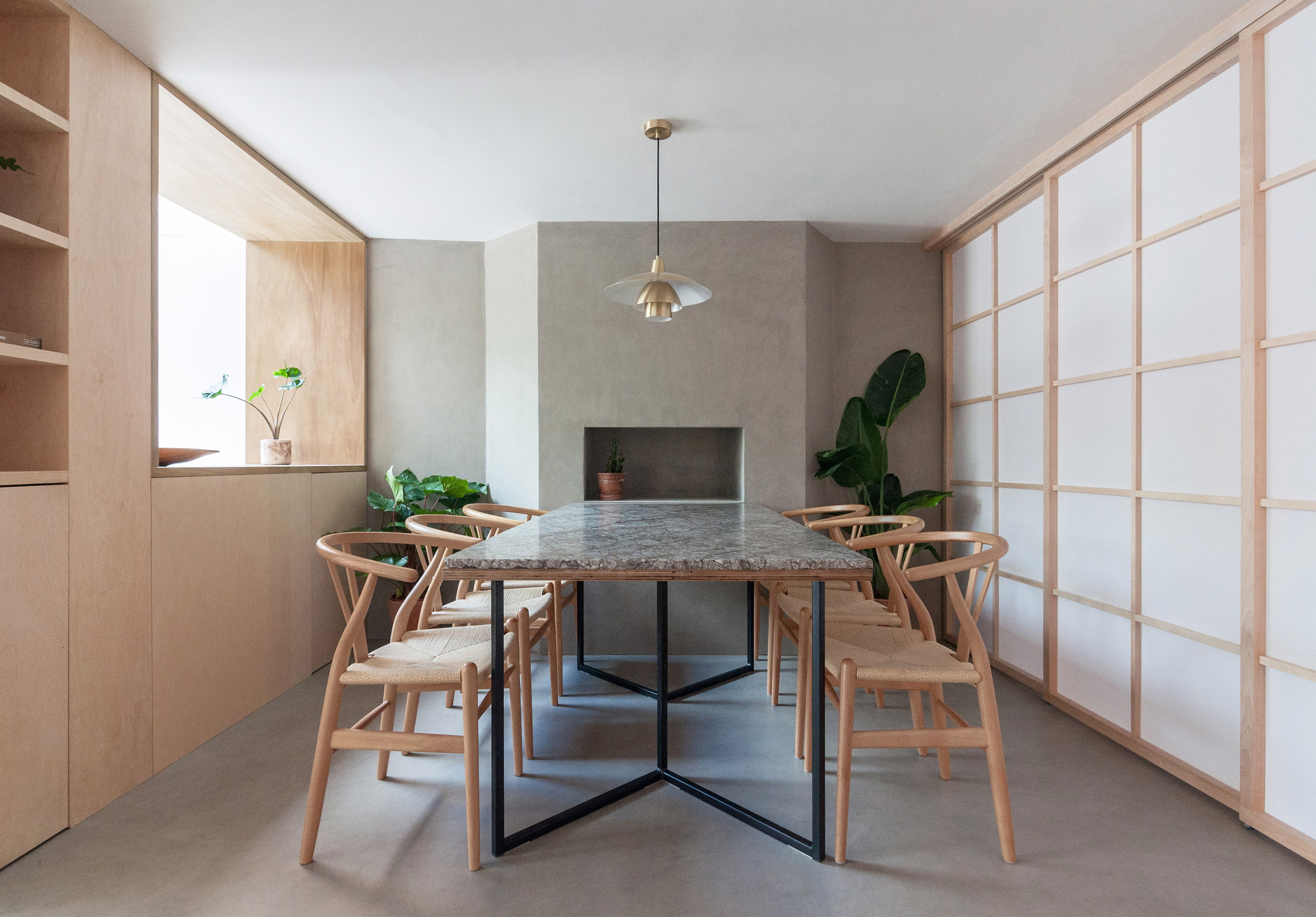
A dining room with Japanese-style shoji screens
Japanese-style shoji screens feature in the dining room

White marble surfaces add a practical and luxurious detail that complements the natural grain of the plywood units.

Soussoni and Tsomos founded Yellow Cloud Studio in 2013 and have since completed a variety of residential, retail and commercial projects. The studio's previous residential work includes a home extension featuring an arched internal window and a triangular extension slotted into an awkward space beside a boundary wall.

The photography is by Yellow Cloud Studio.


Project credits:

Architecture: Yellow Cloud Studio
Joinery: Joseph Carpentry

The post Yellow Cloud Studio completes kitchen refurbishment for hosting at-home supper clubs appeared first on Dezeen.


from Dezeen https://ift.tt/3wx50Q1

Ten most popular stories from our carbon revolution series

Carbon revolution logo against trees

We're four weeks into our exploration of how to remove carbon from the atmosphere and put it to use on earth and we've hit 350,000 page views! Here are the 10 most popular stories so far.


Planting trees

Planting trees "doesn't make any sense" in the fight against climate change say experts

A string of carbon experts have pointed out that afforestation is an unreliable way of removing atmospheric CO2 since it's hard to guarantee the forests will remain intact long enough to provide long-term sequestration.

With over 90,000 page views and 80 comments, this has been by far the most popular and controversial story of the series.

Find out more about experts views on afforestation ›


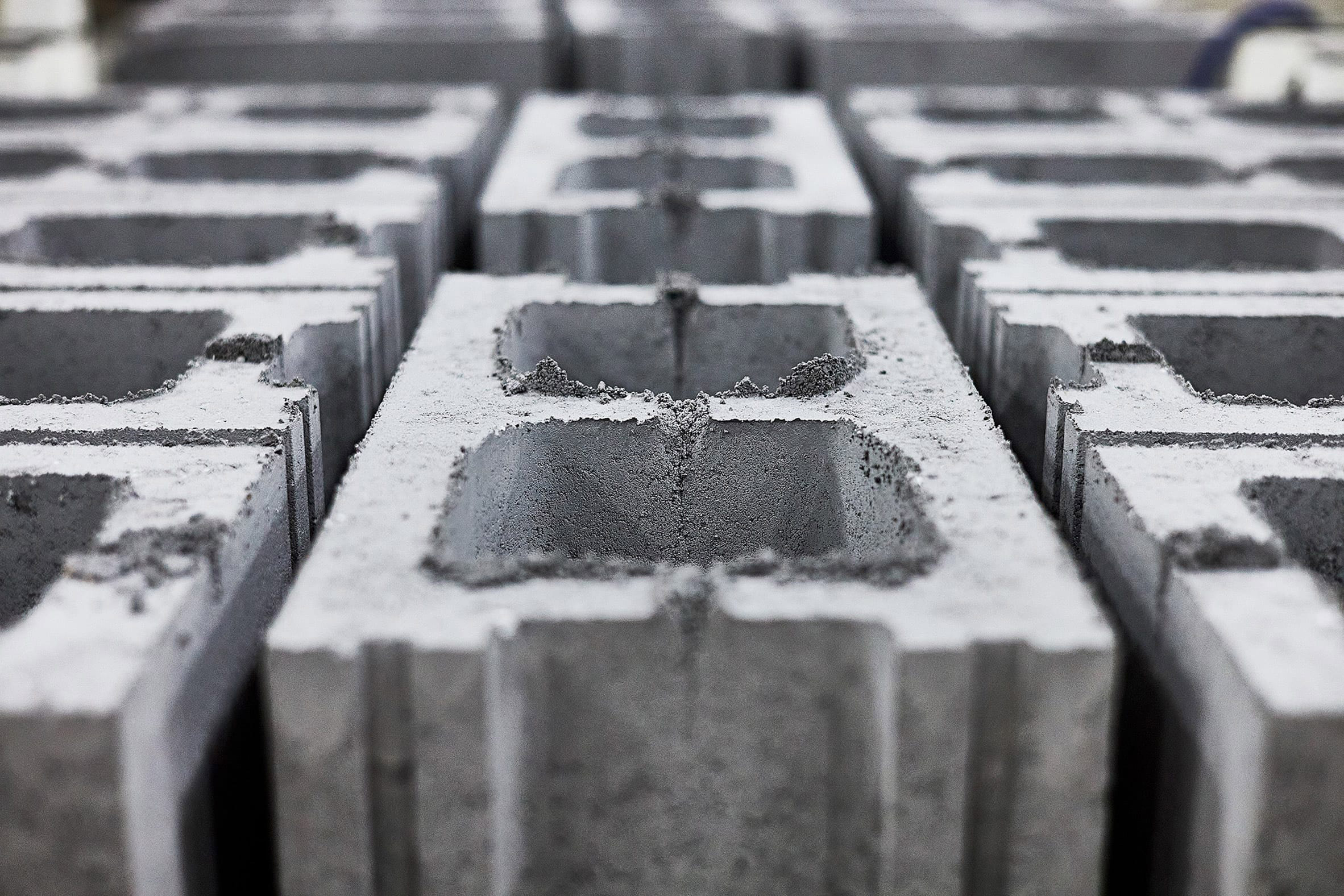
Carbon storing concrete bricks

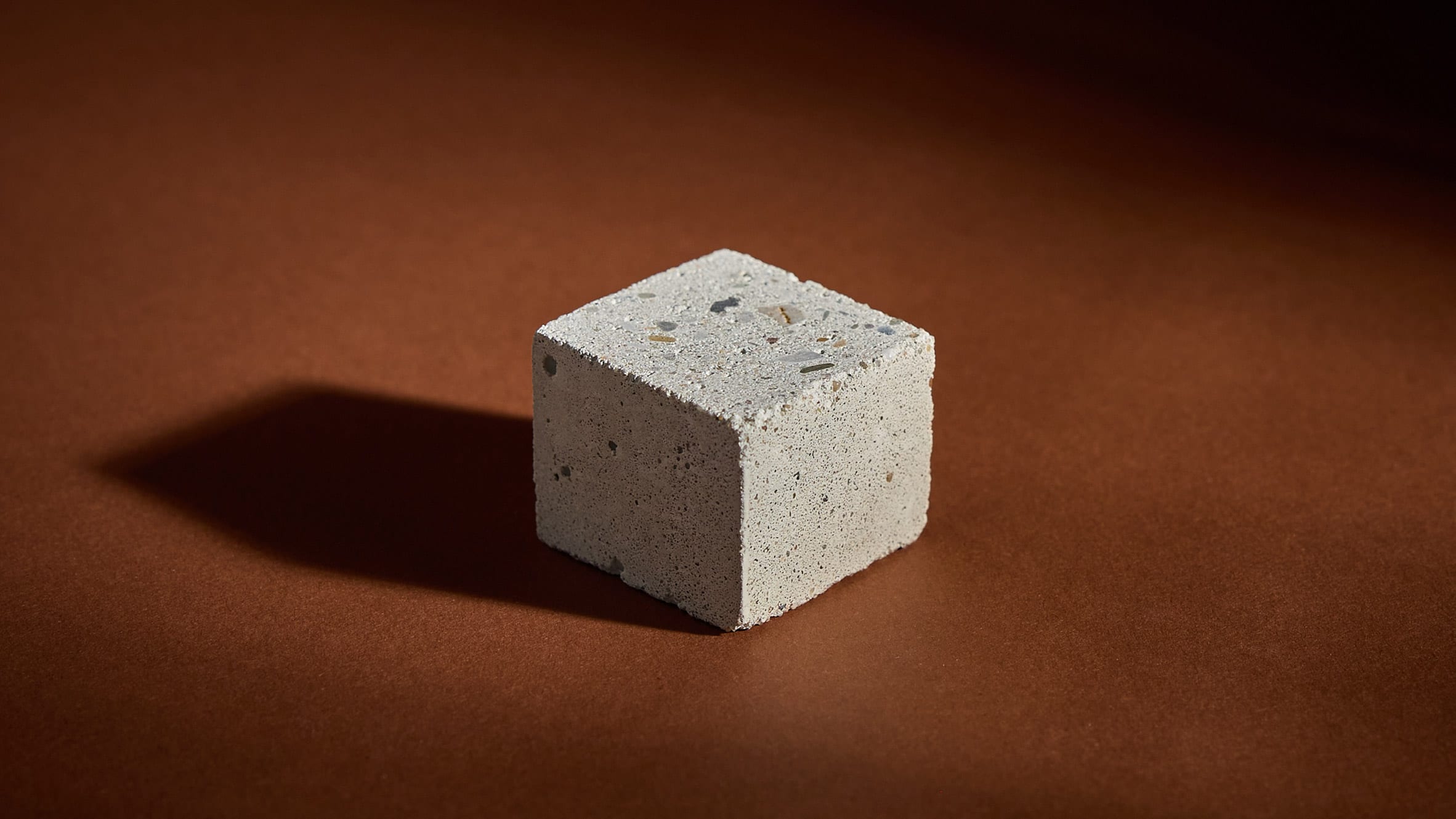
"We're  CO2 out of the system" says carbon-capturing concrete maker Carbicrete

Our interview with Carbicrete CEO Chris Stern explains how cement, which is responsible for eight per cent of greenhouse gas emissions, can be turned into a carbon store rather than a carbon emitter.

Find out more about Dezeen's interview with Chris Stern ›


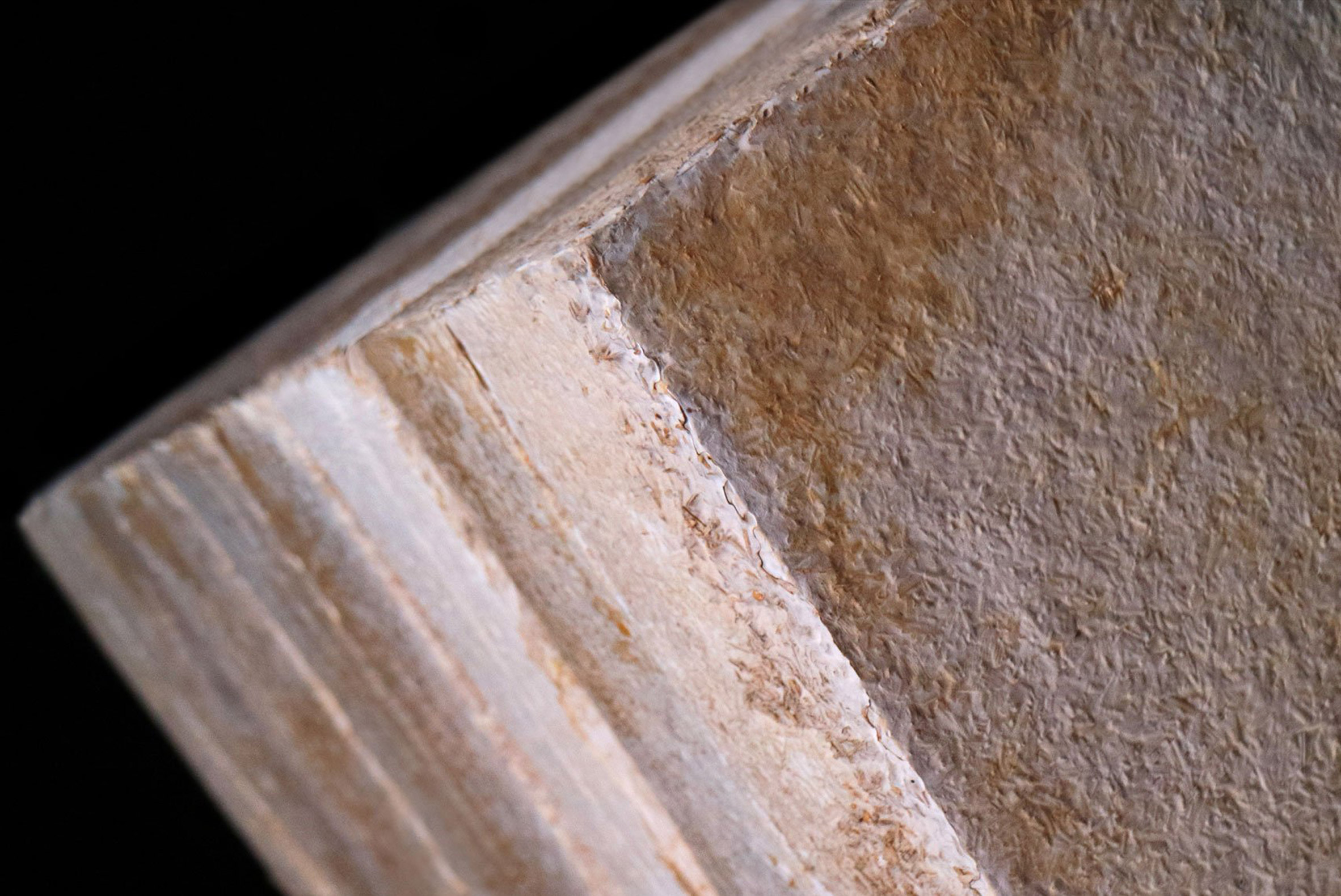
Mycelium insulation block

Ten materials that store carbon and help reduce greenhouse gas emissions

Our roundup of carbon-storing materials includes bioplastic, 3D-printed wood, mycelium, olivine and even food and vodka.

Find out more about our carbon roundup ›


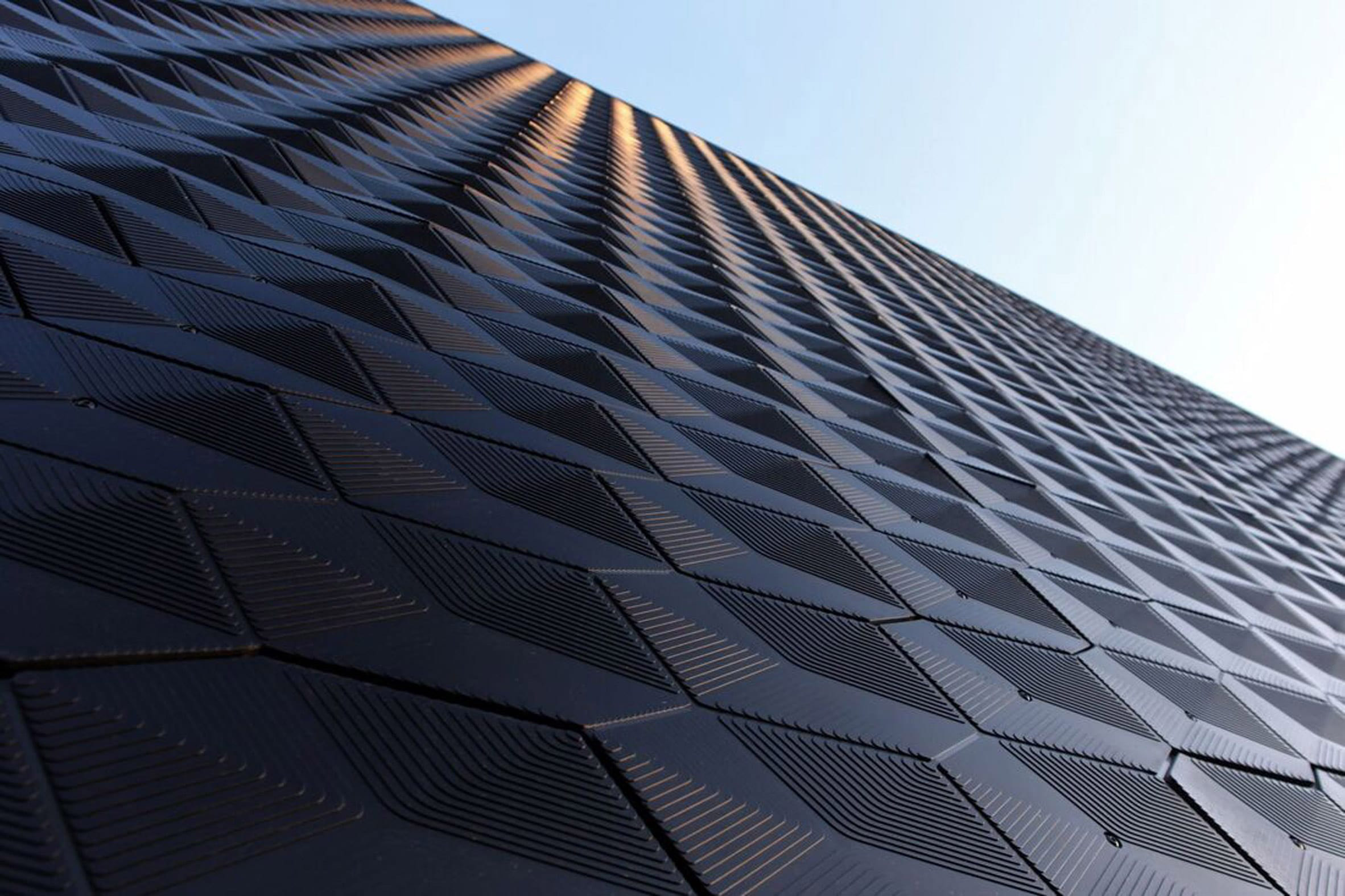
Bioplastic by made of air

Atmospheric CO2 is "our biggest resource" says carbon-negative plastic brand Made of Air

This Dutch startup has invented a way of turning farm and forest waste into carbon-storing bioplastic, which can be used to make products and to clad buildings.

Find out more about Made of Air's bioplastic ›


Blue bubbles used to visualise carbon

Blue bubbles helped "make the cause of climate change visible" say visualisers behind viral video

Real World Visuals, the creators of a viral video that showed New York City disappearing under a mountain of blue bubbles representing CO2 emissions, explain how they visualised the abstract concept of climate change.

Find out more about Real World Visuals' climate change visualisation ›


Concrete made fro olivine by Green Materials

"One tonne of olivine sand can take in up to one tonne of CO2" says Teresa van Dongen

This Dutch designer has created a library of materials that can sequester carbon.

One of the most promising is olivine, an abundant mineral that can neutralise carbon dioxide equivalent to its own mass.

Find out more about Teresa van Dongen's library of materials ›


Solo house by perkins & will

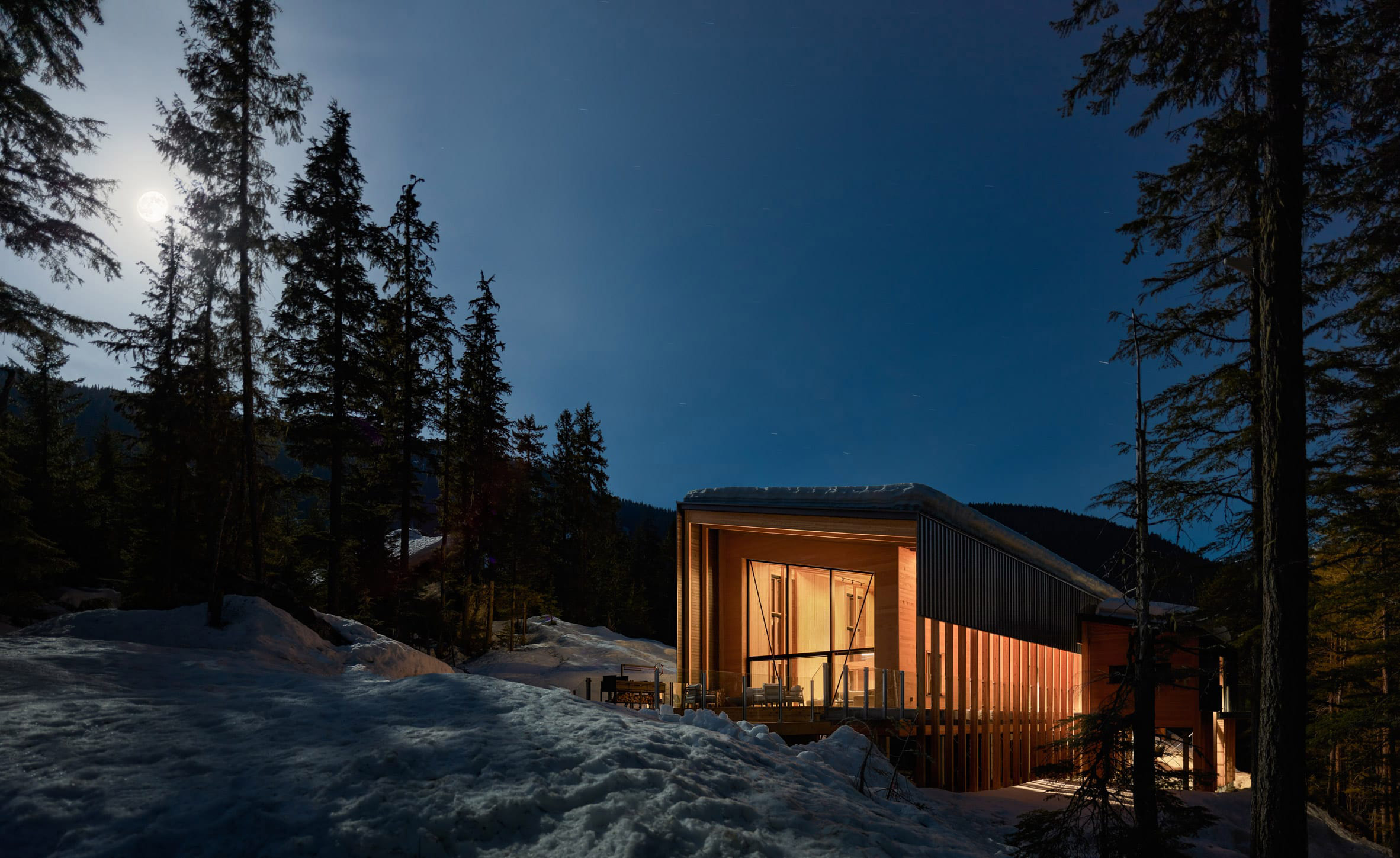
"Taking credit for trees planted elsewhere is a whole lot of embodied irony"

Architecture writer Fred Bernstein analysed claims made by Perkins & Will that their timber SoLo House is carbon negative. It isn't, he concluded.

Find out more about Fred Bernstein's analysis ›


direct air capture devices by climeworks

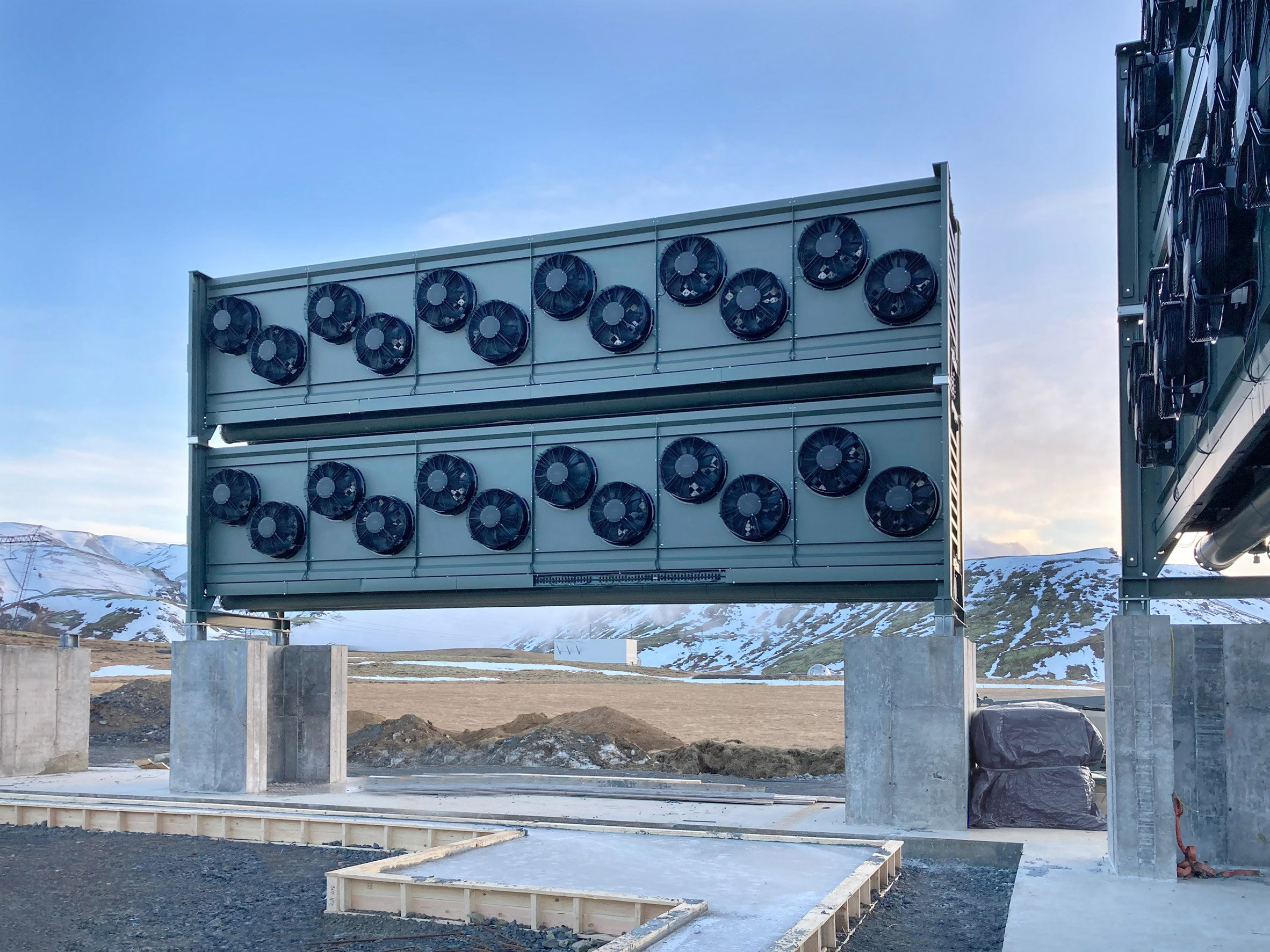
"We're mining the sky because there's too much carbon in it" says Climeworks

Direct air capture company Climeworks makes machines that suck carbon out of the atmosphere so it can be turned into useful products or buried underground.

Find out more about Climeworks' direct air capture devices ›


education centre built by Yasmeen Lari

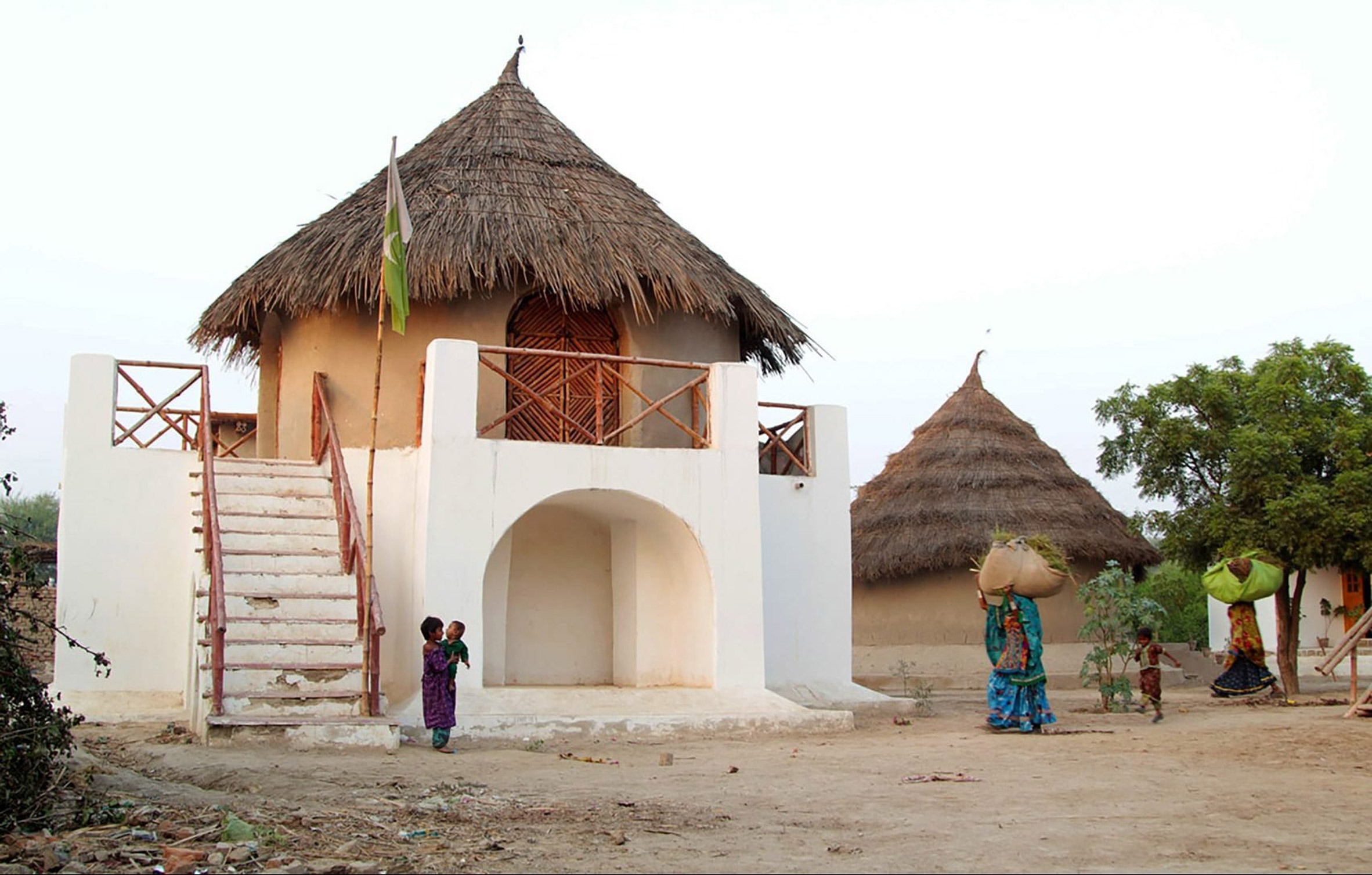
Using "ancient wisdoms and techniques" can lead to carbon-neutral buildings says Yasmeen Lari

Being carbon neutral doesn't have to involve advanced technologies and complex calculations, according to the Pakistani architect. Building with humble natural materials can be even more effective.

Find out more about Yasmeen Lari's ancient building techniques ›


picture of a hemp field

Hemp "more effective than trees" at sequestering carbon says Cambridge researcher

Hemp can capture twice as much carbon per hectare than a forest can, according to Darshil Shah. The problem is that current regulations prevent it from being grown freely in the UK.

Find out more about how hemp can be used to capture carbon ›


Carbon revolution

Carbon revolution

This article is part of Dezeen's carbon revolution series, which explores how this miracle material could be removed from the atmosphere and put to use on earth. Read all the content at: www.dezeen.com/carbon.

The sky photograph used in the carbon revolution graphic is by Taylor van Riper via Unsplash.

The post Ten most popular stories from our carbon revolution series appeared first on Dezeen.


from Dezeen https://ift.tt/3e5lQix

Ten mezzanines that provide homes with additional floorspace

In our latest lookbook, we have selected a collection of mezzanines from the Dezeen archive that create more useable space at home and make use of tall ceilings.

A mezzanine can be described as an intermediate floor in a room, which is placed half-way up the wall and doesn't extend over the whole space of the floor below.

Mezzanines are typically used in spaces with tall ceilings, with levels placed at a floor height that lets both the area above and that below be used as a functional space.

They can be permanent or temporary, and are often used in high-ceilinged spaces such as warehouse buildings.

This is the latest roundup in our Dezeen Lookbooks series providing visual inspiration for the home. Previous articles in the series feature loft conversions, L-shaped kitchens and Scandi living rooms.

Mezzanine by HGR Arquitectos

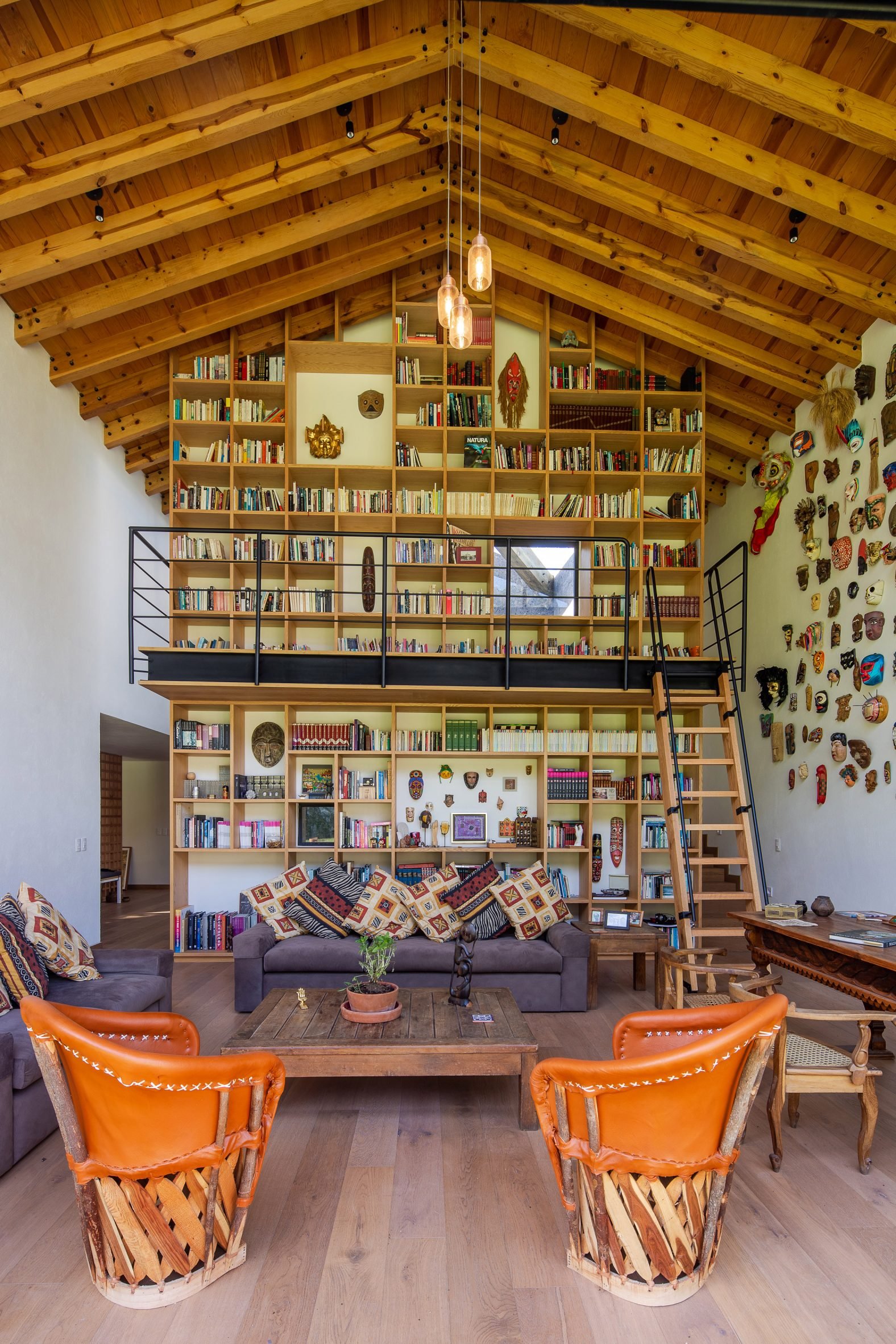
Casa Texcal, Mexico, HGR Arquitectos

A double-height red oak bookcase occupies the living space of this holiday home, located in Tepoztlán and designed by Mexican studio HGR Arquitectos.

The bookcase extends upwards toward the pitched roof and is joined by a mezzanine that was built around the oak shelving, allowing the client's expansive book collection to be accessed with ease.

A ladder provides access to the mezzanine level of the small library, where a wooden deck placed atop steel beams is enveloped by black railings.

Find out more about Casa Texcal ›

Gartnerfuglen Arkitekter built a wood mezzanine

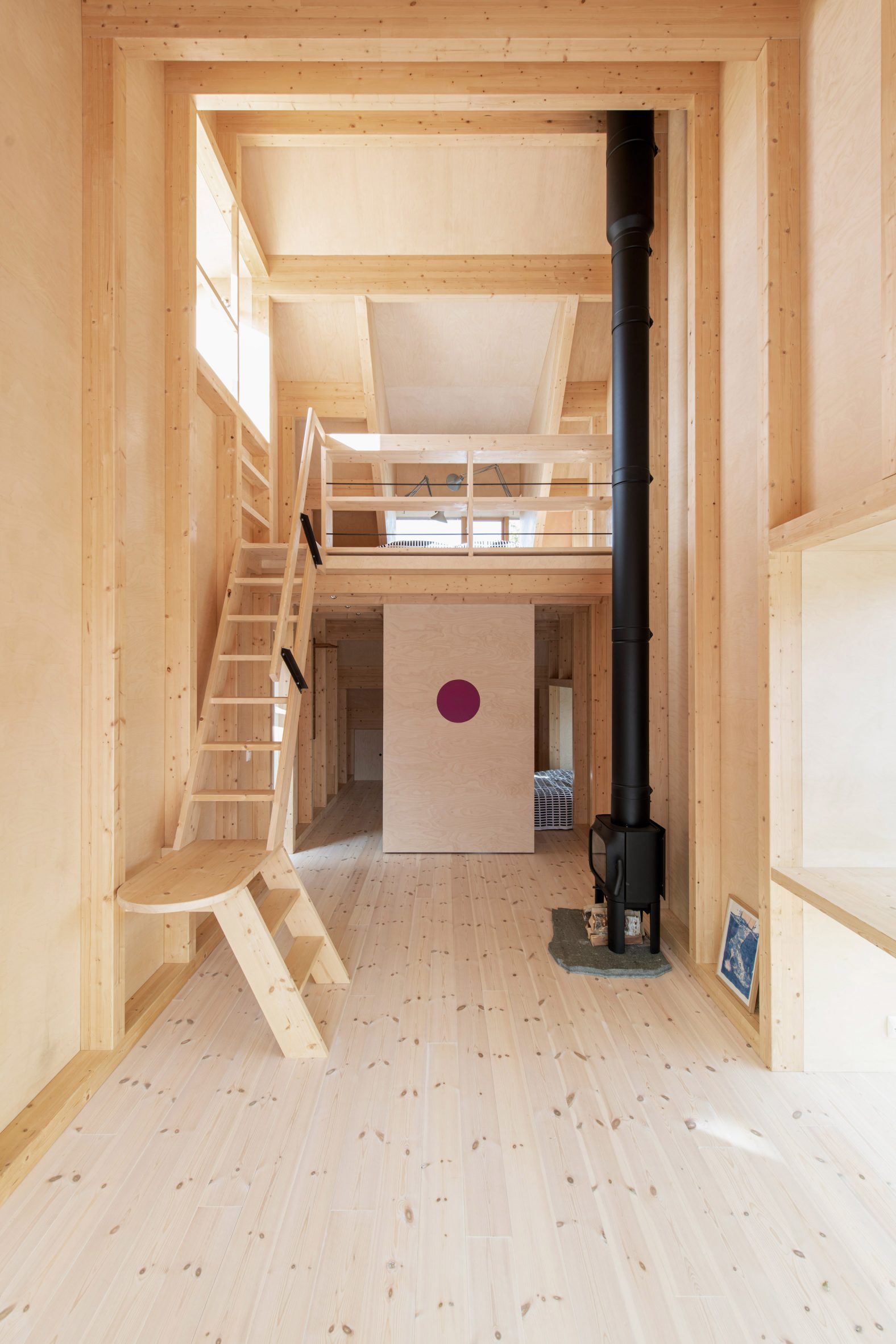
Cabin Thunder, Norway, Gartnerfuglen Arkitekter

Gartnerfuglen Arkitekter clad the interior of this holiday home in Norway in light, untreated wood. The studio completed the cabin with a series of reading nooks and a mezzanine level-cum-hideout space that is accessed by a ladder.

The wood-lined mezzanine spans the width of the cabin, adding a secondary layer of space to the pitched roof interior as well as creating a cosy sleeping area below.

Find out more about Cabin Thunder ›

Bookcase mezzanine by Wheeler Kearns Architects

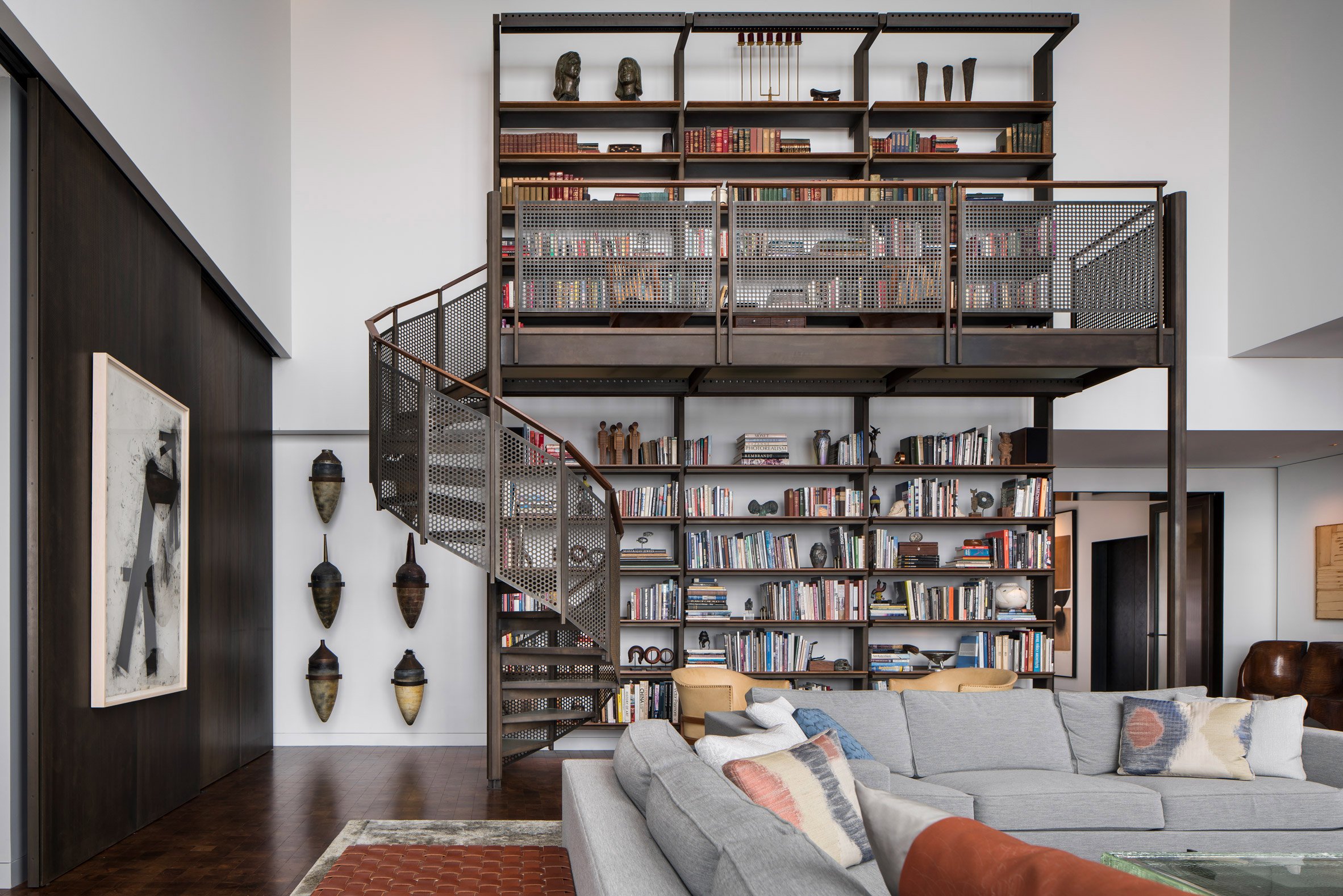
Residence for Two Collectors, US, Wheeler Kearns Architects

Built for an art collector couple in Chicago, Wheeler Keans Architects created an art-filled residence with muted and earthy tones. The studio incorporated a large custom-made double-height bookcase fitted with a spiral staircase that leads up to a mezzanine level from its living area.

Perforated metal sheets were used as railings and surrounded by walnut handrails. Glass panels were used across the steps of the spiral staircase and floor of the mezzanine level, allowing light to dapple the area below.

Find out more about Residence for Two Collectors ›

Mezzanine by Inês Brandão

Converted Barn, Portugal, Inês Brandão

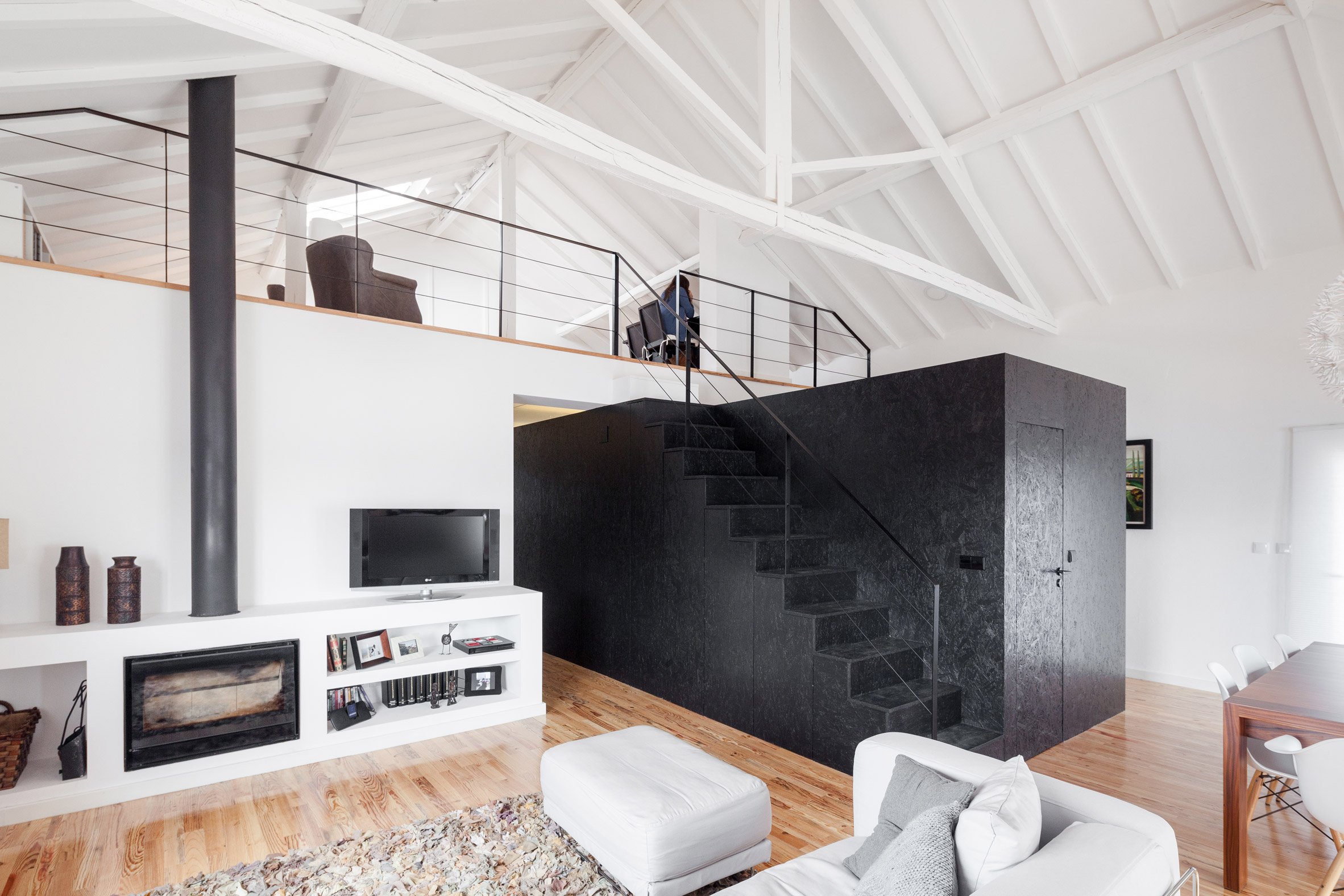
Portuguese architecture studio Inês Brandão renovated and converted a barn in Portugal, adding an oriented strand board (OSB) volume that houses the kitchen, a bathroom and a built-in staircase that leads to an additional living space.

The upper level, which once functioned as an area for drying grain, overlooks the living space and is built within the eaves of the roof. It is accessed via the black-painted OSB volume that occupies a central part of the home.

Find out more about Converted Barn ›


Sage green mezzanine by Note Studio

The Mantelpiece Loft, Stockholm, Note Design Studio

The Mantelpiece Loft was reconfigured by Note Design Studio to better make use of the dormant space beneath the loft's tall roof.

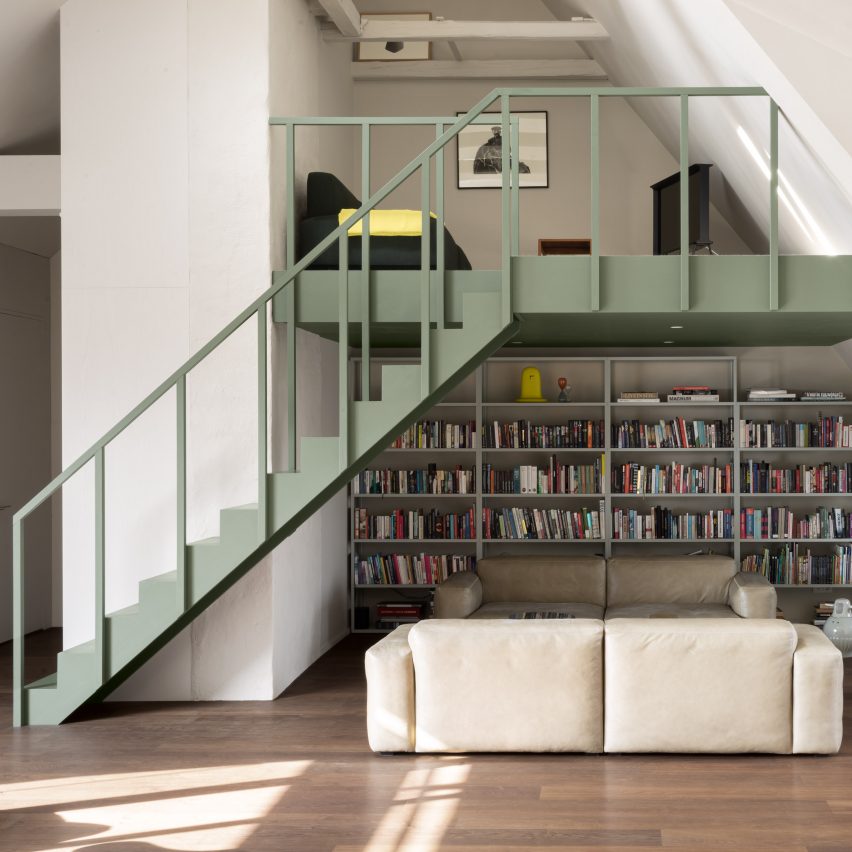
Above a formal living space, the studio incorporated a sage green mezzanine within a section of the home's sloped roof that can be used as a snug. A minimalist staircase leading up to it was oriented perpendicular to the space and features a paired-back slatted bannister.

Find out more about The Mantelpiece Loft ›

Dodi moss renovated apartment

House for a Sea Dog, Italy, Dodi Moss

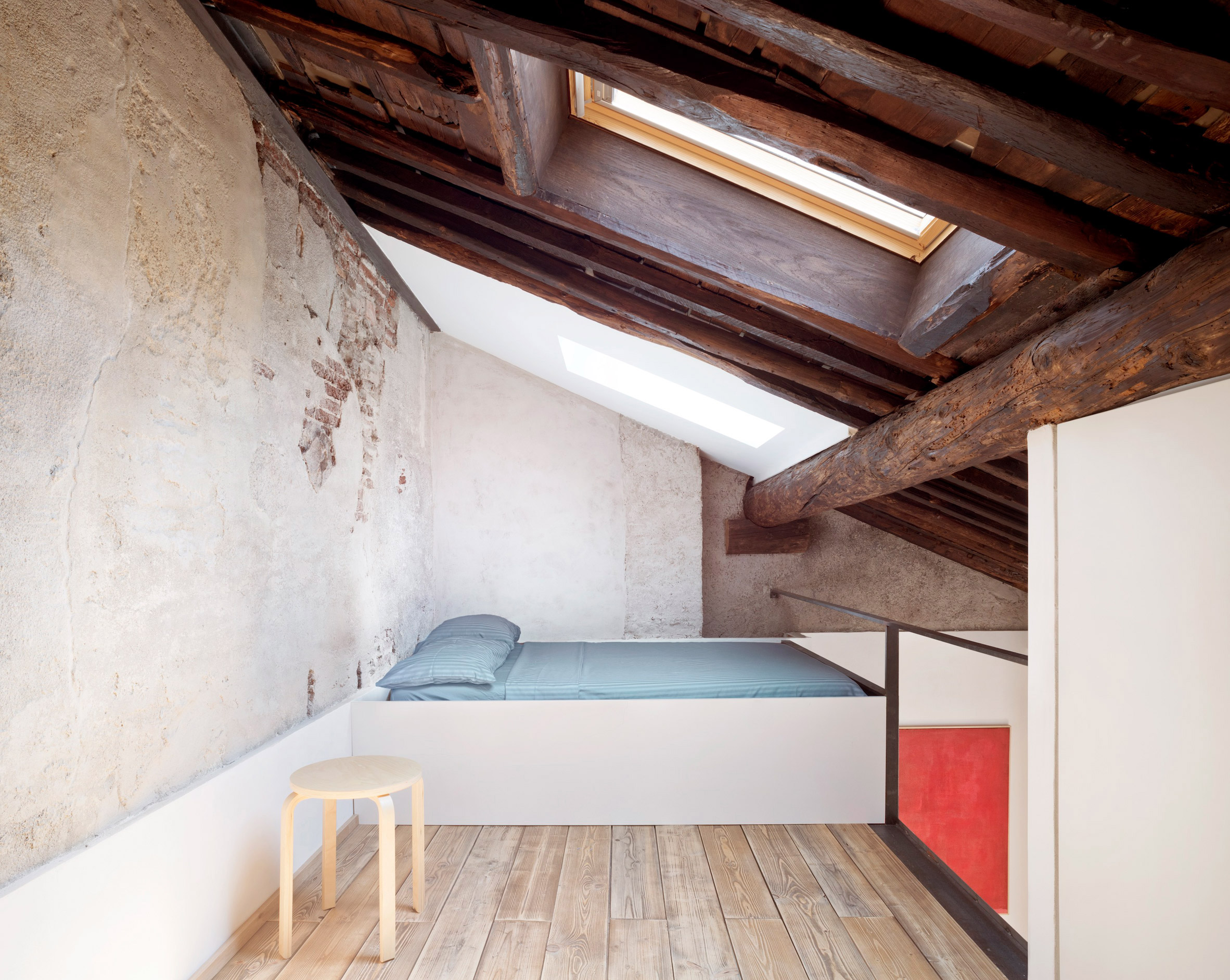
Dodi Moss added a mezzanine to the lower level of this 17th-century apartment in Genoa, Italy. It primarily serves as a bed deck but also contains a bathroom that was slotted beneath the sleeping volume.

A partition wall divides the living area from the staircase that leads to the sleeping space.

The bed deck was placed below the newly restored roof, which features a wood vaulted ceiling, with the bed framed by a baseboard that forms an extension of the white-painted walls below.

Find out more about House for a Sea Dog ›

Hao design taiwan apartment

Taiwan apartment, Taiwan, HAO Design

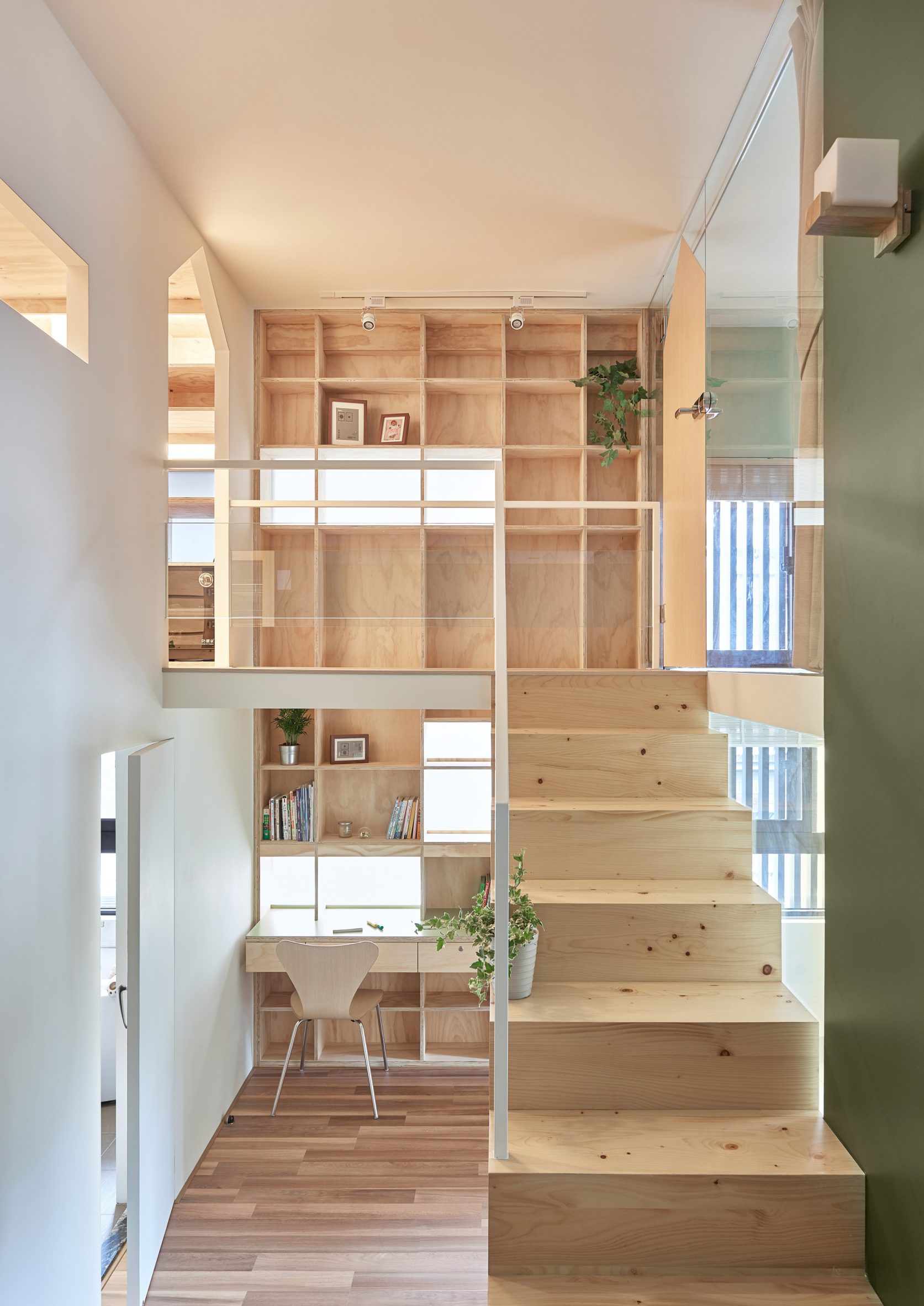
HAO Design transformed this apartment to better connect its bedrooms and living spaces. The studio added a pine mezzanine level that houses a second bedroom, storage spaces and a walk-in wardrobe.

Marked by a floor-to-ceiling storage wall, the new upper level was divided in two by a bridge-like passage that is accessed by a blocky light-wood staircase. House-shaped doors lead from the bridge to a pine-lined room that is used as a walk-in wardrobe for the neighbouring bedroom with mint green walls.

Find out more about Taiwan apartment ›

New affiliates bed-stuy apartment

Bed-Stuy Loft, US, New Affiliates

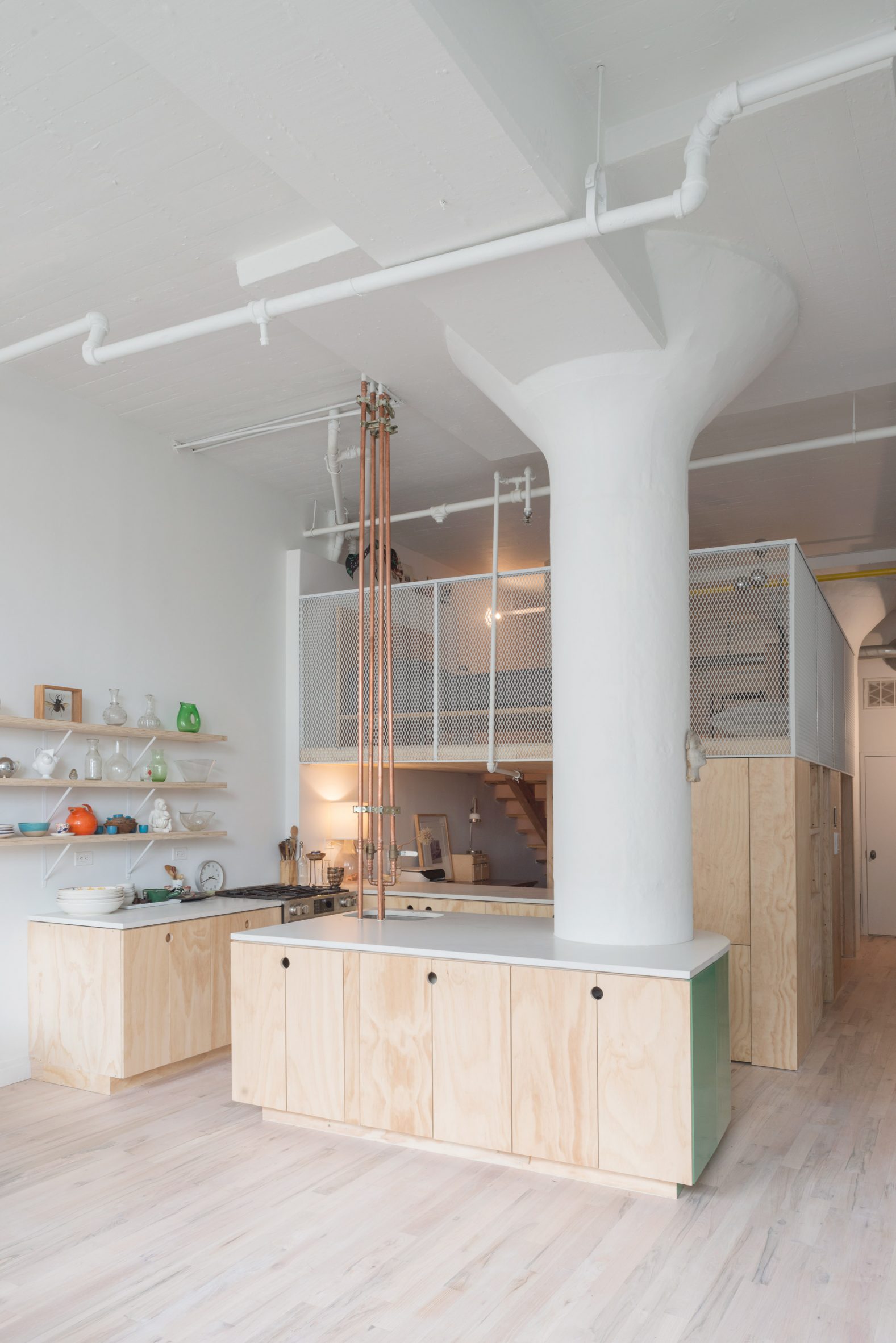
A mezzanine level wrapped in white latticed metal railings provides a sleeping area atop a workspace in this New York loft.

The volume was clad in untreated plywood, in a nod to the reclaimed nature of this apartment in a former industrial space. A corner of the plywood volume was cut out to fit around the building's large structural columns, while the opposite corner was used to house a kitchen island.

Find out more about Bed-Stuy Loft ›
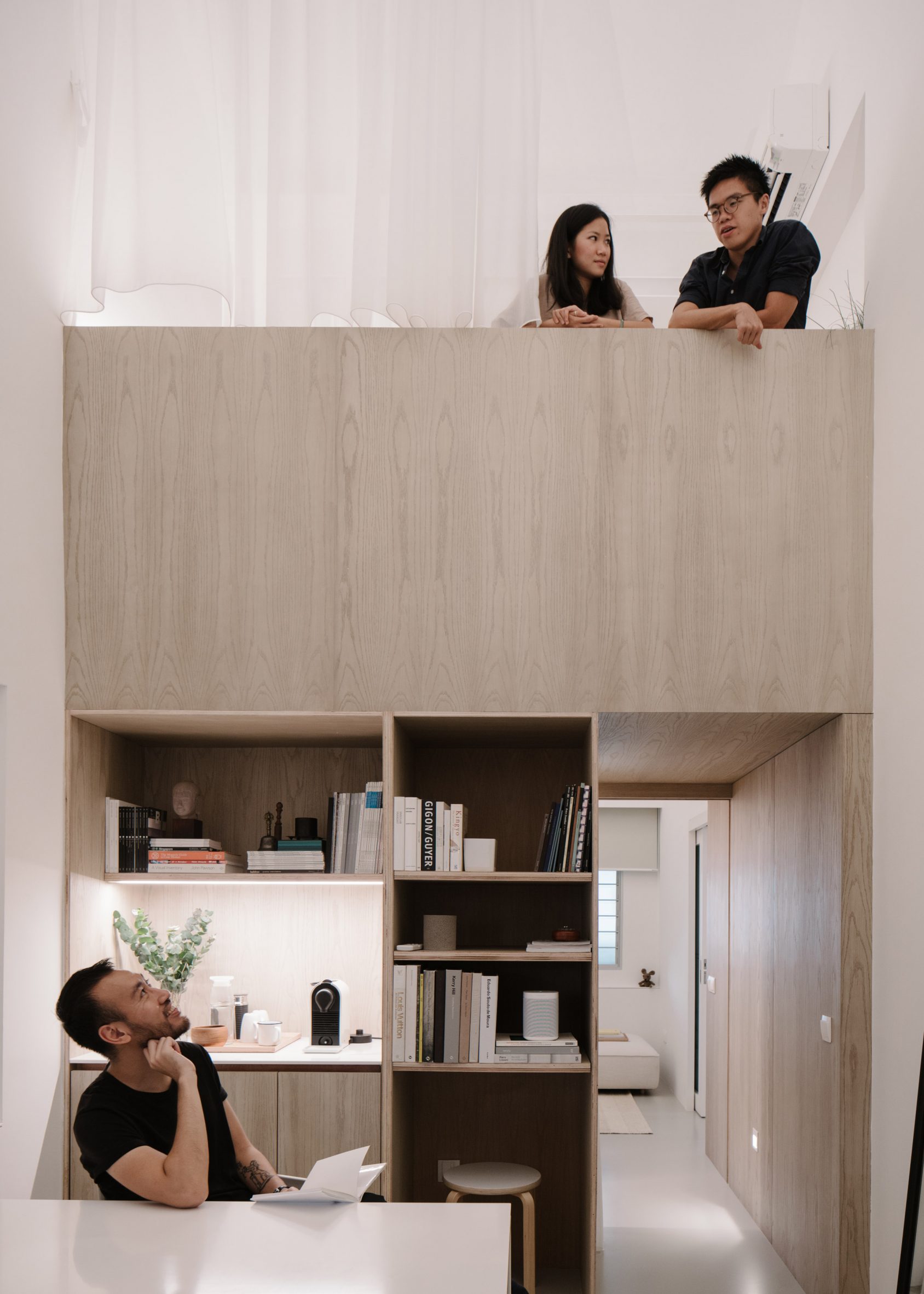

Mezzanine by Studio Wills + Architects

Project #13, Singapore, Studio Wills + Architects

This apartment in Singapore was converted and reconfigured to house and accommodate Studio Wills + Architects' offices and function as a home for its founder. The 64-square-metre apartment is as a workspace during the day and a home during the evening.

The studio built a wooden volume with built-in steps and storage for the founder's belongings. This separates workspaces from meeting rooms on the flat's lower level, while the mezzanine level functions as a tea room during the day where staff can take time away from work. At night, it can be turned into a bedroom.

Find out more about Project #13 ›
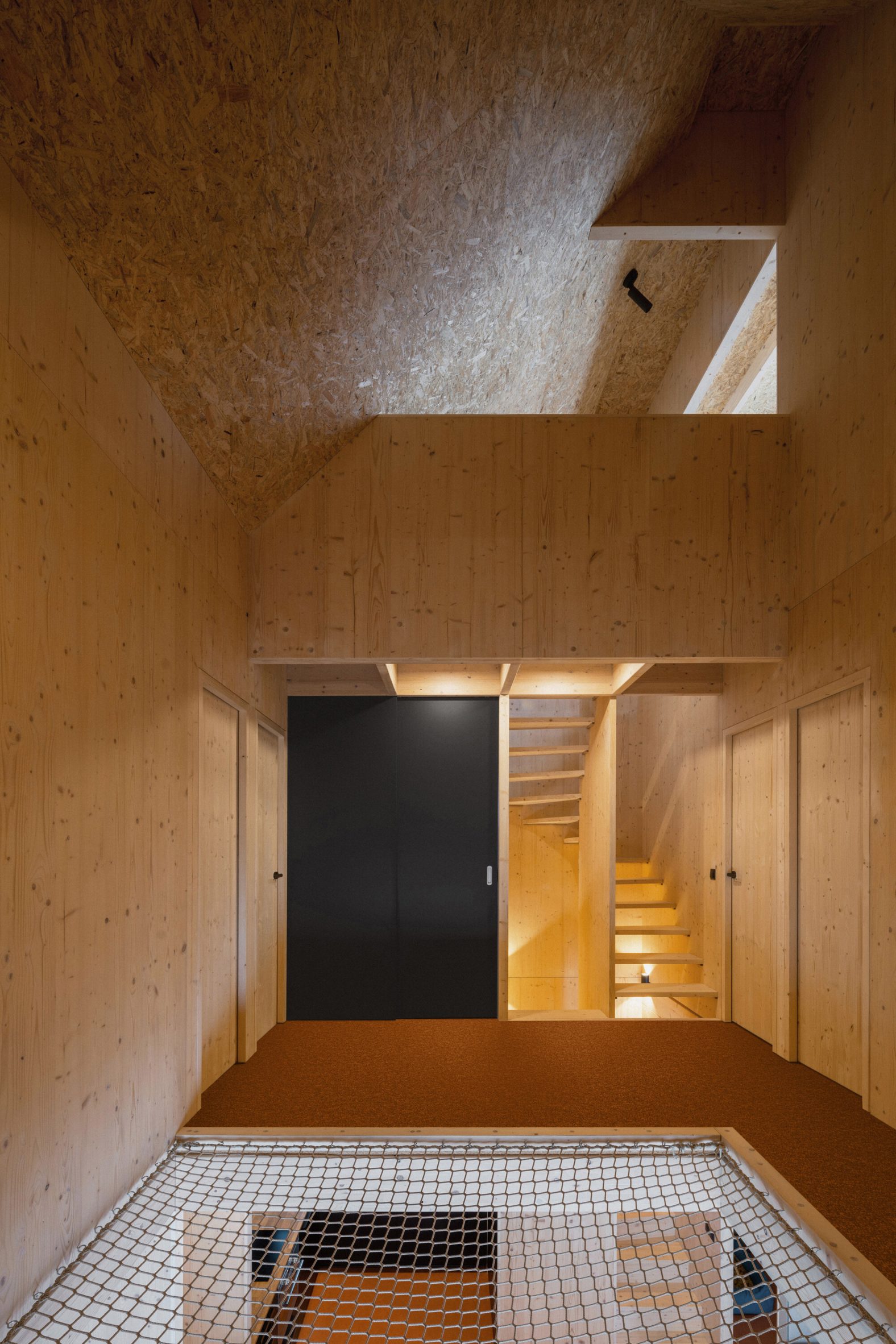

Mezzanine look out by new how

Weekend House, Czech Republic, New How

A lookout was fitted on the top floor of this angular holiday home in the Czech Republic where it was placed within the sloped, chipboard-lined roof that was designed to reduce snow loads during the winter.

The lookout level overlooks a double-height space featuring a netted floor that spans across the dining space below. It was fitted with a large squared window that provides views out to the scenic forest surroundings and the Ore Mountains.

Find out more about Weekend House ›


This is the latest in our series of lookbooks providing curated visual inspiration from Dezeen's image archive. For more inspiration see previous lookbooks showcasing L-shaped kitchens, calm living rooms and colourful kitchens.

The post Ten mezzanines that provide homes with additional floorspace appeared first on Dezeen.


from Dezeen https://ift.tt/2VvdVVj
Saturday, 10 July 2021

Airweave creates cardboard beds and modular mattresses for Tokyo 2020 Olympics

A blue and white Tokyo 2020 Olympic bed and mattress

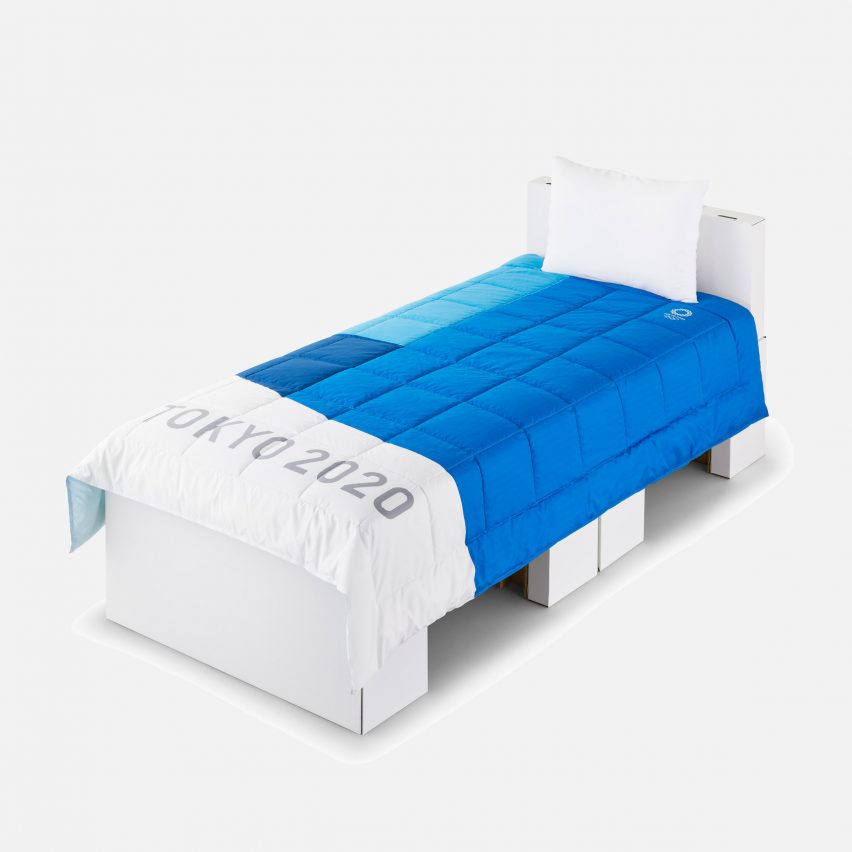
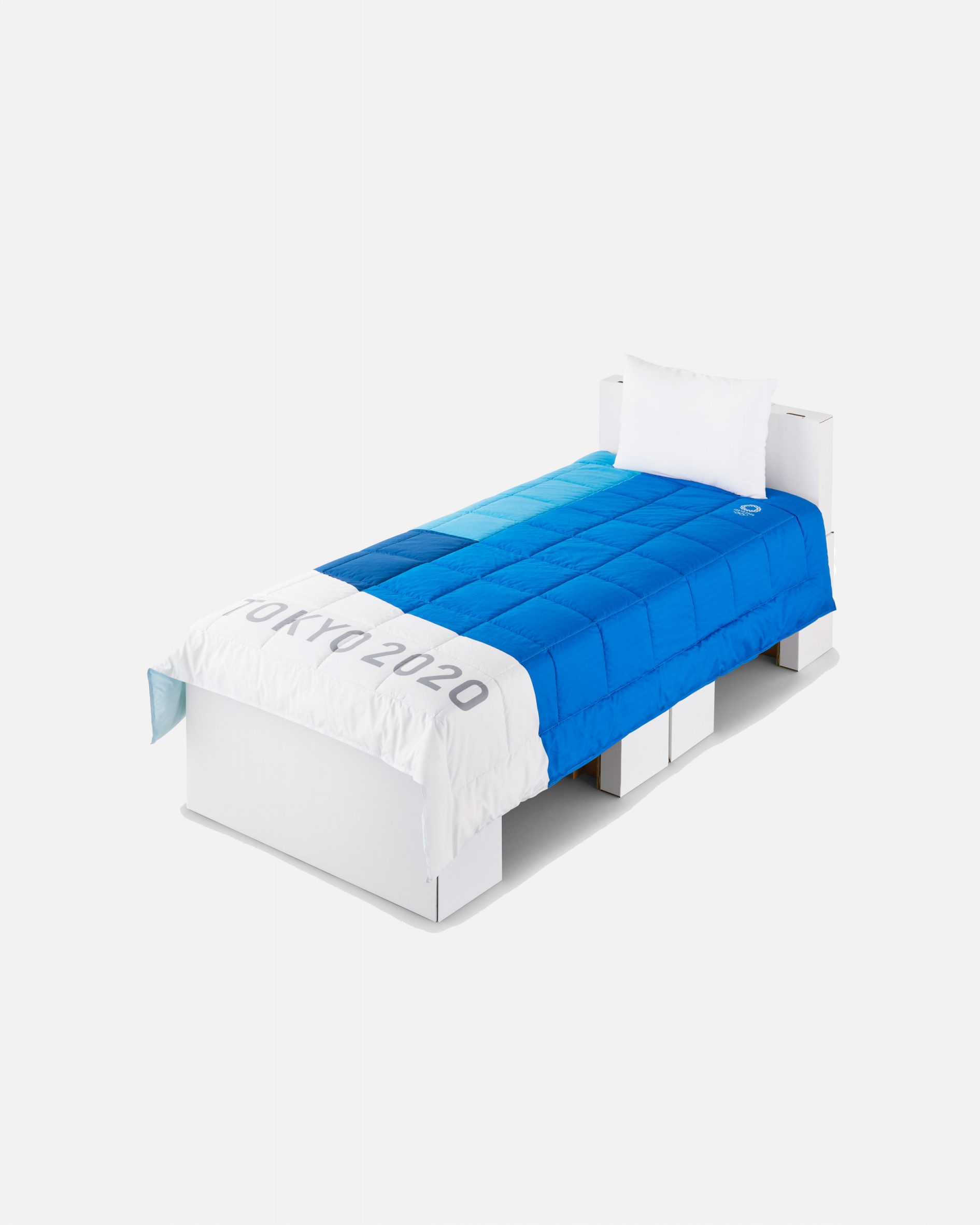
Athletes at the Tokyo 2020 Olympics will sleep on beds made from recycled cardboard and customisable mattresses by Japanese bedding company Airweave.

Airweave has created 18,000 beds and mattresses for athletes at this summer's Olympics, 8,000 of which will be repurposed for use by athletes at the Paralympics.

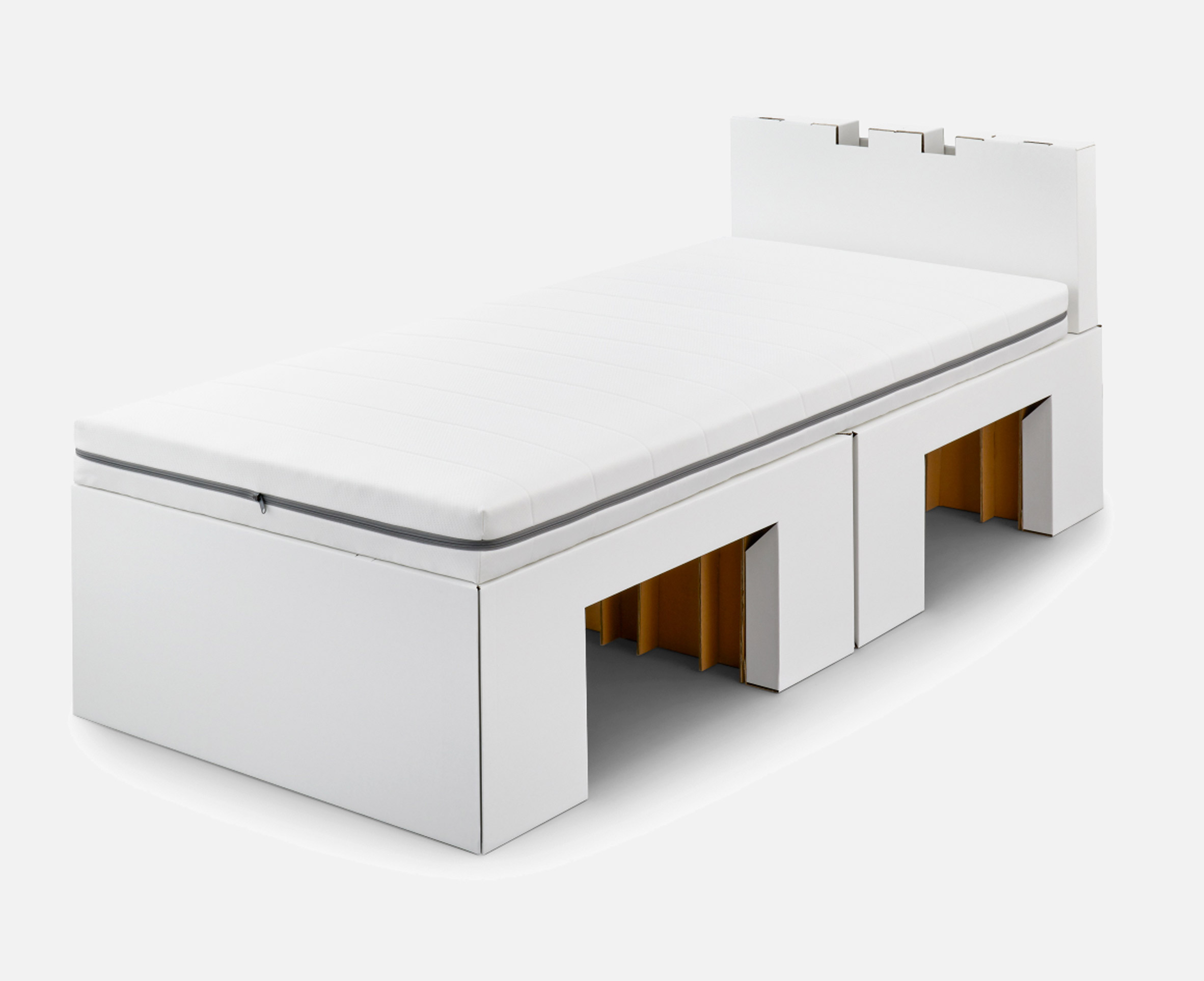
The bed frames are made from recycled cardboard, while the modular mattresses are made from polyethylene fibres that the brand says can be recycled an unlimited number of times.

A white cardboard bed and mattress by Airweave
Top: Japanese bedding company Airweave has created a cardboard bed for athletes at the Tokyo 2020 Olympics. Above: The bed supports a modular mattress that athletes can customise.

The sleeping equipment had to align with the Tokyo 2020 Olympic Games' sustainability plan, which aims to deliver a more sustainable event and showcase innovative concepts and solutions that will have a legacy after the Games.

"The concept was to make a lightweight, easy-to-assemble mattress and meet the Games' Sustainability Plan," Airweave told Dezeen.

An Airweave bed and mattress
Airweave has created 18,000 beds and mattresses for athletes at this summer's Olympics

The bed frames, which are made out of recycled cardboard, will first be supplied to Olympic athletes. Following the Olympics, 8,000 of the bed frames will be reused by Paralympic athletes. After both Games, the beds will avoid landfill by being donated to national organisations.

The beds have been designed to be extremely light and easy to assemble in order to ensure transferring the beds between locations is quick and efficient.

A blue and white Tokyo 2020 Olympic mattress
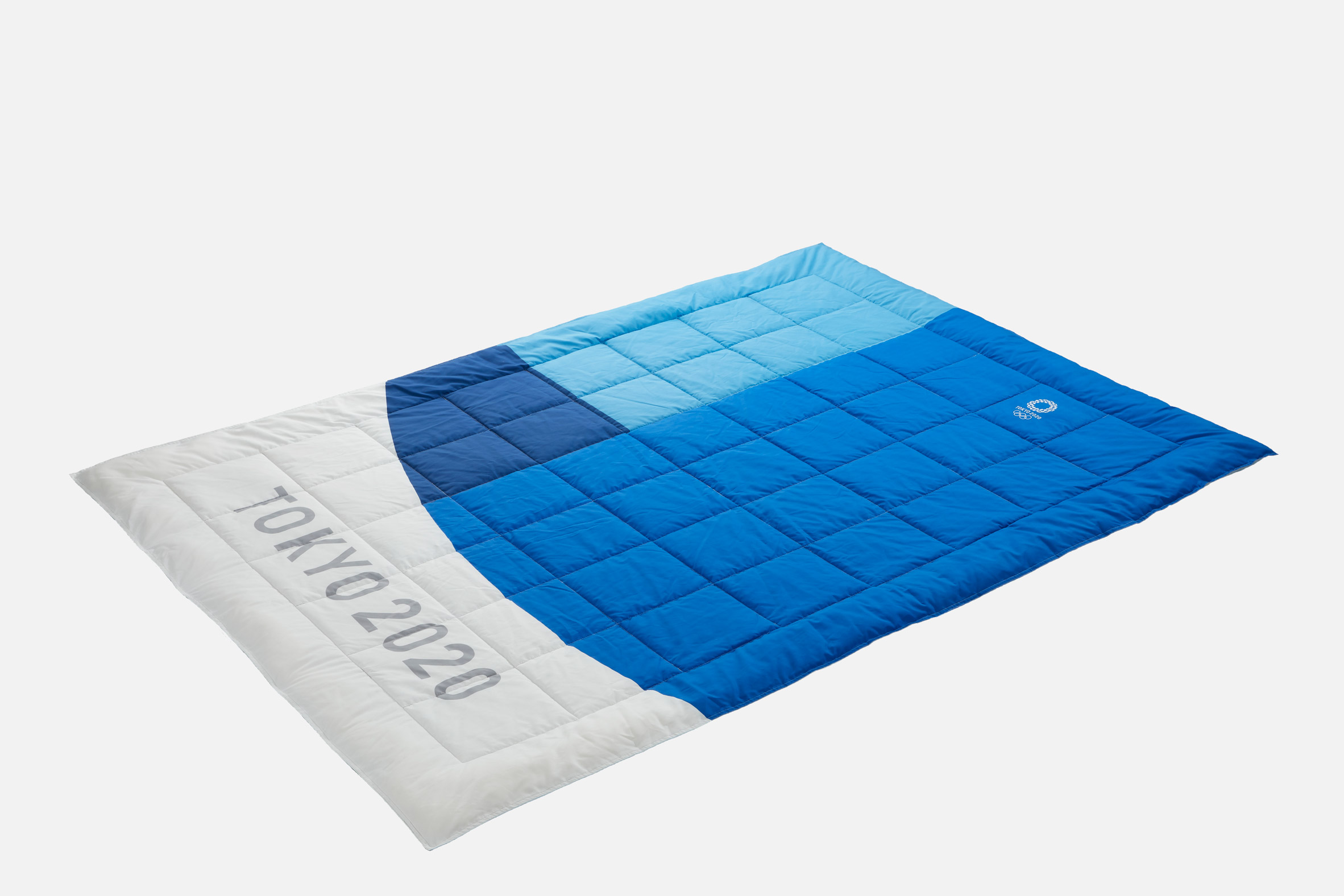
Airweave will also provide duvets for the athletes

The cardboard bedframes will support a version of Airweave's modular mattress, which the brand designed to accommodate the wide variety of body types of different athletes.

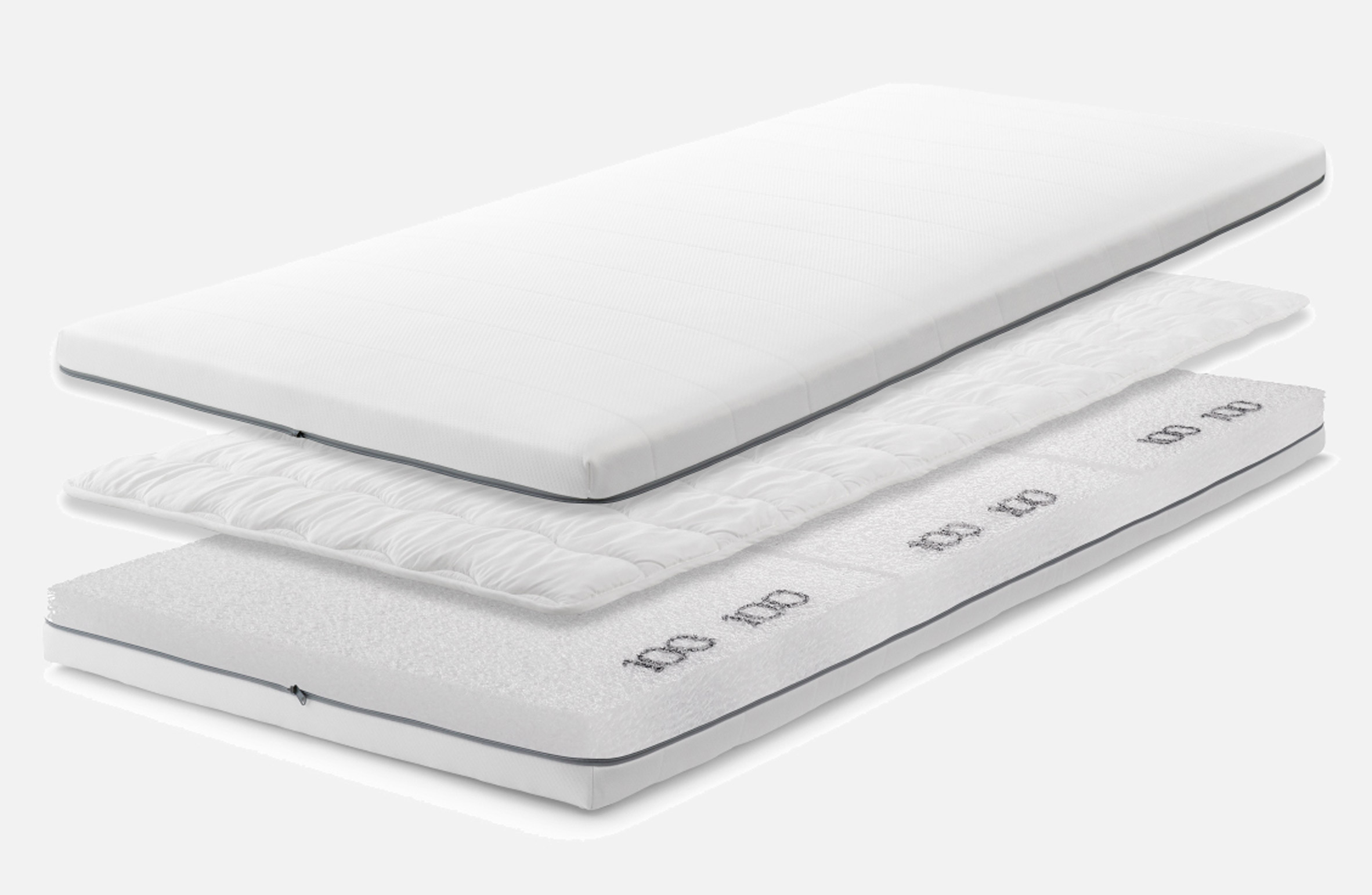
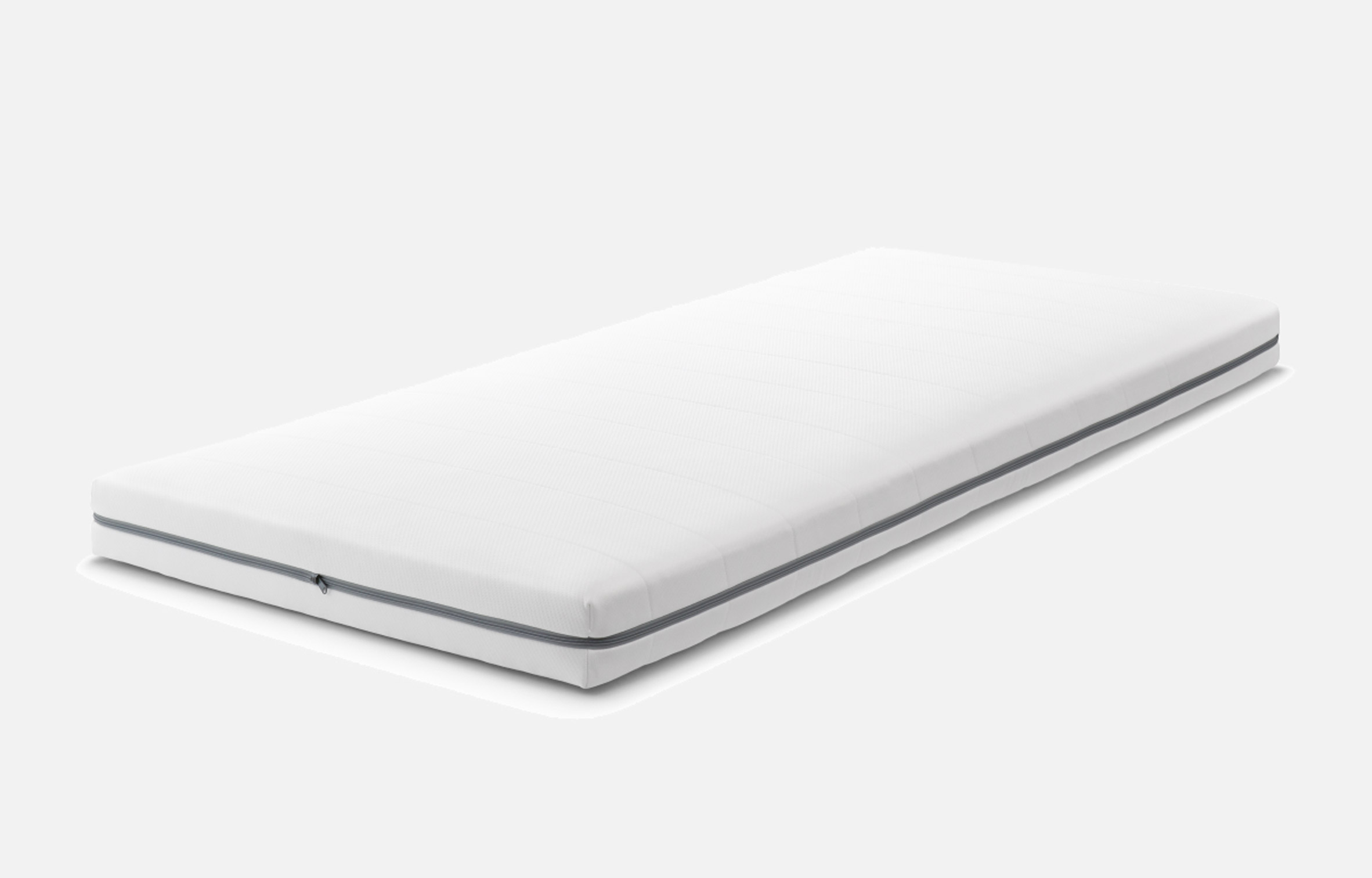
The mattress is composed of three separate blocks made from springy polyethylene fibres – one to support the head and shoulders, one to support the waist and one to support the legs – which are zipped together in a case.

The modules can be ordered in four different firmness levels and can provide a different level of firmness on each side. This allows athletes to customise their mattresses by changing the order of the three blocks and flipping them over one way or the other.

"Our signature modular mattress design allows for firmness customizations at the shoulder, waist and legs to achieve proper spine alignment and sleep posture, allowing for the highest level of personalization for each athlete's unique body type," Airweave said.

Three parts of the Airweave mattress
Athletes can customise the mattresses to suit their body type

The mattresses can be further customised with additional layers, such as a pillow top to increase the softness.

In the Olympic Village, athletes will be able to go to a mattress fitting centre where they can get help with mattress configuration.

The brand also developed an app to help athletes find the best mattress for their bodies. Users can submit photos and input their body measurements into the app to get a recommended mattress configuration.

Airweave's white mattress
The mattresses comprise three polyethelene blocks that are arranged inside a zip-up case

As the Olympic's official bedding partner, Airweave will also provide pillows and duvets to the Tokyo 2020 Olympic and Paralympic athlete villages.

Cardboard beds are not the only new addition to the Tokyo 2020 Olympics. The Games will see robots by Toyota deployed across the site to assist workers and attendees. Toyota has also adapted a fleet of its autonomous and electric e-Palette vehicles to serve athletes.

The post Airweave creates cardboard beds and modular mattresses for Tokyo 2020 Olympics appeared first on Dezeen.


from Dezeen https://ift.tt/3k6iv6I

Ravi Handa designs his own wine bar called Stem in Montreal

Reclaimed materials found during demolition work have been preserved and used as decoration in this Montreal wine bar called Stem that's designed and co-owned by Ravi Handa Architect.

Named Stem, the wine bar was completed earlier in 2020 near September, a cafe and surfboard workshop designed by the same architect in Montreal's Little Burgundy neighbourhood.

Wine bar in Montreal covered by wooden slats
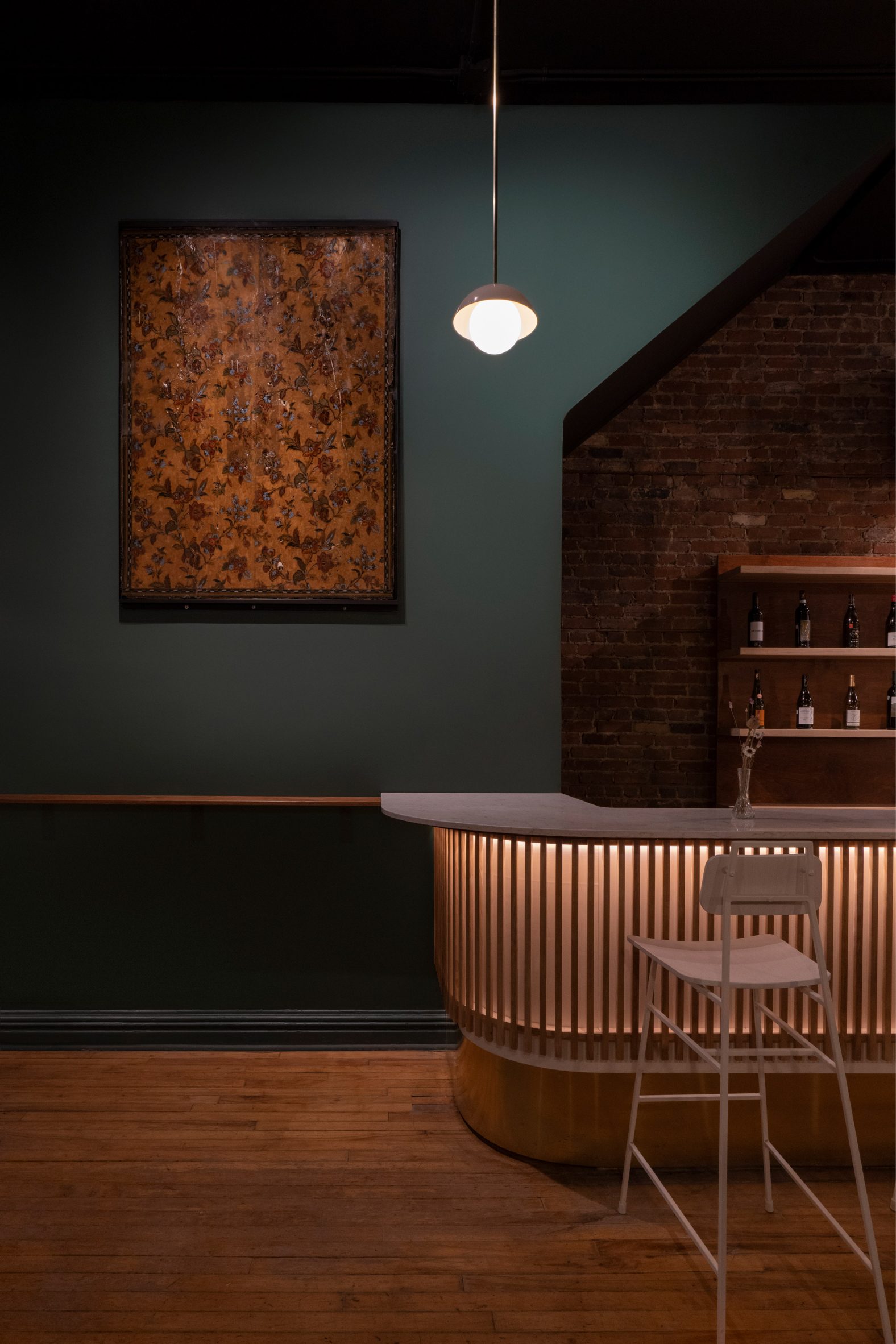
A piece of vintage wallpaper now hangs by the bar's entrance

Upon learning that a vacant space near September cafe would be taken up by a big-box pizza chain, the architect teamed up with some partners to lease the space themselves.

"There was an uproar in the community and we [September] along with other local businesses on the block didn't want a multinational chain as a neighbour," Handa told Dezeen.

"There was a great deal of pressure to create something soulful and anchored to place since we had convinced our landlords to break with a brand that we felt was perhaps void of soul and rather generic," he added.

Wine bar in Montreal with wood slat screen
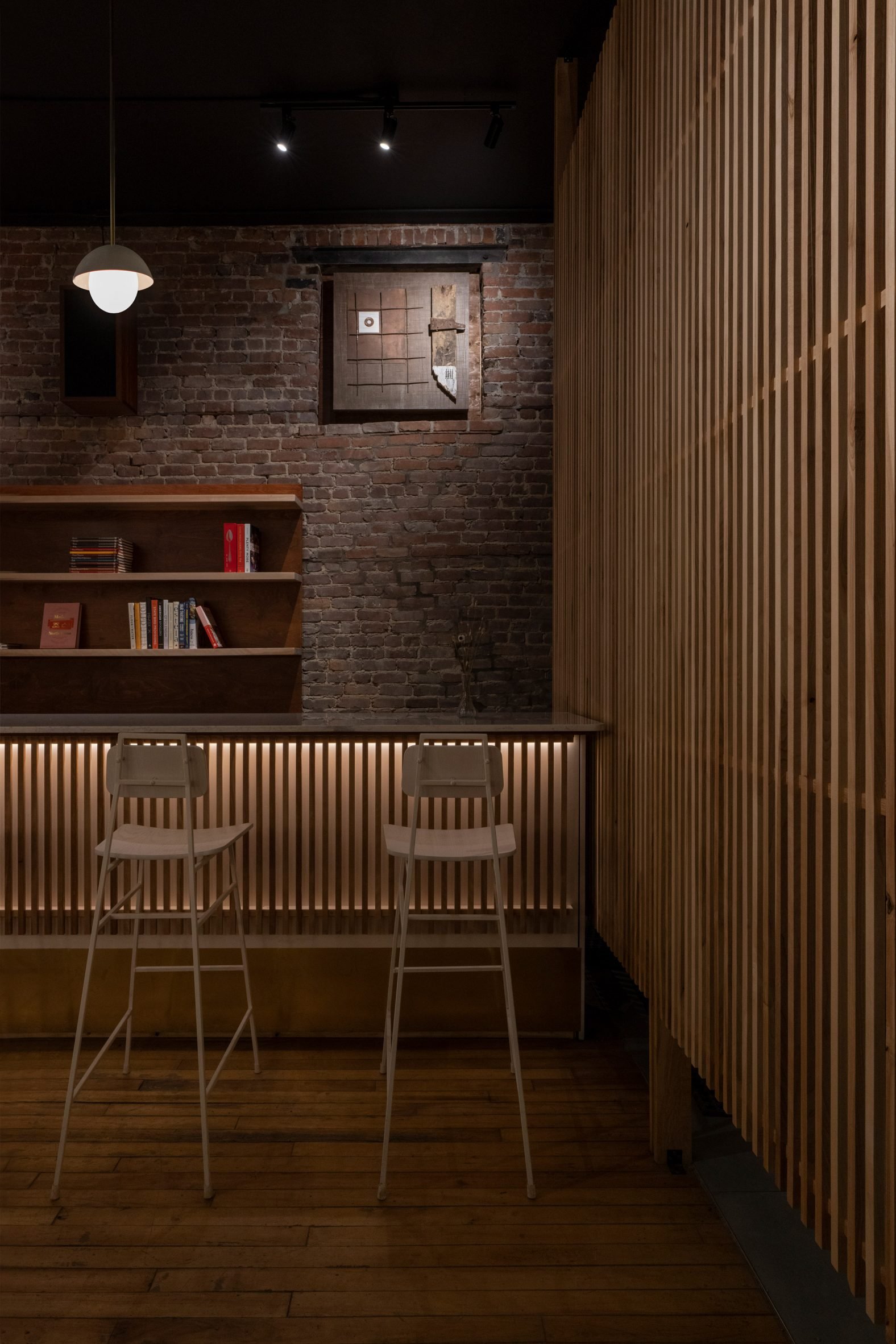
Materials found on-site during demolition have been turned into artworks

Handa envisioned an establishment that would draw cues from the cafe, offering a casual place for neighbours to gather in a nighttime setting.

"As a partner, and because the business is physically linked to an already successful business, I was more emotionally invested in the design process than usual," he said.

"While the spirit of the cafe is reflected in the wine bar's fine lines and warm palette, the new space has an identity of its own, using the stem as a source of inspiration."

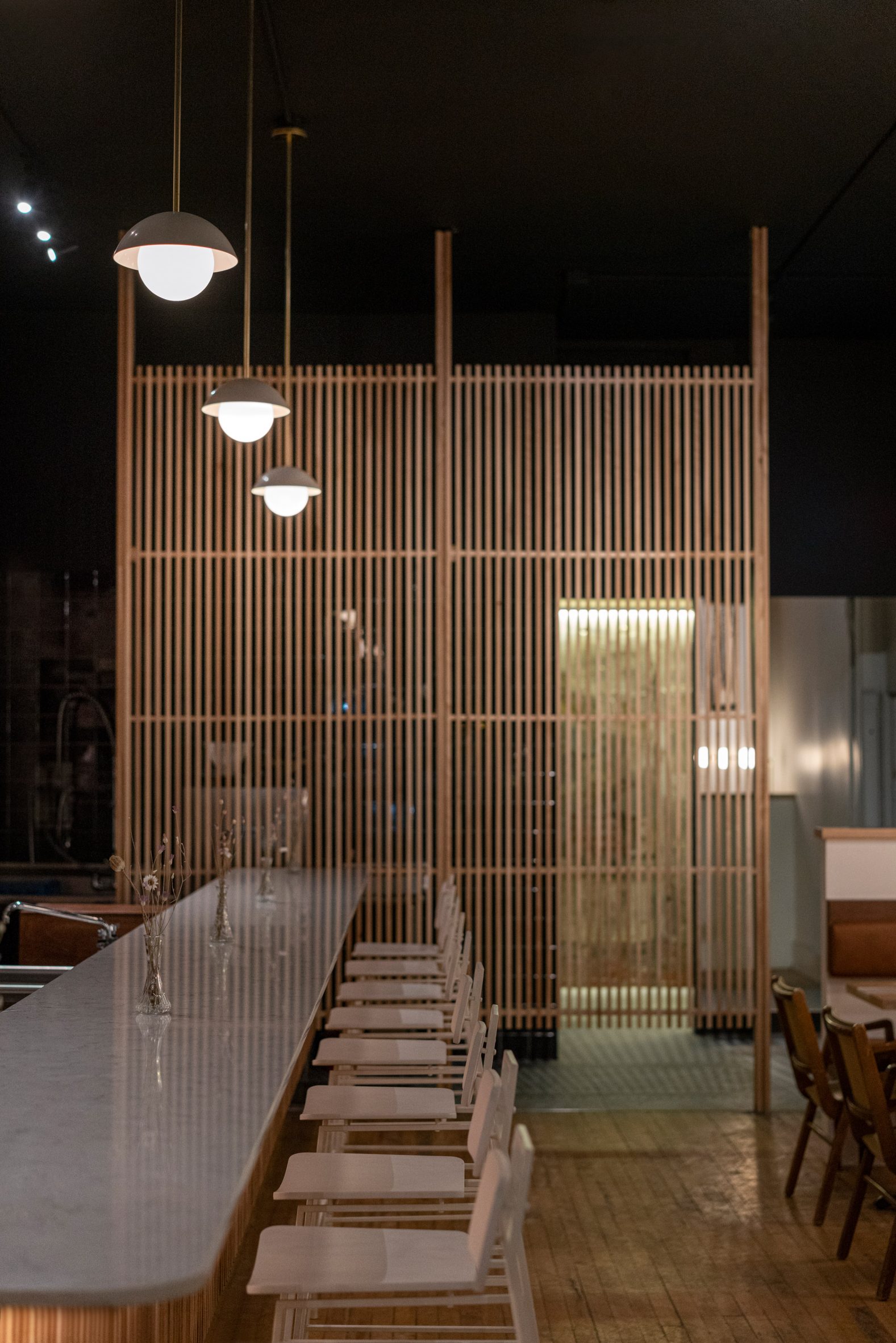
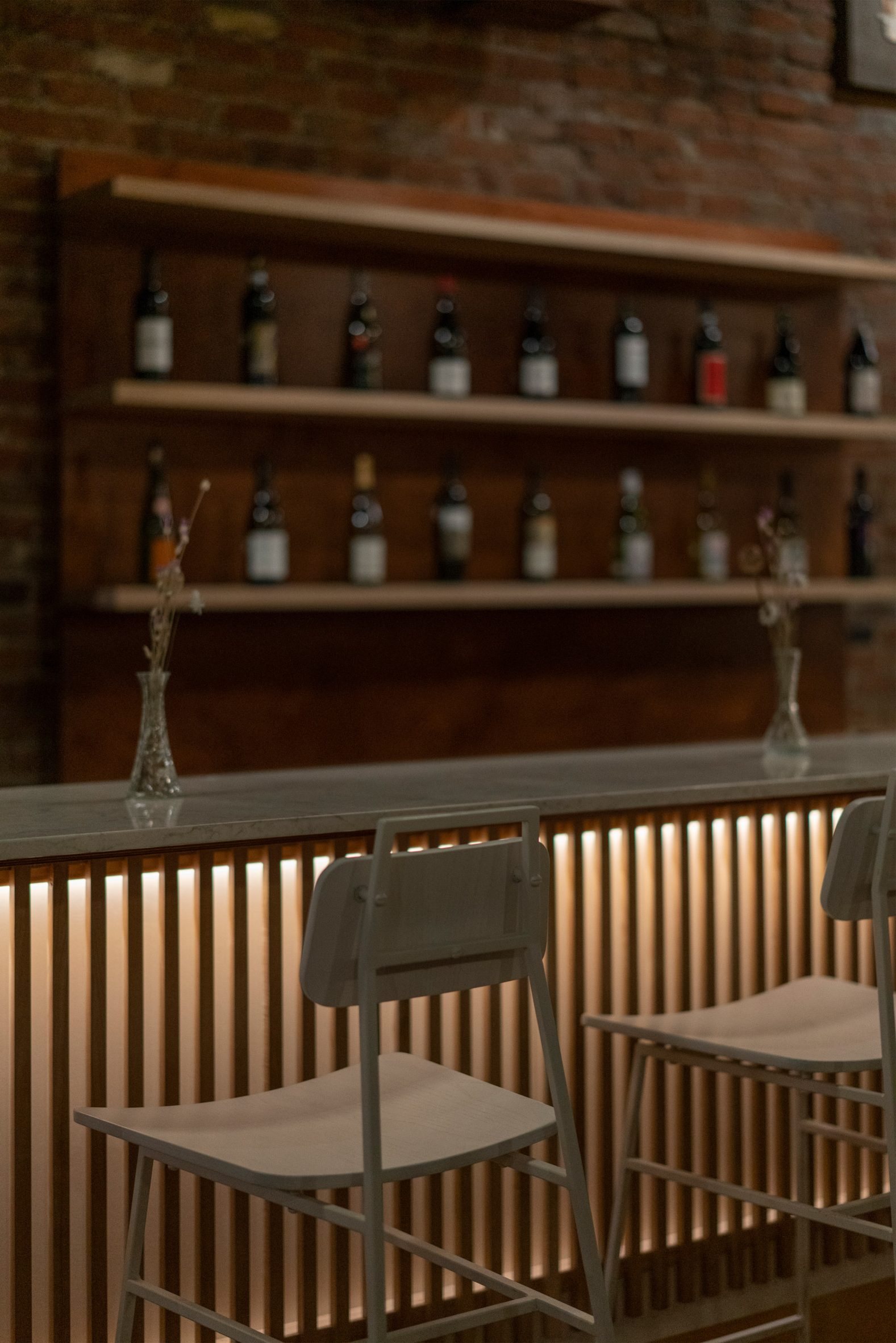
Slim slats of wood, intended to represent wine glass stems, are a recurring motif in the interiors.

Wine bar in Montreal with a slatted privacy screen
A privacy screen separates the tasting room from the back-of-house

During the demolition of the existing space, several finishes and pieces of various materials were found and repurposed as artworks for the finished space.

"Scraps of wood and metal were collected in collaboration with artist and friend Jeremy Le Chatelier, who incorporated them into works of art," the architect said.

The long, narrow space features some walls painted in a dark green colour that was chosen based on a piece of vintage, hand-painted wallpaper that was found on site.

Elsewhere, the existing brick demising walls are exposed in a nod to the area's industrial past.

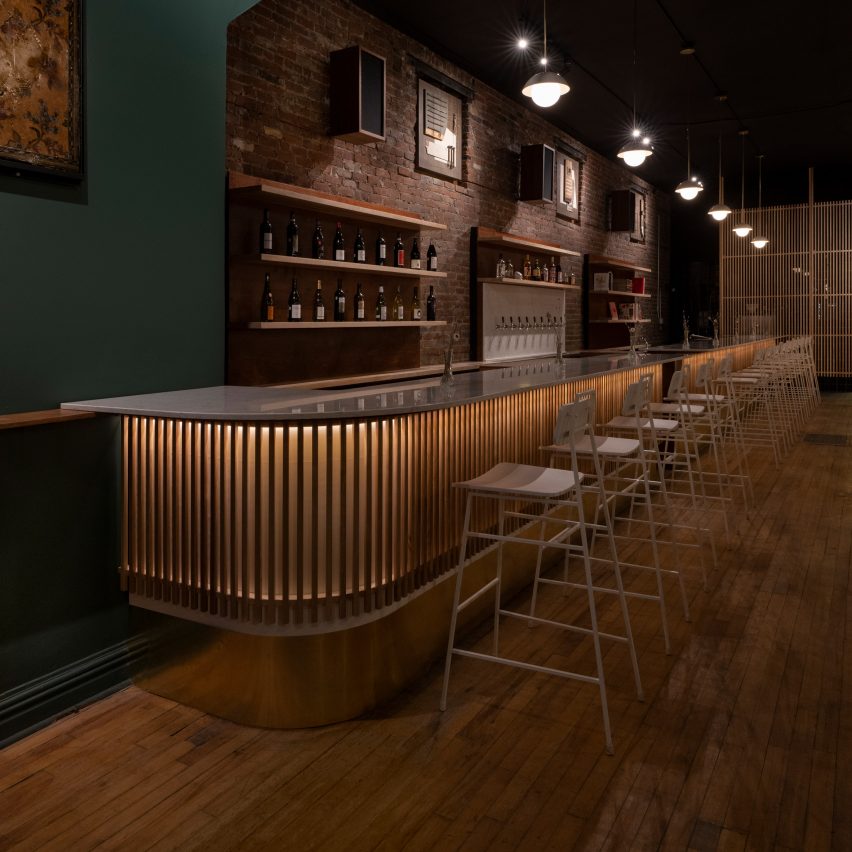
Bar seating in Montreal wine bar Stem
Thin strips of wood that line the space are meant to look like the stem of a wine glass

Thin wooden slats cover the bar itself, a motif that is also found in a privacy screen that separates the back-of-house spaces from the tasting room.

"[The screen] conceals the washroom and dishwashing area, without alienating workers from the lively energy in the bar," said architect.

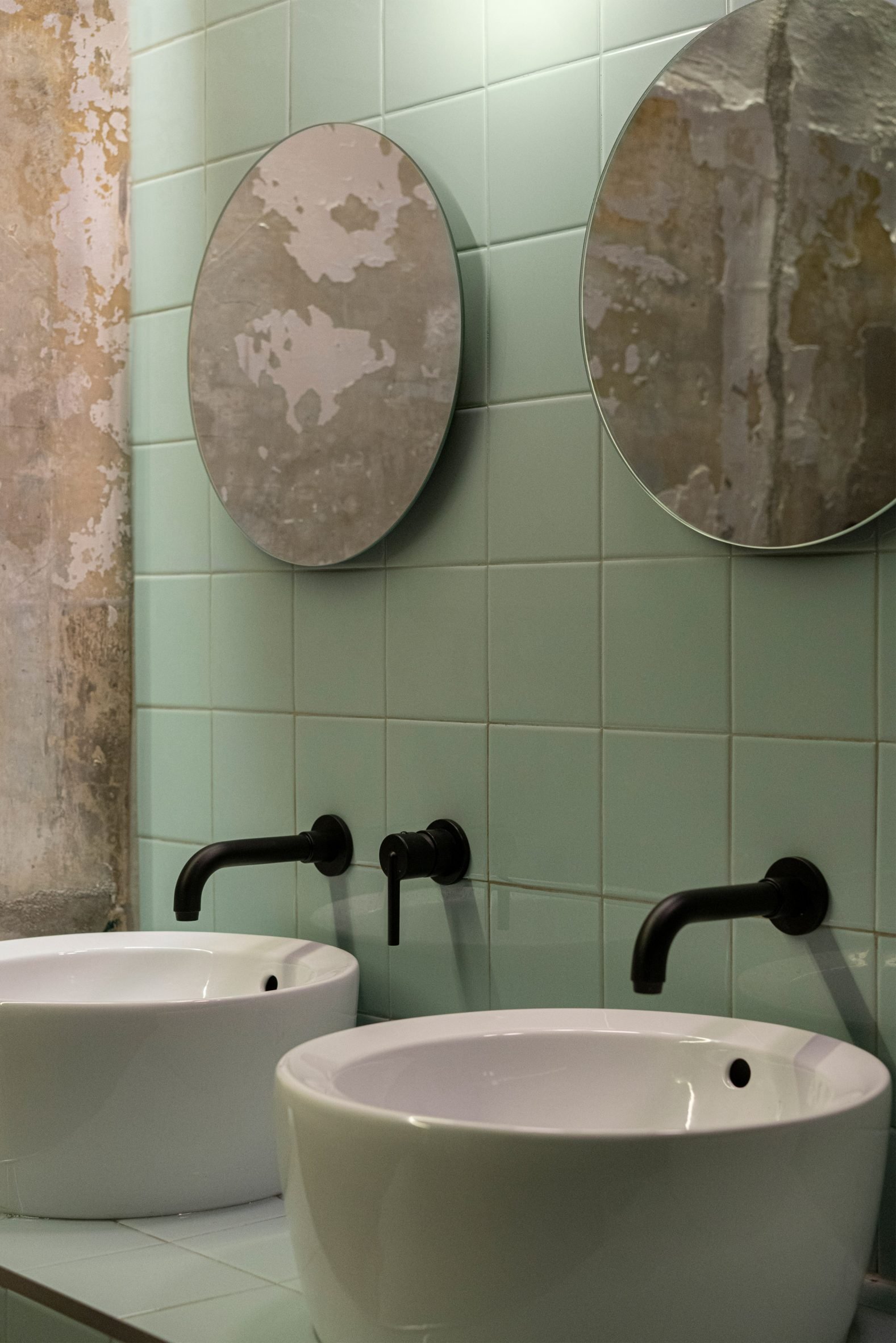
Bathroom with mint green tiles and exposed concrete
New finishes contrast the existing walls in the bathroom

In the restroom, a concrete wall was left in its original condition, contrasting the new tiles and fixtures that were installed during the renovation.

In an effort to support local brands and designers, the architect sourced furniture and lighting from within the city's tight-knit design community. The lights are by a Luminaire Authentik and the furniture was designed by Atelier Appareil, the furniture arm of Appareil Architecture.

Other projects in Montreal include a newly opened coworking space by Ivy Studio and a retro coffee bar downtown by Ménard Dworkind.

The photography is by Olivier Blouin.

The post Ravi Handa designs his own wine bar called Stem in Montreal appeared first on Dezeen.


from Dezeen https://ift.tt/3hOIxbC