Monday, 12 July 2021

Q Collection by Studio Adolini for Quadro Design

A sink and a steel tap

Dezeen Showroom: Italian manufacturer Quadro Design has released a collection of bathroom taps designed by Studio Adolini.

The Q Collection is "an ode to steel and water" – materials that the brand has used throughout its 20-year history.

"Stainless steel has always been at the centre of the company's main focus: a noble metal capable of offering inexhaustible suggestions, in terms of design and use," said Quadro Design.

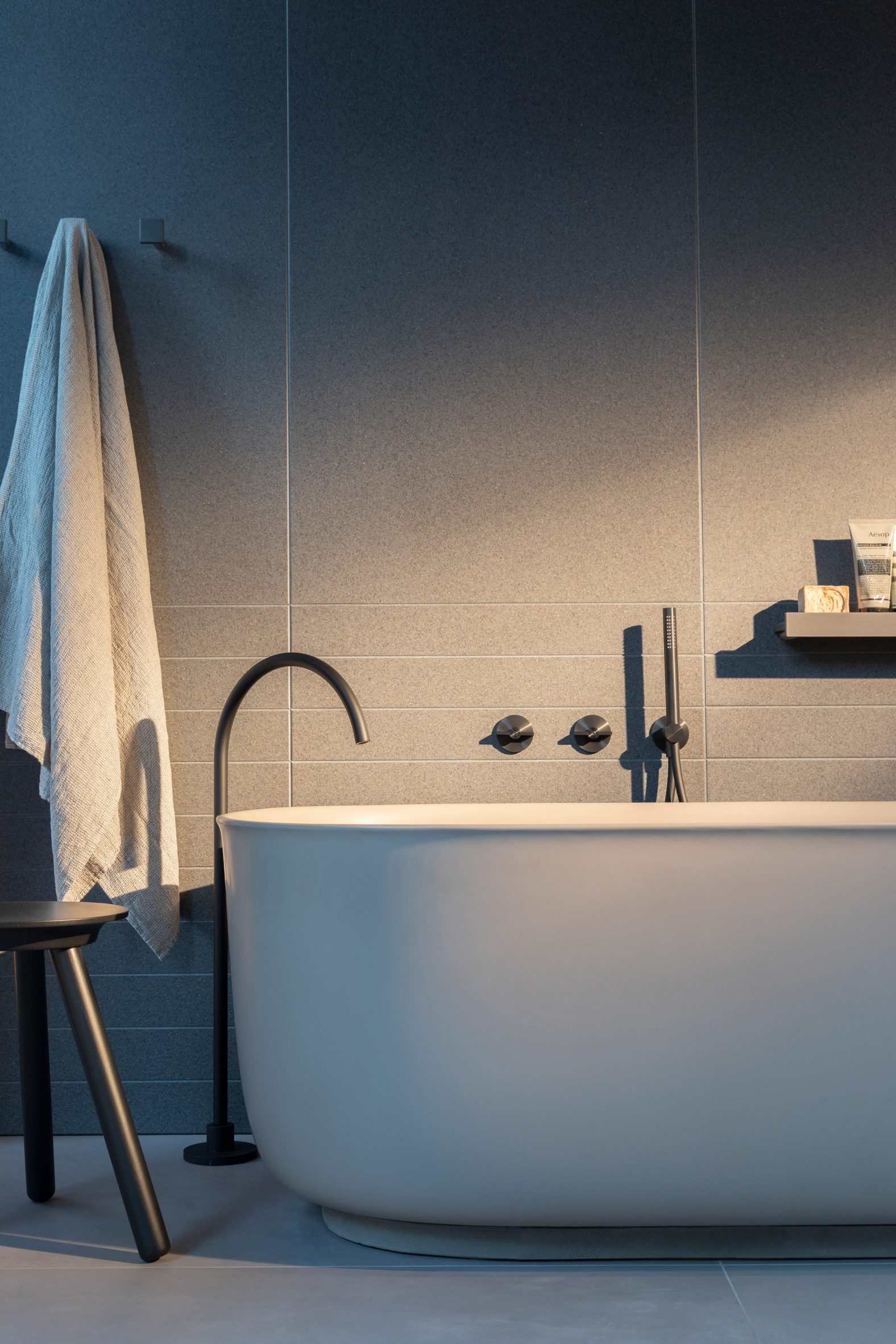
The collection includes the Valvola01 series, an array of wall-mounted and floor taps for use in sinks, bathtubs and showers.

A bathroom with a bath and tap from the Q collection
The Q range includes bathroom and kitchen taps

According to Quadro Design, the taps give traditional industrial tap design a contemporary edge.

"All the charm of the industrial taps with the typical hydraulic and gas ball valves are the inspiration for a synthetic and highly modern formal reinterpretation," the brand said.

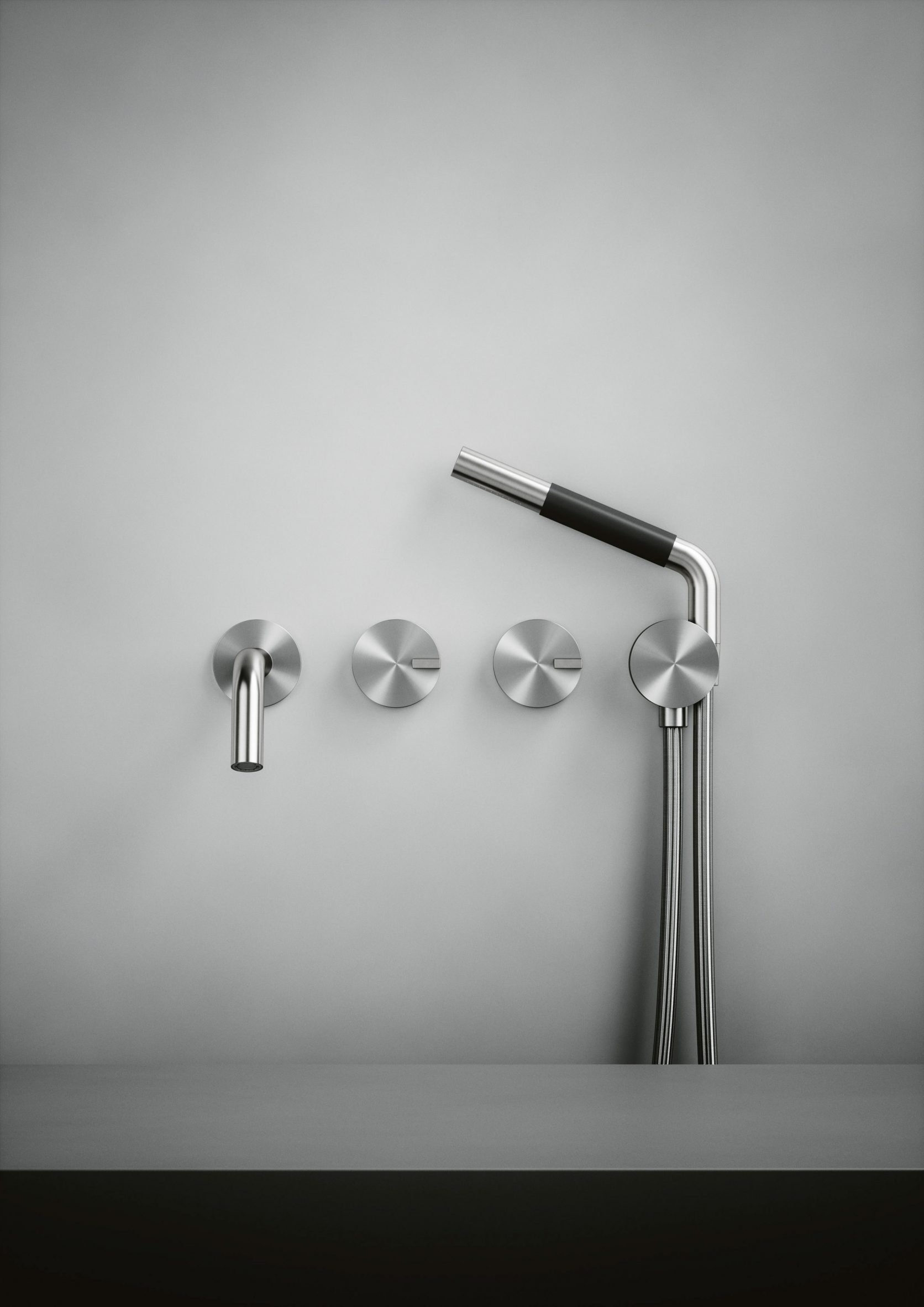
A silver showerhead and bath tap
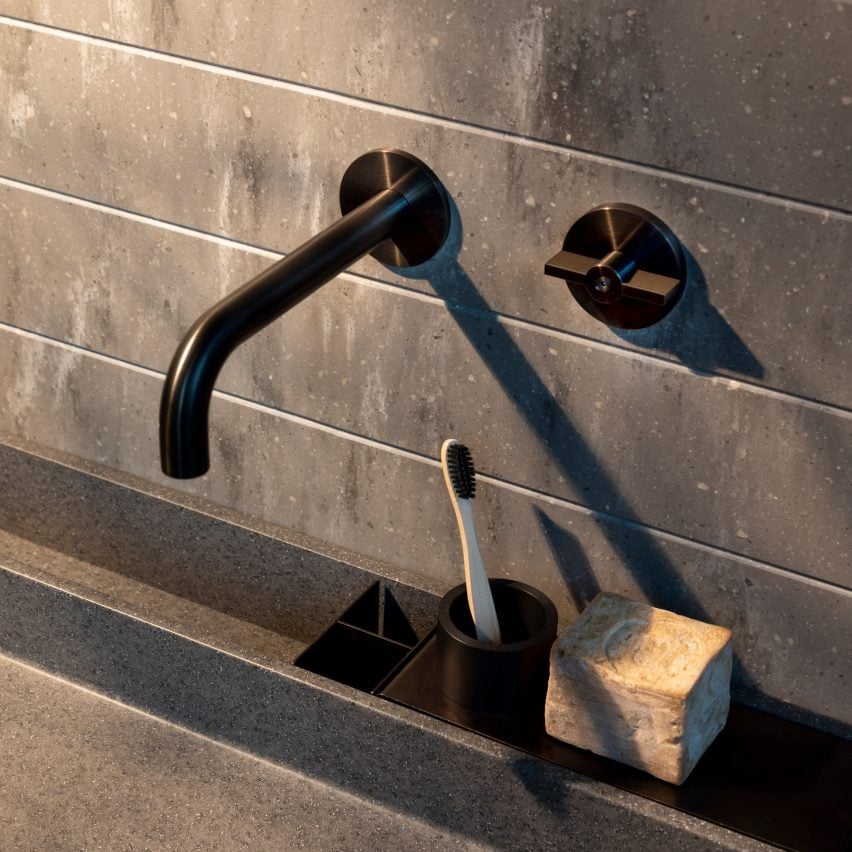
Taps in the Q collection taps can be finished in light gold, pink gold or black gold

Each tap can be finished in light gold, pink gold or black gold using a thin-film coating process known as Physical Vapour Deposition (PVD).

"PVD is a highly innovative coating procedure that allows us not to alter the inherent features of stainless steel, preserving its durability, inalterability, its resistance to acid solvents and saline corrosion and above all, with the lowest environmental impact," the brand explained.

Product: Q Collection
Designer: Studio Adolini
Brand: Quadro Design
Contact: info@quadrodesign.it

About Dezeen Showroom: Dezeen Showroom offers an affordable space for brands to launch new products and showcase their designers and projects to Dezeen's huge global audience. For more details email showroom@dezeen.com.

Dezeen Showroom is an example of partnership content on Dezeen. Find out more about partnership content here.

The post Q Collection by Studio Adolini for Quadro Design appeared first on Dezeen.


from Dezeen https://ift.tt/36u1uv5

Note Design Studio creates warm-hued wine bar that doubles as an office

It has dark wood furnishings

The dark-wood interiors of Japanese bars and restaurants informed this wine-bar-cum-office in Stockholm designed by local studio Note for Swedish digital technology consultancy Samsen.

Samsen, a specialist technology consultancy, lets its employees choose how, when and where they work and with which clients. The company's office set-up led to the unusual interior.

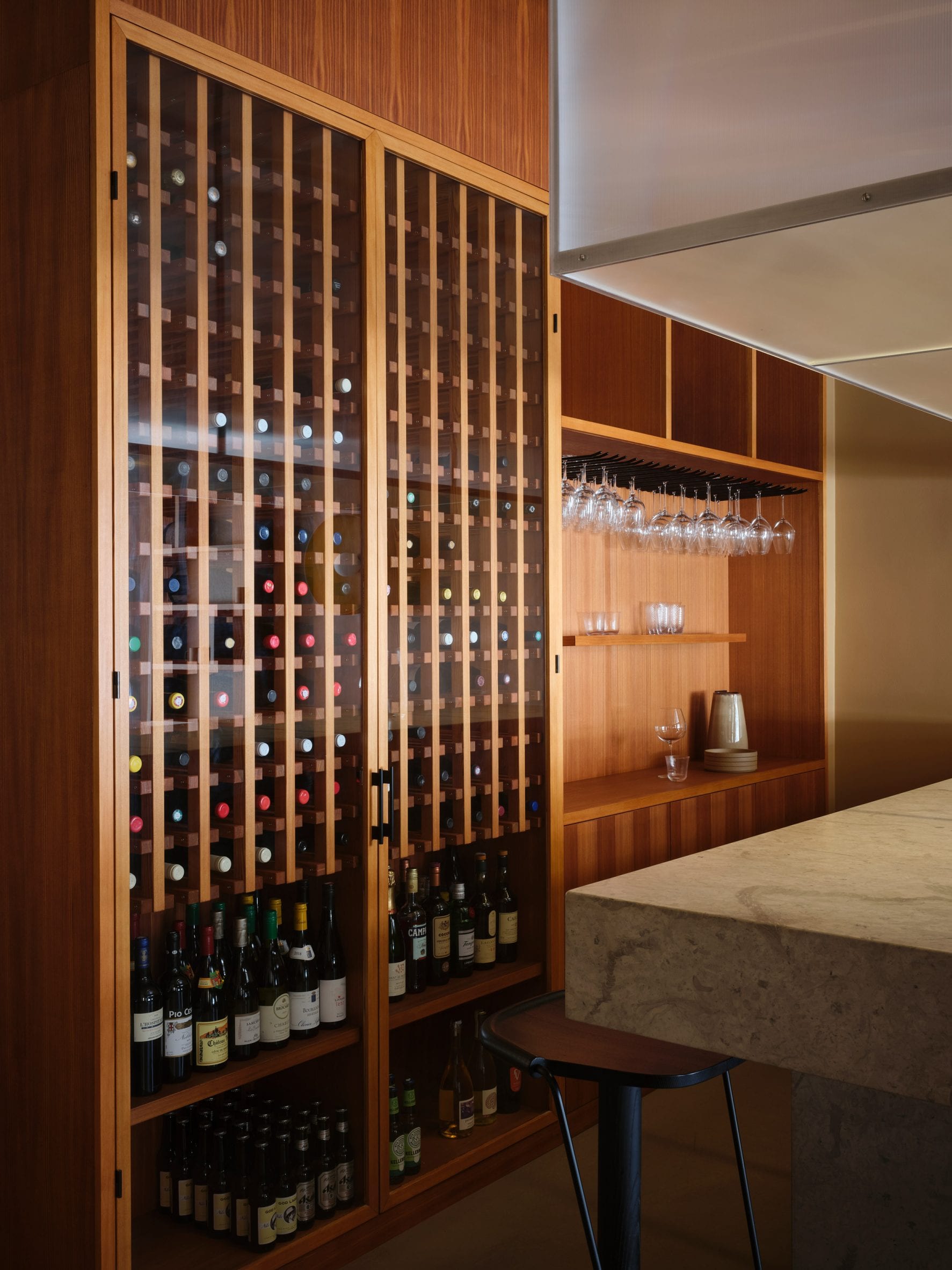
Samsen atelier has large wine storage
Top: it has a large stone bar. Above: wood was used across cabinetry

"When we did our first presentation for Samsen, they first went quiet," Note Design Studio interior architect Susanna Wåhlin recalled.

"They had to explain to us that they didn’t want an office at all – they just wanted to work in a wine bar. The whole idea is to offer employees something different, and add real value besides going to work every day."

samsen atelier uses a combination of materials
Colours were chosen to create a warm environment

The studio, founded in 2008 by Johannes Carlström and Cristiano Pigazzini, was charged with creating a warm and welcoming space that was pleasant and practical to work, dine, drink and socialise in.

The brief stipulated that it needed to be equally suited to use in both day and night, and had to accommodate a large number of people in a relatively small space.

A wide variety of flexible seating set-ups were required to accommodate different types of work as well as areas for entertaining clients, industry peers and friends.

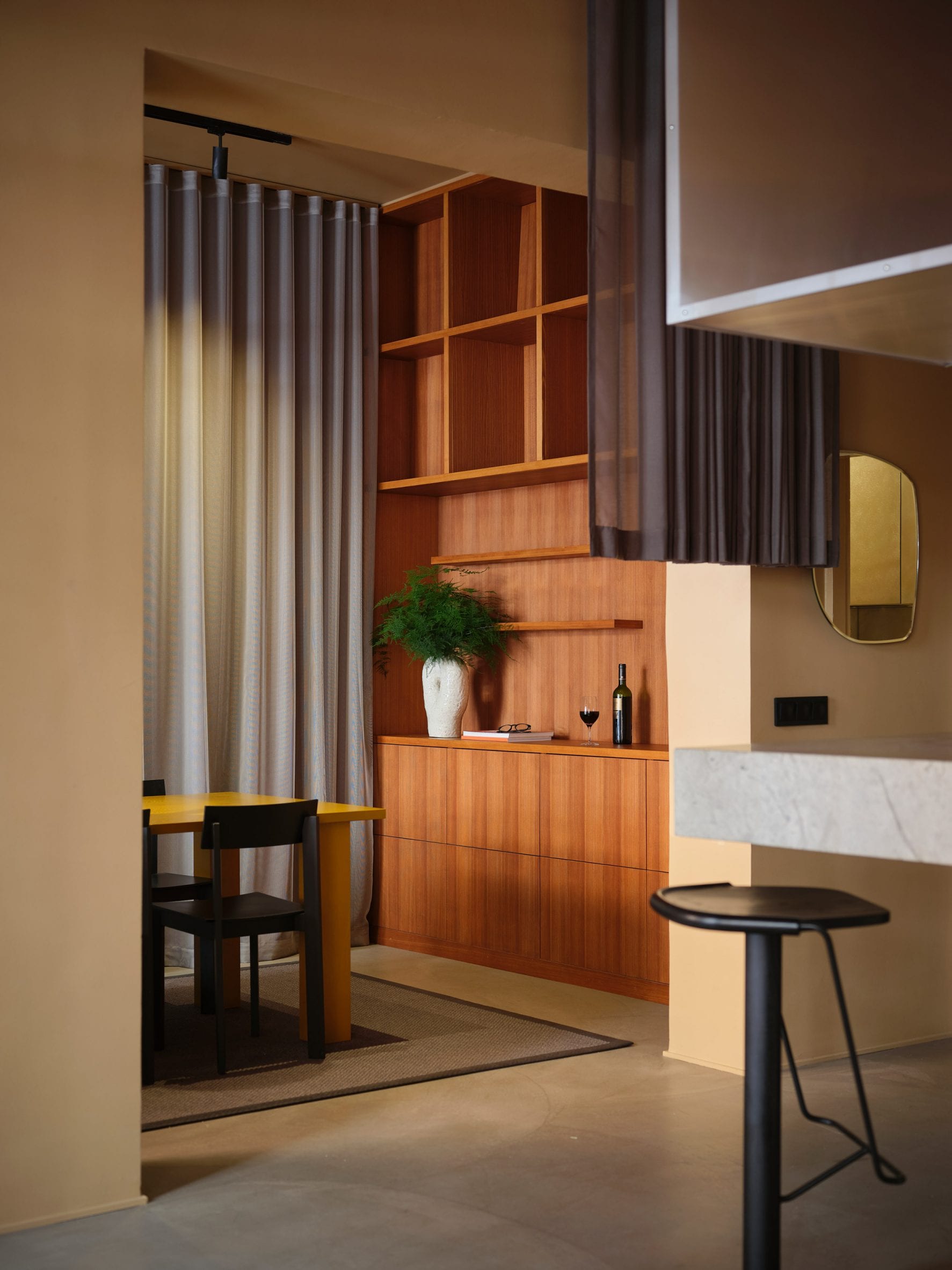
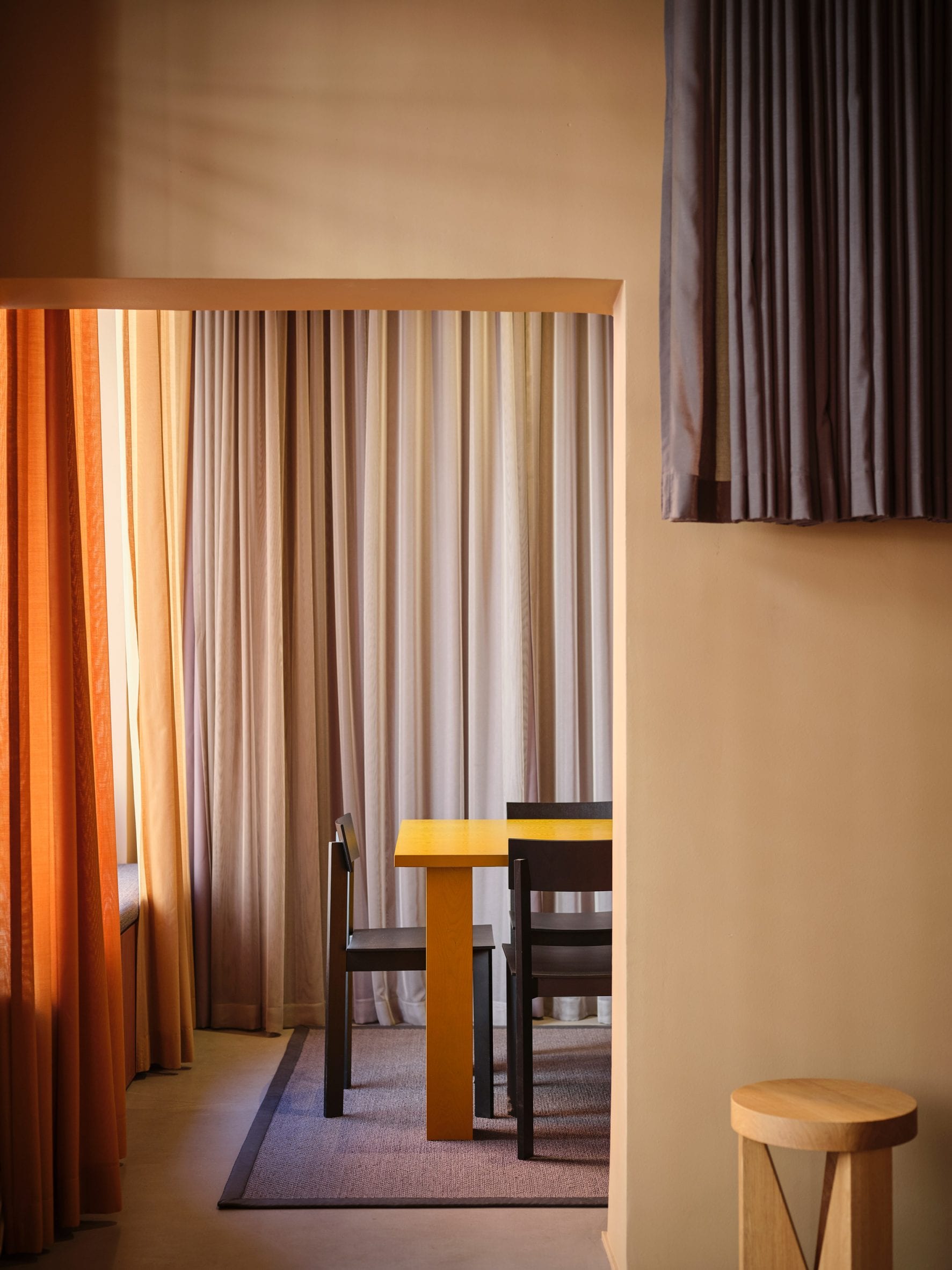
Openings in walls connect different rooms at samsen atelier
Curtains were placed throughout the space

The HQ, named the Samsen Atelier, occupies what used to be a jewellery boutique in the city's central Odenplan plaza.

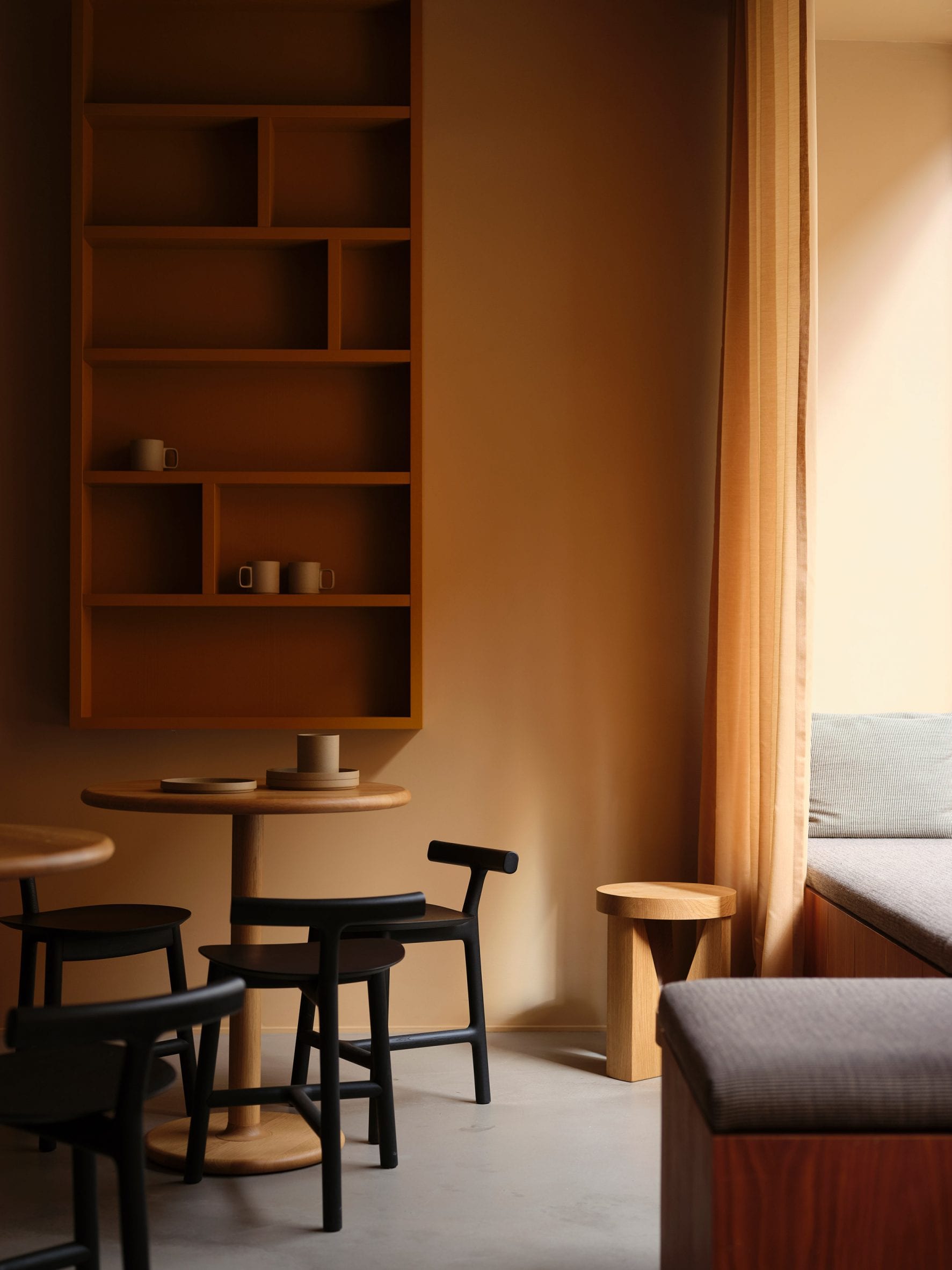
The floor plan is laid out across two connected rooms – one with a large communal table that can be used for dining or collaborative work, and another with a bar lined with stools, a trio of cafe tables, and bespoke upholstered benches beneath two large windows.

This set-up allows for group gatherings, one-to-one chats and individual work to take place simultaneously and creates a vibrant atmosphere even when relatively few people are on site.

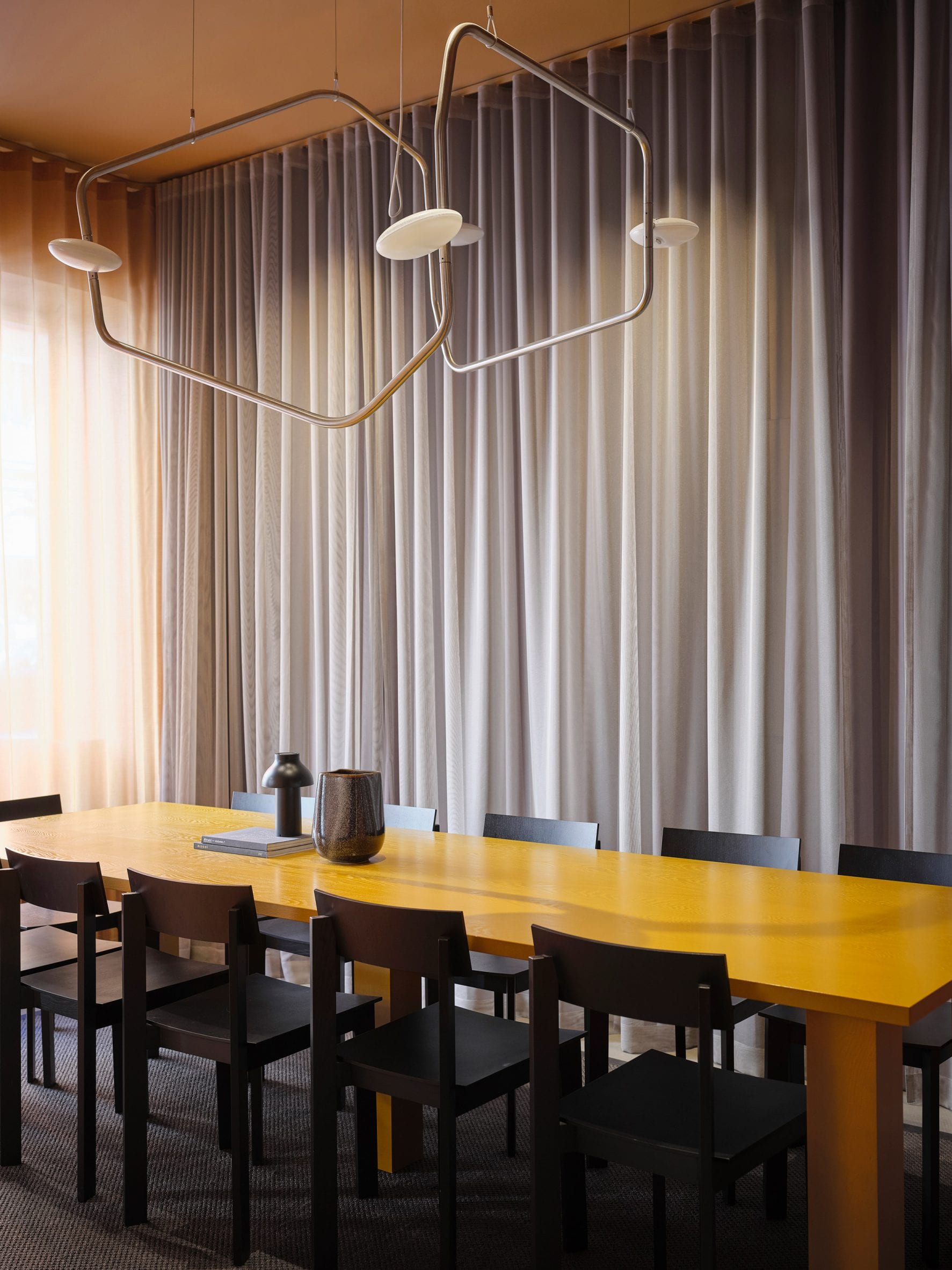
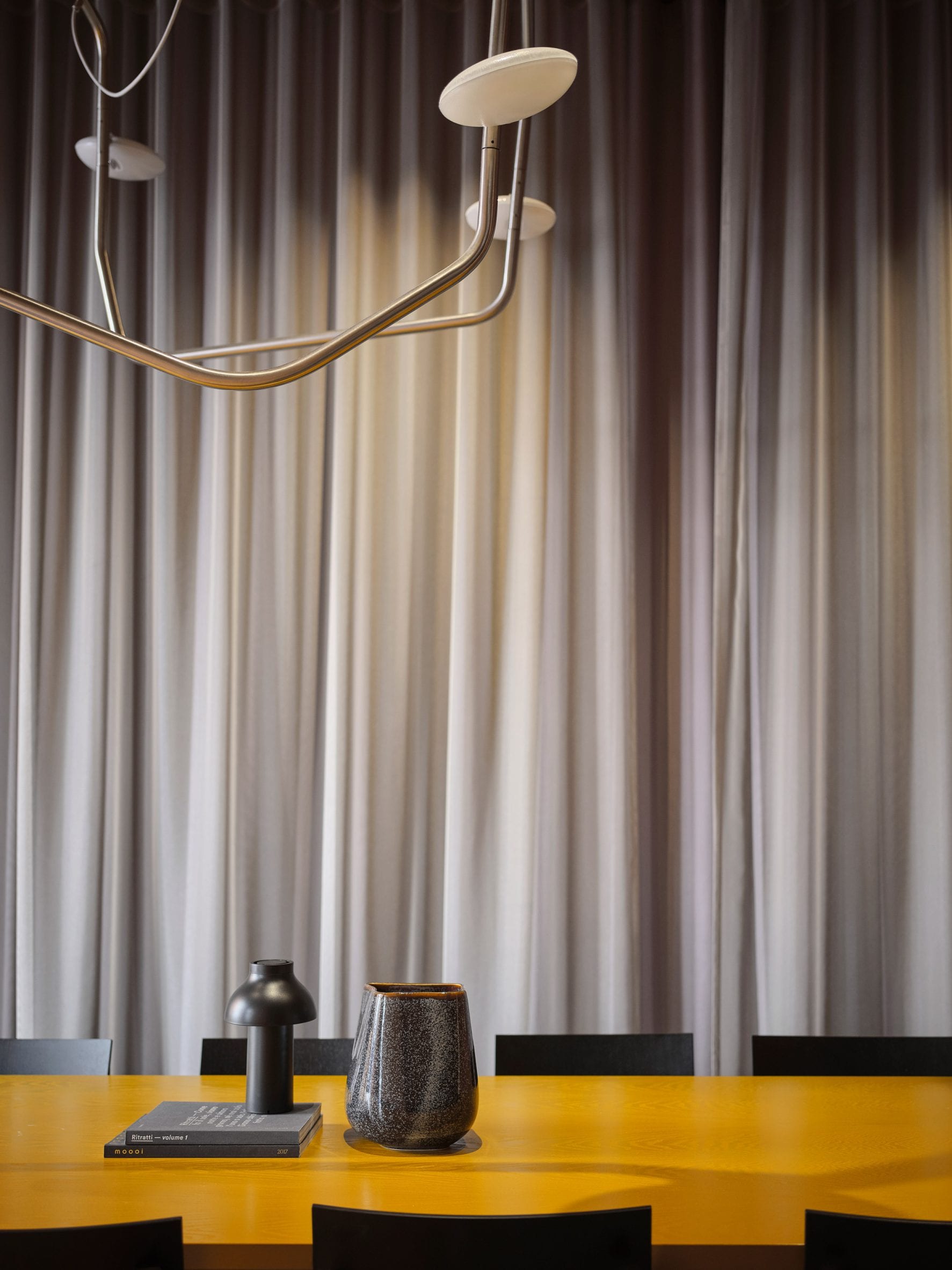
A yellow dining table was placed at the centre of the space
A tubular light was suspended over a dining table

The material and colour palette is informed by the small bars and cafes found in Japan, which the studio describes as "spaces that often seem tiny, but have a surprising capacity to hold a large number of people thanks to clever seating arrangements".

The interior balances warm and cool colours and combines traditional stained softwood with concrete and steel accents.

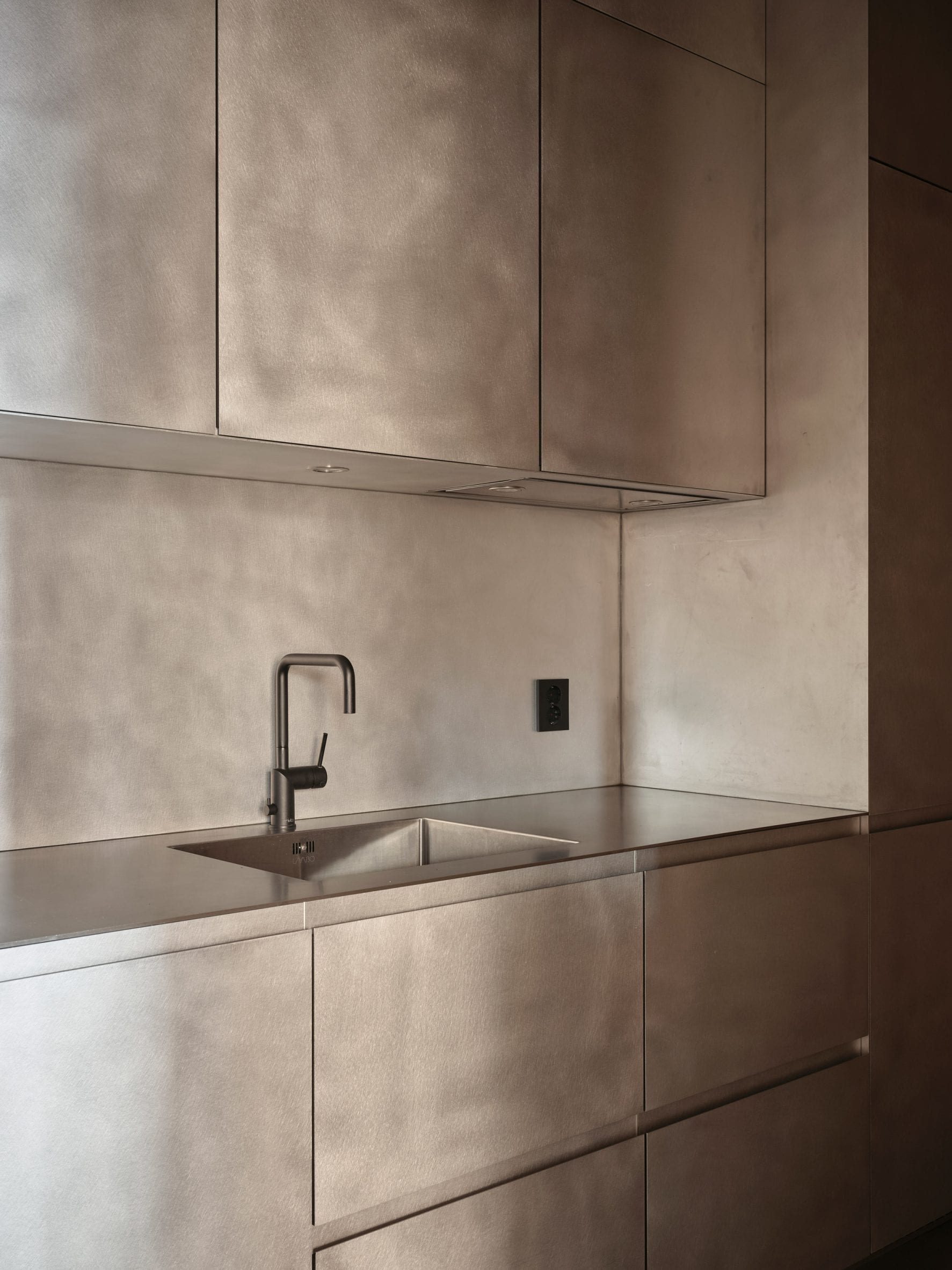
The wooden cabinets on the walls are a direct reference to Japanese interiors, as is the half-length curtain that divides the two rooms. Another curtain separates the kitchen area, which houses brushed metal units from Copenhagen-based kitchen brand Reform that contrast with the otherwise warm, yellow-brown palette.

A bespoke bar made from chunky slabs of limestone sits in front of bespoke cabinetry and a tall wine fridge, also designed by Note.

Grey curtains contrast with the yellow table
Black chairs were placed beside the yellow table

A number of other items of furniture in the space were created by Note especially for Samsen, including a yellow shelving unit on the wall, integrated window benches, and the large yellow communal table, which is surrounded by black chairs from the Candid collection that the studio designed for Zilio A&C.

A bent tubular steel lamp by American design studio Rich Brilliant Willing hangs above the communal table and in the adjoining space, the bar stools, café chairs and tables have been sourced from Mattiazzi.

samsen atelier uses warm toned throughout the interior
Dark and light woods were combined

Power outlets are positioned to enable easy access from all seating areas and the silver curtain on the wall conceals a whiteboard. Two large screens can be used for presentations, as well as for video gaming and showing sports events.

"Where 'normal' corporations expect that the office will create relationships within their team – and thus forming a company culture – many newer companies that want to be more flexible struggle to build the same sense of togetherness," said Tomas Måsviken, co-founder of Samsen.

"Often, the solution takes the form of mandatory team-building activities such as conferences and seminars. The Samsen Atelier is our vision of what the alternative could be – it's our belief that the time we do spend together will be done freely, and will therefore be much more meaningful and personal."

Cabinetry at samsen atelier was finished with a silver hue
A silver-toned kitchen space was added to the space

The Covid-19 pandemic has accelerated long-standing workplace trends that embrace flexibility and employee satisfaction.

Recent research from office design leader Steelcase has shown that working from home during the pandemic has changed people's expectations of their workplaces.

A report compiled by the brand identifies four "macro shifts" that it believes organisations will need to address as employees return to working at the office.

Note Design Studio recently completed an office interior in London that aimed to "break the grid" of its 1930s office building.

Photography is by Joakim Johansson.

The post Note Design Studio creates warm-hued wine bar that doubles as an office appeared first on Dezeen.


from Dezeen https://ift.tt/3hXbRgp

Sunday, 11 July 2021

AAU Anastas aims to challenge "imperial ideas" with vaulted stone pavilion at Venice Architecture Biennale

All Purpose installation by AAU Anastas at the Venice Architecture Biennale

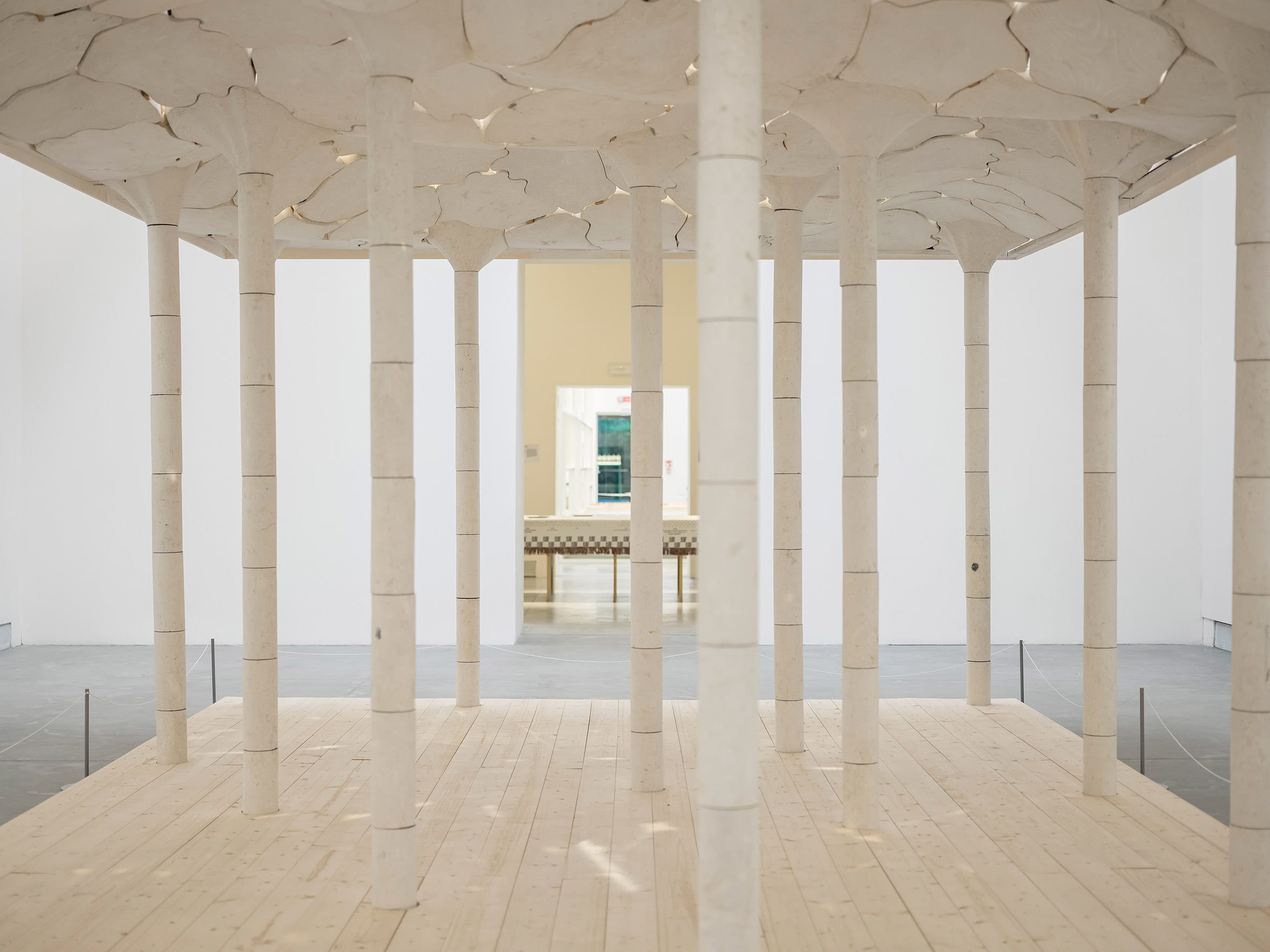
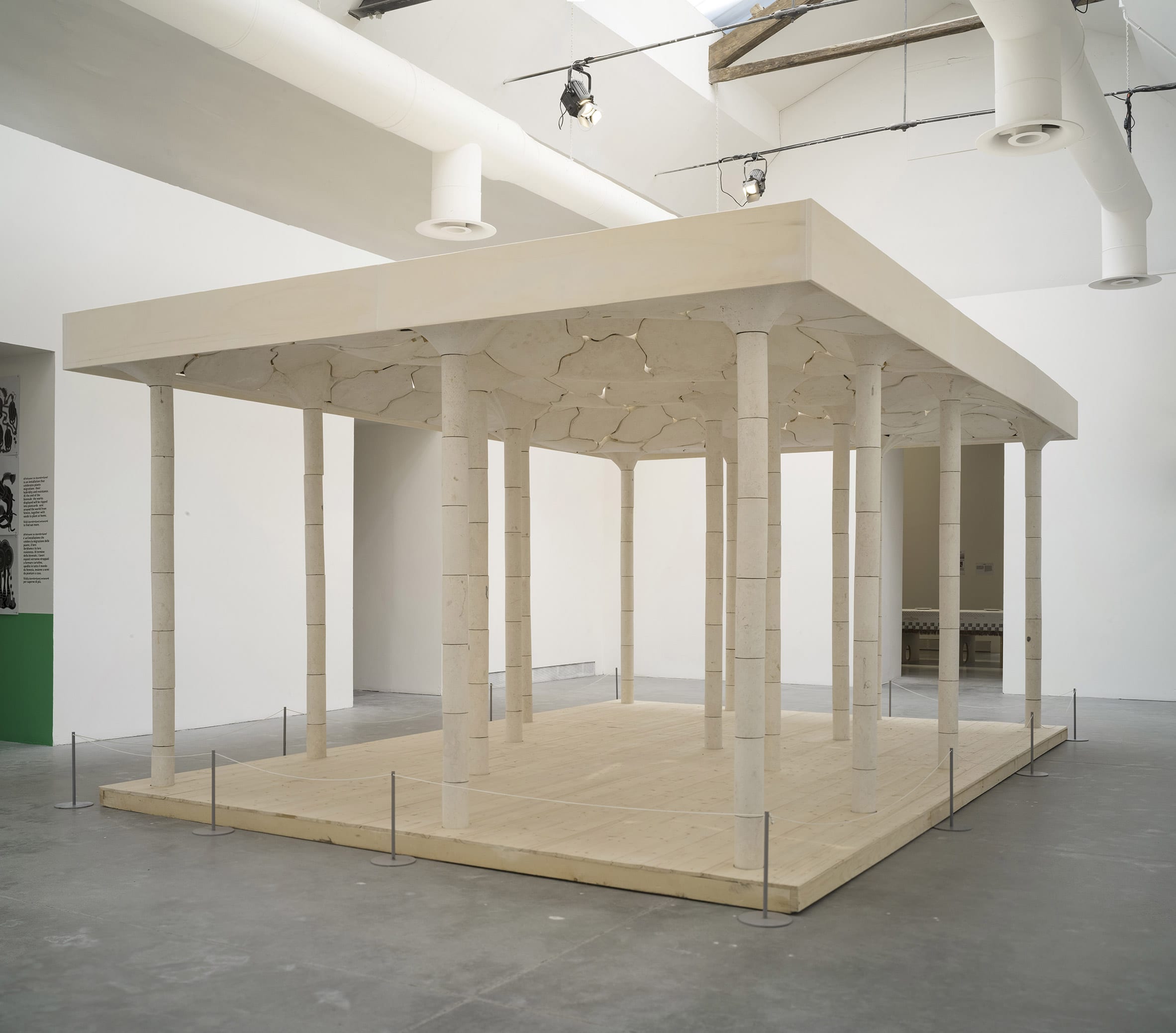
Palestinian studio AAU Anastas has created an installation with a vaulted stone ceiling at the 2021 Venice Architecture Biennale as part of an ongoing project challenging the origins of stone architecture.

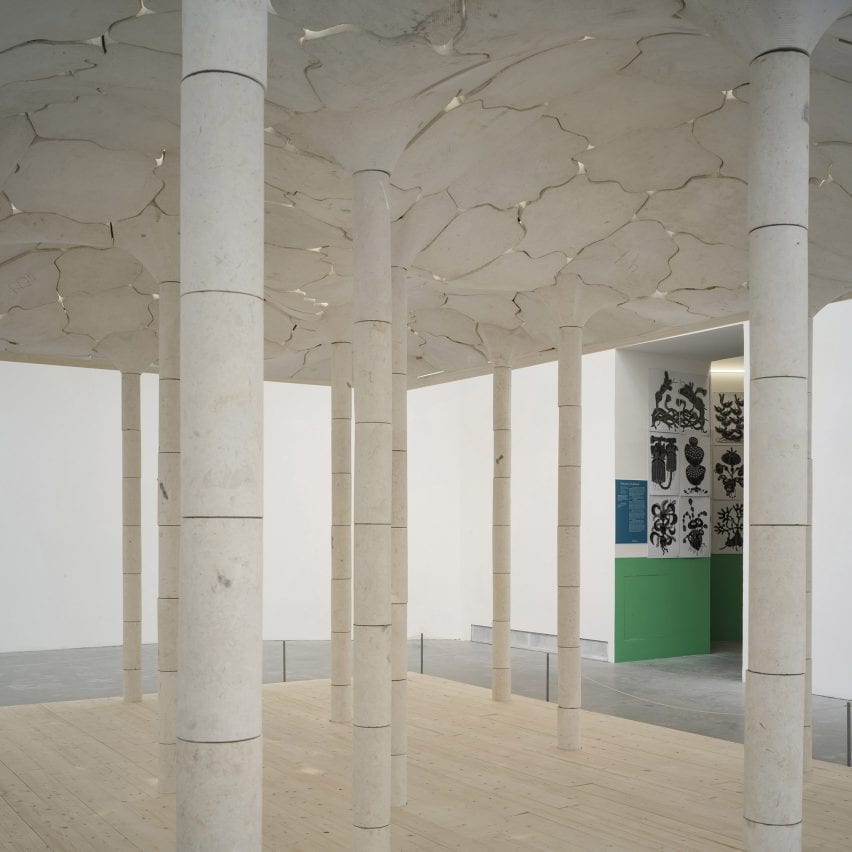
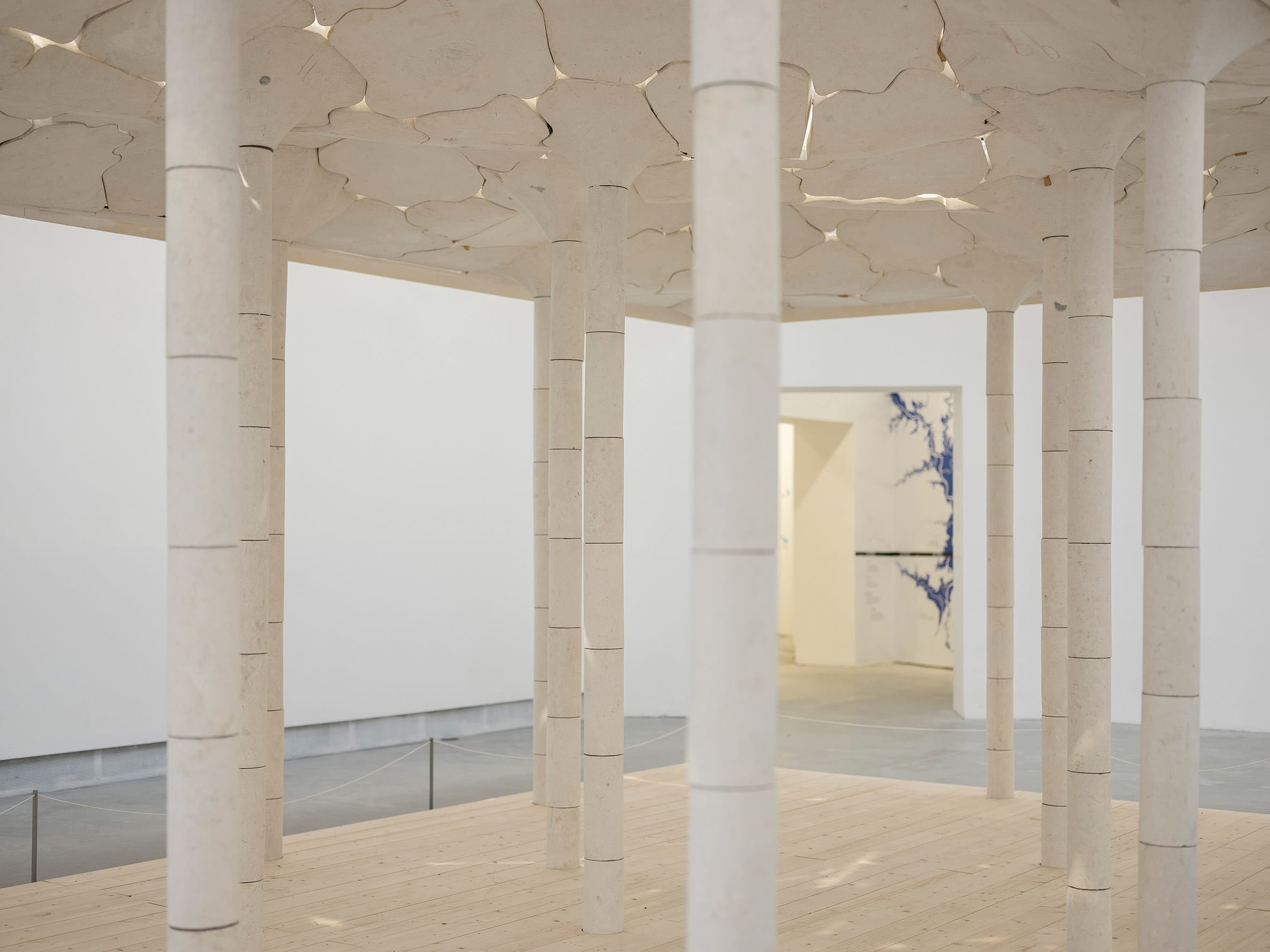
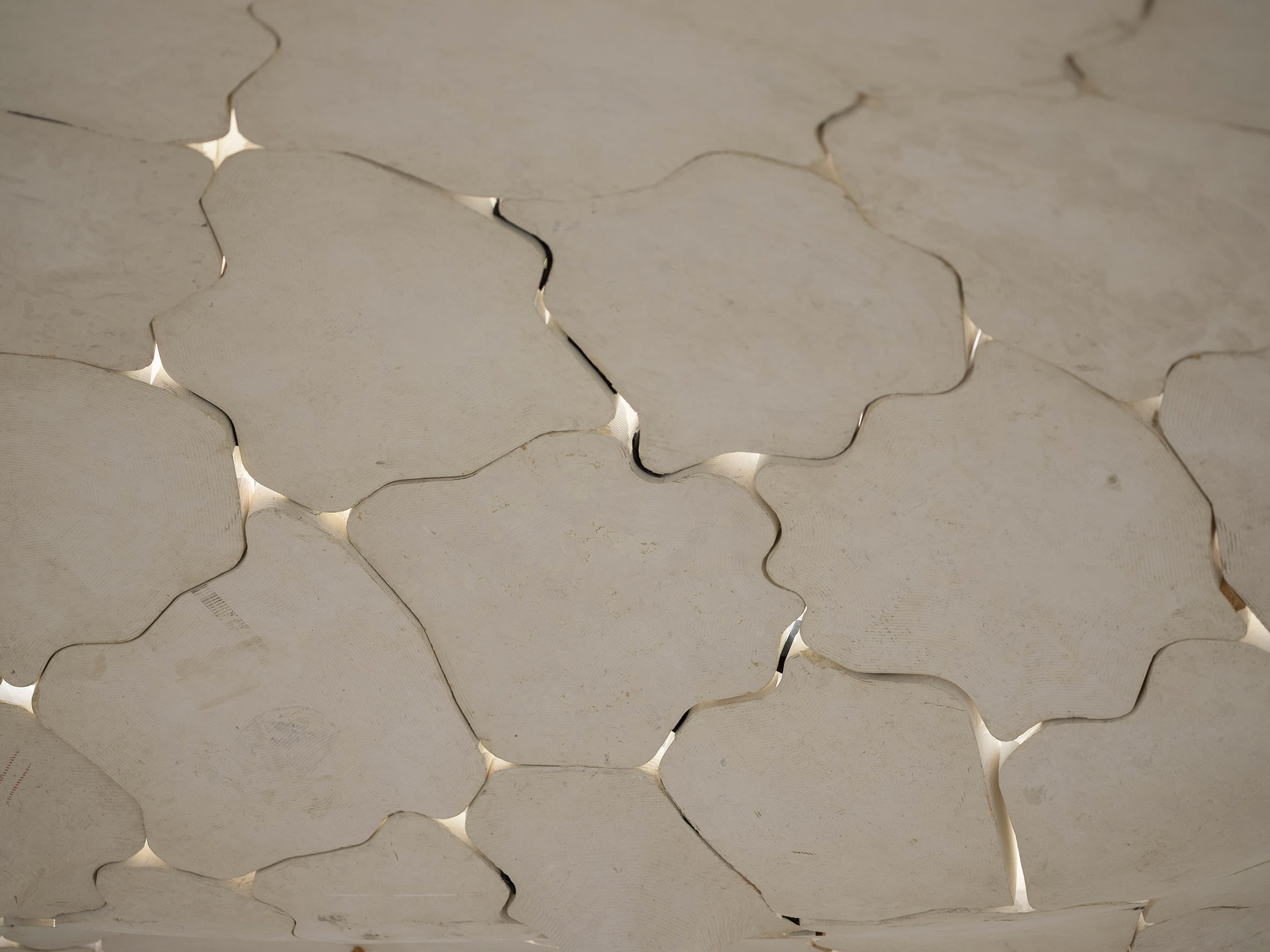
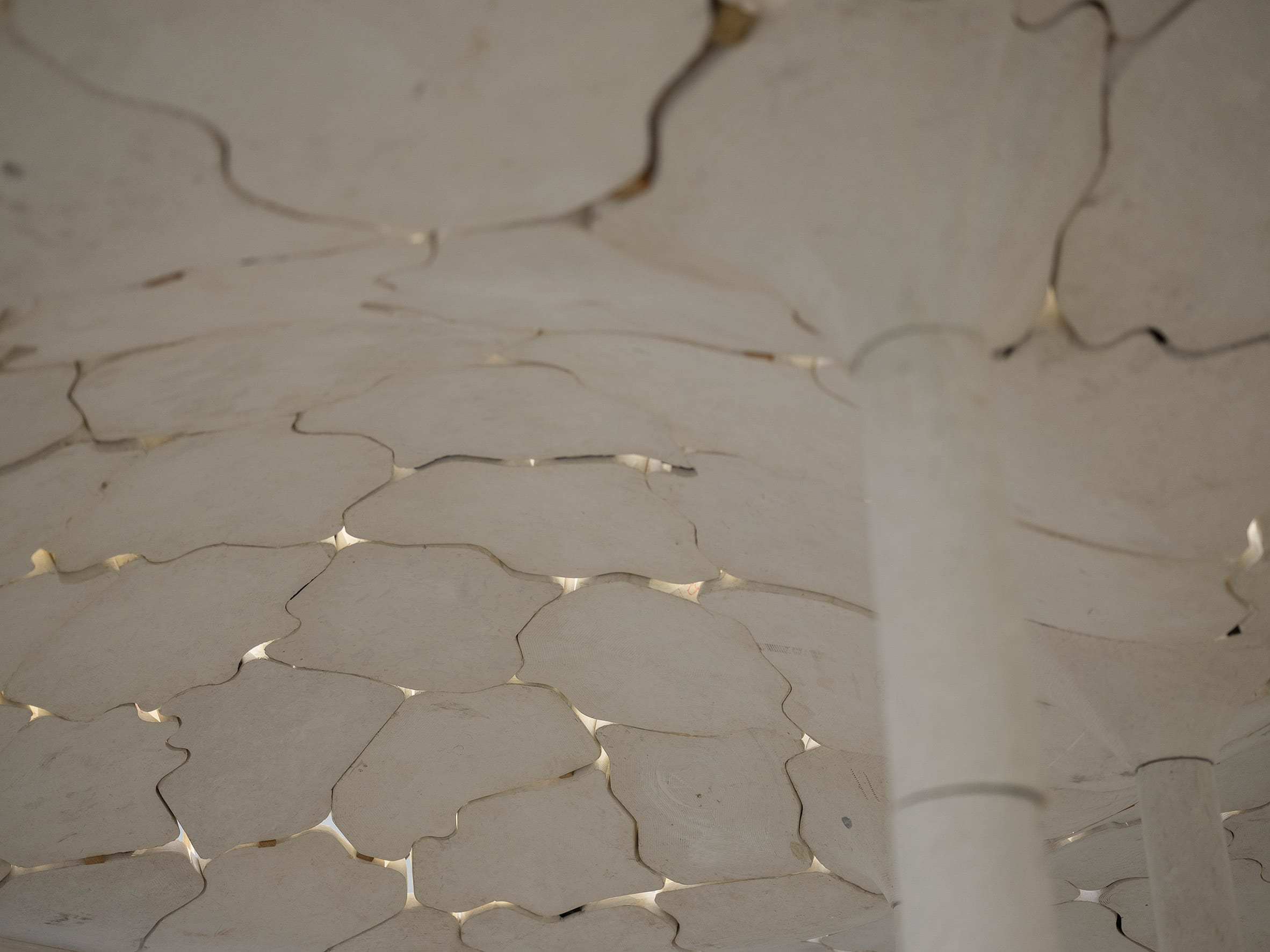
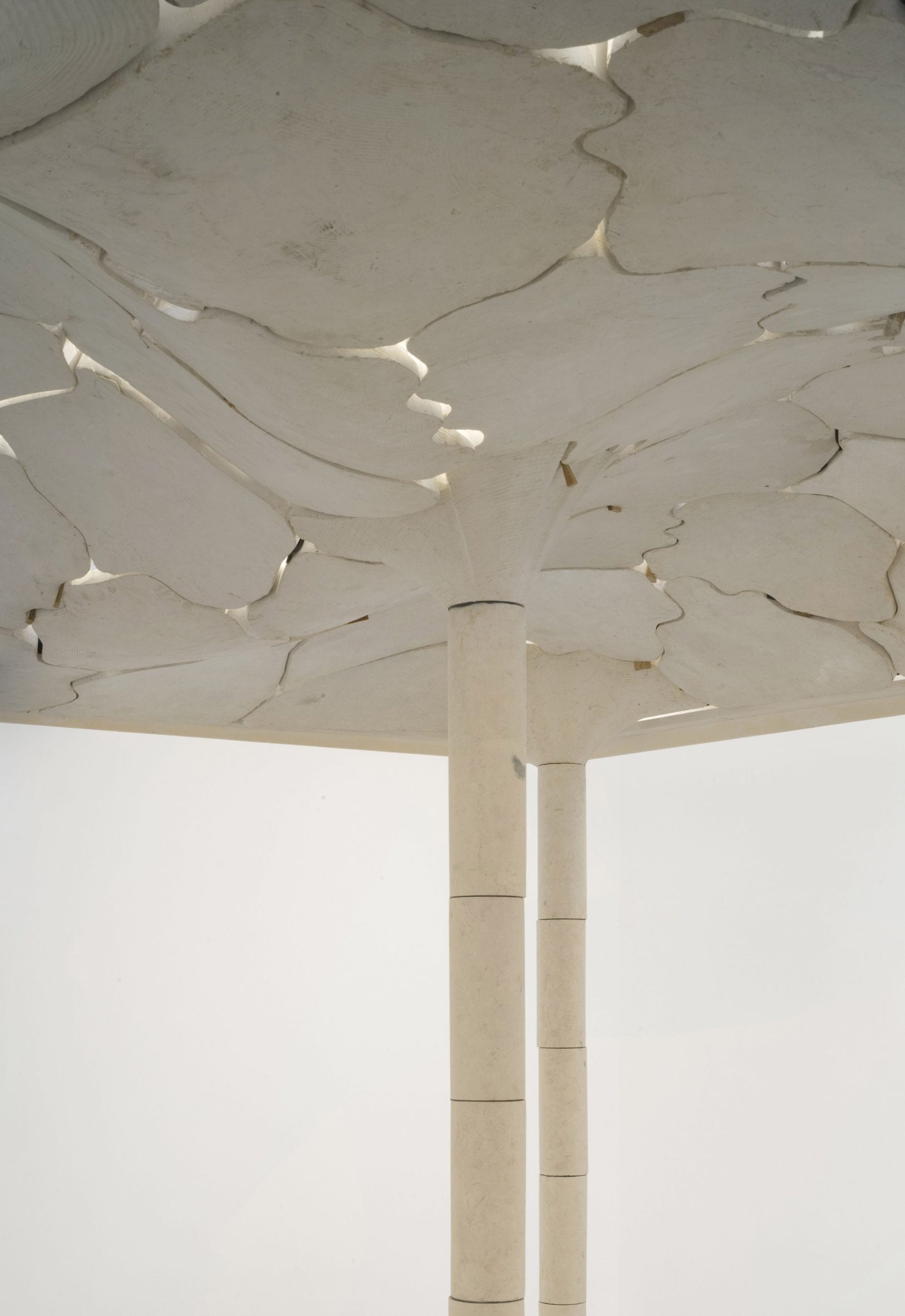
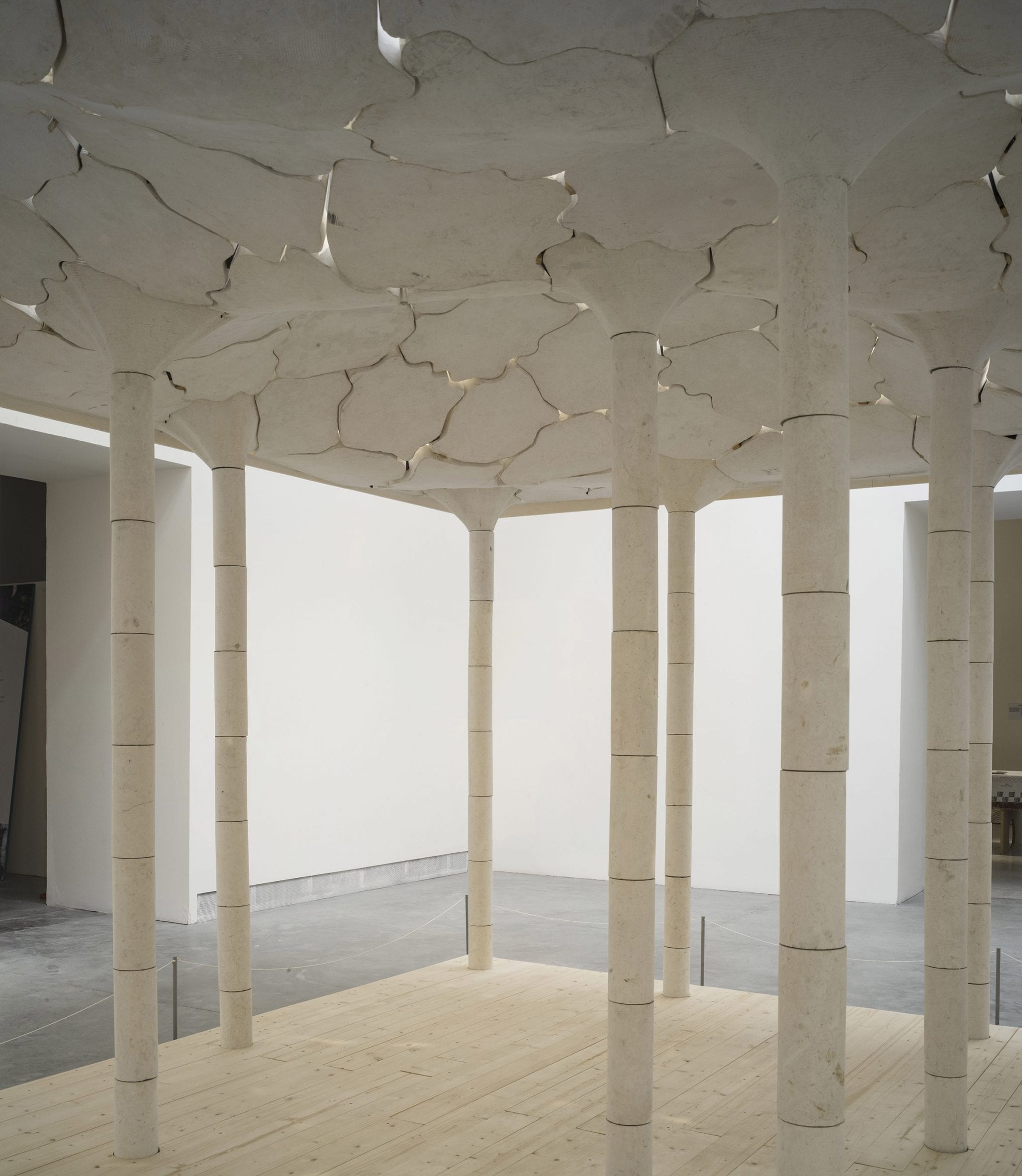
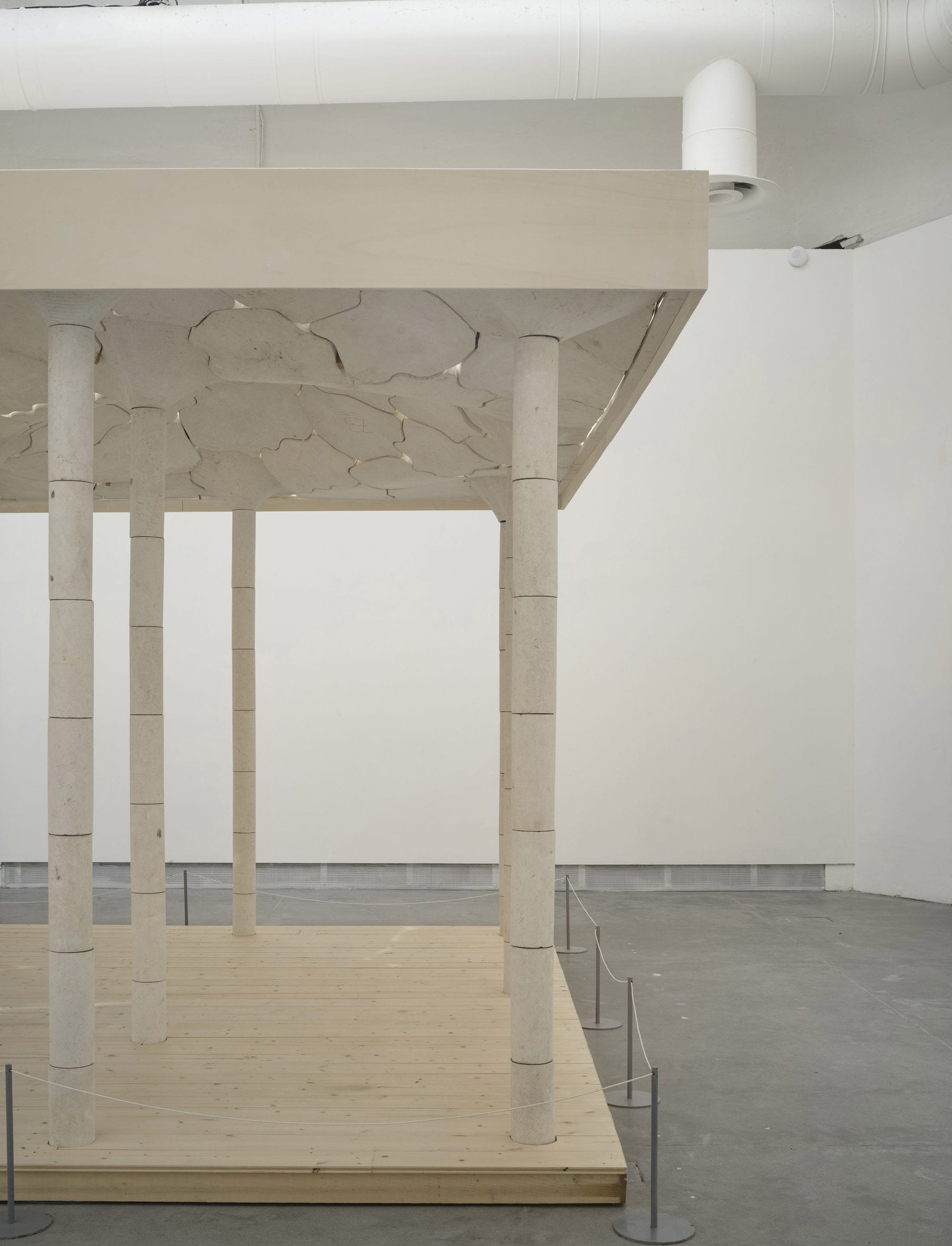
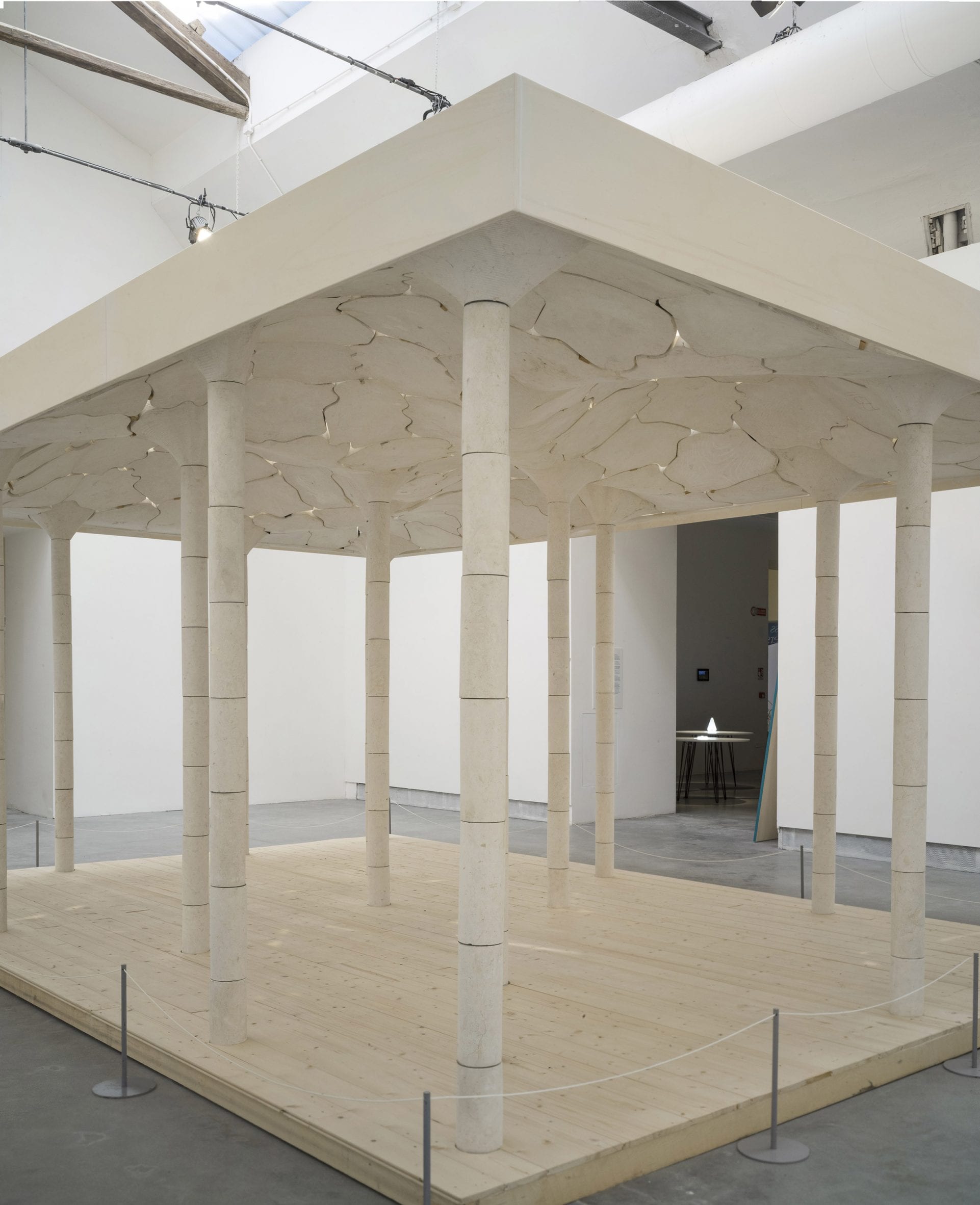
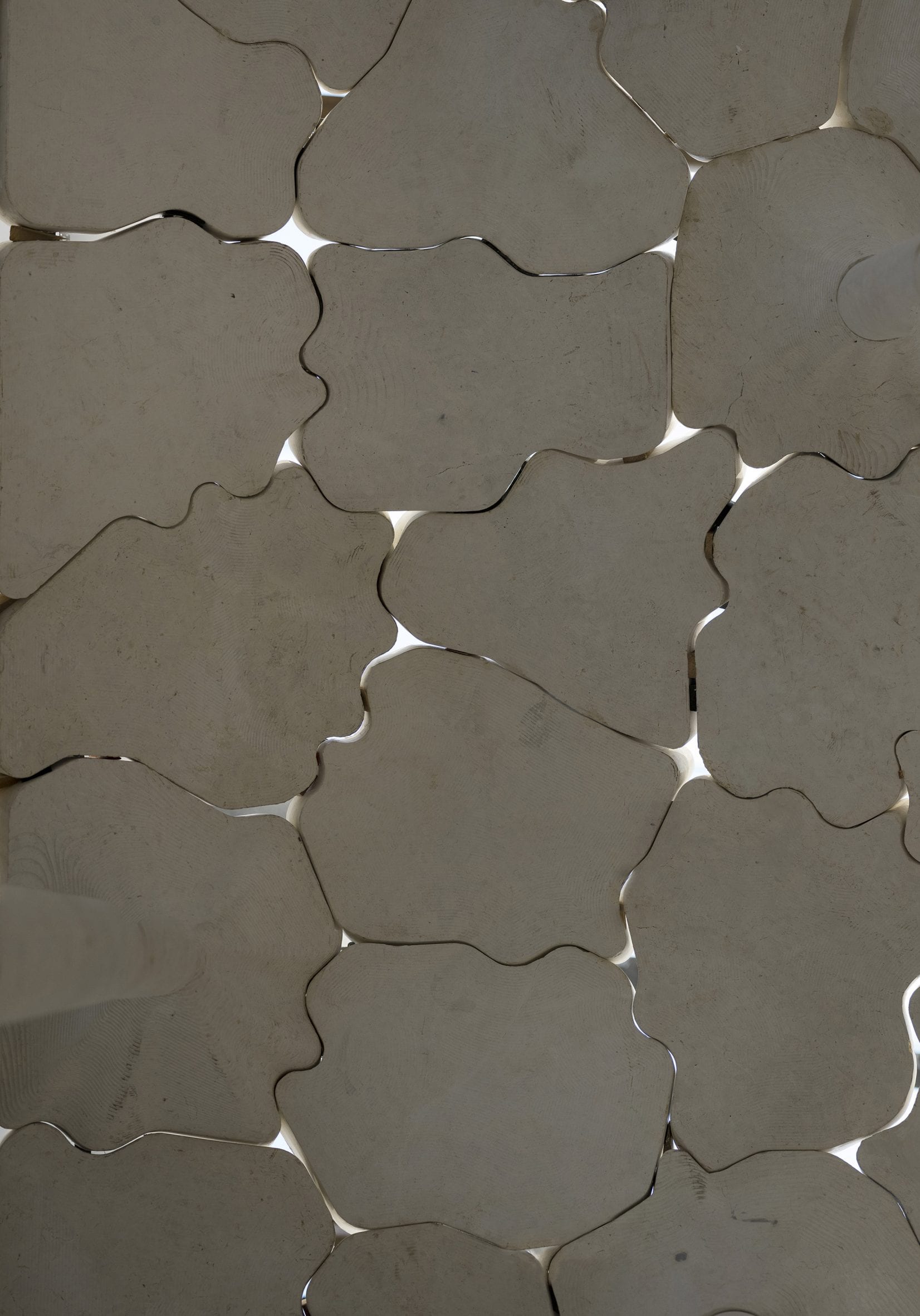
Titled All-Purpose, the pavilion has a roof made of Palestinian limestone, cut into pieces that fit together like a jigsaw and arranged to dome upwards in two places.

Stone installation at the Central Pavilion of the Giardiani
The All-Purpose installation is made of limestone

The work builds on AAU Anastas' six-year research project Stonematters, which looks at the history and experiments with the future of stone.

The studio's co-founders, brothers Yousef and Elias Anastas, want to revive the use of stone as a structural material, while also challenging "the imperial idea" that sophisticated construction techniques were born in the West and exported out.

Stone vaulted ceiling in All-Purpose installation
The installation has a stone vaulted ceiling

"We are challenging the way knowhows, and in particular stone techniques, have been historically presented as an imported knowledge," Yousef Anastas told Dezeen.

"Once you start scratching the surface, you realise not only that techniques have always been a blend of knowledge from different civilisations, but also that in Palestine for instance, stone has been a major part of domestic and common architecture."

Limestone pieces arranged like a jigsaw
The pieces fit together like a jigsaw

The Anastases said that in the region around Palestine, stone architecture is associated with the European Christian crusaders, but their research reinforces that stone techniques have a diverse history.

"Stereotomy is often associated with the Crusaders," said Yousef Anastas. "However, following traces of stone techniques and architectural forms often leads to much more diverse origins."

Limestone pieces form stone vaulted ceiling
Although the ceiling domes upwards, the pieces themselves are minimally curved

"The first examples of the details surrounding the stone entrance of the Crusaders-built Church of Saint Anne in Jerusalem are actually found in Cairo, Egypt and date back to the Mamluk period," he continued.

"Another example is a stone vault typology found in common habitat architecture in Jerusalem and continuously used since the 11th century, and that is very similar to Renaissance palaces' ceiling shapes."

Limestone ceiling and pillar
The process produces minimal stone waste and cuts down on fabrication time

For the Venice Biennale, AAU Anastas focused on making a stone vaulted roof that would delineate spaces through its structure. The All-Purpose installation has two domes that can be understood as forming rooms, with a common space in between.

Working with limestone from the West Bank, AAU Anastas constructed the doming ceiling using jigsaw-like pieces that are individually as minimally curved as possible, in order to cut down on waste and machine fabrication time.

The studio said the roof was technically quite simple, with the only sophisticated part being the interface between stones, which are all doubly curved congruent surfaces.

AAU Anastas wants its work to challenge how stone is used in Palestine today, as primarily a cladding material only.

Stone installation by AAU Anastas as the Venice Architecture Biennale
All-Purpose is on display at the Central Pavilion of the Giardini

The Anastases trace this back to the 1918 masterplan for Jerusalem by architect Sir William Mclean, who required all of its buildings to be faced in stone.

"The repercussions of a law we inherited from the British mandate has implications on architecture, urbanism, politics, culture and the environment that are disastrous," said Yousef Anastas.

Stone installation by AAU Anastas
It builds on AAU Anastas' ongoing research into the history and future of stone

"This law – officially set to create a unity in the built landscape – has immediately set new borders in Jerusalem with regards to buildings faced with stone or not," he continued.

"For instance, demographically all neighbourhoods with buildings not made out of stone (mainly Arab neighbourhoods) have been de facto excluded from Jerusalem. Thus its demography has been transformed, having repercussions on the political reclaims of Jerusalem."

Stone installation and stage at the Venice Architecture Biennale
The studio's research aims to challenge imperial ideas of the transmission of knowledge

He said that at the same time, stone cladding had been adopted across most Palestinian cities, "creating a monotonous contemporary city that is losing landmarks of the historical of Palestinian architecture."

There is also the issue of the overexploitation of the region's stone quarries, which are located in Palestinian territory under Israeli control, in the Area C division of the West Bank.

White limestone structure within a gallery
They want more recognition of the diverse roots of stone architectural techniques

All-Purpose is on display in the Central Pavilion of the Giardini as part of the main Venice Architecture Biennale exhibition, curated by Hashim Sarkis around the theme "How will we live together?"

On opening night, the installation was used as a stage for artist performances organised by the radio programme Sonic Liberation Front from Radio AlHara – an online community station also co-founded by the Anastas brothers.

Stone roof pieces arranged in a jigsaw
They also want to explore the impacts of stone architecture on Palestine today

AAU Anastas is based in Bethlehem. Its previous work includes the lattice-like Stonematters pavilion in Jericho and the Qamt stone bench, recently acquired by London's V&A museum.

The brothers also run a furniture-making network, Local Industries, bringing together makers, artisans and designers, and a research department called Scales. They will also soon launch The Wonder Cabinet, which they describe as a multipurpose cultural platform for artists and artisans.

Also on display in the Central Pavilion at the Giardini is Studio Other Spaces' Future Assembly installation, which imagines an international environmental response modelled along the lines of the United Nations.

Photography is by Antonio Ottomanelli.

The post AAU Anastas aims to challenge "imperial ideas" with vaulted stone pavilion at Venice Architecture Biennale appeared first on Dezeen.


from Dezeen https://ift.tt/3hUmOPI

Vipp Studio in Manhattan functions as both showroom and apartment

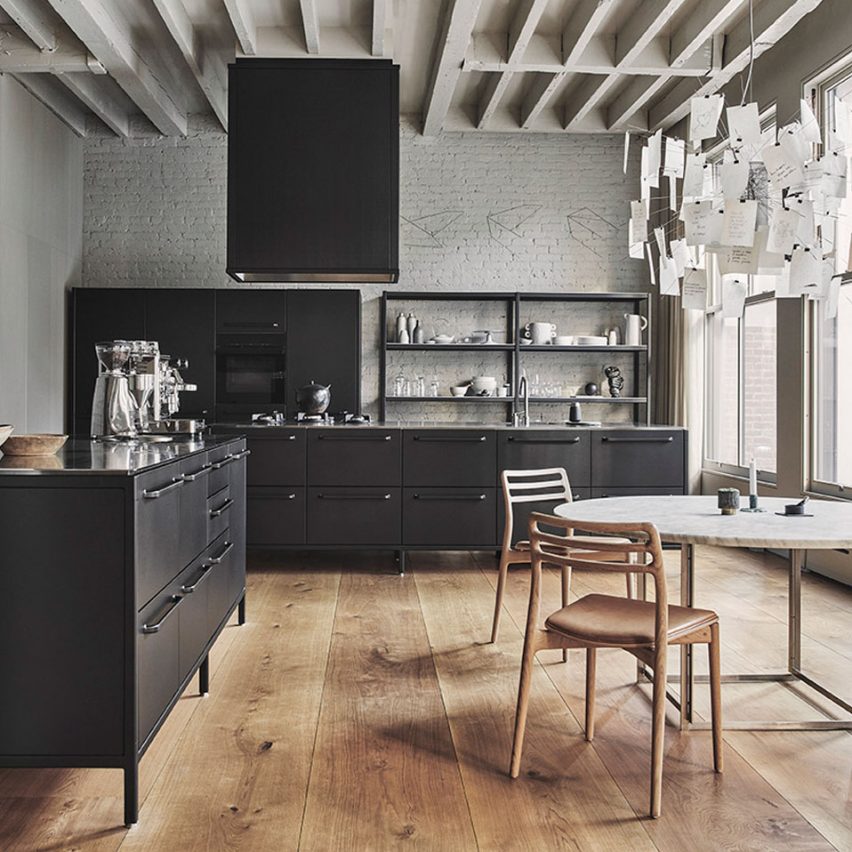
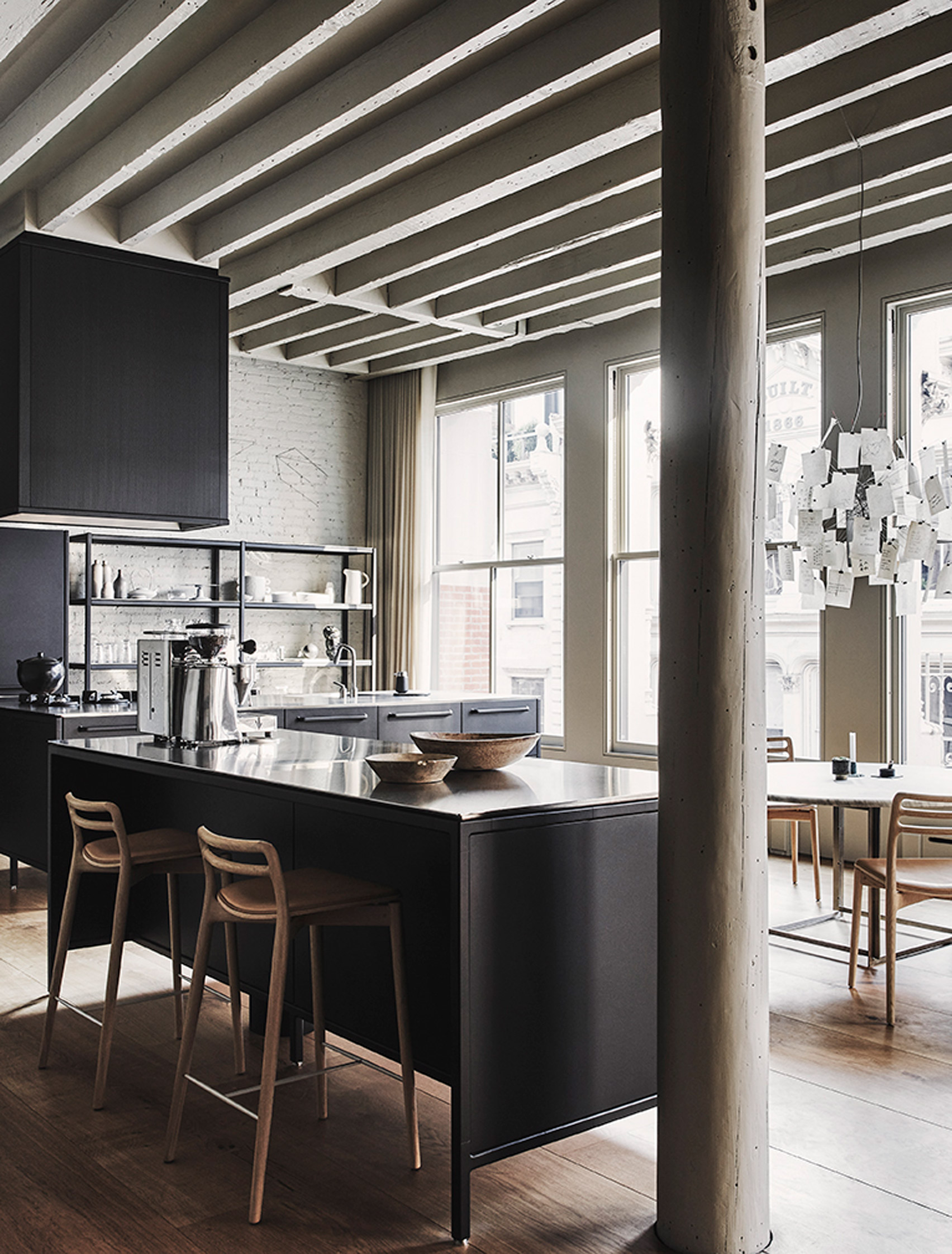
Vipp Studio kitchen

The owners of Danish design company Vipp have renovated a Tribeca loft that acts as a showroom for their brand and a pied-à-terre when they stay in New York City.

Sofie and Frank Christensen Egelund designed the Vipp Studio as a space to showcase their product range in-situ and to live in with their two children and golden retriever.

Vipp Studio kitchen island
The Vipp Studio is furnished with the Danish brand's products

The couple spent a year renovating the 3,800-square-foot (350-square-metre) loft, on the fifth floor of a former factory that dates back to 1883.

Located on Lispenard Street, it is close to showrooms of many high-end design brands including Orior, Egg Collective and Allied Maker.

Gallery space displays art collection
A gallery provides space for Vipp owners Sofie and Frank Christensen Egelund to display their art collection

Working with Lebanese firm Raëd Abillama Architects and stylist Colin King, the Vipp owners created an interior scheme that aligns with the brand's pared-back aesthetic.

"The Studio presents a rare opportunity to experience Vipp's trademark soothing minimalism alongside the quietly playful sensibilities of its creators," said a statement from the brand.

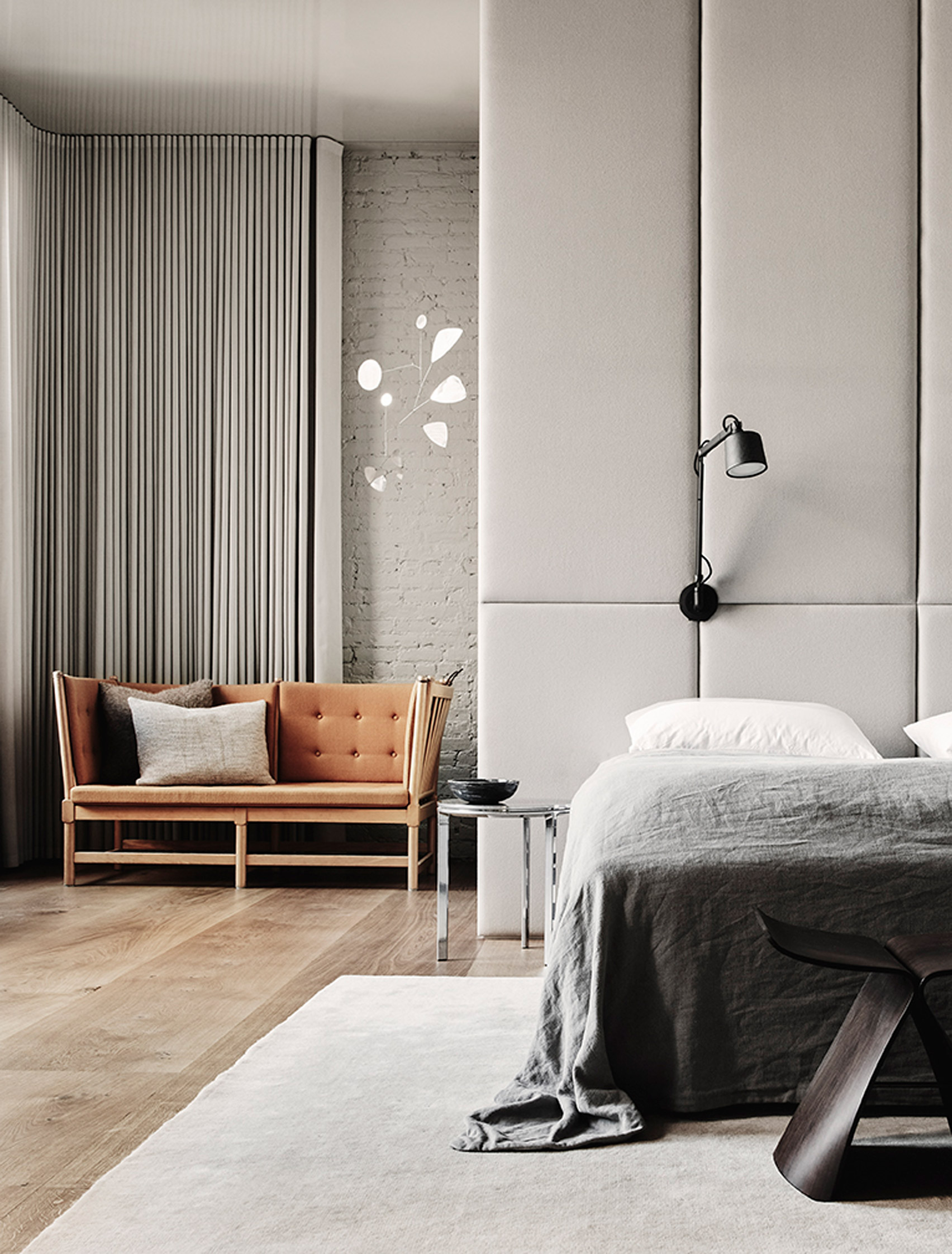
Bedroom with Hardwick White walls
The couple and their family live in the New York City showroom

Laid out as a functional apartment, the live-in showroom is dispersed through the high-ceilinged loft and bathed in light from 10-foot-tall (three-metre) windows.

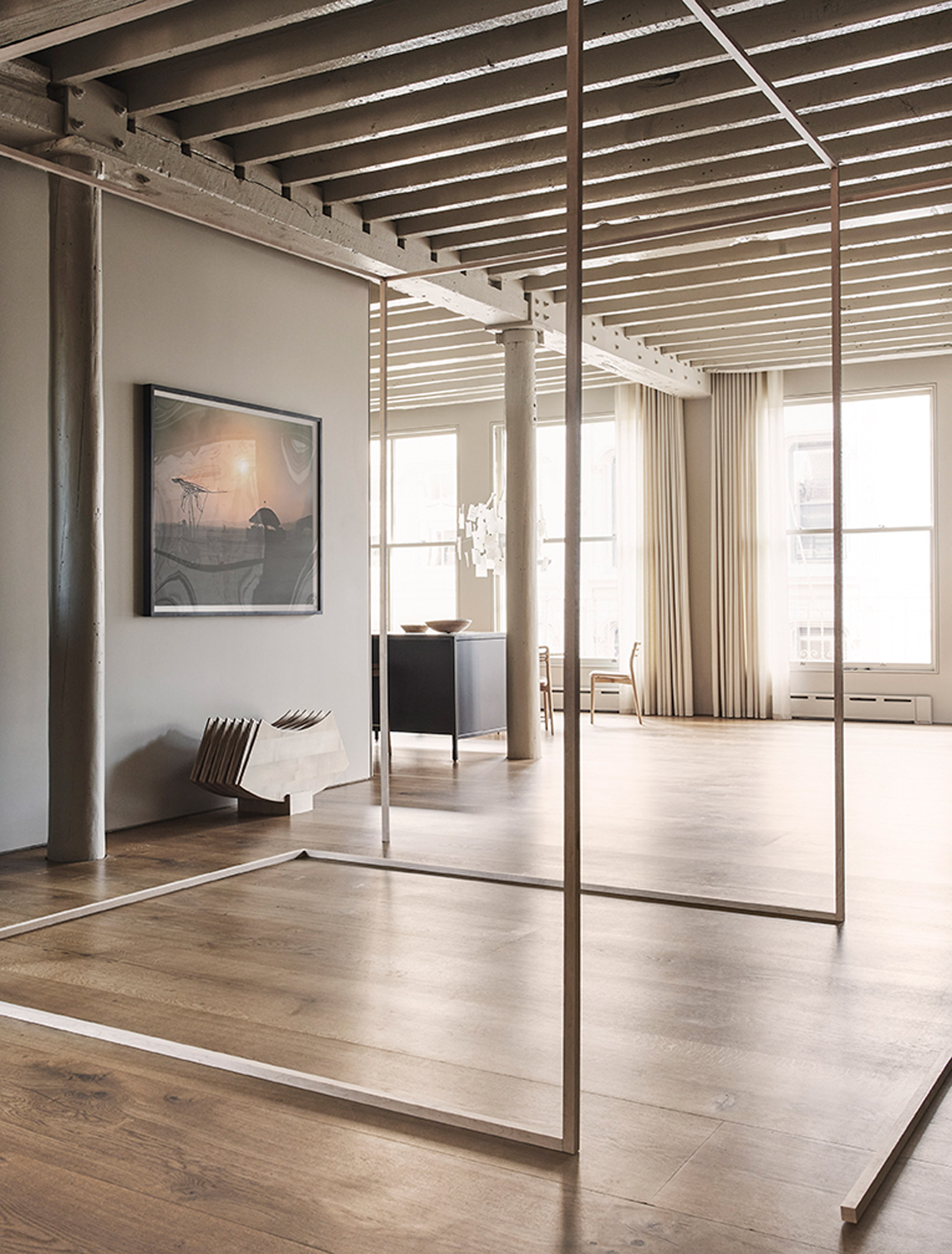
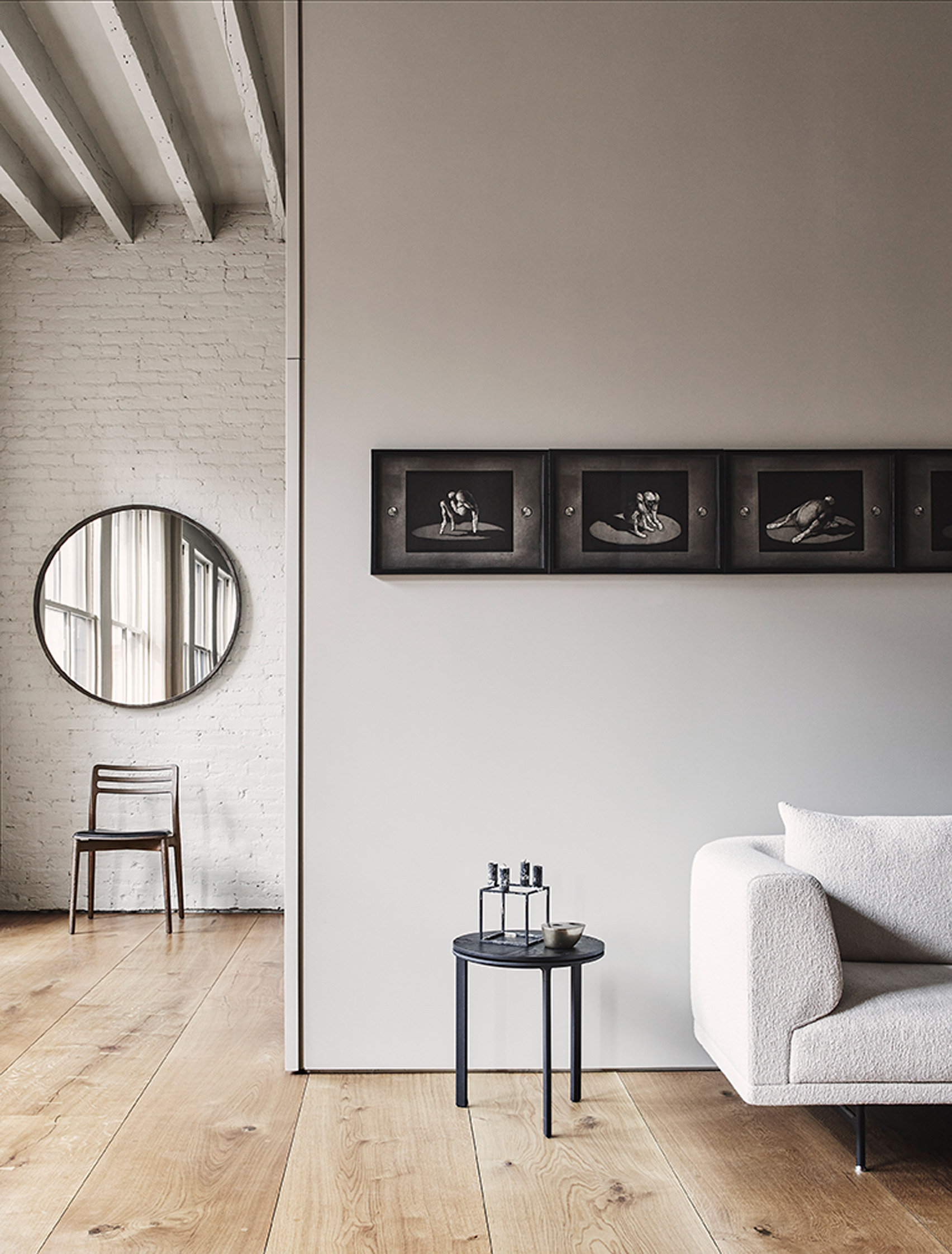
Ceiling beams, brickwork walls, wood columns and other historic features are painted in a neutral grey-beige tone called Drop Cloth from Farrow & Ball. A similar hue carries across new Kvadrat curtains and upholstered panels.

Showroom's minimalist interior
The pared-back interior reflects Vipp's minimalist design ethos

Vipp products are displayed alongside iconic Danish designs like Poul Kjaerholm's PK 54 dining table, which is accompanied by Vipp Cabin Chairs in the kitchen area.

Black kitchen modules and appliances, all by Vipp, are installed beside extruded aluminum millwork built by Beirut-based Elie Chaker that hides a custom wine glass storage area.

The Christensen Egelunds can present their collection of art and sculpture in a gallery area, separated by a glass partition from the main bedroom, in which the paint colour darkens slightly to Hardwick White.

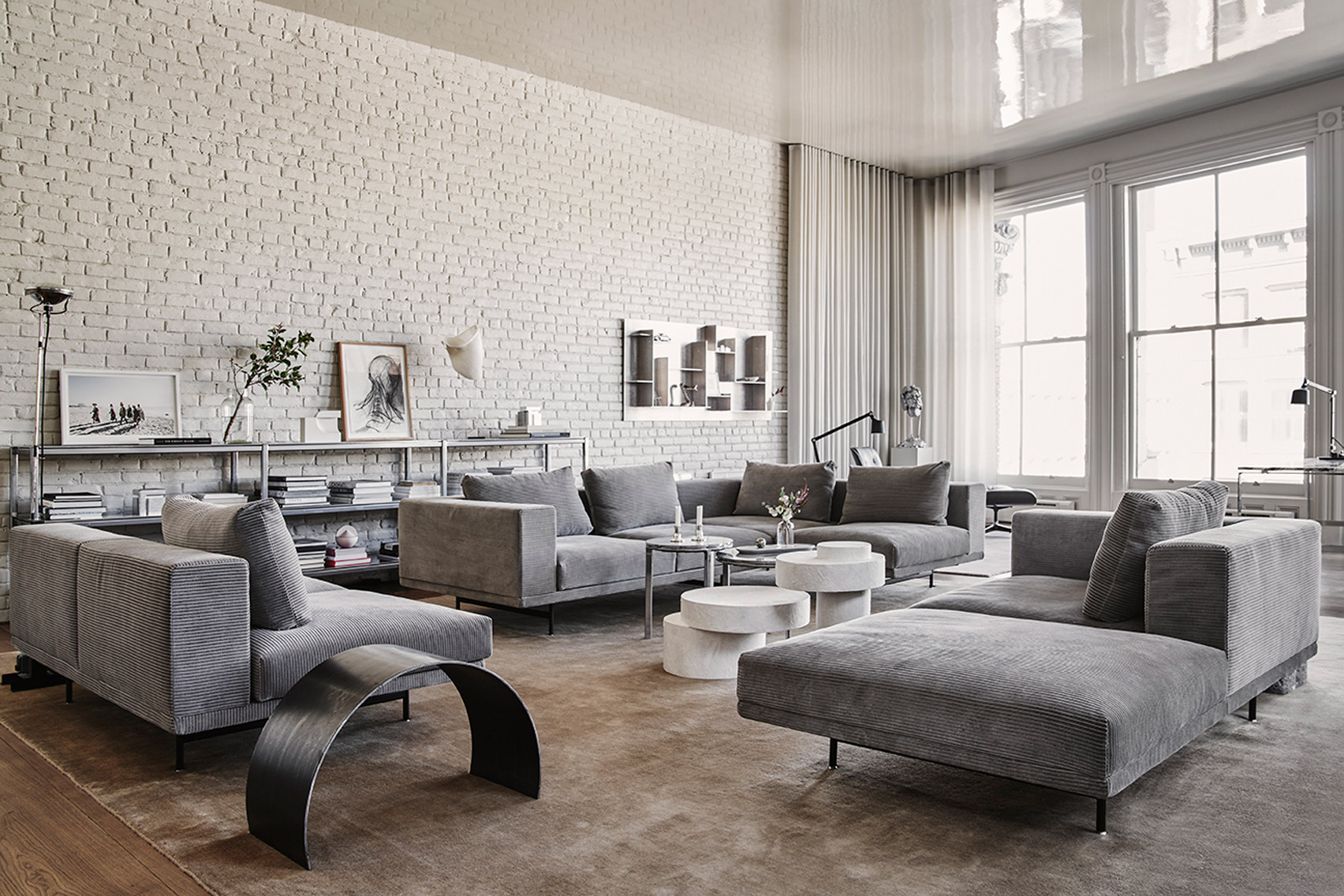
A large, airy living area is designed for entertaining and features more Vipp pieces including a sofa, daybed and coffee table next to another Danish classic: Armchair 31 by Alvar Aalto for Artek.

Living room with Vipp furniture
The spacious living area is designed for entertaining clients and friends

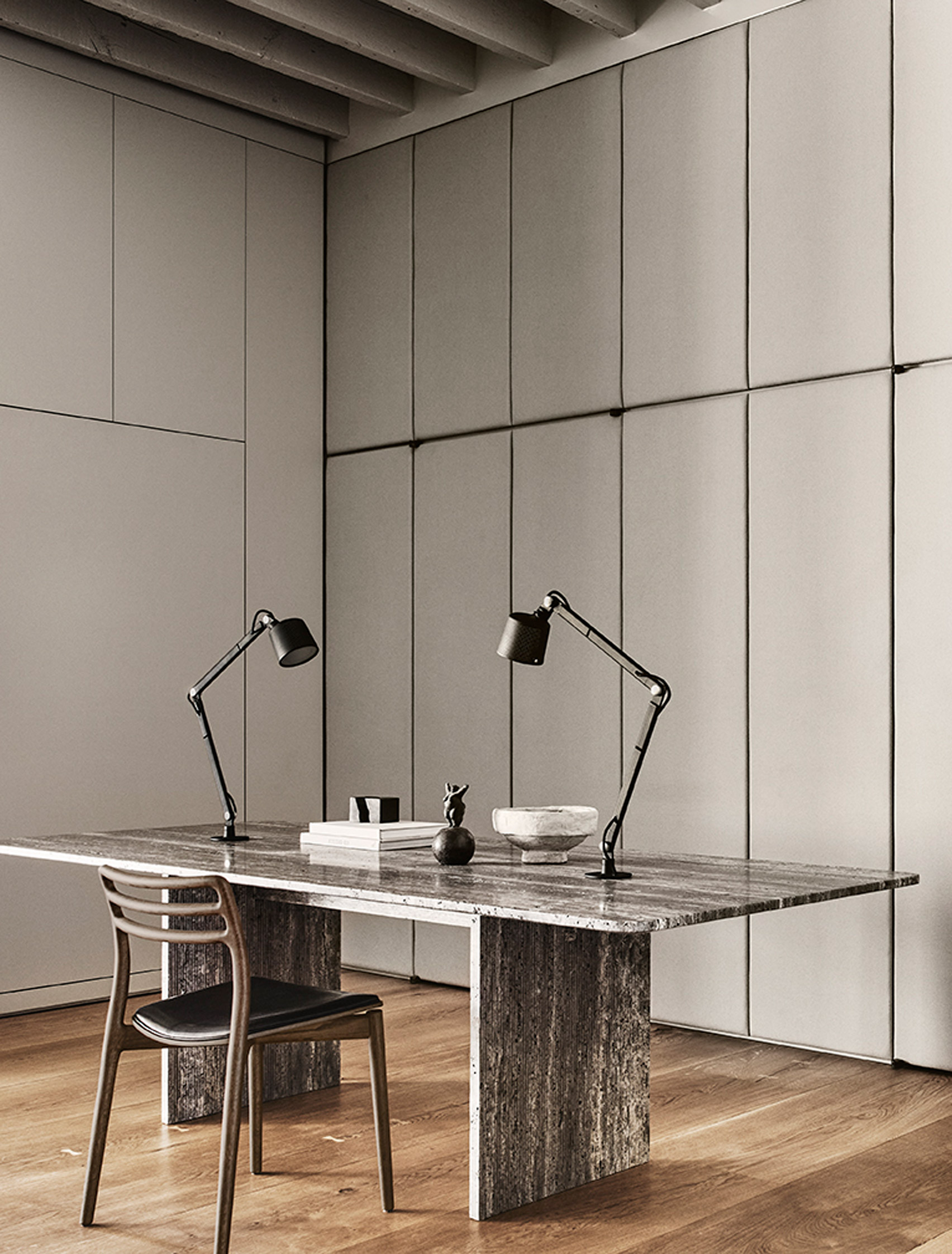
The more private office space has a custom travertine desk surrounded by upholstered millwork that improves the room's acoustics.

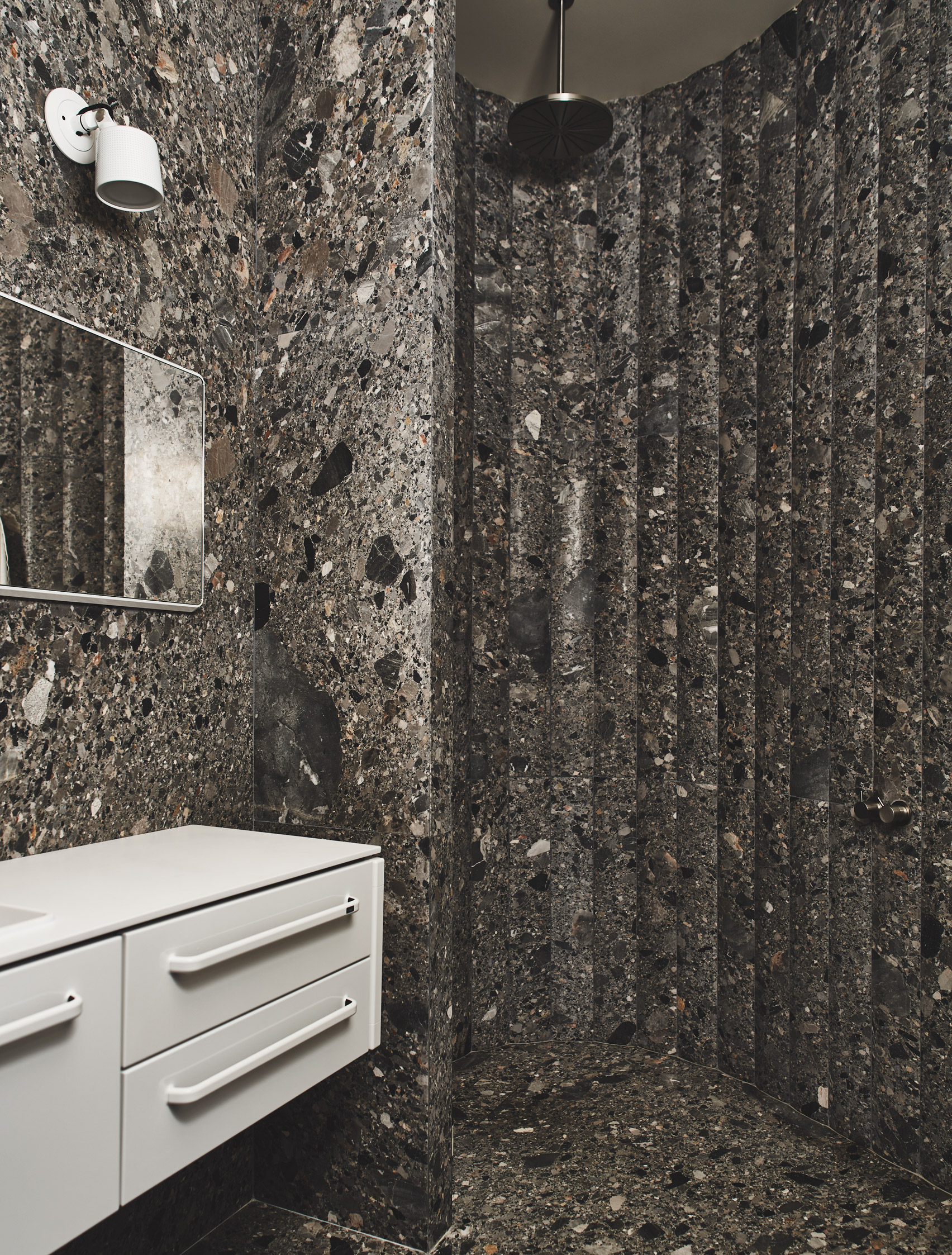
One bathroom is lined entirely with striated Persian travertine, while another is clad in dark Ceppo stone that is carved to form features such as a scalloped shower.

Office with custom travertine desk
Custom pieces in the studio include a travertine office desk

Overall, the showroom is intended to be regularly updated with new products and prototypes and to offer insights into Vipp and its owners.

"Revealing how two meticulous designers enjoy their beloved finds and creations, the Studio amounts to a new concept for a showroom as a model for living, and as a vital site for inspiration," said the statement.

Scalloped shower in the bathroom
Dark Ceppo stone is carved to form a scalloped shower

The Vipp Studio, which is open by appointment only, is the brand's latest project that goes beyond the idea of a traditional design showroom.

The company also manufactures entire prefabricated homes that come filled with its furniture and homeware, and one is set up as a hotel on the shore of Sweden's Lake Immeln.

The photography is by Adrian Gaut.

The post Vipp Studio in Manhattan functions as both showroom and apartment appeared first on Dezeen.


from Dezeen https://ift.tt/3e7uDjY

Ten interior design projects from Sydney Design School students

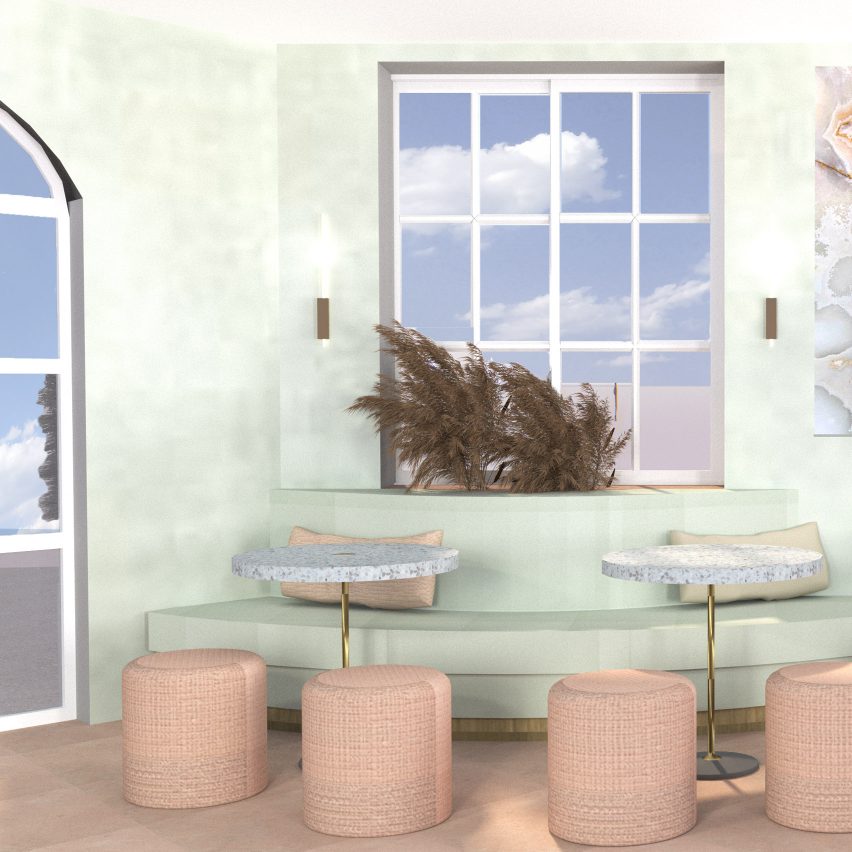
A project has green and pink interiors

A hotel interior informed by drag culture and the reimagining of an ocean pavilion that preserves an inter-war building are included in Dezeen's latest school show from students at Sydney Design School.

Other projects include a converted warehouse that uses bioplastics, mycelium and waste materials across its surfaces, as well as a hospitality space that has a zero food waste philosophy.


Sydney Design School

School: Sydney Design School and Interior Design Online
Courses: Diploma of Interior Design and Advanced Diploma of Interior Design
Founder: Amanda Grace

School statement:

"Sydney Design School is an award-winning interior design school focused on community, professional mentoring and innovation. From day one, you're treated like a member of a real design studio – learning your craft from practising interior designers and architects.

"We're passionate about providing industry-relevant education and a personal experience. Our philosophy centres on the fundamental principles of design and conceptual exploration.

"Our graduates are sought after by the industry as creative thinkers and planners with exceptional presentation skills. Our online school, Interior Design Online, offers our accredited courses entirely online, with creatives studying in over 30 countries."

Sydney Design School student show

Cornersmith, Hospitality design by Ainhoa Beascoechea Arambarri

"The site was a warehouse in Sydney's vibrant Marrickville. I noticed that the beauty of the building was hiding behind its facade. I decided to be playful with the architecture, cutting sections in the roof, imagining how the light would play, creating interest.

"It was important in my zero waste concept that the finishes and furniture selections were either sustainable, vintage or made from recycled materials. I used cork flooring that simulates concrete, a marble-like material made from sunflower waste, bio textiles made from mycelium for upholstery, a translucent bioplastic made from walnut flour, repurposed steel and Kenoteq bricks made from construction waste."

Student: Ainhoa Beascoechea Arambarri
Course: Diploma of Interior Design
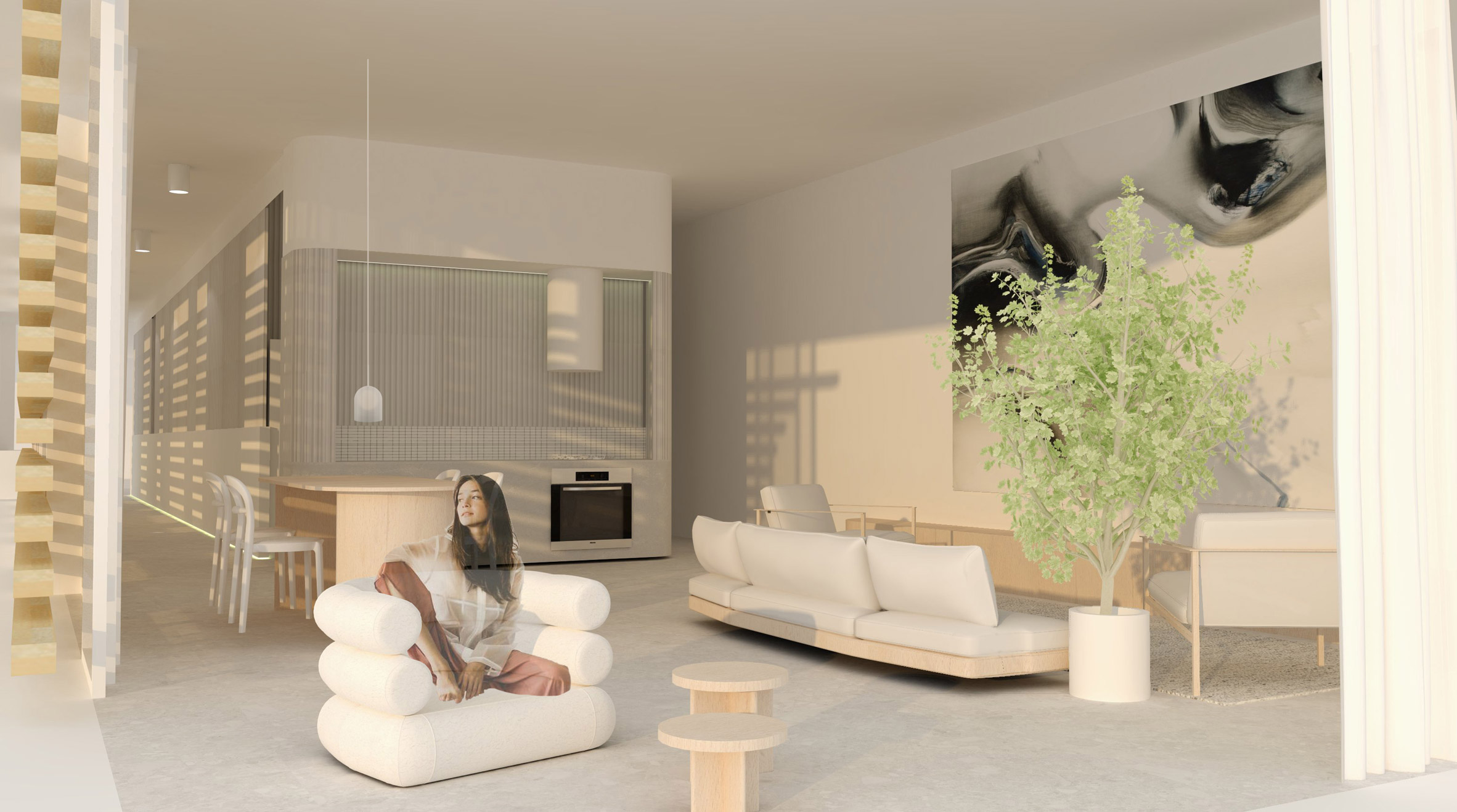

The Bower, Design specialisation by Jenna Ritchie

"The Bower project was fascinating as the architecture by Koichi Takada reflected my passion for concept development influenced by natural forms.

"I developed a concept inspired by the raw beauty of the sun rising over the ocean and was delighted to discover later that it was very similar to the architect's original idea. I expressed this concept by layering highly textured materials to create a luxurious interior."

Student: Ainhoa Beascoechea Arambarri
Course: Advanced Diploma of Interior Design

Sydney Design School student show

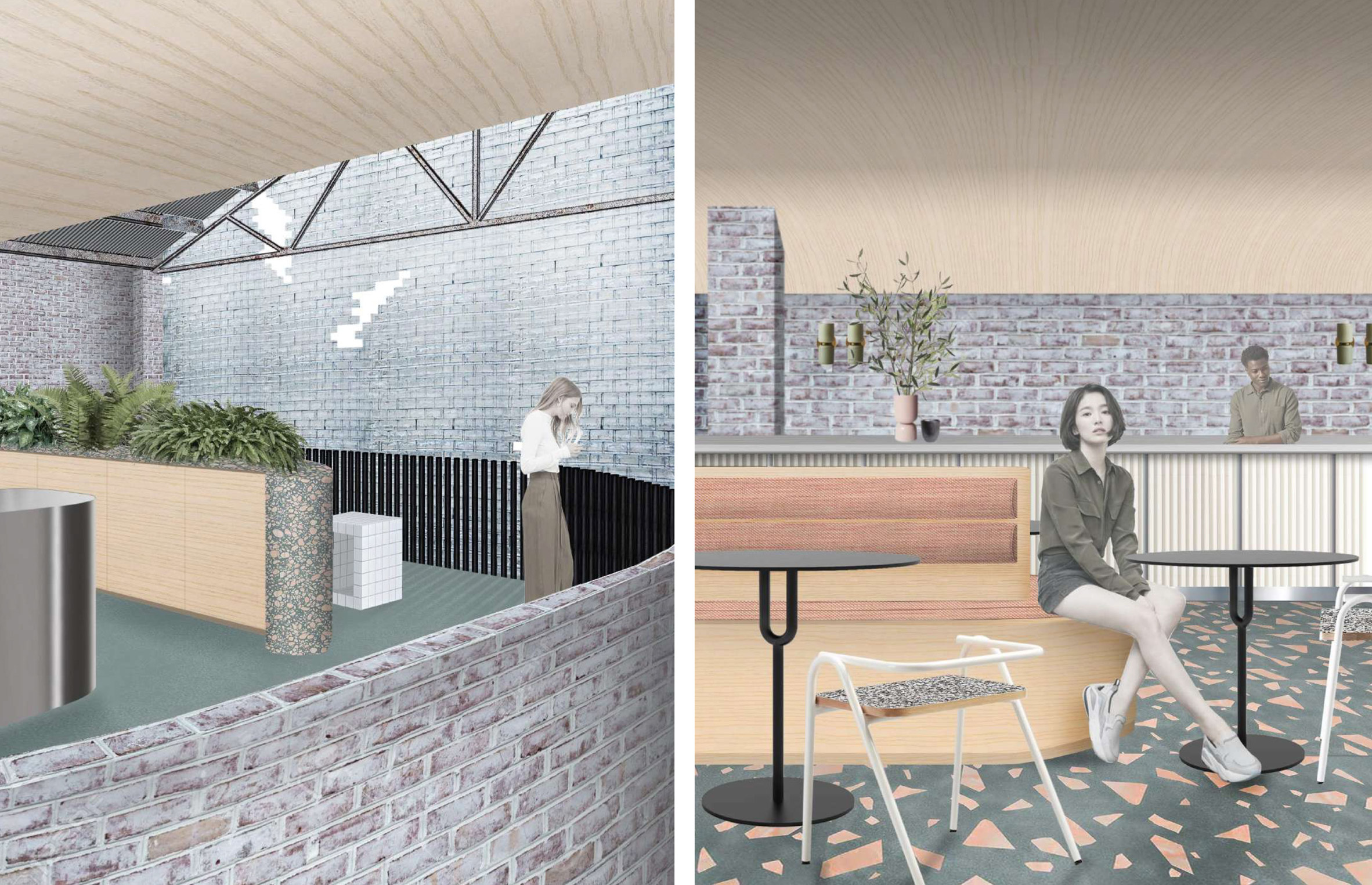
Cornersmith, Hospitality design by Ryan McGregor

"Taking on the client's ethos and food philosophy of 'zero waste', I focused on the concept of preservation. The expansive site allowed initial offsetting from the original facade, thus creating an internal courtyard providing a moment of rest from the industrial street frontage."

"The vibrant courtyard would also play towards lowering energy consumption as natural light filters through the new facade, reducing the need for artificial lighting consumption. Retaining the existing building aligned itself to the client's company values and plays an important role from a sustainability angle while creating a place within the community that allows people to connect."

Student: Ryan McGregor
Course: Advanced Diploma of Interior Design

Sydney Design School student show

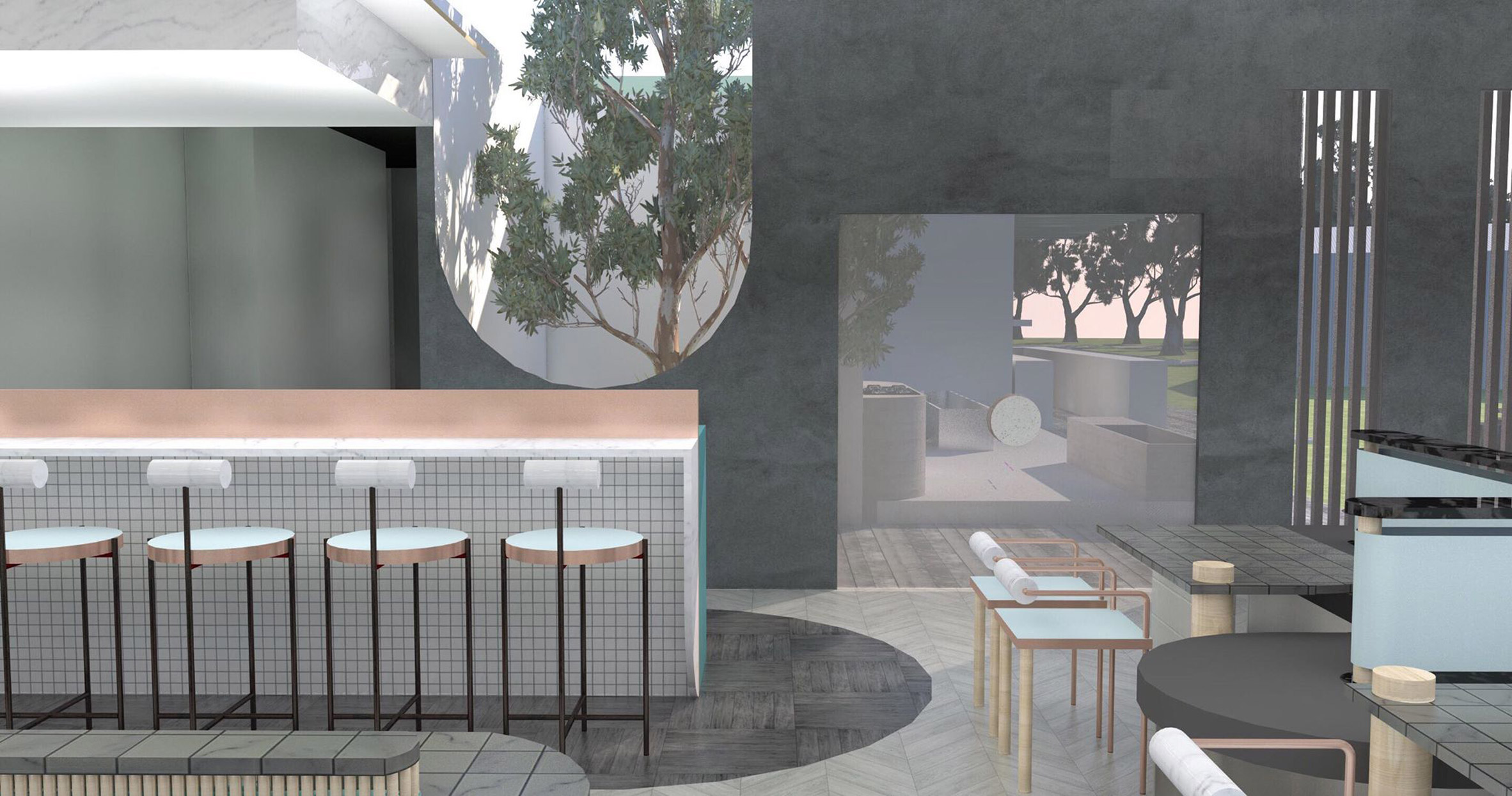
3rd Base, Design specialisation by Vieri Landini

"My concept is intended to provoke a conversation about climate change. Every aspect has been designed to represent the elements required to generate fire: oxygen, fuel and heat. I believe sustainability should be a key element of interior design and our world as a whole. Both the design and the materials bring into focus the environmental issues we face, challenging human passivity.

"I am a practising artist, and this is the base from which all my creativity stems. Our connection to art goes beyond face value. Its purpose is to stimulate thought, allowing viewers to connect with their emotions and pull from personal experiences."

Student: Vieri Landini
Course: Advanced Diploma of Interior Design

Sydney Design School student show

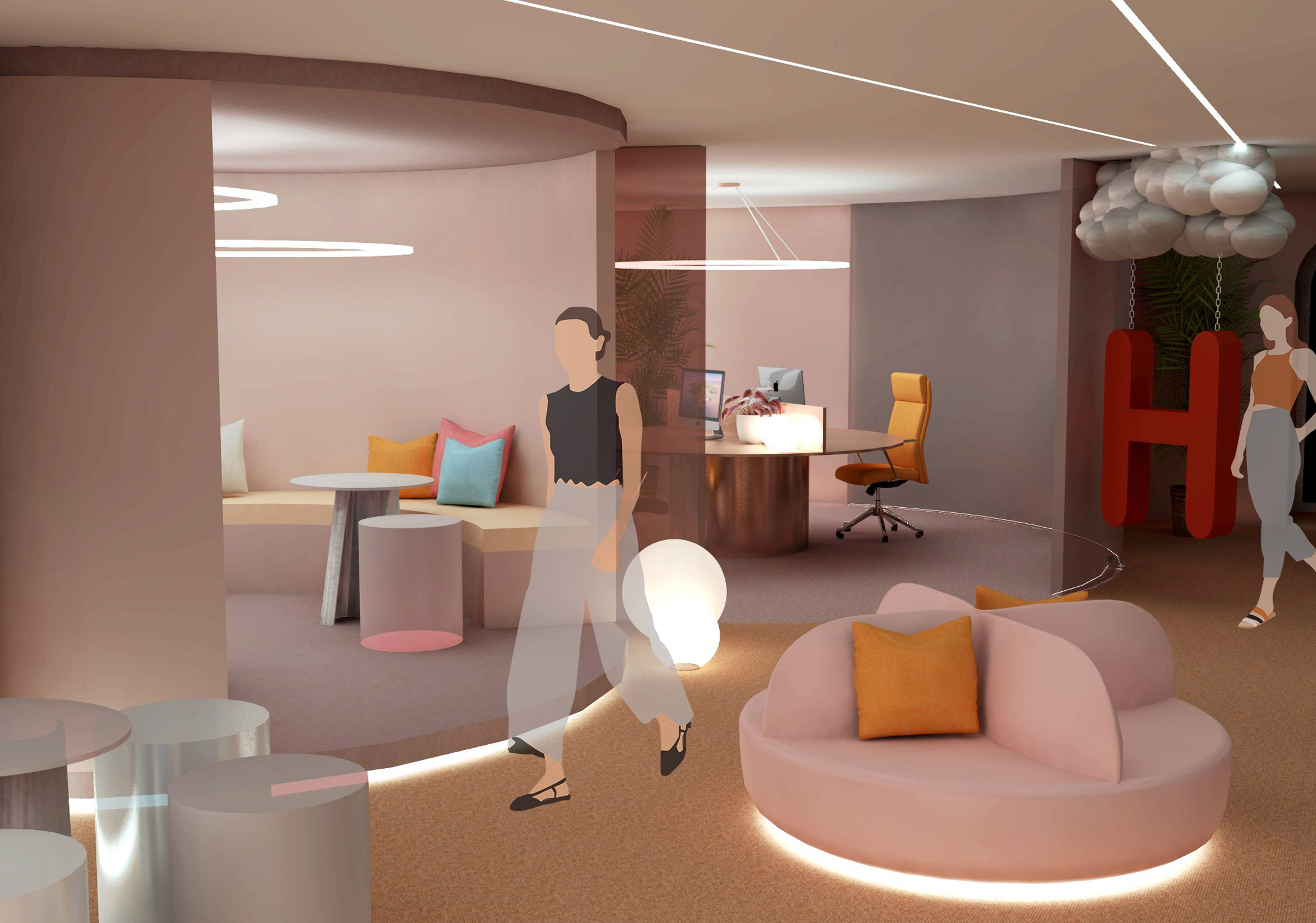
Destination Utopia, Workplace design by Louise Mackay

"Noun: an imagined place or state of things in which everything is perfect. You are invited to dive into a utopian world illustrated by a futuristic, tech-glam aesthetic. Exploring the concepts of wanderlust and futurism, this is a vision of paradise for Hotels.com – a utopian destination."

"Escape the everyday life through surreal beauty, fluid forms, tactile furniture and flowing drapes. Lights emit a soft luminosity and feel, illuminating spaces with an even glow to create calm while encouraging curiosity. The layering of tinted glass, matte surfaces, opaque elements and ethereal tints reveal unexpected effects and structures."

Student: Louise Mackay
Course: Advanced Diploma of Interior Design

Sydney Design School student show

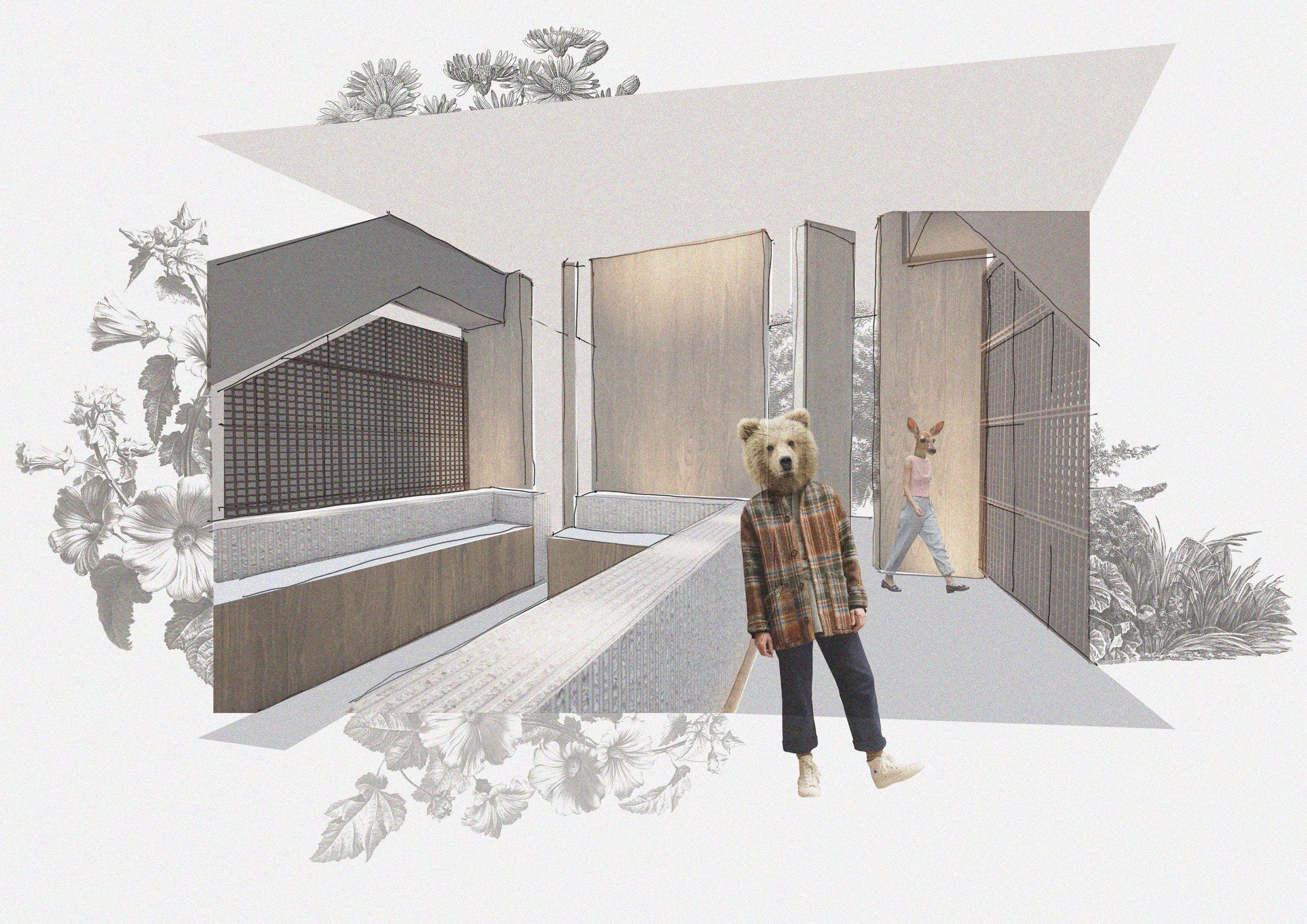
Wild, Hospitality design by Nic Kelly

"My task was to design a restaurant, workshop and office space for a chef renowned for cooking with minimal resources in the bush. The Australian landscape heavily influenced my conceptual journey. I elevated all the sensory touch points of cooking outdoors by turning this restaurant into a fine dining experience.

"I love the emotive response linked to moments shared around a campfire. I translated this into the physical space by wrapping bar seating around a large open fire. Guests interact with the chef who educates them on locally sourced produce."

Student: Nic Kelly
Course: Diploma of Interior Design

Sydney Design School student show

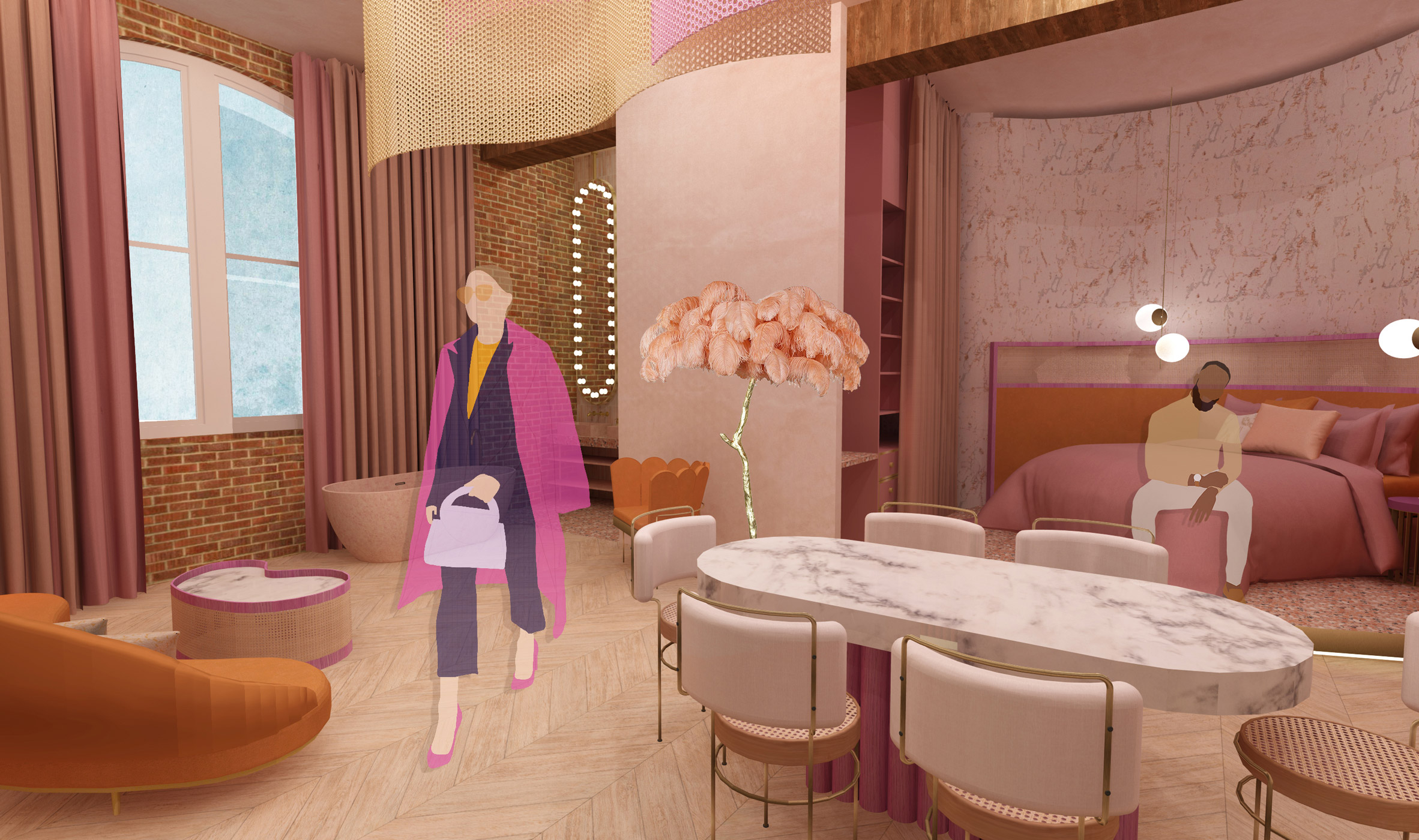
SiR Queen, Hotel design by Louise Mackay, Celine Layoun and Tianna Andrews

"A vibrant, playfully creative design based on our concept of Alter Ego: One Hotel. Two Personalities. The new persona for the Woolloomooloo site will be reflective of the vibrant spirit of the city – inspired by the LGBTQI+ community, Priscilla Queen of the Desert and the playfully creative vibe of drag culture.

"On arrival at SiR Queen, guests will enter an unassuming building to come across a flurry of colour, glamour and stunning finishes to inspire their alter ego journey. A sophisticated mix of high chroma and neutral tones creates a playful mood."

Student: Louise Mackay, Celine Layoun and Tianna Andrews
Course: Advanced Diploma of Interior Design

Sydney Design School student show

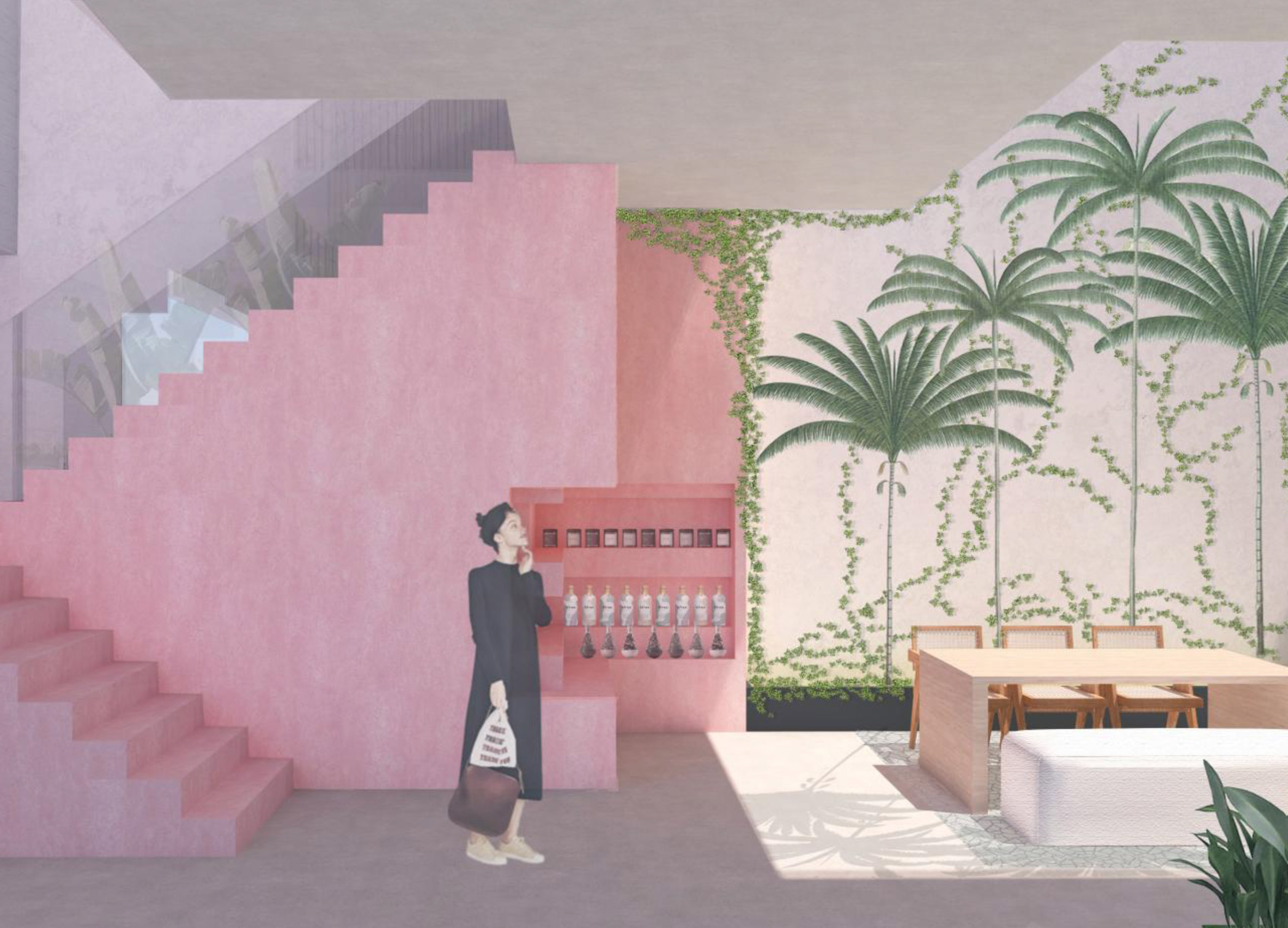
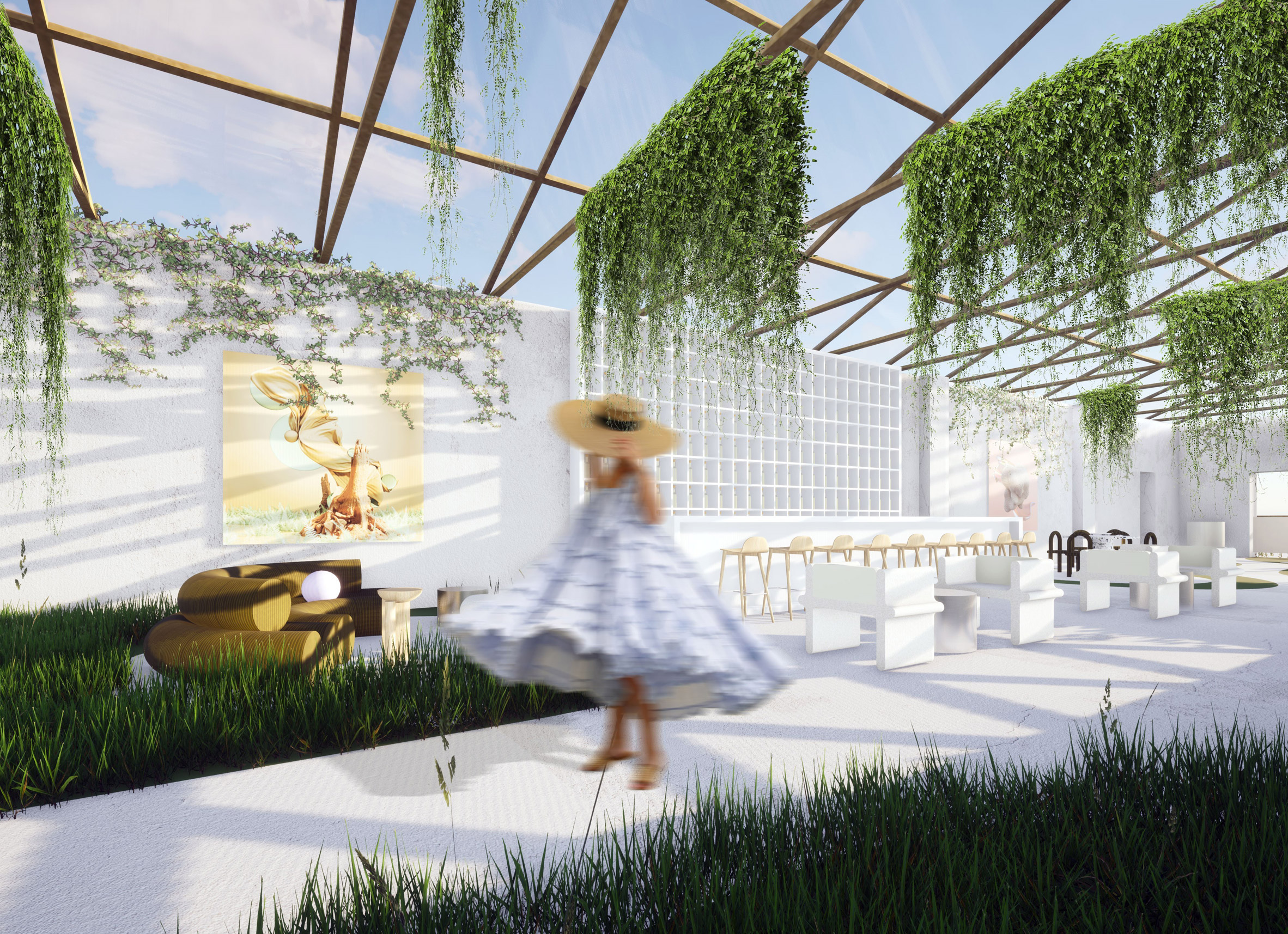
Cornersmith, Hospitality design by Anežka Kočnerová

"The brief was to convert a two-storey warehouse in Marrickville into a sustainable and zero-waste restaurant focusing on locally sourced food. My approach was to create an exciting dining experience by showing customers how the world would look many years after all human beings are gone.

"Pictures of abandoned places overrun by nature inspired me to create a venue where the present meets the future - a place where nature takes back!"

Student: Anežka Kočnerová
Course: Diploma of Interior Design

Sydney Design School student show

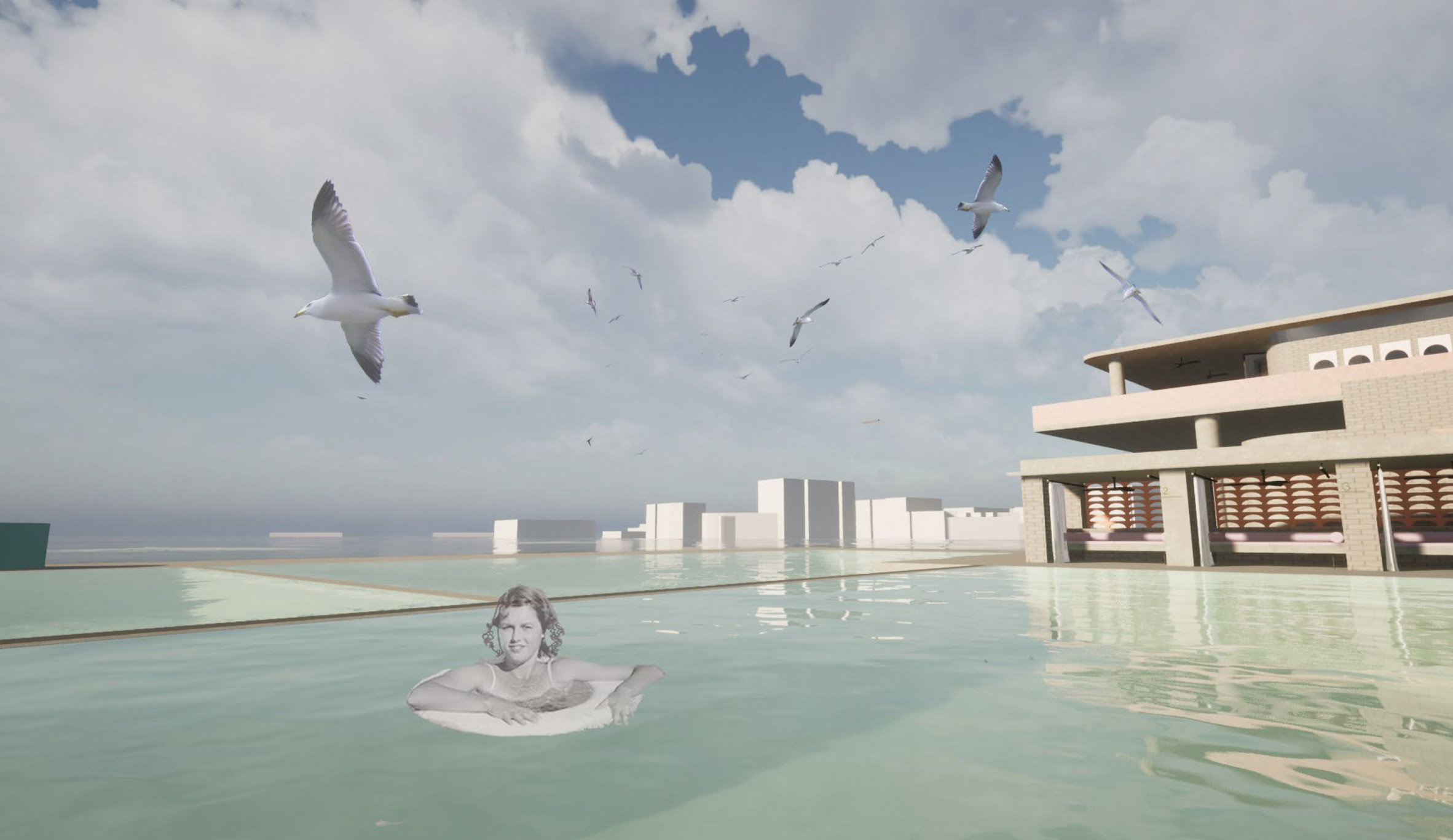
Ocean Baths, Design specialisation Pavilion by Chelsea Ernst

"Chelsea took on the task of reimagining and 'rebirthing' Newcastle's iconic Ocean Baths Pavilion for her final self-led project. Respecting the history and tradition of this national landmark was critical. She retained the aesthetic of the inter-war facade while improving public amenity spaces, providing shade and increasing disability access points."

"The large scale project includes newly designed public change rooms, a cafe, restaurant, bar and kiosk with views of the beach, a function centre, spa, gym and additional unique spaces for community gatherings.⁠⁠ Chelsea selected subtle textures and materials that are long-lasting and sustainable, responding to the surrounding marine and land environments."

Student: Chelsea Ernst
Course: Advanced Diploma of Interior Design

Sydney Design School student show

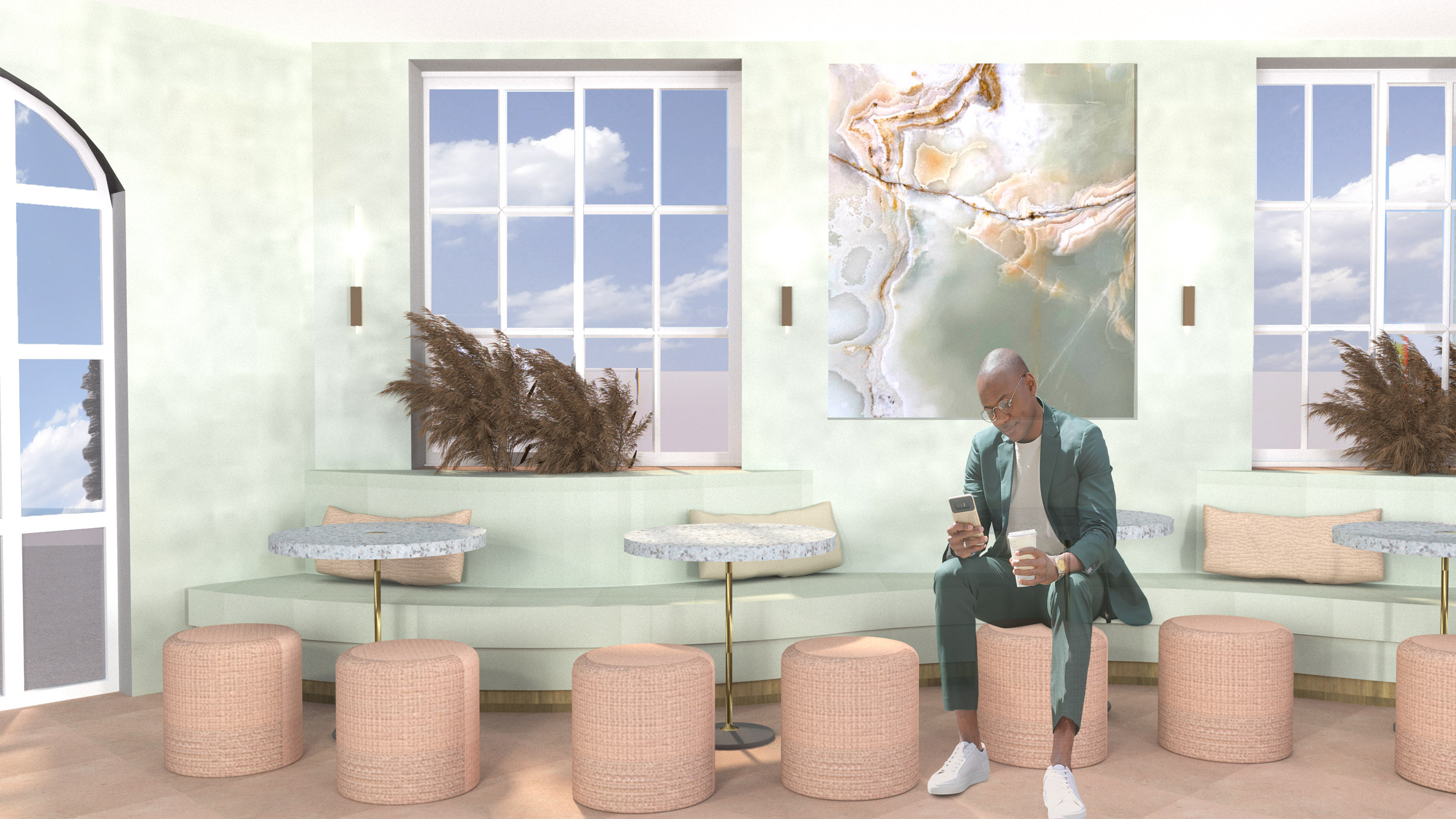
The Bower, Design specialisation by Carolina Ghigonetto

"The Bower is inspired by the undulating movement of waves and takes advantage of its coastal position featuring a casual, beachy and sophisticated look. The concept of 'flow' is expressed throughout the space via harmonious curves and a sinuous parametric timber wall located in the centre of the cafe. It separates the takeaway area from the dining area without blocking the million-dollar view.

"Pastel colours, exposed concrete and Moroccan tiles combined with raw finishes are chosen to create a cosy and relaxed atmosphere. The Bower provides both an intimate escape and memorable experience for visitors."

Student: Carolina Ghigonetto
Course:
Diploma of Interior Design (online)


Partnership content

This school show is a partnership between Dezeen and the Sydney Design School. Find out more about Dezeen partnership content here.

The post Ten interior design projects from Sydney Design School students appeared first on Dezeen.


from Dezeen https://ift.tt/2TYWU5p