Wednesday, 14 July 2021

Kyneton House by Edition Office combines brickwork walls with lofted white ceilings

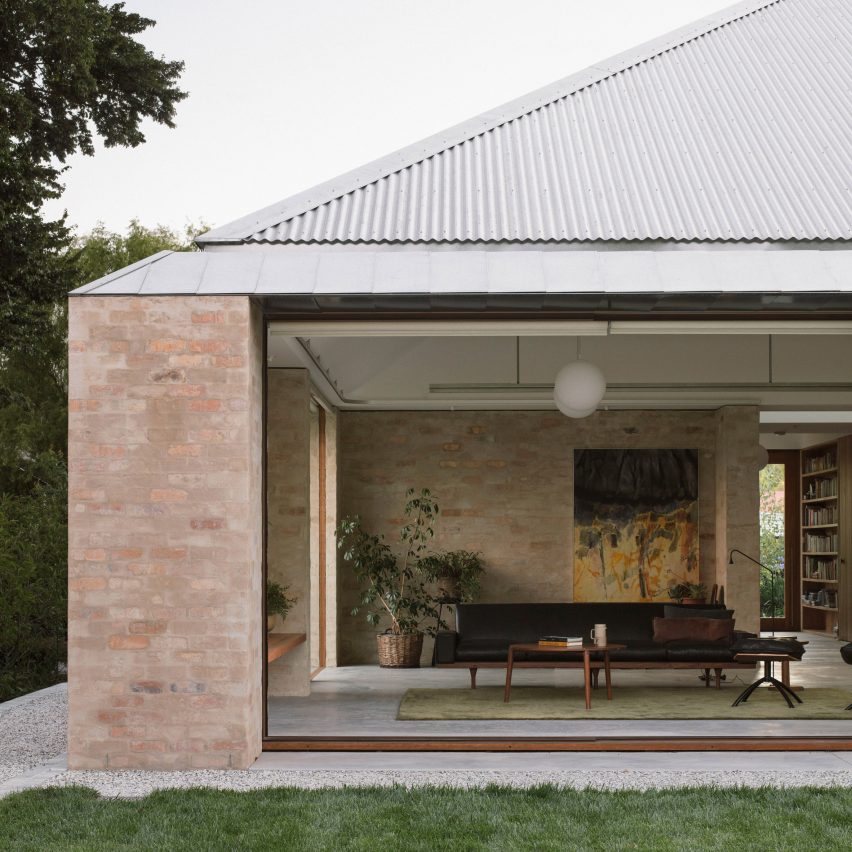
A brick house with a corrugated metal roof

Architecture studio Edition Office has completed a house in the town of Kyneton, Australia, featuring angled ceilings and a palette of textural materials chosen to complement its natural surroundings.

Melbourne-based Edition Office was asked to design a new home for a couple who had chosen to downsize from a much larger rural property.
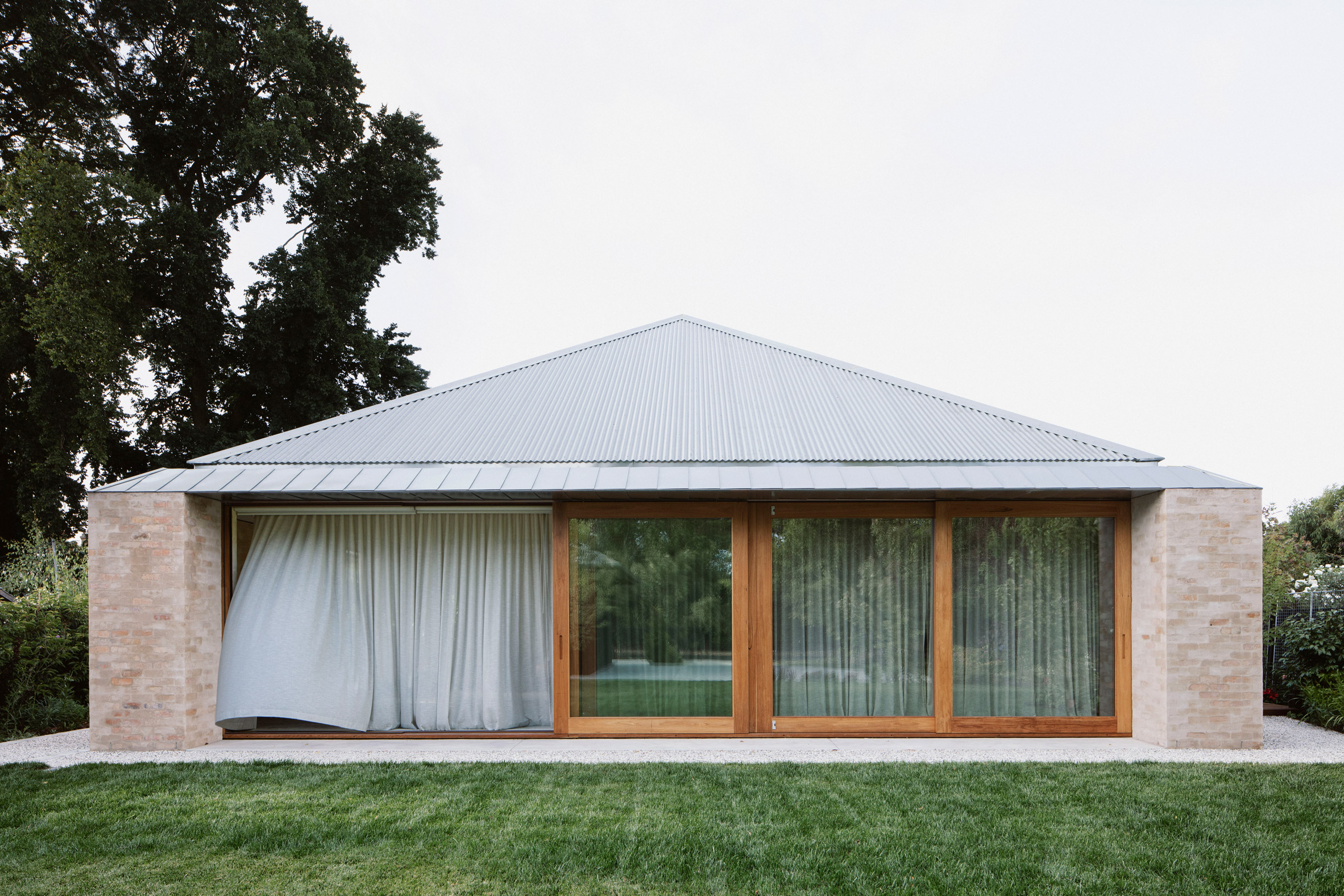
A brick house with a pyramidal roof
Above: Edition Office has completed a house in Kyneton. Top image: it features a palette of textural materials

Kyneton House is positioned at the centre of its plot to maximise the surrounding garden, which is planted with trees relocated from the clients' previous home.

The building is oriented to align with the site boundaries on all sides, ensuring straightforward access to the garden and views of the entire site from within.

The property's external envelope combines brick-clad walls with large glazed elements, including sliding doors that open the living spaces up to the outdoors.
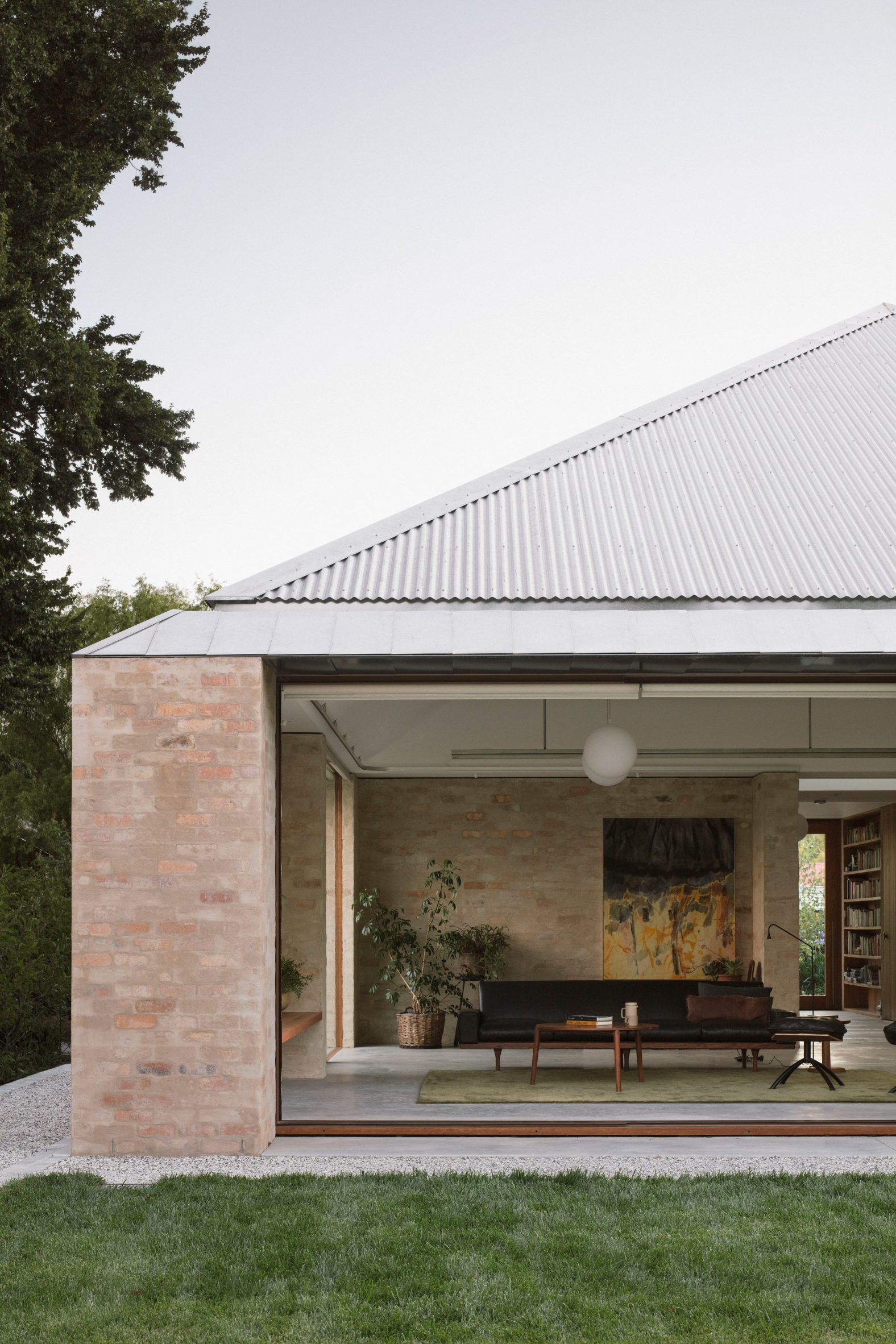
A brick house with a corrugated steel roof
It has a pyramidal roof made from corrugated steel

The brick surfaces define the edges of the house as well as the individual rooms. Each element extends inwards to create recesses that enclose functional elements such as the kitchen, study and seating areas.

The pale recycled brick was chosen to reflect the natural tones and textures of the surrounding countryside, as well as the materiality of the town's buildings, which date back to 1850.
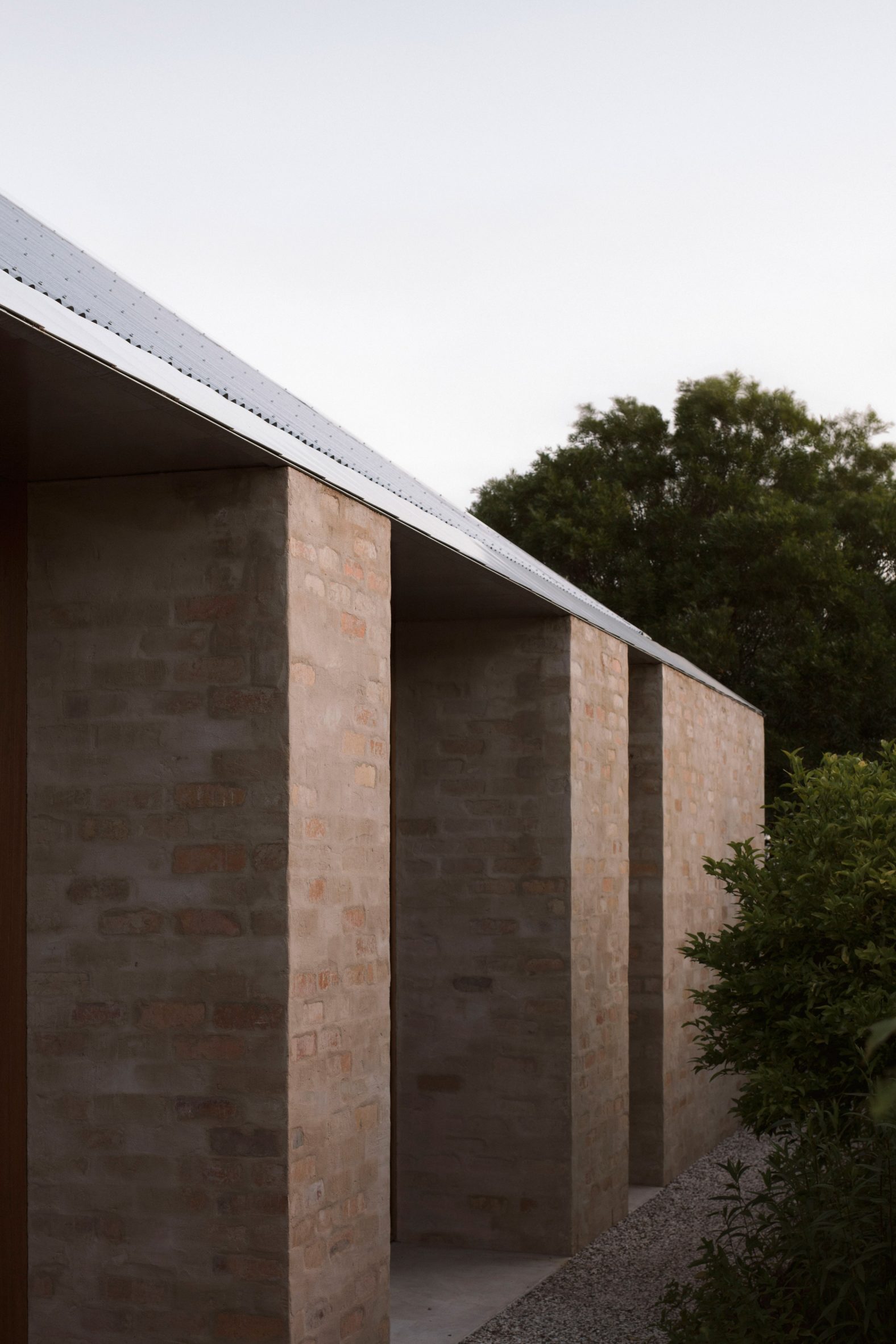
Pale recycled brick walls
Walls are clad in pale recycled brick

The building is topped with a pyramidal roof made from corrugated galvanised steel. Internally, the roof form creates a soaring volume above a datum created by the brick walls and joinery.

"Each room is defined by its own lofted ceiling which creates a sense of inner spatial balance to the continuous framed views to the surrounding gardens," the studio explained.

"These crisp, white ceiling volumes pick up the fluctuating levels of natural daylight, providing the home with a very particular sense of softness in the quality of the light," it added.

A triangular skylight positioned at the peak of the roof above the hall allows natural light to reach the centre of the plan.
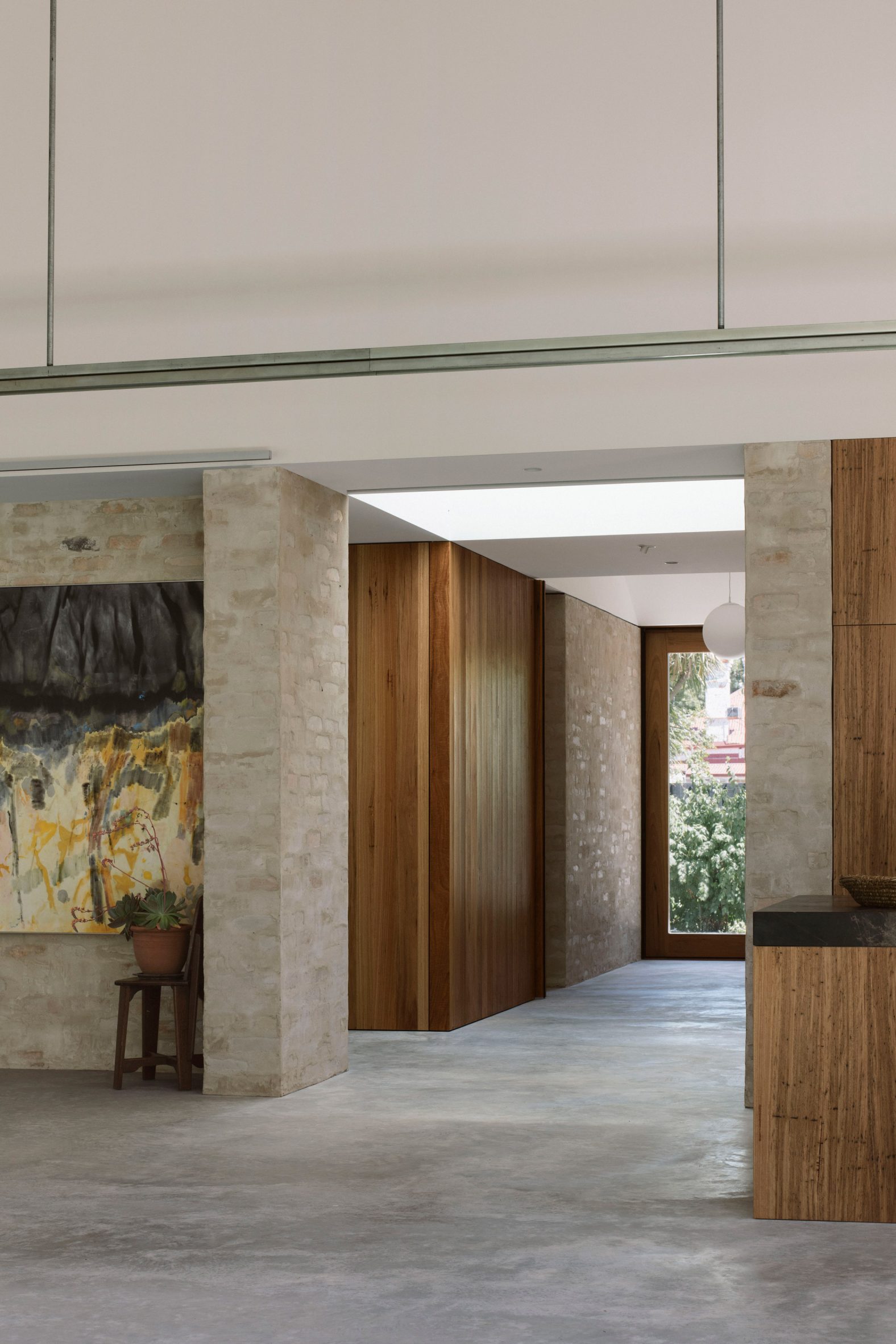
The interiors of Kyneton House by Edition Office
Suspended light fixtures accentuate the height of its ceilings

Suspended light fixtures, including a linear pendant above the kitchen island, accentuate the sense of height within the living areas.

The house's interior palette features natural materials and textural surfaces intended to enhance the sense of connection with the outdoors and to reflect the changing seasons.
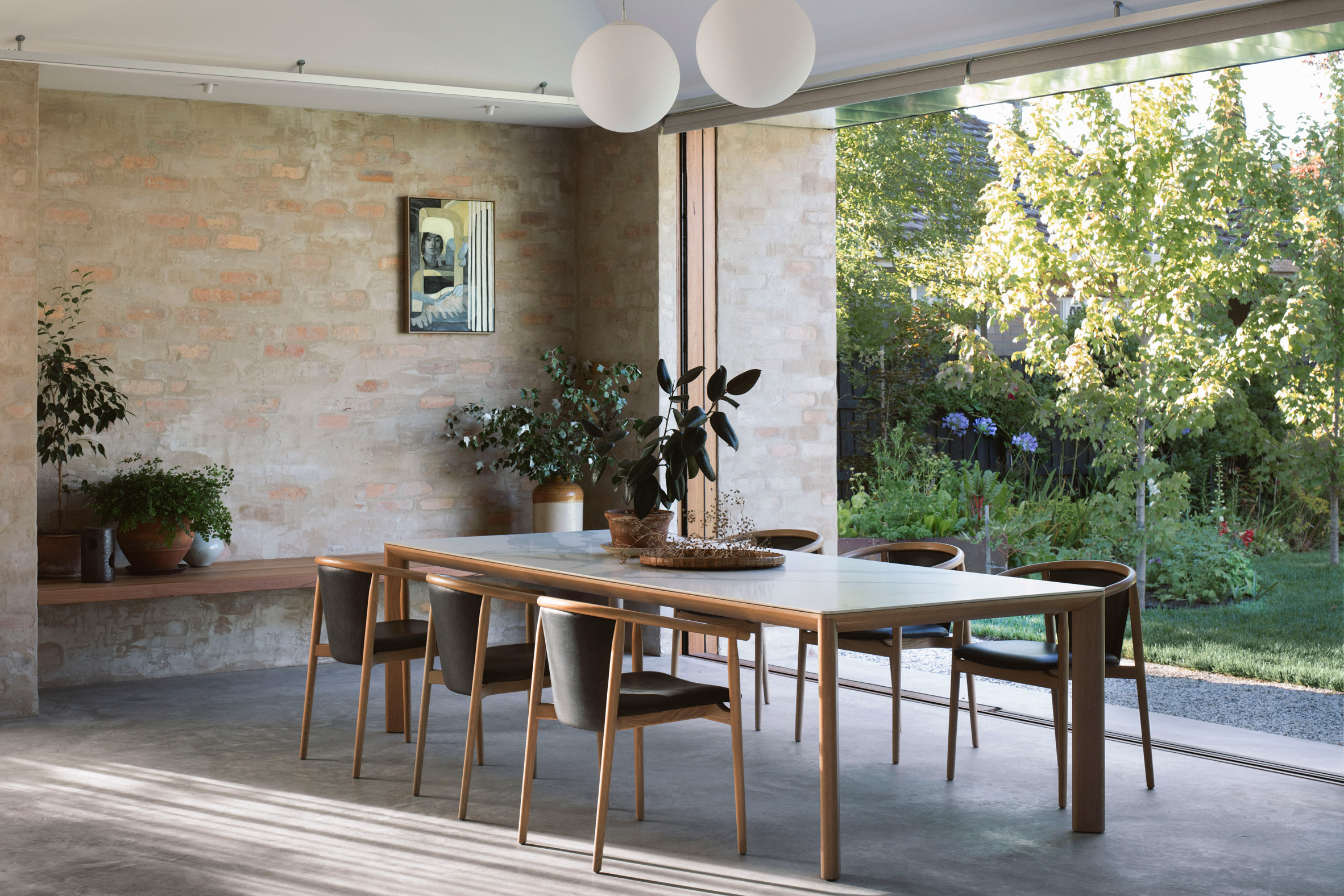
A dining room with brick walls
Tactile surfaces were used throughout the home

"Our ambition for the house is for it to act as a reference point to the passing of time," the studio added. "The internal rooms act as vessels for the changes of light, becoming a canvas for the theatre of change occurring outside."

The recycled brick walls are complemented by concrete floors and wooden surfaces that contrast with the crisp, white lines of the folded ceiling voids.
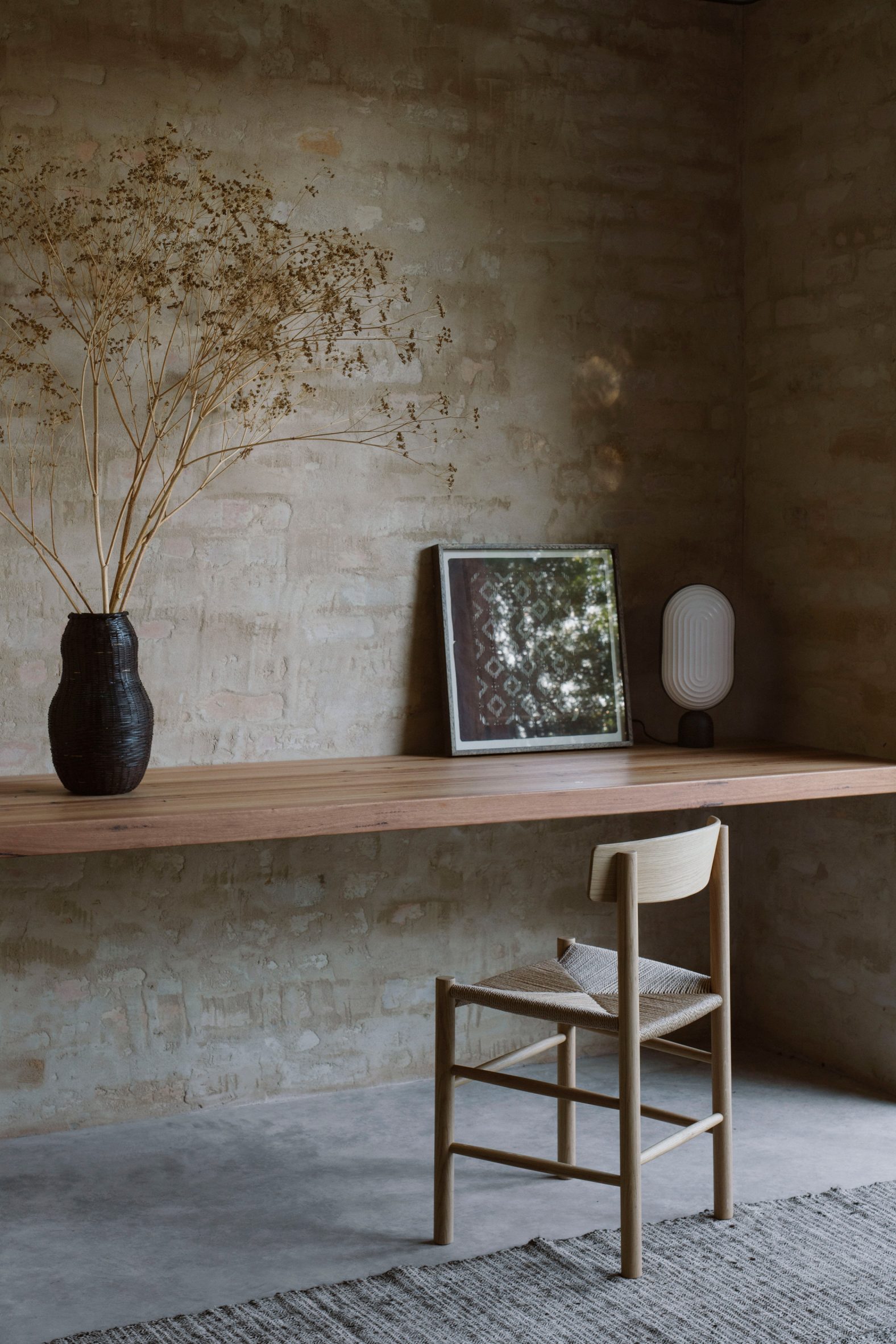
A desk inside Kyneton House by Edition Office
Brick is teamed with concrete floors and wooden surfaces

Edition Office was named Dezeen's Emerging architect of the year in 2019 for its work and research that foregrounds stories and relationships, whilst investigating material and spatial practice.

The studio's previous projects include a cylindrical wooden pavilion for the National Gallery of Victoria and the refurbishment of a Melbourne apartment that includes full-height curving storage volumes.

The photography is by Ben Hosking.

The post Kyneton House by Edition Office combines brickwork walls with lofted white ceilings appeared first on Dezeen.


from Dezeen https://ift.tt/3yULVc3

Images of Herzog & de Meuron's triangular ST/SongEun Building revealed

The exterior of the ST/SongEun Building

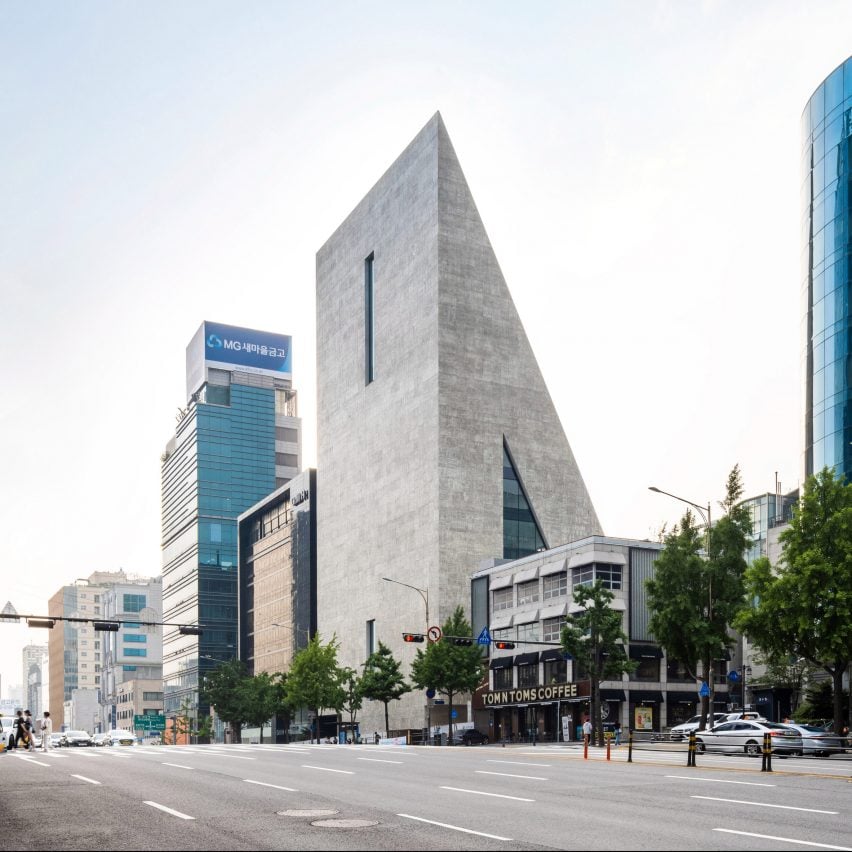
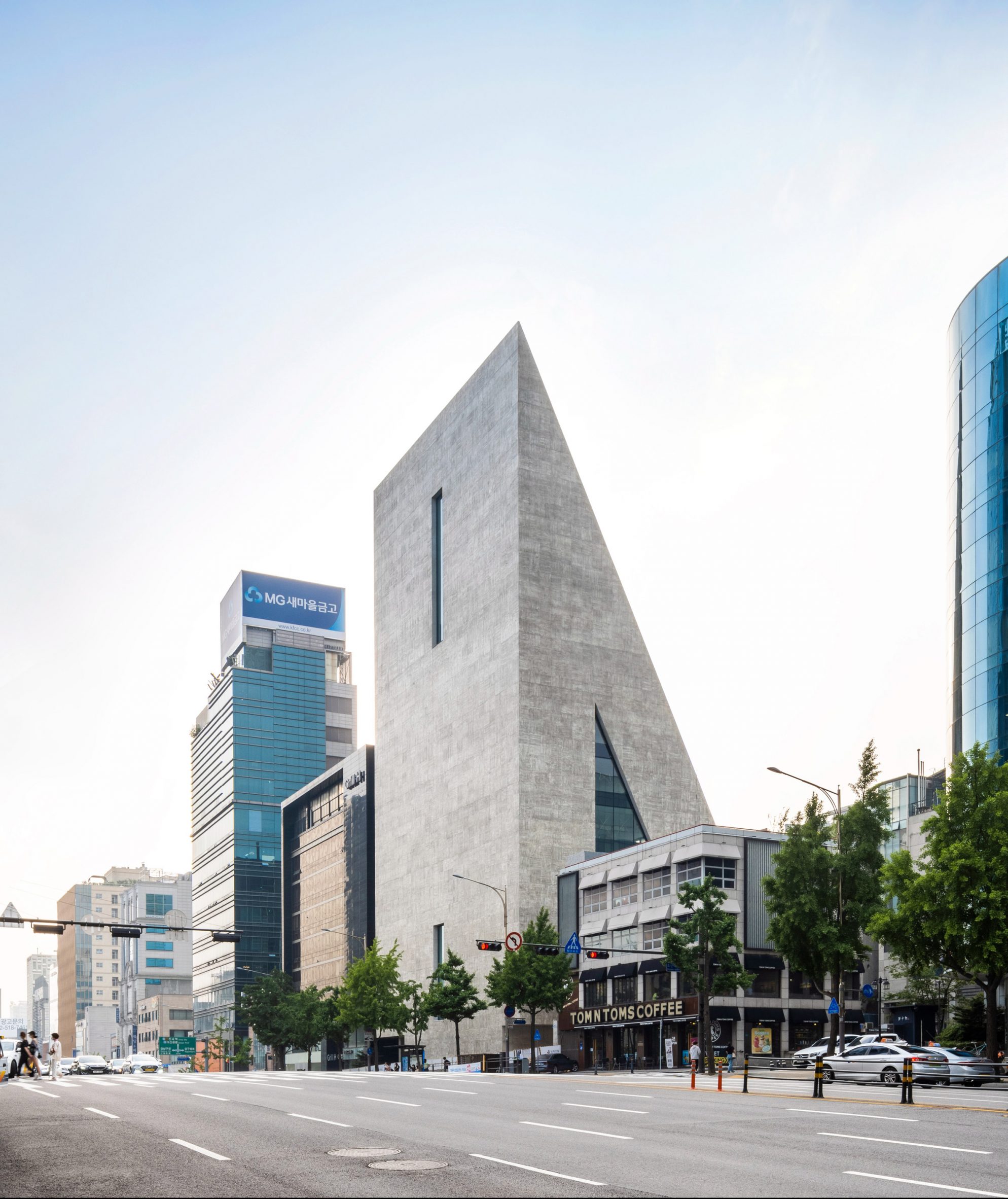
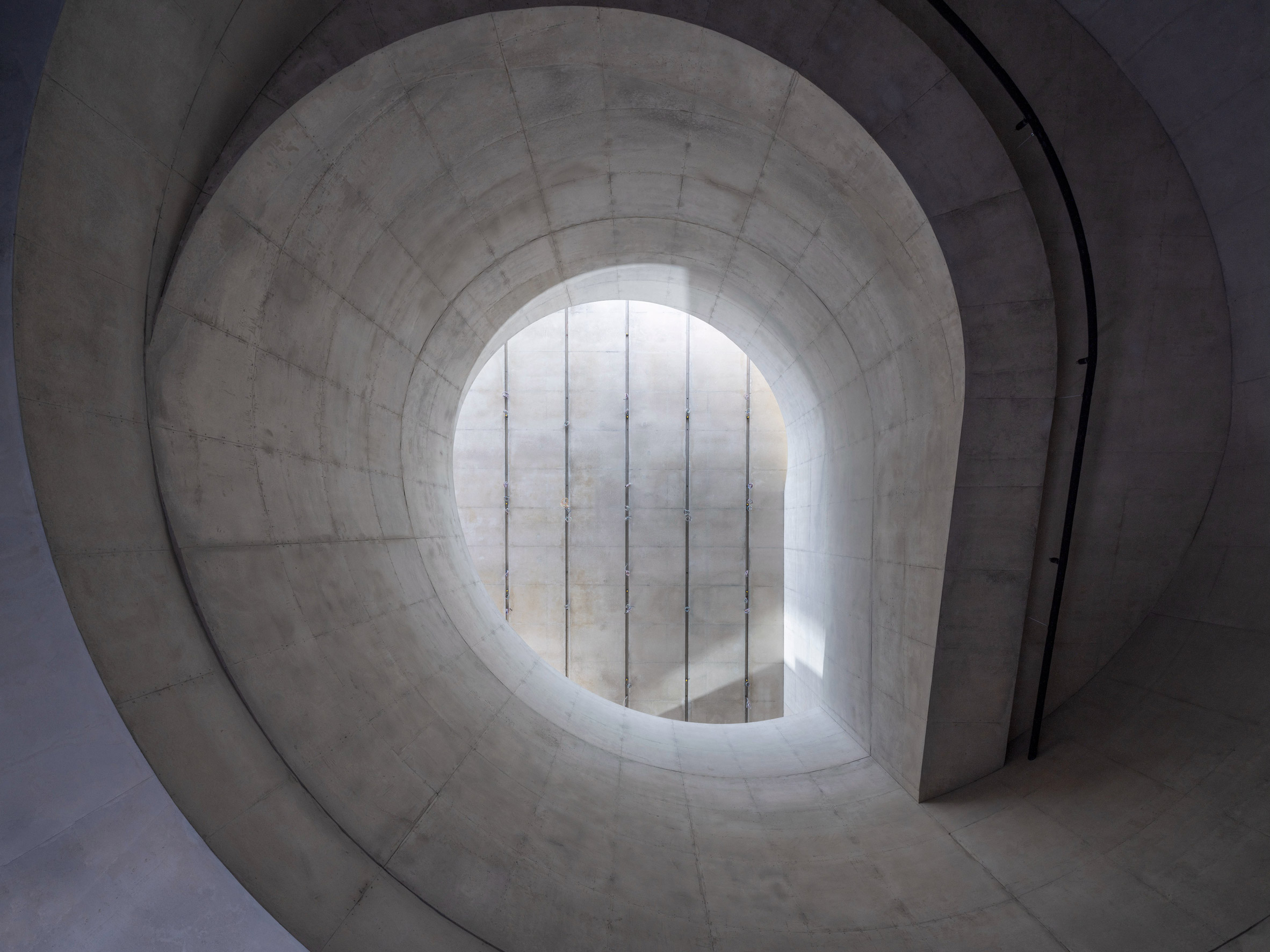
Board-marked concrete walls define the triangular ST/SongEun Building by Swiss studio Herzog & de Meuron in Seoul, South Korea.

The monolithic structure, which is due to open this September in the Chung Dam District, contains art studios and exhibition spaces for the SongEun Art and Cultural Foundation – a non-profit organisation that supports local artists.

It is Herzog & de Meuron's first realised project in South Korea.

A triangular concrete building by Herzog & de Meuron
Above: Herzog & de Meuron is nearing completion on ST/SongEun Building. Top: it has a tactile concrete structure

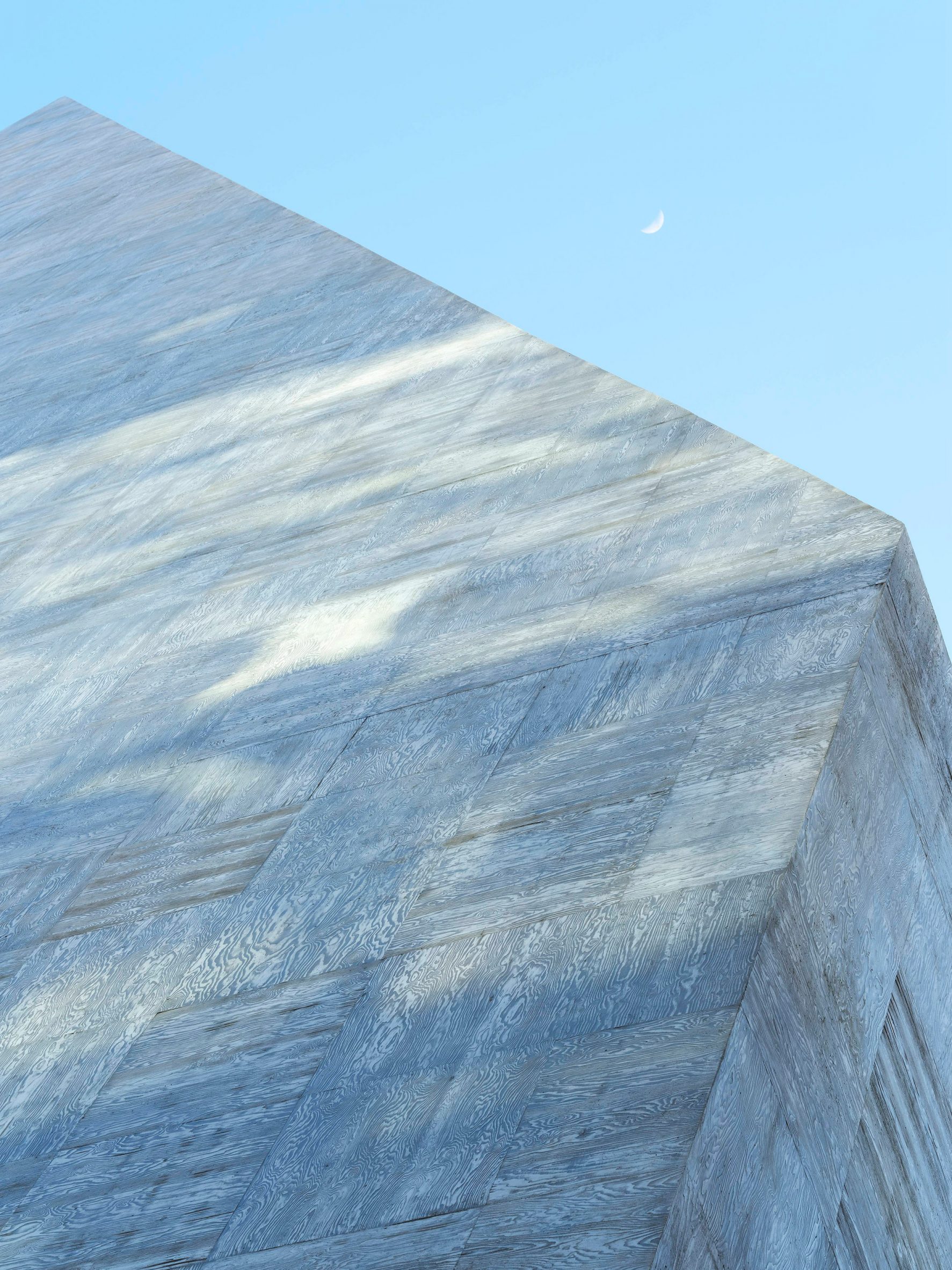
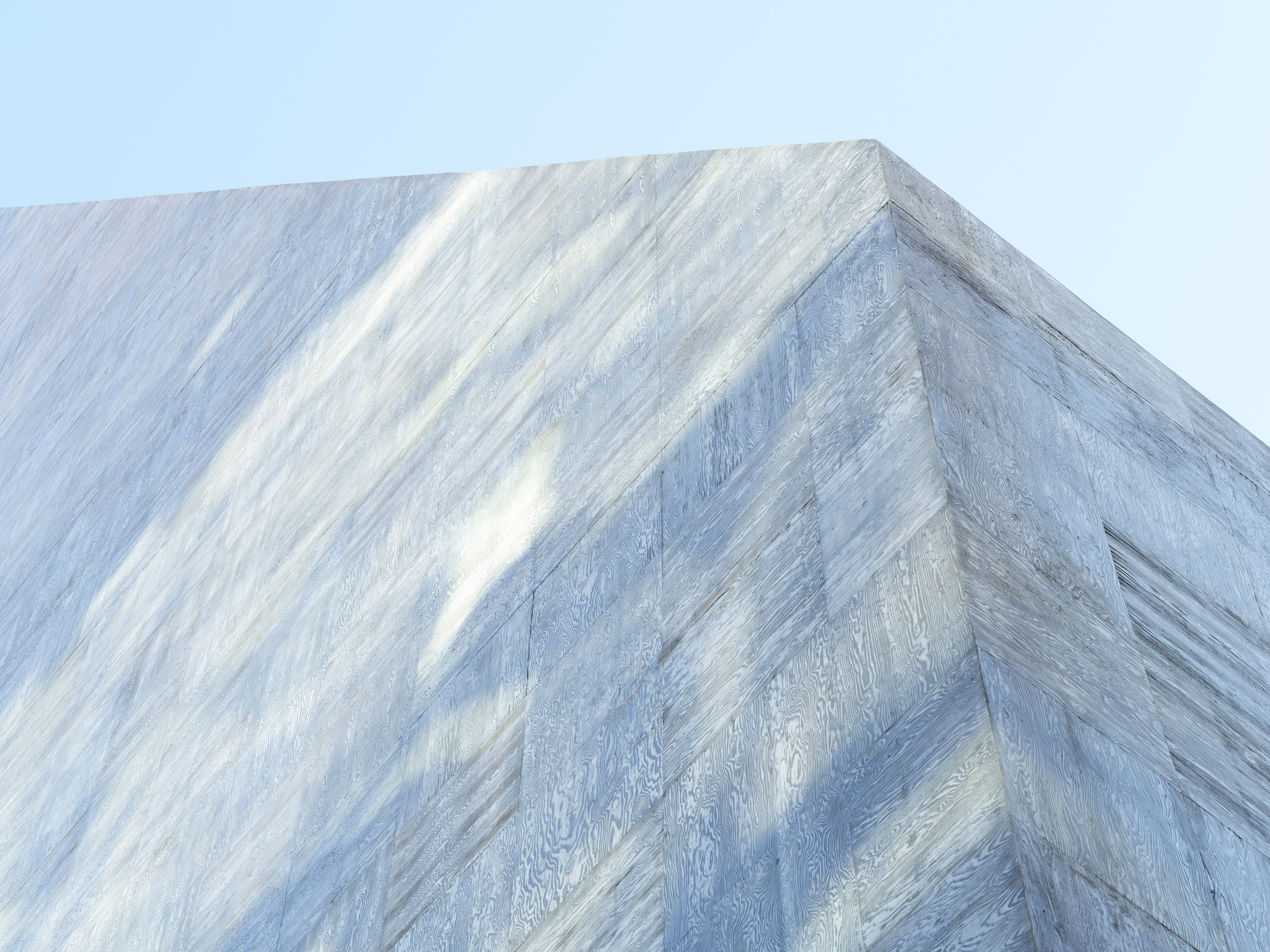
The ST/SongEun Building is characterised by tactile concrete surfaces, which are imprinted with a checkerboard of wood grains. This was achieved by rotating the orientation of the wooden panels used in the formwork.

The surfaces are a nod to the name of the building and organisation behind it, which translates as "hidden pine tree".

A board-marked concrete wall
Wood grains from the formwork animate the concrete

The 8,000-square-metre building contains 11 storeys above ground and five below. Exhibition spaces and art studios will occupy the lower levels, while the upper storeys will be used as offices for the steel trading company ST International.

The building's tallest facade faces the main street, while its lower side faces a garden and responds to the scale of the surrounding neighbourhood.

According to Herzog & de Meuron, this distinctive shape was directly informed by the area's zoning laws.

"While the neighborhood mainly consists of two- and three-story buildings, the zoning law allows for higher density towards the main street, with complex zoning rules leading to very different maximum envelopes for each plot," the studio explained.

A board-marked concrete wall
The wooden formwork to create a checkerboard pattern

The monolithic form is only broken by a few windows, which were placed to offer "views to the main street and to help orient the visitor within the building," according to the studio.

Cut-outs at the base of the building invite visitors into the main lobby and garden, or to a ramp leading to an underground cave-like exhibition space and parking area.

This ramp creates an opening in the ceiling of the exhibition space and is designed to connect it visually and acoustically to the street above.

The ST/SongEun Building is due to open with two exhibitions, one of which will be curated by Herzog & de Meuron. The second will celebrate the 21st edition of the SongEun ArtAward – the foundation's annual prize to support young Korean artists.

A concrete ramp
A ramp connects the street to underground spaces

Concrete is a popular material choice for architects designing art and cultural buildings. Tadao Ando recently transformed the historic Bourse de Commerce building in Paris into an art museum and placed a nine-metre-tall cylindrical concrete wall within its rotunda.

Elsewhere in South Korea, Álvaro Siza and Carlos Castanheira Architects created a monolithic concrete pavilion in an art park to display sculptures by Siza.

Herzog & de Meuron was founded in 1978 by Jacques Herzog and Pierre de Meuron. Other recent projects by the studio include the M+ museum in Hong Kong and a boutique hotel in historic Volkshaus Basel.

The photography is by Jihyun Jung.

The post Images of Herzog & de Meuron's triangular ST/SongEun Building revealed appeared first on Dezeen.


from Dezeen https://ift.tt/2T9D0El

Leap is a vegan leather made from waste apple cores and skins

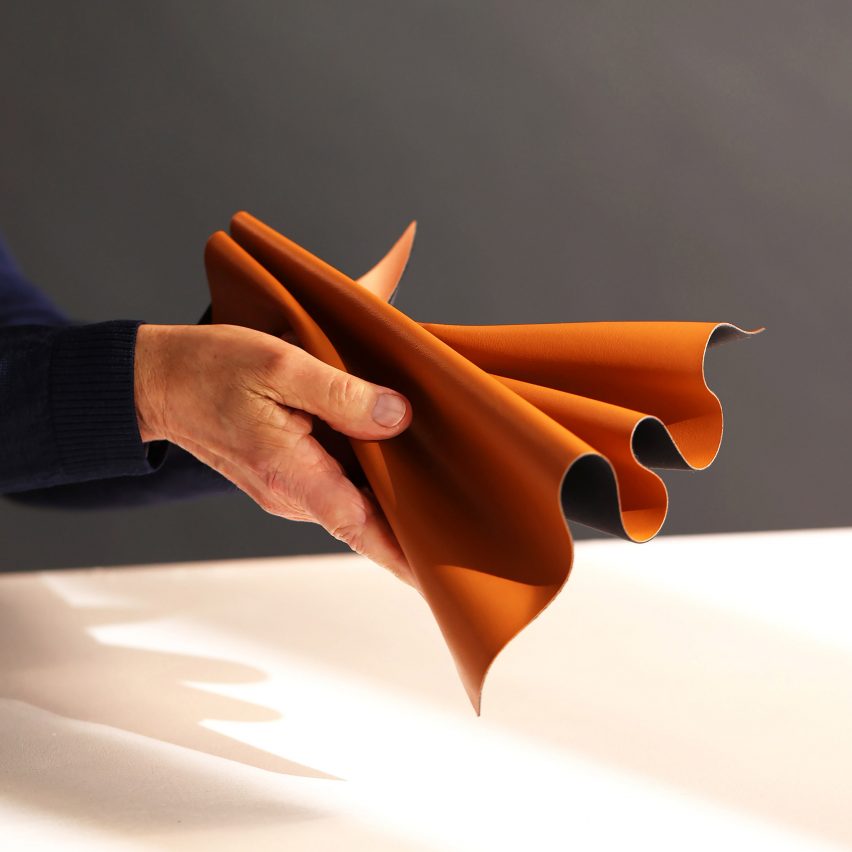
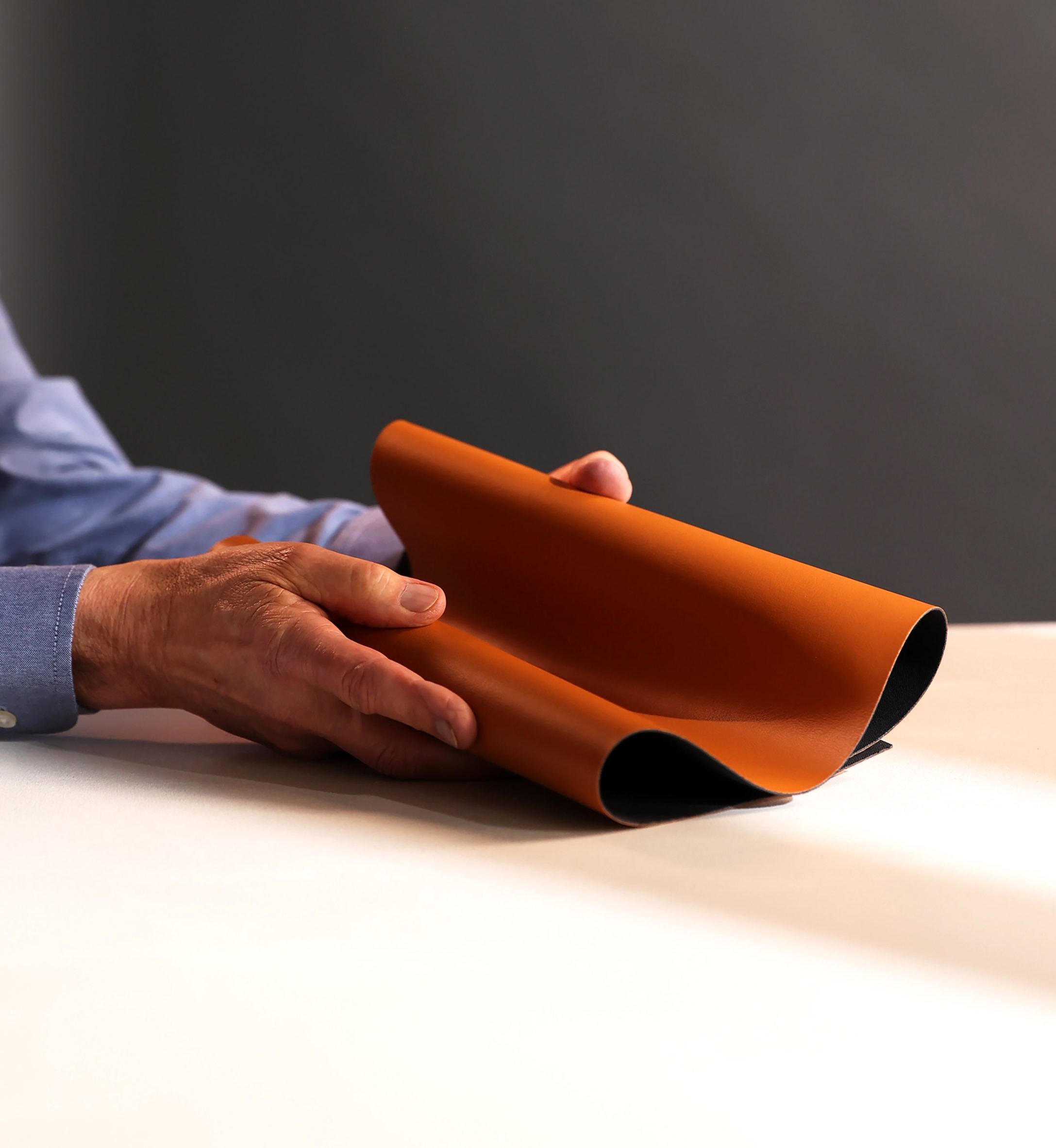
Hand holding Leap apple leather

Copenhagen-based Beyond Leather has combined leftovers from apple juice and cider production with natural rubber to create a plant-based leather alternative called Leap.

The animal hide substitute is made by mixing apple waste with natural rubber and applying it to a textile backing made of cotton and wood fibre before finishing it with a protective coating, creating a three-layered structure that can be disassembled at the end of its life.

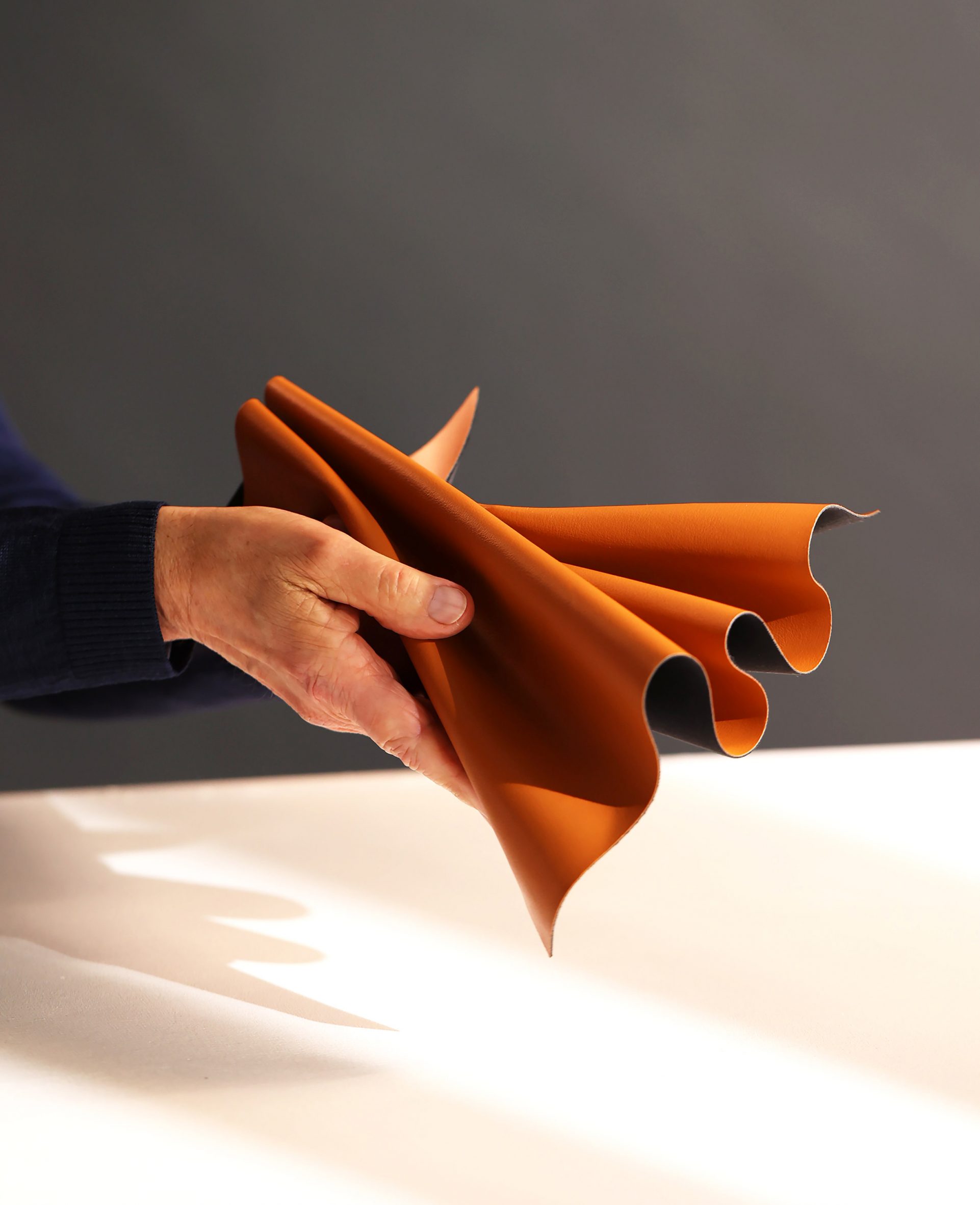
Hand holding Leap apple leather
Beyond Leather has created a leather alternative called Leap from post-industrial food waste

Leap joins a growing cohort of biomaterials that are being designed to mitigate the environmental impact of animal leather and its plastic alternatives.

Among them are Piñatex, which is made from waste pineapple leaves and has previously been turned into Hugo Boss trainers, as well as the mushroom leathers being piloted by Adidas, Stella McCartney and Hermès.

Beyond Leather's apple-based version emits 85 per cent less CO2 in its production than traditional leather, according to the company's estimates, as well as requiring one per cent of the amount of water. A full lifecycle assessment is yet to be undertaken.

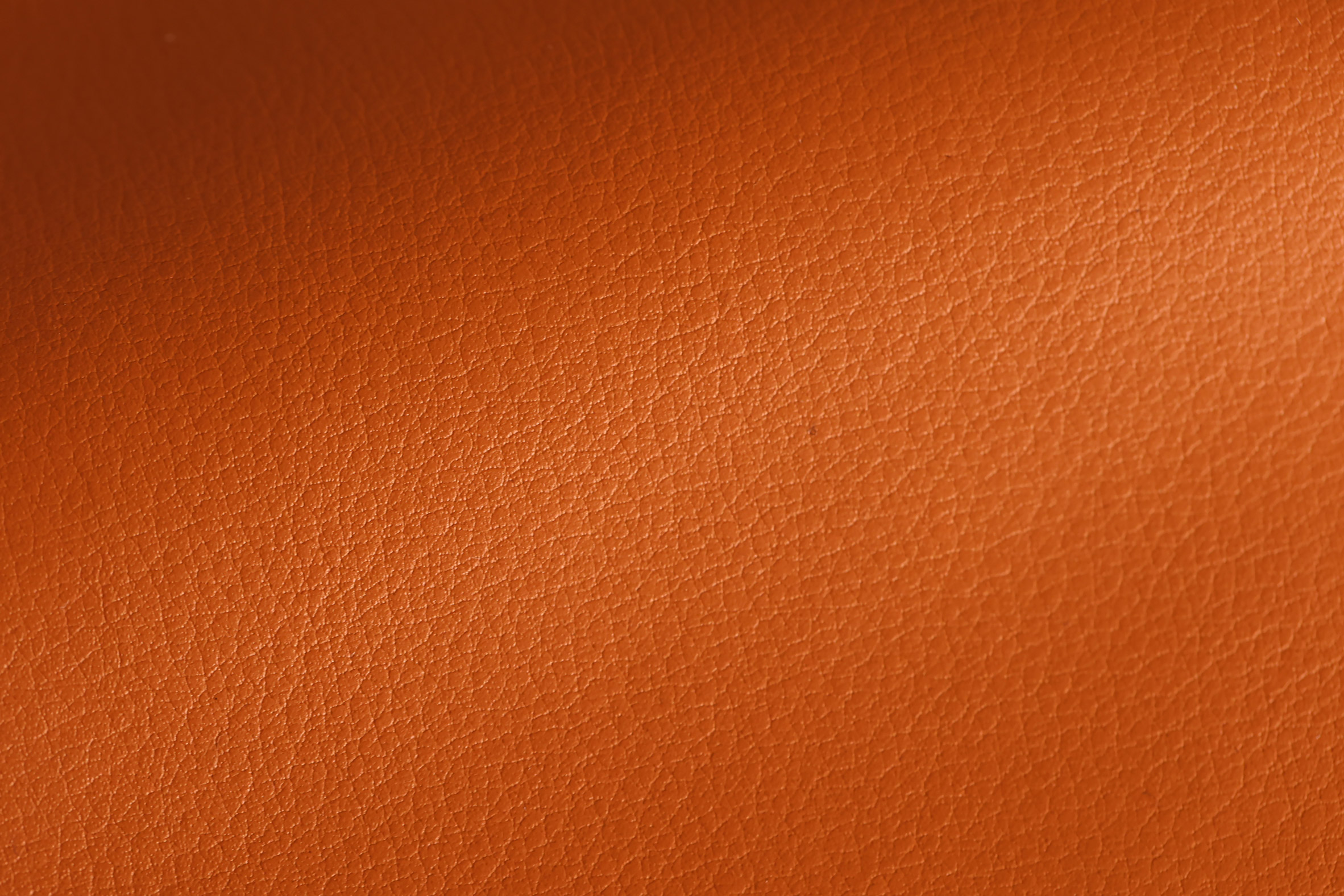
Close-up of texture on Leap leather
The apple biomass help to give the material a supple, tactile quality much like real leather

Leap is made from the skins, cores, stems and seeds of apples, which are left over after the fruit is juiced.

"Roughly 25 per cent of an apple goes to waste after pressing it for juice or cider," Beyond Leather co-founder Hannah Michaud told Dezeen.

"We source the apple waste for Leap from a small Danish juice producer who processes local farmers' apples into beverages and creates 500 to 600 tons of waste every year."

Hand holding apple waste slurry
The apple waste is combined with natural rubber to create a uniform slurry

According to Michaud, this biomass helps to give the final material a supple yet robust finish much like real leather.

"The apple waste has a very high content of short fibres and polymers that, if used in the right way, can be activated to give the necessary strength and stiffness to the final material," she explained.

"Apple makes up the majority of our product and in the future we want it to make up the entire product."

Swatches of different coloured Leap leather
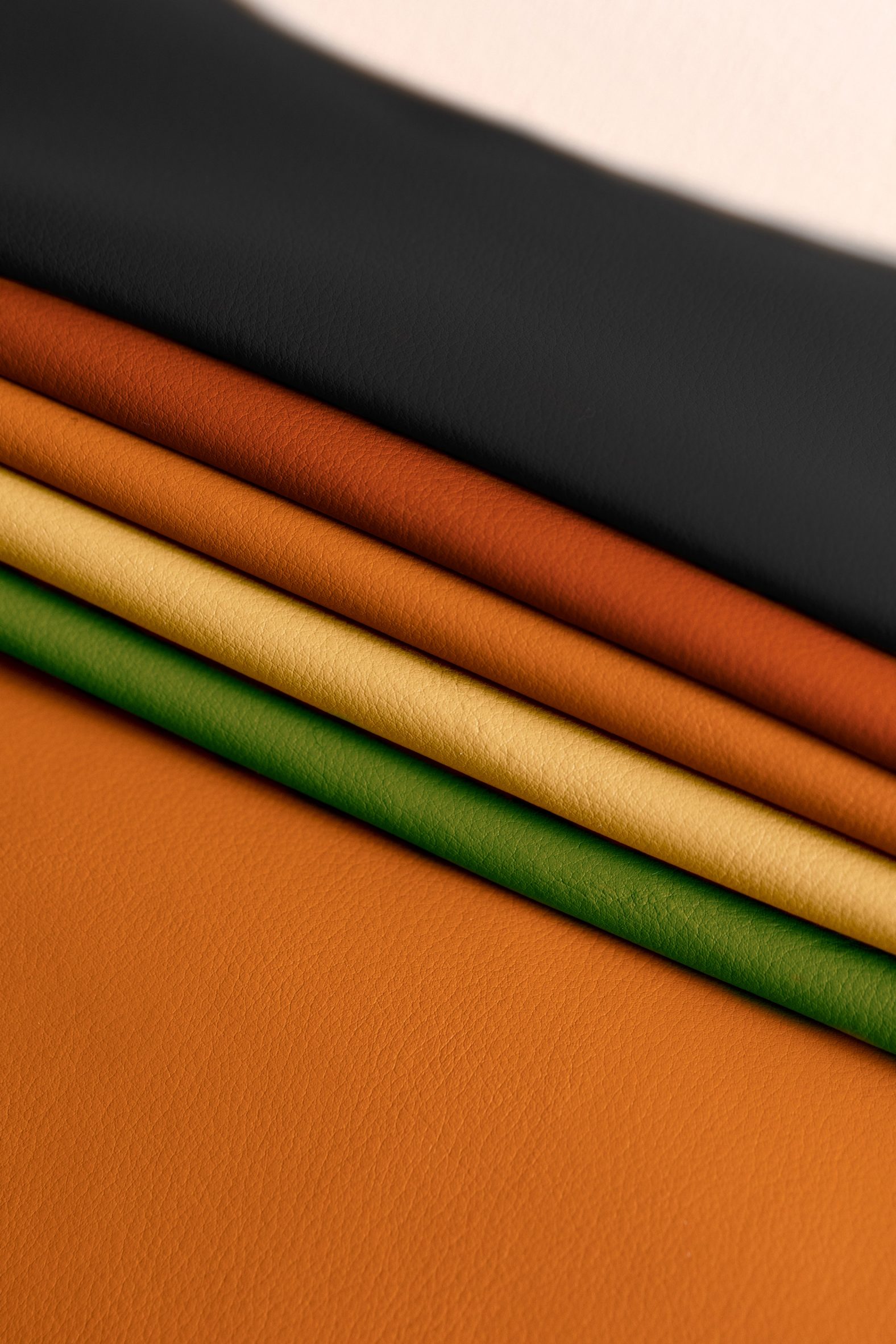
The material has a protective coating that can be imbued with different colours

At the moment, Leap uses a twill backing woven from certified organic cotton and Tencel, a kind of fibre made from wood pulp.

And, like many plant-based leather alternatives such as Piñatex, Leap's durability is currently ensured with the help of a protective plastic coating, which is embossed for texture and also contains the pigments that give the leather alternative its colour.

The coating was made half from traditional petroleum-based polyurethane and polyether, and half bioplastic.

Beyond Leather hopes to make the material completely bio-based and biodegradable by 2024.

"We aim to replace the current coating in a way that can still deliver the desired qualities without the use of fossil fuel-derived plastic, based on the company's philosophy of using waste as a core ingredient," Michaud explained.

Hand holding Leap apple leather
Leap is flexible much like real leather

In the meantime, the version of the material that will be made available to fashion brands this year was designed to be taken apart, so that its constituent materials can be separately recycled.

"The point of the three-layered design is that the fossil fuel-derived coating and the textile can be removed at the end of life of the final product," said Michaud.

"They can be put into their respective recycling loops while the apple itself can biodegrade."

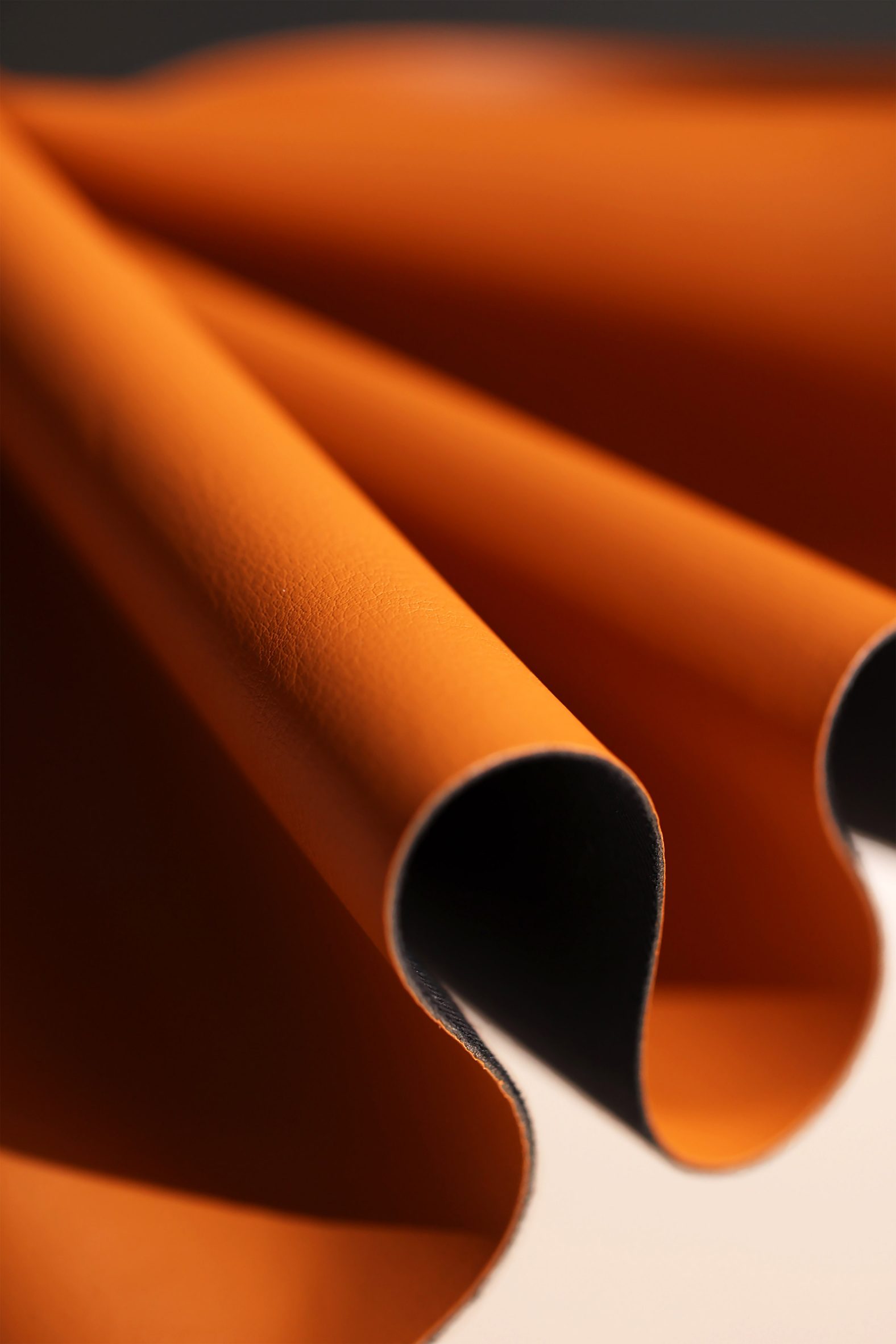
Close up of folded leather created by Beyond Leather
A textile backing helps to strengthen the material

Footwear brand Allbirds recently collaborated with materials startup Natural Fiber Welding to create what it claims is the first plant-based leather alternative to be made entirely without petroleum while producing 98 per cent fewer carbon emissions than animal hide.

Speaking to Dezeen as part of our carbon revolution series, Allbirds sustainability head Hana Kajimura explained that the reason the performance of biomaterials has so far been lagging behind that of fossil plastics is due to the fact that they have not received the same amount of funding.

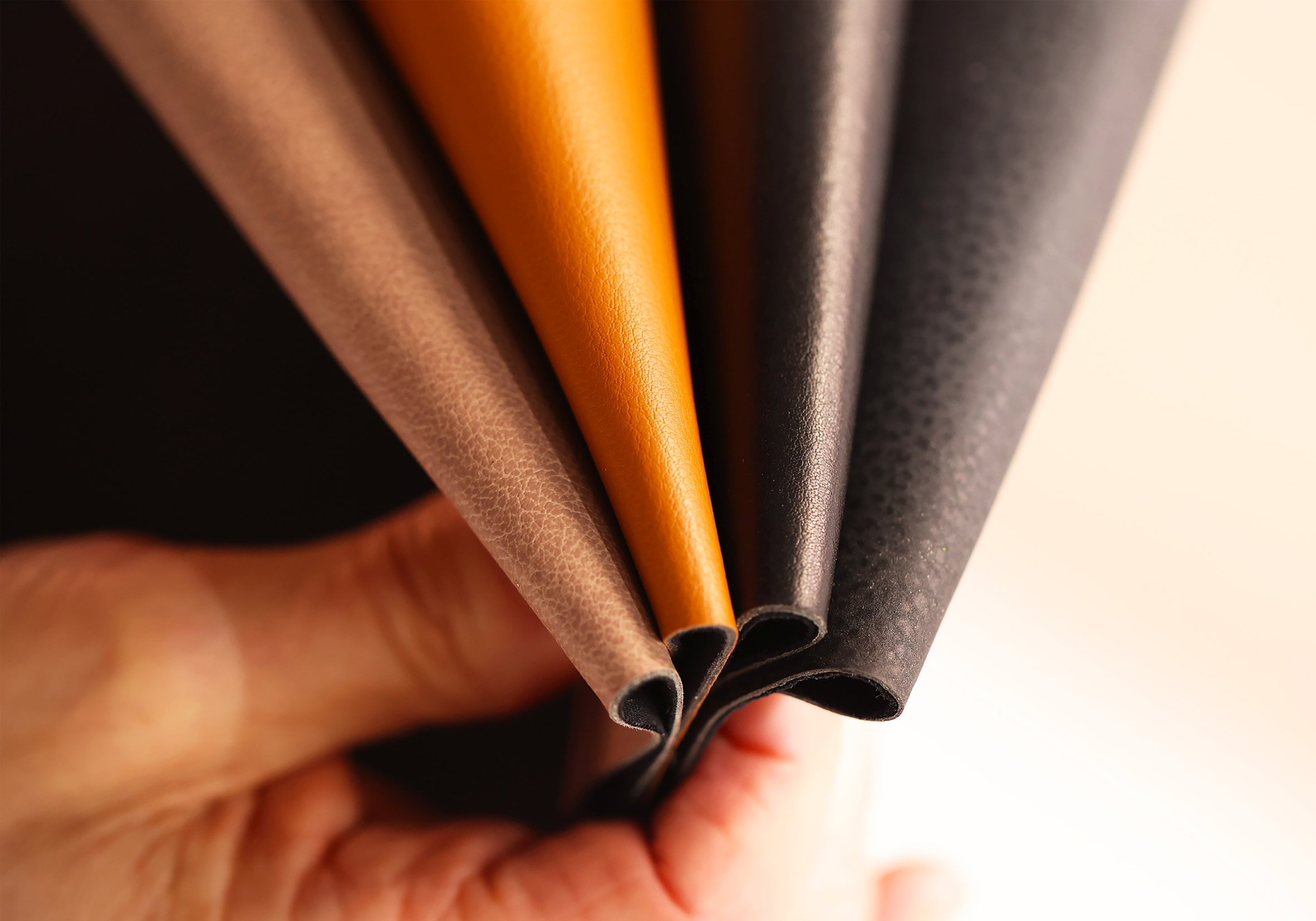
Hand holding swatches of different coloured apple leather by Beyond Leather
Different textures can be embossed into the protective coating

"We lament how natural materials maybe don't perform as well as synthetics but this is just because of the lack of investment and innovation in this space," she explained.

"We've been innovating on synthetics for decades, since the 1800s when we discovered and started drilling for oil. And we just haven't placed that same amount of investment on natural materials and really figuring out how to increase their performance."

The post Leap is a vegan leather made from waste apple cores and skins appeared first on Dezeen.


from Dezeen https://ift.tt/3i7SBg9

Swedish construction faces "crisis situation" as environmental court shuts down cement factory

Malarterrassen by Foster + Partners, Stockholm

Construction in Sweden could grind to a half after the country's biggest cement factory was stripped of its licence to mine limestone on environmental grounds.

The ruling by the Swedish Supreme Land and Environmental Court last week means that the Cementa plant at Slite in Gotland could be forced to end production on 1 November.

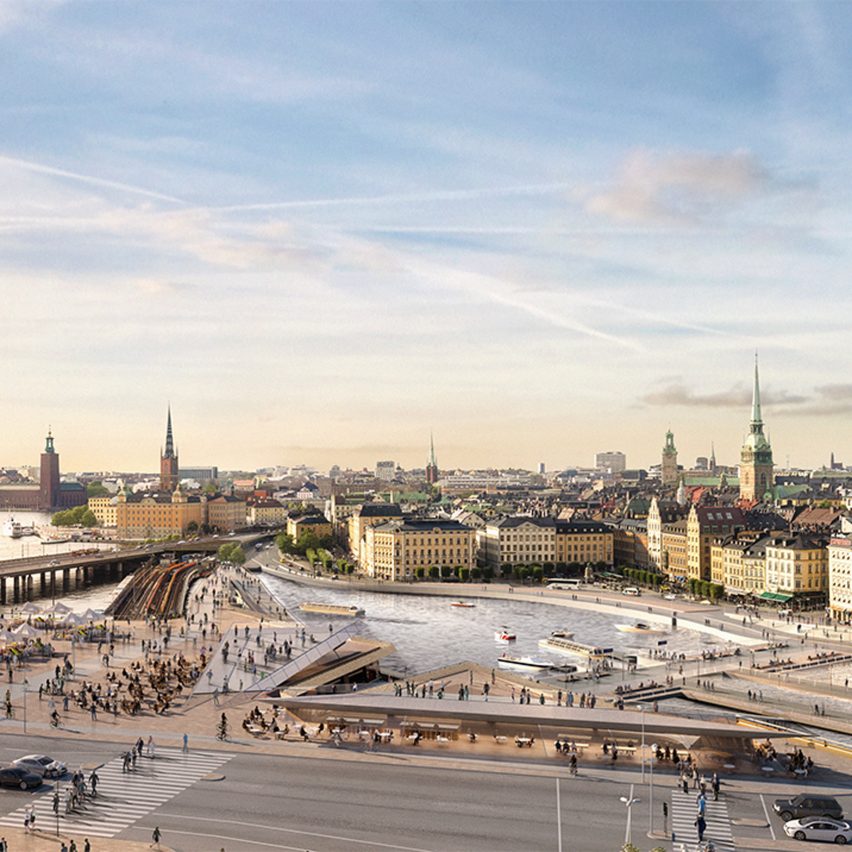
Matilda Hoffstedt, manager of the plant, said the ruling would create "a crisis situation for Swedish cement supply" while Cementa said work on Foster + Partners' Slussen masterplan in Stockholm (top image) could be impacted.

However, Greenpeace campaign manager Carl Schlyter welcomed the decision.

"It is wonderful that the court chooses to comply with the environmental laws we have, not to aggravate the species crisis and that incomplete environmental impact assessments are not accepted," Schlyter told Swedish news organisation Dagens PS.

Sweden's second-largest CO2 emitter

The plant produces around three-quarters of all the cement used in Sweden. It is also the second-largest source of greenhouse gas emissions in the country, responsible for three per cent of all CO2 emissions.

The court ruling overturns an earlier decision by a lower court to grant the factory a licence to continue mining limestone, an essential ingredient in cement, for another 20 years.

"They tossed out their application to keep on mining limestone," said Daniel Jacobs, a journalist working at Dagens PS. "Now the construction industry is saying they're not going to be able to build anything in Sweden."

The licence was refused due to concerns over the impact on groundwater in the environmental assessment the factory had submitted. Greenpeace has also accused the plant of uses its kilns to incinerate toxic waste without a permit.

Major construction projects at risk

Cementa, which is owned by giant German producer HeidelbergCement, said the decision would jeopardise construction projects in Sweden including major projects including the Slussen and Förbifart infrastructure projects in Stockholm and the Västlänken tunnel in Gothenburg.

“A renewed mining permit in Slite is a prerequisite for a long-term cement supply in Sweden, including for large construction and infrastructure projects such as Slussen, Förbifart Stockholm and Västlänken," the company said.

Cementa is the only cement producer in Sweden. It has a second, smaller factory Skövde in the south of the country.

Cement production is responsible for an estimated eight per cent of global carbon emissions. The emissions are largely due to the way that limestone, which is the main ingredient in cement, is processed.

The rock is crushed and burned to extract calcium, which is the binding agent used in cement, releasing the carbon into the atmosphere in the process.

Several companies are investigating ways of producing emissions-free concrete that does not require traditional cement including Carbicrete, which has developed a way of using industrial slag instead of cement as a binding agent.

The post Swedish construction faces "crisis situation" as environmental court shuts down cement factory appeared first on Dezeen.


from Dezeen https://ift.tt/2VKYQzb

Brexit "a major factor" as EU applications for UK design courses fall by more than 50 per cent

Brexit architects

The number of European Union students applying to study art and design in the UK has fallen by more than half compared to last year.

Applications from the EU fell 52 per cent from 22,860 in 2020 to just 10,940 this year, according to data from the UK's Universities and Colleges Admissions Service (UCAS).

Applications from the rest of the world rose seven per cent from 26,680 to 28,530, meaning there was a net fall of just over 10,000 overseas applications.

Jeremy Till, head of London art and design school Central Saint Martins, said the fall in EU applications was "undoubtedly" due to Brexit, which came into force on 1 January this year.

Brexit a "major factor" in drop

"Brexit has undoubtedly been a major factor in the downturn in EU applications," Till told Dezeen.

"The fact that EU students now have to pay fees at the higher international level and are no longer eligible for loans is certainly putting off prospective students," added Till, who is also pro vice-​chancellor of the University of Arts London.

Overall applications to courses grew slightly compared to 2020, when the pandemic caused a small drop in overall student numbers compared to 2019. More UK students have applied this year, bringing the total number of applications to 256,420.

Predictions that an uptick in EU student applications in 2018 was a pre-Brexit surge appear to have come true.

EU students must pay international fees

In 2016 The Council for Higher Education in Art & Design warned Brexit would have a "significant impact on staff and student recruitment, competitiveness and prestige of UK creative higher education and creative industries at a time when global competition in these areas is likely to increase steeply."

Since Brexit, students from countries in the EU are no longer eligible for home fees status, meaning they now have to pay higher fees than UK students.

EU students also have to apply for a student visa costing £348 using the UK's new points-based immigration system, as well as paying a £470 surcharge upfront to access the country's free healthcare system.

UK institutions "concerned" at loss of diversity

After graduation, EU students will need to apply for a graduate visa to grant them permission to stay and look for employment for up to two years, posing a further disincentive.

"We are concerned about the effect this will have at UAL, not least because students from the EU have been an important part of our diverse community," said Till.

"Our EU graduates have made important contributions to the creative economy in the UK," he added.

"To mitigate the potential loss of this important constituency, UAL has therefore put in place an extensive bursary scheme to support EU applications."

Fall in numbers could cost universities £66.5 million

The drop in EU student numbers is not entirely unexpected. A report published by the UK government's Department of Education in February 2021 estimated that Brexit could cost universities up to £66.5 million in fee income as EU student numbers dropped.

Travel restrictions introduced in response to the coronavirus pandemic and the UK's high rate of infection could also be putting off potential students.

Further impacts of Brexit on the UK's creative industries include small design firms moving their production abroad to reduce costs and UK architecture qualifications losing automatic recognition in EU countries.

The post Brexit "a major factor" as EU applications for UK design courses fall by more than 50 per cent appeared first on Dezeen.


from Dezeen https://ift.tt/3B2eqq3