Thursday, 15 July 2021

BBC's Tokyo 2020 trailer "brings the Olympics into everyday Japan"

J-pop video scene in BBC trailer for Tokyo 2020 Olympics produced by Factory Fifteen and Nexus Studios

The founders of film and animation studio Factory Fifteen have revealed how they fused Japanese pop culture with sports references to develop a frenzied promo video for the Tokyo 2020 Olympics.

As the trailer for the BBC's media coverage of Tokyo 2020, the one-minute video takes viewers on a fast-moving journey through different city scenes, featuring everything from J-pop and anime to Japanese toys and street signage.

Tokyo street scene in BBC trailer for Tokyo 2020 Olympics produced by Factory Fifteen and Nexus Studios
The film starts on the streets of Tokyo, where a kiosk features merchandise relating to skateboarder Sky Brown

Factory Fifteen directed the video, which was produced by film agency Nexus Studios and released under the BBC Creative brand with the title, Let's Go There.

Studio founders Kibwe Tavares, Jonathan Gales and Paul Nicholls told Dezeen their aim was to use "a heightened sense of reality and fantasy" to weave the story of British athletes into Tokyo's already vibrant culture.

"The film brings the Olympics into everyday Japan," said Gales.

"The fact that no one can go to Tokyo to visit for the Olympics was a big part of the conversation early on," he explained.

"We wanted people to be really excited, even though they can't be there. That's why we decided to snapshot vignettes of normal everyday scenes in Tokyo. We want people to be wowed – to question whether that's what Tokyo is really like – and to have an emotional attachment to the drama."
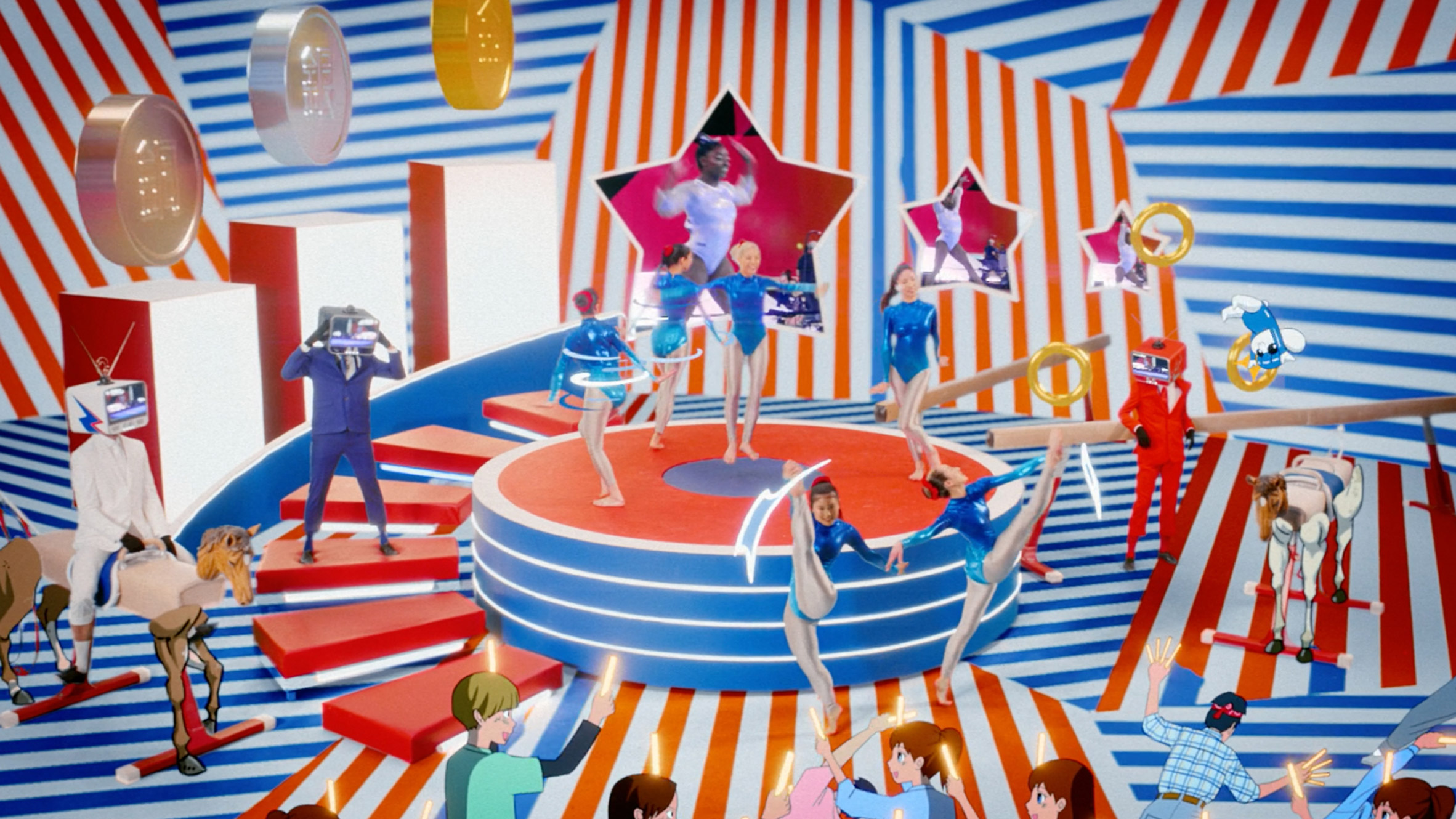
J-pop video scene in BBC trailer for Tokyo 2020 Olympics produced by Factory Fifteen and Nexus Studios
Gymnastics references feature in a J-pop video blend real-life and anime, with references to Simone Biles and Sonic the Hedgehog

The narrative plays out across six scenes, which are all interconnected. It starts on the streets of Tokyo, before moving into a J-pop music video, a video game arcade, a shop for gashapon (vending-machine capsule toys), a teenager's bedroom and then out onto the city rooftops.

Olympic athletes are carefully interwoven into each scene in a multitude of different ways, even though they never feature in person.

Cyclists Jason and Laura Kenny are depicted on manga-style graphic posters, while heptathlete Katarina Johnson-Thompson features in a series of gashapon toys that showcase her different events.

We also see skateboarder Sky Brown on tourist merchandise, while various athletes are characters in a Street Fighter-style arcade game.

Video arcade scene with Street Fighter-style game including Dina Asher-Smith and Shelly-Ann Fraser-Pryce in BBC trailer for Tokyo 2020 Olympics produced by Factory Fifteen and Nexus Studios
An arcade showcases a Street Fighter-style video game featuring different athletes

A single-camera technique was used to create a continuous, ever-moving journey through these scenes, which is what gives the video its fast-paced feel.

"The thing that we jumped on was this idea of creating a singular journey, making it as seamless as possible, then building environments where everything's really overwhelming and disorientating," explained Tavares.

"It's not a traditional character-led piece; you're not following a group of Olympians through a linear narrative," added Nicholls. "It's much more environmental-based storytelling."

"It became important to us that, when you watch this thing 20 times, you still notice something different," he said. "With the camera as the constant character, you can allow your eye to dot around and notice all these different things."

Heptathlete Katarina Johnson-Thompson features in gashapon toys in BBC trailer for Tokyo 2020 Olympics produced by Factory Fifteen and Nexus Studios
Heptathlete Katarina Johnson-Thompson features as a toy

The production team have added a whole host of "easter egg moments" within the film to enhance this feeling of constant discovery.

Examples include the J-pop dancers recreating the iconic mic drop moment that American gymnast Simone Biles included in a floor routine, a gashapon machine dedicated to BBC pundits and an animated gymnastics bunny that collects rings in the style of Sonic the Hedgehog.

"We really like making the audience work a little harder," said Tavares. "All the little details are there, but you have to work to find them."
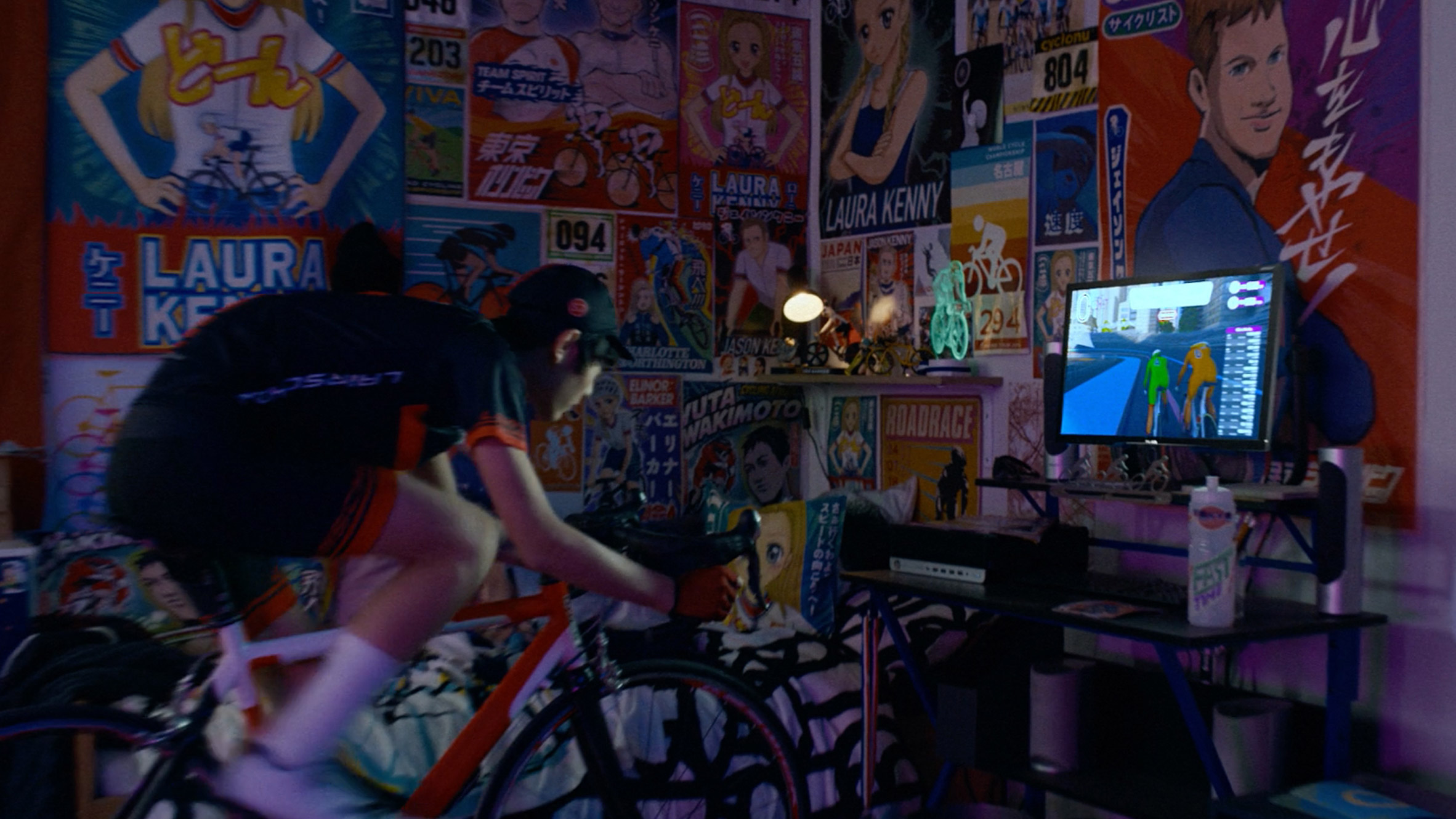
Laura and Jason Kenny features in cycling posters in the bedroom scene in BBC trailer for Tokyo 2020 Olympics produced by Factory Fifteen and Nexus Studios
Manga-style posters of cyclists Jason and Laura Kenny cover the walls of a teenager's bedroom

Some of these details will become clearer once the Olympics is underway, he explained.

"As the Olympics continues you'll get to know people like Sky Brown. You might know who she is now, that she's this protege, but once the Olympics has started you're going to find out so much more about her. So when you watch this again, you're going to see how much stuff is related to her."

Tavares, Gales and Nicholls founded Factory Fifteen in 2011, after studying architecture together at the Bartlett in London. Many of their early films – several of which made their media debut on Dezeen – were set against a backdrop of dystopian future cities and landscapes.

Today the trio have a more diverse showreel, but many of their projects still incorporate elements of architecture, fiction and fantasy.

Rooftop and lights in final scene in BBC trailer for Tokyo 2020 Olympics produced by Factory Fifteen and Nexus Studios
The end scene brings Olympics references to Tokyo's iconic neon light and signs

"Japan was such a good canvas for this type of idea," Nicholls said. "They work with pictures and icons much more than other countries, so our task was just to figure out where to find these uniquely Japanese pictures and scenes, and replace them with references to the Olympics."

"Even though it's a like-for-like replacement, so it's supposed to be relatively subtle, it actually creates a heightened and fantasy feel," he said.

The film is set to a soundtrack that incorporates traditional Japanese instruments and Min'yō-style vocals. This was created by anime composer Kenji Kawai, whose portfolio includes Ghost in the Shell, Avalon and Hyakkin.

The post BBC's Tokyo 2020 trailer "brings the Olympics into everyday Japan" appeared first on Dezeen.


from Dezeen https://ift.tt/3z3gD2z

Wednesday, 14 July 2021

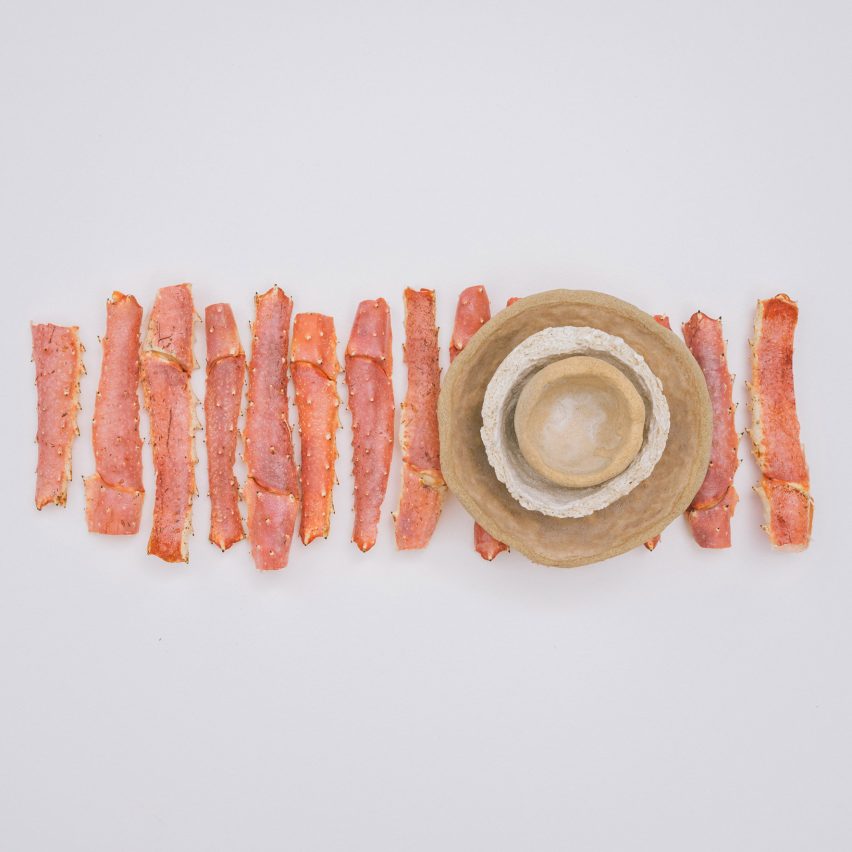
Natural Material Studio develops Shellware ceramics from leftover seashells

Seafood shell ceramics

Designer Bonnie Hvillum's Natural Material Studio has created conceptual ceramics from clay made out of powdered seashells from Denmark's Noma restaurant.

The Copenhagen-based designer teamed up with the restaurant, which is known for its locally sourced produce, and ceramicist Esben Kaldahl to develop the seashell-based material.

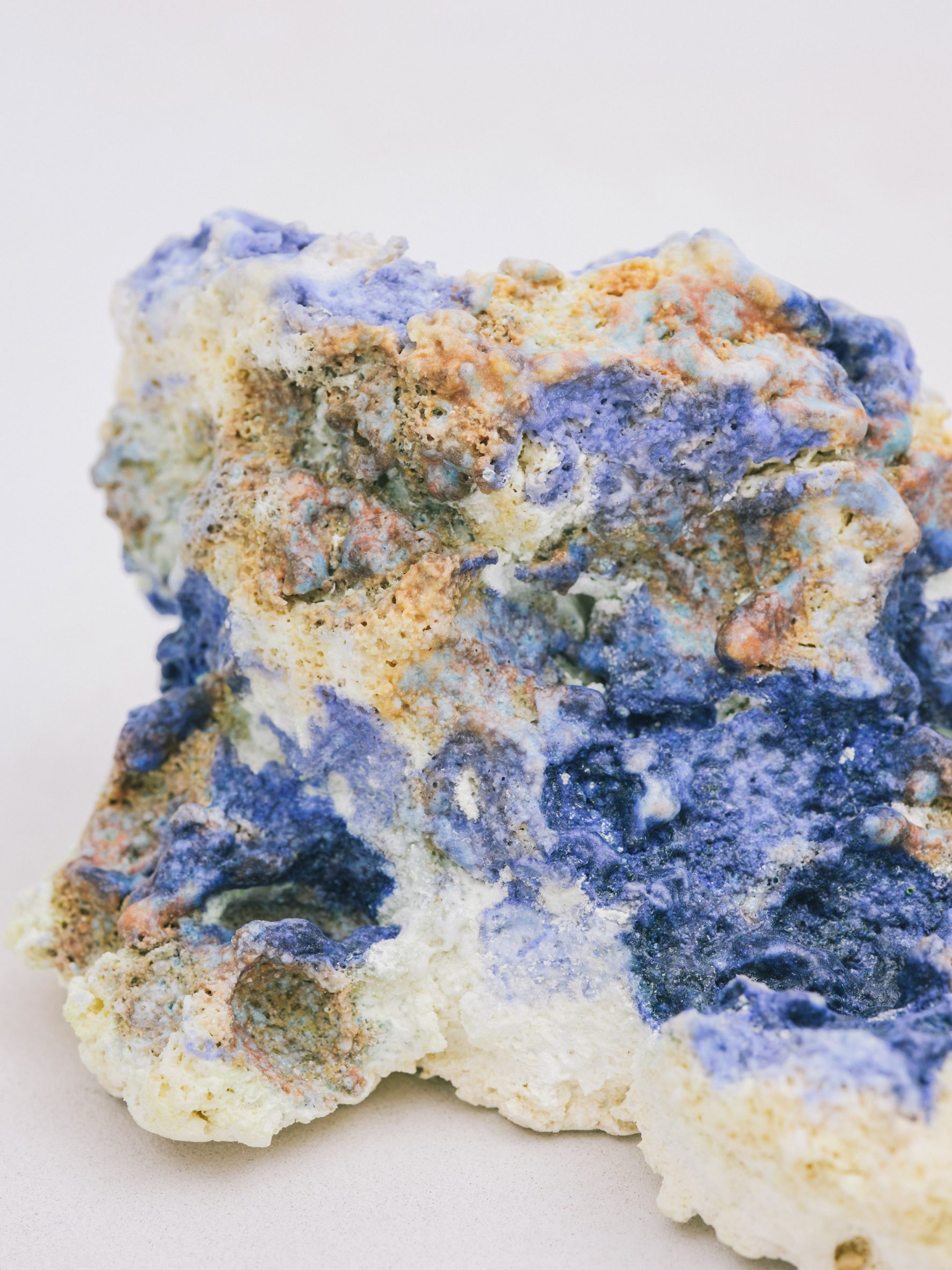
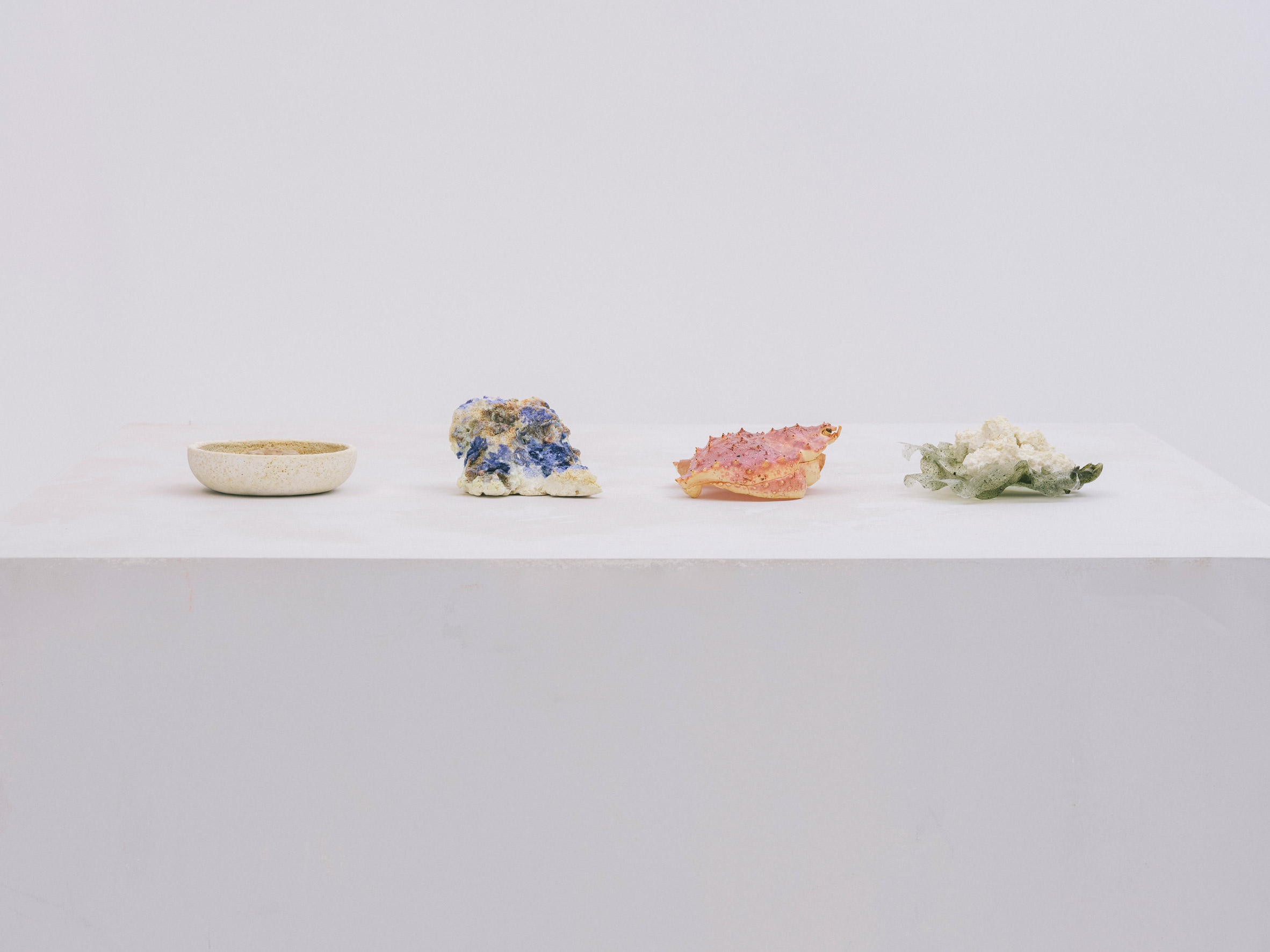
Blue ceramic made from shells
Some of the clays resemble coral

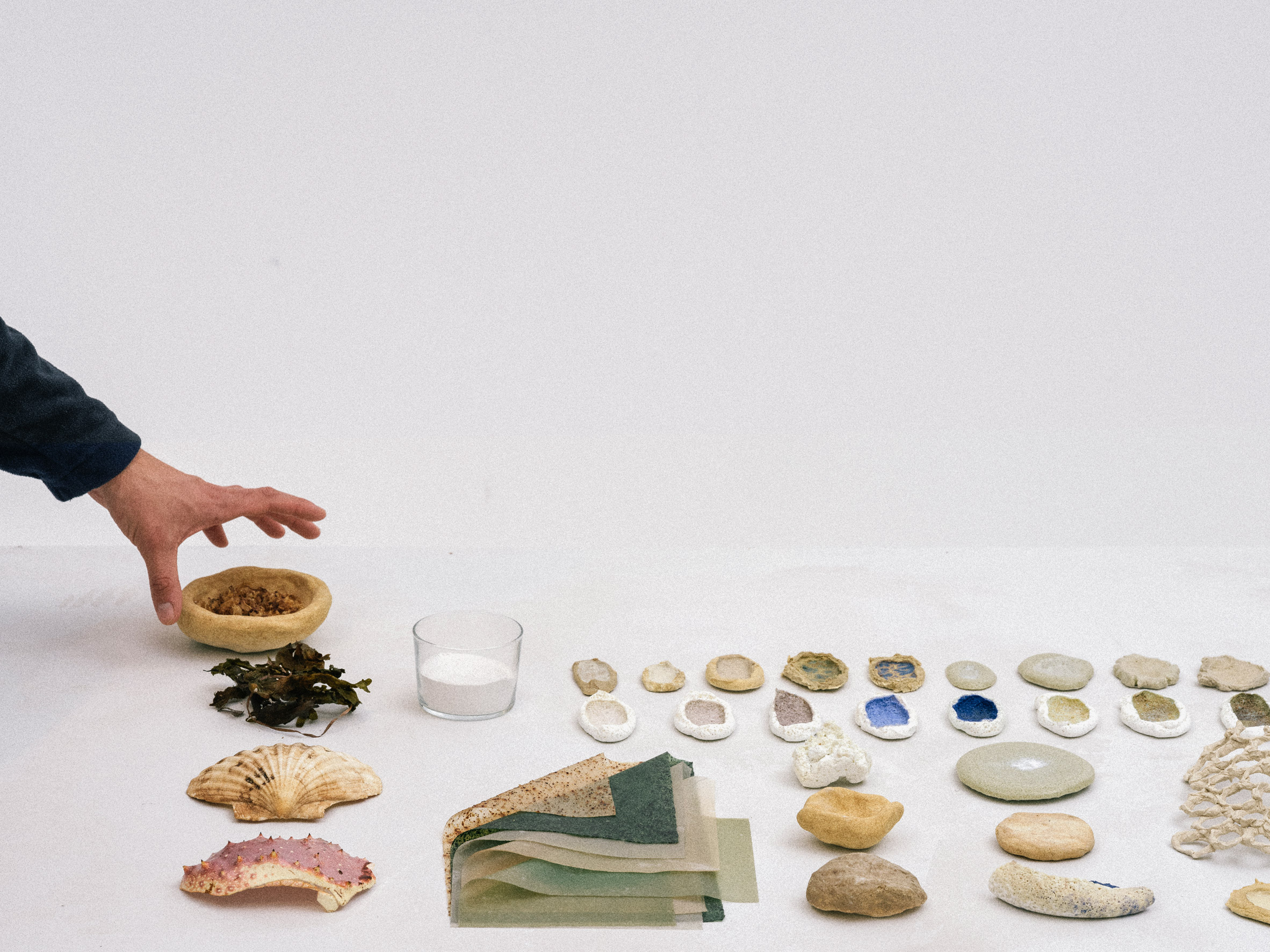
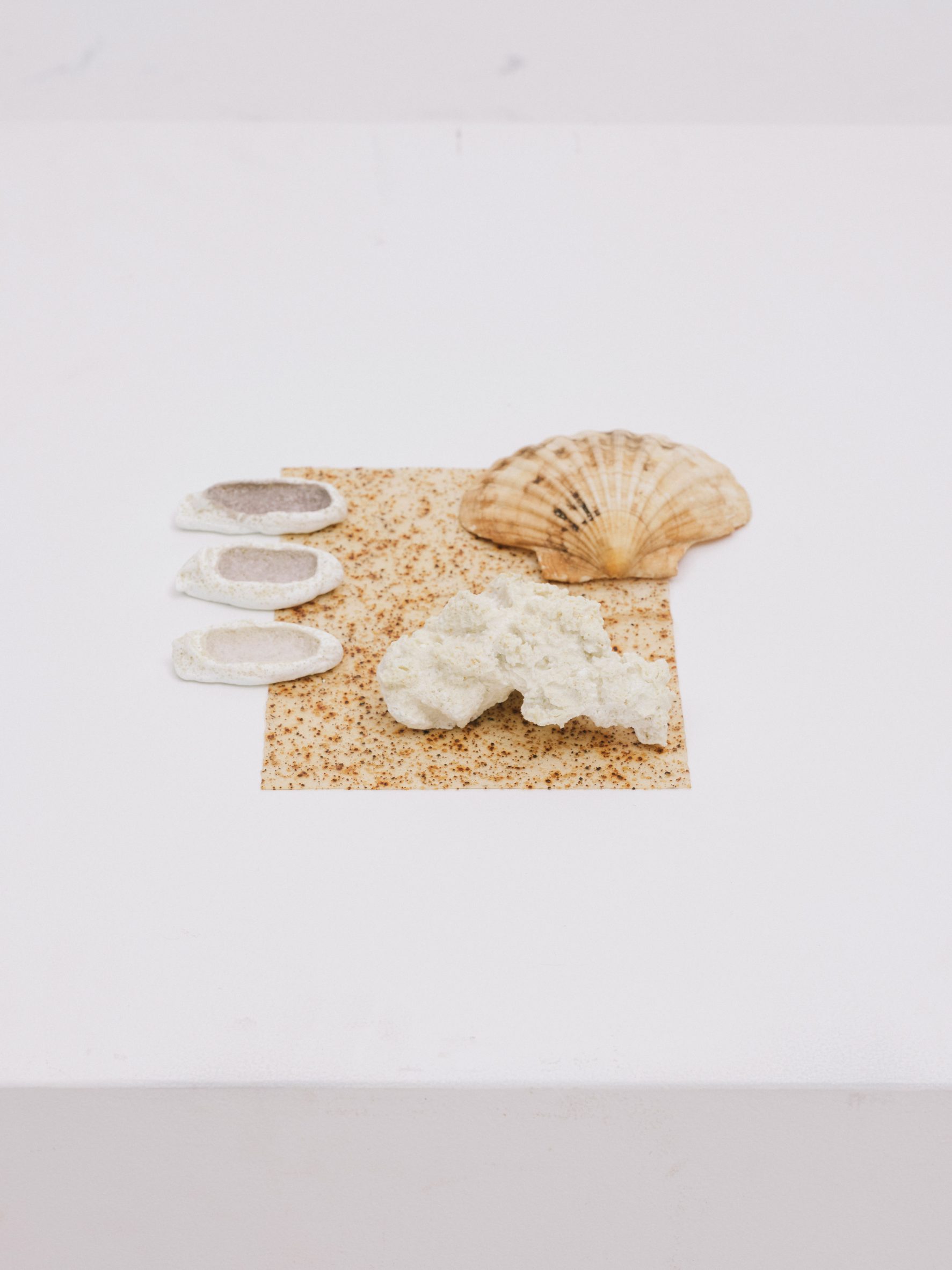
The Shellware project used donated leftover scallop and other seafood shells from Noma to create the crockery.

"I was curious to work with seafood shells and explore the possibilities, and also how they could be brought back into the restaurant in a new narrative," Hvillum, who is the founder of Natural Material Studio, told Dezeen.

Different types of seashell
Hvillum worked with a marine research center to create the material

She based her material research on learning the properties and build-up of different types of shells.

"I connected with marine experts from Kristineberg Marine Center in Sweden to understand the shells better," Hvillum explained.

"And from there follows several material experiments based on hypotheses I build from all the different knowledge I have gathered."

Natural Material Studio ceramics
Shells are heated and then turned into powder

She discovered that the calcium carbonate seashells could be turned into calcium oxide by heating the shells. This creates a similar base material to bone ash used to make bone china.

"When I started heat-treating the shells to 900 degrees, all organic matter was burned away, and I started to understand what was left – the pure calcium oxide," she explained.

"From the shells that I received from Noma, the scallop shells were the ones that contained most calcium oxide."

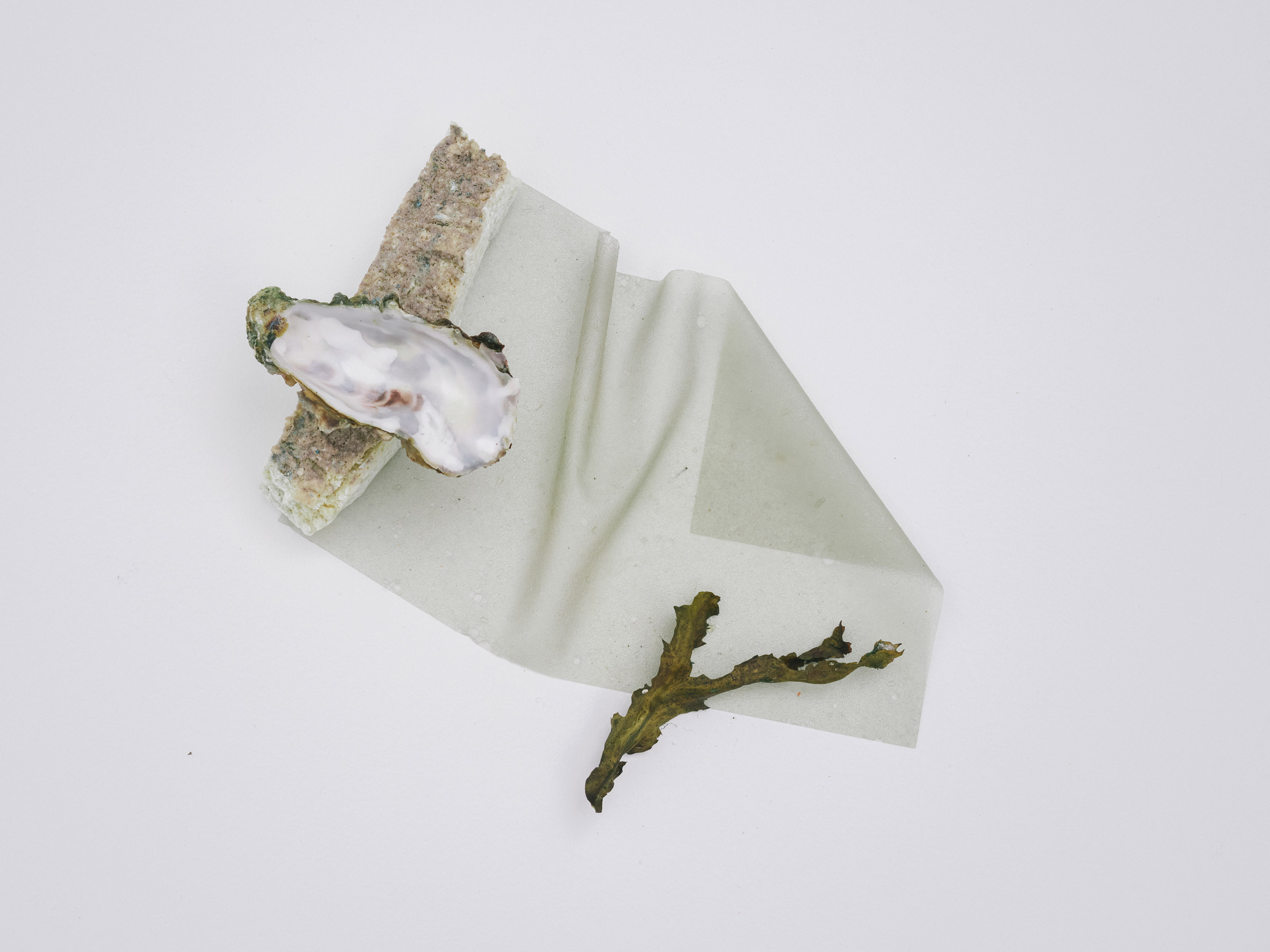
Oyster shell and seaweed textile
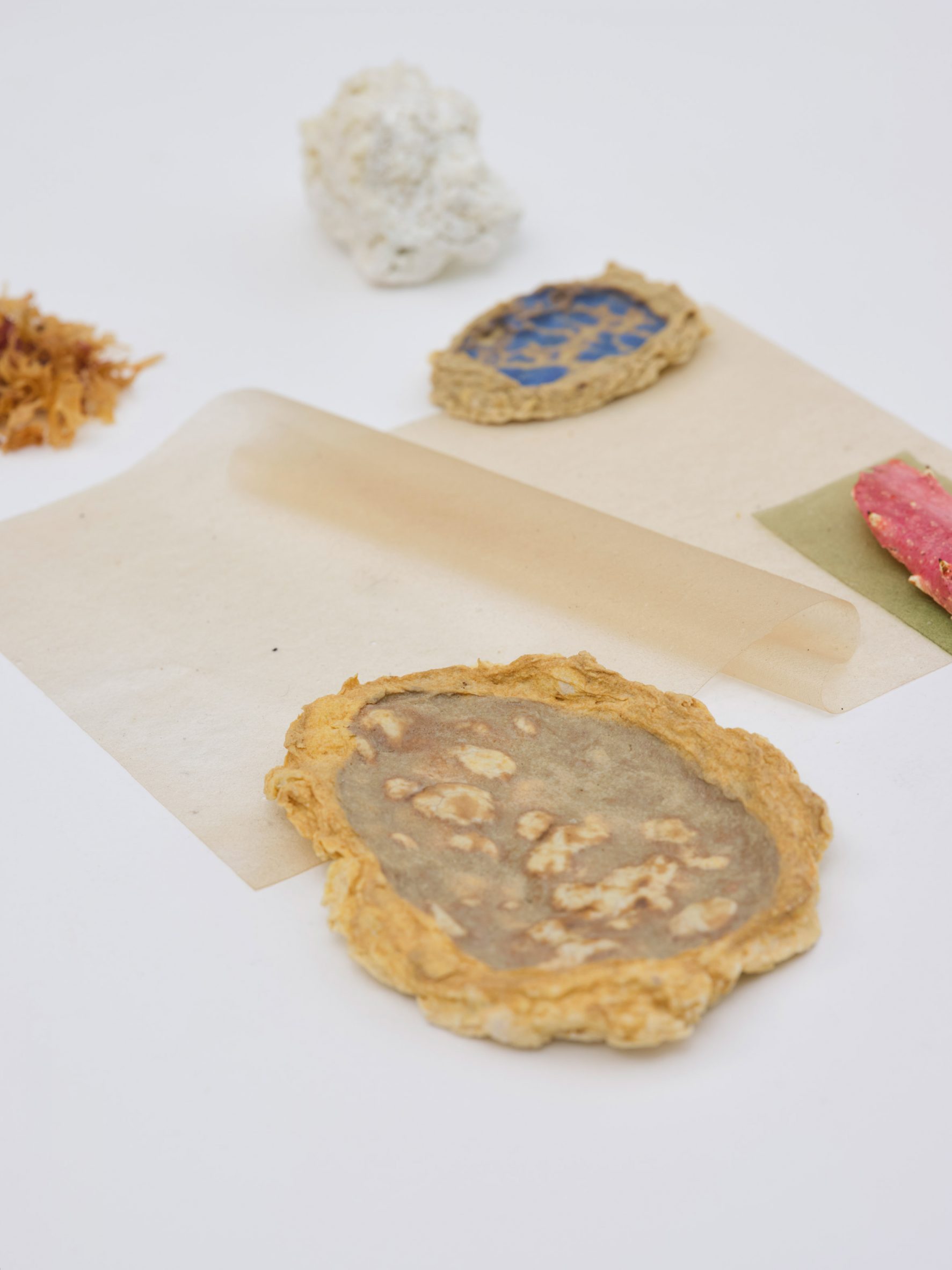
The designer also created tablemats from seaweed

After being exposed to the strong heat, the calcinated shells were finely ground to a powder and mixed with natural elements to support the clay body.

Calcinating the shells by heating them also reabsorbs the carbon dioxide, making the process itself carbon-neutral.

"It's an industrial process used commonly to create quicklime by heat-treating chalk to remove the carbonate from the calcium," Hvillum explained.

Recycled seashells ceramics
The seashell clay is turned into ceramics

"When the pure calcium oxide goes in reaction with water, it re-absorbs the CO2 in the setting time, and therefore changes its build-up," she added.

"That chemical reaction is what makes the calcium oxide useful and an excellent binder, for example in hempcrete. In this case, I used it instead of bone ash as a chalk substitute in my own ceramic ware recipe."

Ceramics made from seashell
Hvillum created multiple versions of the clay

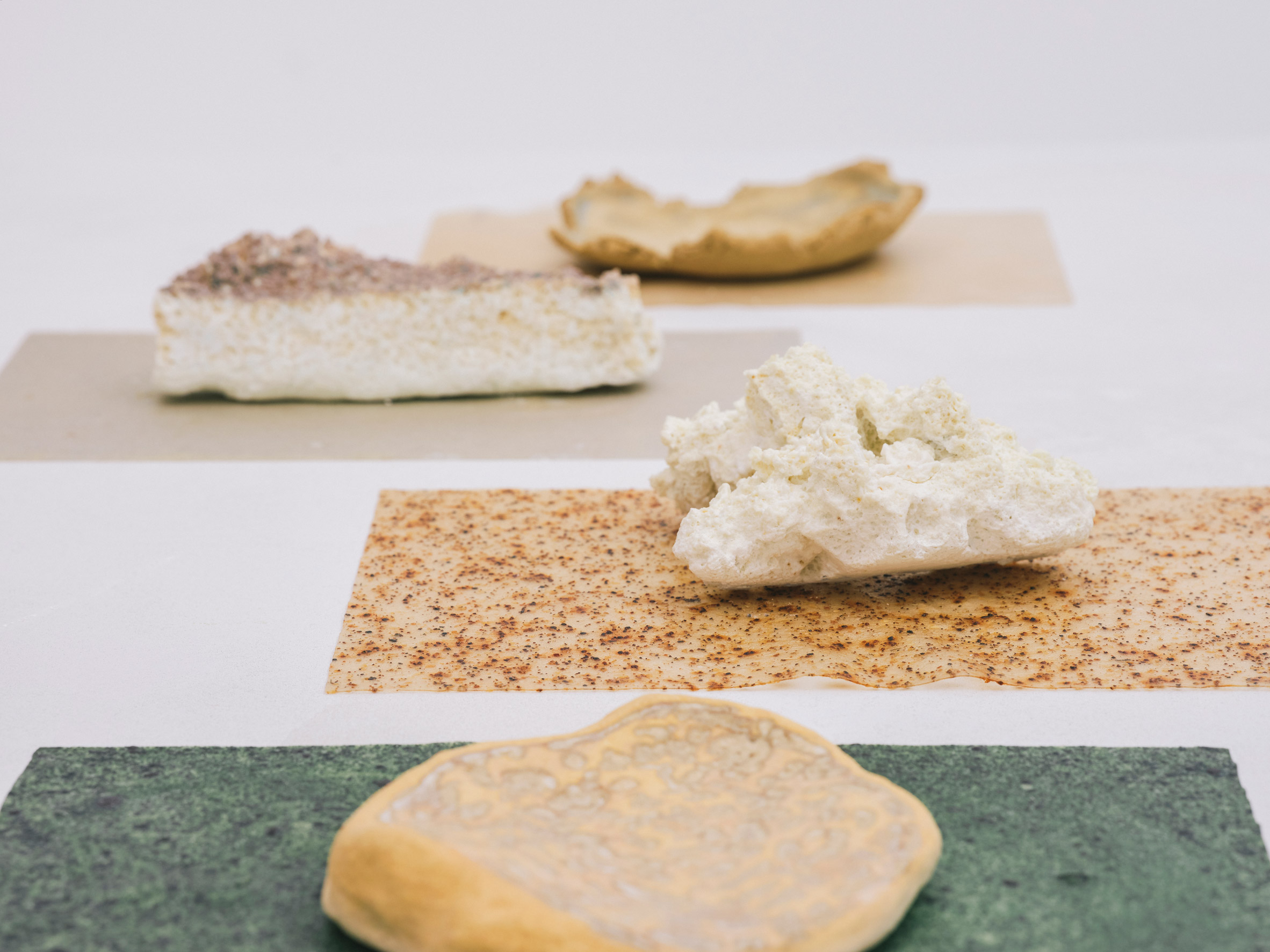
During the research, Hvillum developed a number of different clays, including clays that look like coral and a clay that functions as a glaze.

As part of the project she also created a biodegradable seaweed textile that can be used as a matching table mat or cloth. These are made with seaweed extract and a natural softener, before being hand-cast in frames and cut.

Seaweed tablemat
The seaweed tablemats can be re-cast and are biodegradable

The material biodegrades within a few months if left out in nature and as it is circular, the textiles can be continually recast.

Hvillum and Kaldahl hope to continue developing the Shellware ceramic prototypes for other restaurants, as well as the consumer market.

The designer has previously created Foame, a chair made from bio-foam that resembles stone and was shown as part of the Ukurant Objects exhibition at design festival 3 Days of Design.

Photography is by Peter William Vinther.

The post Natural Material Studio develops Shellware ceramics from leftover seashells appeared first on Dezeen.


from Dezeen https://ift.tt/3wG6bg2

Foster + Partners gets green light for One Beverly Hills development

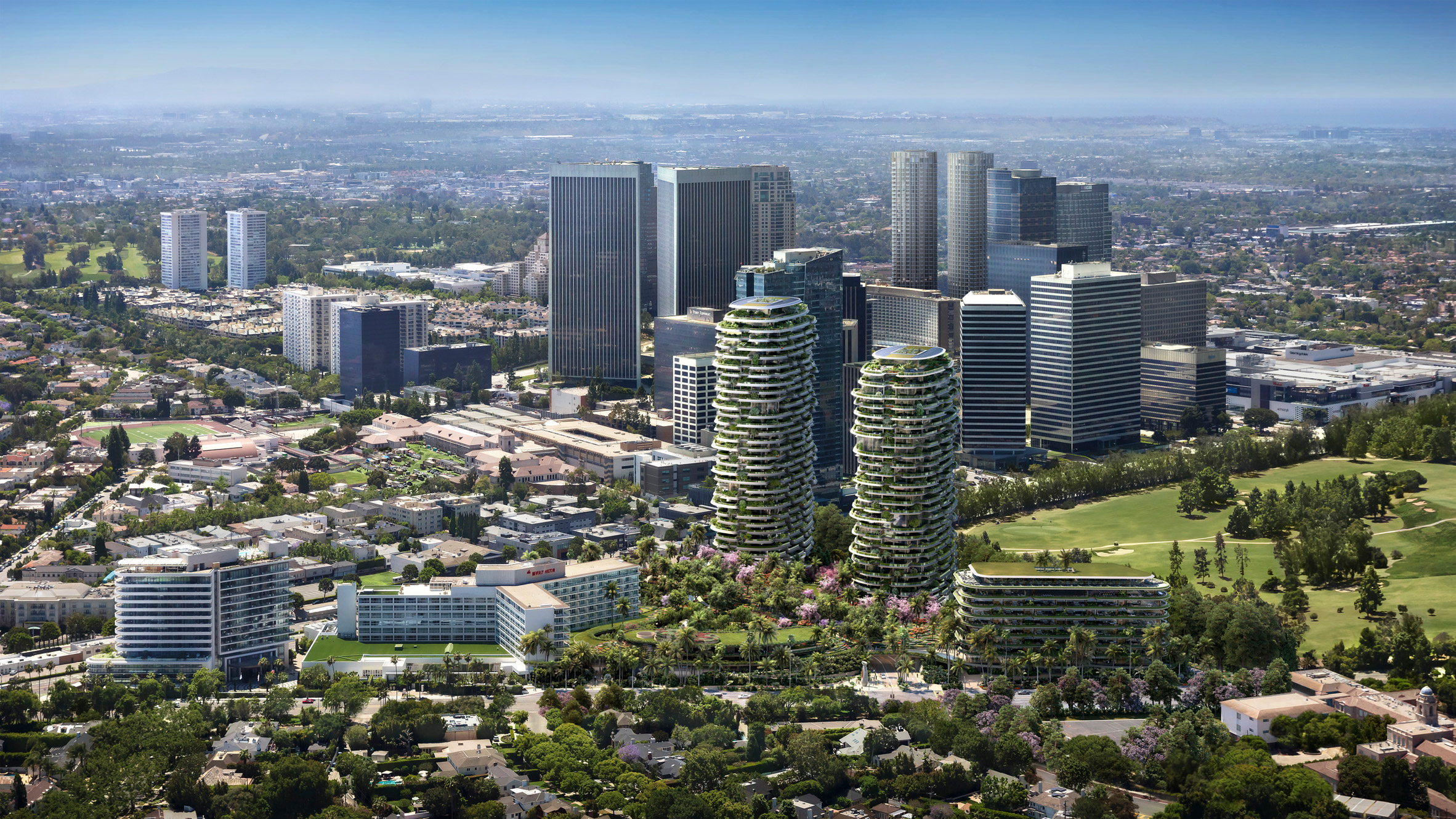
Architecture studio Foster + Partners has won planning permission for a pair of plant-covered high-rises, which will be the tallest buildings in the Beverly Hills neighbourhood of Los Angeles when they are complete.

Approval was granted by Beverly Hills City Council last month to develop the 17.5-acre site next to the Beverly Hilton and Waldorf Astoria Beverly Hills.

Render of One Beverly Hills in LA
Two plant-covered high-rises will be at the centre of the One Beverly Hills development

Foster + Partners has designed the masterplan for the One Beverly Hills development and Gensler will serve as executive architect. Alagem Capital Group and Cain International are the developers for the project.

It will contain a pair of residential towers containing condominiums, which will become the tallest buildings in Beverly Hills.

The 32-storey Santa Monica Residences Tower will be 410-feet (125-metres) high, while the 28-storey Garden Residences will be 369-feet (112-metres) tall.

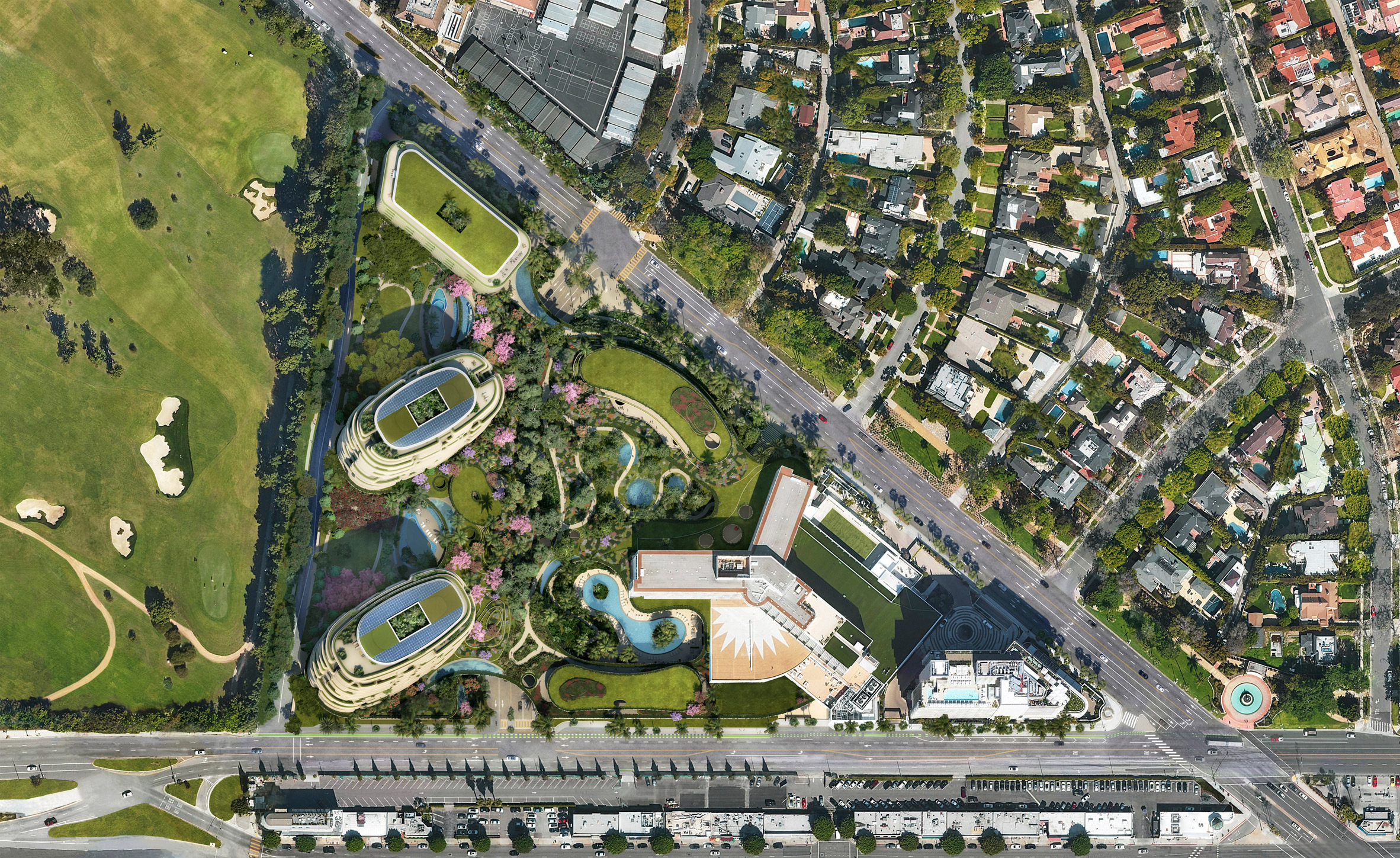
Foster + Partners masterplan for a site in Beverly Hills
Three new buildings will surround planted gardens

The plant-covered residential blocks will be built alongside a 10-storey building housing a 42-room hotel and 37 condominiums that will be offered under a shared home ownership scheme.

As part of the project, The Beverly Hilton will also be upgraded with a new arrival drive and lobby area along with upgrades to the ballroom.

The hotel's swimming pool will be restyled and 36 new poolside cabana rooms added. A new conference centre will also be built.

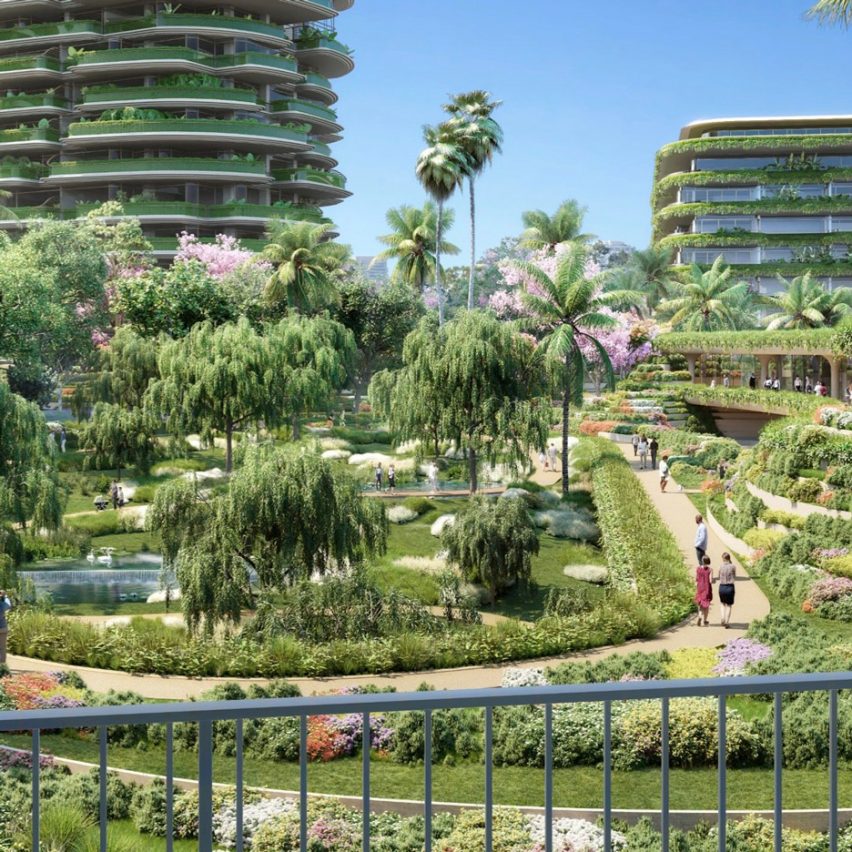
Botanic Gardens of One Beverly Hills
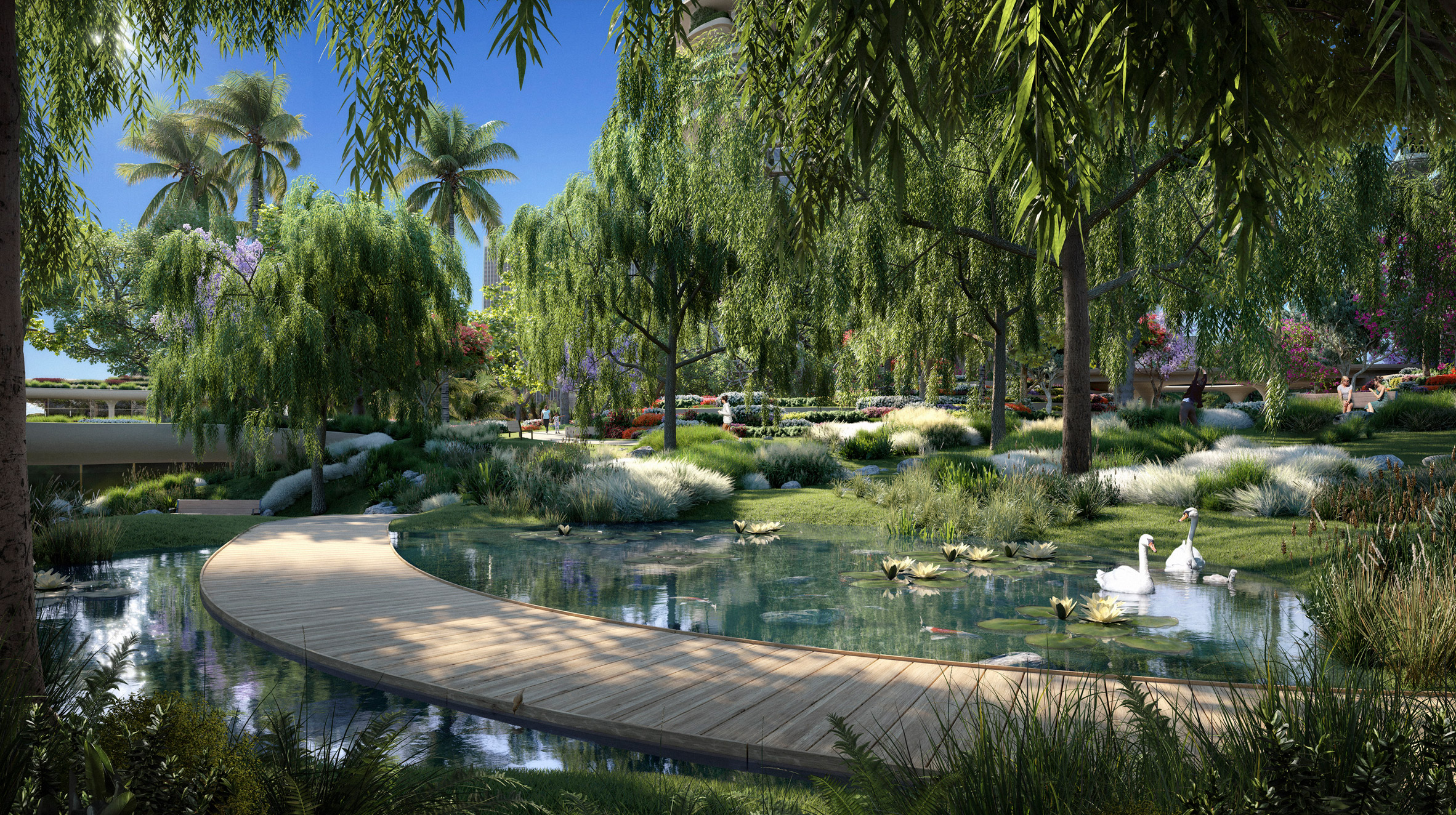
The Botanic Gardens will feature shady walkways and water features

Set next to the Los Angeles Country Club, the landscaping will appear to continue up the side of the residential towers' planted balconies.

Los Angeles-based RIOS will design the landscape architecture for an eight-acre green space in the middle called the Botanic Gardens, half of which would be open to the public.

The garden will be planted with 40 trees and 250 plant species from around California, along with two miles of pathways wending past sculptures and water features.

"In its beginnings, Beverly Hills was agricultural flat land – a green oasis that fed a growing urbanity," said Foster + Partners founder Norman Foster.

"A century later, we have seized on this inspiration to create an organic architecture that merges with landscape, a large part of which is publicly accessible, creating a shared resource for the city," he continued.

"The richness of Californian culture owes much to its diversity of influences, which comes together with the urgent need for sustainability – particularly conservation and recycling of water for the greenery."

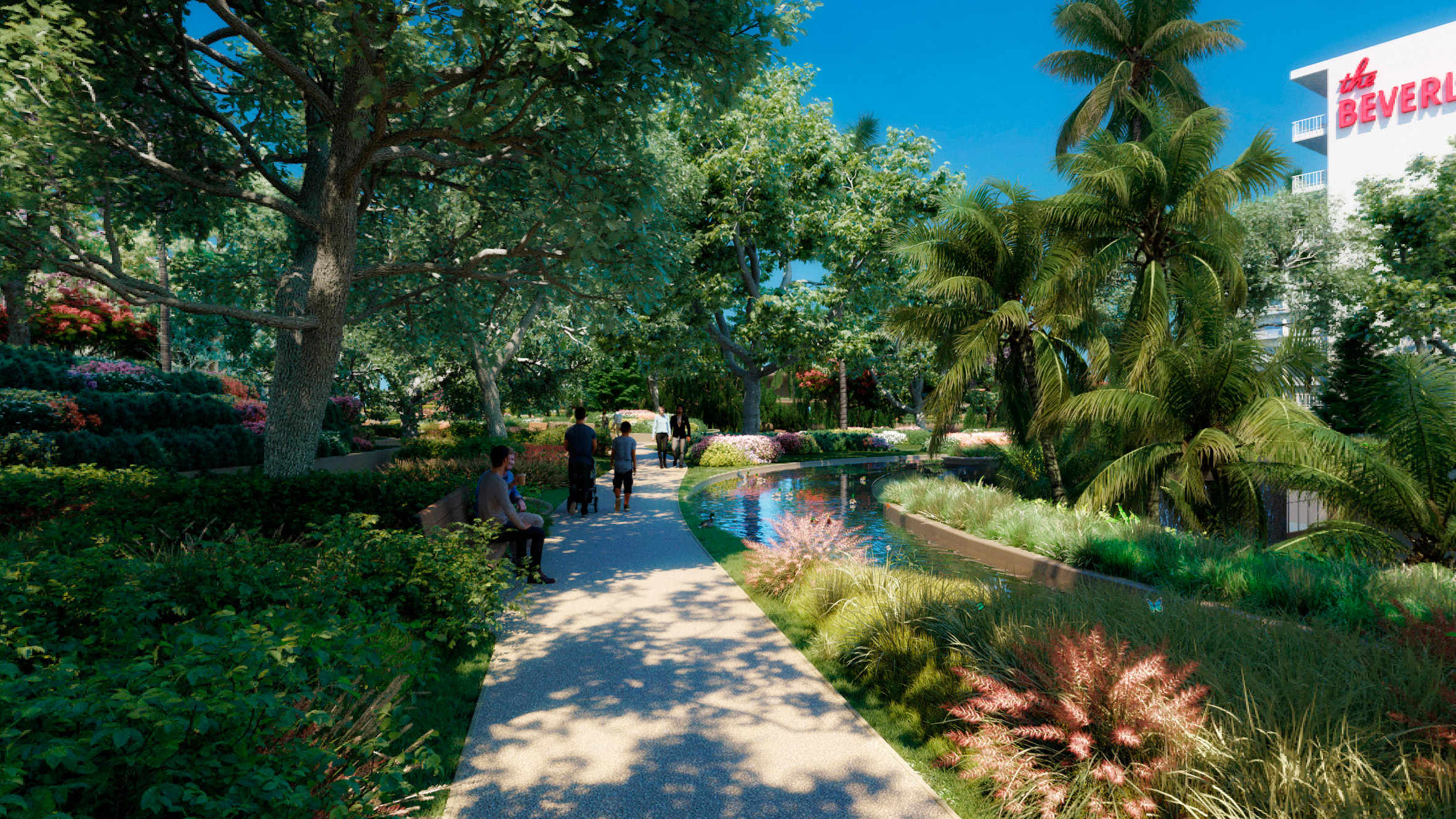
Render of a water feature in Beverly Hills development
Rainwater and recycled greywater will irrigate the development

California is at risk of drought and water shortages, but the landscaping for One Beverly Hills will use an irrigation system that will run off collected rainwater and recycled greywater.

Along with the water system, a geothermal system will use the soil's ground temperature to heat and cool the buildings and provide hot water. Onsite solar panels and a battery storage system will also be included in the development.

Recent projects by Foster + Partners in California include a new Apple Store built in a historic Los Angeles movie theatre and plans for two new buildings in San Francisco's Dogpatch neighbourhood.

The studio is also developing a plant-covered skyscraper in Greece. The buildings are part of a growing trend to integrate greenery into high-rise buildings.

Heatherwick Studio recently completed a skyscraper in Singapore with balconies overflowing with plants, while Ingenhoven Architects created Europe's largest green facade for an office in Düsseldorf.

The renderings are by DBox and courtesy of Foster + Partners.

The post Foster + Partners gets green light for One Beverly Hills development appeared first on Dezeen.


from Dezeen https://ift.tt/36ASggF

Six of the best restaurant interiors in California

From rustic fine dining to colourful ceilings designed to "stimulate the appetite", here are six top examples of interior design for restaurants from California.

Loqui in Downton Los Angeles, California, by Wick Architecture & Design

Loqui in Downtown Los Angeles, California, by Wick Architecture & Design

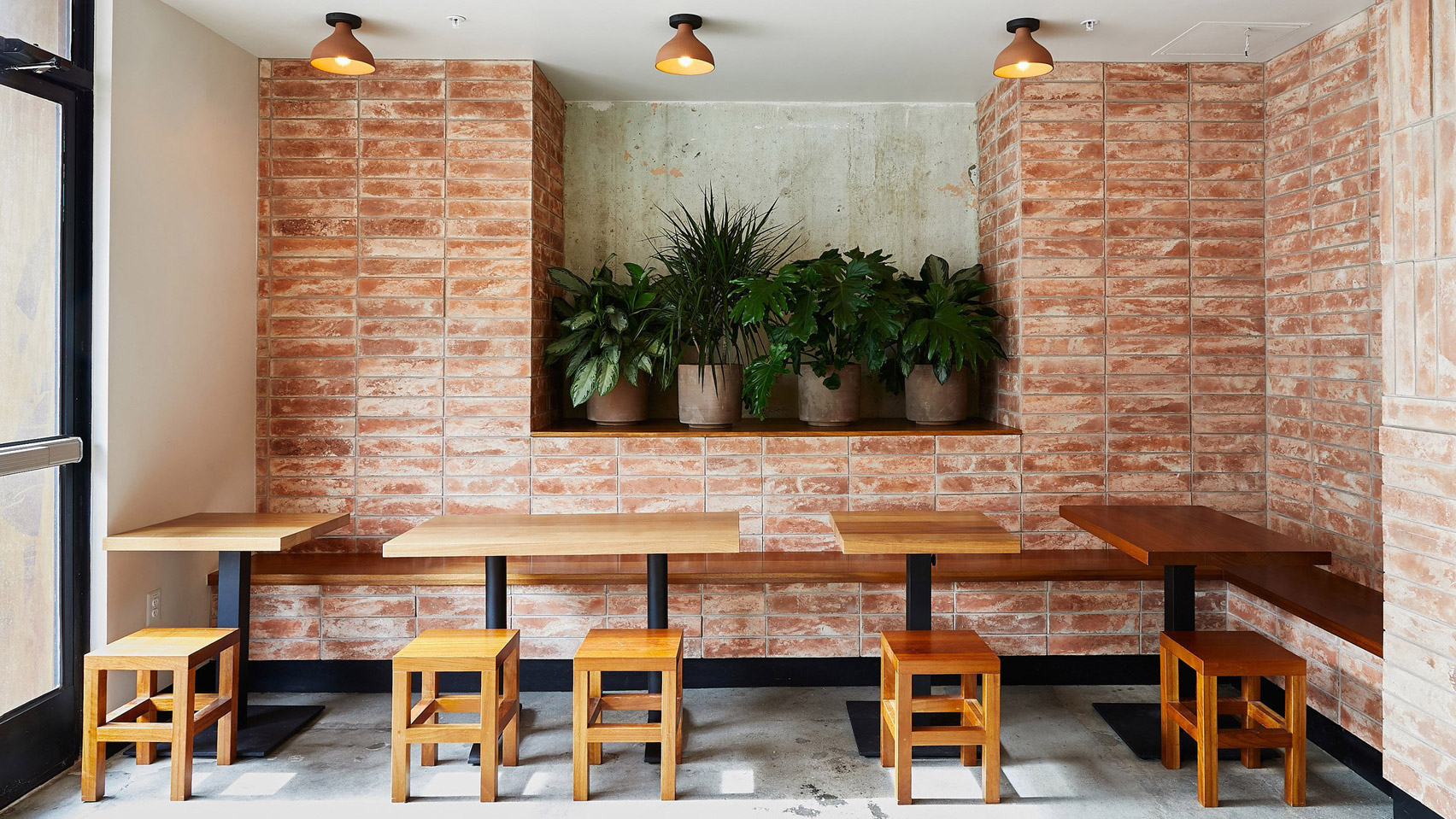
Los Angeles studio Wick Architecture & Design looked to materials more commonly found on construction sites when designing Loqui, the second location of a "mom and pop" taqueria in Downtown Los Angeles.

Concrete floors and exposed pipes from the renovation have been left in situ while walls and surfaces are clad with terracotta brick and olive-pained stucco. Tables, chairs and benches are made of stained oak and the facade is made of patinated steel.

Find out more about Loqui ›


Madison in San Diego, California, by Archisects

Madison in San Diego, California, by Archisects

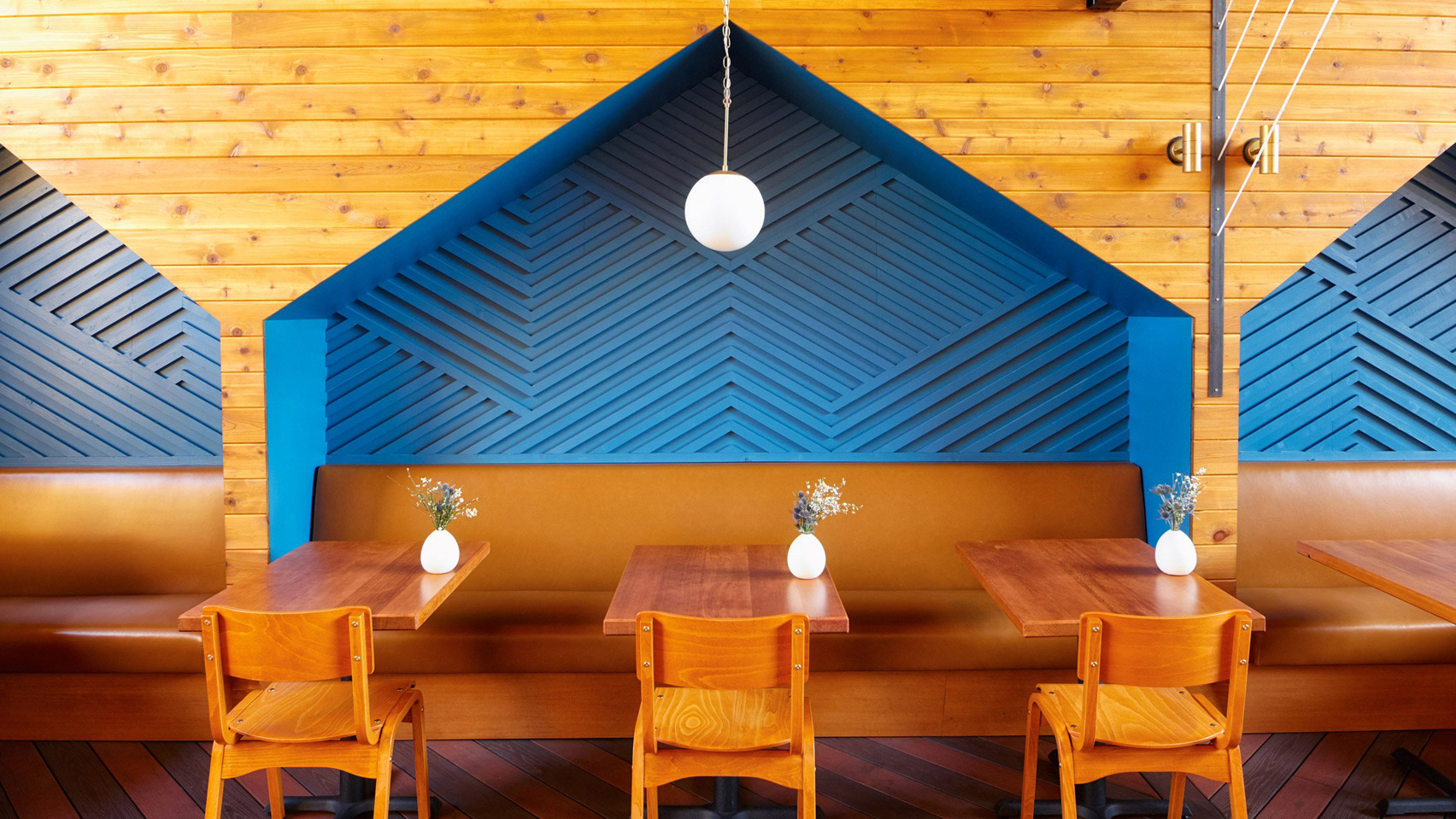
California studio Archisects designed bright-blue alcoves and cedar-clad walls and ceilings for Madison, a restaurant and cocktail bar built in a former nightclub in San Diego's University Heights neighbourhood.

The designers used wood and geometric shapes to create a warm and welcoming space, with nautical light fixtures that nod to the city's coastal location.

Find out more about Madison ›


Bavel in Los Angeles Arts District, California, by Studio Unltd

Bavel in Los Angeles Arts District, California, by Studio Unltd

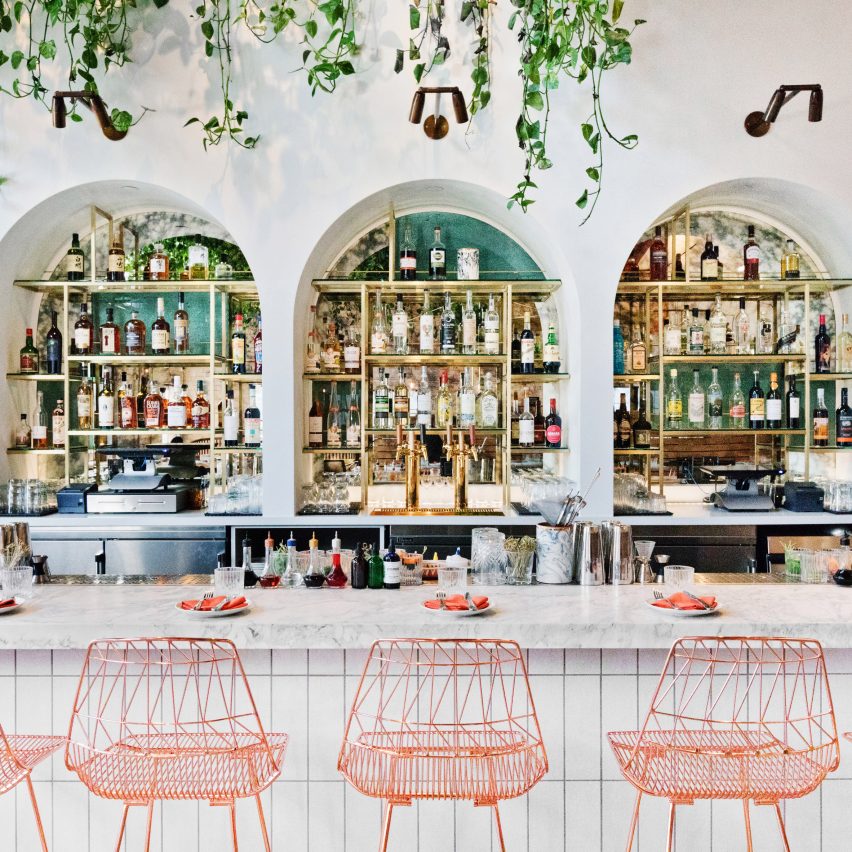
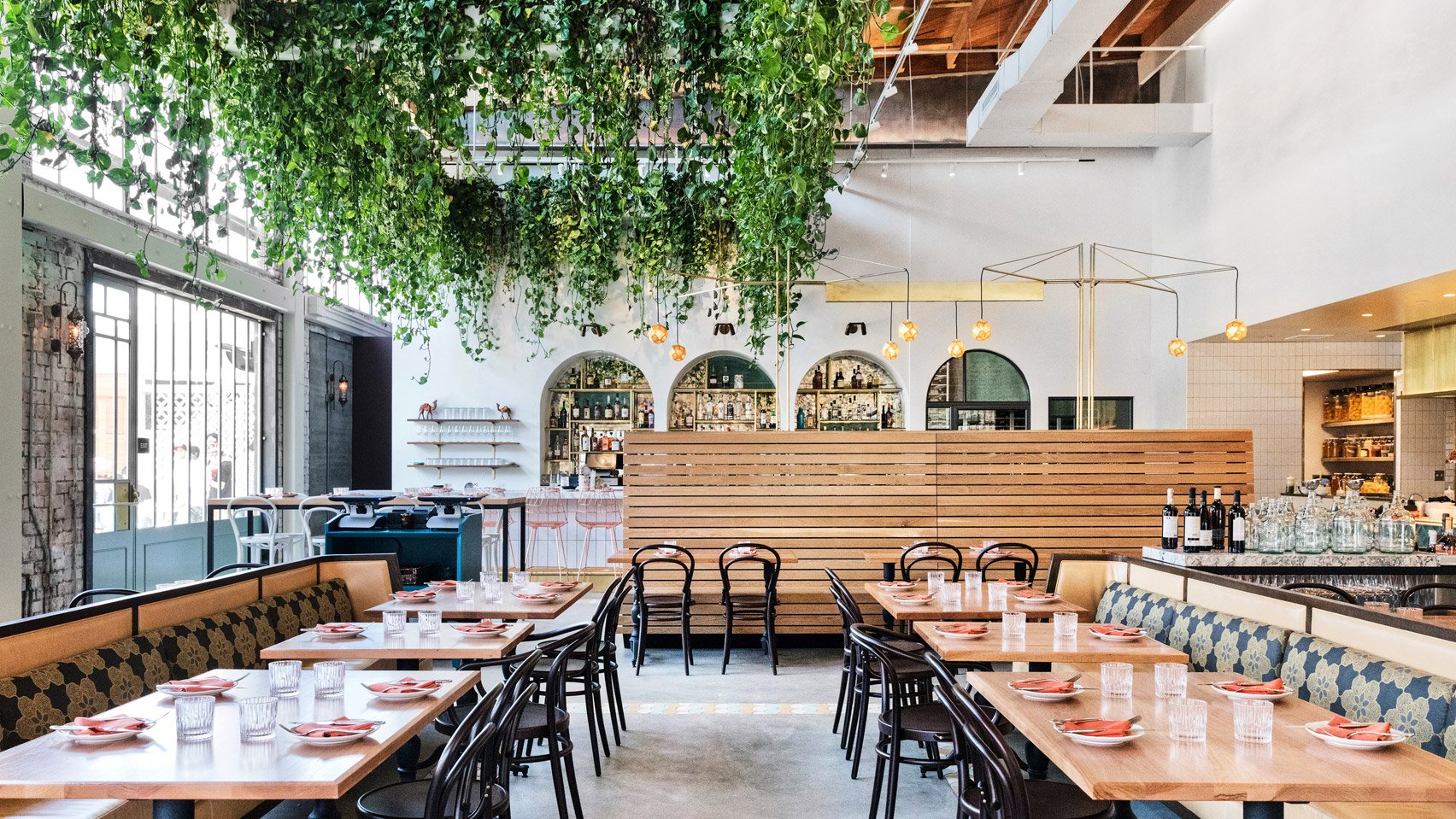
Los Angeles-based Studio Unltd turned a former warehouse in the Los Angeles Arts District into a Middle Eastern restaurant called Bavel (pictured top and above).

Plants trail down whitewashed walls and banquettes are upholstered with geometric-patterned fabric. The bar area draws inspiration from Casablanca, Morocco, with pink metal seats and gold-and-turquoise shelves set in arched niches.

Find out more about Bavel ›


Auburn on Los Angeles' Melrose Avenue, California, by Klein Agency

Auburn on Los Angeles' Melrose Avenue, California, by Klein Agency

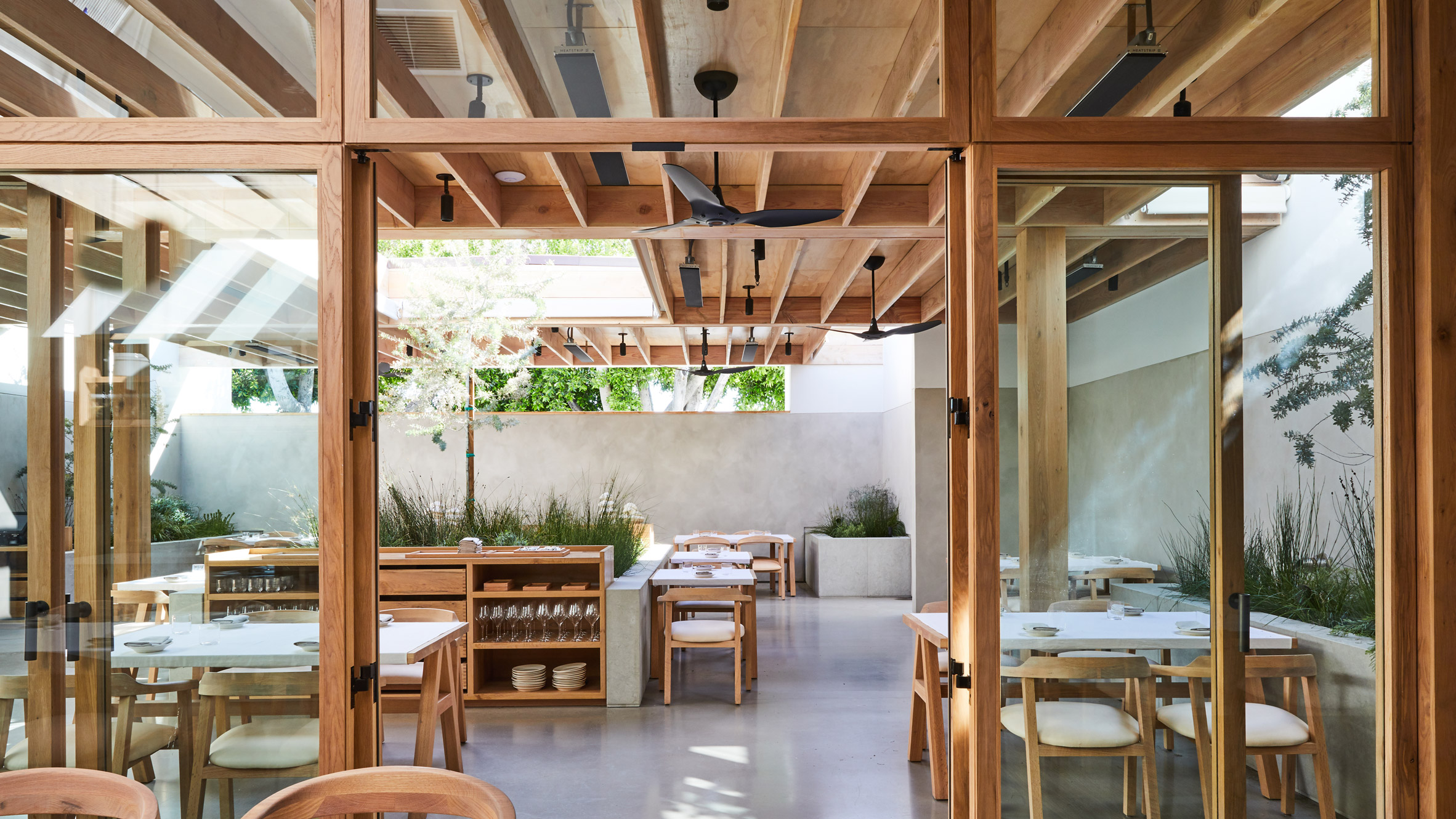
Jon and Maša Kleinhample, a husband-and-wife design team from Belgium, wanted to create a homey aesthetic for Auburn, a fine-dining restaurant on Melrose Avenue.

The kitchen is open to the dining area and crockery is stored in open-faced cupboards. Rustic ceiling beams project from the inside through to an outdoor dining area where a tree grows through a hole cut into the roof.

Find out more about Auburn ›


Gucci Osteria da Massimo Bottura in Beverly Hills, California, by Gucci

Gucci Osteria da Massimo Bottura in Beverly Hills, California, by Gucci

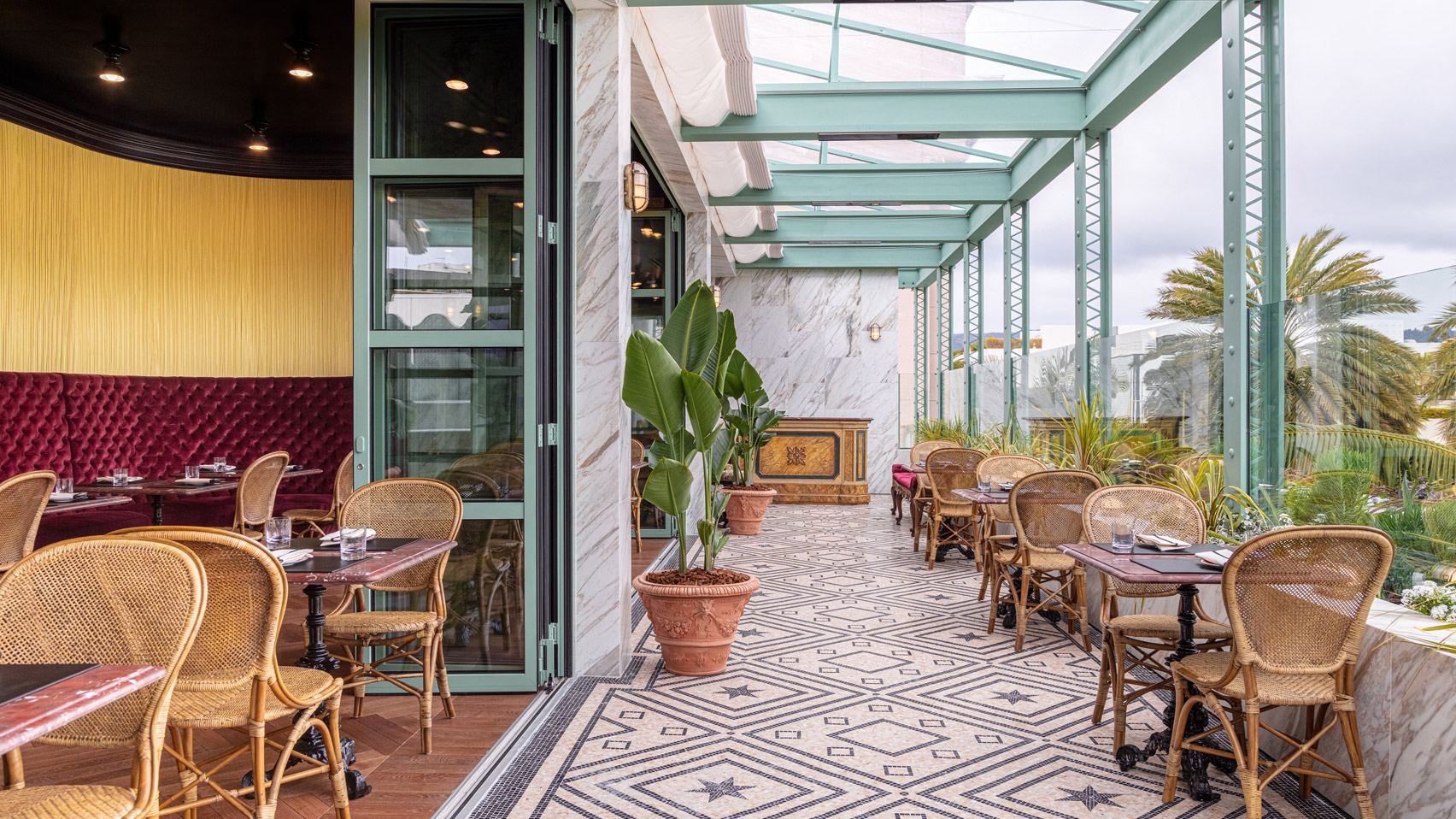
The Gucci store in Beverly Hills has its own Italian restaurant on the top floor. The intimate 50-cover eatery is designed to look like the fashion house's restaurant in Florence, with a marble entrance and tapestry rugs spread over wooden parquet flooring.

An outdoor terrace has a mosaic floor patterned with stars and a retractable awning that is supported by steel beams painted jade green.

Find out more about Gucci Osteria da Massimo Bottura ›


The Salted Pig in Riverside, California, by Project M Plus

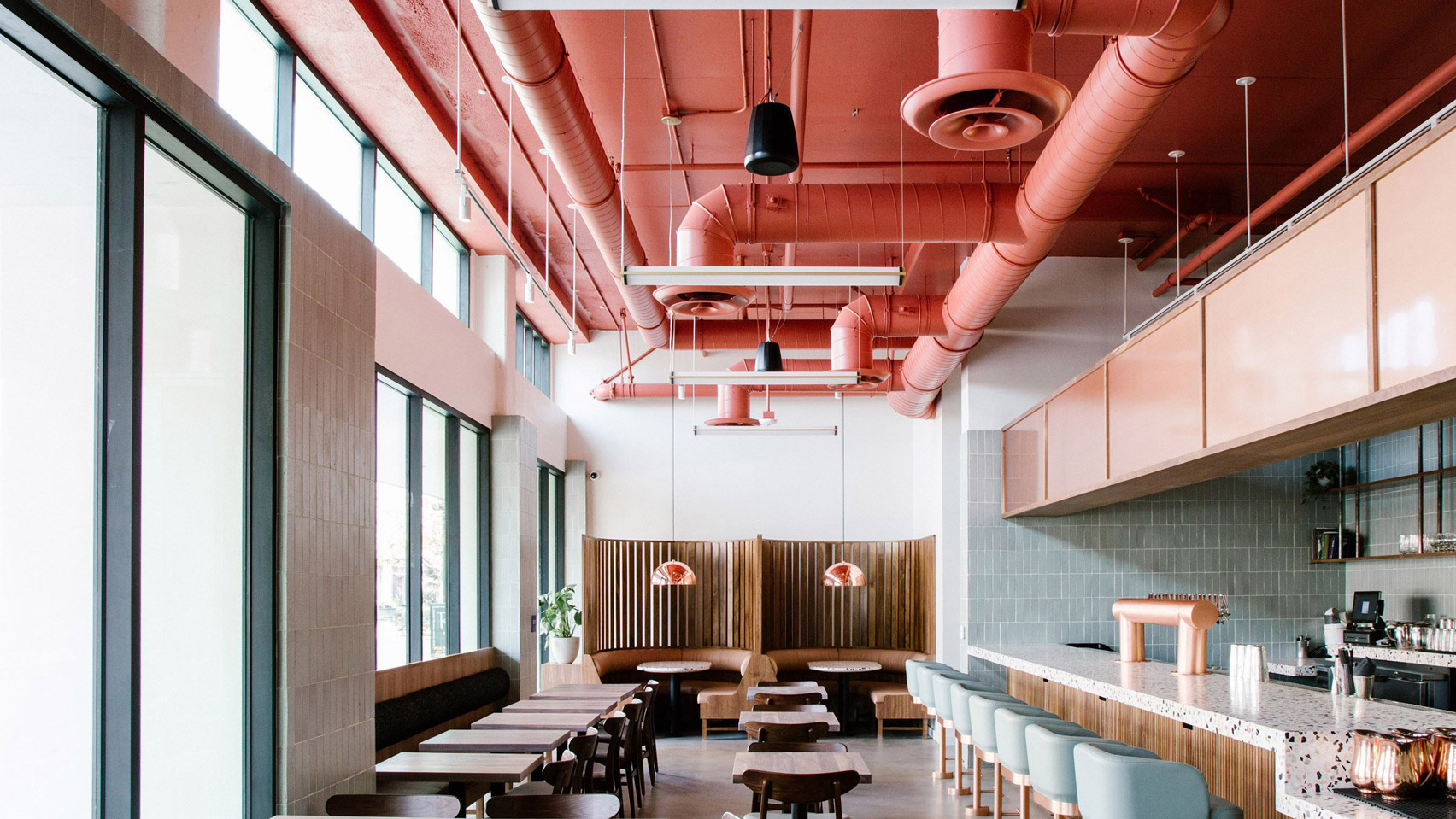
Project M Plus, a Los Angeles-based collective of architects and designers, used a palette of warm tones to "stimulate the appetite and the senses" for this restaurant in Riverside.

The ceiling and exposed ducts are brick red, with sage-green accents in the dining space below. Banquettes upholstered in leather are wrapped in wooden louvres and illuminated with domed copper lights.

Find out more about The Salted Pig ›

The post Six of the best restaurant interiors in California appeared first on Dezeen.


from Dezeen https://ift.tt/3kn4DoD

Nine design projects from The New School's Parsons School of Design students

Parson school of design

A project exploring how architecture is integral to healing trauma and another investigating how bioluminescence could change our relationship to interiors is included in Dezeen's latest school show by students at the Parsons School of Design.

Also included is a project examining how the design of a shelter can support survivors of domestic violence and a device designed to slow desertification.


The New School's Parsons School of Design

University: The New School's Parsons School of Design
Course: Architectural Design (BFA), Architecture (MArch), Industrial Design (MFA), Interior Design (AAS), Interior Design (BFA), Interior Design (MFA), Lighting Design (MFA), Product Design (BFA)
 Email: thinkparsons[at]newschool.edu

Statement:

"Parsons School of Design – consistently named the best art and design school in the United States and ranked third in the world – has sent change-making artists and designers out into the world since its founding in 1896.

"The School of Constructed Environments, one of the five schools within Parsons, guides students in creating socially and environmentally sustainable and technologically innovative buildings, interiors, lighting and products.

"In a time of unprecedented change, our BFA and MFA programmes foster the skills, values and vision that foster creative thinking and a more integrated, equitable and aesthetically beautiful world."


Parsons School of Design

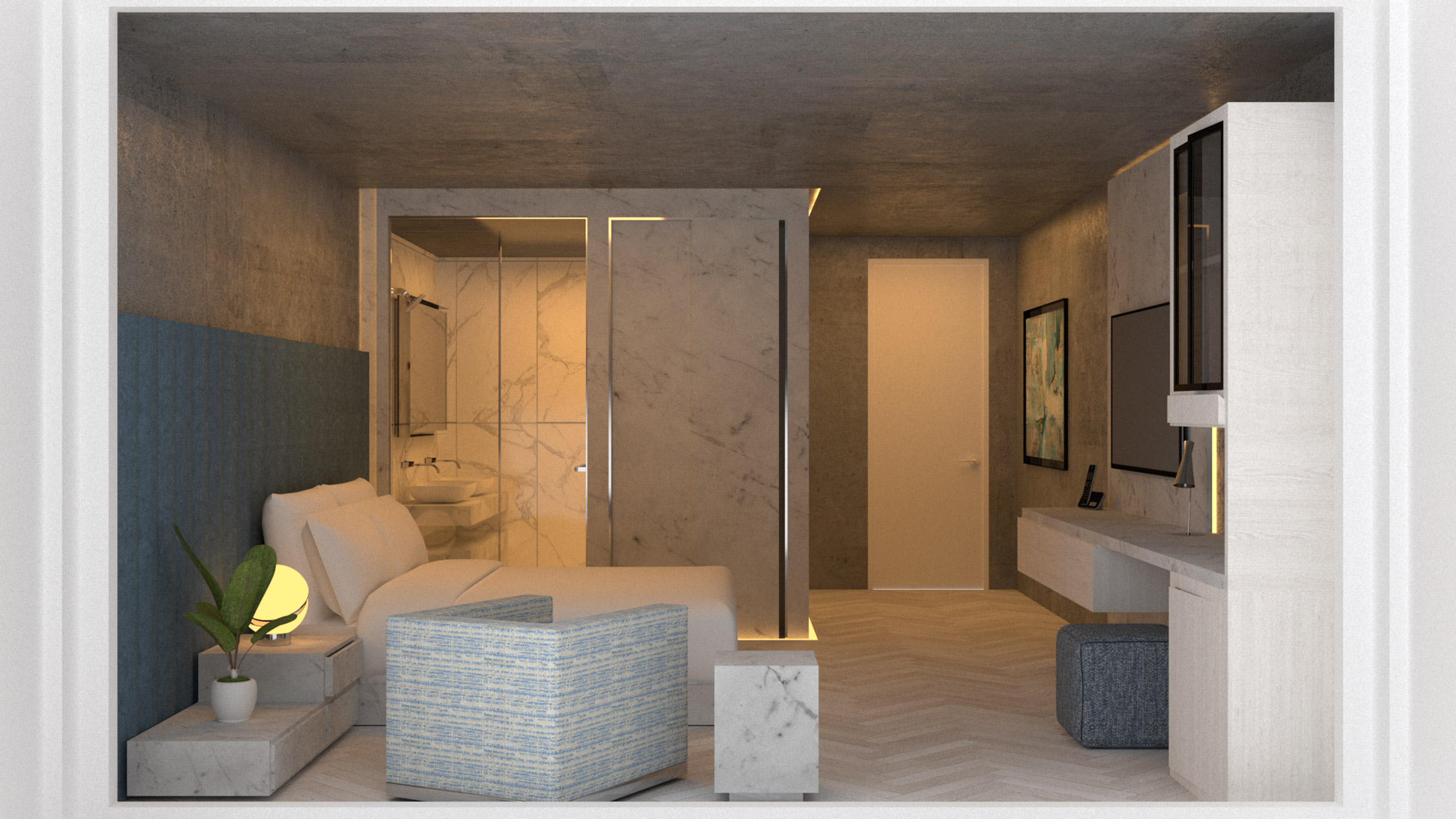
The Gallery Hotel by Mohamad Ali Ezzeddine

"Located at the corner of 20th Street and 10th Avenue, The Gallery Hotel offers a dynamic and cultural experience at the heart of Chelsea adjacent to the High Line. In a neighbourhood saturated with art galleries, The Gallery Hotel is thoughtfully designed to include an art gallery displaying local artists' work on the main floor.

"The lobby floor also features a reception area as well as a bar and lounge where guests can relax and enjoy the atmosphere. The second floor includes a restaurant with direct access to the High Line with the option to dine outdoors.

"The hotel has 24 guest rooms located on the third, fourth and fifth floors. To complement the neighbourhood's features, The Gallery Hotel will include a rooftop lounge area where guests can enjoy a panoramic view of all that Chelsea has to offer."

Student: Mohamad Ali Ezzeddine
Course:
AAS Interior Design


Parsons School of Design

Resistance by Carmen Cordova

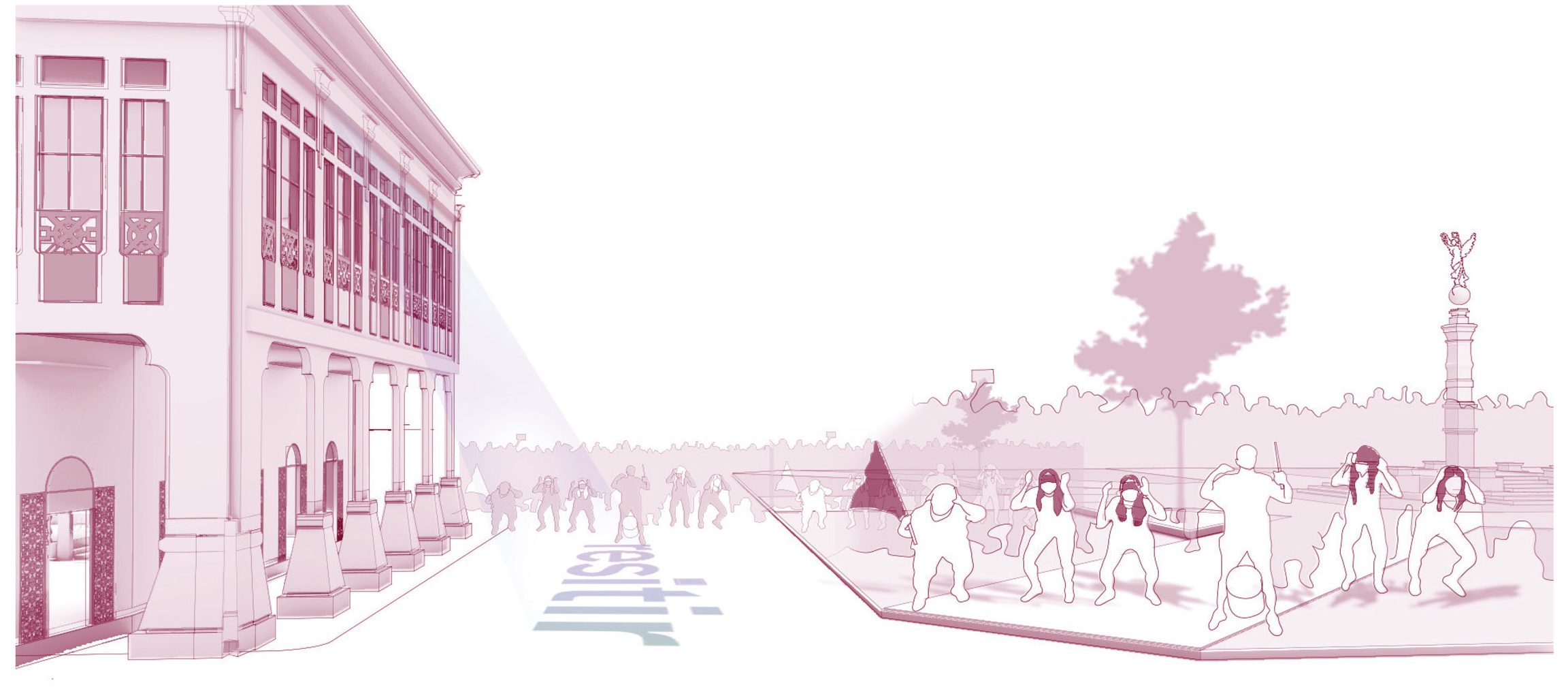
"Self-sacrifice: working without compensation, care and labouring towards the reproduction of society, have been attributed as characteristics of women's identity.

"It is not fair or sustainable to place the duty of maintaining society on an individual and as part of their identity. Without restructuring the exploitative relationships of care, societies can never promote the unity of community nor achieve greater equality.

"This is why it is important to build resistance towards traditional roles, to end this issue and direct society towards fairness. My capstone project aims to build solidarity between the women of El Salvador and bring visibility to the issues they face. For women to continue to resist and fight, it is essential to provide them with tools to overcome the hardships they may face."

Student: Carmen Cordova
Course:
BFA Interior Design


Parsons School of Design

Why They Stay by Jenna Koss

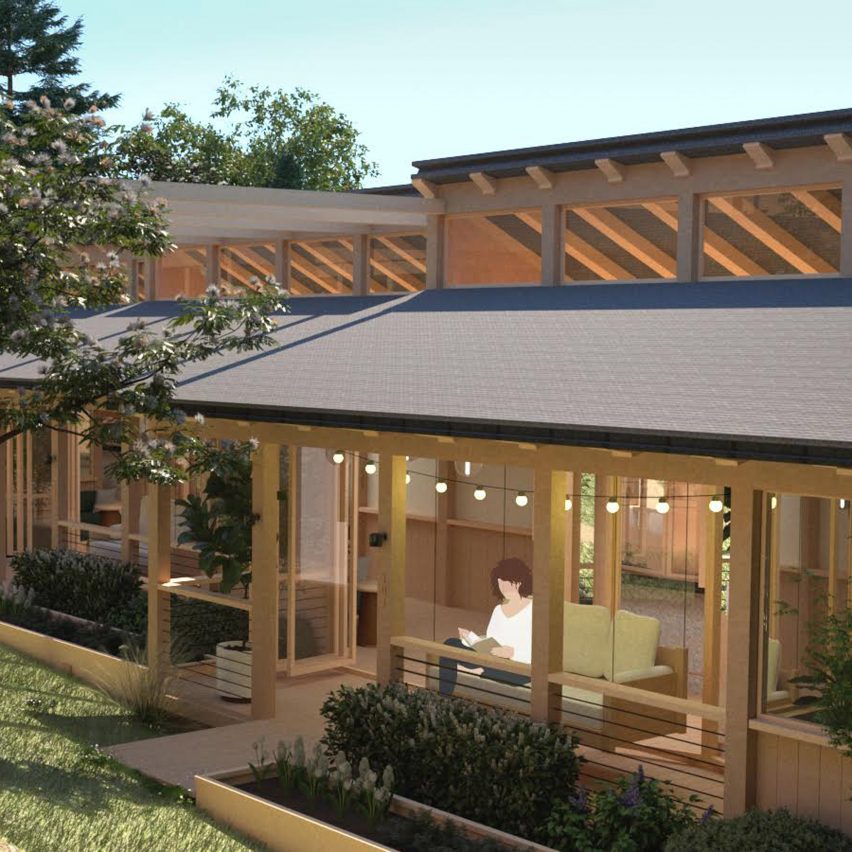
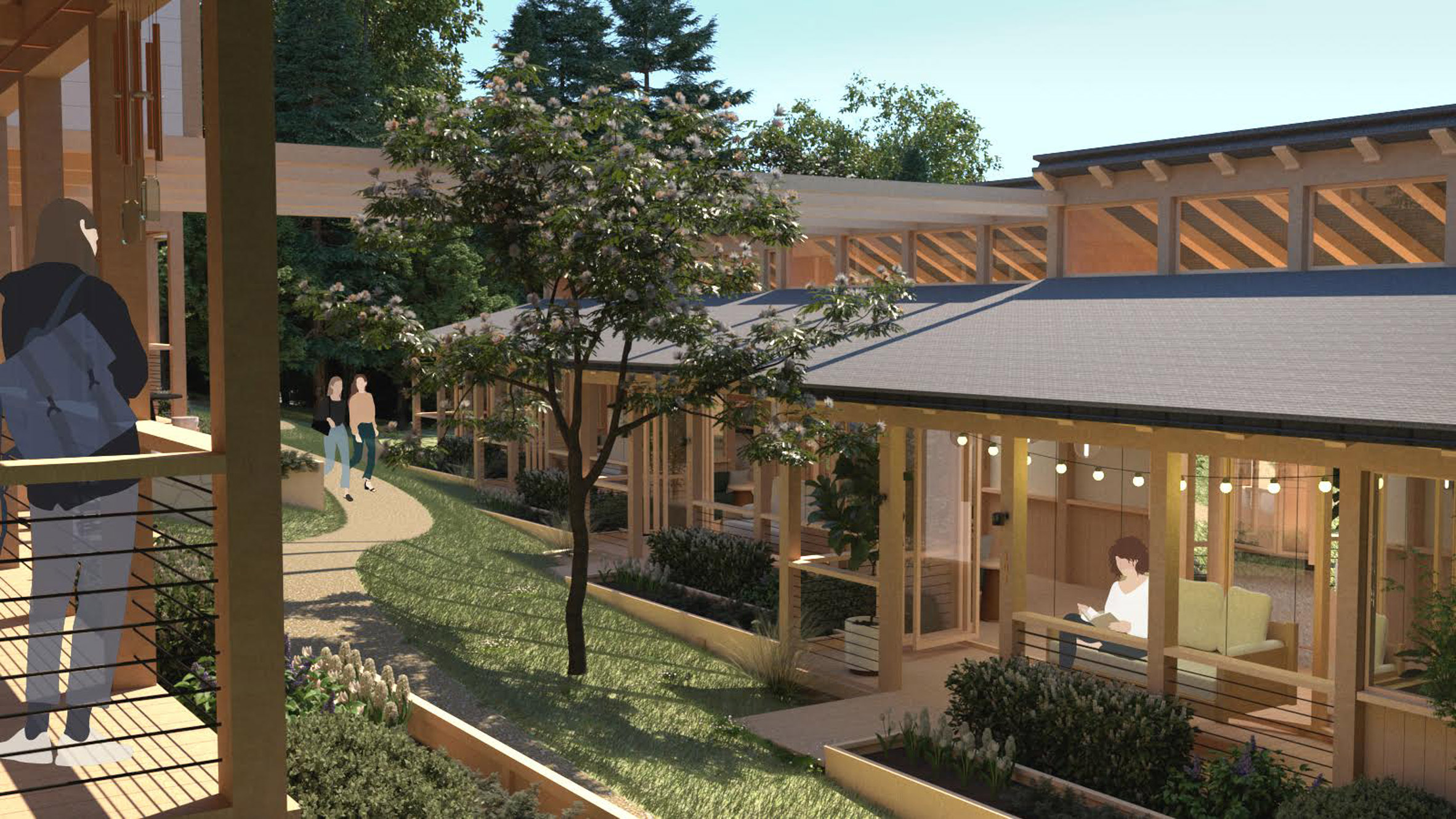
"This is a real-life proposal for the Helpmate Domestic Violence Shelter in Asheville, North Carolina. The shelter needs to grow in both capacity and quality of its space and has purchased land on a slope to construct a purpose-built shelter.

"Working within the expansion committee, this ongoing project investigates how the shelter can be designed to provide safety to inhabitants from both illness and abuse while enhancing conditions that promote healing.

"This project also proposes how interior space can be layered in a way that empowers a survivor to form connections, reclaim agency and build resilience over time."

Student: Jenna Koss
Course:
MFA Interior Design


Parsons School of Design

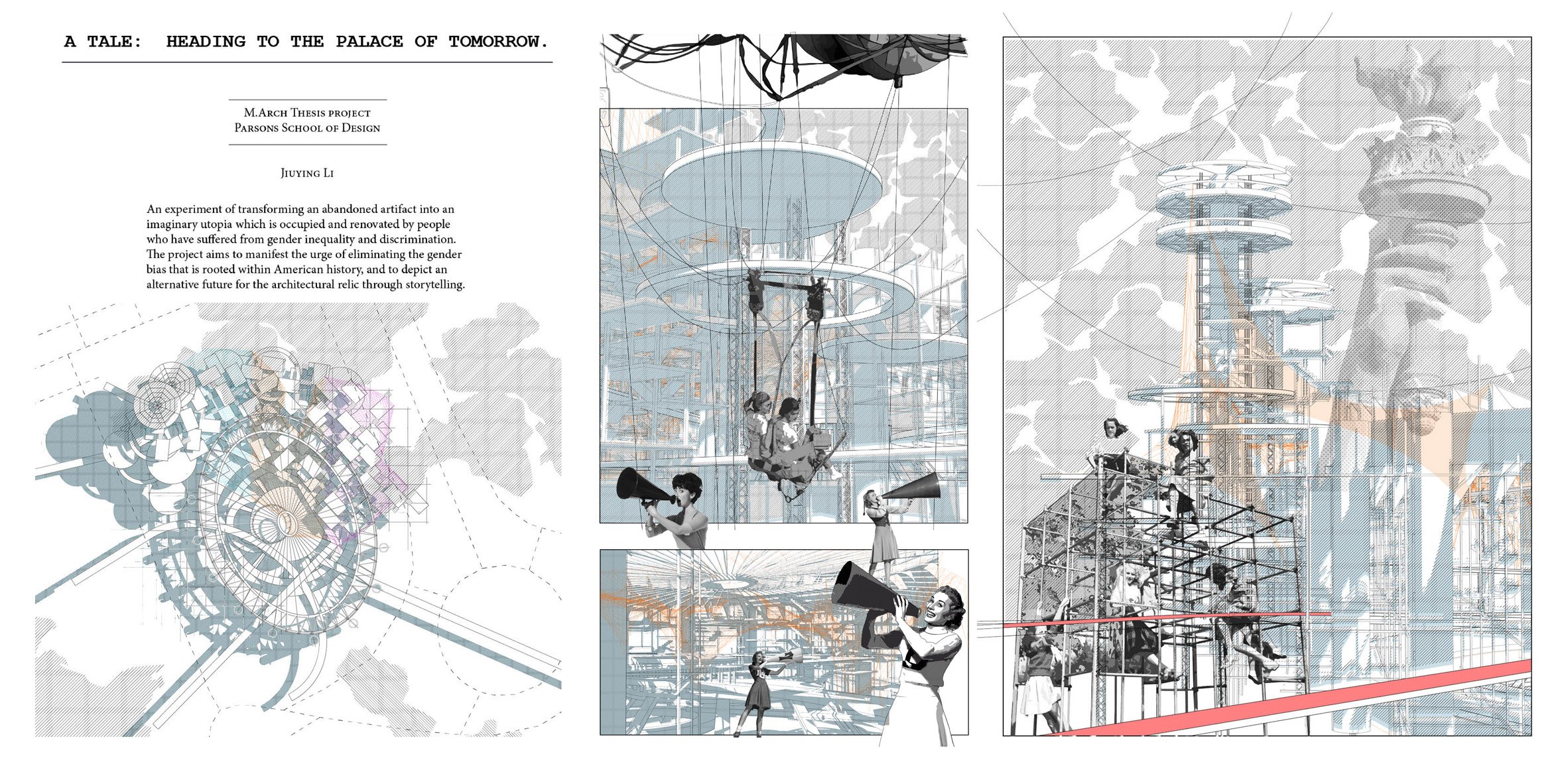
A Tale: Heading to the Tent of Tomorrow by Jiuying Li

"The thesis project is an experiment of transforming an abandoned artefact into an imaginary utopia which is occupied and renovated by people who have suffered from gender inequality and discrimination.

"The project aims to manifest the urge of eliminating the gender bias that is rooted within American history, and to depict an alternative future for the architectural relic through storytelling."

Student: Jiuying Li
Course: 
MArch


Parsons School of Design

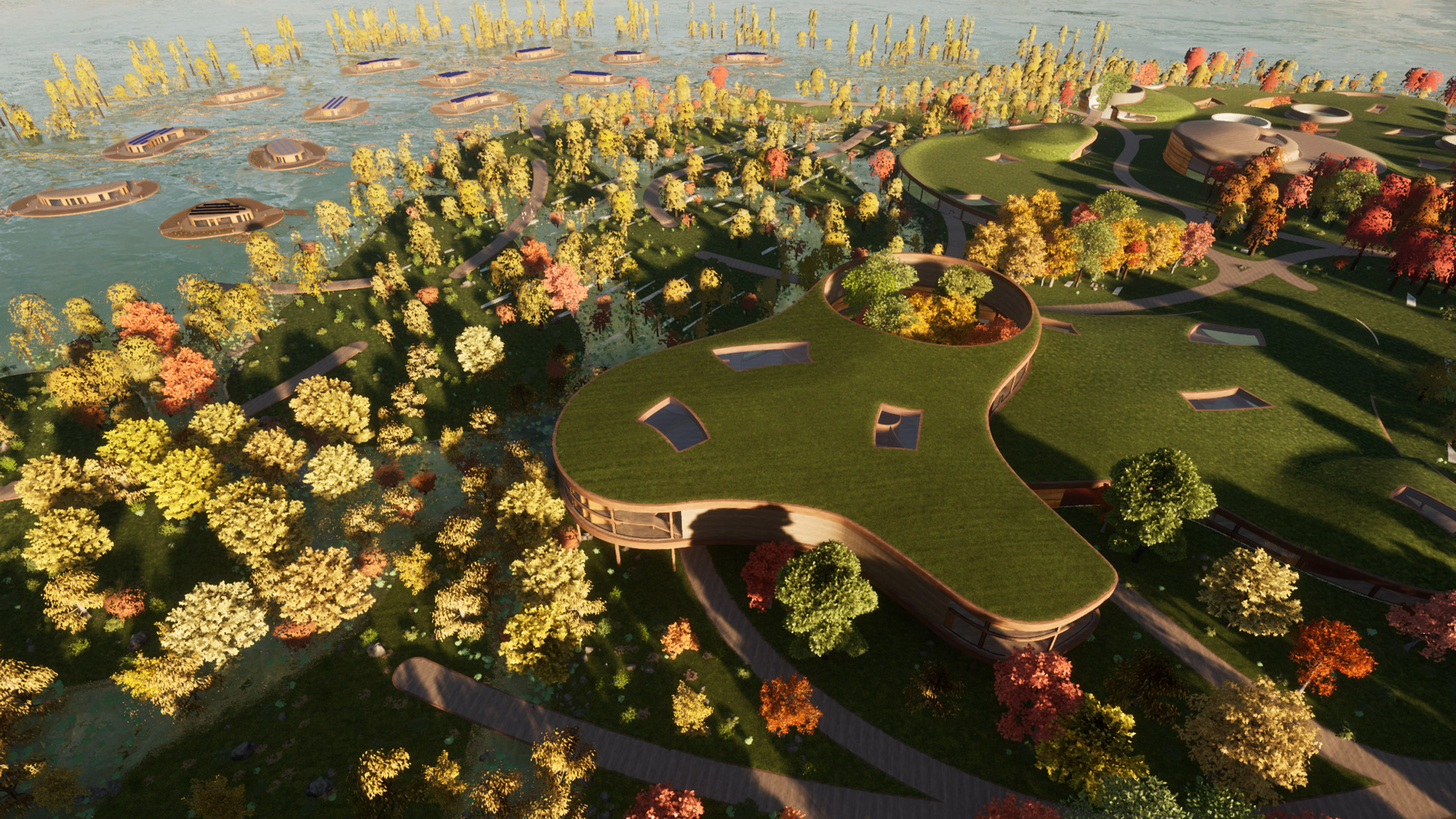
Flood Points: Redesigning Ekistics with time by Nalin Chahal, Eric Hu and Anthony Vesprini

"Ekistics, the science of human settlements, has been a pervasive and well-established foundation of human civilisation since agriculture began. The dominance of humanity over the natural world has primarily left this science in a perpetual, unchanging state. But, our anthropogenic effects on the environment and the natural world around us in the past century have upset the delicate balance of carbon that is critical to maintaining habitable conditions on our planet.

"Our devastating effect on the natural world must force us to reevaluate the ways we inhabit the land, how we engage with the world, and refound the idea of ekistics to adapt rather than withstand.

"Our proposal will drastically alter our site to consider this change, focusing on rising sea levels and how we must adapt to this change rather than build ever-growing sea walls – be it 55 years on a critical carbon emissions scenario (2075) or 95 years in a low emissions scenario (2115) for our site to flood.

"The first phase of the timeline would see the reintroduction of the natural habitat of Ditmars-Steinway back into the area, while also reimagining the site as an engaging park, educational space, market and community centre for Astoria. A vital component of this shift would be to drastically change the way energy is generated at our site to a more circular, sustainable and less carbon-intensive solution.

"The second phase of the timeline would include the flooding of the site due to rising sea levels. As the site floods, more of the land would be dedicated to housing the changing flora and fauna. During this period, our programmatic elements of the site would remain functional. The final phase of our timeline would see the flooding of the programmatic mounds, returning the land (and the flooded interiors) to the natural flora and fauna. During this phase, the only operable programme would be the research centre."

Students: Nalin Chahal, Eric Hu and Anthony Vesprini
Course: BFA Architectural Design


Parsons School of Design

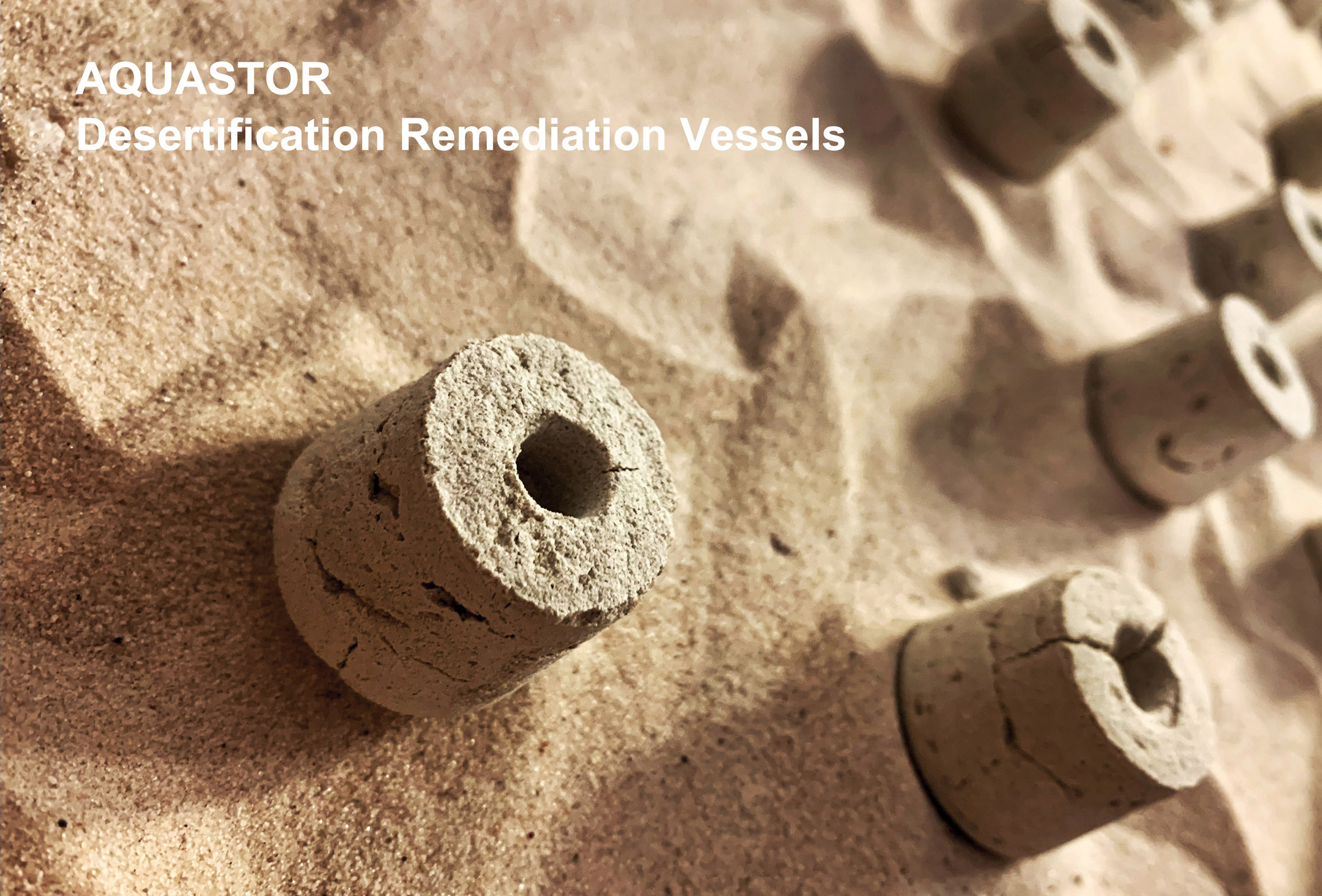
Aquastor by Zihao Fang

"Aquator is desertification remediation vessels produced using mixed materials from desert resources. Aquator vessels can promote soil growth in desert areas and slow the advance of desertification. It will be placed on the edge of the desert in a triangular arrangement with a spacing of one metre to build a barrier.

"The temperature difference between the inside and outside of the vessels allows external water vapour to enter the desert and reduce the evaporation rate. Eventually, the Aquator vessels will be completely degraded and turned into nutrients for the land."

Student: Zihao Fang
Course: MFA Industrial Design


Parsons School of Design

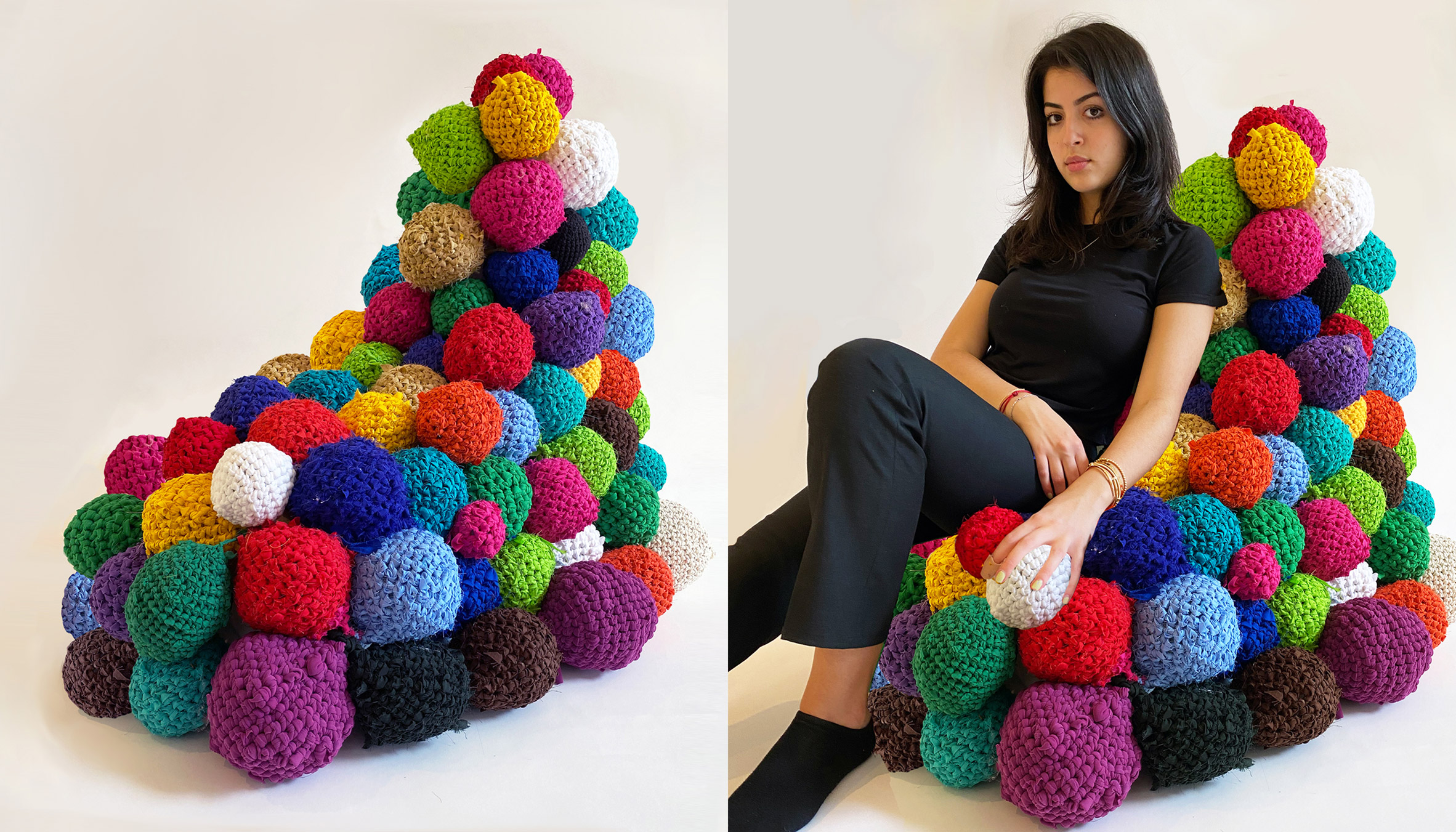
The CroChair by Daniela Solovey

"For my project, I chose to investigate crochet as a novel form of production by using the technique to weave together upcycled materials. I designed made-to-order furniture that facilitates a transitional nod to an analogue craft, offering its user a highly functional product with a unique aesthetic.

"It will benefit the design community by legitimising an often overlooked art form through the fusion of craft with traditional furniture design."

Student: Daniela Solovey
Course:
BFA Product Design


Parsons school of design

Bio Loose Sense by Jo Li

"During the pandemic, we are homebound, many of us working, living and relaxing indoors. At home, we have combined all functions of living. In my thesis, I want to introduce a new way of applying biomimetic design with light to separate the different functional zones and times in our house. If we consider temporal changes (time) as part of the biomimetic process, we must consider the lighting's control as the key to this application.

"Human activities include a rhythm similar to the rhythm of nature. Bio Loose Sense is a biomimetic design that encourages the connection between humans and nature and also keeps our senses activated.

"The design learns from natural phenomena, such as bioluminescent tides and organisms. It explores how we can use the potential of bioluminescence to change our relationship to lighting and interiors."

Student: Jo Li
Course:
MFA Lighting Design


Parsons School of Design

Healing Structures by Carmen Iris Ruiz Cruz

"The 6.4 magnitude earthquake that took place a year ago in Puerto Rico not only left the island's urban infrastructure compromised but challenged the survivors to recover from the physical and mental repercussions.

"The problem is that post-disaster response focuses on physical wellbeing, immediate solutions like shelter and overlooks mental wellbeing and invisible injuries like trauma, which have a long-term impact on the survivors.

"Architecture and lighting are integral to the healing process. Built spaces are not only meeting points, but environments where people share stories and attempt to heal one another through communal interaction. If healing is the goal, the quality of these spaces needs assessment and consideration."

Student: Carmen Iris Ruiz Cruz
Course:
Dual Degree: MArch and MFA Lighting Design


Partnership content

This school show is a partnership between Dezeen and The New School's Parsons School of Design. Find out more about Dezeen partnership content here.

The post Nine design projects from The New School's Parsons School of Design students appeared first on Dezeen.


from Dezeen https://ift.tt/3r7DB5W