Thursday, 15 July 2021

Kingston University presents 10 student architecture projects

Kingston University

A visitor facility for a Hampshire winery and an art school informed by a book set in post-colonial Nigeria are included in Dezeen's latest school show by students at Kingston University.

Also featured are projects examining a new identity for Woolwich and others which explore creating libraries and cultural spaces from historic agricultural spaces.


Kingston University

School: Kingston University London, Kingston School of Art
Courses: MArch and BA Architecture
Tutors: Alex Gore, Dingle Price, Lena Emanuelsen, Will Gottelier, Aoife Donnelly, Kristin Trommler, Amalia Skoufoglou, Thom Brisco, Timothy Smith and Tom Coward

School statement:

"The Department of Architecture and Landscape at Kingston has established a clear position within the UK context of architecture and landscape education. Our concern with continuity in architectural culture and in making work that is sensitive to situation and context places us in a national community of European schools in places as diverse as Ireland, Switzerland, Scandinavia and Iberia.

"The graduating practitioner from Kingston is a generalist capable of thinking and making with the technical and critical skills required to be both nimble and empowered to act in today's diverse architectural and landscape culture. Our situation as part of the School of Art and Architecture is key to our identity.

"The large workshops and the ethos of thinking through making speak of the inherent dynamic of how we see architectural and landscape knowledge generated in the productive tension between tectonics and representation. This is a fundamental and essential part of how the department seeks to enable its students. Firstly through a direct and immediate connection with how things are made and the nature of the spaces that result. Secondly, with how it is represented critically.

"These are equally valued as a way of interrogating, contextualising and developing a critical position, one that is unique in the UK context. Our reputation is reflected by our continued presence in the Domus listing of the top 50 Architecture Schools in Europe, and our students and staff continue to win prestigious industry awards, including regular successes in the RIBA President's Medals."

Kingston University School Show

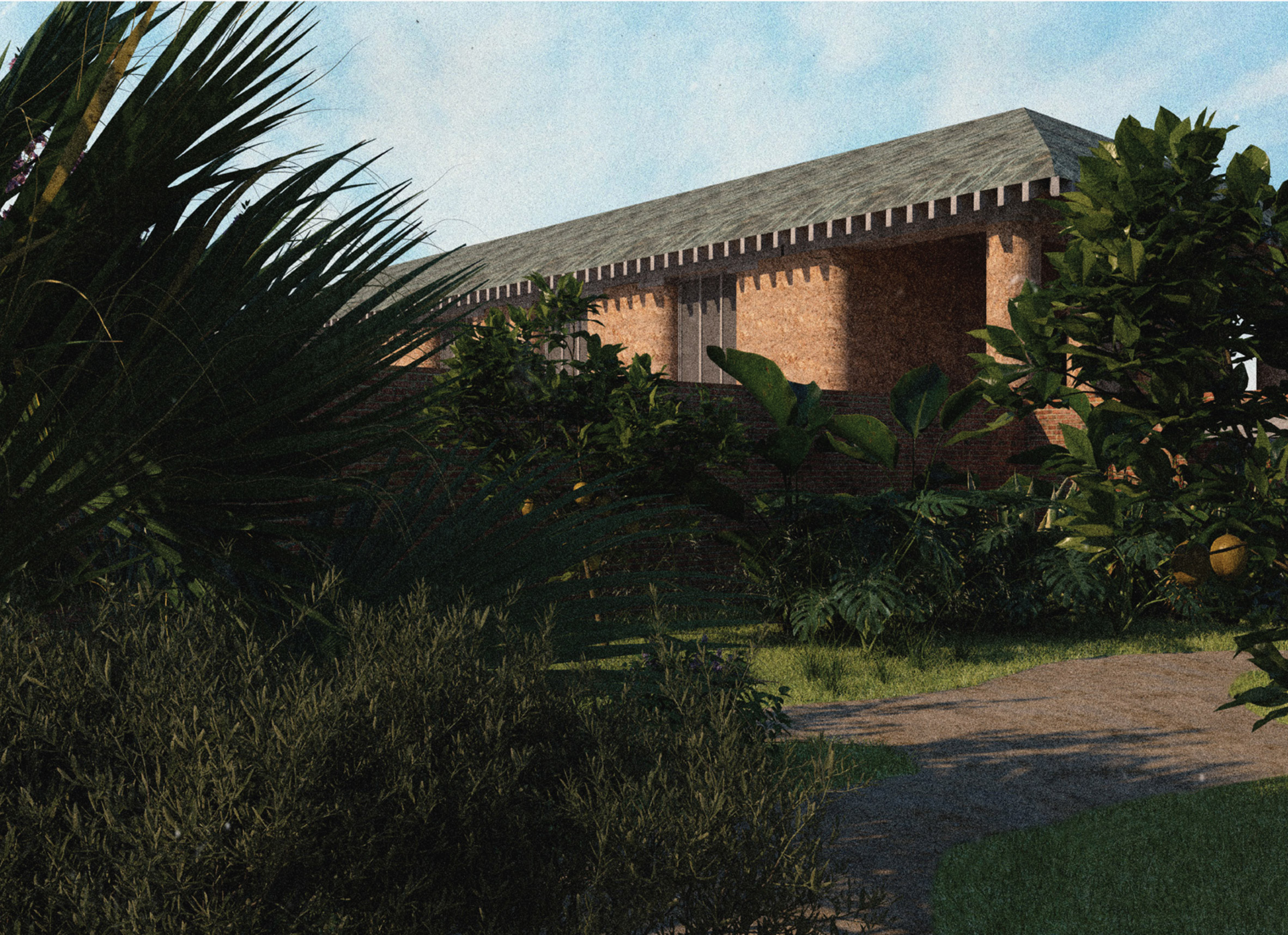
Tradition: Winery in Hampshire by Jai Heming

"Architecture has long been obsessed with being seen as a representation of technological and social newness – a concept that is often elided with progress. If one of the criteria for cultural, social and artistic value in architecture is that it represents an idea of newness, then it follows that as newness diminishes (buildings get old and technology moves on), so does value.

"As architecture is an expensive, practical and ideally long-lasting art, this seems inappropriate. Equally, 'traditional' architecture is often viewed as a nostalgic exercise, looking back sentimentally to an over-idealised past. However, viewed as a distillation of years of experience of what is beautiful, useful and lasting, traditions can be a richly provocative point of departure for contemporary architectural practice.

"This project follows an indepth study of traditional cob construction and examples of 'high' architecture which make explicit use of traditional techniques. My project, a visitor facility for a winery in Hampshire, is a rustic cob temple, working with the existing building and landscape to create a small community of production and imbibing. A walled garden of exotic plants growing produce for the kitchen reflects the exoticism of English wine production and transformation of the humble grape into leisured intoxication."

Student: Jai Heming
Course: 
MArch Architecture
Tutors:
Timothy Smith and Jonathan Taylor
Email:
k1556393[at]kingston.ac.uk

Kingston University School Show

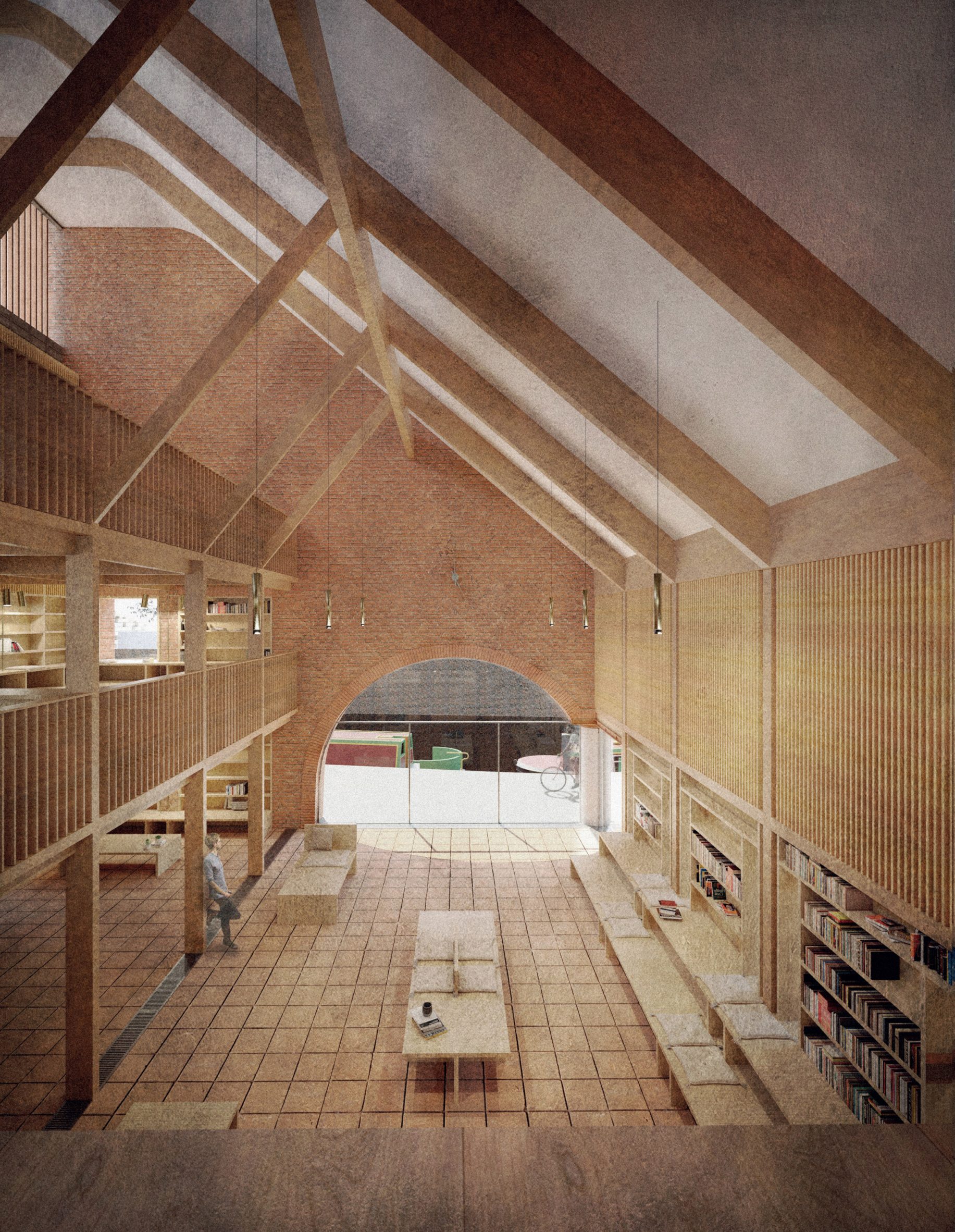
Post-Consumer Inconvenient Farm Buildings in an Urban Setting: Library in De Beauvoir by James Bearman

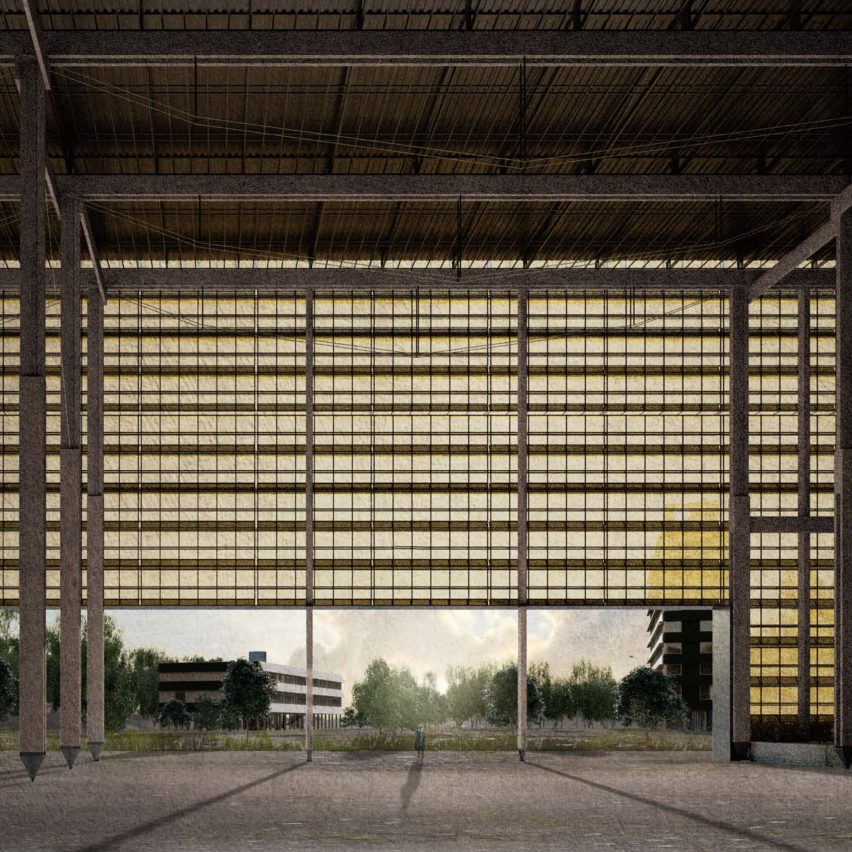
"The nature of the wall has changed radically in the last 50 years. Once the construction of buildings was vernacular – governed or at least influenced by available materials. The plan forms of buildings were dictated by available technologies, by the capacity of a material to span and shape and define space.

"That causality was transposed to the face of the building wherein ideas about shelter were approximate, appropriate and perceptible. Despite technology, a similar causality remained evident until the late 20th century and the type of building and type of facade in ways remained connected. Today, however, the facade is simply a technological device, not a cultural proposition.

"The agricultural building offers an insight into this lost architecture. It enables us to think about type, structure, form and figure, matter and light, and space. In particular, liminal space. And to think about these ideas in the natural world, in the context of climate and landscape.

"This project takes research into Hugo Häring's Gut Garkau cowshed and translates the constructional and spatial lessons learnt into proposals for a library in the liminal space between the De Beauvoir estate in London and the Regent's Canal. It aims to actively promote public space use and revitalise the ramped access to the towpath.

"It draws on the rich history of canalside industrial architecture, provides a new hub for the celebration of public knowledge and makes use of a lofty central space to act as a unique point of reference and congregation in the community."

Student: James Bearman
Course:
MArch Architecture
Tutors:
Simon Henley and Kate Le Masurier
Email:
k1302641[at]kingston.ac.uk

Kingston University School Show

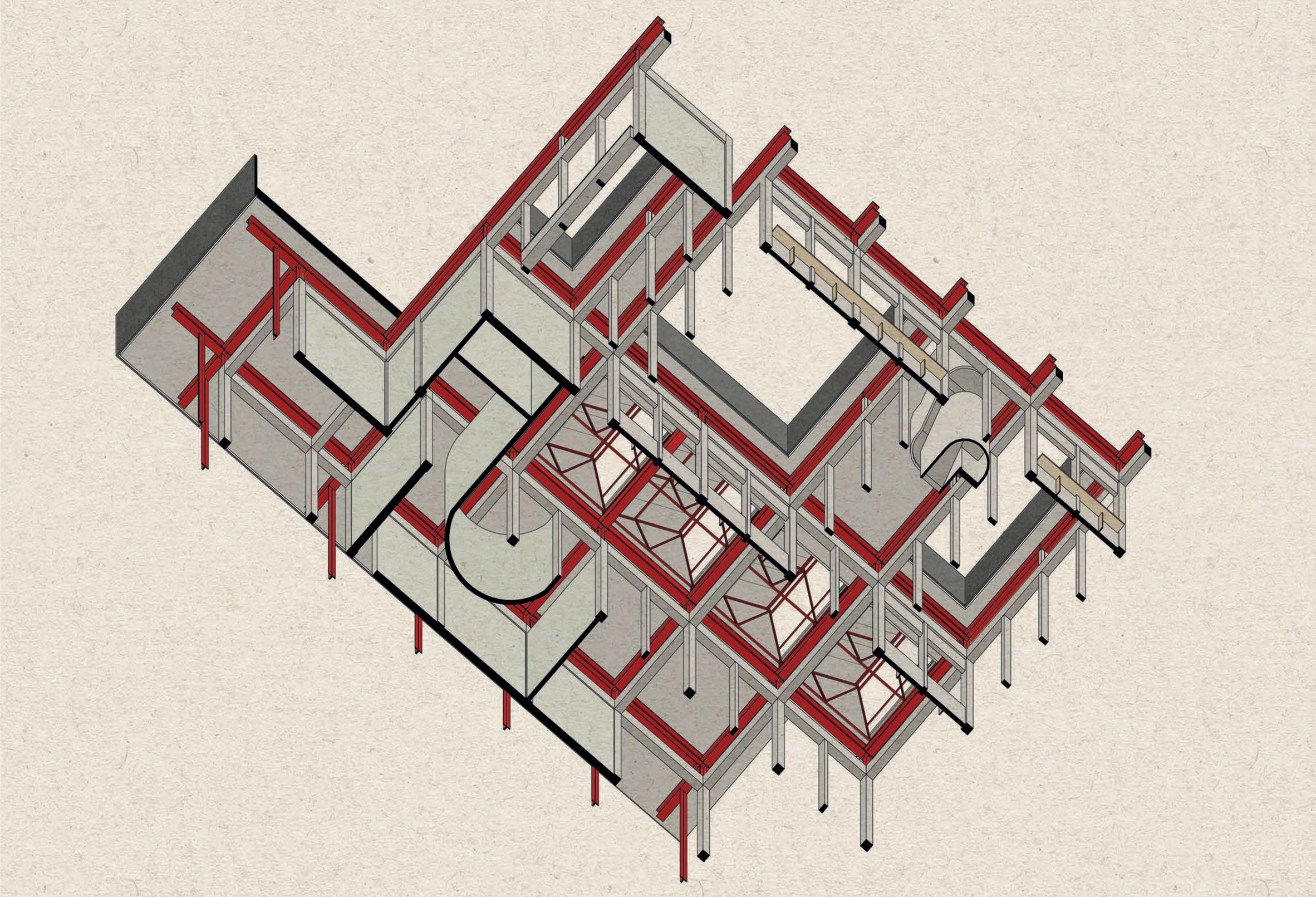
The Hackney Library Project by Olivia Holt

"This project also explores how walls have radically changed in the last 50 years, examining how agricultural buildings give an insight into the architecture of our past.

"Drawing on research into Hugo Häring's Gut Garkau cowshed and common barn construction typologies, this project proposes a library where world-class art, theatre and creative practice will be integrated.

"Parts of the structure may be easily manipulated, transforming into workshops for local communities, temporary exhibition spaces, and theatre and live music events, in response to the adapting needs of a contemporary library."

Student: Olivia Holt
Course: 
MArch Architecture
Tutors:
Simon Henley and Kate Le Masurier
Email:
k1534428[at]kingston.ac.uk

Kingston University School Show

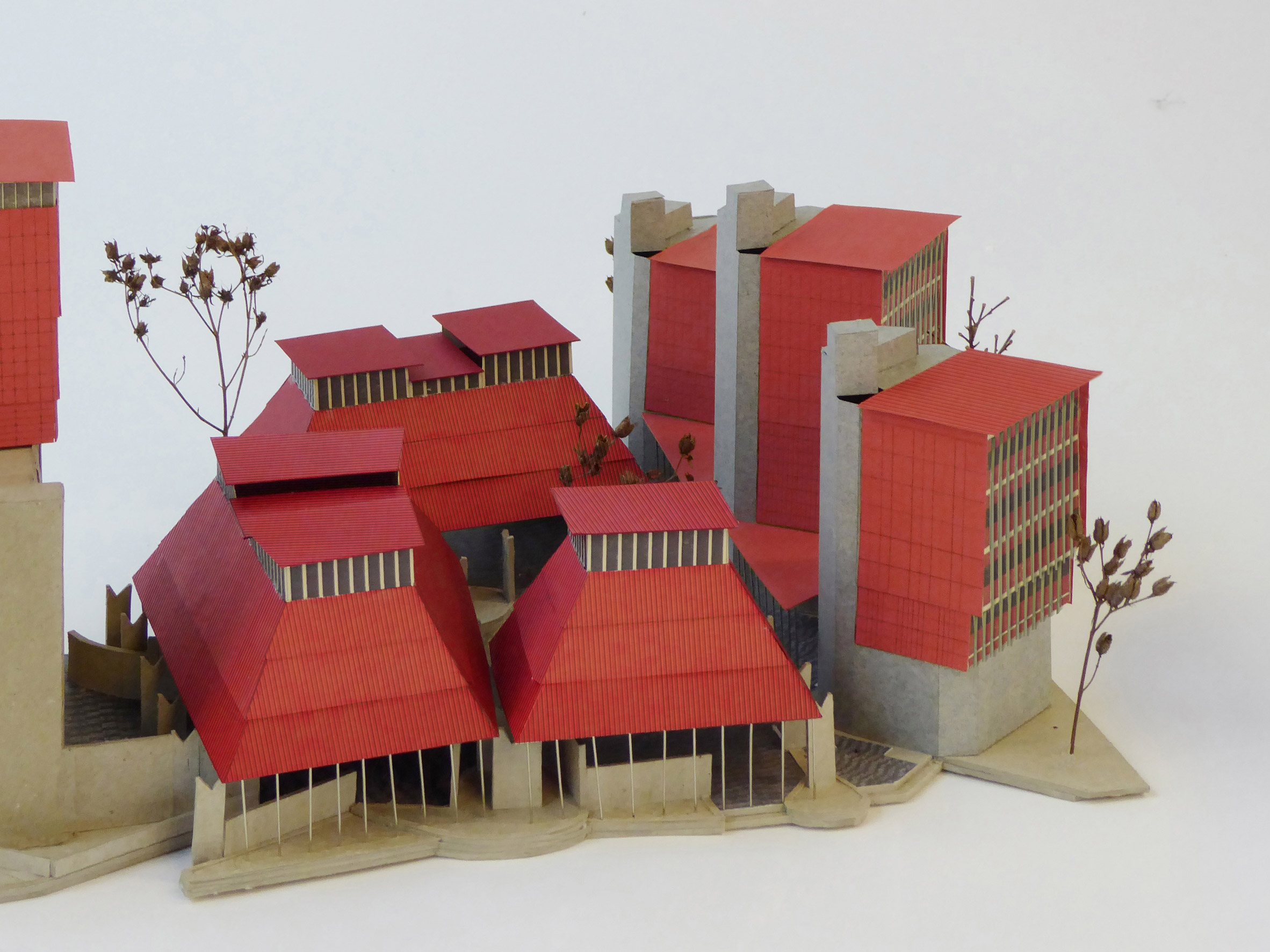
Art School in Enugu by Finian Reece-Thomas

"The brief for this project has been developed from readings of fiction – precisely that of Purple Hibiscus by Chimamanda Ngozi Adichie. The novel, set in post-colonial Enugu in Nigeria, tells the story of a country afflicted by various hierarchical structures of power: tradition, the church, the political sphere and the family unit.

"The inherent tension between tradition and modernity is explained with the protagonist, Kambili, finally finding liberation from her complex childhood in her auntie's progressive household. The project, set in an imagined future from the book, sees characters of the story establish a non-hierarchical institution for teaching creative disciplines in Enugu.

"The project's architectural language explores ideas of textiles and of weaving in both an attitude towards space as well as towards the tectonics of the building fabric, an approach suited to the challenging climate of southeastern Nigeria. The final proposal sees the radical reuse of an existing 1960s tower transformed into a new institution for the teaching of art in Enugu.

"The project is informed by both the pre-colonial palaces of Western Africa and the compound house typology specific to much of urban Africa. The school utilises low embodied carbon materials and employs a range of passive environmental strategies to construct a spatially fluid and environmentally sustainable institution that provides the infrastructure for a new form of cultural reproduction in Enugu, recalling the spirit of the post-independence Mbari Artist and Writers Clubs of the 1960s."

Student: Finian Reece-Thomas
Course: MArch Architecture
Tutors: Andrew Clancy and Laura Evans
Email:
k1923227[at]kingston.ac.uk

Kingston University School Show

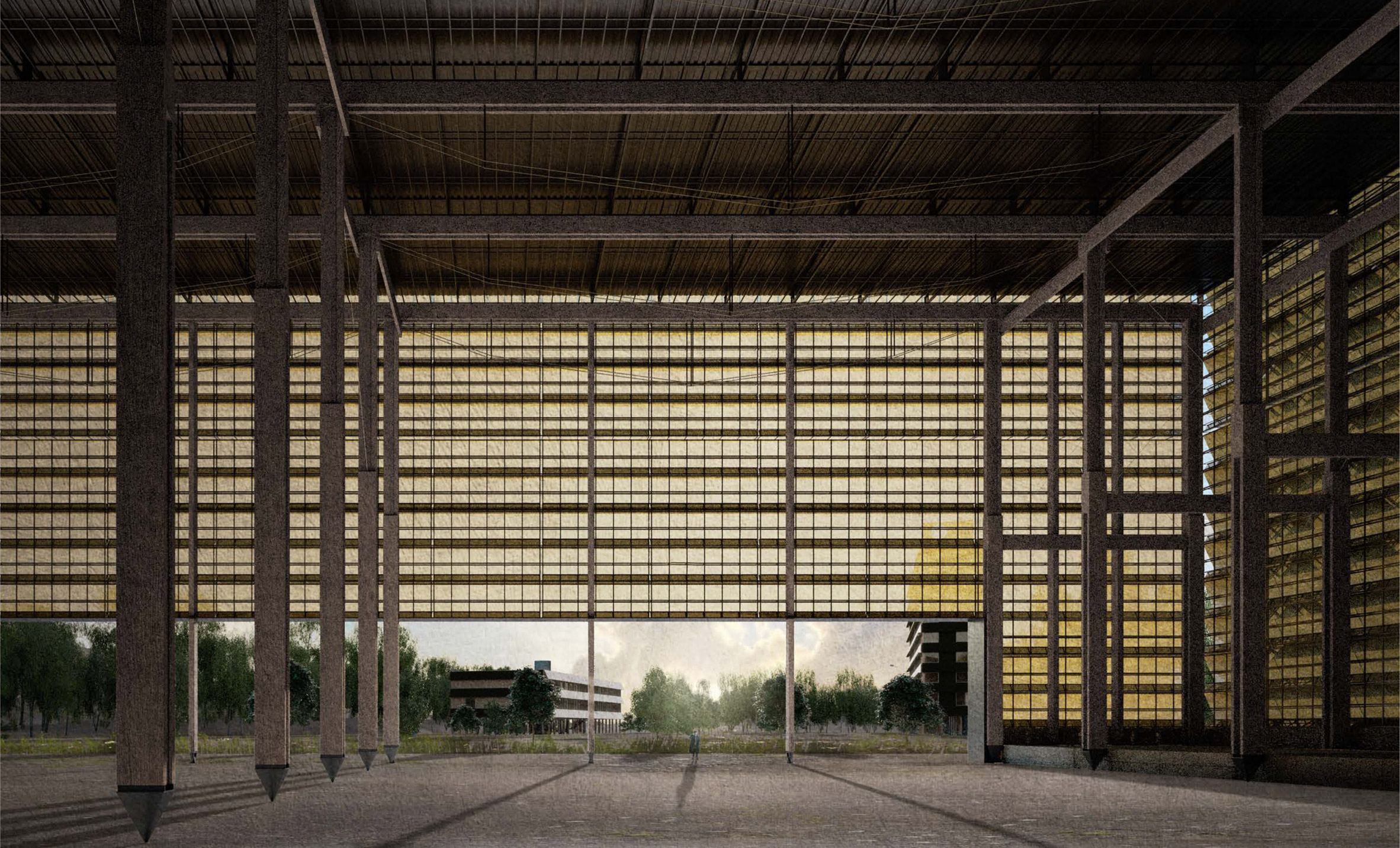
Architecture as an environmental art: Sustainable construction education campus by Thom Wood-Jones

"Architecture at its core is environmental art. It alters and modulates the natural environment around it to create places that allow human life and culture to thrive. But architecture is not a technical exercise. Instead, it is a cultural practice that frames everyday life and forms a part of the enriching role culture has in our collective lives.

"Today, we live with the fact human technology has begun to alter the natural environment in ways that will start to limit life on earth and human culture, and what has been offered in response, for the most part, are solutions that require greater technology.

"The relationship between architecture as environmental art and the changing environment was the starting point for this project, challenging both a technology-only led approach but also our assumptions as designers.

"The project itself looks to introduce a new campus, one which sustains itself through the land on which it is situated, to allow those who visit the opportunity to witness what a self-sustaining educational campus may be.

"In specific terms, the campus itself will be a built example of methods through which to produce a building in a way that utilises and demonstrates both reuses of the existing, through integration with the existing ground condition and surrounding site, but also the construction methods employed across the project. The campus' role is exactly this, to provide an opportunity to experience, develop and construct new, sustainable methods."

Student: Thom Wood-Jones
Course:
MArch Architecture
Tutors:
Nicholas Lobo Brennan, Astrid Smitham and Theo Thysiades
Email:
k1523081[at]kingston.ac.uk

Kingston University School Show

A People's Palace for Brentford by Amrit Sandhu

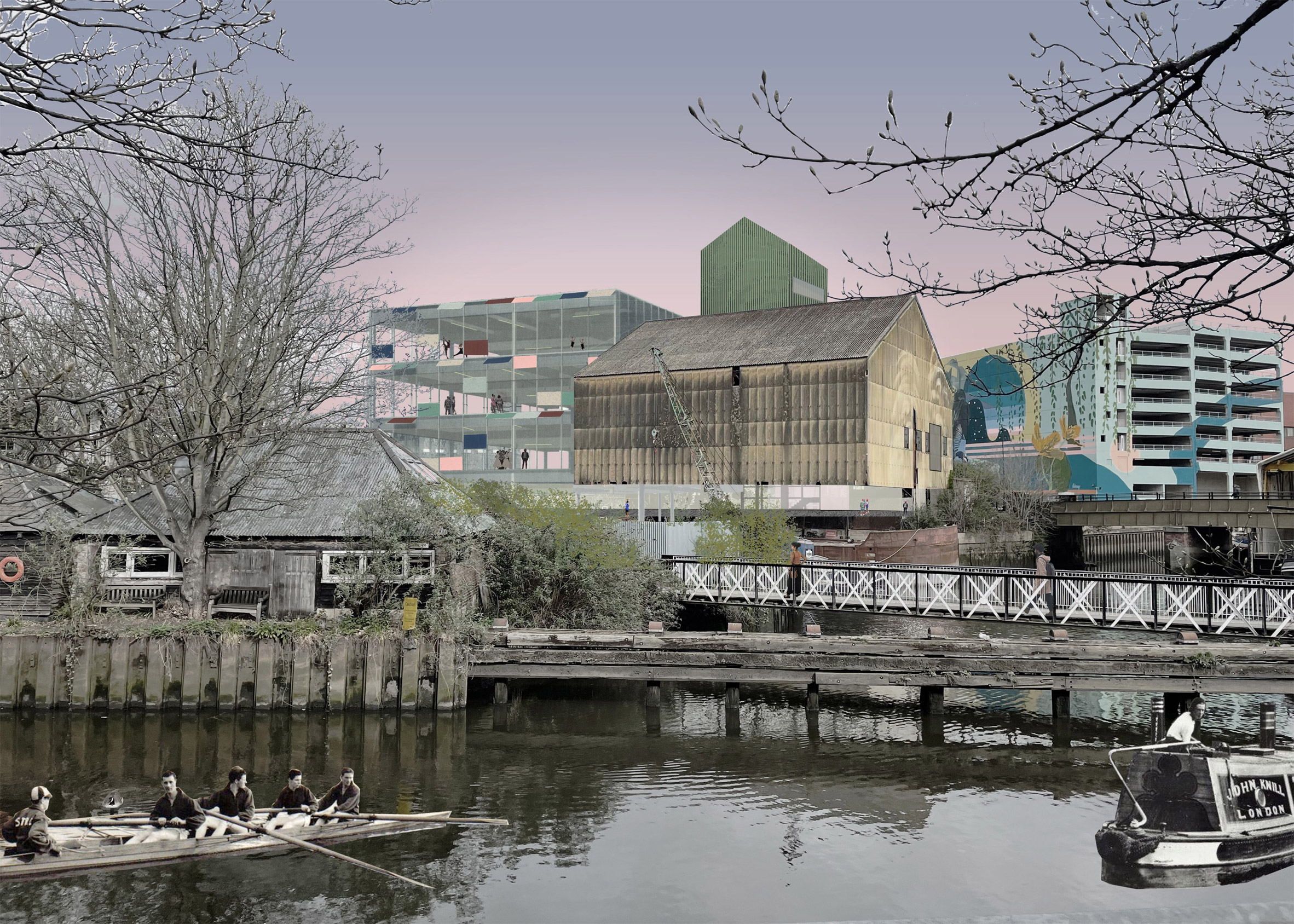
"This project brief responds to how buildings this year have had to adapt and change their functions due to the pandemic. By retaining an existing warehouse on the site, my proposal celebrates the industrial heritage of Brentford by repurposing it from a vacant shed and bus garage to a multi-purpose place where the local community can gather, perform, play or work.

"A new building and tower complement the warehouse to become a palace for the people that hopes to welcome the public from the high street it sits behind. The proposal sits alongside the Thames Lock, where the Grand Union Canal meets the River Thames, and an existing bridge to an artist island intersects the ground floor.

"The tower, which is clad in polycarbonate, holds the circulation and acts as a marker from the high street. The text on the ground signifies public space that runs through the ground floor, highlighting the building's completely civic and open nature.

"Colourful sliding panels clad the new building and can be adjusted to become sun-shading mechanisms as awnings. Non- prescriptive of its functions, the palace may become anything that serves the community it resides in, from a theatre to a vaccination centre.

"It can become a place of interaction where children playing football on the new public space may meet new friends on their way to the recording studios. The architecture supports the needs of the community, through allowing flexibility and change of function the buildings become inviting as they adapt according to the people of Brentford's requirements and preferences of a certain time."

Student: Amrit Sandhu
Course:
BA Architecture
Tutors:
Alex Gore and Dingle Price
Email:
k1700899[at]kingston.ac.uk

Kingston University School Show

The Common: A Mixed-use Building in Woolwich by Daan Maarse

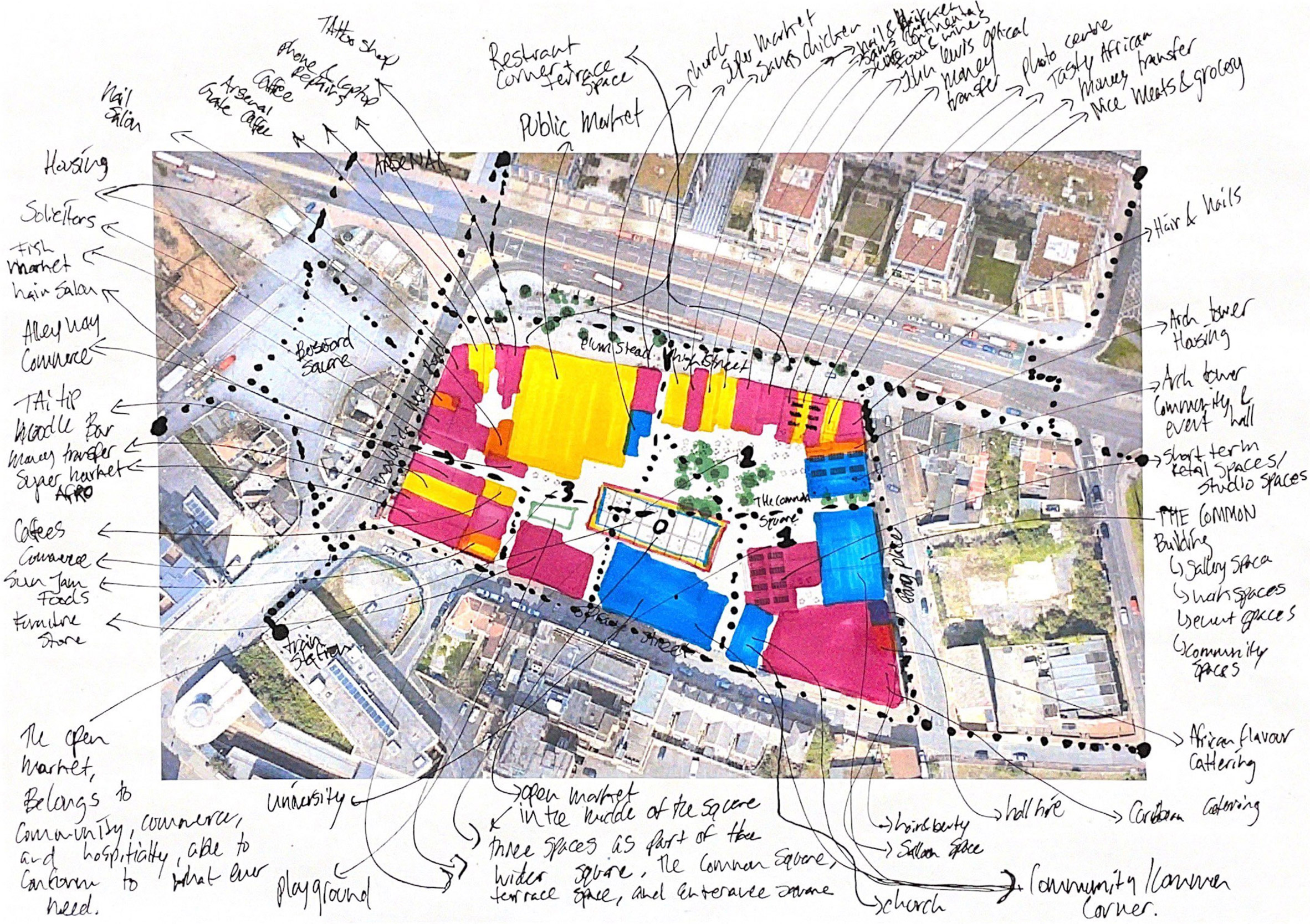
"The issue I have identified throughout my research in Woolwich is the issues of community, the lack of a common identity. Since the birth of Woolwich, its direction has been decided by the Arsenal. Arsenal has been the 'stomach' of Woolwich, powering its development throughout its history as a military base and industrial factory complex.

"This project aims to, for the first time, give a voice to all of Woolwich, not by taking away the spotlight off the Arsenal but by enlarging it to highlight everyone in Woolwich. Establishing a communal and community space where existing and new residents can feel represented and have ownership, starting conversations and creating a common identity for Woolwich instead of washing one away for another."

Student: Daan Maarse
Course:
BA Architecture
Tutors:
Lena Emanuelsen and Will Gottelier
Email:
k1819806[at]kingston.ac.uk

Kingston University School Show

Clay House, Essex by Ajay Gurung

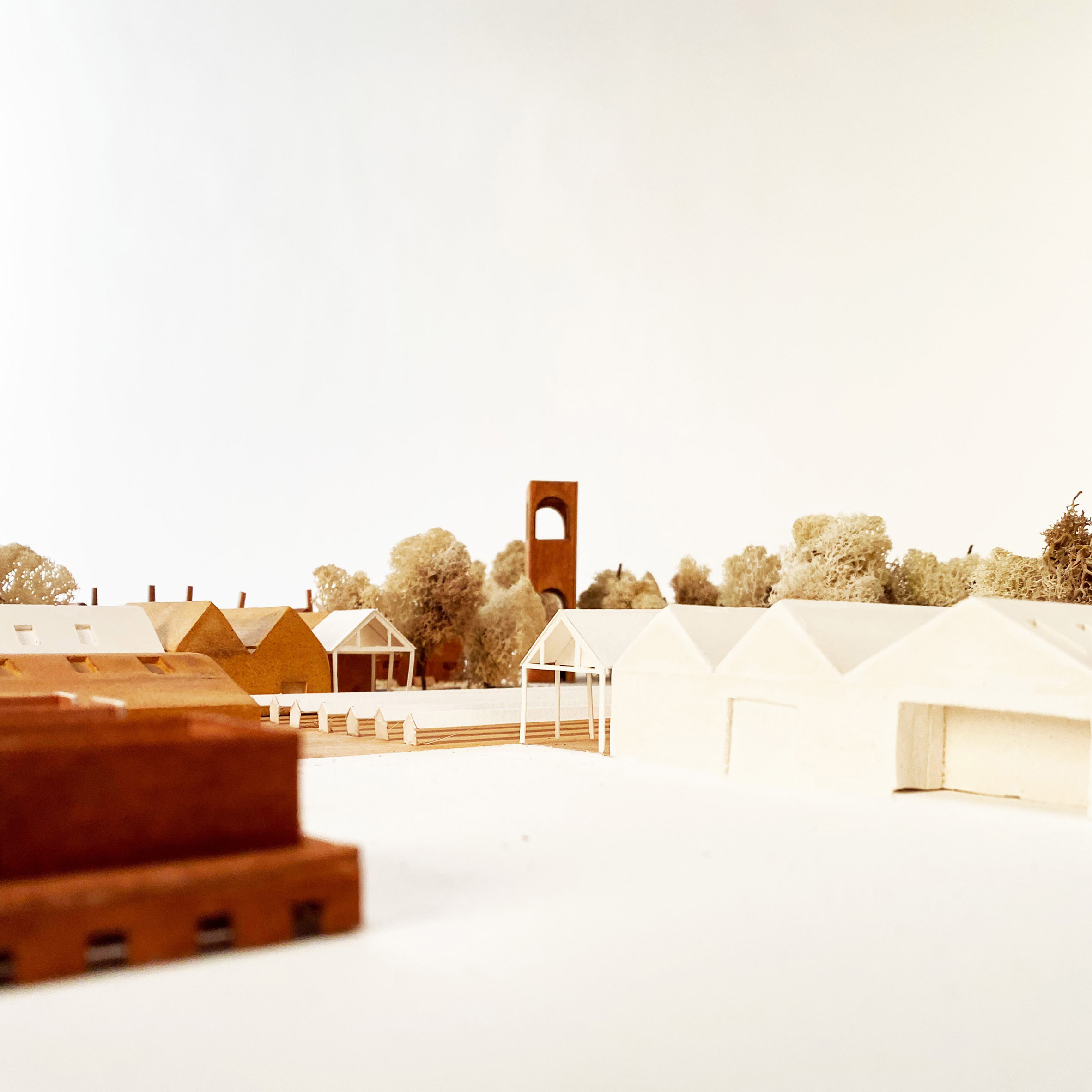
"After visiting Essex multiple times and researching about the wider territories, I was drawn to what was underneath the land. The proposed programme for my settlement is a brick production. Much of Essex's land sits on the London basin, where clay is found in abundance.

"The ambition of my programme is to bring back traditional hand-moulded bricks and at the same time take advantage of new clay inventions which are all produced sustainably. It will support a circular economy, providing jobs in the local area and at the same time revitalising the area.

"I embarked on this journey with these questions in mind: how can a new settlement add to the rich, unique character of Essex with its vast open sky and horizontal landscape, rustic barns and remnants of past dispersed over the county? How can working industrial buildings achieve a poetic quality and language which is contextual and imaginative?"

Student: Ajay Gurung
Course:
BA Architecture
Tutors:
Aoife Donnelly and Kristin Trommler
Email:
k1213035[at]kingston.ac.uk

Kingston University School Show

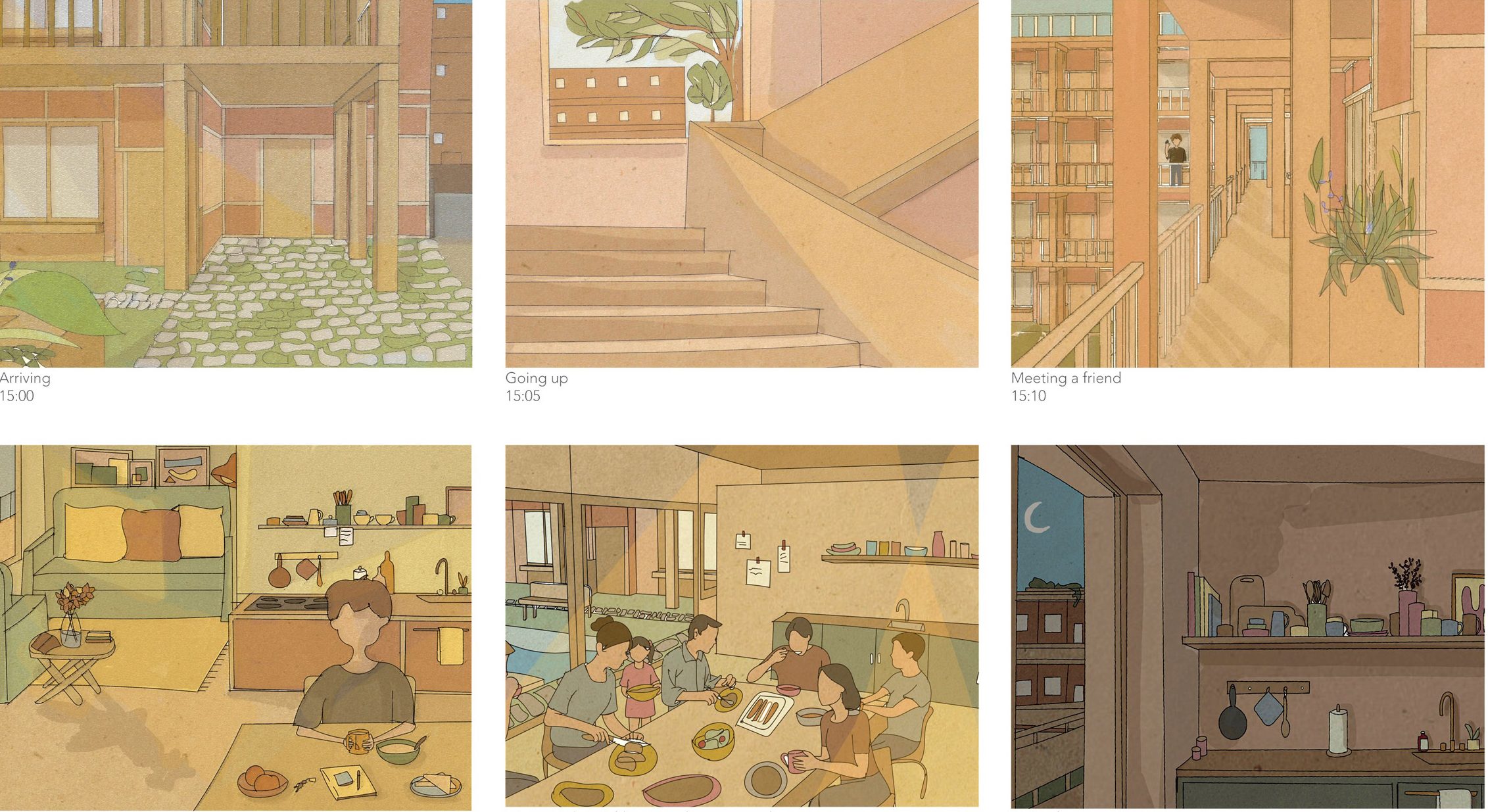
Co-housing in Newham by Zina Talha

"After the industrial revolution, the modern history of collective living began. At the time, it was thought of as a political response to the newly established capitalist production system, the high levels of poverty and as an economic tool for improving living conditions. Today, the housing crisis in the UK is leaving many people unable to afford a first home or the rental prices, especially in the city centre of London.

"One of the consequences of this crisis is the extended case of house-sharing that could be seen as the jumping-off point for the search for alternative housing typologies. I believe that collective housing is a better alternative to house sharing. It gives the opportunity of building smaller and denser and creates a community where resources and work are shared.

"My project aims to re-establish collective living as a social, environmental and economical tool to improve the way people live by minimising the individual private housing space and increasing the area of the collective space to include functions that are smaller or not found in the separate apartments.

"By doing that, resources and part of the domestic labour are shared by the collective. This reduces the amount of work required from the individual and could translate into significant financial savings, lowering energy consumption by allowing them to use spaces and services collectively.

"This would be alongside using good insulation, low carbon materials, the maintenance of the existing green spaces and the addition of gardening spaces, which would help achieve environmental sustainability and add to the economic and social sustainability that collective housing offers."

Student: Zina Talha
Course:
BA Architecture
Tutors:
Amalia Skoufouglou and Thom Brisco
Email:
k1816101[at]kingston.ac.uk

Kingston University School Show

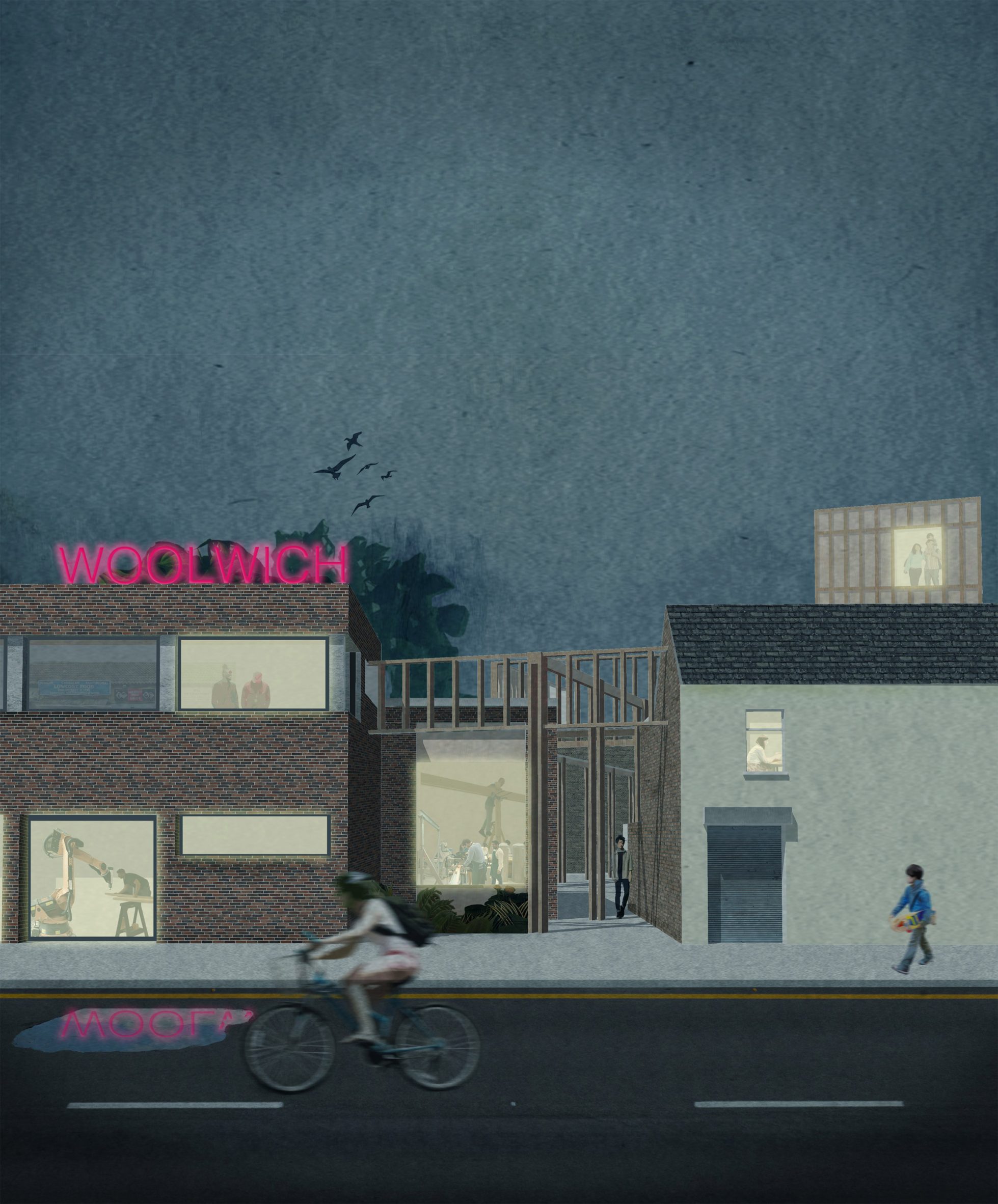
Reclamation Yard, Woolwich by Alexander Watson

"Looking closely at Woolwich and the recent development which has taken place in the historic Arsenal, it is evident that this intervention by Berkley Homes has created tension amongst the diverse collection of communities which make up the town. The sudden imposition of multiple large-scale developments, marketed at wealthy, middle-class, young professionals from outside of the city, has led to the degradation of the local economy and sense of community.

"Many of the Woolwich Arsenal's new residents spend most of their time and money in nearby central London, resulting in large swathes of Woolwich becoming a dormitory settlement. With much of my site due for compulsory purchase and demolition in preparation for development, my project aims to challenge this reckless erasure by restoring community and providing education centred around the common aim of making and craftsmanship.

"In doing so, I hope to restore a skills economy back to Woolwich, allowing those who feel excluded from this future development to profit from and have influence in the future of their town. I aim to develop a proposal that responds to the existing condition found in Woolwich, adding to, reusing and repurposing what already exists whilst reflecting the typical residential, modular urban grain historically found in this particular part of the town and contributing to the residents' sense of memory and belonging.

"I strongly believe that development should take place in response to a local requirement rather than in an attempt to revolutionise and transform a town demographic and reputation at the expense of those who currently live there."

Student: Zina Talha
Course:
BA Architecture
Tutors:
Lena Emanuelsen and Will Gottelier
Email:
k1816101[at]kingston.ac.uk


Partnership content

This school show is a partnership between Dezeen and Kingston University. Find out more about Dezeen partnership content here.

The post Kingston University presents 10 student architecture projects appeared first on Dezeen.


from Dezeen https://ift.tt/3enKQSi

"World's first carbon-neutral cement plant" to be built in Sweden

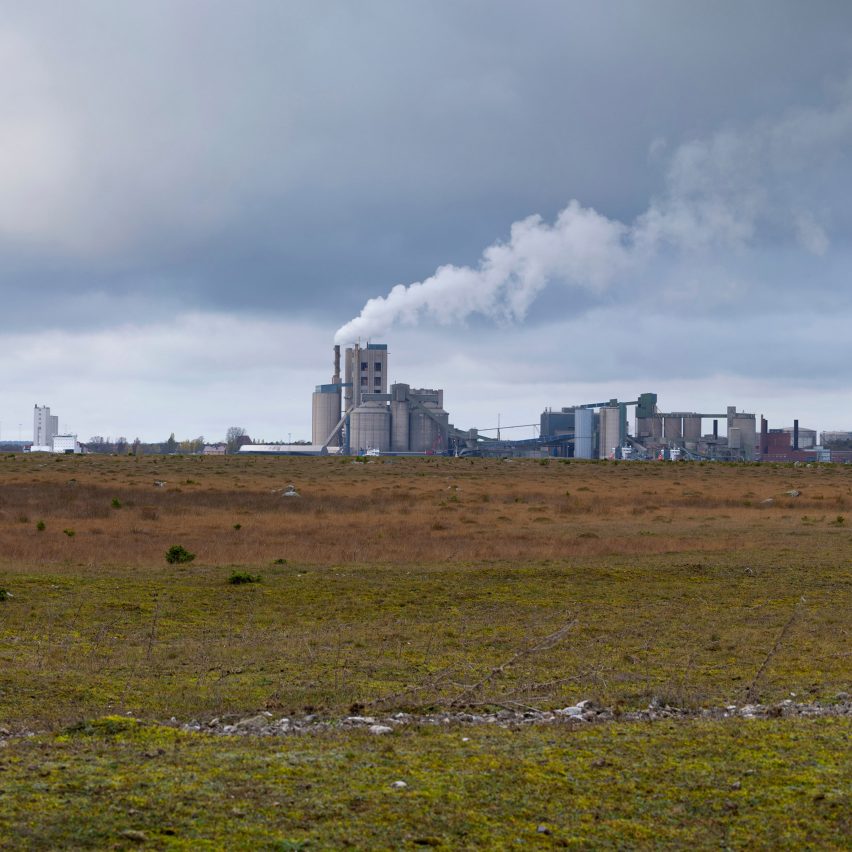
Slite cement plant

Cement giant HeidelbergCement has announced plans to eliminate carbon emissions from a plant in Sweden in a bid to decarbonise one of the world's most polluting industries.

The German company intends to upgrade a factory at Slite on the Swedish island of Gotland, which is operated by its Cementa subsidiary.

The plant is currently the second-largest source of greenhouse gas emissions in Sweden, responsible for three per cent of all its CO2 emissions.

Cement production is among the biggest contributors to climate change and is responsible for around eight per cent of global carbon emissions.

Upgrade will capture 1.8 million tonnes of CO2 per year

When the proposed upgrade is complete in 2030, the company claims it will capture and store all emissions from the Slite plant, totalling up to 1.8 million tonnes of CO2 per year.

However, the technology it will use to capture the emissions is "not decided yet," according to Per Brevik, director of alternative fuels at HeidelbergCement.

"There are many potential technology providers in this area to be assessed," Brevik told Dezeen. "Most probably we will go for amine technology," he said, referring to chemical compounds that can absorb CO2 from gases.

Cement plant in Sweden to close
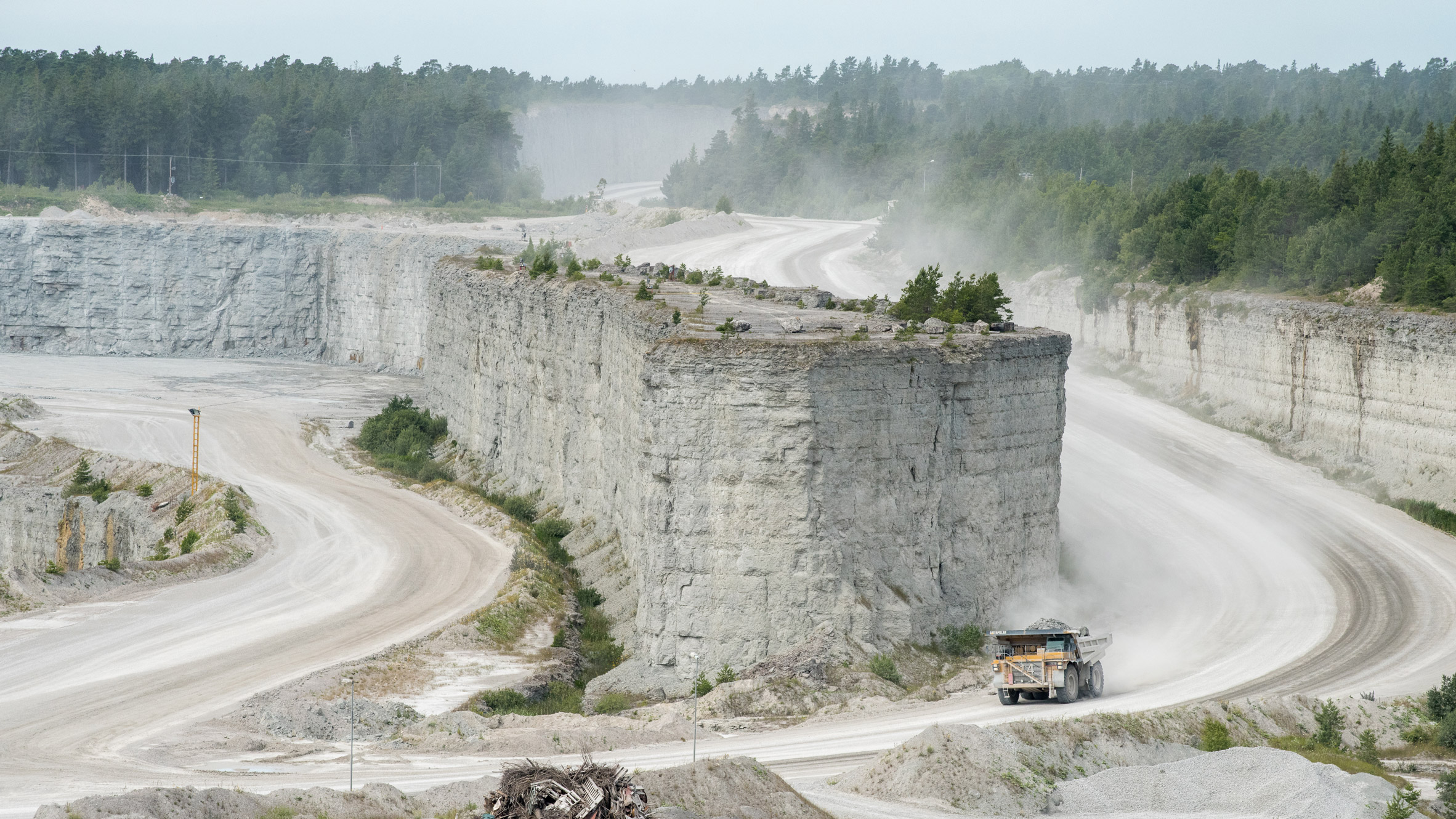
Top image: the cement factory in Slide will be upgraded. Above: limestone is quarried nearby in Gotland

Amine processes are used to scrub carbon from factory flues although the technology is expensive and is not yet able to remove 100 per cent of emissions. "Among available technologies, amine is the most mature and proven," Brevik said.

Once captured, the carbon dioxide will be buried under the North Sea in cavities created by the extraction of fossil fuels. "In a way, you can say 'CO2 is coming home' since [it will be stored] in the same layers as oil and gas were before they were taken out," Brevik said.

Factory could become carbon-negative

The process of capturing carbon and sequestering it underground is called carbon capture and storage (CCS). However, unlike CCS projects that capture carbon from the atmosphere, the Slite project will not directly lead to a net reduction in atmospheric CO2.

The plant will still be largely powered by fossil fuels meaning that the CCS process, if effective, will instead prevent new emissions from entering the atmosphere.

Brevik added that the project has the potential to become carbon negative since the factory will derive part of its energy from burning biomass since this contains carbon that has been drawn from the atmosphere by plants via photosynthesis.

"Since at Slite we will capture all the CO2, we will also capture the CO2 from the biomass, which is not counted when you calculate the emissions from the industry," Brevik said. "We then capture more CO2 than we emit from the production."

Project could be delayed by court ruling

Work on upgrading the plant, which supplies three-quarters of the cement used in Sweden, was due to complete in 2030. However, the project timeline has been thrown into doubt after the Swedish Supreme Land and Environmental Court stripped the factory of its licence to mine limestone, which is the key ingredient in cement.

The ruling, issued last week, was due to concerns over the plant's environmental record and has led to concerns that construction in Sweden could grind to a halt once the current licence expires on 1 November.

"The situation in Sweden could at least challenge or postpone the CCS project at Slite," said Brevik.

The Slite project follows another carbon-reduction project at another HeidelbergCement plant at Brevik in Norway, which will act as a pilot for the Swedish plant.

Work is already underway at Brevik to retrofit amine technology provided by Aker Carbon Capture to the plant in an attempt to capture 400,000 tonnes, or half of the plant’s emissions, from 2024 onwards.

"In Brevik we have chosen to use amine technology where you combine chemistry) mixing the flue gas with an amine solution with temperature (first cooling and later heating it up again)," Brevik explained in an email. "The flue gas will be divided into water, amine (which will be reused) and CO2."

Carbon will be buried under North Sea

Captured emissions from the Brevik plant will be shipped to the North Sea and pumped into underground voids as part of Project Longship, a $2.7 billion CCS project overseen by the Norwegian government that aims to pump captured carbon into depleted its oil and gas fields.

Announced last year, this vast demonstration project aims to sequester 1.5 million tonnes of carbon under the sea per year by 2024 as part of a drive to demonstrate "the potential of this decarbonisation approach to Europe and the world".

Pumping carbon into depleted fossil fields is controversial since the oil and gas industry is promoting a technique called carbon capture, utilisation and storage (CCUS) to help it extract remaining fossil reserves via a process known as enhanced oil recovery.

Enhanced oil recovery involves using the CO2 gas to force the last remaining oil and gas out of hard-to-reach reserves.

Critics of the process believe the oil and gas sector is exploiting the rising interest in carbon-capturing technologies to allow it to continue producing its emissions-generating products while helping it extract yet more fossil reserves.

But Brevik insisted that Project Longship does not involve CCUS. When asked whether the CO2 from HeidelbergCement plants would be used for enhanced oil recovery, he said "NO".

Cement production is a major contributor to atmospheric carbon partly because of the energy used to produce the material but mostly because of the way limestone is processed.

The rock, which is made up of calcium and carbon, is crushed and burned to extract calcium, which is the binding agent and main ingredient in cement, while the unwanted carbon is released into the atmosphere.

The post "World's first carbon-neutral cement plant" to be built in Sweden appeared first on Dezeen.


from Dezeen https://ift.tt/3ieZGeN

Mercedes-Benz hosts cosmic Shine On exhibition at Studio Odeonsplatz in Munich

Shine On exhibition at Studio Odeonsplatz

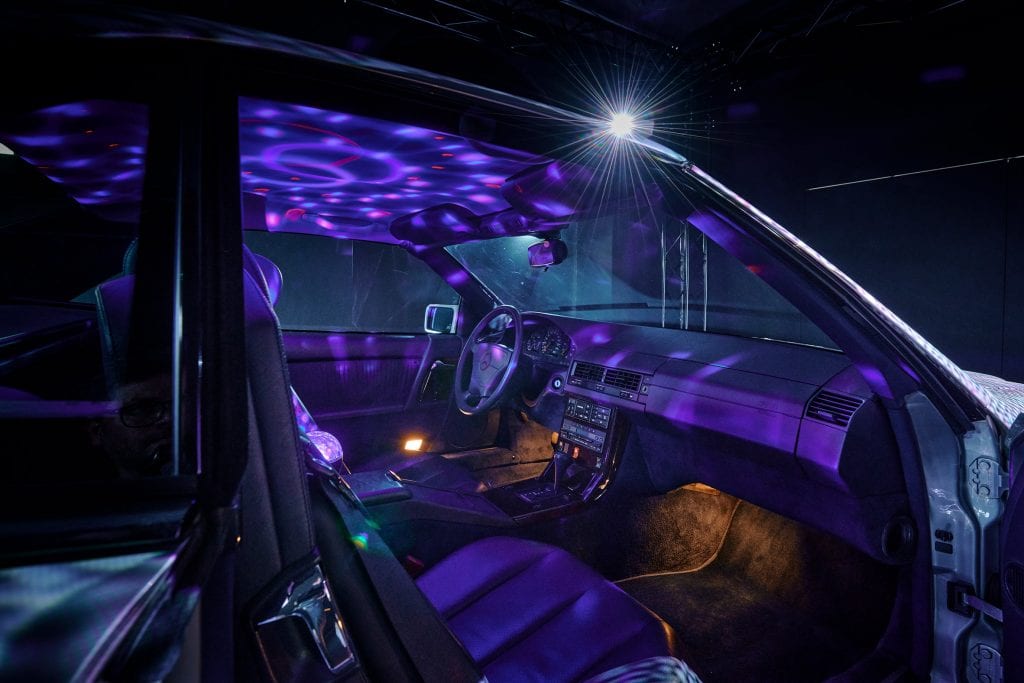
Mercedes-Benz' Munich creative space Studio Odeonsplatz is hosting Shine On, a space-themed exhibition that includes a sparkling reinterpretation of the brand's classic SL 320 car by artist Sara Shakeel, which was captured in an exclusive Instagram reel created by Dezeen.

Shine On explores themes such as human-centric design and time travel, aiming to connect visitors with the cosmos.

Shine On exhibition at Studio Odeonsplatz
The exhibition is located in the heart of Munich at Studio Odeonsplatz

Shakeel, a Pakistani dentist-turned-artist known for her use of glitter and crystals, has created a number of artworks for the exhibition including a modified Mercedes-Benz SL 320 animated with digital projections and clad in a sparkling exterior.The artist has also created a number of digital artworks to be displayed on an interactive wall in the space.

Dezeen has documented Shine On in an exclusive Instagram reel to launch the exhibition.


View this post on Instagram


A post shared by Dezeen (@dezeen)

"I was immediately drawn to the idea of an ever-changing brand space," said Shakeel. "It's the future of retail in my opinion."

"Like me, Studio Odeonsplatz is optimistic, experiential and focused on the joys of creativity and digitisation," she explained.

"I see the space as a new kind of gallery, which melds physical and digital lifestyles, and where people can connect with art and culture in unique ways."

Shine On is the latest exhibition to take place at Studio Odeonsplatz, a brand experience space opened by Mercedes-Benz that will showcase constantly changing campaigns conceived by experience creators Liganova.

Mercedes-Benz SL 320
Various digital artworks can be viewed within the space

Digital projections are used to alter the surface of the space and vehicle.Earlier this year, Studio Mary Lennox took over the space and covered a vintage Mercedes-Benz in flowers.

As well as its exhibition spaces, Studio Odeonsplatz includes a lounge area for co-working and gatherings, a podcasting studio and a deli bar.

The 400-square-metre venue was designed as a home for the Mercedes-Benz brand in Munich and aims to combine physical experiences with digital ones through its bespoke EXOS app, which invites visitors to discover more about the objects and installations.

A series of temporary campaigns, each lasting several weeks, will encourage visitors to continually return and experience new curated content – both in-person and online.

For more information about Studio Odeonsplatz, visit the official Instagram account.


Partnership content

This article was written by Dezeen for Studio Odeonsplatz as part of a partnership. Find out more about Dezeen partnership content here.

The post Mercedes-Benz hosts cosmic Shine On exhibition at Studio Odeonsplatz in Munich appeared first on Dezeen.


from Dezeen https://ift.tt/3i6fBfm

Nigo creates "friendly" house-shaped public toilet in Tokyo

House-shaped public toilet in Tokyo by Nigo

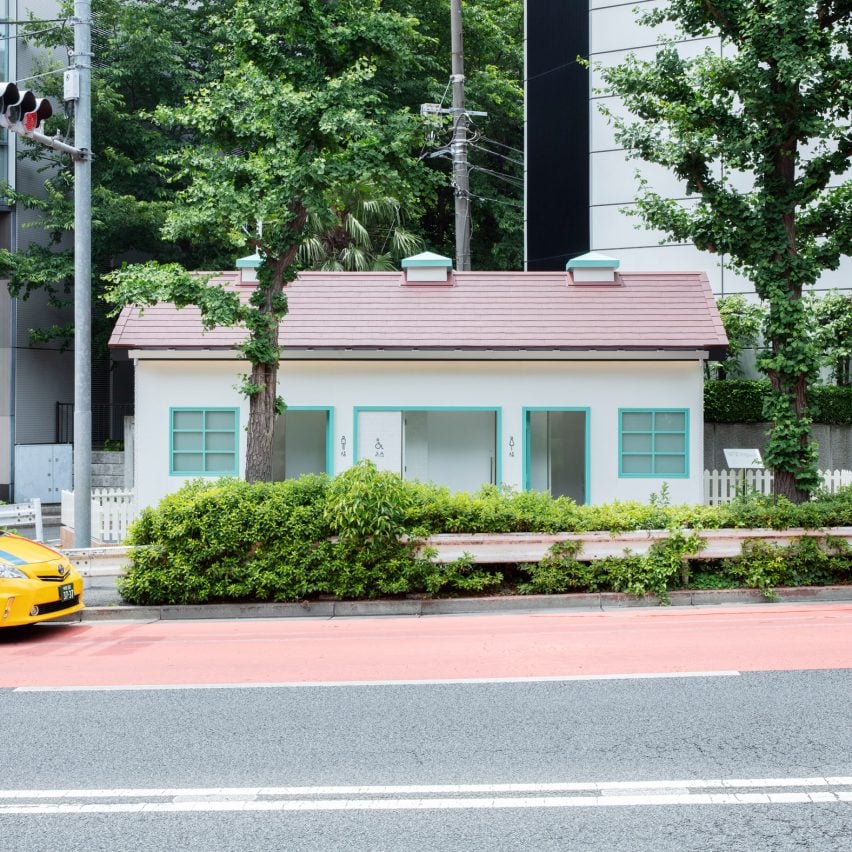
Japanese fashion designer Nigo has designed a public toilet in the shape of a small home as the latest addition to the Tokyo Toilet project.

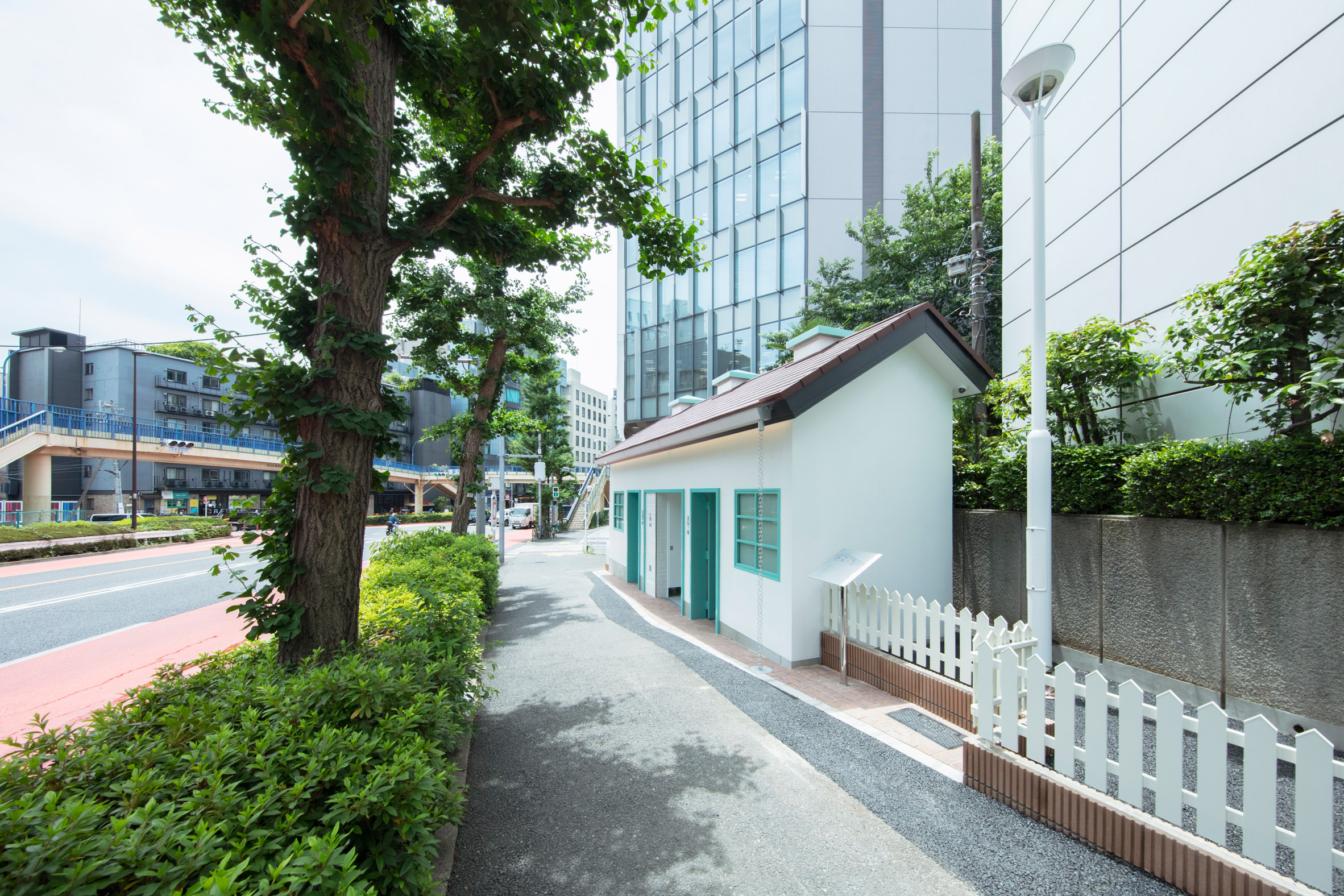
Built in the Harajuku district of central Tokyo, the house-shaped toilet was designed to stand out from the surrounding high-rise buildings.

House-shaped toilet in Tokyo
Nigo designed the toilet to look like a house

"In contrast to the ever-changing city of Tokyo with its sky-high buildings, I envisioned a toilet that feels like a good old home that stands quietly on a corner of Harajuku," explained Nigo.

"The toilet may feel nostalgic to some and new to others, depending on their age and generation."

Toilet in Tokyo by Nigo
Its form contrasts the neighbouring high-rises

Nigo, who is the founder of the A Bathing Ape clothing brand and has designed for Adidas and Louis Vuitton, designed the facility as part of the Nippon Foundation's Tokyo Toilet project.

His toilet joins blocks in the city's Shibuya area designed by Pritzker Architecture Prize winners Tadao Ando, Shigeru Ban and Fumihiko Maki.

House-shaped toilet in Tokyo
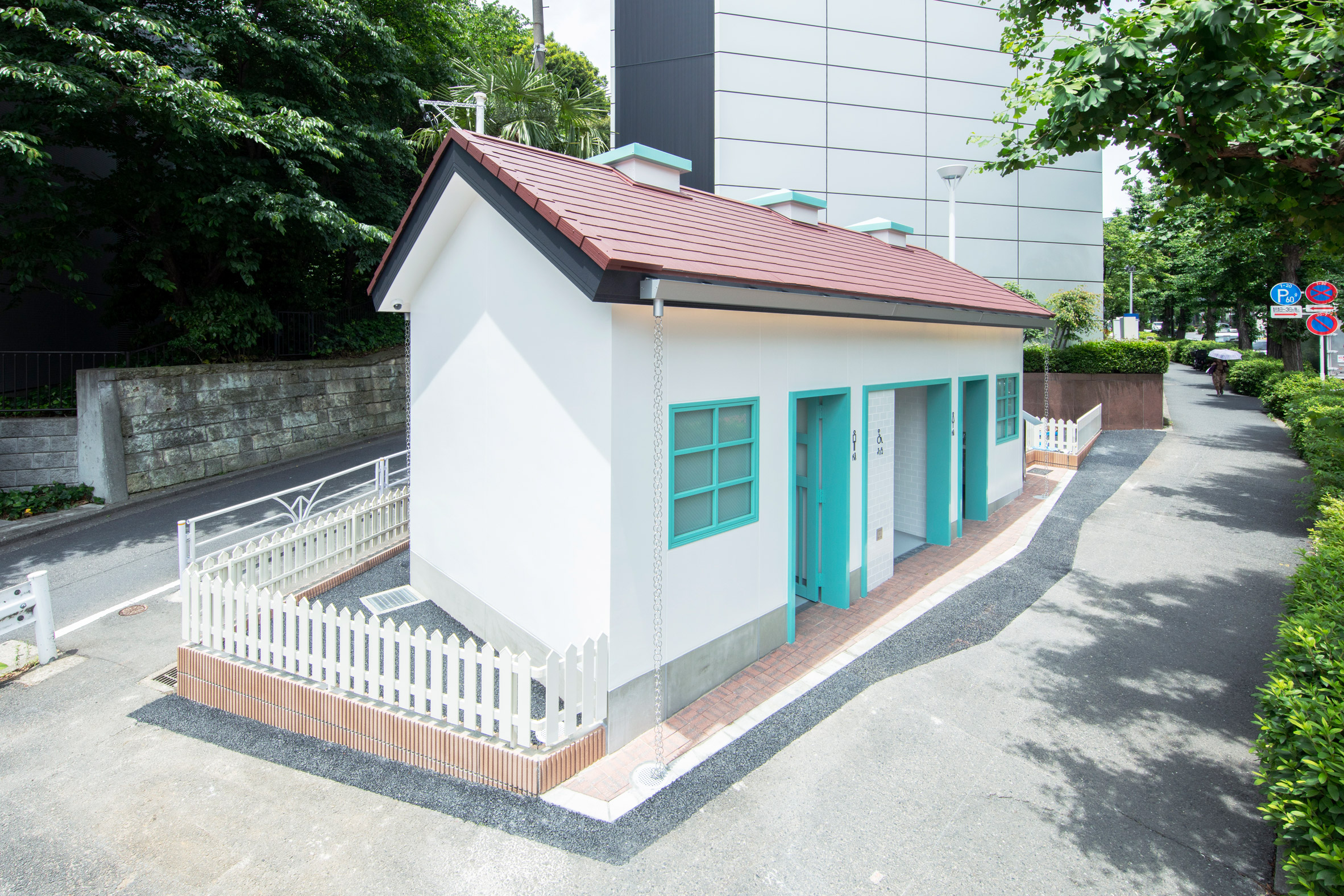
The roof, windows and picket fence recall a 1940s home

For his design, Nigo was directly informed by a housing development of pitched roof, single storey homes that were built in the area by the United States Armed Forces after world war two.

"My inspiration for the design of this toilet is the Washington Heights Dependent Housing, which was a large housing complex built by the US in 1946 in an area that has now become Yoyogi Park," he said.

"Washington Heights had a significant impact on Harajuku's growth into the cultural town it is today, and Dependent Housing greatly influenced the post-war lifestyle changes in Tokyo."

Blue door frame at public toilet
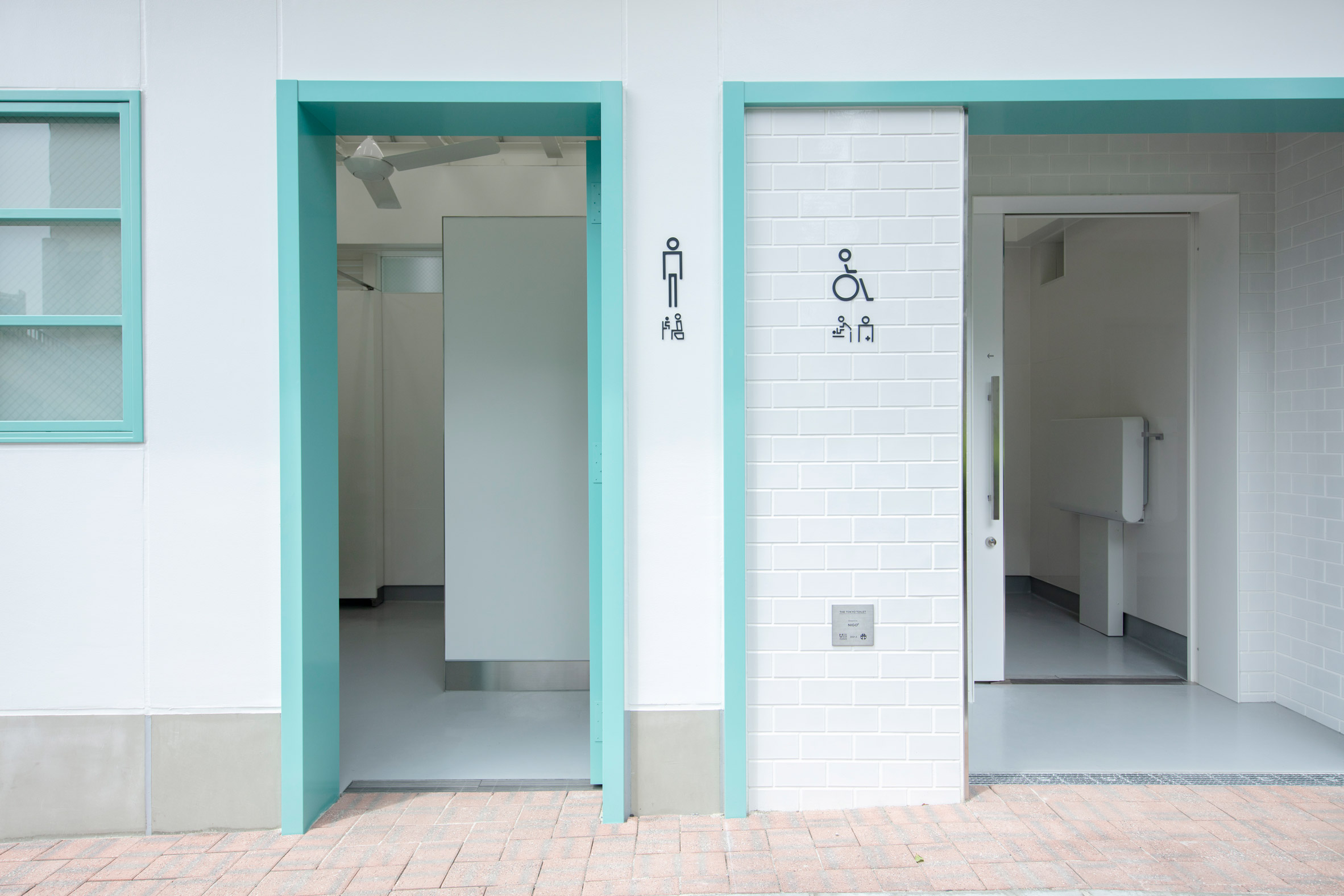
It was designed to be welcoming

"Today, very few of these houses remain. I was raised in Harajuku, and my life in this town has shaped me into what I am now," he added.

"I chose the concept of 'learning from the past' for the design of this toilet and challenged myself to create a copy of the Dependent Housing because I wanted to preserve some of the designs that are beginning to disappear in my favorite town of Harajuku."

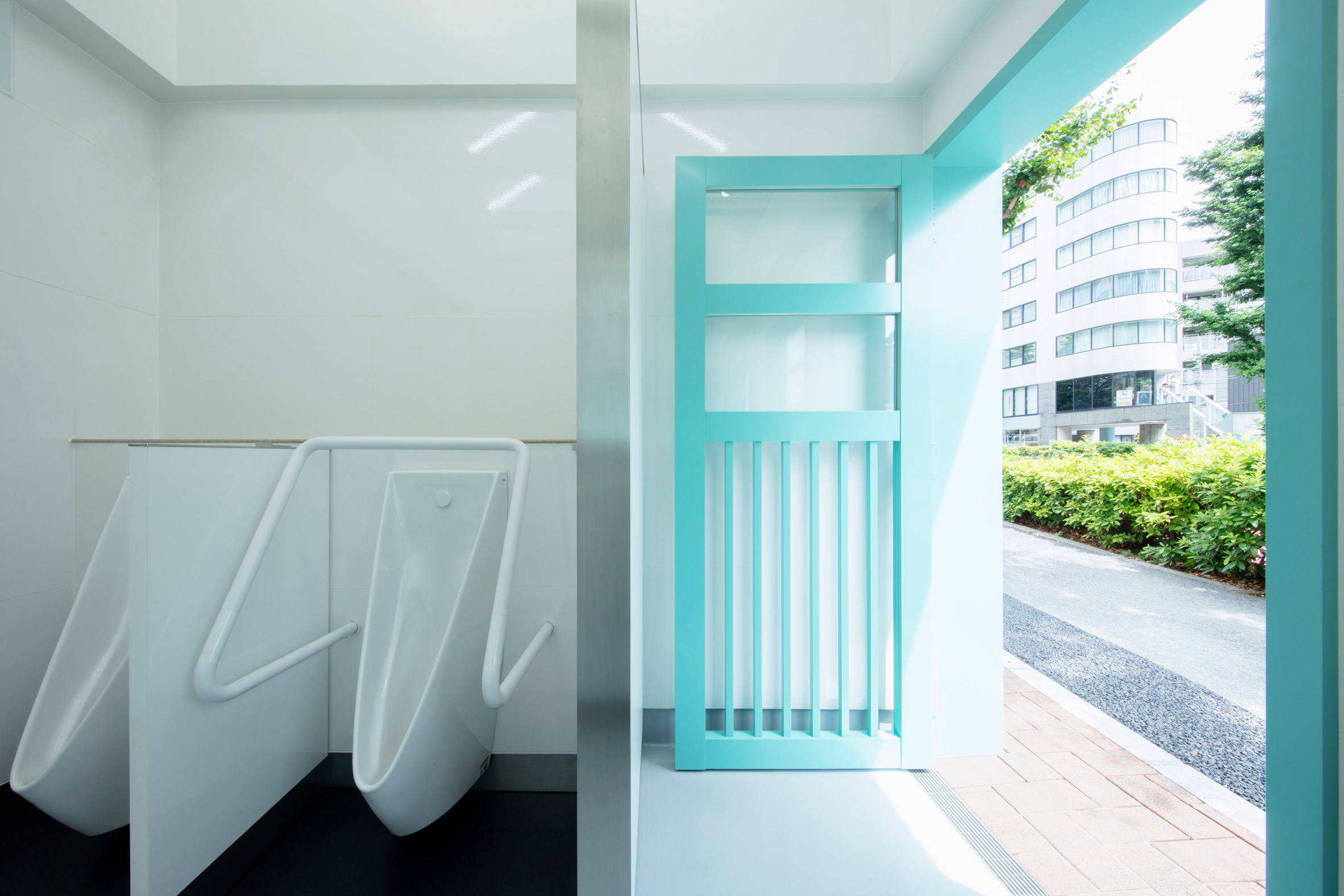
Urinals in Tokyo
The door is permanently open

The toilet block recalls the now largely demolished housing.

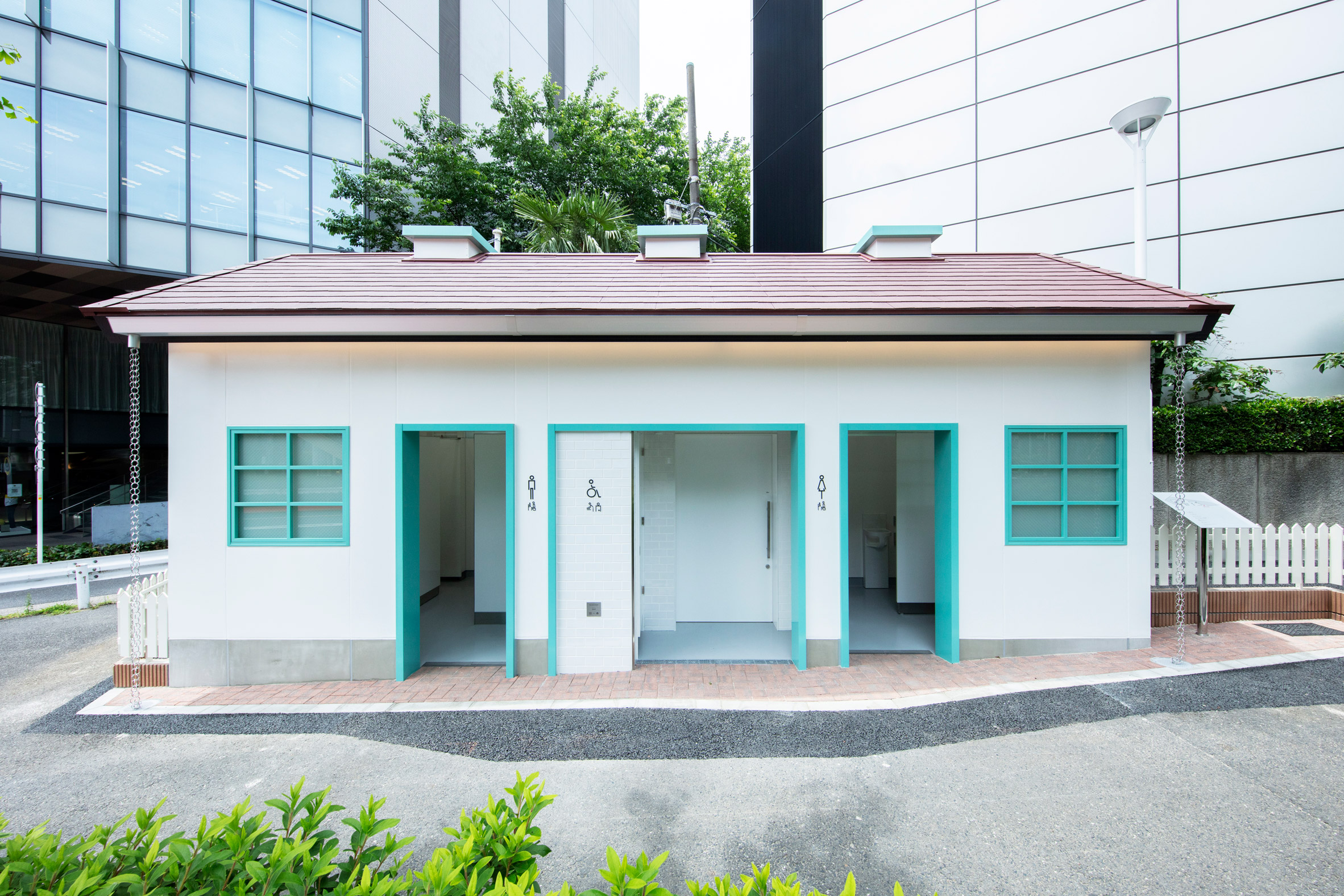
It has white walls broken by blue-framed windows and is topped with a red pitched roof with three chimney-style additions.

It is also partially surrounded by a white picket fence.

"To create a friendly, house-shaped facility that feels casual and inviting, I also paid attention to its details, such as the rustic garden fence and the inward-opening door that appears to be always open," Nigo said.

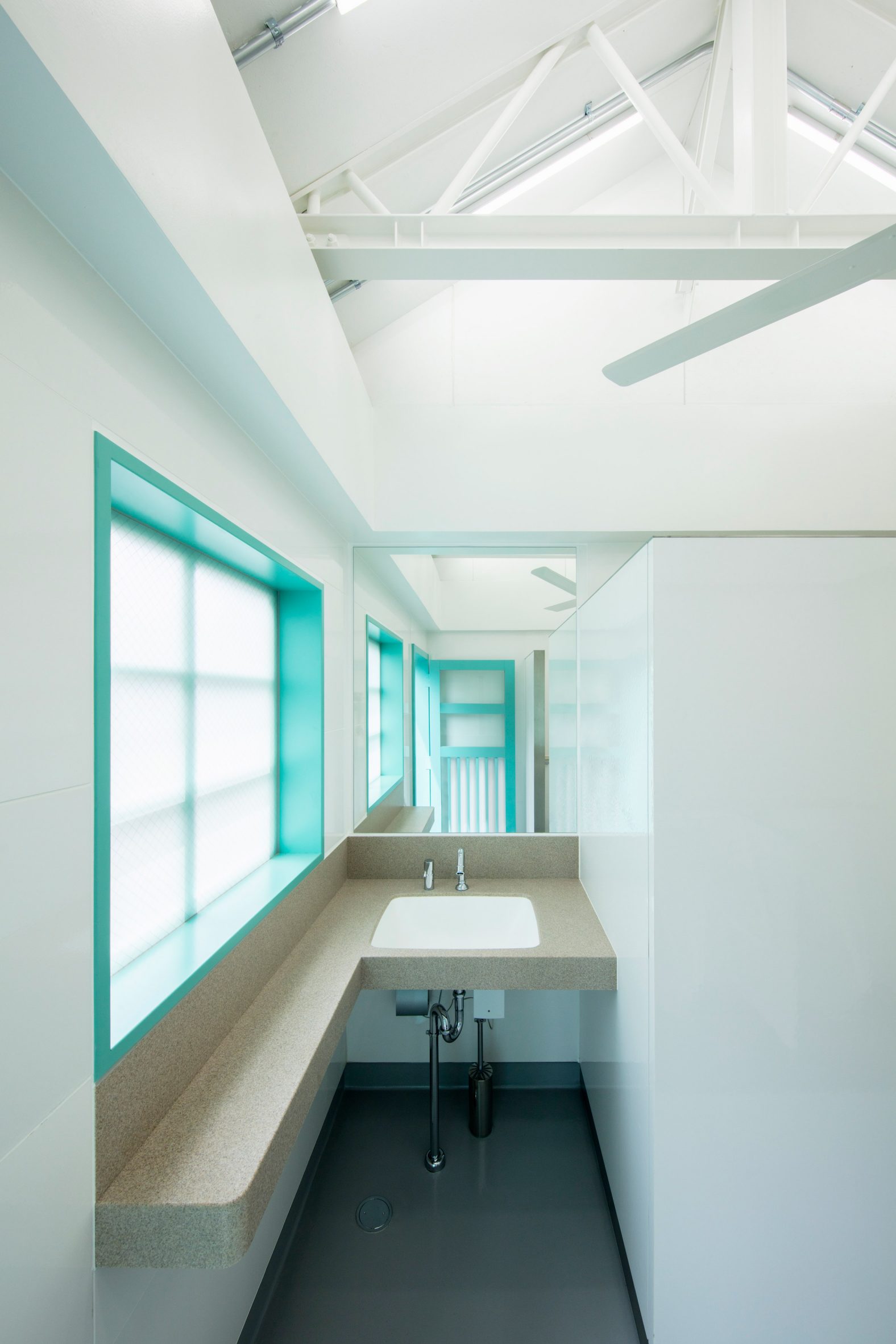
Sink under a pitched roof
The toilet extends up into the pitched roof

In total, 17 toilets are planned as part of the Tokyo Toilet project. Recently completed blocks created as part of the project include a pair of transparent blocks designed by Shigeru Ban and a toilet named A Walk in the Woods designed by Kengo Kuma.

Photography is by Satoshi Nagare, courtesy of The Nippon Foundation.

The post Nigo creates "friendly" house-shaped public toilet in Tokyo appeared first on Dezeen.


from Dezeen https://ift.tt/3eo2B3Y

Asao Tokolo 3D prints Tokyo 2020 podiums from donated plastic waste

3d-printed Podium in a sports stadium

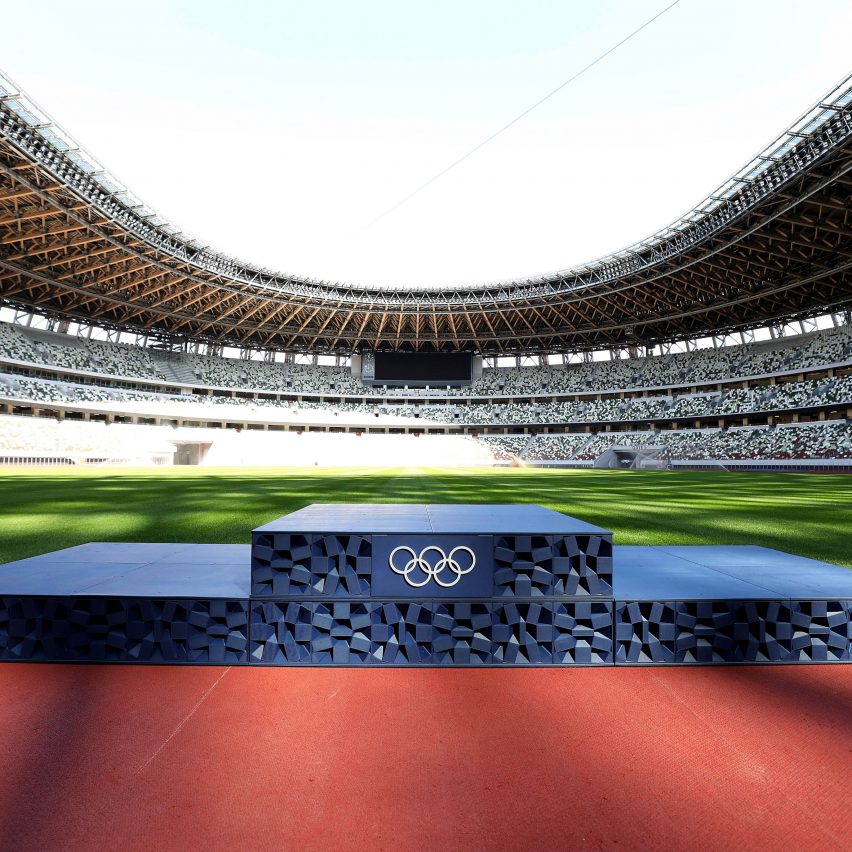
The winners at the Tokyo 2020 Olympics and Paralympics will be crowned on podiums designed by Japanese artist Asao Tokolo, which were made from 24.5 tonnes of discarded household plastics.

Over the course of nine months, the Japanese public donated the equivalent of 400,000 bottles of laundry detergent via more than 2,000 collection boxes that were installed in department stores and schools across Japan.

Recycled and turned into filaments, they were used to 3D print all 98 podiums that will be used during the Games.

3d-printed Podium in a sports stadium
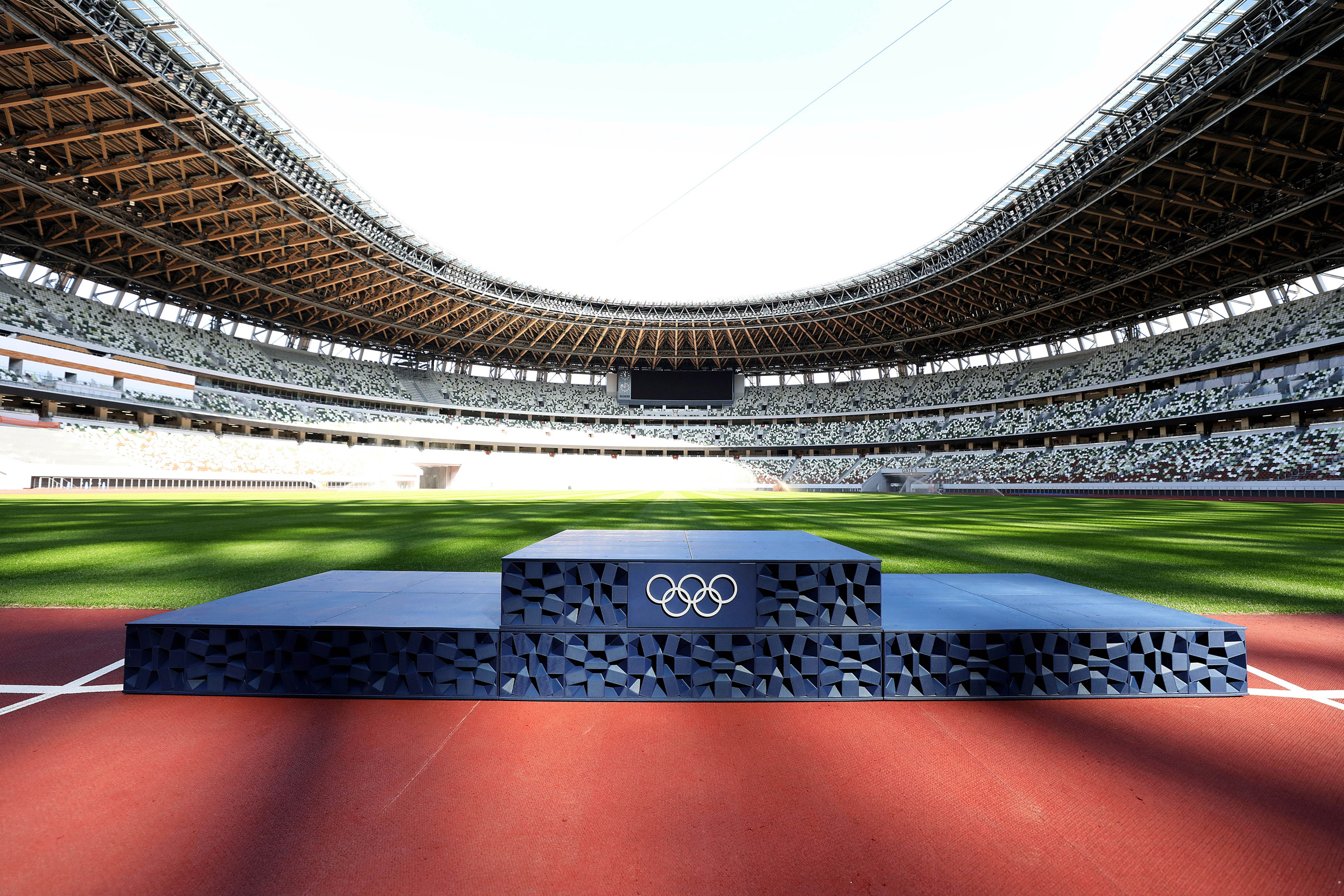
The Tokyo 2020 Olympic podium (above) is created using 3D printing technology (top video)

The initiative forms part of a wider effort to involve everyday people in the event's sustainability plan, which has also seen citizens donate old electronic devices so they could be turned into the Tokyo 2020 Olympic medals.

"The podiums were created with the purpose of showing the world the different ways in which a sustainable society can be realised, and engaged the whole population of Japan in the podium production process in a historic Games' first," the organisers explained.

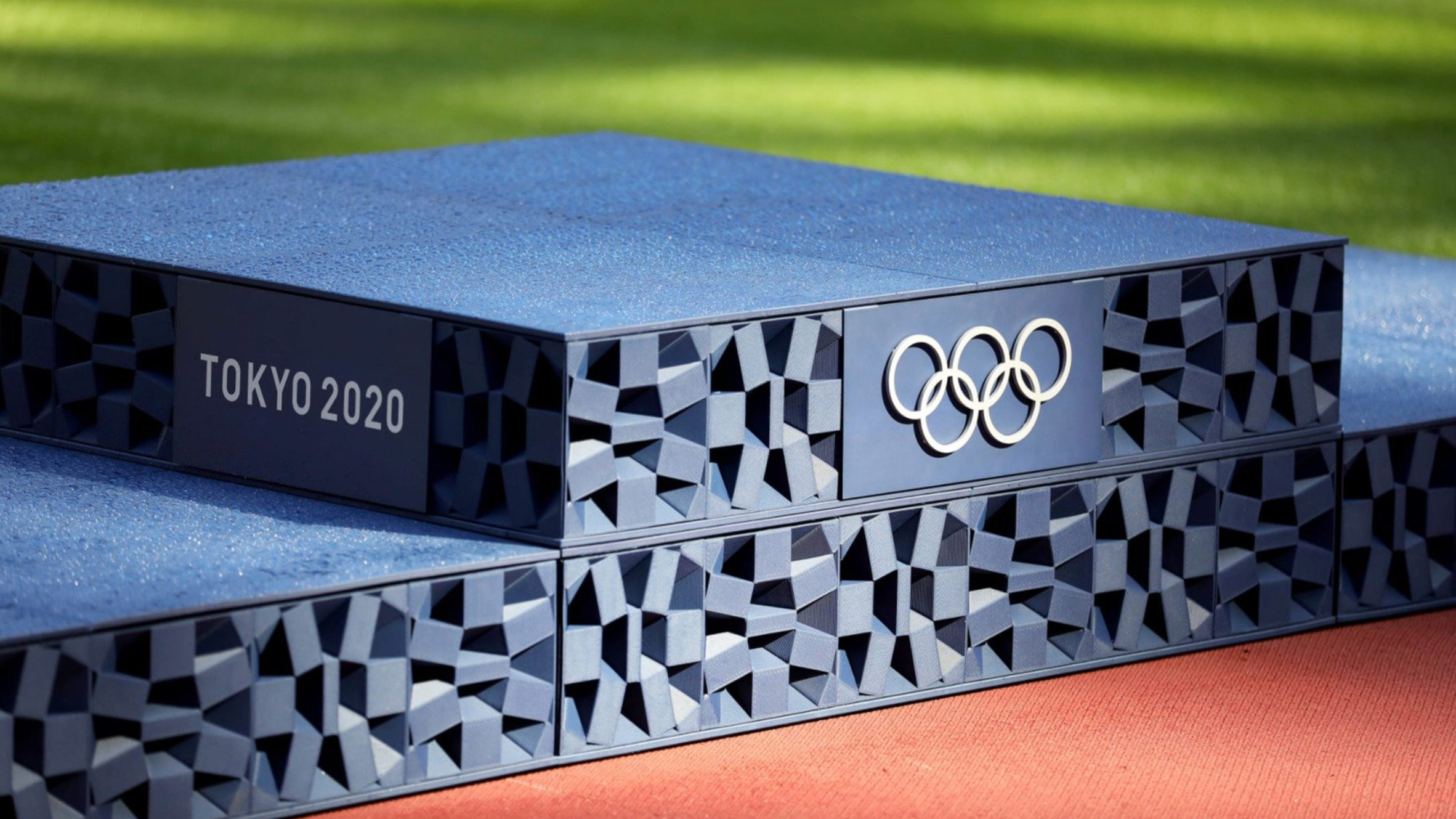
Close-up of Tokyo 2020 Olympic pedestals with rings
The checkerboard pattern is based on the Tokyo 2020 Olympic logo by artist Asao Tokolo

Each podium is constructed of a number of small cube-shaped modules that were connected to form the traditional three pedestals.

Alternatively, they can also be turned into a flattened, accessible platform for the Paralympics while a socially distanced version is currently being designed to align with Japan's recently-declared state of emergency.

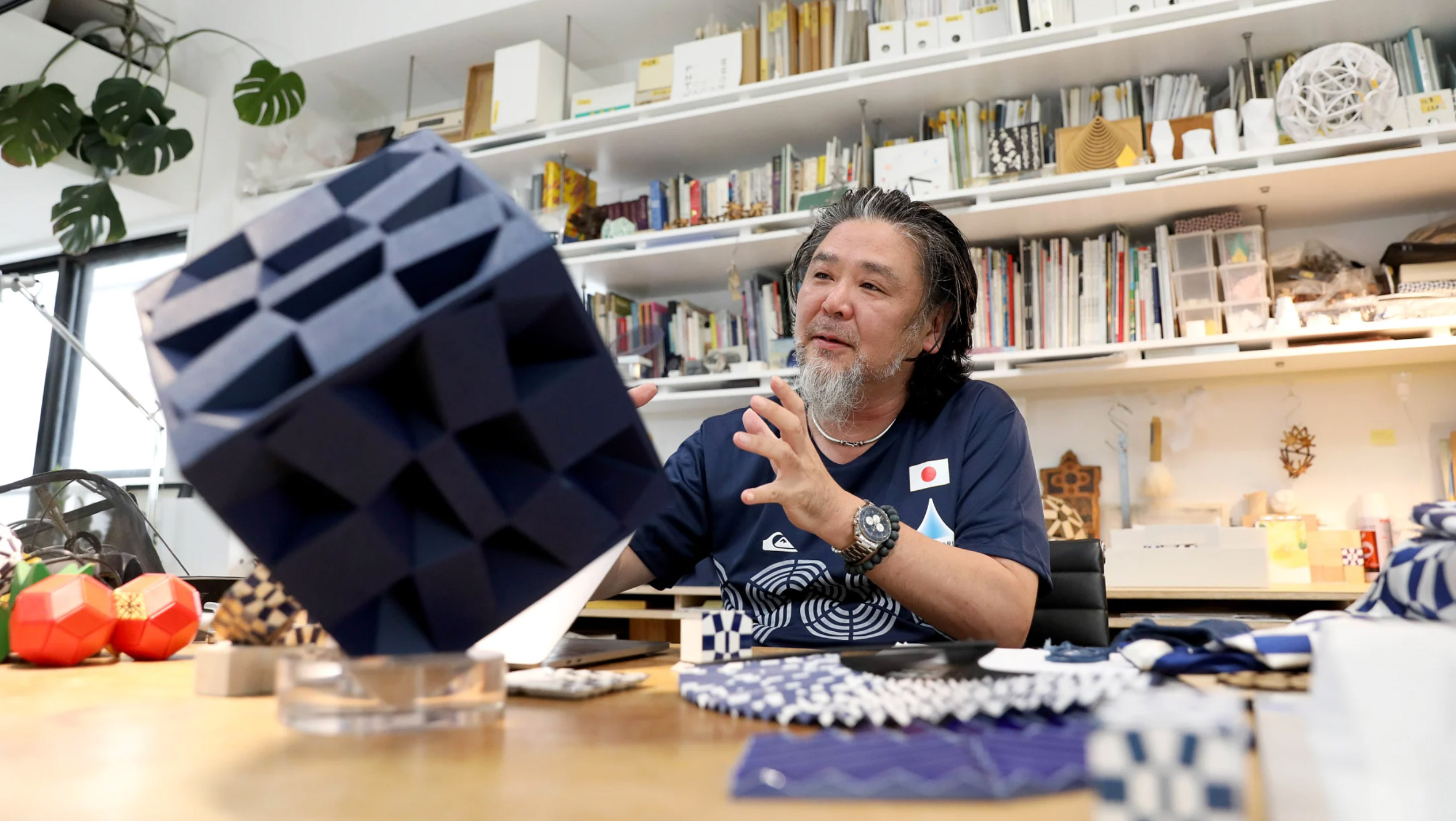
Asao Tokolo with 3d printed plastic cube
Tokolo designed the podium

Based on the same chequerboard pattern that Tokolo previously developed for the Tokyo 2020 logos, the cube modules are 3D-printed with the help of a team led by Hiroya Tanaka, the founder of Japan's first Fab Lab.

"We collaboratively transformed 2D pattern to 3D geometry," Tanaka told Dezeen.

Paralympic podium
The Paralympic podium was designed to be more accessible

With the help of additive manufacturing, the team was able to use the pattern as the very structure of the pedestals, rather than simply superimposing it on the outside.

"Most podiums employ wrapping for their design," Tokolo explained. "But instead of covering the platform with some decorative print, our podium is based on the philosophy of cubes, which form the structure itself."

The modules are rendered in the same deep blue colour as the Tokyo 2020 logo, nodding to Japan's historical production of indigo dye.

According to Tokolo, infusing the 3D printing filament with pigments resulted in a more vibrant and intense colour than would have been possible through regular prints or paints.

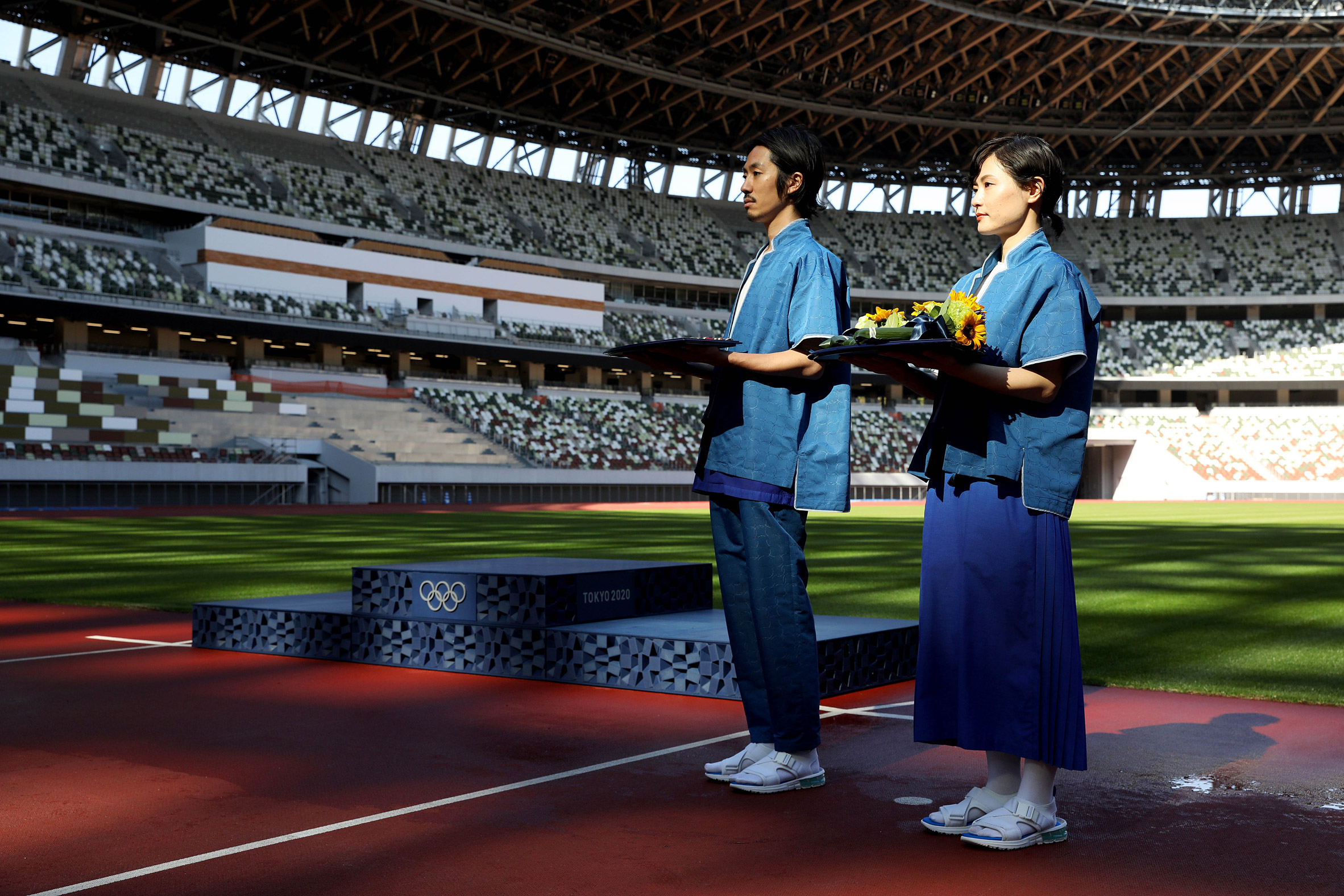
Medal beareres in front of a podium in a sports stadium
Winners will be awarded with medals made from recycled aluminium

"The podium looks different depending on the amount of light shed on it, so we're looking forward to seeing how it will look near a swimming pool where light reflects against the water," he said.

Much like the Tokyo 2020 Olympic torch, designed by Tokujin Yoshioka, the Olympic rings on the front of the podiums are rendered in recycled aluminium that was originally used to form temporary housing for those displaced by 2011's Great East Japan earthquake.

Close-up of Tokyo 2020 Olympic pedestals with rings
The Olympic rings on the front of the podium are made from the same recycled aluminium

In addition to making use of waste materials to create iconic Olympic props, the Tokyo 2020 Organising Committee has set goals to reuse or recycle 65 per cent of all waste generated through the operation of the Games and 99 per cent of all items procured for the games.

The pedestals will ultimately be turned back into shampoo and detergent bottles by consumer goods company Procter & Gamble, which is an Olympic sponsor.

Tokyo 2020 Olympic podium
The podiums were made from plastic waste donated by the public

The consumer goods conglomerate was named the seventh-worst plastic polluter in the world last year as part of an annual audit by the Break Free From Plastic initiative.

All 24.5 tonnes of plastic packaging that was used to make the podiums amount to less than 0.004 per cent of the 714,000 tonnes the company produces every year.

The post Asao Tokolo 3D prints Tokyo 2020 podiums from donated plastic waste appeared first on Dezeen.


from Dezeen https://ift.tt/2U59EHV