Saturday, 17 July 2021

NOLA children's asylum revived as Hotel Saint Vincent by Lambert McGuire Design

Guest room at Hotel Saint Vincent

Moody grey rooms add to the spooky ambience of this hotel in New Orleans that occupies a 19th-century infant asylum renovated by Lambert McGuire Design.

Hotel Saint Vincent is housed within a red-brick building that was founded in 1861 as The Saint Vincent's Infant Asylum.

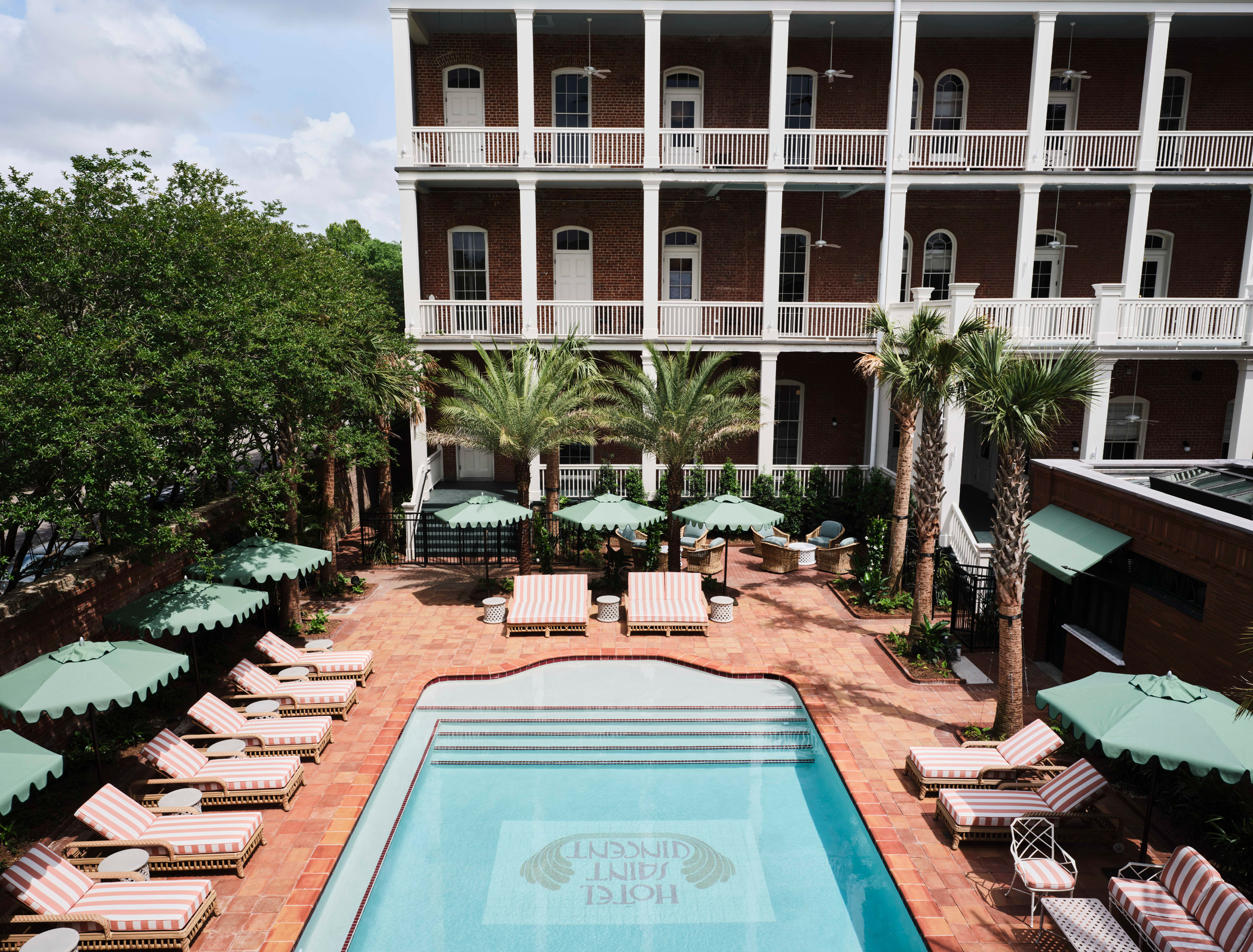
Outdoor swimming pool of Hotel Saint Vincent
Hotel Saint Vincent is located in the Lower Garden District of New Orleans

Set among the Greek Revival and Italianate mansions of the Lower Garden District, the new 75-room hotel is operated by Austin-based McGuire Moorman Lambert Hospitality with interiors by its sister firm Lambert McGuire Design.

The team kept the building's exterior including the decorative wrought-iron railings typical of the city largely as original but subtly updated it.

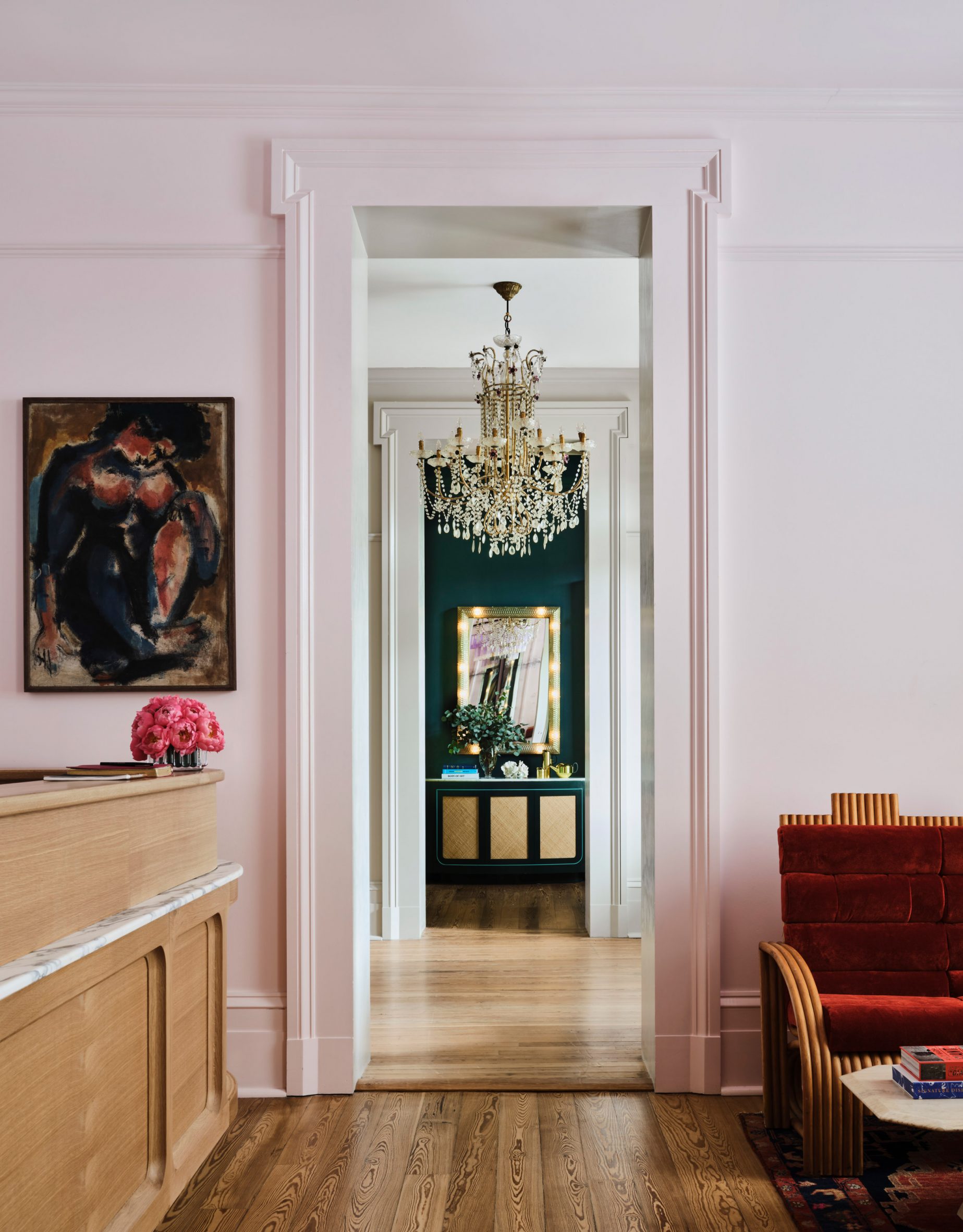
Reception and lobby area of Hotel Saint Vincent in New Orleans
Lambert McGuire Design kept the internal layout of the 1861 building largely the same

Inside, they opted for an eclectic mix of design styles that range from 20th-century Italian to mid-century modern and art deco.

"The property's original grand staircase and wide sweeping corridors remain intact, allowing for an open layout with both bright and airy common areas as well as moodier, hidden corners adding a touch of discovery," said the hotel operators.

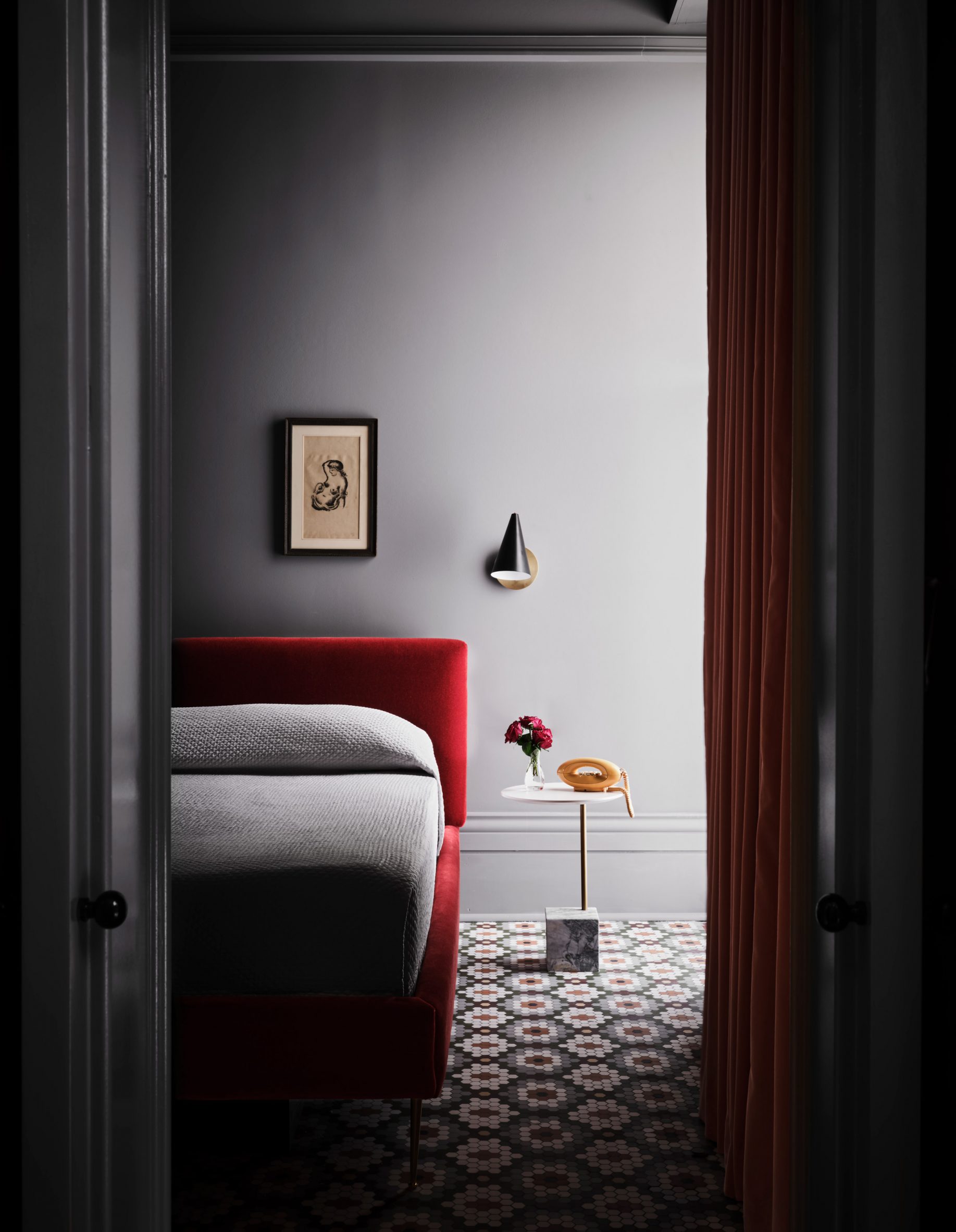
Dark grey guest room of Hotel Saint Vincent
Guest rooms are painted a dramatic dark grey colour and given red velvet accents

One of the most dramatic decisions was to paint the walls and ceilings of the guest rooms dark grey. Paired with red velvet upholstery, this heightens the sinister atmosphere conjured by the building's history.

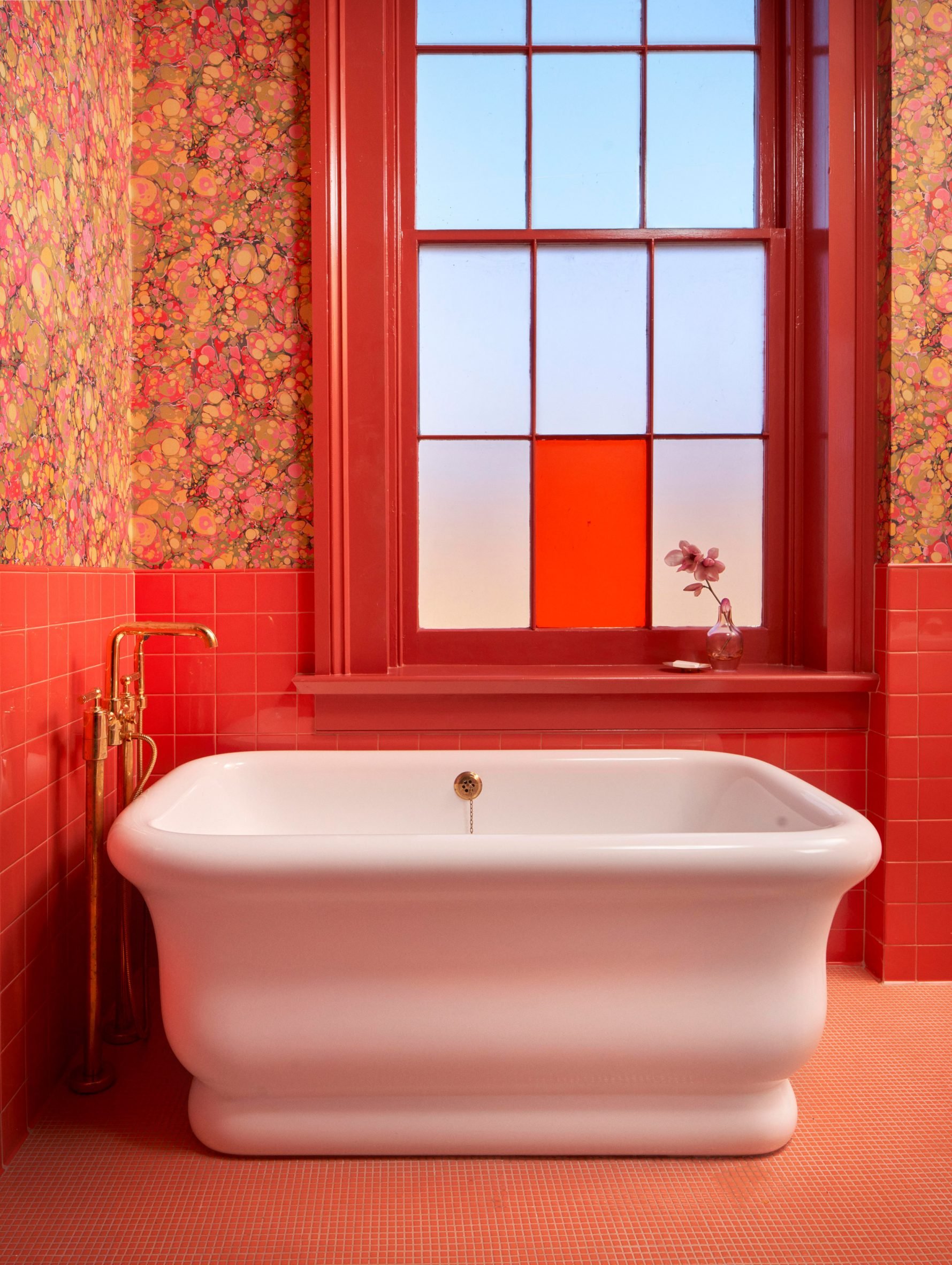
However, some of the rooms are enlivened by patterned rugs and psychedelic accent walls, which continue into the bright red and pink bathrooms that feature curvaceous white tubs.

Bright red guest bathroom
Psychedelic wallpaper lines the bright red and pink guest bathrooms. Photo by Nick Simonite

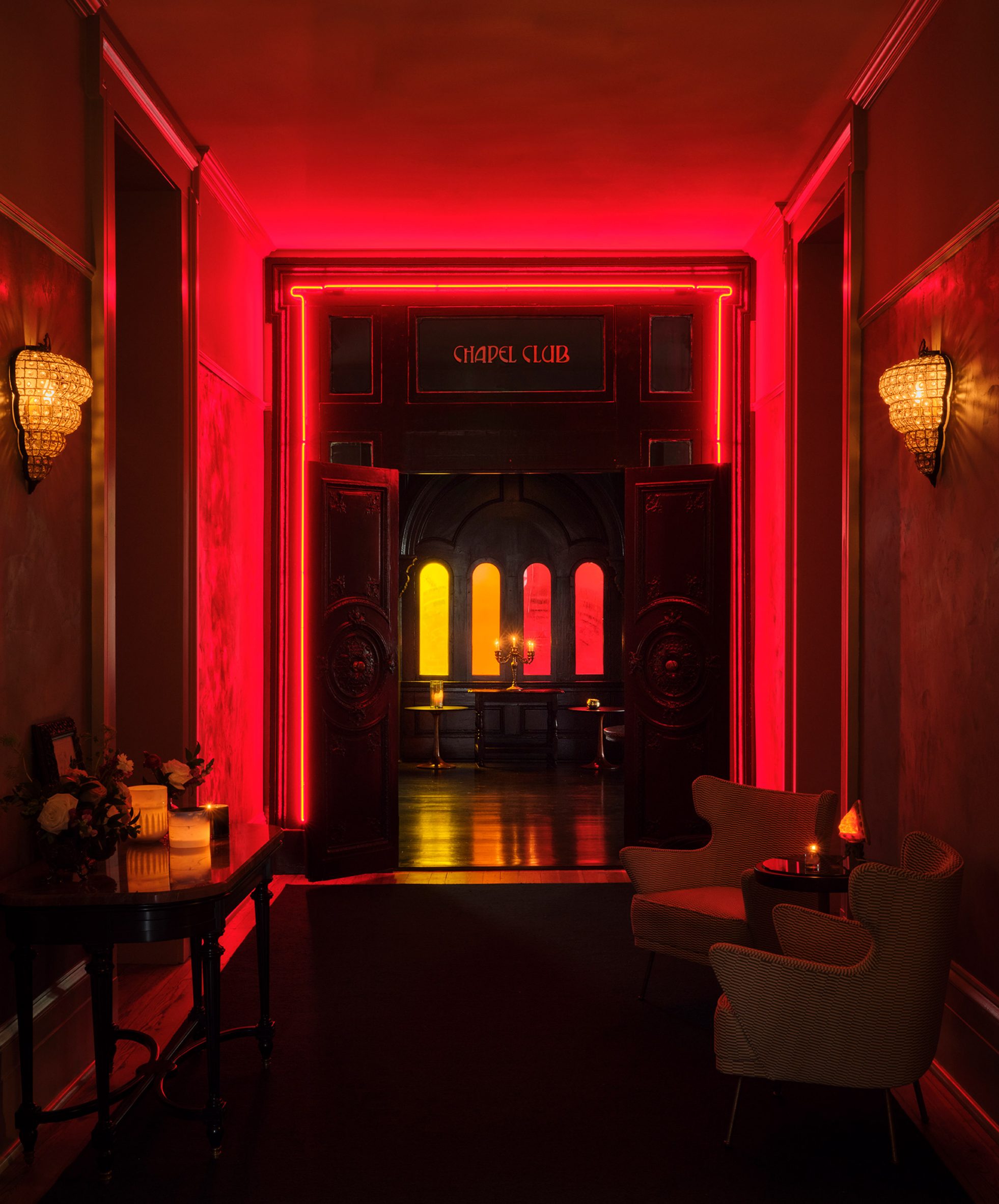
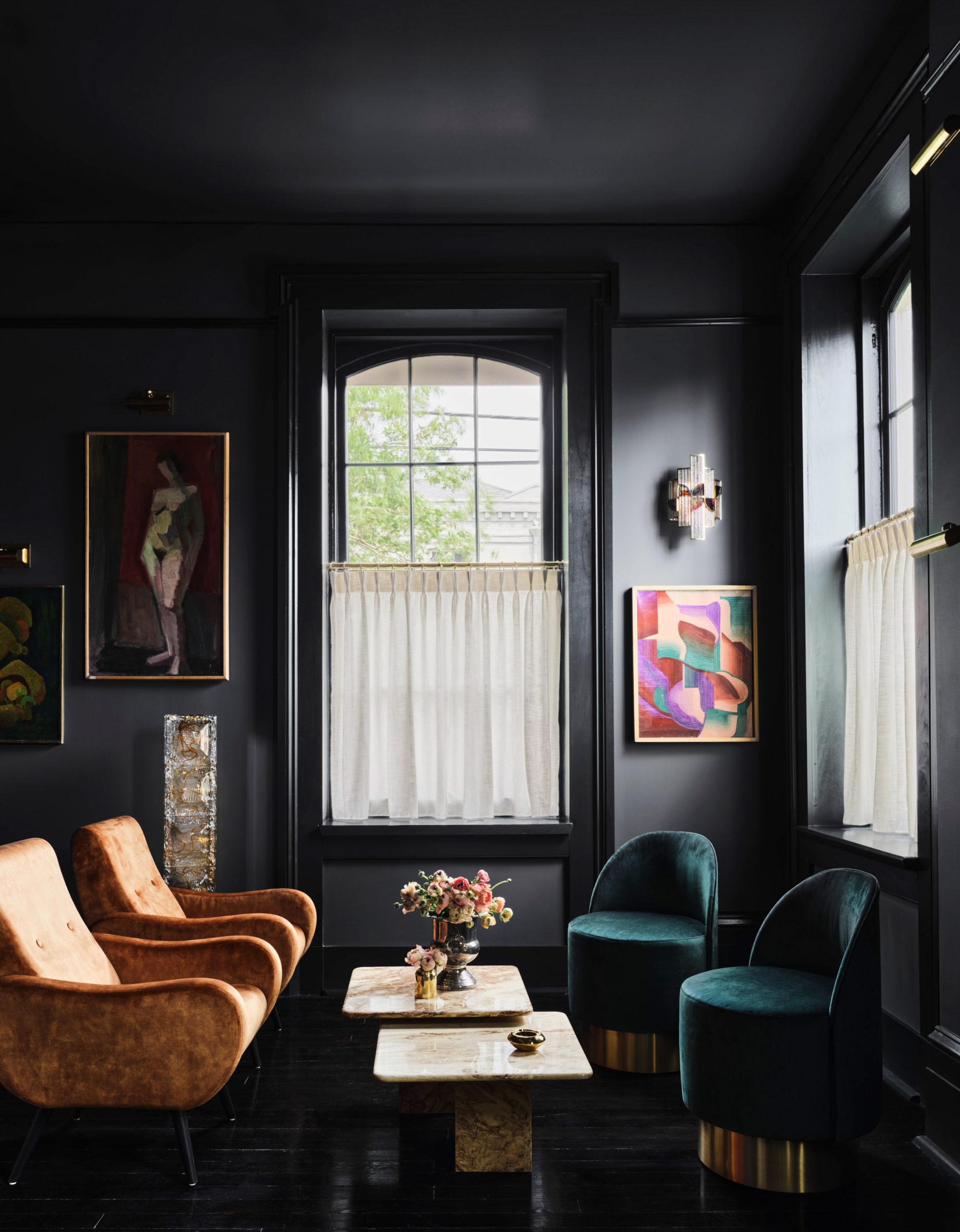
Dark grey is also used liberally in the Chapel Club, a guest-only cocktail bar designed "to recreate the look and feel of classic grand hotel salons".

Entered via a neon-lit passage, the space includes a black and white marble countertop, and hot-pink velvet bar siding.

Entrance to The Chapel Club
Neon lights surround the entrance to the guest-only Chapel Club bar. Photo by Matt Harrington

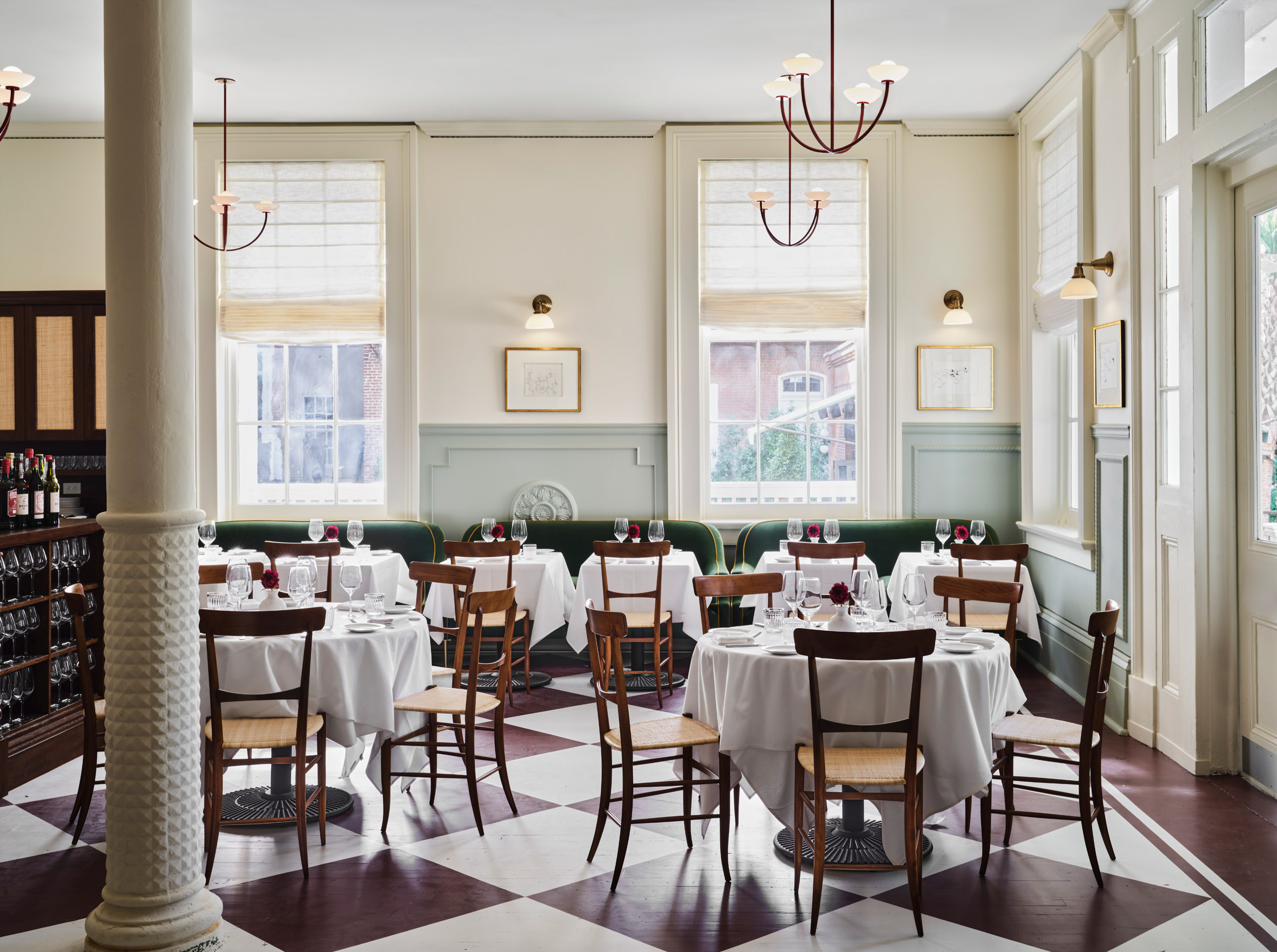
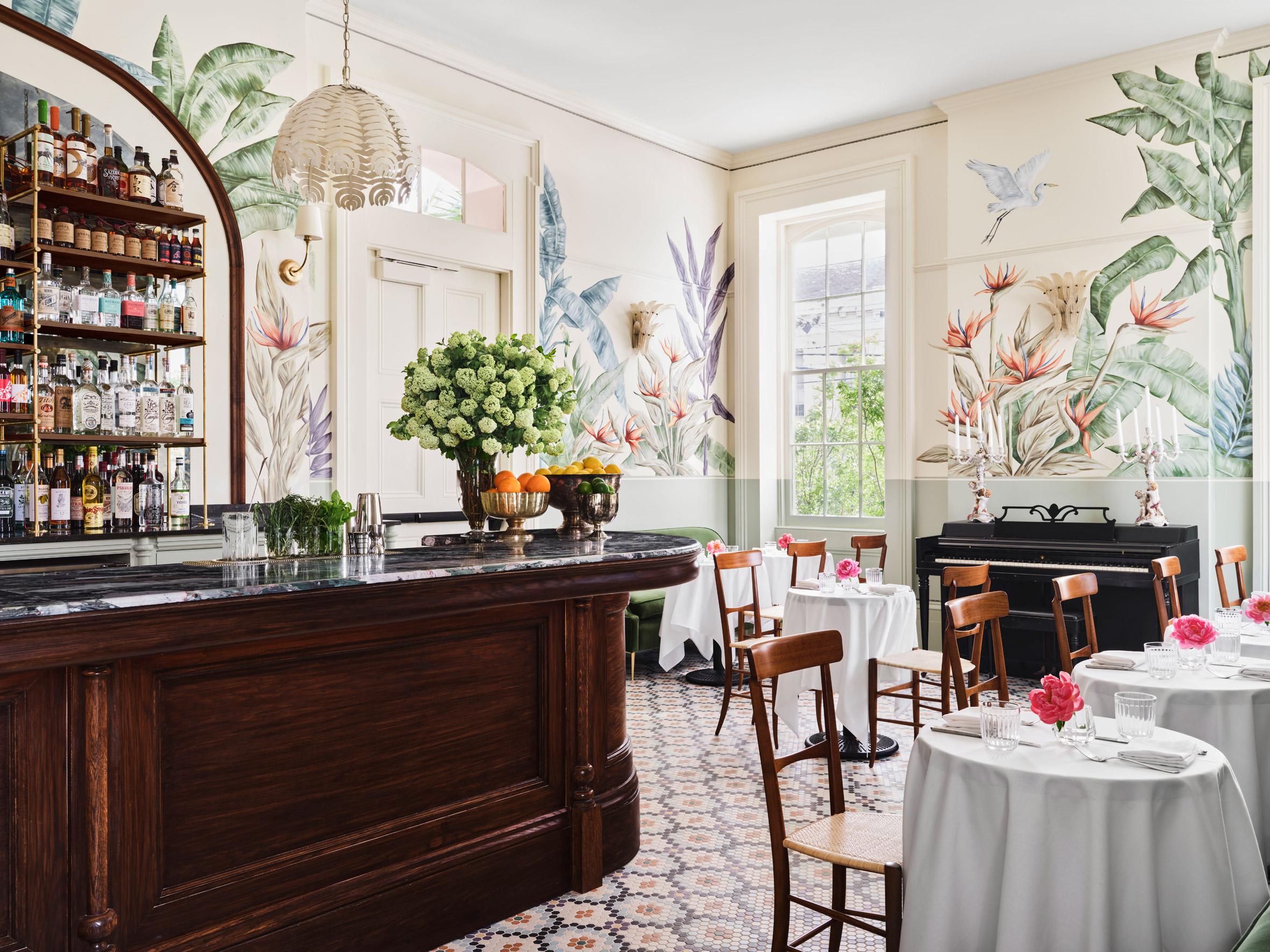
Among Hotel Saint Vincent's dining options is the San Lorenzo restaurant, which serves Italian food with a local Creole twist in a grand room with pale green panelling and a checkered floor.

The Elizabeth Street Cafe, a French-Vietnamese-style cafe and bakery, is located adjacent to the main hotel building and spills out into a courtyard garden.

Lighter fare is available from The Paradise Lounge, where hand-painted flora-and-fauna-themed murals by local artist Ann Marie Auricchio colour the light and airy space.

There's also a bar beside the outdoor swimming pool surrounded by loungers and tropical plants in the central area formed by the hotel's three buildings.

Chapel Club bar
The Chapel Club in Hotel Saint Vincent is also decorated in dark grey

Of the hundreds of insane asylums that were built across the US towards the end of the 19th century, and used up until the 1970s, many are now eerily abandoned.

But Hotel Saint Vincent isn't the only one that has been revived as accommodation: Deborah Berke Partners also restored and redesigned a former psychiatric hospital as a hotel in Buffalo, New York.

San Lorenzo restaurant
Brighter spaces include the San Lorenzo restaurant, which serves Italian-Creole cuisine

The unique history and culture of New Orleans, or NOLA, spans architecture, food and nightlife – making the city a popular tourist destination filled with hotels for various tastes.

For those seeking the grandeur of the Garden District or Uptown, other options include Hotel Henry Howard or The Chloe hotel, while the trendy Warehouse District is home to The Eliza Jane, the Ace Hotel, and Maison de la Luz – which was a winner at the 2020 AHEAD Awards.

The Paradise Lounge
Murals in The Paradise Lounge were hand-painted by a local artist

Lambert McGuire Design was founded in 2019 as an architecture and design studio specialising in hospitality. Co-founder Liz Lambert is behind properties including the Austin Motel, San Francisco's Phoenix Hotel, and the Hotel San Cristóbal Baja in Mexico.

Photography is by Douglas Friedman, unless stated otherwise.

The post NOLA children's asylum revived as Hotel Saint Vincent by Lambert McGuire Design appeared first on Dezeen.


from Dezeen https://ift.tt/3ijQzcP

Ten projects from the Royal Danish Academy of Fine Arts propose solutions for a sustainable future

Royal Danish Academy of Fine Arts

A project that explores what the British Museum would look like after returning its artefacts to their countries of origin and a carbon-neutral school made from rammed earth are included in our latest school show by students at the Royal Danish Academy of Fine Arts.

The projects aim to create a more sustainable, environmentally friendly and democratic society by focusing on the United Nation's sustainable development goals.


Royal Danish Academy of Fine Arts

School: Royal Danish Academy of Fine Arts
Course: Architecture and Design

School statement:

"Students at the Royal Danish Academy of Fine Arts address the most significant challenges we face as a global community today. The curriculum is rooted in research, practice and artistic development. For the past five years, the academy has added a strategic focus on the 17 UN sustainable development goals (SDGs).

"We believe that the SDGs can inspire our students to consider how we should design and build in the future, using a holistic perspective to provide new, original and necessary global solutions to these pressing concerns.

"The work of our students demonstrates how architecture and design can create visions, new knowledge and solutions to complex problems in compelling and attractive designs. Future generations of architects and designers, like those we educate at the Royal Danish Academy, must be capable of releasing this vast potential."
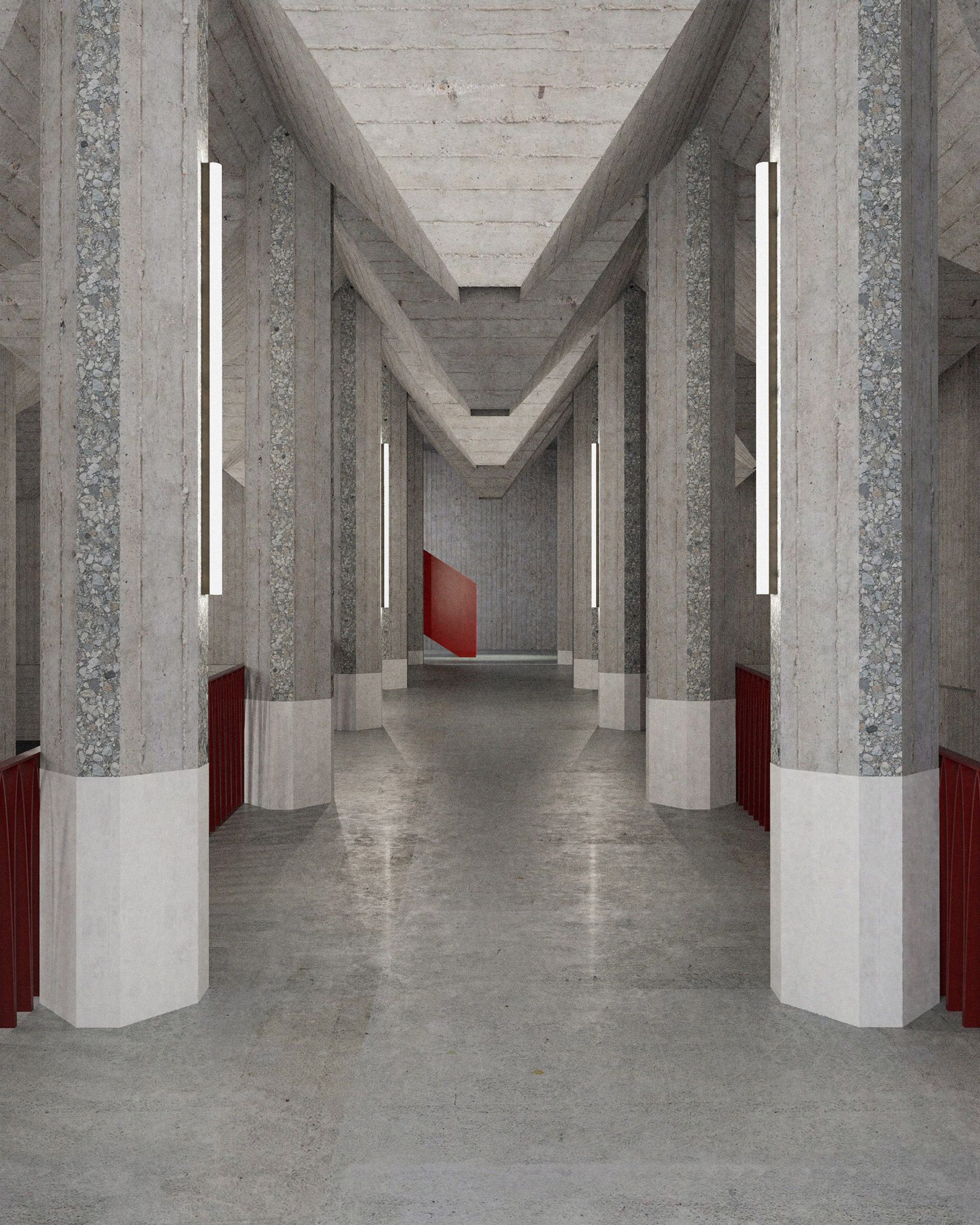

Royal Danish Academy of Fine Arts

The Silo Island by Mia Baltzer Nielsen and Vitus Karsten Bjerre

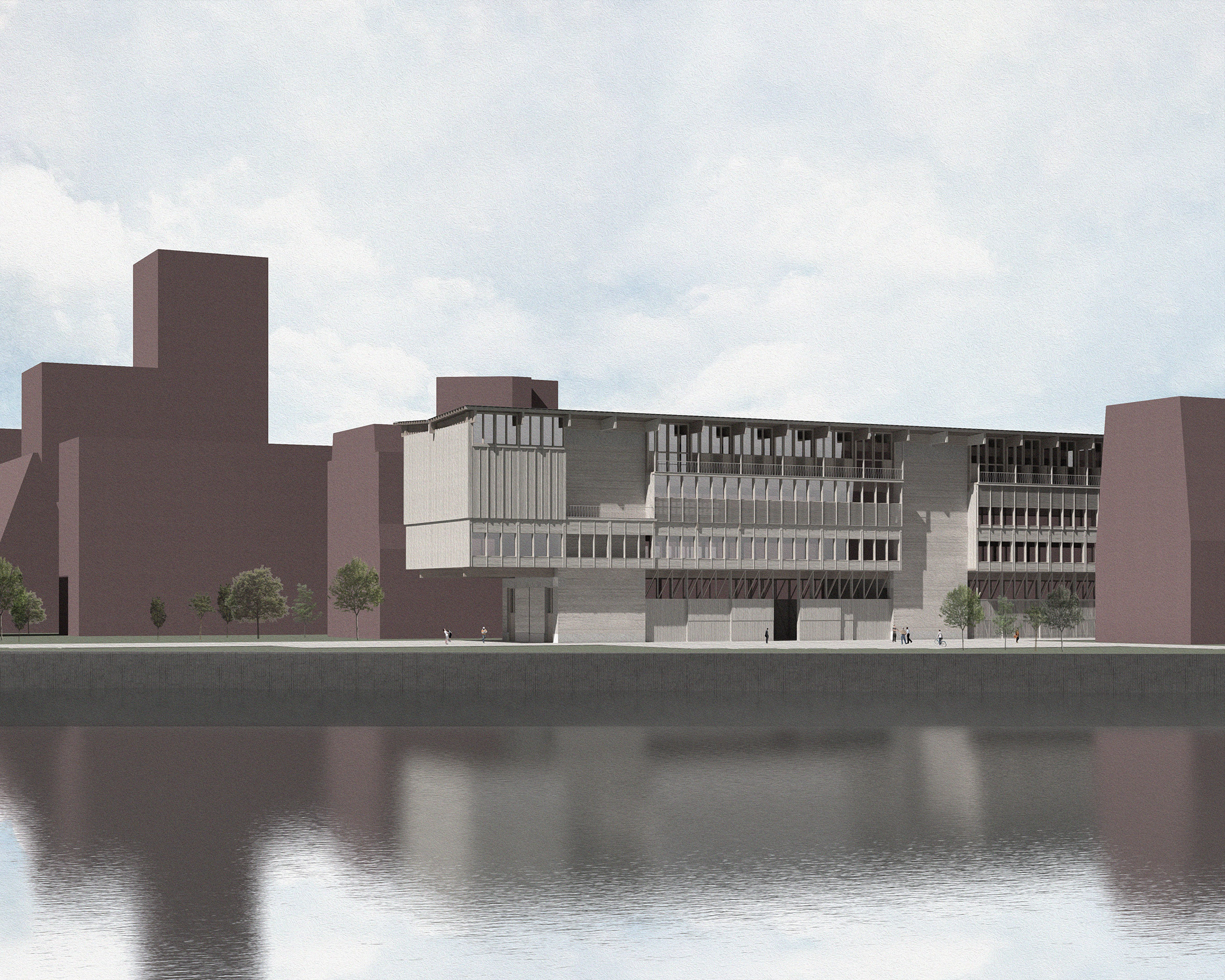
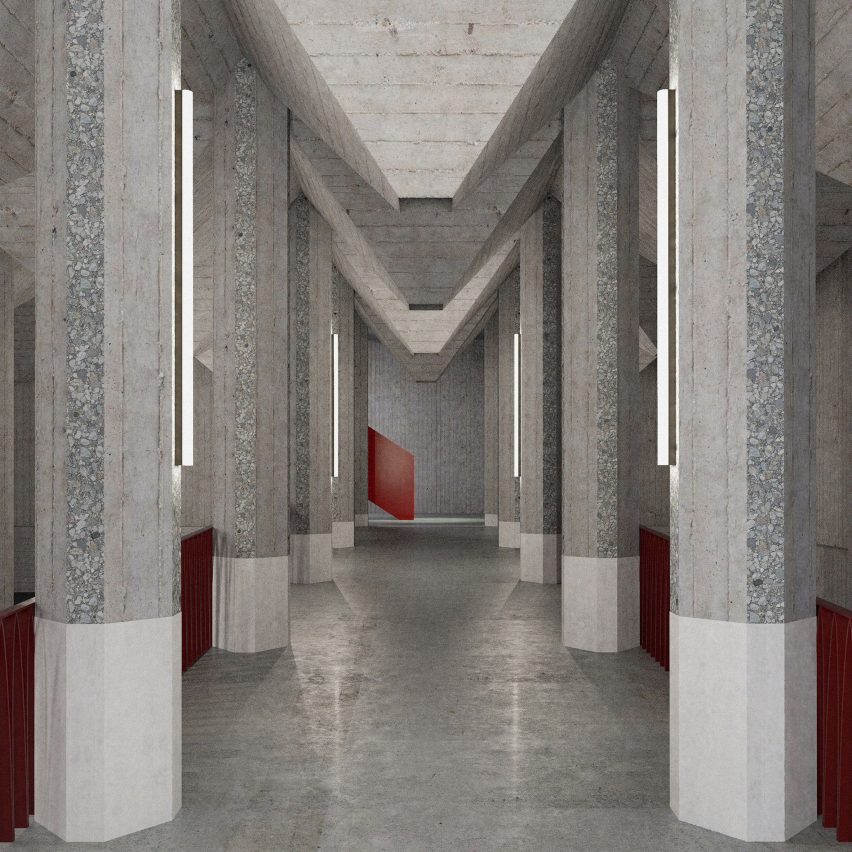
"Silos are tall towers that are used to store grain. This project is based on an old industrial area in the Port of Odense, known as the Silo Island. The buildings here are scheduled to be demolished to make room for the construction of new blocks of flats.

"By involving the buildings' distinctive character, the graduates create spaces that utilise the silos' potential in terms of material usage, space allocation and scale.

"The students have developed a master plan for the area and base their project on transforming a specific silo, which they convert into spaces for the city's citizens and The Royal Danish Theatre Ballet School."

Students: Mia Baltzer Nielsen and Vitus Karsten Bjerre
Course: MA Architecture, Cultural Heritage, Transformation and Restoration
Tutors: Christoffer Harlang
Email: mia_baltzer[at]hotmail.com and vituskarsten[at]gmail.com
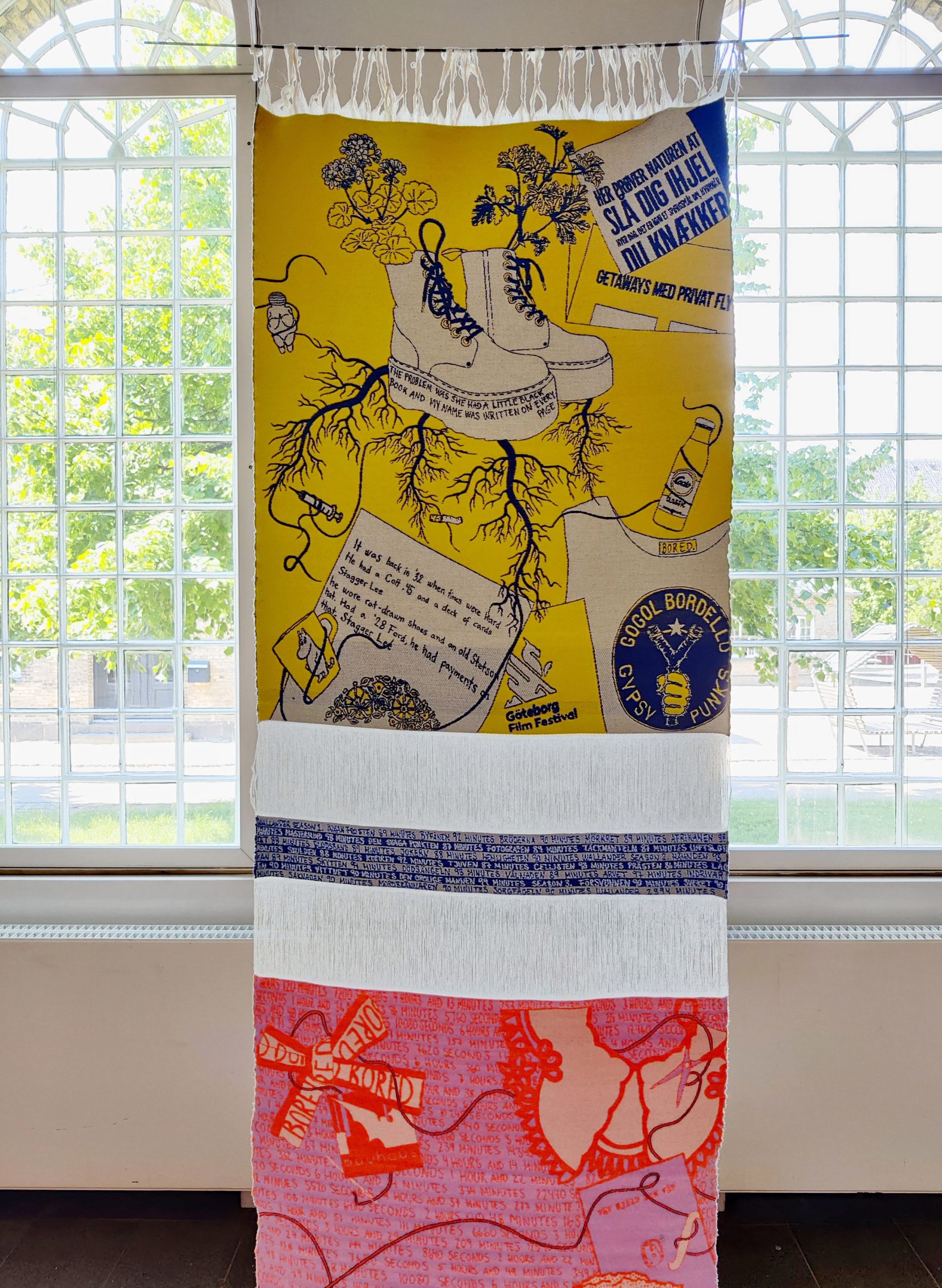

Royal Danish Academy of Fine Arts

The Collector by Therese Sirenius

"The Collector is a personal, artistic project that materialises time through the art of weaving. Using the experiences and topics that have filled the recent months of Sirenius' life, she philosophises about the concept of time in her textile tapestries. This includes the time in which we exist, the time that passes and the time spent performing the craft.

"The depictions rendered in this tapestry include excerpts from a newspaper and illustrate the contrast of our time between nature and human indolence."

Students: Therese Sirenius
Course:  MA Design, Textile Design
Tutors: Kjetil Aas
Email:
sireniustherese[at]gmail.com
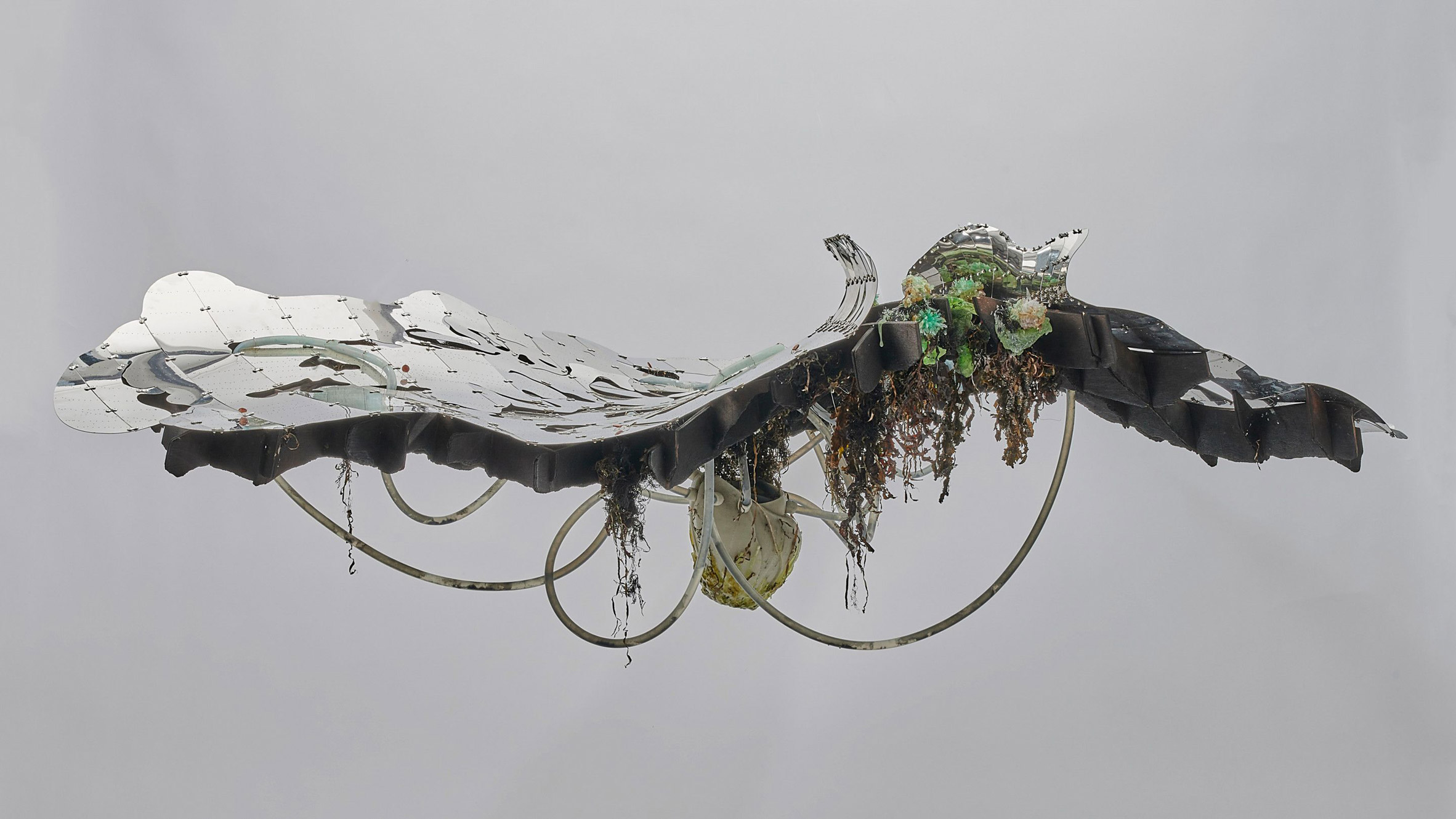

Royal Danish Academy of Fine Arts

NeoAtlantis by Mikkel Møller Rosendal

"Through his project, Rosendal explores the interface between the digital and physical worlds. He examines how we can understand and cope with the simultaneous presence of two spatial entities.

"How do digital spaces affect the way we perceive the world, and how do we translate conditions from the digital space into the physical: weightlessness, space without gravity, surfaces without a body?

"Rosendal examines these questions through his artistic models and drawings that arise where the two worlds converge, which he entitles NeoAtlantis."

Student: Mikkel Møller Rosendal
Course:
MA Architecture, Architecture, Space and Time
Tutors:
Kristine Annabell Torp
Email:
m.m.roesdahl[at]gmail.com
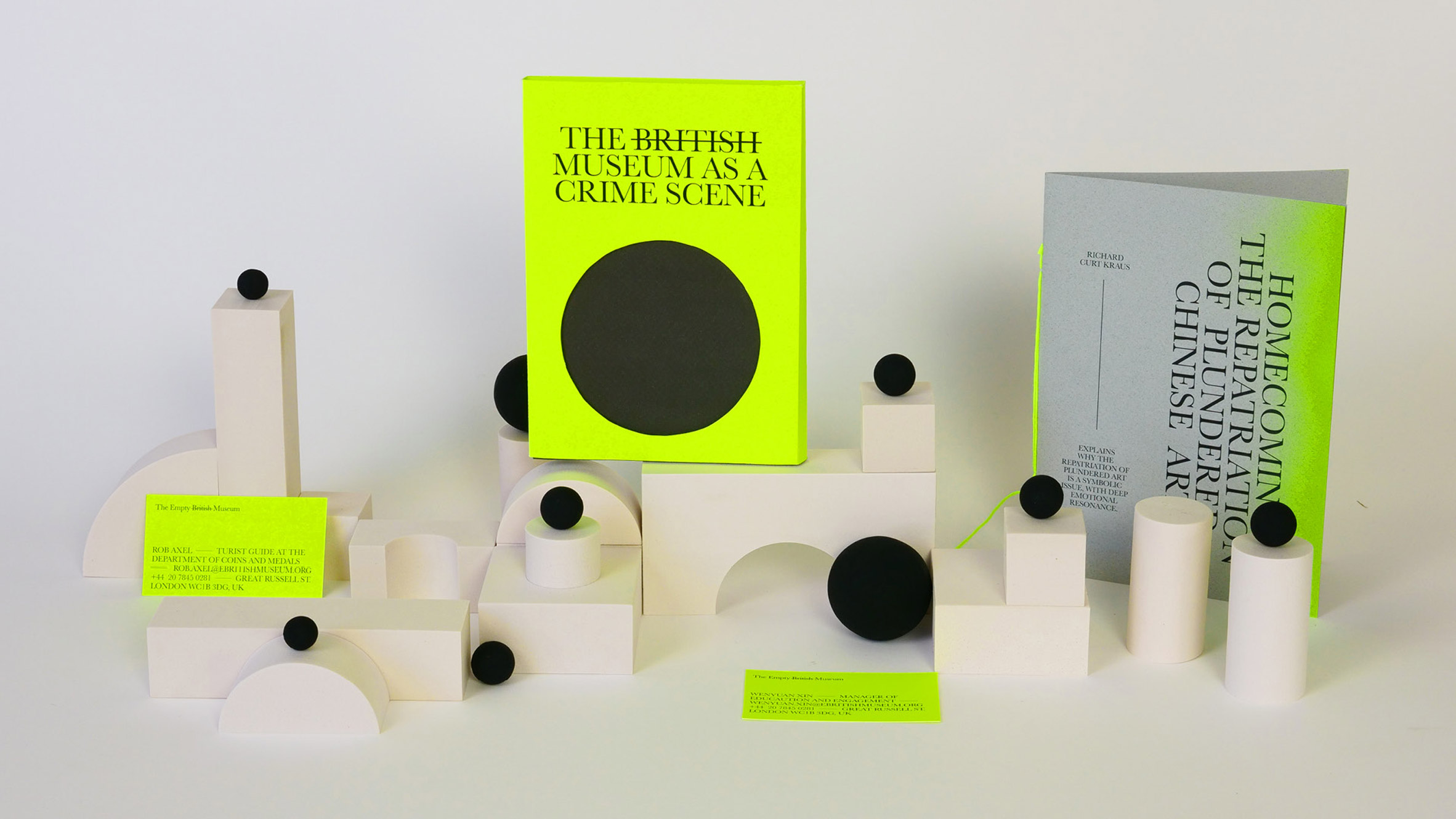

Royal Danish Academy of Fine Arts

The Empty Museum by Rotem Yitzhak Soaye

"What would the decolonised British Museum look like after returning all the objects in its collection to their countries of origin?

"This project speculates on a future scenario, where the exhibition halls contain only black holes on yellow backgrounds.

"Each black hole represents a void in the heart of a looted culture, as well as the museum's missing artefacts. Instead of physical objects, the visitor experiences the cultural artefacts in augmented reality when scanning the black holes. This scenario is a far cry from today: the British Museum has around eight million objects, of which only one per cent are on display."

Student: Rotem Yitzhak Soaye
Course:
MA Design, Graphic Communication Design
Tutors:
Nikolaj Knop
Email:
rotem.soaye[at]gmail.com

Royal Danish Academy of Fine Arts

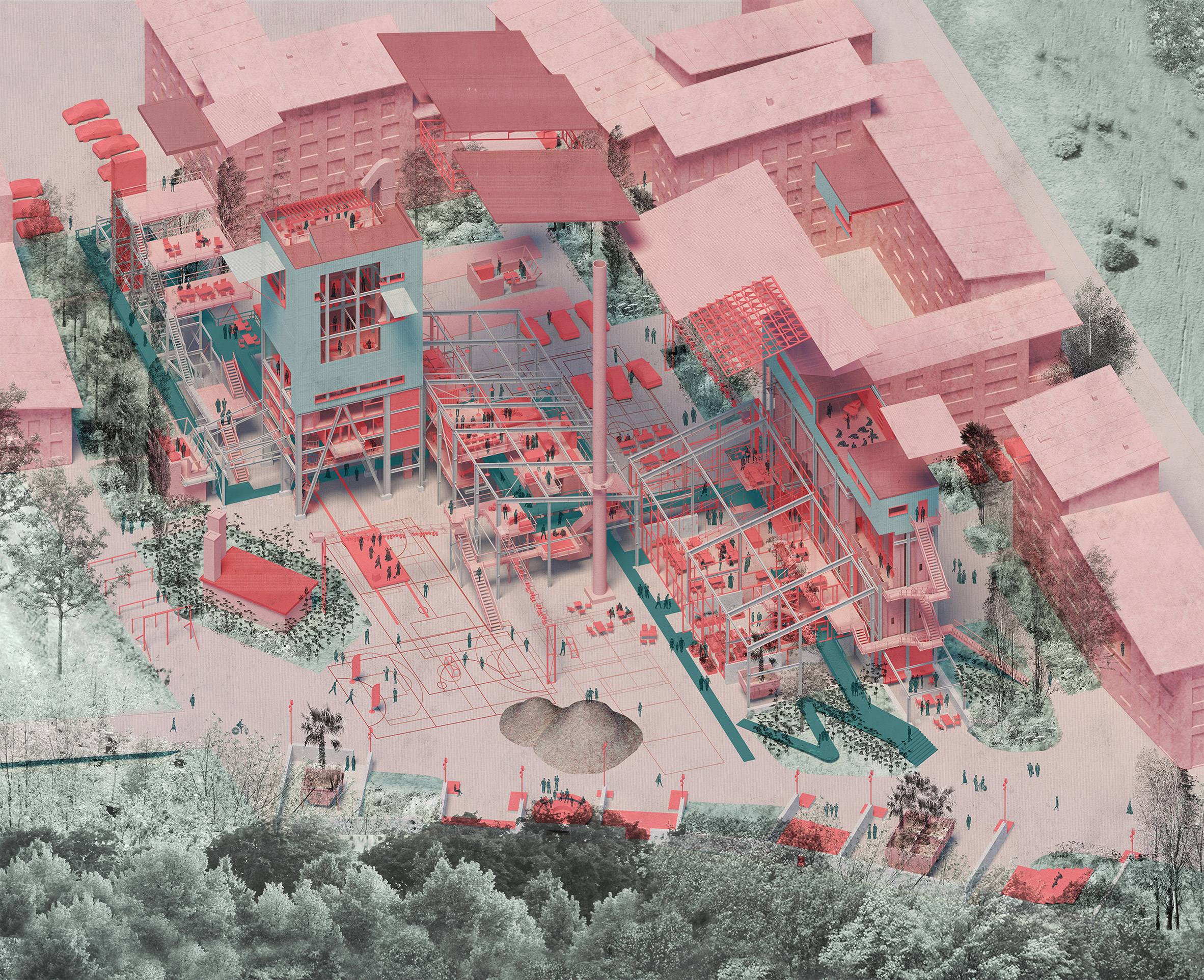
On Civic Grounds by Daniel Rea Kragskov

"The project uses an old industrial zone in Herlev – a suburb in Copenhagen suburb – as its point of departure where industrial buildings are to be demolished to make room for new housing development.

"Kragskov proposes a new creative programme that transforms an old asphalt factory into a civic space with open areas and whose architecture can support civic activities. He aims to create a captivating environment in which to build social meeting spaces.

"Kragskov seeks to depart from academic austerity by developing a personal style that goes well with the multicoloured diversity and imperfection found in civic activities where the colour red depicts the social community."

Student: Daniel Rea Kragskov
Course:
MA Architecture, Urbanism and Societal Change
Tutors: Tamara Kalantajevska
Email:
danielkragskov[at]gmail.com

Royal Danish Academy of Fine Arts

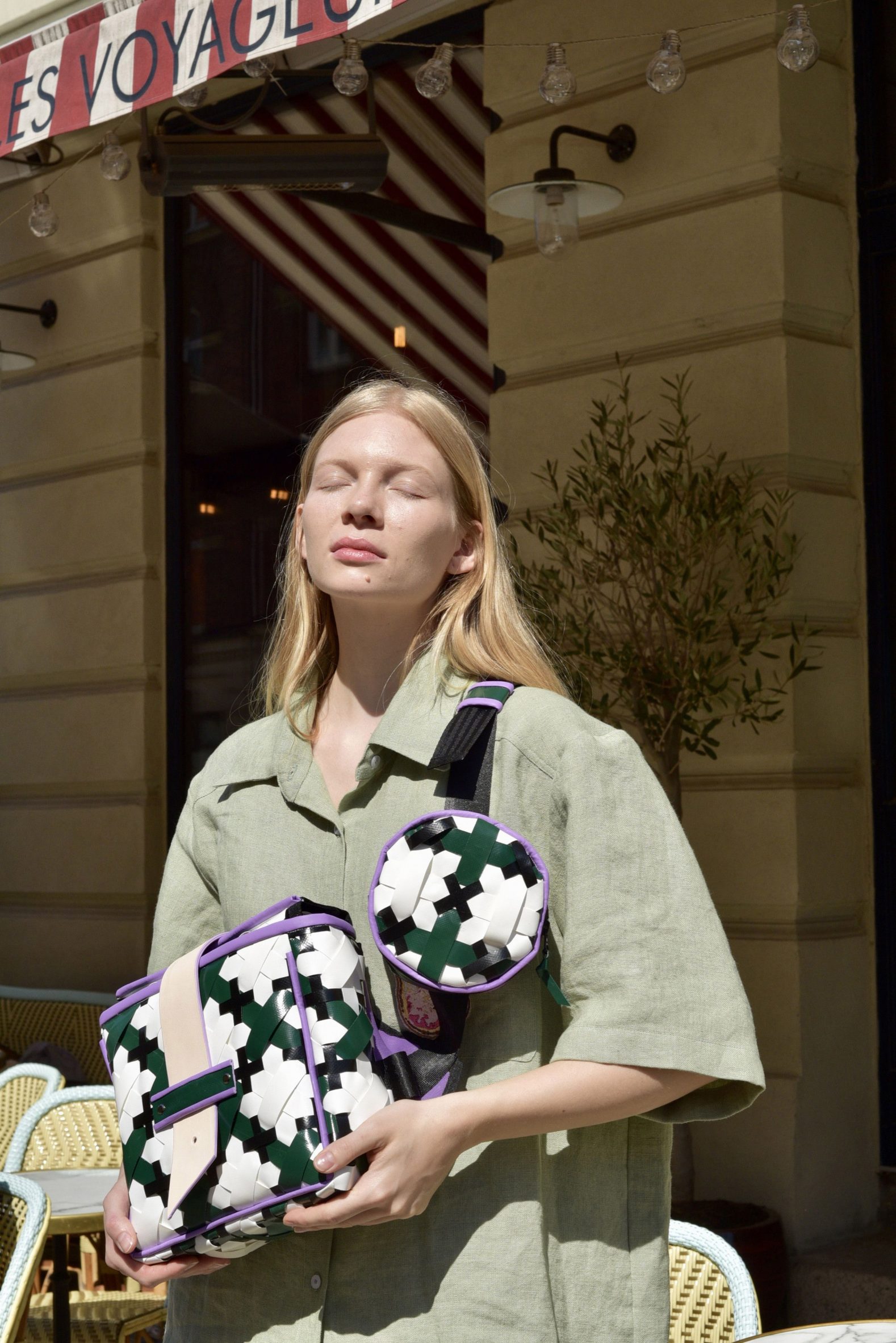
Community by Julie Hendel Hunter Astrup

"What do you carry in your everyday bag? What is your favourite colour combinations? Which of these materials do you prefer?

"All of Astrup's designs emanate from her democratic way of working. She uses her community – family, friends, business partners – as sources of inspiration in developing her work.

"Her bags are made of second-hand, surplus materials. Recycled materials often produce a rough expression which she combines with a sophisticated design. For instance, she has made a bag from used lorry covers, inspired by the woven pattern of French bistro chairs."

Student: Julie Hendel Hunter Astrup
Course:
MA Design, Fashion Design
Tutors:
Ann Merete Ohrt
Email:
julie_hendel[at]hotmail.com


Royal Danish Academy of Fine Arts

School of Ecological Crafts by Jonatan Møller Larsen, Christoffer Bo Haaning and Simon McNair

"This project proposes a School of Ecological Crafts where it is possible to study eco-friendly building techniques. The building in the Nordhavn district of Copenhagen embodies ecological building solutions. The graduates have developed a carbon-neutral building that uses nothing but rammed earth and wood for its walls and structural components.

"The soil they use is taken from the vast earthworks found in the local Nordhavn harbour area, deposited there from the excavation works for the construction of Copenhagen's metro system. The school showcases experiments exploring building techniques and how to bridge the gap between the tradition and the potential."

Student: Jonatan Møller Larsen, Christoffer Bo Haaning and Simon McNair
Course:
MA Architecture, Settlement, Ecology and Tectonics
Tutors:
Anne Beim
Email:
jonatanmoellerlarsen[at]gmail.com, c.haaning[at]hotmail.com and barton.mcnair[at]gmail.com

Royal Danish Academy of Fine Arts

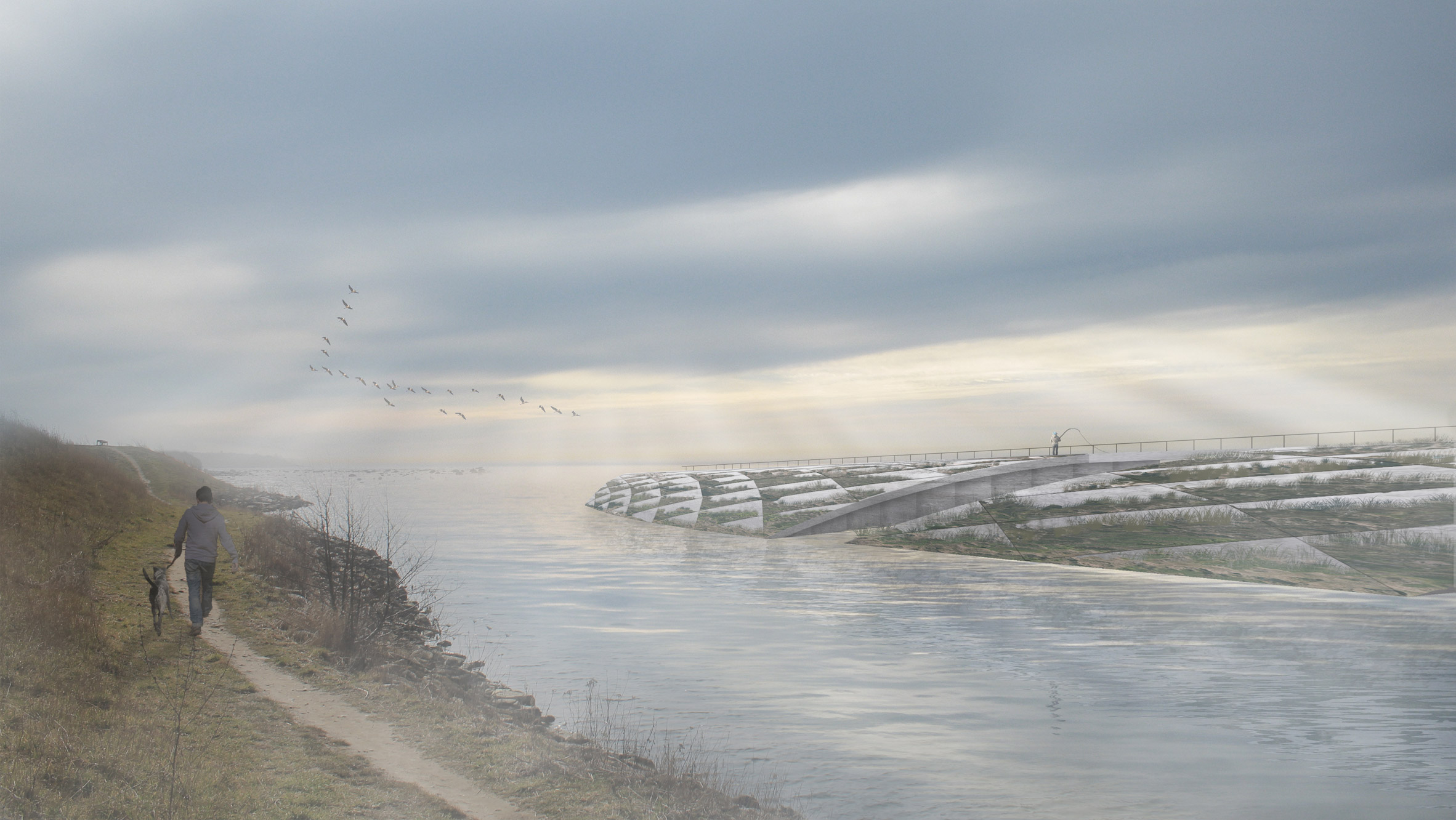
Energy Islands as Hybrid Landscapes by Christian Kamp Iversen

"This project asks: how can power production infrastructure become natural environments? This project proposes constructing an 'energy island' – a power substation to convert and distribute energy from offshore wind farms.

"A natural environment is established on the 'skin' of the island, inspired by the surrounding typologies of coastal dunes and cliffs: the island has flat areas on which sand and vegetation can be deposited, growing into shrubs, plants and trees and enabling the areas to be used for recreational purposes. It also has steep walls suitable for birdlife. New offshore wind farms are a crucial element in Denmark's current climate act."

Student: Christian Kamp Iversen
Course:
MA Architecture, Landscape
Tutors:
Kristine Jensen
Email:
ckampiversen[at]gmail.com

Royal Danish Academy of Fine Arts

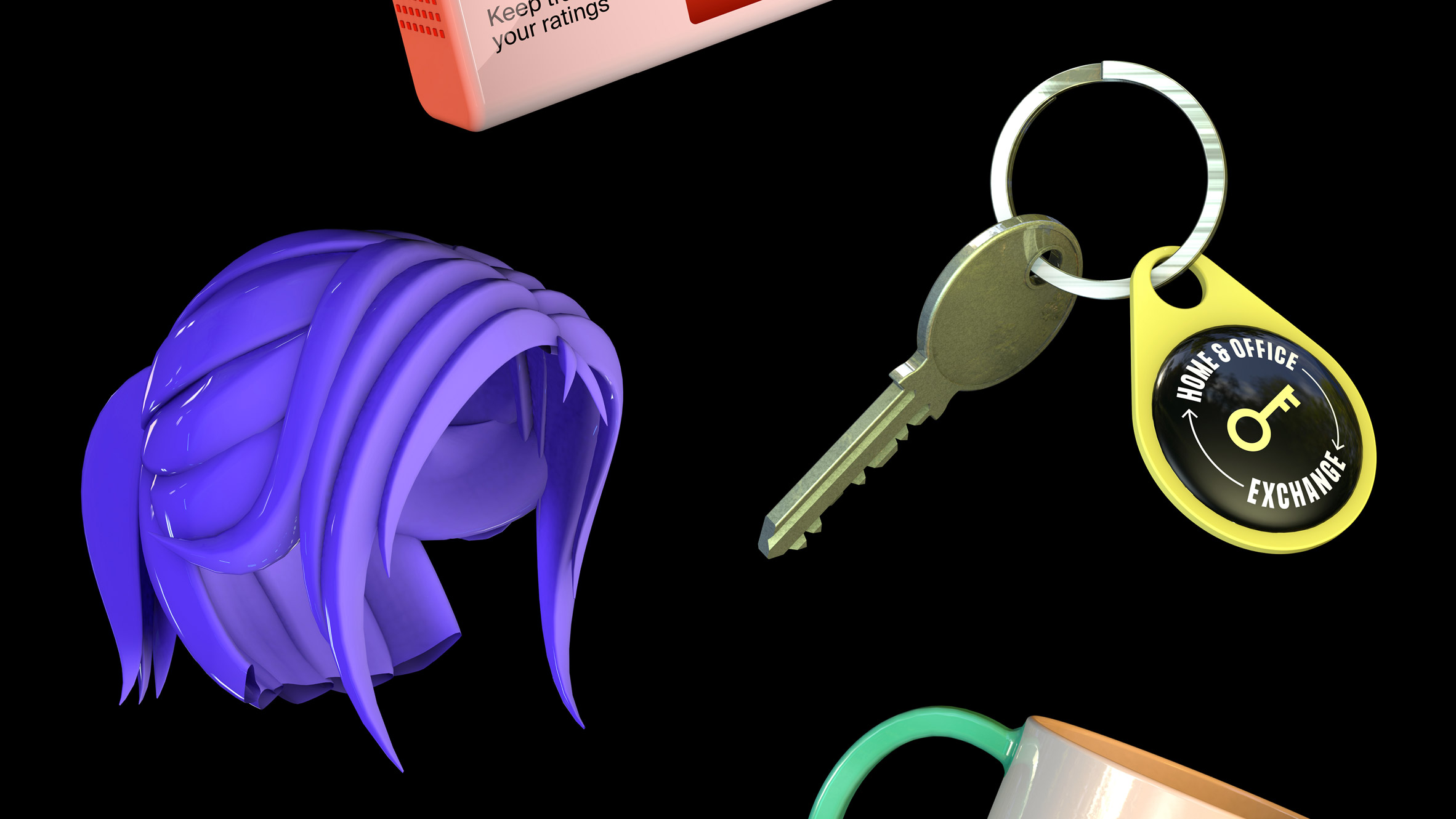
Remote Futures by Elena Bauer and Lunia D'Ambrosio

"The pandemic has accelerated remote working worldwide and blurred the lines between the home and office. The question now is: how will remote work shape our work life in the near future?

"This design project envisions four personas in different work-life scenarios in 2030. Their workers' rights, level of competitiveness and work-life balance vary greatly from one to the next. Each persona is accompanied by speculative artefacts of the future that make their lives and conditions easier to imagine.

"The project is based on extensive research and interviews with professionals who are already working remotely today."

Student: Elena Bauer and Lunia D'Ambrosio
Course:
MA Design, Graphic Communication Design
Tutors:
Rasmus Spanggaard Troelsen and Nikolaj Knop
Email:
hej[at]elenabauer.de and luniadambrosio[at]gmail.com

Royal Danish Academy of Fine Arts

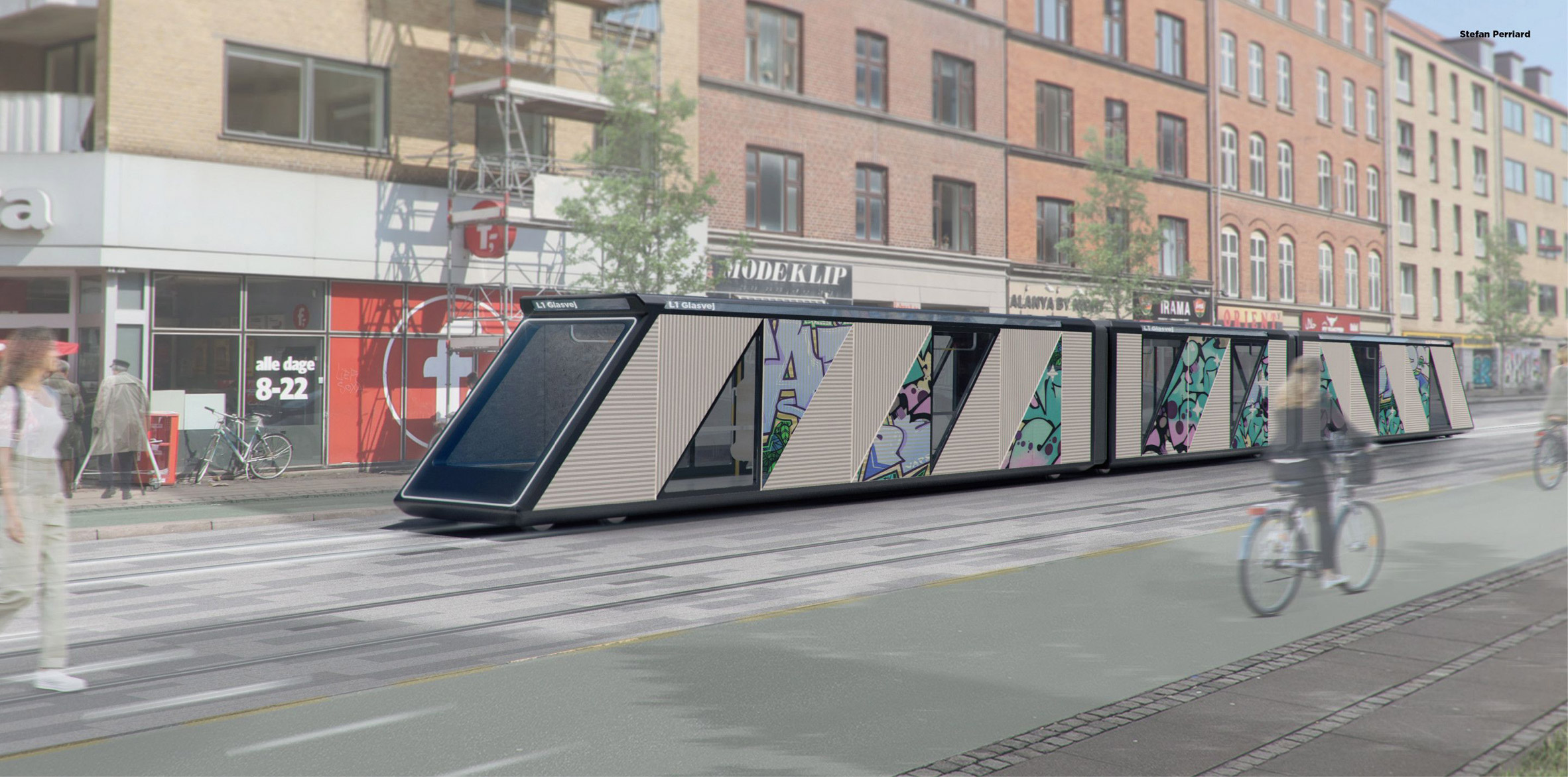
Copenhagen Light Rail by Stefan Perriard

"Copenhagen Light Rail is a retake of Copenhagen's future light rail system.

"The project presents proposals for how an electric light rail system can be integrated into the car-free streets, enhance the aesthetic qualities of local areas and make train interiors feel inclusive for all passengers.

"The design creates a new type of social and cultural infrastructure. The individual carriages can be converted into mobile healthcare clinics and libraries travelling between the districts. The carriages can also be used as pop-up shops or exhibition spaces. The train is designed as a modular system, with a rough yet local urban look."

Student: Stefan Perriard
Course:
MA Design, Industrial Design
Tutors:
Karina Mose
Email:
stefan.perriard[at]gmail.com


Partnership content

This school show is a partnership between Dezeen and the Royal Danish Academy of Fine Arts. Find out more about Dezeen partnership content here.

The post Ten projects from the Royal Danish Academy of Fine Arts propose solutions for a sustainable future appeared first on Dezeen.


from Dezeen https://ift.tt/2Ulh5e2
IVC Commercial launches Clay and Clay Create carpet planks

Clay and Clay Create

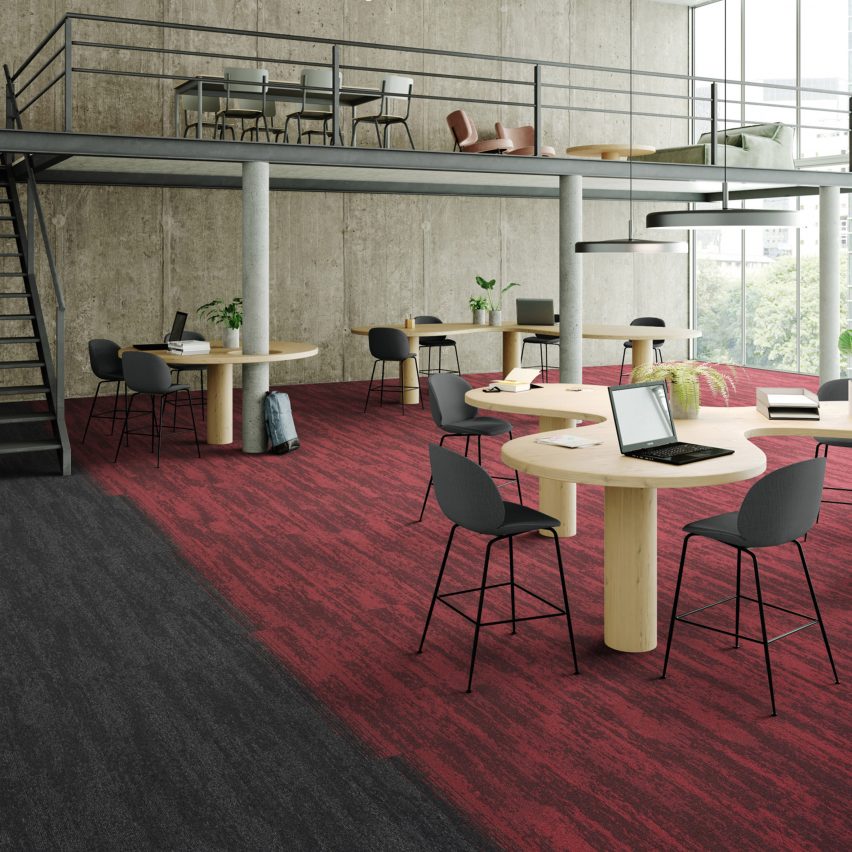
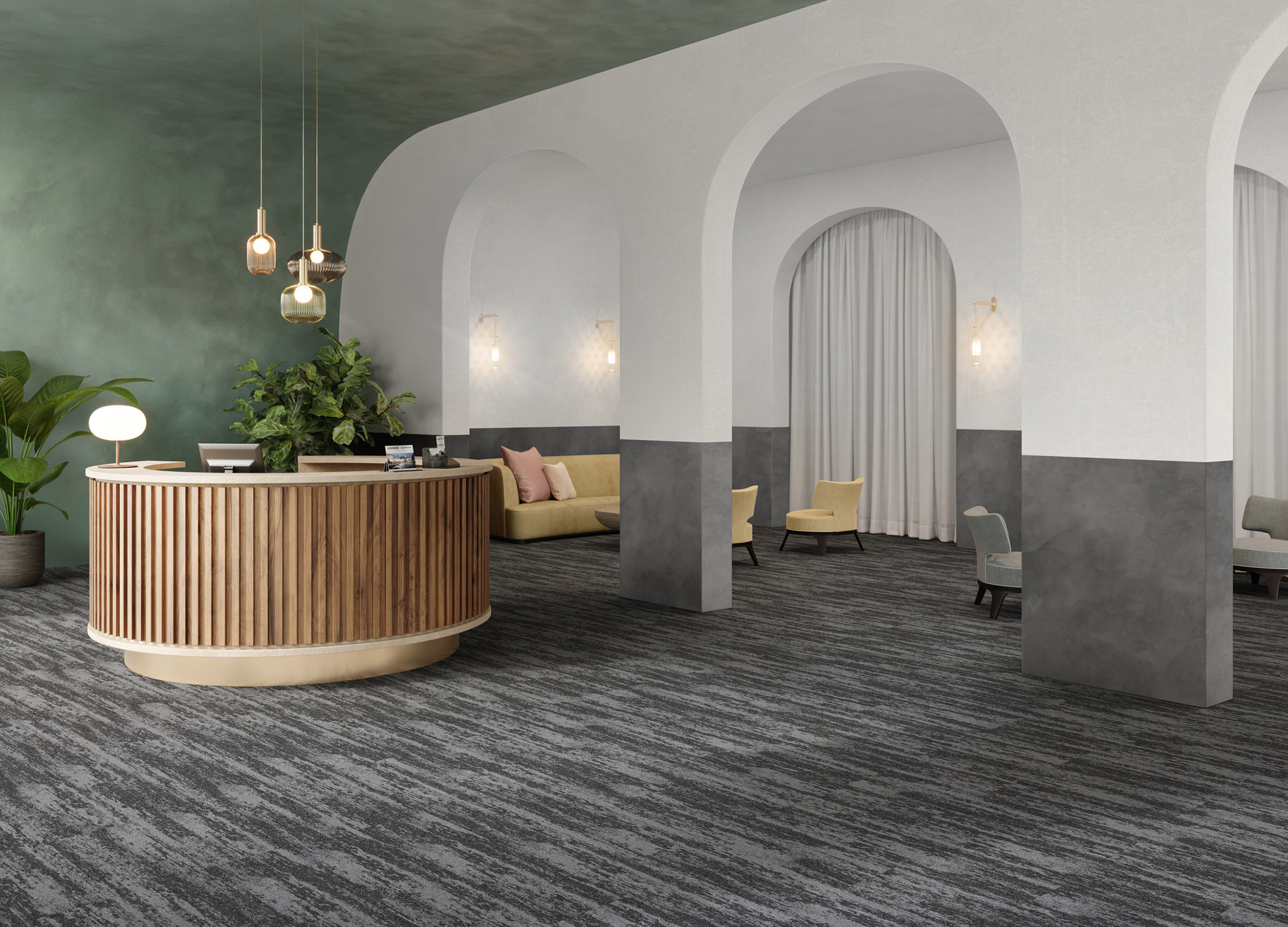
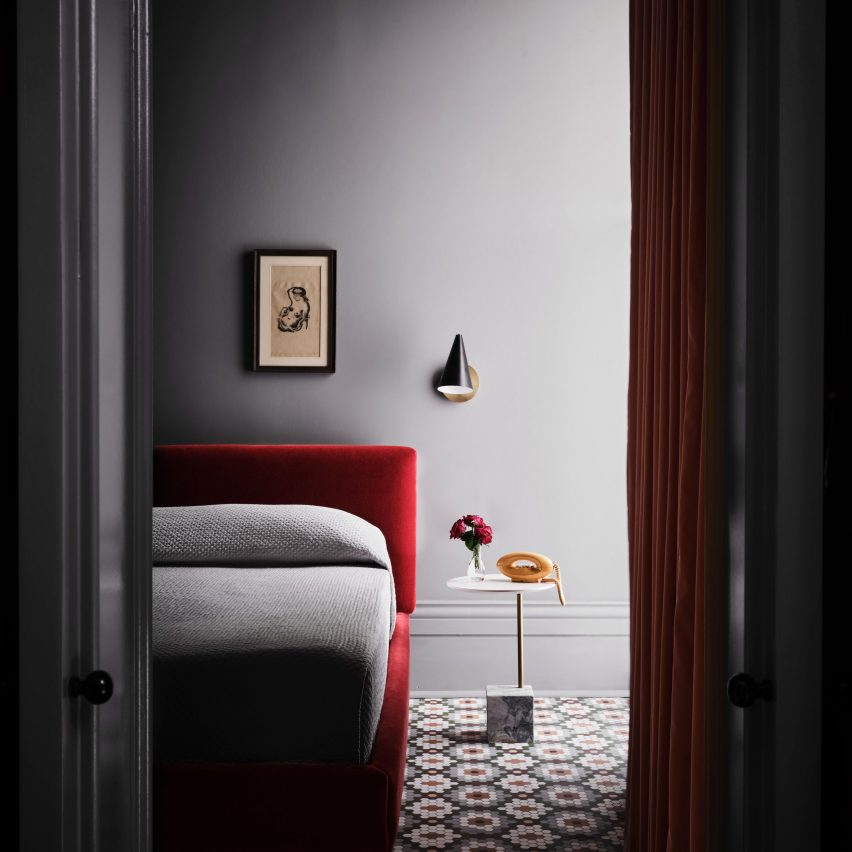
Dezeen promotion: Belgian carpet brand IVC Commercial has launched two types of carpet plank called Clay and Clay Create as part of its Rudiments collection.

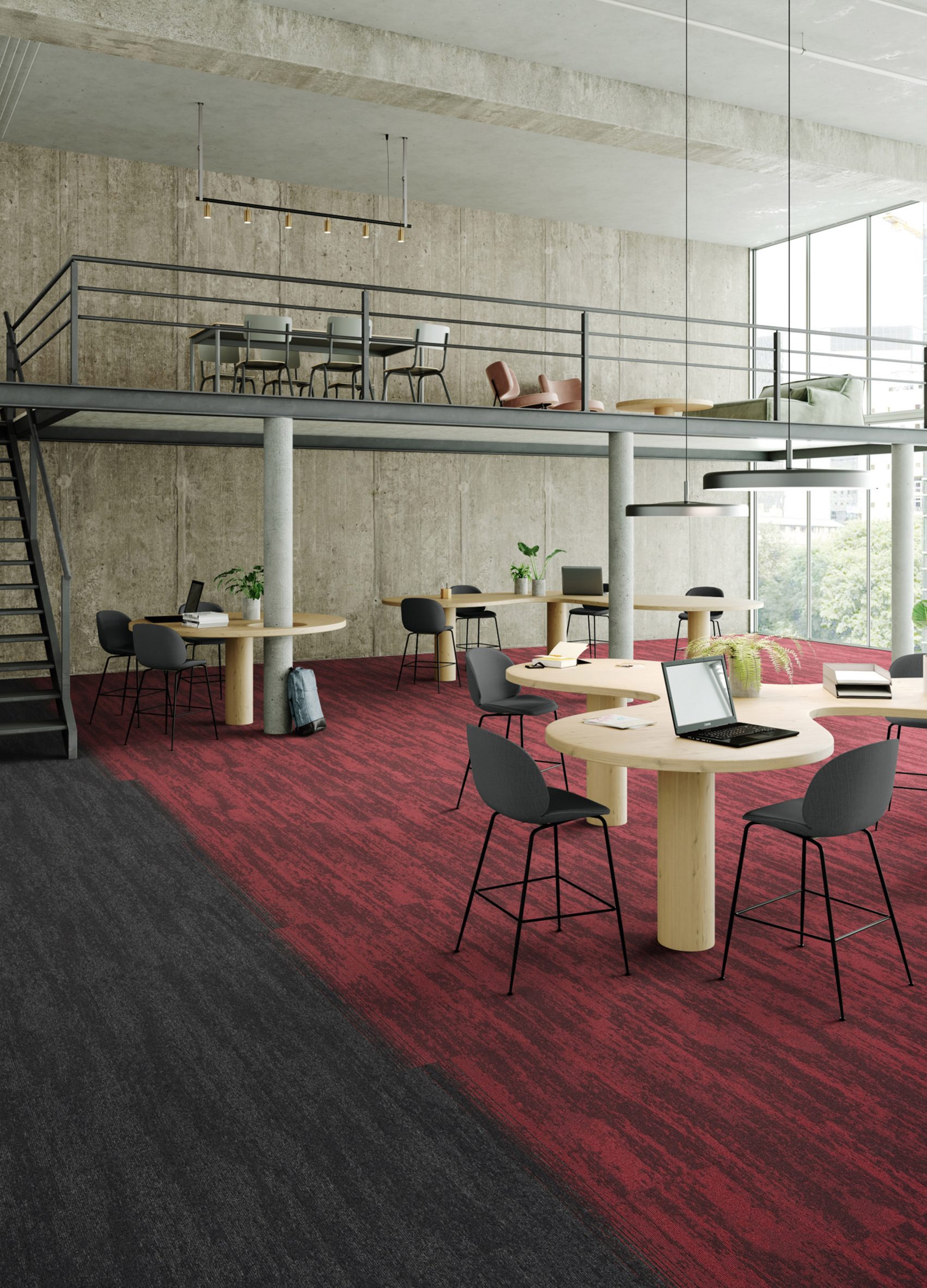
IVC Commercial's carpet tiles are durable solutions for commercial spaces. Both Clay and Clay Create are designed to give rooms an organic appearance, adding texture and colour to office interiors.

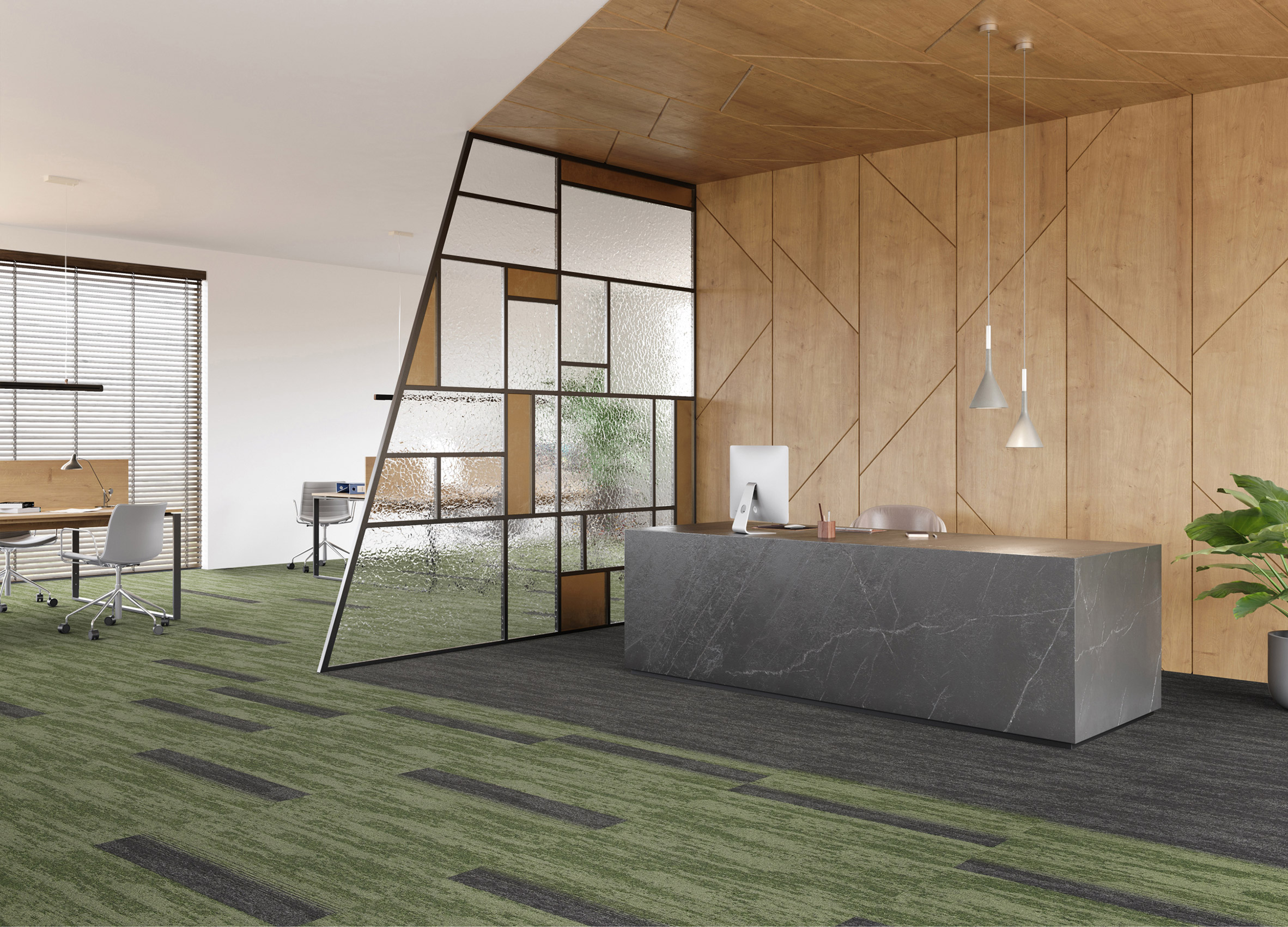
The carpet planks can be used to break up spaces and allow designers to signify different areas when needed, such as for wayfinding purposes.

IVC Commercial launches Clay and Clay Create
The Clay and Clay Create tiles are designed to add colour and texture to office space

IVC Commercial's Clay carpet pattern is evenly distributed across each tile, making it suitable for adding texture to large spaces. In comparison, Clay Create is designed as a "transition carpet plank, moving from one colour to another," said the brand.

"Clay Create is a playful random lay pattern that echoes the material's artistic side with a shifting colour gamut that adds exciting transition possibilities to mix and match Rudiments installs," said IVC Commercial.

Both Clay and Clay Create carpet planks reference the natural textures of clay ceramics. This follows the brand's other carpets in its Rudiments collection, which are tufted to appear like natural materials historically used for floorings, such as stone and wood.

"From hewn stone floors and hand-shaped clay tiles to coarsely cut wood blocks and artistic textiles woven from organic threads, Rudiments celebrates the flooring materials that have been closely linked to culture for centuries," said the brand.

IVC Commercial launches Clay and Clay Create
The tiles can be used to signify a change of area, activity or direction

Specifically, the brand's Clay and Clay Create tiles are designed to mimic clay's use as a structural and artistic material.

"The Clay carpet plank is inspired by mankind's crafting of the world's oldest known ceramic material, hand-shaped into the rudimentary building blocks that have protected us for centuries," said IVC Commercial.

Both Clay and Clay Create tiles are 25 to 100 centimetres and are available in 12 colours.

Designers can pick different colour combinations to customise their space. Clay and Clay Create can also be used alongside other carpet tiles in the Rudiments range such as Basalt, designed to look like age-old stone, or Teak, which references oiled wooden blocks.

IVC Commercial launches Clay and Clay Create
The tiles reference the texture and aesthetic of clay tiles

The brand's Rudiments carpets are made from solution-dyed nylon to give a "hassle-free" performance.

"Designers can focus on the job in hand, delivering inspirational spaces that support the productivity and wellbeing of their users," said IVC Commercial.

To learn more about IVC Commercial's range of carpets, visit its website.


Partnership content

This article was written by Dezeen for IVC Commerical as part of a partnership. Find out more about Dezeen partnership content here.

The post IVC Commercial launches Clay and Clay Create carpet planks appeared first on Dezeen.


from Dezeen https://ift.tt/2VKBtpk

Studio Puisto completes wellness centre that steps down towards a lake

A black timber wellness centre

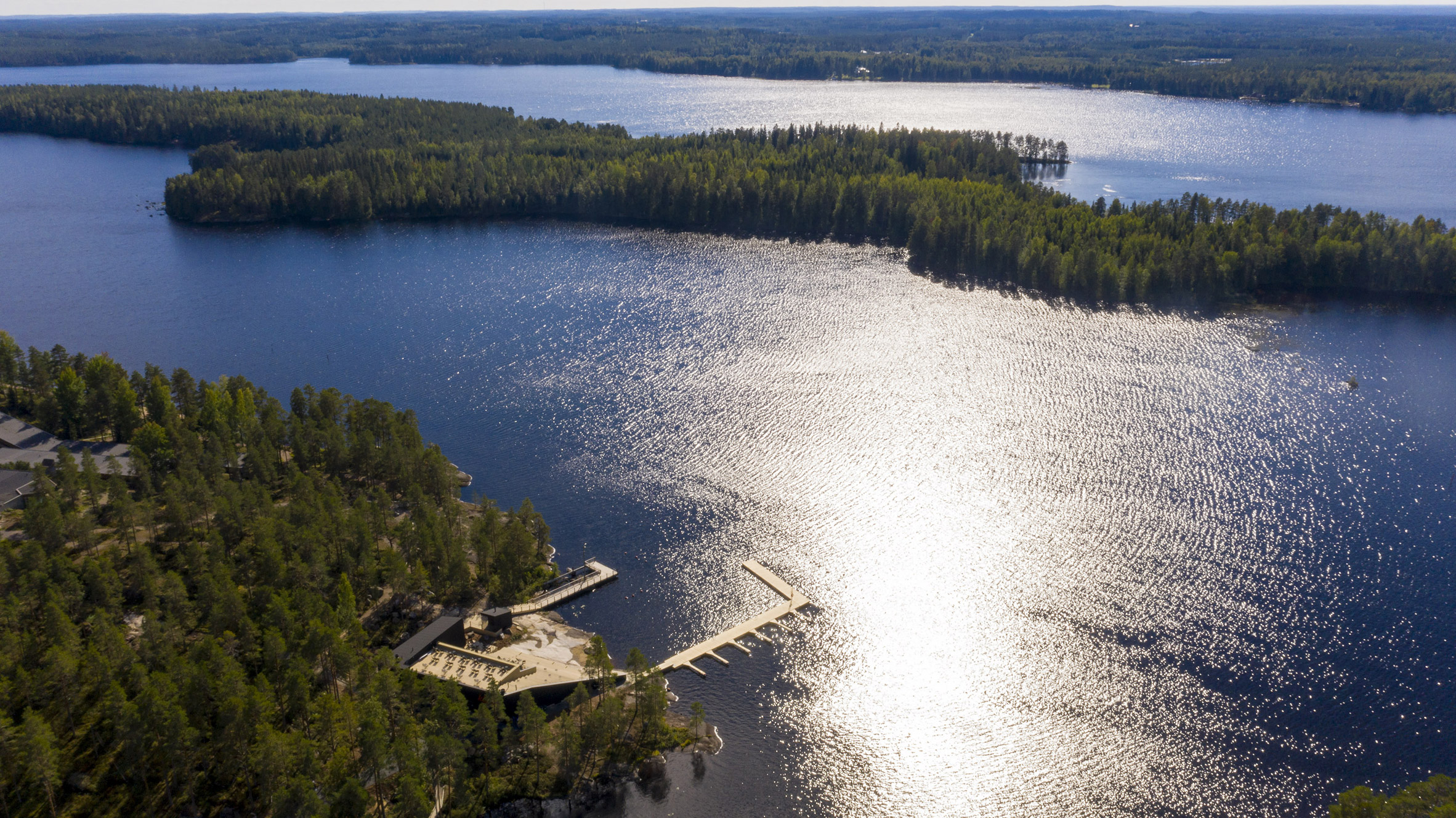
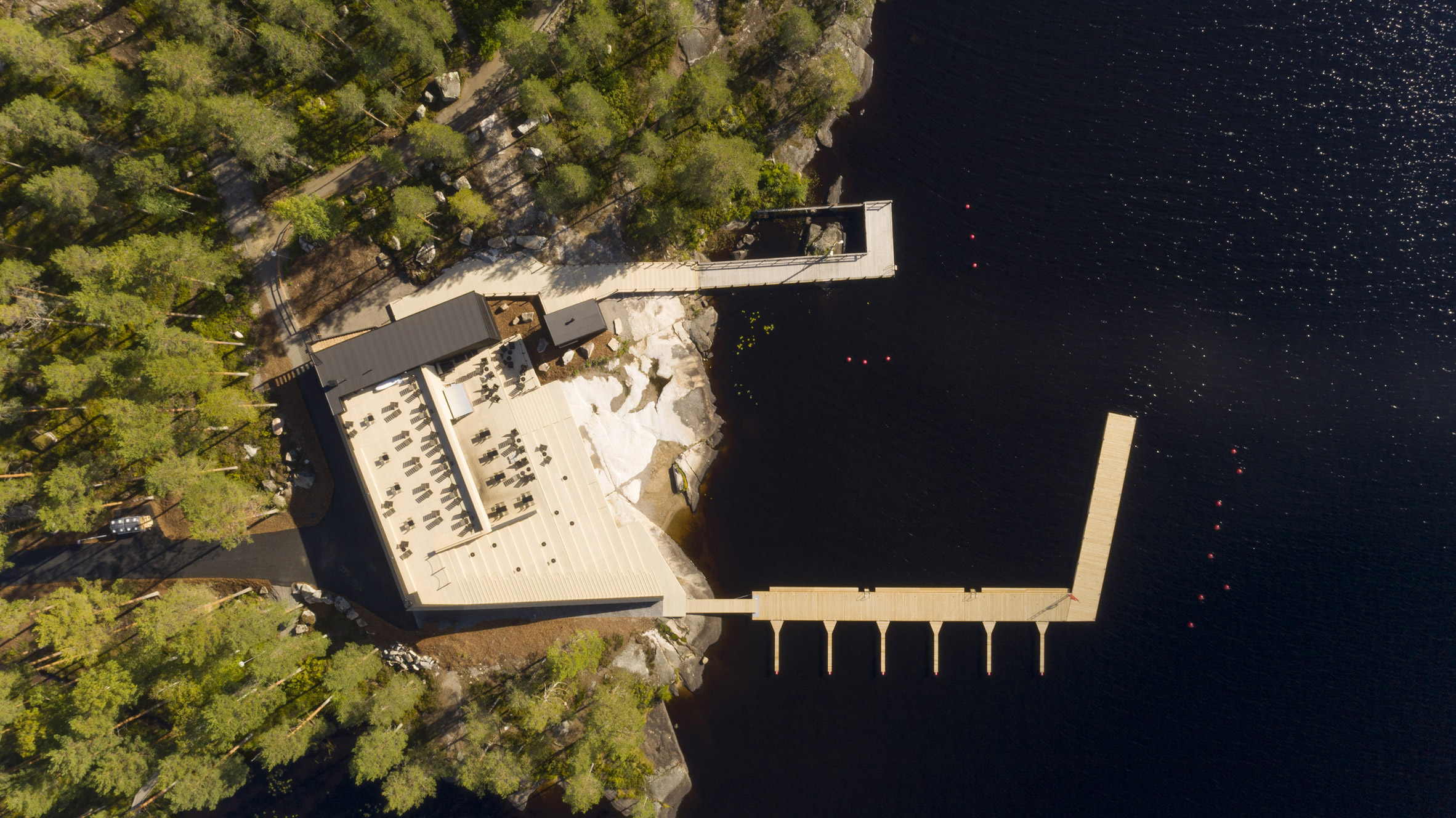
Studio Puisto has designed a lakeside wellness centre in the town of Ähtäri, Finland, incorporating a large area of stepped wooden seating and jetties that aim to reconnect the local community with the waterfront.

Saunaravintola Kiulu, which combines a sauna and a restaurant, grew out of a masterplan for year-round tourism that the Helsinki-based Studio Puisto had previously been invited by the town to produce.

An aerial view of a lakeside wellness centre
Studio Puisto has designed a lakeside wellness centre

The design aims to strengthen the relationship to the waterfront while also providing multi-purpose community space to be used by both tourists and locals.

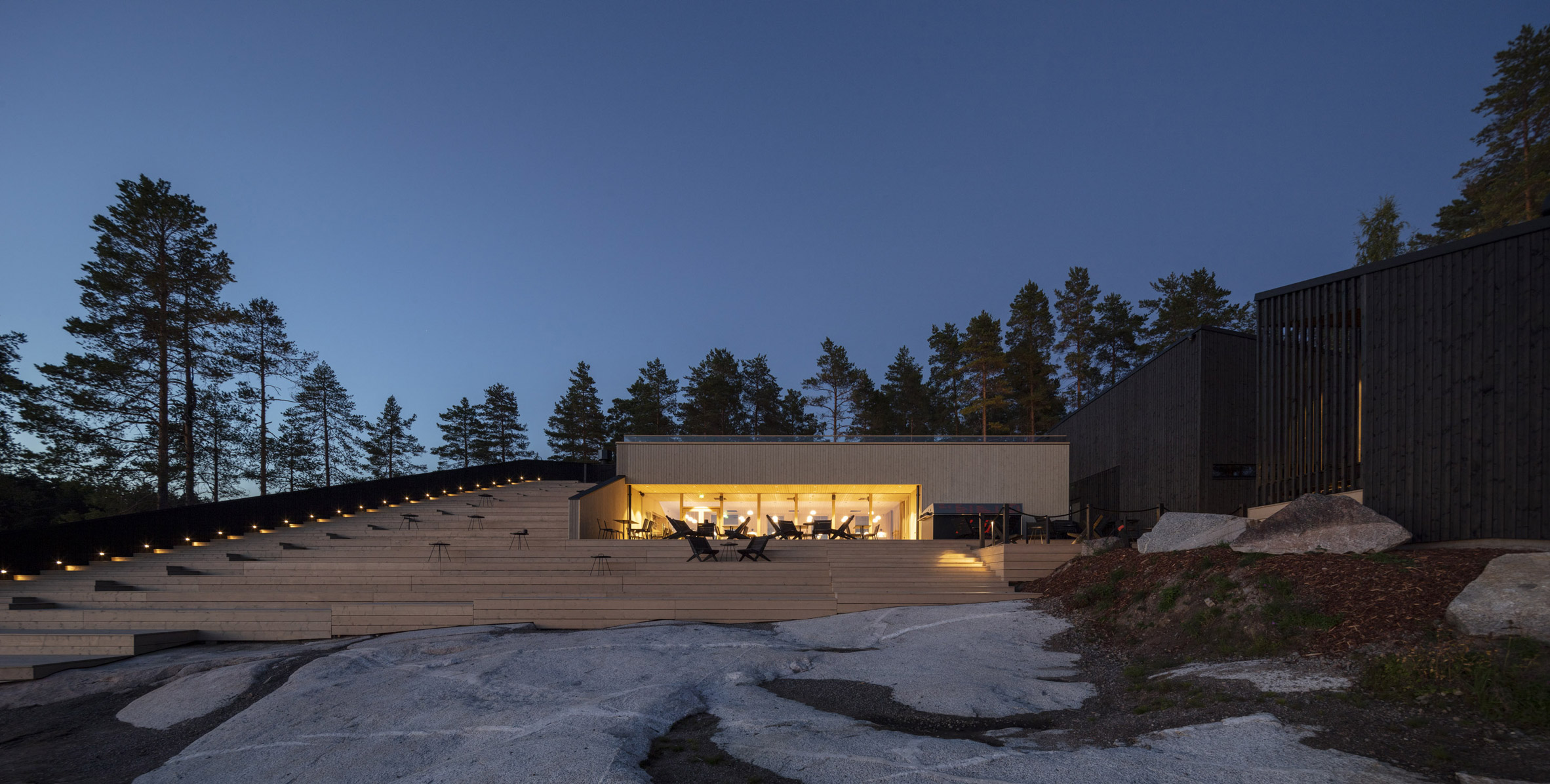
The wooden form steps down a rocky slope on the bank of the lake, with smaller steps at either end providing access to the jetties and water and oversized steps wide enough for small tables creating areas for informal gathering.

An aerial view of Saunaravintola Kiulu
It incorporates a large area of stepped wooden seating

The northeastern side of the centre is hugged by a cladding of black wooden boards that extend upwards to block views of the steps and bring more privacy to the space.

"The architecture not only avoids detracting from the wilderness around it, but also creates a sheltered, safe pocket for activity," the studio said.

Stepped wooden seating
The steps lead to the bank of the lake

The bright and airy restaurant at the centre of the building is contrasted by darker sauna spaces, all of which maintain a close visual relationship with the water.

"Every viewpoint from within the structure frames the lake, offering different moments and perspectives through which to take in and enjoy the natural landscape," explained the studio.

A black timber wellness centre
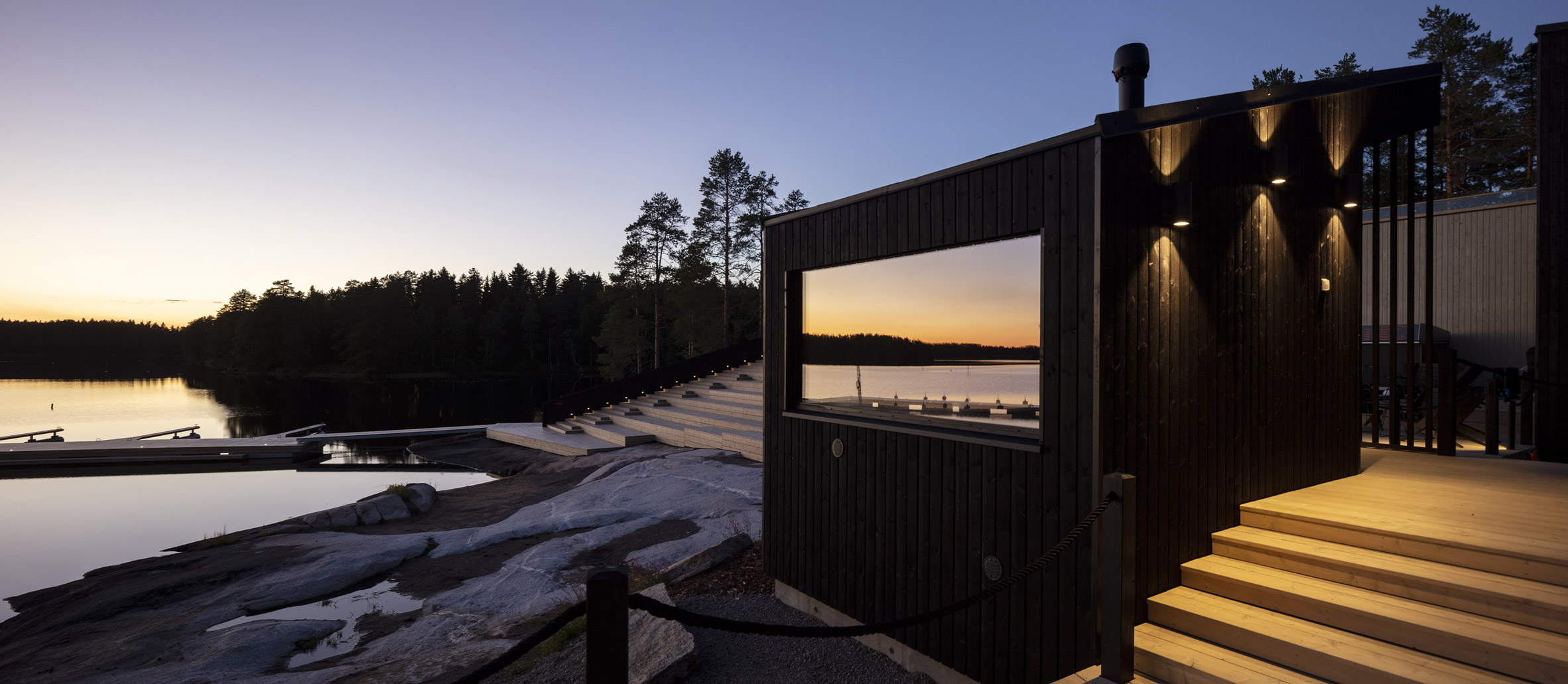
Black wooden boards clad parts of the centre

By nestling the restaurant building into the stepped form, two terraces have been created – one, more sheltered, at the same level as the restaurant and a roof terrace atop it, shielded by the black wood cladding surrounding the building.

The larger sauna sits alongside the restaurant, with a long clerestory window framing views of the surrounding trees.

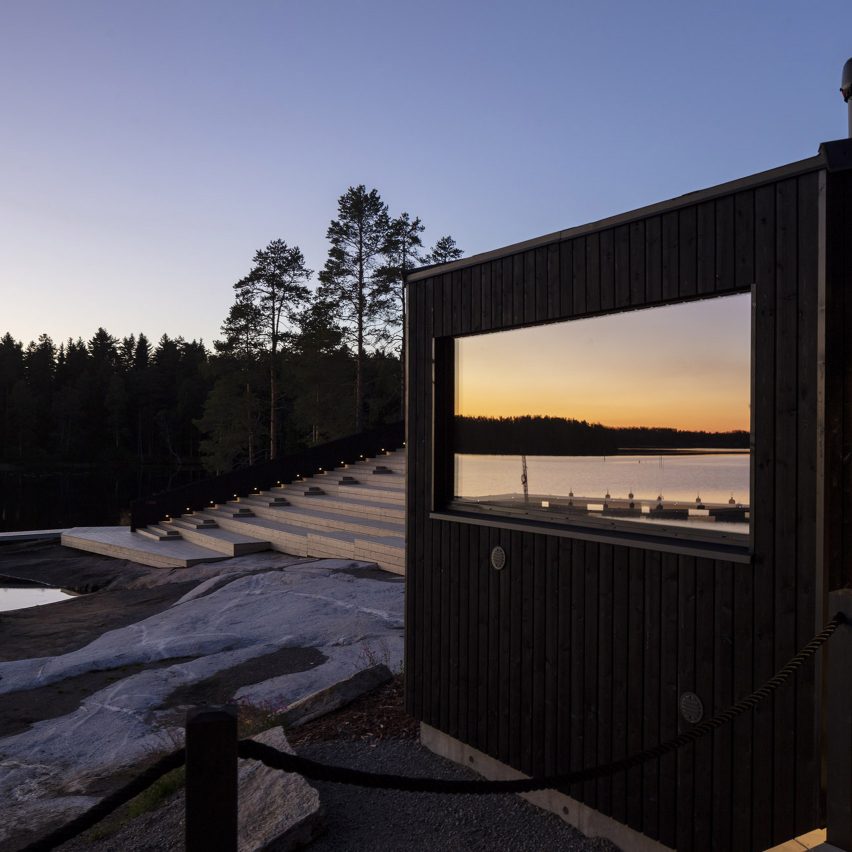
The smaller, more intimate sauna occupies its own independent wooden cabin further down the steps, where a large window aims to create a close connection to the water.

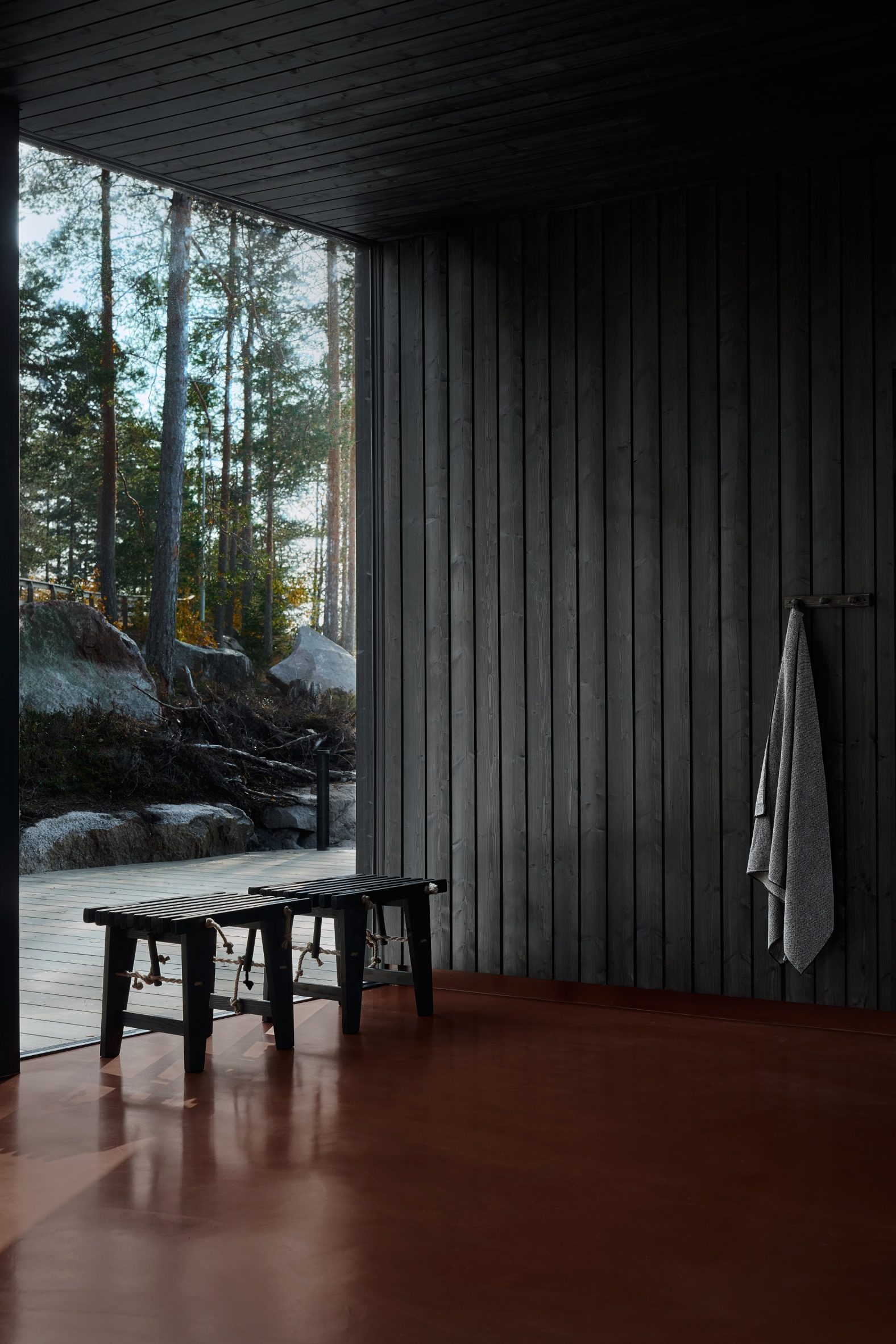
"Here, the floor is levelled with the outside to make the transition between outside and inside seamless, visually directing all of the attention out the window," the studio said.

A black timber sauna
Dark cladding is also used inside the saunas

Throughout, simple and traditional materials have been used to create a feeling of cosiness.

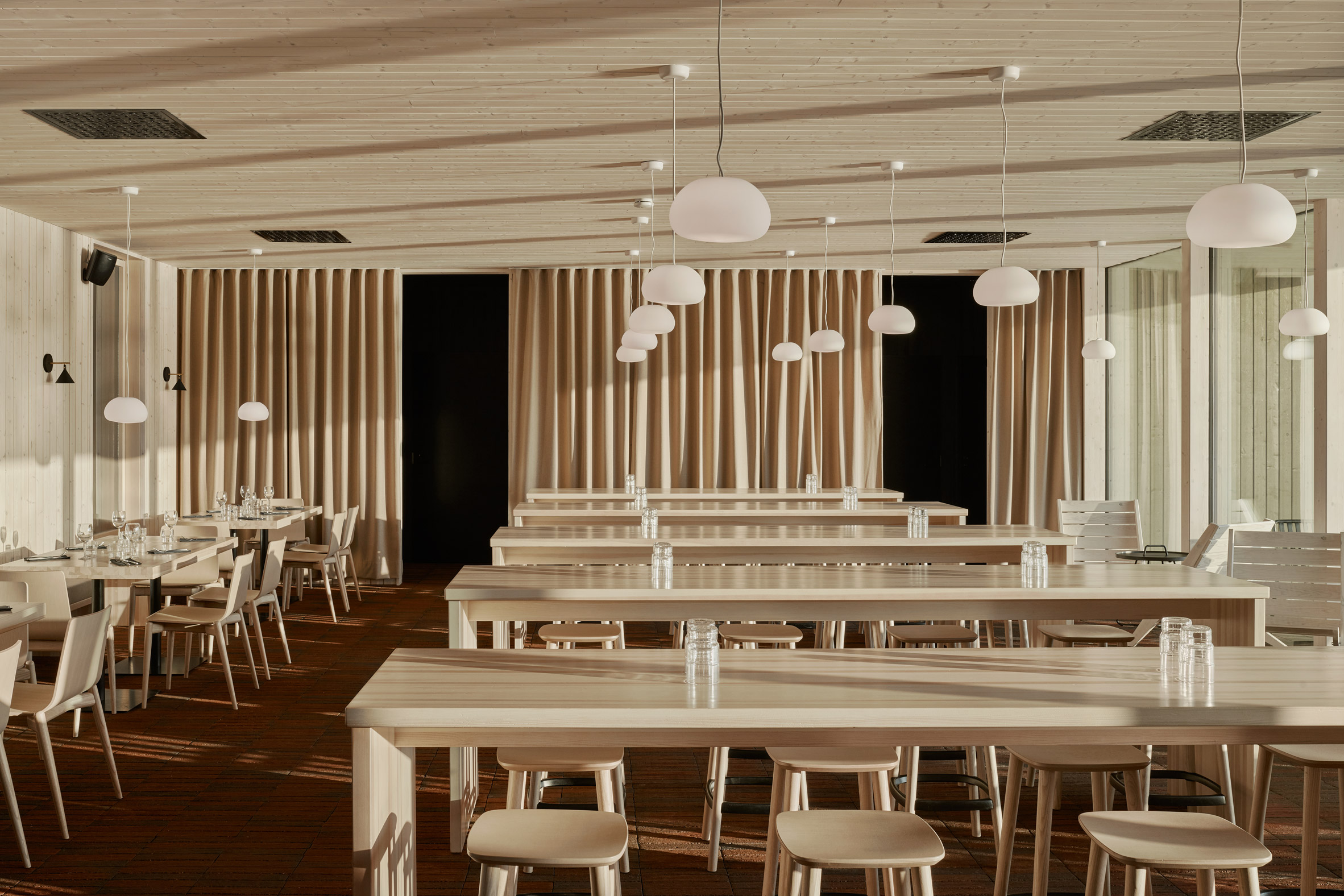
Pale wood, curtains and redbrick flooring was used in the restaurant, while dark wood with matching red epoxy flooring creates a more private atmosphere in the saunas.

A wood-lined restaurant interior
A bright restaurant sits at the centre of the building

In 2018, Studio Puisto designed another sauna complex focusing on ideas of community space in a former factory building in Tampere. More recently the studio completed an elevated black cabin for a new woodland resort in Kivijärvi.

The exterior photography is by Marc Goodwin and the interior photos are by Riikka Kantinkoski.


Project credits:

Architect: Studio Puisto Architects
Partners: Mikko Jakonen, Emma Johansson, Sampsa Palva, Heikki Riitahuhta, Willem van Bolderen
Team members: Ioana Maftei, Maiju Koskela (Interior), Sami Logren
Client: Hankaveden Laine Oy

The post Studio Puisto completes wellness centre that steps down towards a lake appeared first on Dezeen.


from Dezeen https://ift.tt/3Bgy0in

Ten tactile interiors that make use of biomaterials

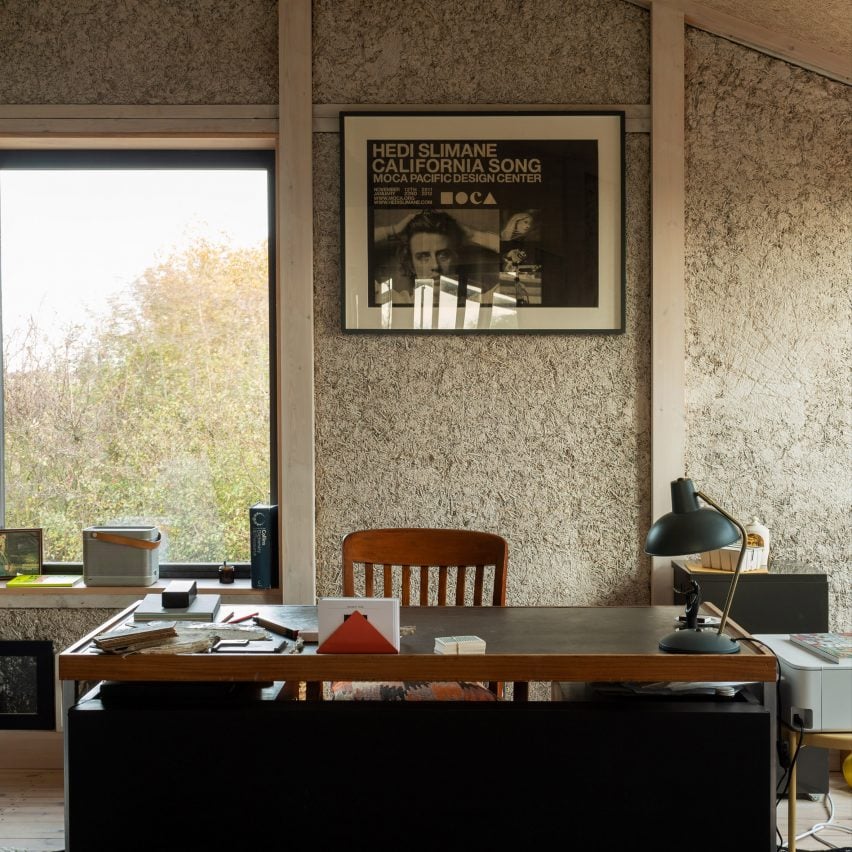
An office with exposed hempcrete walls

In our latest lookbook, we take a look at 10 earthy interiors from the Dezeen archive that are fitted out with biomaterials such as cork, hemp and mycelium.

Biomaterials or biobased materials are made from biodegradable living matter. Other examples include wood, paper and bioplastics made from plants such as algae.

They are increasingly being used to help create earthy, natural-looking interiors, but they also offer a number of healthy and environmental benefits including natural cooling, breathability and carbon storage.

This is the latest roundup in our Dezeen Lookbooks series providing visual inspiration for interiors. Previous articles feature loft conversions, L-shaped kitchens and Scandi living rooms.


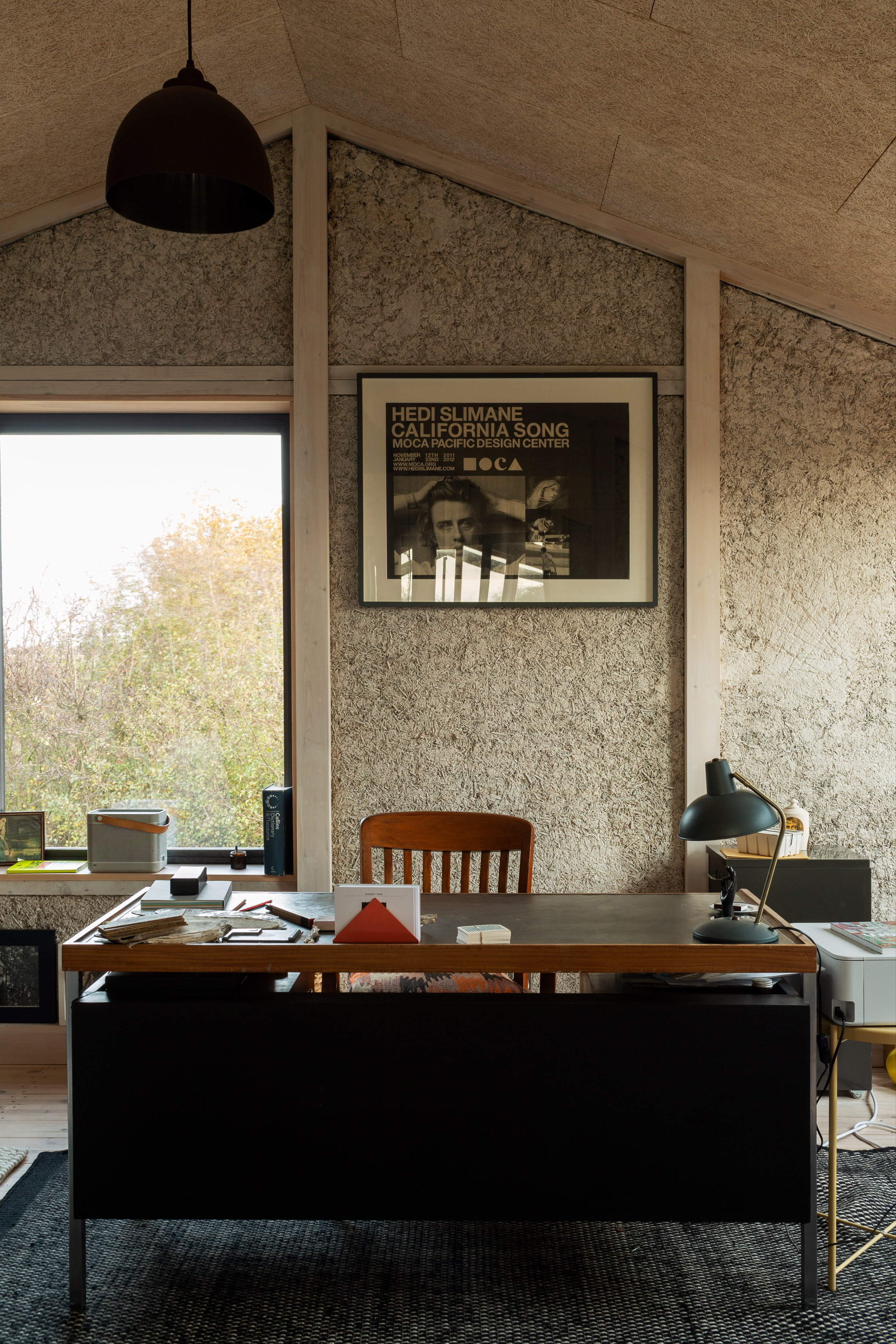
An office with exposed hempcrete walls

Hemp

The walls of the off-grid Flat House by Practice Architecture are made from large panels of hempcrete – a combination of lime binder and hemp.

Hemp is a fast-growing strain of the cannabis plant, often used as an eco-friendly building material as it is able to sequester carbon. For this project, it was grown at Margent Farm in Cambridgeshire, England and used to ensure the house has low embodied carbon.

The panels have been left exposed throughout the interior to offer a warm and tactile interior finish, which is complemented by timber elements.

Find out more about Flat House


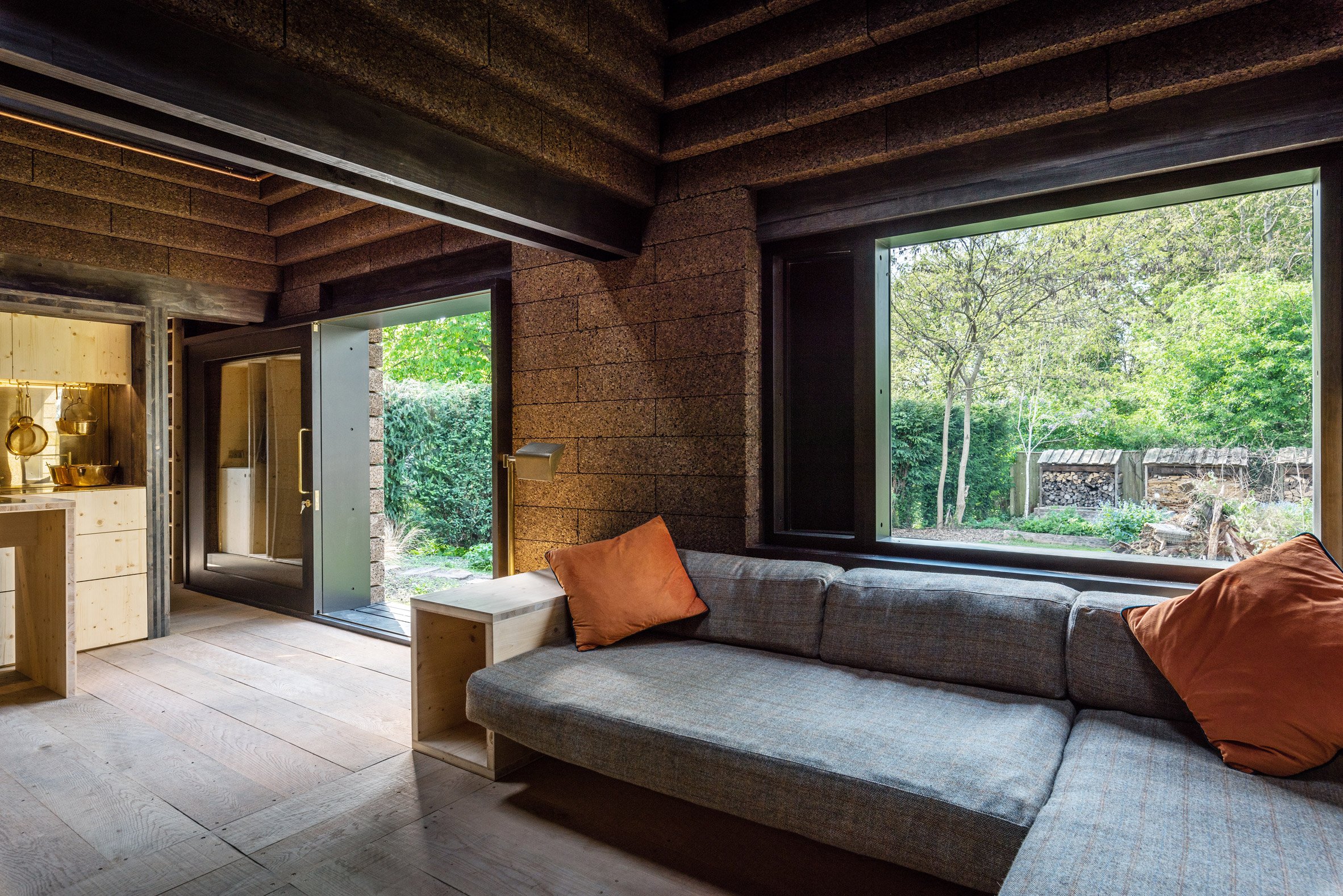
Stirling Prize-shortlisted Cork House by Matthew Barnett Howland with Dido Milne and Oliver Wilton in Berkshire, England

Cork

Cork is a renewable, resistant and insulating material that is harvested from the bark of the cork oak tree. In architecture, it is typically used in the form of solid blocks made by heating and combining cork granules, such as in Cork House by Matthew Barnett Howland with Dido Milne and Oliver Wilton.

In this project, the blocks are left uncovered throughout the building's interior for a textured, natural look. This also ensures the structure is recyclable after the dwelling's useful life.

According to the architects, using cork also means the house has negative embodied carbon, as it absorbed more carbon dioxide than it emitted during construction.

Find out more about Cork House ›


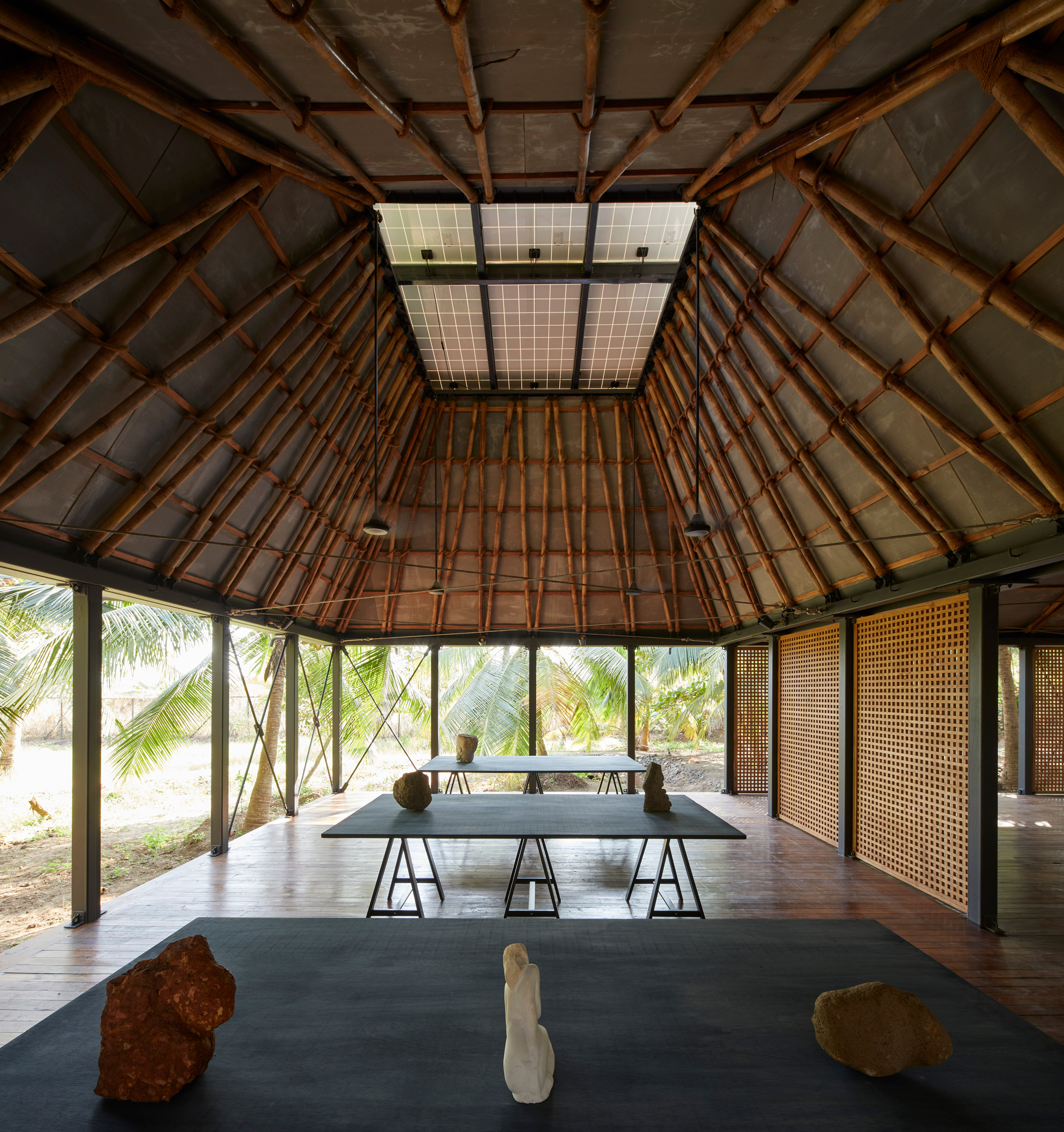
A pavilion with a bamboo structure

Bamboo

Bamboo is a fast-growing grass described by architect Simón Vélez as "vegetable steel" due to its strength and flexibility.

Architecture studio Brio used the material to support the roof of the Mumbai Artist Retreat in India. It is used in tandem with steel to create an easily demountable and rebuildable structure. The bamboo was left exposed internally but arranged in a zig-zag pattern to disguise its "natural irregularity".

Find out more about Mumbai Artist Retreat ›


US Architecture Agg Hab by i thee and Roundhouse Platform

Papier-mache

Papier-mache is a composite material made of paper or pulp bound with adhesives. In 2020, design-build studio I/thee used it to create a prototype home named Agg Hab. The structure combines nearly 300 pounds of recycled paper with 200 litres of non-toxic glues that were handmade by the studio.

Openings in the surfaces of the dwelling introduce light and accentuate its glossy finish. It was designed by the studio as an example of an environmentally low-impact home and to offer occupants "a primordial experience".

Find out more about Agg Hab ›


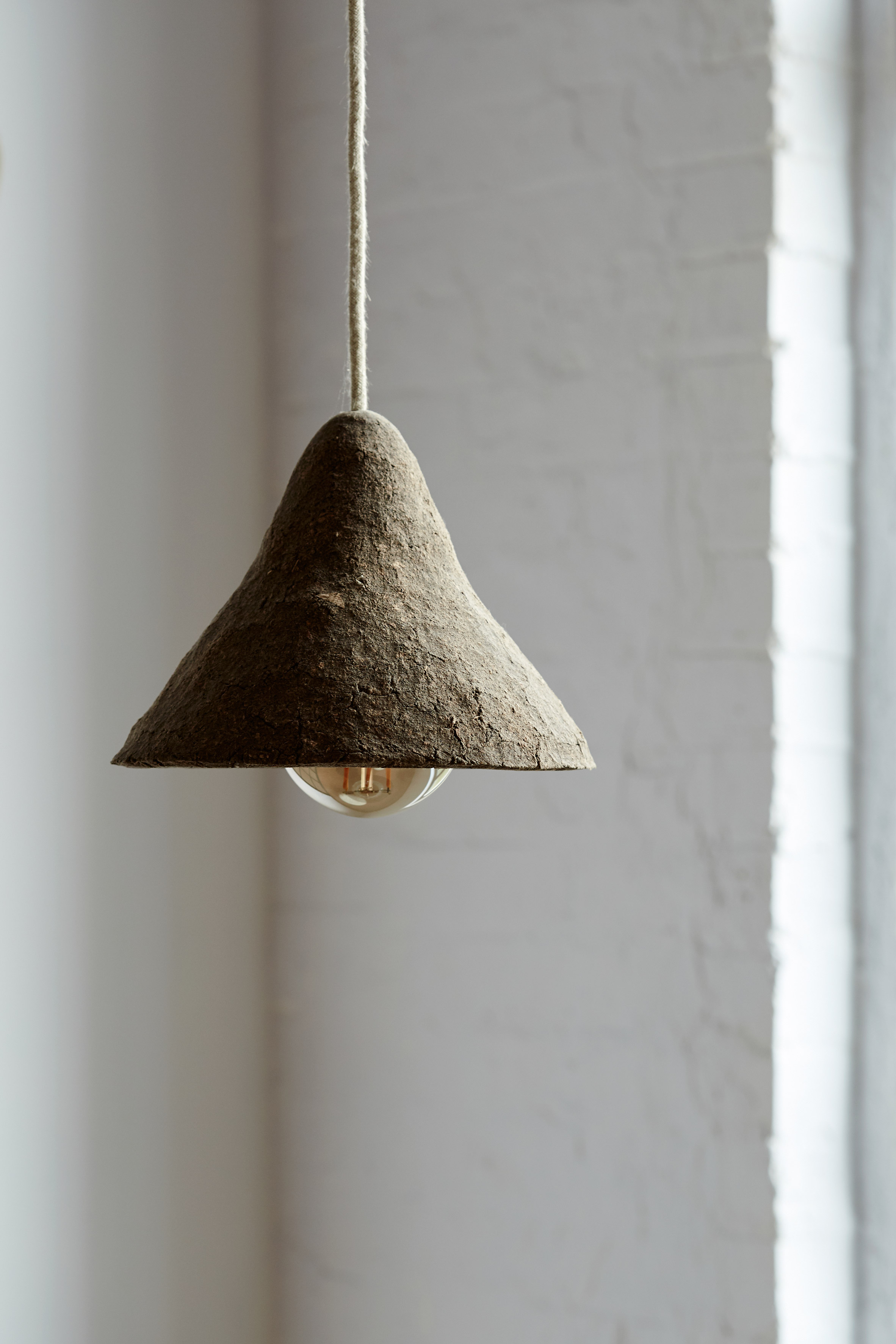
A mycelium pendant lamp

Mycelium

This pendant lamp is among several furnishings made from mycelium – the vegetative part of fungi – used to decorate the zero-waste restaurant Silo in London.

It was fitted out by Nina+Co to reflect the restaurant's sustainable ethos. Alongside the light shades, there are mycelium tables and pouffes, chosen as they are soft to touch, strong and biodegradable.

Mycelium is also able to sequester carbon and is cited by sustainability expert David Cheshire as "part of the solution" to creating carbon-negative buildings.

Find out more about Silo ›


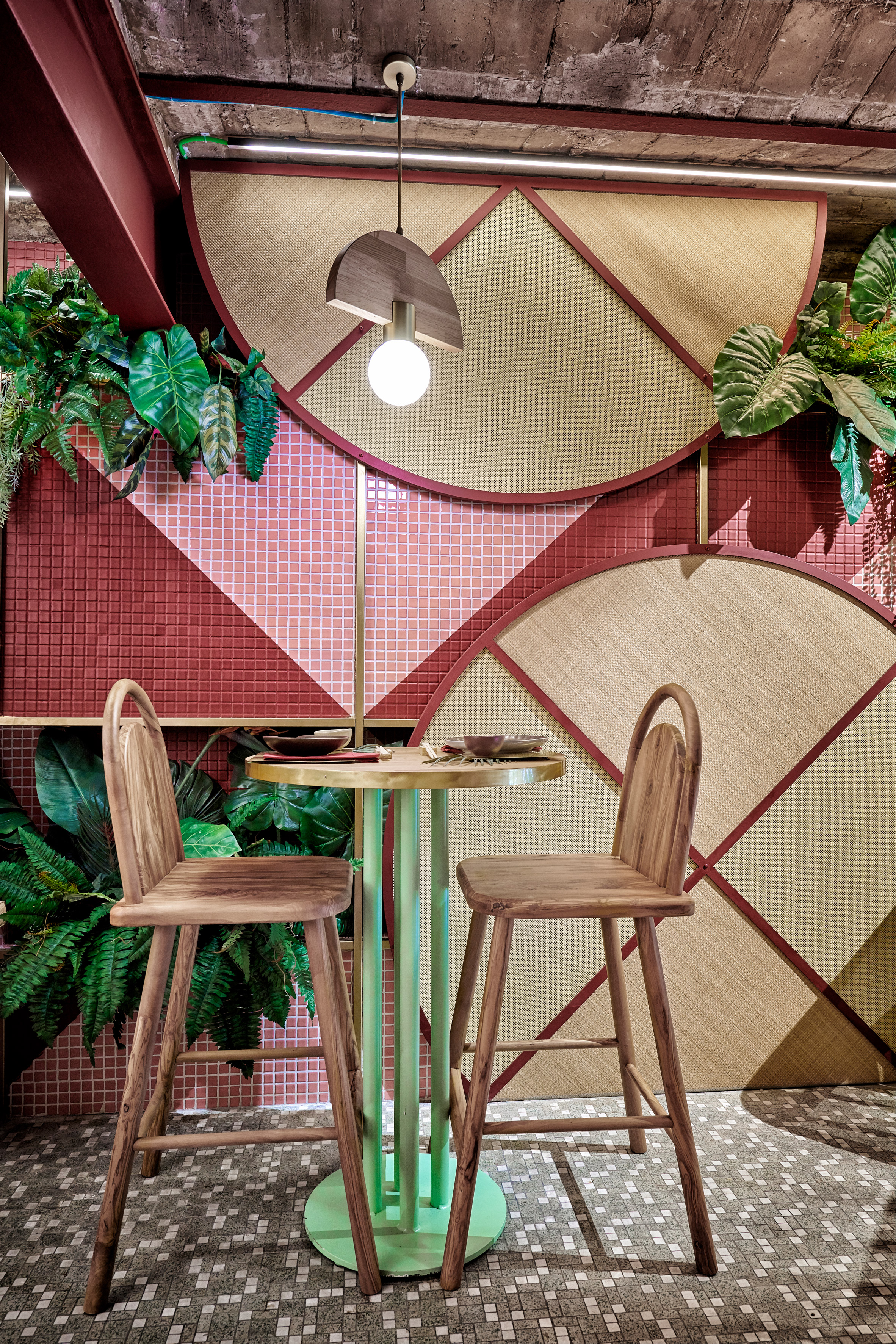
Tiled and raffia-covered walls

Raffia

The Kaikaya sushi restaurant in Valencia, Spain, features large circular panels of raffia across its walls, which Masquespacio designed as a nod to the hats worn by rice field workers in Japan.

Raffia is a durable, renewable and biodegradable fibre obtained from the raffia palm tree that is typically used to make woven textiles, baskets and hats. In this restaurant, it is teamed with wooden furniture, colourful tiles and cascading plants to offer a tropical aesthetic.

Find out more about Kaikaya ›


O'Sullivan Skoufoglou create peach-hued skincare store in England

Cane

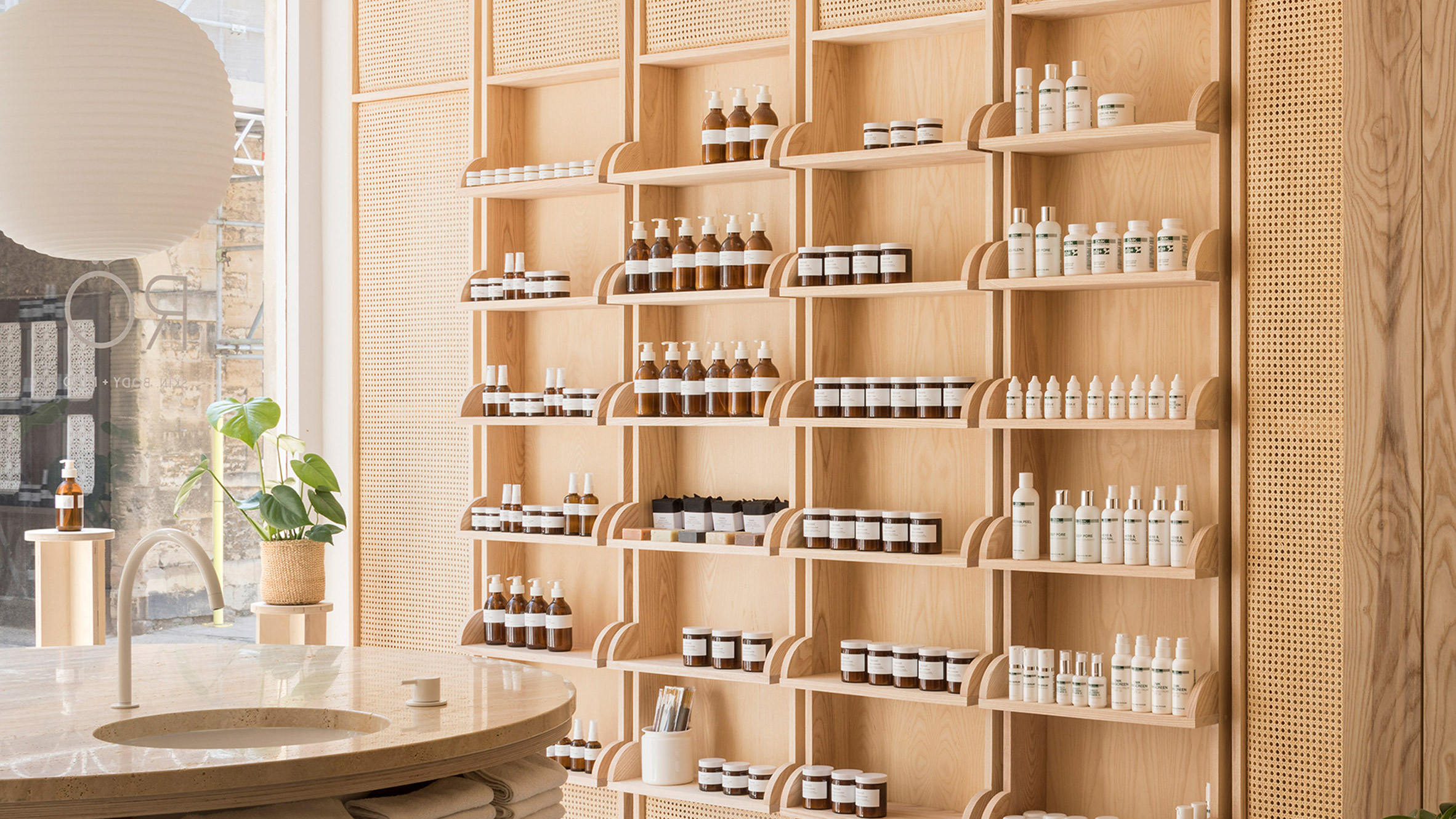
Cane is one of several natural materials used in the pared-back RÖ Skin store by O'Sullivan Skoufoglou Architects. It is sourced from the outer part of the naturally renewable rattan tree and is typically woven to create webbed patterns.

Here it has been mounted within an ash framework to create transparent display units and screens for treatment rooms, offering privacy while maintaining an open, light, earthy interior.

Find out more about RÖ Skin ›


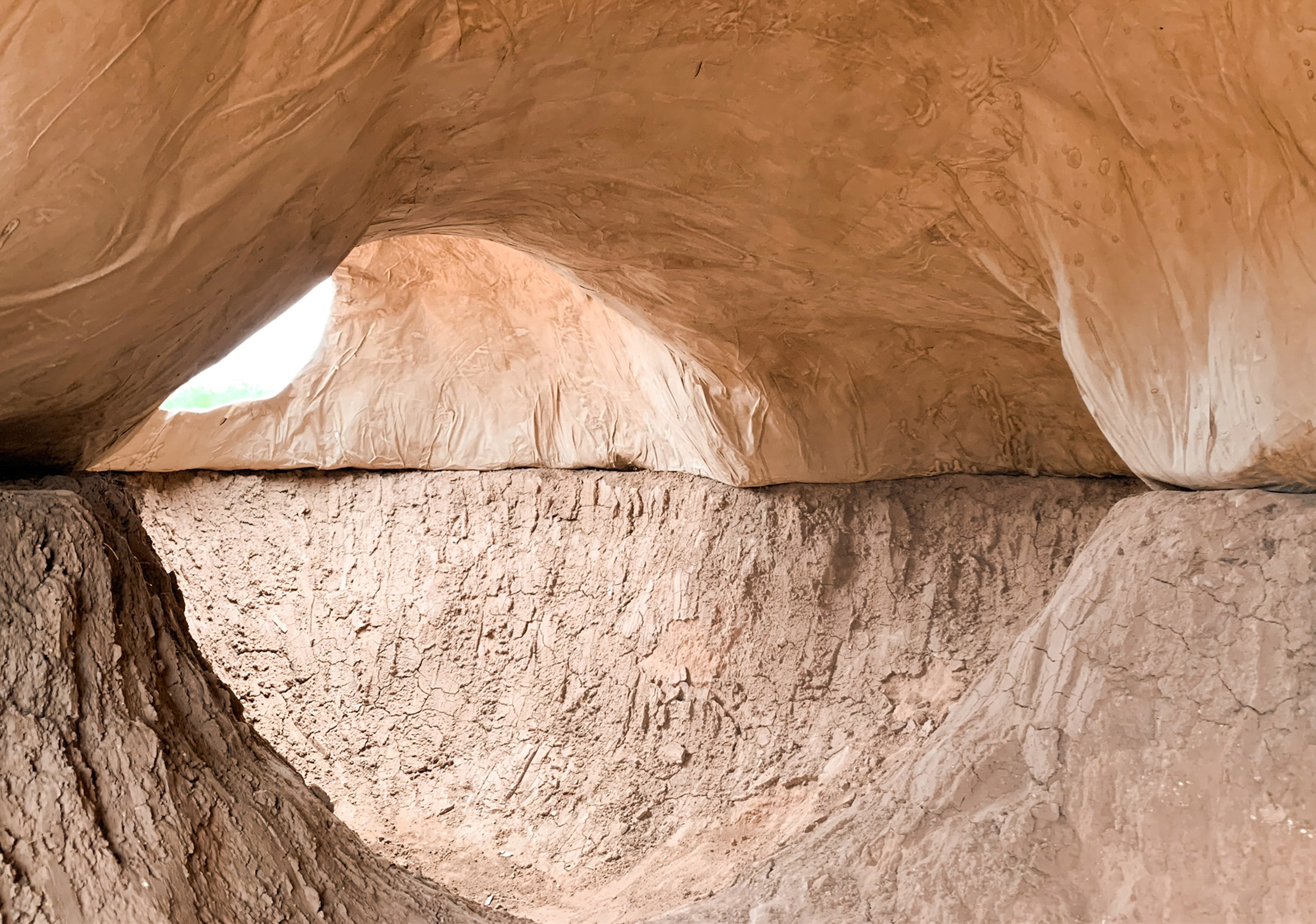
A paper-lined interior

Paper

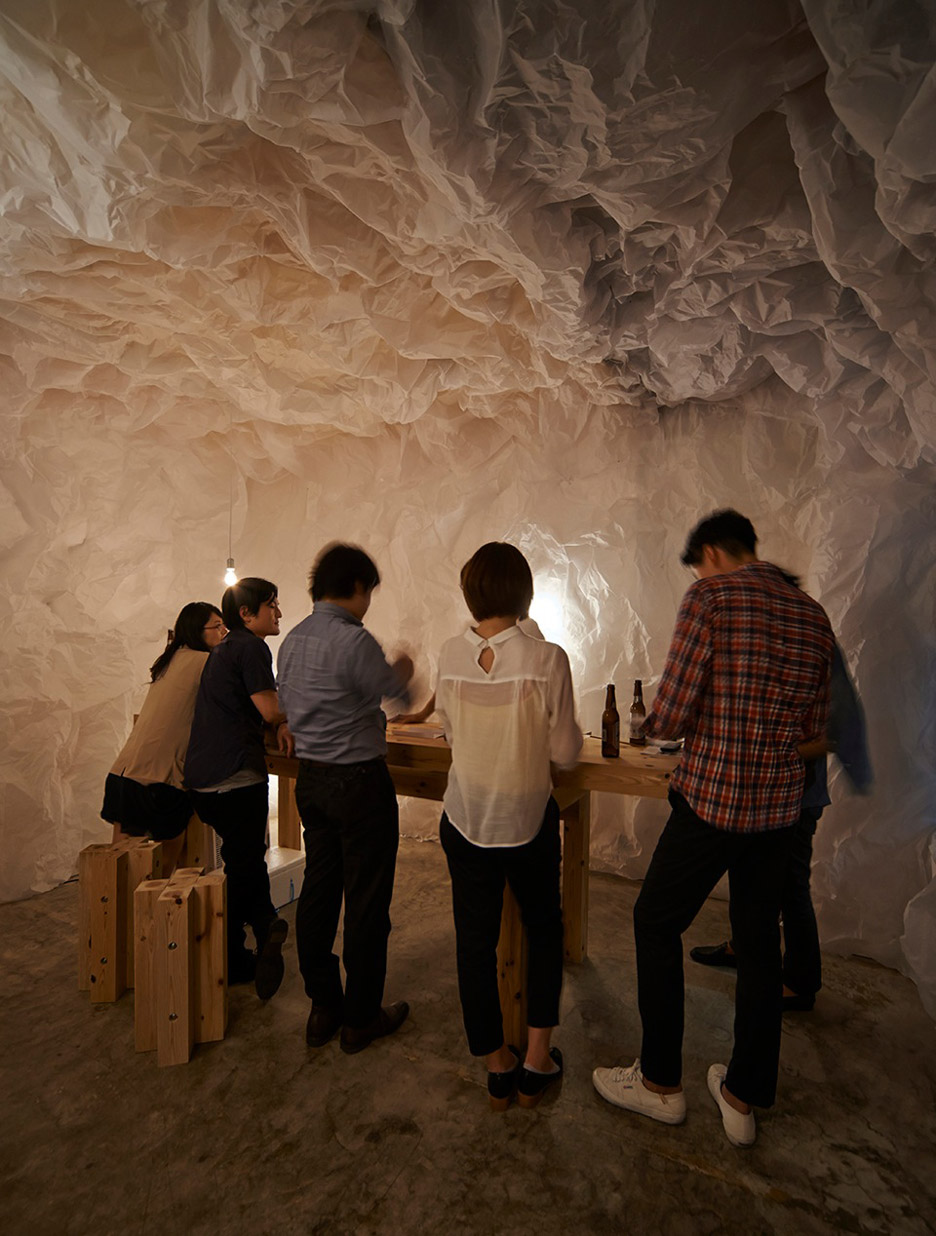
The cosy cave-like atmosphere of the pop-up Yorunoma bar in Japan was achieved by Naoya Matsumoto Design using swathes of crinkly tracing paper.

The paper was crumpled by the studio in collaboration with local residents, giving rise to a textured, rocky appearance. As the bar was created as a pop-up venue, the use of paper ensured the fit-out could be easily recycled after its closure.

Find out more about Yorunoma ›


Ashen Cabin by Hannah

Wood

Wood is the most common biomaterial of all. There are hundreds of examples of how different types of timber have been used by architects and designers in our guide to wood.

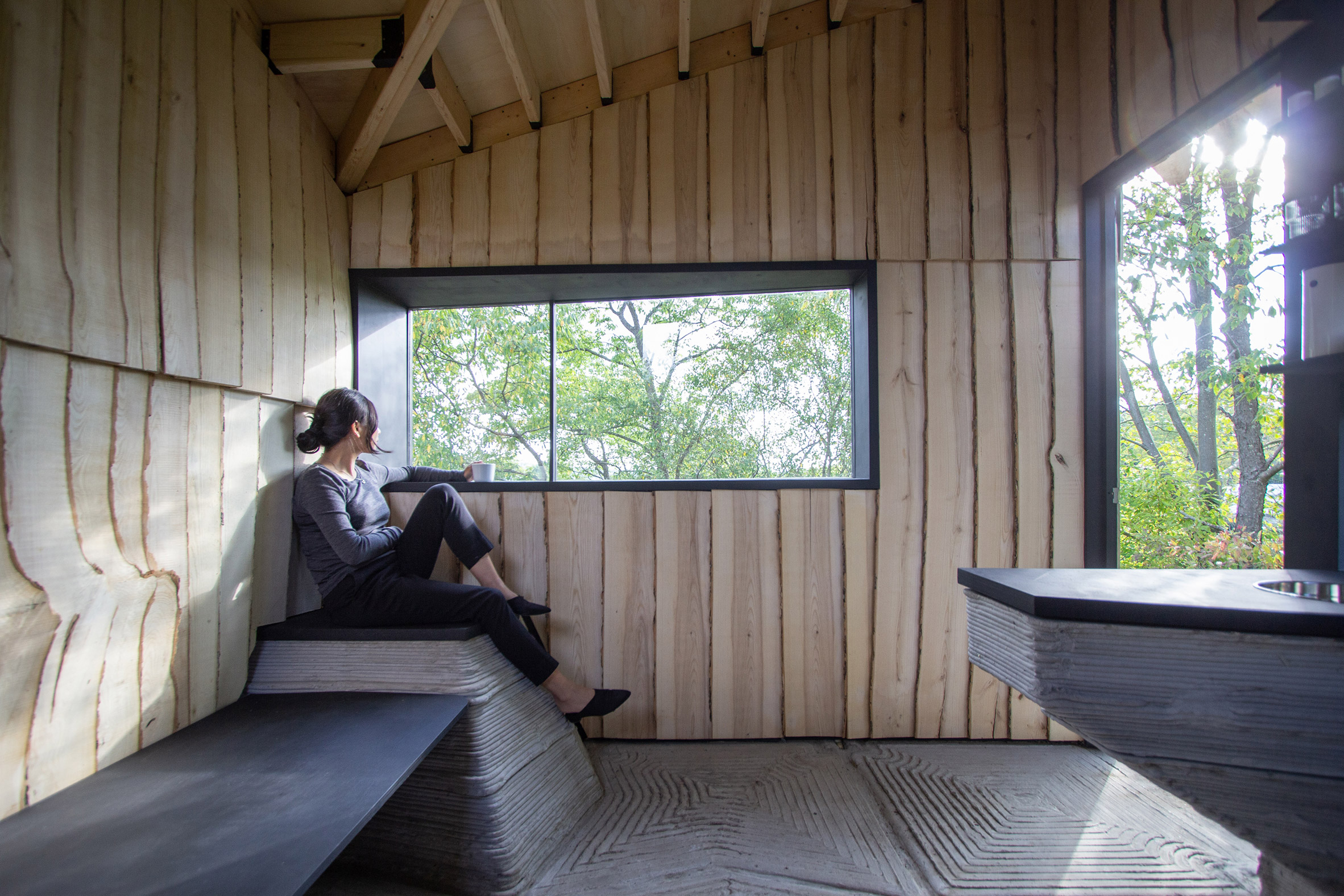
In this example, US architecture studio Hannah used ash damaged by an invasive beetle to create elements of this tiny Ashen Cabin in Upstate New York. The aim was to demonstrate the potential of infested material that would usually be rejected.

"The advantage to using compromised ash for construction is that it both binds the carbon to the earth and offsets the harvesting of more commonly used wood species," the studio told Dezeen.

Find out more about Ashen Cabin ›


Algae tiles

Algae

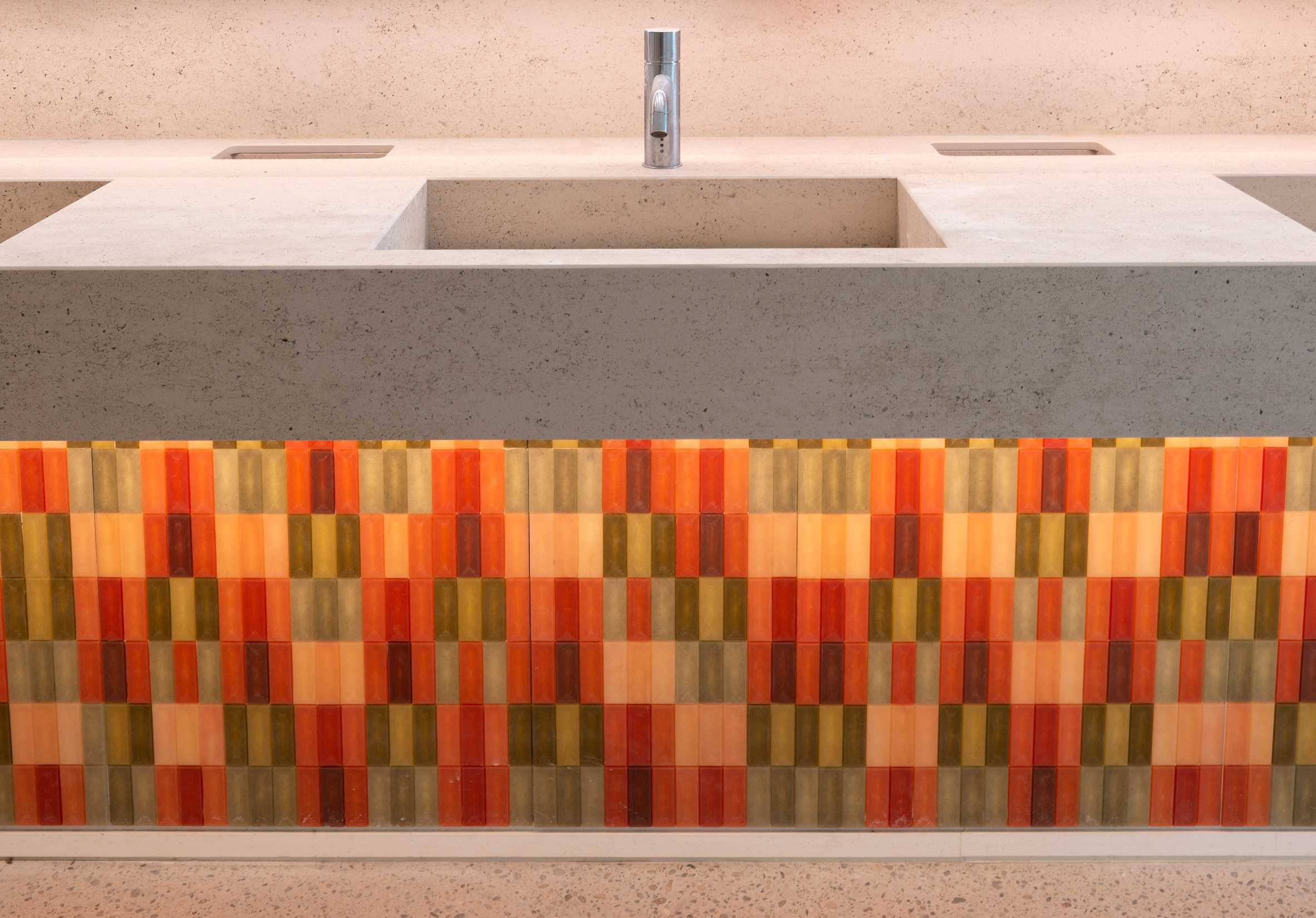
Thousands of injection-moulded algae tiles line the bathrooms in Frank Gehry's tower for Luma Foundation in Arles, France.

They were made by Atelier Luma in 20 colours by harvesting waterborne algae from salt flats in the nearby Camargue nature reserve. As algae consume and store CO2 as they grow, the tiles help lower the carbon footprint of the building's interior fit-out. The project also makes use of tiles made from salt and acoustic panels made from sunflowers.

Find out more about Atelier Luma's interiors ›


This is the latest in our series of lookbooks providing curated visual inspiration from Dezeen's image archive. For more inspiration see previous lookbooks showcasing L-shaped kitchenscalm living rooms and colourful kitchens.

The post Ten tactile interiors that make use of biomaterials appeared first on Dezeen.


from Dezeen https://ift.tt/3wLzr4Y