Sunday, 18 July 2021

University of Central Lancashire highlights ten student architecture projects

University of Central Lancashire

A glassmaking studio that also works as a community centre and a creative hub that produces ceramic lamps are featured in Deezen's latest school show by students at the University of Central Lancashire.

The projects, which are all located in Blackpool and explore themes of inequality, sustainability and tourism, also include exhibition spaces and a model-boat workshop.


University of Central Lancashire

School: University of Central Lancashire, Grenfell-Baines Institute of Architecture
Course: BSc (Hons) Architecture
Tutors: Lee Ivett, Adrian Friend and Eddie Blake

School statement:

"Based at the university's Grenfell-Baines Institute of Architecture, we provide an innovative, creative and critical architectural education that explores the pressing issues of our time from a local and global perspective. This provides a comprehensive grounding in design, theory, history and building technology."

"Post-industrialisation, poverty, sustainability, inequalities, tourism, the relationship between town and country, digital media and emerging technologies are amongst the issues explored in the course. We have an active dedication to enlarging and diversifying participation in the subject and profession of architecture."

University of Central Lancashire

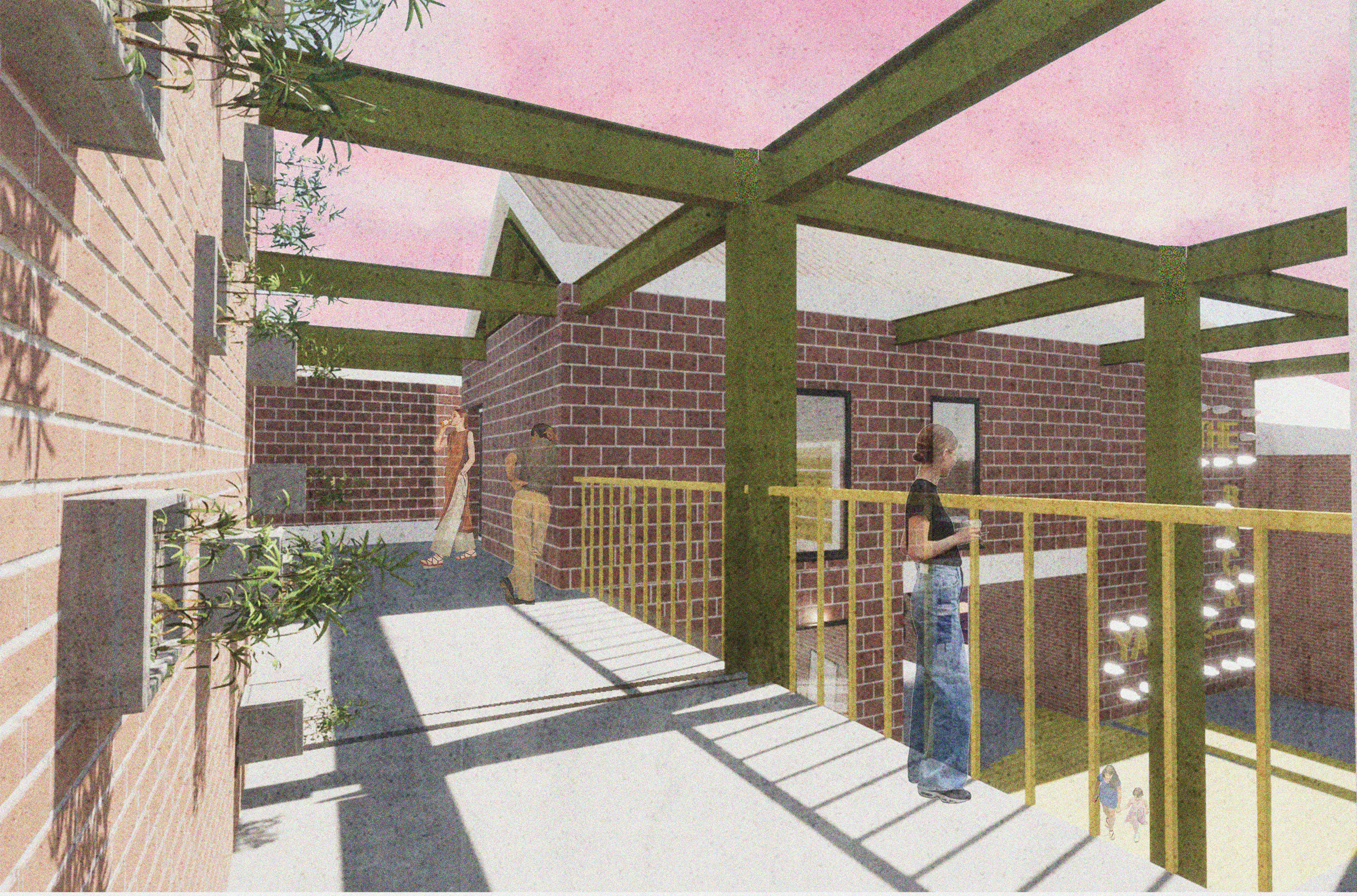
Made in Blackpool by Robyn Platt-Lambert

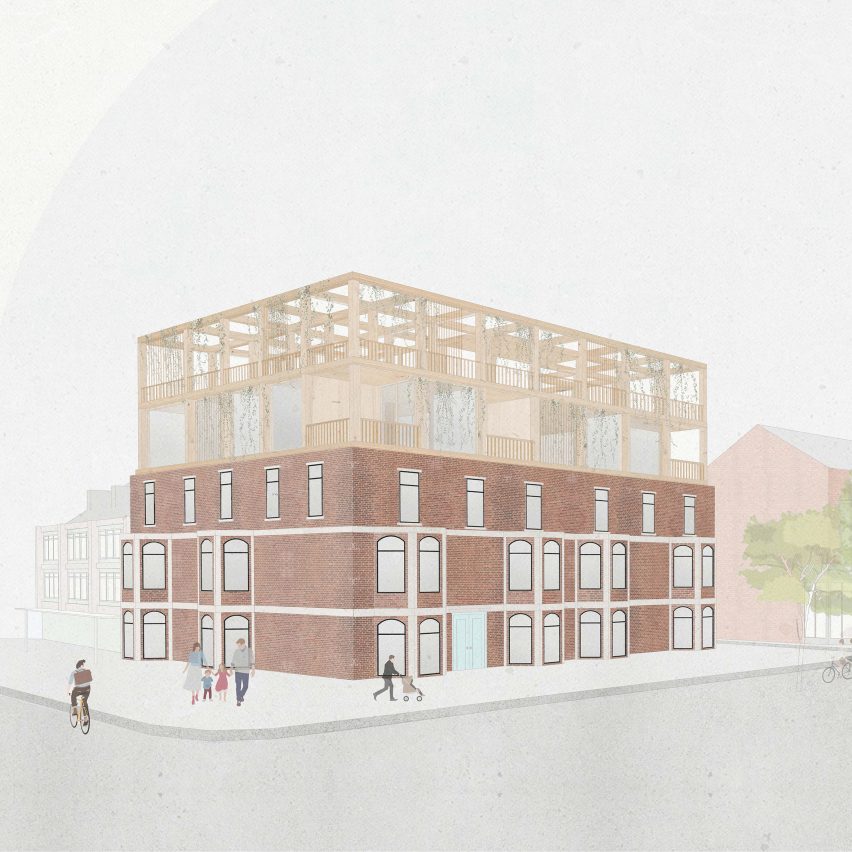
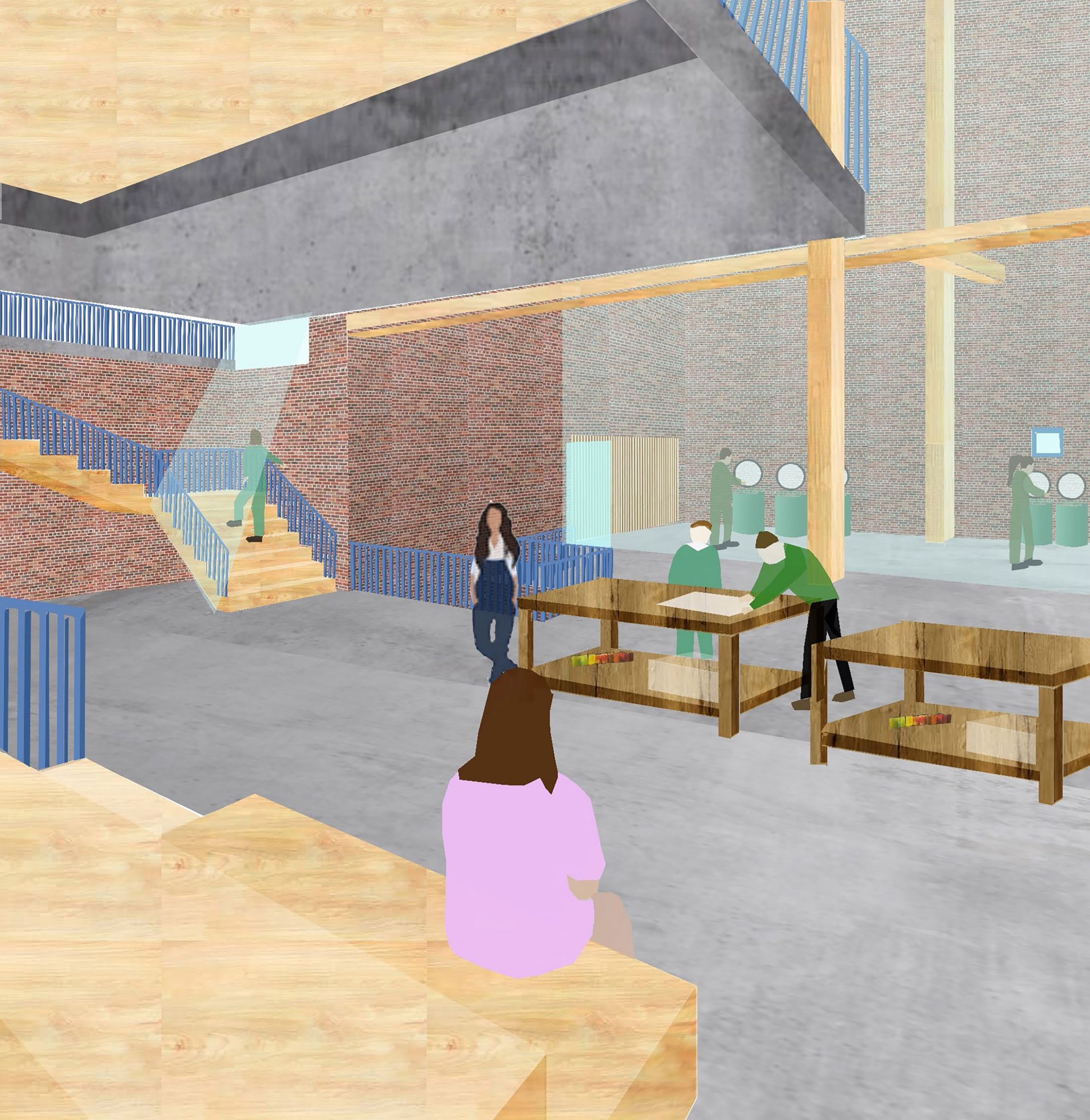
"This building offers a space to learn glassmaking skills and allows artists to promote their work via a shop.

"The proposal offers a community space that engages, educates and empowers. It is a space where artefacts are made and is a place where artists can design, learn and sell their work.

"The project proposes the retention of the external fabric of a derelict series of guesthouses. It introduces a new wooden structural frame into the void of the building as a means to organise the programme in plan and section.

"The introduction of what is new is ambiguously expressed as an architectural language on the building's facade – an approach continued through the reuse of brick and other demolition materials."

Student: Robyn Platt-Lambert
Course: BSc (Hons) Architecture
Tutors: Lee Ivett and Adrian Friend
Email: robynlambert17[at]gmail.com

University of Central Lancashire

The Backyard by Ayomini Oredugba

"The project is a space to make, learn and celebrate the memory of 'having a good time in Blackpool'.

"It is a means to empower marginalised communities and bring tourists and residents together while learning about the consequences of a 'good time drinking in Blackpool.'

"The project is an open-plan exhibition space with plinths and a threshold space connecting three streets. It also includes a workshop for producing artefacts on a separate block with manufacturing facilities.

"What makes the programme compelling is how the different areas of the building are physically detached but socially integrated."

Student: Ayomini Oredugba
Course: BSc (Hons) Architecture
Tutors: Lee Ivett, Adrian Friend and Eddie Blake
Email: oayomini[at]yahoo.com

University of Central Lancashire

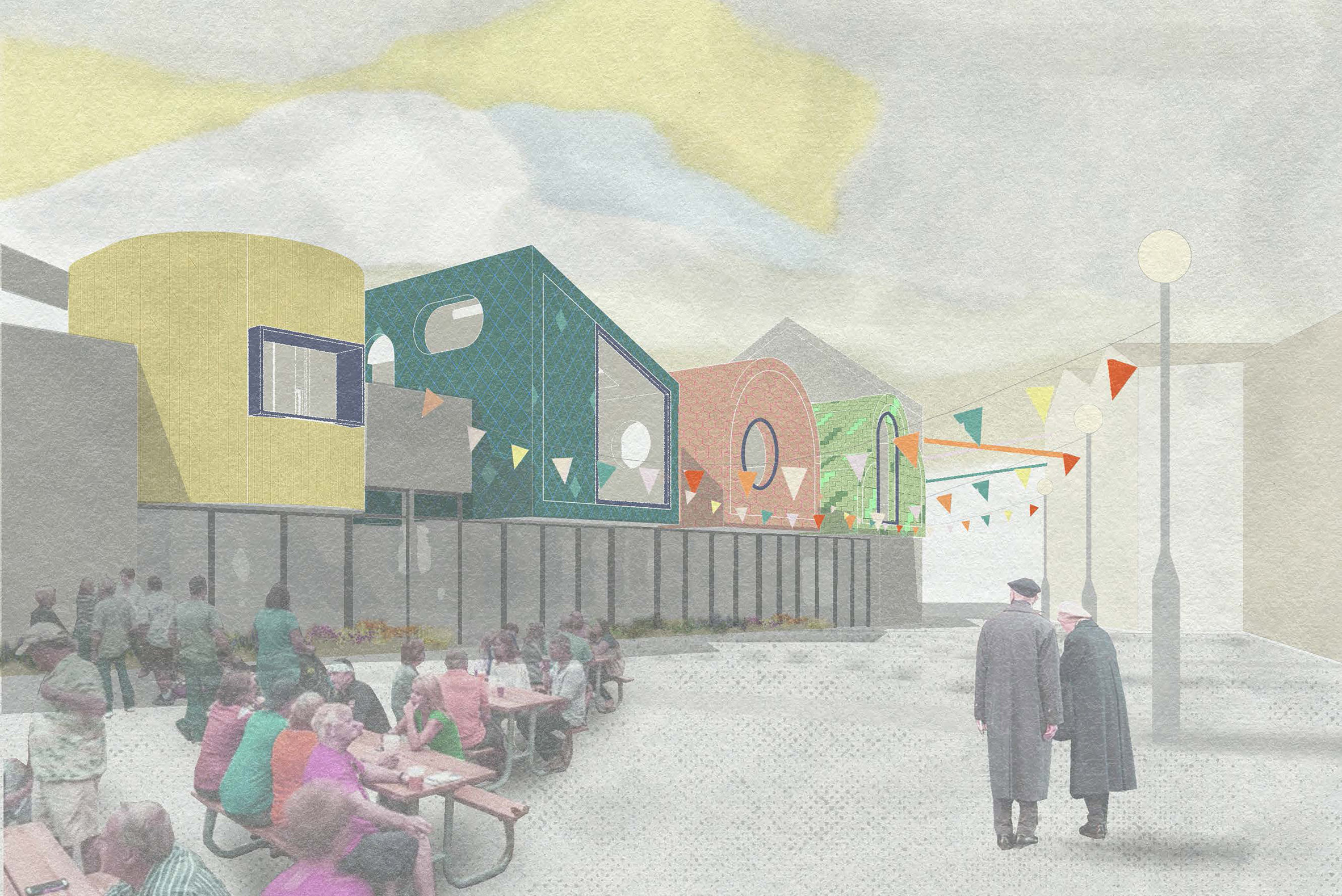
Blackpool Ceramics Studio by Isabella Robinson

"This project explores the existing economic, social and environmental experiences in Blackpool. It aims to provide a design that supports and enhances the lived experience of residents who the area's declining economy has let down.

"A new creative production hub that produces handmade ceramic base lamps is an opportunity for the town to enjoy a facility that promotes sustainable employment opportunities and a connected community.

"The design creates and activates new public spaces that connect newly pedestrianised streets in the town centre. Ceramics are used as a facade across the hub, expressing the programme while referencing Blackpool's traditional architecture."

Student: Isabella Robinson
Course: BSc (Hons) Architecture
Tutors: Lee Ivett, Adrian Friend and Eddie Blake
Email: izzyrobinsonart[at]gmail.com

University of Central Lancashire

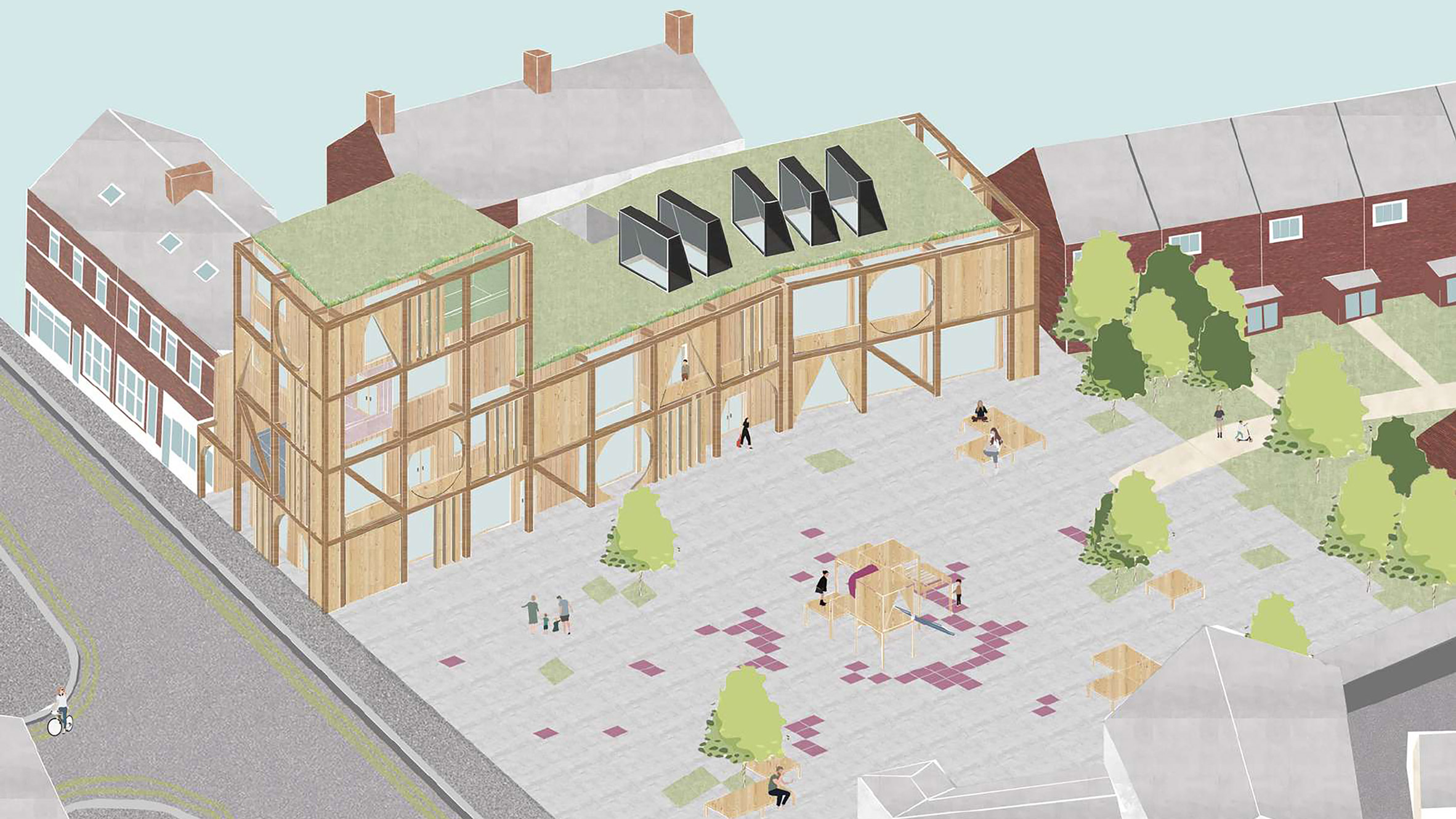
Blackpool Textile and Print Studio by Ellie Watson

"Watson has developed a personalised screen-printed tote bag. Here, visitors can develop their design and learn the process of sewing and screen printing."

"This project also explores the idea of creating a workshop space for the local children to learn and create. This proposal provides a landscape that includes a playground and additional seating that acts as a middle ground between maker space, pub and residential housing towards the back of the site.

"As well as developing a space that can be used for teaching, the site also has direct access to neighbouring schools. This allows children to use the workshop facilities, providing space and opportunities for local people to learn and improve their skills."

Student: Ellie Watson
Course: BSc (Hons) Architecture
Tutors: Lee Ivett, Adrian Friend and Eddie Blake
Email: ellienwatson[at]outlook.com

University of Central Lancashire

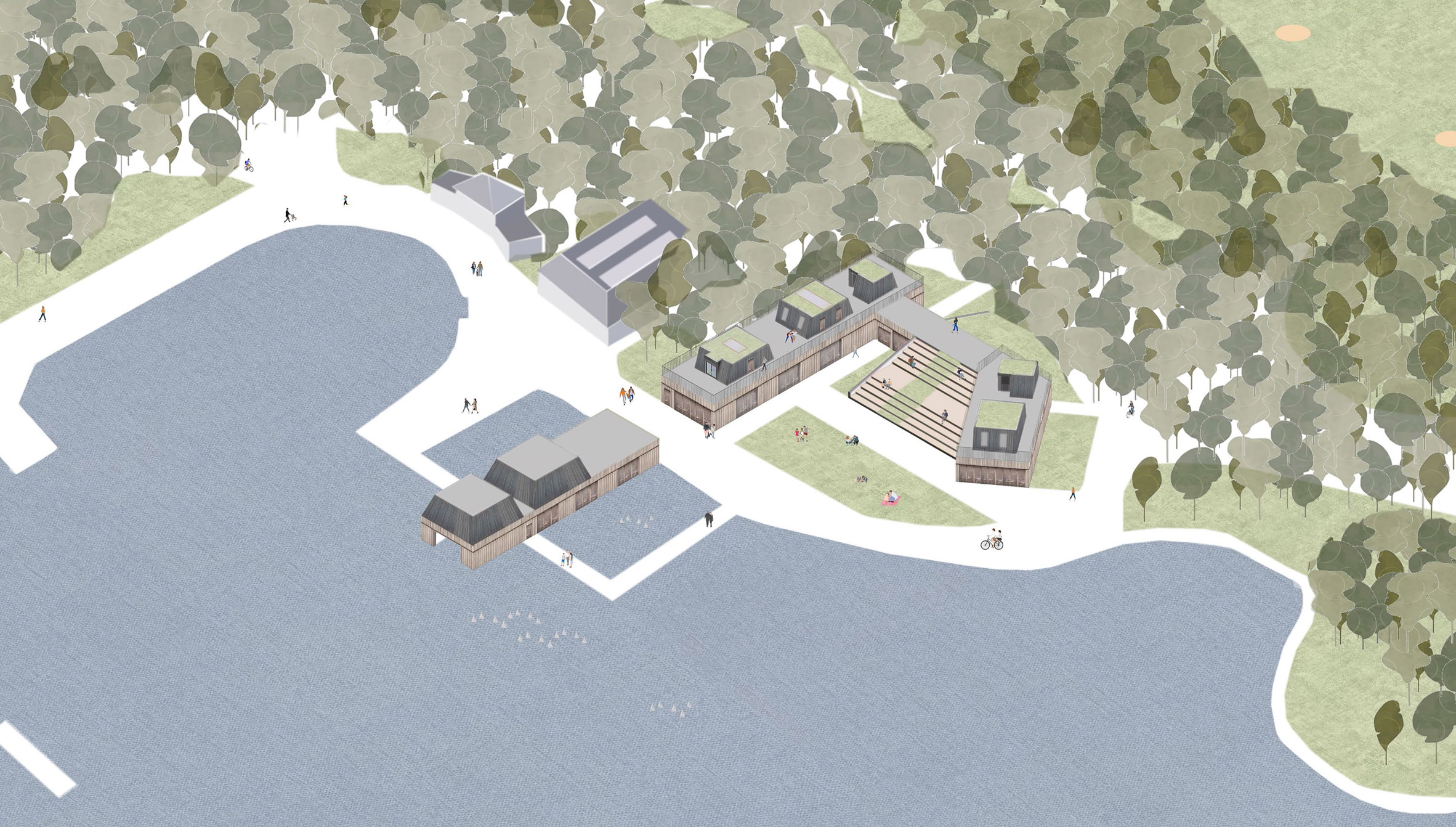
Stanley Park Model Boat Workshop and Clubhouse by James Horrocks

"This project explores Blackpool to understand the characteristics that constitute a place. It also analyses how to create ideas for new creative and productive building typologies.

"The souvenirs I have chosen to produce in my community 'maker space' are small model boats. These model boats can be produced by all ages and abilities.

"The boats can be customised and themed to your personal preference with your choice of colours, imagery and size that best describes your Blackpool experience.

"The creative space will also cater for competitive model yachters. A clubhouse and workshop for members will be added into the community maker space."

Student: James Horrocks
Course: BSc (Hons) Architecture
Tutors: Lee Ivett, Adrian Friend and Eddie Blake
Email: j.horrocks[at]talktalk.net
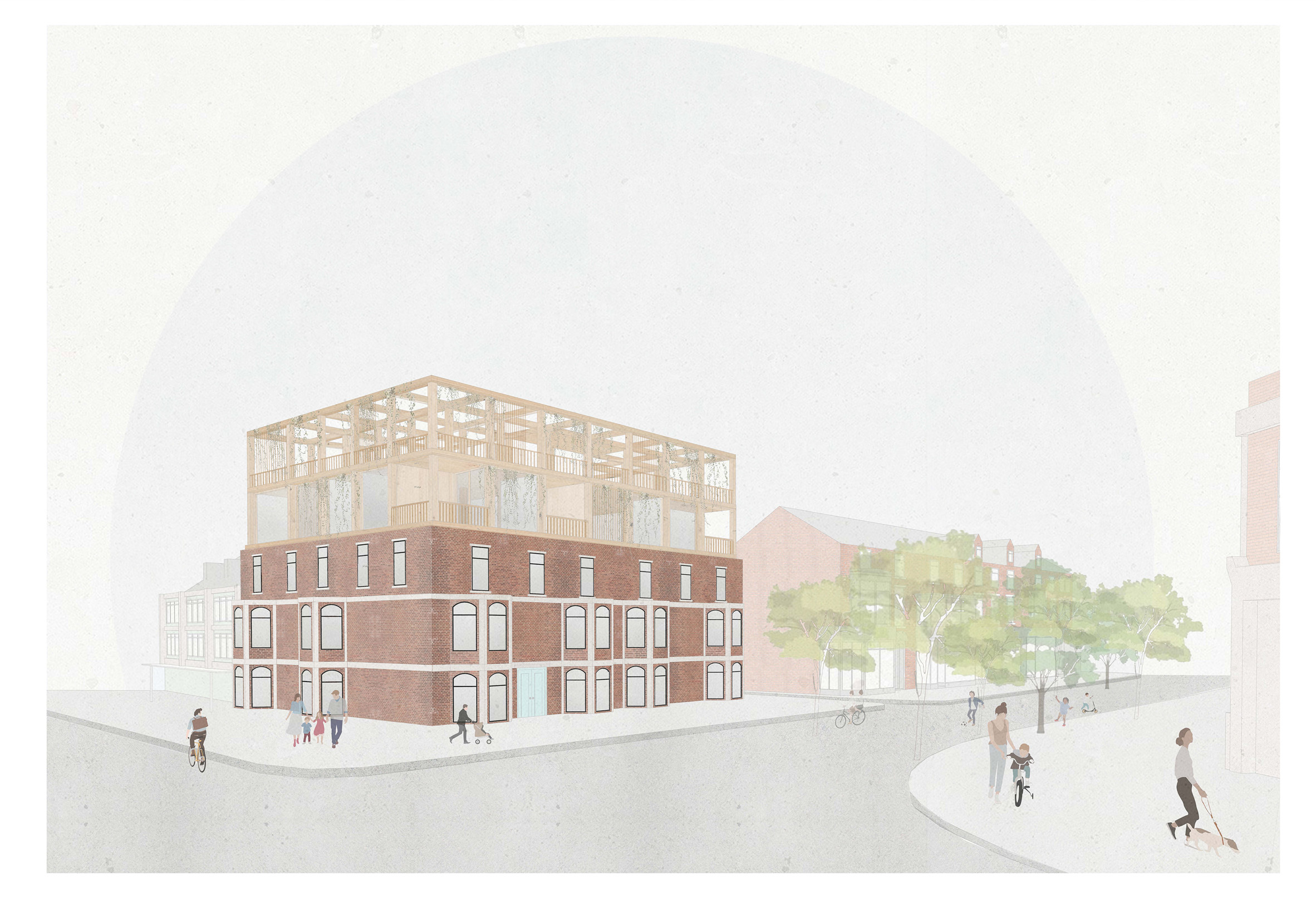

University of Central Lancashire

Guesthouse Retro-fit by Patrycja Wolak

"This project aims to build upon knowledge of Blackpool and continue a critical and creative analysis of its territory.

"Located in the centre of Blackpool, the place for crafting aims to appeal to local families, providing guidance, education and opportunities for future employment.

"Lino prints are produced as souvenirs in the form of postcards and posters that are made and sold on-site.

"The strategy for this design was to minimalise carbon dioxide production in the construction process by engaging in the reuse of the existing buildings on site and usage of environmentally friendly materials."

Student: Patrycja Wolak
Course: BSc (Hons) Architecture
Tutors: Lee Ivett, Adrian Friend and Eddie Blake
Email: patrycjawolak1[at]gmail.com
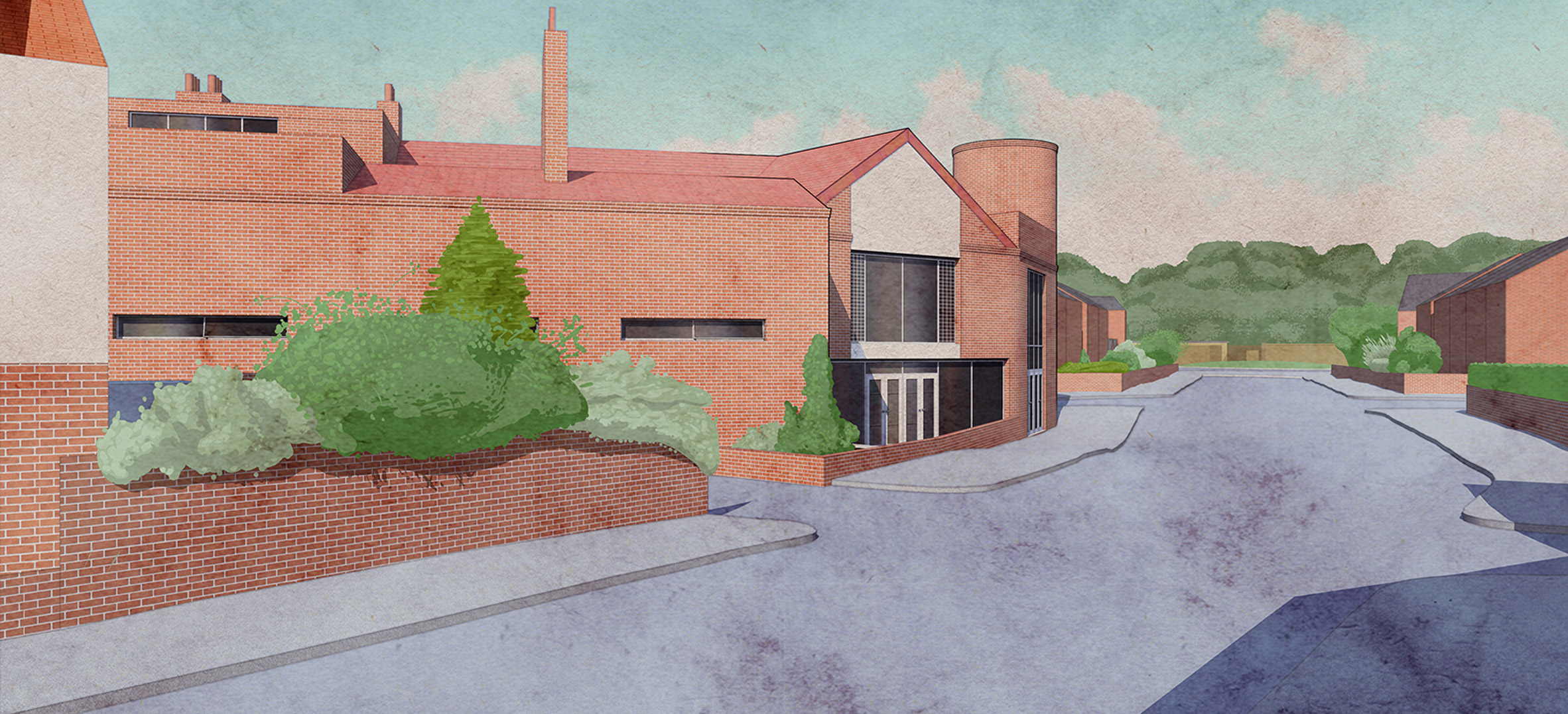

University of Central Lancashire

Made in Blackpool by Morgan Yates

"This project integrates the act of making into an area of Blackpool that is at the intersection of working-class and suburban housing typologies.

"The building provides workshop, studio and retail space to create metalware brooches using recycled aluminium. The theme of reuse is continued with the adoption of three existing terraced houses into the wider scheme.

"The visual language of this project references and accentuates the local roads, alleyways and the skyline created by the chimneys."

Student: Morgan Yates
Course: BSc (Hons) Architecture
Tutors: Lee Ivett, Adrian Friend and Eddie Blake
Email: morgan.reece.yates[at]gmail.com
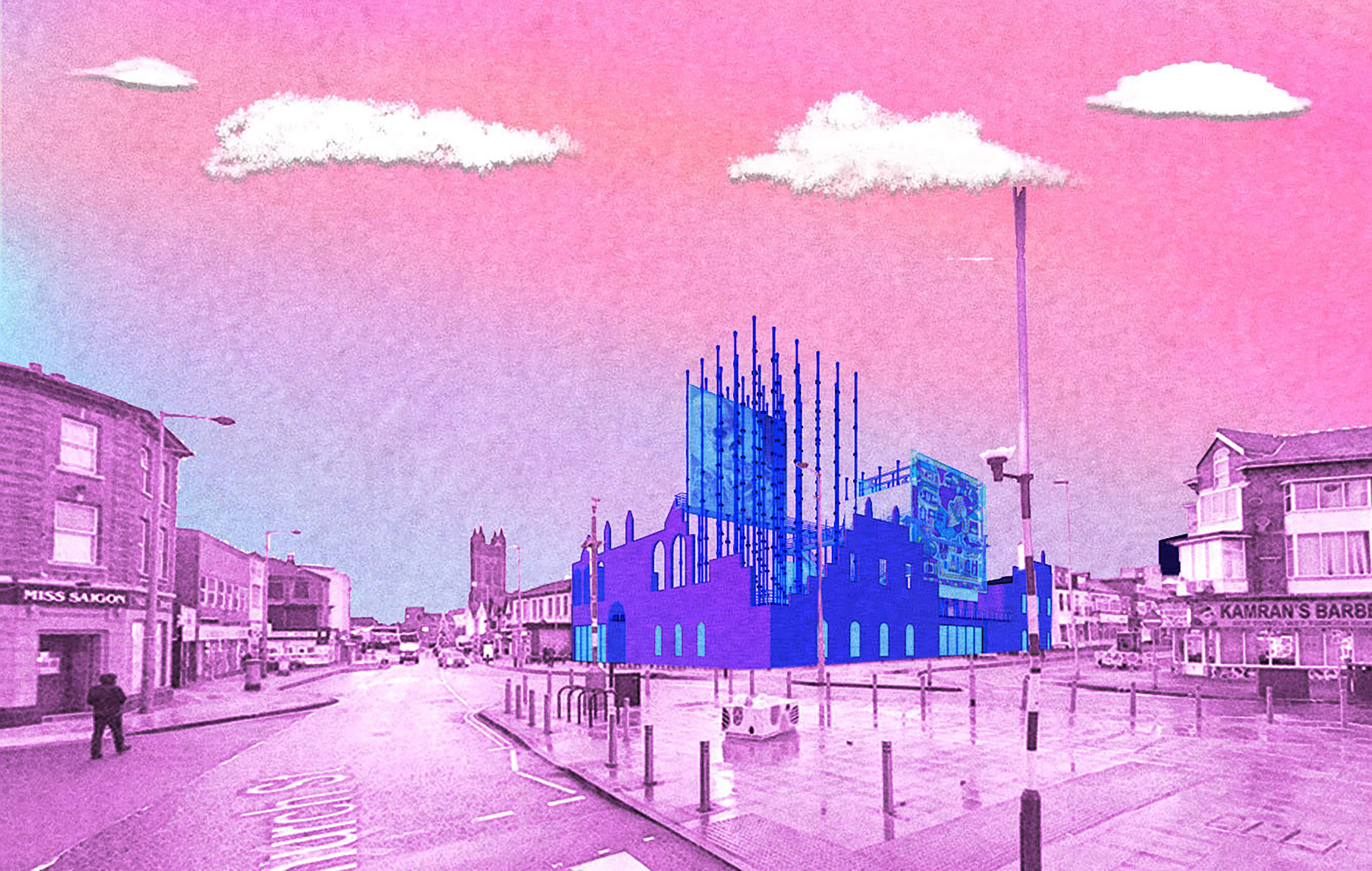

University of Central Lancashire

Blackpool Urban Art Park and Workshop by Michael Lasslett 

"This project is derived from observing existing graffiti and urban art culture in Blackpool through the documentation of large scale murals on buildings adjacent to the site.

"The building establishes a new public space on a derelict site currently used as a car park. This space utilises a language of temporary structures through the application of fake temporary work infrastructure and scaffolding.

"These structures become a device to host large scale canvases, walkways and platforms for local and invited artists to produce work with the local community.

"This work is then translated into smaller-scale pieces using the screen printing studios and workshops provided within the new building. The building references the previous entertainment complexes that have stood on the site and Blackpool's 'fake facades' along the promenade.

"Scale and grandeur is returned to what was previously a prominent corner in the town but with a subversive attitude centred around artistic agency and empowerment."

Student: Morgan Yates
Course: BSc (Hons) Architecture
Tutors: Lee Ivett, Adrian Friend and Eddie Blake
Email: mjl99[at]outlook.com
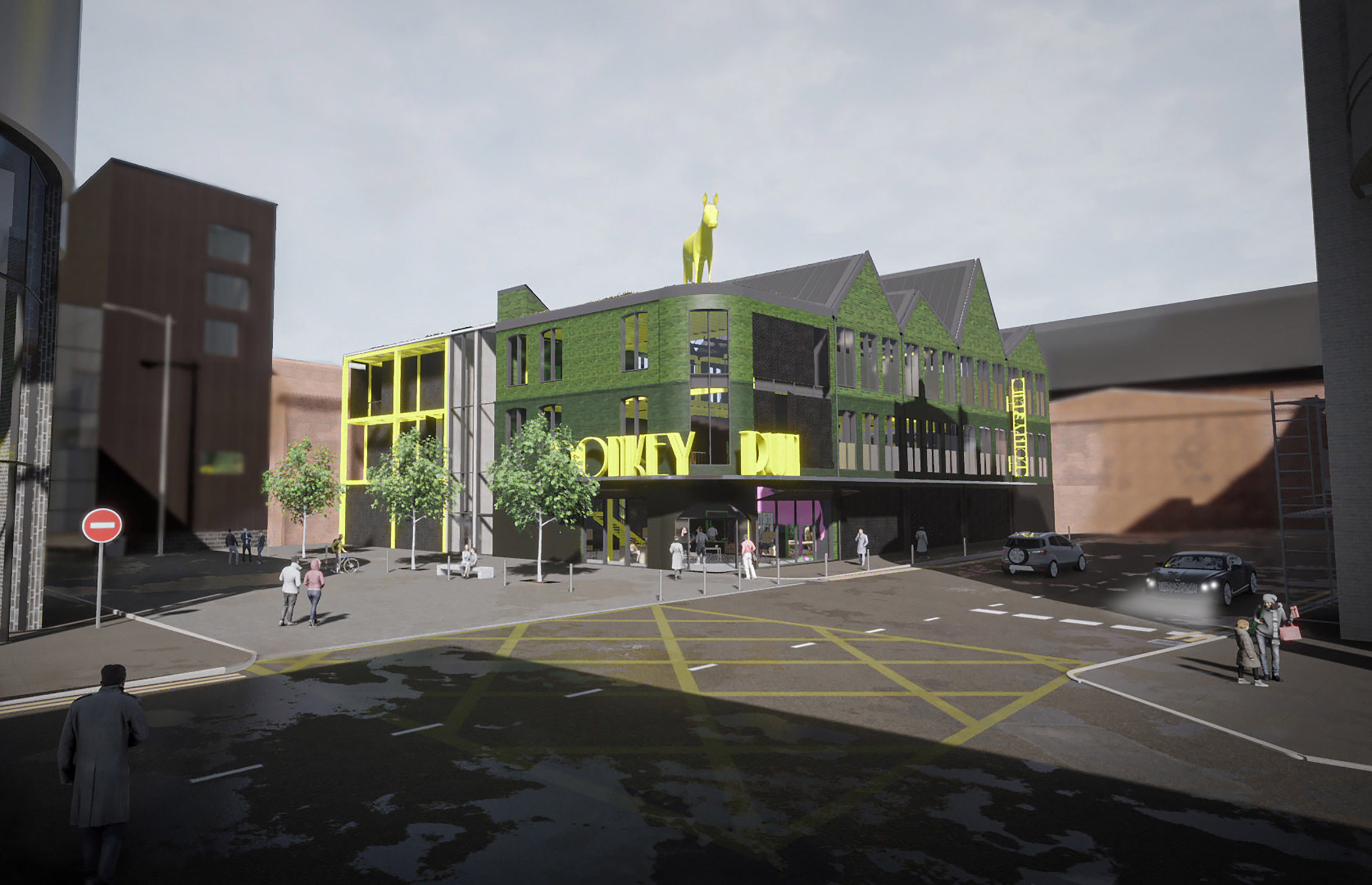

University of Central Lancashire

Donkey Run by Rainer Townend

"Craft and carpentry with a 'hint of the ridiculous' inform the design of a new town centre typology. It provides carpentry workshops, retail space and living accommodation and is centred around the production of a new game.

"The game called 'donkey run' references the seaside culture in the nearby amusement arcades.

"The building develops an architectural language through the considered and creative integration of painted steelwork found on the piers and rides with the glazed brick and fence facades of Blackpool's historical civic and retail typologies."

Student: Rainer Townend
Course: BSc (Hons) Architecture
Tutors: Lee Ivett, Adrian Friend and Eddie Blake
Email: rainert123[at]gmail.com
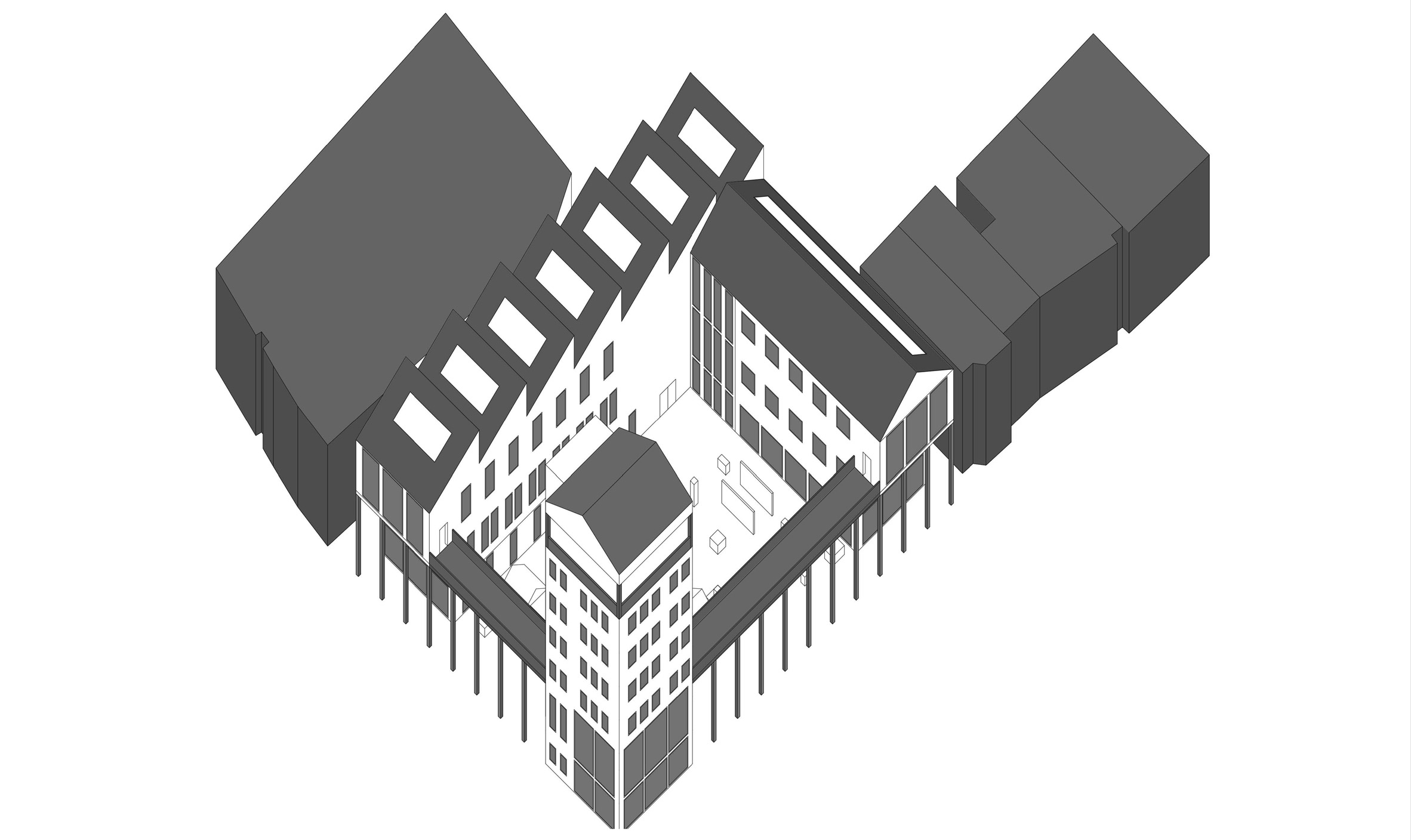

University of Central Lancashire

Courtyard and Colonnade by Ace Santiago

"The experience visiting, working and living in Blackpool informs this proposal.

"This project revolves around resin casting and the display of these objects to the public. This project gives visitors and residents a chance to learn about, create and take home a piece of the 'Blackpool experience'.

"The architecture is formed of three main spatial and formal elements: a tower, arcade and courtyard.

"Each is used as a device to establish territory whilst also inviting an engagement with the functions, activities and amenities of the building."

Student: Ace Santiago
Course: BSc (Hons) Architecture
Tutors: Lee Ivett, Adrian Friend and Eddie Blake
Email: ace.santiago[at]hotmail.co.uk


Partnership content

This school show is a partnership between Dezeen and the University of Central Lancashire. Find out more about Dezeen partnership content here.

The post University of Central Lancashire highlights ten student architecture projects appeared first on Dezeen.


from Dezeen https://ift.tt/3evBKmA

Selencky Parsons reconfigures London house to create affordable co-living for music students

Communal living spaces in Bravura House by Selencky Parsons

Seven post-graduate music students share living spaces, study areas and a sound-proofed rehearsal room in this north London house, which has been converted by architecture studio Selencky Parsons.

The Bravura House and Rehearsal Room project involved refurbishing and extending an early-20th-century house and installing a new purpose-built music room in the garden.

Communal living spaces in Bravura House by Selencky Parsons
The house features several adjoining communal spaces

Selencky Parsons, led by architects Sam Selencky and David Parsons, saw the project as an opportunity to bring new thinking to the shared house typology.

Designed specifically to suit a group of cohabiting students, it combines large en-suite bedrooms with a range of communal spaces, so that residents can live and work alongside each other, but also find solitude when they need it.

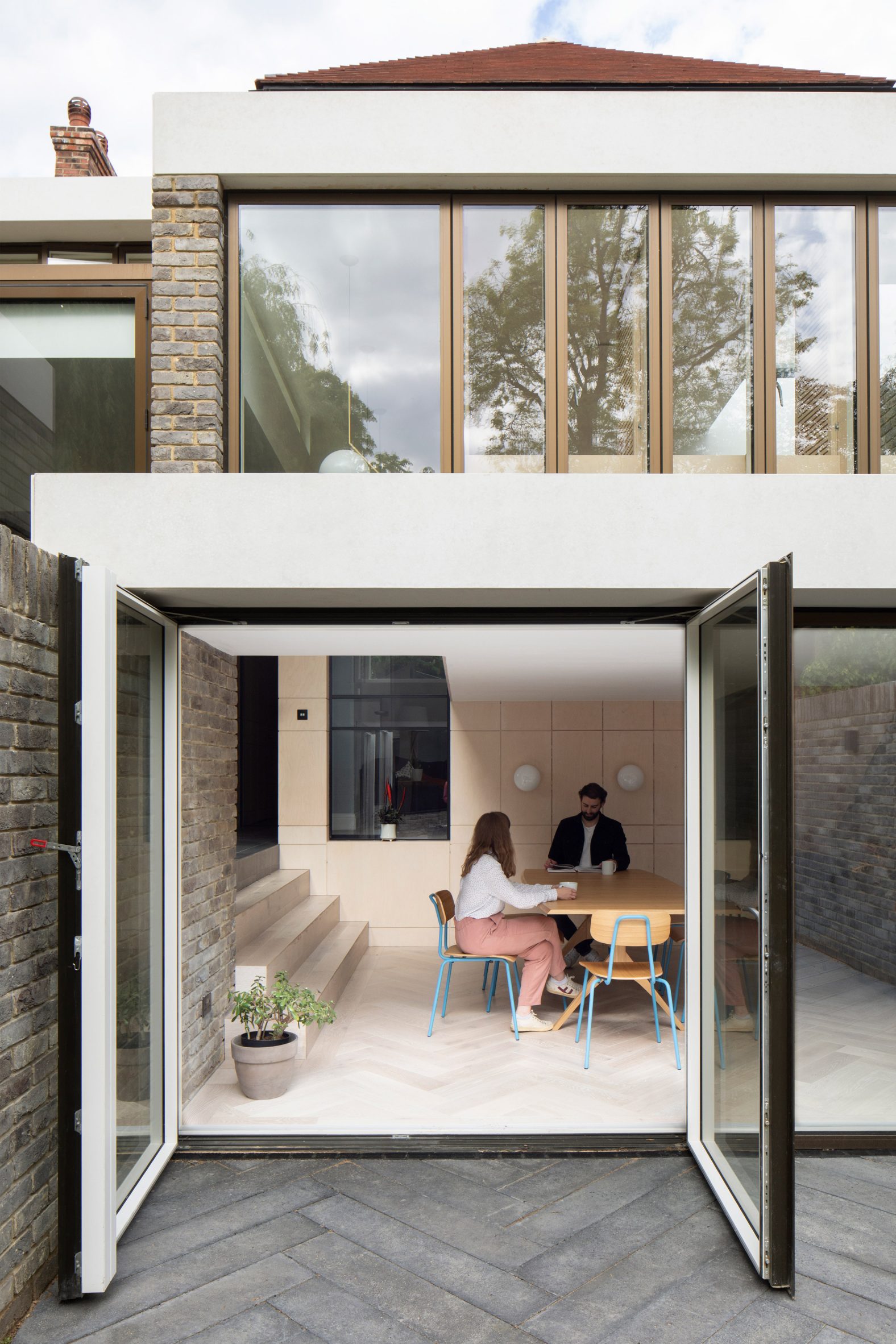
Sunken dining room in Bravura House by Selencky Parsons
A sunken dining room opens out to the garden

"It was key to bring a sense of community to the house whilst also respecting the needs of an individual's space," said Sam Selencky.

"This led to a plan that allowed for seven generously sized student rooms with integrated private bathrooms, combined with a good-sized shared living area where each function has its own identity but feels connected," he told Dezeen.

"We also had a strong desire to try and integrate a workspace into the designs, so that the students had the option of working in their rooms or using the shared workspace when they feel like having some company," he added.

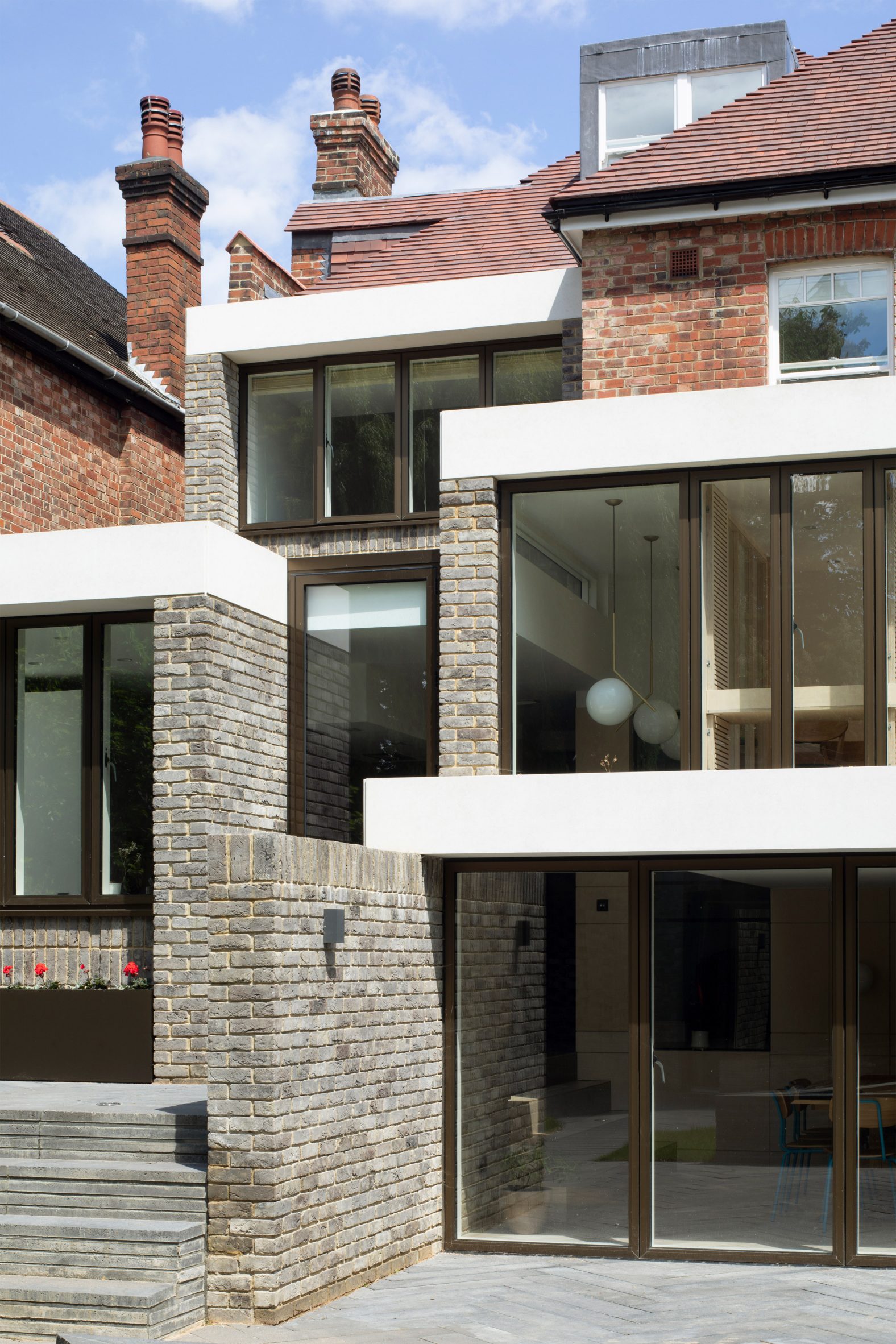
Rear facade of Bravura House by Selencky Parsons
Grey handmade bricks form the walls of the building extension

The client for the project was the Amar-Franses Foster-Jenkins Trust, which provides scholarships and bursaries to post-graduate students in the arts and sciences.

The trust had recently taken a decision to change the way it houses its award students, by offering them high-quality accommodation at a subsidised rent. Bravura House was the first property developed for this approach.

"The brief was to create a home that went beyond the often sterile and cramped conditions of some typical student accommodation," said Selencky.

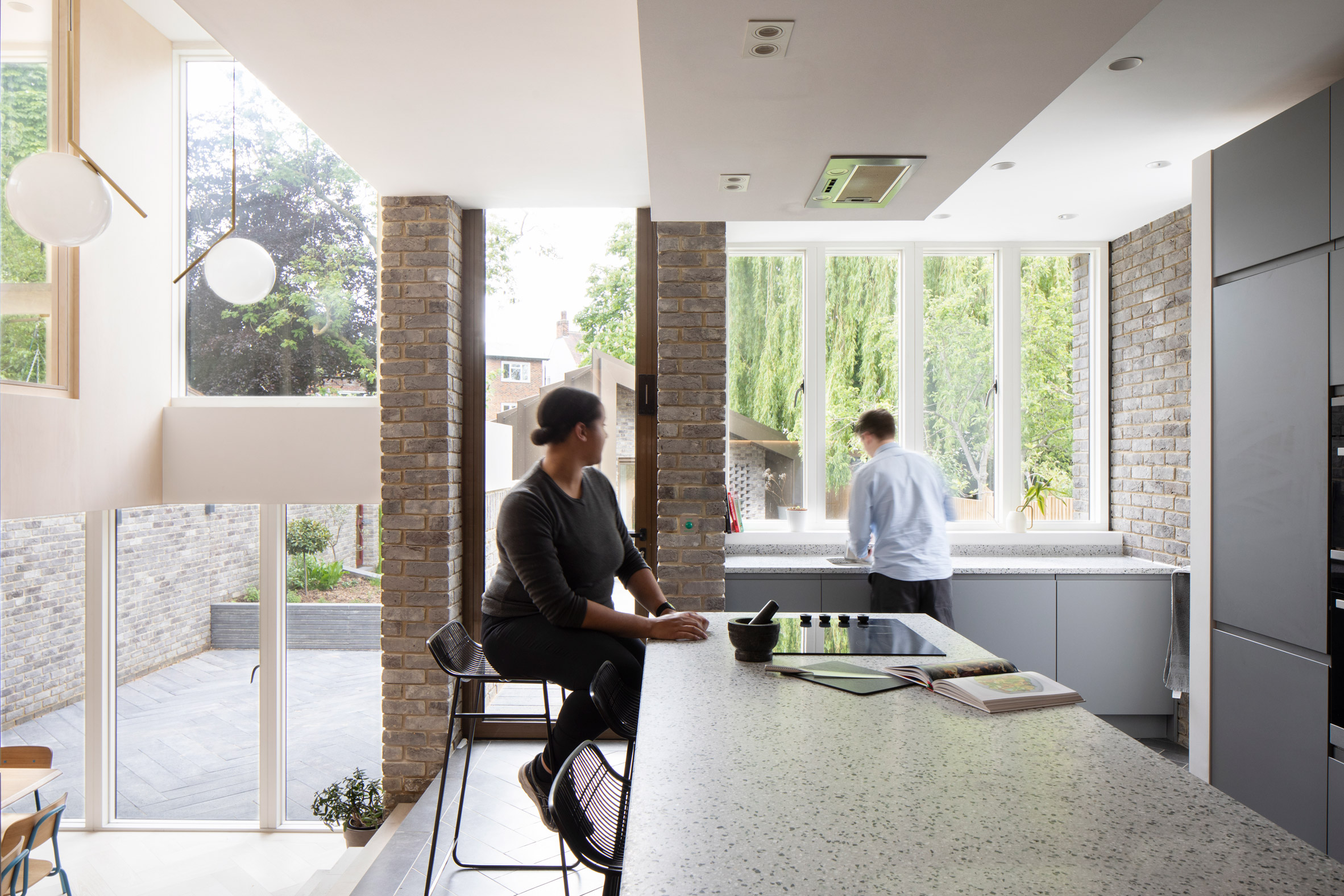
Kitchen counter in Bravura House by Selencky Parsons
Large windows bring in plenty of natural light

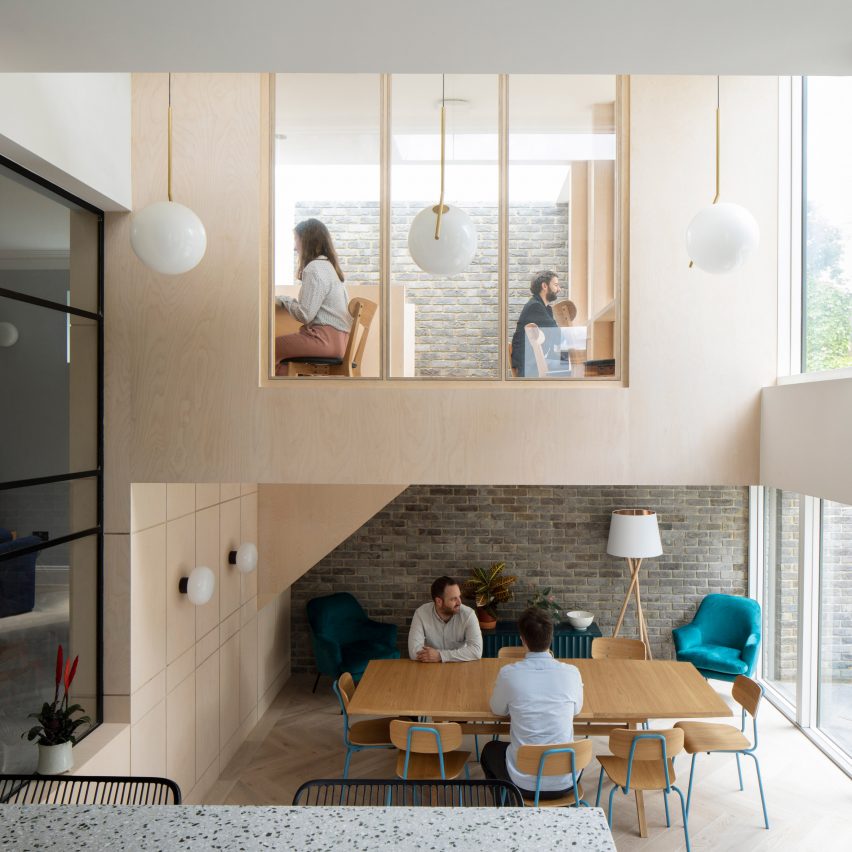
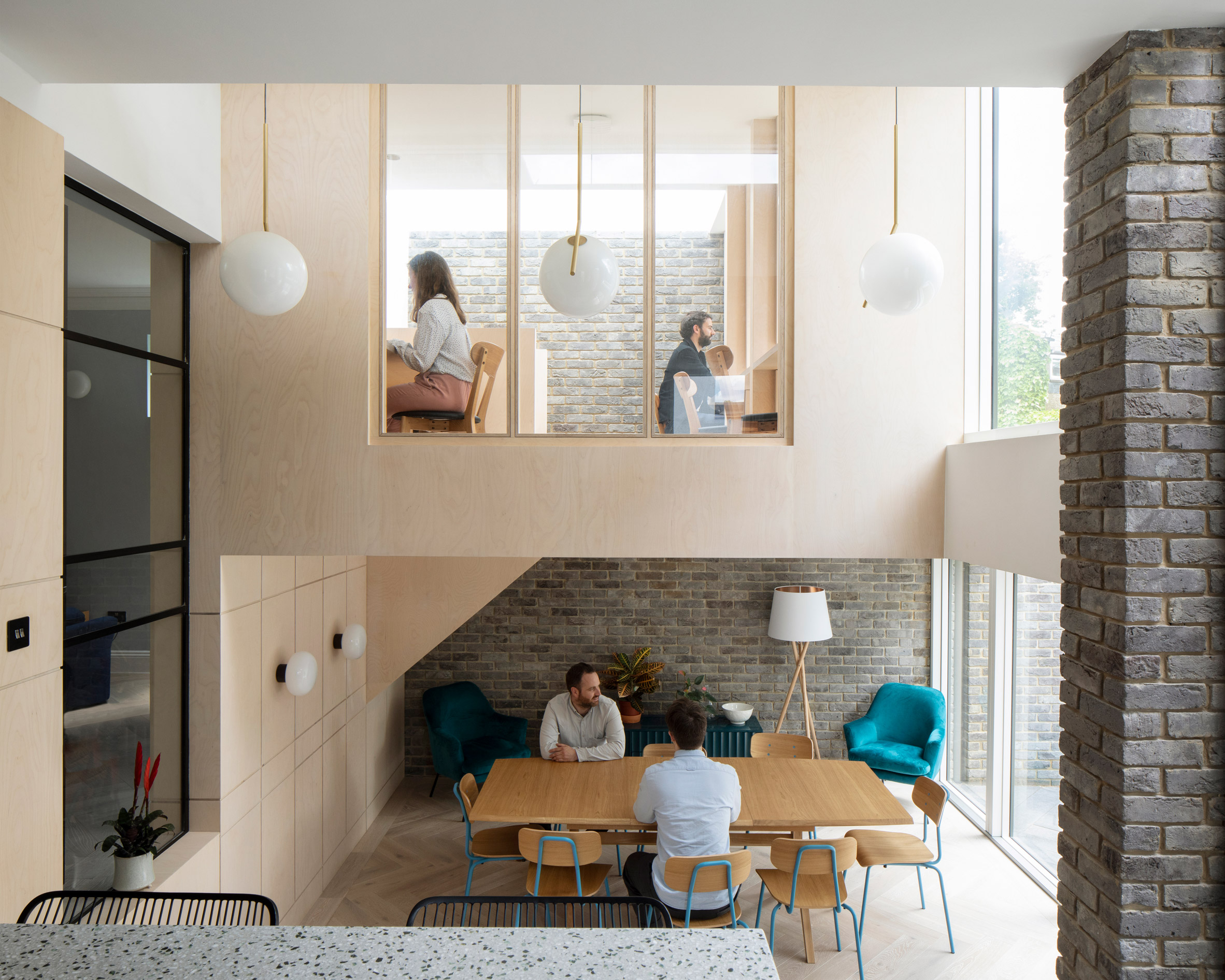
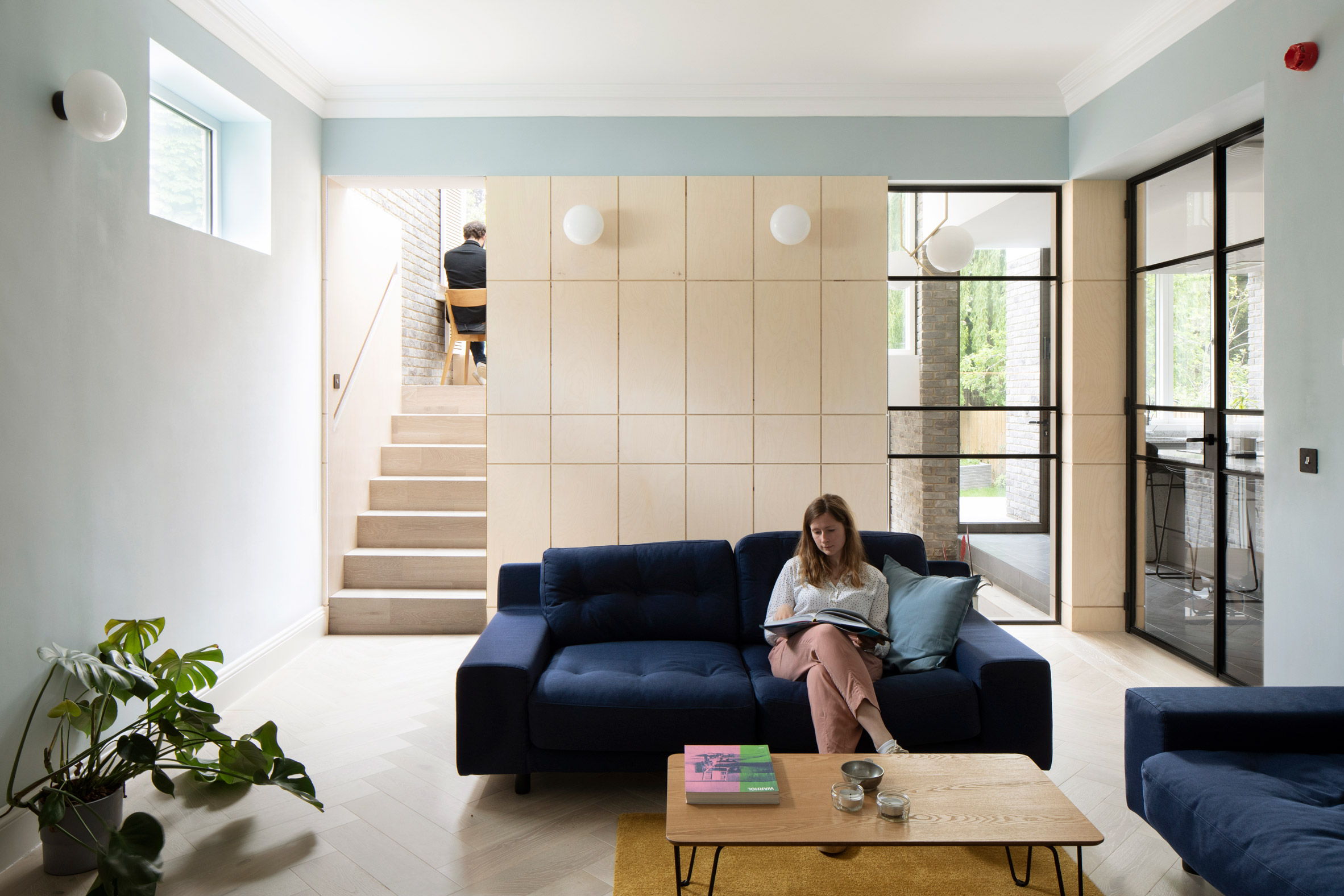
The new layout creates a series of communal spaces across the split-level ground floor, including a lounge room, a kitchen/diner and a sunken dining room that can also be used as a meeting space.

There's also a mezzanine study room, which overlooks the living space thanks to a large internal window.

Living room in Bravura House by Selencky Parsons
A first-floor study overlooks the other living spaces

"We carved a new route through the middle of the house from the front entrance hall to the back garden which became the key circulation route around which the shared spaces are organised," explained Selencky.

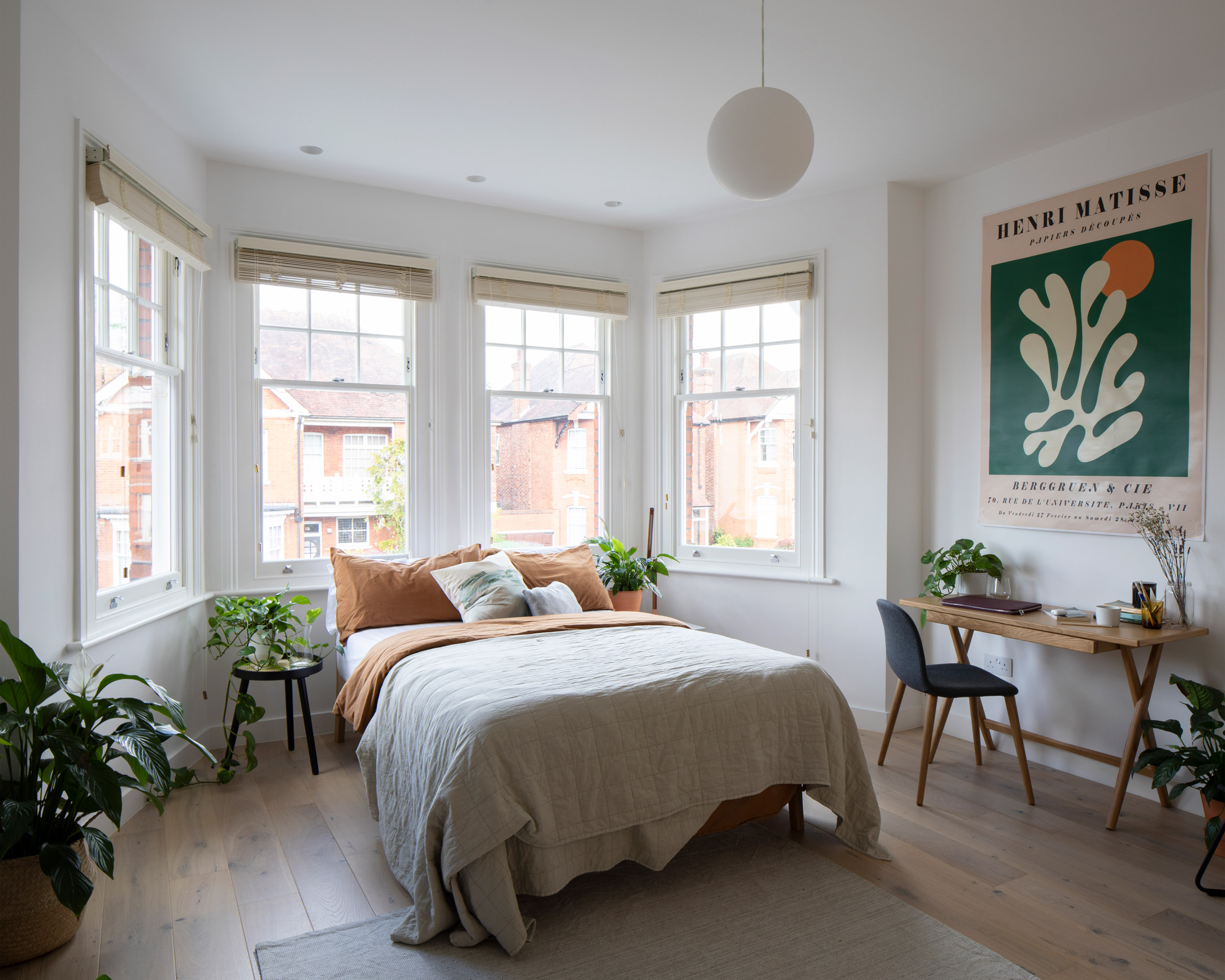
One of the bedrooms is located on the ground floor, to allow disabled access. Four are located on the first floor, while the final two are located in the converted loft.

Bedroom in Bravura House by Selencky Parsons
There are seven en-suite bedrooms

The architects chose materials to respect the building's Arts and Crafts style, as well as the character of the surrounding conservation zone.

Walls made from grey handmade bricks feature both internally and externally, with other details include bronze-anodised aluminium windows and birch plywood timber panelling.

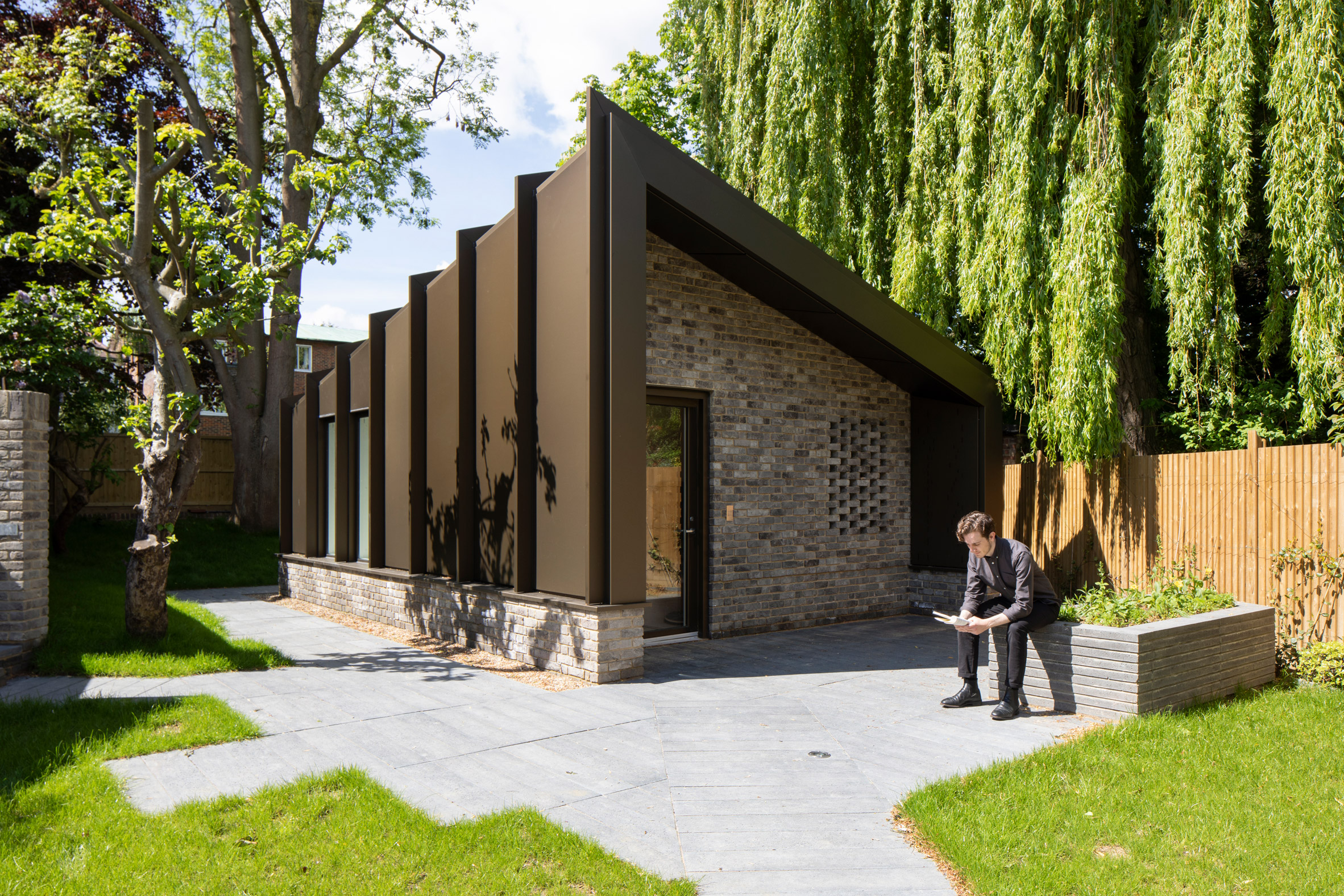
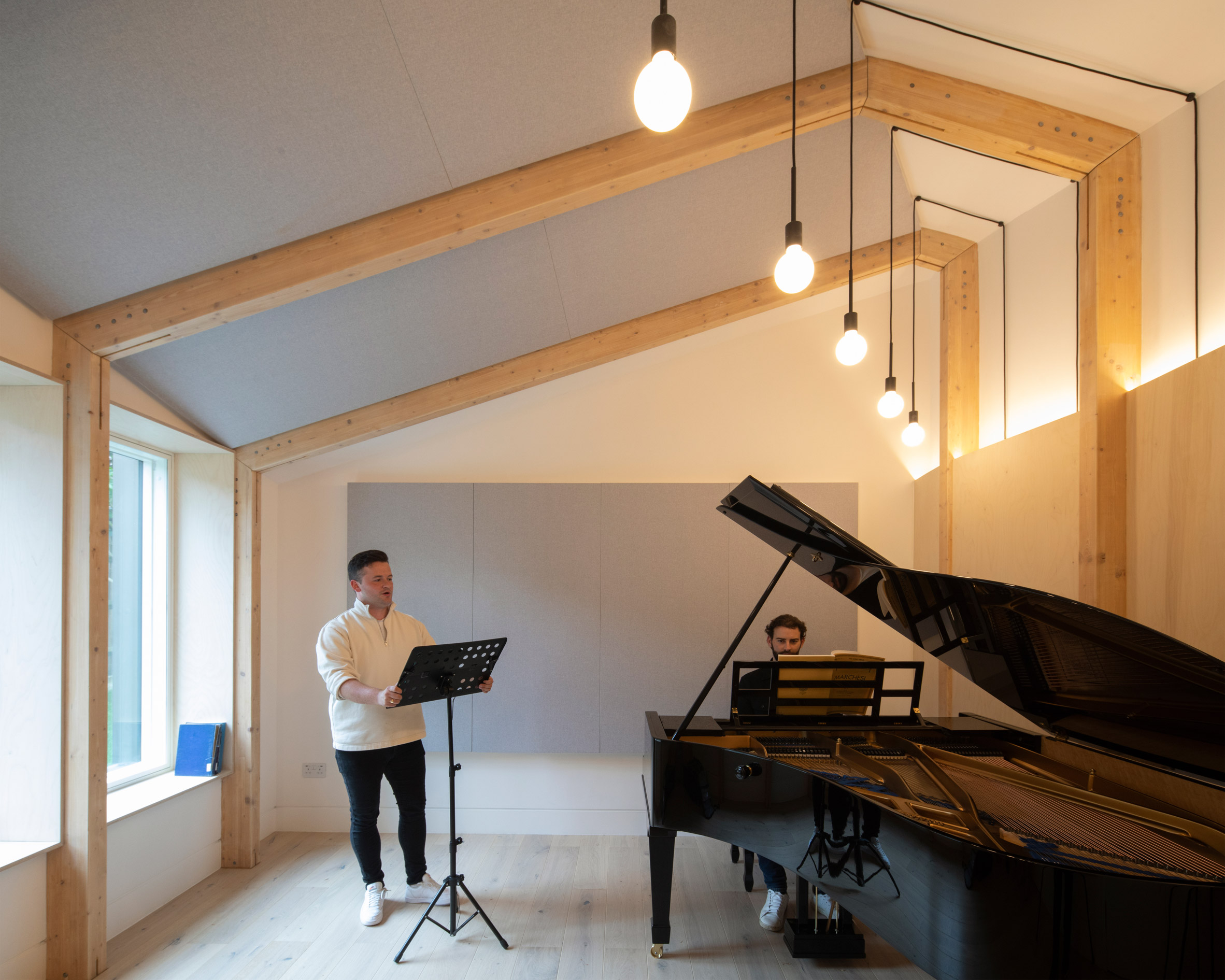
The rehearsal room takes on a more distinct identity, with its bronze wrap and diagonal folded roof. Designed to feel "jewel-like", its shape was actually designed to optimise acoustics, creating an effective space for practising music.

The structure of this building comprises glulam timber frames, which create a series of ribs wrapping the interior.

Rehearsal Room at Bravura House by Selencky Parsons
A music rehearsal room is located in the garden

Selencky hopes the project can become a model for post-graduate co-living. He also suggests that, post Covid-19, it shows how work spaces can be effectively integrated into a living environment.

"When we have visited the project in recent months, since the students have been living there, it has been great to see the spaces being occupied in the way we hoped," he said.

Interior of rehearsal room at Bravura House by Selencky Parsons
Glulam timber beams frame the interior

"It would not be unusual for one or two to be in the shared workspace with a laptop and headphones on," he added, "while others were in the kitchen cooking together, all aware of one another but not tripping over each other."

Previous projects by Selencky Parsons include a stepped extension to a 1960s terraced house and a skinny house in New Cross, London.

Photography is by Richard Chivers.

The post Selencky Parsons reconfigures London house to create affordable co-living for music students appeared first on Dezeen.


from Dezeen https://ift.tt/3BfU3WI

Ten verdant office interiors filled with trees and plants

Second Home, Lisbon

As people begin returning to the office, post-pandemic workspaces may need to feel more inviting to entice workers back. The ten examples in this lookbook shows offices where plants have been used to create friendly, welcoming interiors.

Adding green plants and even trees to office interiors can help make them feel more relaxed and less just like a place to go to for work, as these ten projects show.

This is the latest roundup in our Dezeen Lookbooks series providing visual inspiration for the home. Previous roundups include mezzanines, living spaces with white interiors and peaceful Scandi living rooms.


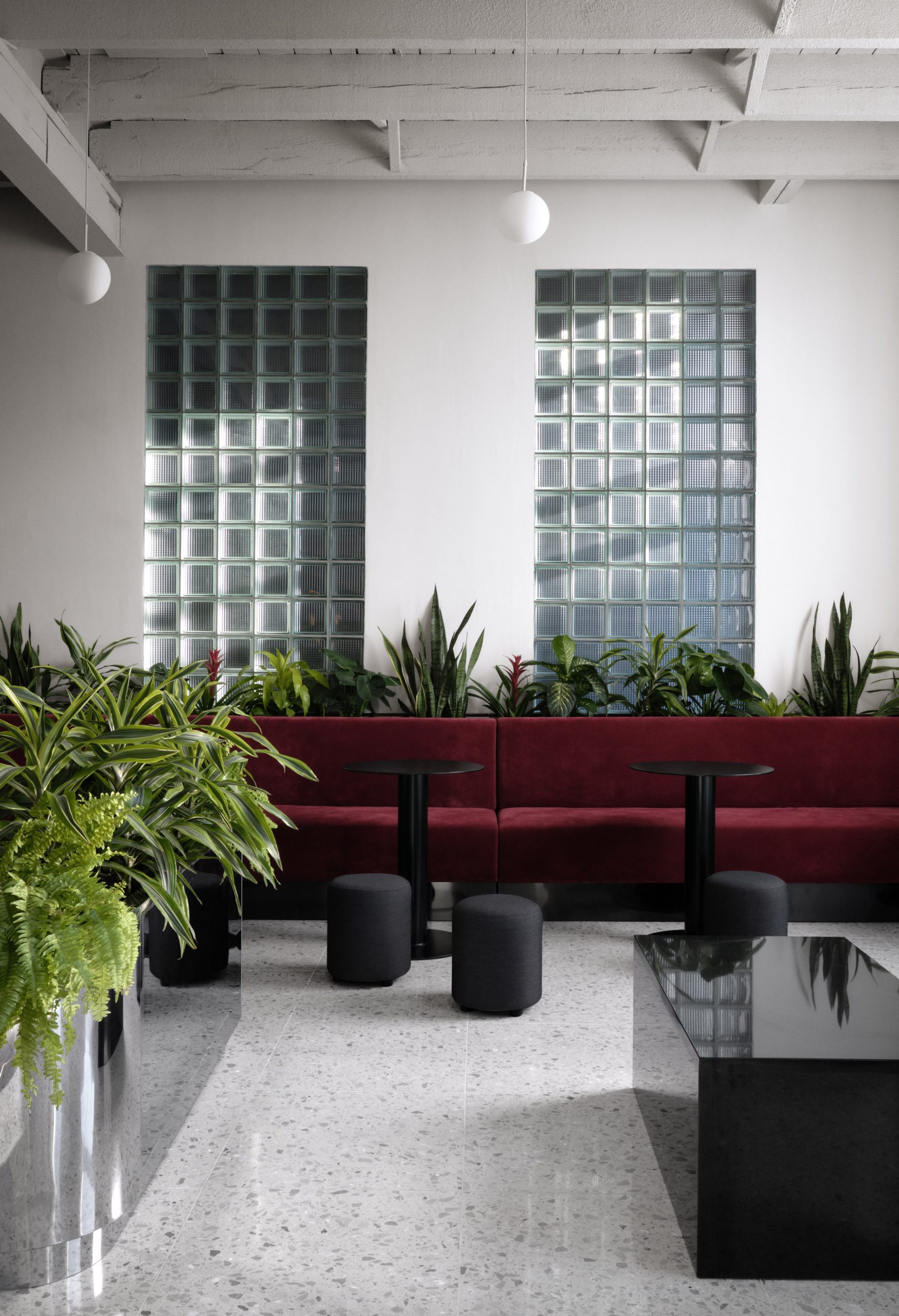
Spacial, Canada, by Ivy Studio

Mint and burgundy are the dominant colours in this Montreal co-working space. Plants have been strategically planted throughout the minimalist space, creating a calm dark-green contrast against the deep red hues.

In the reception area, a blocky glass brick wall functions as a clean background for plants such as snake plants (Dracaena trifasciata) and striped dracaenas (Dracaena fragrans).

Find out more about Spacial ›


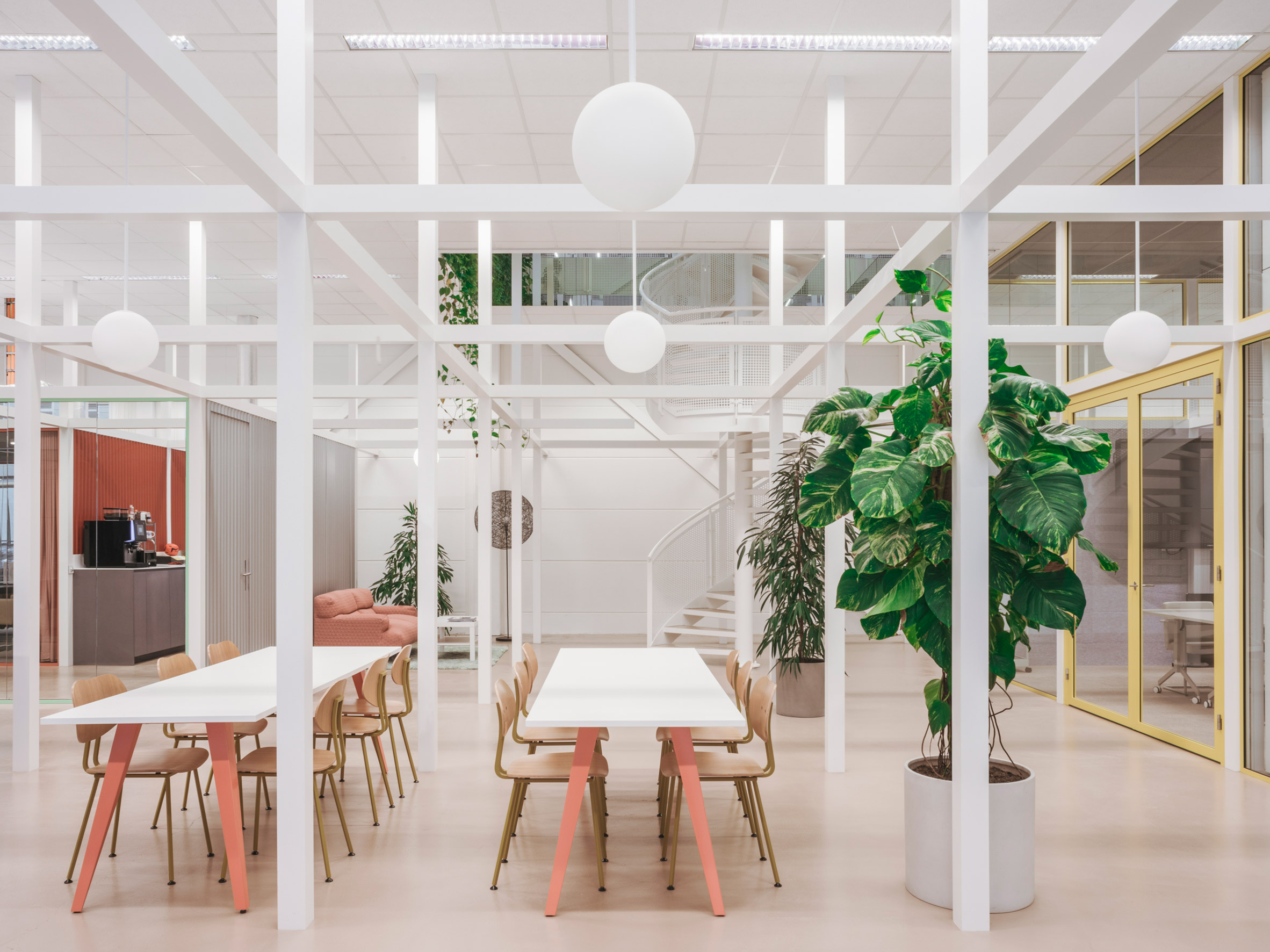
Office, The Netherlands, by Beyond Space

Design studio Beyond Space used a colourful grid system to design this flexible office interior in Amsterdam, which also features several large potted plants that liven up the interior's strict geometries.

A large devil's ivy (Epipremnum aureum) and other climbing plants make the most of the grid, climbing up and down the beams in the space that was designed to be strict and playful at the same time.

Find out more about this office ›


Second Home London Fields designed by Cano Lasso

Second Home, UK, by Cano Lasso

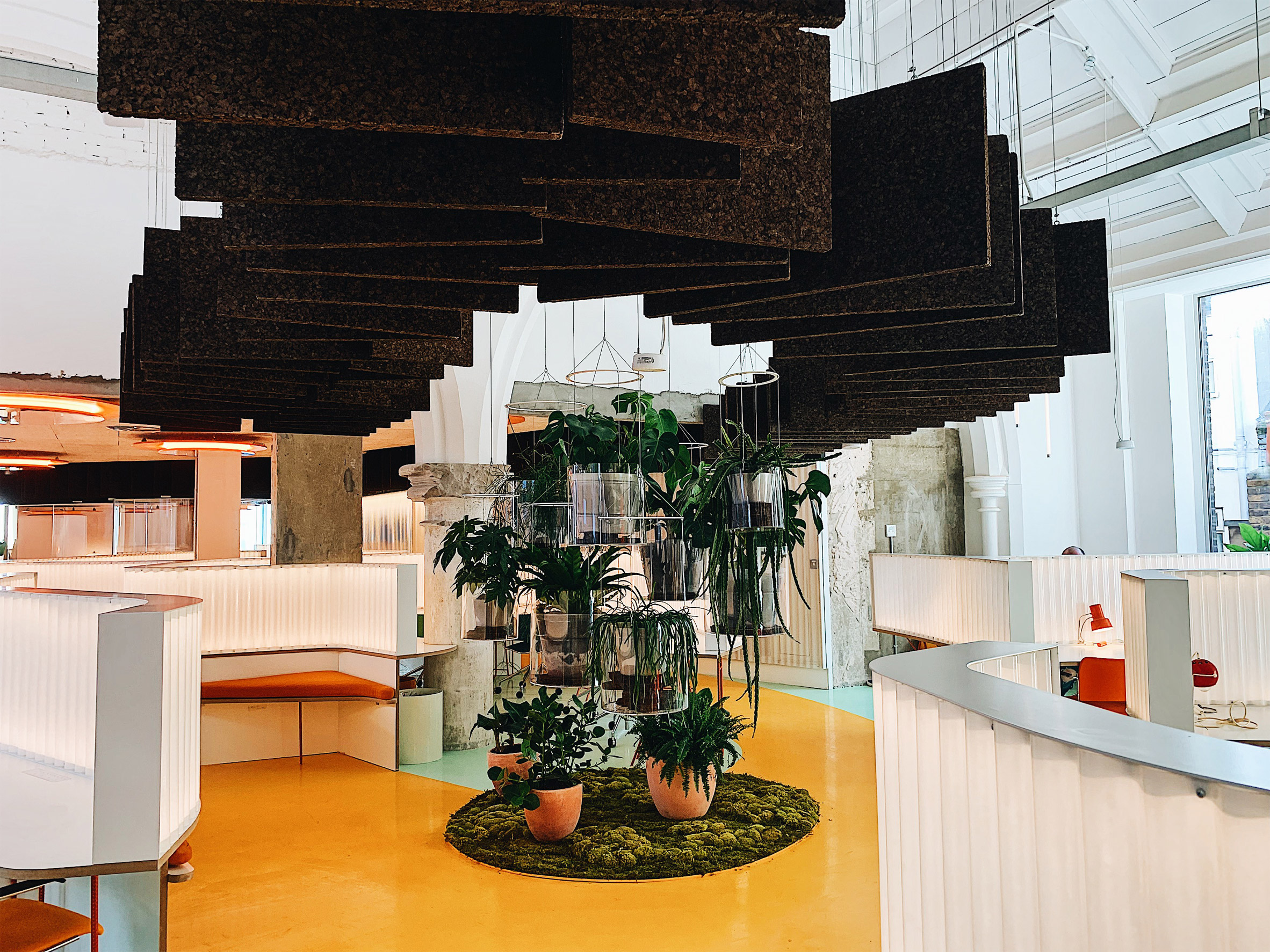
The sunny tangerine colour of the floor in the London Fields branch of Second Home contrasts against the collection of plants sat on a bed of soft moss or hanging from the ceiling in the centre of the room.

Designers Cano Lasso created white winding desks surrounded by low corrugated partitions to create a quiet, focused atmosphere. Cork panels suspended from the ceiling help with the acoustics and, along with the plants, give the room a more organic feel.

Find out more about Second Home ›


Kojimachi Terrace by Nendo in Tokyo, Japan

Kojimachi Terrace, Japan, by Nendo

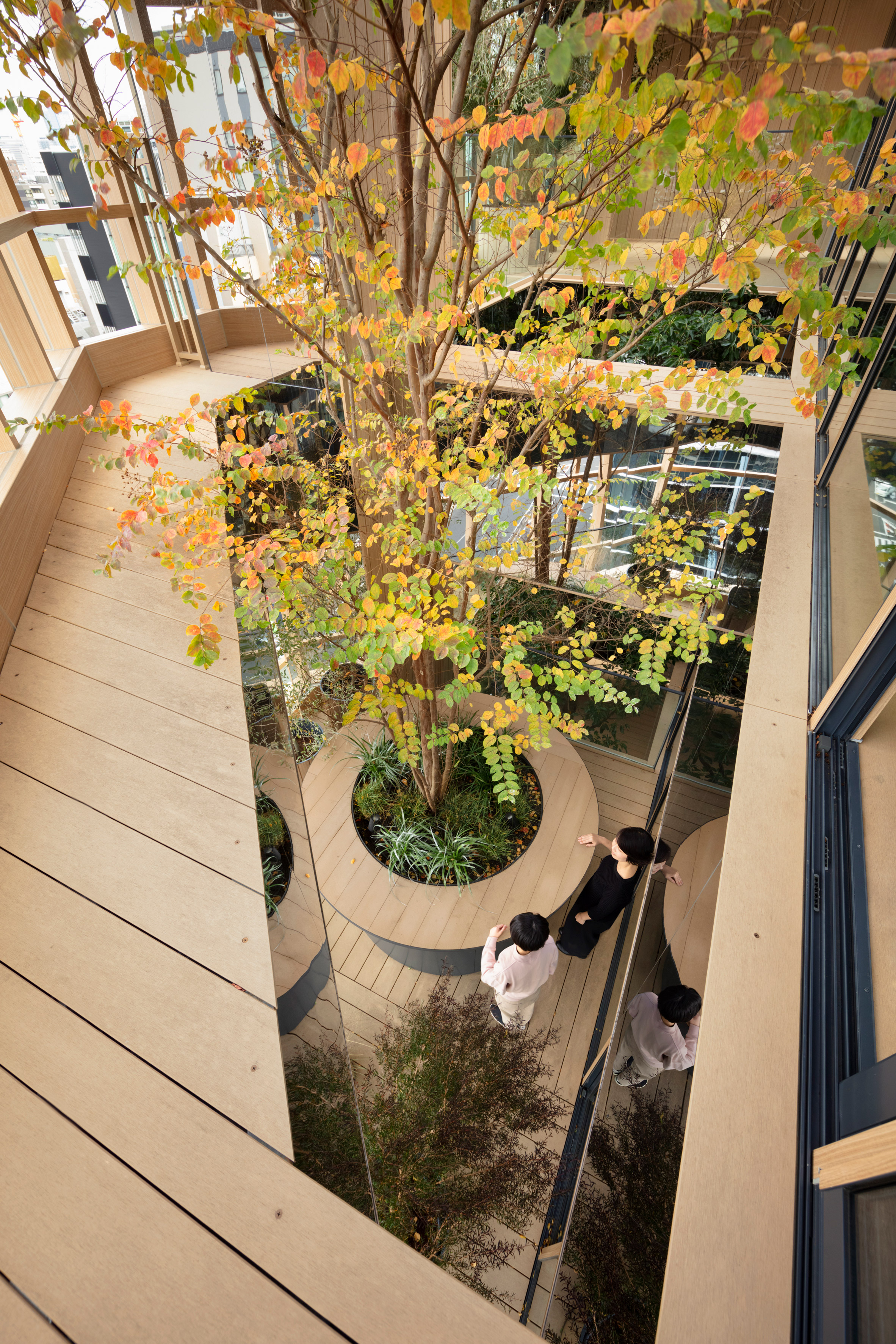
Japanese studio Nendo designed this 11-storey office block with plant-filled balconies to "let the outside in." Office workers can enjoy balconies designed as timber-lined pods, filled with large plants and small trees.

On the three top floors, the balconies have been aligned to create a "Sky Forest" where people can come to enjoy a peaceful hideaway.

Find out more about Kojimachi Terrace ›


Synchroon office interiors designed by Space Encounters

Synchroon, The Netherlands, by Space Encounters

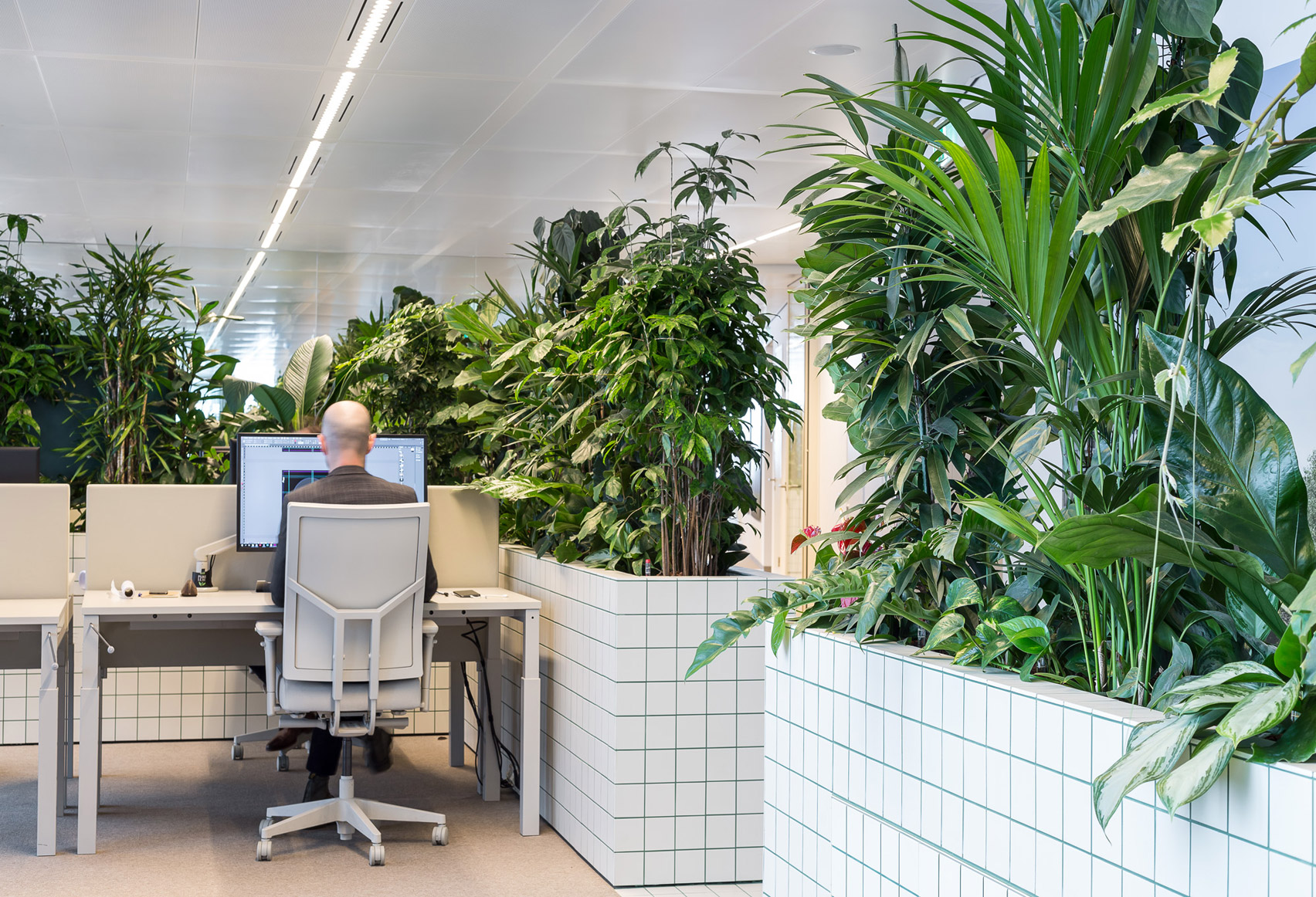
A property developer in Utrecht, The Netherlands, was given a jungle-like office interior designed by architecture studio Space Encounters.

Tropical plants including golden cane palms (Dypsis lutescens) have been planted in partition walls all throughout the office to create leafy partitions instead of traditional boxed-in office spaces. The walls are clad in clean white tiles in a grid pattern, creating a symmetrical contrast to the wild greenery.

Find out more about Synchroon ›


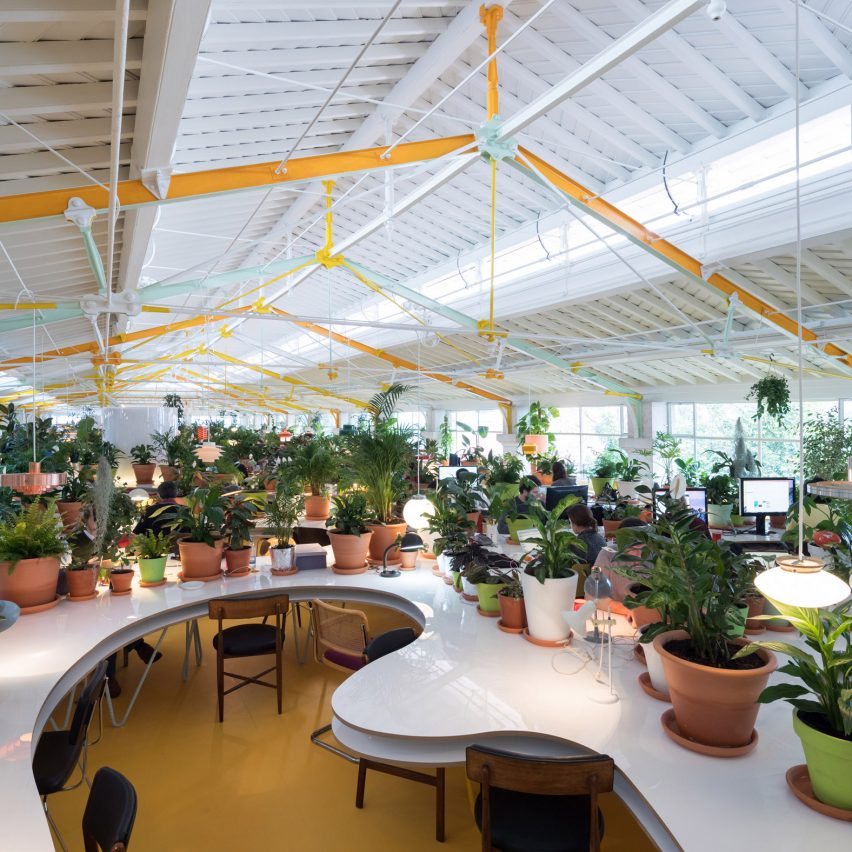
Second Home Lisboa by SelgasCano

Second Home, Portugal, by SelgasCano

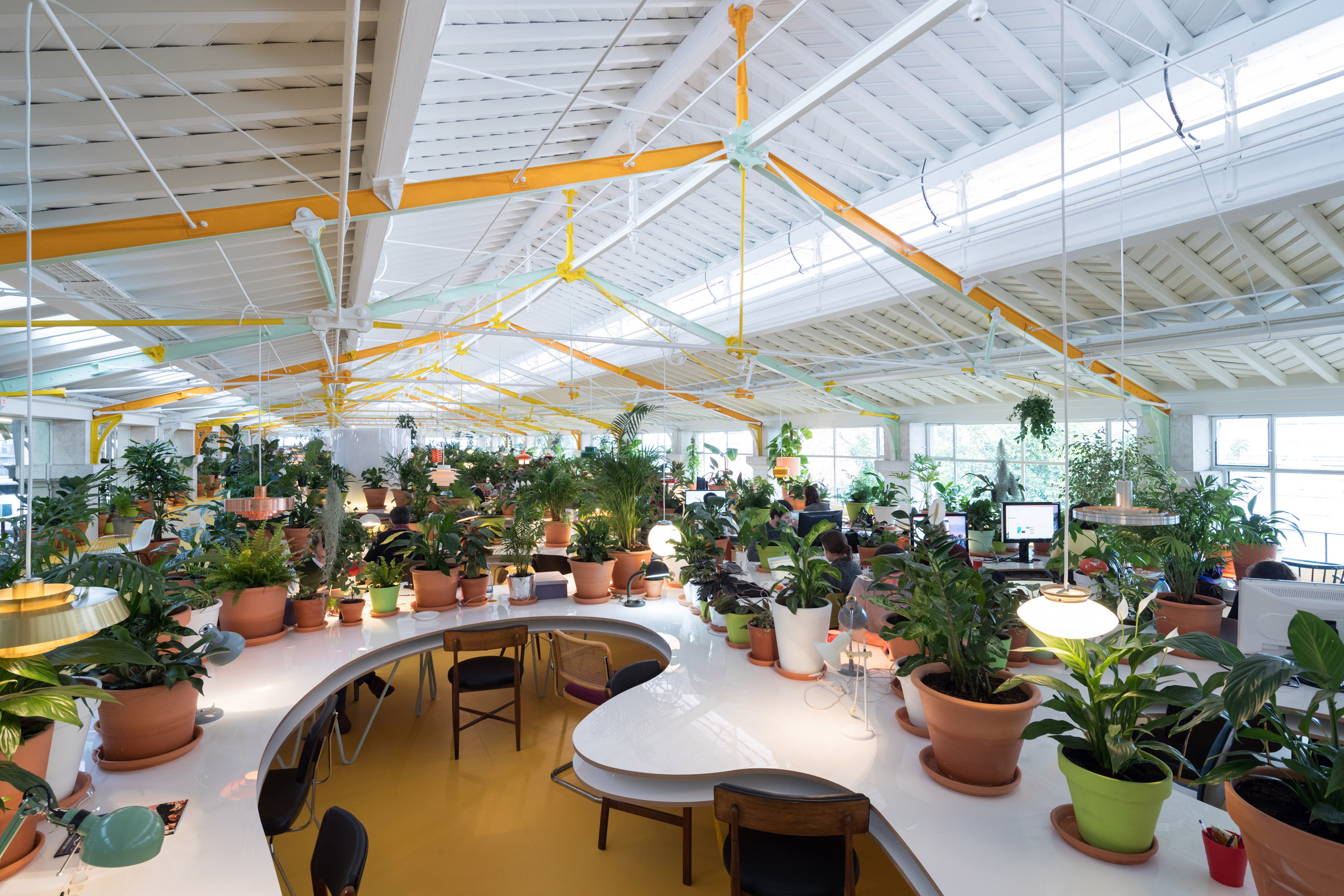
Lisbon's oldest food market was transformed into a co-working space for Second Home in Portugal, which has retained something of the market aspect with its abundance of potted plants and trees – more than 1,000 were added to the space.

The workspace was also designed to be one of the greenest buildings in Europe, with a radiant heating and cooling system that was fittingly based on greenhouses.

Find out more about Second Home ›


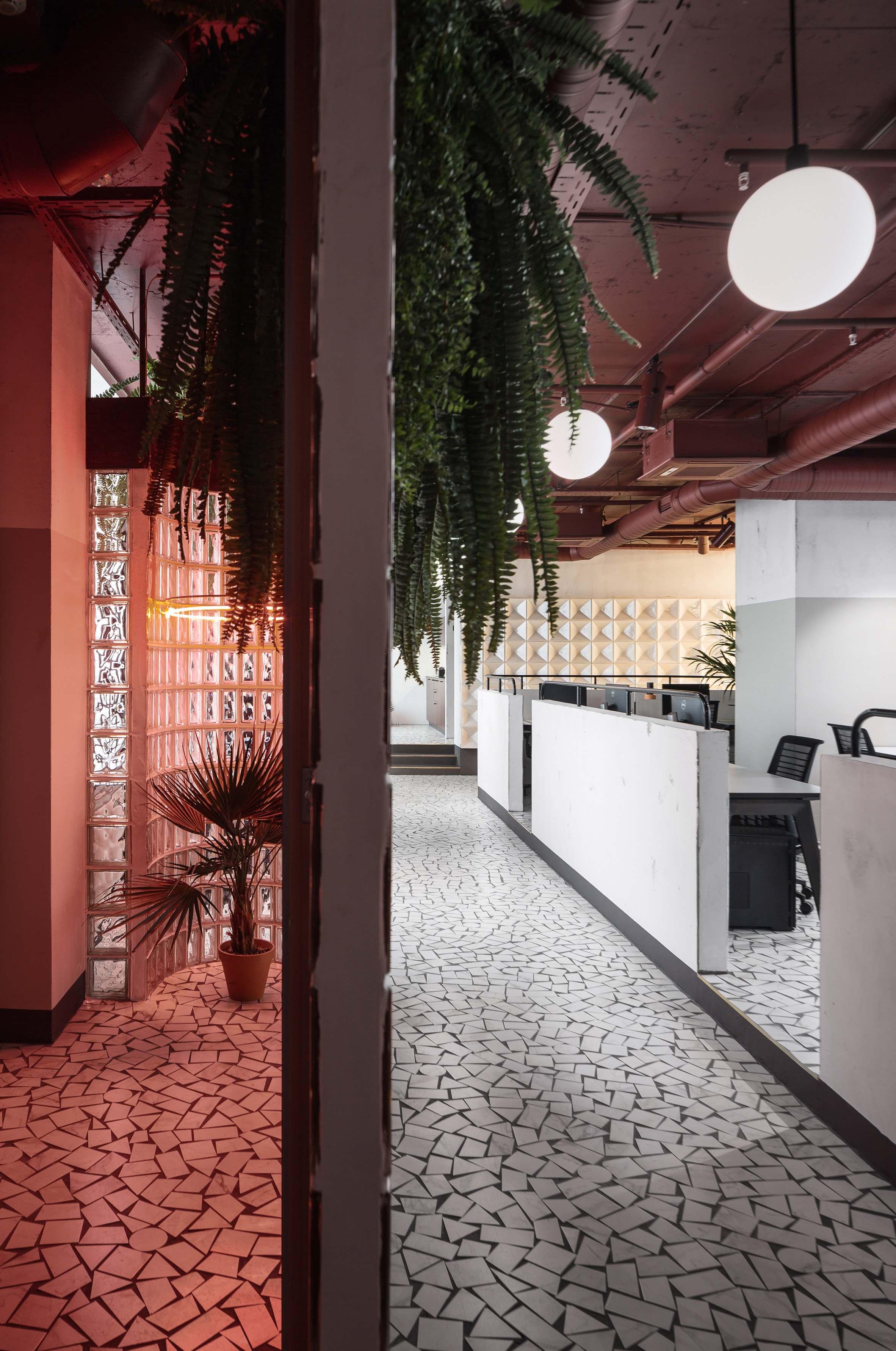
Vizor, Russia, by Studio 11

This office in Minsk, designed for gaming company Vizor, reinterpreted the existing Soviet-era architecture in the area to create a more modern interior that nods to the past.

Walls and ceilings have been painted in a bold red colour, which enhances the green of the hanging plants that decorate the space, including the hanging sword fern (Nephrolepis exaltata.)

Find out more about Vizor ›


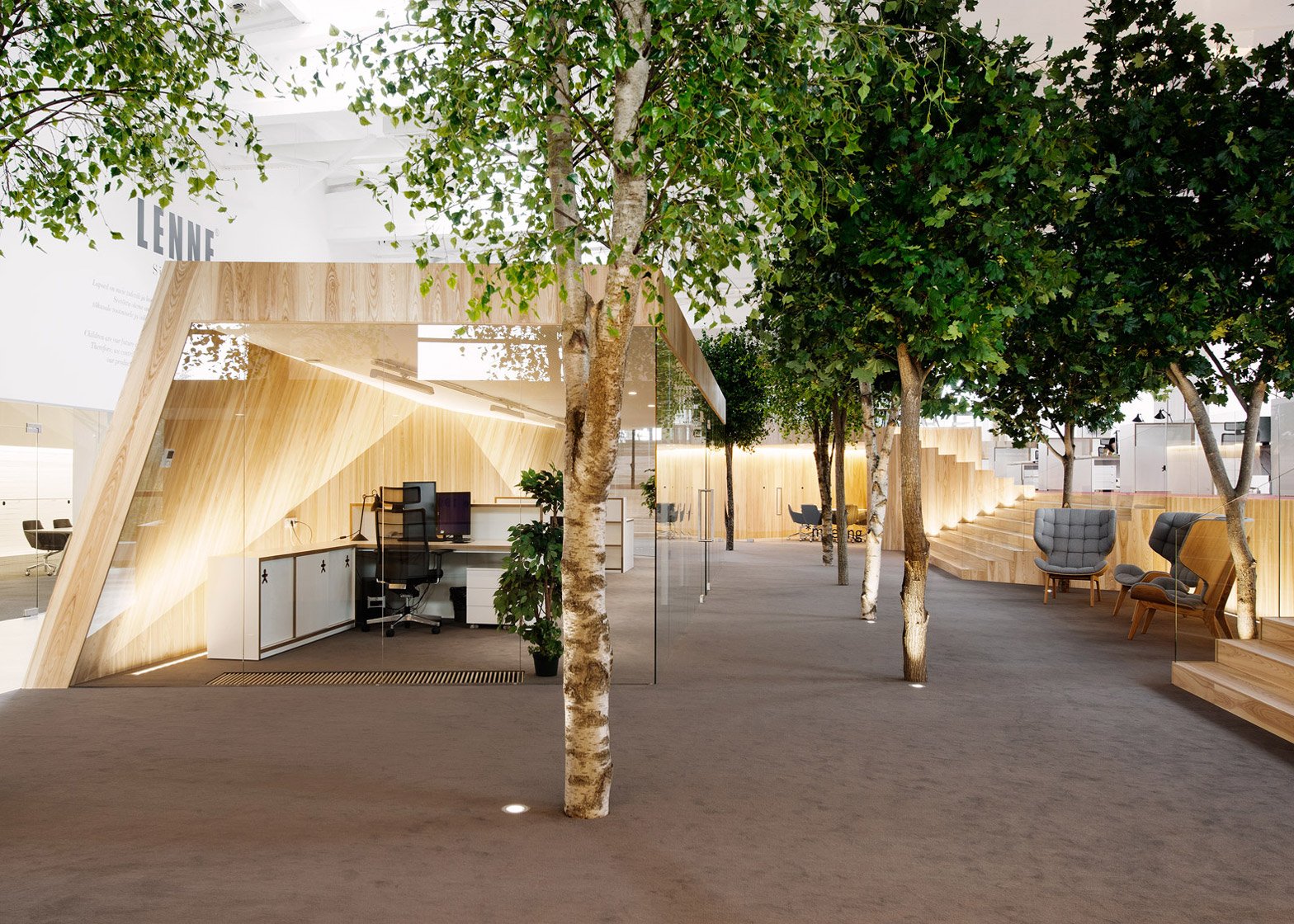
Lenne Office by KAMP Arhitektid

Lenne office, Estonia, by KAMP Arhitektid

KAMP Arhitektid created an office space inside a former factory in Estonia that features artificial five-metre-tall trees and angular wooden rooms, for a workspace that feels like a "bright summer forest."

The trees, among them birch, are made of real tree trunks and artificial leaves and branches. "A week after the trees were crafted a small real fresh branch with little leaves started growing on one of the trunks as if to add to the visitors' confusion," architect Jan Skolimowski said.

Find out more about Lenne office ›


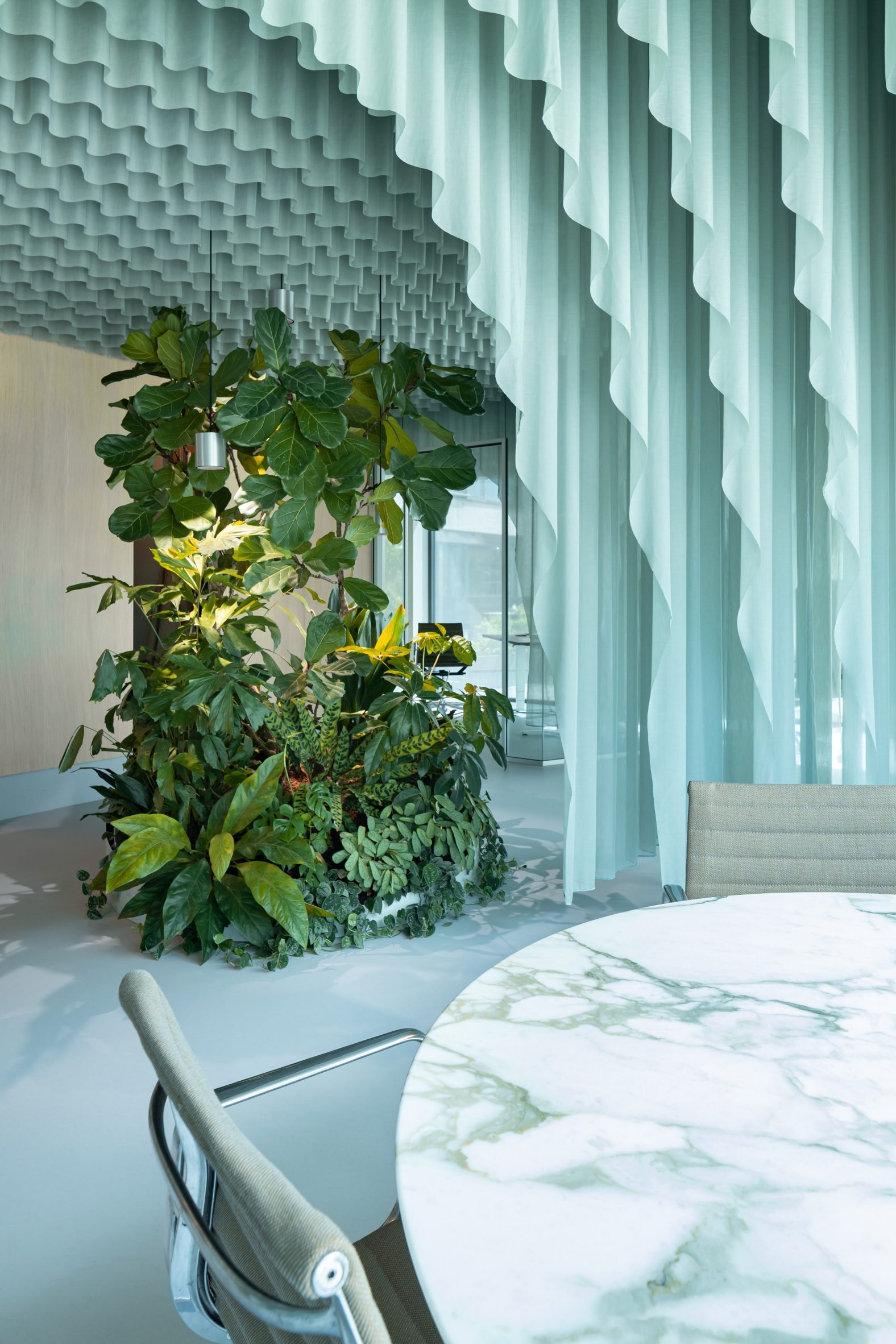
Siersima Interiur office, The Netherlands, by Beyond Space

This office and showroom for a fabric studio in Amsterdam doesn't just have one kilometre of fabric draped across it, it is also filled with large plants such as fiddle-leaf figs (Ficus lyrata) and dwarf umbrella trees (Schefflera arboricola).

The diaphanous fabric lets lighter filter through, creating a partly shaded atmosphere for the plants and a peaceful, calm interior.

Find out more about Siersima Interiur office ›


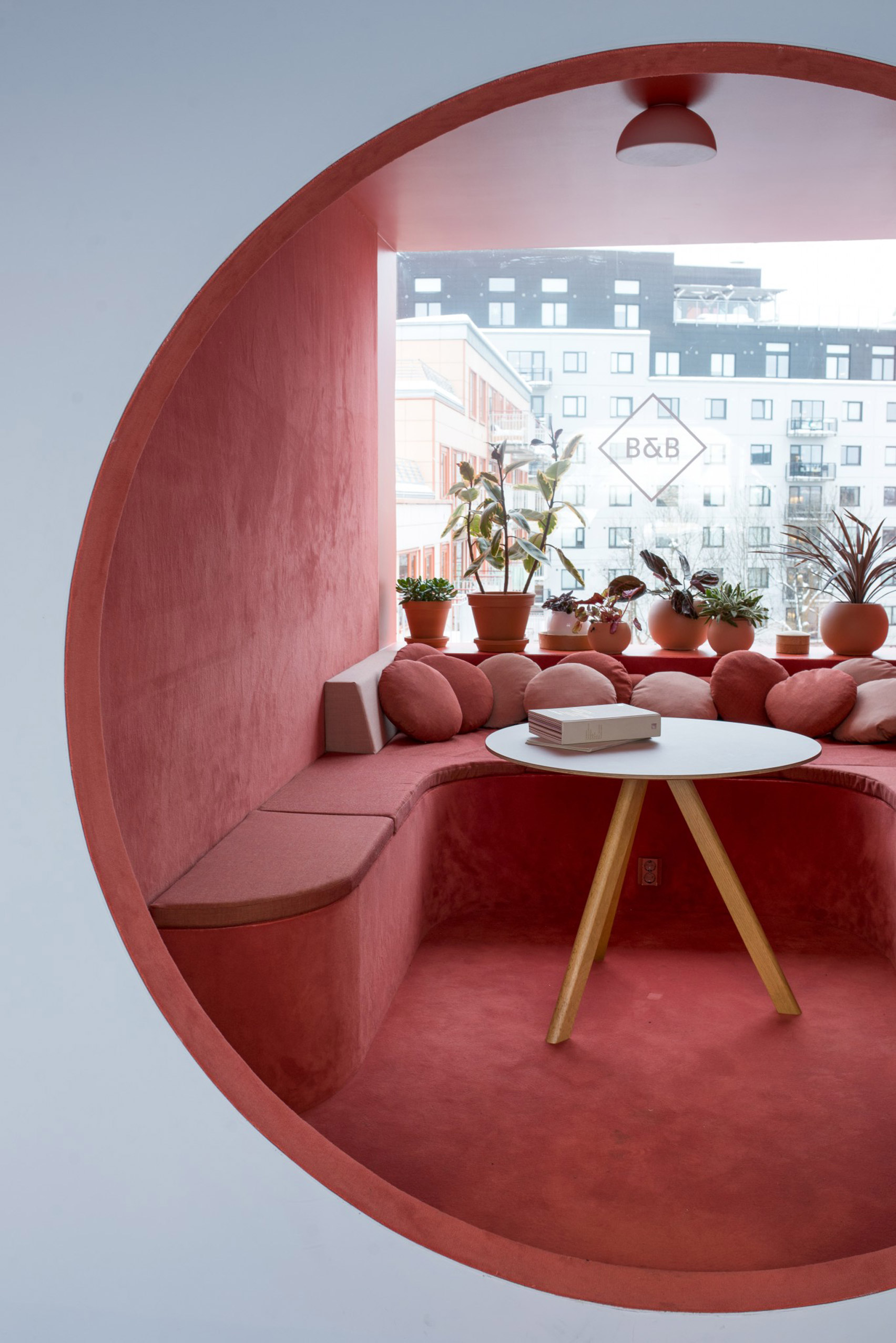
Scandinavian Spaceship office for Bakken & Bæck, designed by Kvistad

Bakken & Bæck office, Norway, by Kvistad

Office interiors don't have to be completely covered in plants to feel more homely – in this office in Oslo, Norway, the tonal workspaces have been complemented by strategically placed potted plants.

In a circular work nook covered in soft red fabric, plants including succulents, a pinstripe calathea (Calathea sanderiana) and a coleus (Coleus solenostenom) take advantage of the light from the large window. Their terracotta pots match the warm red tone of the surrounding room.

Find out more about Bakken & Bæck office ›


This is the latest roundup in our Dezeen Lookbooks series providing visual inspiration for the home. Previous roundups include mezzanines, living spaces with white interiors and peaceful Scandi living rooms.

The post Ten verdant office interiors filled with trees and plants appeared first on Dezeen.


from Dezeen https://ift.tt/3evtItR

IVC Commercial launches Clay and Clay Create carpet planks

Clay and Clay Create

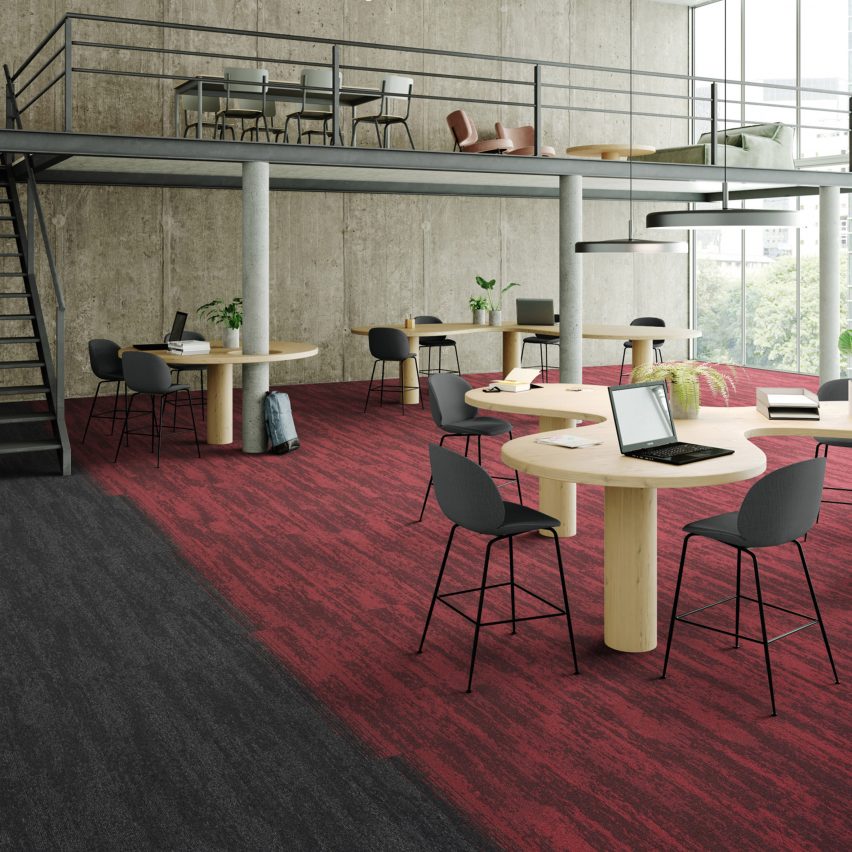
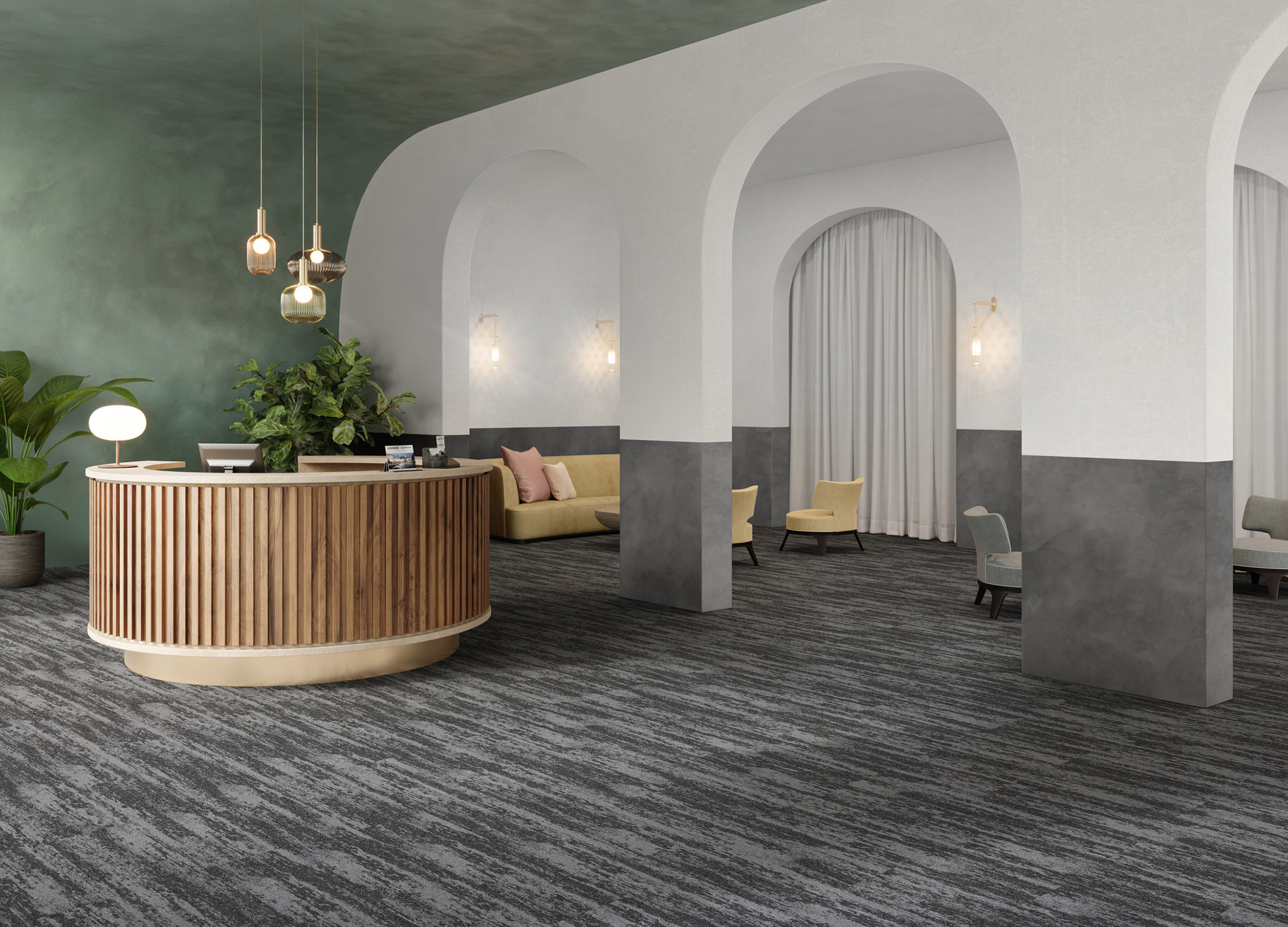
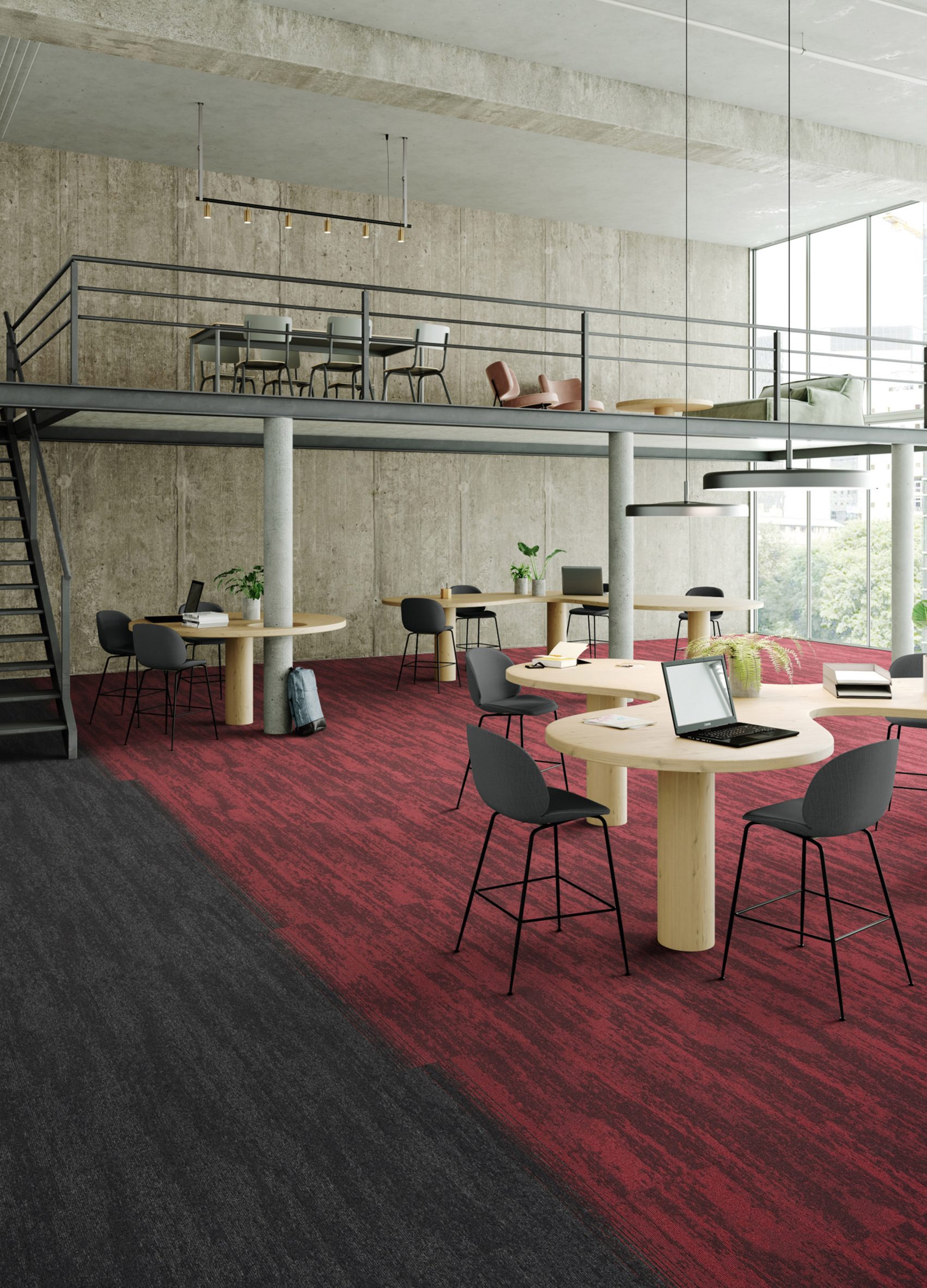
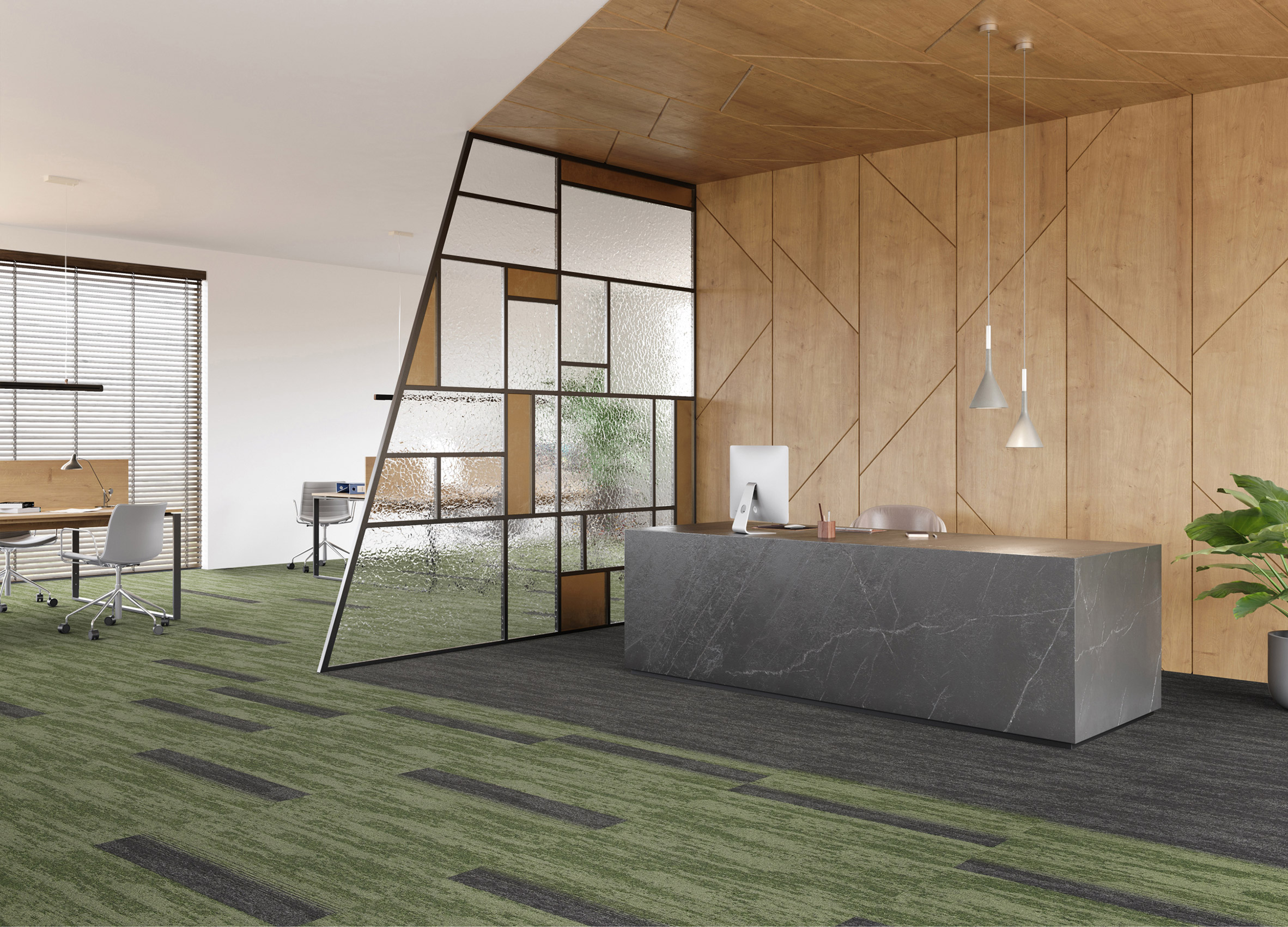
Dezeen promotion: Belgian carpet brand IVC Commercial has launched two types of carpet plank called Clay and Clay Create as part of its Rudiments collection.

IVC Commercial's carpet tiles are durable solutions for commercial spaces. Both Clay and Clay Create are designed to give rooms an organic appearance, adding texture and colour to office interiors.

The carpet planks can be used to break up spaces and allow designers to signify different areas when needed, such as for wayfinding purposes.

IVC Commercial launches Clay and Clay Create
The Clay and Clay Create tiles are designed to add colour and texture to office space

IVC Commercial's Clay carpet pattern is evenly distributed across each tile, making it suitable for adding texture to large spaces. In comparison, Clay Create is designed as a "transition carpet plank, moving from one colour to another," said the brand.

"Clay Create is a playful random lay pattern that echoes the material's artistic side with a shifting colour gamut that adds exciting transition possibilities to mix and match Rudiments installs," said IVC Commercial.

Both Clay and Clay Create carpet planks reference the natural textures of clay ceramics. This follows the brand's other carpets in its Rudiments collection, which are tufted to appear like natural materials historically used for floorings, such as stone and wood.

"From hewn stone floors and hand-shaped clay tiles to coarsely cut wood blocks and artistic textiles woven from organic threads, Rudiments celebrates the flooring materials that have been closely linked to culture for centuries," said the brand.

IVC Commercial launches Clay and Clay Create
The tiles can be used to signify a change of area, activity or direction

Specifically, the brand's Clay and Clay Create tiles are designed to mimic clay's use as a structural and artistic material.

"The Clay carpet plank is inspired by mankind's crafting of the world's oldest known ceramic material, hand-shaped into the rudimentary building blocks that have protected us for centuries," said IVC Commercial.

Both Clay and Clay Create tiles are 25 to 100 centimetres and are available in 12 colours.

Designers can pick different colour combinations to customise their space. Clay and Clay Create can also be used alongside other carpet tiles in the Rudiments range such as Basalt, designed to look like age-old stone, or Teak, which references oiled wooden blocks.

IVC Commercial launches Clay and Clay Create
The tiles reference the texture and aesthetic of clay tiles

The brand's Rudiments carpets are made from solution-dyed nylon to give a "hassle-free" performance.

"Designers can focus on the job in hand, delivering inspirational spaces that support the productivity and wellbeing of their users," said IVC Commercial.

To learn more about IVC Commercial's range of carpets, visit its website.


Partnership content

This article was written by Dezeen for IVC Commerical as part of a partnership. Find out more about Dezeen partnership content here.

The post IVC Commercial launches Clay and Clay Create carpet planks appeared first on Dezeen.


from Dezeen https://ift.tt/2VKBtpk

Saturday, 17 July 2021

DG Arquitecto adds minimalist interventions to historic Valencia apartment

Casa Cas 8 by DG Arquitecto

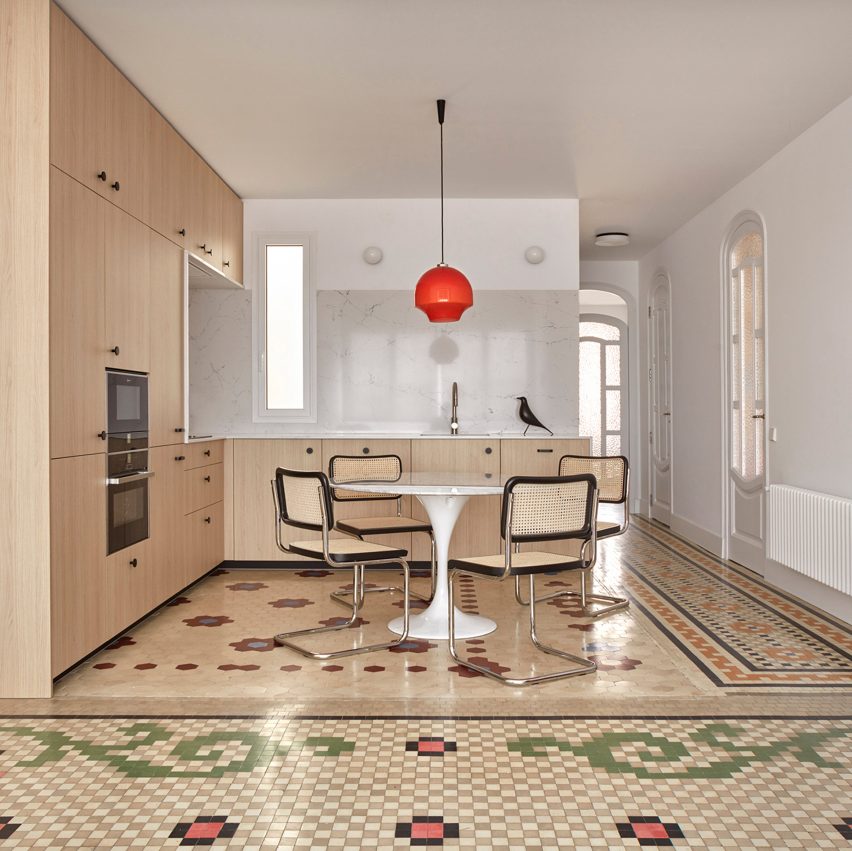
DG Arquitecto has completed a minimalist renovation of a 1920s penthouse in Valencia, which celebrates the apartment's original mosaic floors, decorative mouldings and arched doorways.

Located on the top floor of an apartment block in the city's Ruzafa neighbourhood, the 100-square-metre penthouse was previously made up of narrow corridors and small rooms.

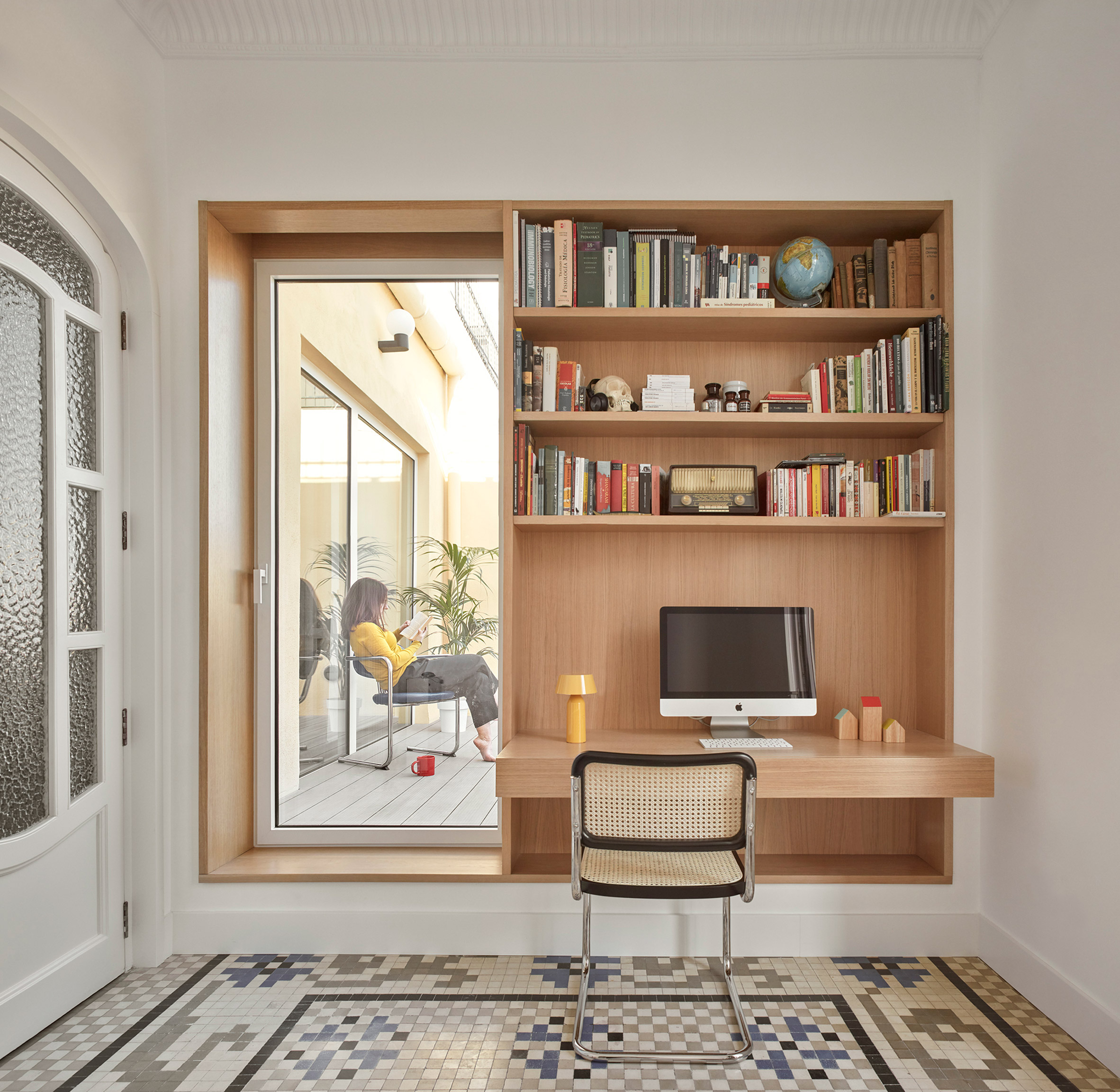
Home office with built-in wooden shelving and desk and door to terrace in Casa Cas 8
Colourful tiled floors run through the entire apartment from the kitchen (top image) to the office (above)

Local studio DG Arquitecto, run by Isabel Roger Sánchez and Daniel González López, was asked by the clients to adapt the layout to suit modern living while also preserving its original character.

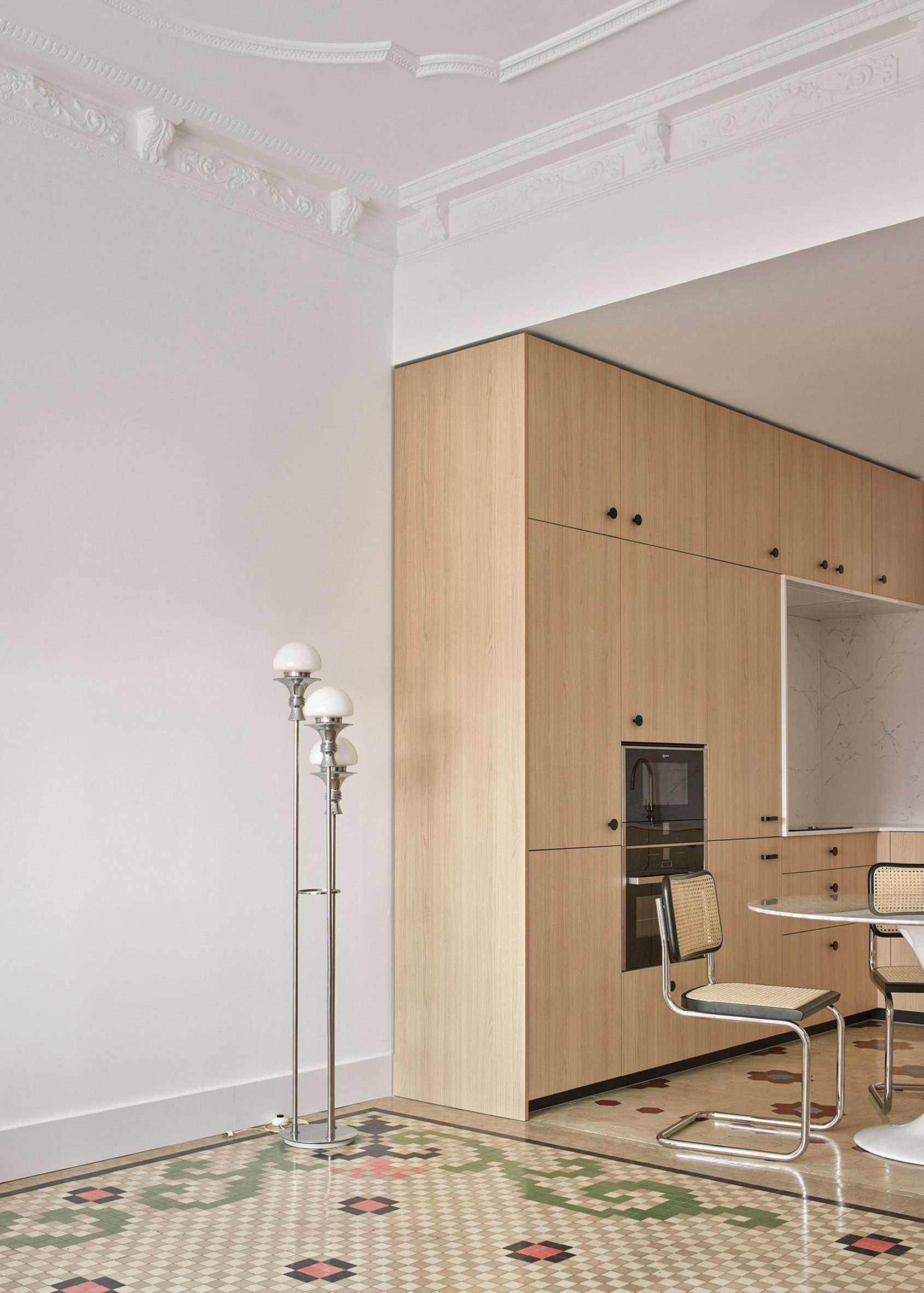
The studio made the decision to keep the decorative mouldings and doors while opening up the living area to create an open-plan space with an integrated kitchen.

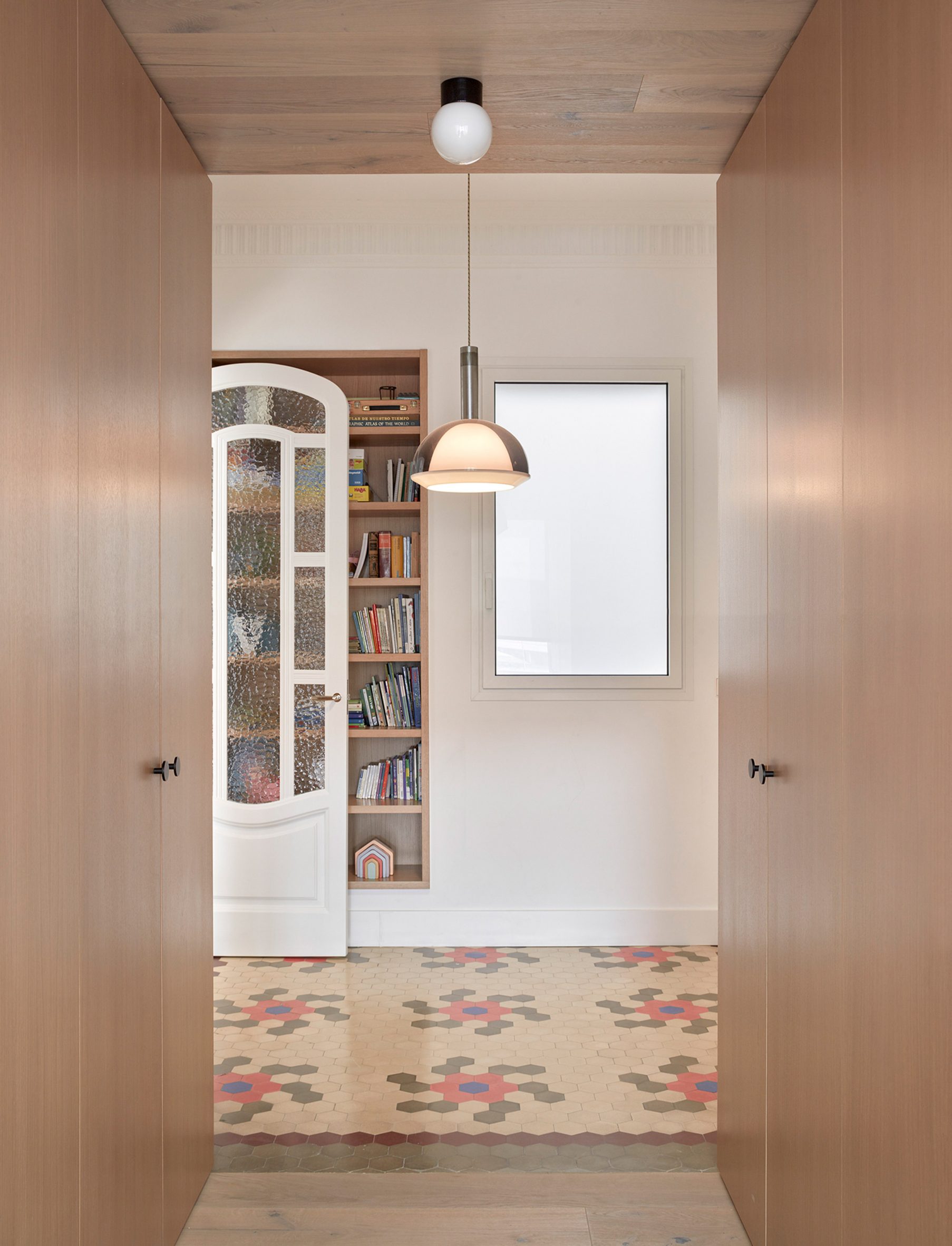
Wooden bookcase franked by wardrobes in interior by DG Arquitecto
Oak was used to form built-in storage including wardrobes and bookshelves

"The state of the house before the renovation was quite good," DG Arquitecto told Dezeen. "The previous owners kept the floors and doors in good condition."

The original ceilings were uncovered and restored, the doors painted white to hide any damage and the floors cleaned to recover the original colours of the mosaic.

Wooden kitchen with tiled mosaic floor and metal light in Casa Cas 8
The living and kitchen area were combined into an open-plan space

"This type of flooring is quite typical of Valencia," said the studio.

"At the beginning of the 20th century, in a town near Valencia called Meliana, there was one of the most important factories in the world for this type of flooring."

While the living room and kitchen were combined into one open-plan space, the apartment's three bedrooms, two bathrooms and terrace follow the original layout.

New clean-lined interventions such as the kitchen are made from oak, which the architects said was chosen for its warmth and uniformity.

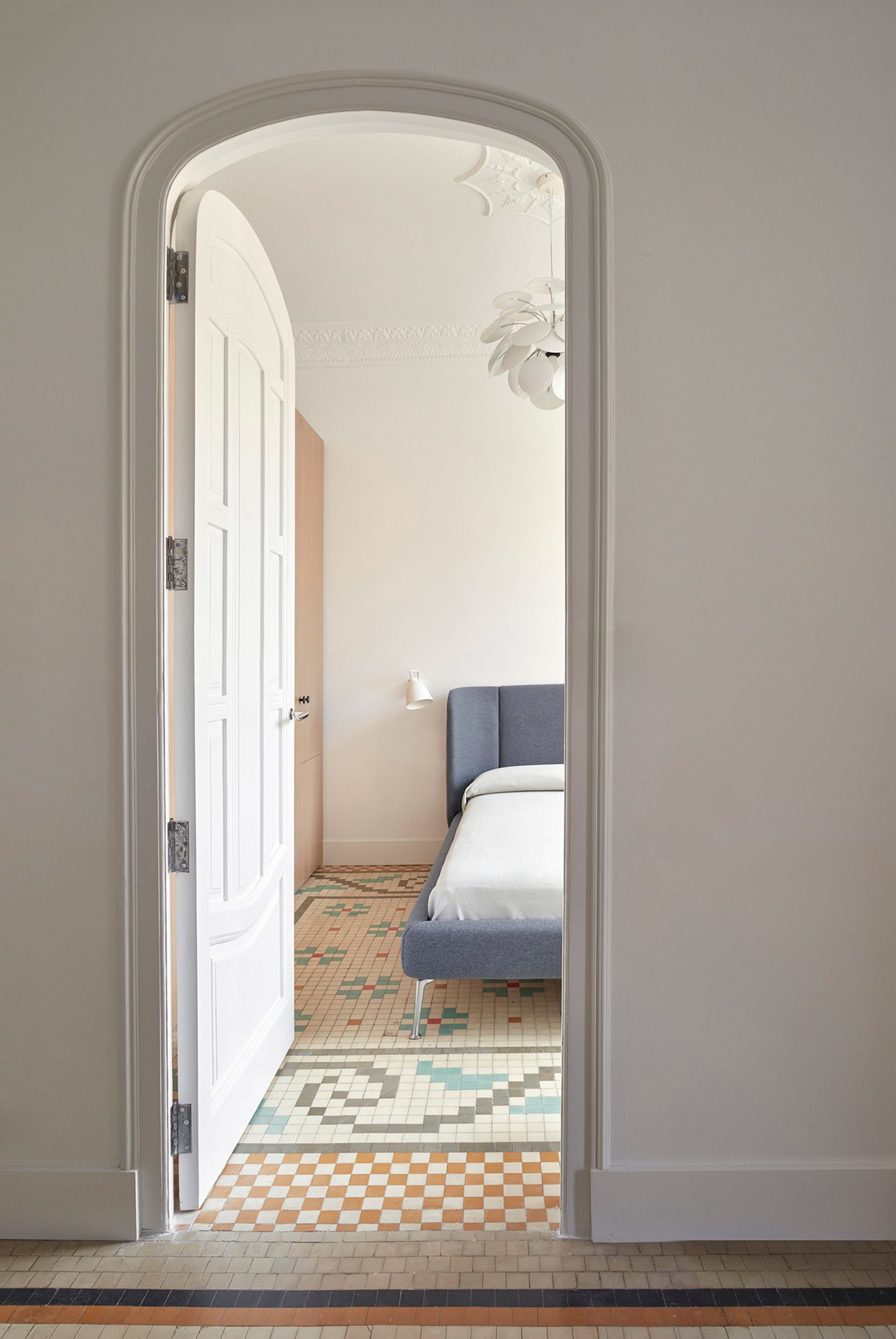
Door to bedrrom with simple blue bed and tiled mosaic floors in apartment by interior by DG Arquitecto
The guest bedroom features a simple bed upholstered in blueish-grey fabric

An oak floor and dressing room were added to the main bedroom, while an office area with built-in shelving sits between the bedrooms and the terrace.

"Small changes in the distribution, very limited by the initial idea of ​​completely maintaining the original floor of the house and the ceilings with mouldings, helped us to transform the existing spaces," explained the studio.

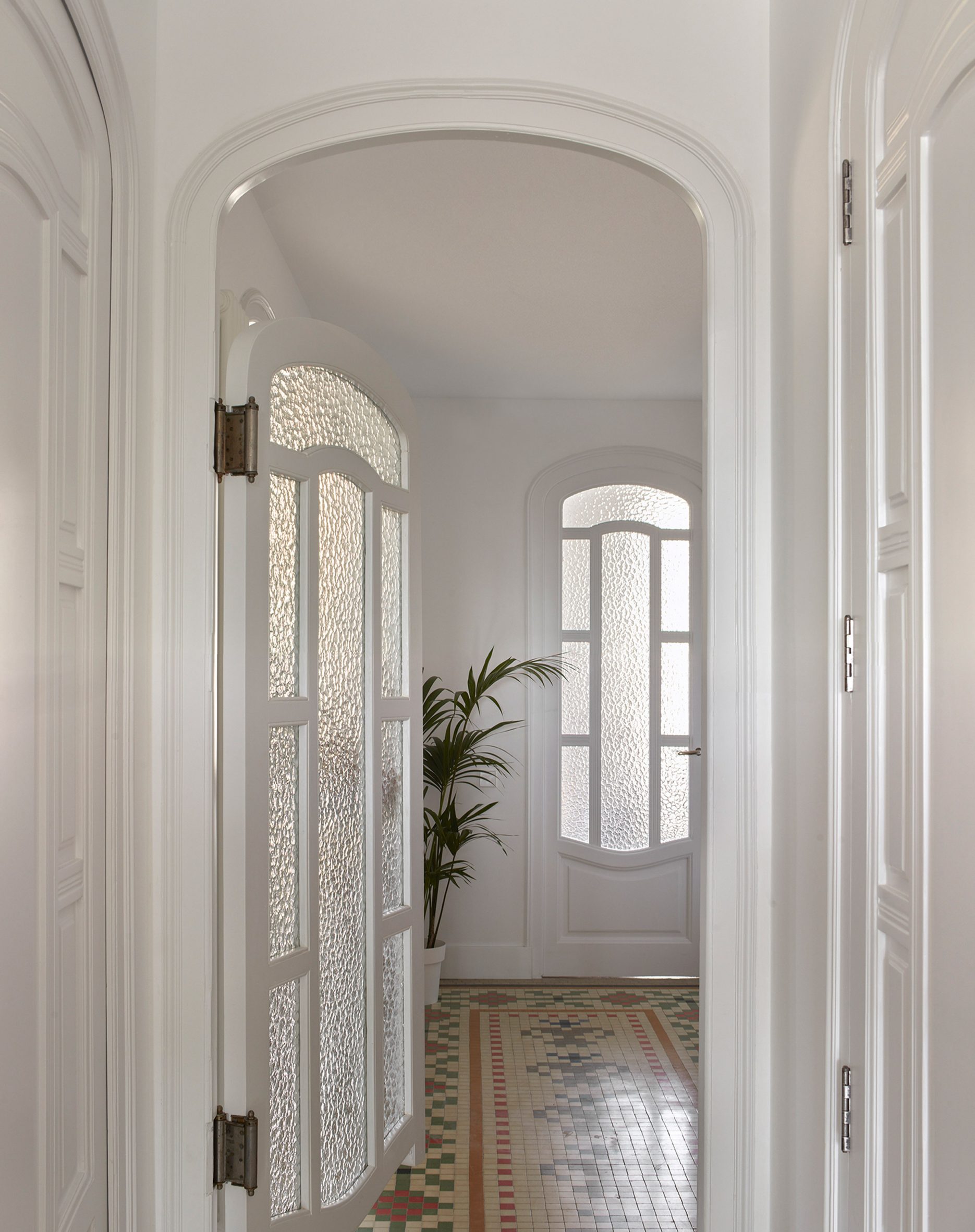
Hallway with curved wooden doors with mottled glass and mosaic floors by DG Arquitecto
DG Arquitecto preserved the apartment's original arched doors

Other Spanish apartment renovations that preserved the building's original floors include this 1930s apartment in Barcelona, where colourful mosaics mark out the original layout, and another Barcelona apartment where the variety of tile patterns appear like colourful rugs.

Photography is by Mariela Apollonio.

The post DG Arquitecto adds minimalist interventions to historic Valencia apartment appeared first on Dezeen.


from Dezeen https://ift.tt/3rp8BP5