Monday, 19 July 2021

Pedro & Juana's pestle and mortar for Maestro Dobel references the birthplace of tequila

Mexican architecture studio Pedro & Juana explains how its bar tool for Maestro Dobel is influenced by Mexico's culinary culture and geographies, in this talk produced by Dezeen for the tequila brand.

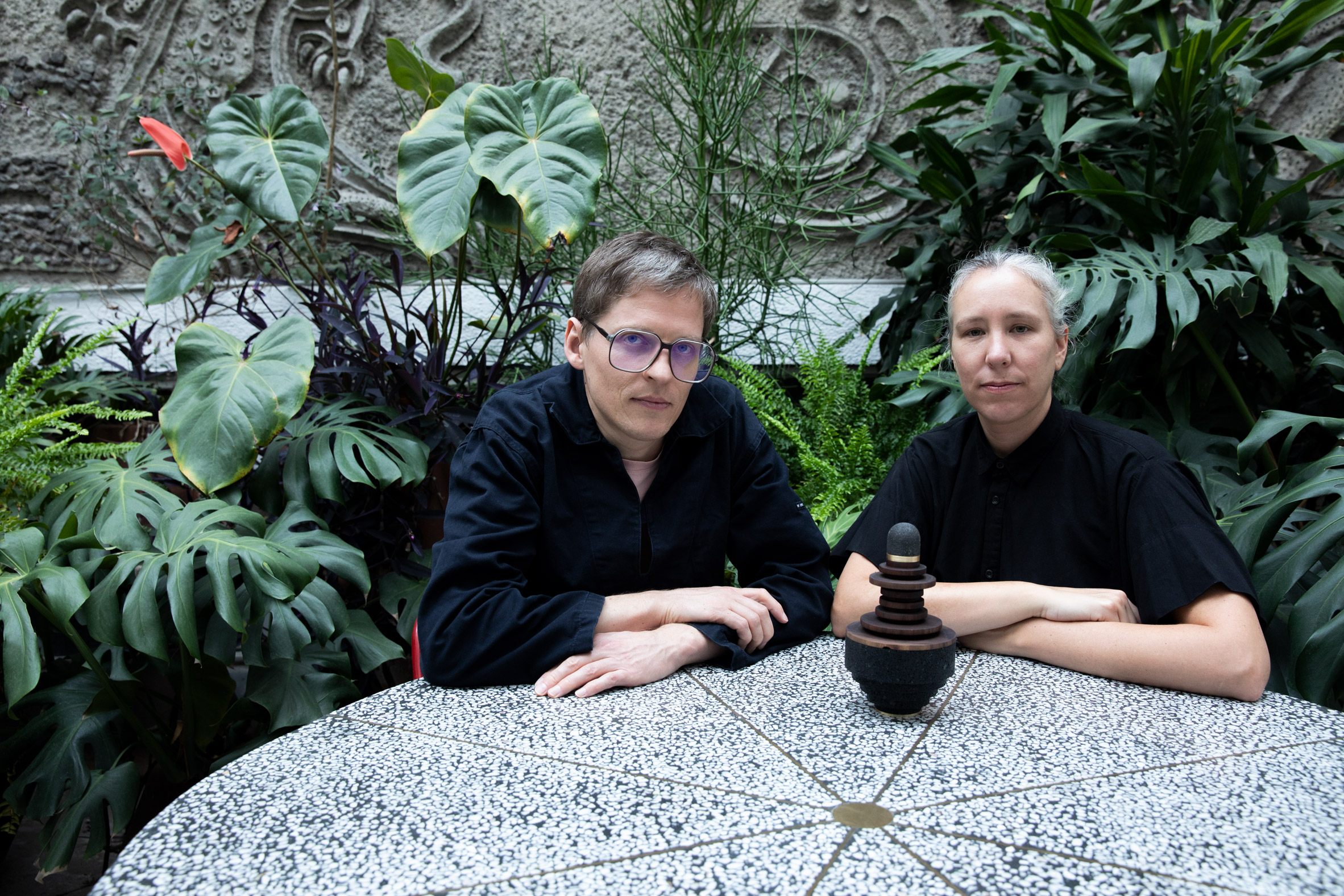
Ana Paula Ruiz Galindo and Mecky Reuss, the founders of the Mexico City-based architecture practice, spoke to Dezeen's editor-in-chief Marcus Fairs about their design for a pestle and mortar used for the making and serving of tequila-based cocktails.

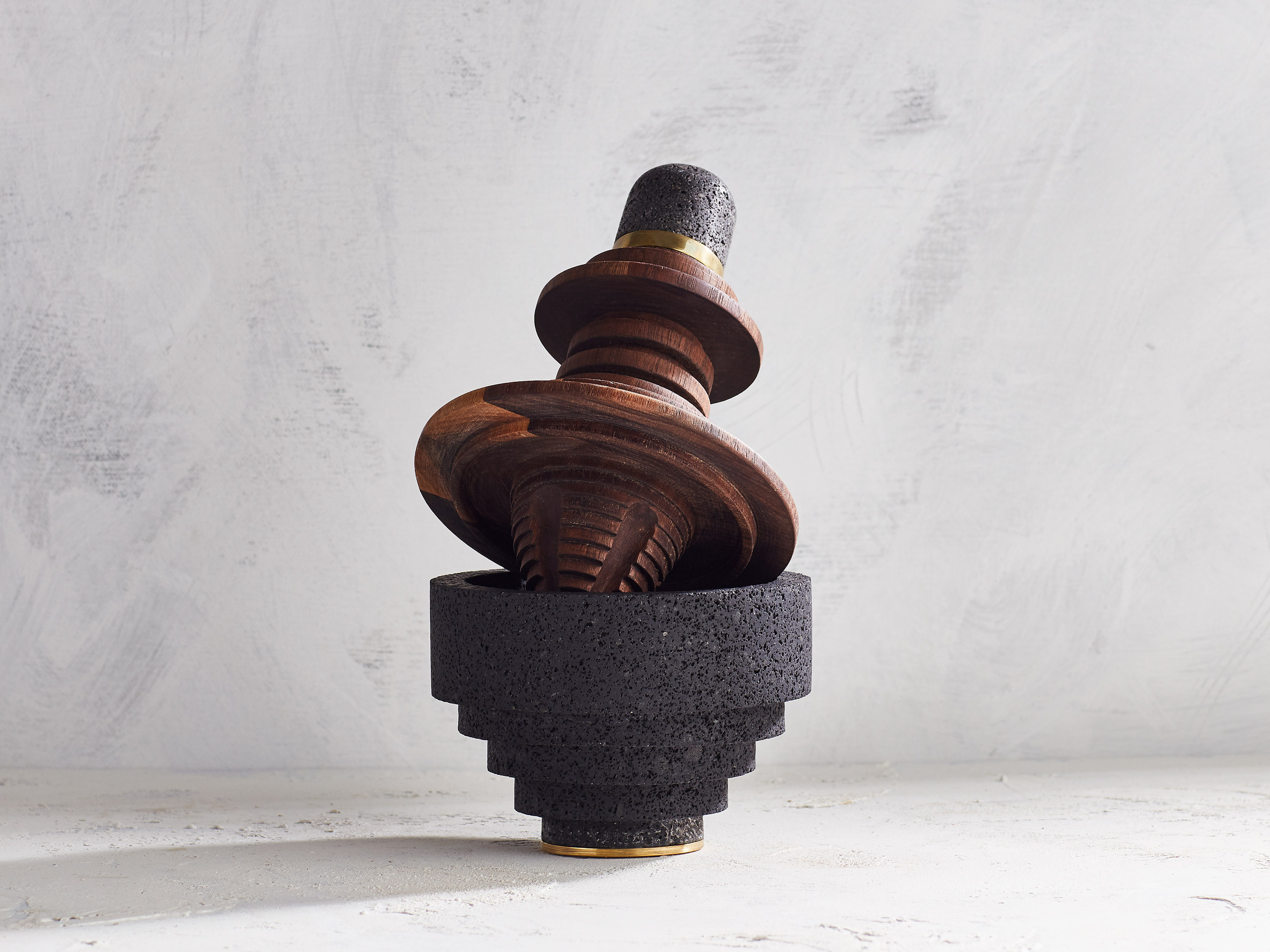
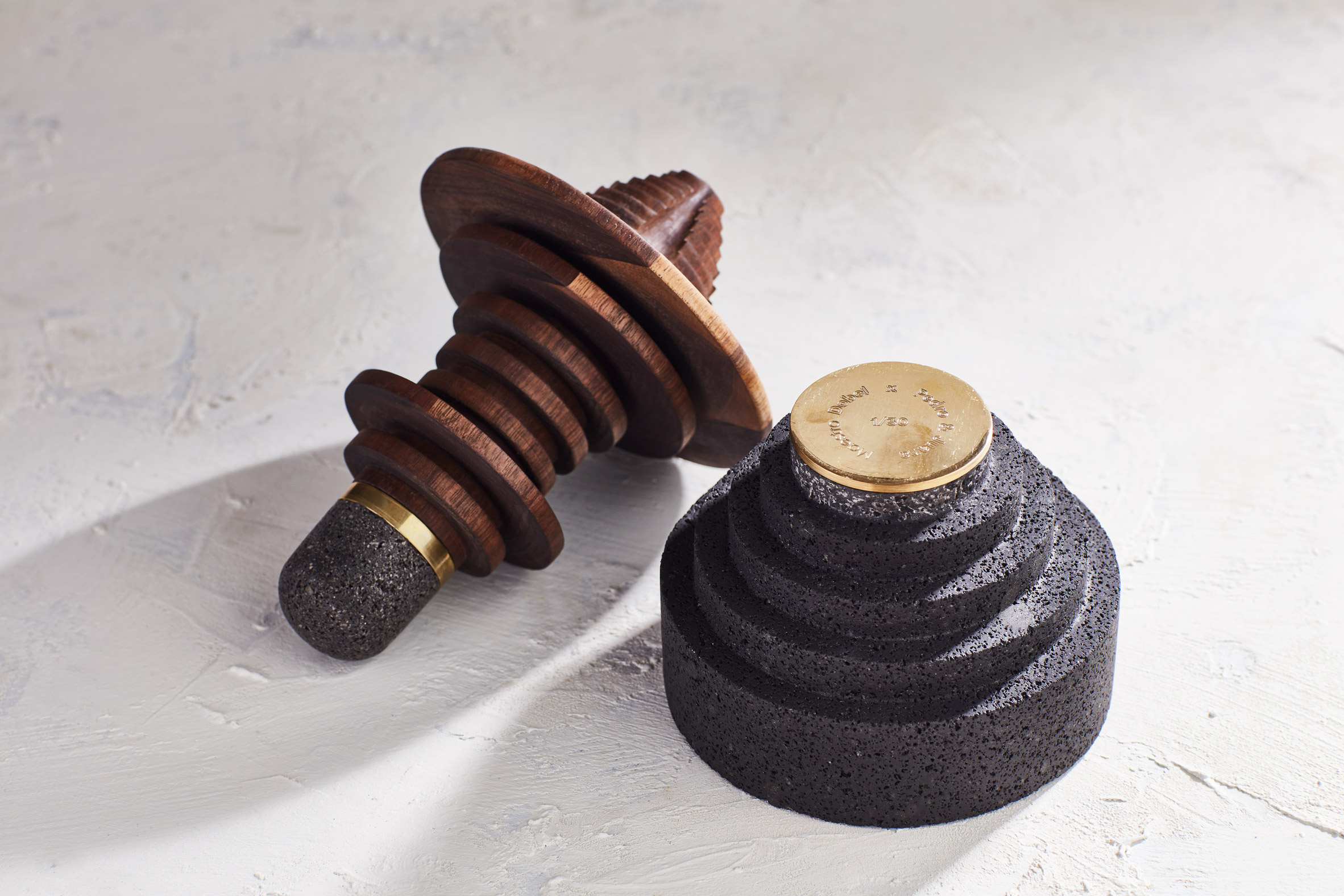
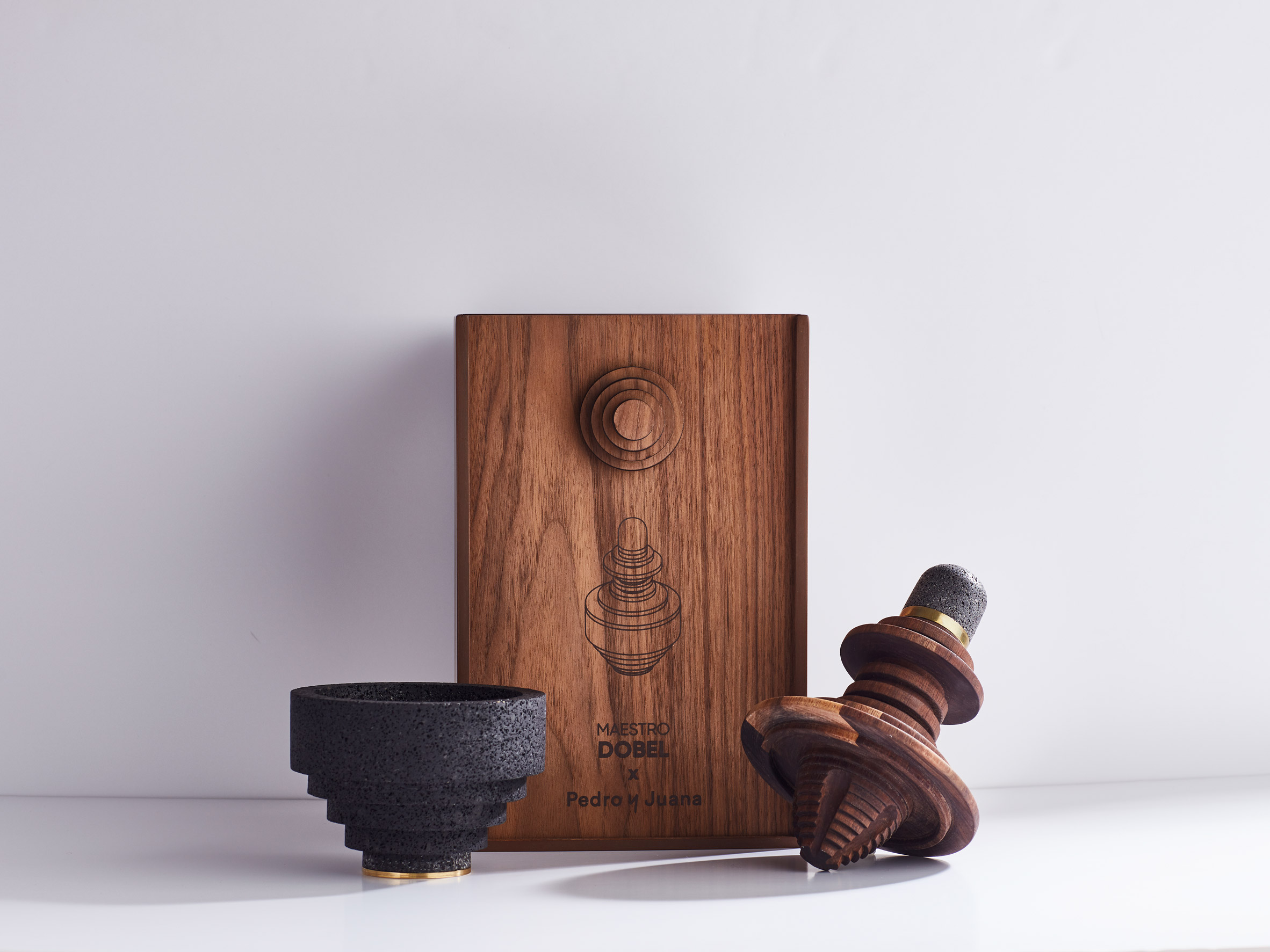
Called Tejolote, the sculptural object is made up of a pestle and a volcanic rock mortar, which together are used to juice, grind and crush ingredients for cocktails.

Tejolote by Pedro & Juana for Maestro Dobel
Mexican architecture studio Pedro & Juana has designed a new limited edition bar tool for tequila brand Maestro Dobel

The architects designed the object as a nod to Mexican culinary traditions and the geography of the Mexican state of Jalisco, where tequila originates from.

"There's a history to kind of all these objects that interests us," the architects explained in the video.

"What drives our work is the history and materiality of objects," Galindo said.

"We like to fold stories into our work, the history of the object, the history of the material or even the context that all of these things take place on."

Tejolote by Pedro & Juana for Maestro Dobel
Called Tejolote, the tool is a pestle and mortar used to grind spices and juice lemons for the preparation of tequila-based cocktails

Made out of volcanic rock from Jalisco, the tiered mortar references the circular pyramids found in Los Guachimontones, a pre-historic archeological site also in Jalisco.

"The inspiration for this object came from these very early pre-Aztec pyramids," Reuss said.

"It was something that inspired us to think of how we could use that form," Galindo added.

To shape the material, the architects worked with the late Mexican stonemason Juan Fraga, who also collaborated with Frida Escobedo for her collection of tequila drinking vessels for Maestro Dobel.

The mortar was influenced by a tool used in Mexican cuisine known as the Molcajete, a stone vessel used to grind ingredients as well as functioning as a serving plate.

"The roughness of the volcanic rock is very conducive to squeezing out chiles, tomatillos and tomatoes, and actually also serves as a serving container," Reuss explained.

"The alchemy of the mixing ingredients and kind of fusing them in the analogue of the distillation of tequila interested us."

Tejolote by Pedro & Juana for Maestro Dobel
The tool's shape was influenced by Mexican culinary traditions

The pestle, known in Mexican cuisine as the Tejolote, is influenced by a traditional wooden whisk used to whip chocolate called the Molinillo.

Made from local walnut wood, one end of the tool acts as a citrus reamer for juicing limes, while its handle is topped with volcanic rock for grinding spices like a traditional pestle.

Tejolote by Pedro & Juana for Maestro Dobel
The object is made from volcanic rock from Jalisco in Mexico and local walnut wood

An important consideration for the architects was the significance of tequila in Mexican culture and cuisine.

"Tequila is a social actor, a binder, the interaction between people and a good time that lasts a long time," Reuss said.

Pedro & Juana
Mecky Reuss and Ana Paula Ruiz Galindo are the founders of Mexican architecture studio Pedro & Juana

Pedro & Juana is an architecture studio based in Mexico City.

In 2019, the duo won the MoMA and MoMA PS1 Young Architects Program and installed a temporary scaffolding pavilion that hosted the museum's summer music series.

Available for purchase at Harvey Nichols, the limited-edition object is the second iteration of Maestro Dobel's Celebrating Brilliance series, where the brand collaborates with architects, artists or designers on objects to elevate the drinking experience.

The first featured a collection of drinking vessels made from obsidian stone designed by architect Frida Escobedo.


Partnership content

This talk was produced by Dezeen for Maestro Dobel as part of a partnership. Find out more about Dezeen's partnership content here.

The post Pedro & Juana's pestle and mortar for Maestro Dobel references the birthplace of tequila appeared first on Dezeen.


from Dezeen https://ift.tt/3eRSoNx

Olson Kundig completes Noah's ark-informed children's museum in Berlin

It has a rounded form

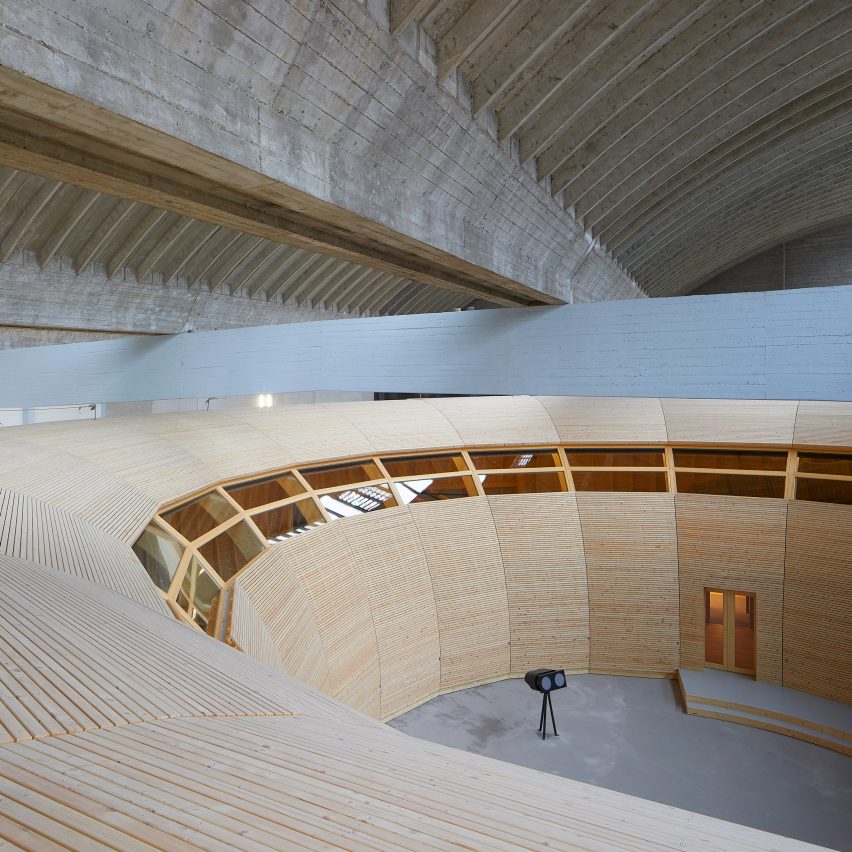
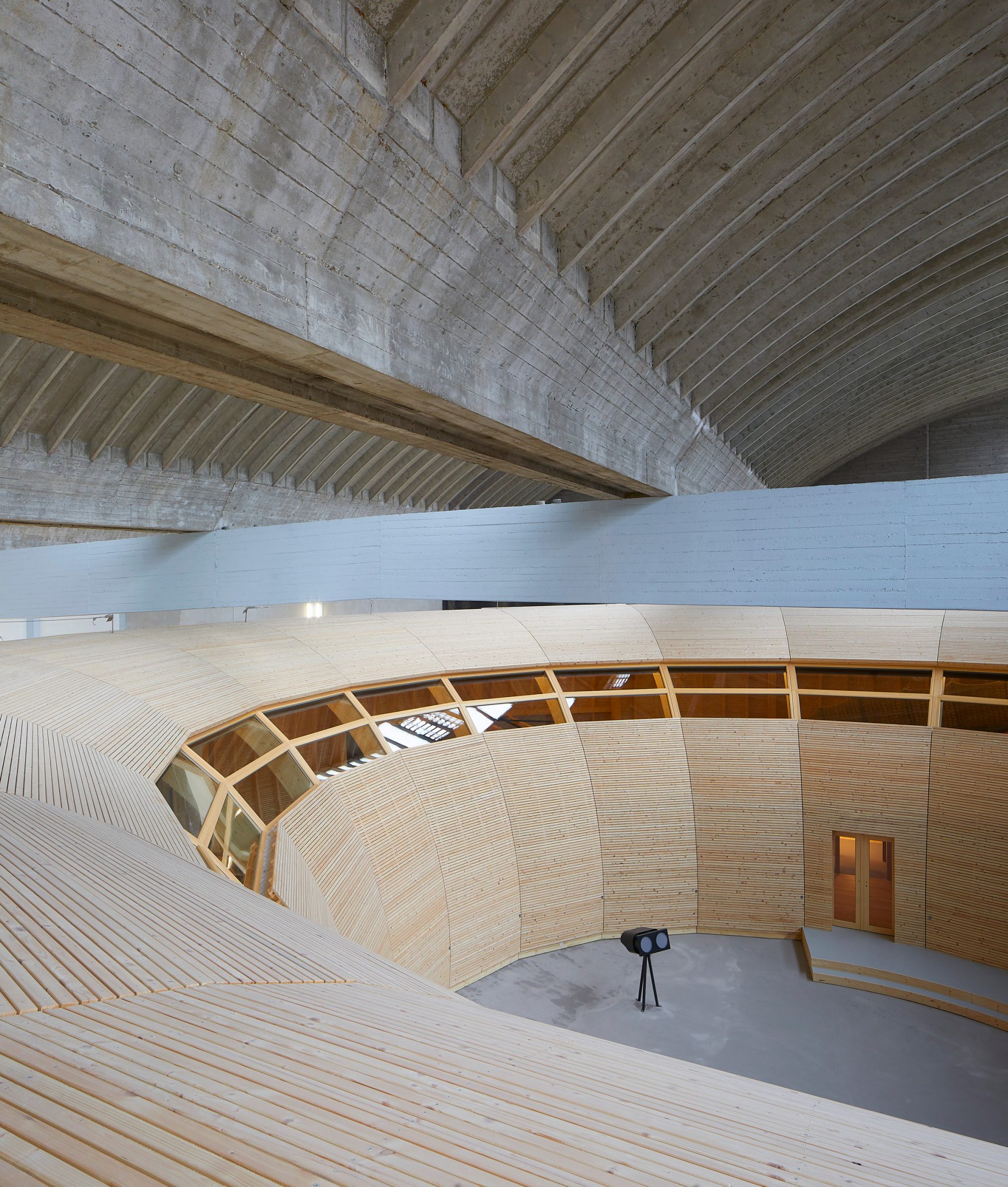
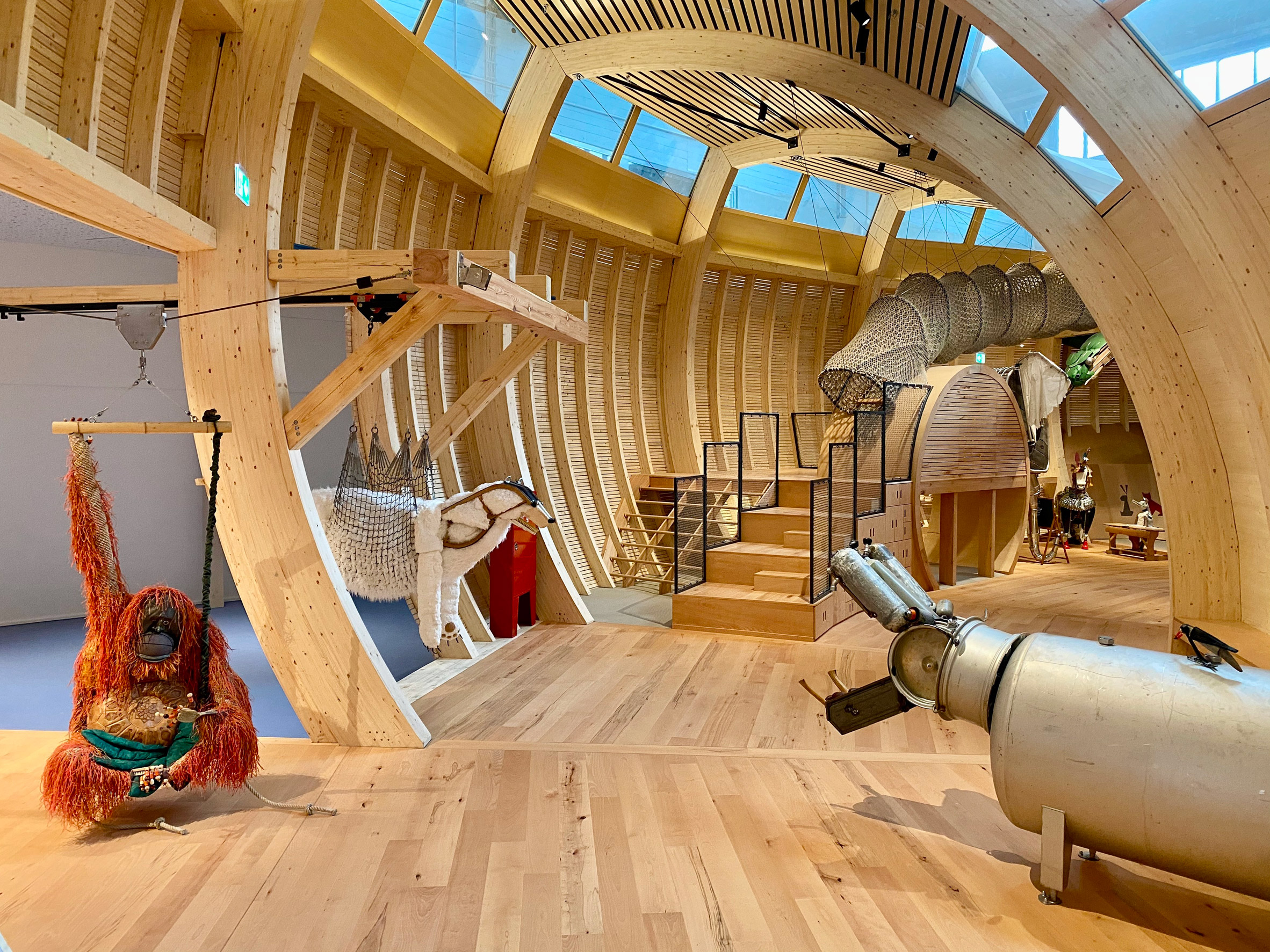
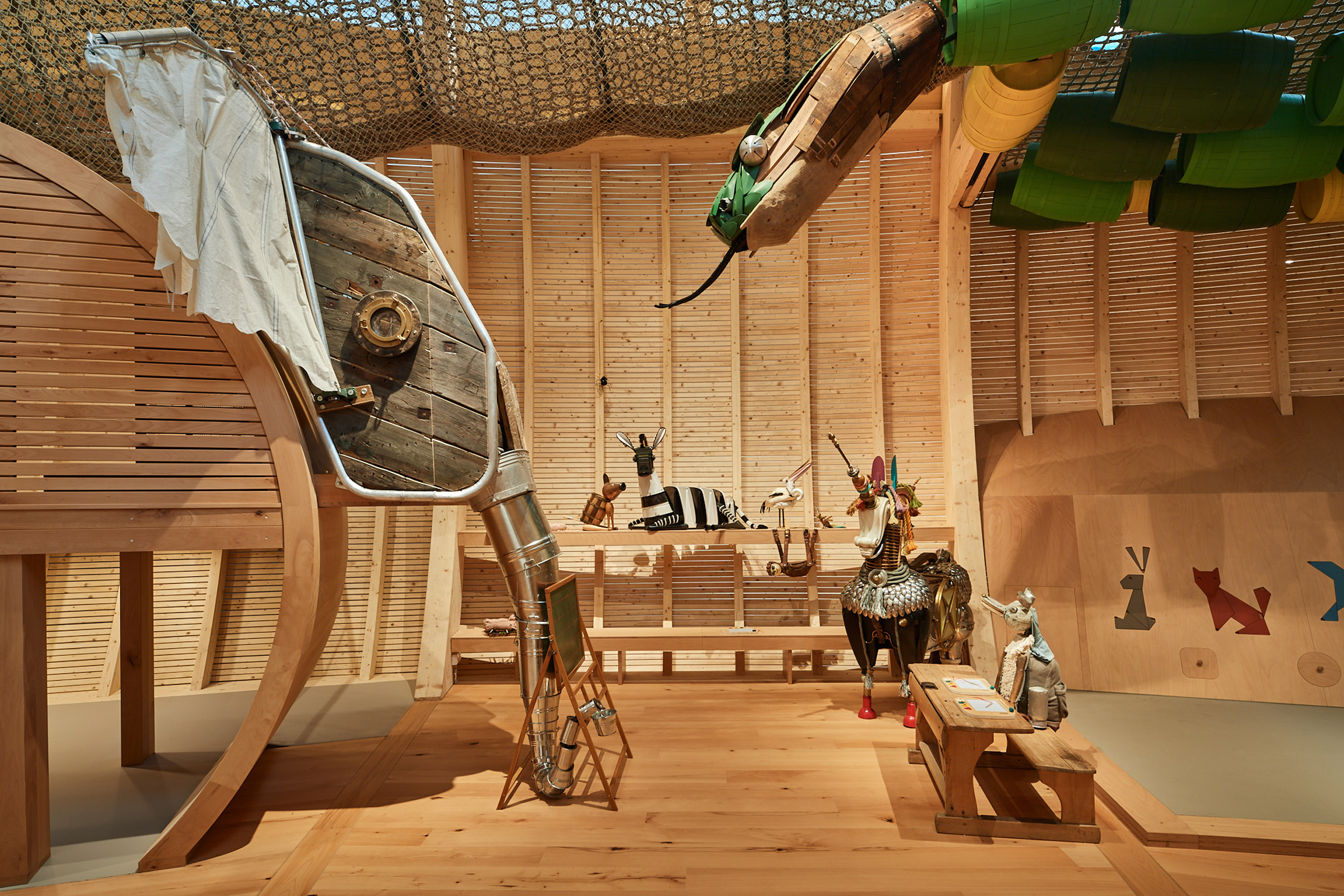
A doughnut-shaped timber "ark" filled with animal sculptures sits at the centre of the recently opened ANOHA children's museum at the Jewish Museum in Berlin.

Architecture studio Olson Kundig designed the museum, which is an addition to the Daniel Libeskind-designed Jewish Museum Berlin, to be a space for "discovery, exploration and play".

The structure was clad in timber
Top: the structure had a doughnut shape. Above: clerestory windows were placed at the top of the structure

Set opposite the existing museum's building, ANOHA was built within a brutalist former flower market. The architect's concept aims to use the story of Noah's ark as an accessible way of understanding issues of climate change.

Originally called Arche Noah – Noah's ark in German – the name was changed to ANOHA to be easier for visitors of all ages to pronounce.

Olson Kundig used a pale timber
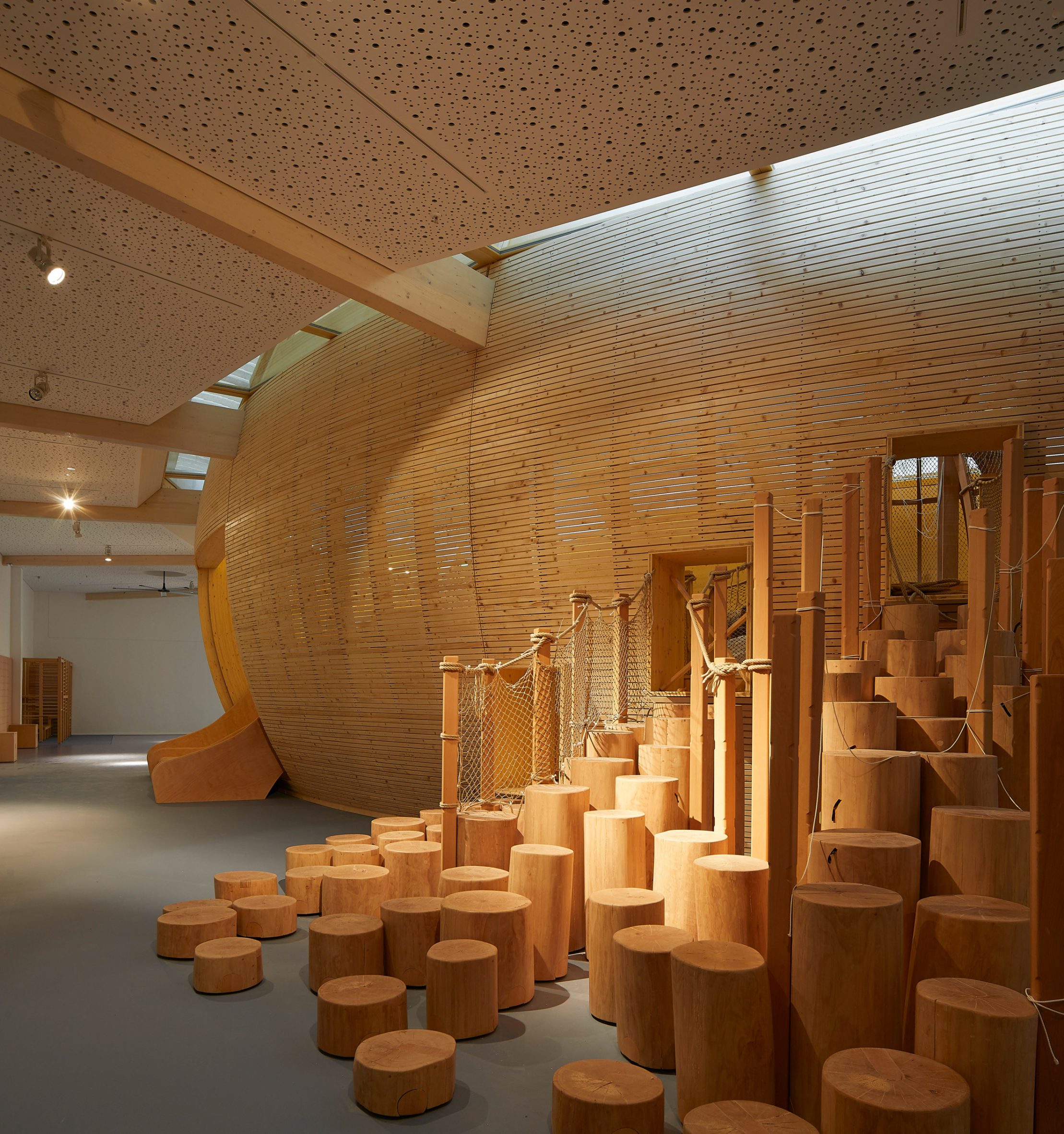
Timber lines the exterior of the play space

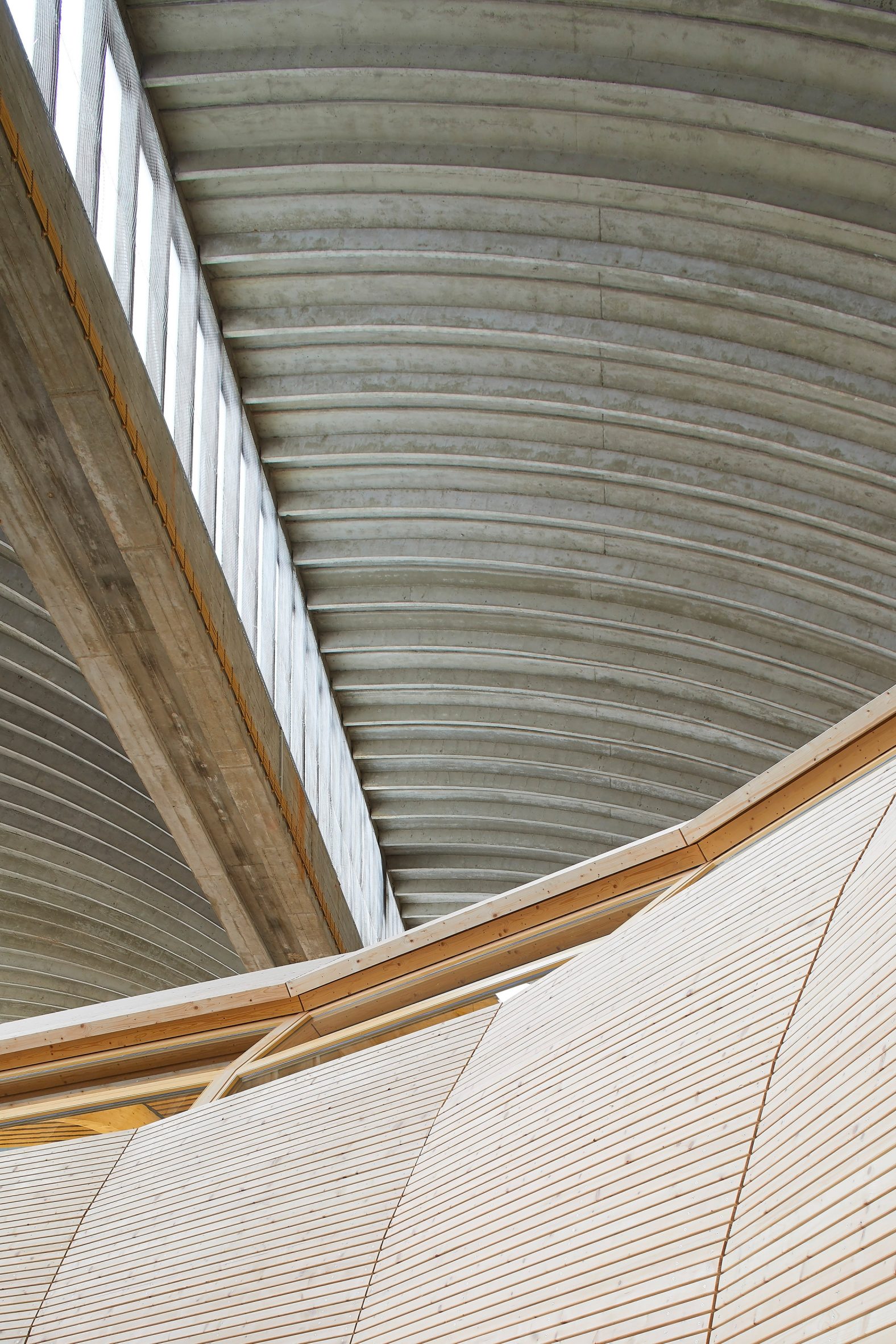
The 1960s concrete market hall was left largely untouched, with a contrasting timber structure inserted within the concrete frame.

"The 585-square-meter ark is inspired by two seemingly disparate sources: an ancient Sumerian text that describes a circular ark, and Space Station V, a ship from Stanley Kubrik's film 2001: A Space Odyssey," said the studio.

"The warm, curvilinear ark offers a softening counterpoint to the rectilinear brutalist structure of the existing hall, while the structural ribs within the ark echo the concrete ribbing that frames the skylights overhead."

Olson Kundig used a wooden palette throughout
Play areas over flow from the interior of the space

Before entering the ark, an immersive space designed by artist Wolfram Spyra evokes the feeling of being underwater through a series of educational exhibits, representative of the story of the flood from the Torah.

This leads into the ark itself, where a variety of different spatial conditions have been created using ramps, steps, interactive displays and play spaces, addressing everything from biological life-cycles to the design of flood-resistant homes.

"We designed ANOHA through the lens of a child's experience, allowing them to engage with important cultural issues in creative, age-appropriate ways," said design principal Alan Maskin.

More than 150 animal sculptures that are dotted throughout the space, were created by 18 German artists using repurposed and recycled everyday items.

These sculptures can be "fed", "groomed", and even produce "waste" in the form of coloured balls which can be used to "fertilise" the accompanying plant sculptures.

Sculptures were hung across the interior of the ark by Olson Kundig
The interior has a curved design

Clerestory glazing on both the interior and exterior walls of the doughnut shape draws in light and frames views of the concrete structure outside.

Doors lead out into the centre of the ark, where an open space surrounded by low platforms can be used for gatherings and events.

Timber battens line the walls of the ark by Olson Kundig
Animals double as play spaces

Ventilation and lighting within the ark have been designed to work in tandem with the existing structure, which features openable louvres within its curved roof sections that open and close depending on air temperature.

Animal sculptures also featured in another child-centric design recently completed by designer Sarit Shani Hay at the Design Museum Holon.

Photography is by Hufton + Crow.

The post Olson Kundig completes Noah's ark-informed children's museum in Berlin appeared first on Dezeen.


from Dezeen https://ift.tt/36Ncsfe

Foster, Grimshaw and ZHA among thousands of UK practices failing to back RIBA net-zero carbon challenge

RIBA 2030 Climate Challenge

Less than six per cent of UK architecture firms have signed up to a RIBA climate initiative aimed at achieving net-zero carbon emissions from buildings they design.

Just 230 of the 4,000 Royal Institute of British Architects chartered practices have signed its 2030 Climate Challenge.

Leading practices including Foster + Partners, Zaha Hadid Architects and Grimshaw Architects are among those that have failed to join the initiative.

RIBA chief executive Alan Vallance urged firms to sign up to the "undeniably tough but progressively achievable" challenge.

"Changing the way we practice to combat climate change isn't an option anymore," he told Dezeen. "We need everyone on board to make a difference."

Initiative challenges studios aim for net-zero

Launched in October 2019, the voluntary challenge helps architects design buildings with net-zero lifecycle emissions by 2030.

This is in line with the decarbonisation goals of the 2015 Paris Agreement, which aims to limit global warming to 1.5 degrees Celsius above pre-industrial levels, as well as anticipated UK legislation.

Signatories must "attempt to meet the targets on all their new and major refurbishment projects and commit to submitting data on these projects."

RIBA told Dezeen that more practices had signed up recently amid growing awareness of the need to eliminate emissions from buildings, which contribute around 40 per cent of all greenhouse gas emissions.

"We know lots of practices are contemplating and reviewing the targets, which is really encouraging," said RIBA senior media officer Abigail Chiswell-White. "We just need them to sign-up!"

Majority of UK studios not signed up

But the failure of the vast majority of practices to join the initiative follows concern from United Nations climate champion Nigel Topping over the lack of climate action by the profession.

Last month Topping told Dezeen that architecture "is one of the least well-represented businesses in the Race to Zero," referring to the UN initiative to get companies to commit to net-zero emissions by 2050.

Net-zero means that there are zero net emissions of carbon across the entire lifecycle. For buildings, this covers both embodied carbon emitted by the construction supply chain and operational carbon emitted during the building's use. Unavoidable emissions must be offset using schemes that remove carbon from the atmosphere.

Emissions from the built environment are under the spotlight in the run-up to the UN's COP26 climate conference in Glasgow this November, where a day will be dedicated to the sector for the first time.

Topping said architects are in a "unique and important position" to reduce greenhouse gas emissions due to the influence they have on choices of materials, systems and construction methods.

He said his team was working to get architects to join the Race to Zero commit to net-zero "so that when we reach COP26 we can really show ambition within the sector."

UK's largest studio not a signatory

So far, none of the world's 50 largest architecture firms has joined the Race to Zero. Of the 20 largest practices in the UK, only 12 have signed up to the RIBA initiative.

Dezeen contacted all eight practices that have failed to join the 2030 Climate Challenge.

Foster + Partners, the UK's biggest architecture firm, said it had not signed up as it has its own sustainability manifesto, which it launched in 2019.

"We feel it would be confusing for our teams to have two similar systems running in parallel," the practice said, claiming that its manifesto covers ">covers much of the same ground" as the RIBA challenge.

However, Foster's manifesto does not commit the practice to achieving net-zero emissions in its projects or set out how it can do this.

Zaha Hadid Architects also not committed to challenge

"We are addressing these targets," said Zaha Hadid Architects, the UK's third-biggest practice and another that has not signed up to RIBA's 2030 Climate Challenge. "We are currently measuring our portfolio with respect to these targets and establishing robust systems to monitor the progress of every project."

But it added: "We would not make any public commitment without being certain it's not only something we believe in, but also something we are able to deliver."

Sheppard Robson, the sixth-biggest UK practice, said it was about to sign up to the latest version of the challenge, which was updated recently. "Sheppard Robson are signing up to version 2 and are currently aligning our reporting to enable data to be shared with RIBA," the practice said.

Grimshaw Architects, the seventh-biggest UK firm according to the AJ100 list, said it has set its own net-zero targets.

"We were the first major architect practice to pledge to design and deliver socially and environmentally regenerative buildings and assets by 2030 and, as a first step to reach this, to design net zero-carbon ready buildings and infrastructure by 2025," it said.

However, the net-zero carbon statement on Grimshaw's website only commits the company to making its own buildings net-zero, not those it designs for clients.

Large studios considering signing up

Stride Treglown, another top-20 UK practice that has not signed up, said the aspirations of the RIBA Climate Challenge 2030 "align well with our own ambitions and targets". However, it added that "the collection of data required to demonstrate performance against the RIBA's targets was a considerable challenge."

It said that version 2 of the challenge "has since made data collection more achievable and we therefore expect to add our signature in the near future."

EPR Architects said: "Our dedicated in-house sustainability team are currently reviewing the RIBA Climate Challenge data submission requirements, with the view to sign up shortly.”

PRP said: We have not signed up to the RIBA 2030 Climate Challenge as of yet as we are currently undertaking work to establish whether can exceed the targets. If we can, and we believe we will be able to, we want to make a statement that we are going beyond the targets set by the 2030 Climate Challenge."

Squire and Partners did not respond to Dezeen's questions asking why it has not signed up to the challenge.

Targets "undeniably tough"

The twelve practices in the UK top 20 that have signed up to the initiative are BDP, Allford Hall Monaghan Morris, Allies and Morrison, Hawkins\Brown, Atkins, Scott Brownrigg, Feilden Clegg Bradley Studios, TP Bennett, Purcell, AHR, WilkinsonEyre and PLP Architecture.

"The targets we've set our chartered practices through this challenge are undeniably tough, but they're also progressively achievable," said RIBA's Vallance. "We're here to provide our members with the guidance they need to work towards them."

"Changing the way we practice to combat climate change isn't an option anymore, and we're confident that these goals will place projects on the trajectory towards net-zero," he added.

In October, RIBA and climate network Architects Declare will host a conference that aims to hone a message to governments ahead of the COP26 conference the following month. The Built Environment Summit will generate proposals for regulations to help decarbonise the built environment, which it will present at COP26.

"We're seeing more and more practices sign-up to attempt to achieve these reductions on their projects ahead of COP26, but we need everyone on board to make a difference," said Vallance.

"The challenge is about committing to design for outcome-based building performance based on a clear set of RIBA standards – and I cannot emphasise the importance enough.”

The post Foster, Grimshaw and ZHA among thousands of UK practices failing to back RIBA net-zero carbon challenge appeared first on Dezeen.


from Dezeen https://ift.tt/3xPVU2n

Filo chair by Ronan and Erwan Bouroullec for Mattiazzi

Filo chair by Ronan and Erwan Bouroullec for Mattiazzi

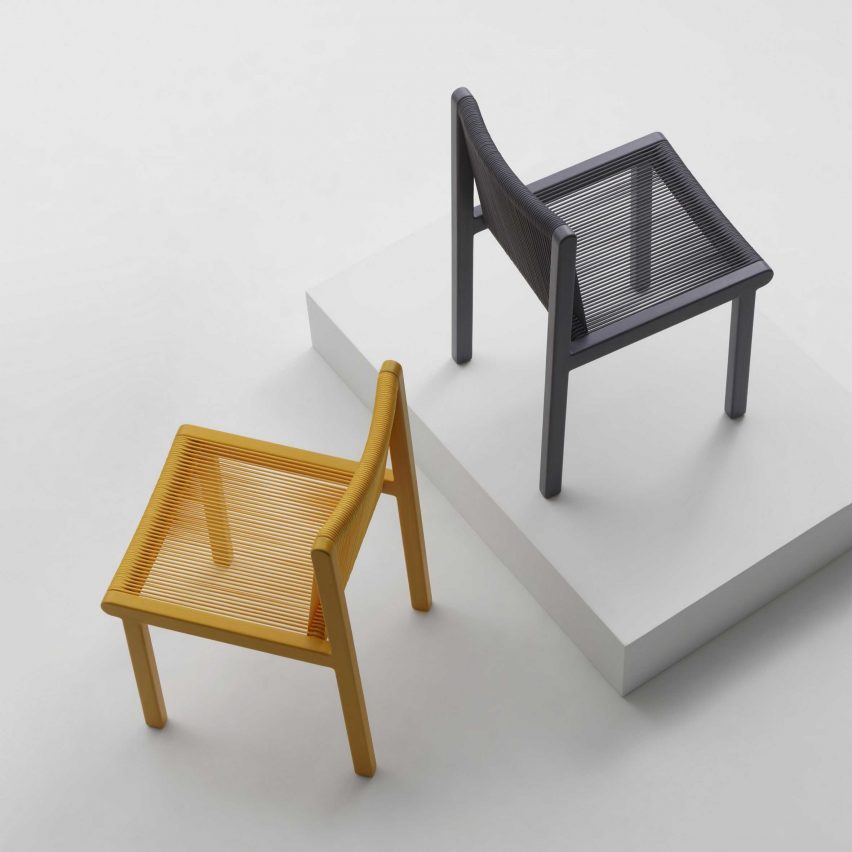
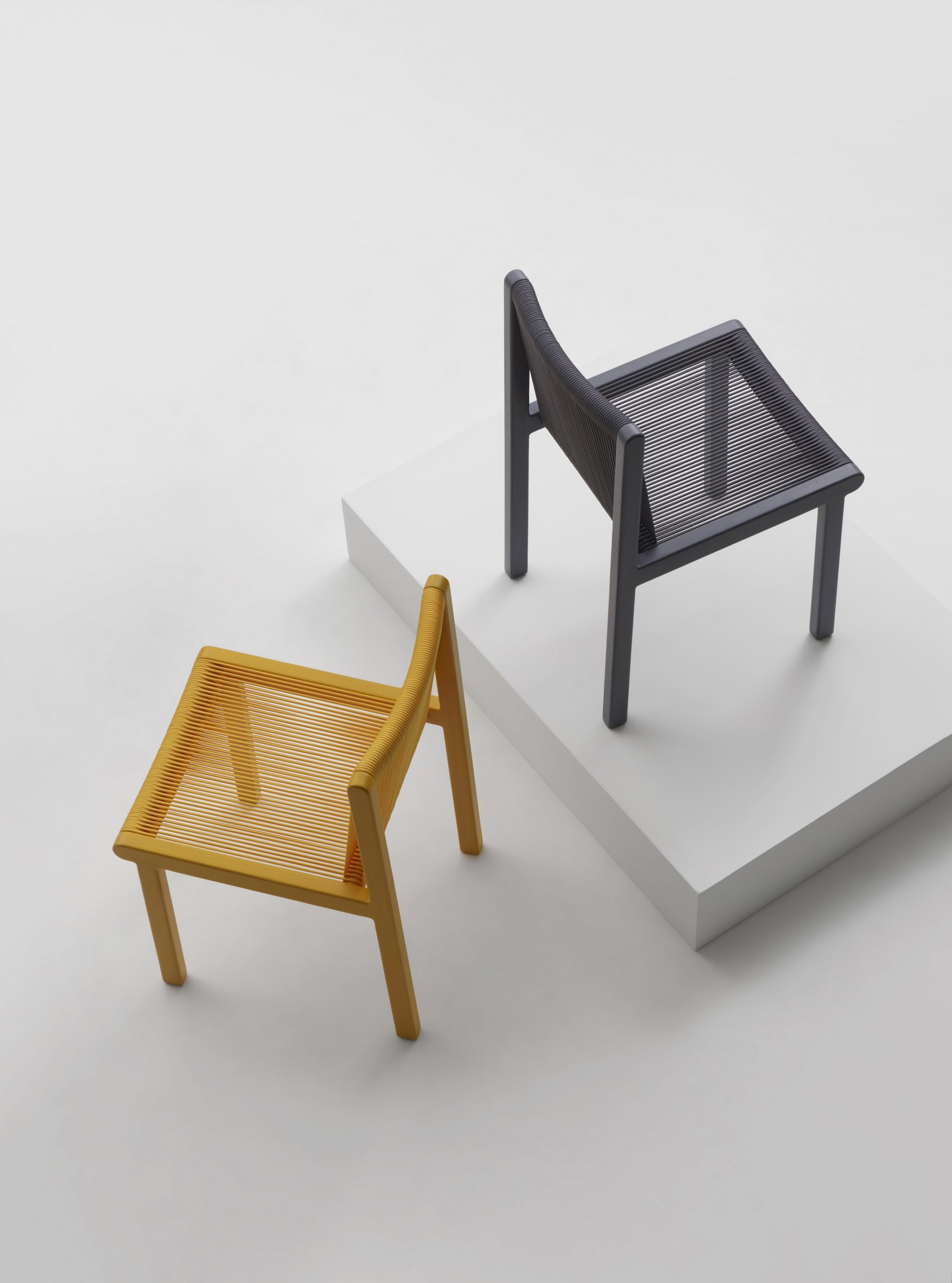
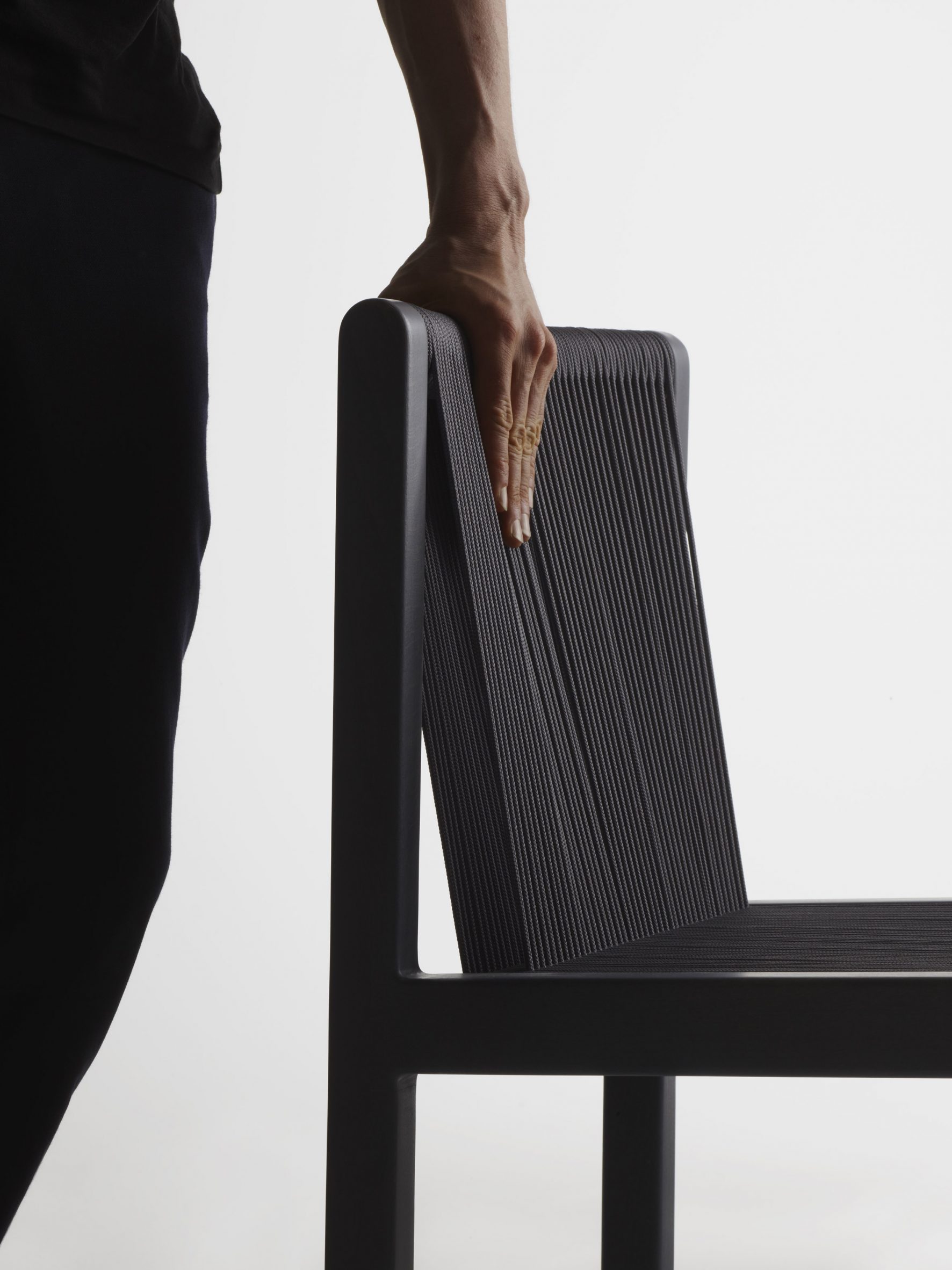
Dezeen Showroom: French designers Ronan and Erwan Bouroullec have created Filo, a beechwood chair wrapped in rope, for Mattiazzi.

Mattiazzi describes the Filo chair as having a "graphic sensibility" created by the robust lines of its frame, which give it an almost typographic quality when seen from the side.

Filo chair by Ronan and Erwan Bouroullec for Mattiazzi
Filo has a stained beechwood frame and a seat and backrest made from rope

Filo is the Bouroullec brothers' fourth product line for Mattiazzi after Osso, Uncino and Quindici, and has seen the designers apply their learnings to create a structure that maximised strength and minimised wood waste.

"After some years of work for Mattiazzi, we tried in this research to apply what we learnt from the years before," said Ronan Bouroullec. "I think Filo is very well composed in the sense of its lines, the tension and the radius but it's a bit more square than our usual work."

Filo chair by Ronan and Erwan Bouroullec for Mattiazzi
The chair almost looks like typography when viewed from the side

He said Filo works well in multiples and particularly around a rectangular table, where it creates an appealing geometry.

"I use it every day in front of my desk," he added.

Filo is available in several colours.

Product: Filo chair
Designer: Ronan and Erwan Bouroullec
Brand: Mattiazzi
Contact: cristina@mattiazzi.eu

About Dezeen Showroom: Dezeen Showroom offers an affordable space for brands to launch new products and showcase their designers and projects to Dezeen's huge global audience. For more details email showroom@dezeen.com.

Dezeen Showroom is an example of partnership content on Dezeen. Find out more about partnership content here.

The post Filo chair by Ronan and Erwan Bouroullec for Mattiazzi appeared first on Dezeen.


from Dezeen https://ift.tt/2UY6PbG

Dezeen Studio Space opens in London

Dezeen studio space

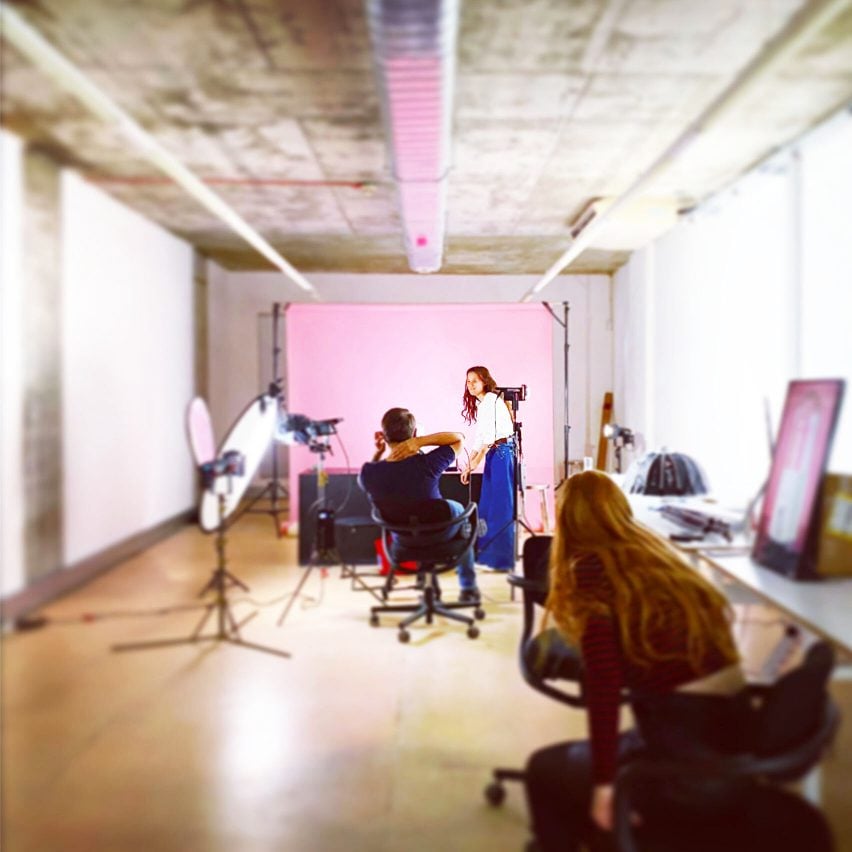
Dezeen has opened a studio space for film and photography shoots, live talks and more.

The Dezeen Studio Space is located in the same building as the Dezeen office in Hoxton, east London.

The space will be used by the award-winning Dezeen Studio video team to interview leading architects and designers, host live panel discussions and perform video and photography shoots.

In addition, the space can be used for events with small audiences and for rehearsals, performances and demonstrations.

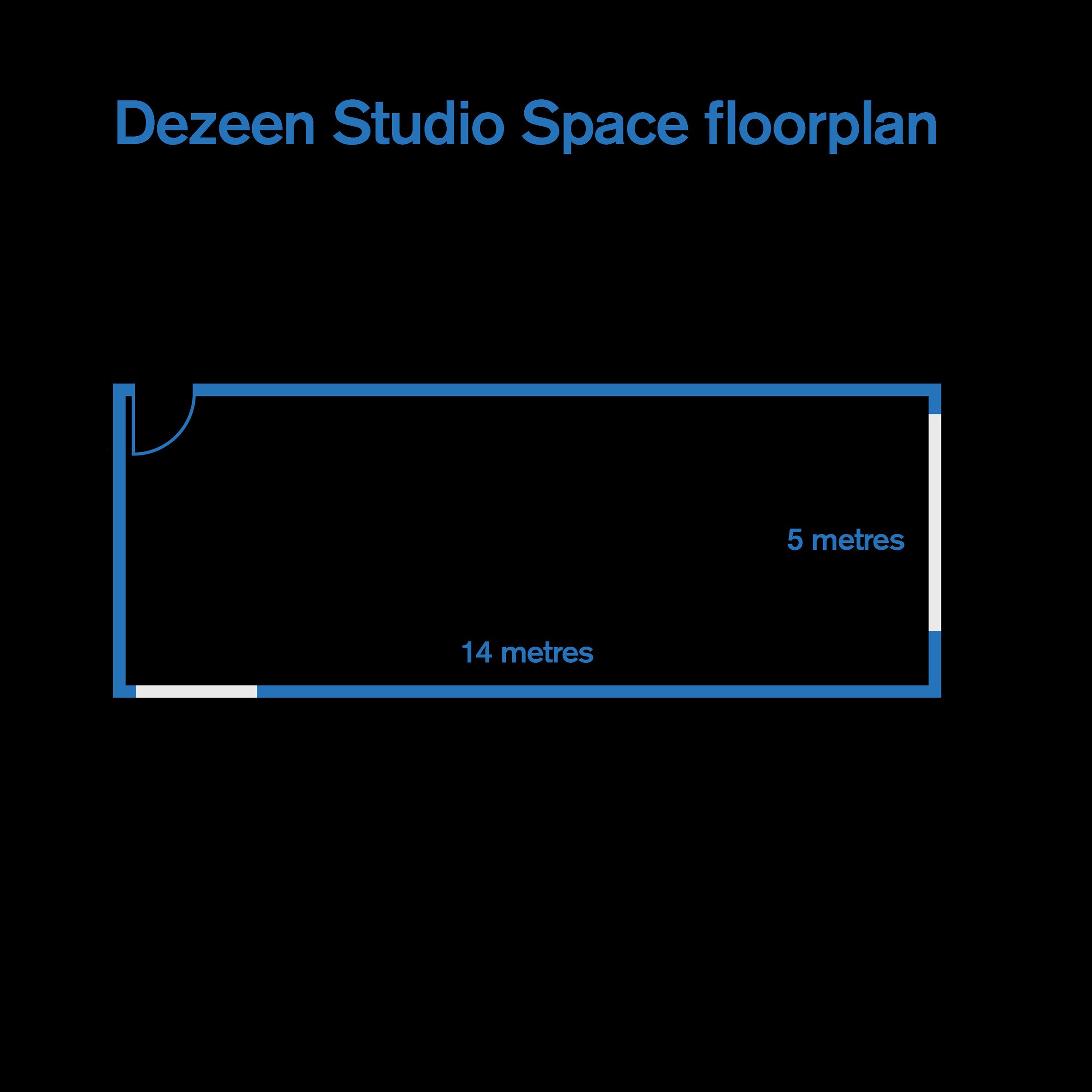
Dezeen Studio Space floorplan
Brands will be able to hire the 70-square-metre space

The first project to be created in the space is a brand collaboration with Evian. In the future it will be used for projects including the Dezeen Awards winners' announcements, further editions of our Screentime video interview series and the Dezeen 15 celebration of Dezeen's 15th birthday.

In addition, brands will be able to hire the 70-square-metre space for their own needs, either making use of our video team or bringing in their own crews.

BSME Talent Awards 2021 certificate
Dezeen Studio team was named the best video team at the BSME Talent Awards 2021

Dezeen Studio wins award for best video

The opening of the studio coincides with another award for the Dezeen Studio team, which was named the best video team at the BSME Talent Awards 2021 last week. Judges praised the team's "expertly produced and edited video," which they said was "aesthetically really striking with impressive impact."

The accolade follows the Webby People's Voice Award for our Out of the Box collaboration with Samsung. The team also won a Webby in 2015 for a video about Imogen Heap's music-making Mi.Mu gloves.

Live talks to be broadcast from Dezeen Studio Space

Dezeen Studio delivers compelling, editorially-driven brand collaborations combining agenda-setting online video content with innovative real-world projects as diverse as print publications, exhibitions and retail.

During last year's Virtual Design Festival, the Dezeen Studio team developed a new offering, broadcasting remote live talks with architects and designers from around the world from the Dezeen offices in London.

We have continued to team up with brands and organisations to host these talks. Recently, Dezeen teamed up with cultural organisation V-A-C Foundation to host a talk with Space Caviar co-founder Joseph Grima, in which he introduced the Non-Extractive Architecture exhibition and research project in a live interview with Dezeen editor-in-chief Marcus Fairs.

Remote talks such as these will now be hosted from the new studio space.

Contact sales@dezeen.com for more information about Dezeen Studio's services and the new Dezeen Studio Space.

The post Dezeen Studio Space opens in London appeared first on Dezeen.


from Dezeen https://ift.tt/3ioucTM