Monday, 19 July 2021

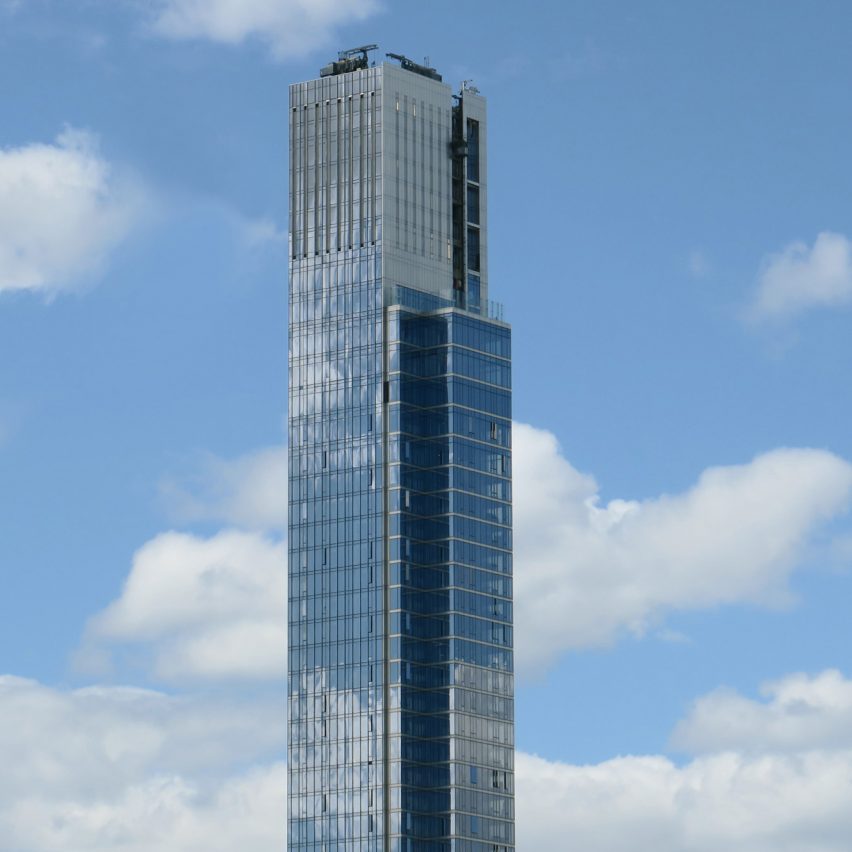
Six new supertall skyscrapers changing New York's skyline

Central Park Tower

Here are six supertall skyscrapers – buildings over 300 metres – that have recently completed, topped out or broken records, changing the New York skyline forever.


Central Park Tower on Billionaire's Row by Adrian Smith + Gordon Gill

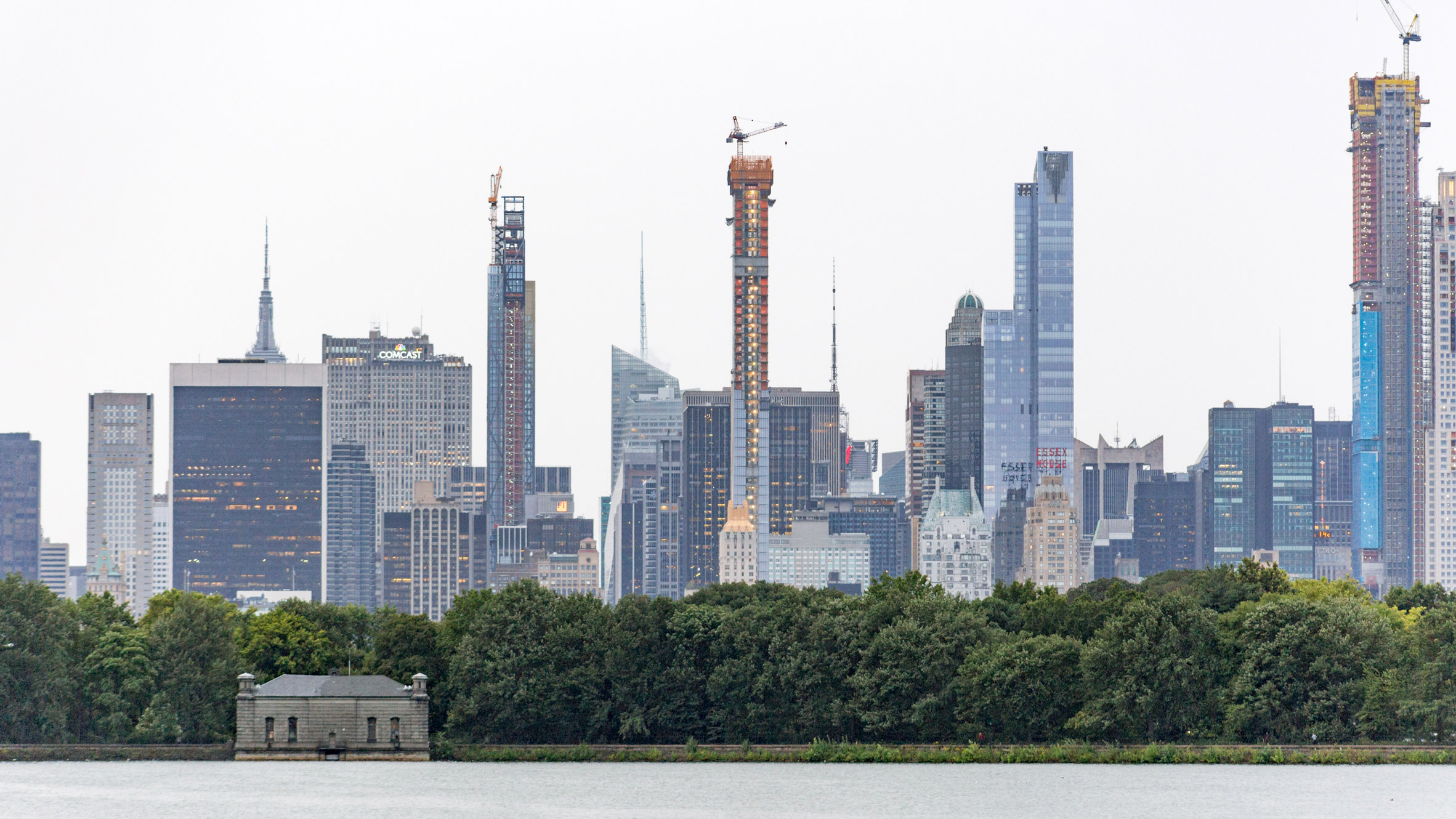
At 472 metres Central Park Tower, which was technically completed last year and is due to open soon, is now the second tallest building in New York.

It was also the tallest building in the world to complete in 2020 – the first time since 2014 that a supertall in the US, rather than China, took that title. The 98-floor building designed by Adrian Smith + Gordon Gill has 179 apartments and a Nordstrom store at the bottom.

Find out more about Central Park Tower ›


The Spiral in Hudson Yards by BIG

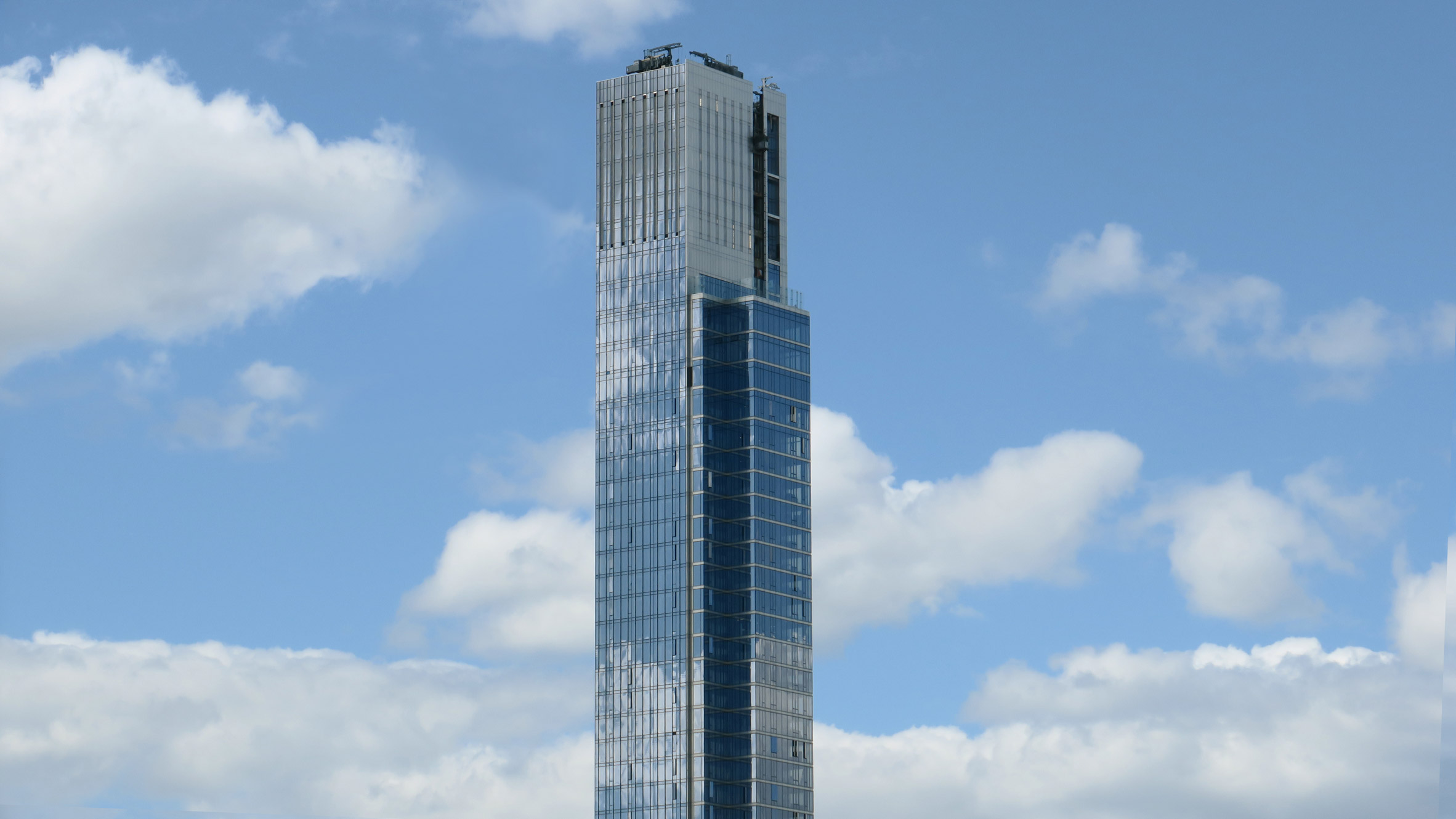
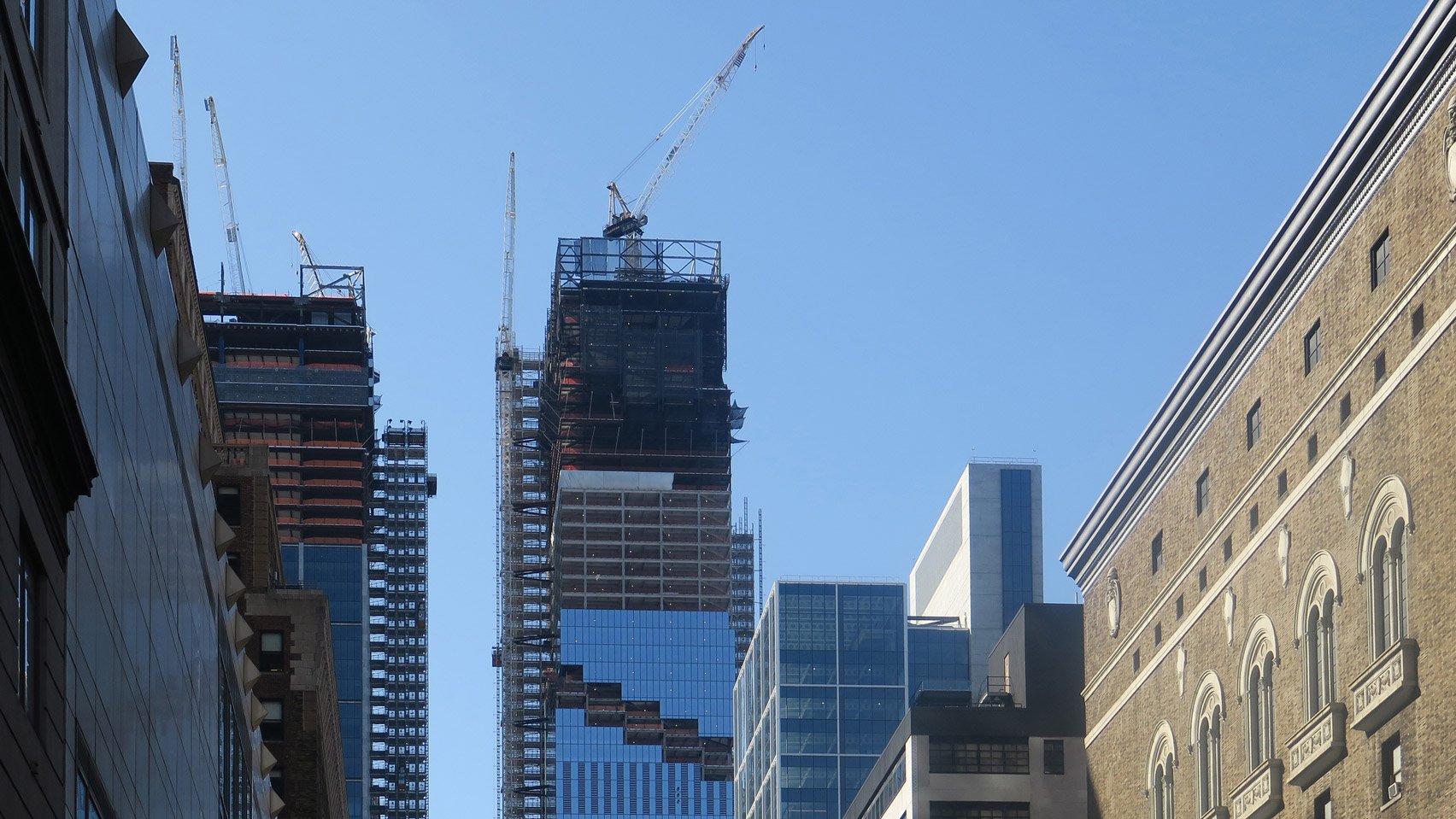
The Spiral (top and above), a supertall skyscraper office designed by Bjarke Ingel's architecture firm BIG, topped out at 314 metres earlier this year.

Due to complete in 2024, the 65-storey tower is the 13th tallest building in New York and is named for the zig-zagging outdoor terraces that ring its reflective glass facade.

Find out more about The Spiral ›


50 Hudson Yards by Foster + Partners

50 Hudson Yards in Hudson Yards by Foster + Partners

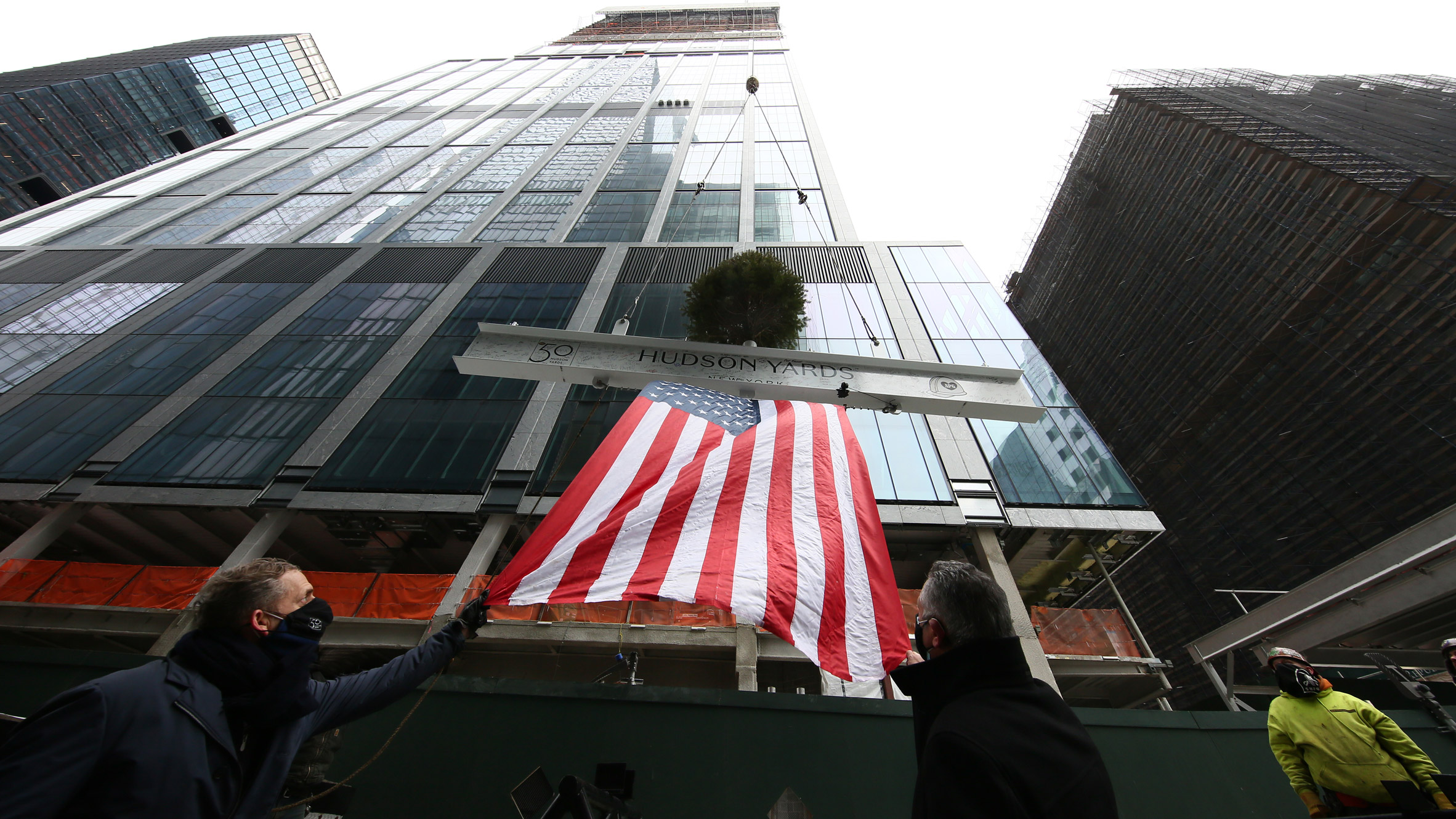
Facebook is set to be one of the first tenants of 50 Hudson Yards, a 308-metre-high supertall skyscraper designed by Norman Foster's firm Foster + Partners for New York's Hudson Yards development.

The 58-storey building topped out earlier this year and is due to complete in 2022. The tower, which is made of concrete and steel with a glass facade, is formed of three volumes that step back as they ascend in height.

Find out more about 50 Hudson Yards ›


111 West 57th Street by SHoP Architects

111 West 57th on Billionaire's Row by SHoP

After a brief halt due to legal wrangling in 2017, architecture firm SHoP's 435-metre supertall superskinny skyscraper 111 West 57th topped out in 2019. The residential tower, which is due to complete later in 2021, is the third tallest building in New York.

The tower has a width-to-height ratio of 1:24, making it the thinnest skyscraper in the world. Located on New York's exclusive Billionaire's Row, it will contain 60 high-end condominiums.

Find out more about 111 West 57th ›


9 DeKalb in Brooklyn by SHoP

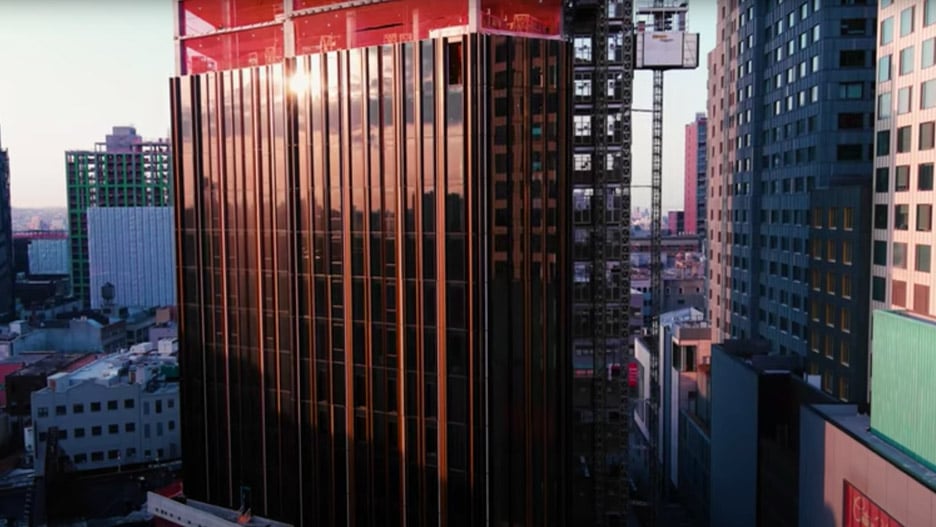
The first New York supertall skyscraper outside of Manhattan will be 9 DeKalb Avenue, a 93-storey skyscraper with a bronze-coloured facade that is currently under constriction in Brooklyn.

Although it hasn't reached supertall status quite yet, the tower recently topped 220 metres, making it the tallest building in Brooklyn. When complete, the SHoP-designed building will be 325 metres tall and contain a mix of residential apartments for sale and for rent.

Find out more about 9 DeKalb  ›


One Vanderbilt in Midtown Manhattan by Kohn Pedersen Fox

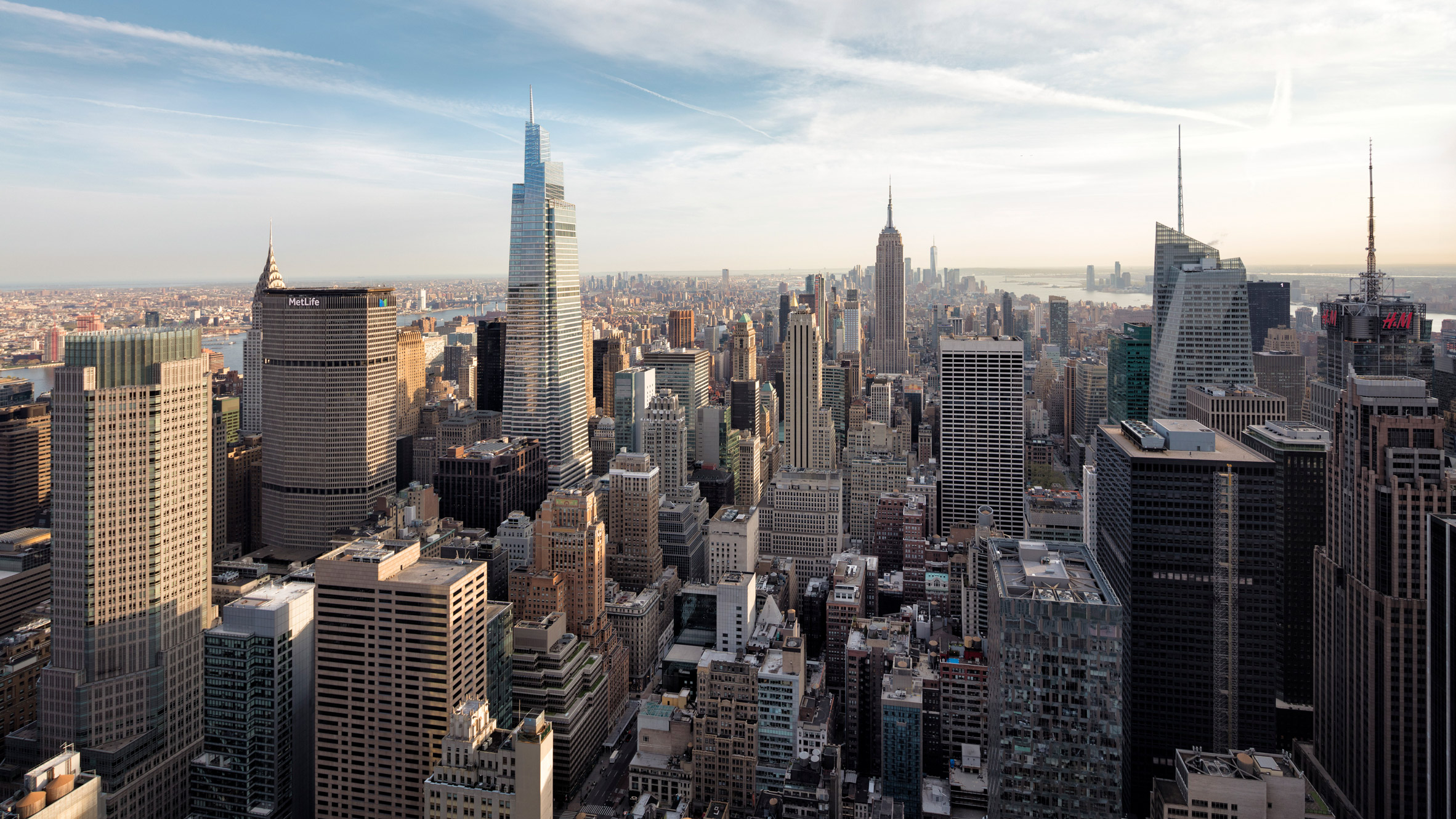
The fourth-tallest building in New York, One Vanderbilt by Kohn Pedersen Fox, completed in 2020. The 427-metre supertall skyscraper rises 59 stories over Grand Central Station in Midtown Manhattan.

Developer SL Green Realty is now preparing to open Summit One Vanderbilt, a supertall attraction that includes an observation deck and glass-bottomed external elevators.

Find out more about One Vanderbilt ›

The post Six new supertall skyscrapers changing New York's skyline appeared first on Dezeen.


from Dezeen https://ift.tt/3hMwQ6K

Technical University of Dresden spotlights ten industrial design projects

Technical University of Dresden

A project that uses technology to enhance piano learning and another that tracks where plastic waste accumulates in rivers are included in Dezeen's latest school show by students at the Technical University of Dresden.

Also featured is a lamp made from recycled plastic and an augmented reality platform that aims to simplify robot programming.


Technical University of Dresden

School: Technical University of Dresden
Courses: 
Industrial Design Engineering
Tutors: 
Lisa-Marie Lüneburg, Sebastian Lorenz, Helge Wanta, Marek Holovac, Felix Schmitt, Tina Bobbe, Lenard Opeskin, Christian Wölfel and Jens Krzywinski

School Statement:

"The study of Industrial Design Engineering at the Technical University of Dresden combines industrial design with mechanical engineering in a unique way throughout Germany. In addition to comprehensive mechanical engineering fundamentals, the courses comprise design basics such as sketching, 3D modelling and colour and trim.

"A practice-oriented approach and interdisciplinary collaborations consolidate our methodical and theoretical design knowledge and foster tangible project designs. With a well-coordinated study programme, the students are prepared for future tasks in the industry and creative businesses. This show is kindly supported by technischesdesign.org."

Technical University of Dresden

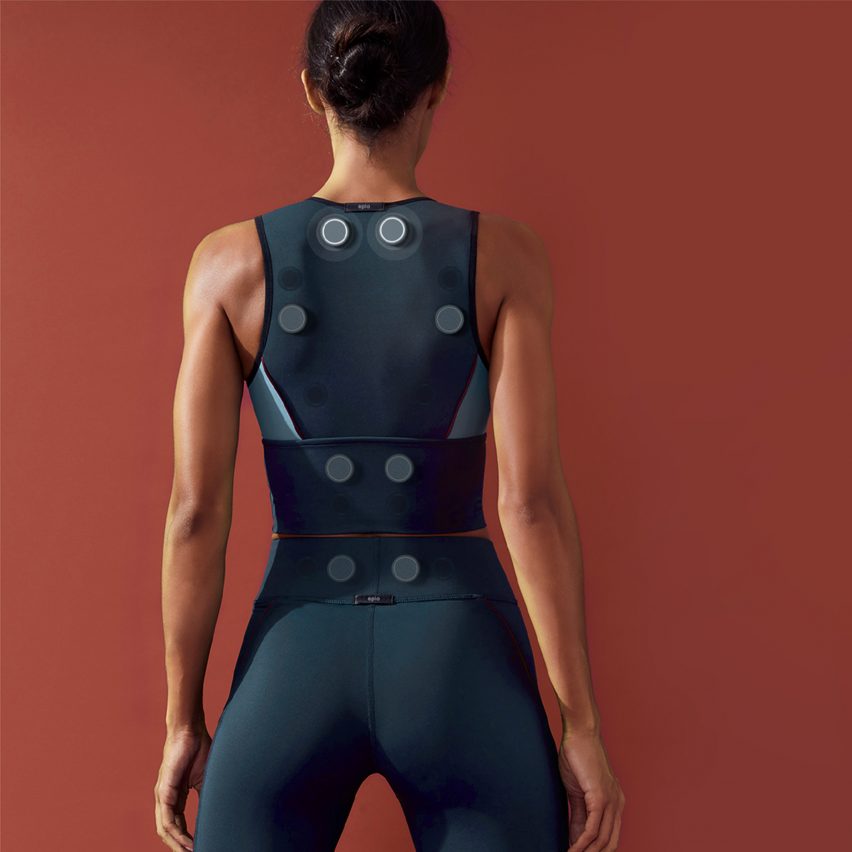
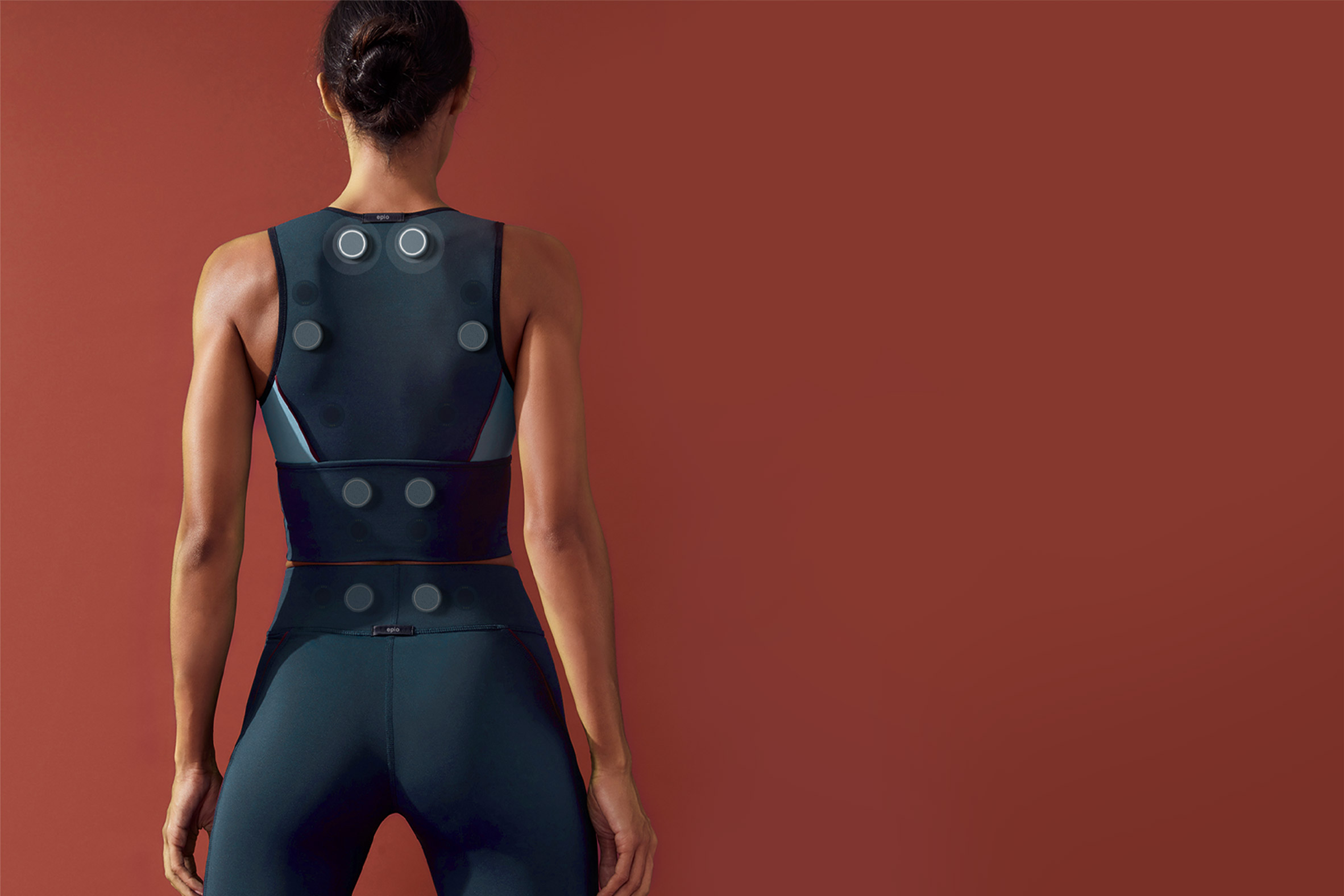
Epio – Vibrotactile Feedback Wear by Stefan Teubner

"Physiotherapy and rehabilitation for back pain issues could benefit from tactile internet applications. Learning how to execute movements correctly is essential and can be supported by intelligent systems, both in physiotherapy or alternative rehabilitation sports such as yoga.

"I developed a product-service system to support studies about motor learning processes in physiotherapy, using vibrotactile feedback on several positions at the back of the patient.

"Via motion tracking, the patient's movement can be evaluated by the system in real-time to give targeted augmented feedback to the proprioceptive sensors of the user's body."

Student: Stefan Teubner
Course: Industrial Design Engineering
Tutors: Lisa-Marie Lueneburg
Email: mail[at]stefanteubner.de

Technical University of Dresden

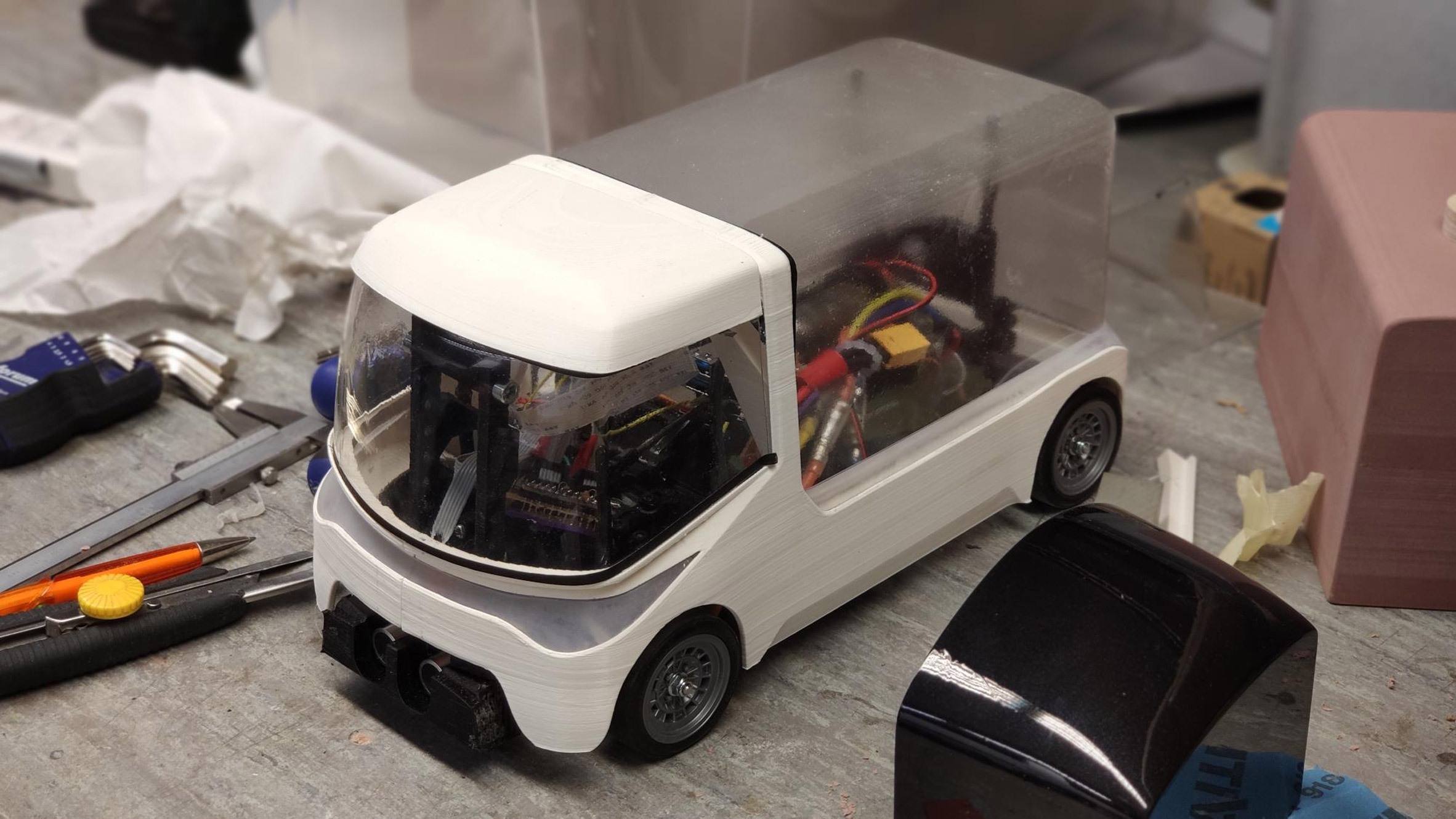
Truck Exterior for Technology Demonstrator by Julius Schlicht

"Technology demonstrators play an essential role in science communication. They draw public attention to research topics and encourage the acceptance of new technologies.

"The research institute Barkhausen Institut developed an interactive and playful demonstrator, bringing autonomous driving scenarios to life. To illustrate the future scenario of truck platooning – a group of semi-autonomous trucks driving in a row – I designed a future truck exterior.

"After several iterations of prototyping, I built three truck housings with an integrated light band, underlining the communication between the trucks in different driving modes."

Student: Julius Schlicht
Course:
Industrial Design Engineering
Tutors:
Helge Wanta and Tina Bobbe
Email:
juliusschlicht[at]gmx.de

Technical University of Dresden

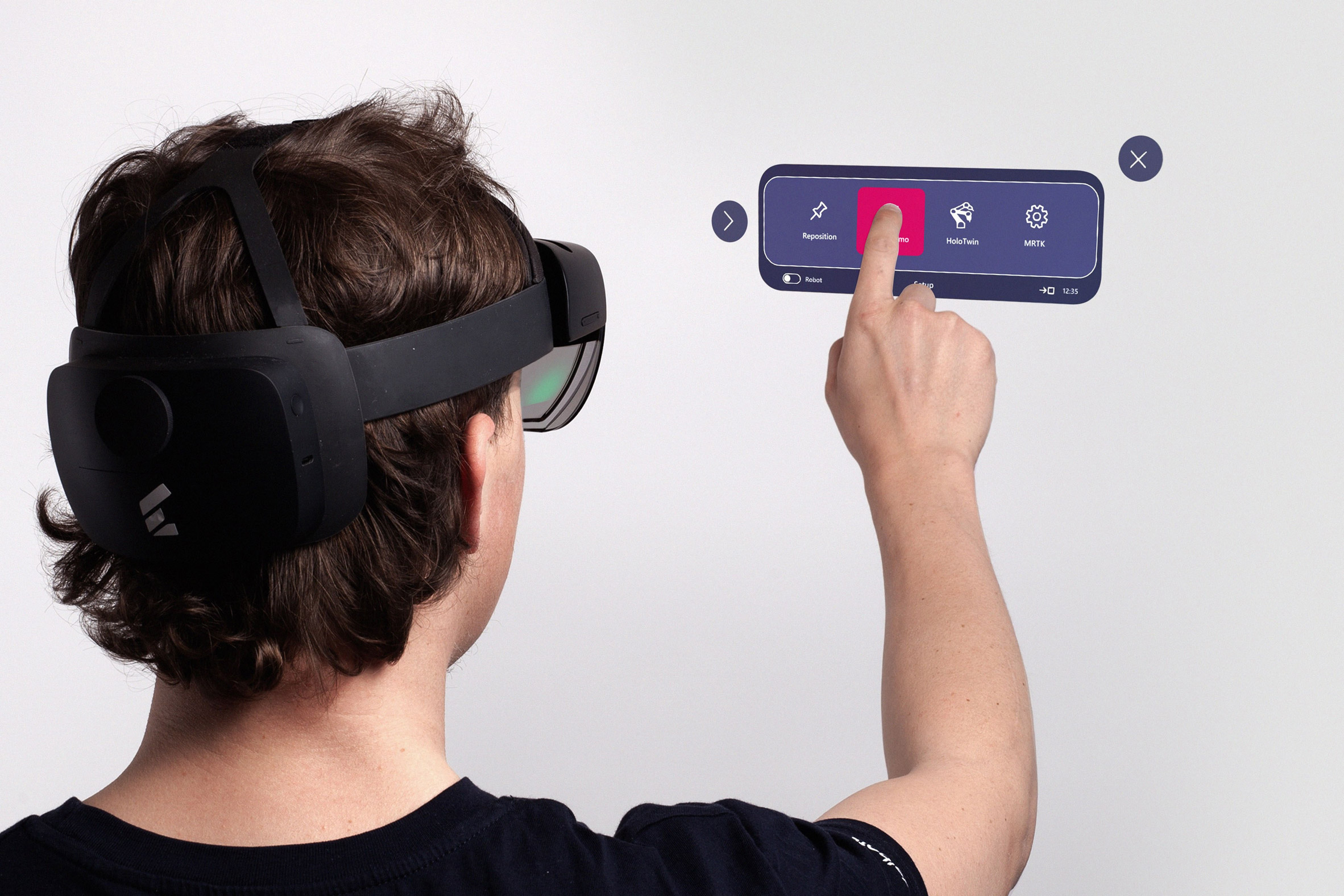
AR Interface for Simplifying Robot Programming by Carolin Horn

"Robot programming requires specialised knowledge and is usually a time-consuming and highly complex process. While the availability of experts is low, the relevance of robots is increasing due to the need for flexible production environments.

"To provide solutions for non-professional users, I designed and tested an Augmented Reality (AR) interface for simplifying and accelerating robot programming in cooperation with Wandelbots.

"After conducting expert interviews and workshops, I developed three scenarios. One has been developed further with quick iterations of prototyping. Finally, I evaluated the AR interface in terms of usability and user experience in user tests with an interactive demonstrator."

Student: Carolin Horn
Course:
Industrial Design Engineering, Diploma Thesis
Tutors:
Helge Wanta
Email:
Carolin.horn[at]wandelbots.com


Technical University of Dresden

Zyklus by Therese Haack, Vitus Pacholleck and Jacob Urban

"Recycling plastic is an essential step towards creating a sustainable future. This is a core concept in the design of the lamp called Zyklus.

"We designed Zyklus with the idea of producing it at our local co-making space and manufactured a small series. The distinctive marble effect of the recycled plastic is emphasised through the transmitting light, nicely contrasting the otherwise minimalistic shape."

Student: Therese Haack, Vitus Pacholleck and Jacob Urban
Course:
Industrial Design Engineering, First Design Project
Tutors:
Tina Bobbe and Dominic Kiessling
Email:
jacobs.rbn[at]gmail.com

Technical University of Dresden

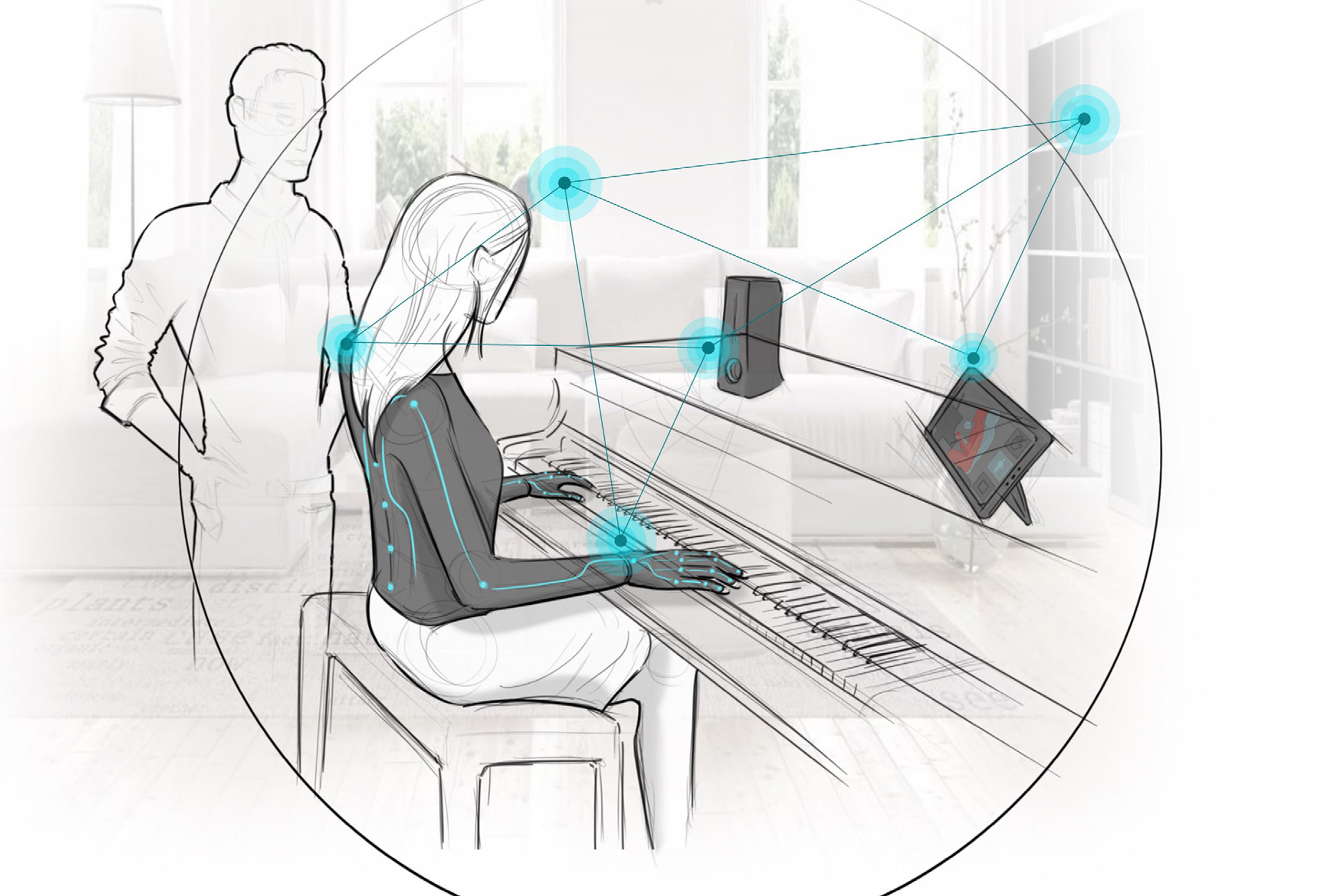
Technology-enhanced Piano Learning by Oliver Münzberg

"5G technology enables near real-time feedback in human-machine cooperation. This enables novel ways of skill learning and teaching, such as piano playing.

"To understand piano students' and teachers' needs regarding their learning process, I conducted a user study and found that posture and body movements are vital aspects for piano education, which can cause playing-related injuries, especially for professionals.

"My concept aids learning by a smart shirt and gloves. They capture and analyse body and hand motion data and give meaningful haptic feedback. Additionally, this rich visual analysis can support teachers during the lesson to assist their task-load."

Student: Oliver Münzberg
Course:
Industrial Design Engineering
Tutors:
Tina Bobbe and Evelyn Muschter
Email:
oliver.muenzberg[at]mailbox.tu-dresden.de

Technical University of Dresden

SEOS by Nico Schreiber

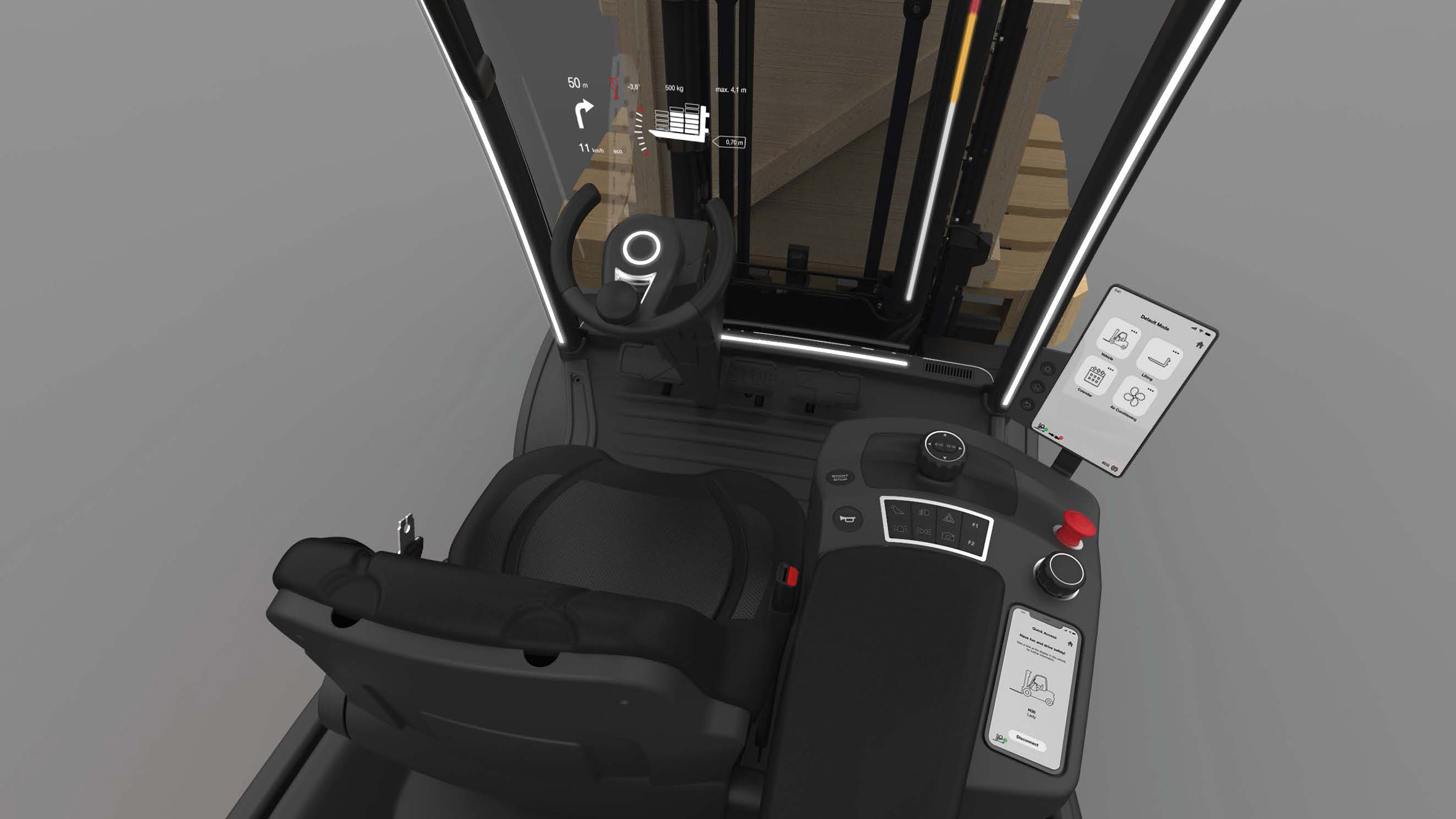
"Increasing digitalisation in the logistics industry leads to the networking of vehicles and processes. This creates new opportunities for safer and more efficient work environments. SEOS is a novel operating concept for forklifts that allows the seamless integration of a smartphone app into the operating system.

"SEOS supports work planning and enables drivers to remotely control certain functions and get in contact with colleagues, among other things. It explores new interaction modalities like visual feedback in the form of an in-glass head-up display, intelligent ambient light functions, an immersive digital lift mast display and ambient light in a 360-degree arrangement, as well as auditory feedback to alert drivers to hazardous situations."

Student: Nico Schreiber
Course:
Industrial Design Engineering, Diploma Thesis
Tutors:
Sebastian Lorenz
Email:
schreibernico[at]web.de

Technical University of Dresden

Mimetik Data Glove by Jessica Janik

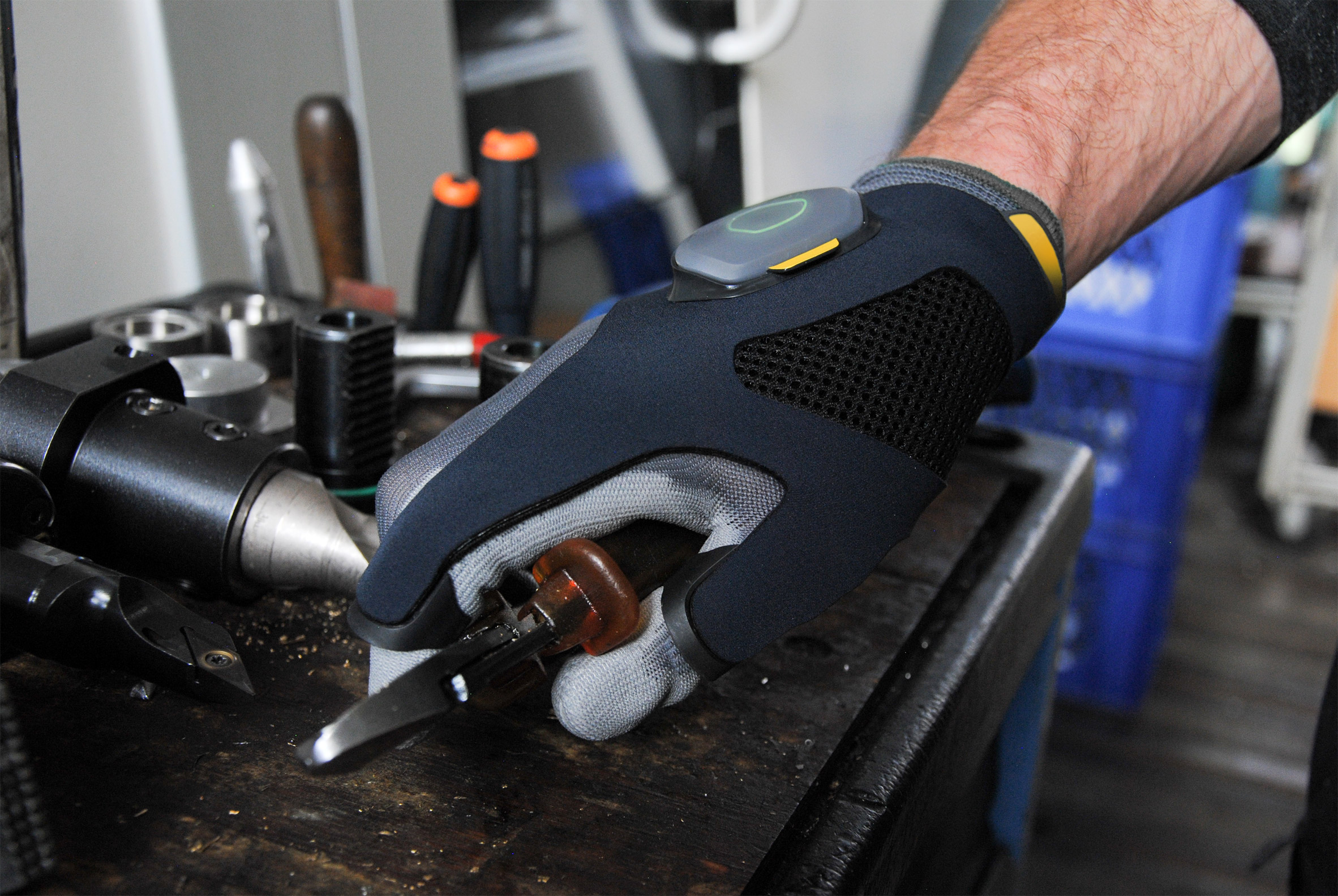
"An exciting global future market is emerging. Technologies like 5G communication, virtual reality and artificial intelligence are no longer visionary. As part of this dynamic environment, the Mimetik Glove is a smart interaction device that will have a decisive influence on the way people interact with their digital environment in the future.

"By building a bridge between humans and machines, an intuitive self-learning interface allows for seamless integration into any industrial environment. With a context-aware design for everyday usage and extreme wear conditions, the glove supports users to achieve their fullest potential – and beyond."

Student: Jessica Janik
Course:
Industrial Design Engineering, Diploma Thesis
Tutors:
Lisa-Marie Lueneburg, Ievgenii Tsokalo (Mimetik)
Email:
jessica.janik94[at]gmail.com

Technical University of Dresden

Design of a Mobile Control Station for Automated Fieldwork in 2030 by Frederic Benken and Julius Röhlig

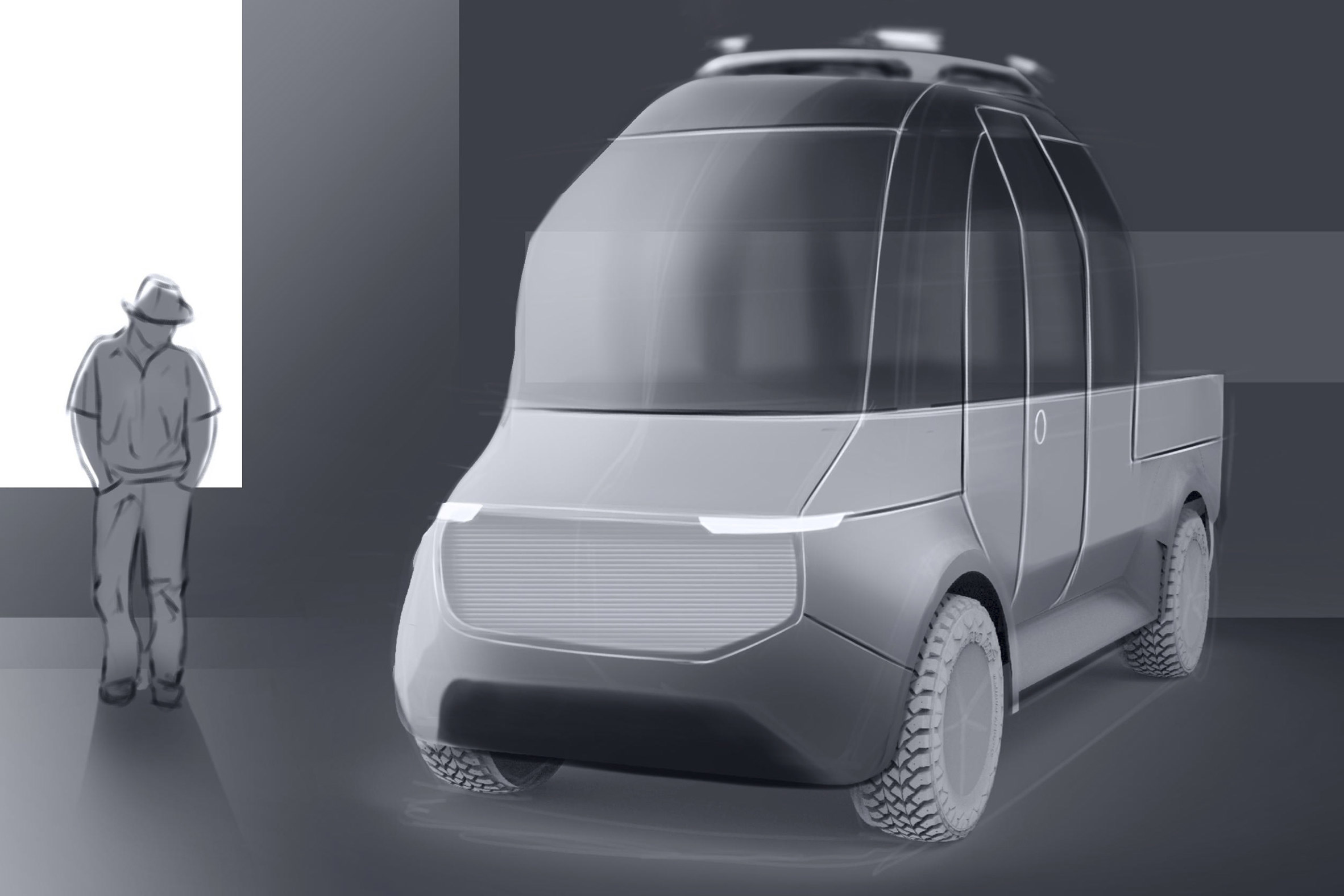
"In the future, autonomously operating field robots will be able to take over some of the processes and tasks involved in the agricultural industry. But even in a highly automated scenario, humans will monitor and secure these processes. We designed a mobile control station for farmers in automatic fieldwork.

"For this purpose, we conducted an in-depth analysis of task profiles and monitoring scenarios. Further, we conceptualised several vehicle configurations and operating systems, which led to a final design concept. Both the exterior and interior of the vehicle were elaborated in one design and finally evaluated in a virtual reality environment."

Student: Frederic Benken and Julius Röhlig
Course:
Industrial Design Engineering, Diploma Thesis
Tutors:
Marek Holovac and Sebastian Lorenz
Email:
Frederic.Benken[at]mailbox.tu-dresden.de and Julius.roehlig[at]mailbox.tu-dresden.de

Technical University of Dresden

Design of an Automation-Ready Machine Concept for Earthmoving in 2030 by Martin Schumann

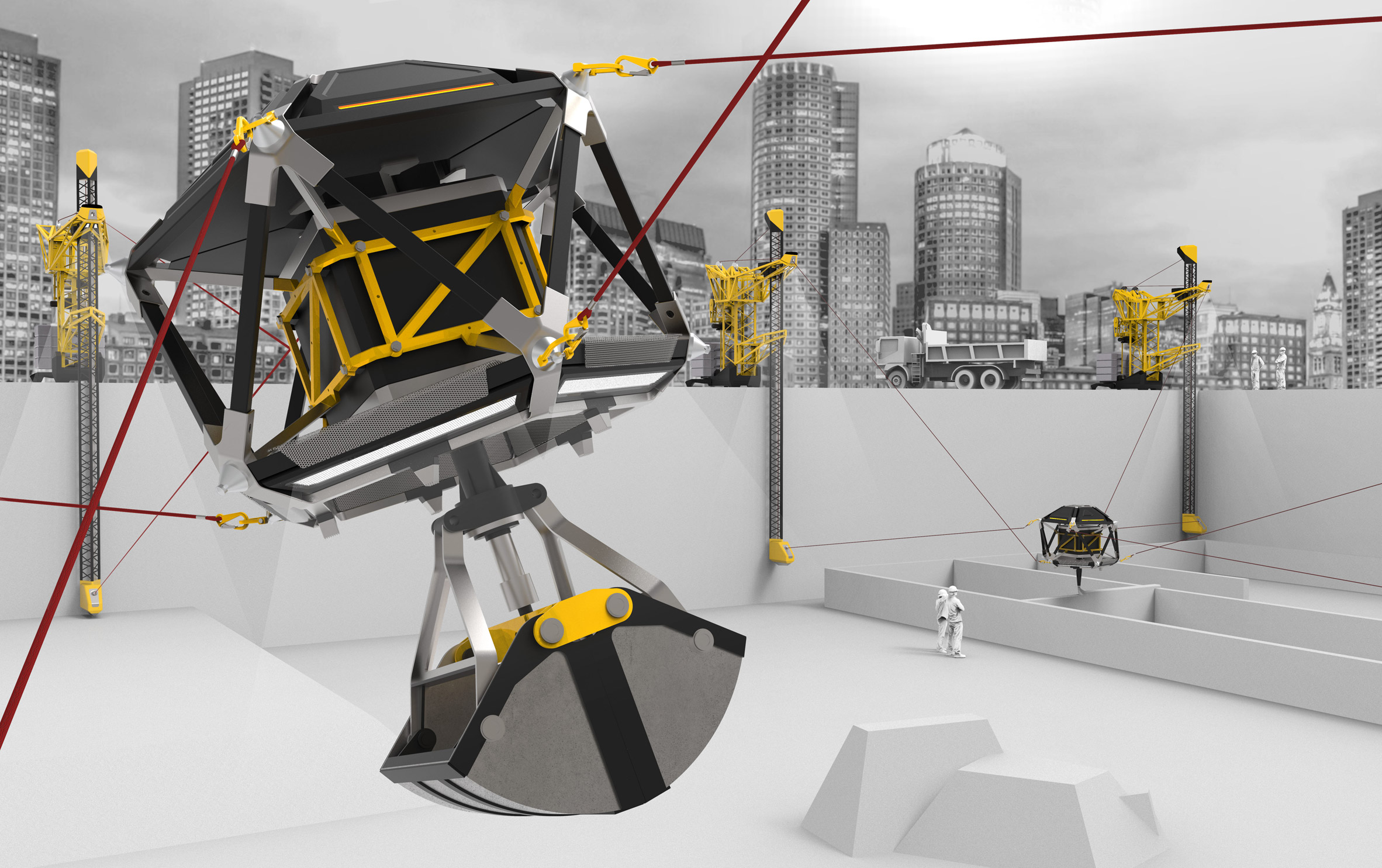
"The construction industry is transforming – digital models will form the basis of communication between all trades on a construction site. Networking and automation of machines and processes create the potential for novel machine concepts.

"The core task in this project was to question the concept of established mobile excavators and develop new approaches for a cyber-physical system. This resulted in a cable-driven parallel robot for the construction site environment. Attached to various support towers along with an excavation pit, an end-effector can move automatically in the spanned construction space with a variety of tools that can be added."

Student: Martin Schumann
Course:
Industrial Design Engineering
Tutors:
Felix Schmitt
Email:
martinschumann[at]posteo.de

Technical University of Dresden

Flaschenpost by Paul Weiß

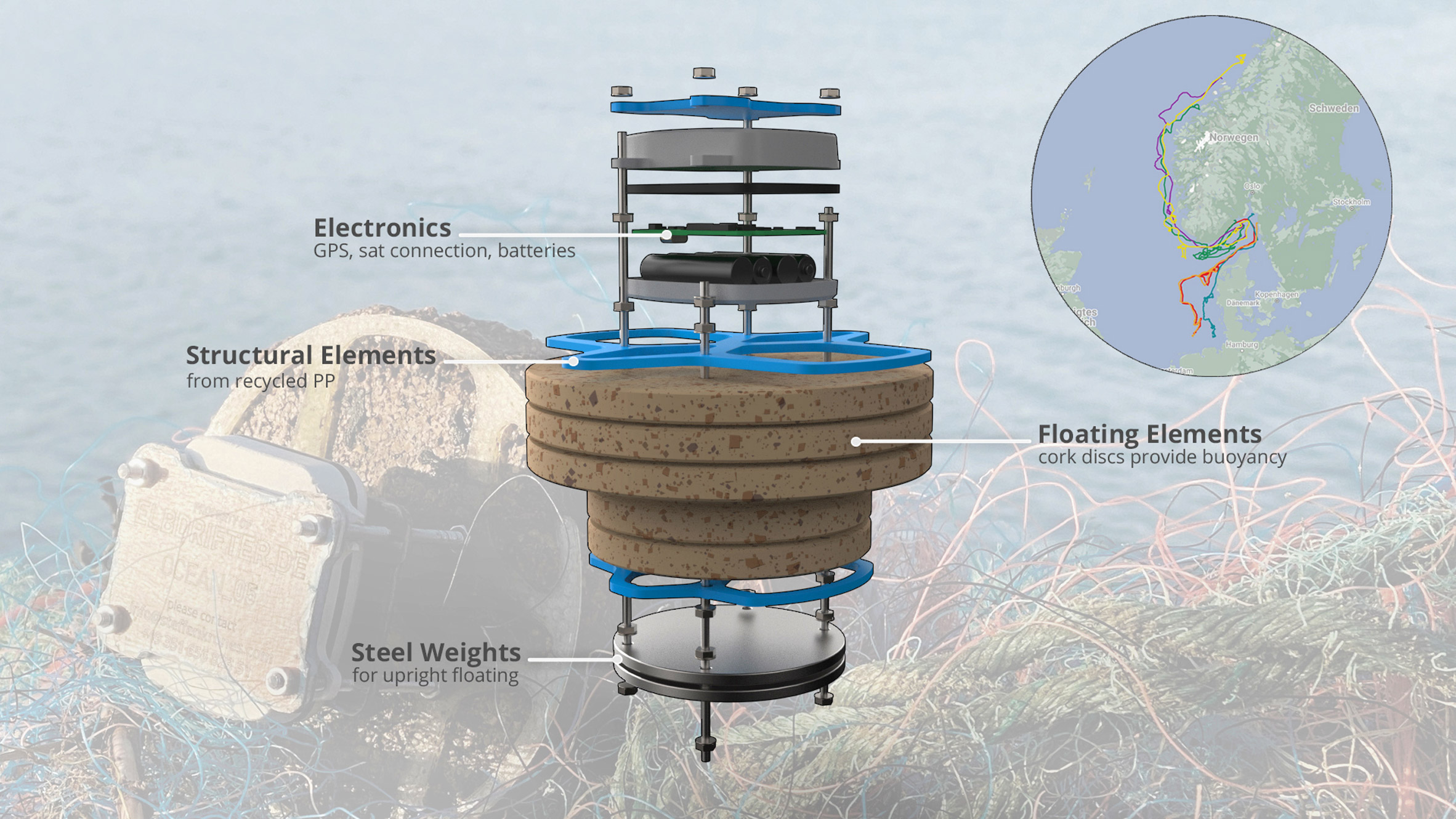
"Where does the journey of plastic waste created directly in front of our doors go? To get to the bottom of this question, we developed GPS drifters, which we released into the local river. Just like plastic waste, the drifters float downstream, their path determined by factors such as river speed, water level, river geometry, wind and precipitation.

"The coordinates of the drifters are regularly readout via satellite links and can later be made available in a database. With the data collected, we were able to locate trash hotspots and verify researchers' predictions. Currently, the drifters are being developed so that users can share and discuss their generated data with scientists through a citizen science platform."

Student: Paul Weiß
Course:
Industrial Design Engineering
Tutors:
Lenard Opeskin
Email:
paul.weiss[at]tu-dresden.de


Partnership content

This school show is a partnership between Dezeen and the Technical University of Dresden. Find out more about Dezeen partnership content here.

The post Technical University of Dresden spotlights ten industrial design projects appeared first on Dezeen.


from Dezeen https://ift.tt/3kBapmS
Talo Studios introduces Japandi elements to historic Montreal house

Talo Studios has renovated a house in Montreal that's almost 100 years old, drawing on Scandinavian and Japanese influences for the interiors.

Located on Grey Avenue, in a residential area on the southern side of Mount Royal, the project embodies Japandi – the trend for interiors that are a hybrid of Japanese and Scandinavian style.

Bright Scandinavian living room in Montreal
A bright sitting room at the front of the house

This renovation was for a sibling of Talo Studios founder Tiina Vahtola, who drew from their shared upbringing in northern Ontario and the family's Finnish heritage.

"The key attribute to this design was to give the family a spacious living area while creating pockets within the space that bring the family together," said Talo Studios.

"Walls were opened up to accentuate the homes originally high ceilings and pull in as much natural light into the space as possible, without disturbing the original structure," added the studio.

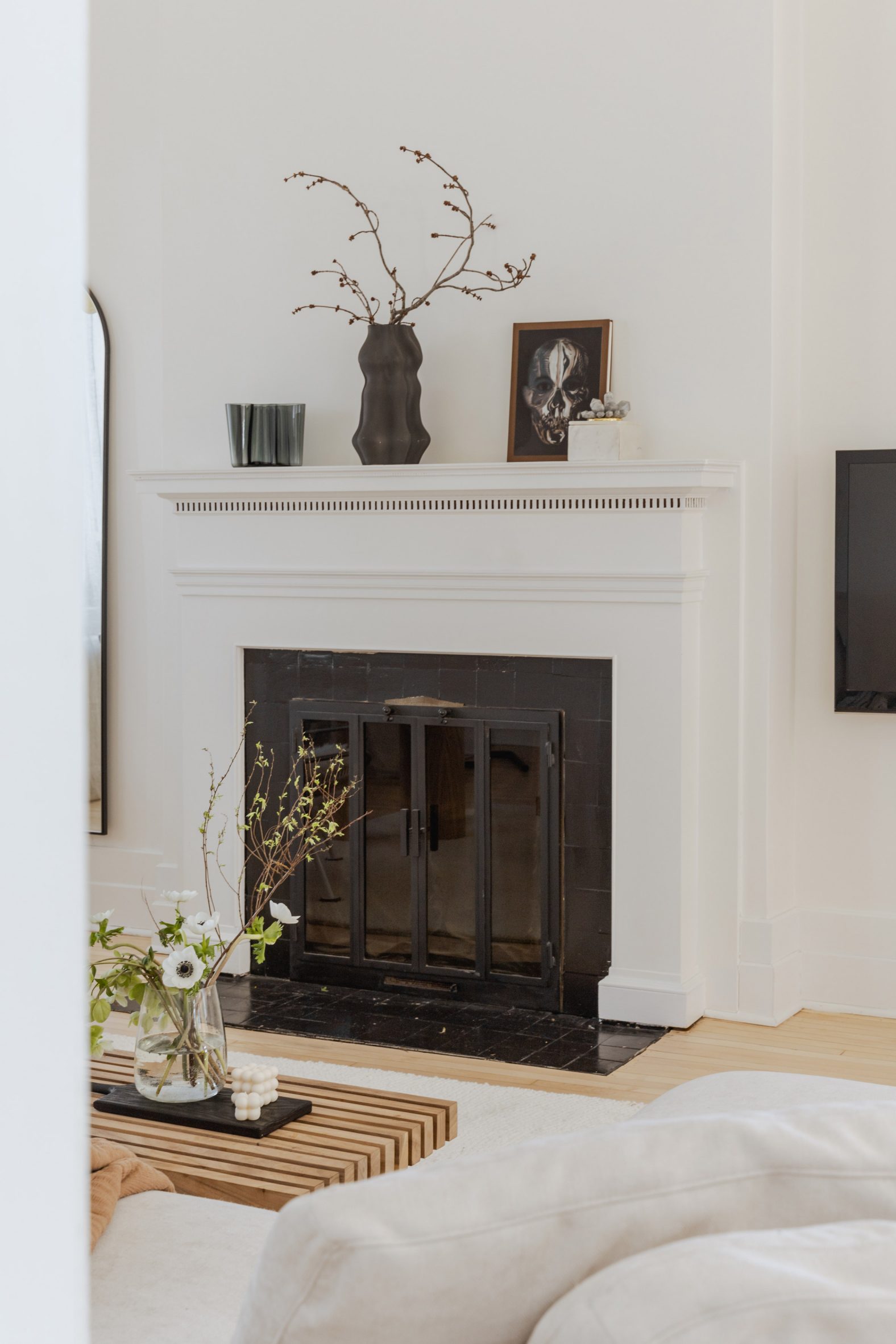
Fireplace with art objects
The house on Grey Avenue is nearly 100 years old

The open-plan layout is split into different zones. Throughout the home, historical details such as a wood-burning fireplace have been preserved and updated with a light touch. Other areas, such as the kitchen, were renovated completely.

Towards the front of the home, the living room and a formal dining area have been combined into a single space.

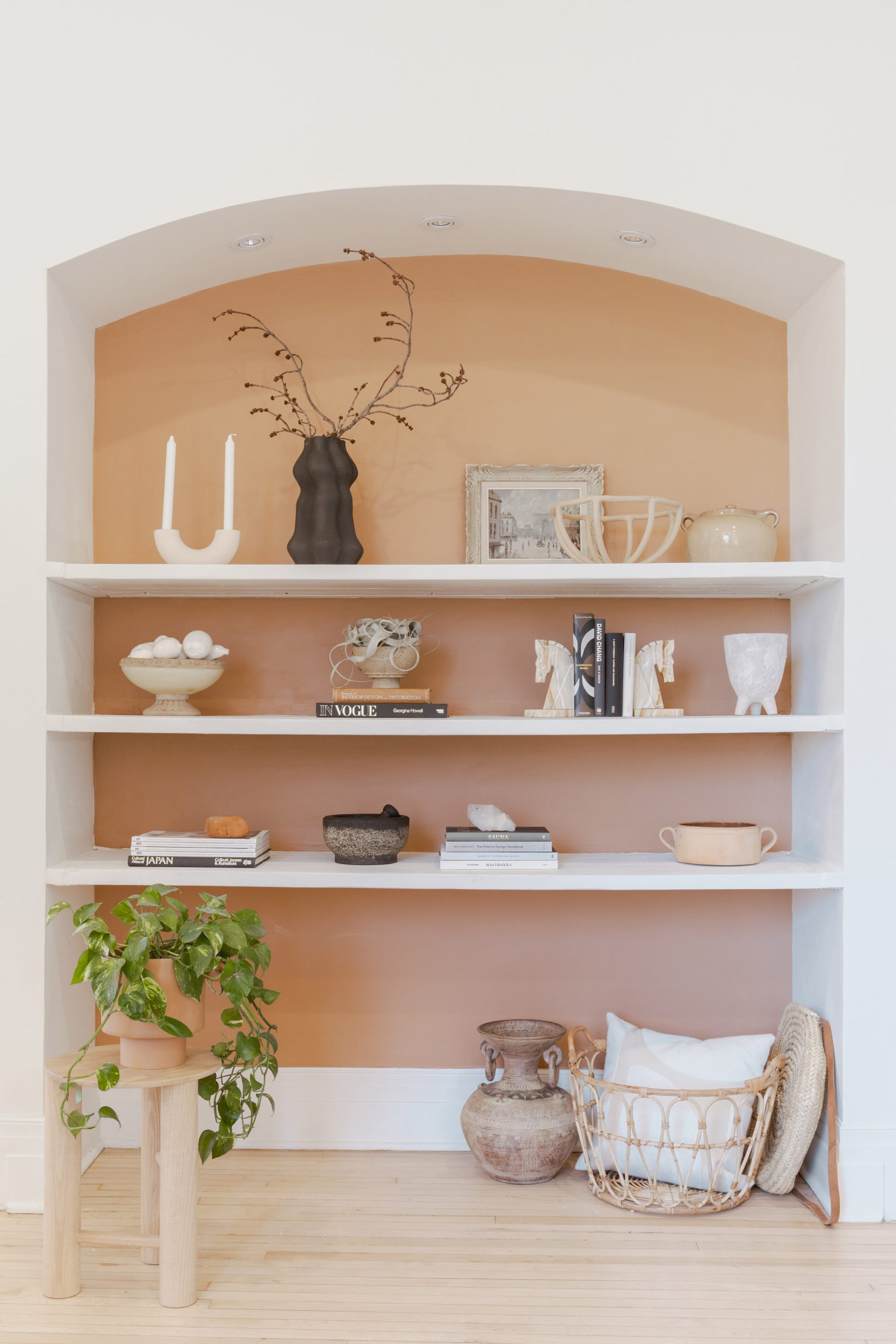
Shelving with peach backdrop
A muted palette runs throughout the home

"Before we removed the wall between the living room and dining room the living room felt like a small, dark and forgotten space," Vahtola told Dezeen.

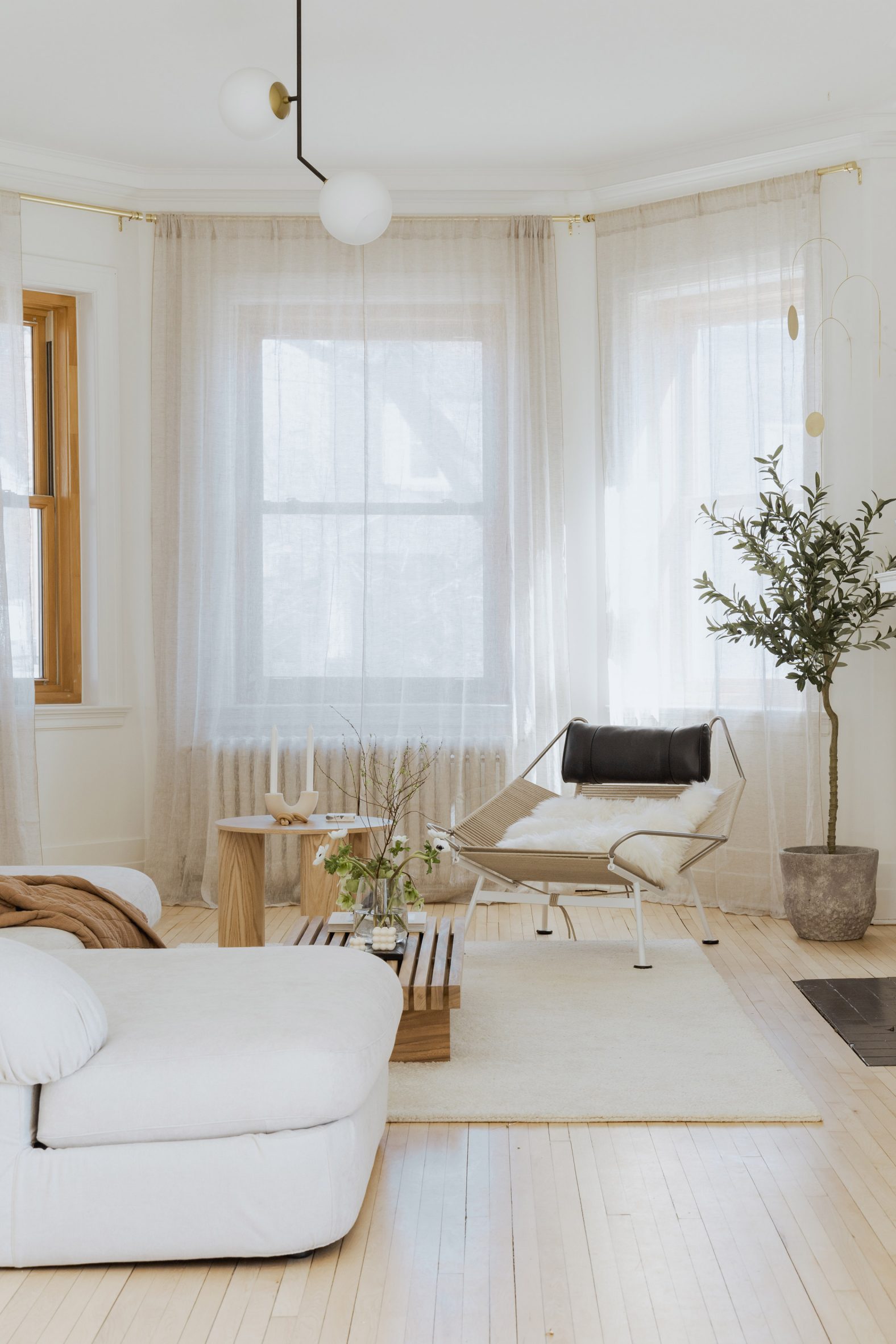
Talo Studios organised seating around the existing fireplace and made new furniture selections to reinforce the home's minimalist aesthetic.

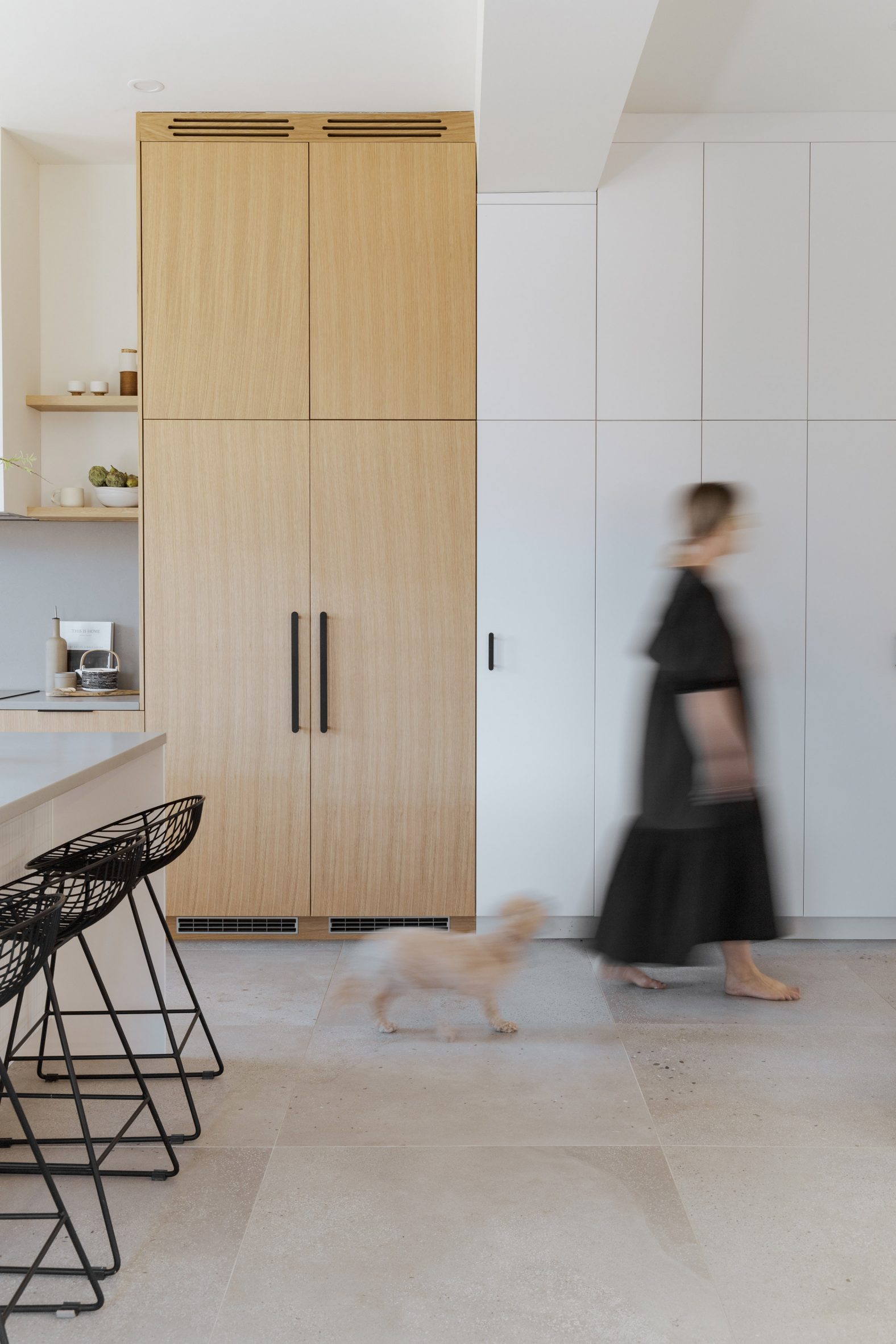
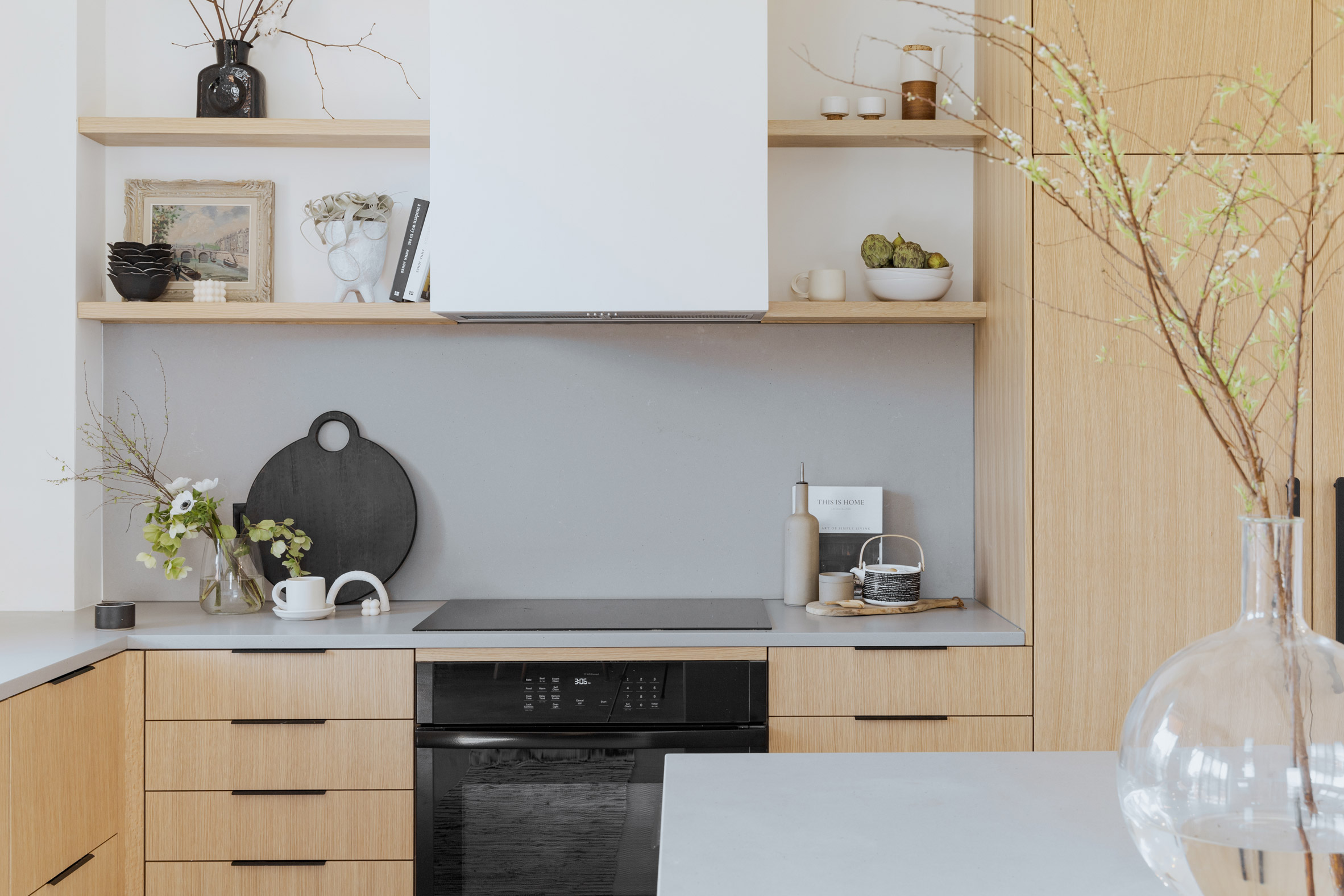
Kitchen cabinets Montreal townhouse
Talo Studios decluttered the kitchen by installing full-height shelving in the corridor

"A thick rounded sofa is combined with a low linear slatted coffee table and nubby rug with a subtle swirl, reminiscent of a Japanese garden," Vahtola explained.

"Light wood is mixed with the woolly texture on the seat of the iconic Flag Halyard Chair, a Nordic nod to part of the family heritage," they added.

At the back of the home, the eat-in kitchen is described as "culinary-focused". According to the designer, this is the family's main gathering point on a daily basis.

Full-height cabinets along the home's interior corridor help achieve a less cluttered look.

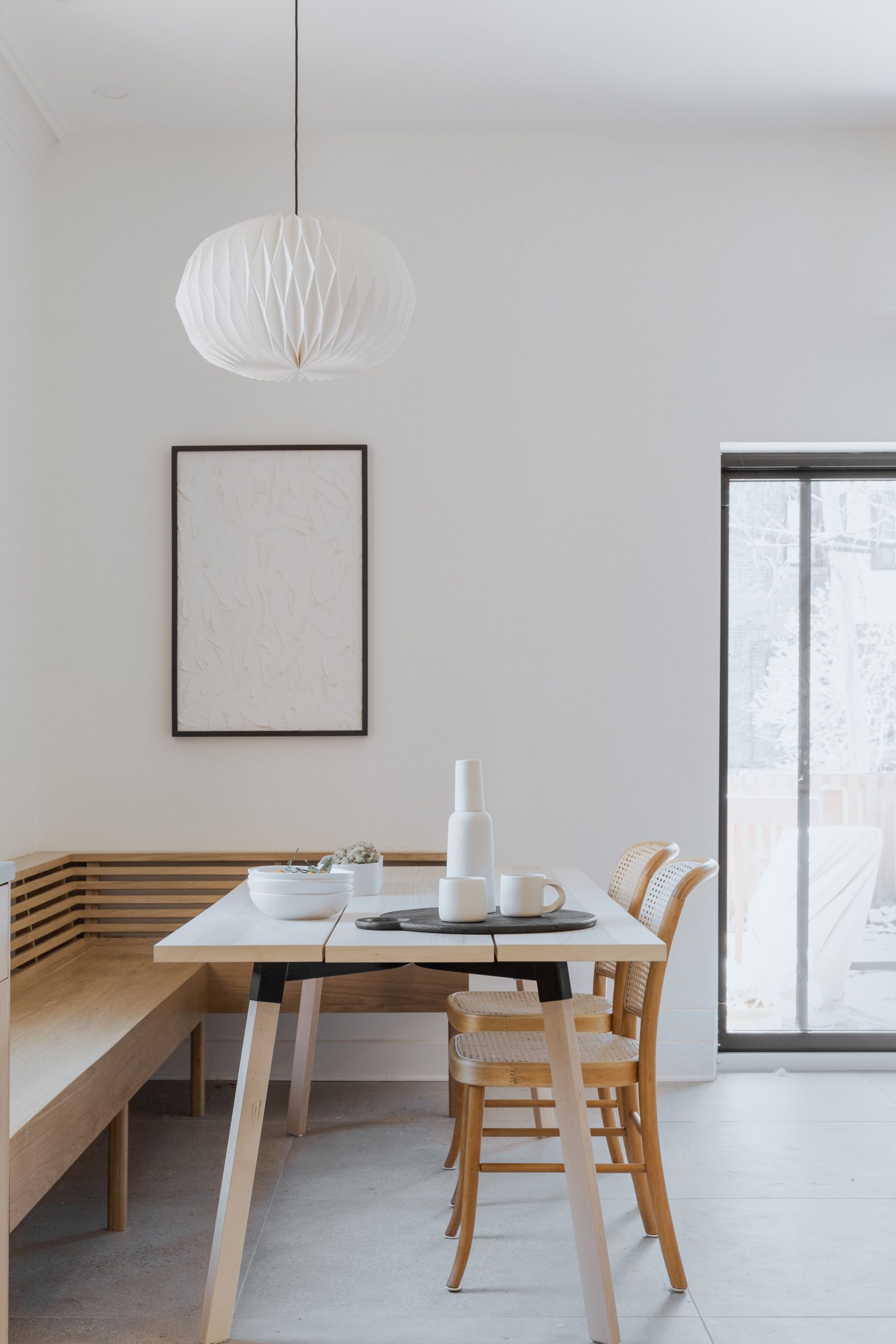
Breakfast nook in Montreal home renovation
The breakfast nook is the family's main gathering area

By providing plenty of storage in the home's dead spaces the kitchen avoids needing upper cabinets, which makes it feel brighter and more open.

The floor finish here is a light-hued tile, which contrasts the original hardwood floors found elsewhere in the home. In the corner opposite the main food prep area is a breakfast nook made of light wooden slats.

Light wood and flooring features in the kitchen

Throughout the home, the owner's personal collection of art objects, sculptures, and paintings brings contrast to the otherwise neutral palette.

"The design aesthetic is inspired by subtle cues from Japanese and Scandinavian design, both of which draw their own momentum from nature, while still preserving the 100-year-old architecture," said Talo Studios.

Wooden kitchen cabinets Montreal
Concrete-hued countertops complement the light wooden cabinets.

"Scandinavian design is really about simplicity without forgetting about comfort and functionality," Vahtola told Dezeen.

"A neutral palette and the use of wood also add to this," she explained, adding that her own Scandinavian heritage informed many of the decisions for the interiors.

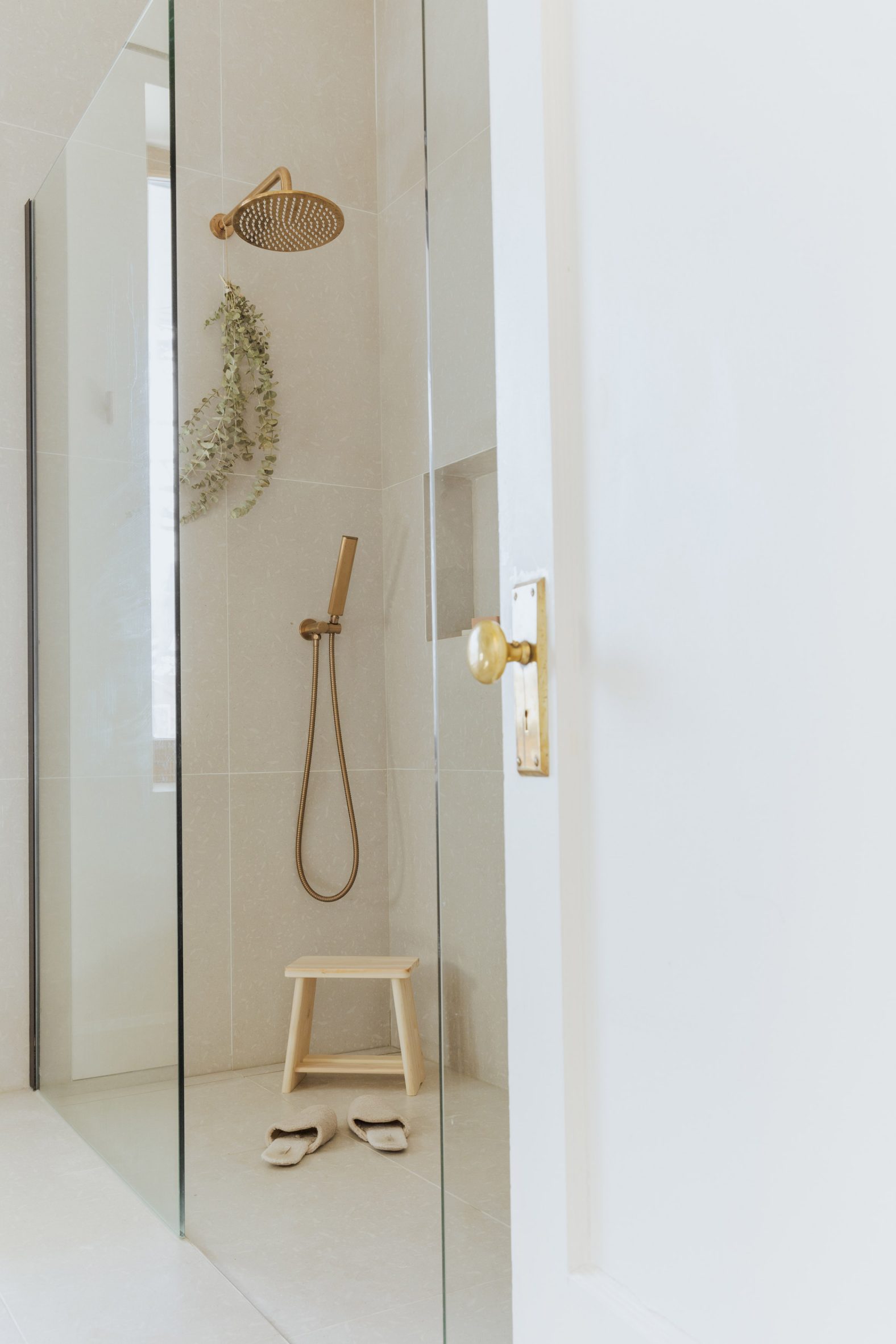
While the renovation focused on the ground floor spaces, the designer also intervened on the upper level, removing old carpet to expose and refinish the original floorboards, and updating the primary bedroom's en-suite bathroom.

Bathroom renovation shower tile Montreal
A bathroom upstairs as also been renovated to match the home's new aesthetic

Talo Studios was founded by Tiina Vahlota in 2020 and is based in Montreal.

Other projects in the Canadian city include a home in which the architects cut out sections of the floor to help bring light to lower levels and an airy loft in an industrial building for a young family.

The photography and styling is by Brooke Stephenson.

The post Talo Studios introduces Japandi elements to historic Montreal house appeared first on Dezeen.


from Dezeen https://ift.tt/36NVNIt

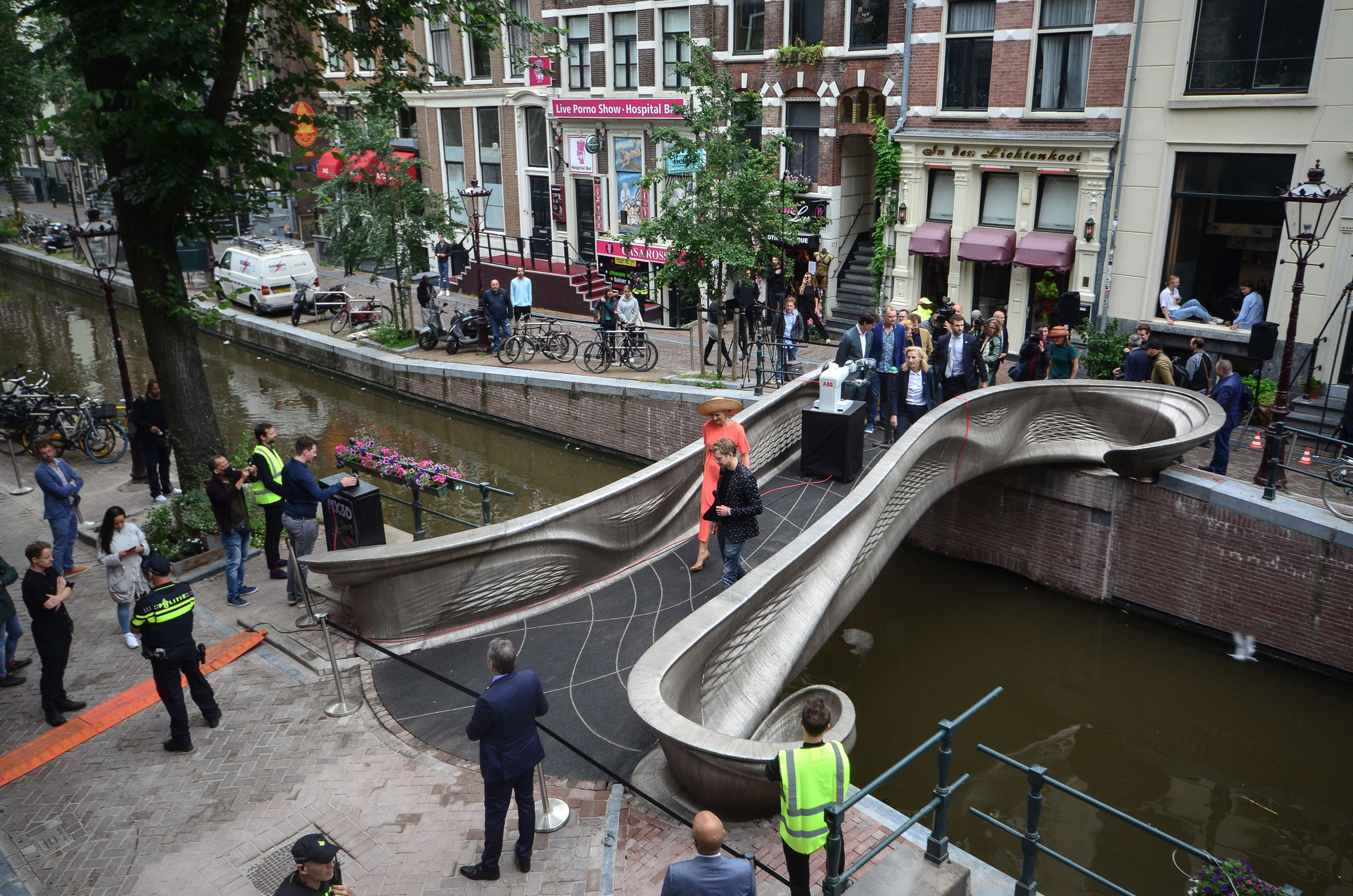
Long-awaited 3D-printed stainless steel bridge opens in Amsterdam

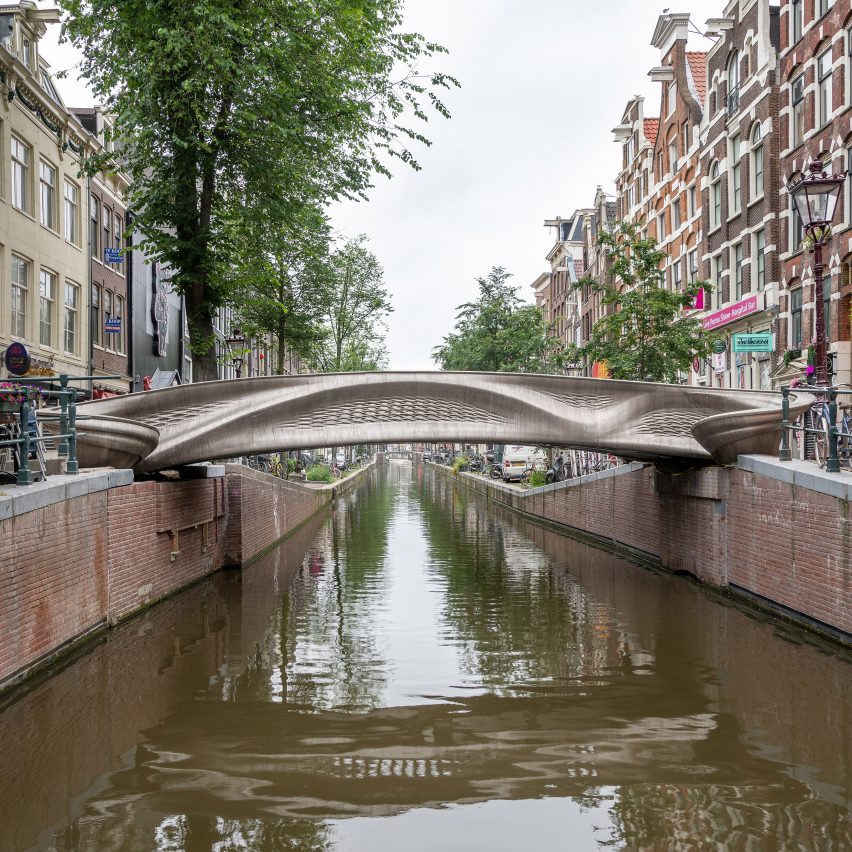
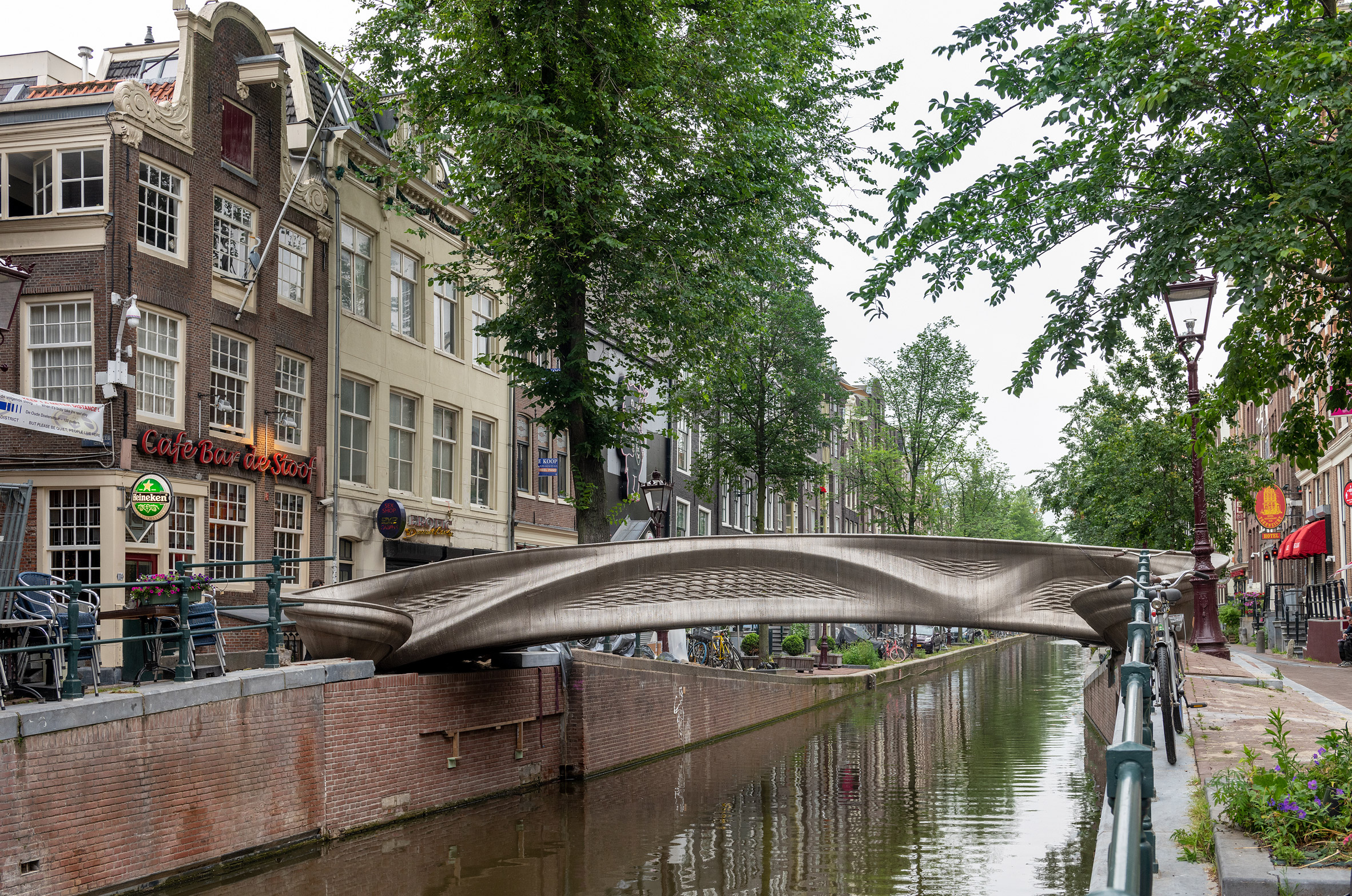
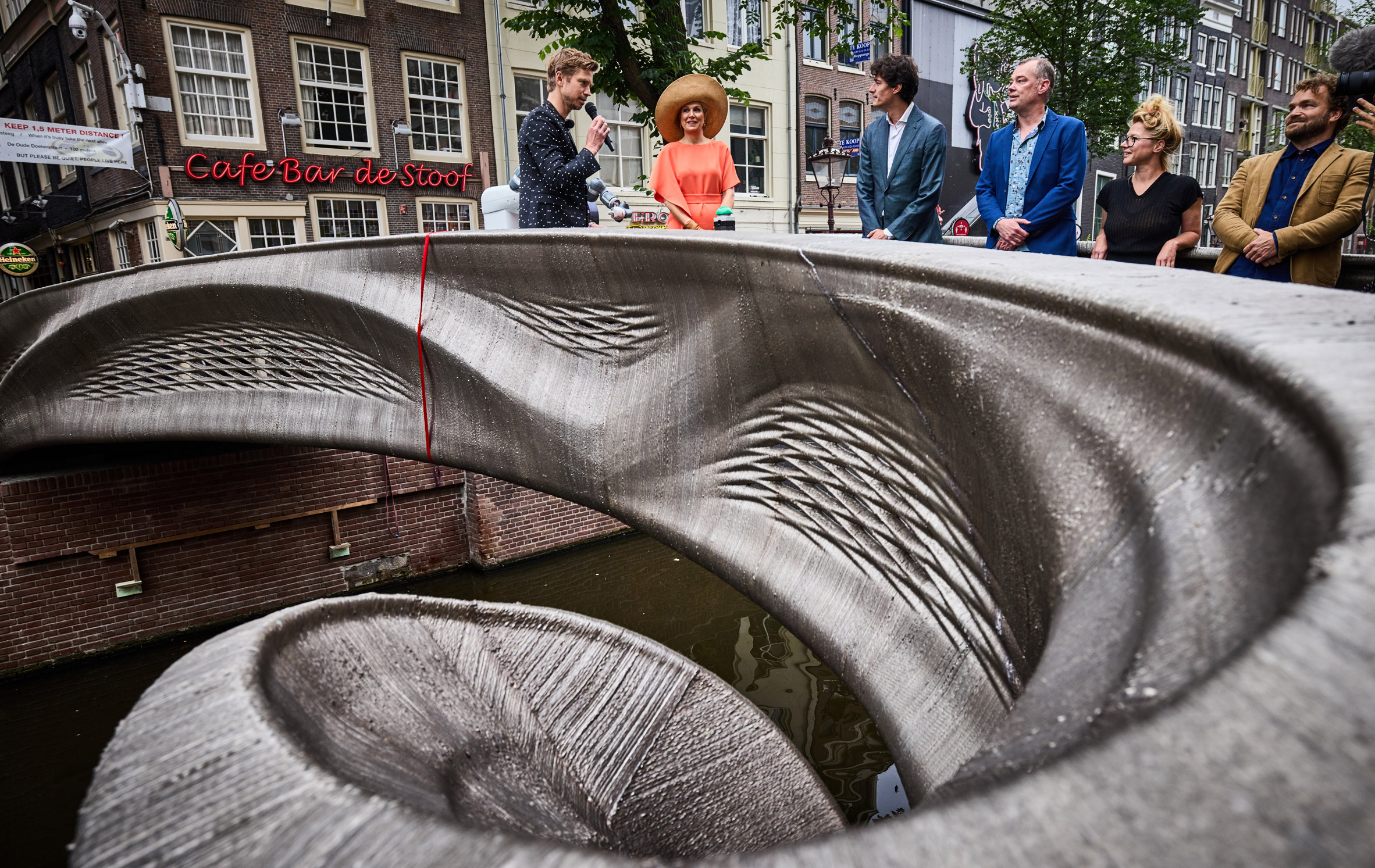
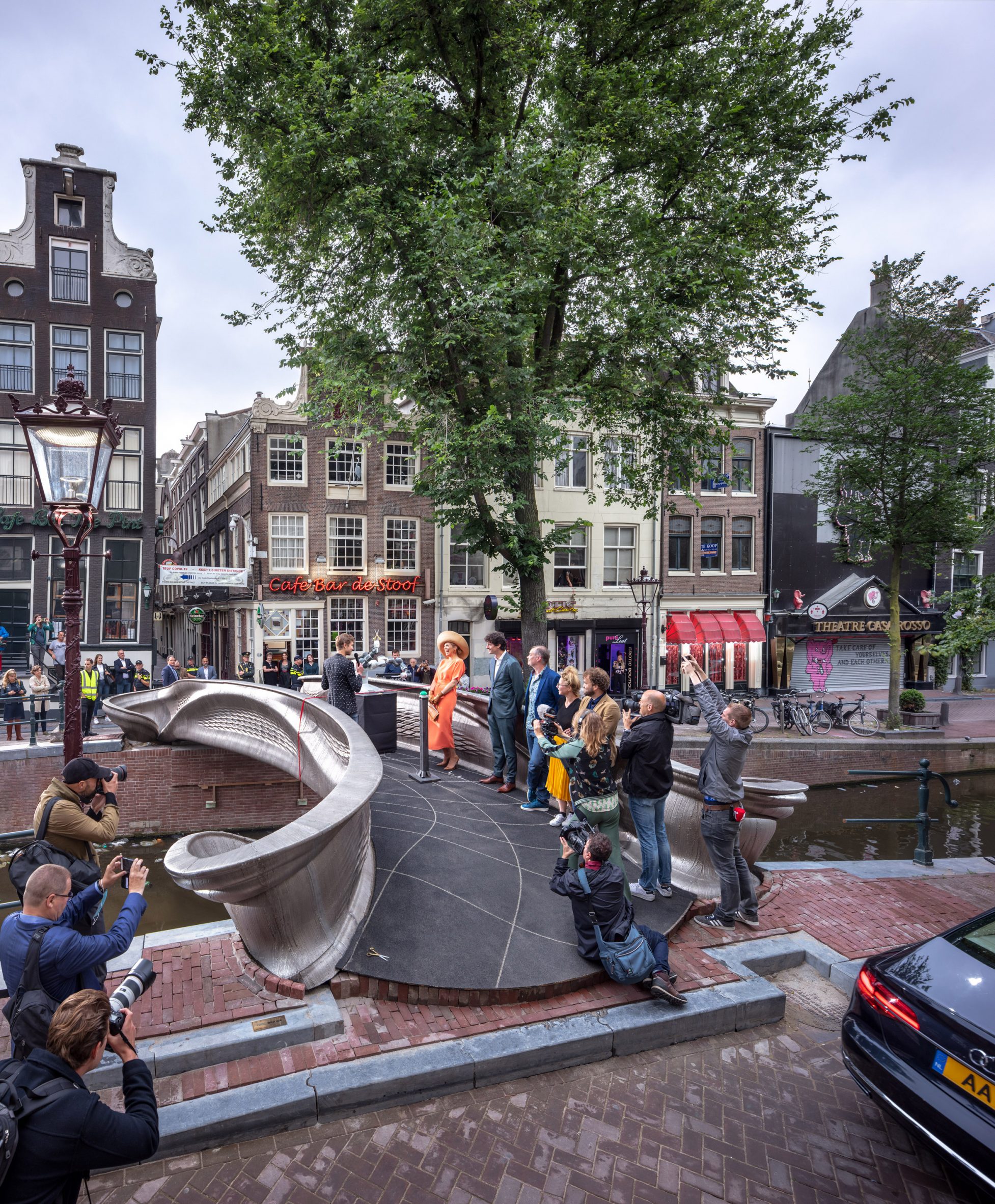
3D-printed stainless steel MX3D Bridge in Amsterdam

A 12-metre-long 3D-printed pedestrian bridge built by Dutch robotics company MX3D has opened in Amsterdam six years after the project was launched.

The bridge, which was 3D-printed from stainless steel, spans the Oudezijds Achterburgwal in Amsterdam's Red Light District.

The bridge was designed using parametric modelling software
Top: MX3D Bridge is located in the Red Light District. Above: it was 3D printed from stainless steel

Named MX3D Bridge, it was designed by Joris Laarman Lab in collaboration with MX3D and engineering firm Arup.

The structure was 3D printed from 4,500 kilograms of stainless steel by four robots over a period of six months in a factory before been installed over the canal this year.

Its curving S-shaped form and balustrades cut with lattice-style perforations were created using parametric modelling software.

queen maxime pictured walking across the MX3D Bridge
The bridge was constructed using robotic printers. Photo is by Adriaan de Groot

"This robotic technology finally allows larger optimized designs to be 3D printed in metal," said MX3D co-founder Gijs van der Velden.

"This causes significant weight reduction and reduced impact for parts manufactured in the tooling, oil and gas and construction industries."

It has a raw steel finish
It has perforated balustrades. Photo is by Jande Groen

The creators of the bridge hope that it will demonstrate how 3D printing can be used to make structures that require less material.

"The industry is facing a huge challenge in becoming carbon neutral in 2050," said Arup structural engineer Stijn Joosten.

"By stepping up our game and the will to make a change as designers and engineers, we can bring the necessary innovation to make a difference in tomorrow's built environment."

However, architect Philip Oldfield calculated that the stainless-steel structure has an embodied carbon of 27.7 tonnes from its material use alone.

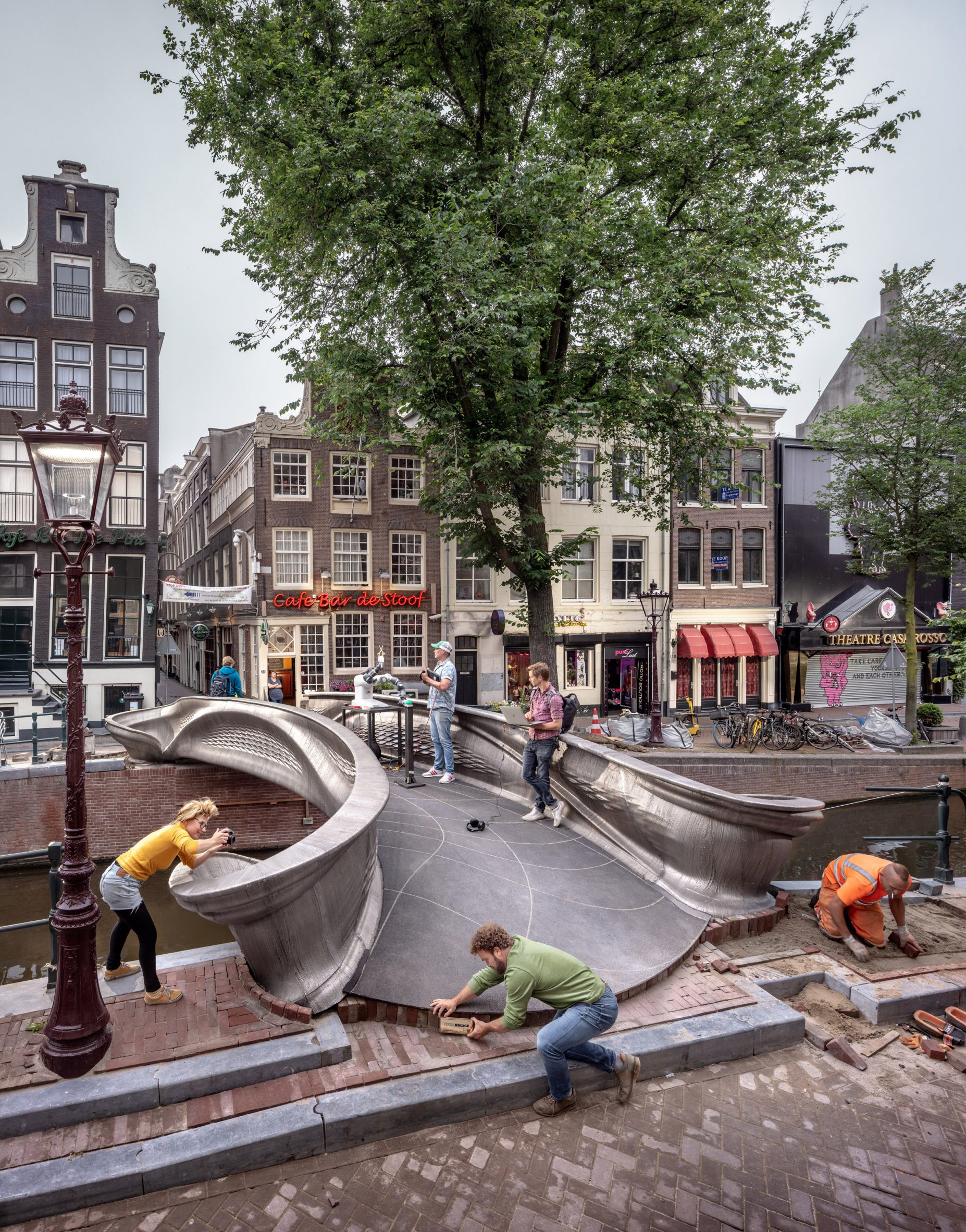
A deck was fitted to the span of the MX3D Bridge
The bridge was fitted with sensors. Photo is by Thijs Wolzak

The Alan Turing Institute and Arup fitted the structure with a network of sensors that allows the bridge to collect data and build a digital twin to keep track of its performance and health.

The digital twin will monitor corrosion, load changes, environmental conditions and pedestrian use in efforts to further data-centric design.

The MX3D Bridge pictured before opening
It was made from 4,500 kilograms of stainless steel. Photo is by Thijs Wolzak

The bridge has undergone multiple iterations since the project was launched in 2015. It was originally planned to 3D print the structure across the canal in a single piece and be open by 2017.

The structure was strengthened to be more in line with council regulations and to protect the structure against any potential boat collisions.

The final iteration saw the bridge built in two components at an off-site facility. Its main span was completed in April 2018 with the deck printed later that year in October.

Although this is believed to be the first 3D-printed stainless steel bridge, bridges have previously been 3D printed from other materials. In 2017, construction company BAM Infra built what they claimed was the world's first 3D-printed concrete bridge.

Photography is by Thea van den Heuvel unless stated otherwise.

The post Long-awaited 3D-printed stainless steel bridge opens in Amsterdam appeared first on Dezeen.


from Dezeen https://ift.tt/3ipBW82

COP26 climate conference confirms day dedicated to cities and the built environment on 11 November

COP 26 2021 flag

The UN's annual COP26 climate conference will address carbon emissions from buildings for the first time at a day dedicated to the built environment on Thursday 11 November, organisers have confirmed.

The Cities, Regions & Built Environment Day will take place during the second week of the conference, which is being held in Glasgow, Scotland from 31 October to 12 November.

Other days at the conference will discuss topics including nature, energy, finance and gender.

Details of the built environment day are scant. The COP26 timetable, which was unveiled earlier this month, says the day will involve "advancing action in the places we live, from communities, through to cities and regions".

But the dedication of a full conference day to the topic of emissions from buildings and cities comes amid growing concern that the sector, which is responsible for around 40 per cent of greenhouse gas emissions, has been neglected in the push to tackle climate change.

Built-environment emissions a "sleeping giant"

The day is being organised by a coalition of international organisations including the World Business Council for Sustainable Development (WBCSD).

Roland Hunziker, director of sustainable buildings and cities at the WBSCD, described built-environment emissions as "the sleeping giant".

"Quite honestly, today, nobody really pays a lot of attention to the full impact of emissions from buildings," he told Dezeen. "And so that needs to change."

One topic the built environment day is expected to tackle is net-zero buildings. These are buildings that do not contribute any net CO2 to the atmosphere, either via embodied carbon emitted by the construction supply chain or while the building is in use.

"How can we give more visibility to the sleeping giant, the built environment, which is a massive source of carbon emissions?" Hunziker said. "It's the energy we use to heat and cool our buildings but it's also obviously in the materials."

"If we want to reduce emissions along the full lifecycle of buildings, then we have to engage those who develop projects, Hunziker said. "So we have to talk to the investors, to developers to the architects who design these buildings."

Architecture among least well-represented sectors in Race to Zero

Last month, UN climate champion Nigel Topping told Dezeen that more action was needed from architects ahead of the vital conference.

The sector is among the slowest to sign up to the UN's Race to Zero initiative, which aims to eliminate net carbon emissions from the global economy by 2050, he said.

"Architecture is one of the least well-represented businesses in the Race to Zero," Topping told Dezeen. "We are working hard to change this so that when we reach COP26 we can really show ambition within the sector."

COP26 brings together nations that signed the 2015 Paris Agreement, which commits signatories to becoming net-zero by 2050 in order to give the world a chance to limit global warming to 1.5 degrees Celsius above pre-industrial levels.

The Race to Zero campaign aims to get 20 per cent of companies in each sector of the economy to commit to the same goal.

Other activities relating to the COP26 include the Built Environment Summit at RIBA in London, which will discuss zero-carbon buildings and generate a set of policy demands that will be presented to the conference.

COP26 will take place at SEC Centre in Glasgow from 31 October to 12 November 2021. See Dezeen Events Guide for all the latest information you need to know to attend the event, as well as a list of other architecture and design events taking place around the world.

The post COP26 climate conference confirms day dedicated to cities and the built environment on 11 November appeared first on Dezeen.


from Dezeen https://ift.tt/36MHfcg