Architecture studio Laplace and landscape architect Piet Oudolf have transformed and repurposed a collection of historic buildings on Isla del Rey in Menorca's natural harbour into an art centre for the Hauser & Wirth gallery.
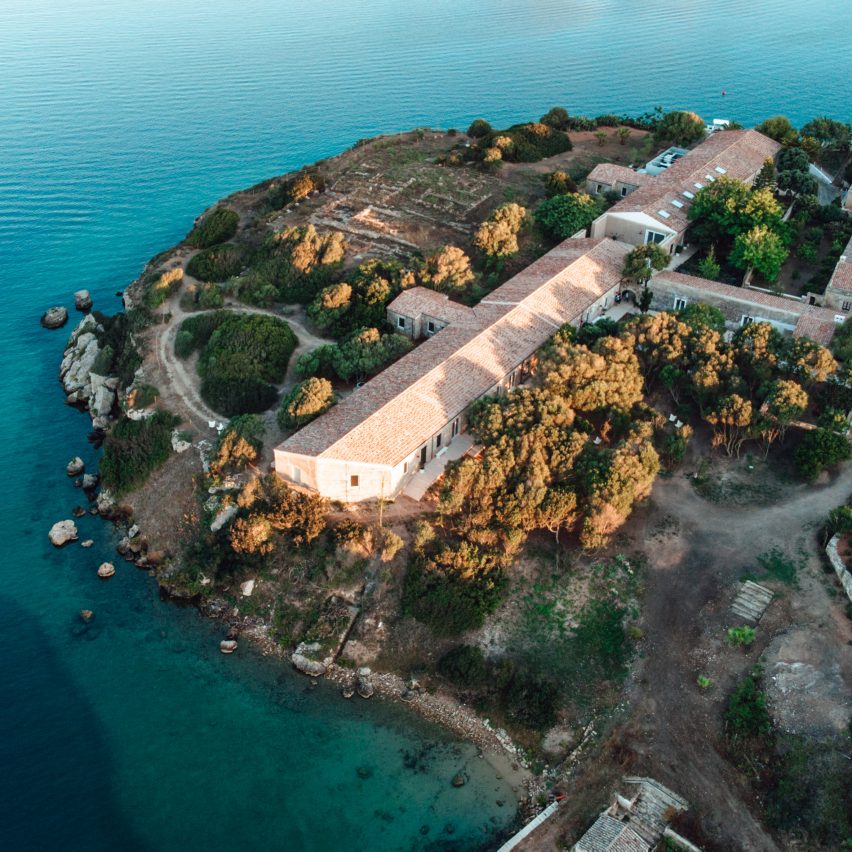
Named Hauser & Wirth Menorca, the gallery is located on a small island off the coast of Mahon in the south of Menorca. It is housed within a formerly derelict hospital facility that was built and occupied by the British Navy from the early 1700s.
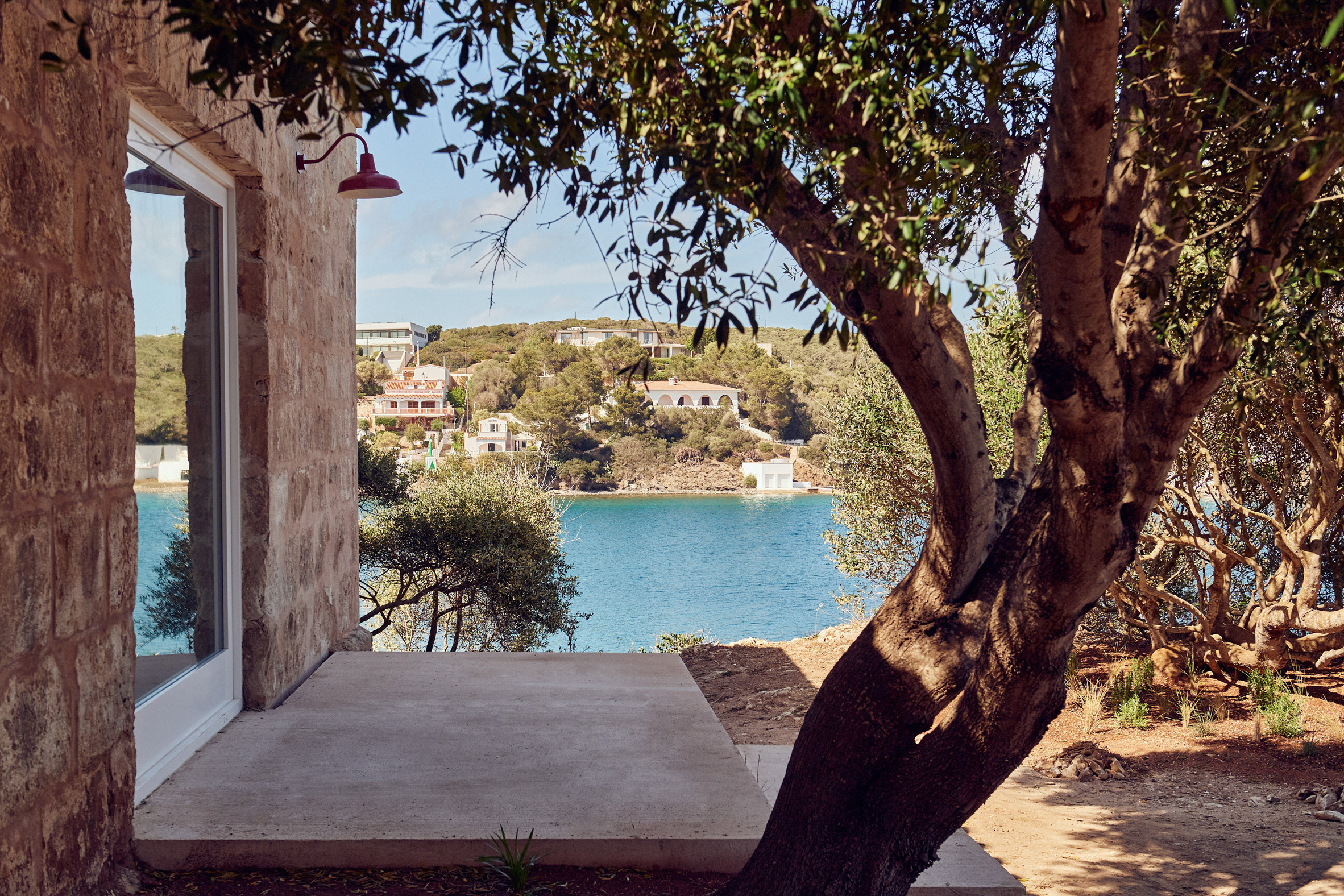
Top: the island is located in Menorca's natural harbour. Photo is by Be Creative. Above: Laplace restored the 18th-century buildings
A two-year conservation project saw the three buildings converted into a 1,500-square-metre cultural hub. The site is complete with eight exhibition spaces, a restaurant, a gallery shop, a sculpture trail and biodiverse gardens.
Laplace explained that the studio looked to preserve the memory of the existing building by highlighting its "scars" and adapting the structure to appear as though it was always there.
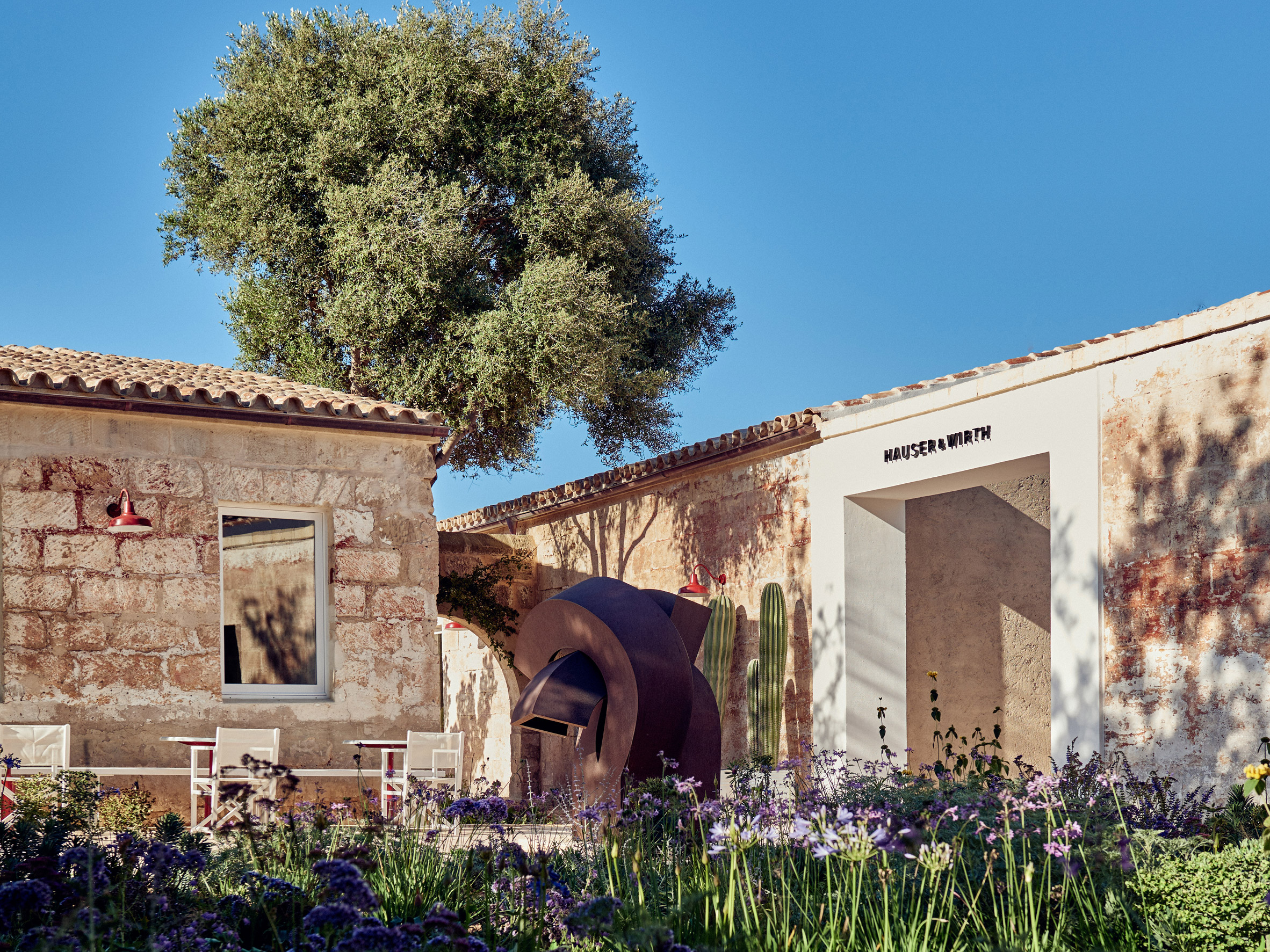
Gallery spaces are surrounded by courtyards
"We wanted to celebrate the history of the building and bring value to all its scars," Laplace co-founder Luis Laplace told Dezeen.
"We have to keep the building's integrity and work around the context. We have been working for a long time against the white-cube sort of space."
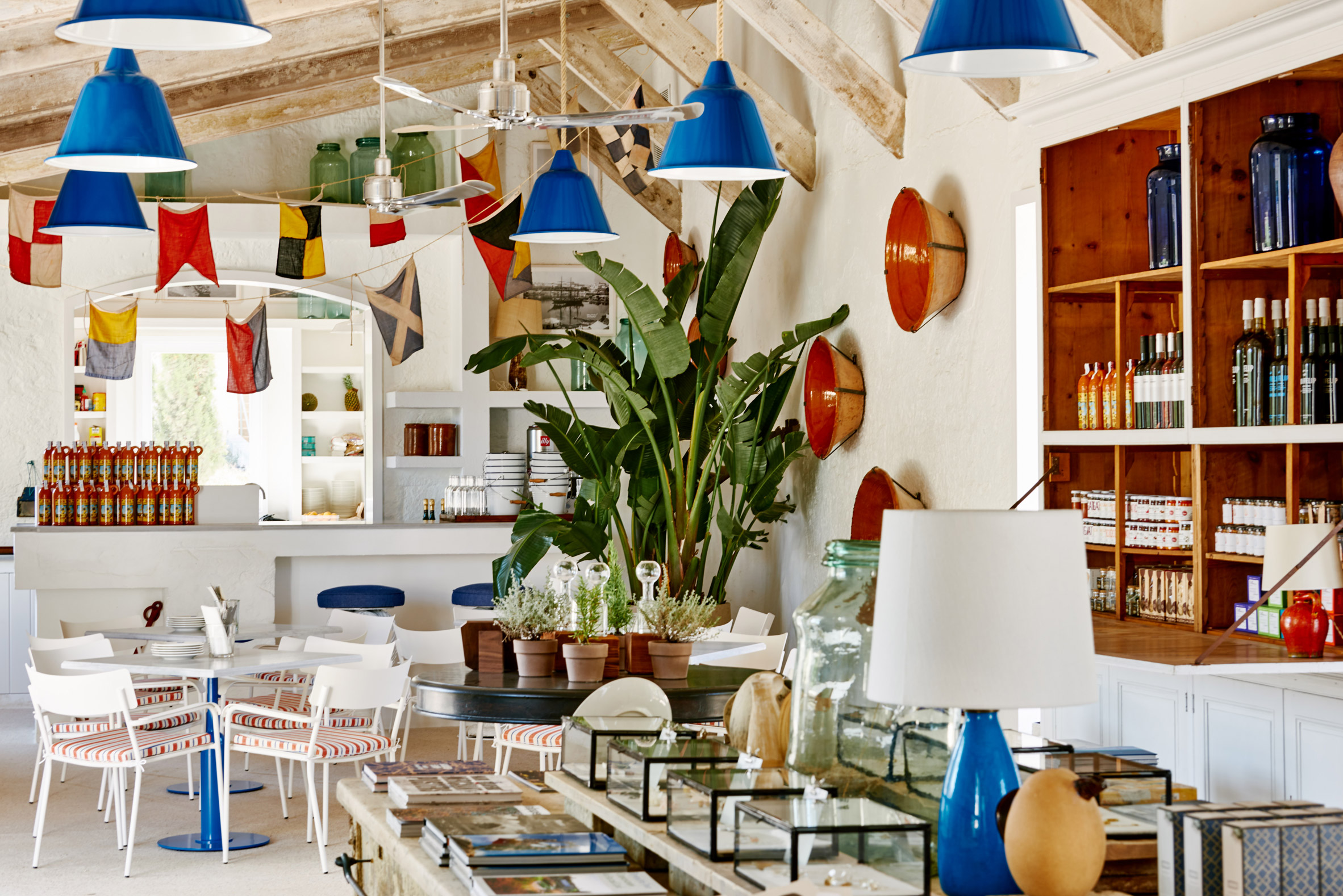
The Cantina has a nautical look
Long, linear exhibition spaces occupy the two largest buildings. These are adjoined at the centre by a contemporary courtyard that marks the entrance to the galleries.
The studio used traditional materials and techniques throughout the restoration, incorporating local masonry, a terracotta-tiled roof and terrazzo floors that were constructed using locally sourced stone.
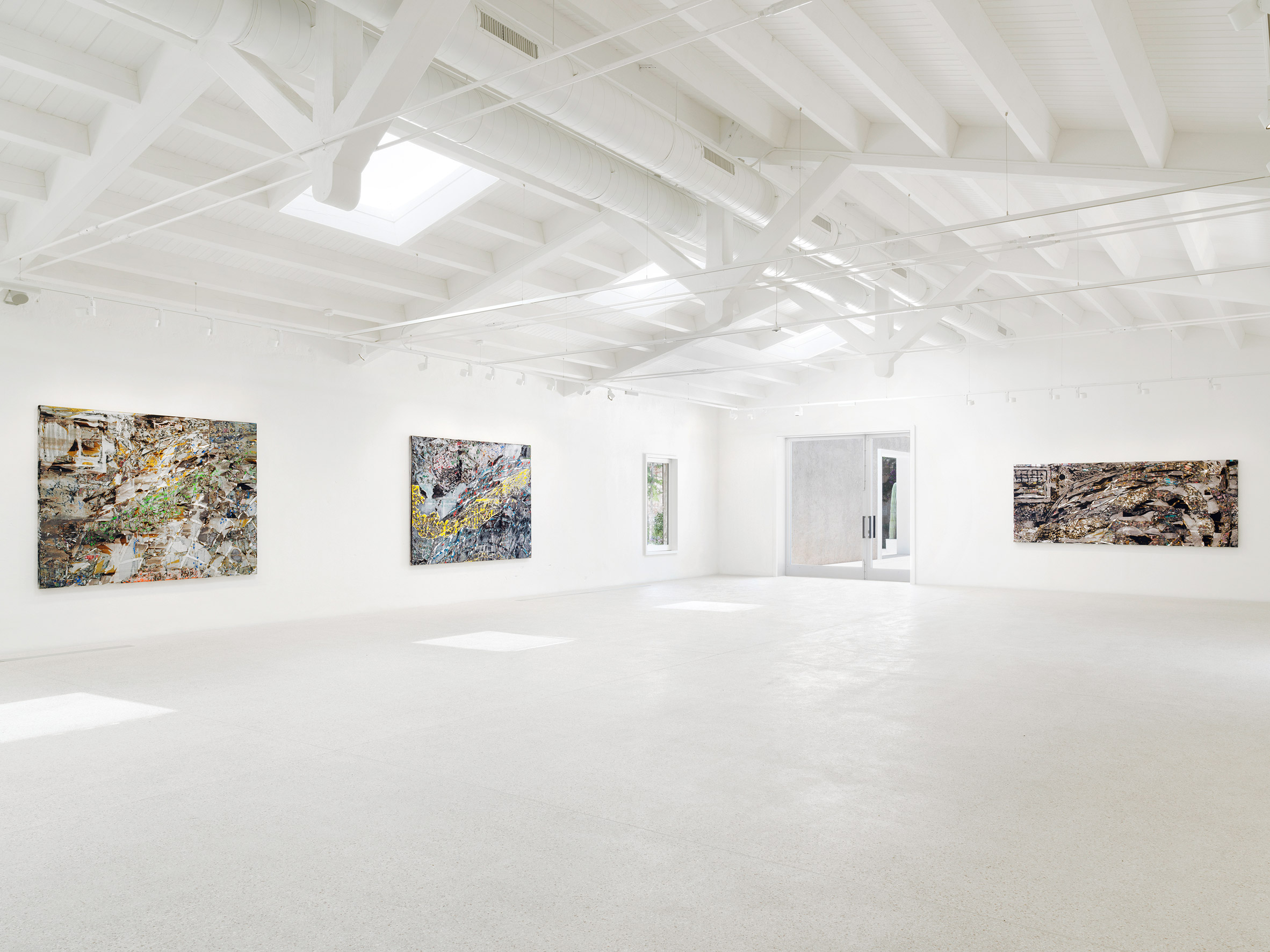
Exhibition spaces containing work by Mark Bradford spaces have wood vaulted ceilings. Photo is by Stefan Altenburger
The interior of Hauser & Wirth Menorca features original wood beams which were restored and whitewashed, while its walls were not rendered completely smooth but instead reveal the stone masonry beneath.
Large windows punctuate the walls and ceilings of the gallery space, creating a play of shadows on the stone walls.
"I did a lot of research on naval architecture here in Mahon, I looked at how to resolve things from trusses, a window, a door, a gate, to even a bench," Laplace said.
"I didn't want it to be a pastiche – I wanted it to be respectful to the local elements. It was very key to respect the naval history."
"Scars" of the original structure were left exposed
"It reminds me of Somerset, where [Laplace] created a courtyard between the old and new building; here, it's the same idea," Laplace co-founder Christophe Comoy told Dezeen.
"[Laplace] created breathing spaces which are key in this type of restoration project, to respect what's existing and also to improve the circulation to adapt it to the needs of today."
Large rotating doors connect the interior and exterior
As Menorca is a UNESCO Biosphere Reserve – an area that aims to promote solutions that help safeguard biodiversity – a purpose-built reservoir that collects rainwater from the roof for irrigation across its gardens was added to the building to make it more sustainable.
The gardens and landscape surrounding the cultural hub were designed by Piet Oudolf, who also created the landscaping for Hauser & Wirth Somerset.
Local masonry was used across the site
His landscape design for Hauser & Wirth Menorca incorporates native plants, such as purple agapanthus amongst other perennials and grasses. It also preserved a collection of existing olive trees at the rear of the site.
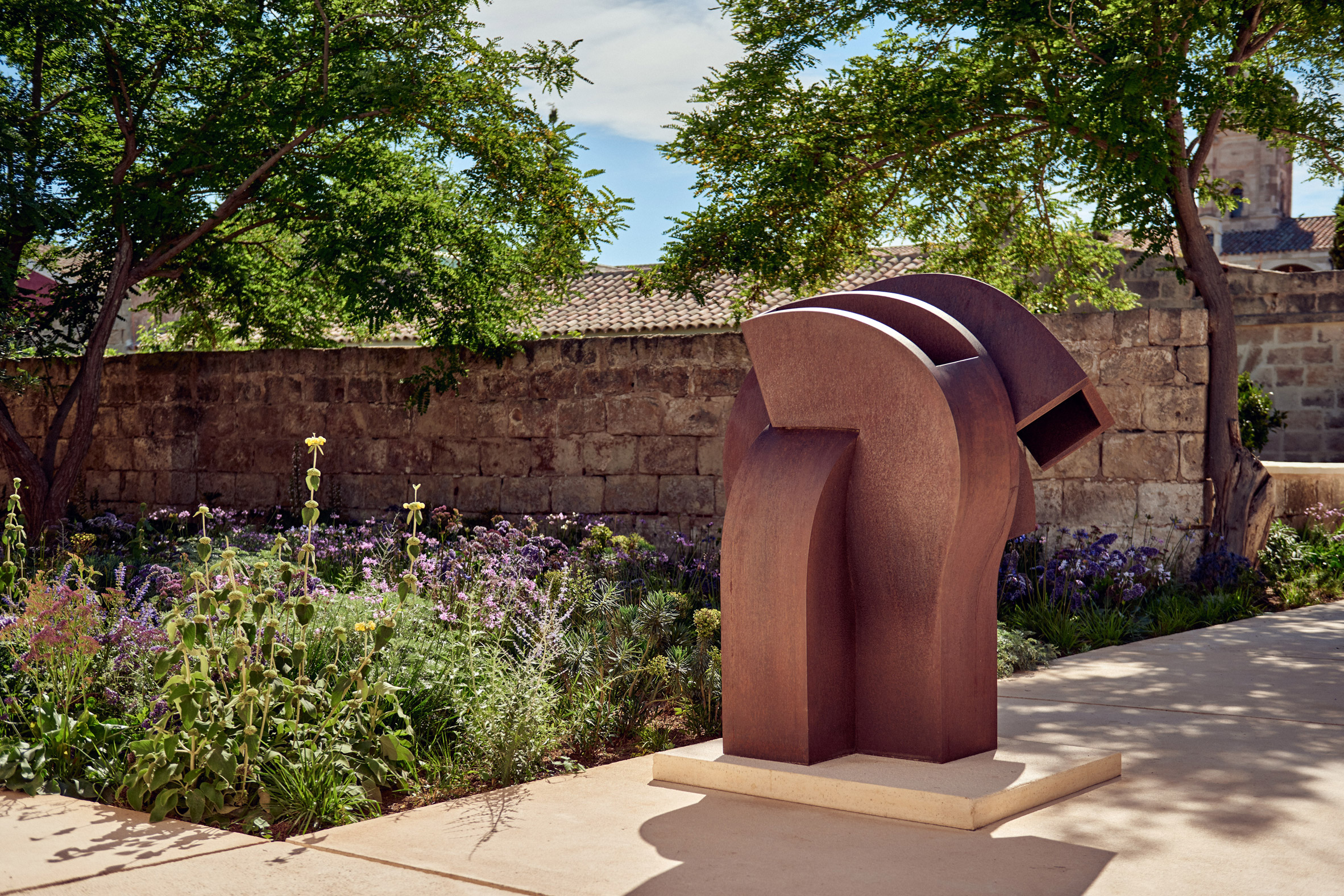
A strict geometry sees plant beds organised in regular blocks around squared paved slabs that lead visitors around the centre, taking them between works by artists including Louise Bourgeois, Franz West, Eduardo Chillida and Joan Miró.
Elogio del vacío VI by Eduardo Chillida was placed within the gallery's gardens
Hauser & Wirth Menorca will host temporary exhibitions and artists' residences, alongside a number of community workshops and artist-led programmes that centre on education and sustainability.
Its inaugural exhibition, Masses and Movements by American artist Mark Bradford, sees the contemporary artist lead an art education residency in collaboration with students at l’Escola d’Art de Menorca.
The Marble Arch Hill, a viewpoint disguised as a hill designed by Dutch studio MVRDV, has been photographed rising alongside Hyde Park in London.
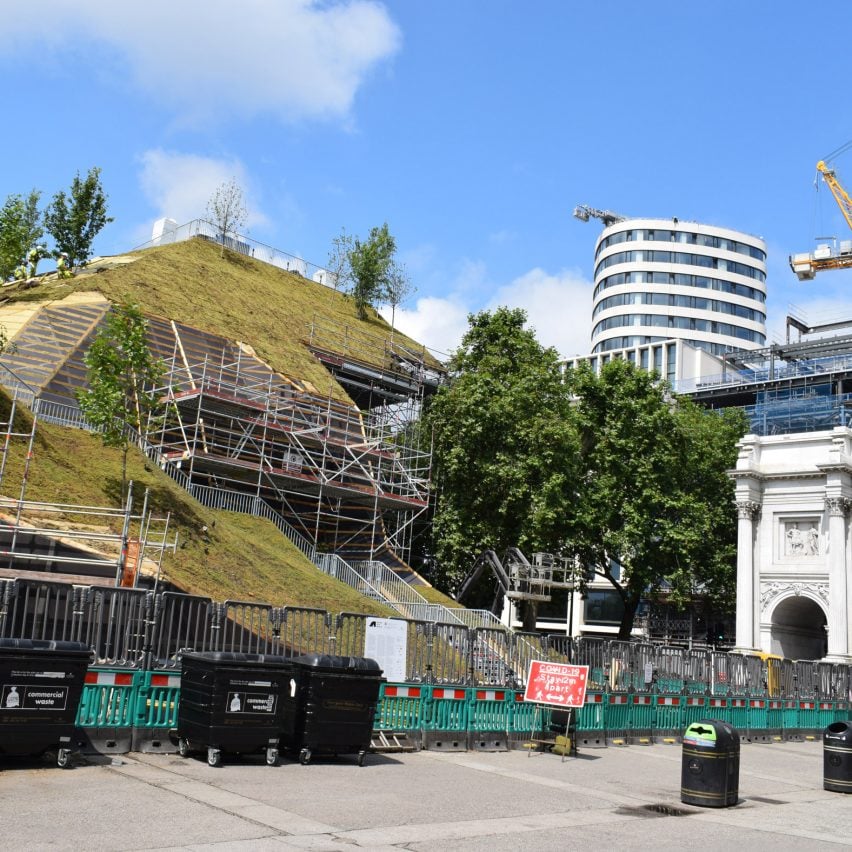
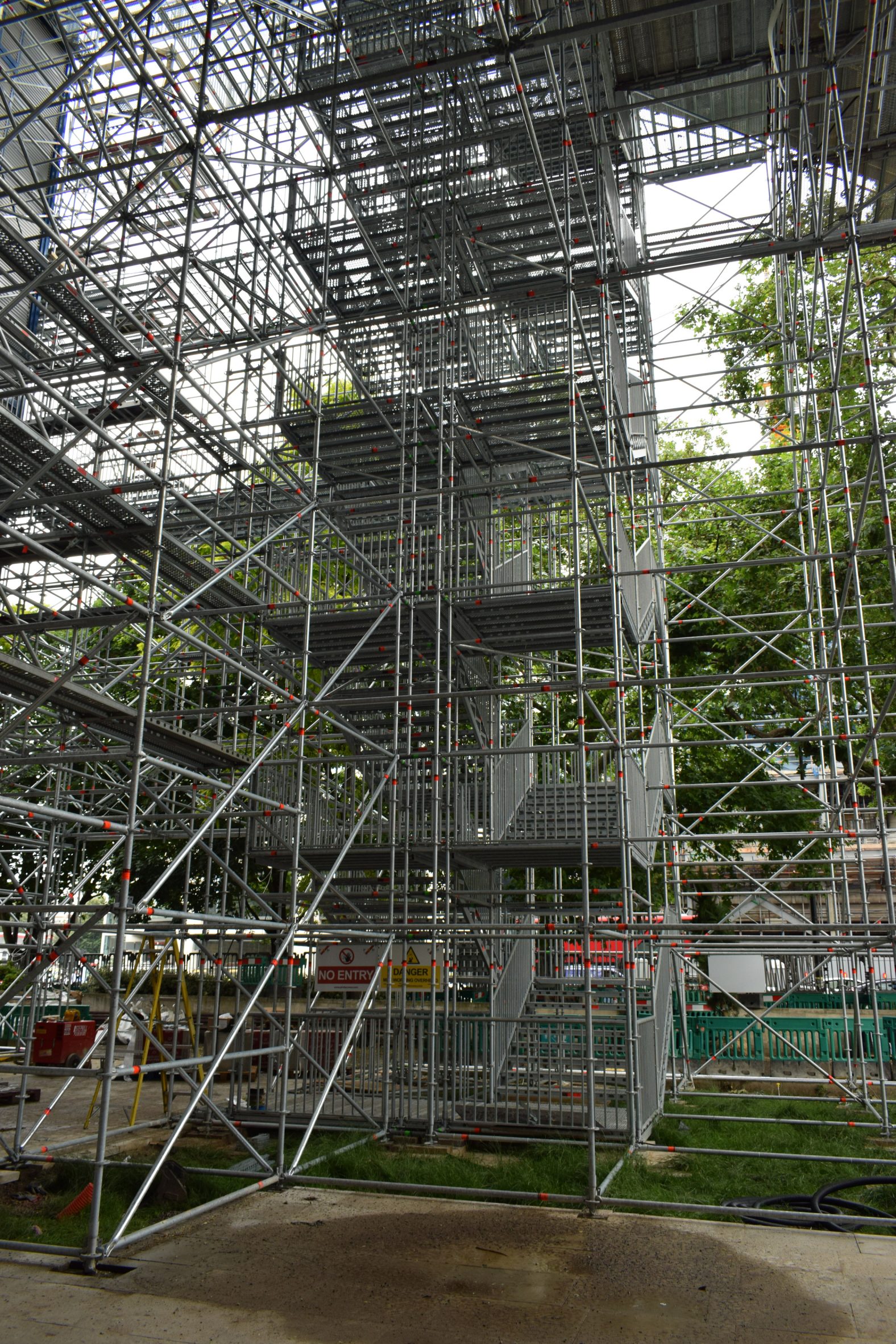
Rising 25 metres tall, the artificial hill is currently under construction alongside Marble Arch near the Oxford Street shopping district in central London.
The Marble Arch Hill is under construction in central London
The viewpoint and visitor attraction was commissioned by Westminster City Council as an attraction to draw people back to Oxford Street following the easing of coronavirus restrictions.
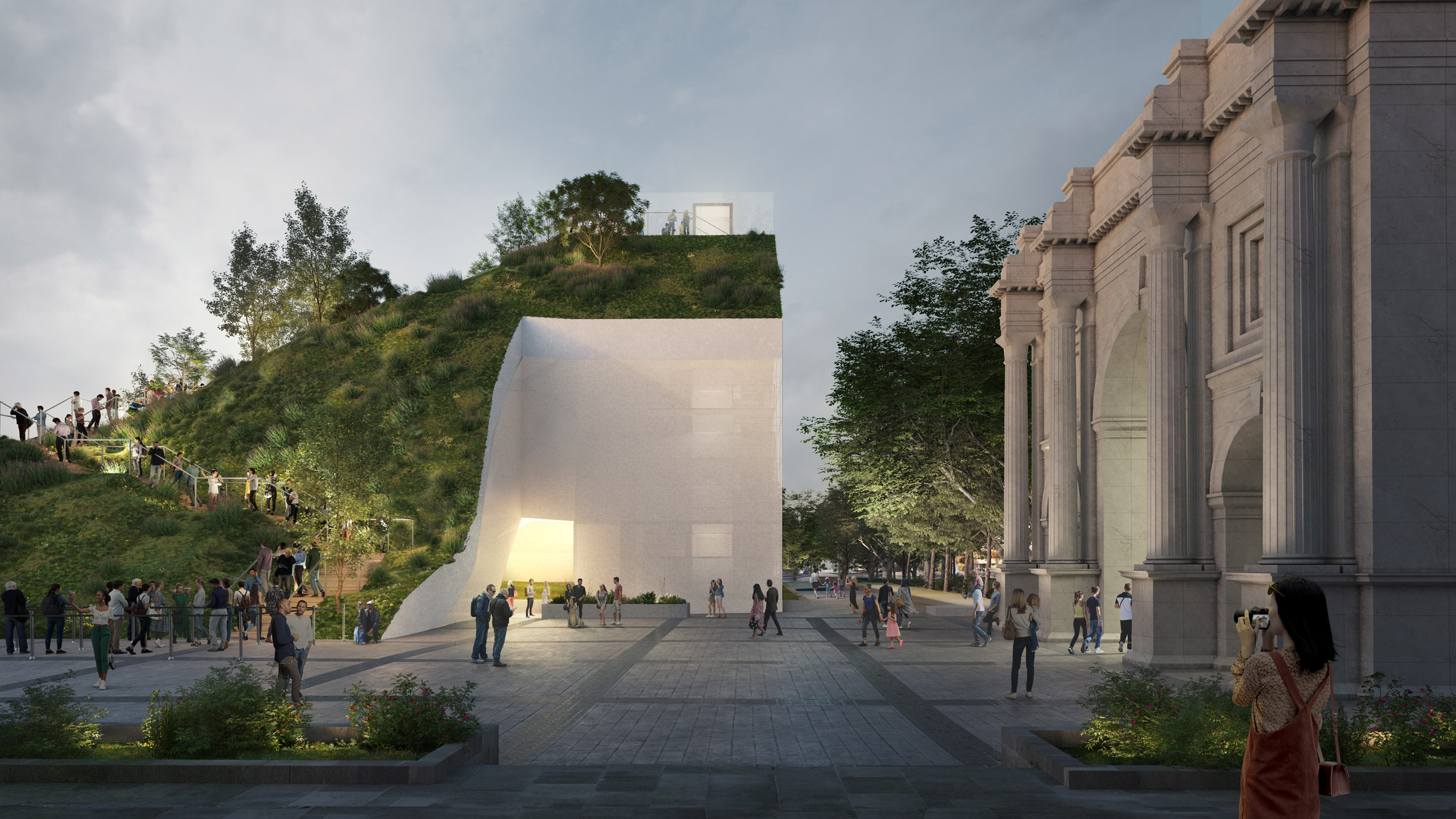
When complete, visitors will be able to climb up a staircase built into the artificial hill to see views across central London and down at Marble Arch – the triumphal arch designed by architect John Nash.
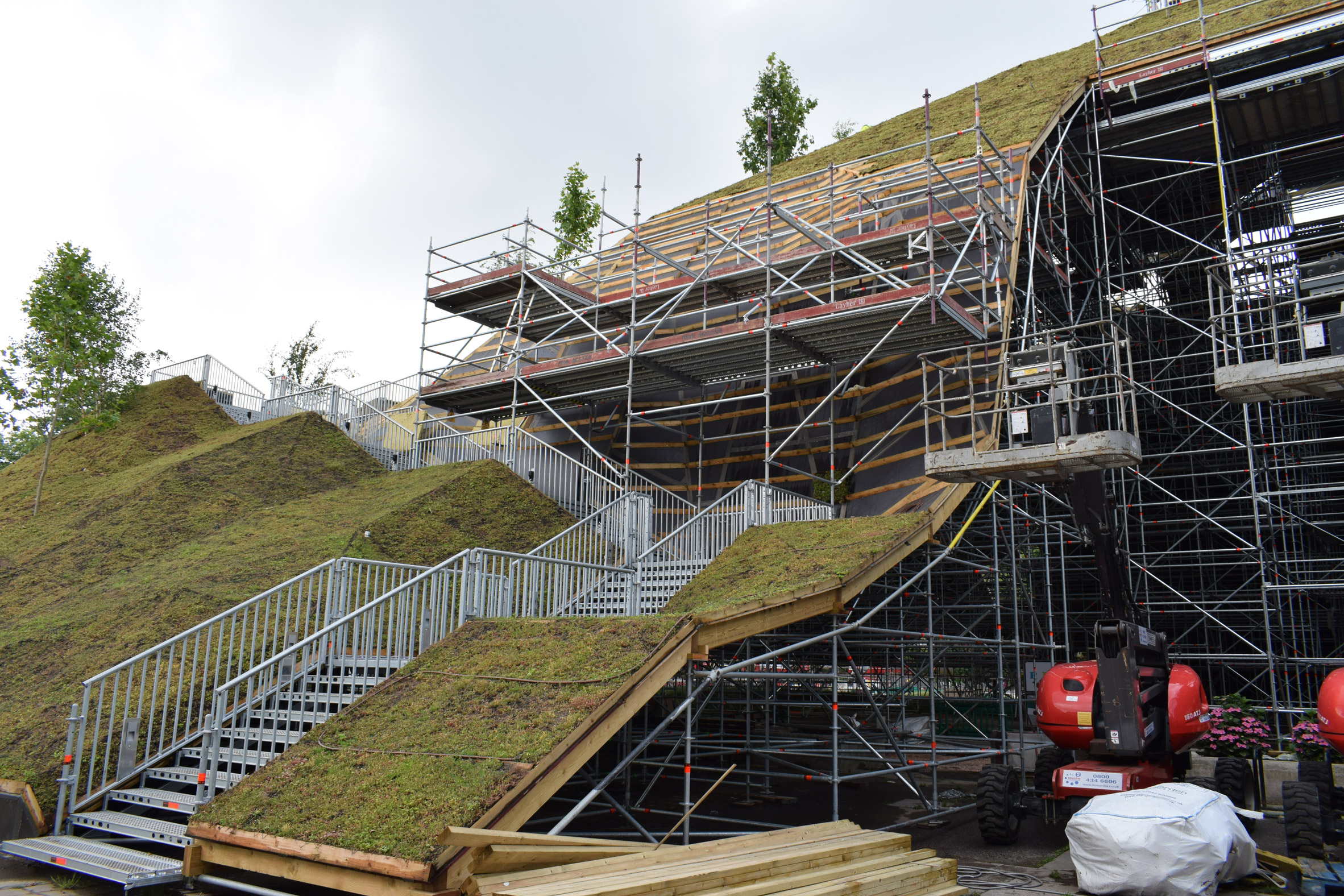
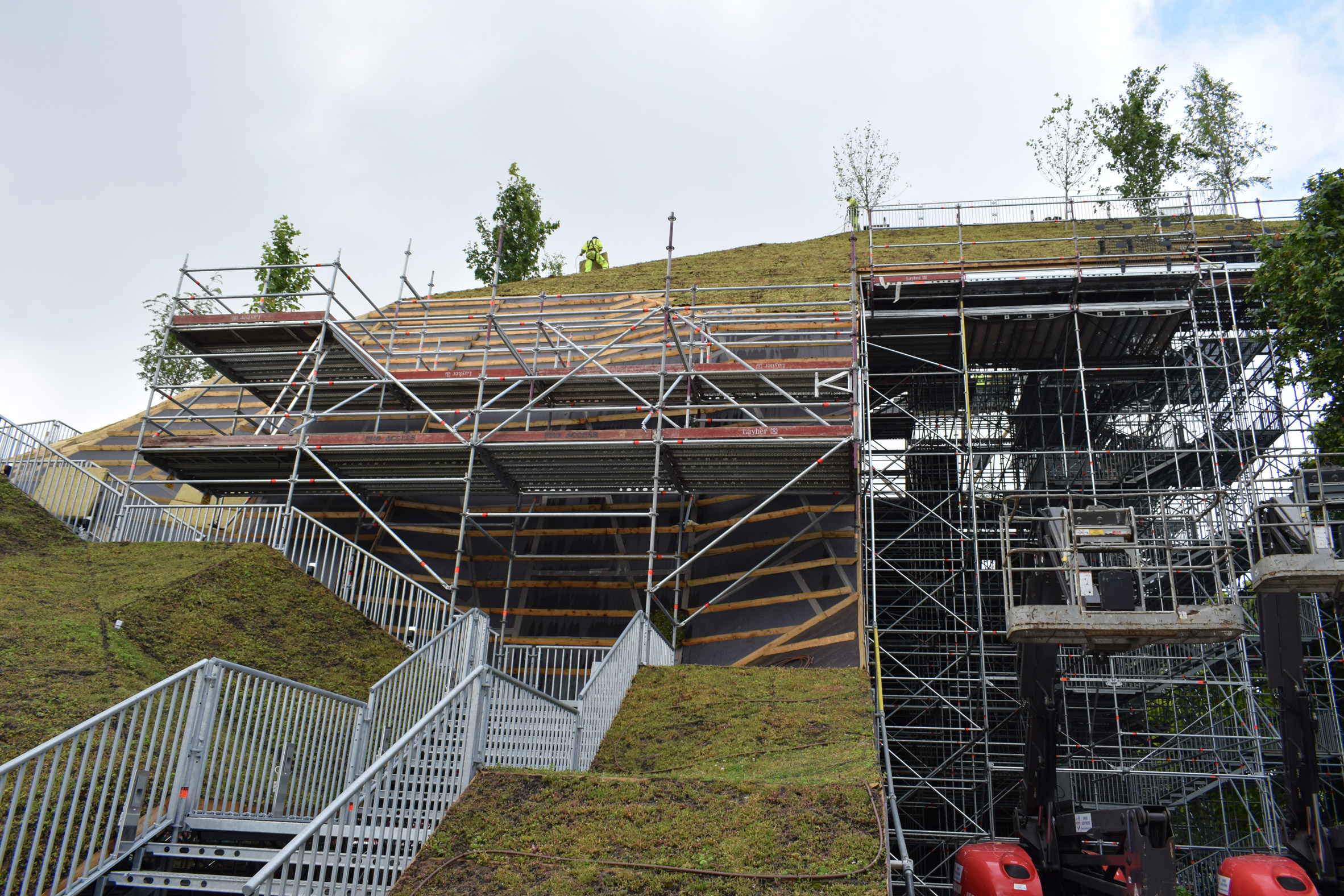
The staircase, which can be seen in the construction shots, will lead up the southern face of the hill, with visitors descending into an event space inside the structure.
The structure is built from scaffolding
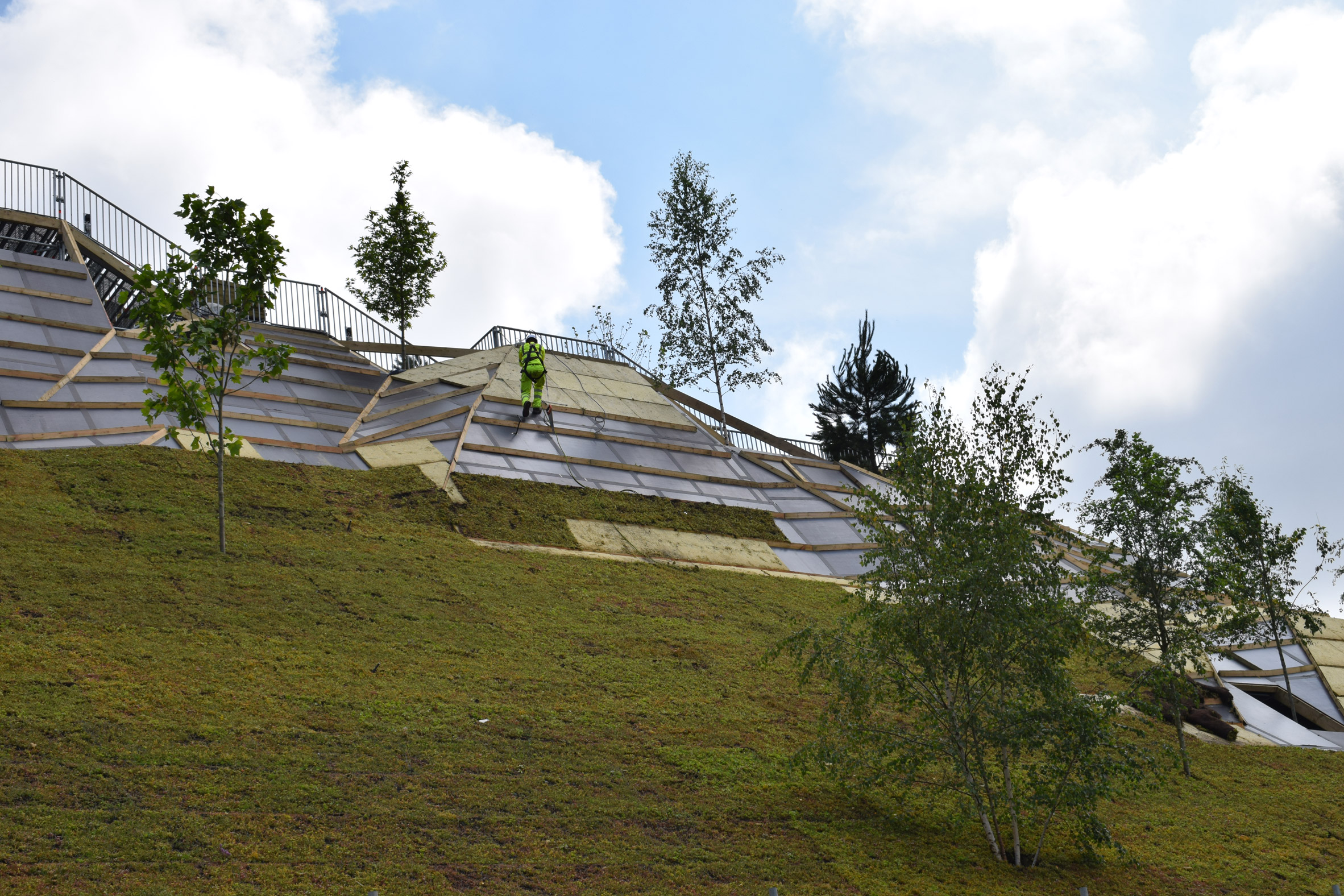
Recently taken photographs show the scaffolding-pole structure of the hill largely complete.
This structure is in the process of being covered with turf and trees to create the appearance of a natural hill.
It will be covered in turf with occasional trees
According to the studio, the viewpoint's form was designed as a nod to the history of the site, which was once part of the adjacent Hyde Park.
"This project is a wonderful opportunity to give an impulse to a highly recognisable location in London," explained MVRDV founding partner Winy Maas when the project was unveiled in February.
"By adding this landscape element, we make a comment on the urban layout of the Marble Arch, and by looking to the site's history, we make a comment on the area's future," he continued.
"Can this temporary addition help inspire the city to undo the mistakes of the 1960s, and repair that connection?"
A staircase will go up the southern face of the hill
The temporary viewpoint is set to open on 26 July and will be in place until January 2022.
It was designed using standard scaffolding poles so that it can be easily dismantled. The soil and plants will be reused in the nearby parks.
Visualisation of how the Marble Arch Hill will appear when complete
Rotterdam-based MVRDV was established in 1991 by Maas, Jacob van Rijs and Nathalie de Vries. In 2016 the studio used scaffolding for the temporary Stairs to Kriterion installation in Rotterdam.
Turning the USA into a net-zero carbon economy could involve covering a landmass equivalent to seven states in geoengineering infrastructure, according to environmental social scientist Holly Jean Buck.
Overcoming resistance from communities impacted by vast renewable energy plants and carbon-removal machinery will be one of the biggest barriers in the fight against climate change, she said.
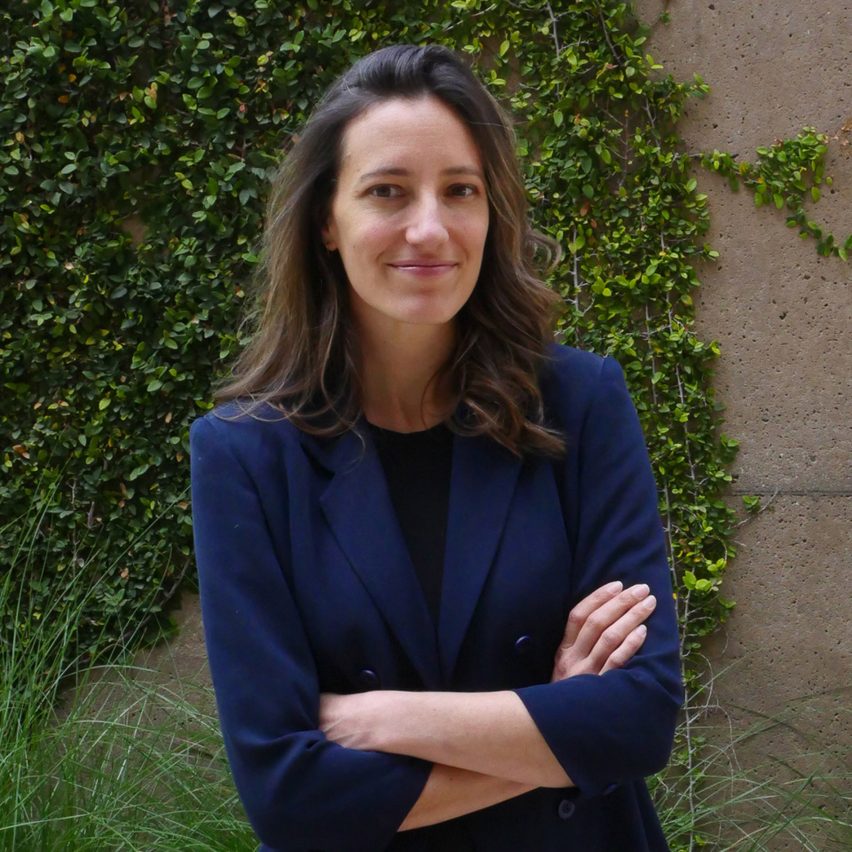
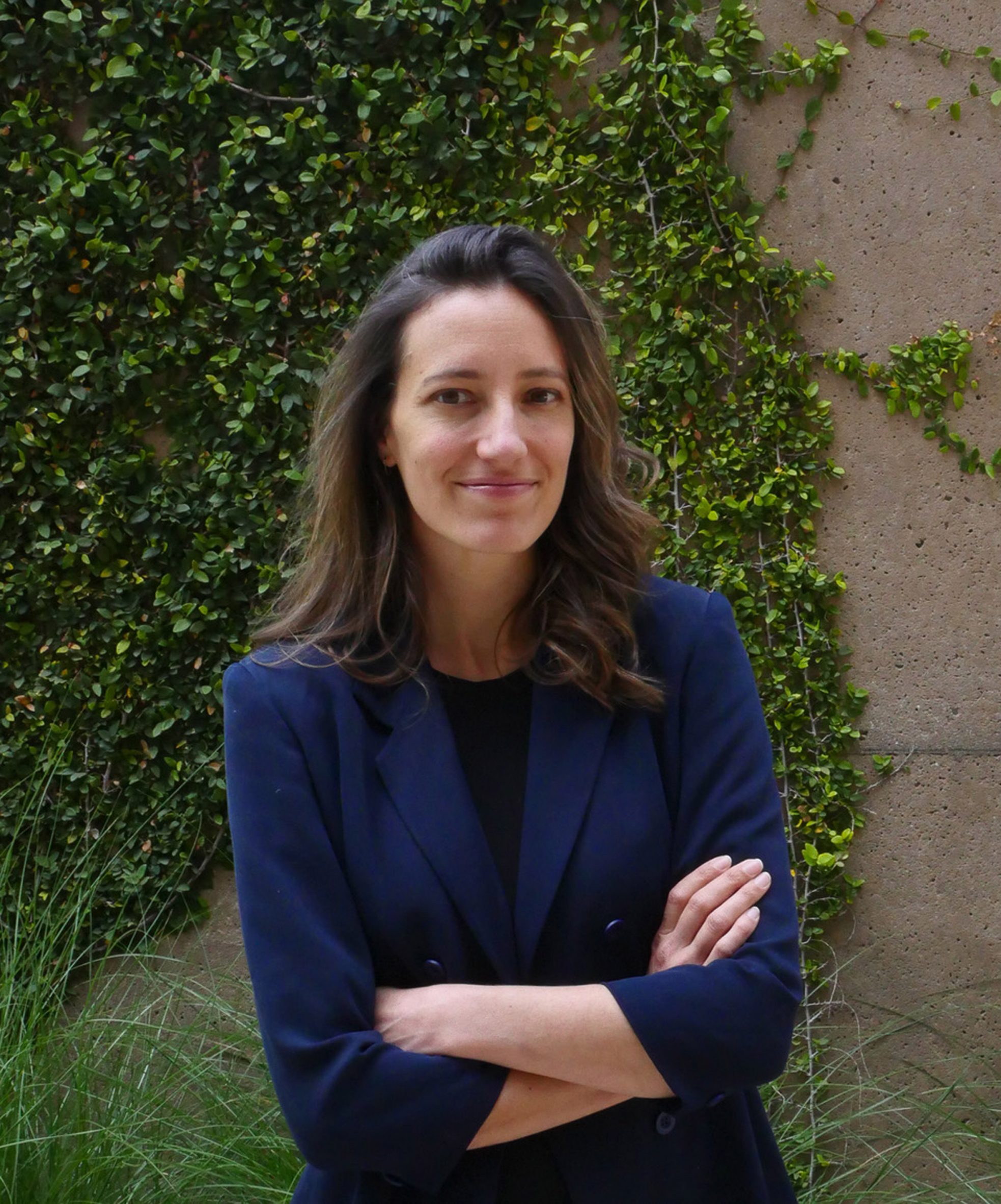
Environmental social scientist Holly Jean Buck
"We already have a lot of conflicts around land for renewable siting and we've only built out a small fraction of the amount of renewables we're going to need," she said.
"So that will be a challenge."Huge solar and wind farms will be needed to replace fossil energy and power millions of direct air capture machines needed to suck CO2 from the atmosphere.
Decarbonising will "really impact you"
In addition, decarbonising the USA will involve building intrusive infrastructure including power transmission lines as well as mines needed to extract the raw materials needed to build a fossil-free grid.
"It's gonna really impact you," said Buck, who is assistant professor of environmental sustainability at the University of Buffalo, USA.
"It's significant. It's not just about the visual aesthetic, it's about who's controlling it, it's about how the identity of the region is changing. If it used to be an agricultural area, there's a sense of loss around that."
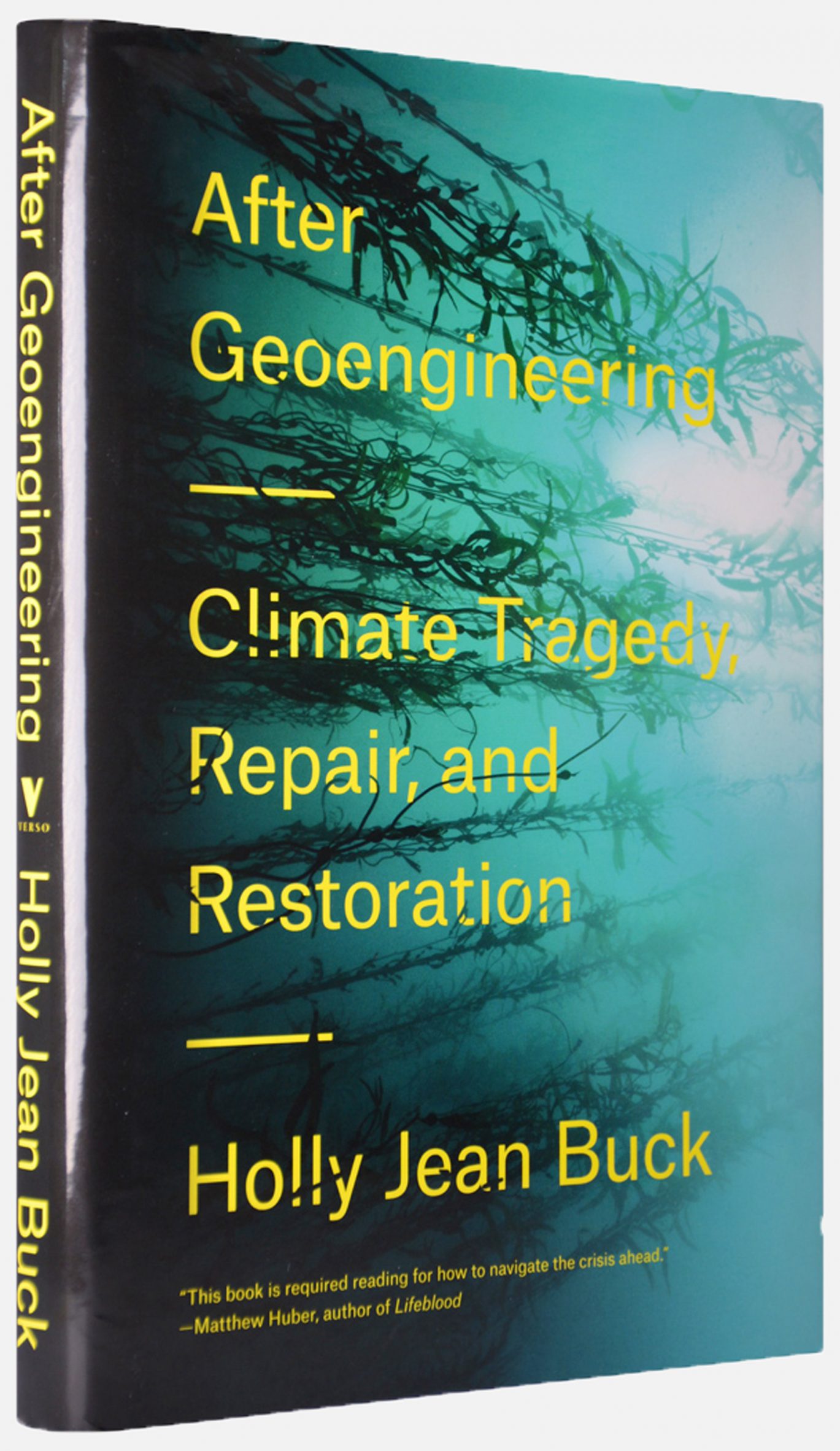
Buck's book explores how large-scale interventions could be socially acceptable
The solutions discussed include massive investment in renewable energy to replace fossil fuels, large-scale mitigation projects involving carbon capture to remove CO2 from the atmosphere, and underground storage of the captured carbon.
Princeton's landmark report explored various pathways to turning the USA into a net-zero economy in line with the goals of the Paris Agreement, which aims to keep global warming within 1.5 degrees Celsius of pre-industrial levels.
The Net Zero America report explored ways to make USA a net-zero economy
Under one scenario, which sees renewables provide almost all the country's power needs, wind farms would cover an area equivalent to Arkansas, Iowa, Kansas, Missouri, Nebraska and Oklahoma.
"They present a scenario that involves going fully renewable and using green hydrogen to decarbonize the last bit, which really adds a lot to the footprint," she said. "The land they say would be required for wind power is basically the area of about six states in the middle of the country and then for solar it's an area about the size of West Virginia."
"And for direct air capture, the footprint is something like Rhode Island," added Buck.
Nuclear plants could be used to create carbon-free power
Alternatively, carbon-free power could be provided by nuclear plants, Buck said. The US would need 250 nuclear power stations of at least a gigawatt each, or thousands of smaller reactors, according to the Princeton report.
Nuclear would require less land since a one-gigawatt reactor requires around 1,000 acres whereas a wind farm requires one hundred times more land to generate the same amount of electricity. "That would be possibly a better option just because of the land issues," Buck said.
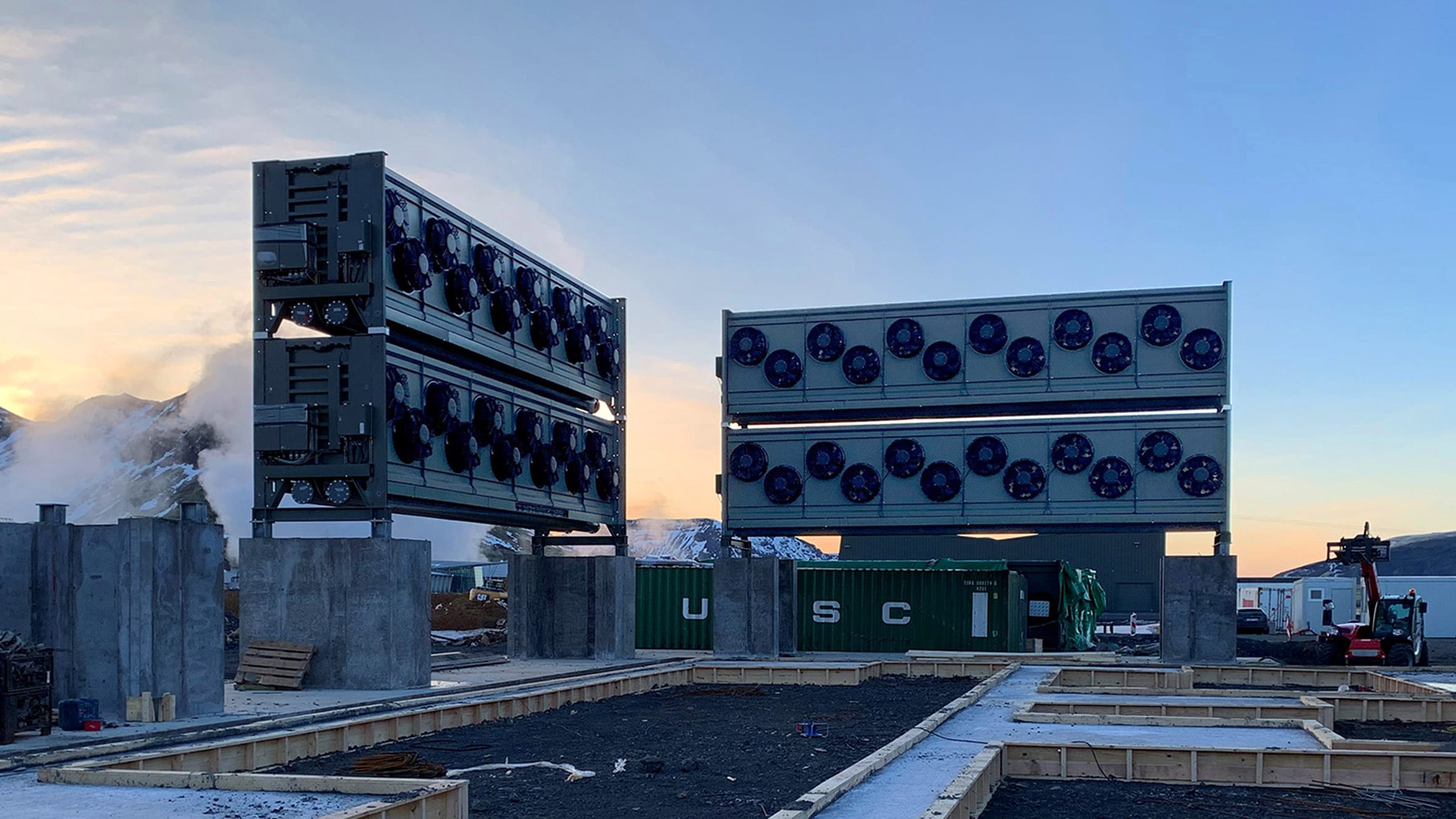
Direct air capture machines, like these developed by Climeworks, would need to cover an area the size of the state of Rhode Island
Since the industrial revolution, human activity has added around 2,200 gigatonnes of carbon dioxide to the atmosphere, Buck writes in her book. A further 40 gigatonnes are being emitted each year and the rate of warming is still increasing, she writes.
"This means that if the rate of warming slows down yet emissions remain at today’s rate, in twenty years, two degrees of warming are essentially guaranteed," meaning the world will overshoot the Paris Agreement targets.
"What would it take to avoid this?" she writes. "To keep warming below two degrees, emissions will need to drop dramatically — and even go negative by the end of this century, according to scenarios assessed by the Intergovernmental Panel on Climate Change."
Oceans could be used as a carbon store
In order to go carbon negative, the world will need to invest in a variety of highly ambitious geoengineering strategies to remove atmospheric carbon dioxide. Solar geoengineering, which involves injecting aerosols into the stratosphere to block incoming sunlight, is one possible route that does not require land.
Using the oceans as a carbon store is another route, Buck said. Various proposals have been mooted by scientists including ocean fertilization, which involves adding nutrients to encourage plankton blooms. These absorb carbon, which is then sequestered at the bottom of the ocean when they die.
But here too, communities will need to be given reassurances that their livelihoods won't be adversely impacted.
"People think of the ocean as vast but actually that space is very much used by coastal communities and by a lot of different actors," she said. "Anything that's going to change the ocean at scale will have people concerned and wanting to know what the risks and benefits are."
Another risk is that as communities become aware of large-scale geoengineering solutions to climate change, people will think they don't need to reduce emissions because the science will make the problem go away.
"One [thing] that comes up a lot in politics and in academic circles is the idea of mitigation deterrence," Buck said. "And it comes up with the public too. This is the idea that developing the technologies to remove carbon from the atmosphere will delay the energy transition or reduce the commitment to mitigate emissions."
Given that the science around climate change and how to prevent it is so complex and frightening, do some communities feel that it would be best to just let it happen?
"I've never once heard that, which is really interesting," Buck said. "I'm working a lot in the rural US. And most people there would say the climate is changing but they just don't think that humans are necessarily to blame for it."
"They think it's a natural cycle or something. So in that sense, they would rather figure out how to deal with climate change by changing how they do crop insurance or things like that."
Below is an edited transcript of the interview with Buck:
Marcus Fairs: Tell me about your work.
Holly Jean Buck: I'm an environmental social scientist. I'm an assistant professor of environmental sustainability at the University of Buffalo in Buffalo, New York. And my research is concerned, most broadly, with how do we use emerging technologies to deal with climate change? What are the politics? What are the cultural debates around that? And more specifically, what do people think about different techniques to remove carbon from the atmosphere? How do we set up these technologies and practices in ways that benefit communities and don't increase risks?
Marcus Fairs: What are your conclusions?
Holly Jean Buck: I'll just preface this by saying a lot of my research right now is focused on the US so I have US policy-centric answers. But broadly, it's clear that we need a bunch of different things. Obviously, biological carbon removal is limited by land.
I think that we should actually be putting a lot more money into engineering plants [to absorb more carbon and store it in the ground when they die] and we should be focusing more on marine carbon removal, including kelp, than we currently are. But I also think there's a really important role for geological storage with direct air capture or bioenergy.
And those are also going to be limited by land. Bioenergy, obviously, because of growing biomass, but also direct air capture in terms of deploying renewables to power direct air capture. In the US, we already have a lot of conflicts around land for renewable siting and we've only built out a small fraction of the amount of renewables we're going to need. So that will be a challenge.
Marcus Fairs: Tell me about the land-use issue. Are you saying we might run out of land to put renewable-energy infrastructure on? Or we might run up against problems with people wanting that infrastructure near them?
Holly Jean Buck: There are conflicts around landscape aesthetic but also about control and ownership. People don't want some company from some other place coming in, blanketing the fields near their house when they're seeing no benefit. So it's not just about the visual aesthetic, it's about who's controlling it, it's about how the identity of the region is changing. If it used to be an agricultural area, there's a sense of loss around that.
To understand the scale of renewables needed to just decarbonize the grid, you could look at Princeton's Net Zero America report. It's significant. It's not just like a not-in-my-backyard thing. It's gonna really impact you. Obviously you can put wind turbines in cornfields and we're already doing that. But it will continue to be a challenge.
Marcus Fairs: So it is like a psychological challenge for people who don't want to see change more than a challenge to build the renewable infrastructure we need?
Holly Jean Buck: Well, there may be construction challenges too. I wouldn't be the best person to speak to you about that. It's also a real materials challenge in terms of critical minerals such as copper for battery storage. And also the increased mining for that stuff, as well. The land is there to do it if we want to do it but it's a political and a social challenge.
Marcus Fairs: How much land would be needed?
Holly Jean Buck: It depends on how much carbon removal we're talking about and also whether we can get people to accept nuclear, because that would be possibly a better option just because of the land issues. Here my reference again is Princeton's Net Zero America study. They present a scenario that involves going fully renewable and using green hydrogen to decarbonize the last bit, which really adds a lot on to the footprint.
The land they say would be required for wind power is basically the area of about six states in the middle of the country and then for solar it's an area about the size of West Virginia. And for direct air capture, the footprint is something like Rhode Island. And that's for a pretty decent amount of carbon removal, maybe up to two gigatonnes [per year], which is a reasonable thing to aim for.
But consider all the other competing land uses and the need to produce more food for a growing population and all that stuff, plus giving land back to nature, using that land for carbon sequestration, to plant forests on.
Marcus Fairs: What are the key social implications of potential solutions to climate change?
Holly Jean Buck: One that comes up a lot in politics and in academic circles is the idea of mitigation deterrence. And it comes up with the public too. This is the idea that developing the technologies to remove carbon from the atmosphere will delay the energy transition or reduce the commitment to mitigate emissions.
So that's kind of one big picture thing. And then you can look at different scales when you get down to ground level. People think about trade-offs regarding the sort of energy system they want. Maybe some communities would rather have a fossil fuel plant with carbon capture and storage than an alternative that costs more.
Marcus Fairs: Do you detect any feeling amongst any sector of any community that they'd rather have climate change? Just let it happen rather than deal with all the complex and worrying science?
Holly Jean Buck: No. I've never once heard that, which is really interesting. I'm working a lot in the rural US. And most people there would say the climate is changing but they just don't think that humans are necessarily to blame for it. They think it's a natural cycle or something. So in that sense, they would rather figure out how to deal with climate change by changing how they do crop insurance or things like that.
Marcus Fairs: Earlier you mentioned earlier ocean carbon removal. What can you tell me about that?
Holly Jean Buck: The science is less mature here and it's harder to track what happens to carbon in a fluid environment. There are a number of techniques being researched. The ones that had the most attention is ocean fertilization. There's areas of the ocean that are nutrient-limited. If you put iron in them, or another nutrient, you could grow a plankton bloom. And then the idea is that plankton would sink to the bottom of the ocean and that would be a mechanism for removing carbon from the atmosphere.
There's also things that are being researched around ocean alkalinization, which is adding lime to the ocean. There are also different ideas about artificial upwelling, such as drawing water from the deep ocean up to the surface areas so the biological and geochemical cycles interact.
I only have a basic understanding of the science because I'm a social scientist. I'm thinking about the governance aspects and the social dimensions of it. People think of the ocean as vast but actually that space is very much used by coastal communities and by a lot of different actors. So anything that's going to change the ocean at scale will have people concerned and wanting to know what the risks and benefits are. And there's also a lot of governance issues with the ocean because it's a commons. And there are different laws internationally that regulate what you can do there.
Marcus Fairs: How do you define "geoengineering"?
Holly Jean Buck: My definition of geoengineering is any intervention aimed to reduce global temperatures that is both planetary in scale and intentional. So it would include large-scale carbon dioxide removal of either the biological or synthetic sort. That said, I tend to try to avoid the term geoengineering as it is not really helpful! I think "large-scale mitigation" could fit this definition too.
Marcus Fairs: Your book "After Geoengineering: Climate Tragedy, Repair, and Restoration" explores "why we should re-imagine carbon removal technologies". What do you mean by that?
Holly Jean Buck: That book was aimed for a left-leaning audience that's going to be skeptical of anything involving carbon capture, use and storage [CCUS] because it's entangled with the fossil fuel industry. It was promoted around in the early 2000s as a way to get "clean coal". Right now we have thousands of miles of CO2 pipelines in the US that are used to transport CO2 to depleted oil wells to be used for enhanced oil recovery. So people are naturally skeptical about anything connected with that.
So the idea to reimagine it is to say, you know, what if this was not just an oil-industry project? Can we imagine using the expertise and technology that has been developed in those industries but repurposing it for putting carbon back underground?
Marcus Fairs: So the oil industry is promoting CCUS so it can use it for enhanced oil recovery, which allows it to extract more fossil reserves. How intertwined are the oil industry with CCUS technology?
Holly Jean Buck: I think they're very intertwined. Oil companies, not just US companies, are all thinking about this as a way of continuing to be viable companies. I think that's pretty clear from their documents. But I do think there are also people in these companies who do care about the future. They see that the world is reliant on fossil fuels for 80 per cent of its energy and it's not going to be a quick transition to replacing that 80 per cent.
If you think about the geopolitics and the way that most oil is produced by national oil companies, a lot of economies are really entwined with fossil fuels. So from their standpoint, this really is the most realistic way to not kill the planet.
Marcus Fairs: But you're talking about CCUS, which involves scrubbing CO2 from fossil-fuel industries, rather than processes that capture carbon directly from the atmosphere.
Holly Jean Buck: Yes. The terminology here is very much overlapping. And I think all of us, including me, could be more precise about it. So the oil industry term and the term that's used in US policy is carbon capture, use and storage – CCUS. They have really tried to make that a term that includes enhanced oil recovery wrapped up with the storage. In US legislation, it's more of a focus than carbon dioxide removal.
But they're different. Carbon capture use and storage is basically a mitigation technology, whereas carbon removal can remove emissions that are already in the atmosphere.
Holly Jean Buck: What you just said is basically true. I think it's great to do agroforestry. It can make more resilient food systems for smallholder farmers. And we need large-scale ecological restoration for biodiversity reasons. But I wouldn't put too much on it as a carbon removal solution. Not at the scale we need. I mean, you could get a gigatonne or two. And a lot of countries obviously are really relying on forests in their national inventories already, but I wouldn't pin grand hopes on it.
Carbon revolution
This article is part of Dezeen's carbon revolution series, which explores how this miracle material could be removed from the atmosphere and put to use on earth. Read all the content at: www.dezeen.com/carbon.
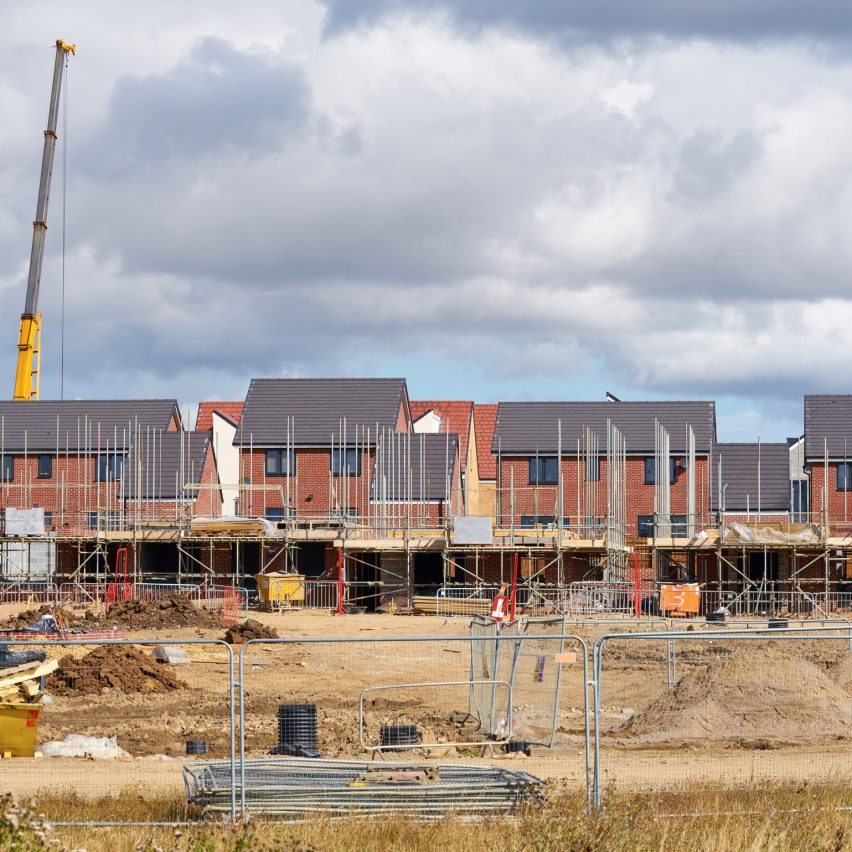
The majority of British architecture practices are experiencing on-site delays caused by difficulties in sourcing construction products according to RIBA's Future Trends survey.
A quarter of practices have seen site work put on hold due to a lack of materials.
The materials shortage is reportedly due to the impact of Brexit, as well as an increased demand for materials, as construction starts to ramp up again with the easing of coronavirus lockdowns.
"It has been mentioned by practices over the last couple of months, but it's picked up as one of the main issues over the last few weeks," head of economic research and analysis at RIBA Adrian Malleson told Dezeen.
The industry is also still feeling the impact of the Suez blockage, RIBA said.
Construction and design stages affected by material shortages
Nearly a fifth of practices, 18 per cent, also reported that the materials shortage was creating delay in the design process.
"Talking to practices, the delays are occurring in the detailed design stages as practices have to spend additional time selecting products that will be delivered within project timescales, where that's possible," Malleson said.
RIBA said reports of other significant challenges for architects include labour shortages and the potential effects of the "gathering third wave and the planned lifting of Covid-19 restrictions".
Brexit is also affecting other areas of the industry.
"The UK is experiencing workforce shortages within important areas, such as distribution (especially HGV drivers) and among builders merchants; though this is also linked to Brexit," Malleson added.
Majority of practices expecting workloads to remain the same or increase
However, the survey noted optimism in relation to future work, with 38 per cent of practices expecting to have more work in the next months.
Just over half, 58 per cent, expect workloads to stay the same, while the percentage expecting a decrease fell to seven per cent.
This indicates that the recovery is continuing, RIBA said.
"Overall, the June Future Trends findings indicate that the recovery in the architecture market continues," Malleson said.
A total of 240 practices, based on a representative sample of the range of different practice sizes and geographical locations, took part in the survey in June.
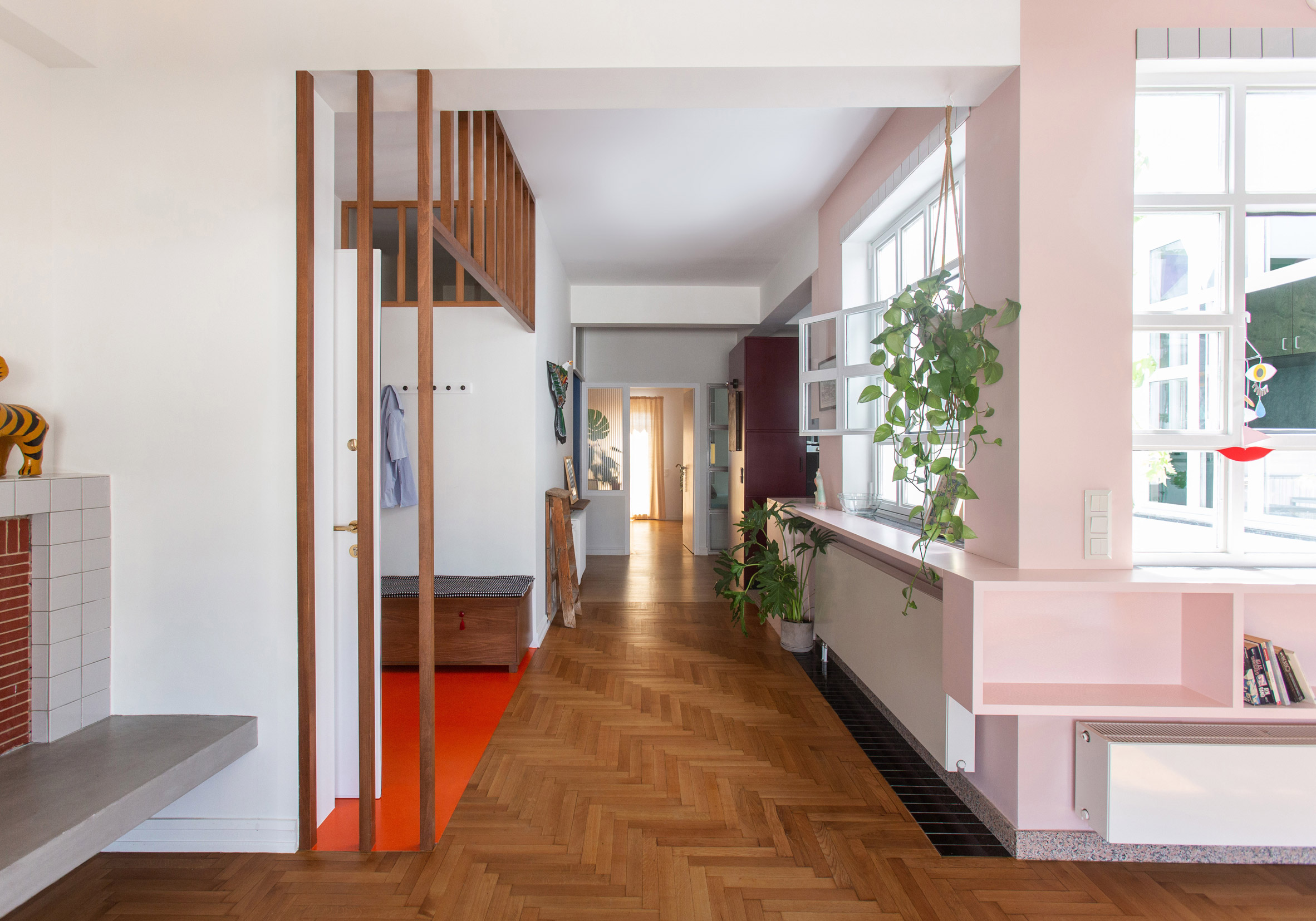
A previously hidden central lightwell funnels light into this formerly dark and enclosed apartment in Athens designed by local architects Point Supreme Architects.
Located in the centre of the city on the sixth floor of a 1980s Athenian polykatoikia — a concrete residential block made up of family apartments with tiered balconies — the two-bedroom Trikoui apartment is owned by a young couple.
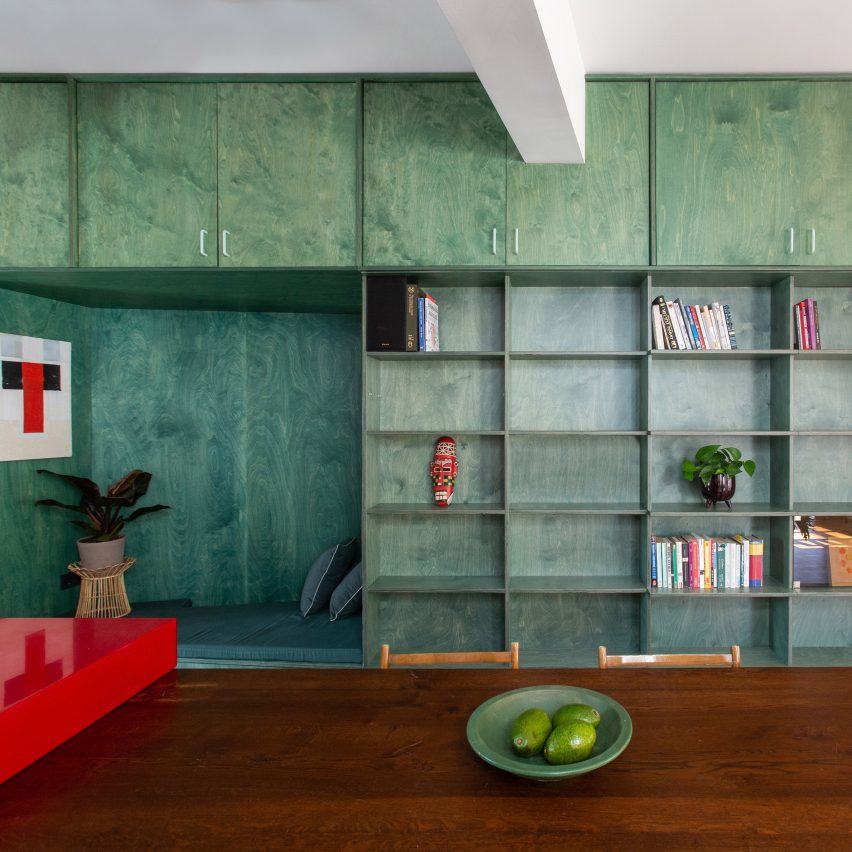
A storage wall made from stained green plywood runs along one side of the apartment
Previously, the apartment was small and cramped with small rooms and corridors, and natural light and views outside were very limited. The owners wanted to open up the interior to create a brighter space that was more suited to modern living.
Point Supreme Architects reworked the floor plan to create a single, open-plan space that combines the living, dining and kitchen areas.
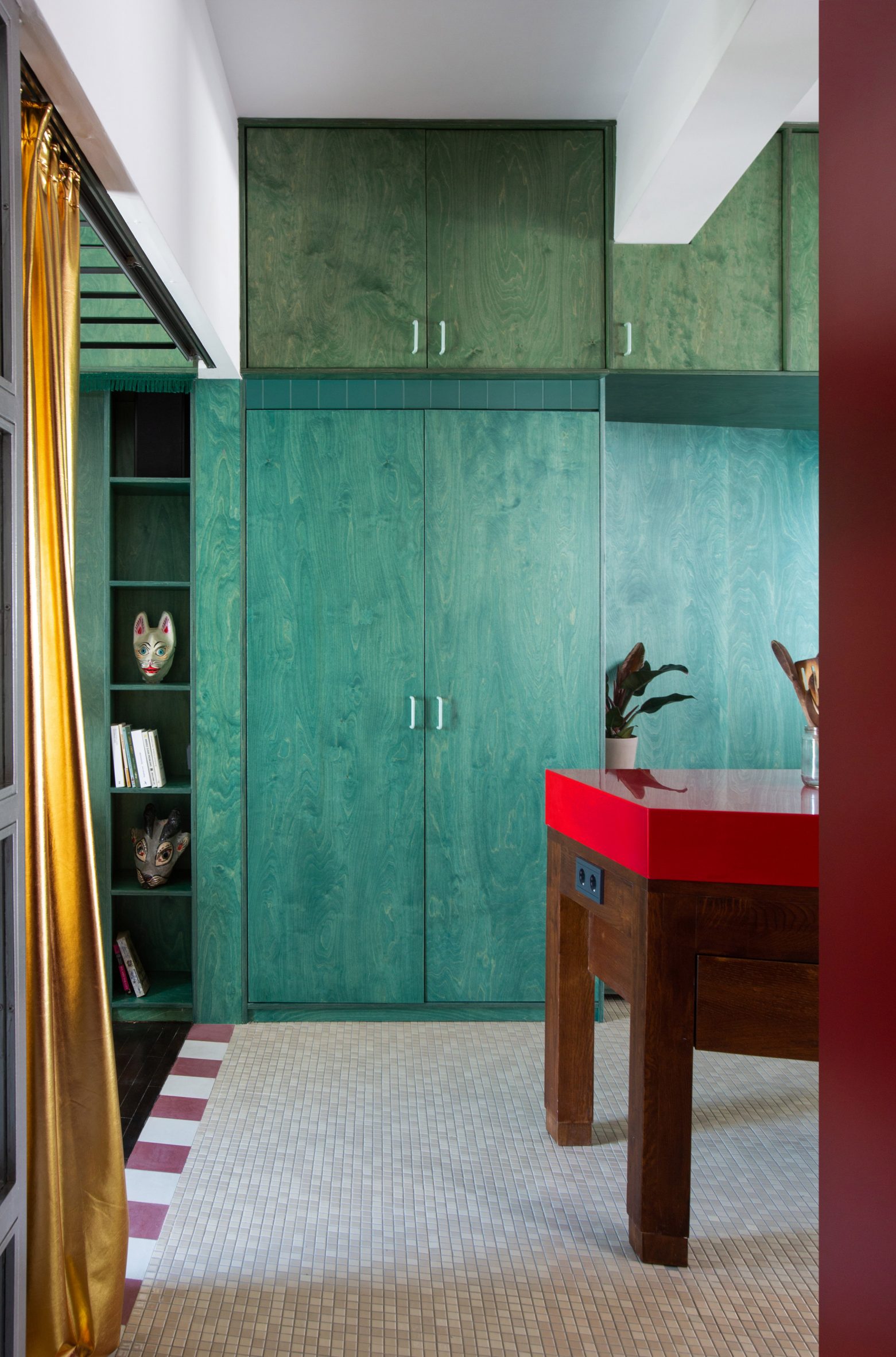
A gold curtain conceals the apartment's study
Central to the renovation was making use of a previously enclosed light shaft that pierces through the centre of the apartment.
The architects installed generous windows on all four sides of the concrete shaft, which now brings light into the apartment's formerly dark interior.
"These create cross-deep views through the apartment, and create fascinating light effects through the course of the day; one can follow the complete course of the sun from dawn to dusk," the studio told Dezeen.
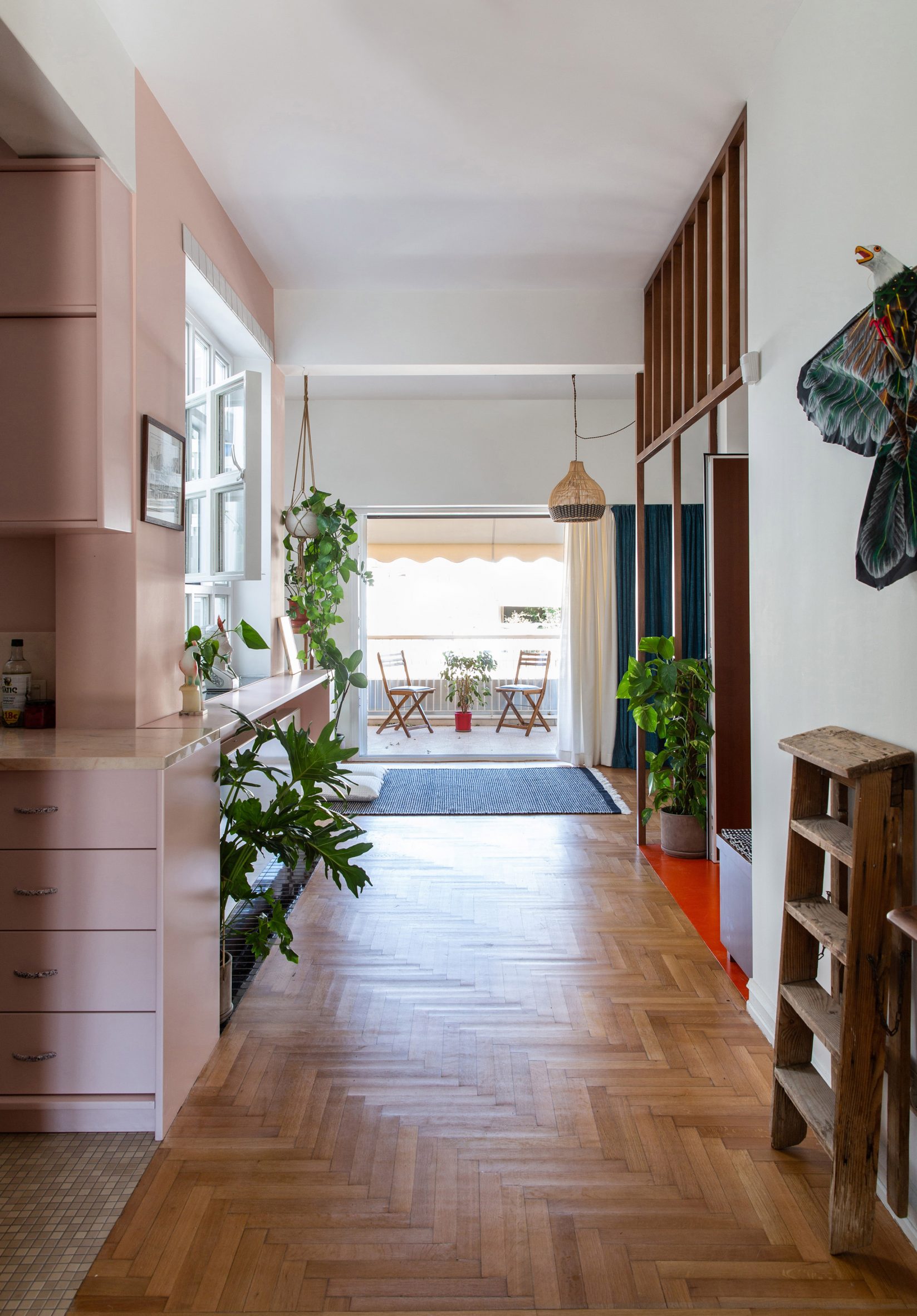
Built-in pink storage wraps the central lightwell
In the absence of partition walls, a number of colourful built-in custom furniture pieces help to define different zones and functions in the open-plan space.
These include a storage wall made from stained green plywood that runs along the entire length of one side of the apartment.
The kitchen features storage in a variety of pink hues
A light-pink kitchen with a marble countertop wraps the central lightwell, while a nearby cabinet island in dark pink houses appliances.
The bespoke wooden dining table with a steel frame that runs alongside the kitchen doubles as a kitchen island with a red Corian hob area.
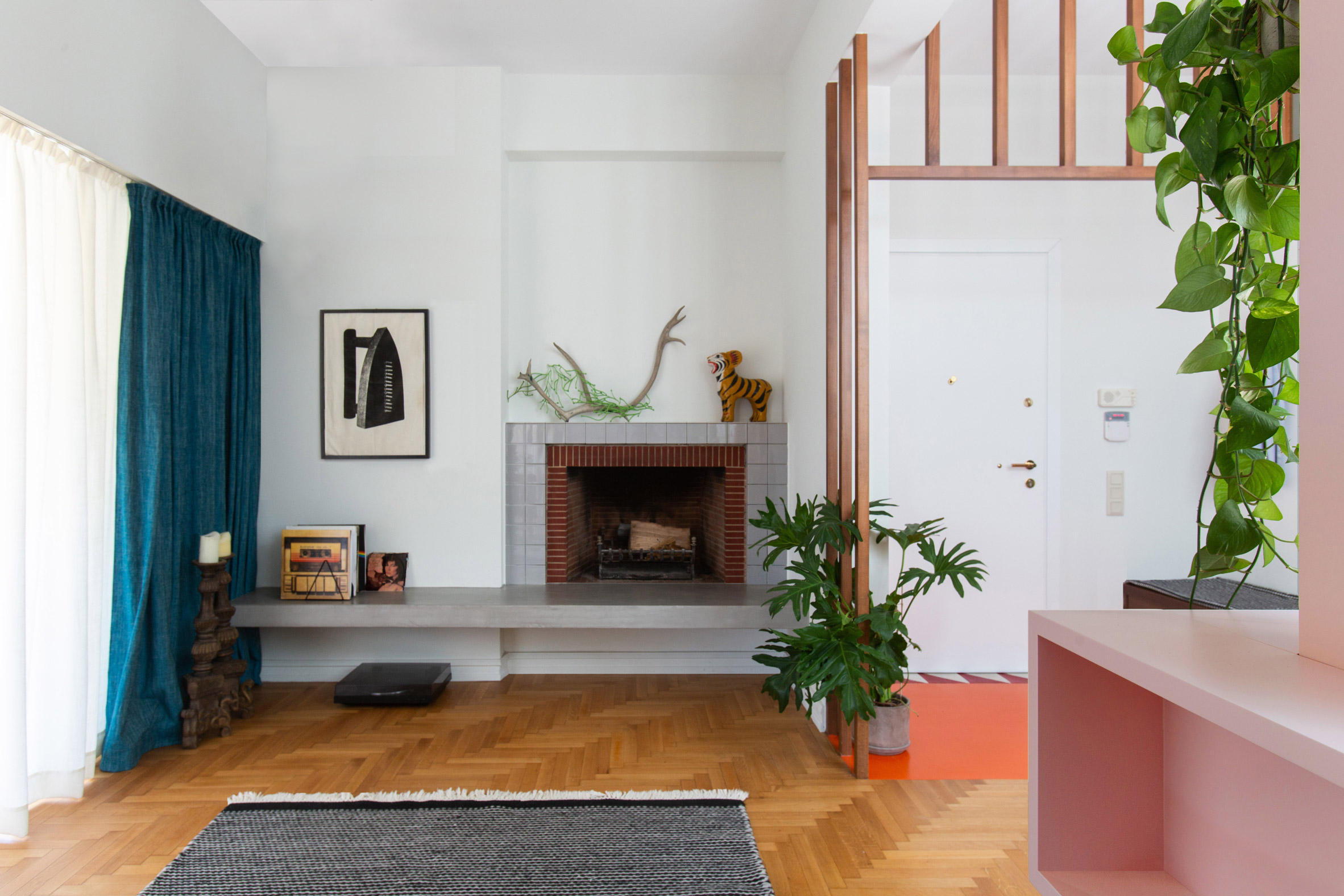
A fireplace with a tiled mantle sits next to the entrance
"The clients also like to cook and have friends over," explained the architects.
"So we decided to open up the kitchen and 'spread' it into the space, so that cooking and preparing a meal becomes a social activity, connected and at the heart of what is going on in the apartment. It is not even a room, but a collection of objects."
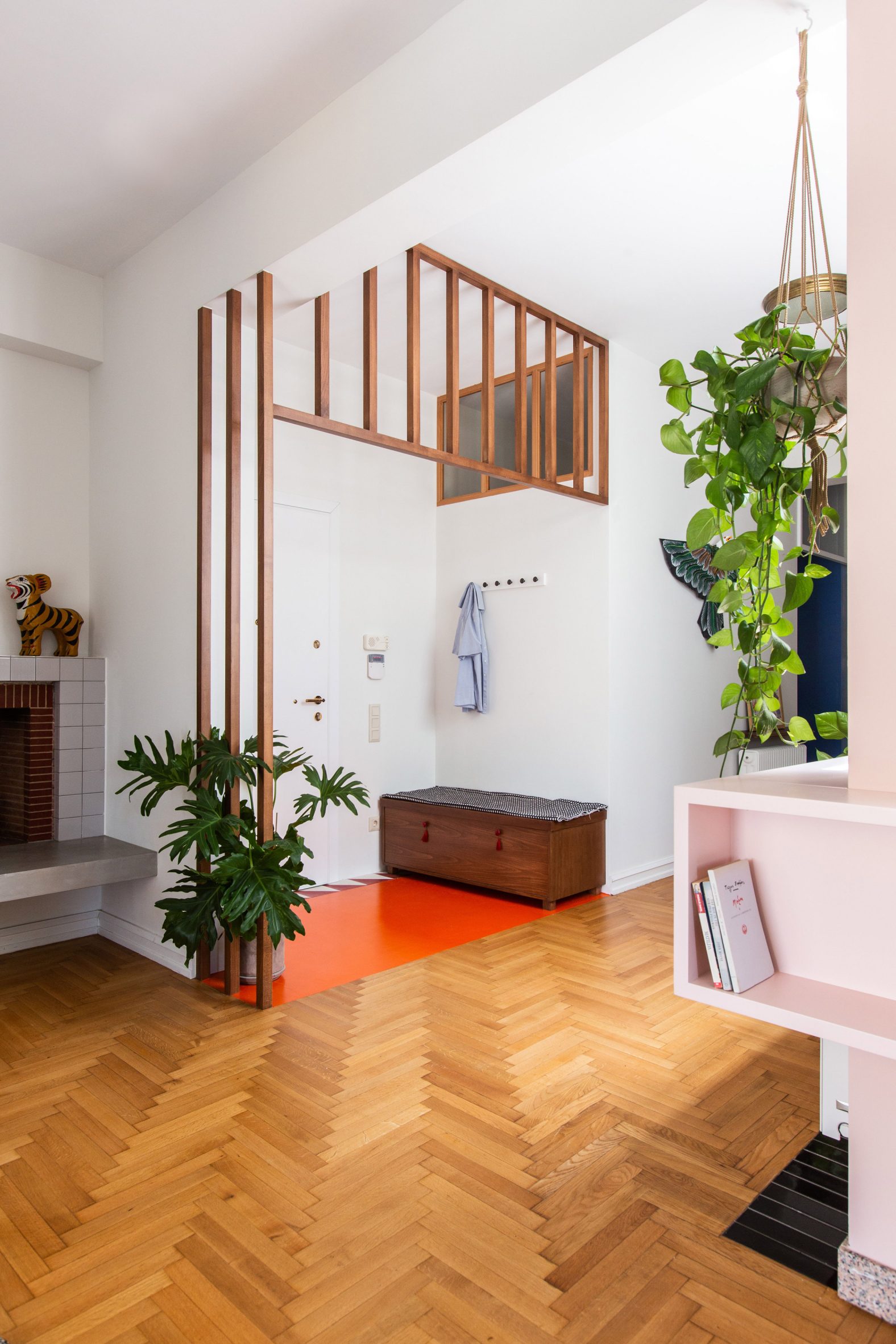
The entrance area is wrapped by a timber framework screen and a wall of bright blue wardrobes span the hallway between the two bedrooms. The gold curtain that conceals the apartment's study is an element that appears in many of the studio's projects.
"It is a very unexpected, ‘formal’ element that appears in an informal way, in the periphery, in a relatively non-descript space," explained the studio. "So the curtain inverts this condition and inspires a playful attitude."
Wooden floors feature throughout the apartment
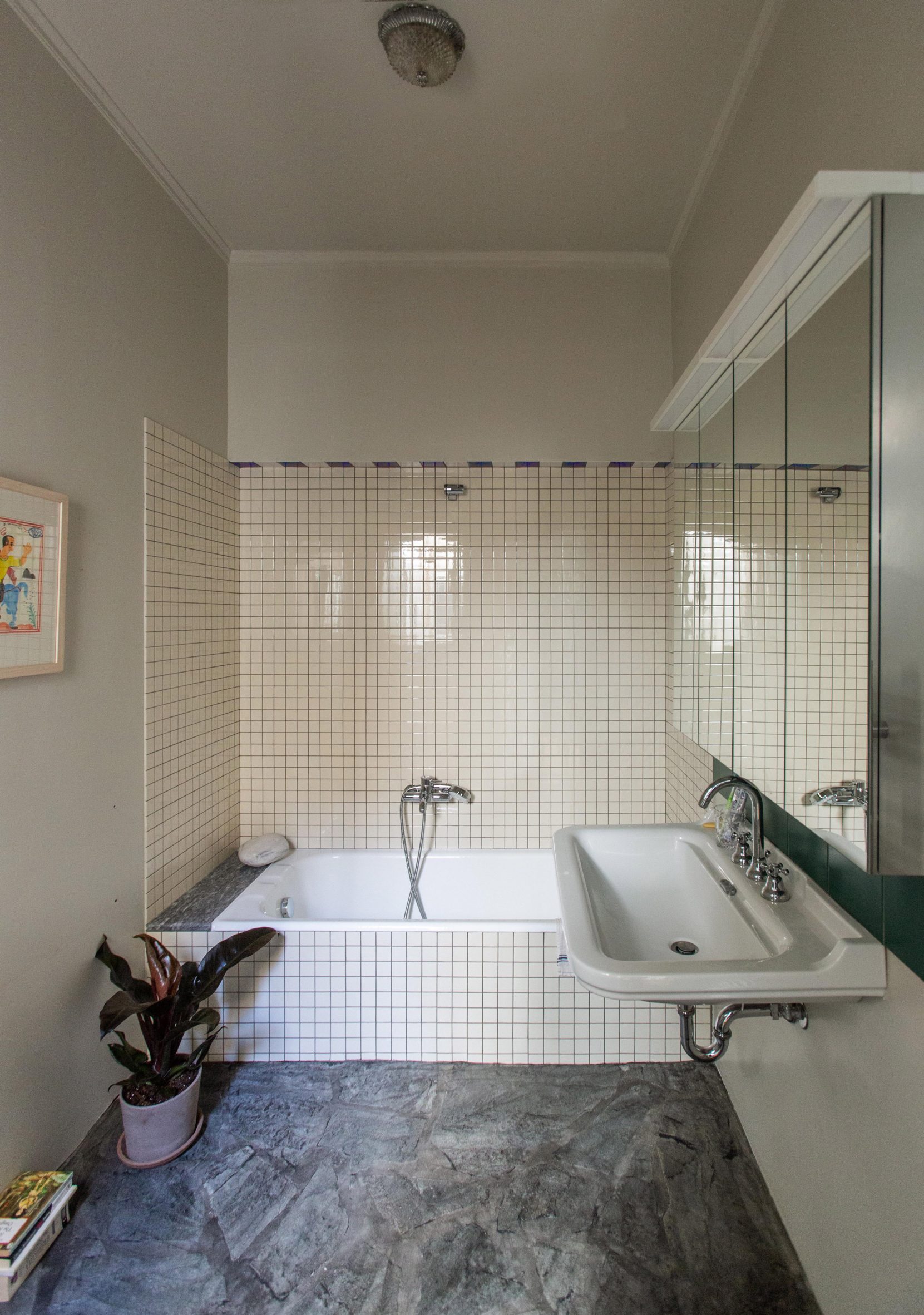
Flooring finishes also help to define the different spaces: a mosaic floor outlines the kitchen area, while an oak parquet is used throughout the living area. Blue square tiles and stone are used in the bathrooms and a red epoxy-paint floor marks the entrance.
"Colour and materials are used throughout the space strategically, to formulate characters of the various constructions, furniture, elements," the studio said. "They work through complementarity; they organise relationships and oppositions."
Red vinyl marks the apartment's entrance
"One of the first elements that was decided upon was the pink-coloured light shaft, which works in continuity with the warm, wooden floor of most of the apartment. The long green-stained plywood storage wall has texture, which contrasts with the soft-pink colour of the shaft," the studio continued.
"The different colours and textures work differently with the light, some reflect and some absorb it, so the space really works fantastically with the different light conditions, during the course of the day."
The bathroom is finished with a stone floor
Point Supreme Architects, founded in Rotterdam in 2008 by Konstantinos Pantazis and Marianna Rentzou and now based in Athens, is known for its use of vibrant colour, pattern and texture.
In 2015, it added patterned tiles, geometric screens and a bright yellow staircase to another apartment in the Greek capital to create a Postmodern interior.