Tuesday, 20 July 2021

"Remove the word 'design' and the first thing you notice is that the alternative words help clarify things"

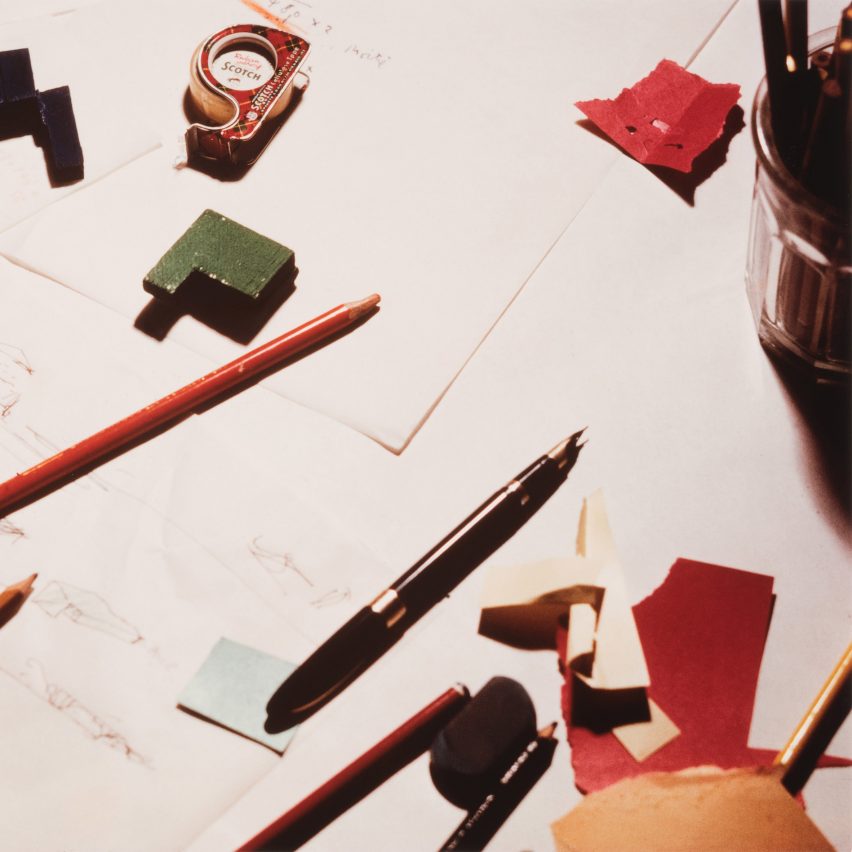
View of a drafting table

Many "graphic designers" are graphic artists, while "design thinkers" behave like neoliberal business consultants, writes Michèle Champagne.


It's time for summer breaks, jobs and heatwaves. What better way to relax than with a short, self-reflexive exercise: take the word "design" away and try to describe it otherwise? You have pen and paper and lemonade, about an hour to write and fifty words to play with. All words are in – only "design" is out. It's a timely exercise and perhaps never more so than now that design had been buried under a pile of rhetorical nonsense.

Since the financial crisis of 2007-2008, since rolling housing bubbles, climate crises and pandemic waves, design and architecture have changed beyond recognition. Old production modes and scripts no longer hold, and perhaps that's why the exercise is popular now. For the last few years, I've been testing it with art, design and architecture students in Canada, as well as Maryland Institute College of Art and Harvard University's Graduate School of Design.

Sometimes the exercise is explicit and sometimes it happens in conversation or reviews. Either way: remove the word "design" and the first thing you notice is that the alternative words help clarify things. Right away. Many "graphic designers" are graphic artists while others are corporate branding agents, which are two different things. Many "design thinkers" behave like neoliberal business consultants, while many "urban designers" and planners do the same.

One student of "environmental design" did the exercise and pictured herself as something else altogether: a "road scribbler" or painter of lines on streets for city councils. She imagined herself leading an effort to expand citizen consulting, public transit and cycling infrastructure, not mass urban privatization.

There is no single definition of design – there is a range

Removing design, even if only for a moment, helped students better understand themselves – their roots, interests and ambitions – as well as the titles in design books, festivals and awards. Even museums. Removing design helped expand and refine design as the art of the everyday.

There is no single definition of design – there is a range. Everything social, political and technological is designed. Designed to fail. Drawn to perfection. Shaped. Sculpted. Planned. Intended. I get that. But there's also a growing number of design monikers that do nothing but confuse, hide or embellish what's at stake.

Right now, the thing I like least about using "designer" or "design thinker" to describe anything and everything is that it puts a warm, positive or art-like veneer on the work of anti-democratic business consultants, adtech engineers and influencers.

If you do influencer campaigns for corporate brands on Facebook, you are an influencer or an advertiser. You work in the service of advertising strategies, you employ novel advertising tactics like lifestyle influencing, and you build brands and user profiles on advertising platforms.

Calling yourself a "content designer" or a "digital creator" might make you feel better, but as researcher Sophie Bishop writes, it also plays into Facebook's hand. There's a reason why Facebook's Instagram has a Creators tab. When the platforms of private firms look like friendly venues for artists and designers, it generates positive public relations for the firms and helps deflect well-deserved criticism.

Sometimes the word "design" makes perfect sense. If students couldn't find better terms for describing what they did, I encouraged them to go back to design, to work with it, to figure out what it meant to be an artist in the everyday. I'd encourage them to make "design" their own, to join like-minded communities they could believe in and grow with.

It's easy to forget that some societies don't value design much at all

I have an unproven theory that the confusion around design in part explains why the Design Exchange in Toronto – the DX – was hard for many to understand and value. It was Canada's only design museum, but when it closed in 2019, no one seemed to care. No government stepped in to save it and there was hardly any comment in the press.

Images of design are so widely disseminated now that it's easy to forget that some societies don't value design much at all. An entire design museum goes down and Canadians hardly make a sound. Why? What are we to make of this? Remove "Design", as the exercise requires, and we're left with something that explains a lot: a Luxury Marketing Exchange.

Or, at least, that's what the museum had become in the last decade of its life. My knowledge of the DX was limited to 2012 to 2016, which I did not value; and anyway, I wasn't alone. I met countless people who for decades attended openings and galas with a lot of hope in their hearts but left disappointed. Not all guests, but many. People who worked in small studios. Presidents of large firms. Art curators. Fashion editors. Book critics.

From its launch as a non-profit in 1994, the DX had worked with a variety of fascinating curators, artists, designers and architects – from Noa Bernstein to Lynne Cohen, Jeremy Laing, Lateral Office and Department of Unusual Certainties.

But in its later years, the museum's lease and fiscal reality became tense and it started promoting mediocre talent too, as long as it came with wealthy sponsors or family fortunes. It introduced more and more programming that positioned luxury as a "high-end" price and platitude, not as a creature of time or technique, style or sensitivity to concept, craft or context.

The museum was dedicated to the cultural and economic promotion of design but now preferred the latter. It started chasing after "high-profile" traveling shows from "prestigious" institutions. It positioned design as a private good – not a public good or field worthy of broad social concern. It exhibited luxury couture, shoes and toys, mandatory optimism, individual happiness and stars like Christian Louboutin, Stefan Sagmeister, Pharrel Williams and Vivienne Westwood.

The museum seemed preoccupied with turn-of-the-century talking points

The DX tried to employ history to reflect on the twentieth century. It had a stellar collection of postwar products curated by Dr Rachel Gotlieb, but she got little support and did her own fundraising.

The museum seemed preoccupied with turn-of-the-century talking points and products by figures like Stefan Sagmeister, Bruce Mau and Karim Rashid. It privileged mandatory positivity but missed the interesting tensions of the times. It wanted triumphs and bubbles but no crashes. It paid some attention to 3D printing but failed to understand "smart" cities, digital surveillance, emotion recognition and the challenges they posed to democracy. And for that reason, the museum felt dated. Out of touch.

The museum seemed popular but was obvious and expected. It was cliché: popularity was conflated with safety in stars, design with luxury brands and products. Attendance grew and sponsors were numerous, but budgeting and planning were in constant crisis. Many visitors left disappointed and a larger public never got on board.

Some say the DX lacked vision, that it lacked a unifying vision as a museum and that explains the hits and misses, the complex audiences, programmes and exhibition aesthetics. I saw its vision: luxury marketing. It didn't work.

Design sometimes operates in luxury circles, but when a non-profit with a broad mandate positions design as "high-end," it suffers. On March 20, 2019, the DX shut down as a museum by deaccessioning its permanent collection. Too few cared about luxury marketing and the shutter was met with silence.

The Canadian minister of heritage didn't save the museum. The Ontario minister of tourism and culture didn't blink and neither did the City of Toronto. Canadian newspapers had no design critics – not one – so there was hardly any news or analysis. Art and architecture media, for its part, parroted the DX's press release: its "pivot to a festival strategy."

The Design Exchange wasn't about "Design" as the art of the everyday. It was so positive and happy it hurt

There was one meaningful opinion by curator Brendan Cormier in The Globe and Mail. Cormier is Canadian, but lives in London and works as curator at the Victoria & Albert Museum.

"This is deeply troubling," he wrote. "While the Design Exchange has long struggled to assert itself as a major museum of importance in the country, its move away from museum status is nevertheless a major loss. Canada will now become one of the only advanced economies in the world not to have its own design museum."

Indeed, the museum struggled, its closure was met with silence, and the luxury positioning had something to do with it.

The Design Exchange wasn't about "Design" as the art of the everyday. It was so positive and happy it hurt. It was so glamorous and prestigious that it grew in attendance but alienated a larger public. It was a space for all kinds of things, a Luxury Marketing Club, Corporate Venue Rental and Valet Parking, but design wasn't one of them.

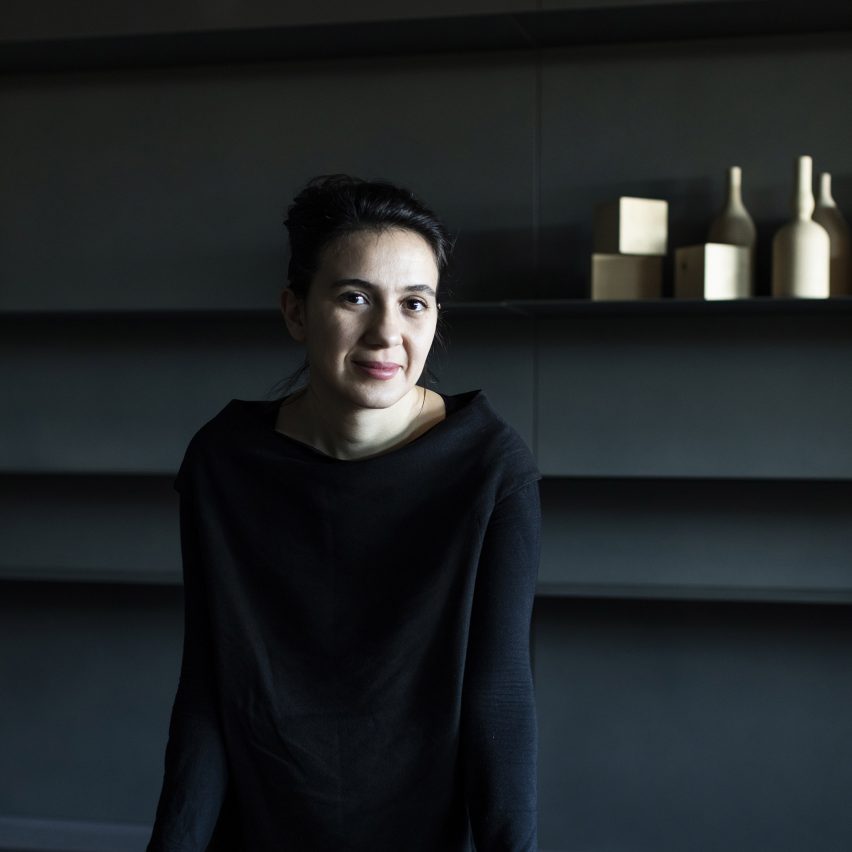
Michèle Champagne is a researcher and graphic artist. She writes about mandatory positivity, the happiness industry, emotion recognition and “smart” cities for Back Office, C Magazine, Failed Architecture and Volume. Trained at Sandberg Instituut in Amsterdam, she lived in Toronto and calls Montréal home.

The post "Remove the word 'design' and the first thing you notice is that the alternative words help clarify things" appeared first on Dezeen.


from Dezeen https://ift.tt/3y6hgbX

Inholm neighbourhood in Cambridgeshire will feature healthy homes and sociable streets

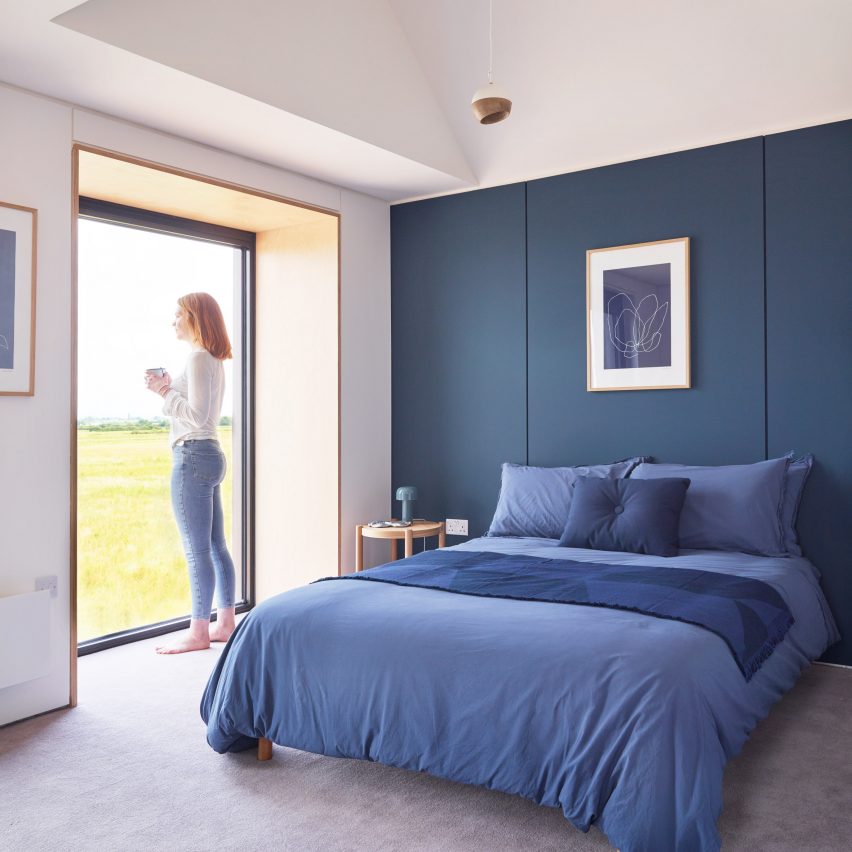
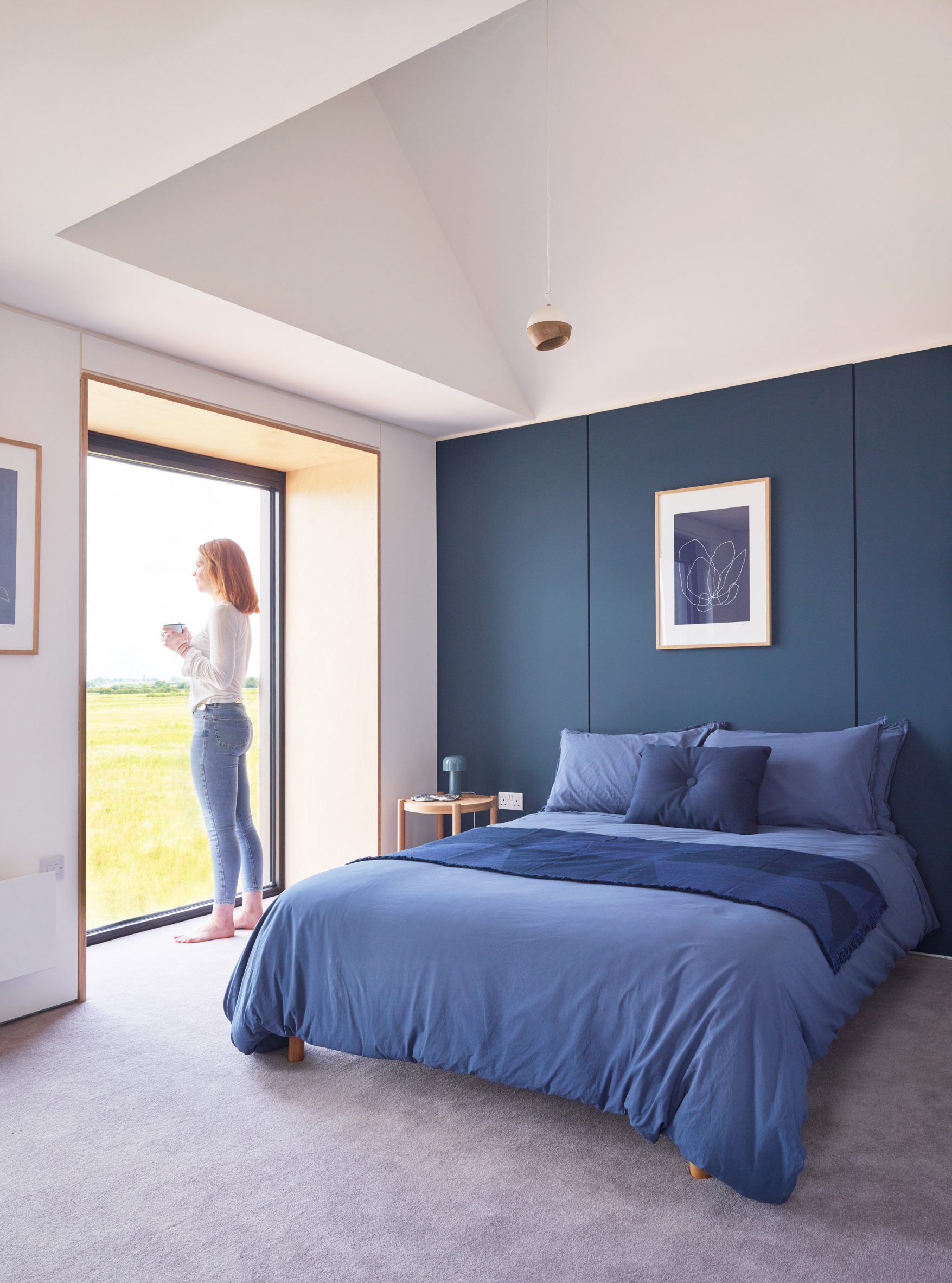
Town House show home bedroom at Inholm by House by Urban Splash

Dezeen promotion: House by Urban Splash aims to reinvent suburbia, with a Cambridgeshire neighbourhood that is designed for healthy living.

Located eight miles outside of Cambridge, Inholm will form part of Northstowe, one of 10 new towns areas being created under the NHS programme, Healthy New Towns.

It will include 43 homes developed by House by Urban Splash – the housing arm of Manchester-based property developer Urban Splash.

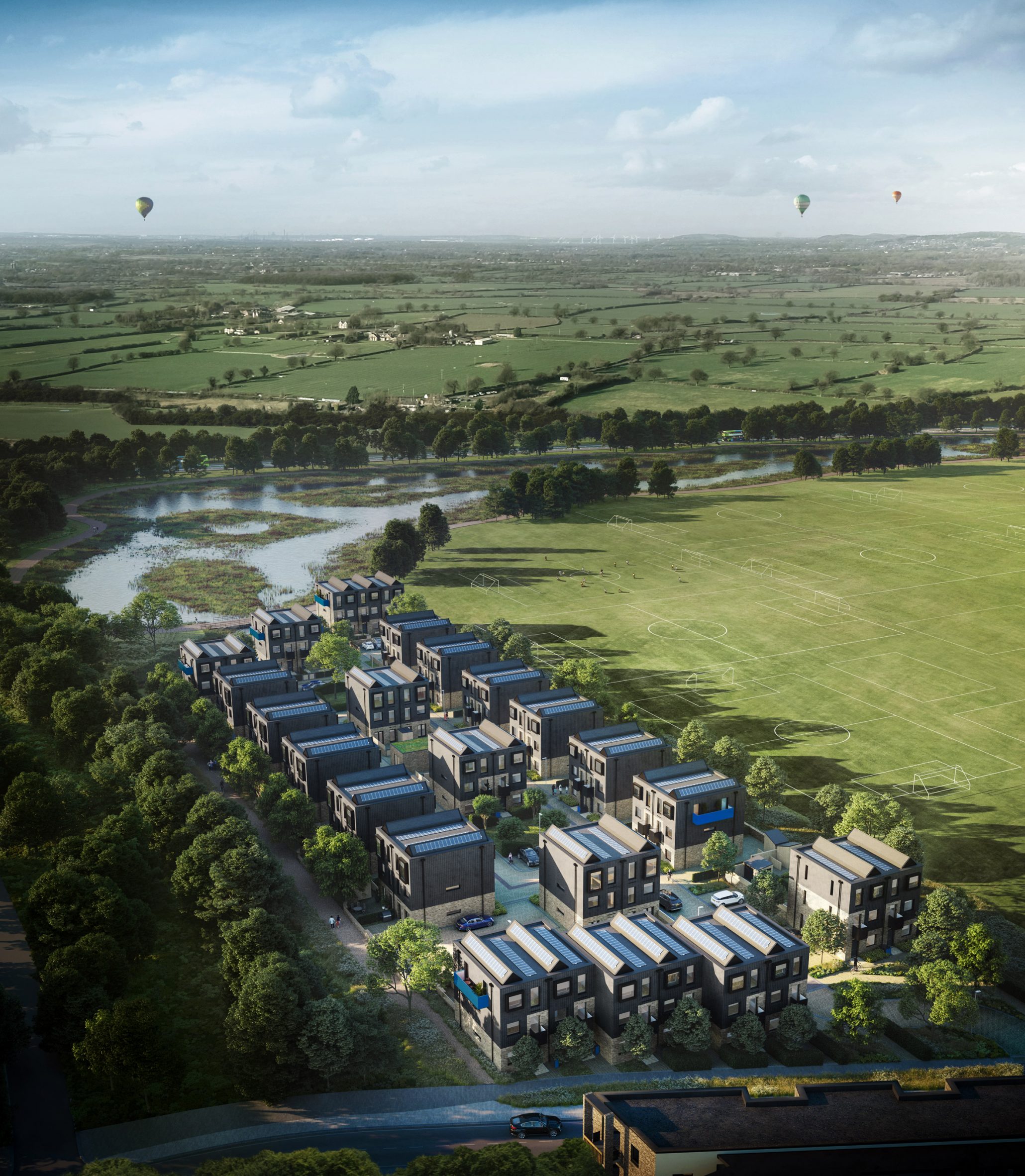
Aerial masterplan visualisation, Inholm by House by Urban Splash
House by Urban Splash is creating a new neighbourhood in Inholm, which is part of new town Northstowe

Architecture firm Proctor and Matthews, which masterplanned the neighbourhood, sees the project as "a radical shift in thinking". As well as featuring healthy homes, Inholm will include streetscapes designed to promote wellbeing, biodiversity and community spirit.

"For too long, the spaces in between homes have been dedicated to accommodating cars, not people," said studio co-founder and director Stephen Proctor.

"At Inholm, Northstowe, our new blueprint for healthy living includes sociable streets, green fingers connecting spaces, pocket parks, bike sheds in every single garden, and edible fruit on trees on every corner."

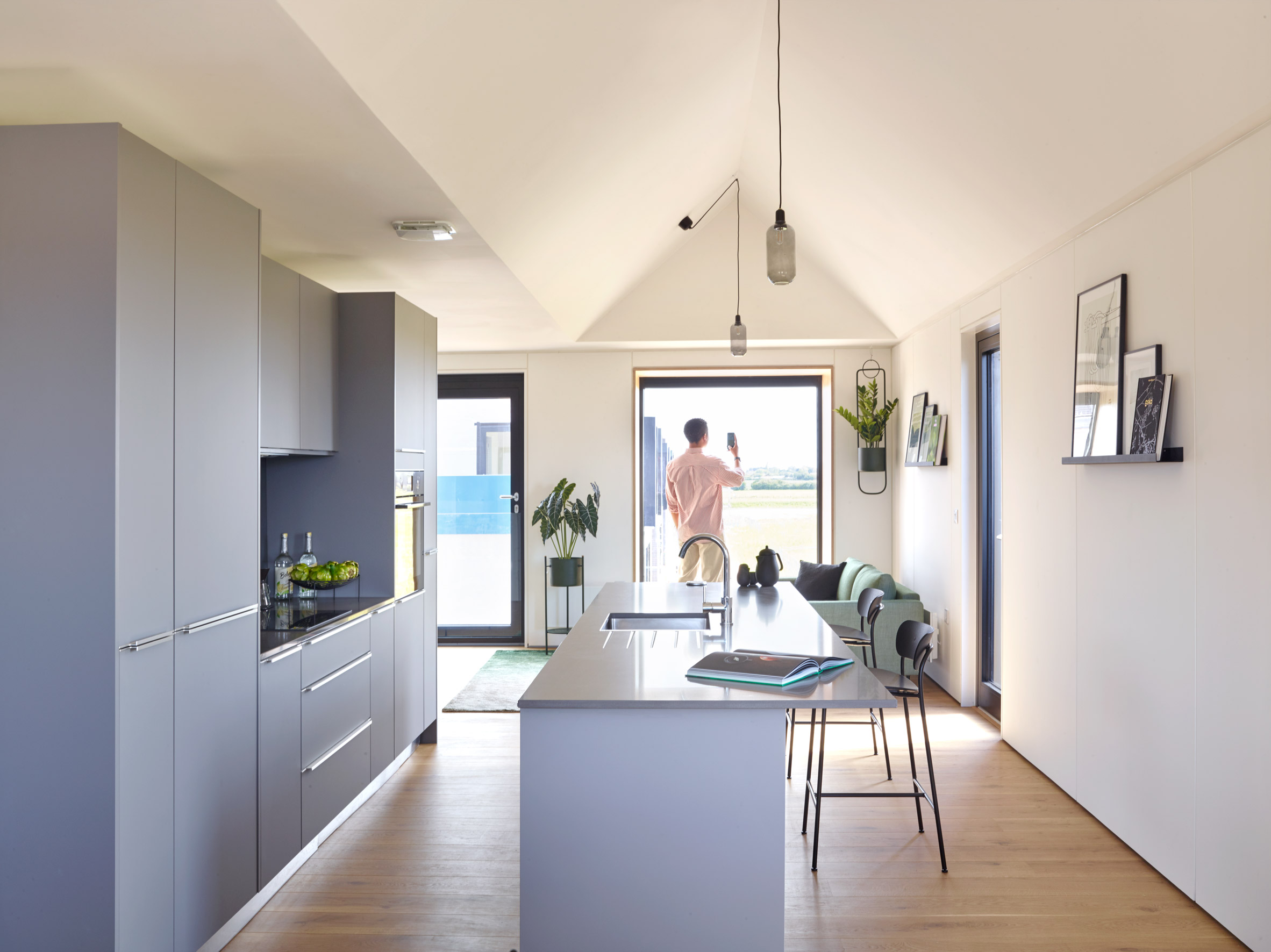
Town House show home kitchen at Inholm by House by Urban Splash
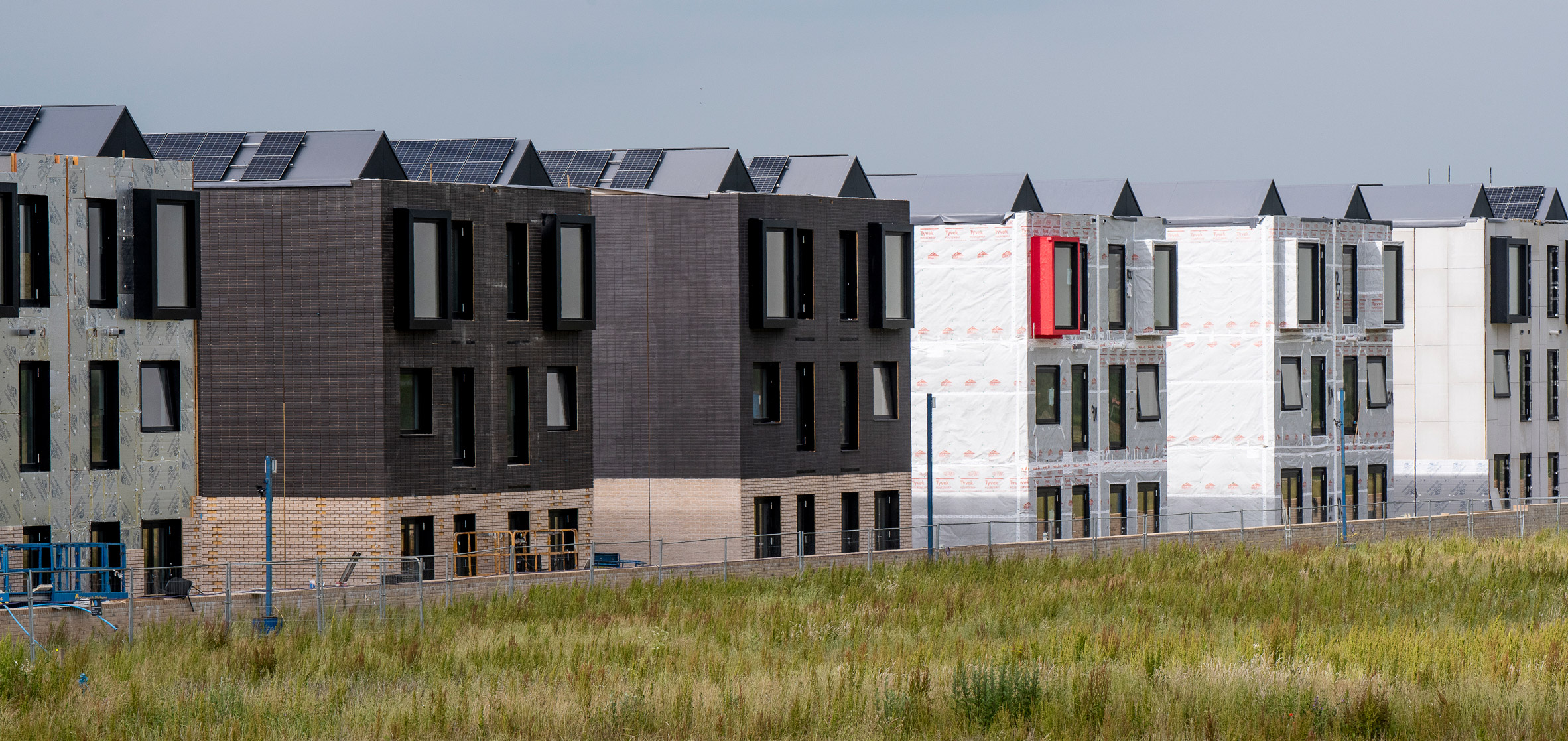
The development will include 43 of the company's modular Town Houses

The masterplan centres around the concept of "sociable streets", which prioritise pedestrians over cars. The aim is to create spaces where neighbours can converse and children can play.

"When we think about suburbia we think of cul-de-sacs and dead ends, road spaces that are uninhabitable, designed for cars, not people," said Proctor.

"Instead, what we're delivering with House by Urban Splash is a blueprint for healthy living, with inviting communal spaces and places in which people can convene in the way the old settlements would have done."

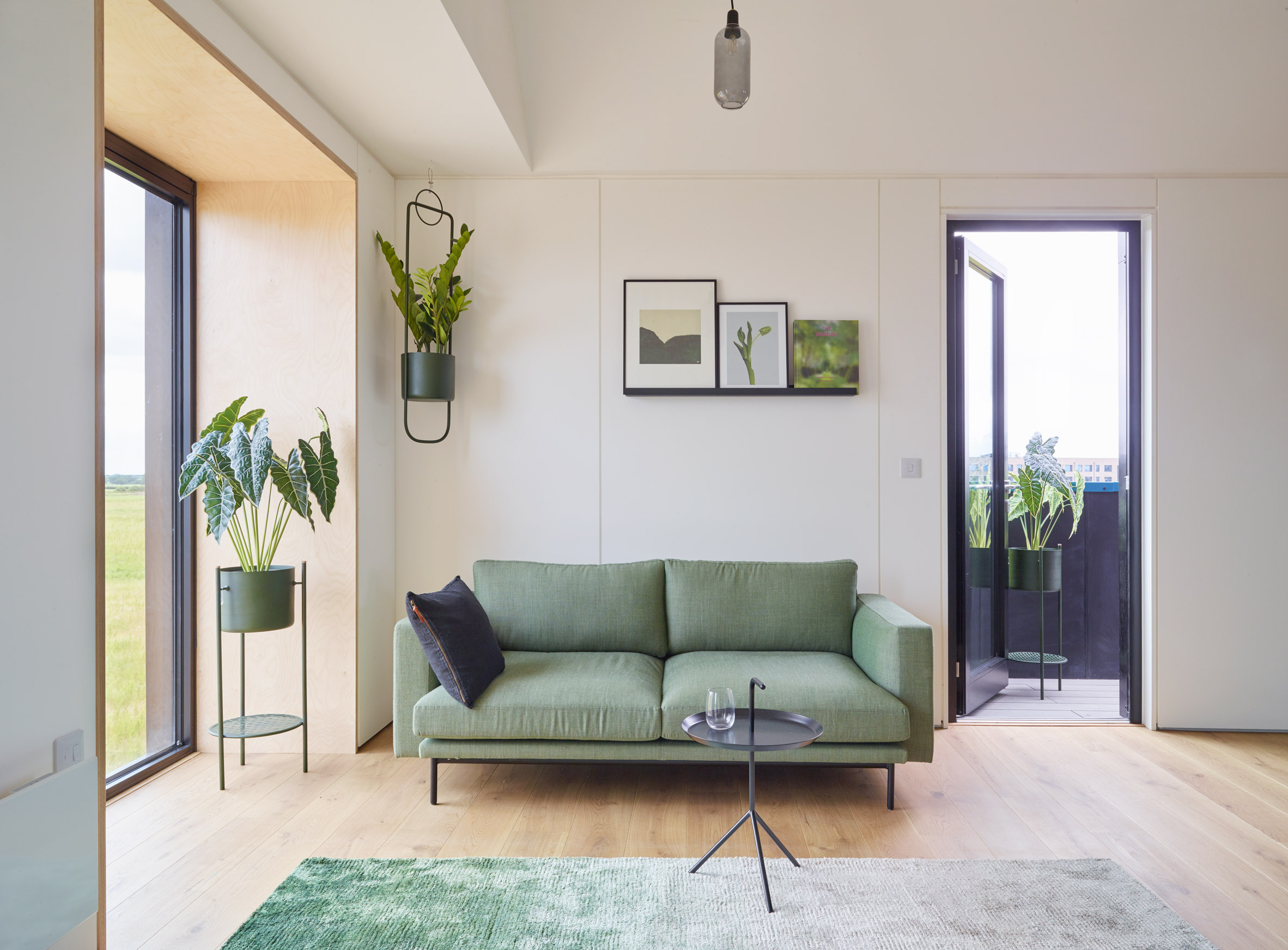
Town House show home living room at Inholm by House by Urban Splash
Two show homes are open for public viewing, showing customers the customisable layout options on offer

In line with the Healthy New Towns ambitions, homes across Northstowe will be low-carbon in construction and operation. For Inholm, House by Urban Splash is achieving this with its Town House model, designed by ShedKM.

These modern, modular homes are built off-site in a factory, which allows for a more sustainable construction process and less waste. They are also fully customisable, so they can be tailored to suit the needs of a broad mix of residents, from young people to families or seniors.

Town House show home bedroom at Inholm by House by Urban Splash
The homes are built off-site in a factory, which allows for a more sustainable construction process

The development will form an area of Inholm known as the Peninsula. Proctor and Matthews planned the layout of this area around the natural landscape, with green spaces and waterways forming a key part of the masterplan.

The design prioritises the creation of circular routes and green corridors, with few dead ends. The aim is to make it easier for residents to walk, run and cycle around the neighbourhood, and to connect with public transport.

"It's something which helps us deliver the environmental agendas which are strong in Cambridge too, and of course a big part of the House by Urban Splash ethos," said Proctor.

Urban splash
Proctor and Matthews masterplanned the neighbourhood

The Peninsula will also incorporate an education campus and a new waterpark, which will offer residents a place for recreation, create a haven for wetland and aquatic life and provide water attenuation and flood alleviation.

Inholm is under construction, with the first 27 Town Houses now on sale. Two show homes are open for public viewing, showing customers the different layout options on offer.

More information is available via the House by Urban Splash website

The post Inholm neighbourhood in Cambridgeshire will feature healthy homes and sociable streets appeared first on Dezeen.


from Dezeen https://ift.tt/3zk4cj0

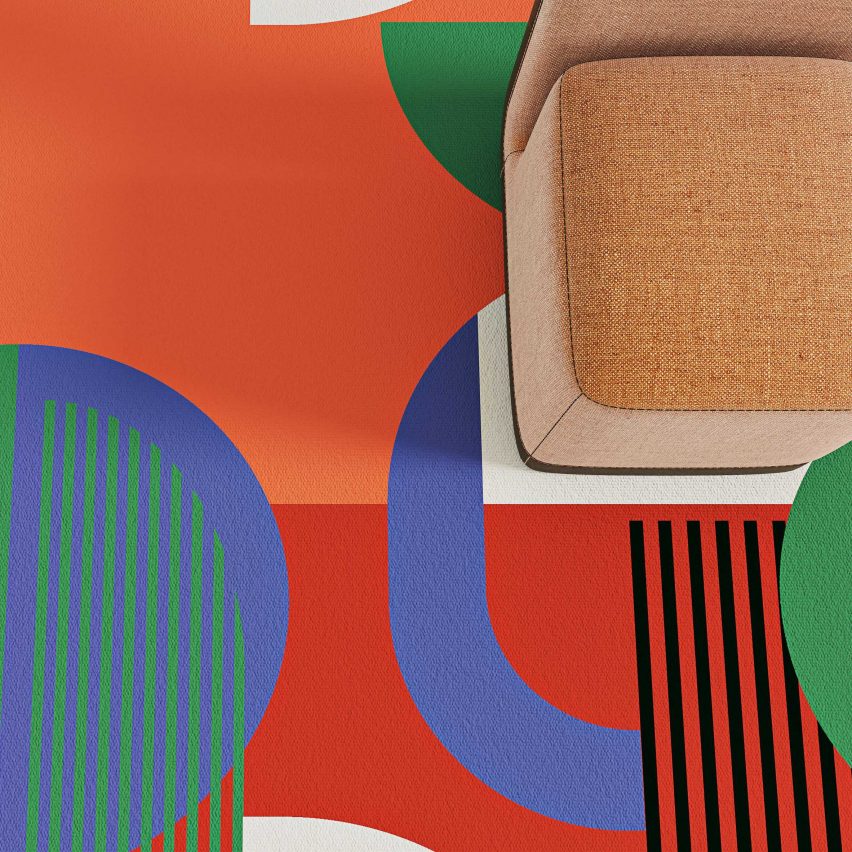
44 Stanley corridor carpet by Talk Carpet

44 Stanley by Talk Carpet

Dezeen Showroom: with a bold pattern of lines and colours, the 44 Stanley flooring by Talk Carpet is available in a range of constructions to suit various budgets.

The 44 Stanley carpet is inspired by a wall mural at a boutique urban shopping centre of the same name in Johannesburg, South Africa.

Talk Carpet's designers wanted to capture the artwork's playful graphic lines and colours in the 44 Stanley carpet, while giving it a modernist bent.

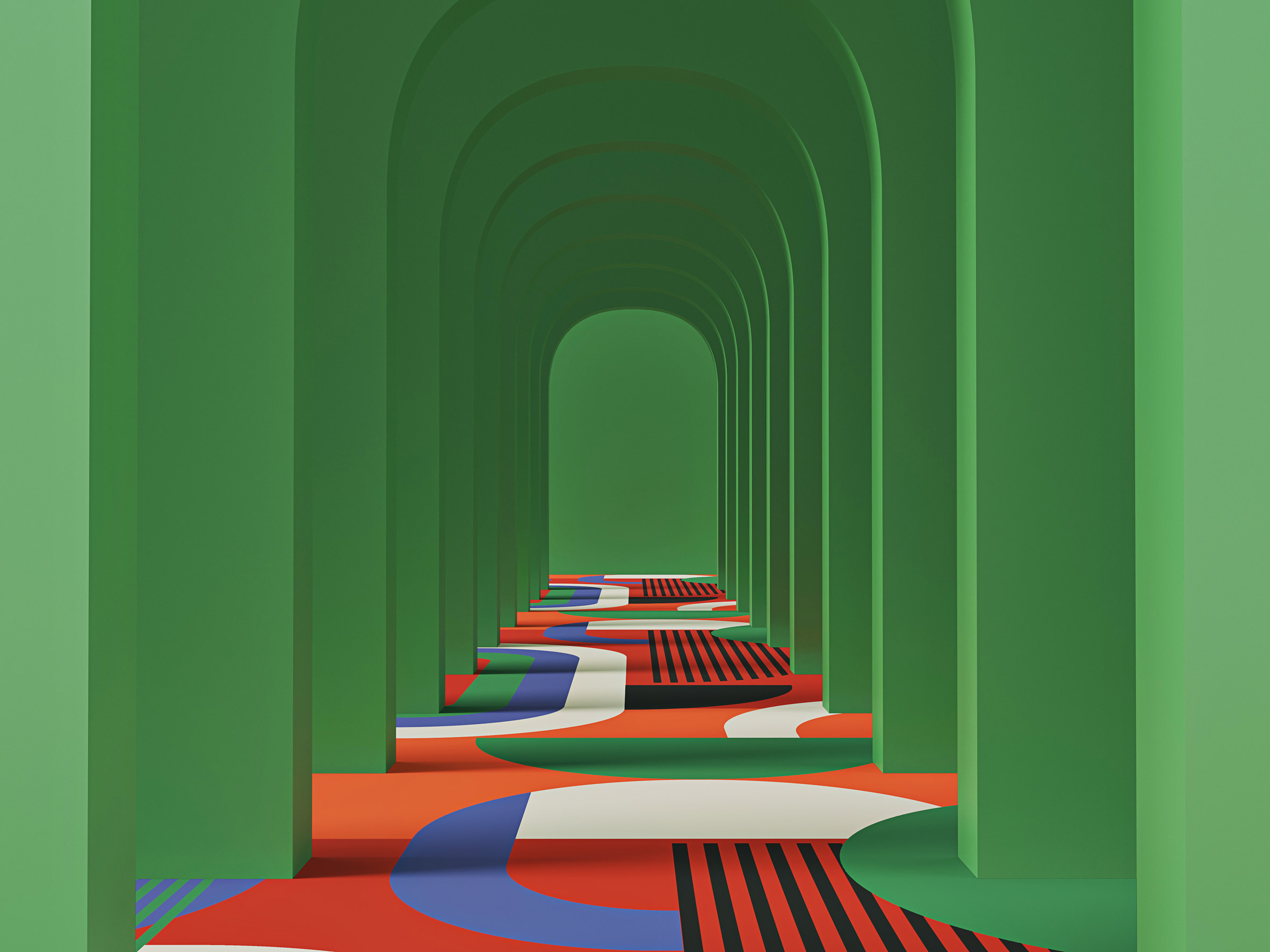
44 Stanley by Talk Carpet
44 Stanley is intended for corridors of hotels or apartment buildings

The brand envisages the design working well in a modern hotel hallway or multifamily building corridors.

44 Stanley is part of Talk Carpets custom programme, so it can be ordered in a wide array of options.

It is available as a broadloom wall-to-wall carpet or as carpet tiles, with nine different construction options. These range from low pile for those on a tight budget to a luxurious wool/nylon blend.

The Talk Carpets custom programme has one of the lowest minimum-quantity requirements in the industry, and one per cent of its sales revenue is donated to the charity Design Industries Foundation Fighting AIDS.

Product: 44 Stanley
Brand: Talk Carpets
Contact: cpr@talkcarpet.com

About Dezeen Showroom: Dezeen Showroom offers an affordable space for brands to launch new products and showcase their designers and projects to Dezeen's huge global audience. For more details email showroom@dezeen.com.

Dezeen Showroom is an example of partnership content on Dezeen. Find out more about partnership content here.

The post 44 Stanley corridor carpet by Talk Carpet appeared first on Dezeen.


from Dezeen https://ift.tt/3BkpQWh

Salone del Mobile appoints Maria Porro as new president

Maria Porro, Salone del Mobile president

Italian furniture fair Salone del Mobile has named former Assarredo president Maria Porro its new president, making her the first woman appointed to the role.

Since September 2020 Porro has helmed Assarredo, the Italian trade association for furniture manufacturers, where she was the first female president – a distinction that she will repeat in her role at Salone del Mobile.

Porro takes over the reins at Salone del Mobile at a time of change for the design event, which was cancelled in 2020 due to the coronavirus pandemic and postponed in April this year.

"I am honoured to take on this role at such a vital and transformative time," Porro said.

"I and the entire board of directors will be working to ensure that, as a unique and indispensable design showcase, the Salone rises to meet future challenges regarding sustainability, digitalization, research, innovation, creativity and inclusiveness, as ever maintaining the highest quality."

Salone del Mobile in time of "profound change"

In a statement, Salone del Mobile said it now intends to outline new strategies that will "respond to the upheavals of the present day," with Porro's appointment part of a larger plan.

"The decision to invest in a young, driven president is part of a strategy to consolidate the event's leading international role during a period of profound change," president of Federlegno Arredo Eventi – the trade body that owns the Salone del Mobile brand – Gianfranco Marinelli said.

"Maria Porro may count on the support of the entire Federlegno Arredo Eventi Board as, with determination, she continues Salone del Mobile Milano's journey along a pathway of growth and renewal."

Porro to lead brand in time for Supersalone

Porro succeeds Claudio Luti, who resigned as president in April this year saying his vision for the fair had "failed."

Together with Federlegno Arredo Eventi's board members, Porro will now helm the brand as it prepares for a special Supersalone edition in September.

Curated by architect Stefano Boeri, the Supersalone event will be open to the public and visitors will be able to buy discounted products by scanning QR codes.

The trade fair went through a tumultuous period after Luti's resignation, with Milan mayor Beppe Sala saying the fair was "in the balance" and urging brands to support it.

"Our goal is a strong, united, inclusive, sustainable and creative Salone del Mobile," Porro said of her vision for the fair.

Porro has previously worked as marketing and communications director of design brand Porro, which was founded by her great-grandfather.

She served on the executive board of Assarredo before being elected president of the trade association in September 2020.

Photography is courtesy of Salone del Mobile.

Salone del Mobile 2021 and parallel fuorisalone events are due to take place in Milan from 5 to 10 September. For an up-to-date list of architecture and design events, visit Dezeen Events Guide.

The post Salone del Mobile appoints Maria Porro as new president appeared first on Dezeen.


from Dezeen https://ift.tt/3ix2zYA

Dezeen Courses is an affordable way to showcase architecture and design courses

Dezeen Courses logo

Launching in September, Dezeen Courses is a new service for architecture and design schools to promote their courses to Dezeen's huge global audience.

Dezeen Courses will provide details of architecture, interiors and design courses around the world. The new section will be easy to find at www.dezeen.com/courses.

The service will list all types of courses, including foundation, undergraduate, postgraduate, vocational, online and evening programmes. It aims to become the number one destination for people looking to study architecture or design.

It will work alongside Dezeen School Shows, our highly successful graduate showcase that has so far attracted over 700,000 page views.

Dezeen Courses provides affordable new service for schools

The service offers an affordable new way for schools to put their courses in front of Dezeen's three million monthly readers.

Like all content on Dezeen, the heart of Dezeen Courses will be a constantly updated feed of the latest architecture and design courses, which will be published at www.dezeen.com/courses.

An index will enable visitors to easily find courses by subject, type, school or location, while a highlights carousel at the top of the page will showcase featured courses.

Dezeen Courses posts will also benefit from Dezeen's incredible SEO, which means that courses are more likely to be found by search engines. Links from Dezeen Courses to schools' websites will be more valuable than from any other site.

Posts remain on Dezeen for up to one year

Each Dezeen Courses post will feature 100 to 200 words about the course with details about the application deadline, course start date and duration. It will also include a link to the course on the school's website for prospective students to find out more information and apply.

In addition, posts will feature an image of an exemplary student project to draw prospective students in and give them an idea of the type of projects they can expect to be given on the course. Listings can also include the school's logo.

Each post will remain live until applications close, up to a maximum of one calendar year.

For an additional cost, schools can gain increased exposure for their courses through enhanced and premium listings, which can be further amplified via other Dezeen services including display banners, social media and editorial promotions.

Book your Dezeen Courses post now!

We are now taking bookings ahead of launching Dezeen Courses in September. Contact us for details and pricing at courses@dezeen.com.

The post Dezeen Courses is an affordable way to showcase architecture and design courses appeared first on Dezeen.


from Dezeen https://ift.tt/3BmfhSJ