Tuesday, 20 July 2021

Toyo Ito designs trio of mushroom-like public toilets in Tokyo

Yoyogi-Hachiman Tokyo toilet by Toyo Ito

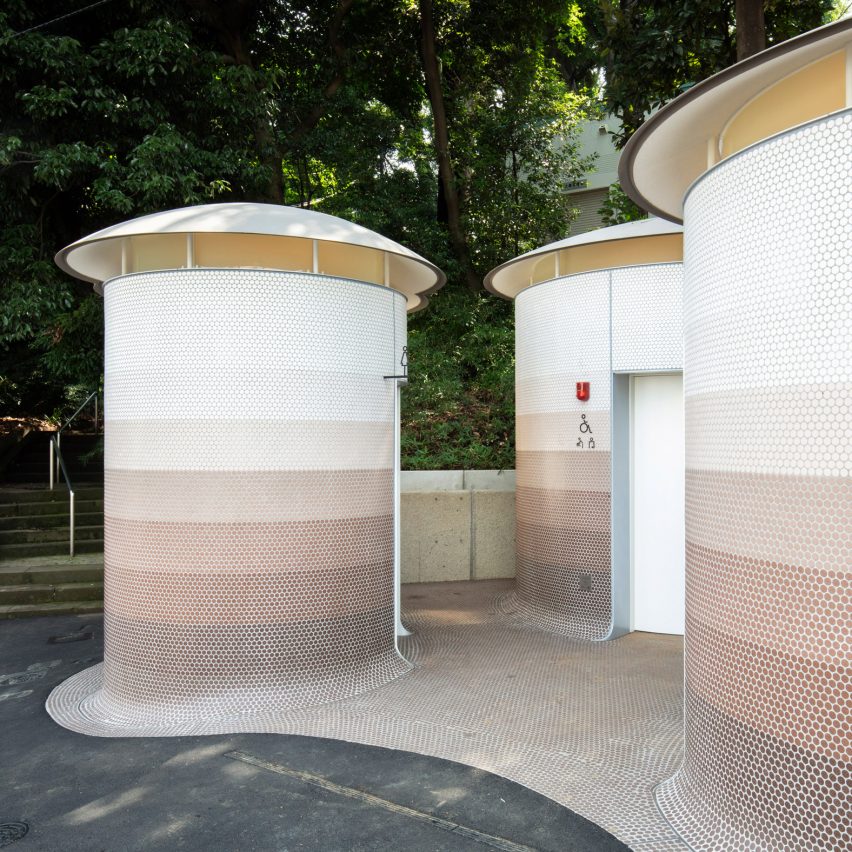
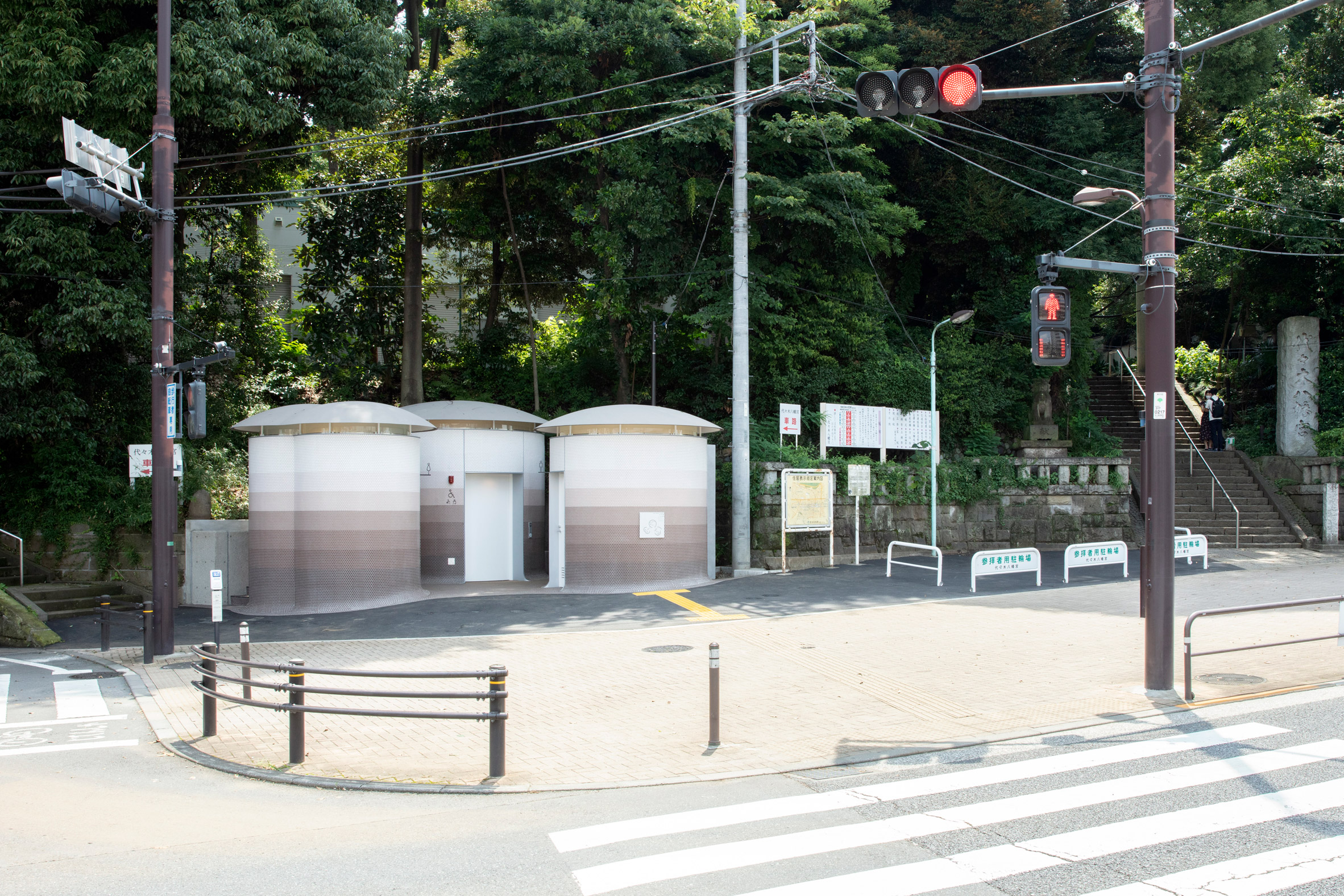
Pritzker Architecture Prize-winner Toyo Ito has created a public toilet within three mushroom-shaped blocks as his contribution to the Tokyo Toilet project.

Ito's distinctive toilet was built to replace a previous toilet block at the bottom of a flight of steps leading up to the Yoyogi Hachimangu shrine in the Shibuya district of Tokyo.

Toyo Ito toilet in Tokyo
Toyo Ito has designed a mushroom-shaped toilet in Tokyo

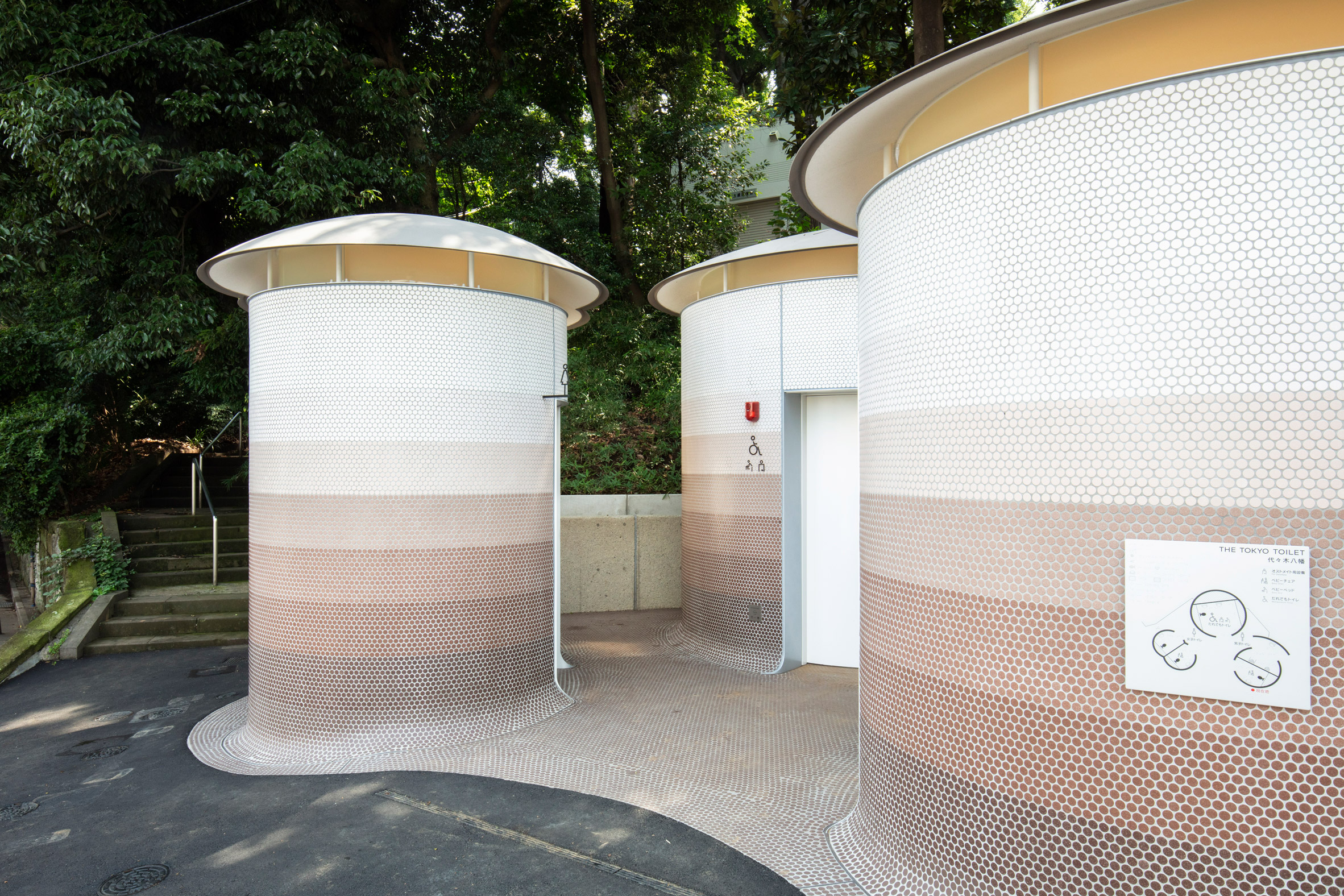
The Japanese architect broke his facility into three cylindrical blocks that are topped with overhanging dome-shaped roofs to create a form "reminiscent of [the] mushrooms" that grow in the forest surrounding the nearby shrine.

The Japanese architect aimed to design a calm, welcoming facility that would encourage people to use the public toilets.

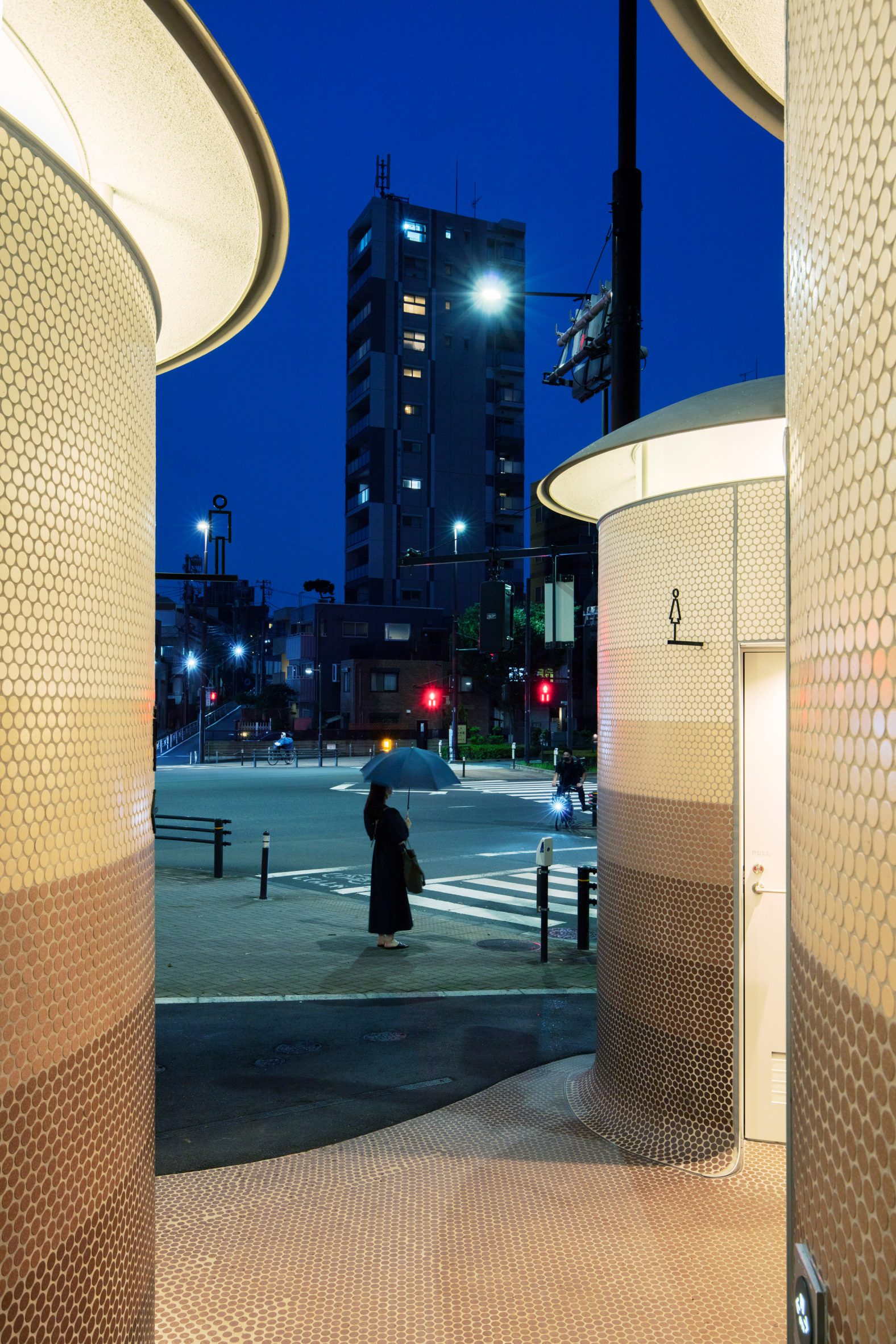
Public toilet at night
The block is broken into three small buildings

"I didn't want to use public toilets as much as I could, even as a man," said Ito.

"Therefore, this time, I would like to try a casual design that can be used calmly and with peace of mind."

Tiled toilet block
Each of the cylindrical blocks is covered in pale pastel tiles

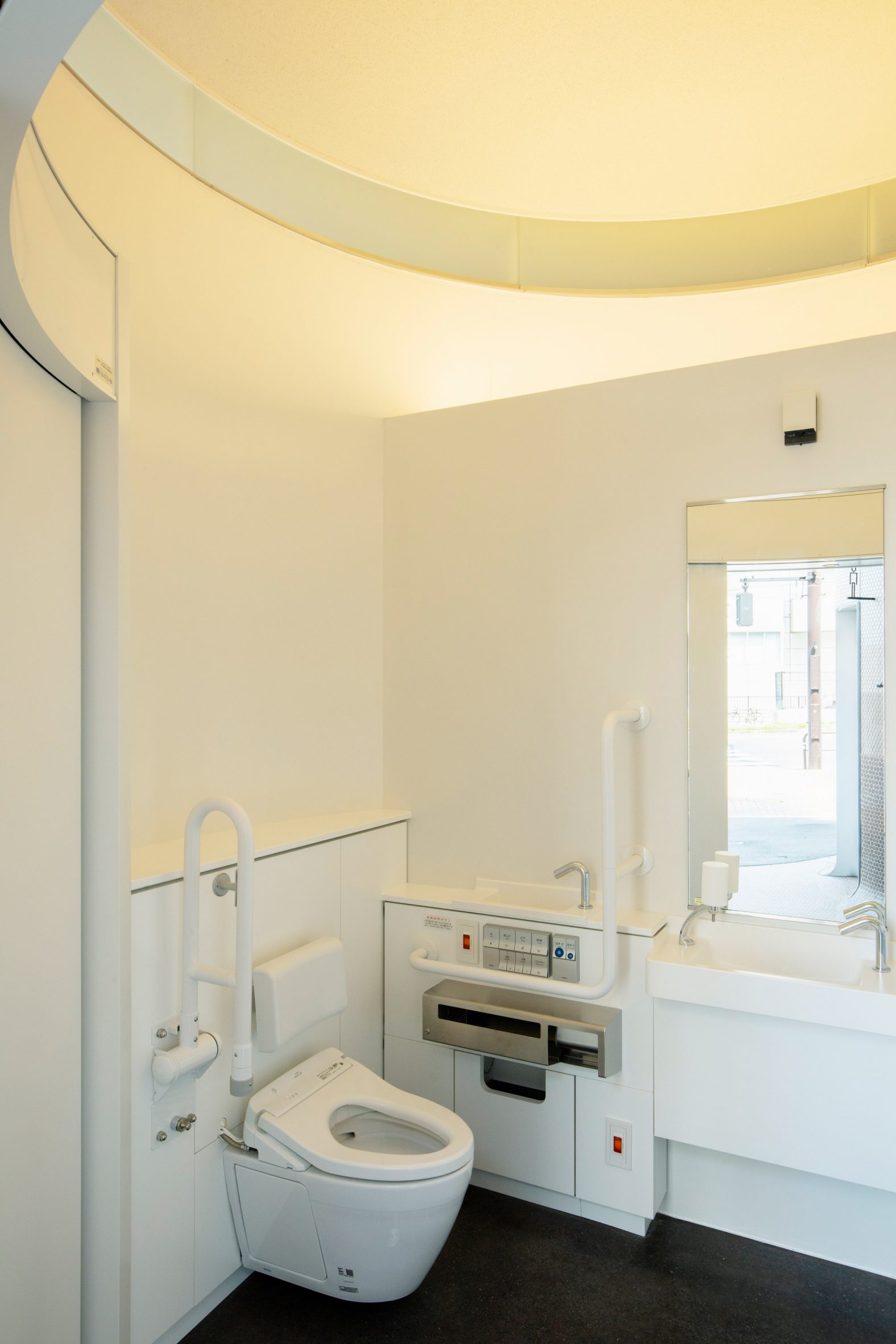
The largest central mushroom is attached to the back wall of the site and contains an accessible toilet.

Freestanding blocks on either side contain two cubicles for women and a cubicle and pair of urinals for men.

All three were clad in bands of red, pink and white tiles that extend onto the floor of the facility.

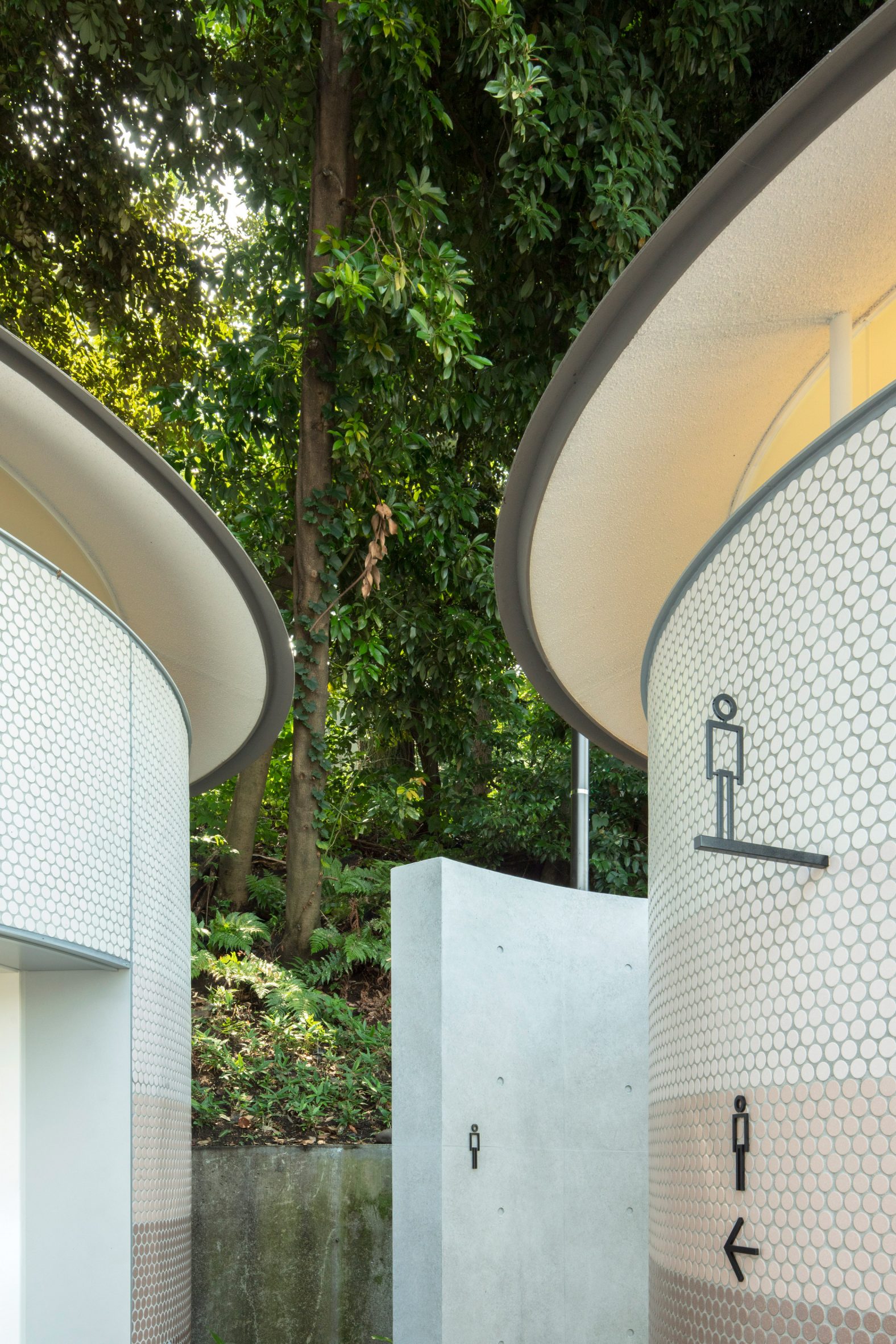
The roofs of the blocks are raised above the walls to allow natural light and air into the toilets.

Toilet near Yoyogi Hachimangu shrine
The toilet is near a small woodland containing the Yoyogi Hachimangu shrine

By breaking the block into three Ito believes that the toilets will be a safe space for all users.

"I hope that the Yoyogi-Hachiman Public Toilet installed this time will be a 'toilet that gives women a sense of security that can be used even at night' and a 'toilet that has an inconspicuous design and can be used casually'."

Accessible toilet in Japan
A gap at the top of each cylinder allows light and air into the toilets

The toilet block is the fourth realised by a Pritzker Architecture Prize-winner as part of non-profit Nippon Foundation's project to upgrade facilities in the downtown Shibuya district of Tokyo.

His facility joins fellow Pritzker winners Tadao Ando's circular toilet, Fumihiko Maki's block topped with a "cheerful roof" and Shigeru Ban's pair of transparent public toilets.

In total 17 toilets are set to be built as part of the project. Other recently completed buildings created as part of the project include a "friendly" house-shaped toilet designed by Japanese fashion designer Nigo and a cedar-clad block designed by Kengo Kuma.

The post Toyo Ito designs trio of mushroom-like public toilets in Tokyo appeared first on Dezeen.


from Dezeen https://ift.tt/3wUIkJN

ODA proposes New York rezoning scheme to swap height restrictions for public space

Beyond the Street by ODA

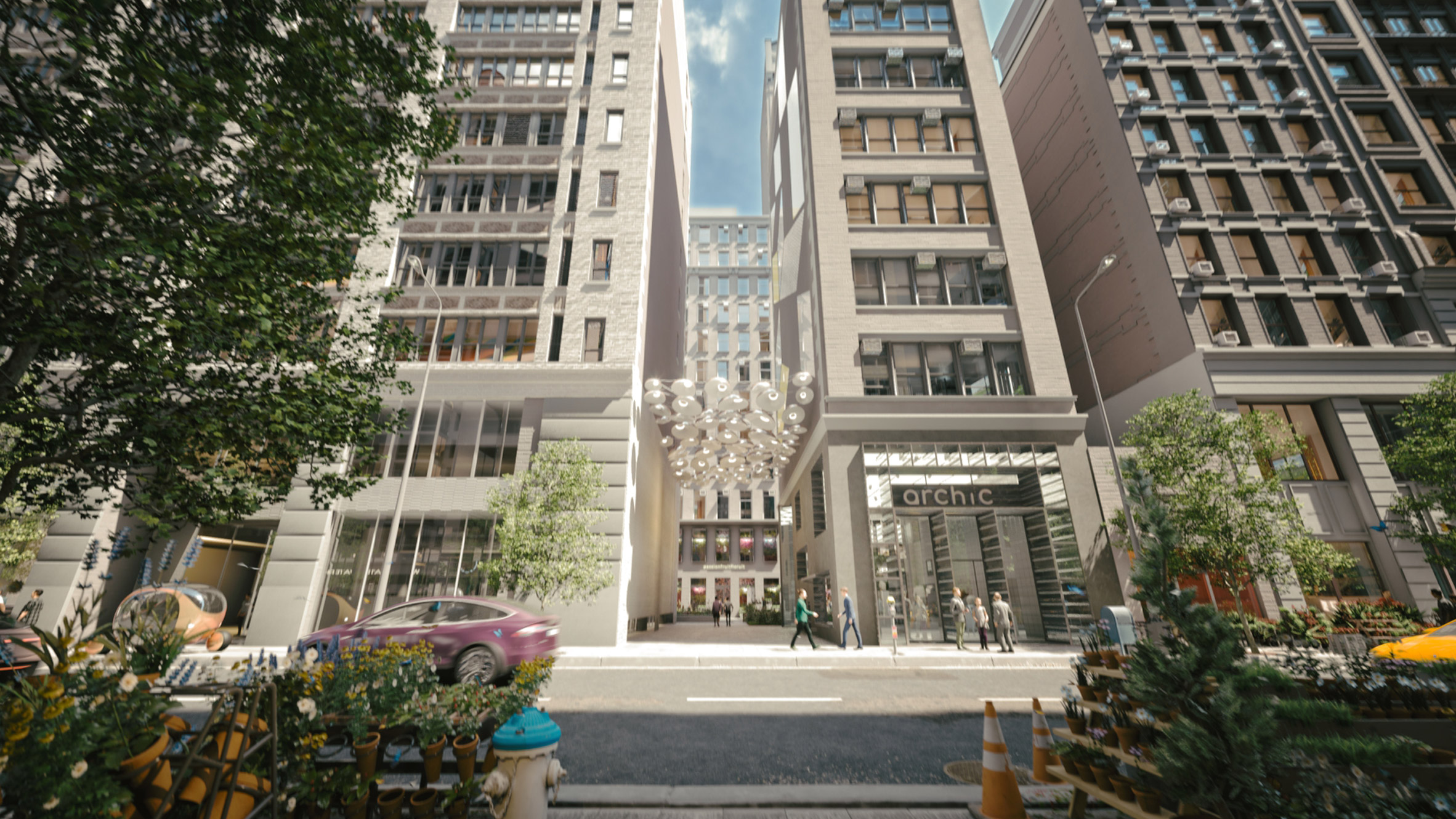
Architecture office ODA has proposed a rezoning plan for New York that would allow developers to build higher in return for turning private courtyards into public space.

Called Beyond the Street, the scheme aims to address the loss of the city's traditional mixed-use neighbourhoods, where people can live, work and enjoy leisure time, due to development.

Render of the Flower District by SeeThree
ODA has proposed a rezoning scheme for New York

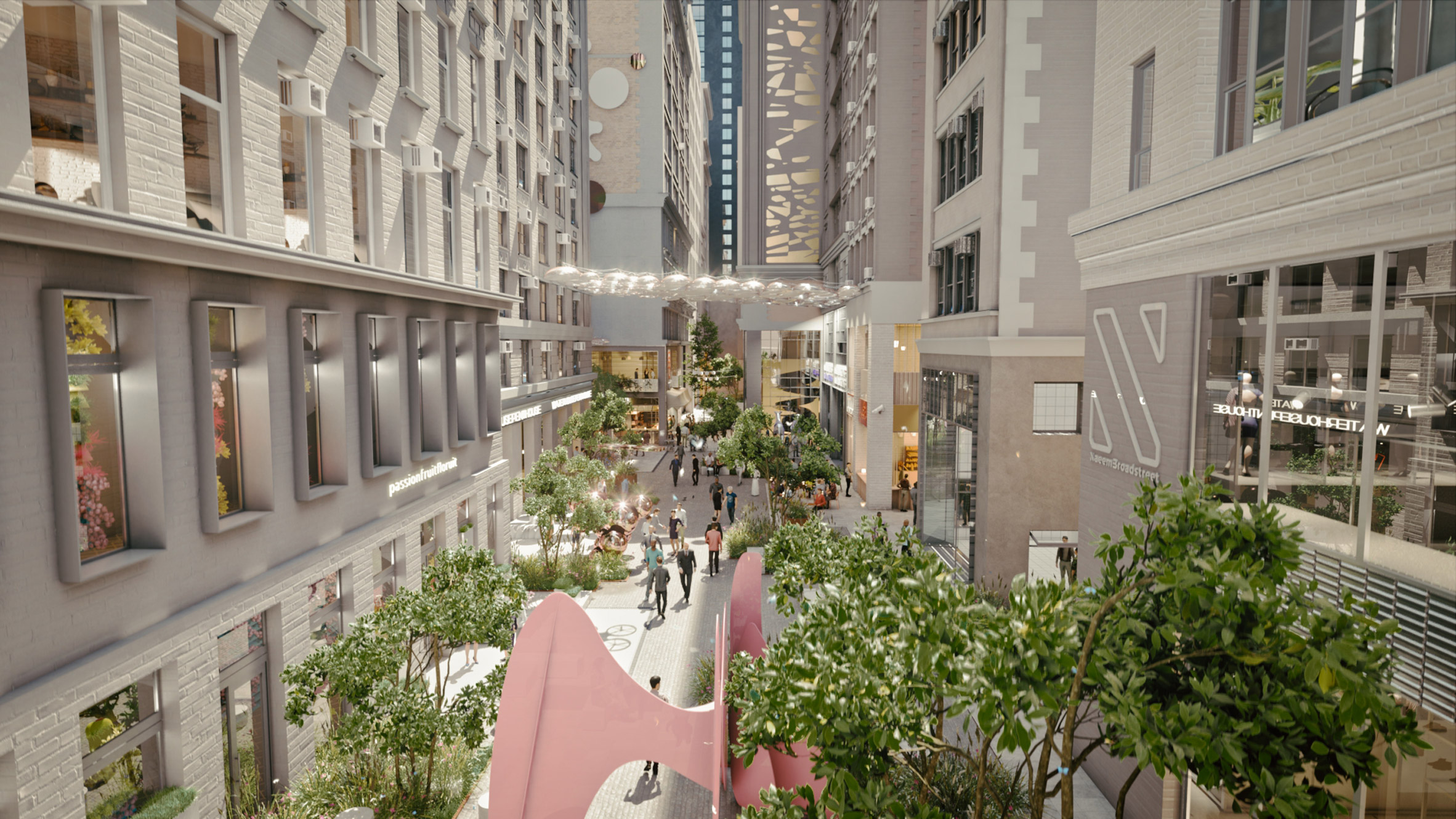
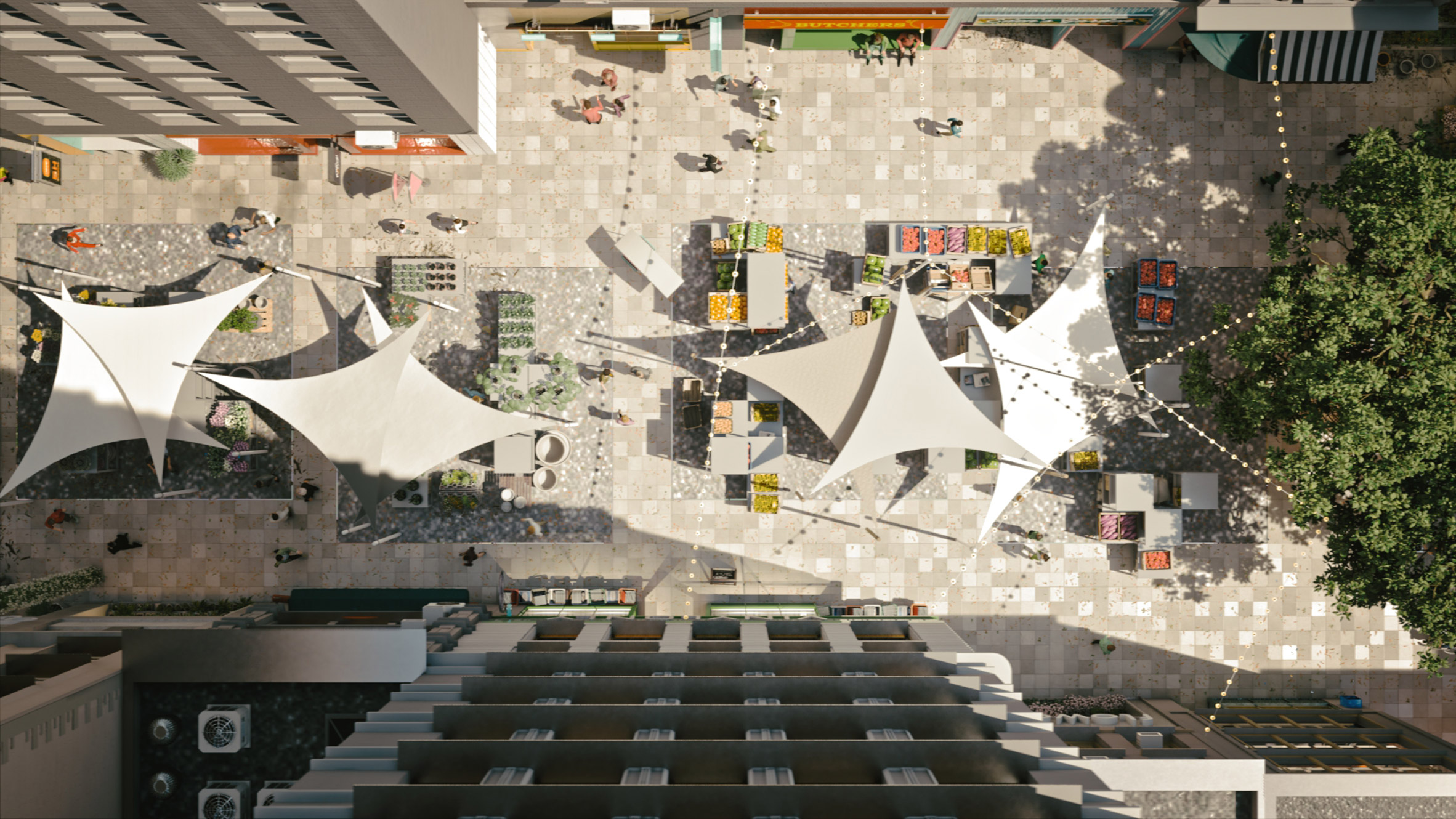
ODA's proposal would allow developers to build more private spaces above street level in exchange for creating more pedestrianised areas for the public at ground level.

The practice, which was founded in 2007, has produced a video (above) explaining Beyond the Street's goals.

Beyond the Street rezoning proposal by ODA
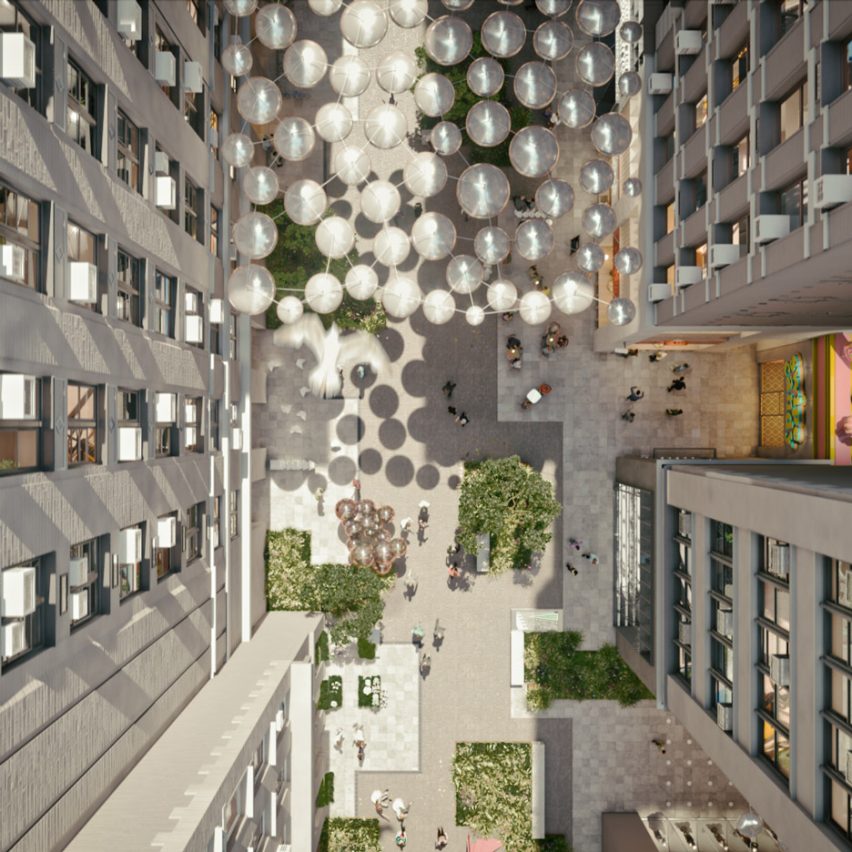
Private courtyards could be turned into public space

"The decline of traditional street-level retail, which typically covers the majority of the ground floor in many of the city's buildings has inspired us to seek more engaging and inclusive programming to replace it," said ODA.

"In order to level the playing field, we need to create a more democratic and accessible ground floor experience that serves everyone, not just the wealthy who live above it," added the New York-based studio.

"There's an increasing desire to live in mixed-use neighborhoods that are walkable, diverse and accessible. We need to replace big box retail with more desirable local mom and pop shops and food and beverage experiences, which have been driven out."

ODA proposal Beyond the Street for New York
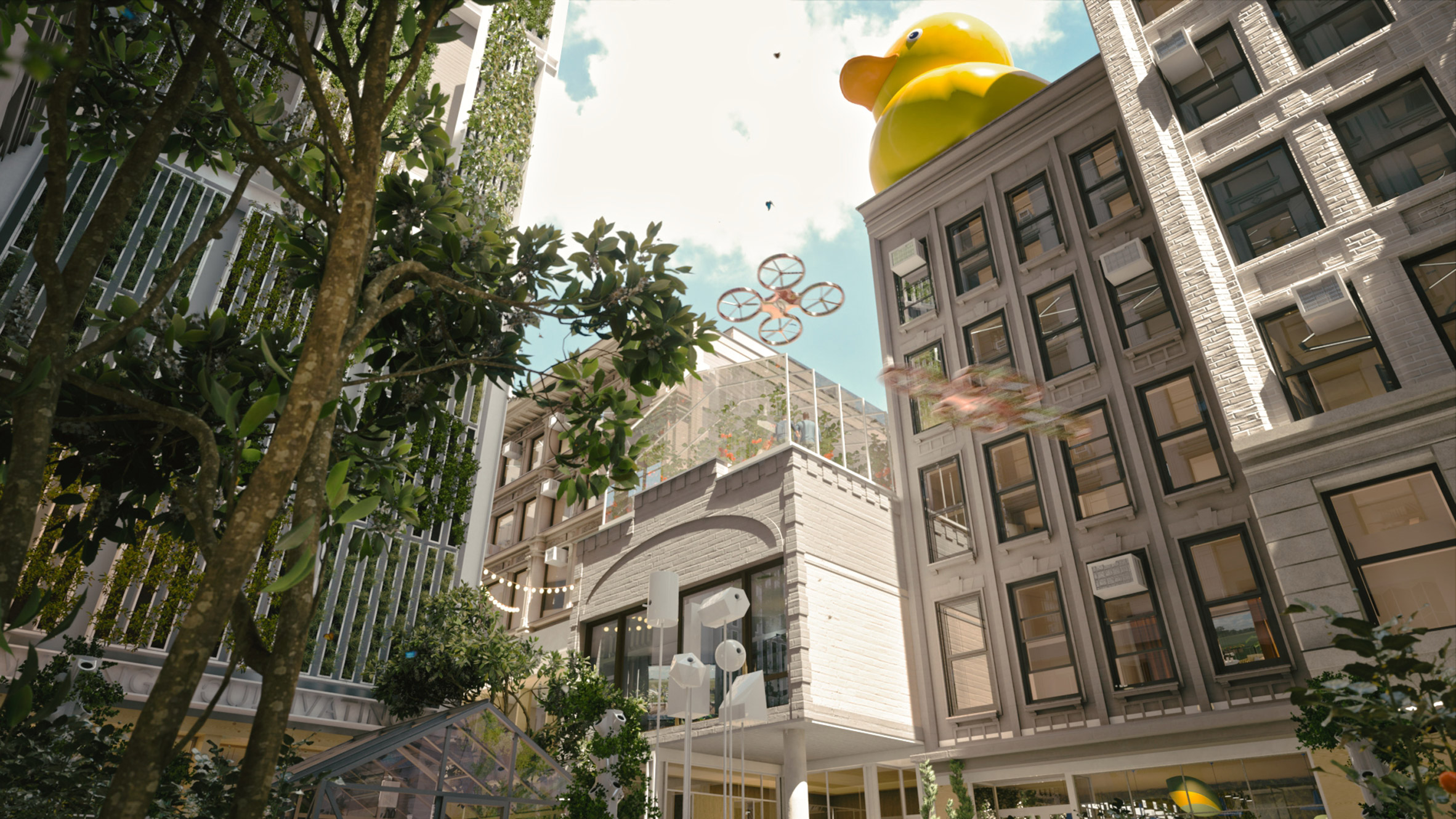
Developers could add height onto buildings in return for public space

ODA looked at Manhattan's Flower District as a case study. Located in the Chelsea neighbourhood between Broadway to 6th Avenue between 23rd and 33rd, the block became a hub for the city's immigrant flower sellers in the 18th century.

But by the end of the 20th century, rising rents and land values had pushed many flower wholesalers out of business as developers building high rises moved in. In 2004, the New York Times reported that the number of flower businesses in the district had fallen to just 32.

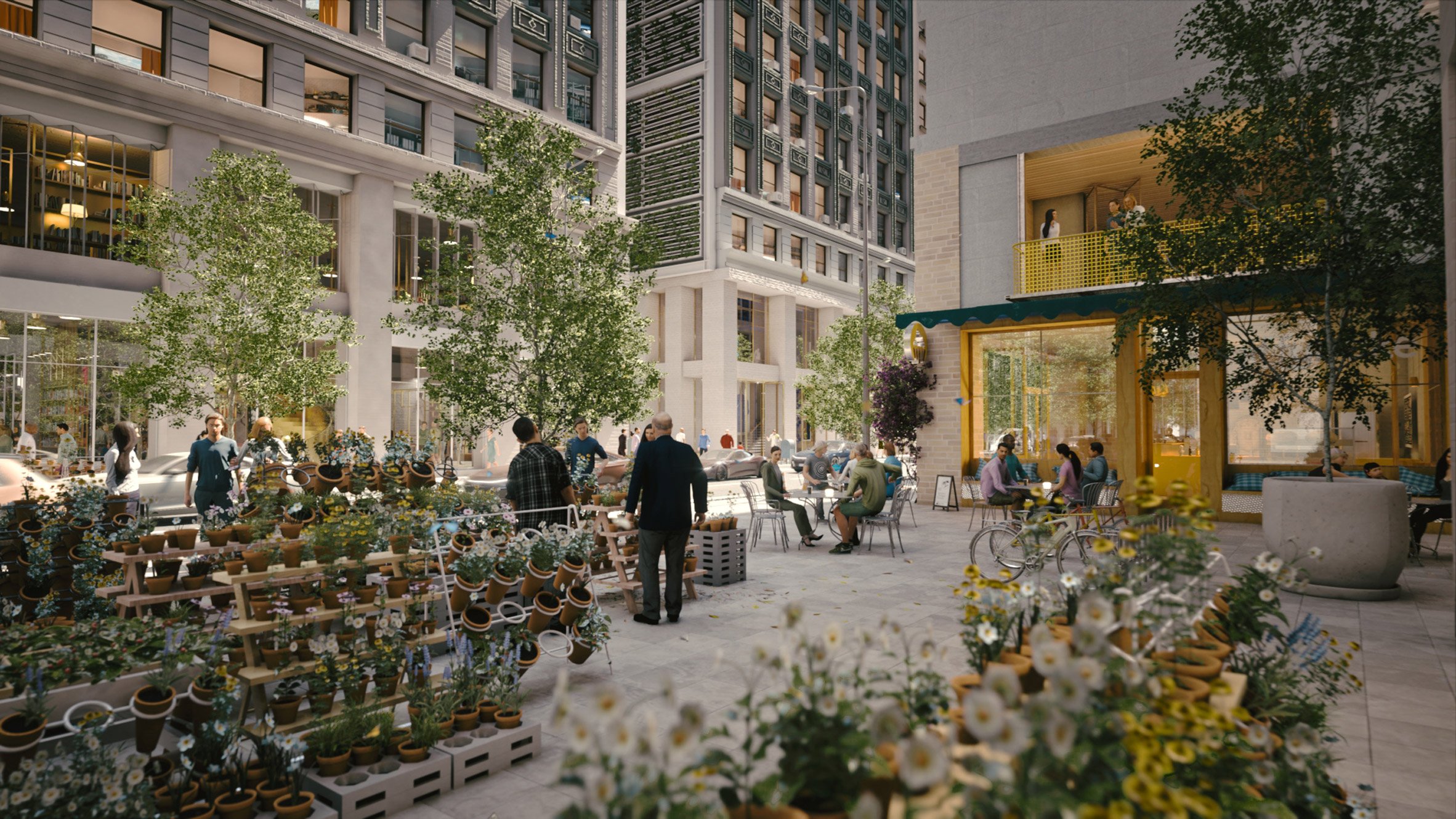
Render of a flower market in Manhattan
Flower District vendors have been pushed out of the area

A scheme such as Beyond the Street could revitalise the Flower District, ODA suggested, by encouraging the next wave of developers to carve out more space for vendors.

"Typical lots between 6th and 7th Avenues are 100 foot (30 metres) deep and vary in width," said the studio.

"However, the buildings, for the most part, provide required light and air at the back, creating a somewhat secret courtyard at the inside of every city block," added ODA.

"The Flower District currently has many underused parking lots, which would provide the initial infrastructure for passageways to and from the courtyards."

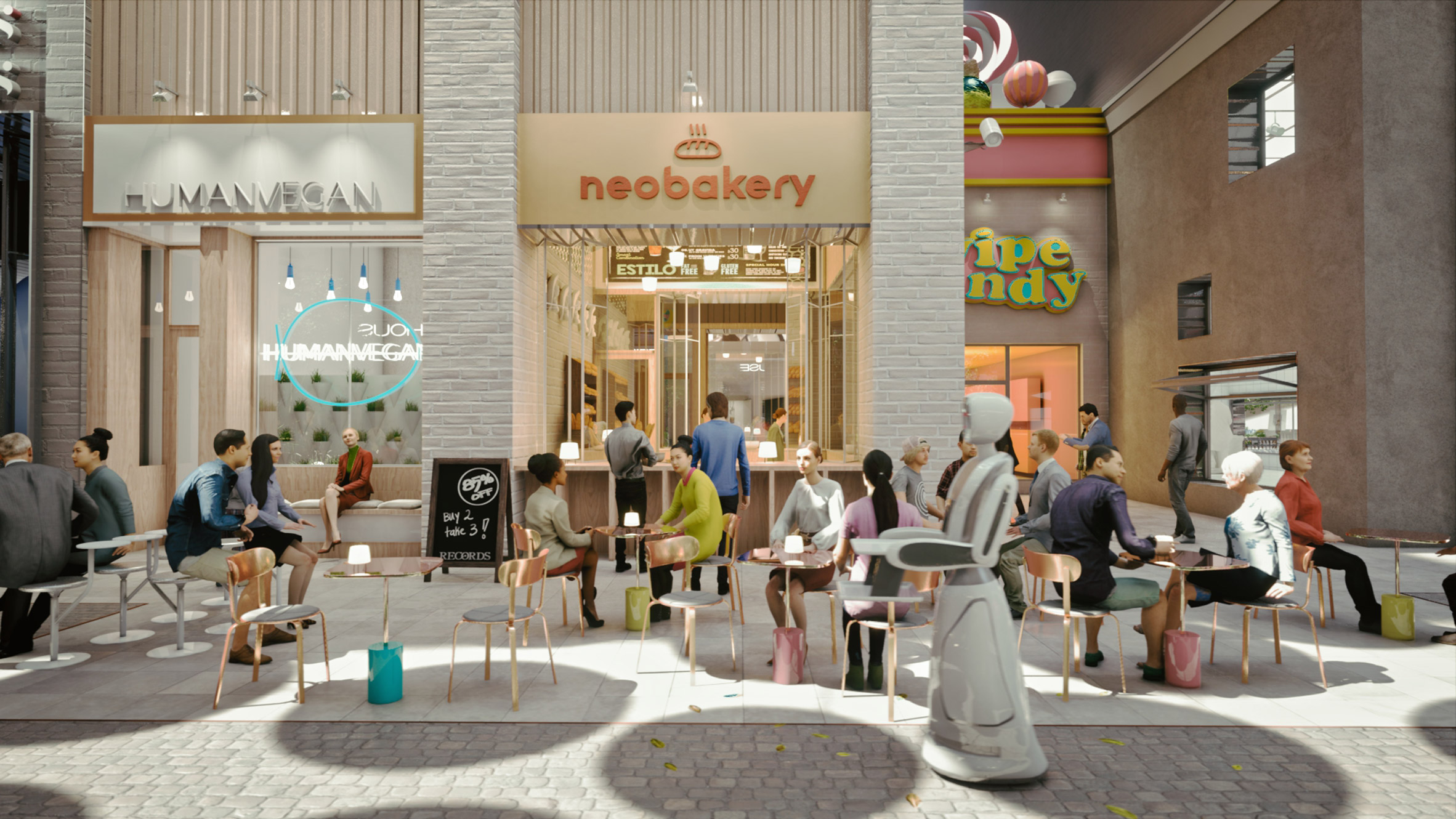
Renders of cafes in proposal for New York's Flower District
New cafes could open on the ground floor

These pedestrian zones would be privately owned public spaces, sometimes called POPs, similar to London's Heatherwick Studio-designed Coal Drops Yard. ODA envisages them filled with shops, eateries and open-air markets.

The Beyond the Street rezoning model could be used to revitalise many areas of New York, said the studio.

"Vibrant pedestrian attractions such as the High Line, Madison Square Park and the new Little Island show that breathing life into often unused spaces are possible with great design and a little bit of landscaping," said ODA.

"The result is a win-win, the private investor gets a taller building, while the city and the public get new more interactive public spaces."

Render of Beyond the Street rezoning from the exterior
Parking lots could be turned into access roads

ODA's proposal is not the first to suggest harnessing developer financing to try and benefit neighbourhoods.

New York's Metro Transport Authority is collaborating with the city's planning department to lobby for updating zoning regulations so that developers could gain planning approval in return for improving subway station accessibility by building more elevators.

On Billionaire's Row, developer Sedesco is seeking authorisation to add more floorspace to a proposed supertall skyscraper by OMA in return for improving 57th Street's F train subway station.

Recent projects by ODA include an apartment block in Dumbo and an office built in a converted Brookly sugar factory.

The renders are by SeeThree.

The post ODA proposes New York rezoning scheme to swap height restrictions for public space appeared first on Dezeen.


from Dezeen https://ift.tt/3BsdlZ4

Commenter says tearing down the Nakagin Capsule Tower "is a tragedy"

In this week's comments update, readers are debating the disassembly of Tokyo's Nakagin Capsule Tower.

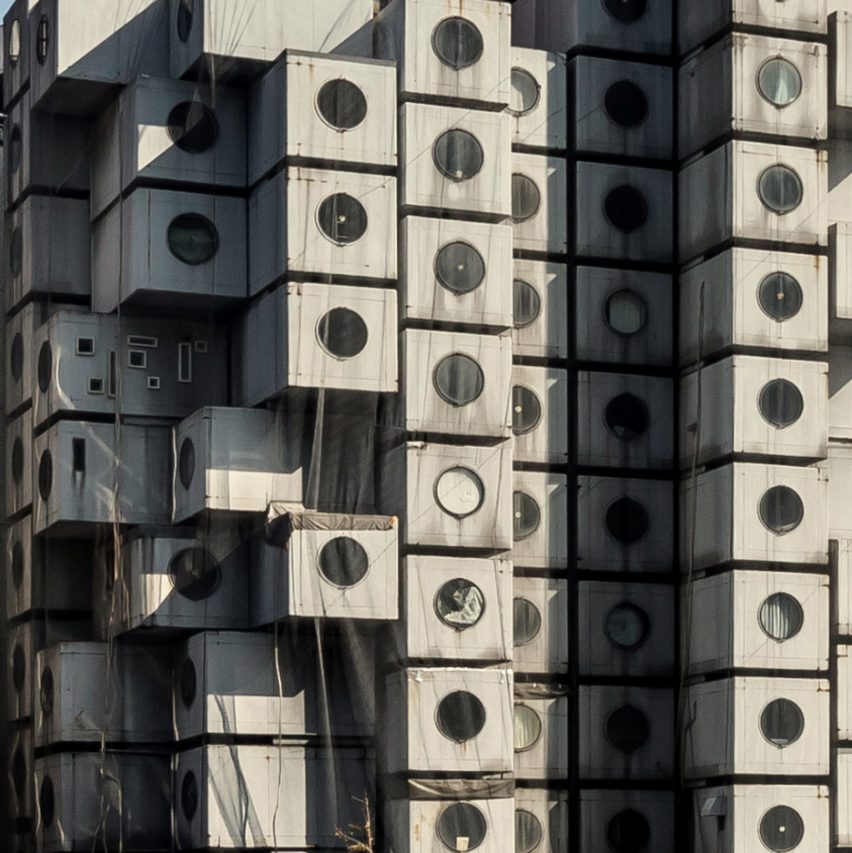
The Nakagin Capsule Tower in Tokyo, a 20th-century metabolist landmark by architect Kisho Kurokawa, is set to be disassembled and the capsules either donated to museums or turned into rental units.

Built over the course of just 30 days in 1972, the housing block is considered a rare example of Japanese metabolism.

"A really wonderful and important building"

Readers are divided. "This is very, very sad," said Andrew.

Catcassidy agreed: "This is a really wonderful and important building. While it may have outlived its function and is no longer viable as residences, tearing it down is a tragedy. This is short-sightedness. Once it's gone, you can't get it back."

"Interesting story, yet the architectural vision is short-sighted, utilitarian, and quite depressing," replied Valeria Lie Alonso. "No surprise that the architects were influenced by Marxism. No life, no beauty, no imagination. A dystopia envisioned for the rational worst-case scenario rather than aspiring for better ways of life."

"It will be dismantled but not forgotten," concluded Jacopo. "Please don't be too sad. Think of it as a transformation. Few buildings go from architecture to art and live forever in spirit rather than in concrete."

Is tearing the building down a tragedy? Join the discussion ›

Heatherwick Studio unveils Airo prototype at Goodwood Festival of Speed

Reader says Thomas Heatherwick's electric car is "ribbed like a condom"

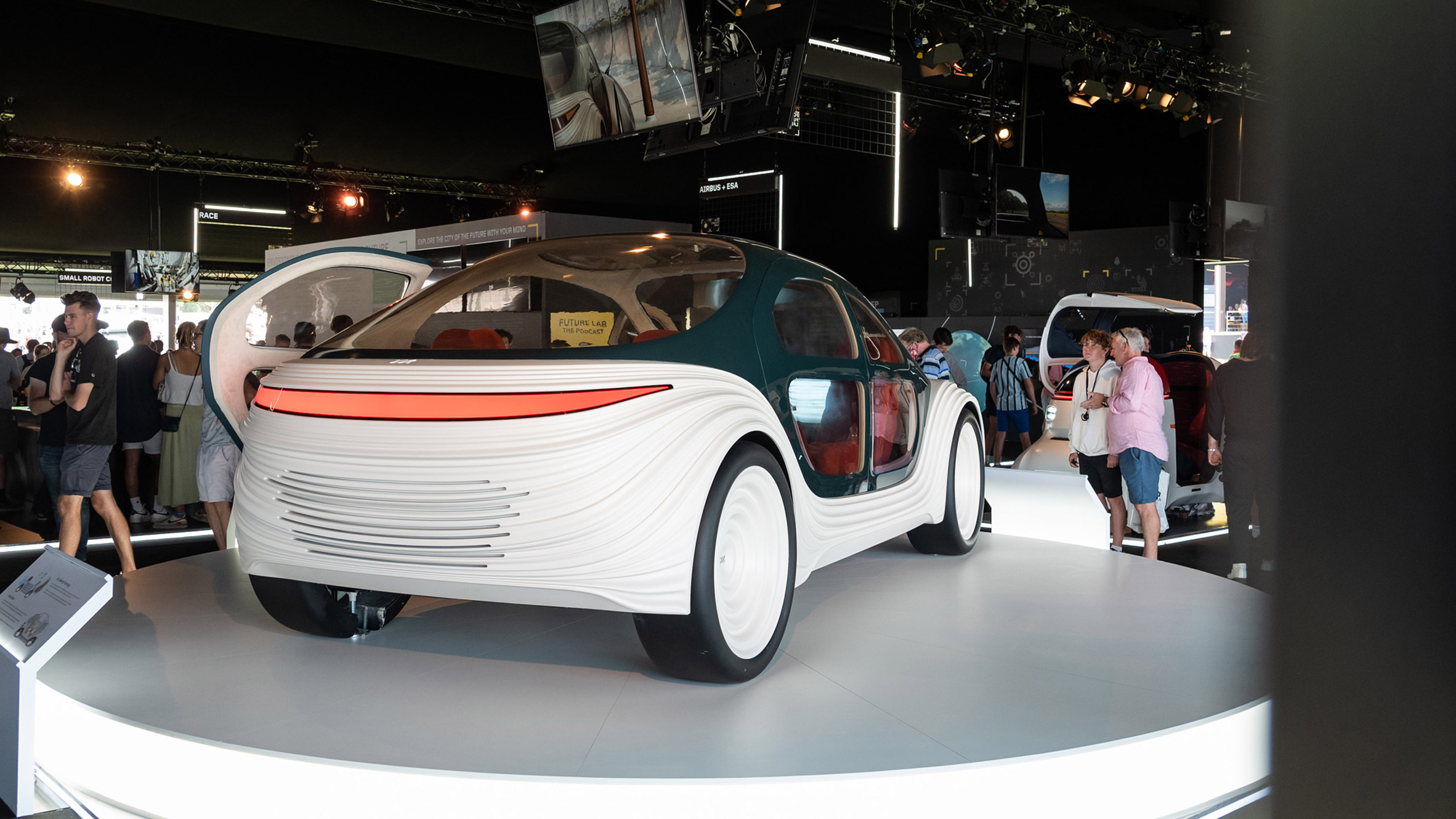
Commenters are discussing Thomas Heatherwick's prototype of an electric car that the studio claims will clean the air as it drives. Airo was designed for Chinese car brand IM Motors.

"Amazing," said Yoram Maron. "Wrinkled like an old lady but for sure exceptional. Why not?"

"Very Clockwork Orangey," continued Hilton Purvis. "Ribbed like a condom, white to boot (would definitely be a pain to clean). I love concept cars though. Keep 'em comin'… so we can critique 'em."

"Of all the ways to do an interior and they chose to use my parent's corduroy lounge chairs from the 70s," added Christopher Kelley.

What do you think of Airo? Join the discussion ›

Foster + Partners gets green light for One Beverly Hills development

Commenter "loves subtle fence" keeping people out of development

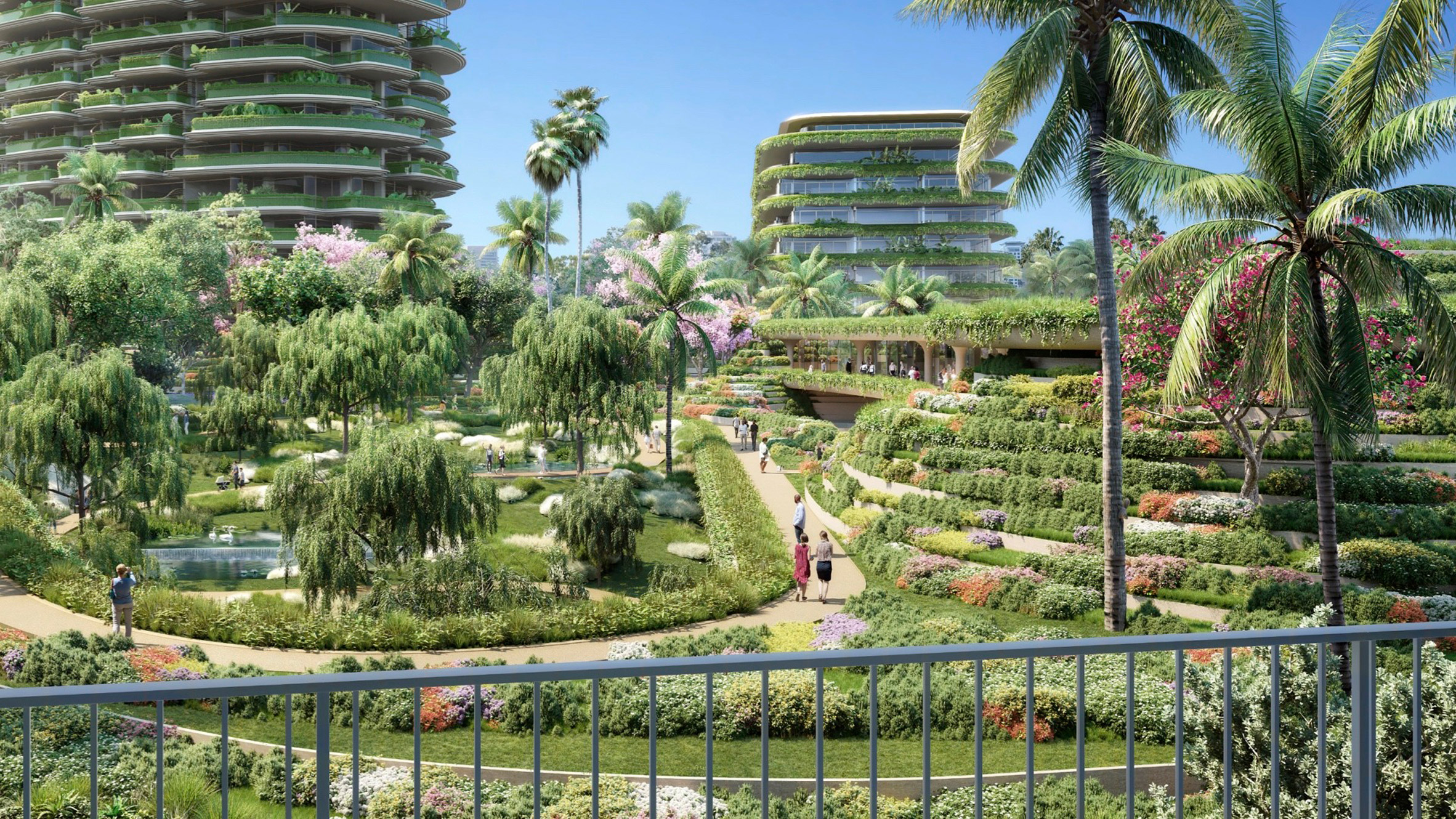
Readers aren't sold on Foster + Partners' plans to redevelop a triangular site in Beverly Hills, Los Angeles, with a botanical garden and a pair of plant-covered high-rises.

"So is this a new towered-gated-community with communal ownership scheme to build a very expensive part of a branded city?" asked 竜皐. "The Commerce city had come so far. No 'ordinary' citizens are allowed in."

Troels Steenholdt Heiredal agreed: "I love the subtle fence in the foreground of the first rendering – what a delicate way of telling the onlookers 'this will not be for you, please stay out'."

"Come on, people!" replied Apsco Radiales. "Better than seeing acres and acres of parking lots and condos like the one Gensler just designed for Vancouver. You have to admit!"

Are commenters being harsh? Join the discussion ›

An exhibition space inside ST/SongEun Building
Images of Herzog & de Meuron's wedge-shaped art institute in Seoul revealed

Reader says Dezeen founder was "having a bad day" in debate over article

Commenters debated with Dezeen's founder and editor-in-chief Marcus Fairs on whether we should have published a preview of the ST/SongEun Building in Seoul, South Korea. The Herzog & de Meuron designed building is due to open in September.

"So little information here," said Alfred Hitchcock. "A few abstract photos and no drawings. What's the point of the press release?"

"I am assuming that at this point, everyone understands that there are certain types of articles – project features, interviews, promos, and yes, little incomplete teasers sometimes," replied OM. "Is this your first day on Dezeen/the internet?"

"I don't know why this bothers you so much," said Fairs. "We got sent a few images by the PR company ahead of the building's opening and thought it would make a good, quick news story. We'll do another, more in-depth story later when we get the full image set and (hopefully) plans. We're a news site and this is how we roll!"

"To sum up, key points thus far," concluded JZ. "1) Dezeen readers still find the editorial decisions to release stories with a paucity of information to be a huge weakness of the journal. 2) Lack of information has allowed confirmation bias to be triggered and readers find the building cold and disrespectful of the context. 3) Marcus was having a bad day."

Should Dezeen have published the article? Join the discussion ›

Read more Dezeen comments

Dezeen is the world's most commented architecture and design magazine, receiving thousands of comments each month from readers. Keep up to date on the latest discussions on our comments page.

The post Commenter says tearing down the Nakagin Capsule Tower "is a tragedy" appeared first on Dezeen.


from Dezeen https://ift.tt/3wXDT0t

Current light sculpture on the Hudson responds to movements of passersby 

Current by Cheryl Wing-Zi Wong

Artist Cheryl Wing-Zi Wong has designed an interactive installation on the Tappan Zee Bridge in New York state with LED animations that respond to people passing by.

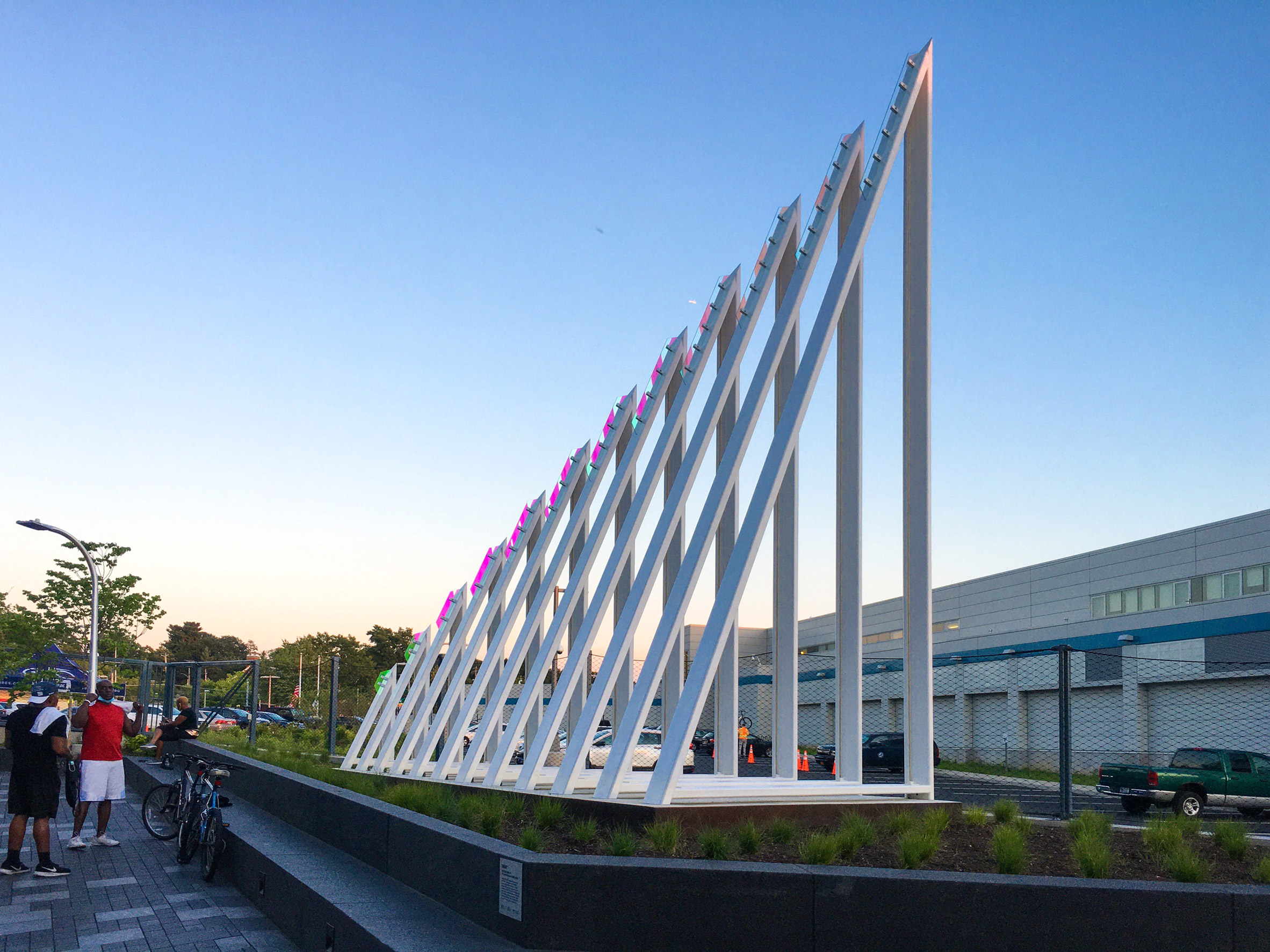
Called Current, the permanent sculpture is located on the Westchester County side of Tappan Zee Bridge spanning the Hudson River between Tarrytown and Nyack.

It is located on the Westchester County side of Tappan Zee Bridge
Current is located on a bridge in New York state

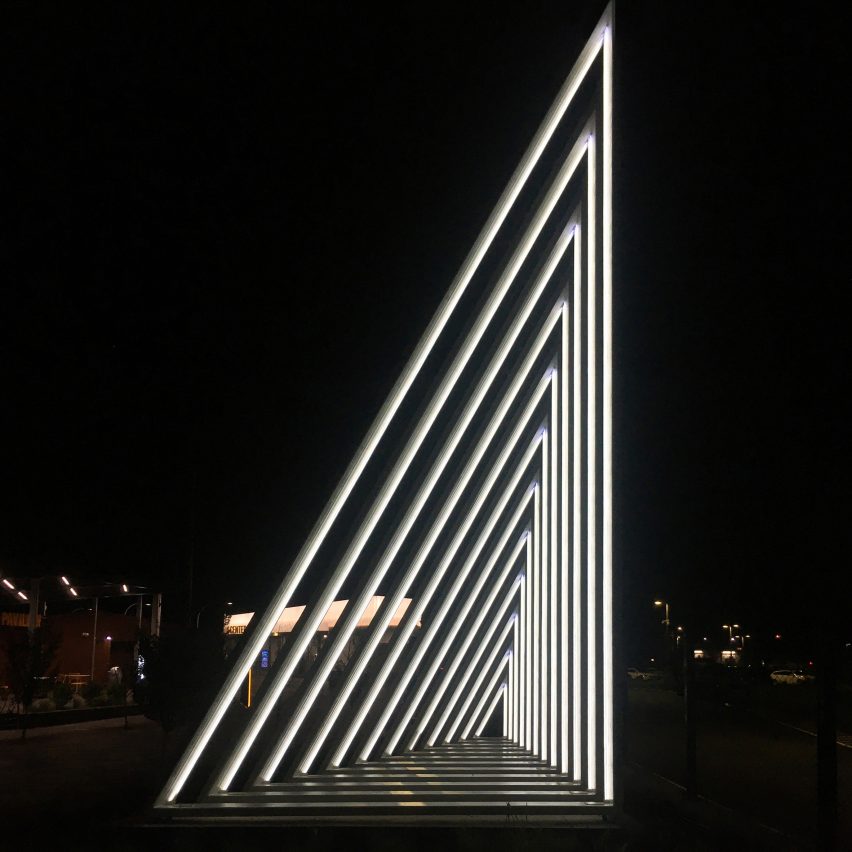
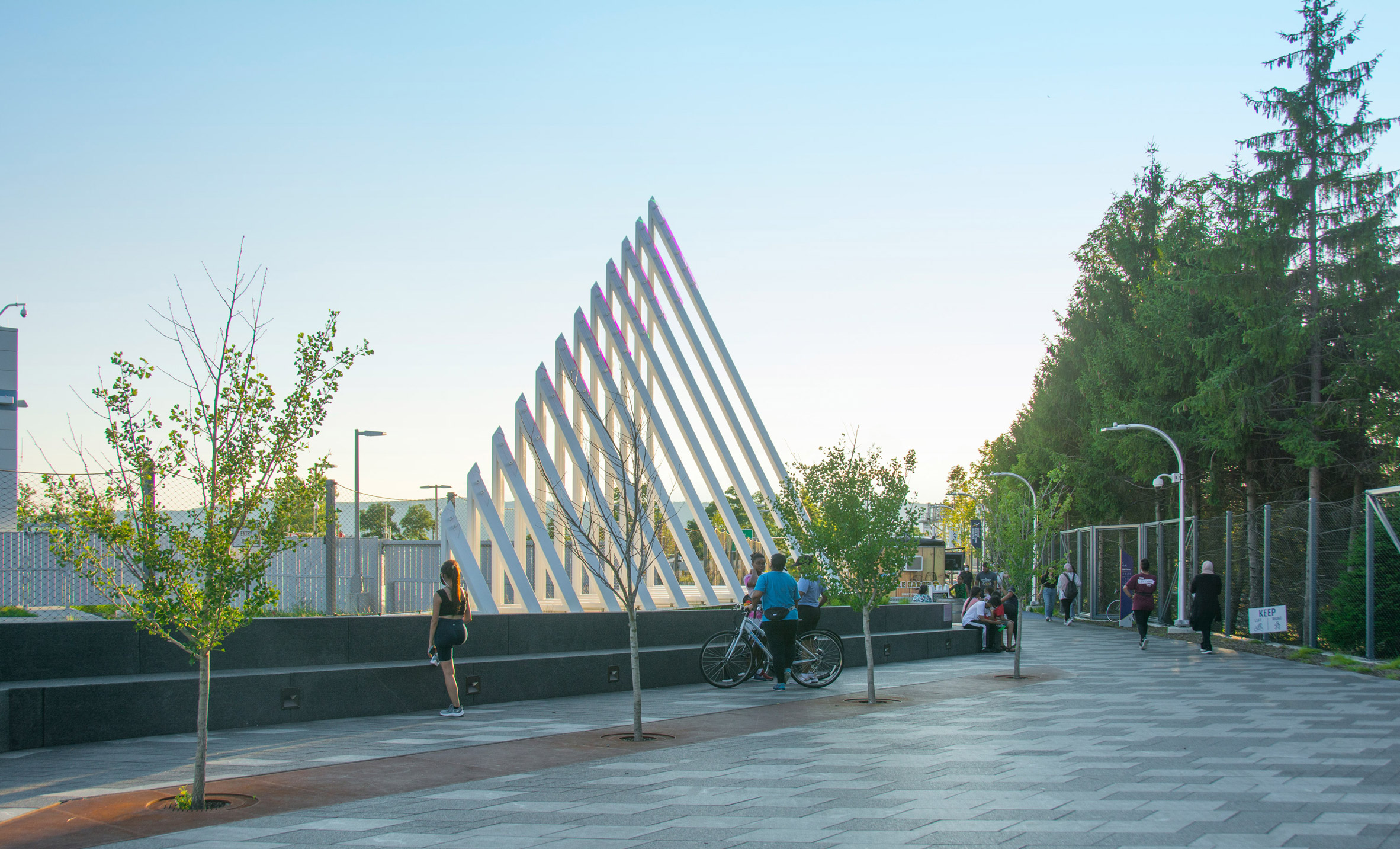
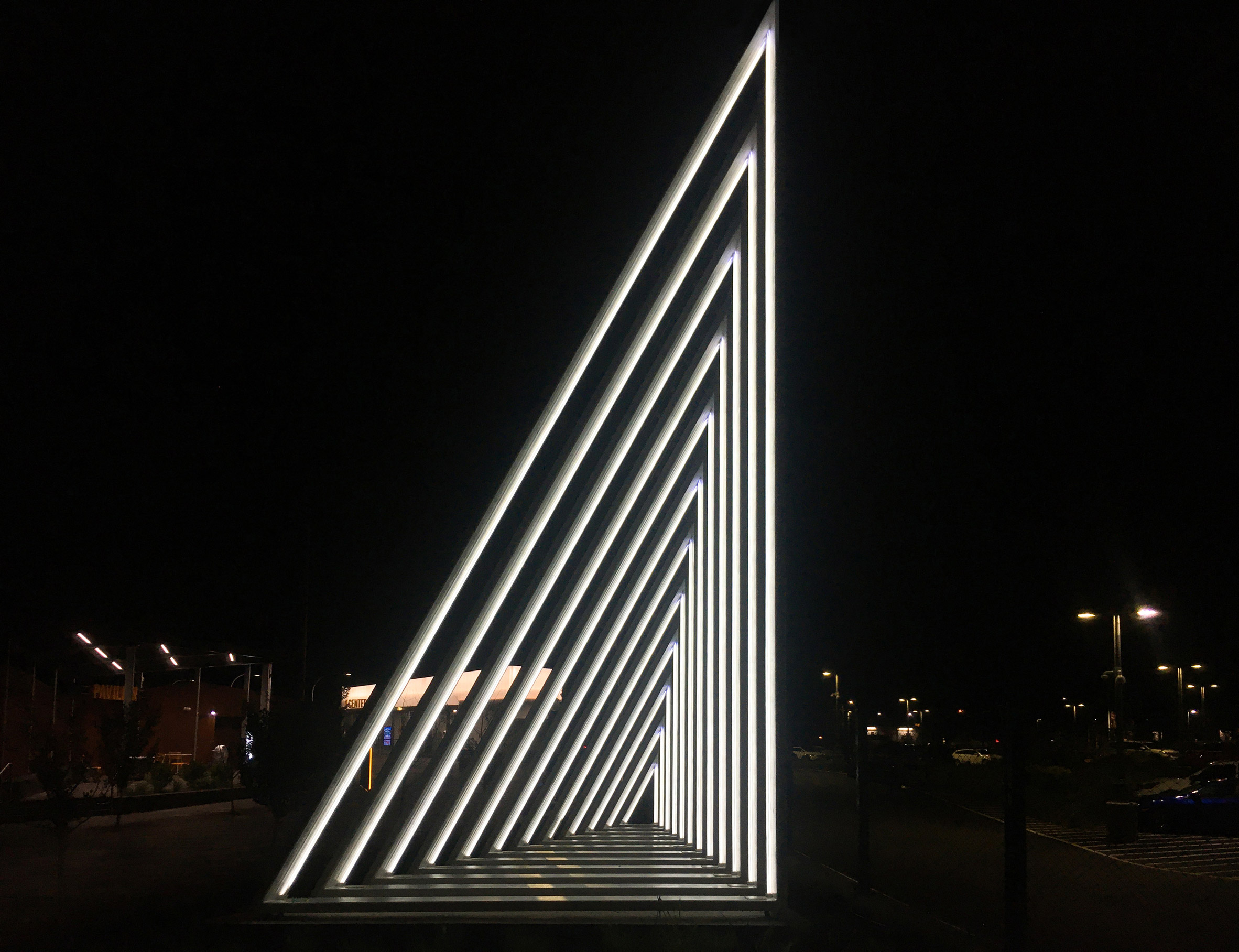
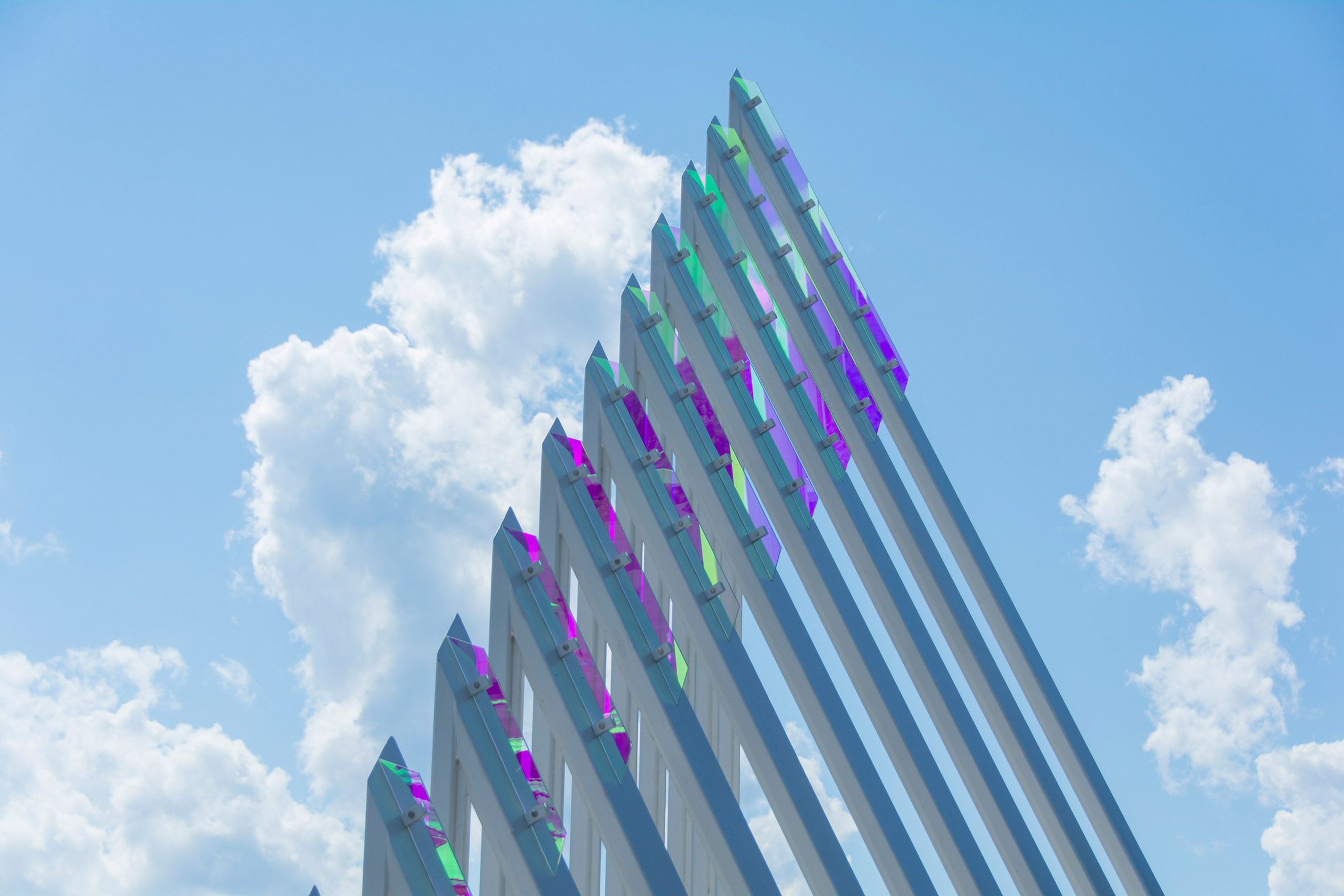
Current is composed of 12 triangular steel arches positioned on a poured concrete foundation. The arches are lined up alongside each other and gradually decrease in height.

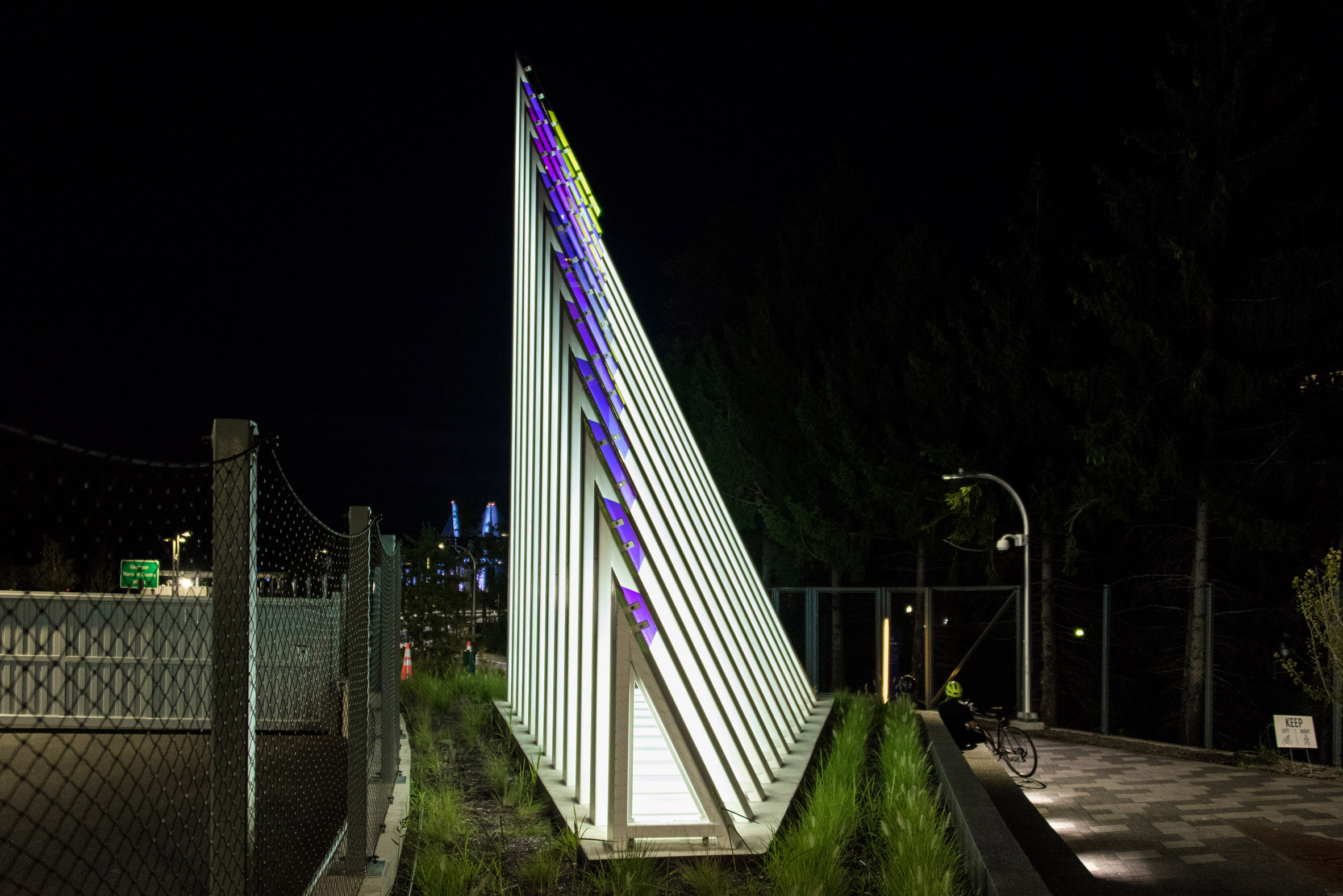
Each arch is fitted with an iridescent glass fin on its apex that refracts sunlight and creates shadows during the day, while integrated LED lights produce a white glow after dark.

Current is defined by its changing lights
The installation emits sensor-based white light at night

"The name was chosen in reference to the ebb and flow of river currents on the Hudson River, as well as currents of light and currents of time," artist Wing-Zi Wong told Dezeen.

The installation features motion sensors that detect movement from passersby, which triggers LED light animations that respond to pedestrians, drivers and cyclists.

"In the evening, Current creates a shared spatial experience through the light animations that respond to movements of passersby," explained Wing-Zi Wong.

Similar to a clock's chime, the sculpture also plays a different light animation at the start of each hour of the day.

"The work is a dynamic and interactive sculpture that celebrates transformation," said the artist.

Glass fins refract colourful light during the day
Glass fins sit atop the triangular structure

Officially named the Governor Mario M Cuomo Bridge, the Tappan Zee Bridge replaced a former version of itself in 2017.

Current's foundation, cladding and the mullions securing the glass fins in place are all made of steel reclaimed from the old bridge.

Current was designed by artist Cheryl Wing-Zi Wong
The installation is designed to be interactive

Wing-Zi Wong's process involved studying the site and history of the Hudson River and the old Tappan Zee Bridge, after which she developed the installation using 3D-drawing software Rhino.

"Current pays homage to this connection and to the legacy of the Tappan Zee Bridge as the historic primary connection point spanning the Hudson between the two counties north of New York City," said Wing-Zi Wong.

The installation is in New York state
Current engages with the history of its location

Cheryl Wing-Zi Wong is a New York-based artist whose work explores the boundary between art and architecture.

Recent installation designs include a mirrored kaleidoscope catwalk created by artist Doug Aitken for last week's Saint Laurent menswear fashion show in Venice, and a sculpture at this year's Goodwood Festival of Speed that can be transformed into a race track using an augmented reality app.

The images are courtesy of Cheryl Wing-Zi Wong.


Project credits: 

Engineering: SGH
Fabrication: Elemental Metalworks
Installation: Sultz, NYSTA

The post Current light sculpture on the Hudson responds to movements of passersby  appeared first on Dezeen.


from Dezeen https://ift.tt/3kEcMp2

University for the Creative Arts presents its 2021 graduate craft showcase

University for the Creative Arts

A jewellery project exploring the sensory experiences of a person with synesthesia and embroidery work that offers a new take on gender are included in Dezeen's latest school show by students at the University of the Creative Arts.

Also featured are hand-embroidered sculptures referencing a student's family home and a collection of garments depicting the abstract shapes found in cells, invisible to the naked eye.


University for the Creative Arts

School: University for the Creative Arts
Courses: BA (Hons) Textile Design, BA (Hons) Glass, Ceramics, Jewellery and Metalwork and BA (Hons) Hand Embroidery for Fashion, Interiors and Textile Art

School statement:

"The University for the Creative Arts (UCA) has a long and rich history of craft research and practice. The passion shown by its class of 2021 shines through in their works, exhibiting exceptional quality and innovation in ceramic and glass pieces, textiles, metalwork, plastics and jewellery.

"This community of makers combines and experiments with both time-honoured techniques and the latest technologies, indulging their passions for materials, form and texture with their desire to change perspectives.

"Drawing on the expertise and facilities across the university's campuses and the Royal School of Needlework, the results of their great collaborative practices and thought-provoking work can be seen in UCA's 2021 Graduation Show."

University for the Creative Arts

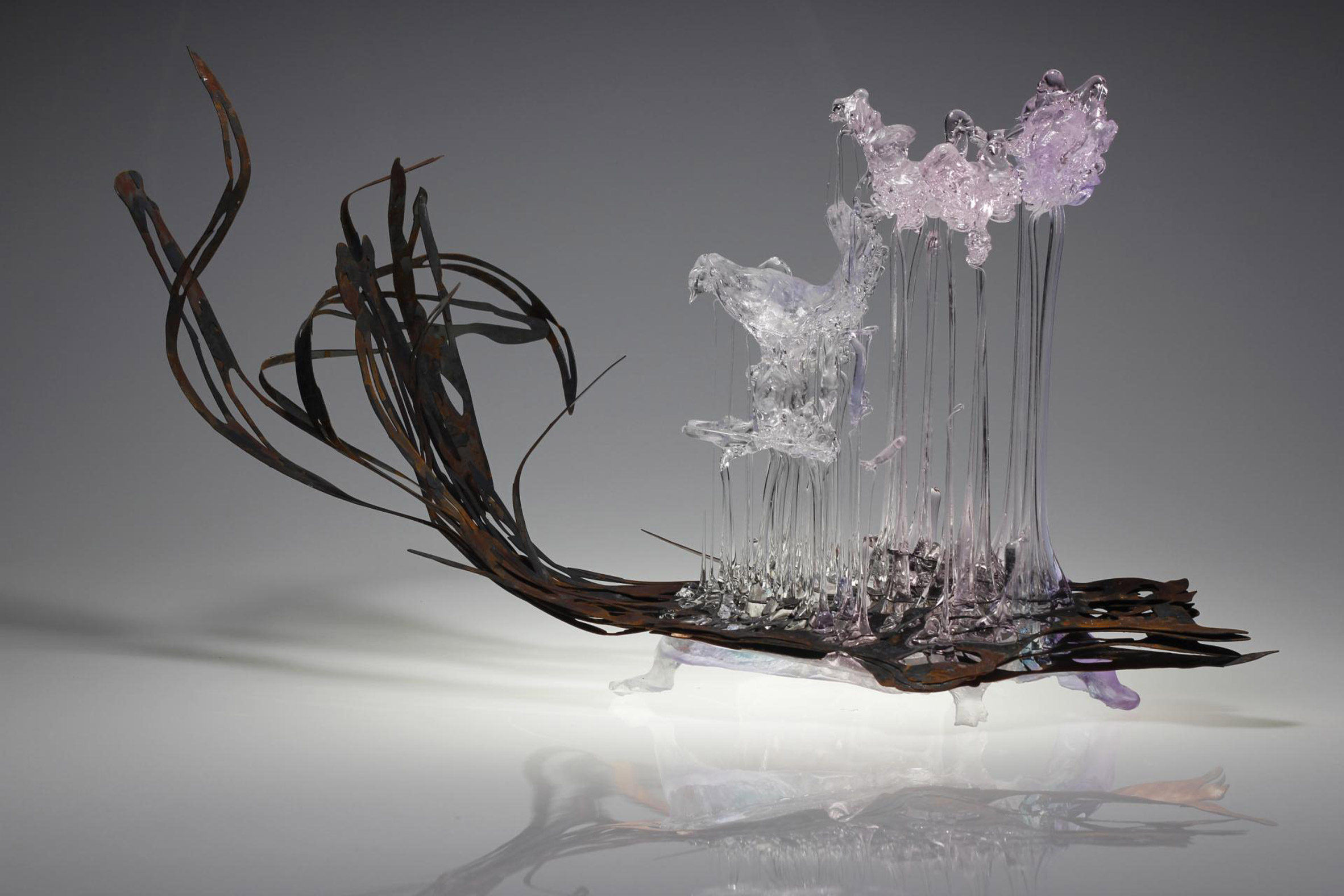
Untethered by Kate Courtney-Taylor

"Specialising in kiln-formed glass, this work explores the inherent properties of glass, focusing on how she can take its fluidity and freeze it in time. The piece explores Courtney-Taylor's memories. Often focused on trauma and its associated pain, these memories also result in beauty and strength.

"Inspired by the links between the grotesque and the sublime, Courtney-Taylor creates sculptures that explore her interchanging feelings of neglect, obsession, conflict and beauty.

"Glass flows between the sculptural elements, allowing Courtney-Taylor to create an environment to sculpt the piece whilst allowing the glass to perform the conclusion. Relinquishing the control means she always learns something from the process, and the result can never be recreated."

Student: Kate Courtney-Taylor
Course: BA (Hons) Glass, Ceramics, Jewellery and Metalwork

University for the Creative Arts

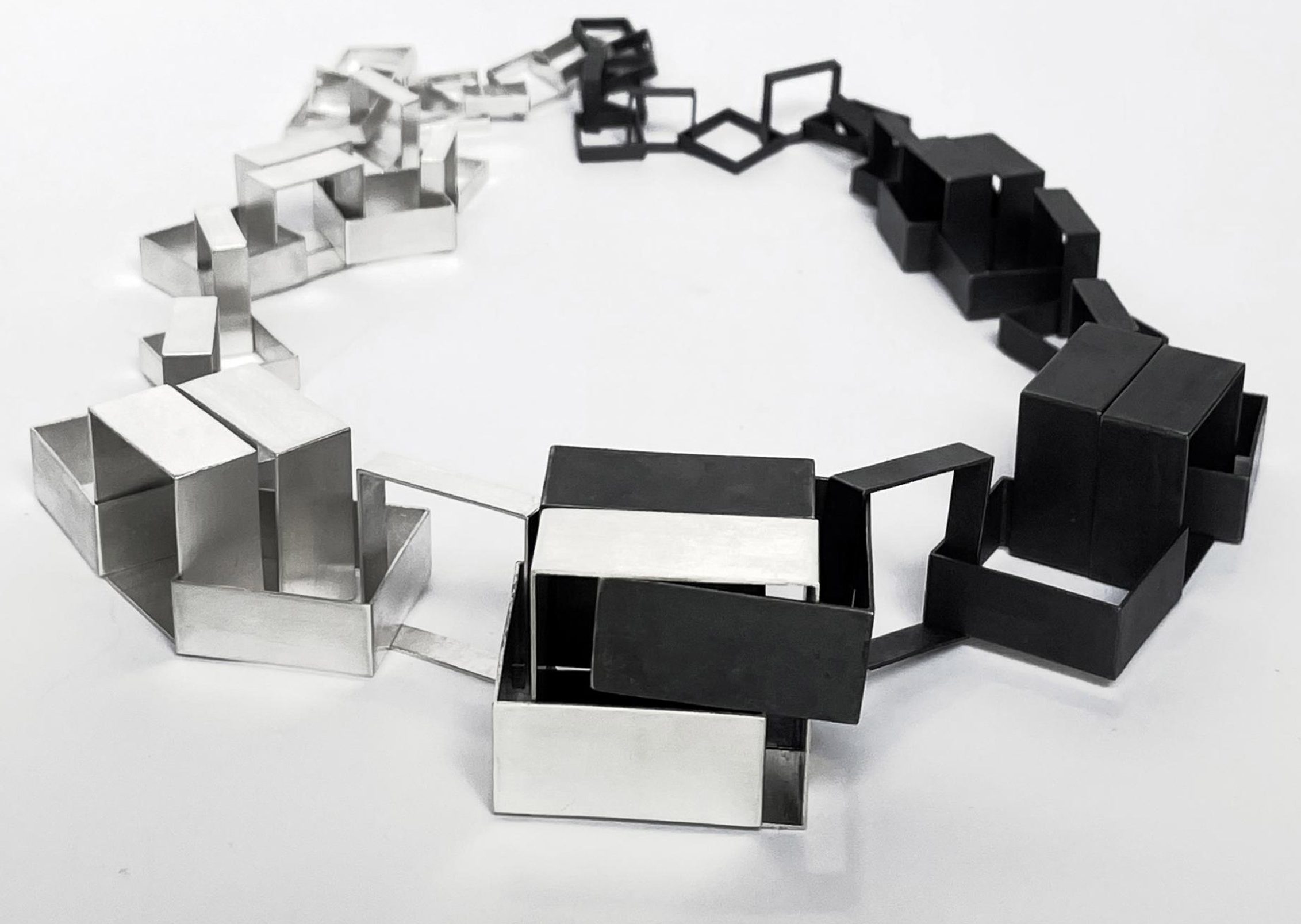
Cube Box Chain by Seongeun Kim

"Kim's work is inspired by abstract geometry with architecture and cubes featuring in much of her work. The square forms and geometric shapes can also be interpreted as her inner identity.

"Kim is interested in exploring why people wear jewellery on the body. In the past, jewellery was often a symbol of status, wealth and identity but was also worn as a talisman.

"Today, jewellery is more than just an ornament – it is as an expression of who you are, linked to the body, as well as many aspects of individuality and identity.

"Kim emphasises the identity of the wearer, visualising her inner identity and subjective emotions. Geometric shapes serve as a medium to visualise her hometown, background, experience, places and memory. The square forms create chains with unique and infinite connections."

Student: Seongeun Kim
Instagram:
@seongeunjewellery
Course: 
BA (Hons) Glass, Ceramics, Jewellery and Metalwork

University for the Creative Arts

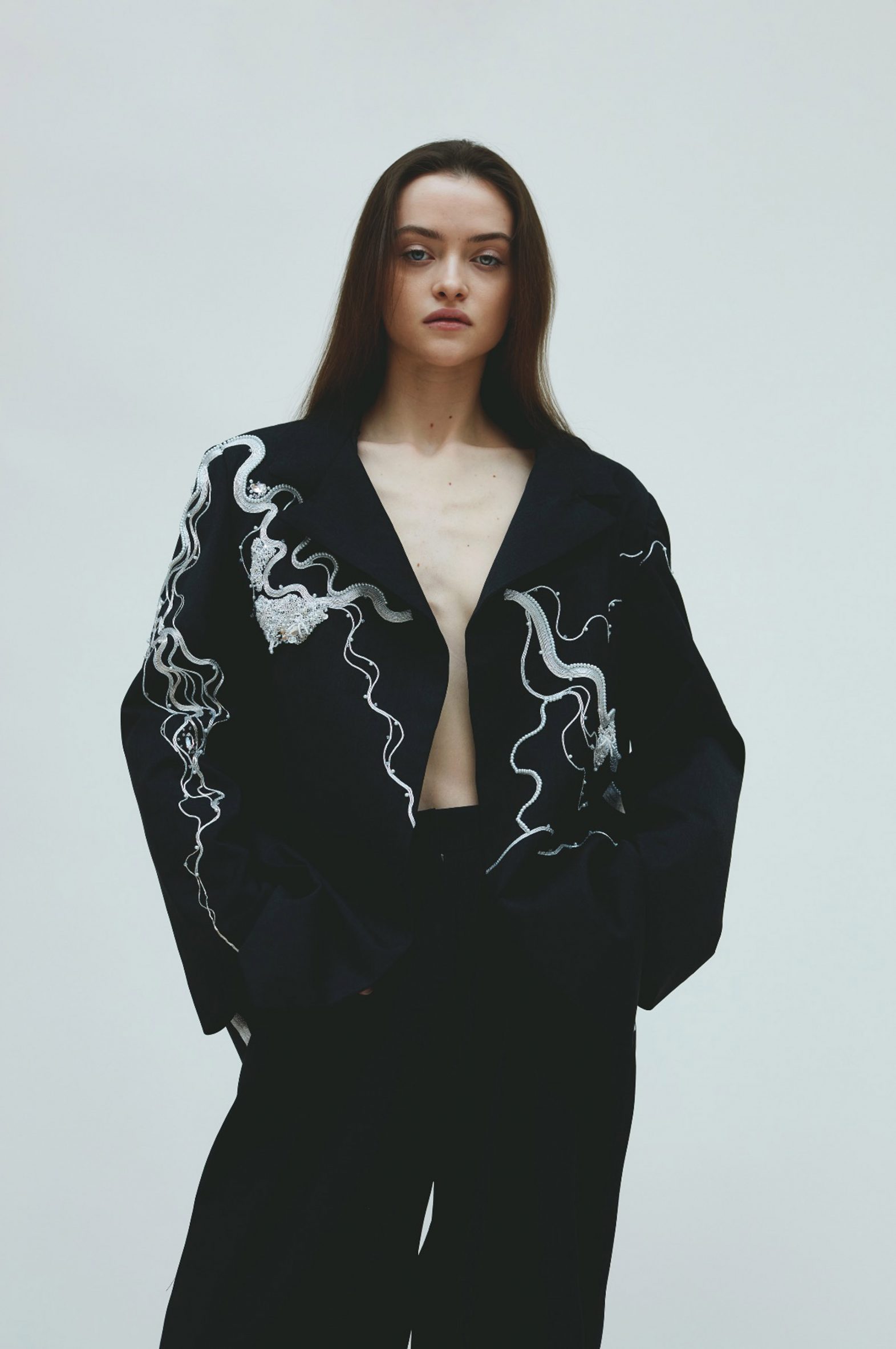
Beyond the Binary Wave by Millie Whitehead

"A 2021 graduate from The Royal School of Needlework and designer based in London, Millie Whitehead uses embroidery to create works that offer a new take on the crossover between male and female style to challenge dominant conceptions of gender.

"Whitehead's work reflects her belief that the fashion industry should abolish the idea of gender altogether. This change would make way for a more accepting, unrestricted creative platform, allowing everyone to express themselves fully without hindrance.

"Influenced by gender, fluidity and movement, 'Beyond the Binary Wave' is a combination of both traditionally male and female, a celebration of blurred lines between genders. Embroidery serves as the voice that speaks on behalf of the designer. Combining masculine tailoring with this creates a juxtaposition between these two crafts, both traditionally associated with differing genders.

"Whitehead aims to create collections that will give haute couture and high-end fashion significantly more meaning. She uses traditional techniques and translates these into non-traditional and contemporary contexts that reflect her personal beliefs and values."

Student: Millie Whitehead
Course:
BA (Hons) Hand Embroidery for Fashion, Interiors and Textile Art, Royal School of Needlework
Instagram:
@mgw.studios

University for the Creative Arts

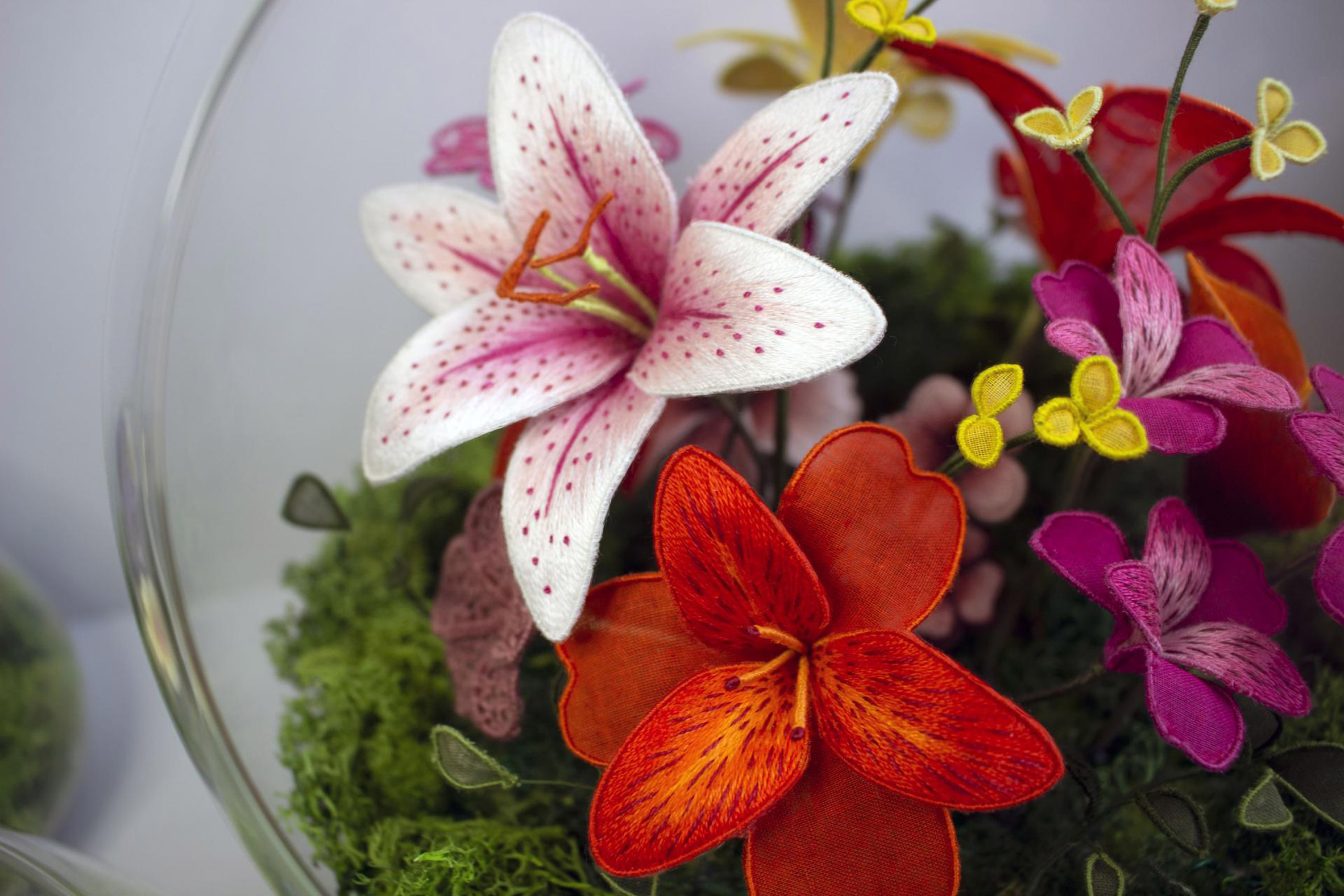
The Preciousness of Life by Lucy Martin

"The Preciousness of Life is a meditation on nature's beauty and serenity married with a sense of nostalgia and family in a series of hand-embroidered sculptural objects. Inspired by Martin's garden at her family home, this personal project reflects the aspects of her life she holds most dear through the art of bespoke hand embroidery.

"The work comprises a series of glass terrariums, within which sit a series of hand-embroidered florals. The initial stages of the project began with sketches and paintings of the flowers around Martin's home and nearby gardens.

"The blooms selected for this piece were carefully curated to reflect the people most important in her life: sweet peas because she helped her dad plant them during the lockdown; bluebells such as those that line the woods opposite her nana's house; alstroemeria which is her mum's favourite flower.

"Created mainly using raised work and stumpwork hand embroidery techniques, The Preciousness of Life takes hand-rendered and digitally drawn florals and translates this into stitched artwork. Combining silk shading, goldwork and tambour beading techniques to create the surface design on the petals, each terrarium piece contains sculpted flowers stitched into a ground of hand-embroidered moss."

Student: Lucy Martin
Course:
BA (Hons) Hand Embroidery for Fashion, Interiors, Textile Art, Royal School of Needlework

University for the Creative Arts

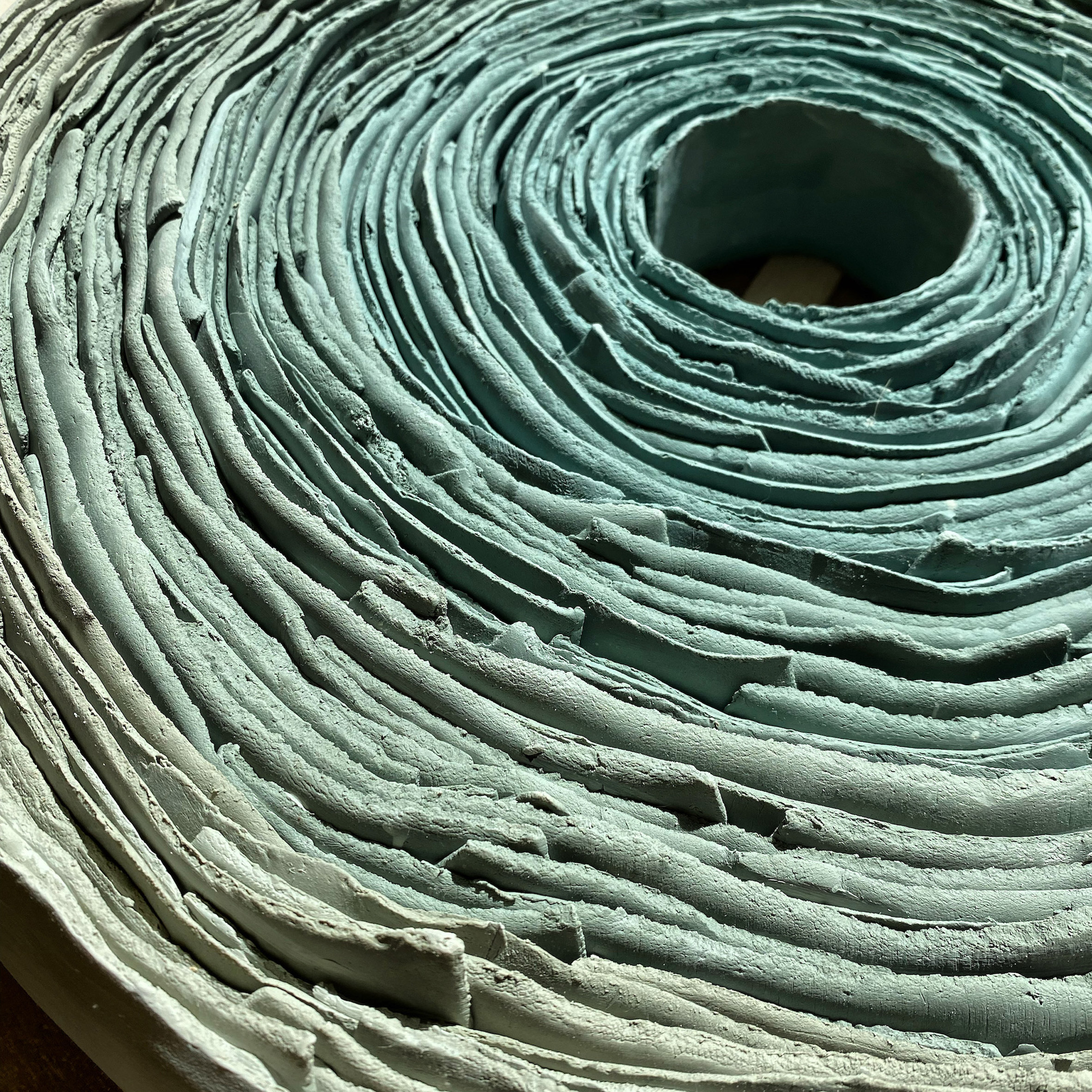
Teal Gradient Layers by Jaime Dunlop

"Dunlop's graduate work explores the presence of a singular object and the power of the collective group. She works with clay because of the direct, hands-on approach it offers and allows herself to be led by the material and welcome this evolving practice.

"Attracted to the strength, tension and fragility of clay, Dunlop attempts to sensitively build layers from modest clay slabs before arriving at the final form. She intently produces multiples by exploring layers, with each unique component serving an essential function within the larger arrangement. The construction of these circular forms relies on the chemical changes enacted during the firing process.

"Dunlop brushes water between the layers and compresses each strip to one another until the entire form is connected. After slowly drying, the heat process transforms these once individual elements into a strong united structure. These forms hold a contemporary profile and result from a contest for control between maker and material. Jamie intends for her work to be shown collectively – their shared aesthetic connects each object as a cohesive group."

Student: Jaime Dunlop
Course:
BA (Hons) Glass, Ceramics, Jewellery, Metalwork, UCA
Instagram: @jai.valentine.ceramics

University for the Creative Arts

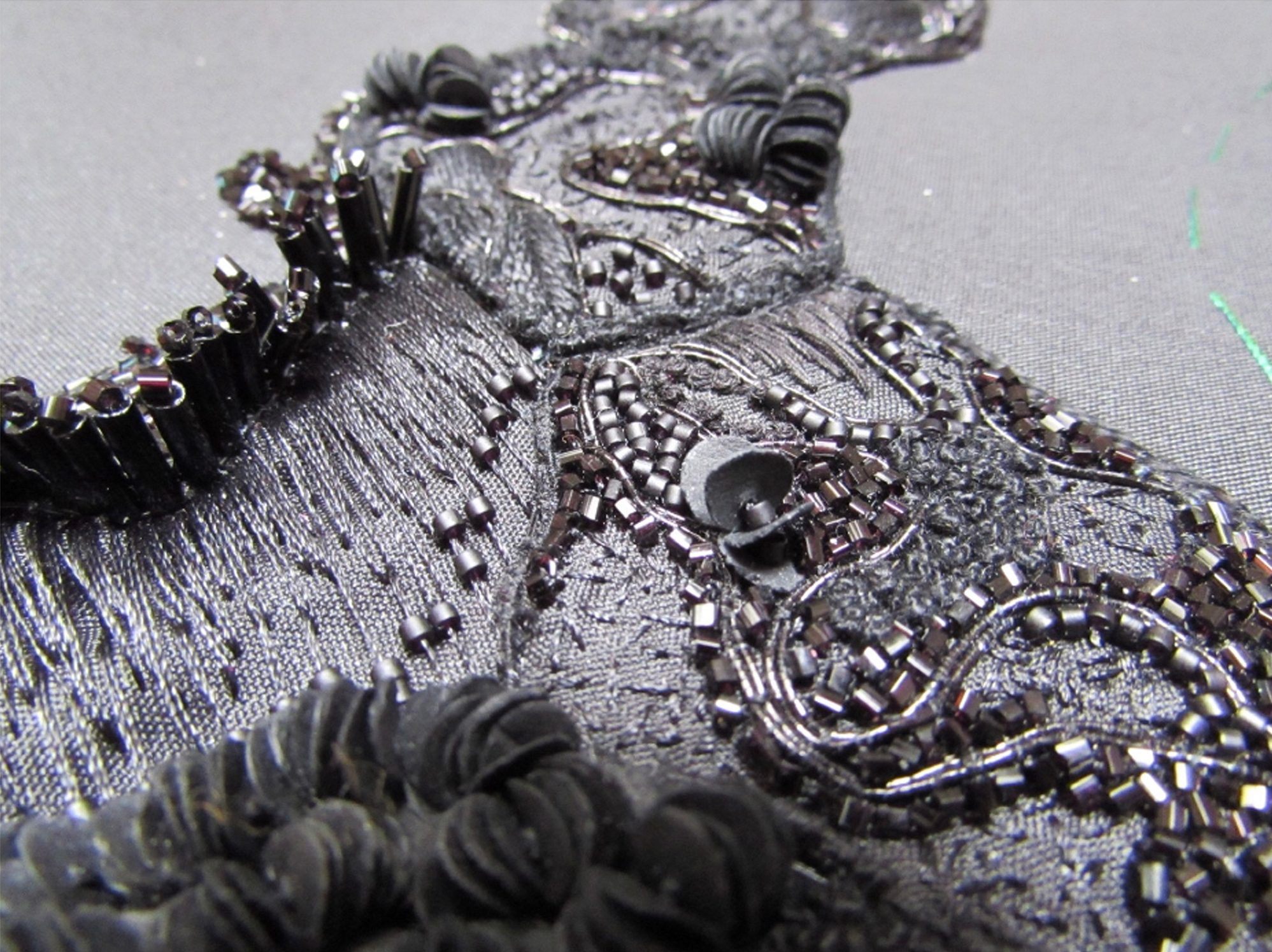
The Unseen by Felicity Billing

"Billing pushes the creative boundaries between embroidery, design and science. Her exploration into textured embroidery and material manipulation allows her to showcase cells and natural forms in a tactile way.

"The Unseen is a collection of three body-adornment garments inspired by abstract shapes found in human and plant cells, invisible to the naked eye. Microscopic lens imagery allows for a clear view of the cell structure.

"Importantly, Billing's work consists of tactile pieces, as a result of her use of textured embroideries such as French knots in crewelwork and bead embroidery combined with material manipulation to showcase these cells and natural forms.

"Connecting herself to the natural world means she approaches hand embroidery with technical precision in juxtaposition to the intuitiveness of human and plant cells. As a result, she produces heavily embellished abstract shapes that intertwine, translating initial marks into extraordinary embroidery for a collection of thought-provoking fashion and art-based garments."

Student: Felicity Billing
Course:
BA (Hons) Hand Embroidery for Fashion, Interiors and Textile Art, Royal School of Needlework

University for the Creative Arts

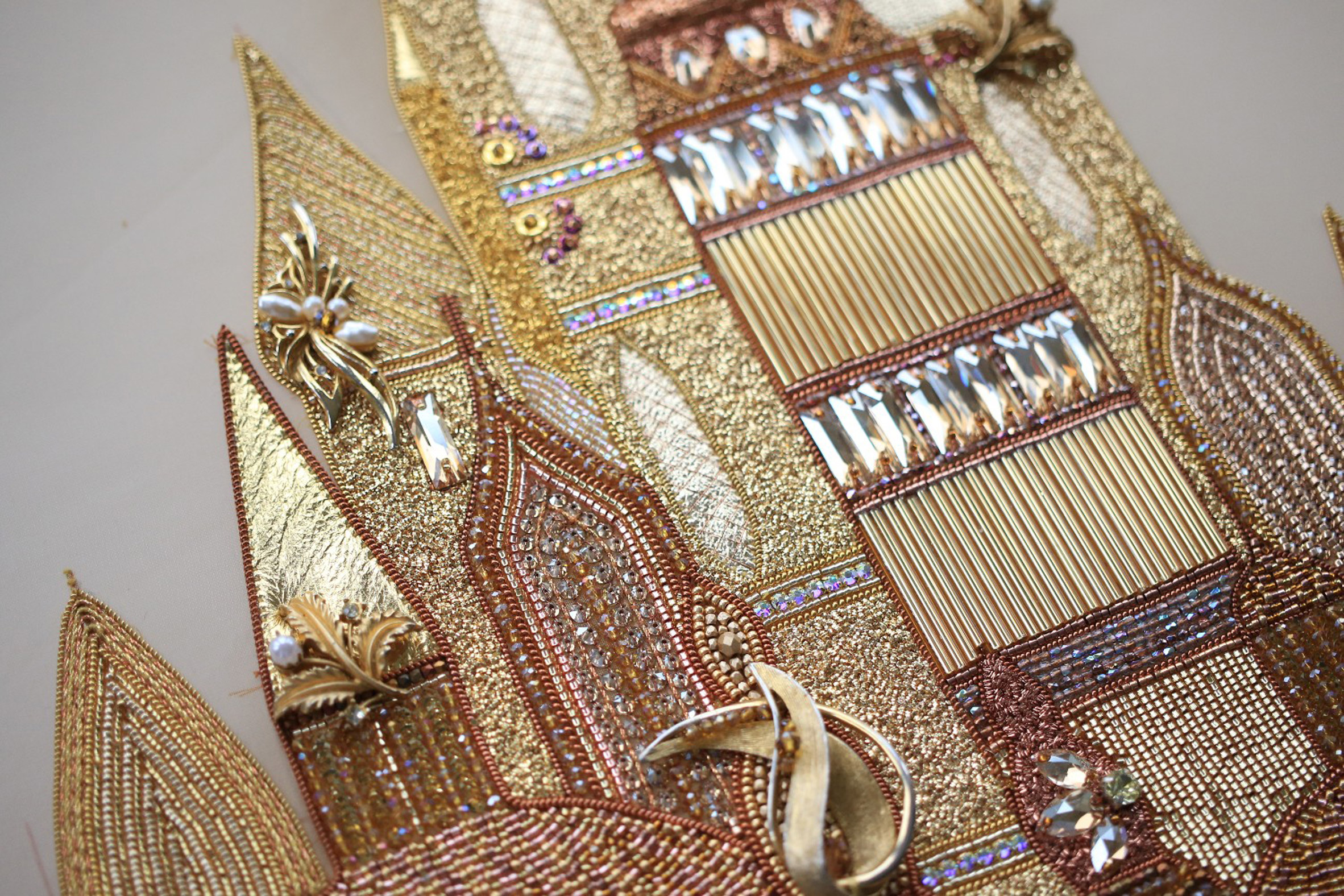
Odysseys of Grief by Rebecca Miriam Offredi

"Odysseys of Grief is a body of embroidered work firmly rooted in emotional memories. During this time, Offredi experienced an unexpected series of events that caused great personal upset, grief and loss. Her most successful work to date has been strongly rooted in emotional memories, both good and bad.

"There are three underlying and intertwining themes from which Odysseys of Grief is woven – Offredi's personal experience of loss and grief, the classical works of the Odyssey and the Iliad, and a trip around Europe.

"Depicted as a series of sculptural and heavily embroidered crowns and body adornments, the pieces from this collection represent three different stages of grief. Odysseys of Grief is ultimately a project based on hope that loss, grief and associated anxiety and depression, are not impossible or permanent. Her work aims to depict the destruction of loss and the rebuilding of something new and beautiful."

Student: Rebecca Miriam Offredi
Course: BA (Hons) Hand Embroidery for Fashion, Interiors and Textile Art, Royal School of Needlework

University for the Creative Arts

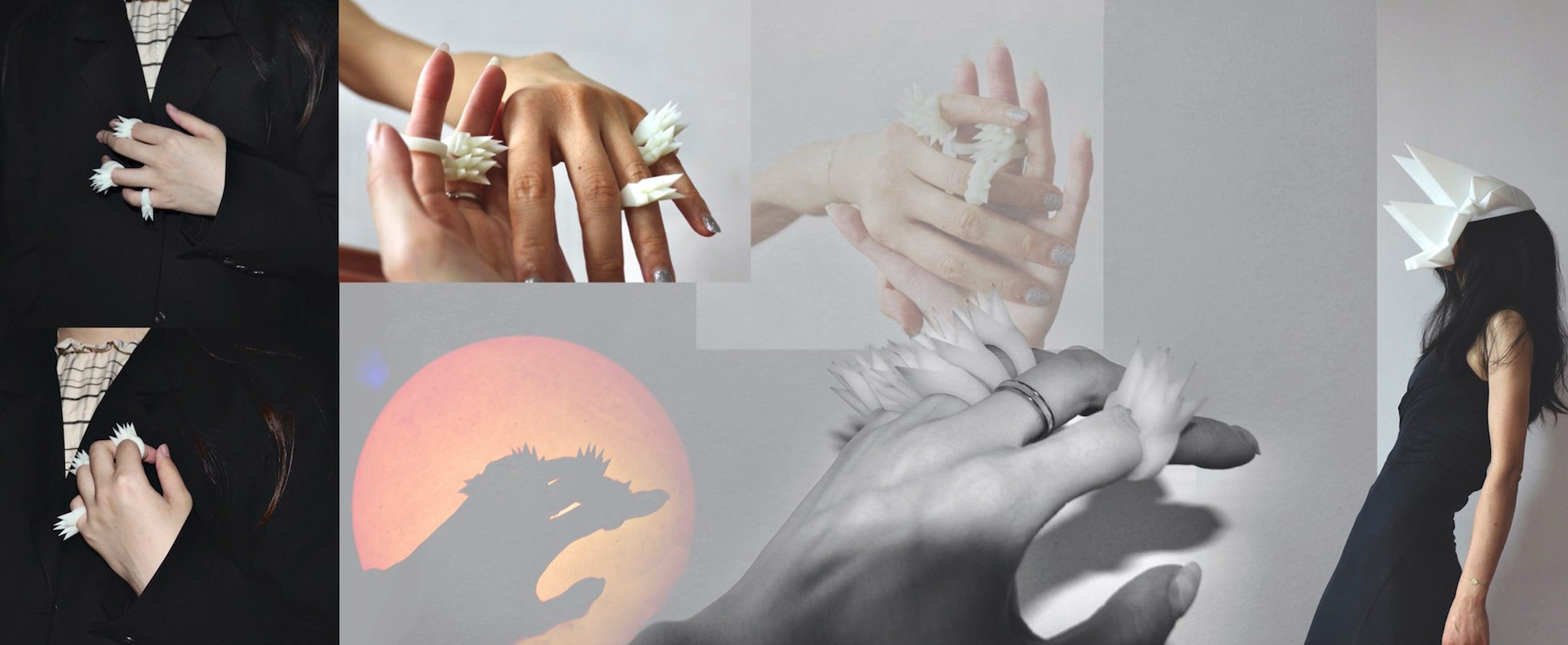
Synesthesia of Bipolar Disorder by Zhi Yi Li

"Yi Li started this research on the basis of the paintings she created whilst listing to music. Since she was a child, when she heard music, she always had a variety of lines, patterns and colour combinations in her mind.

"When she meets new friends, she will see colours. When she hears people's names, the taste of the name will appear in her mouth. For example, when she hears the name Edward, she tastes cherry syrup. When Yi Li thinks of her sister, Li Siayo, she smells light blue and lavender.

"She tastes milk chocolate, black tea and smells sandalwood when she thinks of her friend Hung Li Tzu. These are the sensory experiences that Yi Li encounters as a person with synesthesia.

"Her goal is to become a conceptual jewellery designer. She can't explain why she experiences these sensations. The only thing she can do is record it and visualise the information she gathers into forms to let other people experience them too."

Student: Zhi Yi Li
Course:
BA (Hons) Glass, Ceramics, Jewellery and Metalwork

University for the Creative Arts

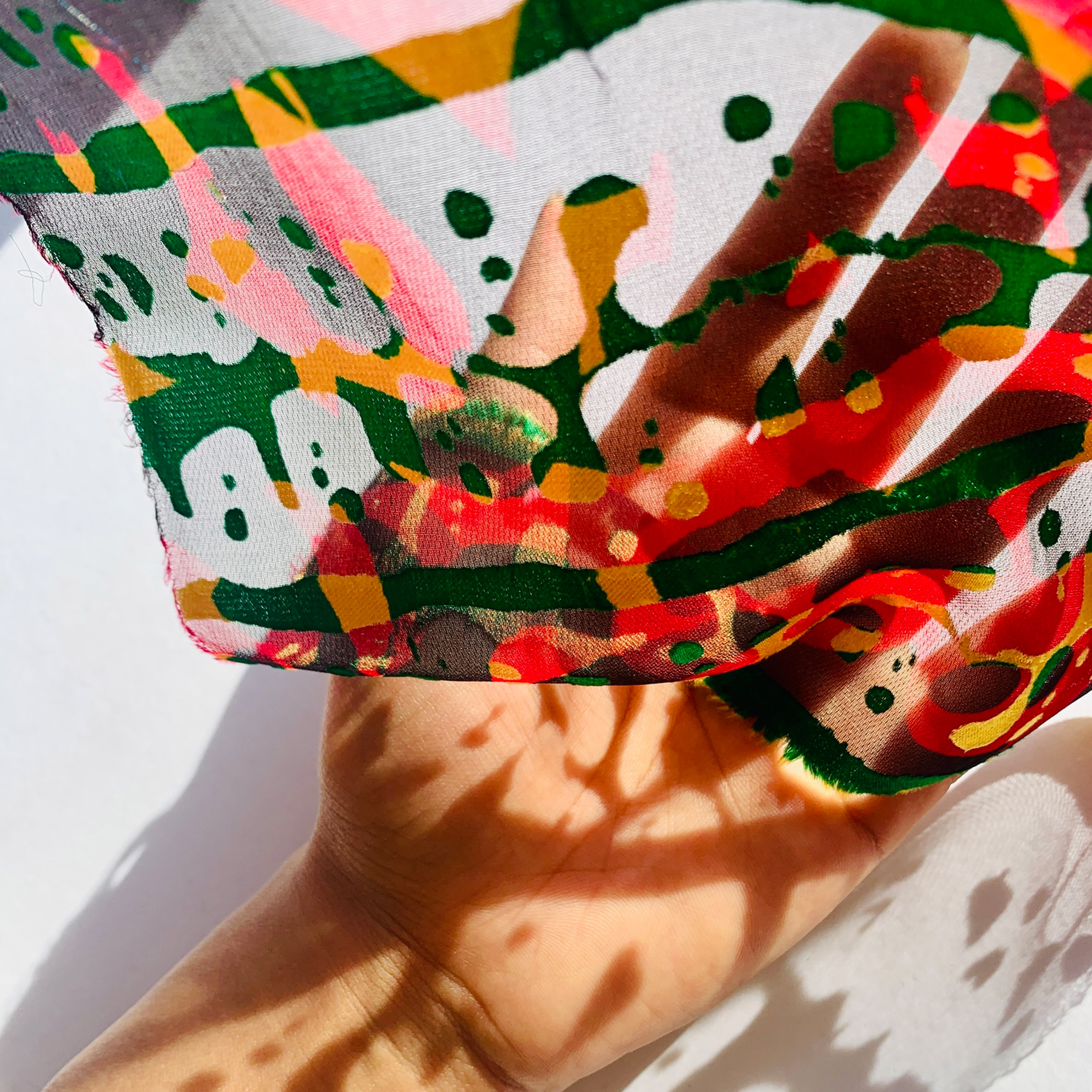
Beauty in the Bugs by Bnita Vaghela

"During lockdown, Vaghela began to explore the outside world noticing details that she previously took for granted or went unnoticed, including the many bugs around her. The colouration and the vibrancy of bugs inspired her to explore the world of insects, mesmerised by their colours, textures and patterns. They also contribute so much to our environment, sustaining our ecosystems through pollination.

"Vaghela wanted to magnify their designs by using both methods of hand screen printing and digital prints to create her collection. She hopes that her project will change the creepy perception of bugs and make people feel less scared and disgusted by them.

"She was also inspired by her own African and Indian cultural background. Being surrounded by colourful textiles and ornaments at home made her want to celebrate who she is and where she comes from. Her main aim was to create a bold statement showcasing how extraordinary our environment is and to remind people to take the time to observe their surroundings and embrace them more."

Student: Bnita Vaghela
Course: BA (Hons) Textile Design
Instagram: @bnitavaghela_textiles

University for the Creative Arts

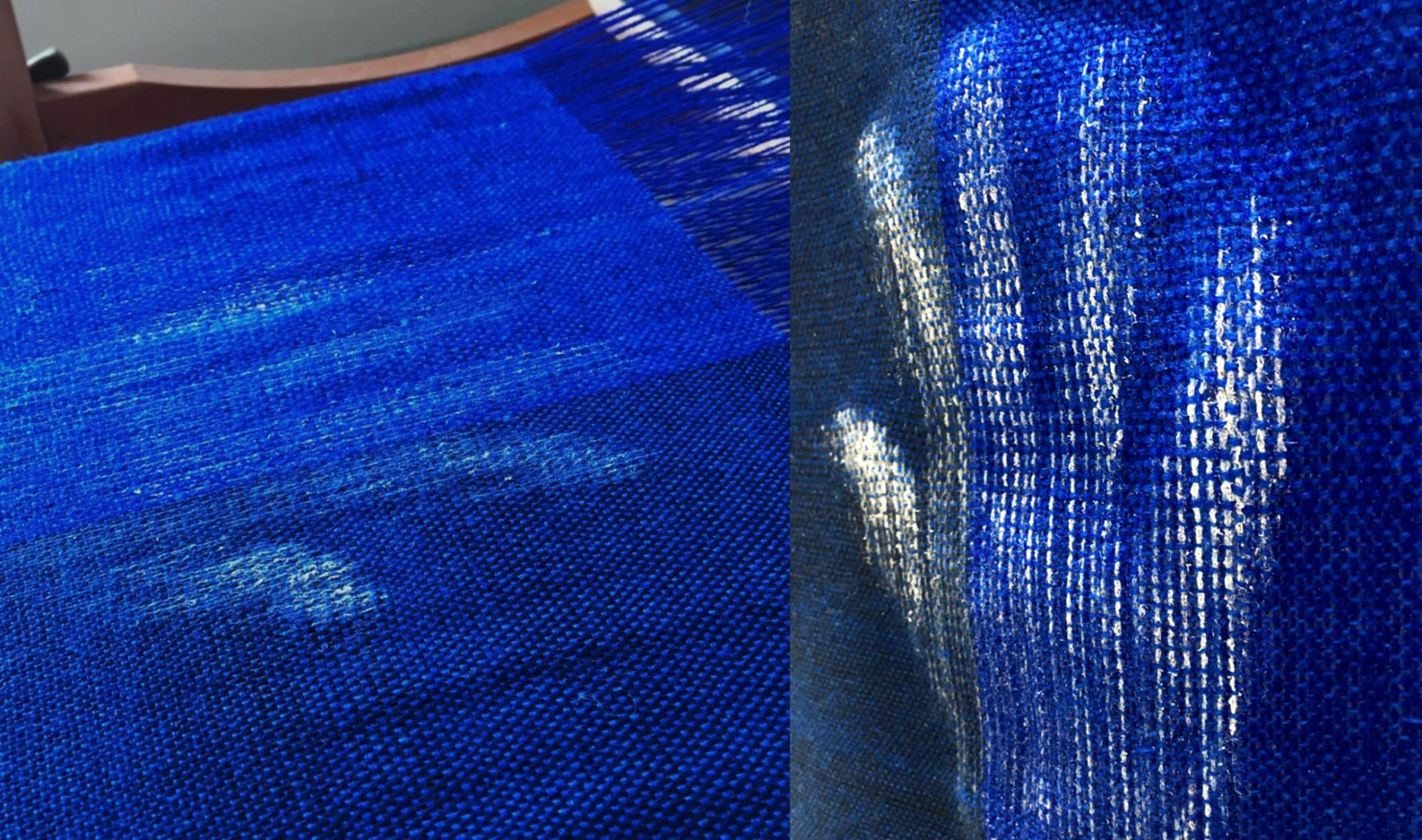
Painted Woven Hands by India Ashe

"For her final major project, Ashe explored the concepts of identity and memory, abstractly represented through the motif of hands. The desire to leave behind a handprint to show we were here is a "shared creative impulse that transcends time and culture," according to the Heard Museum, 2018.

"She used a wide variety of 'feminine' materials and techniques within the 'domestic arts' realm to acknowledge the history of women's forgotten role in using these crafts, as well as to reflect her experiences as a woman and feminist within the textile art community.

"Her research, in conjunction with her memories of hands, specifically her childhood abuse 'at the hands' of her mother, informed her choice of feminine materials and techniques to subvert the traditional notion of textiles as nurturing, practical objects made for the home and family.

"Her key visual influences were the Surrealist art movement and early human art, specifically cave painting, which captures the theme of memory and identity through a handprint immortalised on stone."

Student: India Ashe
Course:
BA (Hons) Textile Design


Partnership content

This school show is a partnership between Dezeen and the University for the Creative Arts. Find out more about Dezeen partnership content here.

The post University for the Creative Arts presents its 2021 graduate craft showcase appeared first on Dezeen.


from Dezeen https://ift.tt/3zmtJIH