Wednesday, 21 July 2021

Herzog & de Meuron unveils cylindrical skyscraper at Canary Wharf

One Park Drive in Canary Wharf by Herzog & de Meuron

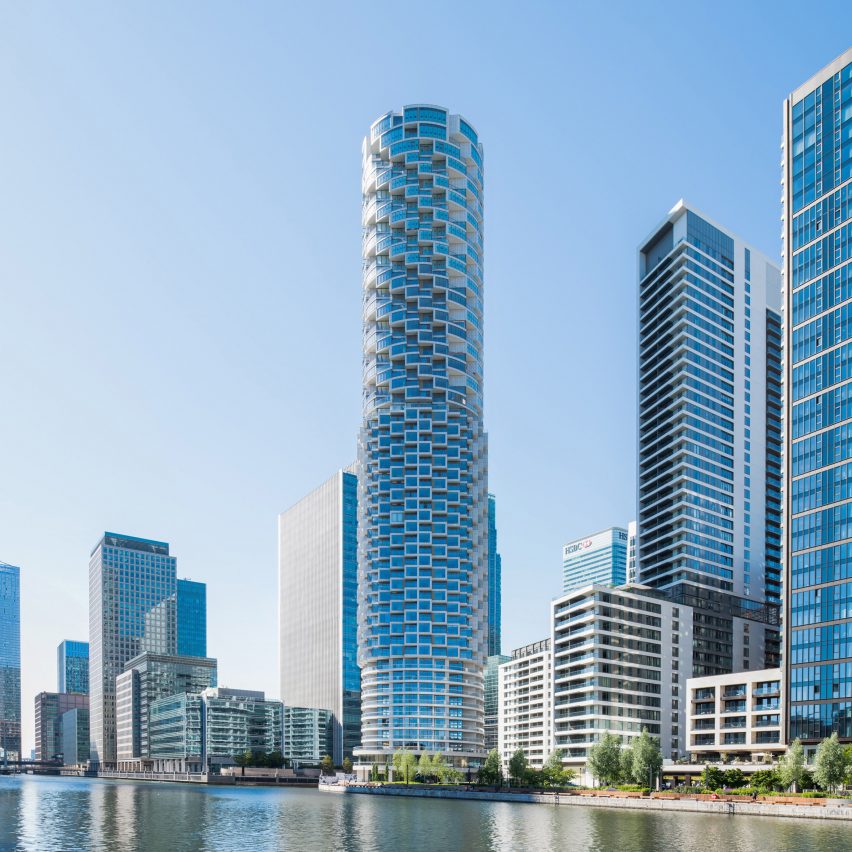
Swiss architecture studio Herzog & de Meuron has completed the One Park Drive residential skyscraper at Canary Wharf in London.

Designed to stand out from the surrounding office towers of Canary Wharf, the 58-storey skyscraper has a distinctive cylindrical form.
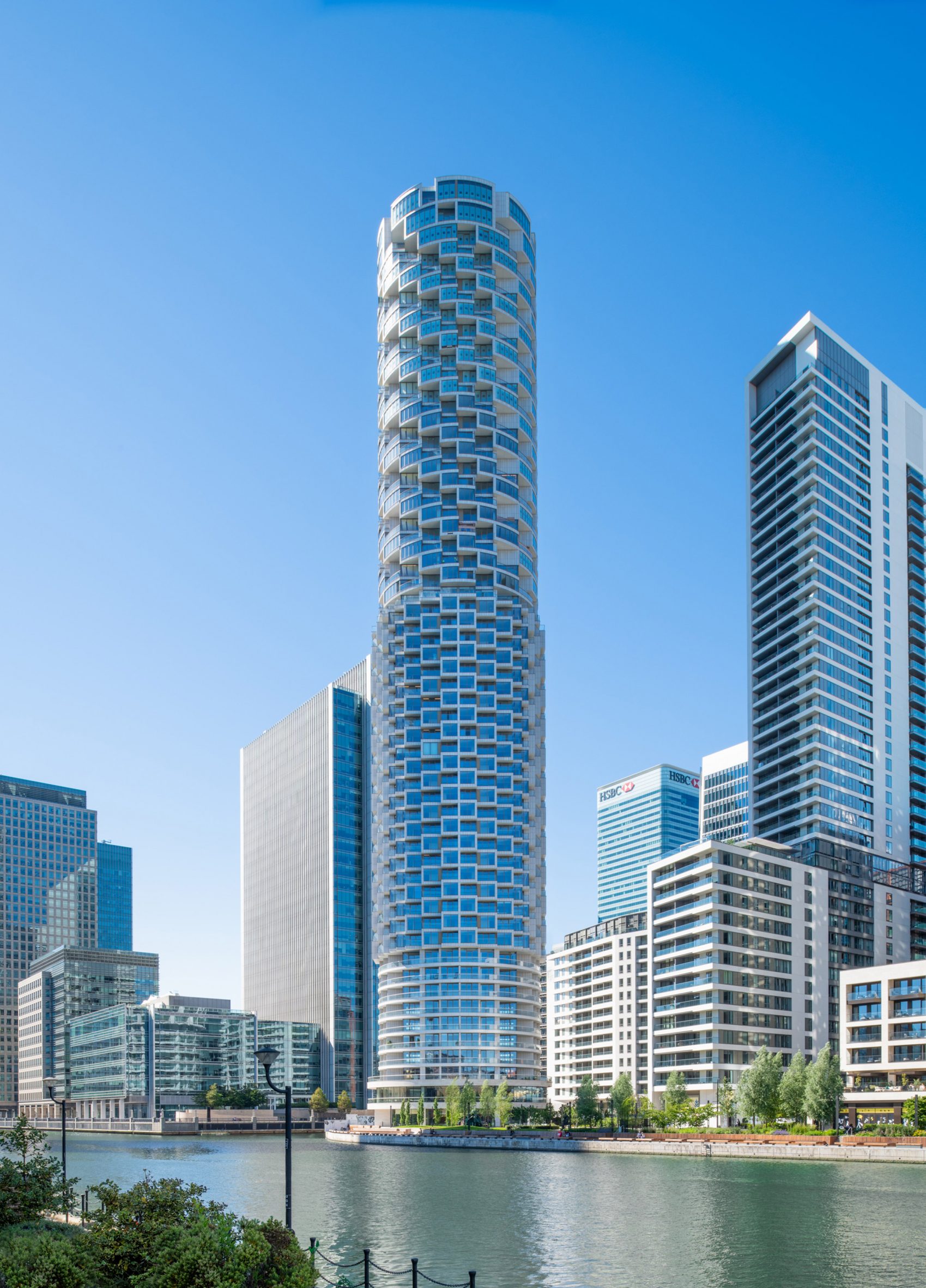
One Park Drive skyscraper by Herzog & de Meuron
The cylindrical One Park Drive was designed by Herzog & de Meuron

"Set against the backdrop of the existing Canary Wharf buildings, the circular form of the new tower clearly distinguishes itself from its orthogonal neighbours," said the studio.

"The form is a statement of the tower's difference. It is a residential tower adding a new dimension to an area dominated by commercial space."
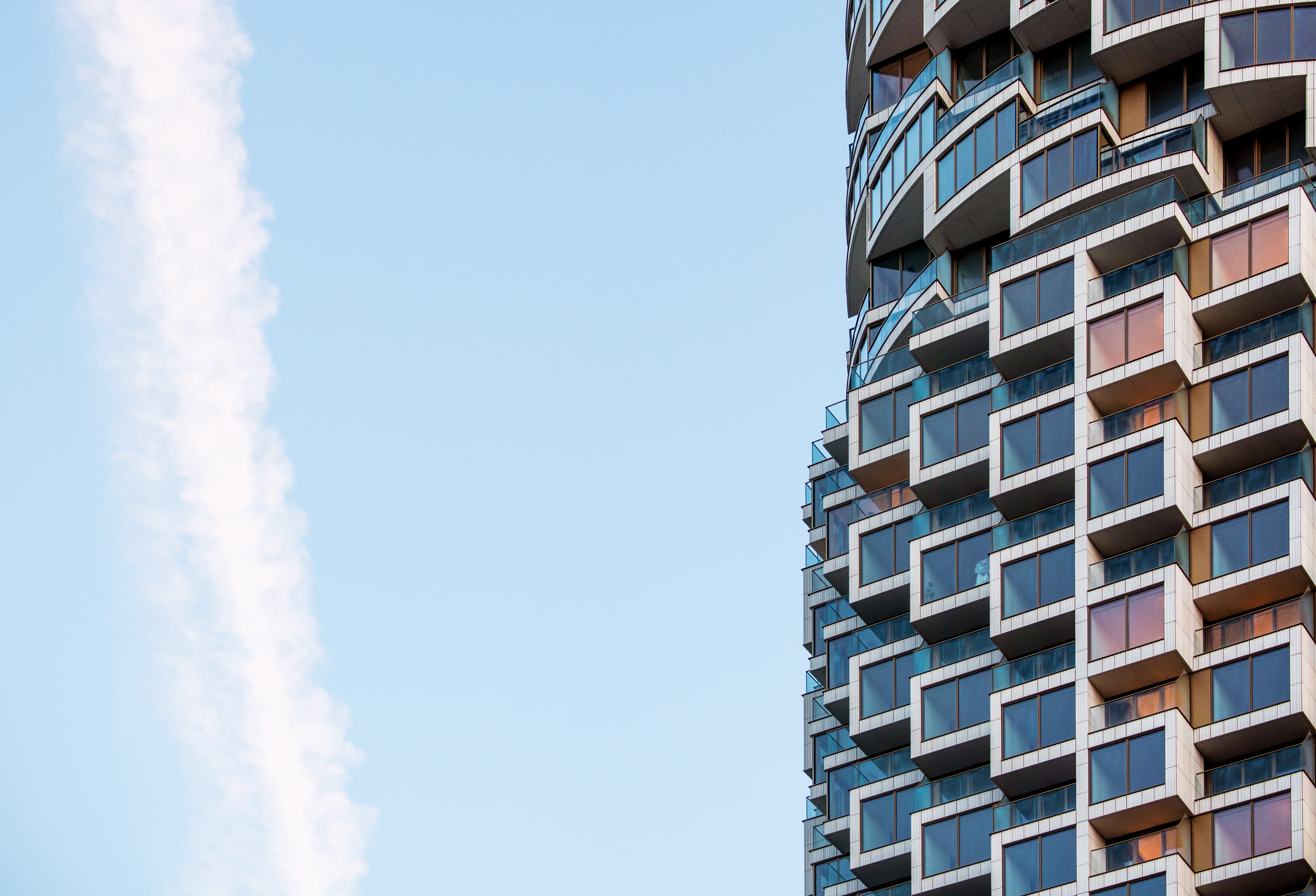
Blocky skyscraper
Blocky apartments extend from the cylindrical skyscraper

The tower, which contains 484 apartments, forms part of developer Canary Wharf Group's wider plan to add homes to the predominantly commercial area of east London.

Standing 205 metres tall, it was designed by Herzog & de Meuron to be a landmark structure within the Wood Wharf expansion of Canary Wharf.
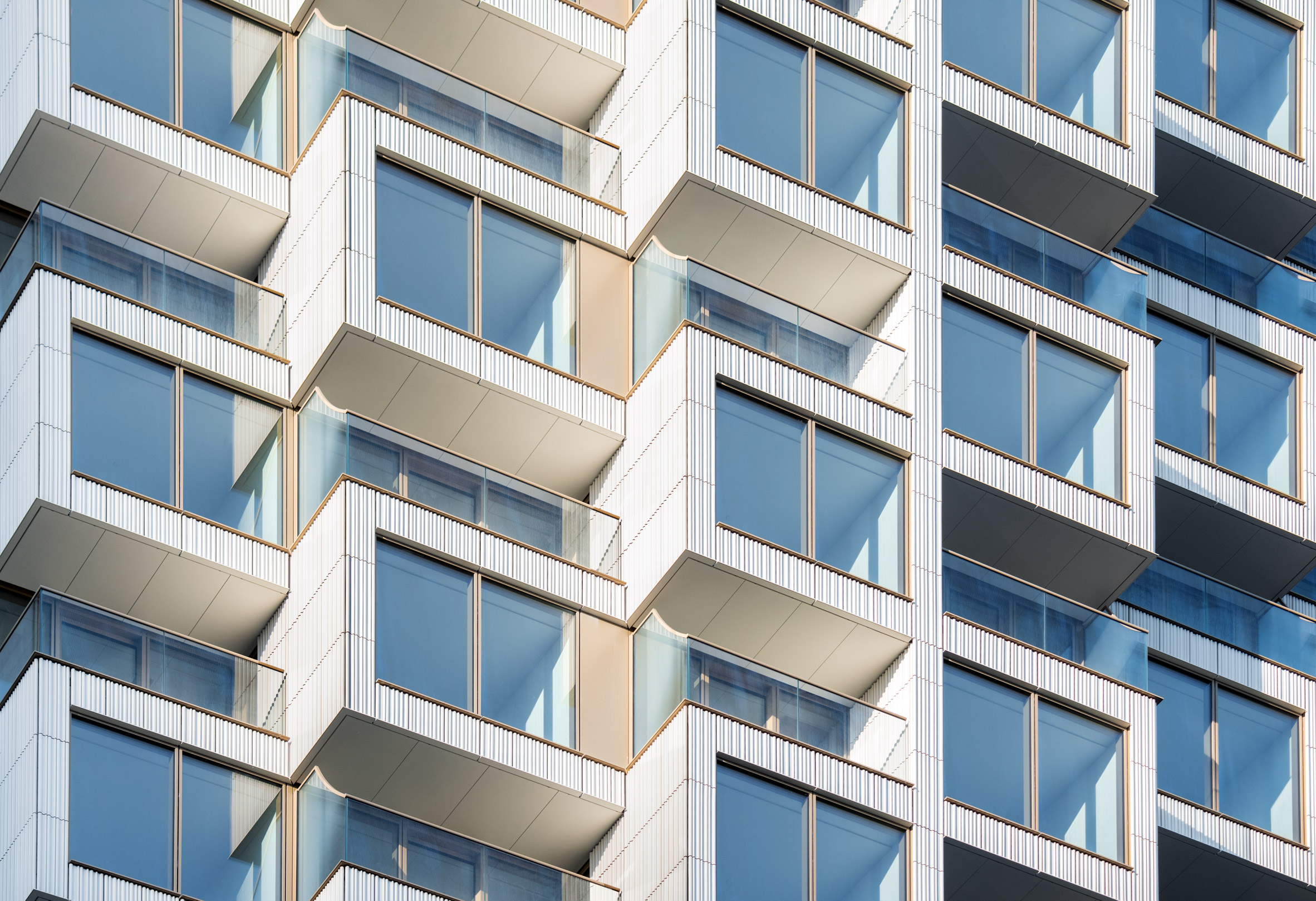
Blocky apartments in London skyscraper
The central section has a blocky exterior

"It was very clear that this would need to be a signature building," said Brian De'ath, director of residential sales at Canary Wharf Group.

"It stands at the head of the dock in a very prominent position and is the first building you see as you cross the bridge into the Wood Wharf development," he told Dezeen.
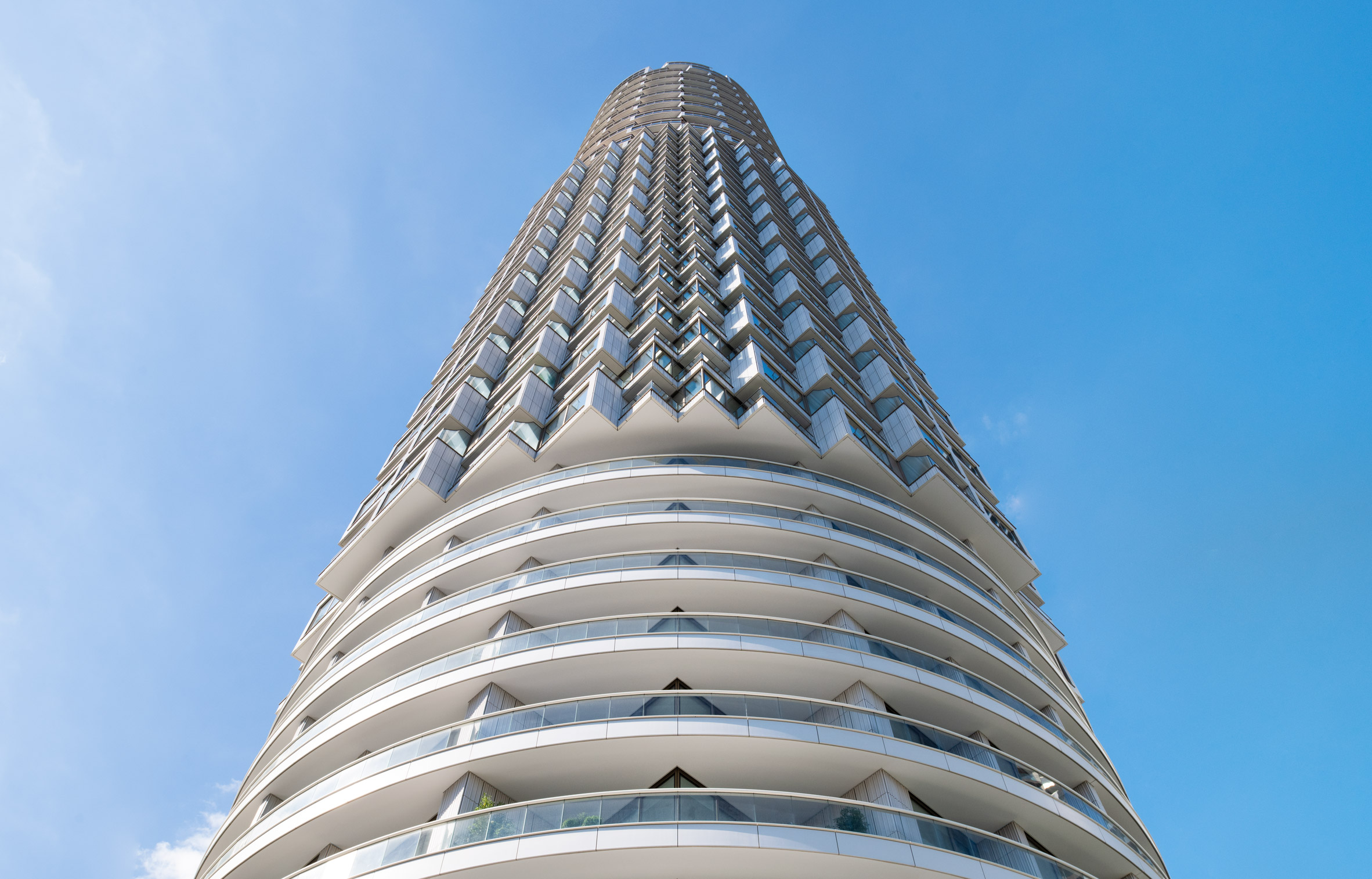
Cylindrical skyscraper
The cylindrical skyscraper is made up of regular-shaped apartments

The skyscraper was designed to have the appearance of a cylindrical tower, but the majority of the apartments have regular straight edges.

According to the developer, this creates an aesthetic appearance that differentiates the building from the oblong-shaped office towers, but does not impact the quality of the apartments.
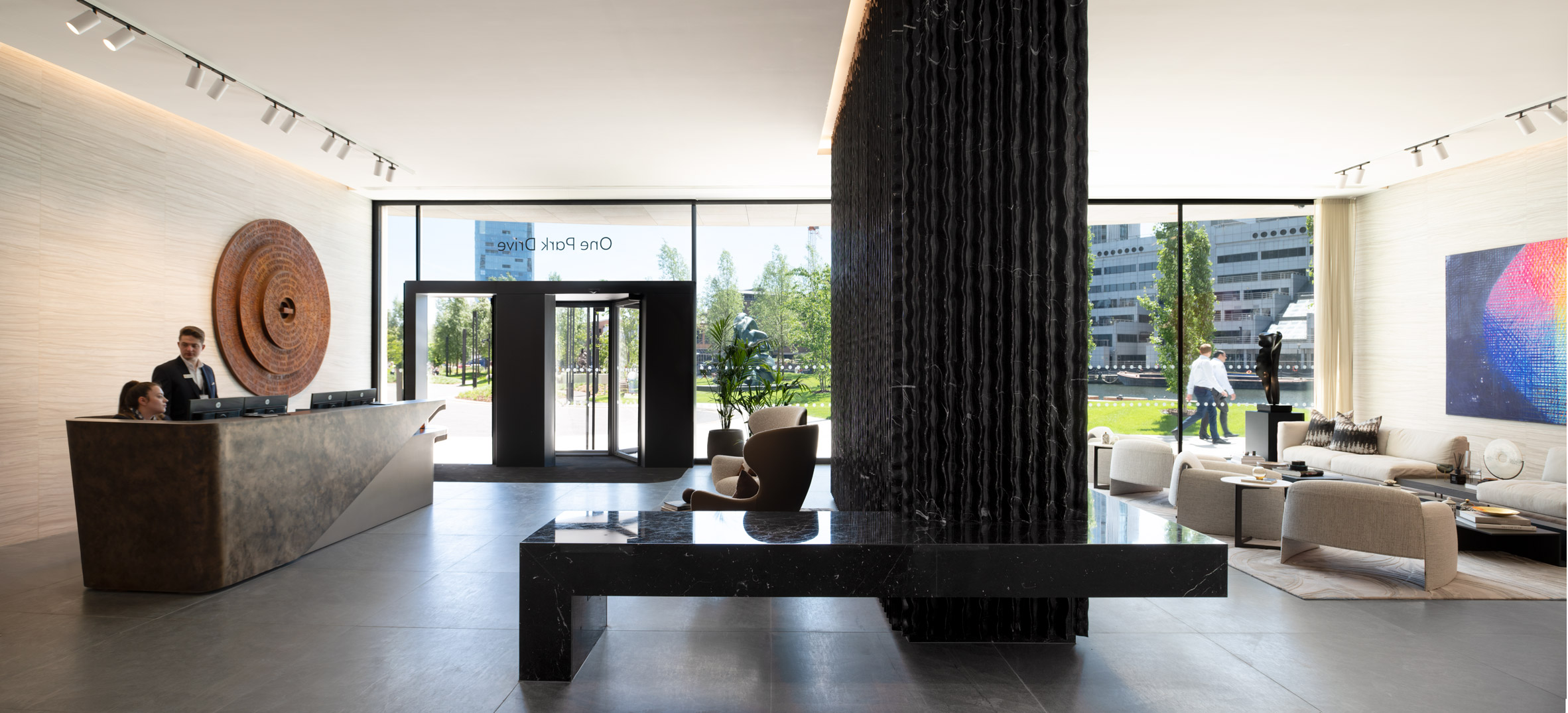
Lobby and reception in London skyscraper
The lobby and reception are on the ground floor

"It looks like a round building, but doesn't have the issues of breaking a round building into apartments," explained De'ath

"Round buildings are very challenging to occupy as you need specific furniture or end up with lots of odd-shaped dead spaces," he continued.

"This building was designed from the inside out. It has a superb impact externally, but works internally."
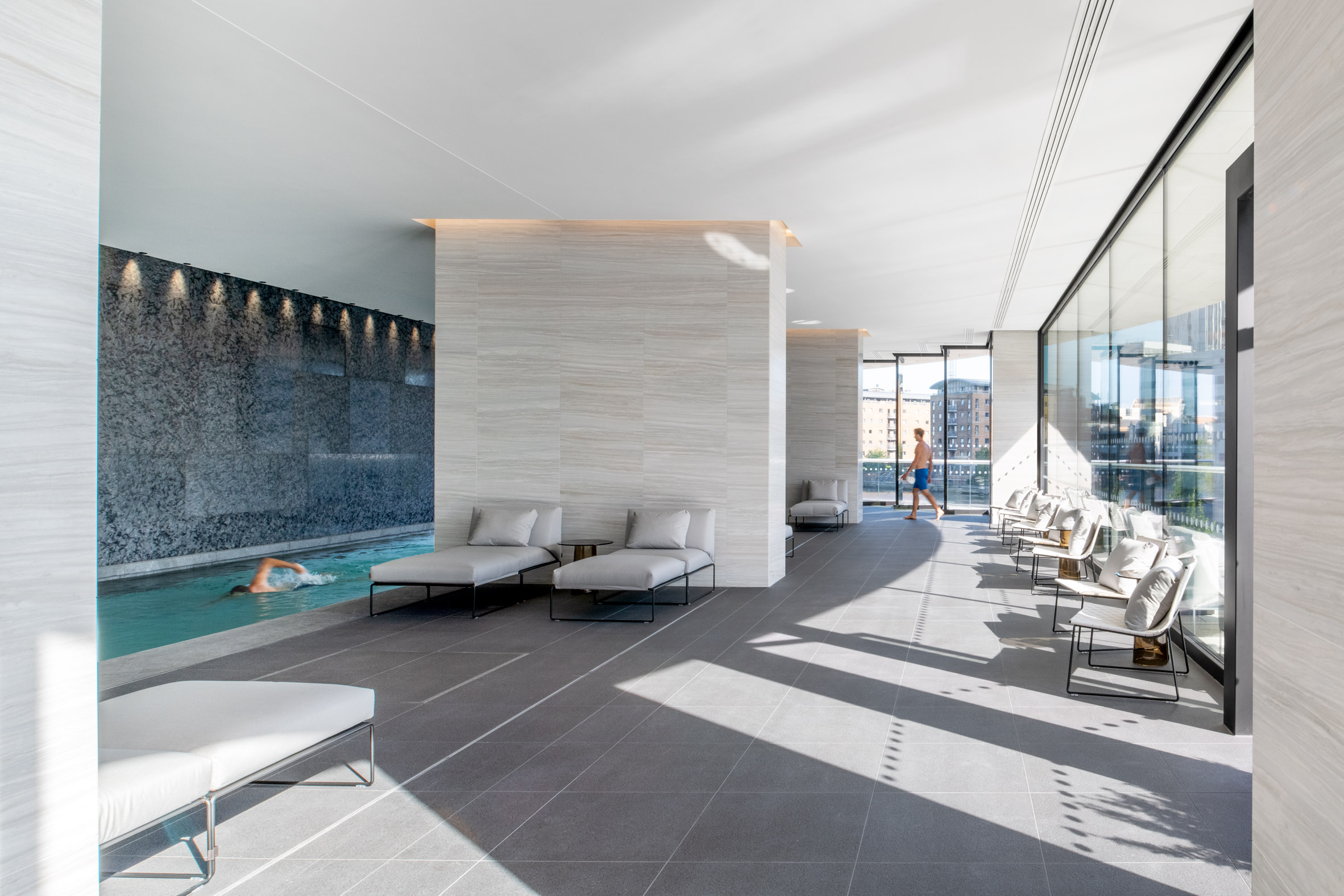
Gym with swimming pool
A gym with swimming pool is on the first floor

One Park Drive is divided into four distinct sections, which are clearly visible on its exterior.

"The exterior of the new residential tower is the outward expression of the residential units that constitute the majority of the program," said the studio.

"Aggregated together, these units form a tower facade that offers a clear distinction between the human scale of the residential development and the unifying mass of the office towers behind it."

The rounded lowest two floors contain the entrance lobby and cinema space, topped with a gym and swimming pool. Above this are 56 floors of apartments.

The lowest nine floors have rounded floor plates with large apartments that extend out onto curved external balconies.
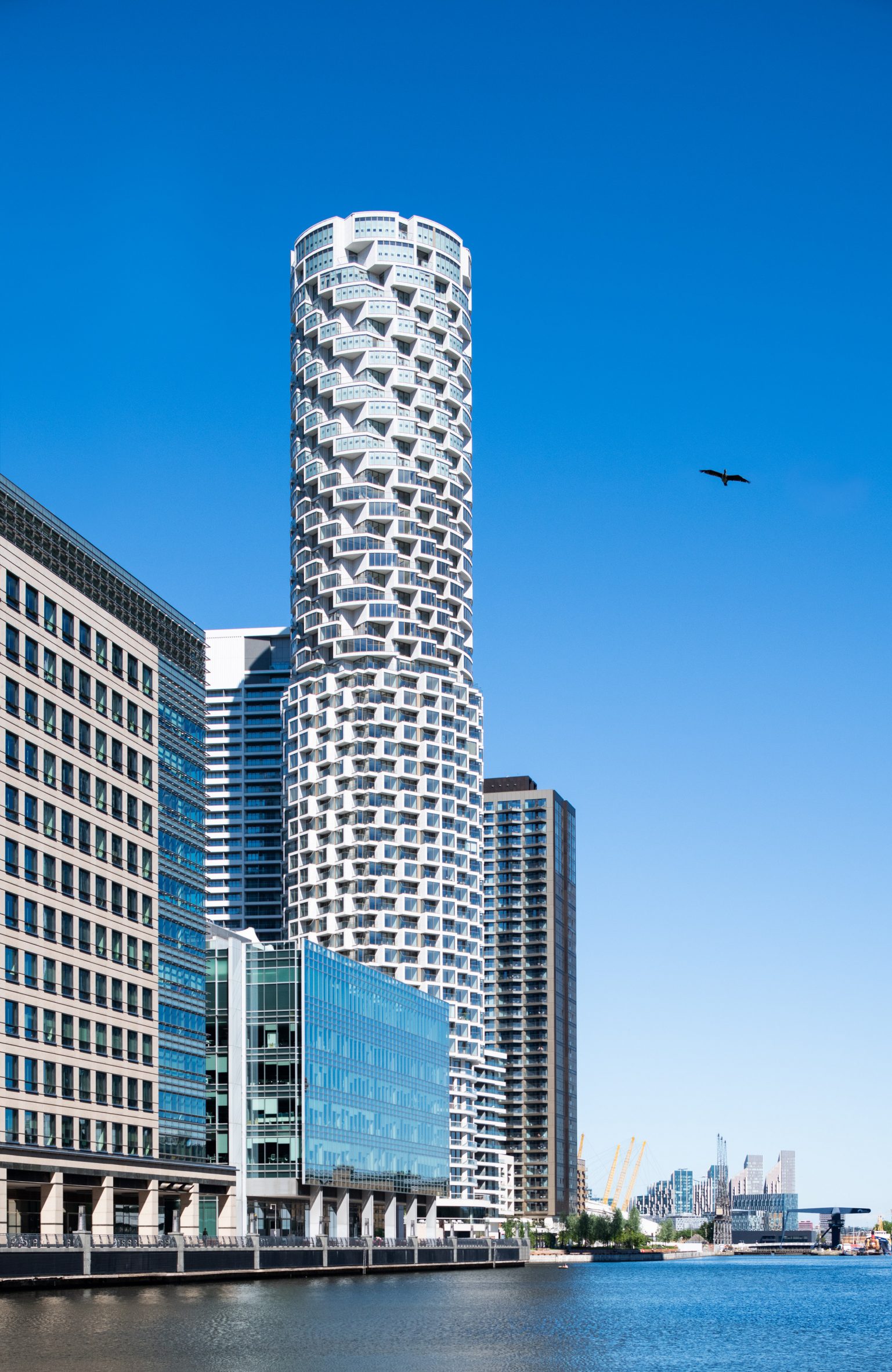
One Park Drive skyscraper at Canary Wharf
The skyscraper is visually broken into four sections

Above this are 22 floors of smaller studio, one and two-bed apartments with a boxy exterior expression.

The building is topped with 25 floors of large apartments with curved external walls that are twisted to create external balconies.
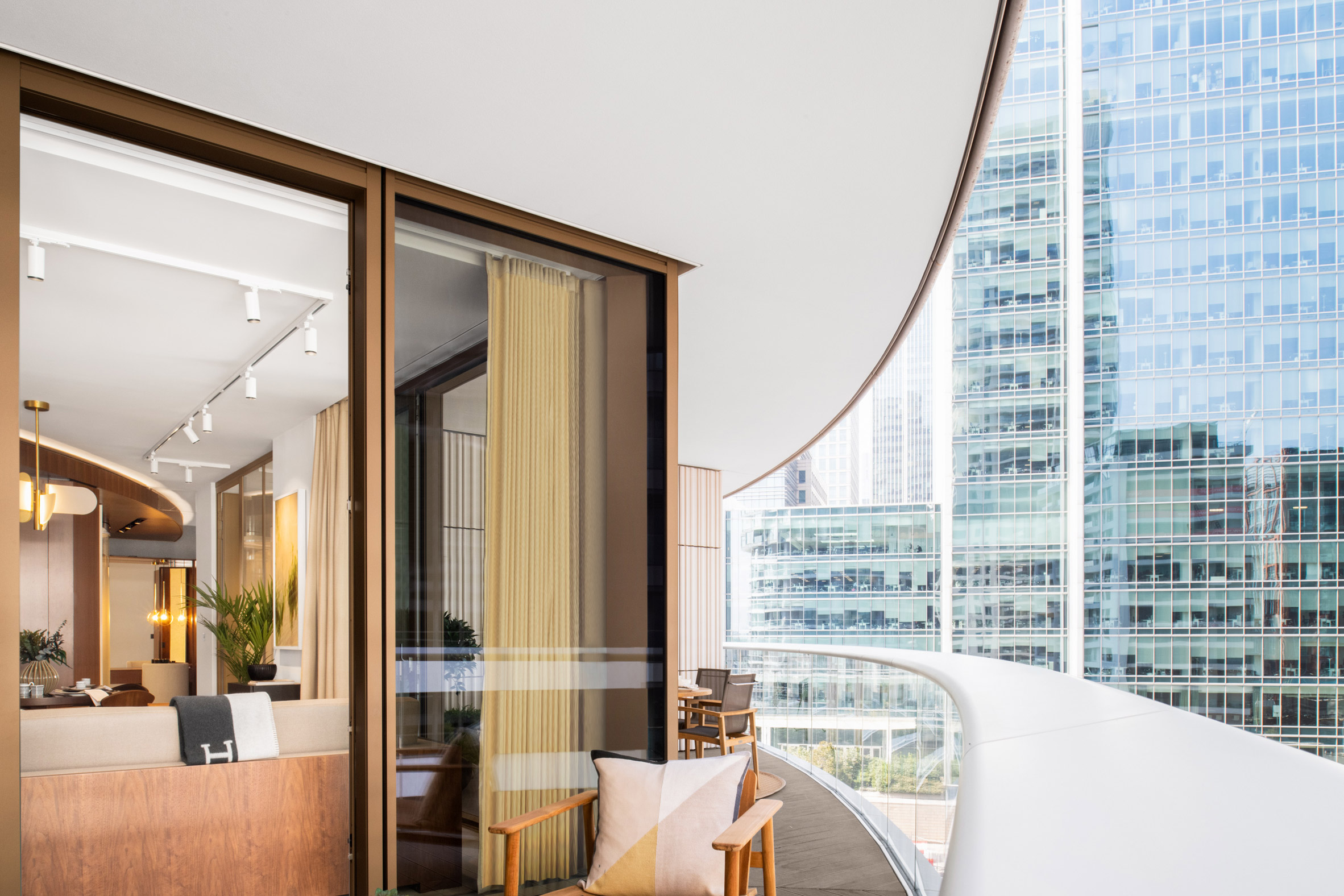
Balcony in Canary Wharf
Apartments on the lower levels have curved balconies

The interiors of the lower level apartments were completed by London design consultancy Bowler James Brindley with the upper floor units designed by interior studio Goddard Littlefair.

Seven duplex penthouses on the tower's top two floors are being designed by Herzog & de Meuron and will be completed later this year.
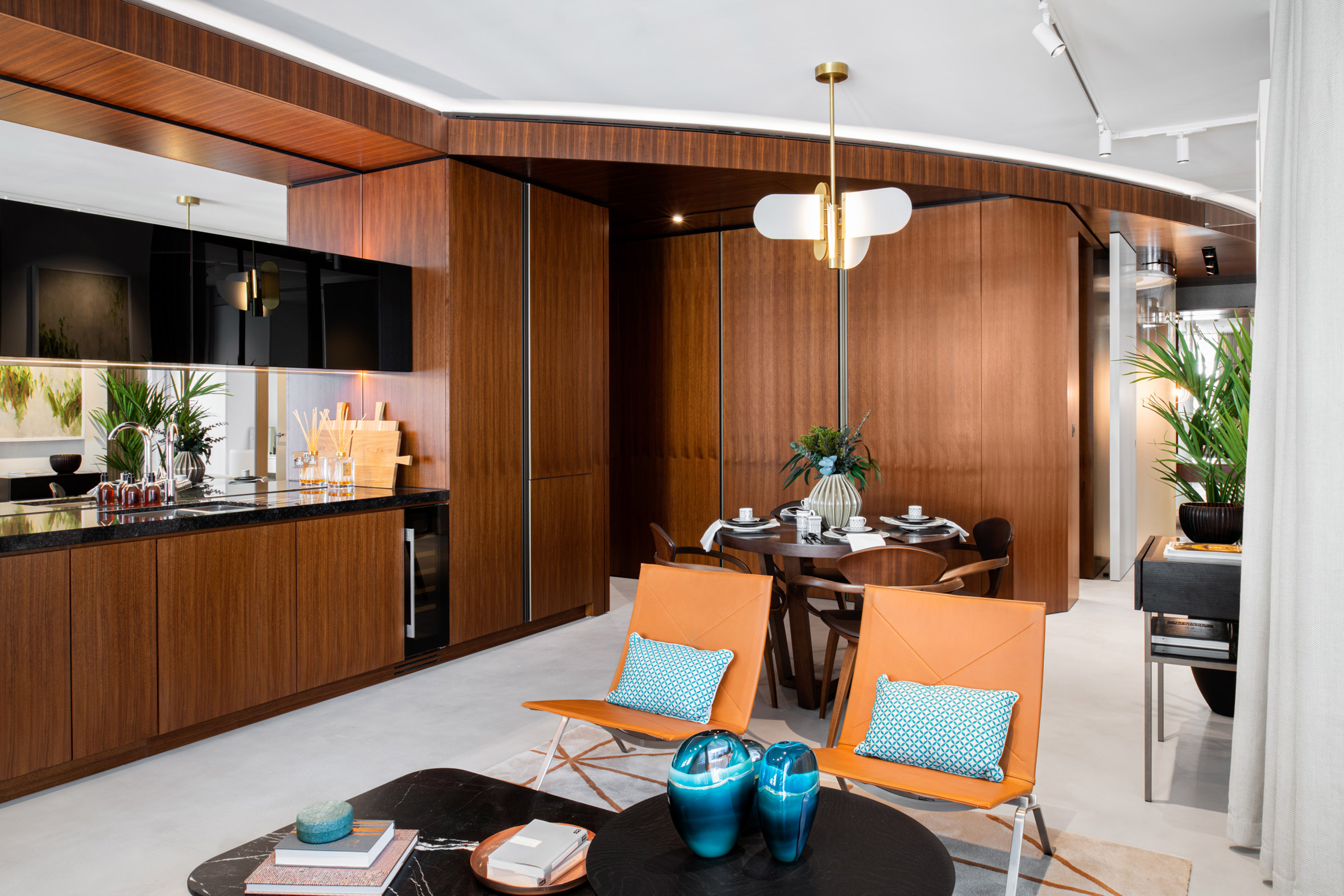
Bowler James Brindley interiors in London apartment
The apartments on the lowest floors were designed by Bowler James Brindley

One Park Drive is the first residential skyscraper in the UK designed by Swiss studio Herzog & de Meuron, which was founded by Jacques Herzog and Pierre de Meuron in 1978.

Previous residential projects by the studio include a blocky, 60-storey skyscraper at 56 Leonard Street in New York, the Jade Signature skyscraper in Miami and a plant-covered tower in Beirut.

The post Herzog & de Meuron unveils cylindrical skyscraper at Canary Wharf appeared first on Dezeen.


from Dezeen https://ift.tt/3roO25i

Norway begins work on "absolutely necessary" project to bury up to 1.25 billion tonnes of CO2 under the North Sea

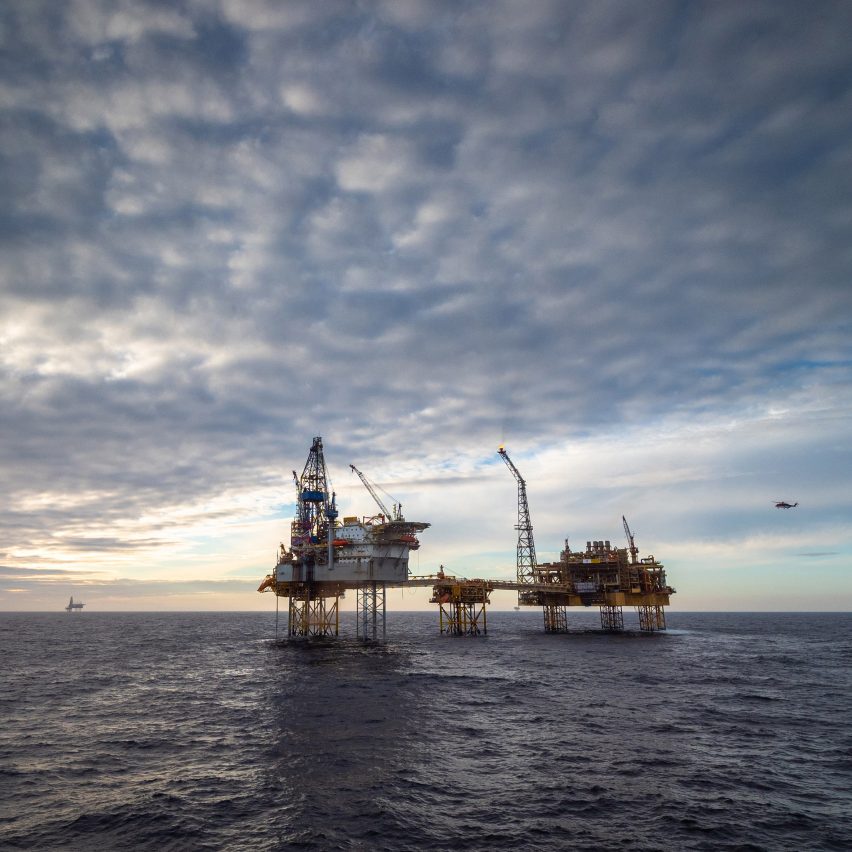
North Sea oil rig

Norway has started work on Project Longship, a €1.7 billion project that could bury vast amounts of captured carbon under the North Sea in an effort to slow climate change.

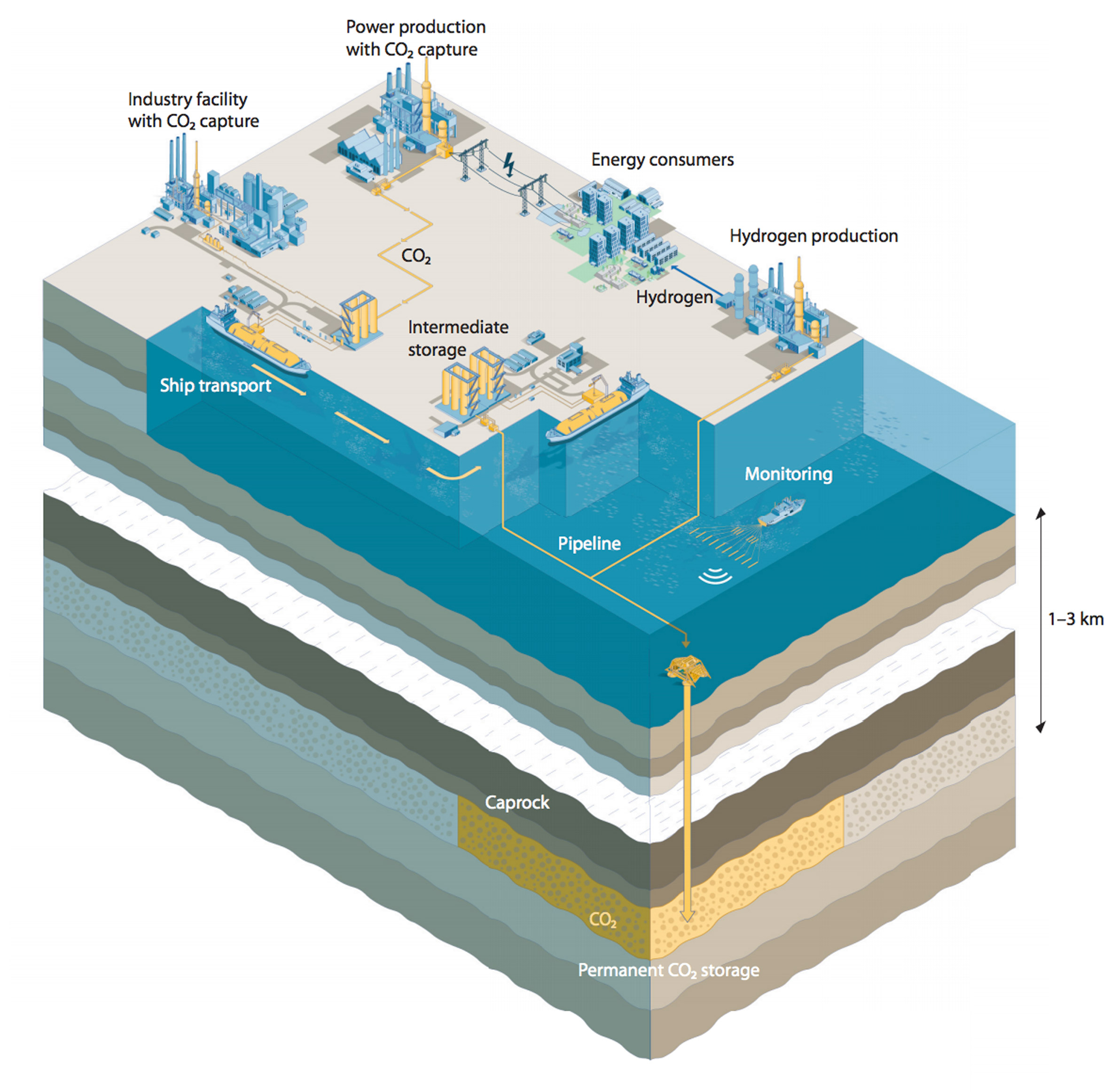
Named Project Longship, the initiative will involve injecting carbon dioxide captured from factory emissions in depleted oil and gas fields.

The carbon capture and storage (CCS) project could eventually see a total of up to 1.25 billion tonnes of CO2 sequestered in former fossil reserves deep beneath the sea. Phase one of the project is expected to be completed by 2024 when capacity will reach 1.5 million tonnes per year.

"The industry players are now well underway with the work," said Tony C Tiller, state secretary at Norway's Ministry of Petroleum and Energy.

"The first contracts have been outsourced to Skanska, Aker, Kvaerner and more," he told Dezeen. "The Ministry of Petroleum and Energy has approved a plan for development, construction and operation for the storage part of the Longship project."

Project Longship part of Norway's plan to become carbon-neutral

The project is part of Norway's commitment to meet the goals of the 2015 Paris Agreement, which compels signatories to achieve net-zero emissions by 2050 in order to give the world a chance of capping global warming at 1.5 degrees Celcius above pre-industrial levels.

Norway expects the scheme to help it achieve its commitment to becoming carbon-neutral by 2050 while generating thousands of new jobs in the process.

Tiller said there were "no guarantees" the project would be successful but said CCS is "absolutely necessary" if the world is to avoid runaway climate change.

"There are no guarantees but we know that carbon capture and storage is absolutely necessary for Europe and the world to reach the temperature targets in the Paris Agreement," he said.

But he added: "However, the success of this project depends on other projects and countries following suit. Other countries must support the capture and storage of CO2 as a relevant climate measure."

Project aims to incentivise CCS

The project aims to kickstart the CCS market by developing technologies and lowering the cost of capturing and storing atmospheric CO2, which is the major driver of climate change.

"The current market situation does not provide sufficient incentives to implement and develop CCS," says the Norwegian government's white paper on Project Longship, which was published in December last year.

Carbon capture
Project Longship would store carbon under the North Sea

"This is in part due to high investment costs, low-income potential in the short term and high risk," the document continues. "In addition, the price of emitting greenhouse gases is lower than the cost of CCS, and the development of technology may have the characteristics of a public good."

"Longship will demonstrate that CCS is safe and feasible and will facilitate learning and cost reductions in subsequent projects," Tiller told Dezeen. "Infrastructure will be developed with additional capacity that other projects can utilise. Hence, the threshold for establishing new carbon capture projects will be lowered."

Heidelberg Cement among industrial partners

Northern Lights, the organisation tasked with transporting the greenhouse gas and storing it under the sea, is in discussions with potential industrial partners that will capture CO2 to be shipped to the North Sea and then pumped into the bedrock.

"Northern Lights is in dialogue with 60 potential customers who want to decarbonise industry in Europe," Tiller said. "Earlier this year, draft commercial agreements for the storage of CO2 were sent to 15 companies."

Cement manufacturer Heidelberg Cement is among the first industrial partners for the project. It plans to convert its cement factory at Slite on the Swedish island of Gotland into a carbon-neutral plant, capturing all greenhouse gas emissions from its chimneys and converting them to liquid CO2 before shipping them for underground storage.

However, this aspect of the project is in doubt due to a recent ruling by Sweden's Supreme Land and Environmental Court preventing the factory from renewing its licence to mine limestone.

"The situation in Sweden could at least challenge or postpone the CCS project at Slite," said Per Brevik, director of alternative fuels at HeidelbergCement, in an interview with Dezeen last week.

"No contradiction" between Project Longship and fossil fuel industry

Project Longship also aims to store carbon captured directly from the atmosphere. Capturing carbon that has already been emitted is a vital part of the world's decarbonisation efforts. This is because greenhouse gases emitted since the industrial revolution are already sufficient to ensure temperatures will continue to rise for hundreds of years.

In March, Northern Lights signed a letter of intent with Swiss direct air capture company Climeworks. The company, which has developed machines that suck carbon from the atmosphere, could one day provide CO2 for storage as part of the project.

Tiller said there was "no contradiction" between Norway's position as a major producer of fossil fuels and its efforts to develop the CSS sector.

"The petroleum sector in Norway already faces strict climate measures such as quota obligations and a high CO2 tax," he said. "The emissions per unit produced on the Norwegian continental shelf are significantly lower than the average for other countries. There is no contradiction between being an oil and gas producer and developing new climate technologies."

"It is the competence and capabilities from the gas and oil industry that makes CO2-storage possible," he added. He said that the project did not involve enhanced oil recovery (EOR), a process by which fossil-fuel companies inject captured CO2 into depleted reserves to extract remaining oil and gas.

"Longship is a climate project and does not include EOR," he said.

"More than 80 billion tonnes" of CO2 could be stored

Norway's Petroleum Directorate has prepared an atlas showing where CO2 could be stored on the Norwegian continental shelf. The country does not have any appropriate terrestrial sites but the storage potential beneath its North Sea territorial waters is vast.

"The atlas shows that more than 80 billion tonnes of CO2 can theoretically be stored on the continental shelf," says the Project Longship white paper. "This corresponds to Norway's greenhouse gas emissions for more than a thousand years."

But it adds: "Such theoretical potential is uncertain and does not take costs into account. The Petroleum Directorate has categorised a capacity of around 1.25 billion tonnes of CO2 as the expected amount for effective and safe storage."


Carbon revolution logo

Carbon revolution

This article is part of Dezeen's carbon revolution series, which explores how this miracle material could be removed from the atmosphere and put to use on earth. Read all the content at: www.dezeen.com/carbon.

The sky photograph used in the carbon revolution graphic is by Taylor van Riper via Unsplash.

The post Norway begins work on "absolutely necessary" project to bury up to 1.25 billion tonnes of CO2 under the North Sea appeared first on Dezeen.


from Dezeen https://ift.tt/2W6zJqA

UK industry group calls for new rules to force architects to calculate embodied carbon emissions

Emissions from construction industry

A group of UK architects, developers and contractors have called for compulsory whole-life carbon assessments of buildings in a bid to tackle "hidden" emissions caused by construction supply chains.

The Embodied Carbon Group this week launched a proposal for a new Part Z to be added to the building regulations, which would compel projects to report embodied carbon emissions.

The group, which includes architects Feilden Clegg Bradley Studio, Arup and Allies & Morrison, also called for limits on upfront emissions to be imposed by 2027. It is supported by contractors including Laing O'Rourke, BAM and Willmott Dixon.

"Regulating embodied carbon is vital for the construction industry in tackling the climate crisis," said Jenny Stephens of Feilden Clegg Bradley Studios. "The industry is ready for this."

New proposal to cover projects over 1,000 square metres

The group is calling on industry leaders to support the proposals, which are published on the part-z.uk website.

The proposed new Part Z would cover any building project over 1,000 square metres. Projects would need to disclose their embodied carbon emissions, which include all emissions caused by the extraction and processing of materials as well as the construction process itself.

“For too, long embodied emissions in construction have been hidden in the built environment," said Tor Burrows, executive director for sustainability and innovation at property developer Grosvenor.

"With today’s call, the industry is asking for regulation to ensure that every significant UK development tracks and limits its full carbon footprint," he added. "We already do this for our large development projects and the time is right to introduce legislation for the whole industry.”

Embodied carbon emissions released before a building is complete can account for half the total emissions, with operational emissions making up the rest. In total, the built environment is thought to be responsible for around 40 per cent of global CO2 emissions.

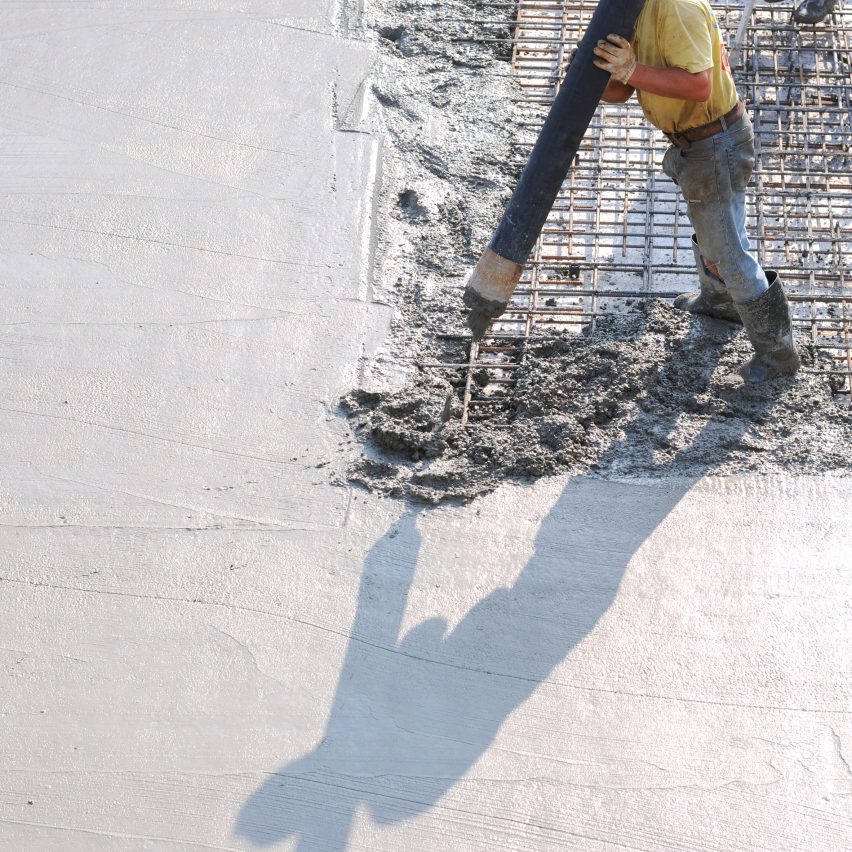
Construction materials such as concrete and steel have high embodied carbon, with cement causing an estimated eight per cent of global emissions.

Reducing embodied carbon is a key part of ensuring buildings have net-zero emissions. "Around 10 per cent of our national greenhouse gas emissions are associated with construction," said Chris Carroll, net-zero buildings leader for Arup UK.

"To reduce embodied carbon impacts in line with the national net-zero 2050 pathway, we need firm, supportive legislation which sets out a clear requirement to measure, report, and reduce against aligned targets."

Climate change committee calls for mandatory carbon reporting

The Part Z proposal comes a month after the UK Climate Change Committee's latest progress report to parliament, which called for mandatory whole-life carbon reporting.

The committee called for "a plan for phasing in mandatory whole-life reporting followed by minimum whole-life standards for all buildings, roads and infrastructure by 2025."

The independent committee, which advises the government on climate policy, also called for policies "to drive more resource-efficient construction and use of existing low-carbon materials, including a substantial increase in the use of wood in construction".

It also called for a review of the proposed inclusion of structural timber in new rules banning combustible materials in construction.

“Over the last two years, developers, designers and contractors have come together from across construction to tackle the climate crisis at an unprecedented pace," said Will Arnold, lead author of the Part Z proposal and head of climate action at the Institution of Structural Engineers.

"We are ready for embodied carbon regulation, and we hope that the government will engage with industry to introduce Part Z into law.”

Climate conference to feature built environment day

Built-environment emissions will be on the agenda at the UN's COP26 climate conference in November, which for the first time will feature a day dedicated to the sector.

However, UN climate champion Nigel Topping has expressed frustration at the lack of engagement by architects in the drive towards a net-zero economy.

Meanwhile, just six per cent of RIBA architecture firms have signed up to the body's 2030 Climate Challenge, which is aimed to help them deliver net-zero buildings. Foster + Partners, Grimshaw Architects and Zaha Hadid Architects are among practices that have failed to sign up.


Carbon revolution logo

Carbon revolution

This article is part of Dezeen's carbon revolution series, which explores how this miracle material could be removed from the atmosphere and put to use on earth. Read all the content at: www.dezeen.com/carbon.

The sky photograph used in the carbon revolution graphic is by Taylor van Riper via Unsplash.

The post UK industry group calls for new rules to force architects to calculate embodied carbon emissions appeared first on Dezeen.


from Dezeen https://ift.tt/2UxbpxC

Summerfield Park basketball court updated with colourful mural and geometric patterns

a man shoots a ball into a hoop on a basketball court

Professional basketball player Kofi Josephs and Birmingham graffiti artist Zuke have given a basketball court in Summerfield Park, Birmingham, a colourful refresh.

To mark the ticket ballot opening for the Birmingham 2022 Commonwealth Games on 14 July, athlete Josephs collaborated with local artist Zuke on the refurbishment of a local basketball court.

Two players play basketball on a colourful court
Top: the court was unveiled on the day of the Birmingham 2022 Commonwealth Games ballot opening. Above: bright colours attract young local players

Alongside promoting the Games, the designers wanted the court to encourage more local people to play basketball and engage with the installation.

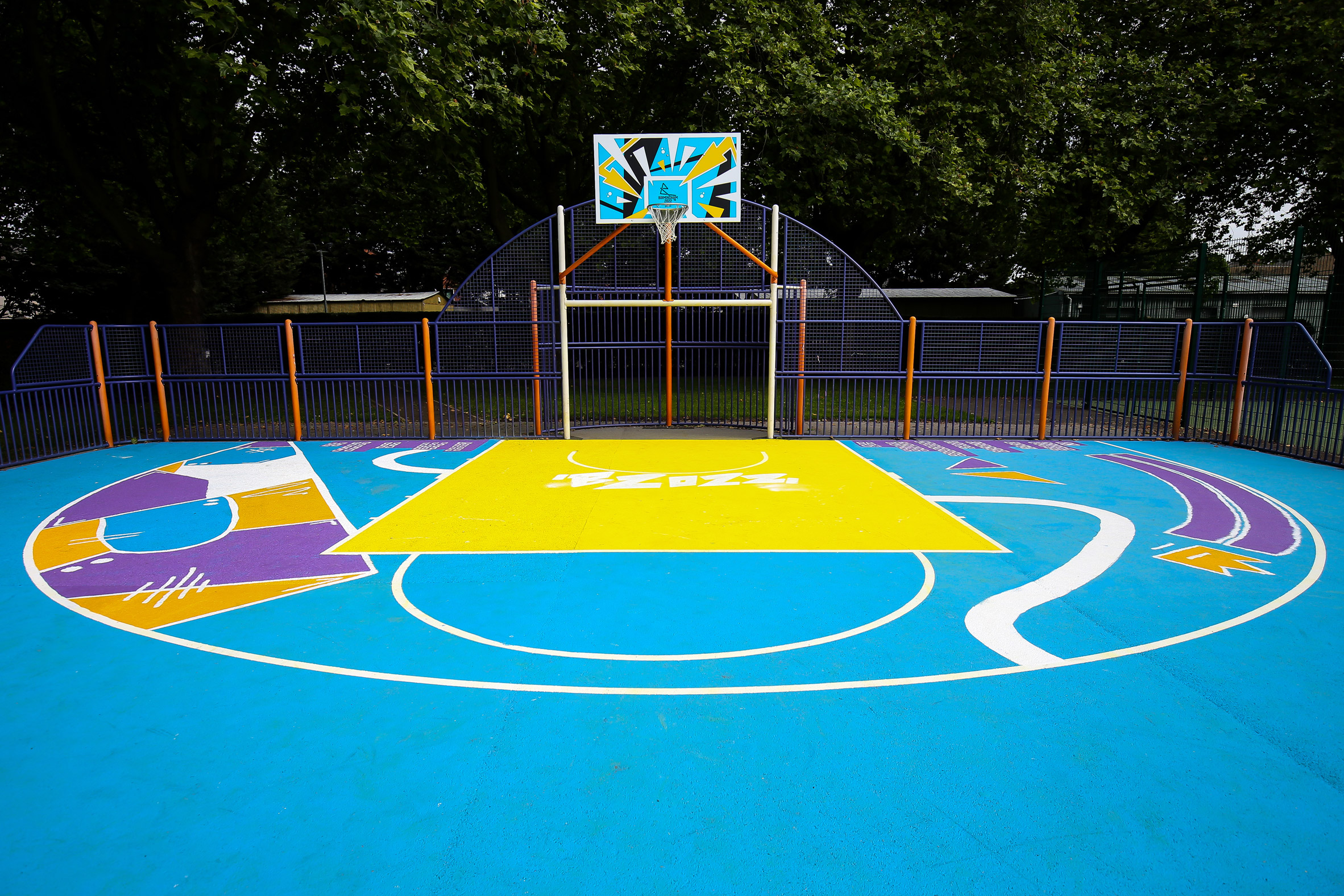
Vibrant colours such as bright yellow and sky blue were used to create an enticing and playful court. The same colour palette was used for the wider Birmingham 2022 Commonwealth Games logo and branding.

A basketball hoop at the Summerfield Park court
The design features a mural and colours used in the Birmingham 2022 Commonwealth Games branding

"If kids see some shit that’s as colourful as this basketball court, it's going to attract them," Josephs told Dezeen.

"They’re going to want to have a look and once you’re on there it’s easier to play. It’s going to draw in kids and stop kids from being on the street."

The court also features a mural with geometric shapes and swirling lines designed by Zuke.

A concrete basketball court painted blue
The designers wanted the court to reflect Birmingham's diversity

The court's Birmingham location was used to inform the design, which "represents the city in a lot of ways".

"There’s a crown on there because we've got The Jewellery Quarter in Birmingham," Josephs explained.

"It's on concrete as well and we’re a hard-nosed city; we like to work hard, we like getting stuck in. We’re colourful, we’re diverse."

"We wanted to highlight the city and the different colours are my interpretation of the city" he continued.

A player shoots a ball into a basketball hoop
The court's floor is made of concrete to reflect the "hard-nosed" nature of locals

Josephs and Zuke initially worked on the project together virtually by sending each other designs and ideas via WhatsApp.

"I'm in Manchester and he's in Birmingham so we were talking on WhatsApp," Joseph said.

"We just hit it off. We both had the same idea around wanting to do something to represent the city and were just bouncing ideas off each other."

Despite creating the designs individually, Zuke and Josephs worked on establishing a uniform style.

"We both wanted to ensure the same style altogether because it's one city. It’s meant to represent the differences but at the same time, we’re all one," Josephs said.

Although the court is meant to act as a colourful celebration of the city, the designers are also aware of the harsher realities of inner-city life around Summerfield Park.

"Obviously there is a lot of gang stuff around here so we want to make it a little bit more inclusive so all kids have something," said Josephs.

Players play a basketball match in Summerfield Park court
The court will remain open to the public after the Games

The court is now open for people to play basketball on and will remain so after the Games.

"It is now a landmark within the park, open for everyone to use and leaves a lasting legacy of the Games in the heart of the West Midlands community," the Birmingham 2022 Commonwealth Games stated.

"The revamped space aims to inspire participation in the sport."

Colourful basketball courts have been cropping up around the world. Designer Yinka Ilori 3D-printed a multicoloured court in the financial district of London. Over in Belgium, artist Katrien Vanderlinden painted colourful shapes on a basketball court in Aalst.

The post Summerfield Park basketball court updated with colourful mural and geometric patterns appeared first on Dezeen.


from Dezeen https://ift.tt/3kEHJJy

Tuesday, 20 July 2021

Toyo Ito designs trio of mushroom-like public toilets in Tokyo

Yoyogi-Hachiman Tokyo toilet by Toyo Ito

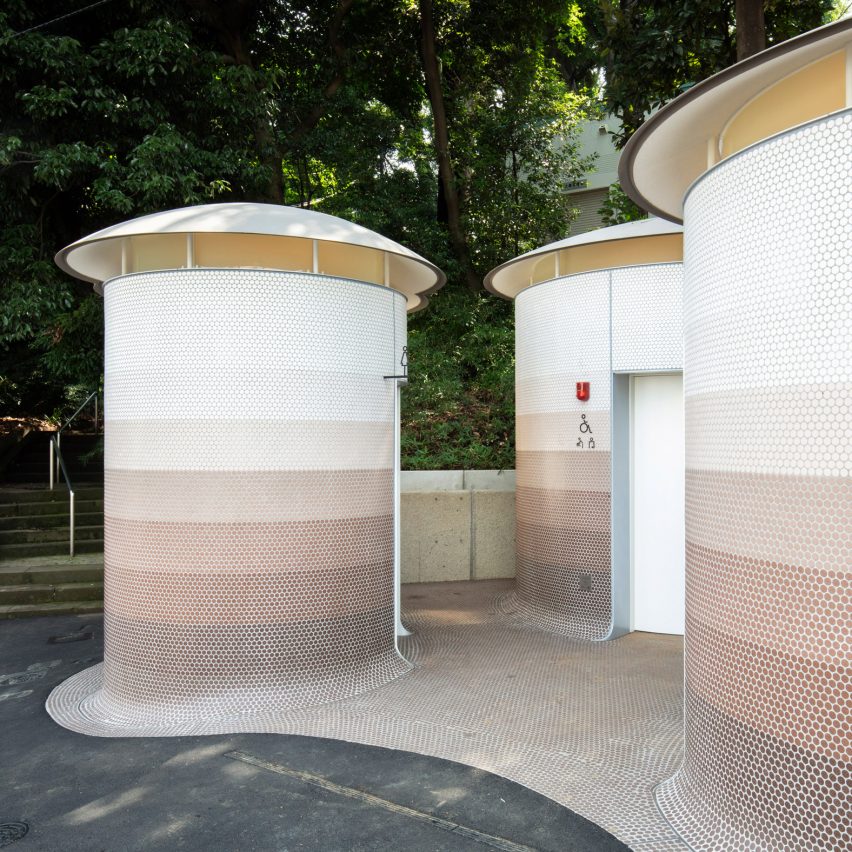
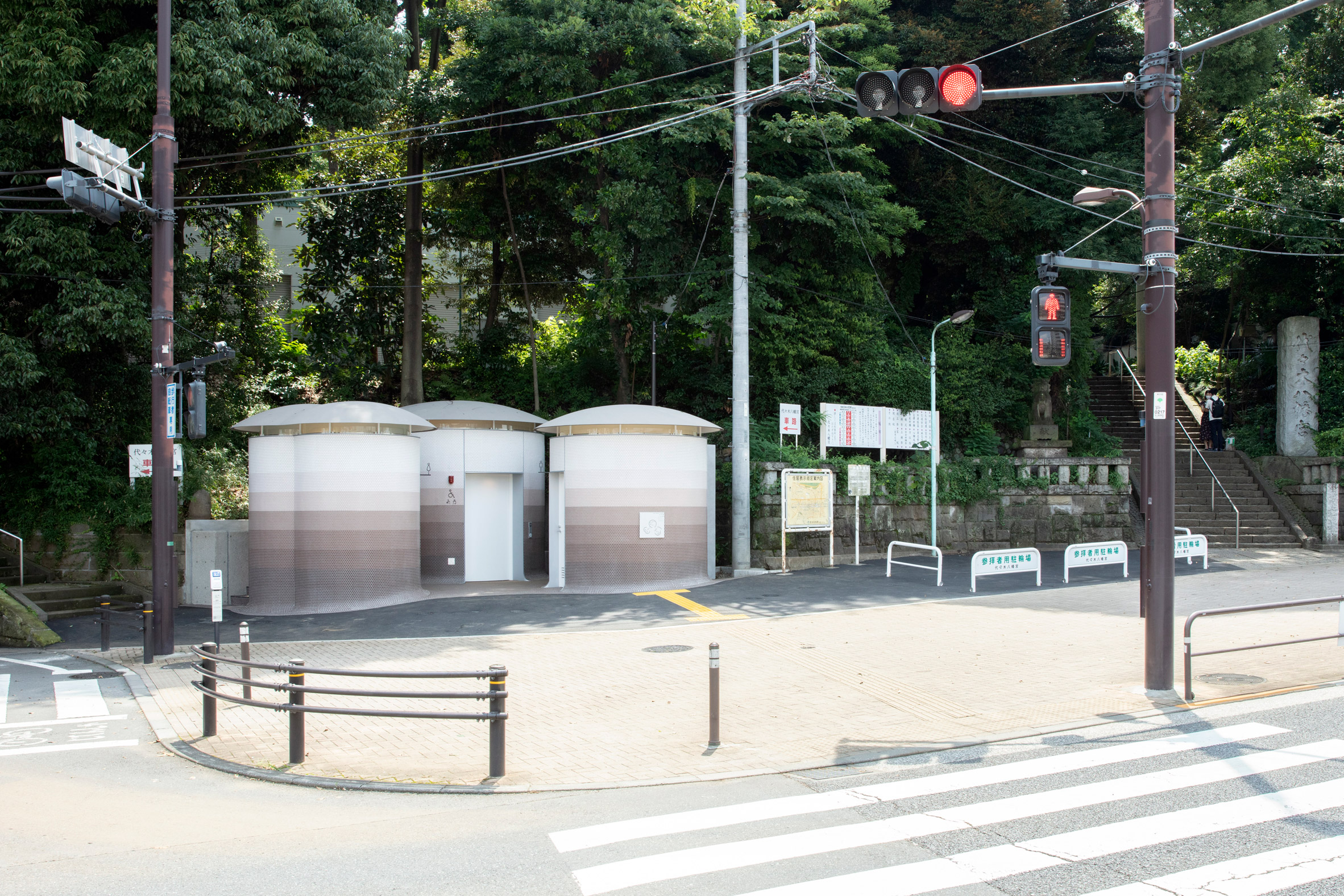
Pritzker Architecture Prize-winner Toyo Ito has created a public toilet within three mushroom-shaped blocks as his contribution to the Tokyo Toilet project.

Ito's distinctive toilet was built to replace a previous toilet block at the bottom of a flight of steps leading up to the Yoyogi Hachimangu shrine in the Shibuya district of Tokyo.

Toyo Ito toilet in Tokyo
Toyo Ito has designed a mushroom-shaped toilet in Tokyo

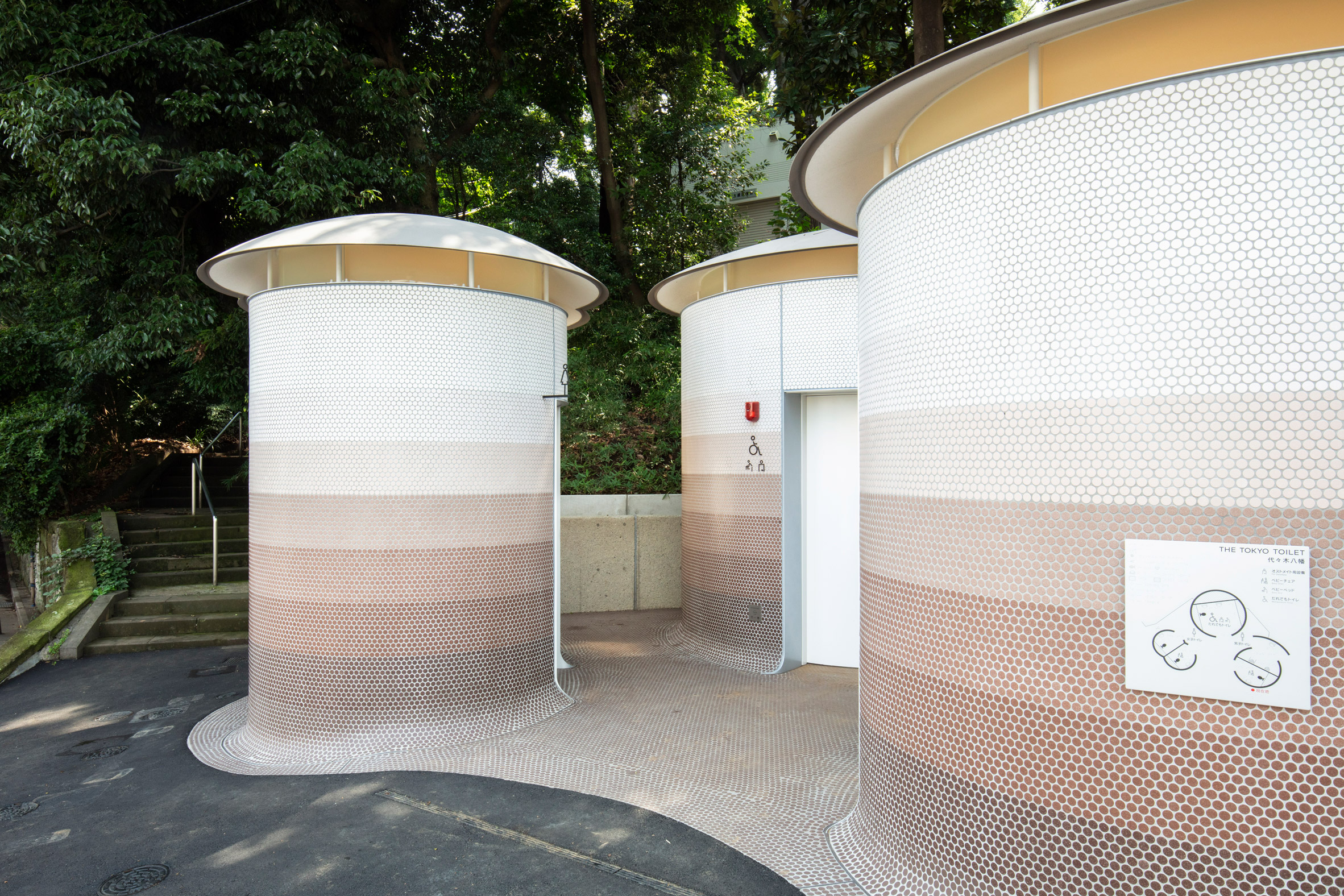
The Japanese architect broke his facility into three cylindrical blocks that are topped with overhanging dome-shaped roofs to create a form "reminiscent of [the] mushrooms" that grow in the forest surrounding the nearby shrine.

The Japanese architect aimed to design a calm, welcoming facility that would encourage people to use the public toilets.

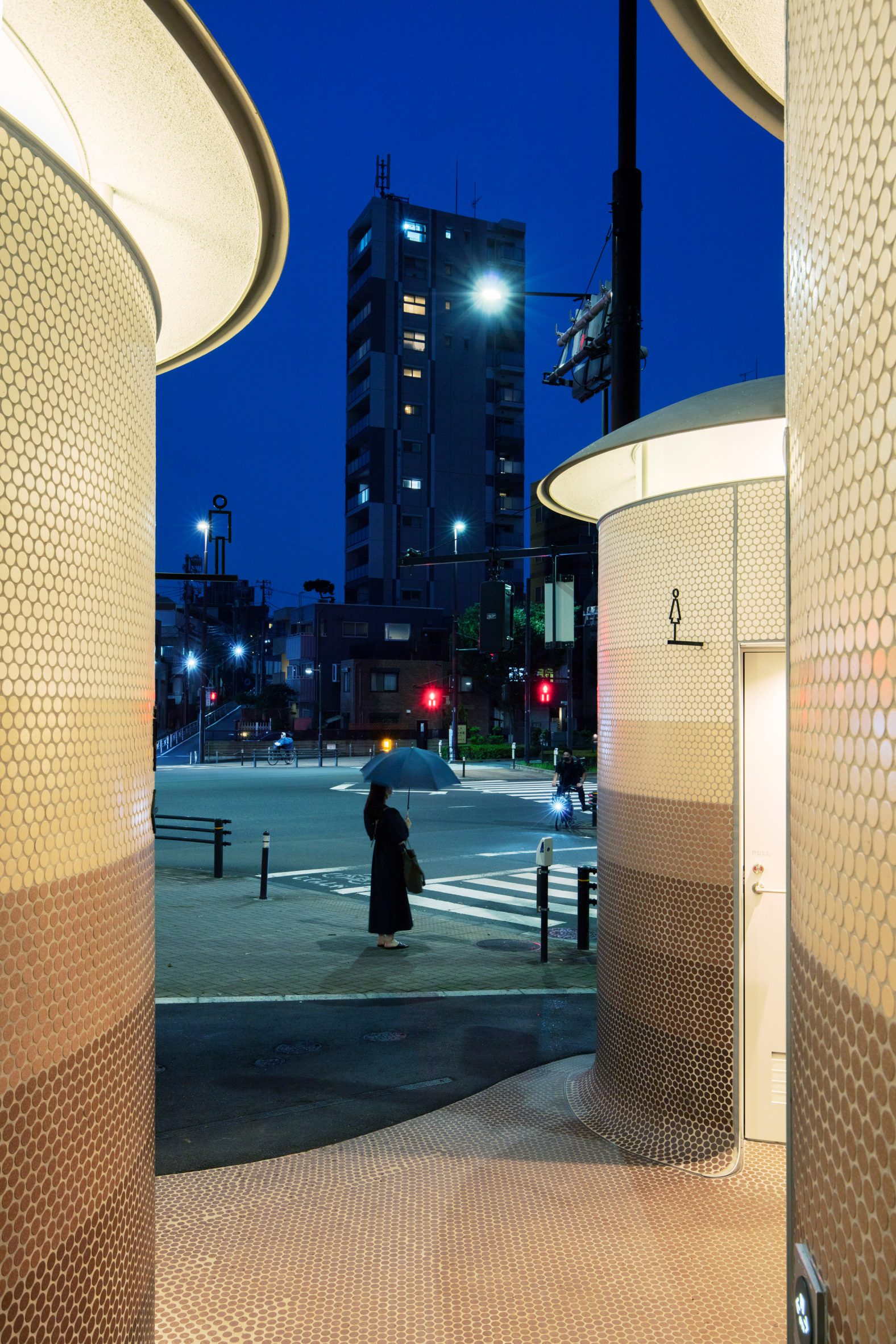
Public toilet at night
The block is broken into three small buildings

"I didn't want to use public toilets as much as I could, even as a man," said Ito.

"Therefore, this time, I would like to try a casual design that can be used calmly and with peace of mind."

Tiled toilet block
Each of the cylindrical blocks is covered in pale pastel tiles

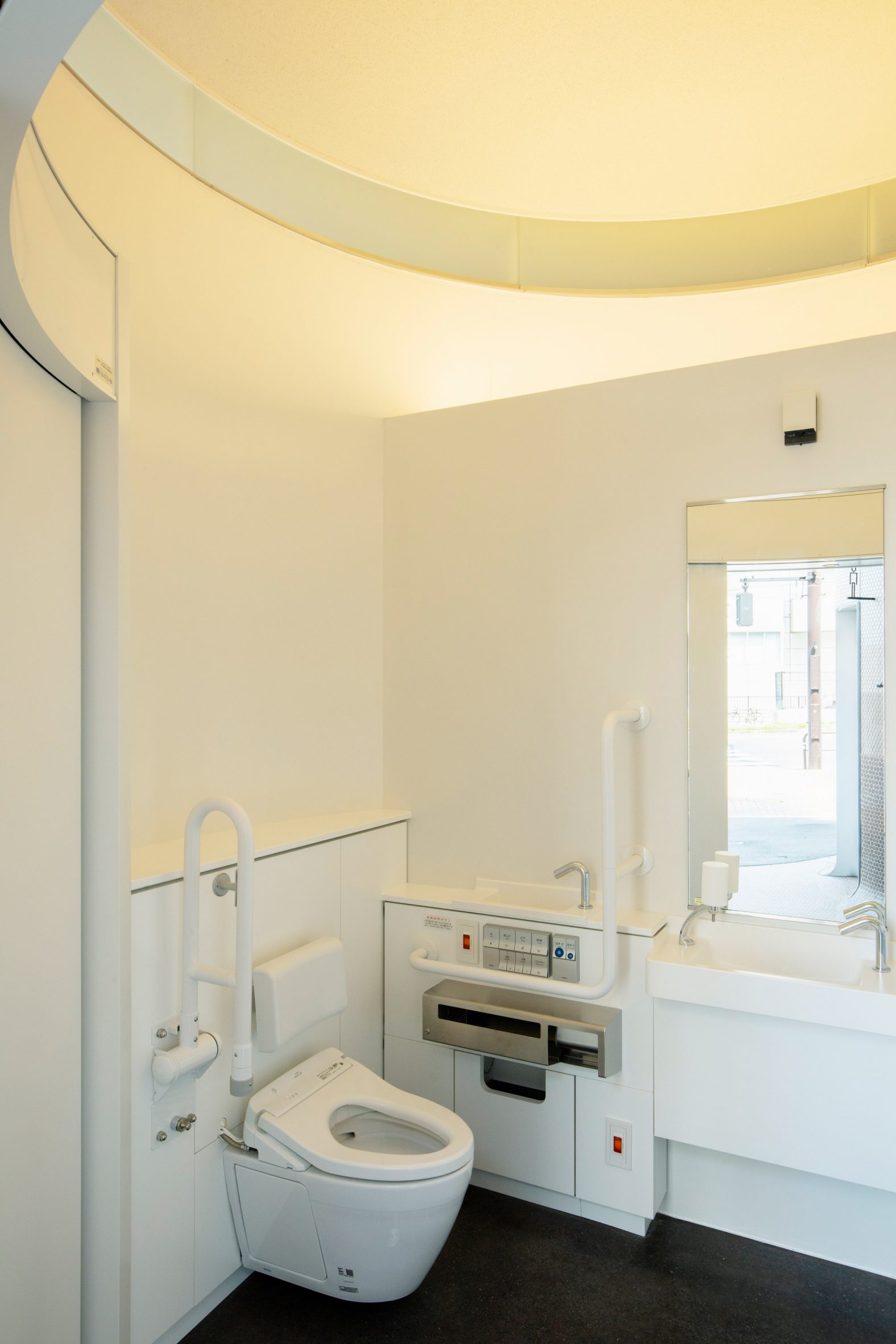
The largest central mushroom is attached to the back wall of the site and contains an accessible toilet.

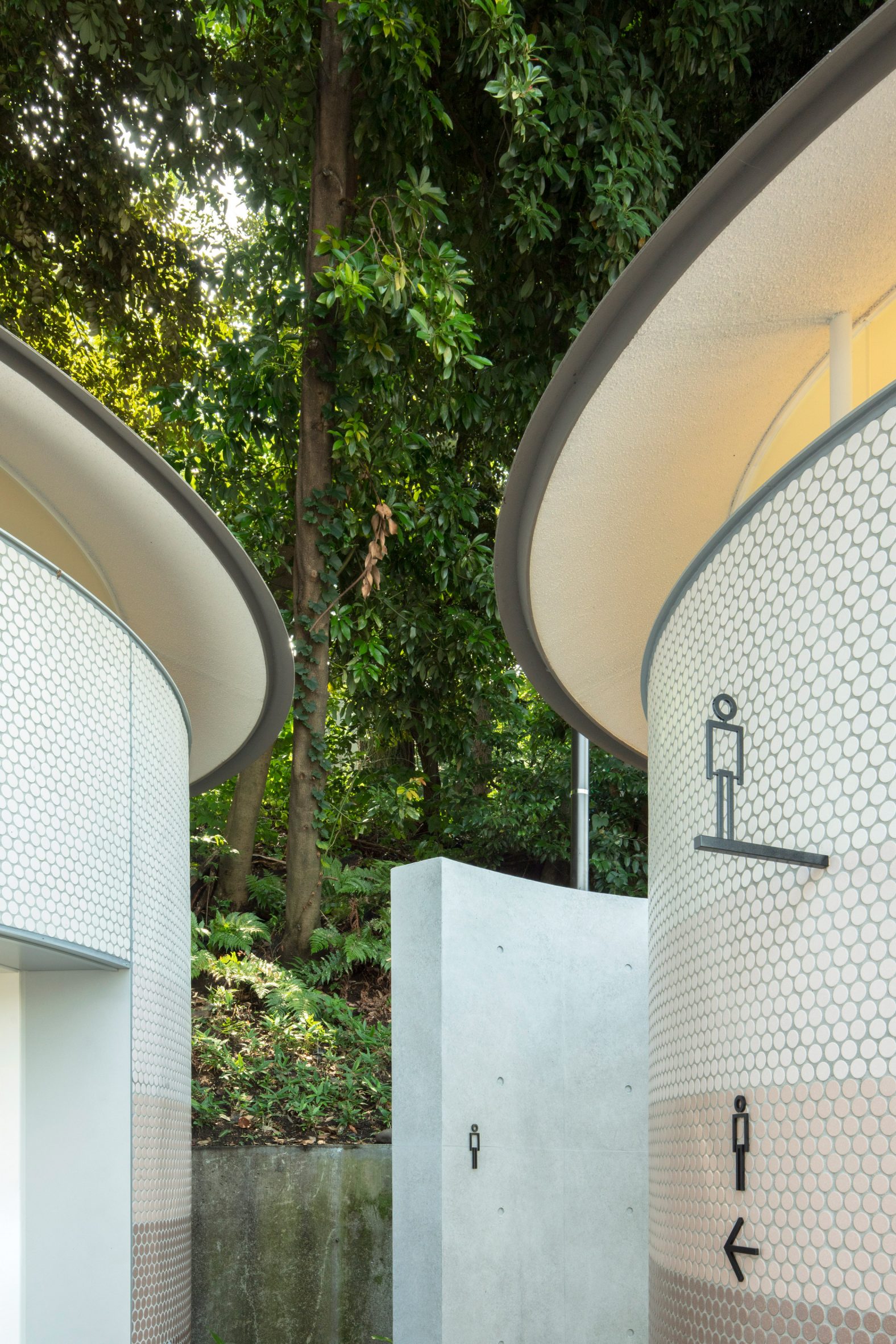
Freestanding blocks on either side contain two cubicles for women and a cubicle and pair of urinals for men.

All three were clad in bands of red, pink and white tiles that extend onto the floor of the facility.

The roofs of the blocks are raised above the walls to allow natural light and air into the toilets.

Toilet near Yoyogi Hachimangu shrine
The toilet is near a small woodland containing the Yoyogi Hachimangu shrine

By breaking the block into three Ito believes that the toilets will be a safe space for all users.

"I hope that the Yoyogi-Hachiman Public Toilet installed this time will be a 'toilet that gives women a sense of security that can be used even at night' and a 'toilet that has an inconspicuous design and can be used casually'."

Accessible toilet in Japan
A gap at the top of each cylinder allows light and air into the toilets

The toilet block is the fourth realised by a Pritzker Architecture Prize-winner as part of non-profit Nippon Foundation's project to upgrade facilities in the downtown Shibuya district of Tokyo.

His facility joins fellow Pritzker winners Tadao Ando's circular toilet, Fumihiko Maki's block topped with a "cheerful roof" and Shigeru Ban's pair of transparent public toilets.

In total 17 toilets are set to be built as part of the project. Other recently completed buildings created as part of the project include a "friendly" house-shaped toilet designed by Japanese fashion designer Nigo and a cedar-clad block designed by Kengo Kuma.

The post Toyo Ito designs trio of mushroom-like public toilets in Tokyo appeared first on Dezeen.


from Dezeen https://ift.tt/3wUIkJN