Thursday, 22 July 2021

RIBA announces winners of International Awards for Excellence 2021

RIBA international awards for excellence

Buildings by David Chipperfield Architects and Herzog & de Meuron have been named among the 16 winners of the RIBA International Award for Excellence. 

The biannual award aims to recognise the most "significant and inspirational projects around the world" and this year's winners come from 11 different countries. Four of the projects will be shortlisted for the RIBA International Prize, which Dezeen is the media partner for.
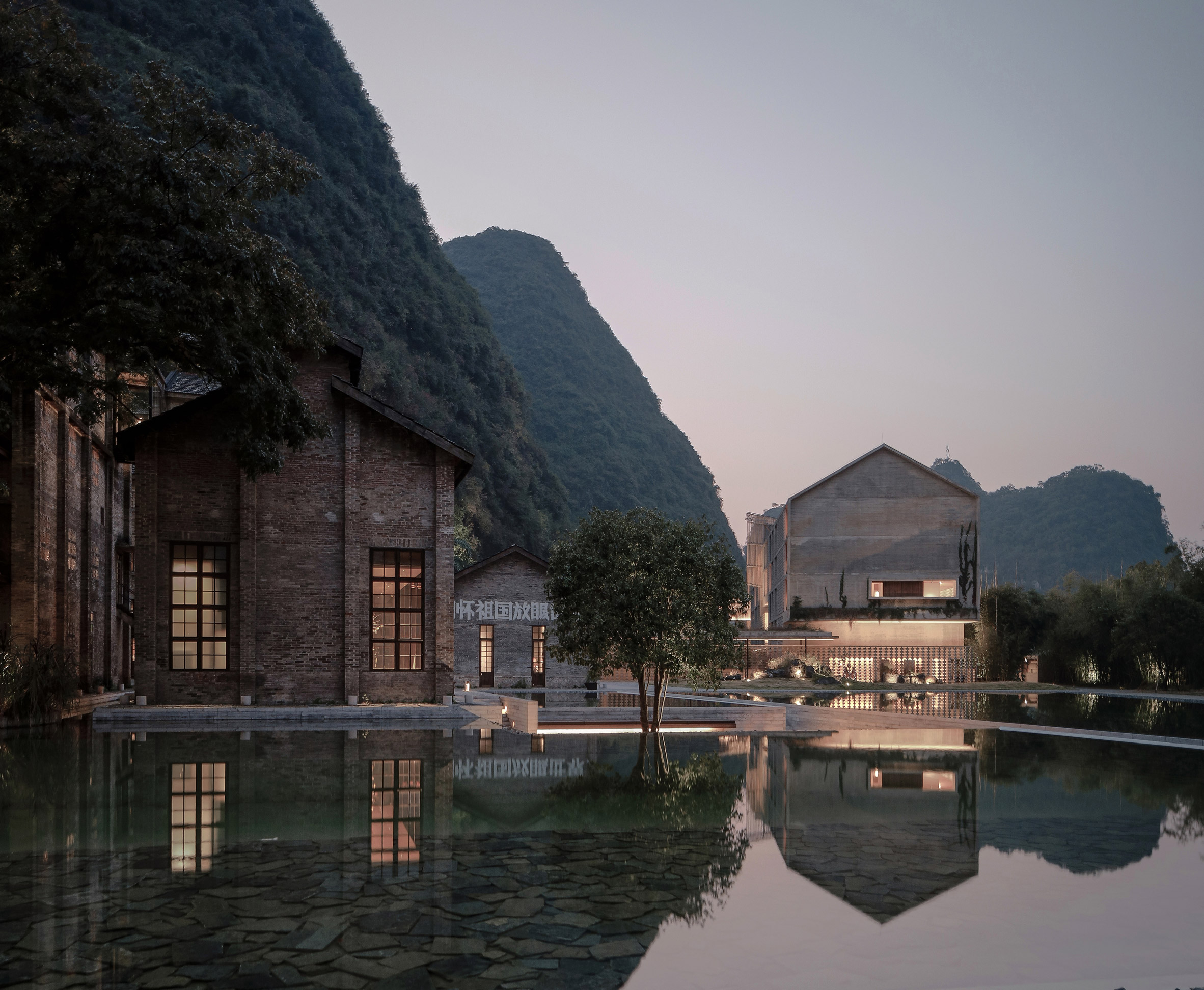
Alila Yangshuo, China
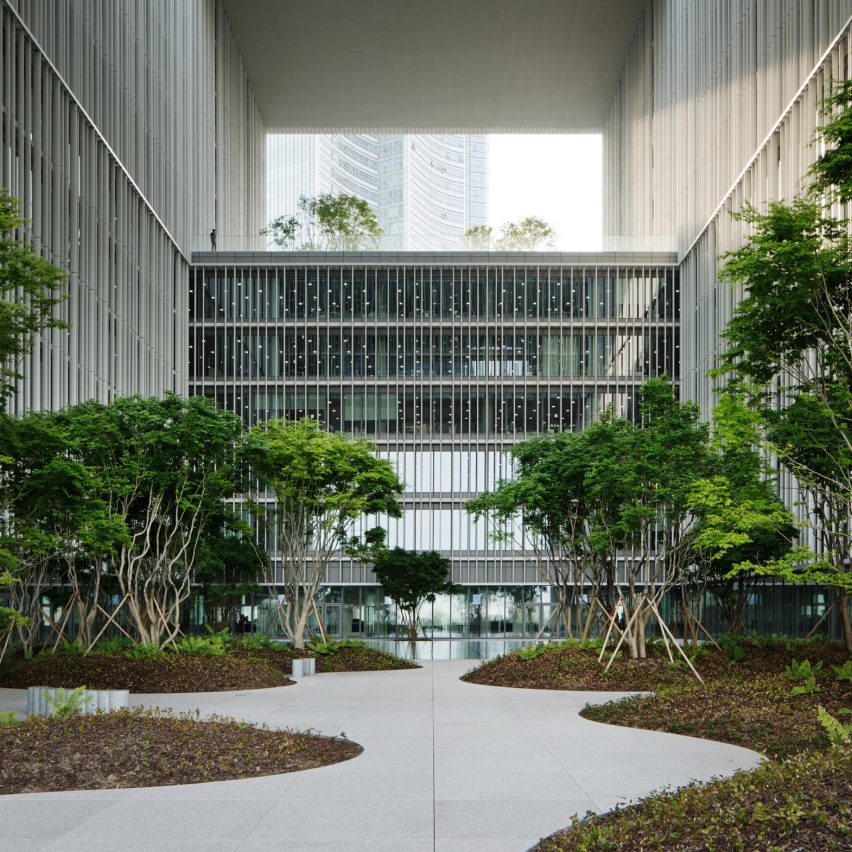
Above: Alila Yangshuo, China. Photo is by Shangliang Su. Top image: Amorepacific Headquarters, South Korea. Photo is by Andreas Gehrke Noshe

The winning submissions this year range from infrastructure projects, such as the Lille Langebro pedestrian and bicycle bridge in Copenhagen, to museums and memorials including the National Memorial for Peace and Justice in Montgomery, Alabama.

David Chipperfield Architects has won two prizes, for its cube-shaped office block in Seoul and the James Simon Galerie in Berlin.

Other projects on the list include Hooba Design Group's design for brick manufacturer Kohan Ceram, a Tehran office building clad in a specially-designed type of brick with glass inserts.

A collaboration between Herzog & de Meuron and Purcell, which saw the two firms combine conservation and adaptive reuse to create the Tai Kwun arts centre in Hong Kong, is another winning project.
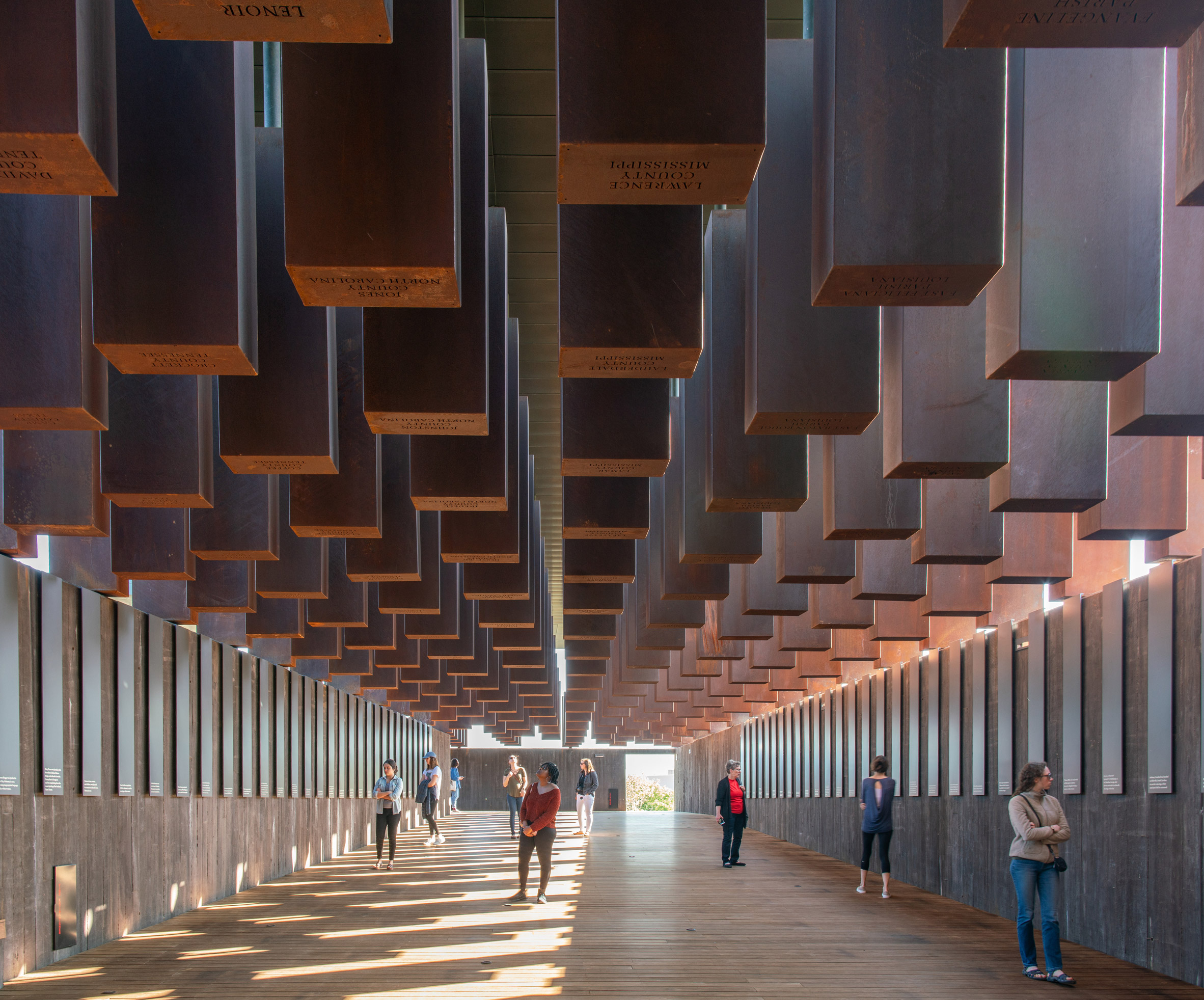
National Memorial for Peace and Justice, Alabama
National Memorial for Peace and Justice, Alabama. Photo is courtsey of MASS Group

Four of the projects on this list will be shortlisted for the RIBA International Prize 2021 and the RIBA International Emerging Architect Prize.

The shortlist will be revealed in September after which the winners will be chosen by a jury led by French architect Odile Decq and announced in November.
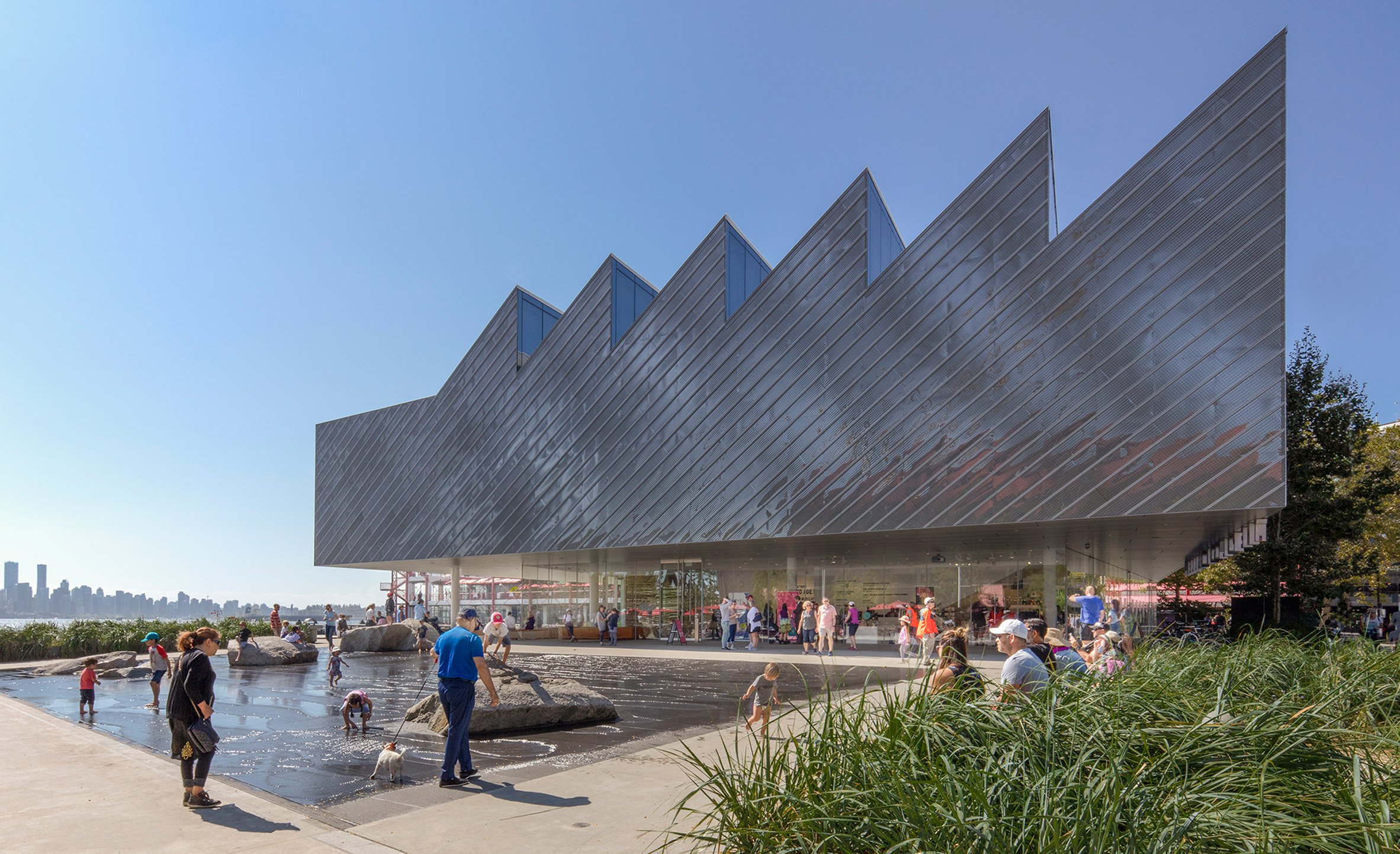
The Polygon Gallery, Canada
The Polygon Gallery, Canada. Photo is by James Dow

This year's awards – the third edition of the prize – is the first since 2018, as the 2020 edition was postponed due to the coronavirus pandemic. Since all RIBA Award-winning projects must be visited in person, the regular process couldn't take place last year.

"The 2021 RIBA International Awards for Excellence are presented to an ambitious and diverse range of projects from a wide range of established and upcoming architects' practices," RIBA president Alan Jones said.
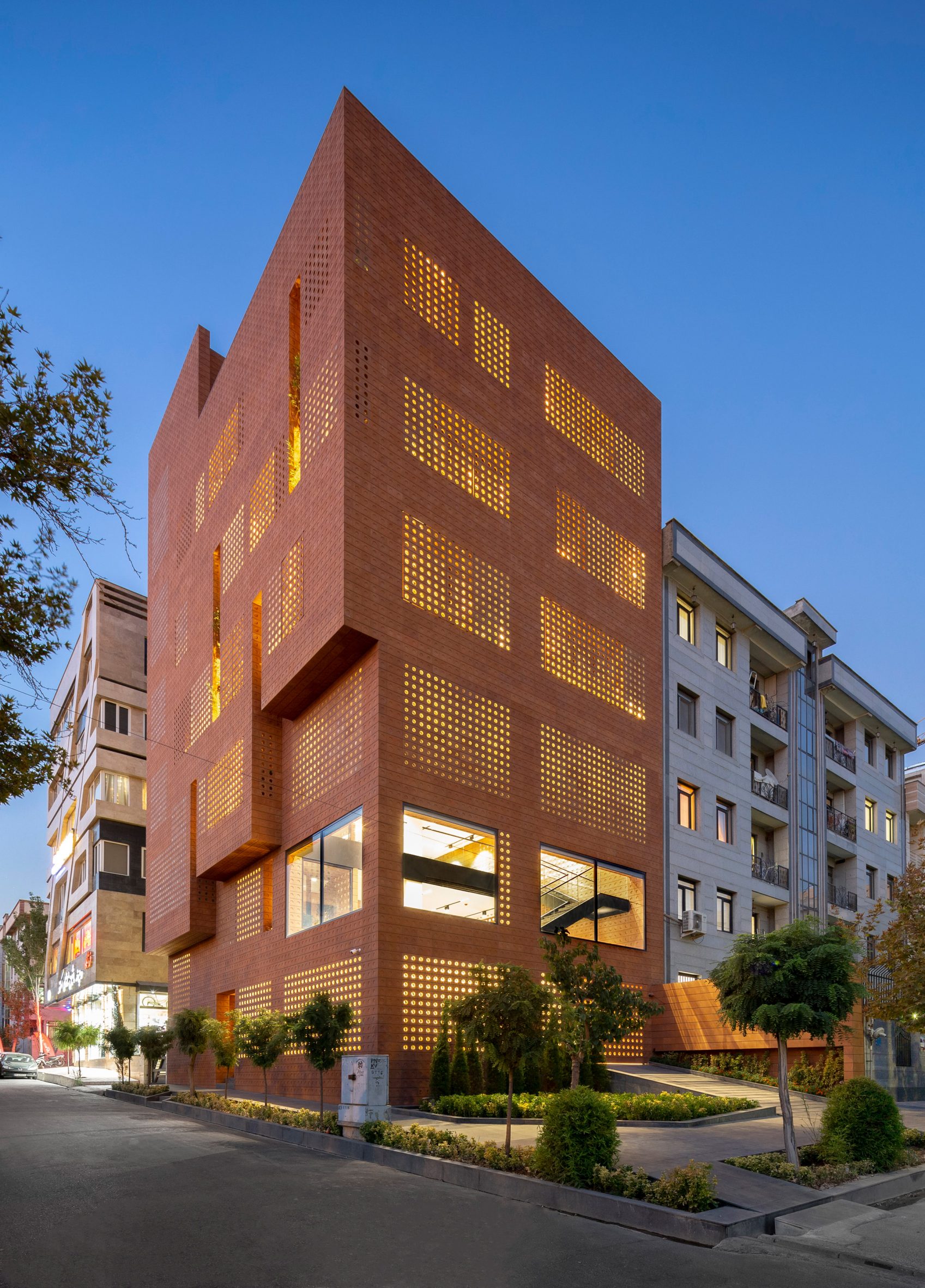
Kohan Ceram headquarters, Tehran
Kohan Ceram headquarters, Iran. Photo is by Deed Studio

"It is particularly important to be considering excellence in architecture at this time – in this fast-changing world, where governments, clients and society need the skills and insight of architects," he added.

"Our global awards show how well-considered, well-delivered and well-performing architecture has the immense potential to improve lives and communities. We are very pleased to be able to celebrate some of the most innovative, ingenious and impactful architecture in the world – designed by some of the most talented architects of our time."
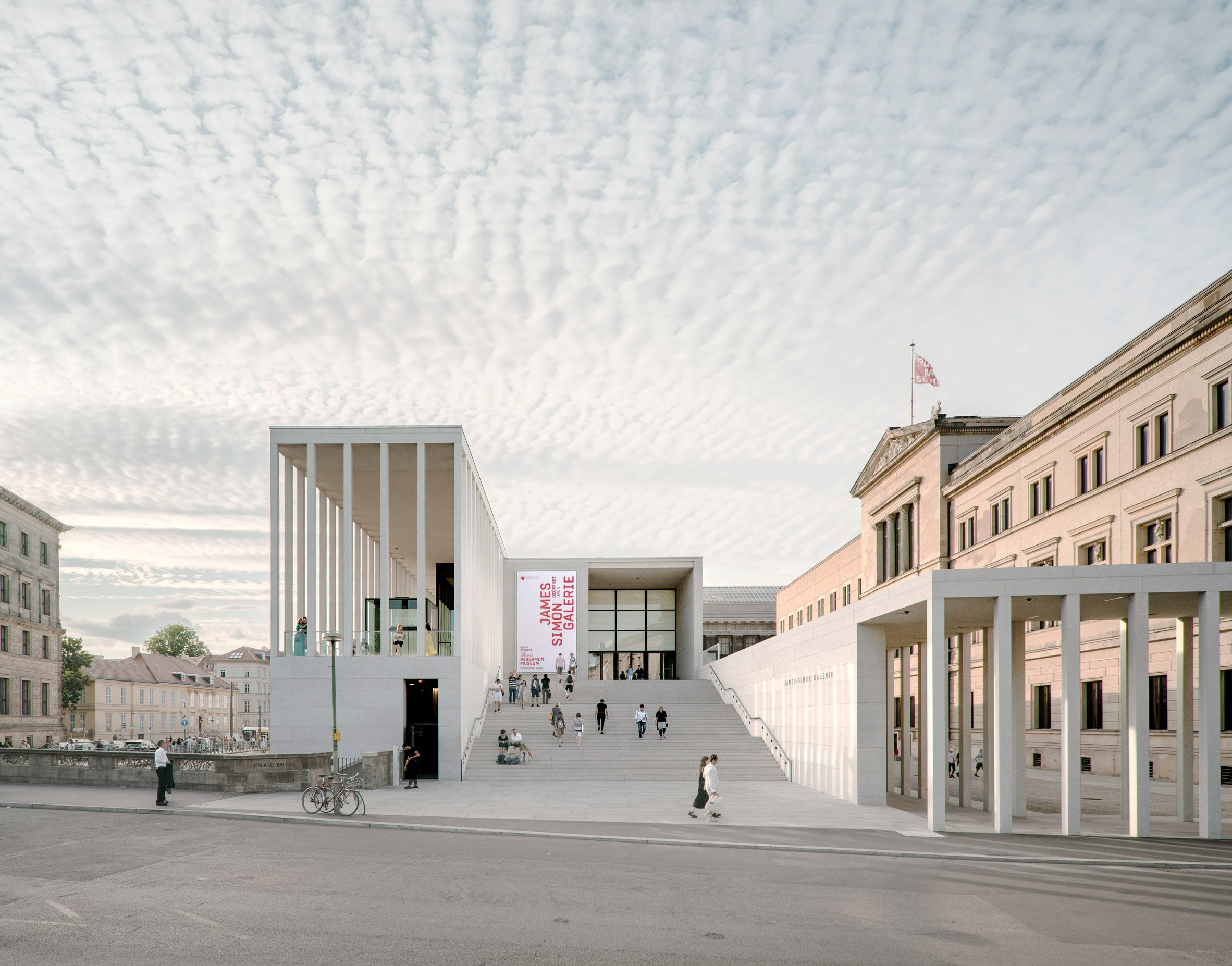
James Simon Galerie, Berlin
James Simon Galerie, Germany. Photo is by Simon Menges

Previous winners of the RIBA International Prize include Children Village in the Brazilian rainforest by architecture studios Aleph Zero and Rosenbaum and the prize's inaugural winner, the Universidad de Ingeniería y Tecnología (UTEC) in Peru by Grafton Architects.

See the 16 recipients of the RIBA Awards for International Excellence 2021 and shortlist for the RIBA International Prize 2021 below:


Alila Yangshuo, Guangxi, China, by Vector Architects
Amorepacific Headquarters, Seoul, South Korea by David Chipperfield Architects and HAEAHN Architecture and KESSON
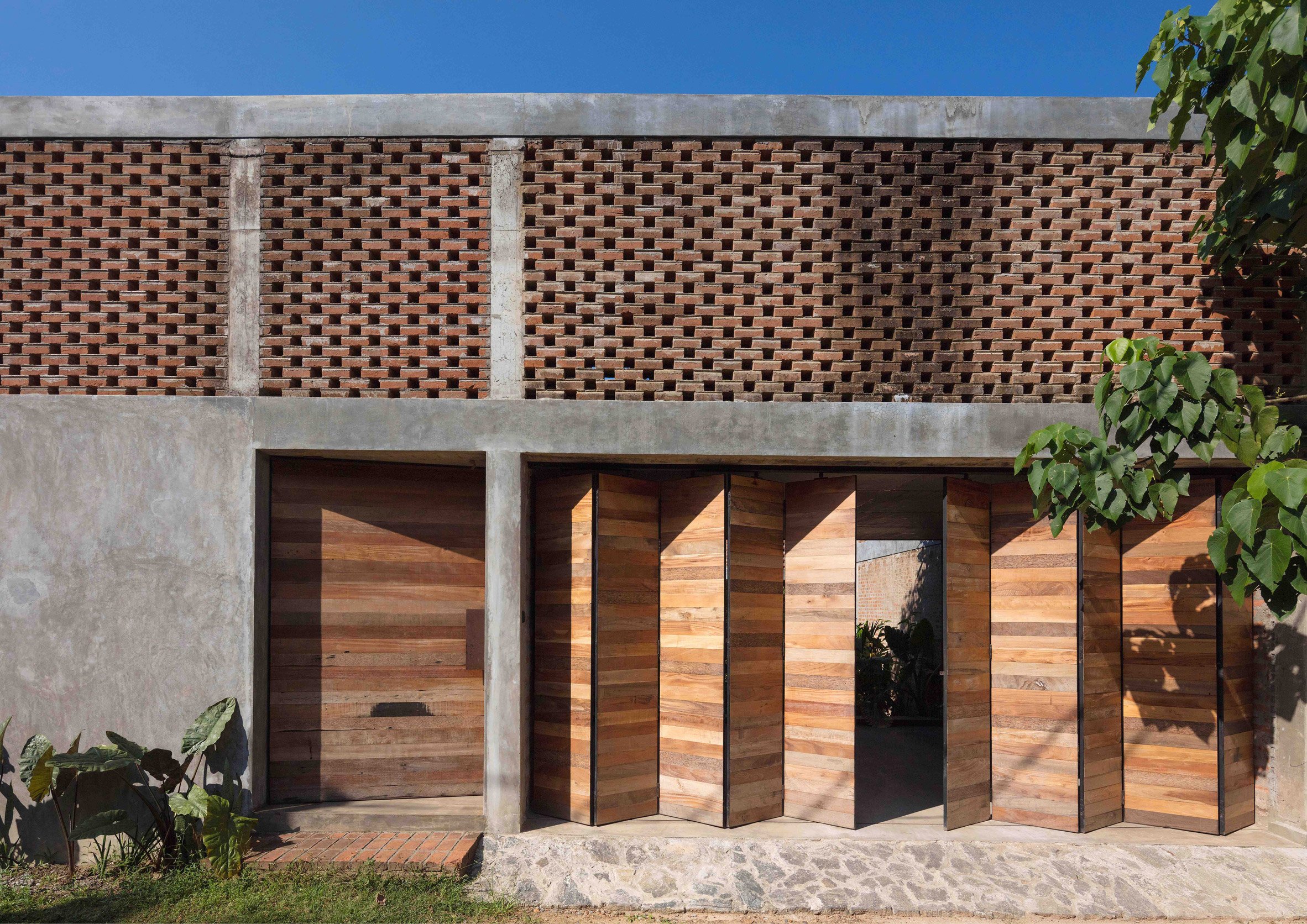
Artist's retreat, Sri Lanka
Artist's Retreat, Sri Lanka. Photo is by Sebastian Posingis

› Artists' Retreat at Pittugala, Athurugiriya, Sri Lanka by Palinda Kannangara Architects
› Dongziguan Villagers' Activity Center, Hangzhou, China by Gad Line+ Studio
› Friendship Hospital, Satkhira, Shyamnagar, Bangladesh by Kashef Chowdhury/URBANA
James Simon Galerie, Berlin, Germany by David Chipperfield Architects
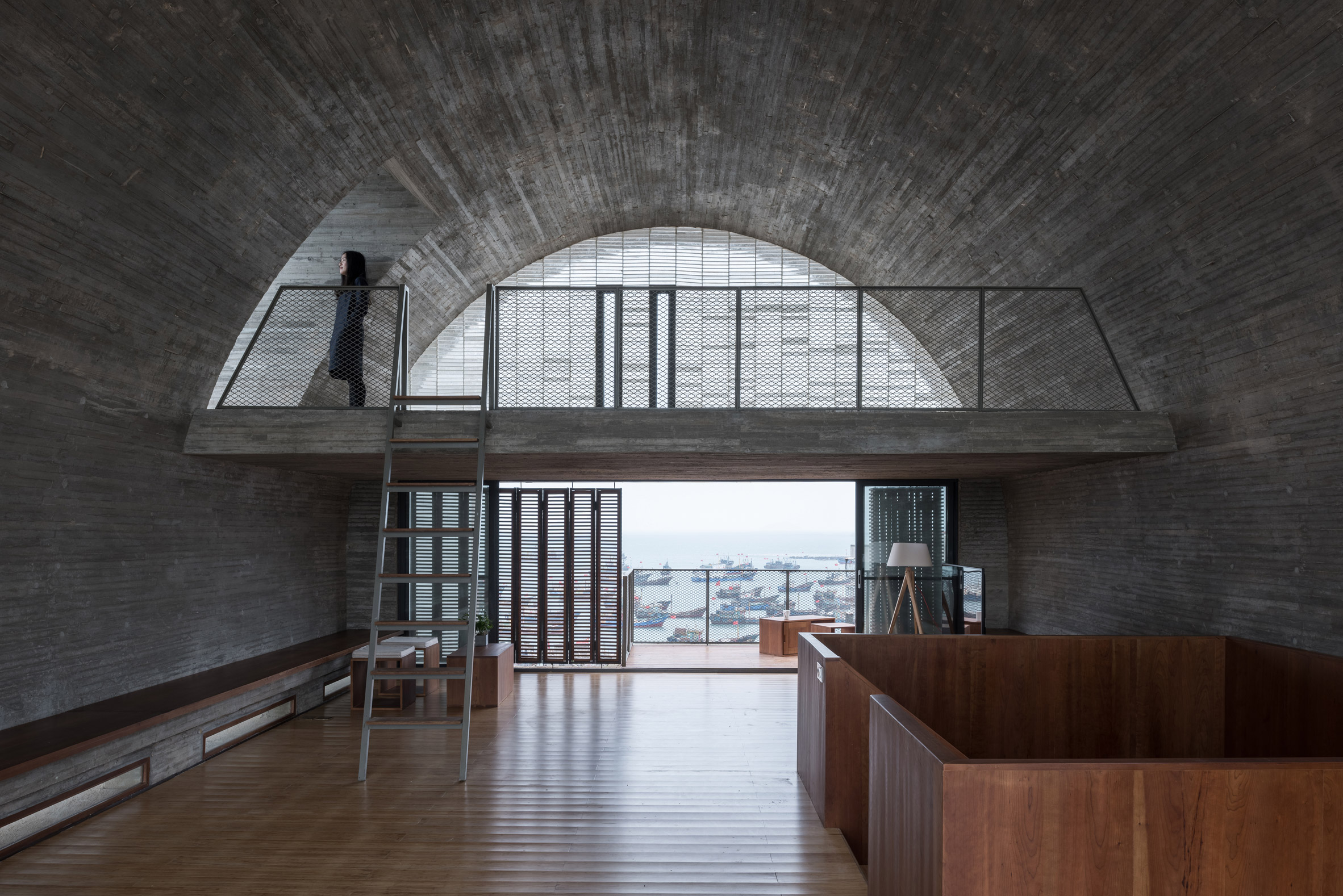
Renovation of the Captain's House, China
Renovation of the Captain's House, China. Photo is by Hao Chen

Kohan Ceram Central Office Building, Tehran, Iran by Hooba Design Group
› Lianzhou Museum of Photography, Lianzhou, China by O-office Architects/Jianxiang He & Ying Jiang
› Msheireb Downtown Doha Masterplan, Doha, Qatar by Allies and Morrison with Arup and AECOM
› The Polygon Gallery, North Vancouver, Canada by Patkau Architects
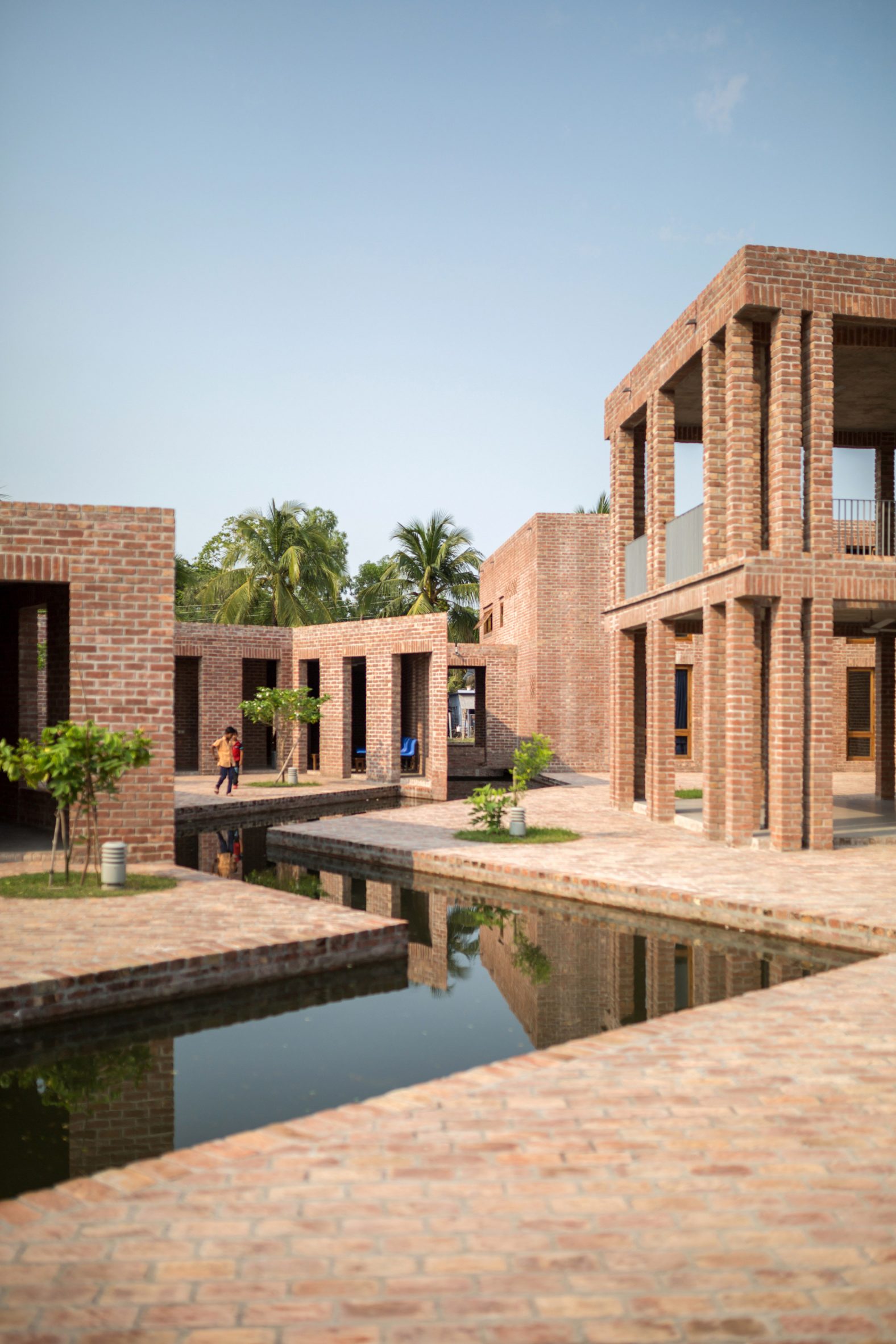
Friendship Hospital, Bangladesh
Friendship Hospital, Bangladesh. Photo is by Asif Salman courtesy of URBANA

Lille Langebro, Copenhagen, Denmark by WilkinsonEyre and Urban Agency
› Modern Art Museum and its Walkways, Shanghai, China by Atelier Deshaus
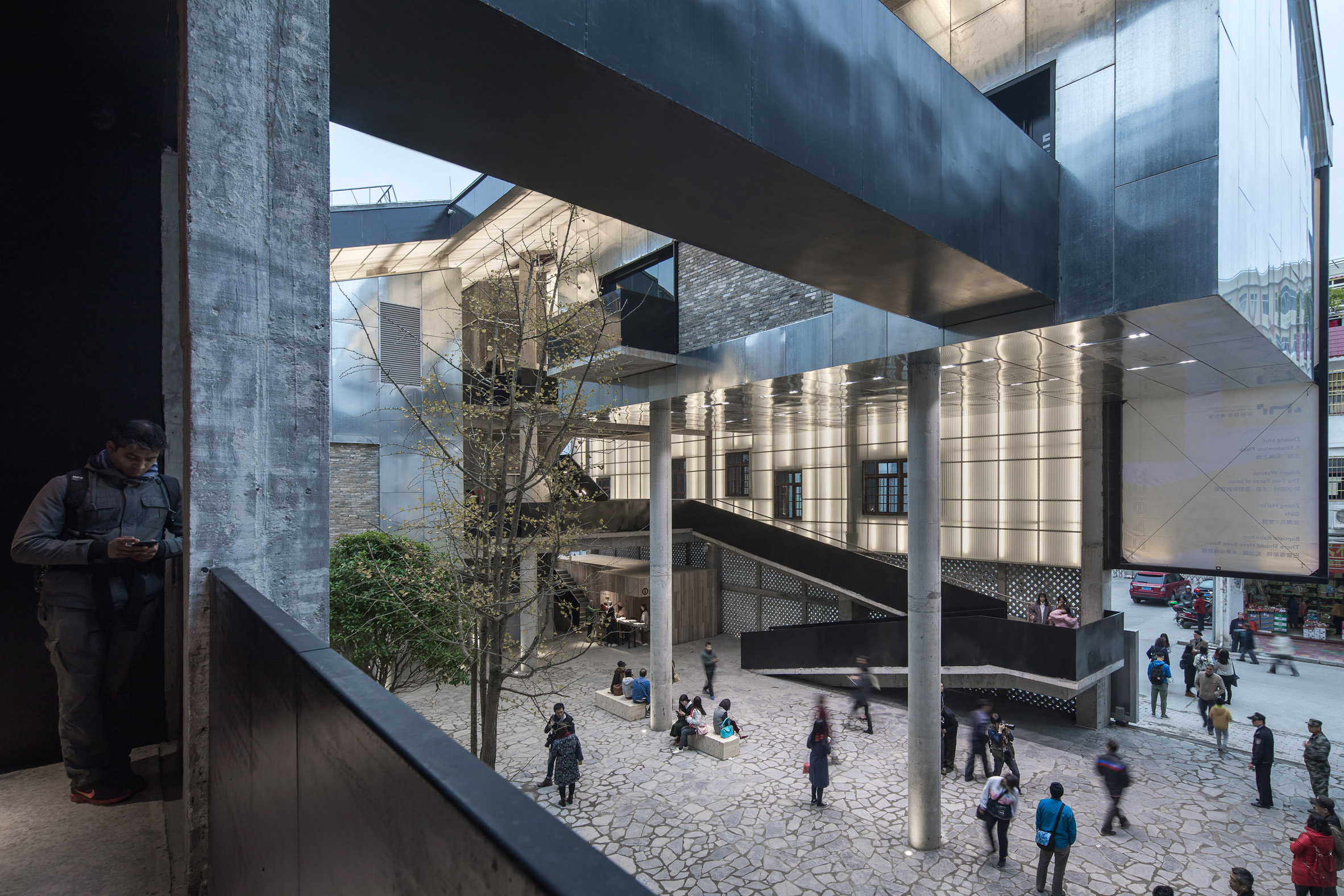
Lianzhou Museum of Photography, China
Lianzhou Museum of Photography, China. Photo is by Chao Zang

Renovation of the Captain's House, Fuzhou, China by Vector Architects
› Expansion of the University Hospital of the Santa Fe de Bogotá Foundation, Bogotá, Colombia by El Equipo Mazzanti/Giancarlo Mazzanti
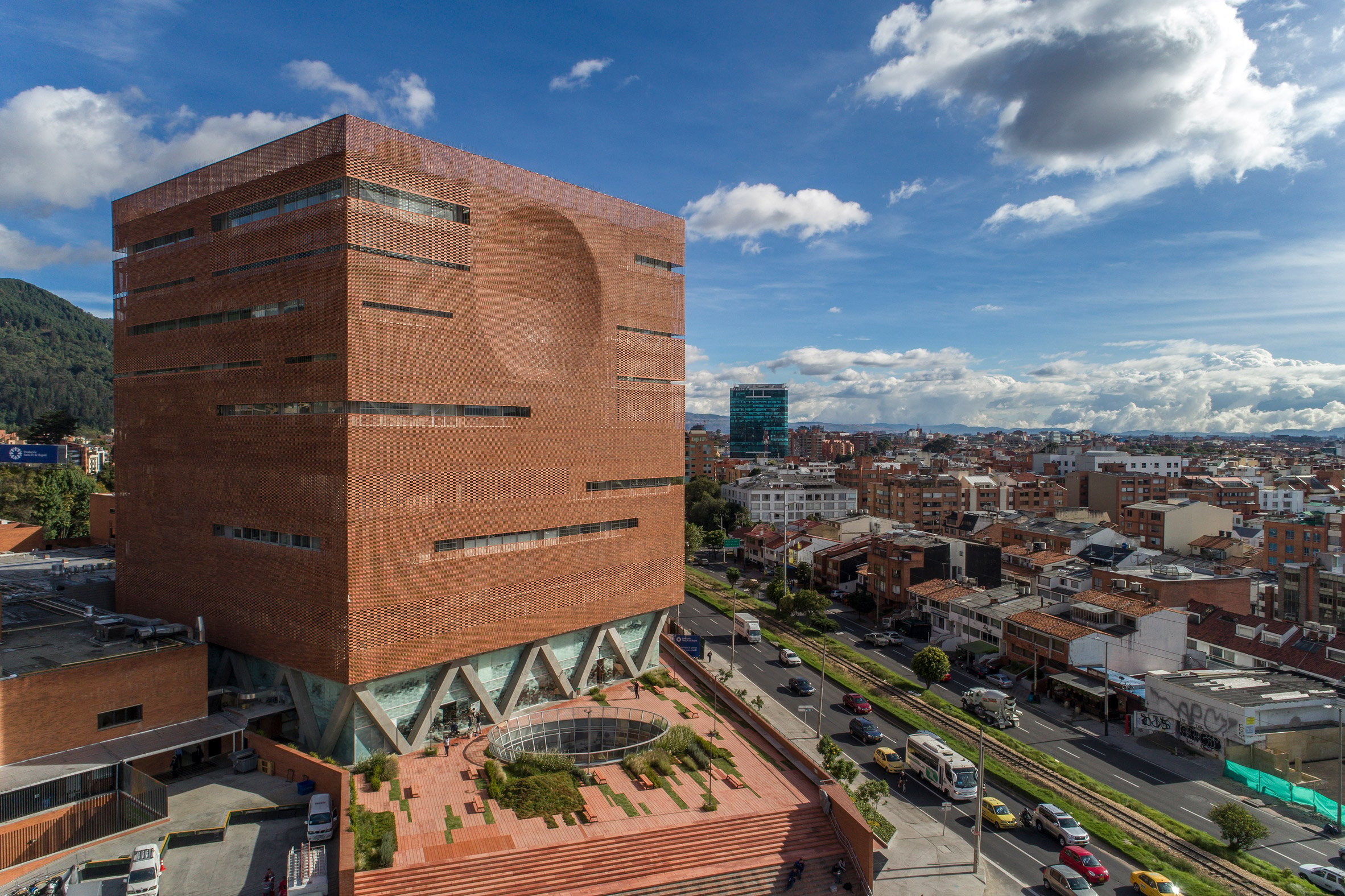
Expansion of the University Hospital, Colombia
Expansion of the University Hospital, Colombia. Photo is by Alejandro Arango

Tai Kwun – The Centre for Heritage and Arts, Hong Kong, China by Purcell (Conservation Architect), Herzog & de Meuron (Architect and Masterplaner), Rocco Design Architects Associates Limited (Executive Architect)
The National Memorial for Peace and Justice, Montgomery, Alabama, USA by MASS Design Group

The post RIBA announces winners of International Awards for Excellence 2021 appeared first on Dezeen.


from Dezeen https://ift.tt/3Btweum

Dezeen's guide to the architecture of the Tokyo 2020 Olympic Games

Olympic architecture

As the Tokyo 2020 Olympic Games kicks off, we round up the most architecturally significant venues including buildings by Japanese architects Kengo KumaKenzo Tange and Fumihiko Maki.

The centrepiece of the coronavirus-delayed 2020 Olympic Games is the new 68,000 capacity Japan National Stadium designed by Kuma.

The stadium is one of only a handful of venues built specifically for the Games, with the majority of events set to be hosted in existing buildings as part of the event's push to "deliver a sustainable Games".

Alongside the restrained purpose-built aquatics, gymnastics and volleyball centres, architectural highlights of the Games include several venues that were completed for the previous Olympics in Tokyo in 1964.

The Games are due to officially start tomorrow. However, athletes are set to perform in largely empty venues due to coronavirus restrictions as rates in the city are continuing to rise.


Japan National Stadium by Kengo Kuma
Photo is by Arne Müseler

Japan National Stadium by Kengo Kuma (2019)
Athletics and football

Designed by Japanese architect Kuma, the Japan National Stadium will be the centrepiece of the Games, hosting the opening and closing ceremonies as well as the athletics events for the Olympic and Paralympic Games.

The stadium was built instead of a building designed by UK architect Zaha Hadid. Although Hadid won an international competition to design the stadium, her design was dropped following concerns over costs and opposition from Japanese architects.

Described by architecture video blogger Martin van der Linden during Dezeen's Virtual Design Festival as "quite simple, and definitely not iconic", Kuma's oval stadium is wrapped in terraces that contain plants and trees.


Yoyogi National Stadium by Kenzo Tange
Photo is by Arne Müseler

Yoyogi National Stadium by Kenzo Tange (1964)
Handball, badminton and wheelchair rugby

One of several venues built for the 1964 Olympics in Tokyo that is set to be reused during this year's Games, the Yoyogi National Stadium was designed by Pritzker Architecture Prize-winner Kenzo Tange.

Originally built to host the Games' swimming and diving events, the indoor arena is now primarily used for ice hockey and baseball.


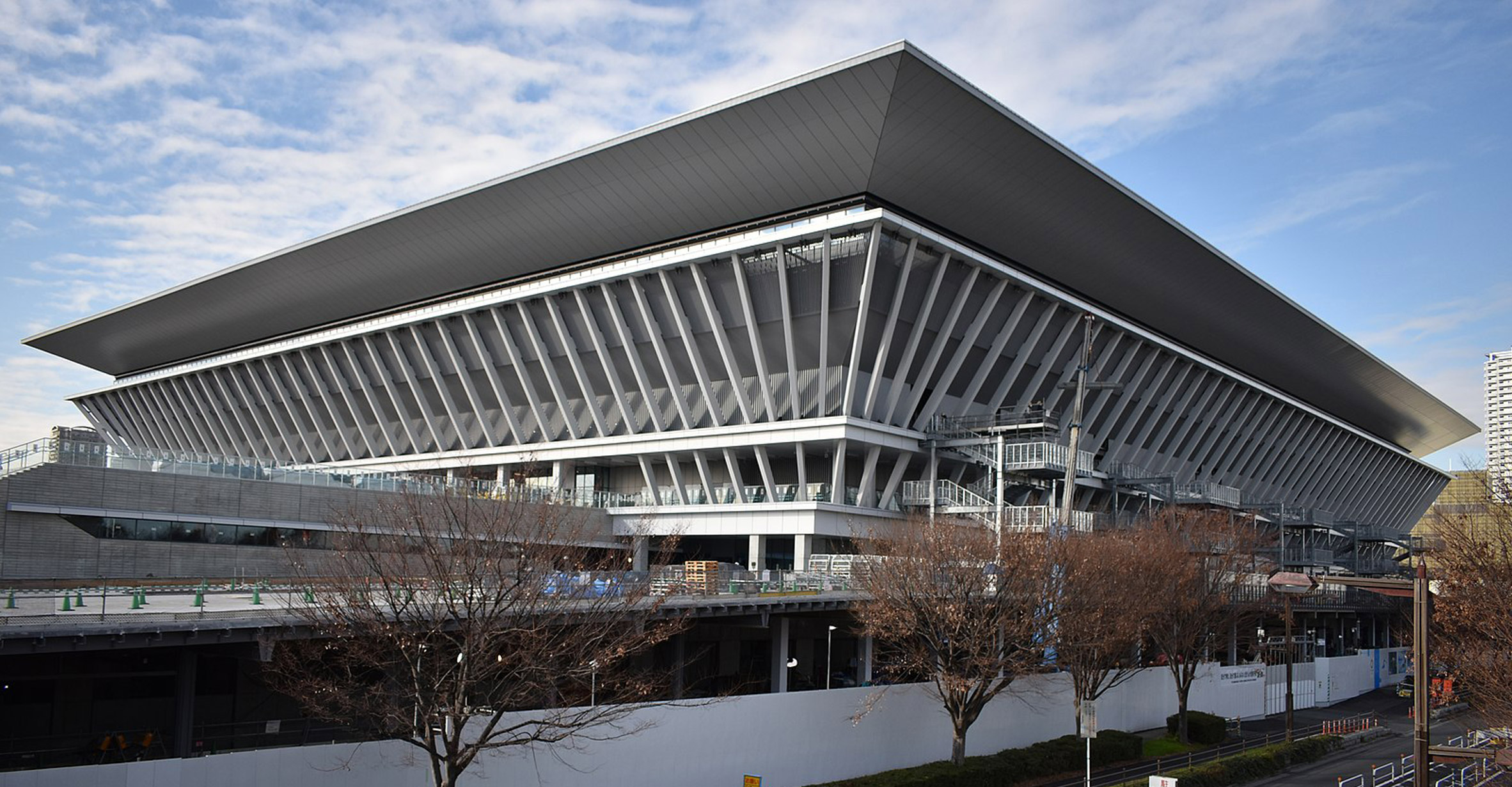
Tokyo Aquatics Centre by Yamashita Sekkei and Tange Associates
Photo is by 江戸村のとくぞう

Tokyo Aquatics Centre by Tange Associates and Yamashita Sekkei (2020)
Swimming and diving

Tokyo's 15,000-seat aquatics centre was designed by Paul Tange of Tange Associates, whose father Kenzo Tange designed a building with the same purpose for the 1964 Olympics in Tokyo.

The inverted pyramid-shaped form mirrors the shape of the stands within. After the Games, the venue's capacity will be reduced to 5,000 seats.


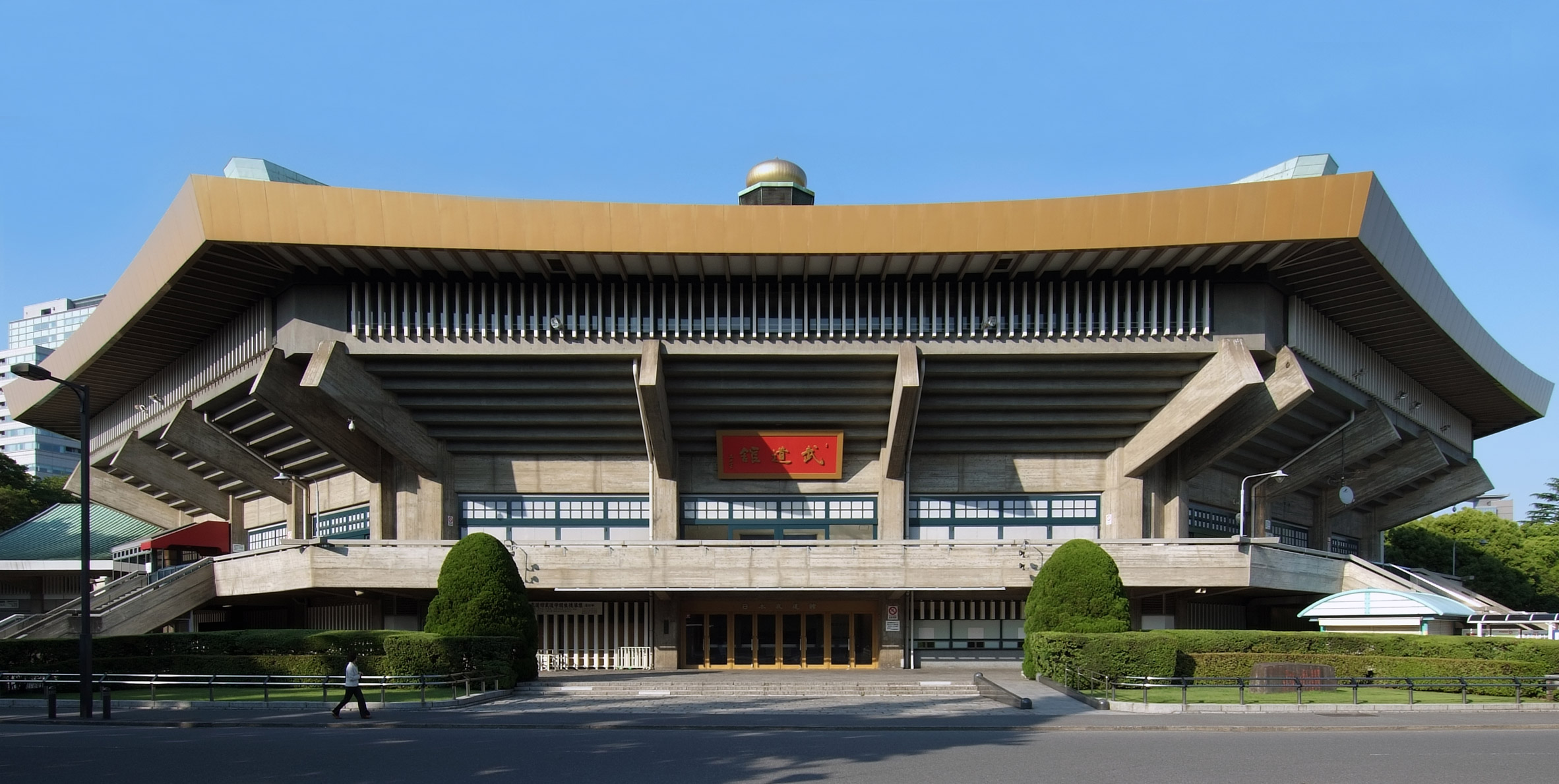
Nippon Budokan by Mamoru Yamada
Photo is by Wiiii

Nippon Budokan by Mamoru Yamada (1964)
Judo and karate

Another venue built for the 1964 Olympics, this octagonal building was designed to host the judo events at the Games.

Now used as a venue for martial arts events and a music venue, the Nippon Budokan will once again host the judo alongside the karate events.


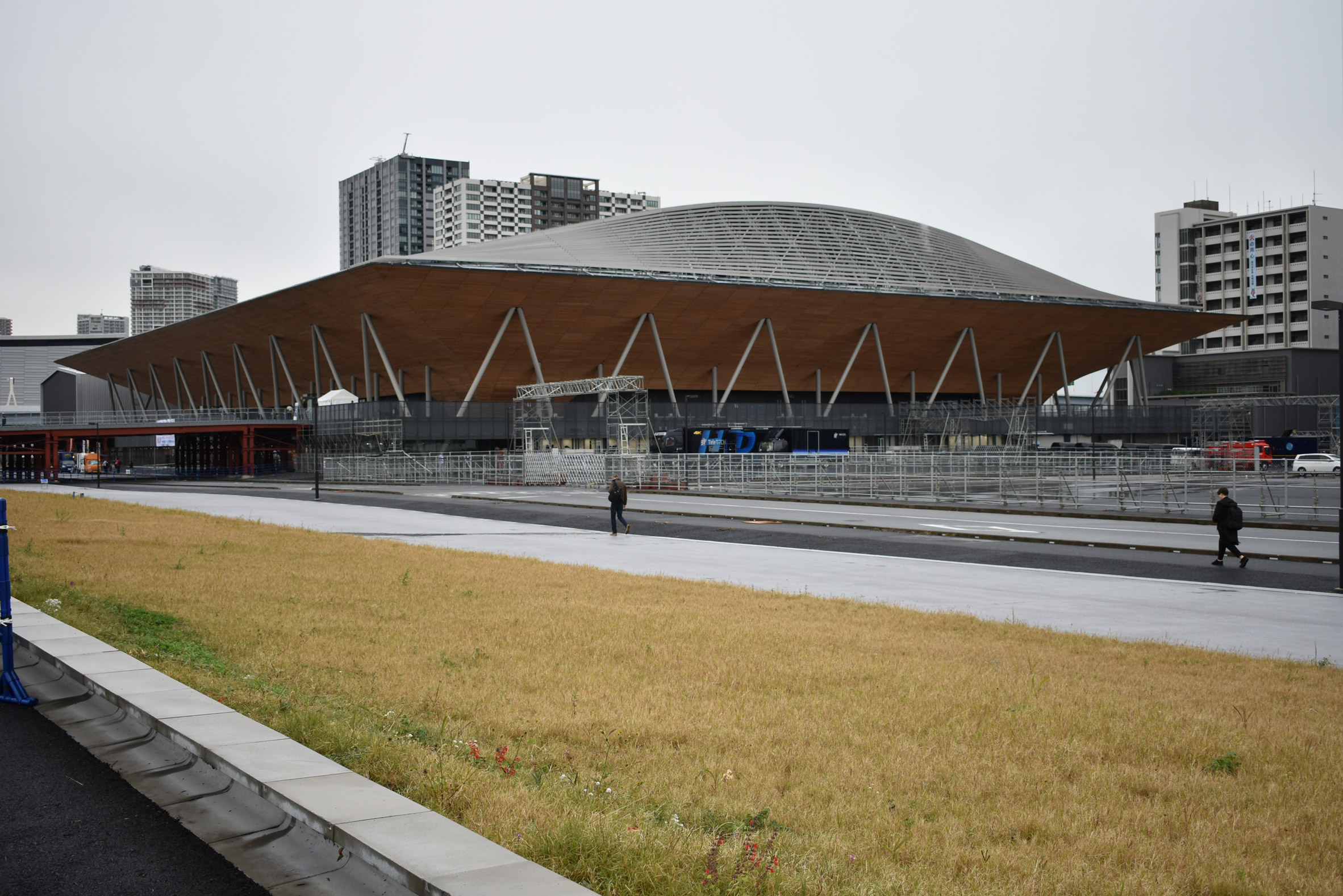
Ariake Gymnastics Centre by Nikken Sekkei + Shimizu Corporation
Photo is by 江戸村のとくぞう

Ariake Gymnastics Centre by Nikken Sekkei + Shimizu Corporation (2019)
Gymnastics and Boccia

Designed to resemble a floating wooden vessel, the Ariake Gymnastics Centre has a timber and steel structure and roof fame with walls clad in timber. The seating is also made from wood.

During the Games, the arena will have a capacity of 12,000, which will be reduced by the removal of temporary stands following the Games.


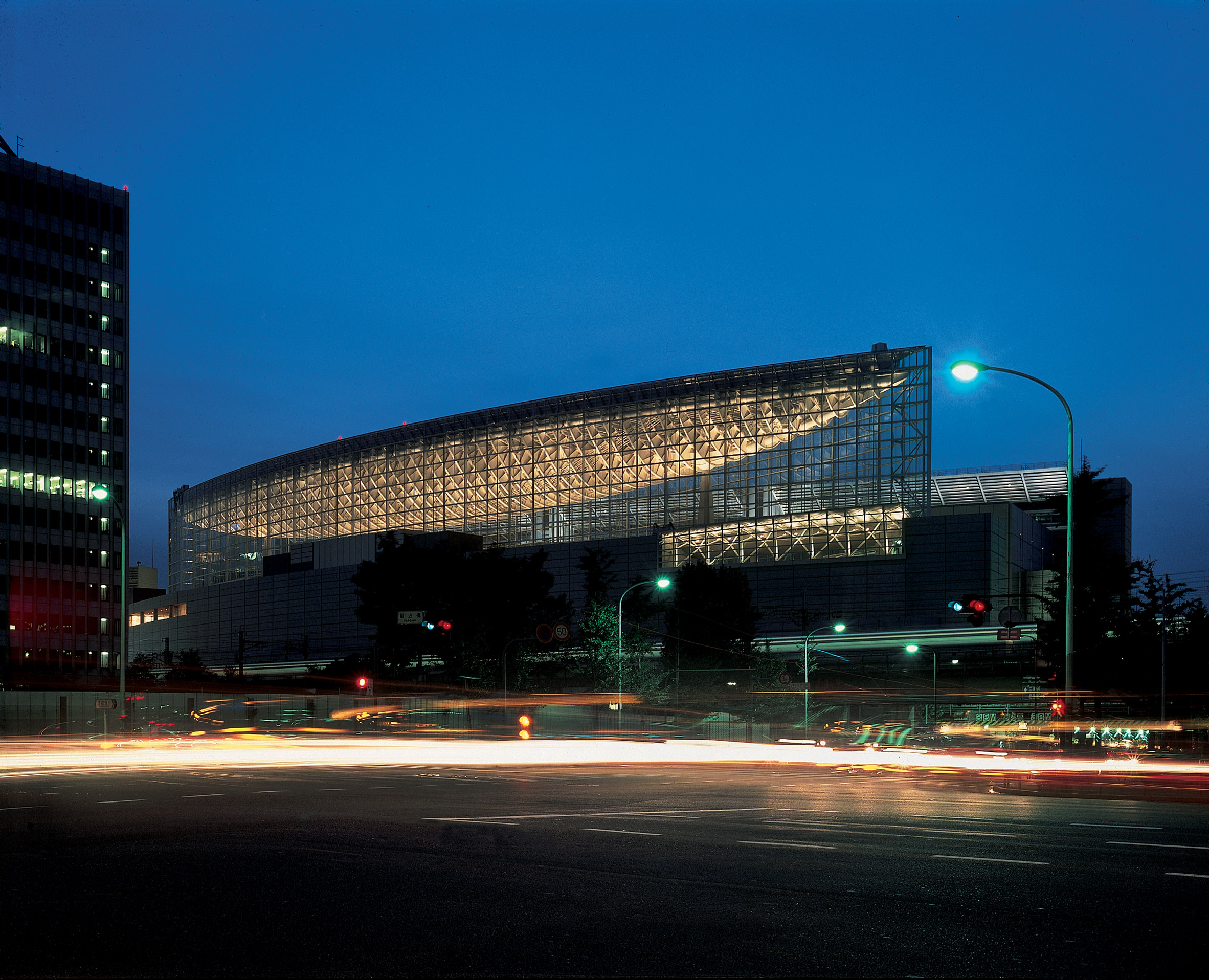
Tokyo International Forum by Rafael Viñoly Architects

Tokyo International Forum by Rafael Viñoly Architects (1997)
Weightlifting and powerlifting

Built for the Tokyo Metropolitan Government, the Tokyo International Forum will host the weightlifting and powerlifting events during the Games.

The conference centre's main lobby is contained within a structure built from two intersecting 60-meter-high glass walls, which was described by the architecture studio as "one of the most daring structures ever built in Japan".


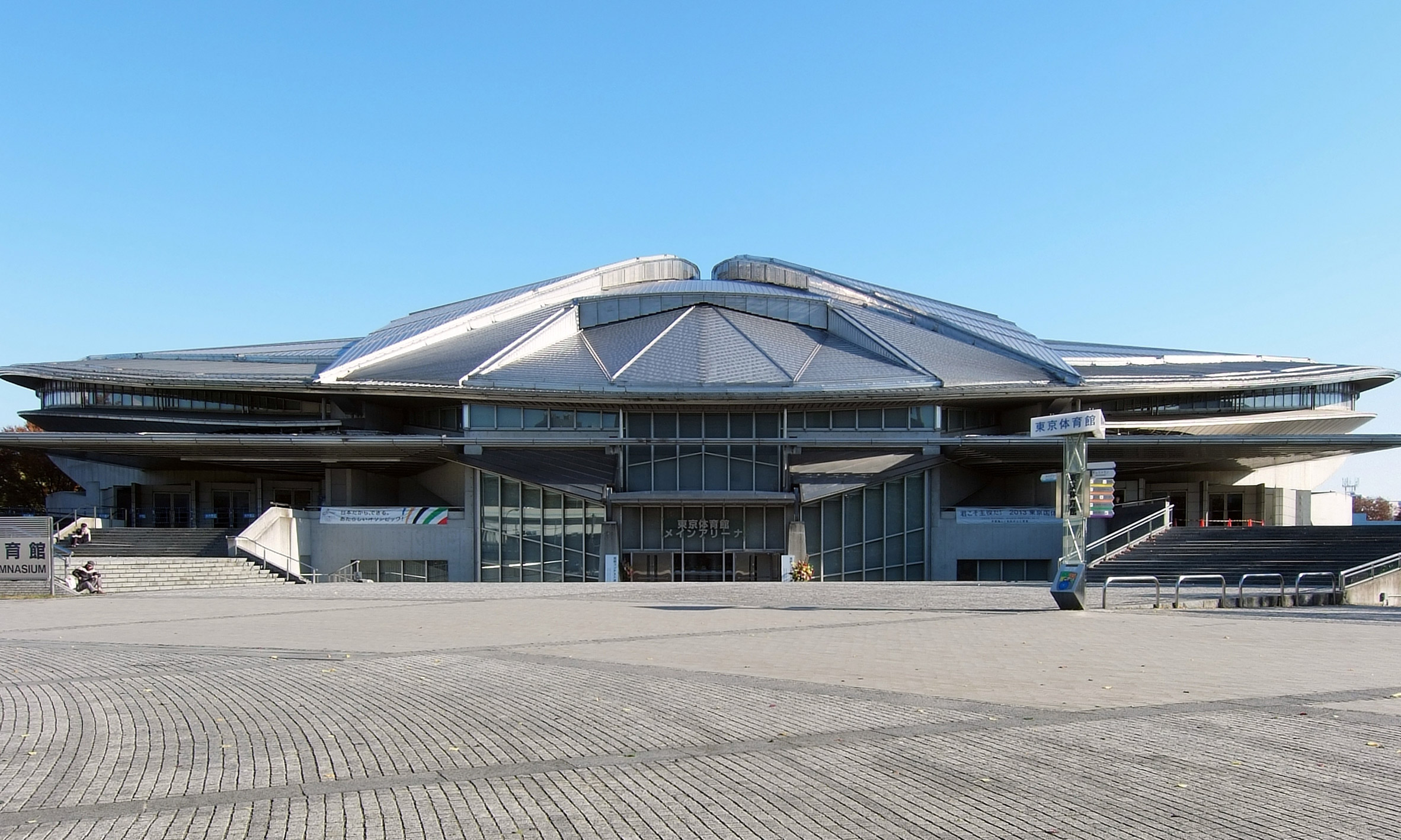
Tokyo Metropolitan Gymnasium by Fumihiko Maki
Photo by Wiiii

Tokyo Metropolitan Gymnasium by Fumihiko Maki (1991)
Table tennis

One of two venues designed by Pritzker Architecture Prize-winning architect Fumihiko Maki that is set to be used at the Games, the Tokyo Metropolitan Gymnasium will host the table tennis events.

Located alongside Kuma's stadium, the structure was originally built to host the World Wrestling Championship in 1954 before hosting gymnastics events at the 1964 Olympics. It was extensively rebuilt by Maki and reopened in 1991.


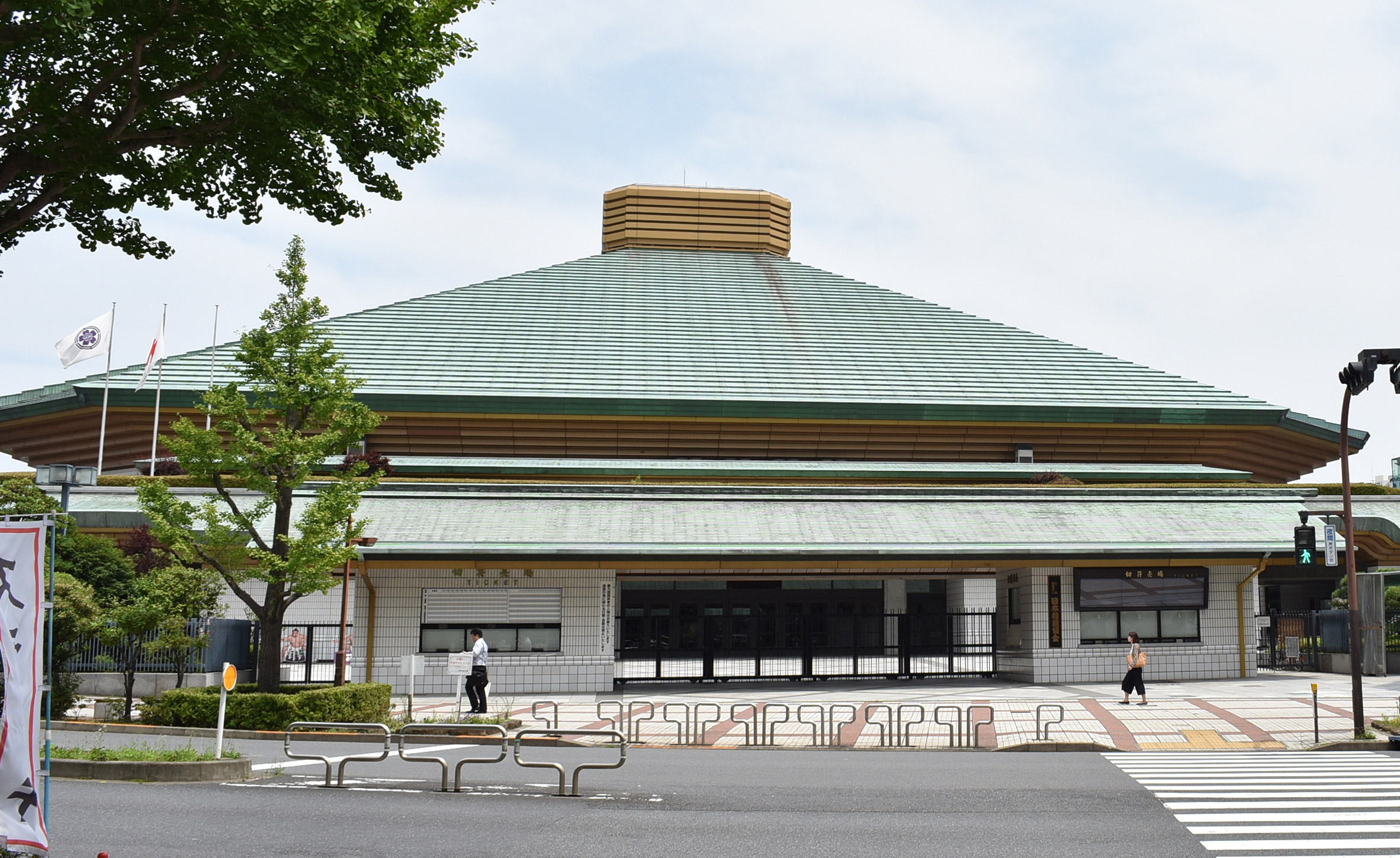
Kokugikan Arena by Kajima Corporation
Photo is by 江戸村のとくぞう

Kokugikan Arena by Kajima Corporation (1985)
Boxing

The home of sumo wrestling in Tokyo, Kokugikan Arena was designed in 1985 by Kajima Corporation to replace a previous venue on the site.

The bowl-shaped area will host the boxing events during the Games.


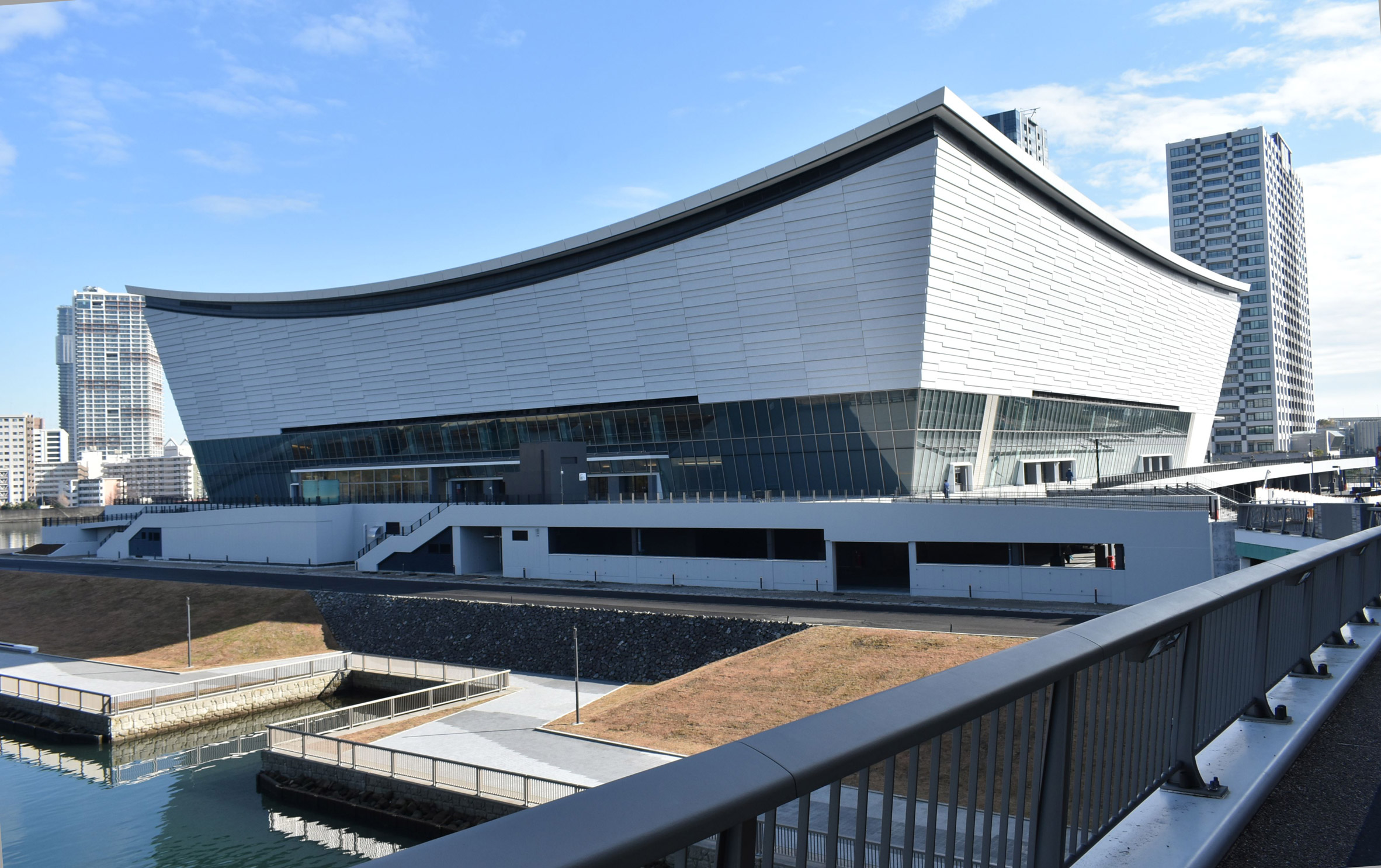
Ariake Arena by Kume Sekkei
Photo is by 江戸村のとくぞう

Ariake Arena by Kume Sekkei (2019)
Volleyball and wheelchair basketball

Located alongside the Ariake Gymnastics Centre in the Tokyo Bay, the 15,000 capacity Ariake Arena was built to host the volleyball and wheelchair basketball events during the Games.

The structure is topped with a convex roof that recalls the shape of a wave.


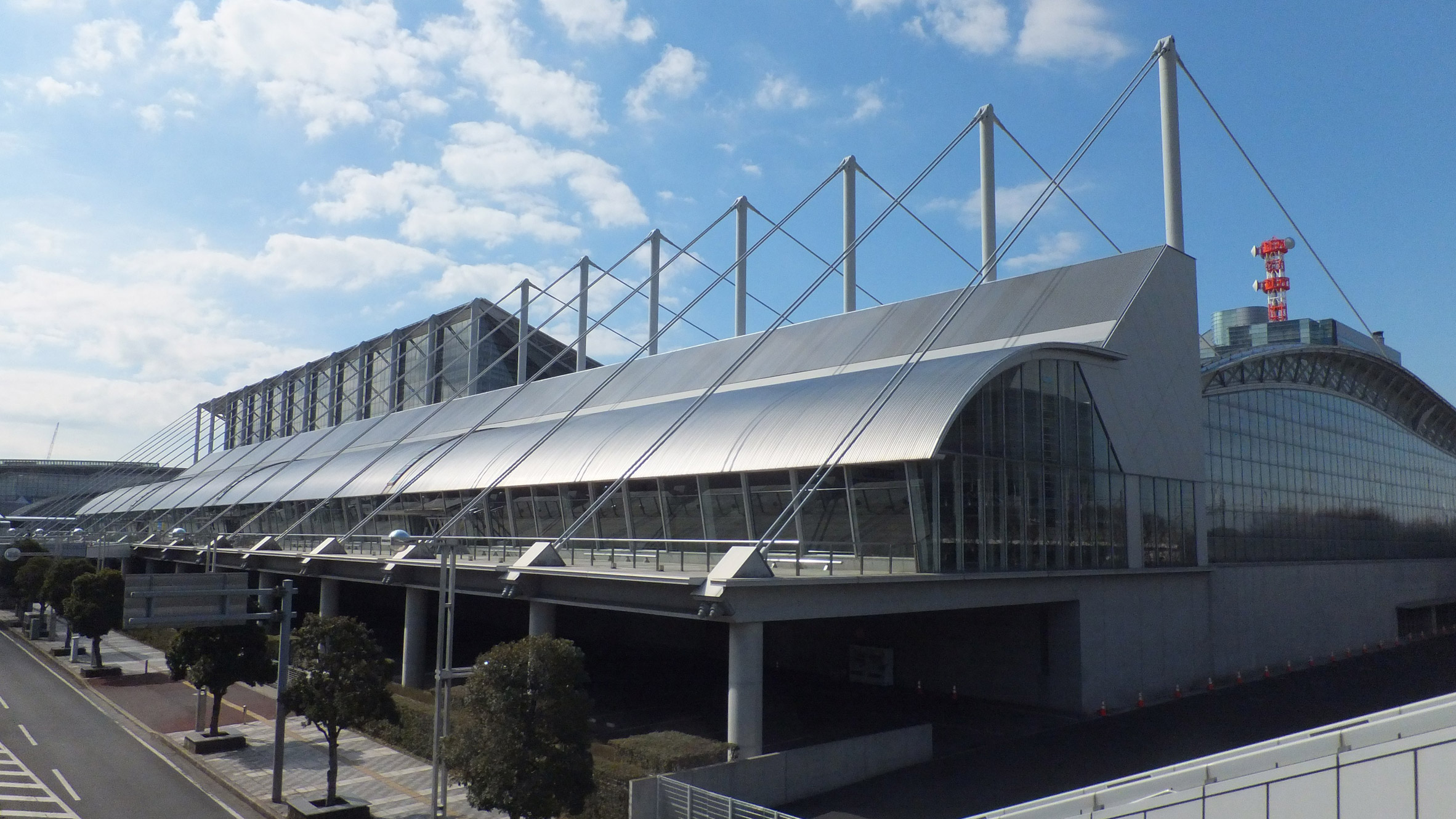
Makuhari Messe Hall by Fumihiko Maki
Photo is by 掬茶

Makuhari Messe Hall by Fumihiko Maki (1989)
Fencing, taekwondo, wrestling and goalball

The second of Maki's buildings that will be used at the Games, the Makuhari Messe Hall is a conference centre near the coast on the outskirts of Tokyo.

Built entirely from precast concrete and a structural steel frame, the building is topped by a dynamic, curved roof.


Izu Velodrome by Gensler Architects (2011)
Photo is by Batholith

Izu Velodrome by Gensler Architects (2011)
Cycling

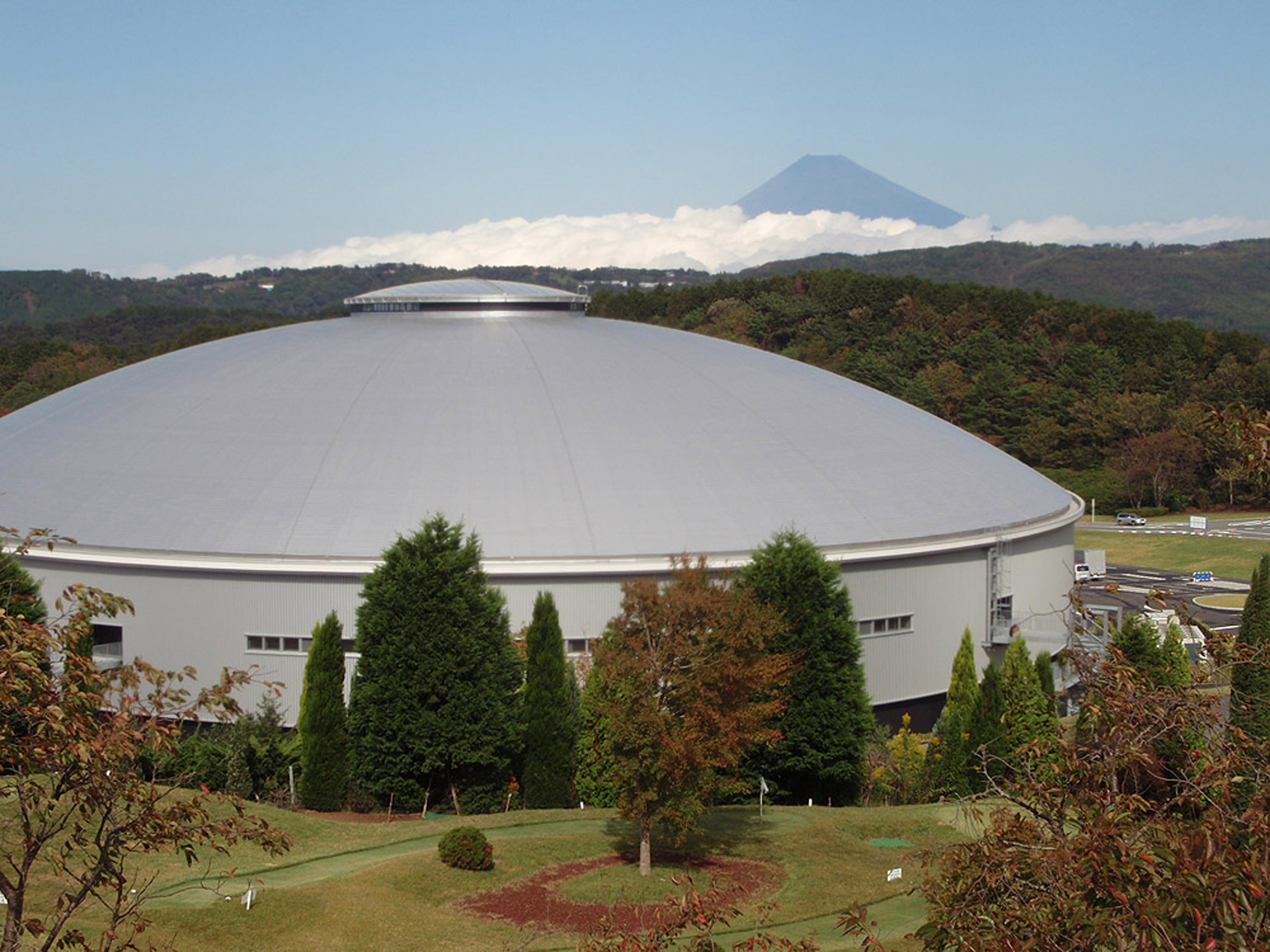
Designed by US studio Gensler Architects, the Izu Velodrome was built 30 years ago and at the time was the first 250-meter indoor cycle track in Japan.

The silver dome-shaped facility is located around 100 kilometres south of Tokyo.


Miyagi Stadium by Shoichi Haryu and Hitoshi Abe
Photo is by Kernel

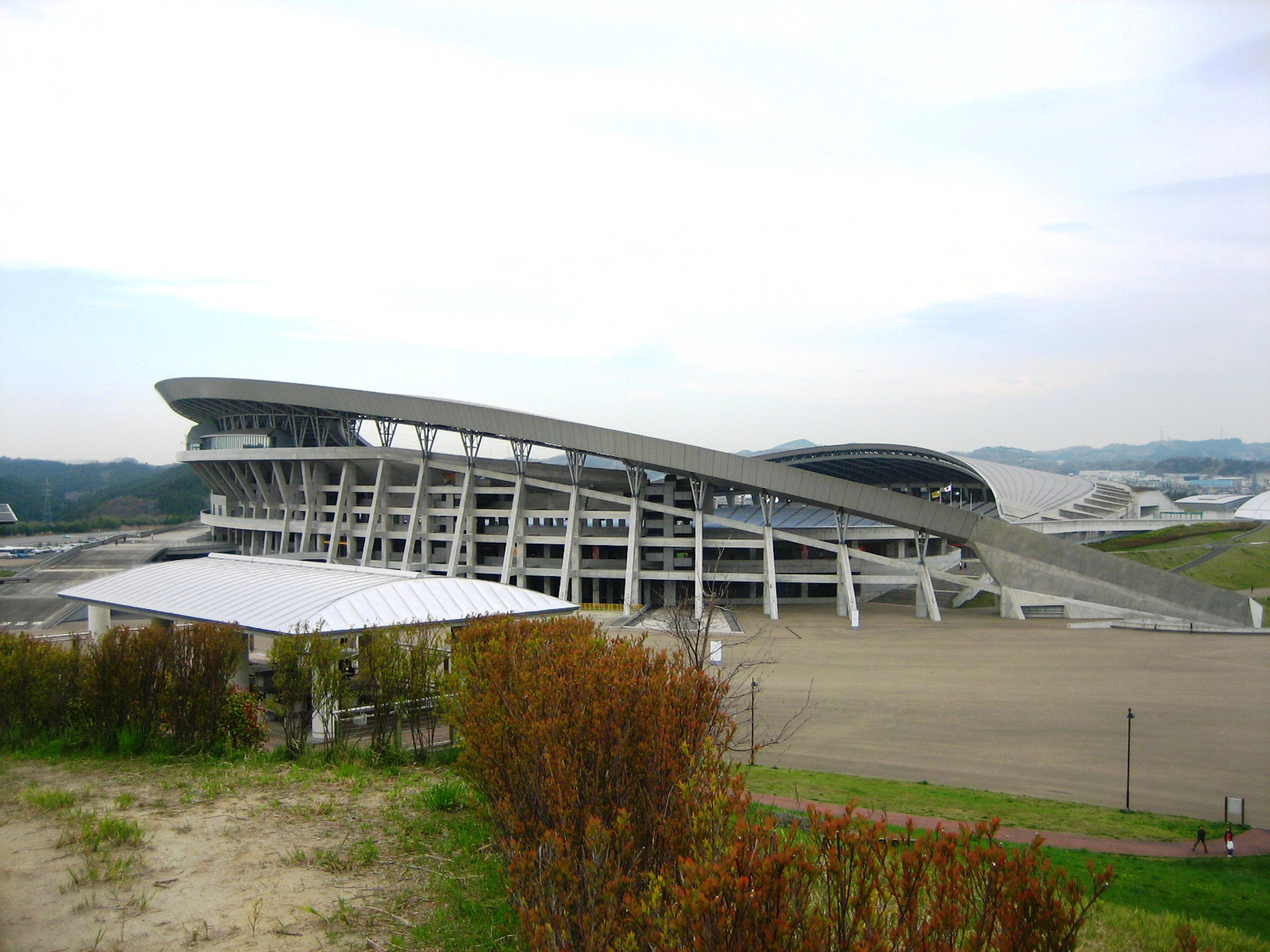
Miyagi Stadium by Shoichi Haryu and Hitoshi Abe (2000)
Football

The distinctive concrete Miyagi Stadium designed by Shoichi Haryu and Hitoshi Abe is one of seven stadiums set to host games during the Olympics.


Musashino Forest Sport Plaza by Nihon Sekkei
Photo is by Ccgxk

Musashino Forest Sport Plaza by Nihon Sekkei (2017)
Badminton, pentathlon and wheelchair basketball

Built for this year's Games, the main arena at the Musashino Forest Sport Plaza in western Tokyo has a capacity of over 10,000.

It was built to host badminton, pentathlon and wheelchair basketball events during the Games.

The post Dezeen's guide to the architecture of the Tokyo 2020 Olympic Games appeared first on Dezeen.


from Dezeen https://ift.tt/3xZ7pEG

Forgo aims to become net-zero "within the next five years" through its refillable cosmetics

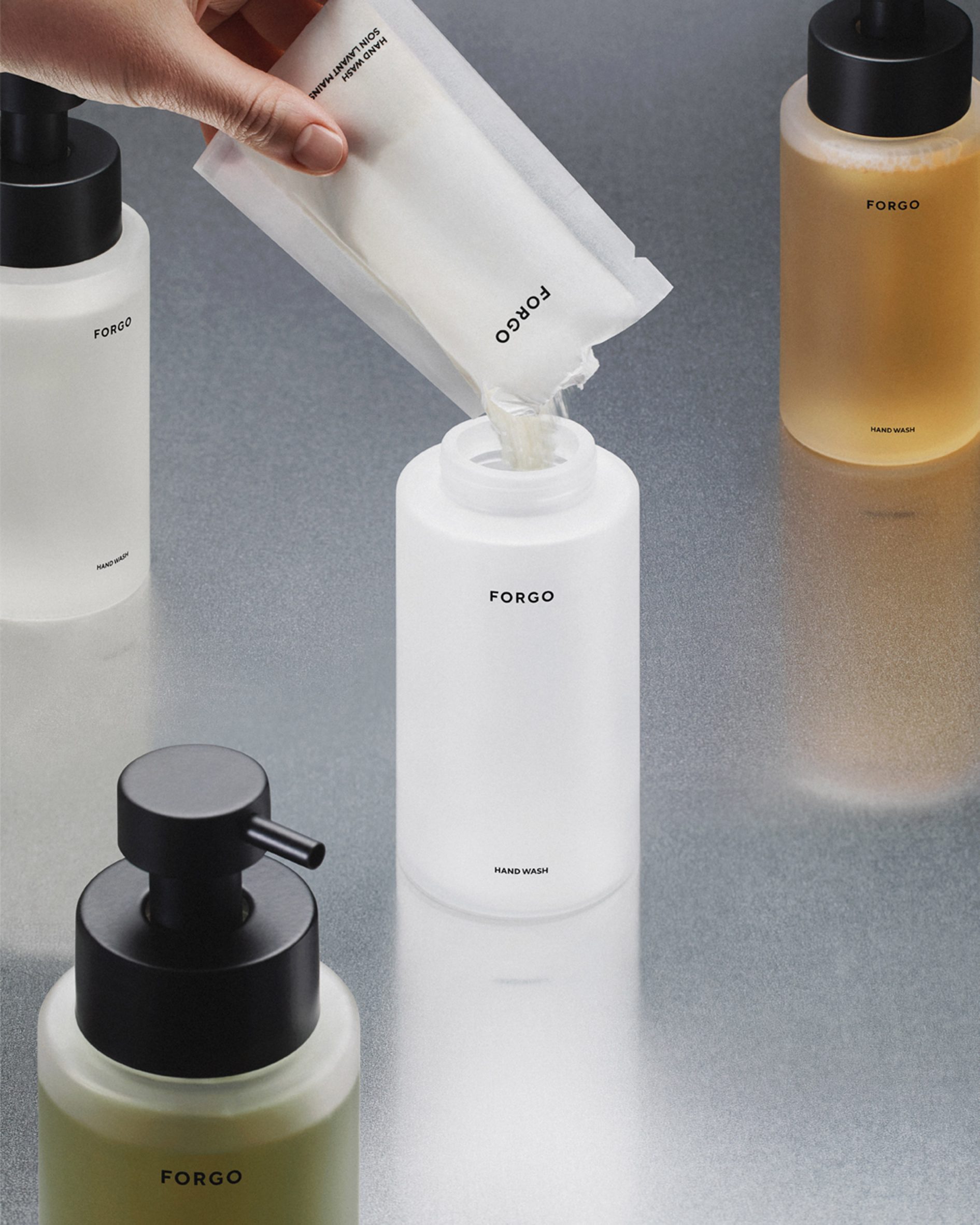
Hand refilling glass Forgo bottle with concentrated soap powder

Swedish cosmetics brand Forgo has conducted a lifecycle assessment of its mix-it-yourself soap in a bid to eliminate carbon emissions from its supply chain.

By driving down the emissions associated with producing its refillable cosmetics, the company hopes to reach net-zero by 2026, co-founder Allon Libermann told Dezeen

"We will be net-zero with offsets as a company," he said. "Maybe not by 2023 but definitely within the next five years. So that includes Scope 1, 2 and 3 [emissions]."

To become net-zero, a company needs to reduce its emissions across three categories, as set out by the Greenhouse Gas Protocol.

This includes direct Scope 1 emissions from the assets it controls, Scope 2 emissions from purchased energy and indirect Scope 3 emissions generated along the value chain.

According to Libermann, Forgo will begin by focusing on its Scope 3 emissions as these will likely be the most substantial.

"First and foremost, we want to reduce our own supply chain emissions as low as possible," he said.

Design brands lead charge to decarbonise economy

Forgo is one of several design companies taking a lead in efforts to become net-zero businesses, meaning they eliminate all emissions generated both by their own activities and those of their value chain.

Others going down the same route include furniture brand Takt, carpet company Interface, shoe brand Allbirds and furniture maker Sebastian Cox.

Hand refilling glass soap bottle with concentrated powder
Forgo's mix-it-yourself soap is delivered to the user in powdered form

To become net-zero, companies must do as much as they can to remove greenhouse gas emissions from their entire value chain, including materials provided by suppliers and the lifetime use of their products. Any remaining emissions must be offset using schemes that remove CO2 from the atmosphere.

"I've seen a lot of brands going straight to offsetting and I find that when you do that you kind of skip over the fact that you're an emitter," said Libermann.

The global economy needs to become net-zero by 2050 at the latest to achieve the aims of the 2015 Paris Agreement and have a chance to cap global warming at 1.5 degrees Celsius above pre-industrial levels.

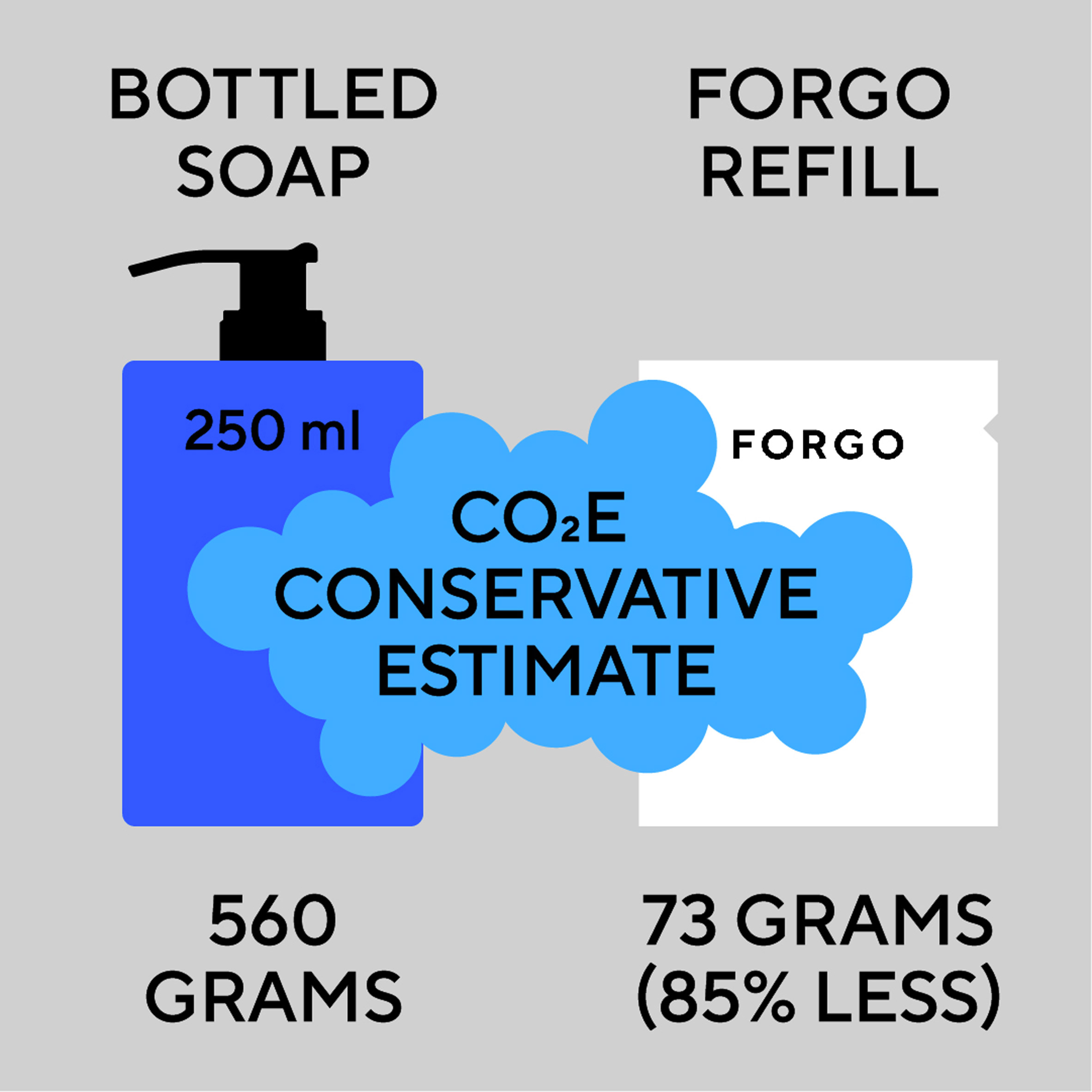
Refills emit 85 per cent less CO2 than bottled soap

Forgo, which was launched by Libermann and design studio Form Us With Love at last year's Stockholm Design Week, produces soap that's delivered to the user in powdered form.

Customers then mix the powder with tap water inside a reusable glass bottle.

Forgo commissioned New York company Carbon Calories to carry out a lifecycle assessment on its products. This concluded that the refill system has a lower carbon footprint over time than continually buying new single-use plastic containers.

However, upfront emissions are higher. Producing the reusable bottles generates four times more emissions than creating a throwaway plastic one due to the energy needed to heat and melt the glass.

Carbon footprint comparison of bottled soap and paper refill sachet by Forgo
One of the brand's paper refill sachets emits 83 per cent less CO2e than bottled soap

But because single-use containers need to be replaced regularly, this creates a larger, cumulative carbon footprint over time.

Carbon Calories' analysis found that after five years, Forgo's refill system would have avoided the need for approximately 55 plastic bottles, with each refill sachet emitting 85 per cent less carbon dioxide equivalent (CO2e) than buying a new bottle of soap.

Buying refillable soap is similar to investing in renewable energy infrastructure such as solar panels, Libermann argued, which involves an initial increase in emissions in the construction phase that is eventually cancelled out by eliminating the need to burn fossil fuels.

"We've applied the same principle to our products," Libermann said. "So the bottle is an upfront investment and over time, as you use it, you dramatically reduce your emissions."

Renewable energy and recycled glass could lower footprint

From here, Forgo will work to drive down the footprint of its products to as close to zero as possible. Then the company will look at offsetting what emissions remain, in line with The Oxford Principles for Net Zero Aligned Carbon Offsetting, by investing in direct air capture (DAC) and soil carbon sequestration.

Off the back of Carbon Calories’ lifecycle analysis, Forgo is lobbying its glass workshop in Portugal to switch to renewable energy and recycled glass.

This would eliminate the need to mine limestone and sand and drive down the emissions associated with the production of its bottles.

"Changing the power source is something that the customer doesn't really see or experience when they buy a product but it's the easiest ways to reduce emissions," Libermann said.

"It's possible to make glass entirely from renewable energy but most factories, like ours, still use mostly natural gas. We're discussing ways that they can make the switch but we're one of their smallest clients so we need all the others to be on board and willing to pay the cost."

Throwaway culture "doesn't work with a sustainable future"

An even less carbon-intensive option would be to create solid soap bars that need minimal packaging. But Libermann argues that the possible positive impact of such a product would be smaller due to declining demand.

"Liquid soaps make up 70 plus per cent of the global market," he said.

"Bar soaps make up a shrinking part of the market. For multiple reasons, people prefer bottled personal care. It's an unfortunate truth."

Hand grabbing a refill sachet of powdered soap
The refill sachets are made from paper with a water-soluble, compostable coating

A Forgo starter kit, including a reusable glass bottle and three refill sachets, currently retails for £44, making it more comparable to the price of an Aesop product than that of a standard high street brand.

"It's going to cost more to make things in a better way, so buying soap for £1 to £2 wouldn't be realistic," Libermann said.

"Everyone is racing to the bottom in terms of what they charge customers and how little they pay their farms and manufacturers," he added.

"Making everything super cheap makes it accessible but it also creates an economy where brands make money when you throw something away because you go out and buy another one. That business model doesn't work with a sustainable future."


Carbon revolution logo

Carbon revolution

This article is part of Dezeen's carbon revolution series, which explores how this miracle material could be removed from the atmosphere and put to use on earth. Read all the content at: www.dezeen.com/carbon.

The sky photograph used in the carbon revolution graphic is by Taylor van Riper via Unsplash.

The post Forgo aims to become net-zero "within the next five years" through its refillable cosmetics appeared first on Dezeen.


from Dezeen https://ift.tt/3iA0ew5

Wednesday, 21 July 2021

Assemble creates "skatable sculptures" for Folkestone Triennial

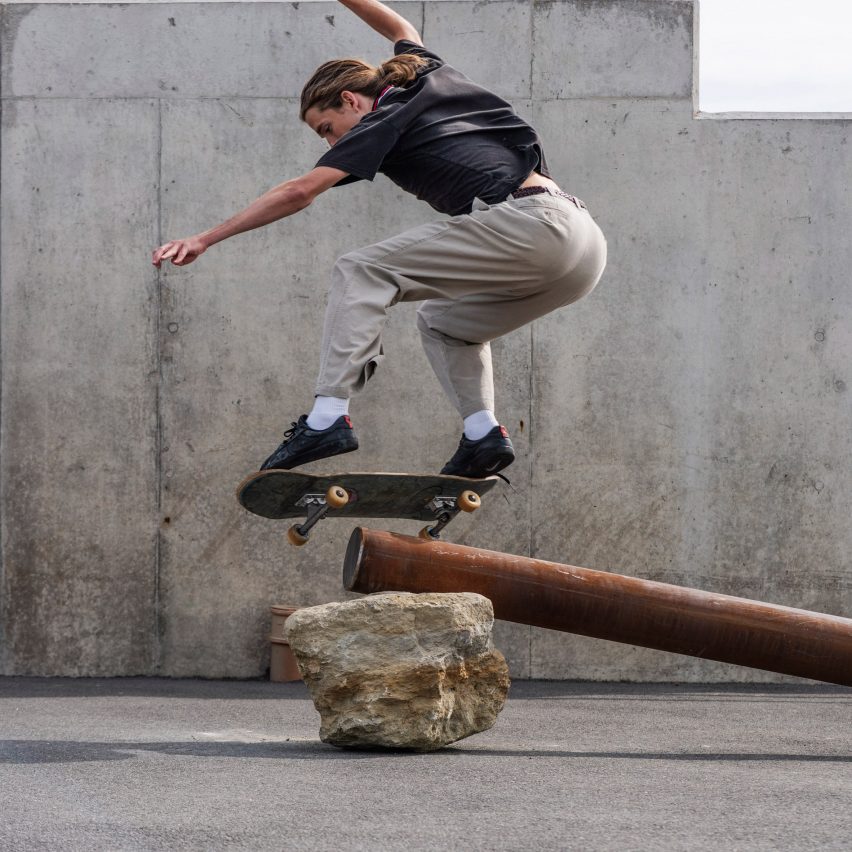
Skating Situations installation by Assemble at Folkestone Triennial 2021

Architecture collective Assemble is among 25 artists that have designed public installations for the Creative Folkestone Triennial, alongside artist Rana Begum and designer Morag Myerscough.

Now in its fifth year, the event has seen public spaces across Folkestone filled with 27 artworks ranging from a giant lantern on top of the town's mosque to kaleidoscopic beach huts and sculptures designed to be skated on.

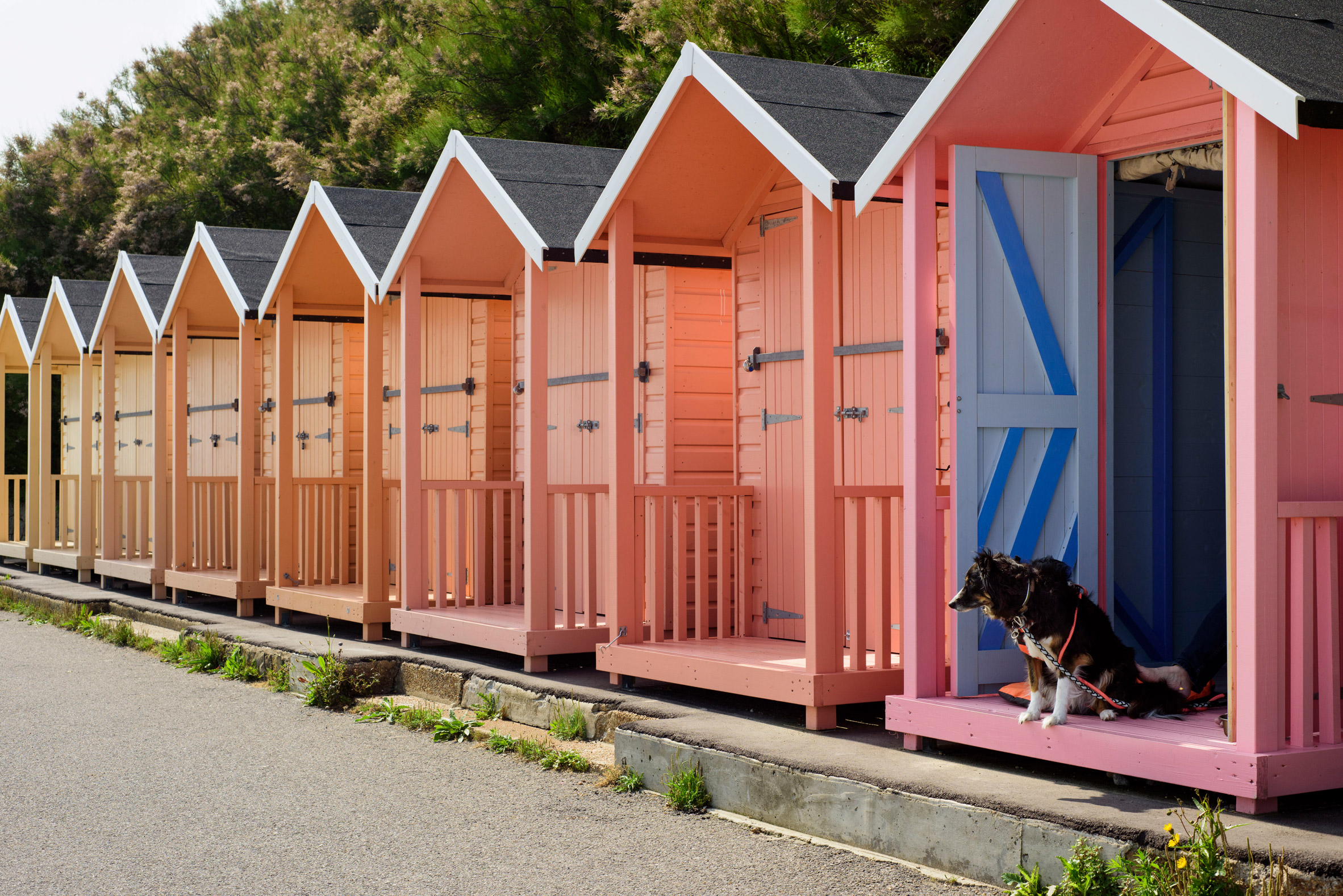
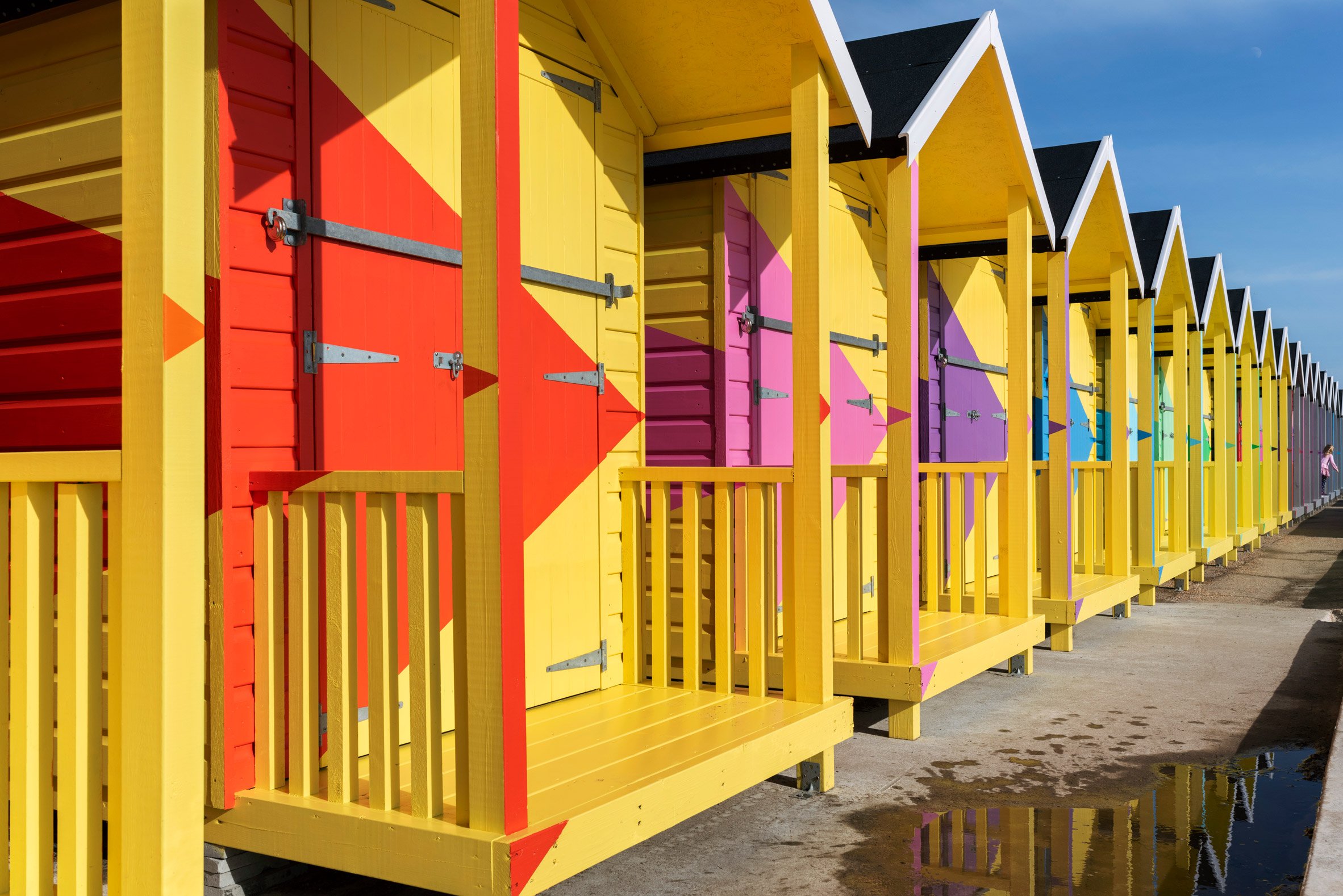
Beach huts in colourful yellow to pink gradient by Rana Begum
The Folkestone Triennial includes installations by Assemble (top image) and Rana Begum (above)

The triennial's installations seek to engage directly with the Folkestone community in order to give them a sense of ownership over the artworks, a number of which will remain in place even after the event comes to a close on 2 November 2021.

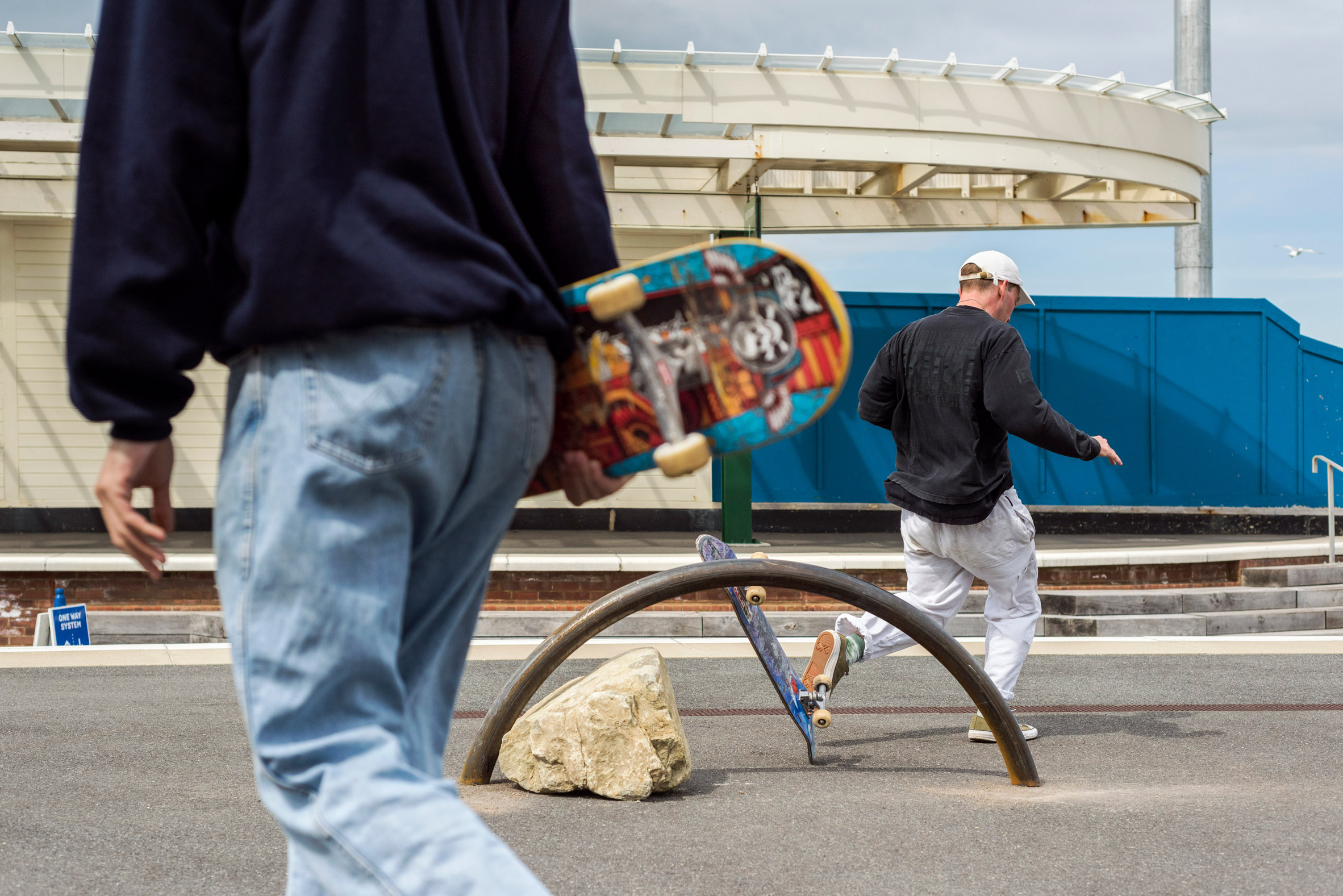
Among them are a series of nine "skatable sculptures", created by Assemble in collaboration with local skaters, that are strewn across a section of the town's restored Harbour Arm promenade.

They were made from local materials including raw Kentish ragstone found on the beach and steel sourced from a fabricator in nearby Ashford.

Skater performing a trick on a rainbow-shaped sculpture by Assemble at the Folkestone Triennial 2021
Assemble designed the sculptures with local skaters

"Our main starting point was this idea that skateboarding is about appropriating found or existing aspects of the public realm and adapting them through resourceful, low-tech, DIY means," Assemble co-founder Jane Hall told Dezeen.

"Skaters will appropriate anything for skateboarding but are also unbelievably particular, within a couple of millimetres tolerance, about what makes a good edge to do tricks on," she continued.

"So it's interesting to design for because you're constantly having to make sure that really weird things are completely accurate while the rest is not accurate at all."

Skater on a steel box tube in front of stones in Skating Situations installation by Assemble
Local ragstones taken from the beach offer a place to sit, watch and socialise

This summer, a new Olympic-standard, multi-storey skate park will open in Folkestone, just as the sport is set to make its debut at the Tokyo 2020 Games.

But with Skating Situations, Assemble hopes to pay homage to skateboarding's grassroots origins, which Hall says have fostered a unique respect and duty of care for public spaces.

Skaters using Assemble's skatable sculptures at Folkestone Triennial 2021
The stones are combined with mild steel components from a manufacturer in Ashford

"Skateboarders are custodians and guardians of the public realm," she said.

"They really care about the quality of public space and how it is used. They recognise these spots, in which no one else would see a significance. It's a whole different way of reading public space."

Nur lantern installation by HoyCheong Wong and Simon Davenport at Folkestone mosque
Wong and Davenport have created a lantern installation for Folkestone's mosque

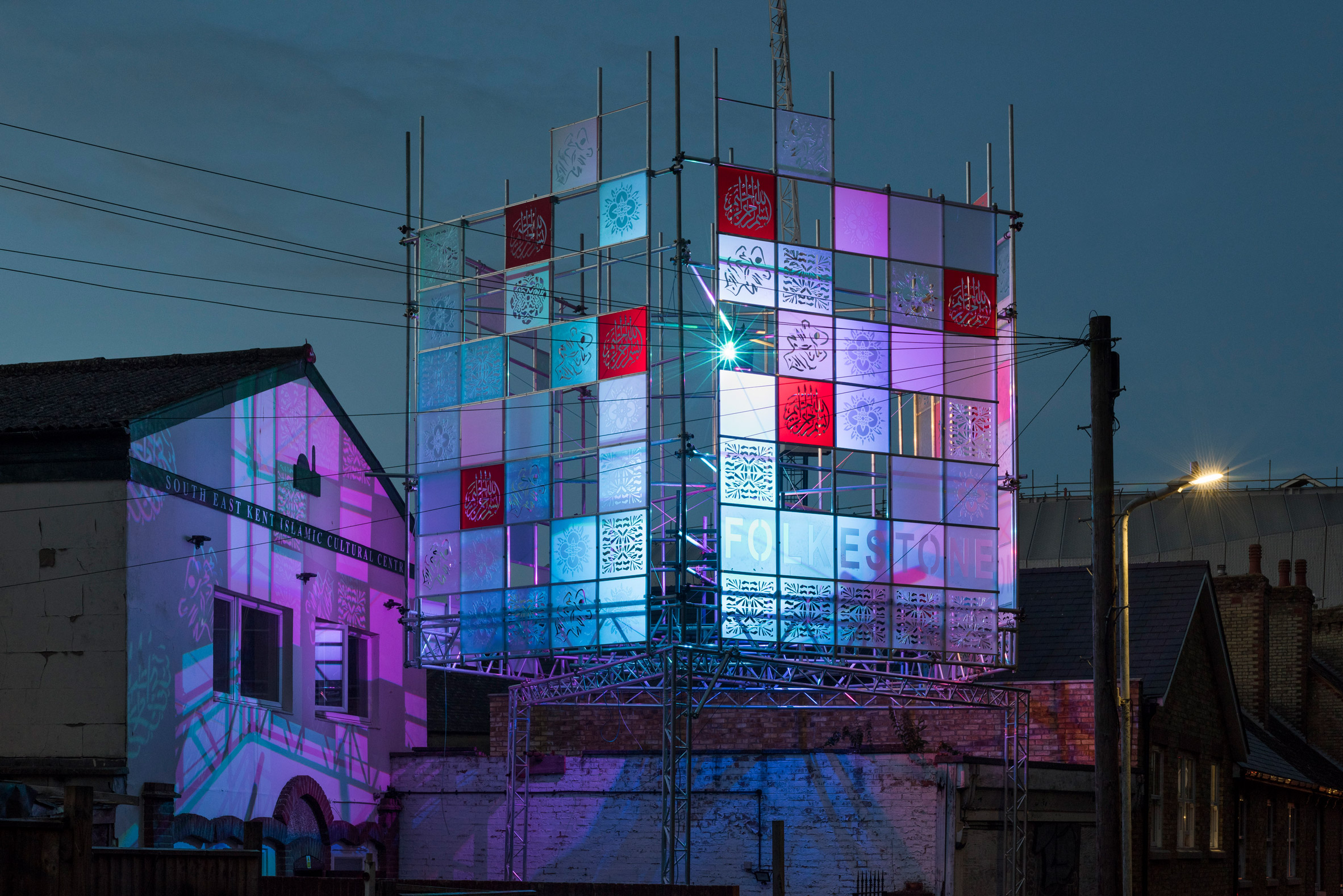
Further north, artists HoyCheong Wong and Simon Davenport created an oversized lantern installation that towers over the courtyard of Folkestone's Islamic Cultural Centre.

Illuminated from within, the artwork casts shadows onto the mosque through its acrylic panels, which are rendered in "Turkish delight" colours and cut with motifs chosen in collaboration with the local community.

Lantern with colourful acrylic panels by HoyCheong Wong and Simon Davenport
The artwork is illuminated from within

The hope is to draw in visitors and investment to help develop the building – a converted mill from the 1800s – to better fulfil its new purpose.

Architect Shahed Saleem, who recently built replicas of three London mosques for the Venice Architecture Biennale, worked with the centre's organising committee to drawn up plans for what this redevelopment could look like, which are displayed underneath the lantern.

Colourful gasworks installation by Morag Myerscough behind a red brick wall at Folkestone Triennial 2021
Myerscough's installation opens up a site that was previously hidden behind a brick wall

Using a similar scaffolding structure as the lantern, Myerscough created a viewing platform that opens onto a panorama of an overgrown former gasworks site, which was previously obscured from local residents by a brick wall.

Constructed in the distinctive shape of a gas holder, the entrance pavilion was emblazoned with colourful slogans that were written and painted by people living in the area.

"Now you can walk out here and get this view nobody has seen for 60 years except for the pigeons," the designer said.

"I also wanted the people who were involved to feel empowered that they'd made this piece of work. Doing workshops is one thing but then actually physically making it has a whole different feeling to it."

Yellow beach huts with colourful triangles by Rana Begum at Folkestone Triennial 2021
Begum painted a row of 120 refurbished beach huts

Elsewhere at the Folkestone Triennial 2021, Begum has cast a row of refurbished beach huts along the shorefront promenade in a rainbow gradient of colours.

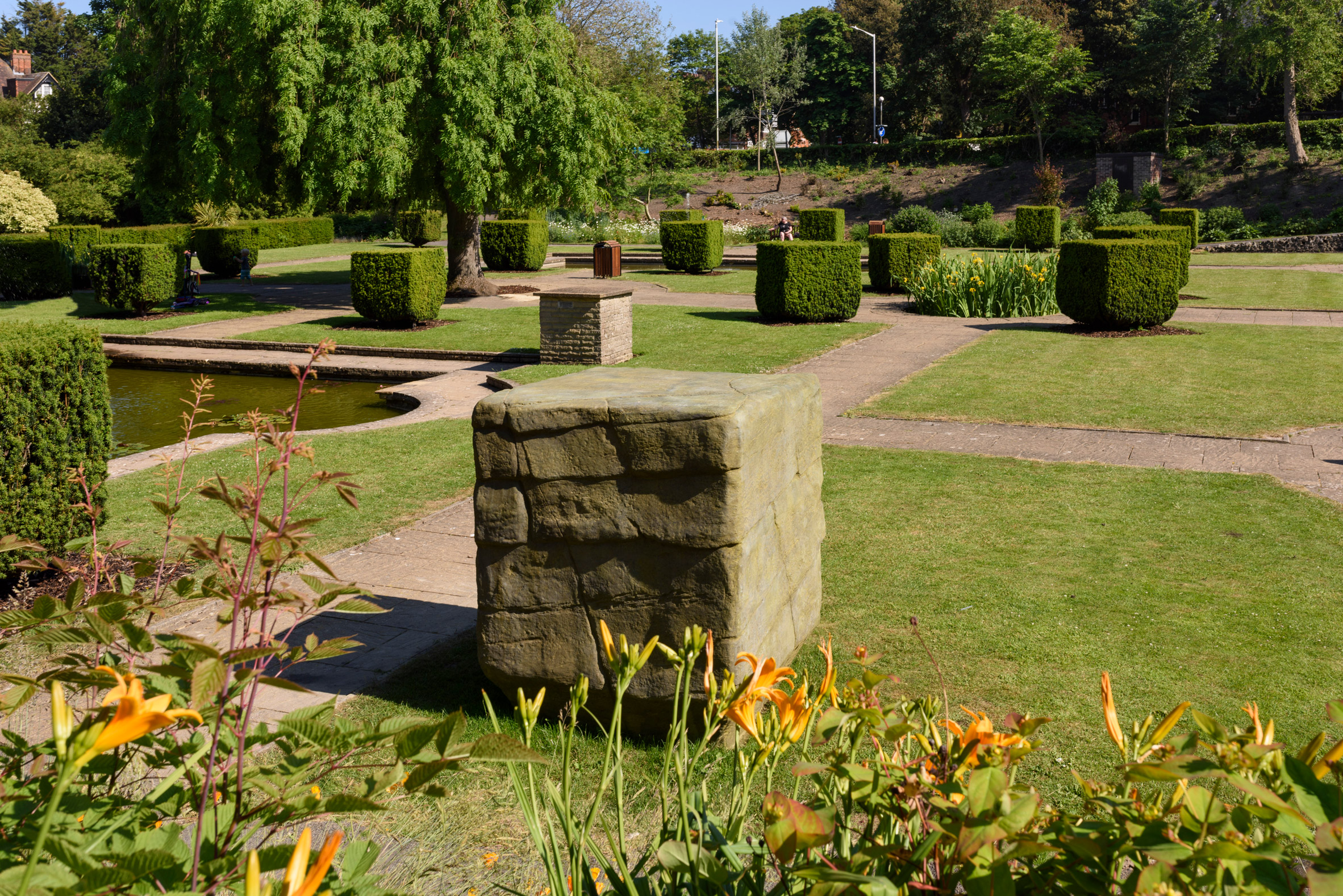
Meanwhile, Japanese artist Mariko Hori created boulders from pulhamite, a kind of fake-rock finish used by zoos, filled with objects donated by residents that will be exposed over time as the surface is worn down by the elements.

Boulder by Mariko Hori
Hori's fake boulders contain items donated by residents

Previous editions of the event have seen Richard Woods build six cartoon bungalows across Folkestone as a comment on the housing crisis while design duo Something & Son created a sustainable farming initiative concealed behind a traditional fish and chip shop facade.

The Creative Folkestone Triennial 2021 is on view from 22 July to 2 November in various locations across Folkestone. See Dezeen Events Guide for an up-to-date list of architecture and design events taking place around the world.

The post Assemble creates "skatable sculptures" for Folkestone Triennial appeared first on Dezeen.


from Dezeen https://ift.tt/3iDmbdA