Friday, 23 July 2021

This week the Olympics were accused of "greenwashing"

Olympic architecture

This week on Dezeen, we reported on the sustainable aims of the Tokyo 2020 Olympic Games, which were questioned in a peer-reviewed study.

As the Tokyo 2020 Olympic Games kicks off we looked at the initiatives that are aiming to make the games sustainable. These include medals made from old phones, podiums made from recycled plastic and cardboard beds.

However, a report conducted by the University of Lausanne concluded that the games were the third-least sustainable Olympics since 1992.

"The majority of the measures that have been included in this particular Olympics, and the ones that were particularly mediatised, have a more or less superficial effect," David Gogishvili, who is co-author of the report, told Dezeen.

Olympic venues
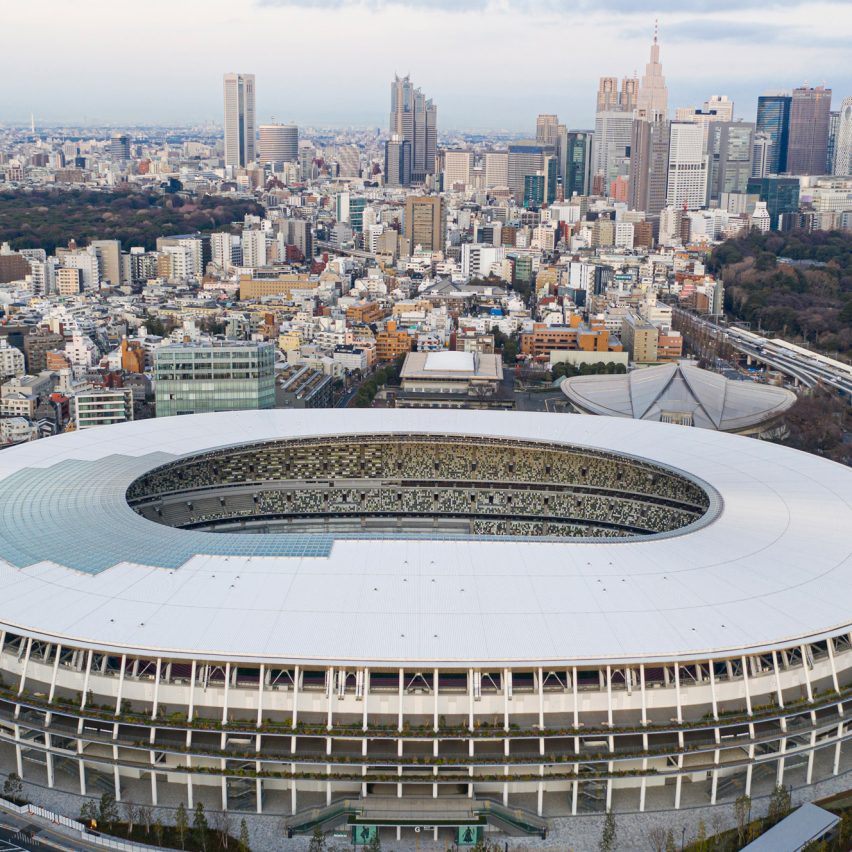
Dezeen's guide to the architecture of the Tokyo 2020 Olympic Games

We also rounded up the most architecturally significant venues that will be hosting events during the games, including several buildings designed for the 1964 Olympics in the city.

The centrepiece of the games is the 68,000 capacity Japan National Stadium (picture top) designed by Japanese architect Kengo Kuma, which is one of the few venues built especially for the event.

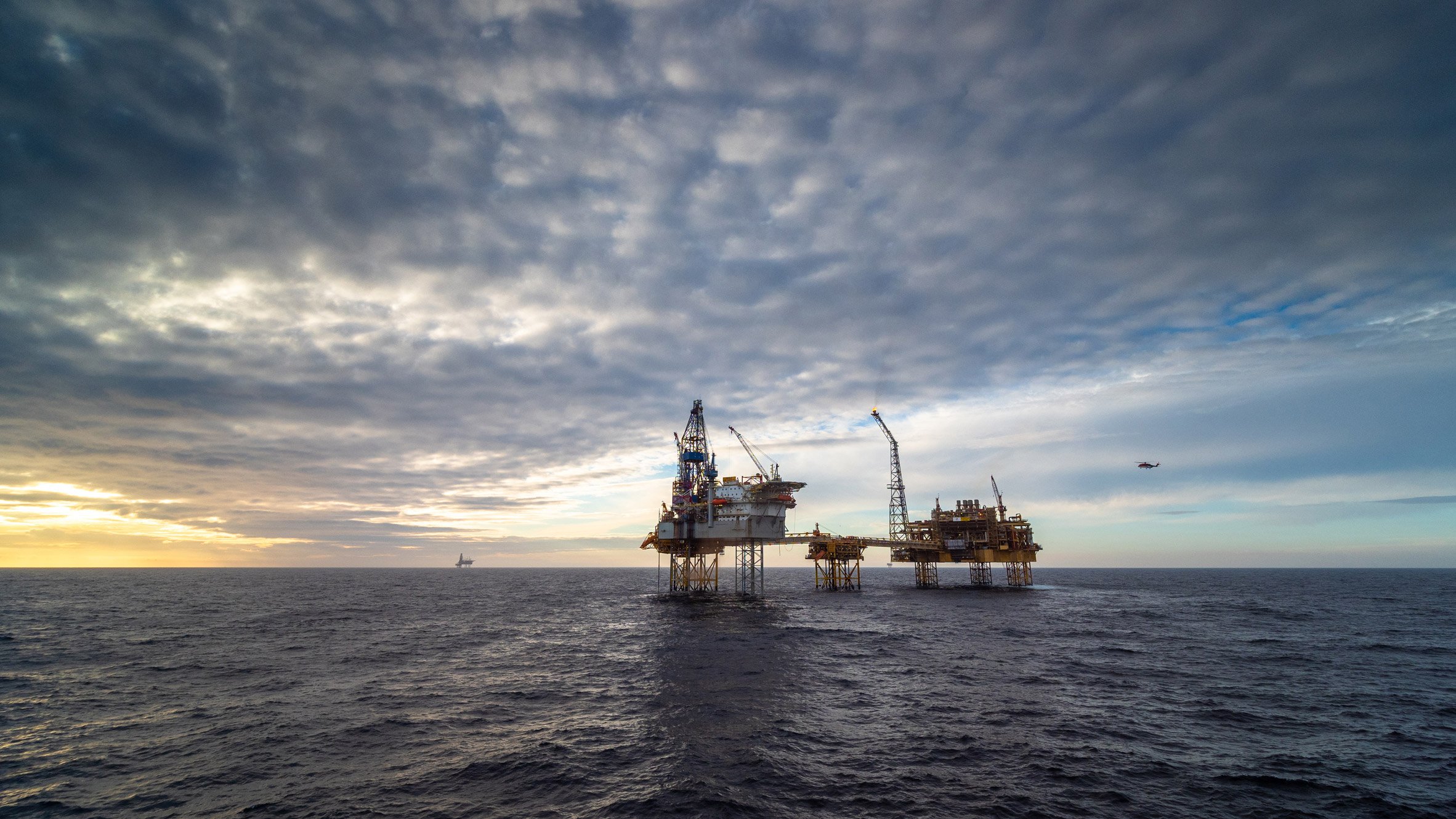
Oil rig
Norway begins work on "absolutely necessary" project to bury up to 1.25 billion tonnes of CO2 under the North Sea

Our carbon revolution series continued this week with news that Norway has started work on a €1.7 billion project to bury vast amounts of captured carbon under the North Sea.

Eventually, the project could see a total of up to 1.25 billion tonnes of CO2 sequestered in former fossil reserves deep beneath the sea.

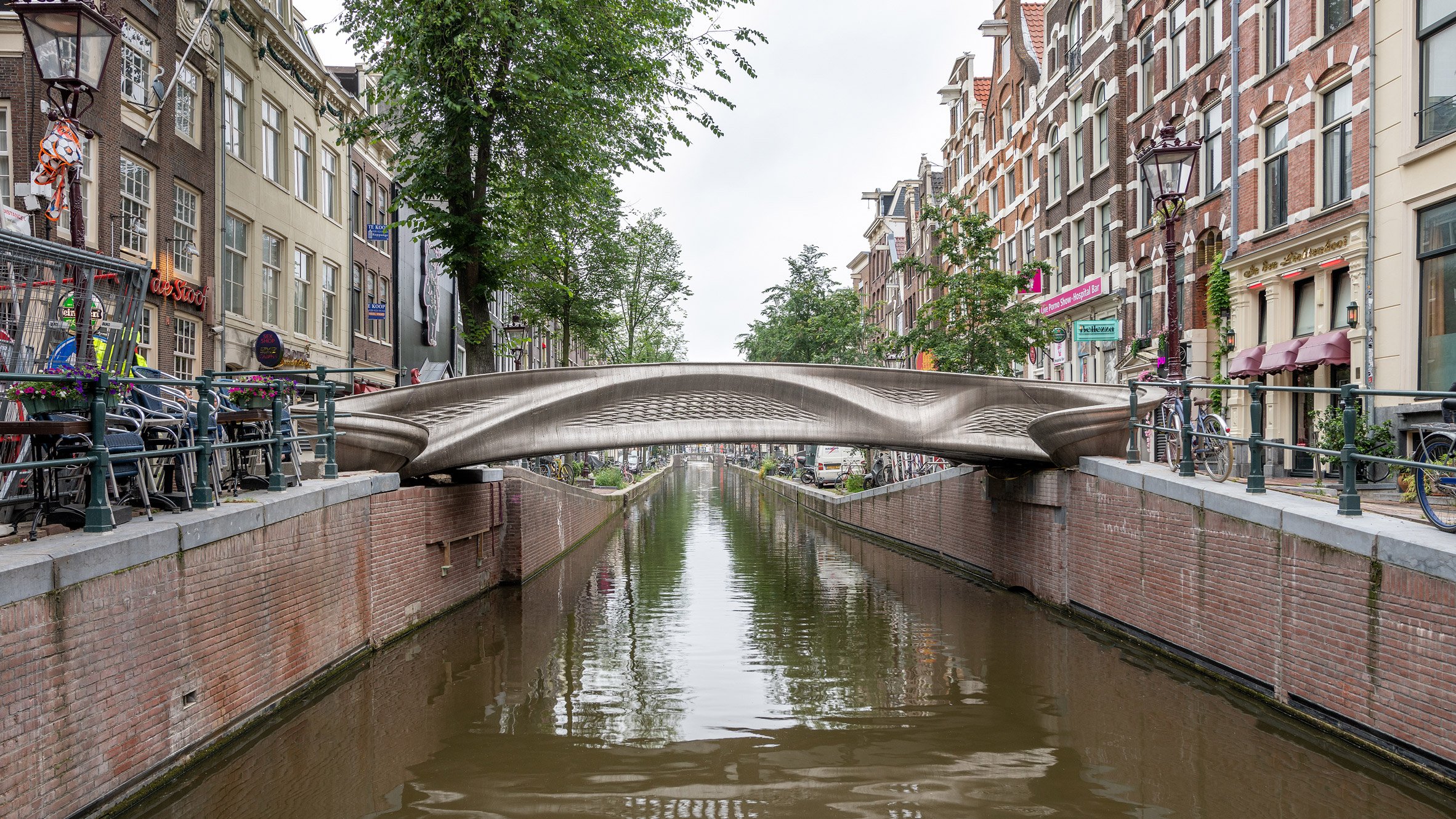
The bridges spans across a canal
Joris Laarman's 3D-printed stainless steel bridge finally opens in Amsterdam

A 3D-printed pedestrian bridge designed by Joris Laarman finally opened in Amsterdam this week, six years after the project was first launched.

Spanning the Oudezijds Achterburgwal in Amsterdam's Red Light District, the bridge was made from stainless steel welded by six-axis robotic arms.

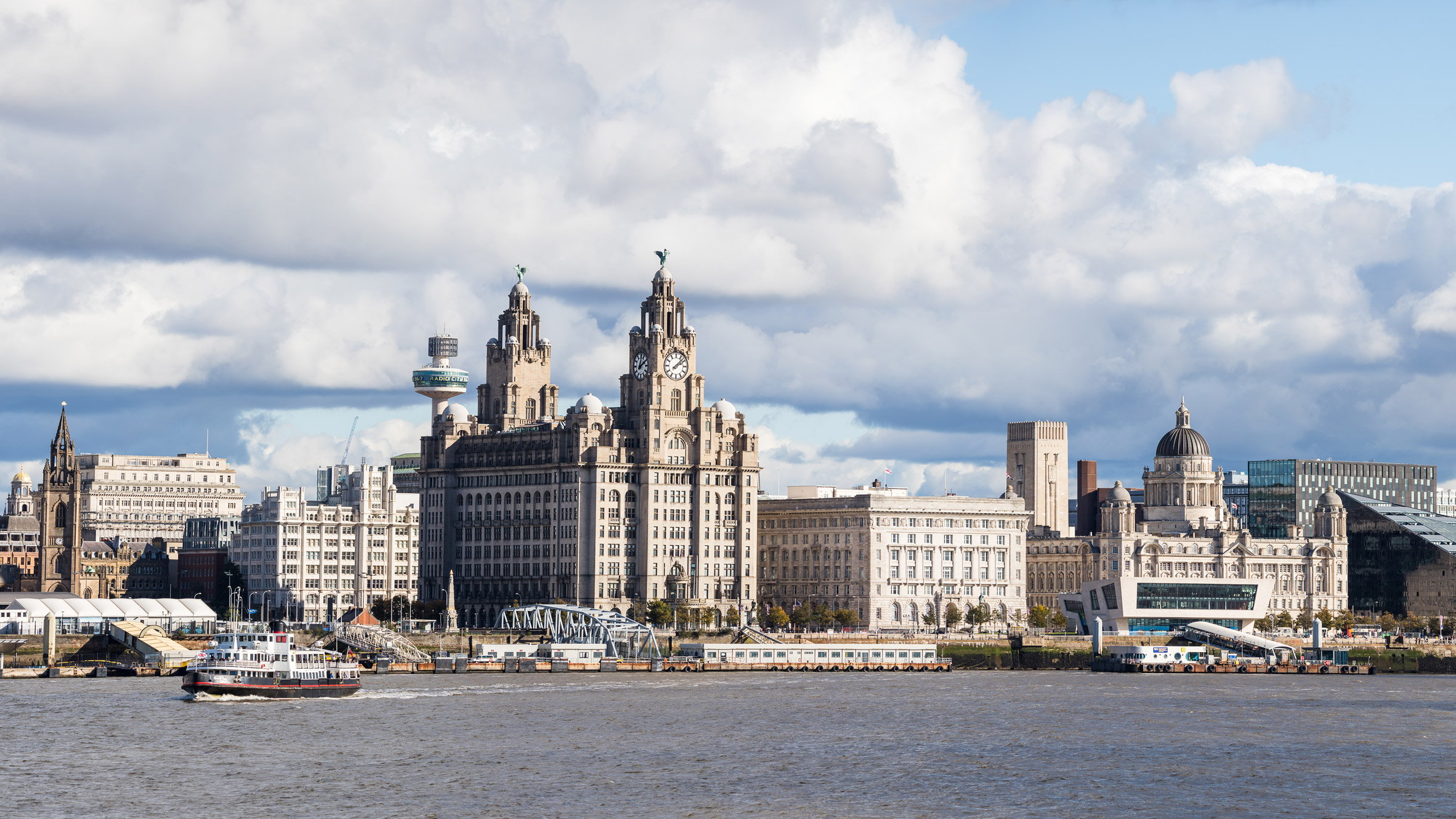
Libverpool World Heritage status UNESCO
Liverpool stripped of World Heritage status due to waterfront developments

In the UK, UNESCO stripped the city of Liverpool of its World Heritage status after it found that a series of recent developments had "eroded the integrity" of the site.

Following a vote that took place in Fuzhou, China, Liverpool joins the Elbe Valley in Germany and the Arabian Oryx Sanctuary in Oman as the only sites to have lost the status.

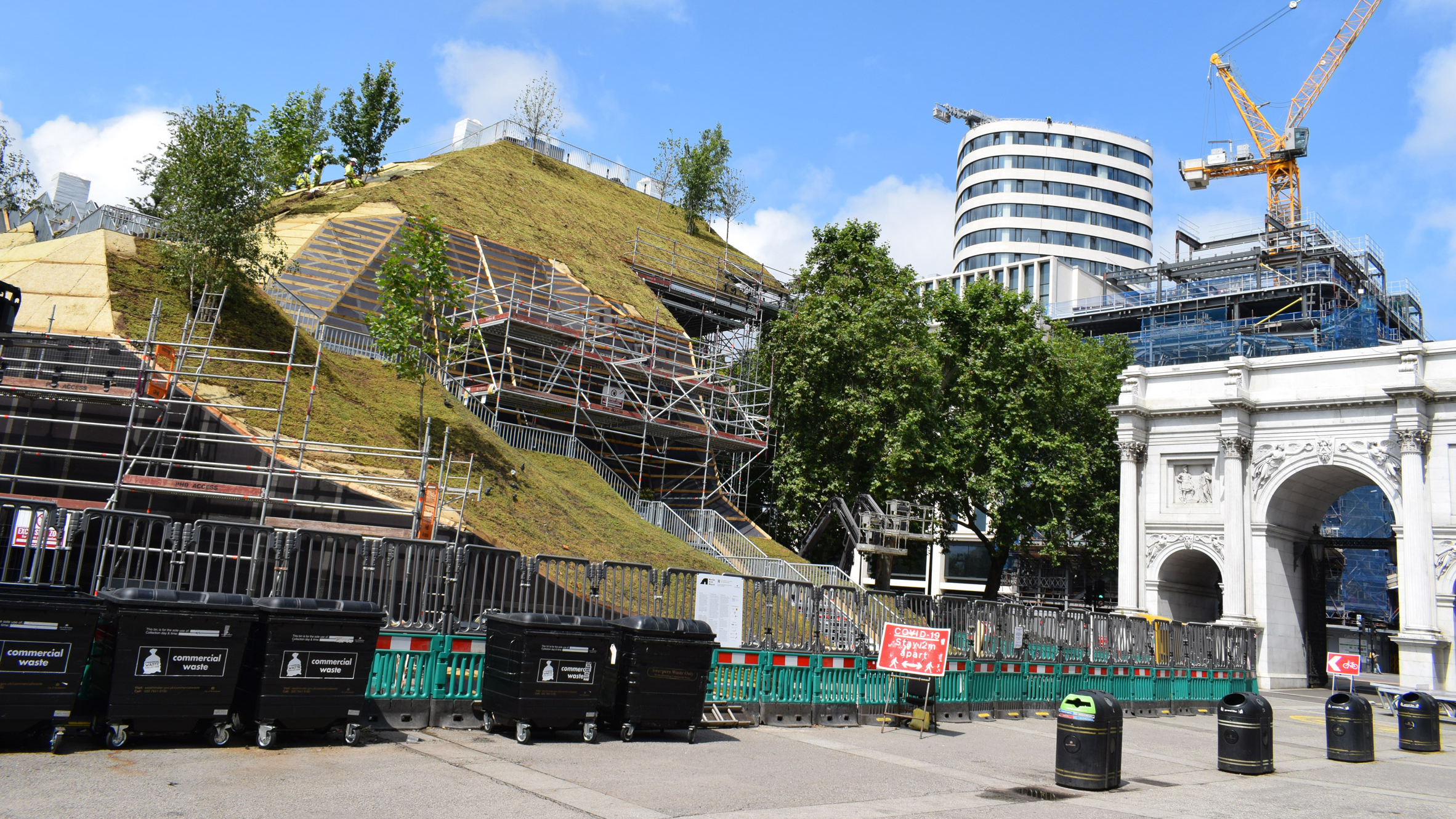
Marble Arch Hill viewpoint by MVRDV
MVRDV's artificial hill rises at Marble Arch in London

Also in the UK, the Marble Arch Mound viewpoint in central London was photographed under construction in London.

Designed by Dutch studio MVRDV, the artificial hill rises 25 metres tall alongside Hyde Park and is set to open to the public later this month.

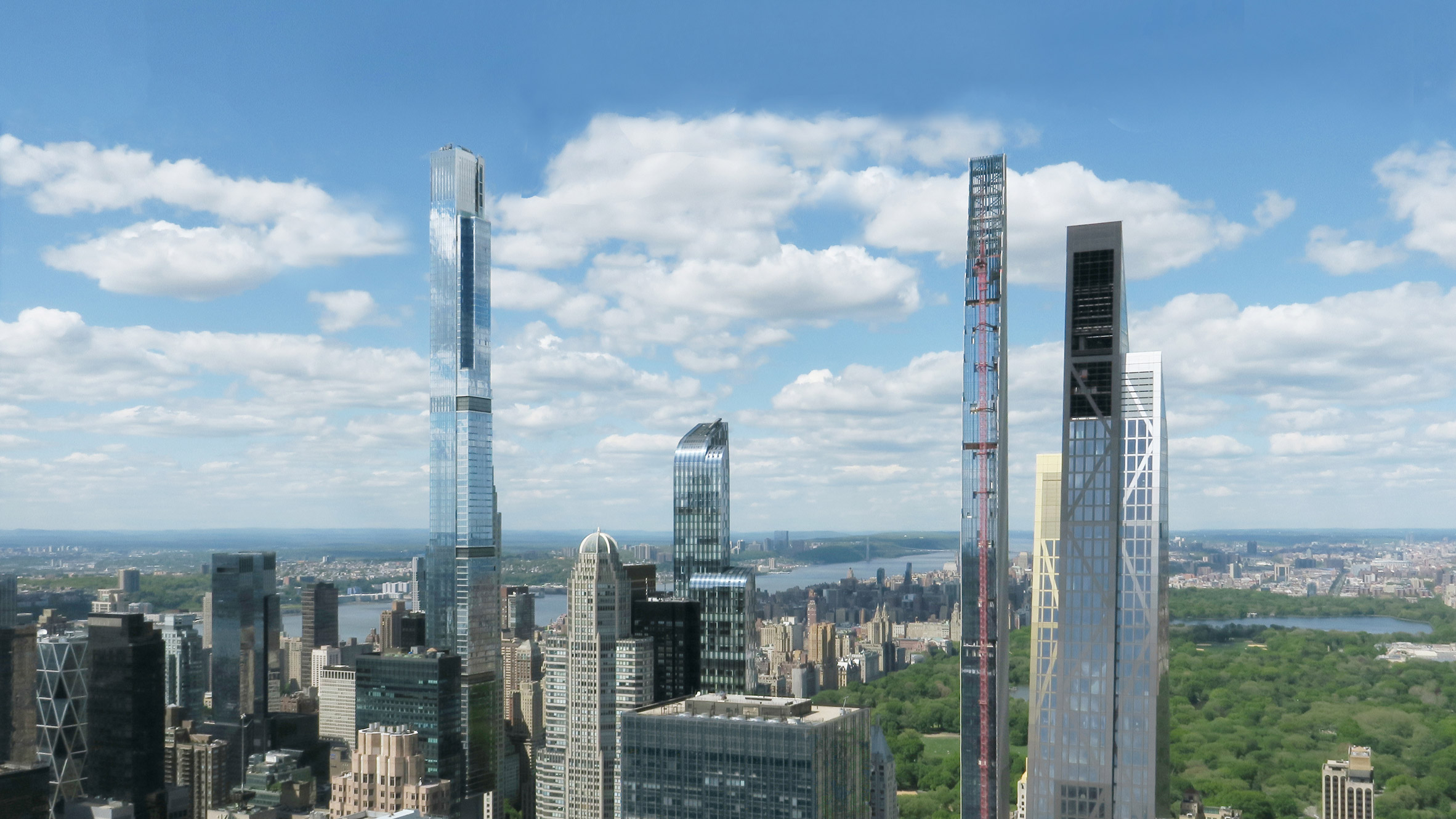
Central Park Tower in New York
Six new supertall skyscrapers changing New York's skyline

As a spate of supertall skyscrapers – buildings over 300 metres – are under development in New York, we rounded up six that are set to change the city's skyline forever.

In other skyscraper news, Swiss architecture studio Herzog & de Meuron unveiled a 204-metre-tall cylindrical tower in Canary Wharf, London.

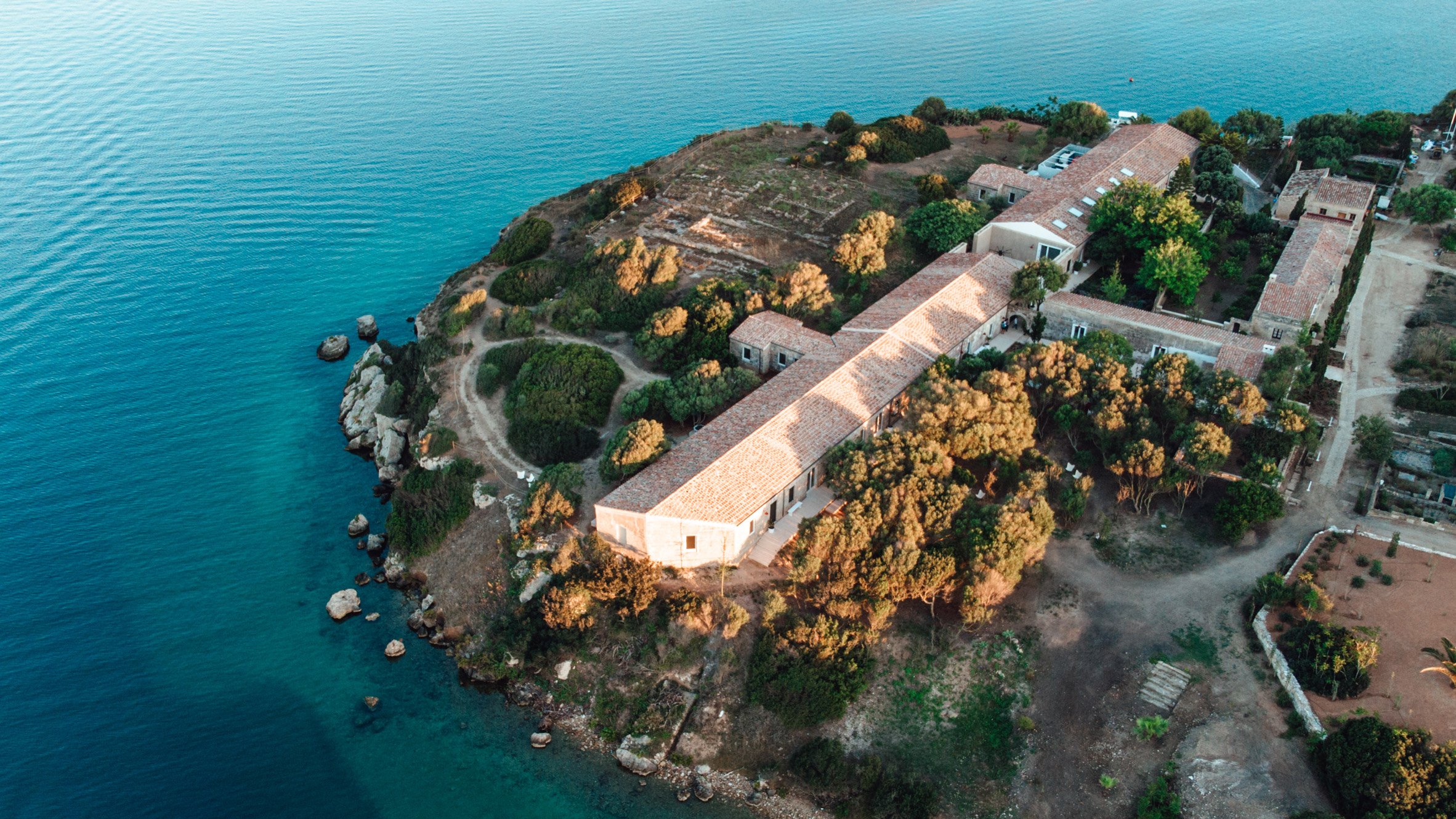
The art centre was built in a naval hospital
Laplace and Piet Oudolf transform 18th-century naval hospital into Hauser & Wirth art gallery

Popular projects this week include a gallery for Hauser & Wirth in a collection of historic buildings in Menorca, a hotel in New Orleans in a 19th-century infant asylum and a copper-clad cabin in a Danish forest.

Our lookbooks this week focused on natural biomaterials and office interiors filled with trees and plants.

This week on Dezeen is our regular roundup of the week's top news stories. Subscribe to our newsletters to be sure you don't miss anything.

The post This week the Olympics were accused of "greenwashing" appeared first on Dezeen.


from Dezeen https://ift.tt/2UHbwGZ

Studio Dlux brightens up Rio de Janeiro office for Grupo Editorial Record

Grupo Editorial Record by Studio Dlux

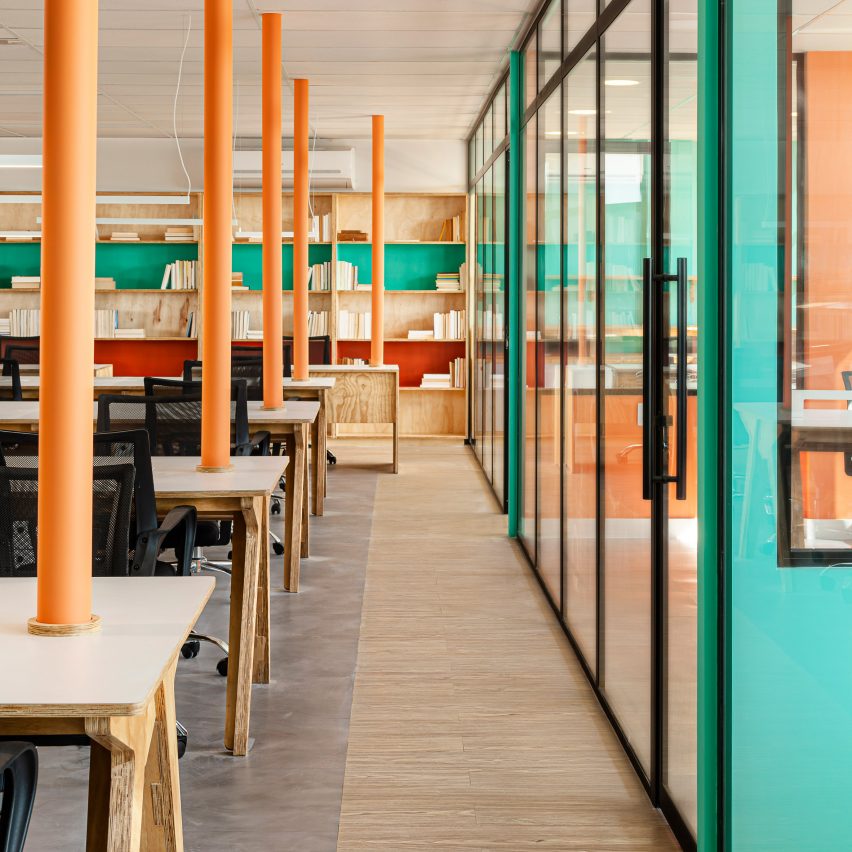
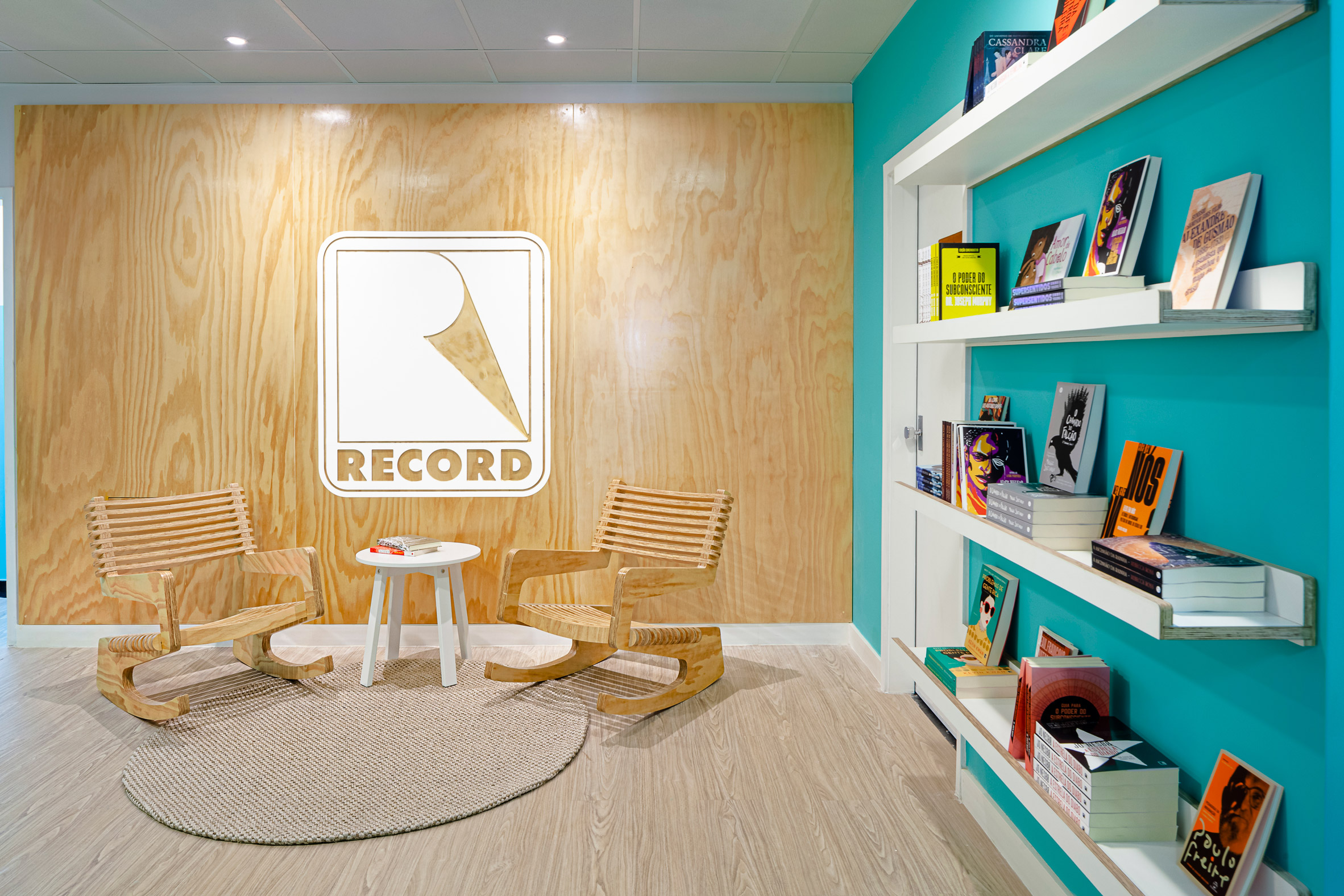
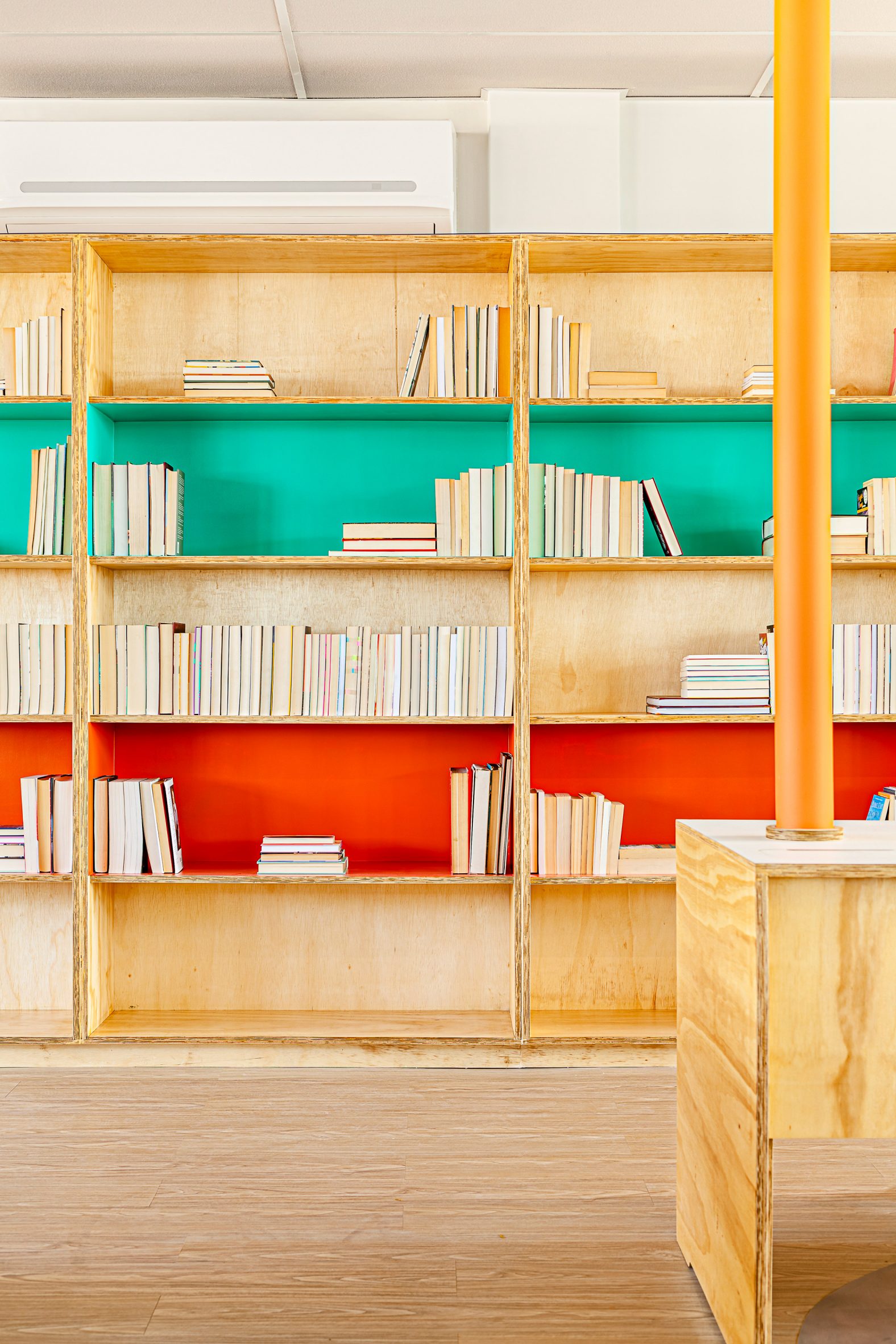
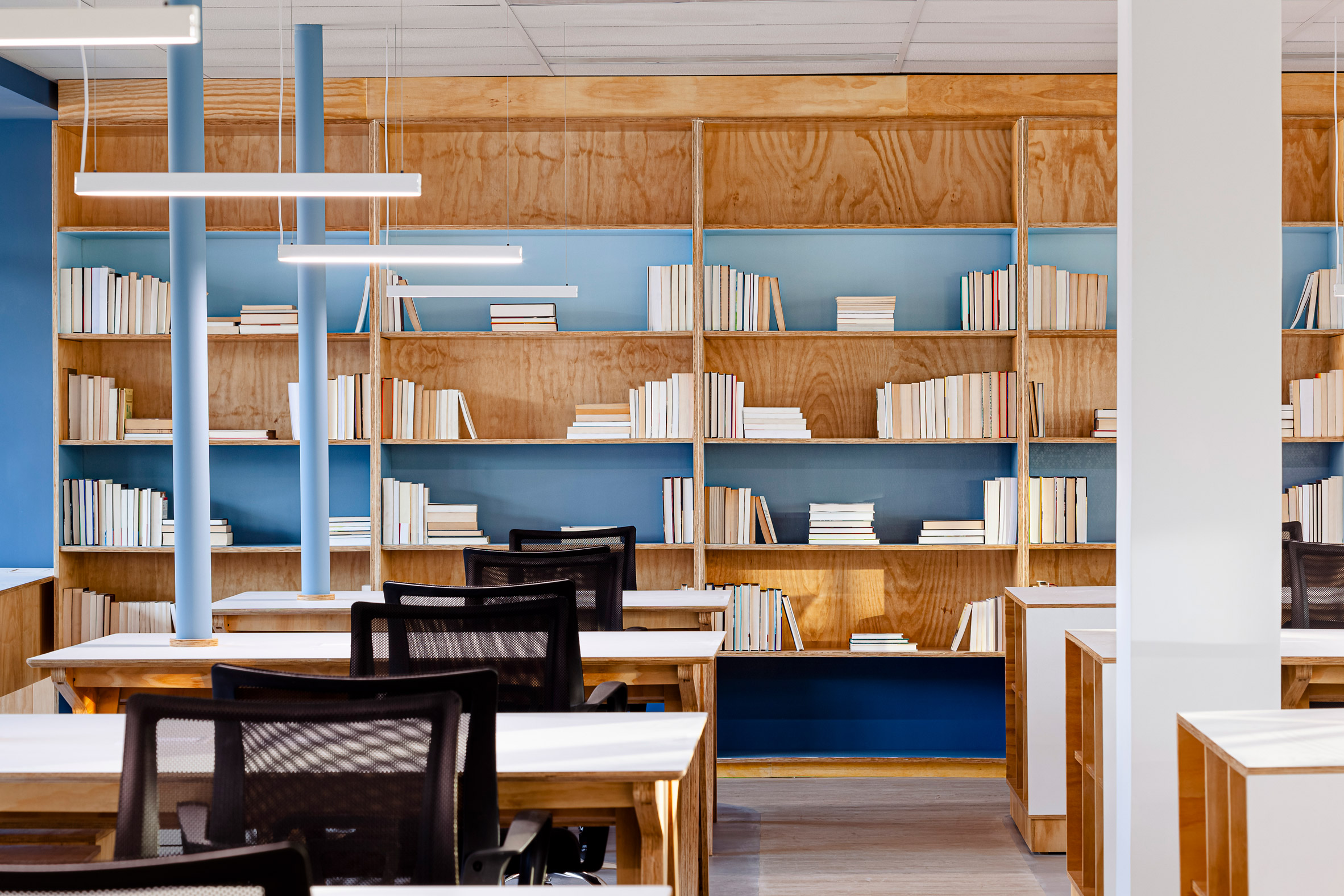
Plywood furniture and vibrant colours feature in the headquarters for one of Brazil's major publishers, which has been overhauled by architecture office Studio Dlux.

The studio renovated the 595-square-metre office for Grupo Editorial Record, which is spread across several floors in a 1980s block in the São Cristóvão neighbourhood of Rio de Janeiro.

Studio Dlux designed the project
The office design is for Grupo Editorial Record

Local firm Studio Dlux was initially hired to renovate a single level, but after a careful analysis of the company's needs, the project was expanded to two floors.

"The project became a more strategic proposal to reformulate the division of workspaces in some sectors of the company – editorial and marketing," the firm said.

"The project that once was designed just to modernise the space ended up changing the Group's thinking in relation to workspaces and promoted a behavioural change."

Grupo Editorial Record is in Rio de Janeiro
Vibrant colours are central to the design

The editorial department is located on the third floor, while the marketing group is housed on the fourth. Overall, the team sought to create a brighter and more open atmosphere on both levels, which were formerly dark and cramped.

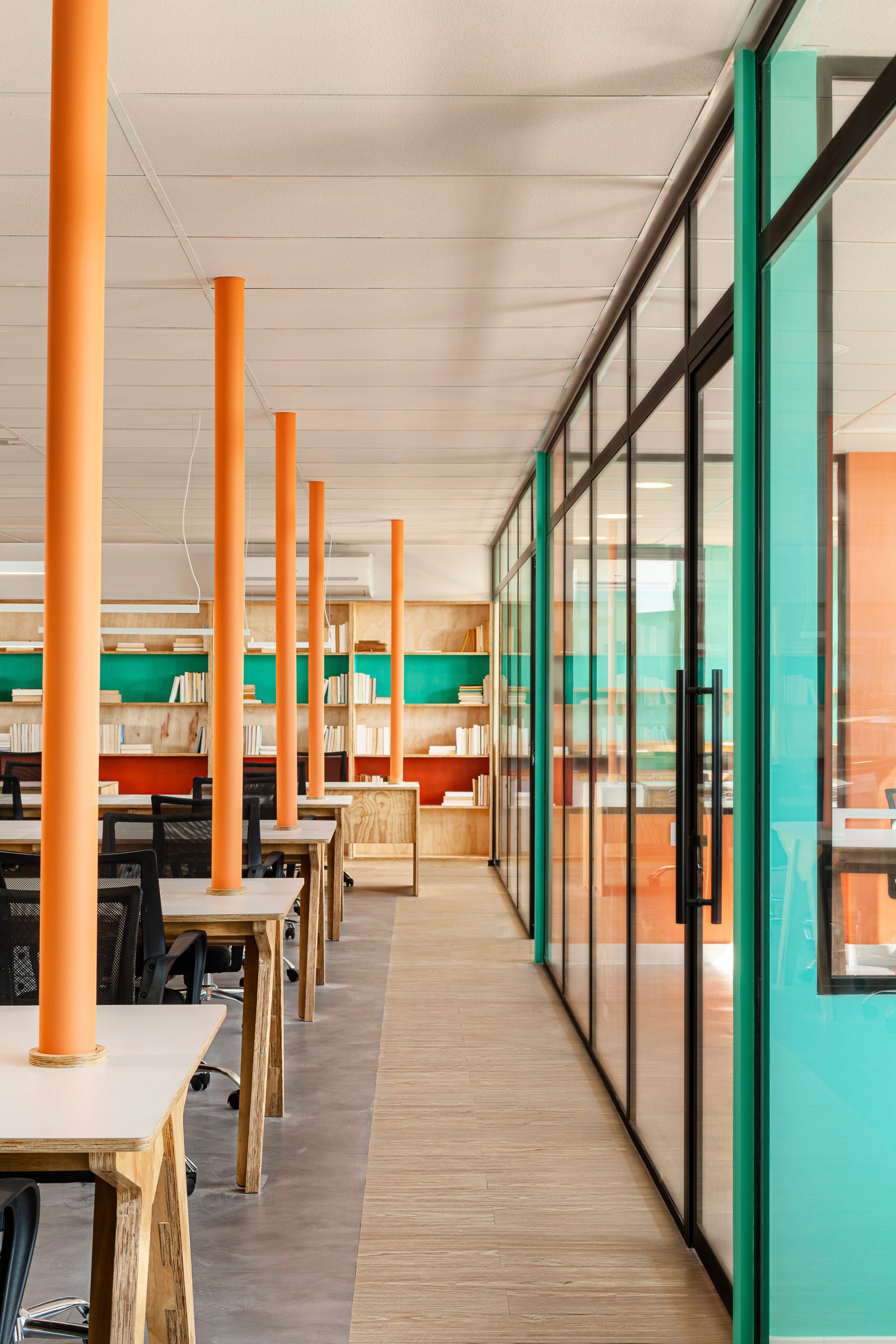
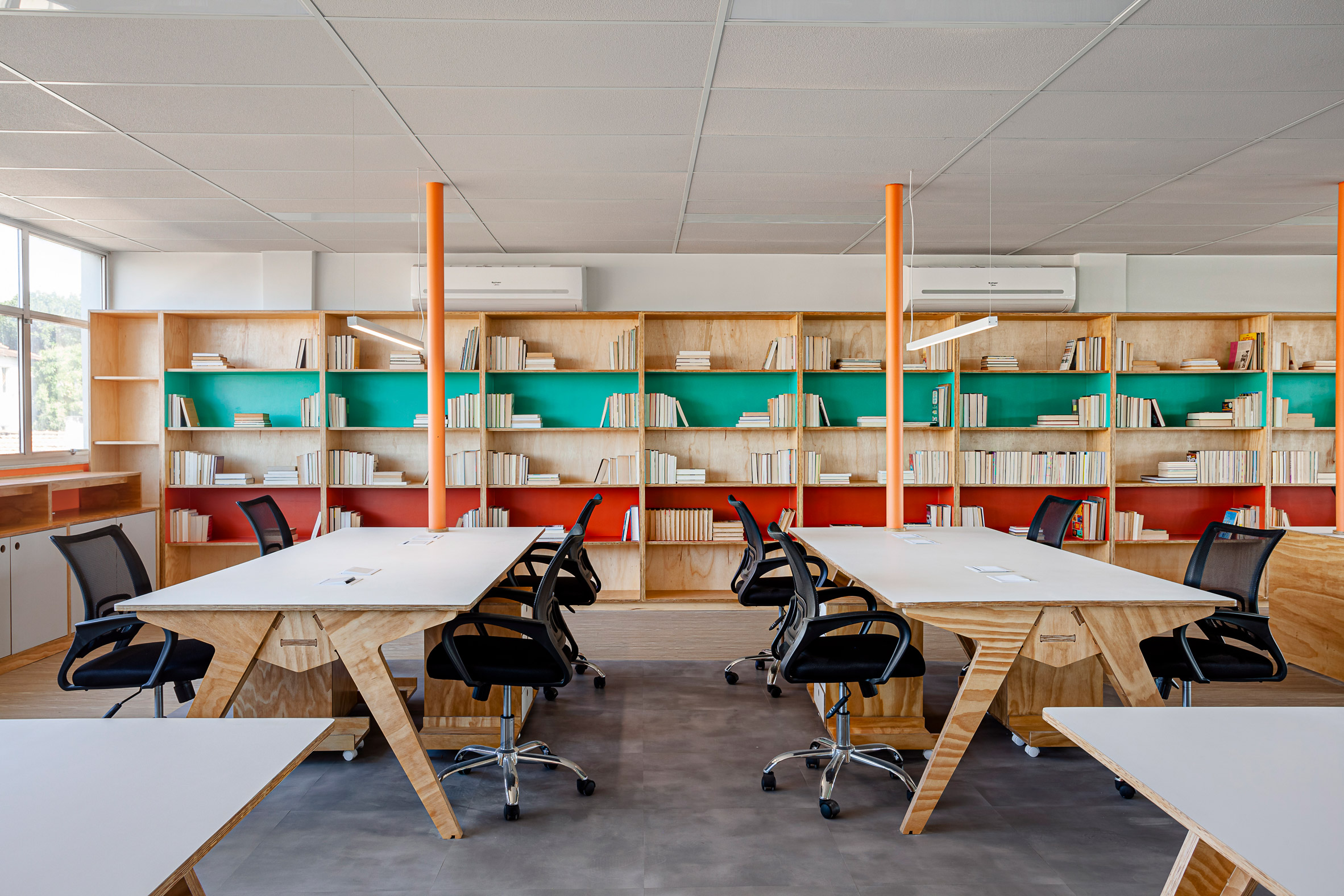
On the third floor, the layout was totally reconfigured. In the past, different book groups were separated from one another. To foster collaboration, the architects removed partitions and created a central, open area with shared workstations.

Glazing separates private offices from the main areas
Private offices are enclosed within glass walls

The central zone is ringed by private offices enclosed within glass walls. The glazing provides transparency and enables light to flow in through perimeter windows.

"This layout contributed to the symmetry that Grupo Record sought so that all editors could see each other and have the privacy for some more strategic meetings," the team said.

Studio Dlux designed the project for a Brazilian publishing house
Pops of colour are included in the shelves

A similar layout strategy was used on the fourth floor. One small difference is the function of the enclosed rooms, which serve as both offices and meeting spaces.

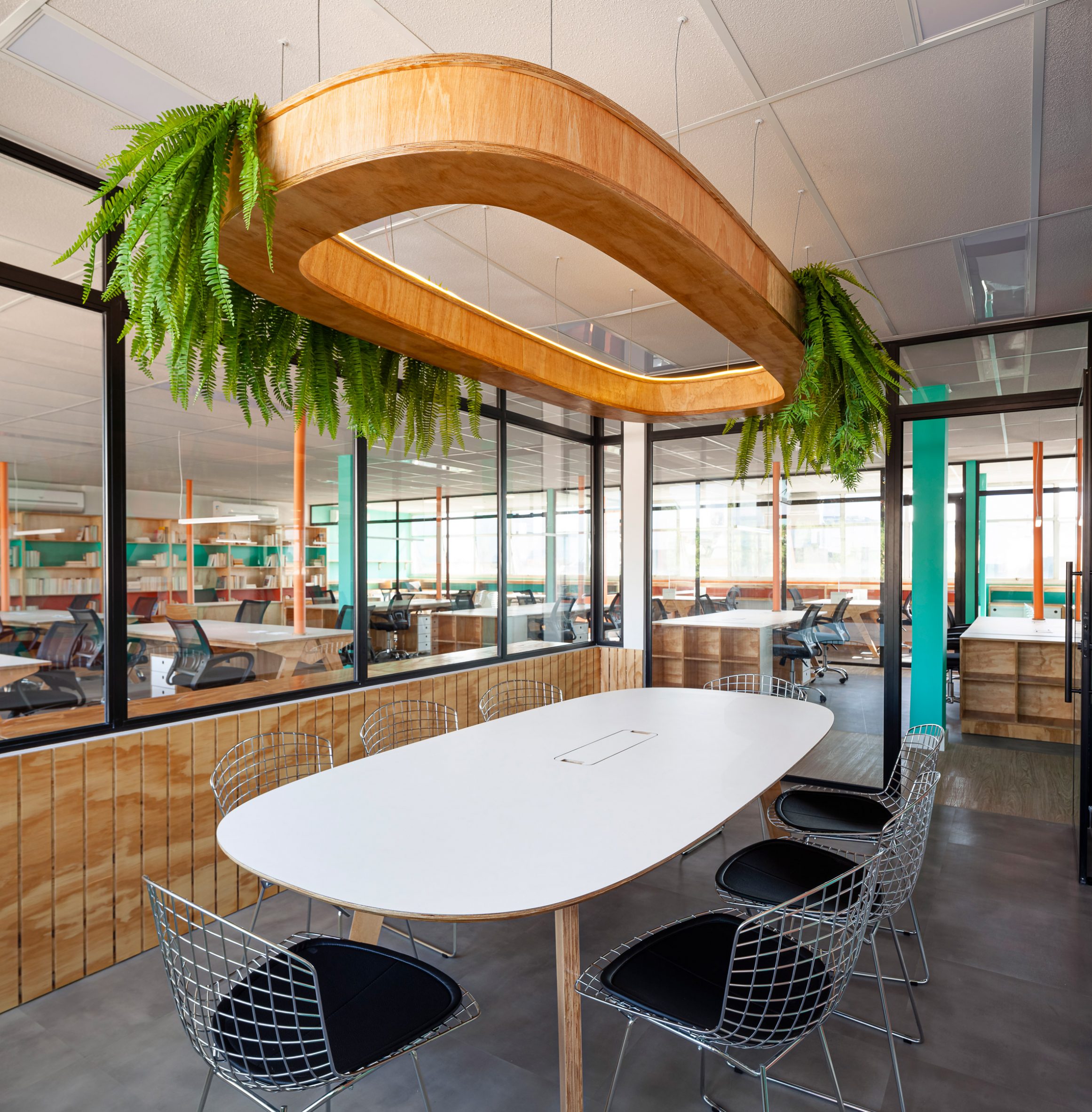
Each level also has a kitchen and dining area, which are referred to as "decompression zones". Suspended over a dining table is a wooden lighting installation that can hold potted plants.

Suspended over a dining table is a wooden lighting installation that can hold potted plants
A wooden lighting installation features potted plants

Pops of colour help enliven the office environment. A deep sky blue was used on the third floor, while orange and seafoam green were used upstairs. The colours were chosen in collaboration with the company's employees.

The project's simple finishes include vinyl flooring and white drywall. Plywood was used to fabricate built-in furniture and desks. Electrical cords are held within painted pipes that run up to the ceiling.

Studio Dlux added sky blue to the third floor's walls
Sky blue is used on the third floor

The project also entailed a full upgrade of the building's infrastructure.

Other projects by Studio Dlux include the conversion of an event space in Curitiba into a school featuring a multicoloured playground and a vaulted ceiling that looks like a starry sky.

Photography is by Dhani Borges.


Project credits

Architect: Studio Dlux
Team: Beatriz Guedes (lead architect), Denis Fujii, Karina Delomo, Maria Eduarda Scarsanella, Thaís Rio
Collaborative architect: Paloma Rosa
Engineering: Diedro Engenharia
Client: Grupo Editorial Record
Floor: W. Magalhães
Frames: DJ Esquadrias em Alumínio LTDA
Desks: Mono Design
Wall stickers: Bonton Arte Sign
Joinery and furniture: Reativa Cenografia/Mono Design
Lamps: Ledeteria

The post Studio Dlux brightens up Rio de Janeiro office for Grupo Editorial Record appeared first on Dezeen.


from Dezeen https://ift.tt/3BBBP23

"Great design isn't enough. We need homes that will get us to net-zero"

Geraldine de Boisse

To reduce carbon emissions, architects and designers need to change the way they design homes, writes Geraldine de Boisse, vice president of innovation at renewable-energy supplier Bulb.

The way we live and work has changed. While we might not know exactly what normal looks like anymore, we know we need to act now to tackle the climate crisis. And that includes everyone in every industry.

Great design isn't enough. We need homes and offices that will get us to net-zero. Construction work accounts for 36 per cent of global energy use and 39 per cent of CO2 emissions. It's therefore crucial to future-proof buildings and make them green. That includes changing the way we design, power and heat our homes and offices.

Until now, most of the gains we've made in tackling the climate crisis haven't affected people's daily lives. Thanks to the massive increase in renewable energy, which now powers around 30 per cent of UK homes compared to just one per cent in 2015, many countries have been able to reduce emissions without disrupting the way we live.

The gains we've made in tackling the climate crisis haven't affected people's daily lives

The next stage will require more personal change, and governments have an important role to play in setting the policy and financial incentives. To reach the Paris Agreement goals by 2050, existing homes will need deep retrofits including better insulation, upgraded windows, heat pumps, solar panels and electric vehicle chargers. New homes will feature these as standard.

This means that homes will look different in future, requiring different design approaches. Designers will need to think creatively about how to integrate these new products.

In the UK, from 2025, no new gas boilers will be installed in new UK homes; instead, we'll move towards using electricity for heating. Heat pumps, popular in several Nordic countries as well as the US, will become commonplace. It's important to factor this in when drawing up new plans for properties.

We'll see more people generating their own electricity using solar panels, and storing it in electric car batteries, or home batteries. More people will sell electricity back to power grids when demand is highest. At Bulb, we're trialling home battery technology for our members with solar panels. Designs will need to incorporate ways for people to generate, manage and store their own power.

Globally, heat accounts for nearly half of all energy consumption

Insulation will have to get better. Without good insulation, heat escapes from roofs, floors and walls, increasing the amount of energy needed to heat buildings. Globally, heat accounts for nearly half of all energy consumption and almost 40 per cent of carbon emissions from energy. While insulation can be incorporated into new buildings, retrofitting older homes is costly and disruptive, so governments need to provide better financial incentives, like scrapping VAT on green products. For new builds, designs should optimise energy efficiency and maximise insulation.

Switching to renewable energy is the fastest and cheapest way to lower your CO2 impact at home or in the office. It could lower your carbon emissions by 3.2 tonnes of carbon a year at home and reduce your business' emissions by around 40 per cent.

Next, ask your energy supplier if you're eligible to have a smart meter installed at home or in the office. Smart meters help lower bills and reduce carbon emissions. Smart meters show where you use the most energy, so you can take steps to reduce it.

The simple act of turning down the thermostat act could lower your bills and your carbon emissions

When restyling an interior, it's important to configure spaces that'll mean you're able to cut down on carbon and do your bit for the planet. Having your desk near a window away from the sun in the summer will mean you don't have to use fans or air conditioning; positioning sofas and chairs away from radiators in the winter will allow the heat from your radiator to warm the room as a whole, rather than just the back of furniture.

And installing insulation will keep your home or office warm in the winter and cool in the summer, as well as reducing your energy bills and cutting your carbon emissions. You can also look at replacing windows and doors, or switching to a heat pump.

Whether at home or the office, the simple act of turning down the thermostat act could lower your bills and your carbon emissions. Turning an office thermostat down by just two degrees would save £140 on a £1,000 bill, and by turning your thermostat at home down by one degree, you could save around £90 per year. Or get a smart thermostat, which will adapt to how you like to heat your home and show you the most efficient temperature.

When choosing lighting, there's a trick to ensure you're not wasting energy and being inefficient with your lighting choice: LED bulbs are up to 65 per cent more efficient than standard lighting. You can also avoid lighting empty rooms by using occupancy sensors. Install daylight sensors to dim lights automatically in bright or outdoor spaces, and if you're thinking about renovations, consider splitting lights onto smaller circuits with more switches. This gives you more flexibility to split your space into different zones, and have fewer lights on.

To achieve net-zero, all industry bodies need to come together and play their part

If you've already switched from a diesel or petrol car to an electric one then well done - you're already doing your bit to reduce your carbon footprint. You can go one step further by charging your car at the cheapest, greenest time of the day. At Bulb, we're trialling EV technology that allows you to order a stylish home charger, connect your car to our app, and automatically charge when demand is lowest on the grid.

To achieve net-zero, all industry bodies need to come together and play their part. In the design world, there's an opportunity to balance great design with energy efficiency to future-proof buildings. The future of homes and buildings will be different, but for the better. We're at a crucial time now where designers need to get on board. In today's world, it's not just about having a beautiful interior; sustainability should be taking priority.

Geraldine de Boisse is vice president of innovation at UK renewable energy supplier Bulb. She has a MSc from ESCP Europe and an MBA from INSEAD.


Carbon revolution logo

Carbon revolution

This article is part of Dezeen's carbon revolution series, which explores how this miracle material could be removed from the atmosphere and put to use on earth. Read all the content at: www.dezeen.com/carbon.

The sky photograph used in the carbon revolution graphic is by Taylor van Riper via Unsplash.

The post "Great design isn't enough. We need homes that will get us to net-zero" appeared first on Dezeen.


from Dezeen https://ift.tt/2W4mLcM
Therme Art's Venice panel discussion explores how creatives can be environmental activists

Therme Art

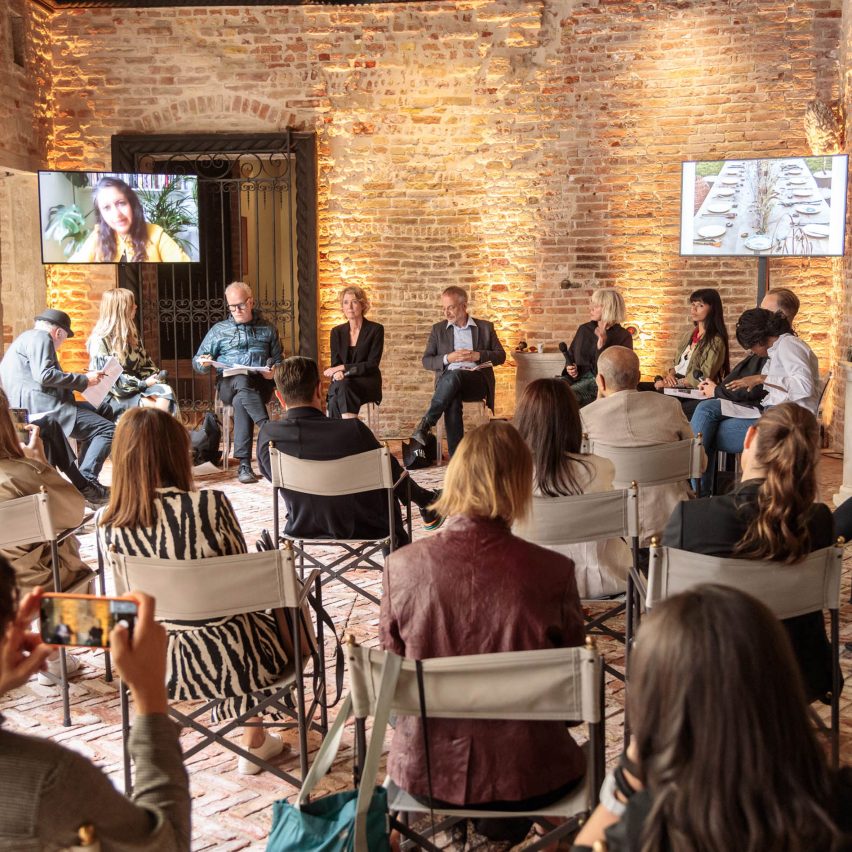
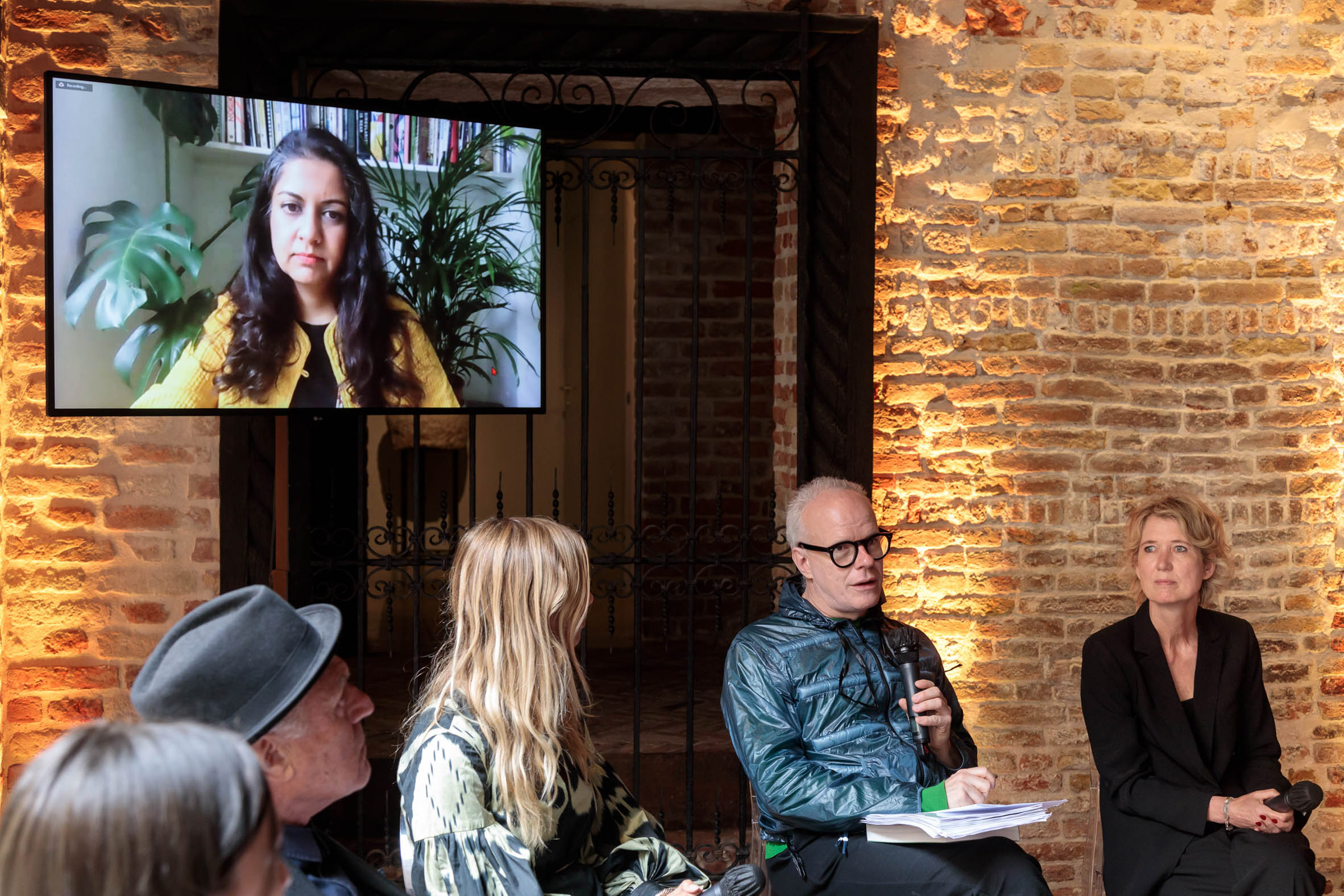
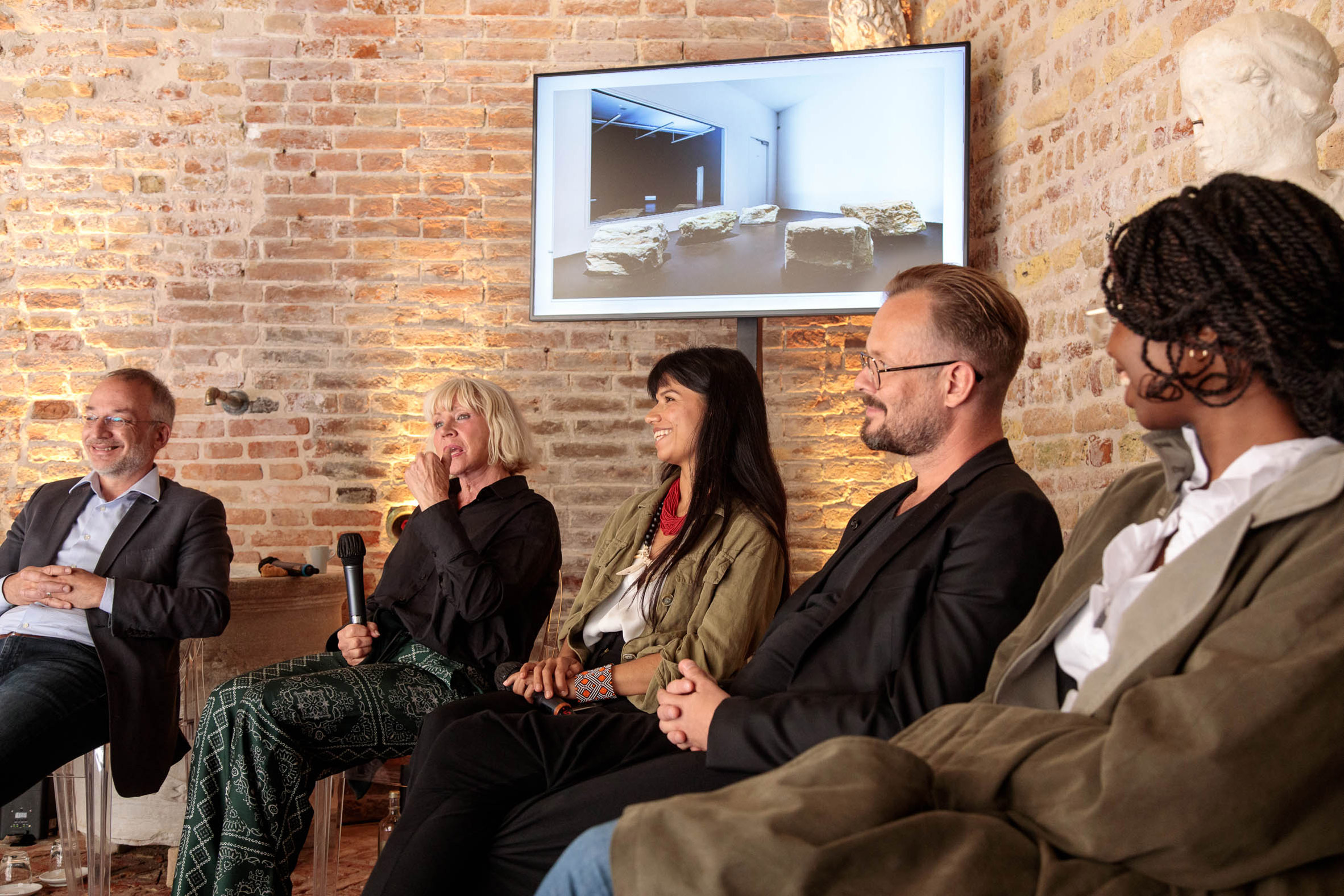
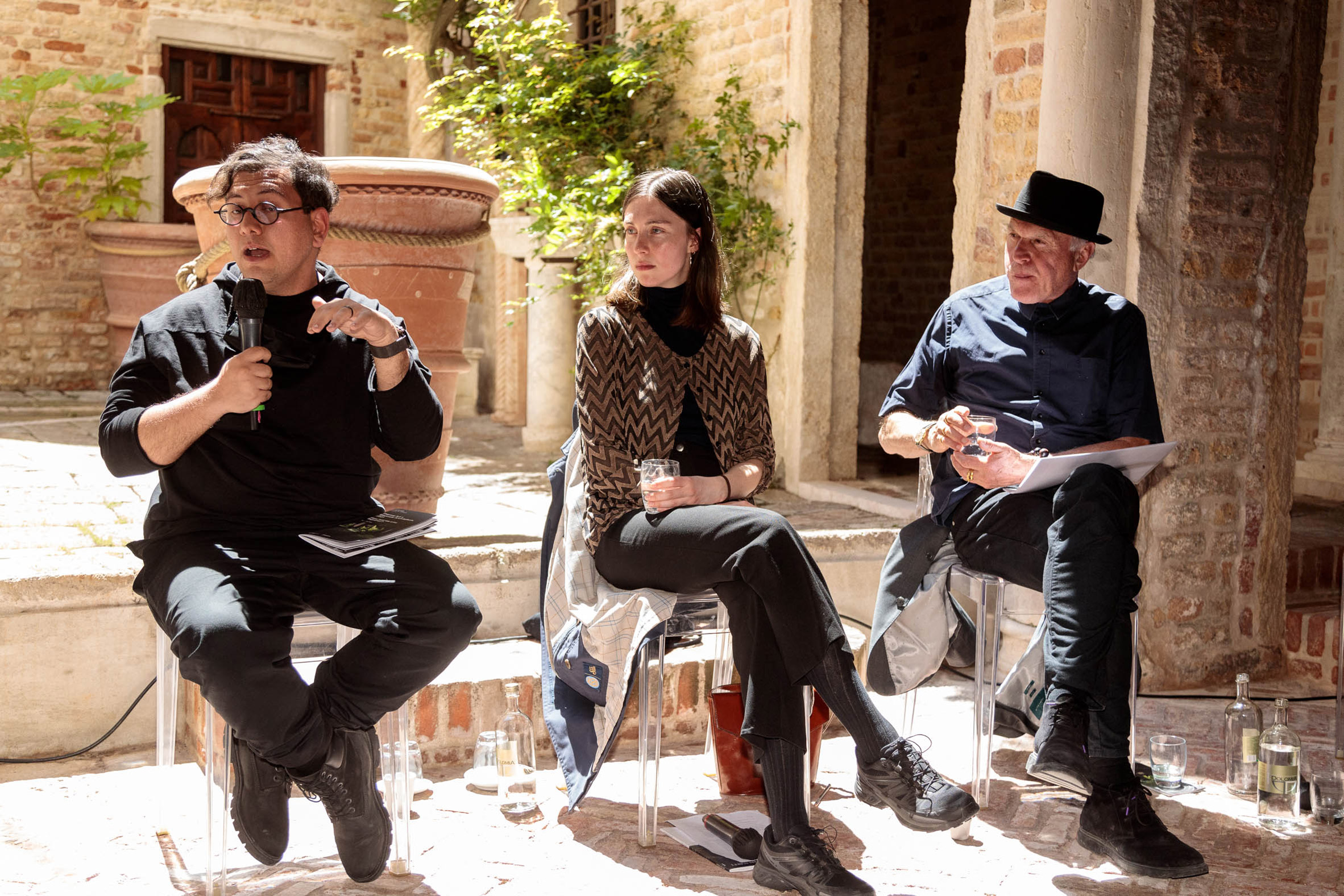
Dezeen promotion: Alexandra Daisy Ginsberg, Sissel Tolaas and Joseph Grima were some of the creative minds who gathered in Venice last month to take part in a two-part panel discussion hosted by Therme Art.

Held during the Venice Architecture Biennale, the discussions took place as part of Therme Art's Wellbeing Culture Forum – a programme that explores the role of culture, art, design and architecture in promoting health and wellbeing in urban populations.

They brought together experts from the fields of architecture, activism, art and design and science to answer this year's biennale's over-arching question: How will we live together?

Therme Art
The two-part panel was hosted by Therme Art

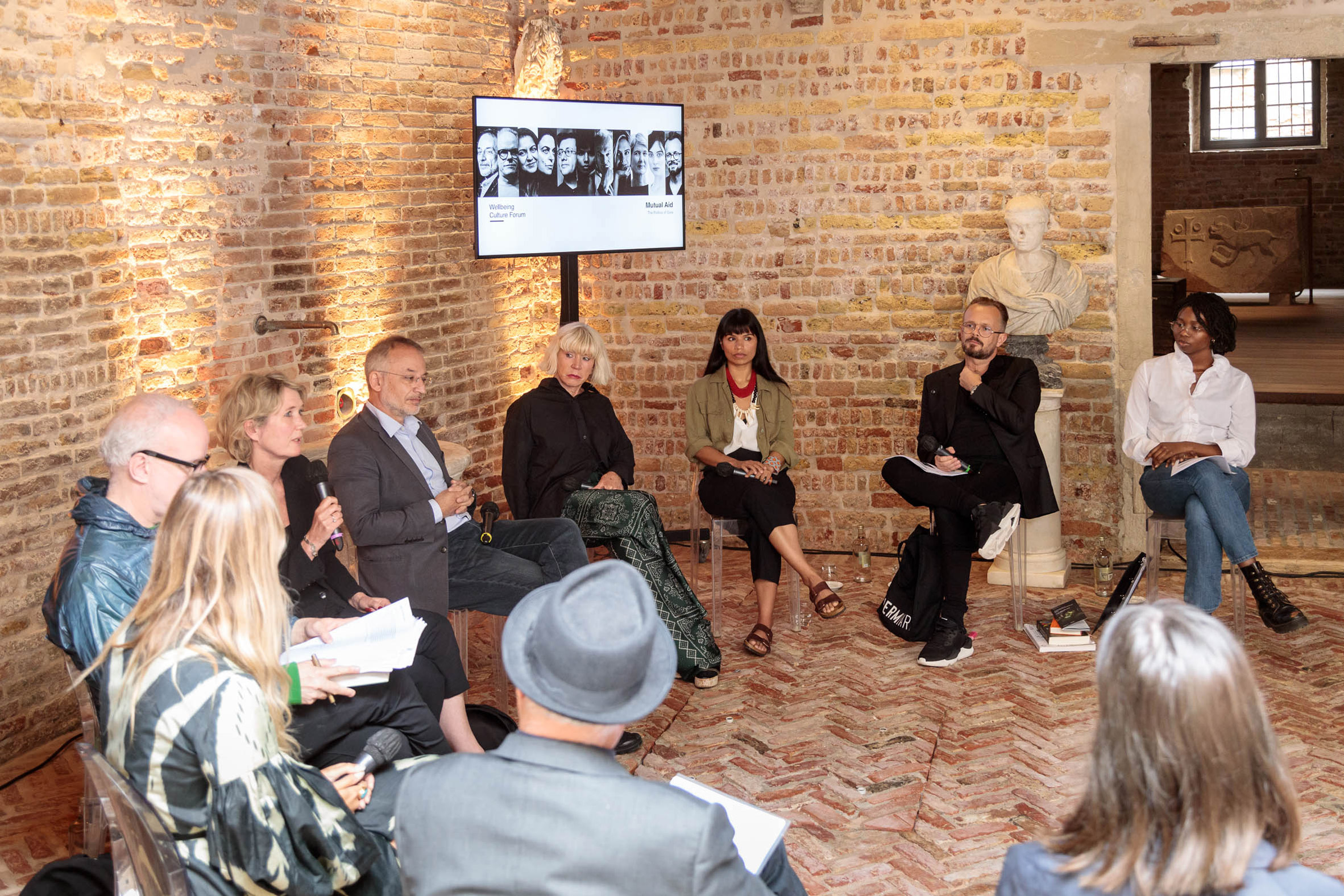
The discussion was split into two parts, called Mutual Aid and Resurrecting the Sublime – both names taken from exhibitions held during the biennale – and co-moderated by Therme Art's CEO and curator Mikolaj Sekutowicz and the artistic director of the Serpentine Galleries Hans Ulrich Obrist.

Botanist Stefano Manusco kicked off the discussion by stressing the urgent need for humans to rekindle a more symbiotic relationship with the natural world.

"Just two per cent of the surface of the earth is covered by towns," he told the audience.

"From this two per cent comes 80 per cent of the CO2, 80 per cent of the waste and it consumes 80 per cent of the resources of the world. So it's clear that if we want to solve the environmental problems we need to work on the towns."

Therme Art
The events answered this year's biennale's over-arching question: How will we live together?

"This is about a change of perspective," said Manusco. "We often think about protecting forests, which is, of course, something we have to do but to solve the environmental problems we have to change the idea of the town."

"How can we stop all of this carbon dioxide? By using trees," he continued. "Trees are the only thing on the planet that can take CO2 from the atmosphere and put it into the wood and onto the soil. This is the solution, we have the data, we know we have to plant 1,000 billion trees, which is not so much – we have space, we have the money, and this would change everything."

Demonstrating how scientists and designers are working to create more sustainable building solutions, art patron Maja Hoffmann, then talked of how new materials made from salt, sunflowers and algae developed at the Luma Foundation in Arles have been applied to the interior of the creative hub's new stainless-steel tower designed by Frank Gehry.

Therme Art
Therme Art brought together experts from the fields of architecture, activism, art and design and science

Nina Gualinga, environmentalist and indigenous rights defender, explained how society can learn from the indigenous people around the world, who have been living in balance with nature for centuries.

"Indigenous people make up four per cent of the world's population but protect more than 80 per cent of the world's remaining biodiversity," she said.

Therme Art
The discussions were part of Therme Art's Wellbeing Culture programme

"A lot of climate change and the issues that we are facing today come from, to some degree, colonisation," she continued. "It comes from the displacement of local people living there. [companies and governments] grabbing that land, taking it, exploiting it, taking out the fossil fuels from the ground."

"We have to look for answers from the people that don't only protect the land biodiversity and forests but are also the first ones impacted and most impacted by this system. It happened in my community but it happens all over the world."

The second half of the talk, took its name – Resurrecting the sublime – from an installation put together by Sissel Tolaas, Christina Agapakis, and Ginsberg. The project saw the team recreate the lost scents of extinct flower specimens collected from Harvard University's Herbaria library.

The Mutual Aid took place at the Venice Architecture Biennale

The installation asked what other regenerative actions could be elicited in the revitalisation of our natural ecosystems and how we can use biotechnology and art as a tool to deepen empathy and our responsibility to the planet.

Other participants in the talks included architect Grima; media artist and designer Refik Anadol; artist Not Vital; cultural historian Salome Rodeck; Anab Jain, designer, futurist, filmmaker, educator and co-founder of Superflux; Marianne Krogh, art historian and curator of the Danish Pavilion; Hala Wardé, architect, designer and curator of the Lebanese pavilion.

The talk was the latest in Therme Art's Wellbeing Culture Forum talk series. Therme Art is the creative arm of the Therme Group and commissioning art and architecture to its spa baths and resorts around the world.


Partnership content

This article was written by Dezeen for Therme Art as part of a partnership. Find out more about Dezeen partnership content here.

The post Therme Art's Venice panel discussion explores how creatives can be environmental activists appeared first on Dezeen.


from Dezeen https://ift.tt/3zy1VBb

Vieques Outdoor bathroom collection by Patricia Urquiola for Agape

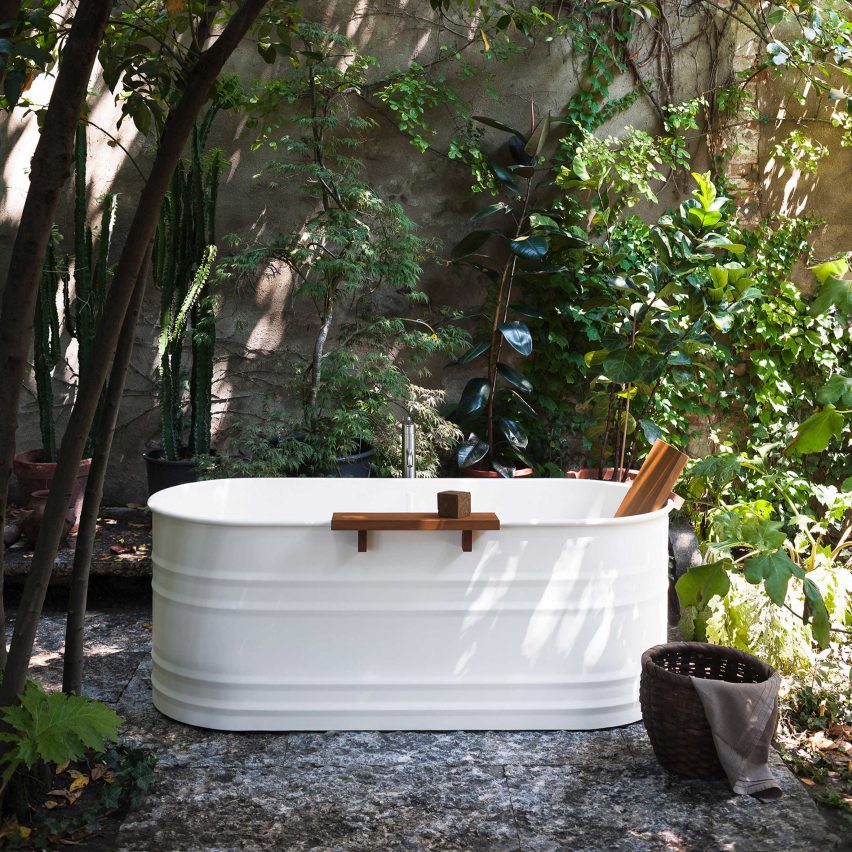
Vieques Outdoor bathtub by Patricia Urquiola for Agape

Dezeen Showroom: Patricia Urquiola has created the Vieques Outdoor bathroom collection for Agape based on her designs for a Caribbean spa resort.

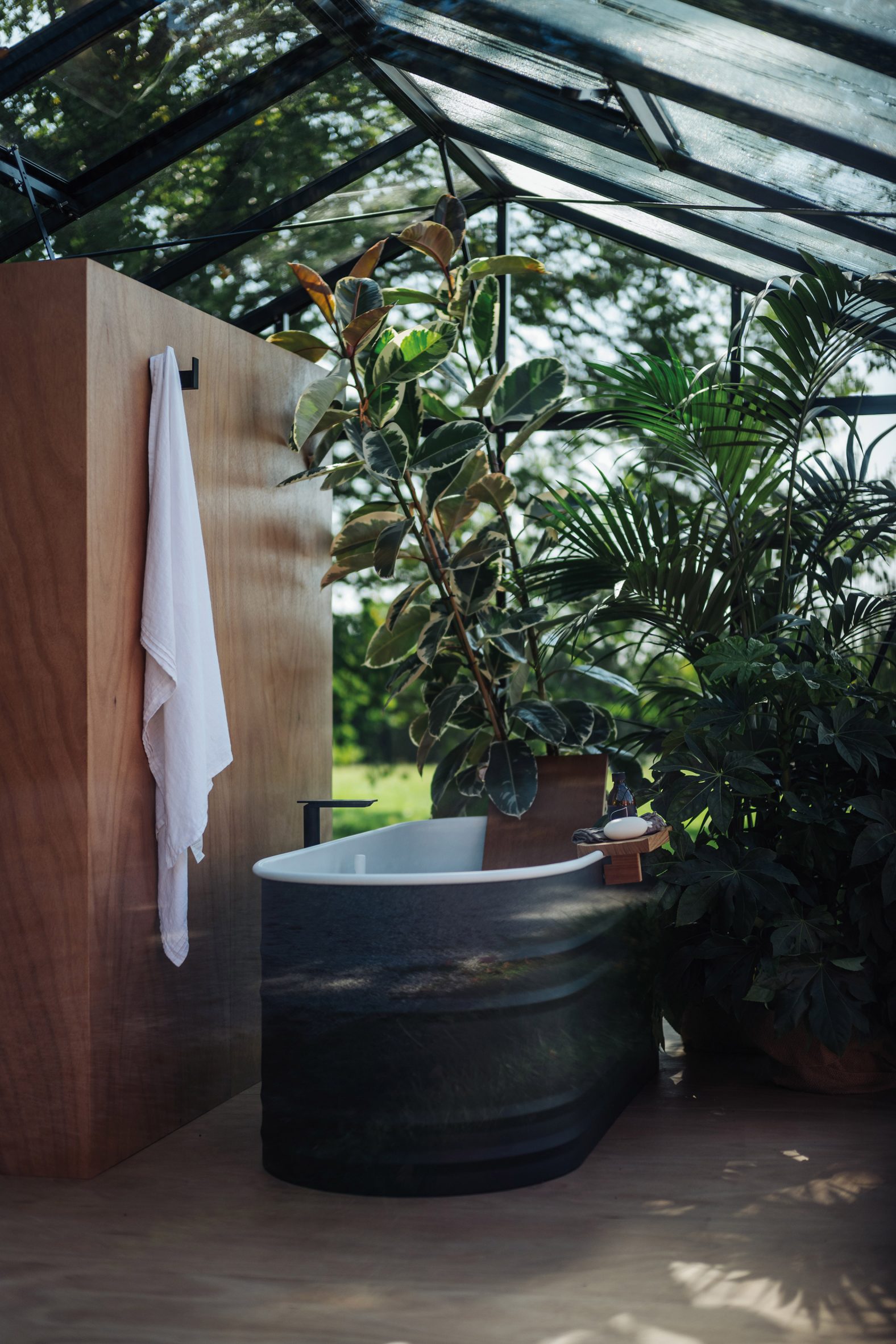
The centrepiece of the Vieques Outdoor collection is a stainless steel bathtub, which Urquiola originally created as part of her interior design for the W Retreat Spa on the island of Vieques.

Vieques Outdoor bathtub by Patricia Urquiola for Agape
The Vieques Outdoor bathtub is made of stainless steel

The piece was designed as a contemporary take on old-fashioned outdoor tin tubs. Its structure is made of stainless steel and given a clean and minimalist appearance.

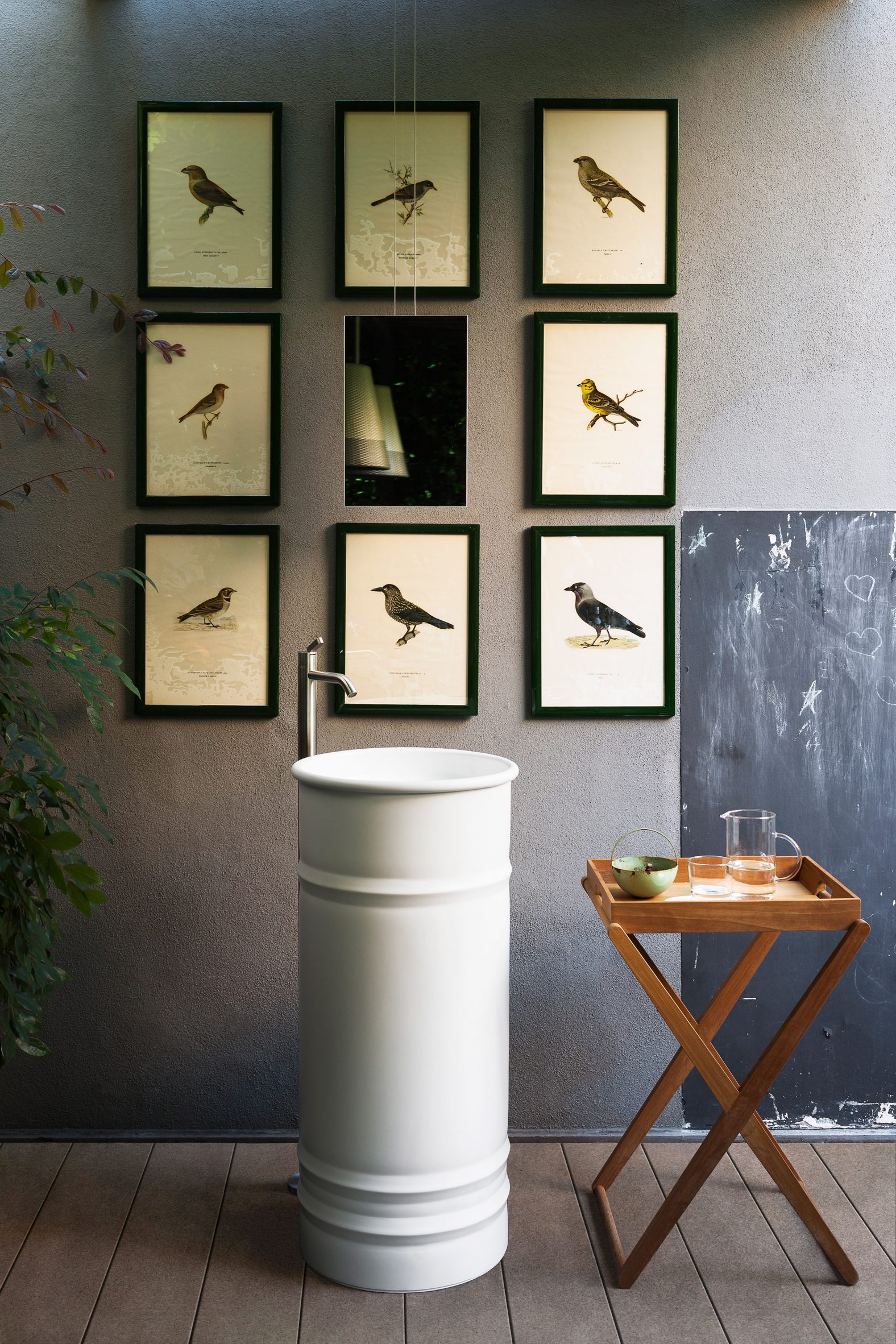
The collection also includes two washbasins – a column design for floor drainage and a round version for countertops.

Vieques Outdoor sink by Patricia Urquiola for Agape
A column sink is also part of the collection

All the pieces are available in the same colour palette, either painted all white or with white on the interior and dark or light grey on the exterior.

The bathtub is available in two sizes. The standard size is 171 by 62.5 centimetres, while the Vieques XS is 155 by 67.5 centimetres.

An iroko wood backrest and shelf are optional accessories for the tub and can be installed on its edge.

Product: Vieques Outdoor
Designer: Patricia Urquiola
Brand: Agape
Contact: info@agape.org.uk

About Dezeen Showroom: Dezeen Showroom offers an affordable space for brands to launch new products and showcase their designers and projects to Dezeen's huge global audience. For more details email showroom@dezeen.com.

Dezeen Showroom is an example of partnership content on Dezeen. Find out more about partnership content here.

The post Vieques Outdoor bathroom collection by Patricia Urquiola for Agape appeared first on Dezeen.


from Dezeen https://ift.tt/3rwPzqg