Saturday, 24 July 2021

University of Technology Jamaica highlights 10 student architecture projects

University of Technology, Jamaica

An urban recreational centre designed to encourage socialising through sports and a sustainable community college feature in Dezeen's latest school show by architecture students at the University of Technology, Jamaica.

Also included is a community housing proposal for intergenerational residents and a creative co-working space in the city of Kingston.


University of Technology, Jamaica

School: University of Technology, Jamaica, Caribbean School of Architecture
Courses: Bachelor of Arts in Architectural Studies and Master of Architecture (CAA Part two)
Tutors: Dr Elizabeth Pigou-Dennis, Dr Jenna Blackwood, engineers Louise Fletcher-Weller and Eric Hudson Architects, Mlela Matandara-Clarke, Staceyann Dennison-Heron, Mandilee Newton, David Douglas, Cheryl Pouchet, Stephen Jameson and Jacquiann T Lawton.

School statement:

"Independent Caribbean territories share common imperatives of sustaining ecosystems, biodiversity, water resources, reduction of energy consumption-CO2 production and the design of resilient strategies to improve the lives and livelihoods of our island communities.

"Materials and constructional methods that combine traditional and innovative cultural, climatic practices, when supported by the economic use of land and adequate urban infrastructure and transportation can poetically respond to built environment exigencies.

"The MArch programme nurtures graduates' design, knowledge and skill attributes, enabling them to critically appraise the environments and issues that inform design decisions and research interests. The programme integrates architecture and urban design through advocacy, focusing on regenerating the inner-city of mid-town Kingston, Jamaica.

"Industry and non-governmental organisation collaborators included members of the Urban Development Corporation of Jamaica, the Ministry of Culture, Gender, Entertainment and Sport, Allman Town Community, Kingston Creative, and the Caribbean Centre for Renewable Energy and Energy Efficiency."

University of Technology, Jamaica

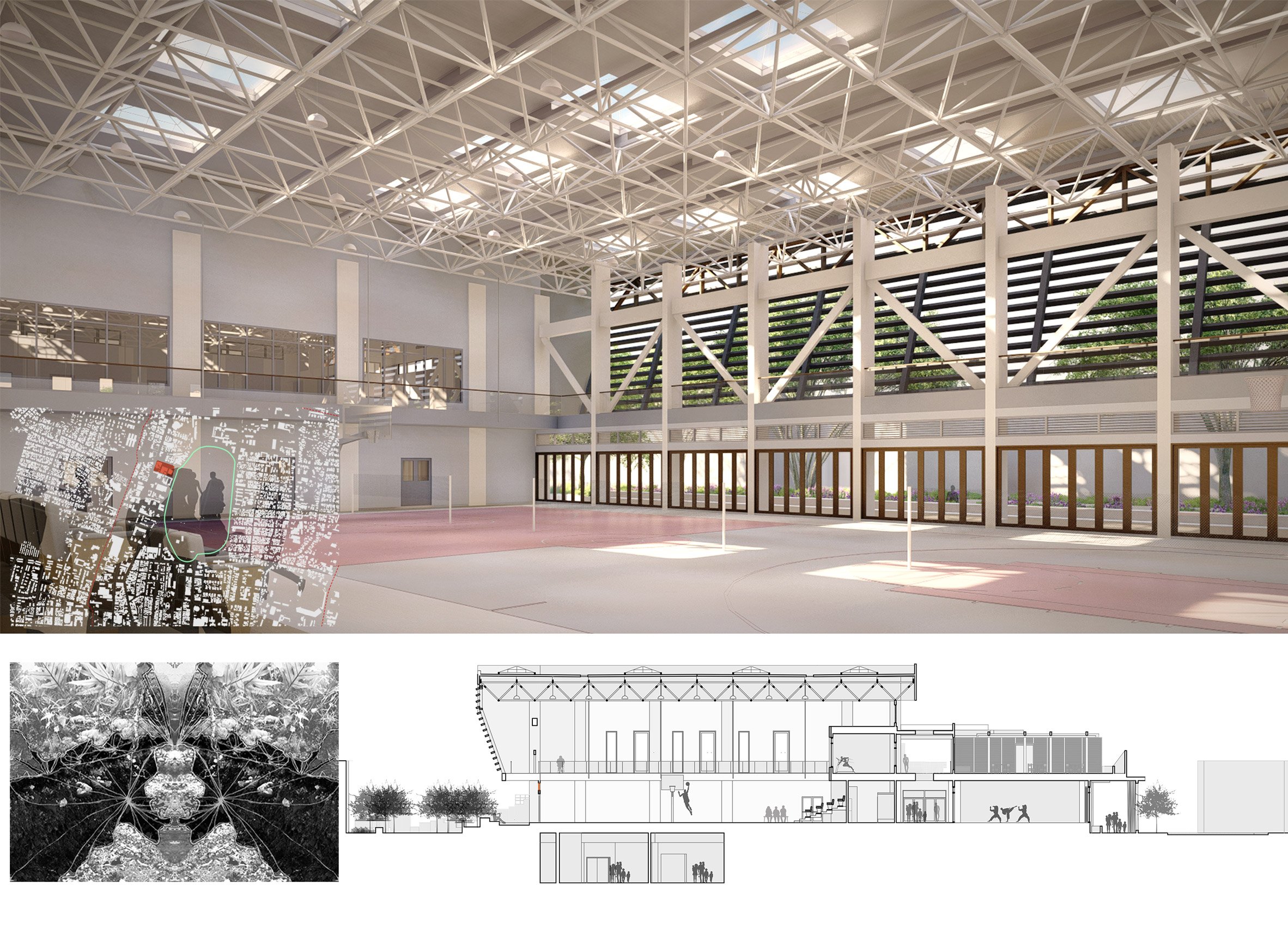
Urban Recreational Centre by Dominic Anderson

"The Urban Recreational Centre aims to promote vibrancy for the inner city citizens of Kingston. During the 1980s, sport played an integral role in the socialisation of mid-town Kingston communities.

"This project recreates and reactivates an arena for socialisation through dynamic sporting events, wellness and recreational spaces. It is a place where individuals from different neighbourhoods can work collectively on common goals through sport."

Student: Dominic Anderson
Course: Master of Architecture Thesis
Tutors: Jacquiann T Lawton and Stephen Jameson
Email: dom.and26[at]gmail.com

University of Technology, Jamaica

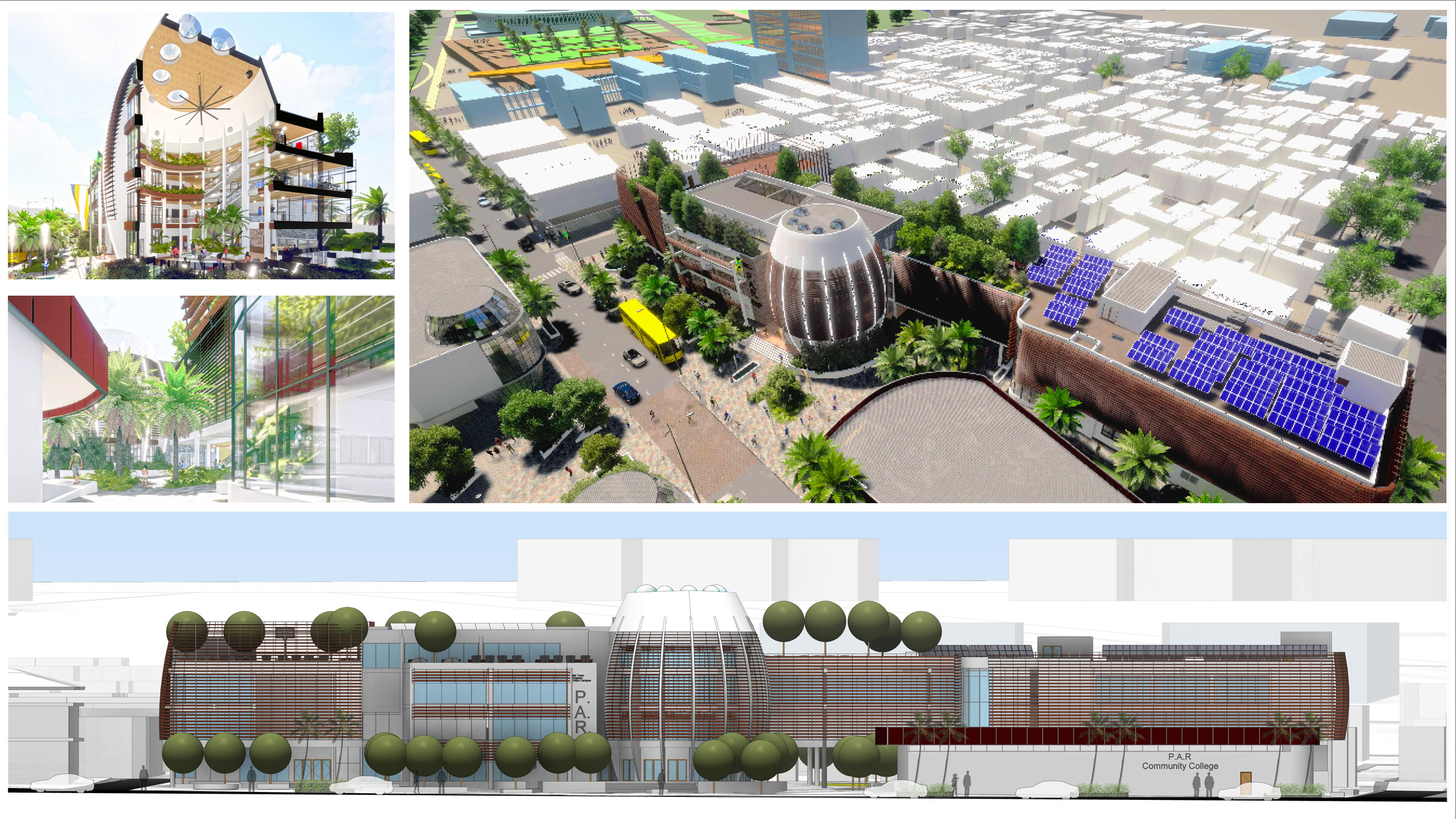
PAR Community College by Ramone Allen

"The PAR Community College is nestled in Allman Town, an inner-city community in the mid-town section of the greater Kingston metropolitan area of Jamaica. The intelligent urban campus aims to progressively advance the human resource (PAR) of mid-town to provide enlightenment through education.

"It is designed to rejuvenate the public realm with public space, pocket parks and community-centred activity. The campus' sustainability strategies focus on maximising natural light, renewable energy, green roofs, and natural ventilation, which is enhanced by a campus-wide data system."

Student: Ramone Allen
Course: Master of Architecture Thesis
Tutors: Jacquiann T Lawton and Stephen Jameson
Email: ramonej.lln[at]gmail.com

The projects are by architecture students from The University of Technology, Jamaica

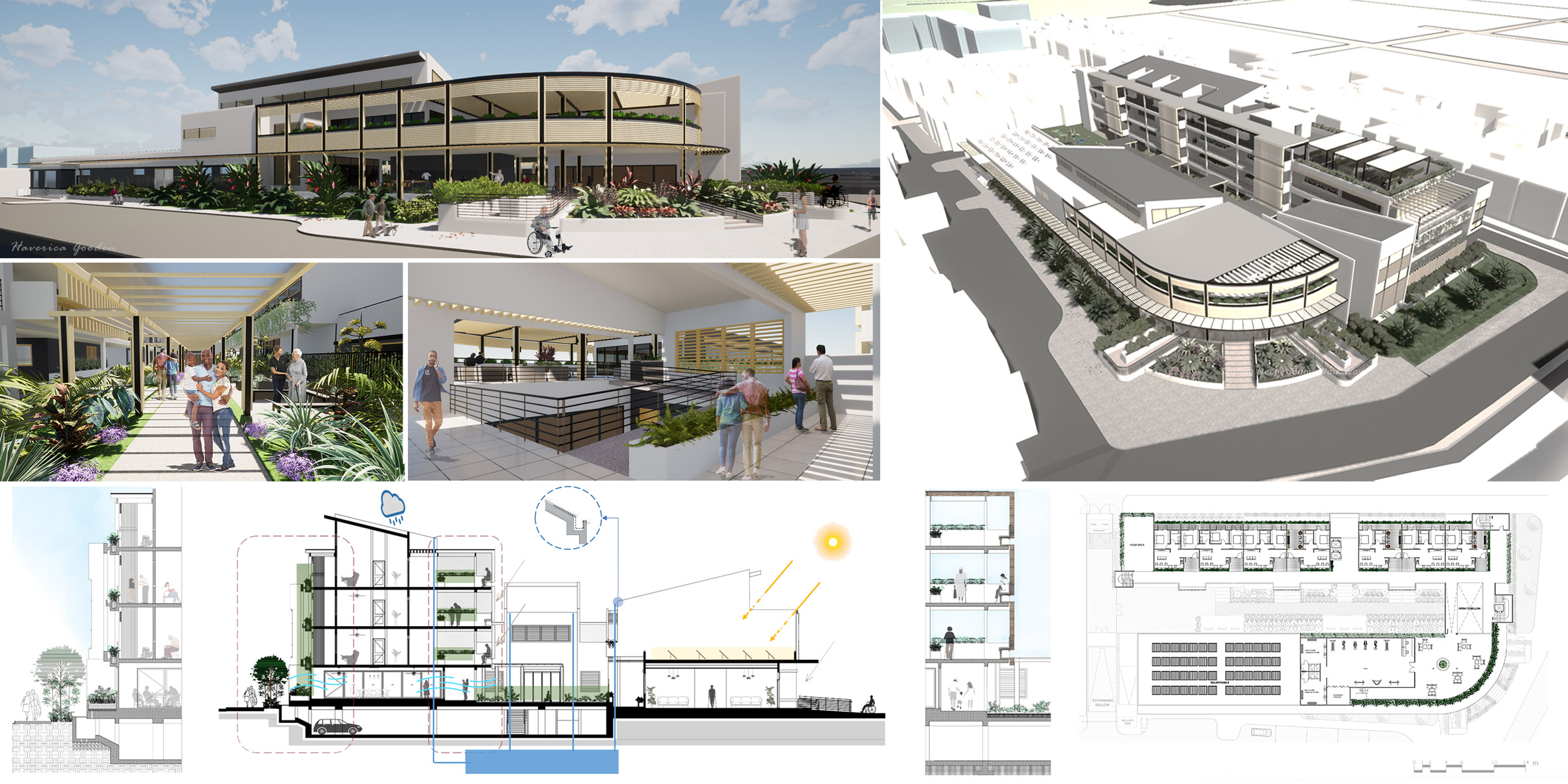
Intergenerational Community Housing by Haverica Gooden

"With Jamaica's ageing population, increasing life expectancies accompanied by a drop in births are leading to a drastic shift in our age structure.

"This shifting structure is prompting new strategies and responses in a great variety of areas, such as housing for the elderly and a need for a redeveloped community structure that fosters interaction between people of different stages of life.

"Communal living is a possible solution to developing an architectural typology that promotes a society for all ages through generational mixing. Designed with sustainability measures, the project utilises passive cooling techniques such as natural ventilation, building envelope controls for daylight, landscaping, connecting the occupants to nature, roof gardens, rainwater harvesting and renewable energy systems."

Student: Haverica Gooden
Course: Master of Architecture Thesis
Tutors: Jacquiann T Lawton and Stephen Jameson
Email: h.goodinc[at]gmail.com

Jason Pinnock is an architecture student

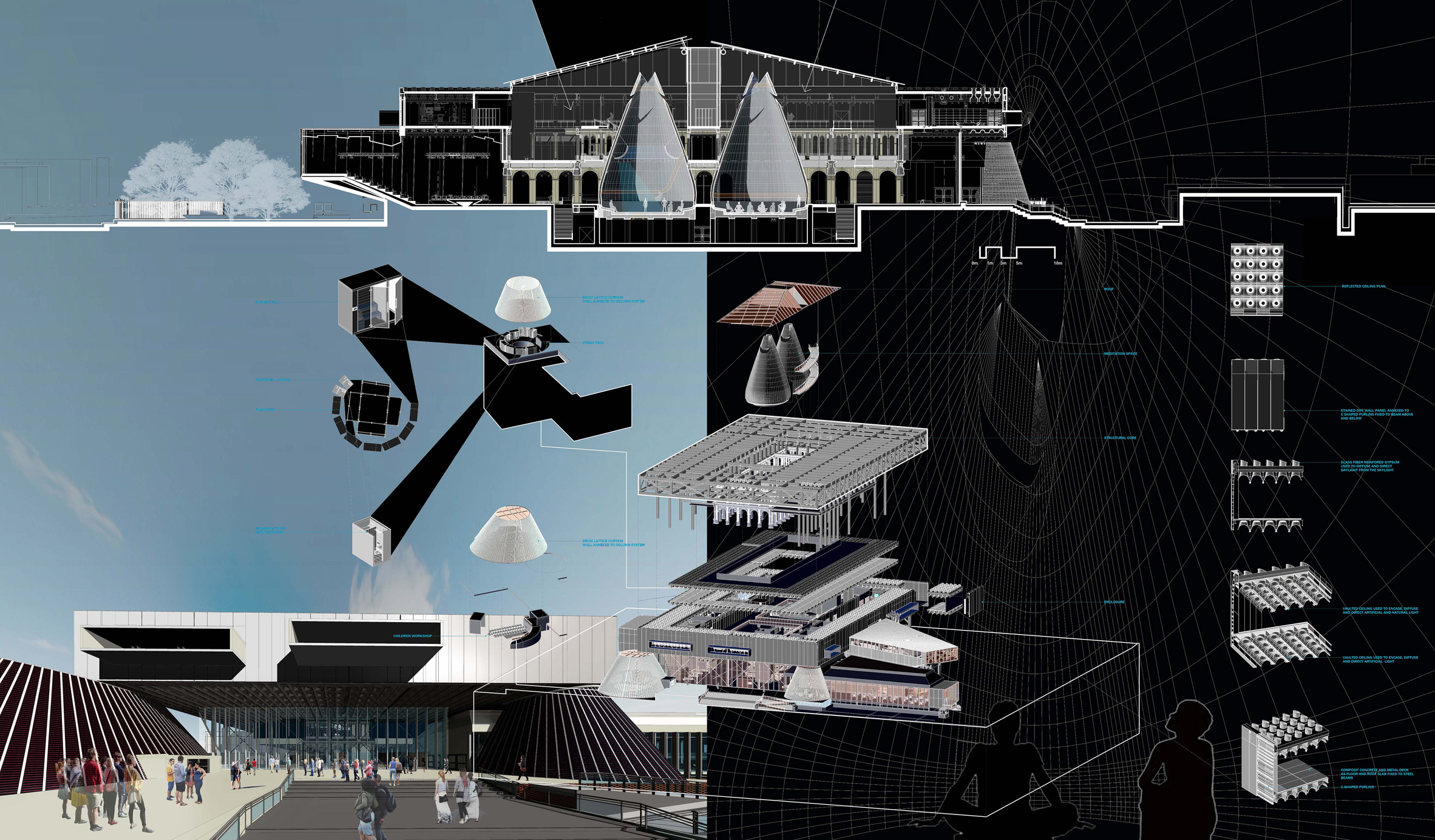
The Advocate Resource Centre by Jason Pinnock

"The Advocate Resource Centre anchors the south-east quadrant of the Central Kingston Community area. Strategically sited at the midpoint between crossroads and downtown Kingston, the scheme creates a connection that serves as either a link or an interruption for pedestrians between uptown and downtown.

The investigation sought to generate a correlation between the embedded patterns in faith-based praxis and a series of architectural spaces. The programme of meditation spaces, workshops for vocational training and a wellness centre activates the practice of faith, the outworking of words and deeds fueled by love. The project 'acts' by offering spiritual opportunities for the lives of the members of the mid-town Kingston communities."

Student: Jason Pinnock
Course: Master of Architecture Thesis
Tutors: Jacquiann T Lawton and Stephen Jameson
Email: jasonpinnock7[at]gmail.com


The University of Technology, Jamaica students have designed architecture projects

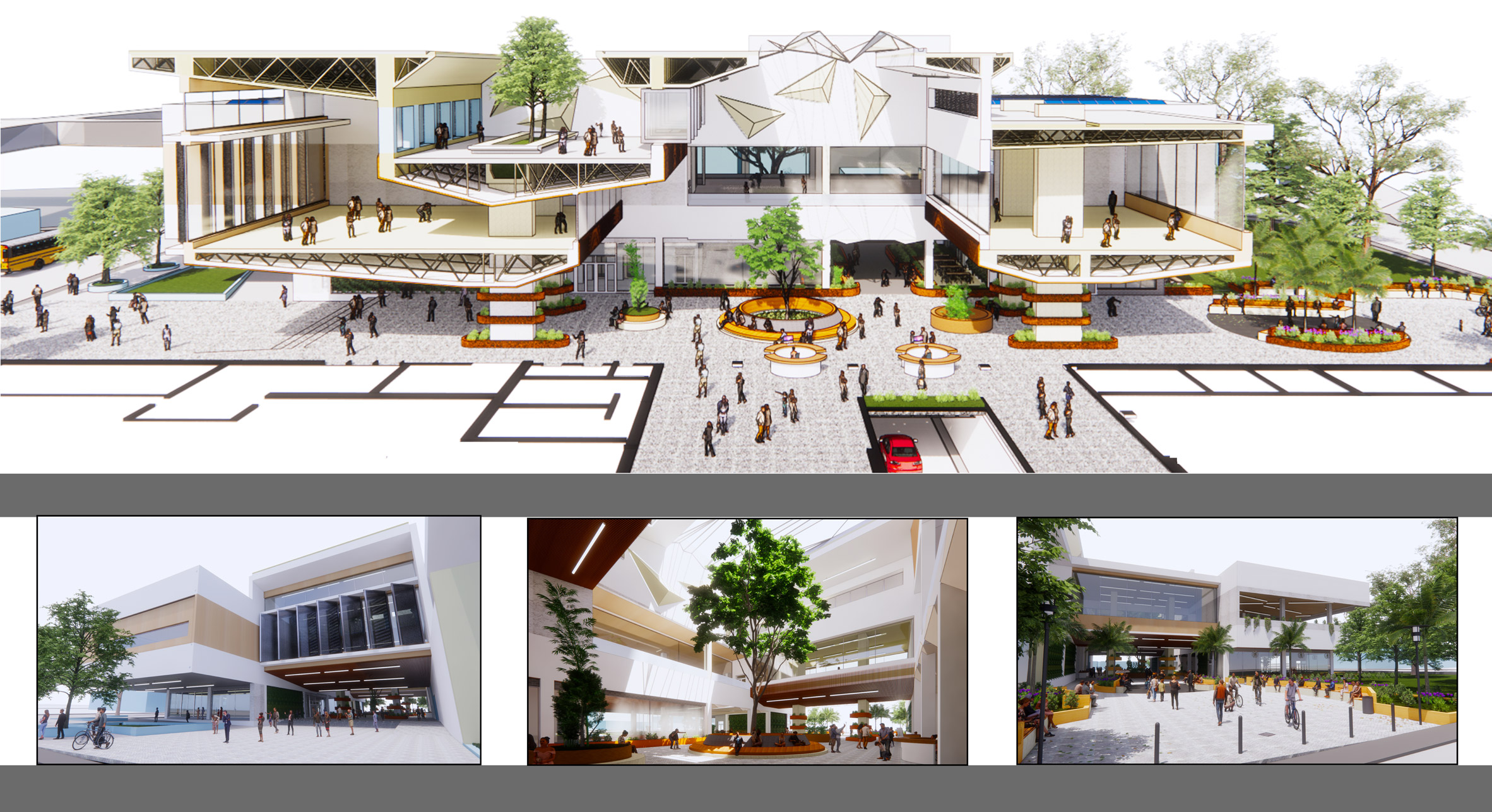
The Creative Incubator by Jonathan Williams

"The Creative Incubator aims to harness the economic potential of Kingston's creative culture. The intervention seeks to contribute to the revitalisation of mid-Kingston, by attracting and developing a new creative entrepreneurial community, which brings together professionals with grassroots creatives.

"By providing spaces to live, make, co-work, share and showcase, the building becomes an ecosystem for creatives that nurtures creativity and stimulates collaboration.

"Interstitial spaces become communal spaces to encourage collision and interaction between users and therefore offers the potential for generating creativity. Beyond the original intent of providing a space for creatives, the proposal also accommodates the existing thriving community of small vendors."

Student: Jonathan Williams
Course: Master of Architecture Thesis
Tutors: Jacquiann T Lawton and Stephen Jameson
Email: jonathan.williams909[at]gmail.com

The architecture of the Central Kingston Library features in the projects

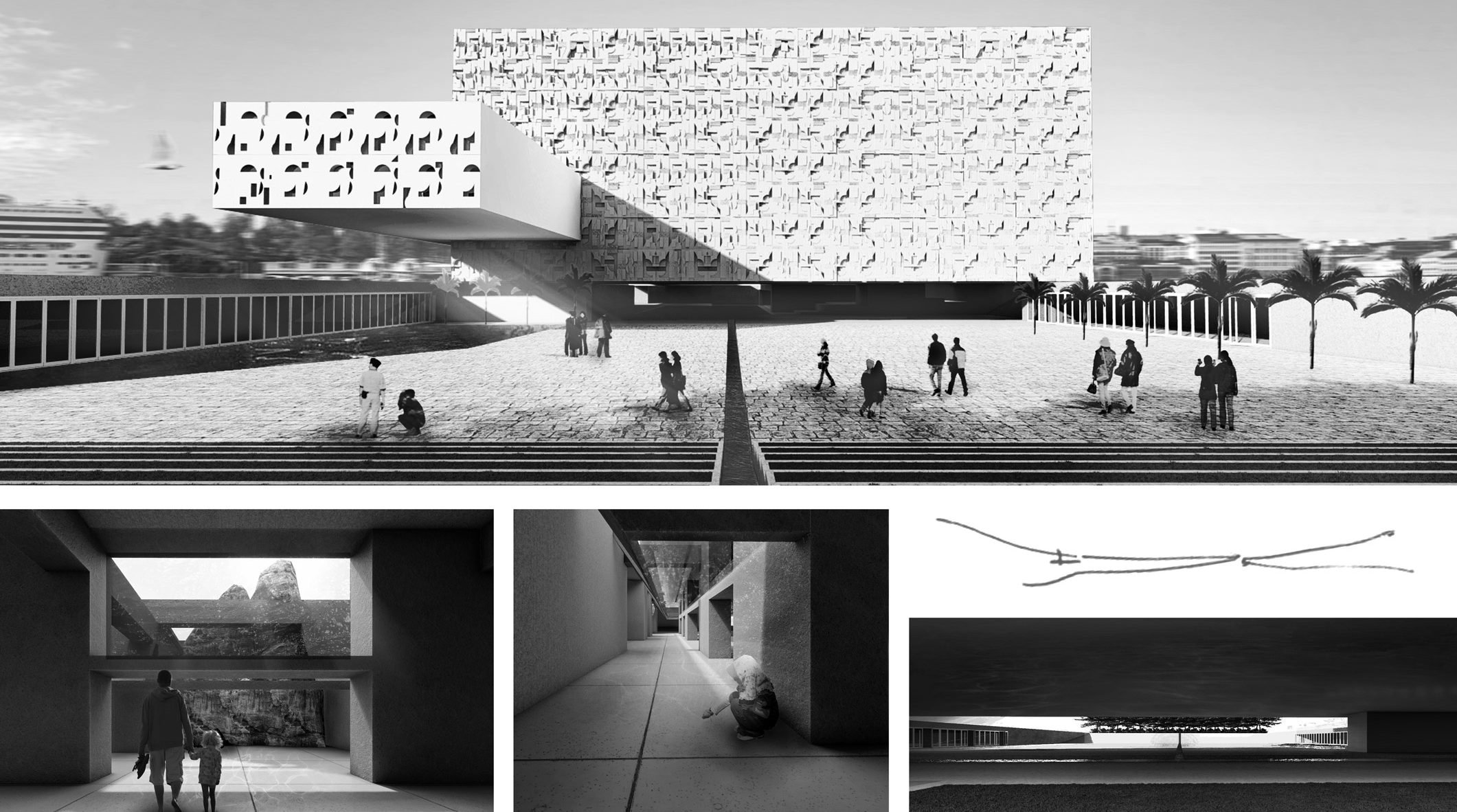
Central Kingston Library by Orvin Brown

"The multifaceted nature of central Kingston provides unique opportunities for the design to become a nexus between the proposed Parliament buildings, National Heroes Park, and the existing social ecosystem. Internal courtyards connect all significant spaces.

"Green and public areas integrate natural elements creating places for relaxed social interaction. The architecture of the Central Kingston Library, Cultural Centre and Fabrication Incubator aims to promote a seamless learning experience, including 3D fabrication and unique cultural opportunities provided by the context.

"A pedestrian walkway promotes visual, social and physical linkages between the commercial activities on Orange Street and the proposed Parliament buildings."

Student: Orvin Brown
Course: Master of Architecture
Tutors: Cheryl Pouchet, David Douglas and Mandilee Newton
Email: obdezignz[at]hotmail.com

Theological Institue by Jheanelle Campbell

Theological Institue by Jheanelle Campbell

"The intervention for the site as a theological institute functions as a space for open dialogue and investigation into how people of the world can connect to God.

"Religions all share the common belief that they are the way or route to reach the divine, thus, the elements embodied in the architectural design reveal themselves as an interpretation of a path through layers of symbolic spatial exchange.

"The architectural gestures found in the site are mystical and thought-provoking. They seek to embody existential metaphors and concretise and structure our sense of being in the world."

Student: Jheanelle Campbell
Course: Master of Architecture
Tutors: Cheryl Pouchet, David Douglas and Mandilee Newton
Email: jheanellecampbell[at]gmail.com
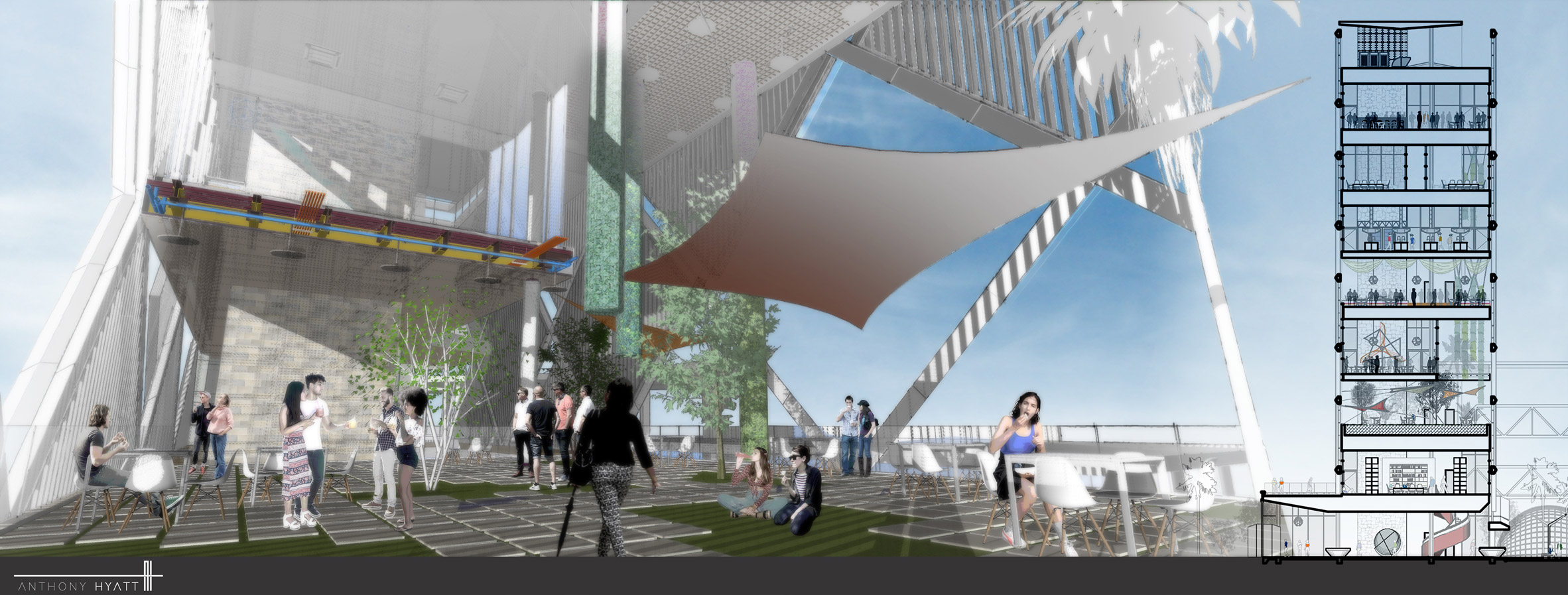

The University of Technology, Jamaica

The Gastronomy Incubator by Anthony Hyatt

"Kingston is one of 47 new locales added to the UNESCO Creative Cities Network in December 2015. The imperative recognises creativity as a significant factor in sustainable urban development, social inclusion and cultural vibrancy. The Gastronomic Incubator is inspired by culinary locations within the city.

The building capitalises on its location between historic Kingston and its suburbs, creating a place to enjoy preparing, researching and eating Jamaican and international food.

"The incubator is supported by a specialist library for all things food. An urban farm provides the produce for the gastronomic functions of the project and also serves the adjoining communities."

Student: Anthony Hyatt
Course: Master of Architecture
Tutors: Cheryl Pouchet, David Douglas and Mandilee Newton
Email: hdq.7729[at]gmail.com
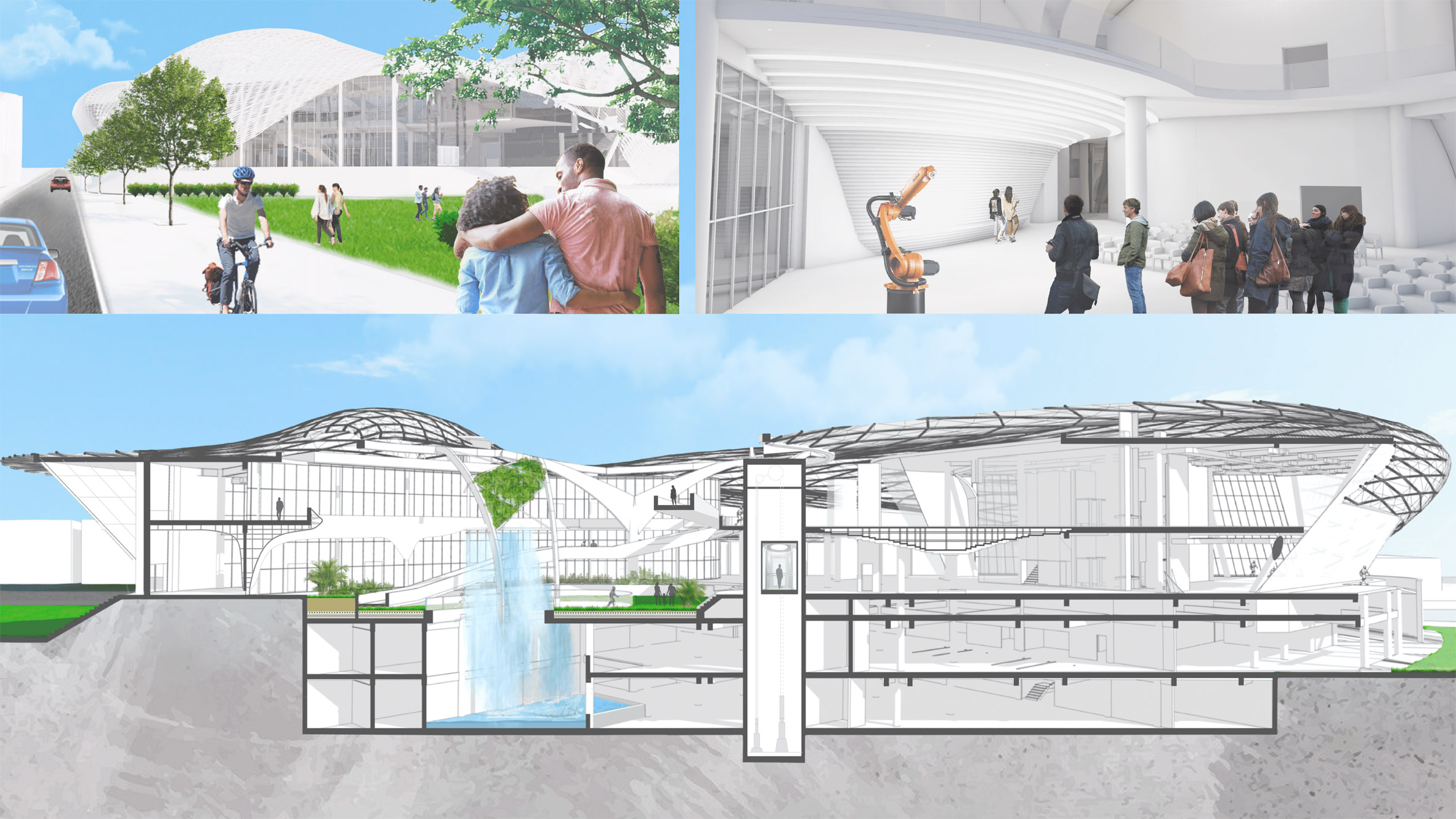

The Robotics Uncubator by Hanif James

The Robotics Incubator by Hanif James

"The Robotics Incubator stimulates high school students to create research explorations using robotics. A central courtyard coordinates the activities within the incubator by encouraging collaborative engagement in a main open space.

"An organic canopy integrates smart kinetic solar panels and a hydro-circulation system, which contributes to the sustainable strategies of the building while incorporating robotic elements.

"The design was inspired by the dynamic street life juxtaposed against the formal architecture surrounding the area. This dynamism was investigated through the shape of the building by mirroring the energetic exchange of ideas the street life facilitates."

Student: Hanif James
Course: Master of Architecture
Tutors: Cheryl Pouchet, David Douglas and Mandilee Newton
Email: hanifjames95[at]gmail.com
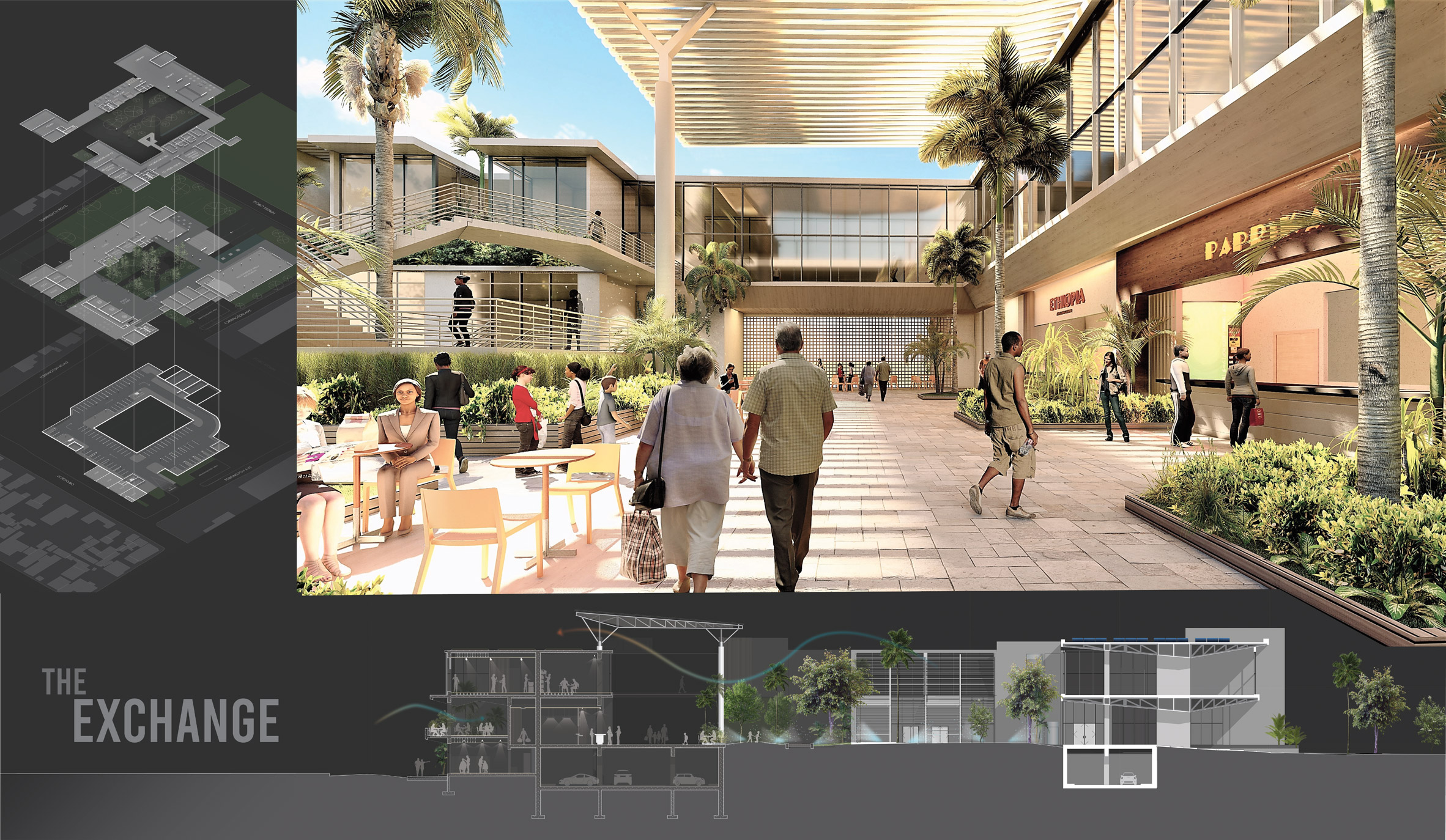

A project by Roni-Kaye McLaren

The Exchange by Roni-Kaye McLaren

"Inspired by the original nodes and activities that existed in and around the site, this project, located in central Kingston, Jamaica, explores a space that facilitates the exchange of knowledge, ideas and services among various demographic groups.

"A vast courtyard connects the internal spaces. As a result, the circulation becomes more vibrant, animated. Points of exchange become intimate through dining, shopping, co-working, learning and gathering.

"The design is punctuated by natural light and greenery to enhance the experience of all inhabitants. Other sustainable strategies employed were rainwater catchment and reuse, passive cooling, green roofs and solar energy."

Student: Roni-Kaye McLaren
Course: Master of Architecture
Tutors: Cheryl Pouchet, David Douglas and Mandilee Newton
Email: mclaren.roni[at]gmail.com


Partnership content

This school show is a partnership between Dezeen and the University of Technology, Jamaica. Find out more about Dezeen partnership content here.

The post University of Technology Jamaica highlights 10 student architecture projects appeared first on Dezeen.


from Dezeen https://ift.tt/3y2wFtL

Ibuku completes "unprecedented" bamboo building in the Balinese jungle

It has an undulating roof

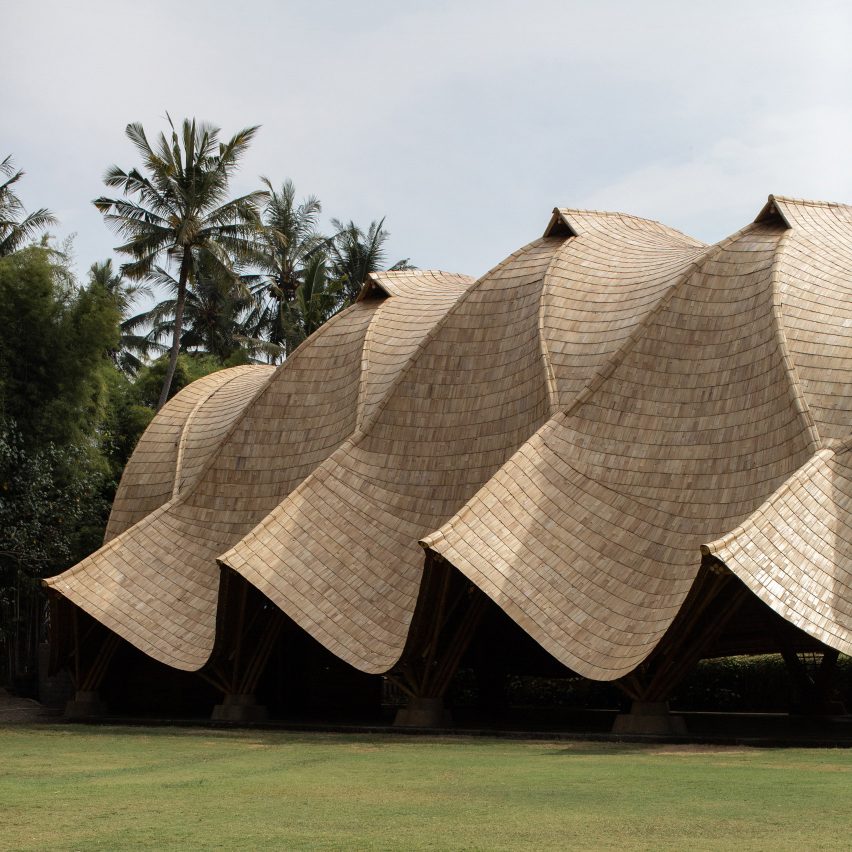
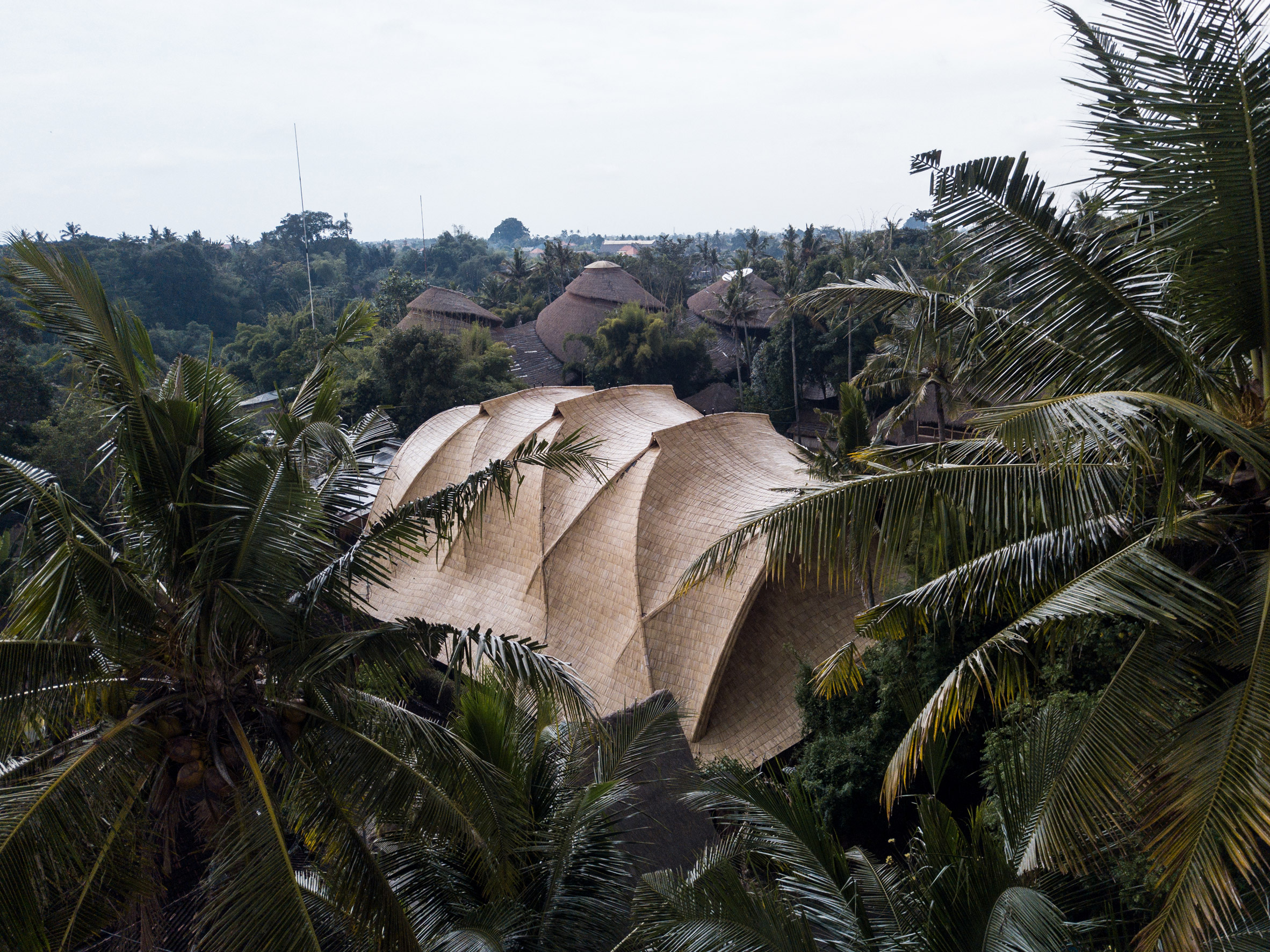
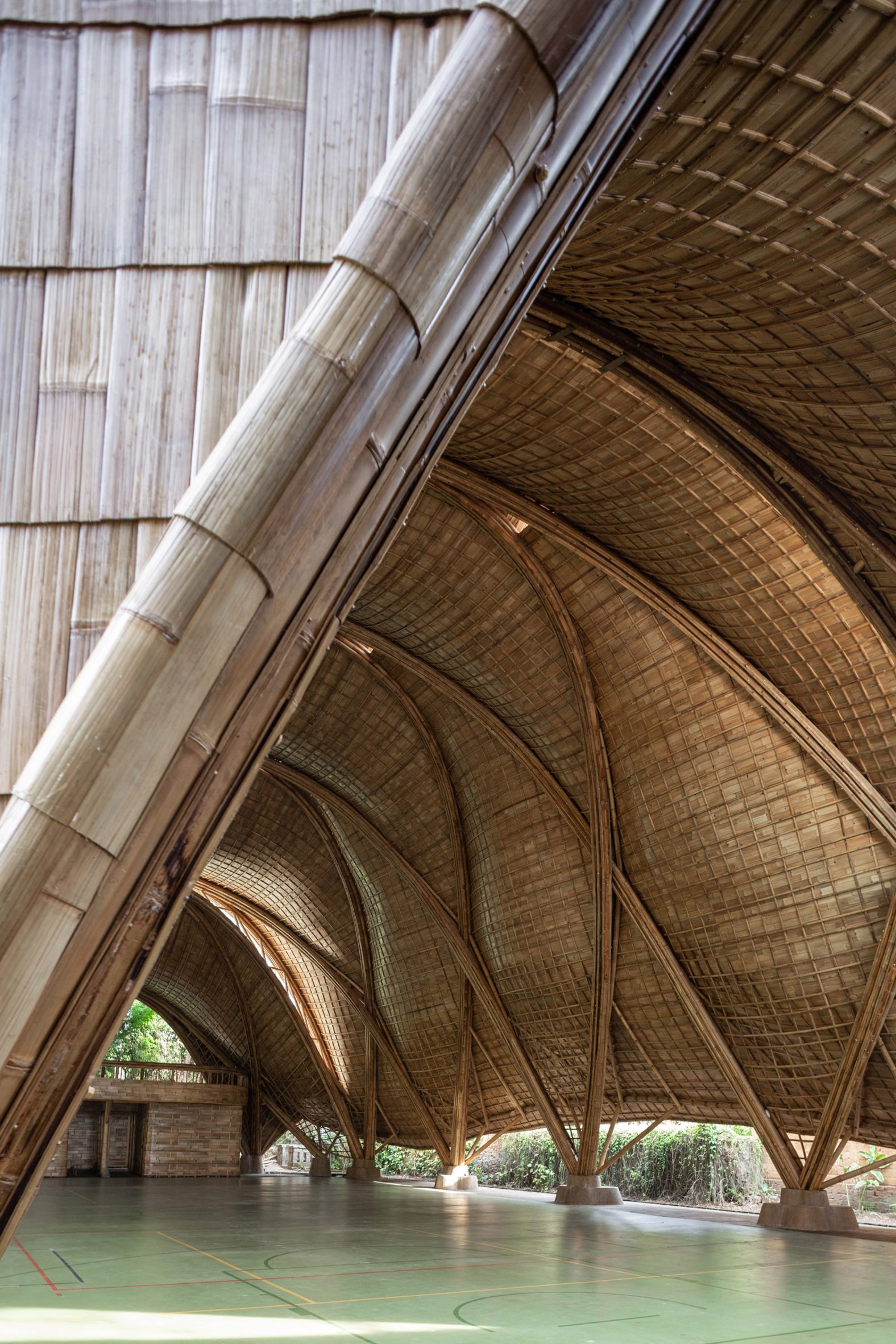
Architecture studio Ibuku has completed The Arc gymnasium for a private school in Bali featuring a complex double-curved roof made entirely from bamboo.

The Arc is the latest building to be completed on the site of the Green School – a private educational institution that promotes sustainability through learning in a natural environment.

Ibuku built the structure within a forest
Top: The Ark is made from bamboo. Above: it is surrounded by a forest

The building was designed by Green School founders John and Cynthia Hardy's daughter Elora Hardy and her studio Ibuku in collaboration with bamboo architect Jörg Stamm and structural engineering firm Atelier One.

It forms a protective roof sheltering a multipurpose sports court with a floor area of 760 square metres.

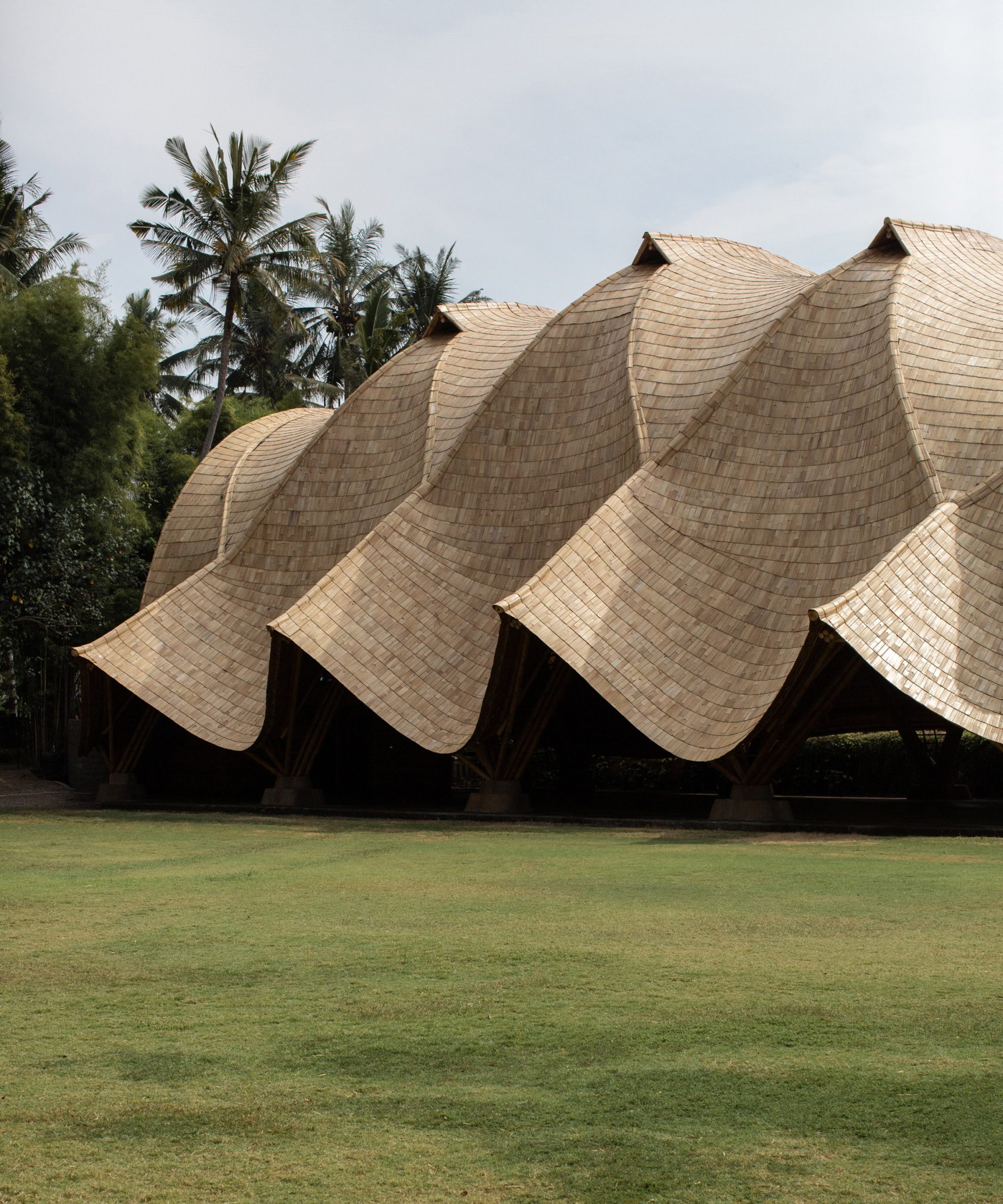
The Ark has a ribbed form
The undulating canopy covers a sports pitch

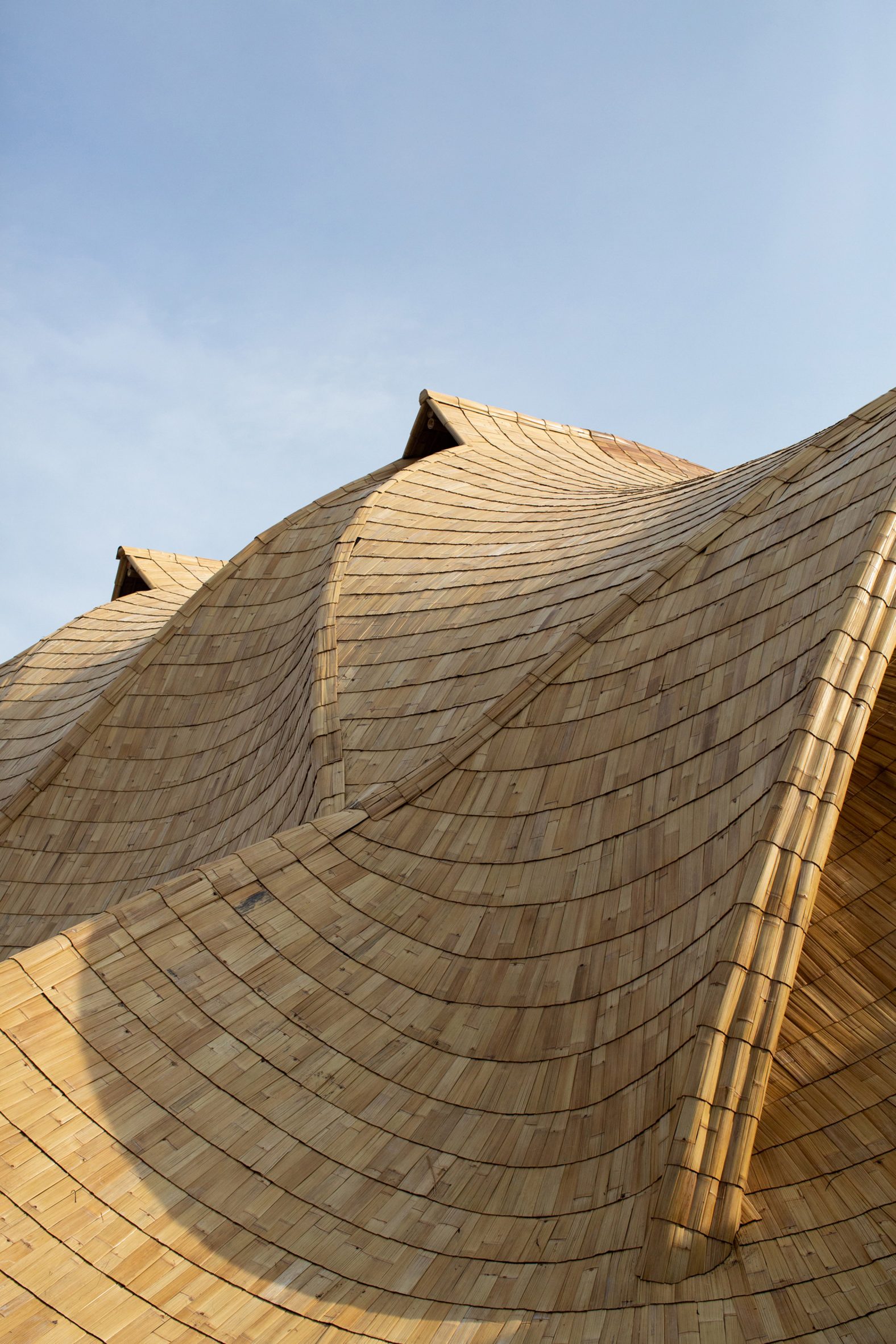
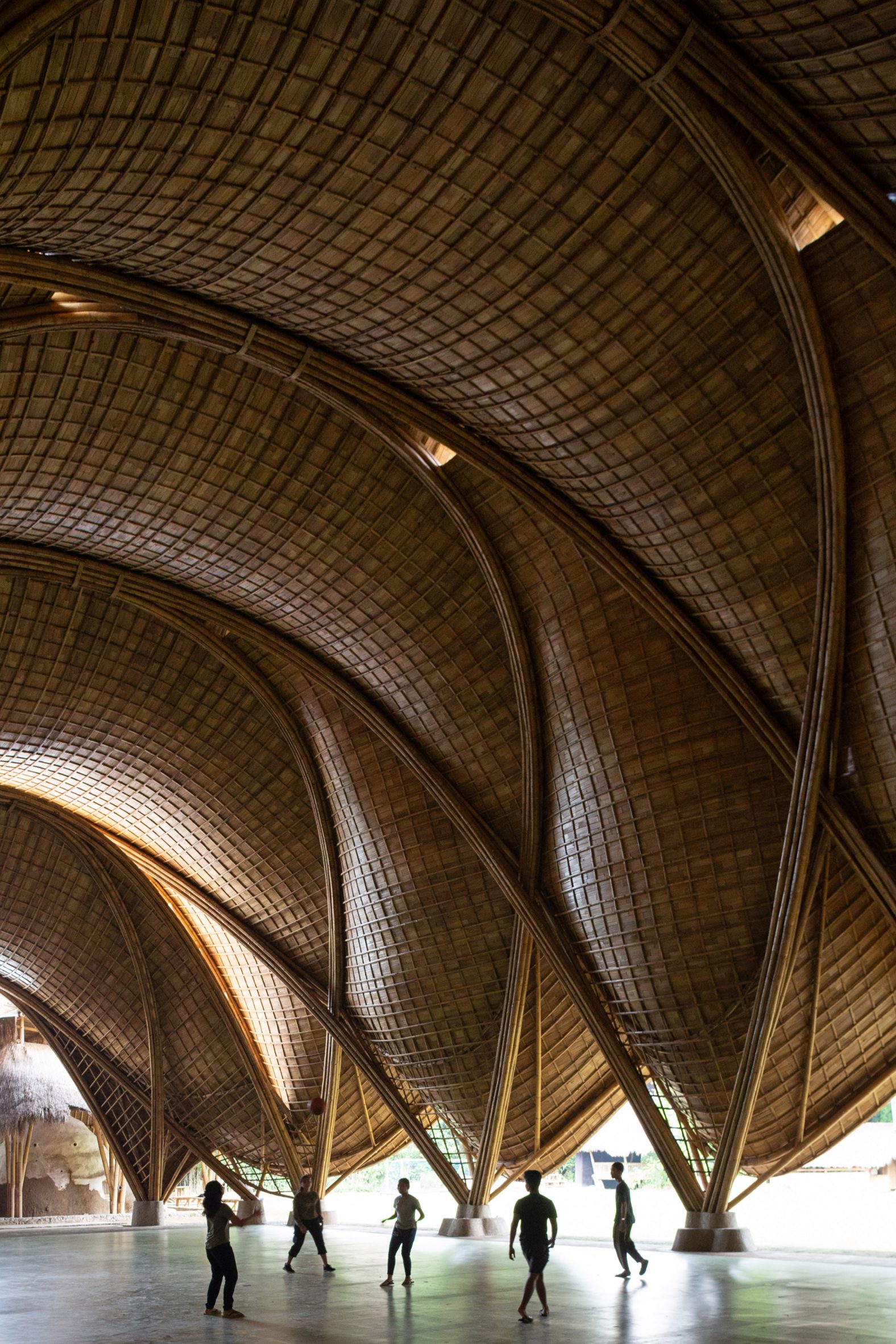
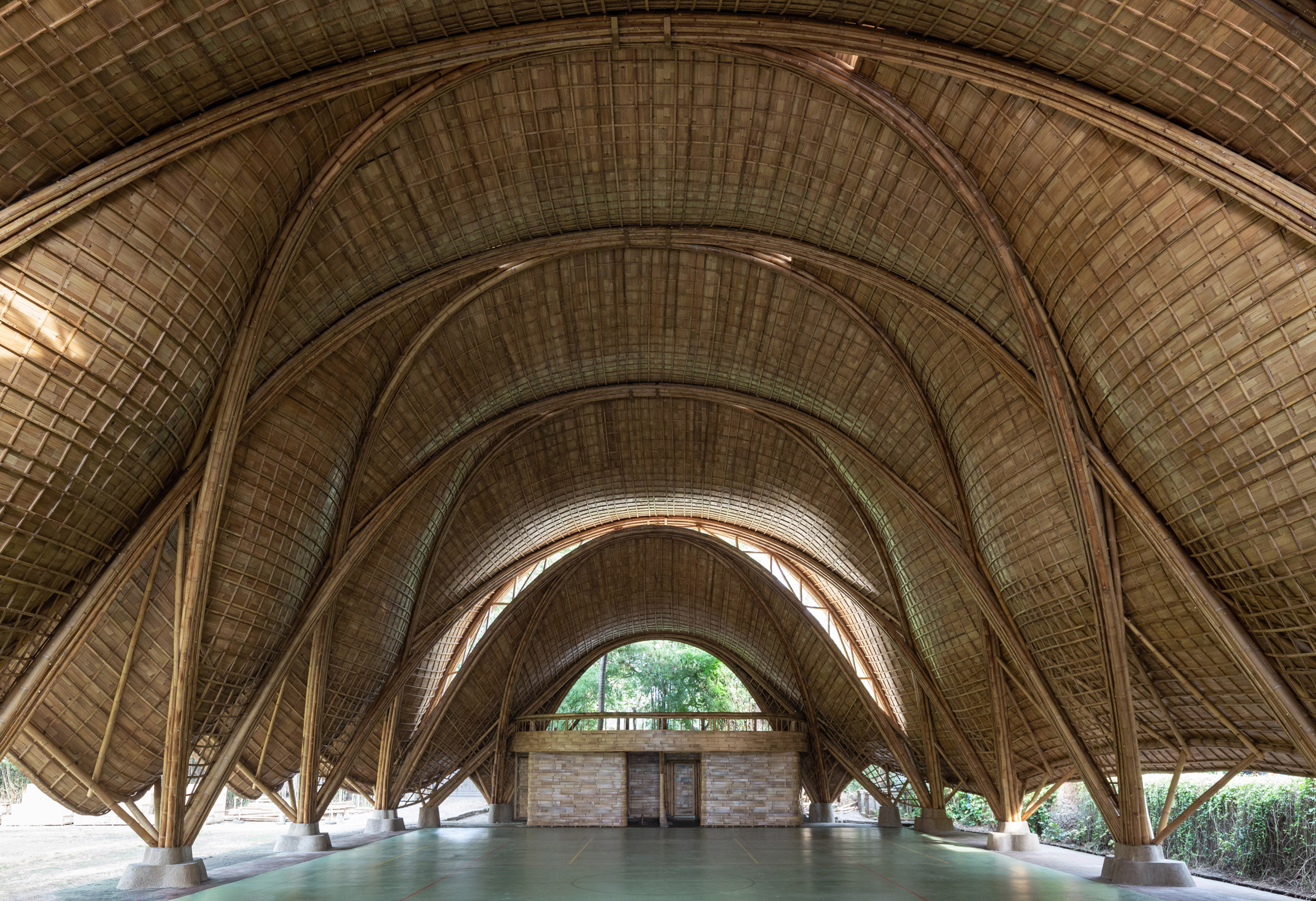
The lightweight structure features bamboo arches that support an organically shaped canopy. The 14-metre-high arches are connected by anticlastic gridshells that curve in two directions to create a robust, tensioned structure.

"The concepted structure for The Arc is totally unprecedented," claimed Ibuku project architect Rowland Sauls.

"Embarking on a design never before executed required some bravery and optimism. We were creative and stubborn enough to research and develop the answers needed for the success of the project."

The Ark was constructed using bamboo
The organically shaped roof was made from bamboo

The building's organic form and structural system were informed by natural systems, in particular the way our ribcages are held in place by the tension from an outer layer of muscle and skin.

"The Arc operates like the ribs of a mammal's chest," explained Stamm, "stabilised by tensile membranes analogous to tendons and muscles between ribs."

"Biologically, these highly tensile microscopic tendons transfer forces from bone to bone," he continued.

"In The Arc, bamboo splits transfer forces from arch to arch."

The Ark's canopy roof extends to the floor
The arched interior that echoes the shape of a mammals rib cage

Several months of research and development led to the creation of a precise geometrical solution that allowed the structure to enclose a large inner volume with a minimal amount of material.

"The gridshells use shape stiffness to form the roof enclosure and provide buckling resistance to the parabolic arches," said Atelier One director, Neil Thomas.

"The two systems together create a unique and highly efficient structure," he added, "able to flex under load allowing the structure to redistribute weight, easing localised forces on the arches."

Student pictured within the pavilion
Floor space is column-free

The arches supporting the pavilion's roof span 19 metres and allow for a large floor area that is uninterrupted by supporting columns.

Spaces around the base of the canopy allow breezes to flow through, providing natural ventilation. Vents at the roof's apex also allow warm air to escape.

There is a brick structure within the bamboo canopy
Air can circulate through its openings

The Green School has been constructing bamboo buildings at its campus in Bali, Indonesia, since it was founded in 2008. The school now also operates campuses in New Zealand, South Africa and Mexico.

All of the buildings at the jungle site in Bali's Badung regency are designed to be energy efficient and constructed using natural materials wherever possible.

John Hardy and Jörg Stamm worked together with designer Aldo Landwehr to create the initial buildings and infrastructure including bridges and a spiralling three-storey building housing the high school and administrative areas.

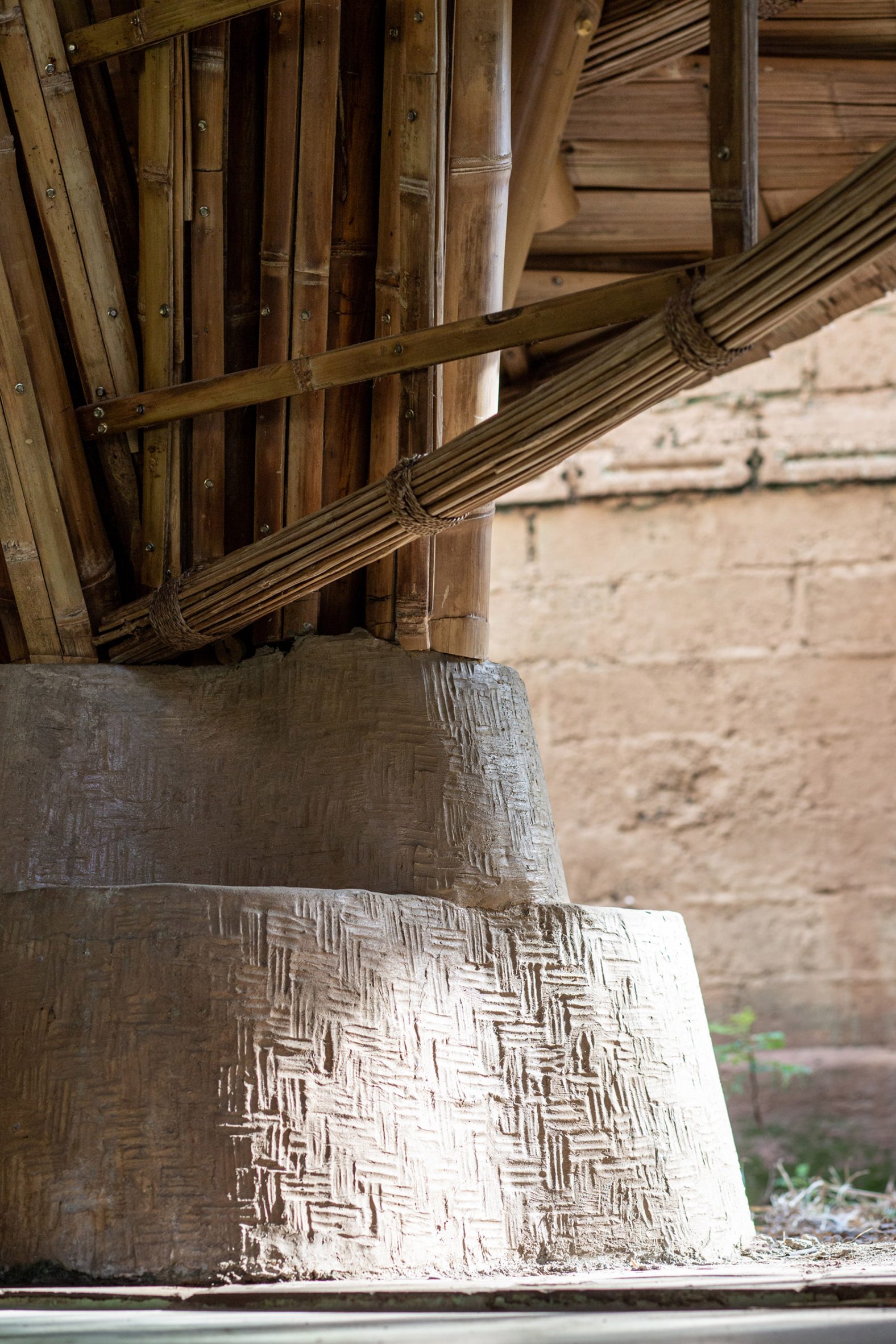
The Ark's bases have a textural quality
It is anchored to the ground

Bamboo was also used by Chinese firm LLLab to create an undulating riverside canopy on the site of a popular light show, while Ruta 4 also constructed a clothing factory in rural Colombia from bamboo.

Photography is by Tommaso Riva.

The post Ibuku completes "unprecedented" bamboo building in the Balinese jungle appeared first on Dezeen.


from Dezeen https://ift.tt/36WuSdw

Ten elegant living rooms with Japandi interiors

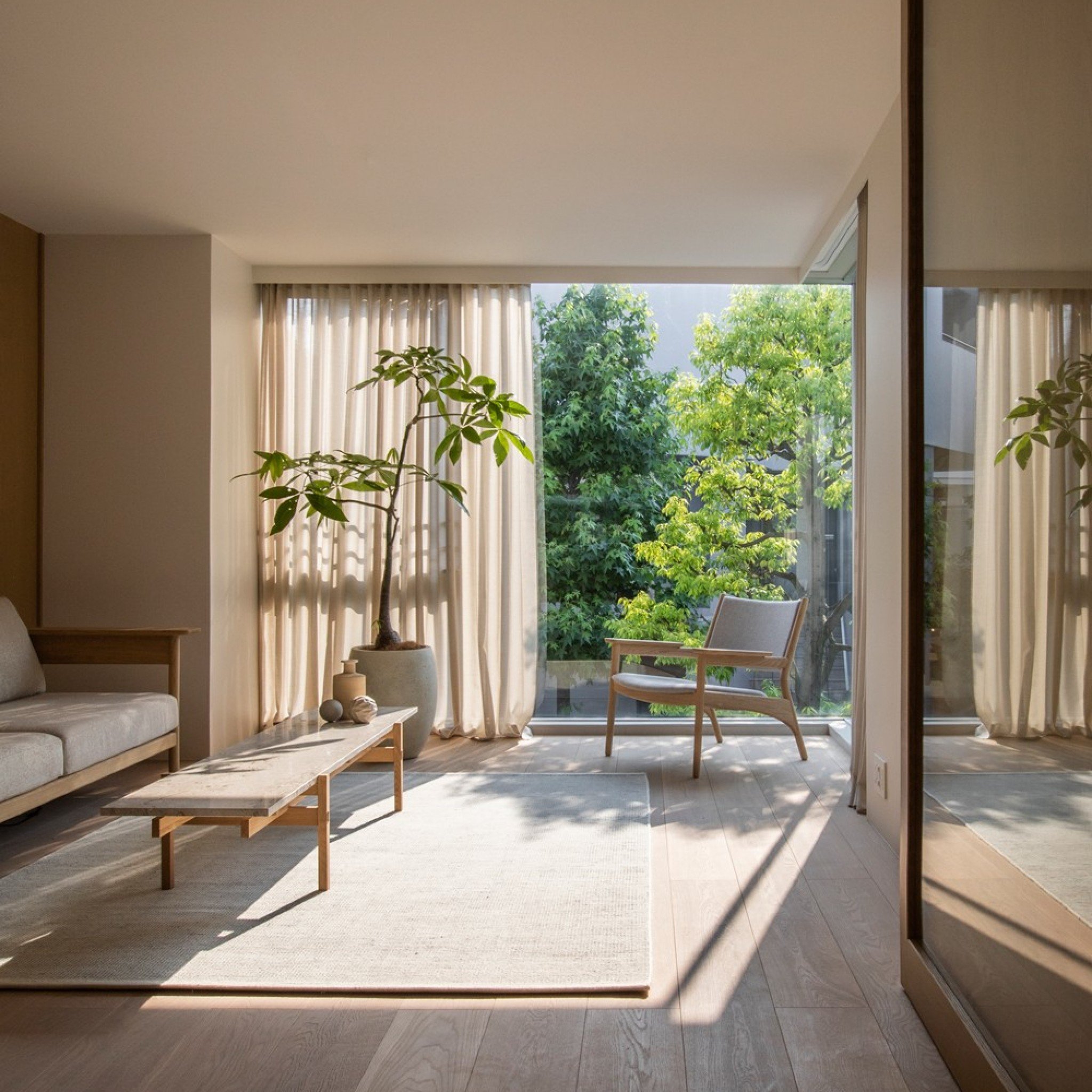
Kinuta Terrace

The minimalist styles and natural materials used in both Japan and Scandinavia come together in this lookbook, containing 10 living rooms that have been decorated with Japandi interior design.

"Japandi" has become the denomination for interiors where Japanese minimalism meets Scandinavian functionality. Simple, pared-back designs and natural materials are some of the key characteristics of the style.

Bare branches and dried flowers add an organic touch to the interiors, which also tend to feature an abundance of wood – a material used in both Japanese and Scandinavian interiors.

This is the latest lookbook in a series providing visual inspiration for interior designers and design lovers. Previous lookbooks in the series have showcased plant-filled offices, calm living rooms and interiors made from biomaterials.


Bright Scandinavian living room in Montreal

Montreal House, Canada, by Talo Studio

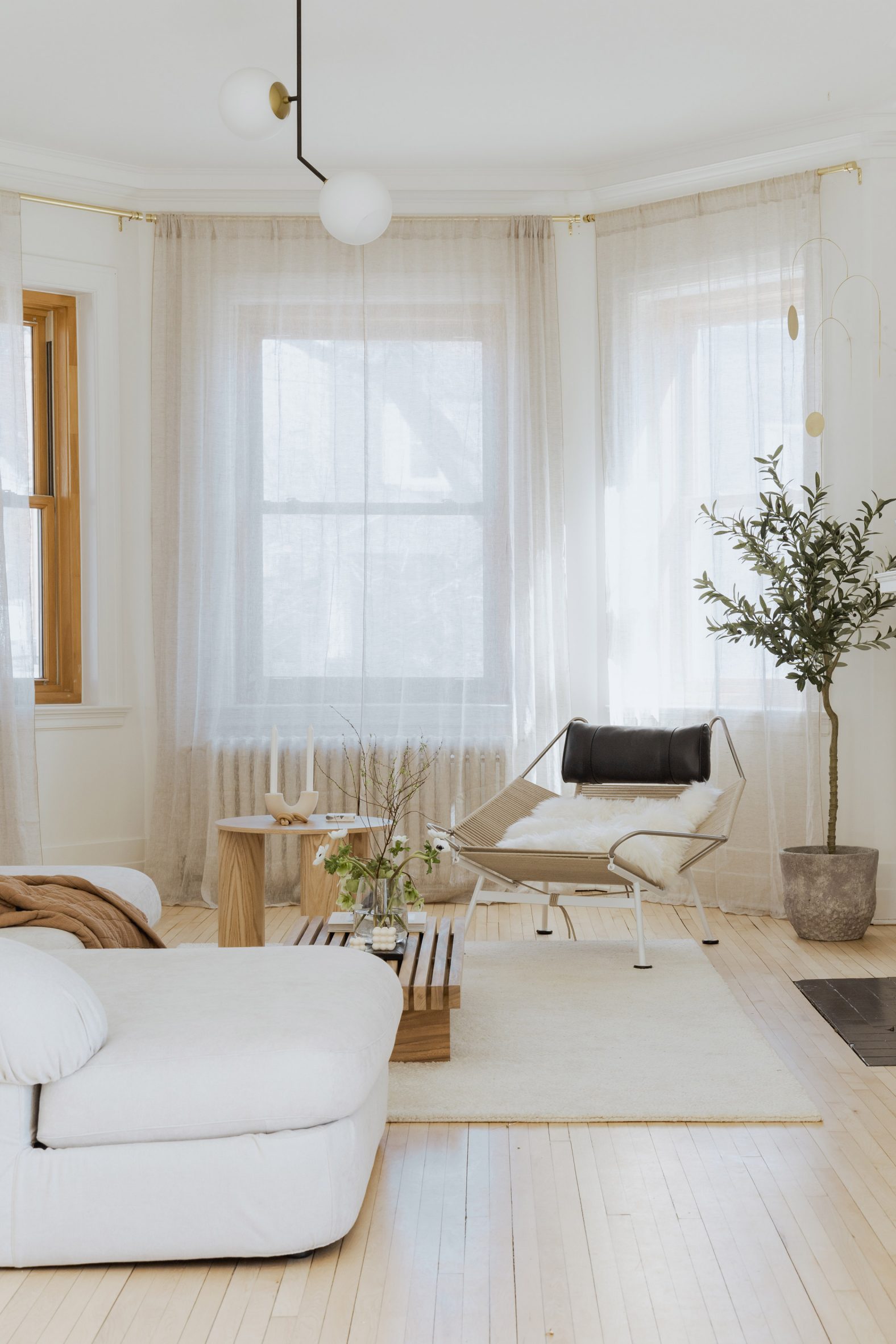
A historic Montreal house was given a contemporary update by design studio Talo Studio, which played with textures to create the home's minimalist aesthetic.

"A thick rounded sofa is combined with a low linear slatted coffee table and nubby rug with a subtle swirl, reminiscent of a Japanese garden," studio founder Tiina Vahtola told Dezeen.

An angular Hans Wegner lounge chair with a sheepskin throw nods to the Scandinavian influence.

Find out more about Montreal House ›


The Audo by Menu and Norm Architects

The Audo, Denmark, by Norm Architects and Menu

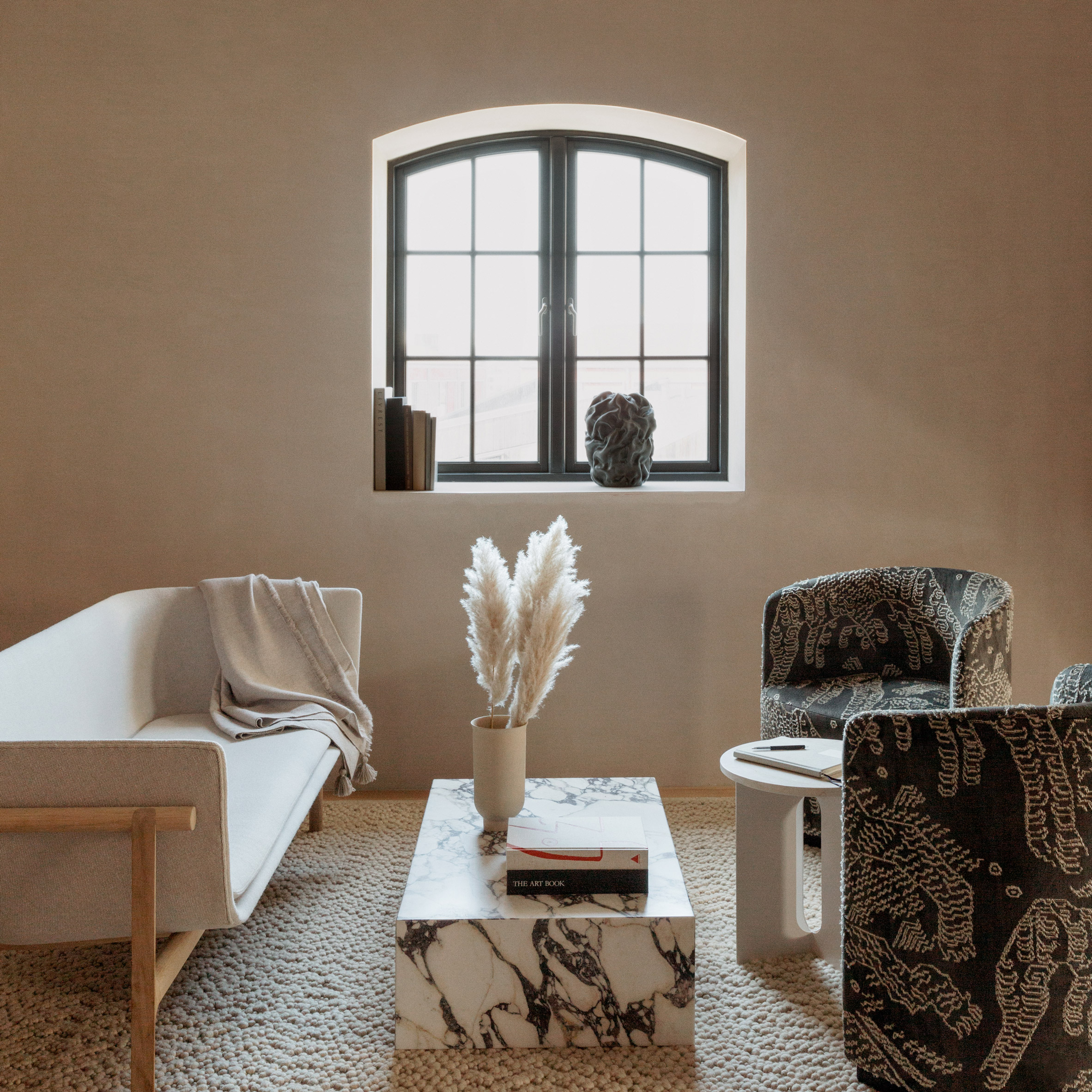
Danish design brand Menu and architecture studio Norm Architects collaborated on the design of The Audo, a hotel in Copenhagen's Nordhavn area.

A coffee table in veiny Carrara marble adds pattern interest to the room's muted design, while a woven rug and rock-like ceramic sculpture stand out against the bare walls. The room's beige sofa with a wooden frame evokes functional Japanese furniture.

Find out more about The Audo ›


Biscuit Loft apartment, USA, by OWIU Studio

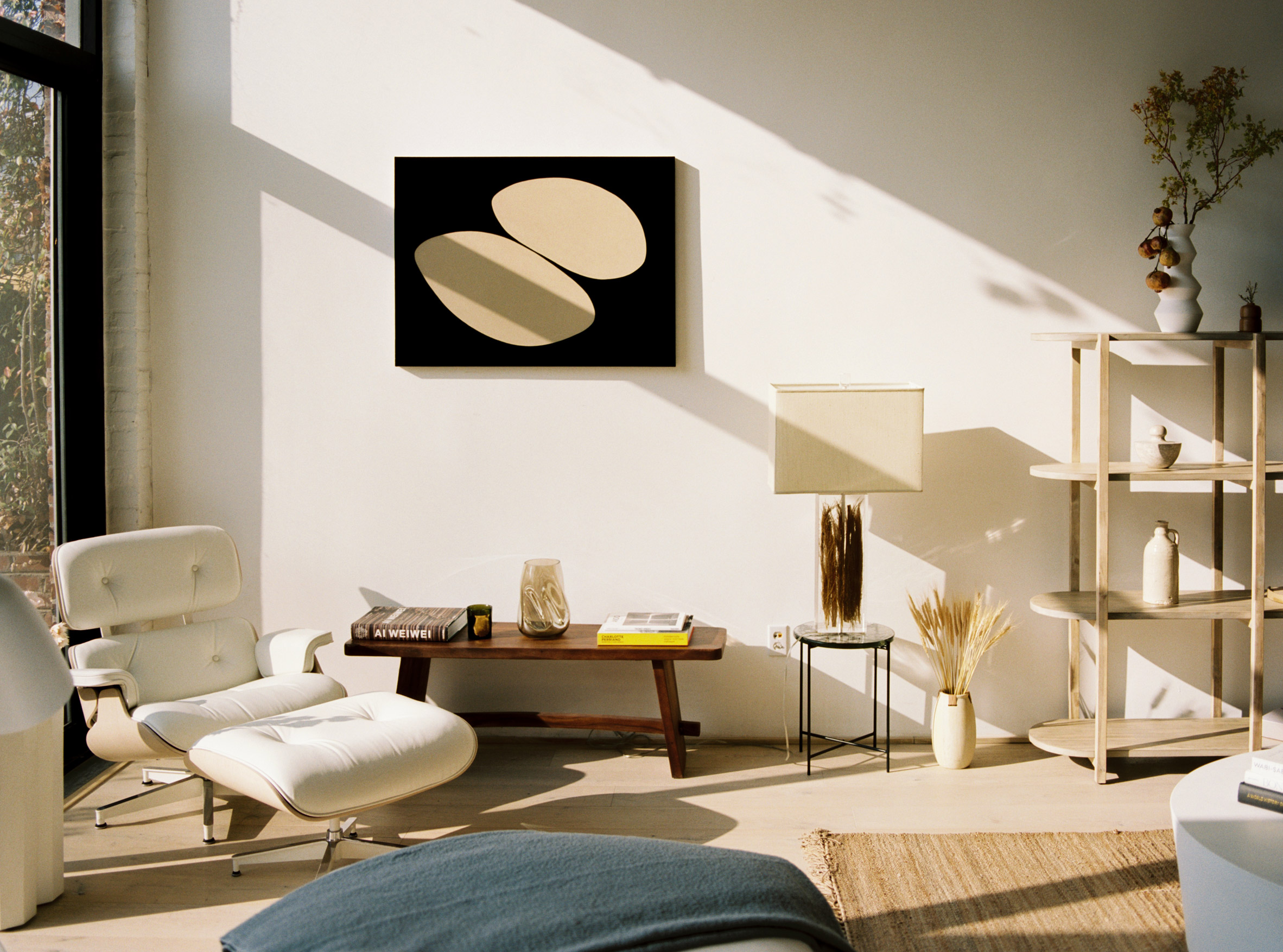
Japanese design elements were added to this industrial loft space in Brooklyn, New York, such as a raised platform that can double as a bed frame. In the living room, a classic white Eames lounge chair sits next to a sculptural side table in dark wood.

Dried flowers and grass and a selection of ceramic jugs and vases make for a living room design that feels more Scandinavian or Japanese than American. A traditional Scandinavian-style tasseled rug makes the room feel more homely.

Find out more about Biscuit Loft apartment ›


Powerscroft Road by Daytrip

Powerscroft Road, UK, by Daytrip

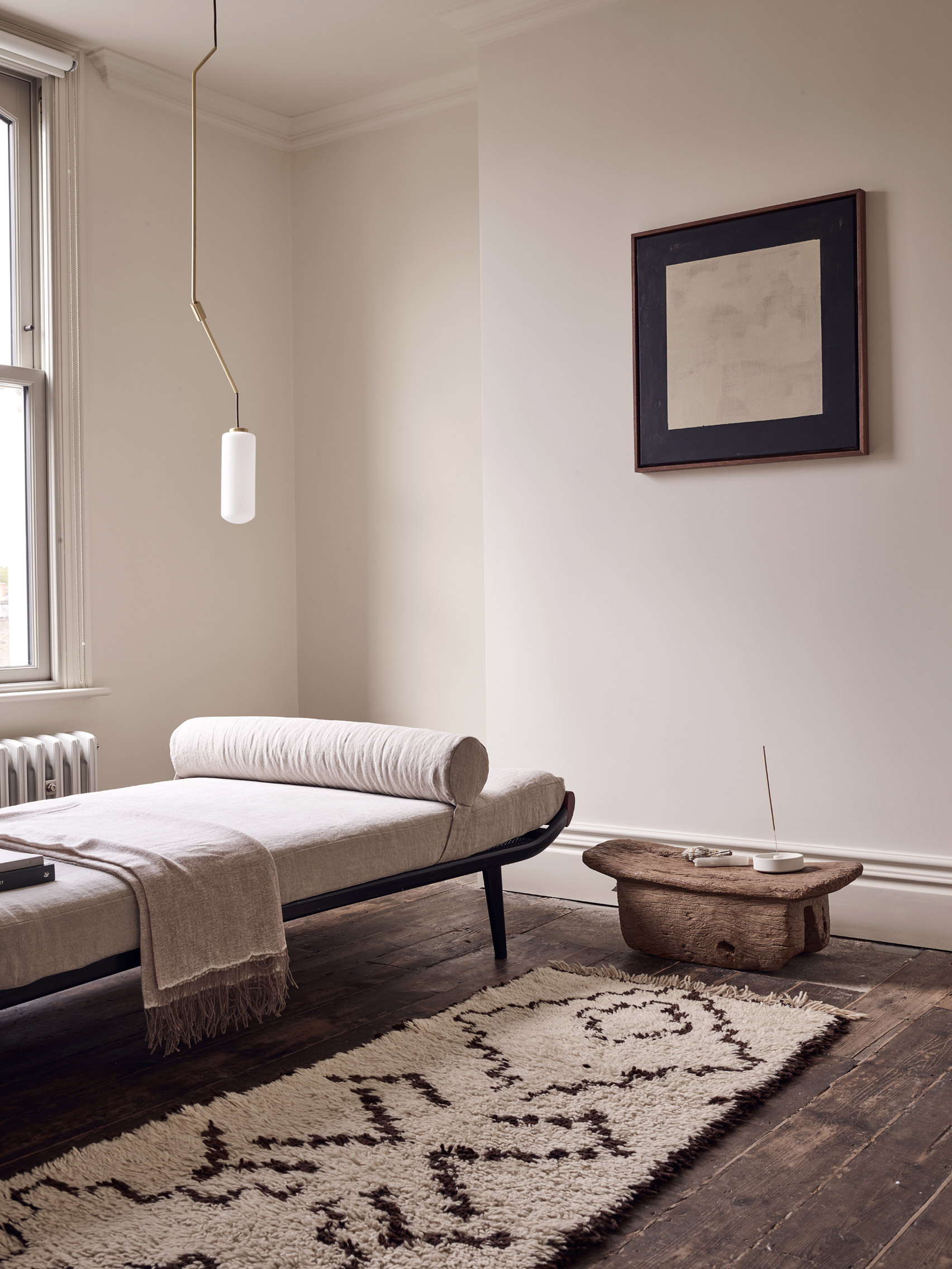
This London home combines a pared-down interior design with interesting tactile touches such as a fluffy rug with a geometric pattern.

A rough-hewn wooden side table is reminiscent of traditional Japanese joinery, while the vintage Cleopatra daybed by Dutch designer Dick Cordemeyer for Auping adds a northern European design piece that perfectly matches the home's Asian influences.

Find out more about Powerscroft Road ›


Wooden floor and white rug in Tokyo apartment

Azabu Residence, Japan, by Norm Architects and Keiji Ashizawa Design

Norm Architects and Keiji Ashizawa Design have collaborated on a number of projects, including this Japandi interior design for a home in Tokyo.

The triangular pendant lamp is by Norm Architects for Karimoku Case Study and is made from traditional Japanese washi paper. Its geometric shape is picked up by the abstract sculptures on one of the walls and complements the armless modular sofa.

Find out more about Azabu Residence ›


The atrium of a Japanese house

Margin House, Japan, by Kohei Yukawa

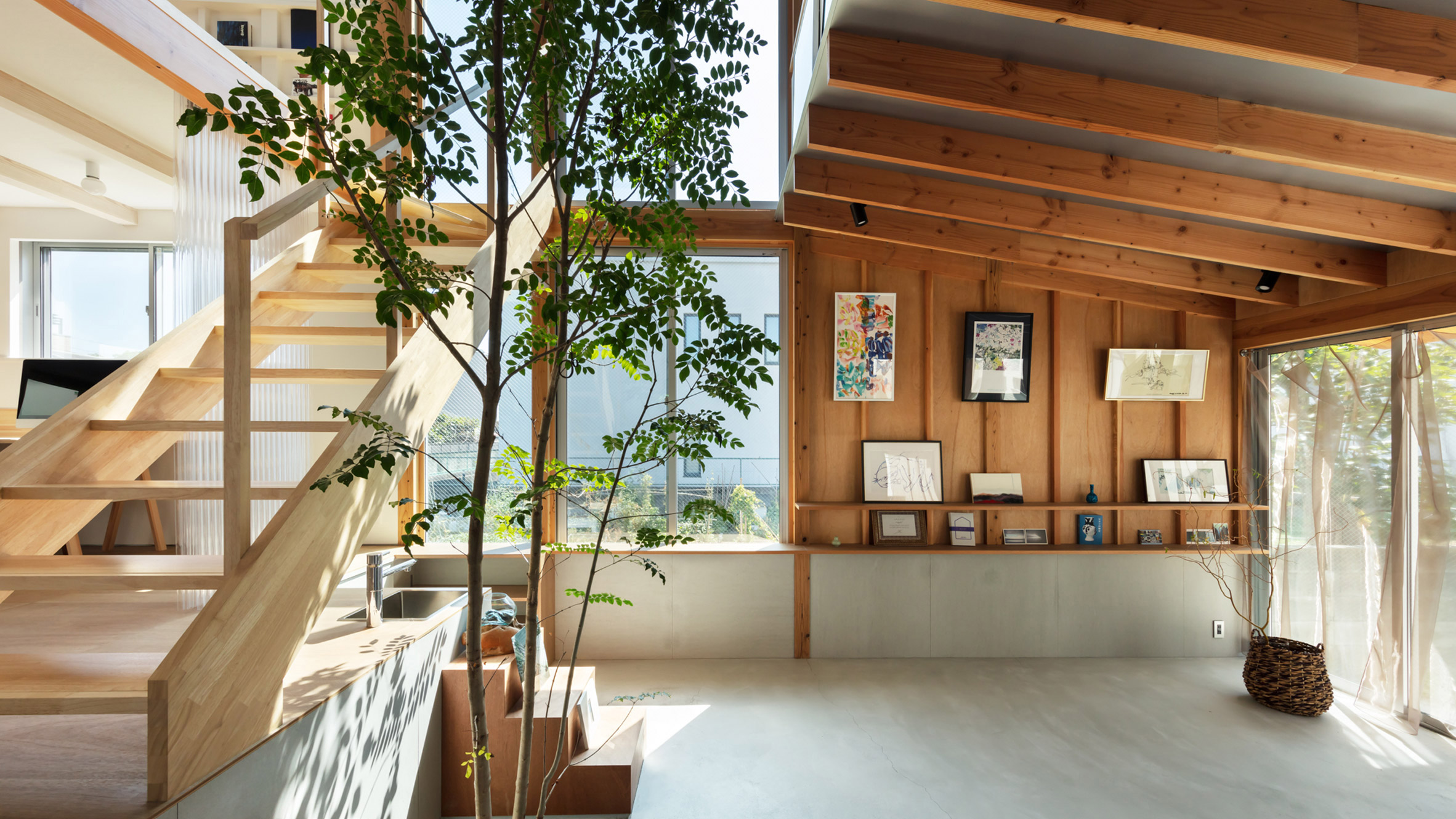
Margin House was designed by architect Kohei Yukawa for himself and his family. Flexible living spaces are arranged around an atrium that features a living tree in the middle of the room.

The use of pale wood throughout adds a Scandinavian touch to the room, which has a welcoming feel and is flooded with natural light.

Find out more about Margin House ›


Ca l'Amo by Marià Castelló

Ca l'Amo, Spain, by Marià Castelló

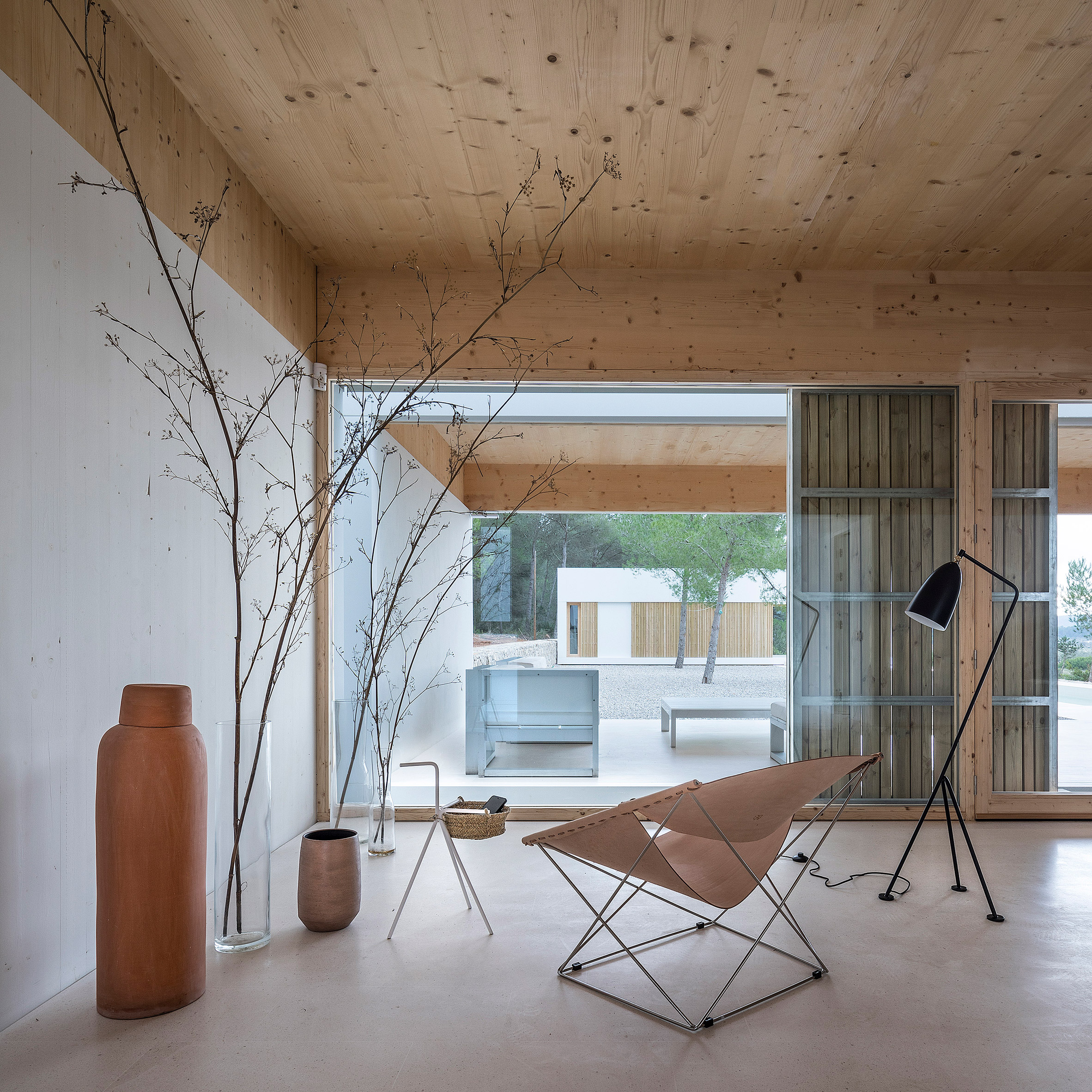
Architecture studio Marià Castelló designed this retreat in Ibiza using cross-laminated timber (CLT) to keep the volumes lightweight.

The delicate feel of the architecture with its wooden detailing is echoed in the furniture and decorations chosen for the interior, including a classic Pierre Paulin Butterfly Chair.

Slender tree branches are used for decoration, mirroring the trees in the building's courtyard.

Find out more about Ca l'Amo ›


Kinuta Terrace apartments by Norm Architects and Keiji Ashizawa

Kinuta Terrace, Japan by Keiji Ashizawa Design and Norm Architects

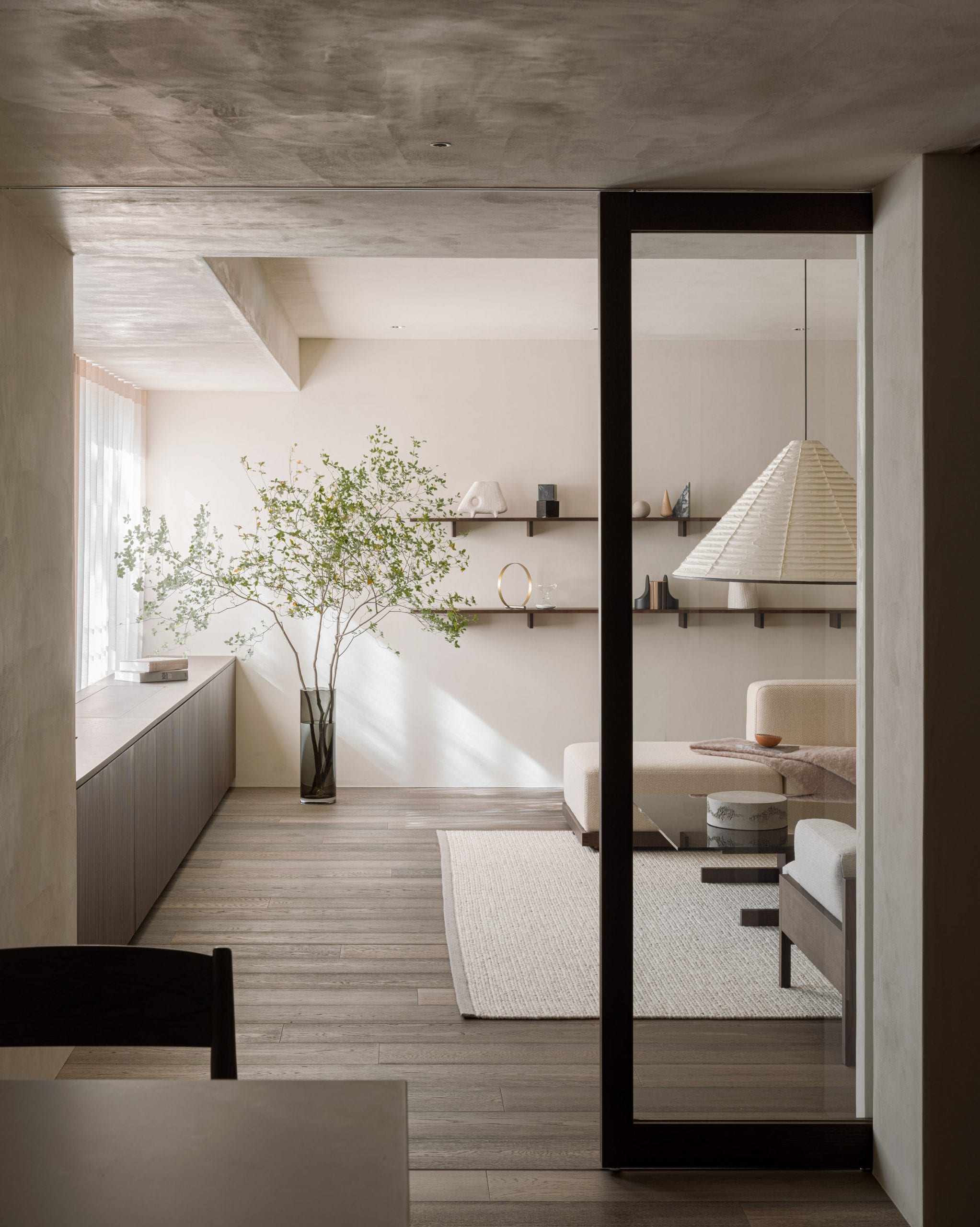
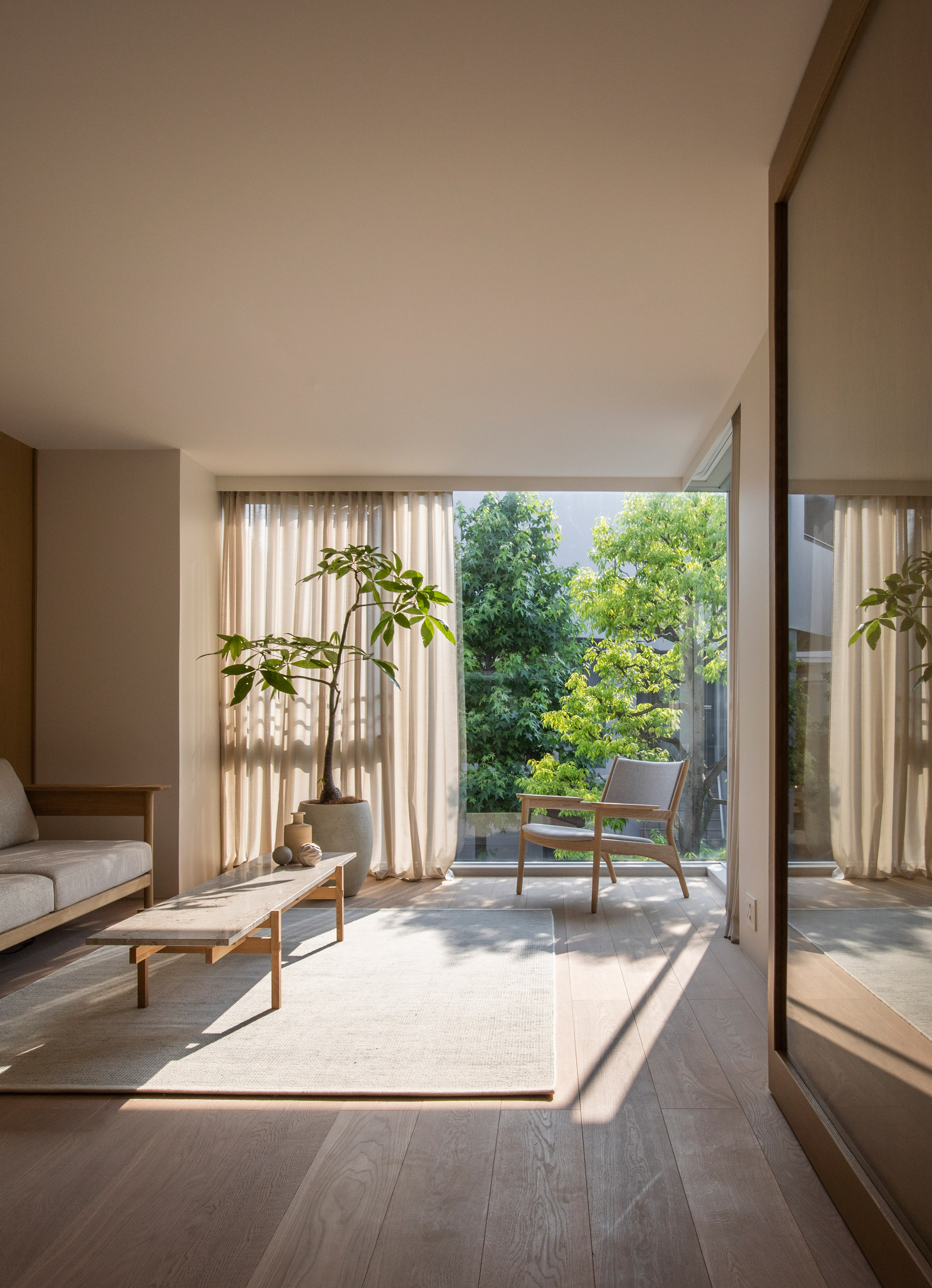
The Kinuta Terrace in Tokyo has a muted, discrete colour palette of beige walls and curtains that match the wooden floor in the living room. Here, a grey stone table with a wooden frame complements a wooden sofa with grey cushions.

A decorative vases and round sculptures on the table mirror a large pot that holds a money tree (Pachira aquatica).

Find out more about Kinuta Terrace ›


Edinburgh apartment by Luke and Joanne McClelland

Edinburgh apartment, Scotland, by Luke McClelland Design

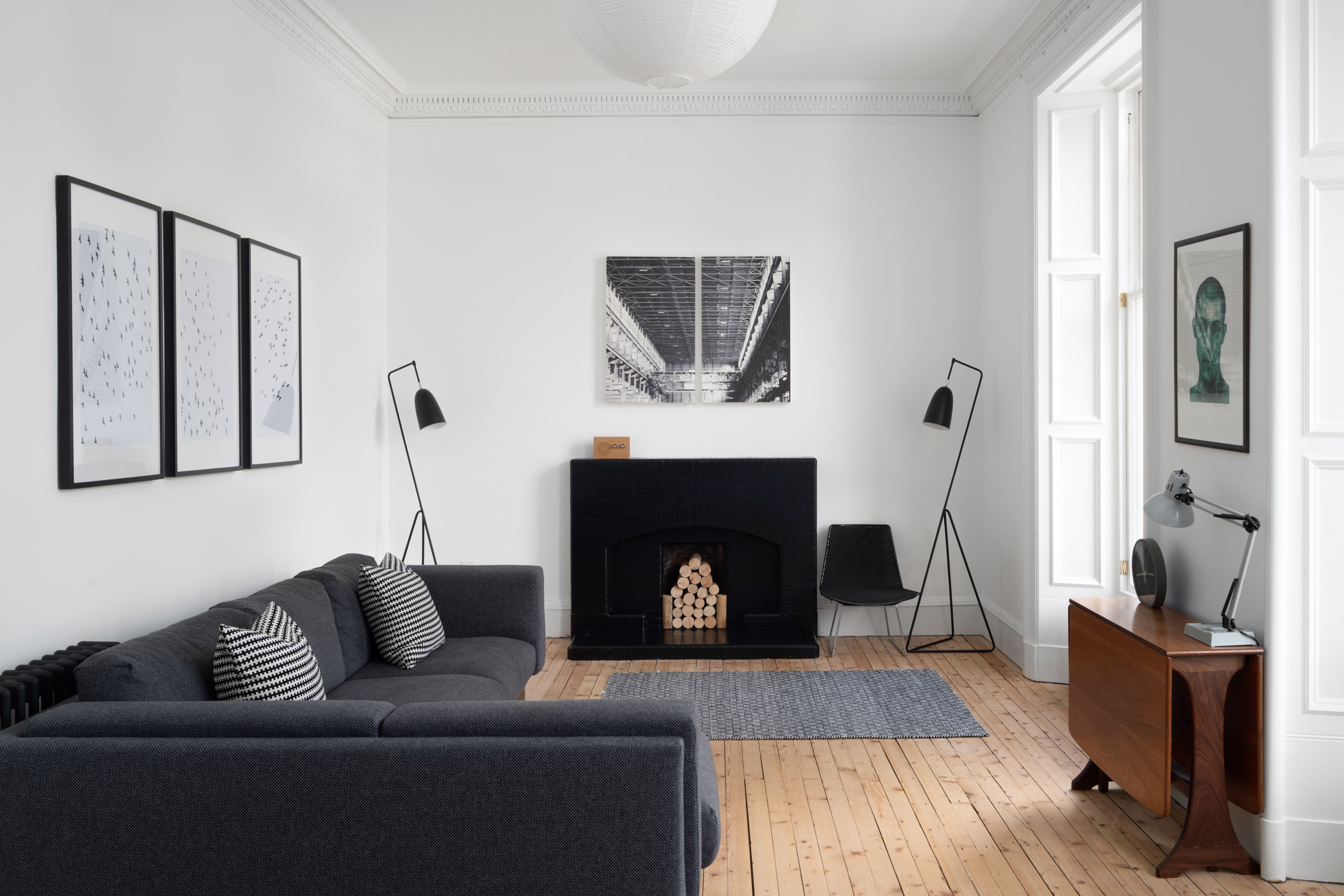
A British take on Japandi interior design can be seen in this living room in an apartment in Edinburgh. Simple and functional, the design nonetheless feels interesting because of the small touches, such as the dark-wood foldable side table and the classic rice lamp.

Artworks decorate the walls and the room's fireplace has been painted black, matching the graphic slender black floor lamps. The wooden floor has been left mostly bare, with just a small grey rug for decoration.

Find out more about Edinburgh apartment ›


Japanese brand Ariake makes its debut in a dilapidated former embassy

A Quiet Reflection, Sweden, by Ariake

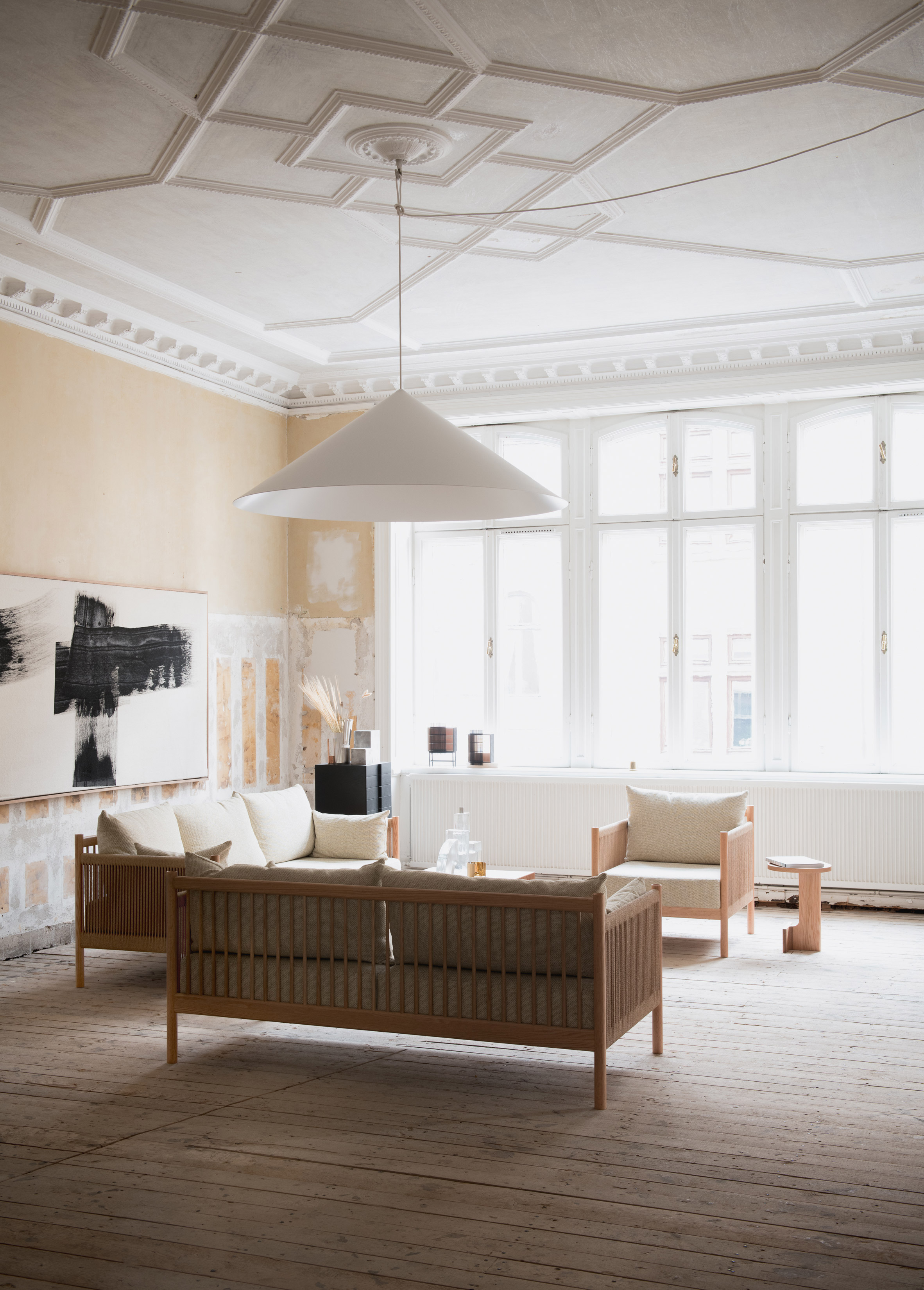
Japanese furniture producer Ariake created an installation at Stockholm Design Week in 2018 to show its first collection. The range included these wooden sofas, whose strict lines and warm wooden frames perfectly encompass the meeting between Scandinavian and Japanese style.

A triangular white lamp and small sculptural side table are a fun addition to the room, which also features a weathered wooden floor and walls where the peeling paint has become a decorative feature in itself.

Find out more about A Quiet Reflection ›


This is the latest lookbook in a series providing visual inspiration for interior designers and design lovers. Previous lookbooks in the series have showcased plant-filled offices, calm living rooms and interiors made from biomaterials.

The post Ten elegant living rooms with Japandi interiors appeared first on Dezeen.


from Dezeen https://ift.tt/3rxRyur

Friday, 23 July 2021

This week the Olympics were accused of "greenwashing"

Olympic architecture

This week on Dezeen, we reported on the sustainable aims of the Tokyo 2020 Olympic Games, which were questioned in a peer-reviewed study.

As the Tokyo 2020 Olympic Games kicks off we looked at the initiatives that are aiming to make the games sustainable. These include medals made from old phones, podiums made from recycled plastic and cardboard beds.

However, a report conducted by the University of Lausanne concluded that the games were the third-least sustainable Olympics since 1992.

"The majority of the measures that have been included in this particular Olympics, and the ones that were particularly mediatised, have a more or less superficial effect," David Gogishvili, who is co-author of the report, told Dezeen.

Olympic venues
Dezeen's guide to the architecture of the Tokyo 2020 Olympic Games

We also rounded up the most architecturally significant venues that will be hosting events during the games, including several buildings designed for the 1964 Olympics in the city.

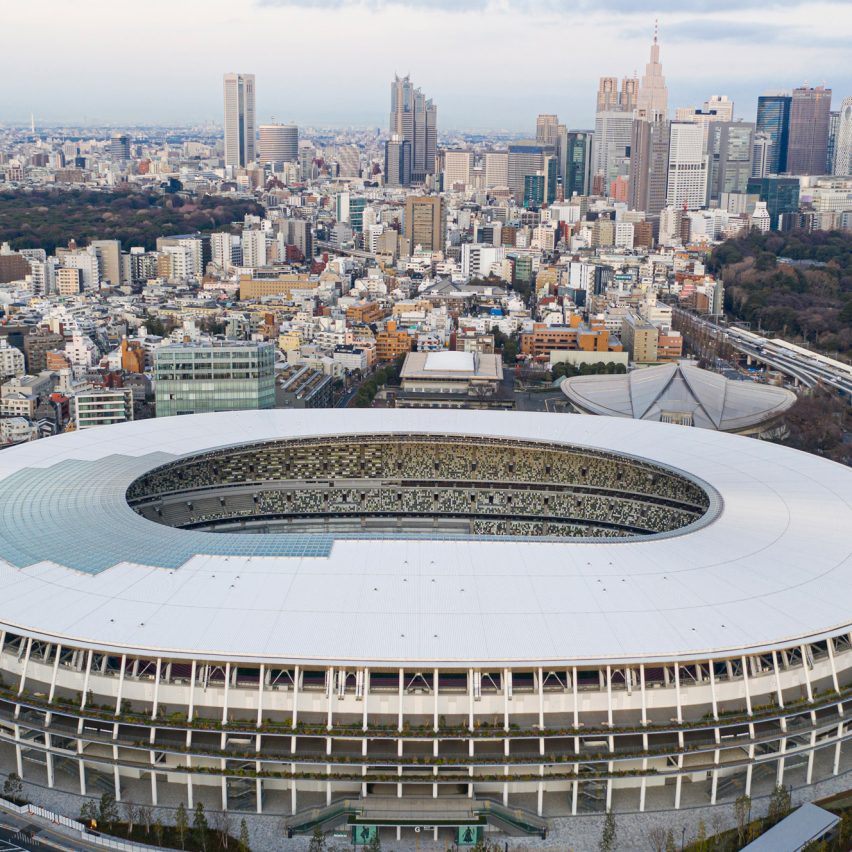
The centrepiece of the games is the 68,000 capacity Japan National Stadium (picture top) designed by Japanese architect Kengo Kuma, which is one of the few venues built especially for the event.

Oil rig
Norway begins work on "absolutely necessary" project to bury up to 1.25 billion tonnes of CO2 under the North Sea

Our carbon revolution series continued this week with news that Norway has started work on a €1.7 billion project to bury vast amounts of captured carbon under the North Sea.

Eventually, the project could see a total of up to 1.25 billion tonnes of CO2 sequestered in former fossil reserves deep beneath the sea.

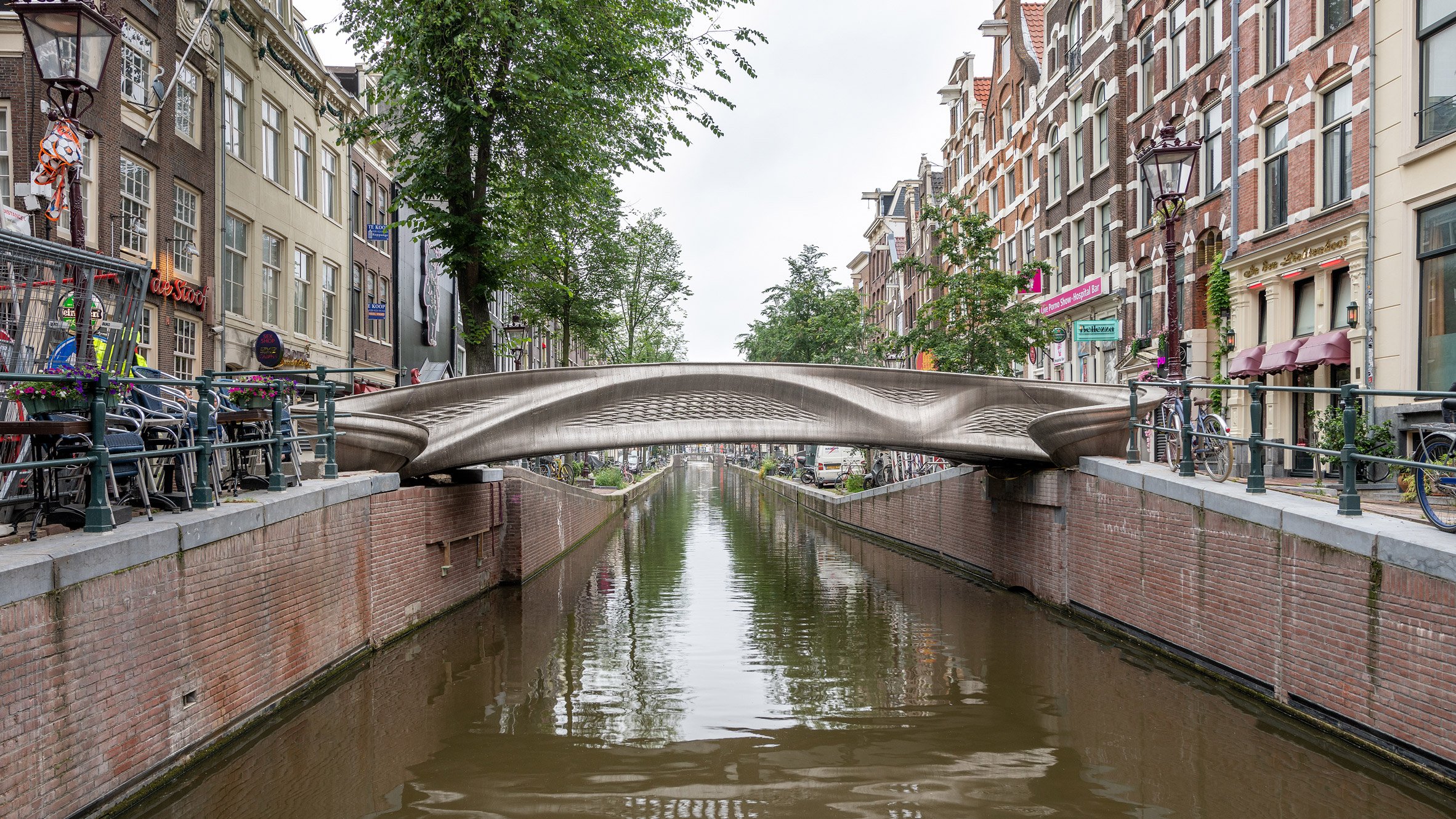
The bridges spans across a canal
Joris Laarman's 3D-printed stainless steel bridge finally opens in Amsterdam

A 3D-printed pedestrian bridge designed by Joris Laarman finally opened in Amsterdam this week, six years after the project was first launched.

Spanning the Oudezijds Achterburgwal in Amsterdam's Red Light District, the bridge was made from stainless steel welded by six-axis robotic arms.

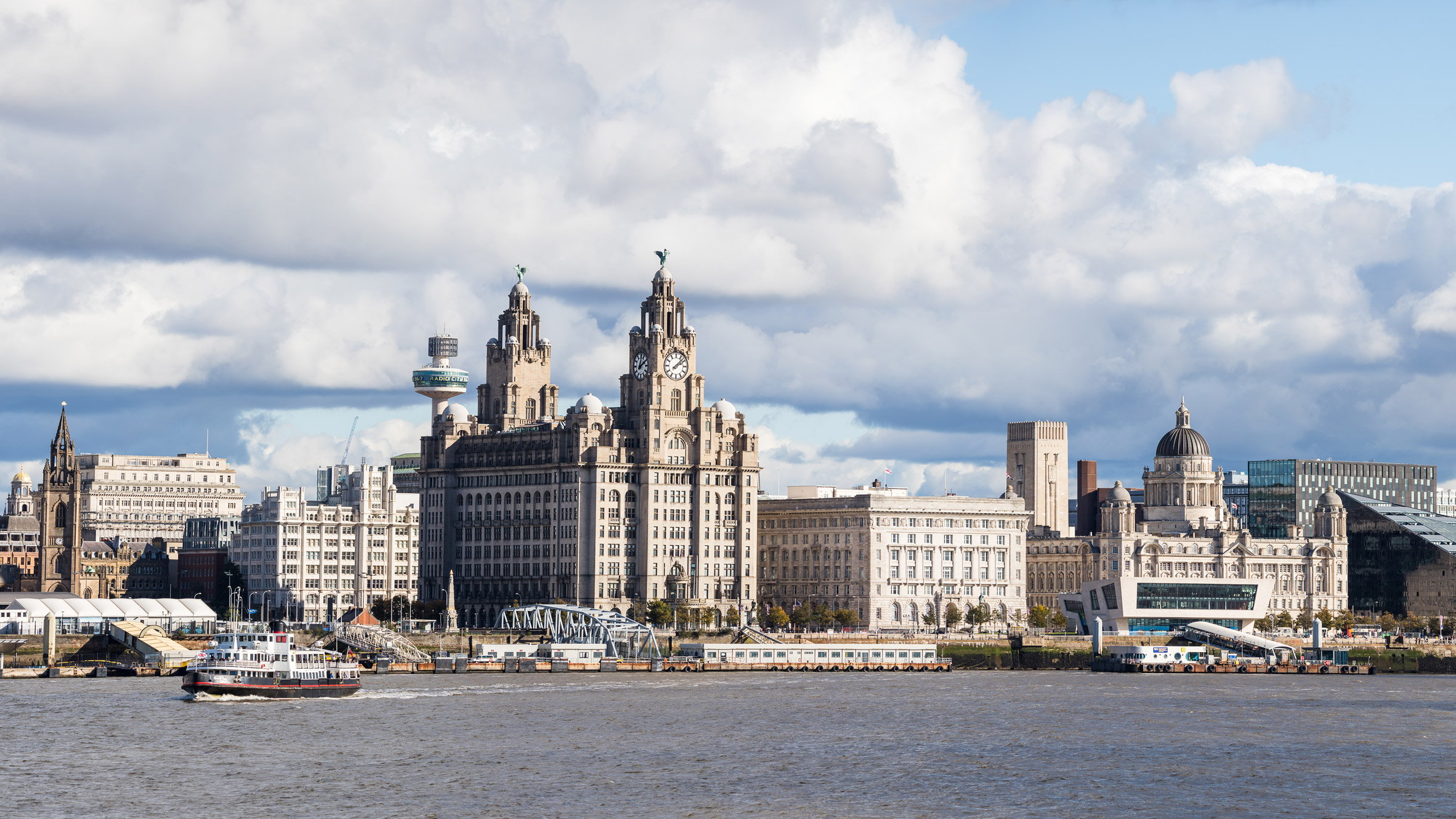
Libverpool World Heritage status UNESCO
Liverpool stripped of World Heritage status due to waterfront developments

In the UK, UNESCO stripped the city of Liverpool of its World Heritage status after it found that a series of recent developments had "eroded the integrity" of the site.

Following a vote that took place in Fuzhou, China, Liverpool joins the Elbe Valley in Germany and the Arabian Oryx Sanctuary in Oman as the only sites to have lost the status.

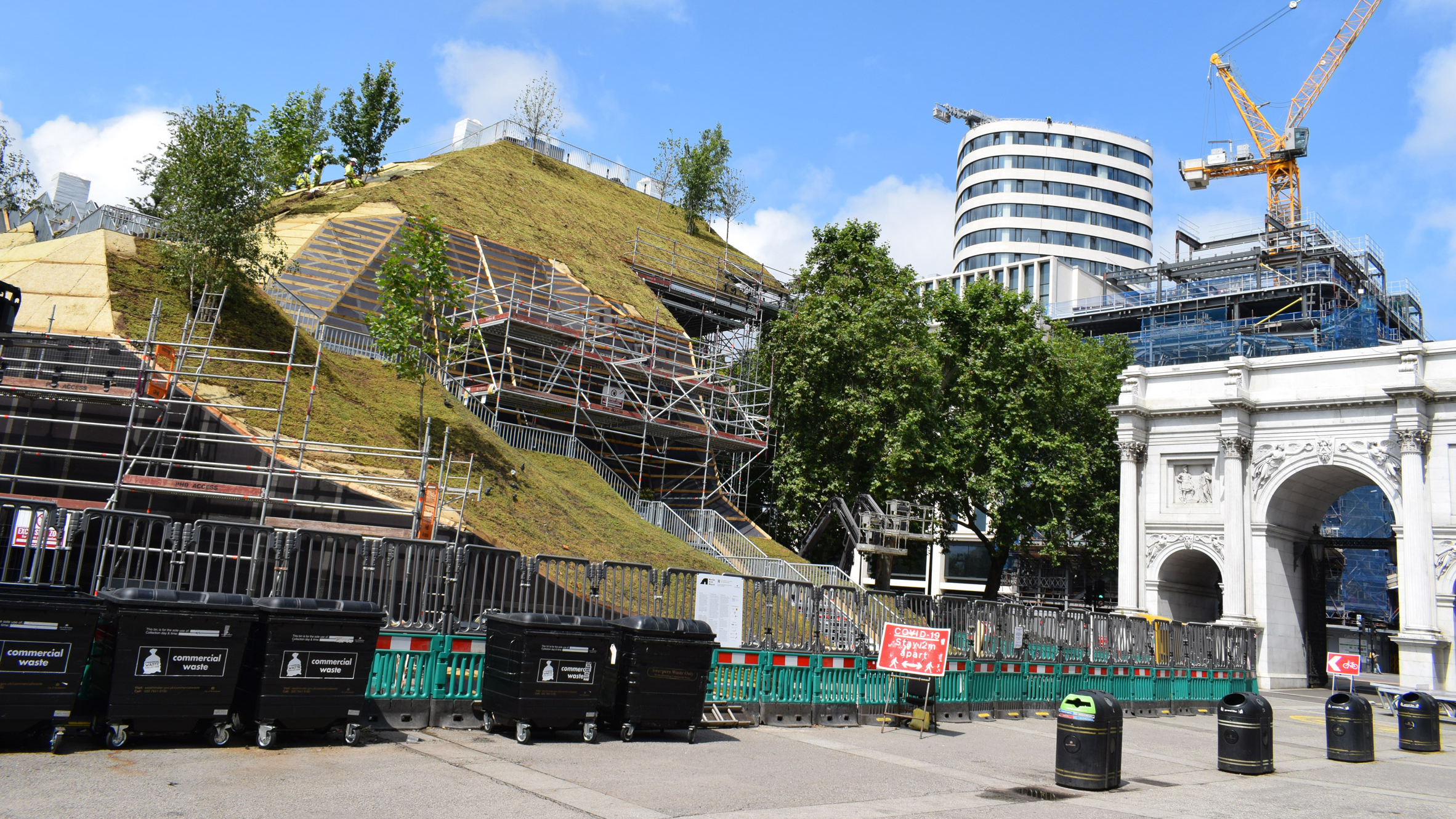
Marble Arch Hill viewpoint by MVRDV
MVRDV's artificial hill rises at Marble Arch in London

Also in the UK, the Marble Arch Mound viewpoint in central London was photographed under construction in London.

Designed by Dutch studio MVRDV, the artificial hill rises 25 metres tall alongside Hyde Park and is set to open to the public later this month.

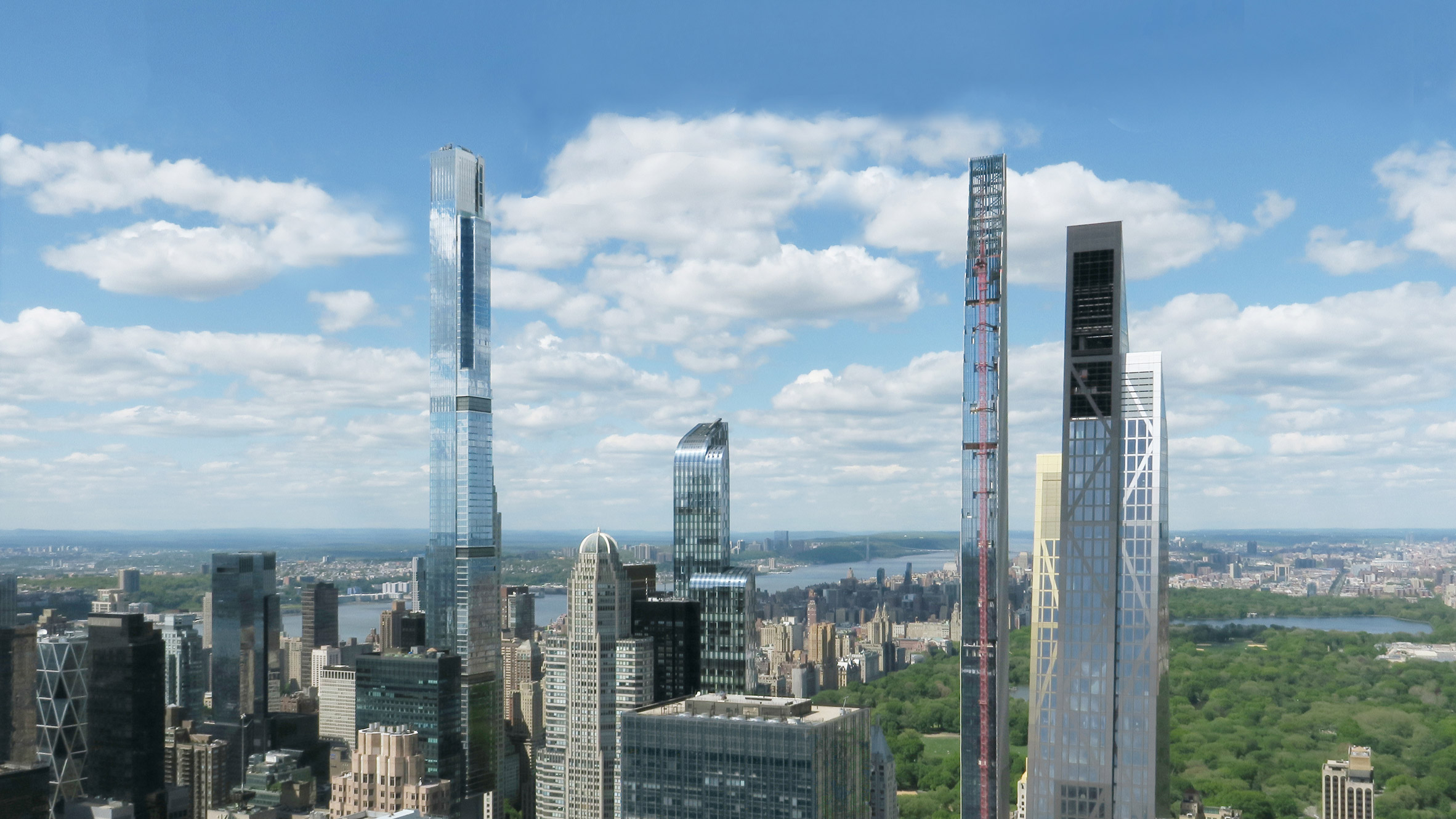
Central Park Tower in New York
Six new supertall skyscrapers changing New York's skyline

As a spate of supertall skyscrapers – buildings over 300 metres – are under development in New York, we rounded up six that are set to change the city's skyline forever.

In other skyscraper news, Swiss architecture studio Herzog & de Meuron unveiled a 204-metre-tall cylindrical tower in Canary Wharf, London.

The art centre was built in a naval hospital
Laplace and Piet Oudolf transform 18th-century naval hospital into Hauser & Wirth art gallery

Popular projects this week include a gallery for Hauser & Wirth in a collection of historic buildings in Menorca, a hotel in New Orleans in a 19th-century infant asylum and a copper-clad cabin in a Danish forest.

Our lookbooks this week focused on natural biomaterials and office interiors filled with trees and plants.

This week on Dezeen is our regular roundup of the week's top news stories. Subscribe to our newsletters to be sure you don't miss anything.

The post This week the Olympics were accused of "greenwashing" appeared first on Dezeen.


from Dezeen https://ift.tt/2UHbwGZ