Tuesday, 27 July 2021

Lizée-Hugot uses leather and tubular steel to channel the 1970s in Parisian eatery

Abstinence restaurant interior by Lizée-Hugot

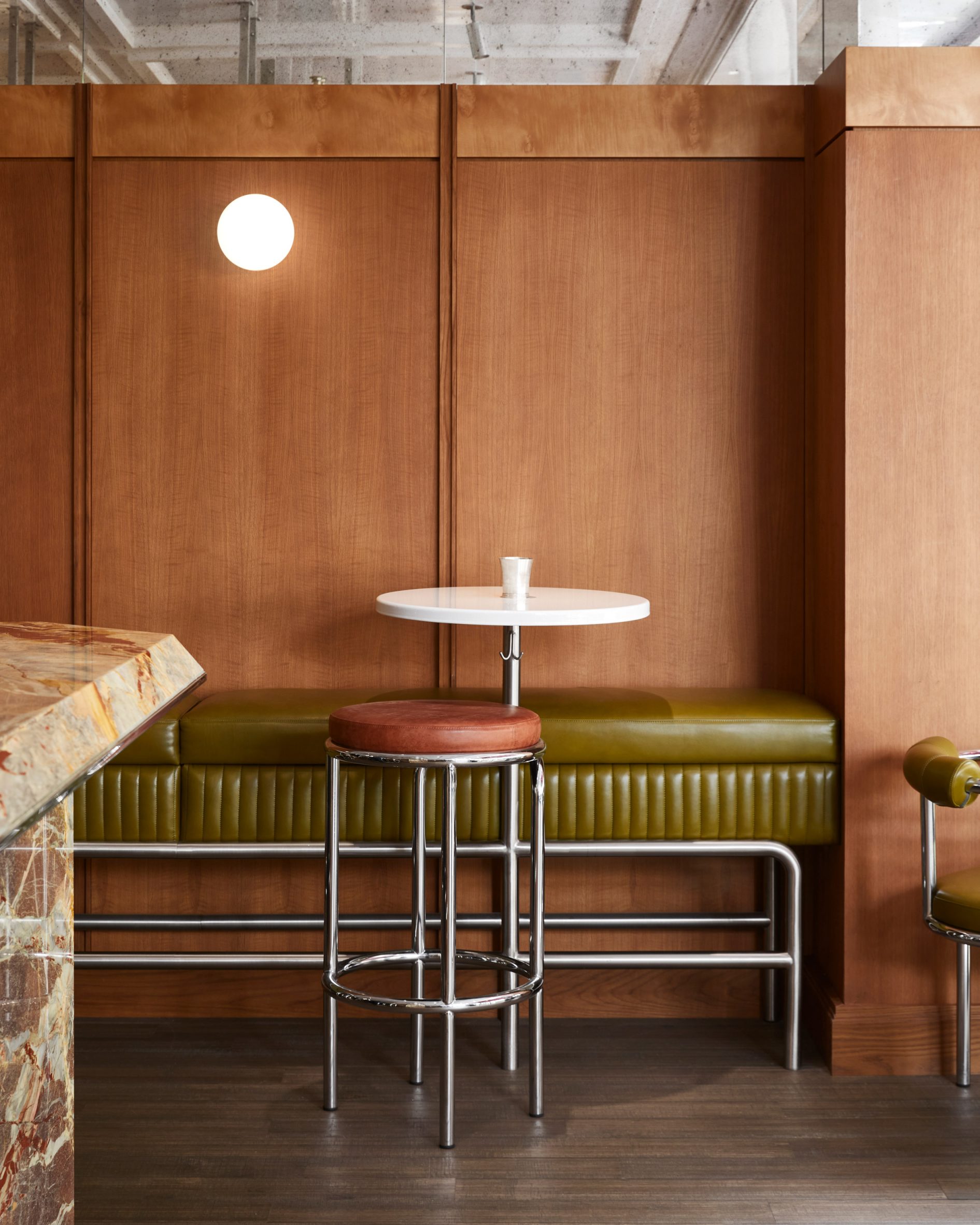
Materials typical of a classic Parisian brasserie such as wood, marble and a lacquered ceiling are teamed with tubular steel furniture reminiscent of the 1970s in the Abstinence restaurant.

Called Abstinence, the restaurant is the first project completed by Parisian studio Lizée-Hugot, which was founded earlier this year by Stéphanie Lizée and Raphael Hugot after some years spent working together at different studios.

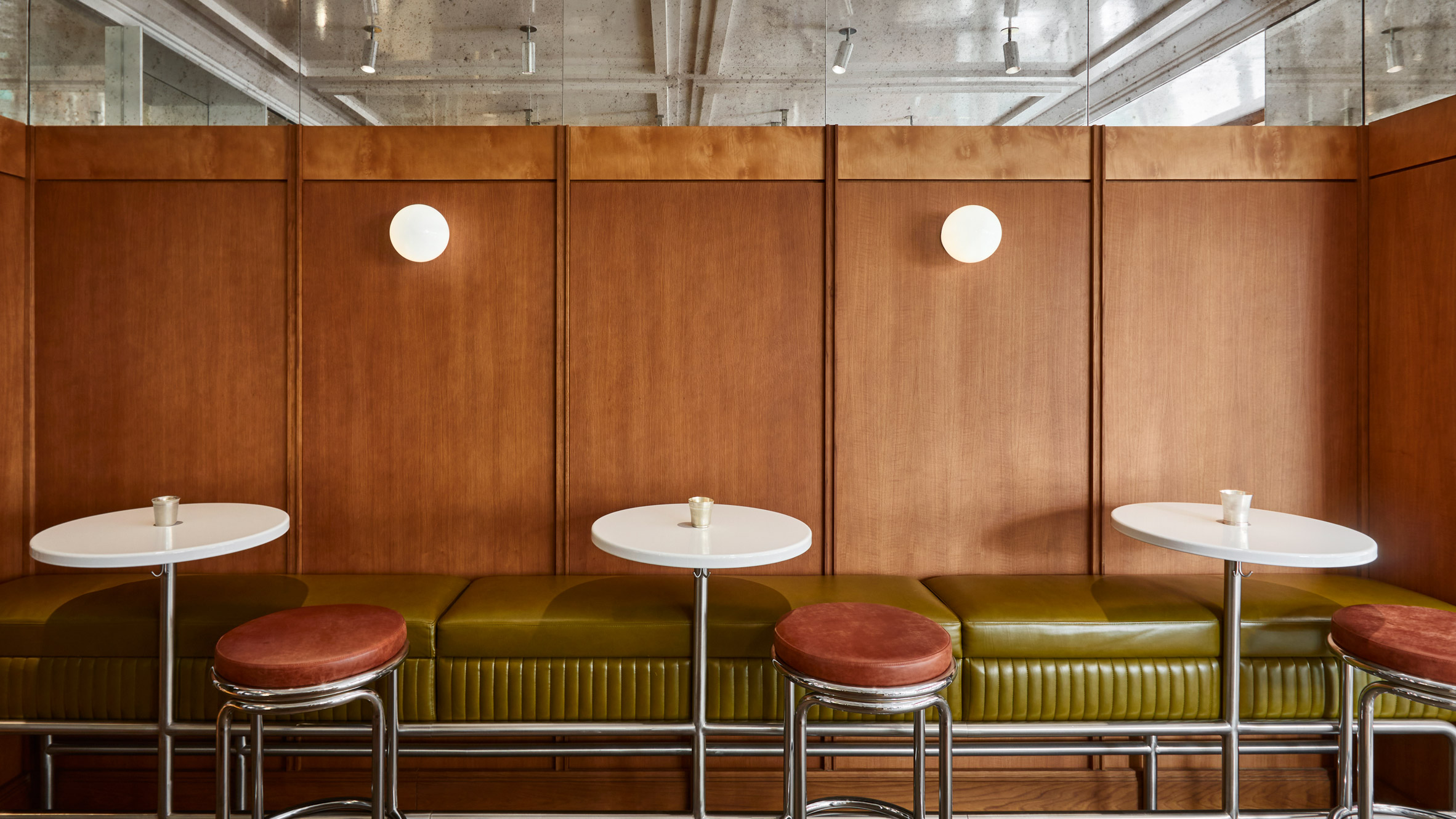
Wood panelling and green leather bench in Abstinence restaurant
Traditional wood panelling runs along the perimetre of the restaurant

The studio was asked to create a classic Parisian brasserie on Rive Gauche near the École Militaire with a "wine cellar spirit", a "chic dining counter " and an open kitchen wrapped by a large central bar for dining.

In response, Lizée-Hugot conceived the interior as "a new take on a classic style" to create "an elegant and intimate space".

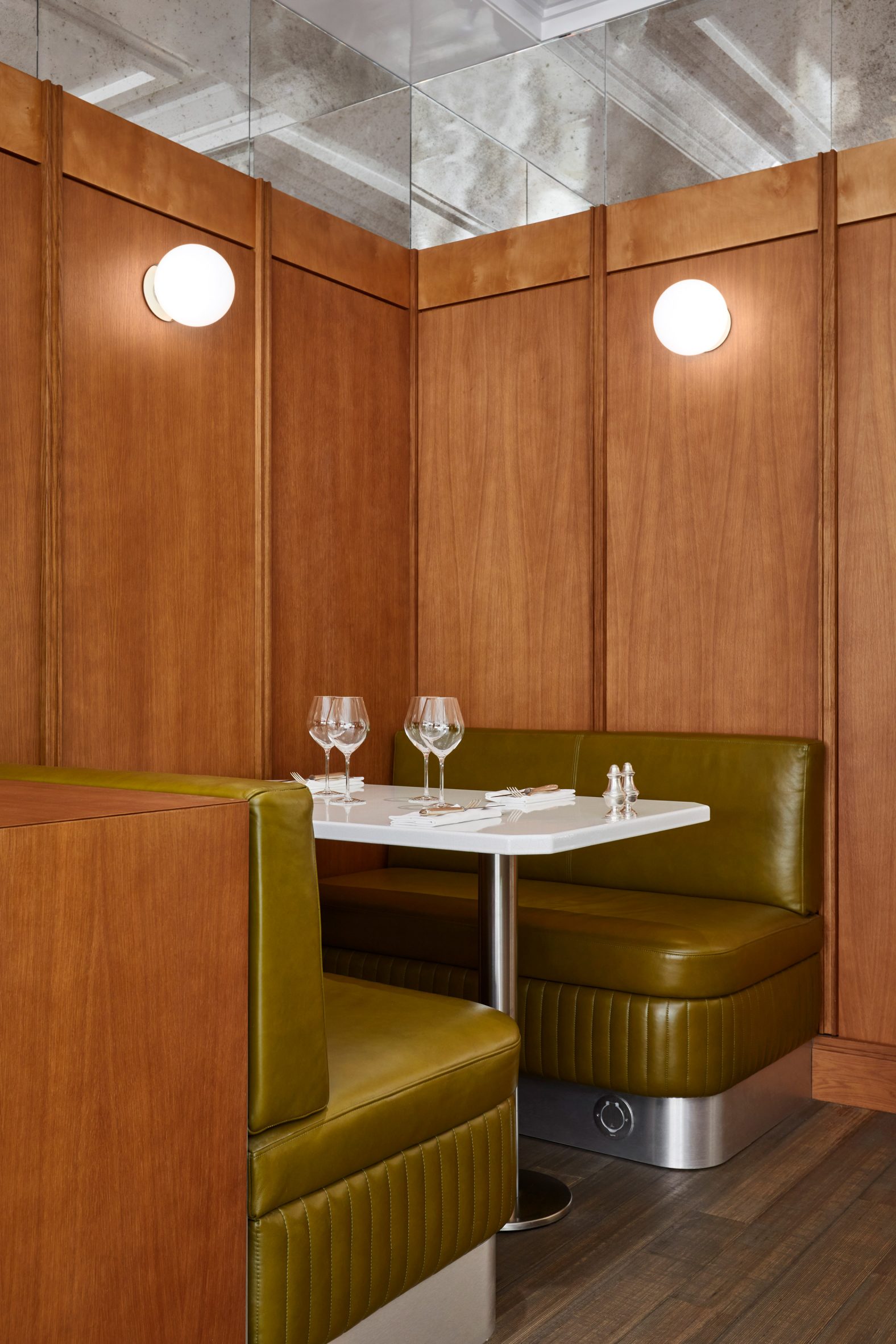
Wood panelling with leather booth and spherical lights in restaurant interior by Lizée-Hugot
Booths provide seating for four

The interior integrates materials and features typical of a brasserie, such as a lacquered ceiling, wood panelling, leather and marble.

These are blended with materials, colours and forms associated with the 1970s, such as birdseye maple, olive and tan leather and tubular steel furniture.

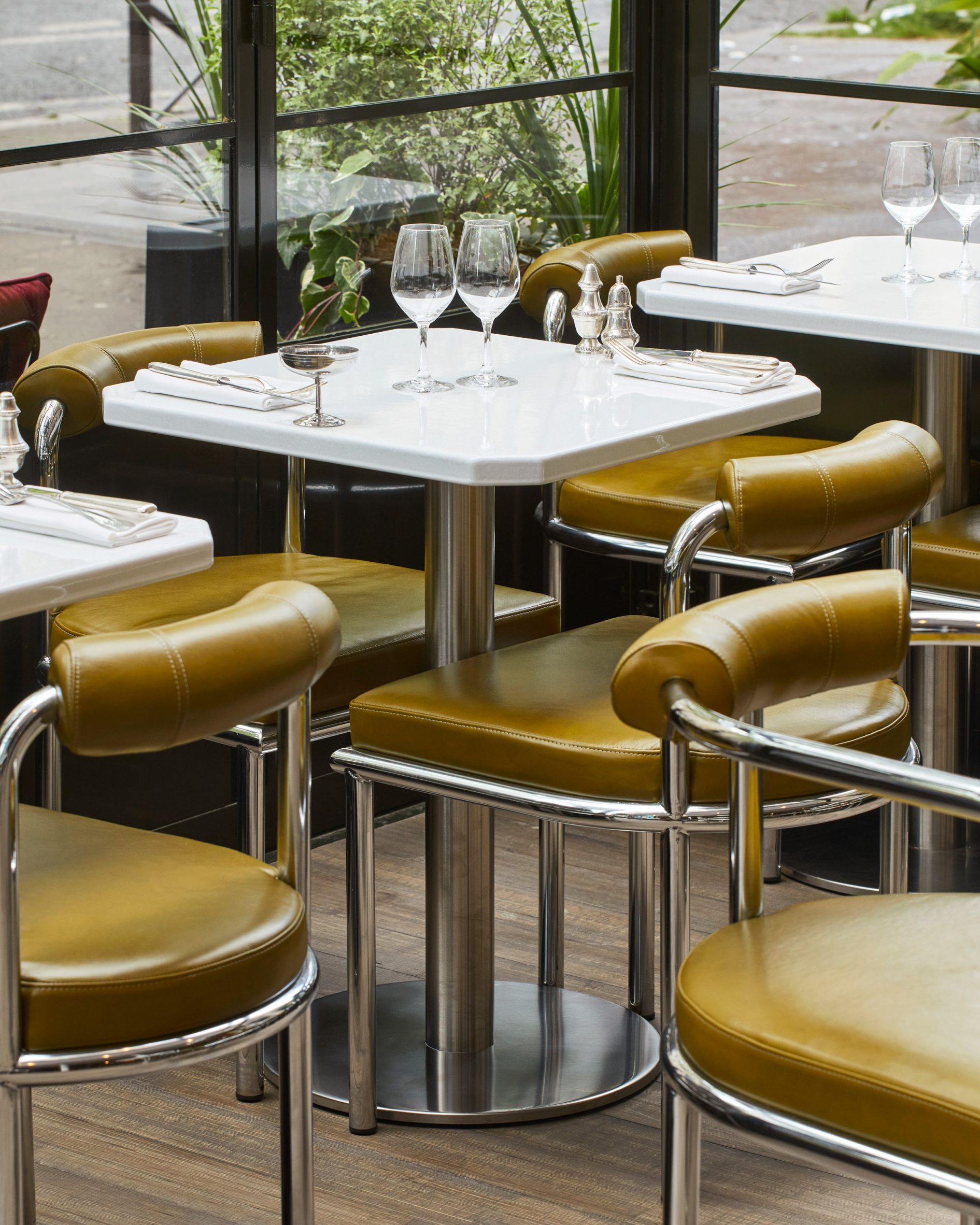
Tubular steel and green leather chairs in Abstinence restaurant interior
Green leather features across chairs and benches

"We revisited the classic materials – wood, marble and a lacquered ceiling – by contrasting them with more contemporary materials such as stainless steel," the studio told Dezeen.

"And we mixed the interior design with modernist-inspired furniture, always in search of a balance."

The result is an inviting interior with a cinematic ambience reminiscent of the 1970s.

Seating 55 inside and 30 on the terrace, all of the restaurant's furniture was designed by Lizée-Hugot and made especially for the restaurant.

Furniture includes tall chairs and stools with cognac leather seats on tubular steel frames, a large bevel-cut sculptural bar made of Sarrancolin marble and polished stainless steel, and tables with enamelled lava stone tops.

Wood panelling with green leather bench and stool Abstinence
Spherical lights are mounted to the walls

Other restaurants that channel 1970s interiors include this pizza restaurant in Montreal, where Ménard Dworkind's used green ceilings and white pine wall panels to create the feel of a restaurant interior from 1970s New York.

Photography is by Francis Amiand.

The post Lizée-Hugot uses leather and tubular steel to channel the 1970s in Parisian eatery appeared first on Dezeen.


from Dezeen https://ift.tt/3l7EZoe

Kelly Wearstler's Malibu Surf Shack is adorned with "rustic and raw" decor

Malibu Surf Shack by Kelly Wearstler

Interior designer Kelly Wearstler has transformed a 1950s beachfront cottage in Southern California into a bohemian retreat for herself and her family.

The project, called Malibu Surf Shack, entailed an interior renovation of a 1953 four-bedroom dwelling that was designed by an unknown architect. The wood-clad house is located in Broad Beach, which stretches along the Pacific Ocean.

Kelly Wearstler designed the project
Top: photo is by Ingalls Photography. Above: Malibu Surf Shack is clad in wood. Photo is by Mark Durling Photography

Encompassing 4,254 square feet (395 square metres), the house was formerly owned by the American actor Carroll O'Connor, who played Archie Bunker in the 1970s television series All in the Family.

The property had been on the market for several years when Wearstler – who leads an eponymous studio in LA – decided to rent it for use during the summer. She set out to create a cosy live-work environment for herself and her surf-loving family.

The home sold after the owner photographed it with Wearstler's decor.

The house is in Broad Beach
Rooms are filled with eclectic interior design features. Photo is by Ingalls Photography

"I initially learned about the property through a friend who had stayed nearby three years ago and took me over to take a look," said Wearstler. "It was an architectural gem – a hidden, surf shack."

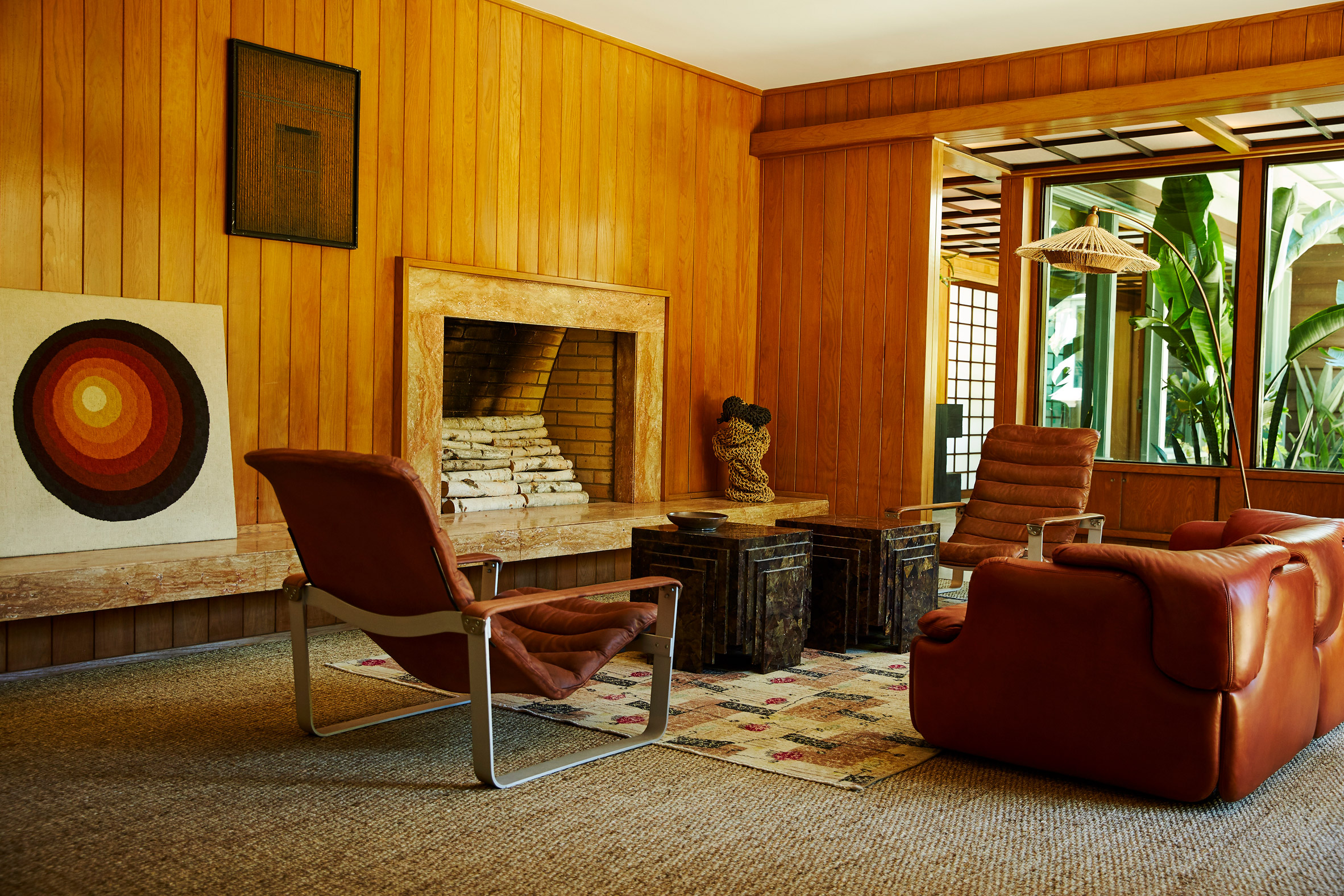
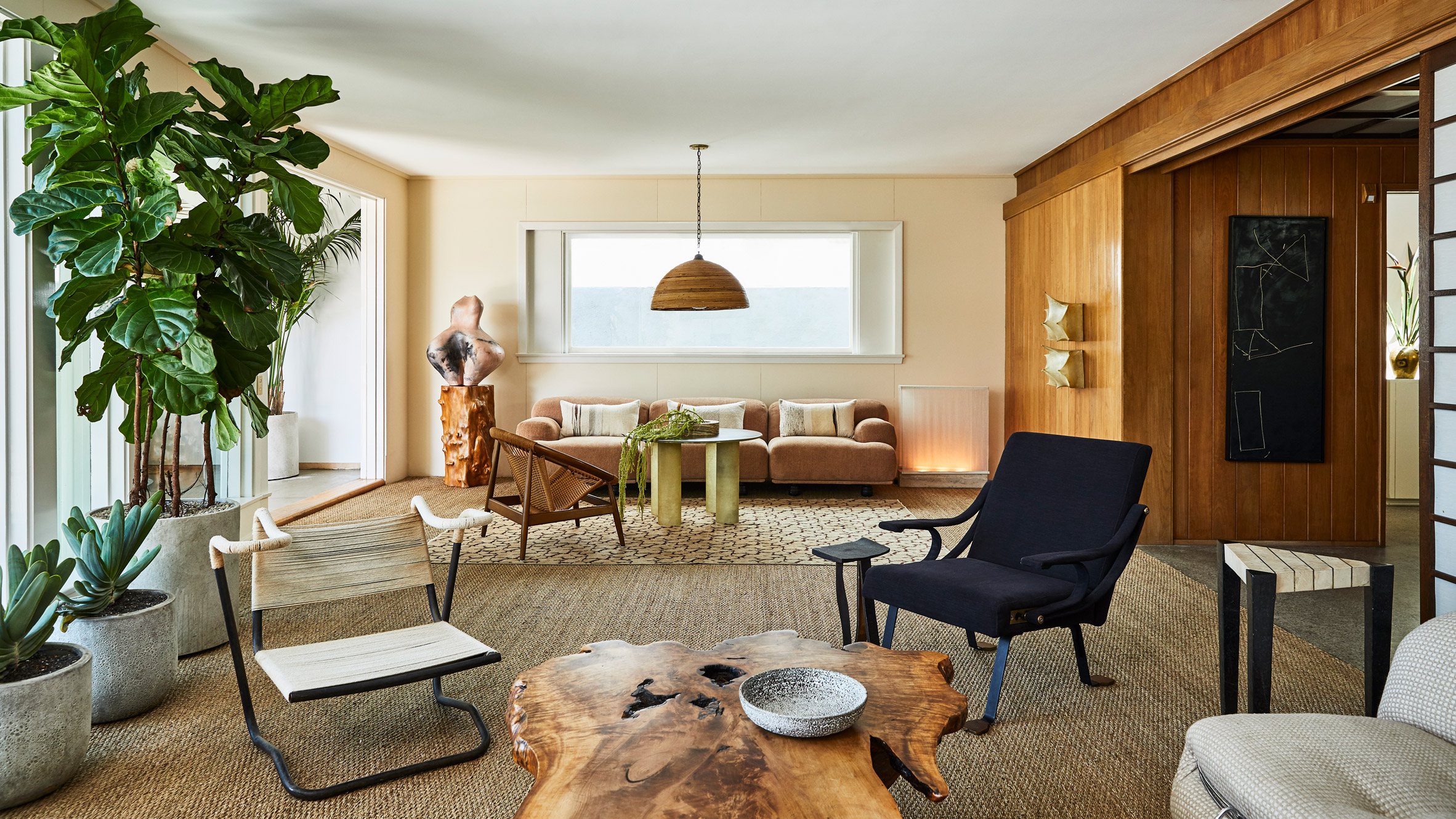
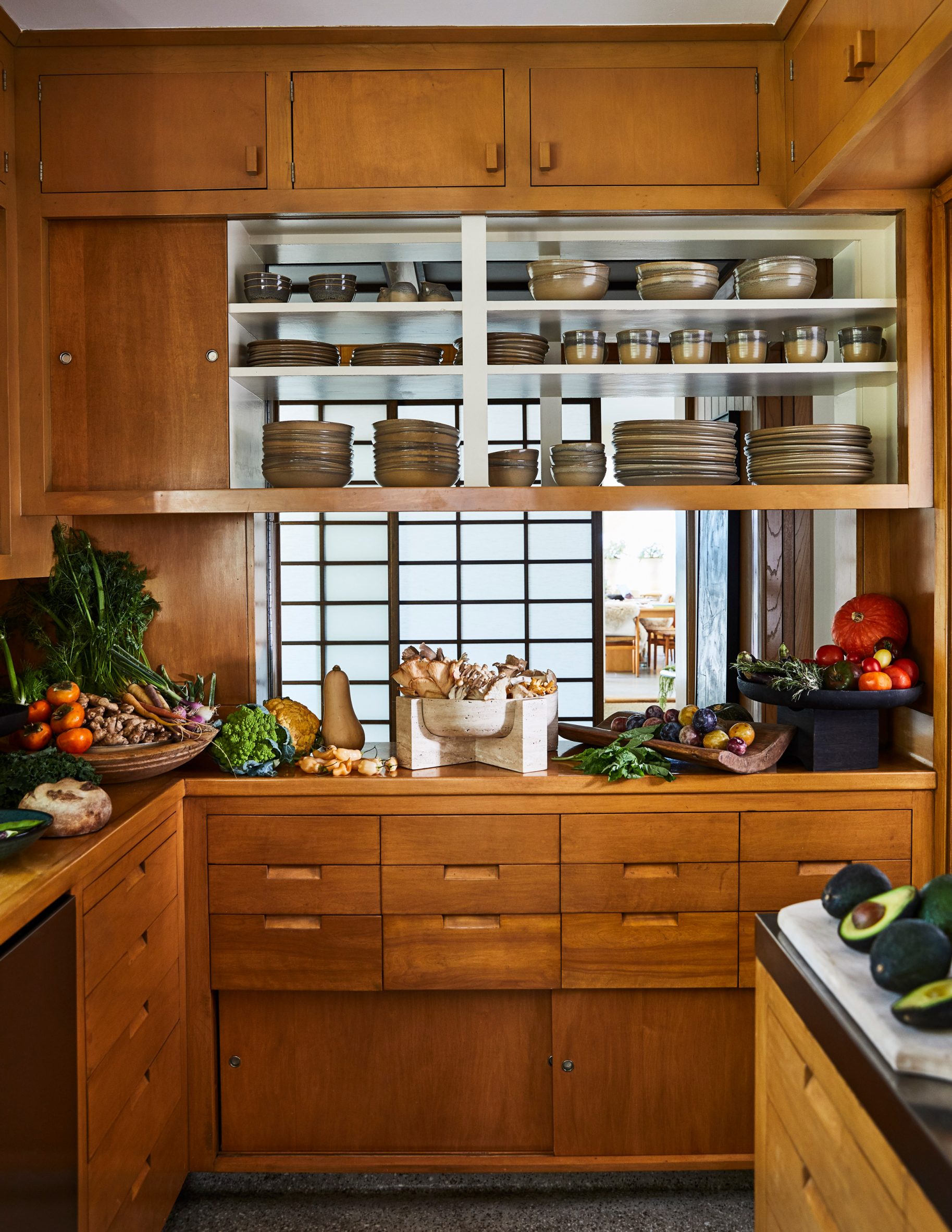
Wearstler took cues from the property's original details, including Japanese shoji screens. The home's wooden wall panelling was retained, but its shag carpet was replaced with seagrass.

Rooms were filled with an eclectic mix of vintage and contemporary pieces.

"I took inspiration from the house's architectural shell – its earthy and rustic tones," the designer said. "I wanted to choose objects that were hand-crafted, rustic and raw."

Rooms were filled with an eclectic mix of vintage and contemporary pieces by Kelly Wearstler
Plants are included throughout the house. Photo is by Ingalls Photography

In the entryway, a bronze and leather bench by Chuck Moffit is paired with a chunky, blackened-wood console from the LA studio Base 10. Under a stairway, one finds a steel chair draped in white plaster – a piece by Austrian designer Lukas Gschwandtner.

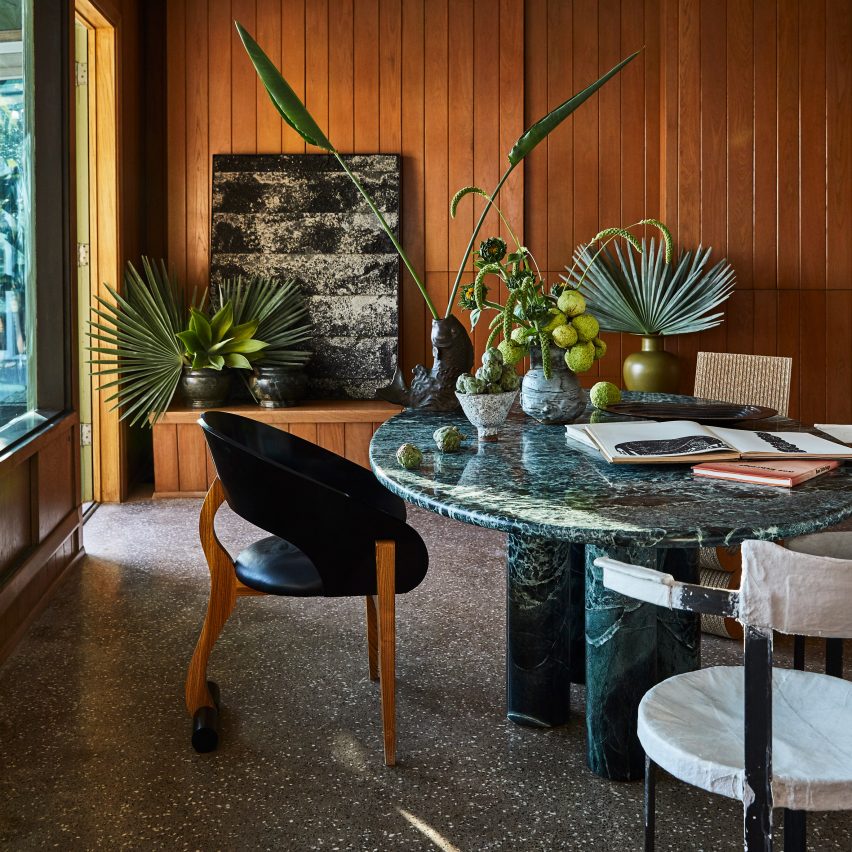
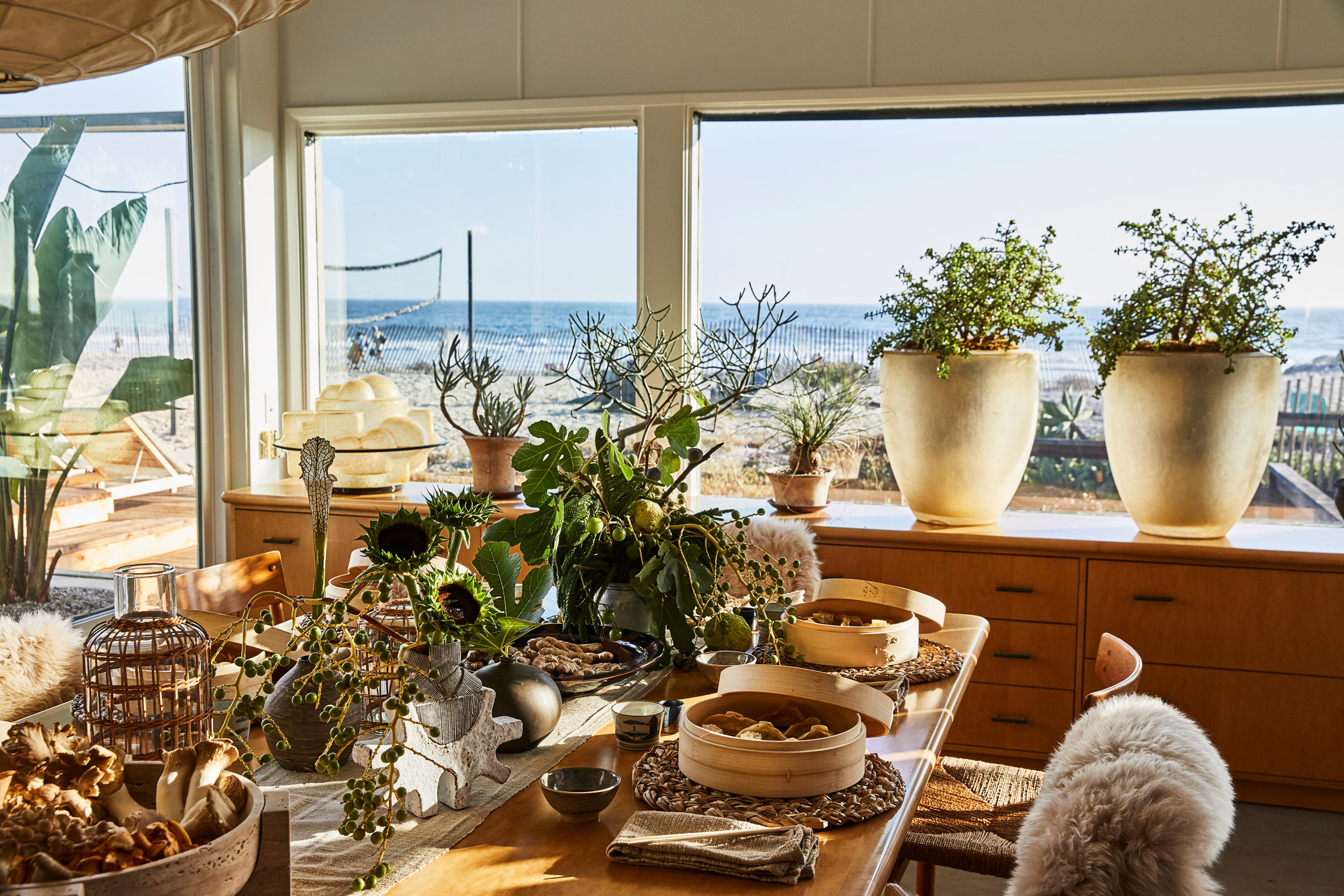
In the living room, Wearstler placed a Soriana Sofa by Afra and Tobia Scarpa, and a 1950s lamp by American designer Mitchell Bobrick. The dining area – envisioned as a light-filled solarium – features an Isamu Noguchi pendant, Danish mid-century chairs, and a table adorned with foliage in vintage fibreglass vessels and earthen planters.

Malibu Surf Shack is a home for Kelly Wearstler and her family
The living room features a 1950s lamp. Photo is by Ingalls Photography

The plants include locally foraged sanguisorba, castor and tilandsia, which were sourced and arranged by LA florist Sophia Moreno Bunge.

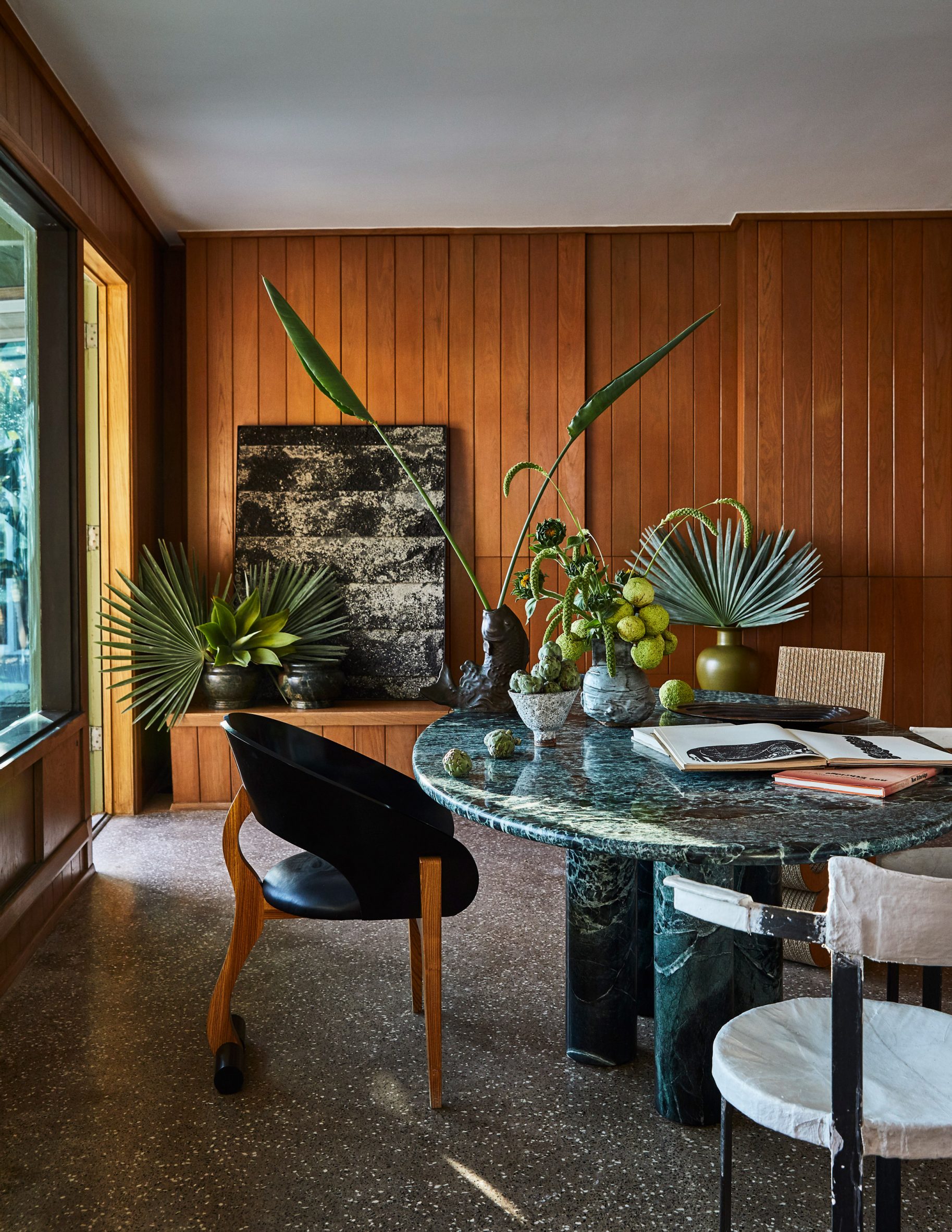
The family room is dressed with lounge chairs by Ilmari Lappalainen, a tapered side table made of iroko wood, and cubic coffee tables finished in tortoiseshell. A 1980s green marble table by Mario Bellini is found in Wearstler's office.

A bedroom in Malibu Surf Shack features light colours and casual decor
A lamp made of plaster and paper mâché sits on a bedside table. Photo is by Mark Durling Photography

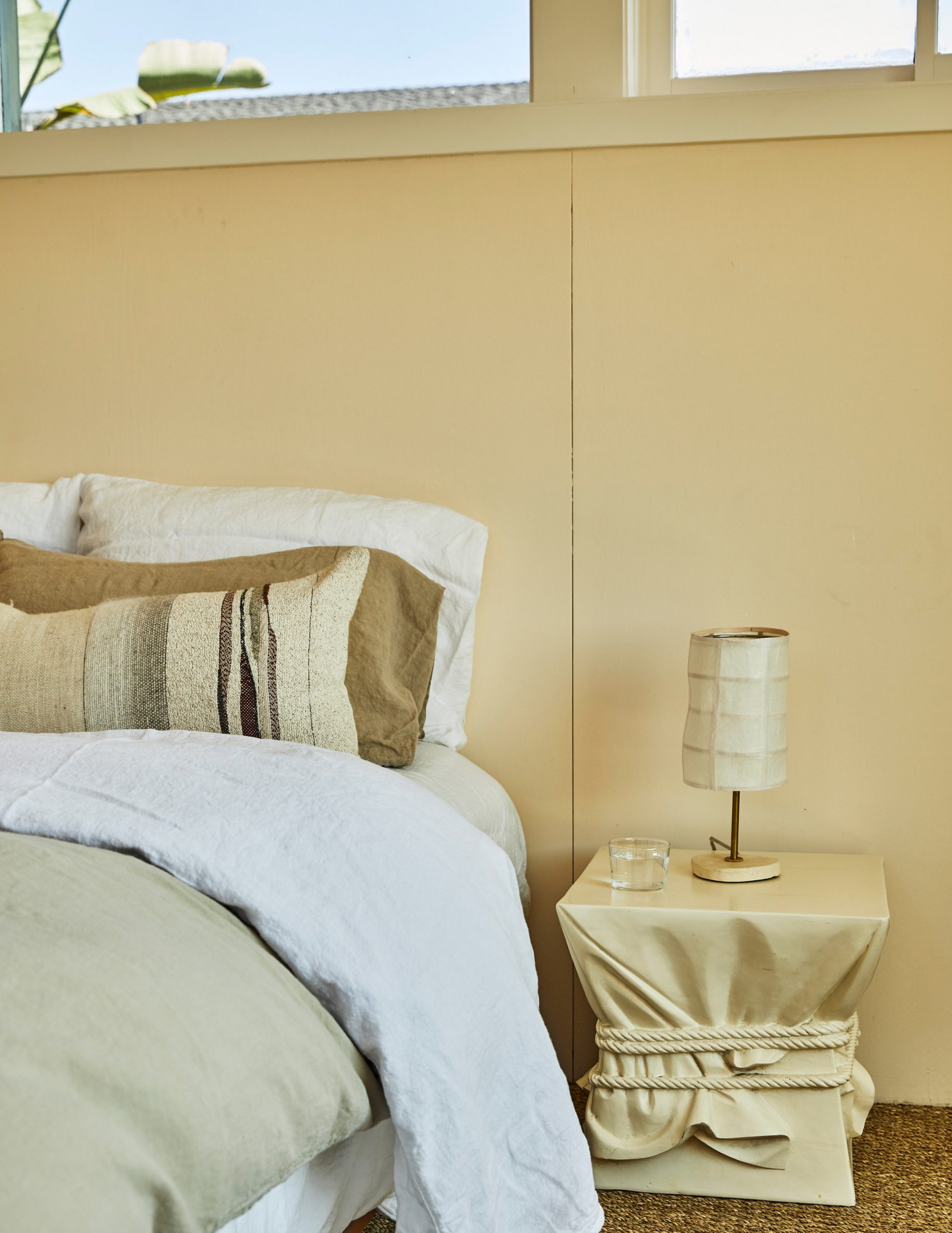
A bedroom features light colours and casual decor, including linen bedding, a vintage nightstand, and a table lamp made of plaster and paper mâché. A lounge chair by Ryan Belli, which has a wooden base and a sculptural seatback, adds a bit of whimsy to the space.

The home has an abundance of plants, both inside and out, which were selected by Wearstler in collaboration with Bunge, the landscape designer Art Luna and the nursery Inner Gardens.

The kitchen of Malibu Surf Shack by Kelly Wearstler
Wood cabinetry in the kitchen. Photo is by Mark Durling Photography

Other projects by Wearstler include an Austin hotel that features vintage rugs and a distinctive white oak staircase, and a San Francisco hotel with clashing colours and patterns.

Earlier this year, the designer released a conceptual design for a garage meant to house LeBron James's electric Hummer.

The photography is by Ingalls Photography and Mark Durling Photography.

The post Kelly Wearstler's Malibu Surf Shack is adorned with "rustic and raw" decor appeared first on Dezeen.


from Dezeen https://ift.tt/3x7KNka

The Hong Kong Polytechnic University spotlights 11 student design projects

The Hong Kong Polytechnic University

A genderless fashion brand and a reef burial system are included in Dezeen's latest school show by students at The Hong Kong Polytechnic University.

Also included is a project that encourages eating 'ugly food' as a means to prevent waste and an app that promotes mindful eating.


The Hong Kong Polytechnic University

School: The Hong Kong Polytechnic University, School of Design.

School statement:

"The Hong Kong Polytechnic University has been an important hub of design education and research for Hong Kong since 1964. The school is leading in Asia and 20th globally on the Quacquarelli Symonds (QS) art and design rankings.

"Academic programmes are offered at bachelor, master and doctoral levels in highly diverse design expertise including Product Design, Communication Design, Advertising Design, Digital Media, Interior Design, Environment Design, Social Design, Urban Design, International Design and Business Management, Design Strategies and Interaction Design.

"The school provides a well-equipped teaching and learning environment in the Jockey Club Innovation Tower, a landmark building designed by the late Zaha Hadid."

The Hong Kong Polytechnic University

ISOASIS: An Oasis in Isolation by Stefanie Leung, Jin Chan, Steven Leung and Amber Chan

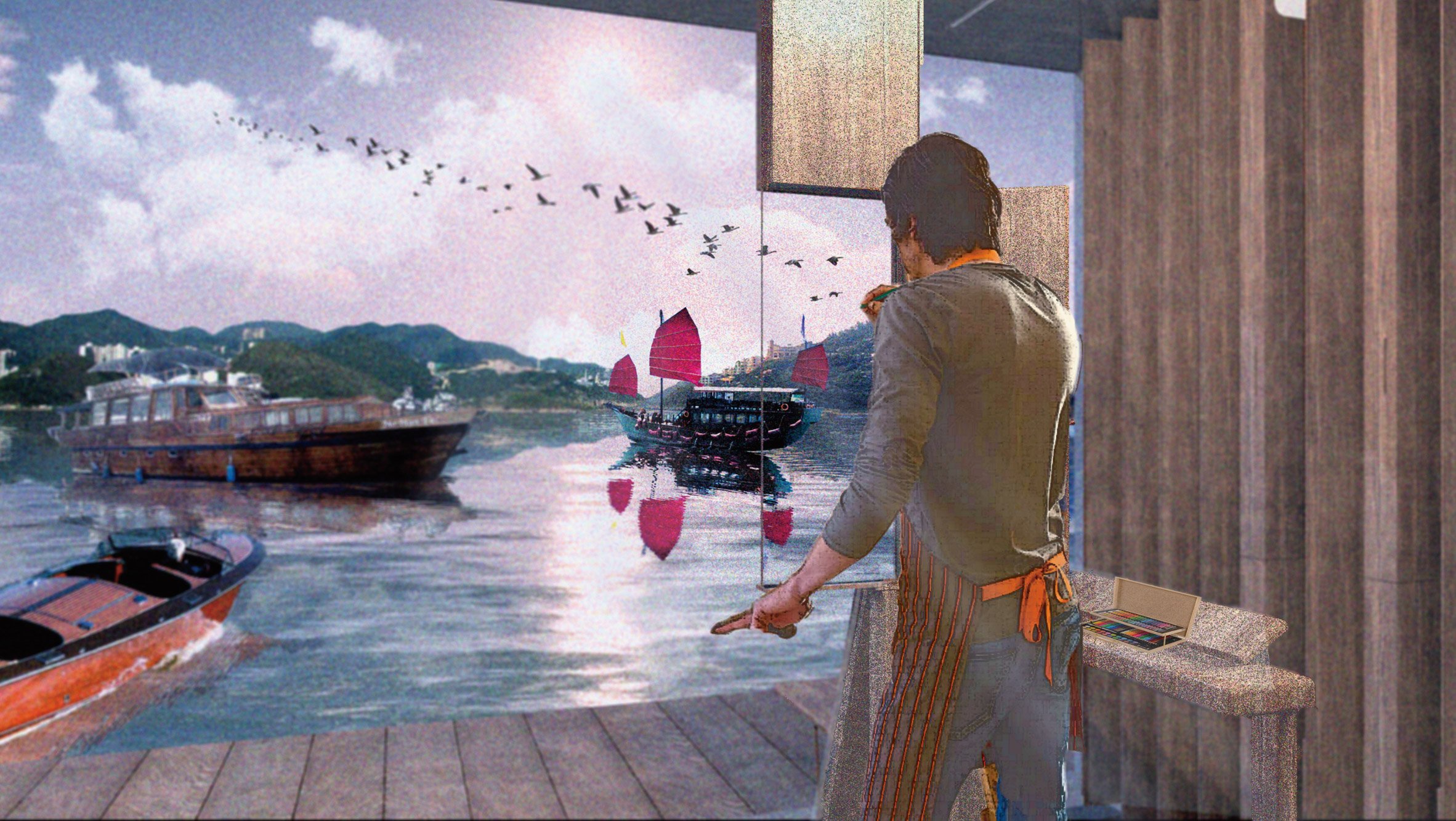
"ISOASIS is an integrated project that aims to create a sustainable, holistic and user-centred quarantine experience through interior, product and communication design systems.

"The project envisions a quarantine system based beyond the physical needs of the users, transforming quarantine into a mentally rewarding experience.

"Specifically, it explores chromotherapy as a method of improving the wellbeing of the users. It reconnects humans and nature by reimagining the colours of the changing skies and natural landscapes as interior lighting and furniture designs."

Student: Stefanie Leung, Jin Chan, Steven Leung and Amber Chan
Course:
BA(Hons) in Communication Design, BA(Hons) in Product Design and BA(Hons) in Environment and Interior Design
Tutor:
Scott Chin, Horace Pan, Yi Teng Shih and Roberto Vilchis
Email: 
stefanieseesdesign[at]gmail.com, csj.jinchan[at]gmail.com, stevenleung127[at]hotmail.com and soneming0530[at]gmail.com

The Hong Kong Polytechnic University

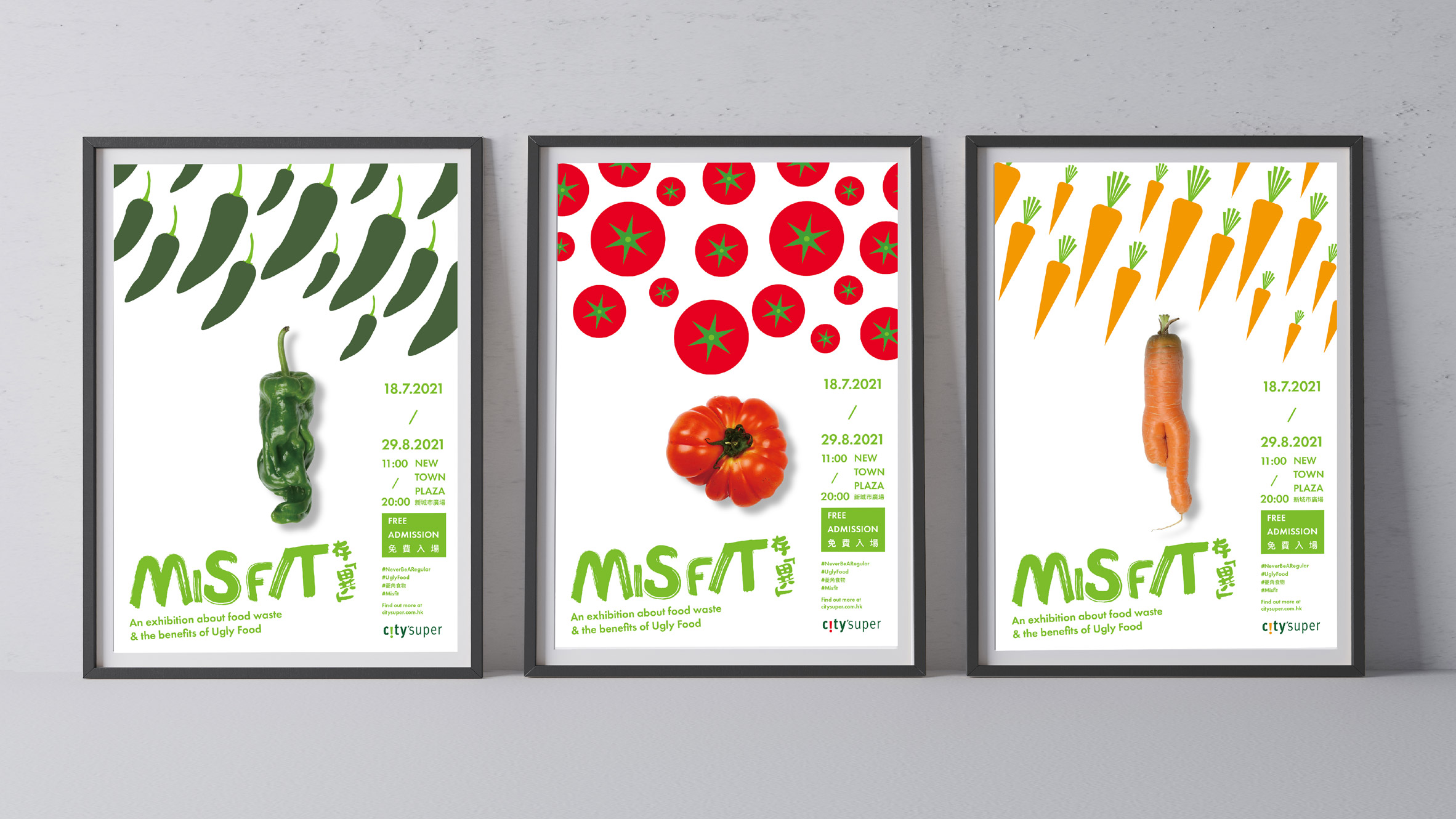
Never Be A Regular by Ho Wai Leung, Kei Him Chan, Lok Tung Chan, and Ning Sum Ung

"To raise awareness of the benefits of 'ugly food,' the team created an integrated campaign to raise the audience's awareness of the issue and change their consumption behaviour.

"By naming the campaign 'Never Be A Regular', the team highlights the message towards the audience to embrace themselves with diverse food. A speculative client, City Super, is introduced to bring the issue to consumer attention.

"Through the advertising campaign (including graphic design, video production, exhibition design, etc.), audiences understand the issue from a different perspective.

Student: Ho Wai Leung, Kei Him Chan, Lok Tung Chan and Ning Sum Ung
Course:
BA(Hons) in Advertising Design, BA(Hons) in Social Design, BA(Hons) in Communication Design
Tutor:
Ken LI, King Chung Siu and Stefan Sonntag
Email: 
tamamakenny1997[at]gmail.com, kevinshadow007[at]gmail.com and clttung[at]gmail.com
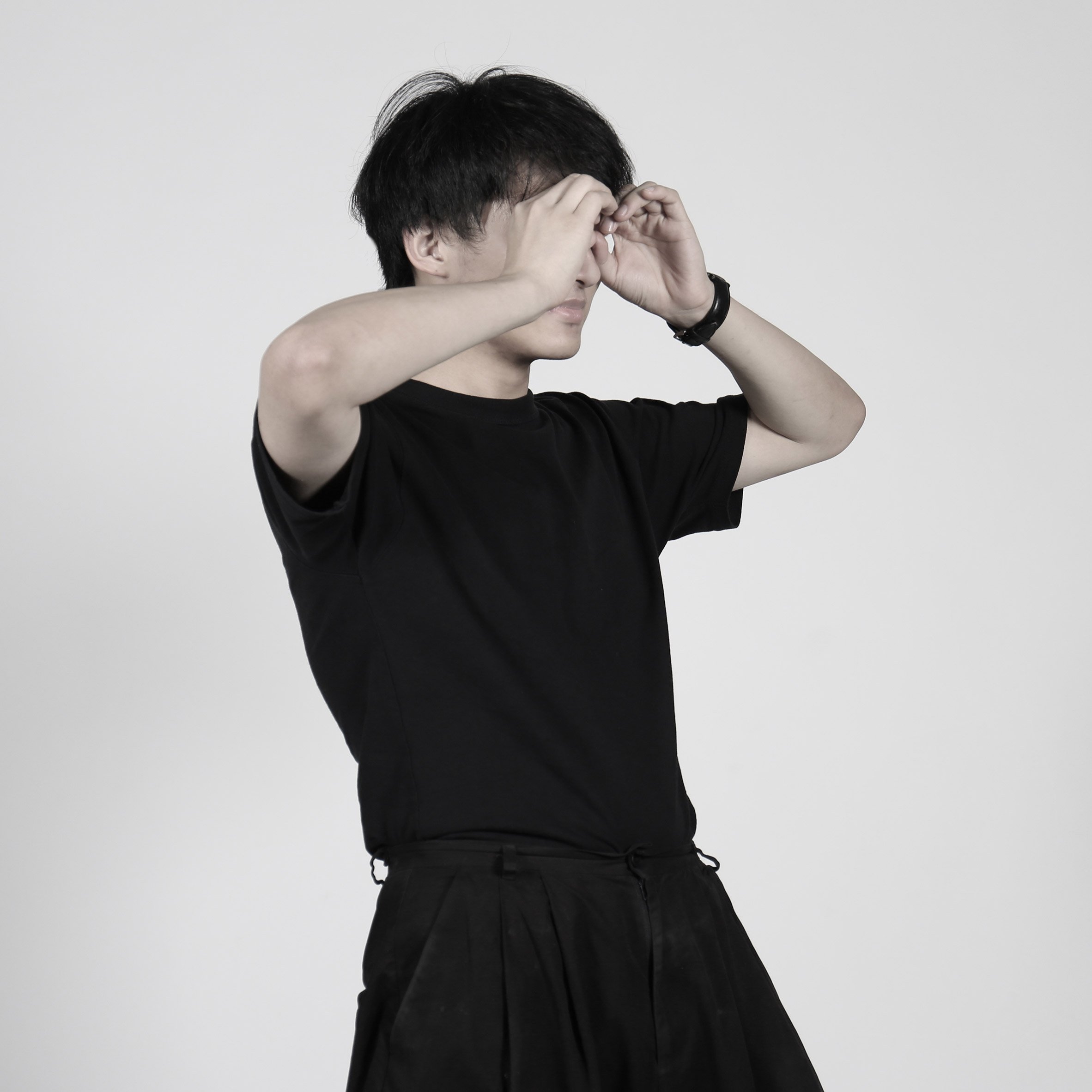

The Hong Kong Polytechnic University

Project 2121 KIRSCH Speculative Religion Experience Design by Yung Tsz Chiu Luke

"This project studies the behaviour of new religious forms of the future. Since digital data is developing rapidly, rituals change. The designer has created new tools and experiences for people to worship together."

Student: Yung Tsz Chiu Luke
Course:
BA(Hons) in Product Design
Tutor:
Lee Chi Wing
Email:
chiuytc[at]gmail.com

The Hong Kong Polytechnic University

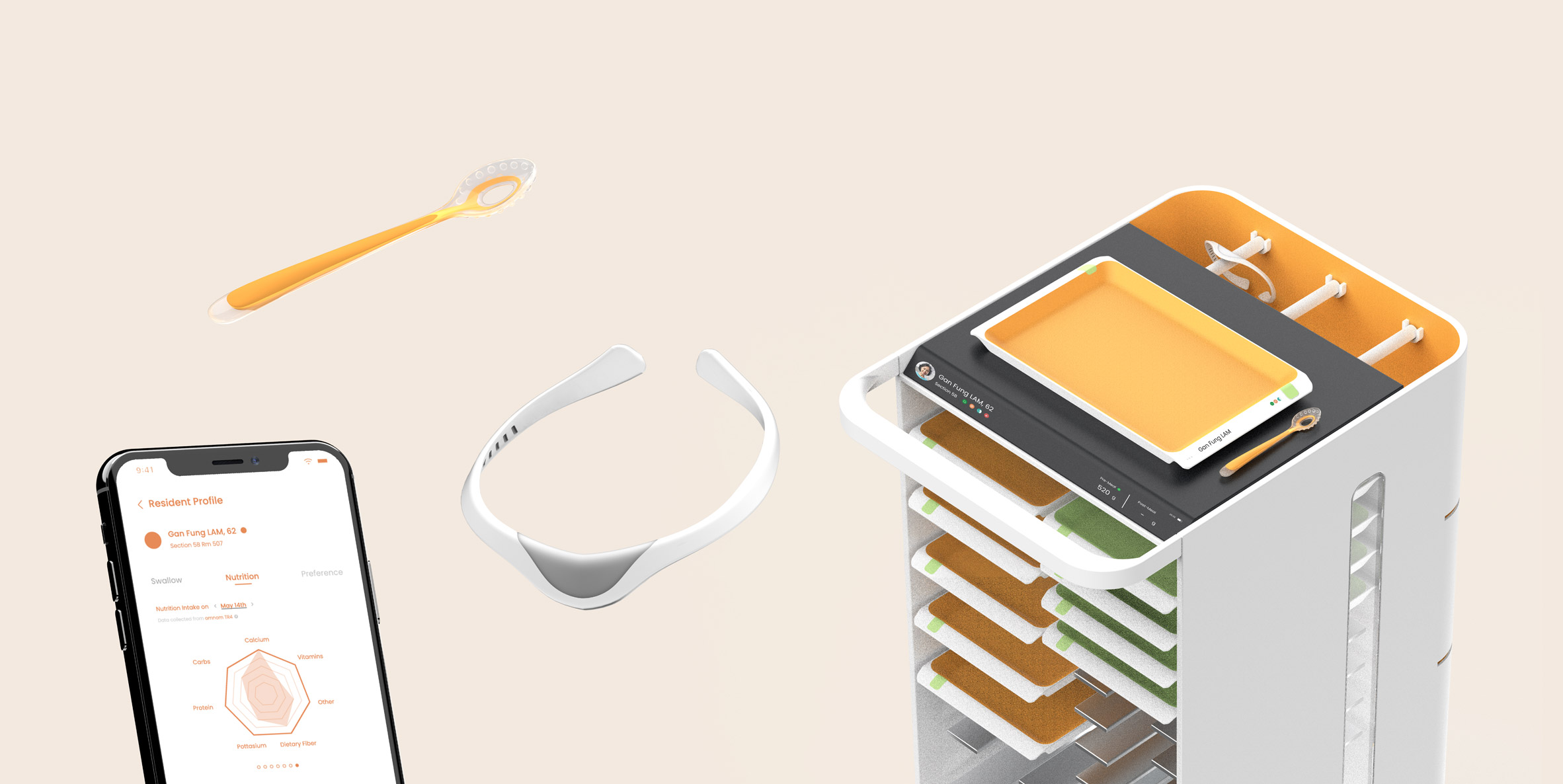
Omnom by Chang Pei-Chi Peggy

"Omnon is a smart dining service and product system tailored to fit the next generation of elderly care homes. The system aims to connect key stakeholders in the care home system through data digitisation, enhance interaction quality and safety through design intervention and decrease safety hazards through ingestion performance monitoring and tracking.

"The Omnom is made up of five components: a wearable neckpiece for monitoring, an application for data digitisation, a spoon for serving, a tray for personalised care and a trolley for smart catering."

Student: Chang Pei-Chi Peggy
Course:
BA(Hons) in Product Design
Tutor:
Brian Lee
Email:
peggychang.cpc[at]gmail.com

The Hong Kong Polytechnic University

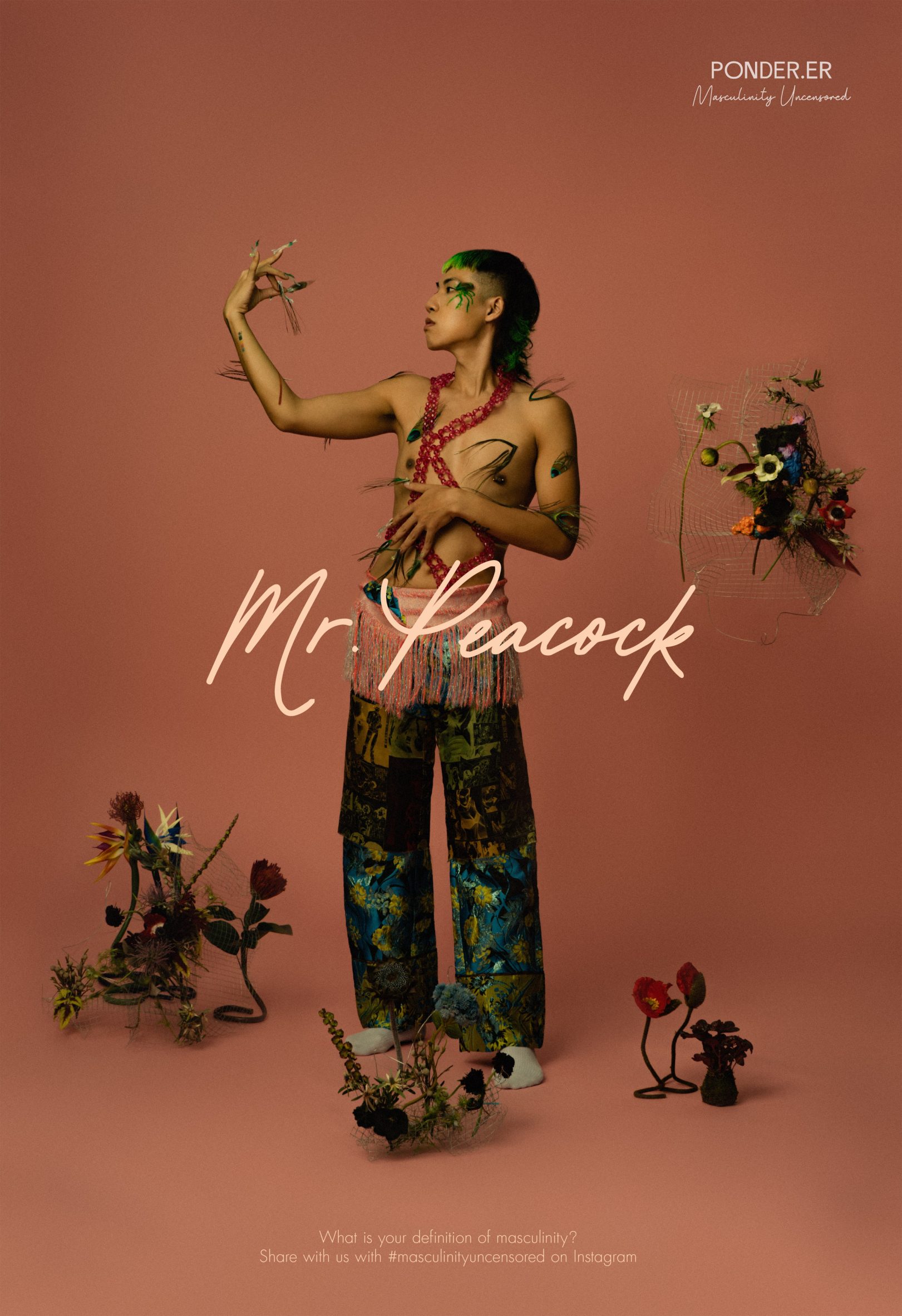
Masculinity Uncensored by Lau Cheuk Yan

"There are a lot of boundaries in our society regarding what a 'manly man' should be. Hong Kong is still conventional in terms of gender identities. This is a local genderless fashion brand called 'Ponder.er' which explores the possibilities of modern masculinity.

"Afterwards, a campaign was launched. Visual metaphors of various animals that demonstrate masculinity are presented as key visuals for the campaign."

Student: Lau Cheuk Yan
Course: BA(Hons) in Advertising Design
Tutor: Francis Hung
Email: s211696112[at]gmail.com

The Hong Kong Polytechnic University

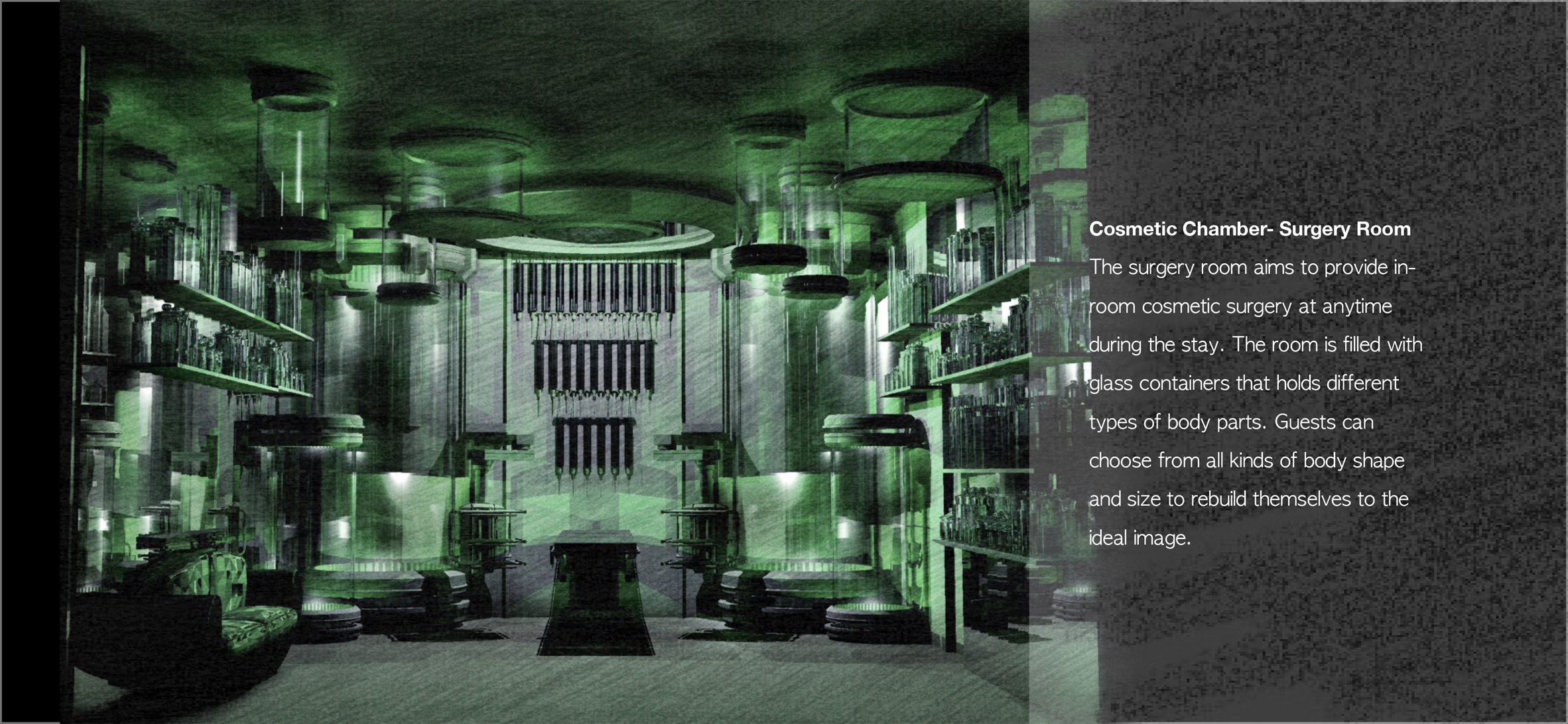
Moderno Asclepeion by Wong Tsz Shun Jessie

"Today, our fascination with technology, media, beauty, material goods and work has reached an obsessive level. We dedicate time and attention towards them to the degree that is similar to worshipping, making these ideologies our newfound religion.

"Asclepions were Ancient Greek establishments where believers seek spiritual and physical healing from Gods in their sleep. Borrowing this concept, this project explores the possibility where a hotel becomes a worshipping space for our new religions to portrait modern values.

"The project is inspired by Piranesi's imaginary prisons. His drawing methodologies are extracted and used to reinterpret religious architecture interiors with hospitality programmes."

Student: Wong Tsz Shun Jessie
Course:
BA(Hons) in Environment and Interior Design
Tutor:
Gerhard Bruyns
Email:
jtswong[at]yahoo.com.hk

The Hong Kong Polytechnic University

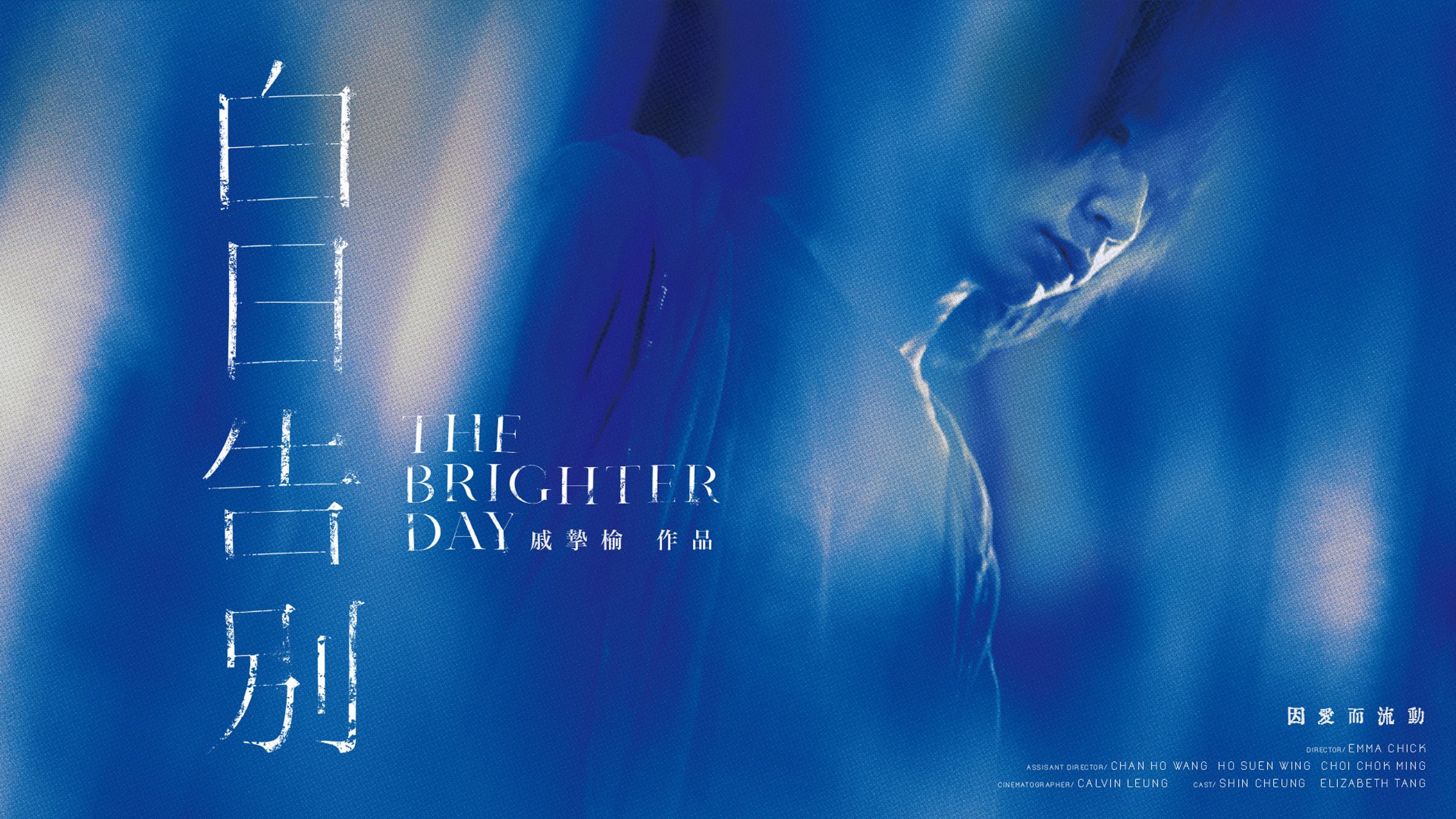
The Brighter Day by Chick Chi Yu and Choi Chok Ming

"This art project explores a man with depression who has wounded his hand. He helps a wounded woman, binding her hand before snatching her bandage away and fixing it around his bleeding hand instead."

Student: Chick Chi Yu and Choi Chok Ming
Course:
BA(Hons) in Digital Media
Tutor:
Adam Wong and Sau Ping
Email:
emmachick0831[at]gmail.com and ccming0320[at]gmail.com

The Hong Kong Polytechnic University

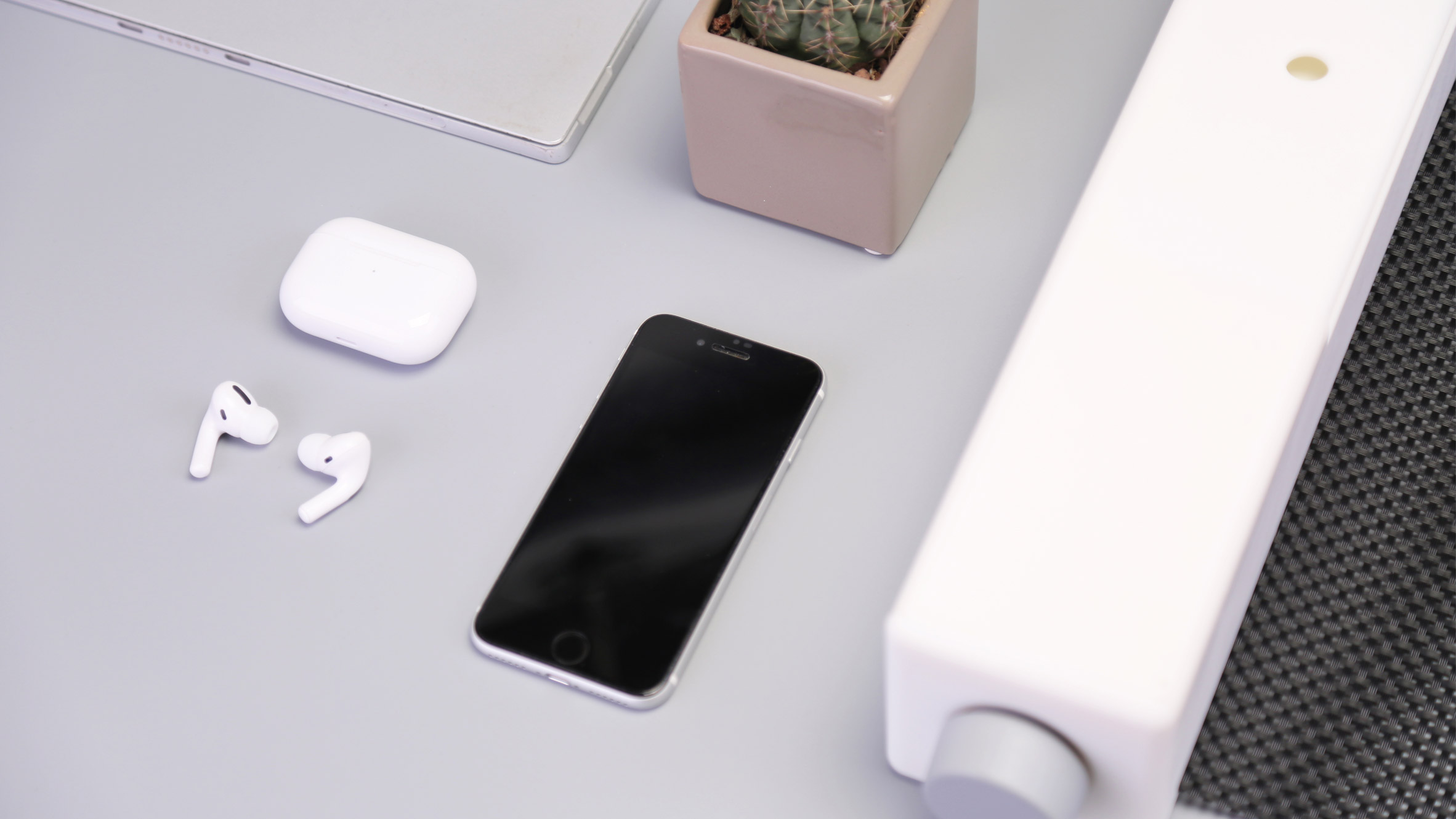
InMinder by Lam Hiu Yu Yuki and Ho Kwan Kit Jason

"Many office workers working in a fast-paced environment do not fully relax outside of work. This project investigates mindful eating. Our app aims to help users to understand their emotions and bodies.

"Mindful audios guide users to conduct mindful eating. The mindful mat is an interactive device that can detect the weight loss of the food by using a weighing pressure sensor. Everyone can establish different meanings through the mindful mat.

"After each mindful exercise, we provide information such as eating speed for users to reflect their personal growth."

Student: Lam Hiu Yu Yuki and Ho Kwan Kit Jason
Course:
BA(Hons) in Interactive Media
Tutor:
Huaxin Wei
Email:
2020yukilam[at]gmail.com and jforhodesign[at]gmail.com

The Hong Kong Polytechnic University

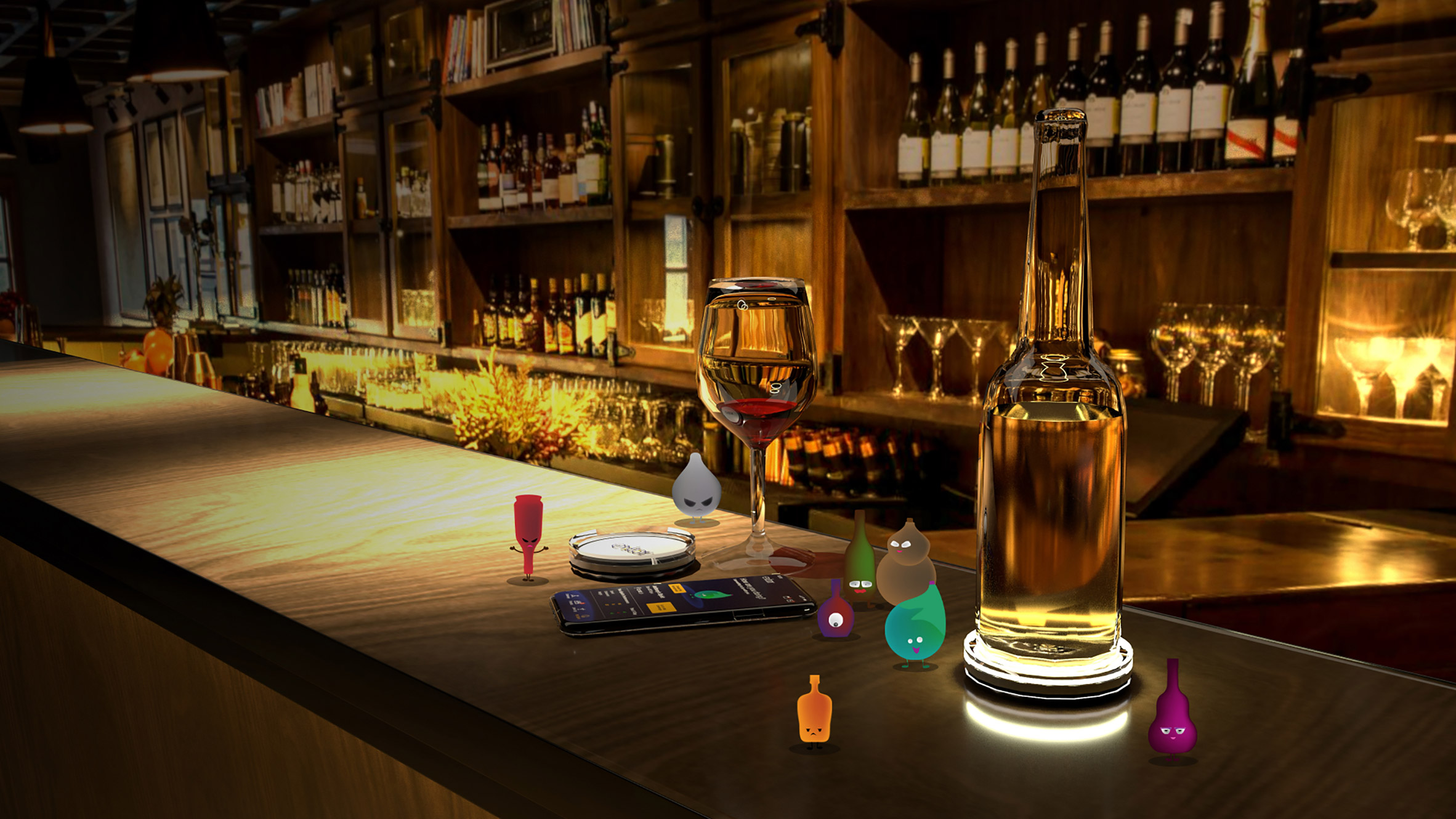
Enbar – Moderate Drinking With Great Delight by Leung Chun Ting

"Enbar is a solution to enrich people's drinking experience. It is an app equipped with a virtual character and is designed to be intuitive, entertaining and atmospheric."

Student: Leung Chun Ting
Course:
BA (Hons) in Interactive Media
Tutor:
Kenny K. N. Chow
Email:
anthonyL.design[at]gmail.com

The Hong Kong Polytechnic University

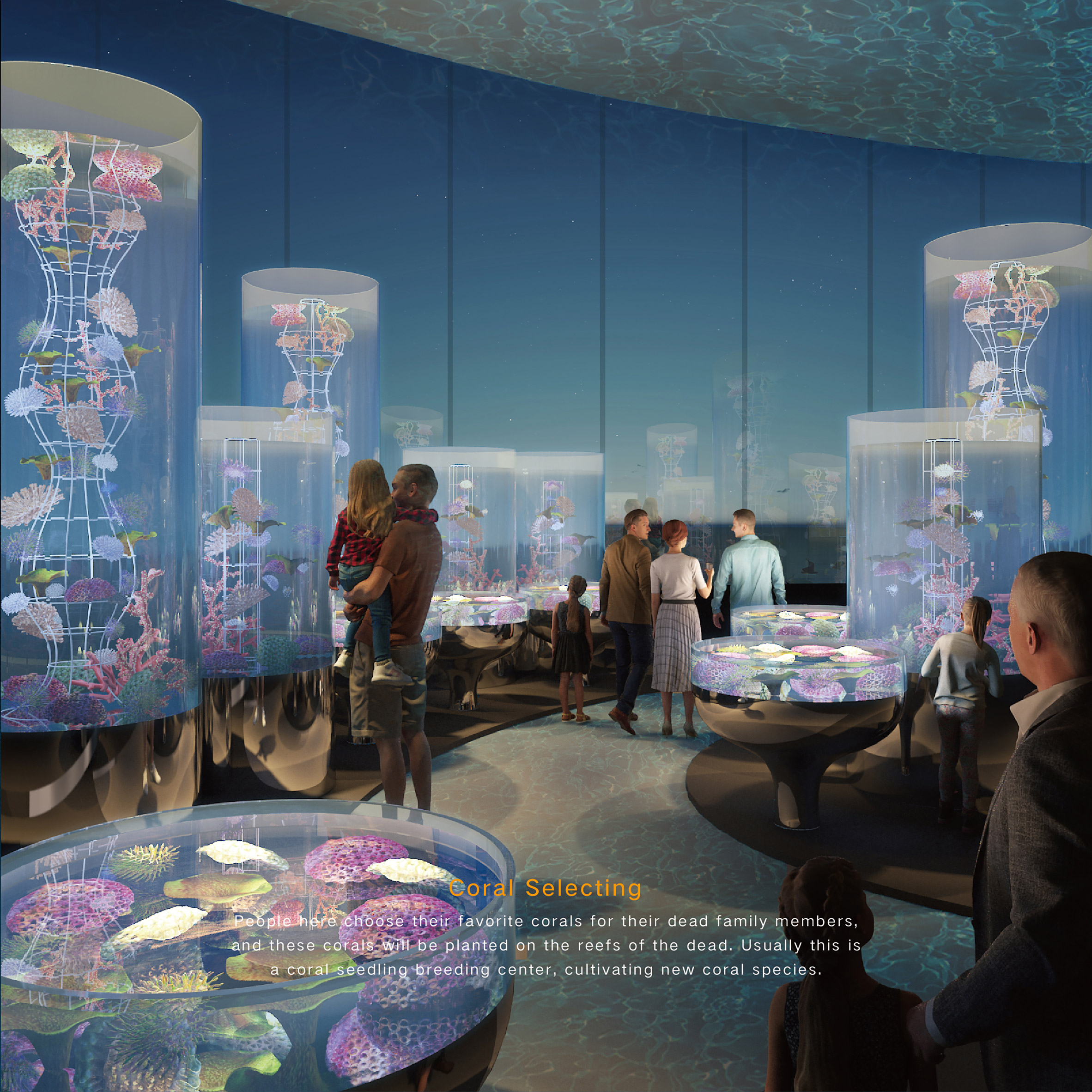
Life Cycle: Reef Burial by Rongxuan Liang

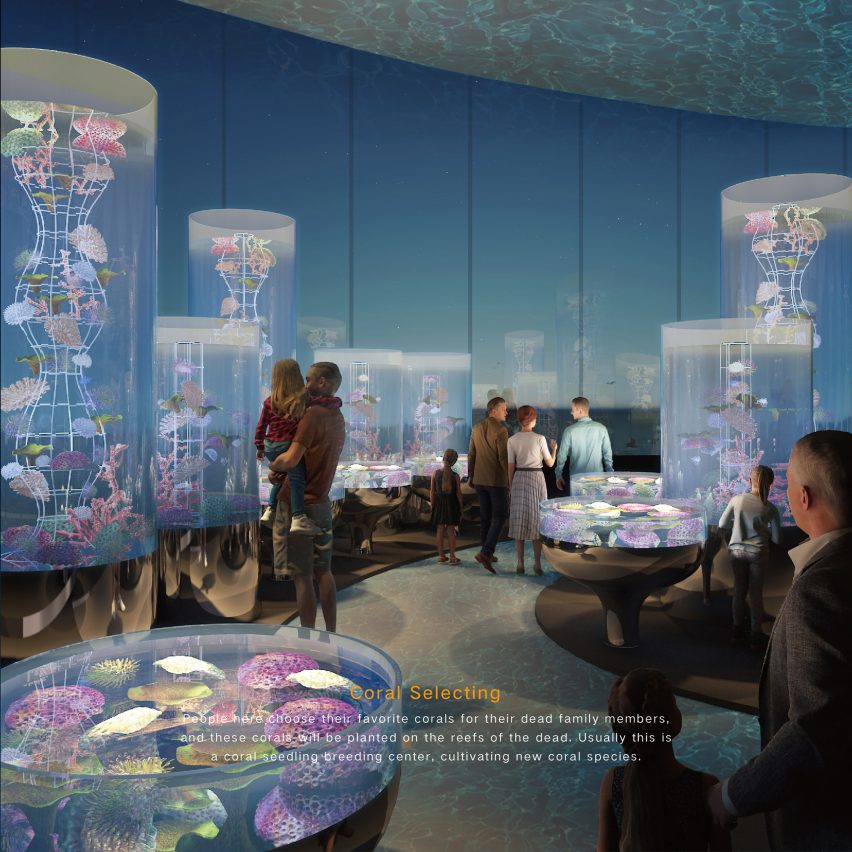
"Due to resources, it is vital to create new burial methods. Reef burial is a new method in which ashes are sealed into reefs.

"These reefs not only represent a person, but also become the cornerstone of marine life. Under the bedding of the reef burial, an artificial coral system can be established."

Student: Rongxuan Liang
Course:
MDes Urban Environments Design
Tutor:
Alvin Yip
Email:
rongxuan.liang[at]connect.polyu.hk

The Hong Kong Polytechnic University

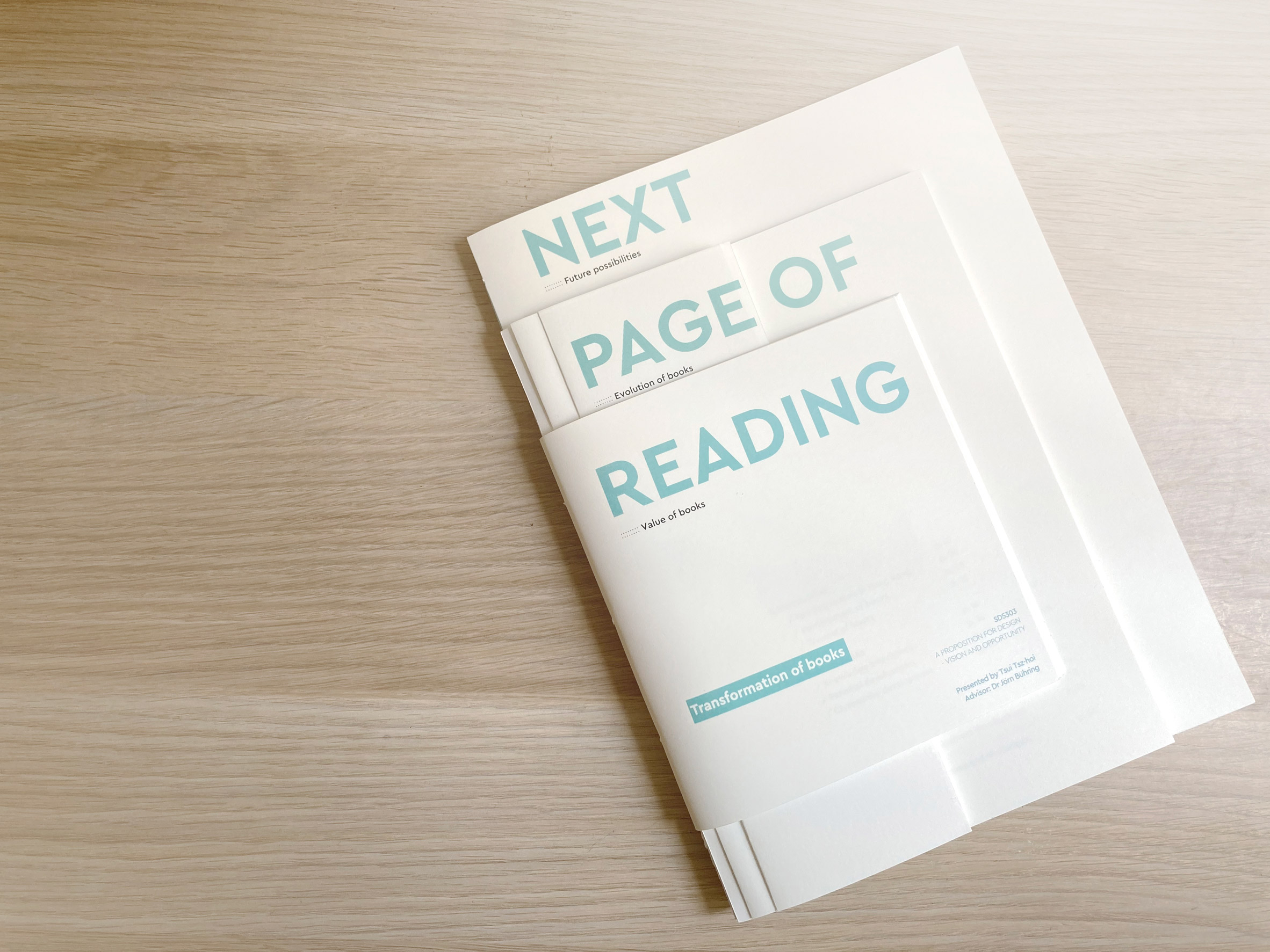
Next Page of Reading by Tsui Tsz Hoi

"Over the last few decades, with mobile devices and internet everywhere, the publishing industry is suffering. But is the value of books and publications underestimated? This report explores how young adults in Hong Kong see and value reading and the future of books.

"There are four sections in the report: the value of books, discovering the past, defining the present and anticipating possible futures, provide comprehensive studies on the development and possibilities of books from past to future, through design and strategic thinking, to foresee the next page of reading."

Student: Tsui Tsz Hoi
Course:
MDes Design Strategies
Tutor:
Jörn Bühring
Email:
tthbryan[at]gmail.com


Partnership content

This school show is a partnership between Dezeen and The Hong Kong Polytechnic University. Find out more about Dezeen partnership content here.

The post The Hong Kong Polytechnic University spotlights 11 student design projects appeared first on Dezeen.


from Dezeen https://ift.tt/3eZ1RlR
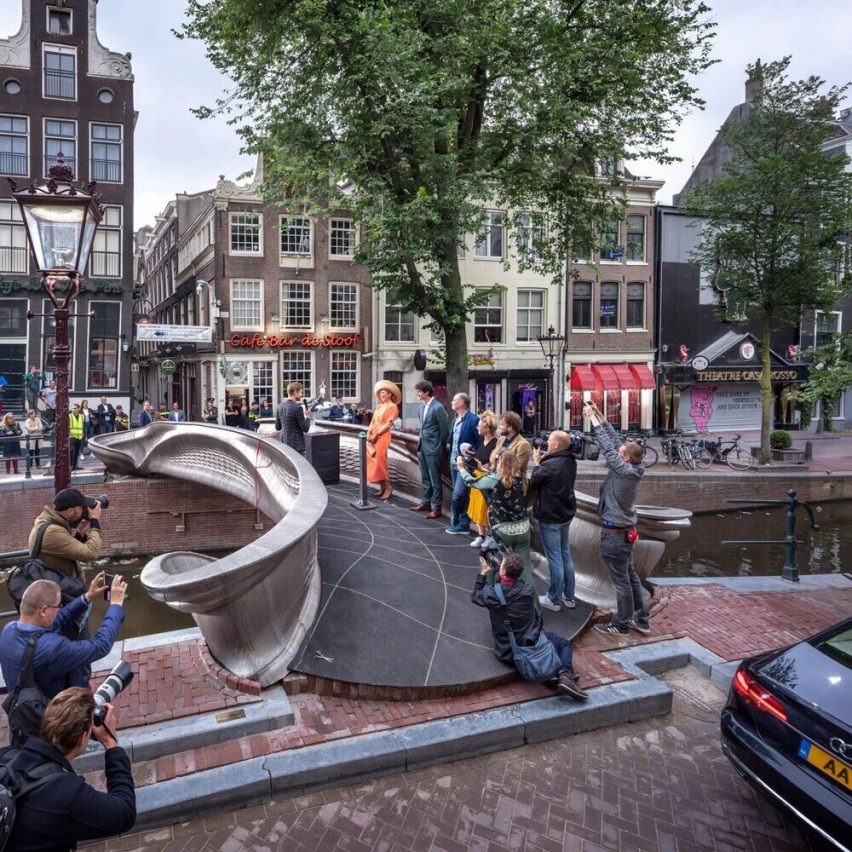
Commenter says 3D-printed bridge "looks like it was randomly plopped onto the site"

In this week's comments update, readers are debating a 3D-printed pedestrian bridge that has opened in Amsterdam.

Joris Laarman designed the 12-metre 3D-printed bridge that has opened in Amsterdam six years after the project was first launched.

The bridge was fabricated from stainless steel rods by six-axis robotic arms equipped with welding gear and spans the Oudezijds Achterburgwal in Amsterdam's Red Light district.

"More an art piece than architecture"

Readers are divided. "Beautiful object," said Jack Mclathass. "More an art piece than architecture. However, I'd like to see more data about the alleged 'improved' efficiency and energy use against a comparable 'standard' steel structure. It seems to use twice as much metal and 10 times as much energy compared to conventional construction."

"Interesting idea," continued Alex, "but the bridge looks like an object and not a structure. It looks like it was randomly plopped onto the site and the connection to the existing surfaces is very poor, almost comical on one side – and quite dangerous for bikes, wheelchairs, and the elderly."

Puzzello agreed: "It is a beautiful bridge and a fine example of technological exploitation. I appreciate that. However, you'd think that with six years of planning that universal access could have been worked into the design, especially in a bicycle city like Amsterdam."

"For something that is designed in 3D, the step detail is baffling," replied Hugh. "Surely the height difference is something that any half-decent survey would have picked up at the outset."

"It looks like a Zaha Hadid airport," concluded Mario Pascal.

What do you think of the bridge? Join the discussion ›

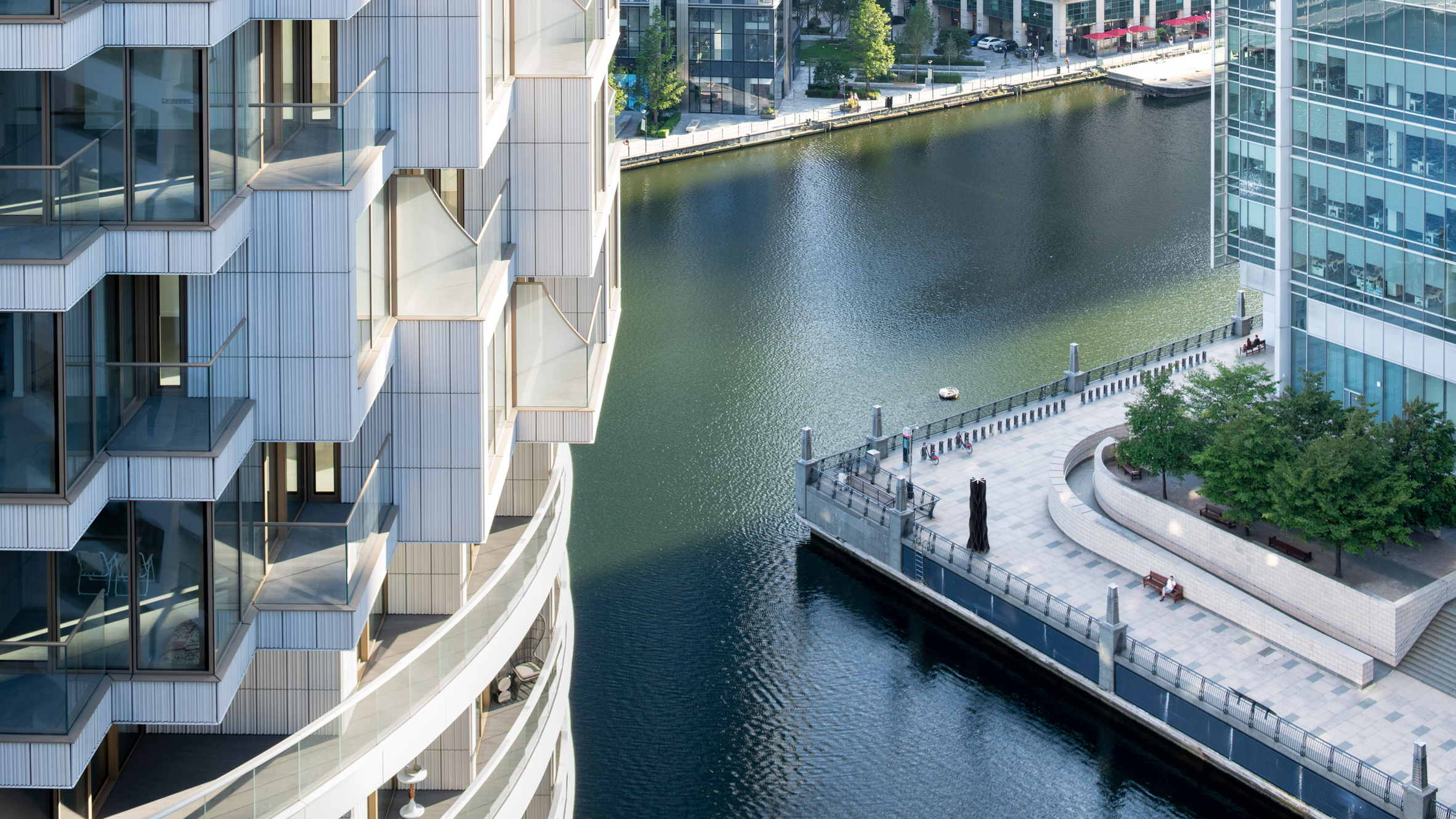
One Park Drive in Canary Wharf by Herzog & de Meuron
Cylindrical skyscraper by Herzog & de Meuron unveiled in Canary Wharf

Reader says cylindrical skyscraper is "like a 1970s banker's office"

Commenters are discussing Swiss architecture studio Herzog & de Meuron's One Park Drive residential skyscraper, which is nearing completion in Canary Wharf, London.

"The apartment shown looks like a 1970s chief banker's office," said Bobby Dazzler.

Archi disagreed: "The overall detail and material usage are what I'd expect from the masters. Quite beautiful for a luxury high rise."

"Yeah!" replied Ken Steffes. "Finally something different that's not ugly and poorly designed. This is a beautiful building that will still be beautiful in 50 years."

What do you think of One Park Drive? Join the discussion ›

It was designed to reflect a ribcage
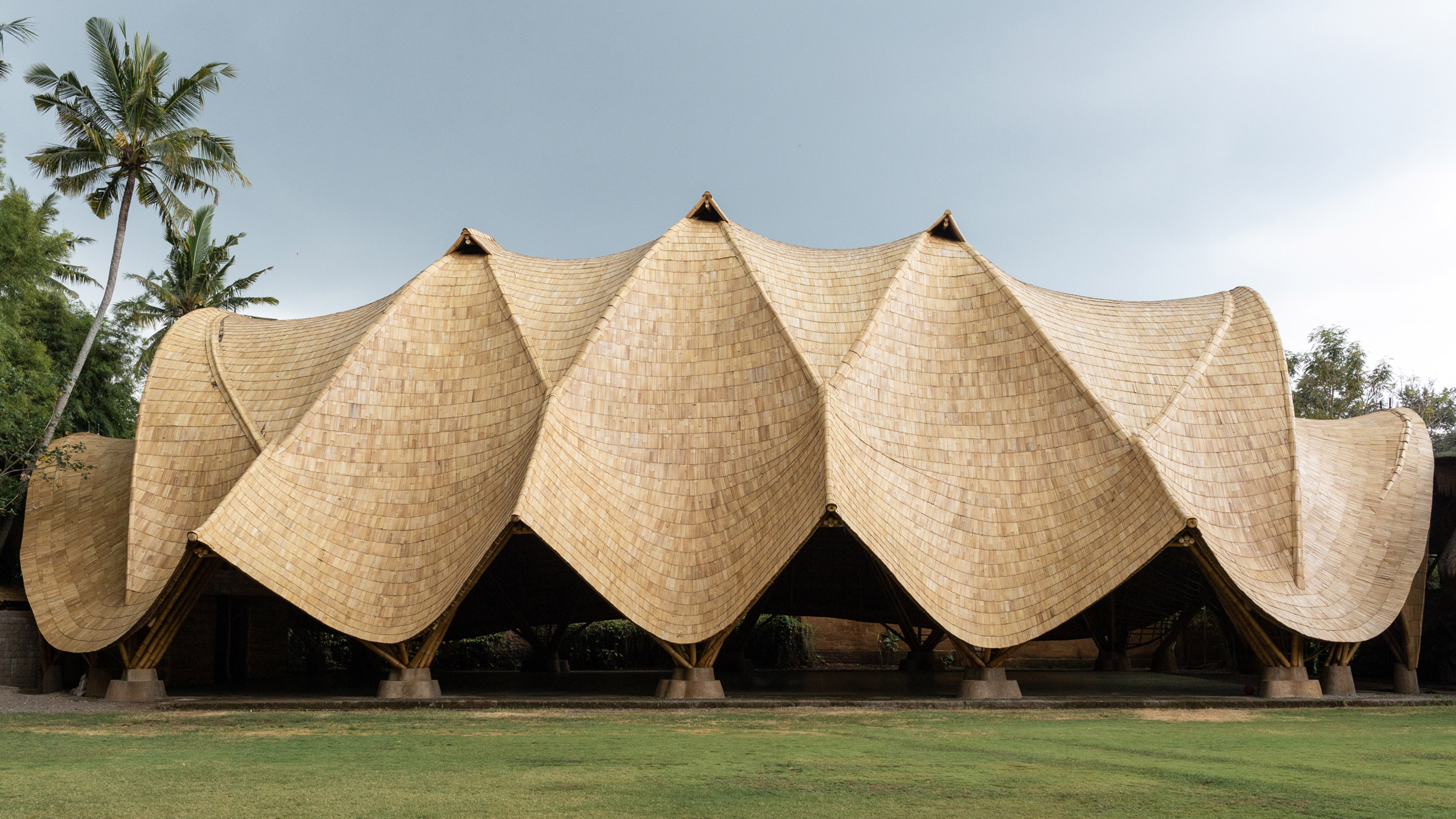
Ibuku completes "unprecedented" bamboo building in the Balinese jungle

Commenter says bamboo building is "the most beautiful structure they've seen in a long time"

Readers are amazed by a gymnasium Ibuku has completed for a private school in Bali. It features a complex double-curved roof made entirely from bamboo.

"The most beautiful structure I've seen in a long time," said M. "Art more than architecture, and thoughtful. Bravo all around."

Archi agreed: "Incredible. I get a huge smile once a year or so when I see something completely unique."

"What a stunning building," added Orlando1a1. "The roof undulates with a sense of movement that is reminiscent of sea kelp, yet also conspires to look like a row of pith helmets."

"I'm bamboozled," concluded Design Junkie.

Are you impressed by The Arc gymnasium? Join the discussion ›

The home has a collection of paved courtyards
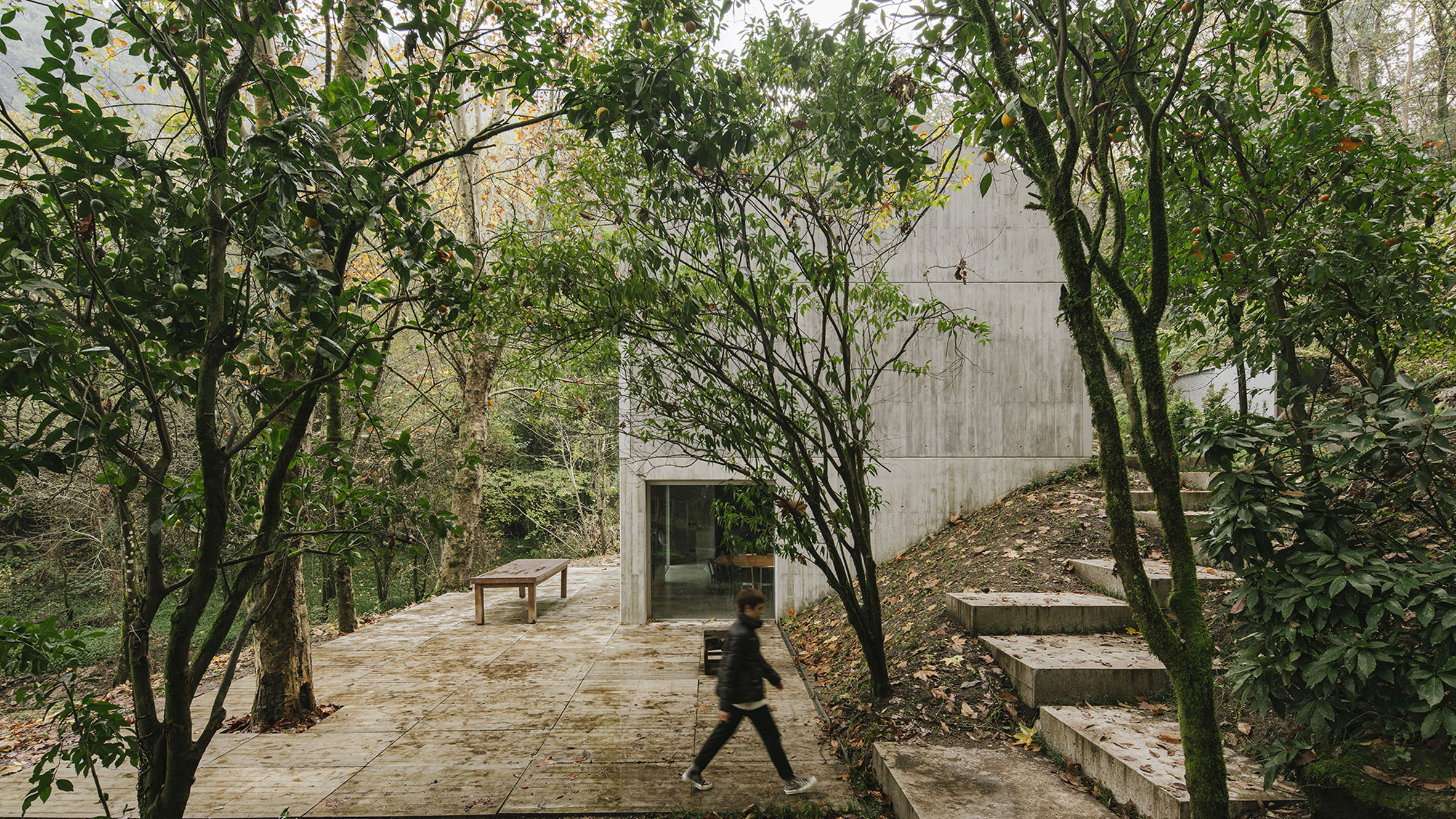
Carvalho Araújo completes monolithic concrete house in a Portuguese forest

Reader says a bedroom without windows is "not their type of bedroom"

Carvalho Araújo has built a concrete and glass holiday home in northern Portugal, which the studio says is designed to blend in with its woodland setting. Commenters are confused by the house's lack of windows.

"Bedrooms without windows, in the middle of a forest?" asked Tom. "I really wonder how anyone could arrive at this as a solution and consider it successful enough to build."

"I don't hate concrete as most other people do, but this is a bit too much," added Apsco Radiales. "Yes, a bedroom without windows is not my type of a bedroom."

"Wake up in your concrete hospital cubicle, walk down your narrow concrete tunnel, and sit on a sofa to stare at a concrete wall," concluded Le Ego.

Are readers being harsh? Join the discussion ›

Read more Dezeen comments

Dezeen is the world's most commented architecture and design magazine, receiving thousands of comments each month from readers. Keep up to date on the latest discussions on our comments page.

The post Commenter says 3D-printed bridge "looks like it was randomly plopped onto the site" appeared first on Dezeen.


from Dezeen https://ift.tt/2VdGEOn

Olson Kundig perches Canadian beach home on stilts among the forest

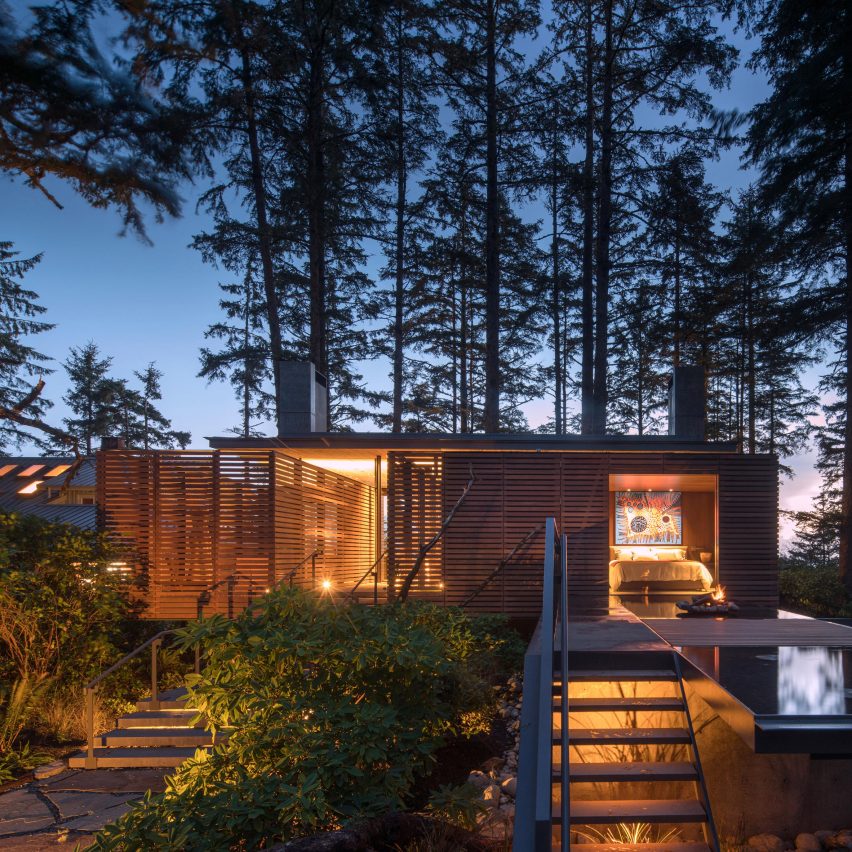
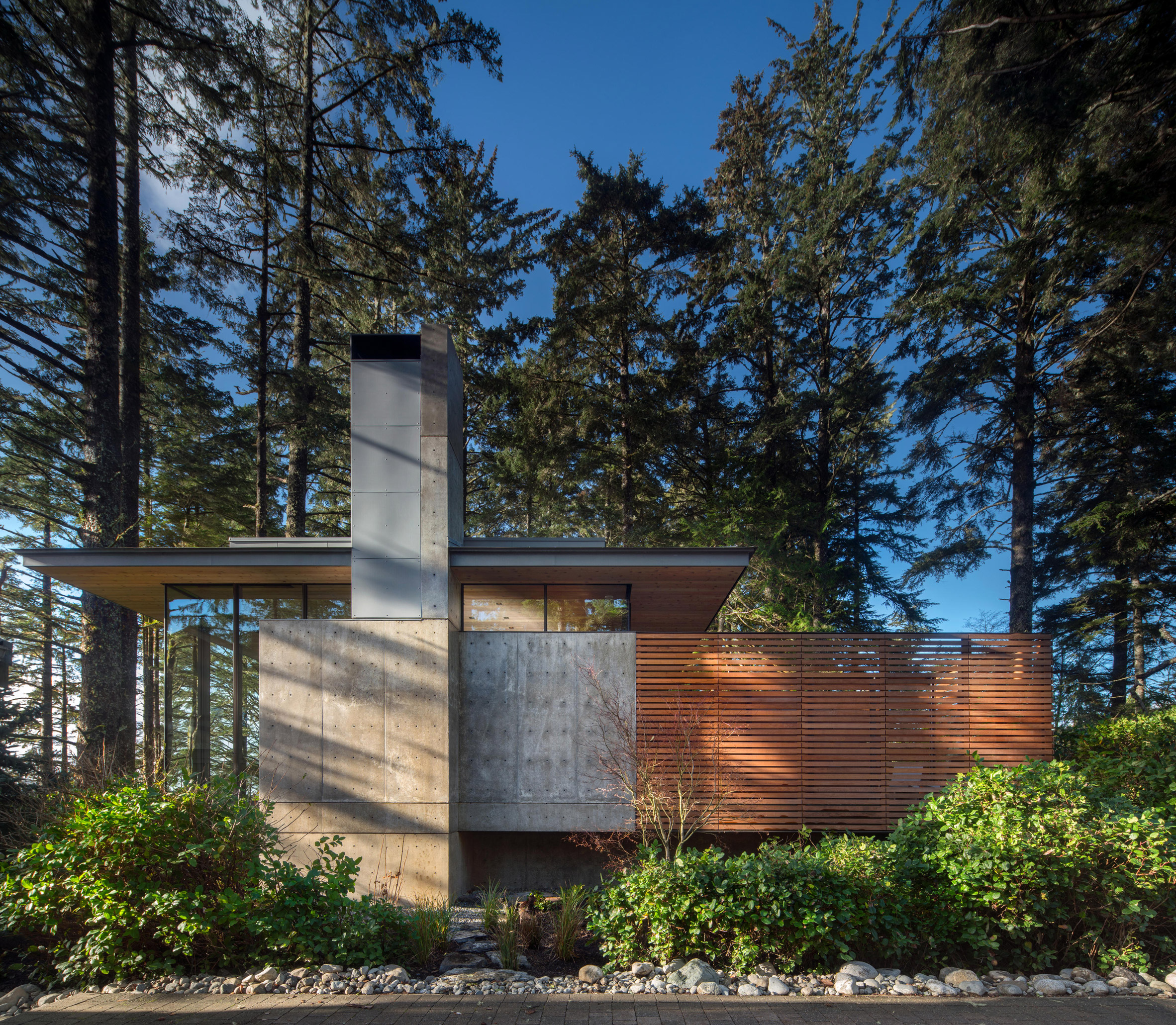
US firm Olson Kundig has raised this oceanfront home on Canada's Vancouver Island on stilts, providing panoramic views of the surrounding forest and the Pacific Ocean beyond.

The 2,500-square-foot (232-square-metre) home is located in Tofino, a remote town on the island's west coast known for its breathtaking scenery, laid-back surfing culture, and harsh weather.

Side view of the forest home
The Tolfino Beach House is sited on the west coast of Vancouver Island

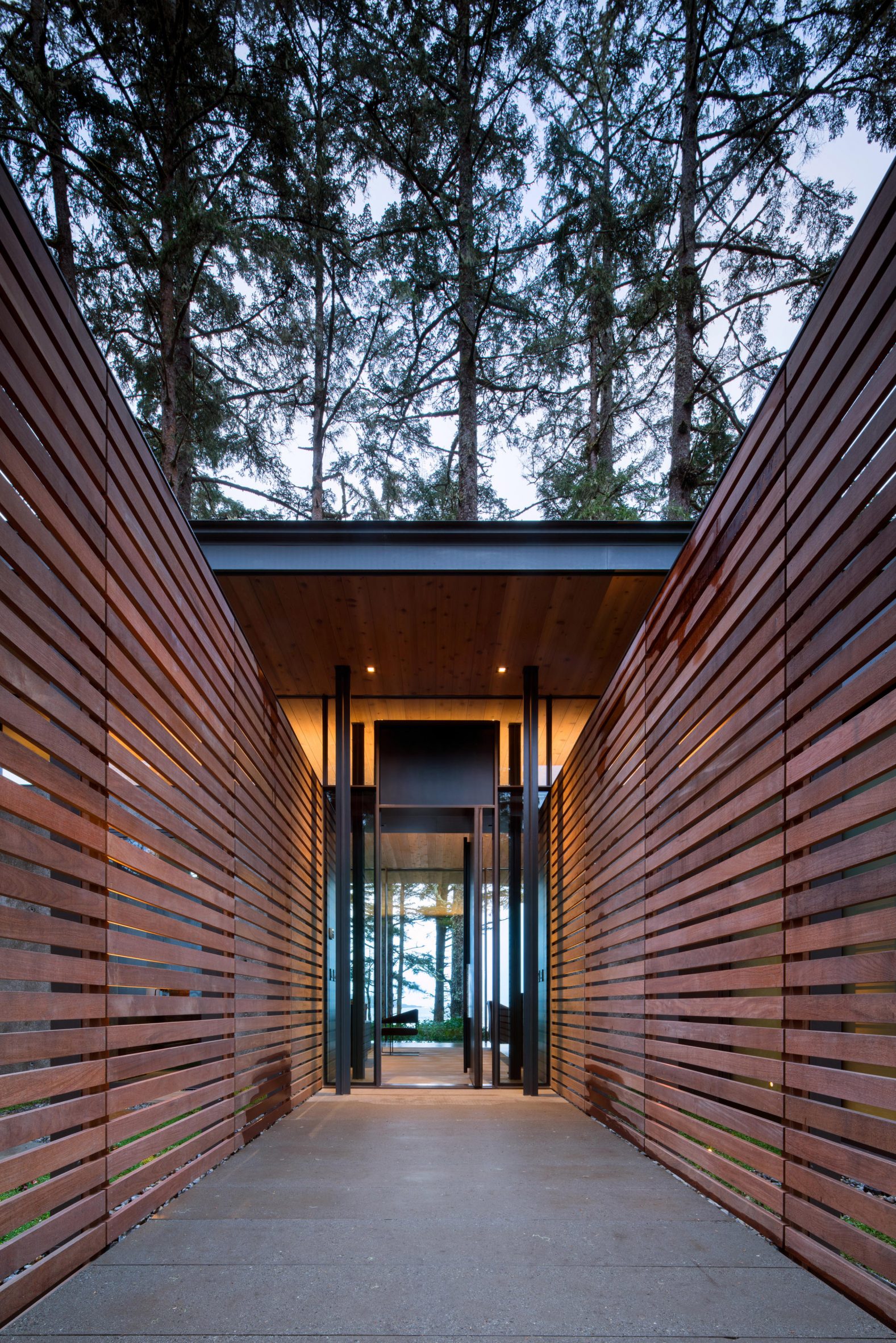
A long walkway flanked on either side by wooden boards leads to the home's main entrance, which is partially covered by the roof's broad overhang.

"Nestled in a weather-beaten forest, this beach house creates a connection between the drama of the nearby ocean and the sense of sanctuary provided by the trees," said Olson Kundig in a project description.

Wooden slats entrance to beach home Tofino Olson Kundig
A long walkway leads to the home, which is surrounded by a coastal forest

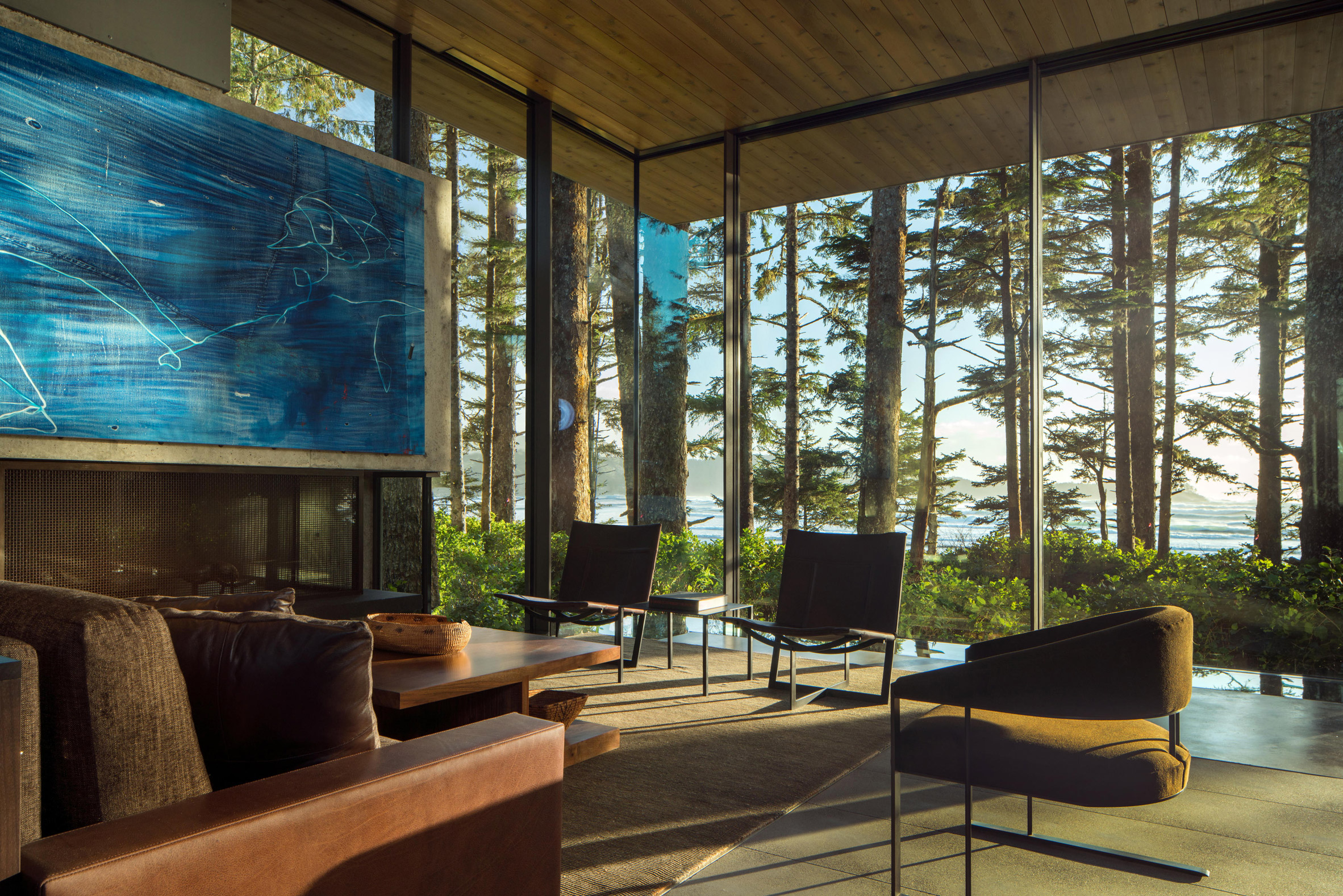
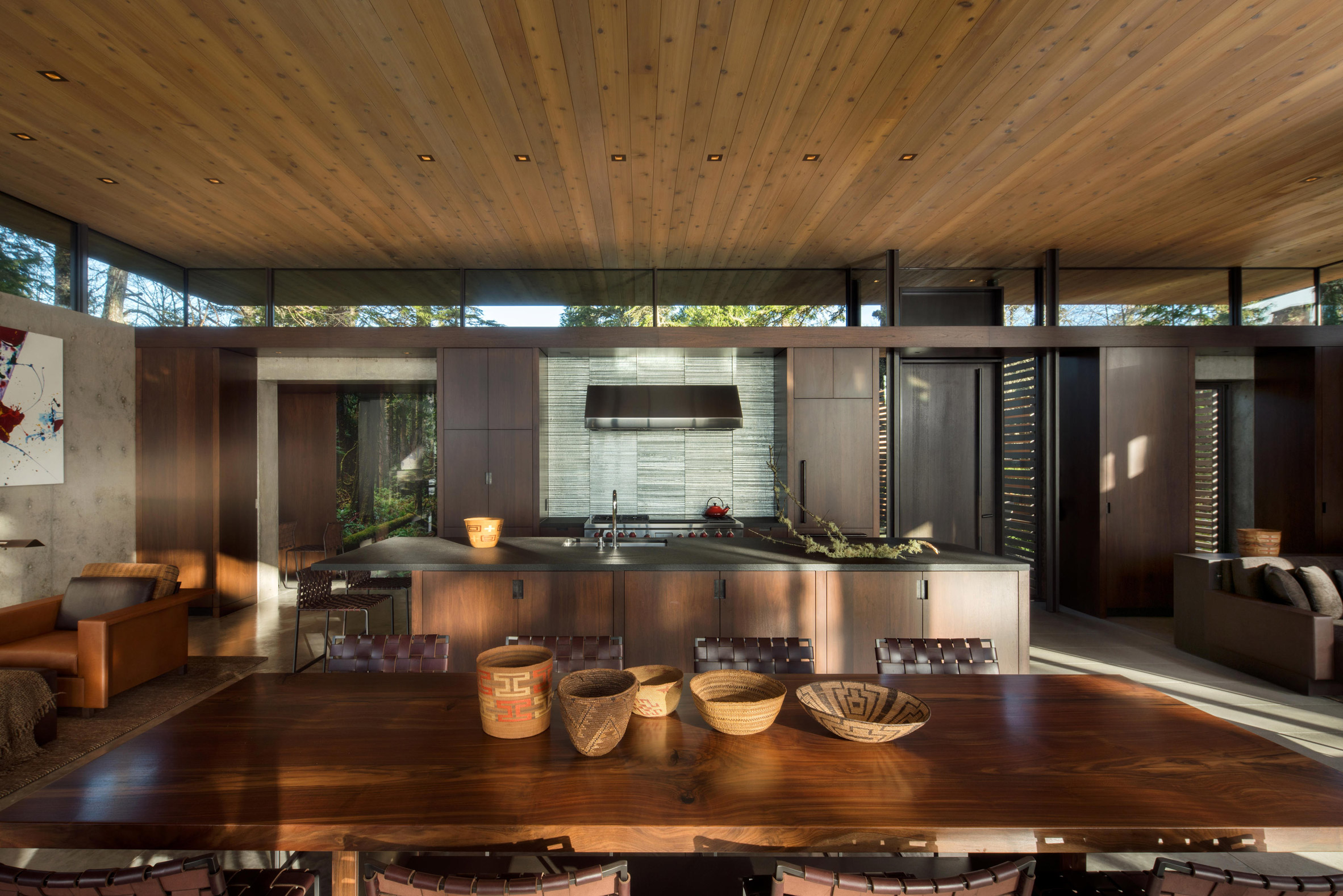
An open-concept living area, dining room, and kitchen occupies roughly half of the home, on the side facing the ocean. The architects included full-height glass walls here to capture the most of the area's natural surroundings.

"The beach house is essentially one single room, with the emphasis on feeling connected to the ocean and the surrounding woods," said principal Jim Olson, who co-founded the Seattle-based firm in 1966.

Glass also runs around the perimeter of the great room at floor level, offering peeks at the forest undergrowth below. "The house is raised up off the ground because of the salal plants, which grow naturally to five or six feet tall," said Olson, referring to one of the area's endemic flora.

"This is the height of the floor level, which allows you to look out over the top of the native plants," he added. "Inside, it feels like you are in a boat floating over a green sea of salal."

Living area with forest view
A glass floor follows the perimeter of the living area

Two cast-concrete fireplaces anchor either end of the living room, an experience that the architects liken to sitting outside between two campfires.

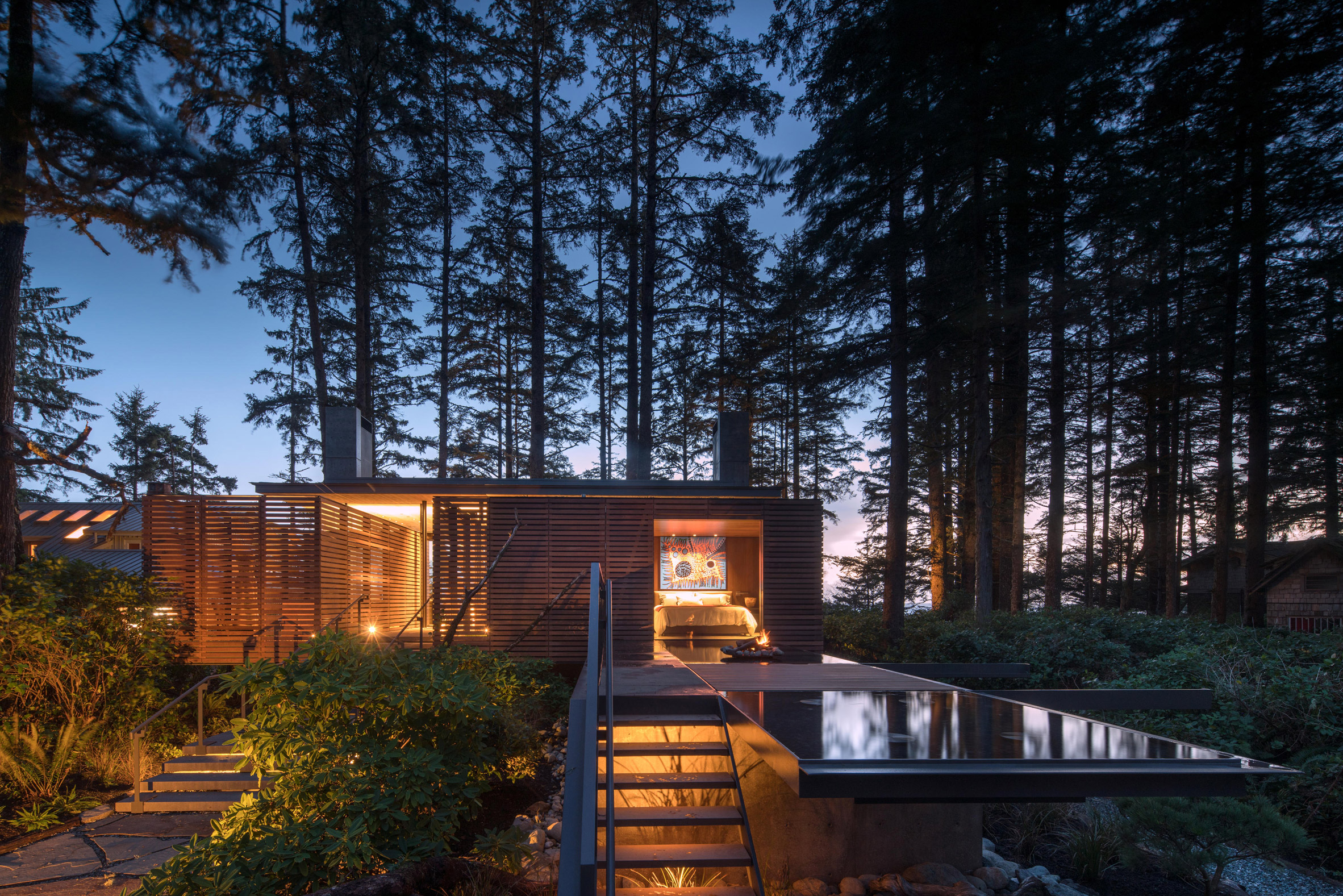
On the opposite side of the home, facing the lush surrounding forest, is the owner's bedroom. Sliding glass doors here open out onto an outdoor patio with a reflective pool that stretches out into the woods beyond.

View towards the kitchen from the dining room
A cedar ceiling runs throughout the house and extends under the eaves

The home's finishes are meant to complement the structure's minimal aesthetic and surrounding environment. Cedar runs continuously across the entire expanse of the roof's underside, helping to visually connect the interior and exterior.

Olson Kundig also designed the home's furniture, which was mainly crafted from wood, leather, and steel.

The house at night
A reflecting pool is situated off the main bedroom

The studio has completed a plethora of homes throughout the United States and Canada, and often uses advanced structural engineering and custom mechanical systems for their projects.

Examples include a pavilion which can be closed shut with drawbridge-like panels, and a villa in Hawaii with an extremely long cantilevered roof.

The photography is by Nic Lehoux.


Project credits:

Olson Kundig team: Jim Olson (design principal), Olivier Landa (project manager) Will Kemper (project architect), Christine Burkland (interior design)
Structural and mechanical engineer: ARUP
Civil engineer: Lewkowich Engineering Associates
Lighting design: Brian Hood Lighting Design
Envelope consultant: RDH

The post Olson Kundig perches Canadian beach home on stilts among the forest appeared first on Dezeen.


from Dezeen https://ift.tt/3iMI6PK