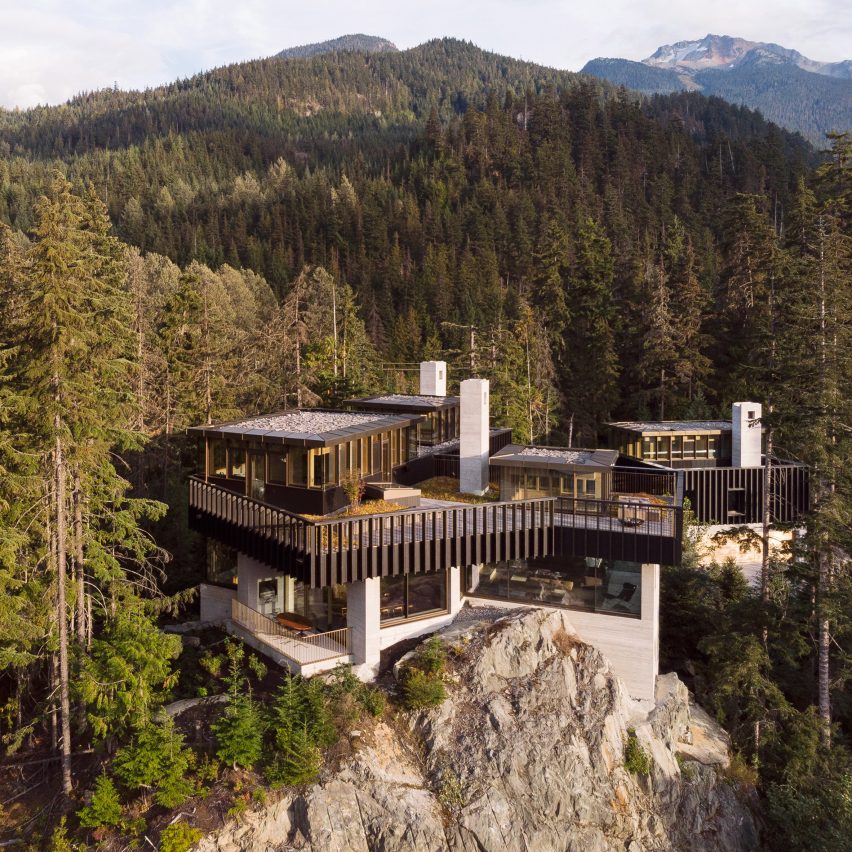
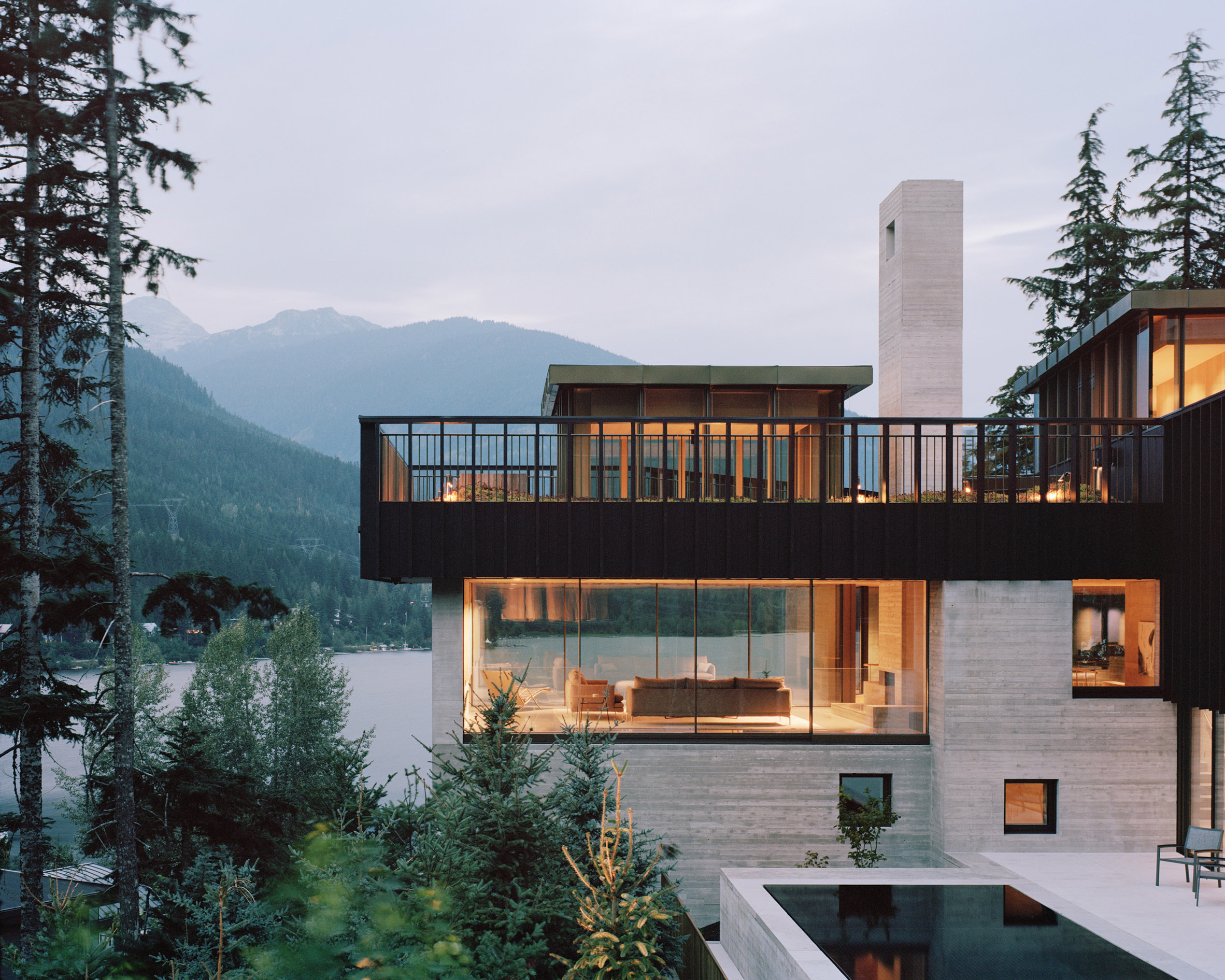
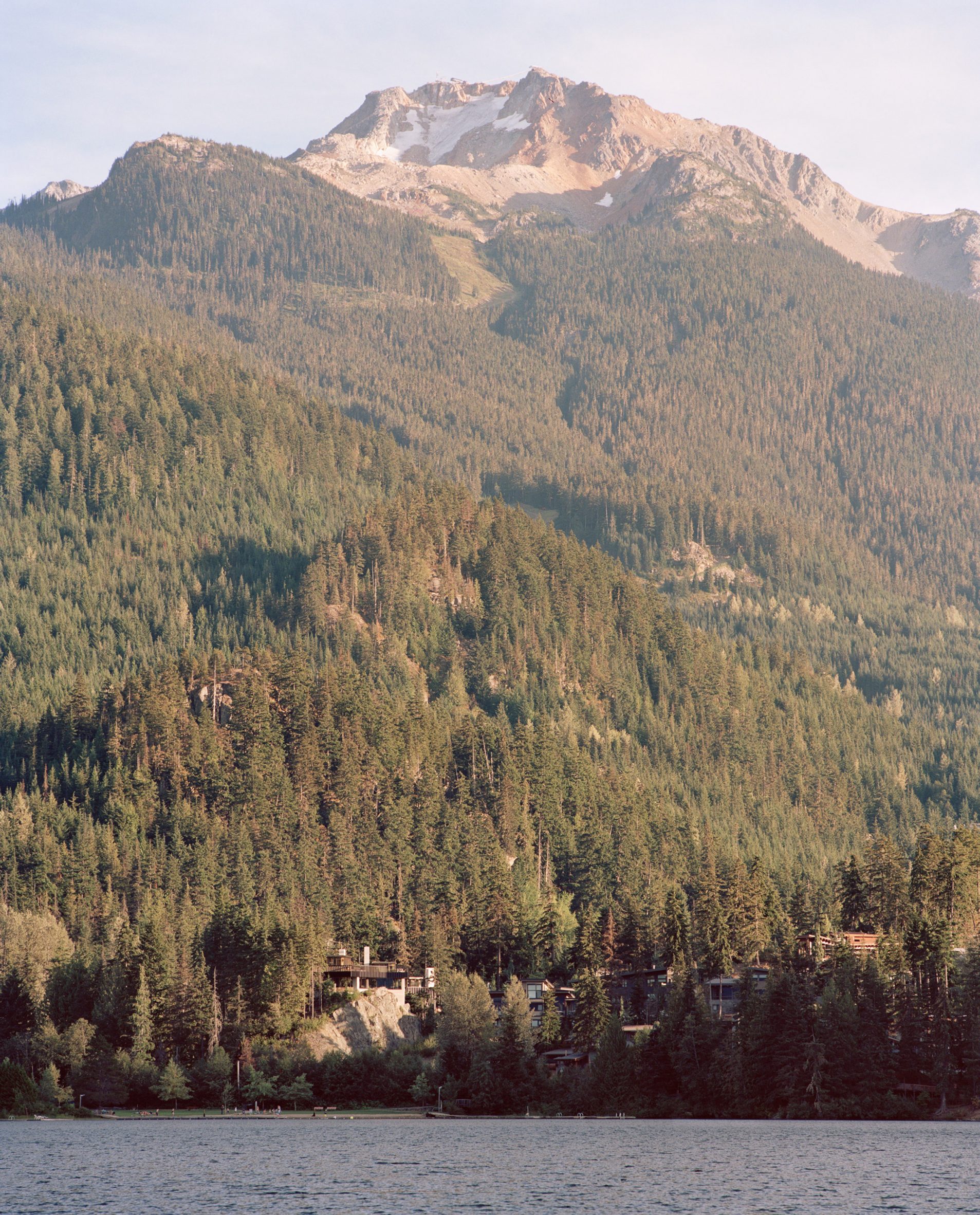
British architecture studio Gort Scott has installed a house on a rocky outcrop in the Canadian mountain resort of Whistler, offering impressive views over Alta Lake.
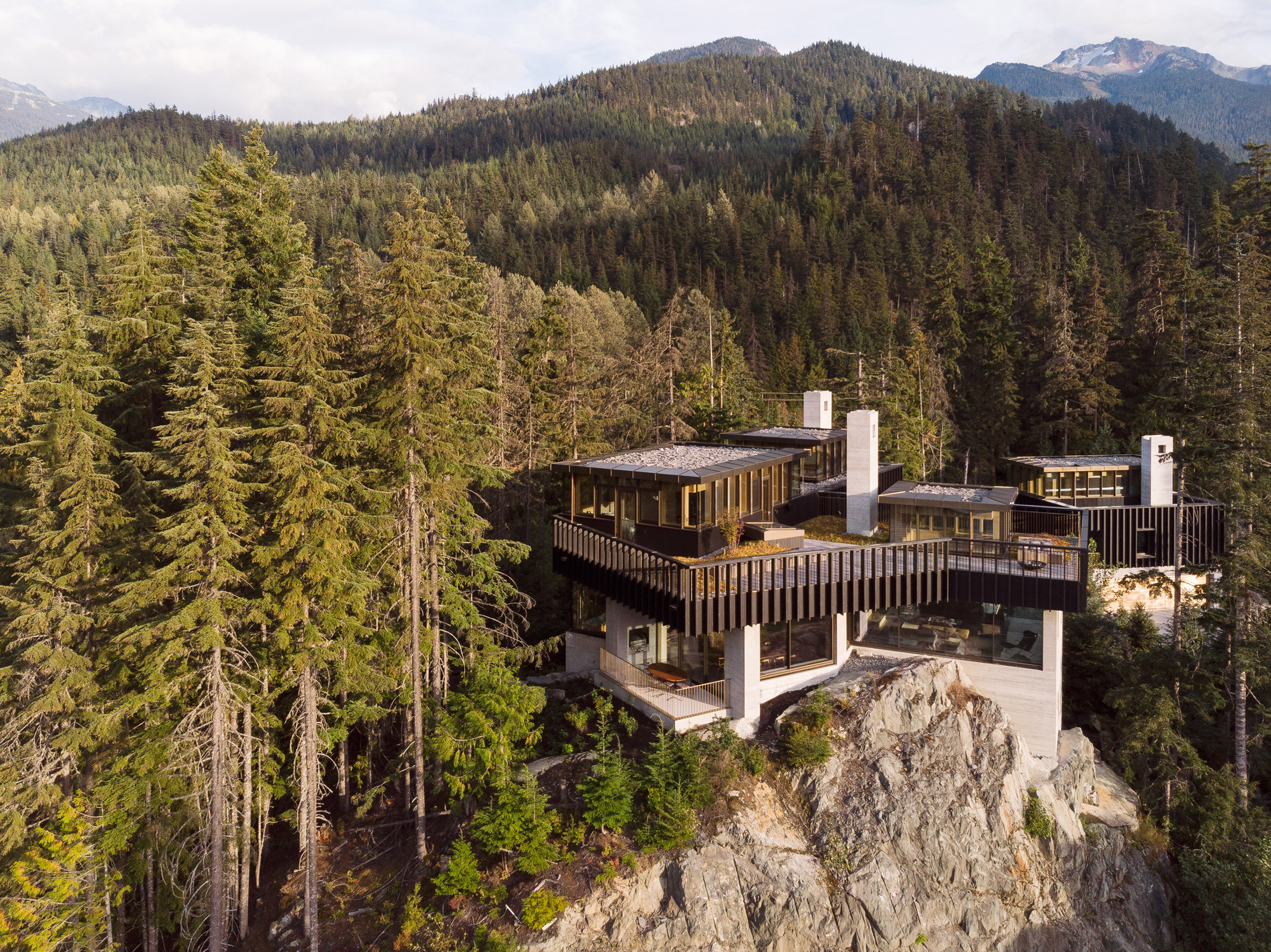
The Rock is a family home designed to reflect the drama of its setting. Predominantly built from concrete, it incorporates stepped levels intended to echo the experience of traversing the mountainous terrain.
The house is positioned over a rocky outcrop
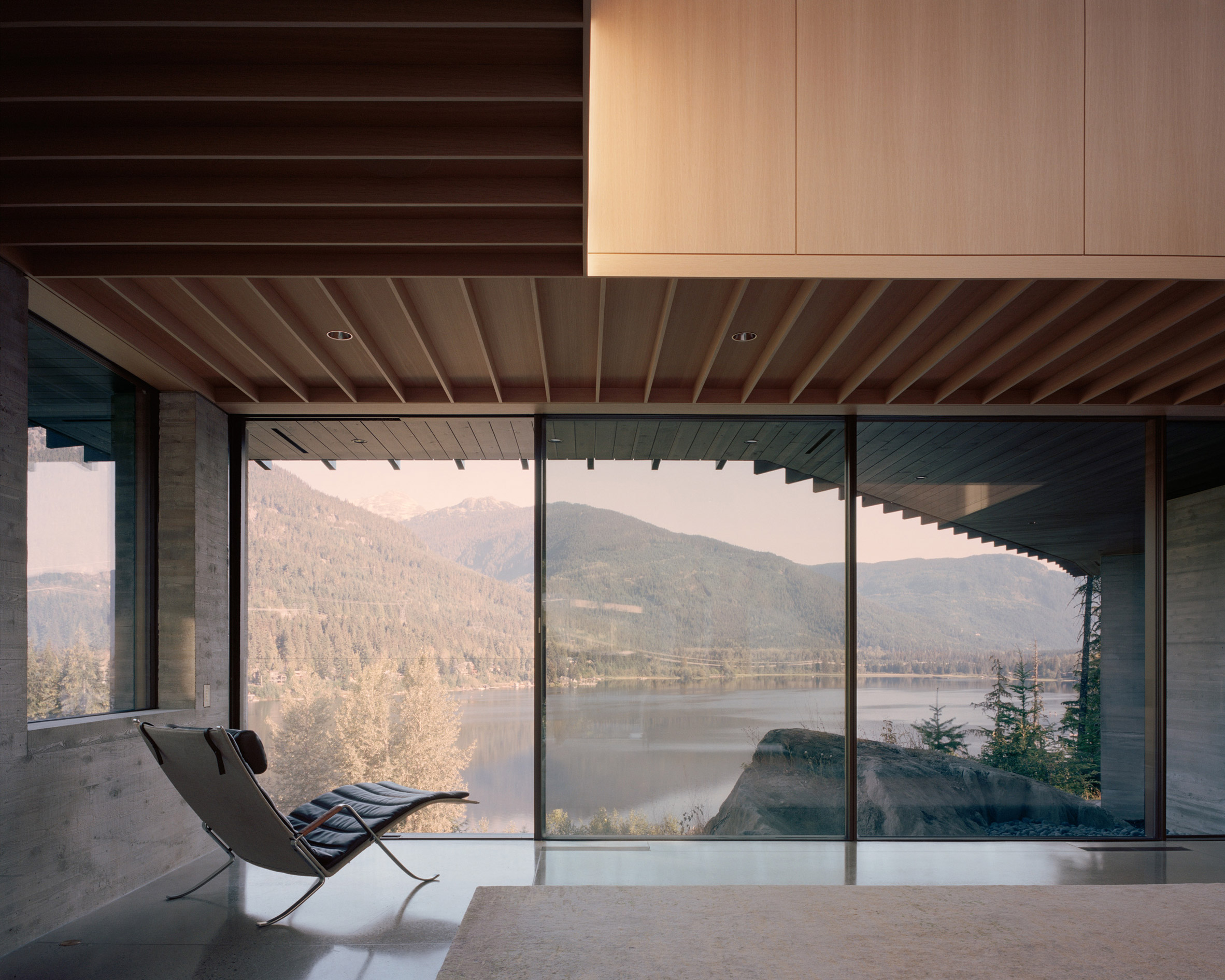
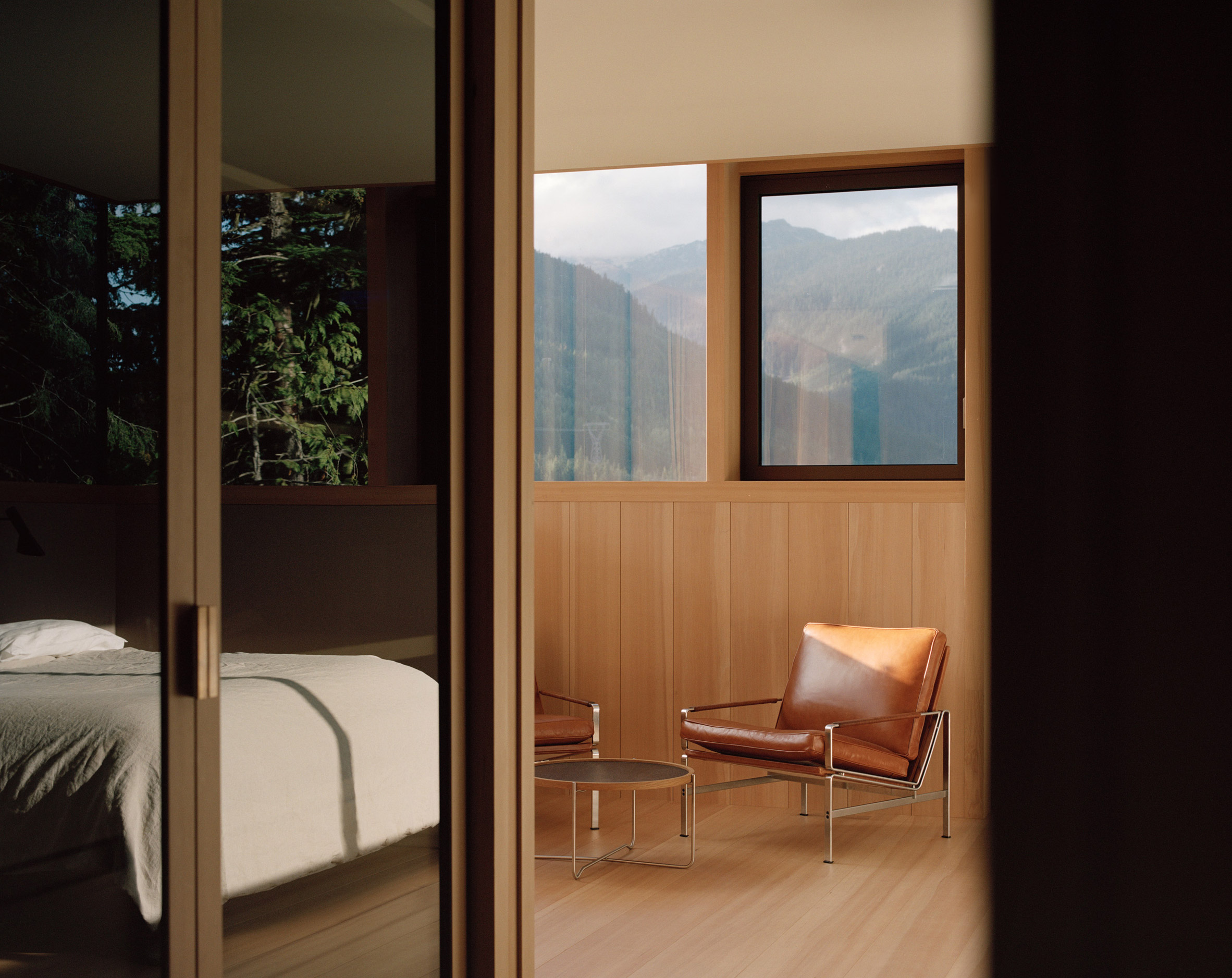
Living spaces are organised around the crest of the rock, combining a mix of subterranean rooms and airy, light-filled spaces. Expansive windows offer framed views of the lake, while a series of terraces allow the family to spend plenty of time outdoors.
"This journey to the crest of the rock, with its shifting horizons, has been a key driver in the layout and design of the building," explained Gort Scott co-founder Jay Gort.
"Although we are placing a significant building on the site, our aim throughout has been retain this experience when walking to and through the house."
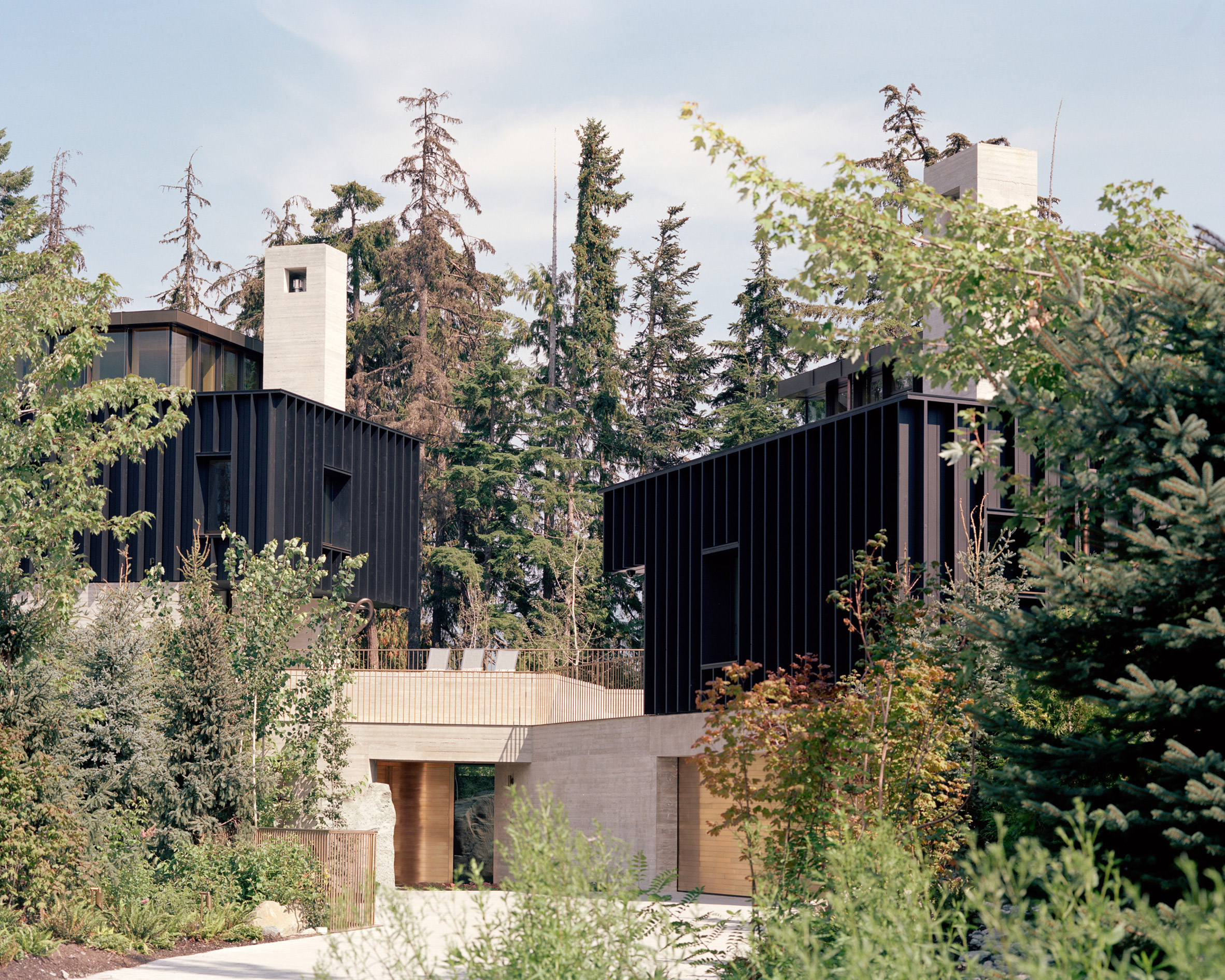
The Rock is built from concrete, with some timber cladding
Despite being based on the other side of the world, Gort and partner Fiona Scott landed the commission for The Rock after winning an invited competition.
Their design concept was based around the idea of creating harmony between contradictory characteristics, such as light and dark, and openness and enclosure.
By combining this concept with the particular topography of the site, the architects were able to develop a complex internal layout organised over four storeys.
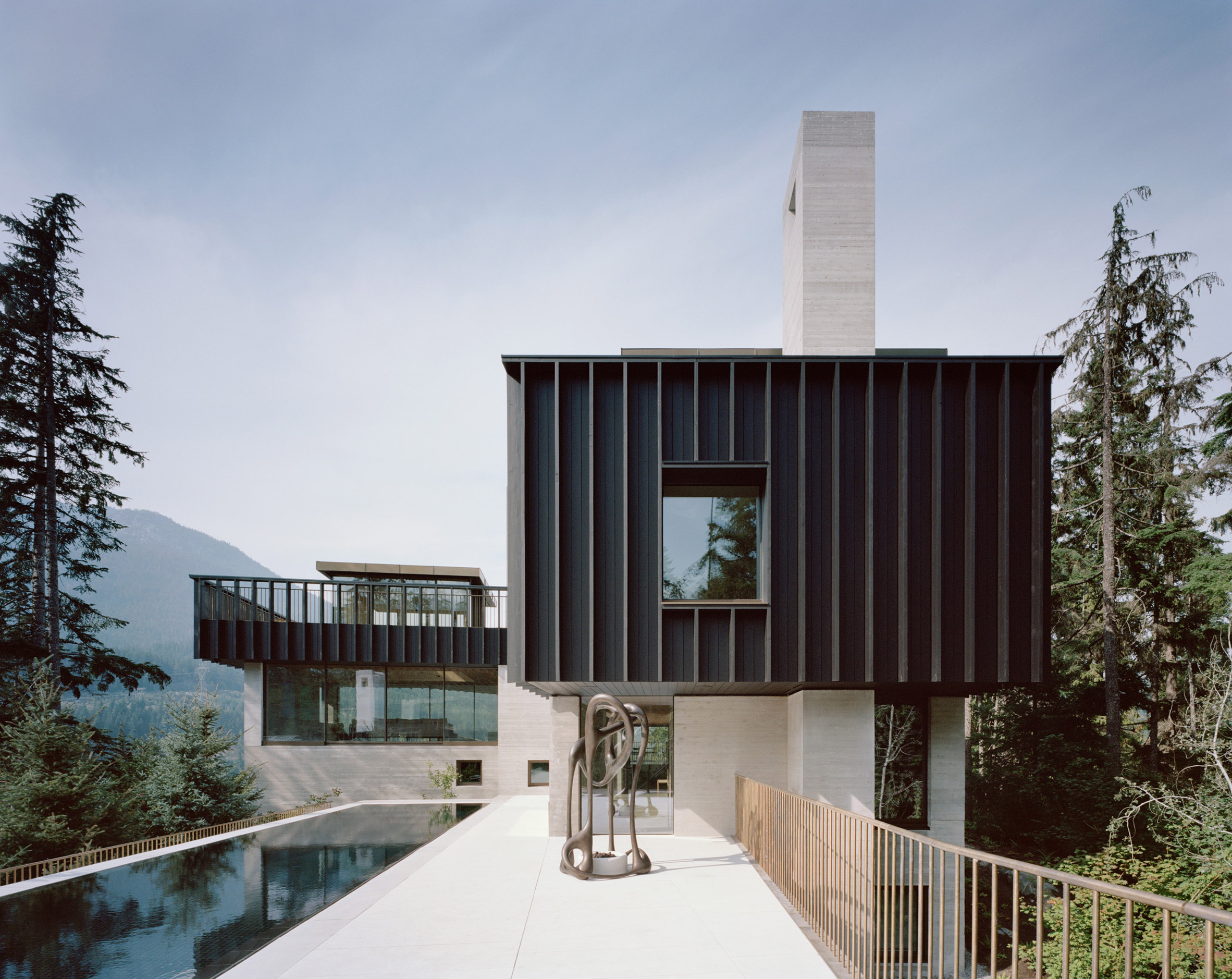
A large terrace and swimming sit between the main house and a guest house
"Before placing pen to paper we spent five days on the site, absorbing its characteristics: the weather, the topography, the fauna, distant views, etc," said Gort.
"This appreciation of the site has been critical to the design, siting and arrangement of the building, for example, the proposed dining area enjoys the western light over the lake and the bedrooms enjoy a particular view to a distant mountain to the east through the trees."
The house features expansive glazing and multiple terraces
As you ascend through the floors, the building divides up into three distinct volumes, each with their own concrete chimney stacks and blackened timber cladding. The first two form the six-bedroom main house, while the third accommodates a separate, two-bedroom guest house.
Connecting the two residences is a first floor terrace boasting an infinity pool.
Views over Alta Lake are offered from the rooms and terraces
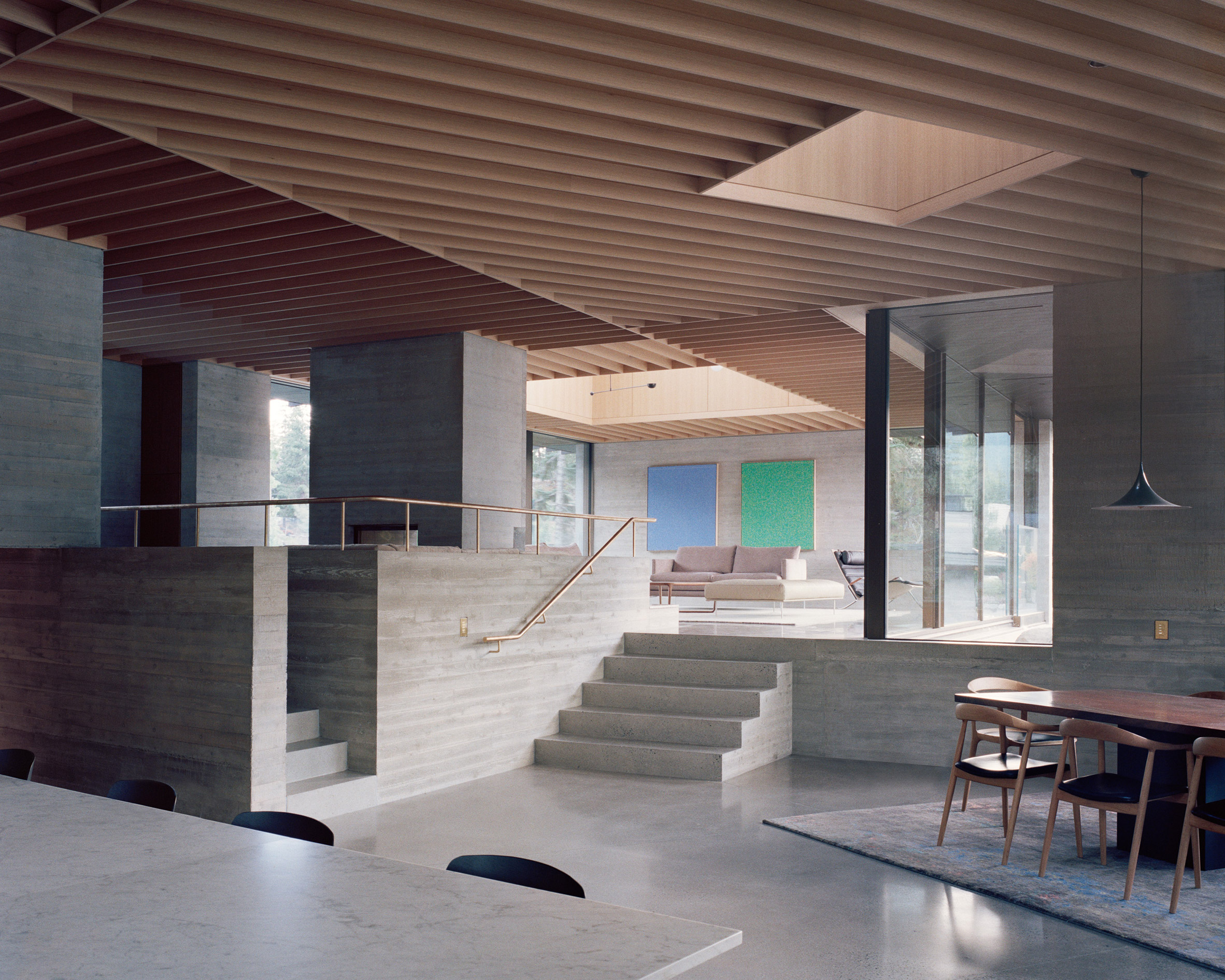
Inside, the main house centres around an expansive lounge, dining room and kitchen, where changes in floor level and ceiling height help to create a mixture of different moods.
The space feels minimal, thanks to the exposed board-formed concrete, but wooden ceilings offer a degree of warmth.
The living spaces are organised over split levels
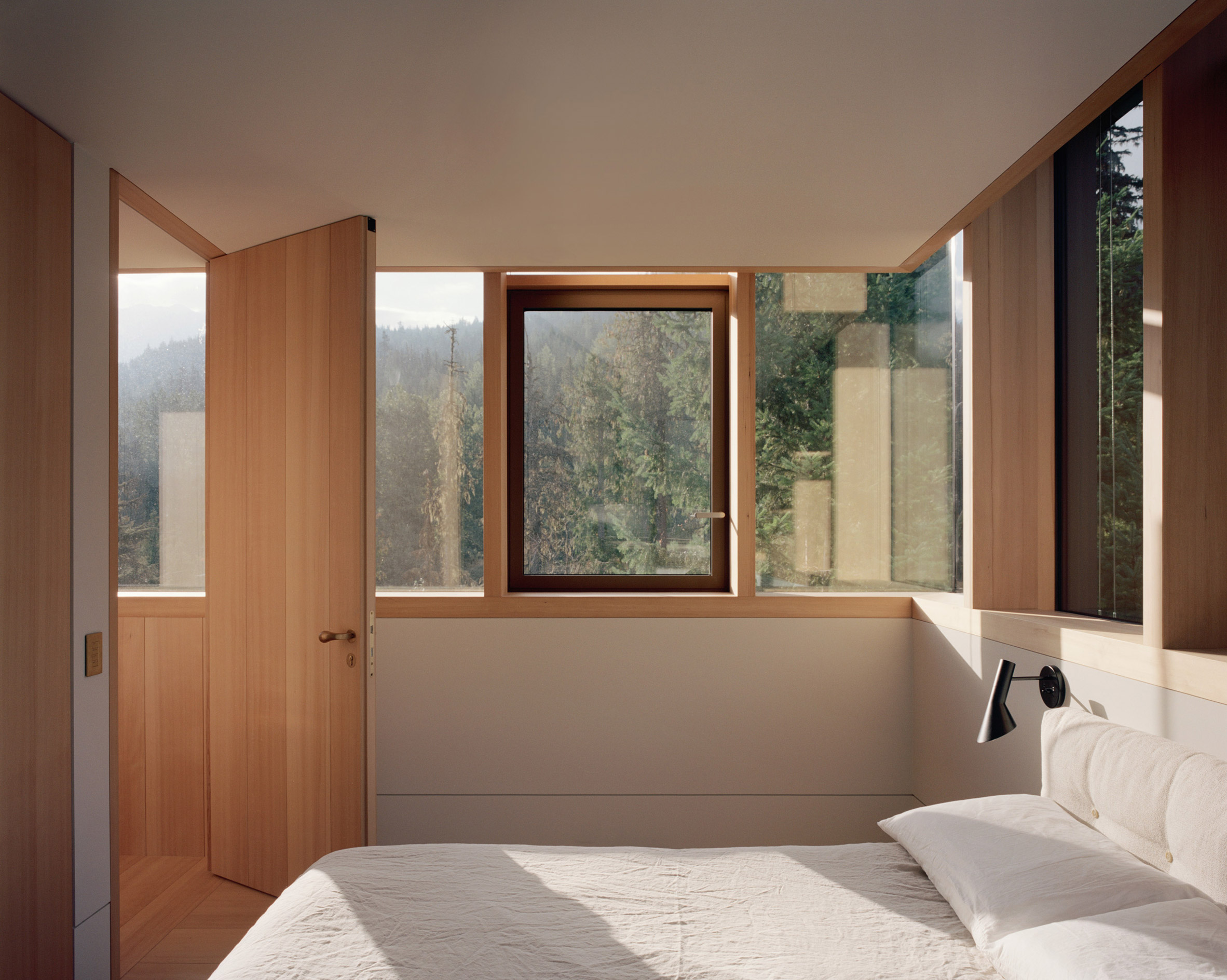
Bedrooms are dotted throughout the house, with some partially submerged into the rock and others elevated above it.
Some are located in a bedroom wing that benefits from the eastern morning light, while the main bedroom can be found on the uppermost level, along with a study that offers 360-degree views.
Some bedrooms enjoy eastern morning light
The lower level features additional facilities including a cinema room, a gym and a wine room.
Gort Scott also designed interior fittings for the house, in order to create a unified aesthetic. Joinery details were added throughout, using a mix of oak and locally sourced hemlock, and are complemented by subtle textiles.
Oak and hemlock joinery features throughout the house
The house is now home to a couple and their three children.
The house is located in the Canadian mountain resort of Whistler
"Working with our client in this incredible place, to make this house, has been a journey of great discovery, as well as painstaking hard work," said Fiona Scott.
"The contractor also rose to the challenge of this complex building and made it beautifully. The house grows out of the landscape but isn’t deferential to it, neither does it dominate it – we feel the house and the rock are better for each other."
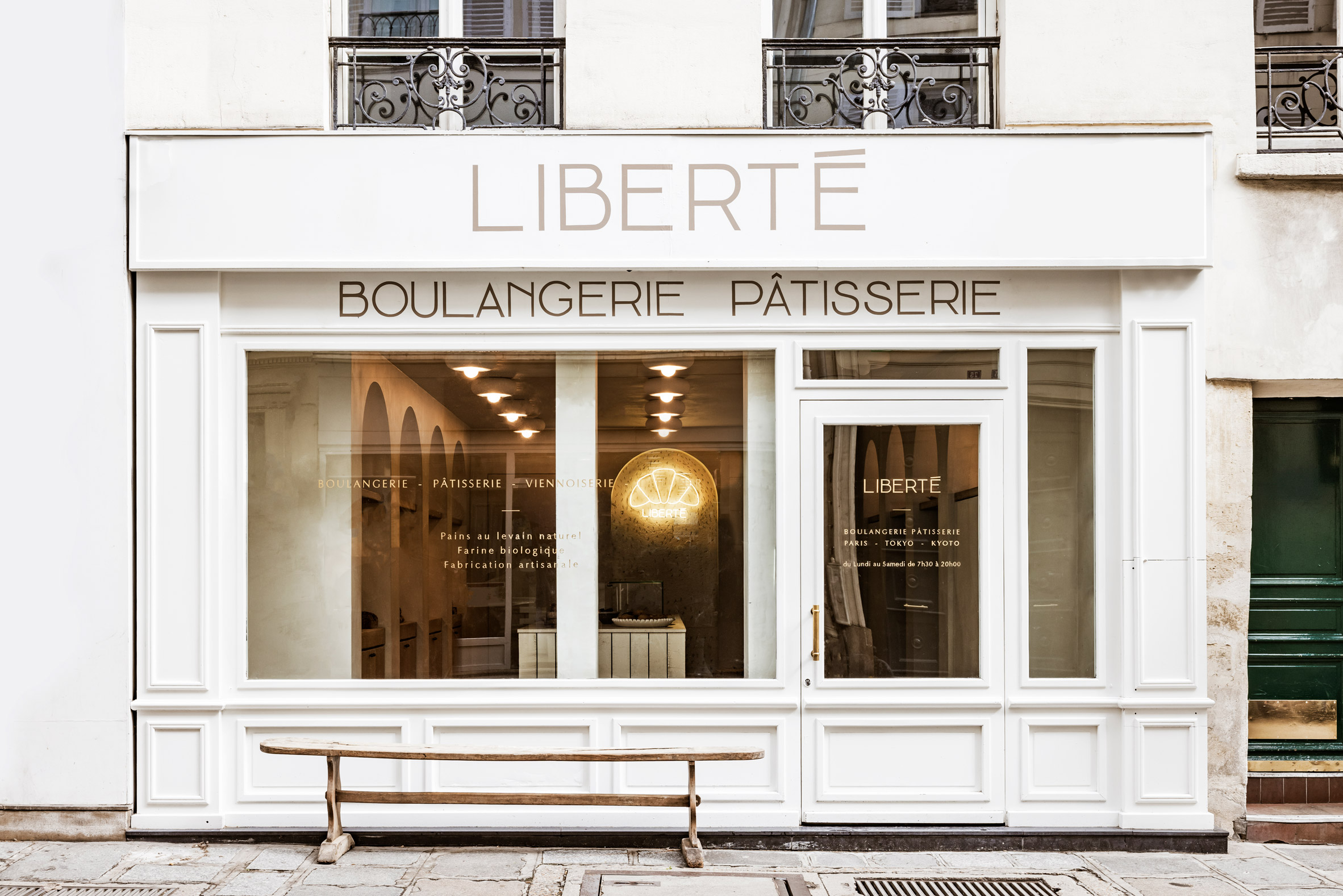
Interior architecture studio Emmanuelle Simon used arched shelving coves, sandy tones and rounded furniture in the Liberté bakery in Paris.
Founder of Boulangeries Liberté Mickael Benichou gave Emmanuelle Simon free rein to create "a unique spot" in the 25-square-metre space.
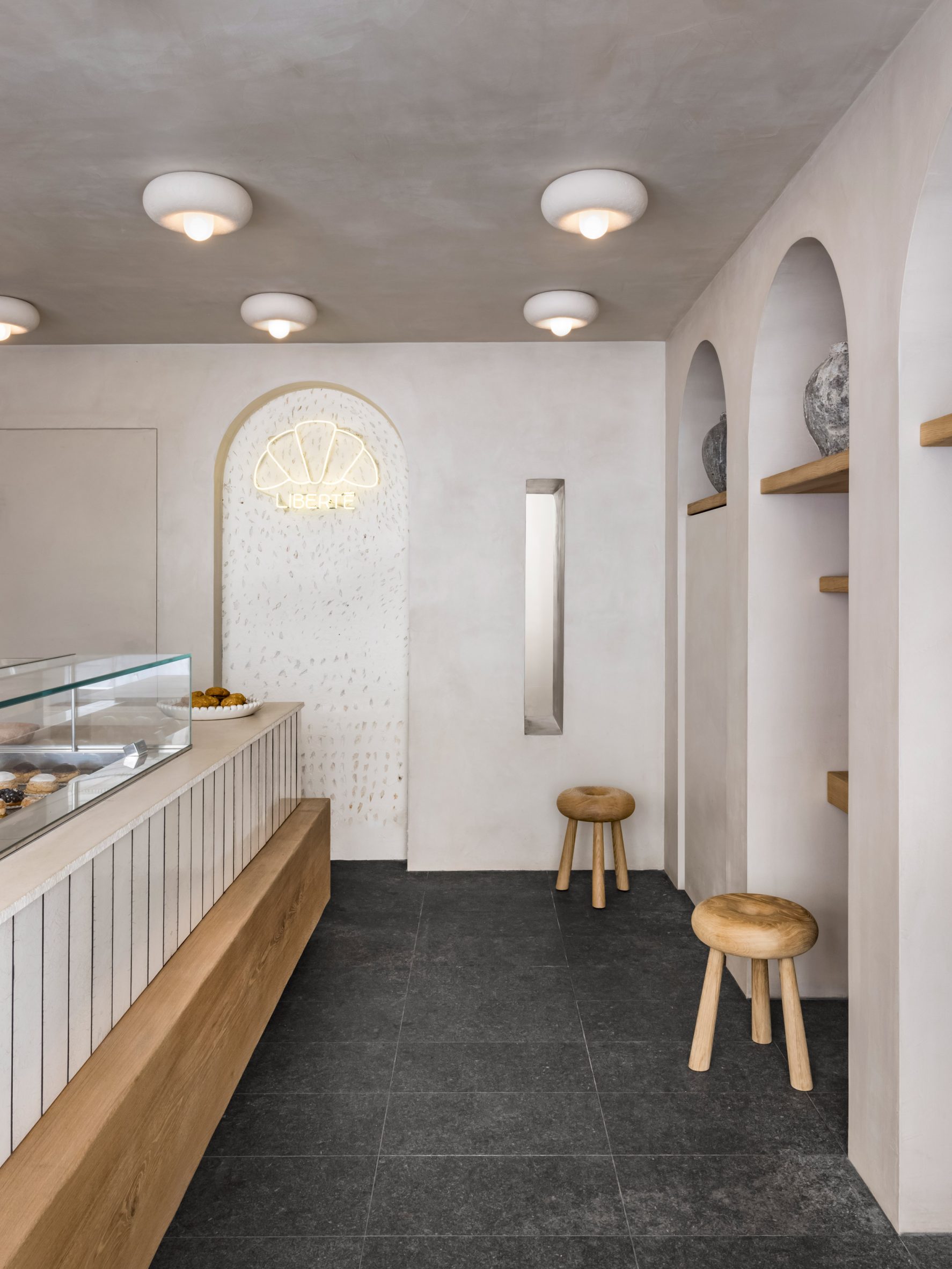
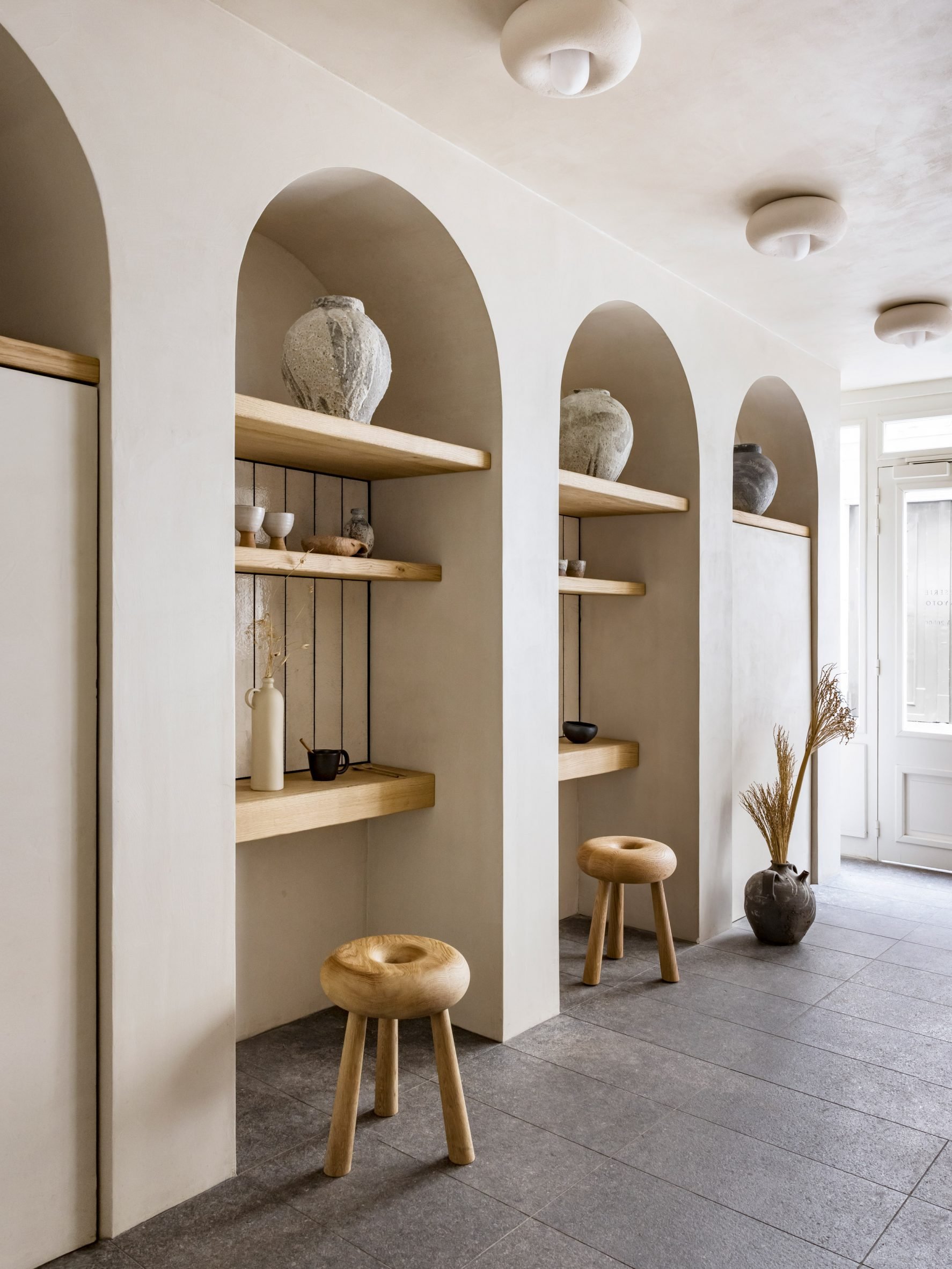
Top: Liberte has been designed to be a welcoming bakery. Above: rounded coves are meant to add depth and warmth to the atmosphere
The designers aimed to create cosy interiors that would prompt visitors to stay inside for a little longer than usual while on their daily bakery round.
"I wanted to create an authentic and memorable experience, in a place of daily passage which is rather brief, as it is for buying bread," the studio's founder Emmanuelle Simon told Dezeen.
"The cosy atmosphere is a feeling that results from a multitude of details: natural materials, colours, the round shapes of the furniture, lighting and the arches of this bakery," she continued.
Custom solid wood stools and rounded lights add authenticity
The bakery contains a series of arched coves where customers can sit and enjoy their coffee and pastries.
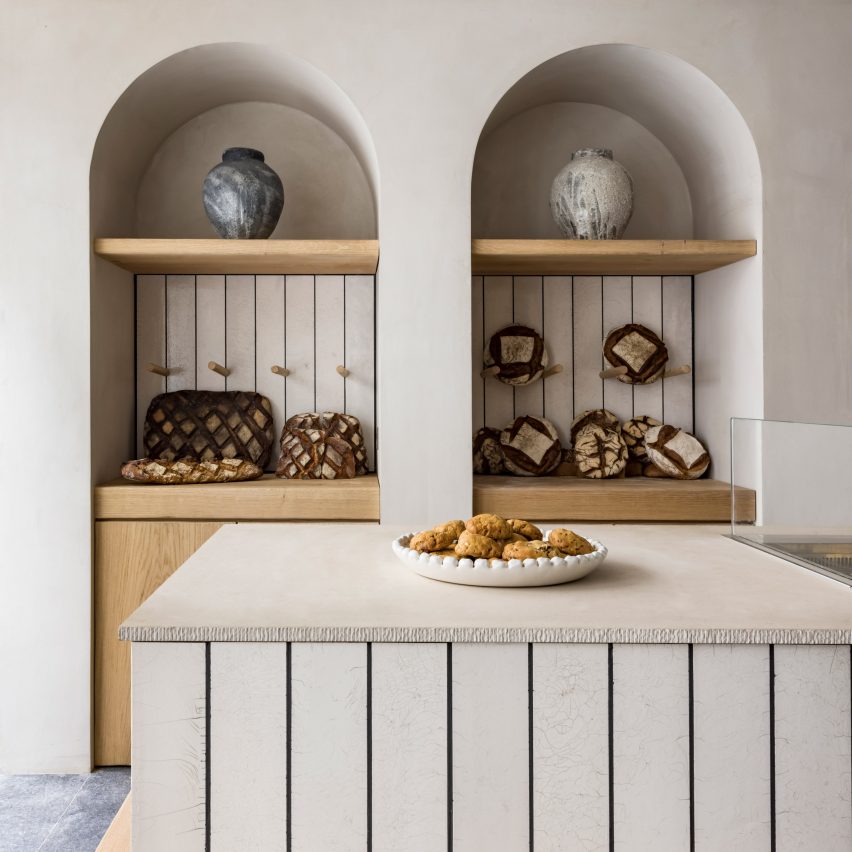
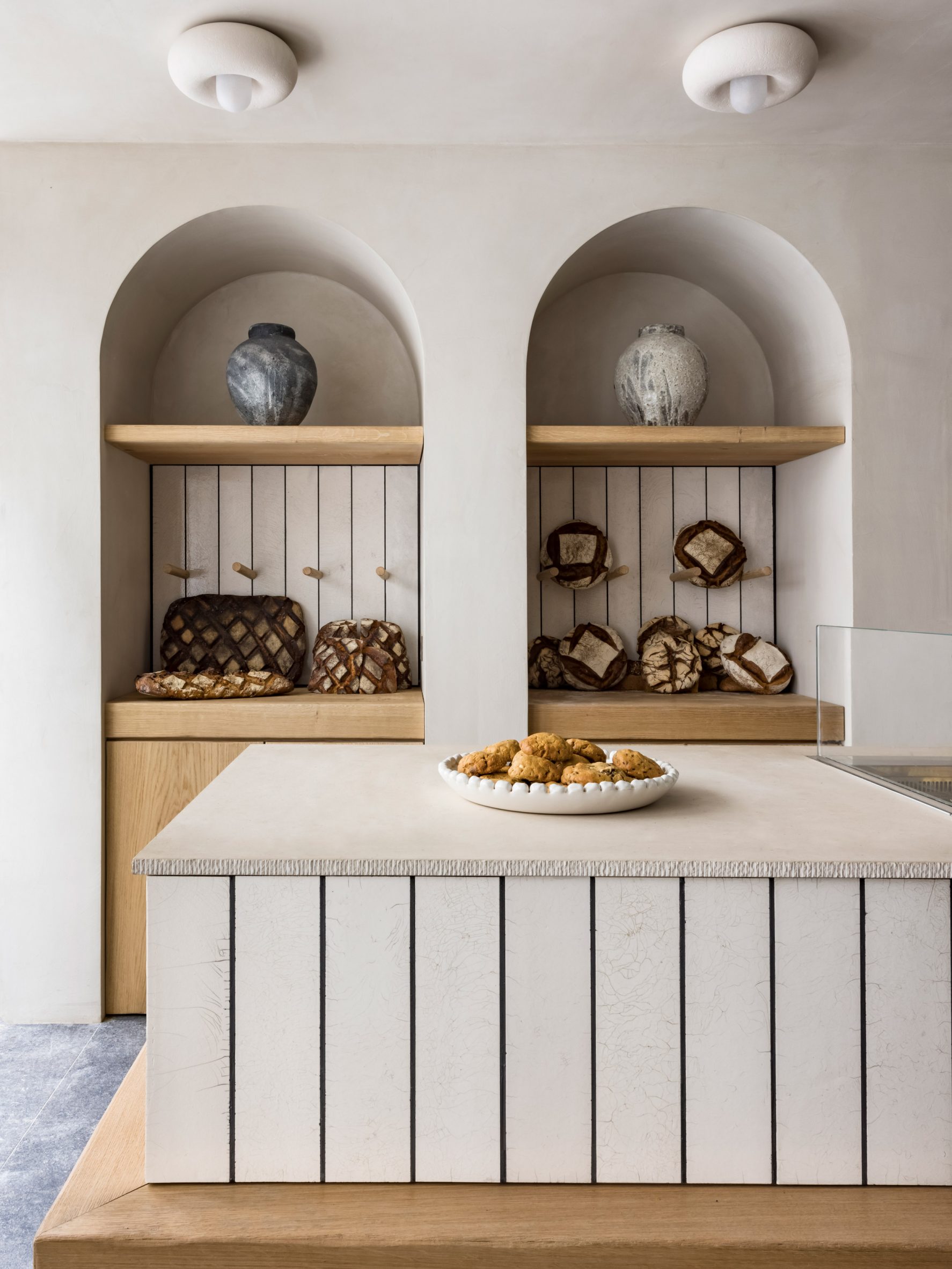
Four further coves behind the main counter are used to display the selection of bread.
A central island, where customers can place their orders, stands in front of the bread display
"Arches make the gaze travelling between the volumes and the play of light, its roundness shape is enveloping and welcoming," Simon explained.
"You find yourself surrounded by arched, like a cloister, making the gaze travel between the play of lights and volumes," she added.
Simon used Raku tiles to echo the cracks found in freshly baked bread
Elsewhere, built-in shelves display the store's baked goods, kitchen utensils and neutral-coloured ornaments.
Raku tiles – ceramic tiles that have been made using the Japanese firing technique – decorate the central island and the arched alcoves.
"I chose the Raku, a Japanese ceramic technique which uses a thermal shock to create random cracks, as it is reminiscent of bread hot out of the oven," said Simon.
"The Raku plaques adorn the central island and the arch-shaped niches, and create a rhythmic drawing."
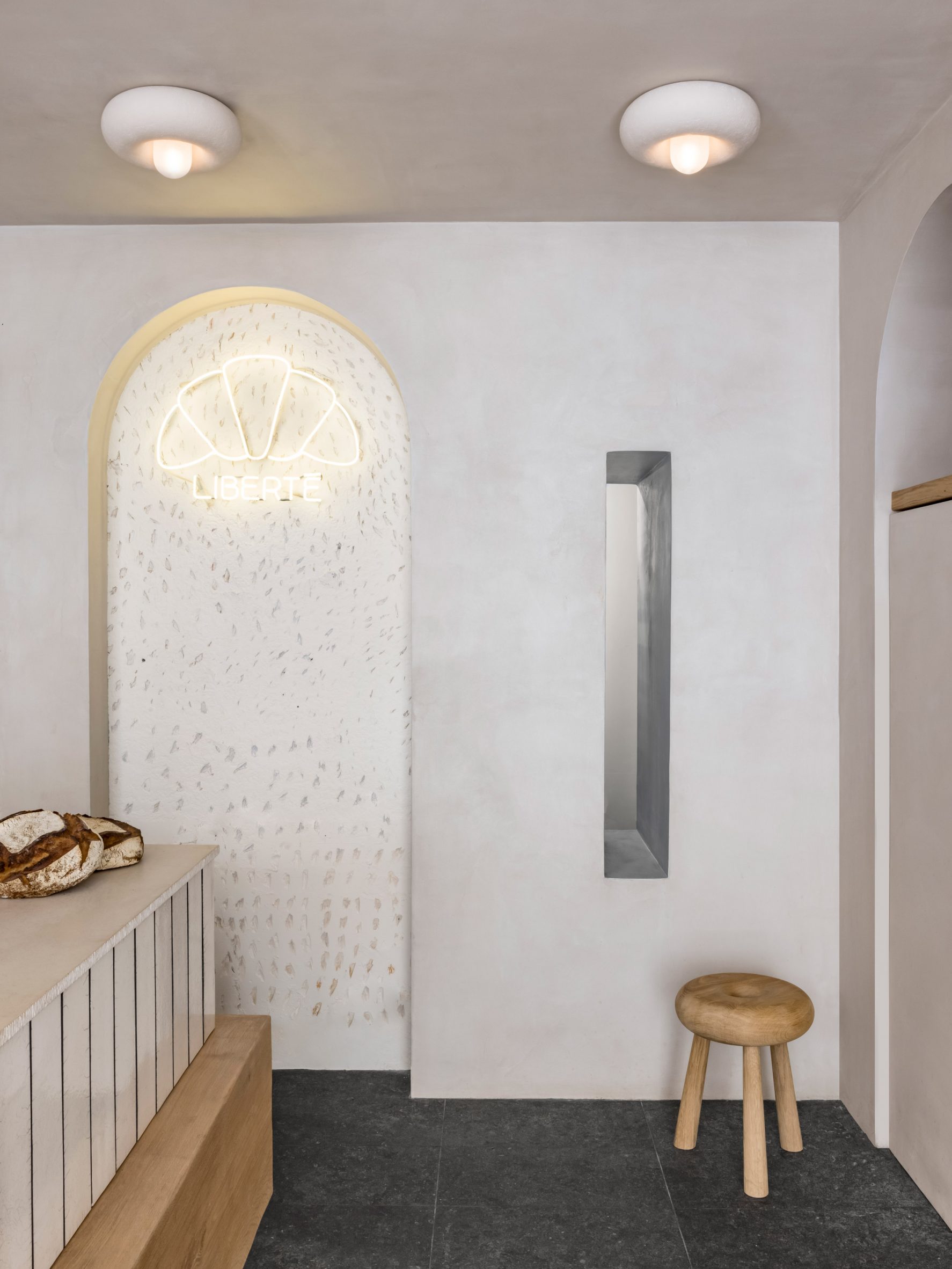
Round ceiling lights are made from chamotte clay
Other custom details include 12 round ceiling lights made from chamotte clay and frosted glass, and the round, solid wood stools.
"The presence of solid wood, shaped by the hand of the craftsman, brings a refinement to this place made to measure," said Simon.
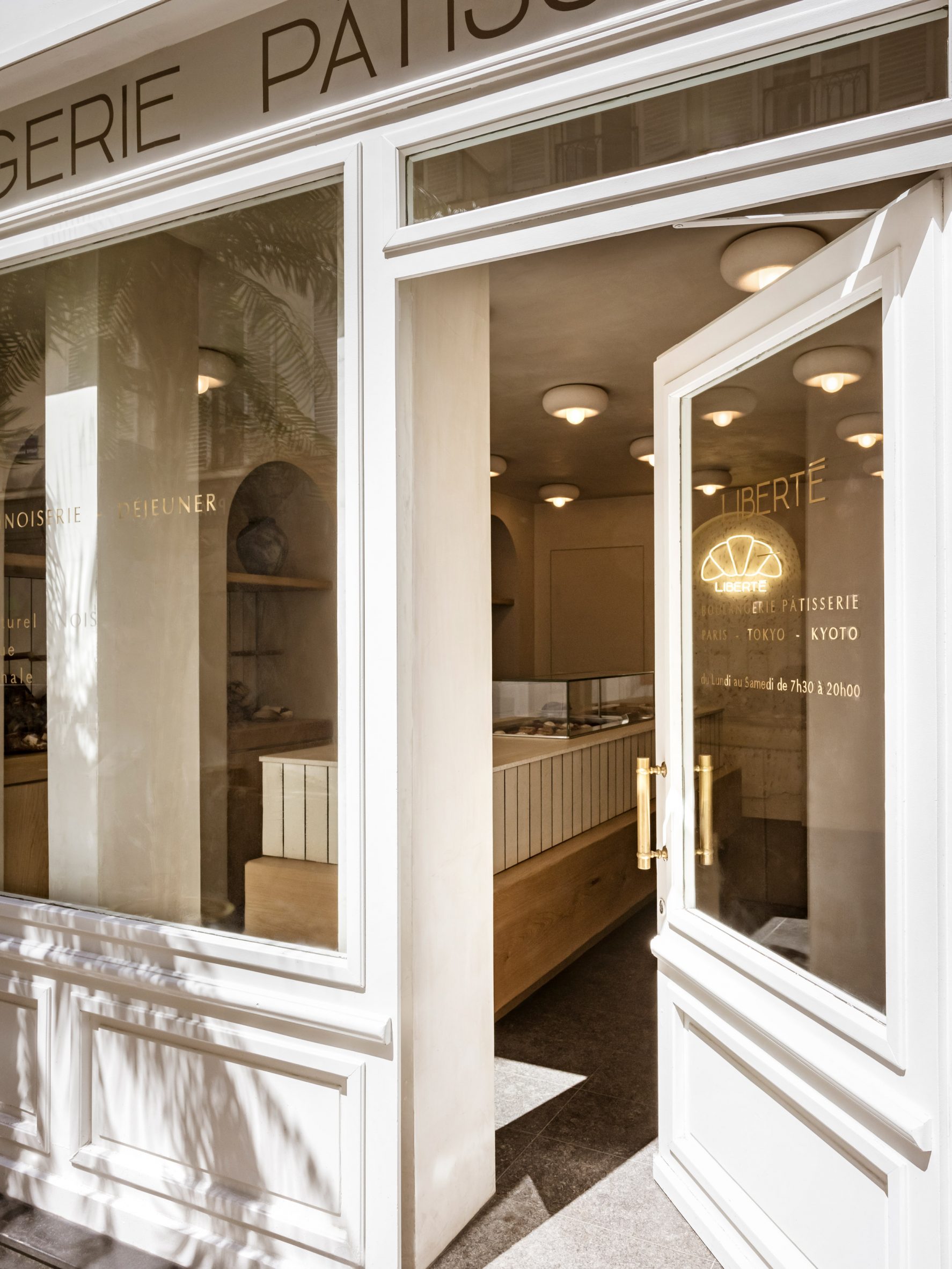
Arched alcoves are visible for the exterior
The popular bakery chain already has a store in rue des Vinaigriers, Paris. This new location in Paris' 7th arrondissement, marks part of the bakery's expansion.
A narrow vertical opening at the back of the room allows customers to watch the baker at work as they prepare the delicacies, added to the "authenticity" of the experience.
Other minimalist bakery designs include craft bakery Sofi, which is located in Berlin. Danish architects Mathias Mentze and Alexander Vedel Ottenstein designed the bakery around an open kitchen, to allow customers to enjoy watching the bread-making process.
Designing a kitchen? Our latest Dezeen guide explains eight of the most common kitchen layouts with links to lookbooks containing hundreds of examples to inspire you.
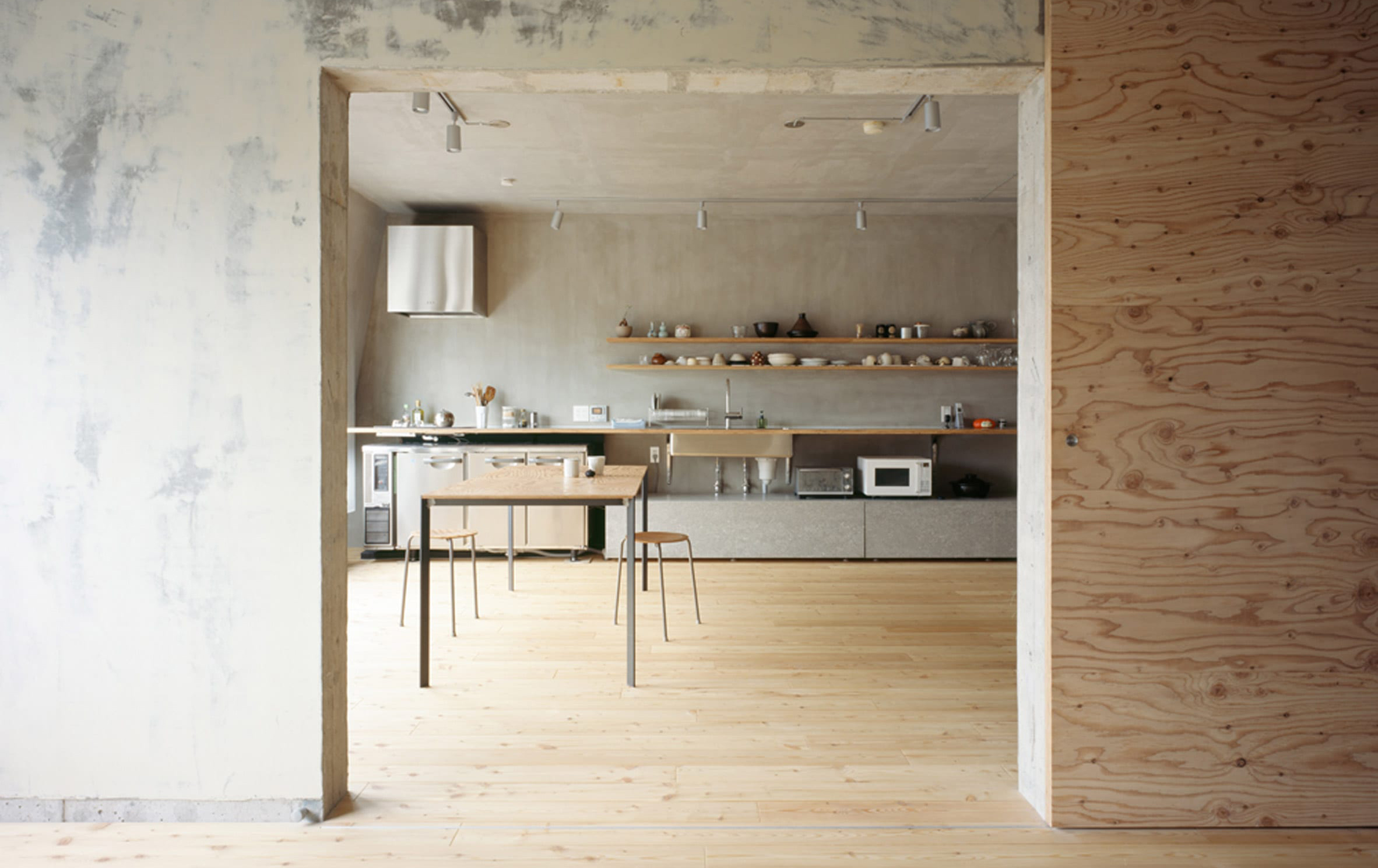
The one-wall kitchen is the simplest of layouts, featuring cabinets and countertops arranged along a single wall.
The arrangement takes up less floor space than other formations so is popular in both smaller interiors as well as in larger, open-plan spaces where the kitchen is integrated with a dining room or living room.
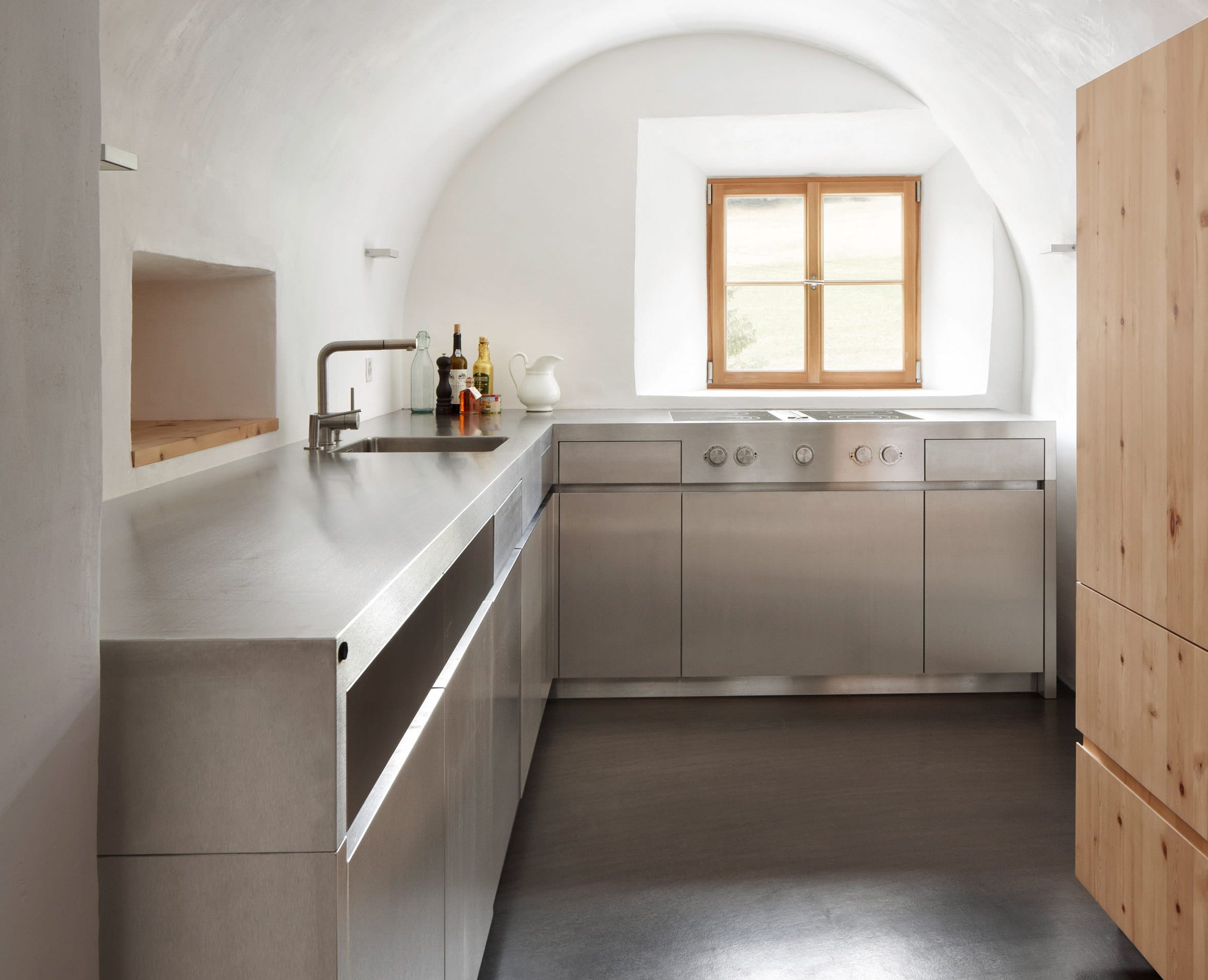
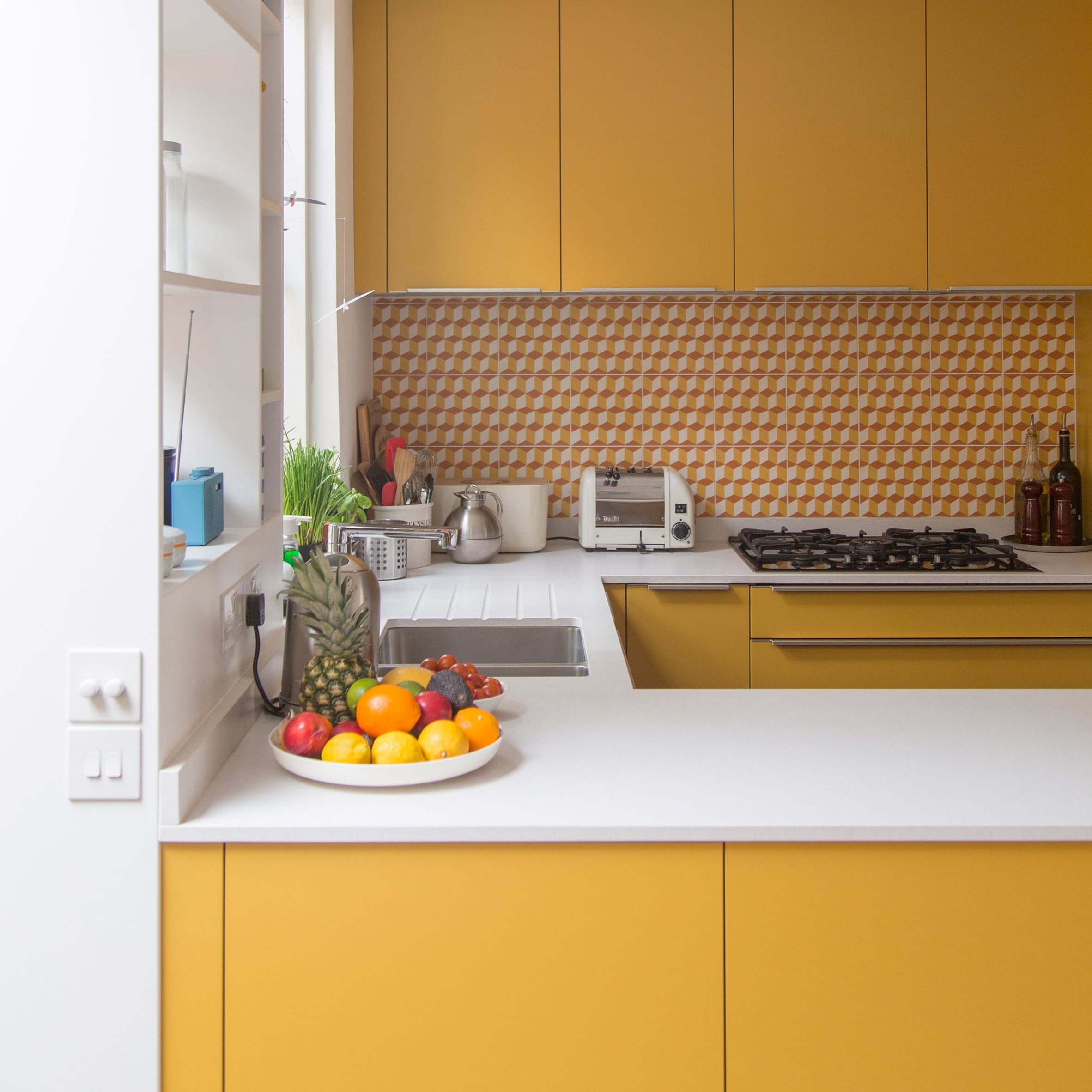
U-shaped kitchens are formed from a trio of worktops connected in the shape of an open rectangle.
One of the most popular kitchen layouts, the arrangement is often used in smaller homes as it creates an efficient work triangle with the stove, sink and refrigerator in close proximity.
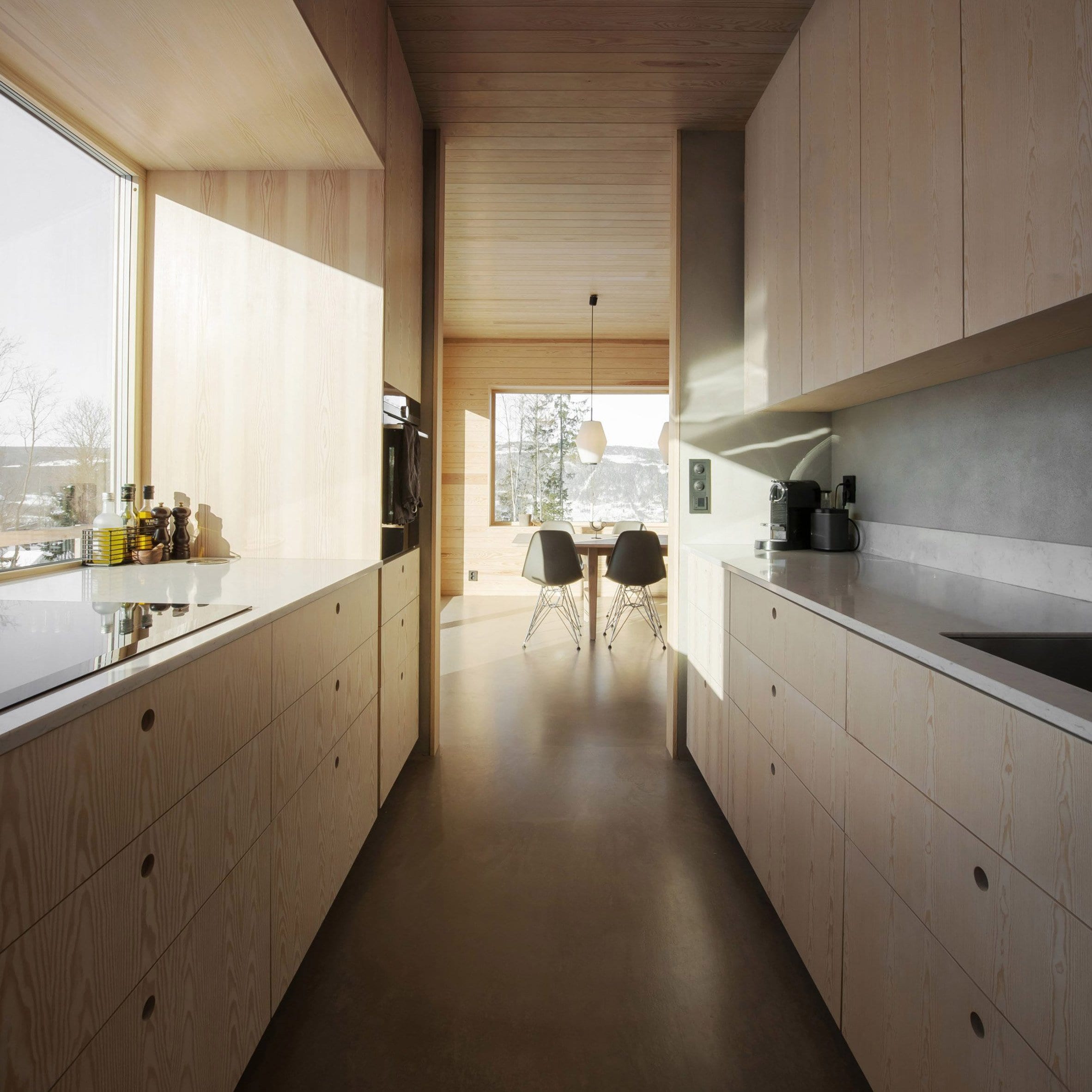
Named after the narrow food preparation area on ships, galley kitchens contain two parallel rows of cabinets and countertops.
Another extremely popular layout, the arrangement works well in narrow spaces and, like the U-shaped kitchen, provides an efficient work triangle. In smaller homes, the galley layout is often combined with a dining area accessed by walking through the kitchen.
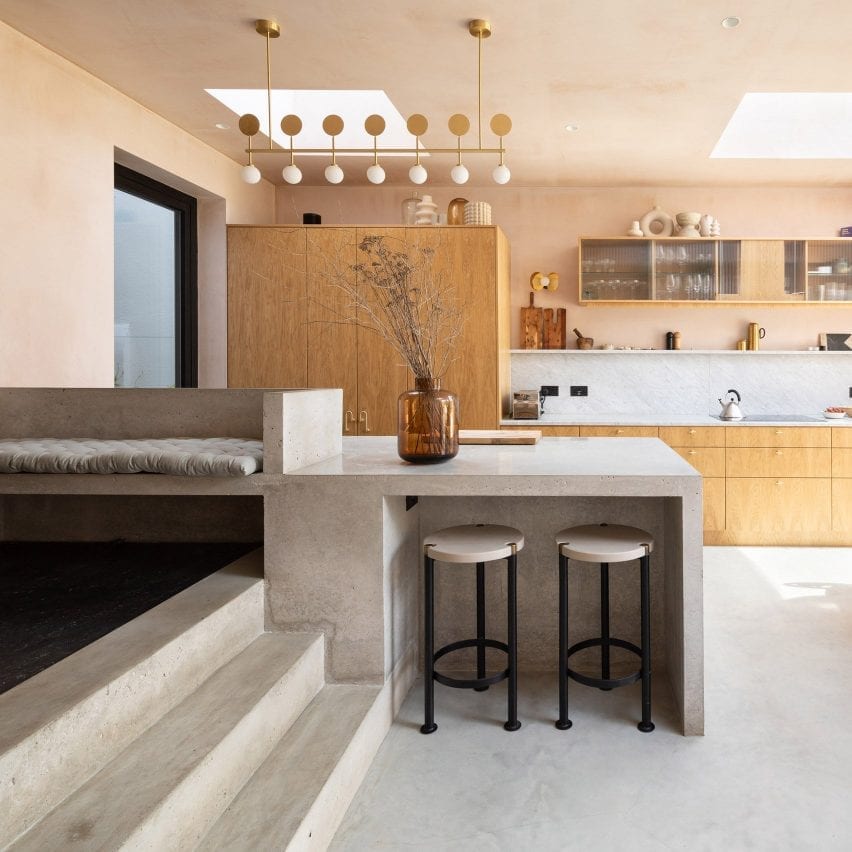
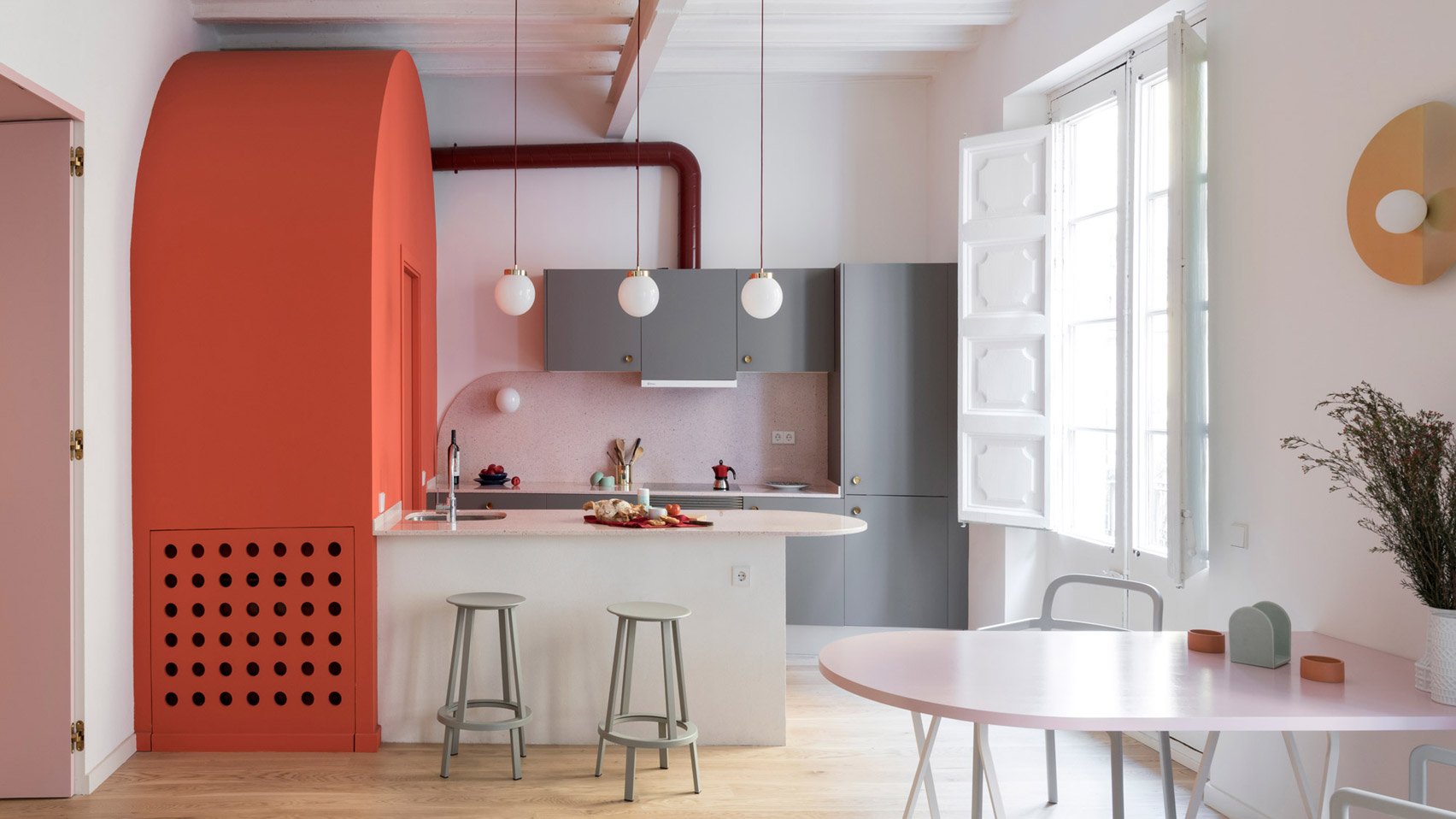
Shaped like the geographical feature they are named after, peninsulas extend out into a kitchen from a wall or work surface to create additional countertop and seating space.
The extended counters, which often double as a breakfast bar for casual dining, are often used in smaller kitchens that don't have space for a free-standing kitchen island.
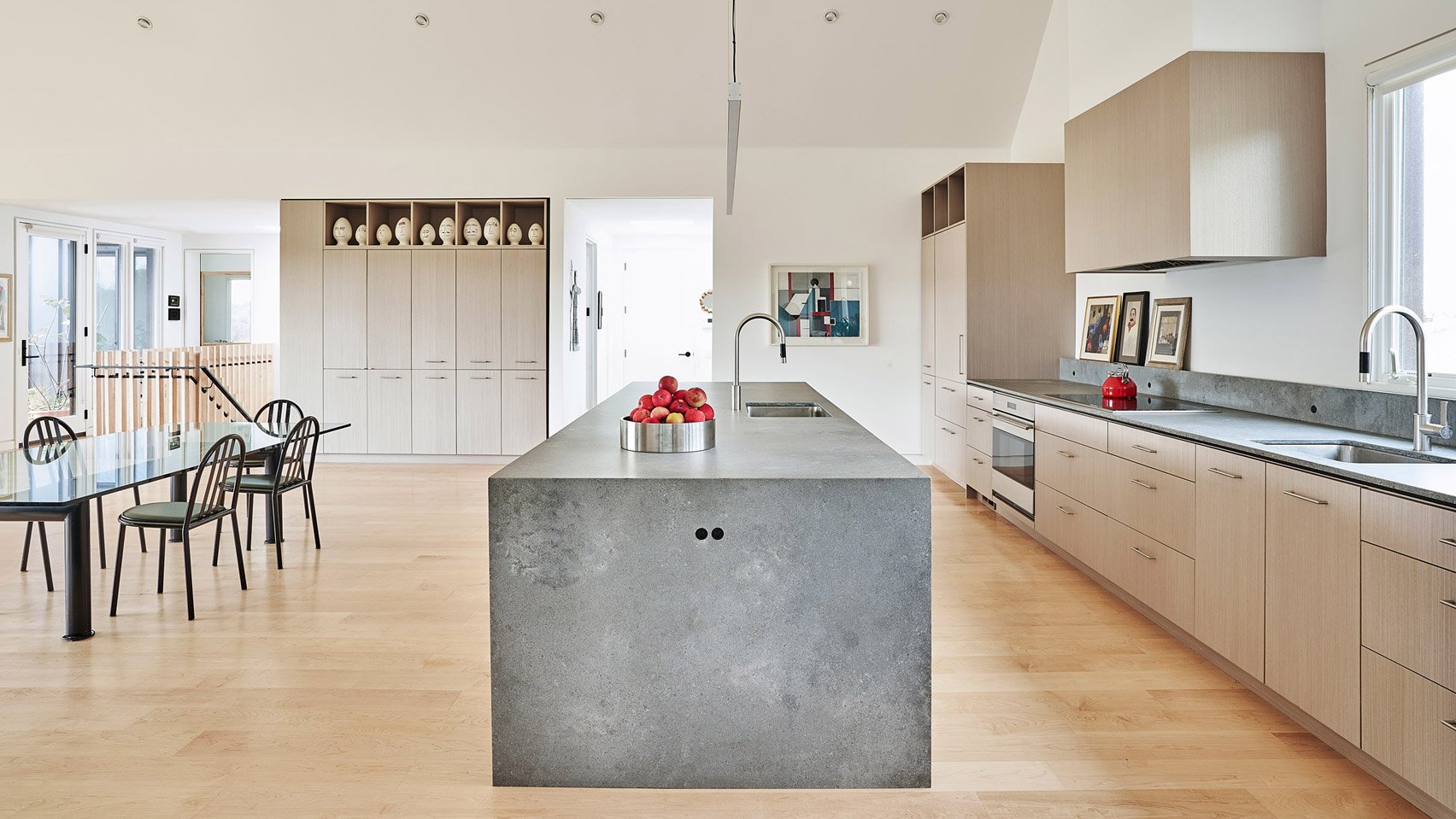
Many kitchens include a freestanding counter-height unit known as an island as it is separated from the walls of the kitchen.
Usually rectangular in shape, the unit usually contains additional storage below and extra preparation space on top. They can often double as a space for eating with the inclusion of a breakfast bar.
Integrating a kitchen with an area for dining creates a multifunctional space for cooking, eating and socialising.
Combined kitchen dining rooms are popular in both large homes, where they can be used as an open space for entertaining, and in small homes, where they save space.
Often incorporated into kitchen islands or peninsulas, breakfast bars are extensions of a countertop that can be used as an informal space to dine or socialise.
Breakfast bars often double as additional counter space making efficient use of space and can be an alternative to a dining table in a small home. They can also be used as handy desk space for those working from home.
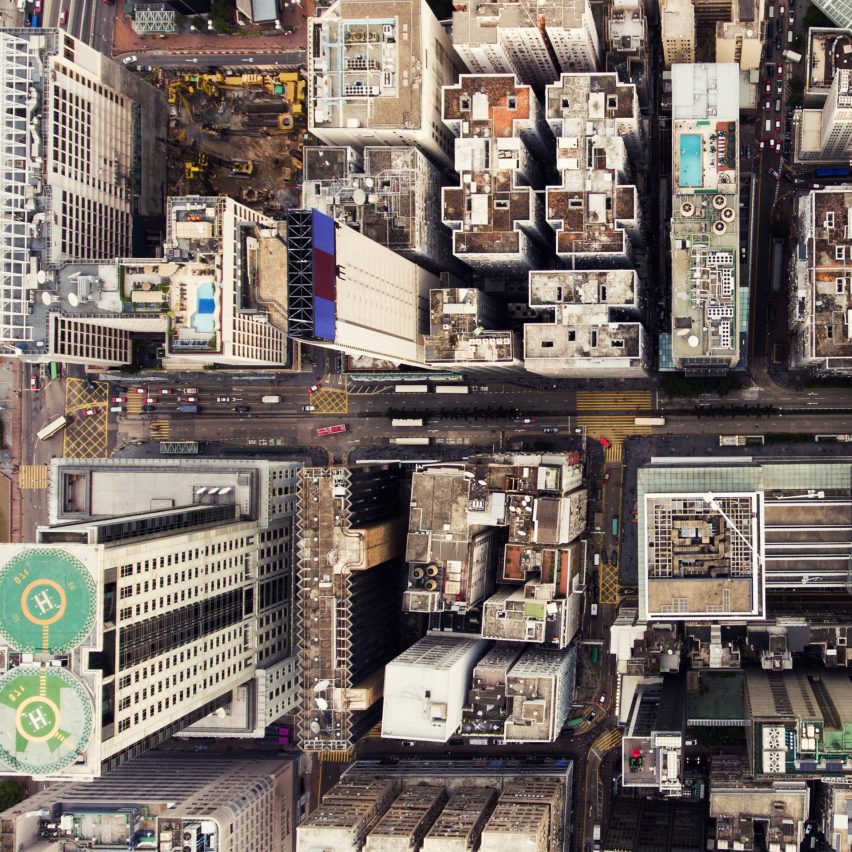
The shift to remote working from suburbs and the countryside due to the Covid-19 pandemic could lead to a huge rise in carbon emissions, according to Taylor Francis of decarbonisation platform Watershed.
The trend could increase migration from cities and lead to less sustainable lifestyles, he told Dezeen.
"One of the best tools we have in decarbonisation is urbanism," said Francis, who is co-founder of Watershed, which helps large companies eliminate their emissions.
"Everyone who lives in a city is way lower carbon than people who live in suburbs."
Remote working could be "quite negative" for climate change
Many companies claim their work-from-home policies have led to lower emissions but that is not necessarily the case, Francis said.
"One thing we're really concerned about is whether this kind of shift to remote work is actually incentivising people to move from San Francisco and London out into more suburban areas where they get a bigger home and buy an SUV," he continued.
"That's the way in which remote work could actually be quite negative from a climate impact perspective."
Taylor Francis of decarbonisation platform Watershed
Remote working could also lead to more work-related travel if companies arrange regular offsite gatherings, he added, pointing to a free calculator on Watershed's website that helps calculate the climate impact of their remote-working policies.
"If we're all going to be doing this sort of thing over Zoom that used to require a flight to London, then the new world is good," he said.
"But if work from home means that people are going to travel more often for quarterly offsites, that actually means work from home is bad."
Watershed aims to "help companies get to zero carbon"
Watershed was founded in 2019 to help companies understand and eliminate their carbon emissions. Its clients include home-rental platform Airbnb, food delivery company DoorDash, restaurant chain Sweetgreen and fintech brands Revolut and Monzo.
"Watershed is a software platform to help companies get to zero carbon," Francis said. "At a super high level, we think that every business in the world above a certain size over the next 10 years is going to have to integrate climate into how they run their company."
Francis said there is a surge of large companies taking climate seriously and scrambling to develop strategies to achieve net-zero emissions.
"There's a huge wave of companies at the board and exec level thinking about climate in a pretty serious way," he said, following pressure from legislation as well as investors such as BlackRock, the world's biggest financial asset manager, which has committed to make its investment portfolio net-zero by 2050.
"That pressure comes from public market investors like BlackRock and it comes from regulators," he added. "The UK is actually leading the way there. The US is a step or two behind it."
"True net-zero requires carbon removal"
Watershed takes its clients through a four-step process. First, it helps them measure their emissions by uploading data to an online dashboard. Next, it advises them on how to reduce emissions. Thirdly, it assists with atmospheric carbon removal, which involves helping companies "fund permanent, durable, high-impact carbon removal".
Finally, it facilitates reporting so investors, regulators, employees and supply chains can see how they're progressing.
Francis, along with other leading figures in the nascent carbontech industry, uses the phrase "carbon removal" instead of "offsetting" since the latter term is widely used to describe schemes that reduce emissions rather than negating them.
"We strongly believe that true net-zero requires carbon removal, which is taking carbon out of the atmosphere, rather than traditional offsets, which involve paying someone else not to emit carbon into the atmosphere," he said.
Tackling climate change "planet's number one objective"
Carbon removal involves actively removing carbon that has already entered the atmosphere via carbon capture techniques including soil sequestration, biomass and direct air capture.
"Every solution for us getting to zero carbon by 2050 includes five to 10 gigatonnes of durable carbon removal per year by the middle of the century," he explained.
"Right now we're in the thousands of tonnes, tens of thousands of tonnes of credible carbon removal when you strip away all the low-quality, low-impact carbon offsets. So that space needs to scale up enormously."
"I think it will," he added, given that tackling climate change has become "the planet's number one objective". "But that's the pinch point. Where are those five to 10 gigatonnes per year of carbon removal gonna come from?"
He urged companies to set up carbon removal portfolios to help fund the sector so it can develop more efficient sequestration methods and achieve scale. "Funding carbon removal to get around the pinch point is really important," he said.
"Your carbon footprint is primarily the carbon footprint of the companies you work with"
Companies are beginning to realise that their carbon footprints are inextricably entwined with those of their supply chains. This is leading them to demand transparency from suppliers so they can work with them to eliminate the tricky Scope 3 emissions.
These are emissions generated by a company's value chain but over which it does not have direct control. Companies need to eliminate these emissions – or negate them via carbon removal – in order to achieve net-zero.
"The big emerging center of gravity is around engagement between suppliers and their customers because your carbon footprint is primarily the carbon footprint of the companies you work with," he said.
"And that's true for most companies that are not heavy emitters themselves. That whole space is completely nascent. There needs to be a more interoperable standard for how companies share data about their carbon footprints and their carbon plans with their customers. That's part of the Watershed mission."
Overall, the built environment accounts for around 40 per cent of global emissions and the real-estate portfolios of large companies account for a huge proportion of their carbon footprints.
"The built environment is a very, very carbon-intensive space"
Reducing this has become a key focus for Watershed's clients. "When we do carbon footprint assessments for tech companies, their investment in new buildings, fit-outs and leasehold improvements ends up being near the top of the list almost all the time," Francis explained.
"The built environment is a very, very carbon-intensive space," he added, describing the situation as a "huge opportunity" for architects.
These companies "desperately want to fit out buildings in a low-carbon way or build new buildings in a low-carbon way," he added. "The thing that's exciting is that it's a dirty supply chain. But it's also a supply chain where there are low carbon options. There's a lot of possibilities out there."
However, companies tend to "get a blank response" from architects and construction firms.
"The common journey that I see is that customers who would be architects' clients say: 'Whoa, this is a wake-up call. We desperately want to fit out our building in a low-carbon way or build a new building in a low-carbon way'. And then they go to their contractors or architects and kind of get a blank response."
"So I think there's a huge opportunity for architecture firms, builders and contractors to have a low-carbon offering. Because companies are in the market for that."
Architects tend to respond by saying they can't force their clients to commission net-zero buildings, which are buildings that make no contribution to atmospheric carbon across their whole lifecycle including both construction and use.
Does Francis buy that argument? "No I don't," he replied.
Watershed is not yet working with any of the heavy-emitting companies such as oil-and-gas firms or cement manufacturers. But he believes that pressure from investors, legislators and customers will force them to clean up their acts.
"Our strategy is to work with companies that are at least one step downstream of the heavy emitters," he said. "Because I think there's this really interesting pressure that is building from investors and customers to companies."
"It ends up manifesting in demand for low-carbon solutions from the commodity providers. And so that's where we really spend our time."
Carbon revolution
This article is part of Dezeen's carbon revolution series, which explores how this miracle material could be removed from the atmosphere and put to use on earth. Read all the content at: www.dezeen.com/carbon.
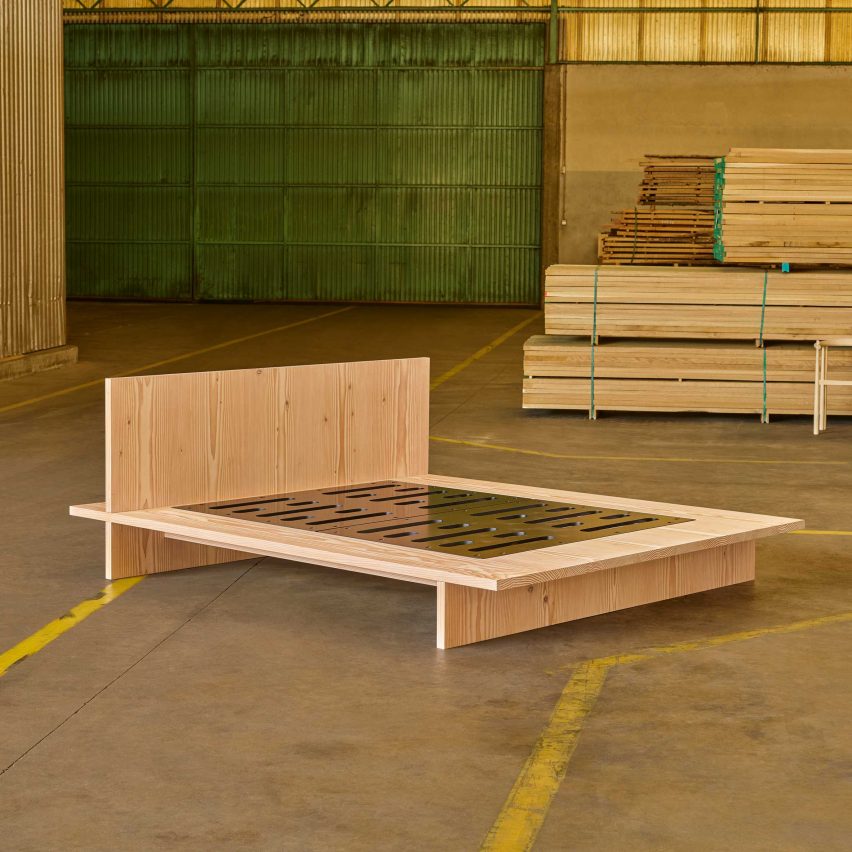
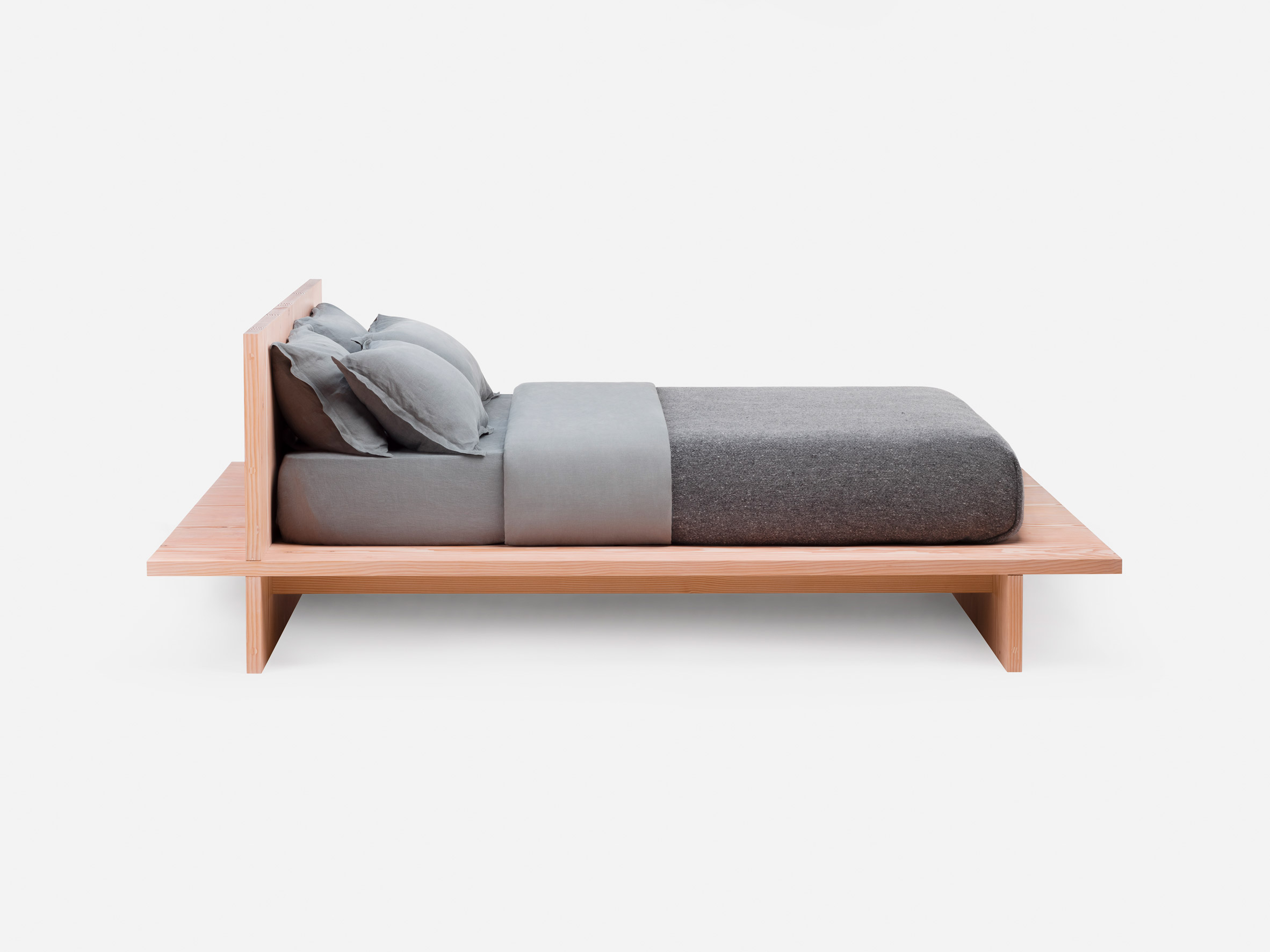
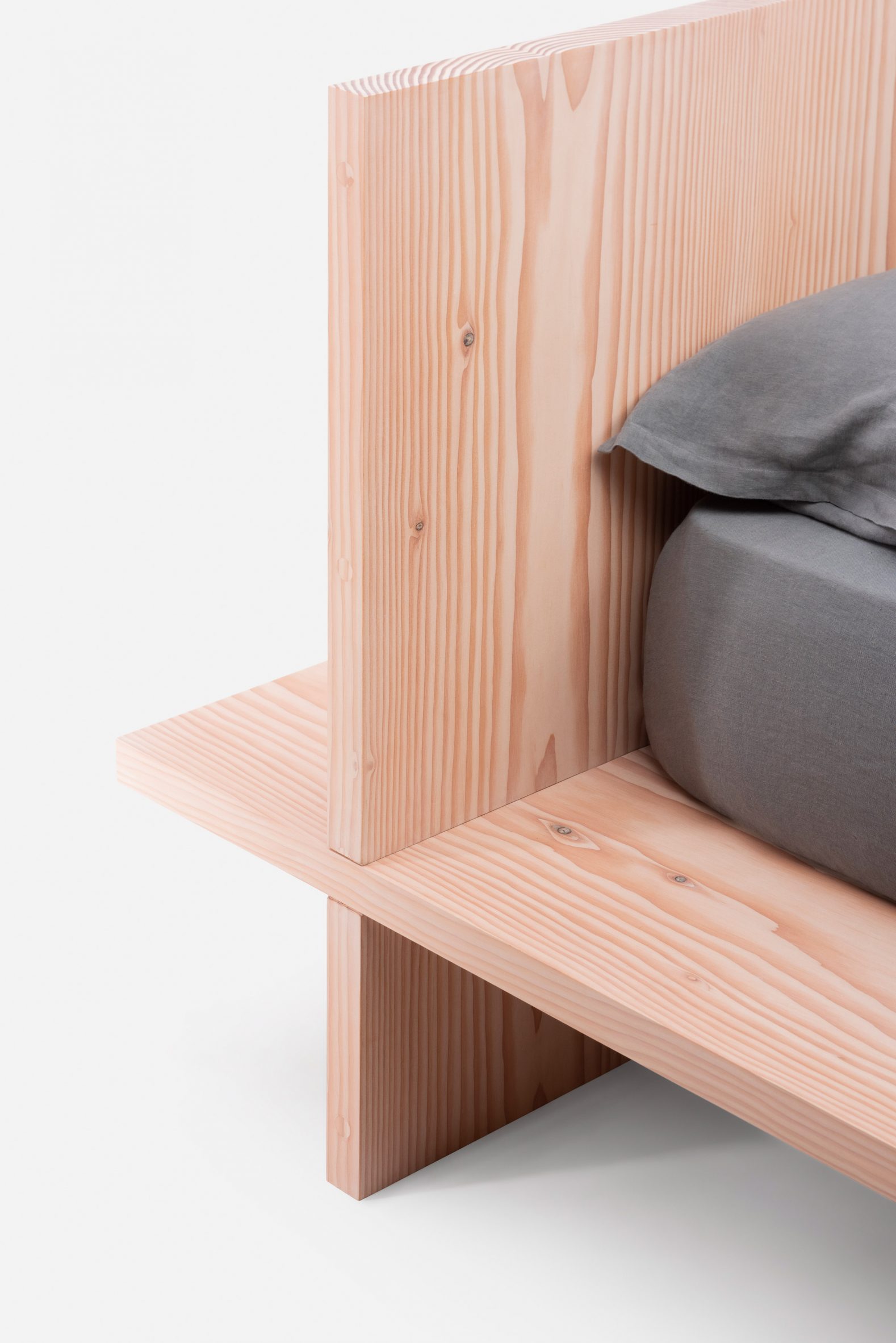
Bed One has a quiet, understated form, with a headboard made of five planks of Douglas Fir and a continuous flow of wood grain from top to bottom.
Bed One is made of the evergreen tree species Douglas Fir
It is finished with a white-pigmented Danish oil and wax, allowing the timber to maintain its natural pale colour and tactility.
By treating the wood in this manner, Aires Mateus aimed to give Bed One the functionality, longevity and sensory appeal to be used and passed on through the decades.
The finish showcases the natural colour and tactility of the wood
Bed One is the Lisbon-based architect's second product for De La Espada after last year's Table One.
The bed frame is available in two sizes, each of which accommodates a variety of queen and king mattresses.
All the pieces are made in De La Espada's solar-powered factory in Portugal.
About Dezeen Showroom:Dezeen Showroom offers an affordable space for brands to launch new products and showcase their designers and projects to Dezeen's huge global audience. For more details email showroom@dezeen.com.