Thursday, 29 July 2021

Ten design and communication projects by students at Plymouth College of Art

University of Plymouth

A ballet that responds to the Black Lives Matter movement and the lack of diversity in the ballet industry and a half-human half-robotic pop star is included in our latest school show by students at the Plymouth College of Art.

Also included is a textile project informed by nature and a social media project that asks: why have we let a tiny box that we keep in our pocket consume our life?


Plymouth College of Art

School: Design and Communication
Course: Commercial Photography, Costume Production, Fashion Communication, Fashion Design, Graphic Communication, Illustration, Interior Design and Styling, Textile Design
Tutors: Tim Gundry, Marie Dunaway, Heather Martin, Milly Brown, Kirsty Smith, Sam Rowe, Benjamin Wright, Cathryn Bishop, Cathy Freeman and  Emma Gribble

School statement:

"Radical and revolutionary contemporary design has the power to both redefine our everyday lives and solve urgent global issues.

"Staff and students from the School of Design and Communication at Plymouth College of Art are pushing the boundaries of aesthetics to affect real-world change.

"While good design shows how form solves problems or conveys complexity in beautiful ways, it also fosters a way of thinking about our world as a shared experience.

"Our community of artists, designers and makers address the constantly shifting territories of contemporary design, considering the breadth of design thinking alongside material and digital practices in establishing new approaches, forms and possibilities."


Plymouth College of Art school show

Yolk by Hayley Peberdy

"I am a food and product photographer with a creative focus on lifestyle food photography. Being at PCA has allowed me to explore different areas of my practice whilst also developing my professional identity and industry knowledge to help me move on with my career.

"For my final major project, I wanted to create a cookbook that could showcase my versatile skill set of using natural and studio light to photograph food.

"I chose an egg to be the hero ingredient of my cookbook in which 'Yolk' was created. The cookbook's imagery ranges from conceptual, minimal studio shots of eggs to lifestyle, styled final dishes."

Student: Hayley Peberdy
Course: Commercial Photography
Tutor: Tim Gundry
Email: hayley.peberdyphoto[at]hotmail.com

Plymouth College of Art school show

Everything Will Wait For Us by Eliza Belle

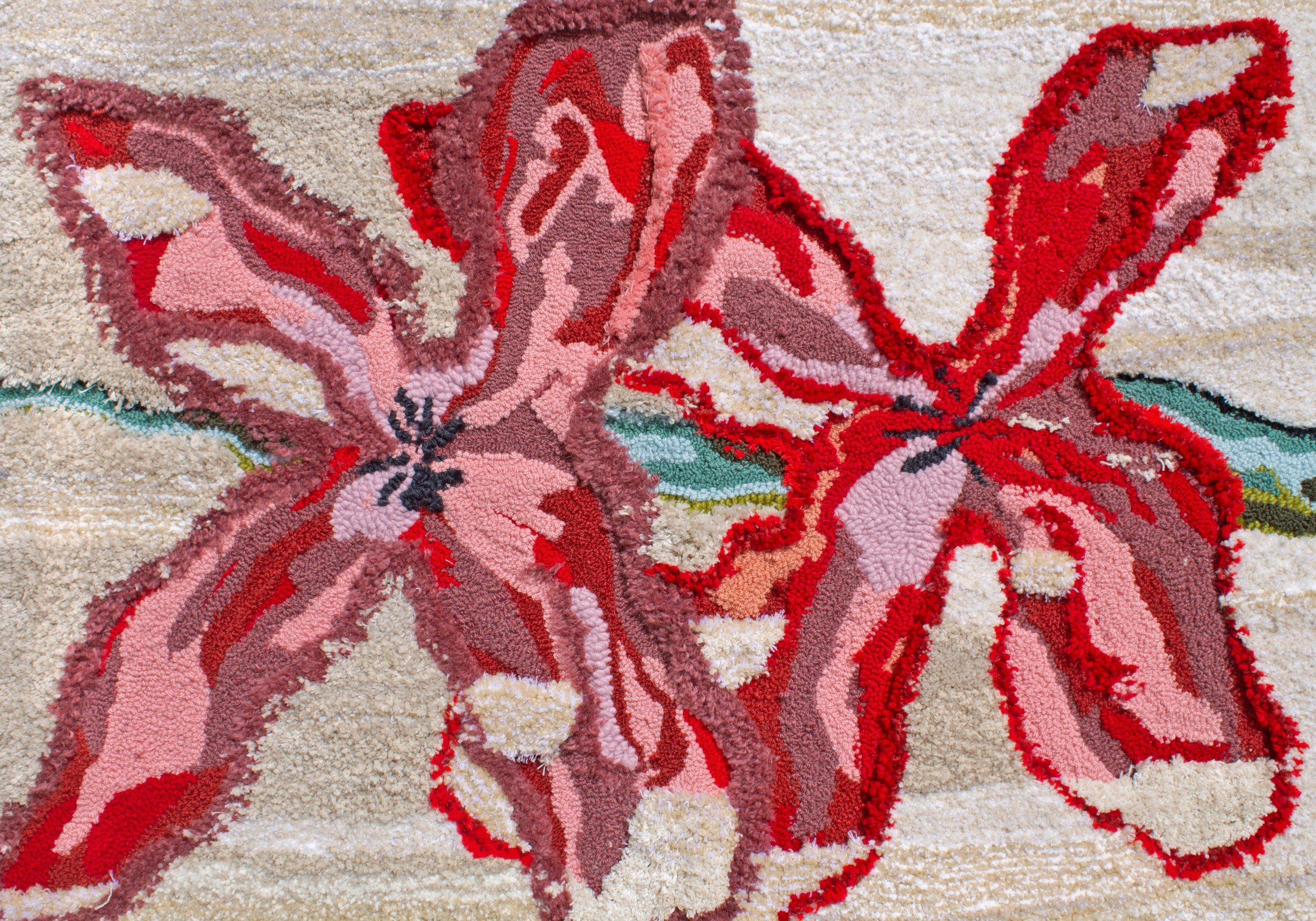
"Eliza Belle is a BA (Hons) Printed Textile Design and Surface Pattern graduate from Plymouth College of Art, working and living in Devon. Belle's work focuses on themes of human nature, connection and storytelling, both within ourselves and the world around us.

"Belle develops her writing into drawings, which then evolve into developed pieces of art. Exploring these ideas of connection, our relationship with ourselves as artists and as humans growing and living within the world, her practice becomes a reflective one – understanding through the act of making."

Student: Eliza Belle
Course: Textile Design
Tutor: Cathy Freeman and Emma Gribble
Email: elizadaisy6@gmail.com


Plymouth College of Art school show

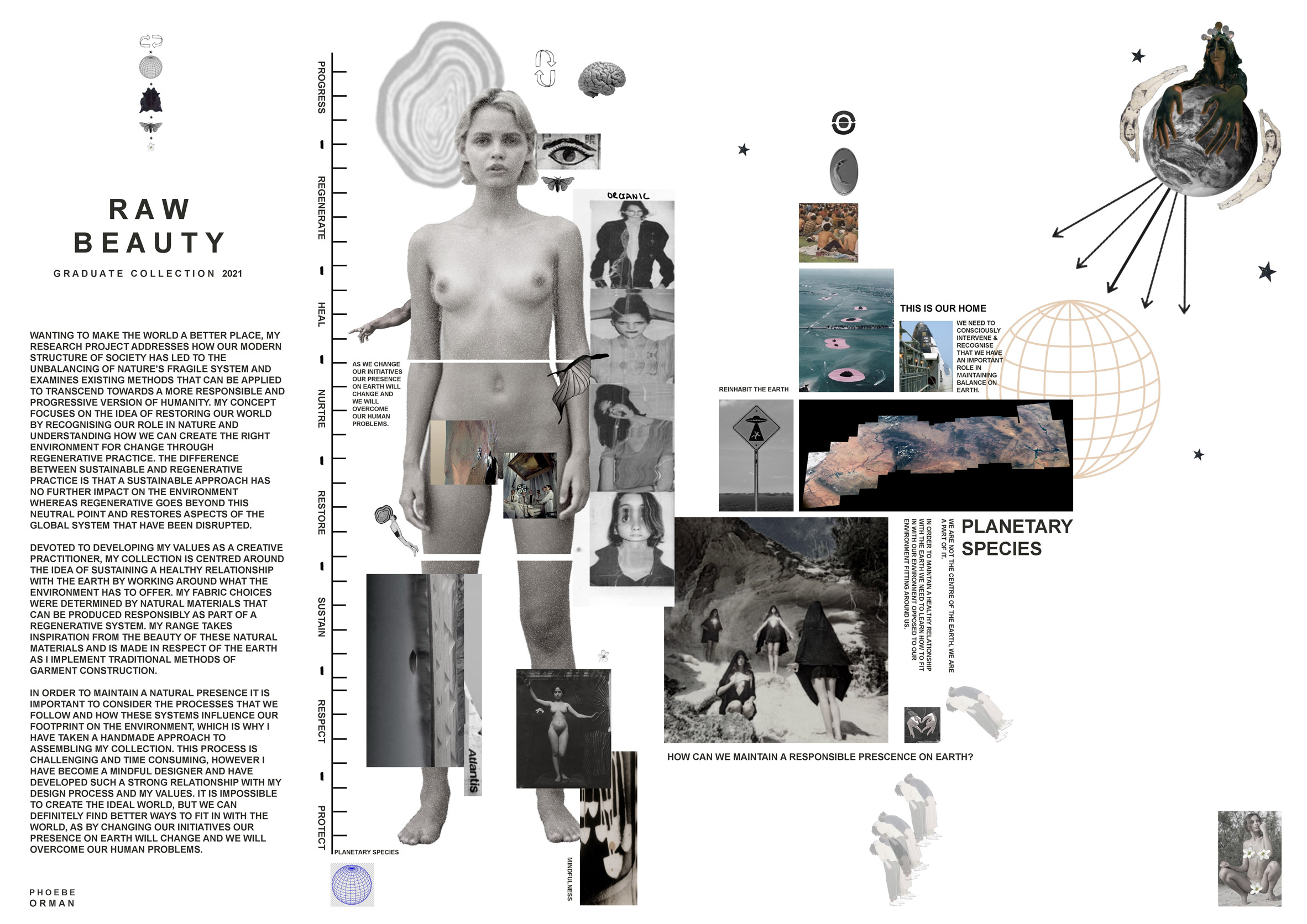
Raw Beauty by Phoebe Orman

"Raw Beauty was based around understanding our role in nature and how this role is not being maintained within the dynamics of our modern existence.

"Inspired by the raw beauty of natural materials, the project is concentrated around the idea of sustaining a healthy relationship with the Earth by working around what the environment has to offer. It uses animal-based materials as they can be produced responsibly as part of a regenerative system.

"With a well-established design process and firmly embedded values, Phoebe Orman works by hand, incorporating resourceful and mindful processes to limit the impact on the environment."

Student: Phoebe Orman
Course: Fashion Design
Email: phoebeorman[at]gmail.com


Plymouth College of Art school show

Werk!ng Men by Sydney Welsh

"My final collection's concept revolves around homophobic harassment in the workplace. My thought arose from my dissertation on the theories that gender is performative, which led me to examine gender expectations of a specific gender.

"While studying, I was intrigued by the idealism of the perfect man, particularly in the workplace. Reflecting on my own and other people's experiences, I believe that the mistreatment LGBTQ2+ individuals face in the workplace is neglected. As a designer, I wanted to harness these experiences and knowledge to continue to raise awareness of the issue and educate others."

Student: Sydney Welsh
Course: Fashion Design
Tutor: Heather Martin
Email: sydneywelsh.designs[at]gmail.com


Plymouth College of Art school show

Disconnect to connect by Chloe Hedges

My concept for my final collection revolves around the dynamic of social media and the digital age. It explores how and why we use social media and the benefits and disadvantages of it.

"Throughout the first lockdown, I realised how much my relationship with social media was growing and how much of a negative impact it was having on my mental health.

"Although social media helped keep my relationships ticking over, it wasn't the same, and I wanted to be present with other people. I feel that social media connects us in new ways but disconnects us in so many different ways.

Throughout my collection, I've been looking at what tactility is and how the human touch is so precious, exploring this through different textile techniques such as tufting and knitting and mixing fabrics with contrasting properties to generate a desire to want to touch the garments.

"I've also worked with oversized silhouettes, squishing and bulging taken from primary research of playing with slime in a human hand. Additionally, my collection is made up of a bright and clashing colour palette to capture the eye and stand out."

Student: Chloe Hedges
Course: Fashion Design
Tutor: Heather Martin
Email: bychloehedges[at]gmail.com

Plymouth College of Art school show

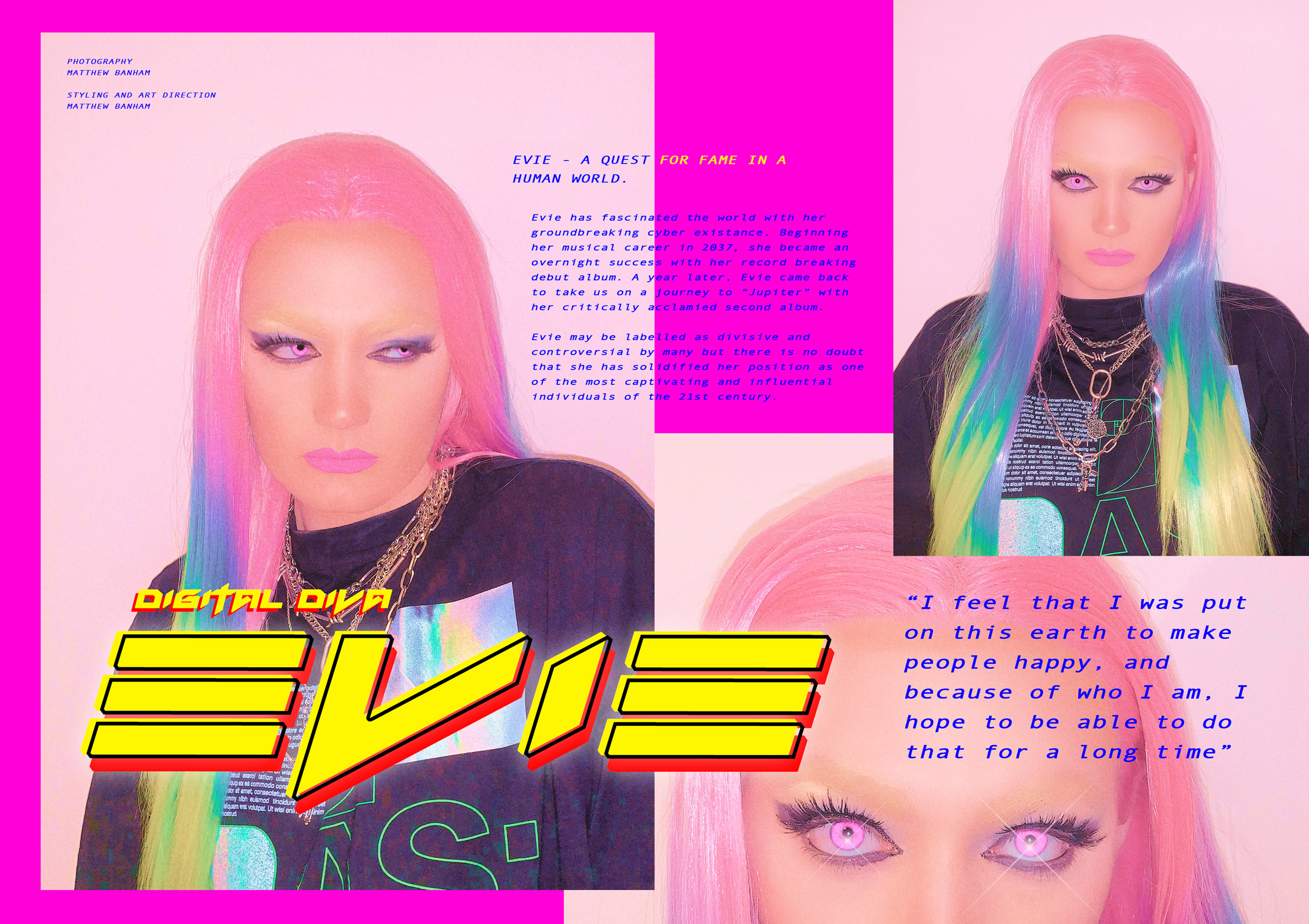
Evie by Matt Banham

"Evie is a half-human, half-robotic pop star based in a fictional timeline in the late 2030s and early 2040s. Evie represents narratives and ideas surrounding fame, femininity and the future.

"Inspiration for Evie began from a personal fascination with celebrity culture and the art of drag, both of which have been combined within this project to form a captivating narrative.

"Countless creative mediums such as styling, art direction, photography and digital content creation all played an essential part in creating the final imagery for Evie."

Student: Matt Banham
Course: Fashion Communication
Tutor: Milly Brown, Kirsty Smith
Email: mattjbanham[at]gmail.com

Plymouth College of Art school show

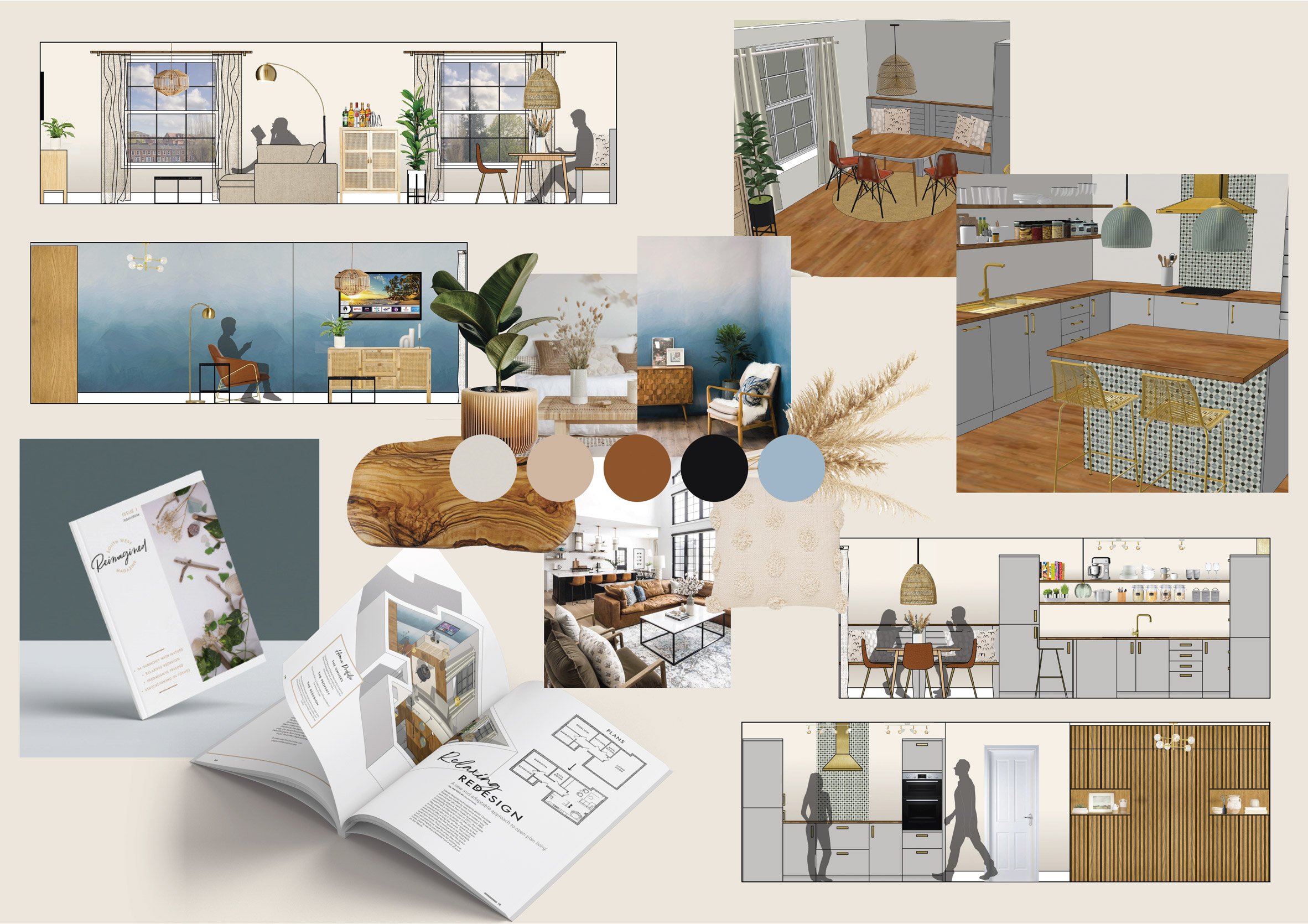
Reimagined South West by Charlotte Maledy

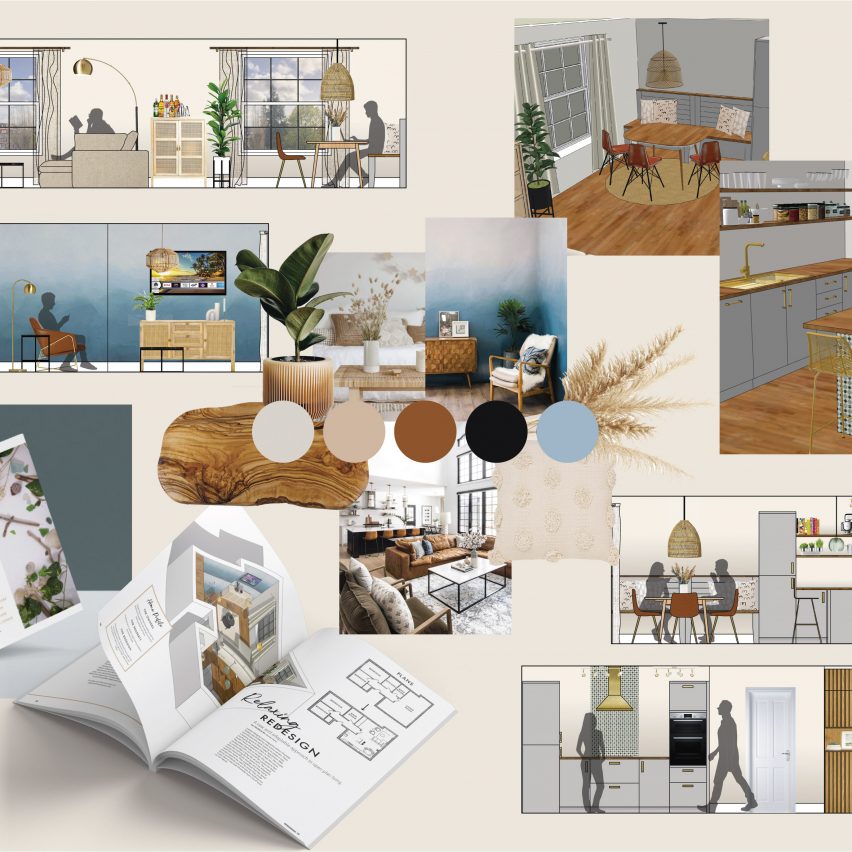
"Reimagined South West is an interior design and lifestyle magazine aimed at 25-40 years old living in the South West region.

"The magazine's aim is to inspire people to uplift their homes without it costing the earth, and to inform the reader of the beautiful qualities of the South West.

"The majority of the shots within the magazine were styled and shot by myself. I also included a redesign of a flat in Exeter. For this, I transformed a living space into an open plan layout with a Nordic theme to make it feel relaxing and cosy."

Student: Charlotte Maledy
Course: Interior Design and Styling
Tutor: Cathryn Bishop
Email: charlottemaledy[at]gmail.com

Plymouth College of Art school show

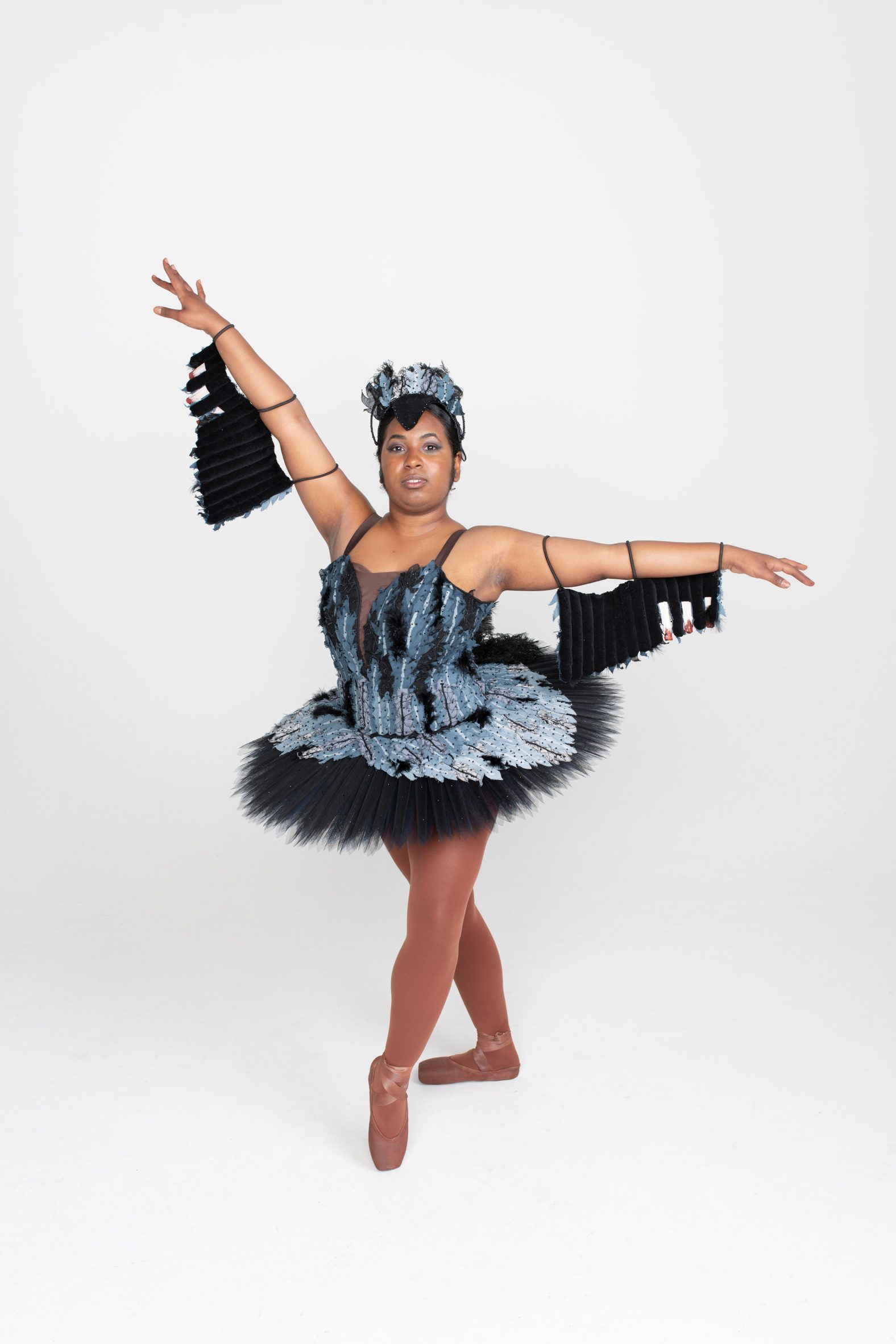
Caged Bird by Kathryn Fewings

"I created a ballet in response to the Black Lives Matter movement and the lack of diversity in the ballet industry.

"Inspired by the life of Maya Angelou, my ballet tackles the theme of racism, as well as telling the story of Maya from childhood to adulthood.

"As part of my work, I created 13 final designs for the prologue and act 1, scene 1 of my production, as well as interpreting one of my final designs into a full costume.

"I chose to interpret 'The Caged Bird – a representation of Maya's inner voice throughout the ballet as well as the BAME community in general."

Student: Kathryn Fewings
Course: Costume Production
Tutor: Marie Dunaway
Email: kf_costumes[at]outlook.com

Plymouth College of Art school show

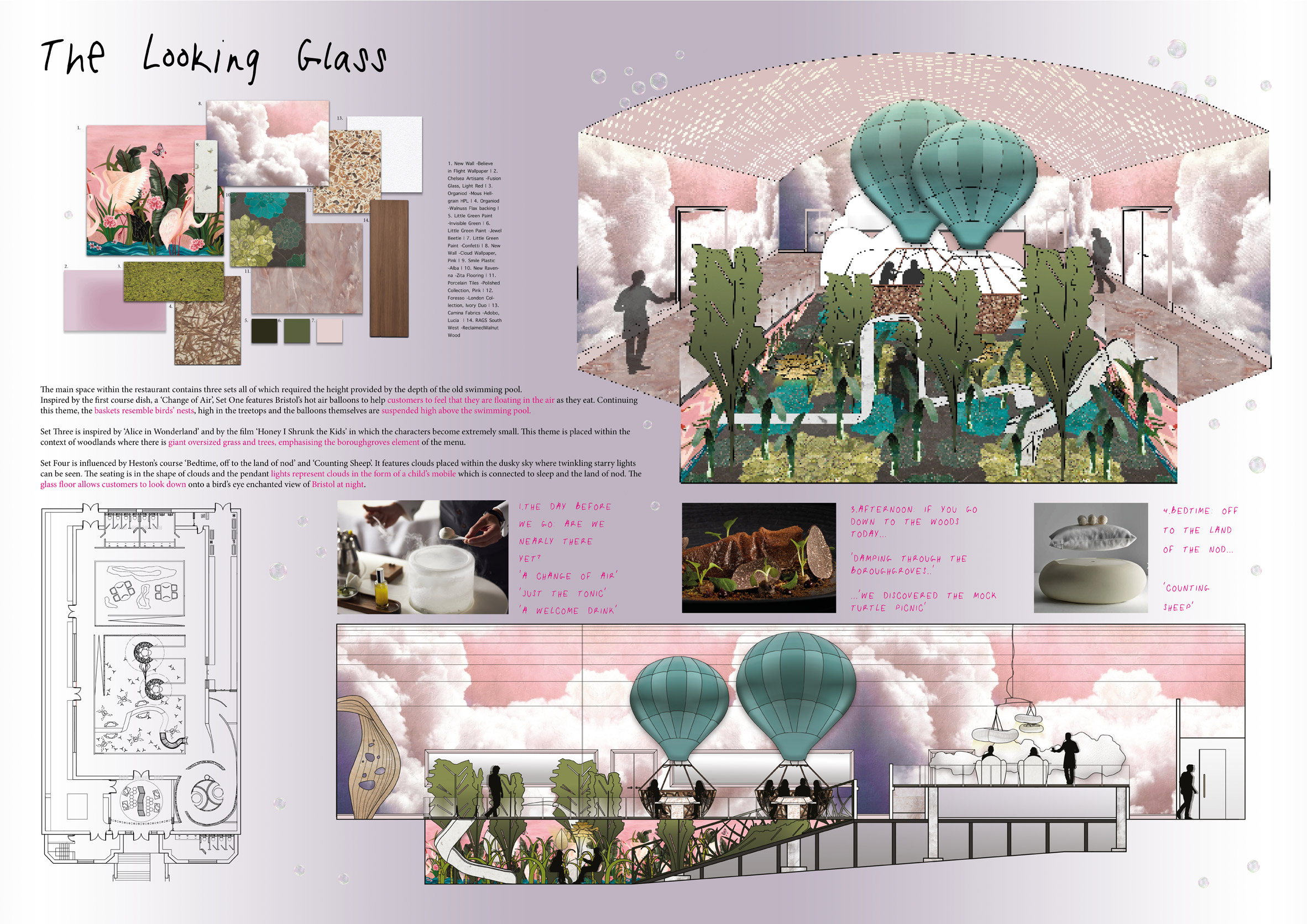
The Looking Glass by Charlotte Lach

"The Looking Glass project is an innovative and surrealistic restaurant design based on the menu of Heston Blumenthal's famous restaurant, The Fat Duck. It is set in a repurposed 1930s swimming pool in the vibrant city of Bristol.

"The intention is to create an engaging, iconic eating experience that sets the stage for the chef's remarkable and audacious food."

Student: Charlotte Lach
Course: Interior Design and Styling
Tutor: Cathryn Bishop
Email: char_lach[at]hotmail.com

Plymouth College of Art school show

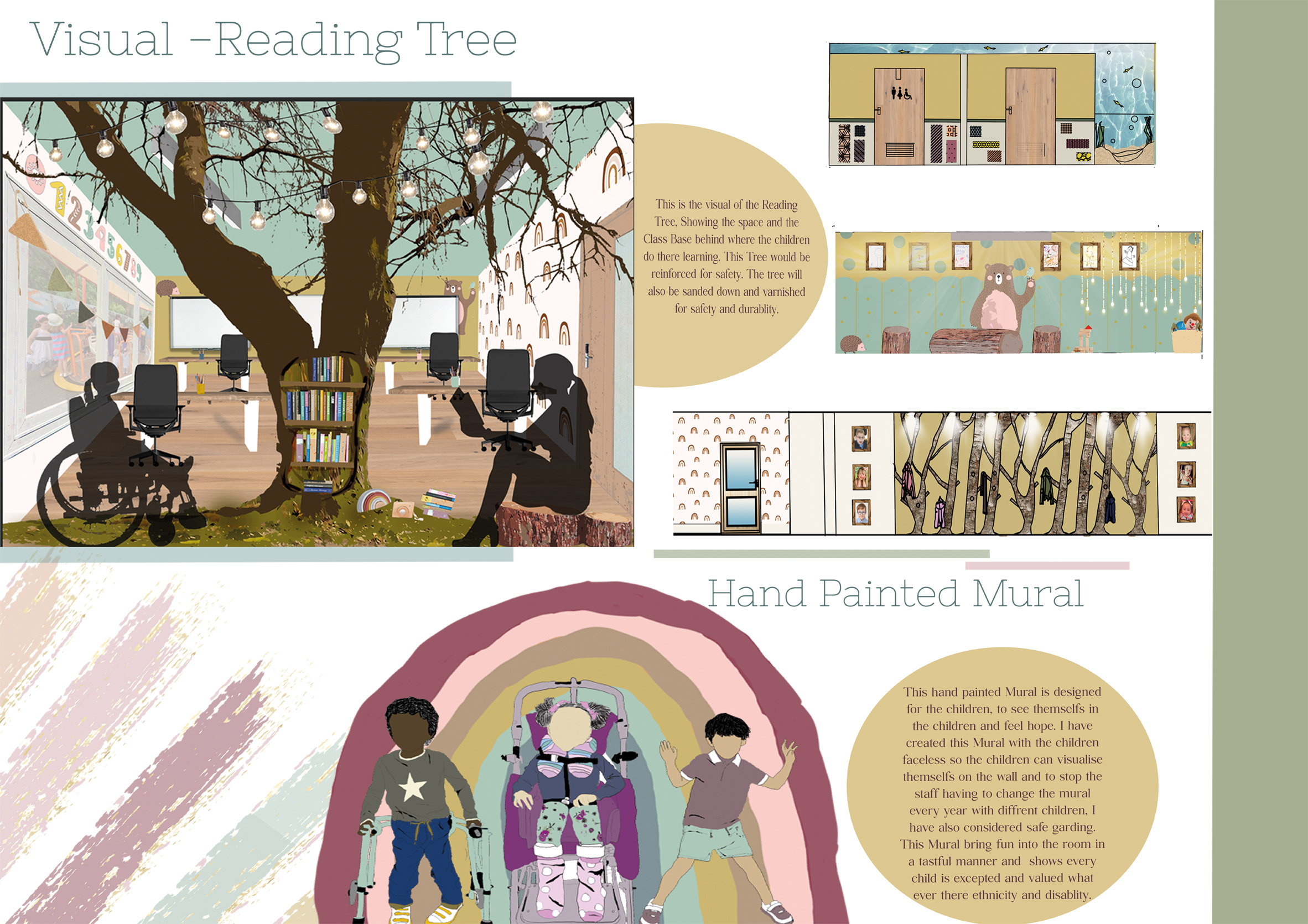
Designing a school to be inclusive for all by Sasha–Ann Hutchingson

"In this project, I have explored how designing for children with special needs should not mean compromising the design intent due to the inclusion of necessities.

"Children with complex needs are first and foremost children and should be able to enjoy and feel connected to a world that does not often feel designed for them.

"After discussing with my clients, I discovered that the word hope is used a lot in SEN schools and that a rainbow is a symbol of hope. Consequently, the forms and colours of the rainbow have been abstracted to bring hope into the classroom, whilst in its literal form, the rainbow frames the mural depicting children with differently-abled bodies and ethnicities, which children can feel inspired by.

"The result is a setting that is innovative, engaging and inspires laughter which is a great way to celebrate everyday successes no matter who you are."

Student: Sasha-Ann Hutchingson
Course: Interior Design and Styling
Tutor: Cathryn Bishop
Email: sashaannhutch[at]icloud.com


Partnership content

This school show is a partnership between Dezeen and Plymouth College of Art. Find out more about Dezeen partnership content here.

The post Ten design and communication projects by students at Plymouth College of Art appeared first on Dezeen.


from Dezeen https://ift.tt/3j4n92G

IKEA Sundvik furniture allegedly made from illegal Russian wood

Investigative research organisation Earthsight has released a report that claims the pine found in IKEA's Sundvik children's furniture range comes from trees illegally felled in protected Russian forests.

According to the report, which is titled IKEA's House of Horrors, some of the wood used in the popular Sundvik range comes from trees in the Irkutsk region of Siberian Russia that were illegally felled under the pretence of removing diseased trees.

Aerial view of a Siberian forest
Top: Earthsight claims that IKEA has been using illegally felled wood for a decade. Above: its report traverses the journey pine makes from Siberia into the furniture range

The practice, known as sanitary felling, can legally be used to reduce the spread of disease throughout a forest. But the report claims that the use of the practice was "unjustified".

"We found massive clear-cutting in protected forests," Tara Ganesh, Earthsight's head of timber investigations, told Dezeen.

"A lot of it comes down to the illegal sanitary felling – the cutting down of trees, apparently, under the excuse that they need urgent felling because they're diseased. But they weren't actually found to be requiring that much felling."

An aerial view of water and Siberian forest
Earthsight made several undercover visits to the protected area

Earthsight's report is the culmination of a year's worth of research. The organisation used satellite imagery, undercover meetings, analysis of court records and visits to the forests to conduct its research.

"What we found was really shocking," Ganesh said.

"You could already see from satellite imagery that there was large scale illegal logging going on so we decided to go there and document it for ourselves. We compared the official reasons given for why these forests were logged with evidence on the ground."

According to the report, the illegal wood was supplied to Swedish furniture manufacturer IKEA, as well as other companies, by ExportLes, which is an umbrella of companies controlled by Russian politician Evgeny Bakurov.

A forest in Siberian Russia next to a body of water
The report claims that sanitary felling is being misused

In addition to the misuse of sanitary felling, Earthsight's report alleges that Bakurov has been logging wood from protected areas of the forest.

Much of the forest Earthsight visited was located on the banks of a reservoir, where the environment is considered vital for the survival of fish and other marine life.

"Forests around water bodies are often more sensitive to logging than other forests," Ganesh said. "These forests generally are some of the most climate-critical forests in the world. The Siberian forests have been called the 'Amazon of the Northern Hemisphere'."

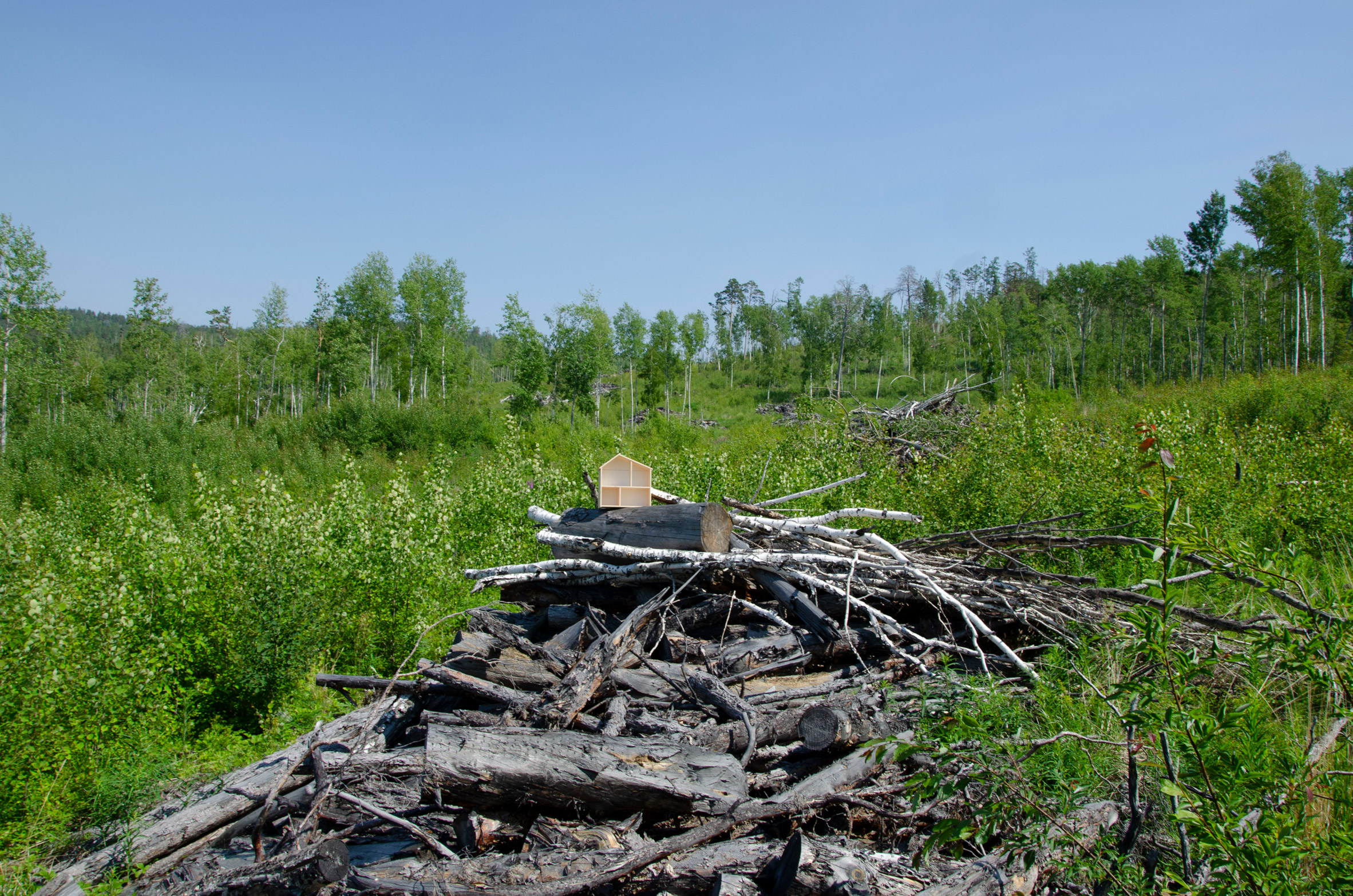
A dolls house on top of wood in a forest
It states that 2.16 million cubic metres of wood from illegal deals has been used by IKEA

Earthsight claims that the 2.16 million cubic metres of wood has been illegally felled over the last ten years, which it says "would rival the Great Pyramid of Giza" if piled-up altogether.

According to Ganesh, this equates to "shoppers purchasing an Ikea product containing the suspect Russian timber somewhere on earth every two minutes."

IKEA said it has stopped importing sanitary felled wood from the region.

"IKEA has decided to temporarily ban the use of sanitary felled wood from Russia Far East and Siberia, effective immediately until the system is sufficiently strengthened," the brand said in a statement.

But Ganesh doesn't believe that IKEA has gone far enough in rectifying the problem, especially as it has been using the wood for nearly a decade.

"IKEA hasn't made many more details available about exactly when they dropped a supplier or what these practices of concern were. Or why it took them so long to find out the stuff in the first place," she added.

"Why does it take an NGO like us, writing this report, going through all this painstaking research and finding things that are already in the public domain?" she asked.

Sundvik IKEA furniture in warehouse boxes
According to the report, the wood was used in products purchased every two minutes in IKEA stores

The House of Horror's report doesn't solely place the blame on IKEA. The report claims the forest management company Forest Stewardship Council (FSC) is culpable.

"Earthsight holds FSC largely responsible for the logging abuses linked to IKEA and other retailers we connected to the scandal," it states.

"All of the legalities in our report should have been picked up by FSC years ago. FEC auditors are supposed to be going to these forests once a year and checking that everything is in compliance with the law," said Ganesh.

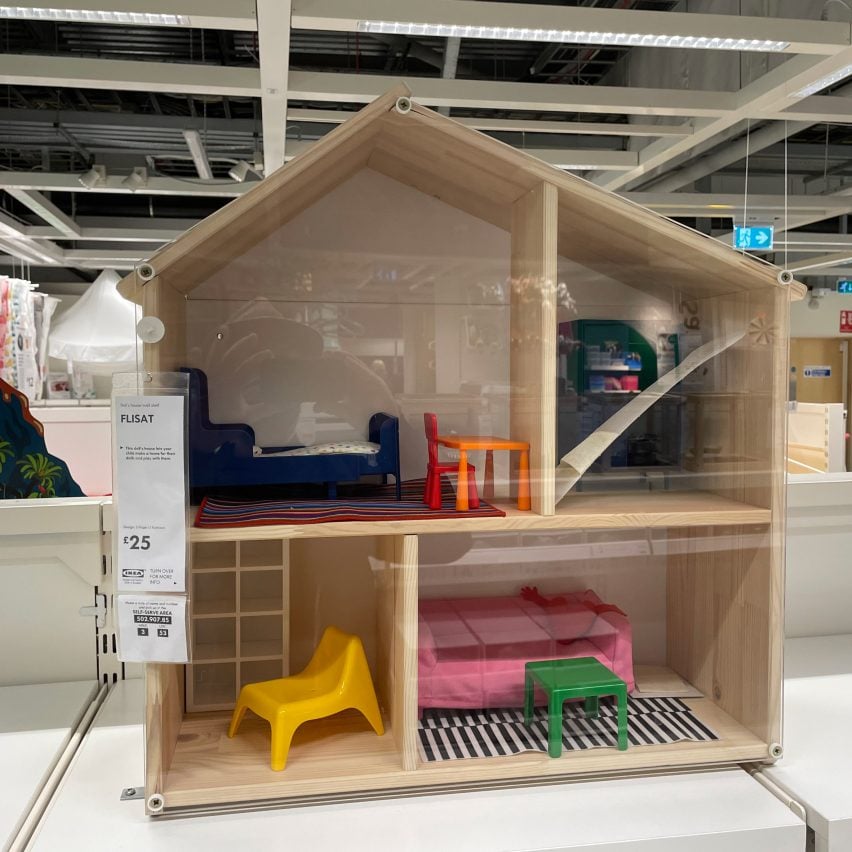
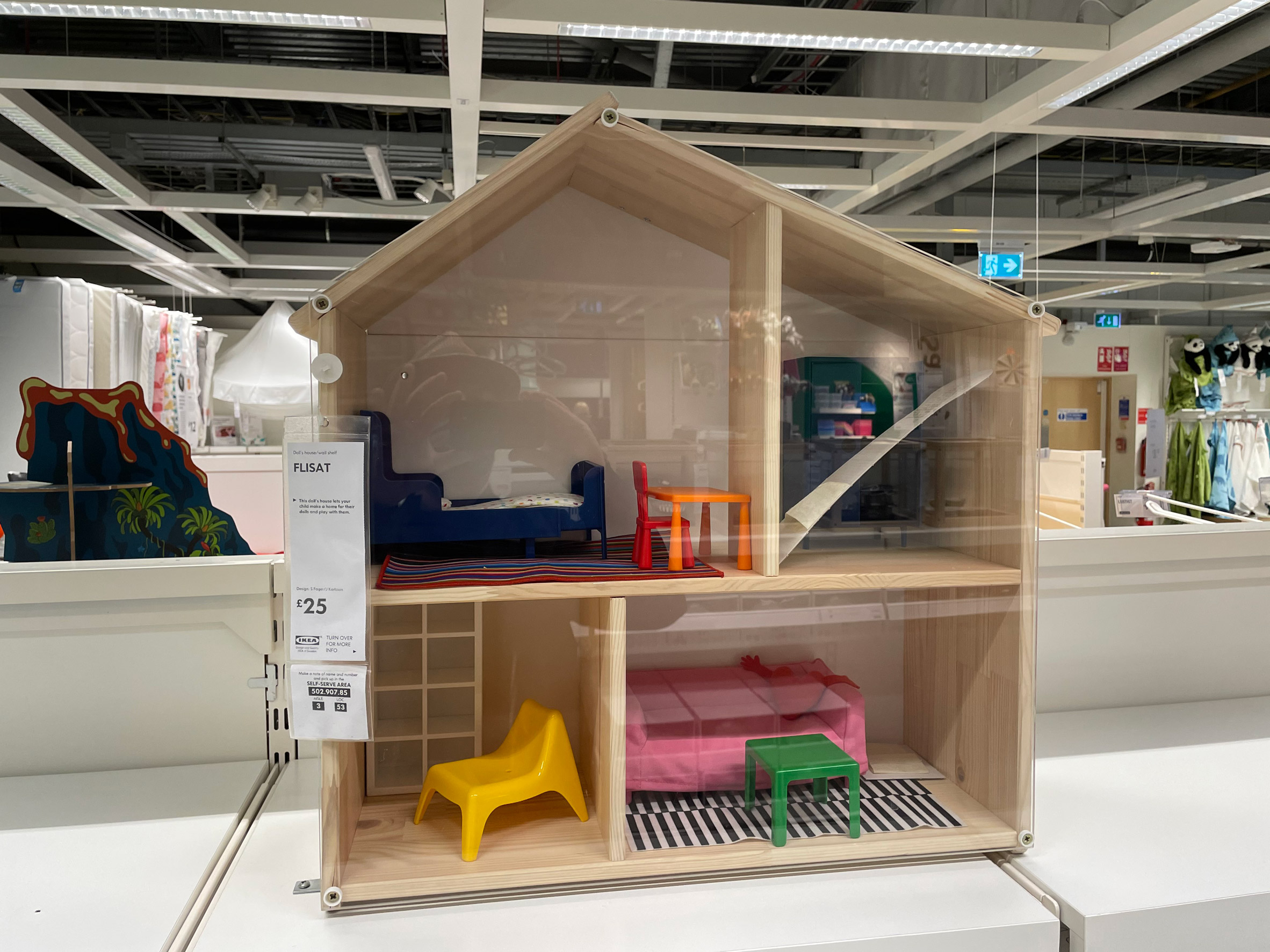
A wooden playhouse by IKEA
Earthsight found the FSC to blame for failing to make compliance checks

FSC responded to the report with a statement saying it had suspended sales of wood from the region.

"FSC remains concerned about illegal sanitary logging in parts of Russia, and has issued a moratorium on all sales of wood and wood products originating from sanitary logging in one oblast of Russia," it said.

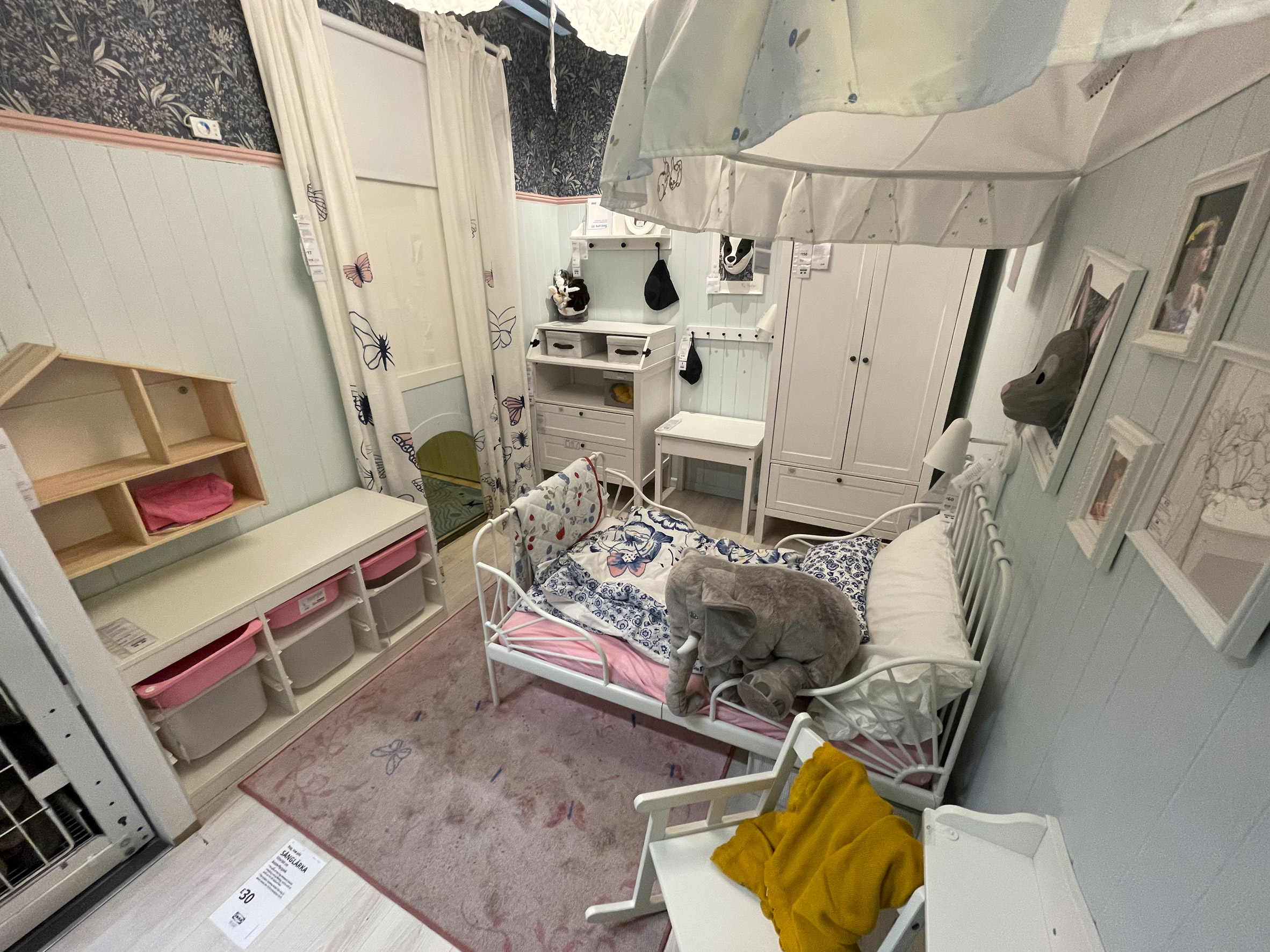
A model child's bedroom
IKEA has temporarily halted use of the wood following the report

When asked what steps need to be taken to prevent this from happening in future, Ganesh believes that change has to be enforced by governing bodies.

"Obviously, ideally, IKEA would commission very sweeping, detailed audits and make the results of those audits public so that we can verify what they've done in response ourselves. And, they would be vocal about how the FSC has failed them."

"But ultimately, it is about governments regulating bad behaviour by companies and punishing bad behaviour."

"When you can't trust these labels and you're obviously not able to go to the forest yourself to go and check that the wood is legal, you know there's an urgent need to change these systems," she added.

The allegations threaten IKEA's stated vision to become a more sustainable business by 2030, by eliminating waste and reusing resources.

IKEA has implemented various strategies in an attempt to achieve its sustainability goals. The brand launched Buy Back in 2020, an initiative that aims to reduce furniture waste by reselling unwanted second-hand furniture.

The post IKEA Sundvik furniture allegedly made from illegal Russian wood appeared first on Dezeen.


from Dezeen https://ift.tt/3l5RgcZ

Competition: win a professional pack from Crown Paints

For our latest competition, we've teamed up with Crown Paints to offer readers the chance to win one of five professional packs containing an Interior Colour Book, Colourkey unit and Colour Collection Fandeck.

Created especially for those working in interior design and architecture, Crown Paints' professional pack contains the must-haves for starting interior design projects.

Five readers will each win a pack containing a copy of Interior Colour Book, which acts as a comprehensive colour design guide for commercial projects, a Colourkey unit, and Crown Paints' Colour Collection Fan deck featuring the brand's colours as well as known British Standard and RAL colours.

Dezeen has teamed up with Crown Paints to offer readers the chance to win a professional pack

The second in a series of colour inspiration guides, the Interior Colour Book was created by Crown Paints' team of colour specialists to bring together the expertise required by architects and designers to specify colour effectively across different sectors.

Also included in the professional pack is Crown Paints' new colour measurement and look-up tool Colourkey. Colourkey measures the surface colour using advanced LED technology and finds the closest match using a database of more than 6,000 colours.

It comes with a free-to-download app, is a handy pocket-size and will also give you suggested colour schemes to choose from.

The packs contain an Interior Colour Book, Colourkey unit and Colour Collection Fandeck

The final item in the pack is a Colour Collection Fandeck, which is a colour reference guide containing over 1400 colours.

"A colour name might offer us an emotional description, but it will always be open to interpretation," said Crown Paints. "That's why it's far more helpful to have a physical sample of your colour, or better still, one that also has its own scientifically measured code."

That's why every colour in the Crown Paints Fandeck is assigned a unique six-digit scan code, which defines the colour by three characteristics: hue, lightness and saturation.

The Interior Colour Book is the second in a series of colour inspiration guides

Crown Paints was established in 1777 in Darwen, Lancashire, in the UK. Its head office remains there today.

The company has a manufacturing site in Hull and a network of over 140 Crown Decorating Centres located throughout the UK and Ireland.

The Crown Colour service includes anything from colour consultations to the brand's innovative Pure Paint Samples – fully recyclable samples made using real paint.

Crown paints

The Crown Colour service includes anything from colour consultations to the brand's innovative Pure Paint Samples – fully recyclable samples made using real paint. Now available in A5, which is the largest format available on the market, they offer a mess-free way to test colour on a large scale.

Five readers will win a professional pack containing an Interior Colour Book, Colourkey unit and Colour Collection Fan deck. They are also available to buy online.

Competition closes 26 August 2021. Terms and conditions apply. Five winners will be selected at random and notified by email.

Partnership content

This competition is a partnership between Dezeen and Crown Paints. Find out more about Dezeen partnership content here.

The post Competition: win a professional pack from Crown Paints appeared first on Dezeen.


from Dezeen https://ift.tt/3laVFer

WorkPod by Autonomous

WorkPod by Autonomous

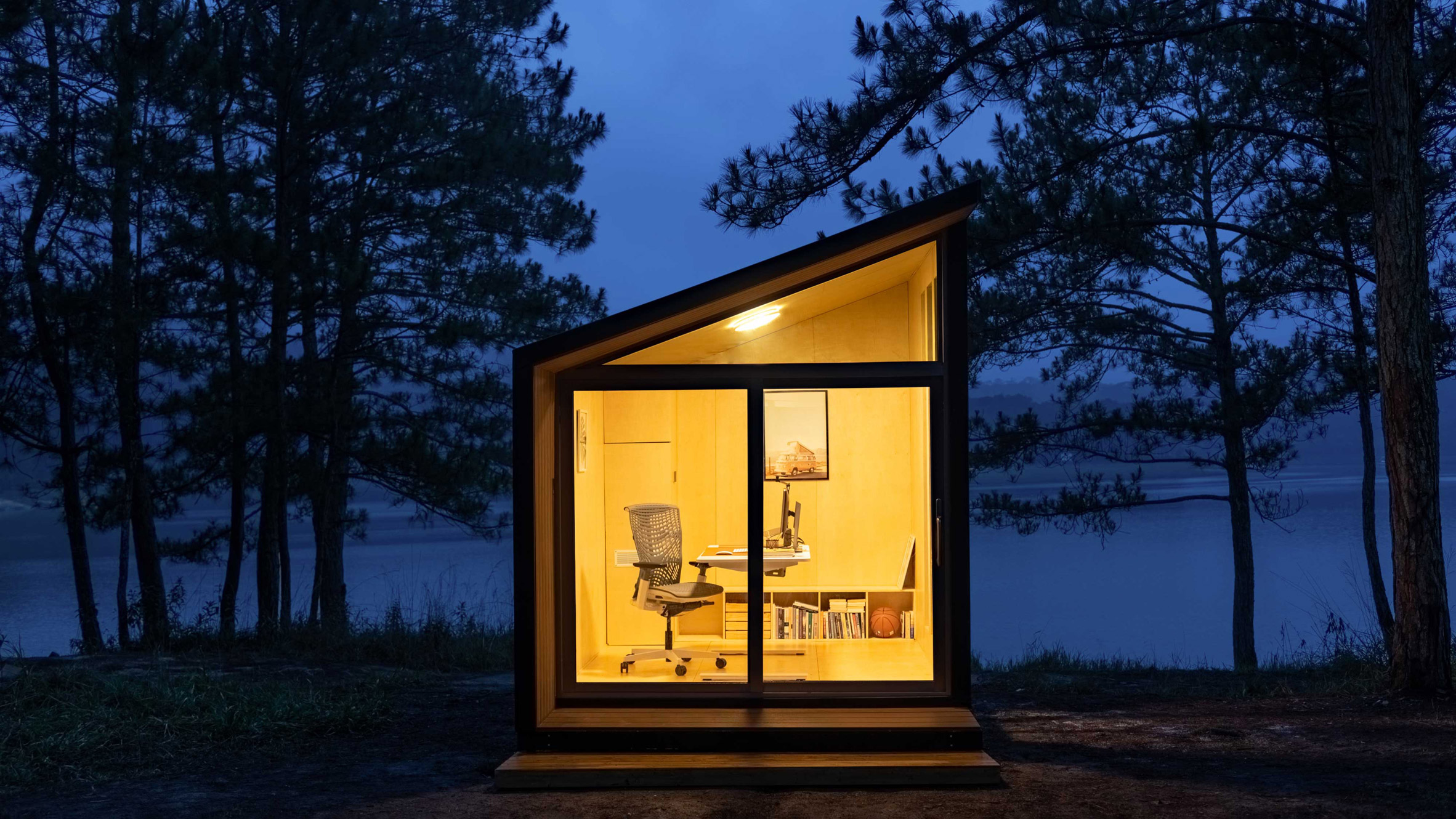
Dezeen Showroom: designed for people who want to be able to focus while working from home, the WorkPod by Autonomous is a prefabricated office pod that can be assembled in one day.

Autonomous describes the WorkPod as "designed to be plopped in a spacious backyard", with its 17 prefab components taking around eight hours to assemble.

WorkPod by Autonomous
The WorkPod can be "plopped" in any spacious backyard

WorkPod is compatible with most types of ground including gravel, brick, grass and concrete, and can be adapted to uneven surfaces.

With its wood panelling and floor-to-ceiling windows, the pod maintains a strong connection to nature, while its noise and heat insulation minimises distractions.

WorkPod by Autonomous
It comes with lighting and electrical wiring installed

The structure is made of sturdy oak and walnut woods with a steel and cement foundation to keep it in place.

WorkPod is essentially plug-and-play, with the electrical wiring set up in advance. Lighting, power outlets, a portable air-conditioning unit and an internal ventilator are all included.

Product: WorkPod
Brand: Autonomous
Contact: victoria.t@autonomous.nyc

About Dezeen Showroom: Dezeen Showroom offers an affordable space for brands to launch new products and showcase their designers and projects to Dezeen's huge global audience. For more details email showroom@dezeen.com.

The post WorkPod by Autonomous appeared first on Dezeen.


from Dezeen https://ift.tt/3f8zWjK

MVDRV's Marble Arch Mound "going down like a turd" as council suspends bookings

Marble Arch Mound

Dutch studio MVRDV's £2 million fake hill in central London has been ridiculed by critics and forced to temporarily close, with refunds issued to disgruntled visitors.

The 25-metre-high Marble Arch Mound officially opened to the public on Monday on a traffic island between Hyde Park and shopping destination Oxford Street.

Attraction "not yet ready for visitors"

However, the temporary landscaped mound, which is topped by a viewing platform, has been forced to stop taking bookings until the trees and turf have had "time to bed in and grow".

Marble Arch Mound
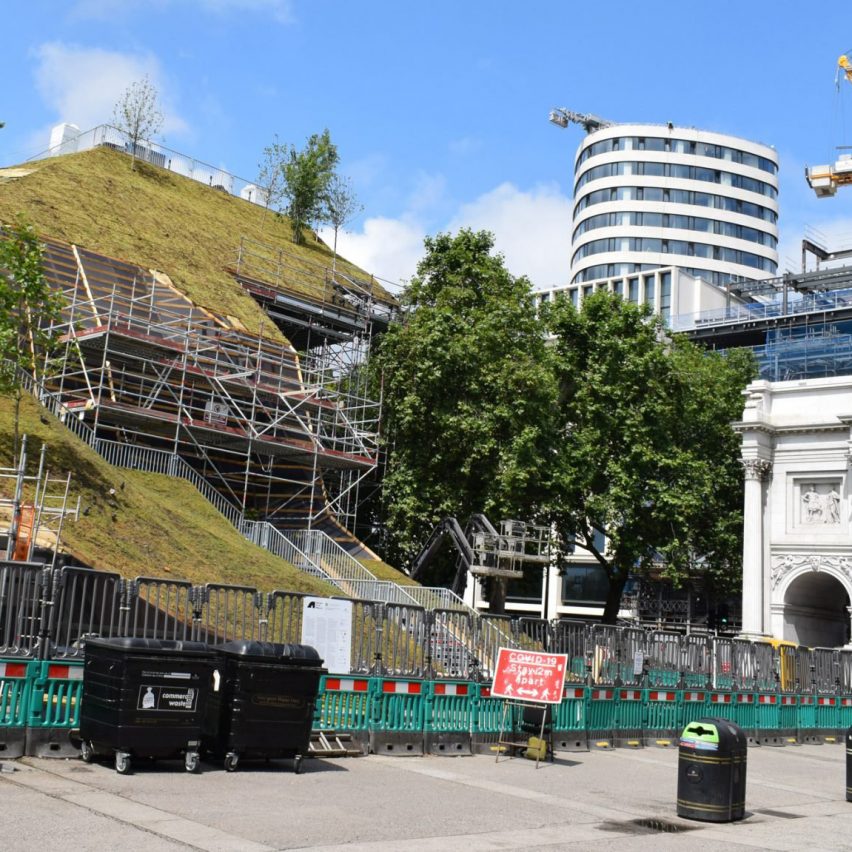
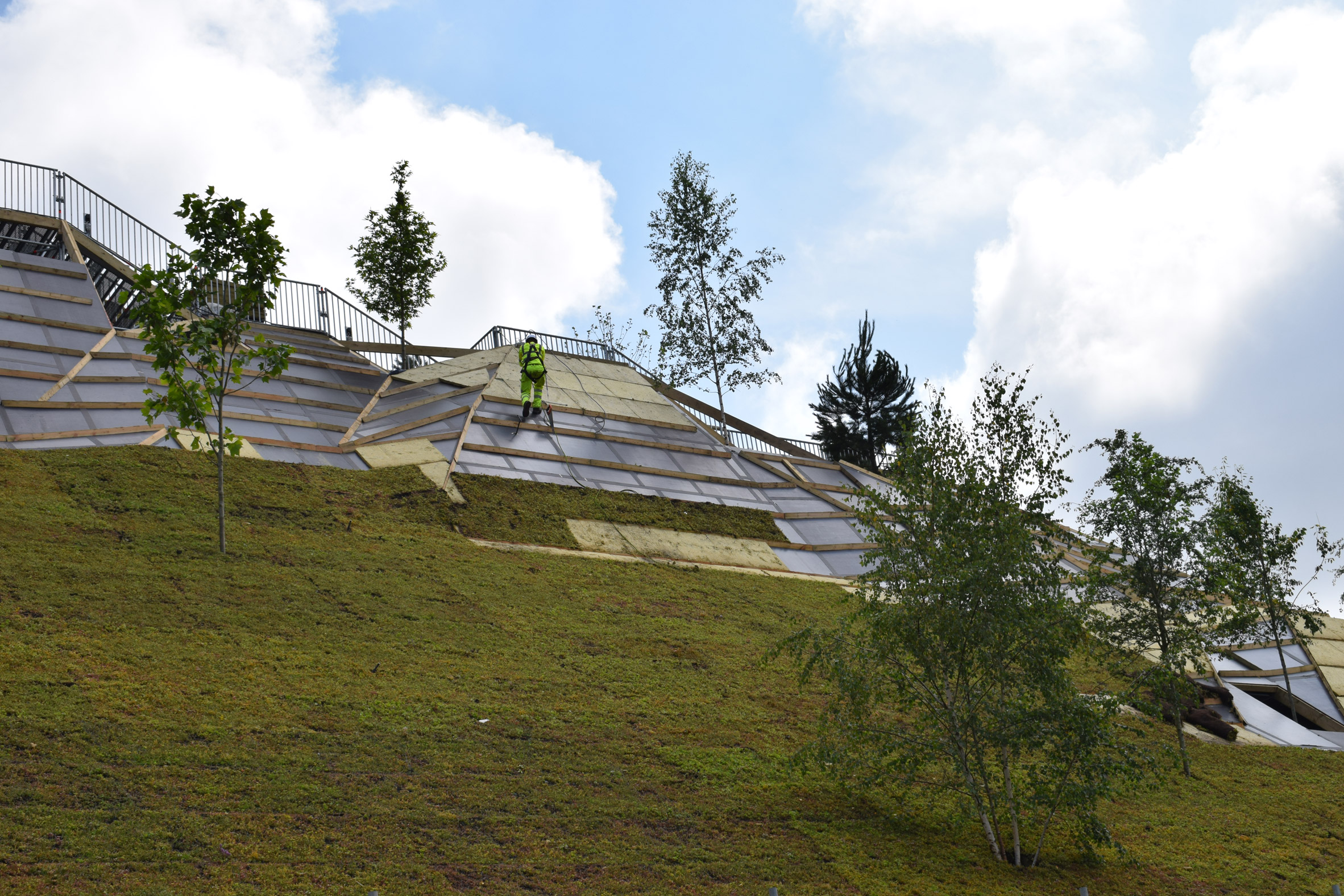
Above and top: the mound photographed the week before opening

"We are aware that elements of the Marble Arch Mound are not yet ready for visitors," said the council.

"In light of the delay, we are offering anybody who has booked a visit during the first week a return ticket free of charge so that they can enjoy the full experience [...] and the landscape once it has had time to bed in and grow."

People who have bought tickets, which start at £4.50 each, are still allowed to visit but will also be offered a refund or a ticket for a second visit later in the year.

Mound "shows signs of struggle"

The viewpoint alongside Marble Arch – a triumphal arch designed by architect John Nash and built in 1872 – was commissioned by Westminster Council to draw people back to the nearby Oxford Street shopping district following the coronavirus pandemic.

However, the attraction has drawn criticism from critics and social-media users due to its unfinished appearance, disappointing views and lack of planting.

Marble Arch Mound
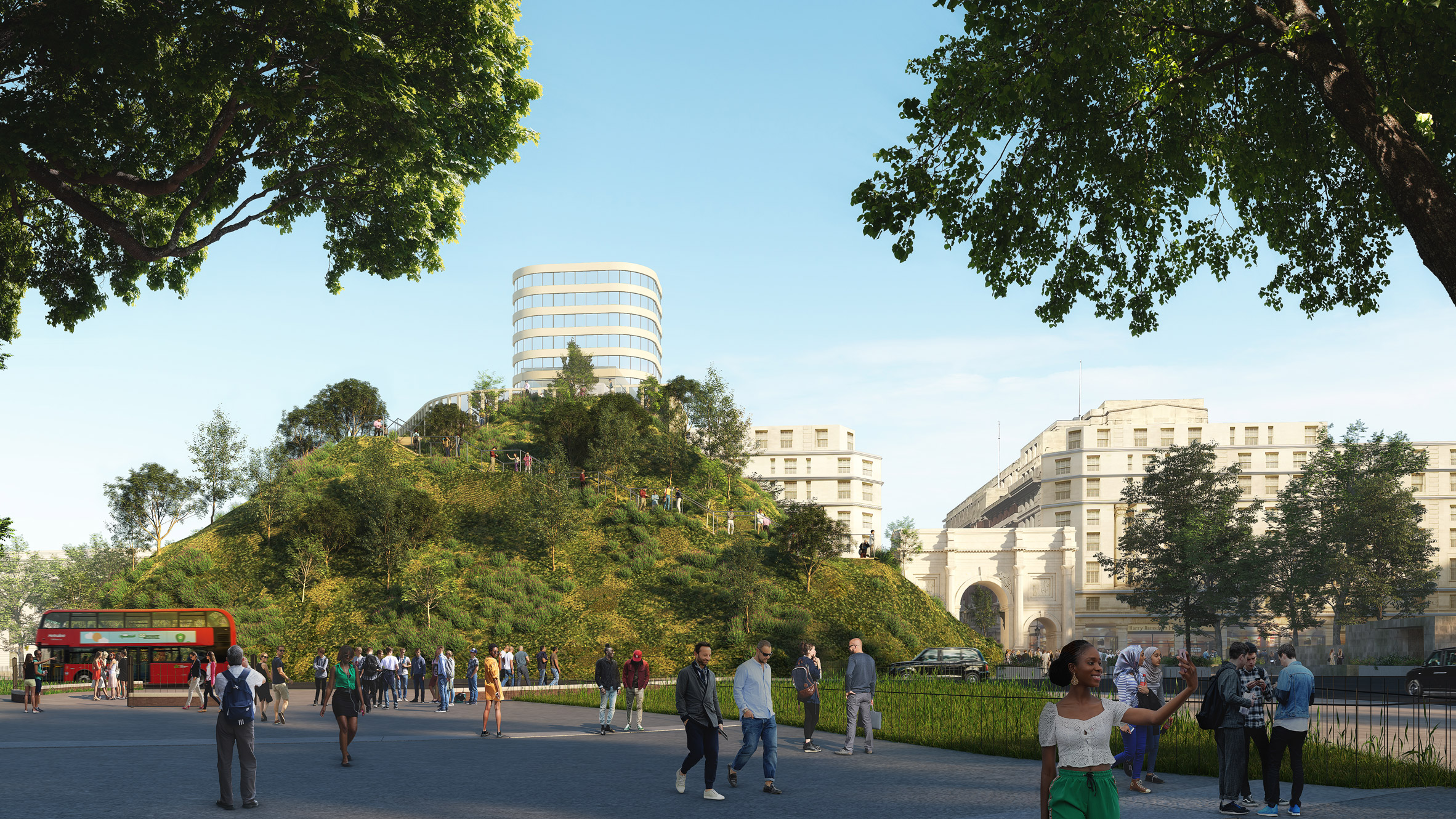
Renders show the mound covered in greenery

Architecture critics have panned the installation. "The Marble Arch Mound shows signs of struggle," wrote Observer critic Rowan Moore, who visited ahead of the opening.

"Last week, abseiling operatives were still frantically sticking slabs of turf to its sloping sides. The result looked parched and patchy, more like an ensemble of ill-matched carpet tiles than a greensward.

"While the CGI plans depicted a lush landscape of thick vegetation, dotted with mature trees, the reality is thin sedum matting clinging desperately to the sheer walls of the structure, punctuated by occasional spindly trees," wrote Guardian architecture critic Oliver Wainwright.

"The recent heatwave hasn’t helped, but none of the greenery looks happy."

Social media users ridiculed the project. "MVRDV 'aving a laugh," tweeted Twentieth Century Society president and former Architectural Review editor Catherine Slessor, who posted a photo of a row of bins and barriers in front of the mound.

"Maybe MVRDV didn't want anyone thinking they were over the hill," said architect William Tozer.

"Marble Arch Mound going down like a turd falling from a dog's arse, I see," wrote University of Westminster architecture professor Sean Griffiths.

Architecture PR Rob Feihn hoped that the artificial hill will spell the end for greenery covered attractions.

"The only way is down"

"Perhaps MVRDV has taken us to the zenith of these ridiculous greenwashing installations, so the only way is down from here," Feihn tweeted. "That would make the mound actually worth surmounting."

Westminster Council intends to reopen booking in the near future once the planting has been improved.

"The Mound is a living building by design," it stated. "We'll continue to adapt and improve London's newest outdoor attraction and resolve any teething problems as they emerge."

The post MVDRV's Marble Arch Mound "going down like a turd" as council suspends bookings appeared first on Dezeen.


from Dezeen https://ift.tt/3C3NerE