Researchers at the Technical University of Dresden have been working with German architecture firm Henn to create the first concrete building to be reinforced with carbon fibres instead of steel.
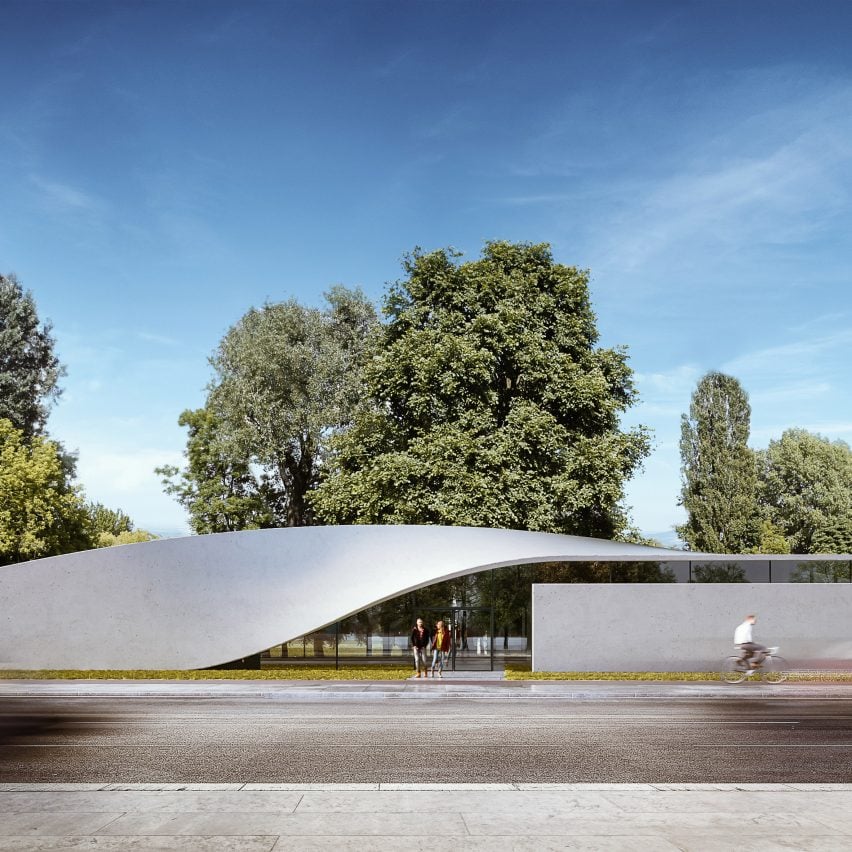
Currently under construction at the TU Dresden university campus in Germany, The Cube is billed as the "world's first building made of carbon concrete".
Building reinforced with carbon fibre
This newly developed type of concrete offers the same structural strength as concrete reinforced with steel rebar but uses far less concrete, researchers claim.
The concrete is strengthened with carbon fibre yarn, which is made by binding together many carbon fibres – ultra-thin threads of almost pure carbon crystals – using a process of thermal decomposition called pyrolysis.
These yarns are used to create a mesh that the concrete is poured onto.
According to Henn, the resulting material is four times stronger than regular concrete, but also four times lighter, due to the reduced structural sections.
The carbon-fibre mesh is also rust-proof, unlike steel, meaning carbon concrete has a longer lifespan than typical reinforced concrete. This also means structures can be much thinner since much of the thickness of steel-reinforced concrete is due to the need to prevent water penetration leading to oxidization of the rebar.
With a wall that folds up to become a roof, the building's form takes inspiration from the lightweight and flexible properties of carbon fibre.
"The design of The Cube reinterprets the fluid, textile nature of carbon fibres by seamlessly merging the ceiling and walls in a single form, suggesting a future architecture in which environmentally conscious design is paired with formal freedom and a radical rethinking of essential architectural elements," said Henn.
"The wall and ceiling are no longer separate components but functionally merge into one another as an organic continuum."
The building will be a showpiece for a major TU Dresden research project called C³ - Carbon Concrete Composite, which is backed by the German Federal Ministry of Education and Research. The aim of the project is to explore the potential uses of this new material in construction.
"Carbon concrete could contribute to more flexible and resource-saving construction processes, and switching to carbon concrete could reduce the CO2 emissions from construction by up to 50 per cent," said Henn.
"So you can design completely different shapes. There are some research examples of super-thin concrete building components or benches or reinforcements. The aim is to get away from the huge amounts of concrete that are being used today."
Bio-based carbon fibres under development
However, the carbon footprint of carbon fibre is "is usually very bad," according to Frank. The researcher is currently exploring ways of creating carbon fibres from lignin, a common plant-based substance, which is also a byproduct of the paper industry.
He predicts that bio-based carbon fibres won't replace petroleum-based ones, as they don't yet offer the same performance. However, he expects demand to continue to increase. "It will just be a second market running alongside," he said.
Google continues to emit greenhouse gases despite claiming to be carbon neutral, Dezeen has learned.
The tech giant, which says it has been carbon neutral since 2007 and claims to have eliminated its entire carbon legacy, has emitted around 20 million tonnes of carbon in that period.
Yet it has adopted a definition of carbon neutrality that allows it to claim its carbon footprint is zero while remaining an ongoing contributor to atmospheric carbon.
"Carbon neutrality still allows you to emit"
"Our legacy on carbon dates back to 2007 when we were the first major company to achieve carbon neutrality, and that was just nine years after we were founded," said Robin Bass, real estate and workplace services sustainability programs lead at Google.
"We are carbon neutral in terms of purchasing renewable energy to offset all of our consumption and eliminating our legacy carbon, which is also part of our strategy."
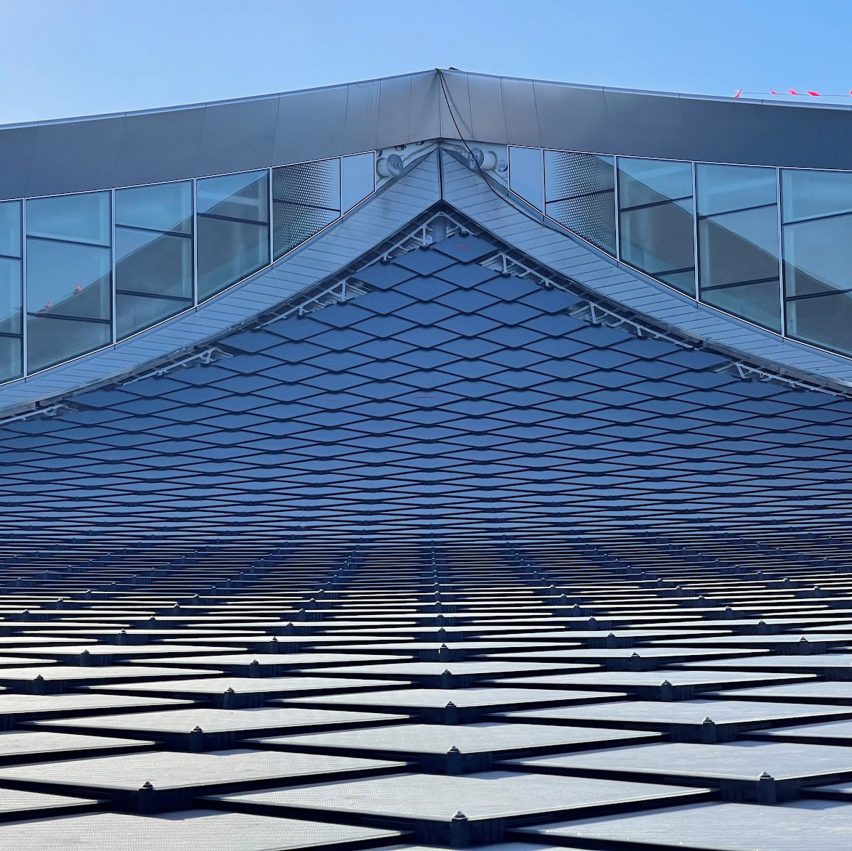
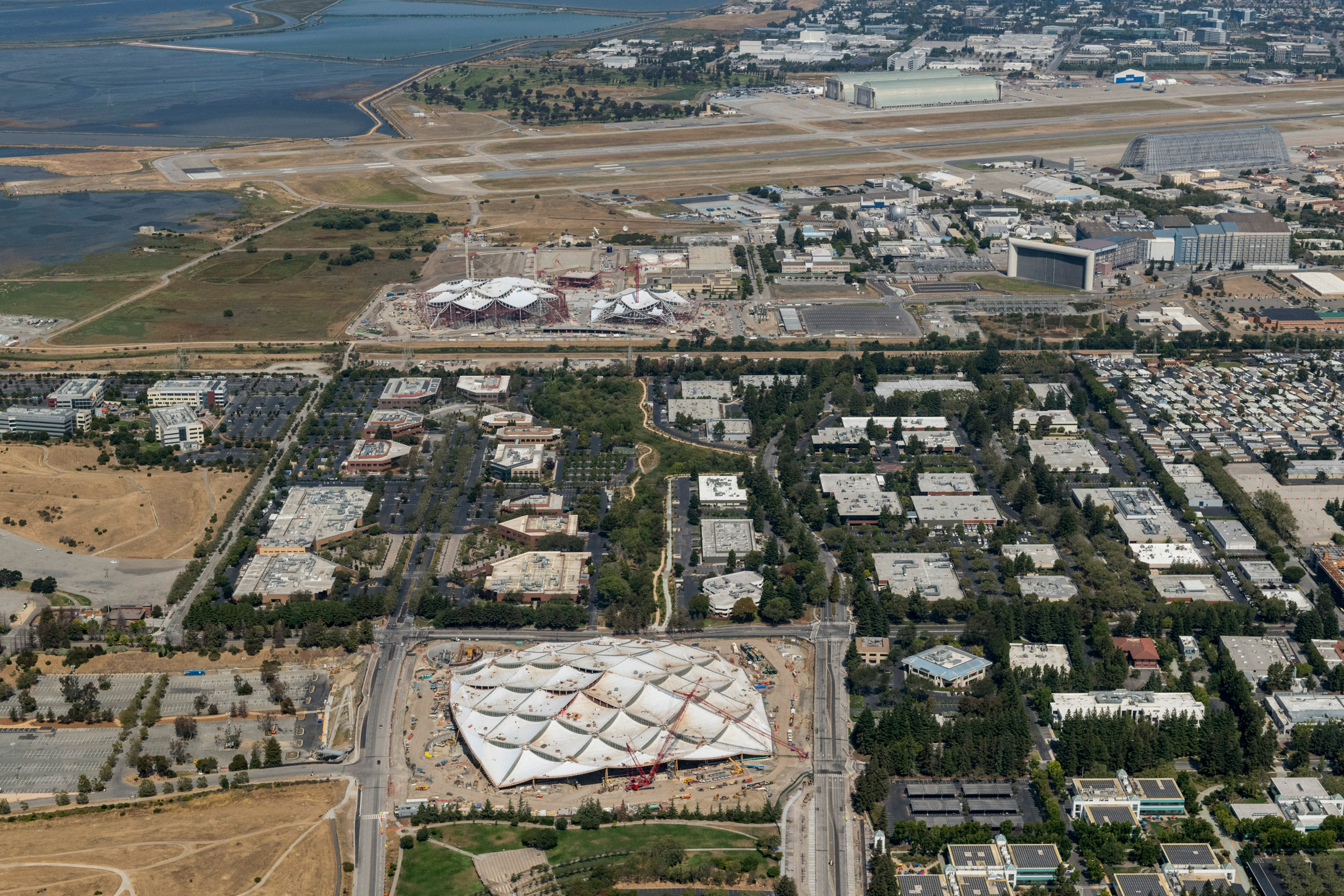
Top: "Dragonscale" solar panels on Google's Mountain View building. Above: Photovoltaics and geothermal piles will provide some of the power for Google's new HQ
However, Bass admitted that the approach meant that the company continues to emit CO2 and that its offsetting programme does not compensate for its emissions by removing carbon from the atmosphere.
"Carbon neutrality still allows for carbon emissions," she told Dezeen. "People are using a lot of different terms and some of them mean different things.
"The way that I think about it is that carbon neutrality still allows you to emit," she continued. "You can still be producing carbon, you can still be connected to a grid that is burning coal or some fossil fuel."
"And as long as you offset that by purchasing renewable energy somewhere, you can still achieve carbon neutrality."
Offsetting is a "fallacy"
Google's stance aligns with the international PAS 2060 standard for carbon neutrality. This allows companies to claim they are carbon neutral if they use offsets or carbon credits.
However, offsets that prevent additional CO2 from reaching the atmosphere, for example by buying renewable power or capturing emissions from factories, do not negate the emissions that have already been made.
Robin Bass, real estate and workplace services sustainability programs lead at Google
Unlike net-zero, which is a far more demanding standard that has become the global benchmark for decarbonisation, carbon neutrality allows companies to continue emitting more CO2 than they remove from the atmosphere.
"If somebody says, oh, I've got this much renewable power and I'm gonna offset my carbon emissions, you have to be very careful," McDonough said. "That would logically then say that if you doubled your renewables, you could double your carbon and still be net-zero."
"That doesn't make any sense at all, because the atmosphere absorbs twice as much carbon. Renewables don't equal to [removing] carbon."
True net-zero "requires carbon removal"
Speaking to Dezeen this week, Taylor Francis of decarbonisation platform Watershed said that net-zero emissions can only be achieved by removing carbon from the atmosphere.
"We strongly believe that true net-zero requires carbon removal, which is taking carbon out of the atmosphere, rather than traditional offsets, which involve paying someone else not to emit carbon into the atmosphere," he said.
Google says it became carbon neutral in 2007. In September last year, CEO Sundar Pichai announced that the firm had eliminated its carbon legacy dating back to its foundation in 1998.
"As of today, we have eliminated Google's entire carbon legacy (covering all our operational emissions before we became carbon neutral in 2007) through the purchase of high-quality carbon offsets," he stated in a keynote address.
"This means that Google's lifetime net carbon footprint is now zero."
Offsets make emissions "lower than they would have been"
"At Google, we reduce our carbon footprint through efficiency improvements, generating on-site solar power and purchasing green power," the white paper states.
"To bring our remaining footprint to zero, we buy carbon offsets. A carbon offset is an investment in an activity that reduces carbon emissions. The reduction in carbon emissions is represented by a carbon credit."
"The credit, usually verified by a third party, signifies that greenhouse gas emissions are lower than they would have been had no one invested in the offset."
Google invests in offsets that burn captured methane
Google uses offsets that include capturing methane from landfill sites and agricultural sites. The methane is "captured and used or burned". It also works with forestry projects that "protect forests from destruction and degradation or [...] enhance and develop new ones".
The white paper states that since 2007, Google has "partnered with more than 40 carbon offset projects to offset more than 20 million tCO2e emissions".
This means that it must have emitted an equivalent amount – 20 million tonnes of carbon dioxide equivalent – over the same period.
"We have a strategy to look for and innovate with manufacturers on lower-carbon options [for building materials]," she said, adding that in terms of lowering the embodied carbon of Google buildings, "we're absolutely tracking all of that".
"We've looked at the best-case scenario for mass timber. We will still use concrete and steel so we're really driving innovation on both of those materials, which have a very big [carbon] footprint. There's a lot of really exciting technology coming out for both of those products."
Mountain View campus topped with "dragonscale" solar panels
The giant Mountain View building will generate some of its power from "dragonscale" solar panels on its roof while geothermal pilings will help heat and cool the building.
"When completed, these buildings will feature a first-of-its-kind dragonscale solar skin, equipped with 90,000 silver solar panels and the capacity to generate nearly 7 megawatts," he said.
"They will house the largest geothermal pile system in North America to help heat buildings in the winter and cool them in the summer. It's been amazing to see it come to life."
However, Bass was unable to say what percentage of the building's power would be generated by the solar and geothermal systems.
In order to meet the objectives of the 2015 Paris Agreement and keep global warming within 1.5 degrees Celsius of pre-industrial levels, the global economy needs to halve emissions by 2030 and become net-zero by 2050.
Google aims to reduce Scope 3 emissions by 50 per cent this year
Net-zero involves eliminating "Scope 3" emissions, which are emissions generated by a company's supply chain, including embodied carbon emissions caused by the construction of new buildings as well as emissions caused by customers using a company's products. These are the hardest emissions to eliminate.
"We will set a science-based target to reduce our Scope 3 emissions by at least 50 per cent later this year, in line with the guidance from UN's Race to Zero campaign and Exponential Roadmap Initiative," Google told Dezeen.
The United Nations' Race to Zero campaign defines net-zero as meaning no carbon is added to the atmosphere either directly or indirectly over the entire lifecycle, which includes materials used in a project and emissions caused by customers using a product, service or building.
"There's always more work to do"
Where emissions cannot be eliminated, they can be offset using carbon removal schemes that directly capture carbon from the atmosphere, for example via biomass or direct air capture technology. Offsetting schemes that reduce or defer emissions do not count, making Google's offsets incompatible with the Race to Zero.
"There's a ton of complexity in what makes something carbon-neutral or carbon-free," Bass said. "As a company, we're addressing it across all of our product areas, and certainly within the REWS [real estate and workplace services] portfolio as well."
"We offset all of our electricity consumption every year and have achieved that since 2017," she added. "Our really big goal is to work with local energy grids by doing things like the dragonscale solar and the geothermal and partnering with them on how we help them transition to cleaner energy supplies as well so that all of our buildings can plug into a clean grid."
"There's always more work to do," she added. "If anyone out there is claiming that they're 100 per cent carbon-free, red flags should be going up everywhere."
Carbon revolution
This article is part of Dezeen's carbon revolution series, which explores how this miracle material could be removed from the atmosphere and put to use on earth. Read all the content at: www.dezeen.com/carbon.
Belinda Ercan and Sam Anderson from Epic Games will provide an overview of Twinmotion in the workshop, as well as giving practical advice and sharing tips and tricks for using the visualisation software.
Workshop takes place at 2:00pm on 5 August
The workshop, which takes place at 2:00pm London time on 5 August, will be moderated by Dezeen's chief content officer Benedict Hobson.
There will be a Q&A session for attendees to ask the speakers questions at the end of the webinar.
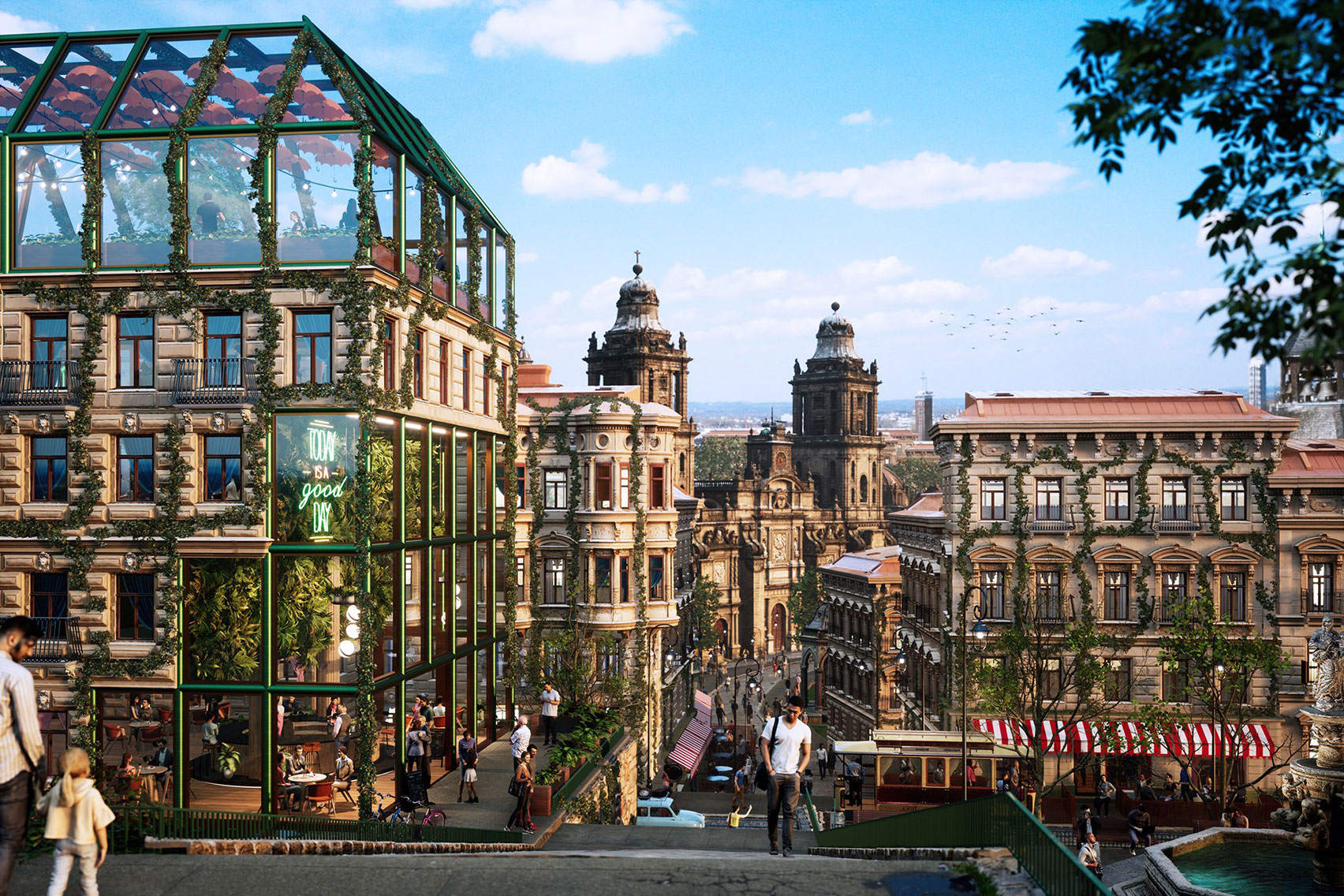
Twinmotion can be used to create architectural visualisations, such as above by Pawel Rymsza and top by Albert Brown
Twinmotion is an architectural visualisation tool powered by Unreal Engine, which is a game engine developed by Epic Games.
It enables architects and designers to quickly and easily create high-quality images, panoramas, fly-throughs and animations of products, buildings, cities and even entire landscapes. It can be used to produce standard or 360° VR videos from imported BIM or CAD models.
Belinda Ercan oversees Twinmotion product marketing and strategy at Epic Games
Ercan is a product marketing manager for Twinmotion at Epic Games.
She has a master's degree in architecture and digital design, with focus on 3D visualisation, and has previously worked as a visualiser for HLM Architects and visualisation product manager Graphisoft.
Ercan will also be on the judging panel for the Redesign the World competition.
Sam Anderson develops technical content in Twinmotion at Epic Games
Anderson is a technical marketing manager at Epic Games.
A designer and 3D artist based in New York City and Los Angeles, she has a focus in real-time rendering.
Anderson was previously a visualisation specialist at SHoP Architects, where she focused on research and development, promoting the use of real-time technology to improve design processes.
Redesign the World calls for new ideas to redesign planet Earth
Redesign the World is the ultimate design competition, which calls for new ideas to rethink planet Earth to ensure it remains habitable long into the future.
It is free to enter and has a top prize of £5,000 and total prize money of £15,000. People over the age of 18 of any profession and from any country in the world can enter.
The 15 best proposals will be published on Dezeen in November during our Dezeen 15 online festival celebrating Dezeen's 15th anniversary.
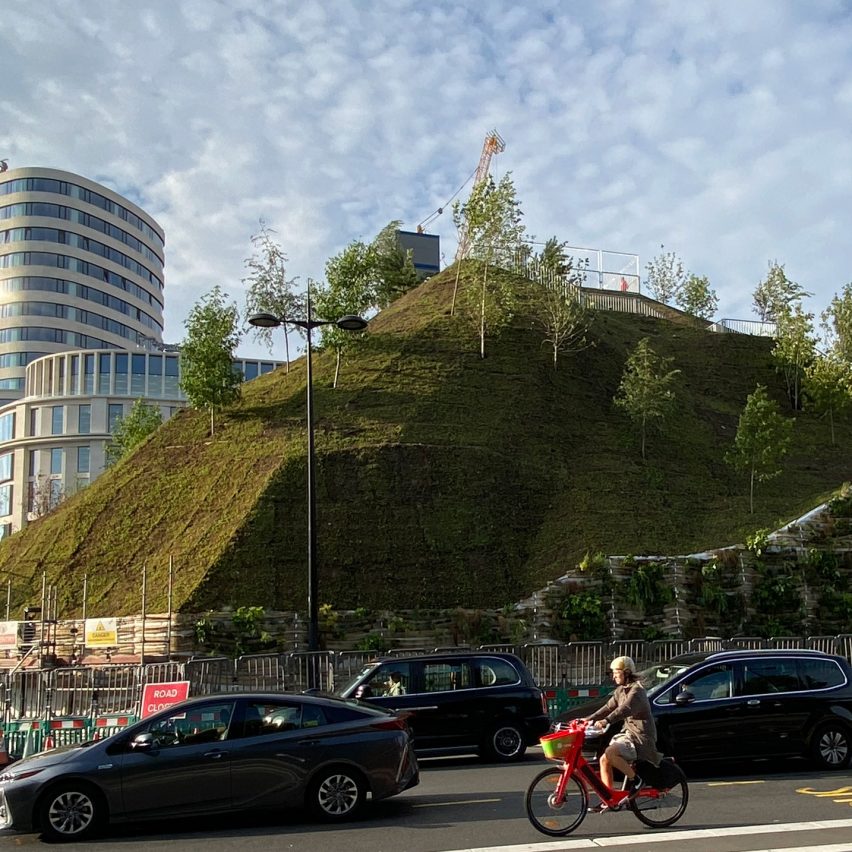
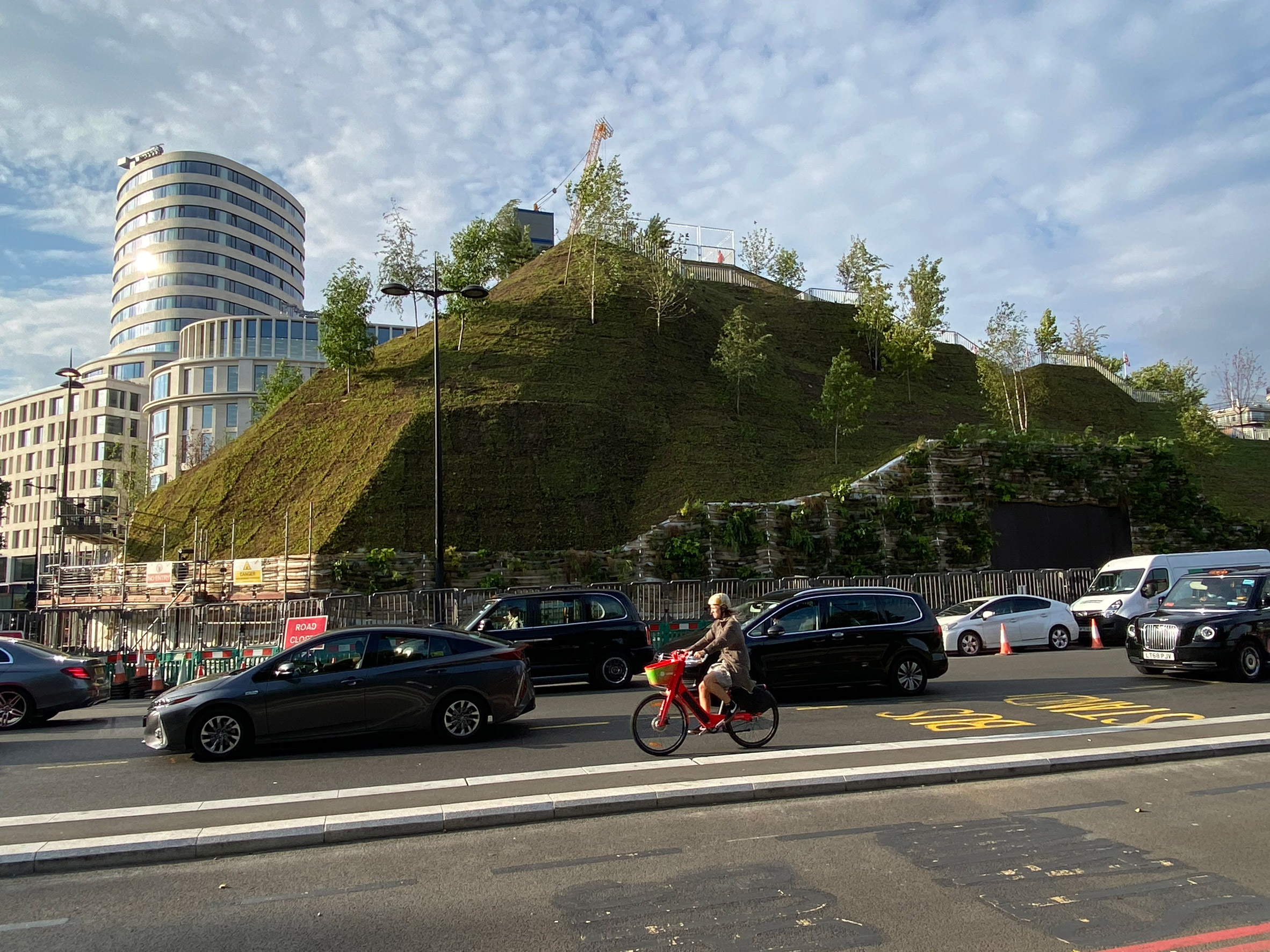
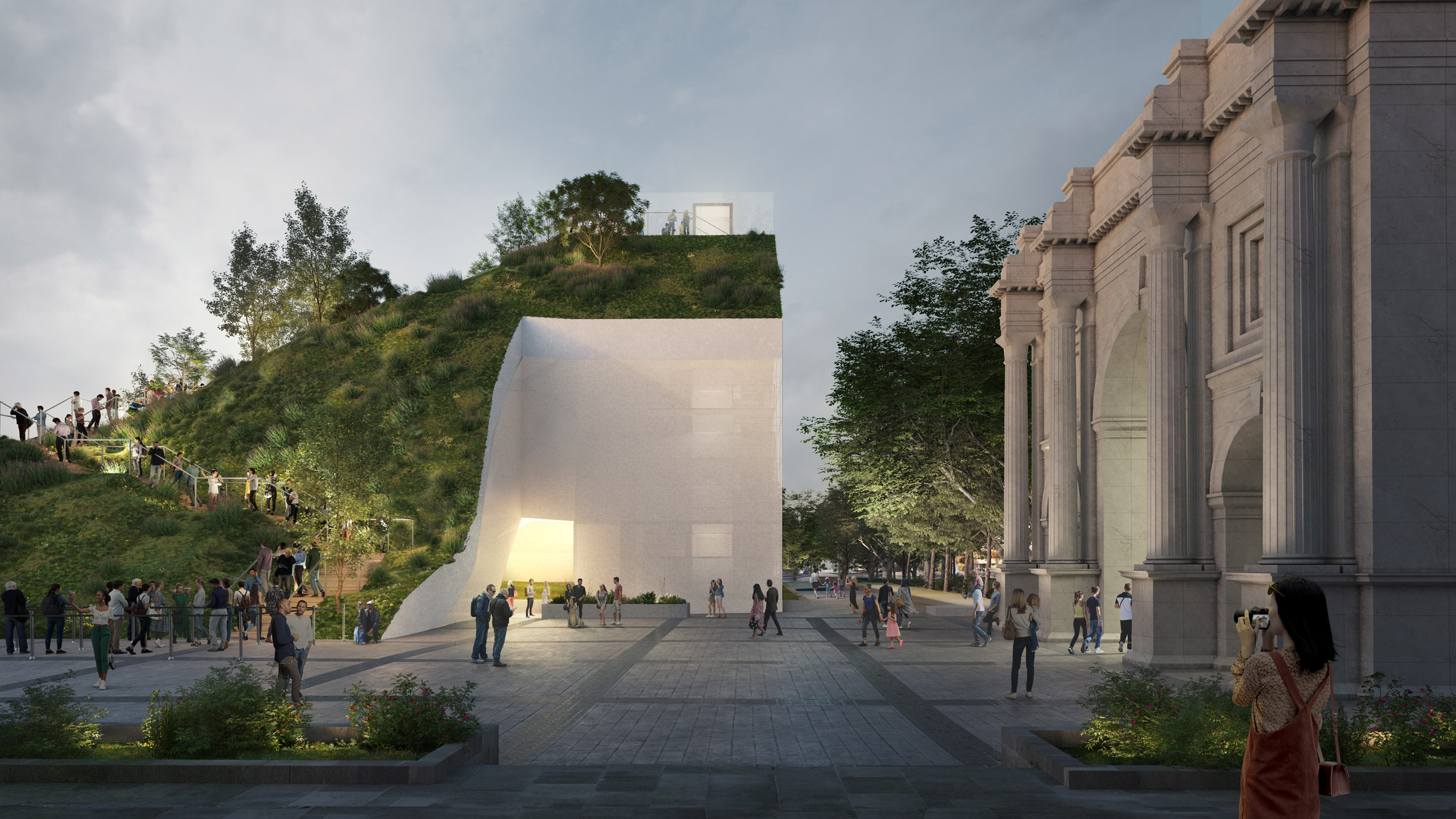
Dutch studio MVRDV has responded to the criticism of its fake hill in central London and accepts that it opened before it was ready.
The £2 million Marble Arch Mound has been widely criticised with Westminster City Council forced to suspend booking and issue visitors refunds.
MVRDV admitted that the attraction near the Oxford Street shopping destination opened before it was fully complete.
"Some elements were not ready, and it would have been better to wait until the greenery looked better," MVRDV told Dezeen. "But let's give nature a chance."
"Working with plants is unpredictable"
Built alongside Marble Arch, which was designed by architect John Nash in 1872, the attraction was created to encourage people to visit Oxford Street following the end of coronavirus restrictions in the UK.
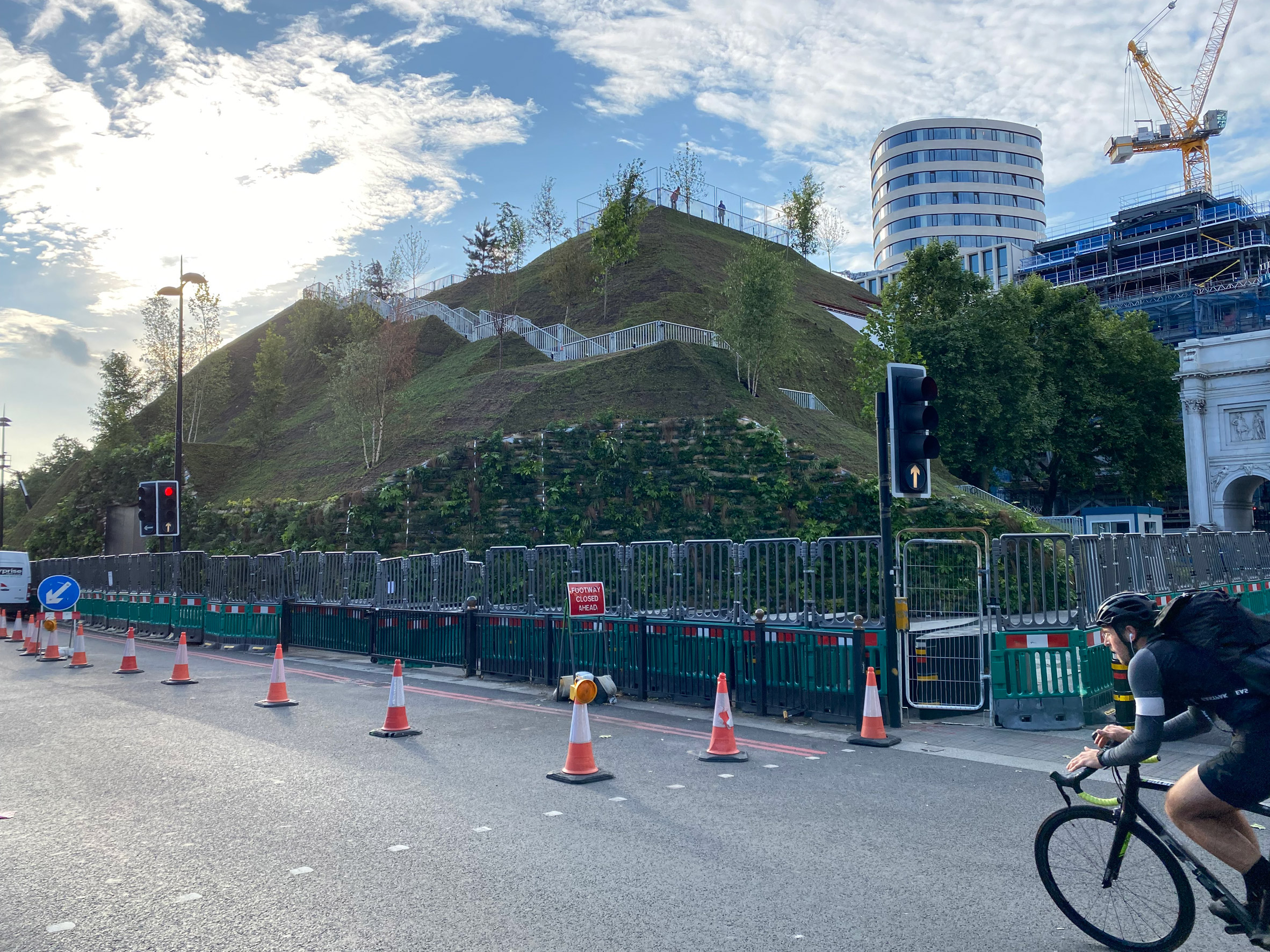
MVRDV's Marble Arch Mound has been widely criticised
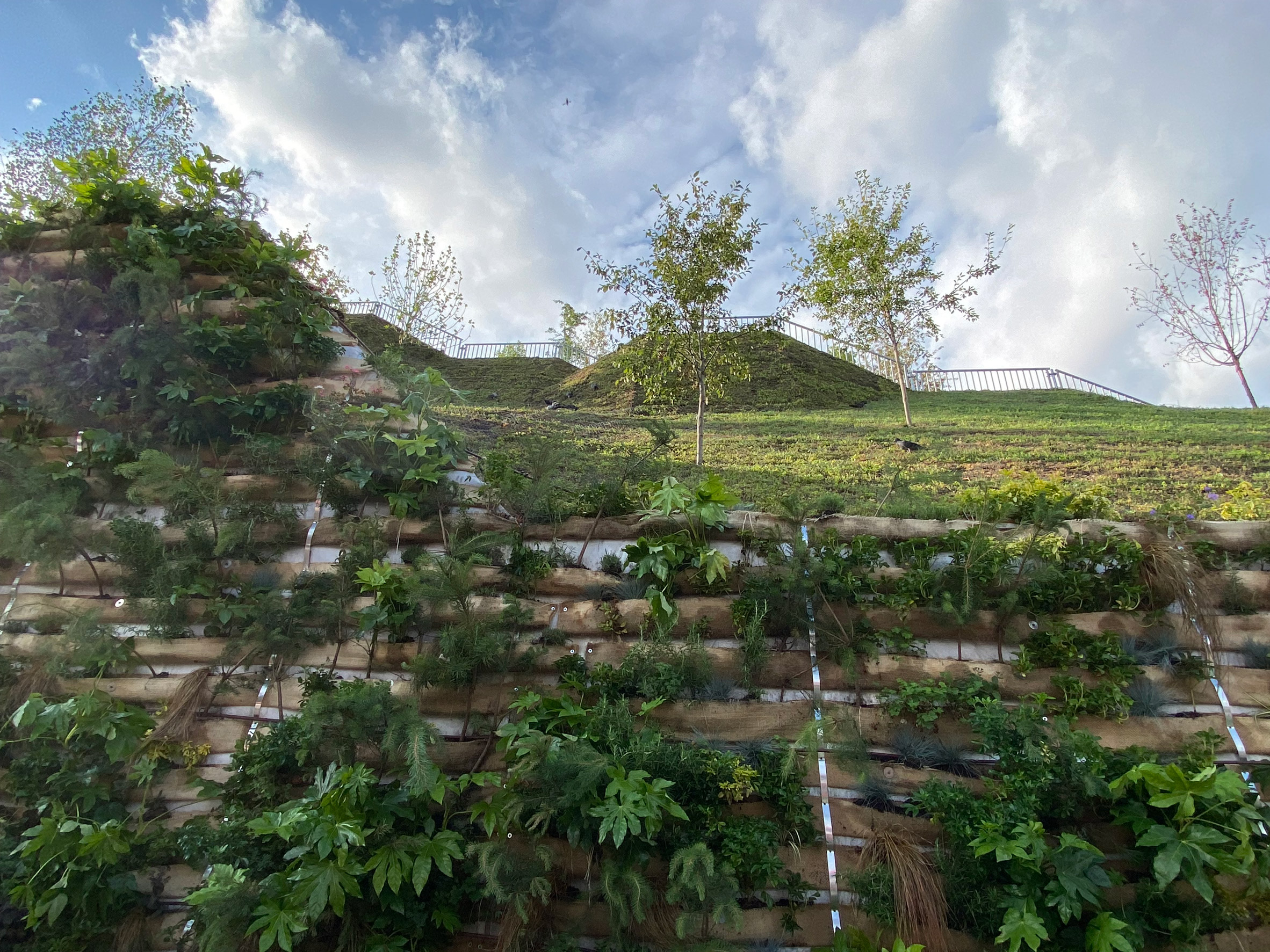
However, the sedum turf that covers the artificial hill does not appear to be healthy, something that the studio attributes to the "challenging" weather in London.
"The mound is a living installation, and working with plants is unpredictable, especially in challenging weather conditions," said MVRDV.
Much of the mound's sedum covering is browning
"The unexpected dry weather in London has turned the sedum brown and thin, but sedum can survive a drought," it continued.
"Marble Arch Mound will stay until January so the greenery will change with the seasons. After a week of rain, it will already look different."
"Original plan was to use soil"
According to MVRDV, the mound was originally going to be covered in soil. However, this was replaced with sedum turf when the size of the installation was reduced during the design process.
Planting has suffered due to the heat claim MVRDV
"We originally wanted the hill to cover the arch totally," said the studio. "Conservation experts advised against that, so the solution was a hill leaving room for the arch."
"The original plan was to use soil but because of its weight, and the slopes resulting from the smaller footprint, sedum was used," it continued.
"Adding plants here is a symbol of where we need to go"
Despite the current issues with the installation, MVRDV insists that the attraction could still be a success and has an important message.
"Marble Arch Mound (MAM) is a folly in the best British tradition," said the studio. "A mound that is not really a mound in the middle of London – overlooking Hyde Park and extending it back to its original boundary – was the basic idea."
"There is also a serious message: how important it is to add nature to cities to combat climate change," it continued.
"We think adding plants here is a symbol of where we need to go in the future, greening the city."
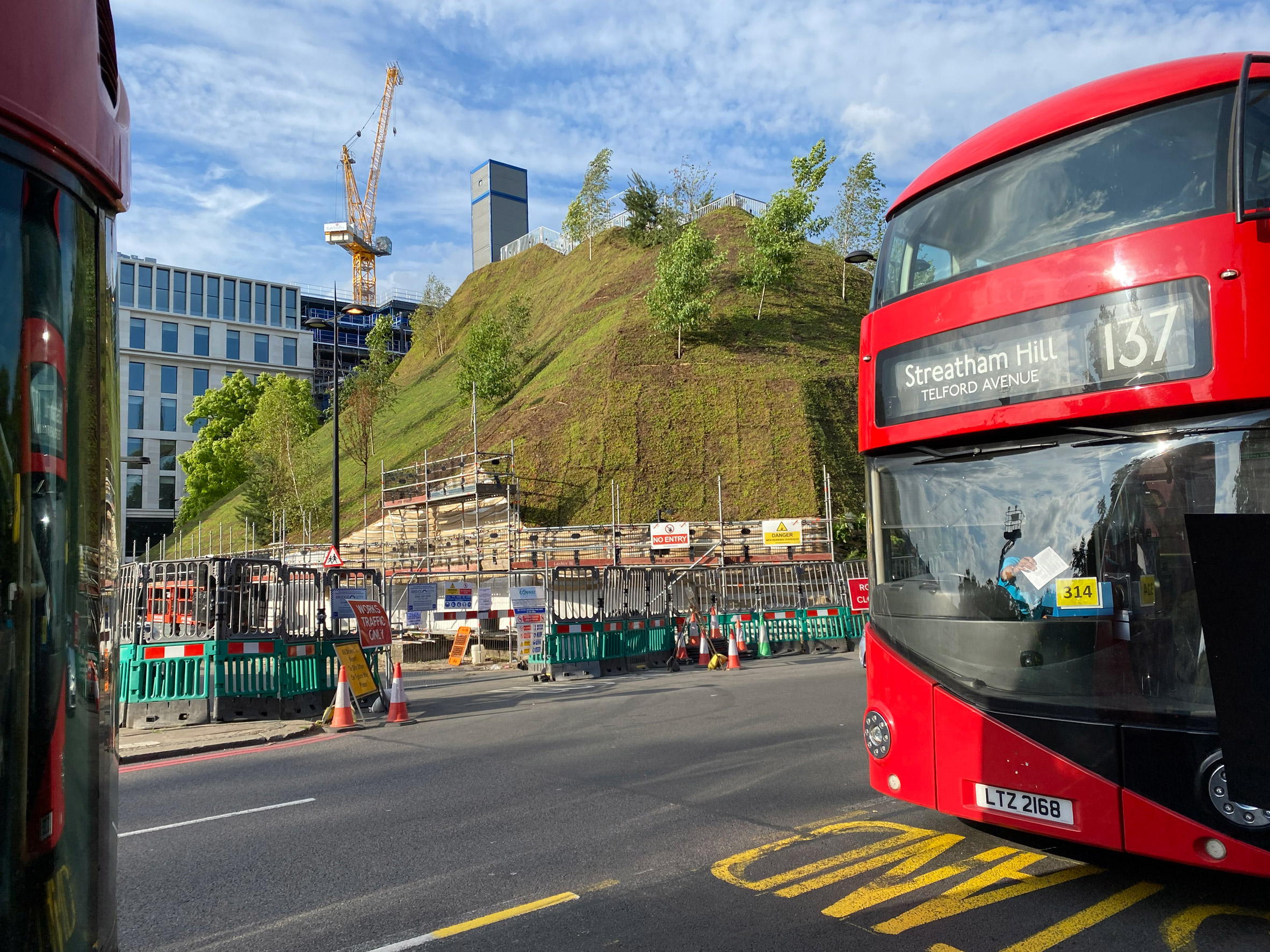
The fake hill is set to reopen once the planting looks better
MVRDV co-founder Winy Maas has previously advocated adding more greenery into our cities.
Stefano Boeri Architetti has inserted an entrance kiosk and a pedestrian walkway that provides access to subterranean rooms within Rome's historic Domus Aurea palace.
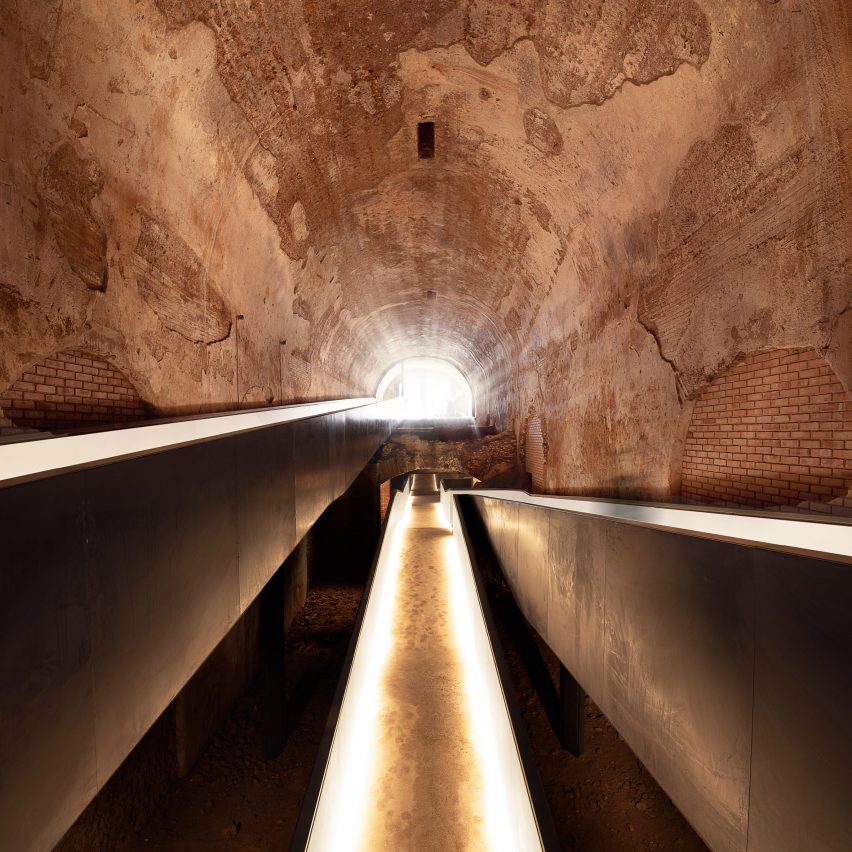
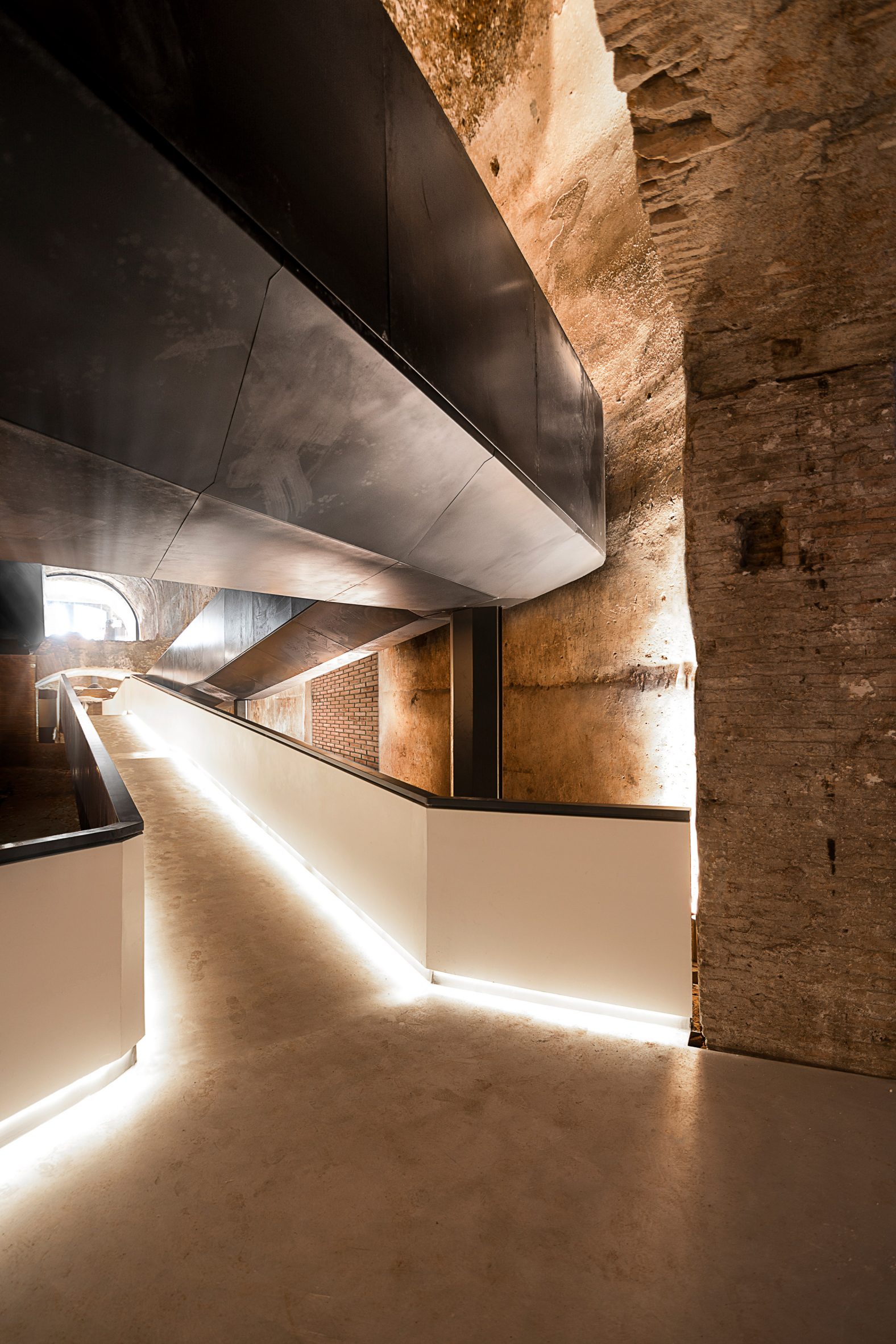
The new entrance is situated within Oppian Hill Park and connects with the walkway that leads to the spectacular Octagonal Room almost six metres below.
Stefano Boeri Architetti has built a walkway in the Domus Aurea palace
The palace built by Emperor Nero after the great fire in 64 AD is one of Rome's most important historical sites. The interventions developed by Boeri's Milan-based studio slot in around the existing ruins without disturbing them at all.
"The project of a new entrance to the Domus Aurea and of a pedestrian walkway to access the Octagonal Room represented an extraordinary opportunity […] to bring back to the attention of the city one of the most evocative realities of history and Roman architecture," claimed Boeri, "allowing each visitor to descend directly into the heart of Nero's Domus."
The walkway leads to the subterranean Octagonal Room
The Domus Aurea's excavated passages, vaults and hundreds of rooms require regular restoration and have been closed to the public for much of the past several decades.
Following the latest restoration phase, the Domus Aurea planned to reopen in 2020 with an exhibition dedicated to the Renaissance artist Raphael, who was inspired by paintings discovered at the site in the late 15th and early 16th centuries.
The structure was designed to slot in around the existing ruins
The exhibition scheduled to coincide with the 500th anniversary of Raphael's death was postponed due to the coronavirus pandemic and eventually opened on 23 June 2021.
The exhibition is presented in the Octagonal Room and five adjacent rooms, which are the culmination of the new entry experience.
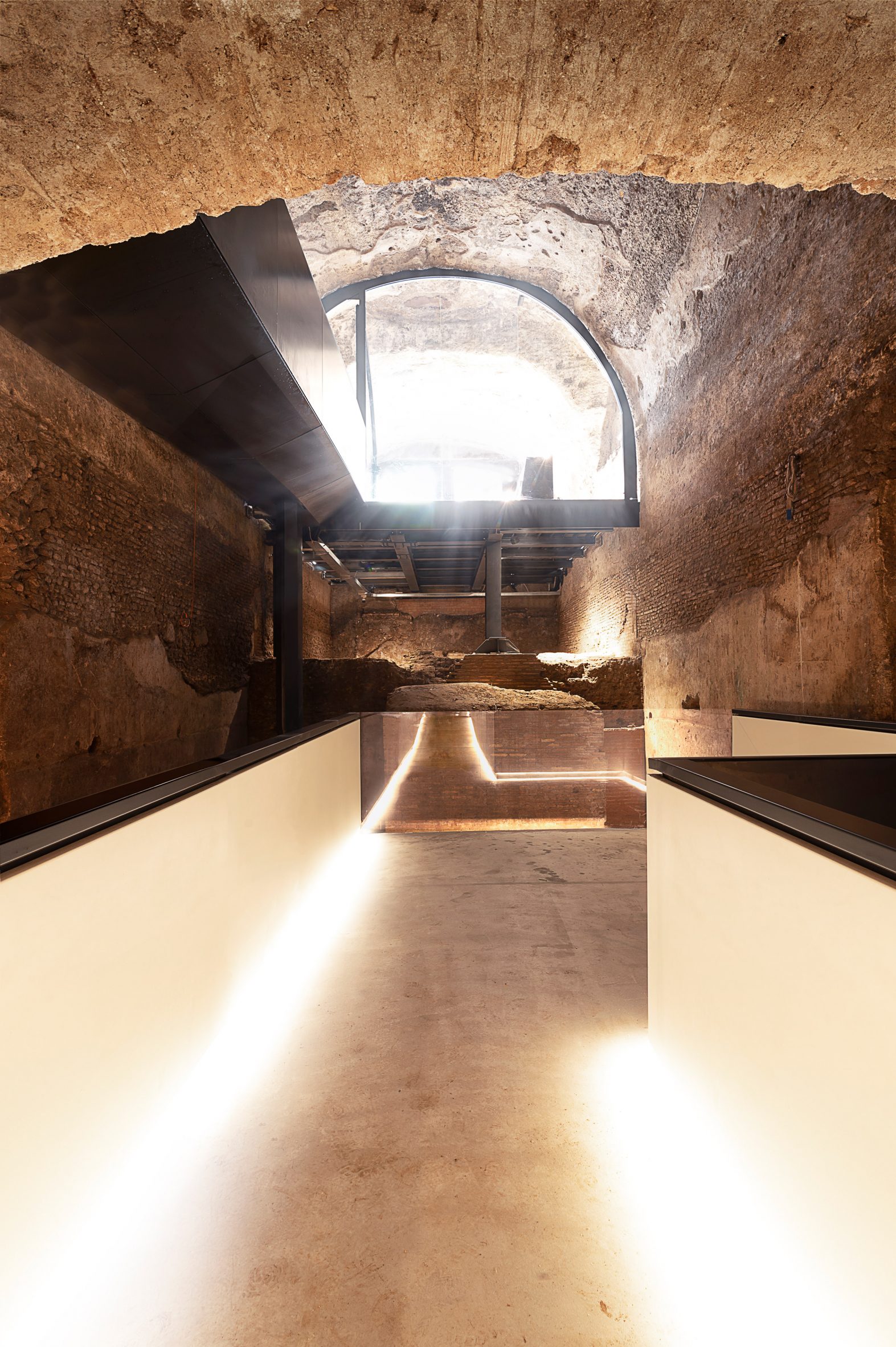
Visitors enter from the park into a vestibule housing a ticket desk and bookshop. Screens made from galvanised and black-painted steel with bronze details mark the new entrance and can be closed to secure the site.
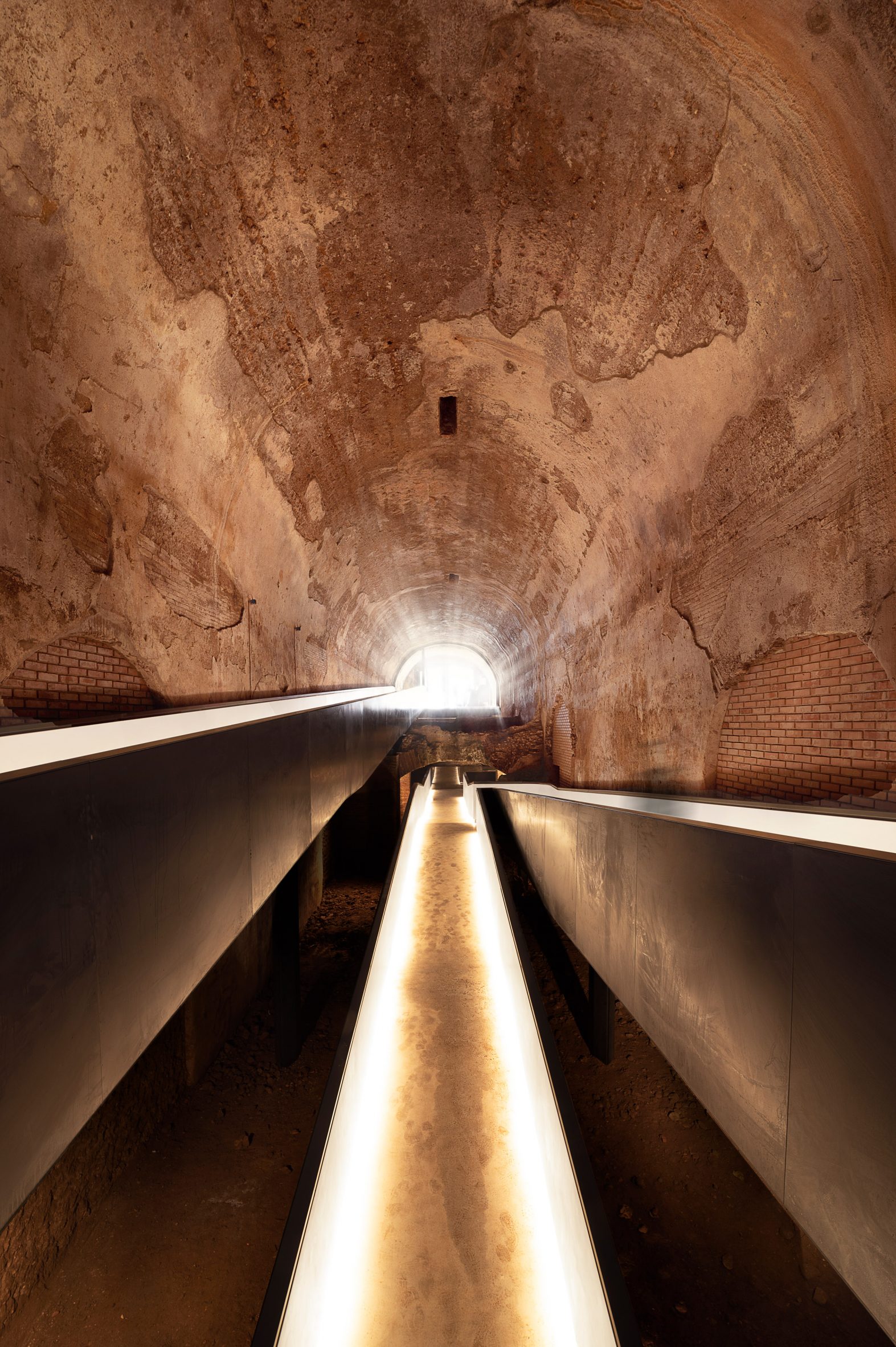
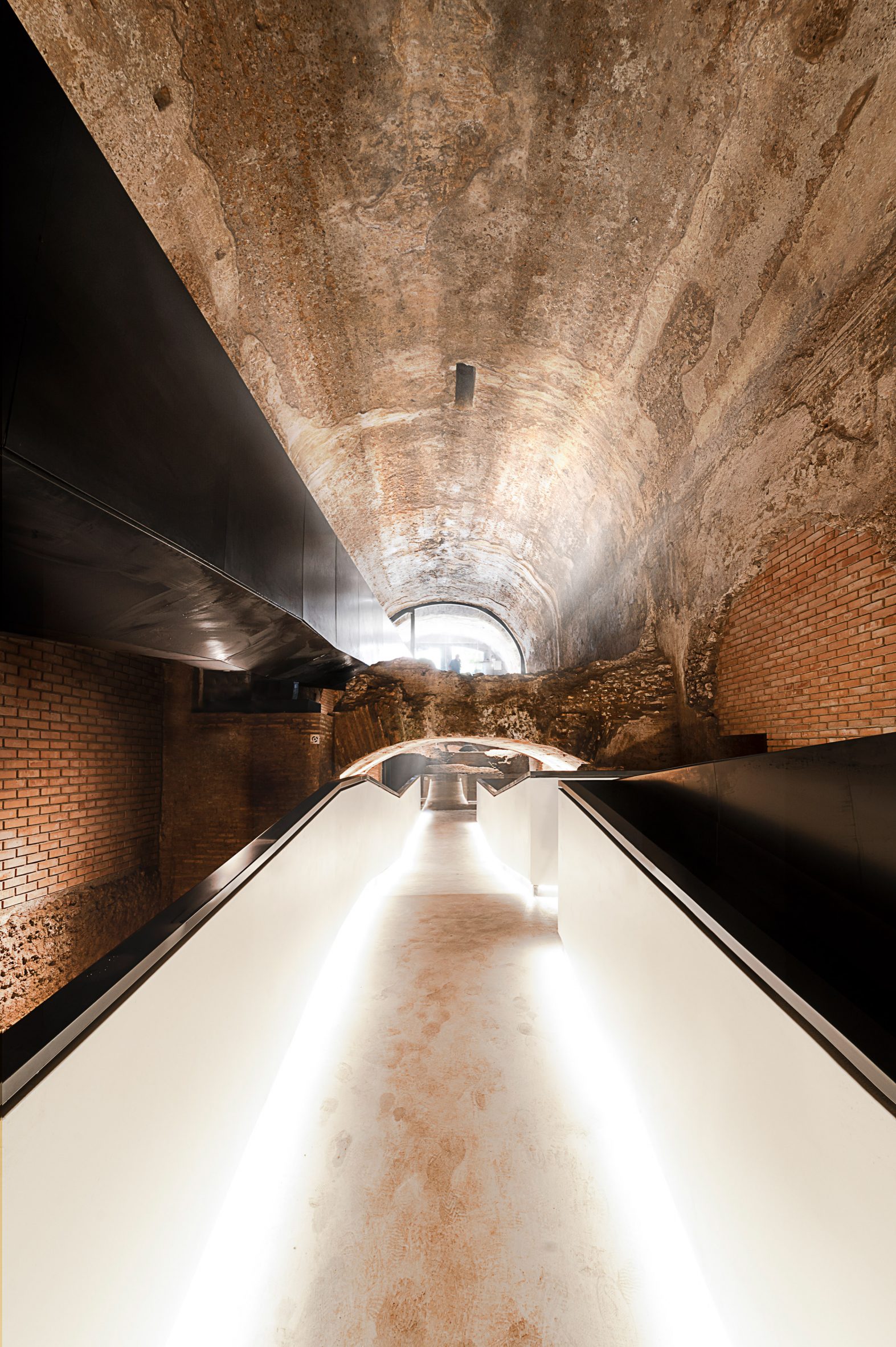
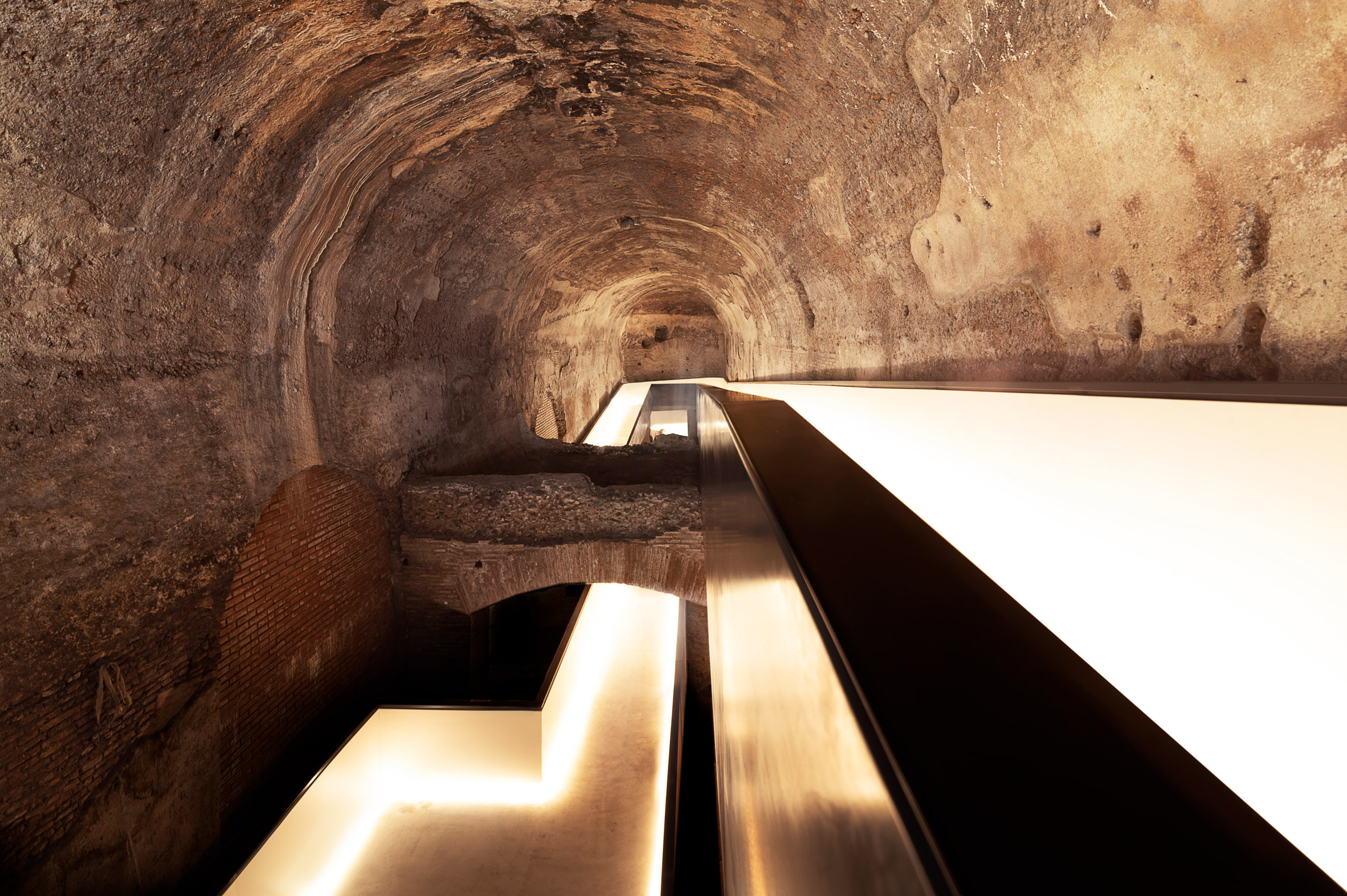
The vestibule space incorporates an arched window overlooking the walkway, which descends gradually through a dark, vaulted gallery displaying layers of construction unearthed during the excavations.
The structure is made from galvanised metal sheets
The walkway is supported by steel beams concealed behind panels of galvanised and painted sheet metal that lend the structure a robust and monolithic appearance.
LED lighting incorporated along the full length of the walkway highlights the white-resin path and illuminates historical elements along the route.
The interventions are designed to sit within the existing walls and Trajan vault without touching them or compromising their structure in any way.
The self-supporting framework was constructed manually without the use of machinery or welding equipment that could have damaged or altered the microenvironment within the Domus Aurea.
"The decision to carry out a light intervention gives users an immersive space, a unique opportunity to observe the ruins from above, up close and even to cross them, reaching the final point of access to the Octagonal Room," added Boeri's studio.
The walkway leads into the Octagonal Room, which was originally Nero's banquet hall and is topped with a concrete dome and oculus.
The architects inserted a vertical screen into one of the arched portals surrounding the space, which conceals a lift and the final section of the walkway.
The screen, which follows the proportions of the opening it is located within, can also be used in conjunction with exhibitions as a backdrop for projecting images and videos.
LED lighting is incorporated along the walkway
Architect Stefano Boeri is perhaps best known for his Vertical Forest concept, which involves incorporating planters for trees and other vegetation on tall buildings such as the Bosco Verticale towers in Milan.