Saturday, 7 August 2021

Fifteen design and fashion projects by students at Vilnius Academy of Arts

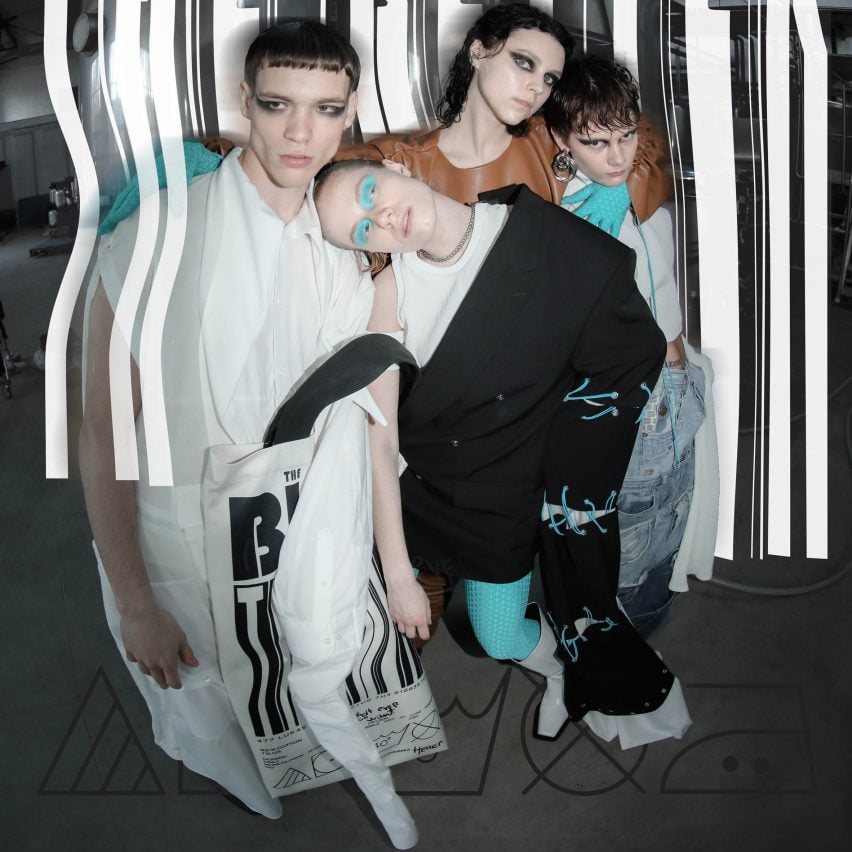
The Bigger The Better fashion collection by Lukas Ivanavičius

Hempcrete furnishings and a deliberately oversized fashion collection are among 15 projects in this school show by the Design Innovation Centre of Vilnius Academy of Arts.

The featured projects were completed by students enrolled on one of five courses at the Design Innovation Centre of Vilnius Academy of Arts. Each student was also the recipient of awards at this year's Young Designer Prize, an annual competition in Lithuania.


Vilnius Academy of Arts

School: Design Innovation Centre of Vilnius Academy of Arts
Courses: BA Product Design, BA Communication Design, BA Fashion Design and MA Design Research and Theory
Tutors: Renata Maldutienė, Jurgita Januškevičiūtė, Justė Tarvydienė, Dainius Bendikas, Alevtina Ščepatova, Marius Žalneravičius, Aušra Lisauskienė, Audrius Klimas, Julija Mazūrienė, Šarūnas Šlektavičius, Rokas Kilčiauskas, Juozas Brundza, Jolanta Talaikytė, Vaidutė Ščiglienė, Mantas Lesauskas, Aušra Trakšelytė

School statement:

"Design Innovation Centre of Vilnius Academy of Arts (VAA) is a centre of excellence established in 2007. The division provides commercialisation, development and renewal of new products, incubation activities and also promotes design in society.

"Since 2016, Design Innovation Centre is responsible for the intellectual property created in the academy. In 2018, divisions were opened in VAA faculties in Kaunas, Klaipėda and Telšiai. In 2019, The State Patent Bureau of the Republic of Lithuania granted VAA Design Innovation Centre the status of a PATLIB centre."

Young Designer Prize statement:

"Young Designer Prize is an annual competition organised in Lithuania since 2011 with 60-70 young designers competing for the awards every year. This year, 15 students were selected for the exhibition Young Designer Prize from four categories: product design, communication design, fashion design and design research and theory.

"The main aim of this competition is to encourage the professional development of design students, providing them with an opportunity to present ideas outside the academy."

Where am I? fashion collection by Adelė Burokaitė

Where am I? by Adelė Burokaitė

"The moment when you wake up from a dream, but its images are still lingering in your mind, and for a moment you become one with reality was the starting point of my collection. Often the urge to go back to the dream rather than to wake up and start a new day inspired me to create a collection that would reflect the union of these two worlds, dream and reality.

"Where am I? features pillows, pyjamas, sleeping masks, silhouettes of Rococo fashion and modern men's clothing, collages and childhood photos as fabric prints and various interior details as part of the garments."

Student: Adelė Burokaitė
Course: BA Fashion Design
Tutors: Renata Maldutienė
Email: adeleburokaite98@gmail.com
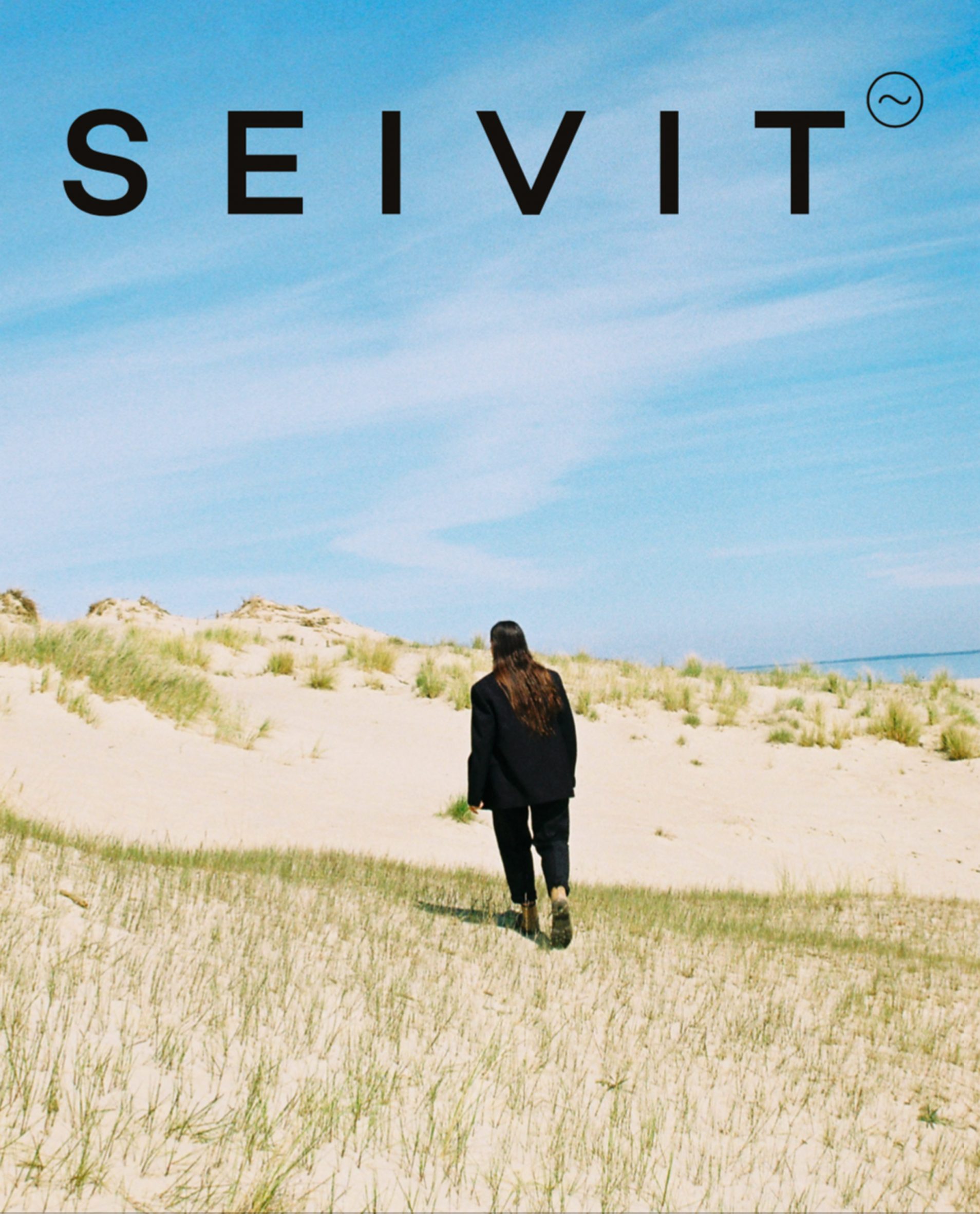

Seivit by Agnetė Voverė

Seivit by Agnetė Voverė

"Seivit is a fashion design platform and a magazine representing Lithuanian fashion and accessory designers portfolios, creative design processes and publications about fashion. The study analyses the most important visual representation tool – fashion photography.

"Designers face a complex task: to narrow the creative concept of the collection into a photo campaign, and the path from the idea to the final product often remains unseen. Thus, the project aims to present fashion through a variety of visual materials, highlighting the creative design process. There is a niche for critical and analytical publications on the topic of fashion in Lithuania, therefore the platform focuses on the history of fashion and fashion design field."

Student: Agnetė Voverė
Course: MA Design Research and Theory
Tutors: Jolanta Talaikytė, Vaidutė Ščiglienė
Email: agnete.vovere@gmail.com
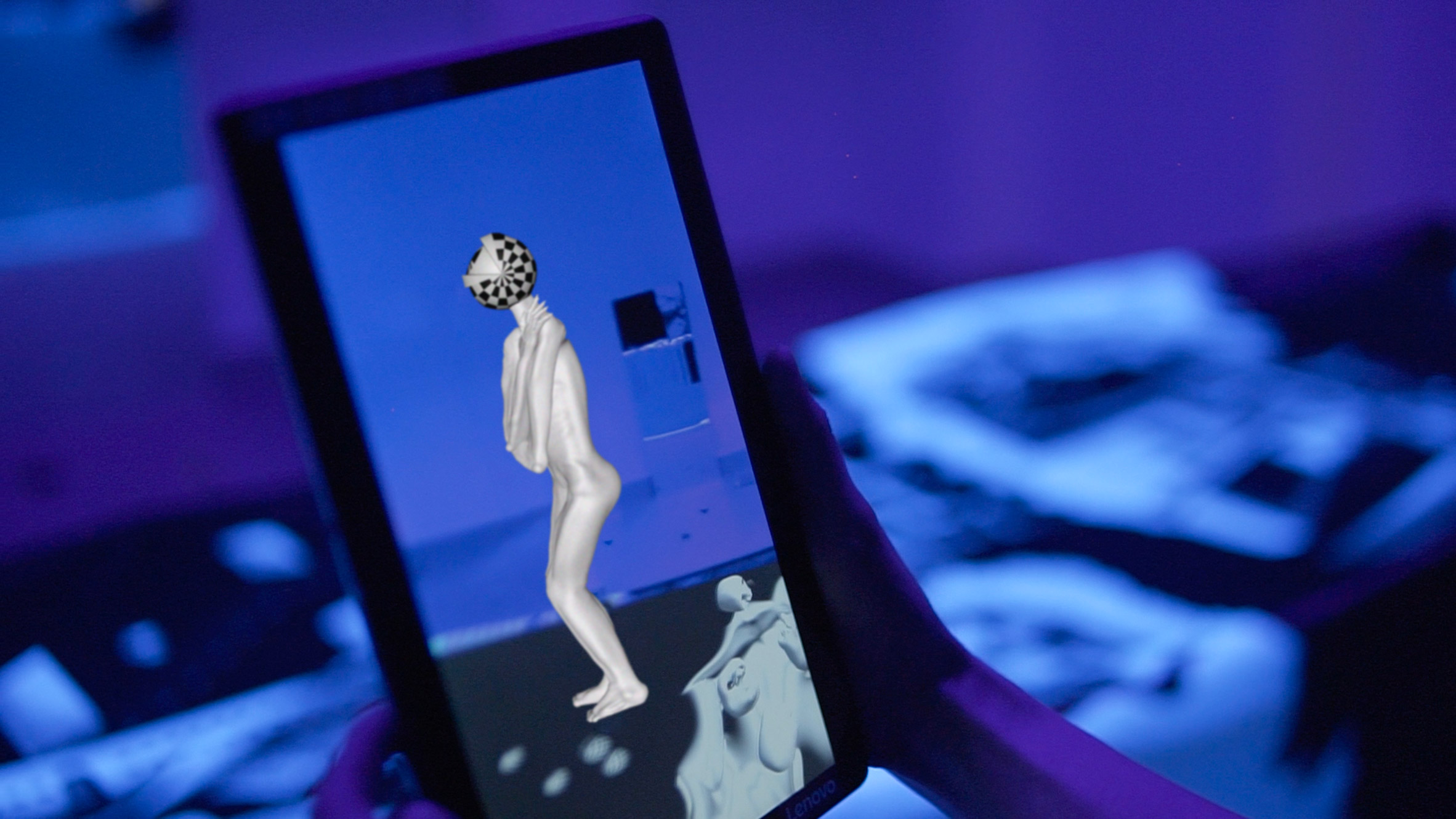

Stay in the mirror by Elena Kanarskaitė

Stay in the mirror by Elena Kanarskaitė

"This project is a symbolic meaning of our inner world that can be reached through the state of dream. According to Yuri Lotman, 'dreams are a semiotic mirror of our inner life'. The mirror as a symbol belongs to one of the oldest archetypal groups and stands out for its mysticism.

"Dreams contain not only of marvellous images, but our post-traumatic, and negative memories, which can even frighten us. The project invites us to stay in this mystical and bizarre state of dream.

"Immersing yourself in simulation which contains the synergy of different media such as sound, image, light and augmented reality. Those media allow the observer to immerse themselves in that mysterious phase."

Student: Elena Kanarskaitė
Course: BA Communication Design
Tutors: Marius Žalneravičius
Email: el.kanarskaite@gmail.com
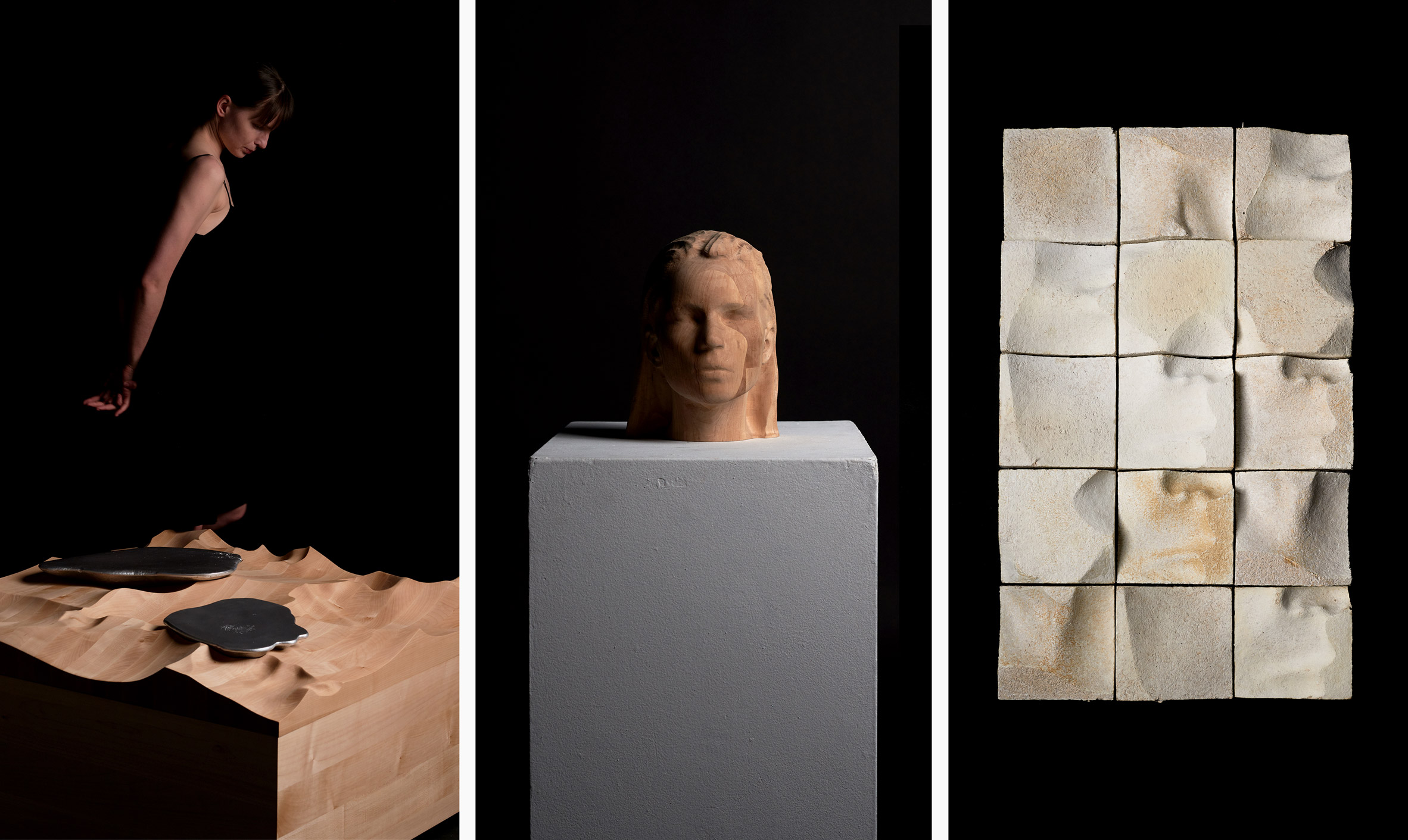

The interaction of face and cultural environment – the designer's perspective by Elena Lašaitė

The interaction of face and cultural environment – the designer's perspective by Elena Lašaitė

"The formation of the immediate environment along with the material environment has been partly driven by our fear or desire to feel safe. It is our physical, material environment around us that helps to actively and passively preserve our identity. Our bodies are the direct bearers of our identity.

"The identity addressed in the research interacts with the physical protection of one's data and the neurotic desire of an individual to preserve the identity, even though there is no real threat to it. Today our face has more authority than ever before.

"By protecting the face, we are protecting the identity. Objects of design substantiate the conclusion of the research work that we are a society of faces, yet my own face has become the principal axis of creation."

Student: Elena Lašaitė
Course: BA Communication Design
Tutors: Mantas Lesauskas
Email: elena.lasaite@gmail.com
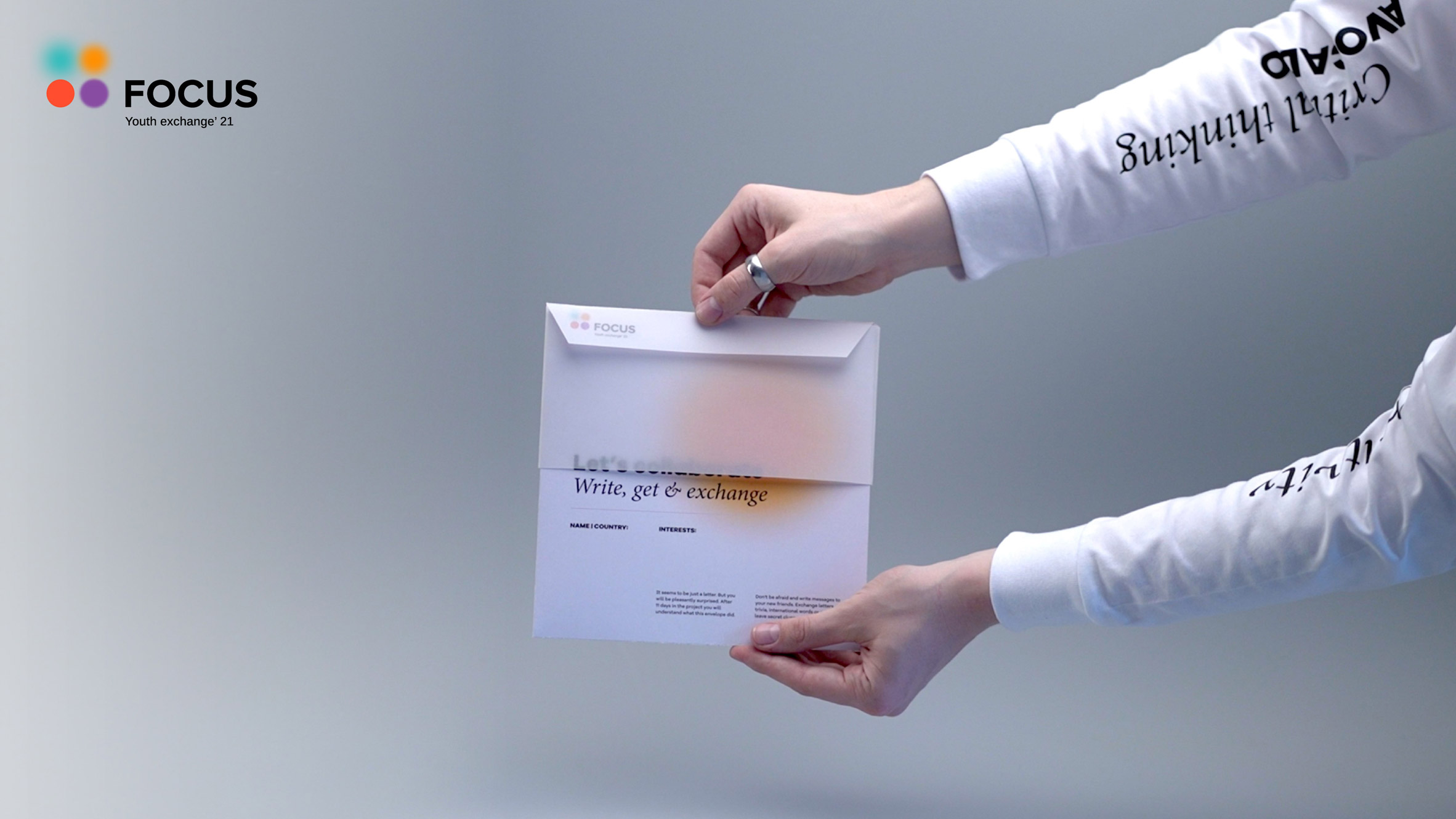

Focus by Emilija Dryžaitė

Focus by Emilija Dryžaitė

"Performative identity Focus is the first visual Erasmus+ youth exchange identity of its kind, allowing participants to experience activities by directly interacting with design objects. This bachelor's work becomes a guide for future Erasmus+ youth exchange projects, which shows the benefits of design for the content and quality of the project itself.

"The website design created during the Focus project becomes a reflection tool available for all projects, which facilitates the participants' expression of emotions and self-assessment of the activities overcome. This project boasts an international, funded youth event strategy, communication and visual identity."

Student: Emilija Dryžaitė
Course: BA Communication Design
Tutors: Aušra Lisauskienė
Email: emilijadry@gmail.com


The invisible side of plastic by Emilis Jonaitis

"Vast production and use of plastic products have saturated ecosystems with various kinds of plastic waste, which mainly consist of tiny, barely visible microplastics. For zooplankton, small plastic particles are indistinguishable from food and become a part of their diet, hence entering the food chain.

"Inevitably, the boundaries of the natural and the synthetic are starting to blur. The film illustrates current issues regarding plastic pollution and invites speculation about possible future outcomes. The project was created in collaboration with Plastic Justice."

Student: Emilis Jonaitis
Course: BA Communication Design
Tutors: Audrius Klimas
Email: emilisjonaitis@gmail.com

You fashion collection by Gretė Labanauskaitė

You by Gretė Labanauskaitė

"The topic of the bachelor's thesis was determined by the social exclusion of people with visual disabilities. Theoretical research was devoted to the analysis of the expression of social values in the fashion context. The aspects revealed the designer's ability to delve into the functional limitations of a narrow social group and defined the purpose of the work, to create a clothing collection that prioritises the tactile way of knowing fashion.

"The models were inspired by the Braille element, perceived by the main senses: touch, smell, and hearing. Explanatory texts were provided in formats accessible to the blind and partially-sighted. The social integrative fashion project is a meeting of two different worlds, the sighted and the blind, and a proof that fashion can help people with visual impairments integrate into society."

Student: Gretė Labanauskaitė
Course: BA Fashion Design
Tutors: Jurgita Januškevičiūtė
Email: labgre@gmail.com
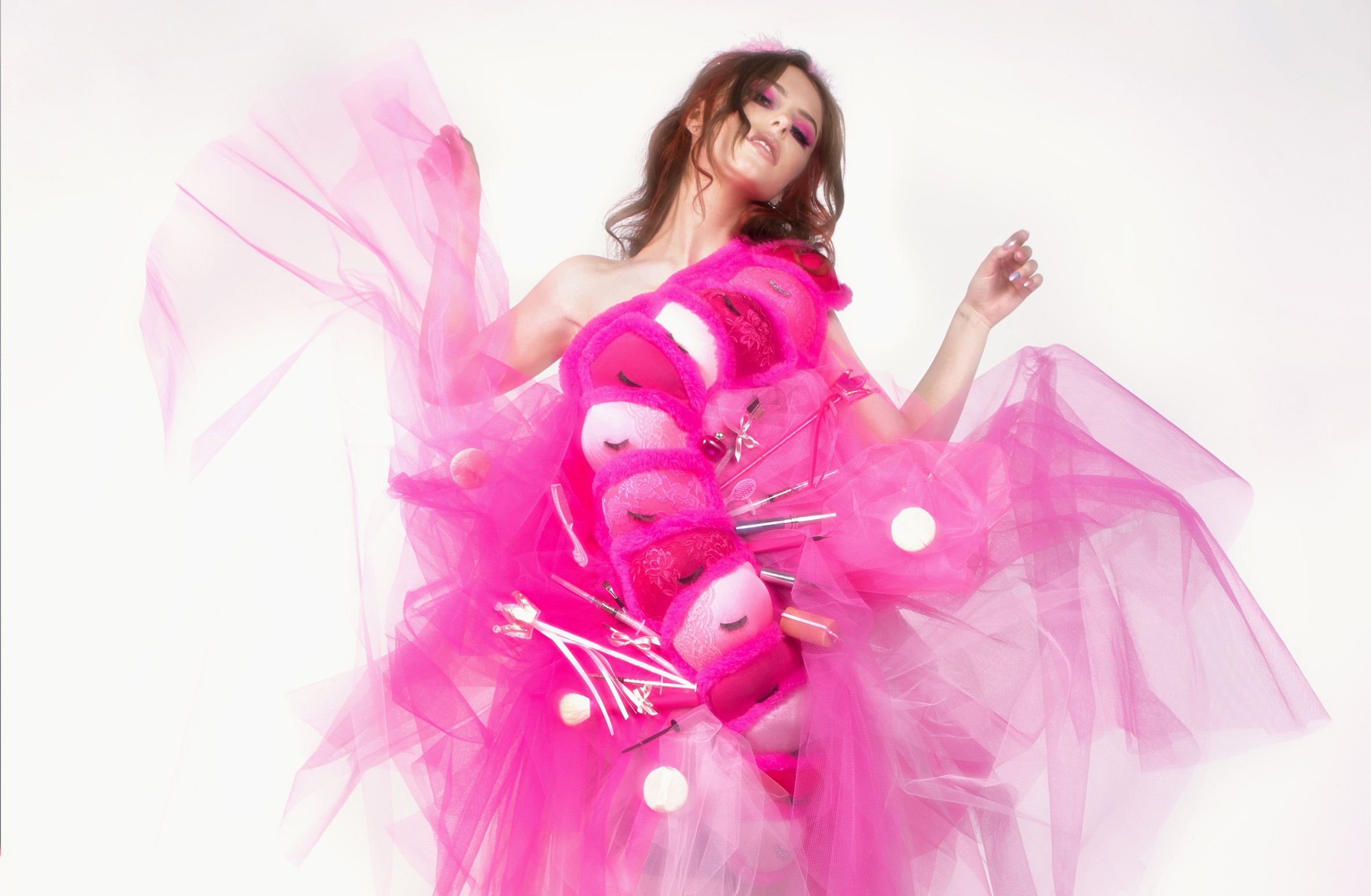

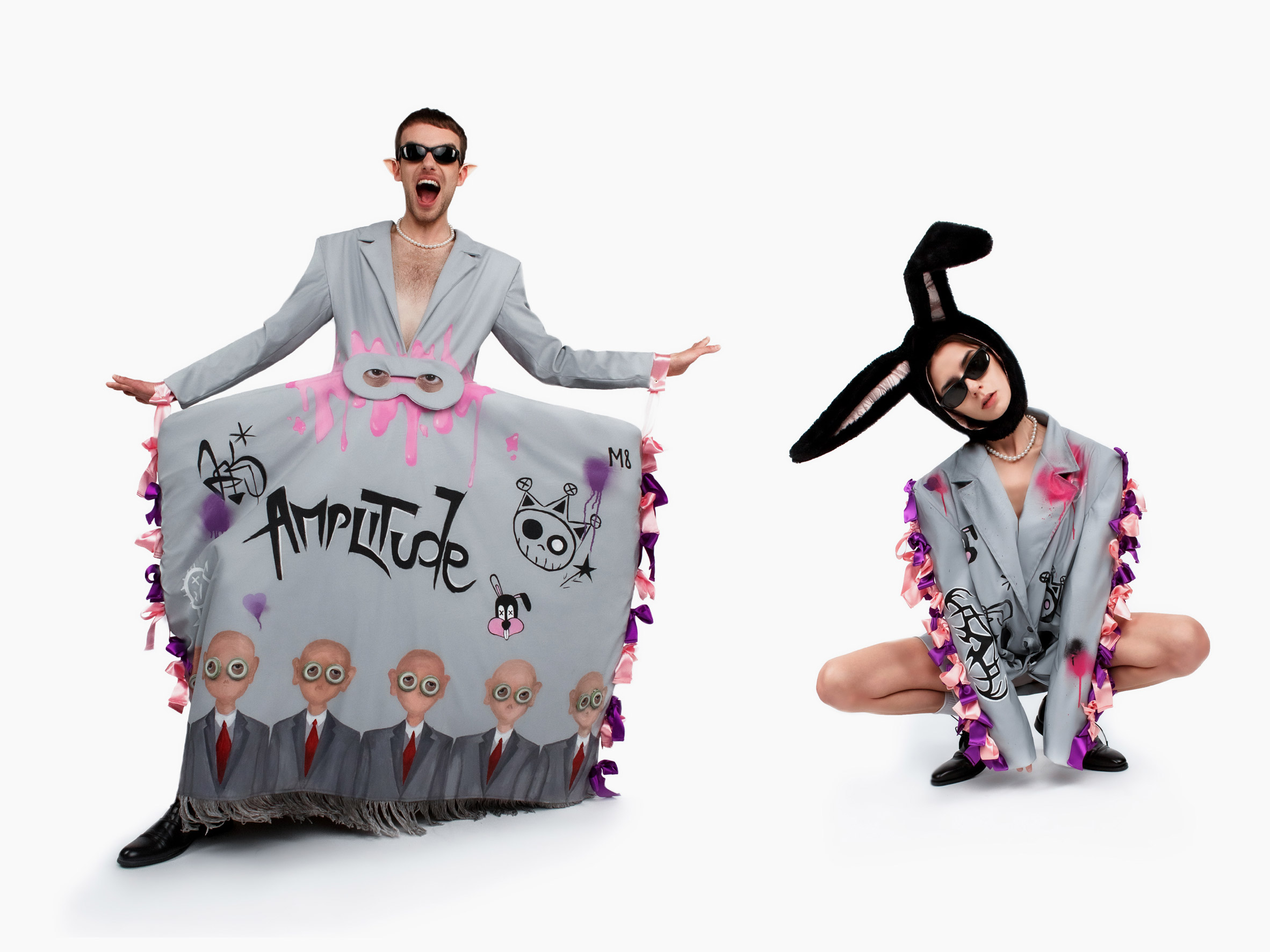
Camp phenomenon fashion collection by Ieva Tamutytė

Camp phenomenon by Ieva Tamutytė

"This master's thesis researches camp phenomenon and its expression in contemporary fashion. Camp is presented as a cultural phenomenon that is socially involved and subject to the zeitgeist, therefore, a hypothesis is raised that excessive camp aesthetics can keep its relevance in contemporary fashion by manifesting ecological ideas. The peculiar relationship between camp phenomenon and cultural or material "trash" presented in this study allows the development of environmentally-friendly camp fashion facing the anthropocene.

"The project shows how camp's positive approach towards waste, combined with upcycling, can be adapted in fashion design. A collection of experimental fashion objects made of waste, depicting camp characteristics, is created. This camp fascination with "trash" can be useful not only in fashion but in changing how we perceive reusing and waste culture in general."

Student: Ieva Tamutytė
Course: MA Design Research and Theory
Tutors: Renata Maldutienė, Aušra Trakšelytė
Email: ieva.tamutyte6@gmail.com
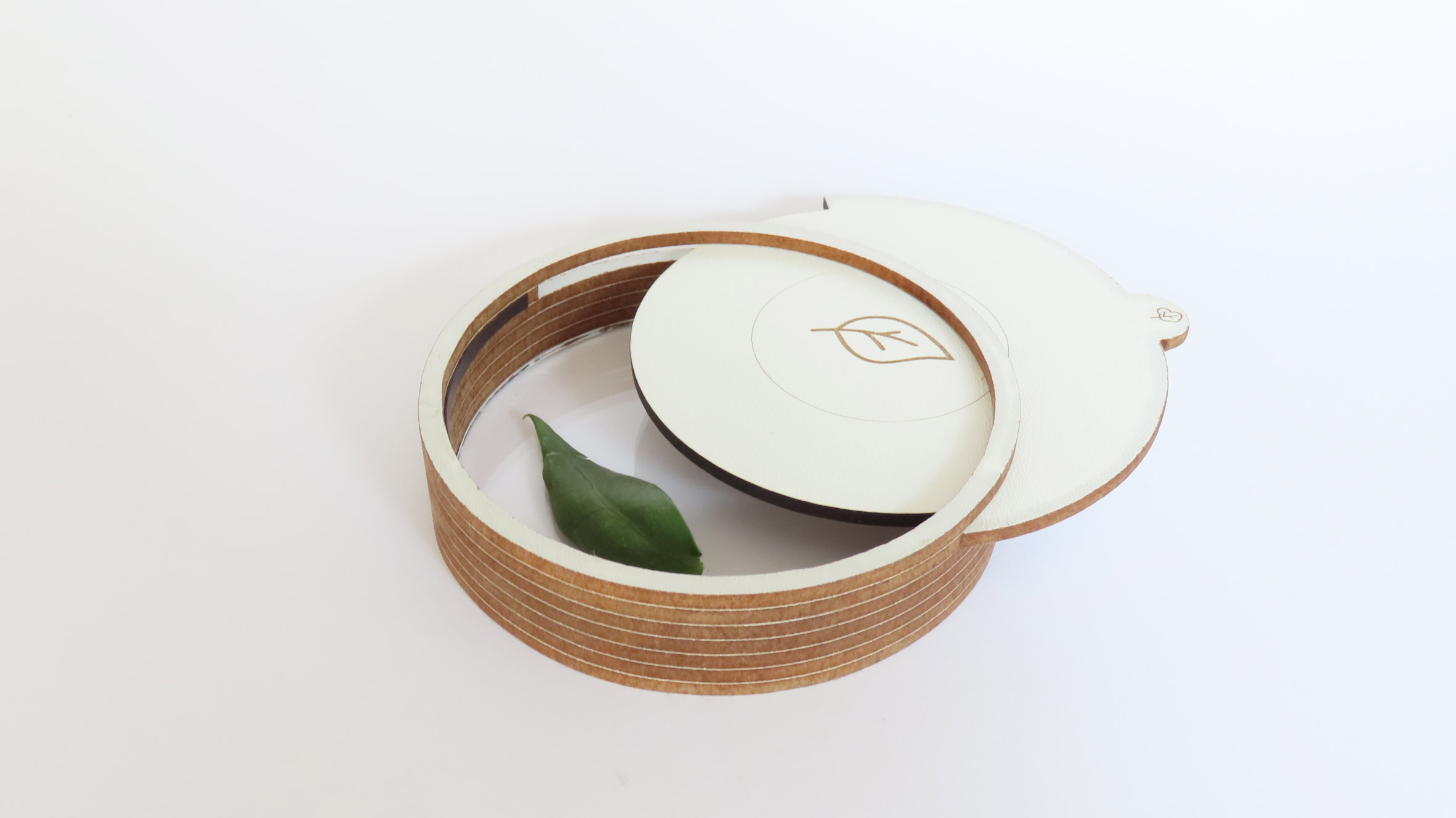

Pažink education tools by Kamilė Pakalniškytė

Pažink by Kamilė Pakalniškytė

"Pažink is a set of educational tools for preschool children. It is a research tool that was developed on the basis of experiential education because I believe that only through experience does a child gain knowledge of lasting value.

"This set of minimal and aesthetic designs gives you the opportunity to get to know your environment up close with not all sensory sensations. Given that there are few educational activities in kindergartens with outdoor activities, I have created this project that will encourage fun and rewarding outdoor activities."

Student: Kamilė Pakalniškytė
Course: BA Product Design
Tutors: Julija Mazūrienė
Email: kamilepakalniskyte@gmail.com
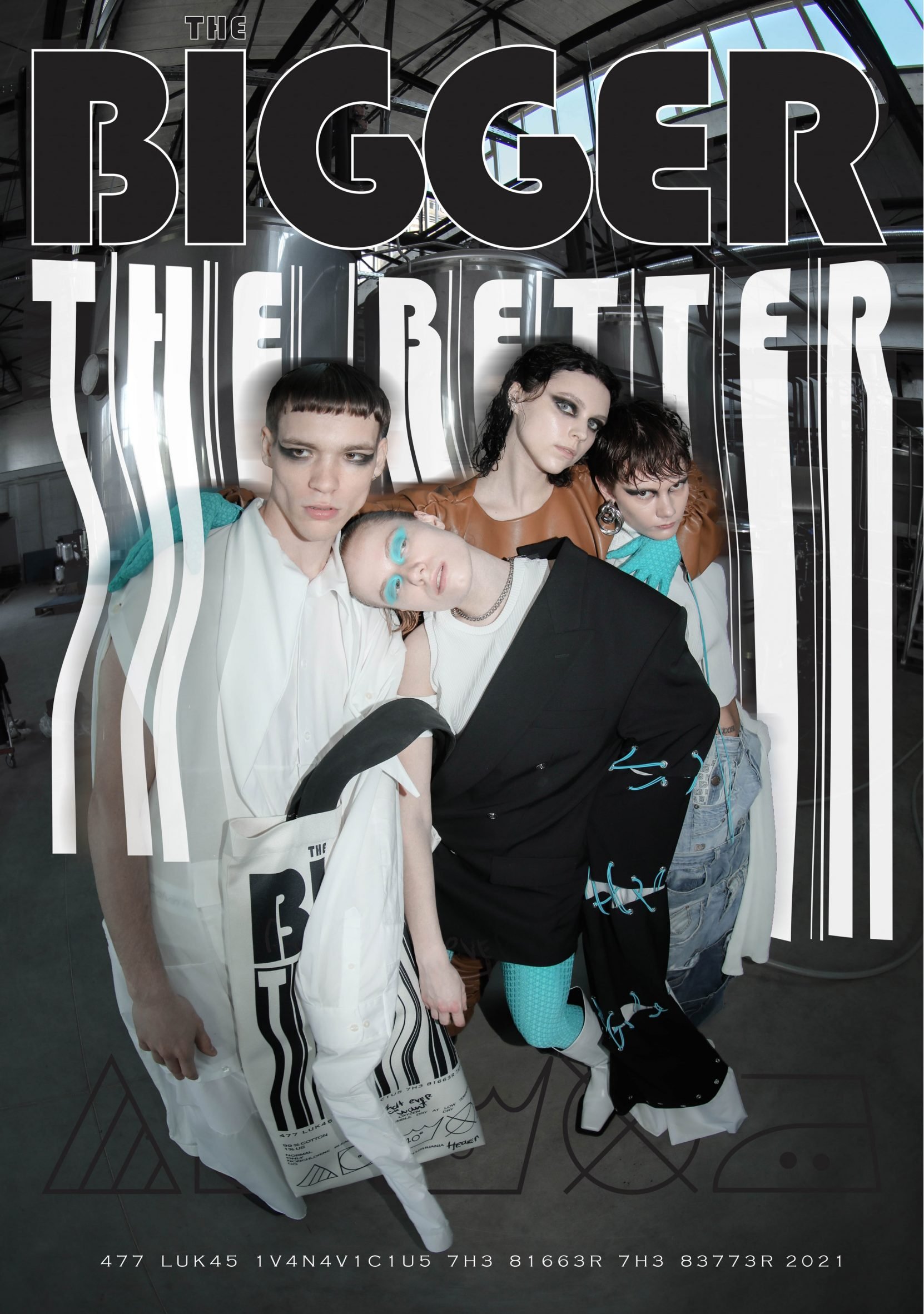

The Bigger The Better fashion collection by Lukas Ivanavičius

The Bigger The Better by Lukas Ivanavičius

"The topic of collection thesis was determined by the long-term establishment of unisex, oversize styles in fashion. The clothing trends that became popular in the 1990s erased the differences between women's and men's clothing, evolved into visual body transformations in the 21st century.

"The collection focused on the expressions of bodily deformation, the preconditions for which have become social and cultural changes since the 18th century. Rococo, power dressing, hip hop stylistic tendencies. The increase in clothing items of a certain period is creatively combined in the collection and forming a new stylistic image of the silhouette."

Student: Lukas Ivanavičius
Course: BA Fashion Design
Tutors: Justė Tarvydienė
Email: lukasivanavicius@gmail.com
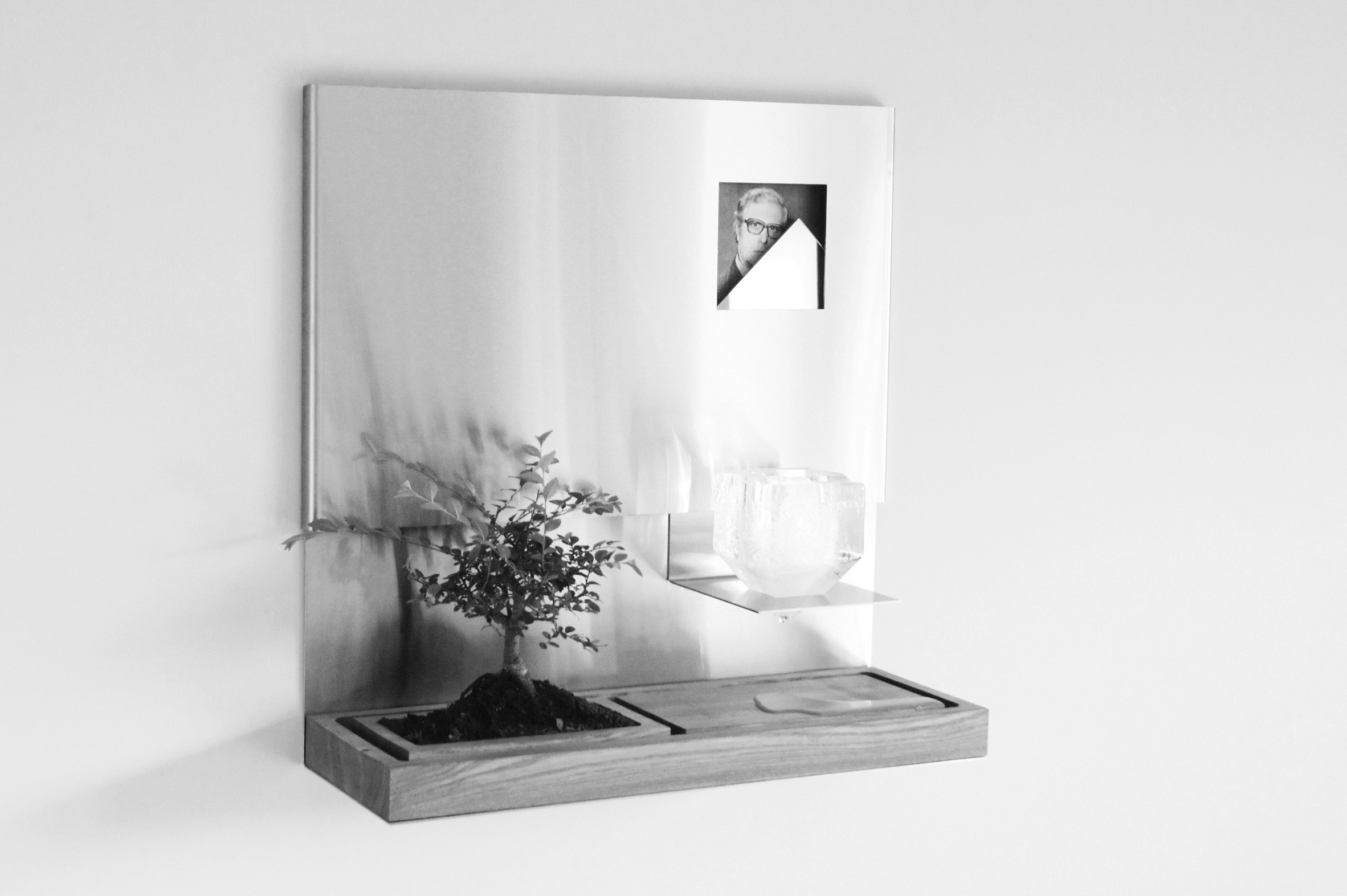

Life after life by Milda Pakarkltė

Life after life by Milda Pakarkltė

"Life after life is a project questioning the ways of remembering the deceased today. It is a set of two objects, created using essential death and afterlife symbols: water, fire, and tree. The first one is a reusable ice candle holder tray for remembering at the cemetery. The ice candle holder is a more sustainable choice because ice simply melts and disappears into the ground.

"A second object is a special place for remembering the dead at home. Because of the balance mechanism inside, the photograph of the deceased person appears only when the candle is lit. The photograph closes slowly as the ice melts, creating a limited period of time for remembering. The water drops down, creating a calming sound. The tree drinks the water."

Student: Milda Pakarkltė
Course: BA Product Design
Tutors: Šarūnas Šlektavičius
Email: m.pakarklyte@gmail.com
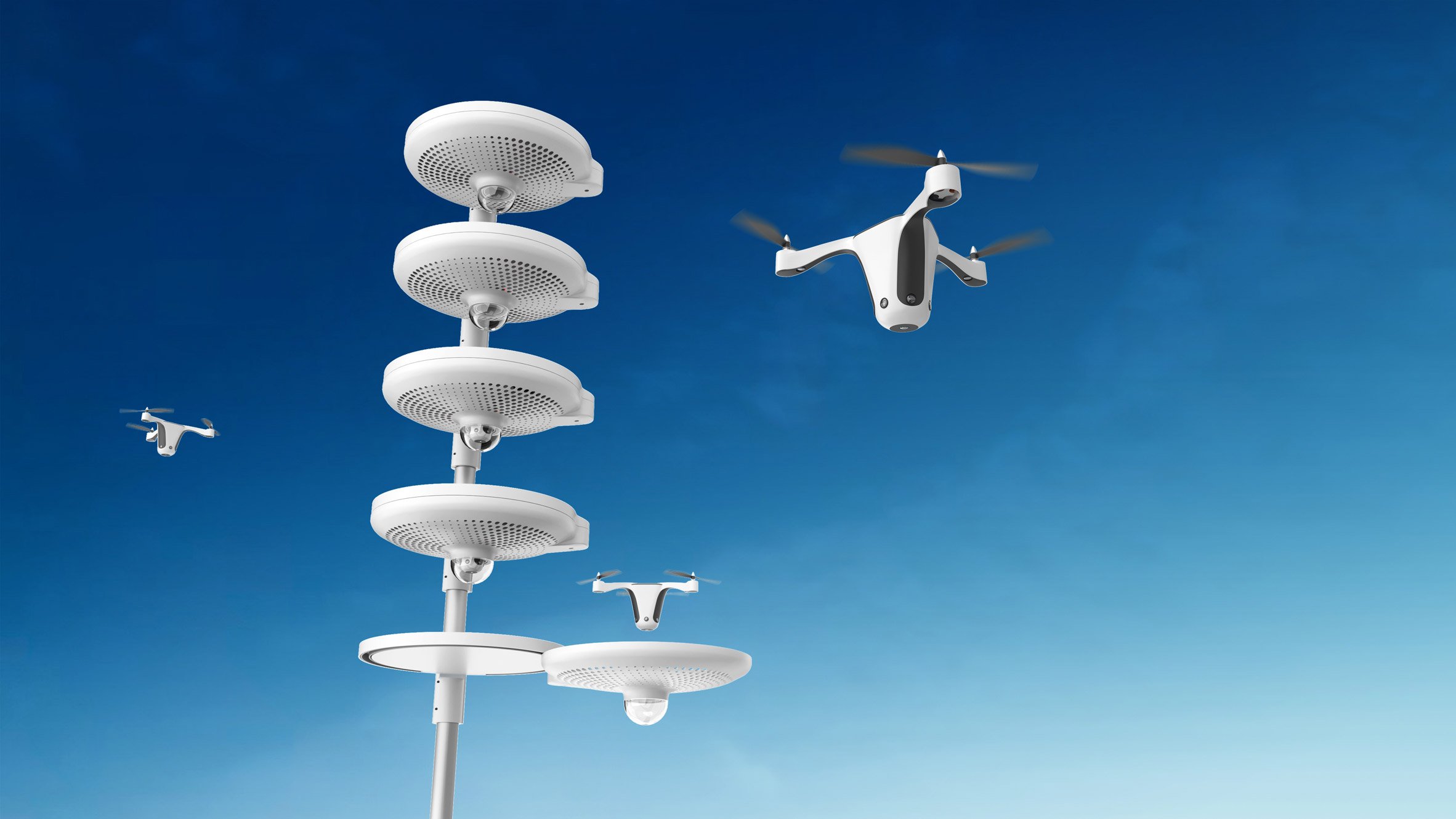

A visual of the Teletouristic system by Paulius Buragas

Teletouristic system by Paulius Buragas

"Teletouristic system's purpose is to create an opportunity to travel for those who can not due to physical disability, a lack of resources, commitments or to visit places which are difficult to reach. The system consists of a drone and storage capsule and works autonomously.

"Media from the drone is streamed directly to personal virtual reality environments and the flight is controlled through shared autonomy. The capsule will be mounted on a vertical surface, therefore, it is protected from minor vandalism, has a small footprint and is able to observe large distances from a stationary position. Several capsules can be stacked into vertical columns."

Student: Paulius Buragas
Course: BA Product Design
Tutors: Juozas Brundza
Email: paulius.buragas@stud.vda.lt
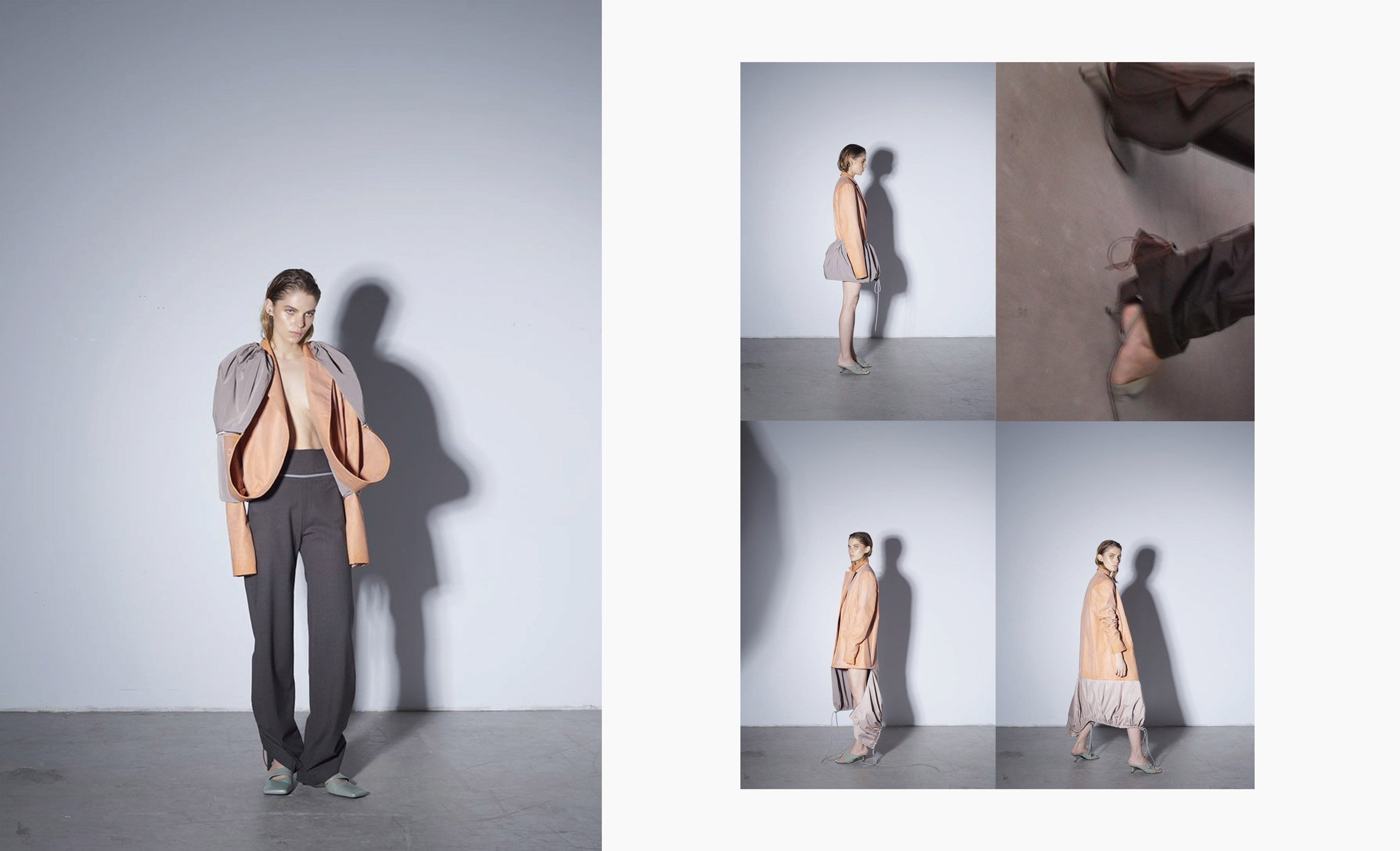

Memory of items fashion collection by Urtė Vosyliūtė

Memory of items by Urtė Vosyliūtė

"In the thesis Memory of items the aim is to find the roots of identity and to identify the style of personal work. The object of research is a set of personal items, the content of which is divided into groups in order to find the features that connect the objects and delve into the emotions generated by them. In an effort to cover a wider field of fashion design, the work is divided into three parts: a capsule clothing collection, an experimental fashion design object, and a commercial piece – a white t-shirt.

"The womenswear collection is based on a visual and associative analysis of personal items. The second part, an experimental design object, examines the importance of memory in observation and evaluation of the environment around us. The experimental object is presented in video format, which reveals the performative aspect of the action. The third part of the work is a commercial t-shirt that reveals a personal relationship between a person and their memories."

Student: Urtė Vosyliūtė
Course: BA Fashion Design
Tutors: Dainius Bendikas, Alevtina Ščepatova
Email: urte.urte.v@gmail.com
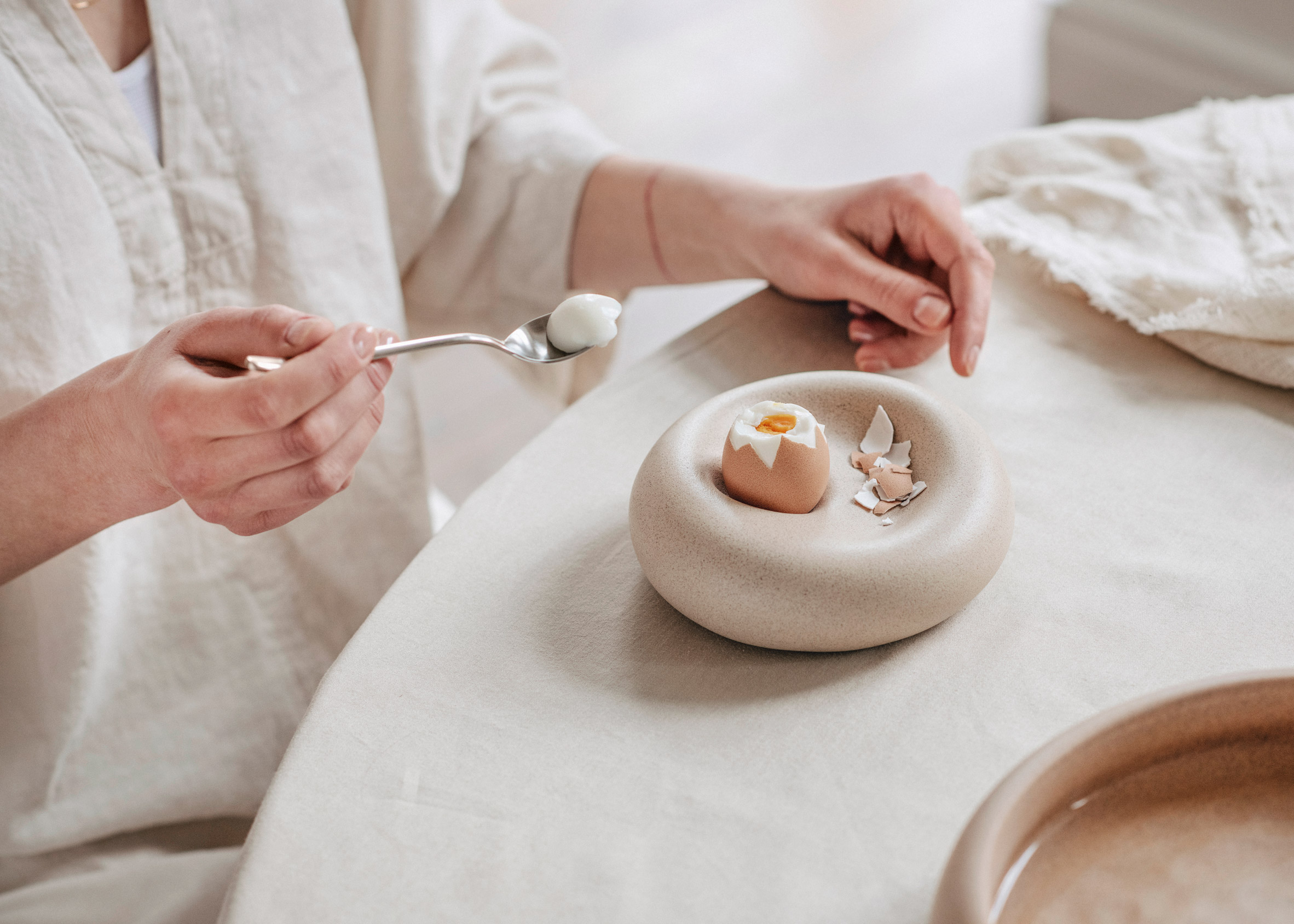

Eating experiences by Viktorija Stundytė

Eating experiences by Viktorija Stundytė

"Tableware serves as a connection between the food and the eater, which has an impact on sensory perception of food and eating behaviour. Expression reflected in the shape of tableware items both contributes to the sensory perception of food and creates space for learning – it coordinates eating behaviour in order to enhance mindful eating and focus on food choices and quantity.

"This experience during the eating process concerns not only the pleasures of eating, but also looking for broader implications of eating, which is a part of a sustainable food system vision that starts with the table and the choice of what, how, and why we are eating. The series of design objects aimed to create the sensory perception of food consists of seven different types of tableware accessories – serving dishes for water, berries, vegetables, eggs, seafood, meat and desserts."

Student: Viktorija Stundytė
Course: MA Design Research and Theory
Tutors: Mantas Lesauskas, Julija Mazūrienė
Email: stundyte@gmail.com
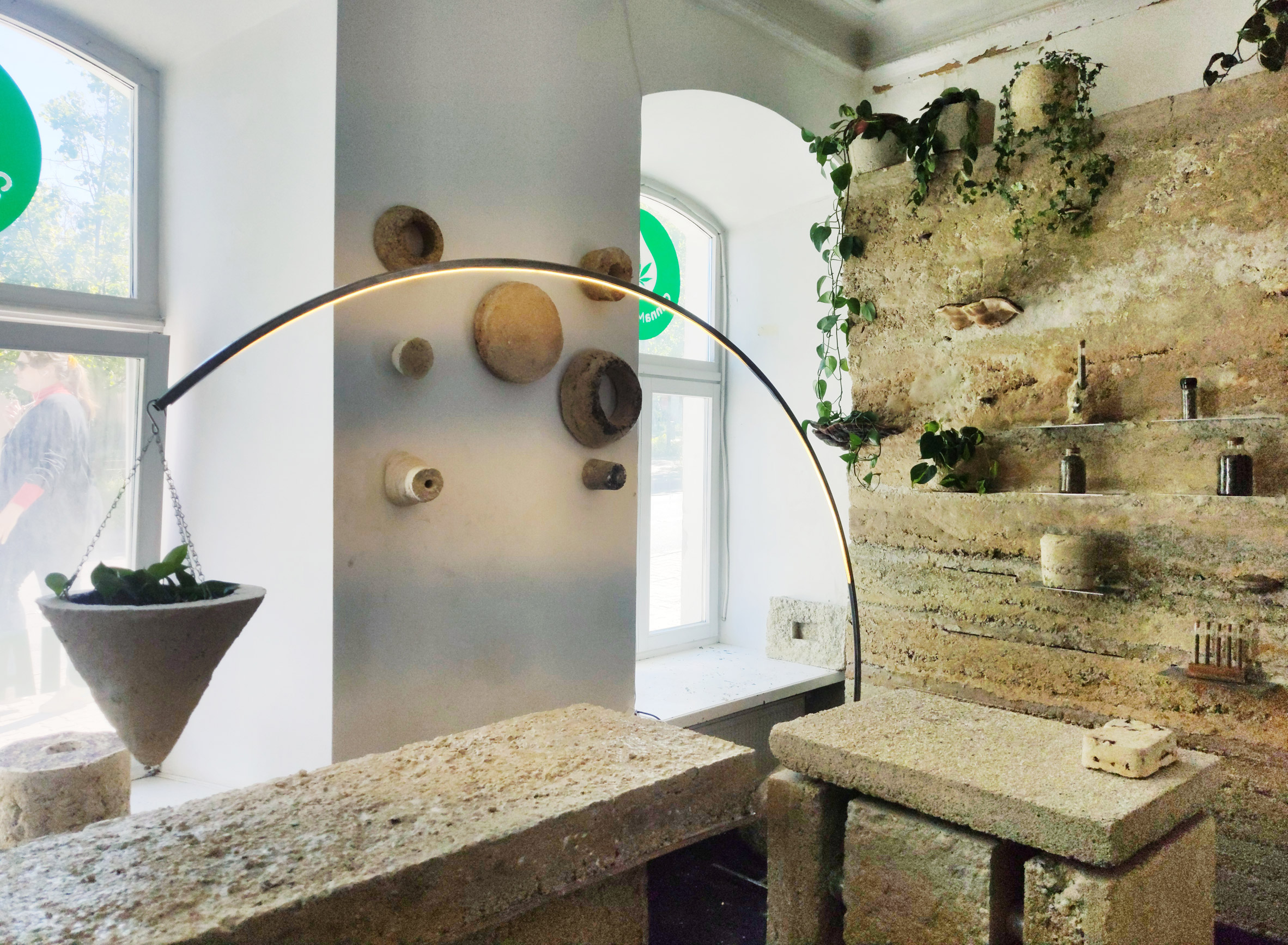

Hempcretelogic by Viltė Adomavičiūtė 

Hempcretelogic by Viltė Adomavičiūtė 

"Hempcretelogic is an experimental project with hemp shives and other ecological materials. It includes a wall, table and lamp. All objects are sustainable, eco-friendly and unique."

Student: Viltė Adomavičiūtė
Course: BA Interior Design
Tutors: Rokas Kilčiauskas
Email: villte@hotmail.com


This school show is a partnership between Dezeen and Vilnius Academy of Arts. Find out more about Dezeen partnership content here.

The post Fifteen design and fashion projects by students at Vilnius Academy of Arts appeared first on Dezeen.


from Dezeen https://ift.tt/3fIwIUd

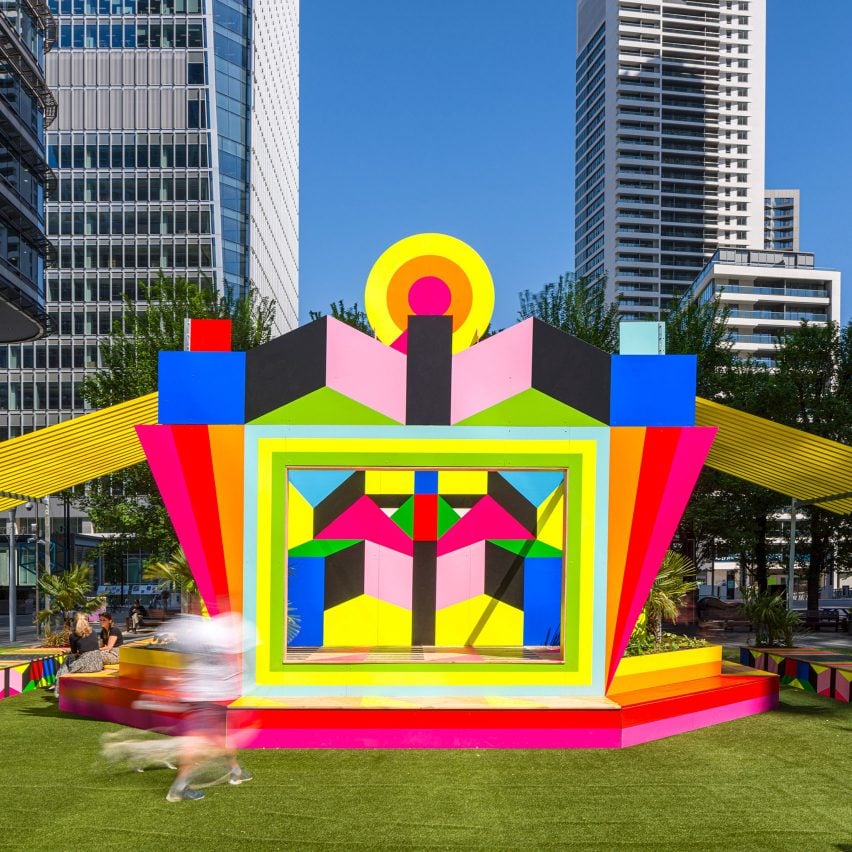
Morag Myerscough brightens Canary Wharf square with Sun Pavilion

A colourful pavilion in London

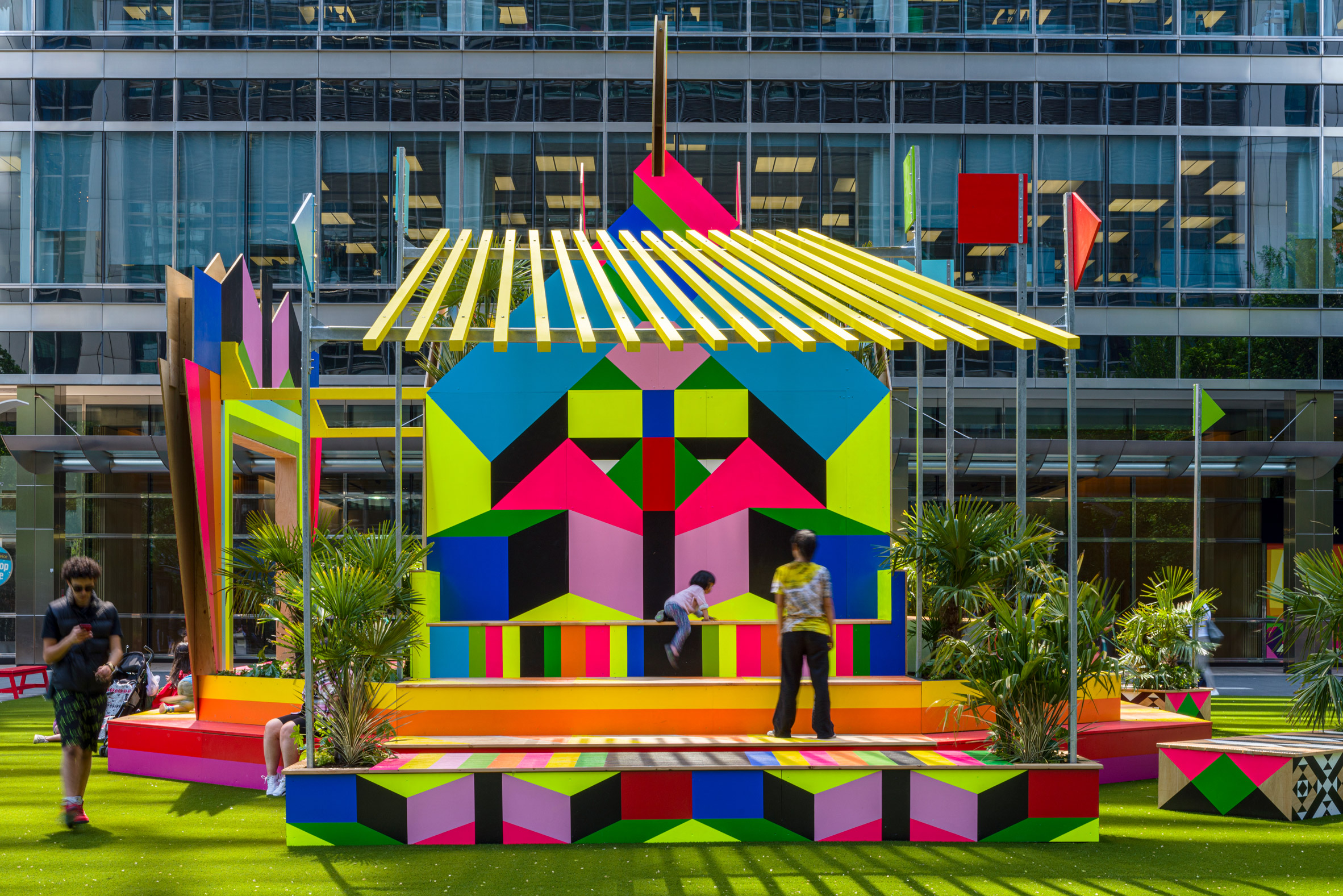
British artist Morag Myerscough has created a colourful pavilion for London's Canary Wharf financial district that responds to the easing of coronavirus restrictions by encouraging people to "spend time safely together".

The Sun Pavilion occupies a spot in Montgomery Square near the where it is surrounded by the steel and glass high-rise buildings synonymous with the area and the recently completed One Park Drive cylindrical skyscraper by Herzog & de Meuron.

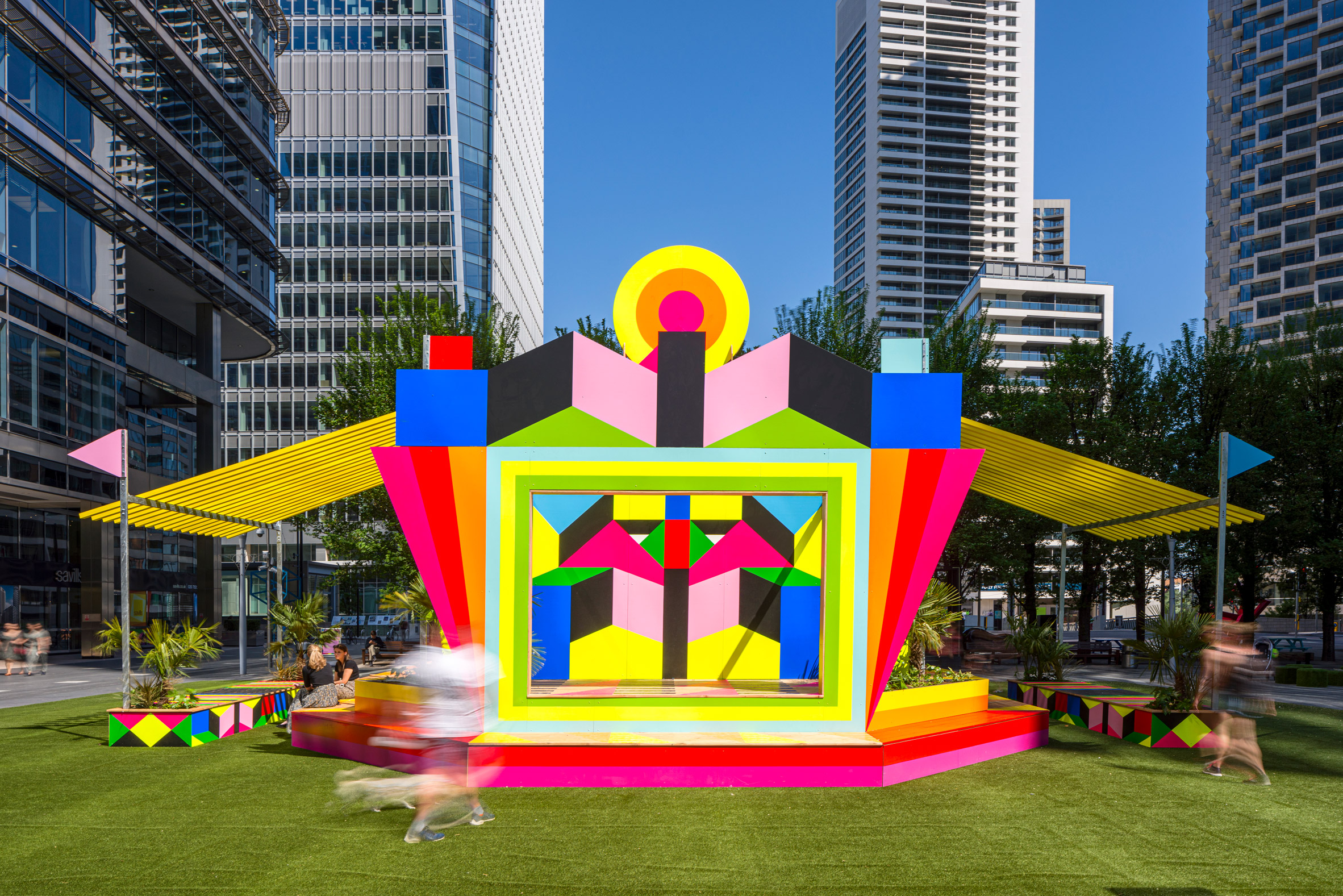
A colourful pavilion in London
Morag Myerscough has created a colourful pavilion at Canary Wharf

The pavilion was created as part of Canary Wharf's summer events programme and is the latest addition to its public art collection, which features more than 75 permanent works.

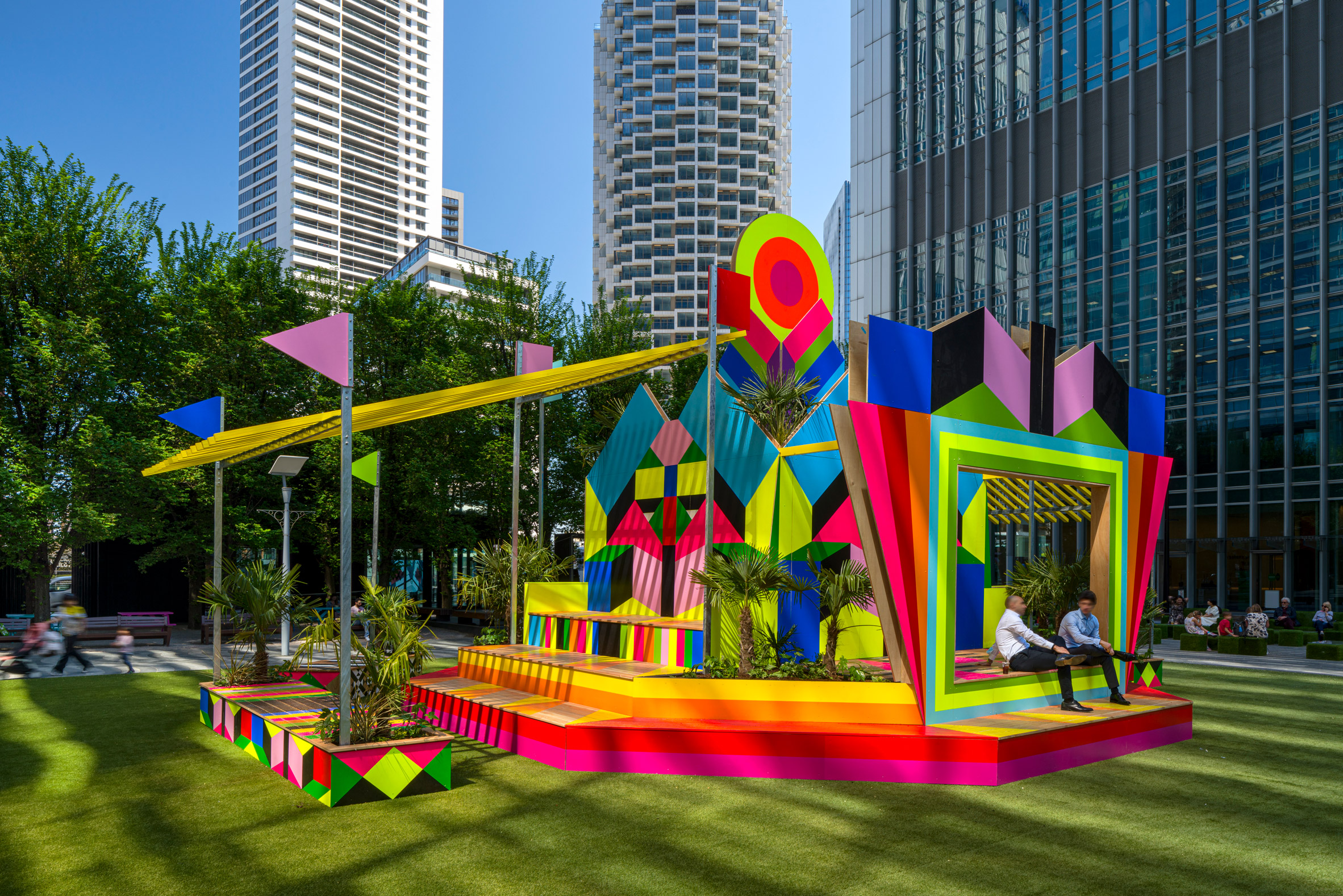
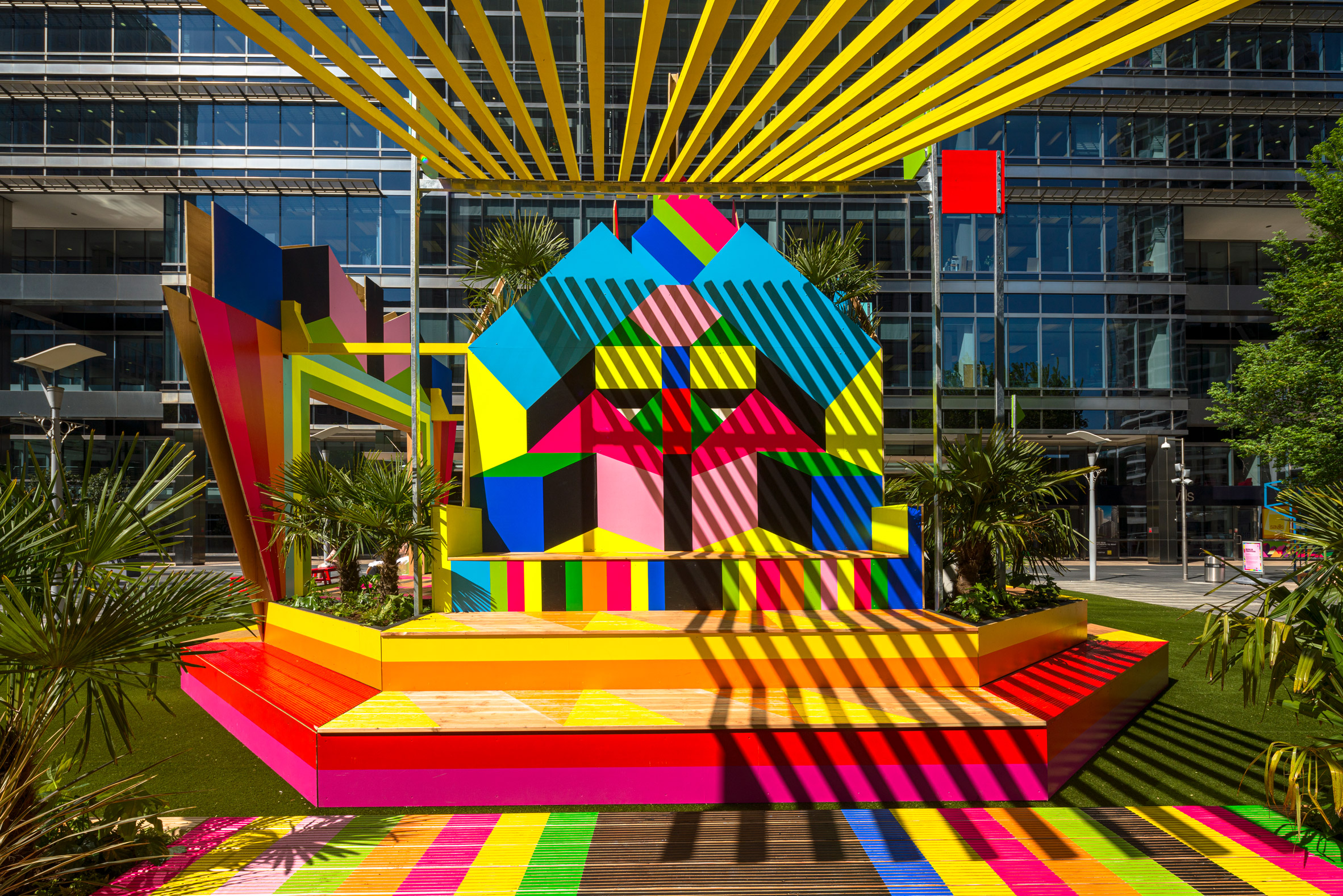
Constructed from wood with metal awnings, the installation includes a stage and a colourful seating area that provides a place to eat lunch, meet friends or listen to music.

A colourful pavilion by Morag Myerscough
It is constructed from wood with metal awnings

"The pavilion is a response to the reawakening we are hopeful for this summer," said Myerscough, referring to the recent easing of COVID-19 restrictions in England.

"The aim is people will gravitate towards it and just spend time safely together."

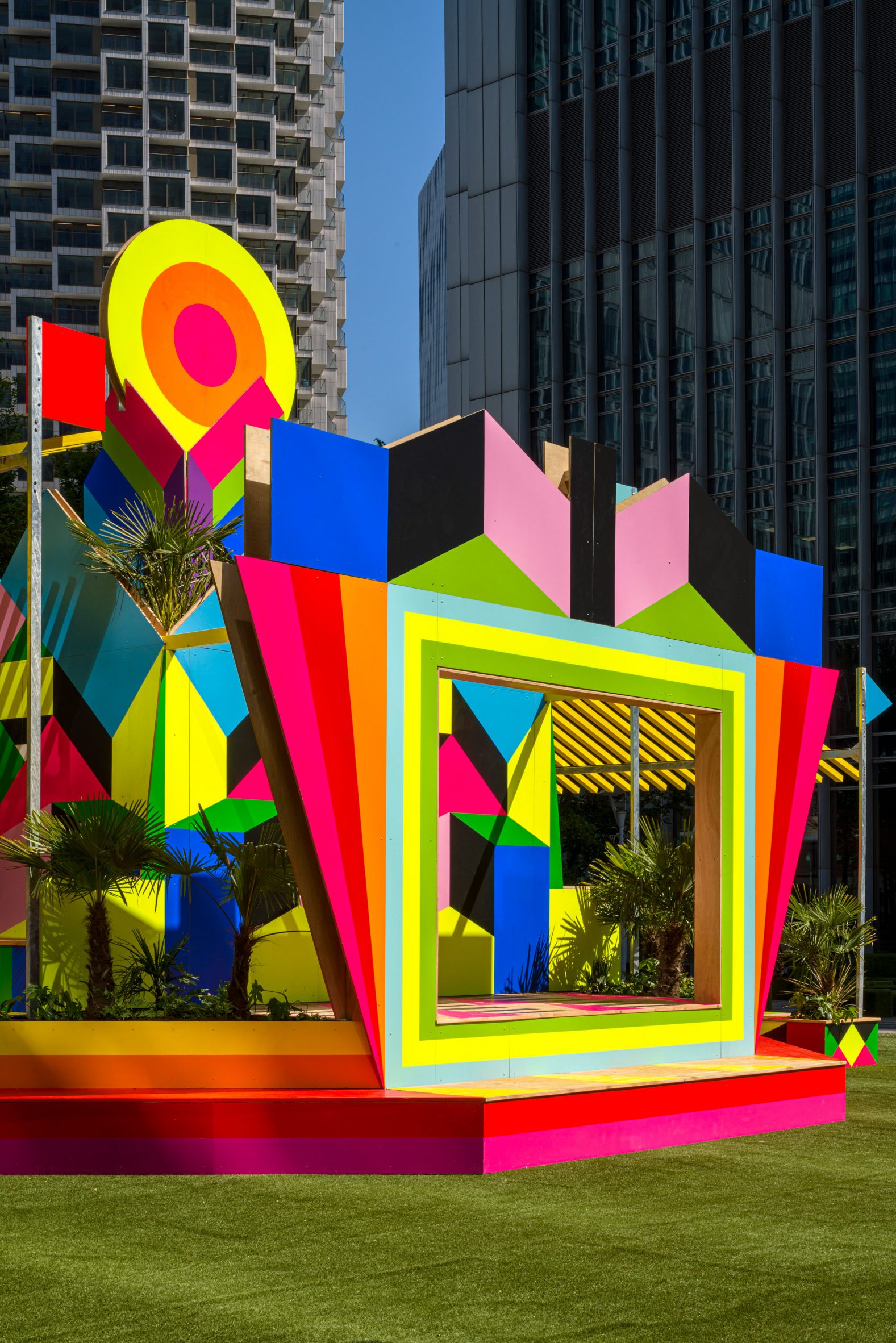
The design intentionally contrasts with its surroundings and features Myerscough's signature colourful treatment, along with the sun motif she has applied in previous projects including a biophilic cafe erected in the atrium of a London office building.

A colourful pavilion with a stage
The installation includes a stage and a colourful seating area

"The sun radiates energy and brings joy and we all need a bit of it," said the designer.

"The pure glow of the sun ignites us all and raises our spirits. There is nothing better than the feeling of the warm glow of the sun on your face."

Nestled among the glittering towers, the pavilion's compact scale and materiality encourage passersby to stop, relax and spend time together.

"It is important that it has human scale and is made by humans," said Myerscough. "We have lived in a virtual internal world for the last year and it is now important to be outside with others and hear the sounds of people around us."

Artwork by Morag Myerscough
It is hoped to encourage passersby to stop and relax

Planters, which are incorporated into both the seating areas and the pavilion, add a natural complement to the colourfully painted surfaces.

The Sun Pavilion was installed in May 2021 and is free for the public to visit until late October 2021.

As part of the free arts and events programme, Canary Wharf also commissioned local designer Yinka Ilori to create a colourful basketball court for public use.

The colourful Sun Pavilion
It features Myerscough's signature bright colours and patterns

Myerscough's east-London studio regularly works on projects that use colour, pattern and words to change how people perceive urban environments. Her work forms part of the New London Fabulous design movement.

Previous projects include a bamboo pavilion installed in a London park and a colourful artwork in Paris designed as an optimistic response to the coronavirus pandemic.

The photography is by Gareth Gardner

The post Morag Myerscough brightens Canary Wharf square with Sun Pavilion appeared first on Dezeen.


from Dezeen https://ift.tt/3jBr5sf

Ten home interiors with inventive broken-plan layouts

A kitchen with wooden partitions

As the trend away from open-plan living continues, our latest lookbook focuses on 10 interiors with broken plans that demonstrate how greater privacy can be achieved in the home.

A broken plan is an interior that has been divided into zones to cater to different activities and privacy levels, without being split into individual rooms.

This is typically achieved using impermanent or semi-open partitions, but sometimes cleverly arranged furniture such as bookcases, different floor finishes or split levels can be used to create the effect.

This is the latest roundup in our Dezeen Lookbooks series providing visual inspiration for the home. Previous lookbooks shine a light on residential loft conversions, mezzanines, and Scandi living rooms.


A kitchen with wooden partitions

Fruit Box, UK, by Nimtim Architects

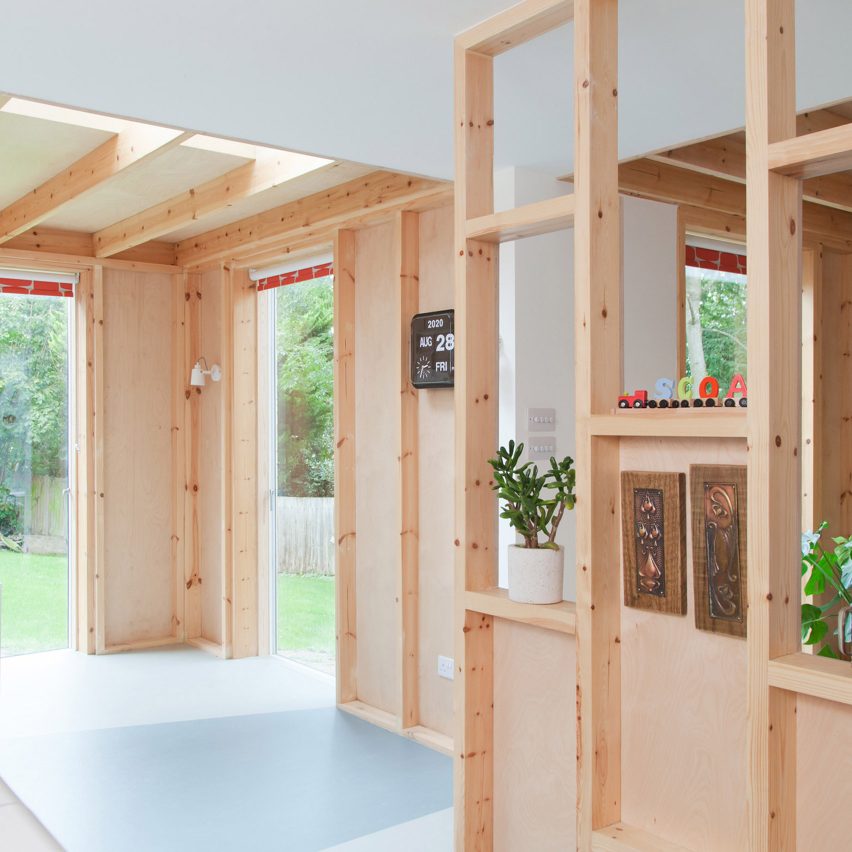
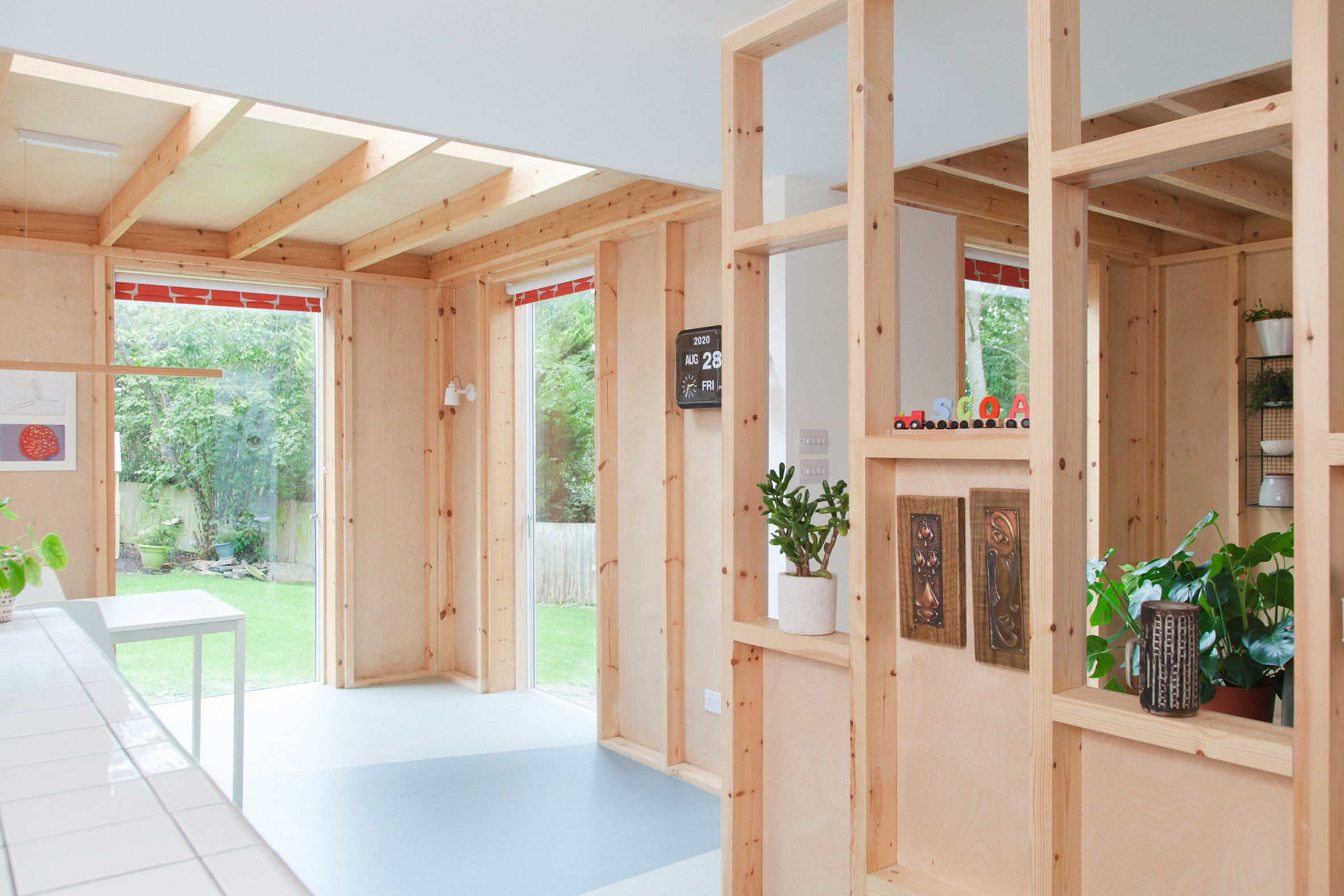
Adaptable, semi-open partitions made from plywood and planed softwood break up the ground floor of this London townhouse that was recently revamped by Nimtim Architects.

Each partition is non-structural and currently positioned to distinguish the kitchen, dining and living areas. However, they are designed to be filled in to increase privacy or easily removed to maximise open space depending on the family's future needs.

Find out more about Fruit Box ›


An apartment divided by cabinetry

Kevin, Hong Kong, by JAAK

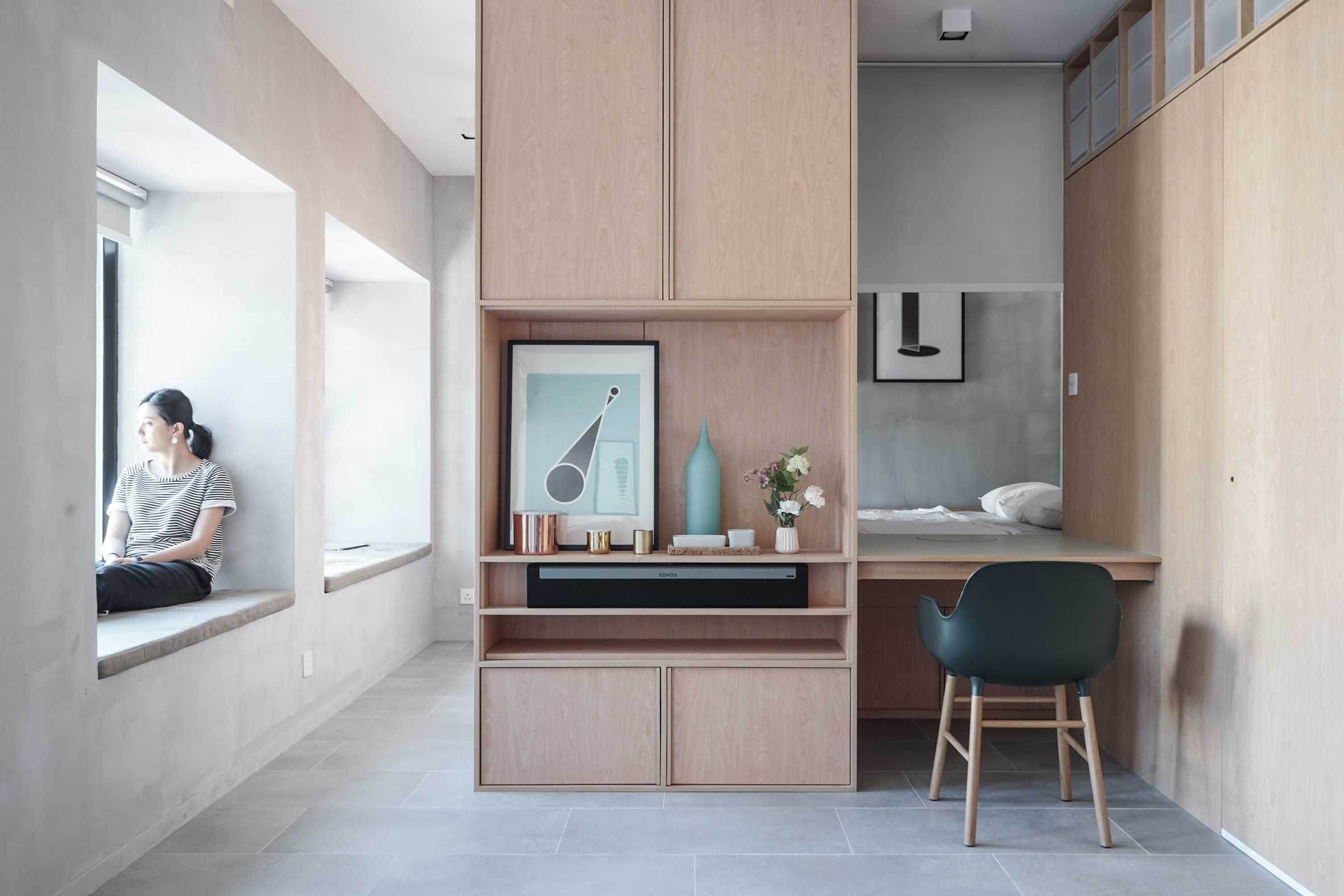
Interiors studio JAAK replaced walls with custom cabinetry when overhauling this Hong Kong apartment in an effort to create a bright and flexible living space.

The bedroom, which is accessed by two steps, is been nestled behind a built­-in desk with a Normann Copenhagen armchair to offer privacy. The only fully enclosed space is the bathroom, which is hidden by a secret door.

Find out more about Kevin ›


An apartment divided by curtains

Apartment in Sant Andreu, Spain, by Oriol Garcia

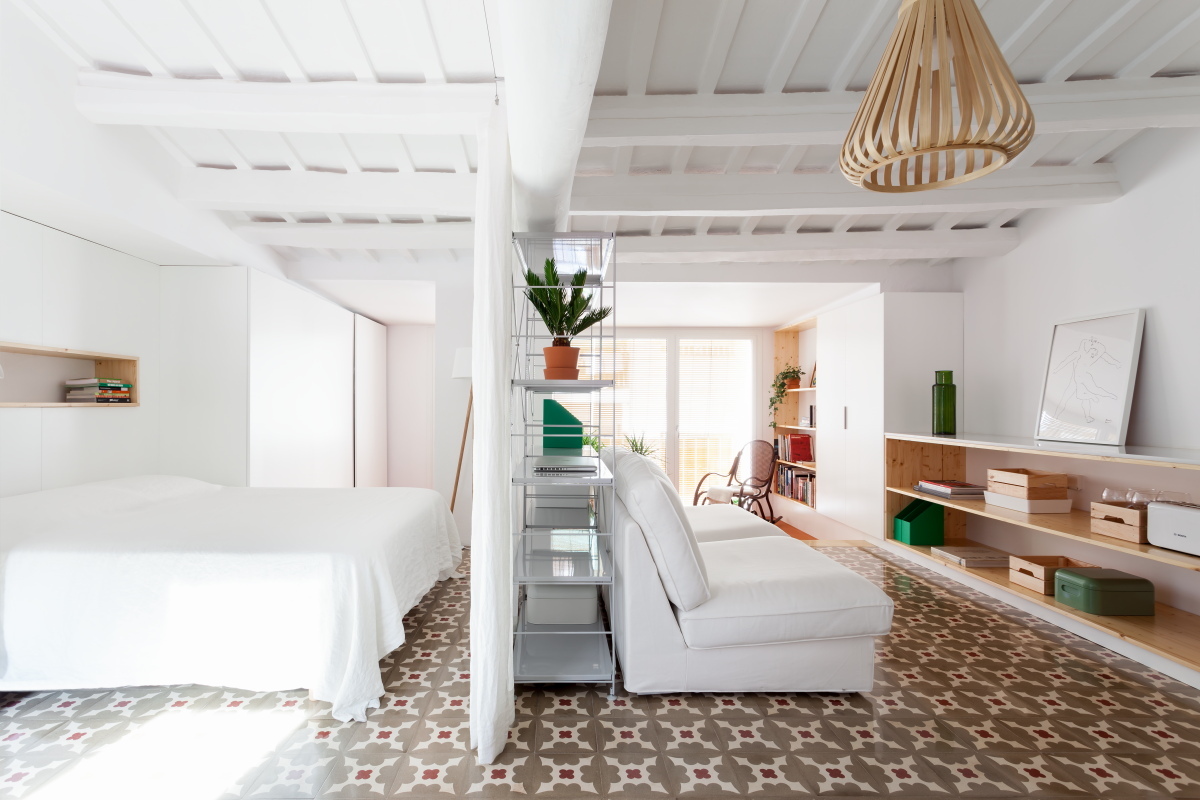
A split-level floor, bookcases and white curtains help to define the different areas in this 45-square-metre apartment, which was redesigned by architect Oriol Garcia as her own home.

The curtains and bookcases separate the zone for sleeping and bathing from the area used for cooking and lounging. At one end of the lounge, a small step and a change in floor covering have been used to create a secluded sunroom.

Find out more about Apartment in Sant Andreu ›


Open shelving joinery

Knightsbridge Mews, UK, by Echlin

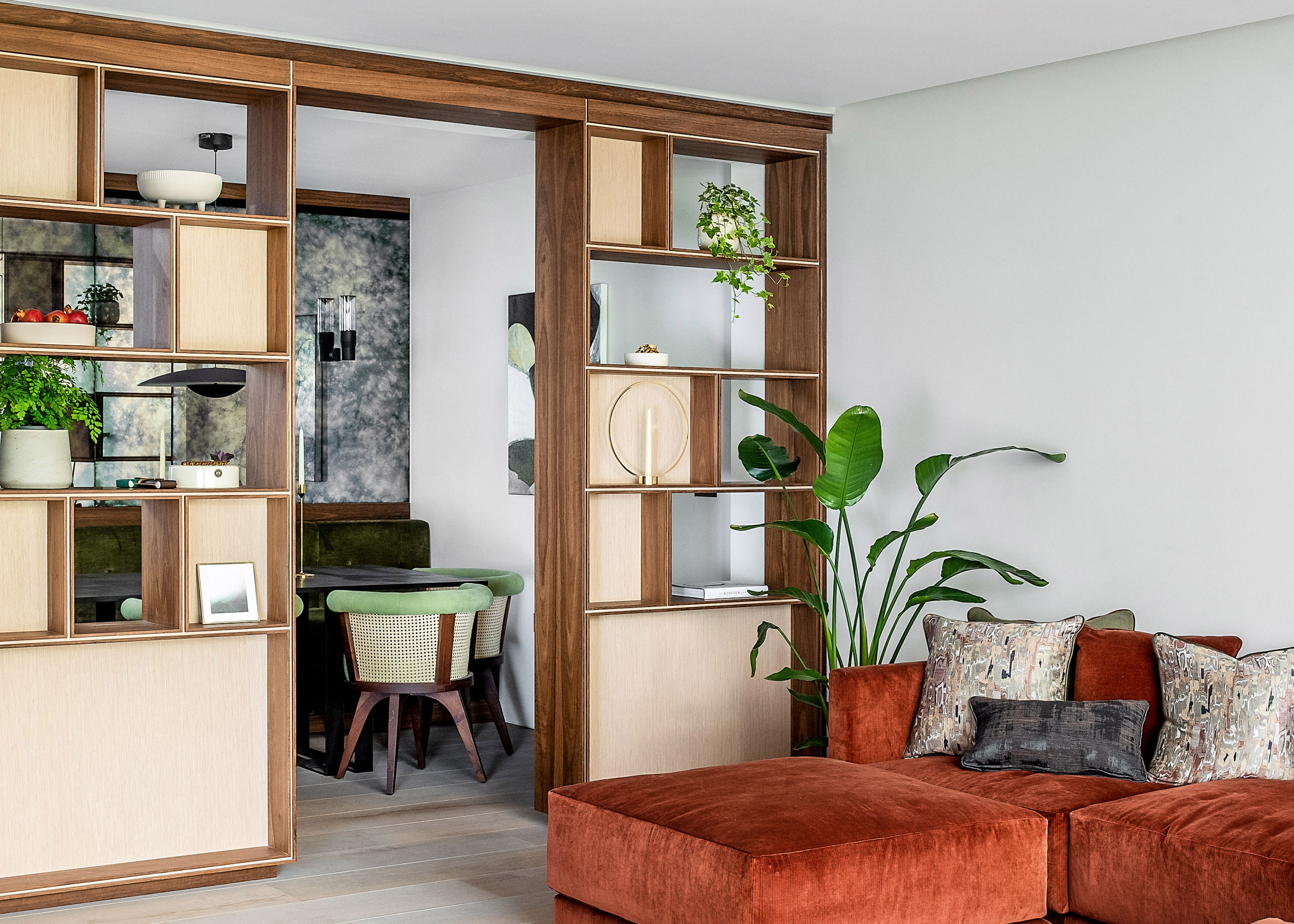
Echlin revamped this London house with a series of clever broken-plan layouts, including a basement level that features a sunken seating area to ensure the spaces are connected but visually separate.

On the ground floor, bespoke open shelving divides the study and living area from the dining room, which is fitted out with cane and banquette seating.

Find out more about Knightsbridge Mews ›


Open shelving joinery

Architect Workshop, Russia, by Ruetemple

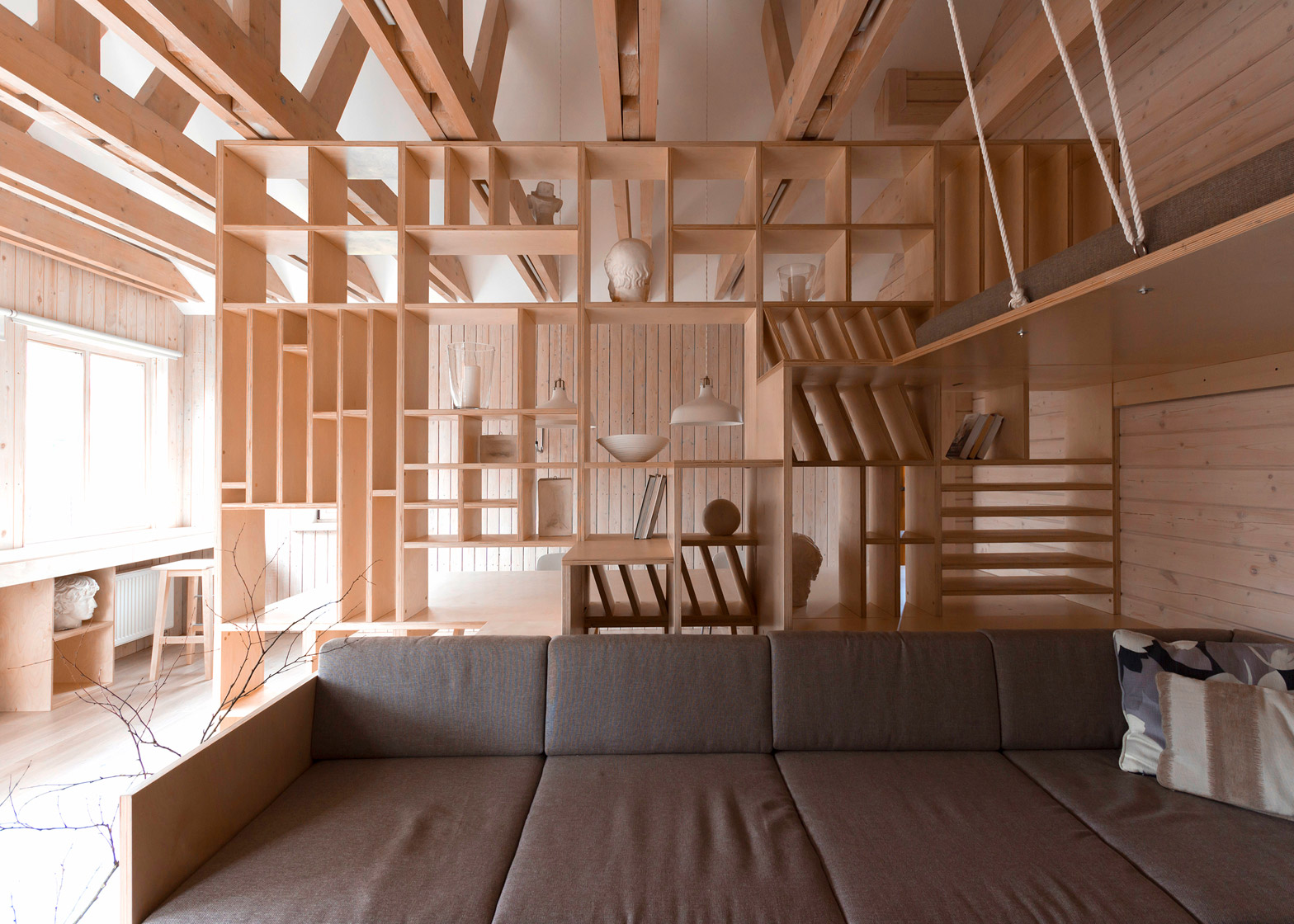
A floor-to-ceiling plywood partition with built-in shelving gives rise to distinct working and relaxation areas inside this art studio, which sits within the garage of a home in Moscow.

The wooden structure also incorporates a desk, a large L-shaped sofa with grey upholstery and a set of steps that ascend to a suspended sleeping platform with rope balustrades.

Find out more about Architect Workshop ›


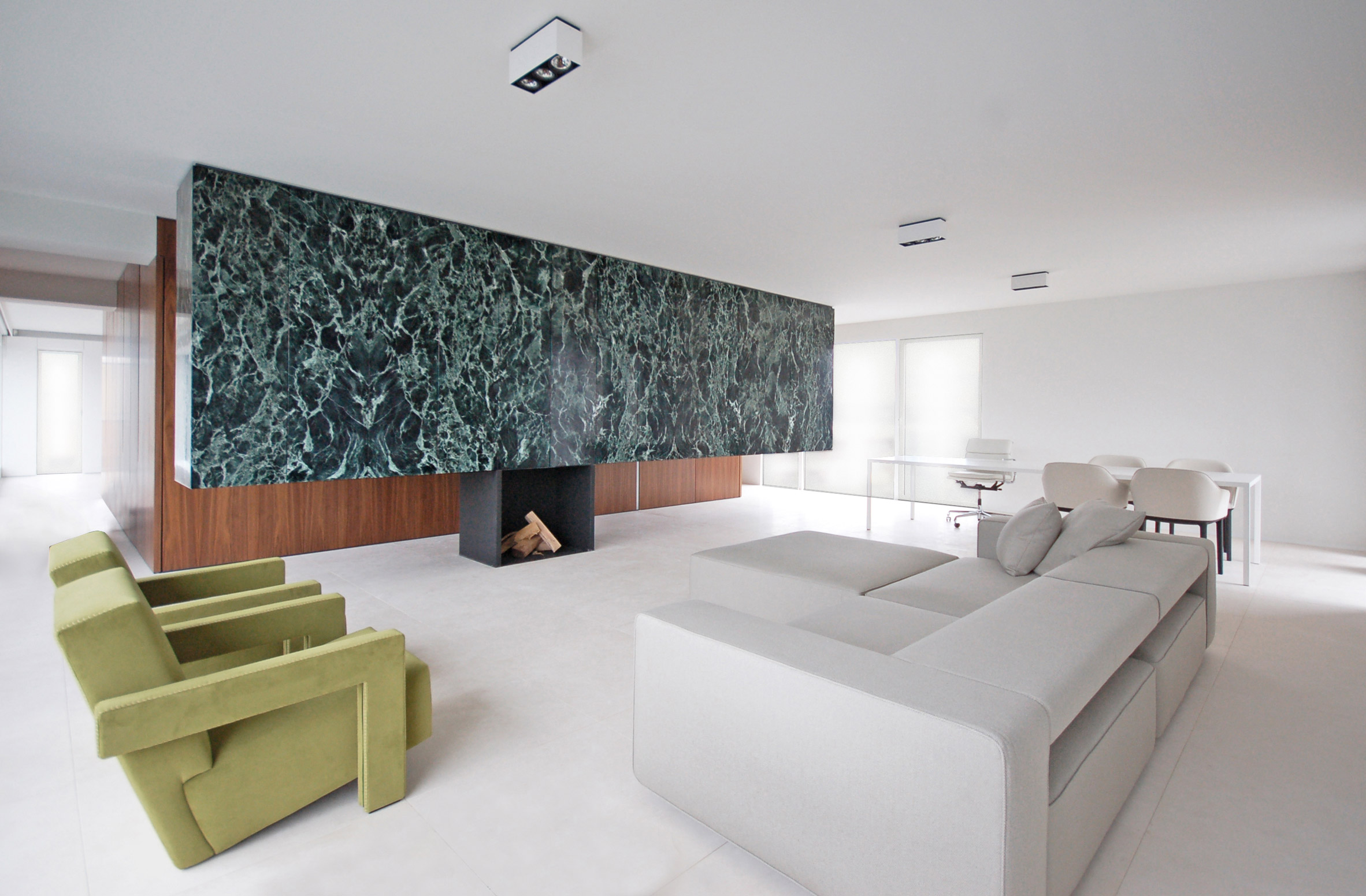
A white living room with a marble partition

Antwerp penthouse, Belgium, by De Meester Vliegen Architecten

A two-ton slab of marble that is wedged between the ceiling and a steel fireplace helps to create the broken-plan layout of this penthouse in a 1960s building in Antwerp.

The marble works in tandem with a large volume behind it, which is clad in walnut veneer and contains functional rooms to split the dwelling's living areas into a lounge, bedroom, dining room and office.

Find out more about Antwerp penthouse ›


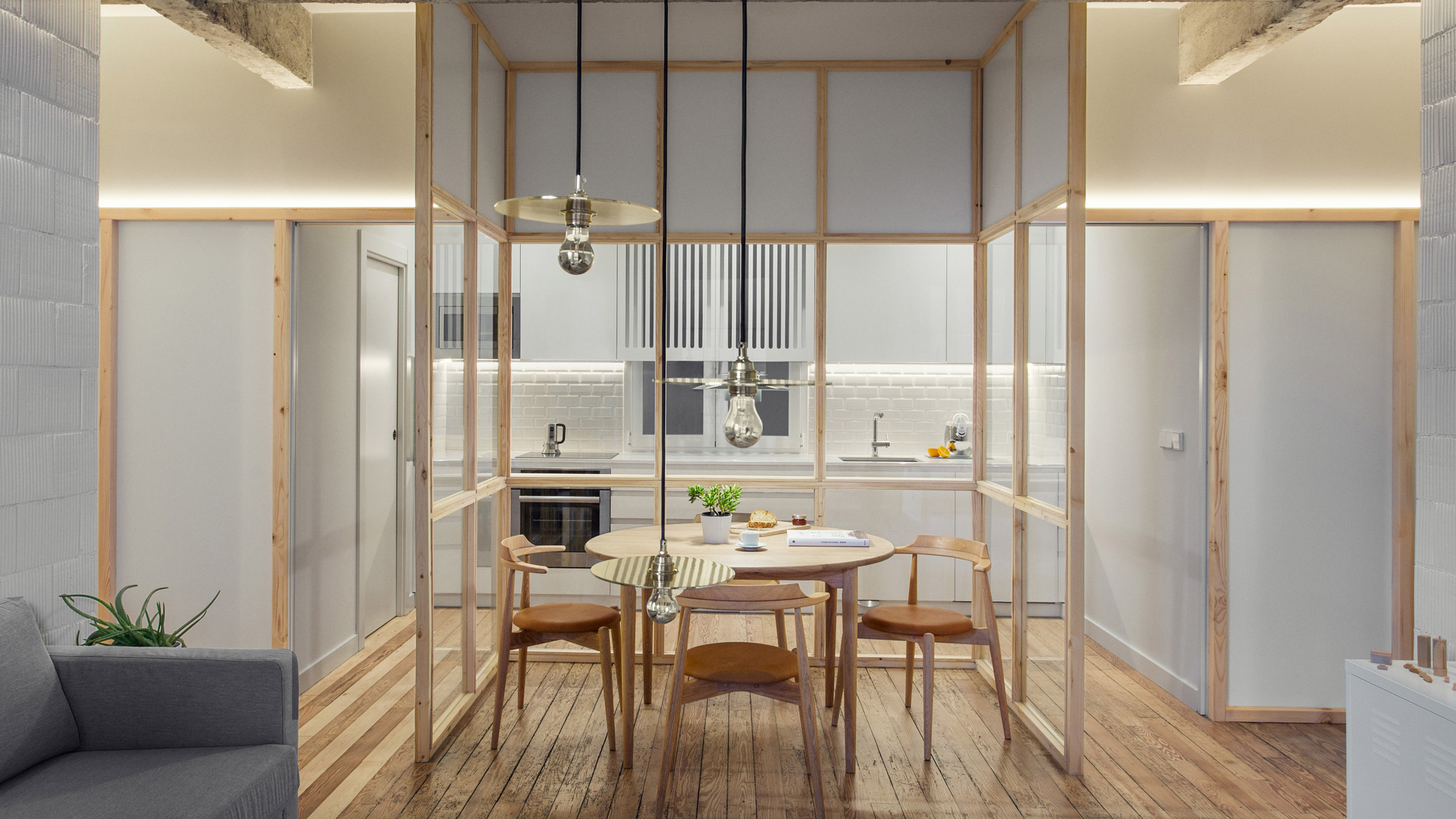
A kitchen with a glass partition

Museum Square House, Spain, by Pauzarq

The broken-plan layout of this apartment in Bilbao was guided by its original concrete girders that were uncovered by Spanish studio Pauzarq during a renovation.

In one room, a U-shaped timber-framed glass partition wraps around a dining table to set it apart from the kitchen behind it. The aim was to close the kitchen off while still allowing light to enter the space.

Find out more about Museum Square House ›


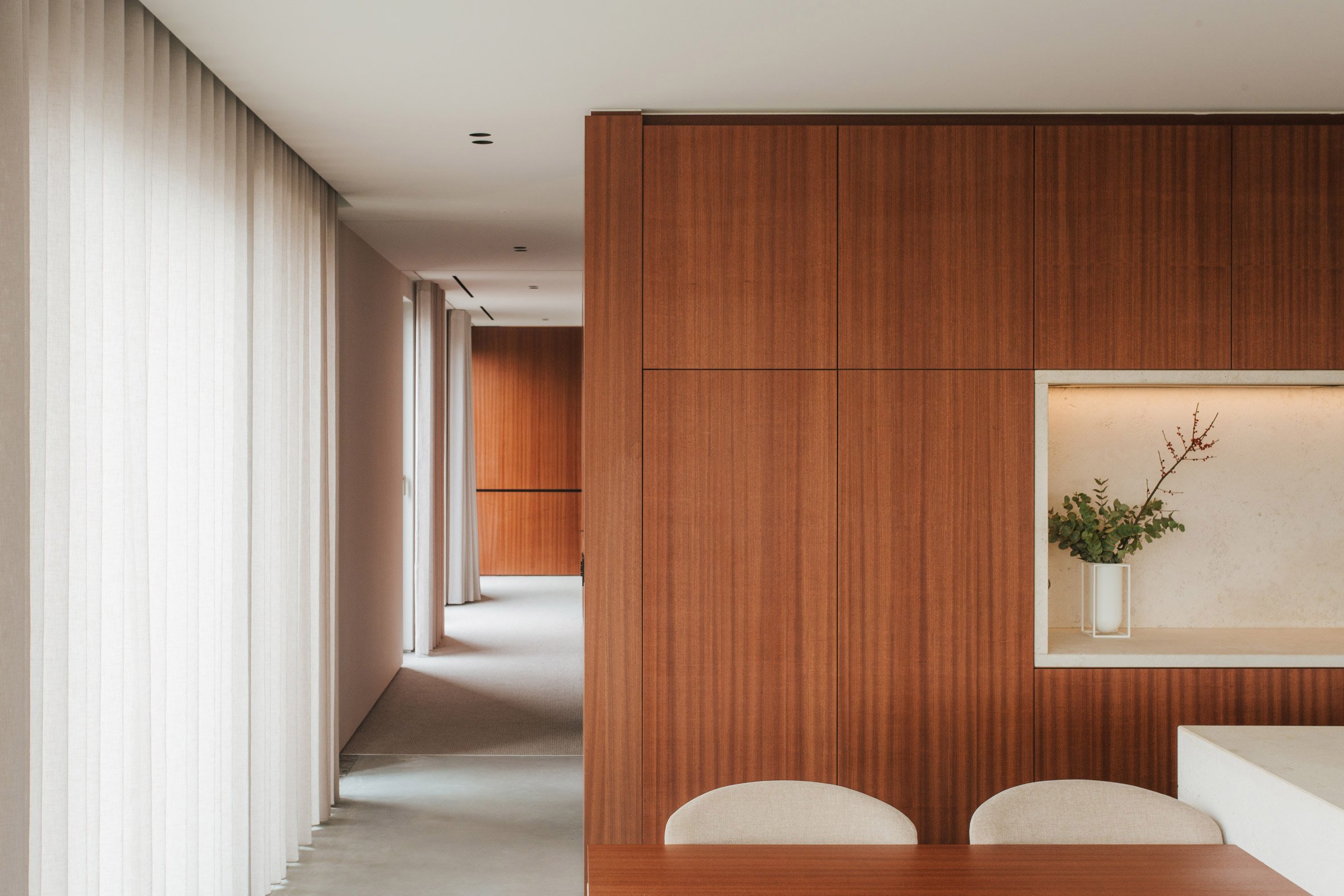
A penthouse broken by wooden partitions

Penthouse BV, Belgium, by Adjo Studio

Large wooden elements that span from floor to ceiling were used to reorganise this open-plan penthouse in Hasselt into more practical spaces.

Crafted from cherry wood veneer, the elements take the form of kitchen cabinets, wardrobes and bookshelves. Their arrangement also helps to maximise light from the glazed walls that wrap around the apartment's exterior.

Find out more about Penthouse BV ›


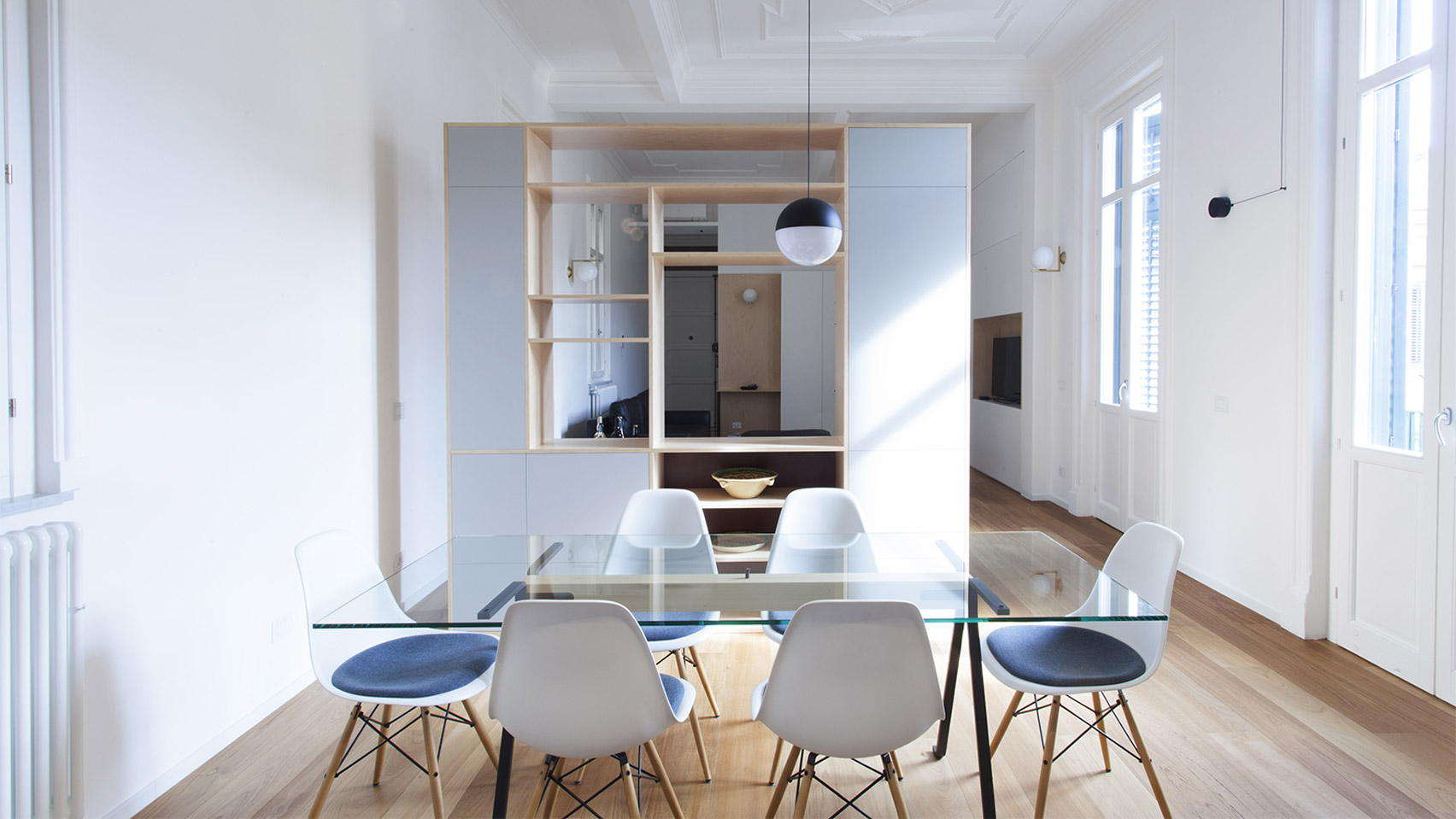
A white-walled dining room

House CT, Italy, by Pietro Airoldi Studio

While renovating this apartment in Sicily, architect Pietro Airoldi Studio removed all of its partitions to maximise light. However, to define its interiors into zones, custom-made cabinetry has been introduced.

The apartment's main living space is set apart from the dining area by a plywood and MDF partition that incorporates storage and openings to maintain a visual connection.

Find out more about House CT ›


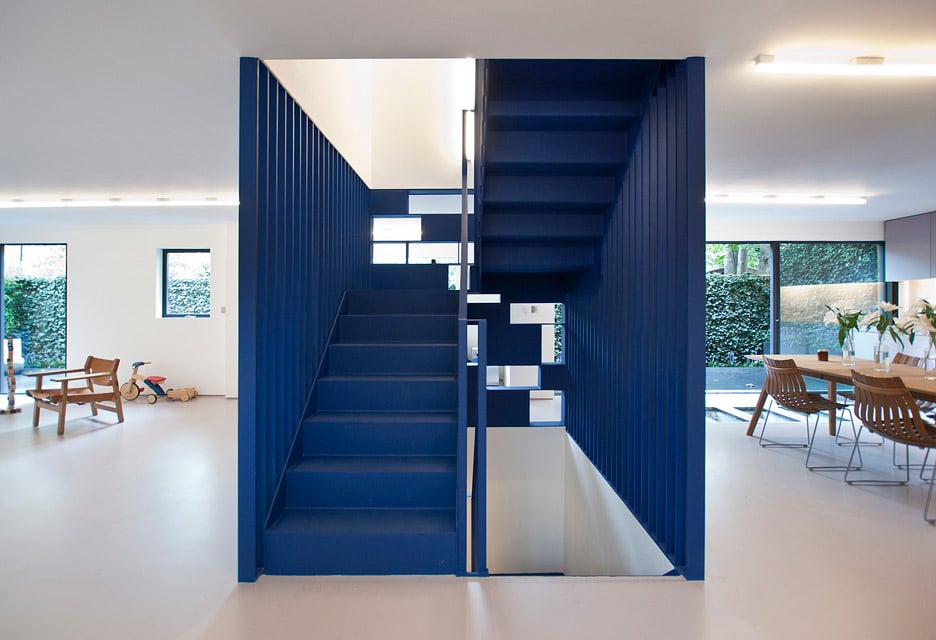
A bright blue staircase

Fin House, UK, by RA Projects

A bright blue steel staircase designed to resemble a sculpture breaks up the white-walled interiors of this London house, redesigned for fashion designer Roksanda Ilincic.

Running through the centre of the house, the stairwell is intended to create division while offering a "degree of permeability", according to architect RA Projects. On one floor, it incorporates shelving and is used to separate the kitchen from a living room on the other side.

Find out more about Fin House ›


This is the latest in our series of lookbooks providing curated visual inspiration from Dezeen's image archive. For more inspiration see previous lookbooks showcasing mezzaninesU-shaped kitchens and calm living rooms.

The post Ten home interiors with inventive broken-plan layouts appeared first on Dezeen.


from Dezeen https://ift.tt/3jBdOzV

Friday, 6 August 2021

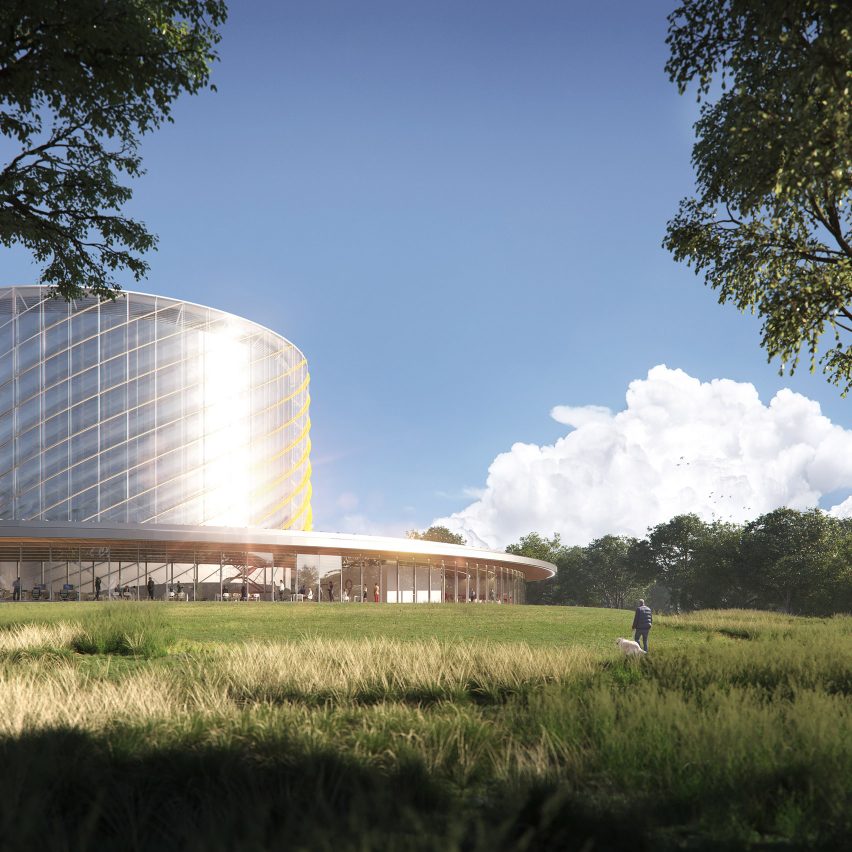
This week Amanda Levete revealed a design for a fusion power station

Fusion power plant

This week on Dezeen, the design for a prototype power plant that is set to be built in the UK was unveiled by architect Amanda Levete's firm AL_A.

Named the Fusion Demonstration Plant, the structure will be built on the UK Atomic Energy Authority's campus to prove the viability of Canadian energy company General Fusion's nuclear fusion technology.

Carbon revolution
Dezeen pledges to become a net-zero business by 2025

This week also saw Dezeen commit to becoming a net-zero business within the next four years as the conclusion to our carbon revolution series.

"We intend to become net-zero by 2025, which is 25 years ahead of the 2050 deadline set by the Paris Agreement," explained Dezeen founder and editor-in-chief Marcus Fairs.

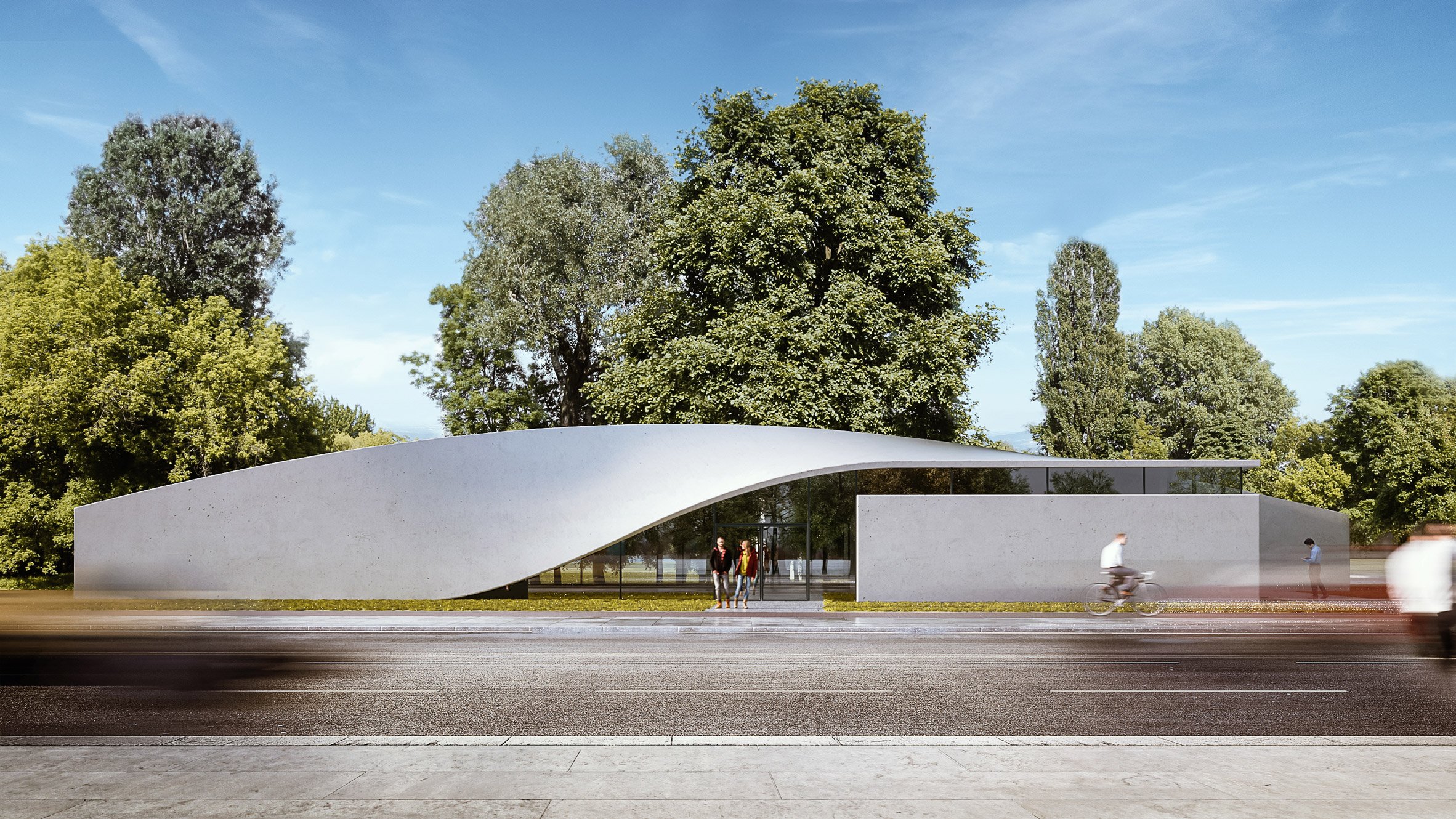
A visual of the Cube by Henn
The Cube will be "world's first building made of carbon concrete"

In other carbon news, visuals of a building that is being constructed from carbon-fibre-reinforced concrete were revealed.

Designed by German architecture firm Henn, The Cube is billed as the "world's first building made of carbon concrete".

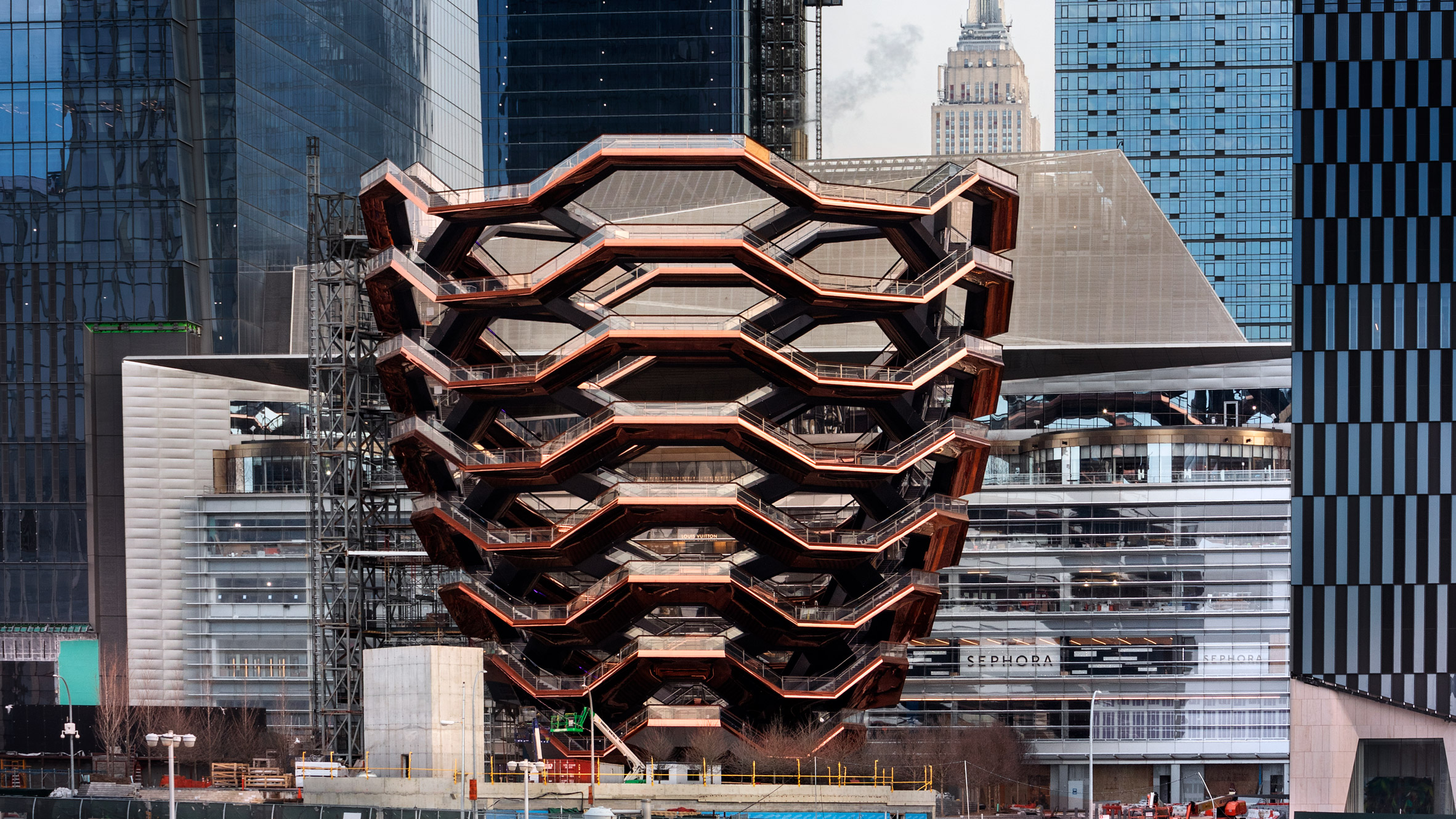
Vessel by Heatherwick Studio
Heatherwick's Vessel closes again after fourth suicide

In America, the Heatherwick Studio-designed Vessel viewpoint in New York was forced to temporarily close after a fourth person committed suicide at the structure.

The attraction had recently reopened following four months of closure after new measures intended to prevent suicides were introduced.

The Arc with bamboo roof by Ibuku
Ten impressive bamboo buildings that demonstrate the material's versatility

Following the huge interest in this Bamboo sports court in Bali, we rounded up 10 impressive bamboo buildings from Dezeen's archive.

We also took a look at more of the most interesting and colourful basketball courts from around the world after a number of the vibrant sports facilities were recently unveiled.

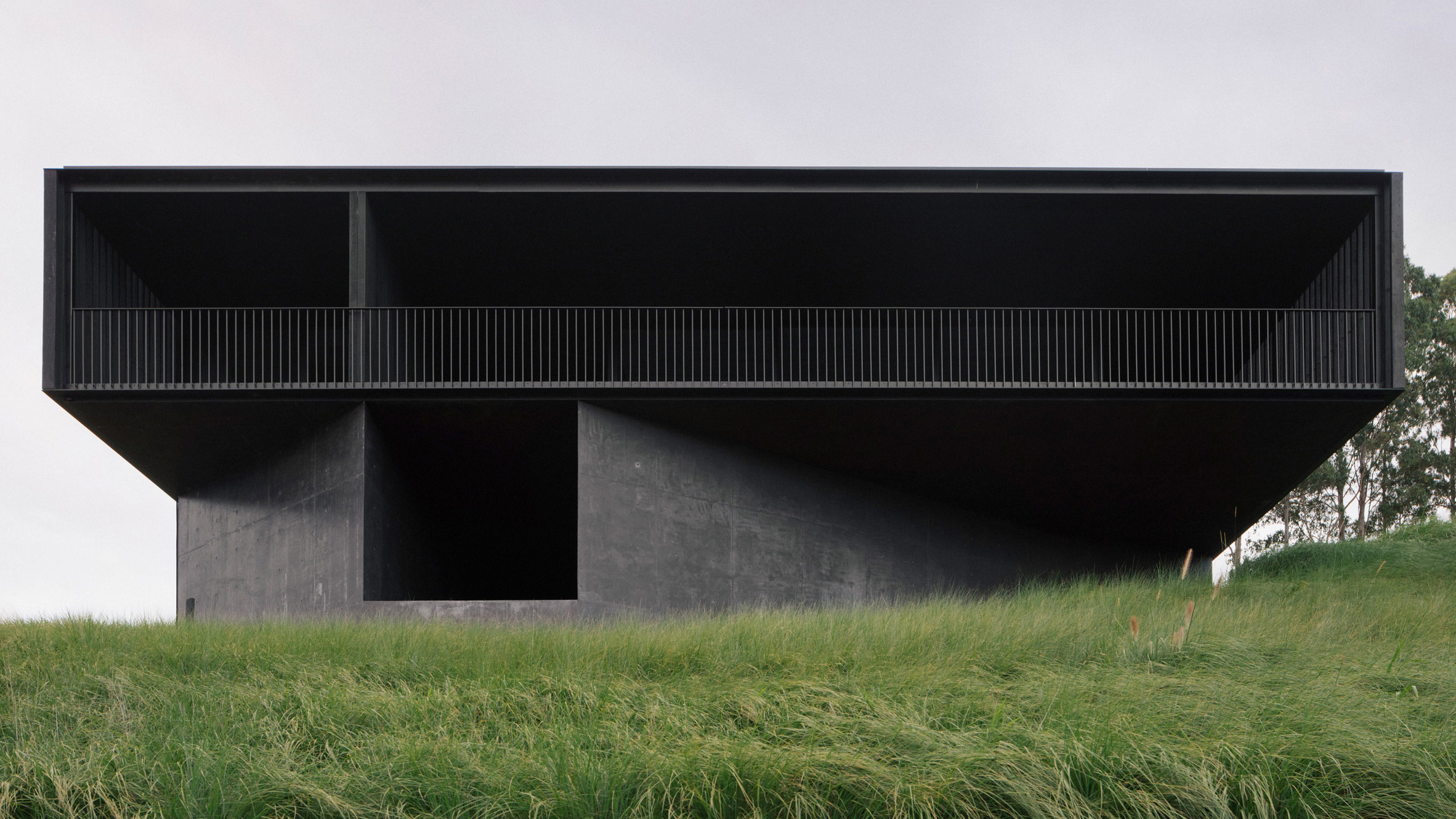
A black concrete house
Edition Office completes black concrete home in rural Australia

Popular projects this week include a black concrete home in rural Australiaa house in Tokyo wrapped in metal mesh and a metal-mesh curtain designed by Kengo Kuma for Gaudí's Casa Batlló.

Our lookbooks this week focused on homes designed to showcase art and eye-catching hotel bedrooms.

This week on Dezeen is our regular roundup of the week's top news stories. Subscribe to our newsletters to be sure you don't miss anything.

The post This week Amanda Levete revealed a design for a fusion power station appeared first on Dezeen.


from Dezeen https://ift.tt/3ivyPNe

Low-lying pavilions form expansive California Meadow House by Olson Kundig

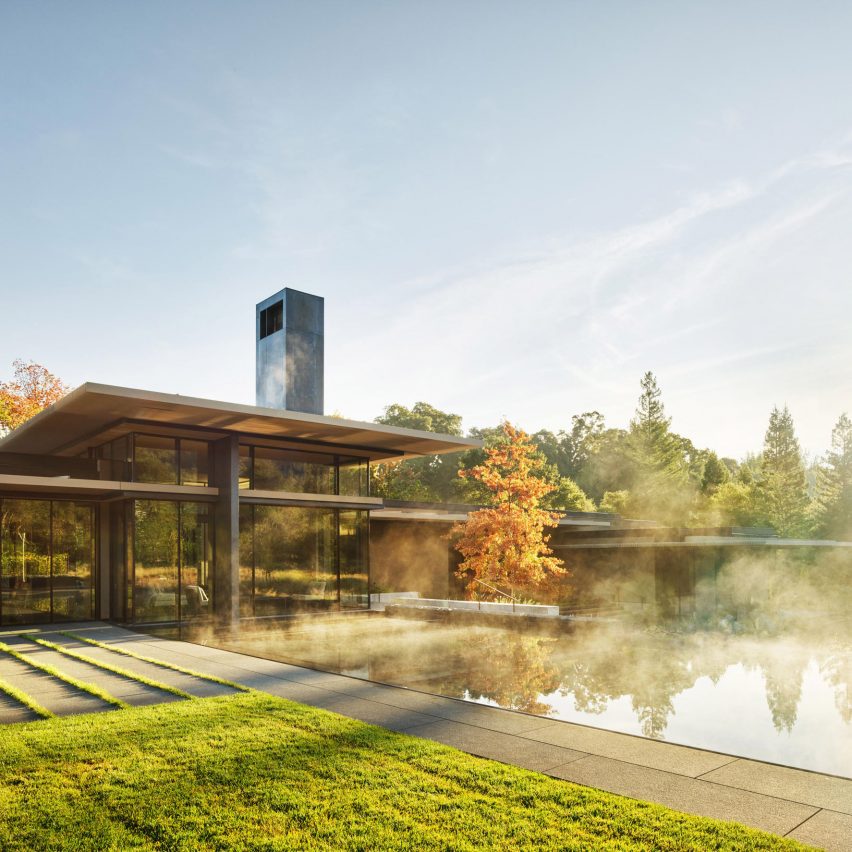
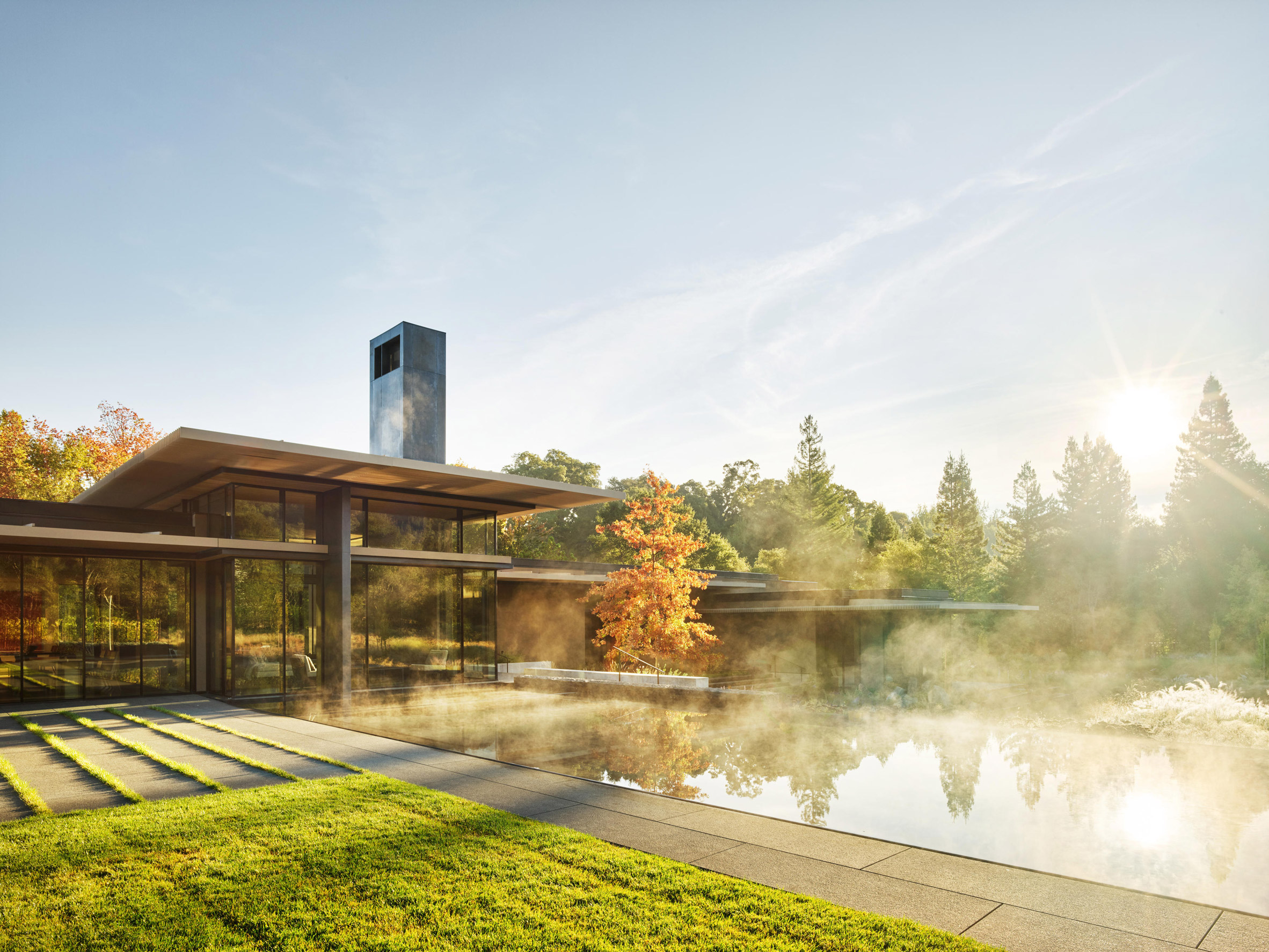
California Meadow House by Olson Kundig

Reflecting pools, a small vineyard and an underground pub feature in this sprawling residence in northern California designed by American firm Olson Kundig.

The project, California Meadow House, is located in Woodside – an affluent town near Silicon Valley. Designed by architect Jim Olson of the Seattle firm Olson Kundig, the residence was created for a client who loves entertaining and social connectedness.

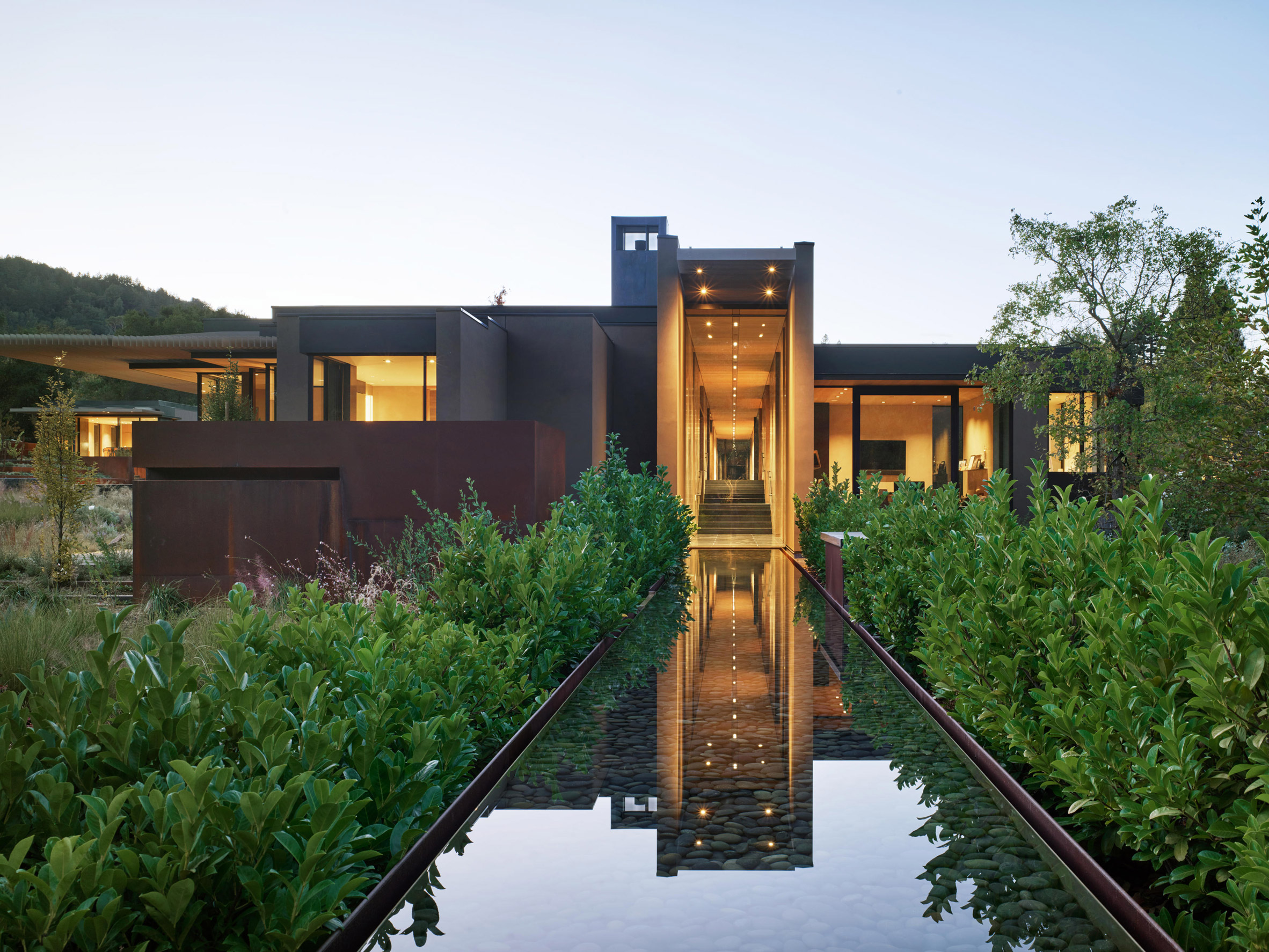
California Meadow House by Olson Kundig
Reflecting pools form part of the sprawling California Meadow House

The house sits on a 3.5-acre (1.4-hectare) property that is divided into two parts: one suggests a human touch upon the landscape, while the other is meant to be wilder in character.

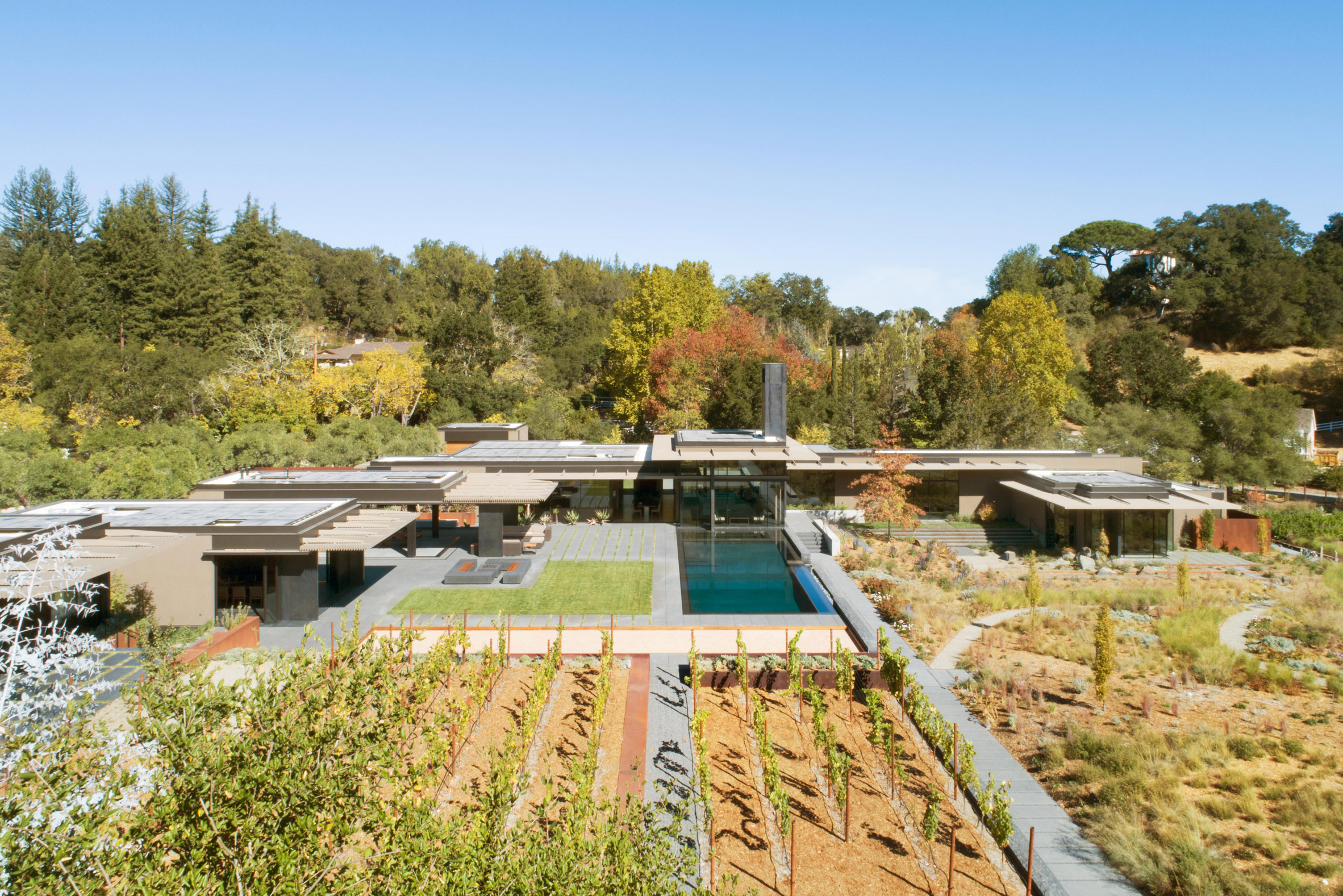
The home is approached via a curved driveway that passes by old-growth olive trees, a small vineyard and a garden.

A vineyard features in the residence
A small vineyard wraps around the building

Encompassing 17,000 square feet (1,579 square metres), the home consists of low-lying, rectilinear pavilions arranged in an L-shaped formation around outdoor spaces.

"Envisioned as a singular continuous, flowing expression, this family estate designed by Jim Olson links architecture, interior design, art and landscape into an integrated whole," the team said.

Exterior walls are sheathed in stucco and aluminium panels. Trellis-style roof overhangs help shade patios, walkways and large stretches of glass.

"Trellises weave over these spaces, providing shade from the California sun and further blending the home into the landscape," the team said.

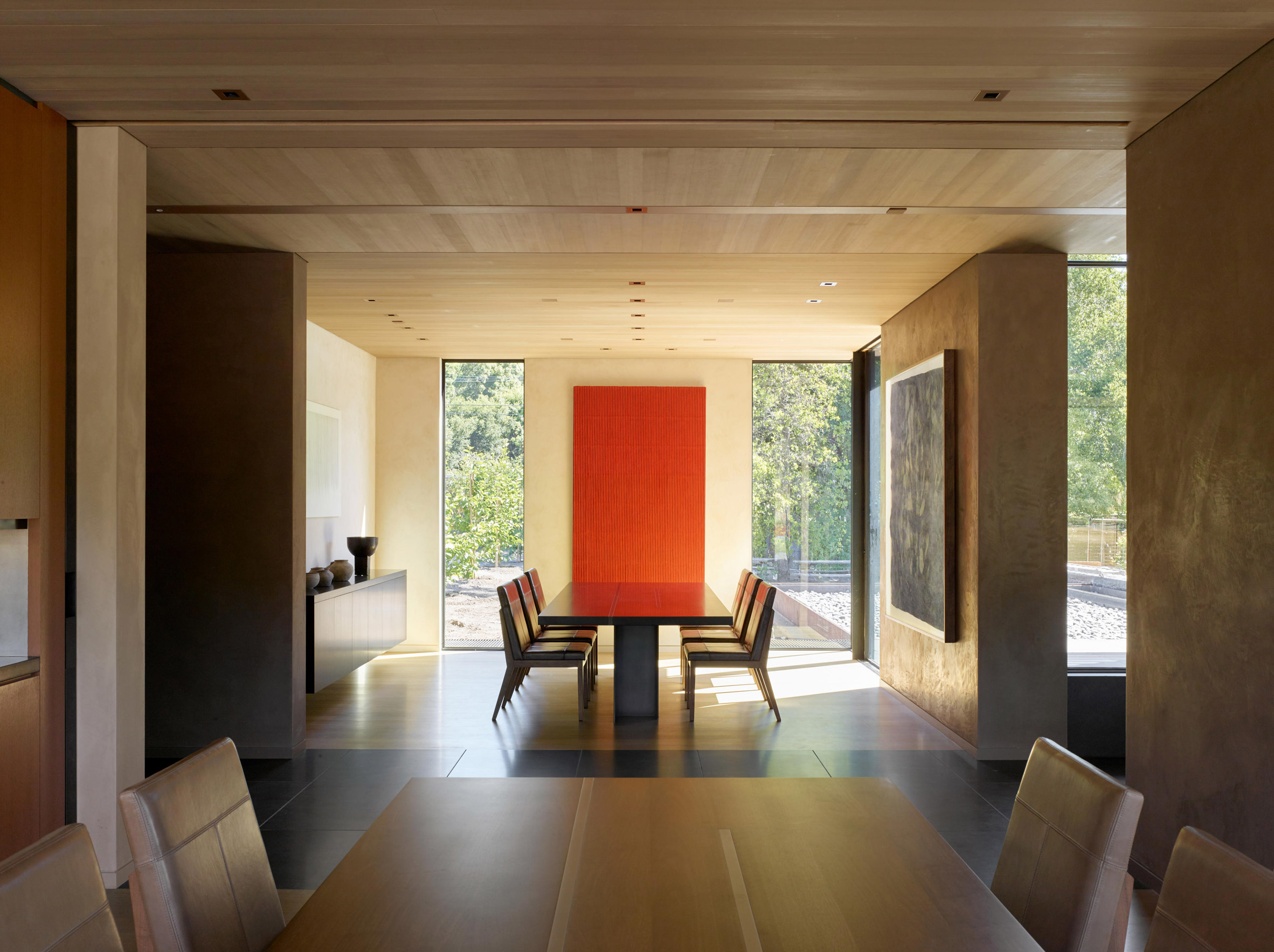
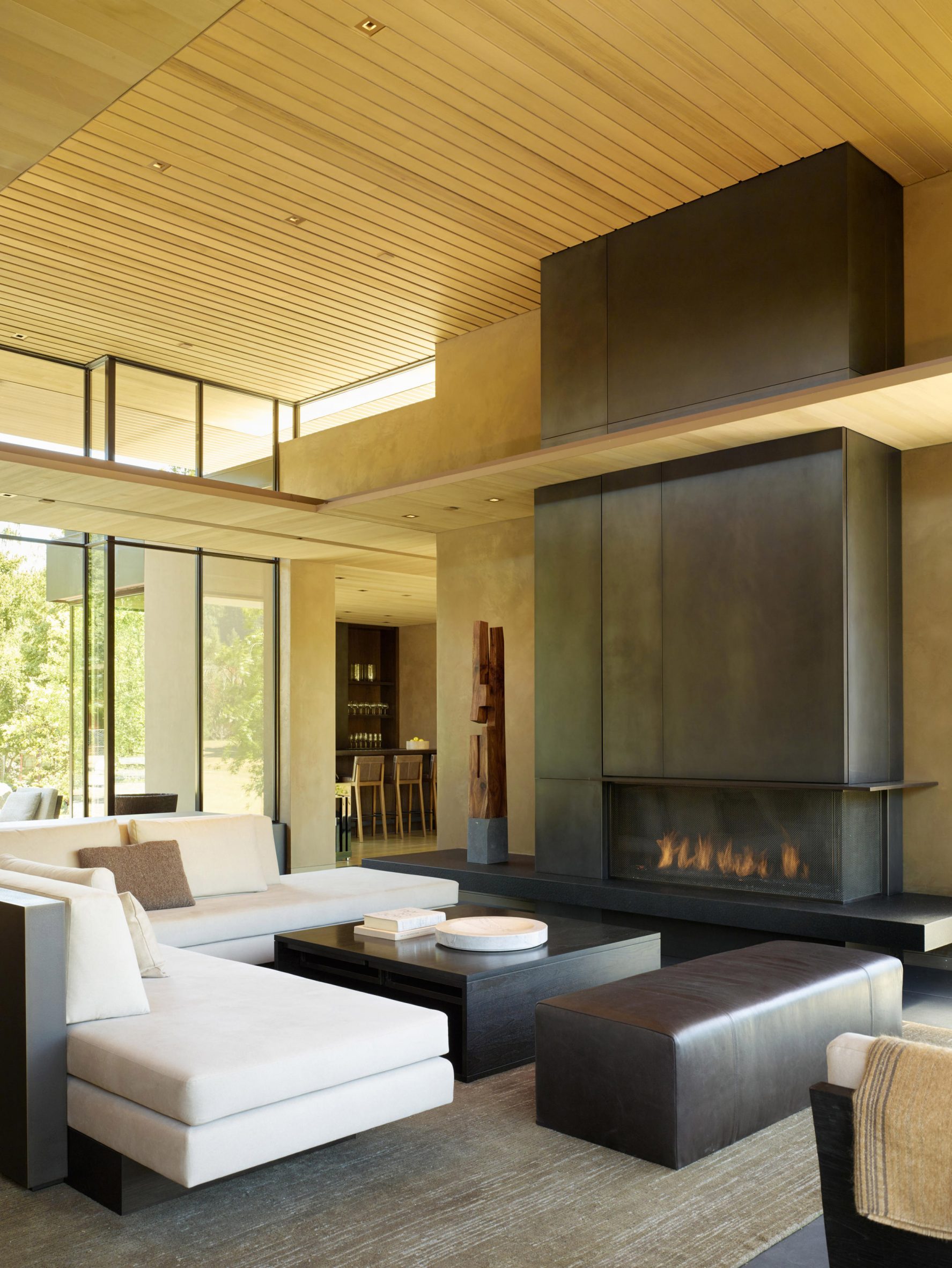
At the core of the house is the public zone, including the main living and dining area
A public zone forms the core of the house

At the core of the house is the public zone, including the main living and dining area.

"Unified around the central 'home base' living area, views radiate from this core in four directions across several reflecting pools to vistas into gardens and the nearby Santa Cruz Mountains," the team said.

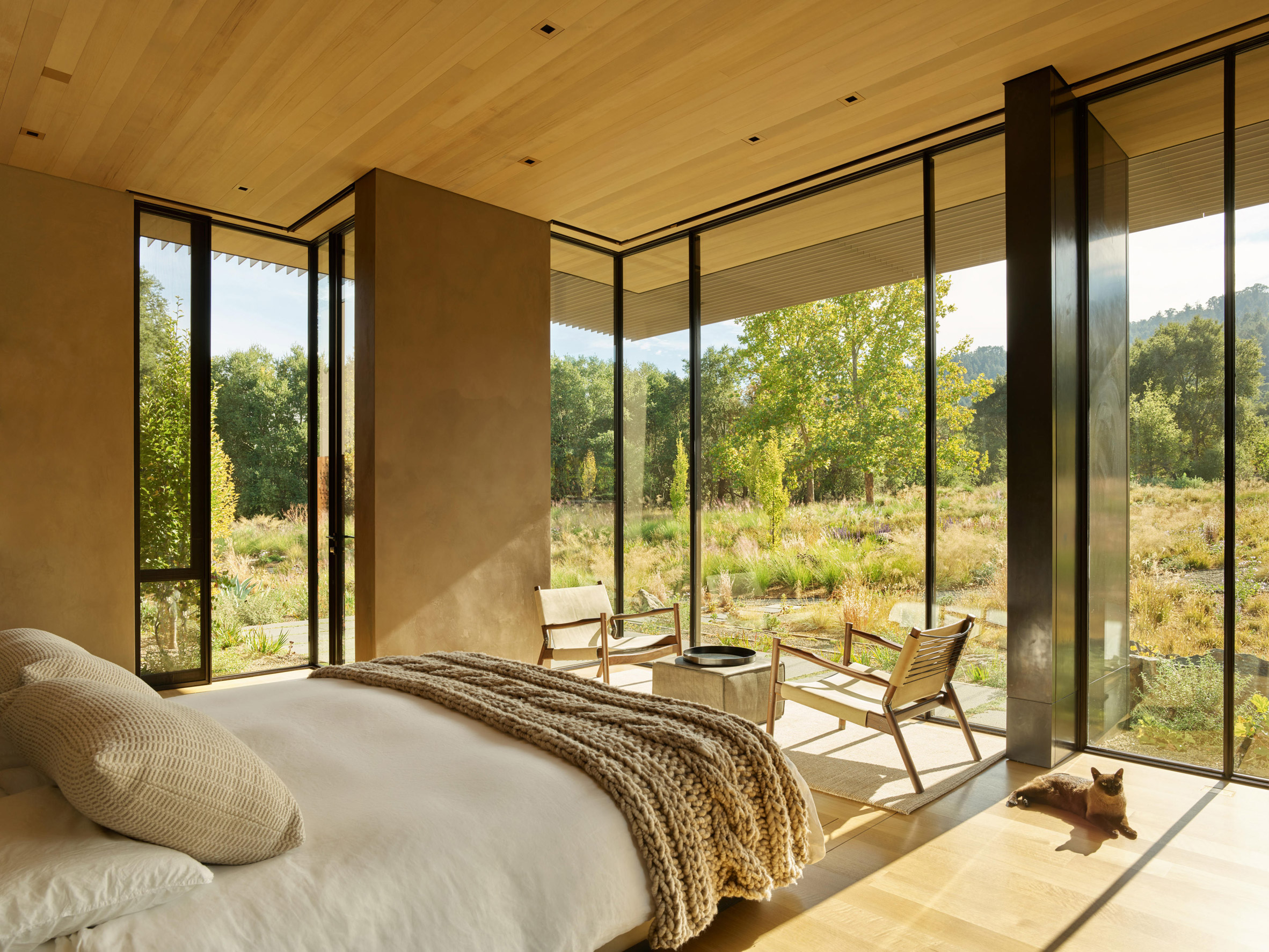
The house gets its name from the wild meadow next to it
A wild meadow can be seen through the main suite's panoramic windows

To the east of the public area is the private portion of the residence, including a main suite, office and three children's bedrooms. This part of the dwelling opens toward a wild meadow.

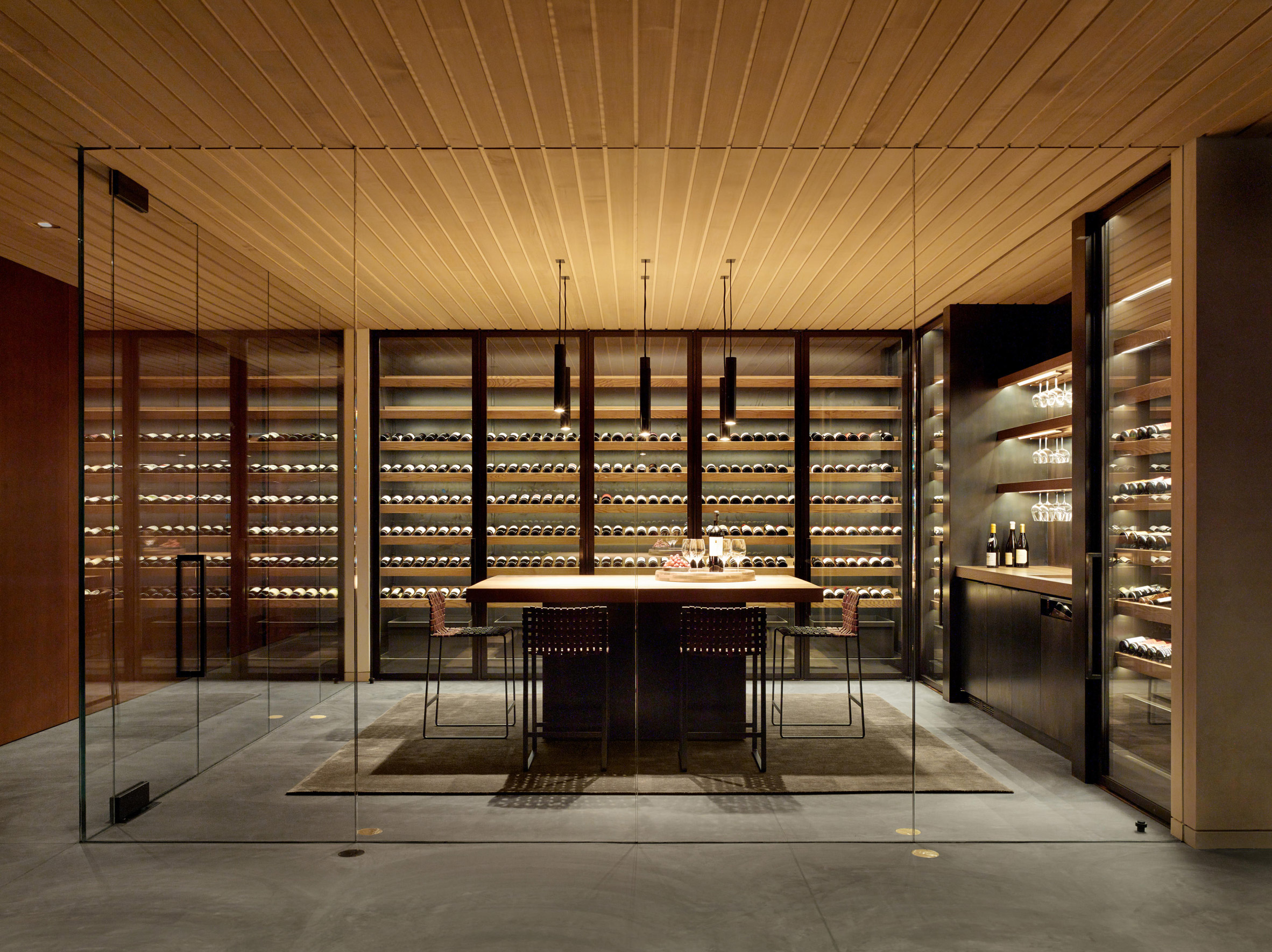
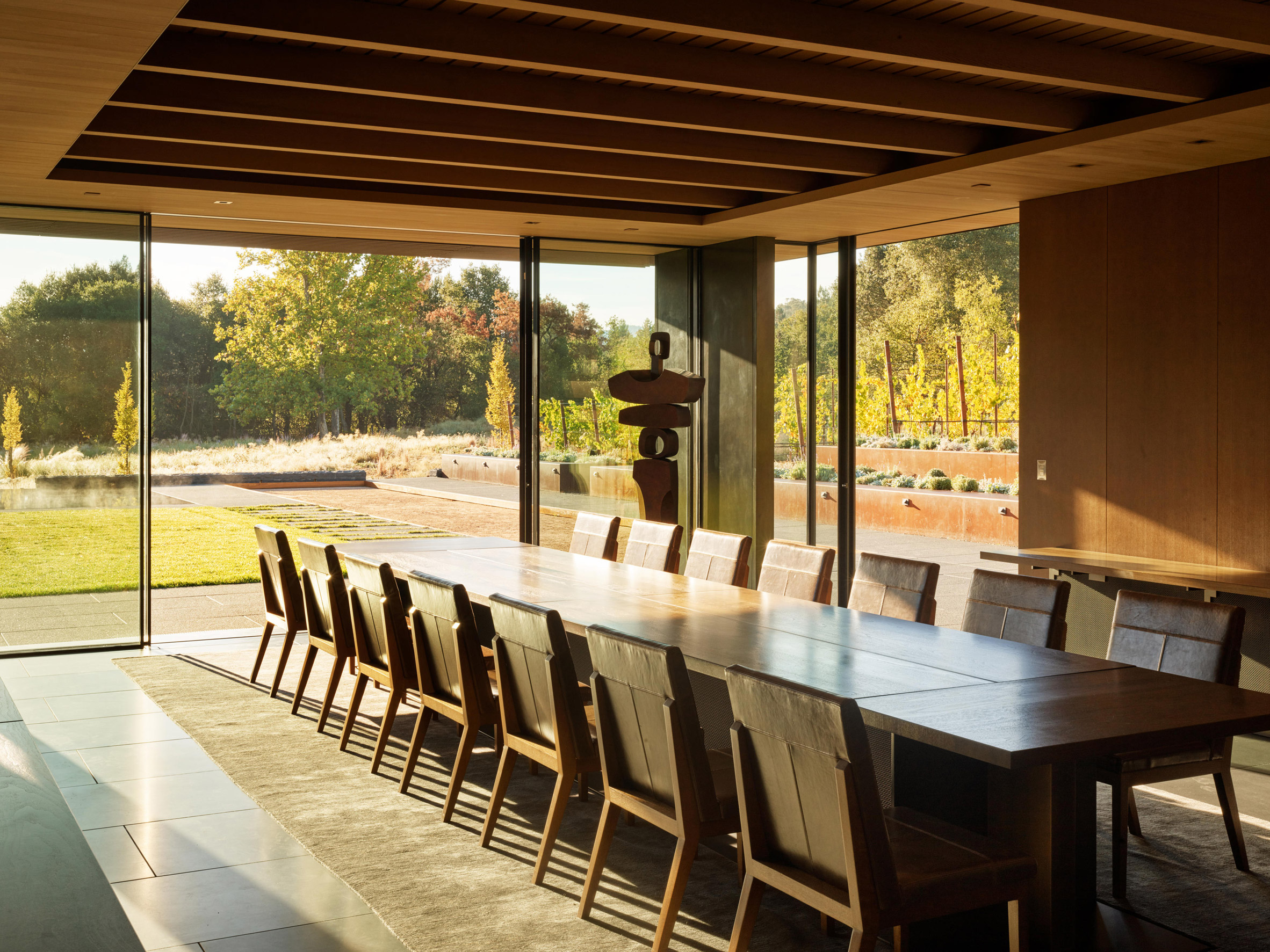
South of the public zone are three auxiliary buildings. One serves as a two-bedroom guesthouse, while the others hold an outdoor living pavilion and a dining pavilion with an underground pub.

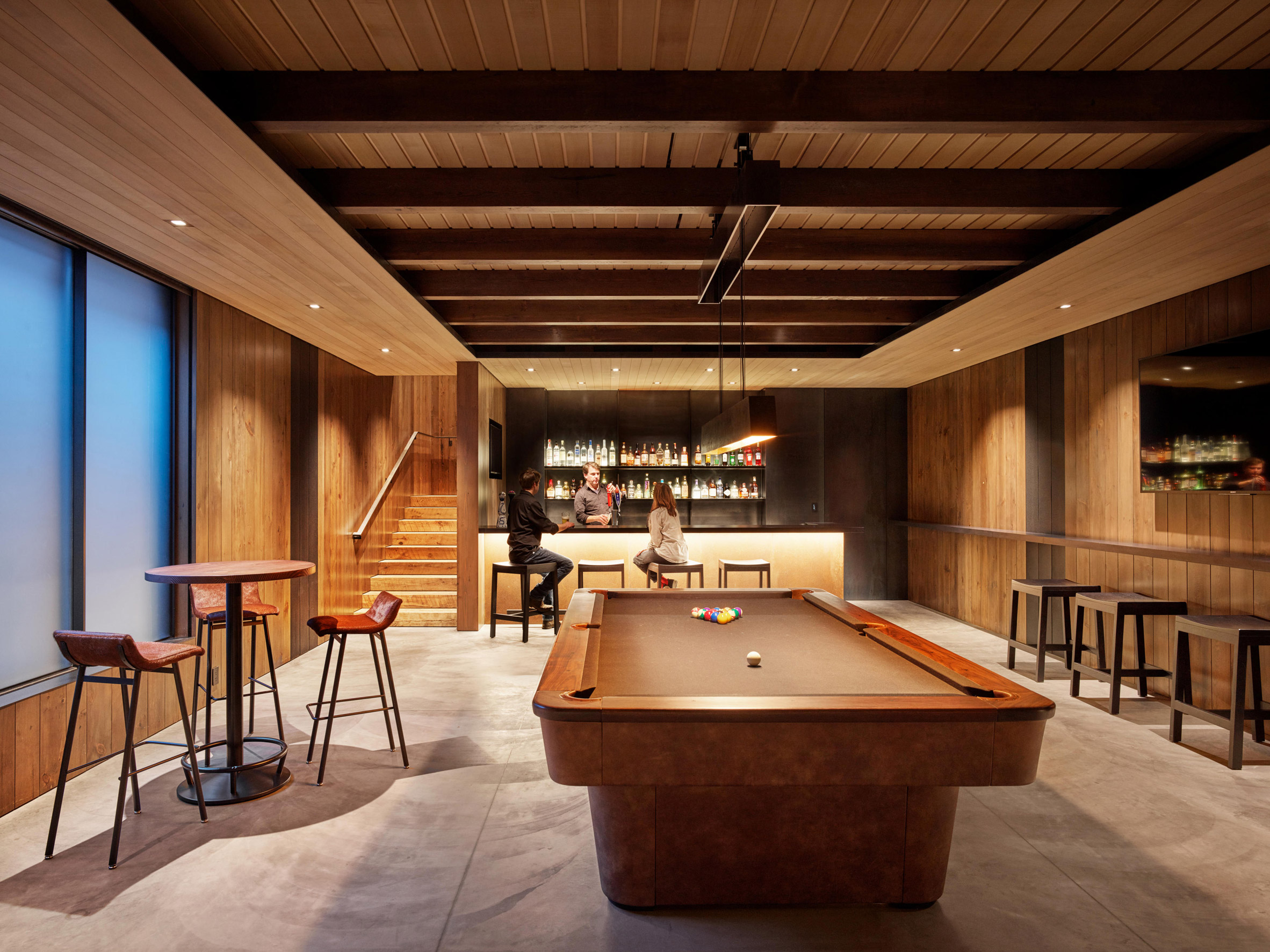
A subterranean pub features in California Meadow House
A private pub is located underground

The auxiliary buildings are arranged in a staggered formation and echo the organisation of the adjacent vineyard.

Throughout the residence, the team incorporated ample glazing to provide a seamless connection to the outdoors. A U-shaped window in the dining pavilion lowers completely into the ground.

Earthy finishes were used for the house's interiors
The dining pavilion connects to the outdoors via retractable windows

Earthy finishes were used indoors, such as granite and limestone flooring, cedar ceilings, walnut casework and reclaimed fir wall panelling.

In the subterranean pub, countertops are made of a repurposed wooden telephone pole. Similarly, a salvaged redwood slab was used to clad a bar in the outdoor living pavilion.

The pub features tables made from repurposed wood
Repurposed wooden telephone poles are used as countertops in the pub

Olson designed numerous pieces of decor for the residence, including the dining and living room furniture, exterior lounge furniture, the main suite's bed and nightstands, and several lighting fixtures. Steel, nickel, teak and leather are among the materials used to fabricate the pieces.

"Olson also helped to curate an international contemporary art collection for the owners of the home, complementing its architectural expression," the team added.

California Meadow House has open plan rooms
A black fireplace anchors the living area

The residence is designed to produce as much energy as it uses. The team incorporated geothermal and hydronic systems for heating and cooling, along with solar panels that cover over half the roof area.

"The result is a home integrated with nature, not only philosophically and visually, but from a practical perspective as well," the architect said.

Reflecting pools in the residence
California Meadow House by night

Founded in 1967, Olson Kundig is known for creating distinctive, modern-style homes in natural settings. Other projects by the firm include the Hale Lana residence in Hawaii, which is lifted above a lava bed, and the Wasatch House in Utah, which consists of pavilions connected by glazed walkways.

The photography is by Matthew Millman.


Project credits:

Architect: Olson Kundig
Project team: Jim Olson (design principal), Olivier Landa (project manager), Alivia Owens (project architect), Blair Payson (project architect), Christine Burkland (interior design), Angus MacGregor, Laura Bartunek, Daichi Yamaguchi, and architectural staff
General contractor: Barnett Company
Civil engineer: MacLeod and Associates
Landscape architect: Surface Design
Structural engineer: PCS, Structural Engineer
Mechanical engineer: WSP Group
Electrical engineer: Susanna Van Leuven
Lighting design: BHLD
Audio visual: Barker Company
Wine storage: Phil Finer Refrigeration & Air Conditioning

The post Low-lying pavilions form expansive California Meadow House by Olson Kundig appeared first on Dezeen.


from Dezeen https://ift.tt/3rWDrip