Tuesday, 10 August 2021

BIG and ICON to 3D-print structure exploring "new Martian vernacular" for NASA

Bjarke Ingels' studio BIG is collaborating with construction technology company ICON and NASA to create Mars Dune Alpha, a 3D-printed structure designed to simulate living on Mars.

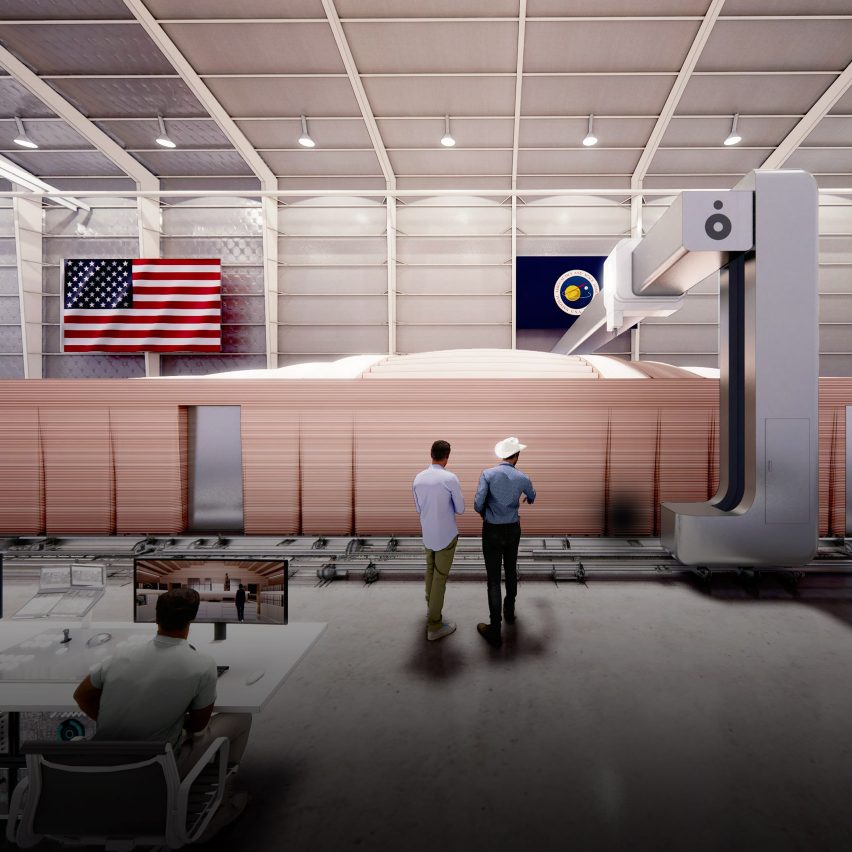
Under construction at the Johnson Space Center in Texas, USA, the 158-square-metre "habitat" has been developed by BIG and ICON to help prepare humans to live on the Red Planet.
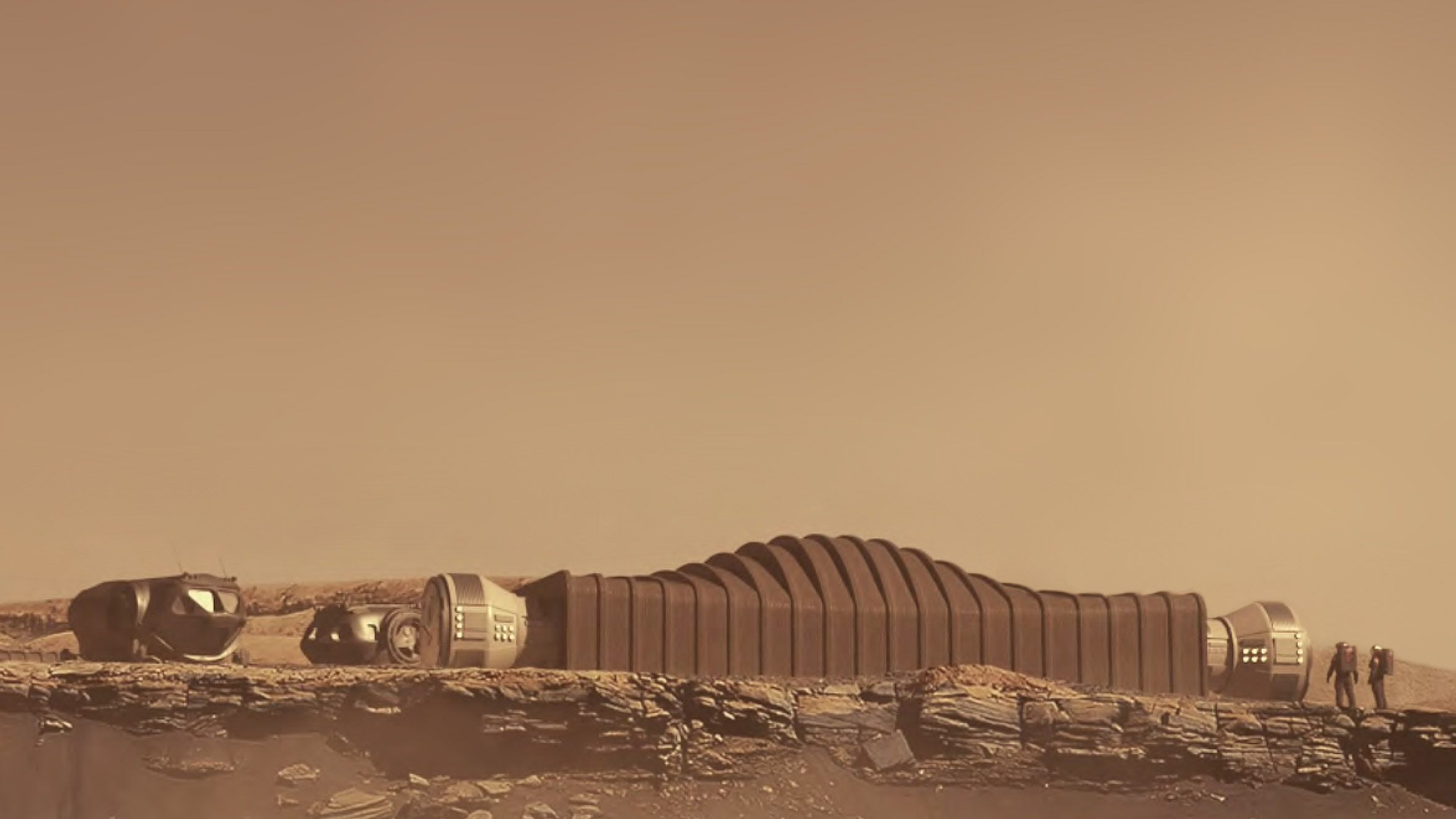
A visual of Mars Duna Alpha on Mars
BIG has unveiled visuals of Mars Dune Alpha

The Mars Dune Alpha will be occupied by four people for extended periods of time and, by simulating the expected experience of living on Mars, will help NASA understand the physical and mental challenges that may impact crew on a long-duration space mission.

"Together with NASA and ICON, BIG is investigating what humanity's home on another planet will entail from the human experience which will potentially lay the foundation for a new Martian vernacular," wrote BIG's Kai-Uwe Bergmann in an Instagram post.
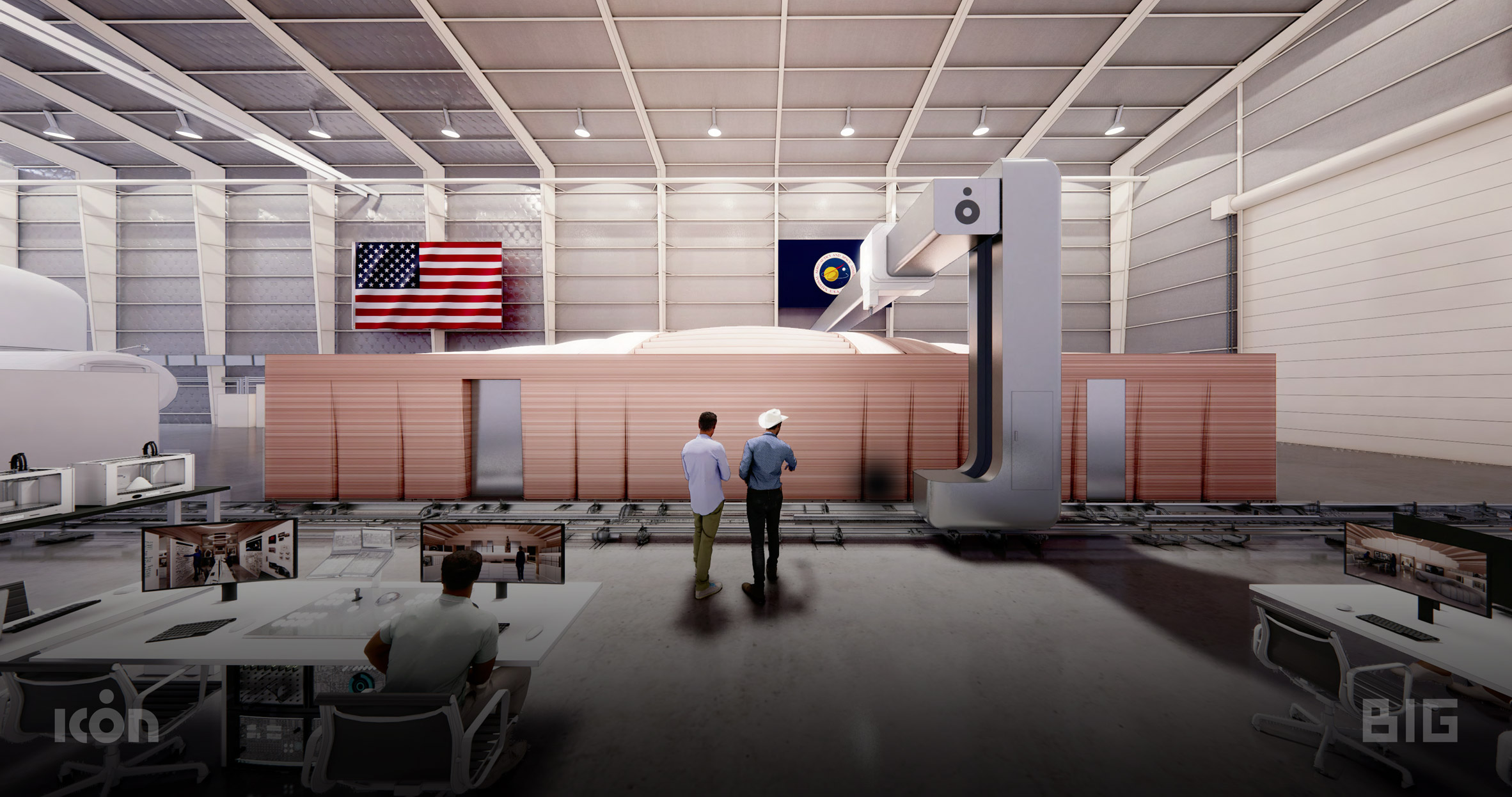
A visual of the Mars Dune Alpha by BIG and ICON
The structure will be 3D printed

Mars Dune Alpha is being constructed using 3D printers as this is the preferred technology for constructing extraterrestrial habitats, due to the lack of building materials required.

The specific technology that will be used is Vulcan, ICON's 3D-printing system that uses the company's own Portland Cement-based mix called Lavacrete.
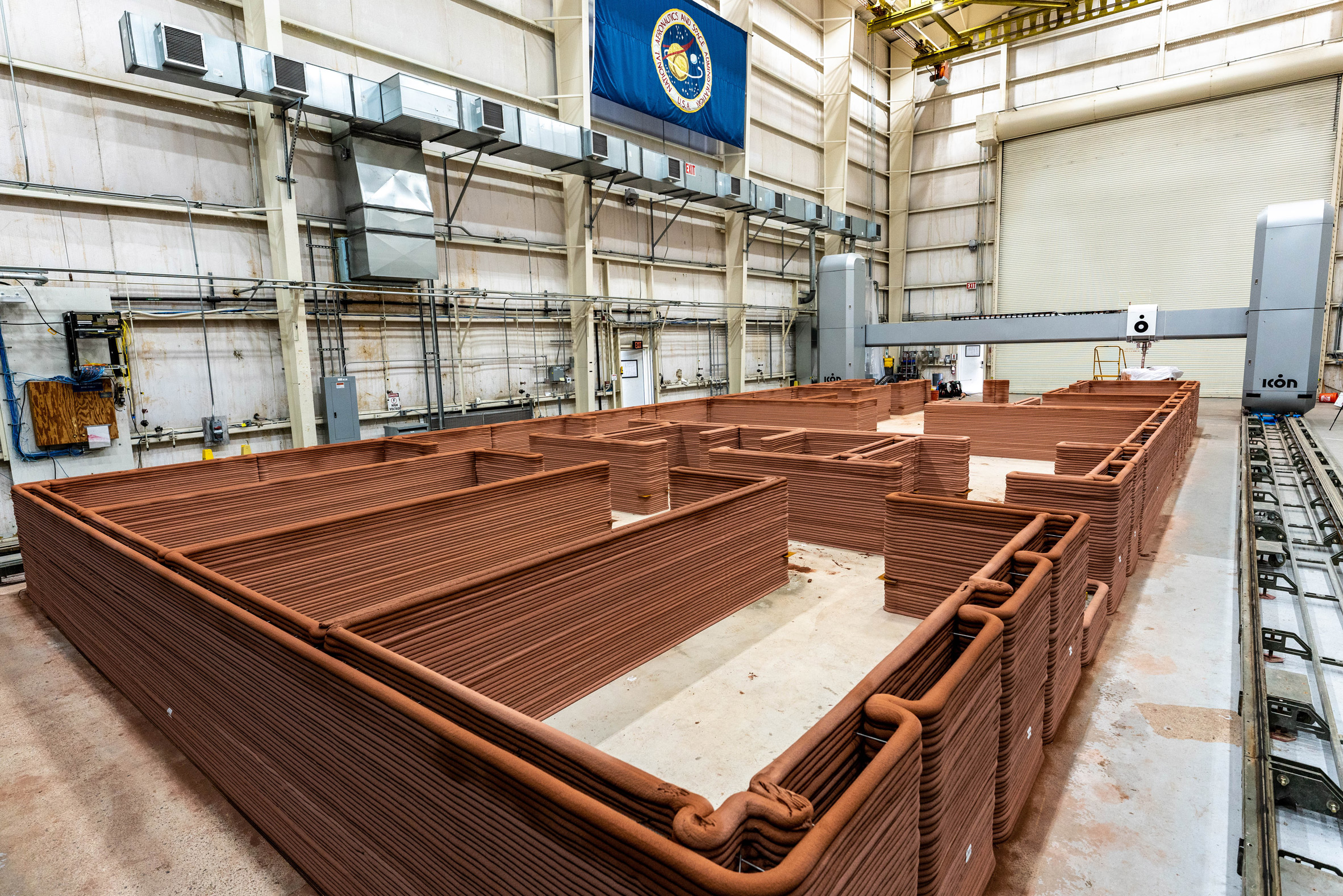
A 3D-printed structure
It is under construction at the Johnson Space Center

Once built, the structure will comprise four private crew quarters on one side, accessed by shared living spaces found at its centre. On the other side will be work, medical and food-growing stations.

According to ICON, the ceiling heights will be varied throughout to ensure each room is visually unique to "avoid spatial monotony and crew member fatigue".

Each room will also feature customisable lighting, temperature and sound control, alongside a mix of fixed and movable furniture to allow users to reorganise and personalise the interiors.
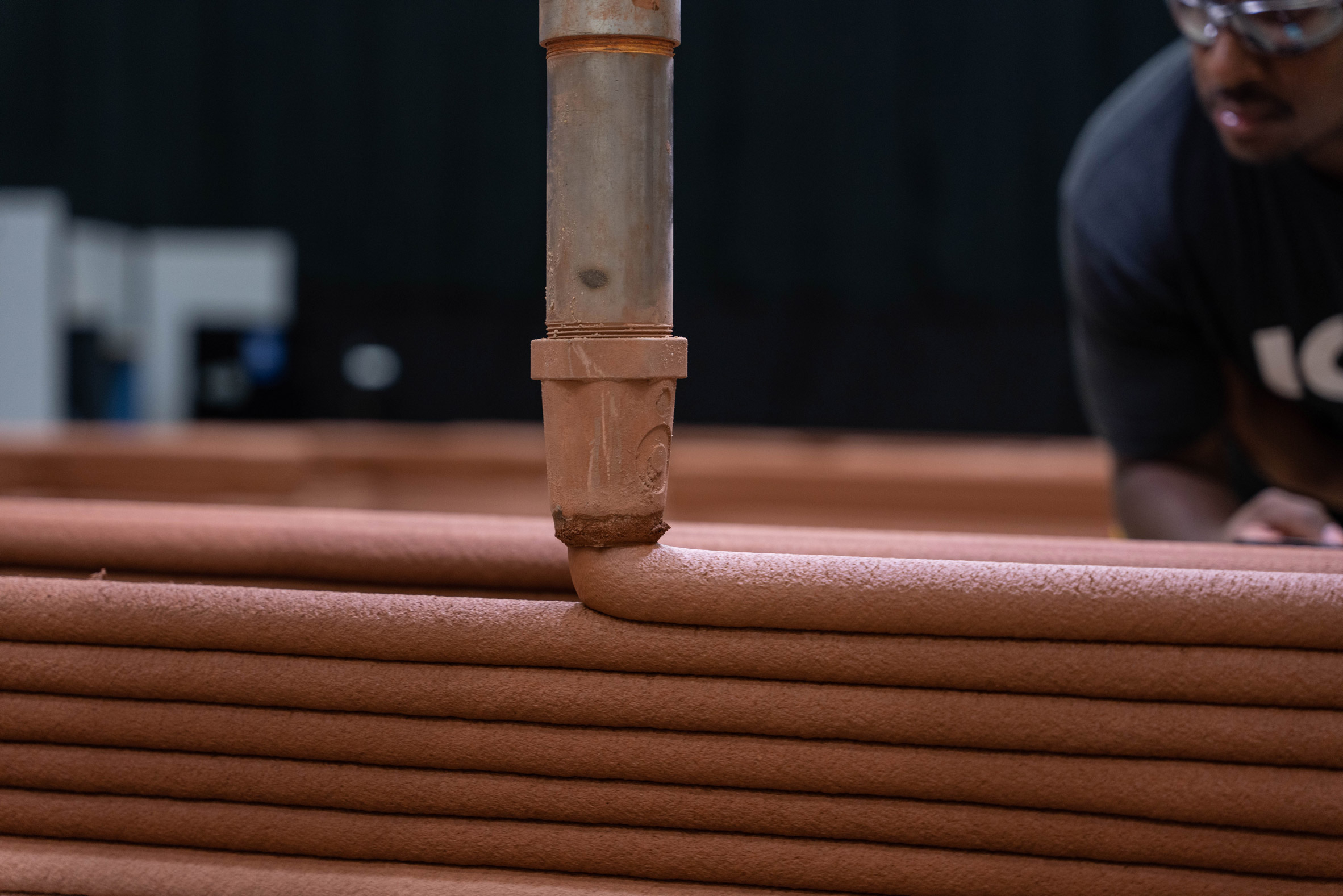
A 3D-printed structure
It will make use of ICON's Vulcan technology

"This is the highest-fidelity simulated habitat ever constructed by humans," said ICON co-founder Jason Ballard.

"Mars Dune Alpha is intended to serve a very specific purpose, to prepare humans to live on another planet. We wanted to develop the most faithful analog possible to aid in humanity's dream to expand into the stars."

"3D printing the habitat has further illustrated to us that construction-scale 3D printing is an essential part of humanity's toolkit on earth and to go to the moon and Mars to stay," Ballard added.

"Together with NASA and ICON, we are investigating what humanity’s home on another planet will entail from the human experience," BIG founder Bjarke Ingels said.

"The data gained from this habitat research will directly inform NASA’s standards for long-duration exploration missions, and as such will potentially lay the foundation for a new Martian vernacular. Mars Dune Alpha will take us one step closer to becoming a multiplanetary species."
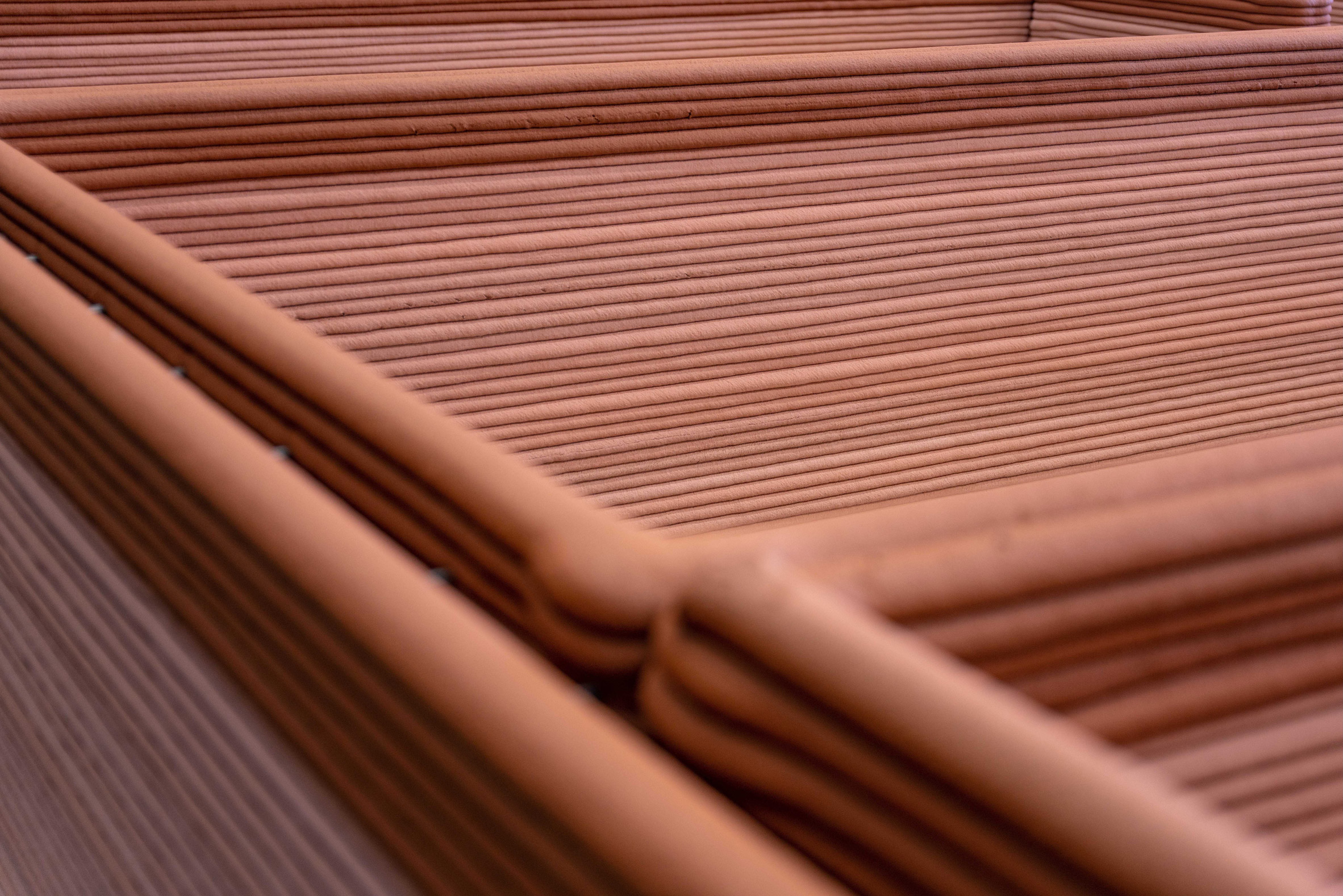
A 3D-printed structure
Researchers will determine the suitability of 3D printing for extraterrestrial habitats

Mars Dune Alpha is being built in support of the NASA Space Technology Mission Directorate (STMD), which forms part of The Crew Health and Performance Exploration Analog (CHAPEA).

CHAPEA is a series of three one-year Mars surface mission simulations at the NASA Johnson Space Center in Houston to provide insights into future space missions.

NASA is now recruiting crew for the long-duration Mars mission study inside the 3D-printed Mars Dune Alpha, which will start in Autumn 2022. The mission will mimic the challenges of a mission to Mars, such as equipment failure, communication delays and simulated spacewalks.
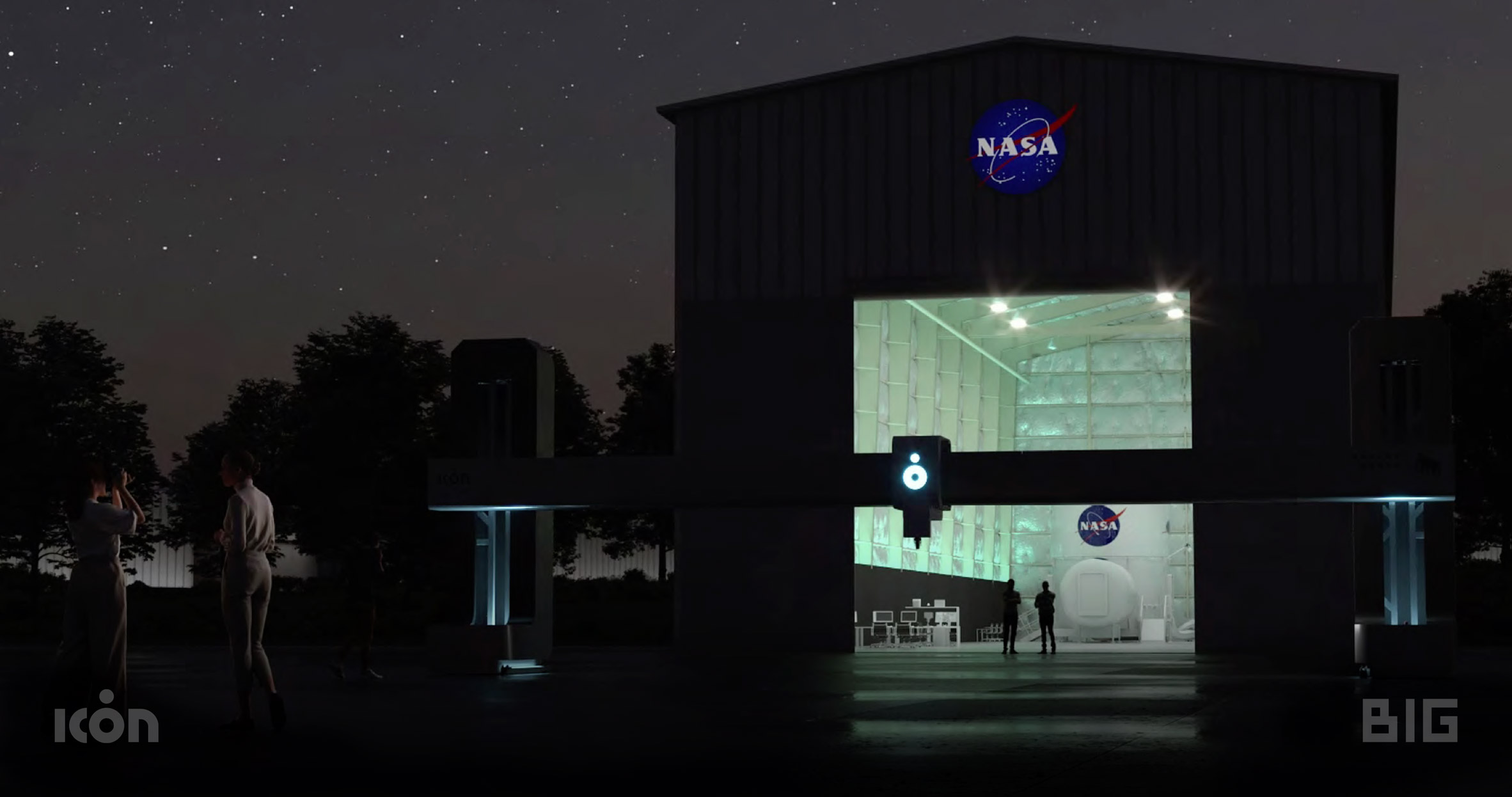
A visual of a NASA research centre
It is being developed for NASA's CHAPEA programme

BIG and ICON are currently also collaborating with NASA on Project Olympus, which explores ways to create 3D-printed infrastructure on the moon using materials found on its surface.

BIG is not the first architecture studio to develop buildings to support living in space. In 2015, Foster + Partners proposed a settlement for four astronauts on Mars that could be 3D printed from soil and rocks on the planet by semi-autonomous robots.

More recently, architecture studio SOM and the European Space Agency designed a settlement for living on the Moon, aptly named Moon Village. The proposal comprises inflatable modules to provide hubs for scientific research.

The post BIG and ICON to 3D-print structure exploring "new Martian vernacular" for NASA appeared first on Dezeen.


from Dezeen https://ift.tt/3AurKTe

Monday, 9 August 2021

Vincenzo De Cotiis pays homage to Burberry check in brand's London flagship

Burberry London flagship No.1 Sloane Street by Vincenzo De Cotiis

Italian architect Vincenzo De Cotiis has designed Burberry's London flagship store with mirrored lighting grids and chequerboard tiles that allude to the brand's signature check pattern.

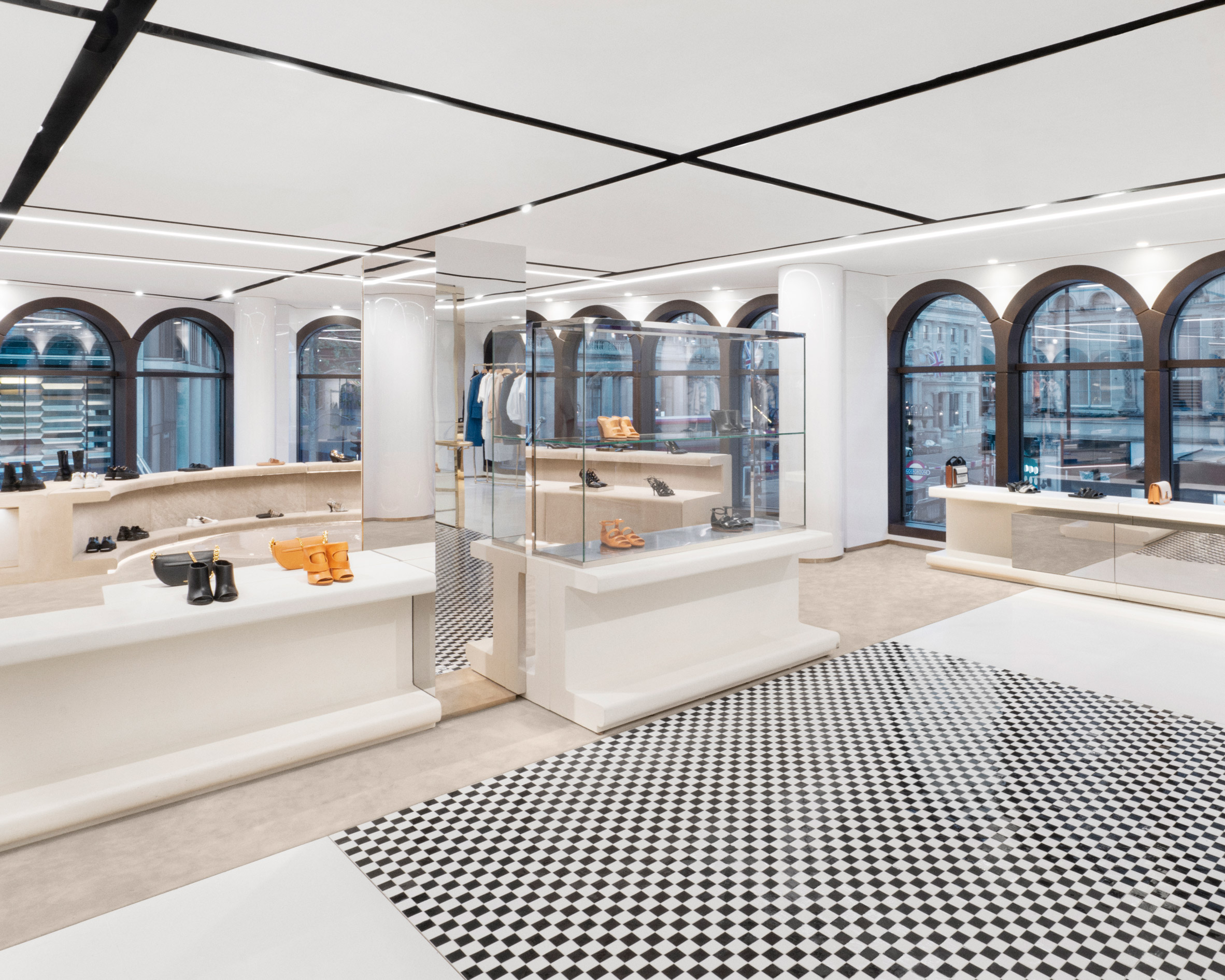
Opened last month, the shop on Knightsbridge's Sloane Street is spread over 857 square metres and three floors, which Burberry says were designed to "encapsulate the essence" of the fashion house.

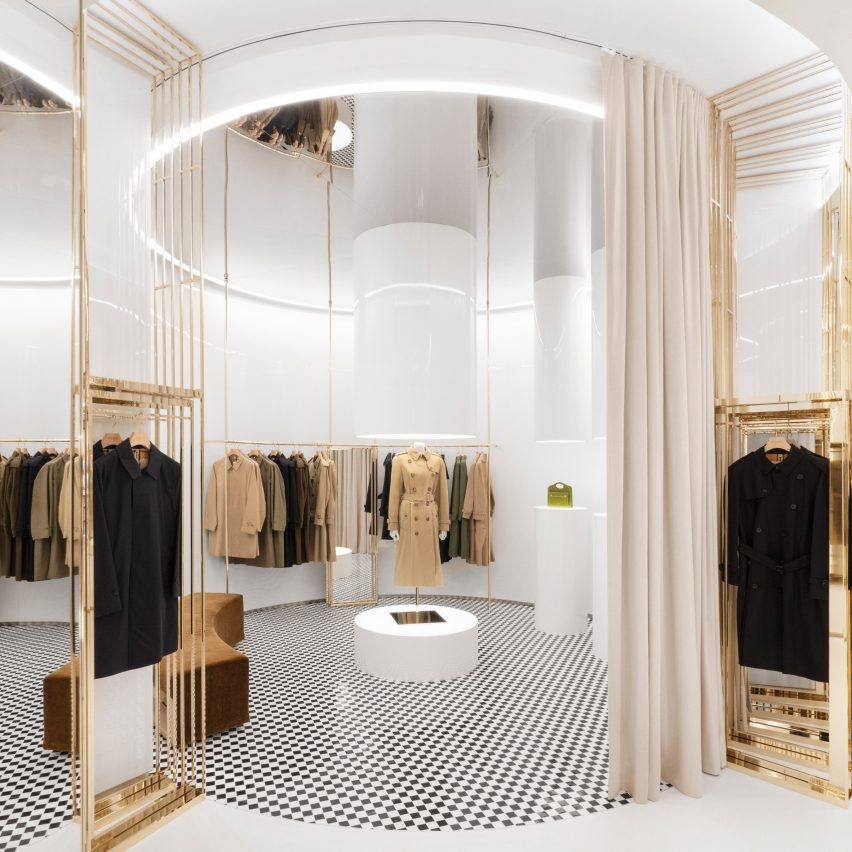
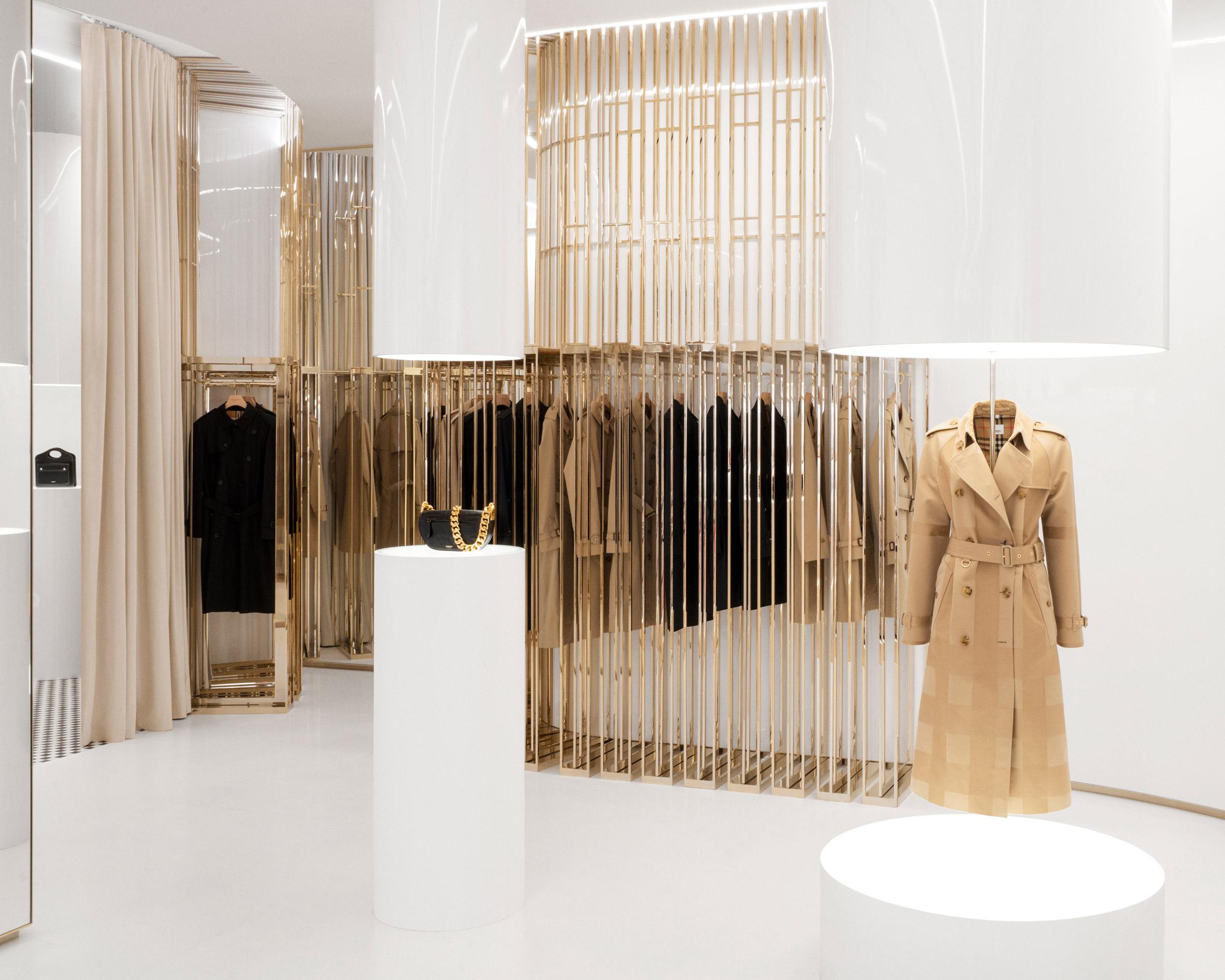
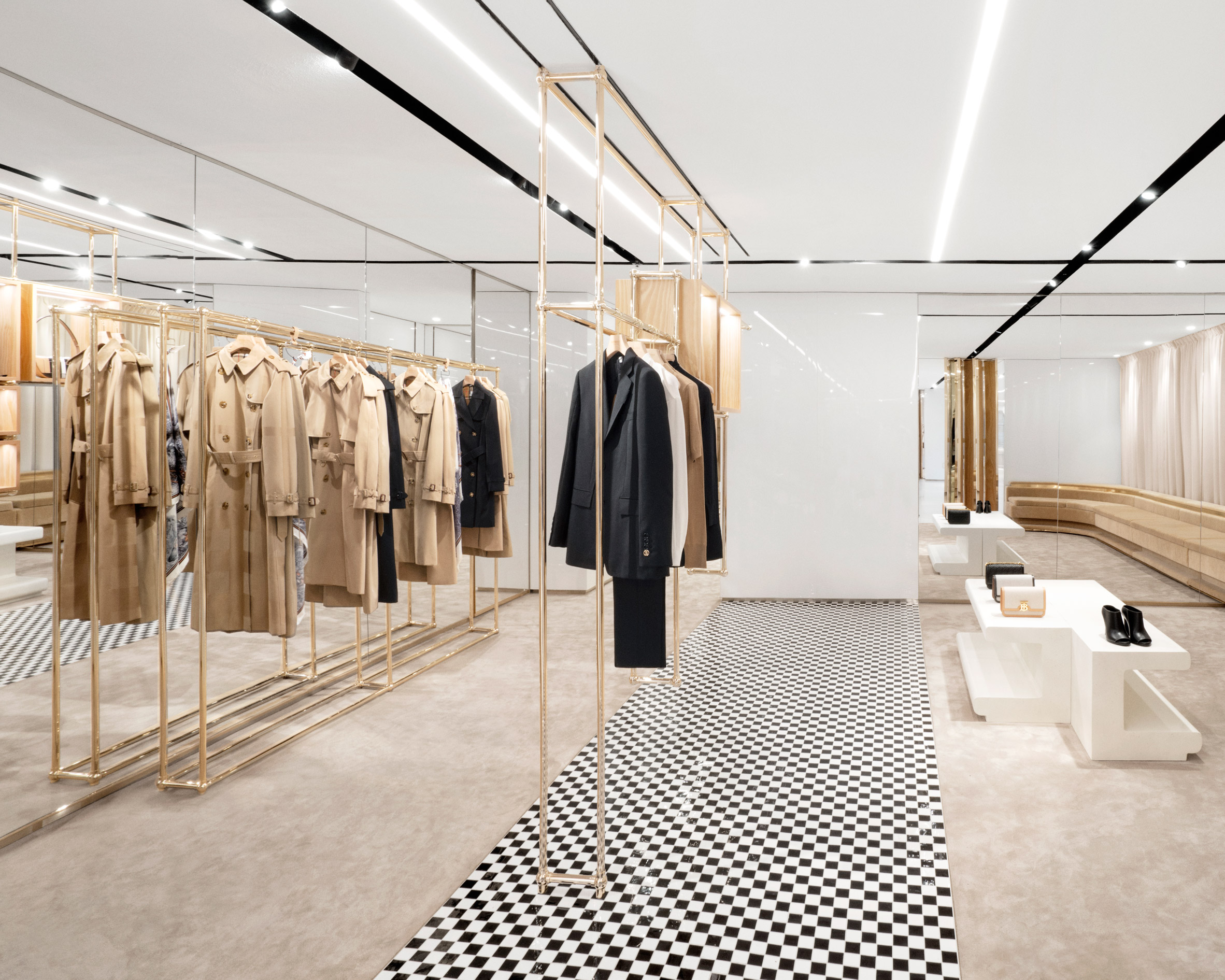
Burberry trench coat displayed in London flagship using champagne-coloured steel rails
Burberry's London flagship features dedicated spaces for exhibiting its classic trench coat (top and above)

"We wanted to create a domestic shell, a home where art, culture and people move through intelligent and elegant modernity – the place as a portrait," De Cotiis explained.

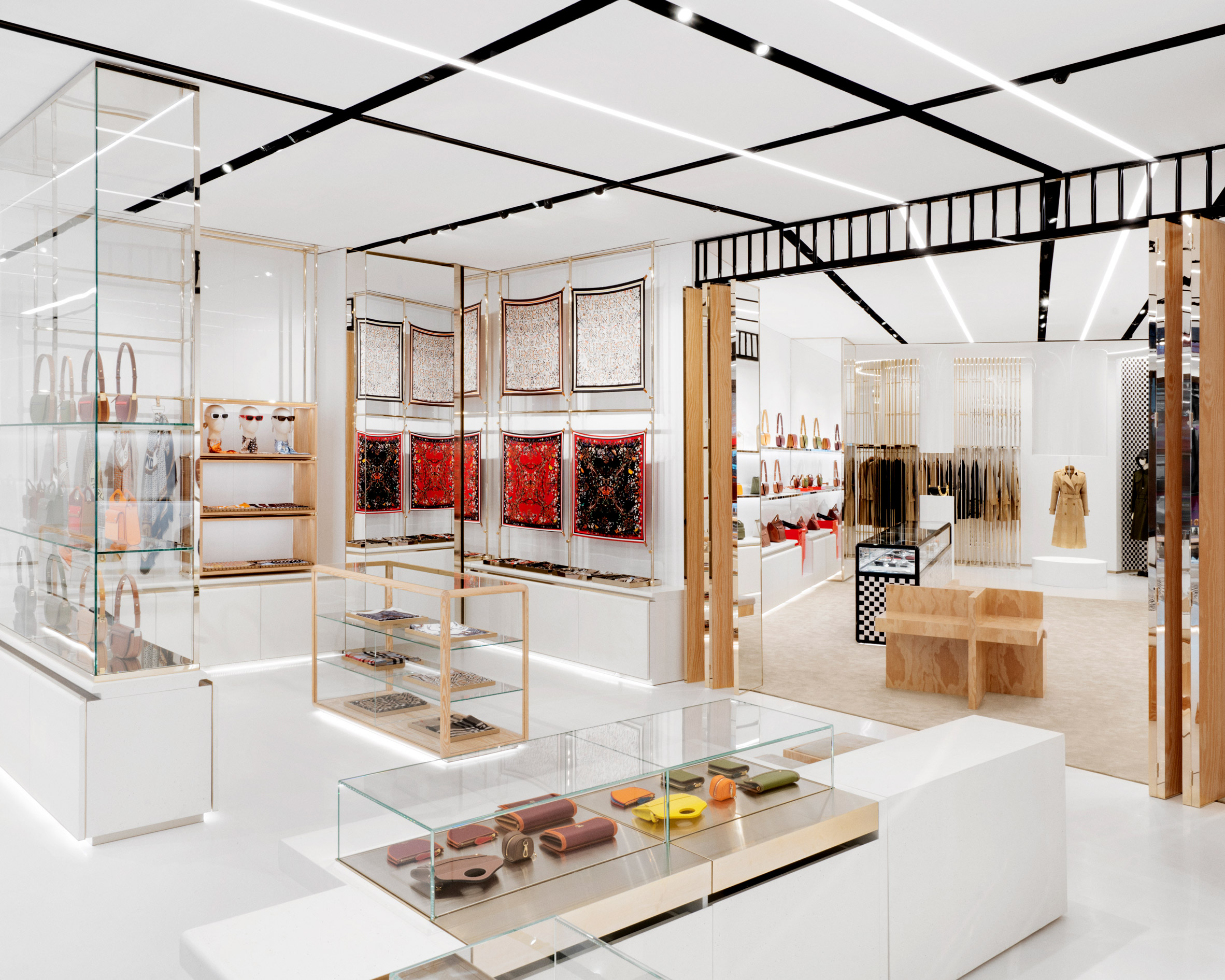
The core colours of the Burberry house check – beige, black, white and red – are integrated throughout the store and the distinctive pattern itself is reinterpreted in its gridded floors and ceilings.

No.1 Sloane Street store by Vincenzo De Cotiis with accessories displayed in champagne-coloured steel units
A lighting grid on the ceiling riffs on the brand's signature check pattern

Glossy white finishes, glass and mirrors reflect the natural light from outside and create a bright, gallery-like atmosphere.

On the ground floor, a circular space with suspended tube lights and sliding panels is dedicated to exhibiting the classic Burberry trench coat, while accessories are presented in glass cabinets and high gloss shelves that Cotiis says help create "a sense of intimacy while maintaining a sense of openness".

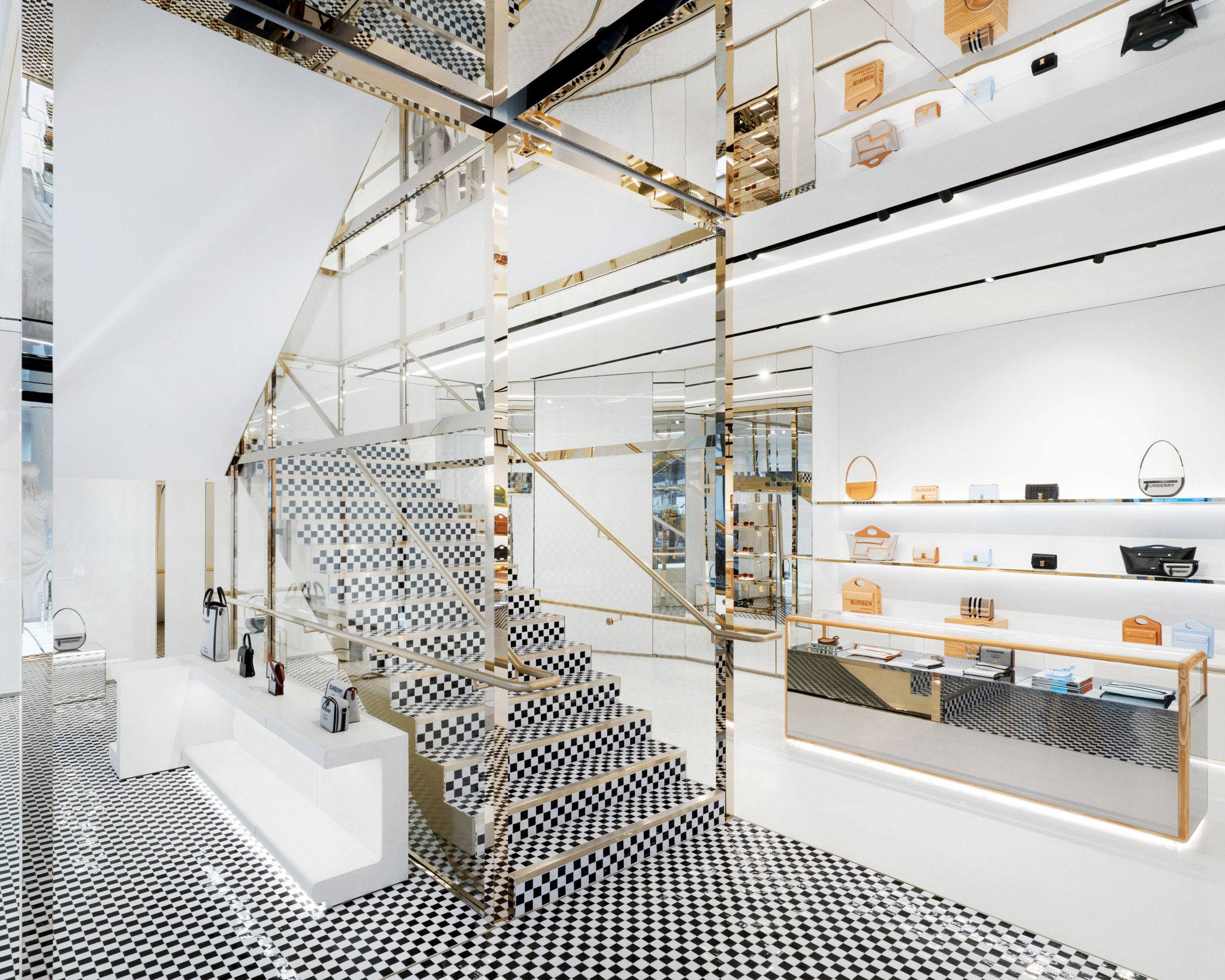
Checked tile staircase Burberry London flagship
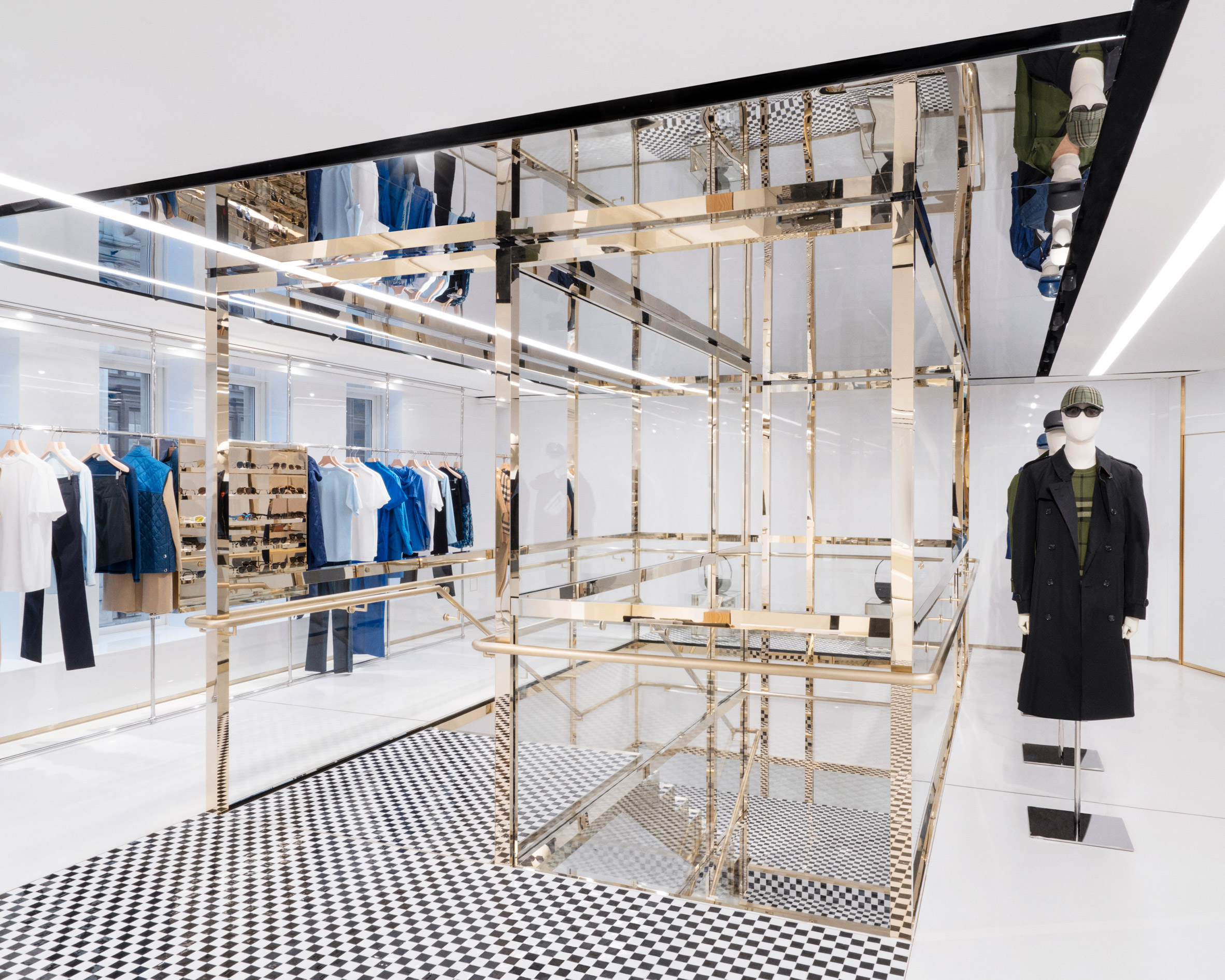
Chequerboard tiles run up the steel-framed staircase

Near the entranceway, a square-framed storage unit made from champagne-coloured stainless steel spotlights seasonal displays.

A monochromatic, tiled staircase encased in the same pale steel leads to the upper floors.

Curved shoe display and checkered floor tiles in No.1 Sloane Street by Vincenzo De Cotiis
A curved architectural display stand for shoes can be found on the first floor

Wrapped by arched windows, the first floor is given over to womenswear. The beige-carpeted space features a tiered, custom-made island that is used to display footwear and recalls the classical architecture of the surrounding Knightsbridge neighbourhood.

Sculptural seating areas and an ottoman centrepiece provide spaces for rest while accordion panels can be pulled out to create private consultation areas.

The second floor, dedicated to menswear, features white terrazzo paired with fixtures and structured rails made from polished stainless steel to create a distinction from the floor below.

Clusters of custom sculptural furniture and fixtures are strategically placed across the floor to emphasise the architectural asymmetry of the space.

Champagne-coloured steel staircase with checked tiles in Burberry London flagship
The menswear department on the top floor features stainless steel rails

The No 1 Sloane Street boutique will act as the blueprint for a new global design concept that Burberry is set to roll out across its stores.

The shop is located in the same borough where founder Thomas Burberry opened his first London store 130 years ago, and which is still home to the brand's global headquarters.

Trench coats on champagne-coloured steel shelves in No.1 Sloane Street shop by Vincenzo De Cotiis
No 1 Sloane Street will act as a blueprint for other Burberry stores

The London store follows last year's opening of the Burberry Shenzhen flagship store, where customers can use WeChat to interact with the window display and play their own music in fitting rooms.

Photography is courtesy of Burberry.

The post Vincenzo De Cotiis pays homage to Burberry check in brand's London flagship appeared first on Dezeen.


from Dezeen https://ift.tt/3CxXmsG

Soho House Austin blends Texas modernism with Spanish influences

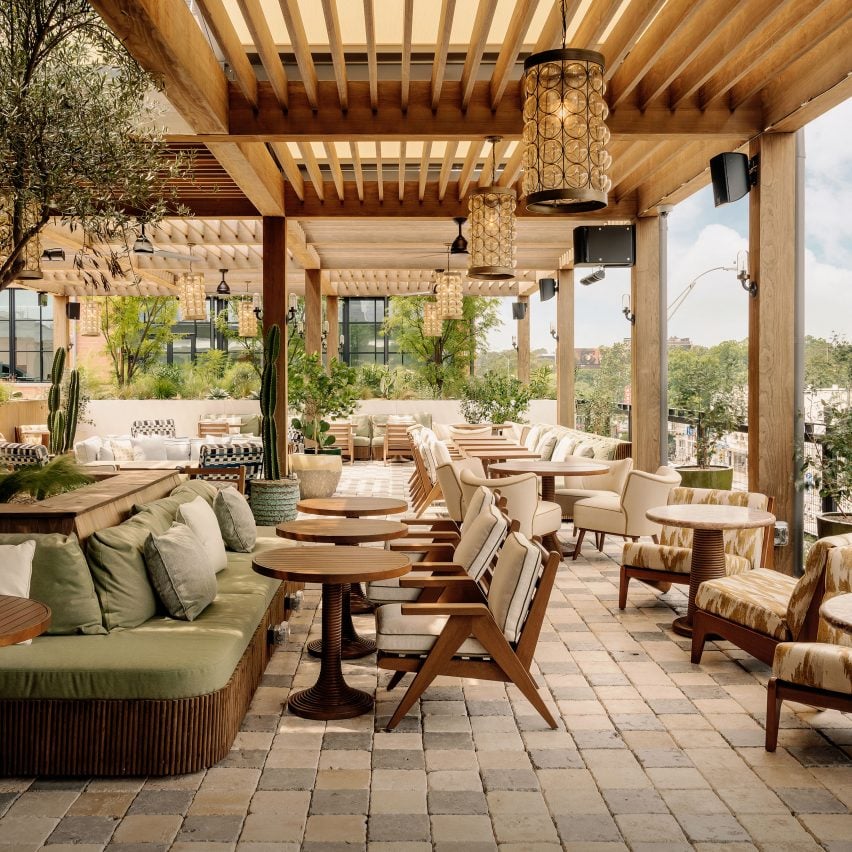
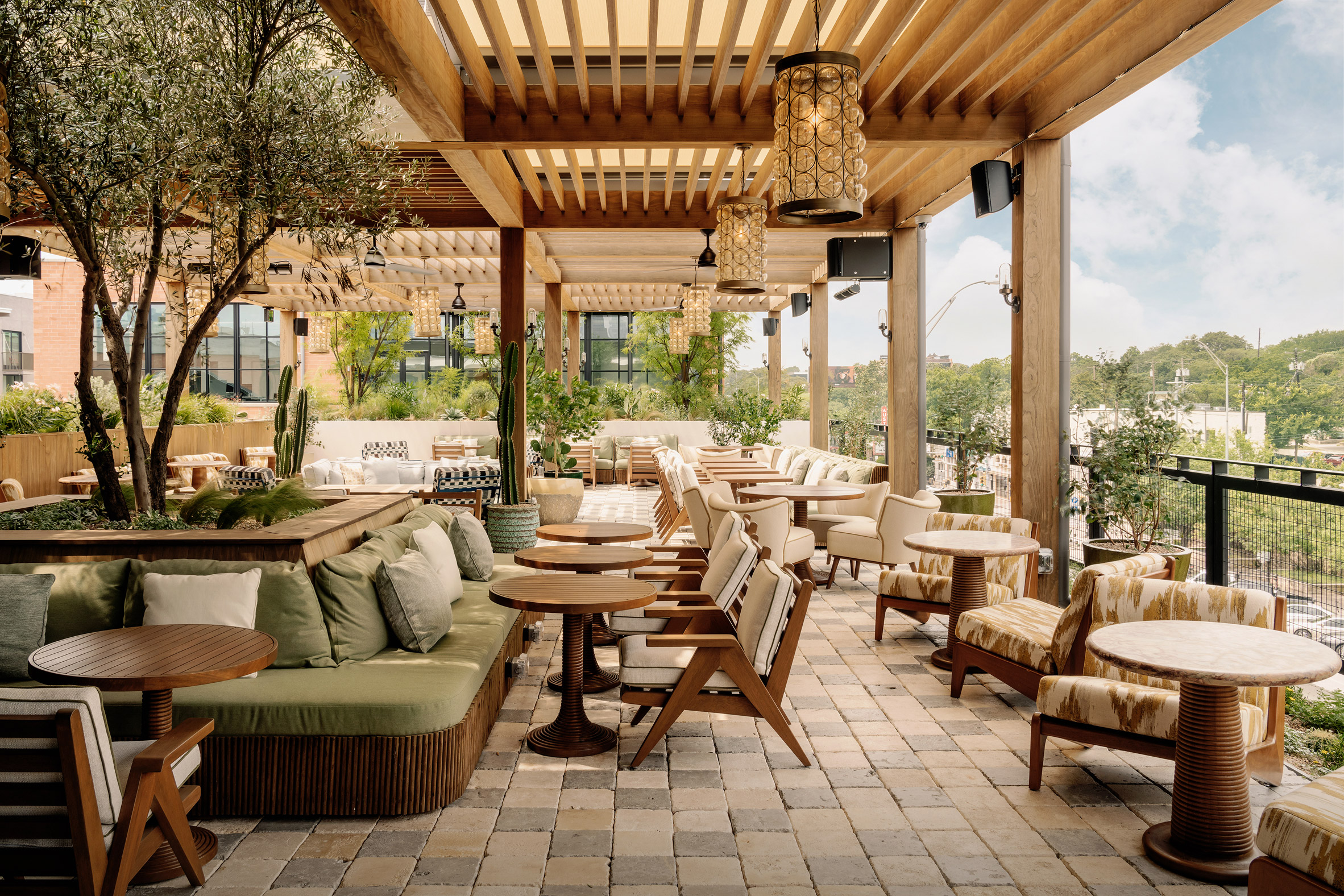
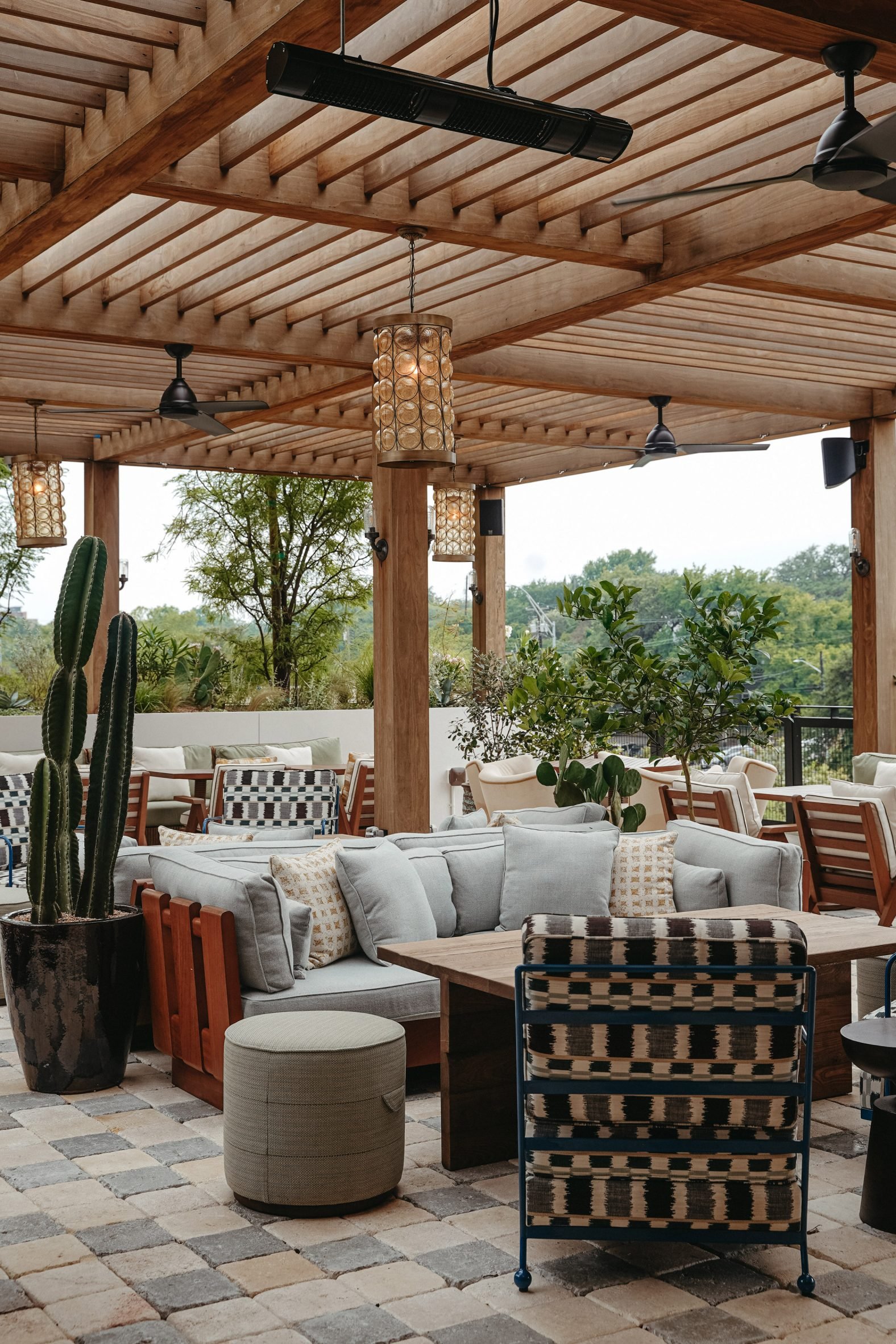
Terrace at Soho House Austin

Members club Soho House has opened a location in Austin, Texas, with interiors influenced by regional styles and pieces sourced from local craftspeople.

The newest addition to the roster of clubs and hotels around the world, Soho House Austin occupies two floors of a new development called Music Lane on the city's trendy South Congress Avenue.

Terrace at Soho House Austin
Soho House Austin is the company's first club in the Southern US

Restaurant, bar and lounge spaces opened to members on 25 May 2021, while phase two – a 46-room hotel and a variety of event spaces – are due to welcome guests later this month.

Throughout the spaces, the team at Soho House Design has employed colours, patterns, materials and motifs that embody the spirit of Texas modernism, a style that blends modernist forms with materials and designs indigenous to the region.

Seating corner on the terrace
The club has a wrap-around terrace with lounge seating and dining areas. Photo is by Cristina Fisher

Spanish influences – also commonly found across the southern US state – are woven into the interiors as well, in the form of limewash walls, vintage furniture and sisal floors.

"Our House in Austin is the first Soho House in the southern states," lead designer Harriet Liley told Dezeen. "Located in a new building, we worked hard to bring authenticity to the design. We have created a space that feels aged and loved instantly, from the material selections to the furniture style and artwork."

All visitors enter via a reception area at ground level, where reclaimed timber flooring, an oversized sofa and linen curtains set the aesthetic tone for the spaces beyond.

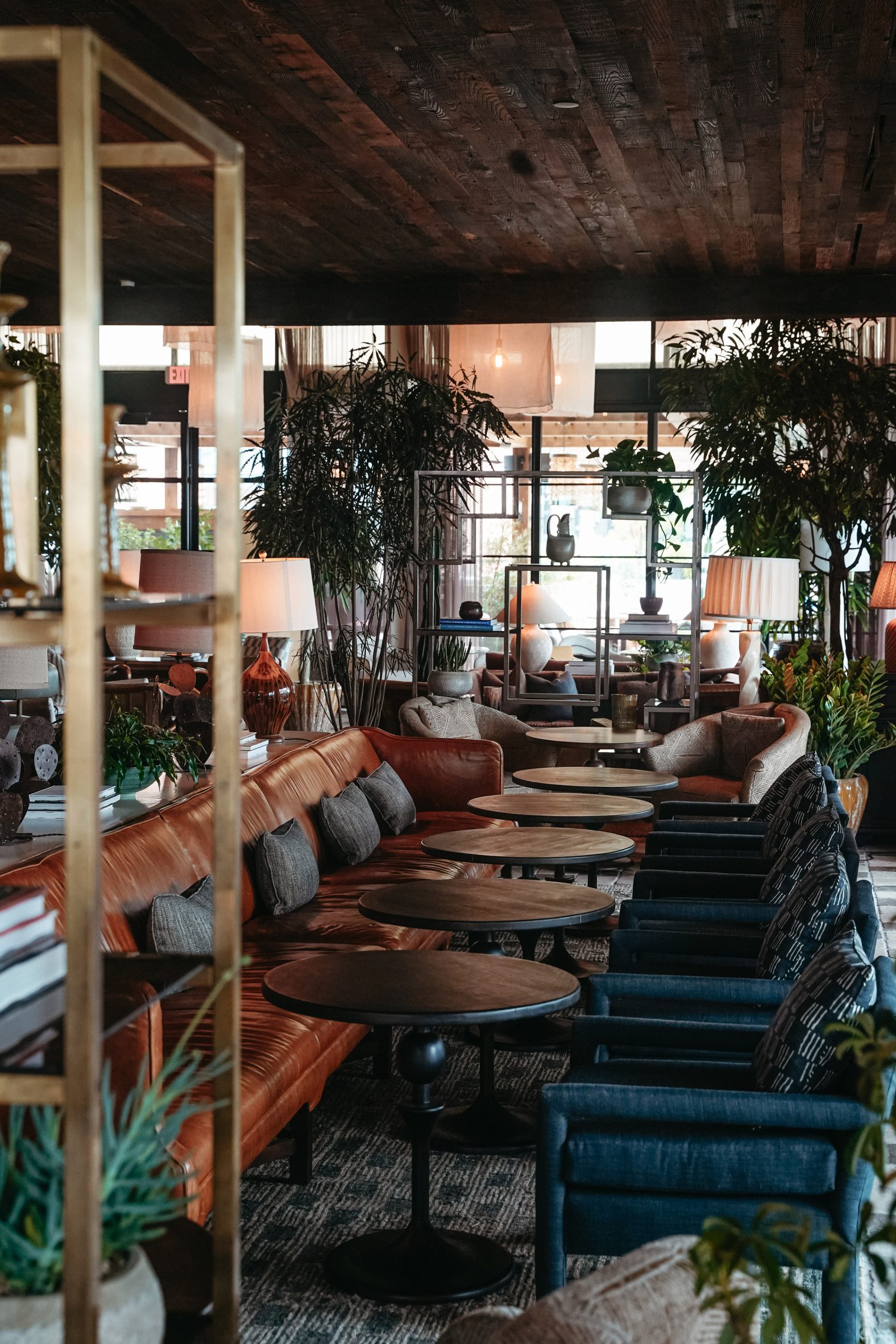
Inside the members' club
Natural materials like aged leather and reclaimed timber are used inside the club. Photo by Cristina Fisher

To the right is a bar and lounge for enjoying snacks and drinks before showings in the adjacent screening room, in which members can relax in velvet armchairs and get cosy in cashmere blankets.

Two floors up, a terrace wraps the perimeter of the building and accommodates an outdoor dining area, part of which is covered by a wooden pergola that has a gap for a large tree to grow through.

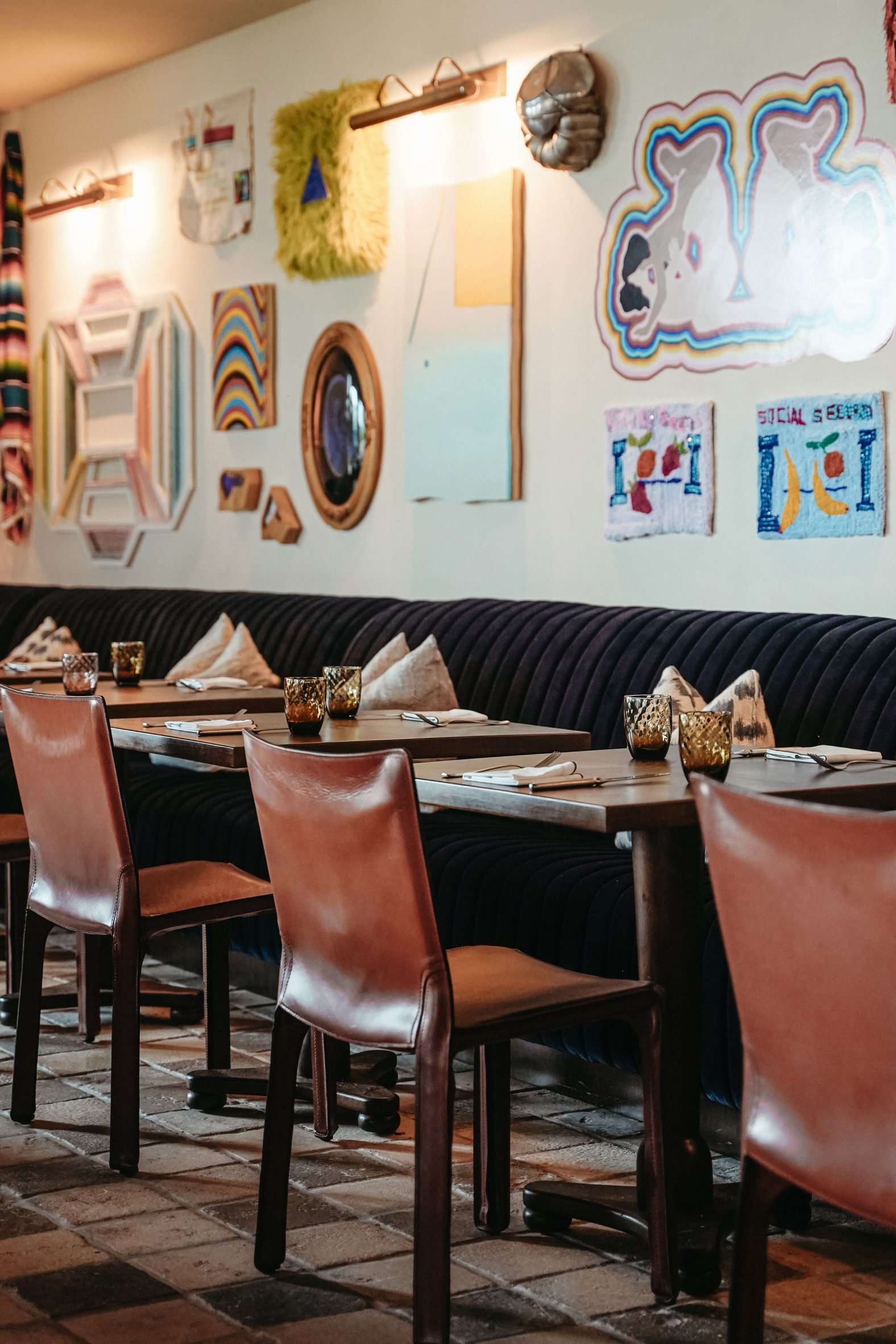
Indoor dining area
Works by local artists adorn the walls. Photo by Cristina Fisher

Banquette seating and low-slung chairs are upholstered in pale fabrics that complement the wood furniture, planting, and limestone tile flooring.

The checkered tiles extend inside to the club area that features a central bar with a carved wooden front, along with stone tables and leather seating. Linen lanterns hang from a dark reclaimed-timber ceiling.

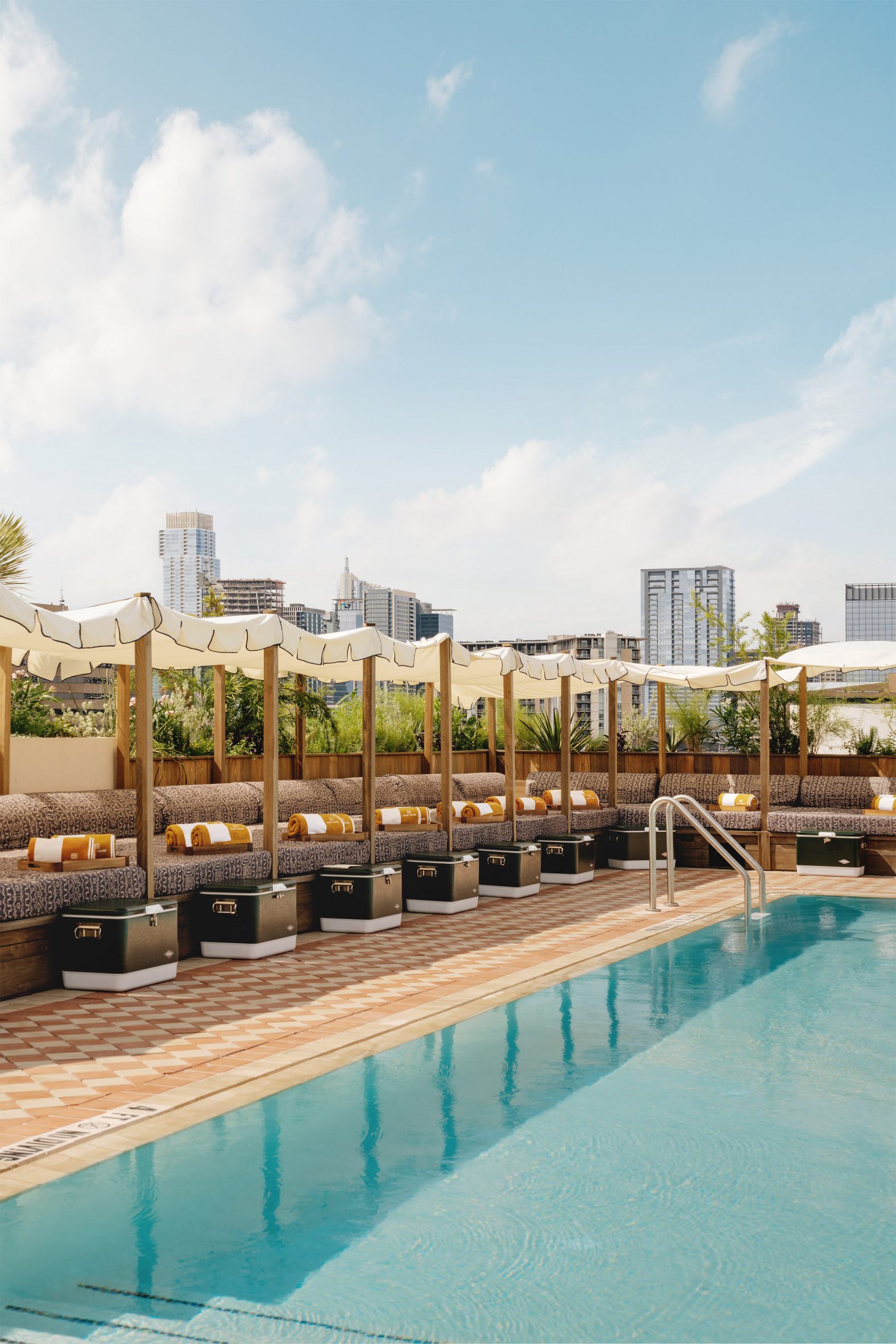
Swimming pool with Austin skyline behind
Pool loungers are upholstered with a printed fabric from Clarence House

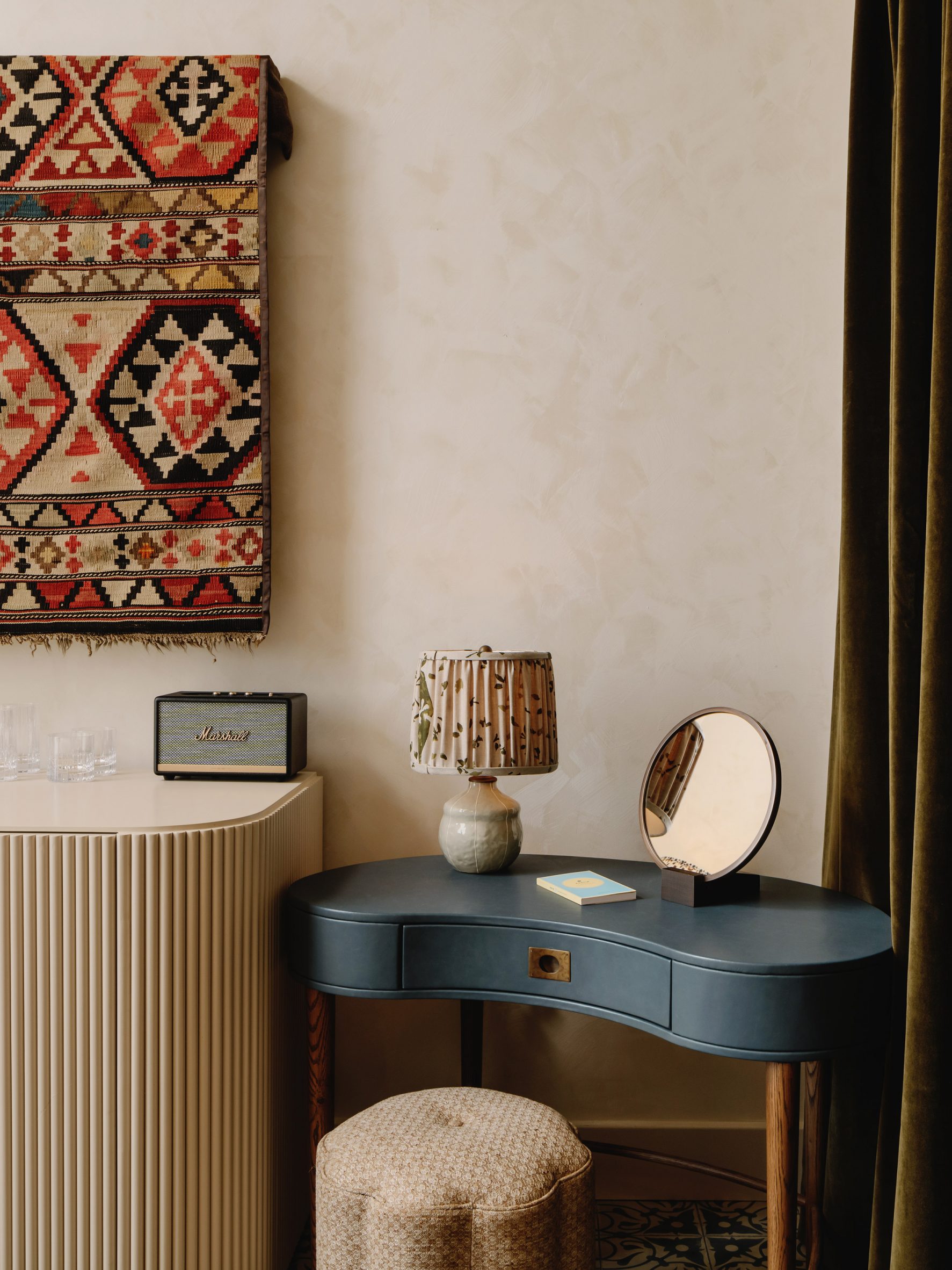
Local ceramicist Keith Kreeger was tapped to create a series of large lamps, and artworks by Austin natives like Deborah Roberts and a host of young emerging talents pepper the interiors.

Murals created specifically for the site include one in the inner stairwell by Hayley Mitchell that takes cues from ancient mythology as depicted in modern art.

A second mural by Desireé Vaniecia can be found beside the rooftop pool and "employs a figurative practice to challenge stereotypes and tell stories of African American women".

"We built atop our base palette to bring the house to life by layering local Austin artwork, statement vintage furniture and rugs sourced in Texas, a mix of natural linens, aged leather, colorful tribal prints, and beautiful ceramic collaborations," said Liley.

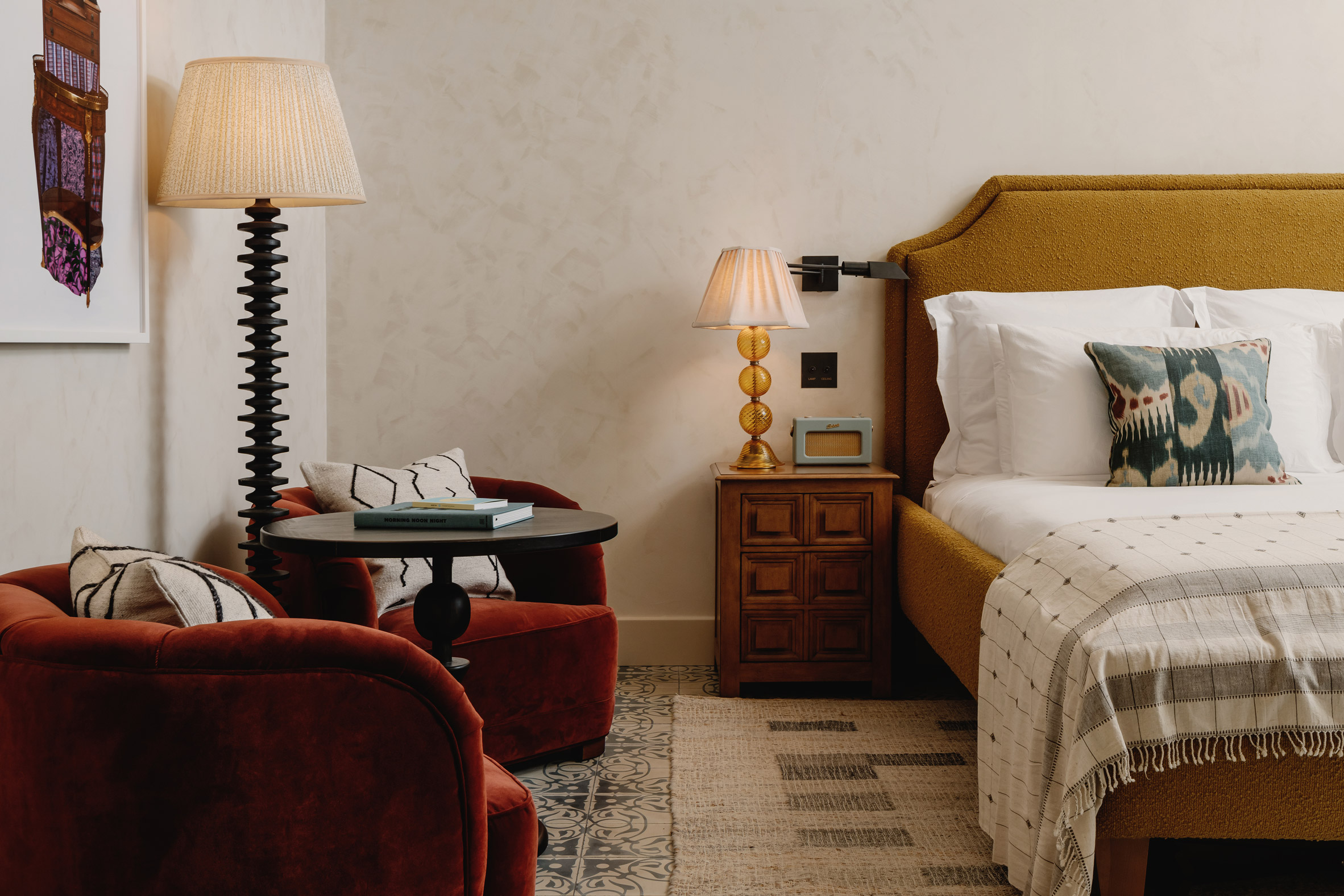
Bedroom at Soho House Austin
Soho House Austin includes 46 bedrooms with Spanish-influenced decor

The pool area is reached by a cacti-lined pathway and is surrounded by loungers upholstered in a Texan-influenced print.

"Our pool bed fabric was a design by Clarence House that we fell in love with, inspired by Mexican heritage," Liley said. "We loved the fun nature of the motif, sitting against the bright checkered floor below."

Bedroom detail
Bedrooms feature lime-washed walls, vintage furniture and fluted bar carts

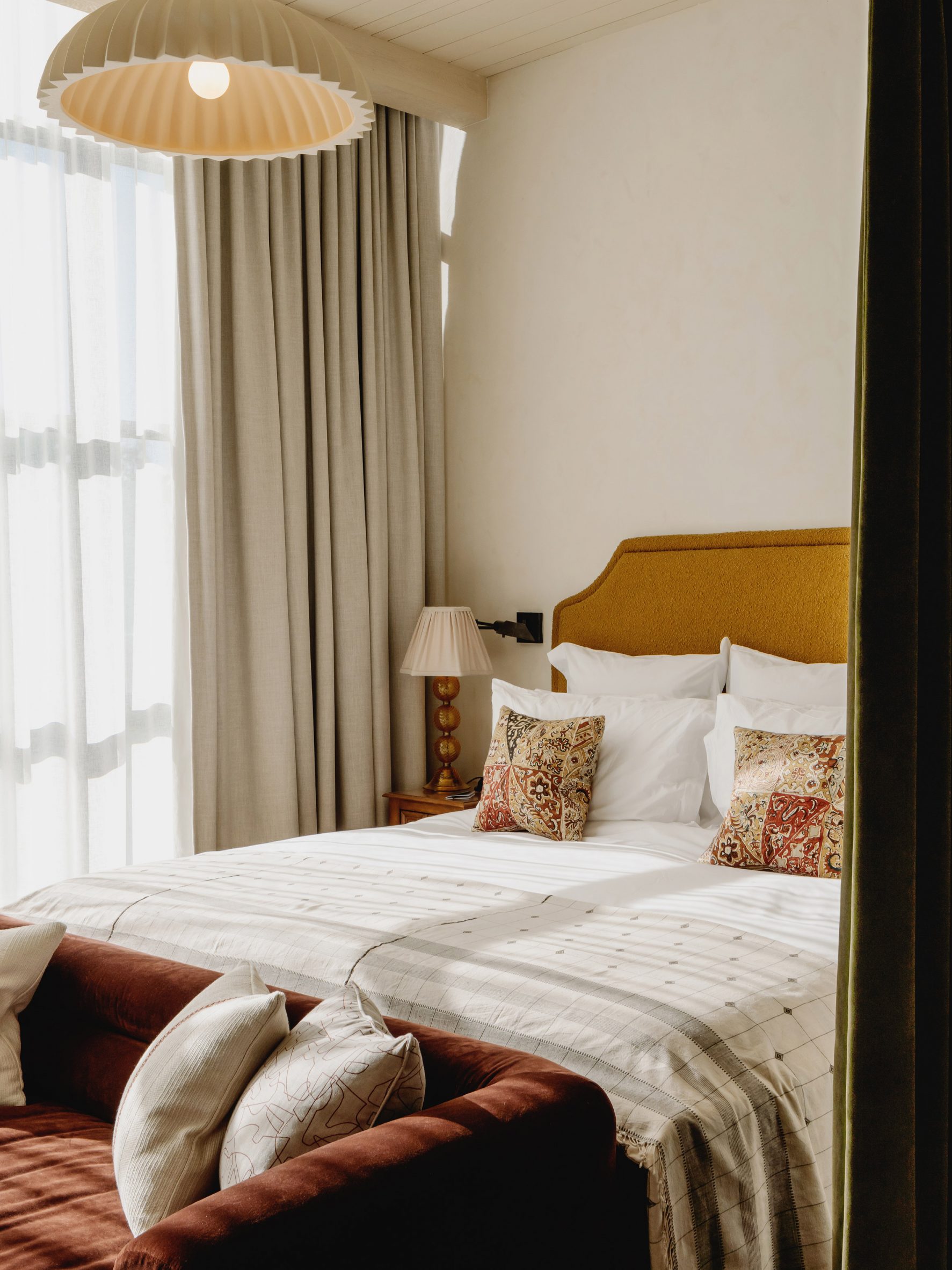
Bedrooms are spread over the upper two levels, and are decorated with tiled floors, sisal rugs, linen drapes and headboards, and lime plaster walls to add a Spanish flavour.

Wardrobes are either formed from exposed metal frames or carved out from the walls and disguised by a curtain.

Bed beside a window
Linen fabrics are used for curtains and bedspreads

Larger bedrooms have access to outdoor terraces populated with lounge furniture that sits on terracotta flooring.

Soho House Austin also has a music room for hosting member events and live performances, and an adjacent green room with its own entrance.

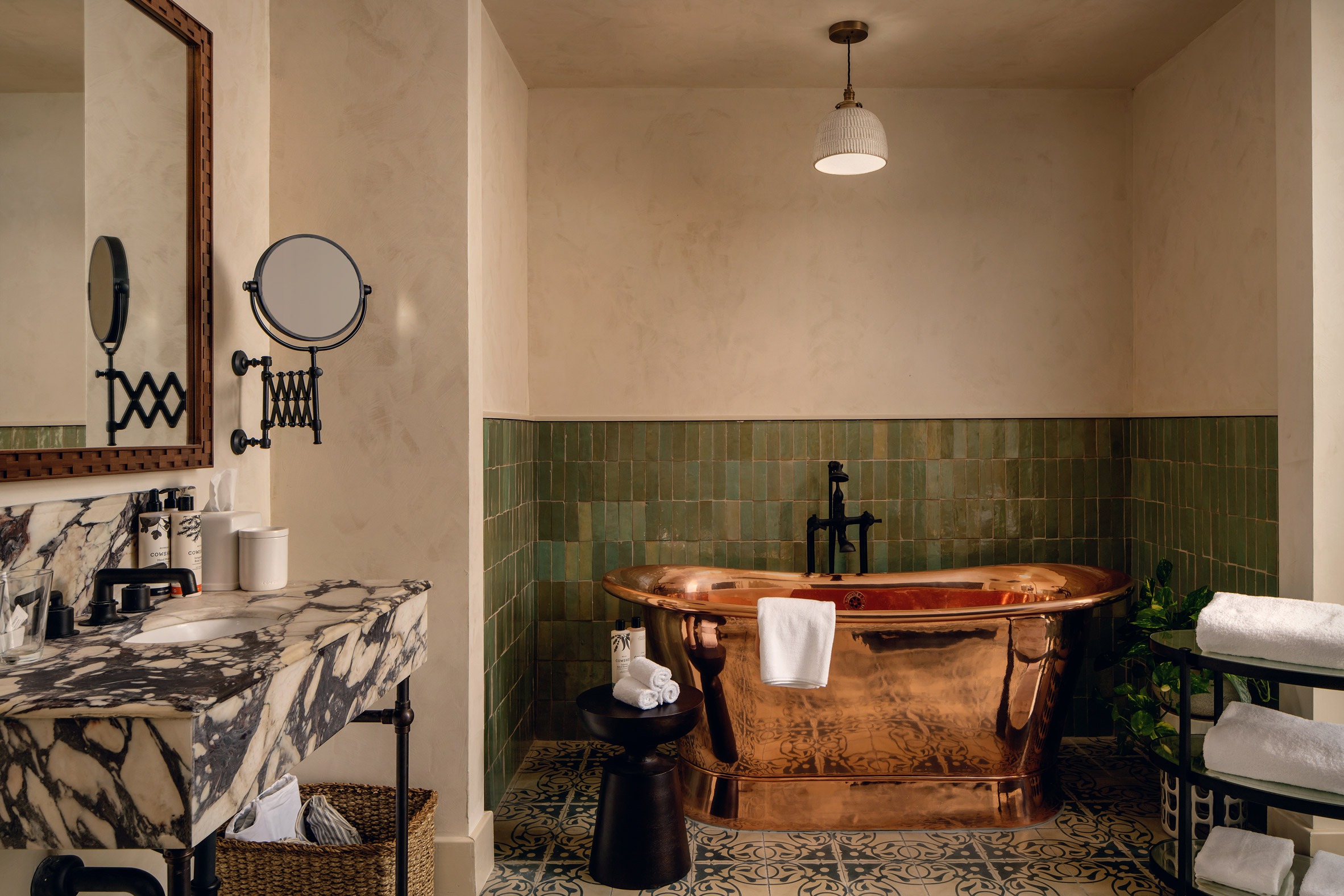
Bathroom with copper tub
Copper tubs and marble vanities can be found in some of the bathrooms

Over the past decade, Austin has evolved into a creative hub and a popular tourist destination, with the South Congress area forming a commercial heart for restaurants and hotels.

Places for visitors to stay include Hotel Magdalena and the Austin Motel – both a stone's throw from Soho House.

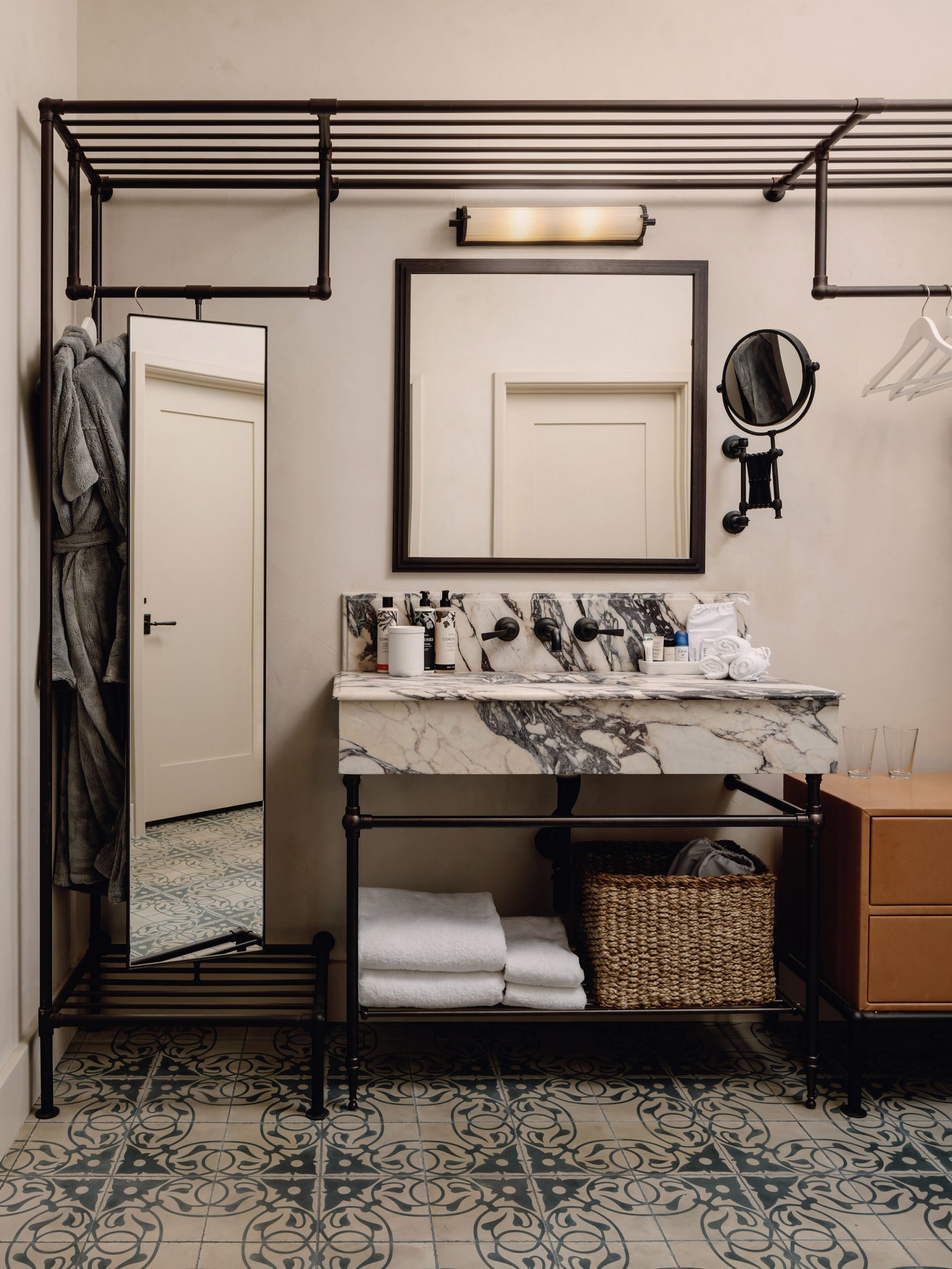
Bathroom with marble vanity
Exposed metals frames form railings for hanging clothes

Meanwhile, options across the river in the Downtown neighbourhood include the Austin Proper Hotel and Residences with interiors by Kelly Wearstler, and the Line Austin in a renovated mid-century tower.

Soho House was founded in 1995 in London, but has grown into a network of members-only spaces that spans Europe, America and Asia. Some of its most newest clubs include Downtown LA, Brooklyn and Mumbai, while Tel Aviv, Paris and Rome are all slated to open in 2021.

Photography is by Chase Daniel unless specified otherwise.

The post Soho House Austin blends Texas modernism with Spanish influences appeared first on Dezeen.


from Dezeen https://ift.tt/3xwXFjJ

Google's Material You design language enables more personal interfaces

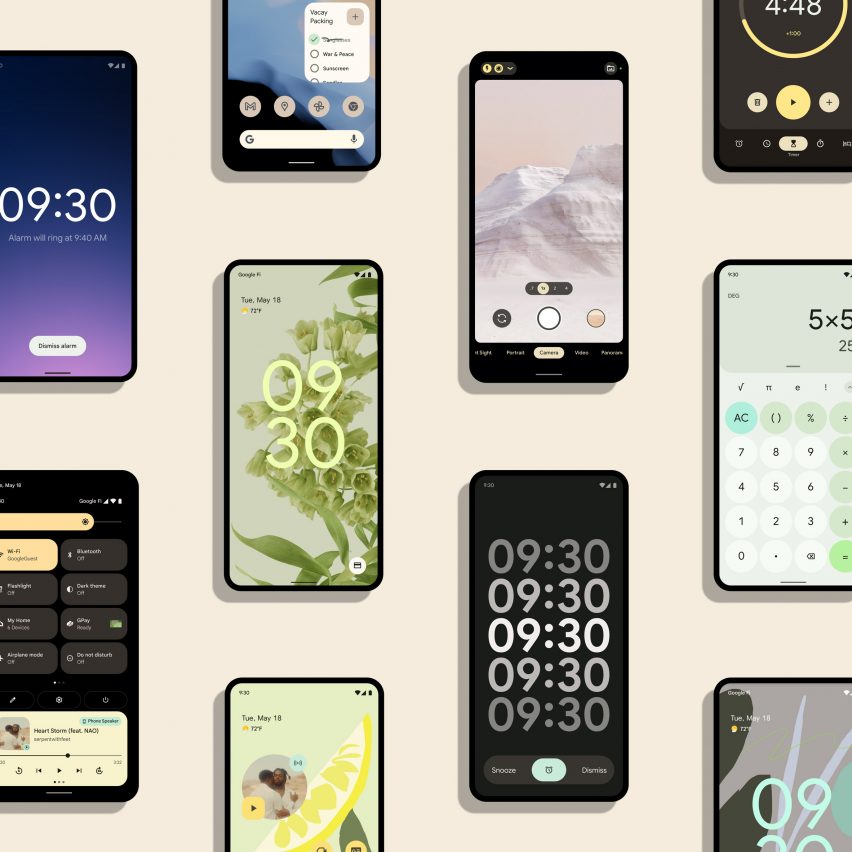
Material You by Google

Google will add a colourful "new set of capabilities" to its digital interfaces, allowing users to further personalise visuals on their phone and tablet screens.

The Material You system is an updated version of Google's Material Design language, which the tech giant has applied to its user interfaces since 2014.

Material You by Google
Google's Material You system has evolved from its current Material Design language

The new design system will become available on all devices that run on Android 12, to be released this autumn, including the Google Pixel 6 and Pixel 6 Pro.

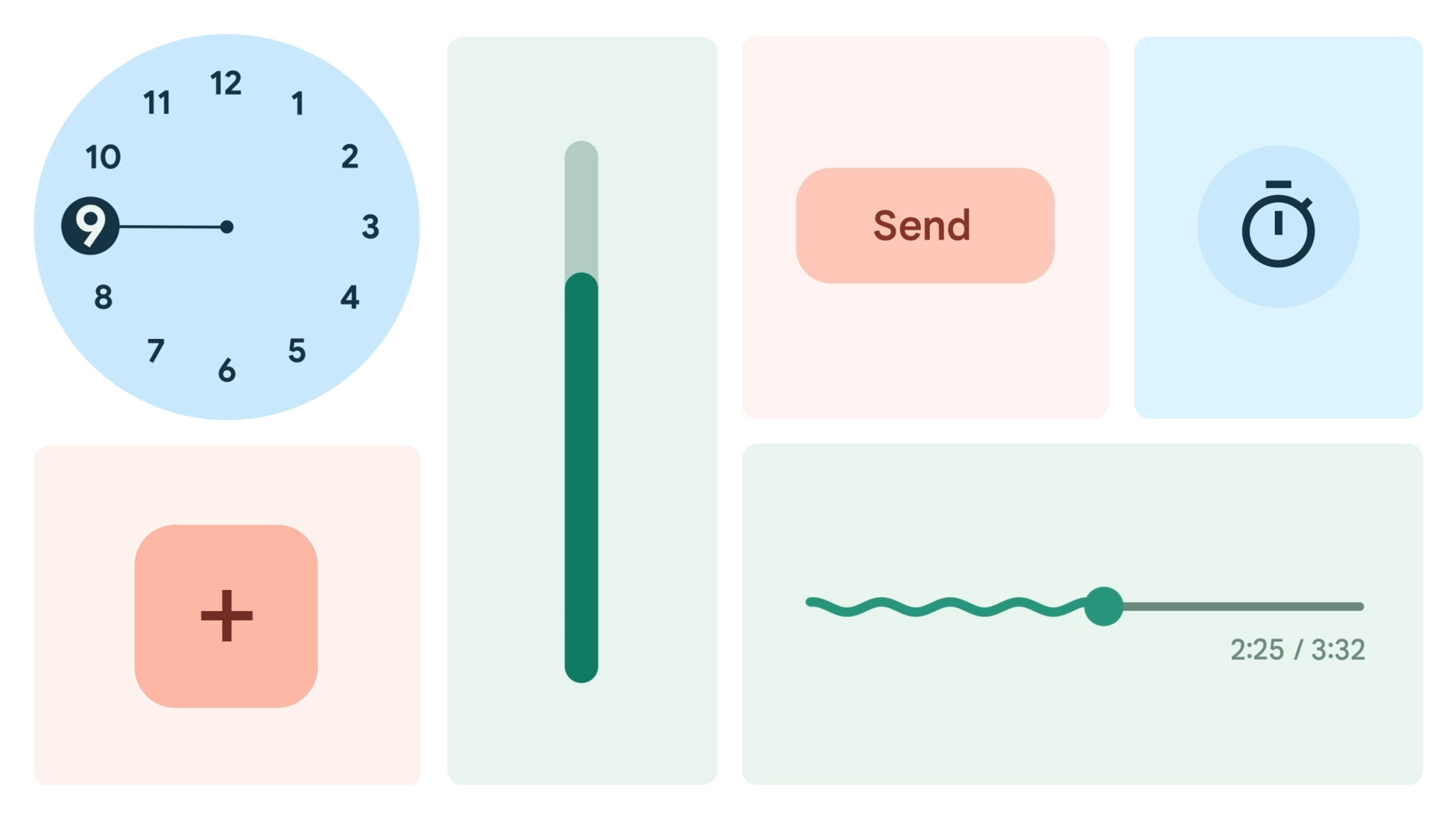
Material You will maintain Material Design's distinctive visual appearance that prioritises simplicity and white space, but with added personal touches.

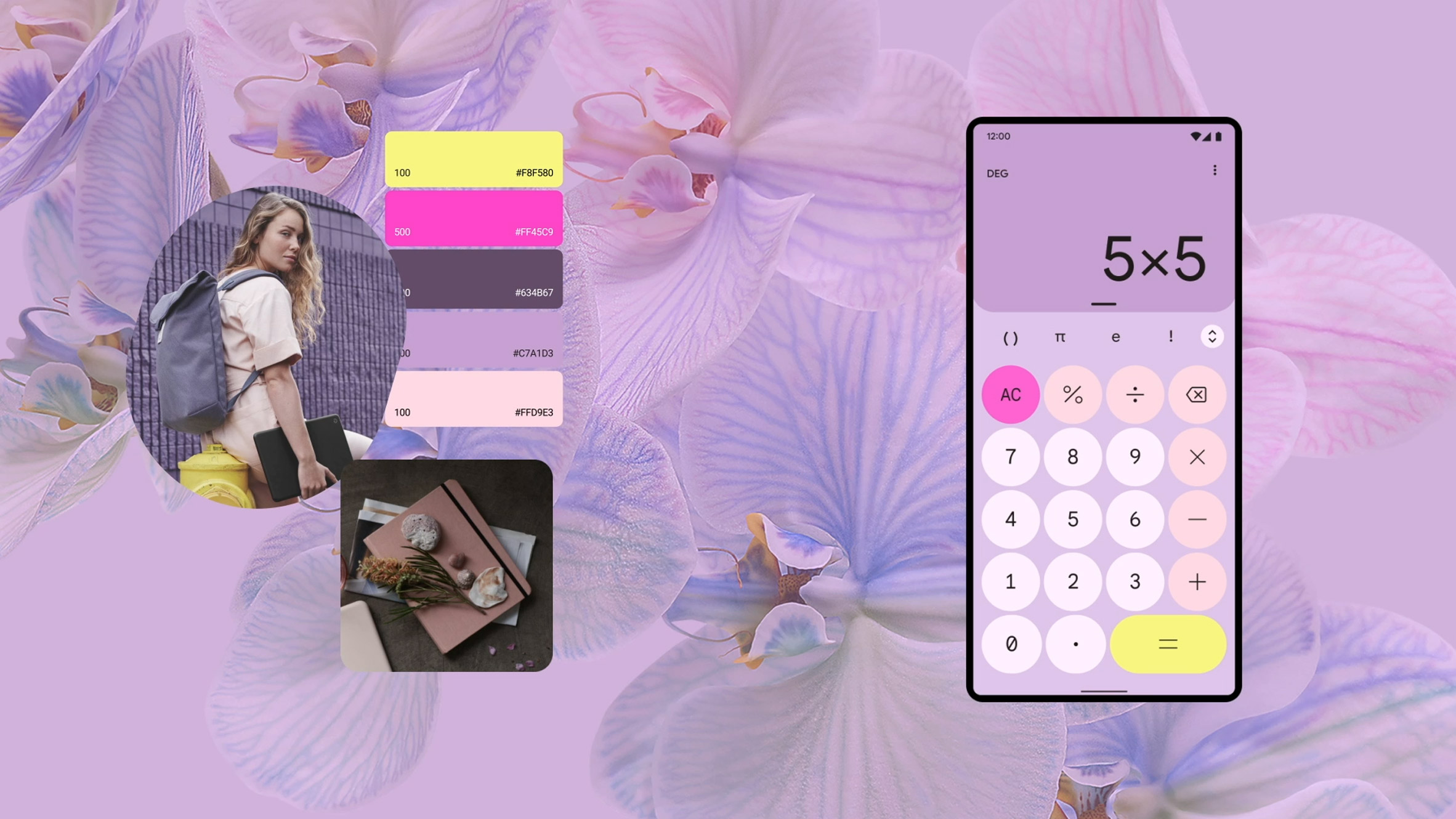
Personal touches are crucial to the design
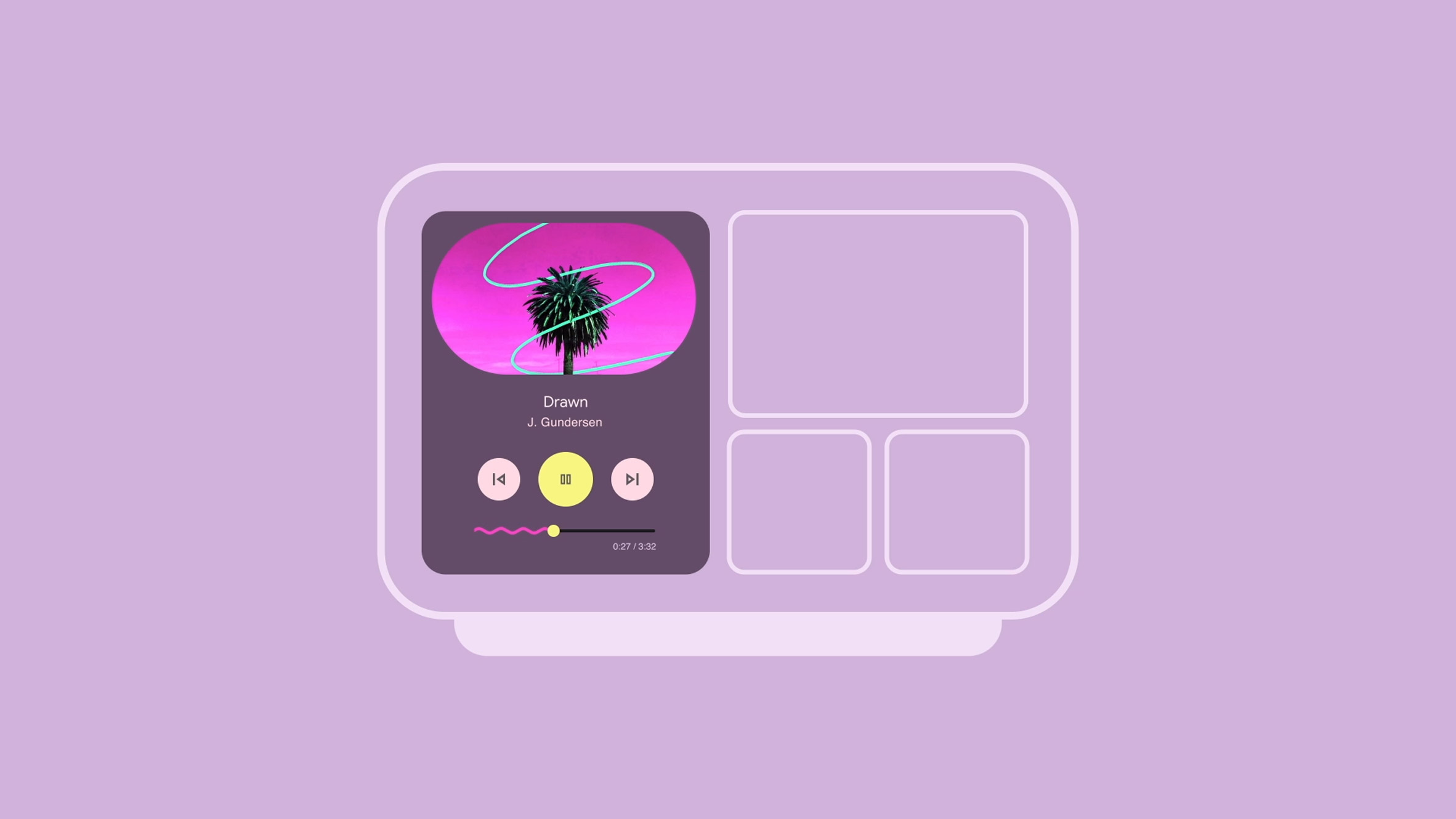
The system will allow users to add personal photos and custom colour palettes to their Android device screens

"Material You is a new set of capabilities that allows our design language, Material Design, to be personal, accessible, alive, and adaptive," Google design manager Philip Battin told Dezeen.

Material You will allow users the option to tailor their screens to meet individual needs and tastes, adapting the interface's blocky shapes depending on their preferences.

Users will have control of the contrast, size and line width of icons, as well as the ability to add personal images and create a unique colour palette.

Blocky shapes make up Material You
A set of blocky icons will be adjustable in size, line width and contrast

"We've always taken a more seasonal approach to colour inspired by the culture and things we surround ourselves with," said Battin. "With Material You, we're completing this colour story by approaching the design of interfaces in the very same way."

"By mixing this study of colour with Google's knowledge of interaction design and engineering, we're making it possible to tailor any app – not just Google's – to each individual's unique material palette in real time," he added.

Users will be able to adapt width sizes
Users will be able to adjust the size and layout of app icons and other visual features

Battin also explained why personalisation is an important aspect of Material You.

"We in tech tend to forget the emotional side of design," he said. "Over the past year, we've spent a lot of time looking at our screens and have had a lot of time to reimagine what that experience should feel like. We deserve to get a bit more joy from them. Express a bit more of our personality."

"We realised that design is personal, and to deliver on that, we needed to give the people using our products control over co-creating that experience," Battin added.

Material You will have a variety of colour palettes
Google intends to bring more "joy" and "personality" to device users

Battin is a Danish designer and current head of Google Seed Studio, which provides creative direction across the company's product offering.

Google recently opened its first physical retail space in New York, and created an AI-enabled video-conferencing kit for optimised virtual meetings.

The imagery is courtesy of Google.

The post Google's Material You design language enables more personal interfaces appeared first on Dezeen.


from Dezeen https://ift.tt/3CxJO0f

Ennead Architects designs Shanghai Astronomy Museum to "echo the essence of the Universe"

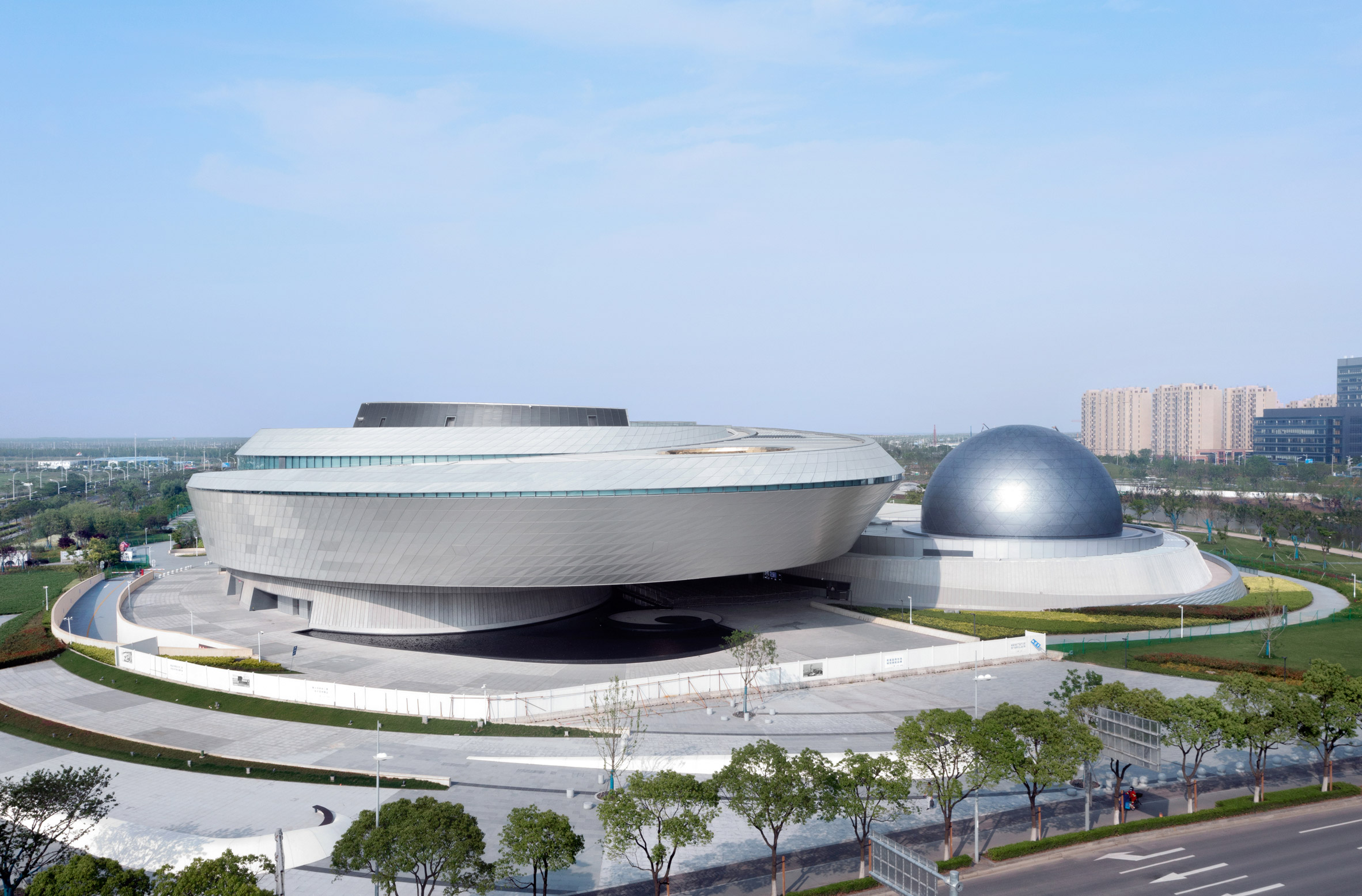
New York studio Ennead Architects has completed the world's largest museum dedicated to astronomy in Shanghai, China.

Designed to reflect the shapes and geometry within the universe, the form of the recently opened museum in Shanghai has no straight lines or right angles.

Shanghai Astronomy Museum
Ennead Architects designed the recently opened Shanghai Astronomy Museum

"The foundational design concept of the Shanghai Astronomy Museum was to abstractly embody within the architecture some of the fundamental laws of astrophysics, which are the rule in space," explained Ennead Architects design partner Thomas J Wong.

"To the extent possible, we wanted this building to echo the essence of the universe and there are no straight lines or right angles in space!" he continued.

"Once we embraced the idea of a set of curvilinear forms, we capitalized on every opportunity to make it the very basis of the building and experience."

Museum in Shanghai China
The astronomy museum was informed by the "geometry of the universe"

Located in the Lingang to the southwest of Shanghai, the institution forms part of the Shanghai Science and Technology Museum, and at 39,000 square metres is said to be the "largest museum worldwide solely dedicated to the study of astronomy".

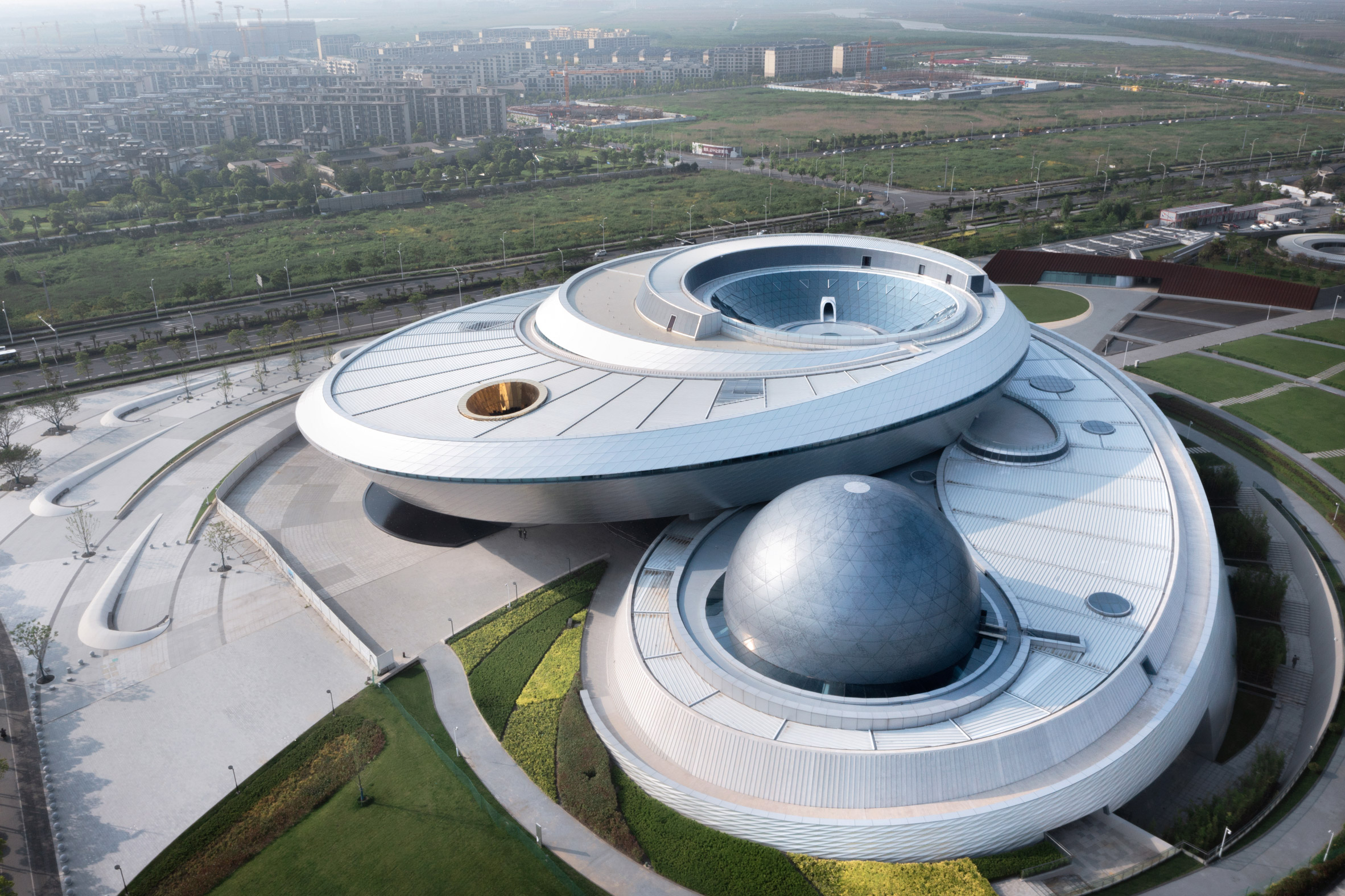
Ennead Architects designed the building around three distinct architectural forms that were each derived from the movement of bodies within the universe.

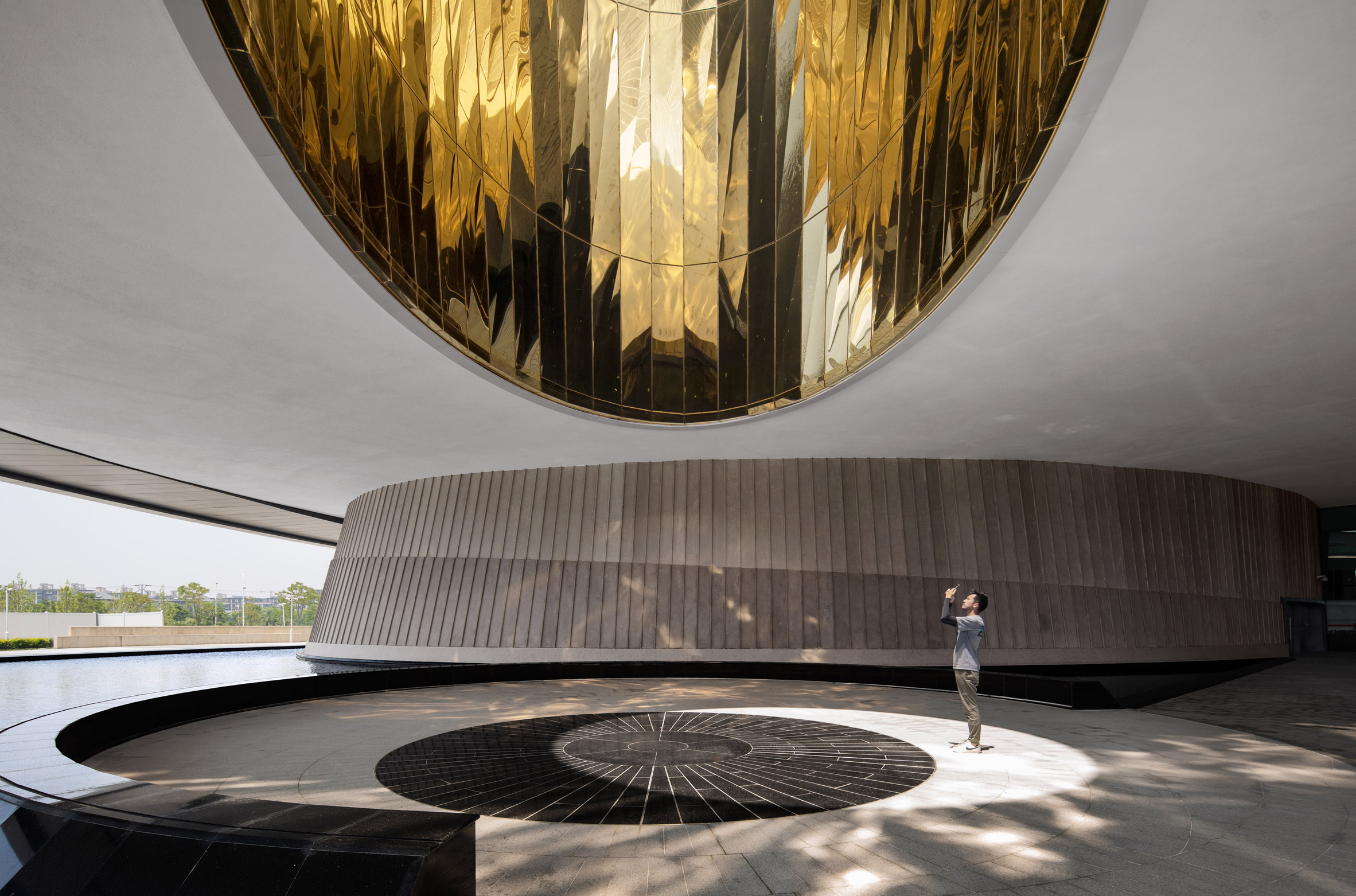
The Oculus at astronomy museum
The Oculus projects a circle of light on the entrance plaza

"We are within a universe that is continuously in motion, something as essential as it is easy to overlook," said Wong. "The notion of orbital motion and its relationship to time became a primary source of architectural inspiration."

"There are three primary design elements that define the building parts and also provide an architectural lens for observing the earth's own orbital motion: the inverted dome, the planetarium sphere, and the Oculus," he added.

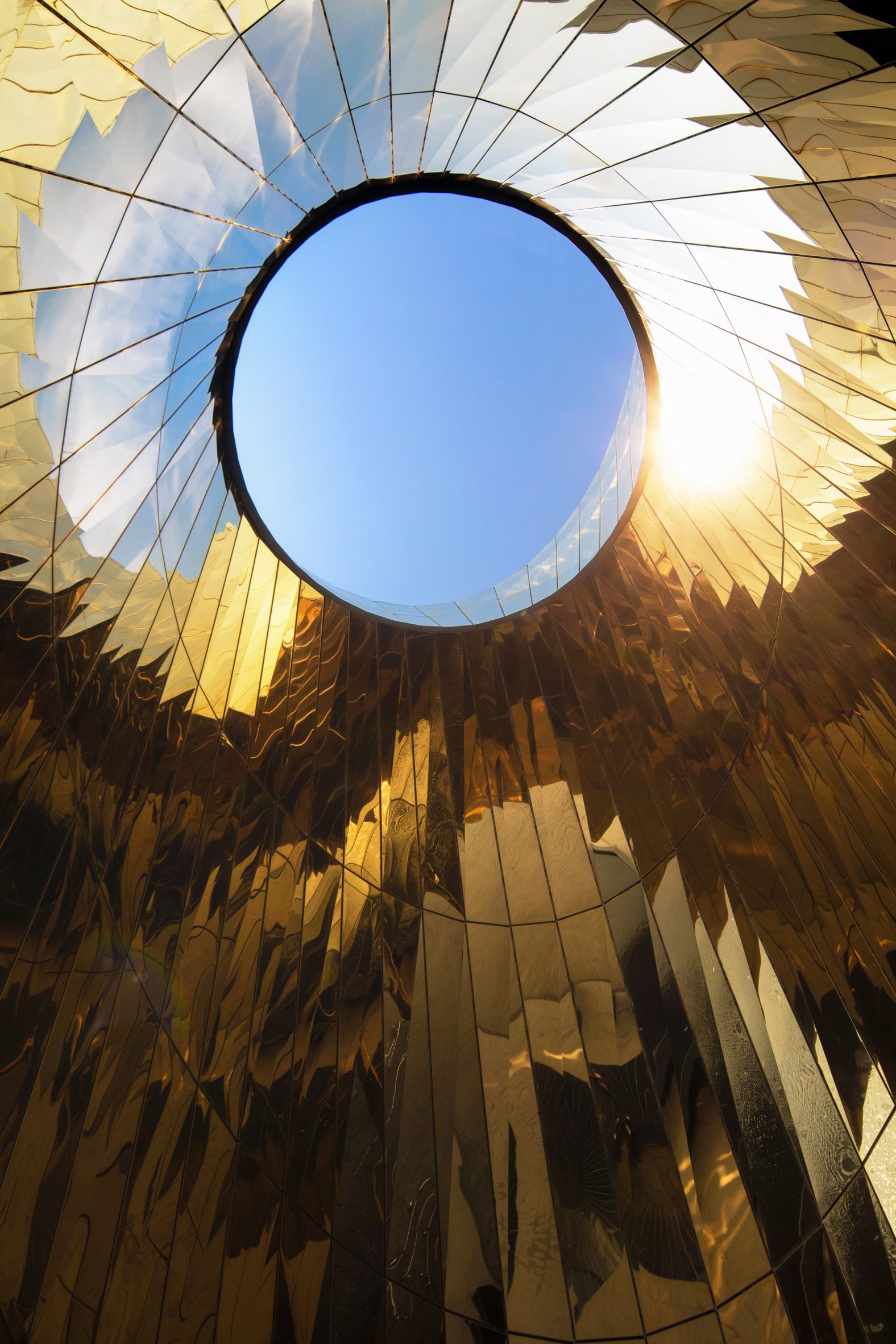
Golden skylight
The circular opening is clad in golden panels

The museum is split into two large rounded volumes, one of which overhangs a plaza and reflecting pool in front of the main entrance to the museum.

A circular opening within this cantilevered volume, named "The Oculus", was designed to show the passing of time. At midday on the summer solstice, a full circle is projected on a black platform built within the plaza.

"We designed this building with a real awareness of the visitor's journey from start to finish and wanted to provide several moments of impact and reflection along the way," said Wong.

"Before even entering the building, one is greeted by a heroic cantilever, which extends some 40 meters beyond the vertical concrete piers which support it."

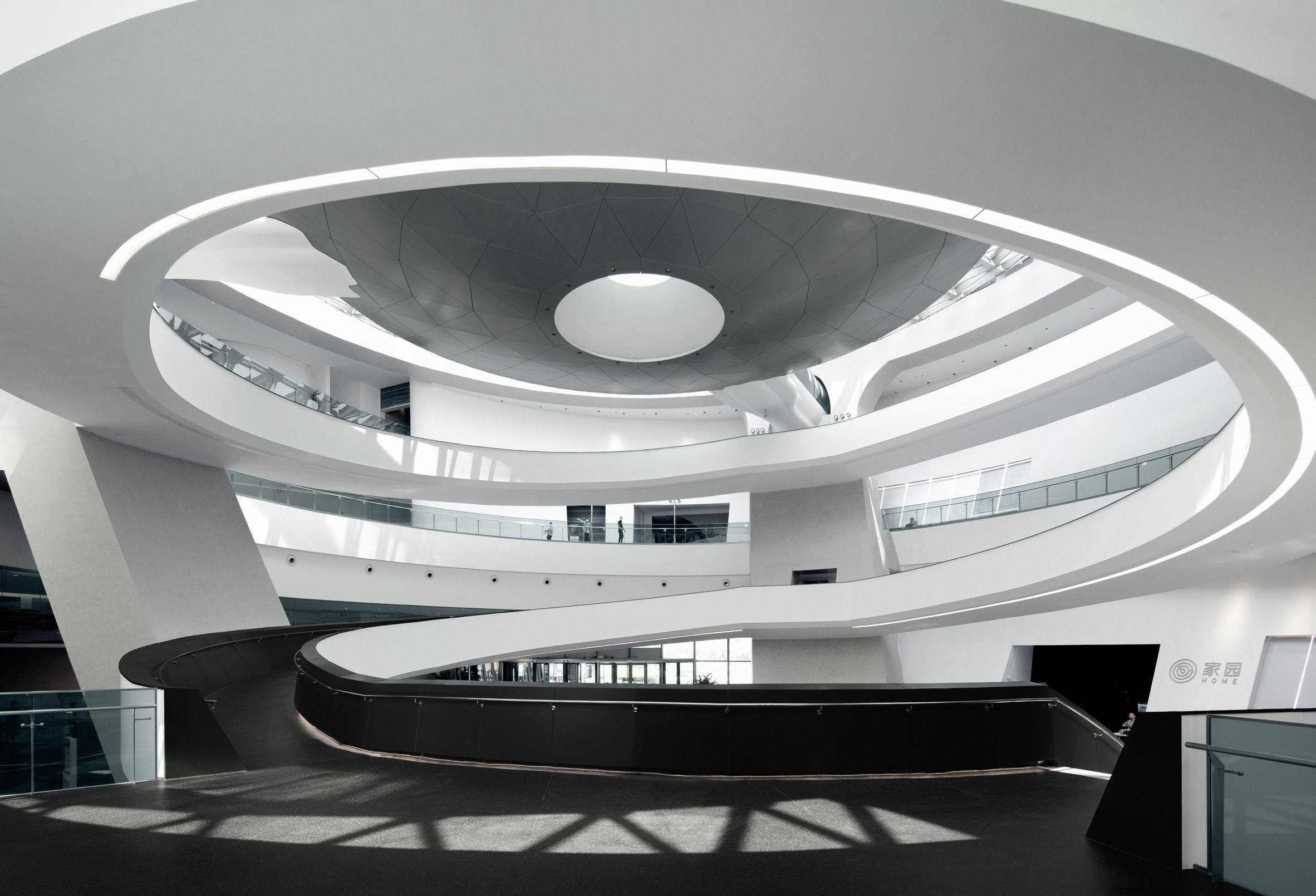
Inverted dome in museum entrance hall
The entrance hall is topped with an inverted dome

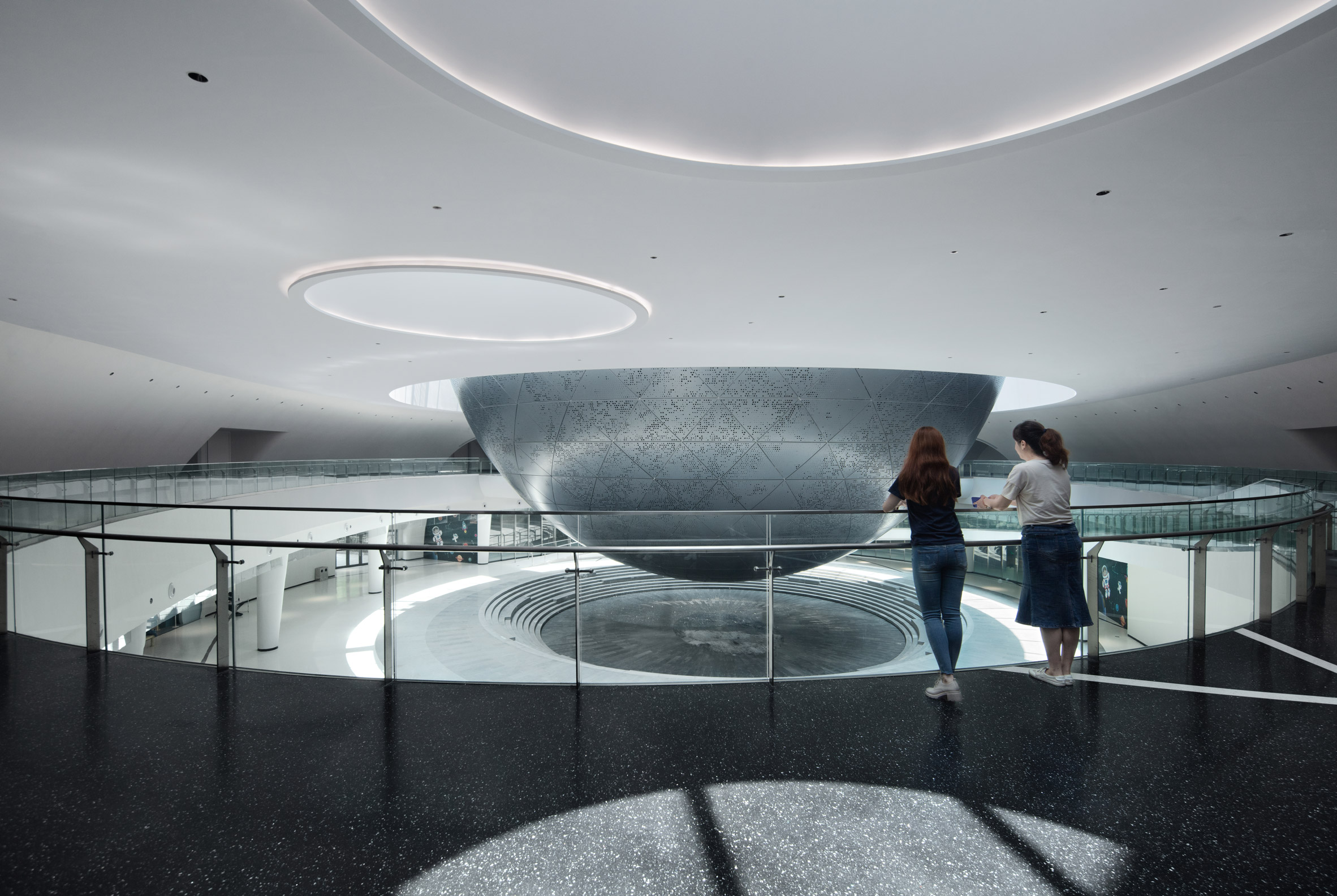
The main entrance leads to a large entrance hall and reception, which contains a curving ramp that leads to the various exhibitions and is topped with an inverted dome.

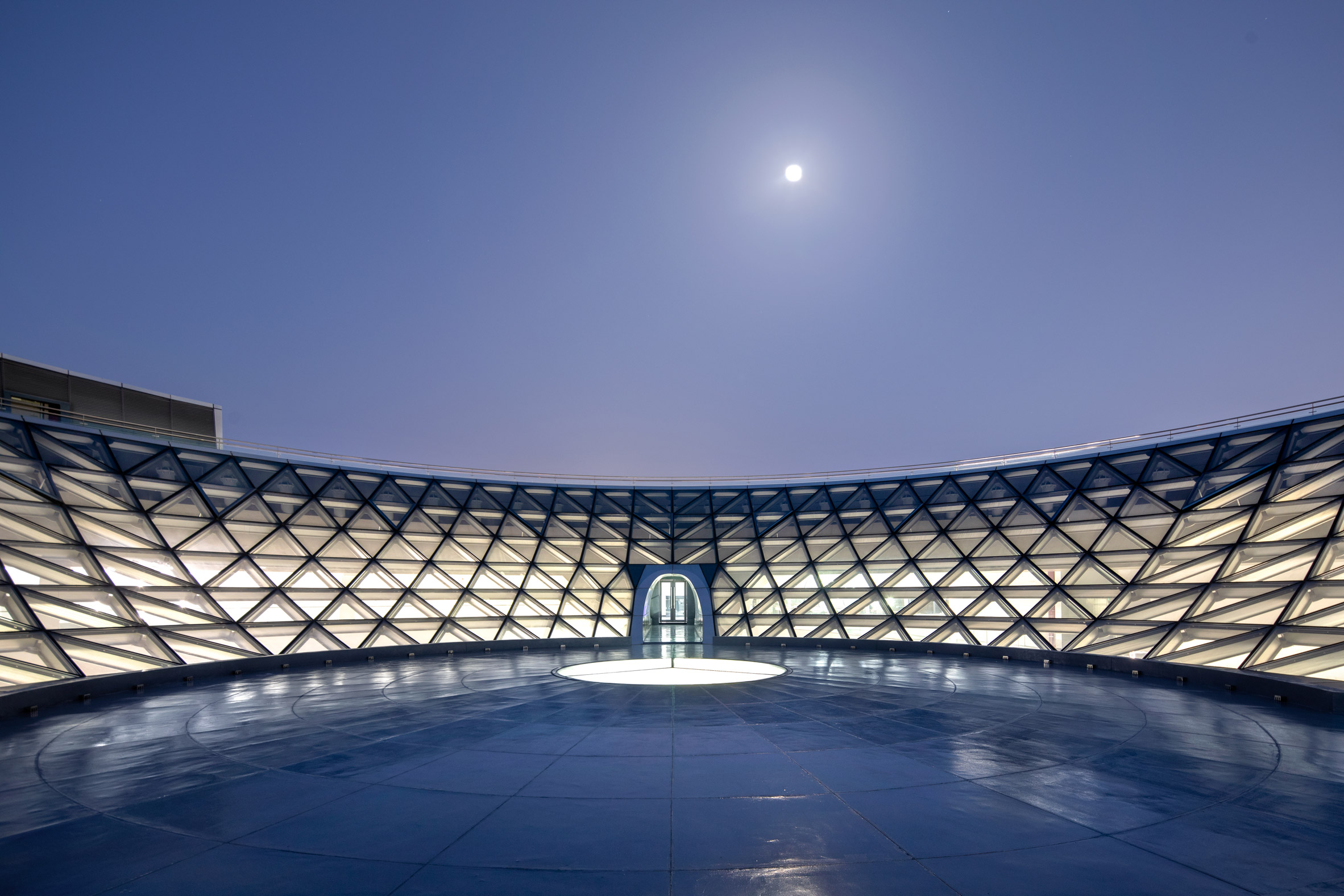
Created as the culmination to the sequence of galleries, a rooftop space on top of the inverted dome has an "unimpeded view of the sky".

"The approach and entry sequence were carefully crafted choreography, where one senses the force of compression while travelling underneath the entry cantilever, only to emerge in a light-filled swirling space that brings your gaze upward," explained Wong.

"A monumental concrete tripod soars overhead in the main atrium and cradles the spiralling ramp as well as the thin membrane of the inverted dome, a tension structure through which the dappled sun flows."

Sphere-shaped planetarium in Shanghai
The planetarium is in a sphere-shaped form

The majority of the gallery spaces are positioned on one side of the entrance hall, with the planetarium theatre located on the other.

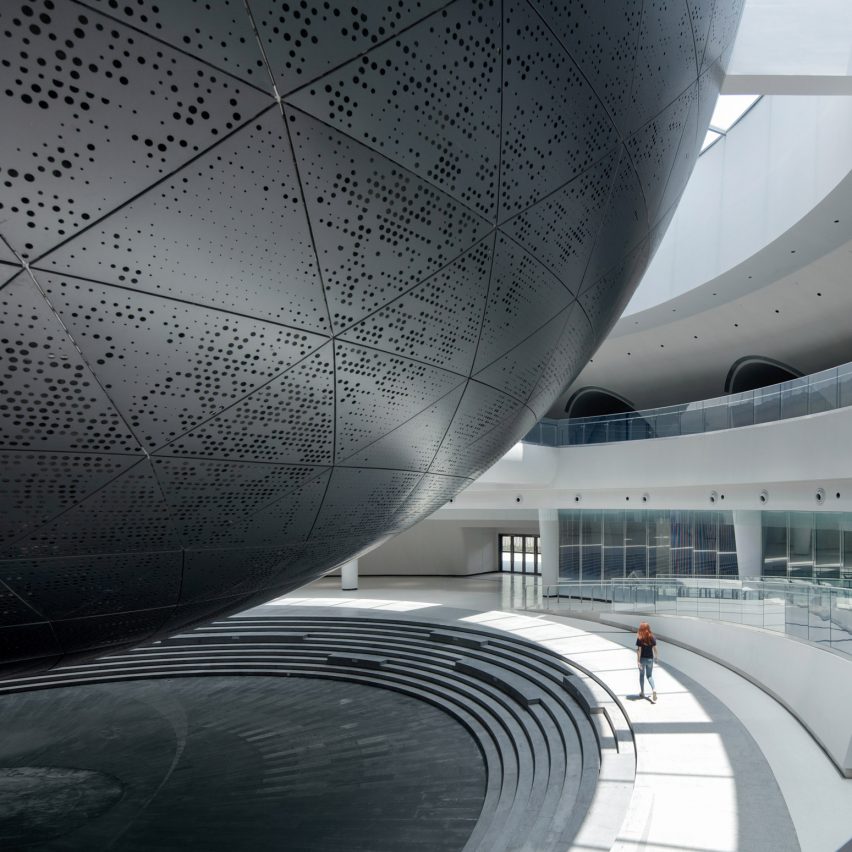
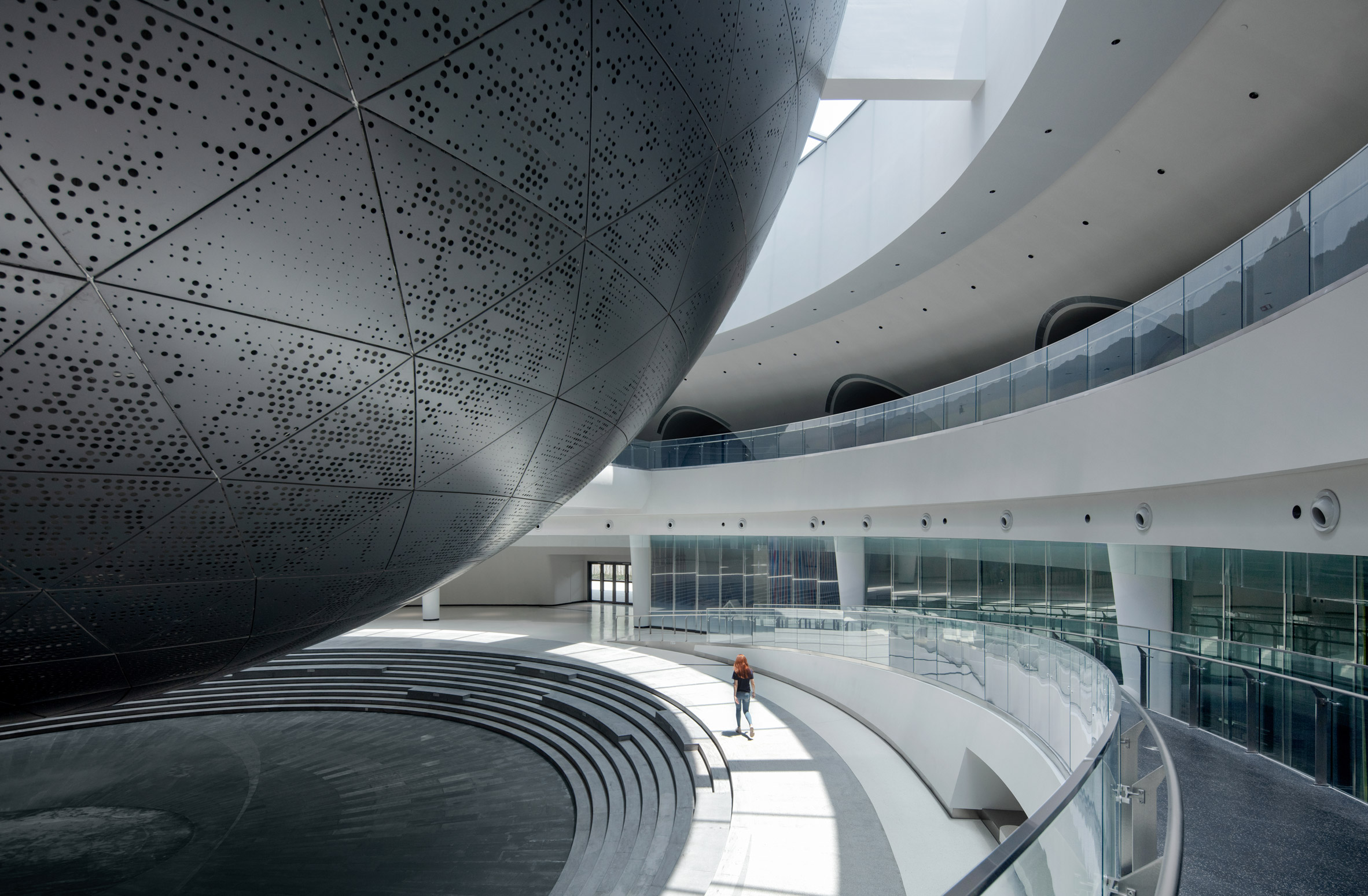
Set in a sphere that is suspended above a small auditorium by three concrete supports, the planetarium was designed to have an immediate visual impact.

Sphere-shaped planetarium
It is suspended above the ground

"Another moment of impact within the Shanghai Astronomy Museum occurs with the weightless suspension of the sphere, gradually revealed as one approaches from the atrium and visually defying all sense of gravity," said Wong.

"Embedded in the roof plane of the lower museum wing, as if rising out of the Earth-bound horizon, the sphere gradually emerges into view as one rounds the building from the outside, the drama unfolding as though one were approaching a planet from one of its moons."

Roof top space at Shanghai planetarium
A rooftop space was designed for looking at the sky

Wong hopes that the building will supplement the exhibitions in helping visitors understand the universe.

"Part of what was driving our thinking when developing the design for the Shanghai Astronomy Museum was how we could supplement the gallery content and create a building that made people more aware of the sky above – one that didn't just house exhibits about space, but put visitors into a direct engagement with the stars,"

Whatever their age or education level, people can observe and hopefully understand more about some very basic underpinnings of astronomy through a series of direct, physical experiences," he continued. "Space can seem so abstract – we wanted to provide something that was tangible and exciting."

Ennead Architects is New York-based studio, which was founded by AIA Gold Medal-winner James Stewart Polshek and renamed following his retirement in 2005. The studio has previously renovated IM Pei's Eskenazi Museum in Indiana and designed a law school in downtown Phoenix.

Numerous museums are being built in China. Recent examples include art museum wrapped in black corrugated metal designed by Álvaro Siza, the Tadao Ando-designed He Art Museum in Guangdong by and a V&A-backed design museum in Shenzhen designed by Fumihiko Maki.

Photography is by ArchExists.

The post Ennead Architects designs Shanghai Astronomy Museum to "echo the essence of the Universe" appeared first on Dezeen.


from Dezeen https://ift.tt/3yAbpf8