Thursday, 12 August 2021

Studio Wok designs cavernous pizza restaurant to recall rocky coves of Sardinia

Myrto pizzeria by Studio Wok

Studio Wok has completed Myrto, a pizzeria on Sardinia that is designed to reflect the island's earth tones and wind-swept granite rocks.

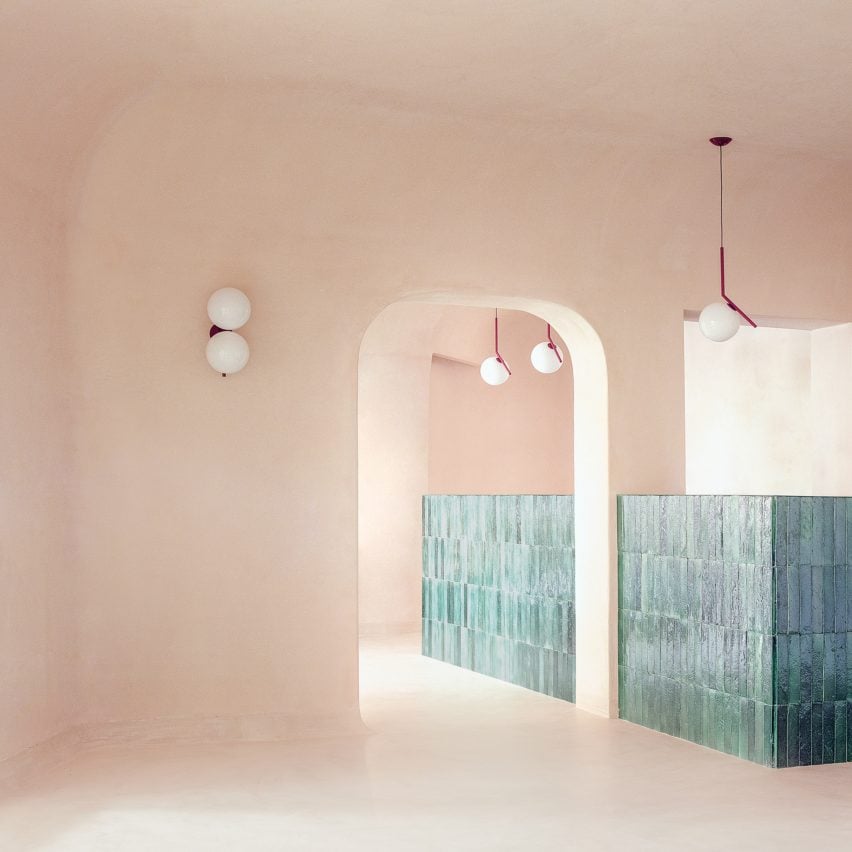
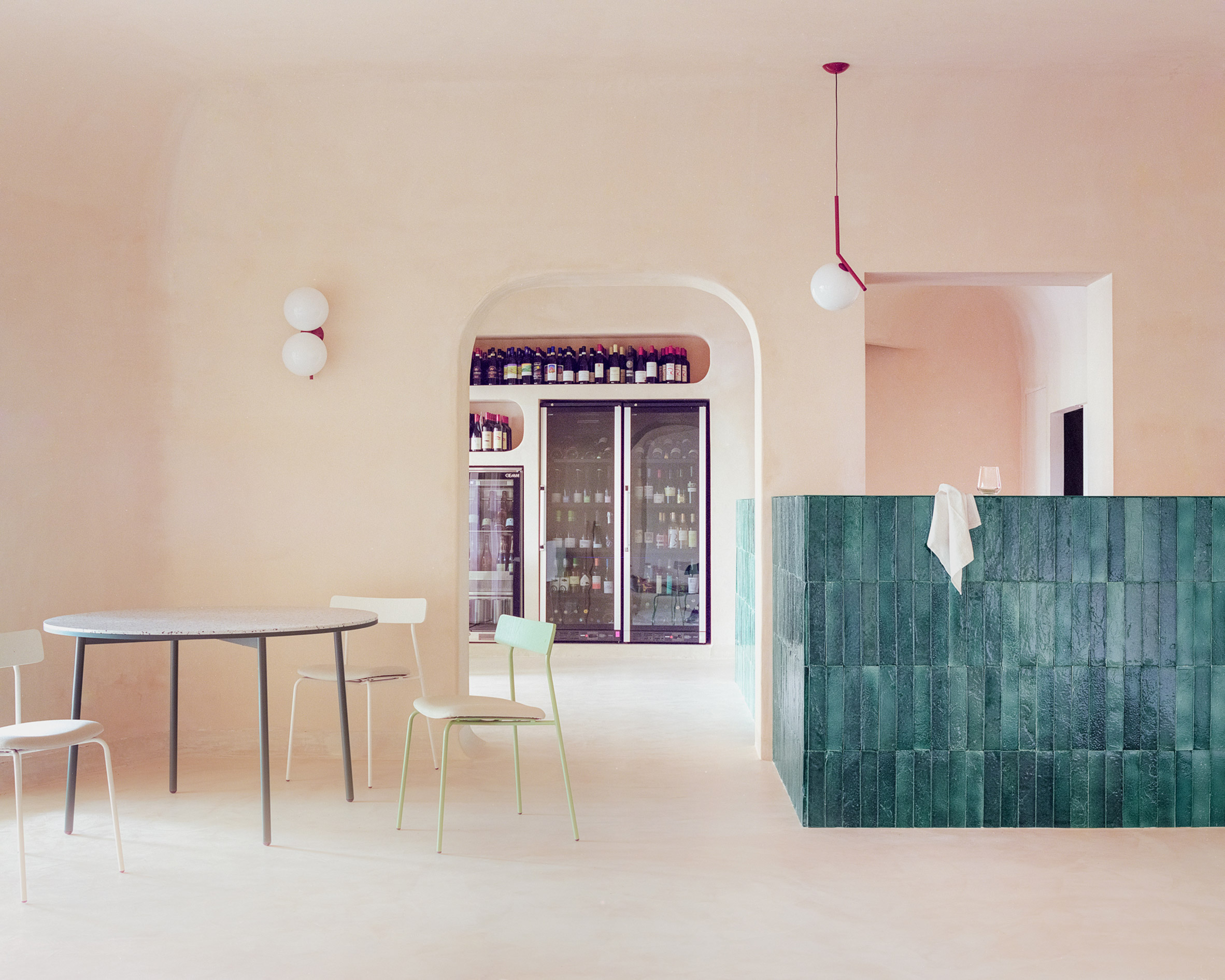
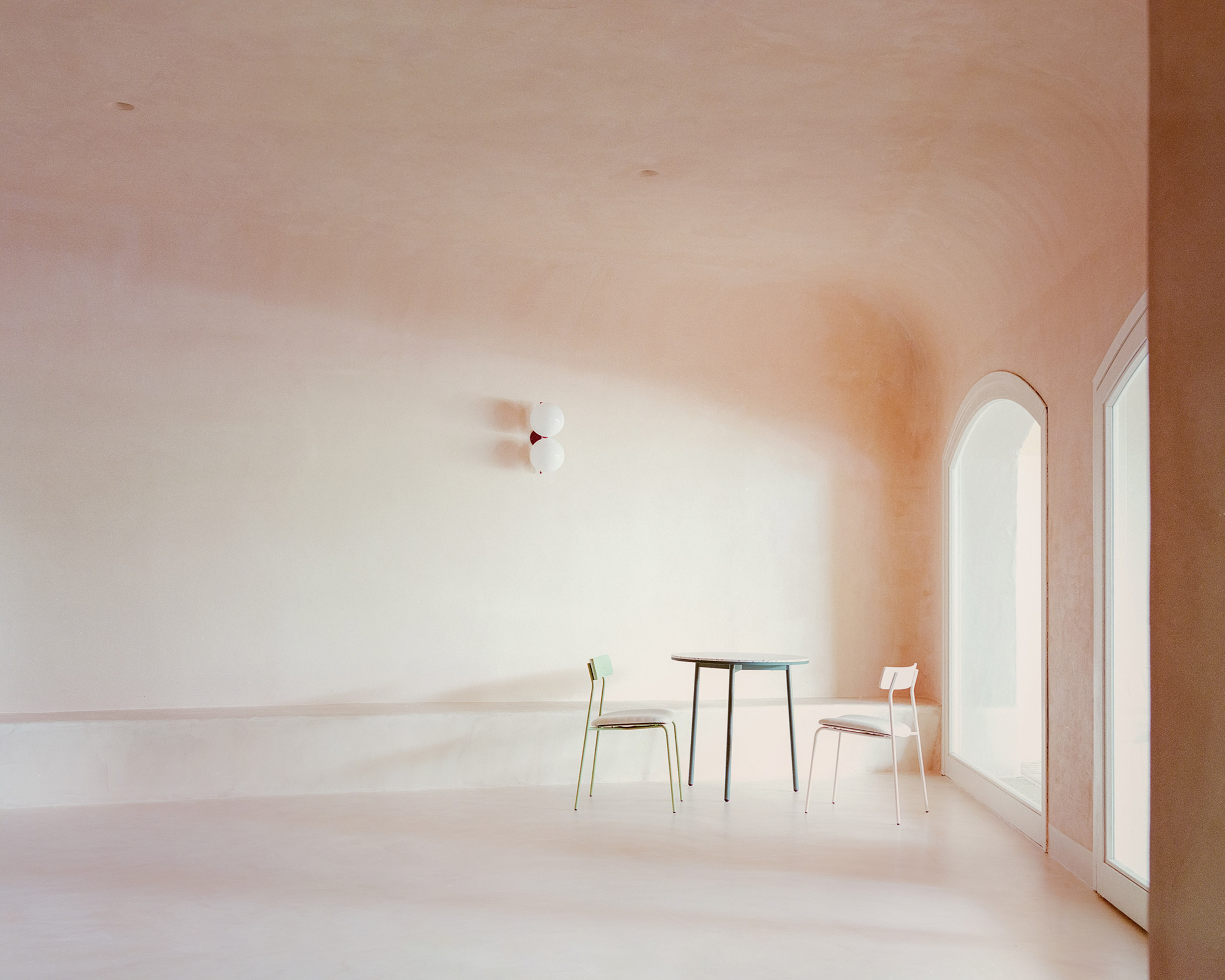
Located in the town of Porto Cervo on the Costa Smeralda, the restaurant resembles a cave with curved, sandy pink plaster walls, cement floors and arched window openings.

The interior is a "tribute to the essence of" the region, explained Studio Wok.

Green tiled counter next to seating area with views to wine fridge in Myrto pizzeria
The Myrto pizzeria by Studio Wok is centred by a green-tiled counter (top and above)

"When we think of this part of Sardinia, we think of granite rocks shaped by the wind," the practice said.

"The power of the wind erodes and carves out the granite formations, turning them into architectural structures that can be lived in. The restyling project for the Myrto restaurant is an opportunity to pay tribute to this area and to tell its story."

Restaurant interior by Studio Wok with curved ceiling and a mismatched, pastel-coloured table setting
The restaurant's ceilings are curved to resemble a cave

The "homely and intimate" space is minimally furnished with custom pieces, such as a tiled counter rendered in different hues of green to echo the colour of local scrubs.

These cooler tones are contrasted against burgundy-coloured lights, designed by Michael Anastassiades for Flos, which are used throughout the restaurant.

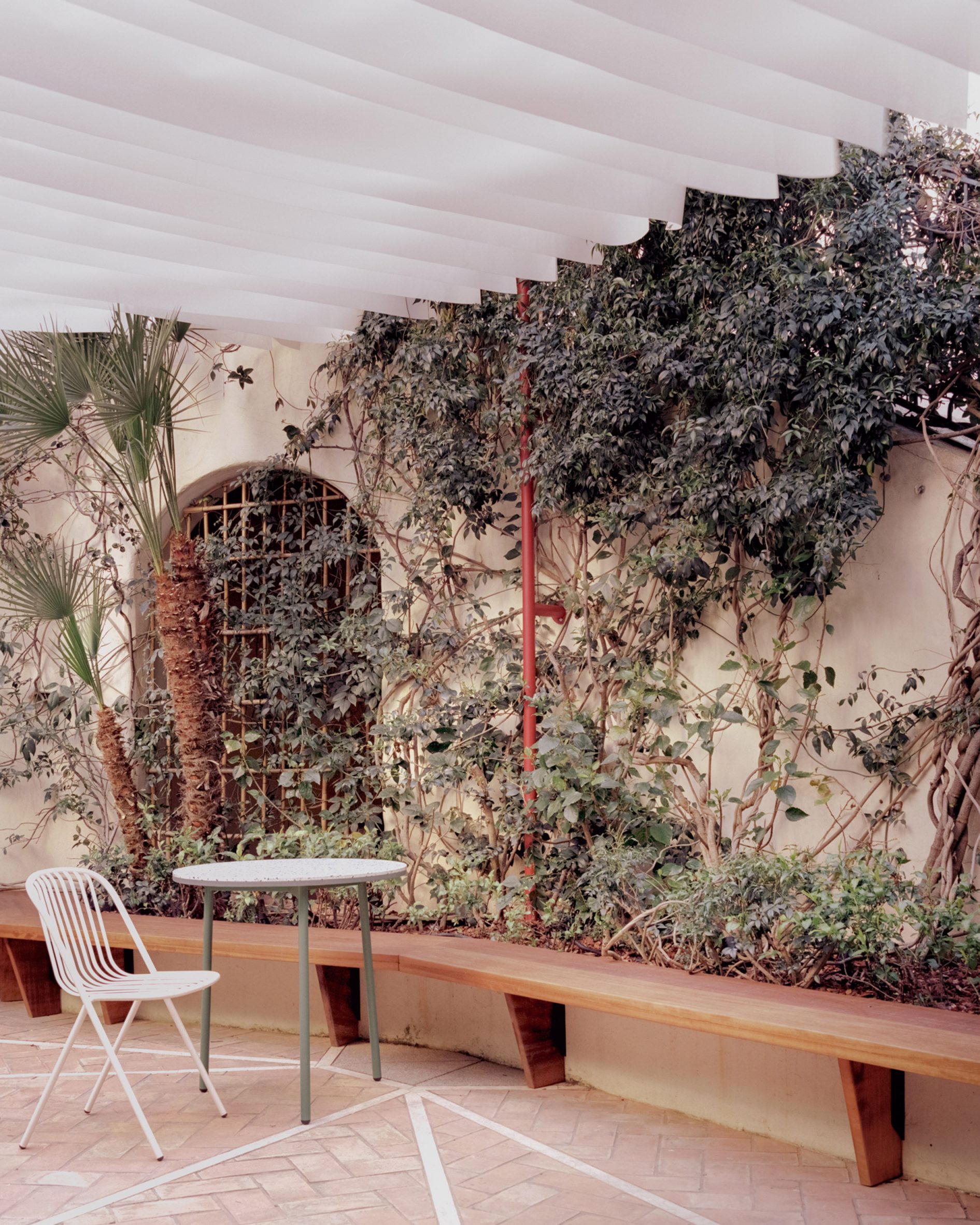
A large outdoor patio at the rear of the space is treated as an extension of the interior. Here, strips of fabric form a permeable roof that reacts to the wind and provides a glimpse of the sky beyond.

Studio Wok, which was founded by Marcello Bondavalli, Nicola Brenna and Carlo Alberto Tagliabue in 2012, has previously converted a barn with pebble walls into a country home.

Courtyard of Myrto pizzeria with white chair and green table
The courtyard features a permeable roof made from white fabric strips

Other cave-like bar and restaurant interiors featured on Dezeen include this wine shop in Spain by Zooco Estudio, where architectural elements based on wine bottles and barrels create a contemporary vaulted ceiling.

Meanwhile in Mexico City, local firm Michan Architecture hung a pair of huge concrete lights over the bar of a restaurant to create a cavernous atmosphere.

Photography is by Simone Bossi.

The post Studio Wok designs cavernous pizza restaurant to recall rocky coves of Sardinia appeared first on Dezeen.


from Dezeen https://ift.tt/3xFfiy2

Wednesday, 11 August 2021

Reddymade and Ai Weiwei add hexagonal extension to Salt Point home

Salt Point Residence by Reddymade and Ai Weiwei

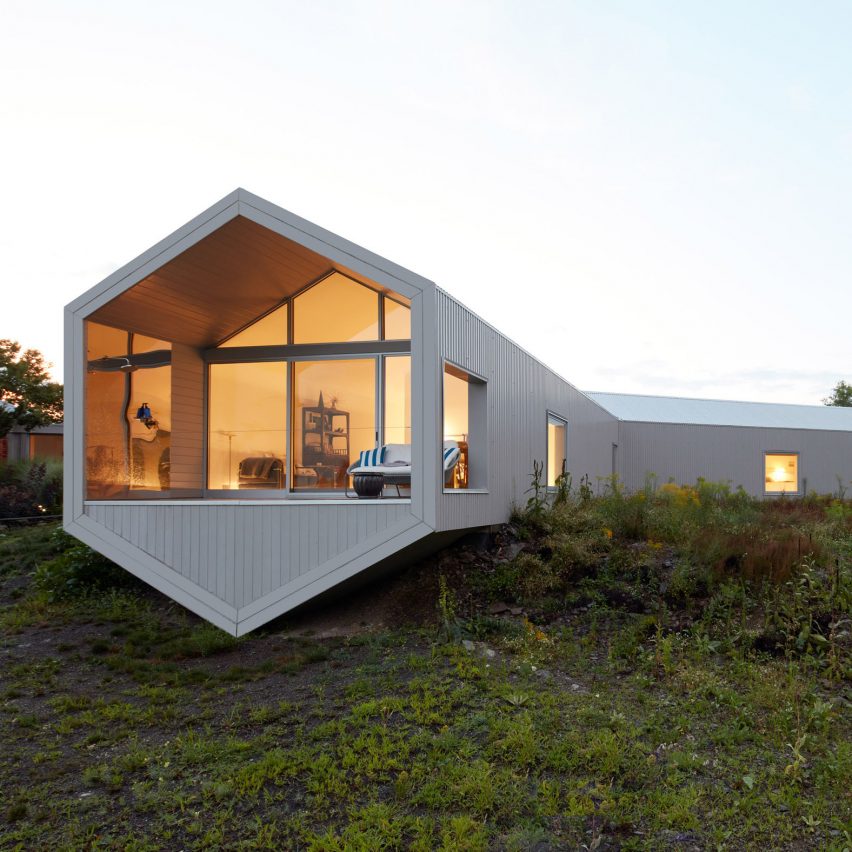
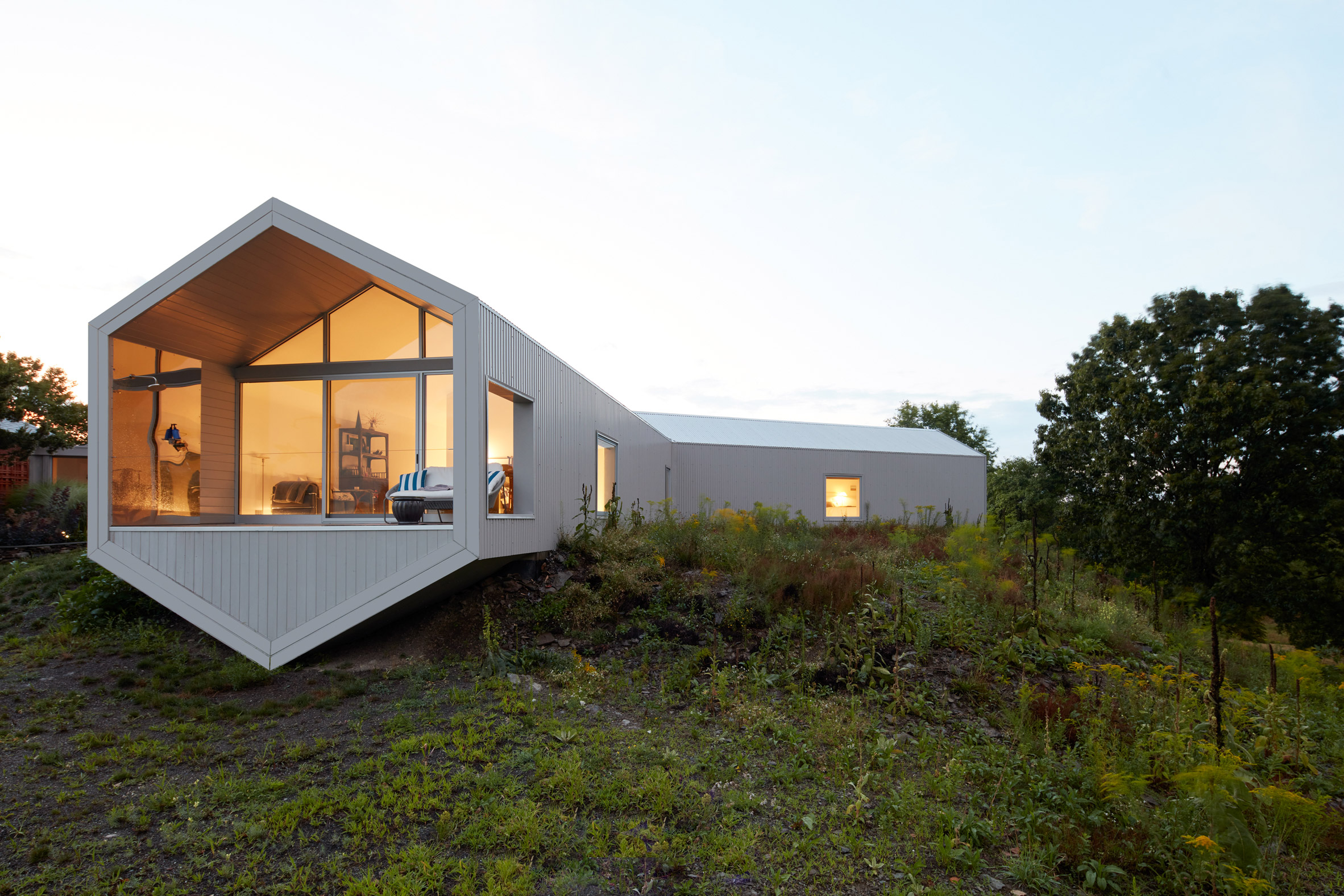
Architecture studio Reddymade has collaborated with Chinese artist and activist Ai Weiwei to design a corrugated metal extension with hexagonal ends for a weekend home in Salt Point, New York.

The local studio drew on the hexagonal plan of the original 1980s home to create the minimal, linear form of Salt Point Residence, with 185 square metres providing space for two new en-suite bedrooms around a central living room.

Salt Point Residence in New York
Reddymade and Ai Weiwei gave the extension a hexagonal end section to reference the shape of the original building's plan

"The existing residence is composed of a cluster of hexagonal pavilions. For the new structure, we transposed this hexagonal plan to shape the section for the addition," explained Reddymade.

"The extension was designed to be strikingly simple and minimal, which is reflected not only in its graphic language, but also in its materiality."

Salt Point Residence by Reddymade and Ai Weiwei
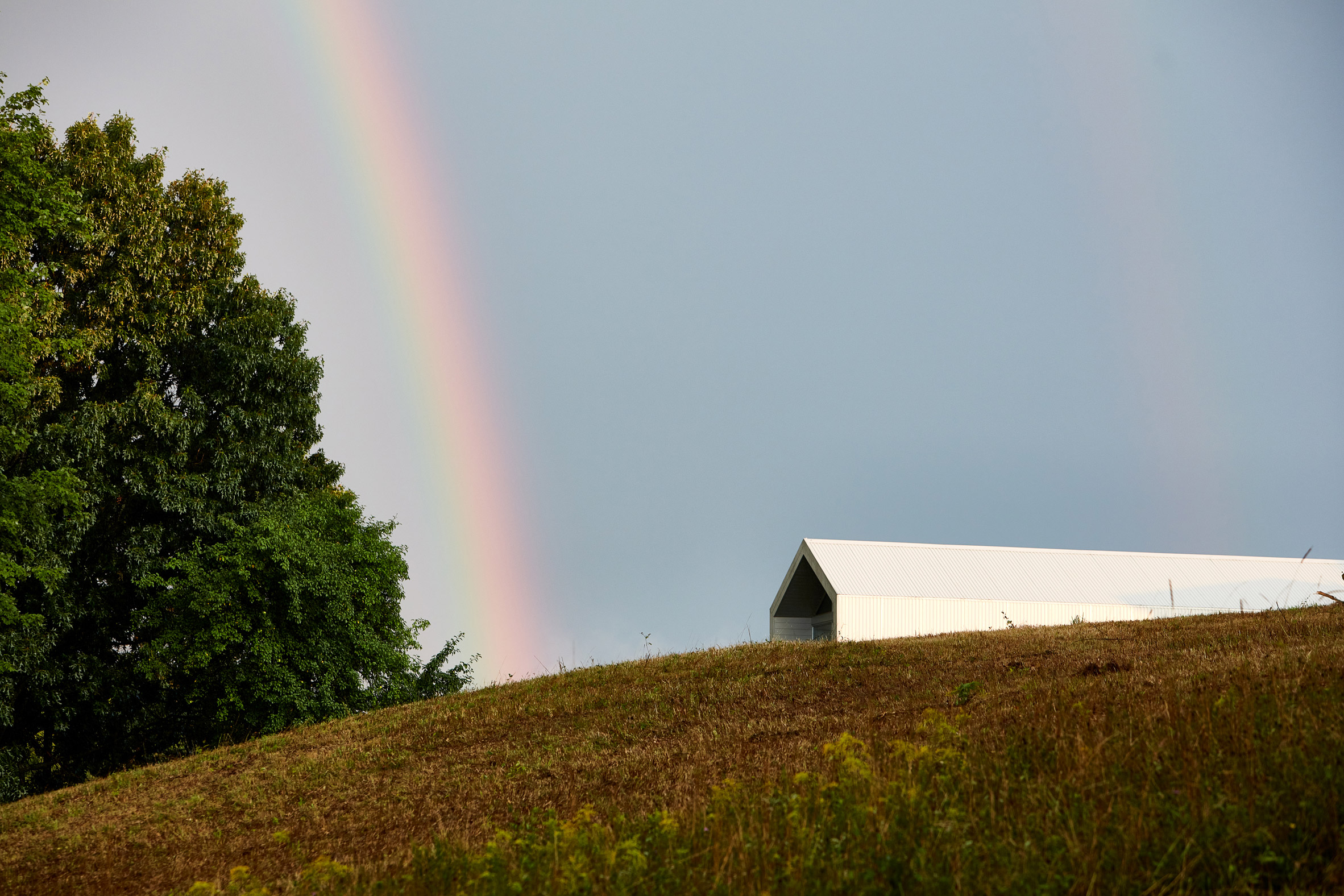
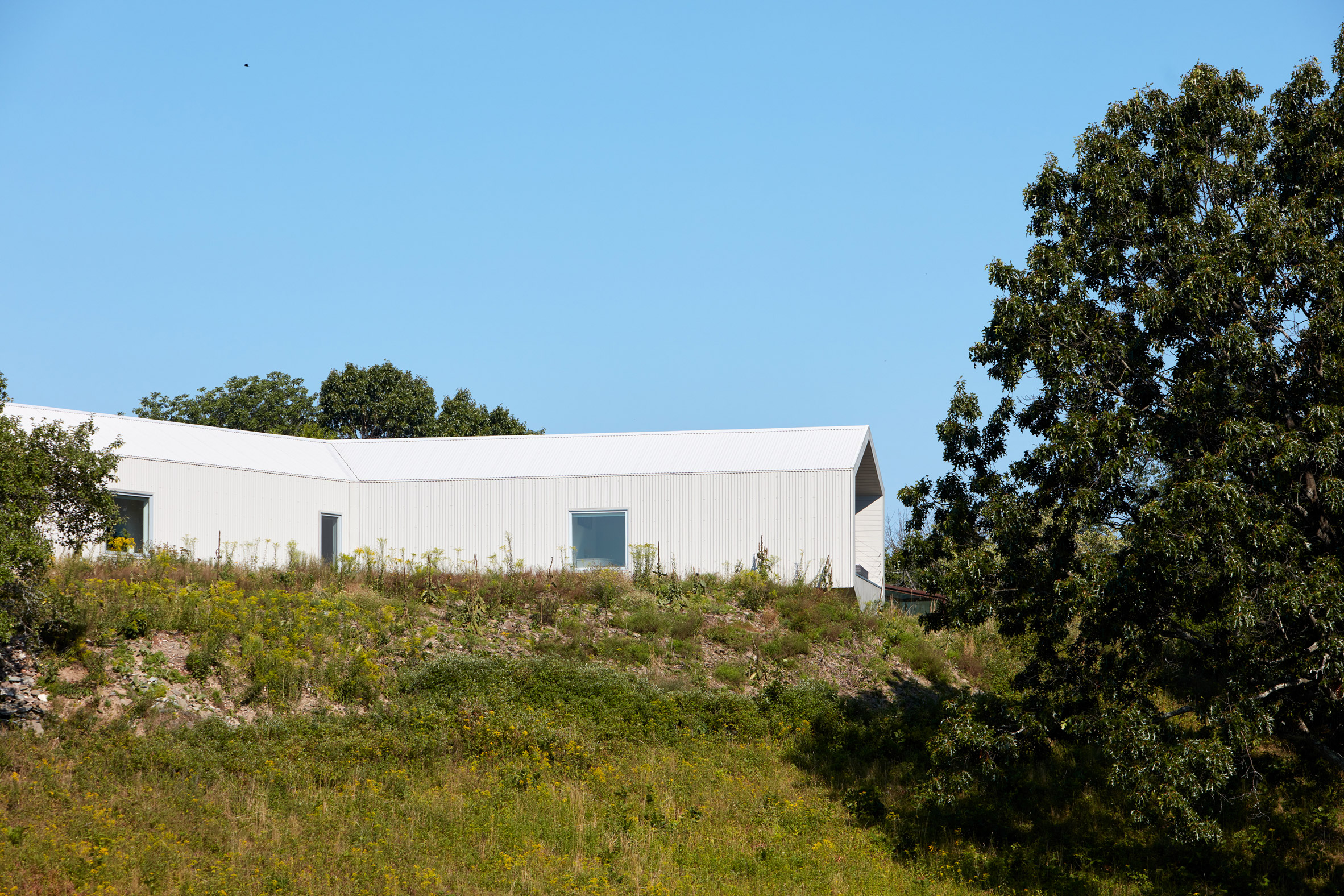
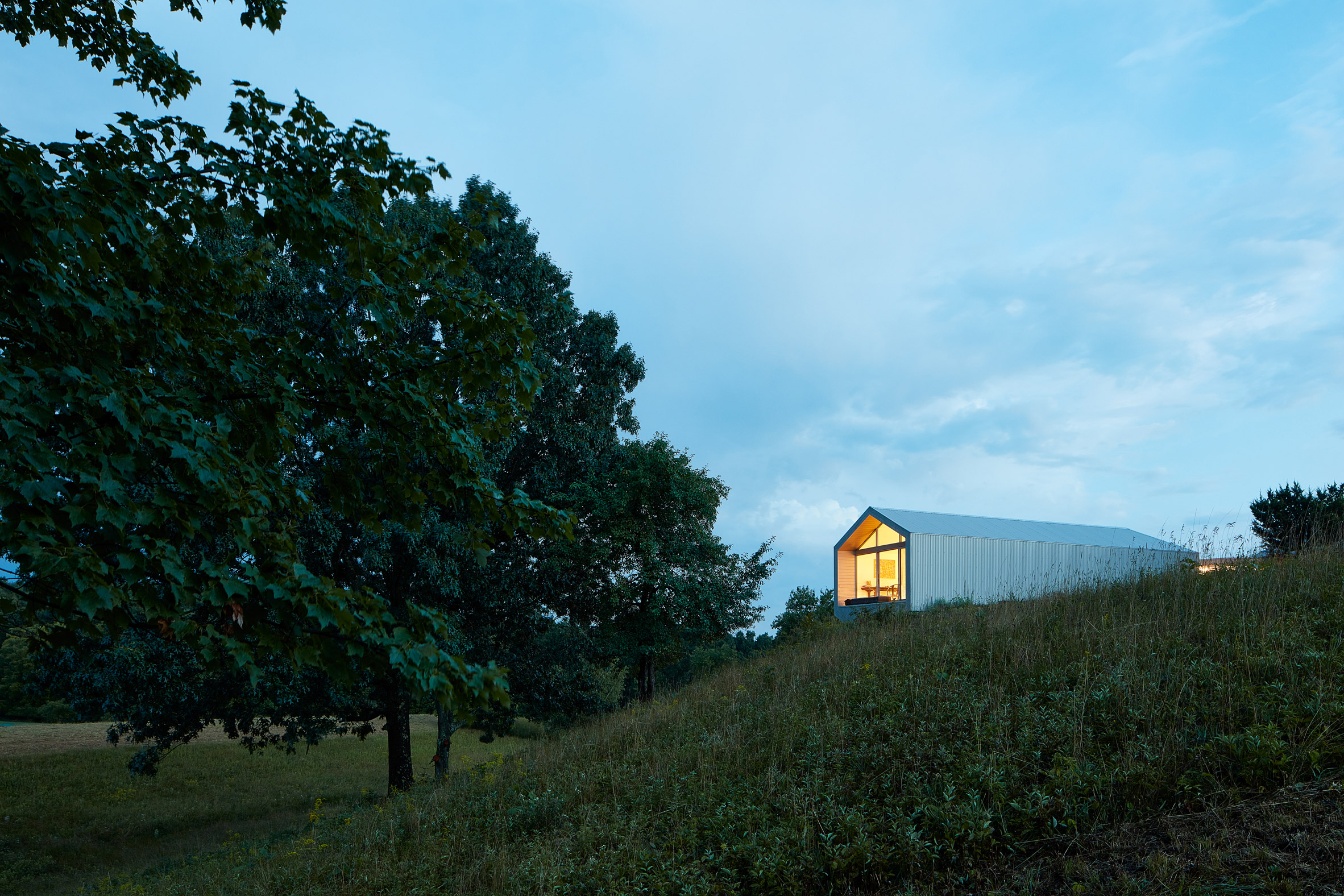
From a distance, the extension looks like an industrial barn

A glass corridor leads from the original home to the centre of the extension, where two angled wings meet in a simple living room, conceived as the form's central "hinge".

The long, thin wings then both extend past bathroom blocks towards glazed ends, which open onto private porches to give each of the new bedrooms a close connection with the surrounding landscape.

Salt Point Residence wrapped in corrugated metal
Corrugated metal clads the extension's two wings

At the extension's southern end, this porch has been given a mirrored wall fitted with an outdoor shower, facing a cut-out in the wall that frames the landscape.

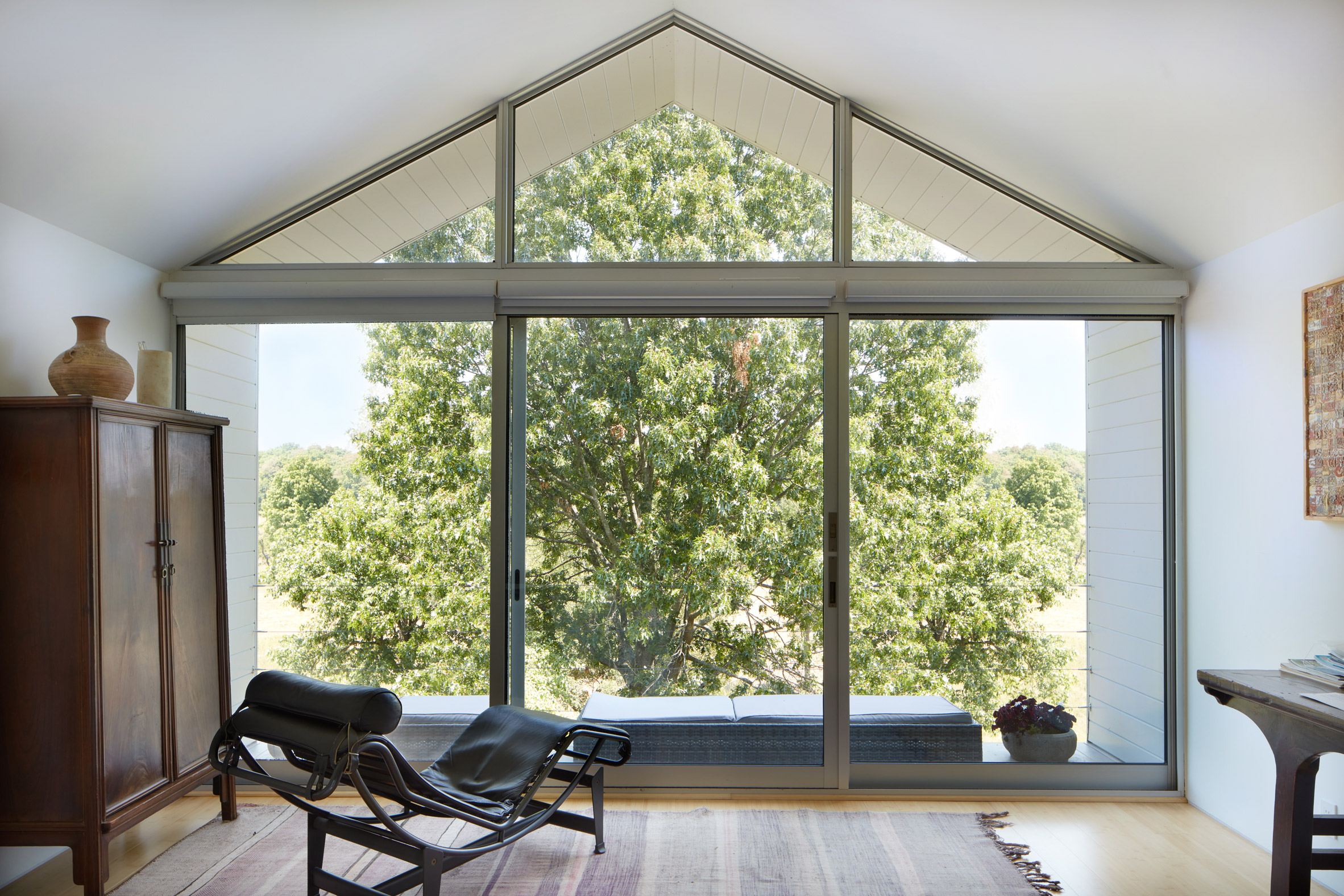
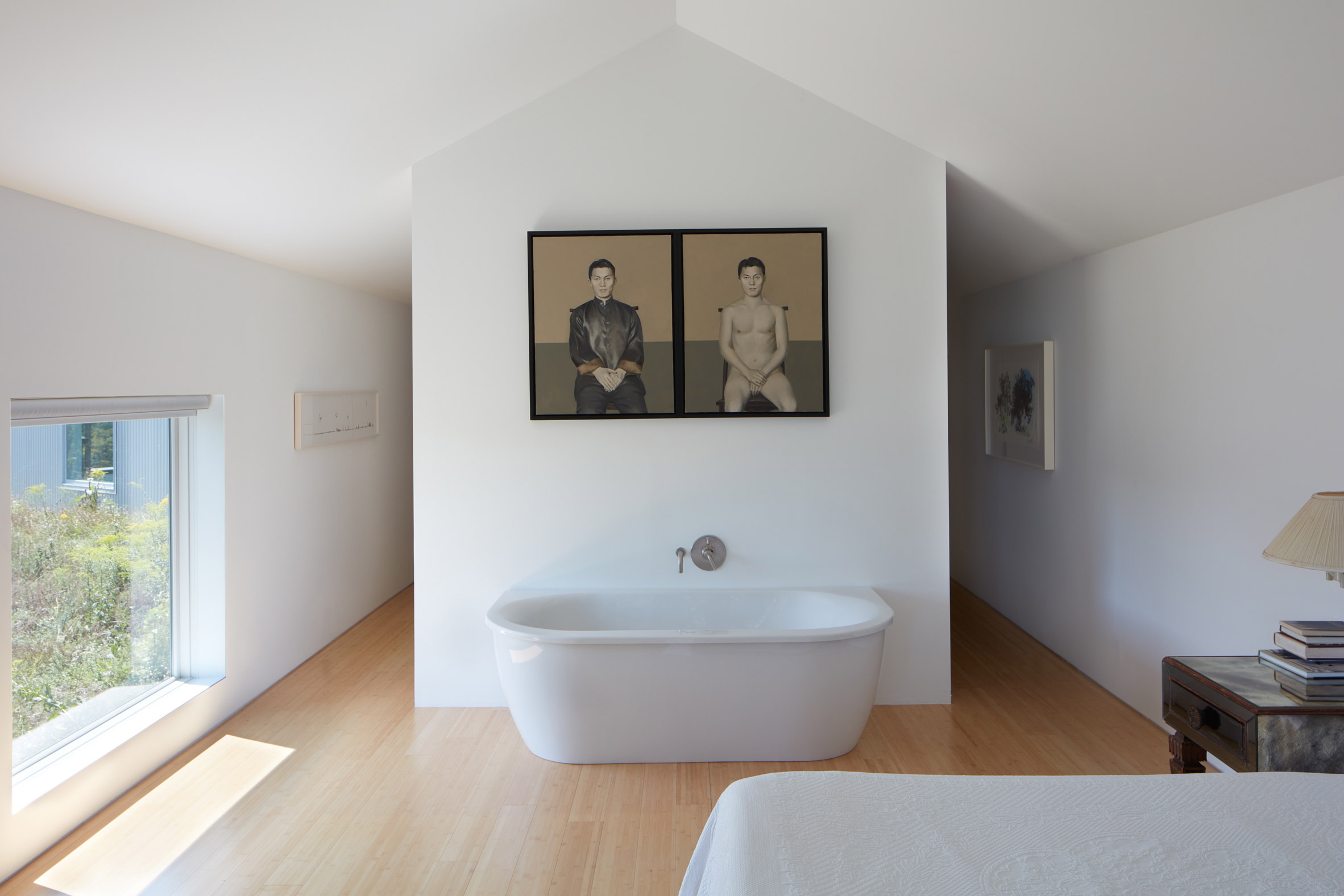
White walls and ceilings, and pale wooden floors characterise the simple interiors, which express the pitched roof created by the hexagonal section.

While most of the focus on the landscape is via the glazed porches, a series of small windows in the side of the extension give views across the home's gently sloping site.

The interior of Salt Point Residence
Bedrooms at each end open onto terraces

"The minimal material palette of the extension offers a neutral and light setting for art works and furniture from the client's private collection," said the studio.

"Throughout the new structure, large square windows are set low to frame the outward view and enhance the experience of the home's natural settings."

White walls and ceilings, and pale wooden floors are used throughout the interior

The artworks that dot the landscape indicate the proximity to Artfarm – a private art gallery designed in 2009 by Swiss practice HHF, also in collaboration with Ai Weiwei.

The metal exterior of Artfarm, reminiscent of agricultural barns, informed the corrugated cladding of Salt Point Home, which from a distance also appears as a simple metal barn until you notice its hexagonal ends.

Salt Point Residence by Reddymade and Ai Wei Wei
The house is located opposite the Artfarm centre in Upstate New York

Reddymade recently worked with Google to design the company's first physical retail space in New York's Chelsea, incorporating cork furniture and recycled materials.

The photography is by Ashok Sinha.

The post Reddymade and Ai Weiwei add hexagonal extension to Salt Point home appeared first on Dezeen.


from Dezeen https://ift.tt/3sbphK9

Mexican desert influences pink concrete La Duna skate park in Ciudad Juárez

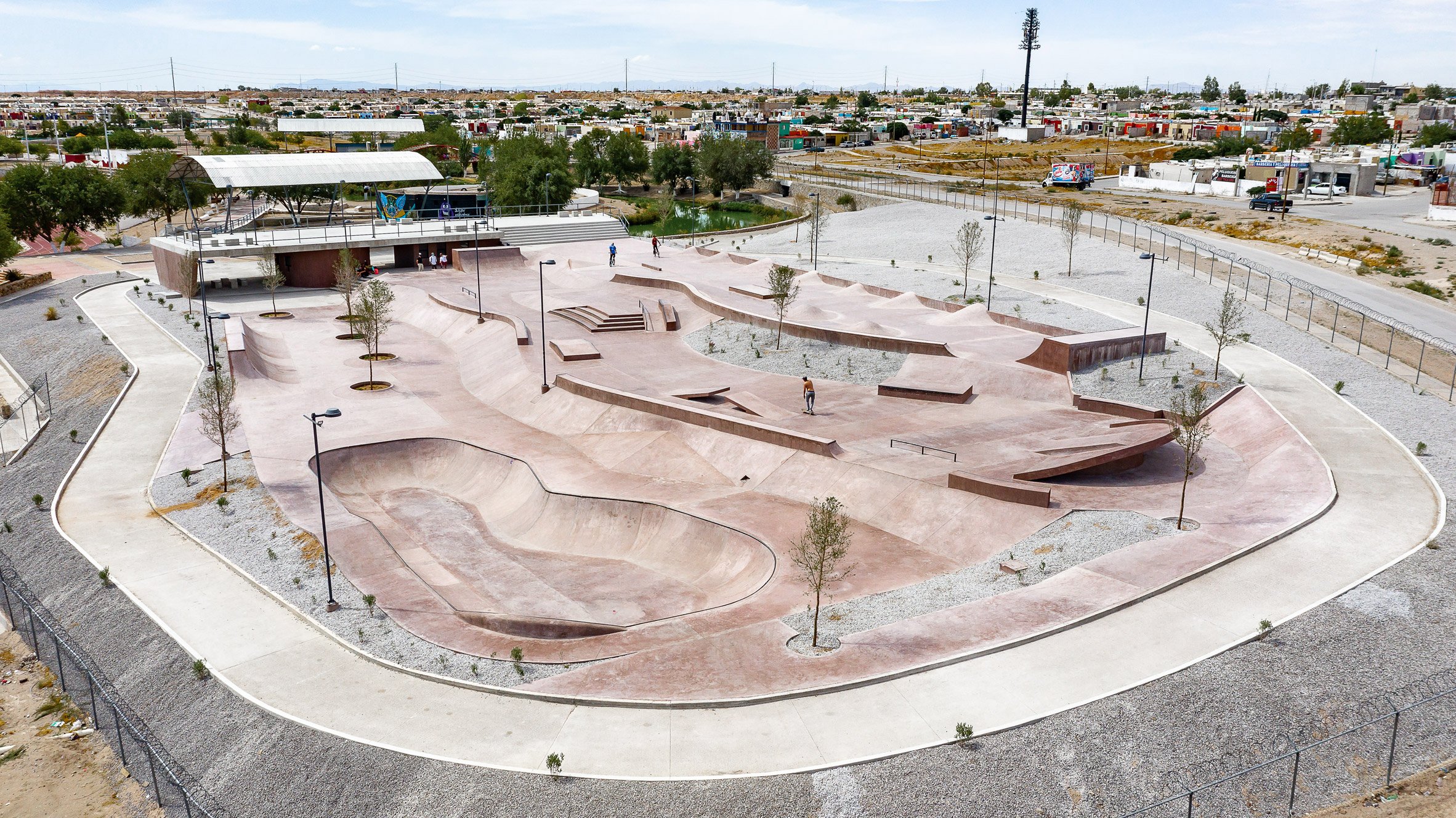
The dunes of the Chihuahuan Desert informed the undulating, pink concrete landscape of this new skatepark in Ciudad Juárez's Oriente Park.

Coordinated by landscape architects Valia Wright Sánchez and Eduardo Peón Velázquez with architect Francisco Elías of Elías Group, the park on the northern border of Mexico is part of a governmental urban improvement programme to improve marginalised neighbourhoods.

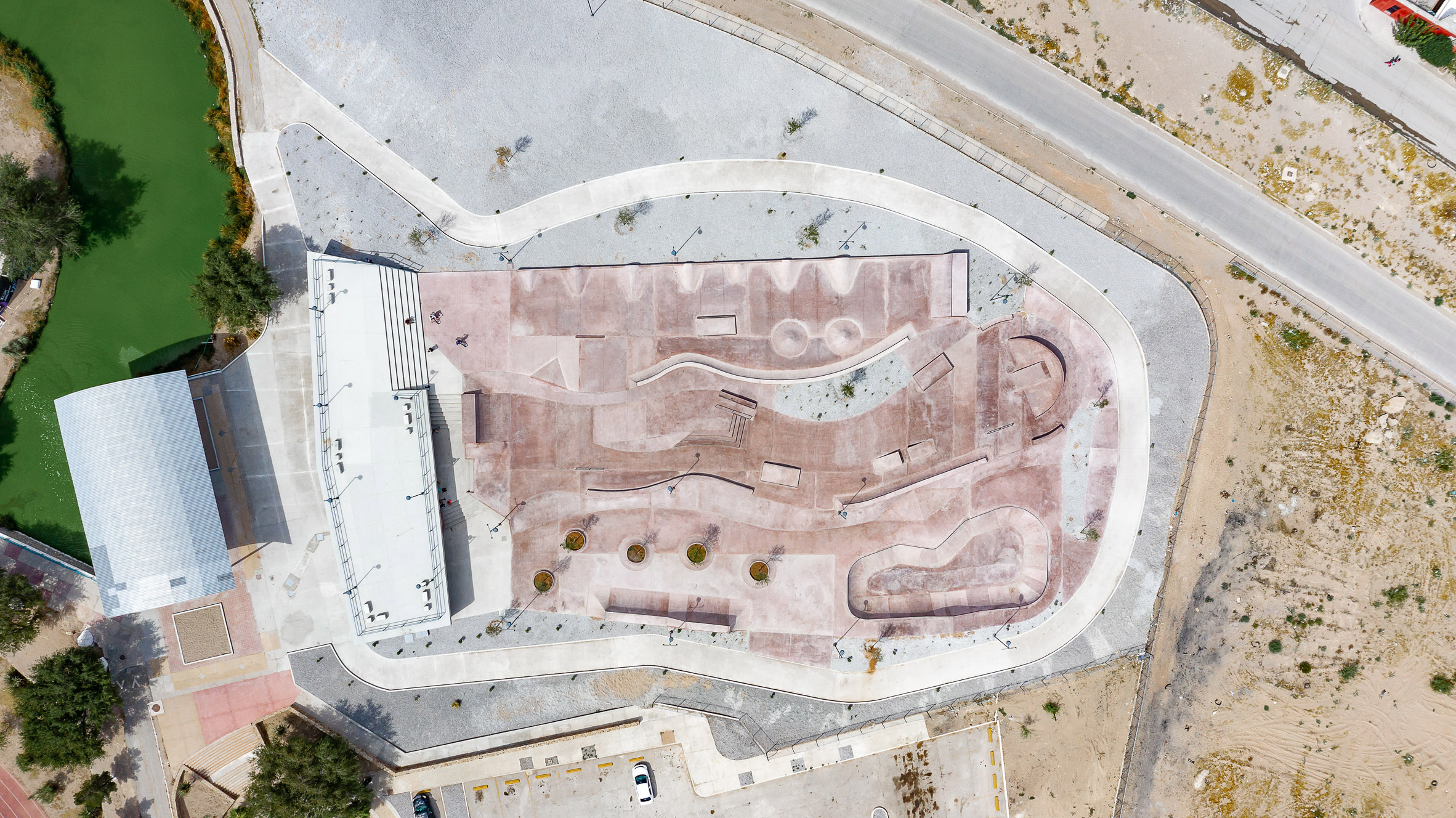
Aerial view of skatepark
The pink skatepark is divided into three zones

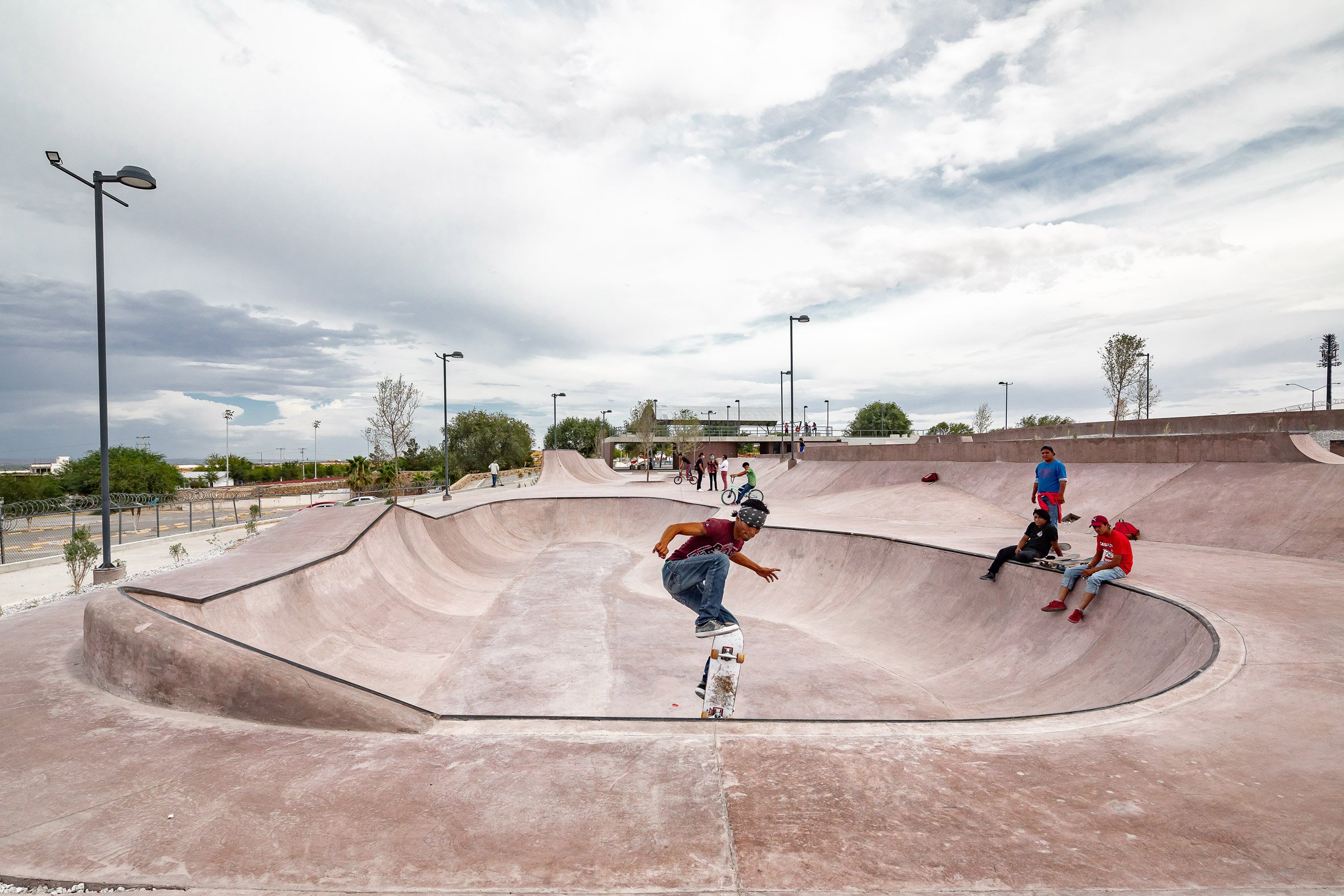
Called La Duna, the skatepark's dusty pink concrete landscape is split into three zones: a bowl, an area for street-style skating, and a beginner's area – divided by trees and small garden spaces planted with desert flora.

"[The team] established as their main goal understanding the relationship between this section of the park and the surrounding neighbourhood, at the same time bringing in a bit of the natural context of the Chihuahuan Desert," said the designers.

Pink concrete skate park
Its shape was informed by desert dunes

This reference to the desert influenced the form of the park's obstacles, intended to evoke the Samalayuca Dune Fields in Chihuahua, as well as the sandy pink pigmentation of the concrete.

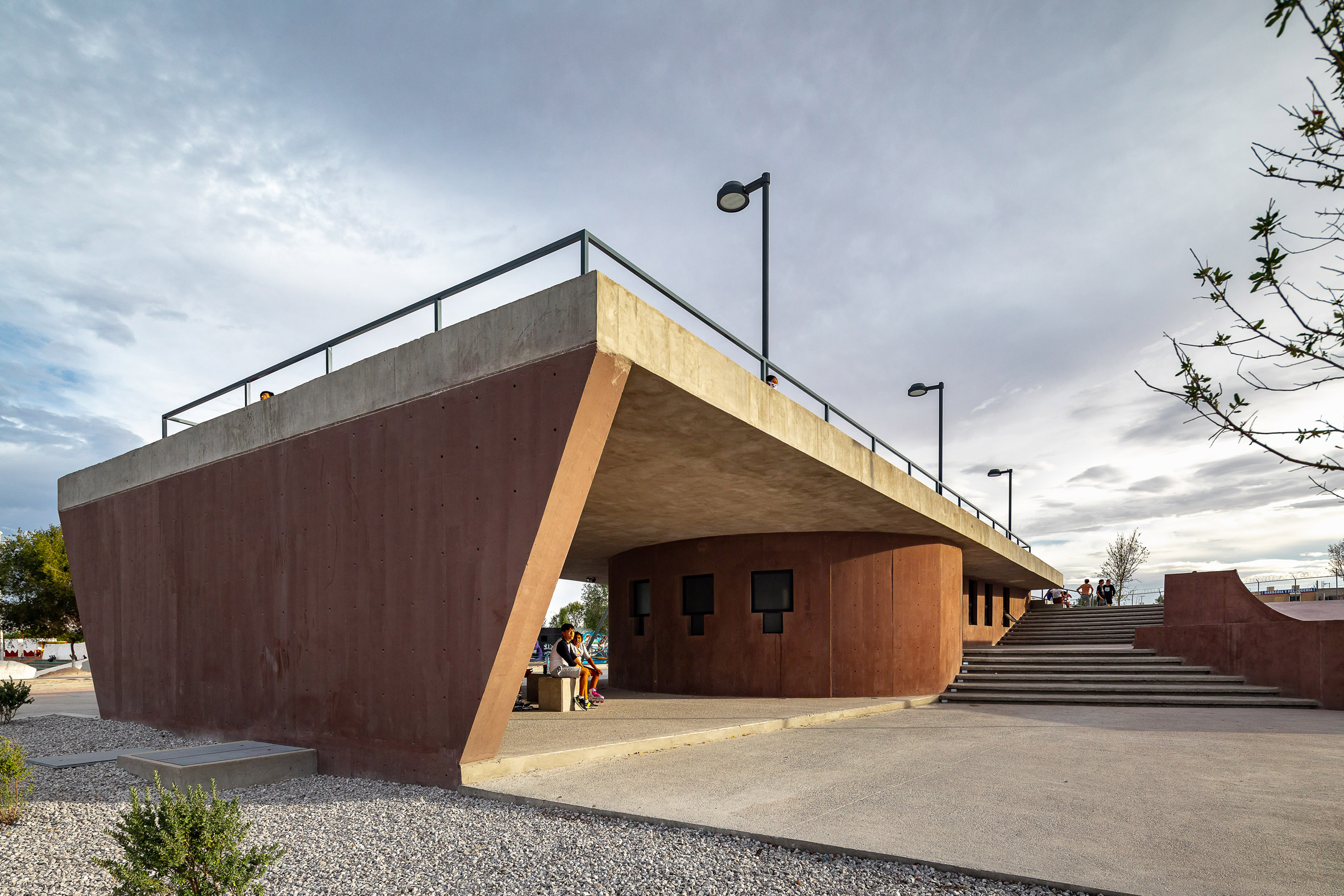
To the south, a large concrete viewing deck sits atop a brown concrete classroom and office block and a cylindrical bathroom block, creating open space beneath that forms a "portico" leading from a public square through to the skatepark.

View of La Duna skatepark
A concrete viewing deck sits atop a classroom

"The building was conceived as a cave by which the covered square and the skating rink communicate, through a portico that protects the service module, an office and three classrooms," explained the designers.

"The shape of the portico, with the triple column modules, is a nod to the architecture of the 1950s and 1960s that characterises the urban landscape of Ciudad Juárez."

These learning spaces will provide classes and workshops as part of a strategy to see the park used by both young people and adults in the area.

Amphitheatre-style concrete steps providing seating lead up to the viewing platform, dotted with further concrete seating areas and overlooking both the skate park and an artificial lake on the other side of the site.

Skaters in La Duna
The park is part of a government improvement programme

The skate park is wrapped by an extension of an existing cycle route that links the existing park with the surrounding area, intended to better integrate it with the wider neighbourhood.

Another recently completed project that draws on Mexico's natural landscape is the Paradero Hotel by Ruben Valdez and Yashar Yektajo, which uses beige concrete to blend in with the terrain.

The photography is by Onnis Luque.

The post Mexican desert influences pink concrete La Duna skate park in Ciudad Juárez appeared first on Dezeen.


from Dezeen https://ift.tt/3iAbdH0

Critics mourn modernist French Railways House as "dying loved one" ahead of planned demolition

Architects and designers have reacted with dismay to the news that a 1960s landmark in central London will be demolished to make way for a new office development by architecture studio Make.

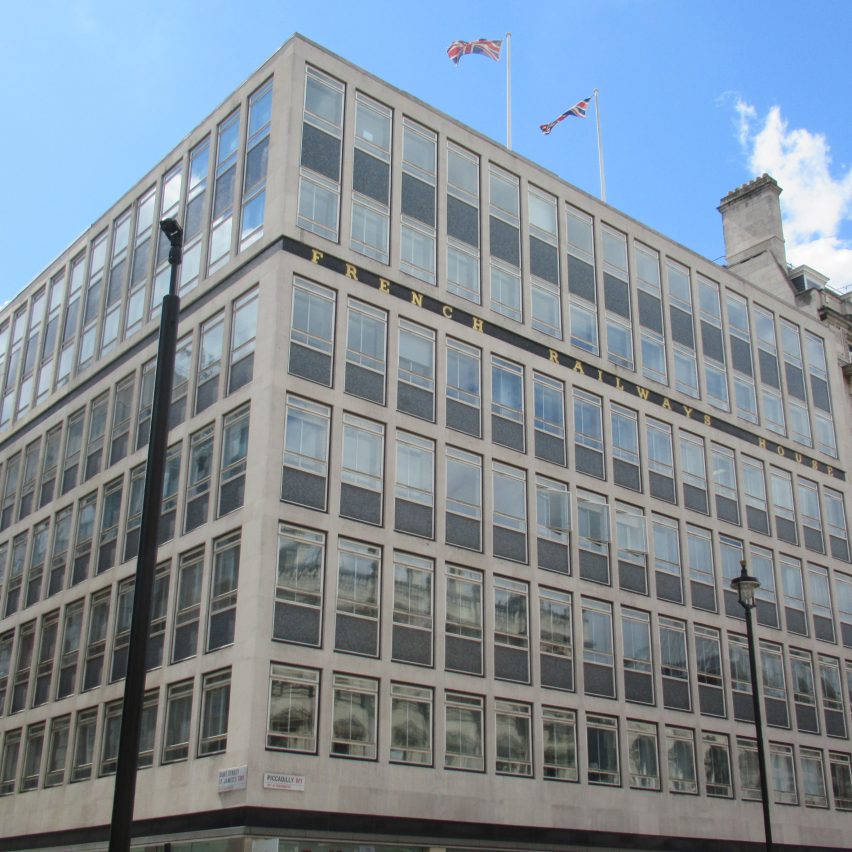
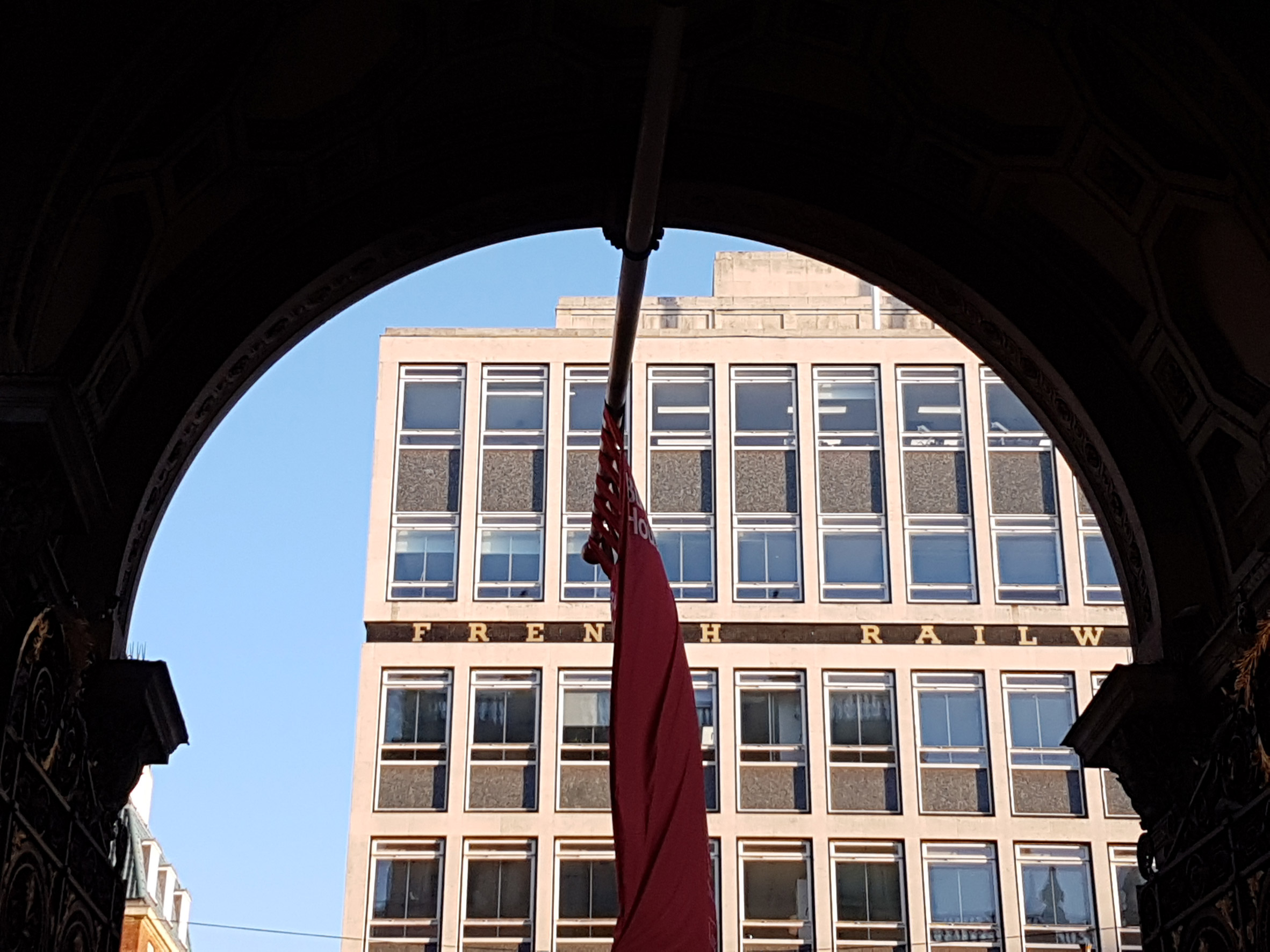
The City of Westminster has granted permission for French Railways House near Picadilly, which once acted as the headquarters of French national rail network SNCF, to be succeeded by an eight-storey complex designed by Make.

"What a waste"

The news, reported by Building Design magazine, prompted a host of architects, designers and critics to raise concerns around the heritage and sustainability implications of tearing down the modernist building.

"What a waste [of] embodied energy, memory, fabric and history," said the Financial Times' architecture critic Edwin Heathcote, while landscape architect and Bartlett professor Tim Waterman likened the building to a "dying loved one".

"Make are replacing the absolutely delightful French Railways House opposite the RA with this pig," said designer Adam Nathaniel Furman.

The Twentieth Century Society, which previously tried but failed to have the French Railways House recognised as a listed building, said it "deeply regretted the demolition on environmental grounds as well as heritage ones" in a statement on Twitter.

Justin McGuirk, chief curator at the Design Museum, argued that the building should instead have been retrofitted to lower the embodied carbon of the project, especially in light of the latest and most alarming IPCC climate report.

"Make is set to demolish a good modernist building – which BTW had interiors by Charlotte Perriand and Ernö Goldfinger – and replace it with this pastiche," he wrote. "We really need to be curbing demolition not encouraging it."

The built environment is responsible for 40 per cent of global greenhouse gas emissions, 11 per cent of which is embodied carbon – the emissions associated with the materials and construction of a building before it even opens its doors.

Modernist building as seen from the Royal Academy in London
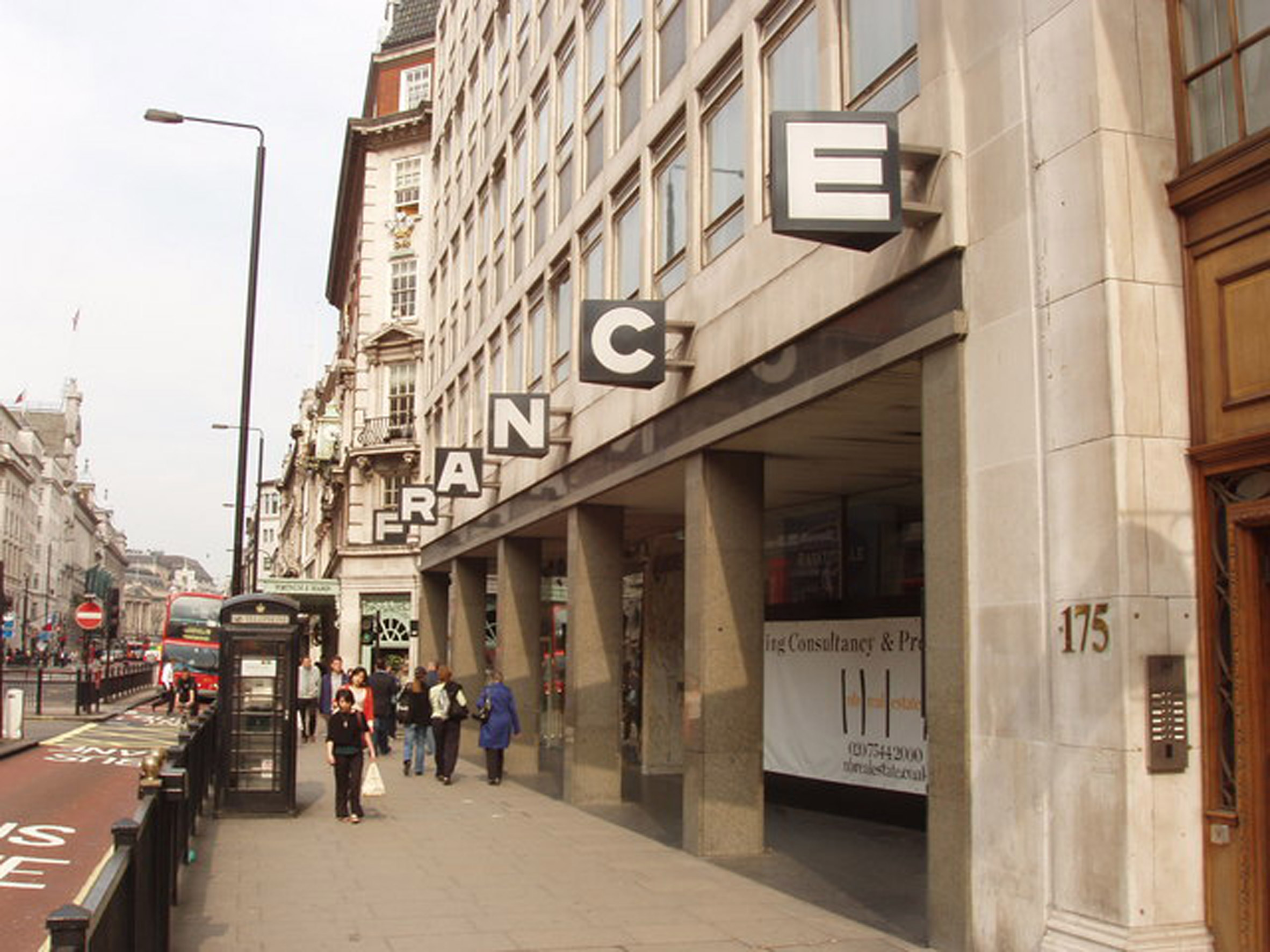
The French Railways House (top image) is located opposite the Royal Academy in London (above). Photography is by Alex Liivet and failing_angel on Flickr

Retrofitting offers a way to reduce this footprint as it mitigates the emissions derived from the sourcing and assembling of new materials, as well as with demolishing the existing building and processing the waste generated in the process.

However, Make has defended the project, telling Architects Journal that while a retrofit was initially considered, this plan was abandoned due to the building's narrow plan, low floor-to-floor heights and limited options for new services, which made it "not suitable for a modern office".

Modernist building "not considered to be of significant design merit"

Designed by Shaw & Lloyd, the French Railways House was completed in 1962 and distinguished by its protruding lettering and interiors designed by modernist architects Ernö Goldfinger and Charlotte Perriand.

But these original features were removed and its street-level loggia filled in to accommodate shops when the building was renovated by Ian Mcardle Architects in 2013.

The "starkly horizontal, largely glazed" building was "not considered to be of significant design merit" according to a report from the City of Westminster planning applications subcommittee, which gave Make permission to demolish the French Railway House alongside a neighbouring building.

Ernö Goldfinger sign on front of French Railways House in London
Ernö Goldfinger designed the building's distinctive original signage, which has since been removed. Photo is by David Hawgood

In their place, the firm will erect a 10,000-square-metre complex for Great Portland Estates, which will house workspaces on the upper floors and retail and restaurant units below. It will also feature three terraces and a double mansard roof with a garden.

"The most sustainable building is the one that already exists"

Make said it is investigating the reuse of some of the French Railways House's original Portland stone facade, while its foundations and basement will stay in place to form a cycle parking facility.

"It is correct to say the most sustainable building is the one that already exists but if it no longer fulfils its basic functions and cannot be made to work efficiently, then it is not a sustainable proposition," Make told AJ.

"The proposed scheme is to retain the existing foundations and basement – typically the largest embodied carbon element of a building – and to build as light a new building as possible above to make the substructure retention possible."

The final building will have an embodied carbon footprint of 560 kilograms of carbon dioxide equivalent (CO2e) per square metre, which would earn it a medium C rating under LETI and RIBA's embodied carbon targets.

No UK embodied carbon regulations

In the UK, there are currently no regulations that require the reporting or reducing of embodied carbon emissions. But initiatives including ACAN and Part Z are lobbying to change this.

"Regulating embodied carbon is vital for the construction industry in tackling the climate crisis," Jenny Stephens of Feilden Clegg Bradley Studios told Dezeen as part of our recent carbon revolution project, which explored how carbon could be removed from the atmosphere and put to use on earth. "The industry is ready for this."

The post Critics mourn modernist French Railways House as "dying loved one" ahead of planned demolition appeared first on Dezeen.


from Dezeen https://ift.tt/37AH58g

Ten end-of-year architecture projects from students at the University of Reading

University of Reading

A project that reintroduces endangered countryside animals into an orchard environment and a church ruin in Bristol transformed into an educational kitchen are included in Dezeen's latest school show by students at the University of Reading.

Other projects include a proposal that merges architecture and landscape design and a centre for the rehabilitation of badgers.


University of Reading

School: School of Architecture
Courses:
BSc Architecture and Master of Architecture (MArch)
Tutors:
Ana Dina, Professor Lorraine Farrelly, Associate Professor Oliver Froome-Lewis, Georgie Grant, Dr John Harding, Mike Kane, Martin Lydon, Sabrina Morreale, Piers Taylor, Michelle Tomlinson and Dr Izabela Wieczorek

School statement:

"The School of Architecture at the University of Reading engages the complex issues facing architecture in our society today, including the environment, re-use, collaborative innovation and creating equalities. It includes a topology of practice-based research and precisely situated studies in design, technology and theory.

"Our students work alongside academics and practitioners and look beyond the transient and the topical to frame precise methodologies and expertise in relation to these borderless concerns as they flow inexorably across our local and European contexts.

"Imagination and new thinking establish new links between the conceptual and the contractual; every day and the abstract; the pragmatic and the speculative; the interviewer and the interviewee and our experiences and our possibilities. Interpreting these circumstances gives us opportunities for positive change.

"These are outtakes from the end-of-year online exhibition 'Adaptations', which is now available on the University of Reading's website."

University of Reading

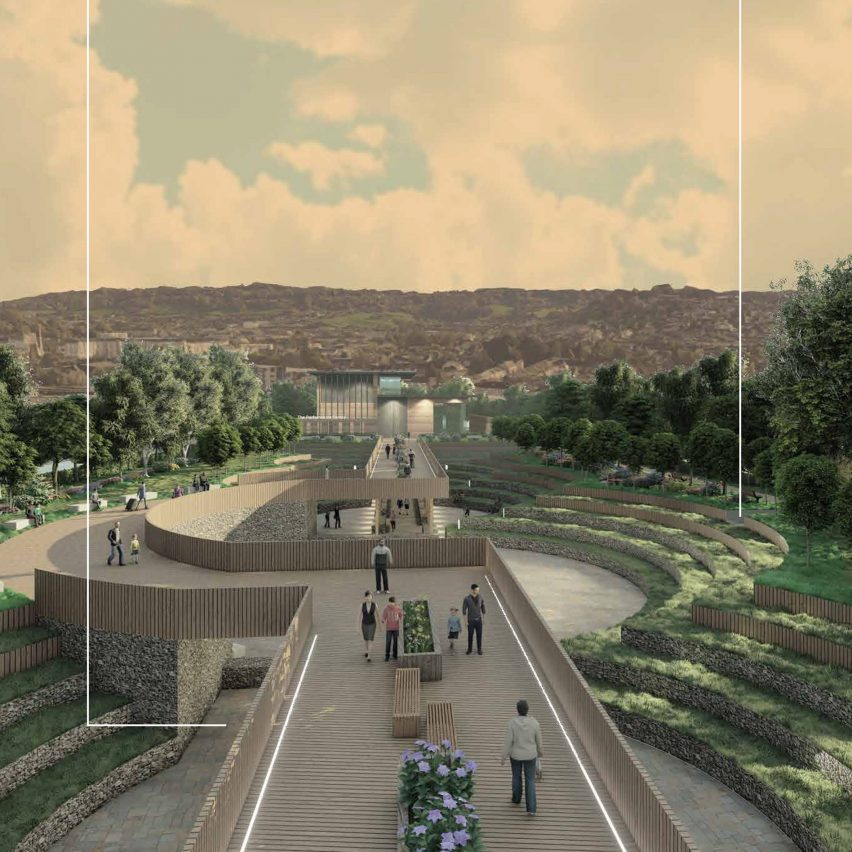
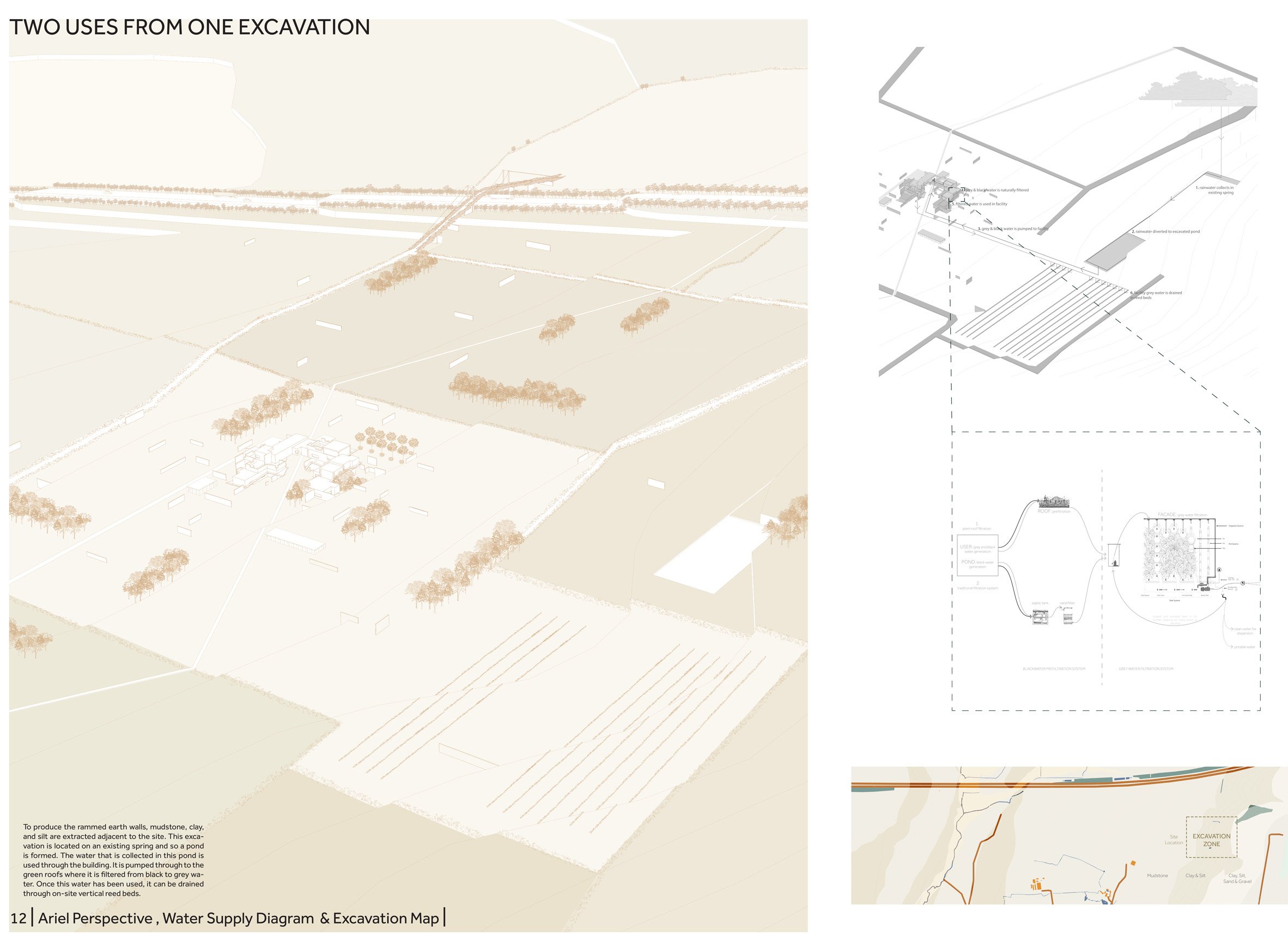
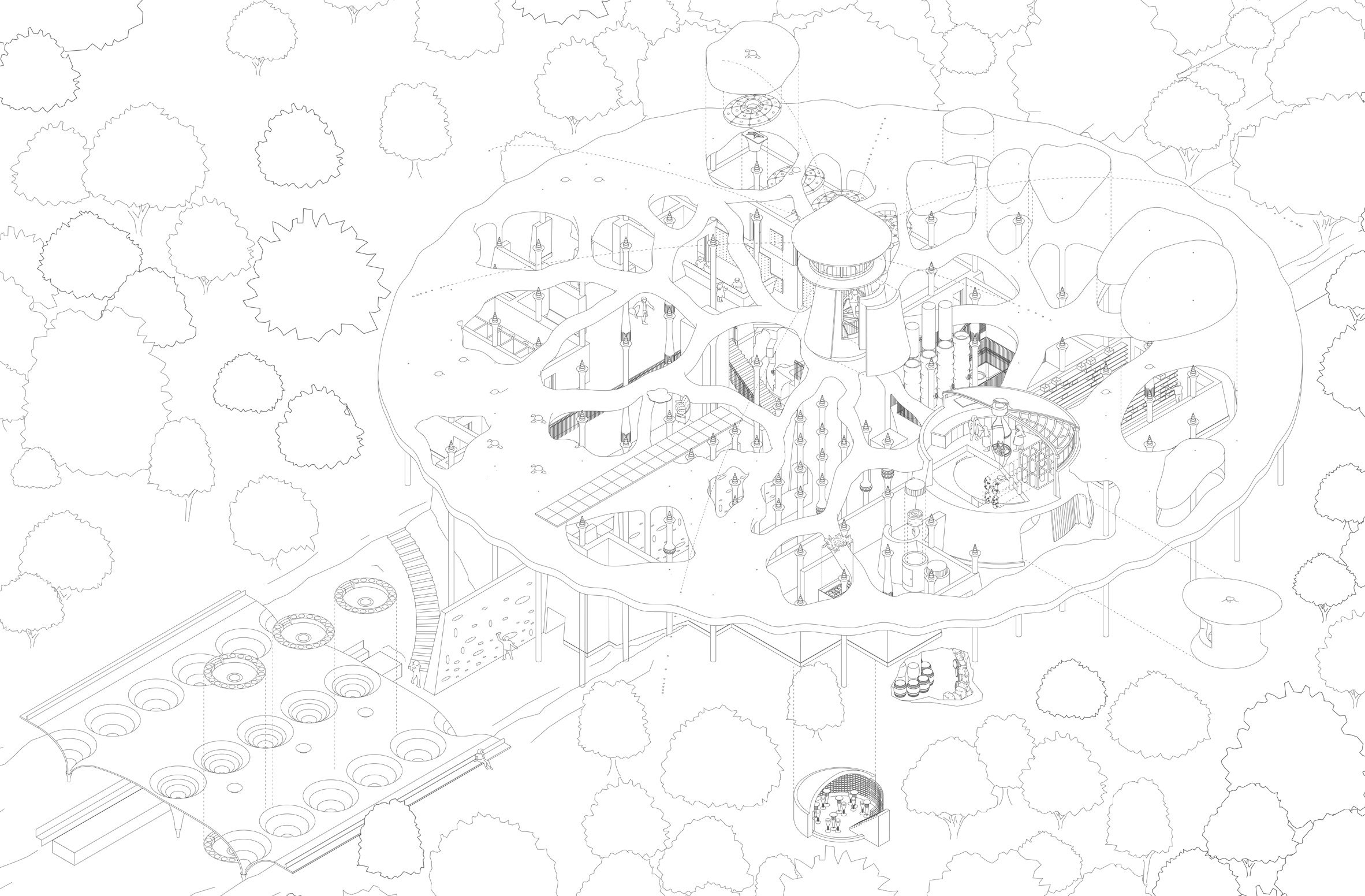
Nature's Interlude by Clara Everest

"Located in an almost flat, open field landscape, this proposal is conceived as a human-made hedgerow. It is an investigation into the merging of architecture and landscape.

"Conceived to be self-sufficient as possible, it utilises solar energy, heat recovery, natural ventilation and natural water filtration from the adjacent pond.

"Earth walls disperse outwards from the facility into the landscape, representing the roots and weaving structure of the hedgerow, whilst also framing views and connecting to the far horizons of the surrounding landscape.

"The fractured and dispersed walls create a multitude of courts and sheltered gardens referenced back to the traditional fruit walls of England."

Student: Clara Everest
Course:
BSc Architecture, Year three
Tutor: Mike Kane
Email: clara.everest[at]gmail.com

University of Reading

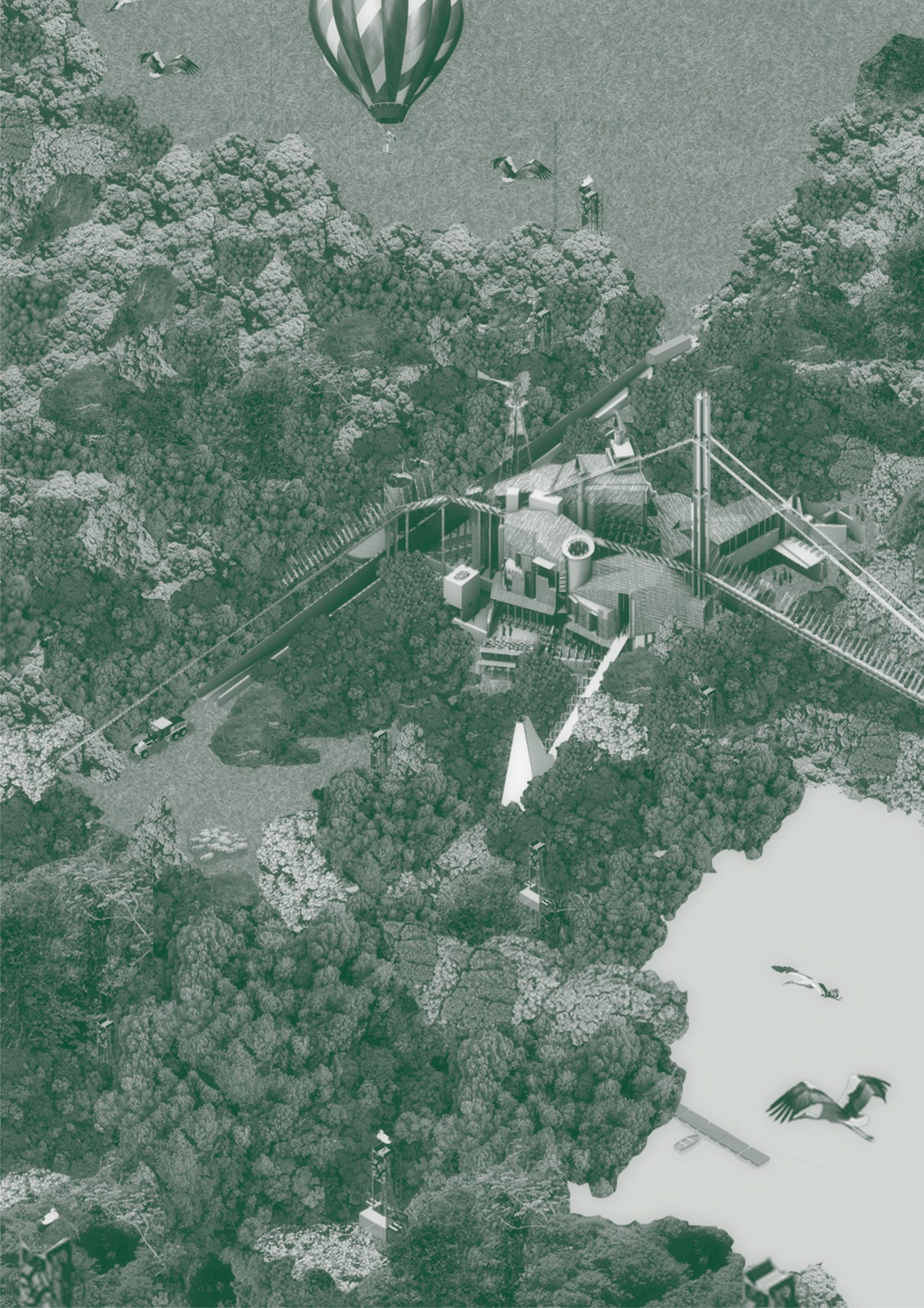
The Lambourn Valley MycoWorks and Centre for the Rehabilitation of Badgers by Harvey Warren

"The project is a 'collaboration' between clay target shooters, badgers, fungi and trees. Set along with the M4, earthworks are appropriated as sites of diverse life instead of specific human functionality.

"The building and badger tunnel bridge, which spans the M4, are linked by paths and tunnels through wild woodland, full of shooting huts and badger sets.

"The cob and mycelium building hosts a badger vet, cherry winery, shooting clubhouse, and mycelium moulding facility. Life flourishes within, and the product of these unusual relationships is a sustainable, diverse and exciting landscape, driven by organic processes."

Student: Harvey Warren
Course:
BSc Architecture, Year three
Tutor:
Associate Professor Oliver Froome-Lewis
Email:
hpw2000[at]hotmail.com

University of Reading

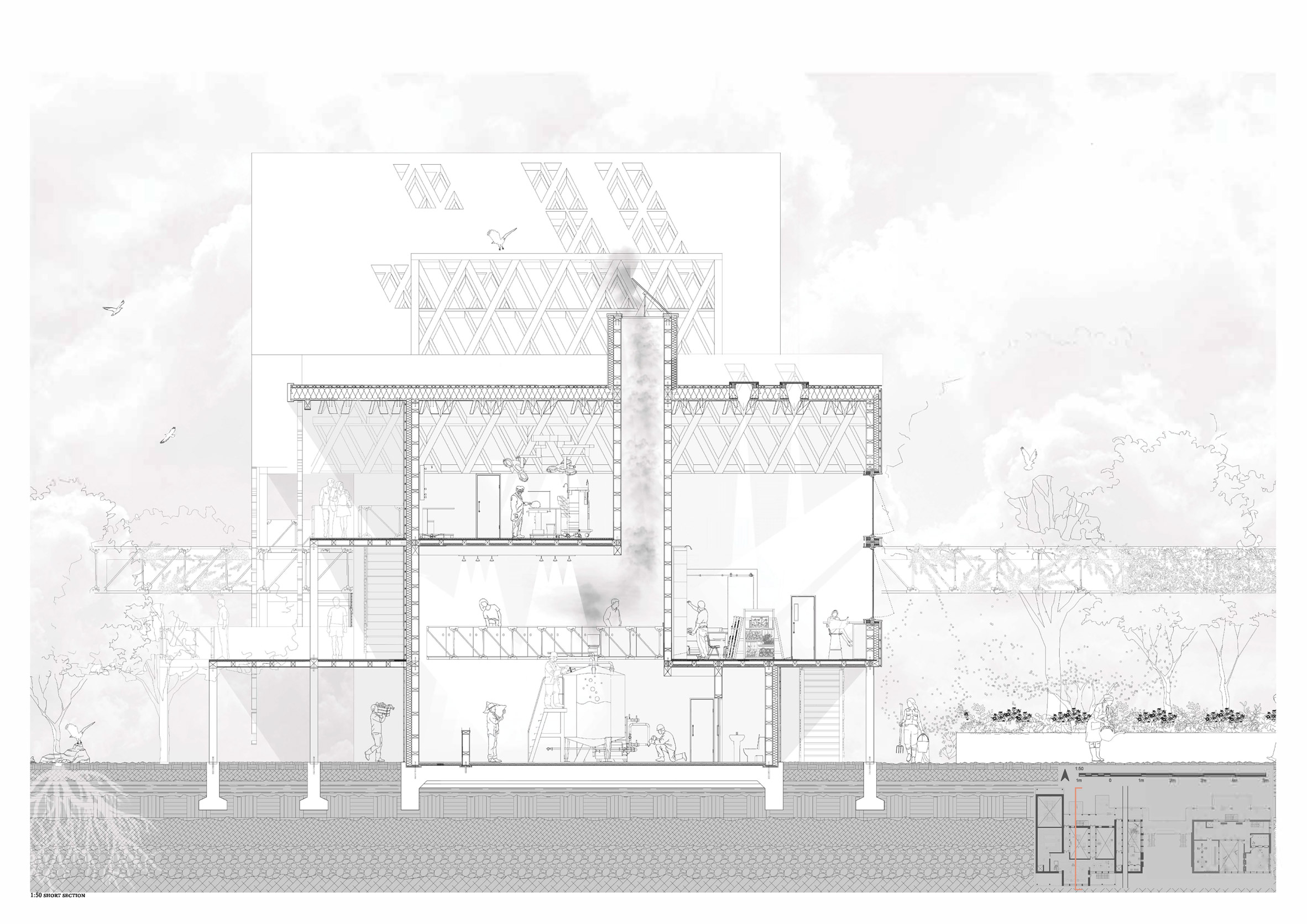
Alternative Rurality by Lloyd Jackson

"The AR project proposes a way in which we can better integrate into the rural landscape. As we gradually cut ties with the EU and move away from the single farm payment, agriculture in the UK will go through the most significant transformation since the post-war era.

"A farmer's subsidies will no longer equate to the amount of land they farm, but how well they can maintain and enrich the ecology of their land and incorporate ecologically beneficial practices.

"In this proposal, animals stranded in bounded pockets of land are assisted through the introduction of wildlife bridges, the expansion of hedgerows and the introduction of a new fruit forest."

Student: Lloyd Jackson
Course:
BSc Architecture, Year three
Tutor:
Michelle Tomlinson
Email:
l.wyn.jacksonp[at]gmail.com

University of Reading

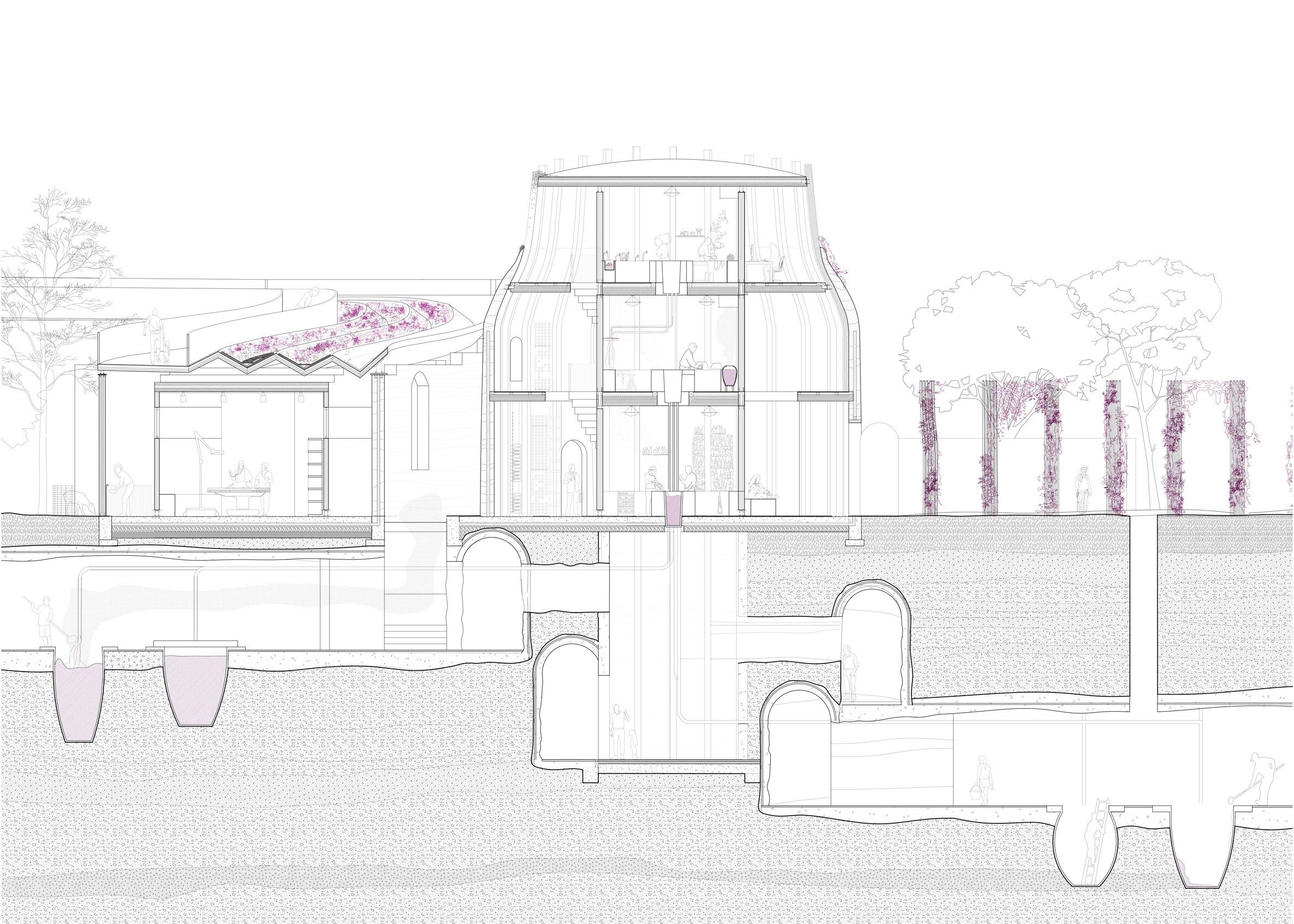
Revival of the Orchard by Rosie Clark

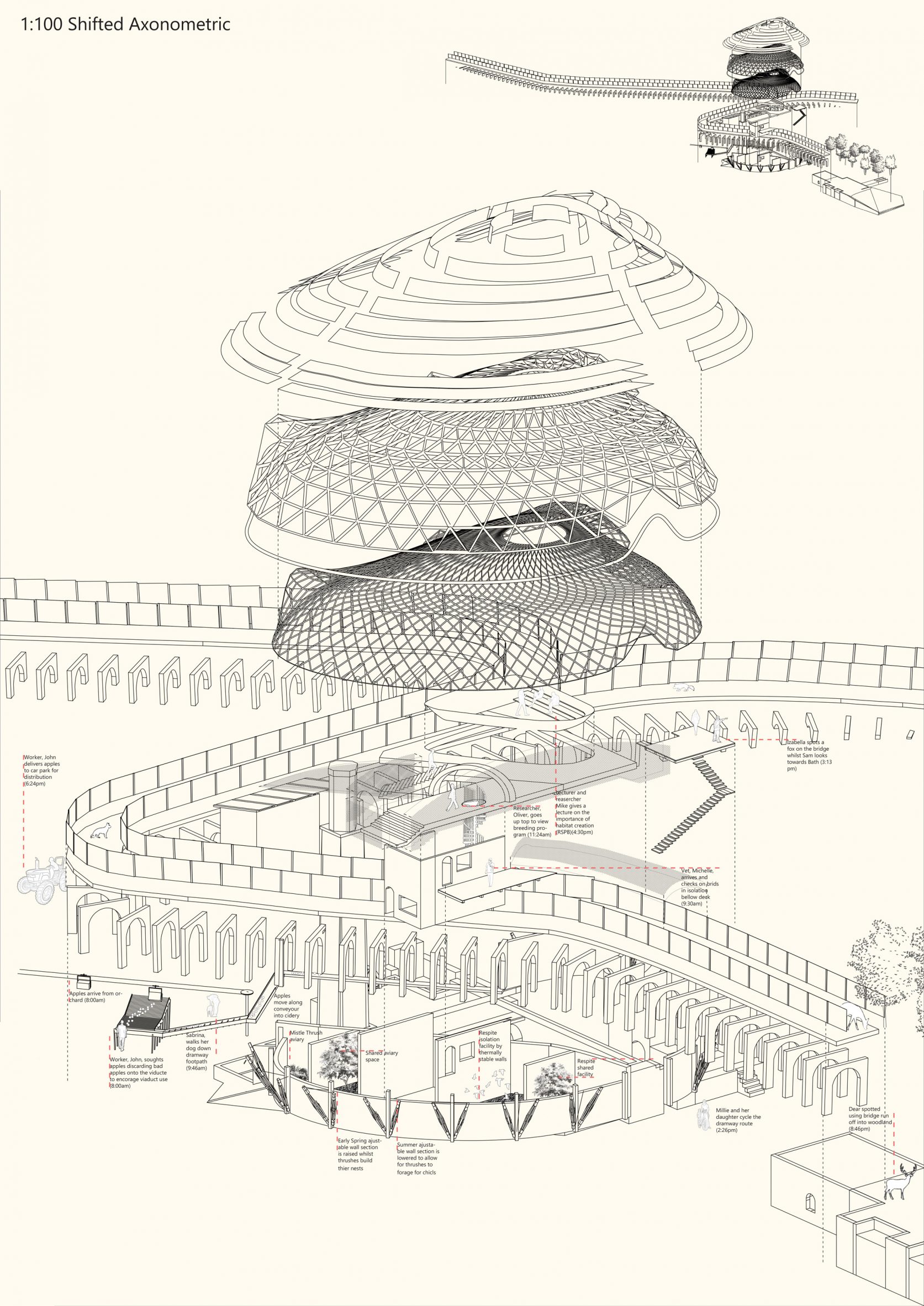
"Situated in an open field landscape in southern England, this proposal introduces endangered species of countryside animals into a new traditional orchard environment. Drawing inspiration from the local vernacular, the truss form of the timber-framed facility gives character to the spaces offering respite, care and breeding facilities for birds, dormice and hedgehogs.

Conceived to repair habitat fragmentation created by the M4, an animal bridge extends from respite care spaces to the wider landscape, composed of a network of habitats for species outlined in the National Biodiversity Action Plan.

"By creating a landscape designed for the re-establishment of biodiverse ecosystems, proposals encourage biodiversity and ecological complexity, whilst restoring a historical farming landscape."

Student: Rosie Clark
Course:
BSc Architecture, Year three
Tutor:
Michelle Tomlinson
Email:
rosielauraclark[at]gmail.com

University of Reading

From Strata to Structure by Sofia Sergiou

"This project aims to map the natural past of a site, adding to its history and letting the geology and landscape guide the scheme's placement design.

"My designated site was the location of rare, well-preserved fossils and shells, which led to me selecting snails as my endangered species for the project.

"Continuing with the theme of pests, I selected brambles as my orchard fruit, something that is seen as a weed of sorts, being internationally grown. This was then aged in clay pots underground using an ancient method, almost being treated as a fossil itself."

Student: Sofia Sergiou
Course:
BSc Architecture, Year three
Tutor:
Sabrina Morreale
Email:
sofiasergiou2000[at]hotmail.co.uk

University of Reading

The Formalisation of Nature by Tom Rogan

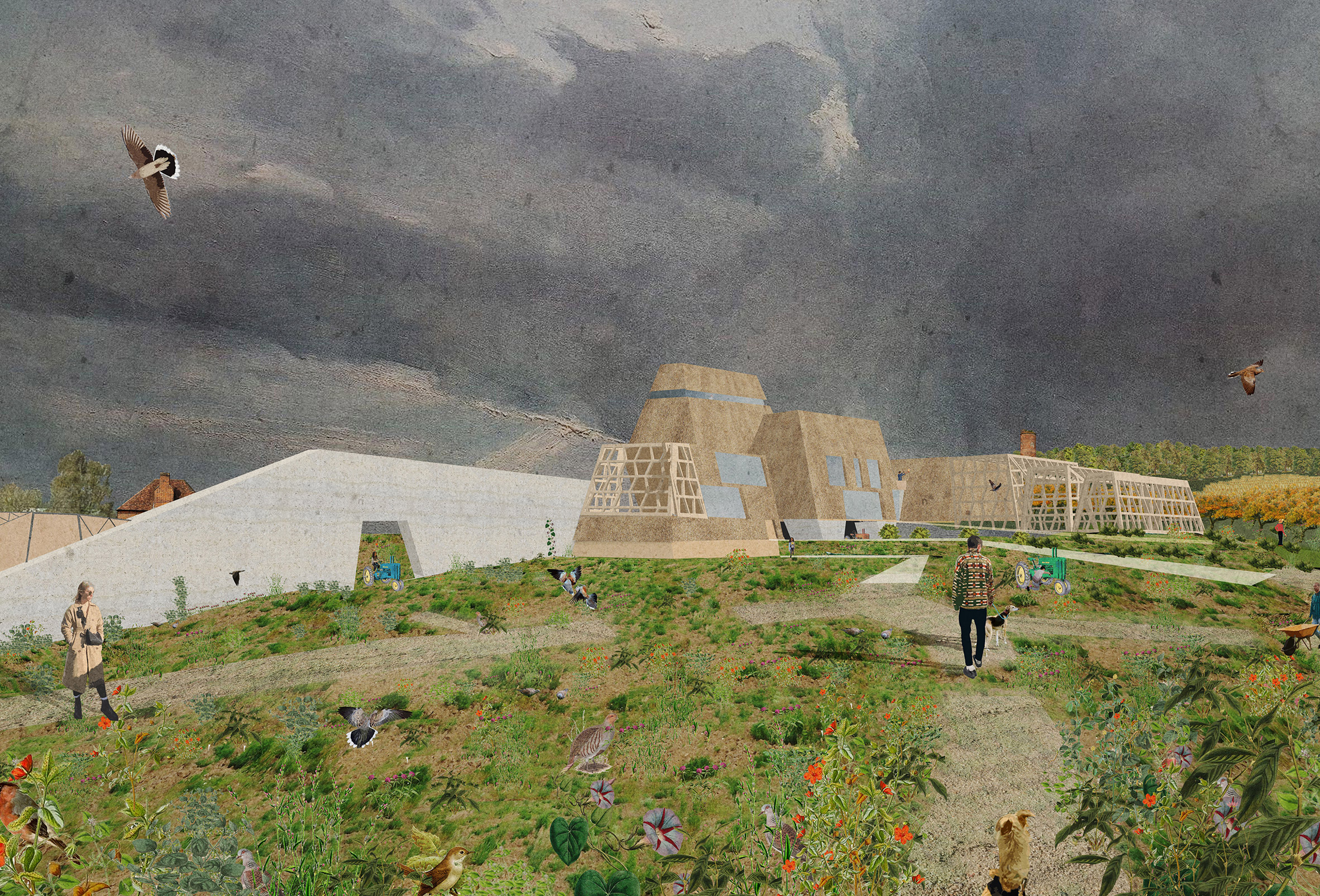
"Situated adjacent to Wilder's Folly in West Berkshire, this project forms a considered narrative around local food production, endangered bird species and vernacular materials.

"A well-trodden existing footpath aligns a central spine wall of rammed chalk, with adjoining spaces including a medlar orchard, brandy distillery and breeding facility for turtle doves.

"Thatched tapered forms, inspired by both dovetails and William Morris textiles are integrated into the undulating landscape. The resulting project forms a sensitive mosaic of wild-flower meadows, hedgerows of hawthorn, mulberry and elderflower, rewilding an area once consumed by agriculture into a long-term habitat for local wildlife."

Student: Tom Rogan
Course:
BSc Architecture, Year three
Tutor:
Dr John Harding
Email:
tjrogan[at]btinternet.com

University of Reading

Mistletoe by Yann Bracegirdle

"The remnants of historic mining and lost rail lines form the spine for a new architecture for refuge and renewal. Ancient and fragmented tales of mythology to ecotherapy were discovered here to create new narratives of dislocated places and tales. King Bladud's recovery from leprosy and St Anne's healing well, intrinsically connected with nature, still run the length of the site.

"This proposal feeds off a system of corridors and habitats to provide a place with a refuge, centred around the timber three-layered gridshell atrium. A sensitive approach is merging old and new structures and pathways to re-connect the past in the present."

Student: Yann Bracegirdle
Course:
BSc Architecture, Year three
Tutor:
Mike Kane
Email:
yann.bracegirdle[at]gmail.com

University of Reading

An Urban Escape, Bringing Balance to Bristol by Adam Dobson

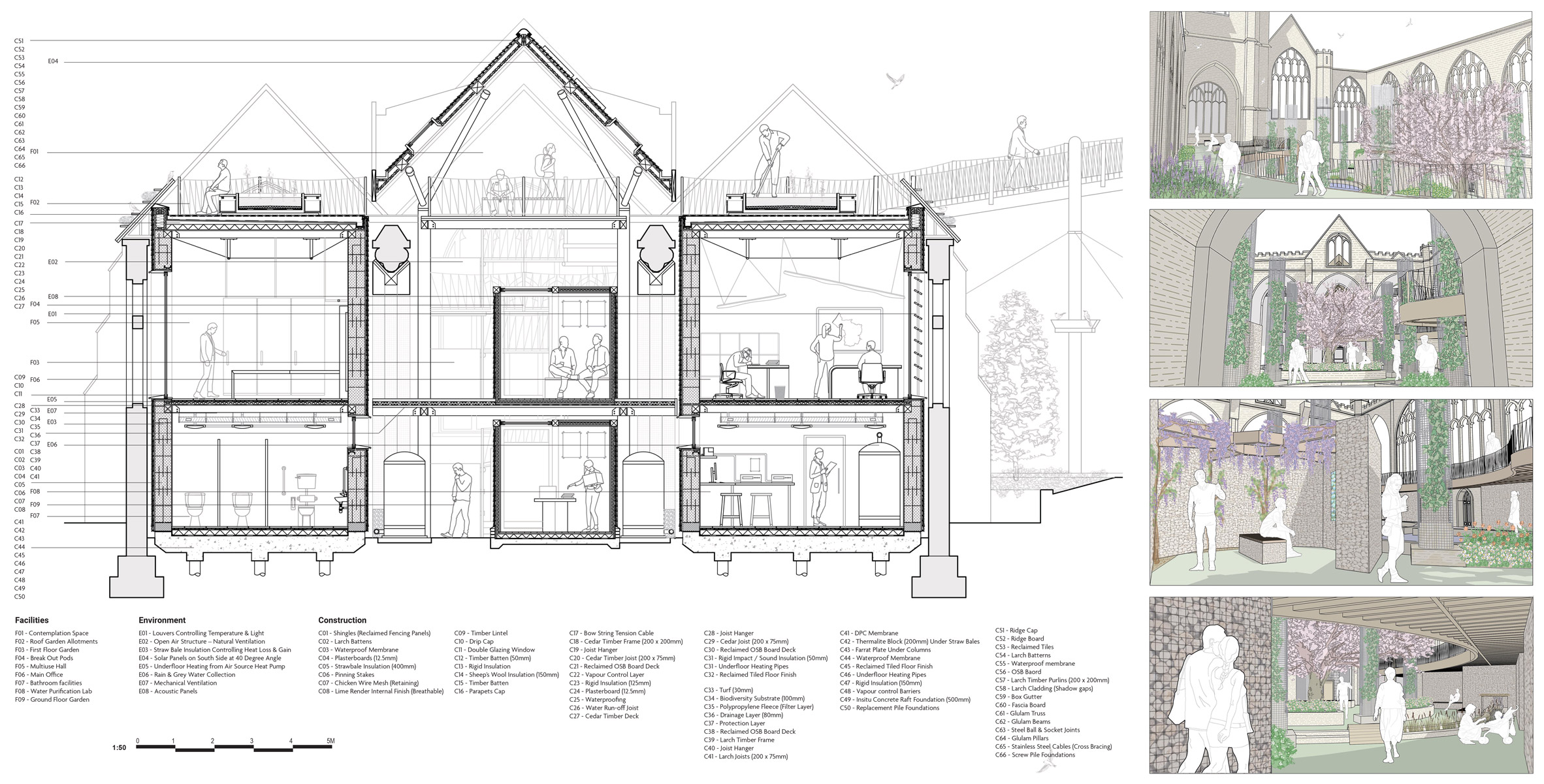
"With the increasing pressures of modern-day life combined with the demise of natural habitats and the climate emergency, this project looked to create an outlet by repairing, re-purposing and rewilding Bristol's Temple Church, a Grade II* listed ruin.

"The proposed public mental health and well-being service provide ecotherapy whilst subsequently increasing the biodiversity within the urban context.

"Adopting a regenerative design approach, the project looked to utilise locally-sourced reclaimed materials, whereby 'whole system thinking' was integrated into the design, creating a resilient site-specific intervention that aims to leave the ruin, the people and local wildlife in a better condition."

Student: Adam Dobson
Course:
Master of Architecture (MArch), Year one
Tutor:
Design Research Unit 2: Regenerative Design – Radical Retrofit & Adaptive Reuse. Academic Lead: Dr Izabela Wieczorek, Studio Practitioners: Diana Dina and Martin Lydon (Haworth Tompkins)
Email:
a.j.dobson[at]student.reading.ac.uk

University of Reading

The Cultural Kitchen Project by Daniel Hellyer

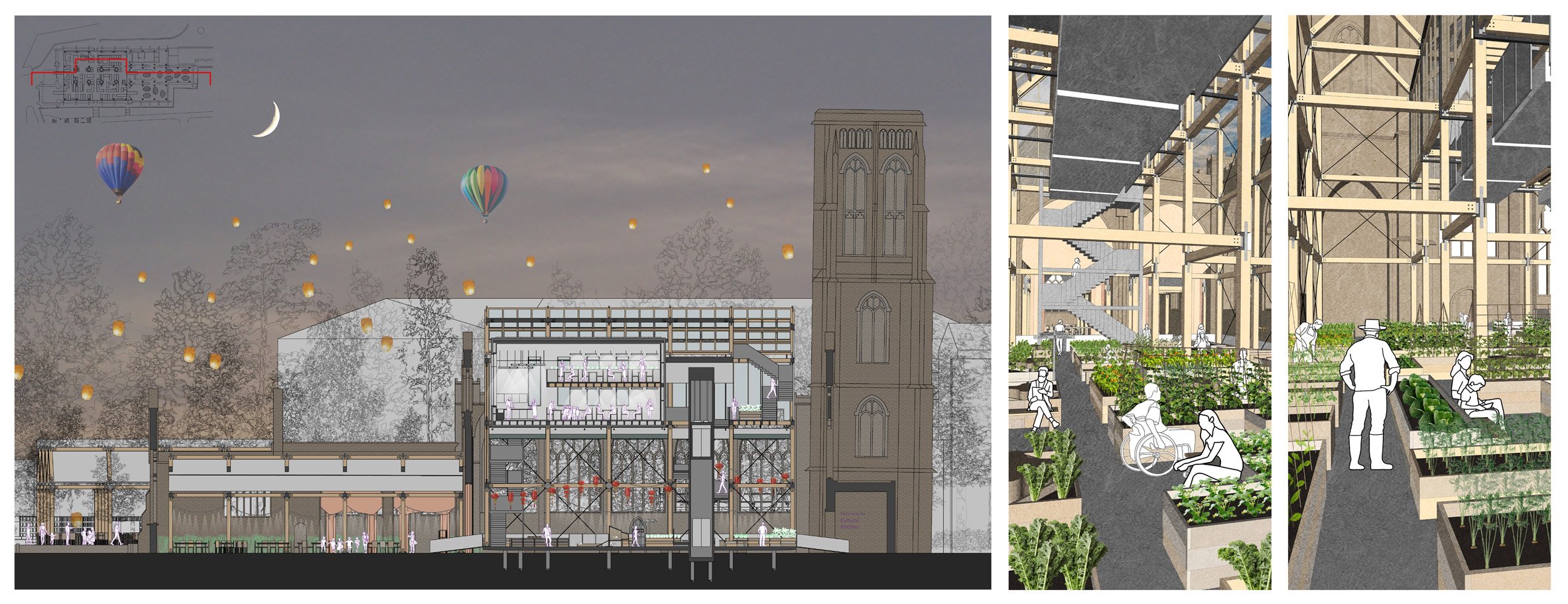
"The project is centred around regenerative design and radically retrofits a Grade II* listed church ruin in Bristol into an educational kitchen. It seeks to encourage community interaction and collaboration through urban food production and the celebration of cultural events throughout the year.

"Allotment spaces are designed to collectively grow food, which can be harvested and used within the cultural kitchen for events and education as well as donated to vulnerable communities suffering from food poverty.

"Whilst demountable construction techniques respect the site's heritage, the choice of materials and environmental strategies, such as rainwater harvesting, biodiversity gain and renewable energy production help to limit the project's total embodied carbon."

Student: Daniel Hellyer
Course:
Master of Architecture (MArch), Year one
Tutor:
Design Research Unit 2: Regenerative Design – Radical Retrofit and Adaptive Reuse. Academic Lead: Dr Izabela Wieczorek, Studio Practitioners: Diana Dina and Martin Lydon (Haworth Tompkins)
Email:
danielhellyer13[at]gmail.com

University of Reading

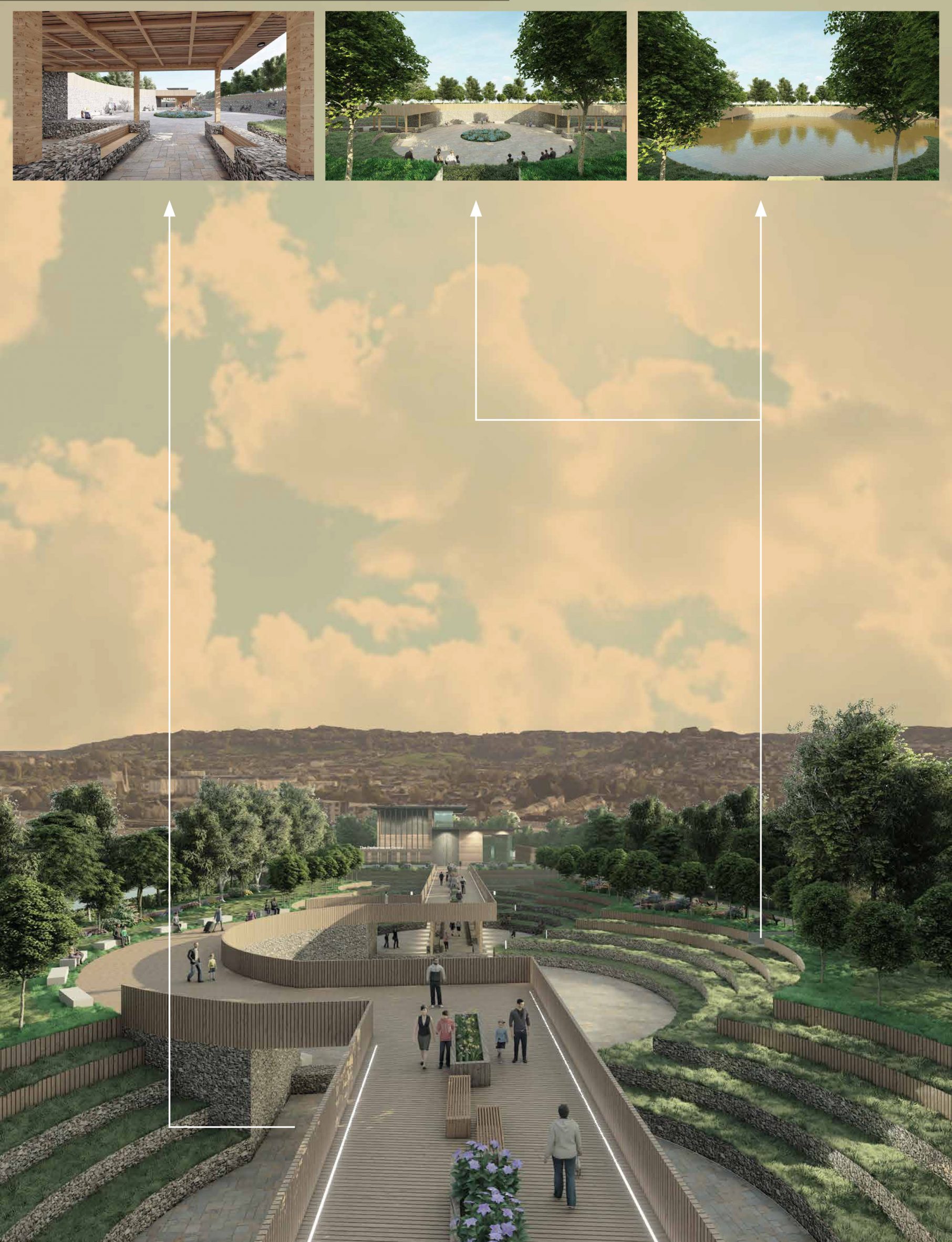
Inspiring Art through Nature | Inspiring Communities through Art by Ethan Cherrett

"The proposal for the Weston Island redevelopment project sought to reshape the existing landscape of the island to accommodate public inhabitation, inspiration and future flood mitigation.

"The project aimed to reinvigorate the island and promote the bridging of the surrounding communities regardless of the demographics they find themselves situated within, as well as to radically reuse both the existing structures and the landscape to form the proposed structures.

"Rammed earth was utilised as a driving component throughout, where 40 per cent of the build-up of walls were derived from the excavated subsoil from the proposed terraced SUDs System."

Student: Ethan Cherrett
Course:
Master of Architecture (MArch), Year one
Tutor:
Design Research Unit 1: Collaborative Design – Working to Empower Communities to Make Change. Academic Lead: Prof. Lorraine Farrelly, Studio Practitioners: Piers Taylor (Invisible Studio) and Georgie Grant (Onion Collective Watchet)
Email:
ethancherrett[at]gmail.com


Partnership content

This school show is a partnership between Dezeen and The University of Reading. Find out more about Dezeen partnership content here.

The post Ten end-of-year architecture projects from students at the University of Reading appeared first on Dezeen.


from Dezeen https://ift.tt/3AEpxol