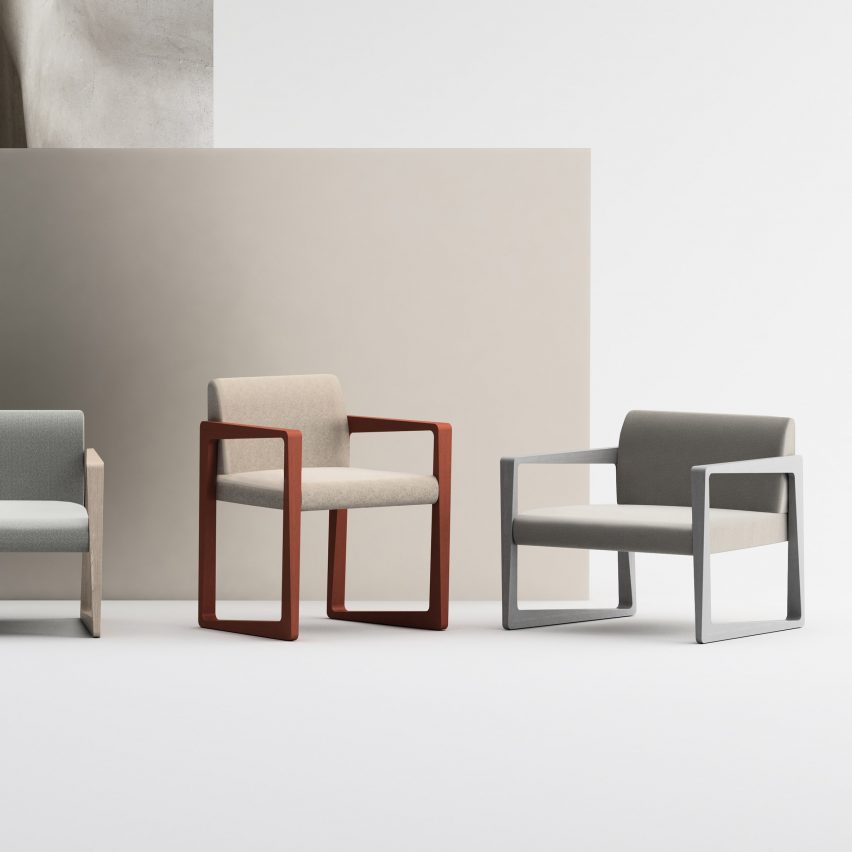
Dezeen Showroom: US brand StyleNations has released the Askew chair, which has geometric cushions and a contrasting sculptural frame.
The Askew chair has a frame made up of two beechwood squares. Each square looks as if it has a parallelogram carved out of it, giving the whole chair a tilted appearance.
The Askew chair is available in a range of finishes and upholstery
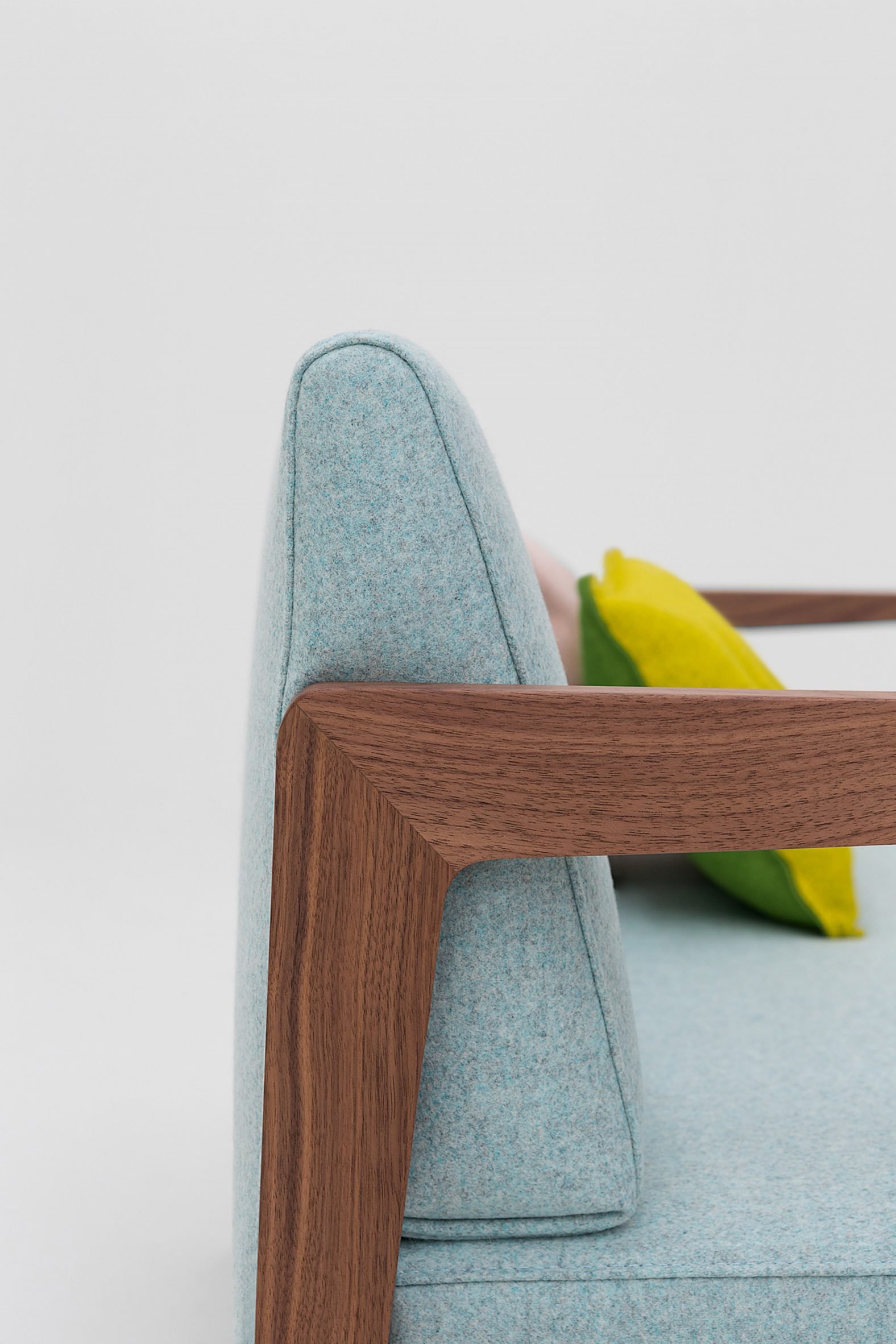
In contrast to the sculptural frames, which StyleNations describes as "sinewy" are two simple, geometric cushions making up the seat and backrest.
The large and comfortable-looking cushions intend to give the chair an inviting appearance.
The frame is made of solid beechwood
"With its contemporary design, strong nature and delicate workmanship, Askew gives a timeless answer to the classical understanding of comfort," said StyleNations.
Askew is available as either a dining or lounge chair, or as a two-seater sofa.
It is made of solid beech, and its cushions can be upholstered in fabric, leather or vinyl in an array of colours.
About Dezeen Showroom:Dezeen Showroom offers an affordable space for brands to launch new products and showcase their designers and projects to Dezeen's huge global audience. For more details email showroom@dezeen.com.
Dezeen Showroom is an example of partnership content on Dezeen. Find out more about partnership content here.
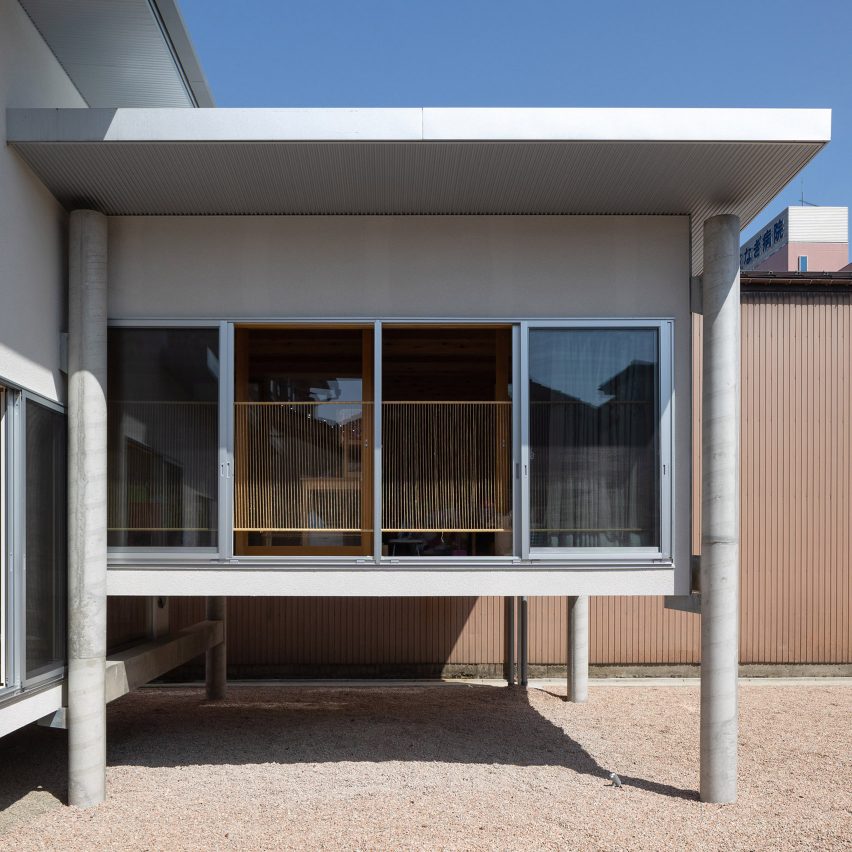
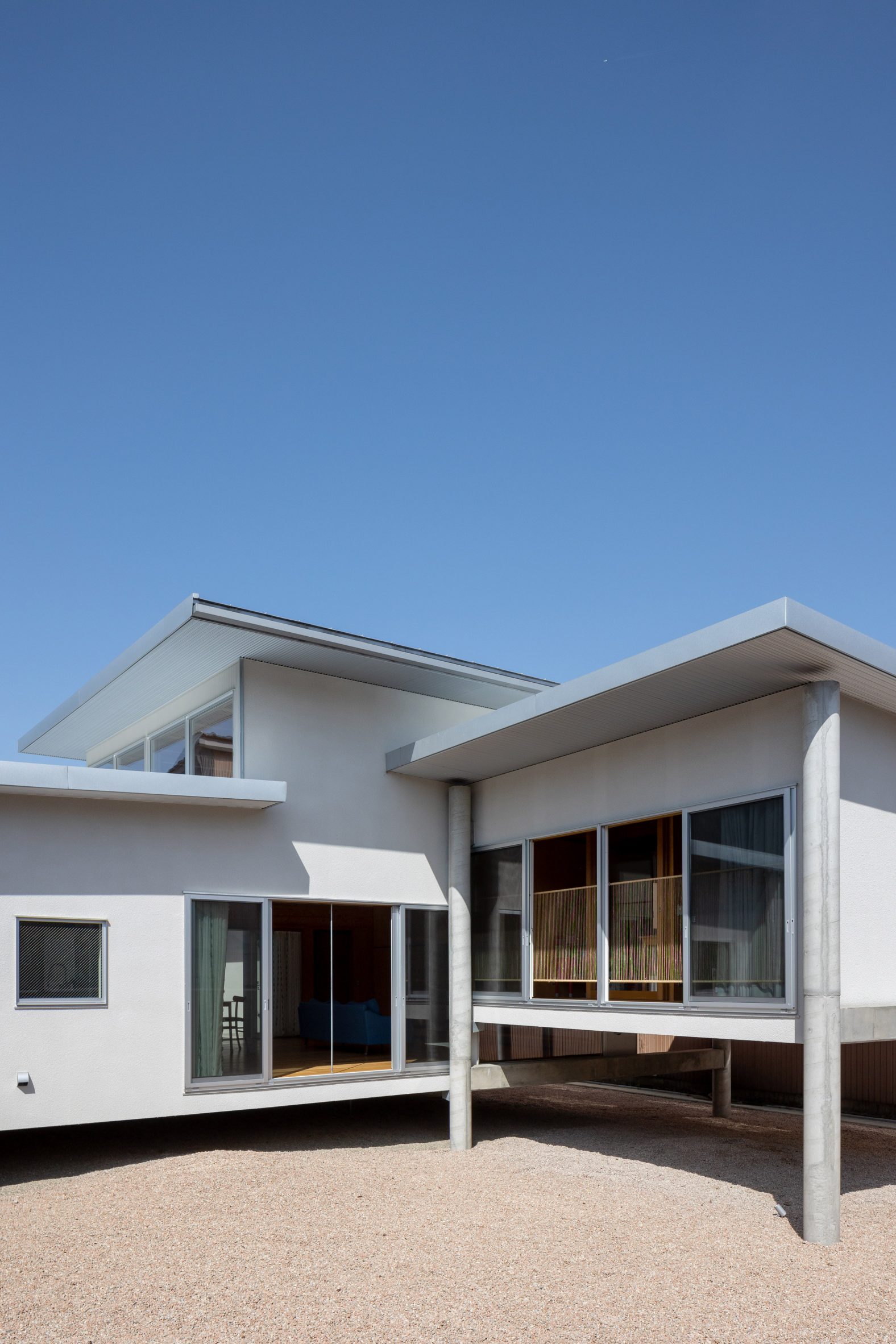
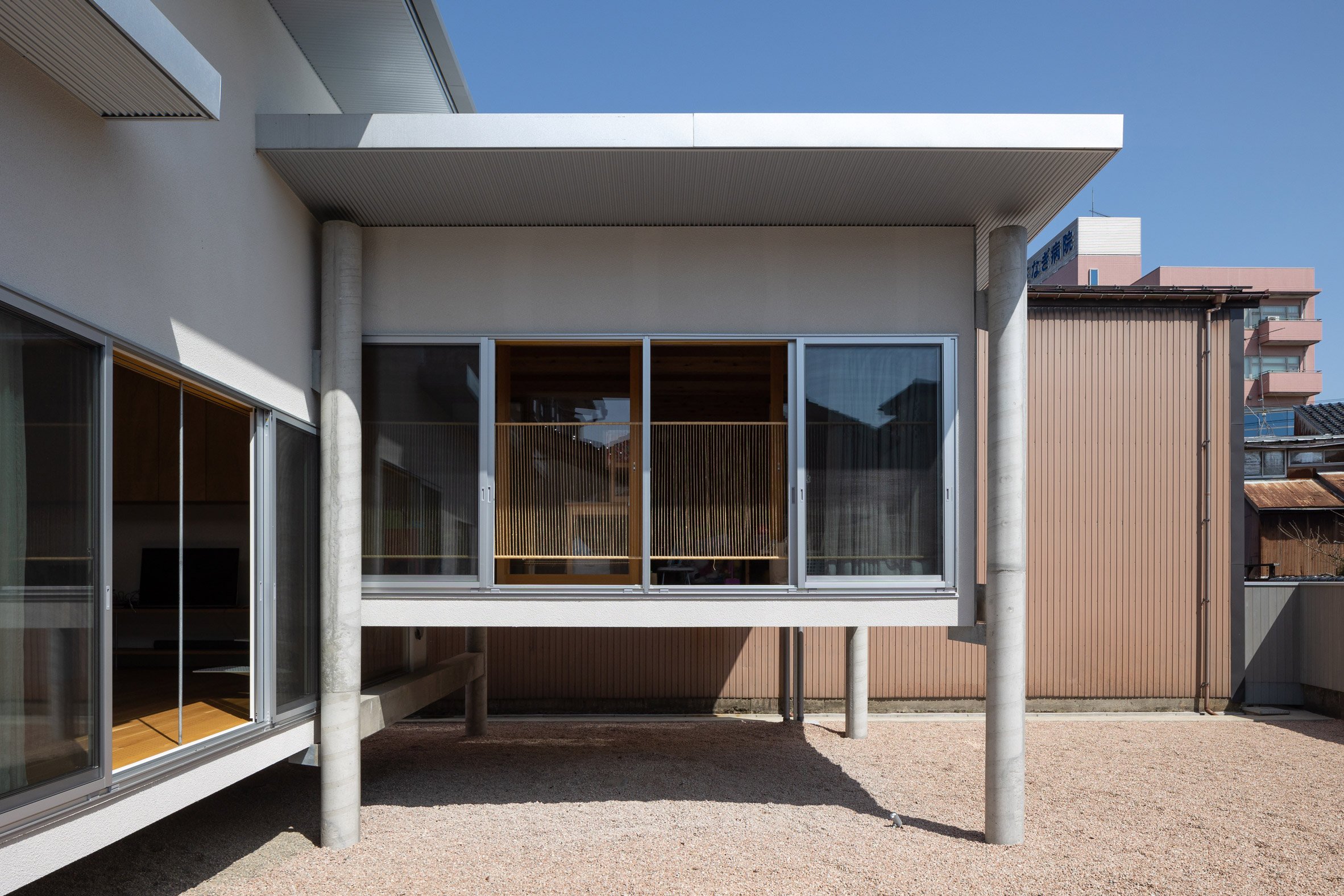
Japanese studio Unemori Architects has completed a house in the city of Takaoka that is raised 70 centimetres above the ground on concrete stilts to protect it from flooding and heavy snow.
The owners of the House in Takaoka – a couple with two young daughters – approached Tokyo-based Unemori Architects to design a home that responds to the region's harsh climate.
Unemori Architects has raised a Japanese house on concrete stilts
In winter, this area of the Toyama Prefecture typically experiences heavy snowfall, short daylight hours and high humidity.
The single-storey, 112-square-metre building is raised above the ground to reduce the risk of flooding from the nearby river, while also allowing for air circulation and protection from snow accumulation.
The stilts help protect it from flooding and heavy snow
The house is built on a deep lot in an old district of Takaoka, flanked by a neighbouring property to the north and a warehouse to the south.
Unemori Architects was tasked with creating a building that faces away from its neighbours while incorporating large windows that allow maximum daylight to enter.
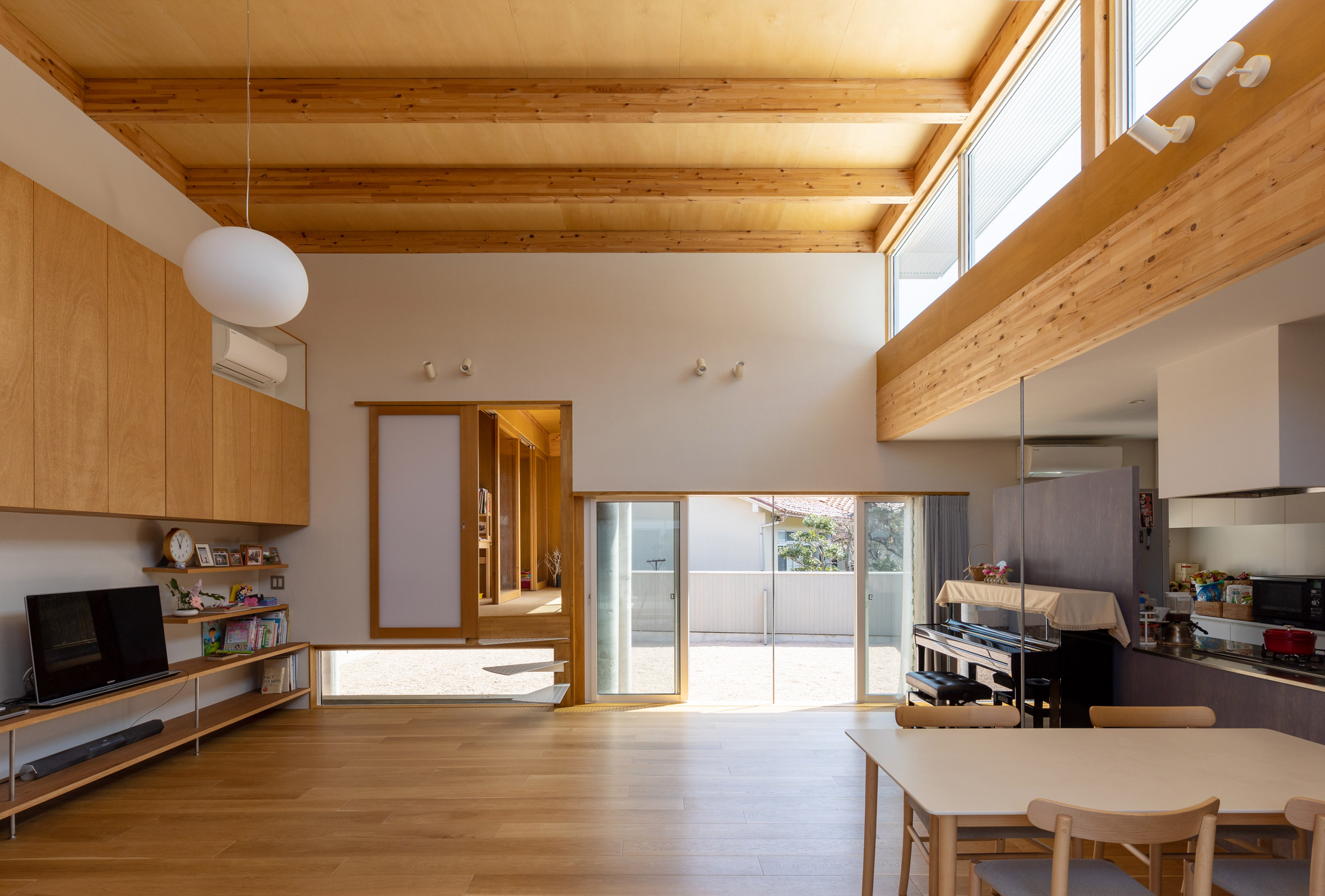
Clerestory windows line the main open-plan living area
The firm divided the building into three parts with varying floor and ceiling heights, which helps to differentiate between the internal rooms.
The tallest space contains the main open-plan living area. Clerestory windows above the kitchen and a large opening in the adjacent wall allow natural light to flood into this room and provide views of the sky.
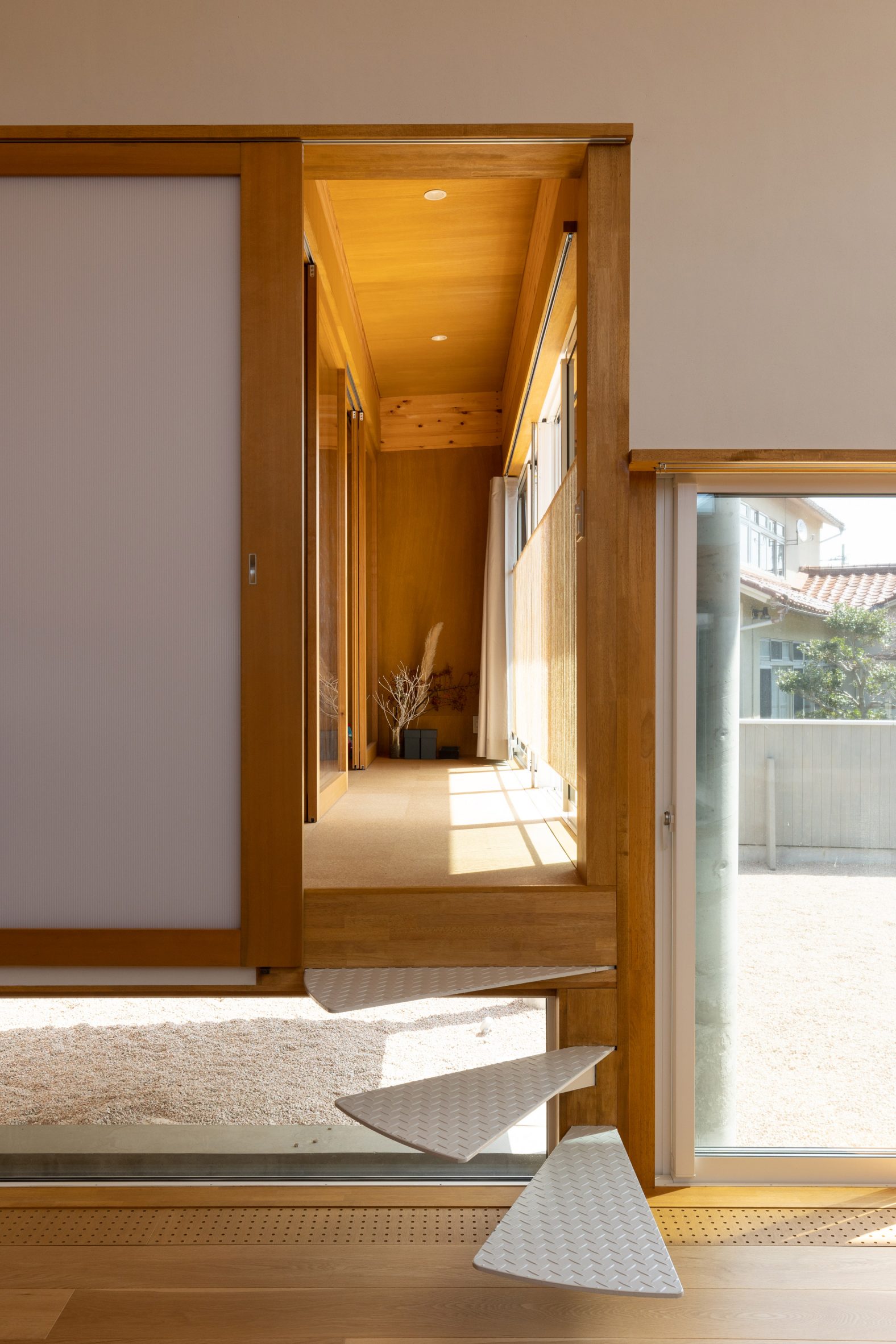
A short set of cantilevered stairs leads to the children's bedrooms
The living room is lined on one side by a tiled area resembling a traditional engawa – a verandah-like space between inside and outside. The floor height is lowest at this point to enhance the connection with the adjacent sheltered courtyard.
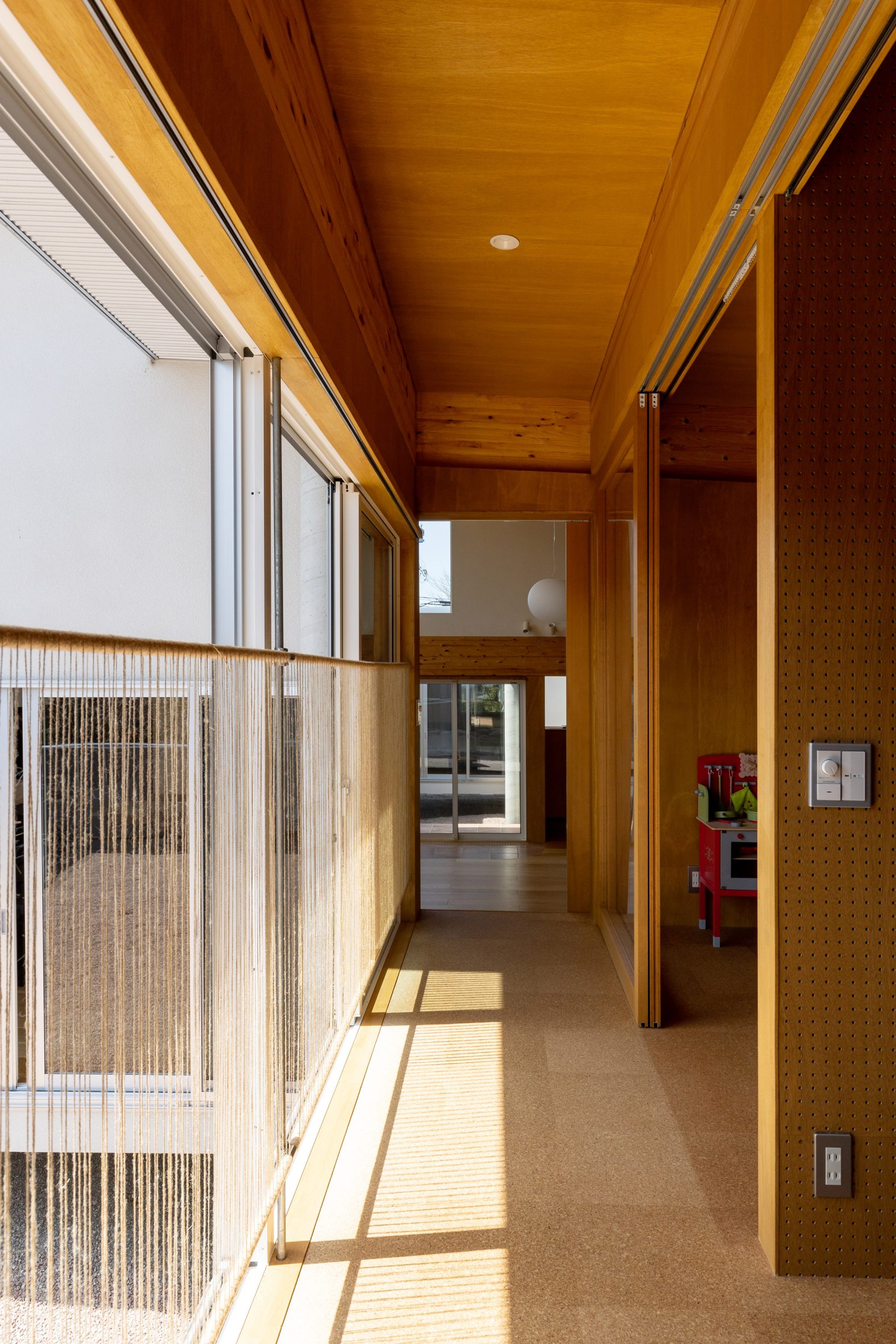
The main bedroom is positioned on the opposite site of the courtyard and is reached via a corridor lined with utility spaces including the bathroom and laundry room.
A separate volume adjoining the living room contains the children's bedrooms. This space is elevated above the others and is reached using a short set of cantilevered stairs.
The house is supported by reinforced-concrete piles that extend down nine metres into the earth and are intended to resemble utility poles where they emerge from the ground.
Wooden finishes are used throughout the dwelling
The concrete pillars support wooden roof beams that span the living spaces. The floors are suspended from the structure using steel rods, leaving the underside of the building free and unobstructed.
Japanese architect Hiroyuki Unemori founded his eponymous studio in 2009. The office focuses on producing buildings that appear simple despite often employing complex structural solutions, like an "earthquake-proof" community centre in Fukushima and a house on a tiny plot in Tokyo.
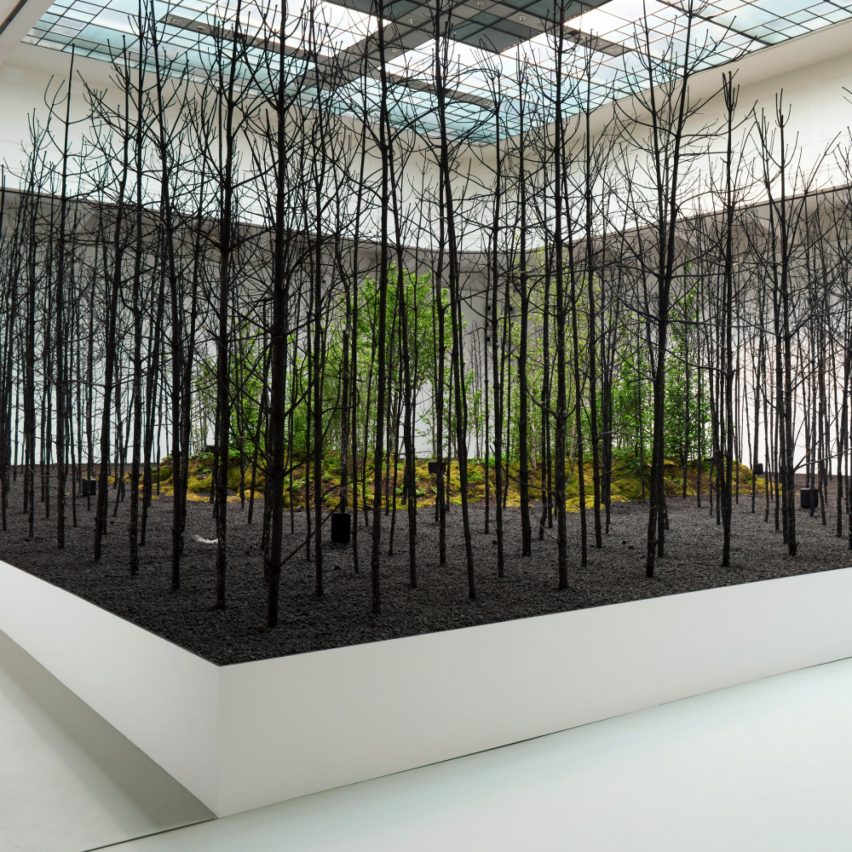
All longlisted studios are listed below, each with a link to a dedicated page on the Dezeen Awards website where you can find an image and more information about each one.
All longlists announced this week
The studios selection is the fourth Dezeen Awards 2021 longlist to be unveiled. The architecture longlist, interiors longlist and design longlist were published earlier this week, and tomorrow the new media categories longlist will be announced.
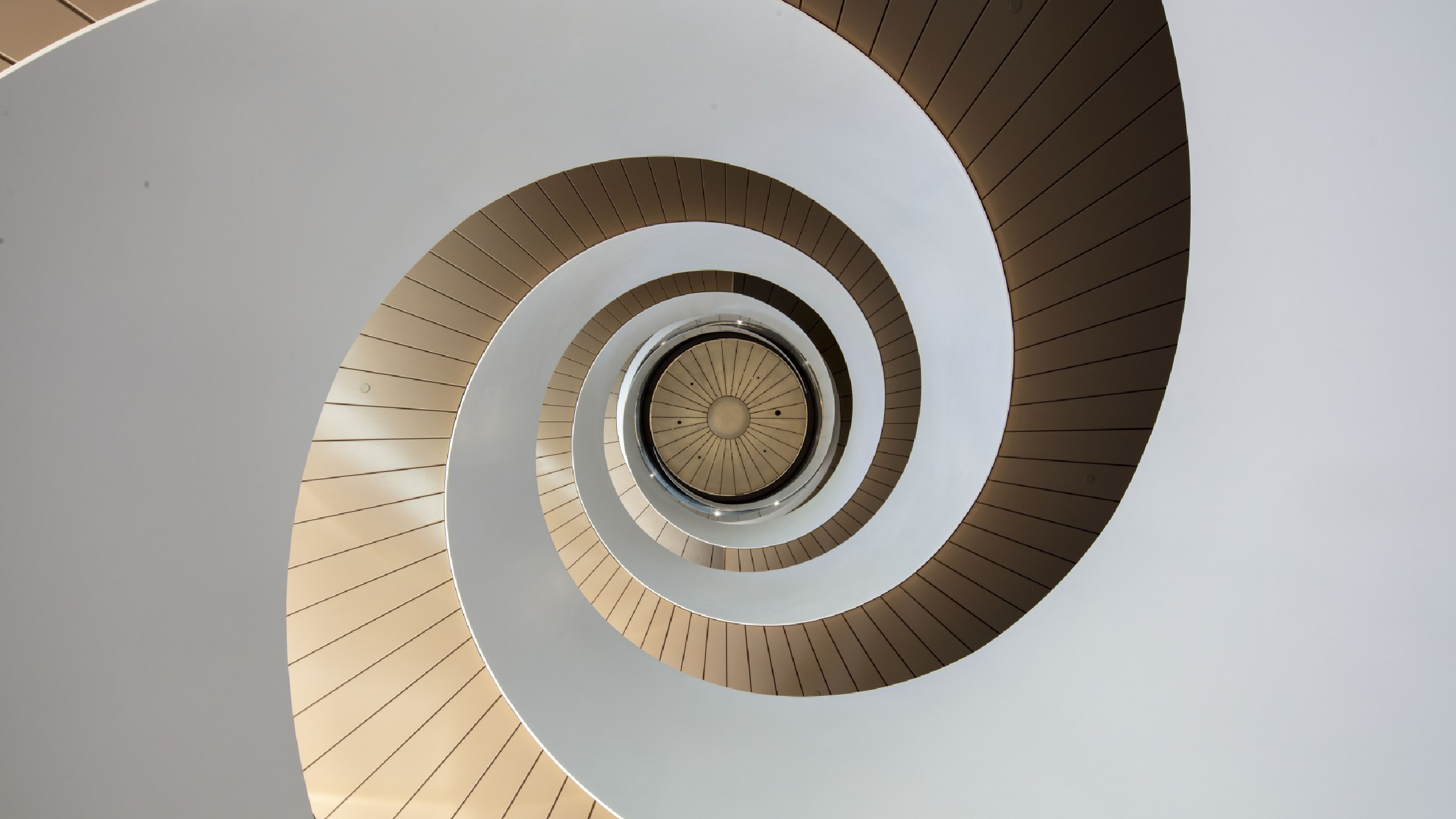
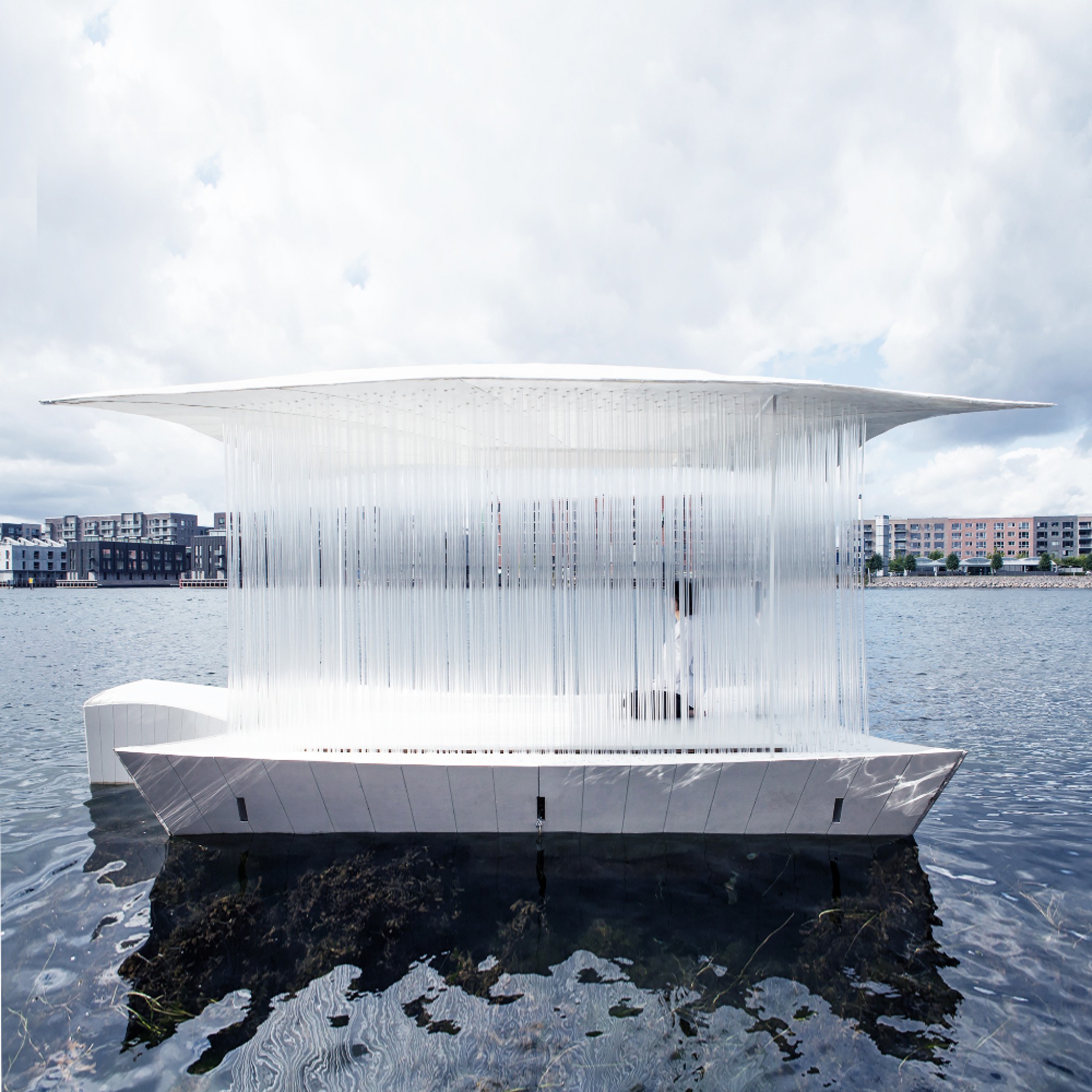
Above: UTS Central - Helix Stair by Fjmtstudio, which is longlisted in the architecture studio of the year category (photo is by John Gollings). Top: Mazha System 1.0 by Mario Tsai, who is longlisted in the emerging design studio of the year category (photo by Xu Xiaodong)
Longlisted projects and studios have been selected from over 4,700 entries from 87 countries for the fourth edition of our awards programme, which celebrates the world's best architecture, interiors and design as well as studios and individuals producing the most outstanding work.
The judges will determine which studios feature on the shortlists, which will be announced in September. A further round of judging by our master jury will determine the category winners, which will be announced in November.
Subscribe for updates
To receive regular updates about Dezeen Awards, including details of how to enter next year, subscribe to our newsletter.
See the full studio longlist below:
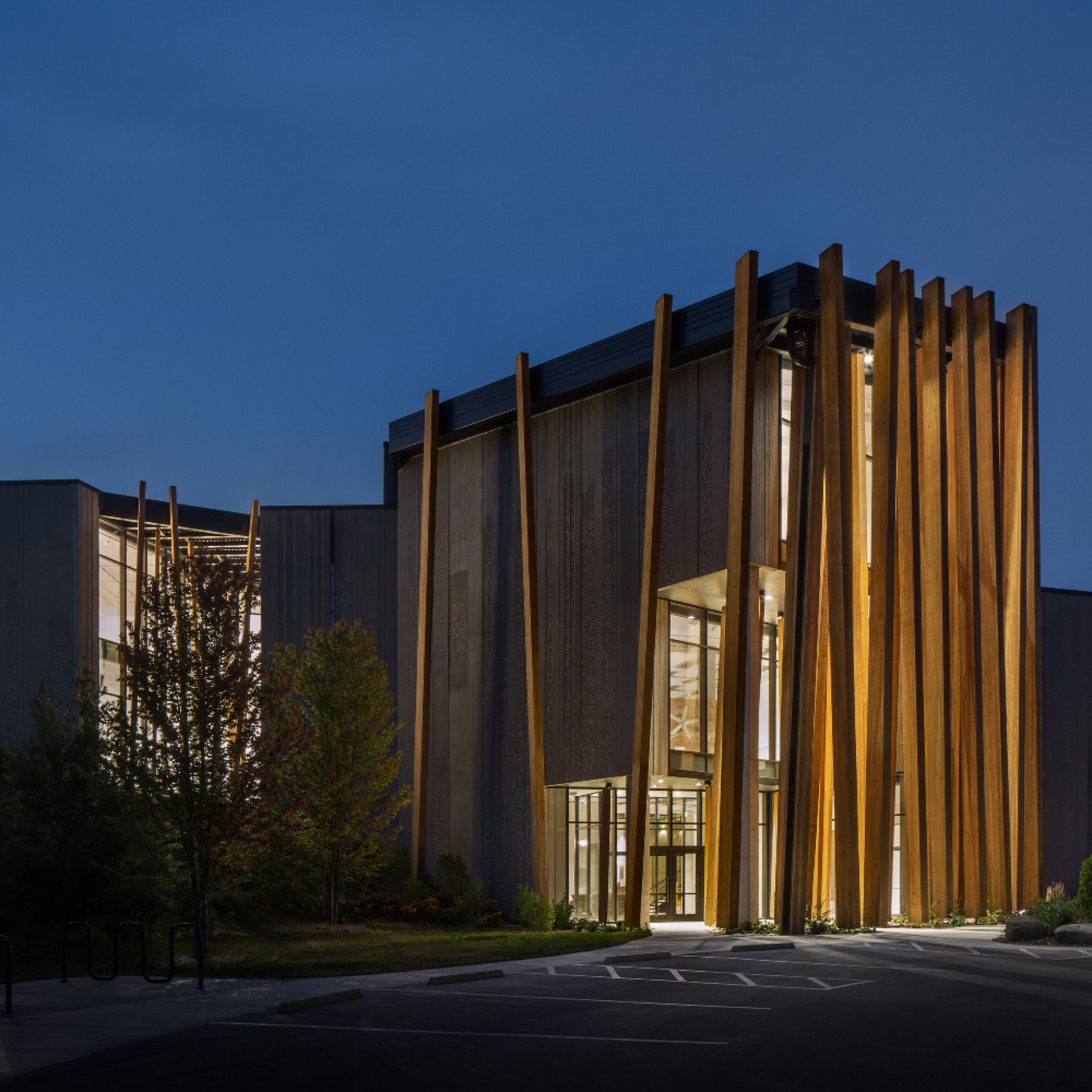
Art Preserve by Tres Birds Workshop, which is longlisted in the architecture studio of the year category. Photo is by James Florio
A panel of leading women in product design will discuss their experience of working in the field in this live talk produced by Dezeen for Philips TV & Sound. Watch live from 2pm London time.
Philips TV & Sound will be represented on the panel by its senior lead designer Lisa Grahner. Pernilla Johansson, chief design officer at Swedish appliance manufacturer Electrolux, also appears on the panel, alongside Joerka Koenders, founder of her eponymous design and branding consultancy.
The talk will be moderated by Dezeen's deputy editor Cajsa Carlson, and will explore the challenges that women in the field of product design face as well as how gender parity in the industry can be improved.
Titled Women in Product Design, the talk is the second in a series of four by Dezeen and Philips TV & Sound exploring issues at the cutting edge of the industry.
A 2018 report by Design Council found that men account for 95 per cent of the product and industrial design workforce in the UK, despite the fact that 63 per cent of the country's art and design students are women.
Lisa Grahner, senior lead designer at Philips TV & Sound
In her role as senior lead designer at Philips TV & Sound, Grahner develops the brand's product ranges including televisions, monitors, headphones and audio products.
Pernilla Johansson, chief design officer at Electrolux
Johansson is chief design officer at Electrolux, where she leads a team of 200 designers. She joined the brand in 2008 as head of design for its major appliances division in the Asia Pacific region, before moving to Sweden in 2014 to lead its global home care and small domestic appliances division.
Prior to joining Electrolux, Johansson acted as the head of Philips Design Singapore. She holds a master's degree in industrial design from the University of Gothenburg in Sweden, and has also worked at design consultancies in the Netherlands, France and the US.
Joerka Koenders, design and branding consultant
Koenders founded design and branding consultancy Joerka in 1999 after graduating from the Institute for Fashion, Management and Design at the Hogeschool van Amsterdam.
Through this practice, she works as a consultant in areas including brand strategy, trend forecasting and CMF (colour, materials and finish) design with clients including Philips TV & Sound, Vodafone, Renault and Amsterdam's Hotel de l’Europe.
This talk follows the first part of Dezeen's collaboration with Philips TV & Sound, What is European Design.
Dezeen x Philips TV & Sound
This article was written by Dezeen for Philips TV & Sound as part of our Dezeen x Philips TV & Sound partnership. Find out more about Dezeen partnership content here.
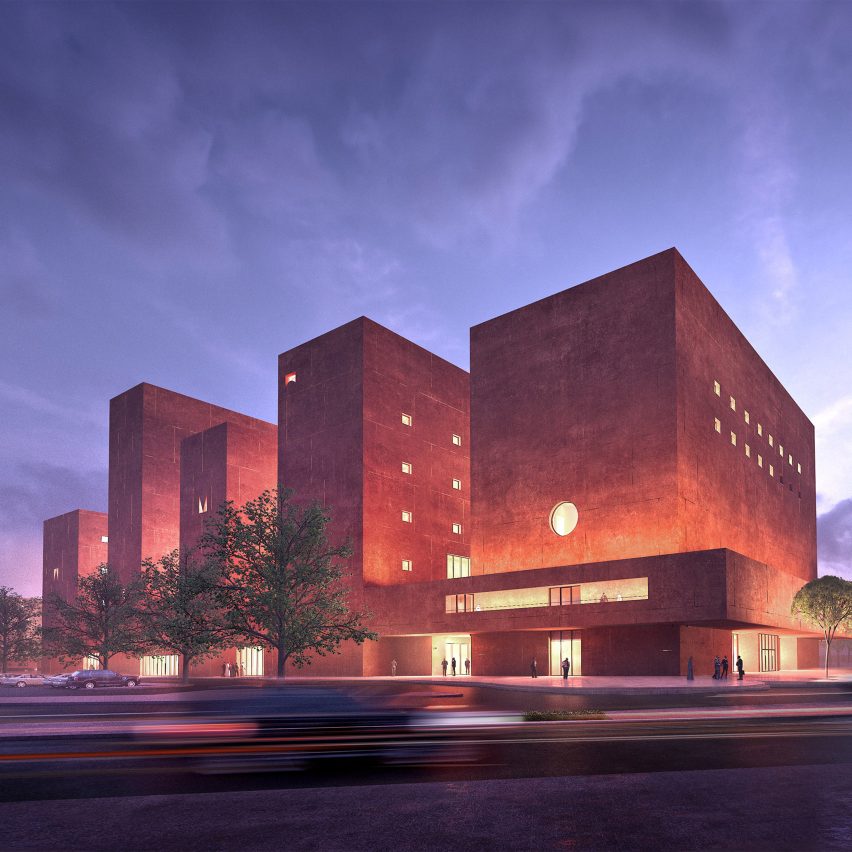
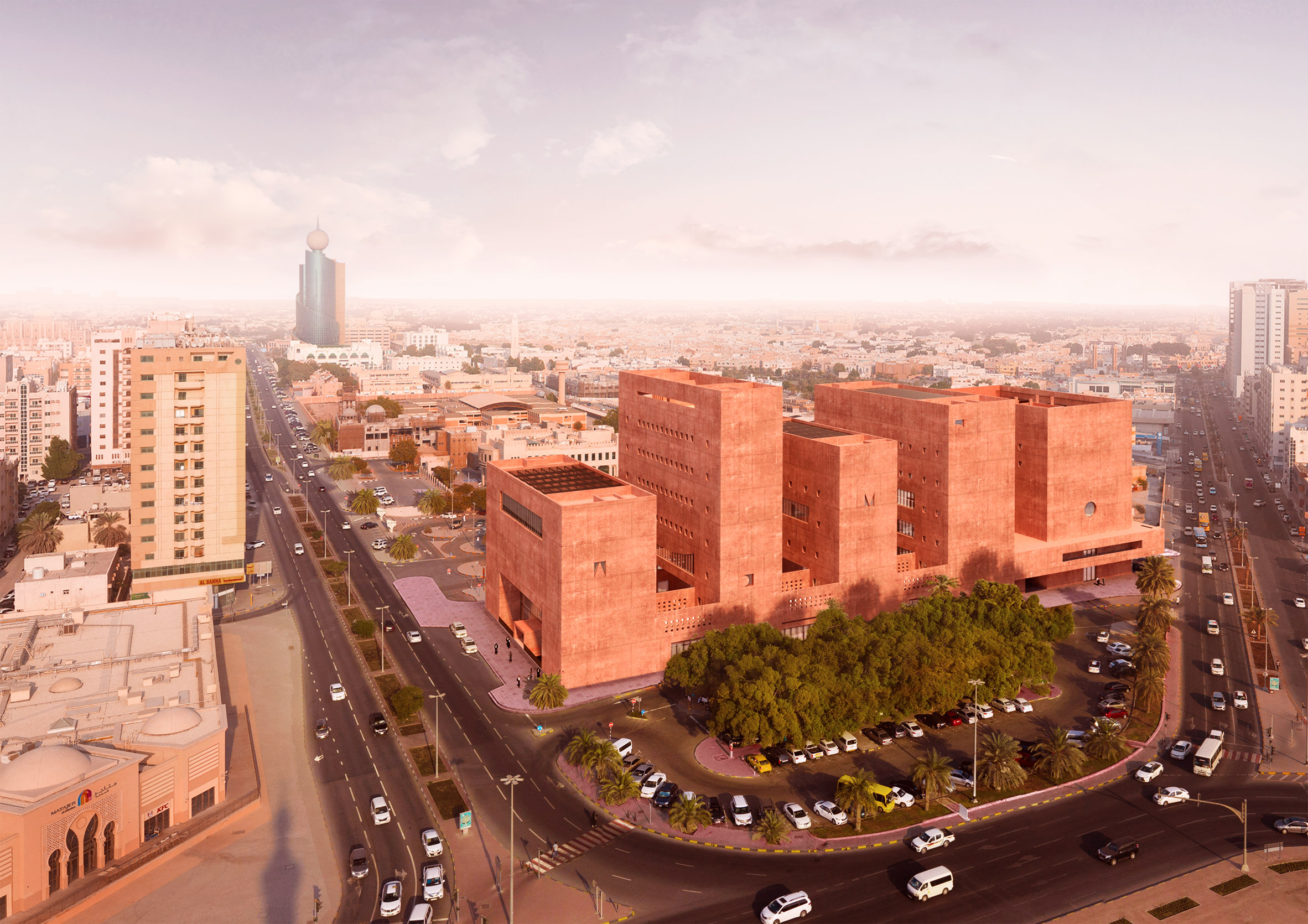
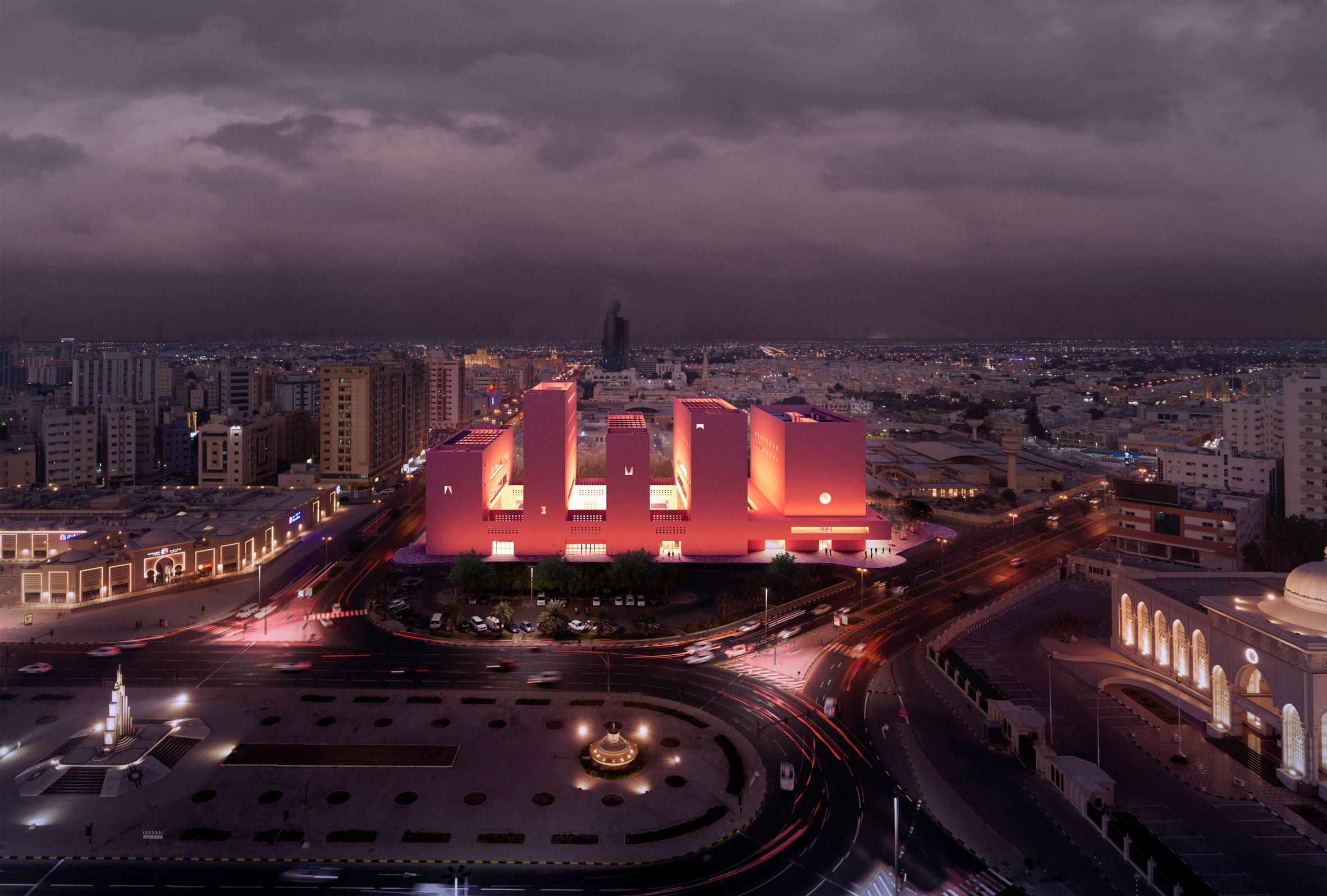
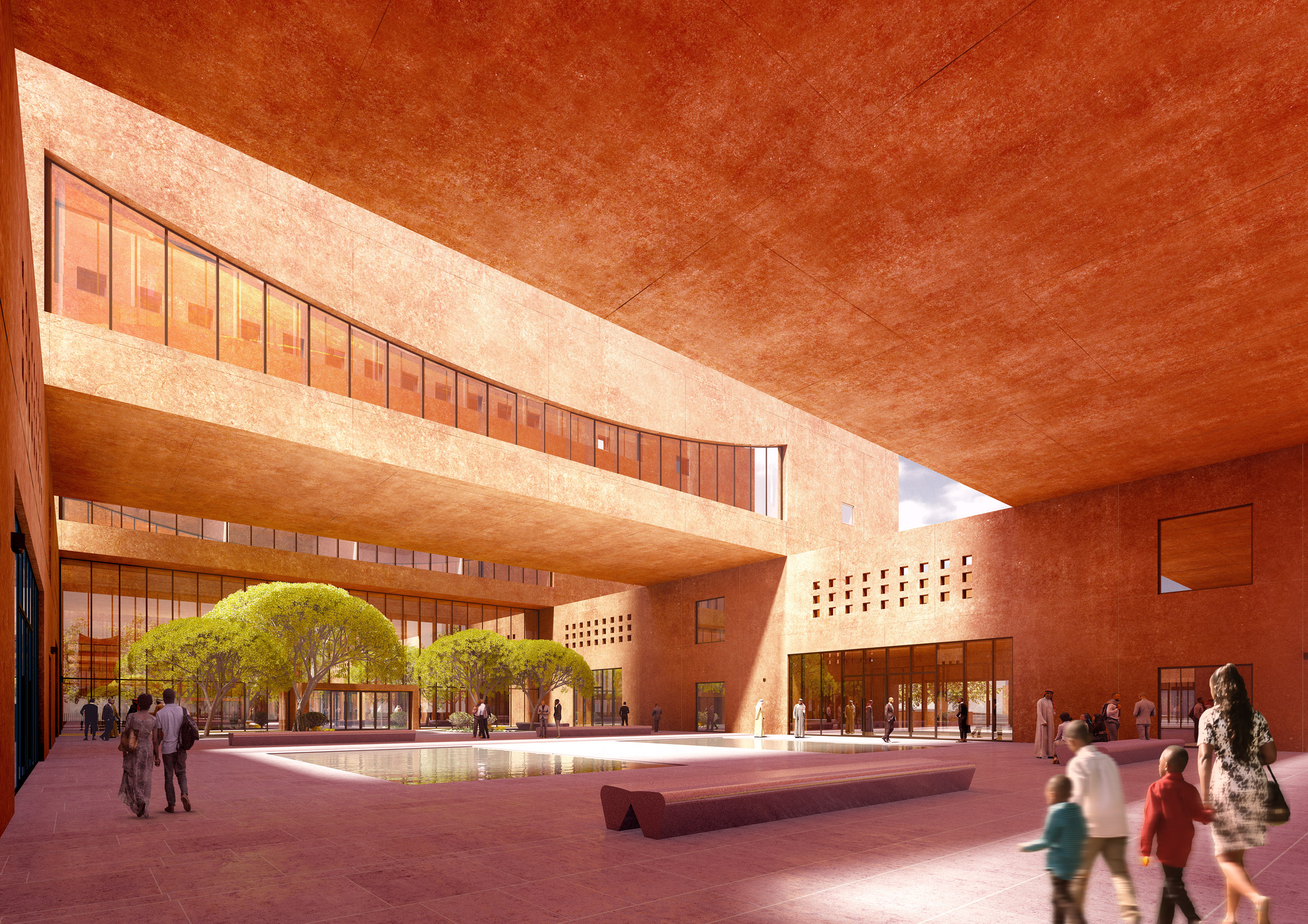
Large courtyards will sit between the five high-rise blocks that define The Africa Institute campus, which Adjaye Associates is developing in downtown Sharjah, United Arab Emirates.
Slated for completion in 2023, the red-hued concrete campus in the Al Mankah neighbourhood will support The Africa Institute's study and documentation of the African diaspora in the Arab world.
Adjaye Associates has revealed visuals for The Africa Institute campus
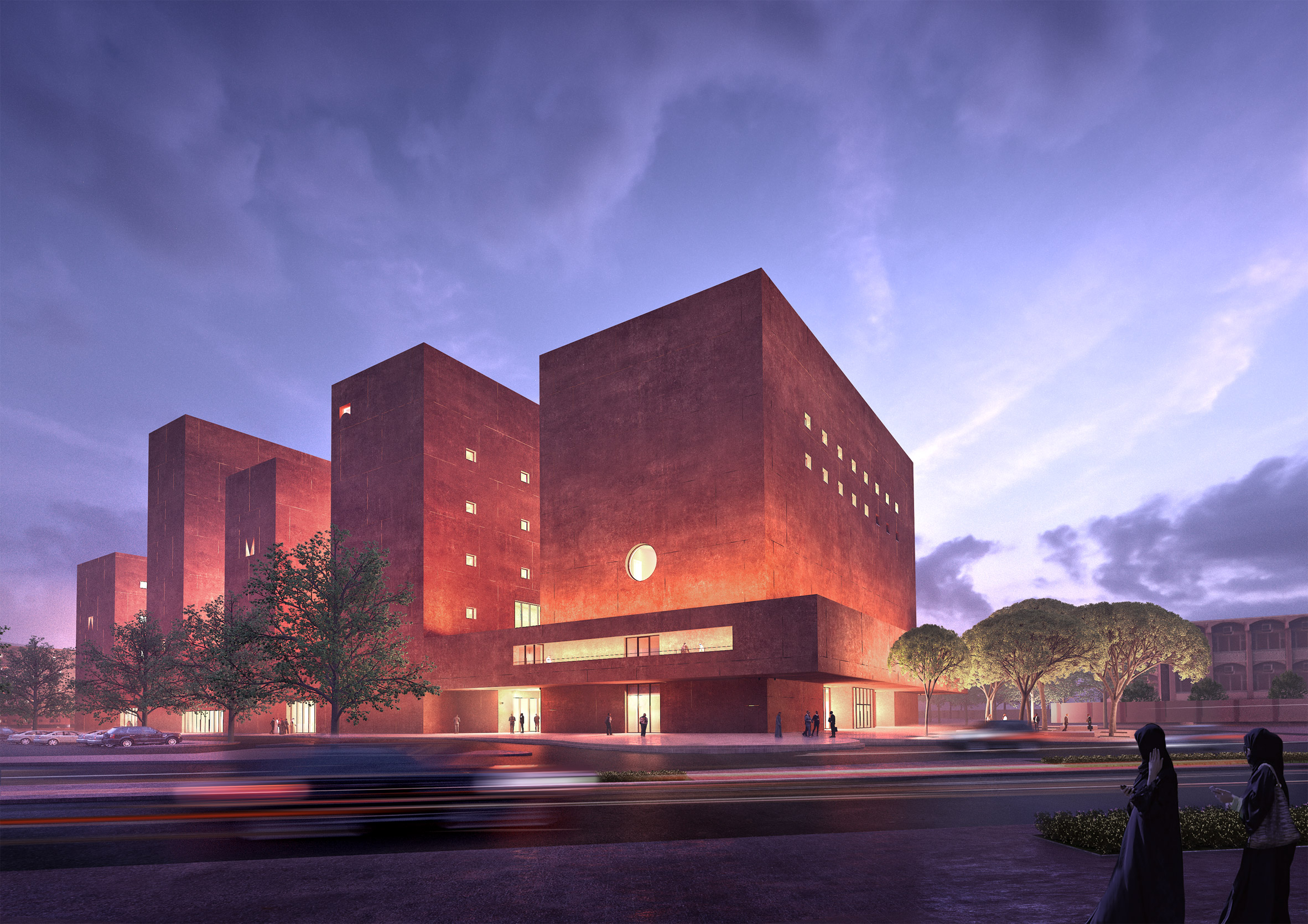
Adjaye Associates' design for the 31,882-square-metre campus comprises a boundary of four solid walls, across which four of the monolithic high-rise blocks will be elevated.
The fifth and southernmost block will incorporate the existing home of The Africa Institute, Africa Hall, which is set to be renovated as part of the project.
It will occupy the same site as the existing home of The Africa Institute
Once complete, the campus will be used to support the organisation's various events, as well as its new higher education programme due to roll out in 2023.
Entrances will be incorporated into each of its four facades in a bid to help connect The Africa Institute to the existing walkways and institutions around the site.
It will be marked by five high-rise volumes
"I am deeply humbled for the opportunity to design The Africa Institute in Sharjah, a project which introduces an entirely new type of thinking and mission into the global academic arena," said Adjaye Associates' founder David Adjaye.
"I envision the new campus as a springboard for the concretization of the incredible history of Africa, the African diaspora, and the Arab world."
Open-air courtyards will sit between the blocks
A red-hued concrete was chosen for the campus in an effort to "enhance the desert typology", Adjaye Associates said.
The studio also claimed that the concrete used will be low carbon and help to naturally cool the building through thermal mass and by limiting sun exposure.
Natural cooling for the campus will also be provided through large overhangs around the site and by the open-air courtyards, which will be filled with native plants and water features.
Inside, the campus will be fitted out with a variety of spaces to cater to classes and seminars of different sizes.
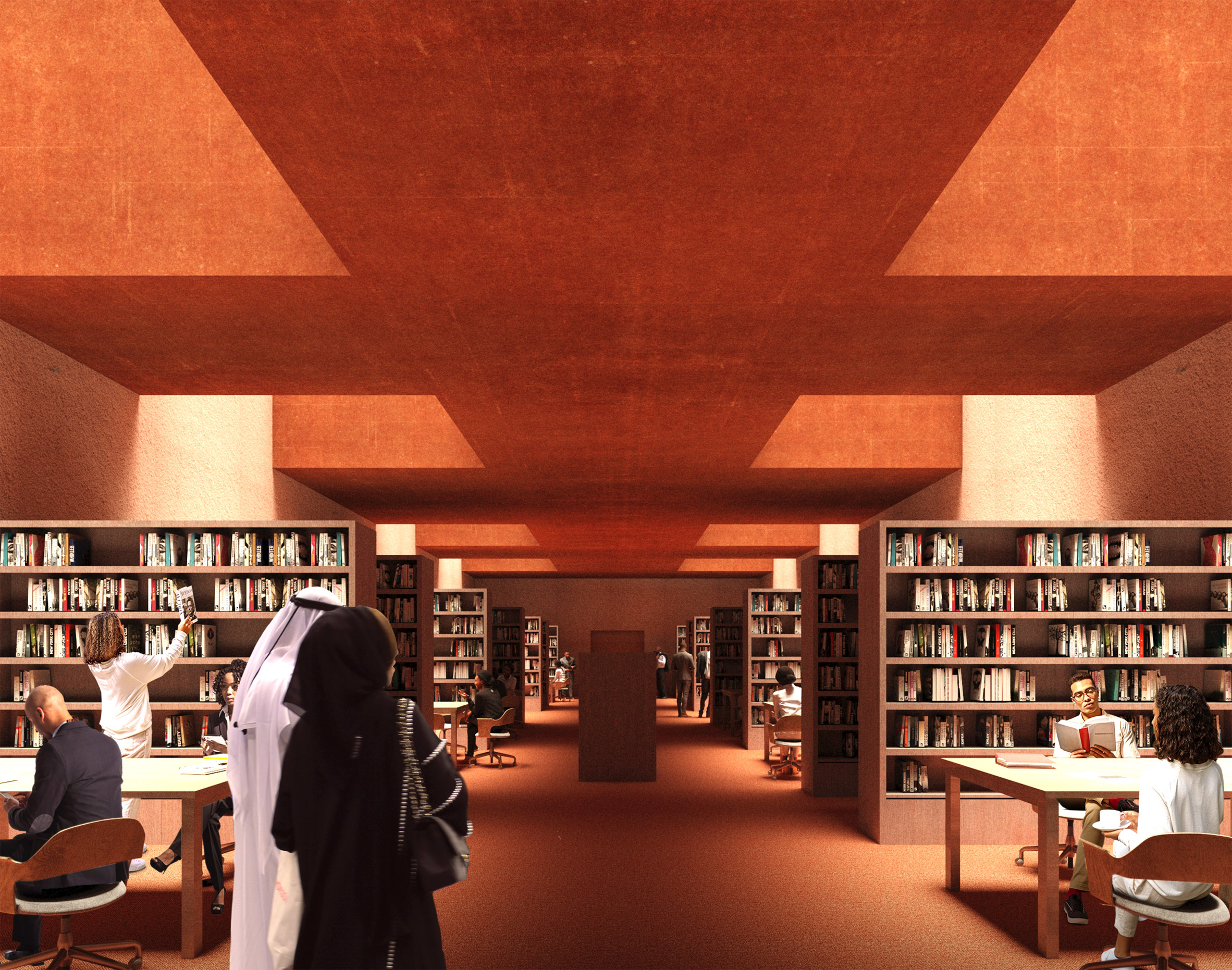
A library will be among its features
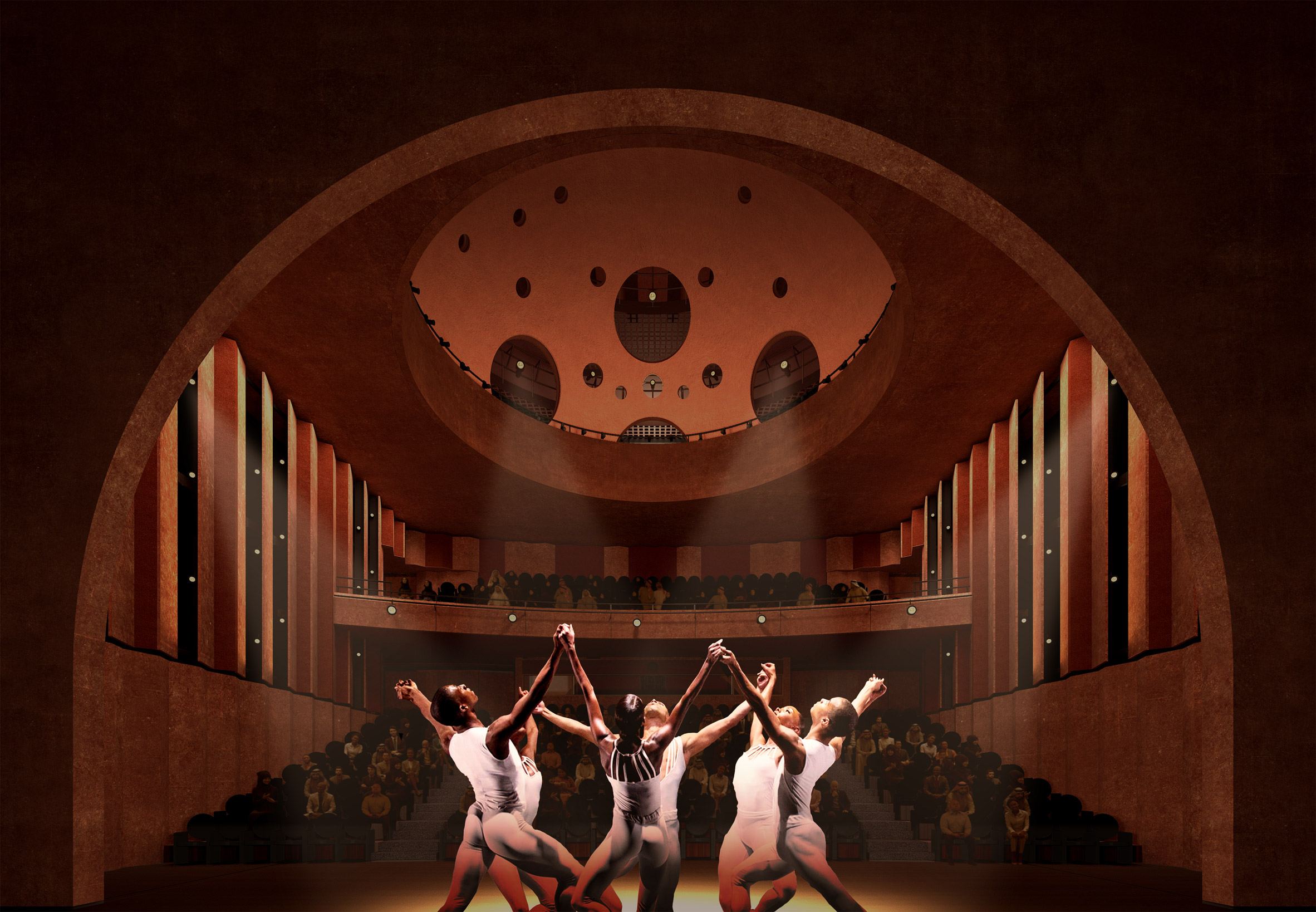
There will also be a research library and climatised archive, a flexible auditorium and performance space, alongside a restaurant, cafe and bookstore.
The Africa Institute is currently also commissioning artists to create installations to be dotted throughout the new building.
There will be a flexible performance space
Adjaye Associates was founded by British-Ghanian architect Adjaye, who was the recipient of the RIBA Gold Medal for 2021, in 2000.
Elsewhere in the UAE, the studio is currently also developing The Abrahamic Family House, an interfaith complex in Abu Dhabi that will comprise a church, mosque and synagogue.
The visuals are courtesy of Adjaye Associates.
Project credits:
Design architect: Adjaye Associates Architect of record: WSP Client: Sharjah Art Foundation Cost consultant: Houston and Partners Electrical engineer: WSP Lighting consultants: Studio Fractal Mechanical engineer: WSP Structural engineer: WSP Theatre consultants: Charcoalblue