Saturday, 14 August 2021

Students explore "fragments" of London as part of Accelerate mentoring scheme

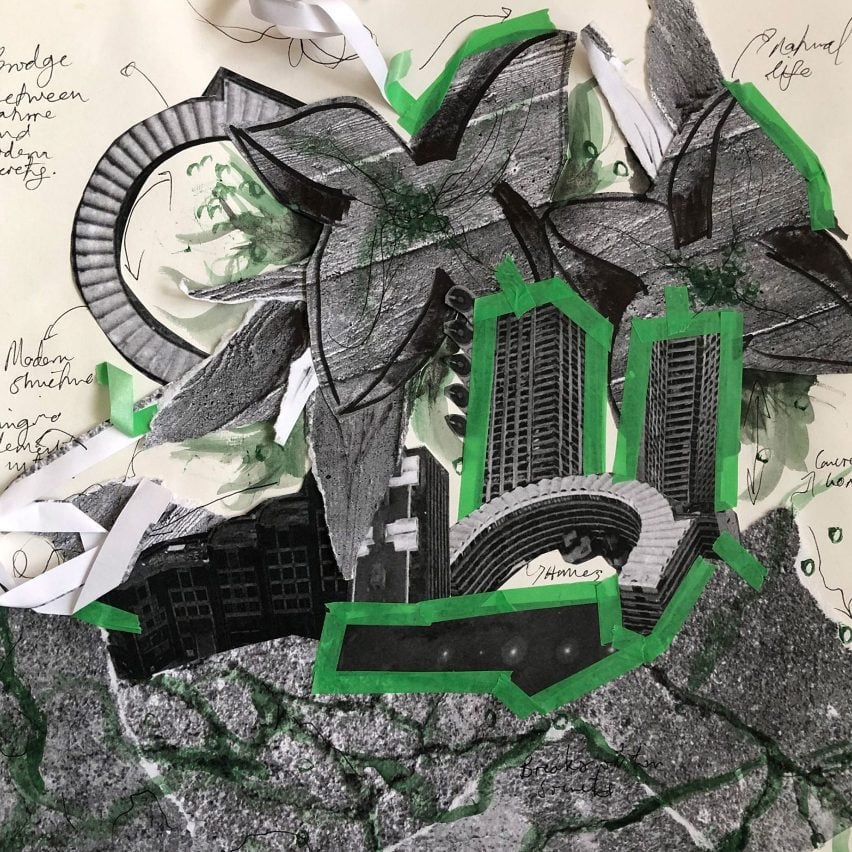
Collage by Samira Elbahja

Students of the Accelerate mentorship programme explore the architecture of their London boroughs in our latest school show.

A physical exhibition of the students' work will be exhibited at the Brunel Museum in London on 14 and 15 August.


Accelerate, Open City

Organisation: Open City
Programme: Accelerate
Schools: Sacred Heart Catholic School, Harris Boys' Academy East Dulwich, Harris Girls' Academy East Dulwich, Ark Walworth Academy, St Saviour's and St Olave's School, Ark Globe Academy, City of London Academy, LASWAP Sixth Form
Parliament Hill, St Paul's Way Trust School, Harris Westminster Sixth Form, Bishopshalt School, Sir George Monoux Sixth Form College, Ark Putney Academy, Mossbourne Community Academy, Oaks Park High School and Rickmansworth

Programme statement:

"Accelerate is a design education and mentoring programme aimed at increasing diversity in the built environment professions. The programme was developed and established by Open City, in partnership with The Bartlett, UCL.

"This year, Accelerate looked different to previous years. For the first time, we had to collaborate digitally and this year's cohort of sixth form students completed most of their work from home.

"Students investigated their bedrooms, local landscapes and local boroughs, through the lens of this year's theme: fragments of the city."
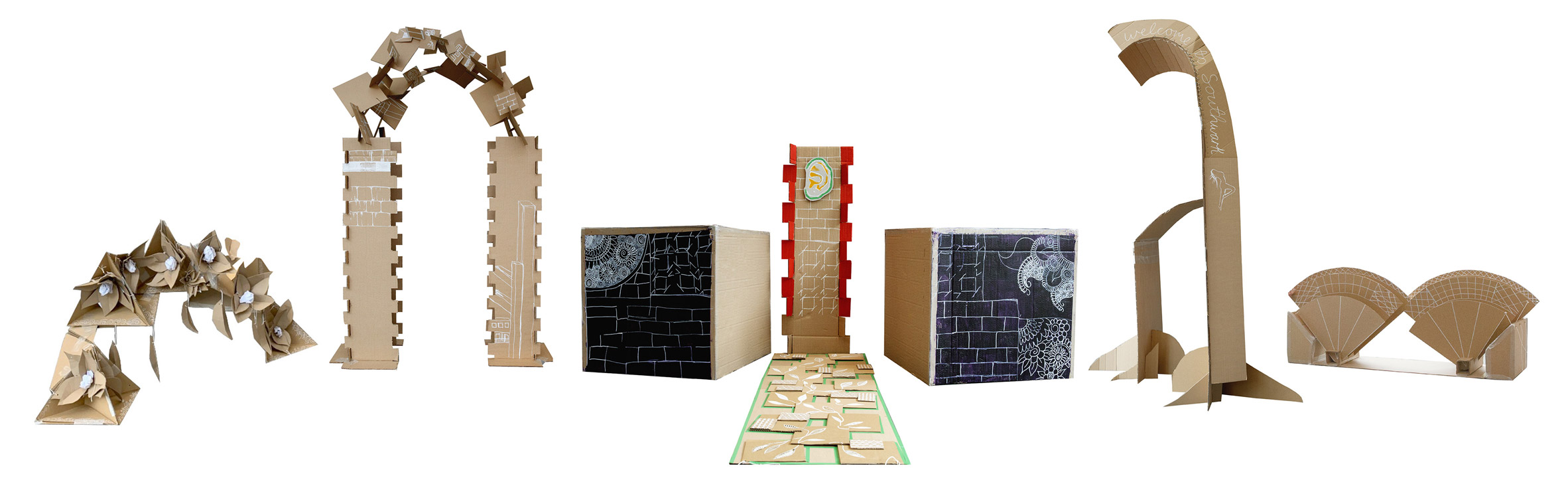

Cardboard Gates of Southwark project

Group Project: Cardboard Gates of Southwark

"Originally built as a Roman fortification for the provincial city of Londinium in the second century CE, the London Wall remained a material and spatial boundary for the city throughout the early modern period. The various gates in the wall functioned as relief valves where development spilt out to occupy spaces outside the wall.

"Accelerate students created cardboard prototypes for their gates to Southwark, which act as doors, windows, balconies, stages, into and onto the borough. Students drew inspiration from specific buildings in Southwark to inform their ideas and chose words from their collective manifesto for an 'open city' to reflect on their architectural expression and consequences."

Students: Elie Nguessan, Joshua Celada, Adrian Porteros Rubio, Adriana Porteros Rubio, Aderito Tran, Anne-Elizabeth Sowah, Sania Alam, Caitlin Mitchell, Sanel Ahmet, Olivia Morgan Joy, Elvin Aliu, Esme O’Sullivan, Delilah Jamal, Samira Elbahja, Hanifa Malik, Federica Pescin, Sara Escalona, Jayshree Senthilkumar, Sobika Prabakaran, Ozlem Yeter, Saad Ali, Gemma Rivas, Hani Ali, Adam Hamuth and Hagi Sivathason
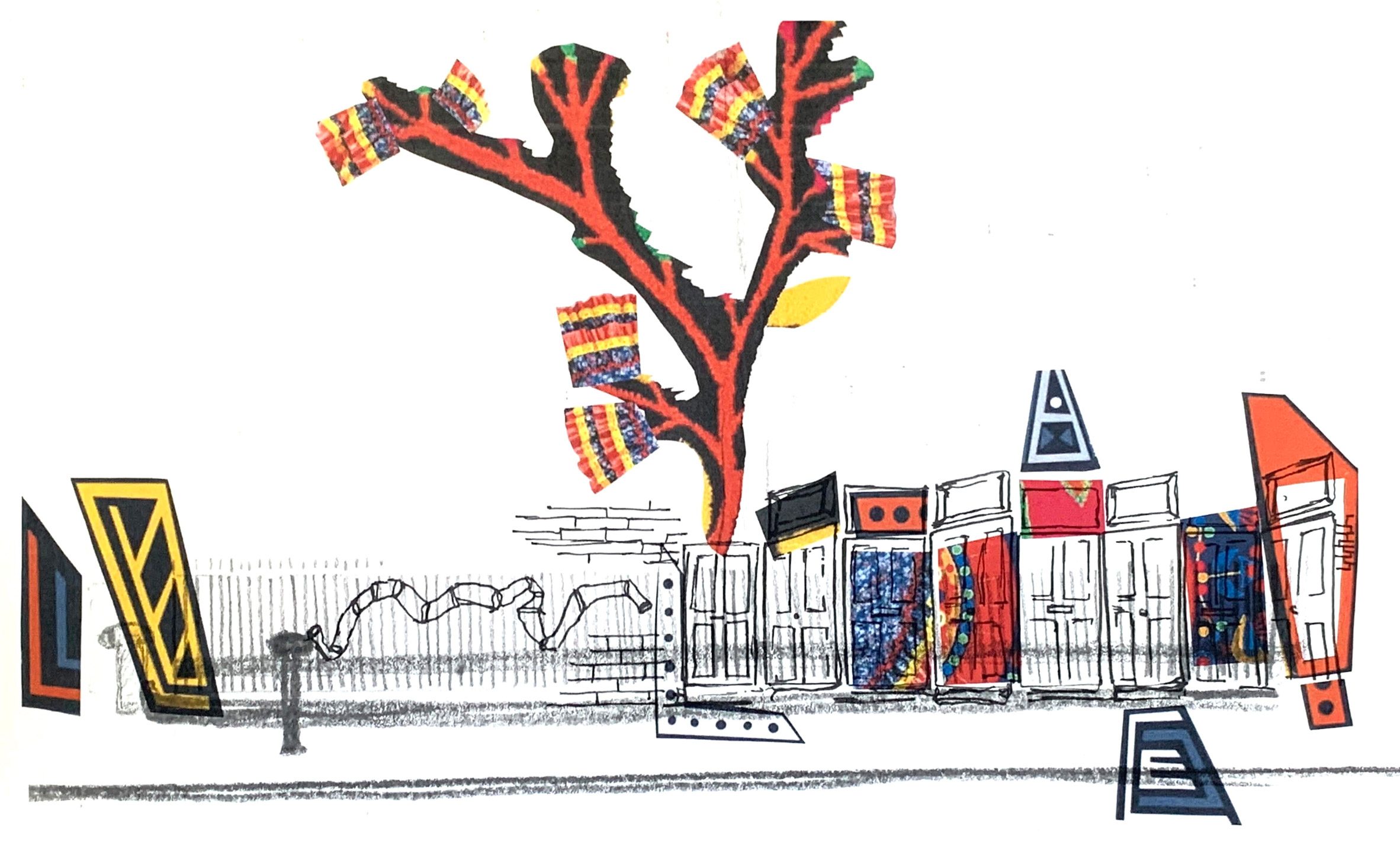

Collage by Sara Escalona

Sara Escalona

"Fragments and the city enabled me to explore the importance of the relationship between the movement of people with the built environment. The project has expanded my horizons in terms of learning about abstract scales and proportions in designing 3D structures, making models and the significance of sustainability in the longevity of buildings.

"I went to two different architect mentor practices with varying objectives in their architectural ambitions. One focused on small scale extensions and analysing the surrounding context of the site in considerable detail.

"Another made large-scale projects such as educational campuses. I found myself leaning towards converging nature within everyday buildings, demonstrated in integrating green spaces and natural bodies of water in buildings.

"I have learnt the importance of understanding the surrounding context of a site first: analysing where the influx of people come from to the site and where transport links are, to make it more easily accessible for all."

Student: Sara Escalona
School: Harris Westminster Sixth Form, Westminster
Mentor: Archer + Braun and Jestico + Whiles
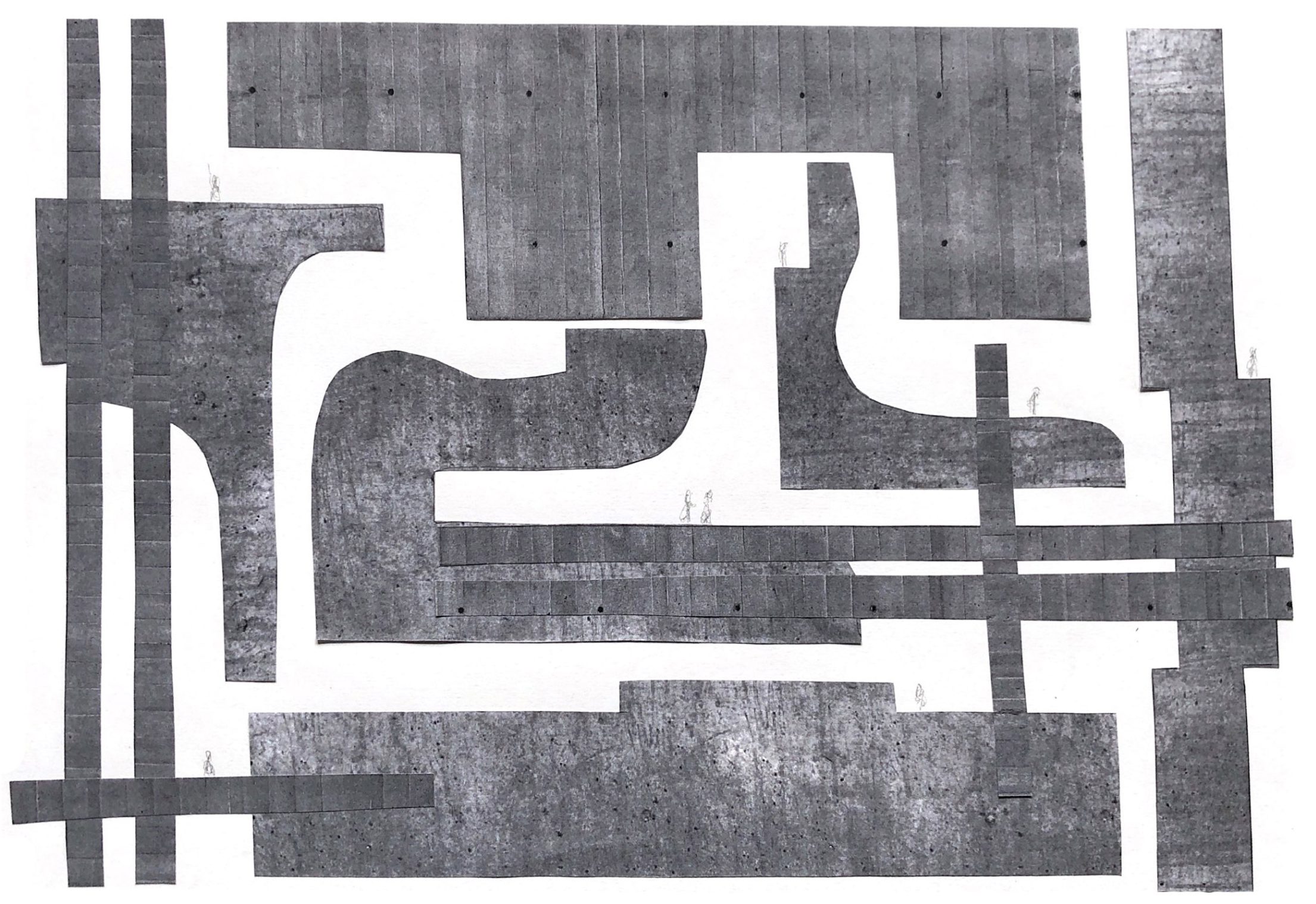

Collage by Joshua Celada

 Joshua Celada

"This project has helped me gain an insightful understanding of the field of architecture. Attending a series of online sessions exploring and mapping the River Thames has helped me shift my perception of architecture.

"To me, architecture isn't purely focused on buildings but revolves around everything we interact with. Reflecting upon the theme 'fragments', I incorporated everyday objects together and turned them into structural collages. It has helped me a lot with my creativity and understanding the boundaries of composition."

Student: Joshua Celada
School: Sacred Heart Catholic School, Southwark
Mentor: Maccreanor Lavington
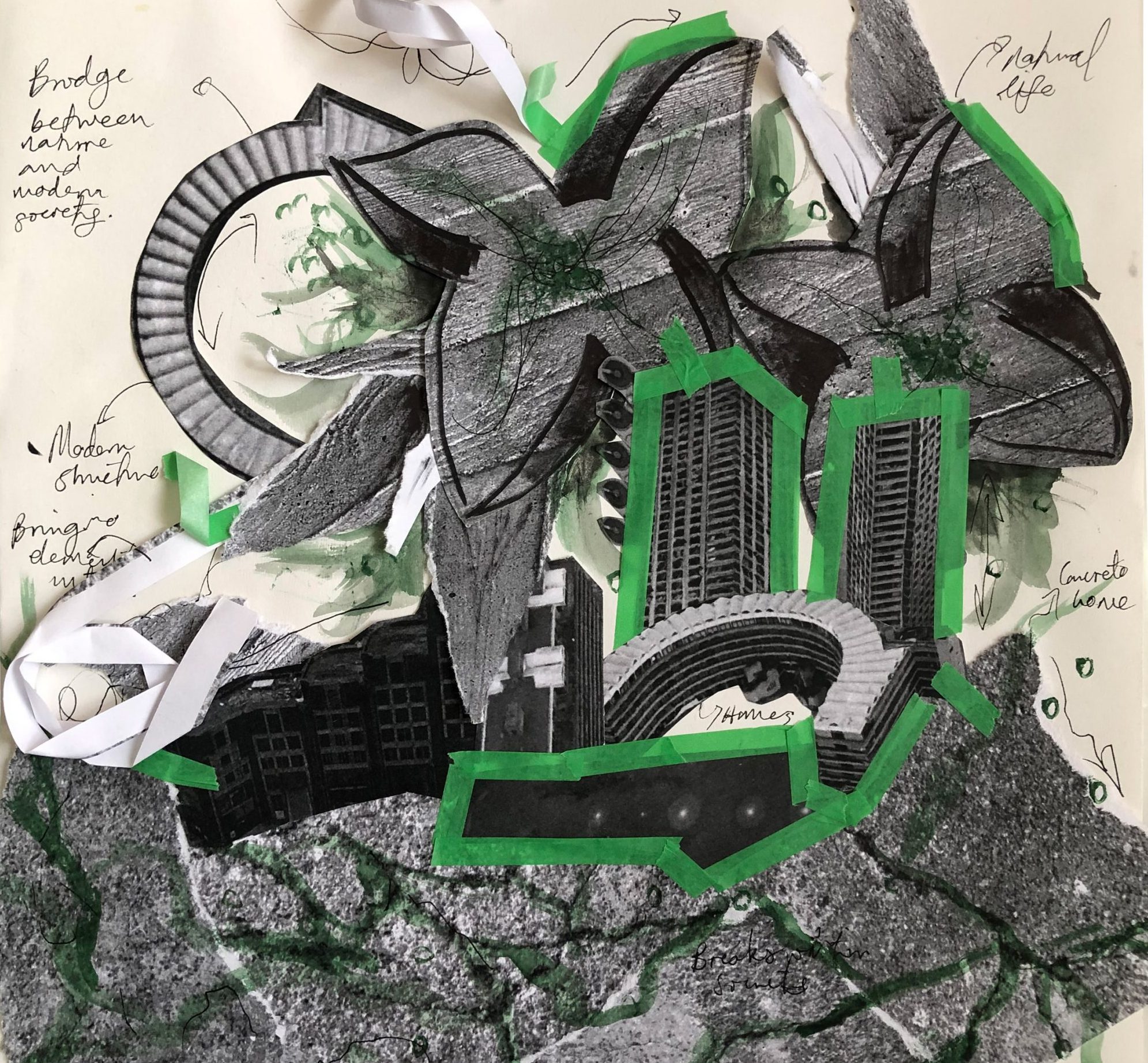

Collage by Samira Elbahja

Samira Elbahja

"Accelerate was one of the best opportunities I have ever signed up for. I initially heard about the programme from my teacher. At the time, I was remotely interested in pursuing a career in architecture. However, after attending the programme, I now know that architecture is my preferred field. Architecture is more than building buildings. It's creating communities."

Student: Samira Elbahja
School: St Paul's Way Trust, Tower Hamlets
Mentor: BDP
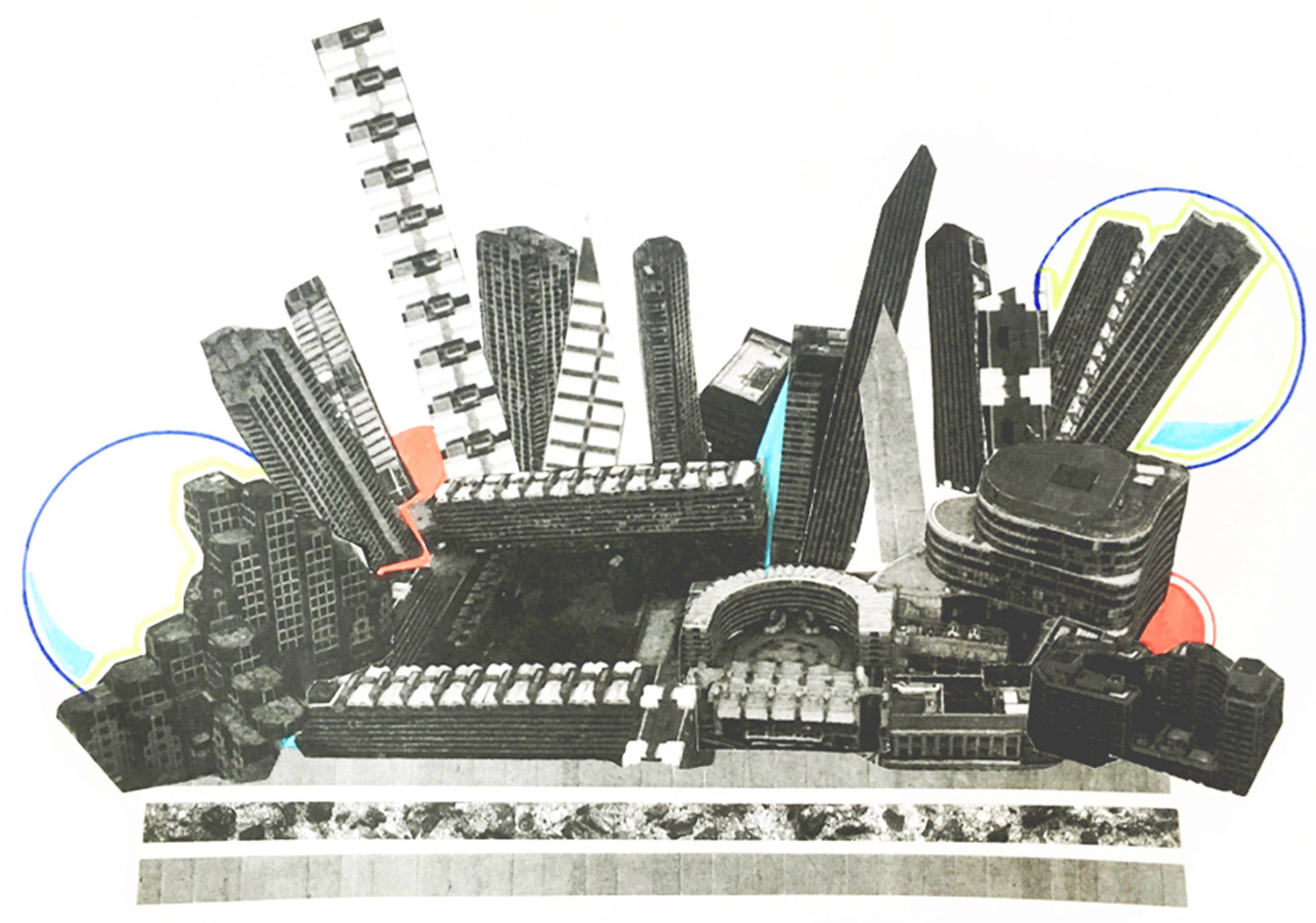

Collage by Federica Pescini

Federica Pescini

"Accelerate has taught me a lot about myself as much as the surrounding environment. I have discovered that I am drawn to more classical architecture and the past. When we walked past the London Wall on our first visit to the Barbican, I was completely in awe of the history behind it.

"It has been incredibly fascinating to discover London from angles I had not previously explored. We were encouraged to analyse the surrounding spaces through a different set of perspectives by viewing them through the lenses of improvement and interventions. I believe this way of constantly assessing how things could be improved will stick with me for my entire life."

Student: Federica Pescini
School: Harris Westminster Sixth Form, Westminster
Mentor: Pollard Thomas Edwards


Partnership content

This school show is a partnership between Dezeen and Accelerate. Find out more about Dezeen partnership content here.

The post Students explore "fragments" of London as part of Accelerate mentoring scheme appeared first on Dezeen.


from Dezeen https://ift.tt/3g2jcuU

Friday, 13 August 2021

This week we revealed the longlists for Dezeen Awards 2021

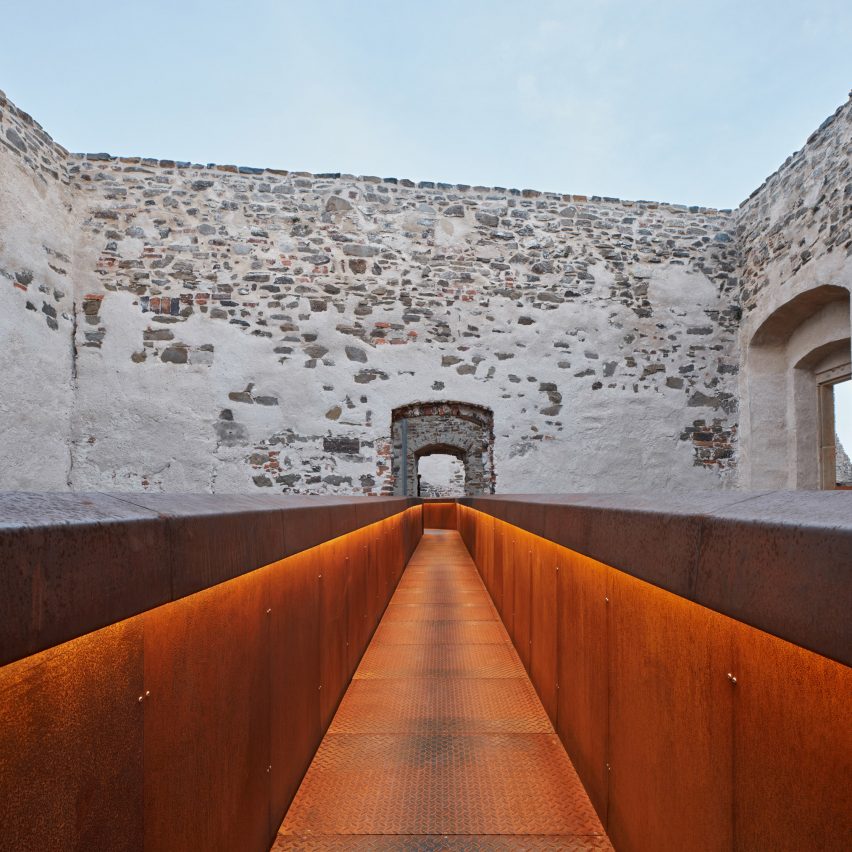
Renovation of Helfštýn Castle in Czech Republic by Atelier-r

This week on Dezeen, we revealed the architecture, interiors, design and media projects and studios that made the Dezeen Awards 2021 longlists.

Dezeen Awards 2021 received more than 4,700 entries from 86 different countries, including Armenia, Eritrea, Germany, Latvia, Lebanon, Peru, France and Ireland.

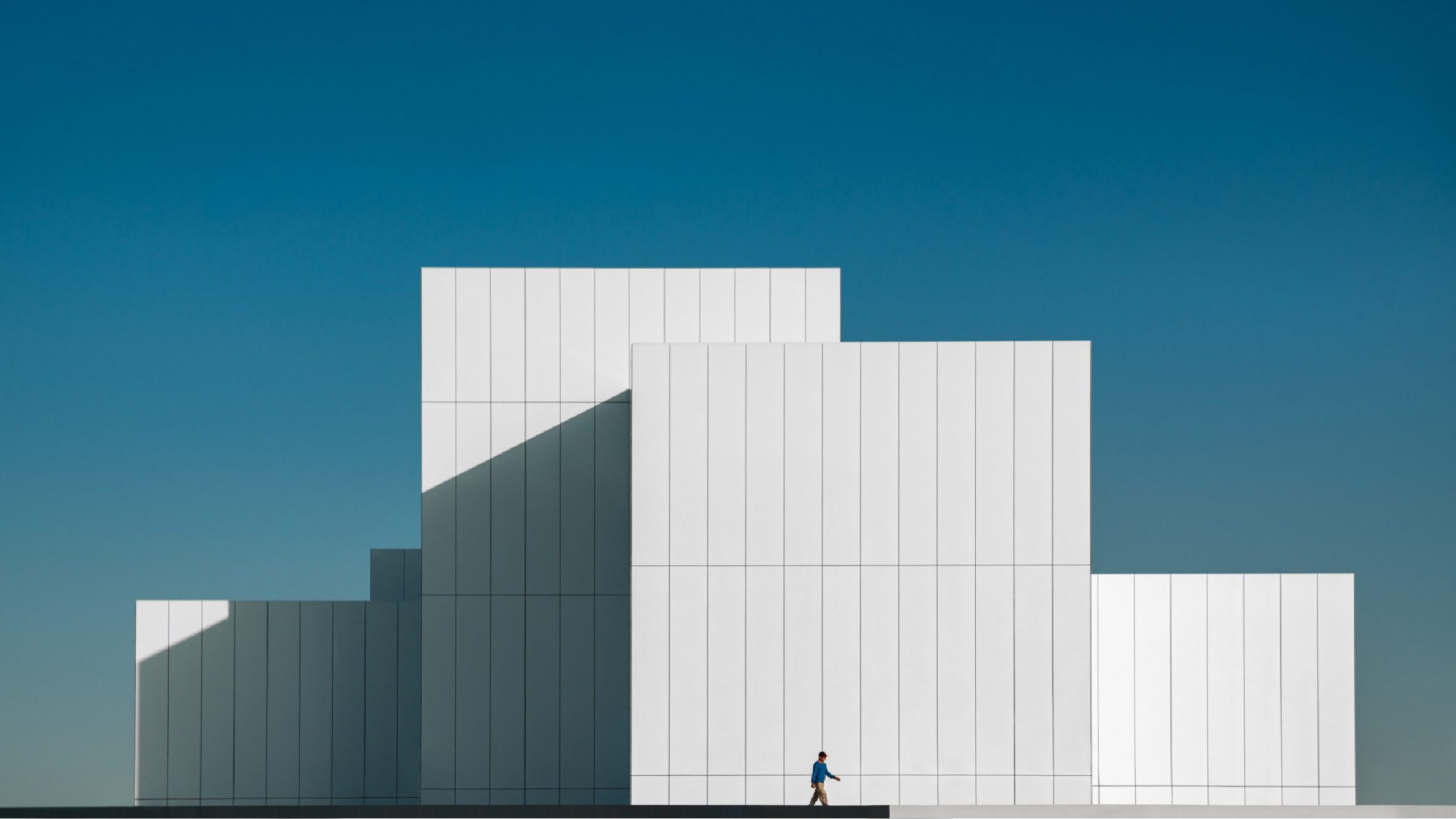
Photo of Jameel Art Center by Shoayb Khattab
Dezeen Awards 2021 media longlist announced

This year's architecture longlist features 305 projects, while the interiors longlist has 300 projects. There are 308 projects competing in the design categories and 105 longlisted in the media categories, which are new for this year.

The media categories feature awards for architecture photography, video and visualisations plus websites for studios and brands.

In addition, 121 studios were selected for the studio longlist.

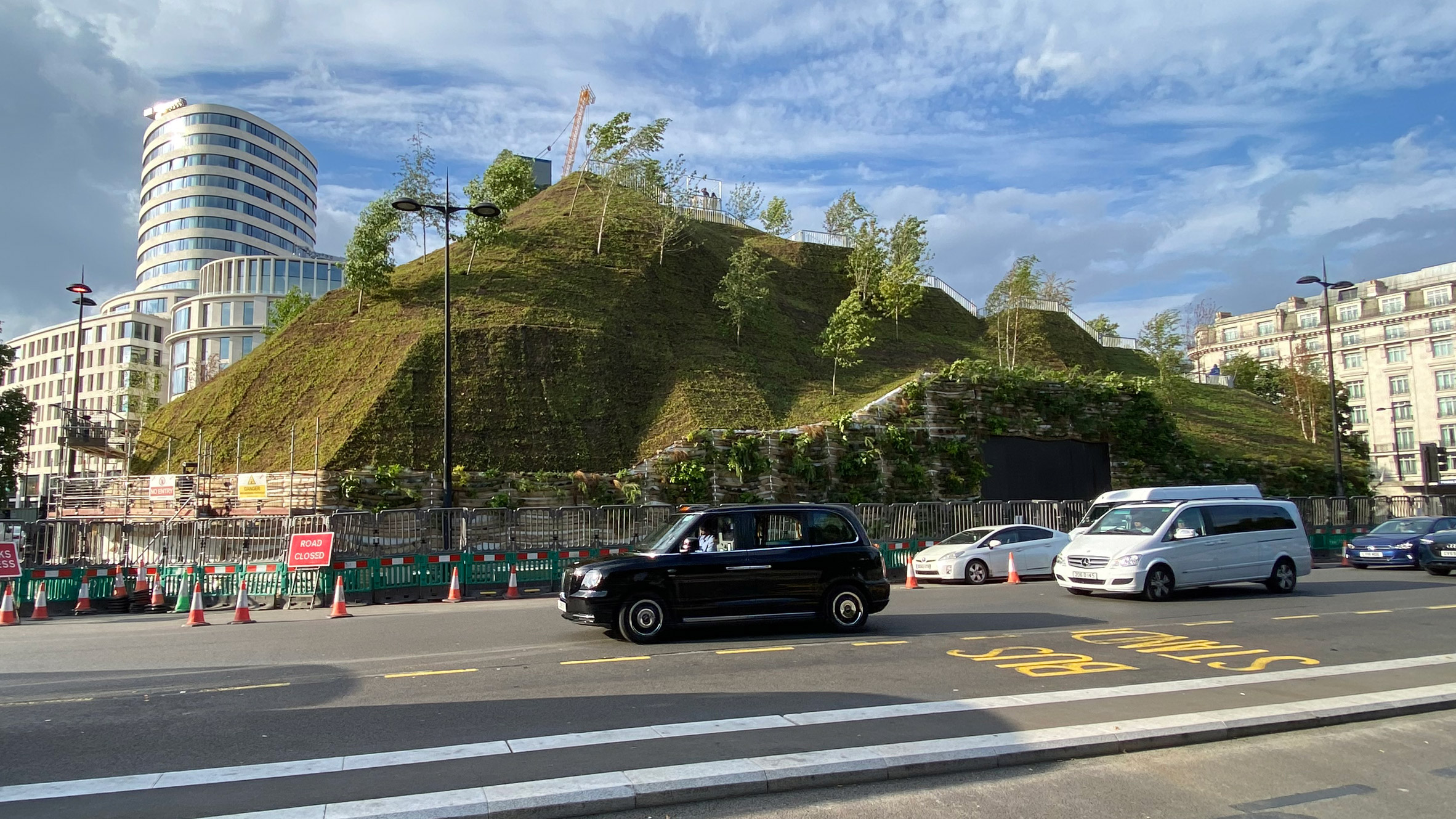
Marble Arch Mound by MVRDV
Council deputy leader resigns due to "unacceptable" rise in Marble Arch Mound costs

In UK architecture news, the controversy surrounding MVRDV's Marble Arch Mound continued, as the Westminster City Council deputy leader in charge of the project resigned with immediate effect due to spiralling costs. The budget for the landscaped viewpoint close to Oxford Street has risen from  £3.3 million to £6 million.

Another project causing a commotion is an office development by Make, which has been granted permission to replace the modernist French Railways House in Piccadilly.

Wildfire in the forest near Marmaris in Turkey
IPCC climate report a "call to arms" say architects and designers

The latest IPCC climate report was released this week, warning that limiting global warming to the crucial 1.5-degree threshold set out in the Paris Agreement is now virtually impossible. A number of UK climate pressure groups spoke to Dezeen about the report and about what architects and designers can do to help avert disaster.

Among the groups was Architects Climate Action Network, which this week also launched its Households Declare campaign demanding "urgent" action from the UK Government on household carbon emissions.

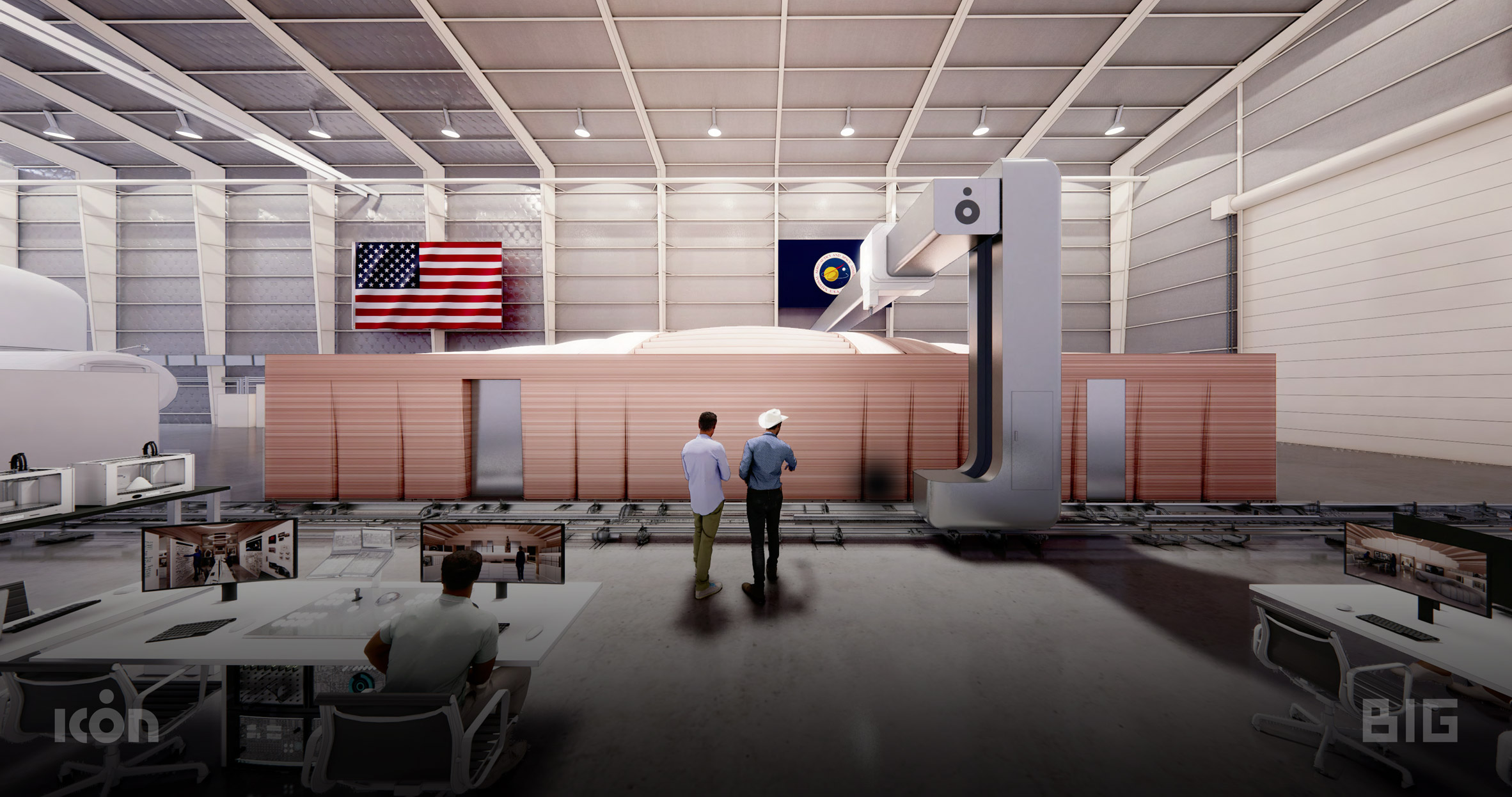
BIG and ICON to 3D-print structure exploring "new Martian vernacular" for NASA

Danish architecture studio BIG and construction technology company ICON announced plans to create Mars Dune Alpha, a 3D-printed structure designed to simulate living on Mars, for NASA. The project could "lay the foundation for a new Martian vernacular," the studio said.

BIG also unveiled new photos of its spiralling double-helix Marsk Tower, which opened to the public in southern Denmark. The twisting Corten steel building is 25 metres tall and will function as a viewpoint overlooking a UNESCO world heritage landscape.

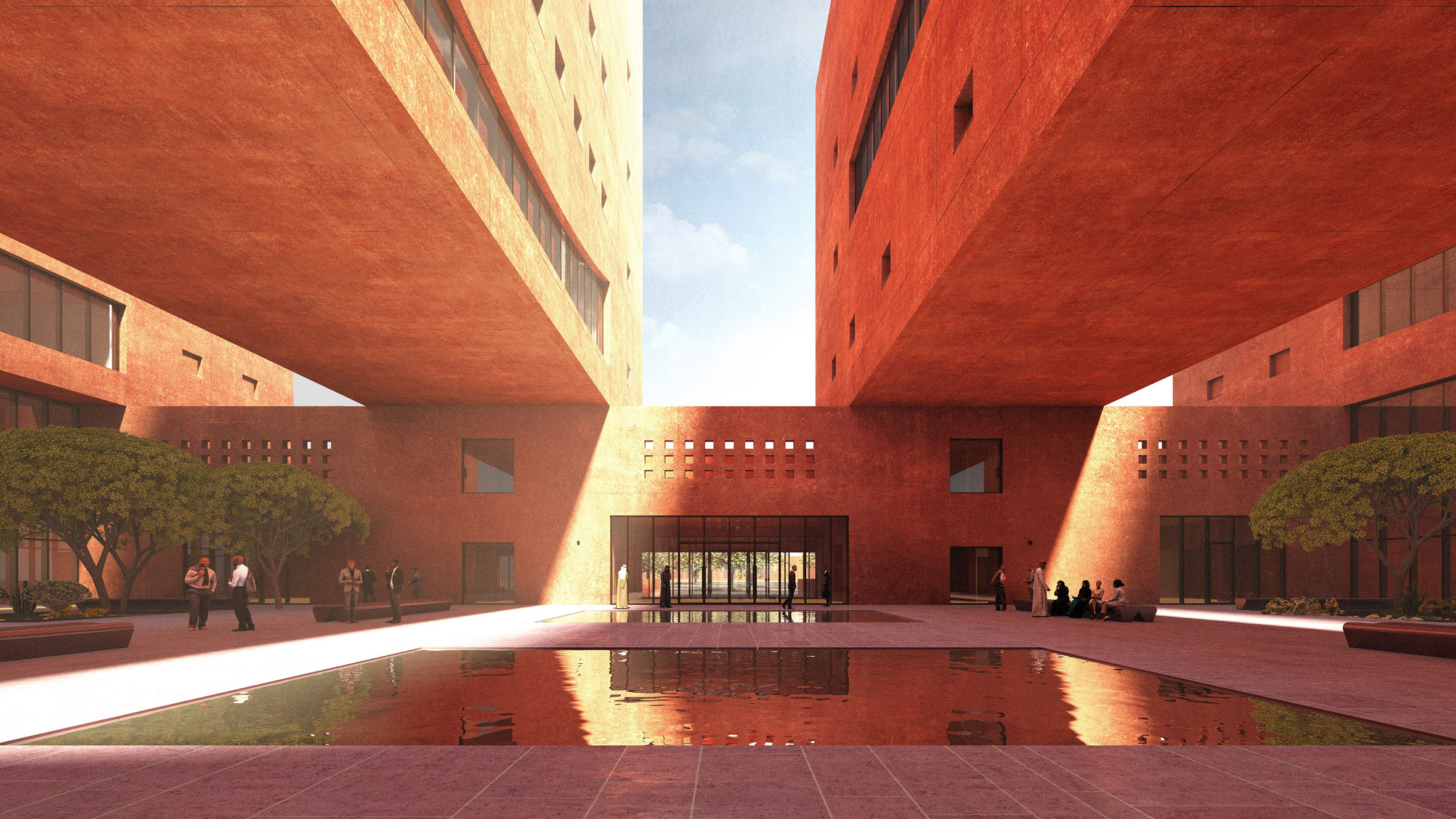
A courtyard of The Africa Institute campus
Adjaye Associates designs monolithic campus for The Africa Institute in Sharjah

New projects announced this week include a monolithic campus for The Africa Institute in Sharjah, United Arab Emirates, by Adjaye Associates. The building will feature large courtyards between five high-rise blocks.

Chinese studio MAD also unveiled visuals for its cloud-like science museum in Haikou, China, designed to serve as a major tourist attraction for Haikou, in which visitors can explore science, technology and nature.

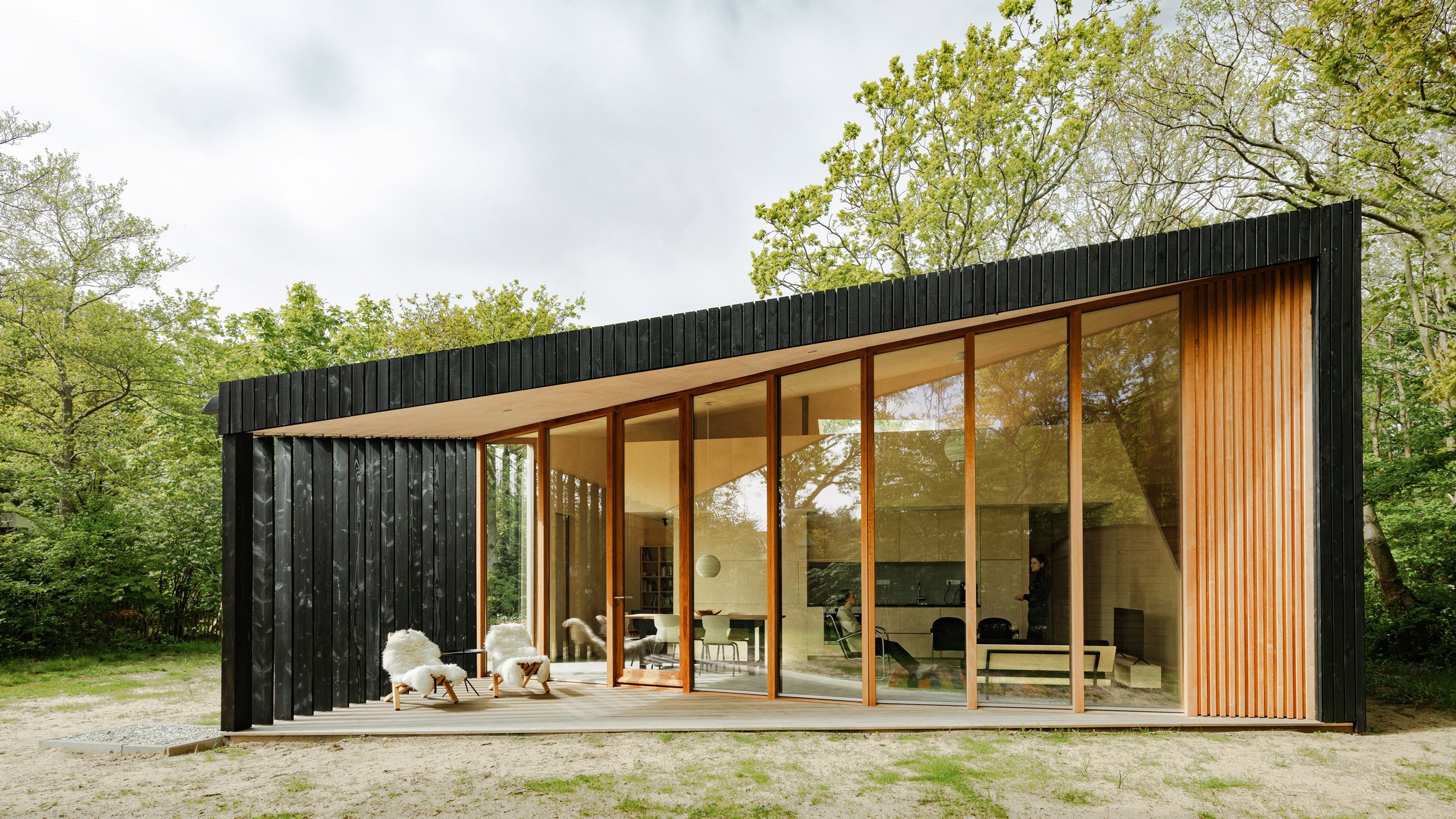
Holiday home in the Netherlands
Holiday Home by Orange Architects is a timber-clad cabin with a flexible interior

Popular projects this week included a timber-clad cabin in the Netherlands with a flexible interior, the world's largest museum dedicated to astronomy and a Seattle storage shed transformed into a backyard studio.

Our lookbooks this week focused on inventive broken-plan interiors and hotel bedrooms with standout designs.

This week on Dezeen is our regular roundup of the week's top news stories. Subscribe to our newsletters to be sure you don't miss anything.

The post This week we revealed the longlists for Dezeen Awards 2021 appeared first on Dezeen.


from Dezeen https://ift.tt/3xLxDta

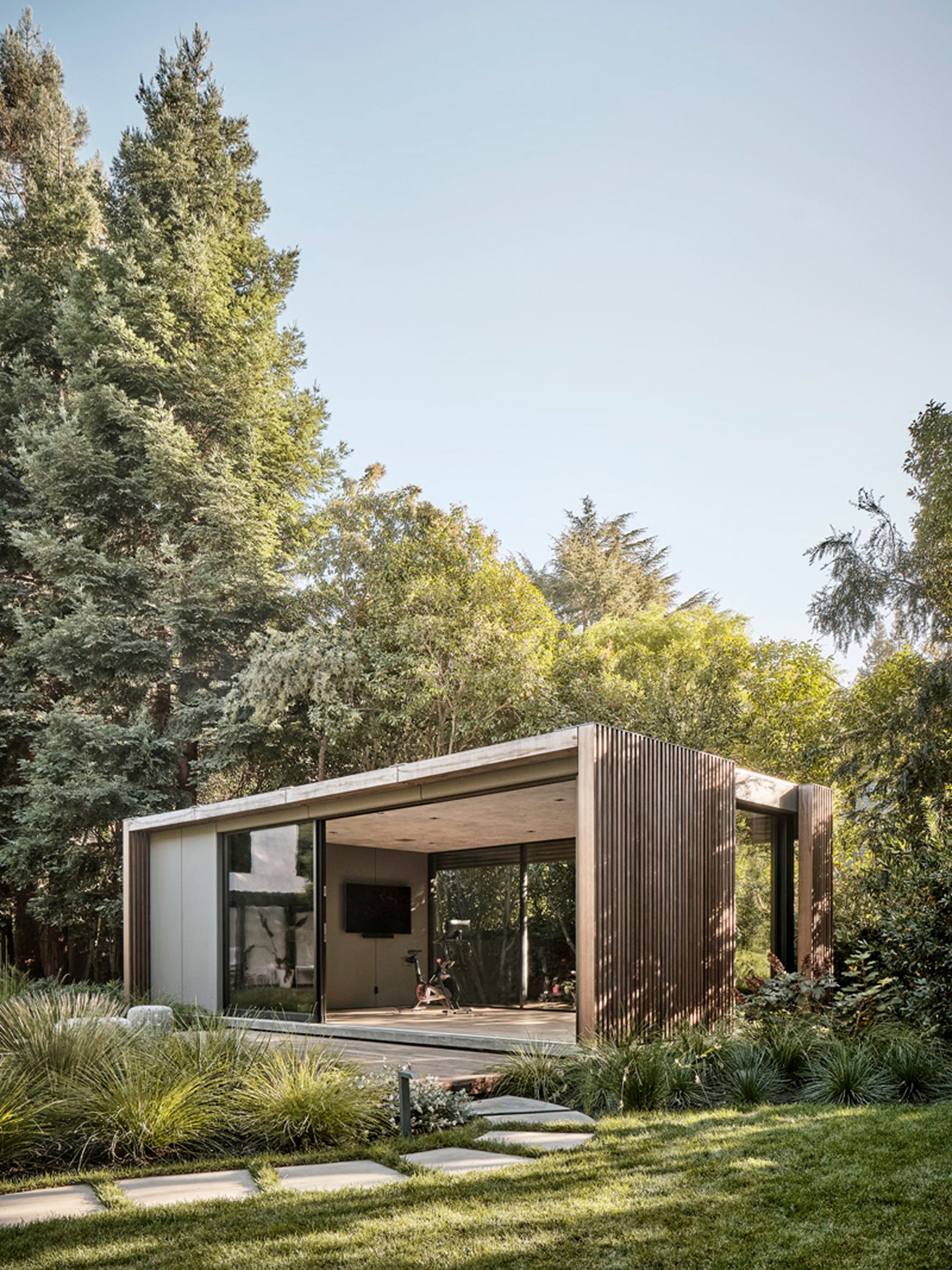
Cedar slats wrap backyard pavilions by Feldman Architecture at Silicon Valley home

Atherton pavilions by Feldman Architecture in California

American studio Feldman Architecture has completed matching structures for dining and working out in the verdant backyard of a northern California residence.

The Atherton Pavilions are located on a flagpole-shaped lot in the Silicon Valley town of Atherton.

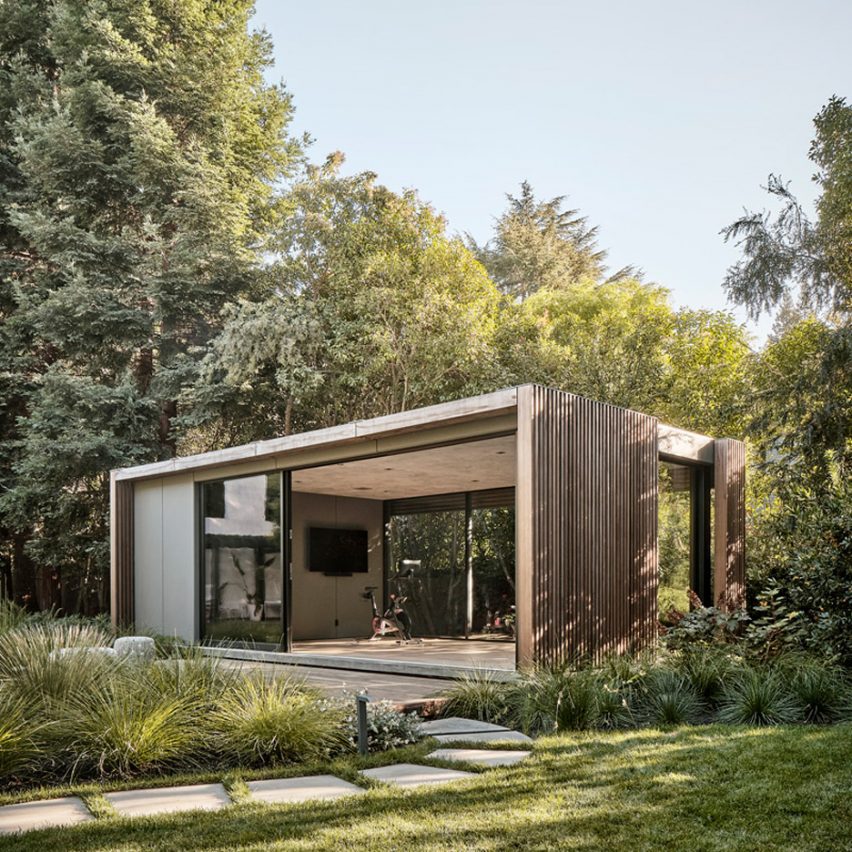
A pavilion by Feldman Architecture surrounded by greenery
Feldman Architecture has wrapped cedar slats around two pavilions at this Silicon Valley home

After an exhaustive search for the ideal residence, the clients purchased the property, which has a contemporary house, and have made various changes over the years.

"A small garage expansion and a top-floor addition provided additional space for their growing family, but the clients had yet to realise the full potential of their lush and private backyard," said San Francisco’s Feldman Architecture.

An exercise bike and gym inside a pavilion
The backyard structures provide the residents with space to work out and dine

The latest project entailed the construction of two 450-square-foot (42-square-metre) accessory structures with different functions. One is used as an outdoor kitchen and dining space, while the other holds a room for meditating and working out.

The low-lying, rectilinear buildings are identical in terms of their height, footprint and materials. The architects worked closely with a landscape consultant to ensure the pavilions were harmonious with the surrounding garden.

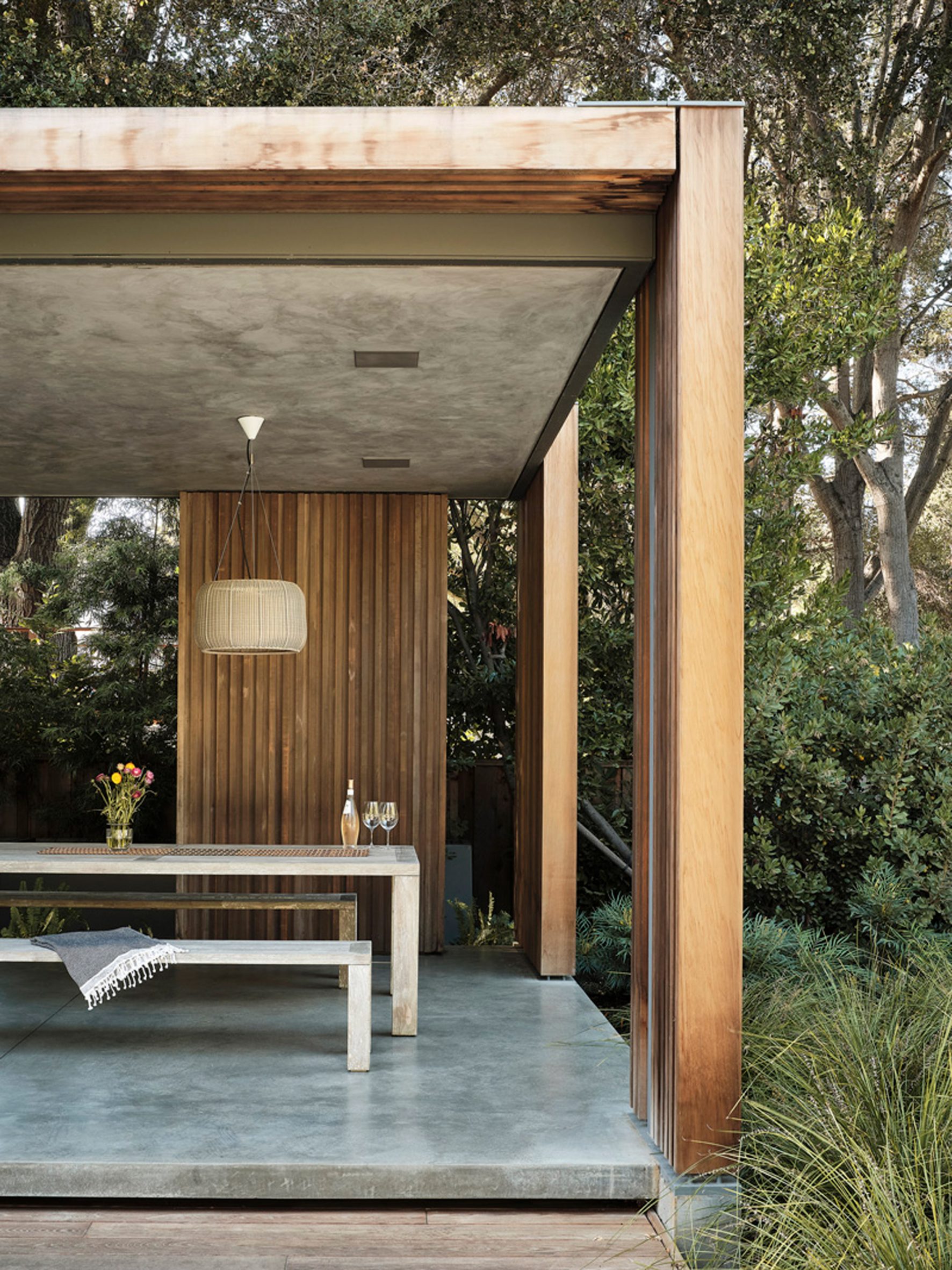
A dining table inside the pavilion
The architects worked with a local landscaper to ensure the pavilions aligned with the surrounding garden

"The pavilions are delicately placed amidst the existing landscape of redwoods and other mature trees," the team said.

"The clients desired the boxes to be transparent and discrete to blend in with the surrounding softscape."

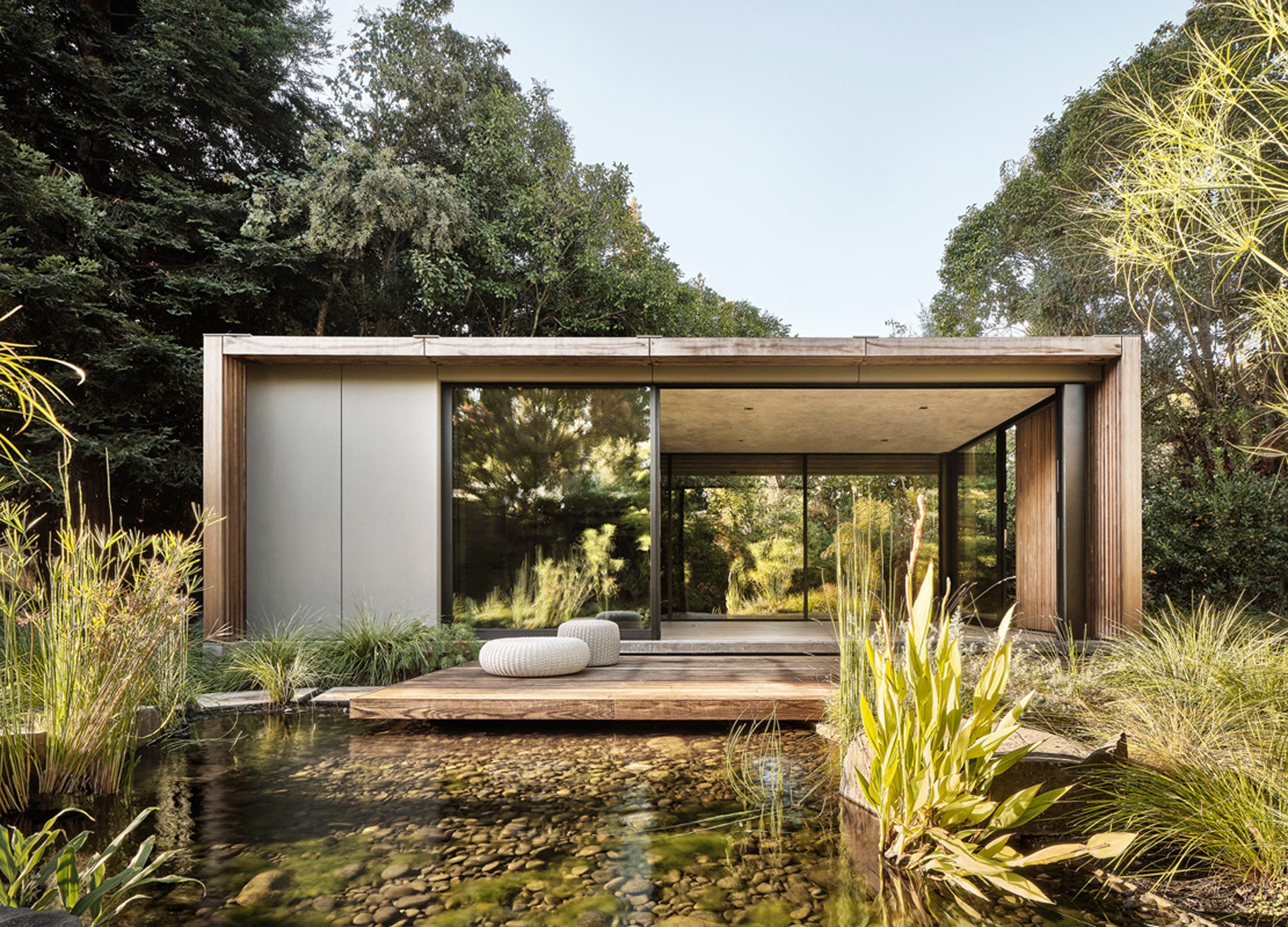
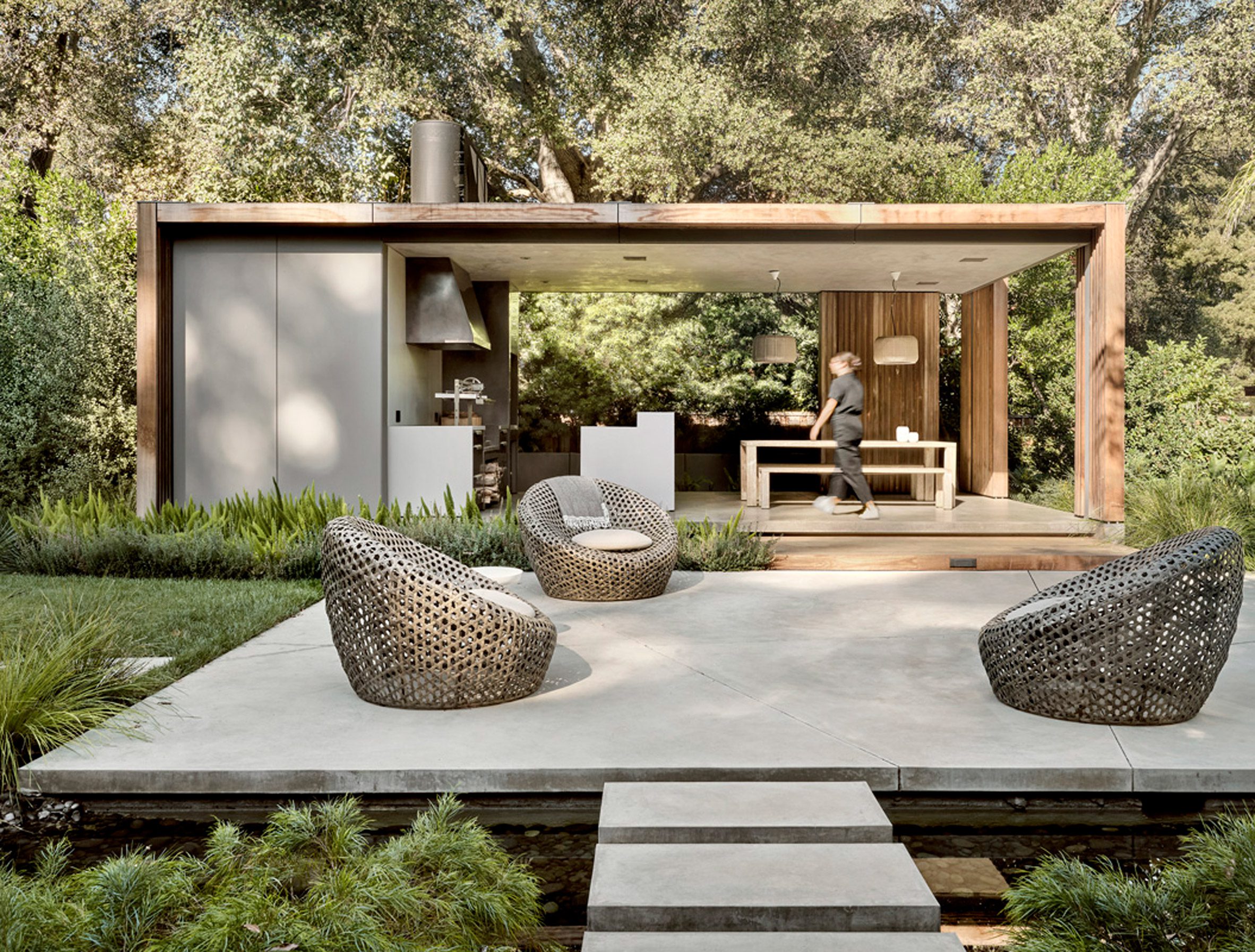
The kitchen pavilion sits next to an organically shaped pool and acts as an extension of an outdoor lounge area. The second pavilion sits farther back. Outdoor terraces and a new pond help to unite the two structures.

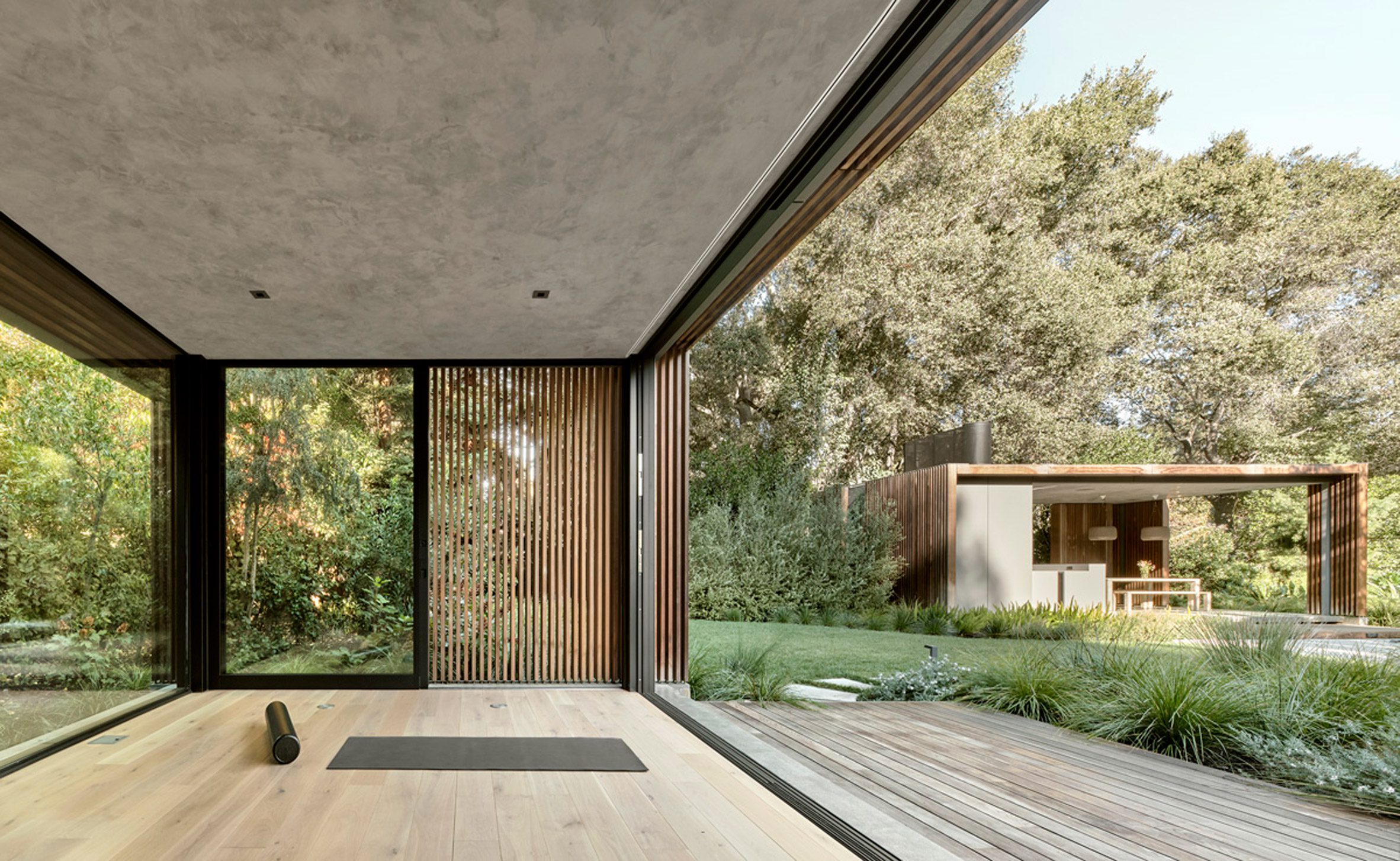
The gym pavilion has sliding glass doors, while the other is open to the air. Both buildings are partly wrapped in slats made of Alaskan yellow cedar that will age naturally over time.

"The wood screens serve each pavilion in contrasting ways – introducing privacy into the exercise and meditation pavilion, and a feeling of openness in the kitchen pavilion," the team said.

A black yoga mat on the floor inside a pavilion
The gym has glass sliding doors that open out onto the garden

The buildings' concrete foundations are lifted slightly in the front and rear, resulting in a floating effect.

"At either end of each pavilion, concrete returns back to the site, tying the structures back to the earth," the team said.

Atherton pavilions by Feldman Architecture in California
Both pavilions are partially wrapped in Alaskan yellow cedar slats

Inside, the buildings have matching plaster ceilings. Concrete was used for the flooring in the dining pavilion, where one finds a pizza oven, a grill, storage space and a wooden table and chairs. The fitness studio is fitted with pale wooden flooring and limited decor.

Established in 2003, Feldman Architecture has designed numerous residential projects in California and beyond. Others include the Sanctuary House in Silicon Valley, which has rooms organised around gardens and courtyards, and the Twins Peak Residence in San Francisco, which features a triangular loft and a plunge pool.

The photography is by Adam Rouse.


Project credits:

Architect: Feldman Architecture
Contractor: Design Line Construction
Landscape design: Thuilot Associates
Structural engineer: Daedalus Structural Engineering
Civil engineer: Lea & Braze Engineering
Geotechnical engineer: Romig Engineers

The post Cedar slats wrap backyard pavilions by Feldman Architecture at Silicon Valley home appeared first on Dezeen.


from Dezeen https://ift.tt/2UeO7fM

Figure creates pocket park disguised as a building site on LA's Wilshire Boulevard

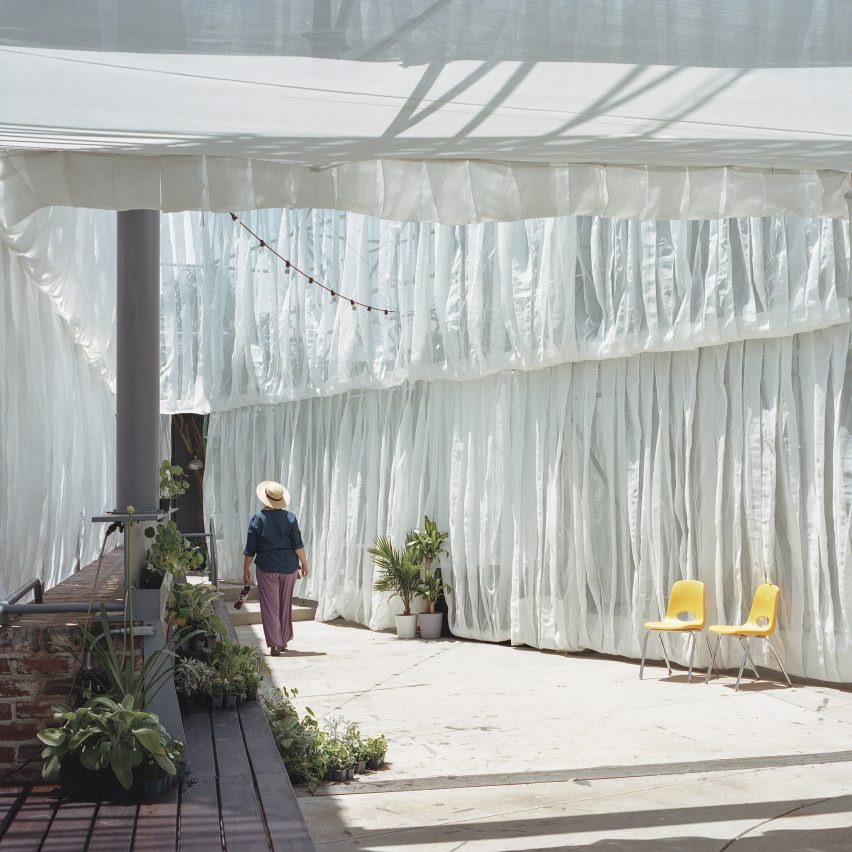
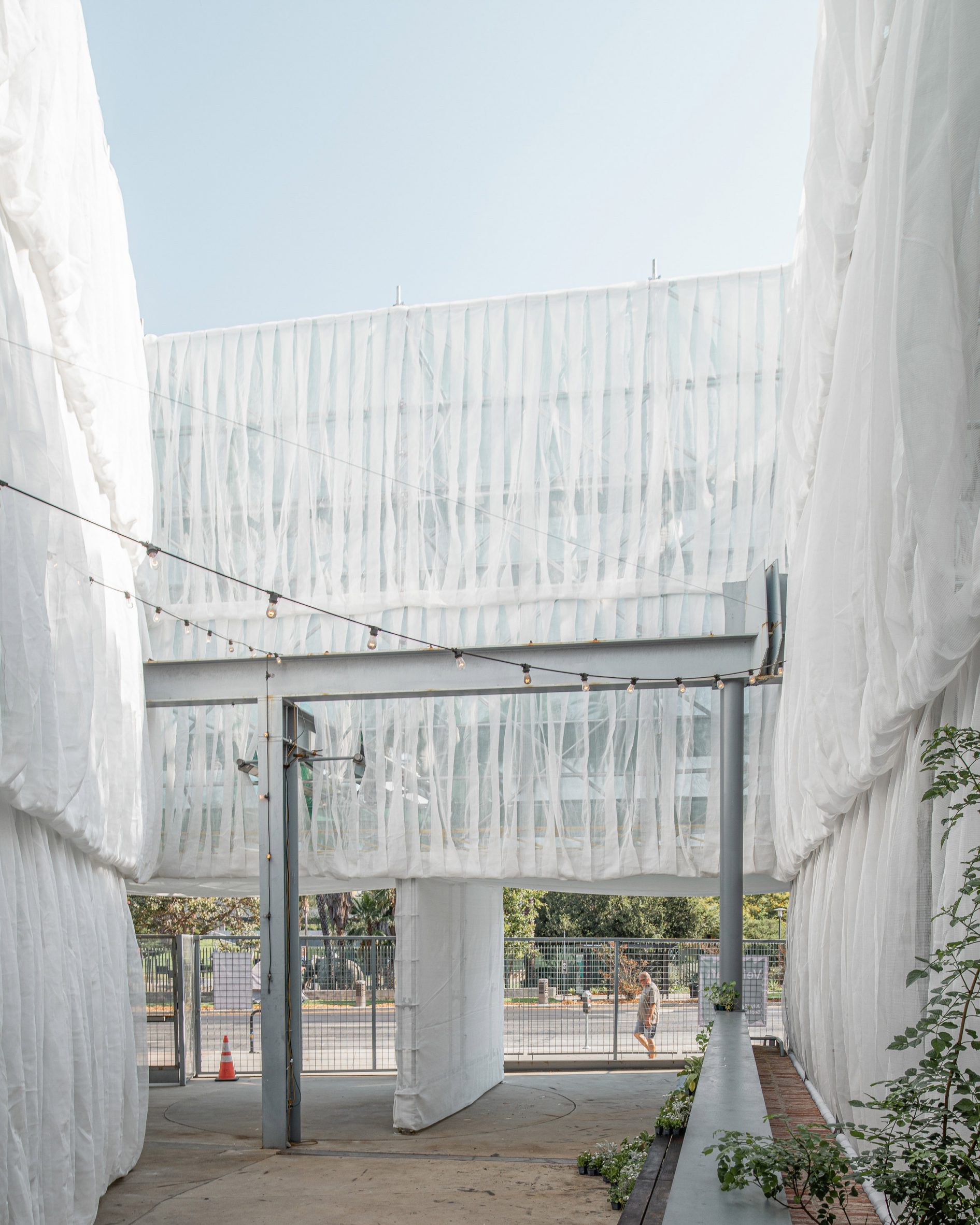
Interior of Veil Craft by Figure at Craft Contemporary

Architecture collective Figure has used the scaffolding and netted fabric typically found on construction sites to create a theatrically shaded courtyard at Craft Contemporary in Los Angeles.

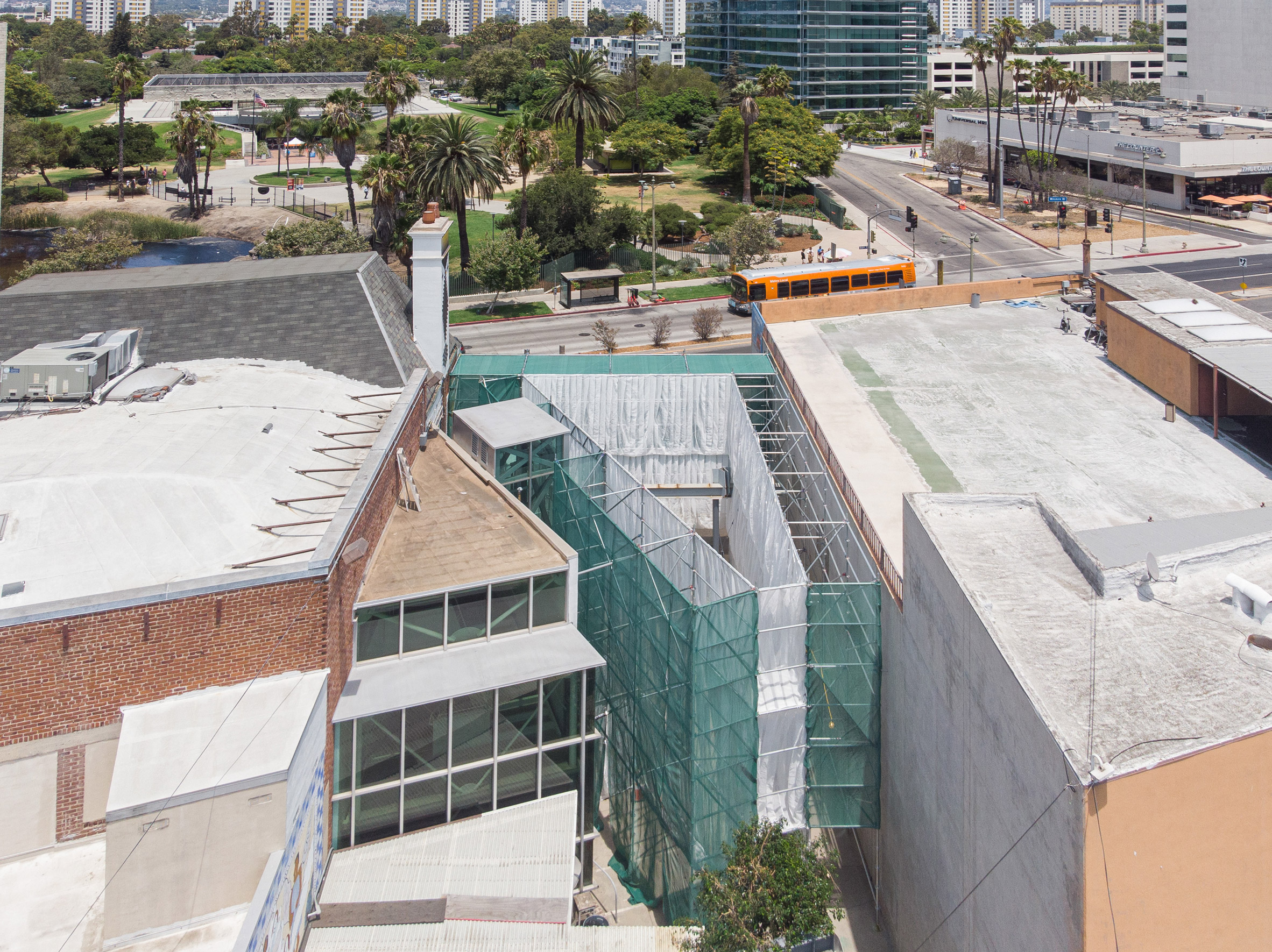
The temporary installation, called Veil Craft, is designed to look just like the many building sites that can be found along Wilshire Boulevard and the surrounding streets.

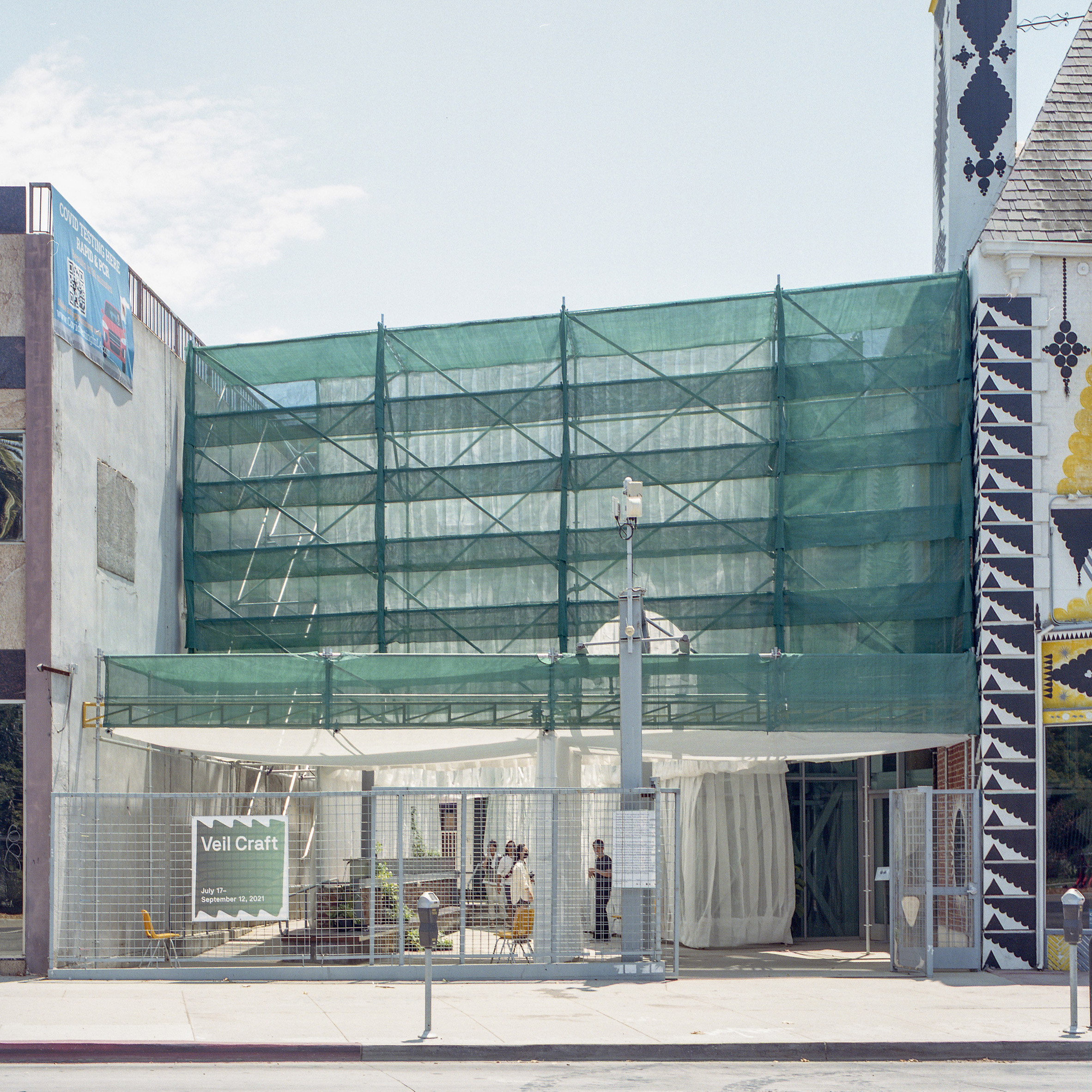
Wilshire Boulevard street view of Veil Craft by Figure at Craft Contemporary
Veil Craft is installed in the courtyard of Craft Contemporary in Los Angeles

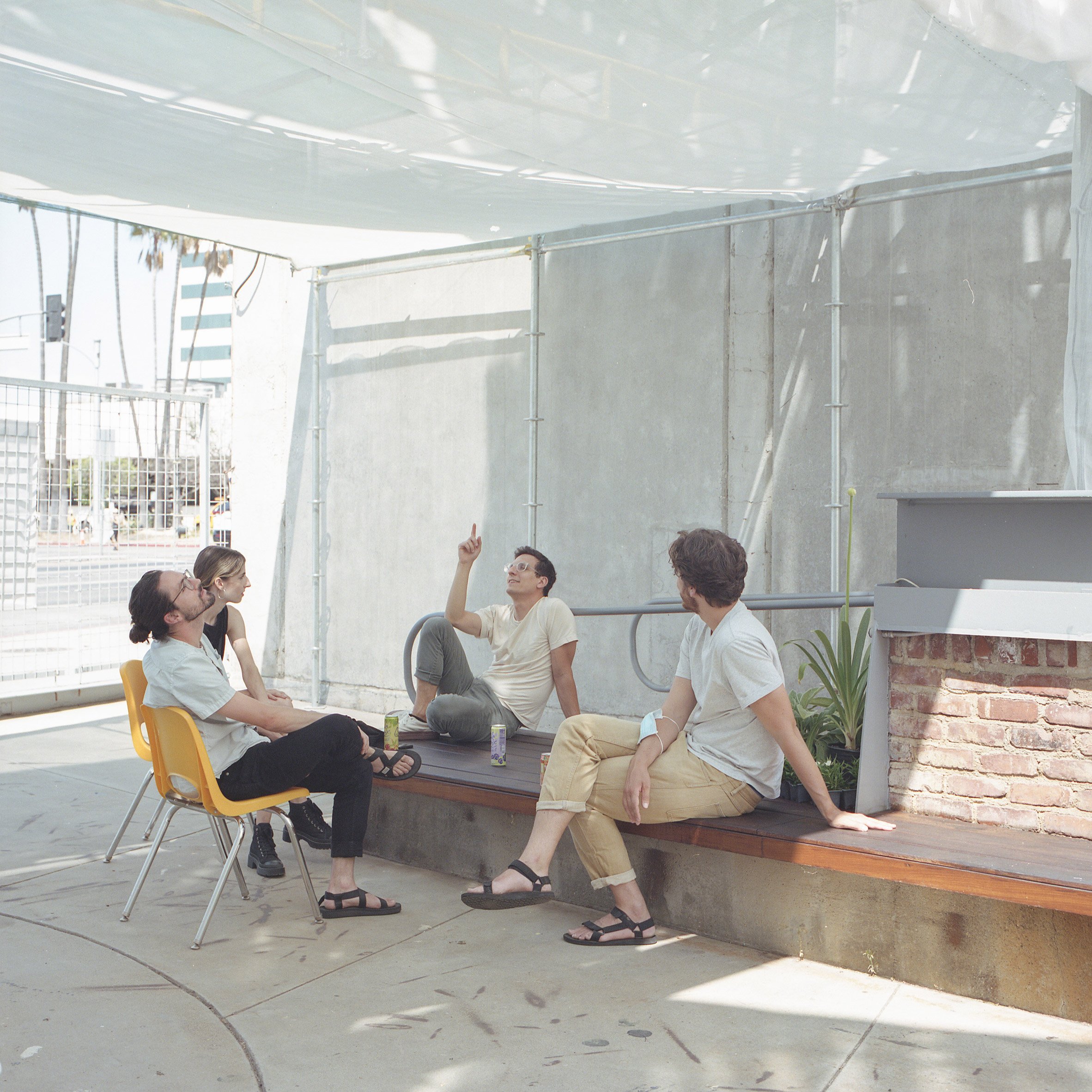
But unlike a development site, this structure invites members of the public to come inside and discover an "unexpected pocket park" where they can sit down, engage in conversation or watch performances.

Here, the construction tarps have been used to create shade and seclusion, rather than as a barrier to prevent entry.

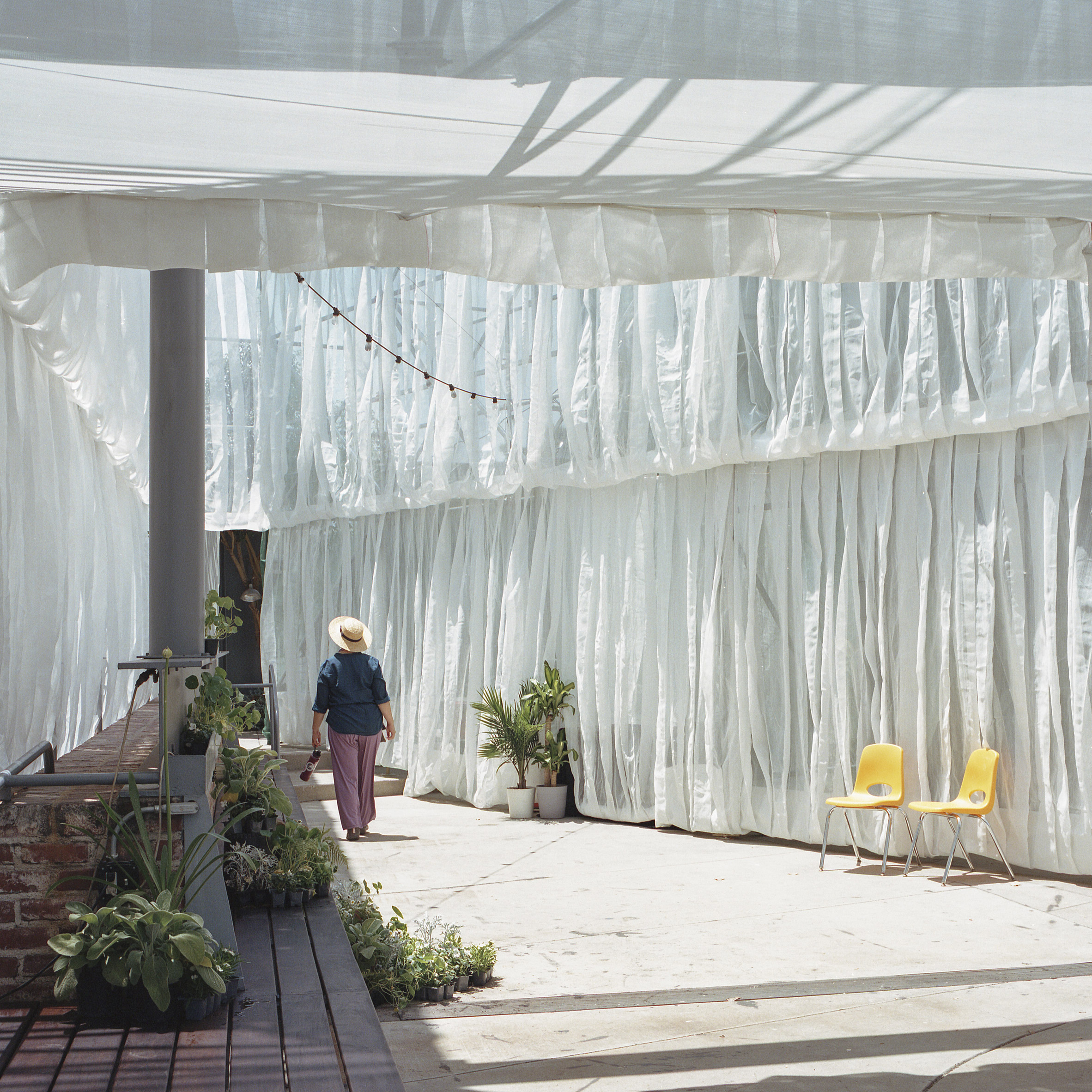
Interior of Veil Craft by Figure at Craft Contemporary
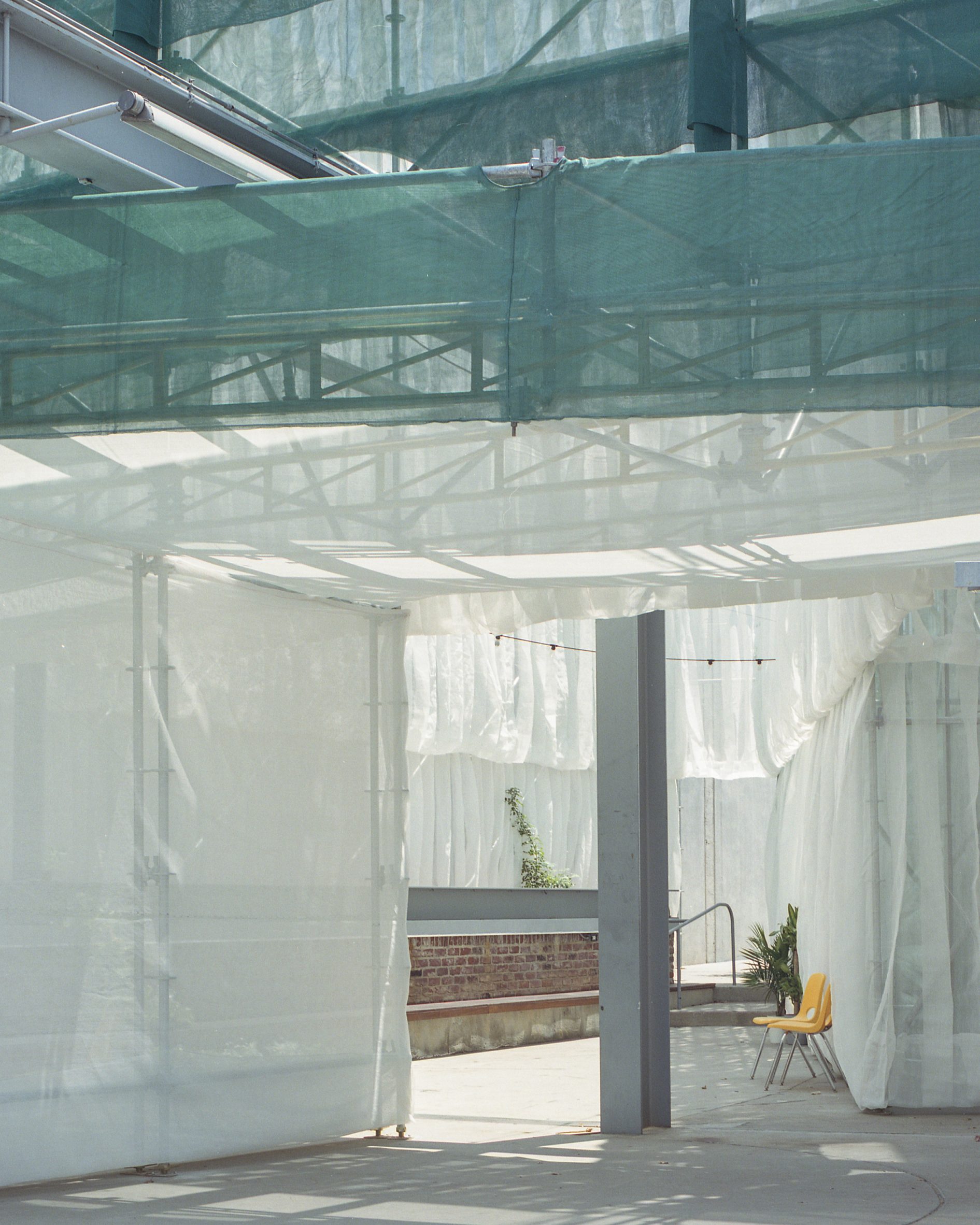
The installation is made from construction scaffolding and netting

"Construction textiles are meant to keep people out – this is a construction site, do not enter, you do not belong here, you're not a part of this," explained Figure's San Francisco-based founders, James Leng and Jennifer Ly.

"So there's a very exclusionary or exclusive type of mentality when it comes to putting up a boundary between the public and something that's in construction," they told Dezeen, "and we thought it would be really interesting to invert that."

Green netting of of Veil Craft by Figure at Craft Contemporary
The design replicates the aesthetic of Wilshire Boulevard's many construction sites

They've done this by creating a space that is enclosed at the top but open at the base. Green netting forms a blank facade, but instead of extending down to the ground, it folds out to create a canopy.

As you step inside the courtyard, the green is replaced with white. This is pleated to create a veil-like quality, reminiscent of wedding dresses and theatre curtains.

Scaffolding of Veil Craft by Figure at Craft Contemporary
The netting is pleated to make it feel more like a textile in the home

Seating frames the edge of the space, along with string lights and an assortment of potted plants.

Leng and Ly's intention was to create a space that feels welcoming in a way that a construction site is not, as a way of questioning whether these developments are truly contributing to the quality and liveability of the area.

The pair hope this space will become a place for conversation about the future of LA's urban landscape.

People in conversation at Veil Craft by Figure at Craft Contemporary
The space will host conversations about the future of LA's urban development

"When you drive down any major boulevard in LA, you just see scaffolding fabric in green, orange or black," they said. "It's an everyday aesthetic of a city that's always in construction, and no one really thinks about it."

"Construction is an essential activity because the city is supposedly building much needed housing or infrastructure," they continued.

"Yet throughout the Covid times we're seeing an increase of displacement and unemployment, and through that poverty and crime. It makes us question who all of this construction and development is going to benefit ultimately, especially because the processes and aesthetics of construction is all about hiding it away from the public."

Drone view of Veil Craft by Figure at Craft Contemporary
The installation was commissioned by Materials & Applications

Veil Craft was commissioned by Materials & Applications, a non-profit cultural organisation with a focus on experimental architecture.

The group has been behind many site-specific installations in the city, although this one is the first in a series set to be created in the courtyard of Craft Contemporary, as part of an annual programme.

The installation opened on 17 July and will remain in place until 12 September. It is free to view, and can be found at 5814 Wilshire Boulevard, Los Angeles, CA 90036.


Project credits

Project team: James Leng, Jennifer Ly, Tiger Fu, Oliver Moldow, Reishan McIntosh
CSI Scaffold: Sergio Chiquete Jr

The post Figure creates pocket park disguised as a building site on LA's Wilshire Boulevard appeared first on Dezeen.


from Dezeen https://ift.tt/3g3cgxs

Iwan Baan shares photos of Kusama’s Pumpkin before typhoon struck

A yellow and black pumpkin sculpture on the edge of a pier

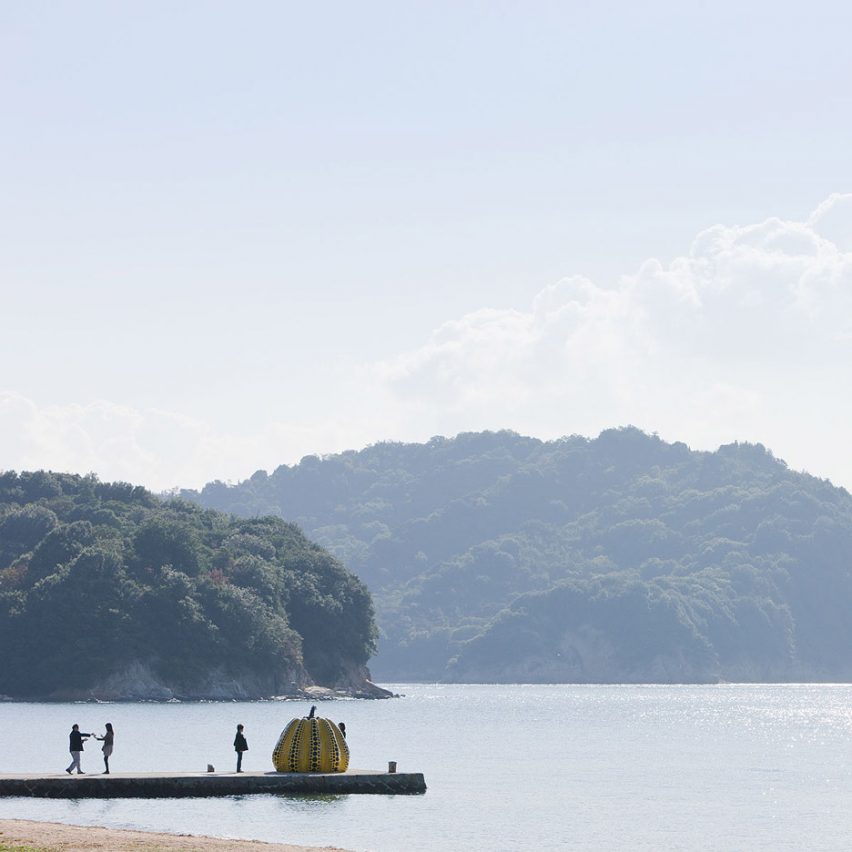
These images by photographer Iwan Baan show artist Yayoi Kusama's pumpkin sculpture installed on a pier on Naoshima Island, Japan, before it was swept away by a typhoon earlier this week.

Images and video footage of the sculpture crashing into the sea went viral earlier this week after an unexpectedly severe tropical storm caught staff at the museum that owns the sculpture by surprise.

Employees at Benesse Art Site were powerless to do anything but record the event as the sculpture was dragged from its fastenings by the waves and crashed into the pier, breaking into three pieces.

A yellow and black pumpkin sculpture by Yayoi Kusama
Above: Iwan Baan photographed Kusama's Pumpkin sculpture when it was still in one piece. Top: One of the architectural photographer's images shows the sculpture glowing at night

Baan captured the sculpture when it was still in one piece.

The architectural photographer's images show the distinctive black and yellow polka-dotted sculpture, which is simply titled Pumpkin, installed near the edge of a pier in Gotanji, Naoshima Town.

Aerial photographs emphasise the sculpture's precarious position over the sea, while a night shot (top) shows the fibreglass-reinforced plastic sculpture glowing from within like a beacon.

An aerial view of Seto Inland Sea and Naoshima Island
The pumpkin sculpture was sat on the edge of a pier on Naoshima Island

Benesse Art Site has exhibited the pumpkin on the island since 1994. Usually, the sculpture is removed during bad weather, but the storm that hit Naoshima Island on Monday 9 August was unexpectedly severe.

"Although the museum, which exhibits many outdoor artworks, has discussed countermeasures to protect the artworks and remove them whenever a typhoon is approaching, in the case of Typhoon No. 9 on August 9, 2021, the forecast itself changed rapidly and there was no official warning on that day," Benesse Art Site said in a statement.

"So the decision to remove the artworks was delayed and we were unable to respond to the sudden waves."

An aerial photo of Naoshima Island showing Kusama's pumpkin sculpture on a pier
Baan's aerial photographs show the sculpture's precarious position over the sea

Employees managed to retrieve the majority of the damaged sculpture once the storm eased off. Benesse Art Site is currently working on repairing the sculpture.

Support from the artist herself is expected to ensure that the artwork is rebuilt successfully and returned to its original location. Until then, Pumpkin will not be available for public viewing.

"We will re-evaluate the accident and strive to prevent its recurrence and further strengthen measures for the management of artworks," the museum said.

Yayoi Kusama is widely known for her distinctive polka-dot artworks all around the world. Her red and white designs were wrapped around trees in New York's Botanical Garden earlier this year.

Back in 2012, the artist covered a Louis Vuitton store in store in red polka dots and created an accompanying capsule collection of polka-dotted clothes for the fashion brand.

Photography is by Iwan Baan.

The post Iwan Baan shares photos of Kusama’s Pumpkin before typhoon struck appeared first on Dezeen.


from Dezeen https://ift.tt/37DwdGC