Monday, 16 August 2021

Espacio 18's La Casa del Sapo opens out onto a beach in Mexico

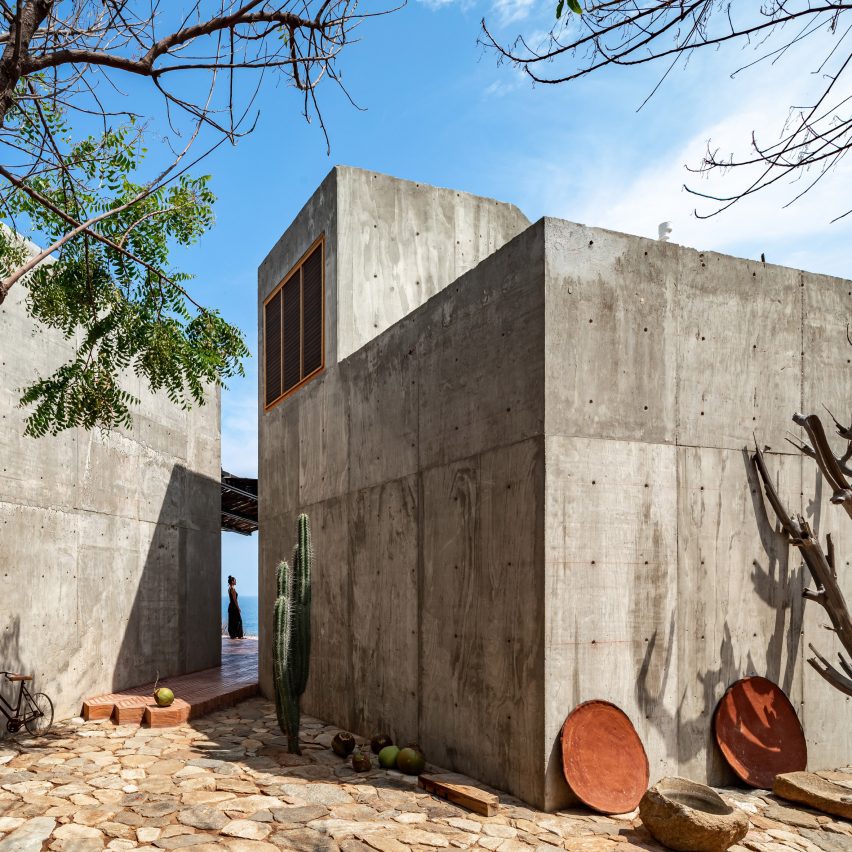
Concrete house on Mexican beach

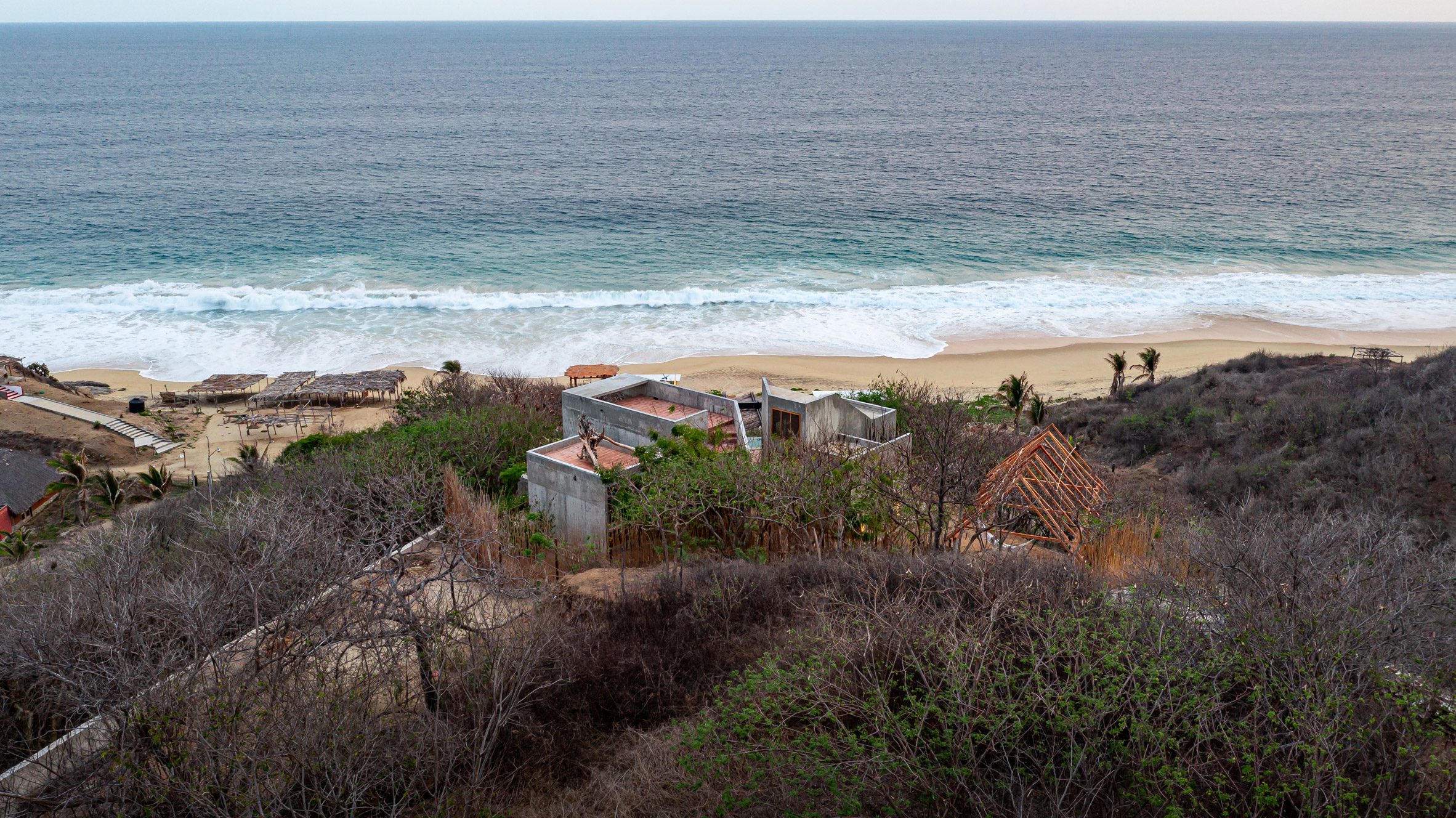
Mexican practice Espacio 18 Arquitectura has designed a concrete seafront home on Zapotengo beach in Oaxaca, with two wings oriented to follow the rising and setting of the sun.

Called La Casa del Sapo, or Toad's House, the "timeless" minimalist design was created as a reflection on life's necessities.

Casa del Sapo by Espacio 18 Arquitectura in Oaxaca, Mexico
Bedrooms face the sunset and sunrise

The local practice was inspired by the small cabin that American writer and philosopher David Thoreau designed for himself in Massachusetts.

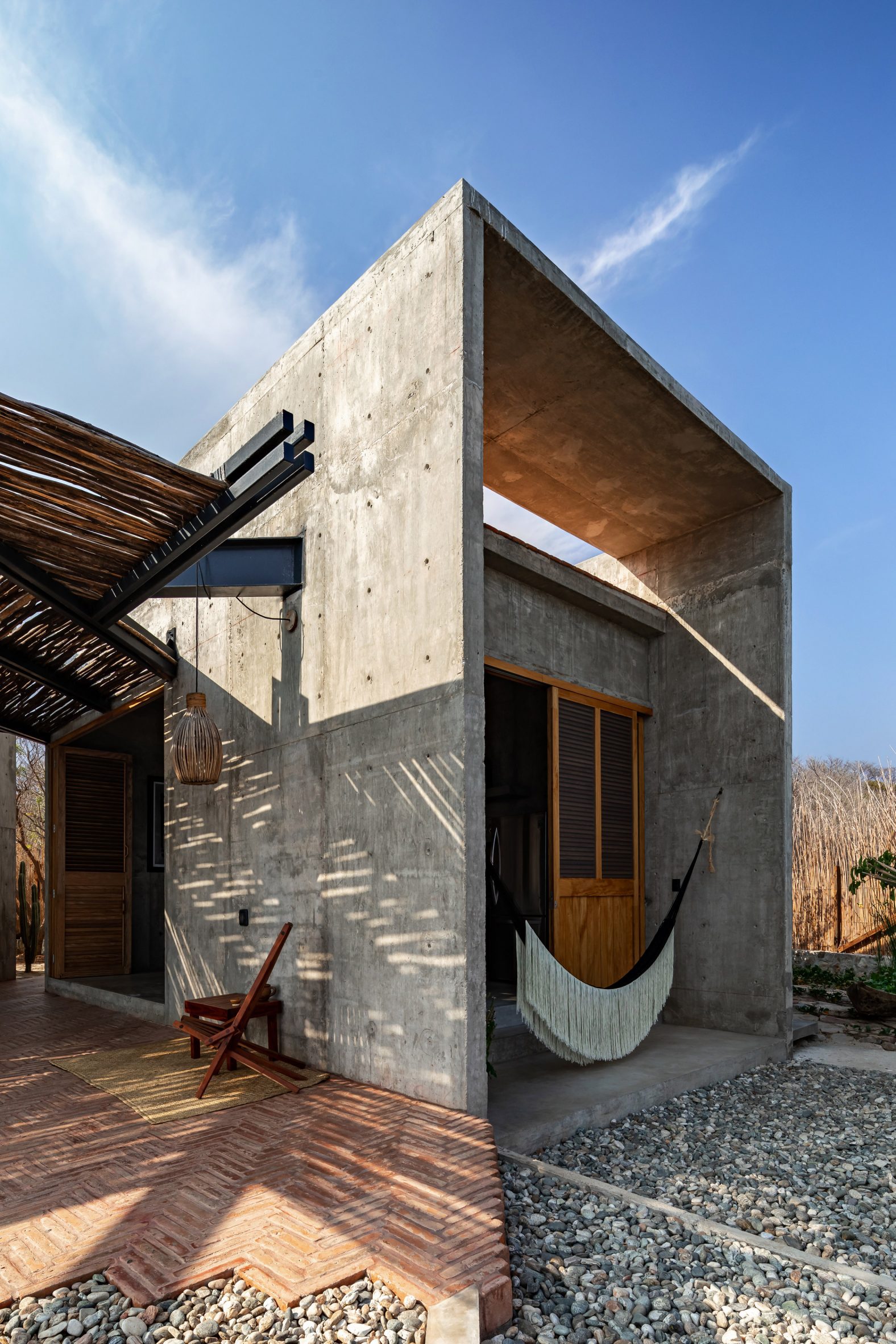
Arranged with a butterfly plan, the two blocks of the home comprise a bar-style kitchen and an en-suite bedroom facing sunrise to the east, and a large en-suite bedroom block facing the sunset to the west.

Casa del Sapo by Espacio 18 Arquitectura is a concrete house that overlooks the Zapotengo beach
The concrete house overlooks Zapotengo beach

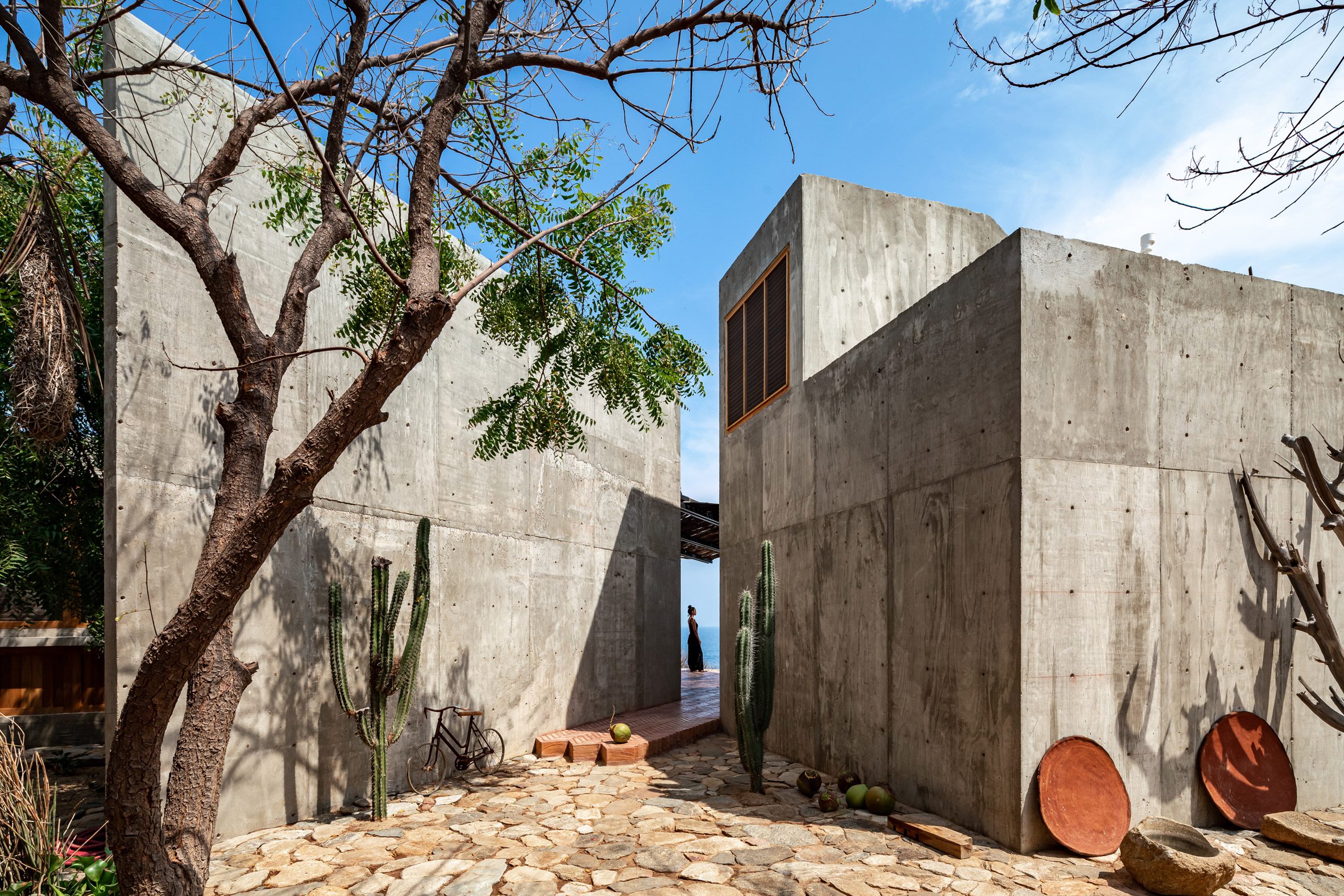
This layout creates a series of triangular patio spaces, with a large central terrace overlooking the sea to the south and two more intimate spaces to the north, divided and shaded by the eastern block's high concrete wall.

"The spacing between [the blocks] shows the sea, the beauty of the Oaxaca coast, and creates flexible space for the one living in it, who will adapt in its own personal way," said the practice.

Casa del Sapo is a grey, concrete house
The home is arranged in a butterfly shape with a kitchen and bedroom in one wing and a bedroom in the other

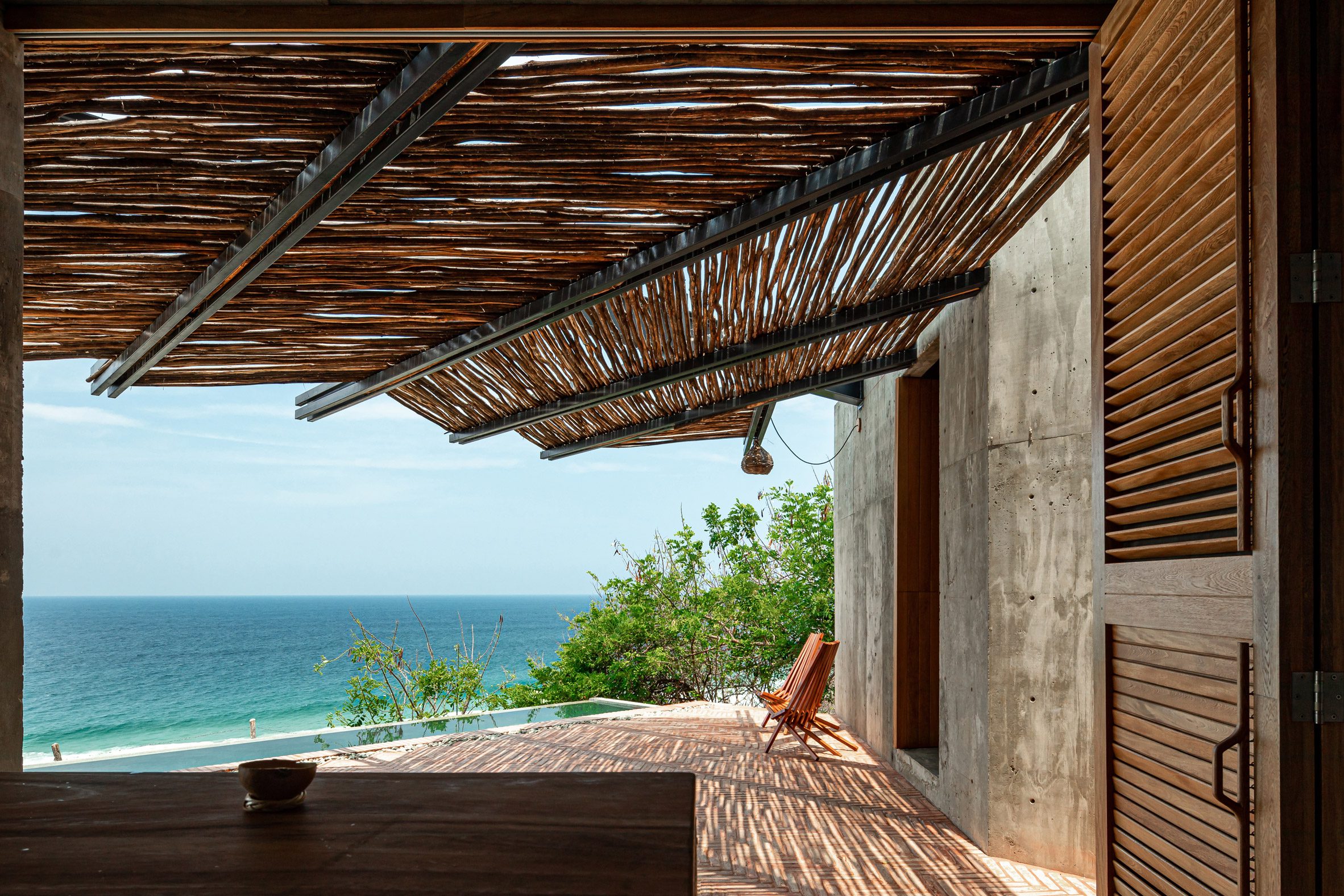
The south-facing patio is defined by a paving of herringbone terracotta bricks and is sheltered from the sun by a steel and branch canopy. Rough stone paving has been used to finish the shaded northern areas, which are dotted with cacti and trees.

These open spaces, including a swimming pool at the end of the southern patio, are intended not just for the owners of the home, but as areas for hosting friends and the local community.

"La Casa del Sapo is everyone's house, it has become a gathering space...a family home, a shelter, and inclusive space; a safe space," the practice said.

A folding wooden door lets the kitchen area open out onto the central patio, and large folding doors at the end of each block allow the interiors to be opened up to look out towards the sea.

A chair on a deck overlooking the sea
A canopy made from steel and branches provides shade over the south-facing patio

The communal gathering spaces continue to the roof of the home, with a staircase on the eastern block leading up to a terracotta-tiled terrace looking out to sea and sheltered by a high parapet.

Both externally and internally, the building's concrete structure has been left unfinished and exposed on all surfaces. It is complemented by concrete counters, shelving and concrete bases for the home's beds.

Casa del Sapo by Espacio 18 Arquitectura in Oaxaca, Mexico
Concrete was used throughout the house

Previous projects by Espacio 18 include a townhouse in Puebla designed with Mexican practice Cueto, which features a bright internal courtyard and roof terrace.

Photography is by Onnis Luque and Fabian Martinez.

The post Espacio 18's La Casa del Sapo opens out onto a beach in Mexico appeared first on Dezeen.


from Dezeen https://ift.tt/3iNZwga

Nine theatrical design projects from Wimbledon College of Arts' Graduate Showcase

Wimbledon College of Art

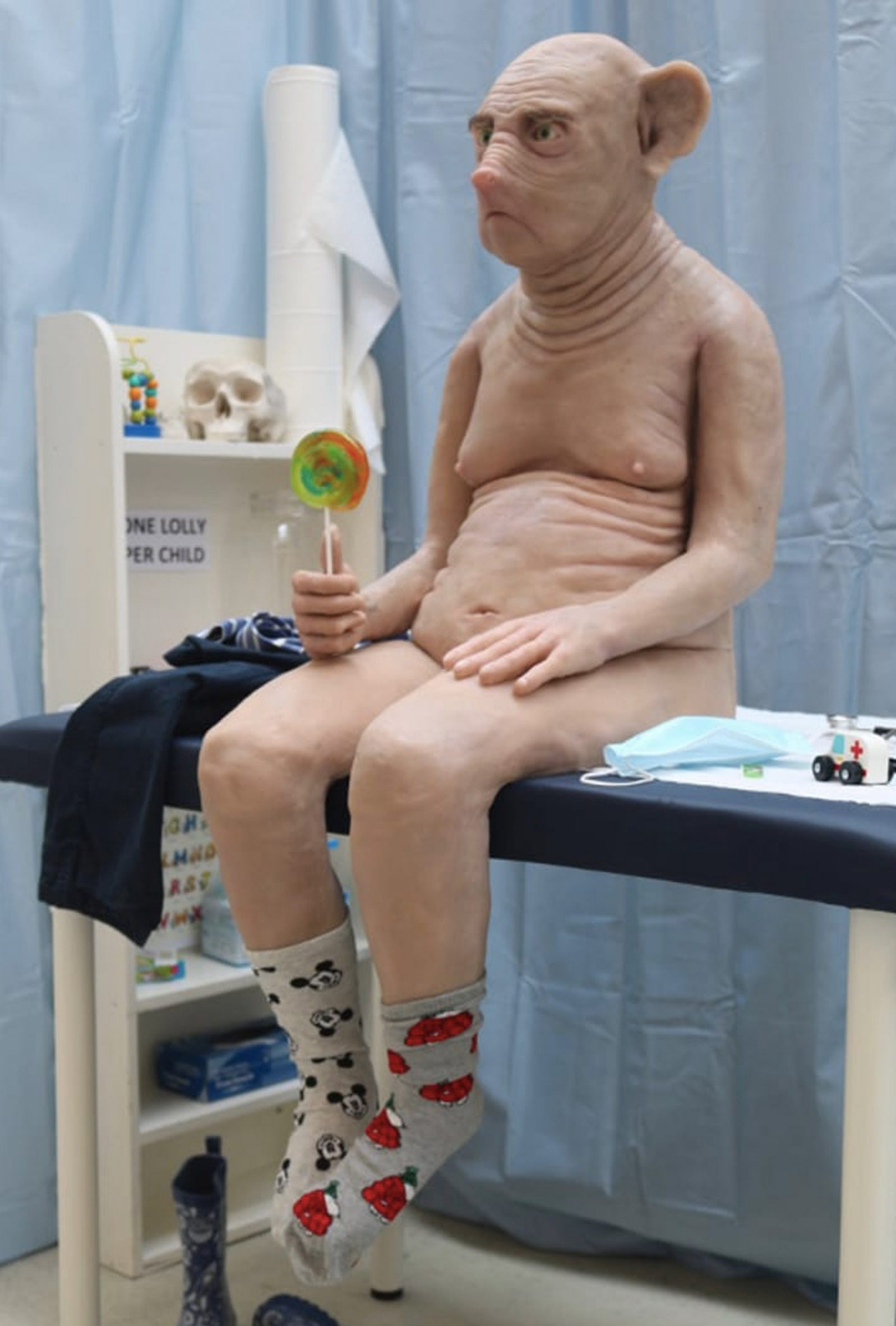
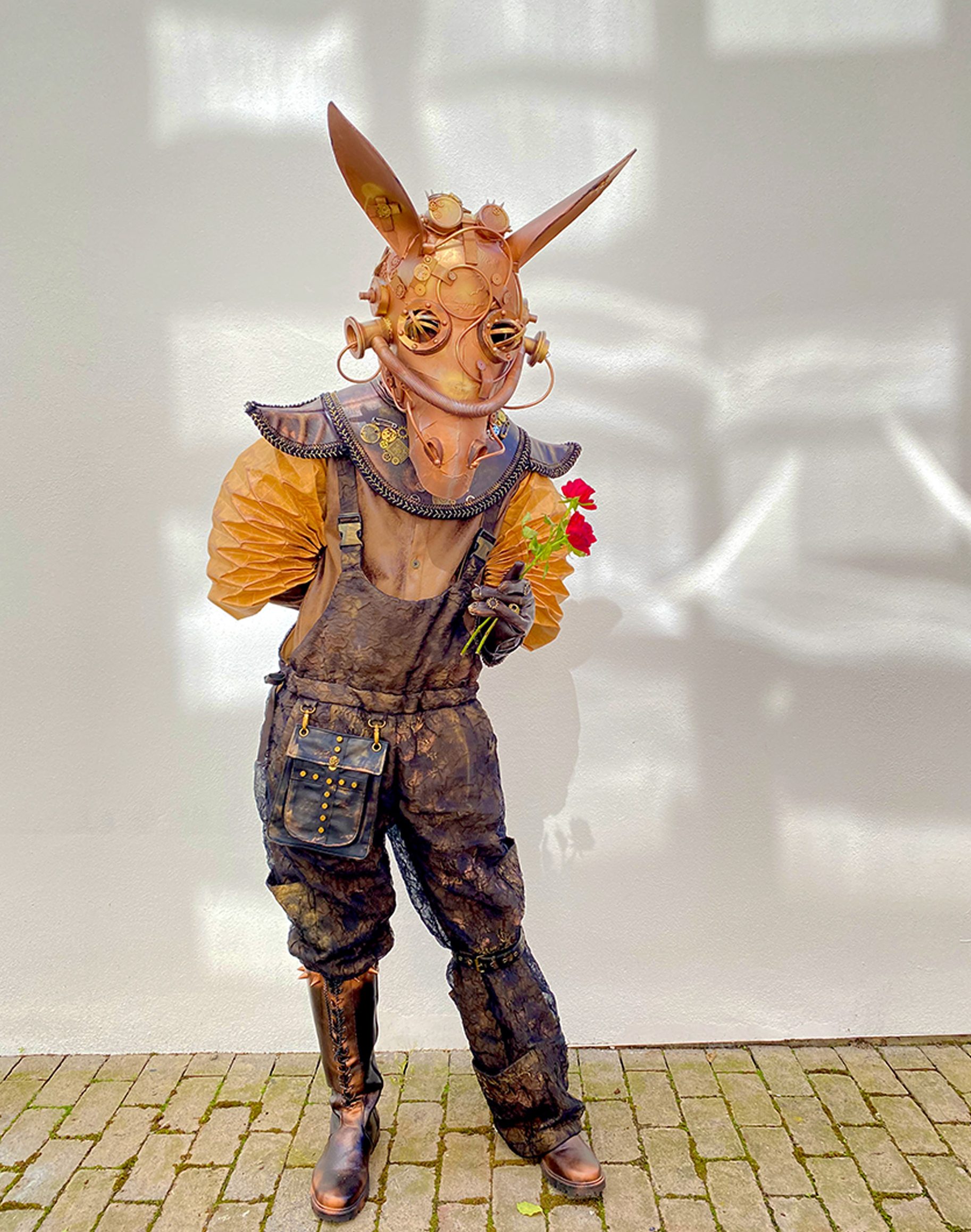
A human-mouse creature crafted in silicone and theatre costumes that reference industrial London are included in Dezeen's latest school show by students at Wimbledon College of Art.

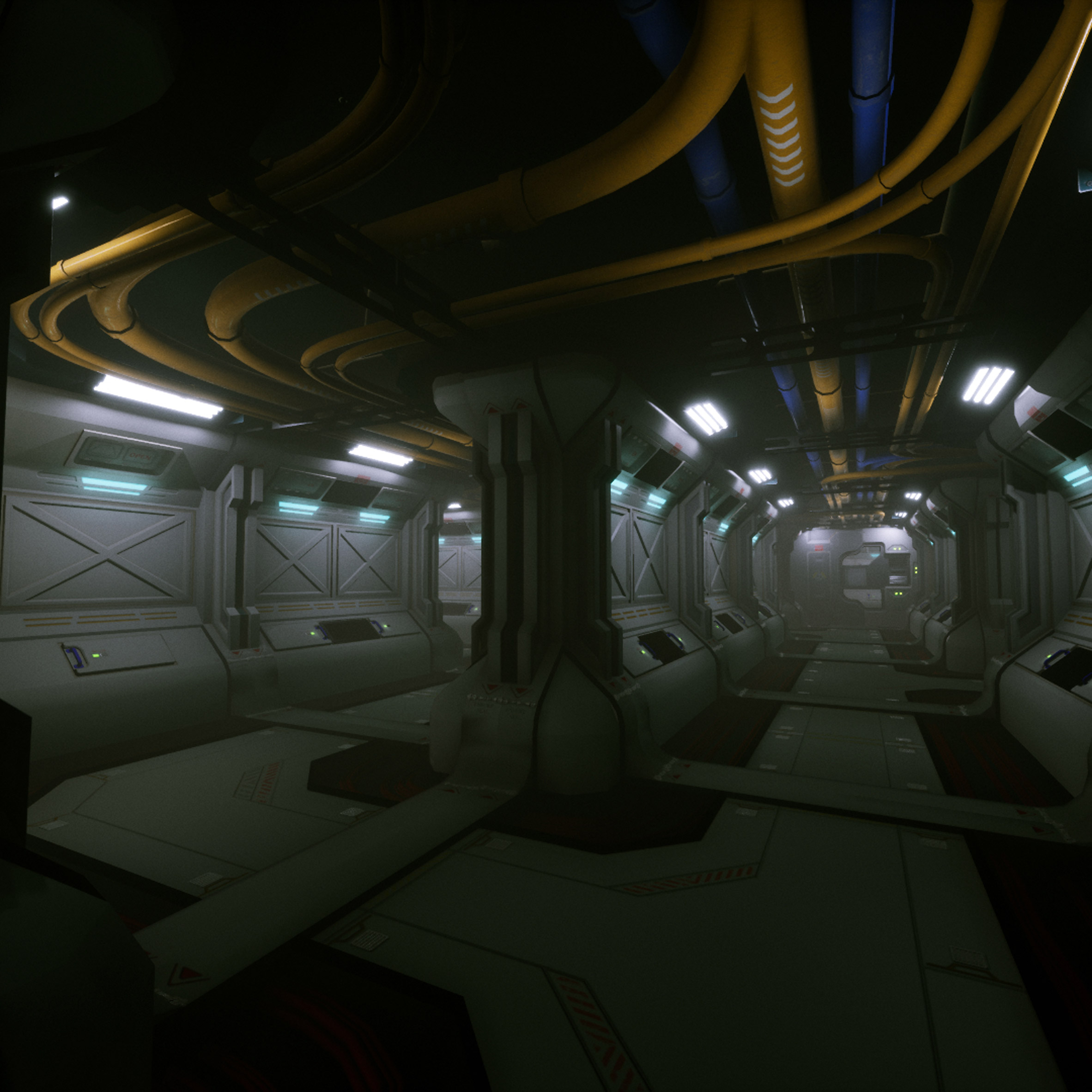
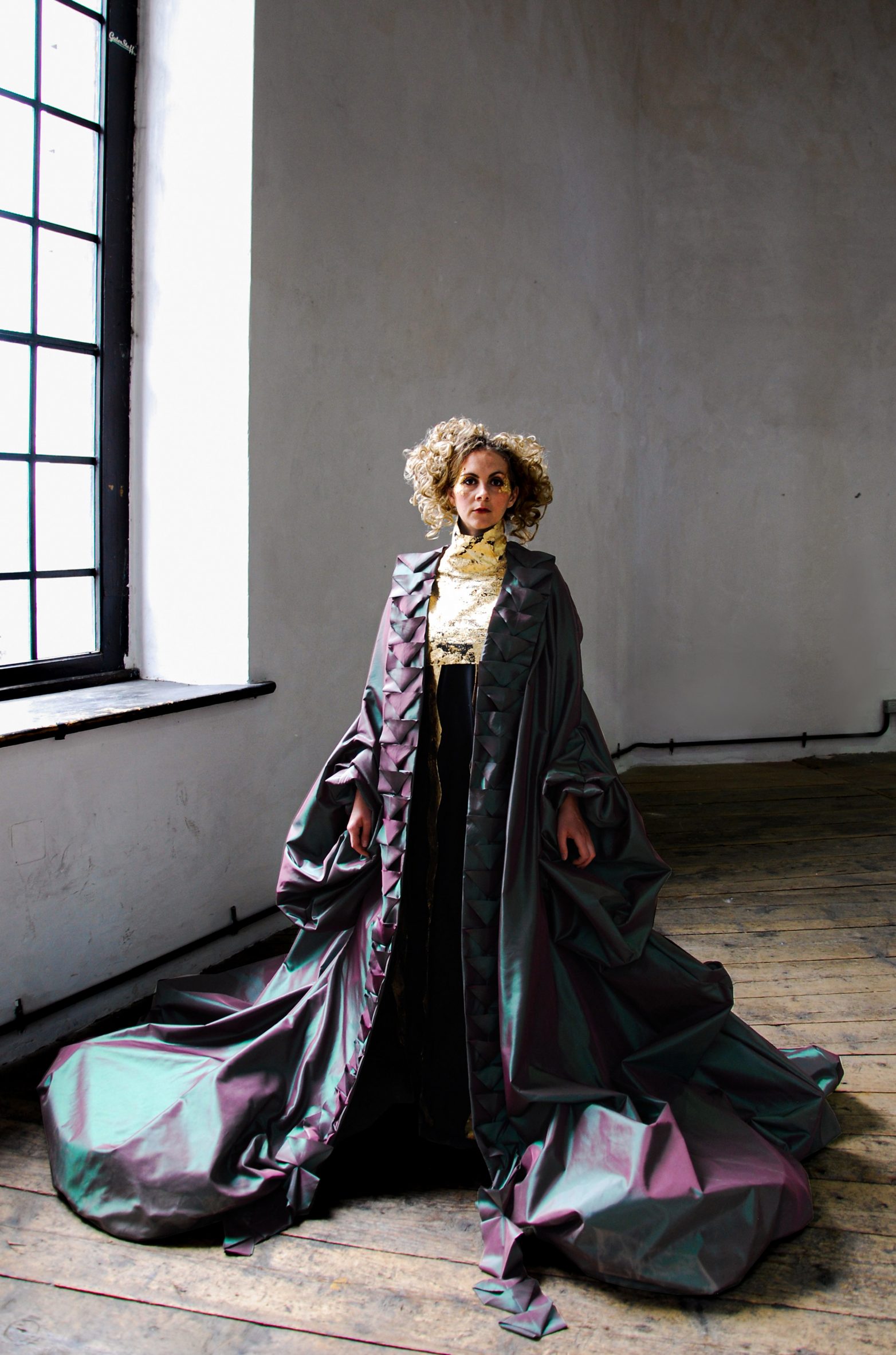
Also included is a fashion project based on the opera Elektra and a science fiction-like environment with a labyrinthine network of corridors and service tunnels.


Wimbledon College of Art

School: Wimbledon College of Art
Courses: BA (Hons) Theatre Design, BA (Hons) Production Arts for Screen, BA (Hons) Production Arts for Screen – Technical Arts Pathway, BA (Hons) Costume for Theatre and Screen, BA Fine Art: Print and Time-Based Media and BA Fine Art: Print and Time-Based Media

School statement:

"Wimbledon College of Art is dedicated to preparing our students for successful careers in the creative industries by providing excellent technical training and developing creativity through collaboration.

"As our graduating students start their careers in fine art and performance design, this year, we celebrate the importance of exploration and working together across disciplines while developing a personal practice.

"Wimbledon College of Arts' graduate showcase is the place to discover the newest names in art and performance. You can see the work on display in London, or you can view work online at the graduate showcase website."


Wimbledon College of Art

Anna Gorman

"I am a performance designer and theatre-maker. I'm experimenting with scale, colour and surrealism – designing immersive worlds for the characters I create. My practice has developed by bringing my characters to life, designing and creating costumes and making wigs which I then dress in.

"This characterisation is influenced by Cindy Sherman. I have a special interest in exploring feminism, the class system and anti-racist positions within my practice. I have been increasingly drawn to collaboration and interdisciplinary practice throughout the past few years."

Student: Anna Gorman
Course: BA (Hons) Theatre Design
Instagram: annagormantheatredesign

Wimbledon College of Art

Wenling Wu

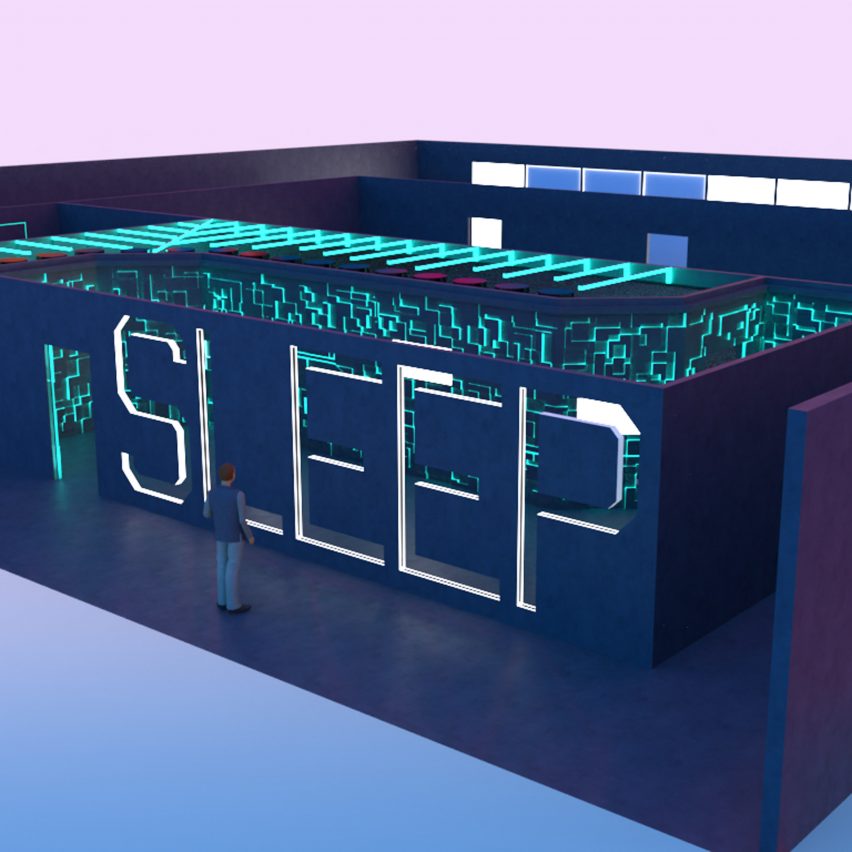
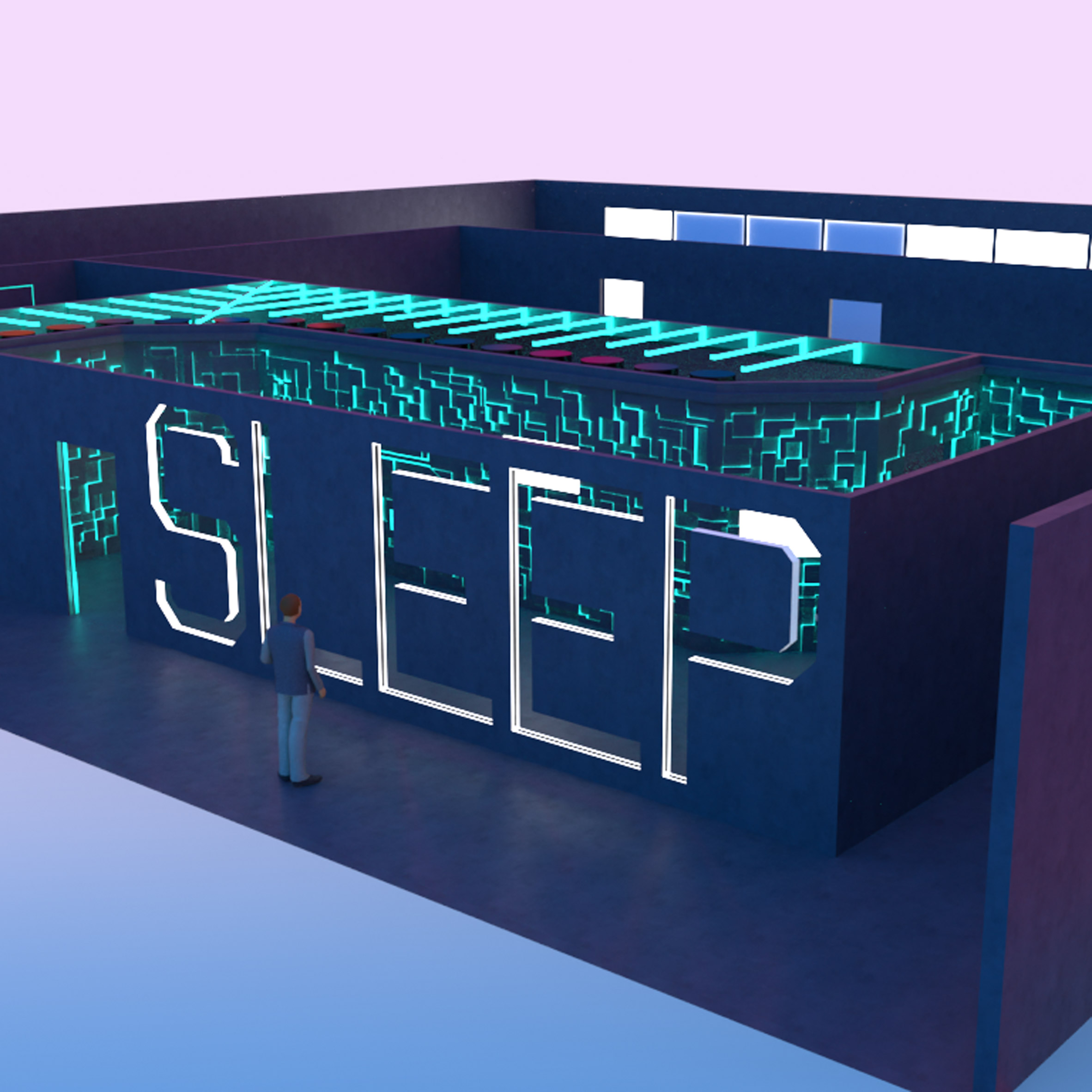
"The Russian Sleep Experiment is a CreepyPasta Story and its original author is unknown. The story is reimagined to be set in a dystopian world with the aesthetics of cyberpunk, techno music and features of a motherboard.

"The live performance will take place in a VR space, held in Illuminate in London's Science Museum. The audience is invited to partake in an immersive experience before watching the VR performance. The experience ends with the opportunity to look at the behind-the-scenes making of the performance."

Student: Wenling Wu
Course: BA (Hons) Theatre Design
Instagram: w.wenlingdesigns

Wimbledon College of Art

Alfie Lloyd

"My project, called Circadia, is an immersive, explorative and interactive digital science fiction environment. I have focused my attention on designing several distinct locations within this larger space station.

"Connected by a labyrinthine network of corridors and service tunnels, the setting can be explored, and many aspects of it can be interacted with and engaged with in real-time.

"Everything in these scenes has been conceptualised, designed and realised by myself; with the components of the setting being sculpted in Blender, the textures created in ­Adobe Substance and finally brought together within the Unreal Engine."

Student: Alfie Lloyd
Course: 
BA (Hons) Production Arts for Screen
Instagram: alfiecreative

Wimbledon College of Art

Daisy Stapleton

"I was inspired by the idea of human-animal chimeric experiments, where scientists test ways to combine human stem cells and animal embryos. I wanted to create a depiction of what could be created if these experiments were to go wrong, in this instance, a human-mouse creature.

"I used the knowledge I have gained from my three years at university, including sculpting, moulding, casting, the use of silicone, silicone painting and hair punching to make my final piece come to life."

Student: Daisy Stapleton
Course: 
BA (Hons) Production Arts for Screen – Technical Arts Pathway
Instagram:
daisyzart

Wimbledon College of Art

Anna-Sophie Lienbacher

"I based my concept on the psychological aspects of the opera Elektra by Richard Strauss and the aesthetics of the artist Gustav Klimt, who addressed psychological processes in his paintings.

"Playing with geometric shapes and surface structure was especially important to transport Klimt's aesthetic. Other artists that influenced my design were fashion designers Alexander McQueen and Sam Taylor-Wood.

"The pattern for the design was based on the Janet Arnold pattern for a girl's loose gown made in 1610-1620, which is currently a part of the Victoria and Albert collection. The silhouette was inspired by an inkblot test, and I used the colours of rotten fruits for the gown."

Student: Anna-Sophie Lienbacher
Course:
BA (Hons) Costume for Theatre and Screen
Instagram: 
annalieni

Wimbledon College of Art

Lu Wang

"Lu Wang's final work is a costume for the character Bottom in Shakespeare's play A Midsummer Night's Dream. Wang is fascinated by the diverse culture and trends in London and has combined characters in A Midsummer Night's Dream with representations of the City of London such as industrial factories, street graffiti and a lighting show."

Student: Lu Wang
Course:
BA (Hons) Costume for Theatre and Screen
Instagram:
tilliewang_arts

Wimbledon College of Art

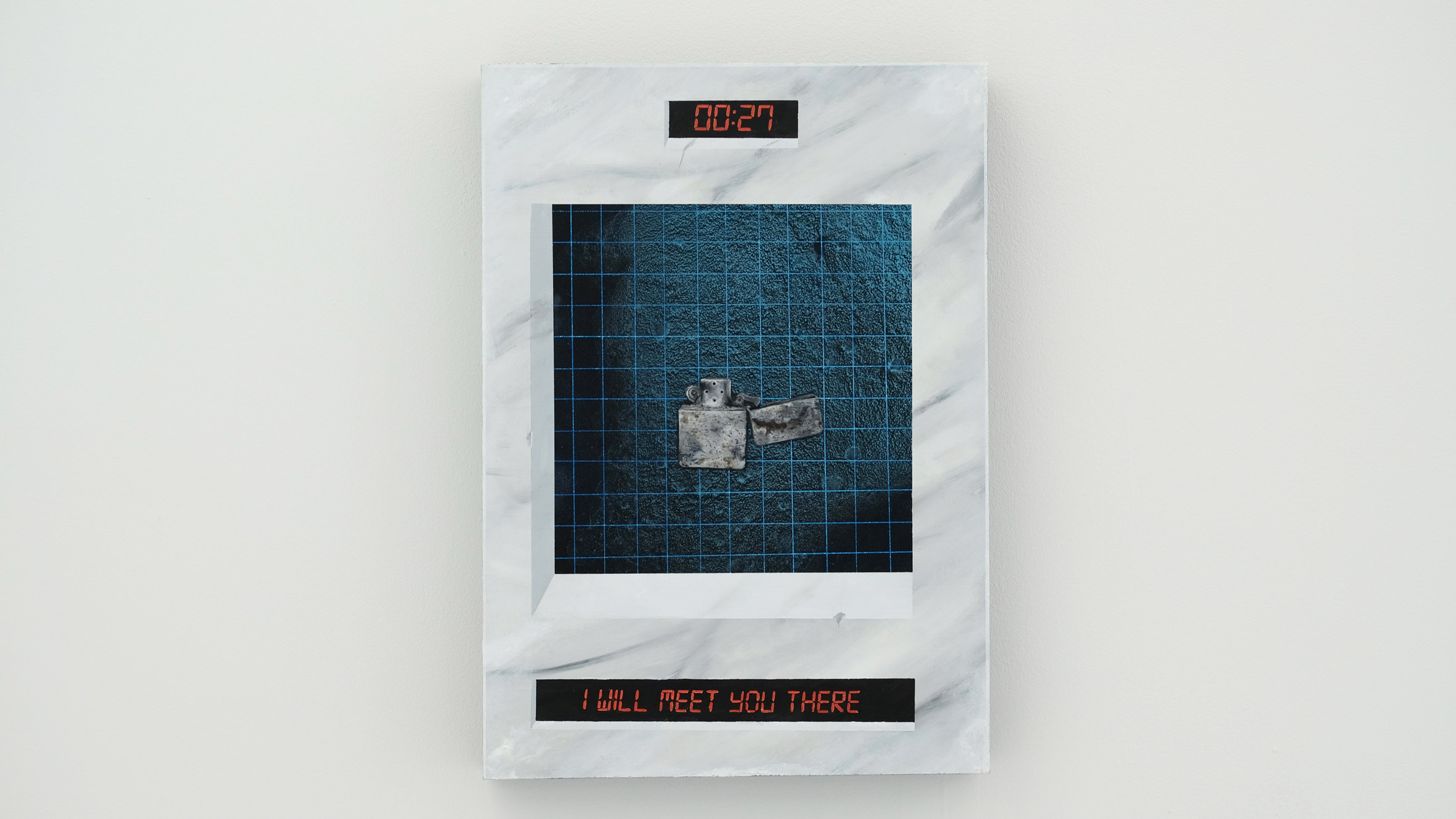
Alex Appleby

"My influences are derived from popular culture and the art world, particularly the work of old masters like Botticelli, Dürer and Da Vinci.

"I look at painters like this whilst observing artists like Christian Rex van Minnen, Trey Abella and Emily Mae Smith. I borrow a lot from other people's practices, with the ethos of a painting becoming a 'recipe'. This comes from my background as a chef and is my understanding of the world."

Student: Alex Appleby
Course: BA Fine Art: Painting

Wimbledon College of Art

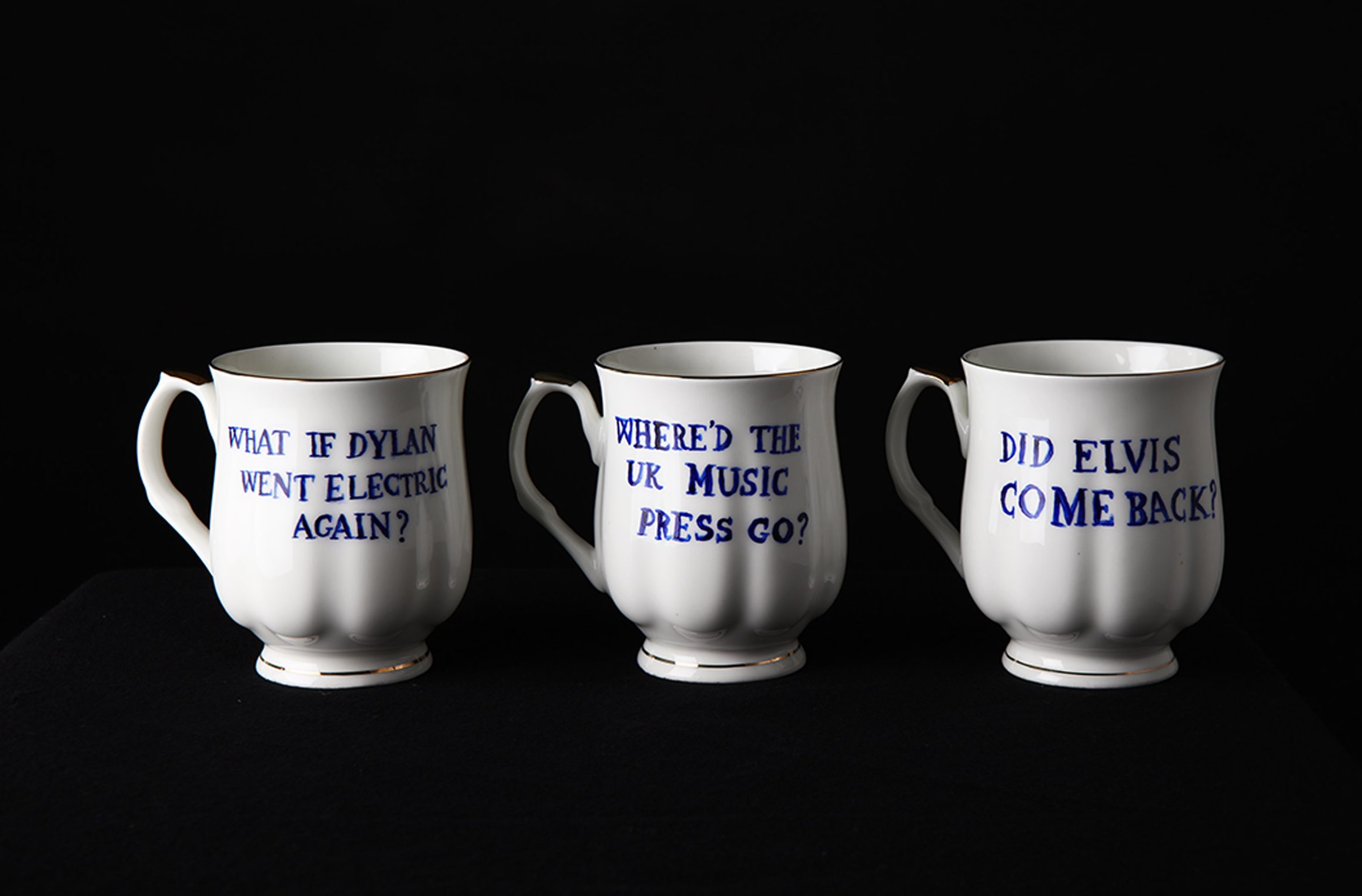
Nicole O'Hara

"Working with painting, printmaking, ceramics and digital art, Nicole O'Hara's work centres around the transferral of text across mediums, pulling quotes and stories from popular culture and music history and exploring the changes in context that this provokes.

"Inspired by stylistic and contextual elements of the pop art and neo-dada artistic movements, in addition to beat poetry and popular music iconography, her work often experiments with colour combinations and demonstrates a significant focus upon the visual."

Student: Nicole O'Hara
Course: 
BA Fine Art: Print and Time-Based Media

Wimbledon College of Art

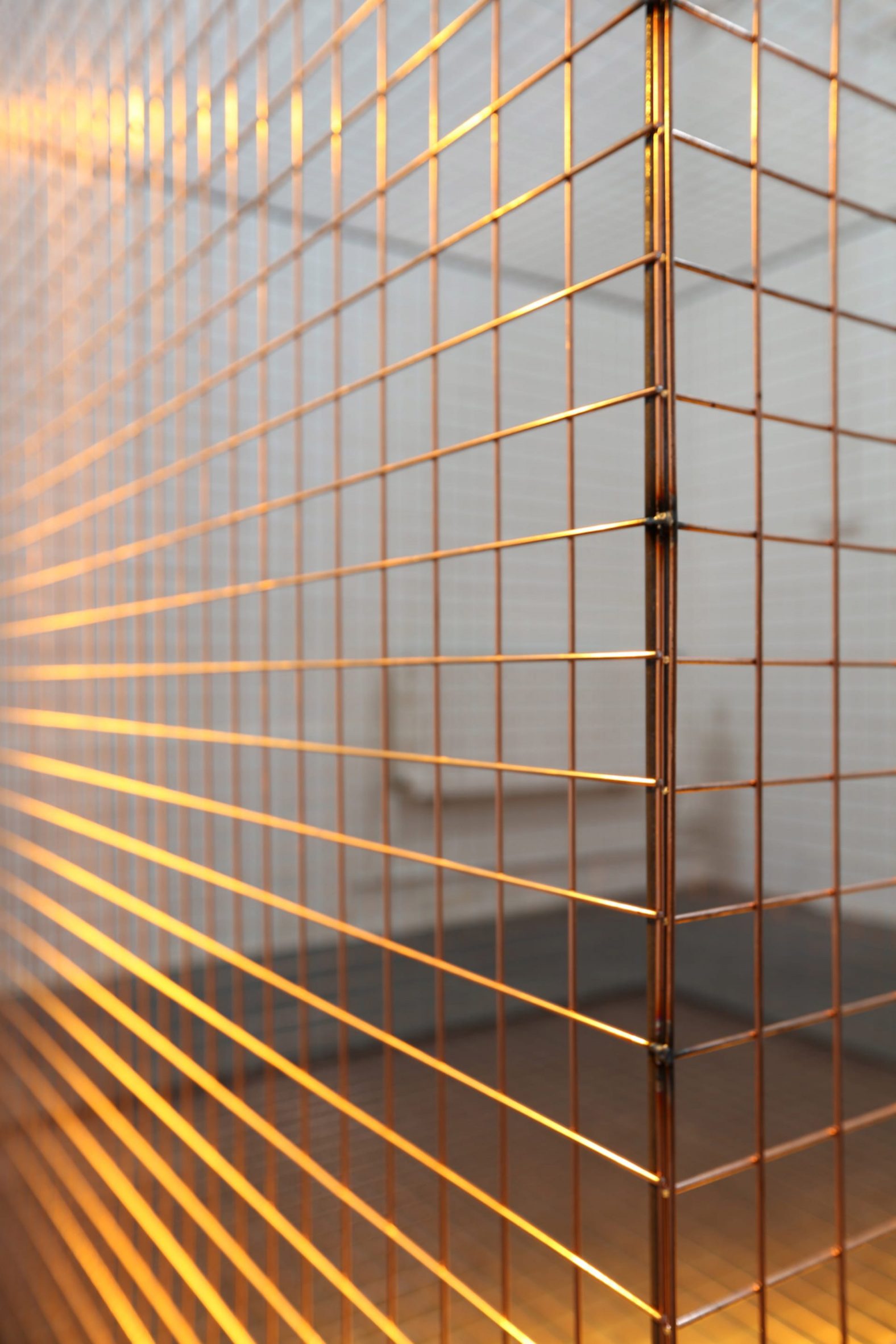
Alice Gamble

"The space, politics and visual culture in Northern Ireland is key to Alice Gamble's practice. Gamble creates interventions that interrupt and charge the space in which they are situated.

"Born into the ceasefire generation in Belfast, Gamble is constantly exploring and observing her surroundings as she finds them. Her work examines the idea of territory and political borders in her own life, and how the visual culture in Belfast creates segregation and holds communities back from progressing into peace.

"Gamble considers the border as a physical site, a historical idea and a political division, and brings these contemplations into a gallery space."

Student: Alice Gamble
Course: 
BA Fine Art: Sculpture
Instagram:
alice.gamble_art


Partnership content

This school show is a partnership between Dezeen and Wimbledon College of Art. Find out more about Dezeen partnership content here.

The post Nine theatrical design projects from Wimbledon College of Arts' Graduate Showcase appeared first on Dezeen.


from Dezeen https://ift.tt/2W2269J
Material Bank buys Clippings to speed digitisation of "one of the few remaining sectors" to be transformed by technology

Material Bank Clippings acquisition

US architecture and design materials marketplace Material Bank has acquired UK interior design procurement firm Clippings.

The American firm has bought 100 per cent of the London-based company for an undisclosed sum in a move that it claims will help transform the design sector via technology.

"This sector is one of the few remaining sectors that really has not been touched significantly by technology," Clippings executive chairman and co-founder Adel Zakout told Dezeen.

"If you kind of zoom out and look at the way business is done in the design, real estate and construction sector, it's still a very low single-digit percentage that goes through some kind of online presence."

"So I think there's this huge, huge opportunity in this industry."

Acquisition comes after Material Bank funding round raises $100 million

Material Bank, which currently only operates in the USA, provides architects and designers with a one-stop shop for material samples.

Founded in 2014, the service is free to designers and promises next-day delivery for samples of fabrics, finishes, tiles and other materials ordered via the Material Bank website.

Samples are picked and packed by robots at Material Bank's vast distribution warehouse at Olive Branch, Mississippi. The company raised $100 million in a funding round in May this year, valuing it at almost $1 billion.

Founders of Clippings
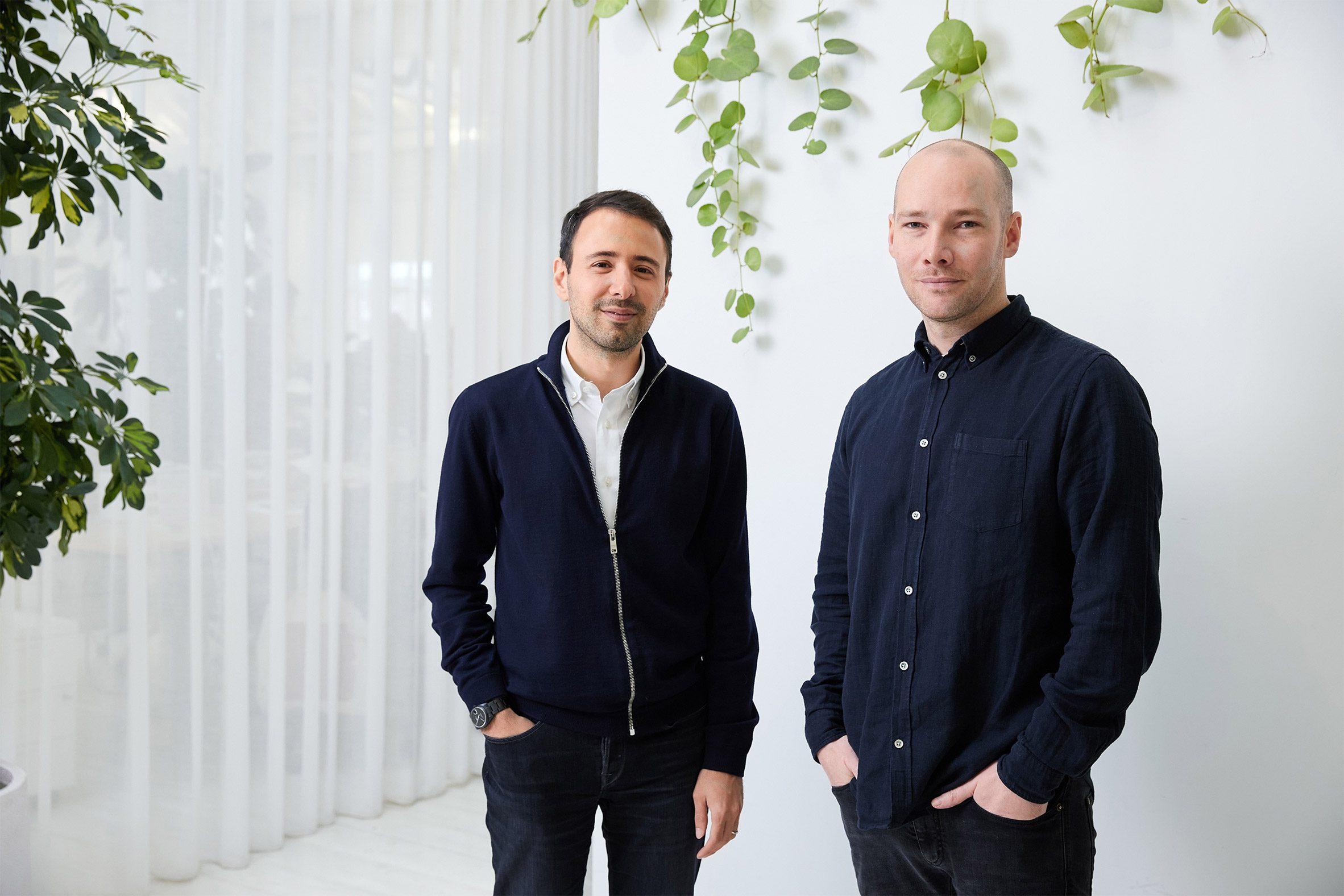
Above: Clippings founders Adel Zakout and Tom Mallory. Top image: Adam Sandow in Material Bank's robot-controlled warehouse

Material Bank was founded by Adam Sandow, an entrepreneur who also owns Sandow Media, which acquired Metropolis magazine in 2019 and took over the management of New York's NYCxDesign festival in 2020.

"Both businesses historically have tried to really leverage technology to create a better experience in this industry, especially in the purchasing process, by enabling all the different stakeholders to connect online through technology," Zakout said.

"So we're incredibly excited about the fact that we're able to join forces and really do more together."

Clippings acquisition "key driver" for overseas expansion

Clippings, founded by former Architecture Association students Zakout and Tom Mallory in 2014, allows architects and interior designers to specify products including furniture and lighting.

It also provides design brands with e-commerce solutions, allowing them to build their own online marketplaces. In April this year, it worked with Herman Miller (now MillerKnoll following its acquisition of Knoll) to launch Herman Miller Professional.

The service allows small and medium-sized customers to build project boards online and order Herman Miller products at preferential rates.

“Clippings has made significant advances in the way architects and designers specify in Europe," said Sandow, who is CEO of Material Bank.

"With 70 per cent of revenue coming from the UK, and offices in London and Bulgaria, this acquisition will be a key driver as Material Bank expands its footprint overseas."

"The complex multi-billion-dollar design industry is one of the last to be digitally transformed," said Material Bank.

"Material Bank and Clippings are driving advancements through a powerful blend of innovation and technology, delivering modern solutions for streamlining the entire design process."

Images courtesy of Clippings and Material Bank.

The post Material Bank buys Clippings to speed digitisation of "one of the few remaining sectors" to be transformed by technology appeared first on Dezeen.


from Dezeen https://ift.tt/3m867Eg

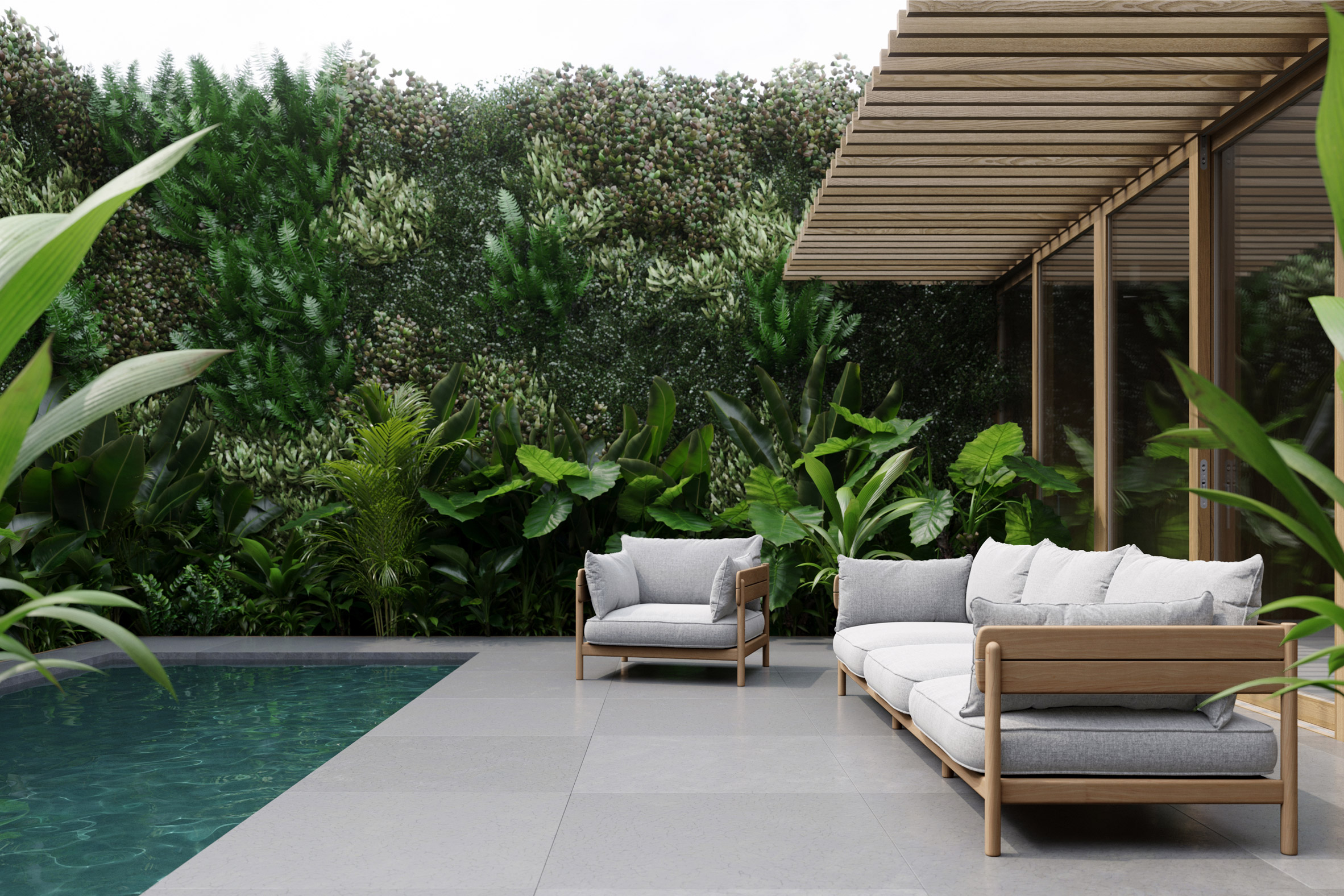
Tanso outdoor sofa by David Irwin for Case Furniture

Tanso sofa by David Irwin for Case Furniture

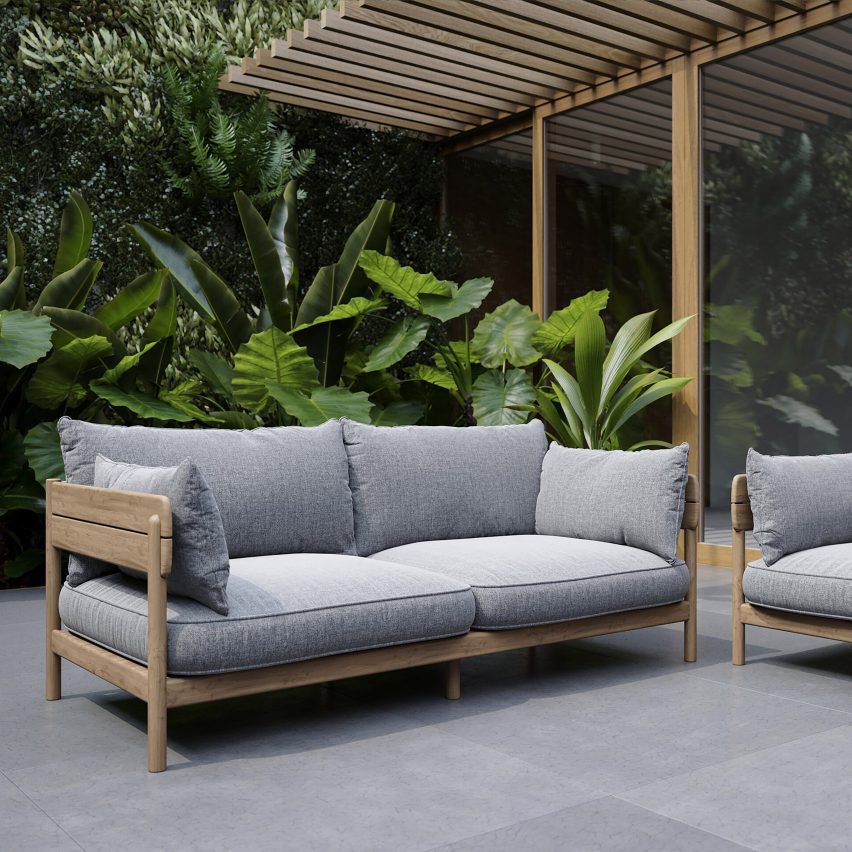
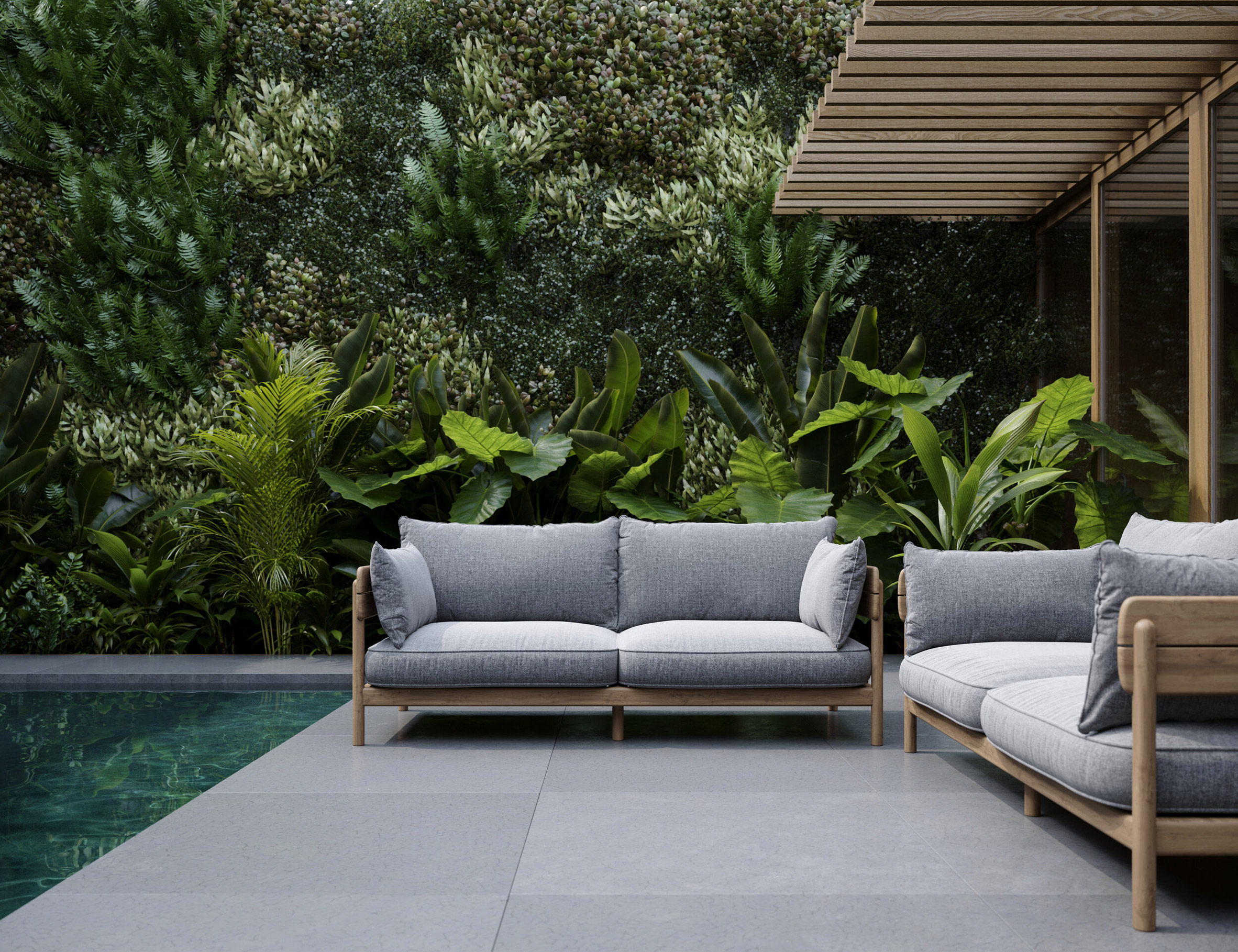
Dezeen Showroom: David Irwin drew on the simplicity of Japanese design to create Case Furniture's Tanso outdoor sofa, which looks like it could belong indoors.

The Tanso sofa has the detail and craftsmanship of indoor furniture while being weather resistant and durable enough to withstand the outdoors.

Tanso sofa by David Irwin for Case Furniture
The sofa is inspired by Japanese furniture and its simplicity

"With Tanso, we wanted to create a collection of wooden outdoor furniture that would possess the same quality and craftsmanship as indoor pieces," said Irwin.

"The entire range is made from high quality, sustainable, grade-A teak, which provides the durability needed for outdoor use."

Tanso sofa by David Irwin for Case Furniture
It comes with a teak frame and grey cushions

Tanso's teak frame is complemented by grey seat pads and cushions, upholstered in an outdoor fabric that is breathable and easy to clean.

The Tanso sofa is available as a two- or three-seater. It is part of Case Furniture's Tanso outdoor collection, which also includes two tables and armchairs as well as a bench, bar stool and side chair.

Product: Tanso two-seater and three-seater sofa
Designer: David Irwin
Brand: Case Furniture
Contact: sales@casefurniture.com

About Dezeen Showroom: Dezeen Showroom offers an affordable space for brands to launch new products and showcase their designers and projects to Dezeen's huge global audience. For more details email showroom@dezeen.com.

Dezeen Showroom is an example of partnership content on Dezeen. Find out more about partnership content here.

The post Tanso outdoor sofa by David Irwin for Case Furniture appeared first on Dezeen.


from Dezeen https://ift.tt/3iQ29On

Studio Renesa creates green marble interior for restaurant in Punjab

Elgin Cafe by Renesa Architecture in Punjab, India

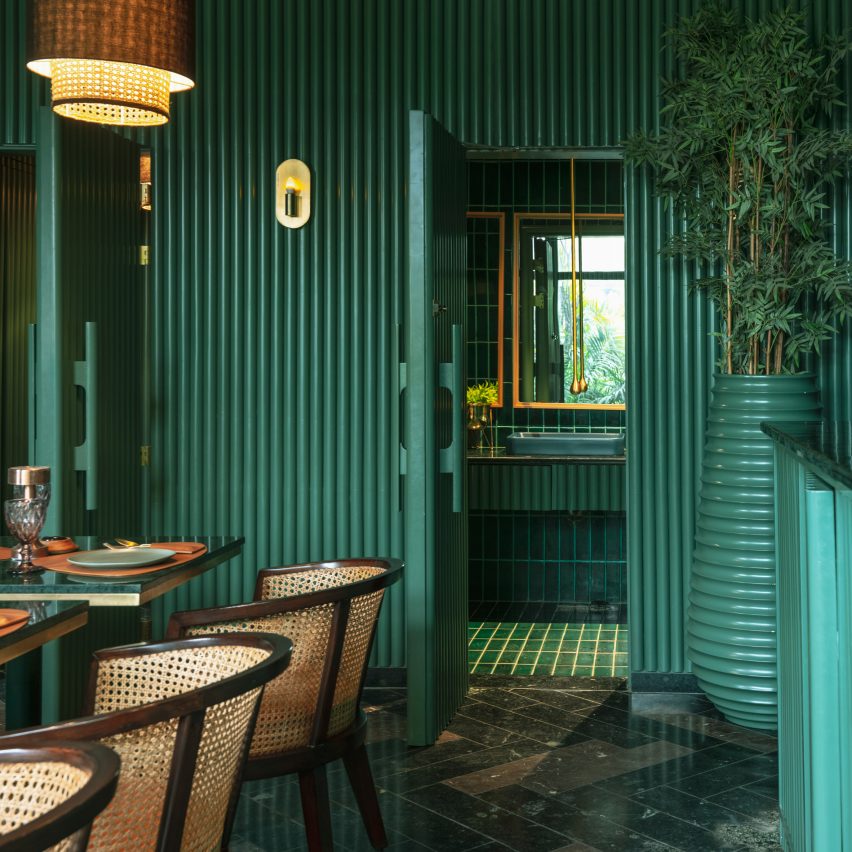
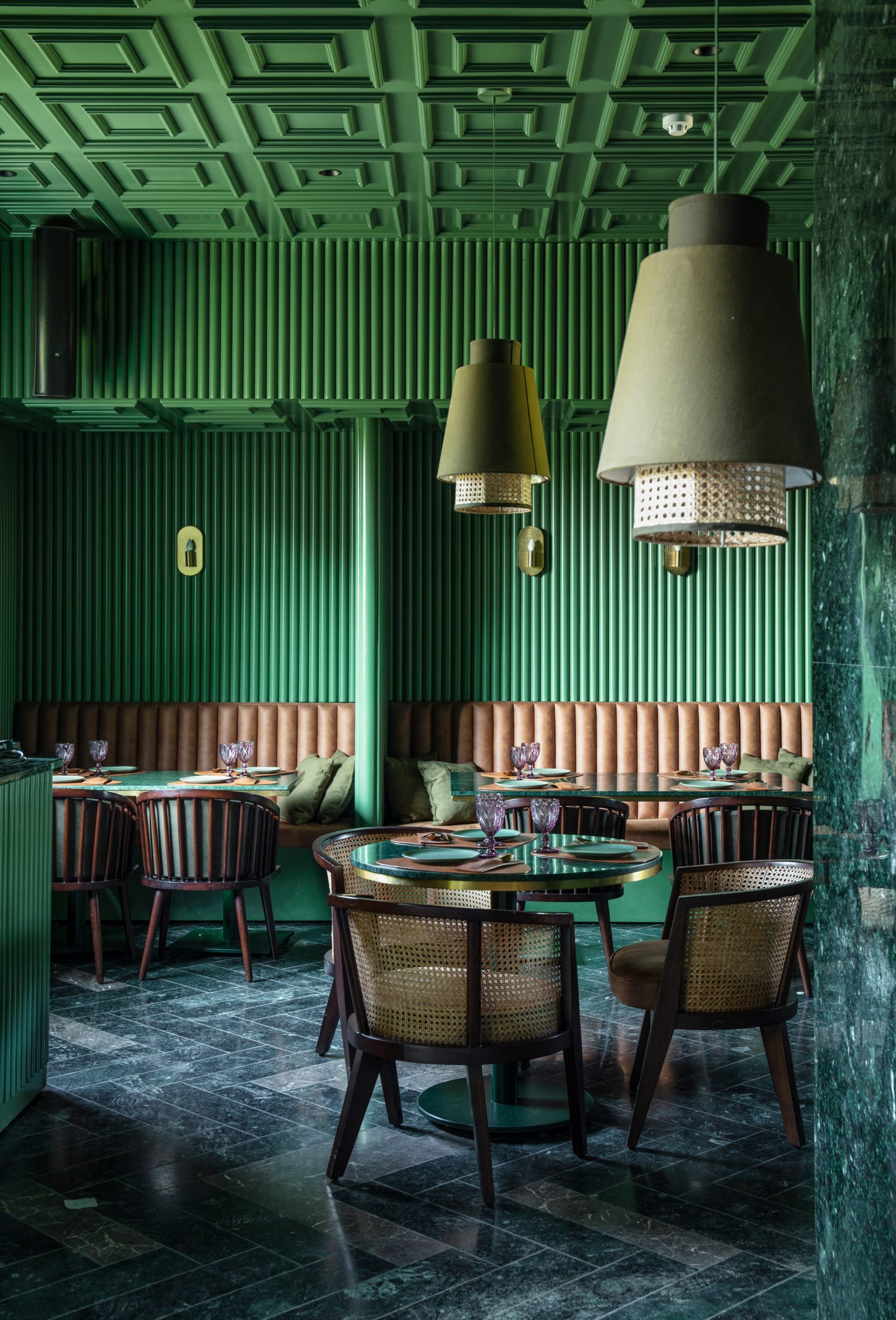
Architecture and interior design practice Studio Renesa has used green marble to evoke the feeling of alfresco dining at this restaurant, bar and cafe in Punjab, India.

Situated on what was once dilapidated farmland, Elgin Cafe is an emerald-green bistro by day and a restaurant and wine bar by night.

Elgin Cafe by Renesa Studio in Punjab
Renesa Studio used a green colour palette throughout Elgin Cafe to create an alfresco atmosphere

Its maximalist interior was informed by the "feel of the outdoors" and the celebrated emerald green marble found in Udaipur.

"The client had a clear thought of creating an alfresco dining experience with the inside," Renesa head architect Sanchit Arora told Dezeen. "The lavish seating experience inside is surrounded by greens on all sides."

"We focused on the use of indigenous materials and this was an opportunity to use the evergreen Udaipur green granite," he explained.

Green walls and floors in Elgin Cafe
The green marble was sourced locally from Udaipur

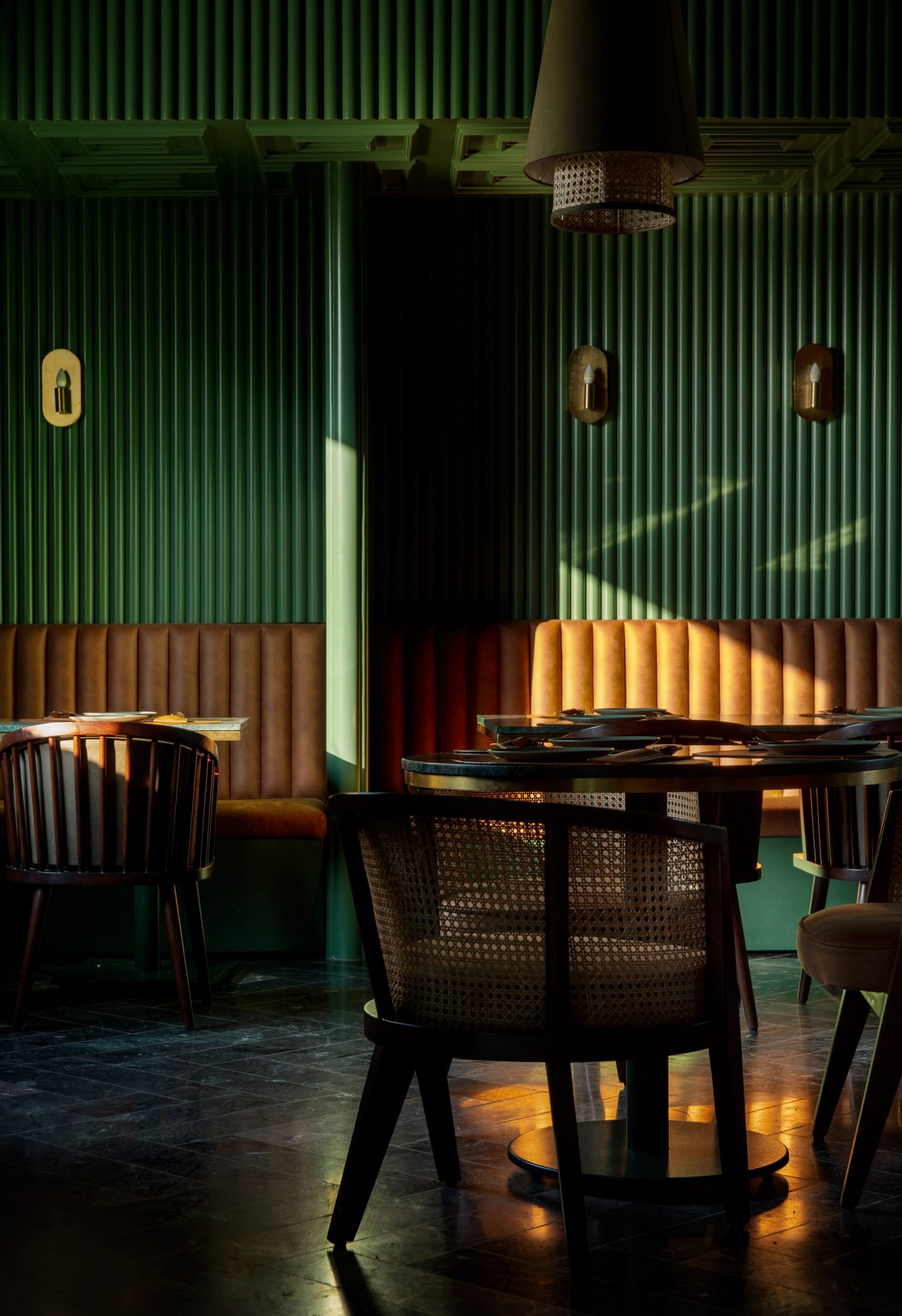
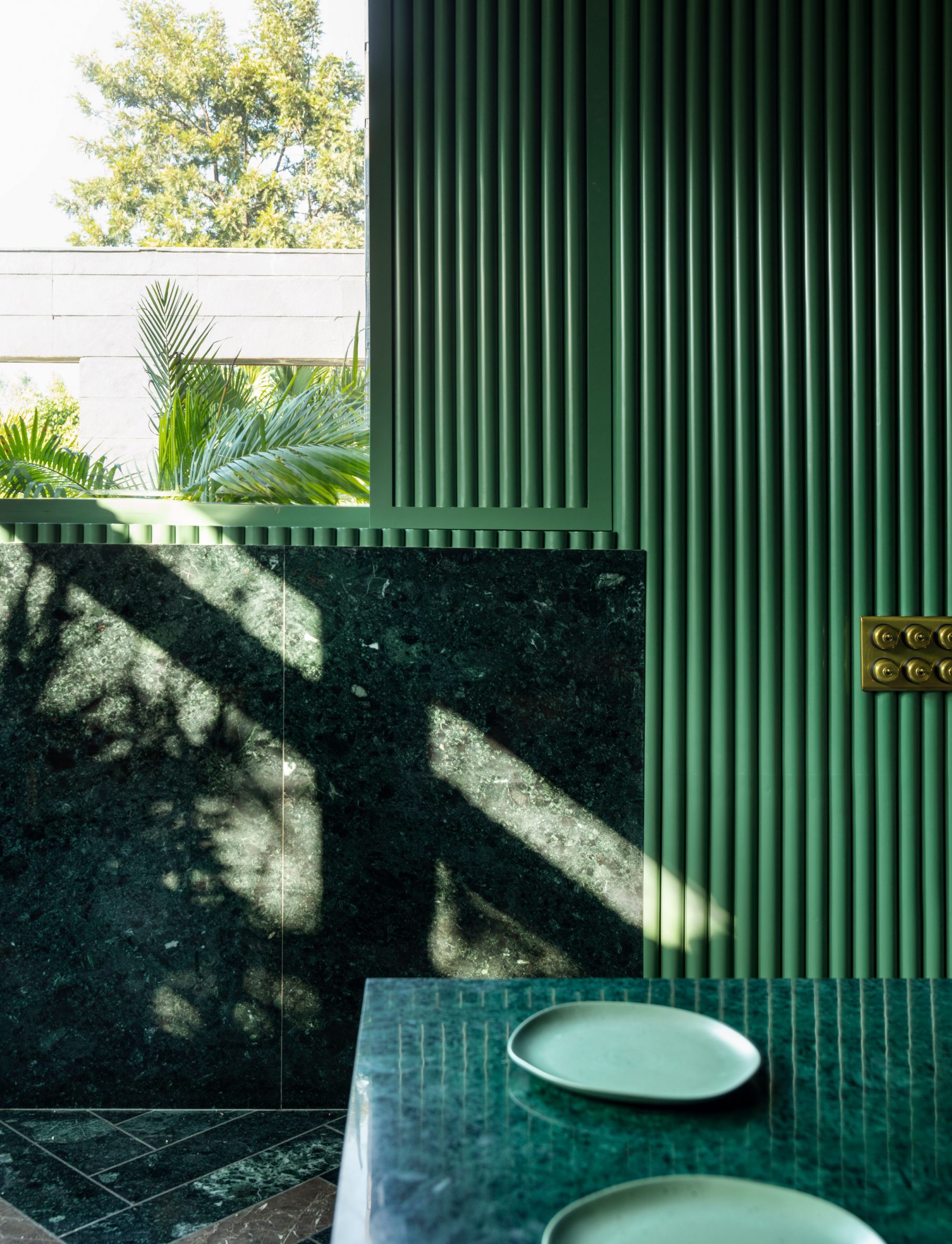
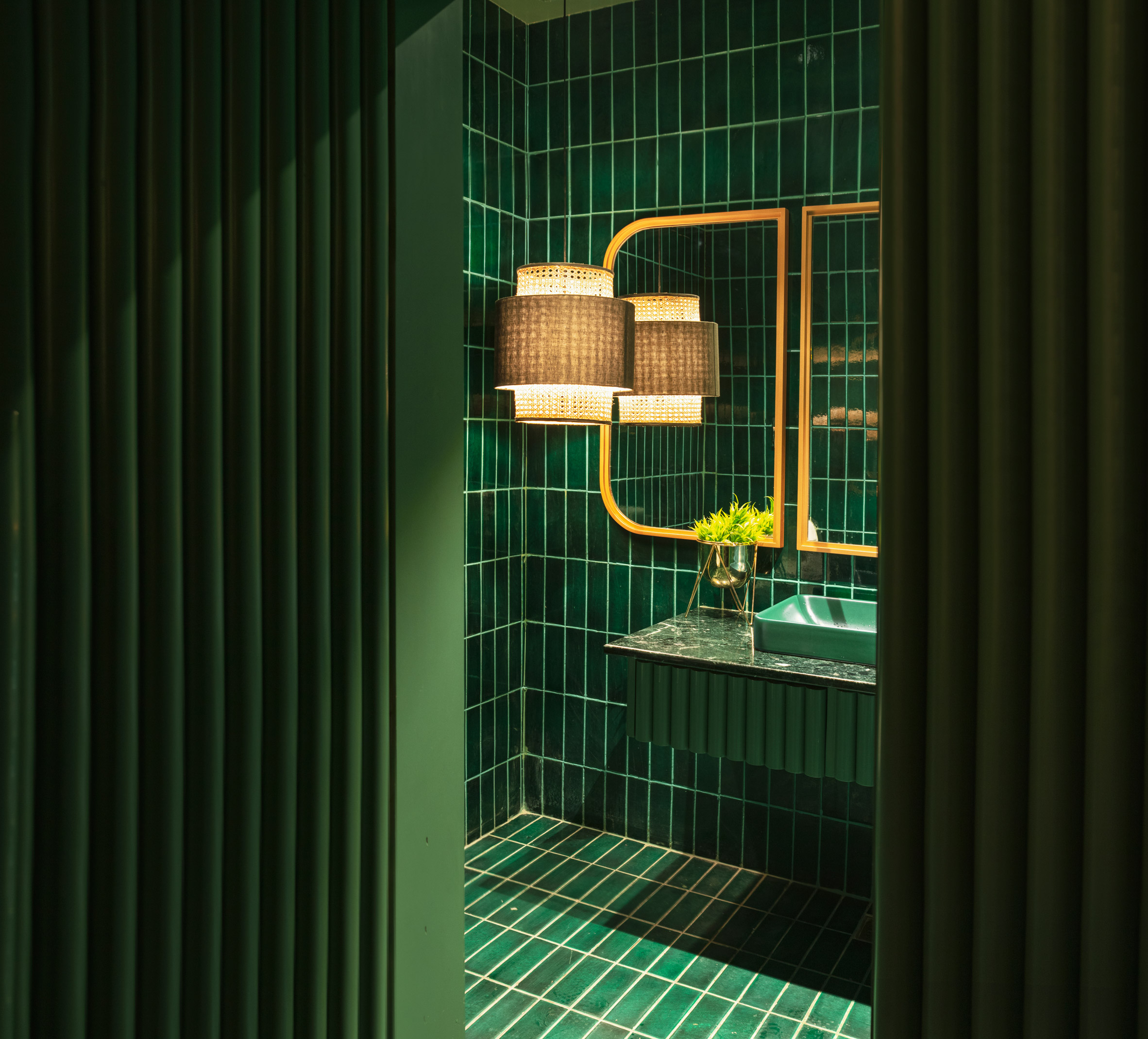
The studio used the marble on the wall panelling as well as on the tabletops. Gold furnishings in the bathroom and tan leather seats contrast the otherwise intense dark green colour.

Other features that contribute to the outdoor atmosphere include wicker chairs and an abundance of plants outside the windows.

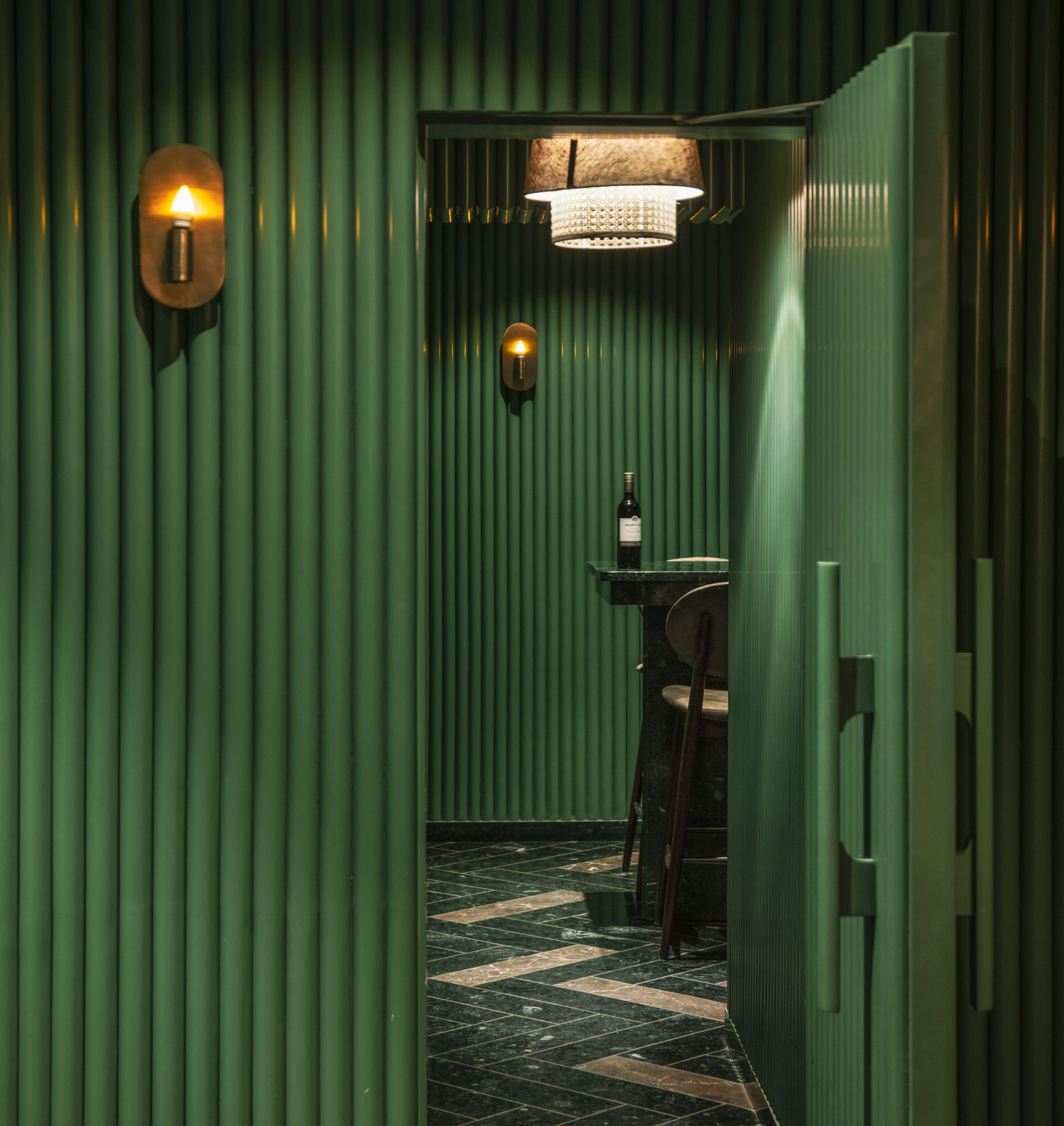
A green door opens into a bar
The eatery is split into a cafe, wine bar and private dining room

The space is divided into three sections to cater to the demands of the restauranteur, who required space for three types of dining.

Upon entering Elgin Cafe, customers are welcomed into the cafe area which the designers created to have a "day dining aesthetic". This space then transitions into a bar in the evening with a la carte dining.

Green plates on a marble counter top
The cafe transforms into a bar in the evening

Great importance was placed on ensuring a seamless transition between the day and night experience.

"The idea was to balance the cafe vibe in the morning to a high tea by the late noon to a drinking bar vibe in the evening," said  Arora.

"The studio felt that the maximalist approach of monolithic colour blocking would provide the subtlety of an easy-breezy space in the morning to an understated luxurious brunch space and a classic dark pour-bar in the evening," he continued.

Folding shutters and sliding doors separate the cafe from the private dining room, which opens out onto a green garden with a pool.

A small entrance leads to the winery. Here, wine bottles are integrated into shelving alongside a long bar clad in green stone. High stools surround the high table, providing diners with a place to try out the wines.

Elgin Cafe by Renesa Architecture in Punjab, India
The prevalence of green is meant to unite all three spaces

According to the designers, the prominent green colour choice "binds all of the spaces together" at the Elgin Cafe, creating a sense of cohesion.

"The most important aspect about having a cafe-cum-restaurant is the change of the light and time patterns with the space remaining as a constant element," said Arora.

"The clear thought of merging day and night had to be enforced with a heavy element and the colour does the job well," he added.

Emerald green was also recently used in another restaurant interior, as design practice Mizzi Studio paired pink terrazzo with emerald-green for Barbajean, a Mediterranean restaurant in Malta.

Photography is by Niveditaa Gupta.

The post Studio Renesa creates green marble interior for restaurant in Punjab appeared first on Dezeen.


from Dezeen https://ift.tt/37QJiwc