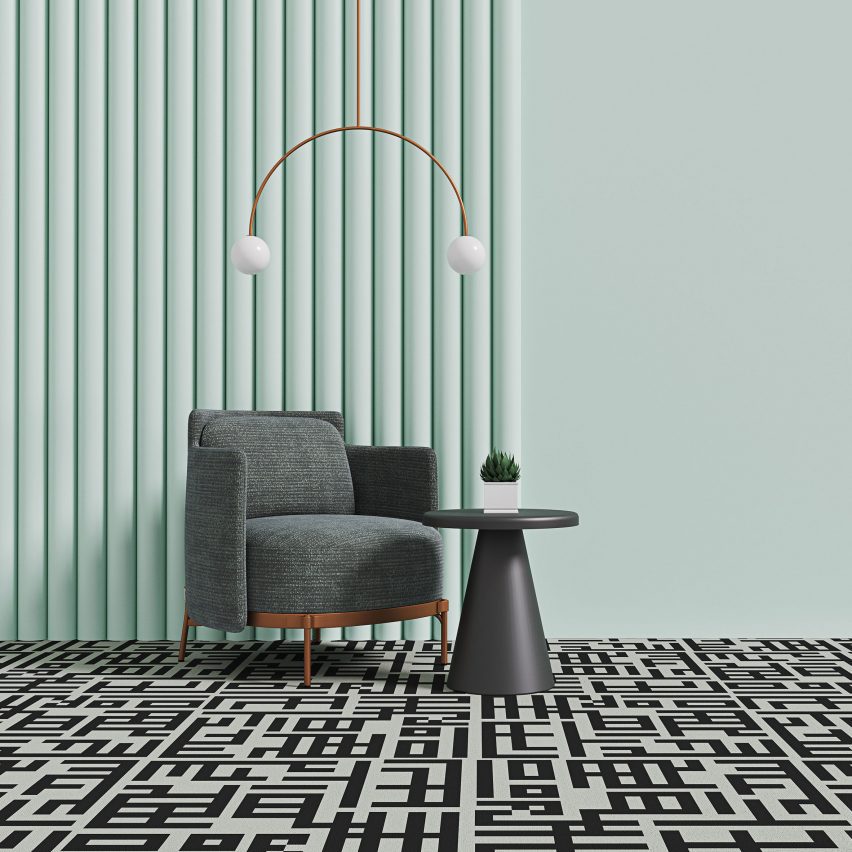
Dezeen Showroom:Talk Carpet looked to Egypt for inspiration for its Grid flooring, which references the traditional embroidery used on tents.
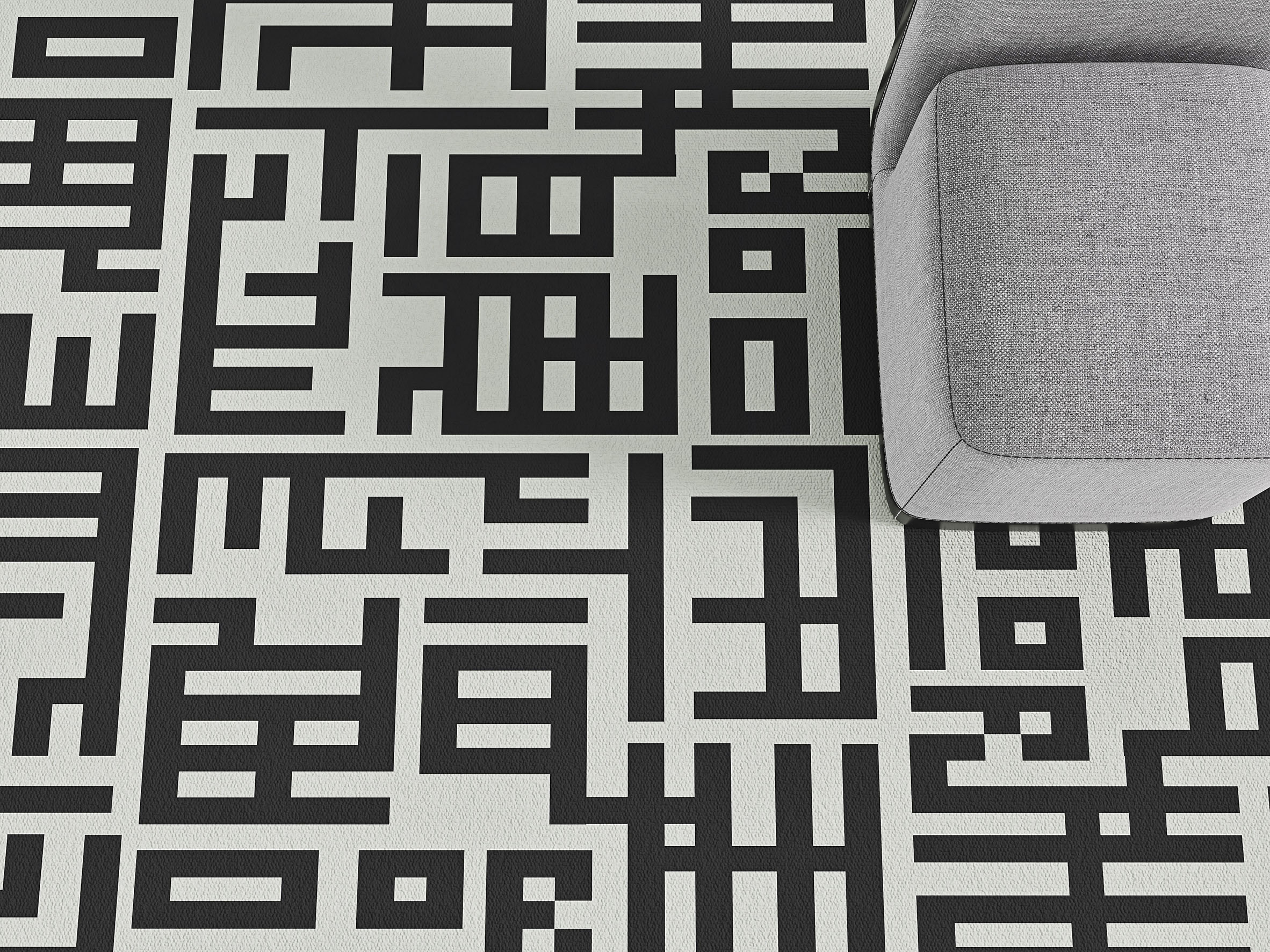
The Grid carpet bears a graphic motif that is drawn from sights the Talk Carpet team observed at Cairo's Khan El Khalili market, particularly the work of embroiderers who would traditionally create decorative tents for weddings and other occasions.
"Craftsmanship is everywhere in Egypt," said Talk Carpets. "The artisans' market sells colourful decor, antiques and souvenirs. There are artisans making brand new pieces at every corner."
The Grid carpet has a carpet inspired by Egyptian handicrafts
Talk Carpets reimagines this imagery in the grey-and-white Grid carpet, which the brand says "makes a beautiful statement for any office or hospitality environment".
The design is part of Talk Carpets' custom carpet programme, which lets customers choose their own pattern, colour, pile height and dimensions.
The brand donates one per cent of all custom carpet sales to the charity Design Industries Foundation Fighting AIDS, which helps to raise awareness and fight HIV/AIDS.
About Dezeen Showroom:Dezeen Showroom offers an affordable space for brands to launch new products and showcase their designers and projects to Dezeen's huge global audience. For more details email showroom@dezeen.com.
Dezeen Showroom is an example of partnership content on Dezeen. Find out more about partnership content here.
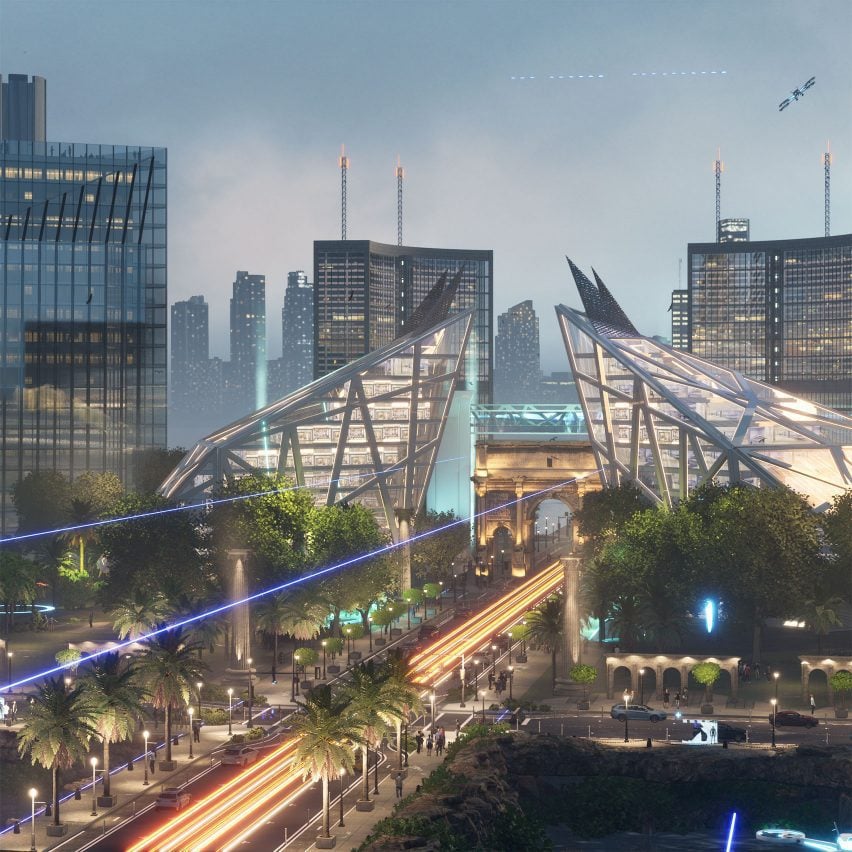
We explore how visualisation tools such as Twinmotion are transforming architecture in this talk to coincide with our Redesign the World competition in partnership with Epic Games. Watch it live from 2:00pm London time.
The talk has not started yet. The live stream will begin at 2:00pm BST.
Twinmotion is powered by Unreal Engine, a game engine developed by Epic Games that also powers some of the world's biggest video games, such as Fortnite.
Talk to explore how video games and architectural visualisation are merging
Moderated by Dezeen editor-in-chief Marcus Fairs, the talk will explore how access to this new digital technology is transforming the way that architects work and communicate their projects, how video game design and architectural visualisation are merging, and what the future holds for the industry.
Fairs will be joined by Belinda Ercan, Twinmotion product marketing manager at Epic Games, Murray Levinson, partner at architecture practice Squire & Partners, Adam Laskey, director of architecture studio Marraum, and Luke Pearson and Sandra Youkhana, co-founders of You+Pea.
Ercan will provide an overview of what Twinmotion is and what it can do. Architects Levinson and Laskey will explain how they use the software in their practice and Pearson and Youkhana will discuss the Videogame Urbanism masters programme they run at the Bartlett School of Architecture in London.
Belinda Ercan oversees Twinmotion product marketing and strategy at Epic Games
Ercan is a product marketing manager for Twinmotion at Epic Games.
She has a master's degree in architecture and digital design, with a focus on 3D visualisation, and has previously worked as a visualiser for HLM Architects and visualisation product manager at Graphisoft.
Murray Levinson is a partner at Squire & Partners
Murray Levinson is a partner at award-winning architecture and design practice Squire & Partners.
Murray’s particular interest in masterplanning brings the practice’s design ethos to a variety of sites in the UK and internationally, with work in Turkey, Russia, Belfast, Manchester and London.
Adam Laskey is director of architecture firm Marraum
Adam is co-owner and director of Marraum, a small architectural practice in Penryn, Cornwall, specialising in using virtual reality (VR) to deliver domestic renovations and new builds.
His knowledge and use of VR in architecture have seen him speak at a wide range of events in Cornwall and London. Currently, he is collaborating with HTC and Twinmotion to trial their new technology and provide relevant professional feedback.
Luke Pearson and Sandra Youkhana run research studio You+Pea
Luke Pearson and Sandra Youkhana run architectural design studio You+Pea, which explores the integration of videogame technologies into architectural design, leading conversations on how games can engage new participants in the design of cities.
Pearson and Youkhana established and lead the Videogame Urbanism studio at the Bartlett School of Architecture, UCL, where they use game technologies to realise urban design research.
The talk coincides with Dezeen's Redesign the World competition, in partnership with Epic Games, which calls for radical proposals to rethink planet Earth.
Entrants must produce a 3D visualisation of their concepts using Twinmotion, submitting a video animation and still image of their concept, along with up to 500 words of text about their proposal.
Architect Arney Fender Katsalidis will transform a disused railway site in Rome into a low-carbon neighbourhood as part of the Reinventing Cities programme, which encourages cities to strive towards net-zero urban developments.
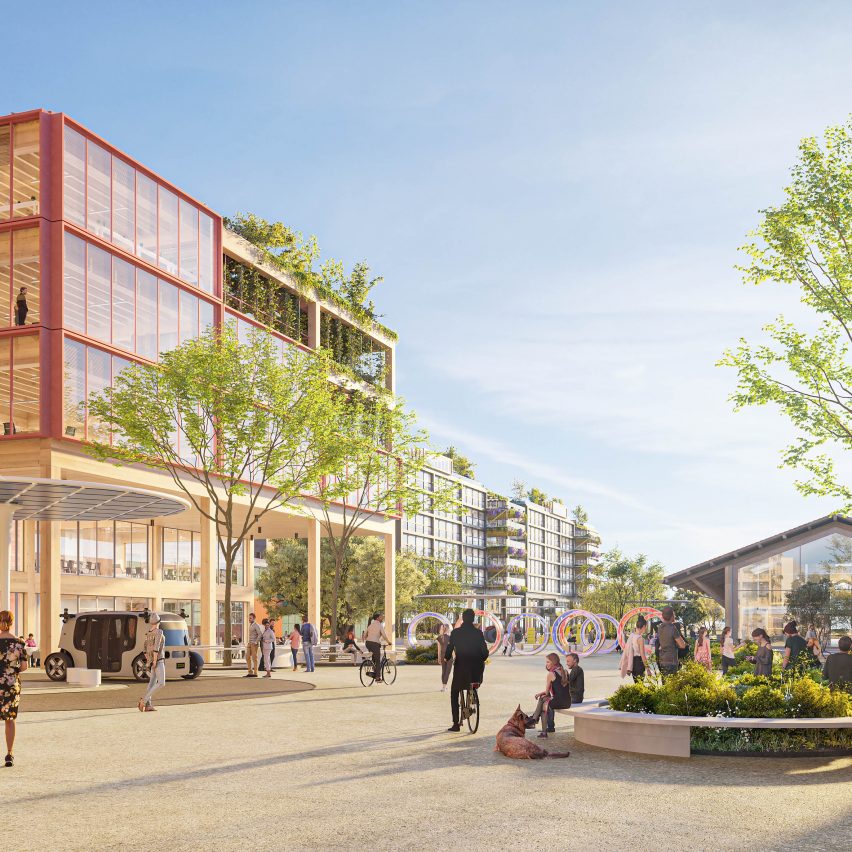
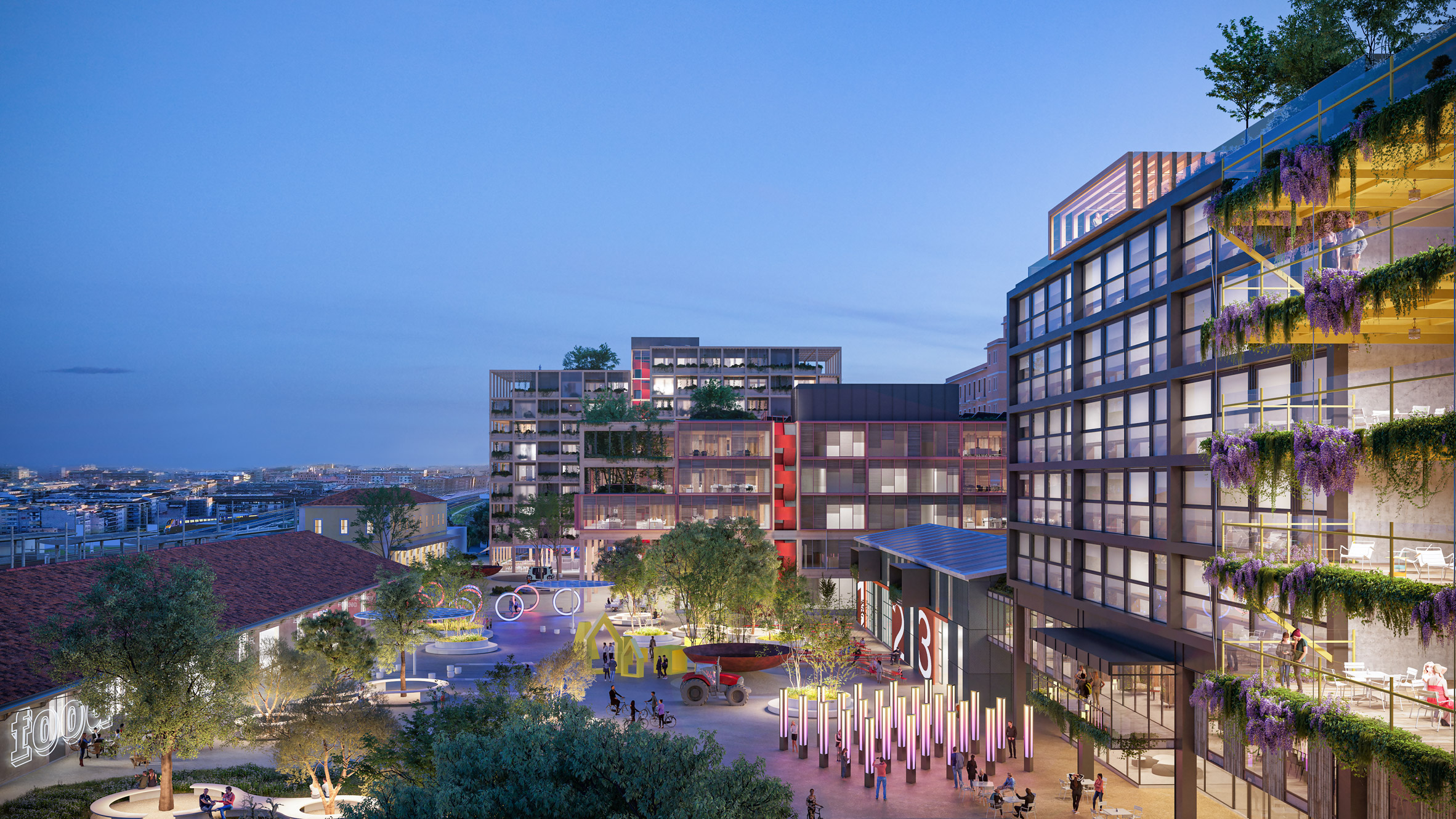
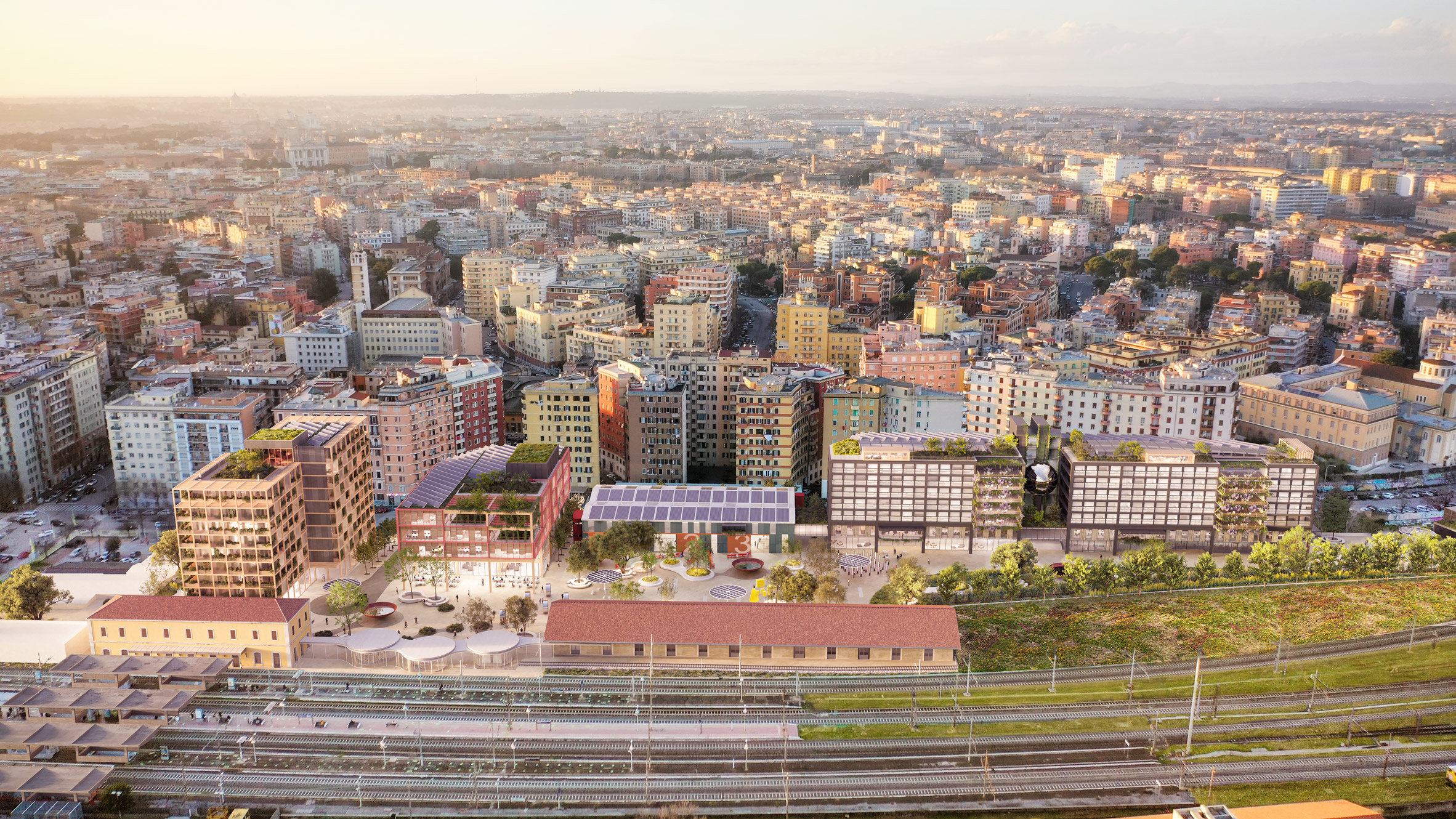
The Campo Urbano proposal will see 24,000 square metres of former railway infrastructure around Rome's Tuscolana station turned into a mixed-use development.
The car-free project will be self-sufficient in energy, will make use of biomaterials and will feature reversible buildings that can be taken apart at the end of their useful lives.
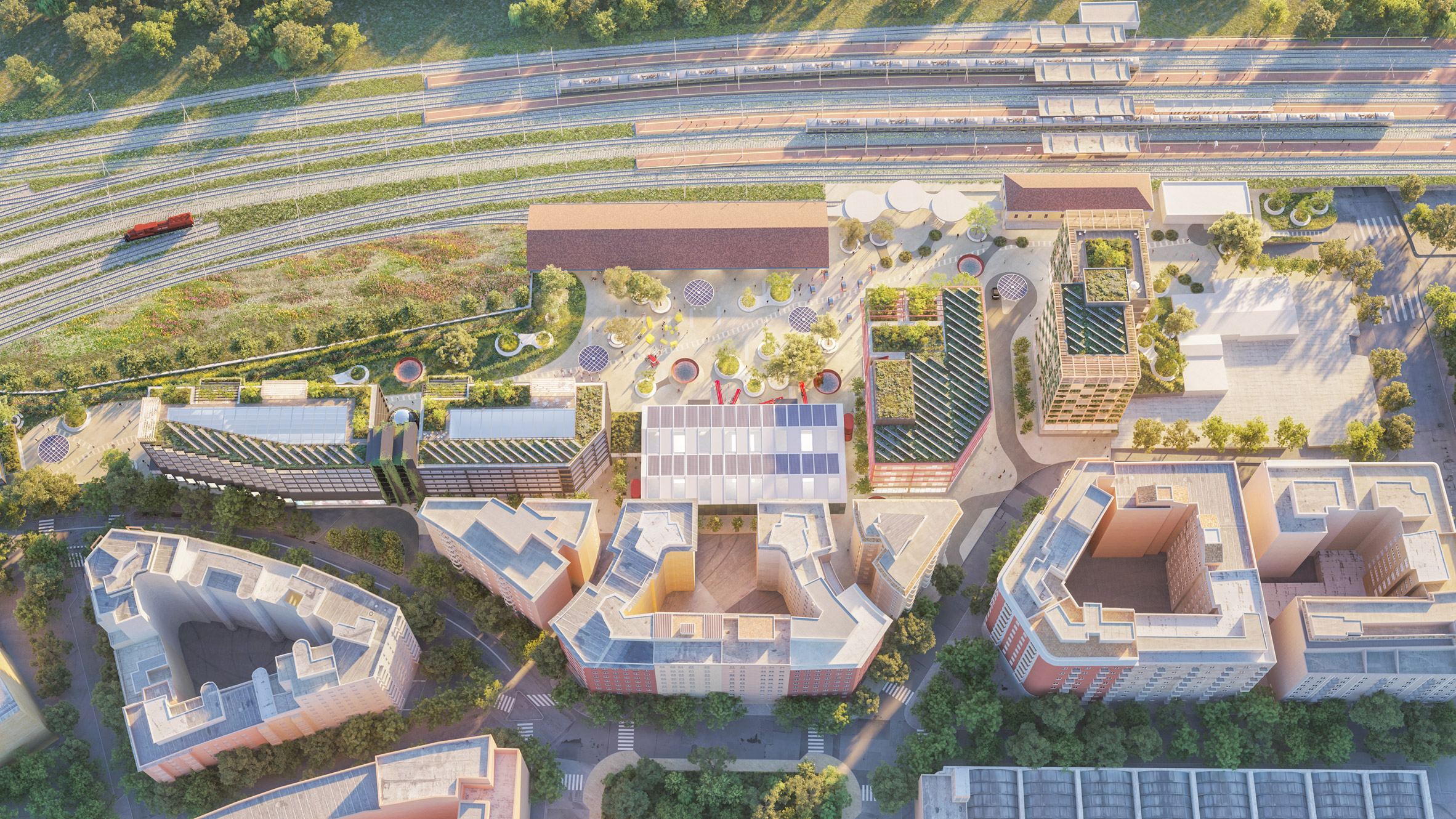
The Campo Urbano development will regenerate an area of disused railway lines in Tuscolana, Rome
Arney Fender Katsalidis (AFK) is working on the project as part of a consortium led by Italian developer Fresia RE.
It is one of 49 projects that will be built as part of the Reinventing Cities competition organised by the global C40 Cities network to help urban areas meet the goals of the 2015 Paris Agreement on climate change.
C40 Cities launched the competition four years ago "to drive carbon-neutral and resilient urban regeneration".
Projects to be built in 19 cities
In total, 49 projects in 19 different cities will be realised as part of the competition, which called for proposals to develop underutilised spaces into "beacons of sustainability and resiliency".
Winners were chosen on the basis of the ambition of their strategies for reducing whole-lifecycle emissions including both embodied carbon – emissions generated during the production of materials and construction – and operational carbon, which covers emissions caused by the building's use.
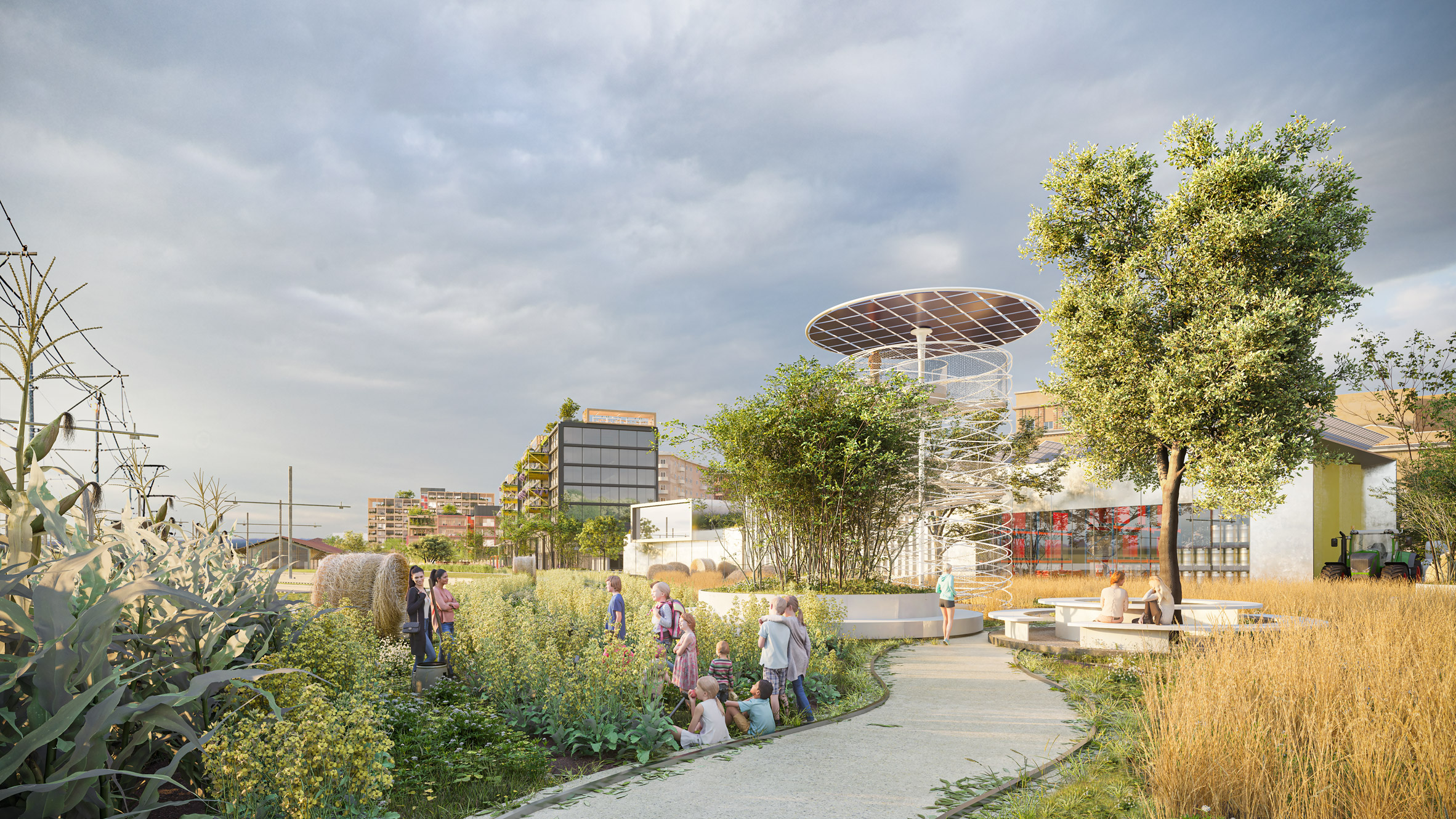
The development will include an "Energy Park" that provides both green space and a source of biomass
"The competition said you have to strive for zero carbon," said Hélène Chartier, head of zero-carbon development at C40 Cities. 'They had to make a carbon assessment including a lifecycle analysis of their projects. Some are better than others."
The Rome masterplan is designed around the increasingly popular concept of the 15-minute city, where all the essentials for day-to-day life are within a 15-minute walk or cycle.
It will include residential, office space, retail, a student hotel and an "Energy Park" that provides both green spaces for recreation and a source of biomass for energy production.
Campo Urbano to eventually be carbon-negative
As with all Reinventing Cities projects, a central aim is to achieve the lowest possible carbon footprint across its lifecycle. AFK claims the Campo Urbano project will become carbon negative over a 60-year timeframe.
"In compliance with the LEED Zero standard, Campo Urbano reaches and exceeds the zero-carbon level when the construction and management of the entire development over a time span of 60 years is taken into account," the studio said.
To achieve the LEED Zero energy rating, Campo Urbano will meet its own energy needs through a mix of rooftop photovoltaics and biomass power. For the latter, compost from homes, woody crops from the Energy Park and sustainably obtained wood will be used to generate heating, cooling and electricity through pyro-gasification.
This technique sees waste heated to a high temperature in a low-oxygen environment to produce synthetic gas.
The development will be entirely powered by a circular, renewable system
Campo Urbano will also apply green construction principles to reduce embodied carbon. It will make wide use of low-carbon materials such as timber, including in an 8,000-square-metre glulam building, and will take a "retrofit-first" approach that means renovating existing structures where possible.
"The project is a huge step away from generic 'tabula rasa' urban development in favour of urban repair, which means carefully bringing the site's existing structures back into use and incrementally weaving in new civic spaces and uses within the existing fabric of the city," AFK associate director Tommaso Franzolini told Dezeen.
The full extent of the proposed public realm will be car-free. "We achieved this through a detailed study of future car-parking demand curves and the subsequent optimisation of the parking infrastructure dimensions," Franzolini explained.
"This has, in turn, enabled us to consolidate public and private car parking requirements, Park&Ride, Kiss&Ride, drop-offs and sharing mobility platforms within a compact underground mobility hub on two levels directly connected with both the main residential building and the train station," he added.
Buildings "designed for deconstruction"
New buildings will be designed for deconstruction, using mechanical rather than chemical connections that allow for disassembly, and homogenous materials that are easily recycled.
There is a power purchase agreement in place for renewable electric energy to cover the substantial energy requirements for electric-vehicle charging, and a green infrastructure plan, which aims to create jobs to support the area's economic recovery, is part of the proposal.
Campo Urbano will also partly rely on carbon credits earned by investing in carbon sequestration projects to offset emissions and help it get as close as possible to net-zero.
The scheme aims to improve circulation and create social opportunities for nearby neighbourhoods as well
This will make it the first carbon-negative and car-free urban district in Rome, according to the studio.
"The masterplan aims to align with selected United Nations Sustainable Development Goals and C40's global design priorities while responding to local conditions and what matters to the local community," said Franzolini.
"The result is the first carbon-negative and car-free urban district in Rome which includes the largest urban energy park in Europe — a piece of green infrastructure that integrates the clean energy resources of the site and offers new opportunities for green jobs — as well as a network of diverse buildings designed with the latest modular and timber technologies in mind."
The Reinventing Cities competition for the Tuscalona site was held by city authority Roma Capitale and site owner FS Sistemi Urbani in collaboration with C40 Cities.
It awarded just over half of Tuscolana's 45,000-square-metre disused railway site to the Campo Urbano consortium.
C40 Cities is "a network of the world's megacities committed to addressing climate change". It now has 97 member cities, representing over 700 million people altogether and making up a quarter of the global economy.
Members, which include London, Shanghai, São Paulo and Lagos, pledge to meet the objectives of the Paris Agreement, halving carbon emissions by 2030 and eliminating them altogether by 2050.
In an interview with Dezeen, C40 Cities' Chartier said that cities are "leading the way" in the effort to reach net-zero, adding that national governments had done "very, very little" to deliver the goals of the Paris Agreement.
AFK is a global firm whose previous work includes Brookfield Place East, the tallest building in Calgary, Canada. It is working on Campo Urbano via its London office.
For our latest competition, we've teamed up with Design London to offer readers the chance to win a Glo table lamp by Penta Light.
Formerly known as 100% Design, Design London is a design show that will be held in the city from 22 to 25 September 2021, featuring a curated selection of leading design brands including Penta Light. Visitors can sign up to Design London on the event website.
In celebration of the upcoming event, Penta Light is giving away one of its Glo table lamps to a Dezeen reader.
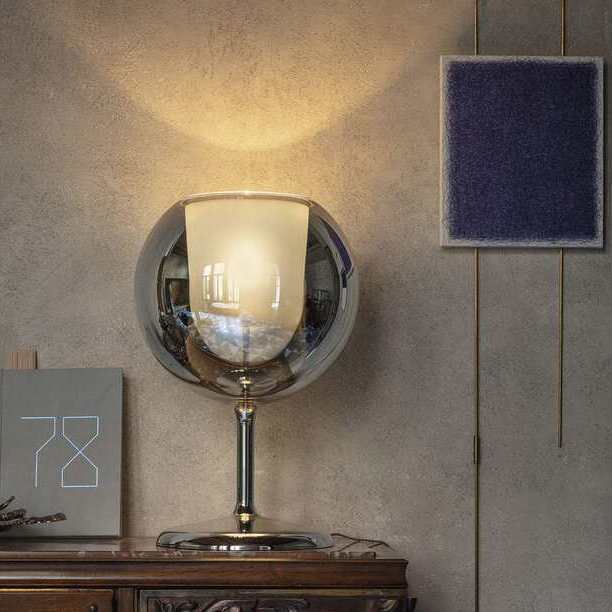
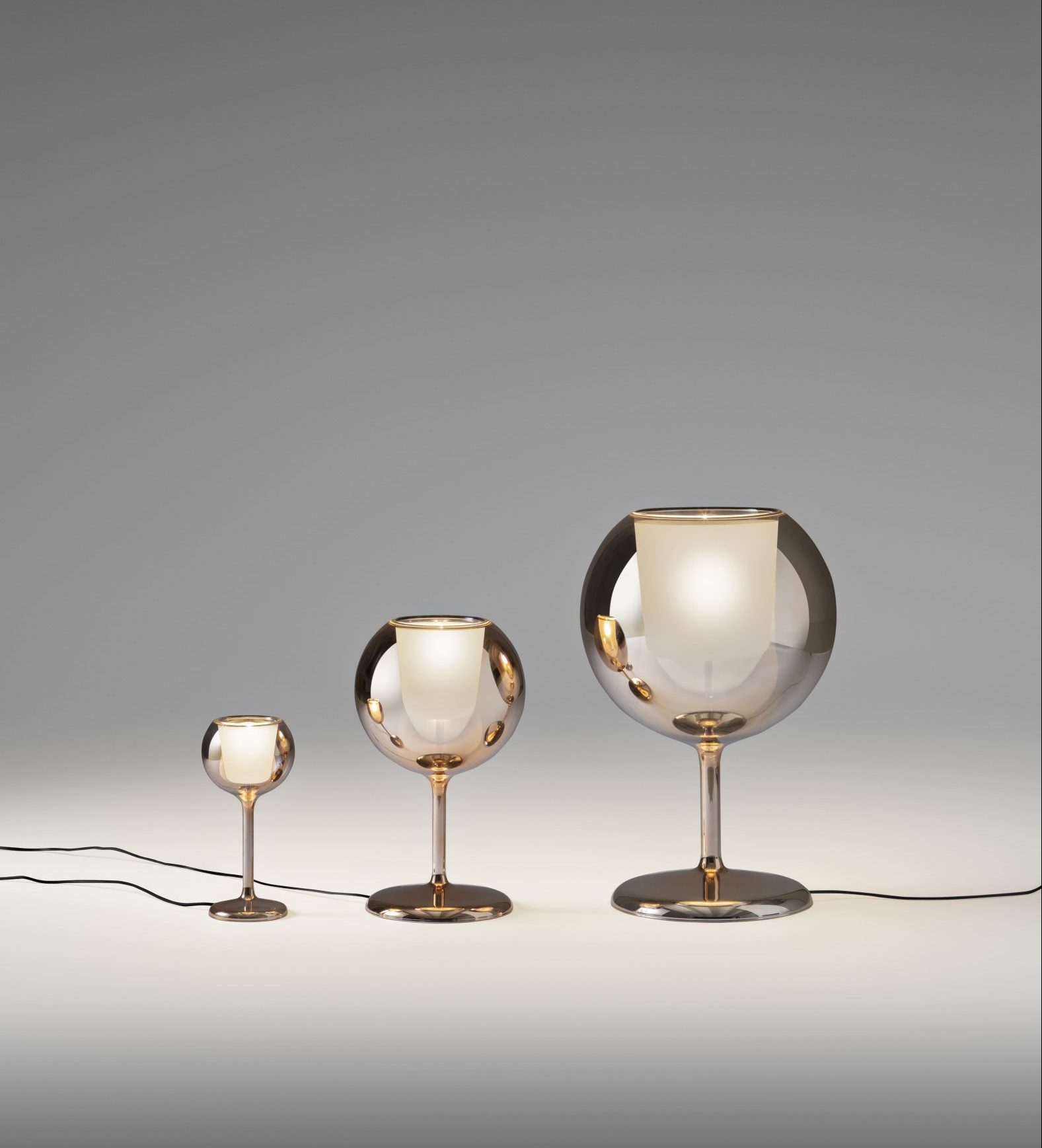
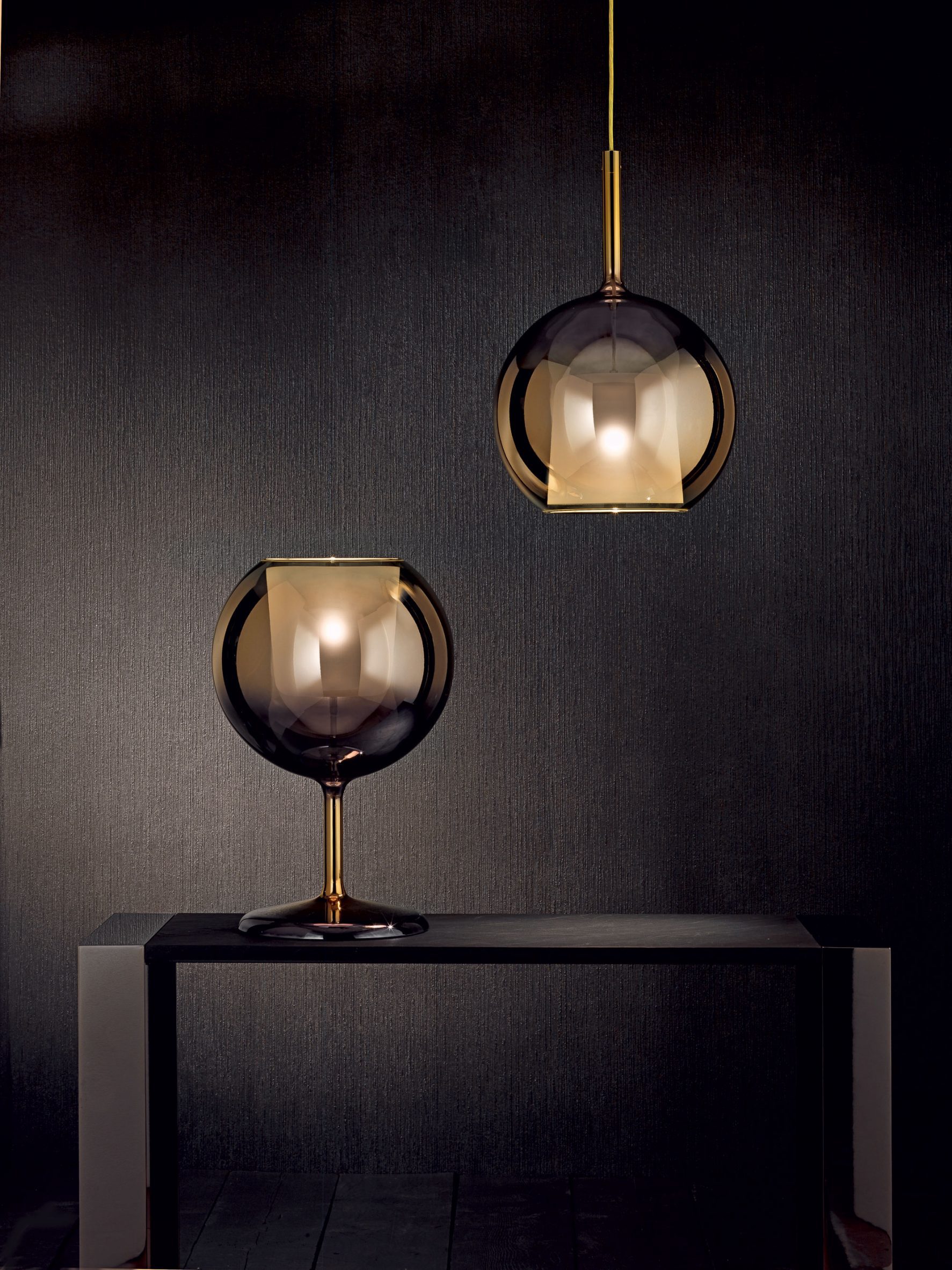
Created by architect Carlo Colombo for the Italian brand, the Glo table lamp is characterised by its glass sphere, designed to enhance light within a room.
We've teamed up with Penta Light to offer readers the chance to win a Glo table lamp
"It's an icon of the Penta collection, a glass sphere enhancing the glare of light in a game of reflections back and forth between the lamp and space around it," said the brand.
The lamps are made from chromed metal and borosilicate – a type of glass formed of silica and boron trioxide, known for being more highly resistant to thermal shock than common glass.
They come complete with shades in transparent or rose gold glass, as well as gold, silver, black, blue, green, violet, or a mirrored glass called 4ever. All have a sandblasted interior.
The Glo lamps were designed by architect Carlo Colombo for Penta Light
The table version comes in three different sizes – large (38 by 68 centimetres) medium (25 by 42 centimetres) and mini (13 by 28 centimetres).
One winner will receive a medium-sized Glo lamp, with a choice of gold, rose gold or black finishes.
Also available in the Glo collection are the floor, wall and suspension lamps, all designed by architect Colombo. As well as designing for Penta, Colombo's studio works on design, interiors and architecture projects all over the world.
Other brands he has collaborated with include Elie Saab, Cartier, Bentley Home, Bugatti Home, and more.
One reader will win a medium Glo table lamp in their choice of gold, rose gold or black
Established in 1975 in Cabiate, Italy, Penta started by selling essential homeware before branching into lighting, which it decided to specialise in shortly after.
Today, Penta produces lighting for homes as well as hotels, restaurants, ships and other public spaces. It prides its designs on their "quality, elegance, functionality and materials," according to the brand.
Design London takes place from 22 to 25 September 2021. See Dezeen Events Guide for an up-to-date list of architecture and design events taking place around the world.
Competition closes 17 September 2021. Terms and conditions apply. One winner will be selected at random and notified by email.
Partnership content
This competition is a partnership between Dezeen and Penta Light. Find out more about Dezeen partnership content here.
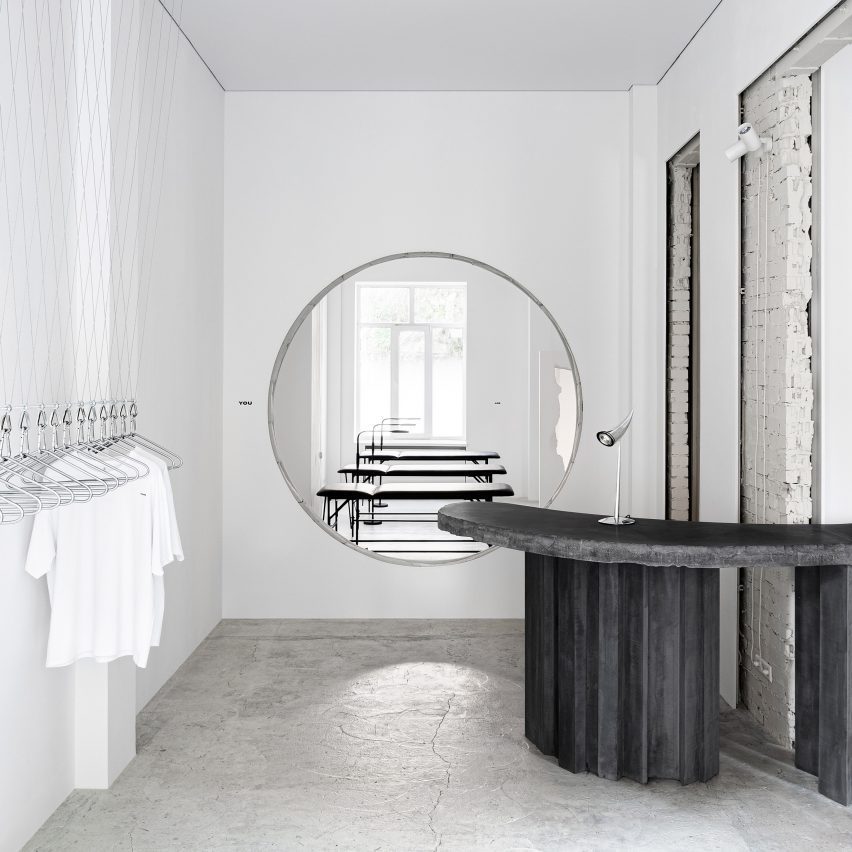
Located on the ground floor of a residential building in the city's historic Podil neighbourhood, the 111-square-metre studio belongs to Ukrainian artist Ulyana Nesheva.
A circular opening offers views from the reception (top image) into the main studio (above)
"The concept of the studio is that all our artists, despite the diversity of their styles and colours, are united by an exploration of minimalism," she explained.
"Simplicity is the ultimate goal and the highest form of complexity."
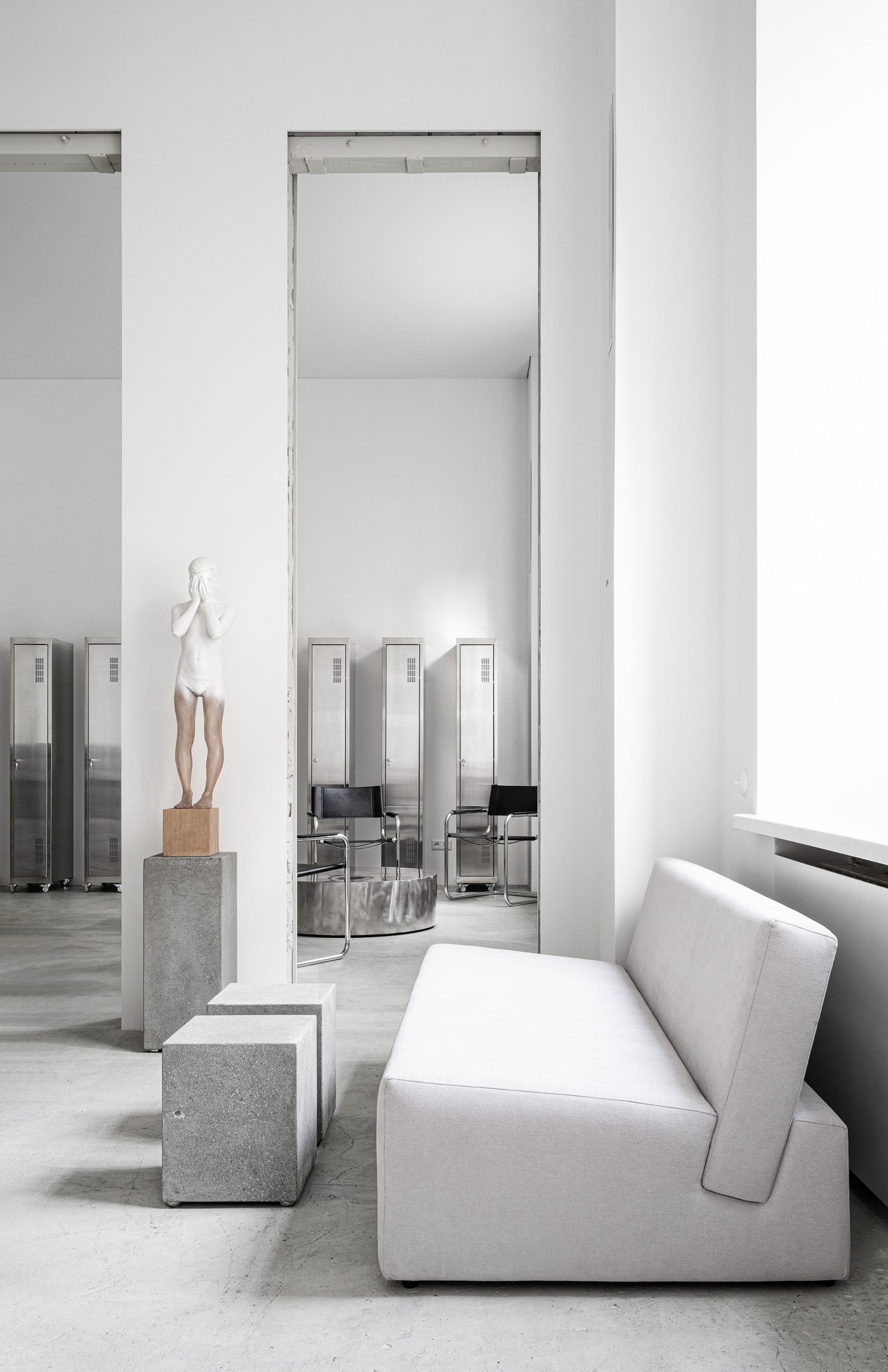
6:19 Studio's waiting area is flanked by a statue by Ukrainian artist Сhristina Ridzel
Local studio Balbek Bureau translated this idea into an uncluttered, open-plan layout using a monochrome palette of black and white paired with concrete and stainless steel.
"The goal was to design a tattoo parlour that resembles a contemporary art workshop," the practice said.
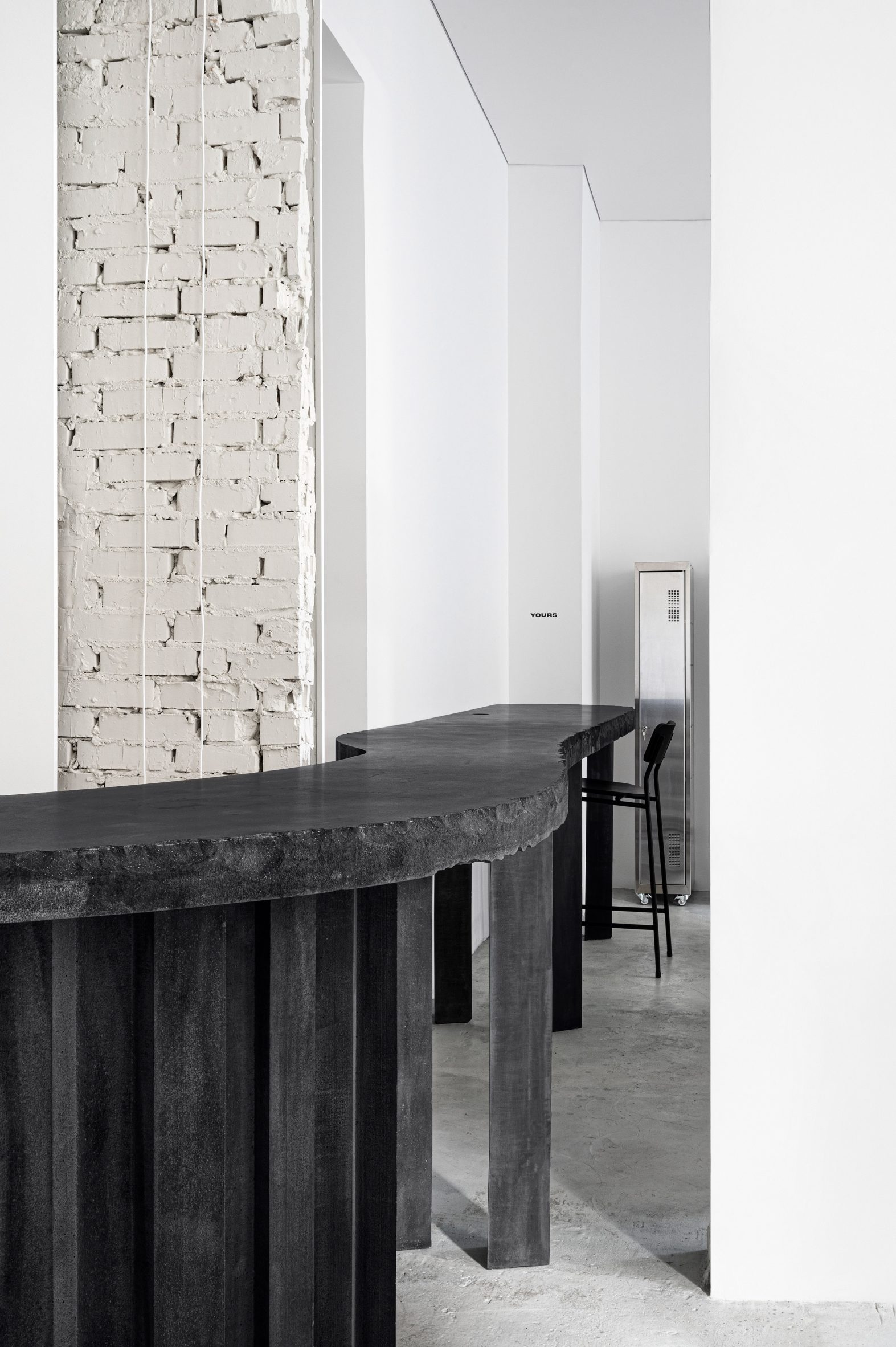
Strategic openings reveal the structure of the walls and allow a long table to snake through the interior
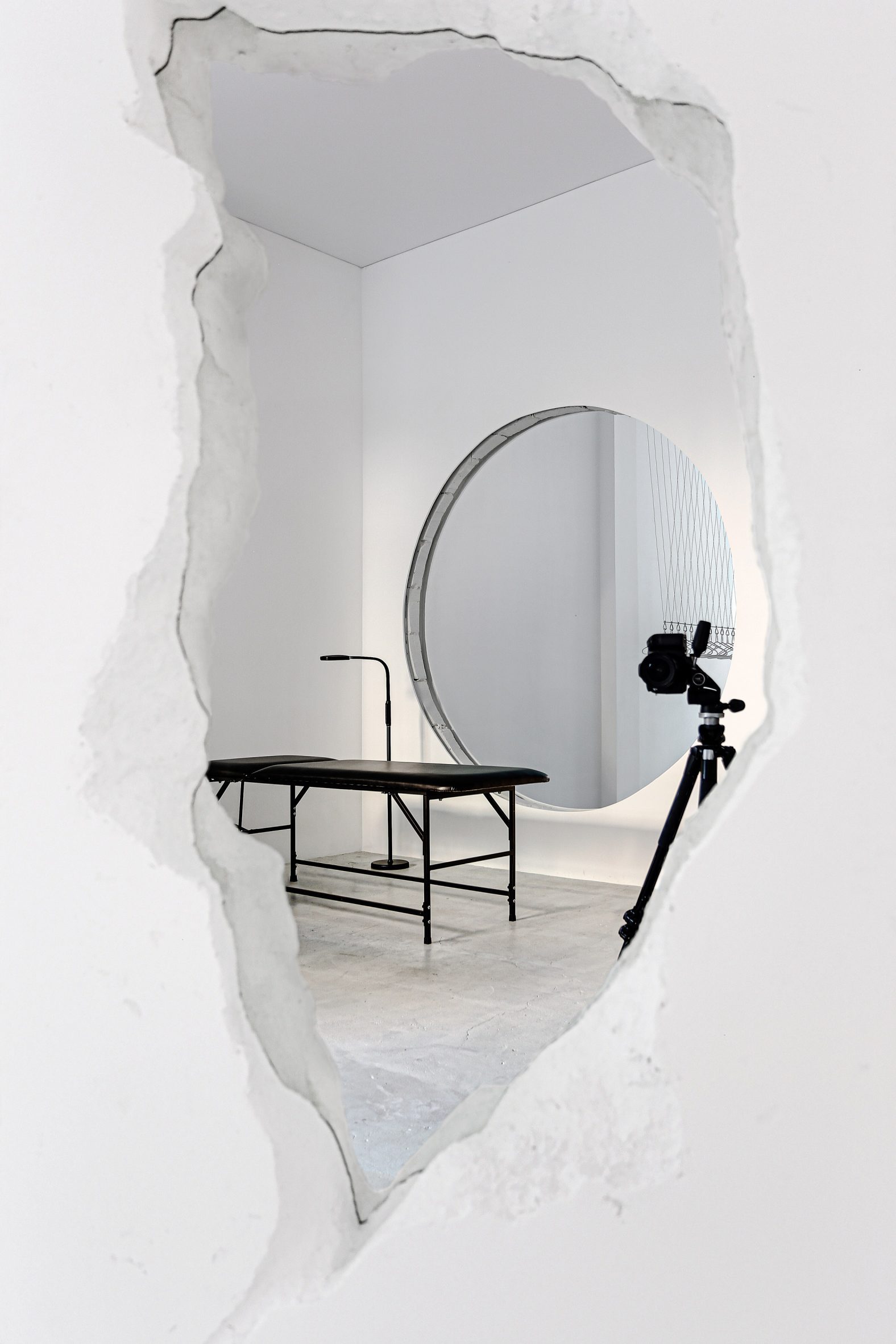
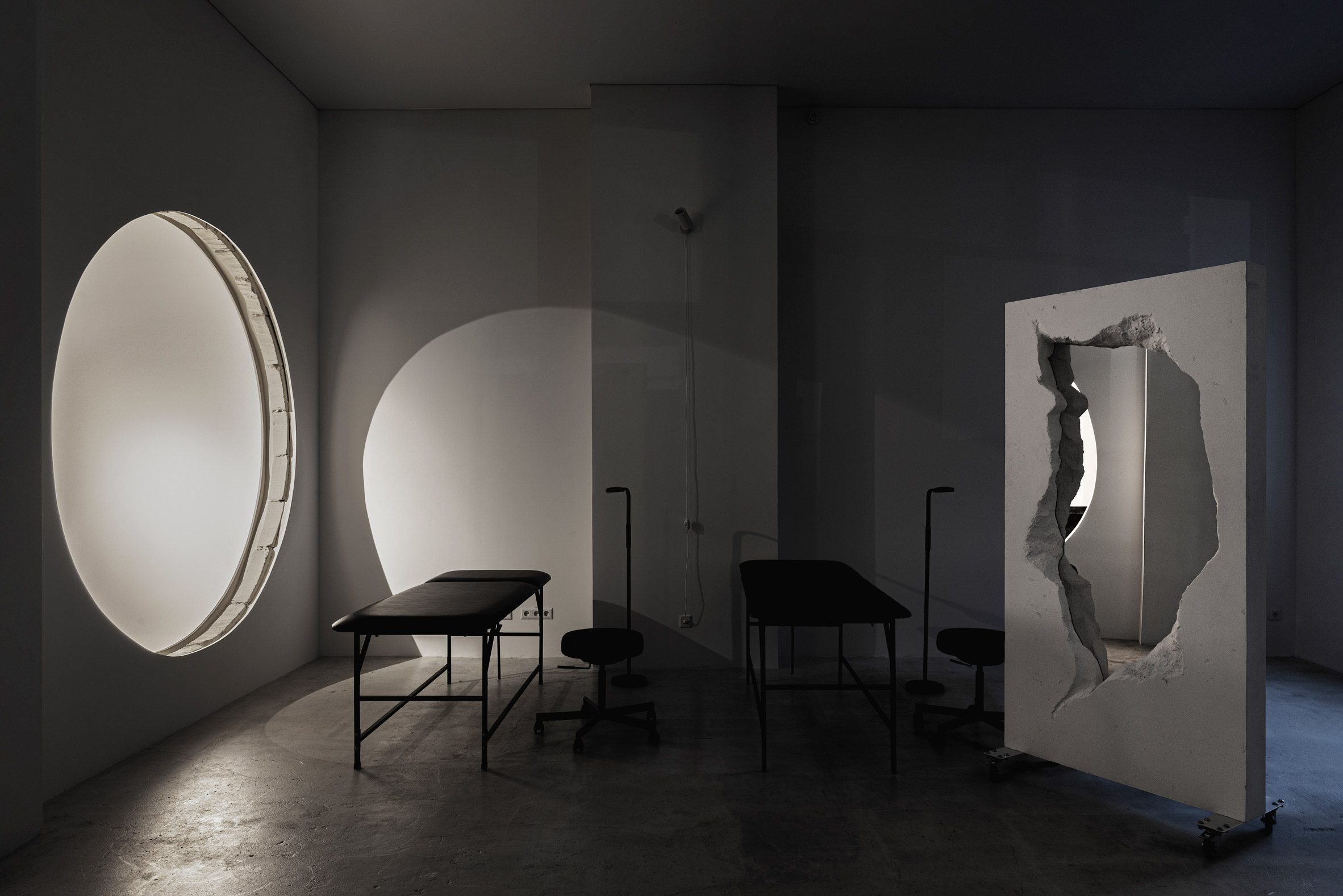
There are almost no doors in 6:19 Studio. Instead, round and rectangular openings are cut into the walls to blend the parlour's separate spaces.
These openings help to improve sightlines and air circulation, while revealing the construction of some of the walls.
The table acts as both a front desk and a work surface for the tattoo artists
"During construction work, we opened up the walls to see what they are made of and found that all the interior partitions are made of brick and foam, and the top is lined with plasterboard," Balbek Bureau said.
"We liked the idea of showing this multi-layered wall and it was implemented spontaneously during construction."
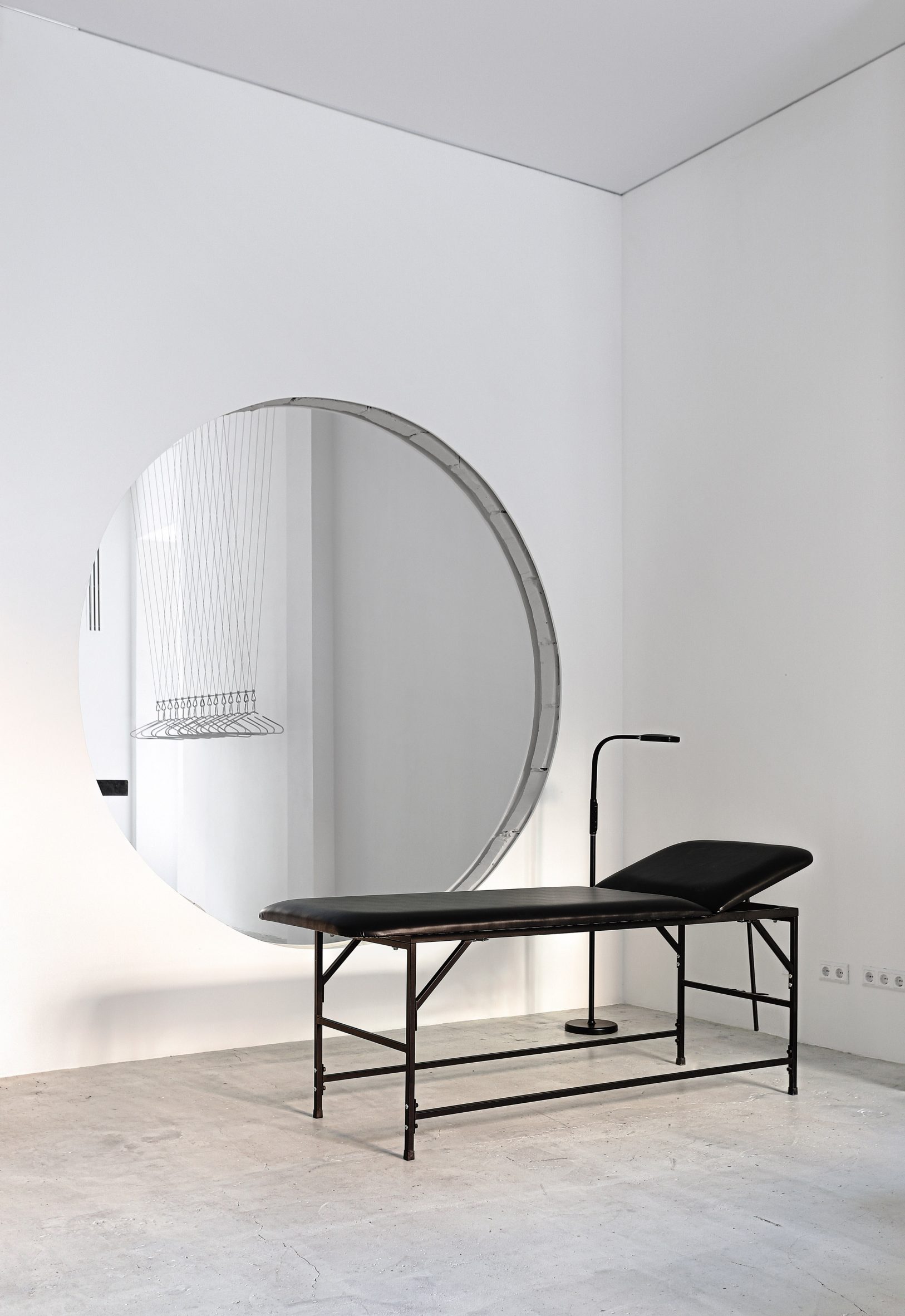
The studio's lobby is home to a waiting area alongside a row of clothes hangers, suspended from the ceiling using metal cables, that display the parlour's own line of branded clothing.
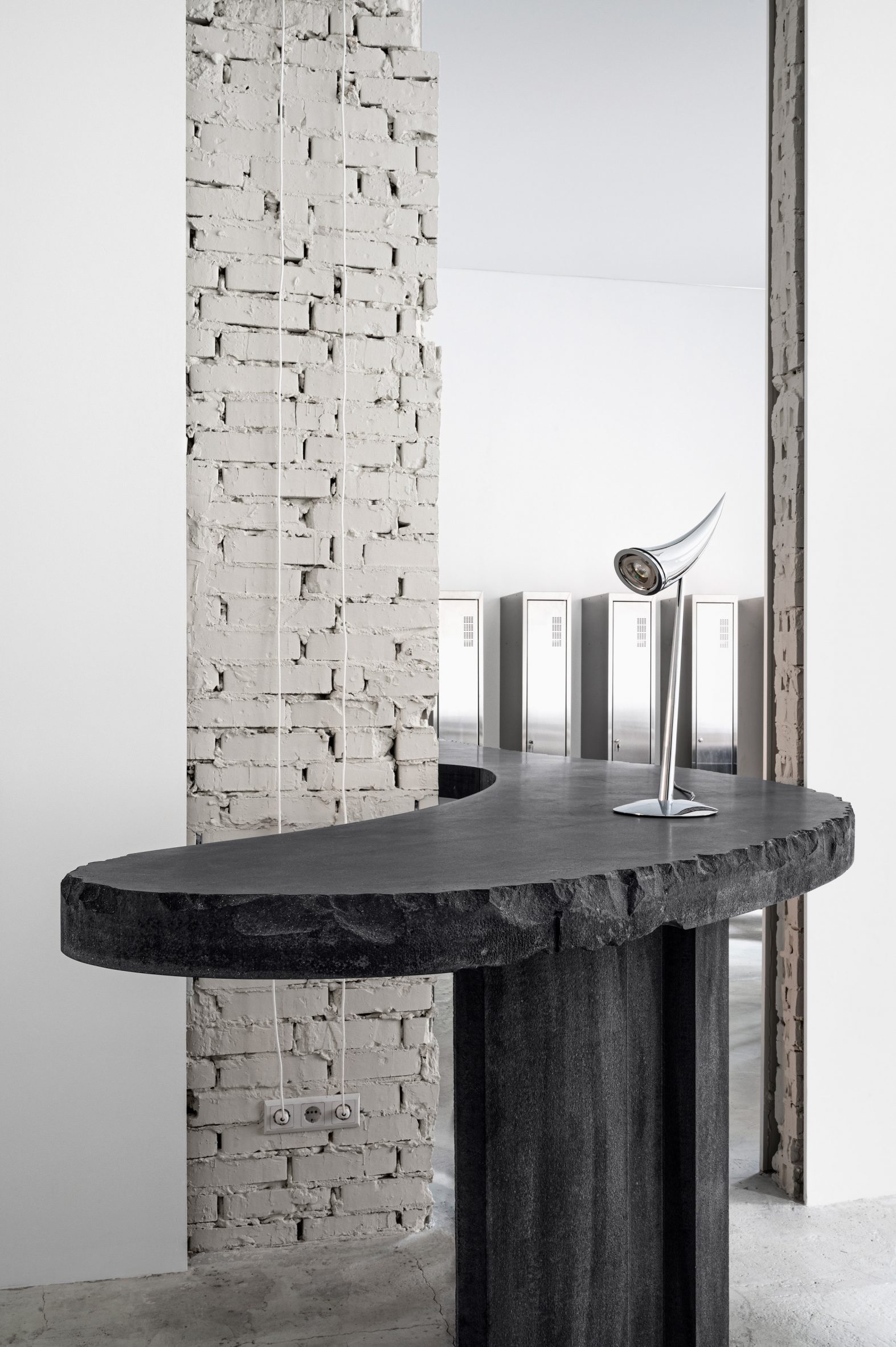
An 800-pound graphite-coloured concrete table snakes through the reception and into a lounge area, serving as both a front desk and a work surface for the studio's resident artists.
"Its edge has been beaten down by hand, giving it a unique and enchanting power as a tattoo on the human body," Balbek Bureau explained.
Rows of black leather tattoo beds are lined up in the main studio
A large circular opening behind the reception provides a view of the main studio hall, where rows of simple black leather tattoo beds are arranged along both sides.
Connected to the studio space through a series of tall rectangular openings, the lounge area is used by the studio's seven resident artists to rest.
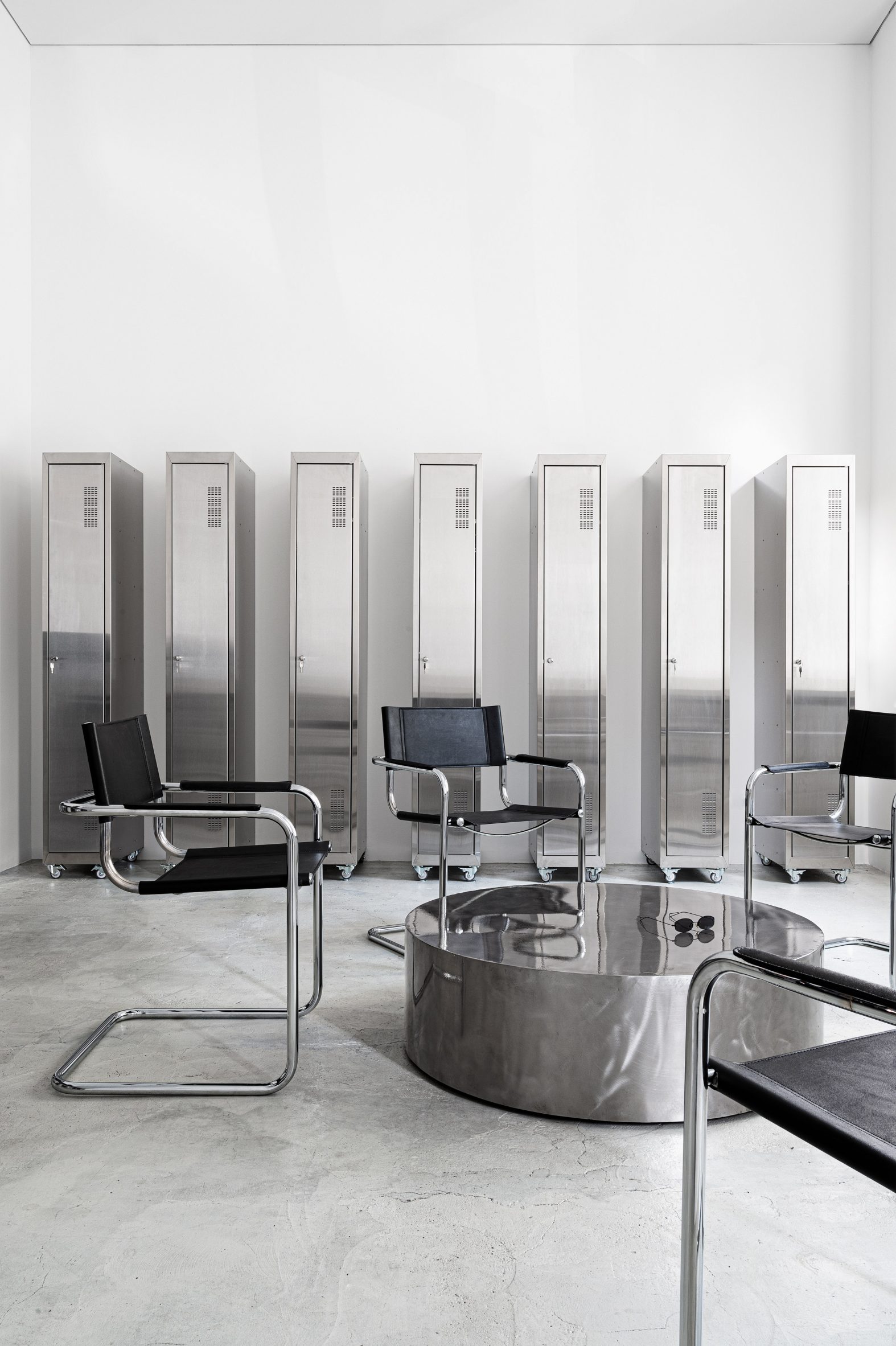
The lounge area features vintage S34 chairs by Mart Stam alongside a low coffee table
As well as the graphite table that extends into the room from the lobby, furnishings include vintage S34 cantilever chairs by Bauhaus architect Mart Stam set around a metal table, as well as a series of matching lockers for the artists to store their belongings.
A black cube structure placed between two walls in the studio houses a hidden wardrobe, a bathroom and a dressing room for artists and customers.
The studio's strategic openings allow light to funnel into the main studio
Other spaces in the Ukrainian capital completed by Balbek Bureau include a salon-cum-cocktail bar with concrete surfaces and gold accents and a restaurant that incorporates traditional Ukrainian forms, materials and colours.