Thursday, 19 August 2021

Nielsen Jenkins designs Brisbane home to withstand bushfires

Mt Coot-Tha House by Nielsen Jenkins

Australian studio Nielsen Jenkins has completed a "tough" family home with lush green courtyards protected from extreme bushfires by high blockwork walls.

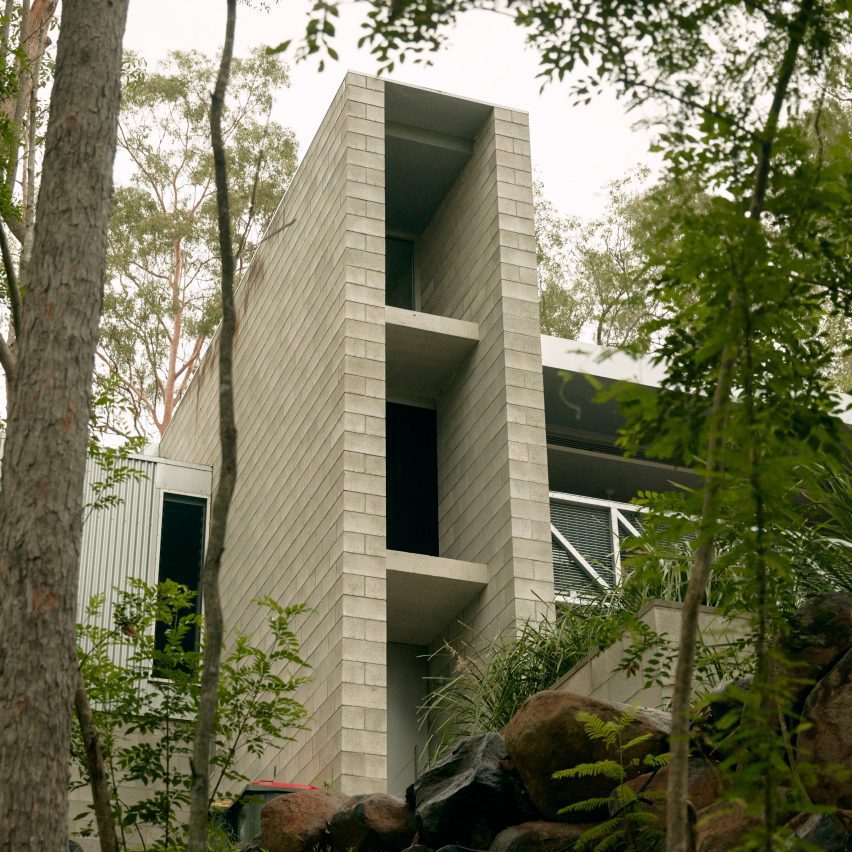
Mt Coot-Tha House sits on a challenging site characterised by a steep slope at the foot of Mt Coot-Tha, in the suburb Brisbane of Bardon.

Faced with the requirements of the second-highest bushfire attack level (BAL40), the local studio designed the home as a series of low, sloping units linked by a triple-height, "civic-scaled" staircase block that steps up the forested site.
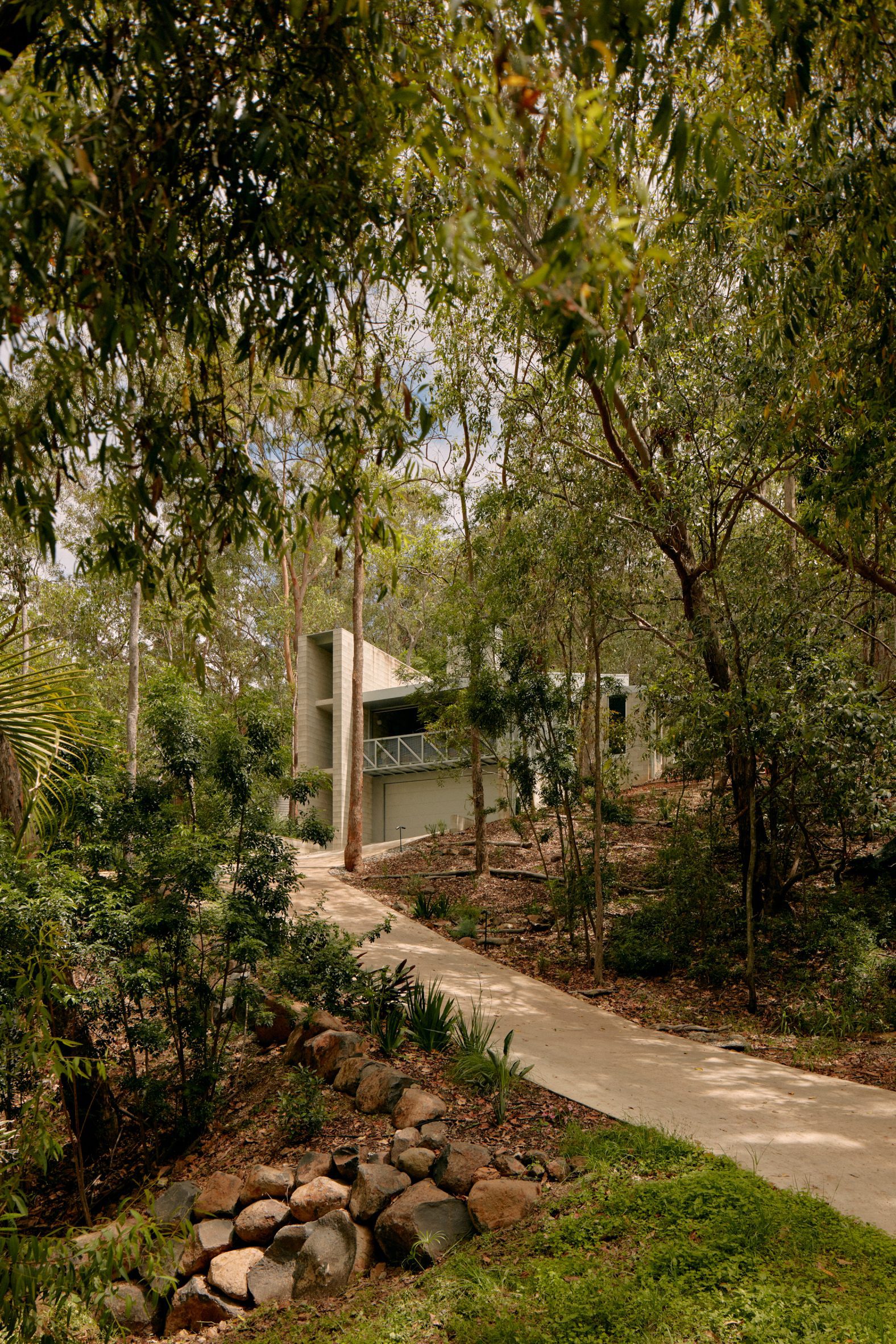
Driveway leading up to Mt Coot-Tha House with triple-height concrete staircase block
Mt Coot-Tha House is located on a forested site at the foot of a mountain

"An efficient stairway axis at the scale of the gum forest runs directly into the contour, and an informal meandering path across the plan allows for functional plateaus or occupiable contours," Nielsen Jenkins explained.

This layout provides a garage at ground floor level, a large living, dining and kitchen area on the first floor and an area for the main bedrooms on the second floor.
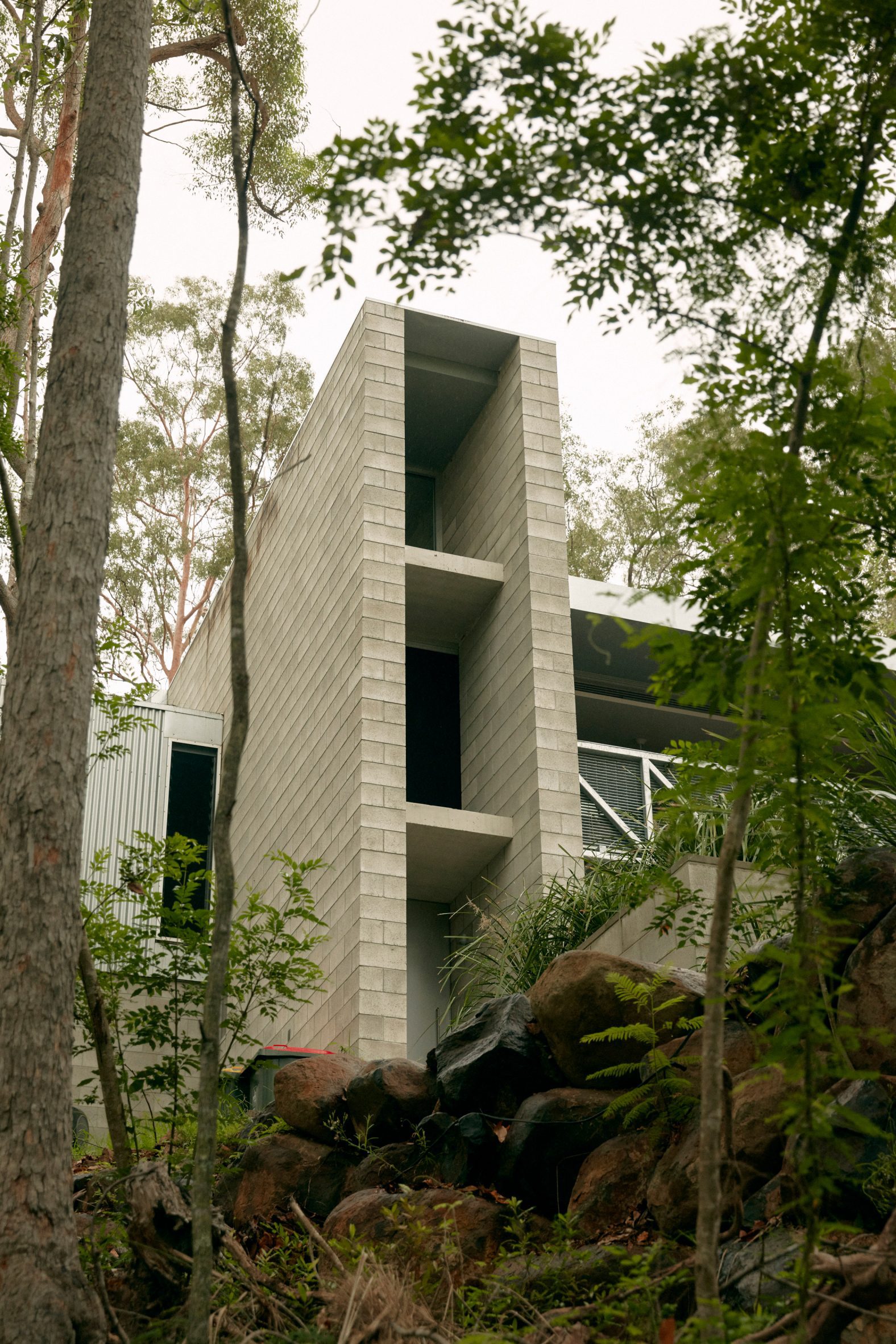
Triple-height concrete staircase block in Brisbane house by Nielsen Jenkins
Floors are linked by a triple-height staircase block

Due to the steepness of the slope, the first floor features a series of smaller level changes, stepping up from a living area and balcony towards a kitchen overlooked by a large internal courtyard.

"These smaller sectional shifts allow a grounded courtyard space adjacent to the living area of the house becomes a kind of 'village green' around which the rituals of daily life are lived," described the studio.
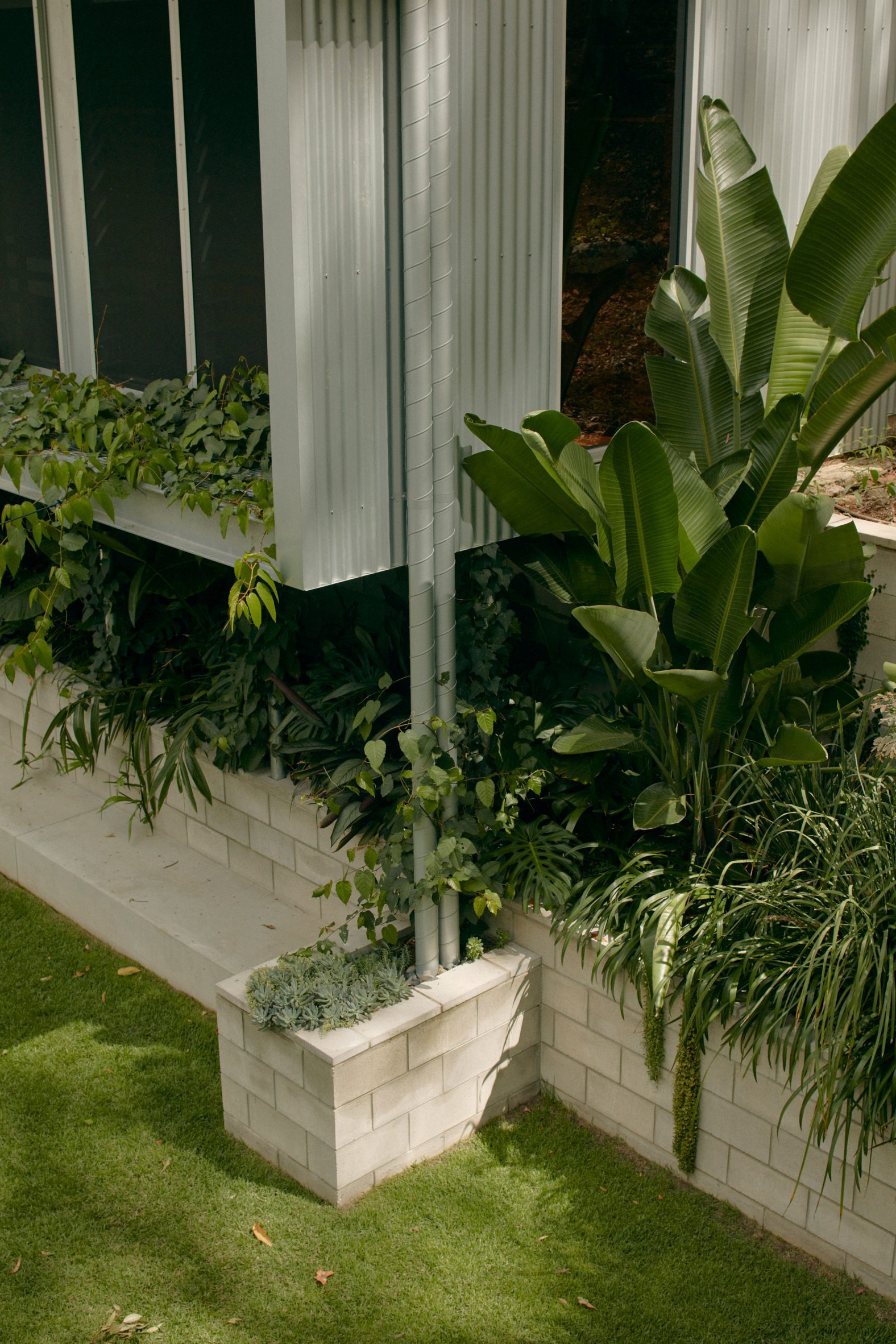
Greenery around corrugated facade of Mt Coot-Tha House
The building features a corrugated metal facade on top of a blockwork base

The sloping rooflines on each block follow the slope of the site upwards, each clad with corrugated metal atop a blockwork base.

All of these material choices, as well as those in the interior, were made in accordance with the BAL40 rating, which also necessitated that the gaps around openings be no greater than three millimetres.

"Robust and prosaic materials have been detailed in a manner which will require no maintenance moving forward, and will let the building continue to settle into the hill over time," explained Nielsen Jenkins.

Internally the exposed blockwork of the central staircase form is contrasted by white walls and wooden floors and furniture.
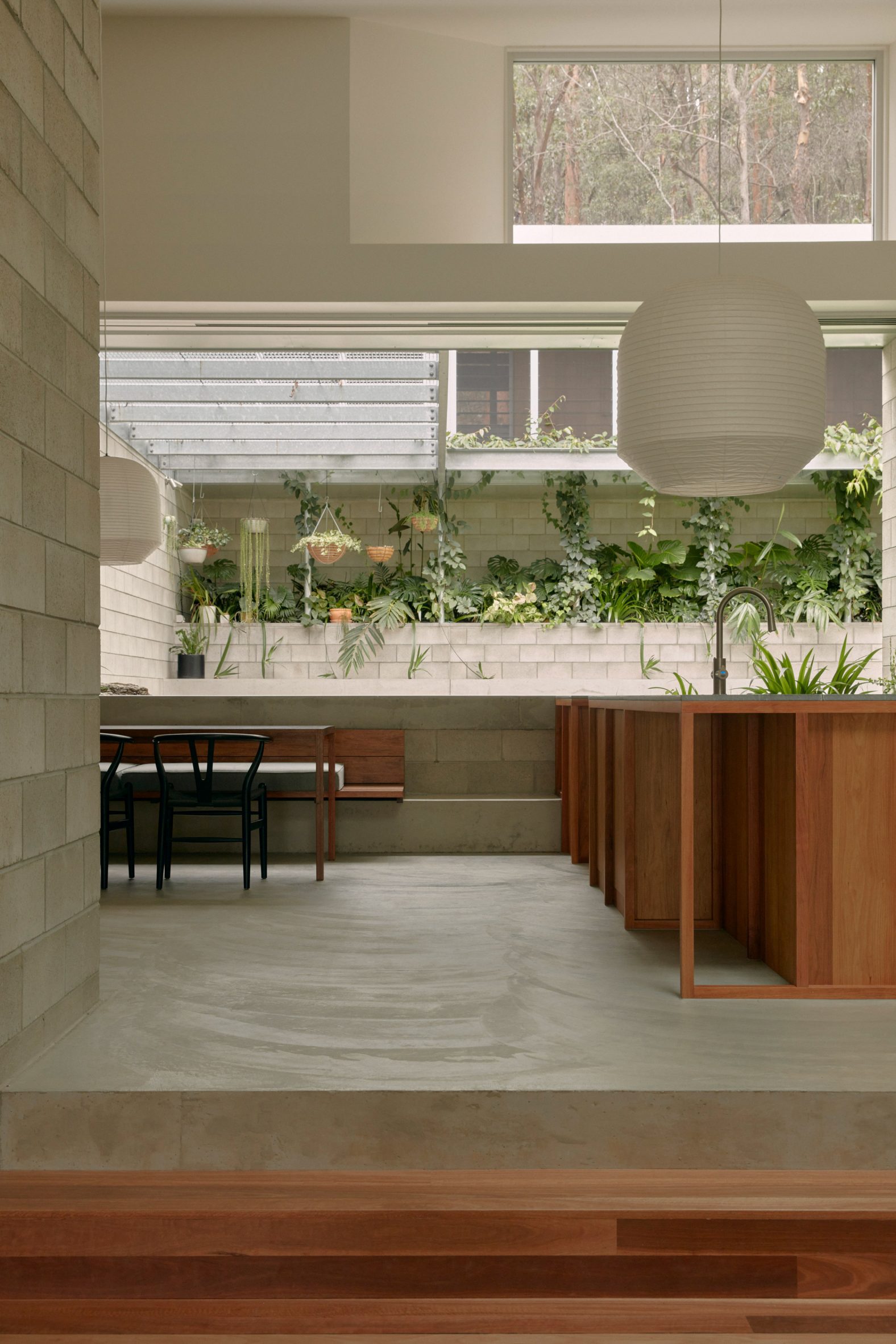
Wooden kitchen by Nielsen Jenkins looking out at courtyard filled with greenery
The kitchen overlooks a large internal courtyard

Taking advantage of the frequent changes in level, a mix of high panoramic windows, skylights and carefully-framed openings aim to capture the feeling of "leaning back" to look at the forest. The apertures are aligned with the tree trunks on the lower levels and the canopy on the upper level.

Around the perimeter of the house a series of "wet walls" have been pulled away to deal with overland water flow, doubling as small, flat courtyard areas that mimic clearings in the densely vegetated forest.
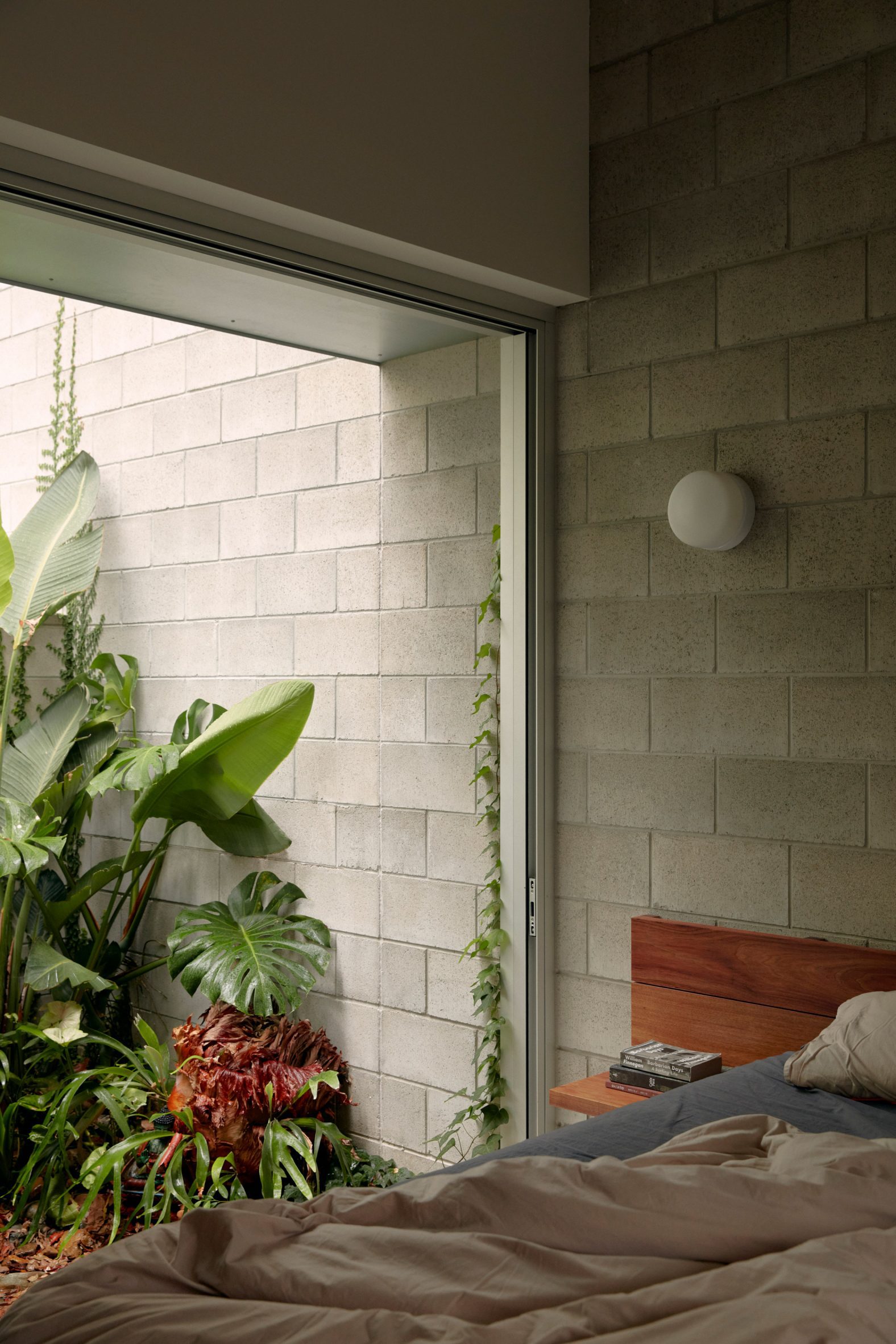
Wooden bed next to floor to large window in Mt Coot-Tha House looking out at plants
High panoramic windows allow residents to take in the forest

Mt Coot-Tha home was recently longlisted in the rural house category of this year's Dezeen Awards.

Other nominated projects include a cave-like house by Mold Architects that's embedded into a hill overlooking the Mediterranean.

The photography is by Tom Ross.

The post Nielsen Jenkins designs Brisbane home to withstand bushfires appeared first on Dezeen.


from Dezeen https://ift.tt/3iYbHHa

Vipp converts former pencil factory in Copenhagen into supper club venue

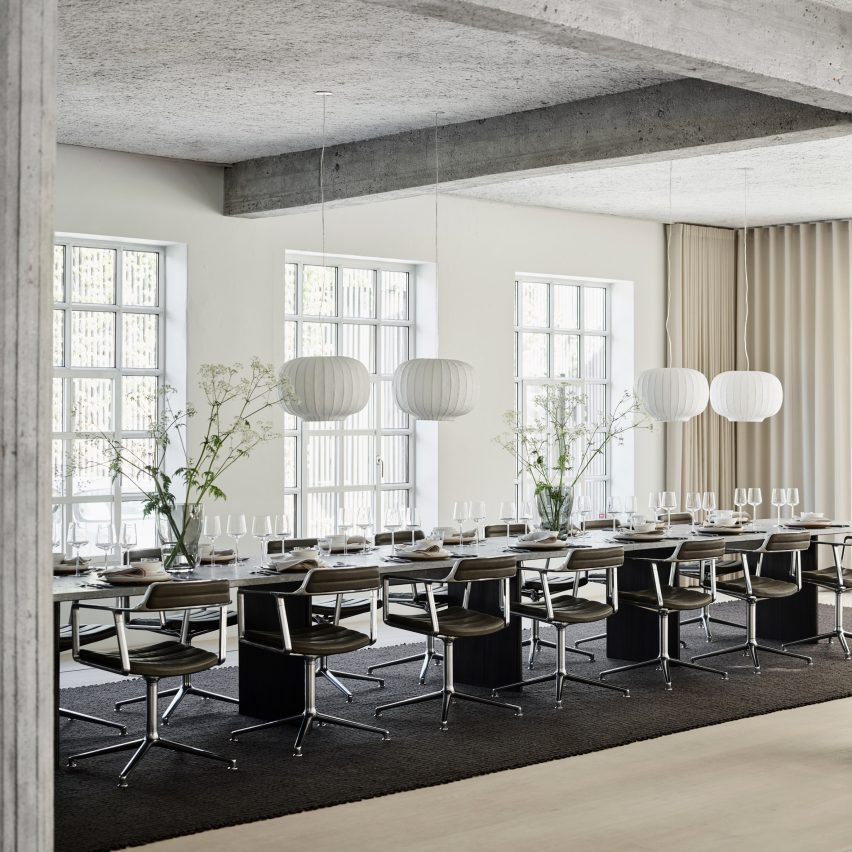
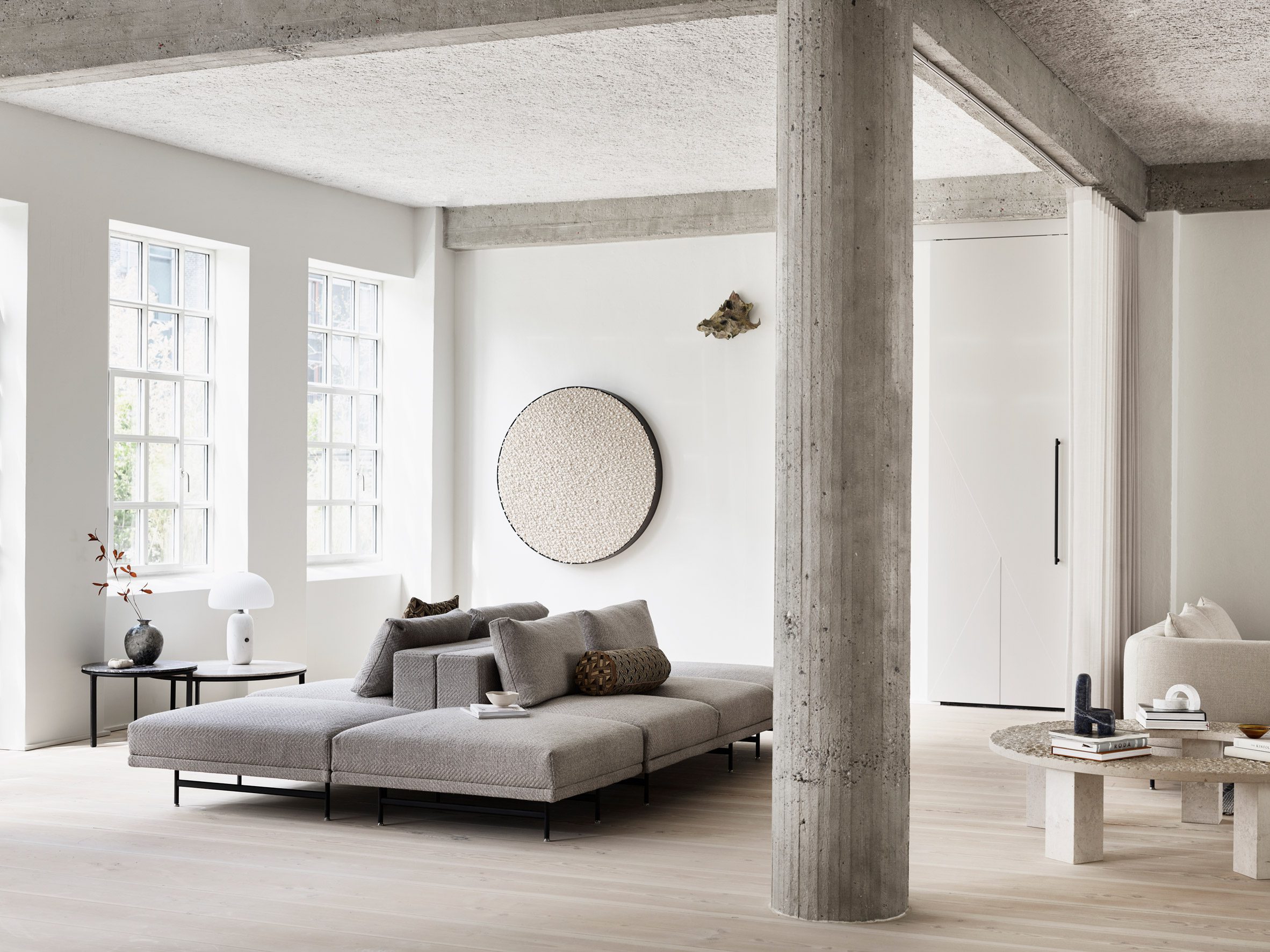
Vipp Pencil Factory will is a venue for supper clubs

Danish homeware brand Vipp has expanded into food by creating a venue for pop-up supper clubs inside the former Viking pencil factory in Copenhagen.

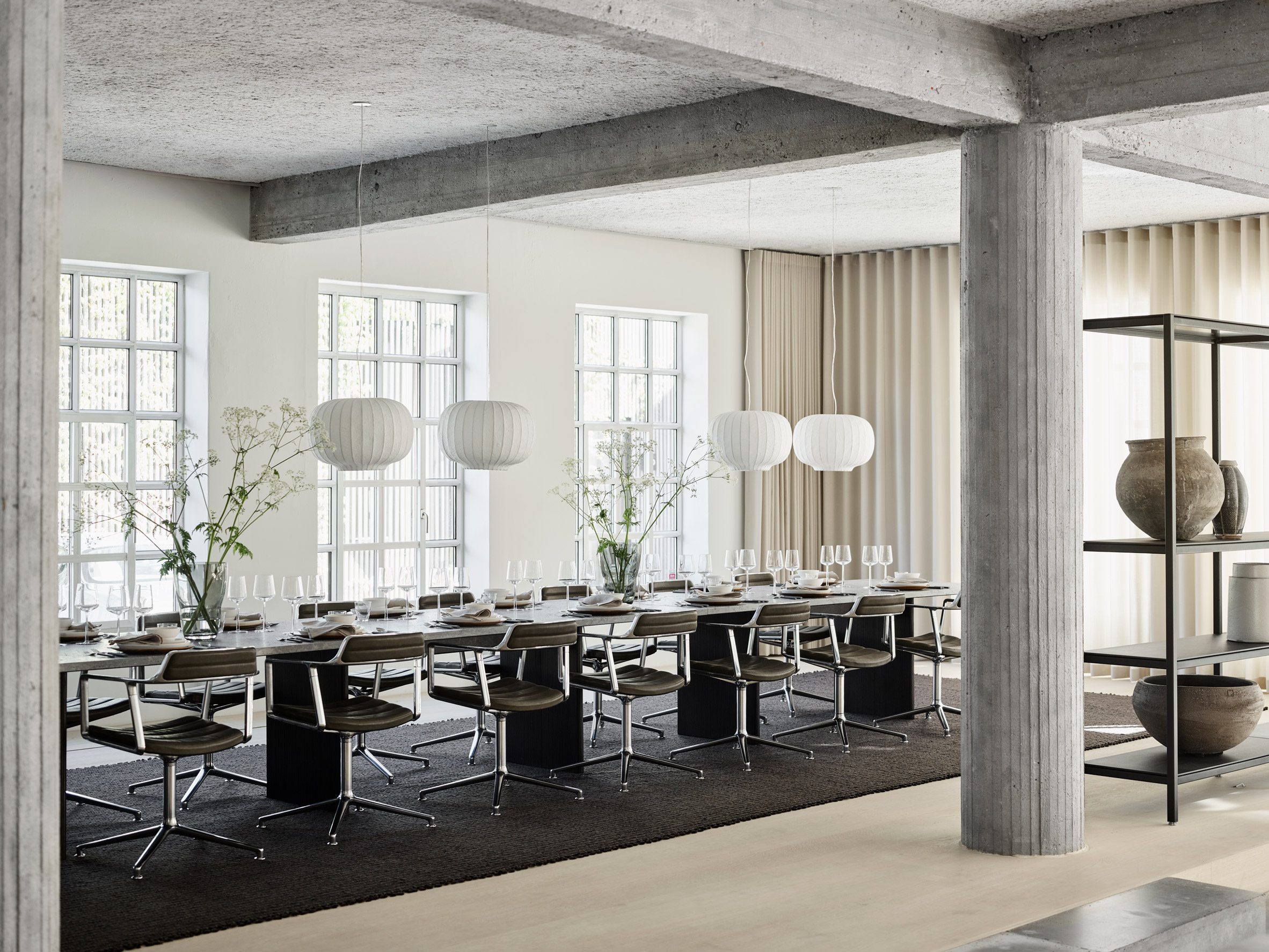
Set to launch during annual design festival 3 Days of Design, Vipp Pencil Factory is a 400-square-metre showroom space that will host guest chefs from around the world, creating a dining experience for up to 26 guests.

Vipp Pencil Factory will is a venue for supper clubs
The space was originally a factory for Viking pencils

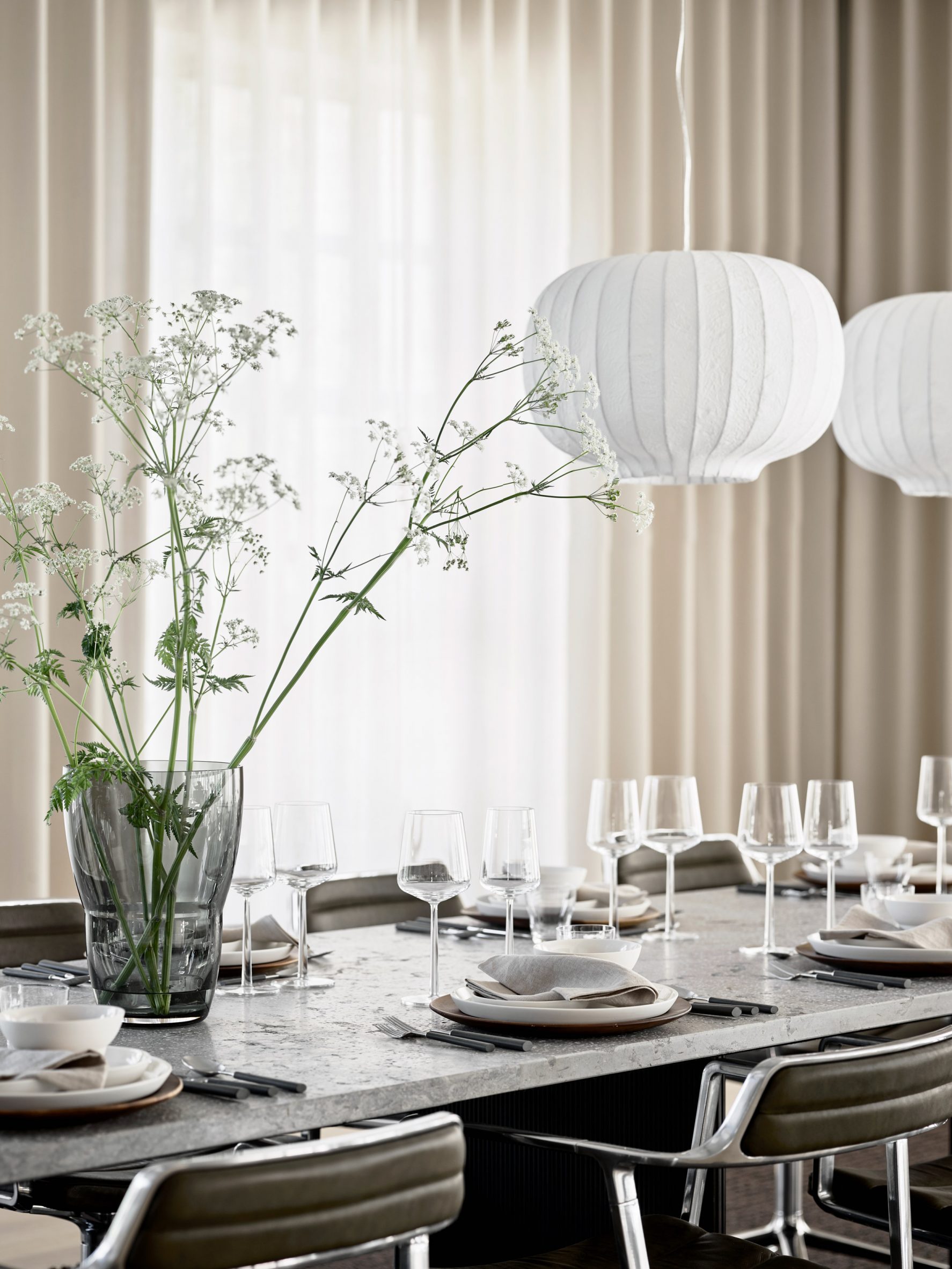
The space was styled by interior designer Julie Cloos Mølsgaard, combining furniture and accessories from Vipp's collection with pieces sourced from local design galleries including Etage Projects, 2112 and Galleri Nils Stærk.

Located in lslands Brygge, the pencil factory had been closed down since the 1970s, when Viking – the manufacturer behind Denmark's ubiquitous yellow school pencils – was taken over by a rival company.

Mølsgaard's design sees the large industrial space become more cosy and intimate, with the introduction of wooden furniture and flooring along with tactile fabrics in the form of curtains, rugs and cushions.

Dinner table at Vipp supper club
Vipp is using the venue to host pop-up supper clubs

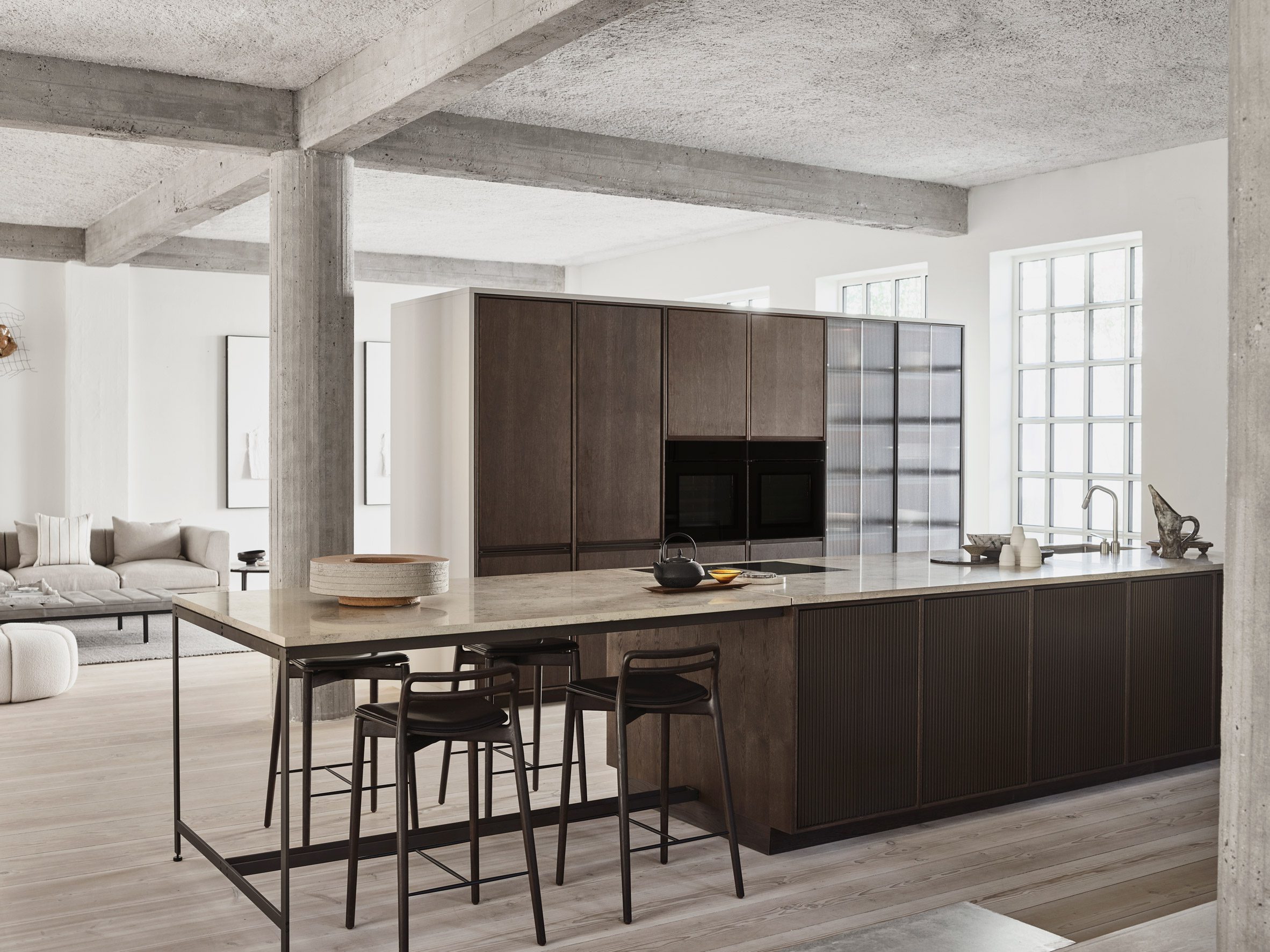
The food will be made in Vipp's modular V2 kitchen, which sits at the centre of the space.

Wide concrete steps lead up to the dining space, where a long table with a matching limestone surface is accompanied by swivel chairs in black leather. Folded paper pendant lamps hang overhead, while large windows provide the backdrop.

Grand piano at Vipp Pencil Factory
Music performances will accompany the dinners

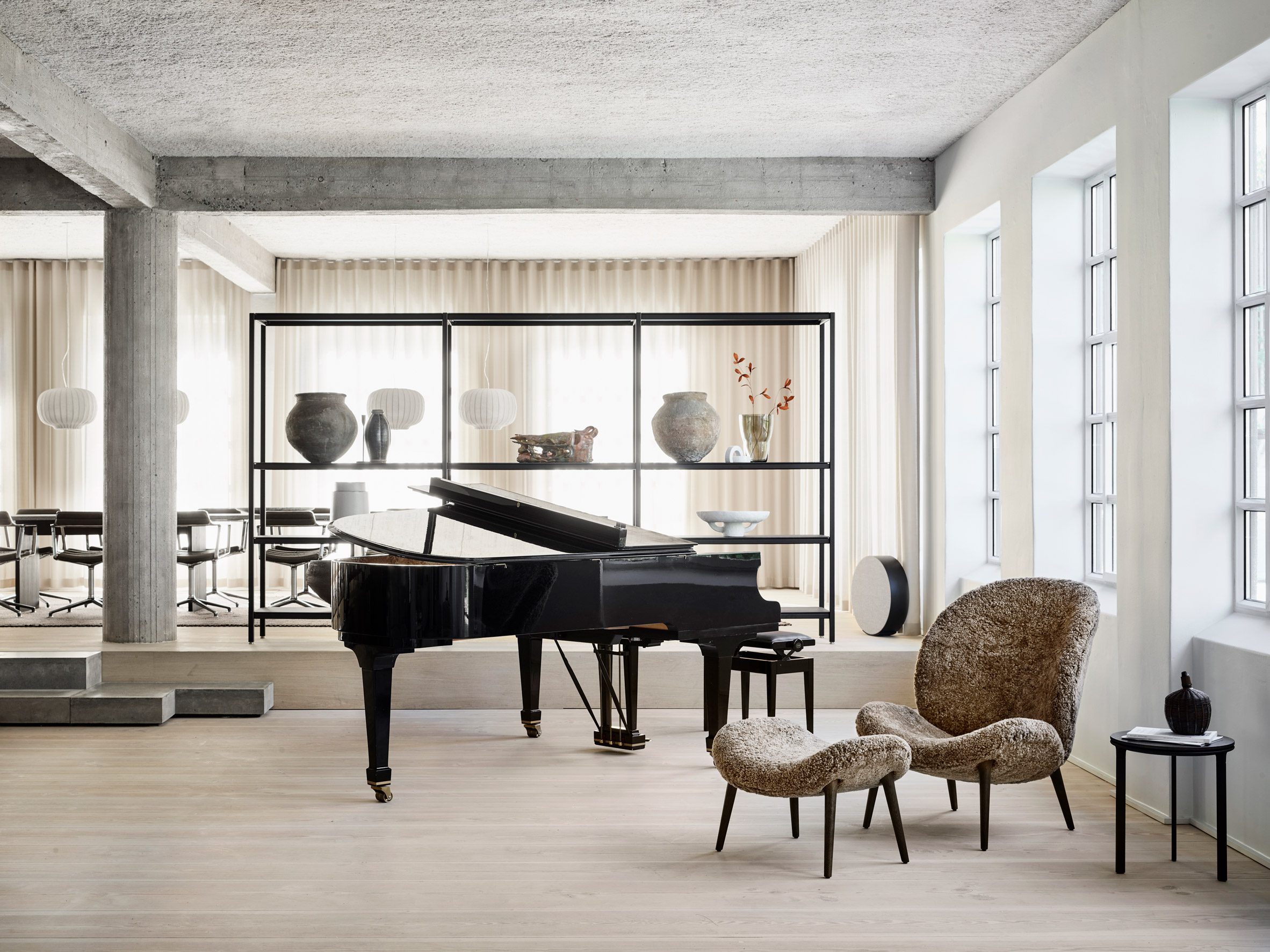
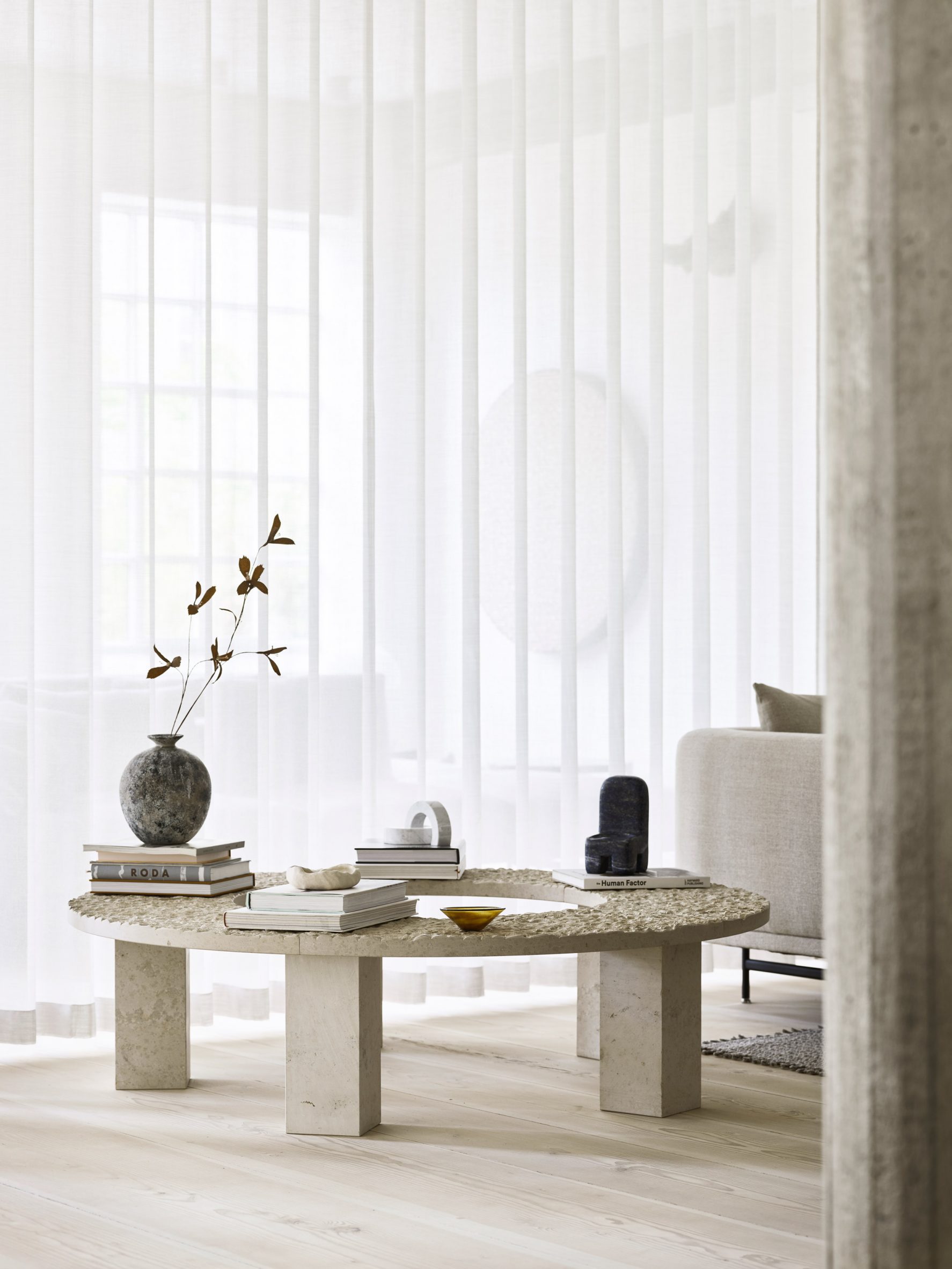
This understated colour palette extends to the lounge areas, where visual interest is provided by original artworks, ceramics and sculptural furniture pieces.

There's also a grand piano, which creates a space for music performances.

Lounge area at Vipp Pencil Factory
The space features muted textiles, wooden flooring and ceramic objects

"I set myself free to play around and experiment with a complimentary mix of Vipp classics, upcoming products, and prototypes," said Mølsgaard.

"Vipp Pencil Factory acts as sort of a testing lab where we can try out new ideas, forms and materials in unconventional ways."

Sculptural table at Vipp Pencil Factory
Artworks and limited-edition design pieces were sourced from local galleries

The project is the latest in a series of new ventures for Vipp, which started out as a manufacturer of metal pedal bins.

The brand now also offers hotel stays – either in a prefabricated micro cabin in a Swedish forest, or in a loft apartment on top of its Copenhagen headquarters.

Vipp also recently launched a hybrid showroom in New York, which is used as both an exhibition space and a pied-à-terre for owners Sofie and Frank Christensen Egelund when they're in town.

The Viking pencil factory pop-up marks its first venture into the restaurant industry.

Vipp V2 kitchen
Food will be prepared in a kitchen at the centre of the space

Vipp Pencil Factory will officially launch during 3 Days of Design – taking place from 16 to 18 September – with a dinner prepared by Italian chef Riccardo Canella, a former R&D sous chef at Noma.

The public will be able to book space at future dinners.

Photography is by Anders Schønnemann.


Project credits

Project: Vipp
Interior design: Julie Cloos Mølsgaard
Floors: Dinesen
Curtains and carpets: Kvadrat
Paint: Jotun
Audio: B&O
Electric appliances: Miele
Shower: Dornbracht
Tiles: Made a Mano

The post Vipp converts former pencil factory in Copenhagen into supper club venue appeared first on Dezeen.


from Dezeen https://ift.tt/3D0sz8g

Artificial intelligence "will empower designers" say Clippings co-founders

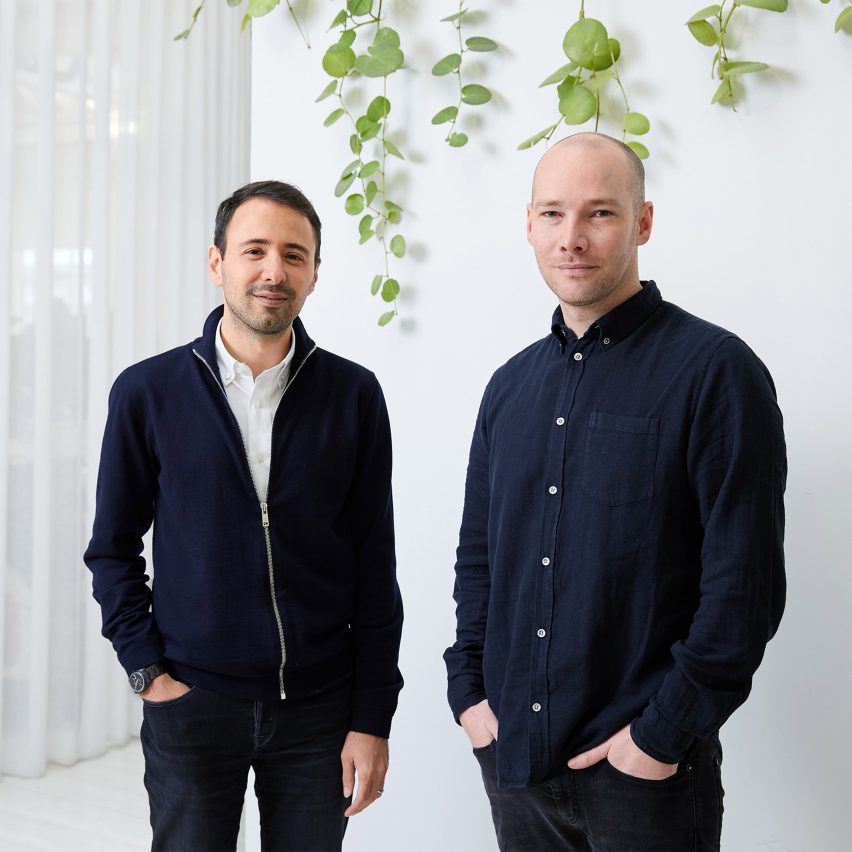
Founders of Clippings

Technology will allow architects and designers to spend more time designing and less time doing admin, according to Adel Zakout and Tom Mallory of furniture-sourcing platform Clippings.

The duo, who this week announced the sale of their business to US samples service Material Bank, said that architecture and design is "is one of the few remaining sectors that really has not been touched significantly by technology."

But this is finally changing, they added.

"I believe that in 10 years, interior designers and architects will be doing more designing," said Zakout (above, left), who co-founded the London-based platform with Mallory (right) in 2014.

"Today, interior designers and architects are spending 60 to 80 per cent of their time just doing admin like emails, Excel sheets, putting quotes together and just managing stuff," he added.

"Unfortunately, that's part of the job today because technology hasn't caught up," he said. "Technology has not enabled them to save time and focus on where they can add value. But in 10 years time, designers will be able to design more" thanks to technology.

Pandemic "accelerated" way of thinking about technology

Mallory added that the coronavirus pandemic has "drastically shifted" attitudes to technology in the sector.

"The pandemic certainly has accelerated the way people are thinking about distribution channels and how technology can be a part of it," he said.

Clippings handles the selection, purchase and delivery of furniture, lighting and other products for architecture and interior projects, while the brand's new parent Material Bank offers North American architects overnight delivery of a wide range of material samples.

Services like these will allow architects and interior designers to focus on their design work, the duo believes.

AI "is incredibly powerful"

They disagreed with claims that artificial intelligence will make designers redundant.

Two years ago, New York designer Sebastian Errazuriz warned that AI would eliminate the majority of creative jobs in architecture.

"I think it's important that architects are warned as soon as possible that 90 per cent of their jobs are at risk," he said.

But Zakout said: "I actually think it'll be the opposite. I think artificial intelligence will empower designers. I think that AI, especially for repetitive work, is incredibly powerful. But fundamentally, the creative process that designers go through will be quite difficult to replace with AI."

"I do believe that AI will have a huge impact on the process," he added. "It'll make things like discovery, the procurement process, matching the products in the general workflow much easier and quicker."

"I think technology will do a lot to enhance the process but I don't believe that I will replace the designer."

Covid-19 forced brands to adopt tech

Zakout agreed that the coronavirus pandemic forced furniture and lighting brands to come to terms with technology.

"A lot of brands woke up last March and realised that their whole distribution channels had been shut down," he said. "Their whole method of distributing their products, marketing, selling their products, was no longer available."

This led them to embrace digital solutions for the first time, he added.

"There has been a drastic mentality shift," he said. "Businesses like Herman Miller [now MillerKnoll] are starting to sell directly to customers," via the Herman Miller Professional portal that it built in conjunction with Clippings.

"So I think things are accelerating. Covid has definitely been a bit of a trigger. It's been a kick for some brands to really move on with their plans."

The post Artificial intelligence "will empower designers" say Clippings co-founders appeared first on Dezeen.


from Dezeen https://ift.tt/3svtkkG

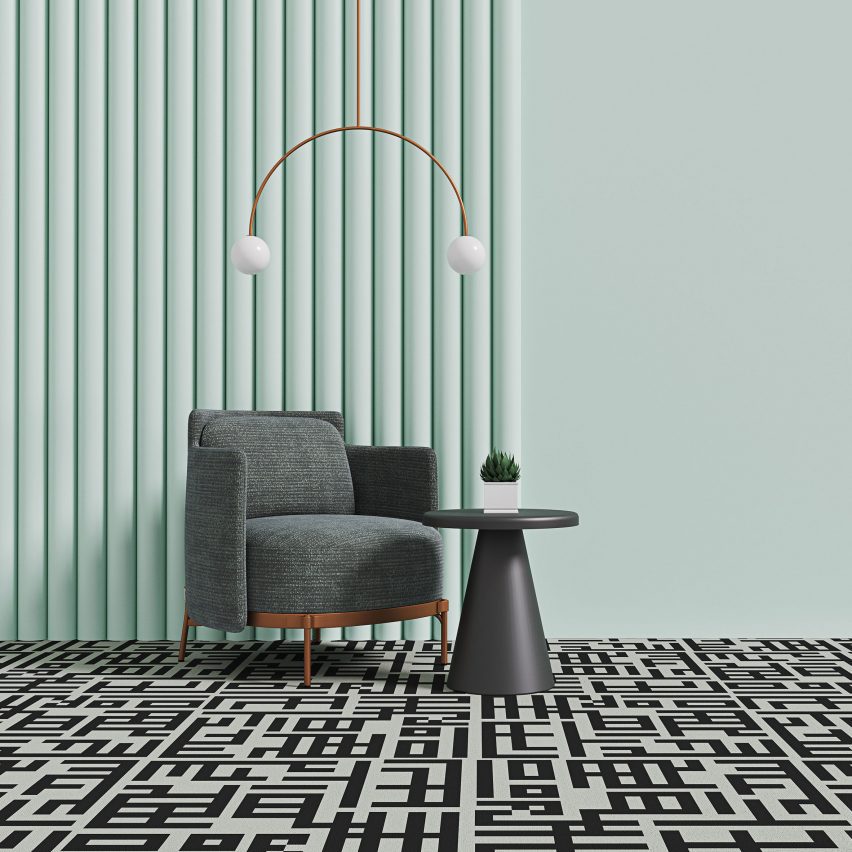
Grid carpet by Talk Carpet

Grid carpet by Talk Carpets

Dezeen Showroom: Talk Carpet looked to Egypt for inspiration for its Grid flooring, which references the traditional embroidery used on tents.

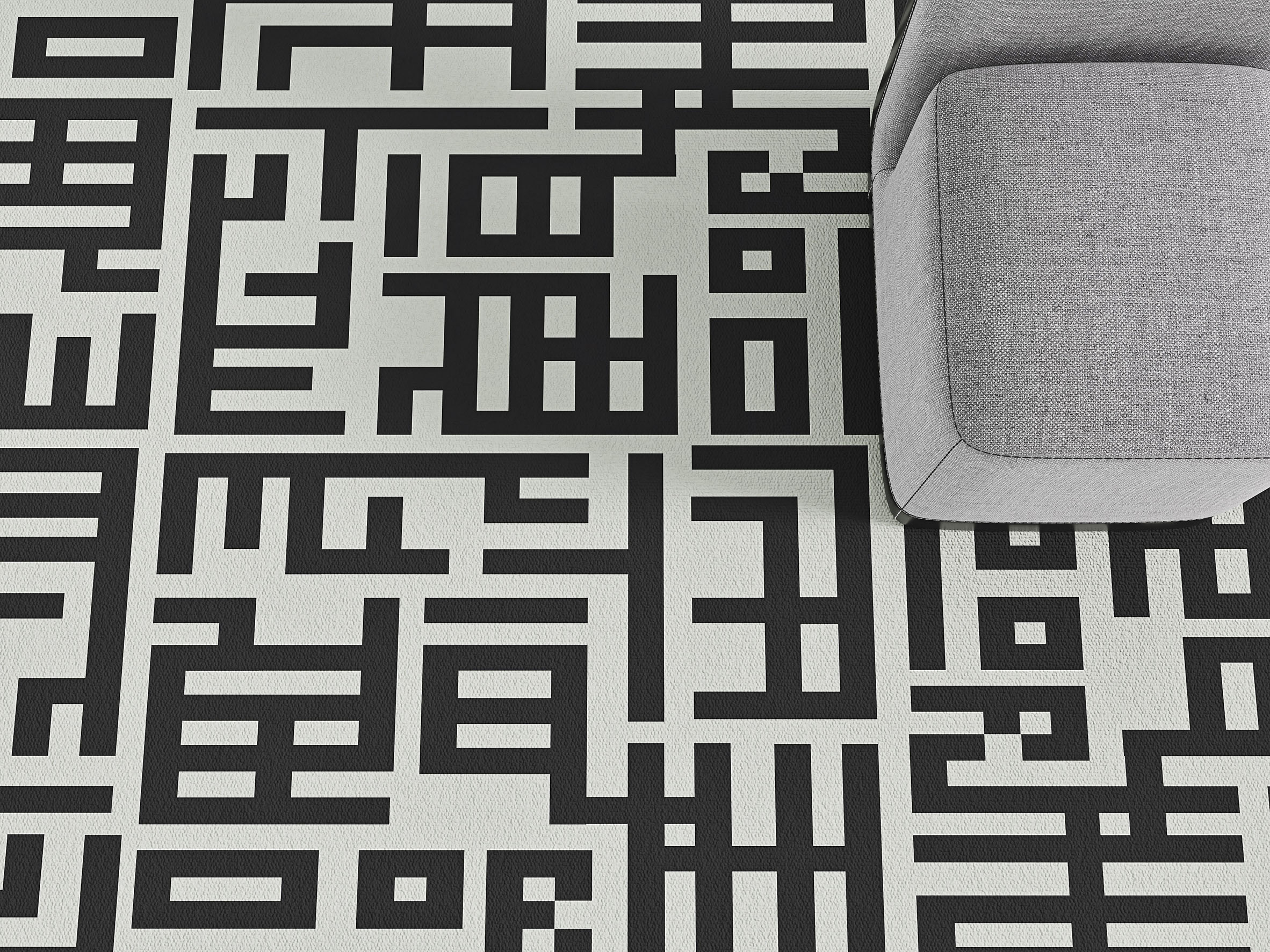
The Grid carpet bears a graphic motif that is drawn from sights the Talk Carpet team observed at Cairo's Khan El Khalili market, particularly the work of embroiderers who would traditionally create decorative tents for weddings and other occasions.

"Craftsmanship is everywhere in Egypt," said Talk Carpets. "The artisans' market sells colourful decor, antiques and souvenirs. There are artisans making brand new pieces at every corner."

Grid carpet by Talk Carpets
The Grid carpet has a carpet inspired by Egyptian handicrafts

Talk Carpets reimagines this imagery in the grey-and-white Grid carpet, which the brand says "makes a beautiful statement for any office or hospitality environment".

The design is part of Talk Carpets' custom carpet programme, which lets customers choose their own pattern, colour, pile height and dimensions.

The brand donates one per cent of all custom carpet sales to the charity Design Industries Foundation Fighting AIDS, which helps to raise awareness and fight HIV/AIDS.

Product: Grid
Brand: Talk Carpets
Contact: jennifer@talkcarpet.com

About Dezeen Showroom: Dezeen Showroom offers an affordable space for brands to launch new products and showcase their designers and projects to Dezeen's huge global audience. For more details email showroom@dezeen.com.

Dezeen Showroom is an example of partnership content on Dezeen. Find out more about partnership content here.

The post Grid carpet by Talk Carpet appeared first on Dezeen.


from Dezeen https://ift.tt/3CY2Vkp

Watch our live talk about how game engines are transforming architecture

Twinmotion render by Roberto Molina

We explore how visualisation tools such as Twinmotion are transforming architecture in this talk to coincide with our Redesign the World competition in partnership with Epic Games. Watch it live from 2:00pm London time.

The talk has not started yet. The live stream will begin at 2:00pm BST.

Titled Twinmotion: how game engines are transforming architecture, the talk will explore the new possibilities that real-time 3D tools such as Twinmotion open up to architects.

Twinmotion is powered by Unreal Engine, a game engine developed by Epic Games that also powers some of the world's biggest video games, such as Fortnite.

Talk to explore how video games and architectural visualisation are merging

Moderated by Dezeen editor-in-chief Marcus Fairs, the talk will explore how access to this new digital technology is transforming the way that architects work and communicate their projects, how video game design and architectural visualisation are merging, and what the future holds for the industry.

Fairs will be joined by Belinda Ercan, Twinmotion product marketing manager at Epic Games, Murray Levinson, partner at architecture practice Squire & Partners, Adam Laskey, director of architecture studio Marraum, and Luke Pearson and Sandra Youkhana, co-founders of You+Pea.

Ercan will provide an overview of what Twinmotion is and what it can do. Architects Levinson and Laskey will explain how they use the software in their practice and Pearson and Youkhana will discuss the Videogame Urbanism masters programme they run at the Bartlett School of Architecture in London.

Belinda Ercan, Epic Games, portrait
Belinda Ercan oversees Twinmotion product marketing and strategy at Epic Games

Ercan is a ​​product marketing manager for Twinmotion at Epic Games.

She has a master's degree in architecture and digital design, with a focus on 3D visualisation, and has previously worked as a visualiser for HLM Architects and visualisation product manager at Graphisoft.

Portrait of Murray Levinson of Squire & Partners
Murray Levinson is a partner at Squire & Partners

Murray Levinson is a partner at award-winning architecture and design practice Squire & Partners.

Murray’s particular interest in masterplanning brings the practice’s design ethos to a variety of sites in the UK and internationally, with work in Turkey, Russia, Belfast, Manchester and London.

Portrait of Adam Laskey, director of Marraum
Adam Laskey is director of architecture firm Marraum

Adam is co-owner and director of Marraum, a small architectural practice in Penryn, Cornwall, specialising in using virtual reality (VR) to deliver domestic renovations and new builds.

His knowledge and use of VR in architecture have seen him speak at a wide range of events in Cornwall and London. Currently, he is collaborating with HTC and Twinmotion to trial their new technology and provide relevant professional feedback.

Portrait of Luke Pearson and Sandra Youkhana of You+Pea
Luke Pearson and Sandra Youkhana run research studio You+Pea

Luke Pearson and Sandra Youkhana run architectural design studio You+Pea, which explores the integration of videogame technologies into architectural design, leading conversations on how games can engage new participants in the design of cities.

Pearson and Youkhana established and lead the Videogame Urbanism studio at the Bartlett School of Architecture, UCL, where they use game technologies to realise urban design research.

Redesign the World logo

The talk coincides with Dezeen's Redesign the World competition, in partnership with Epic Games, which calls for radical proposals to rethink planet Earth.

Entrants must produce a 3D visualisation of their concepts using Twinmotion, submitting a video animation and still image of their concept, along with up to 500 words of text about their proposal.

Dezeen previously hosted an online workshop on how to use Twinmotion to help participants with their entries.

The competition is open for entries until 15 September 2021. See the brief and entry criteria for details of how to enter.

The post Watch our live talk about how game engines are transforming architecture appeared first on Dezeen.


from Dezeen https://ift.tt/3z0dTU5