Tuesday, 24 August 2021

Concrete construction "offsets around one half" of emissions caused by cement industry says IPCC

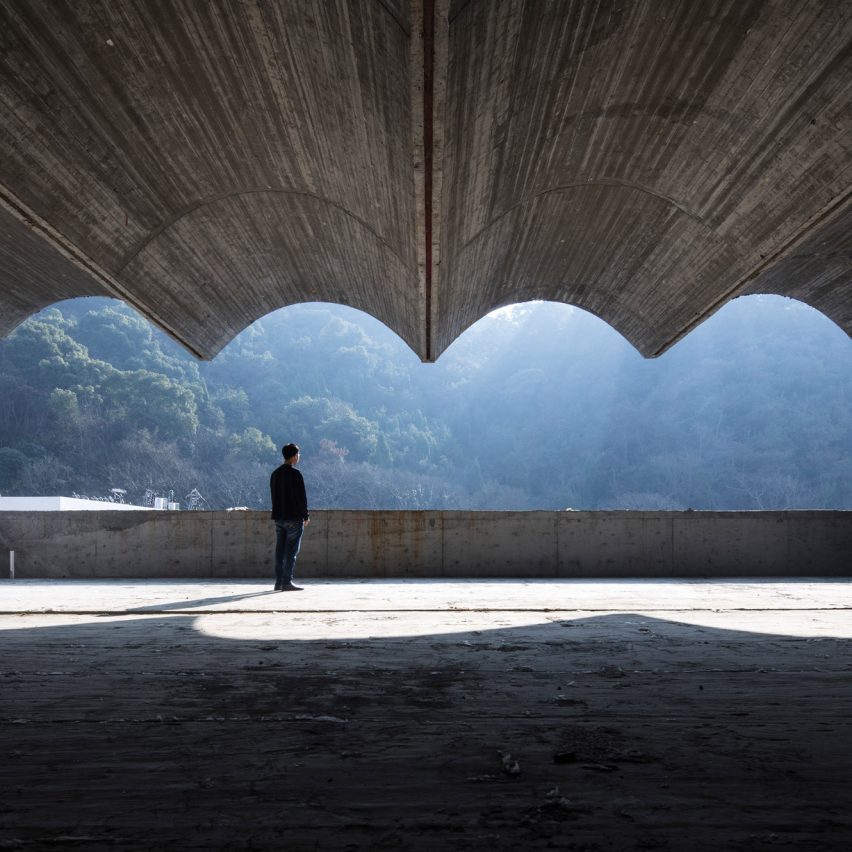
Taizhou Contemporary Art Museum

Around half of the carbon emissions from cement production are reabsorbed by the material when used in buildings and infrastructure, according to the latest IPCC climate report.

The "cement carbonation sink" absorbs an estimated 20 million tonnes of carbon every year, according to an overlooked section of the report published earlier this month ahead of the Cop26 climate conference.

"Direct CO2 emissions from carbonates in cement production are around four per cent of total fossil CO2 emissions," says the full version of the Sixth Assessment Report from the Intergovernmental Panel on Climate Change.

"The uptake of CO2 in cement infrastructure (carbonation) offsets about one half of the carbonate emissions from current cement production."

Concrete carbonation recognised for the first time

"The key chapter in [the IPCC report] recognised concrete carbonation for the first time," said Richard Leese, director of industrial policy, energy and climate change at the Mineral Products Association, which represents the UK's cement industry.

"Now the international accounting needs to be updated to take account of the carbonation of concrete just so they can get the math right."

The IPCC report sets out the latest scientific understanding of climate change, which for the first time states that increases in atmospheric greenhouse gases are "unequivocally caused by human activities".

"Global warming of 1.5 degrees Celsius and two degrees Celsius will be exceeded during the 21st century unless deep reductions in CO2 and other greenhouse gas emissions occur in the coming decades," it states.

Growth of direct CO2 emissions from cement slowed in the 2010s

The report points out that direct CO2 emissions from carbonates in cement production are around 4 per cent of total fossil CO2 emissions and grew at 5.8 per cent per year in the 2000s with slower growth of 2.4 per cent per year in the 2010s.

Cement production produces large amounts of carbon dioxide when limestone is crushed and burned to produce clinker, which is used as a binder. Additional emissions are caused by the large volumes of fossil fuels that are usually used to heat cement kilns.

Burning separates the limestone into its carbon and calcium constituents. Calcium, a key ingredient in cement, is retained but the carbon combines with oxygen to form CO2, which escapes.

However, according to recent research cited in the IPCC report, around half of this CO2 is later reabsorbed by cement and concrete via a natural process called mineral carbonation.

The process is being explored as a way of capturing atmospheric carbon by companies including Australian firm Mineral Carbonation, which has developed a way of recreating the process artificially.

Others making use of mineral carbonation include Royal College of Art graduate Kukbong Kim, who recently unveiled a paint containing crushed concrete that absorbs CO2, and Dutch designer Teresa van Dongen, who has highlighted the potential of olivine sand to capture carbon.

Cement's role as a carbon sink overlooked

The cement industry is the biggest single emitter of CO2. A landmark 2018 report by Chatham House found that it is responsible for around eight per cent of global emissions.

But the role of cement as a carbon sink has been missed, according to Jenny Burridge, principal structural engineer at The Concrete Centre in London.

"Concrete absorbs CO2," she said. "We haven't been talking about it very much. But actually, that's one of the things that we're looking at at the moment."

"How much carbonation actually happens? How much of a carbon sink is the total concrete mass of that we have in the UK and elsewhere in the world?"

"Different types of concrete absorb CO2 at different rates," she added. With reinforced concrete, structural engineers specify concrete with low carbonation potential as this can lead to corrosion of the steel reinforcements.

But other types of concrete such as blockwork could be used to sequester atmospheric carbon, she suggested. "Blocks actually carbonate quite quickly," Burridge said.

Crushed concrete has even greater potential since it has a greater surface area that can absorb CO2, Burridge said.

"There are huge arguments for not knocking a building down," she said. "But if you do knock it down, you should make sure that you crush the concrete up because then the carbonation happens quite quickly."

"You can use the crushed concrete for aggregate," she added.

Main image: Concrete buildings such as the Taizhou Contemporary Art Museum act as carbon sinks

According to the International Energy Agency, 4.1 billion tonnes of cement were produced globally in 2019. China accounts for around 55 per cent of global production, followed by India at 8 per cent.

Efforts to decarbonise the cement industry include a project in Sweden to build "the world's first carbon-neutral cement plant" and Carbicrete's drive to produce carbon-capturing concrete.

The post Concrete construction "offsets around one half" of emissions caused by cement industry says IPCC appeared first on Dezeen.


from Dezeen https://ift.tt/2WoJOiU

Ten Chinese bookshops that display books in imaginative ways

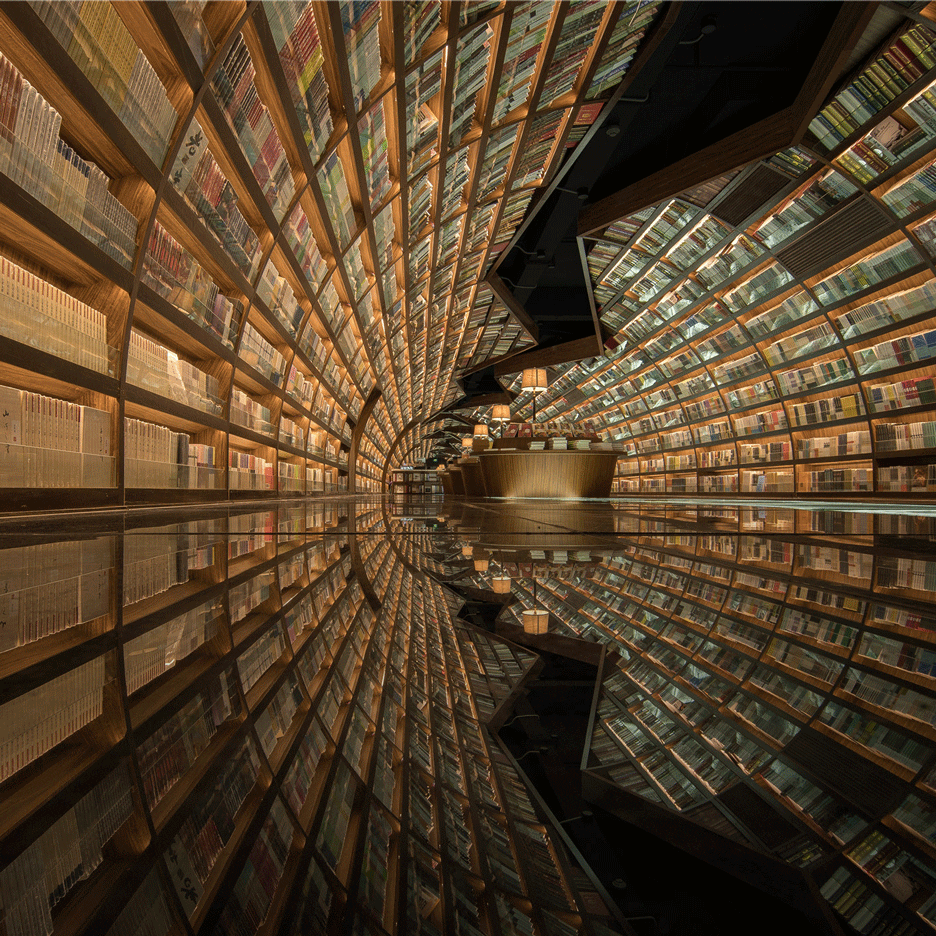
Yangzhou Zhangshuge bookstore's tunnel interior

From shops that display books on tree trunk columns to stores that reflect books all over the walls, we've rounded up ten bookshops in China that exhibit books in non-traditional ways.


Chongqing Zhongshuge Bookstore by X+Living

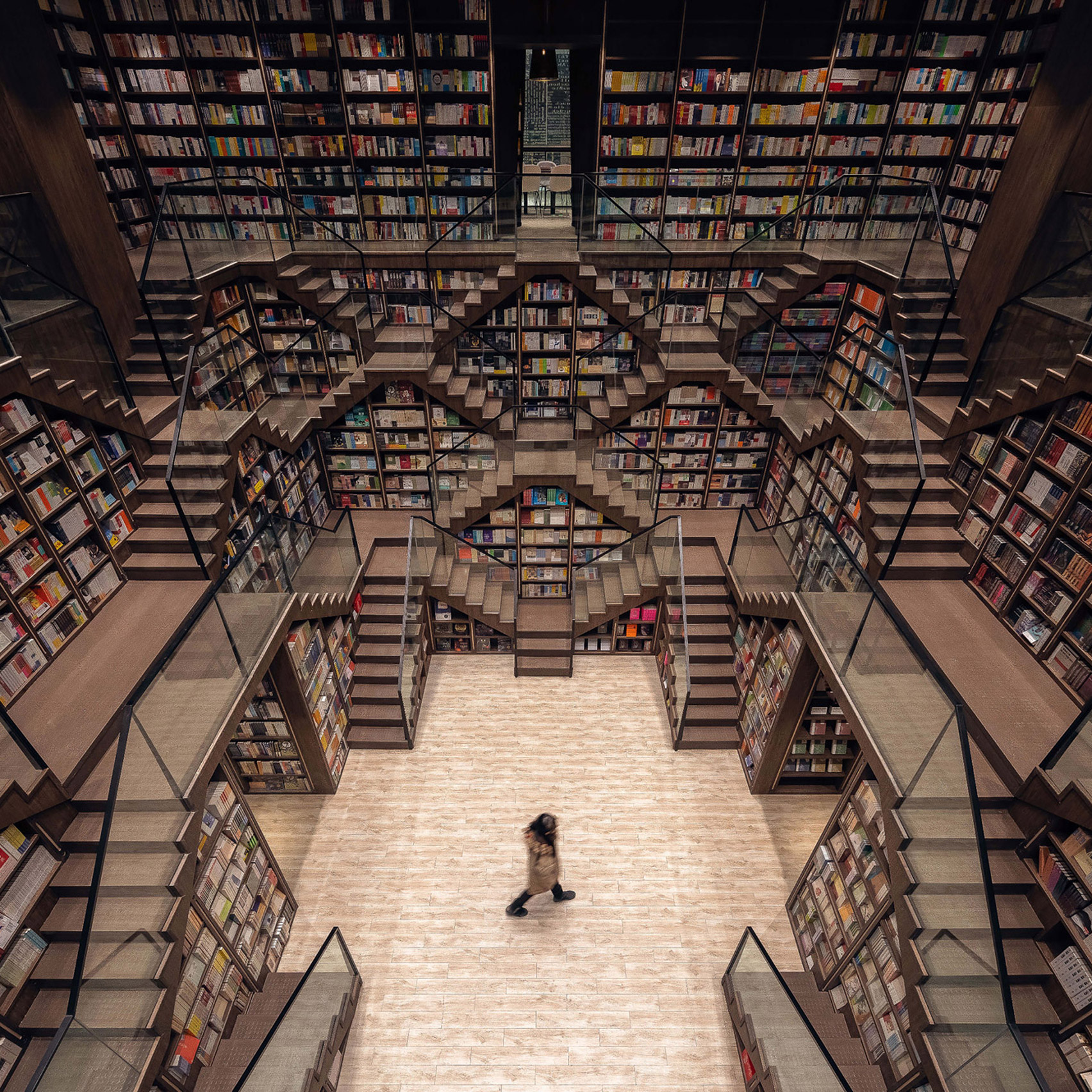
Chongqing Zhongshuge Bookstore, Chongqing, by X+Living

Mirrored ceilings and zigzag staircases create the disorientating interior of this bookstore in southwest China designed by Shanghai-based studio X+Living.

The books that line the many walls are amplified by mirrored panels on the ceiling, giving the illusion that there are thousands of books within the store.

Find out more about Chongqing Zhongshuge Bookstore›


Bookstore by Wutopia Lab

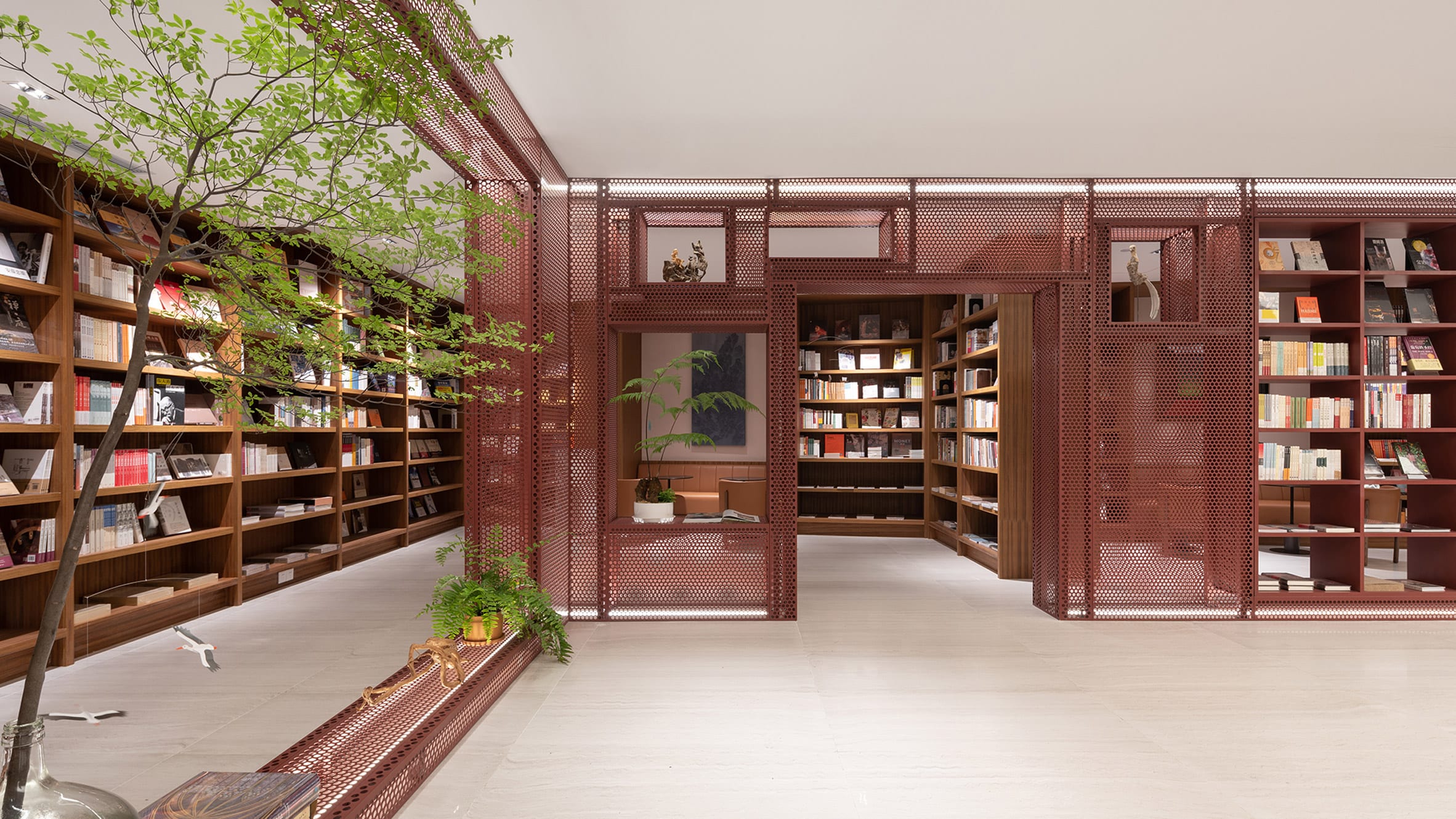
Cifi Xintiandi bookshop, Shanghai, by Wutopia

Perforated aluminium and quartz stone were used for the bookshelves in this maze-like Shanghai bookstore by local architecture studio Wutopia Lab.

The 452-square-metre bookstore is made up of interconnected cave-like spaces for relaxing and admiring the many plants dotted around the shop.

Find out more about Chongqing Zhongshuge Bookstore›


Harbook store by Alberto Caiola

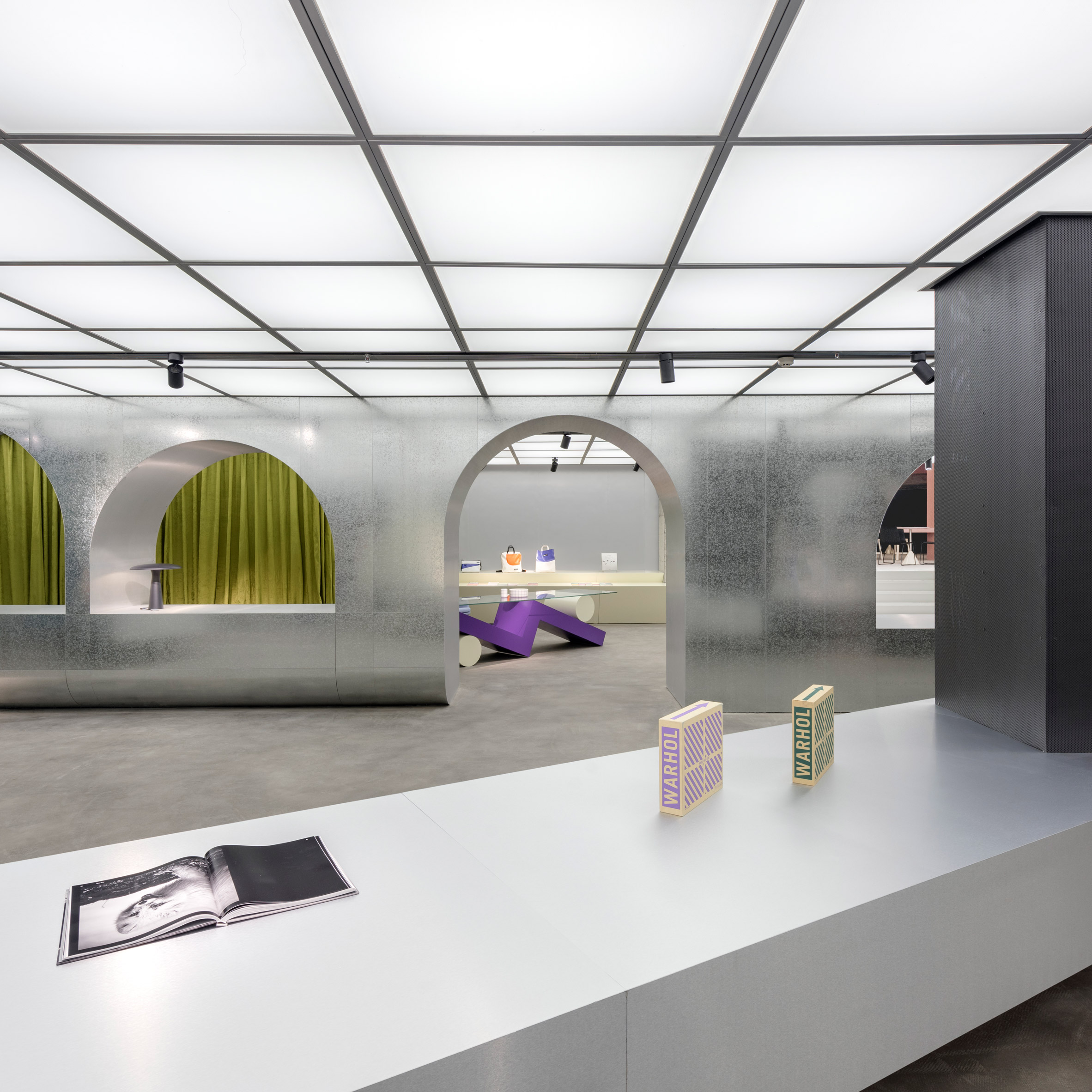
Harbook, Hangzhou by Alberto Caiola

Books are exhibited on steel archways and giant geometric display stands inside this book and concept store in Hangzhou, China, designed by Alberto Caiola.

Caiola designed the geometric forms and silver coloured surfaces to attract young urban customers to the Harbook bookshop.

Find out more about Harbook›


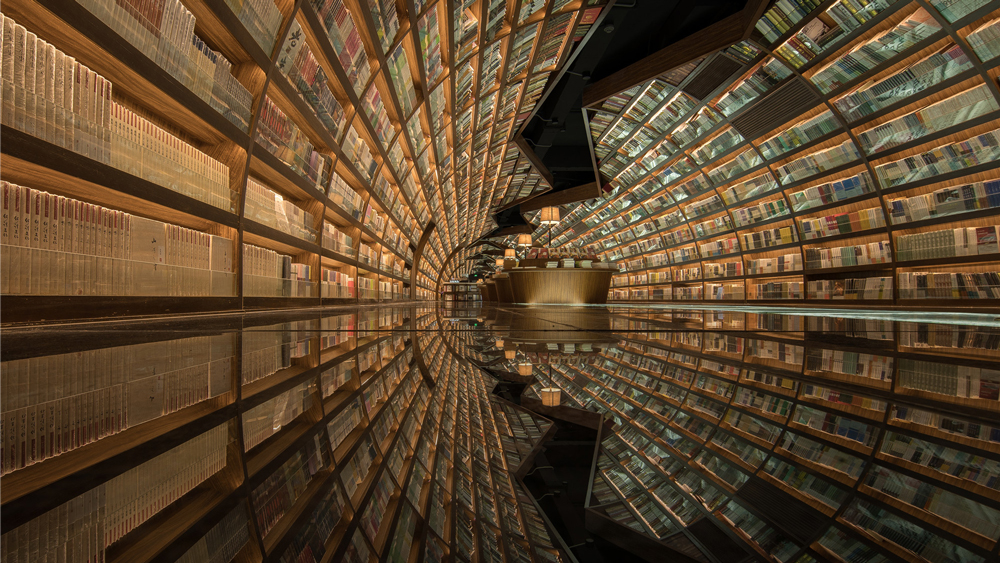
Yangzhou Zhangshuge bookshop by Li Xiang

Yangzhou Zhongshuge, Zhen Yuan, by XL Muse

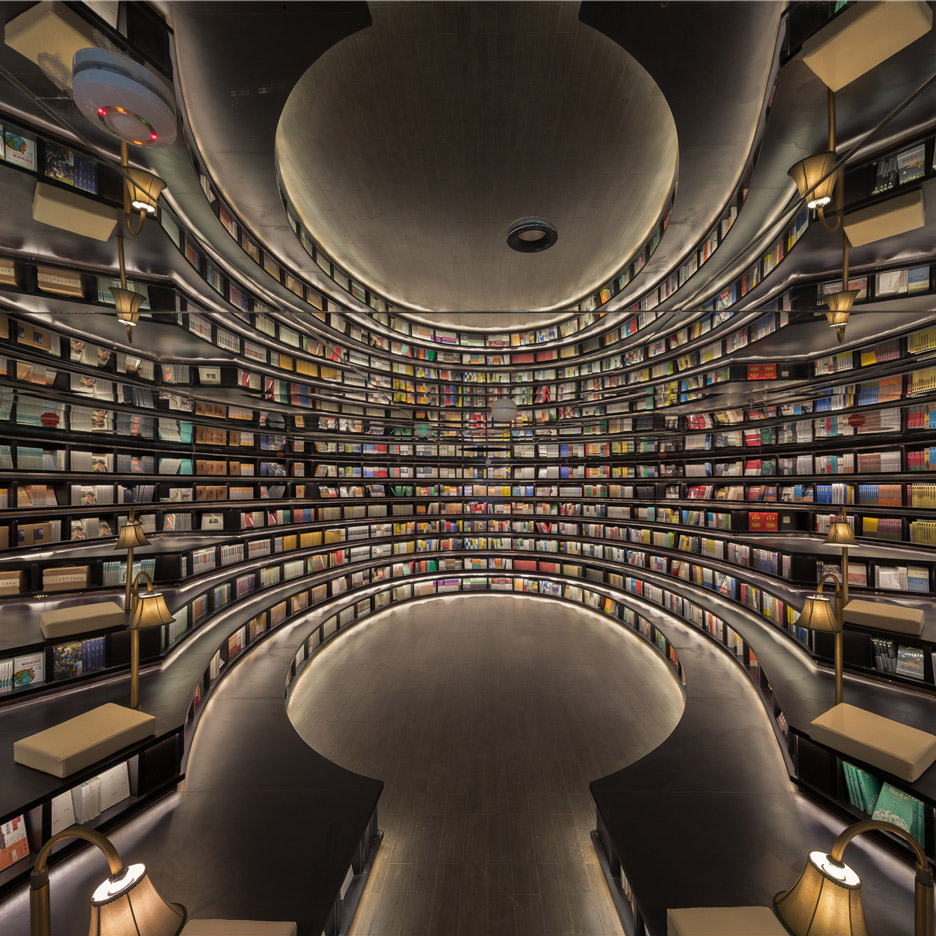
Floor to ceiling arched bookshelves and a black mirrored floor create a tunnel of books inside this store.

Shanghai studio XL-Muse looked to the waters in the surrounding Zhen Yuan area to design the shop with the mirrored flooring emulating the reflective quality of water.

Find out more about Yangzhou Zhongshuge›


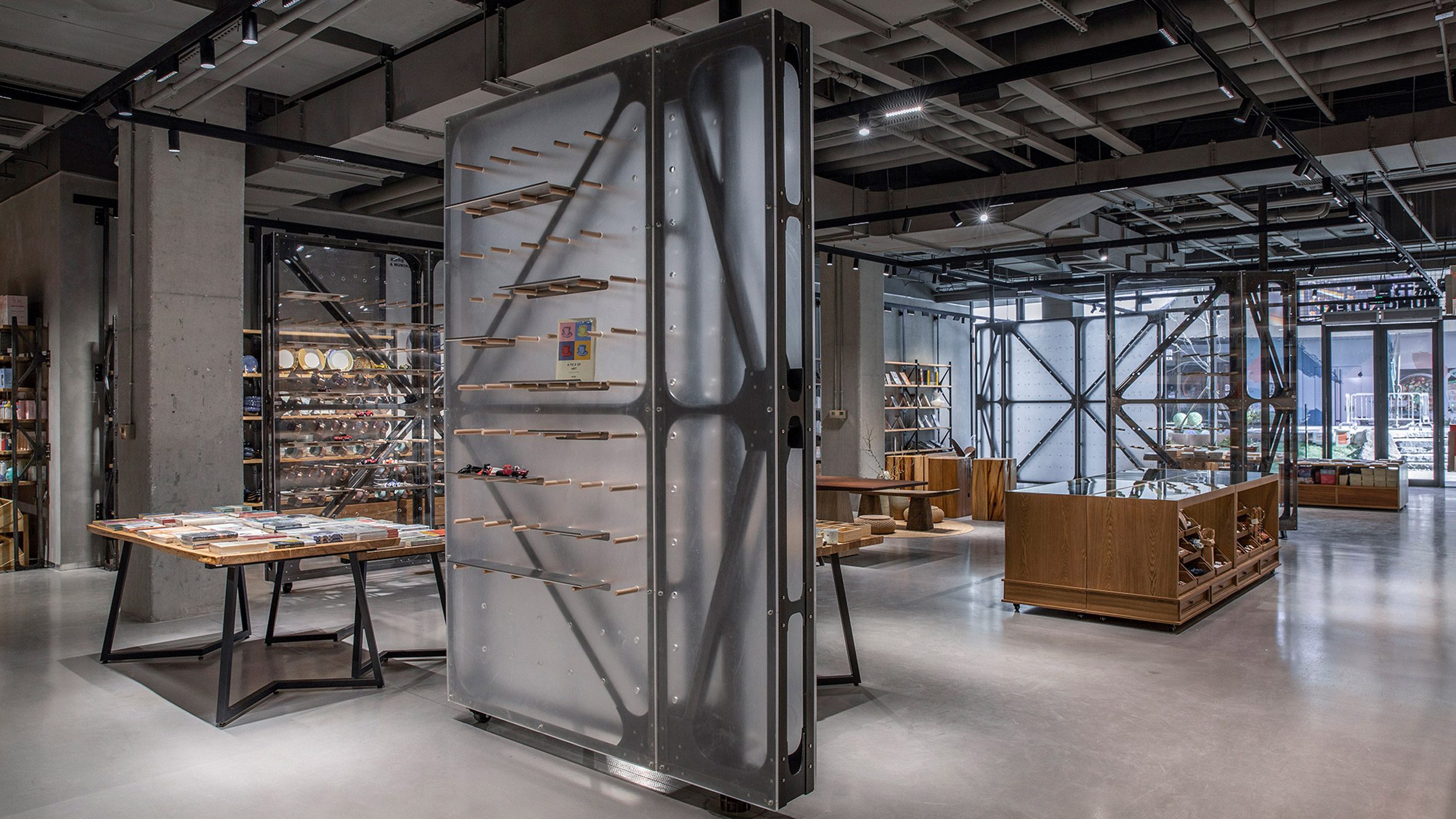
Mumokuteki Concept Bookstore by LUO Studio

Mumokuteki Concept Bookstore, Bejing, by LUO Studio

Chinese architecture firm LUO Studio inserted translucent rotating walls that pivot inside the interior of this bookshop in Beijing.

Located in the basement of a retail mall in the Chinese capital, Mumokuteki Concept Bookstore has books, design objects, flowers, food and coffee for sale.

The rotating walls, which are composed of a steel frame and frosted plexiglass, act as dividers or partitions, allowing the store owners to adapt the space as they see fit.

Find out more about Mumokuteki Concept Bookstore›


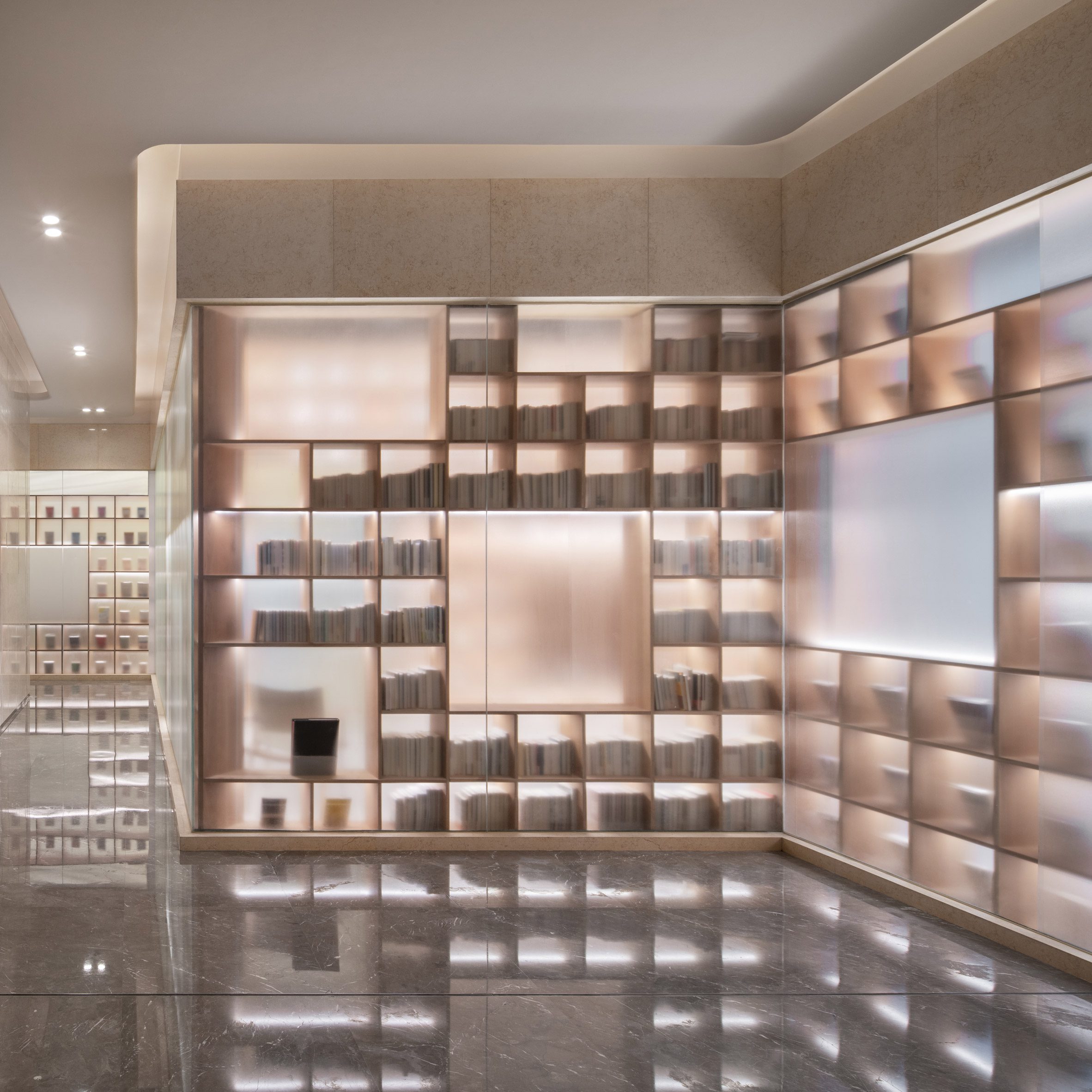
The interiors of The Glade Bookstore in Chongqing

The Glade Bookstore

Books are hidden behind translucent glass panels at The Glade Bookstore in Chongqing, which was designed by architecture studio HAS Design and Research.

Nestled among a range of nearby high rise buildings, the bookshop and restaurant makes use of calming colours and materials to contrast the bustle of the city outside.

Find out more about The Glade Bookstore›


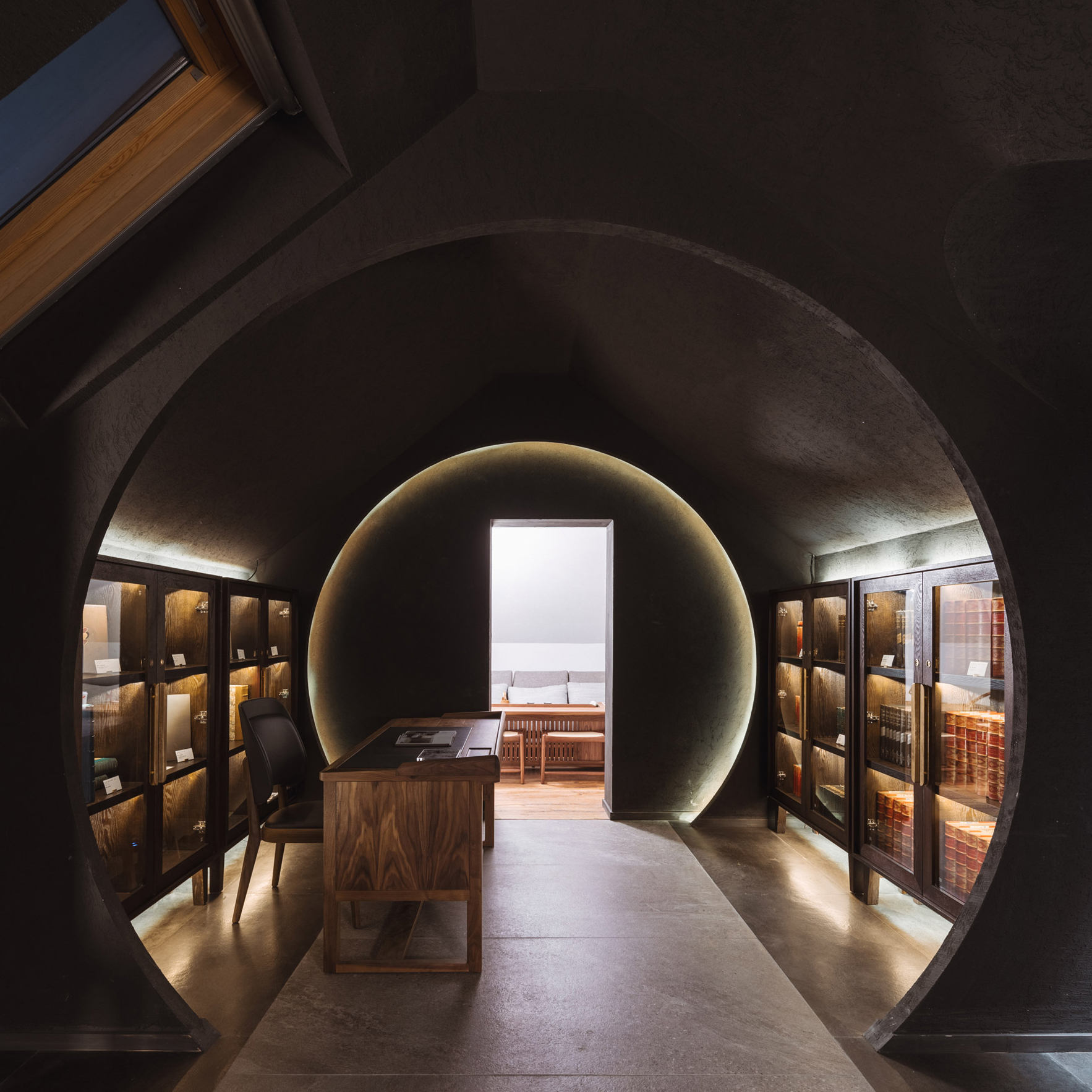
Shanghai Sanctum bookstore by Wutopia Lab

Sinan Books: Shanghai Sanctum, Shanghai, by Wutopia Lab

Chinese architecture studio Wutopia Lab designed Sinan Books: Shanghai Sanctum to resemble a map of the human body and mind.

The metaphorical "subconscious" part of the body is located on the first floor of the building, while the entrance level represents the building's heart, the third floor symbolise the eyes and ears, and the top floor the brain.

Find out more about Sinan Books: Shanghai Sanctum›


Xiadi Paddy Field Bookstore of Librairie Avant-Garde by TAO

Paddy Field Bookstore, Xiadi Village, by Trace Architecture Office

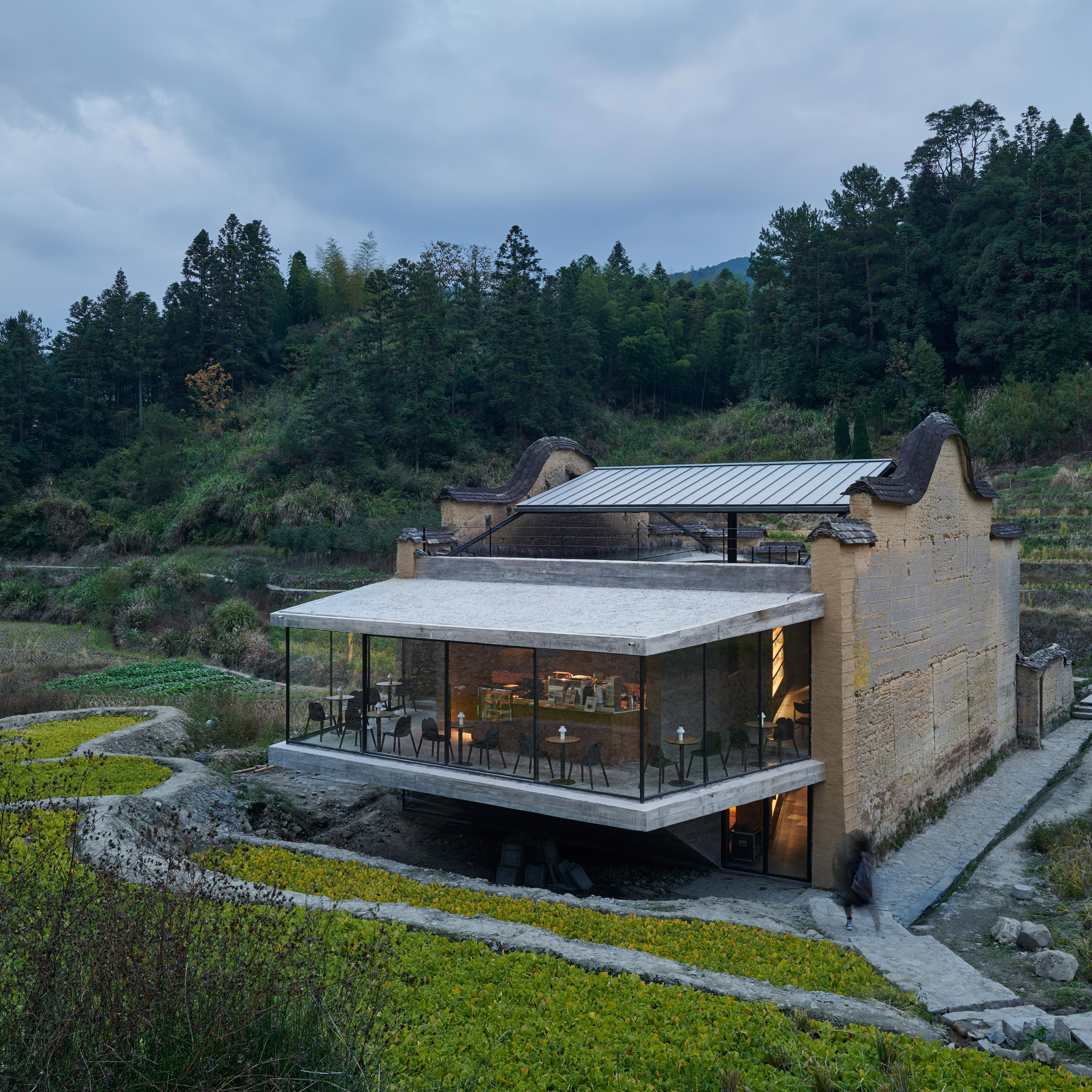
Trace Architecture Office transformed an abandoned house into a store for independent booksellers Librairie Avant.

The bookshop is mostly hidden from the outside as it is tucked into the old rammed earth gables of the building in the remote countryside. A cantilevering cafe space projecting from the building is the only clue to the building's total transformation.

Find out more about Paddy Field Bookstore›


Hubei Foreign Language Bookstore by Wutopia Lab

Hubei Foreign Language Bookstore, Wuhan, by Wutopia Lab

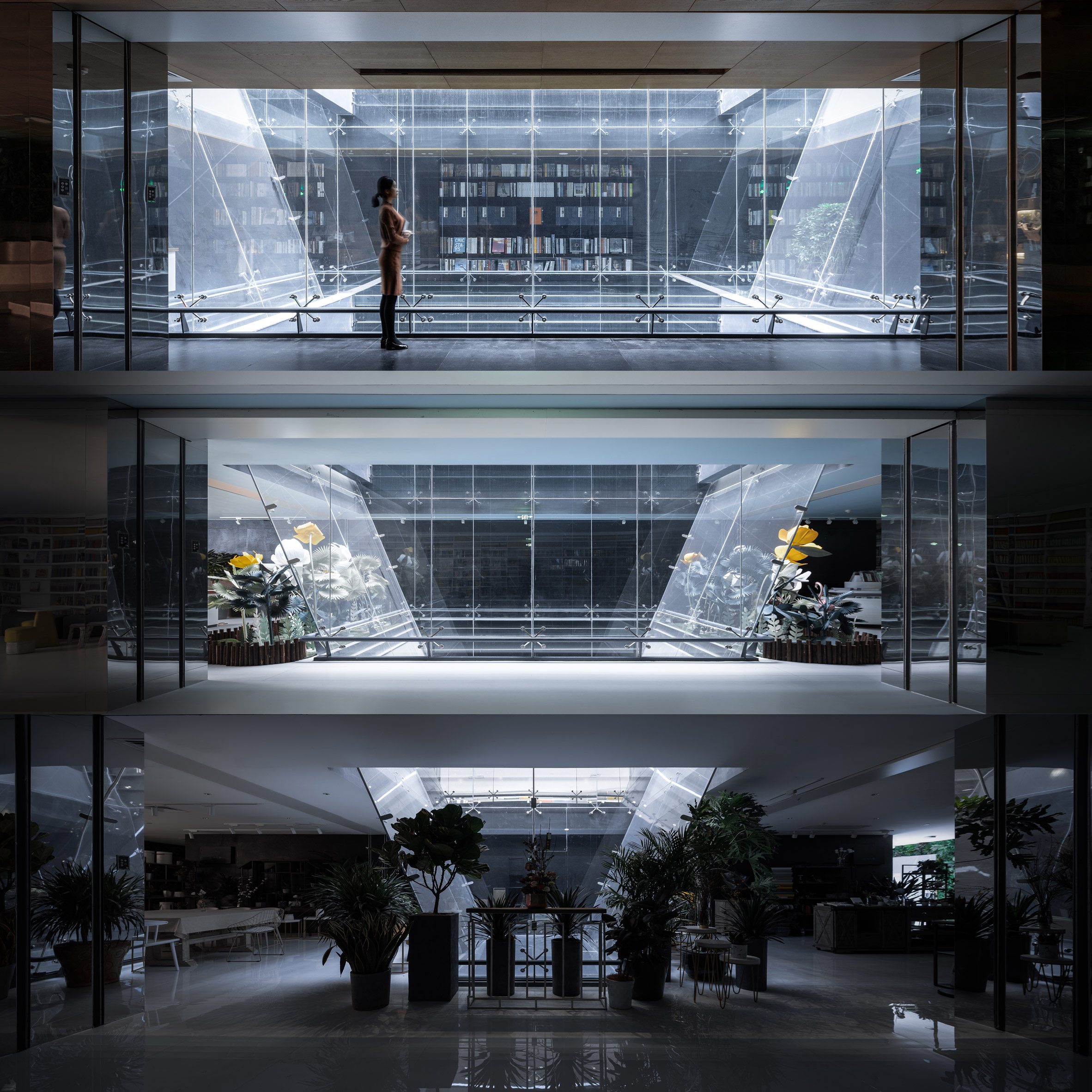
A third bookshop by architecture studio Wutopia Lab is located in Wuhan, China. The studio renovated the Hubei Foreign Language Bookstore by inserting a shard-like glass lightwell that pierces through six floors.

Triangular aluminium plates that form the facade on the exterior are designed to mimic the unique lightwell inside.

Find out more about Hubei Foreign Language Bookstore›


A mirrored bookstore

Zhongshuge-Hangzhou, Hangzhou, by XL-Muse

An oval room in this bookshop in Hangzhou by Shanghai studio XL-Muse has stepped shelving for books, while tree-trunk-shaped columns are used to display books throughout the store.

Mirrors give the impression that the rooms are larger than they are.

Find out more about Zhongshuge-Hangzhou›

The post Ten Chinese bookshops that display books in imaginative ways appeared first on Dezeen.


from Dezeen https://ift.tt/385hiW5

Monday, 23 August 2021

Liang Architecture Studio creates retrofuturistic boutique in Hangzhou

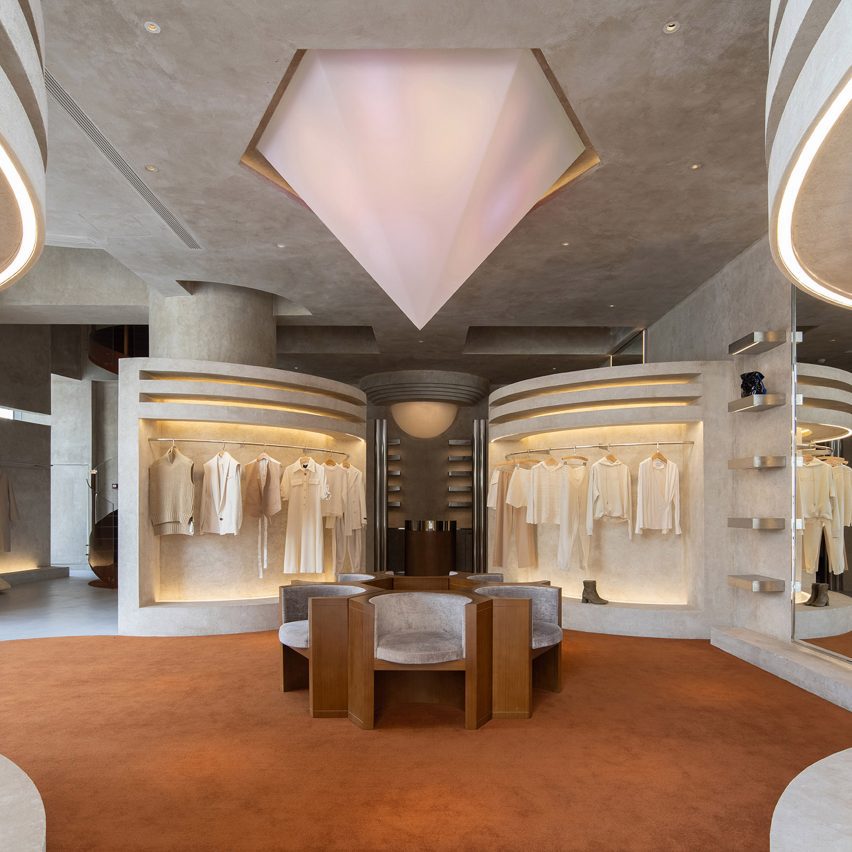
Diamond-shaped lamp

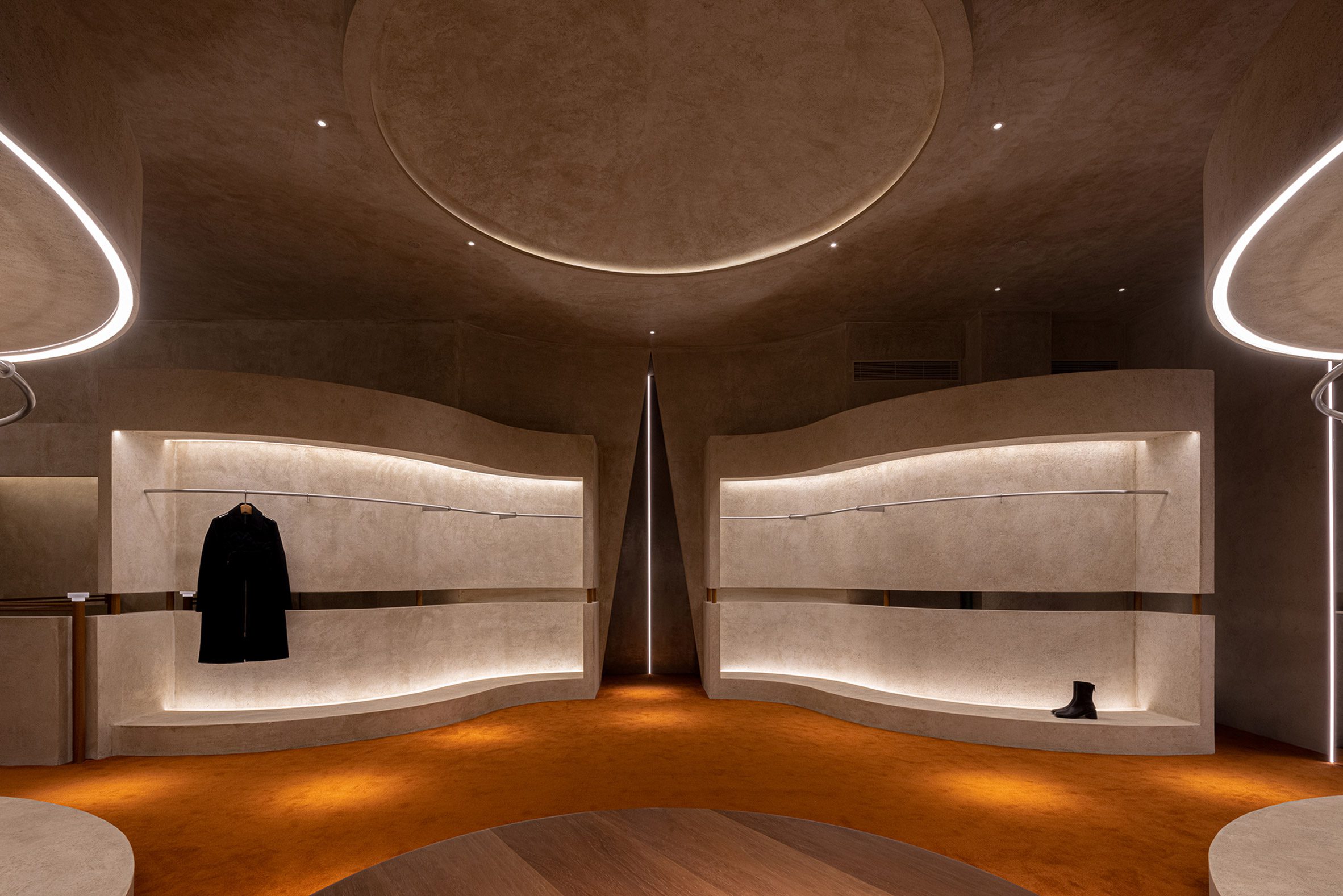
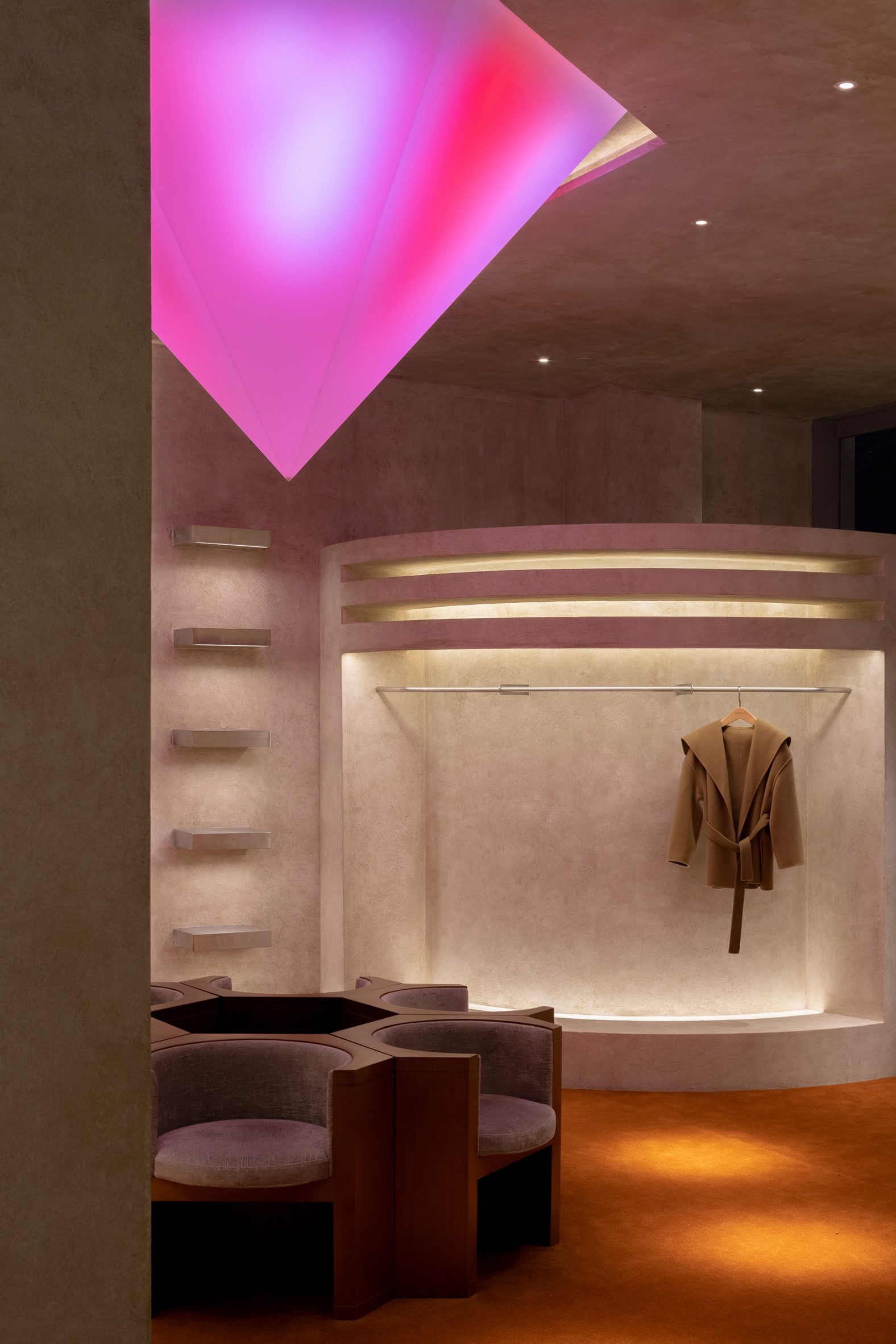
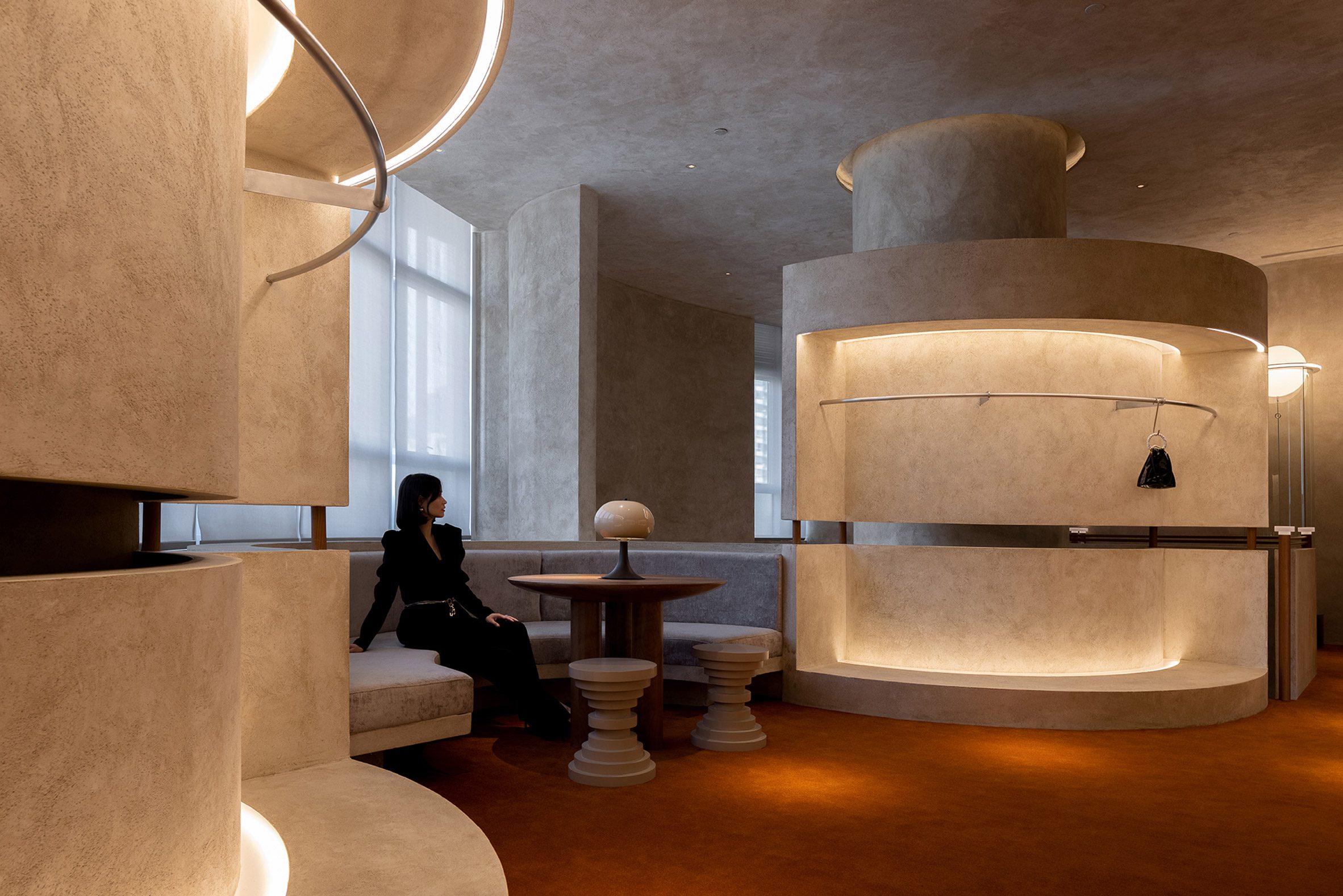
Grand steel and micro-cement structures, celestial lighting and symmetrical layouts add a sense of ceremony to the shopping experience within this clothing boutique in Hangzhou, China by Liang Architecture Studio.

Located within a corner unit on a busy street in the city's Xiaoshan District, the 300-square-metre Audrey boutique sells women's fashion. Arranged over two floors, the store features a generous curved glazed facade.

Clothing displays in fashion boutique
The store features curved interiors

The interior, designed by Liang Architecture Studio, follows the theme of "retro-futurism" – a movement that celebrates depictions of the future produced in an earlier era.

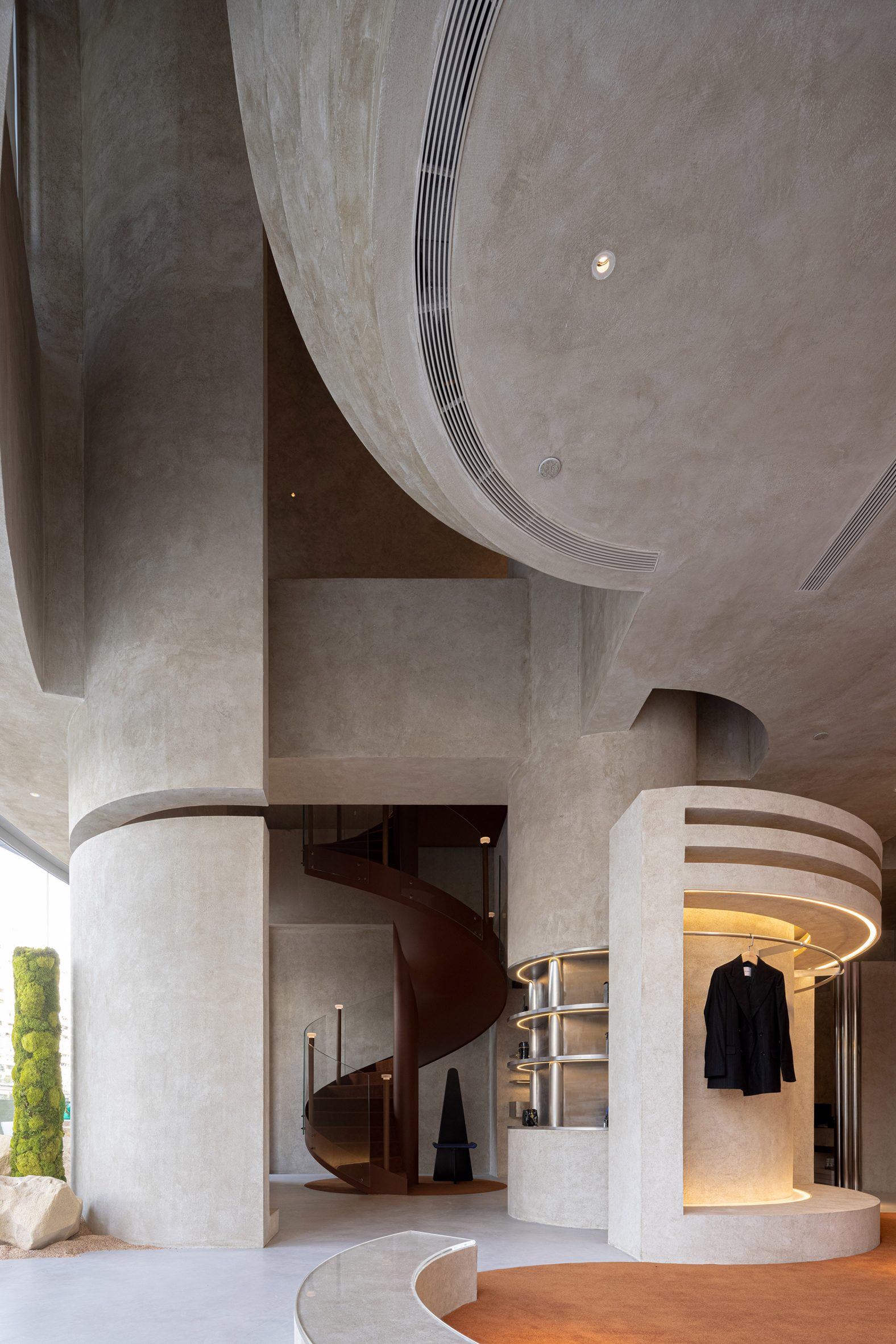
For the Audrey boutique, this is translated into symmetrical brutalist forms made from micro cement and steel that the designers said create a "church-like" feeling and "a sense of ritual".

Micro-cement interiors
Micro cement was used to create dramatic shapes

The micro-cement structures form the walls, ceilings and displays, pairing graceful curves with sharp geometric elements.

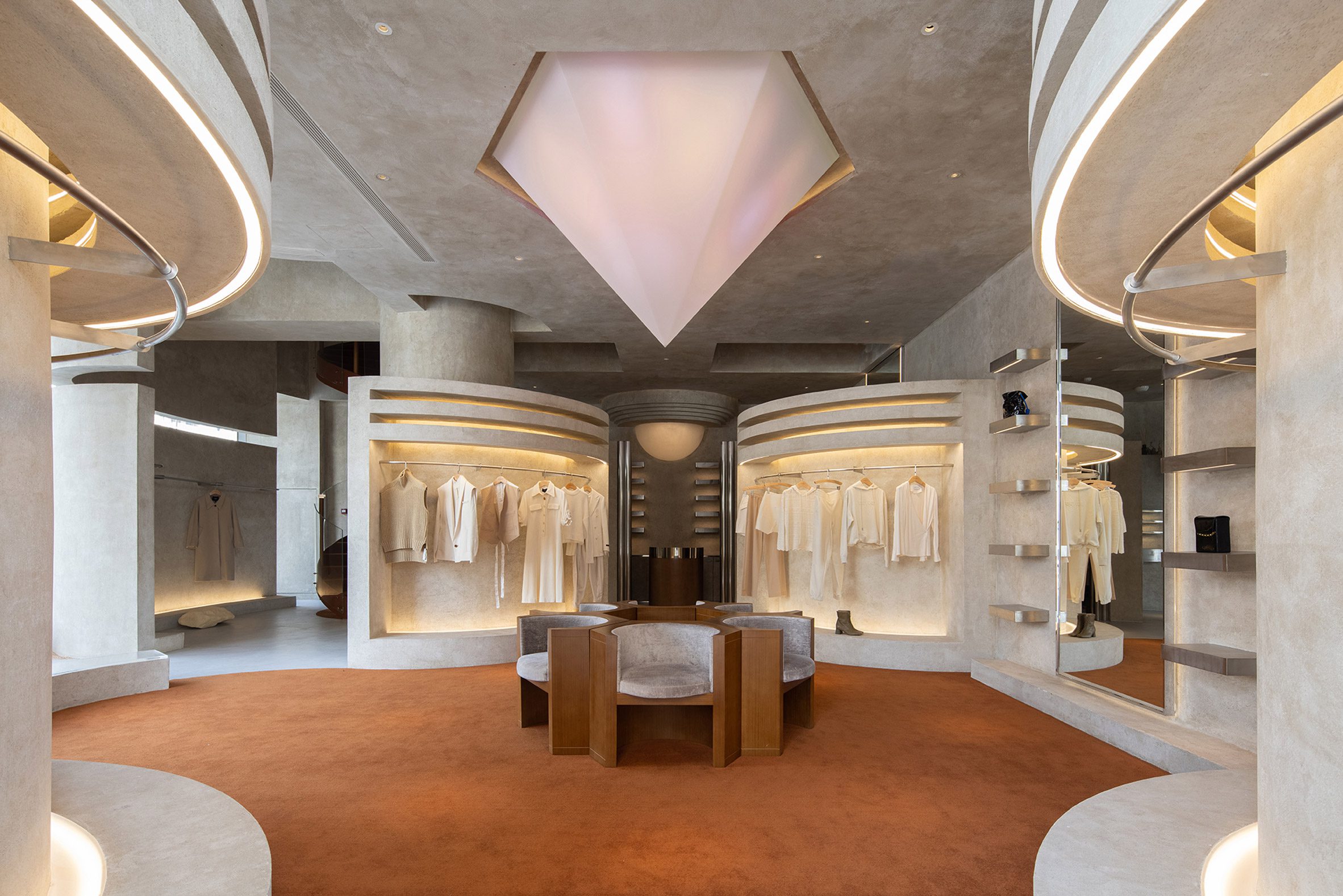
To contrast with the coolness and rigidness of the concrete and metal, the studio incorporated soft fabrics and retro teak veneer into the design.

Retrofuturistic store
A circular seating area welcomes visitors

A semi-enclosed symmetrical display area with a rust-coloured carpet welcomes customers into the store. Here, a central seating area made up of five outward-facing seats is surrounded by curved concrete displays with rails.

Up above, a large diamond-shaped acrylic lighting fixture that changes colour pierces through the ceiling to create a dramatic focal point.

Rust-coloured staircase
The two floors are connected by a steel staircase

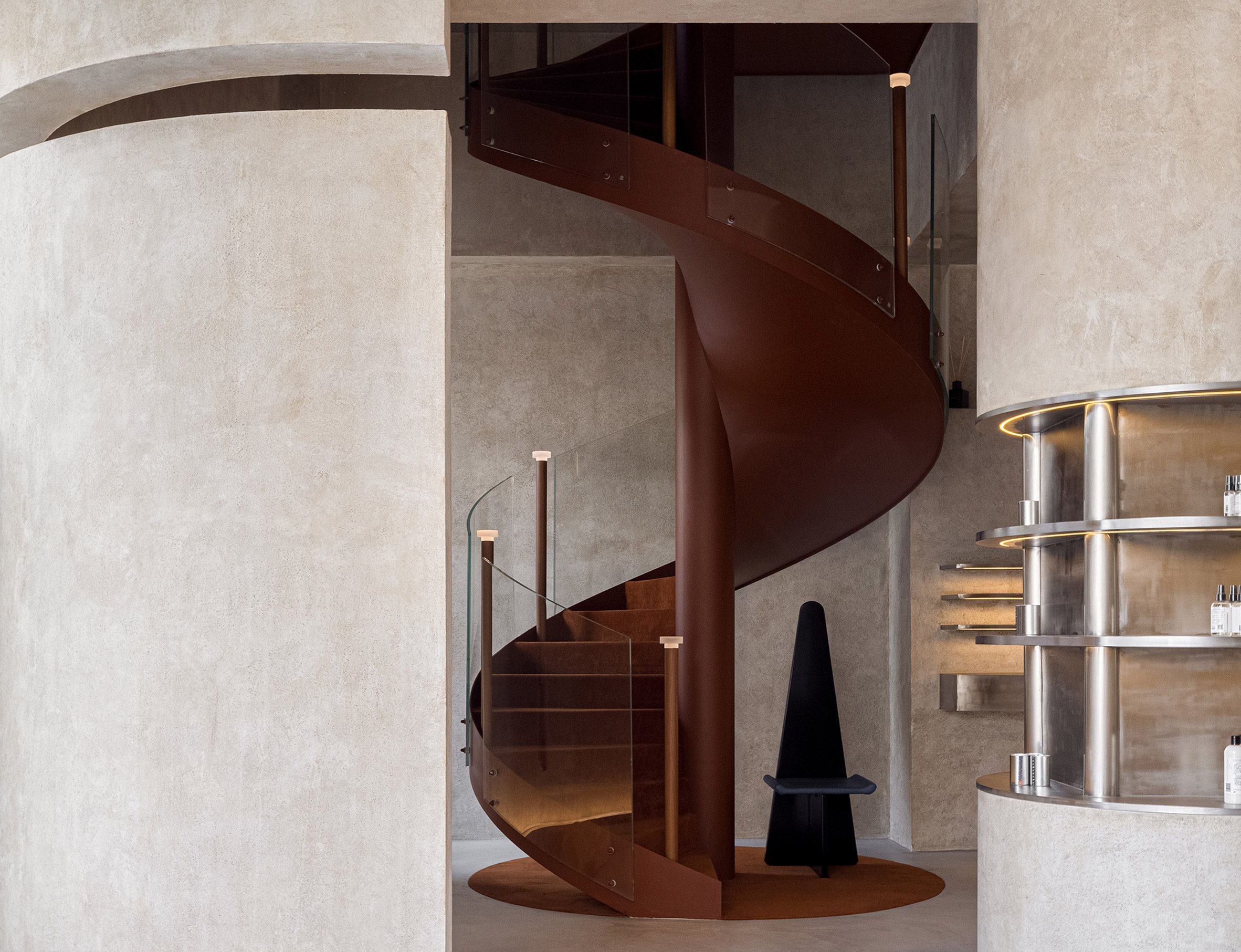
Towards the left of the space, a carpeted, rust-coloured steel spiral staircase with a glass balustrade connects the store's two floors.

The symmetrical concrete forms and orb-like lighting continue on the second floor, which hosts a VIP display area.

"The freedom of this space is not about visual effects but emotional expressions," explained Xu Liang, founder and design director of Liang Architecture Studio.

"Customers will be attracted by its atmosphere and be guided to perceive its attitude."

Pink pyramidic lamp
A diamond-shaped light protrudes from the ceiling

"Spatial design is a medium of communication," Liang continued. "For this project, the design team combined colours, structures and lights to create an ambience that resonates with people, hoping to provide diversified spatial experiences."

"Simplistic, clear structures and pure textures together express the spatial aesthetics."

Customer lounging in clothes shop
The store interior was informed by retrofuturism

Other designers and architects who have embraced retro-futurism include Atelier Vens Vanbelle, which added an extension to a house in Belgium which it described as "a cocktail of science fiction and nostalgia."

British designer Tom Dixon brought retro-futurism to the seas with his rock-and-roll-inspired suite designs for Virgin Voyages' first cruise ship.

Photography is by Shao Feng.

The post Liang Architecture Studio creates retrofuturistic boutique in Hangzhou appeared first on Dezeen.


from Dezeen https://ift.tt/3gp8HlG

Bjarke Ingles launches company to "reimagine the way we build our homes"

bjarke ingels founds home design company

Danish architect Bjarke Ingles has co-founded a residential design company named Nabr that aims to create a range of affordable, modular homes.

Founded by Ingles, alongside former WeWork executive Roni Bahar and former Sidewalk Labs model lab head Nick Chim, Nabr aims to rethink how housing is designed and developed.

"Our homes have only gotten more and more expensive, and arguably at a lower and lower quality," explained Ingles.

"There's very little choice. Ninety-nine per cent of all homes are the same, but all people are actually different. There's a huge potential to reimagine this entire process, from end to end."

Based in Silicon Valley, the company will offer residents the opportunity to co-design spaces that are tailored to their needs.

Power of manufacturing and productisation to create homes

Nabr will develop buildings that are made from a series of modular elements that can be mass-manufactured and then assembled to create a variety of homes.

"What if we could unleash the powers of manufacturing and productisation on the way we build our homes," said Ingles

"We could embrace modularity as a force to maximise diversity," he continued. "We could create a system that can adapt to people and their environments, not the other way around. So when you're walking into a neighbourhood, you're not just walking into a home, you're walking into your home."

According to Nabr, the buildings developed by the company will be prioritise well-being for its residents.

"By reimagining the way we build our homes and the way we build our cities we can make healthy living the standard not just for the individual residents, but also for the communities and eventually for the entire planet," added Ingles

Flexible path to homeownership

A video released by the company showed a modular-style highrise with large plant-filled terraces. An app will centralise technology throughout the homes, controlling light, sound and temperature across its spaces that can be upgraded and adapted to fit the needs of residents.

The company will oversee the initial development and design of the housing projects and will also manage sales, letting and the operation of the housing developments.

Nabr aims to offer residents affordable solutions to renting and buying with financial plans that provide a "flexible path to homeownership".

Ingles is the founder of BIG, one of the world's best-known architecture studios. In 2018 he joined co-working company WeWork as its chief architect, but stepped down from the role last year.

He recently revealed that he is drawing up a masterplan for the Earth to "prove that a sustainable human presence on planet Earth is attainable with existing technologies".

The post Bjarke Ingles launches company to "reimagine the way we build our homes" appeared first on Dezeen.


from Dezeen https://ift.tt/3zdFAsD

Adjaye Associates designing 101 hospitals "to transform Ghana's medical system"

Agenda 111 hospitals by Adjaye Associates in Ghana

Architecture studio Adjaye Associates is designing over 100 hospitals for sites across Ghana as part of the country's Agenda 111 program.

The studio, which is led by British-Ghanian architect David Adjaye, will design the facilities as part of an overhaul of the country's healthcare system that will see 111 hospitals built.

Hospitals in Ghana designed by Adjaye Associates
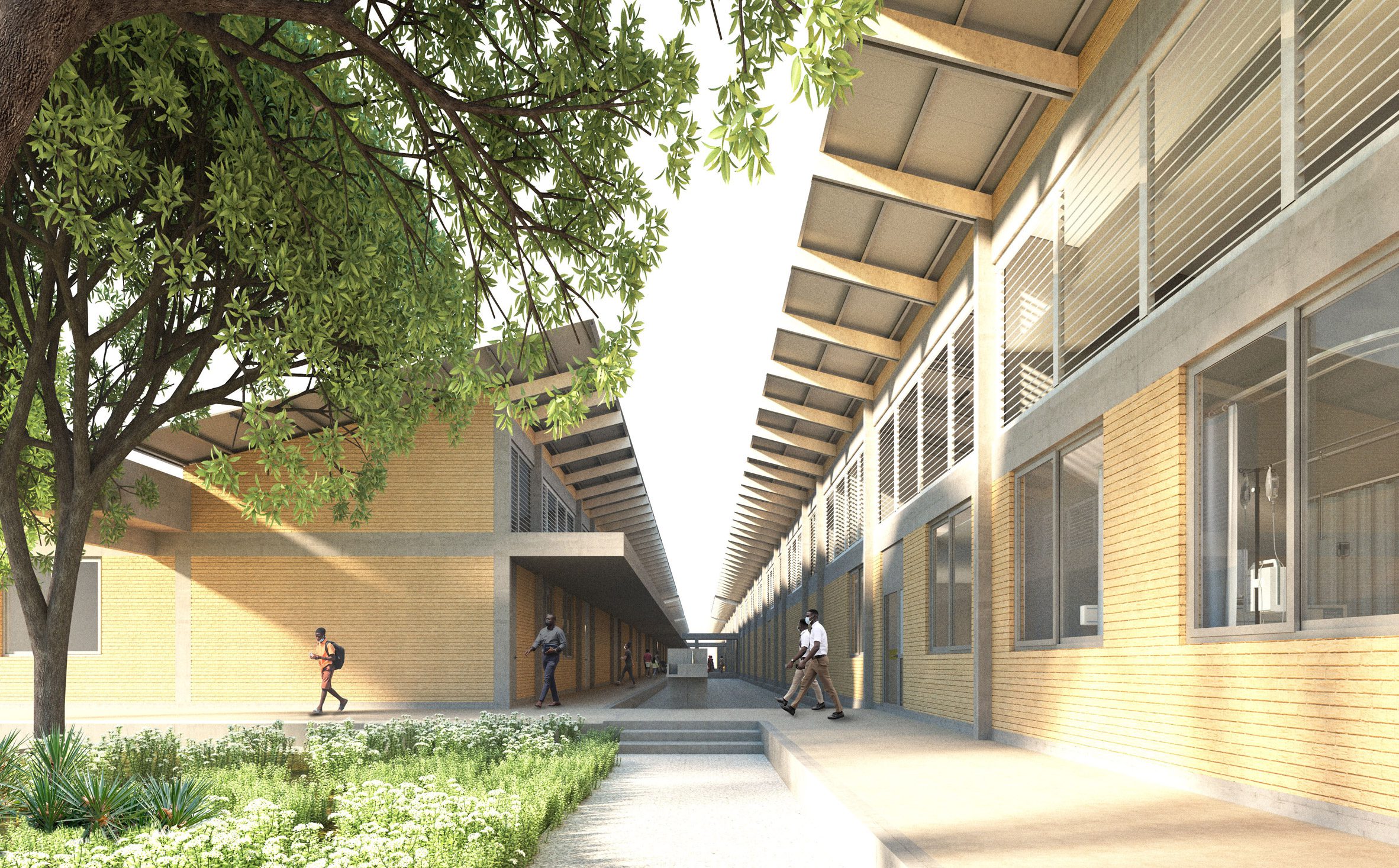
Above: Adjaye Associates has designed 101 hospitals in Ghana. Top: they will be located across the country

"The District Hospitals presents an opportunity to transform Ghana's medical system by establishing unparalleled access to healthcare facilities throughout the country," said Adjaye Associates.

"Guided by the ambition to define a next-generation hospital experience, the design concept merges 21st-century technology with a contextual and holistic approach crucial to the delivery of state-of-the-art healthcare."

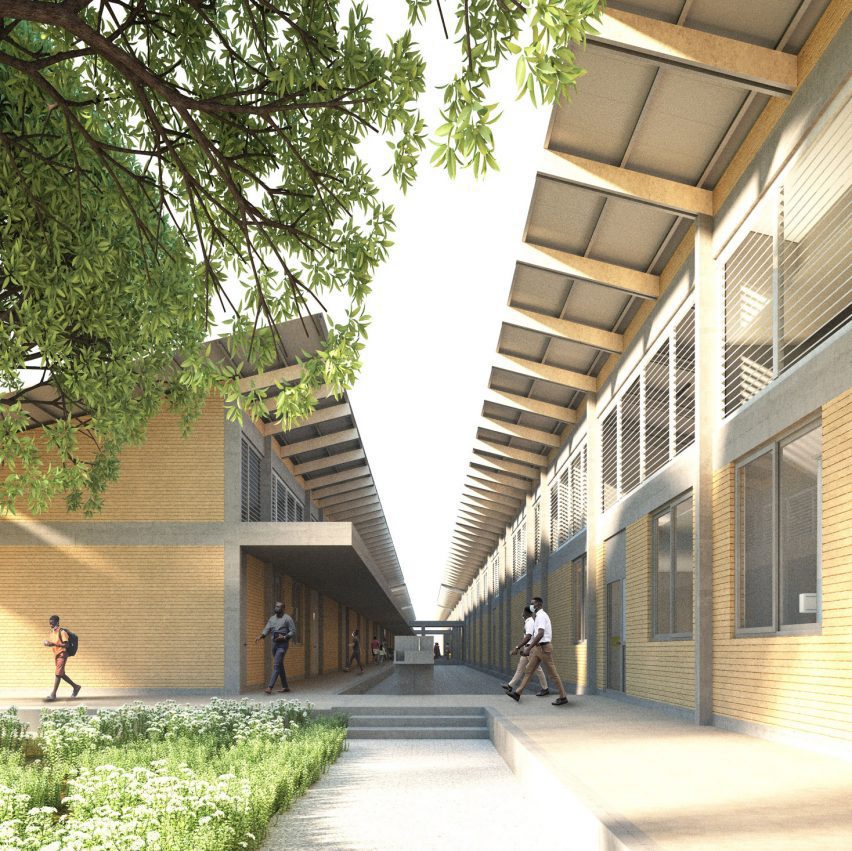
Linear blocks at David Adjaye-designed building
Linear blocks will be divided by walkways

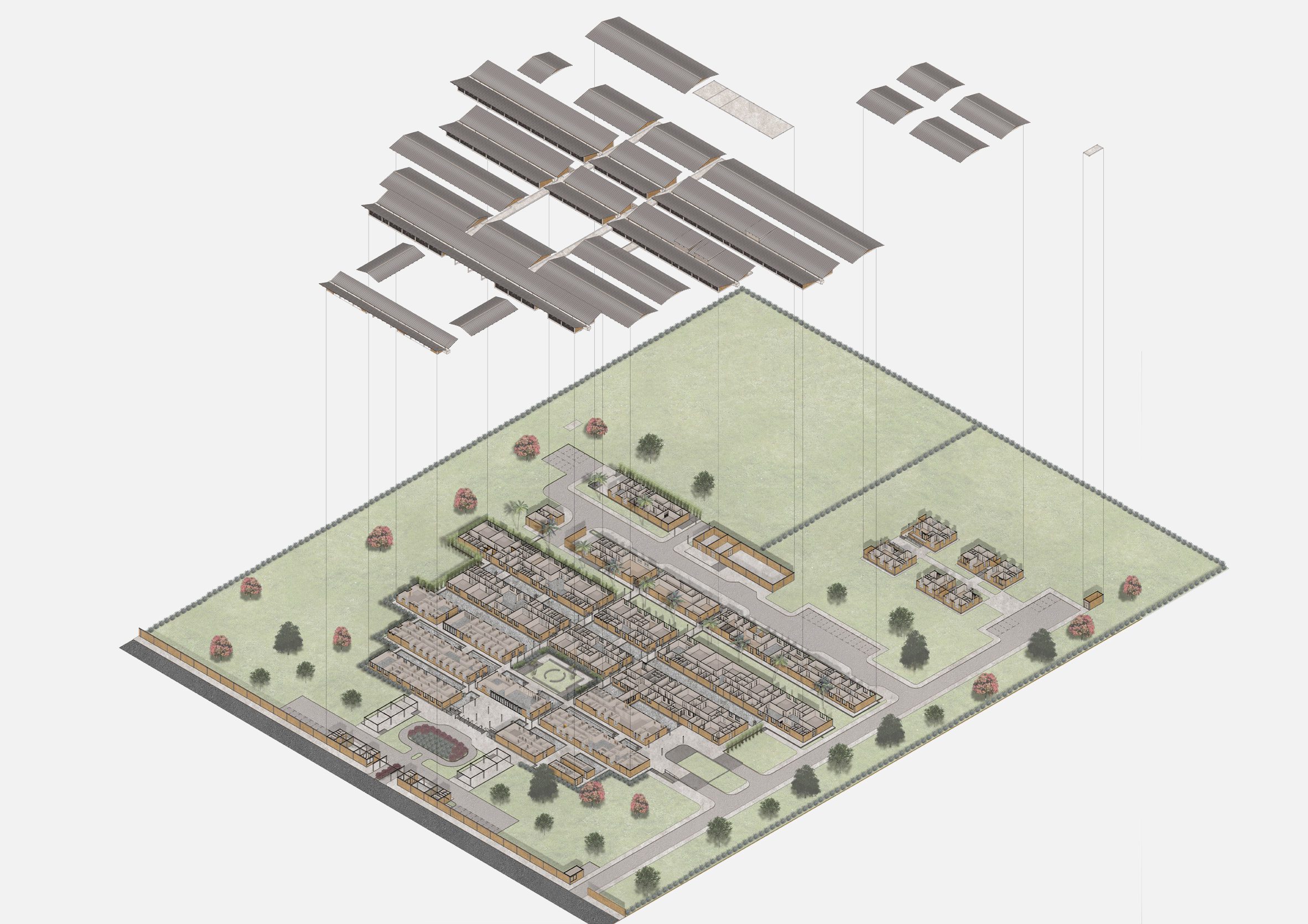
As part of the Agenda 111 program, Adjaye Associates is designing 101 hospitals. The 8,500-square-metre facilities will consist of a series of single-storey blocks within a walled campus.

Each of the hospitals will contain an A&E department and surgery along with pediatric, maternity, isolation and surgical wards. 

Alongside these primary care facilities, the buildings will also contain a mortuary, residences for doctors, laundry, an energy centre, kitchens and stores.

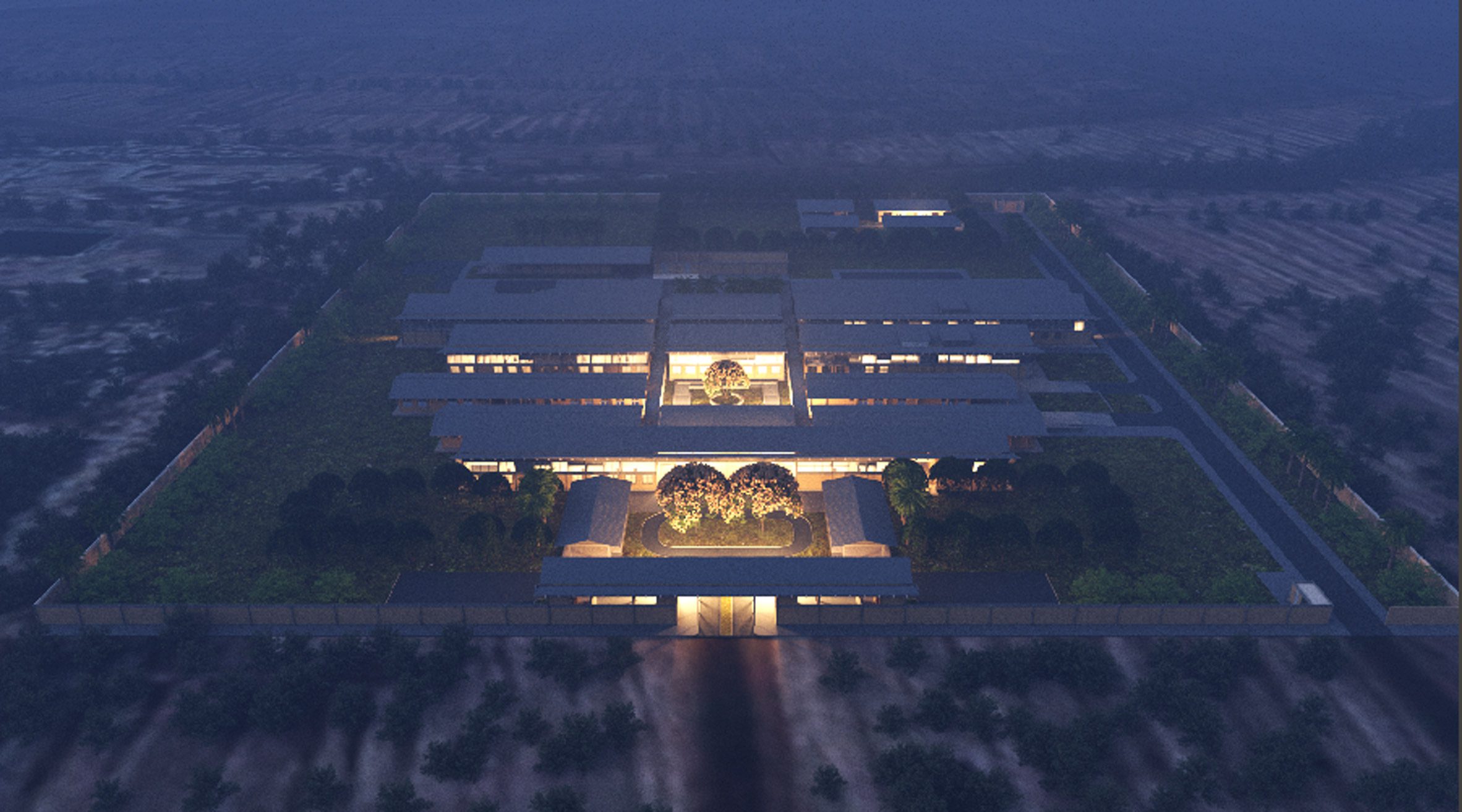
Hospital at night
The hospitals will be surrounded by green spaces

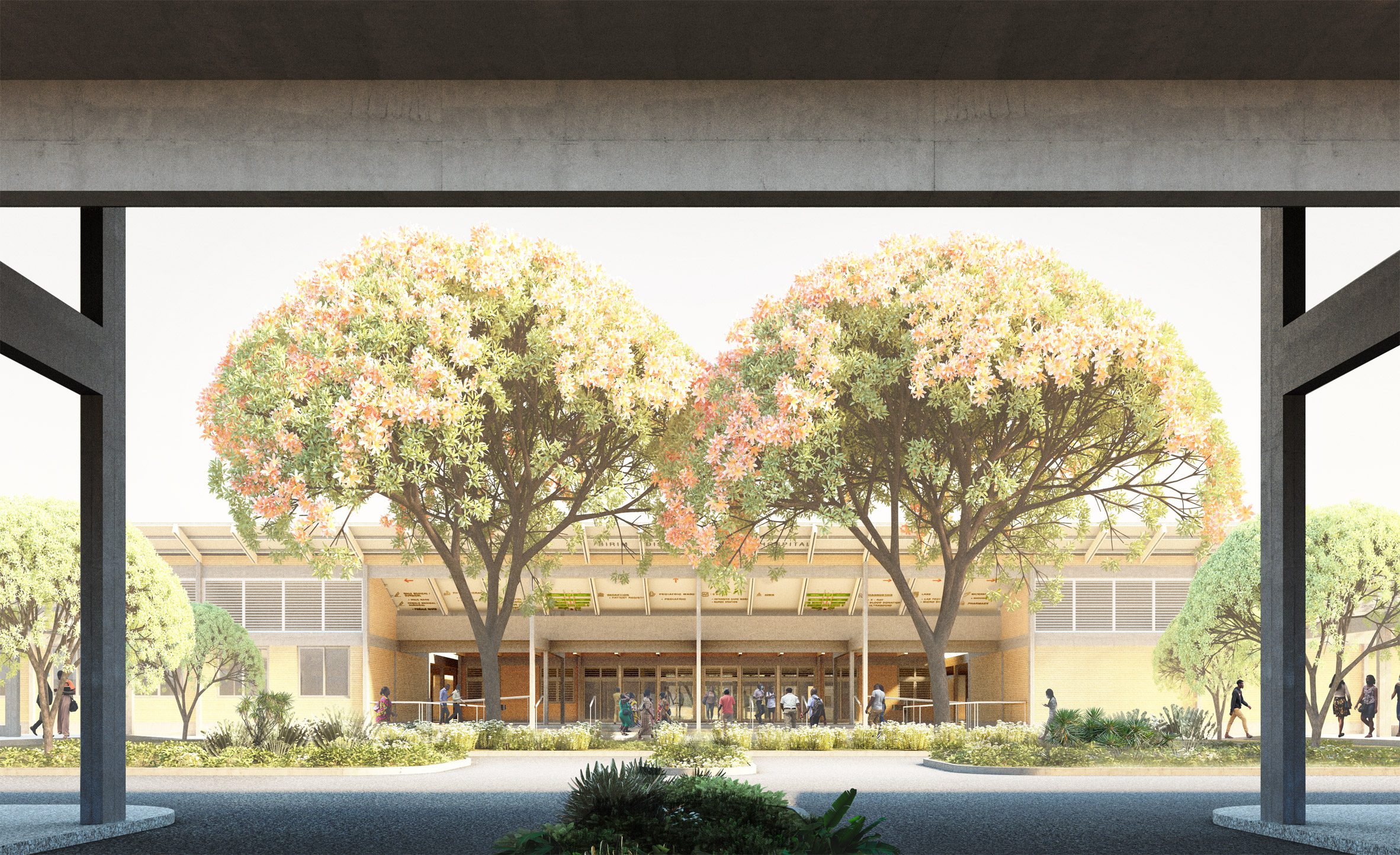
The buildings will be arranged linearly with security and entrance blocks at the front followed by primary healthcare facilities, with wards at the rear.

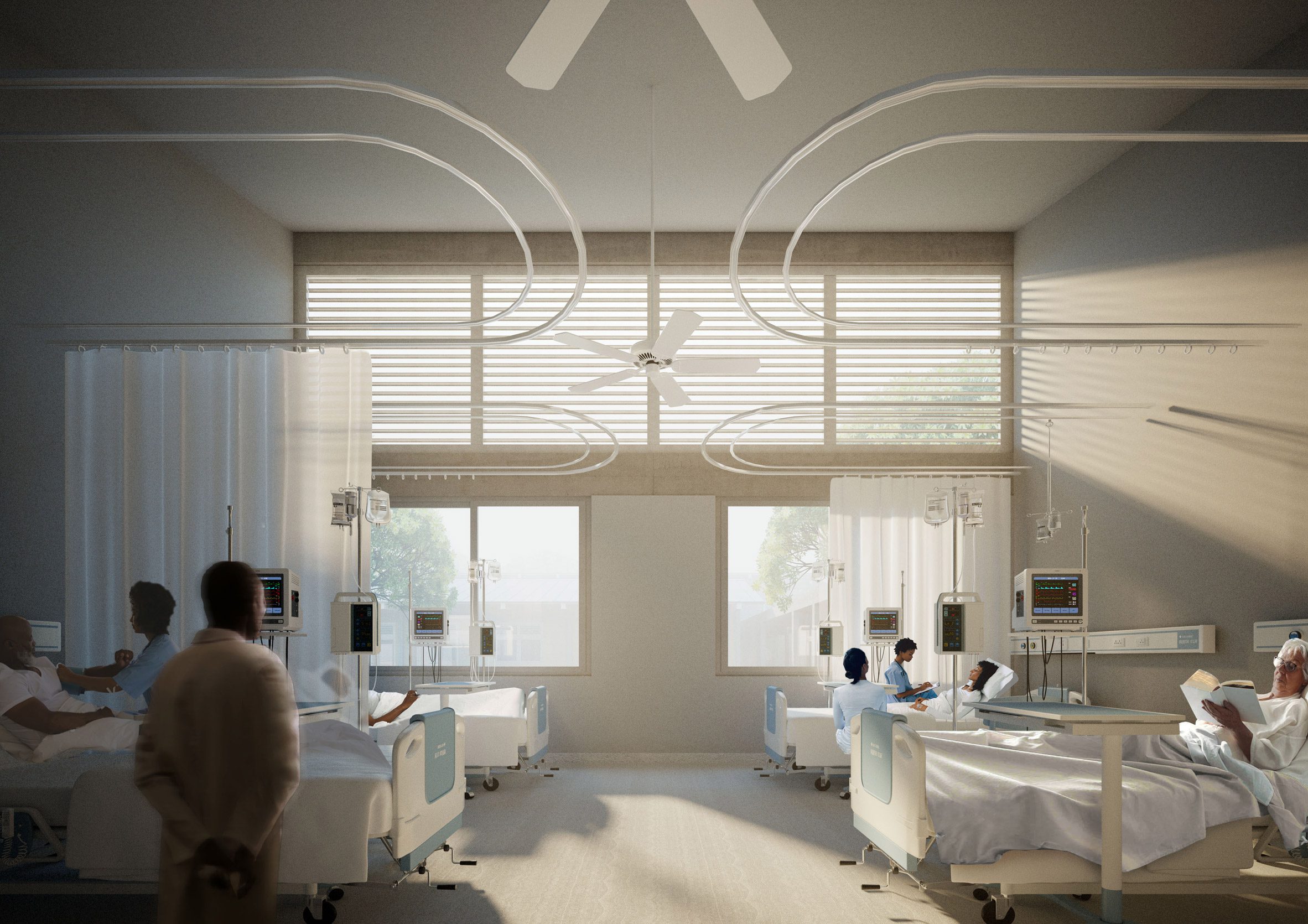
Patient ward blocks will have butterfly roofs to let in large amounts of natural light, while the surgery, A&E and other spaces will have gabled roofs.

All of the blocks will be arranged around a central courtyard and surrounded by green spaces.

"By approaching the hospital as more than just a place for the provision of medical services, the design scheme aims to unlock the potential of this ambitious initiative by repositioning the hospital as a piece of community infrastructure that embodies sustainability, efficiency, and generously provides green spaces to facilitate wellness and healing," said Adjaye.

Patient ward with natural light
Patient wards are designed to have large amounts of natural light

The hospitals will have a similar layout but be adapted to each of the 101 sites, which are located across the whole country.

According to the studio, they will be built from prefabricated elements to reduce the building's carbon impact.

Hospital layout in Ghana
The 101 hospitals will all have similar layouts

"Acknowledging that the building design will need to adapt to over 101 locations in different urban and rural settings across the country, the design scheme embraces smart strategies and ecologically responsive systems able to conform to each unique geographic condition," explained the studio.

"The use of prefabricated systems work conductively with materials to maintain the lowest possible carbon footprint whilst also maximizing the ability to reproduce efficiently and rapidly."

Adjaye Associates, which was founded in 2010, is led by Adjaye who recently won the RIBA Gold Medal. The studio is also designing a new cathedral in Accra, Ghana, which will be topped with a dramatic concave roof.


Project credits:

Architect: Adjaye Associates
Design coordinator: Sutherland & Sutherland Architects
Biomed: Titan Biomedical Engineering
Contractor: Varies
Electrical engineer: Global Engineering & Technology
Kitchen consultant: Smollensky’s
Hospital consultant: Ministry of Health
Landscape: Brix Landscaping
Mechanical engineer: Global Engineering & Technology
QS: CC&M Consult
Signage: Mainline
Structural & mechanical engineer: CSEng

The post Adjaye Associates designing 101 hospitals "to transform Ghana's medical system" appeared first on Dezeen.


from Dezeen https://ift.tt/3kiszb9