Tuesday, 24 August 2021

Patio Estudio fills "introverted" home in Argentina with internal patios

Casa Mono by Patio Estudio

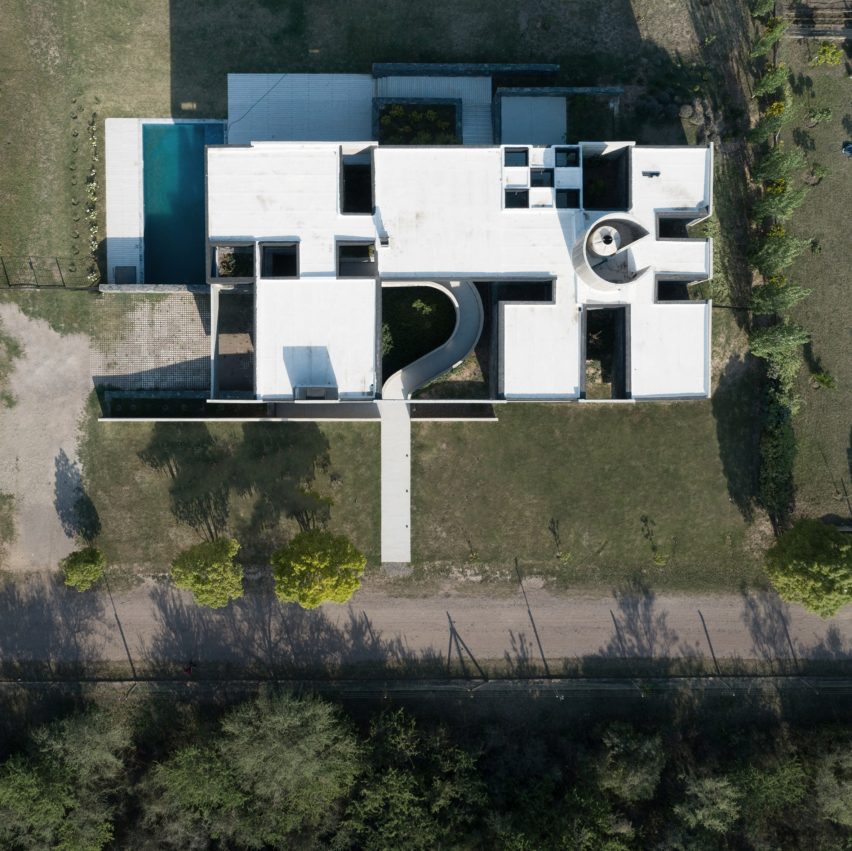
Argentinian practice Patio Estudio has completed a concrete and stone home in the city of Córdoba that features living spaces arranged around a checkerboard of 11 planted patios.

Casa Mono was designed for a couple who wanted a private, "introverted" retreat that also had a strong connection to the outdoors.

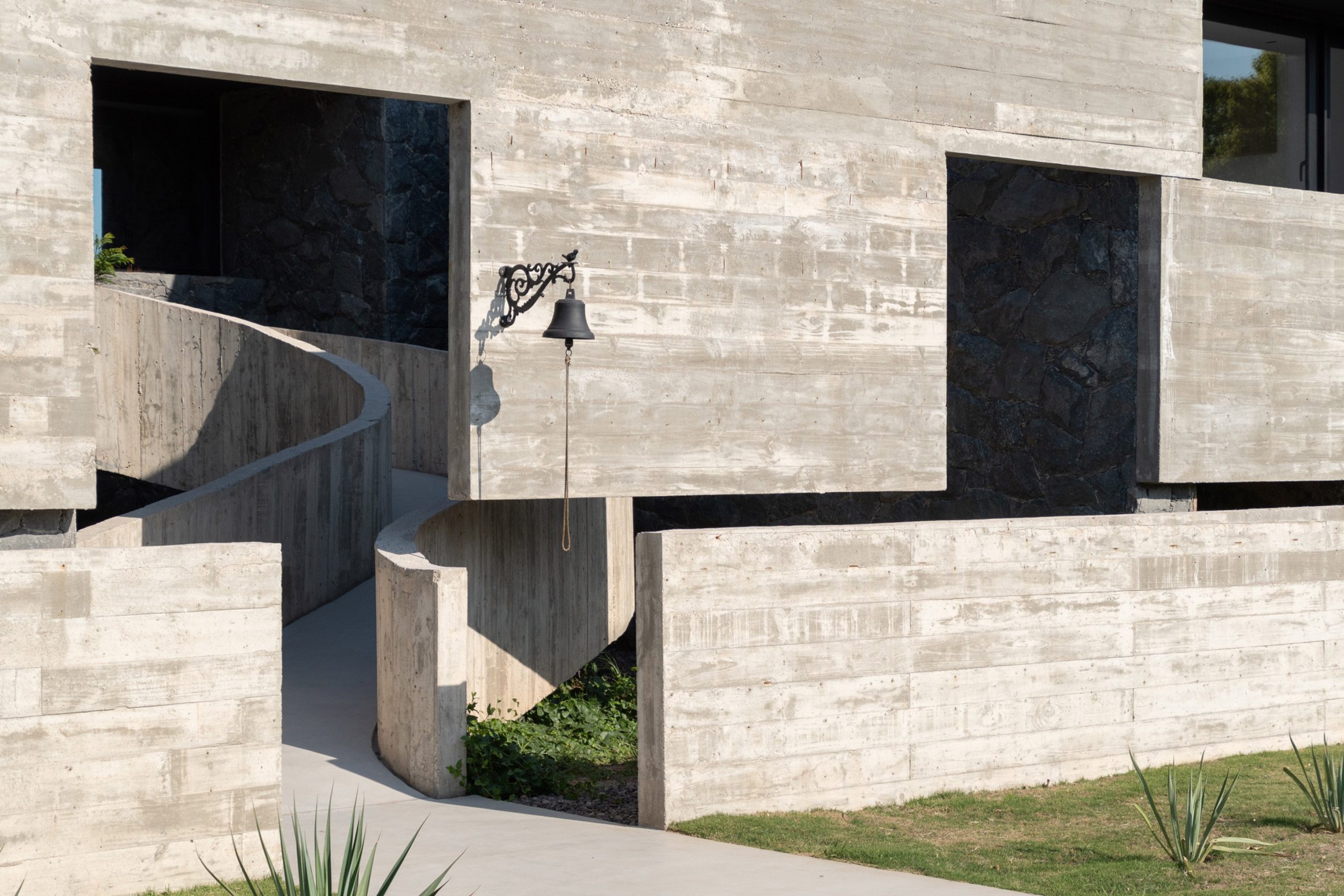
Casa Mono is enveloped by a concrete shell

Patio Estudio slightly raised the home using soil from the site to allow it to overlook its surroundings, with views framed by a concrete envelope that mirrors the checkerboard arrangement of the home's private patios.

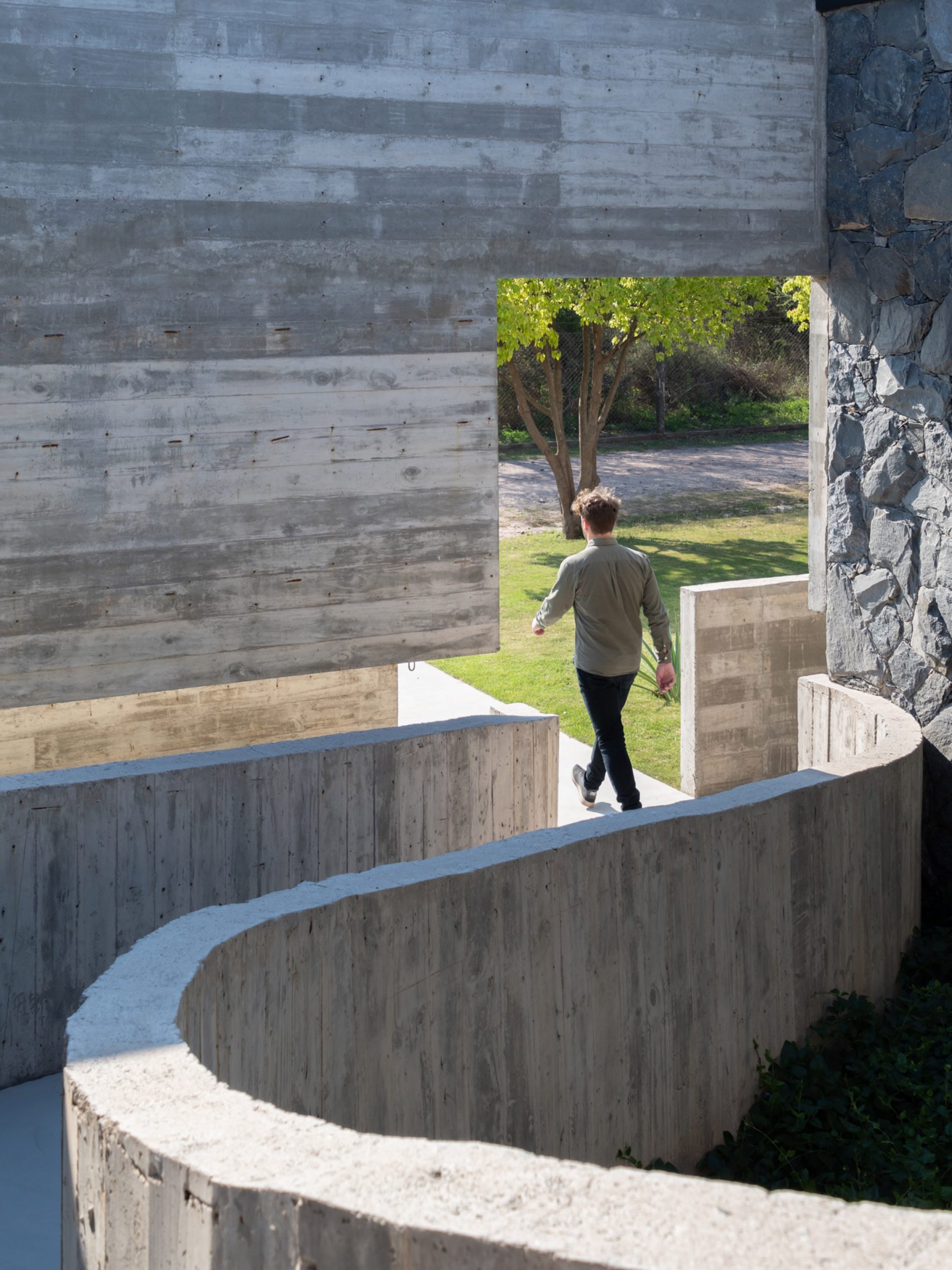
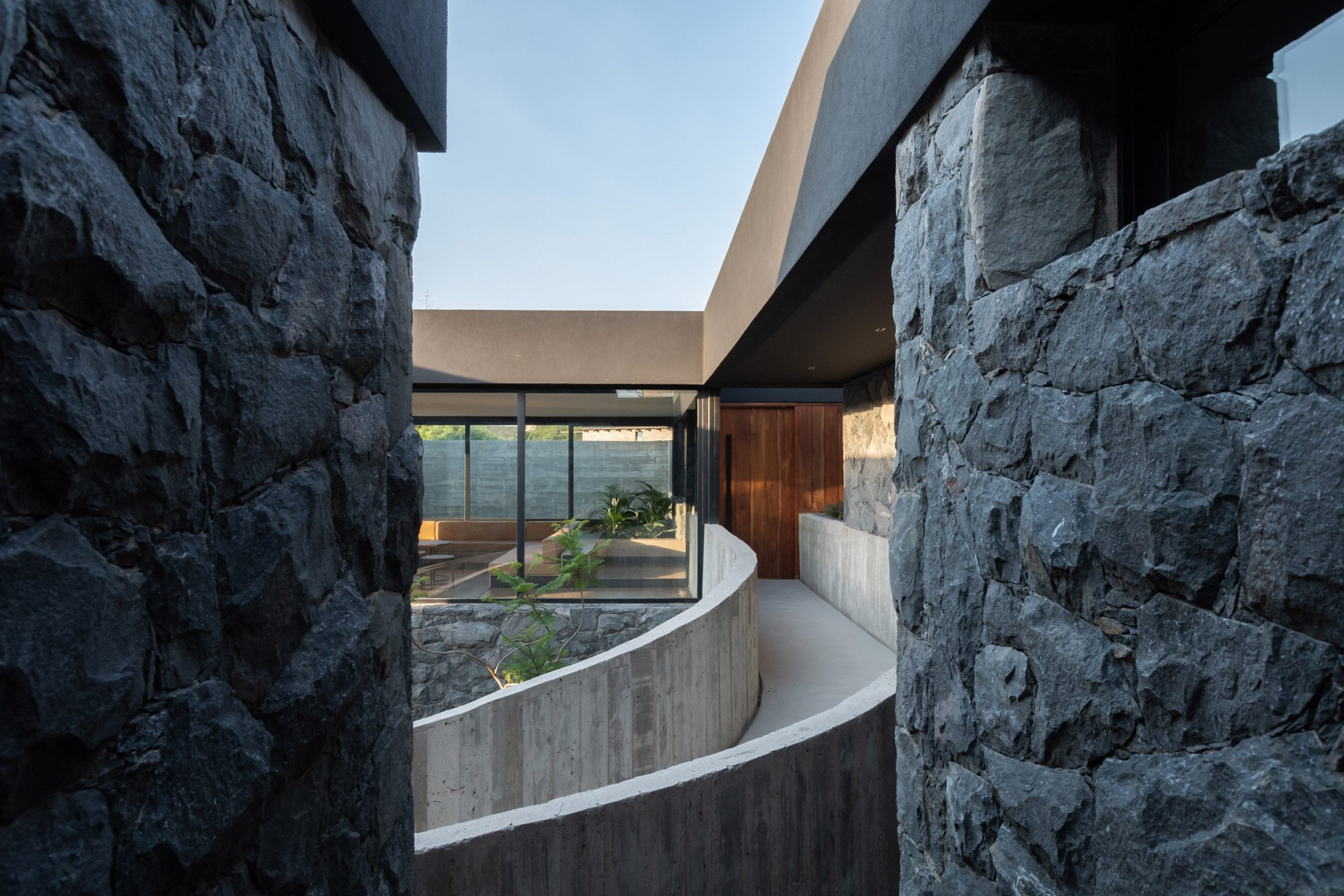
A winding ramp at the front of the home leads up to the living spaces, where a central corridor connects the bedrooms at one end to the living, dining and kitchen space at the other.

The house features 11 planted patios

"It was important to create a promenade through the house to be able to rise slowly and thus be able to see the mountain landscape," Patio Estudio told Dezeen.

This plan is based on a grid that has been separated into nine "solid" volumes and 11 "empty" patio volumes, allowing each living space to look out onto at least one patio.

Casa Mono by Patio Estudio
A ramp snakes up from the entrance to first-floor living spaces

These patios have been designed to complement the living spaces, such as creating a paved external area for the living room to extend onto, or densely planted areas that bring nature into the bedrooms.

"The patio is the element that separates and connects the different functions of the house," said the studio.

"It is used to expand the volume on the ground, generating complementary spaces that allow an interior/exterior link, taking the outside as part of the inside, perceiving it as another part of the house."

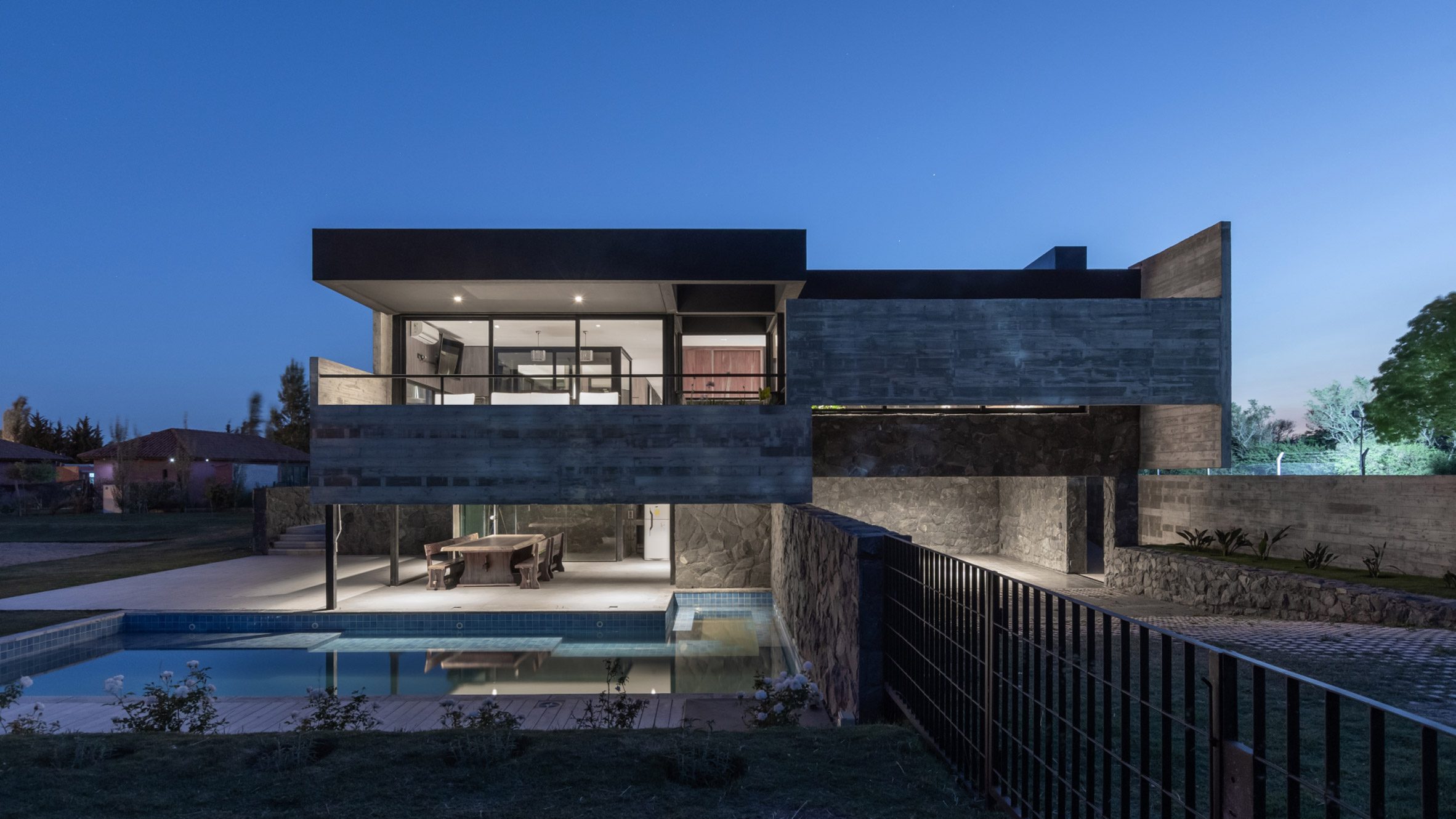
Below, the ground floor has been designed as an entertaining space that can be accessed via a dedicated staircase at the rear of the home, with a large terrace for hosting barbecues, a swimming pool and a volleyball court.

Casa Mono by Patio Estudio
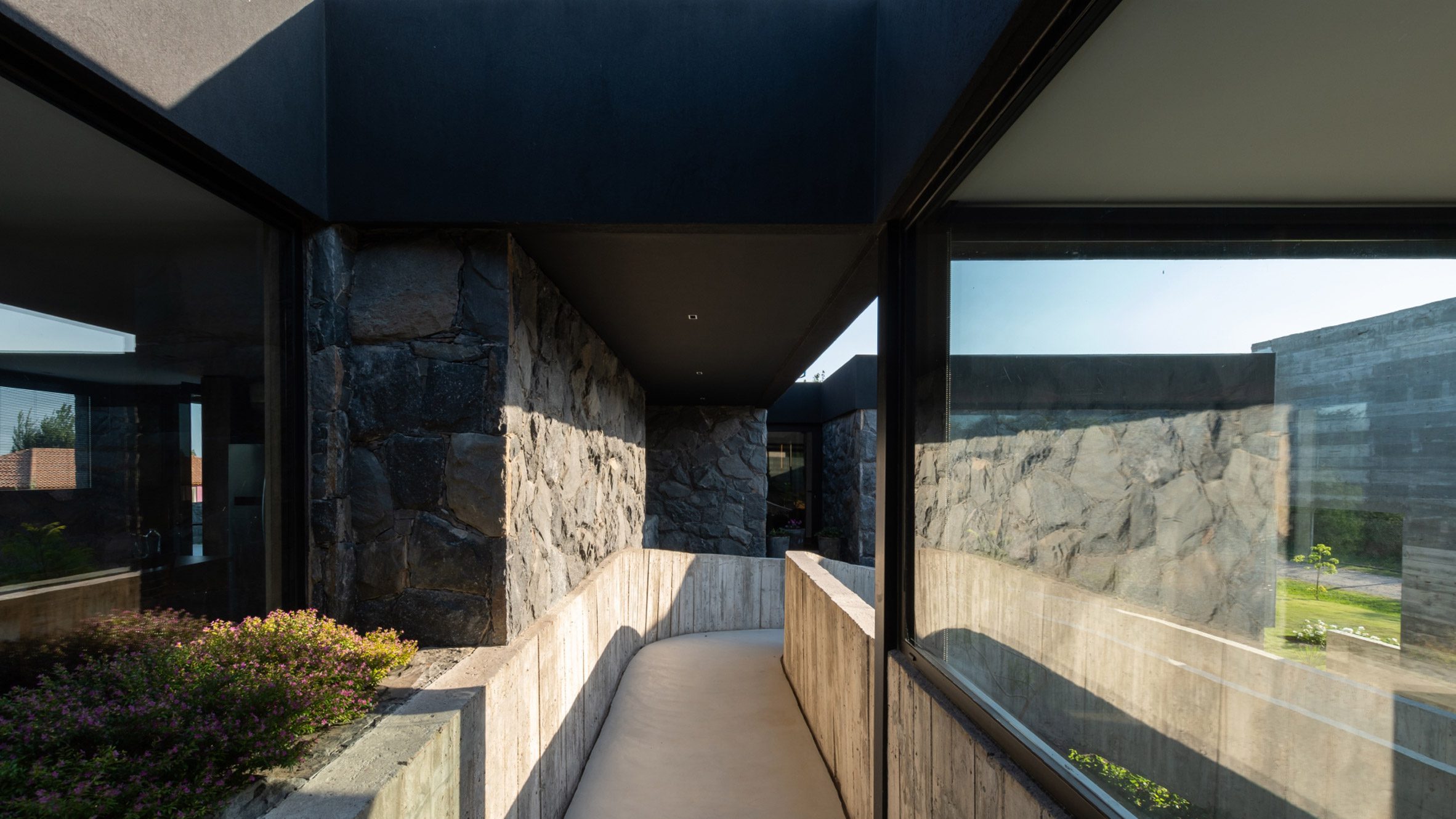
Stone walls and planted areas add natural touches to the concrete home

The thin concrete envelope that wraps the home is configured to create moments of varying privacy and light throughout the interiors, and is topped by a flat roof that also features a checkerboard of openings.

"The concrete skin that envelops the house configures intimacy, win protection and visual orientation, and also generates intimate patios, sun protection, galleries and balconies," said the studio.

Casa Mono by Patio Estudio
Wood panelling and furniture warms the interior palette

Behind this envelope are walls built from locally quarried stone, which have been left exposed in areas of the interior.

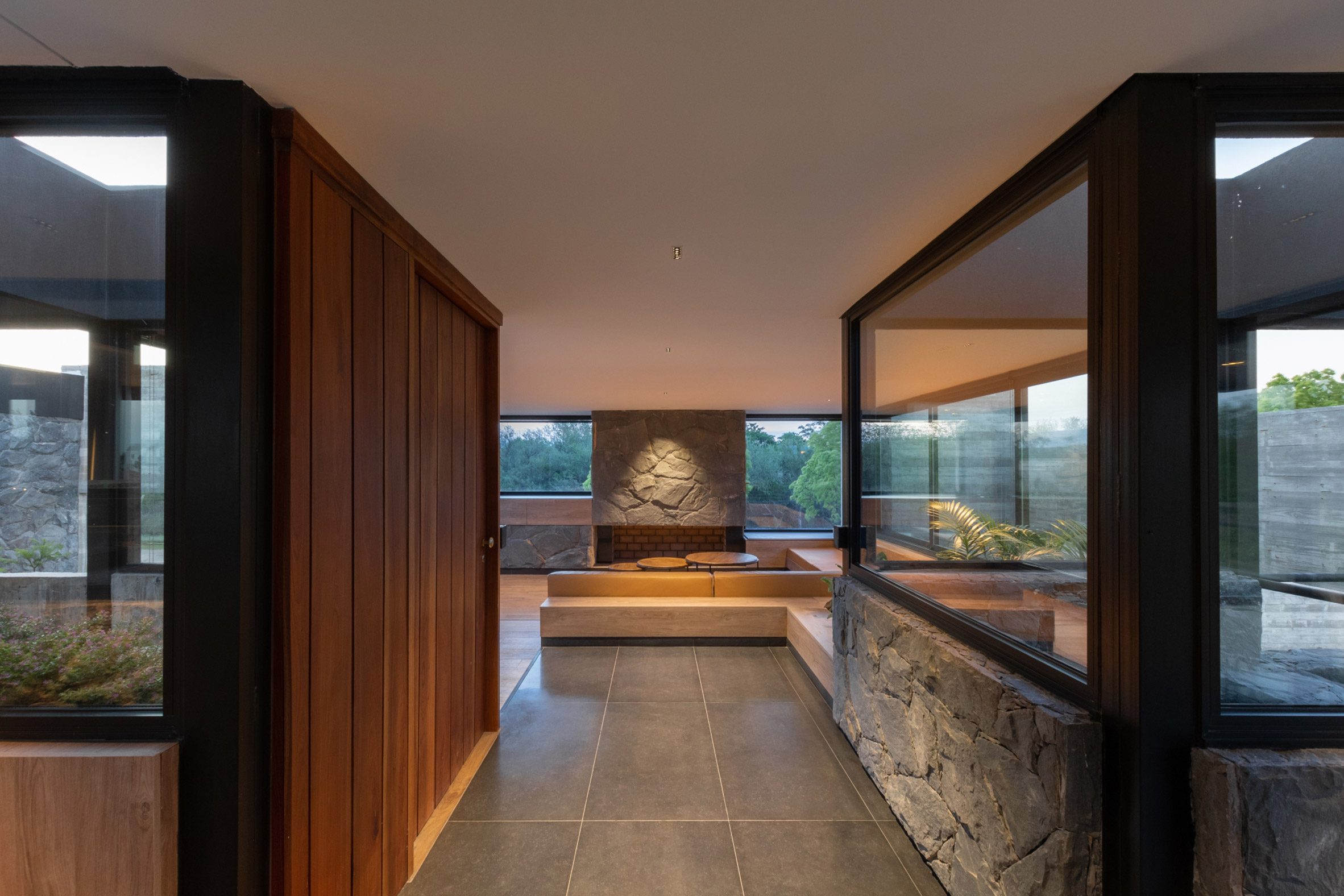
The "cold and rustic" materials such as concrete and stone have been set against warmer areas of wood, as seen in the living room where two wooden window seats are positioned either side of a stone fireplace.

A covered terrace and swimming pool are located at the back of the house

Other projects in Argentina include a concrete holiday home by Estudio Galera and a housing scheme clad with pink brick by BBOA.

The photography is by Gonzalo Viramonte.

The post Patio Estudio fills "introverted" home in Argentina with internal patios appeared first on Dezeen.


from Dezeen https://ift.tt/3jf1c2A

Seven graphic design projects from students at University for the Creative Arts

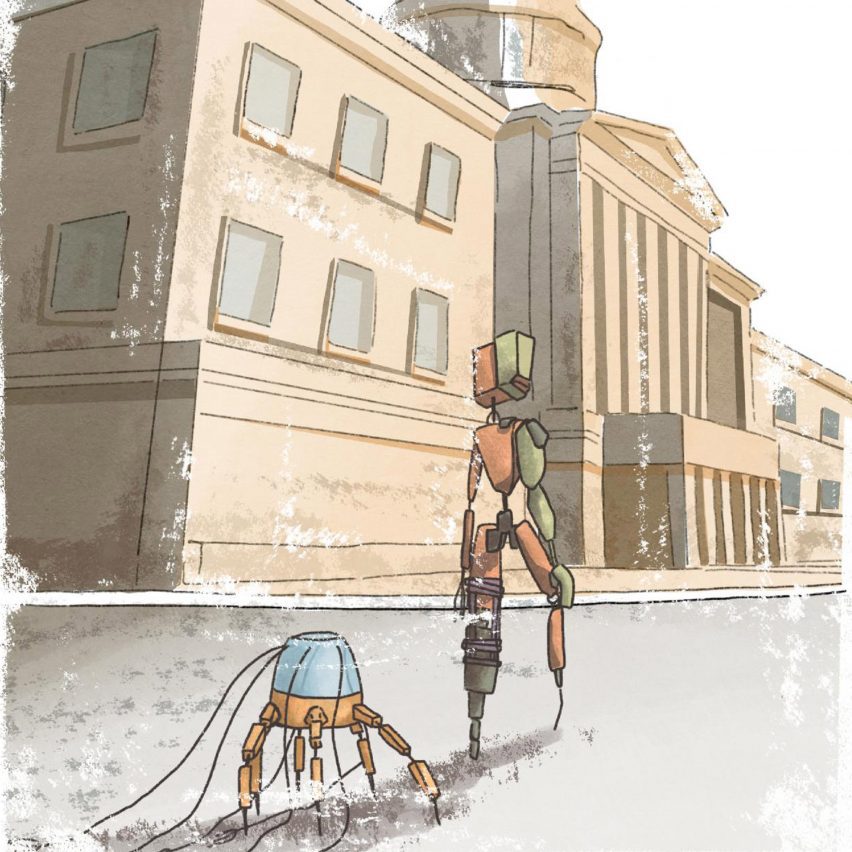
Two robots walking down a street

Dezeen promotion: a graphic novel based on a 1920 science fiction play and a creative platform encouraging students to collaborate feature in Dezeen's latest school show by students at the University for the Creative Arts.

Also included is a botanical magazine that explores the popularity of the houseplant industry and an app designed to highlight fake news stories.


University for the Creative Arts

School: University for the Creative Arts
Course: BA (Hons) Graphic Design

School statement:

"Visual storytelling shapes the way we respond to information. This year's graphic design and communication graduates from the University for the Creative Arts (UCA) have created brilliant and thought-provoking projects, from editorial design and branding to motion graphics, book arts, and visual narratives through various mediums and platforms.

"Adopting a hands-on approach to conveying messages and meanings, these graduates have carved out their styles. Explore their works below and on UCA's 2021 Online Graduate Showcase and discover their unique voices as they emerge ready to take the graphic design world by storm."
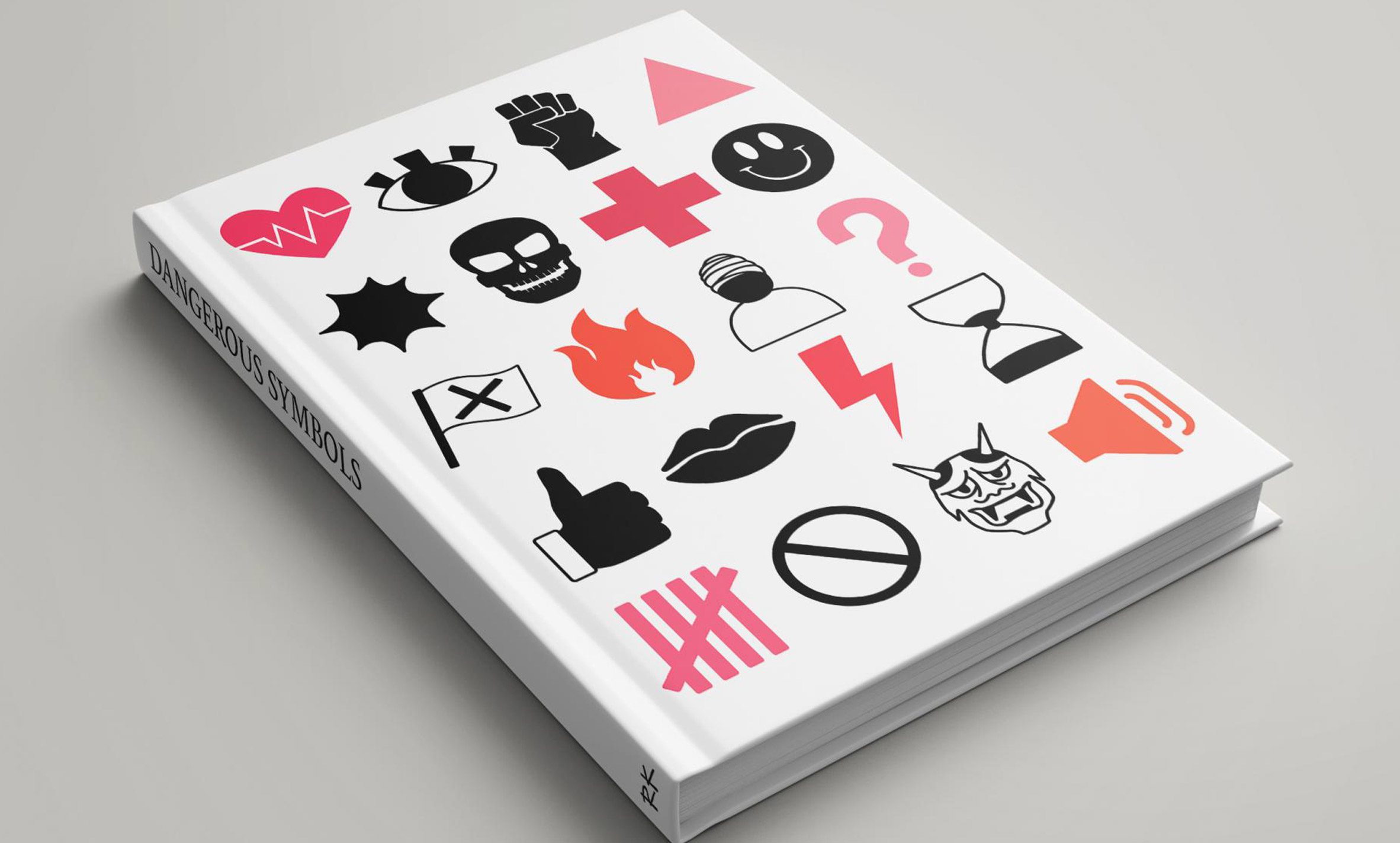

A graphic design book with various symbols on its cover

Roisin Knappert

"From the anti-authoritarian battle in Hong Kong, the global success of Extinction Rebellion demonstrations, to the Black Lives Matter movement, we have seen unprecedented levels of political dissent on the international stage, and we have seen it unfold through our screens.

"My Book 'Dangerous Symbols' communicates this cultural phenomenon and encourages young people to be politically engaged through the socio-political value of symbols.

"As a designer and social communicator, I have created stencils in the book which my reader can use to engage in protest creatively. Given the tools to create, these symbols can go on to unify movements and broadcast their messages effectively."

Student: Roisin Knappert
Course: BA (Hons) Graphic Design: Visual Communications, UCA
Instagram: ricky_knappert_
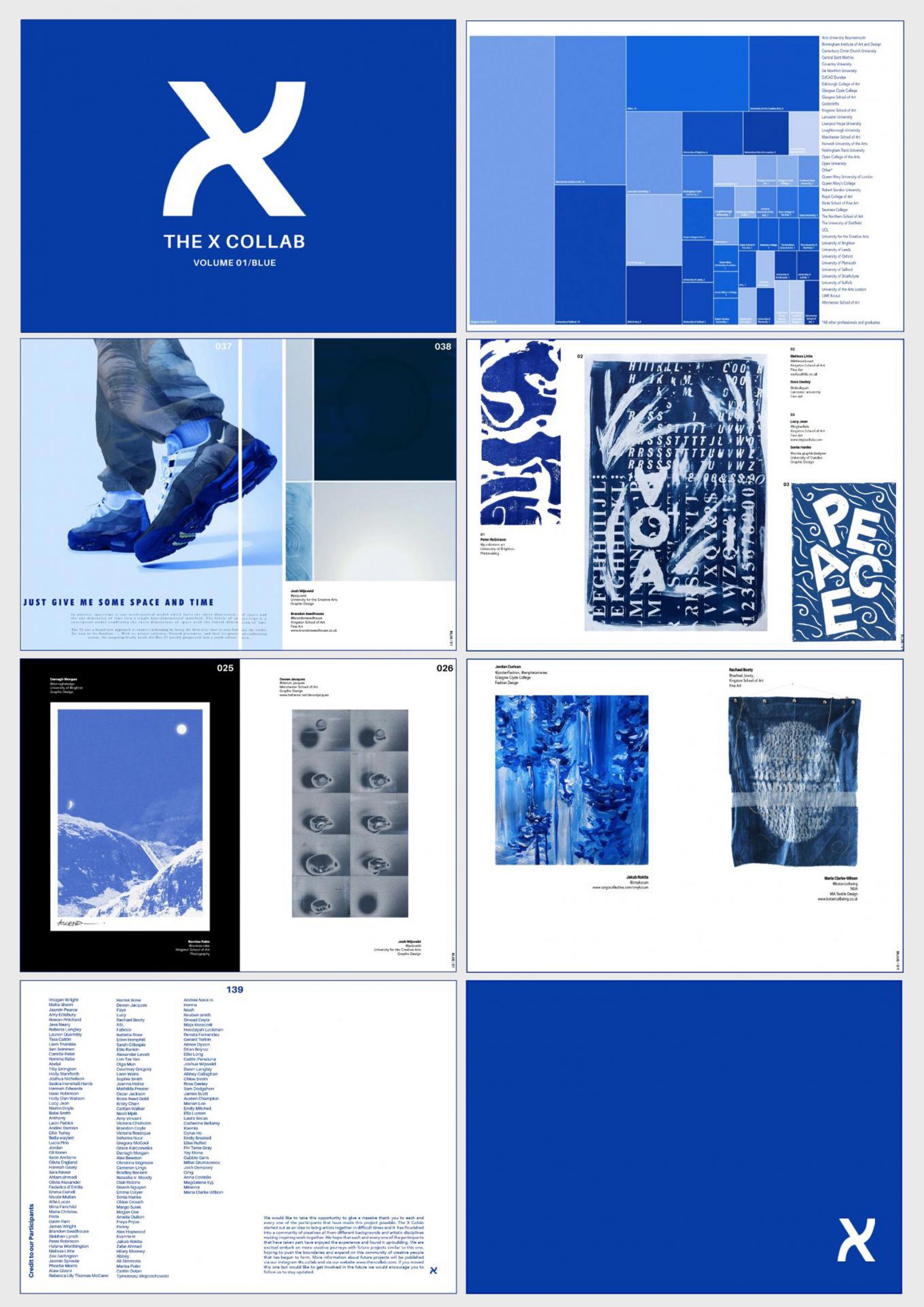

A magazine-like collaborative layout of students work in blue colours

Josh Wijsveld

"In these challenging and often uninspiring times, I have created the X Collab, a unique platform bringing together creatives from universities throughout the nation to provide exposure, networking and a means of making artwork in an alternative manner.

"It is designed by creatives for creatives to be a catalyst for multi-institutional and multi-disciplinary collaborations. Our first digital showcase was 01/Blue – named because of the colour's connection with inspiration, creativity and hope.

"We understand how much of a challenge it has been to create throughout the pandemic so this platform gives an outlet to the multitude of creative students out there."

Student: Josh Wijsveld
Course:
BA (Hons) Graphic Design: Visual Communications, UCA
Instagram:
jwijsveld

Two robots walking down a street

Grace Anderson

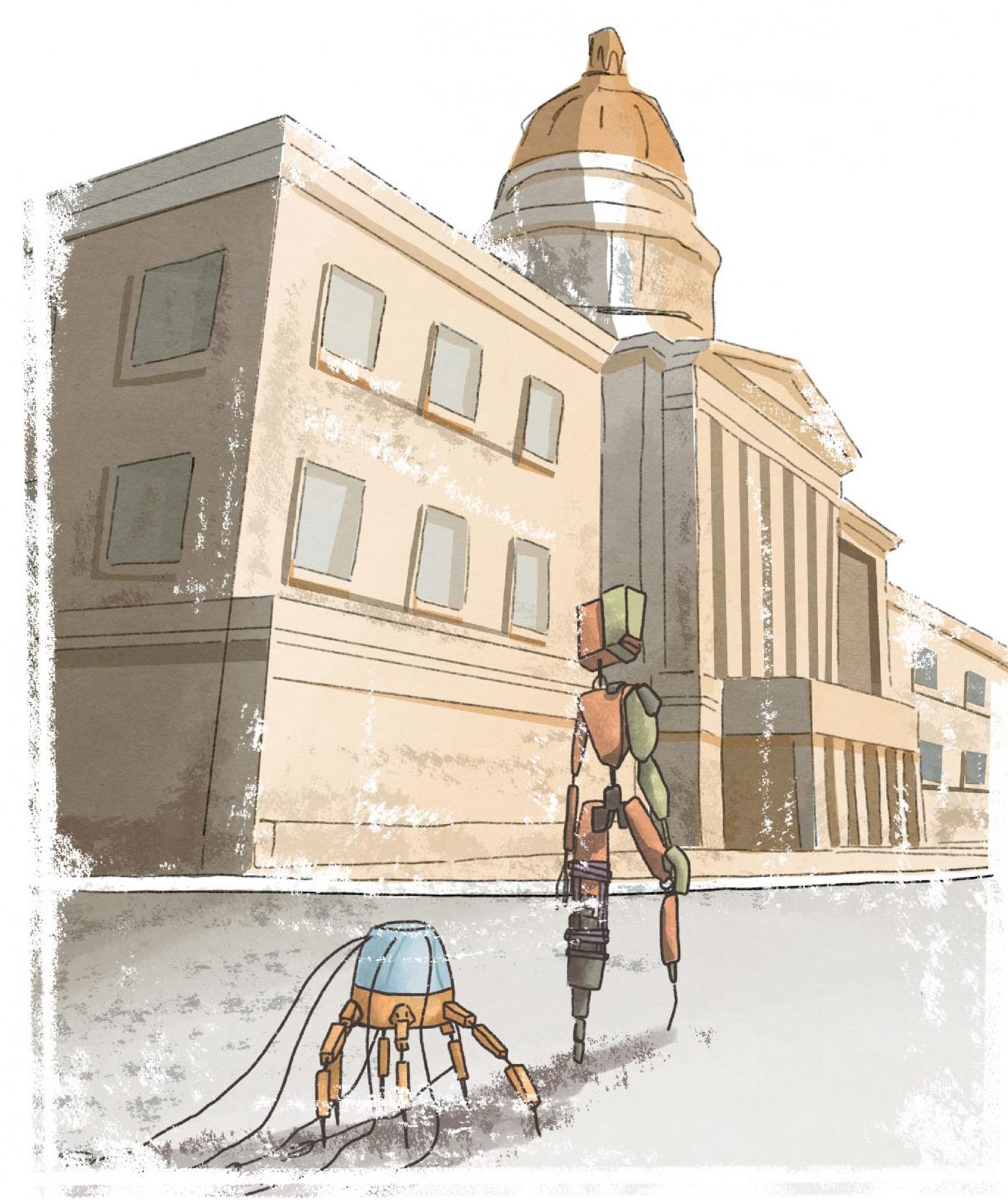
"The Descendants is a graphic novel based on future predictions of our world and inspired by the 1920 science fiction play R.U.R  written by the Czech writer Karel Čapek, in which robots turn on their creators after being given human emotions.

"With my mechanical and creative mindset, I refused to reduce these machines to a word – robot – that in Slavonic means servitude or drudgery.

"A machine can have ten times the intelligence of a human and if given emotions they might not act as selfishly as we humans do and succumb to a macabre fate. It is this contradiction I've based my story on."

Student: Grace Anderson
Course:
BA (Hons) Graphic Design, UCA
Instagram:
gmmart_

An illustration showing two people with bodies and heads that resemble trees

Aryana Deen

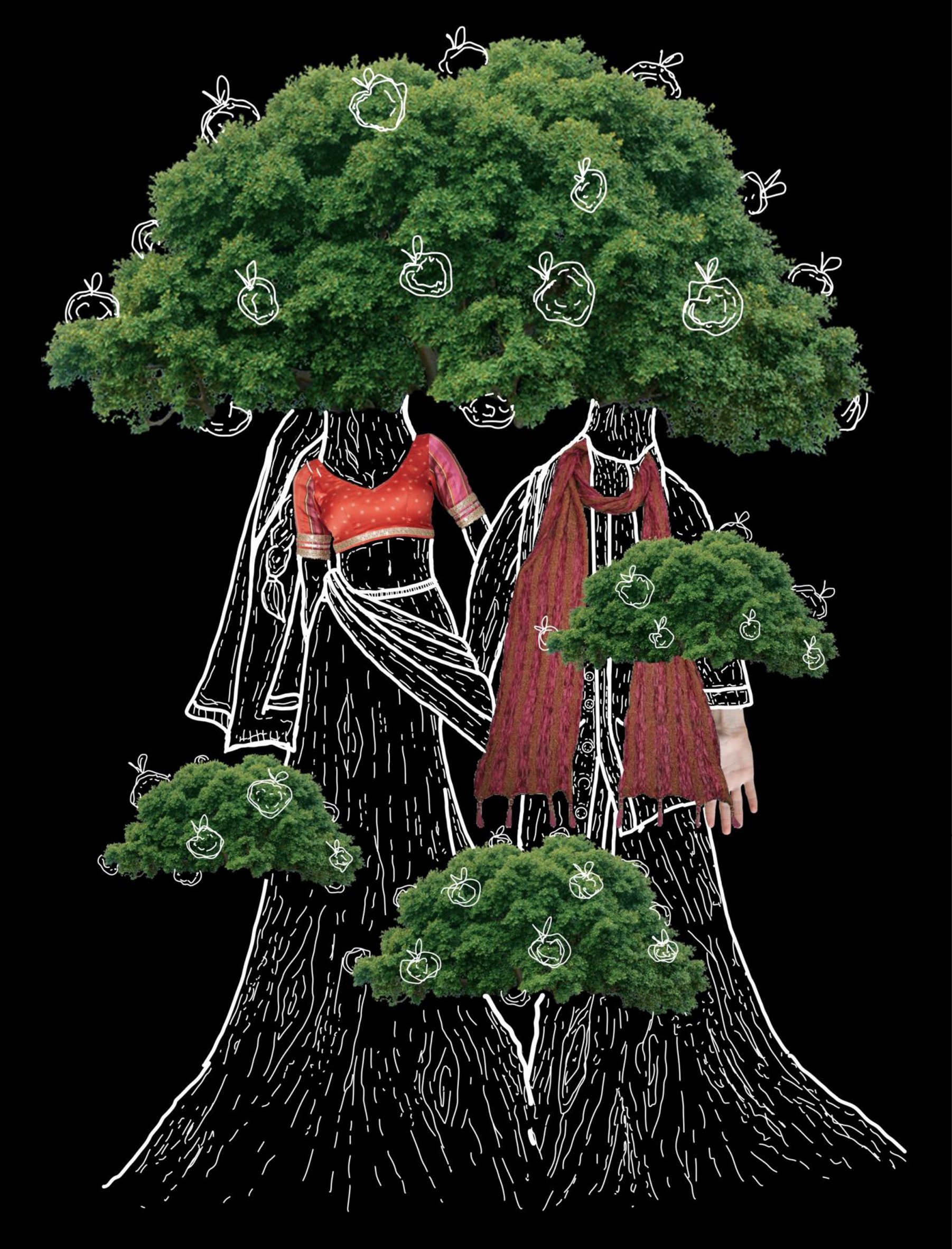
"My final project is inspired by my heritage and looks at the tale of 'Mirza and Sahiban', one of the four popular tragic romances of Punjab.

"By fragmenting the original story, I created my version of it using the Image Two Platform, combining digital drawing and collage. I have always had a passion for image-making and various illustrative techniques. The image platform allowed me to create more experimental pieces of work for this project."

Student: Aryana Deen
Course:
BA (Hons) Graphic Design, UCA
Instagram:
ad_gdesign_

A magazine about plants

Caitlin Carter

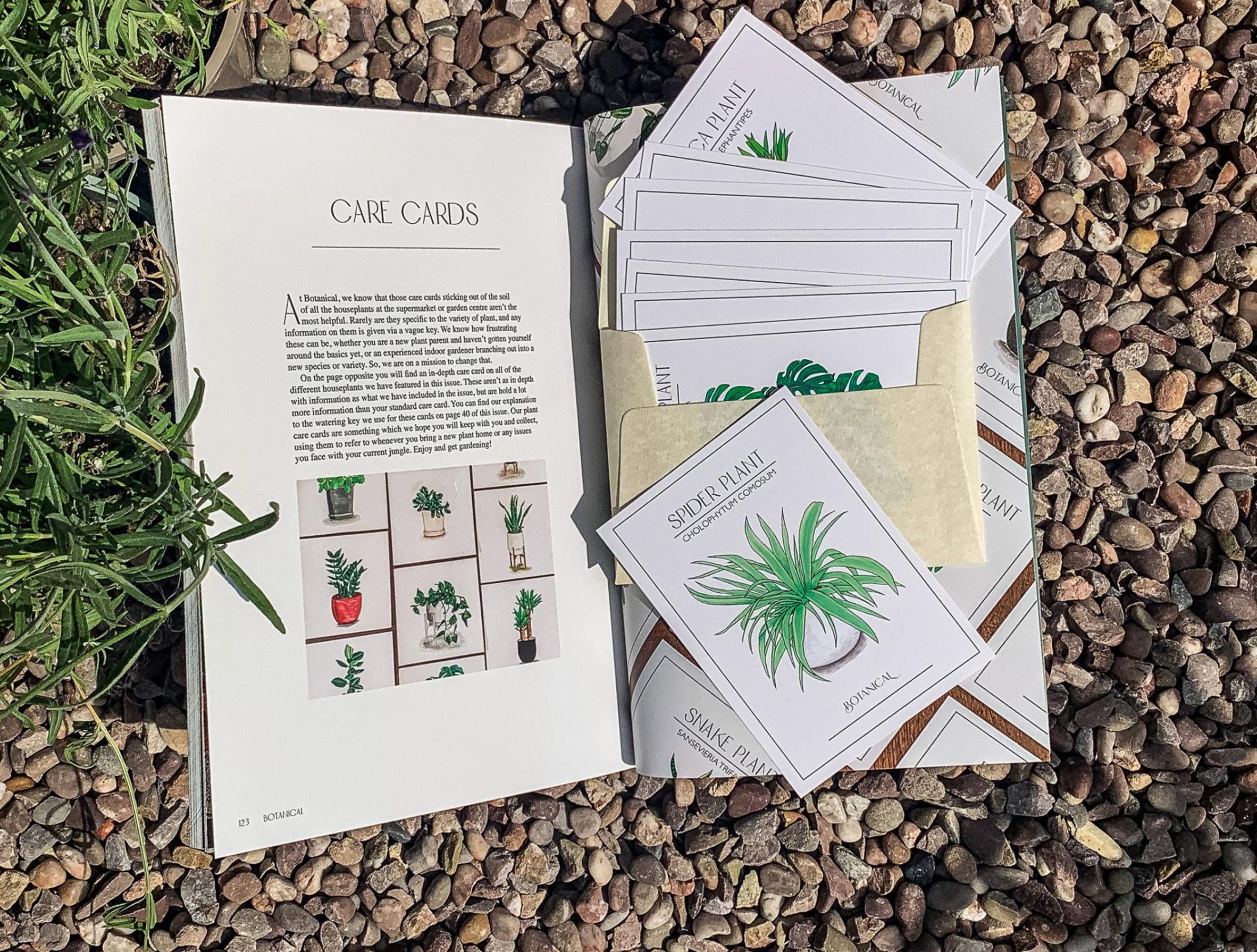
"For my final major project, I created a magazine called Botanical to explore the popularity of the houseplant industry.

"Tailoring it for a generation of houseplant lovers and those interested in supporting the independent magazine industry, my magazine is an upmarket, minimal and clean publication displaying gorgeous imagery as well as information as to how best look after houseplants.

"The first issue is themed as the 'beginner plants' issue and comes with a collectible set of care cards that give a condensed version of how to care for each plant, and come adorned with painted illustrations of each one."

Student: Caitlin Carter
Course: BA (Hons) Graphic Communication, UCA 


A newspaper headline about real or fake news

Emma Colyer

"Fake news has been a topical issue that has garnered a lot of press attention in the last five years. News can be overwhelming, especially for younger generations, which can make it less engaging.

"With this in mind, I designed the Reaction Spot app. An app where young adults can react and engage with news stories and other viewpoints using icons to relate to different types of fake news.

"I also designed 'Real Reaction', a limited print newspaper to go alongside the app. It runs stories around the topic of fake news and is heavily image-based with augmented reality interactions."

Student: Emma Colyer
Course: BA (Hons) Graphic Design: Visual Communications, UCA

A cardboard box with a t shirt inside

Joe Wilsden

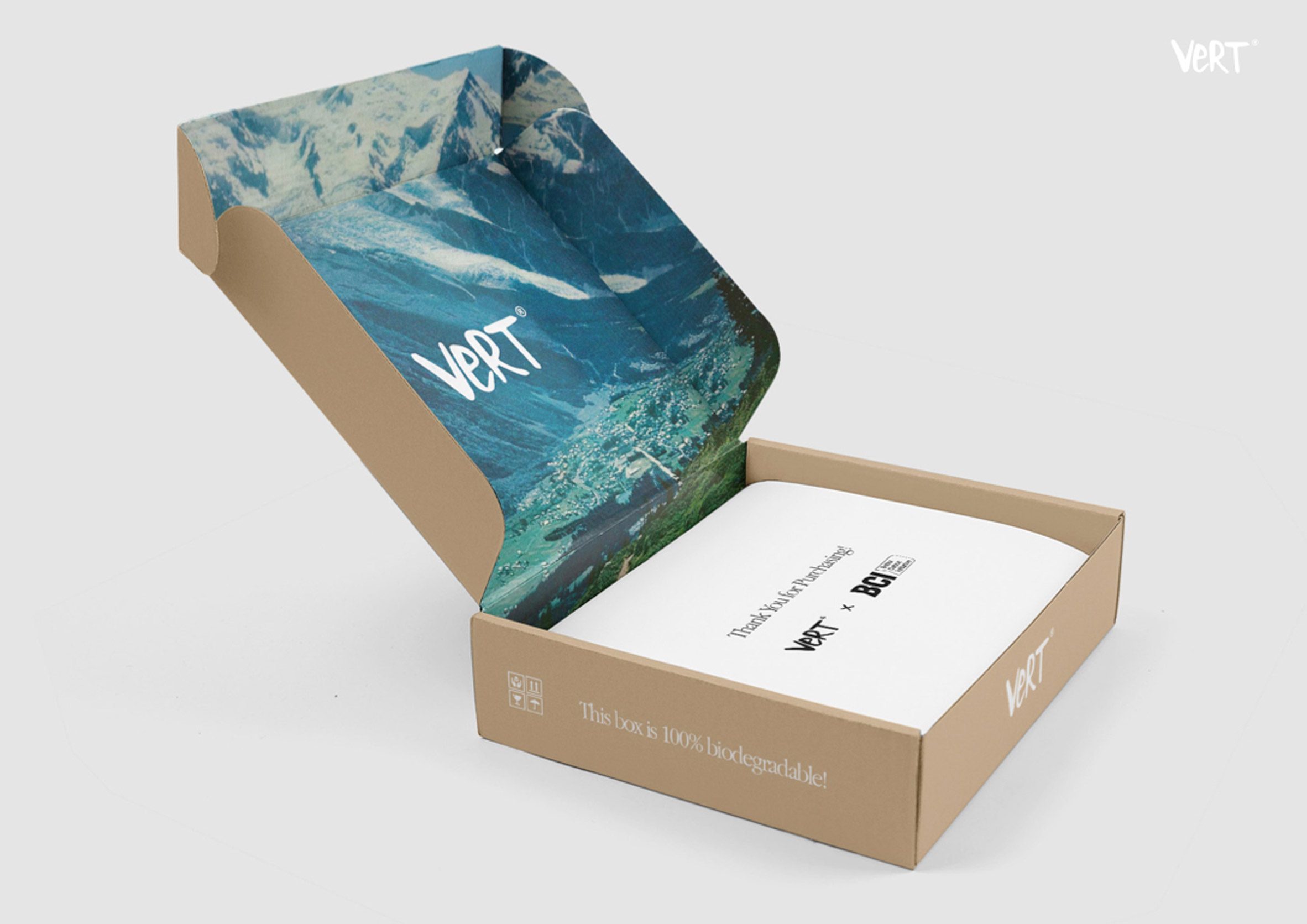
"Wilsden's final project saw the creation of an entire brand identity for Vert, a sustainable graphic t-shirt clothing company. At the heart of the brand is a passion for ethical fashion production.

"The graphic t-shirt designs feature satirical slogans highlighting ecological issues. The project explores the story and identity of the Vert brand, its visual aesthetic and assets, products, packaging and marketing collateral."

Student: Joe Wilsden
Course:
BA (Hons) Graphic Communication, UCA


Partnership content

This school show is a partnership between Dezeen and University for the Creative Arts. Find out more about Dezeen partnership content here.

The post Seven graphic design projects from students at University for the Creative Arts appeared first on Dezeen.


from Dezeen https://ift.tt/3zisOtc
Large wooden shutters filter light and air into Mallorcan home by Company Studio

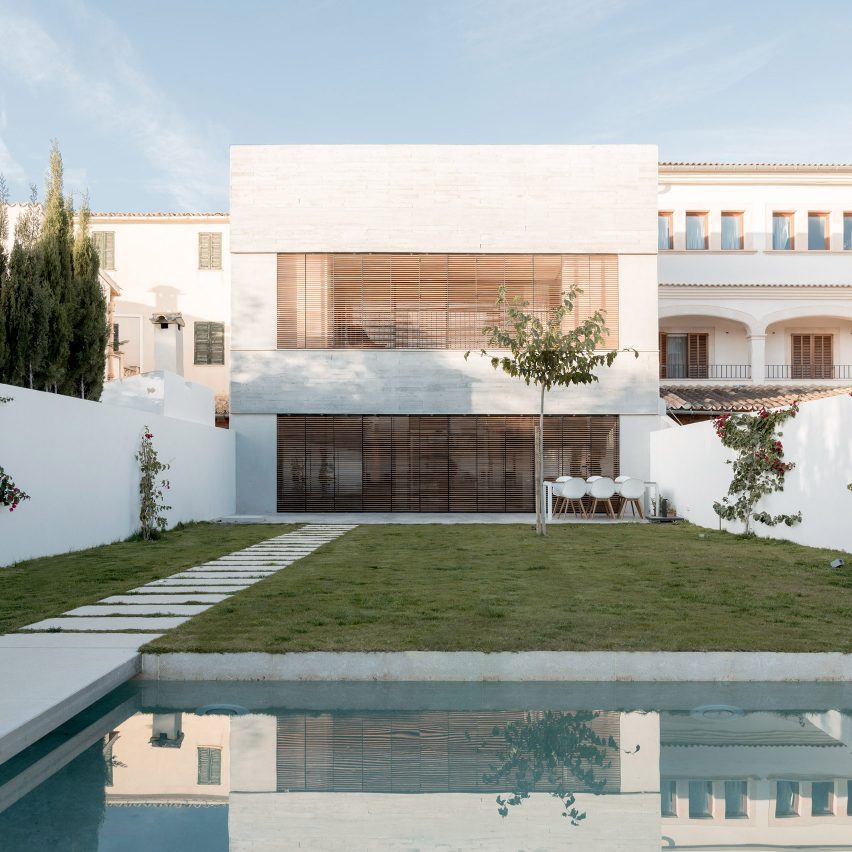
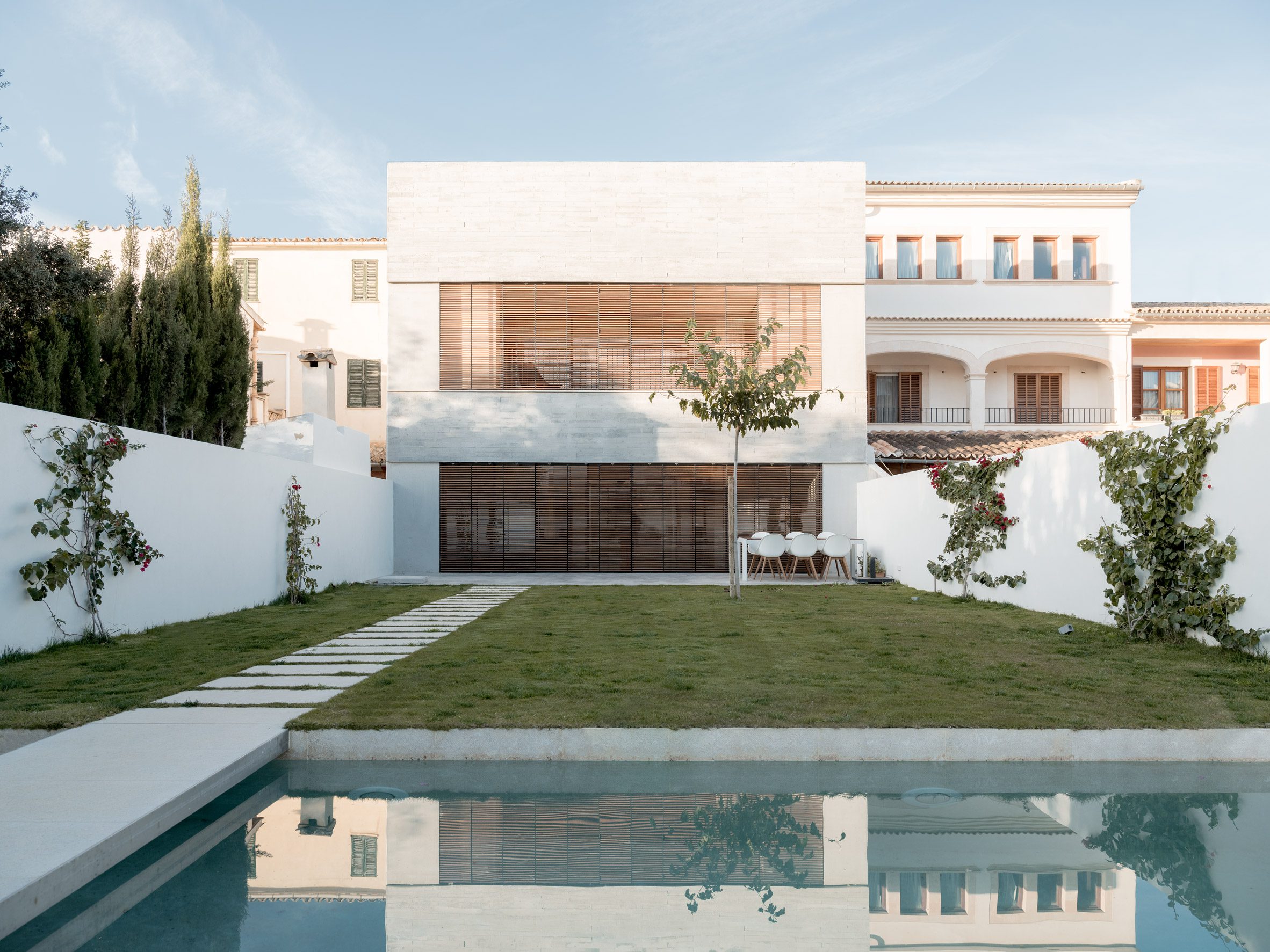
The home is surrounded by a white wall

Spanish practice Company Studio has completed a family home in Mallorca featuring large wooden shutters that allow the living spaces to extend onto a south-facing garden and pool.

Alaro House, named after the historic Spanish town in which it sits, was designed by the local practice to reflect the area's traditional typology at its northern end, contrasted by a more modern form and garden to the south.

Alaro house is a square concrete building
Top image: Alaro House is surrounded by a white perimeter wall. Above: the home has a pool at the rear of its garden

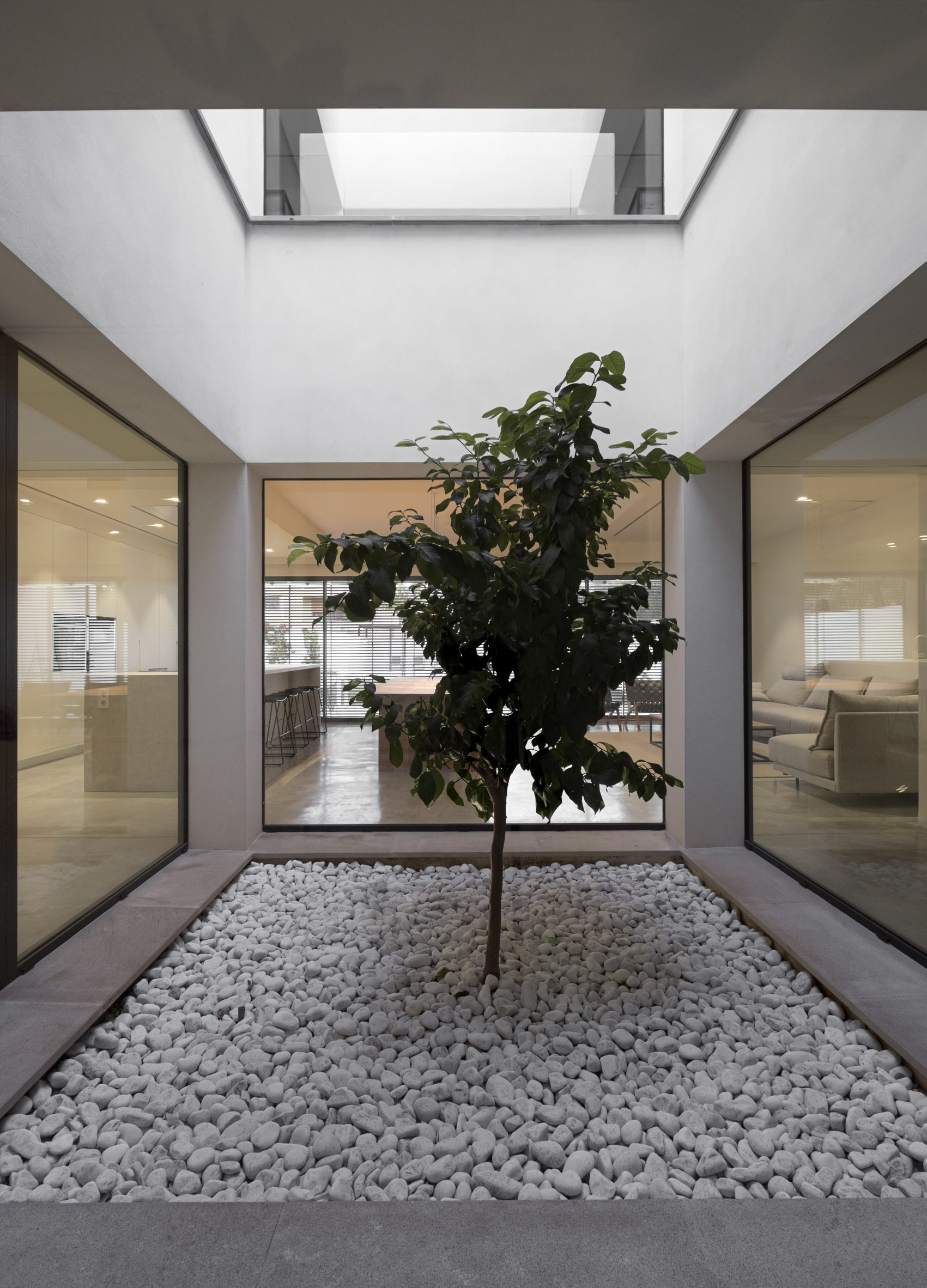
These two halves of the home are united by a central, double-height courtyard garden, which is glazed on all sides and planted with a small tree.

"These types of townhouses usually have two bays that frame the volume, and sloping Arabic tile roofs," the studio said.

"The project has included a third bay and a new sloping roof, twinned with the originals through an interior patio."

Large rectangular windows punctuate the concrete facade
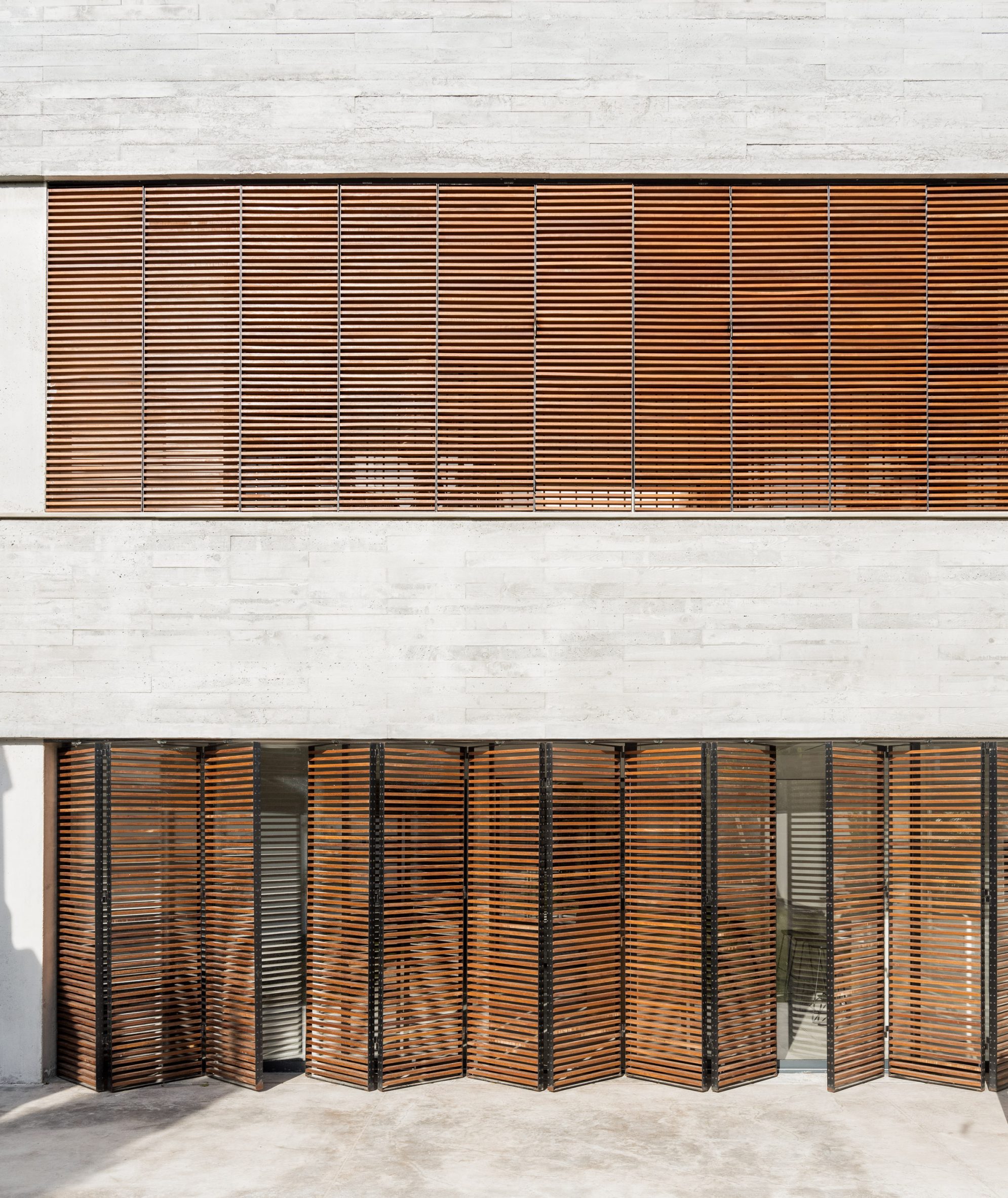
Wood battens were used to form bi-folding shutters

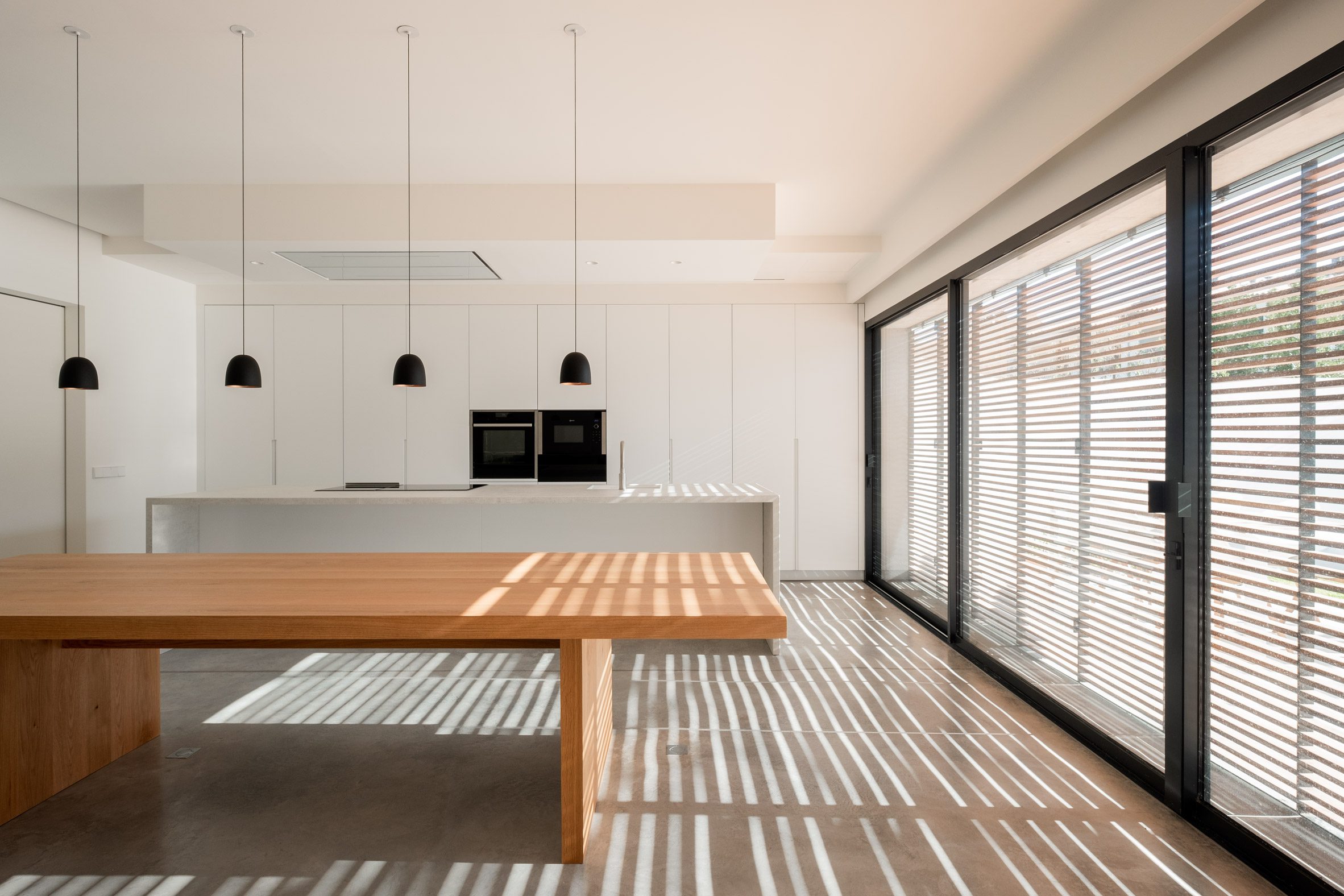
On the ground floor, a garage sits to the north of the home while a large living, dining and kitchen area sits to the south, benefitting from the light from the internal courtyard and the garden.

Above, four bedrooms and two bathrooms are organised around the central courtyard, wrapped by a small landing area that filters light and provides privacy. The main bedroom opens onto a private south-facing terrace overlooking the garden.

Tree in courtyard
Rooms are organised around a central courtyard

The front maintains the strict composition of shuttered openings typical of the area, while at the back of the home the openings are expanded, with large glass doors covered by accordion-style iroko wood shutters.

These shutters allow a range of different relationships to the exterior to be created on both floors of the home, permitting just light or air or completely opening the spaces to the outside.

"This mechanism allows us to create multipurpose spaces," said the studio.

"The porch closes and becomes part of the bedroom in summer, or we can divide the living room but keep the kitchen open to the garden."

Alaro house has concrete floors
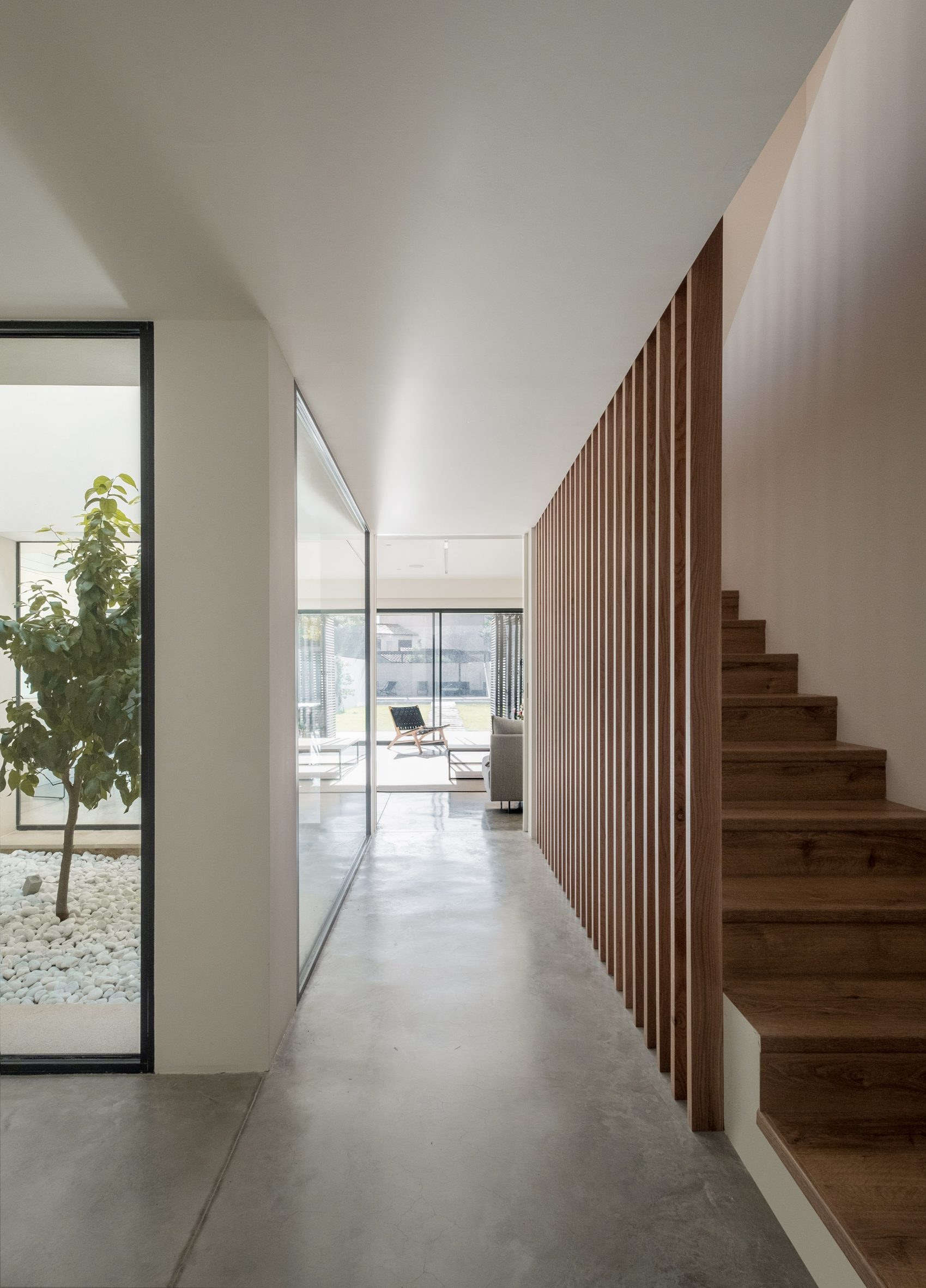
Wood battens line the staircase referencing the home's shutters

In the garden, which is surrounded by a high white-rendered wall, two concrete seating areas at either end are connected by a stepping-stone walkway that crosses a pool.

A steel and branch canopy shelters the patio at the end of the garden.

A palette of neutral materials has been used in the interiors, with a polished concrete pavement on the ground floor contrasted by warmer oak wood flooring in the bedrooms and a microcement finish in the bathrooms.

Light filters through the shutters at alaro house
The kitchen occupies the rear of the home

A double-height run of vertical oak beams referencing the shutters creates a balustrade for the staircase, which sits at the western side of the home.

Another Mallorca-based practice, Isla Architects, recently completed a rough, red mortar-covered home in the island's Pla de Mallorca region, while OHLAB created a standalone villa for a hotel with a window designed like a cinema screen.

Photography is by Eugeni Aguiló.

The post Large wooden shutters filter light and air into Mallorcan home by Company Studio appeared first on Dezeen.


from Dezeen https://ift.tt/3zh8Uys

Santiago Calatrava unveils design for Qatar Pavilion at Dubai Expo

Qatar Pavilion at Dubai Expo

Spanish architect Santiago Calatrava has revealed his design for the Qatar Pavilion at the upcoming Expo 2020 Dubai, which draws on the four elements represented on Qatar's coat of arms.

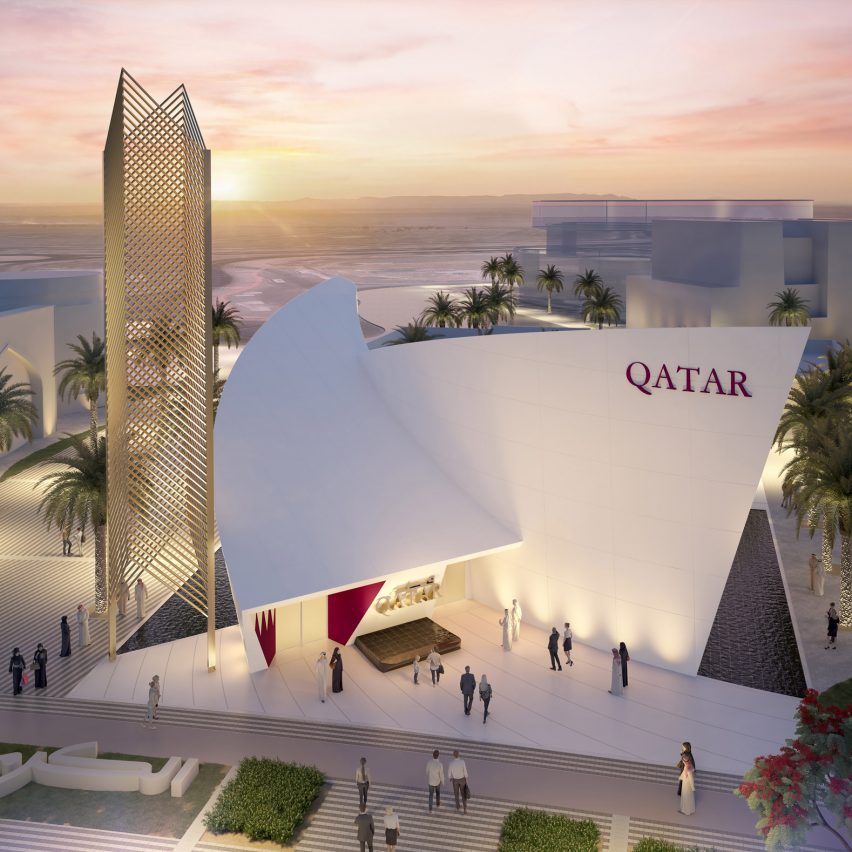
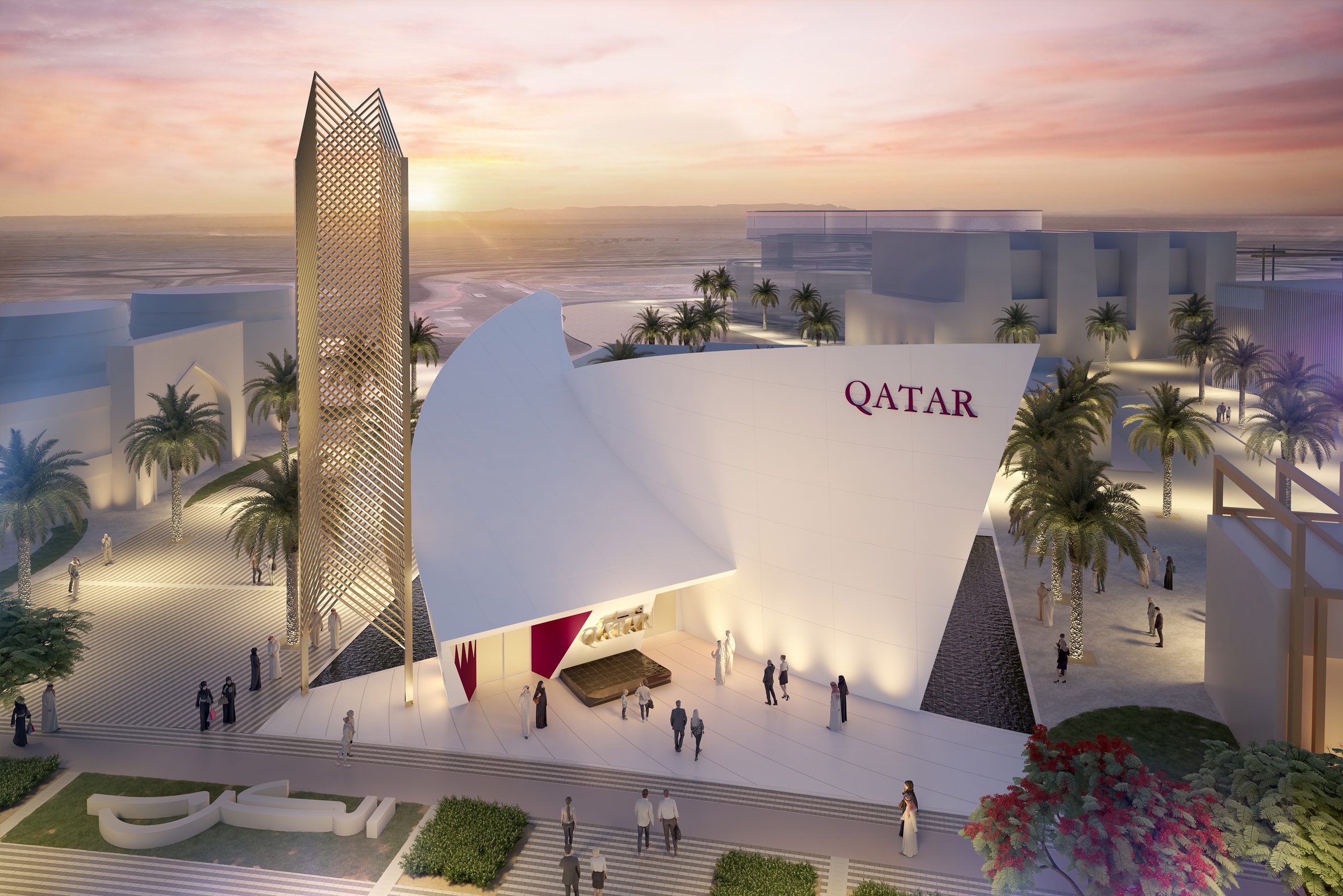
Calatrava's design for the pavilion aimed to translate the two crossed and curved swords, traditional dhow boat and an island with palm trees on the Qatari coat of arms into a building design that would capture "movement, mobility, strength and tradition".

A visualisation of the resulting pavilion shows a curved, sail-shaped structure intersected by a lower building. The completed pavilion will measure 620 square metres, with the main building reaching a height of nearly 15 metres.

The pavilion will contain two main galleries and exhibition spaces showcasing an immersive experience of Qatar's history and culture.

A gold-coloured sculpture representing palm trees will rise to a height of 20 metres next to the pavilion.

Building designed to capture "vision of the nation"

The shape of the pavilion, which is currently being constructed by Dubai contractor ALEC Fitout, was designed to symbolise "Qatar's progressive outlook of the future while remaining true to its culture and heritage".

"Inspiration is derived from Qatar’s national emblem to truly capture the essence and vision of the nation," said Calatrava International CEO Micael Calatrava.

Qatar Pavilion by Calatrava
Top image: the building is shaped like a sail. Above: it consists of intersecting volumes

"The architectural gesture and structural form of the pavilion, which houses the entire visitor experience, mirrors the shape of the dhow and its grand sails," he added.

"The sculptural monument at the entrance of the pavilion represents an abstract translation and fusion of two intertwined palm trees, while the reflective pools and integrated water features surrounding the pavilion represent the Arabian Gulf which encompasses the nation of Qatar."

The pavilion is made from KRION, a material that consists of two-thirds natural minerals and a percentage of high-resistance resins.

"It is an ecological material, as it is 100 per cent recyclable," lead architect Rowina Armale told Dezeen.

Qatar Pavilion to be constructed in five months

The completed building will be shown at the coronavirus-delayed Expo 2020 Dubai, which was postponed from October 2020 until October 2021.

The building, which will be located in the sustainability district of Expo 2020 Dubai, will open on 1 October as the Expo launches.

"The approach follows a non-linear, non-traditional design methodology ensuring project delivery in a very aggressive timeline of five months," the studio said.

"The Qatar Pavilion is designed as a sustainable and functional structure, utilizing efficient processes which enable procurement and construction to proceed as the design develops," it added.

A number of pavilion designs have already been unveiled ahead of the Expo, including main pavilions by Adrian Smith + Gordon Gill, Grimshaw and Foster + Partners. With the Expo originally slated to take place in 2020, many of the buildings on site are largely complete already.

Calatrava has also designed the pavilion for host nation United Arab Emirates, which was modelled on a bird's wings.

Images courtesy of Calatrava.


Expo 2020 Dubai will run from 1 October 2021 – 31 March 2022. See Dezeen Events Guide for an up-to-date list of architecture and design events taking place around the world.

The post Santiago Calatrava unveils design for Qatar Pavilion at Dubai Expo appeared first on Dezeen.


from Dezeen https://ift.tt/3jchwkD

Palladium Bespoke Metals lighting control collection by Focus SB and Lutron Electronics

A lighting control in gold with plants around it

Dezeen Showroom: electrical brands Focus SB and Lutron Electronics have collaborated on the Palladium Bespoke Metals collection, which gives lighting controls a metallic finish.

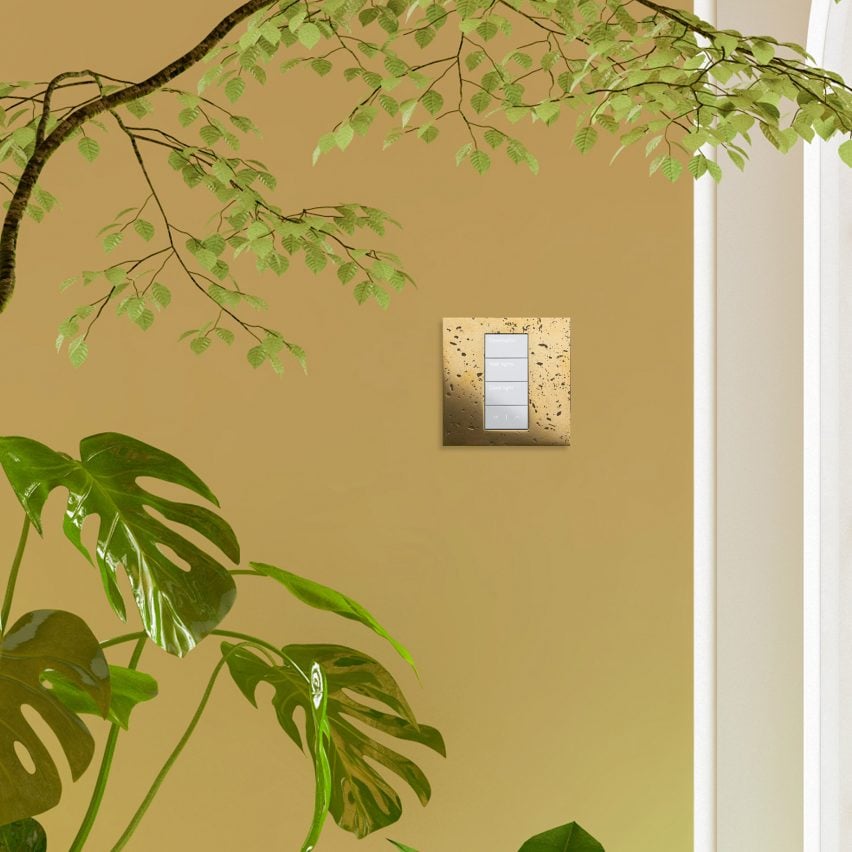
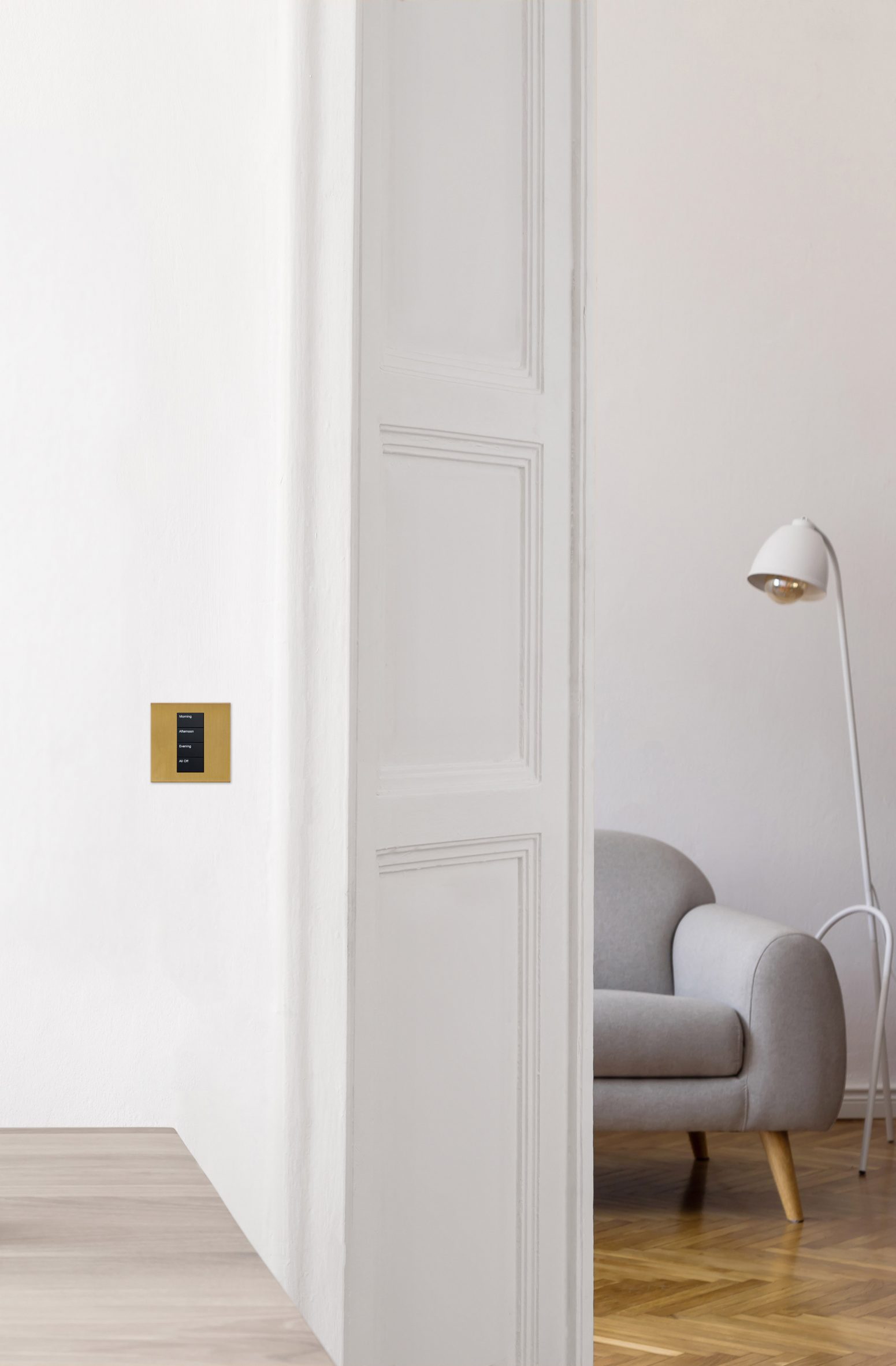
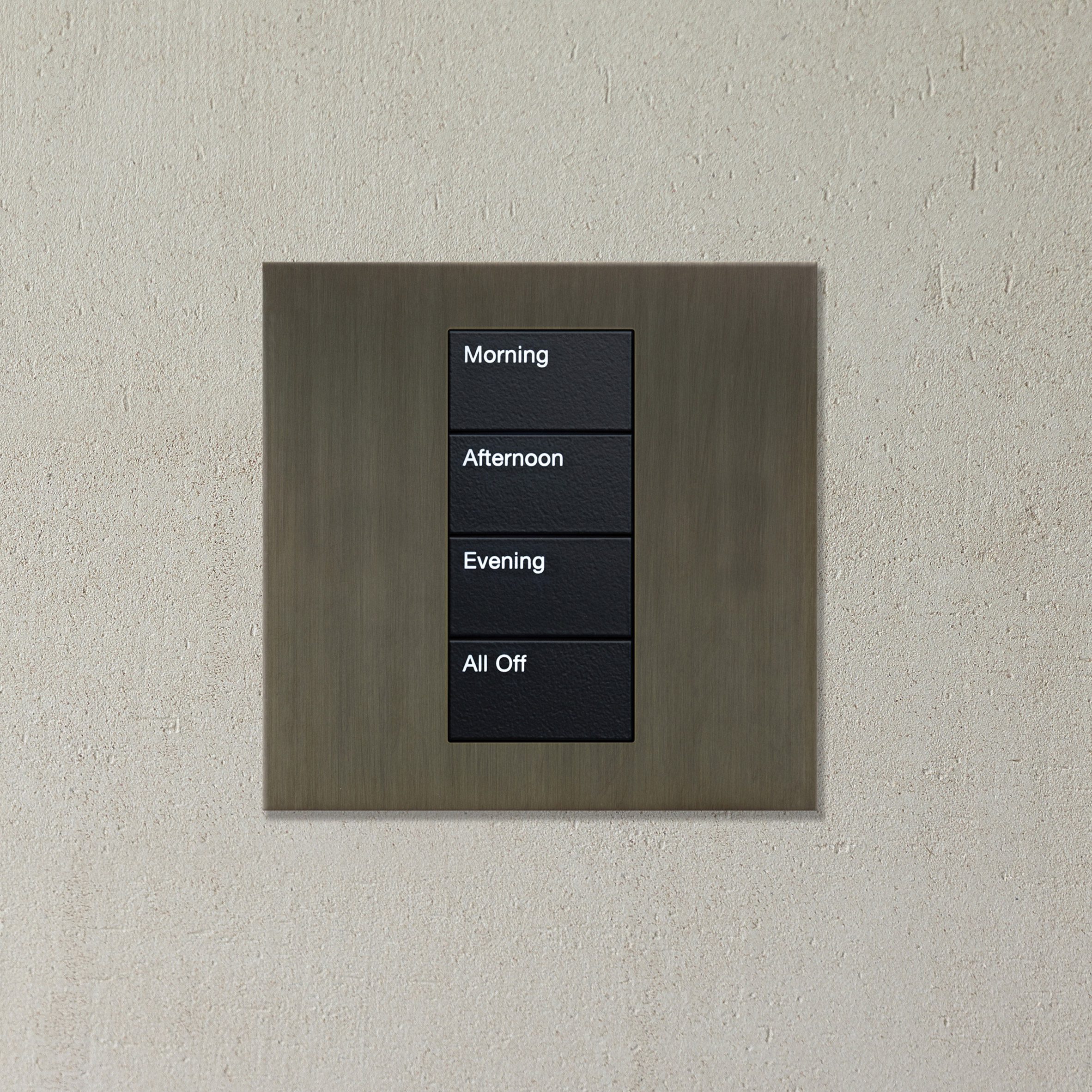
The Palladium Bespoke Metals collection gives Lutron Electronics' keypads a finish resembling textures like tree bark, antique metal or cork, and in colours including aged bronze or nickel silver.

 gold light control in a neutral, white interior
Palladiom Bespoke Metals collection features lighting control keypads in various textured finishes

The collection enables interior designers to match Lutron's lighting controls to other fixtures or accents, creating continuity throughout an interior.

In addition to the range of 19 standard finishes, there is the potential for designers to create custom finishes, by working with Focus SB's project support consultants. The designer has to provide a physical example of a piece of metal or ironmongery that they'd like Focus SB to match.

A metallic lighting control with four switches: morning, afternoon, evening and all off
There are 19 standard finishes plus the option to go bespoke

The liquid metal finishes come from British premium electrical accessories manufacturer Focus SB's recently launched Nature Inspired collection and are all applied by hand.

The finishes are applied to Lutron Electronics' HomeWorks QS Wired Palladiom raw brass faceplate kit, which feature one- or two-column keypads with buttons in white or black polymer.

Product: Palladium Bespoke Metals
Designer: Focus SB
Brand: Lutron Electronics
Contact: sales@focus-sb.co.uk

About Dezeen Showroom: Dezeen Showroom offers an affordable space for brands to launch new products and showcase their designers and projects to Dezeen's huge global audience. For more details email showroom@dezeen.com.

Dezeen Showroom is an example of partnership content on Dezeen. Find out more about partnership content here.

The post Palladium Bespoke Metals lighting control collection by Focus SB and Lutron Electronics appeared first on Dezeen.


from Dezeen https://ift.tt/3mrRbAV