Wednesday, 25 August 2021

BIG's Copenhill ski slope reportedly risks permanent closure

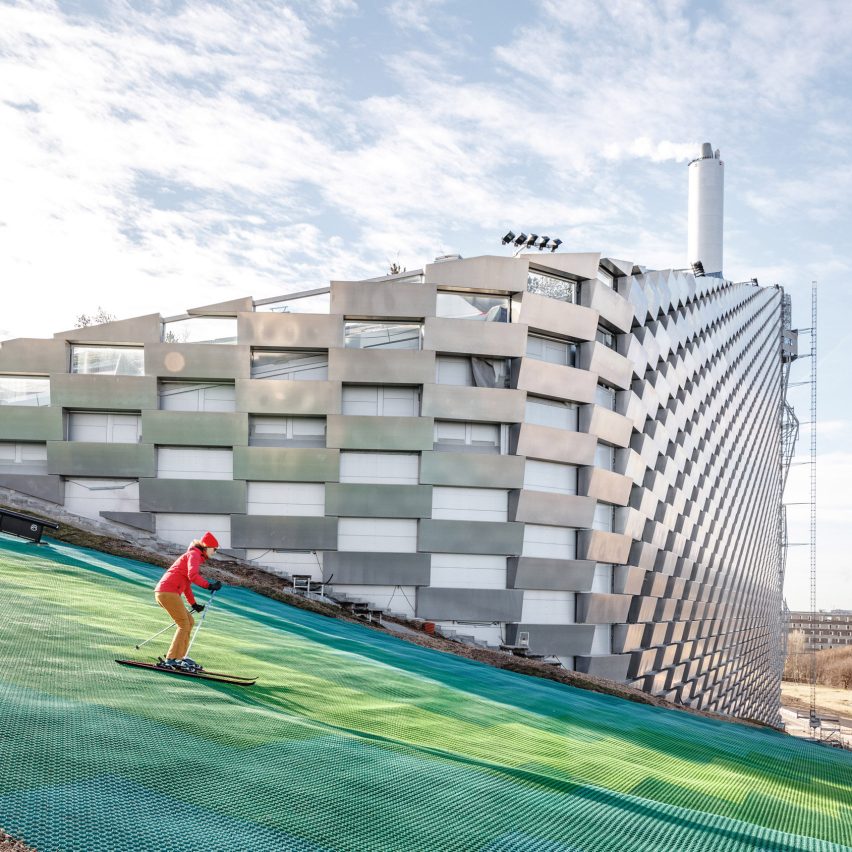
Copenhill waste-to-energy plant and ski slope by BIG in Copenhagen, Denmark

The ski slope on the Copenhill power station in Copenhagen designed by architecture studio BIG is under threat of closure, according to reports in the Danish press.

Danish newspaper The Copenhagen Post reported that the surface of the Copenhill artificial ski slope, which tops the Amager Bakke power station, has deteriorated and needs extensive repairs.

According to the paper, the repairs to the 400-metre-long slope, which opened in 2019, will cost 9.5 million kroner ($1.5 million) and could require temporary closure of the leisure facility.
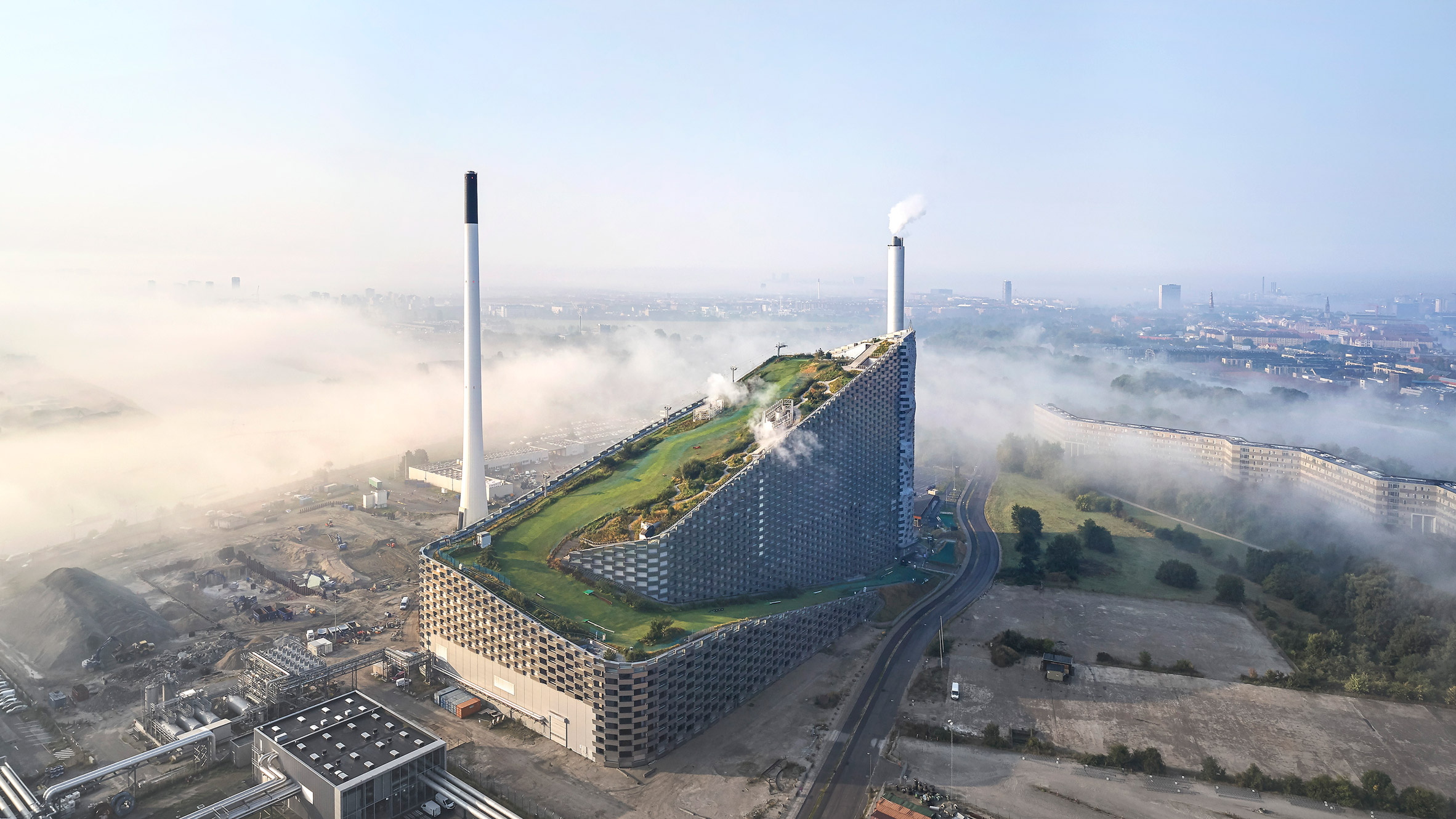
Hufton + Crow photographs of Amager Bakke, the power station and ski slope designed by BIG in Copenhagen
The 400-metre-long Copenhill ski slope allegedly needs "extensive repairs"

The paper also reported that a dispute between the facility's owner Amager Bakke Foundation and its insurance company Tryg over who is liable for the repairs could lead to the slope's permanent closure.

"The stakes are high: if the foundation wins the case or a settlement is reached, the ski slope can reopen in 2024, but if it loses the case, the facility must close permanently," reported The Copenhagen Post.

"Another potential spanner-in-the-works is the risk that temporary closure may lead to claims from the operator Copenhill for lost earnings."

"No plans to close down Amager Bakke"

However, the Copenhill operator hit back at the claims in a statement published on its website titled Facts about the ski surface on Amager Bakke: of course we do not close!

While it acknowledged that the surface is deteriorating quicker than expected, it disputed the claim that the facility was under threat of either temporary or permanent closure, claiming that repairs can be made while keeping the slope open.
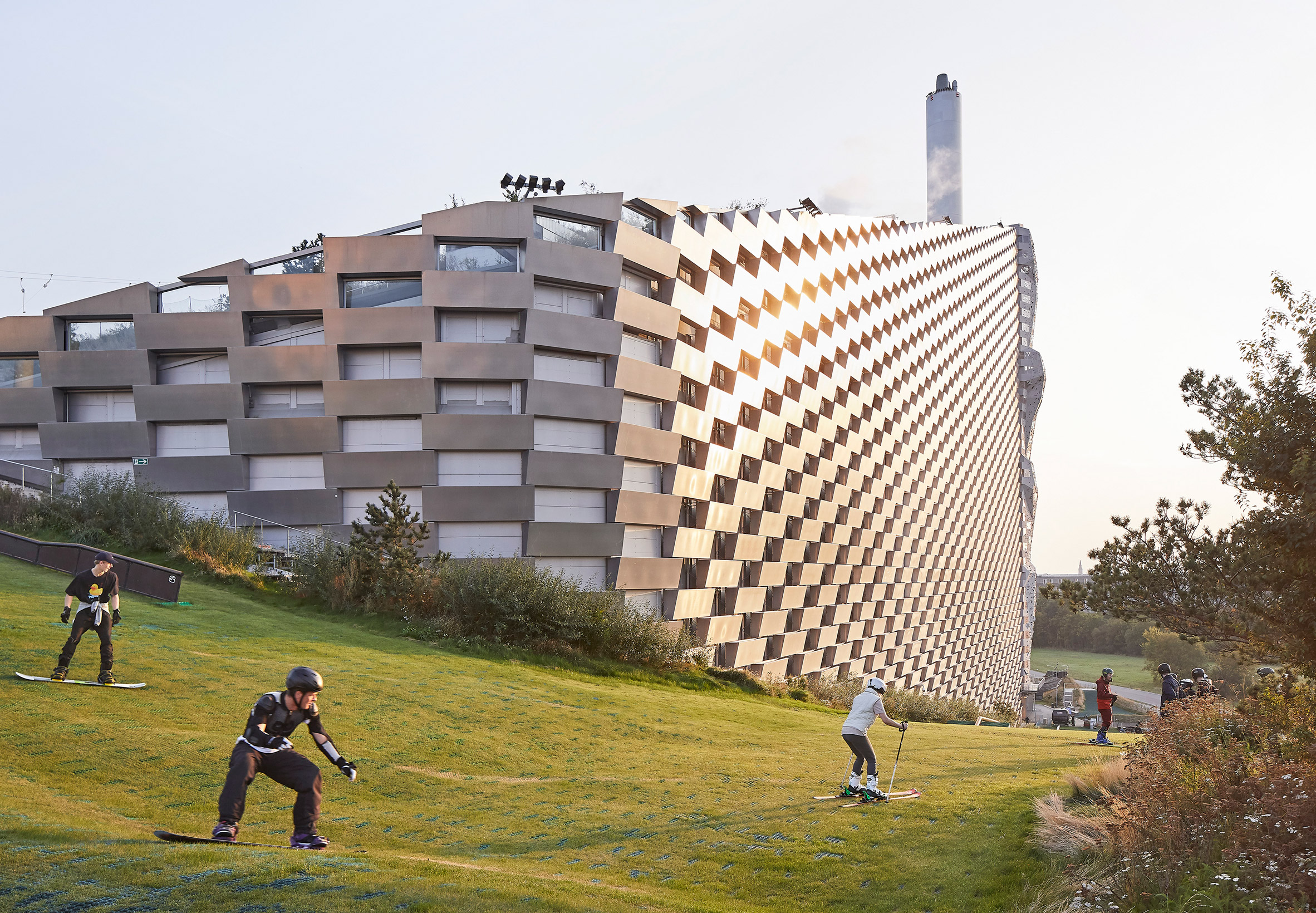
Hufton + Crow photographs of Amager Bakke, the power station and ski slope designed by BIG in Copenhagen
The ski-slope on top of the power station opened in 2019

"Yes, we experience that the steep part of the ski slope's surface wears out faster than expected and therefore parts of the surface must be replaced," the statement said.

"The media that have chosen to write that story have not investigated the matter," it added. "This is really criticisable journalism, as both Fonden Amager Bakke and CopenHill A / S as operating operators have no plans to close down Amager Bakke."

"When the ski base needs to be replaced, it is done in smaller areas at a time. It will therefore not go beyond opening hours and you will continue to be able to ski in the areas that are not in the process of being replaced."

Artificial ski slope on top of waste-to-energy power plant

Designed by BIG, the Amager Bakke waste-to-energy power plant is capable of converting 440,000 tons of waste into energy annually.

Along with the ski slope, it is also topped with a climbing wall and several hiking trails. According to BIG founder Bjarke Ingels, the facility is an example of "hedonistic sustainability".

"CopenHill is a blatant architectural expression of something that would otherwise have remained invisible: that it is the cleanest waste-to-energy power plant in the world," he said at the time of its opening.

"As a power plant, CopenHill is so clean that we have been able to turn its building mass into the bedrock of the social life of the city – its facade is climbable, its roof is hikeable and its slopes are skiable" he continued.

"A crystal clear example of hedonistic sustainability – that a sustainable city is not only better for the environment – it is also more enjoyable for the lives of its citizens."

BIG, which was founded by Ingels in 2005, is one of the world's best-known architecture studios. Recent designs by the studio include a 3D-printed structure designed to simulate living on Mars and a battery-metals plant for an underseas mining company.

Photography is by Hufton + Crow.

The post BIG's Copenhill ski slope reportedly risks permanent closure appeared first on Dezeen.


from Dezeen https://ift.tt/3mwUUNK

Ten impressive architectural viewpoints designed to stand out

Viewpoints roundup

Architectural viewpoints have been in the news lately with the opening of BIG's helical Marsk Tower and controversy surrounding MVRDV's Marble Arch Mound and Thomas Heatherwick's Vessel. Here are 10 impressive lookouts from Dezeen's archive.


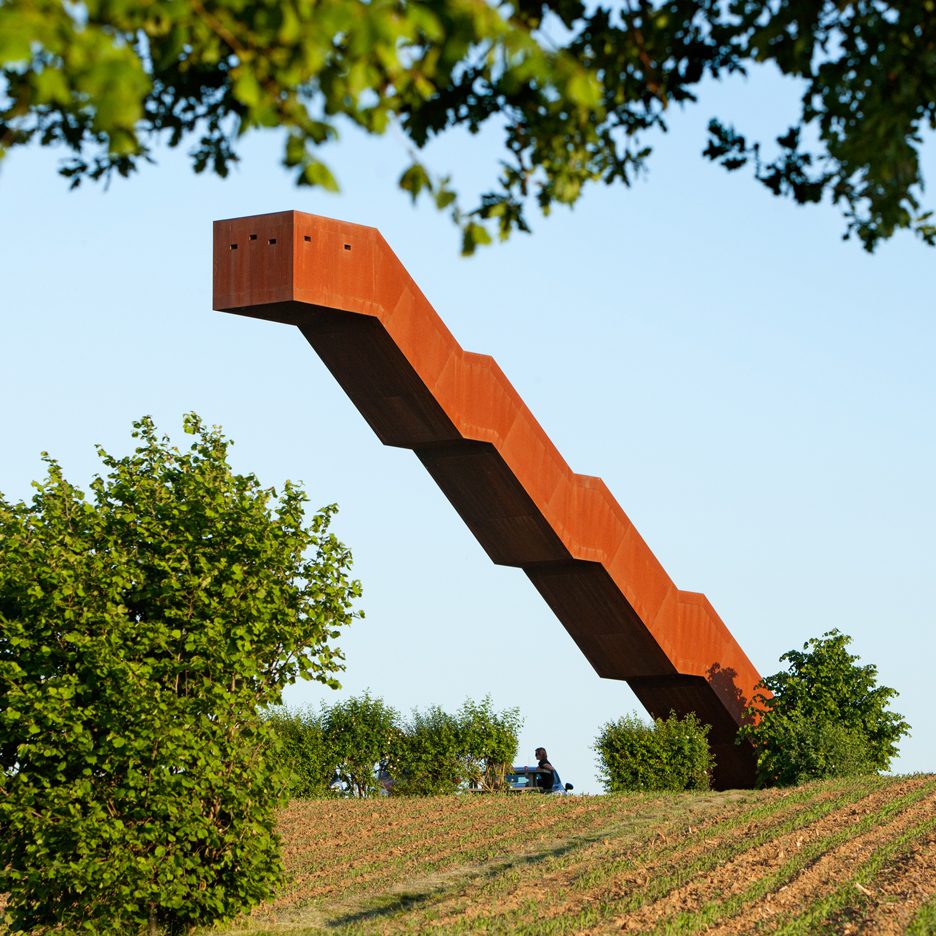
Vlooyberg Tower by Close to Bone

Engineering studio Close to Bone created an 11.5-metre-high cantilevered staircase as a unique viewpoint in Flanders, Belgium.

Named Vlooyberg Tower, the free observation tower was constructed from orange weathering steel to avoid acts of arson, which destroyed the wooden tower that formerly sat on the site.

However, in 2018 the gravity-defying structure was severely damaged in an apparent explosion. The structure was repaired and reopened later that year.

Find out more about Vlooyberg Tower


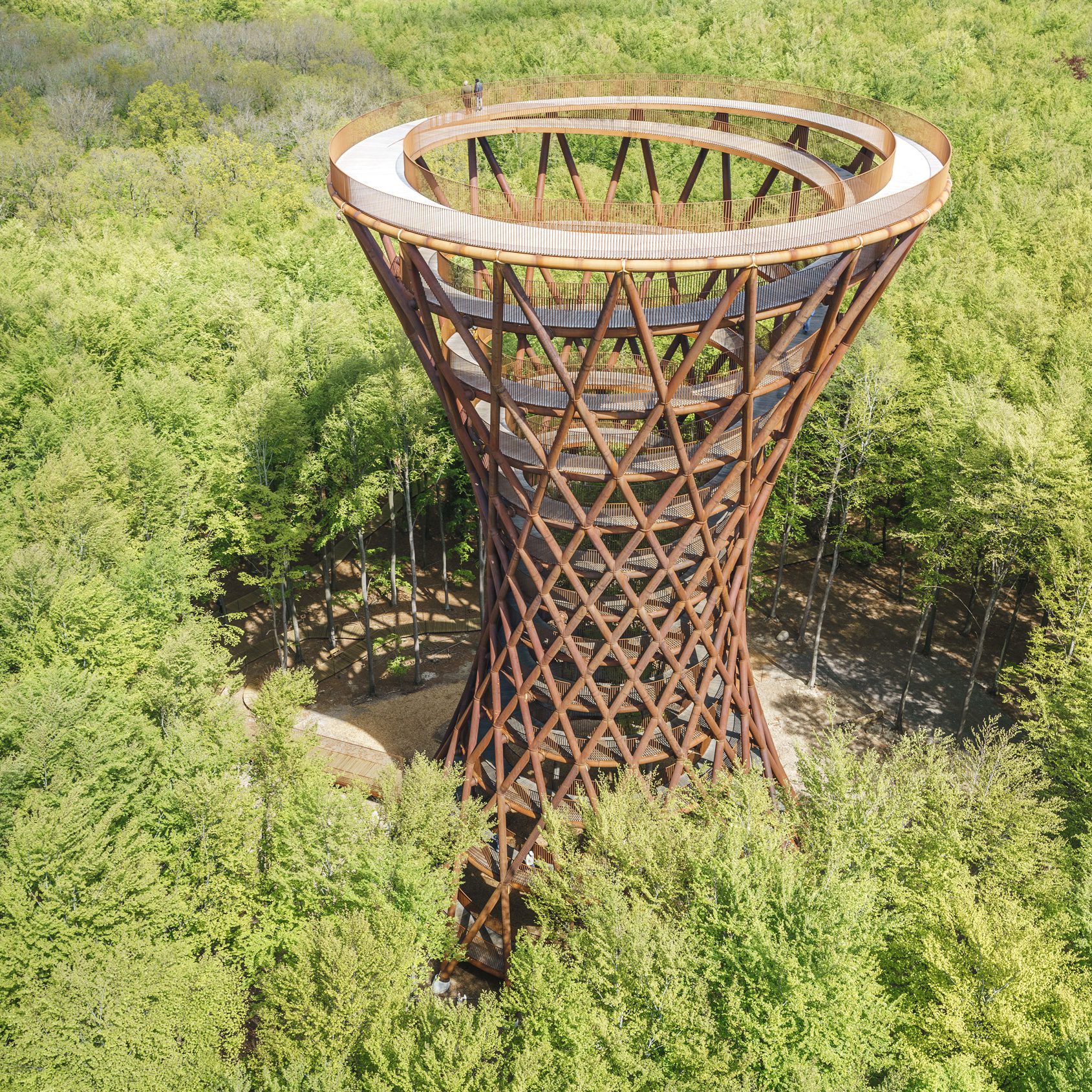
Forest Tower by EFFEKT

Forest Tower at Camp Adventure by EFFEKT

The helical Forest Tower at Camp Adventure, Denmark's largest climbing camp, was designed by Danish architecture studio EFFEKT.

Hourglass in shape, the weathering steel viewpoint, which costs 150 kr (€20) to climb, allows visitors to walk amongst the treetops by ascending a spiralling ramp that curves 45 metres above the ground.

Find out more about Forest Tower ›


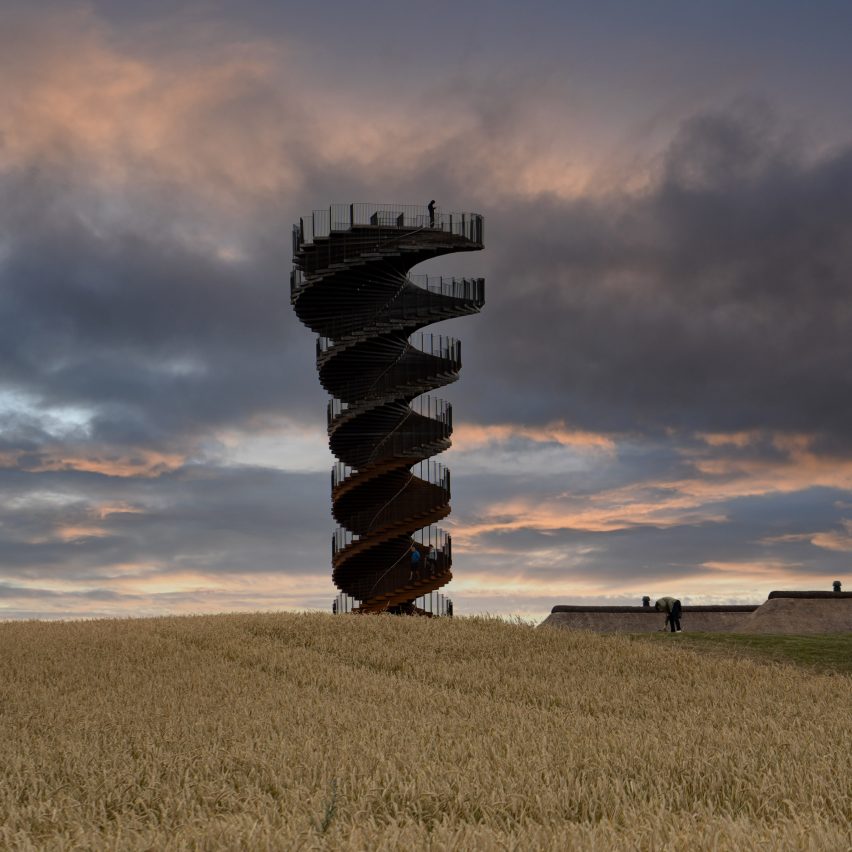
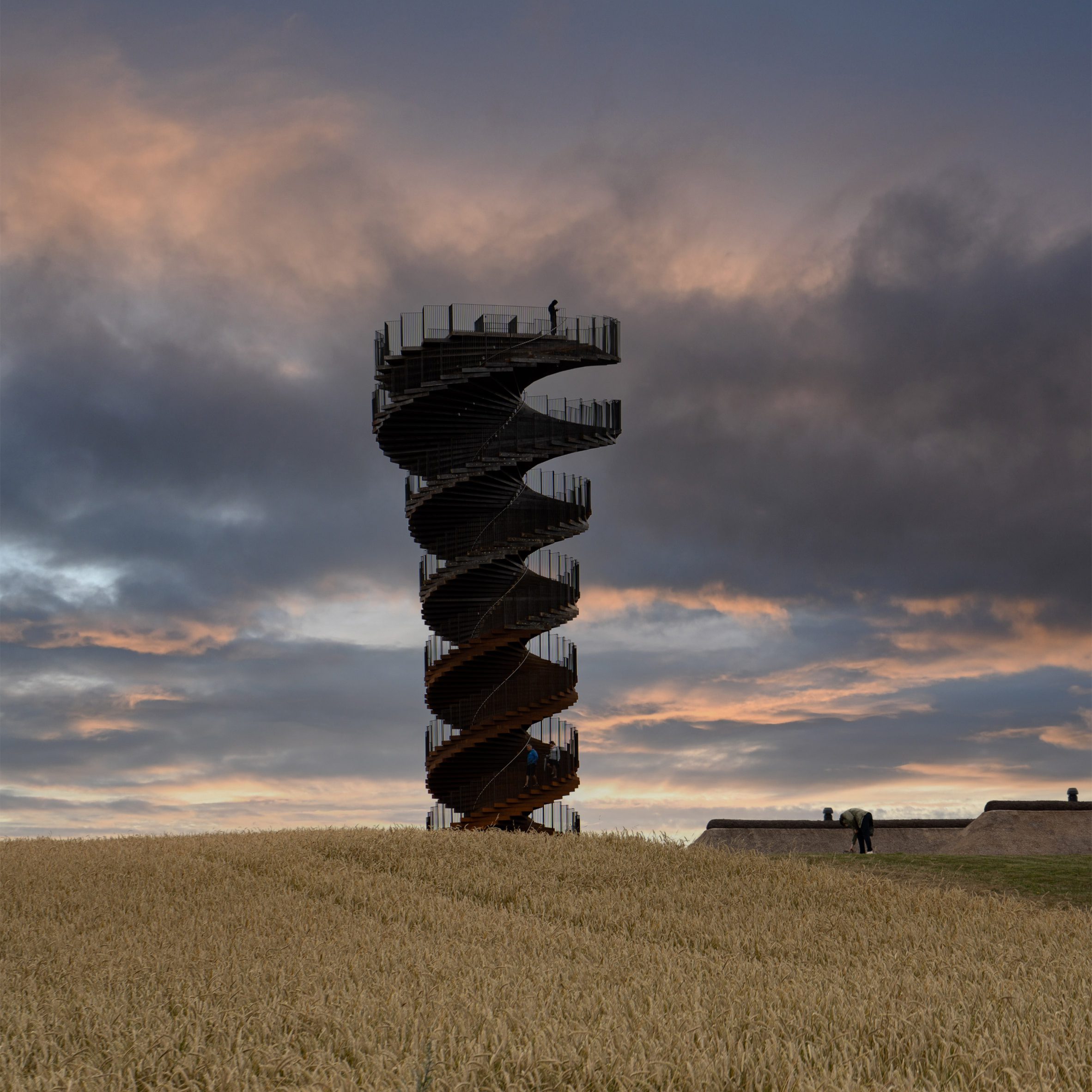
Marsk Watchtower by BIG

Marsk Tower by BIG

Designed with a double helix structure informed by DNA, Marsk Tower by architecture studio BIG recently been completed at the Wadden Sea National Park in Denmark.

The Corten steel tower, which costs 90 kr (€12) to climb has views of surrounding UNESCO World Heritage-listed marshland.

Find out more about Marsk Tower ›


Marble Arch Mound in London

Marble Arch Mound by MVRDV

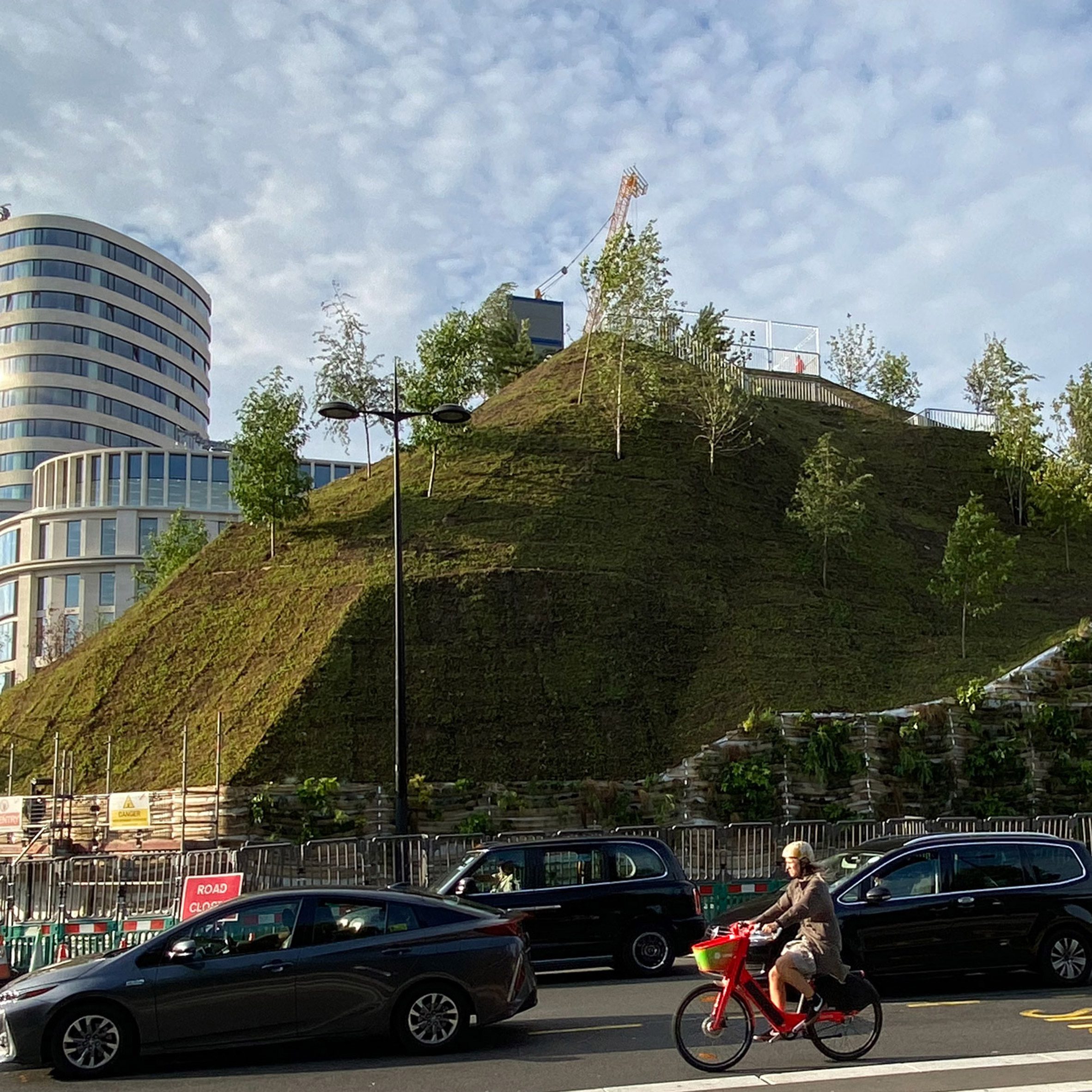
Dutch studio MVRDV recently unveiled a controversial artificial hill next to London's Marble Arch.

Built to encourage visitors back to the Oxford Street shopping district as coronavirus restrictions are lifted, the Marble Arch Mound features grassy turf and trees that cover its scaffolding structure.

The viewpoint was heavily criticised when it opened due to its unfinished appearance leading to the council making the attraction free to climb during August. Following costs spiralled from £3.3 million to £6 million, the deputy leader of Westminster City Council, which commissioned the structure, resigned.

Find out more about Marble Arch Mound ›


Vessel by Thomas Heatherwick in Manhattan

Vessel by Thomas Heatherwick

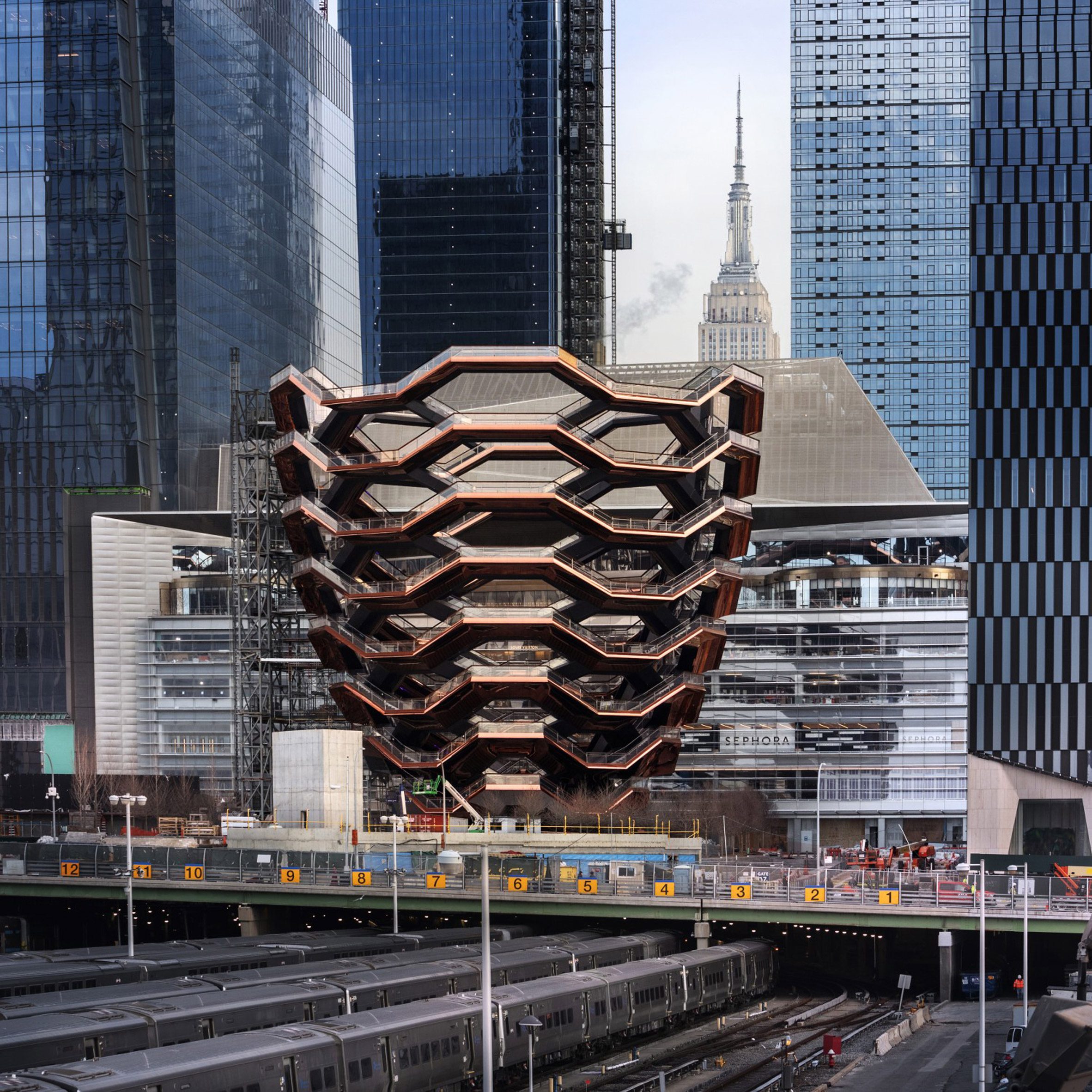
At 16 storeys, Vessel is a honeycomb-shaped visitor attraction composed of 154 staircases that meet at 80 platforms.

Designed by British designer Thomas Heatherwick, the tower at the Hudson Yards development in New York was informed by the design of ancient Indian stepwells.

The viewpoint opened in 2019 but was forced to closed in January this year after a third person committed suicide by jumping from it. Despite being reopened with a buddy system, a fourth person committed suicide by jumping from the structure in July leading to the attraction closing indefinitely.

Find out more about Vessel ›


Dubai Frame

Dubai Frame by Fernando Donis

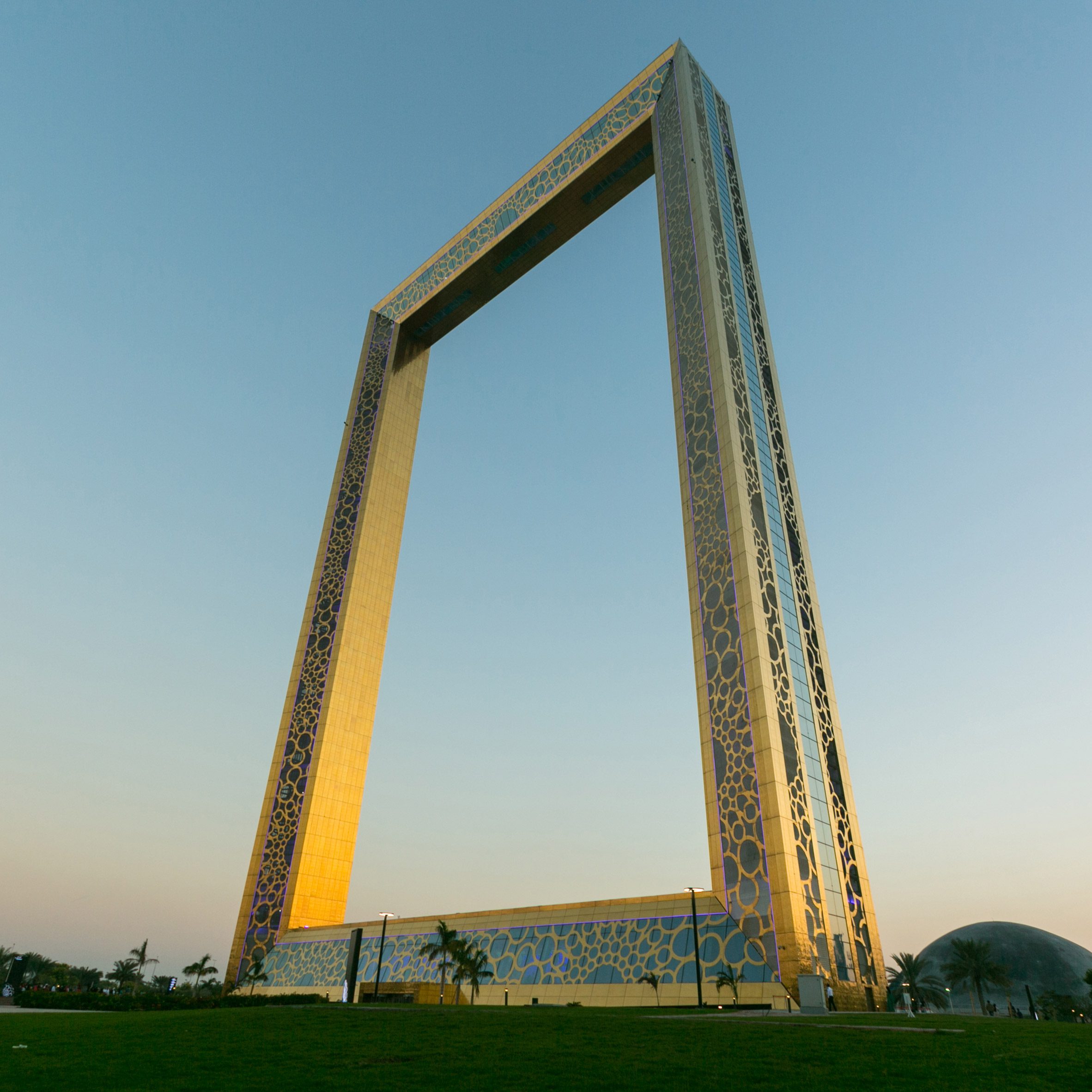
Dubai Frame is a pair of 150-metre-tall towers linked by a 93-metre-wide bridge to create a structure that resembles a giant photo frame towering above Za'abeel Park in Dubai.

Designed by Rotterdam-based architect Fernando Donis, the AED 50 ($13.6) attraction was controversial as its designer sued the Dubai Municipality and ThyssenKrupp elevator company.

Although he received a $100,000 prize for winning the competition to design the structure, he claimed the organisations altered the design and he did not receive a contract nor compensation for his design.

Find out more about Dubai Frame ›


Corsican Deer Observatories

Corsican Deer Observatories by Orma Architettura

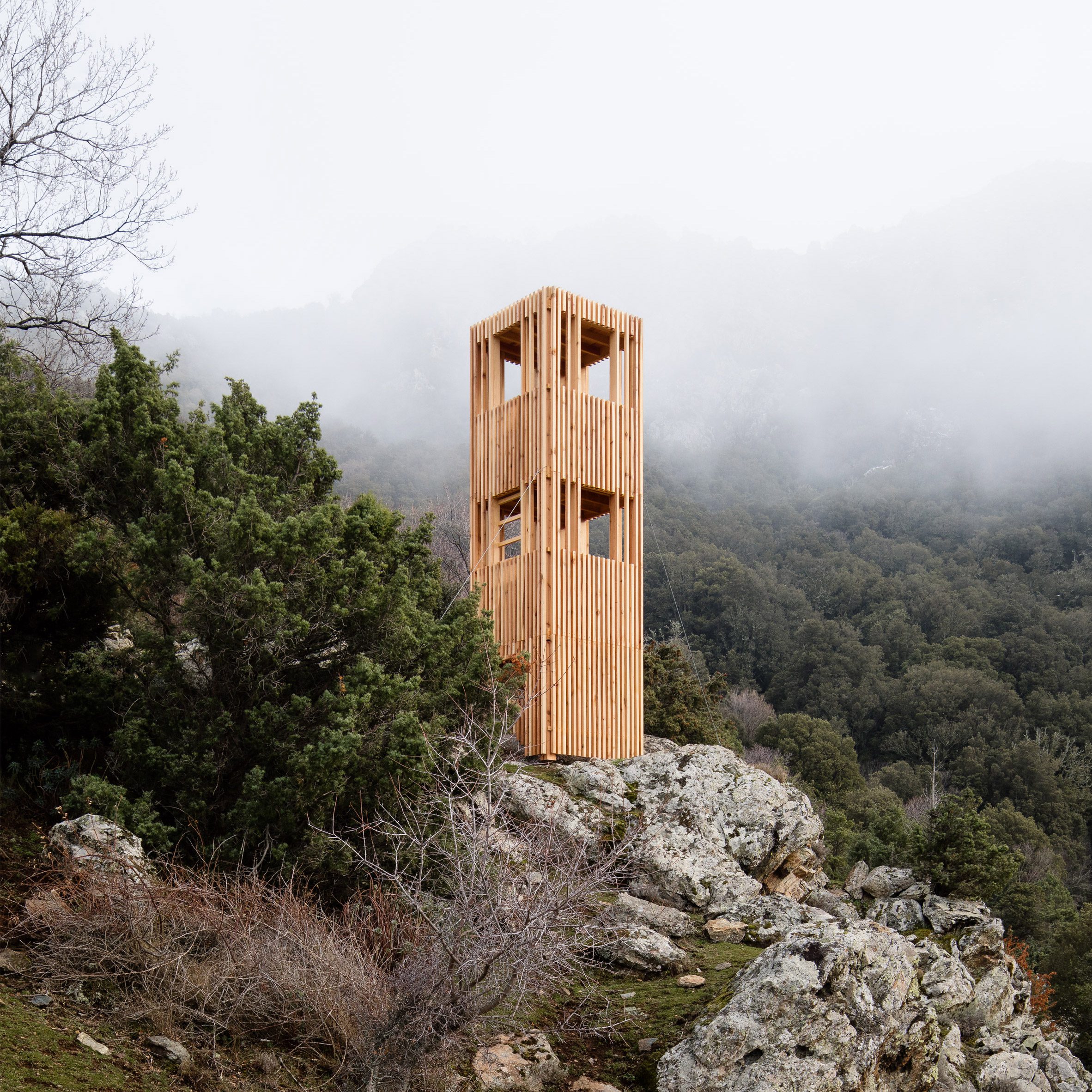
Three matching wooden viewpoints were built by French studio Orma Architettura for people to observe native red deer on the island of Corsica in the Mediterranean.

Constructed by local artisans, the free-to-climb Corsican Deer Observatories are wooden rectilinear structures with slatted walls designed to prevent deer from seeing people inside the viewpoints. Each of the three structures are intended to resemble tree trunks, but are adapted to their specific locations within the park.

Find out more about Corsican Deer Observatories ›


The Viewing Dyke viewpoint

An Ode to Manmade Land by Vector-I Architects

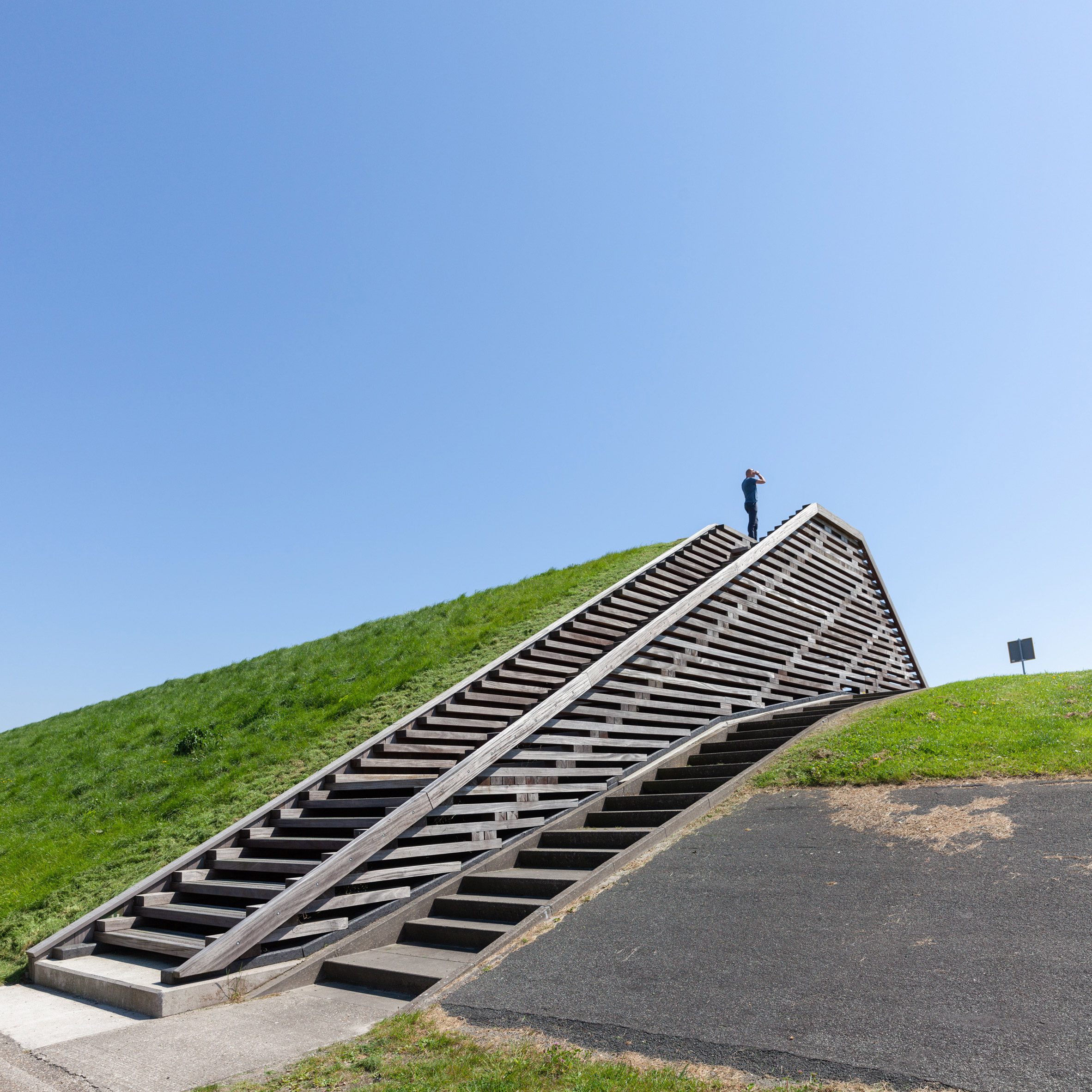
Vector-I Architects and local artist Lambert Kamps designed a timber installation on an artificial dyke in the Netherlands' Lauwersmeer National Park to offer views across the landscape and "provide new perspectives on rising sea levels".

Named the Viewing Dyke, the viewpoint features a seven-metre-high wooden staircase that gives visitors a view of their surroundings.

Find out more about An Ode to Manmade Land ›


Ötzi Peak 3251m by Network of Architecture

Ötzi Peak 3251m by Network of Architecture

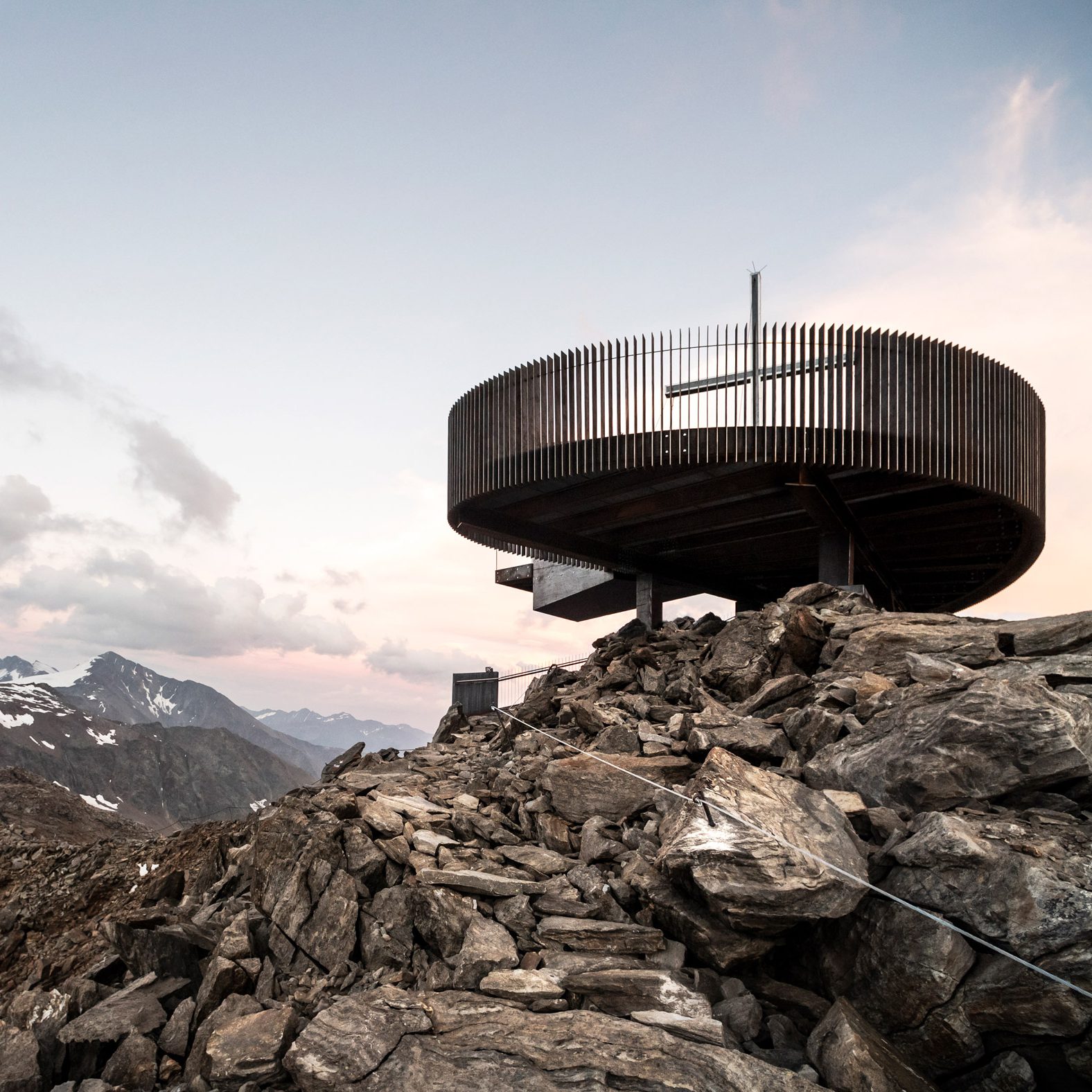
Designed as a remote tourist attraction built for guests of the nearby Hotel Grawand and other passersby, Ötzi Peak 3251m is a curved viewpoint made from weathering steel that sits at the peak of Schnals Valley Glacier ridge in Italy.

Italian studio Network of Architecture designed the free observation deck to only touch the earth where structurally necessary in order to give visitors the sensation of being suspended above the mountains.

Find out more about Ötzi Peak 3251m ›


The viewing platform is by Snohetta

Perspektivenweg viewpoint by Snøhetta

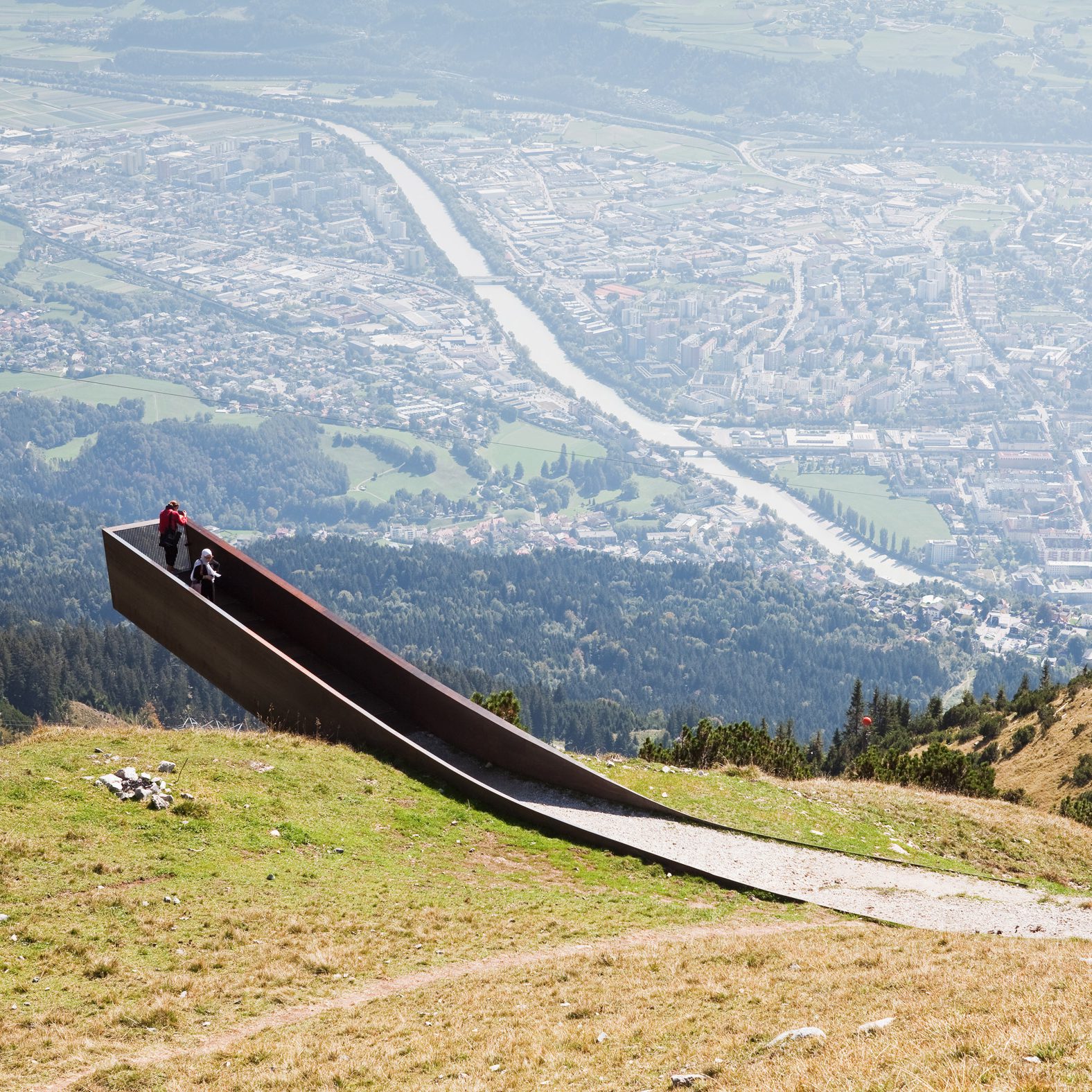
Architecture studio Snøhetta added the cantilevered Perspektivenweg viewing platform to a walking trail in the Austrian Alps. It is one of 10 architectural elements that the firm designed for Nordkette mountain range trail.

The free observation deck was designed to "grow out of the terrain," and features a metal grate floor that allows visitors to observe the earth under their feet as well as the scenery on the horizon.

Find out more about Perspektivenweg 

The post Ten impressive architectural viewpoints designed to stand out appeared first on Dezeen.


from Dezeen https://ift.tt/3grXQas

MIT researchers develop inflatable mind-controlled prosthetic hand

Inflatable neuroprosthetic hand by MIT engineers

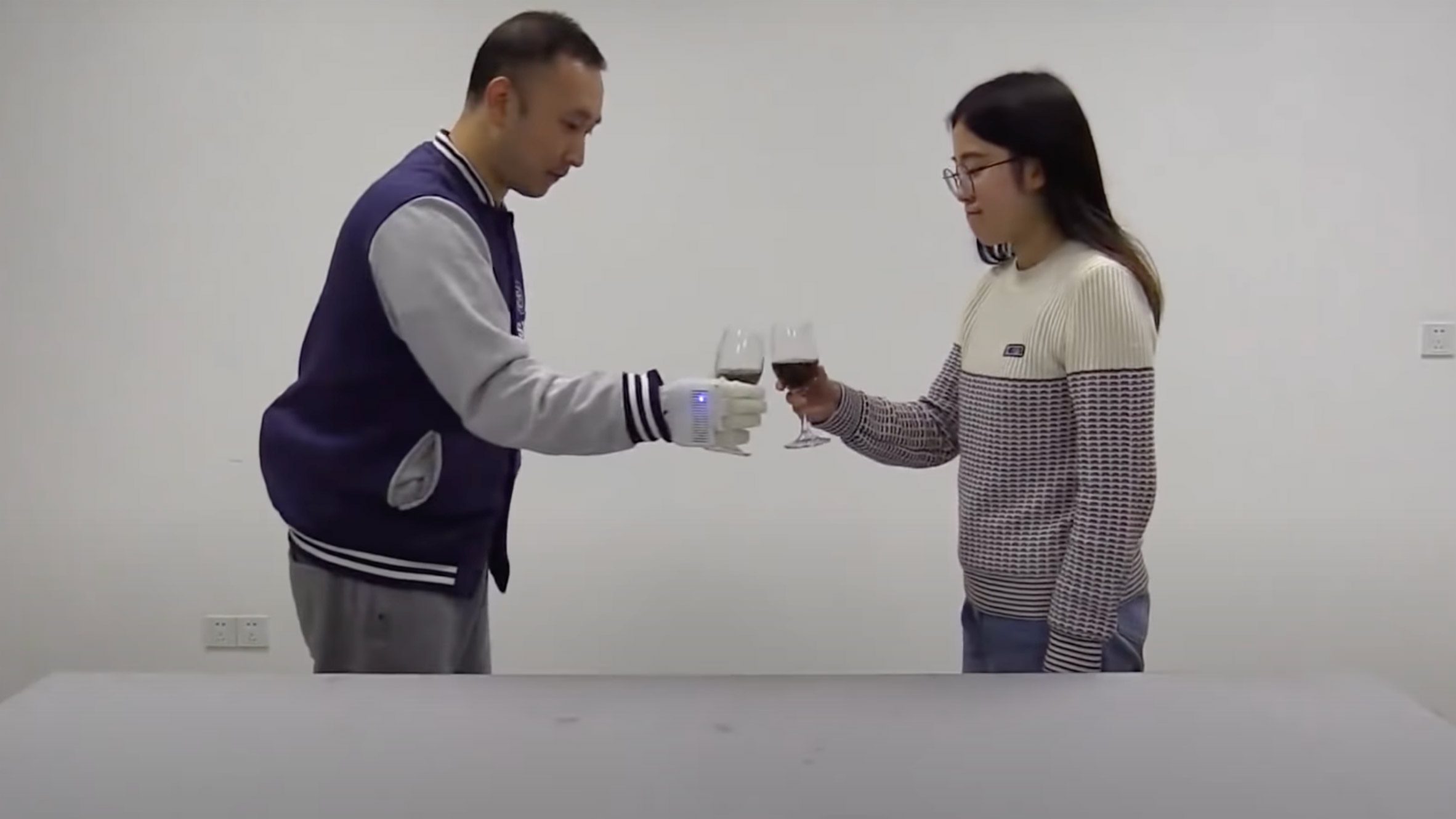
Engineers at the Massachusetts Institute of Technology and Shanghai Jiao Tong University have created an inflatable prosthetic hand that could be made for a fraction of the cost of similar prosthetics.

The inflatable hand is a type of neuroprosthetic, meaning it can pick up on residual muscle signals to perform the motions the user intends to make – such as pouring a carton of juice or zipping a suitcase.

But while limb neuroprosthetics are usually heavy, metal creations that the engineers cost at upwards of US$10,0000, the inflatable hand is light, soft and made of US$500 worth of components.

Inflatable neuroprosthetic hand by MIT engineers
Amputees wearing the inflatable hand can perform four different grip types, ranging from pinches to cupping the palm

The innovation could one day help some of the 5 million people in the world who have had an upper-limb amputation but can't afford expensive prostheses.

"There's huge potential to make this soft prosthetic very low cost, for low-income families who have suffered from amputation," said Massachusetts Institute of Technology (MIT) researcher Xuanhe Zhao.

"This is not a product yet, but the performance is already similar or superior to existing neuroprosthetics, which we're excited about."

Air pressure replaces electric motor

Along with his collaborators at MIT and Shanghai Jiao Tong University in China, Zhao has co-authored a paper on the inflatable hand that appears in the journal Nature Biomedical Engineering this month.

It outlines how they made the hand, which has five articulated fingers made of the stretchy commercial elastomer EcoFlex attached to a 3D-printed "palm", move using a pneumatic system rather than electric motors.

The system has a small pump and valves that is worn at the waist, and the position the fingers take depends on the pressure the pump exerts.

A computer model maps precise finger positions with the amount of pressure required to create them.

Users think to grasp

The fingers are described as "balloon-like", but with segments of fibre running through them, similar to articulated bones in actual fingers.

They can form four common grasps: pinching two and three fingers together, making a balled-up fist and cupping the palm.

Electromyography (EMG) sensors pick up electrical signals from the residual limb, so when the user imagines making a fist, the hand should make a fist.

Inflatable neuroprosthetic hand by MIT engineers
Volunteer testers were able to perform tasks such as pouring a carton of juice

The engineers used an existing algorithm that translates the muscle signals into grasp types to programme the system's controller.

The grasping actions are further aided by tactile feedback. The engineers included pressure sensors on each fingertip, which produce proportional electrical signals so the user can experience pressure on the fingers and respond accordingly.

This is rare among neuroprosthetics, say the engineers.

Users sync with the hand through EMG training

To start using the 292-gram inflatable hand, an amputee puts it on and undertakes a 15-minute EMG training module.

This asks them to imagine making the various grasp types while contracting the muscles in their arm. After this, the hand should be synced up with their thoughts.

The researchers have only conducted limited user testing so far, on two volunteers with upper-limb amputations. They were tasked with strength and dexterity tests such as writing with a pen, turning the pages of a book and lifting objects of different weights.

They also tested a commercially available bionic hand for comparison and found that the inflatable performed as well or better.

Inflatable neuroprosthetic hand by MIT engineers
One subject was able to pat a cat — and "feel" it under his fingertips

One of the subjects was able to manipulate it intuitively for activities outside of the four set grasp types, such as petting a cat and shaking someone's hand.

Blindfolded, he could also identify which finger was being poked or brushed and "feel" objects in his grasp.

The team has filed a patent for the device while it works on improvements.

"We now have four grasp types," said Zhao. "There can be more. This design can be improved, with better decoding technology, higher-density myoelectric arrays, and a more compact pump that could be worn on the wrist."

"We also want to customise the design for mass production, so we can translate soft robotic technology to benefit society," he added.

Other recent experiments in prosthetic design around the world have included a mind-controlled exoskeleton for quadriplegic users and a 3D-printed neuroprosthetic with vibro-tactile feedback invented by a design student.

Photography courtesy of the researchers.


Project credits

Research team: Guoying Gu, Ningbin Zhang, Haipeng Xu, Shaoting Lin, Yang Yu, Guohong Chai, Lisen Ge, Houle Yang, Qiwen Shao, Xinjun Sheng, Xiangyang Zhu and Xuanhe Zhao

The post MIT researchers develop inflatable mind-controlled prosthetic hand appeared first on Dezeen.


from Dezeen https://ift.tt/3gw9j90

Tuesday, 24 August 2021

Mexico City office interior features wealth of gold accents and marble

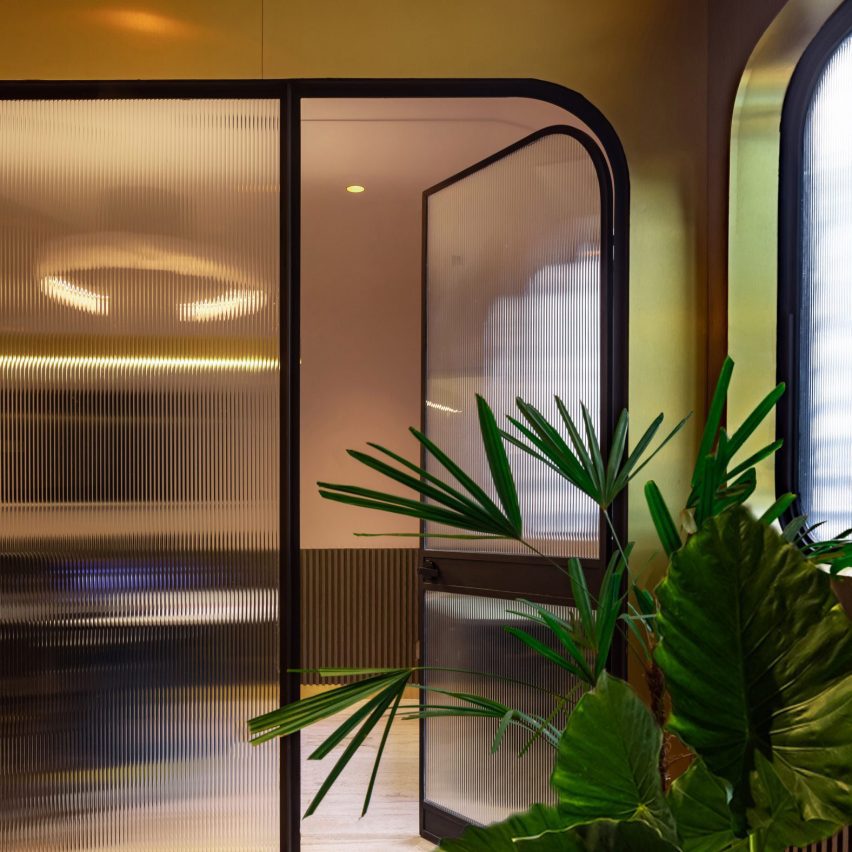
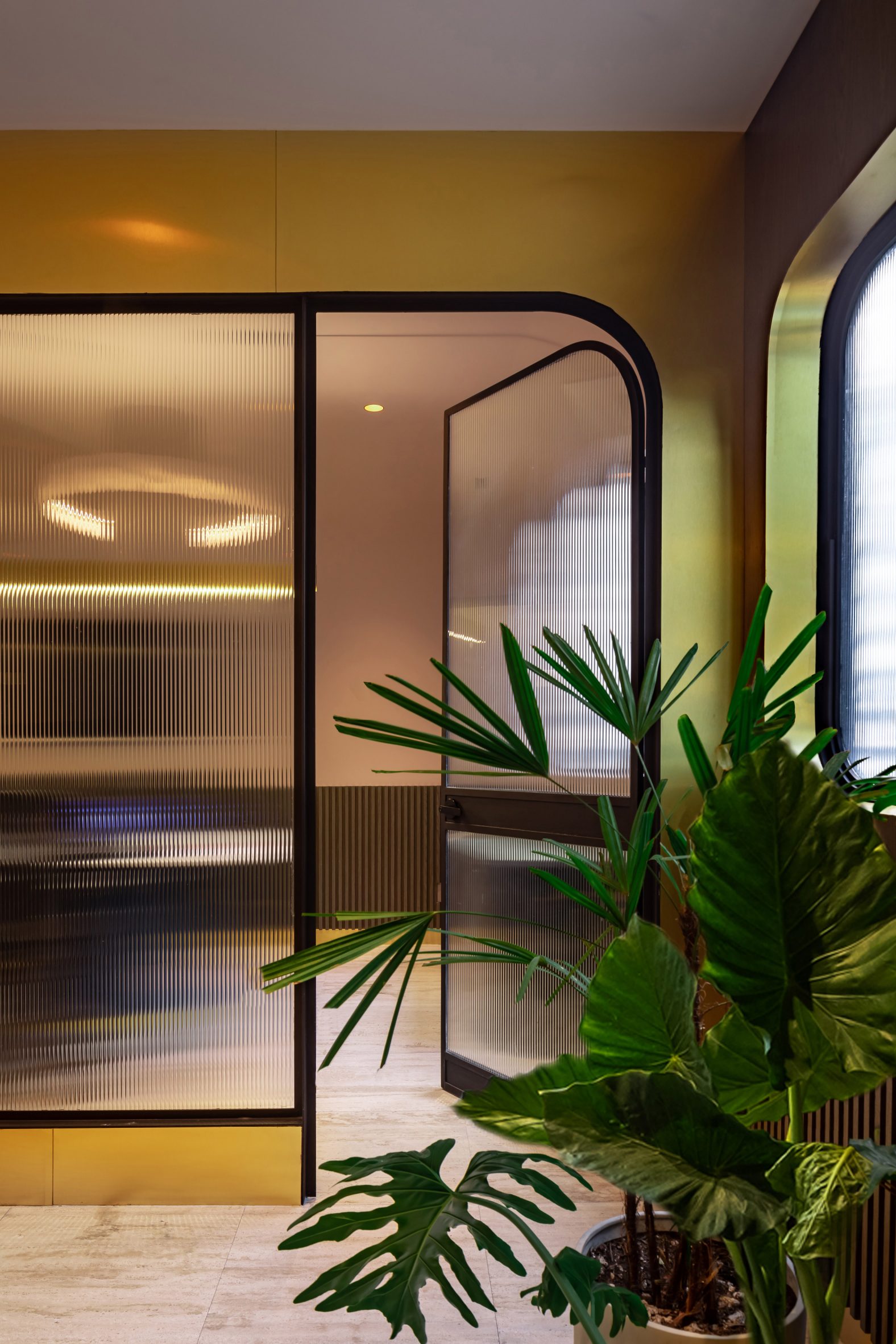
Álvaro Hernández Félix Studio has given these offices for a financial services firm a "very mid-sixties modern Mexican style", using curved window corners, marble furniture and gold surfaces.

Located in Mexico City's upscale neighbourhood of Polanco, the offices occupy the penthouse floor of 203 Masaryk.

Álvaro Hernández Félix Studio 203 Masaryk offices
The penthouse office space at 203 Masaryk is home to a financial services firm

Local firm Álvaro Hernández Félix Studio was tasked with renovating the 350-square-metre interior, which accommodates four private offices, an open-concept work area, three conference rooms and a kitchenette.

Visitors enter into the lobby directly from the elevator, in a space that the studio says has "a retro vibe" reminiscent of a "very mid-sixties modern Mexican style".

Álvaro Hernández Félix Studio added marble accents to the design
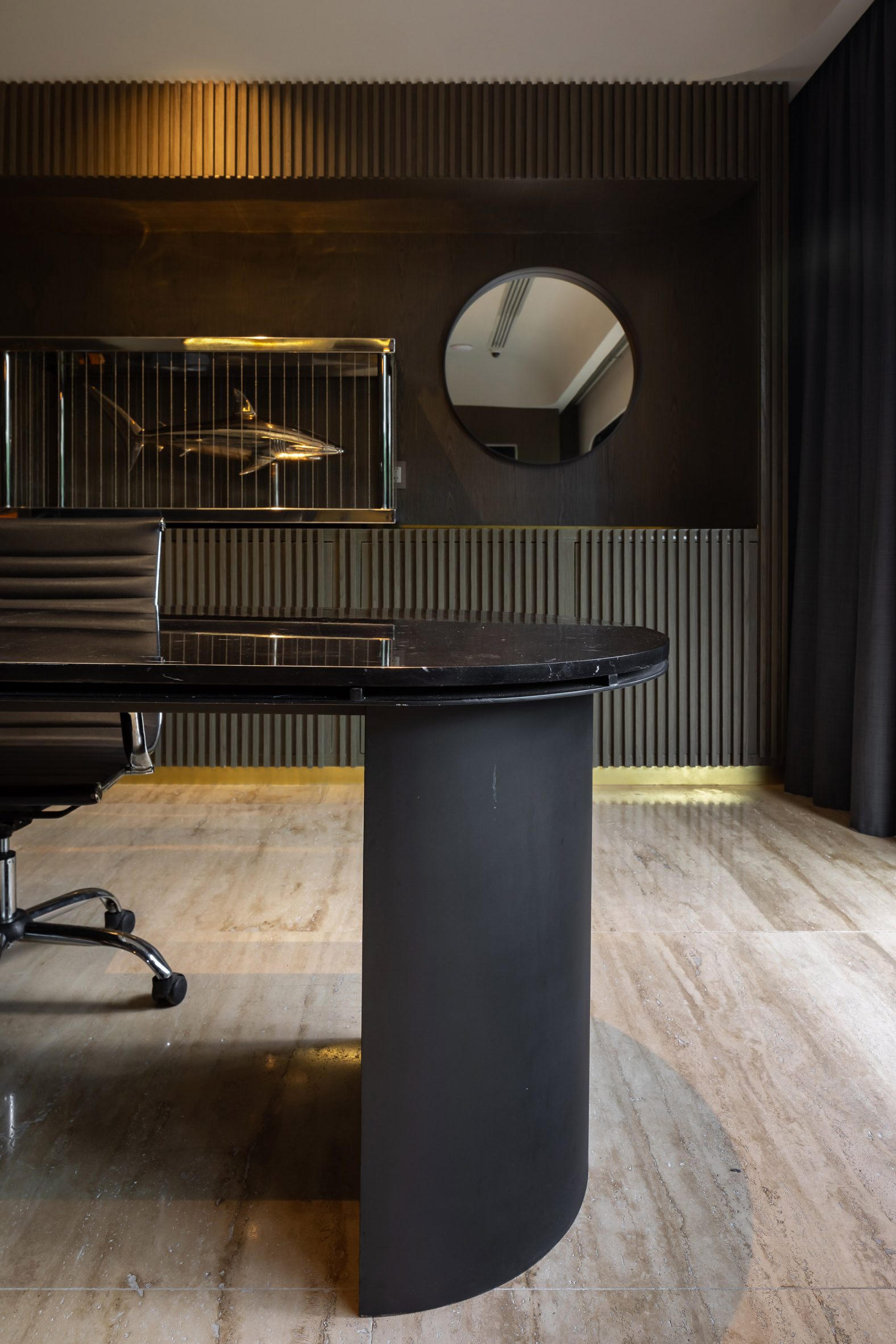
Marble furniture and travertine floors feature in the interiors by Álvaro Hernández Félix Studio

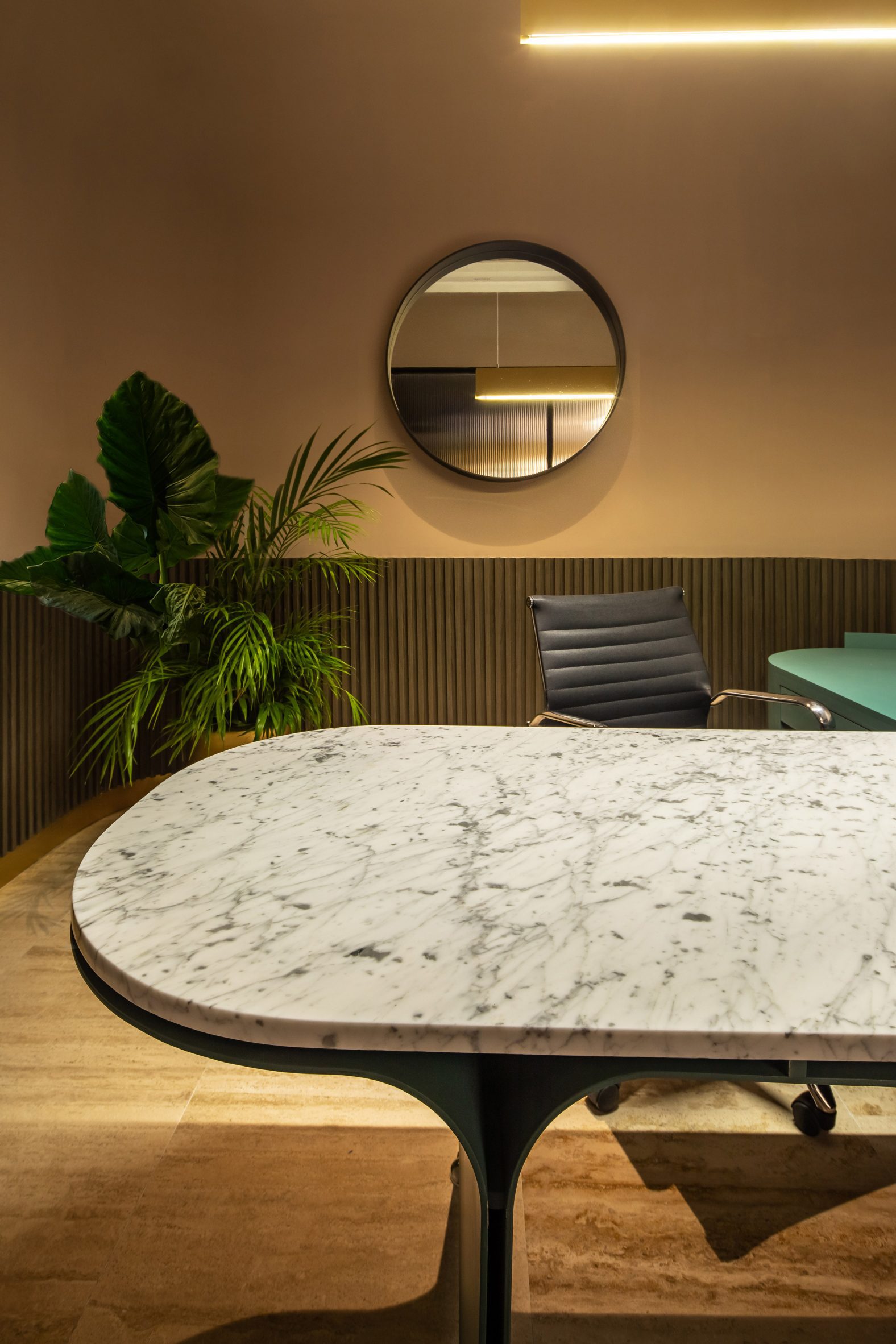
"Metallic walls in a golden tone complement the scene, where a striped travertine marble desk, is framed by plants and crowned by three spheric lamps, that make us travel to the past, without losing our awareness for the present," the firm said.

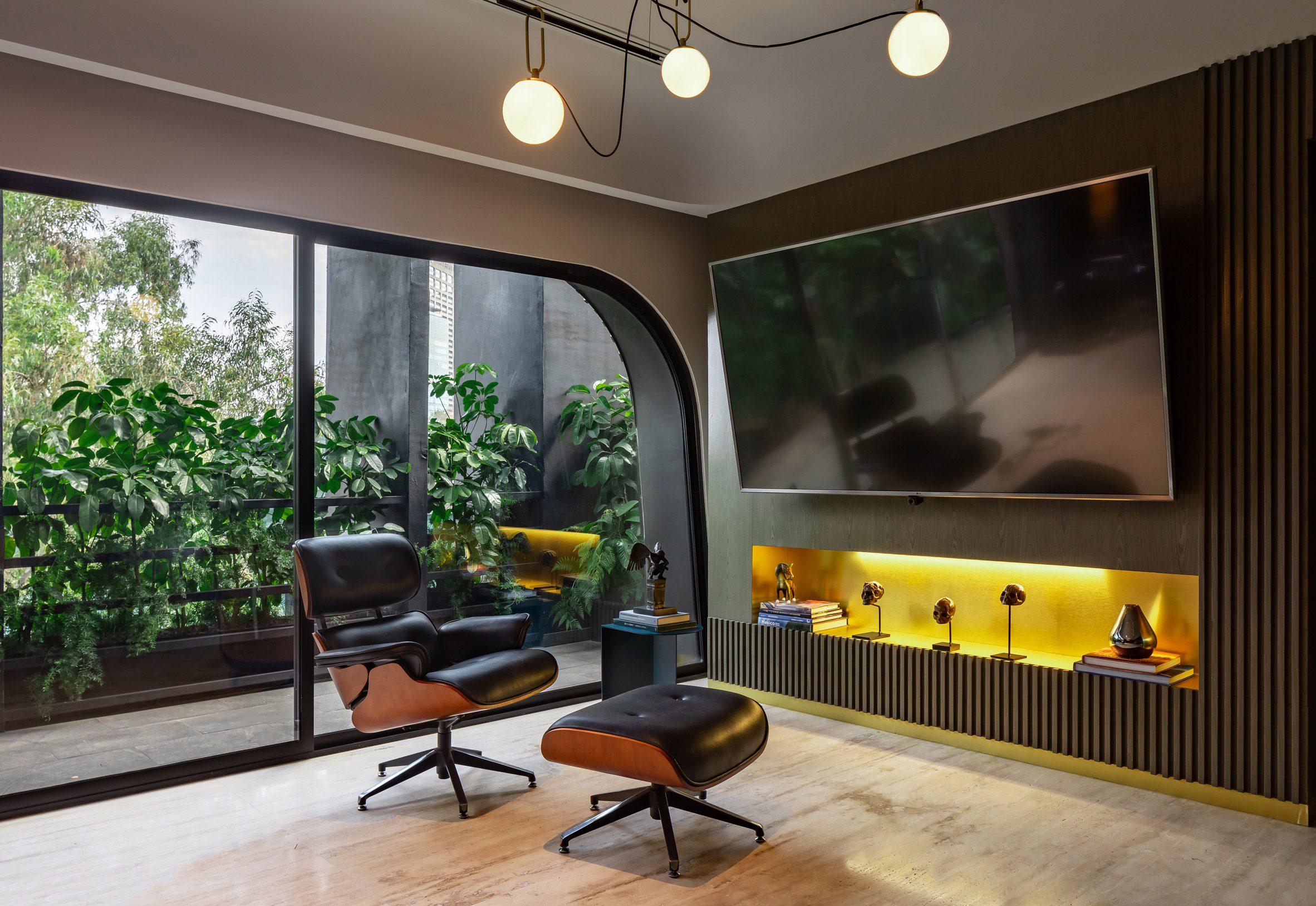
One side leads to the private director's office and an adjacent conference room, through massive golden doors that are meant to evoke a bank vault. These both face south, and enjoy access to a terrace that runs along the width of the building.

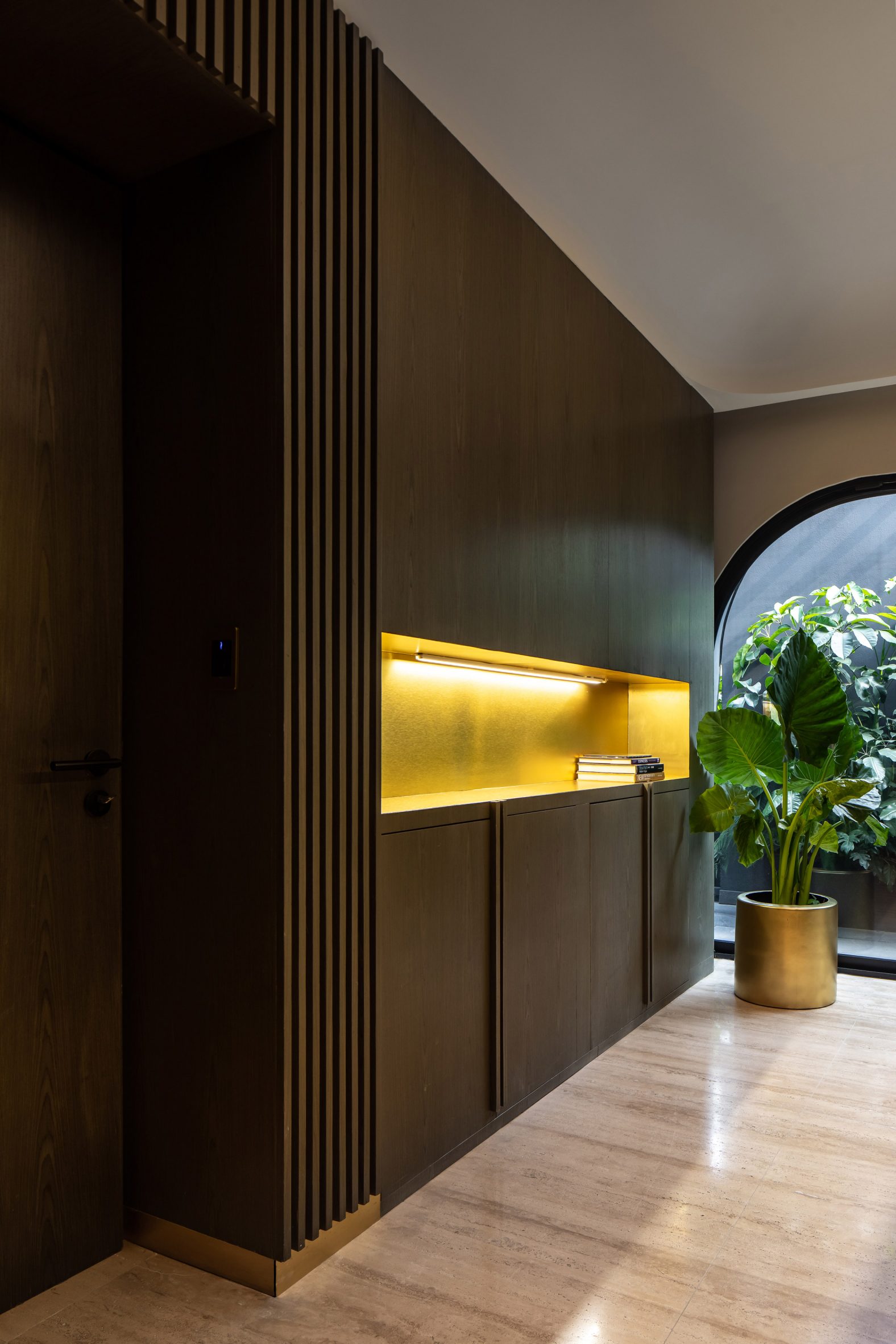
Dark surfaces are contrasted with shiny gold accents

Dark wooden battens line the walls of the director's suite and conference room, contrasting the light marble flooring that runs through the entire space.

At the opposite end of the lobby, a sliding glass door with a patterned surface leads to the main work area: an open-concept workspace for the majority of the company's employees.

This area is bookended by three private offices to one side, and two conference rooms separated by an operable partition on the other.

These can be combined into a single space for larger meetings when needed.

Álvaro Hernández Félix Studio 203 Masaryk offices
Álvaro Hernández Félix Studio also designed the furniture for the project

Álvaro Hernández Félix Studio used lighter finishes here, including pale marble desks, along with more gold accents and plenty of plants. The studio took on the architectural scope, and also designed the furniture.

"Lighting achieves a cosy and domestic feel, ambient oriented but very punctual where it is needed, creating contrasts and shadows, because of the smart selection of materials and the visual effects that can be done with its textures," the team explained.

The offices are in Mexico City
The director's office has access to an outdoor space

Other office projects in Mexico City include a law firm by local architects Esrawe Studio that features stadium seating and a wall covered in the firm's books, as well as Esrawe's own offices, which are within a repurposed dancehall and were left with an "honest, industrial aesthetic".

The photography is by Onnis Luque.


Project credits:

Design team: Álvaro Hernández Félix, Pedro Sánchez Morales
Furniture design: Álvaro H Félix Studio

The post Mexico City office interior features wealth of gold accents and marble appeared first on Dezeen.


from Dezeen https://ift.tt/3B7kHA3

Commenter jokes that architects can "end starvation"

Edward Mazria from Architecture 2030

In this week's comments update, readers are debating Edward Mazria's claims that architects can "change the world by acting now" and discussing other top stories.

Architect and founder of non-profit organisation Architecture 2030 Edward Mazria has said that architects can prevent the worst effects of climate change by deciding to design and build to net-zero carbon standards.

"If we act together now, we change the world" he says.

"Architects aren't building buildings for themselves!"

Commenters are torn. "Yes," said Alfred Hitchcock, "if you're lucky enough to have a client that will actually listen to your advice and do what you want them to, regardless of cost. A very rare client in my experience."

Rex Wexford agreed: "It always seems to get overlooked that architects aren't building buildings for themselves! We design them for clients. Finding a client who actually wants a building that meets the criteria is the hardest task."

"Architects can end starvation in Africa if we decide to build farms and wells. Architects can stop wars if we stop designing weapons and redistribute the world's wealth. I am pretty sure architects can stop Covid or any future diseases," added Jacopo, sarcastically.

"Much of the design work we admire (or despise) is done in sweatshops, where dozens of young aspiring architects work 80 or 100 hours per week to serve their art," replied B. "So while humanity may be getting a great bargain, architects need to re-evaluate their business (yes, I said business) approach."

Can architects change the world? Join the discussion ›

Russian Quintessential by Sergey Kuznetsov
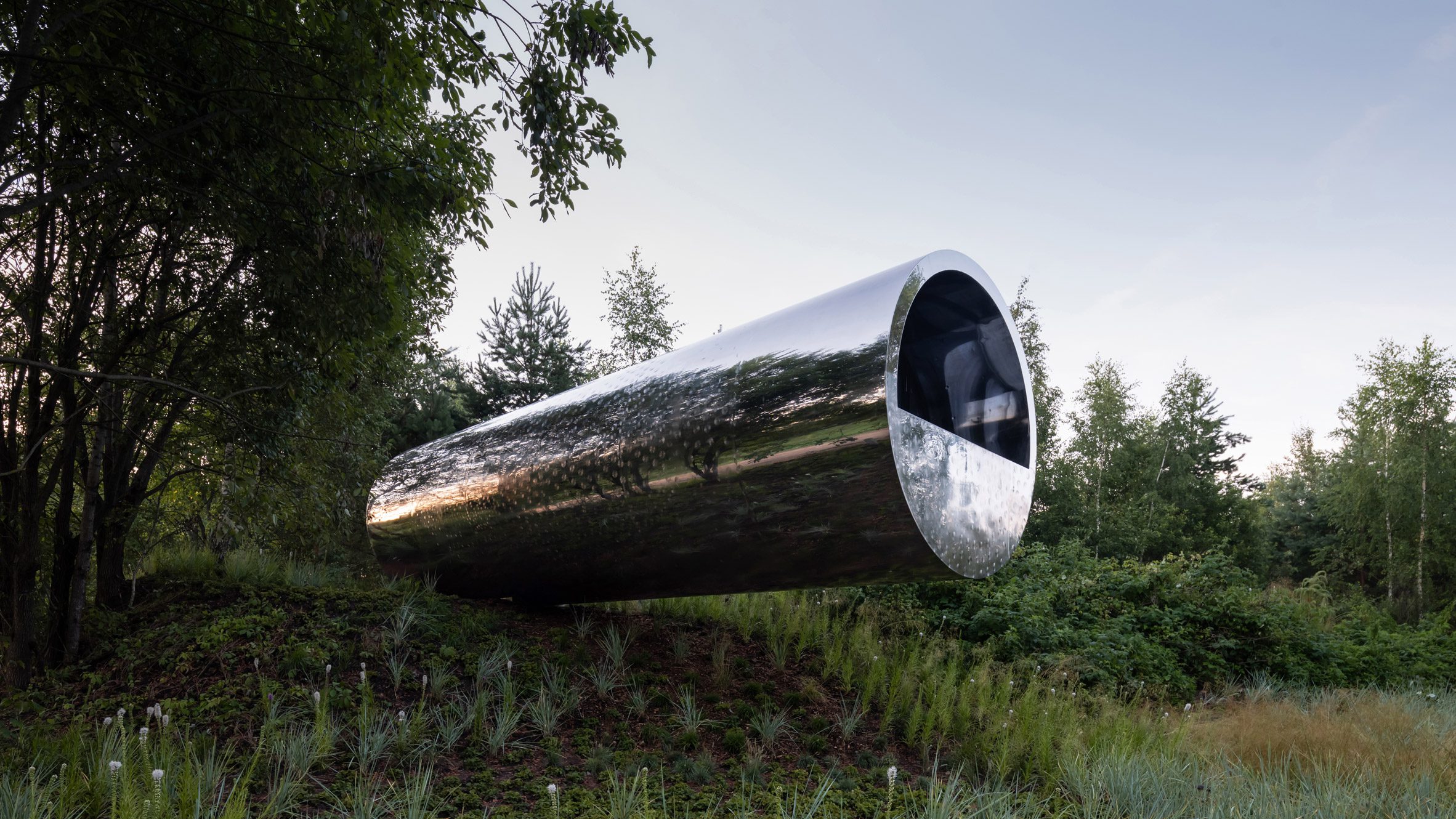
Tubular holiday home cantilevers over hill in Russian art park

Reader thinks tubular holiday home is "modernism at its gimmicky best"

Commenters are discussing a pipe-shaped cabin, which Moscow's chief architect Sergey Kuznetsov has constructed on the edge of a slope in Russia's Nikola-Lenivets Art Park.

"Looks like a massive advert for vaping," said Logomisia.

"Fascinated by the negative comments here!" replied Peter. "If I stumbled upon this in a forest, it'd make me smile as it's making a tiny patch of the world a more creative and quirky place."

Jb was also a fan: "This is modernism at its quintessential gimmicky best. Soak it up before it rolls down the hill."

Would you like to stay in the holiday home? Join the discussion ›

UK government architecture review
UK government calls for architects' views on professional reform

Commenter claims "the UK doesn't value great design"

The UK government has sparked debate by inviting architects to submit their views on regulation and how to improve diversity and innovation in the industry.

"The UK doesn't value great design," said Blah. "We're taught how to reflect critically on works of literacy, political and cultural events, scientific methodologies, etc in school. But virtually nothing about design."

"The industry is saturated with workers and thousands more are produced each year," continued Bobby Dazzler. "We are 'educating' too many people and for very little pay. If you told a first-year student they will be getting minimum wage when they leave uni they would think twice about it."

Pete S also shared his views: "The first step would be to stop design-build so architects can act as architects again. Then the design process will be faster, smoother and the building much more linked to the creator."

What do you think? Join the discussion ›

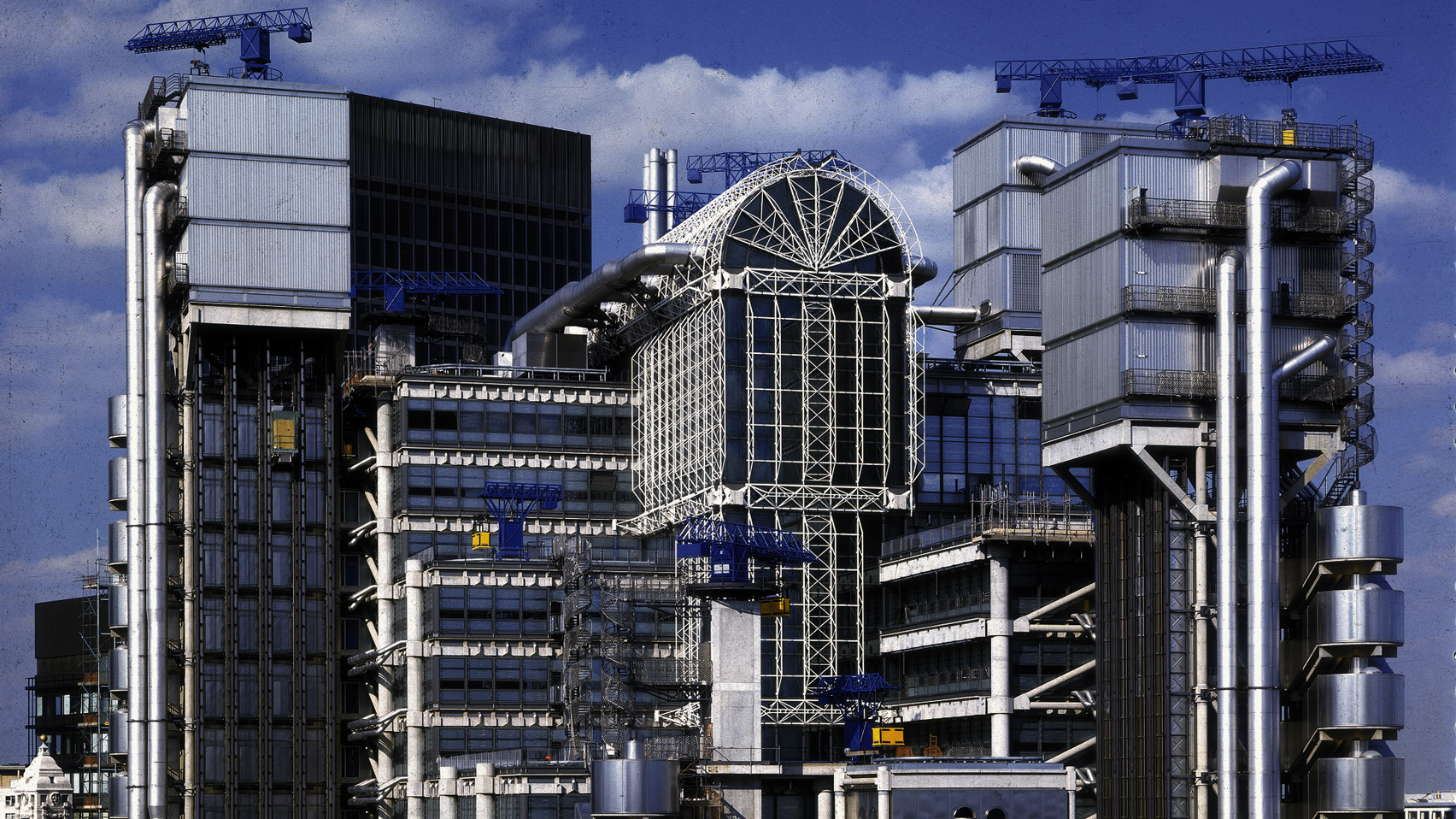
The Lloyd's building in London
Lloyd's building in London to undergo "once-in-a-generation" overhaul

Reader says renovating the Lloyd's building "will certainly be a test of the original building concept"

Commenters are discussing plans to redesign the iconic Underwriting Room at the heart of Richard Rogers' high-tech Lloyd's building in London.

"Hopefully they won't screw up the building," said Pierer a Varreon.

Apsco Radiales agreed: "Lloyd's is on very thin ice here, better not screw it up. Whatever ideas they and their consultant come up with should be examined and cross-checked by others."

"It's ironic that the building is grade one listed as the idea for the original design was the ease of future life cycle flexibility," concluded Puzzello. "External components meant ease of access and changing out that which breaks down or ages sooner in a building's lifespan. Lloyd's has become a static relic. This renovation will certainly be a test of the original building concept."

Should Lloyd's be renovated? Join the discussion ›

Read more Dezeen comments

Dezeen is the world's most commented architecture and design magazine, receiving thousands of comments each month from readers. Keep up to date on the latest discussions on our comments page.

The post Commenter jokes that architects can "end starvation" appeared first on Dezeen.


from Dezeen https://ift.tt/2WpQZHH