Thursday, 26 August 2021

Dabbagh Architects creates calligraphy-covered contemporary mosque in Dubai

Mosque of the Late Mohamed Abdulkhaliq Gargash in Dubai by Dabbagh Architects

Dubai-based studio Dabbagh Architects has wrapped the Mosque of the Late Mohamed Abdulkhaliq Gargash in UAE in white stone facades containing geometric forms and calligraphy.

Named after businessman Mohamed Abdulkhaliq Gargash, who passed away in 2016, the mosque was designed by Dabbagh Architects founder Sumaya Dabbagh – making it one of the first mosques in the UAE to be designed by a woman architect.
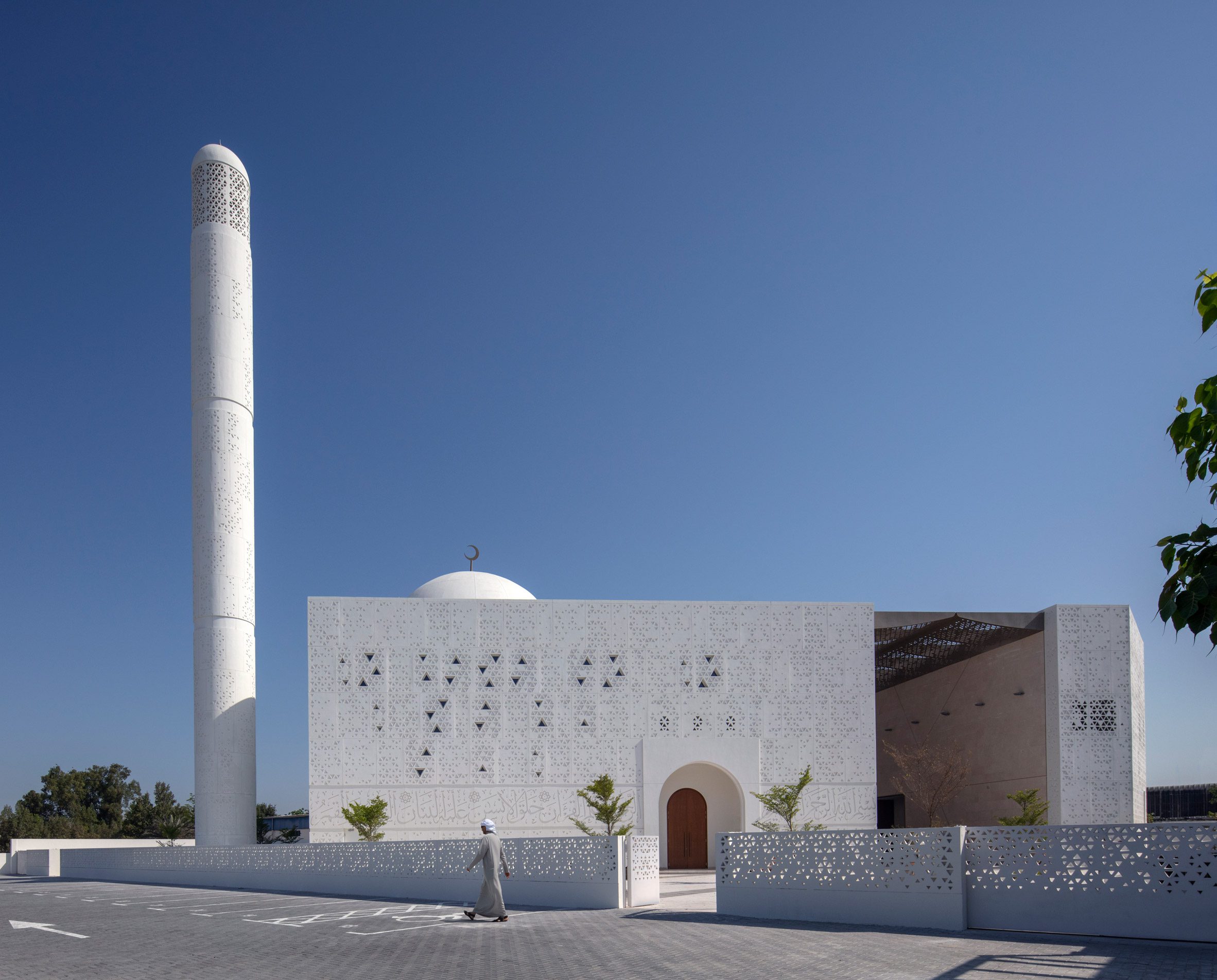
Mosque of the Late Mohamed Abdulkhaliq Gargash
Dabbagh Architects designed a contemporary mosque in Dubai

Funded by the Gargash family, the building is set alongside a busy road in the industrial Al Quoz area in the south of Dubai.

The family wanted the building to have a contemporary feel and be a calm space for prayer away from the bustle of the city.
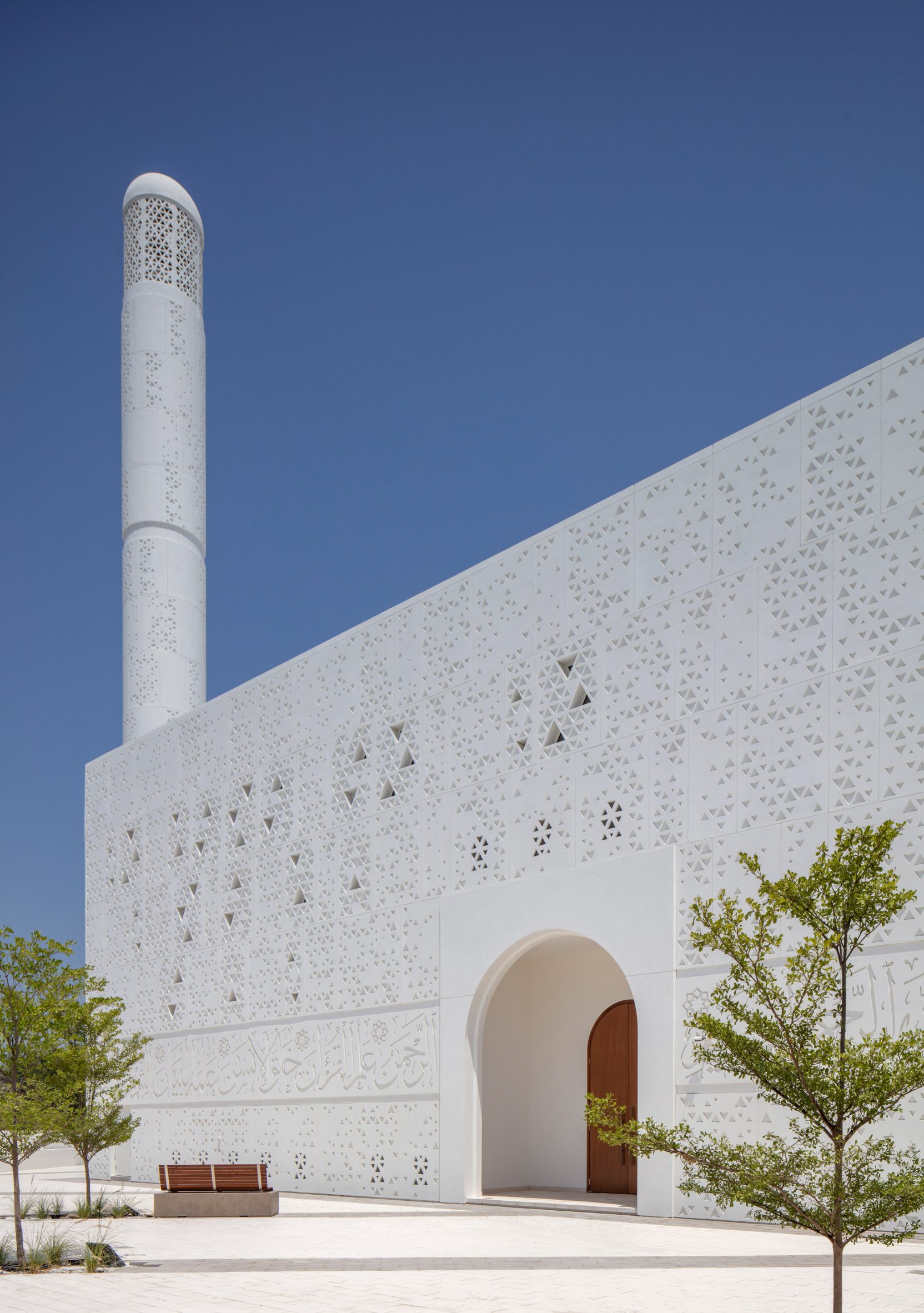
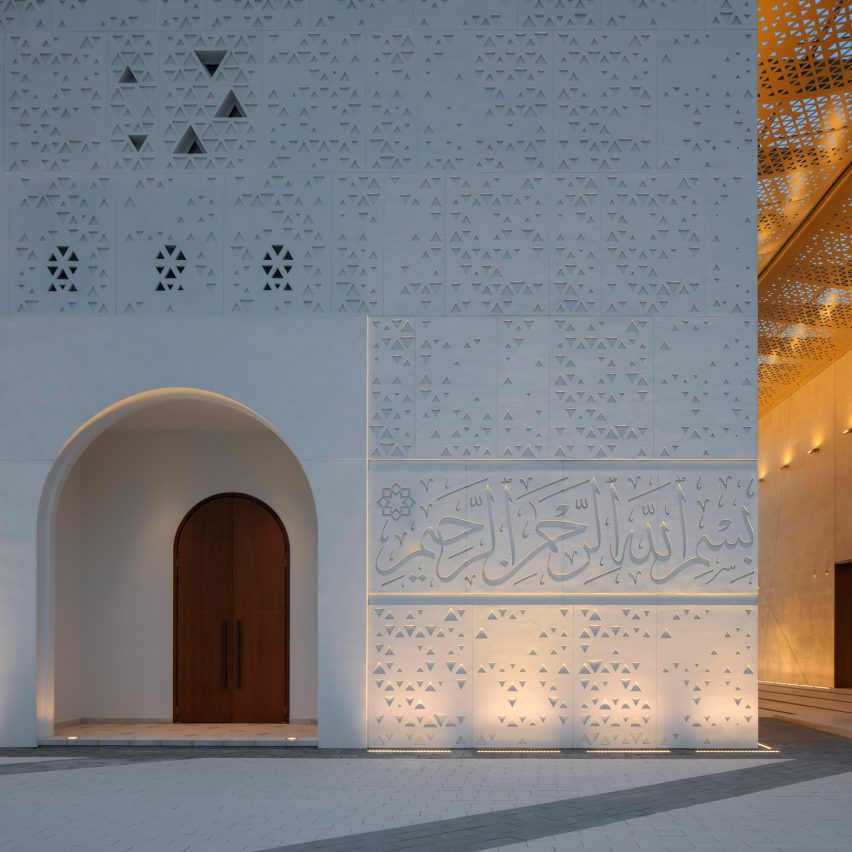
Geometric forms on exterior of Dubai mosque
The walls of the mosque include a geometric pattern

"We aimed to create a sanctuary, a sense of calm amongst the visual clutter and noise of the industrial Al Quoz district," Dabbagh told Dezeen.

"The design approach is a response to the site, the setting, local materials available and equally importantly the experience created," she said.

"All of these considerations have created a contemporary design that is of its time and place."
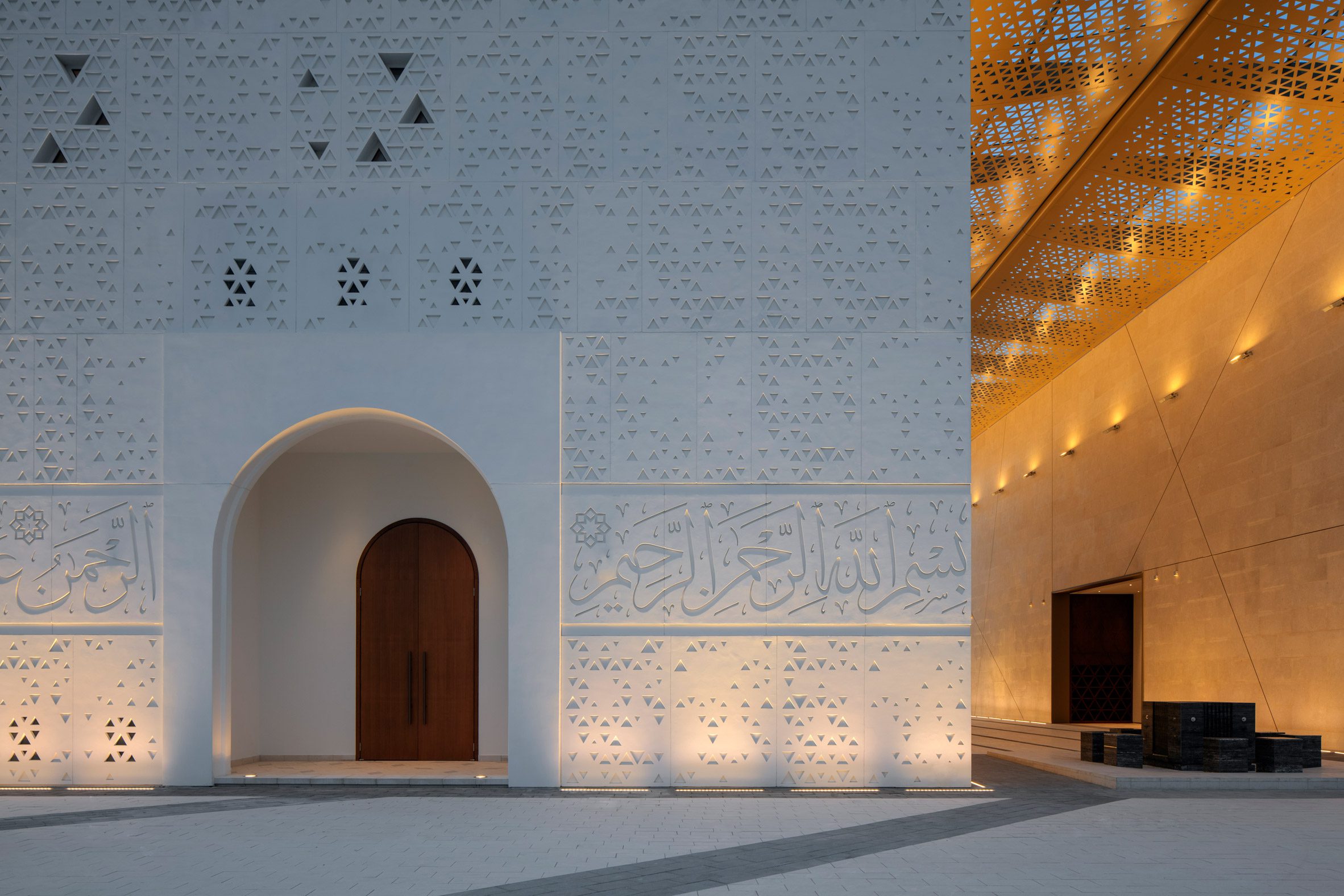
Calligraphy on mosque wall
Calligraphy is also incorporated on the external walls

Unlike traditional mosques that are often made up of multiple blocks, Dabbagh Architects aimed to create a simple, clean form that would make the building stand out.

"Religious buildings are often used to express opulence and status," said Dabbagh.

"For the Gargash Mosque, the client's brief was to have simplicity. Thus the minimal design approach has created a building that stands out in its setting."
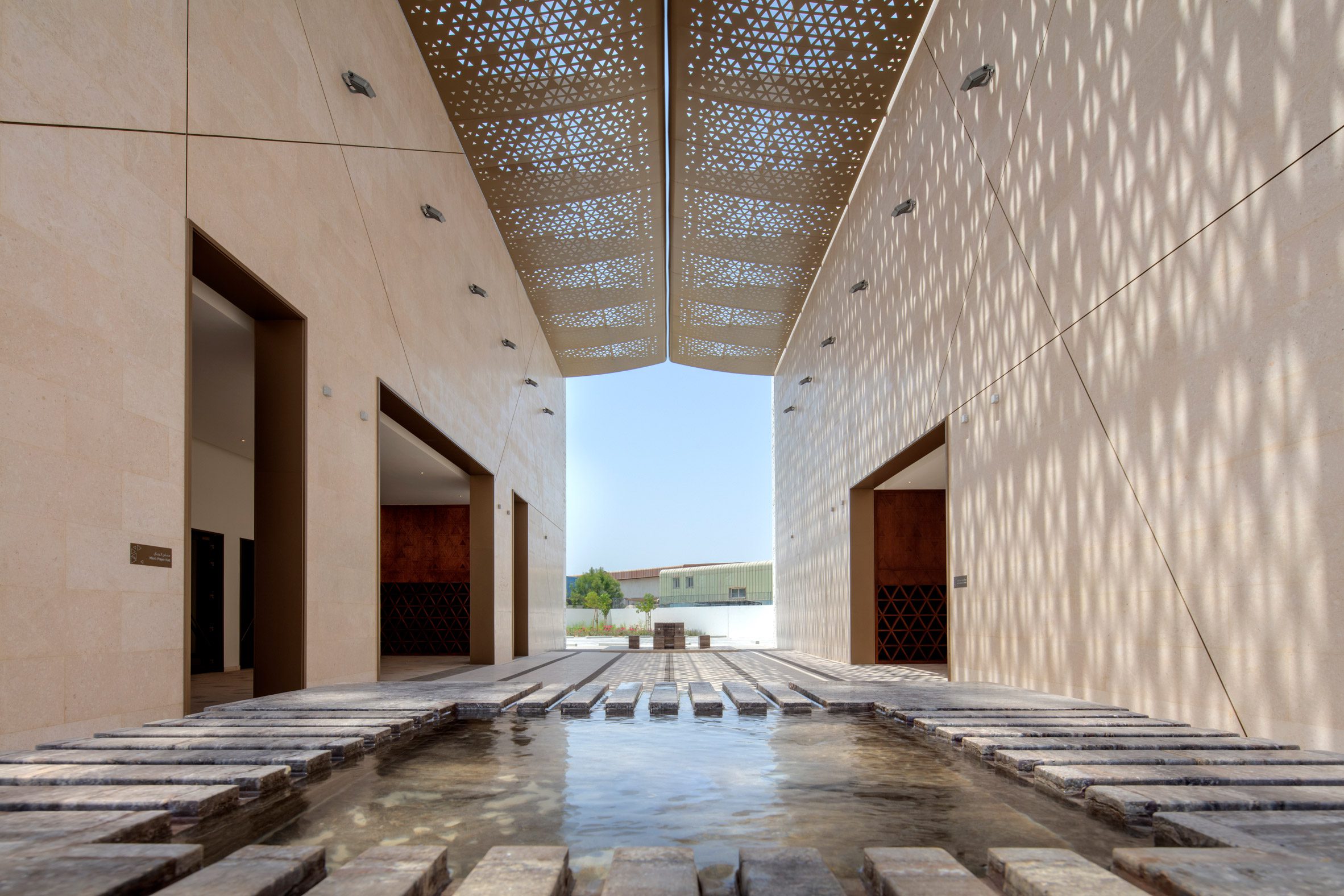
Linear courtyard
Two blocks are separated by a linear courtyard

The building is separated into two blocks by a linear courtyard that is sheltered by a perforated canopy.

The larger of the two blocks contains the dome-covered main prayer space on the ground floor with the women's prayer area on the first floor.

On the other side of the courtyard are the ablution facilities and residences for the Imam and Moazen.
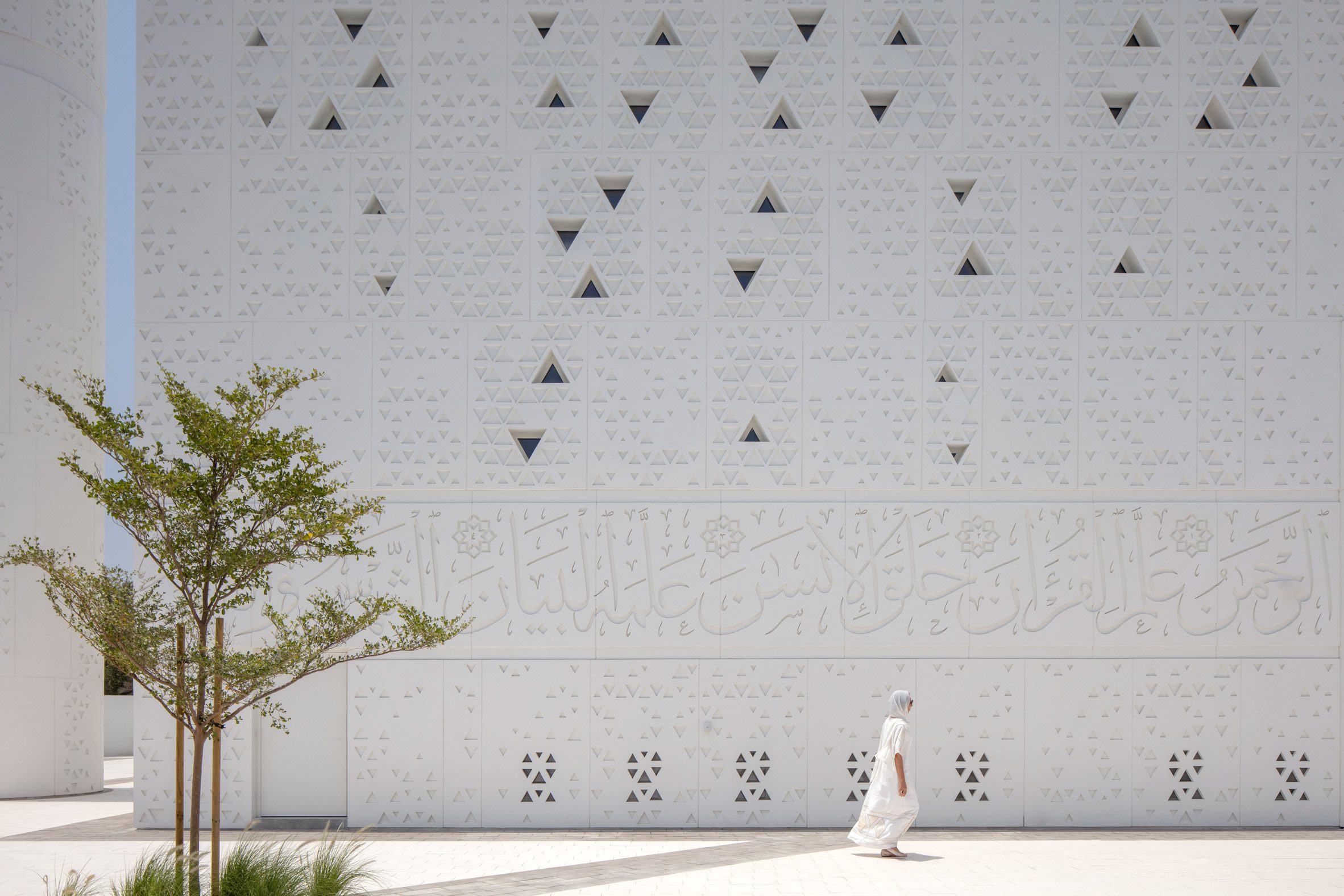
Facade of the Mosque of the Late Mohamed Abdulkhaliq Gargash
It was designed to have a simple form

The mosque's stone walls are covered with a recessed geometric pattern made of triangles, some of which perforate the stone to allow natural light into the building.

A verse from the Quran written in calligraphy was also recessed into a band that wraps around the walls of the prayer hall.
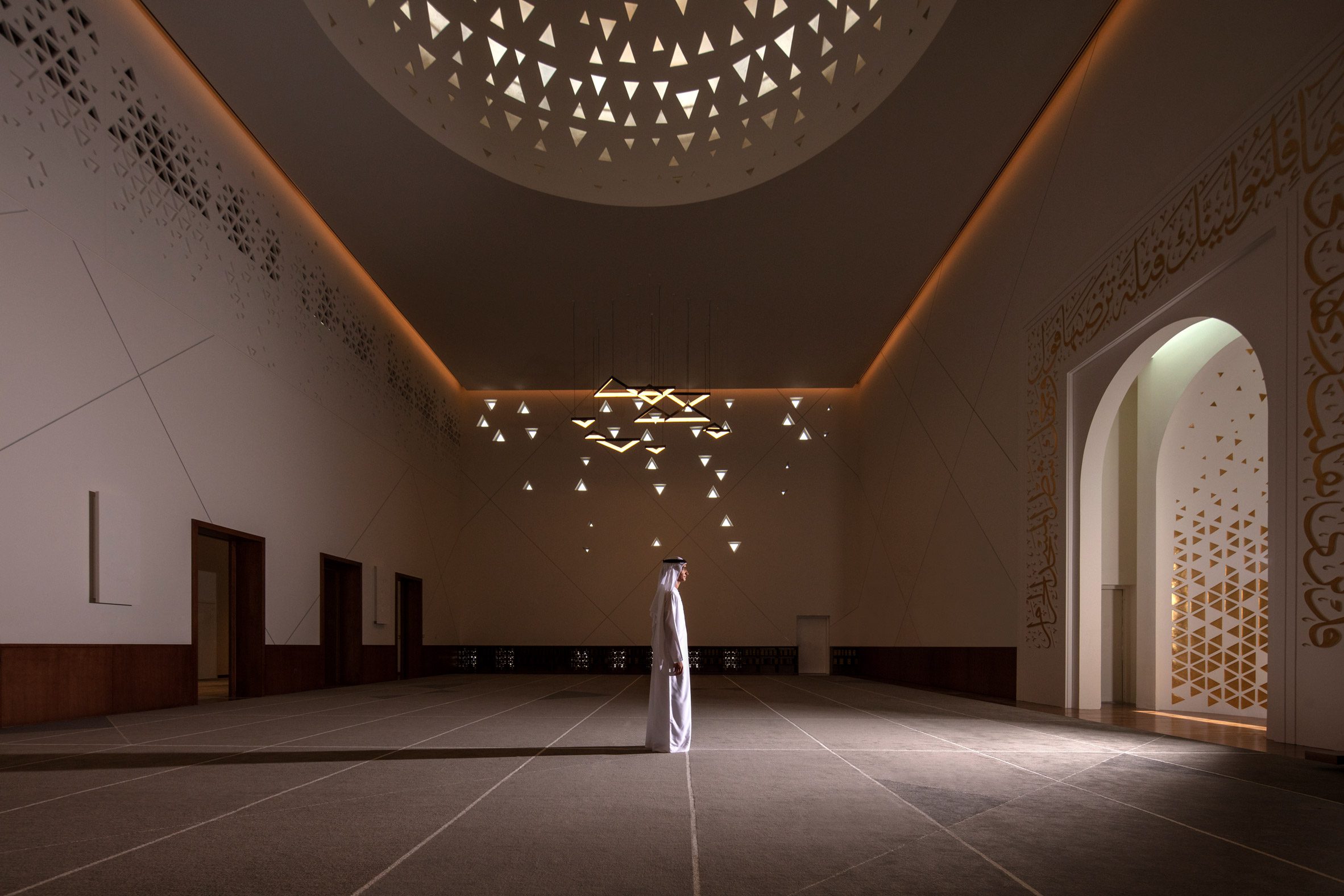
Main prayer room
The main prayer room is topped with a dome

"Muslim prayer is performed throughout the day at prescribed timings: at dawn, midday, afternoon, sunset and at night," explained Sumaya.

"This discipline creates a human connection with the natural day and night rhythm," she continued.

"The experience created through the design of the mosque seeks to enhance this connection through a controlled introduction of natural lighting."

The geometric pattern extends across the mosque's minaret, which was also designed to have a contemporary form.
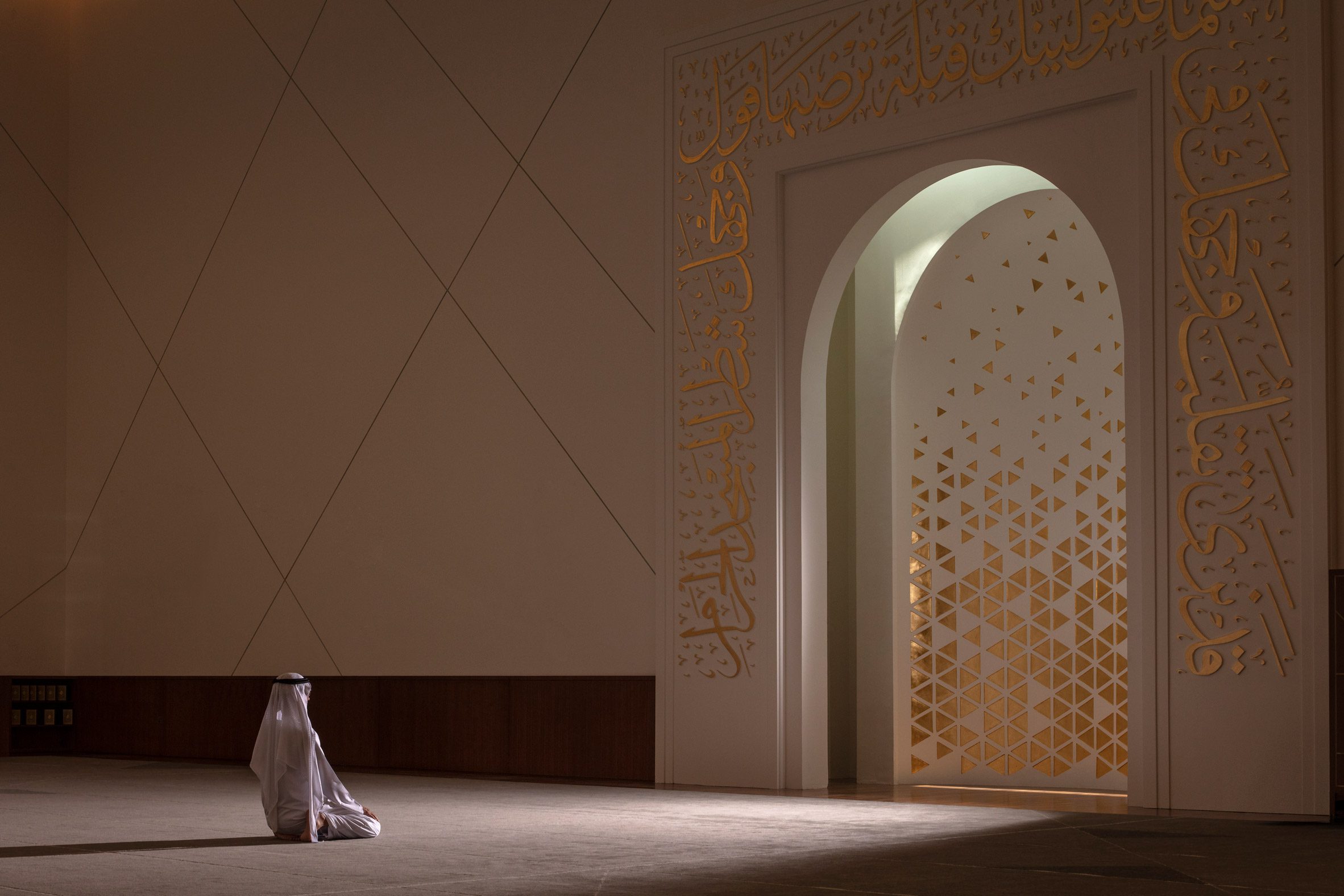
Main prayer room in Dubai mosque
It was designed to be a calm space

Dabbagh hopes that overall the project has succeeded in creating a mosque that evokes "a sense of the sacred".

"Our philosophy focuses on creating a memorable experience through our design," she said.
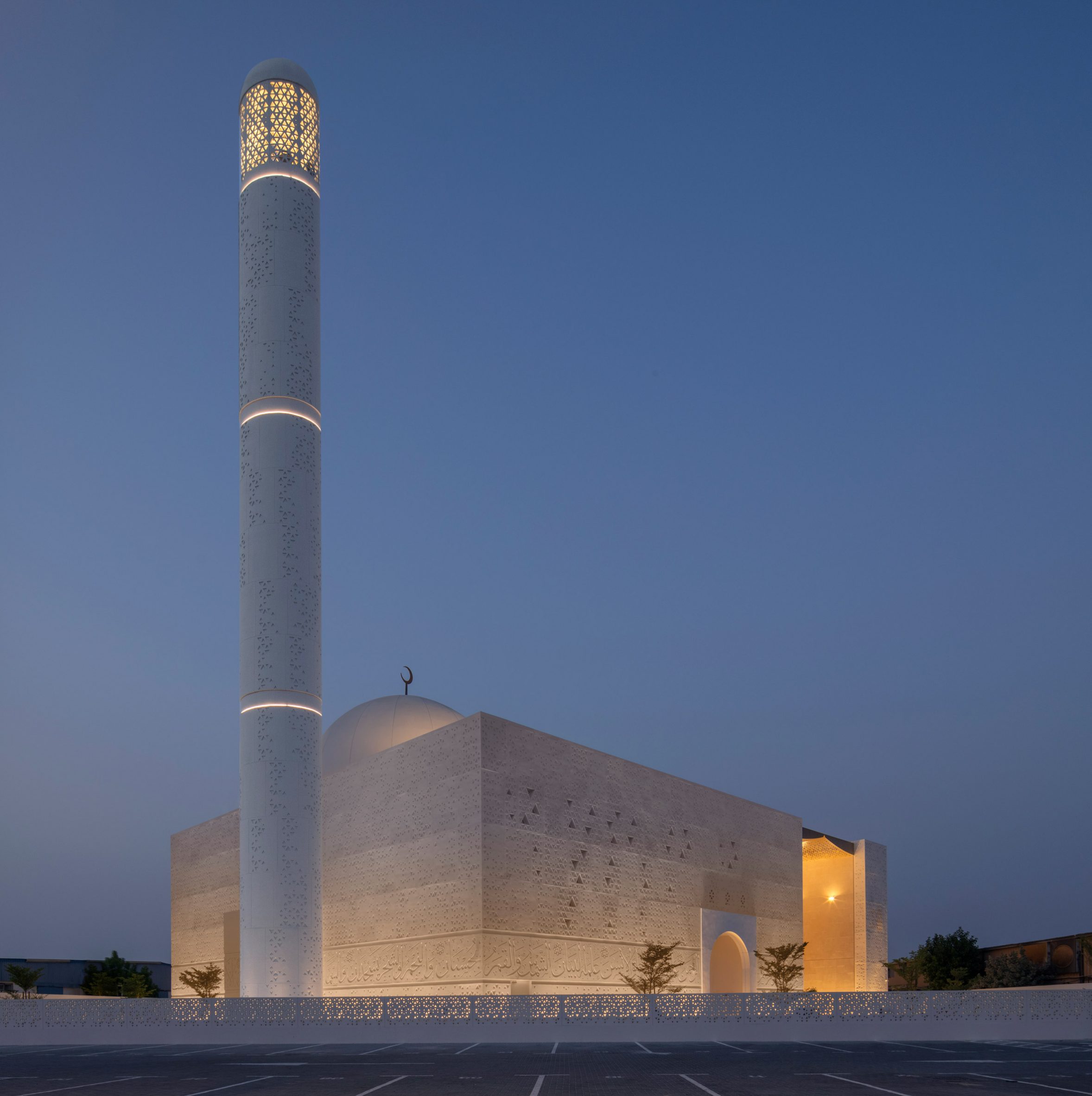
the Mosque of the Late Mohamed Abdulkhaliq Gargash
The Mosque of the Late Mohamed Abdulkhaliq Gargash was one of the first in the UAE to be designed by a woman

"This is particularly important when designing a place of worship. Through deliberate design means such as the Quranic verses in the calligraphy externally, the proportion of the main space and the use of natural light in strategic locations," she continued.

"The intent is to evoke a sense of the sacred and intangible end result is created through these tangible means."

Previous mosques on Dezeen include Cambridge Central Mosque in the UK by Marks Barfield Architects and a brick mosque in Dhaka, Bangladesh.

Photography is by Gerry O'Leary Photography.


Project credits:

Lead architects: Dabbagh Architects
Structure engineers: Orient Crown Architectural
MEP engineers: Clemson Engineering
Landscape architects: WAHO Landscape Architecture
Client: Family of the late Mohamed Abdulkhaliq Gargash

The post Dabbagh Architects creates calligraphy-covered contemporary mosque in Dubai appeared first on Dezeen.


from Dezeen https://ift.tt/3kpXvX4

Meteorito rugs by José María Balmaceda for Balmaceda Studio

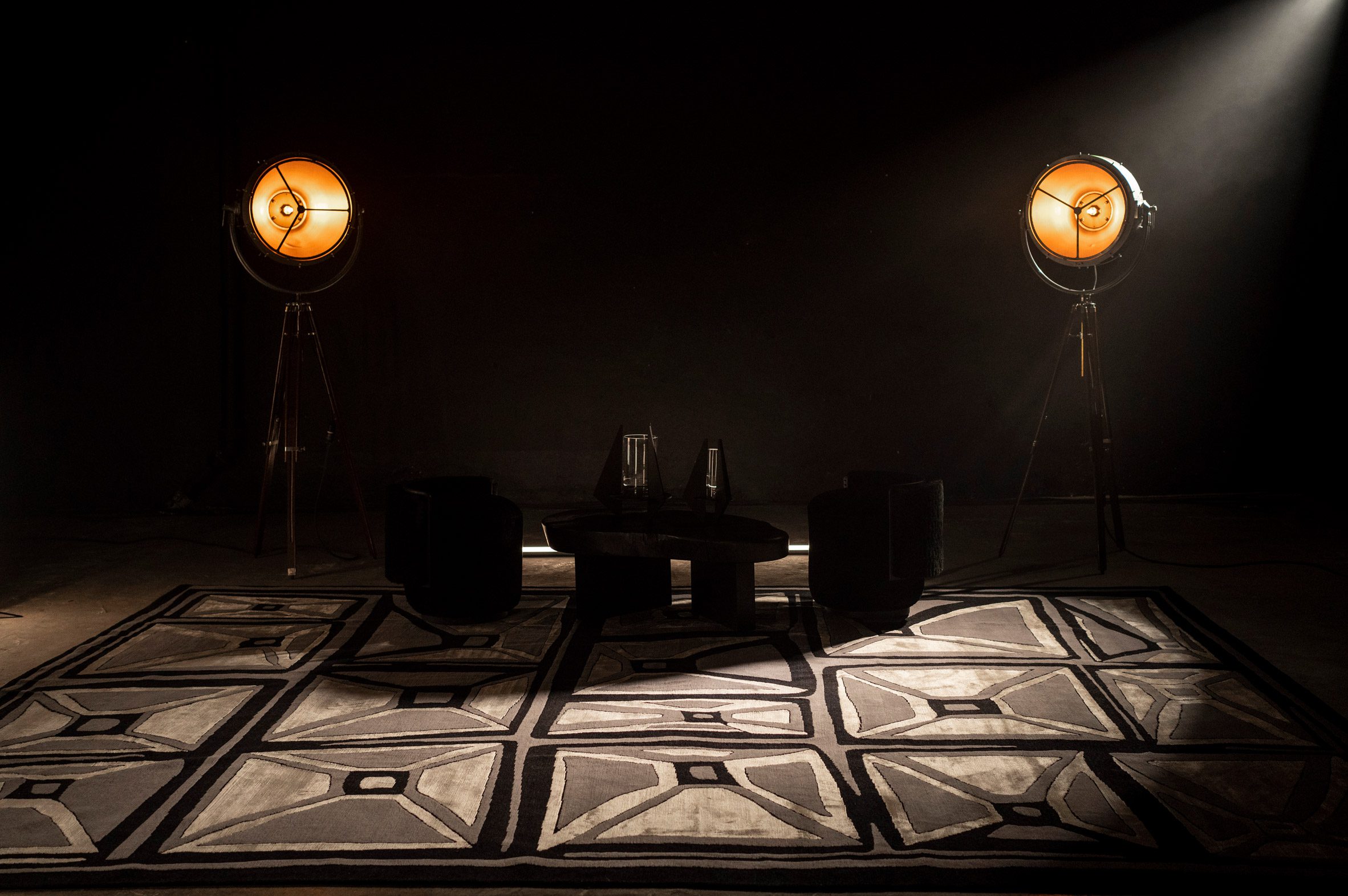
Meteorito rugs by José María Balmaceda for Balmaceda Studio

Dezeen Showroom: Mexican designer José María Balmaceda of Balmaceda Studio has released the Meteorito rug collection, informed by the fragmented lights of a city skyline at night.

The Meteorito collection encompasses 10 different rugs with designs ranging from complex patterns to compositions cracked like mosaics.

Man next to chairs on a blue and yellow mosaic rug by José María Balmaceda
The Meteorito rug patterns are inspired by the urban skyline at night

"The inspiration for this collection is the urban landscape," said the textile designer. "It is the reflections of artificial lights on an empty city at 4am."

Balmaceda frequently travels to India and Nepal, and blends both countries' stylistic traditions with his own Mexican heritage to create rugs with a "multicultural tone".

Tables, chairs and lights on a monochrome Meteorito rug
The rugs are made from wool, bamboo silk and lurex

His workshop collaborates closely with local weavers throughout the rug-making process, with the aim of promoting the wellbeing of the artisans and their communities.

The Meteorito rugs are available in three sizes and hand-knotted in Nepal from a combination of wool, bamboo silk and metallic fibres such as lurex.

Product: Meteorito collection
Designer: José María Balmaceda
Brand: Balmaceda Studio
Contact: contacto@jmbalmaceda.com

About Dezeen Showroom: Dezeen Showroom offers an affordable space for brands to launch new products and showcase their designers and projects to Dezeen's huge global audience. For more details email showroom@dezeen.com.

Dezeen Showroom is an example of partnership content on Dezeen. Find out more about partnership content here.

The post Meteorito rugs by José María Balmaceda for Balmaceda Studio appeared first on Dezeen.


from Dezeen https://ift.tt/3Dm10Xh

Device to reduce blood loss from knife wounds named James Dyson Award UK winner

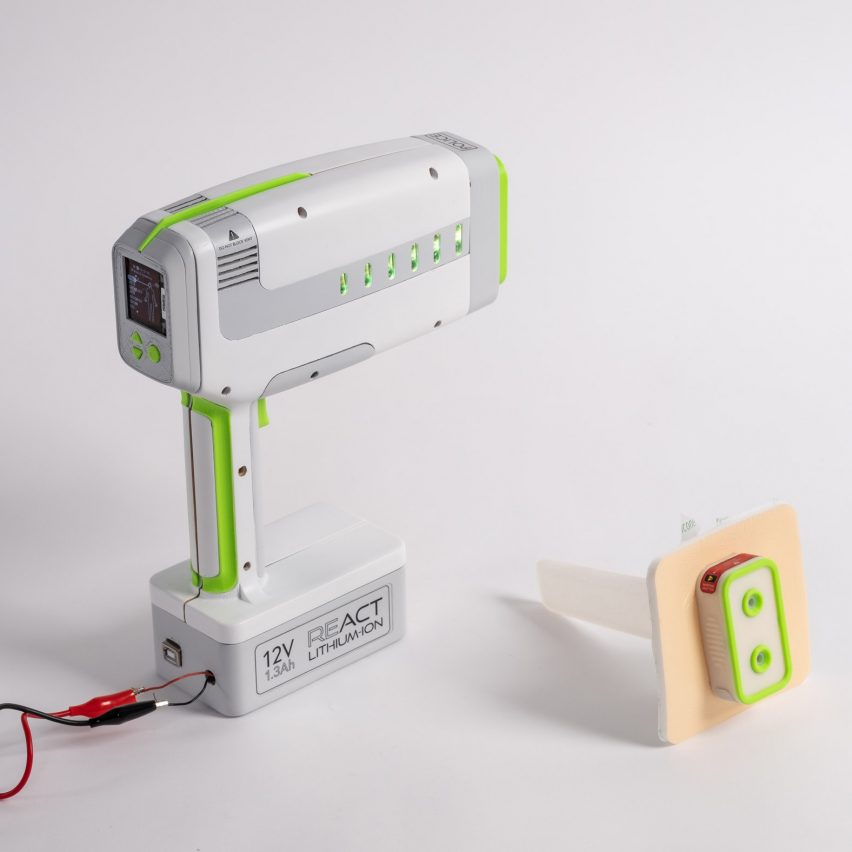
Rapid Emergency Actuating Tamponade by Joseph Bentley

Loughborough University graduate Joseph Bentley has created a device for first responders that he claims could stop haemorrhages from knife wounds in under a minute.

Recently named the UK winner of this year's James Dyson Award, the device would be used to insert a medical-grade silicone balloon tamponade into a wound to reduce bleeding.

James Dyson Award-winning REACT device
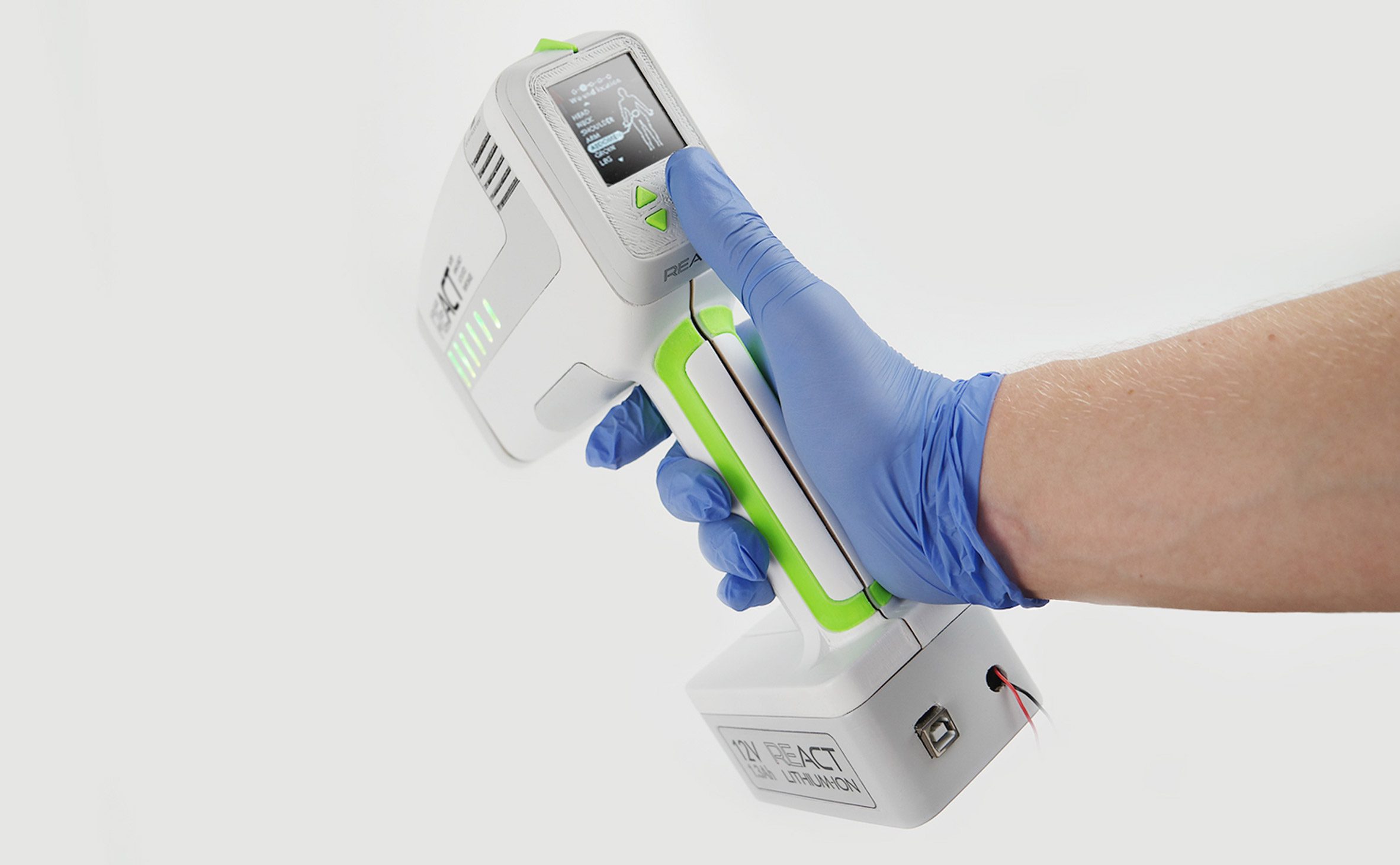
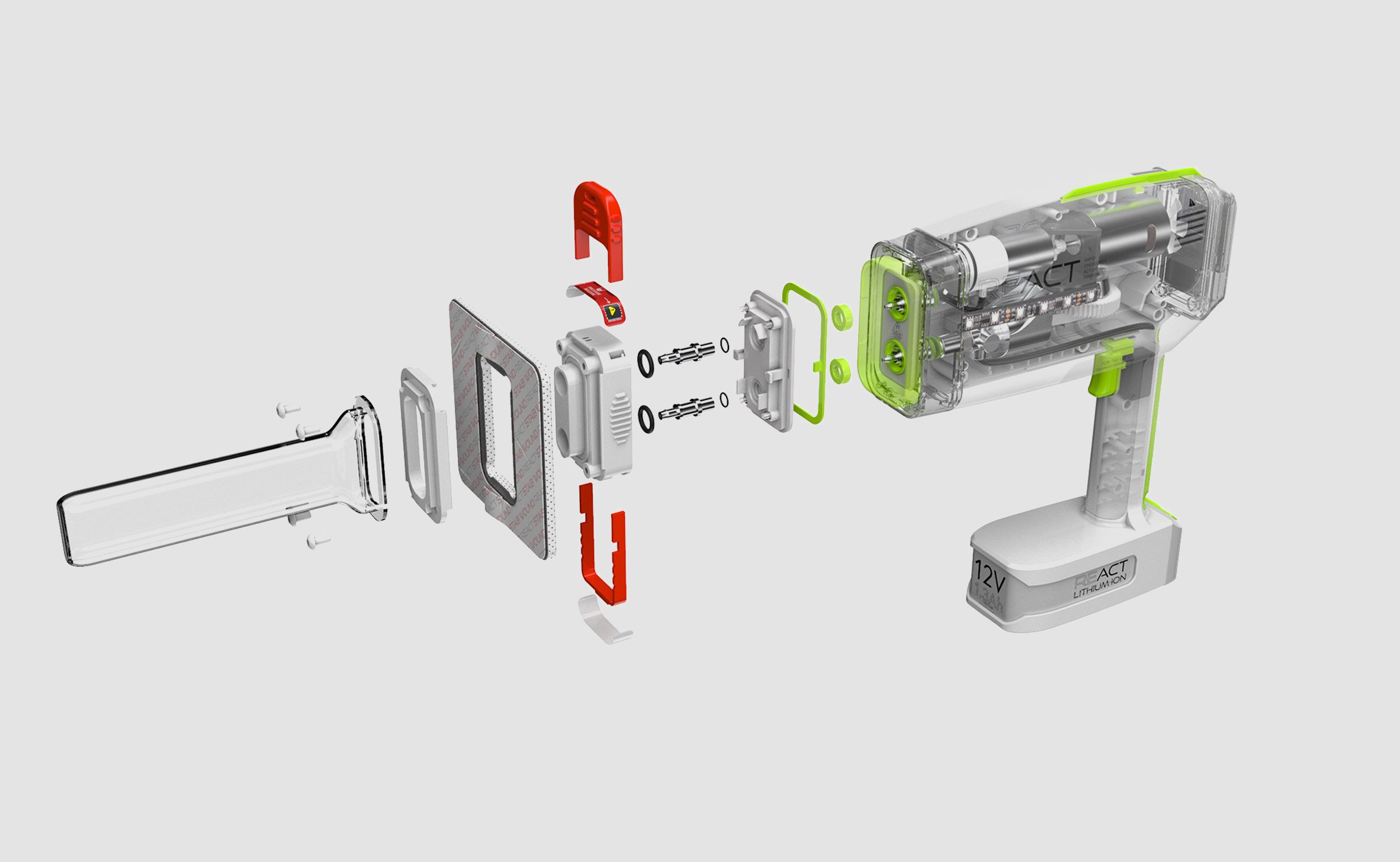
Joseph Bentley designed the REACT device

Named REACT, which stands for Rapid Emergency Actuating Tamponade, the device was designed by Bentley in response to the large number of stabbings in the UK.

"Knife crime is a topic that is personal to me, as two of my friends were victims of knife-related incidents," said Bentley, who recently graduated from the product design and technology course at Loughborough University.

"Thankfully both incidents were not fatal, but this is often not the case for so many others," he continued.

"Seeing the profound effect that it had on my friends and their families urged me to try and create a solution that could help others in the future."

Device to reduce blood loss from knife wounds
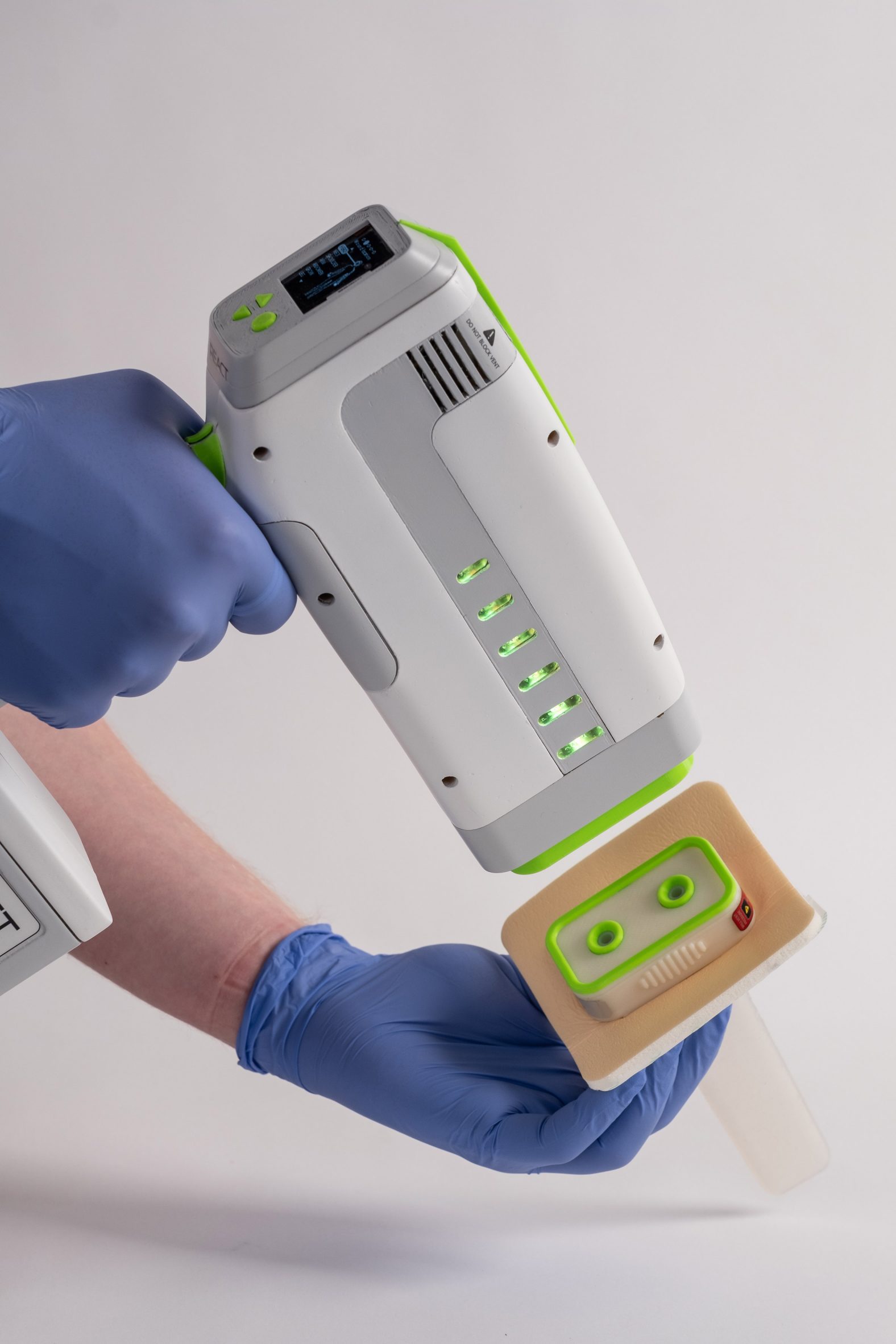
The device is designed to reduce blood loss from knife wounds

The REACT device is designed to be used by first responders – who are often police, according to Bentley's research – to reduce bleeding before paramedics arrive at an incident. In the UK the average wait time for an ambulance is around eight minutes, while someone can bleed to death in five minutes.

Bentley's device would be used to insert a silicone balloon tamponade into the stab wound, which would then be inflated to place internal pressure on the cut.

The inflation levels would be determined by the location of the wound using an interface on the device.

According to Bentley, this would replicate a wound management technique used by paramedics, where they pack a wound with gauze.

REACT Device by Joseph Bentley
The device inserts a medical-grade silicone balloon into a wound

Bentley believes that if deployed to first responders, his device could save hundreds of lives each year.

He has developed a prototype of the device and will use the £2,000 prize from the James Dyson Award to start commercialising the design.

"The REACT concept could have real-world benefits and a positive impact on society," Bentley said.

"Although medical device testing takes a long time, I'm looking forward to using the prize money to develop my innovation further and hopefully see the device in the hands of first responders saving lives."

Bentley's design will now progress to the international stage of the James Dyson award. The shortlist for this will be announced on 13 October.

Also aiming to reduce the impact of knife-related incidents, British cutlery company Viners released a collection of kitchen knives with rounded tips.

The post Device to reduce blood loss from knife wounds named James Dyson Award UK winner appeared first on Dezeen.


from Dezeen https://ift.tt/3knNVnG

Watch our live talk about why architects and designers are reimagining the world

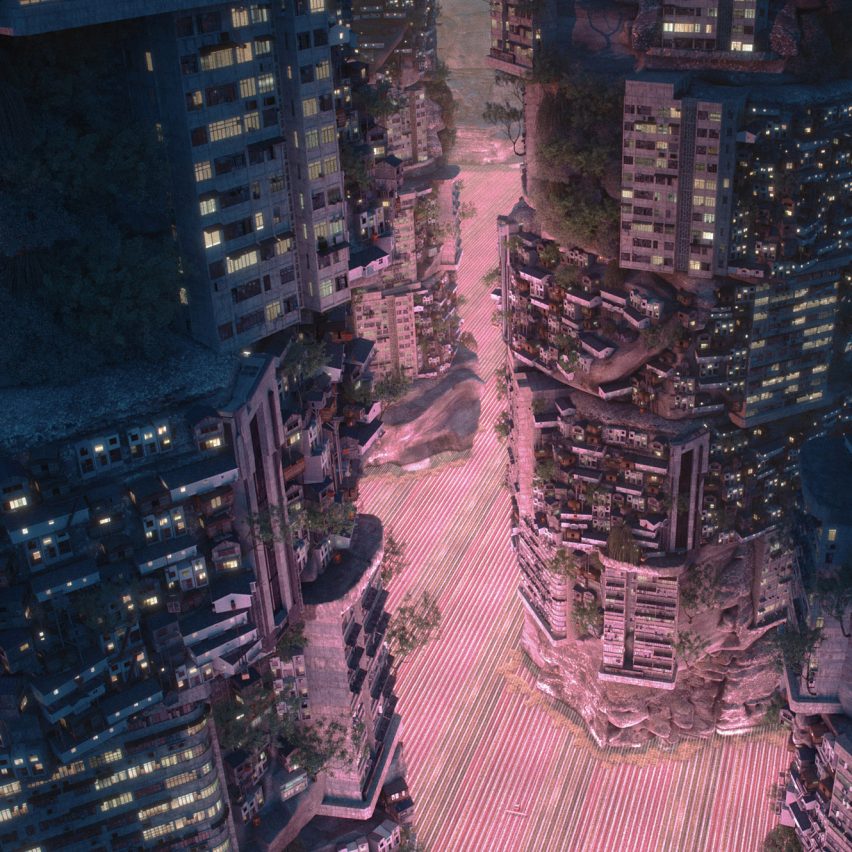
Planet City by Liam Young

Dezeen is hosting an online talk exploring the work of creatives and scientists who are reimagining the planet to coincide with our Redesign the World competition in partnership with Epic Games. Watch it live from 3:00pm London time today.

The talk has not started yet. The live stream will begin at 3:00pm BST.

Titled Why redesign the world?, the talk will explore why architects and designers are increasingly looking to remodel the world in a bid to address pressing concerns such as climate change, habitat loss and human overpopulation.

Moderated by Dezeen editor-in-chief Marcus Fairs, the talk will bring together experts with backgrounds in architecture, film, science and technology to explore why we need radical proposals to rethink the planet.

The talk will also explore what role technology will play in reimagining the world.

Fairs will be joined by speculative architect and filmmaker Liam Young, geographer and environmental social scientist Holly Jean Buck, and Belinda Ercan, Twinmotion product marketing manager at Epic Games.

Portrait of speculative architect Liam Young
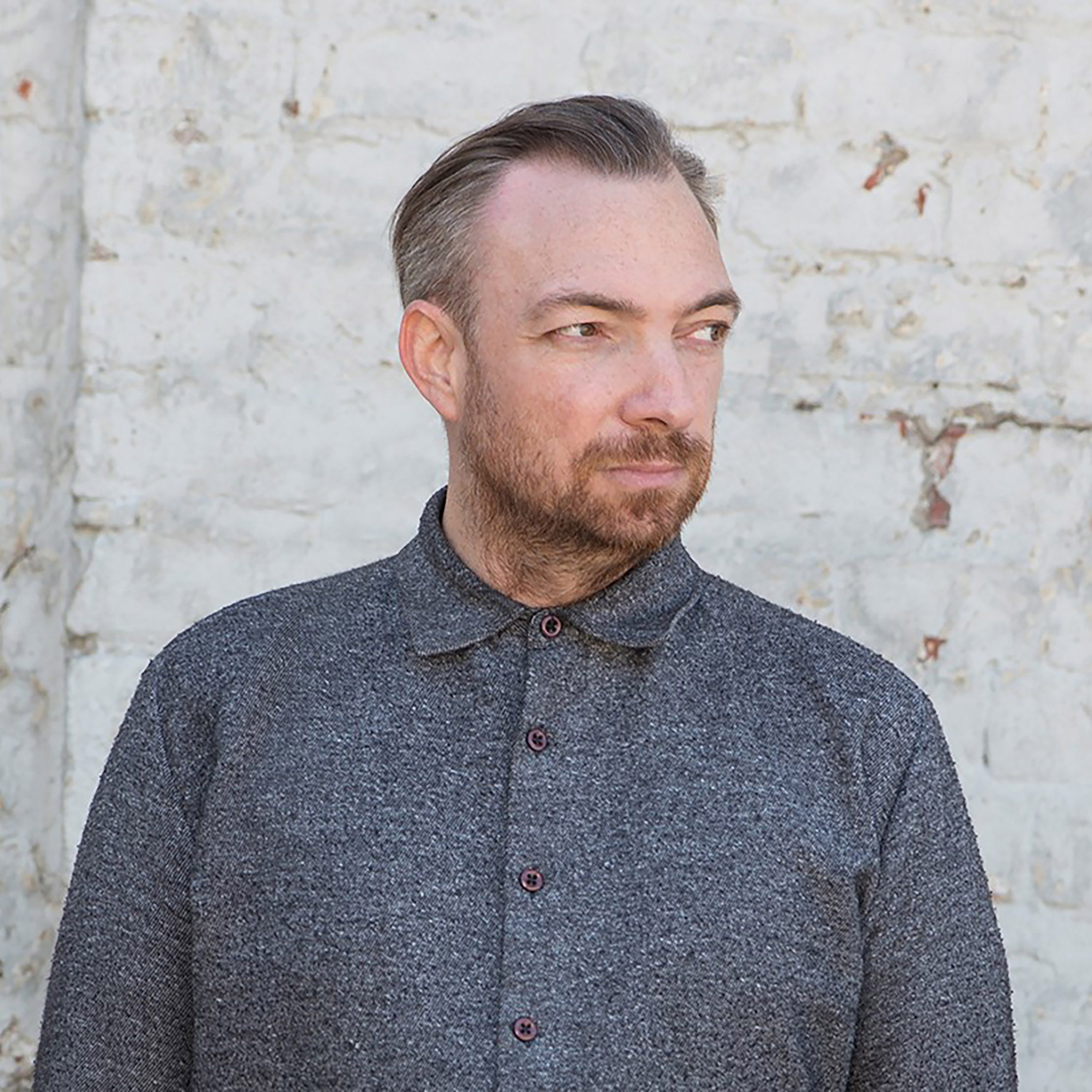
Liam Young is a speculative architect

Liam Young, who describes himself as a speculative architect, is the co-founder of urban futures think tank Tomorrow's Thoughts Today, which operates at the intersection of design, fiction and futures.

Young has created an animated short film called Planet City, in which he proposes the entire population of the earth could be housed in a giant sustainable metropolis to free up the rest of the earth for rewilding and the return of stolen lands.

Portrait of environmental social scientist Holly Jean Buck
Holly Jean Buck is an environmental social scientist

Holly Jean Buck is a geographer and environmental social scientist focusing on how emerging technologies can help address environmental challenges and build a regenerative society.

Buck is an assistant professor of environment and sustainability at the University at Buffalo in New York and author of After Geoengineering: Climate Tragedy, Repair and Restoration, as well as Ending Fossil Fuels: Why Net Zero is Not Enough.

Belinda Ercan oversees Twinmotion product marketing and strategy at Epic Games

Ercan is a ​​product marketing manager for Twinmotion at Epic Games.

She has a master's degree in architecture and digital design, with a focus on 3D visualisation, and has previously worked as a visualiser for HLM Architects and visualisation product manager at Graphisoft.

Redesign the World logo

The talk coincides with Dezeen's Redesign the World competition, in partnership with Epic Games, which calls for radical proposals to rethink planet Earth.

Entrants must produce a 3D visualisation of their concepts using Twinmotion, submitting a video animation and still image of their concept, along with up to 500 words of text about their proposal.

Dezeen previously hosted an online workshop on how to use Twinmotion to help participants with their entries, as well as a talk about how game engines are transforming architecture.

The competition is open for entries until 15 September 2021. See the brief and entry criteria for details of how to enter.

The post Watch our live talk about why architects and designers are reimagining the world appeared first on Dezeen.


from Dezeen https://ift.tt/2WpSp57

Wednesday, 25 August 2021

Wind Catching Systems designs giant floating wind farm with 117 turbines

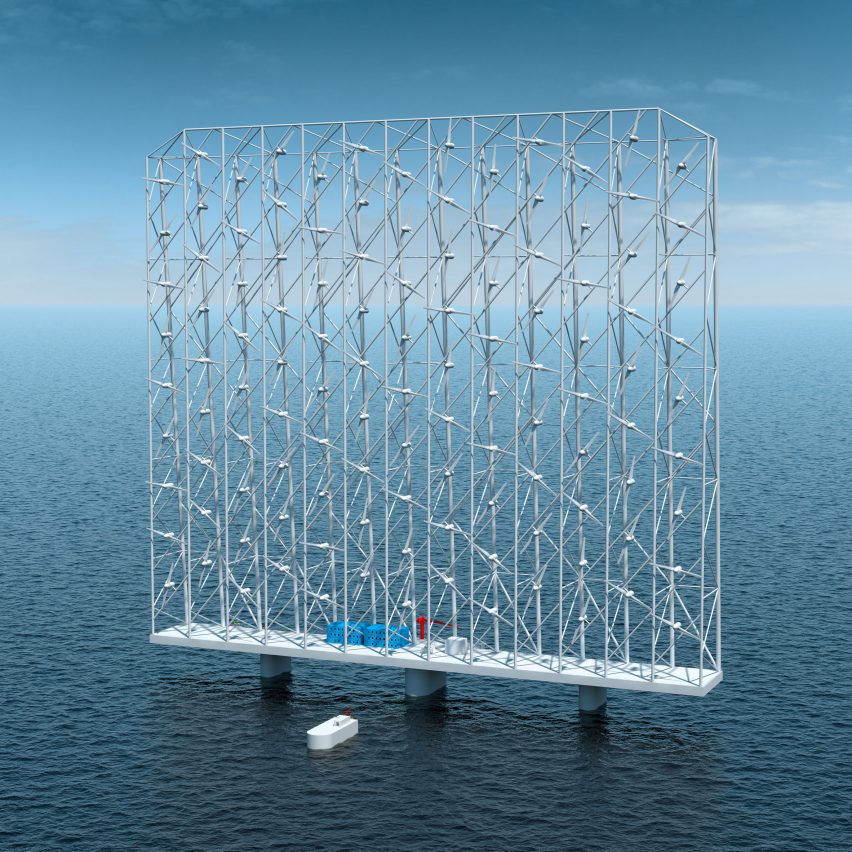
Windcatcher turbine by Wind Catching Systems

Norwegian company Wind Catching Systems is developing an offshore wind power generator that could produce renewable energy for 80,000 homes at prices comparable to traditional fossil fuels.

Named the Windcatcher, the structure would contain more than a hundred rotors stacked vertically within a 300-metre-high framework.

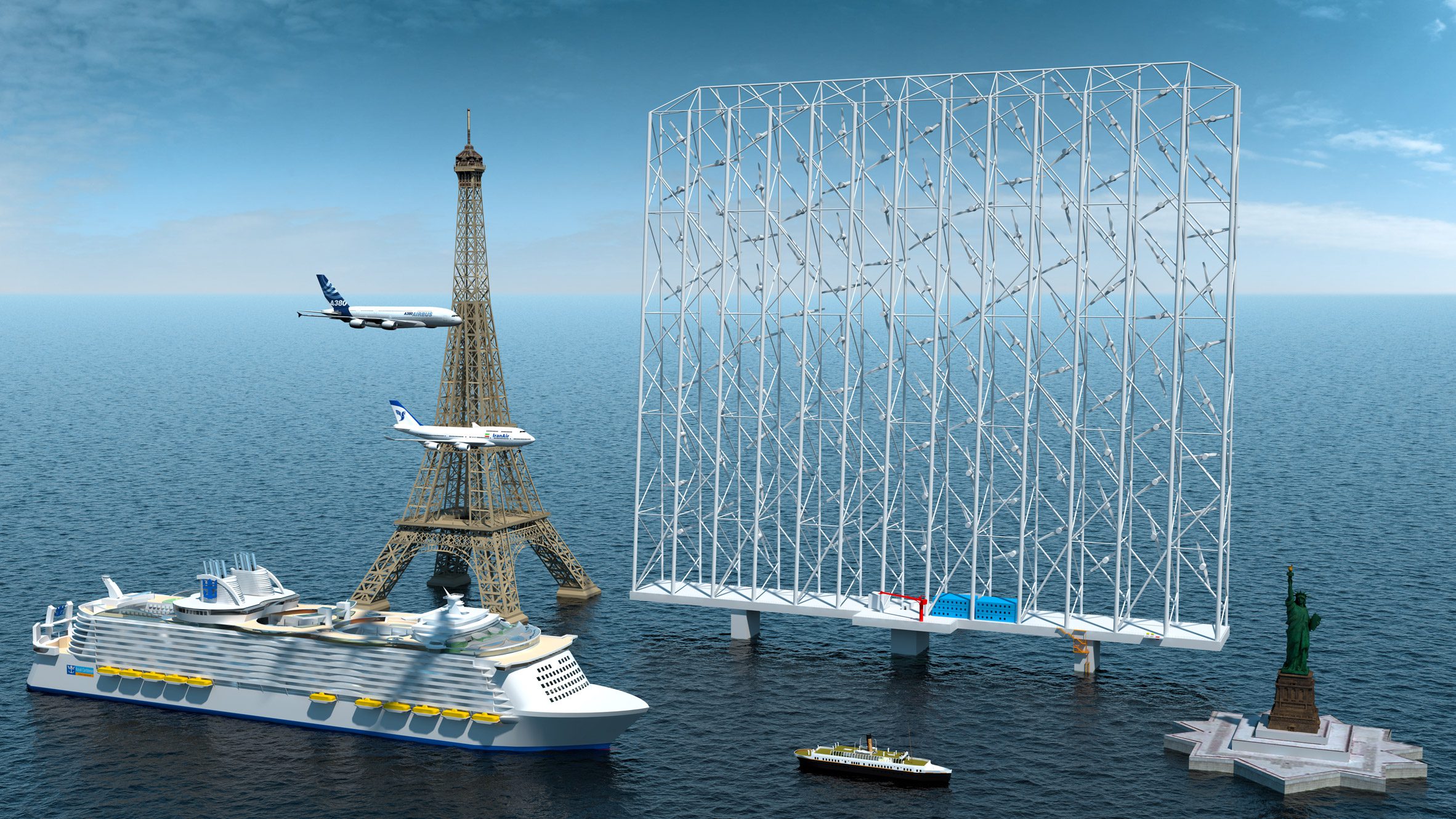
Windcatcher wind power generator compared to the size of the Eiffel Tower
The floating Windcatcher (top image) is about as tall as the Eiffel Tower (above)

According to the company, one Windcatcher could produce as much energy as five of the strongest floating turbines in existence while halving the price of the energy generated in the process.

Wind Catching Systems aims to deploy the first structure within the next three years.

"Our goal is to enable offshore wind operators and developers to produce electricity at a cost that competes with other energy sources, without subsidies," Wind Catching Systems CEO Ole Heggheim told Dezeen.

"We can produce electricity for a cost per kilowatt that is similar to what the other floating technologies are planning to achieve in 10 years."

Smaller rotors can increase yield

Unlike turbines that are placed on fixed foundations in shallow water, floating turbines can harness energy from higher wind speeds that occur above the deep, open sea. These structures account for around 80 per cent of Europe's offshore wind resources.

However, the large rotors, which can reach 230 metres in diameter, can only harness wind speeds of up to 11 metres per second due to the length of their blades.

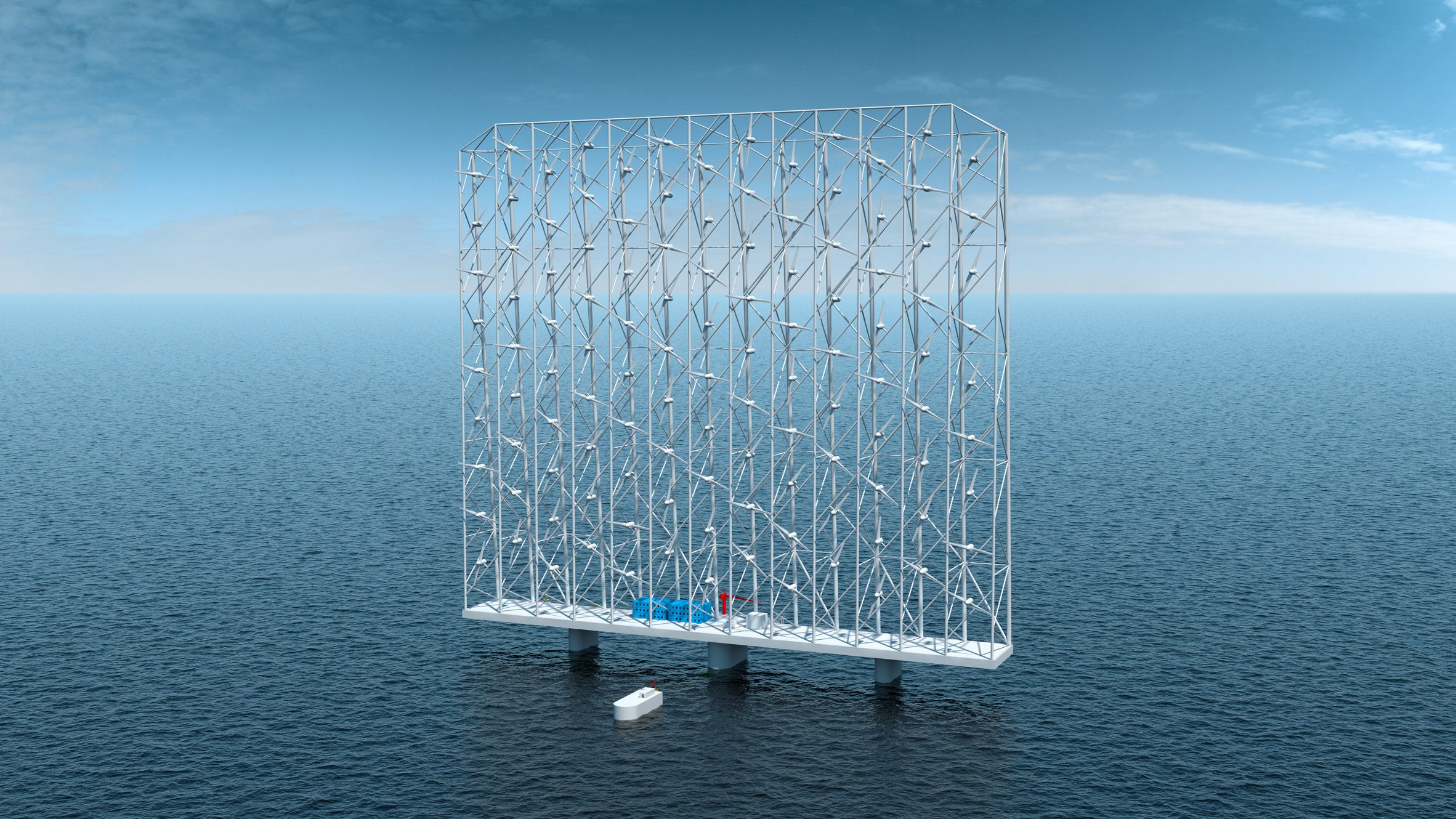
Wind Catching Systems hopes to increase the yield of floating wind farms by relying on 117 smaller turbines with a diameter of 30 metres, set within a steel framework and mounted like a sail on a semi-submerged trimaran boat.

These smaller turbines would perform more rotations per minute and harness higher winds of up to 17 to 18 metres per second, generating more energy.

Multirotor wind farm by Wind Catching Systems
More than 100 turbines would be suspended within the wind farm's steel frame

"At 11 metres per second, the wind has an energy of about 350 watts per square metre," Heggheim explained.

"And at 17 metres per second, the wind has an energy of 13,000 watts per square metre, so we are harnessing the exponential power of wind."

The sail would be fixed to a rotating turret, which allows it to turn in the direction of the wind.

By placing the turbines in close proximity the Windcatcher could make use of the multirotor effect, where the turbulence created by one turbine can be harnessed by the surrounding ones, maximising the amount of energy they can generate.

"There's a turbulence synergy between rotors," Heggheim explained. "Ten turbines in a network will produce more than the sum of ten individual turbines."

In total, one Windcatcher could produce enough energy to power 80,000 households while reducing the amount of surface area taken up in the process by 80 per cent, the company claims.

Reduced installation and maintenance costs 

Under ideal conditions, Wind Catching Systems says the unit could produce up to 400 gigawatt-hours of energy per year compared to the 80 gigawatt-hours generated by individual floating turbines such as the Vestas V236, which is the largest and most powerful on the market.

At the same time, these structures are expensive due to the specialist crane ships needed to install and maintain their gigantic rotors and the large, floating substructure that holds them aloft.

By combining readily available, off-the-shelf technology and stacking multiple rotors on top of a single floating platform, Heggheim argues the Windcatchers will cost less while having a longer lifespan.

"By having one unit producing as much as energy five, you're saving on four installations and four mooring systems," he added.

"We can construct our Windcatchers near shore and then tow them into place, whereas for conventional wind turbines you often need to have specialised vessels doing the installation offshore."

The units are designed for a lifespan of 50 years compared to the 20 years of a traditional turbine while an integrated elevator system in the sail allows individual rotors to be replaced without the need for an external crane.

Wind power needs to be scaled up three times faster

Wind Catching Systems, which was founded in 2017, is working with the Institute for Energy Technology and service company Aibel to commercialise the design, with a pilot set to be commissioned in 2022 and expected to set sail by 2024.

Last year marked "the best year in history for the global wind industry" with a 53 per cent increase in capacity compared to 2019, according to a report by the Global Wind Energy Council.

But the report also warned that the world needs to be installing wind farms three times faster over the next decade in order to reach its net-zero targets.

Other innovative designs that are hoping to scale up the abundant power of wind include an omnidirectional turbine that works in the centre of big cities and a self-sufficient street lamp that reduces light pollution.

The post Wind Catching Systems designs giant floating wind farm with 117 turbines appeared first on Dezeen.


from Dezeen https://ift.tt/3Bcpss3