Friday, 27 August 2021

Eileen Gray's E-1027 villa reopens on the Côte d'Azur following extensive restoration

Eileen Gray's E-1027 villa

Eileen Gray's E-1027 modernist house in the south of France and Le Corbusier's holiday home Cabanon next to it have reopened following a five-year renovation.

The Association Cap Moderne has completed its renovation of the seminal modern home on the south coast of France, returning it to the state it was in when it was complete in 1929.
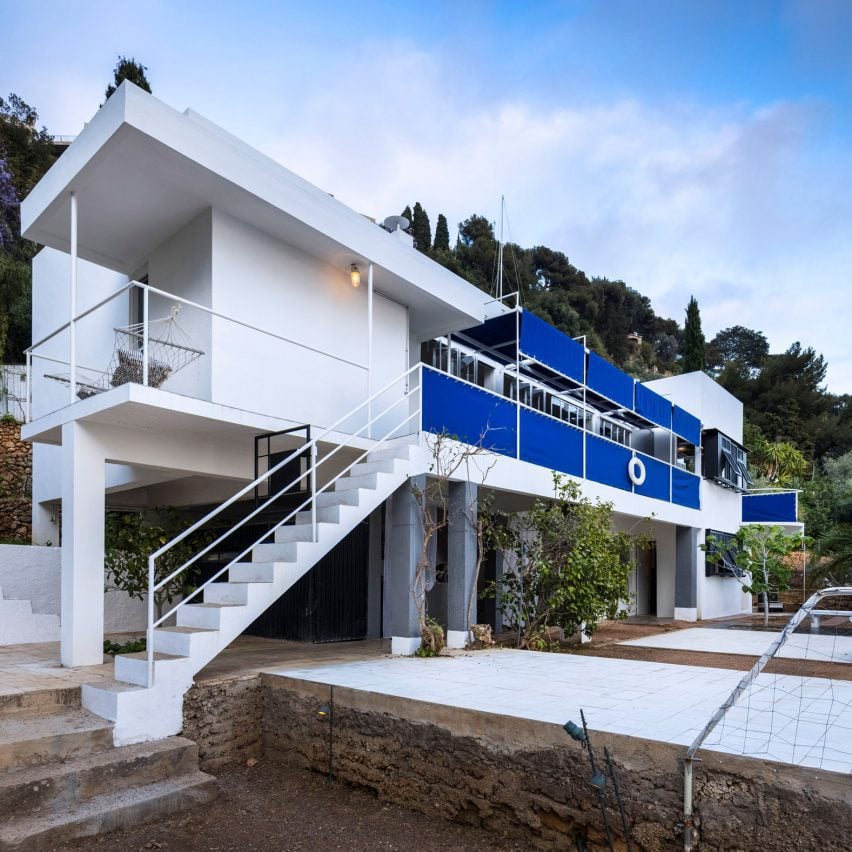
E-1027 villa by Eileen Gray
The restoration of the E-1027 villa has been completed

The home, which is located in the village of Roquebrune-Cap-Martin overlooking Monaco, is now open to the public to visit on guided tours.

"The restoration of the Villa to its 1929 state has been a labour of love for all of us who have worked on the project," said Association Cap Moderne president Michael Likierman.

"The effect is truly revelatory of the genius of Eileen Gray and a marvellously dynamic contrast with the surprisingly intimate buildings of Le Corbusier just by. Magical and unique: come and see for yourselves."
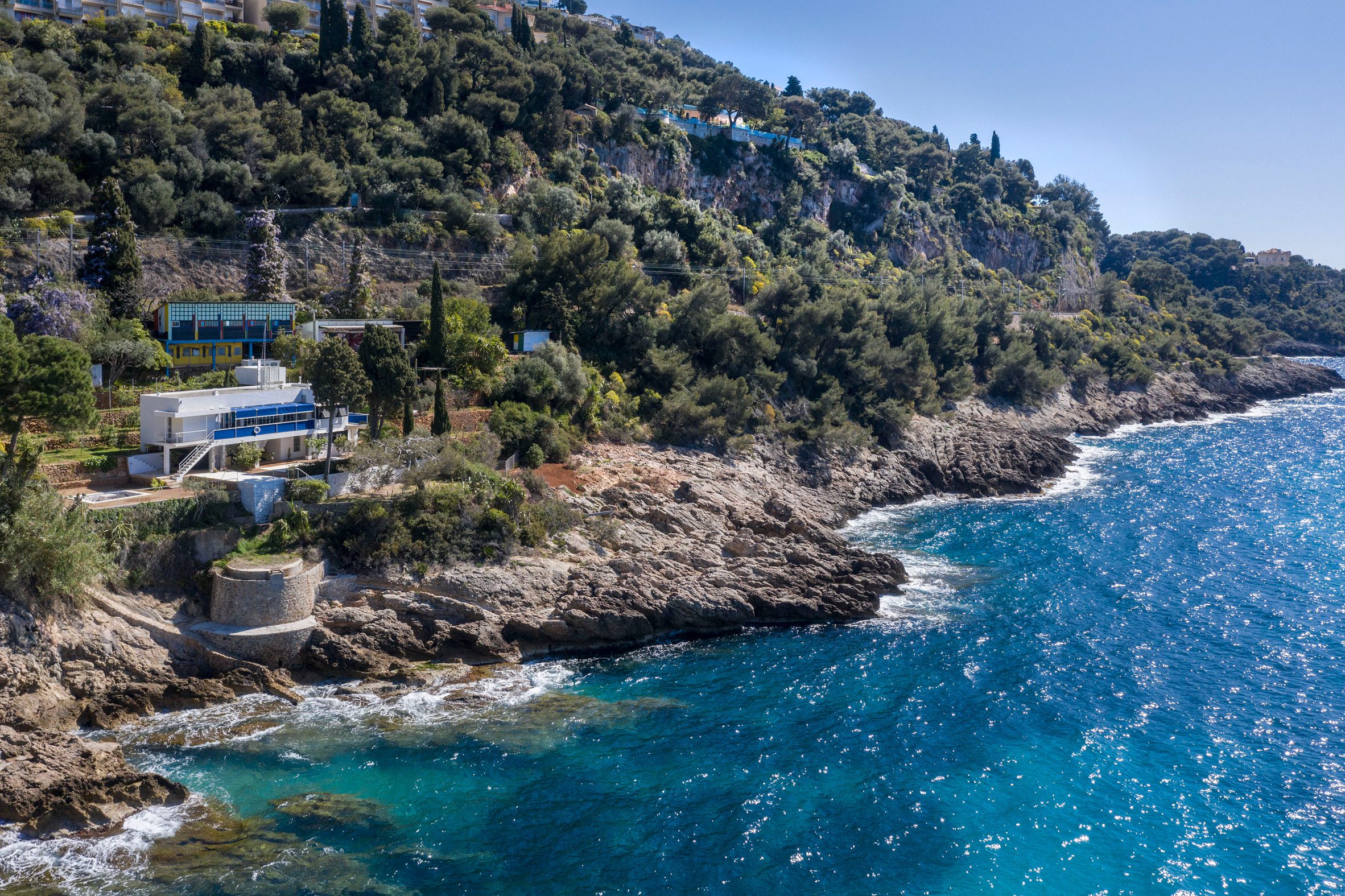
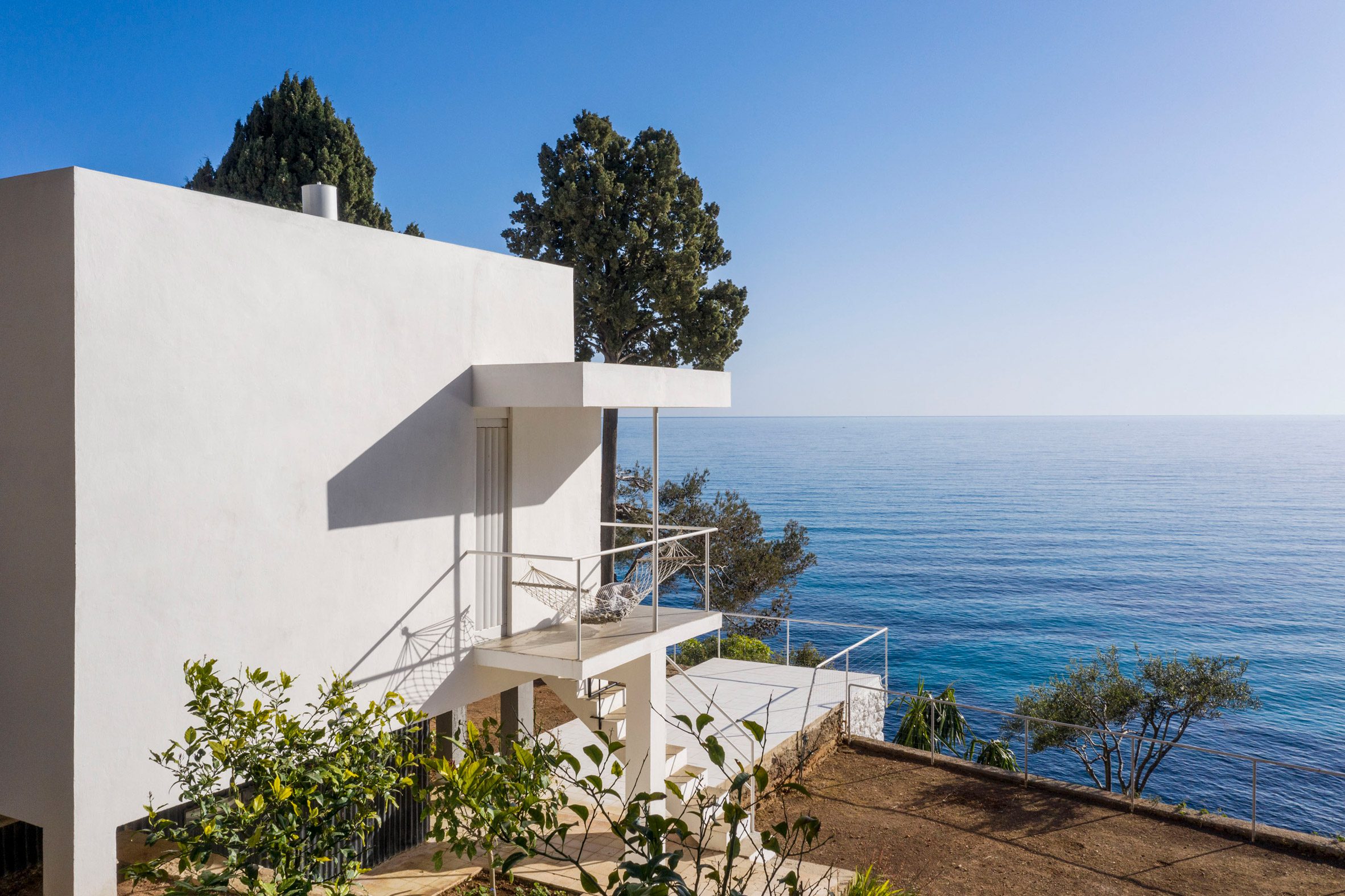
Modernist villa on Côte d'Azur
The modernist villa is on the Côte d'Azur

One of the most significant international-style houses, E-1027 was the first major architecture project designed by Irish architect Gray.

It was designed in collaboration with her partner at the time, Romanian architect Jean Badovici, who owned the house.

The home's name is a reference to the Gray and Badovici names. E stands for Eileen, with the couple's initials – J, B and G – signified by their alphabetical positions – 10, 2 and 7.
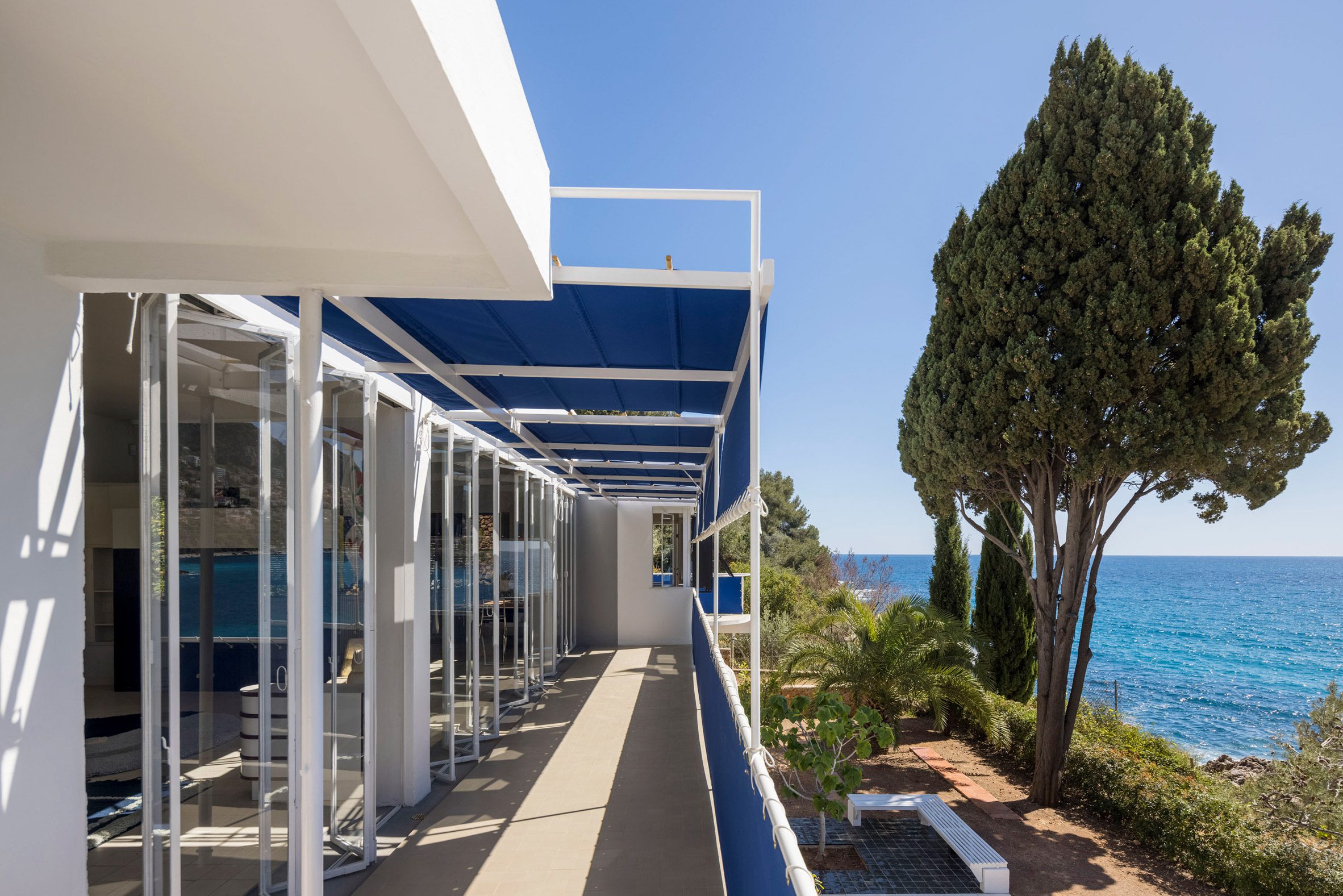
E-1027 house by Eileen Gray
It has been restored to its 1929 state

The pair split up shortly after the house was complete, with Badovici continuing to live in it and 20th-century architect Le Corbusier staying for large periods in 1937 and 1938 when he painted several colourful murals on the house.

After the house fell into disrepair it was purchased by the French governmental agency Conservatoire du Littoral in the 1990s.
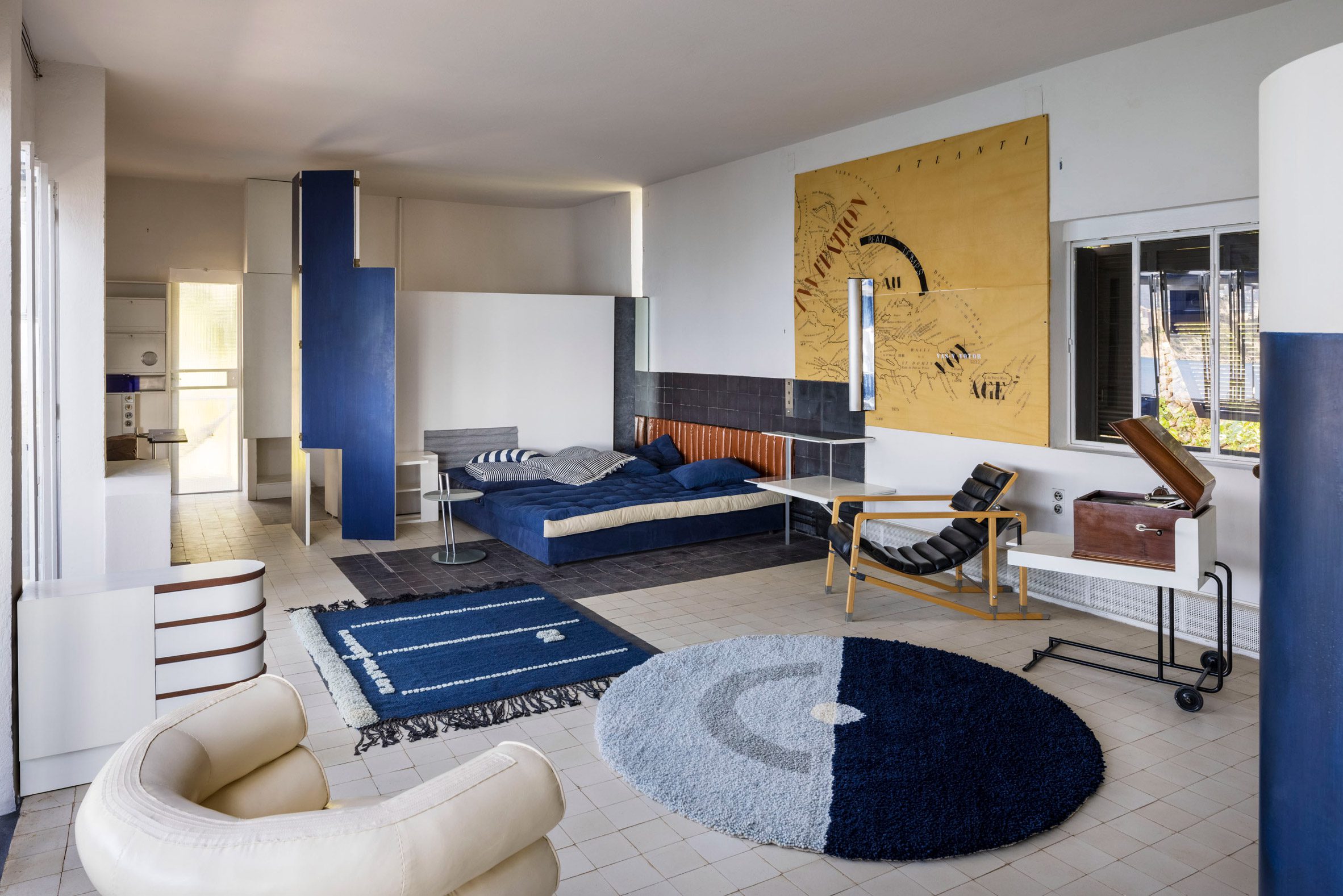
Interior of modernist house in France
The structure and the interior decor has been refurbished

A team led by Claudia Devaux, Renaud Barrès, Burkhardt Rukschcio and Philippe Deliau carried out the restoration to recreate "as closely as possible to what had been imagined and accomplished by Eileen Gray".

A major part of the restoration included extensively reinforcing and repairing the concrete structure, which had been damaged by the sea air.

Along with repairing the building's structure, the home's in-built and freestanding furnishings were recreated by replicating the original materials and methods.

This included remaking a writing table from nickel-plated steel tubes, which was positioned in the home's office. The work was carried out by Burkhardt Rukschcio and Renaud Barrès, based on a single photo held by the National Museum in Dublin.
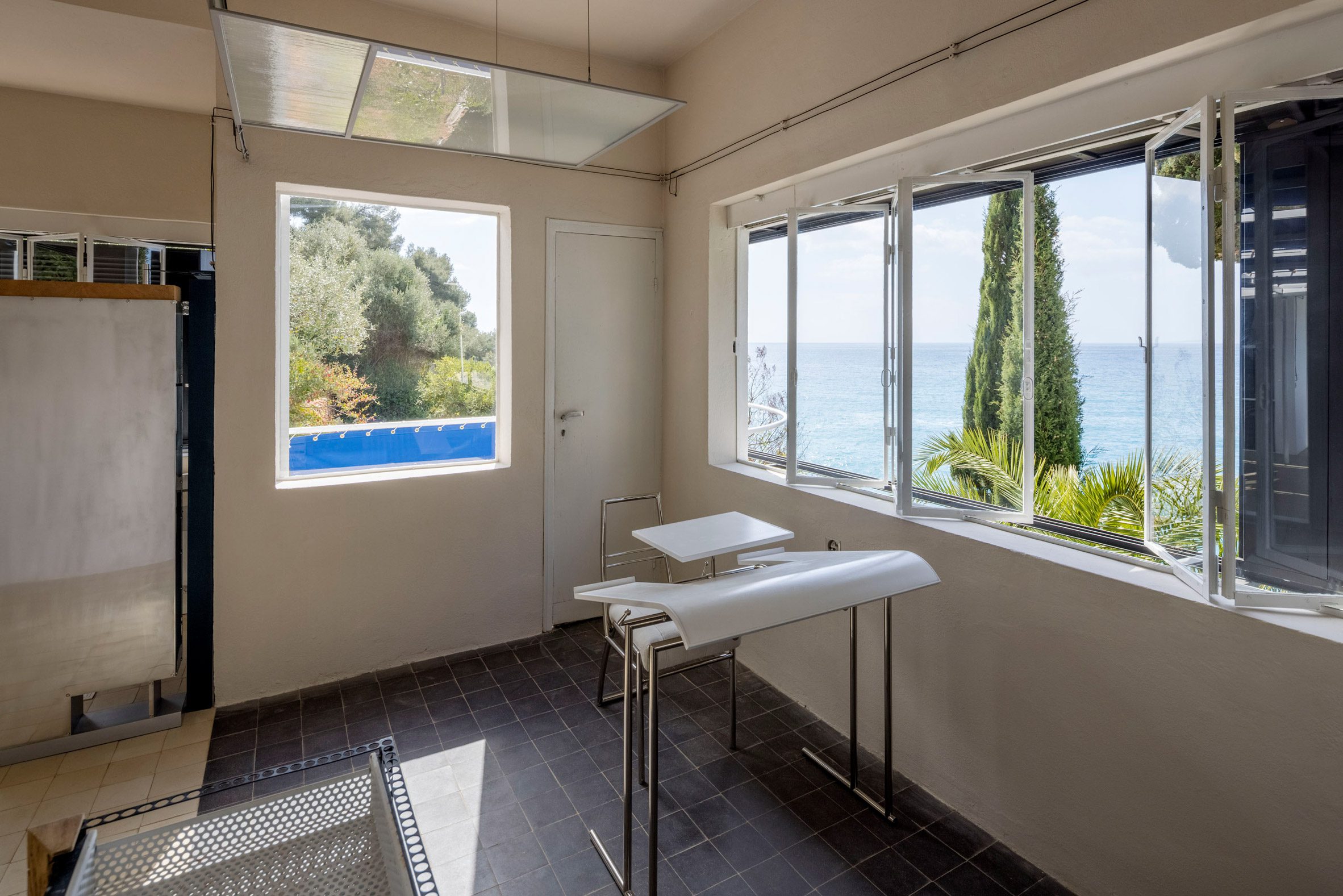
Eileen Gray writing desk
The home's original furniture has been rebuilt

Alongside E-1027, a seaside holiday cabin next door and five holiday homes designed by Le Corbusier have also reopened to the public.

Named Cabanon and built in 1951, Le Corbusier's small cabin is UNESCO World Heritage-listed.
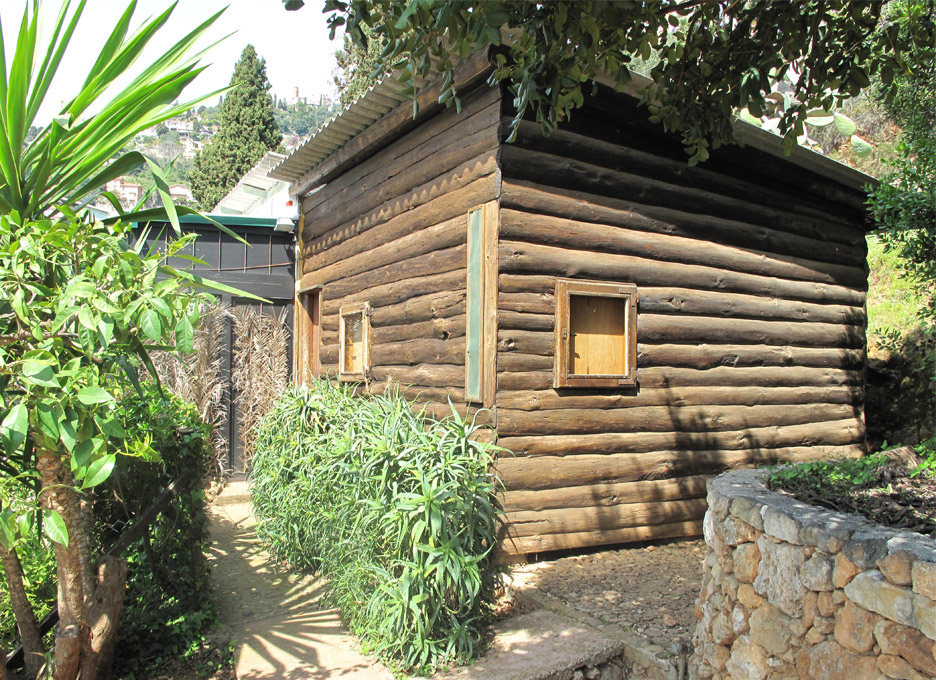
Le Corbusier's Cabanon
Le Corbusier's Cabanon is also open to the public

From the outside the building looks like a log cabin, but inside it has a modular design made from prefabricated parts.

Le Corbusier stayed at the cabin every August until he died swimming at the beach below E-1027 in 1965 aged 77.

Irish architect and furniture designer Gray died in 1978. She was recently the subject of a retrospective in New York featuring work "never shown before".

Photography is by Manuel Bougot.

The post Eileen Gray's E-1027 villa reopens on the Côte d'Azur following extensive restoration appeared first on Dezeen.


from Dezeen https://ift.tt/3ykgpmX

Carlo Ratti Associati designs hydroponic "farmscraper" for Shenzhen

jian mu tower by carlo ratti asssociati

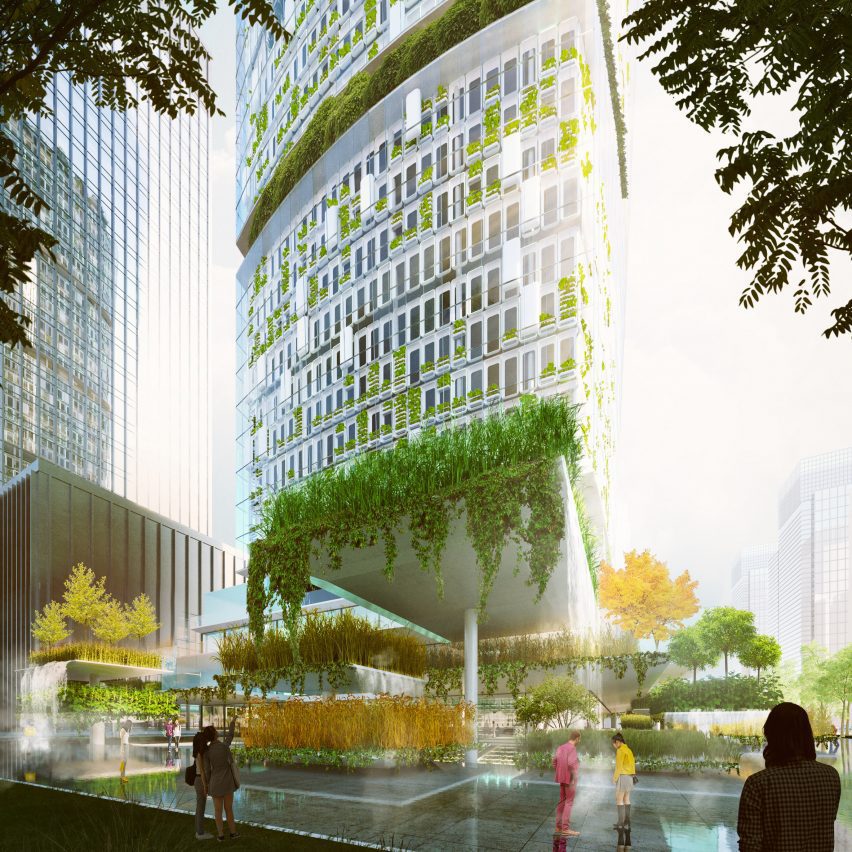
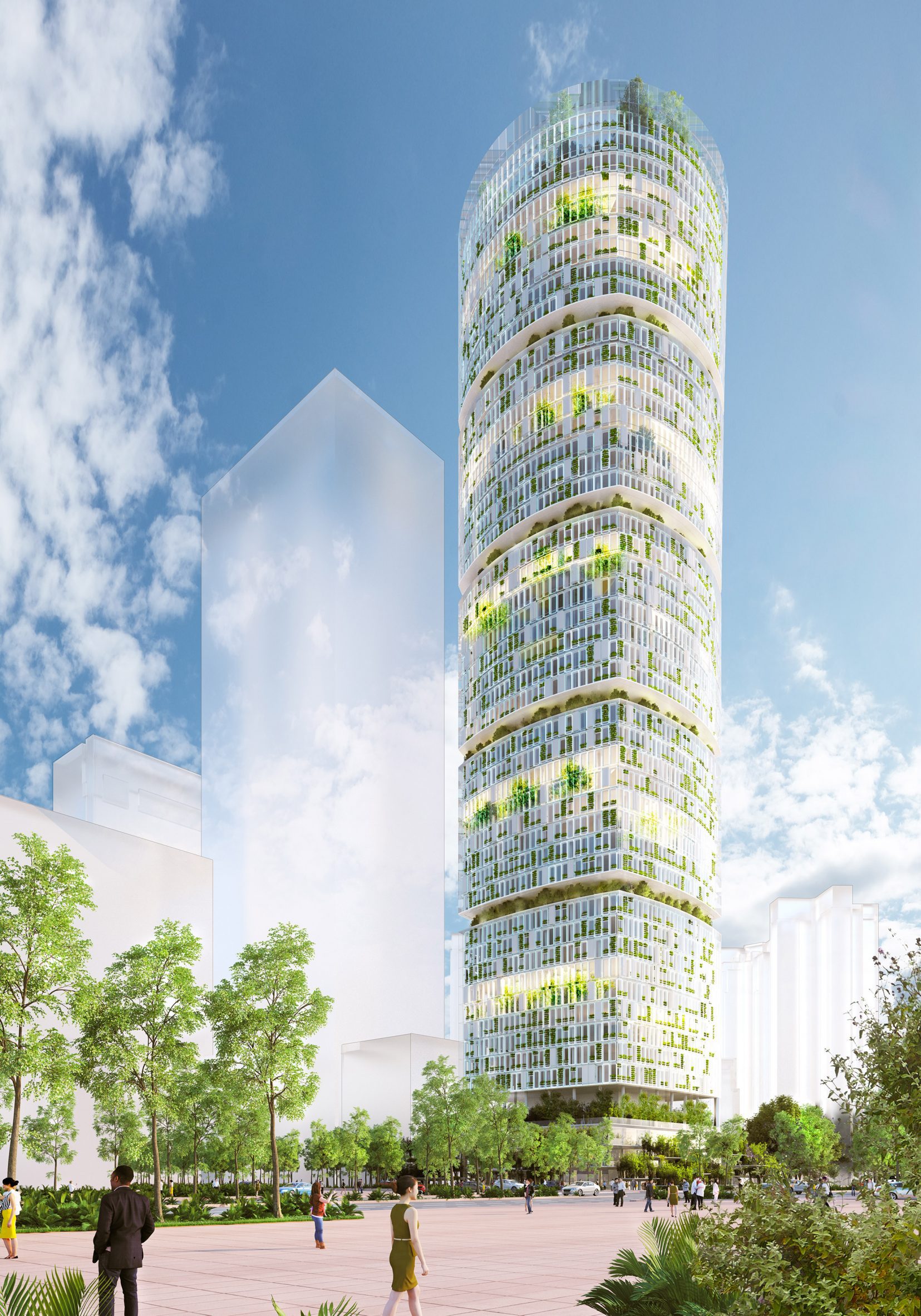
Carlo Ratti Associati has unveiled plans to build a 218-metre-tall skyscraper in China that would grow crops using hydroponics, as well as contain spaces for selling and consuming the produce.

The Jian Mu Tower would occupy the last available plot in Shenzhen's business district, completing the city's central skyline.

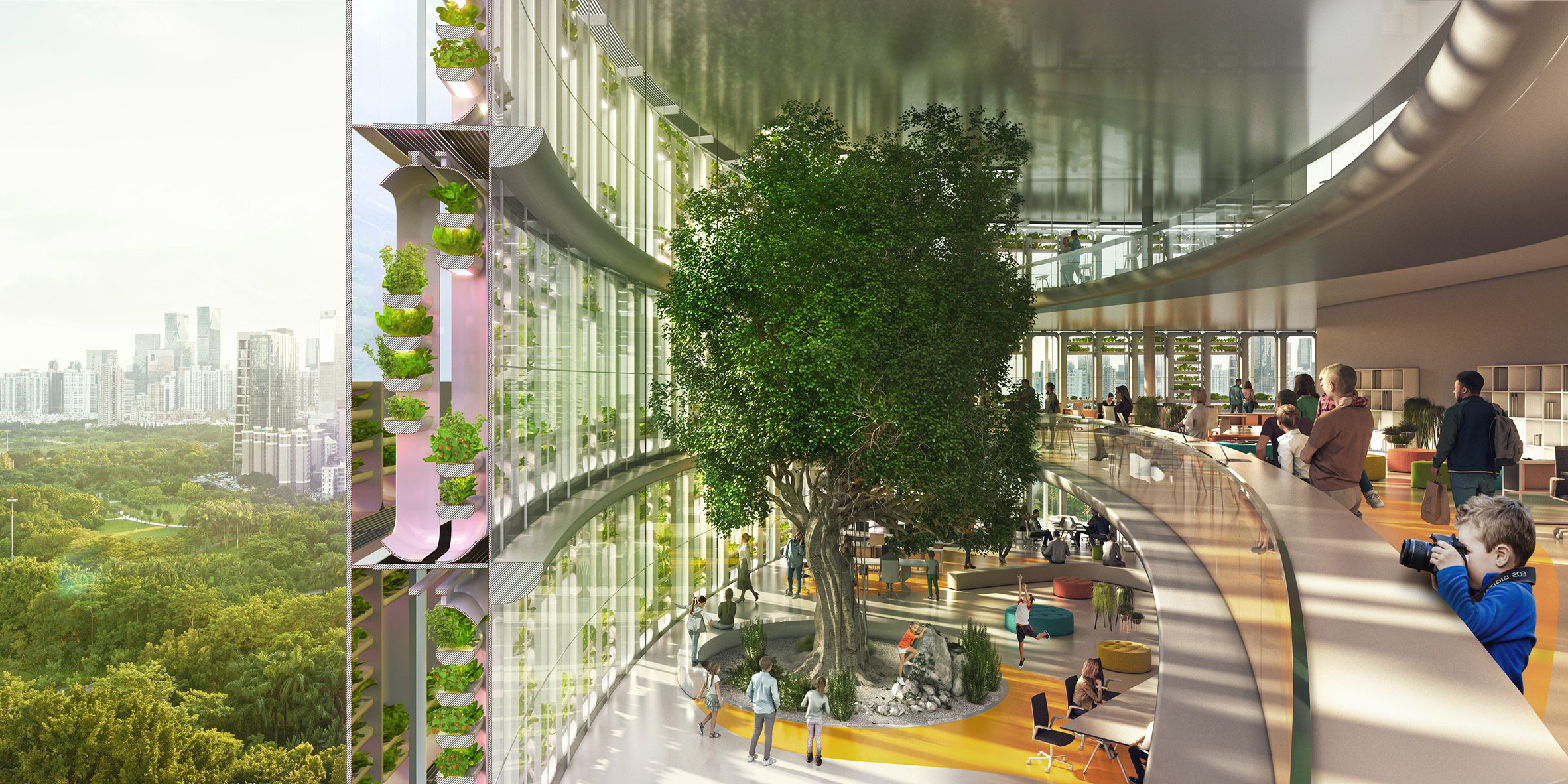
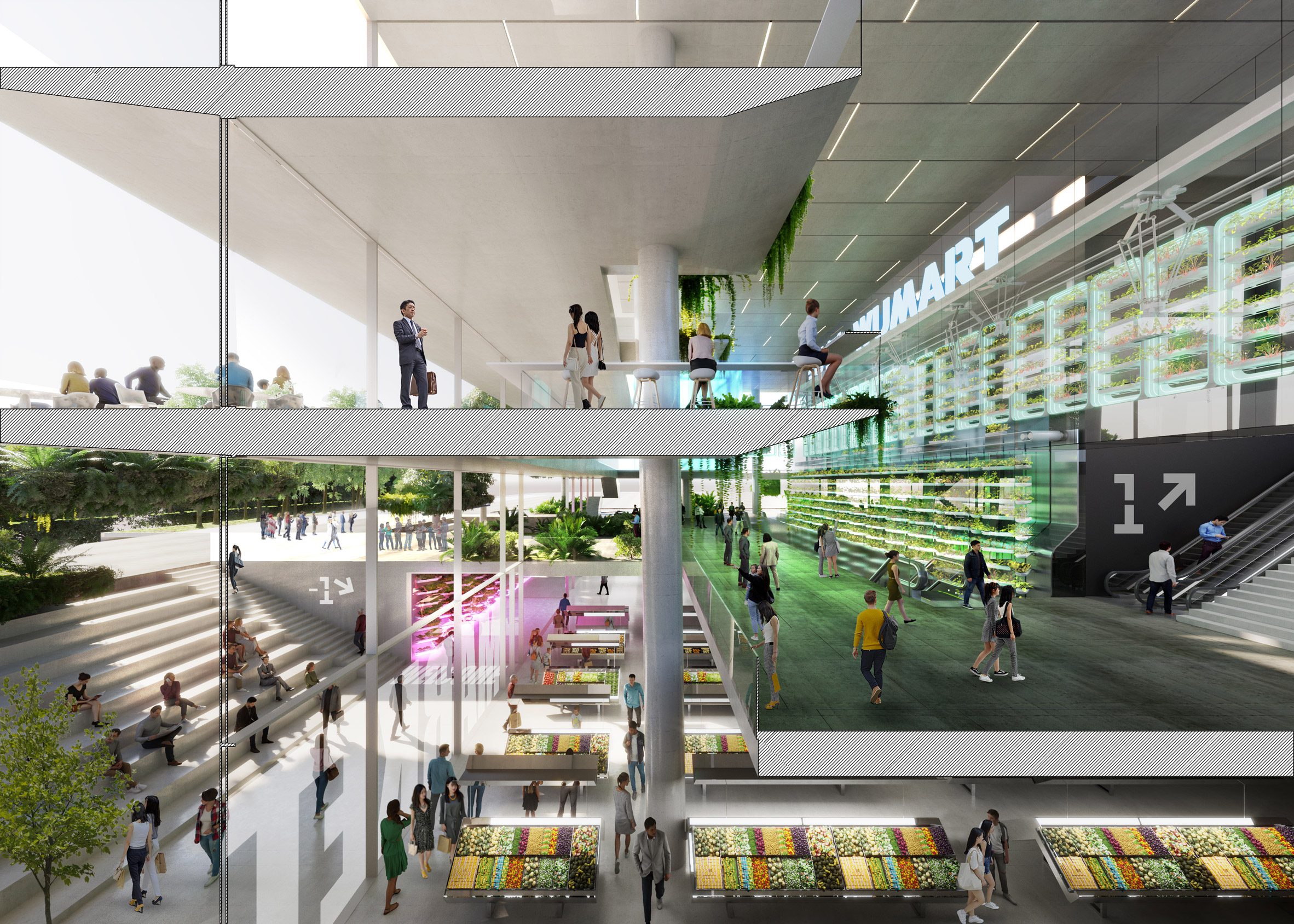
The 51-storey building dedicates 10,000 square metres to the cultivation of crops, creating a vertical hydroponic farm.

Hydroponic farming involves growing plants using water-based, mineral nutrient solutions as opposed to soil. The method is a space-saving solution to farming, and means crops can be organised and grown in a vertical formation.

Jian mu tower has a squared base and a rounded upper
Top: the skyscraper will contain offices, supermarkets and food courts. Above: the shape of the building was informed by ancient Chinese philosophy

The building is estimated to produce 270 tonnes of food per year, which is said to feed roughly 40,000 people. It would create a self-sustained food supply chain that manages cultivation, harvest, sale and consumption all within one building.

The vertical farms are planned to produce a range of vegetables and crops including salad greens, fruits and herbs.

"The vertical hydroponic farm embraces the notion of zero food miles in the most comprehensive sense," Carlo Ratti told Dezeen. "Crops cultivated in the tower are sold and even eaten in the same location, which helps us conserve a great deal of energy in food distribution."

Hydroponic farm spaces and crops would be managed by an "AI-supported virtual agronomist" that oversees daily operations including irrigation, and environmental and nutritional conditions.

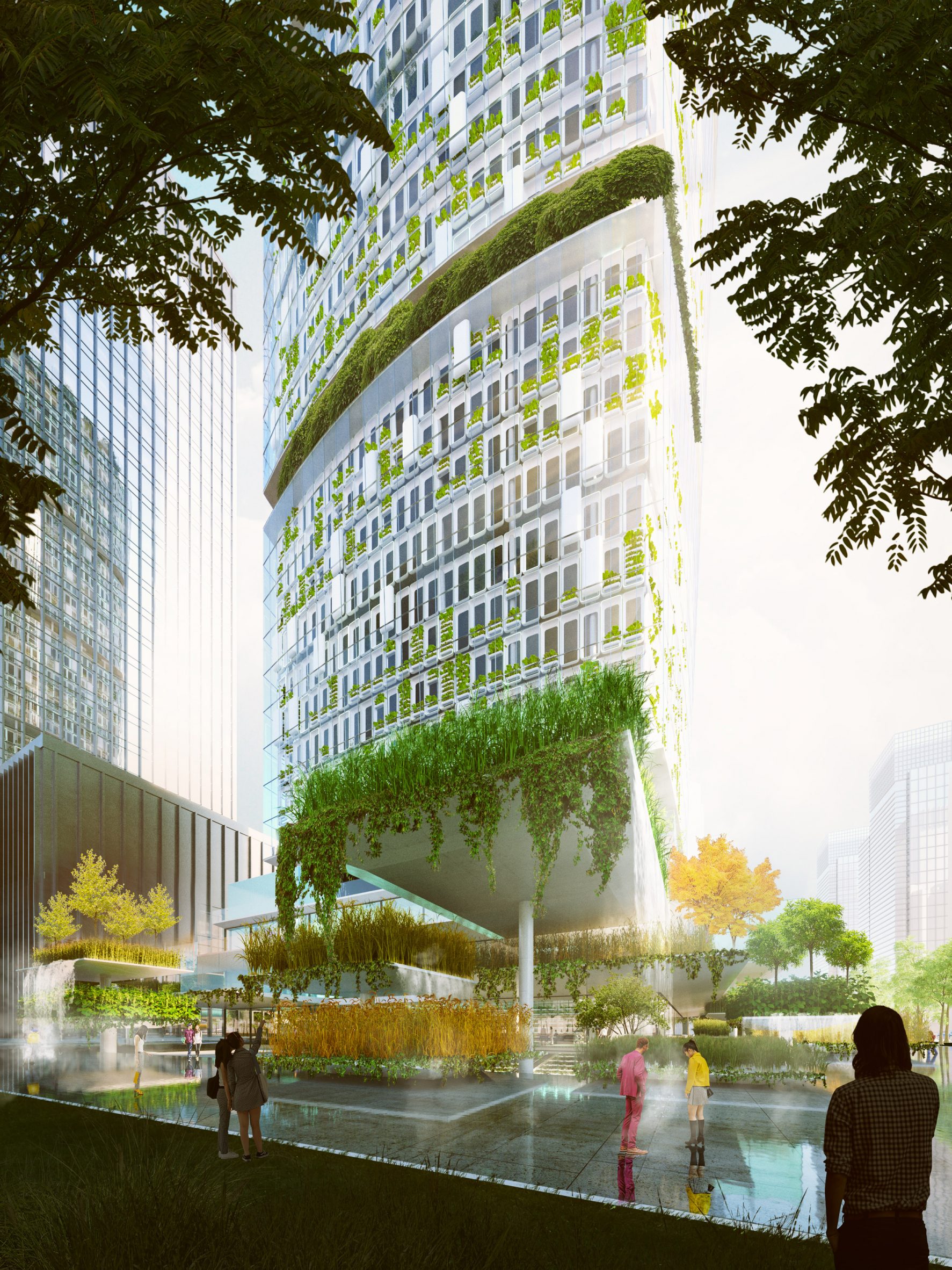
Jian mu tower will be wrapped in landscaped terraces
Hydroponic farms will envelop the exterior of the building

"We worked alongside a company called ZERO, which specializes in innovative agricultural solutions," said Ratti. "The ultimate solution we developed is an efficient one from a management perspective and it adapts traditional robotic hydroponic farms to a vertical facade."

The name of the tower comes from the mythical Jian Mu tree, which in ancient Chinese folklore is said to connect heaven and earth.

The shape and form of the building were similarly informed by the ancient Chinese philosophy of Tian Yuan Di Fang – "round sky and square earth".

This informed the rectangular base and cylindrical top of the tower, gently morphing from one to the other as it rises.

Jian mu tower has double height terraces
Gardens and terraces will adjoin office spaces

The building is designed to have a steel construction, with truss beams connecting concrete floor slabs to its core.

Offices, a supermarket and food courts inside the tower would occupy 90,000 square metres spread over the 51 storeys.

Office spaces adjoin double-height landscaped terraces that envelop the exterior of the building and feature a variety of flora including water lilies, ferns and lychee plants.

The greenery across the facade would reduce solar heat gain in the interior and reduce the building's need for air conditioning. Shenzhen's humid climate would help to irrigate the greenery.

Sectional view of the building
The building will produce 270 tonnes of food per year

"I see a lot of potential in integrating farming into our cities," said Ratti. "However, most examples in cities around the world – from Paris to New York to Singapore – have been small-scale."

"Large vertical facades allow scaling up in a way that can really help cities – the biggest consumers of food produce – to become more self-sufficient," he added.

In 2019, architecture studio Precht unveiled a concept for a modular residential tower where residents could produce their own food through vertical farming.

Another hydroponic vertical farm with crops grown on rotating loops was proposed for Shanghai by Sasaki.

The post Carlo Ratti Associati designs hydroponic "farmscraper" for Shenzhen appeared first on Dezeen.


from Dezeen https://ift.tt/3zmBNcx

Sydney mandates lighter roofs and larger gardens for suburb to ward off climate change

Black roofs in Sydney suburb banned under Wilton Development Control Plan

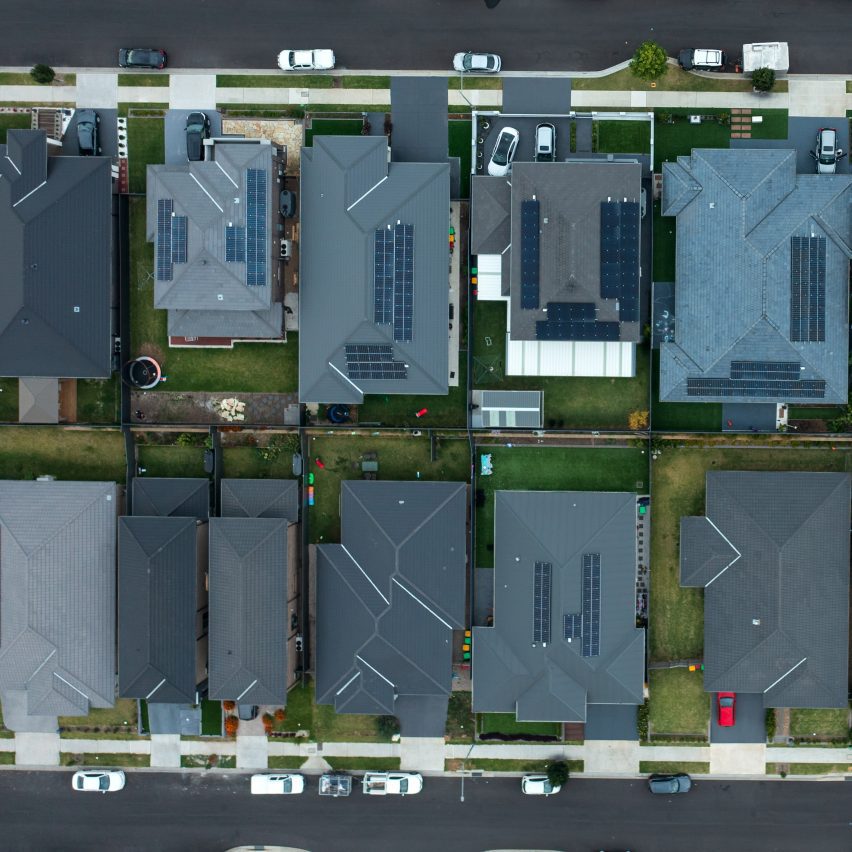
Dark roofs will be banned and backyards expanded for all new houses built in Sydney's emerging Wilton suburb, as part of planning controls that are being introduced to help lower temperatures in the city.

Under plans set out by the New South Wales government, the slate grey roofing typical of much Australian residential construction must be abandoned in favour of lighter, more reflective alternatives that are able to passively cool a building.

The Wilton Development Control Plan for the suburb in western Sydney will also require residential lots to be large enough to accommodate a tree in the garden.

Together with the cool roofs, the hope is that this will help to combat the urban heat island effect, which sees cities experience higher temperatures than the surrounding area due to their dense, dark infrastructure, which absorbs light and re-emits it as heat.

"Western Sydney already experiences blistering temperatures of over 50 degrees in summer," planning and public spaces minister Rob Stokes told the Sydney Morning Herald.

"The need to adapt and mitigate urban heat isn't a future challenge – it's already with us."

Cool roofs could reduce heatwave temperatures

The news comes after the latest IPCC climate report found that average temperatures in Australia have already increased by 1.4 degrees Celcius since the industrial revolution due to manmade climate change.

This means the country is warming faster than global average temperatures, bringing it close to the critical 1.5-degree threshold set out in the Paris Climate Agreement.

Due to the urban heat island effect, this is felt even more acutely in cities like Sydney. Wilton and other areas in the west of the city are already seeing temperatures of above 50 degrees Celcius in summer, leading experts to predict that they could become unliveable in a matter of decades.

More than 9,000 homes planned for Wilton

In a bid to mitigate this, the Wilton Development Control Plan hopes to provide more than 9,000 climate-resilient homes in the area over the coming years, none of which will be allowed to have dark roofs as these retain heat as well as increasing the need for air conditioning and associated carbon emissions.

"The Covid-adjusted predictions tell us that until 2030, we're going to settle another 400,000 people in the area," Sebastian Pfautsch, associate professor of urban ecosystem science at Western Sydney University, told ABC Radio Sydney.

"If we do that with black roofs, we're just building an oven for all these people. We have to move away from it."

Instead, the roofs will be painted in reflective paint, which Pfautsch says can lower a building's surface temperature by up to 40 degrees.

Applied at scale, studies have shown that cool roofs can reduce the intensity of the urban heat island effect by 23 per cent and lower maximum temperatures during a heatwave by two degrees Celsius or more.

This can be achieved through simple white paint, which naturally absorbs less heat than darker materials and has been used in initiatives such as New York's CoolRoofs programme and Ahmedabad's Heat Action Plan for more than a decade.

Research initiatives have also spawned more advanced technologies including a fluoropolymer paint developed by architecture practice UNStudio and a barium-based formulation by Purdue University, which is dubbed "the whitest paint on record" and capable of reflecting 98 per cent of sunlight.

Cities leading the charge in climate change fight

To amplify the cooling effect of the roofs, the Wilton Development Control Plan also mandates that residential lots of 15 by 18 metres need to accommodate a mature tree of at least eight metres in both their front and backyard.

This will help to create a so-called green corridor, combatting the urban heat island effect by improving ventilation as well as absorbing carbon dioxide from the atmosphere and improving local biodiversity.

Colombia's second-largest city of Medellin employed a similar strategy and was able to reduce average temperatures in the area by two degrees Celcius since 2016.

Both initiatives illustrate how cities can often be more agile and do more to address climate change than national governments, as Hélène Chartier of C40 Cities argued in an interview with Dezeen.

"Cities have been really leaders, especially when the nations were stuck with Trump," said Chartier, who is C40 Cities' head of zero-carbon development.

"Sometimes urban areas are more progressive so they feel that they have more operational capacity. They have more support from their residents to accelerate the transition and help nations to go in the right direction."

The post Sydney mandates lighter roofs and larger gardens for suburb to ward off climate change appeared first on Dezeen.


from Dezeen https://ift.tt/3gC8YBL

Shane Fu fools "gullible" viewers with hyperrealistic window animation

Zara storefront animation by Shane Fu

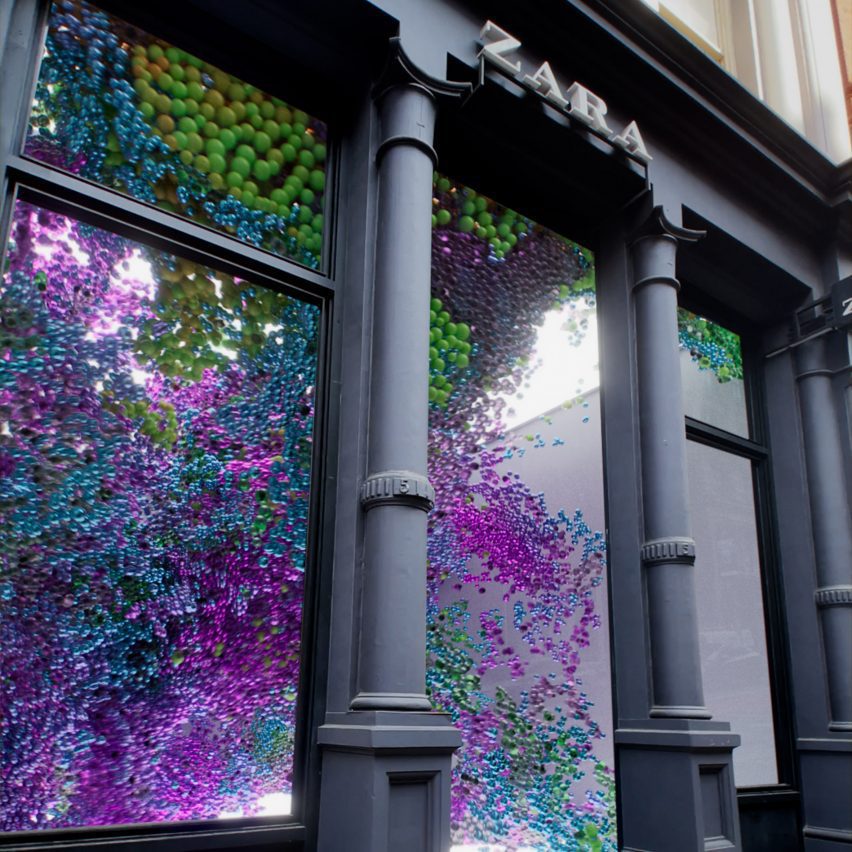
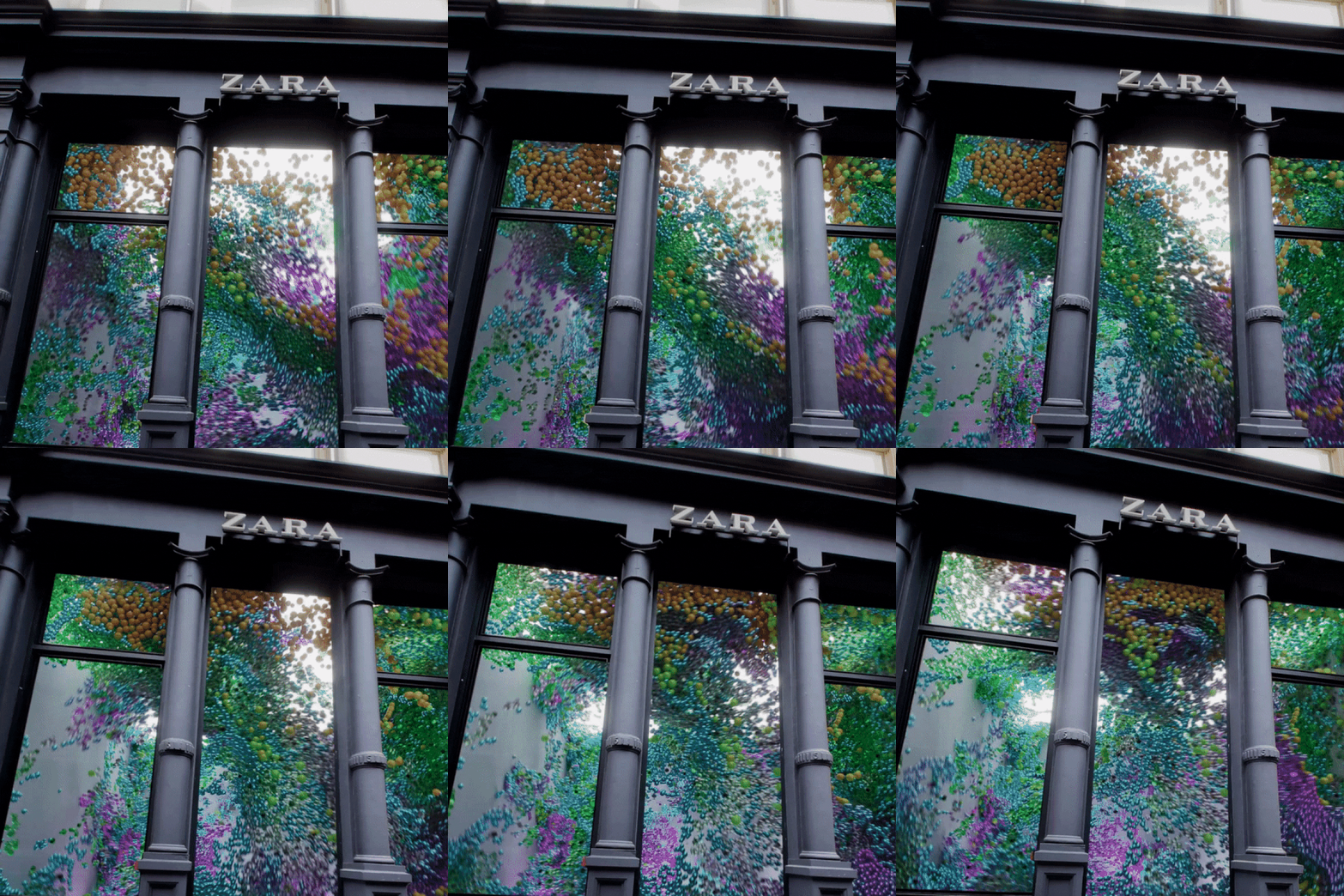
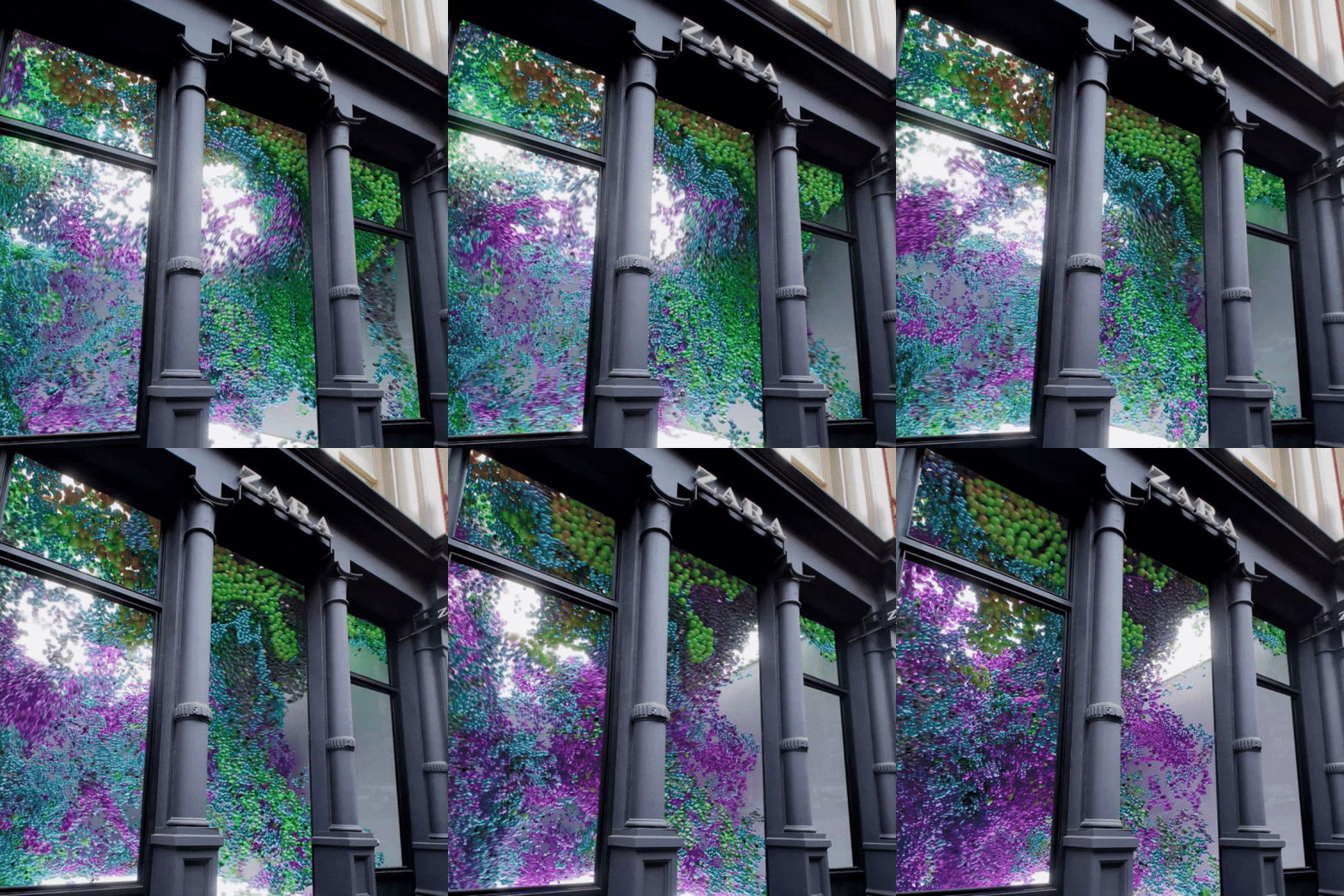
A wave of colourful balls seems to slosh through the New York store of fashion brand Zara in this CGI animation by motion designer Shane Fu, which has accumulated more than 17 million views online.

The video, which was commissioned by Zara and shared on the brand's TikTok, was widely believed to be showing a real LED window display similar to the 3D billboards popular in China and South Korea.

But in reality, the simulation exists only on the internet.

Wave of colourful balls floating in Zara store animation
Shane Fu's animation shows a wave of colourful balls in a shop window

"People are gullible and think it is real or some sort of physical installation," Fu told Dezeen. "It's just a video that's meant to be shared on social media."

To create the animation, Fu visited Zara's Soho location where he filmed a slow pan of the storefront.

Using 3D software, he created the illusion of a three-dimensional room unfurling behind the windows, inhabited by a swarm of rainbow-coloured spheres.


View this post on Instagram


A post shared by ShaneF Motion Design (@shanef3d)

Fu posted the video on his Instagram while Zara shared it on TikTok

"I used lighting references from the location," he explained, mimicking the conditions on-site to make the animation as lifelike as possible.

The final illusion was so convincing that some viewers went to visit the store to see the non-existent display in person.

"It got me down there," one user commented. "Then I realized it was just a TikTok!"

Fu, who is based in New York, has grown a following online for his abstract, 3D artworks, which are inserted into everyday settings to blur the line between fantasy and reality.

Previously, the Chinese designer has visualised floating penguins and glowing green frogs contained in transparent vessels and superimposed on ordinary street scenes recorded on his phone.

"A container gives me limitations to work around," he explained. "A lot of animations similar to mine tend to go wild and flashy, which makes it less realistic and less appealing to a wider audience."

Storefront with colourful balls by Shane Fu
The animation is based on a phone video of Zara's Soho store in New York

Fu sells his artworks online as non-fungible tokens (NFTs). But in the future, he hopes to see one of his animations integrated into a real-life setting to complete the illusion.

This isn't the first time that Zara has dabbled in creating optical illusions for its stores.

Previously, the brand collaborated with Light Cognitive to create an artificial LED skylight for a windowless retail space in Barcelona that mirrors the actual colours of the horizon outside.

The post Shane Fu fools "gullible" viewers with hyperrealistic window animation appeared first on Dezeen.


from Dezeen https://ift.tt/38hO2eL

British Council panelists question who benefits from public space

Therme

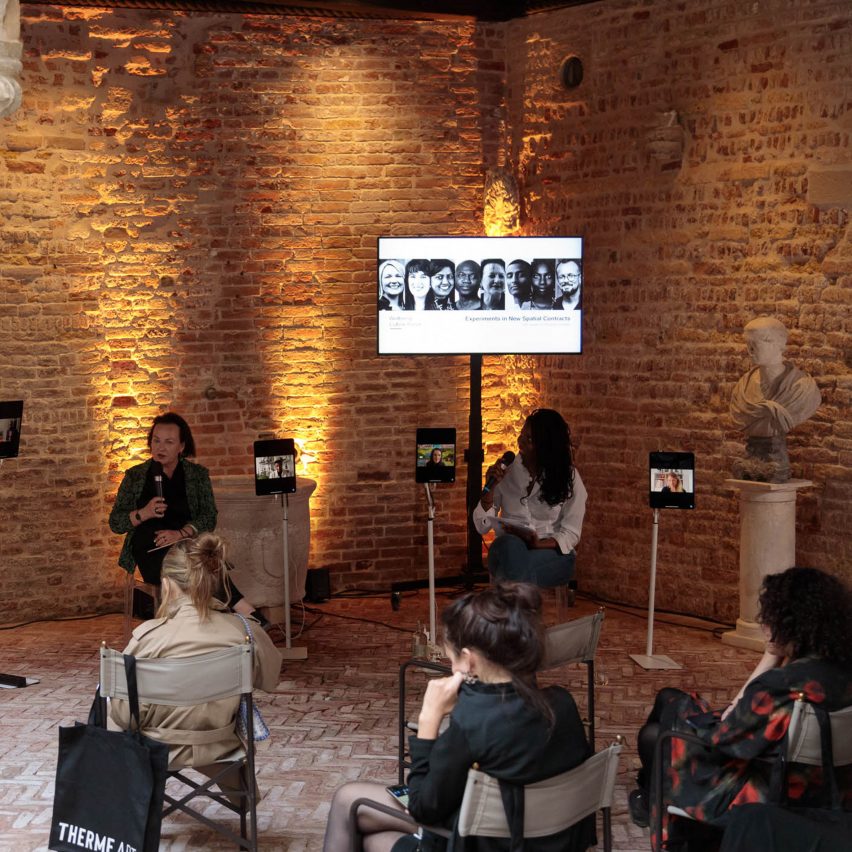
Dezeen promotion: the imbalance of power in the decision-making process behind the creation of public space came under scrutiny in a talk held by the British Council and Therme Art last month at the opening of the Venice Architecture Biennale.

The importance of accessible public space, which has become a more pertinent issue in the wake of the Covid-19 pandemic, relates directly to this year's biennale's theme, which called for a "new spatial contract" founded on a more sustainable relationship with each other and our natural world.

The talk focused on the biennale’s central question, "How will we live together?"

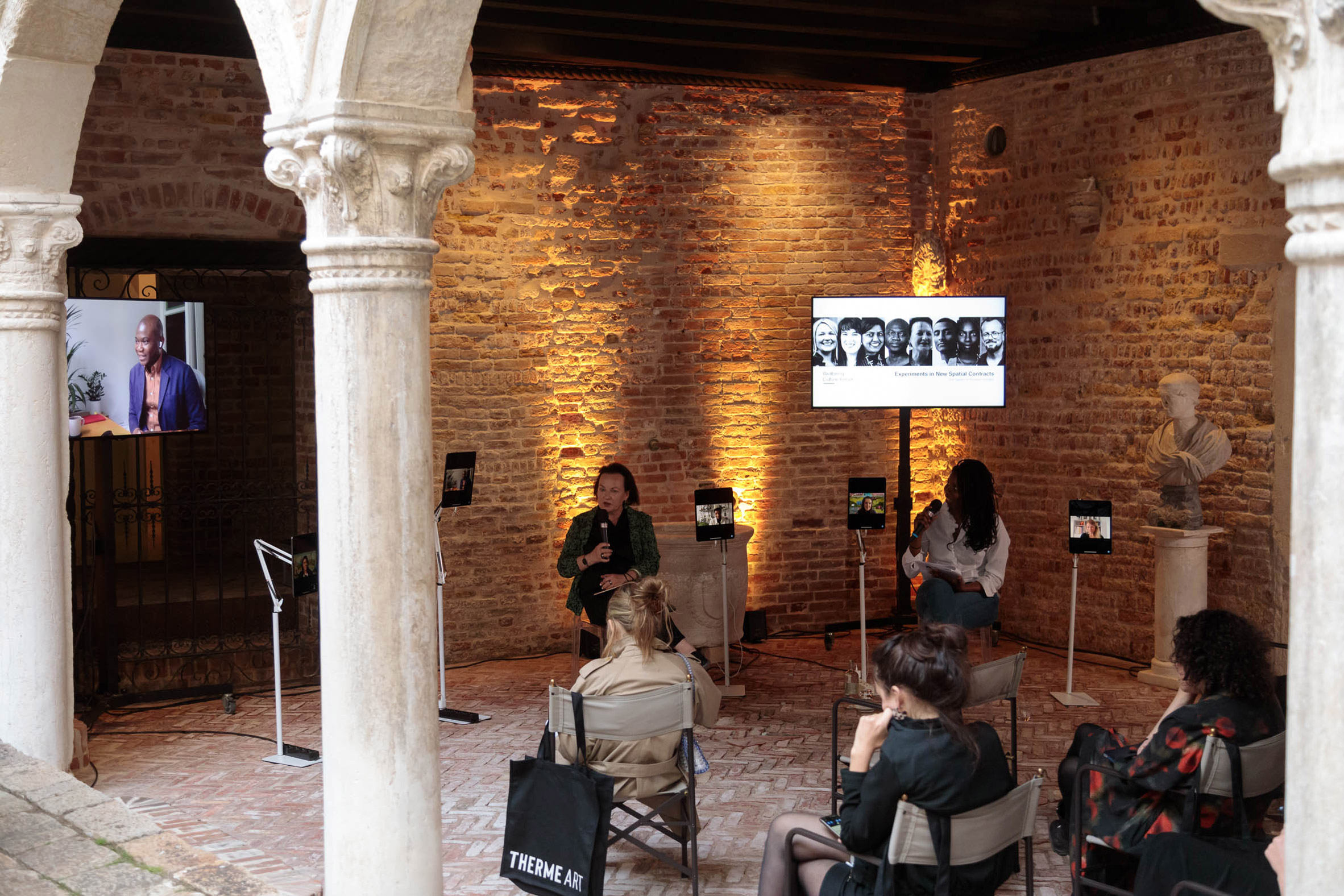
In response to this, Therme Art and The British Council co-hosted a panel discussion called Experiments for New Spatial Contracts.

Therme
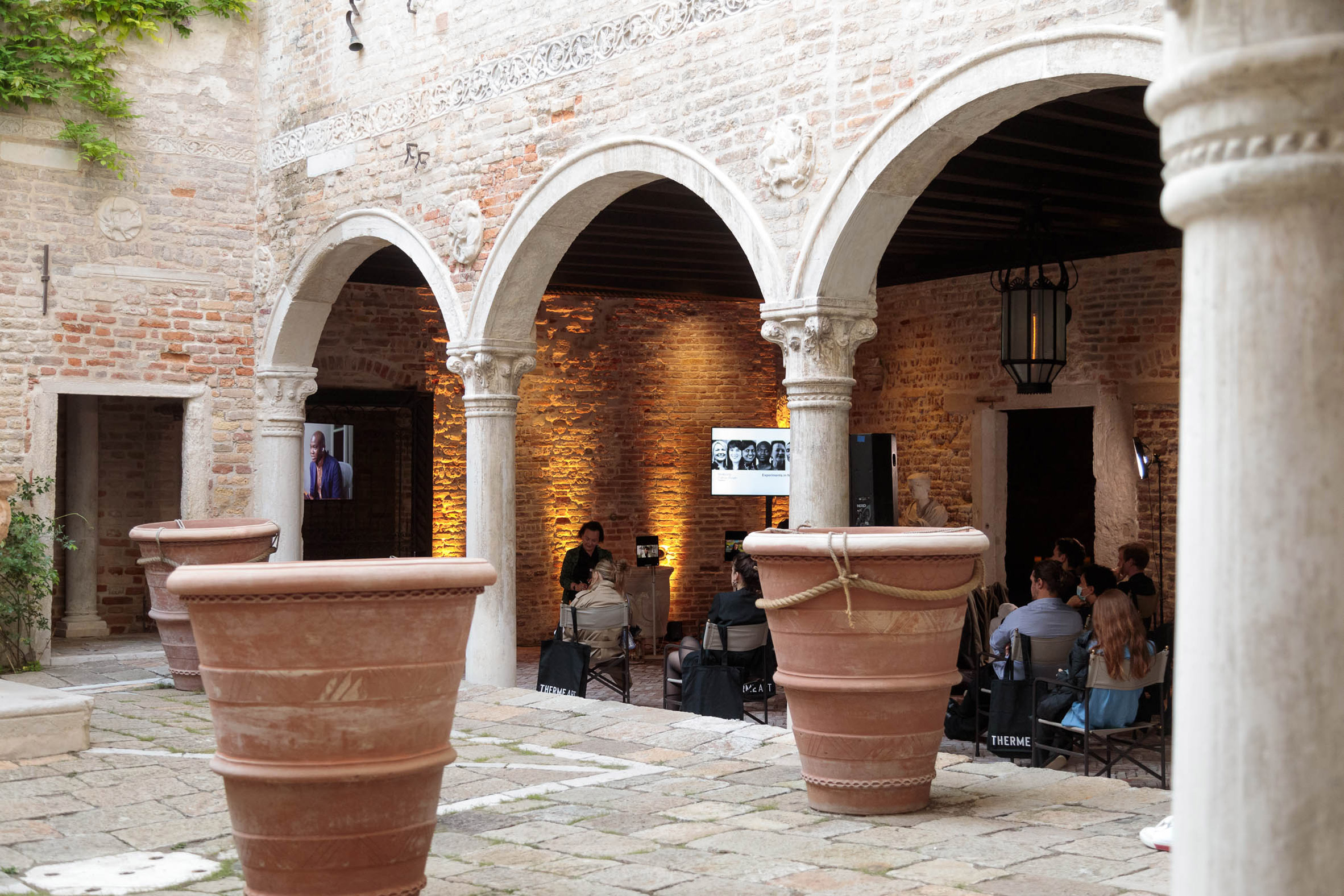
The talk was held by the British Council and Therme Art

The discussion was presented as part of Therme Art's ongoing Wellbeing Culture Forum, a talks programme launched in May 2020 to address the onset of the global pandemic and its cultural implications.

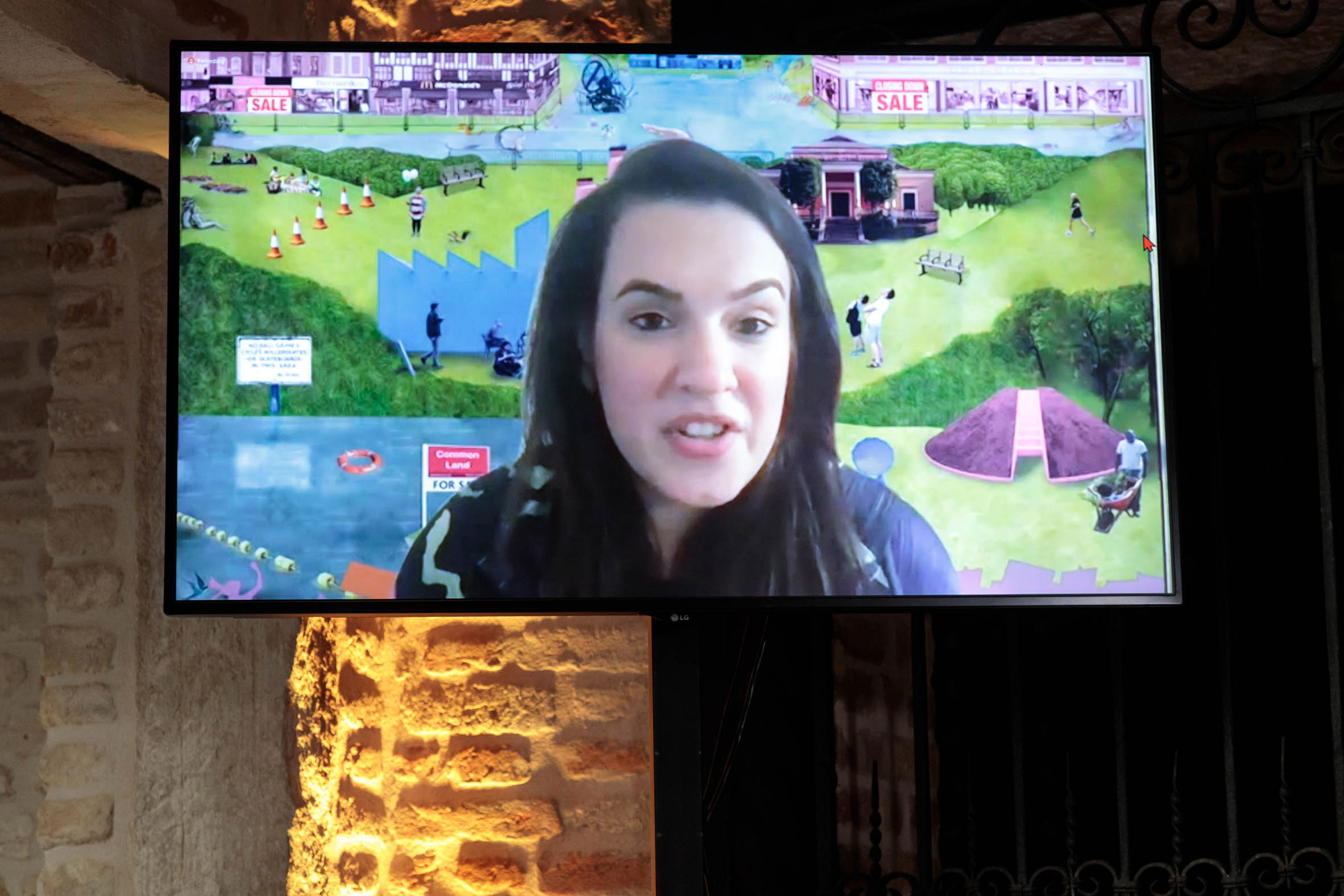
It focused on the idea of cohabitation prompted by the biennale's guiding question along with the British Pavilion's co-curators' response in The Garden of Privatised Delights.

Commissioned by the British Council and supported by Therme Art as a platinum partner, The Garden of Privatised Delights is an exhibition that invites leading architects and designers to consider and reimagine public space.

It was curated by Madeleine Kessler and Manijeh Verghese, founding directors of experimental architecture practice Unscene Architecture, and takes its title from Hieronymus Bosch's painting The Garden of Earthly Delights.

Therme
Other speakers included Madeleine Kessler and Sarah Wilson

Bosch's painting takes a triptych format; the utopia of Heaven and the Garden of Eden is presented on the left and the dystopia of hell on the right. The middle ground of life on earth is presented in the centre of the painting where complex issues around innocence and guilt unfold.

In The Garden of Privatised Delights, Verghese and Kessler reimagine the painting in the context of contemporary public space in the face of increasing privatisation. It raises questions around inclusivity and access – a sentiment that Therme Group said resonates deeply with its mission of creating urban spaces for all.

"We saw it as an opportunity for architects to work with the public to develop more inclusive programmed inhabited spaces, and that's really our goal in the pavilion," explained Verghese.

Therme
The discussion happened at the opening of the Venice Architecture Biennale

"Public and private interests are intricately linked; both motivations need the other to function," said Therme Art.

"However, in our societies today, we often see misalignments in the execution of this melding of worlds. The needs of the public are often overlooked in favour of increased profit, and private stakeholders are typically not informed enough on the demands of the communities they affect."

Addressing the imbalance of resources, wealth distribution and power in the decision-making regarding public space, David Ogunmuyiwa, architect and founder of Architecture Doing Place and Mayor of London's design advocate, questioned who should be responsible for designing public housing and public space.

Therme
The talk centred on the importance of accessible public space

"I think this is a really unspoken barrier that is circumscribed by various institutional constraints," said Ogunmuyiwa.

"It's distilled down to a simplified idea of public and private when actually public and private often work in collusion to exclude and to make sure there is redistribution but it's often regressive."

Jayden Ali, founding director of JA projects, spoke of how his practice is trying to implement change through the projects it works on and in particular the Thamesmead Waterfront project in London that includes the creation of huge swathes of public space.

Therme
The discussion was presented as part of Therme Art's ongoing Wellbeing Culture Forum

"Our ambition is to work on projects that start to trial a new future and start to test those new relationships between the different people and the different inhabitants on-site, whether they be humans or non-humans," said Ali.

Commenting on London's historical and current public space offering, Verghese added:

"One thing we really wanted to explore in the pavilion is not just the removal of physical barriers, but also those intangible barriers. I think we all need to sit with some discomfort in order to really understand who these spaces are for and who gets excluded."

Therme
The talk was prompted by the biennale's guiding question "How will we live together?"

Other speakers included Sarah Wilson, professor of modern and contemporary art history at the Courtauld Institute of Art.

The talk was the latest in Therme Art's Wellbeing Culture Forum talks programme. Founded in 2017, Therme Art is the "cultural incubator" of Therme Group.

Therme Art is responsible for the outreach to the creative communities, curating site-specific artistic and architectural projects that "challenge the limitations of conventional exhibition spaces and redefine contemporary art viewing".

Therme Art works in cooperation with internationally renowned artists, architects and emerging talents. To view more about Therme Art, visit their website.


Partnership content

This article was written by Dezeen for Therme Art as part of a partnership. Find out more about Dezeen partnership content here.

The post British Council panelists question who benefits from public space appeared first on Dezeen.


from Dezeen https://ift.tt/3DkGJRH