Friday, 27 August 2021

Chart Art Fair installs five "social architecture" pavilions in Copenhagen

This Dezeen video showcases the five architecture pavilions at this year's Chart art fair in Copenhagen, including a restaurant covered with microgreens and a structure made out of inflatable bags.

Each of the pavilions, which are installed in the courtyards of Charlottenborg in the centre of Copenhagen, are intended to be examples of "social architecture" and aim to investigate different ways to create social and sensory experiences.

The designs were chosen by a jury including Bjarke Ingels, Sabine Marcelis, Shohei Shigematsu, David Zahle, curator Simon Lamunière and artist Nina Beier as winners of Chart's annual architecture competition.

"After a year of social distancing, the finalists' pavilion designs explore ways to come together again and to share social experiences," said Chart.

FIELD by Torsten Sherwood and Benedicte Brun
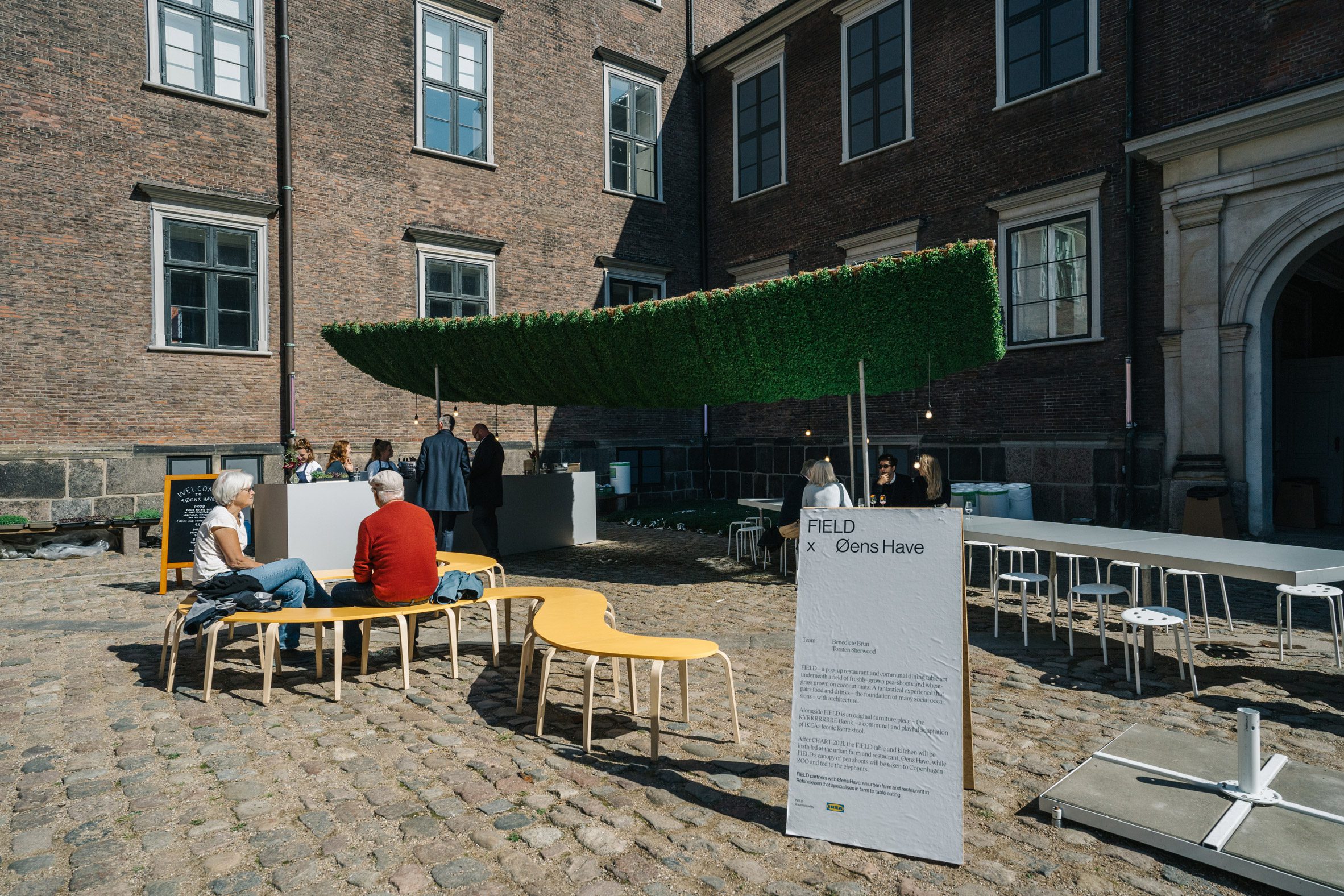
Field is a restaurant covered by a canopy embedded with edible microgreens. Image by Joakim Züger, courtesy of BARSK Projects

Designer and architect Torsten Sherwood and Benedicte Brun created a pavilion comprising a dining table placed under a canopy embedded with edible microgreens.

Called Field, the structure features a long dining table and bar area connected by a curved roof made from microgreens. It aims to investigate how the combination of architecture and culinary experiences can bring people together.

Leverage by Rumgehør
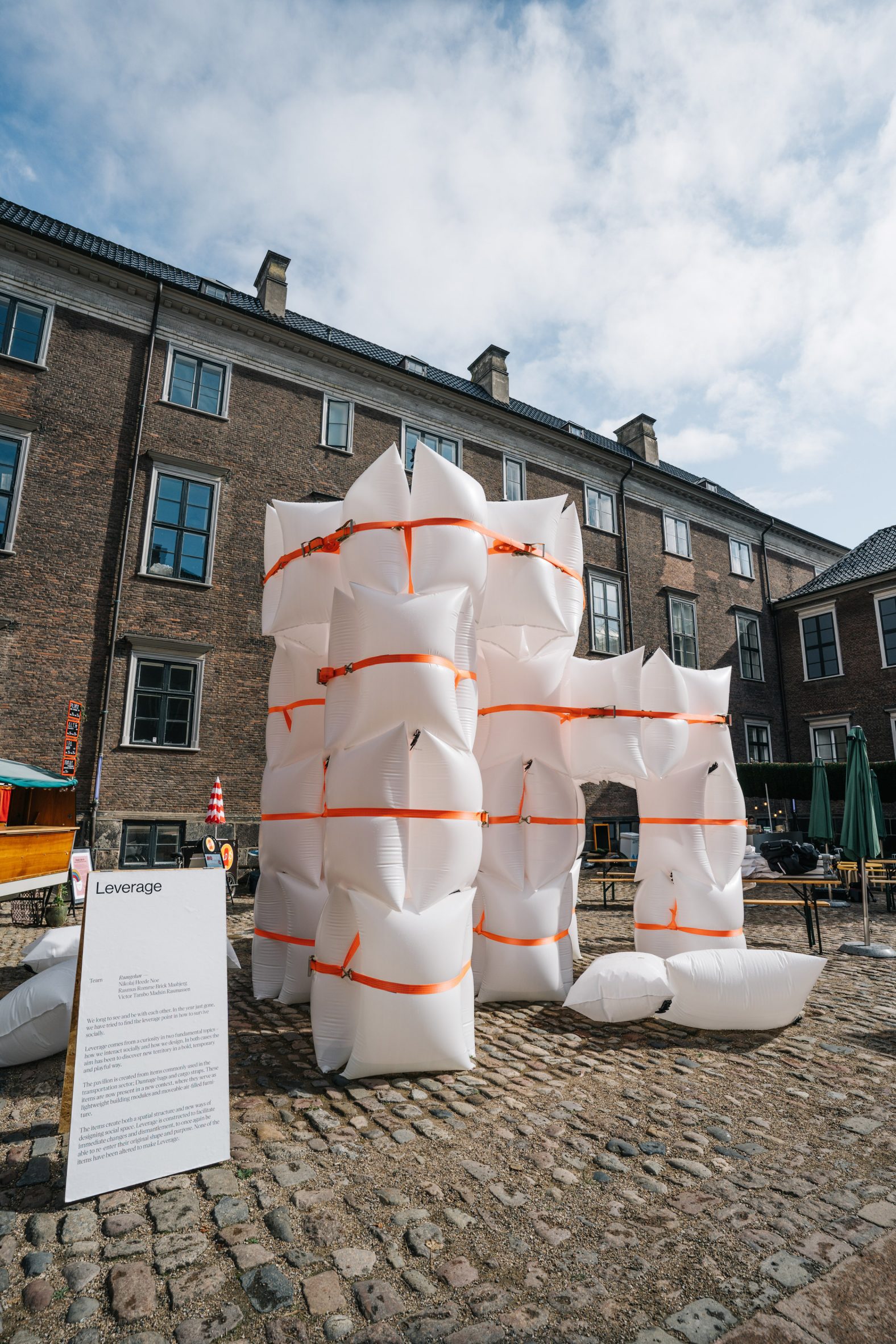
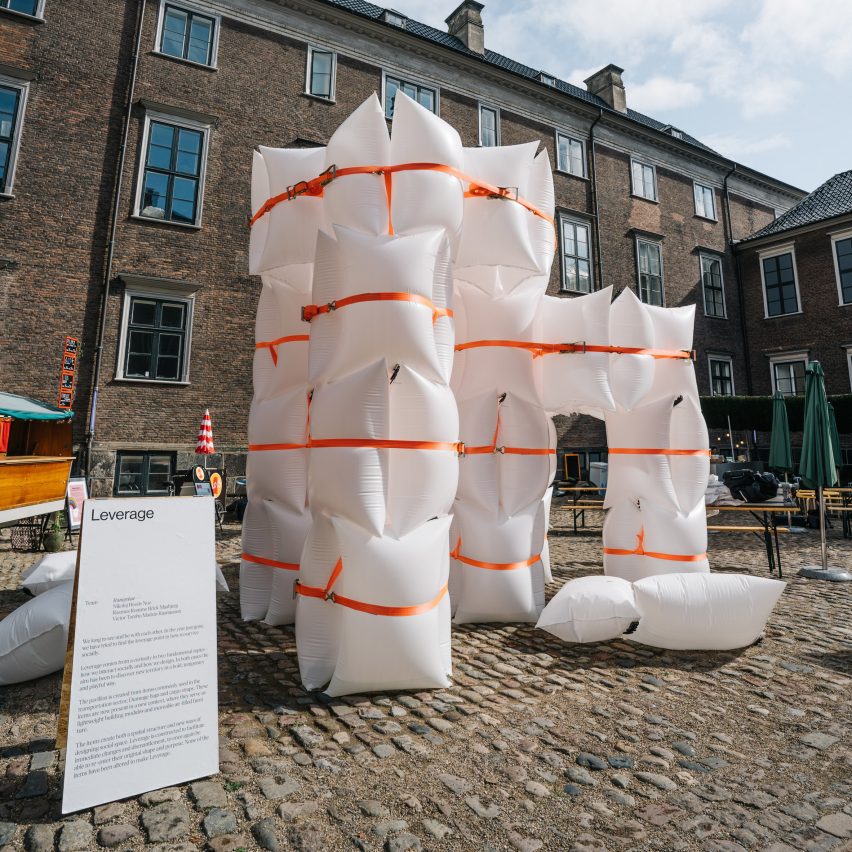
Leverage is a temporary architectural pavilion made from inflatable dunnage bags. Image by Joakim Züger, courtesy of BARSK Projects

Another pavilion is built entirely from white dunnage bags, which are often used to protect cargo during shipping. The inflatable bags are held in place by bright orange ratchet straps.

Called Leverage, the structure is designed to be a hangout area during the fair, with individual dunnage bags placed around it for seating.

It was designed by Danish studio Rumgehør, which is made up of architects Rasmus Maabjerg, Nikolaj Noe and Victor Tambo, who said they wanted to investigate "the leverage between social interaction and temporary architecture".

Situated Exteriors by
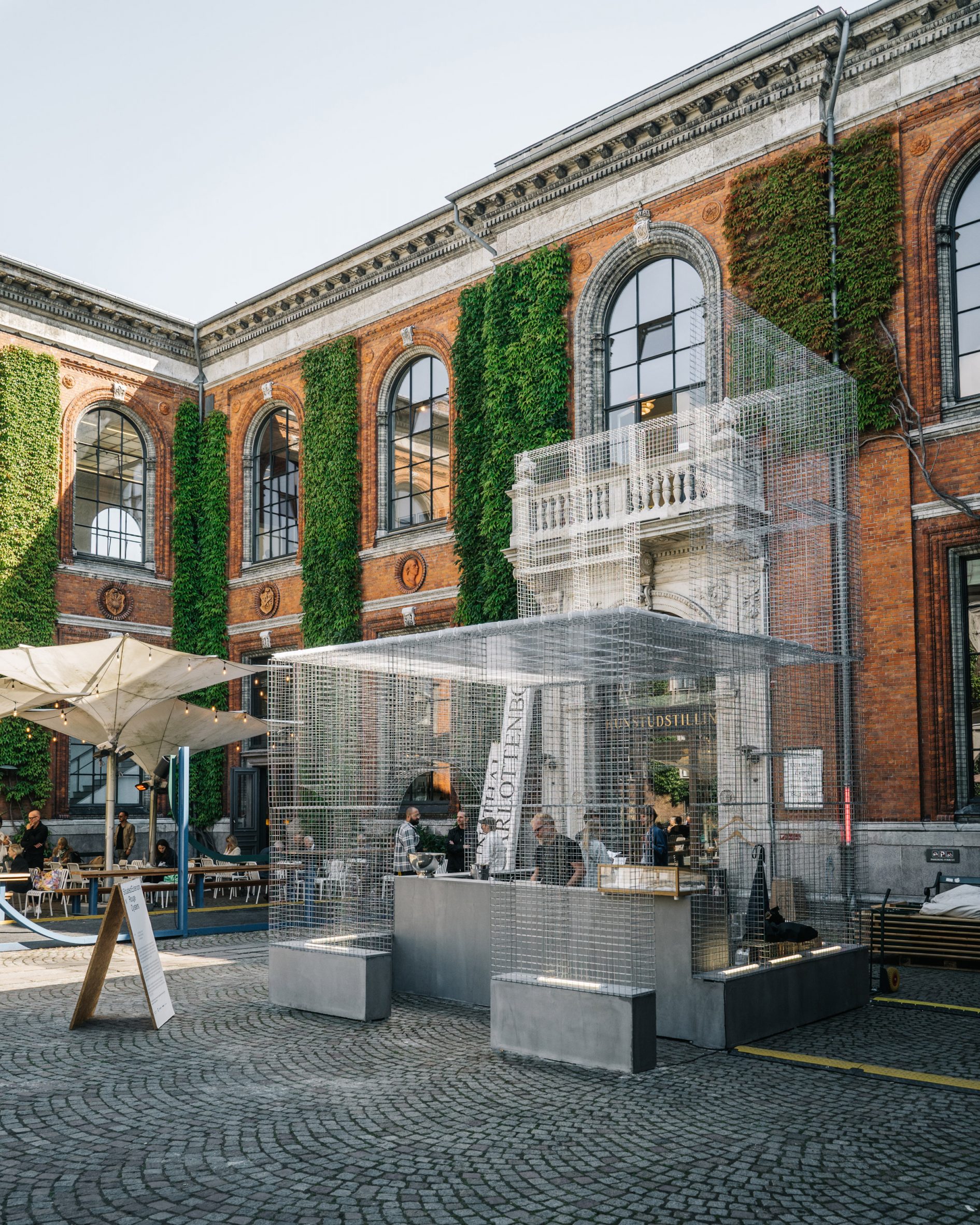
The form of the Situated Exteriors pavilion is a scaled-down version of Charlottenborg in Copenhagen. Image by Joakim Züger, courtesy of BARSK Projects

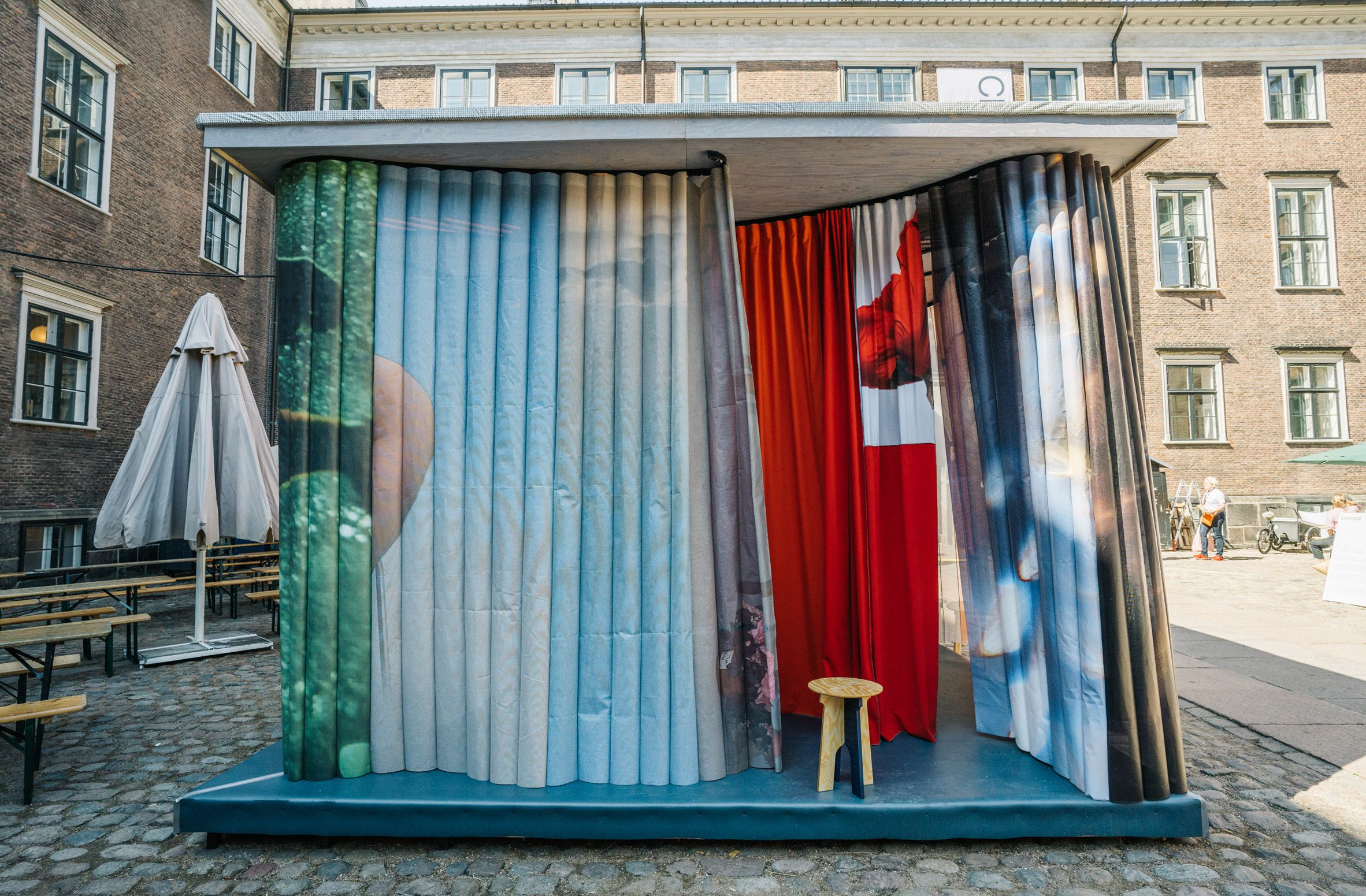
Curtain Call is an "ever-changing and adaptable" space made entirely of re-purposed industrial textiles from banners, museum signs and posters.

The pavilion is designed by a group of artists, designers and architects including Rosita Kær, Nina Højboldt, Thomas Christensen, Sam Collins and Lauda Vargas.

Textiles are attached to the roof of the pavilion in a pattern that creates a spiralling path through the pavilion, illuminated with lights embedded in the ceiling. During the fair, the structure is being used as a space for musical performances and workshops.

Curtain Call
Curtain Call is built using fabric walls made from repurposed industrial textiles. Image by Joakim Züger, courtesy of BARSK Projects

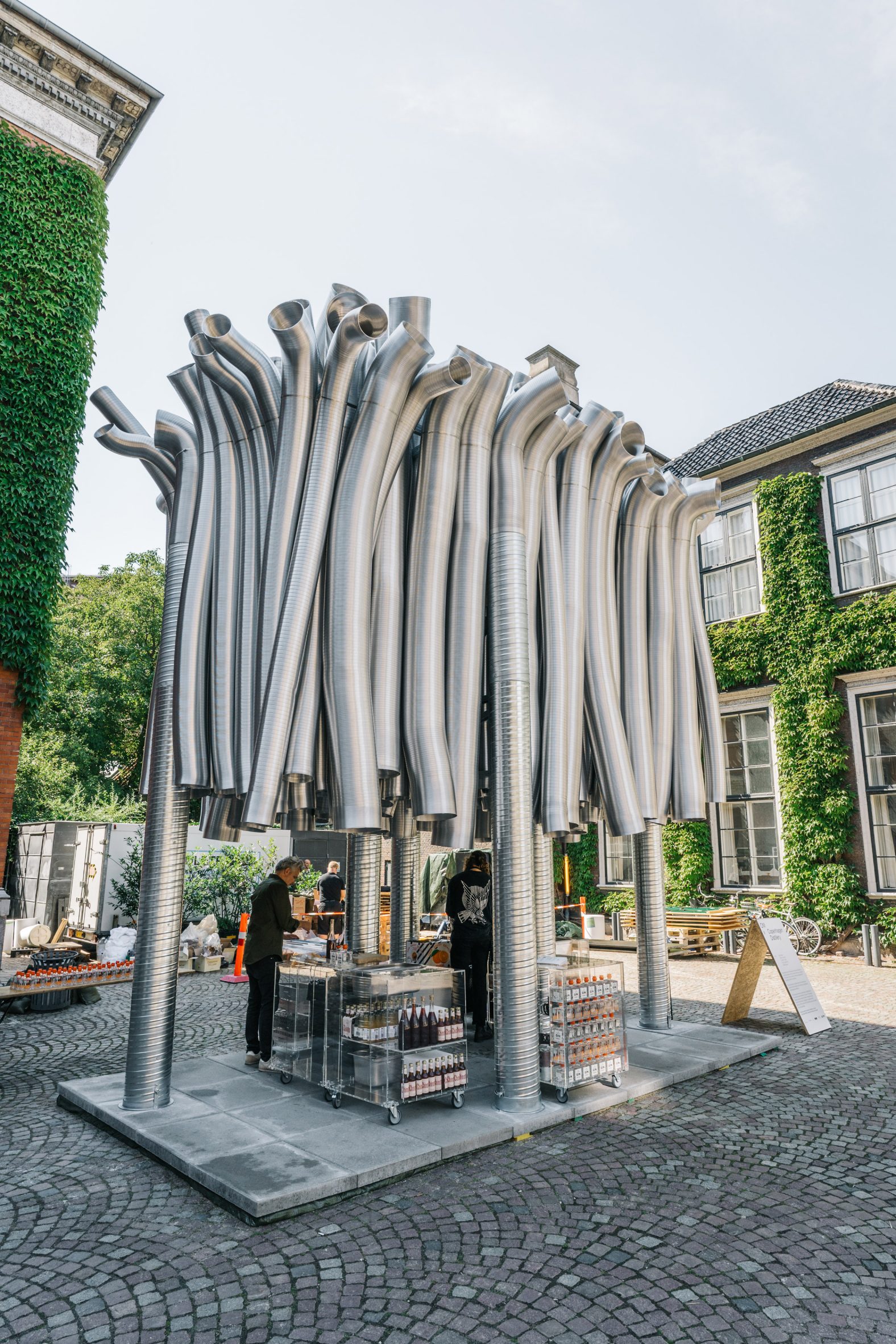
Copenhagen-based Guilt Studio has created a pavilion featuring a towering roof made from suspended air ducts, which redirect wind, sound and light to create sensory experiences for visitors.

Called OM, the pavilion is being used as a bar during the fair.

OM by Studio Guilt
OM uses suspended air ducts to filter sound, wind and light into a sensory experience for visitors. Image by Joakim Züger, courtesy of BARSK Projects

The fifth pavilion, called Situated Exteriors, uses a steel grid to create a human-scaled version of its venue, the Charlottenborg mansion in Copenhagen. Using a thin wire grid, the architects scaled-down and reconstructed the facade of the building.

Designed by architects Katherine Birkbak, Anja Fange and Joe Mckenzie, the pavilion acts as an oyster bar during the fair.

Chart pavilions created by young Nordic creatives

The five temporary pavilions were built as part of Chart's annual architecture competition that invites graduate students or young architects, designers and artists across the Nordic region to submit proposals for temporary pavilions.

During the course of the fair, the pavilions are used as bars, restaurants and hangout areas and at the end, one pavilion is chosen as the overall winner.

Previous pavilions have included an algae-producing structure by Space10 and a pop-up bar made from recycled IKEA mattresses.

Chart art fair is an annual event in the centre of Copenhagen featuring a public programme of exhibitions, talks, performances, music and book fairs.

The fair is held in Charlottenborg, a mansion in the centre of the city that is home to the Royal Danish Academy of Fine Arts.

All images are by Joakim Züger, courtesy of BARSK Projects.

The post Chart Art Fair installs five "social architecture" pavilions in Copenhagen appeared first on Dezeen.


from Dezeen https://ift.tt/3jiKUWd

Jean Jullien paints surfboards to look like playful marine animals

Surfboards by Jean Jullien

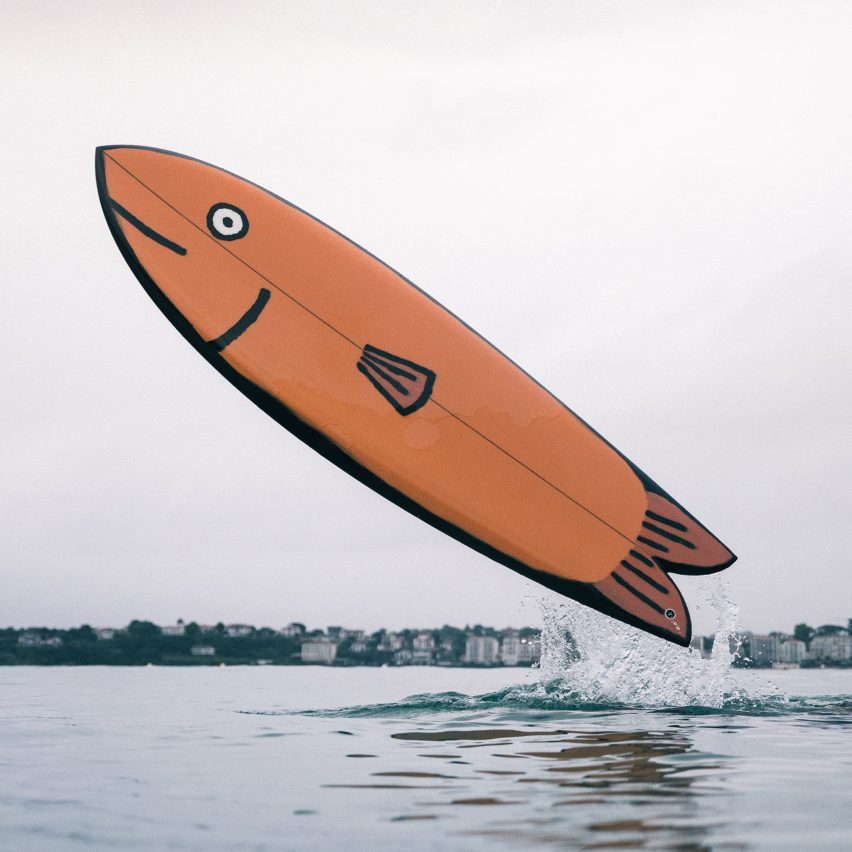
Illustrator Jean Jullien has designed a collection of graphic surfboards hand-painted to look like sea animals, which he describes as objects you could "put on your wall as much as you could surf with".

Created in collaboration with Geoffray Sipoir of French company Fernand Surfboards, the collection includes four different-sized foam boards illustrated by Jullien as individual creatures.

The project was completed in collaboration with Fernand Surfboards
Jullien's surfboards are painted like sea animals

One surfboard is painted to look like a blue whale with a curled-up fin, while another depicts a white seal floating on its back.

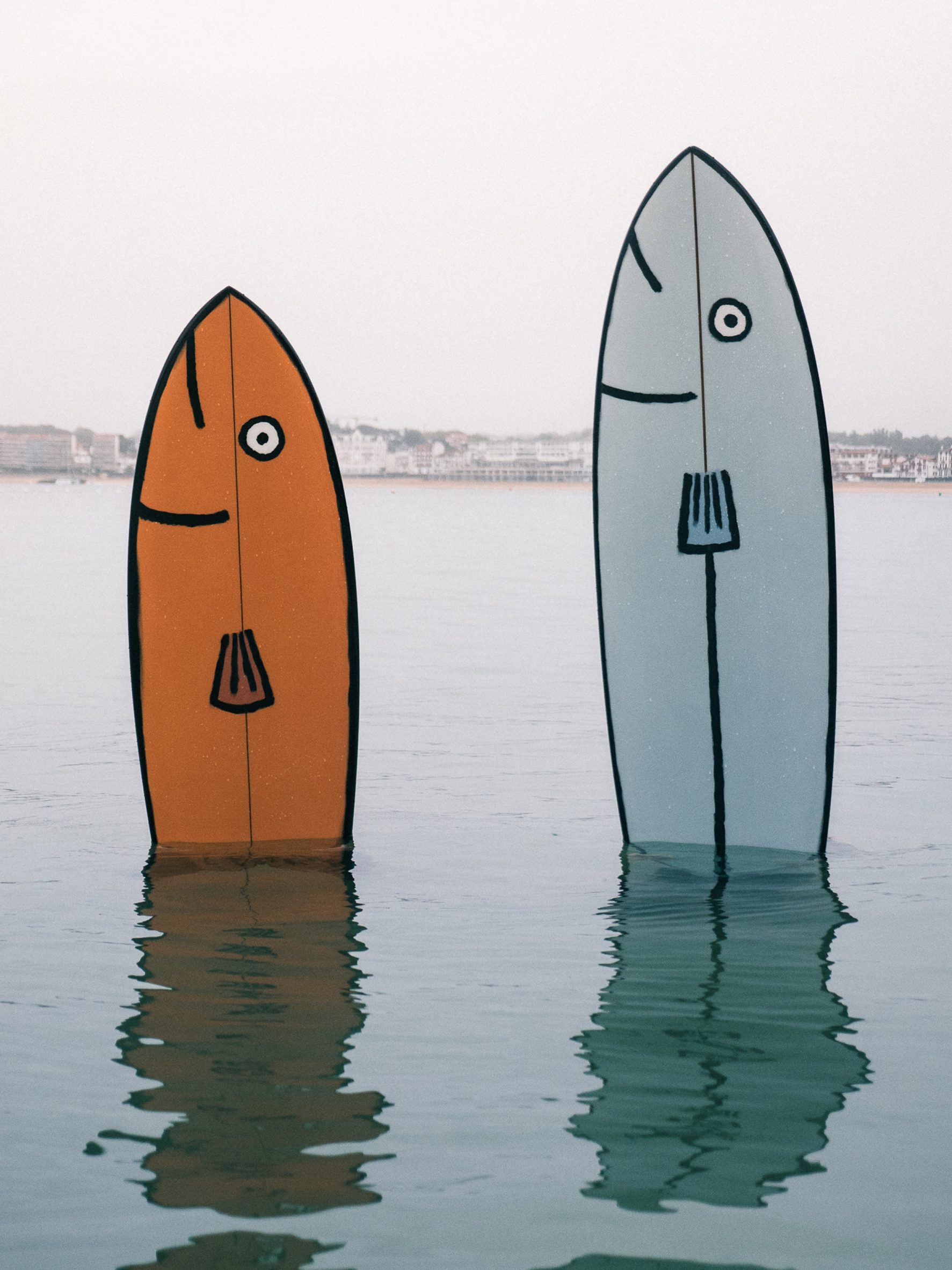
The smaller two boards are designed as grey and orange fish with googly cartoon black and white eyes – a trademark feature in Jullien's work. One is a fish surfboard, which refers to a surfboard with a fishtail shape.

The collection features four marine animals
One painted board is a fish surfboard design

"It was a pretty simple shape analysis, which is how I proceed quite a lot of the time," Jullien told Dezeen.

"I observe something and it triggers an idea, a thought. The context then refines it. The fish surfboard is a pretty explicit name so I started with that as it lent itself perfectly to the exercise, then I toyed around with the other shapes."

After Sipoir crafted the surfboards, they were hand-painted by Jullien in acrylic paint. The boards were then glassed – cast in a protective shell – by the studio Resin League. Designer Paul Hyde polished the collection to complete the process.

"You can put them on your wall as much as you can surf with them," said Jullien, describing the work as being a combination of illustrative pieces he designed and functioning surfboards shaped by Sipoir.

A surfer carries the seal surfboard across a beach
An illustration of a smiley seal

Jullien also defined himself as a "keen amateur surfer – but really keen." He said: "I draw a lot of parallels between surfing and painting, which is maybe why I paint a lot of surf-related scenes."

"The elements, the wait, the trial and errors, the progression. I started surfing when I started painting. It all coincided with a desire to slow things down a bit."

Two fish designs are included in the collection
Jullien likened the experience of painting to surfing

Jullien is a Nantes-born illustrator and graphic designer, known for his whimsical cartoon-like play on everyday scenes.

But after terrorist attacks in Paris in 2015, his graphic showing the Eiffel Tower inside the universally recognised peace symbol quickly became a global sign of unity with the city.

The photography is by Julien Binet.

The post Jean Jullien paints surfboards to look like playful marine animals appeared first on Dezeen.


from Dezeen https://ift.tt/3yu4K5q

Ravensbourne University London presents nine student architecture projects

Ravensbourne University London

A project that explores rituals around death through the use of mycelium and a dance studio are included in Dezeen's latest school show by students at Ravensbourne University London.

Also included is a community garden that intends to engage the local community in growing their own produce and a sustainable fashion store that aims to disrupt the status quo of fast fashion.


Ravensbourne University London

School: Ravensbourne University London
Courses: BA(Hons) Architecture, BA(Hons) Interior Design Environment Architectures and BA(Hons) Urban Landscape Architecture
Tutors: Alberto Villanueva, Felicity Atekpe, Hwei-Fan Liang, Darren Stacey, Andrew Ó'Murchú, Hannah Fothergill, Matthew Lucraft, Stefano Paiocchi and Giulliana Giorgi

School statement:

"The Department of Architecture at Ravensbourne University London is an exciting creative community focused on educating architects who will imagine and shape the future. We challenge our students to offer solutions to transform communities with a social and sustainable approach. Our students learn through engagement with industry-relevant topics together within and across courses, providing the skills and opportunities they need to kick-start their careers.

"Architecture at Ravensbourne offers a unique interdisciplinary approach where our students enjoy a rich experience in architecture, interior architecture and urban landscape, but also benefit from collaborating with film, animation, product design or fashion students. It is a unique range of courses to prepare our students for creative industries.

"This year our students have engaged with bringing innovative and creative proposals to the area of Rye Lane in Peckham. With a local community as diverse as our students, the area has gone from being relatively low-rent to becoming one of the frontiers of gentrification in London. New arts and experimental adaptive reuse projects mix in with an established vibrant commercial street life.

"Our students have explored topics including urban food production and multicultural markets, alternative youth and care centres, models for living on and near high streets and new materials and future burial traditions. To showcase their work, we have built a virtual gallery."
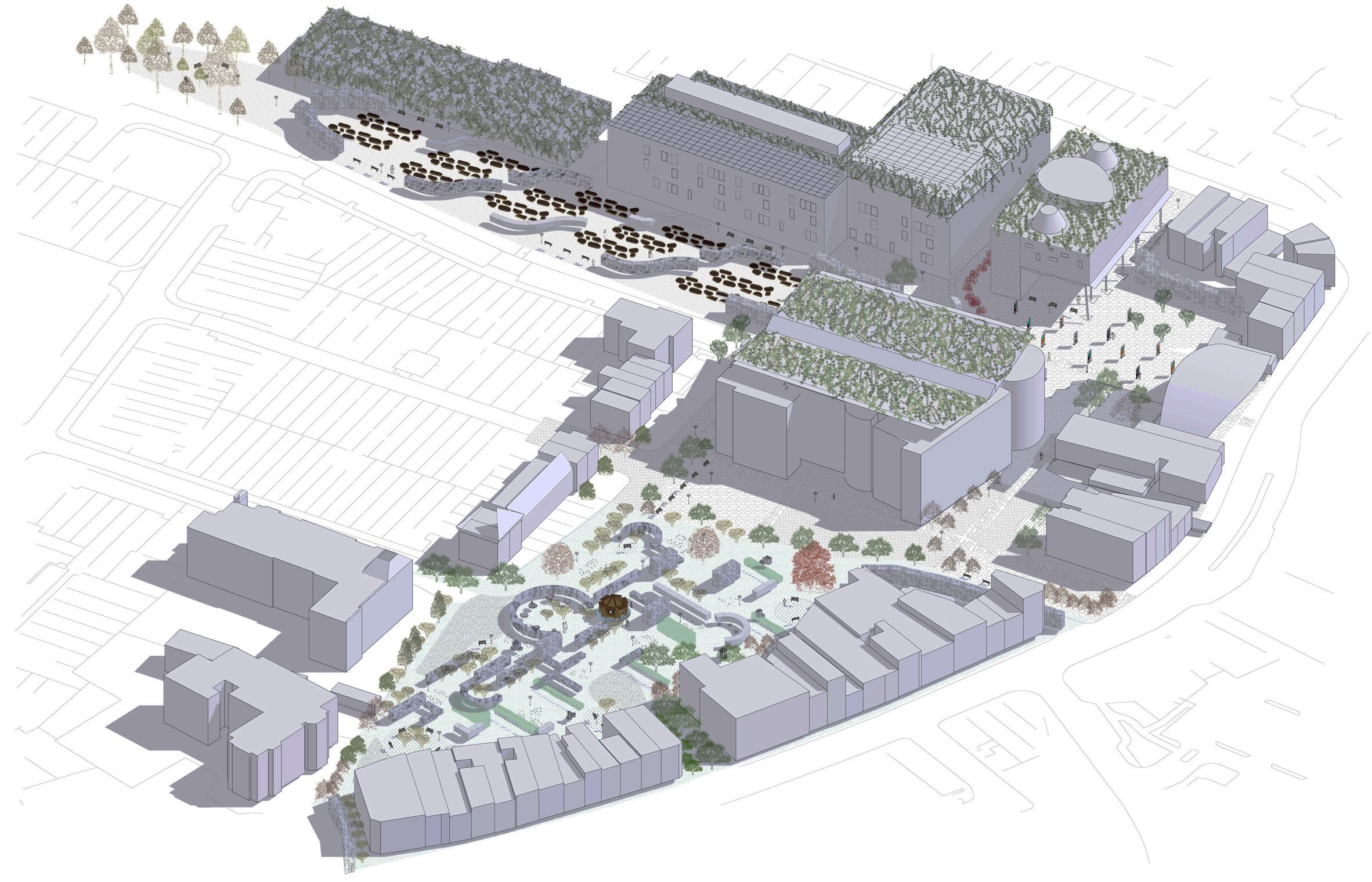

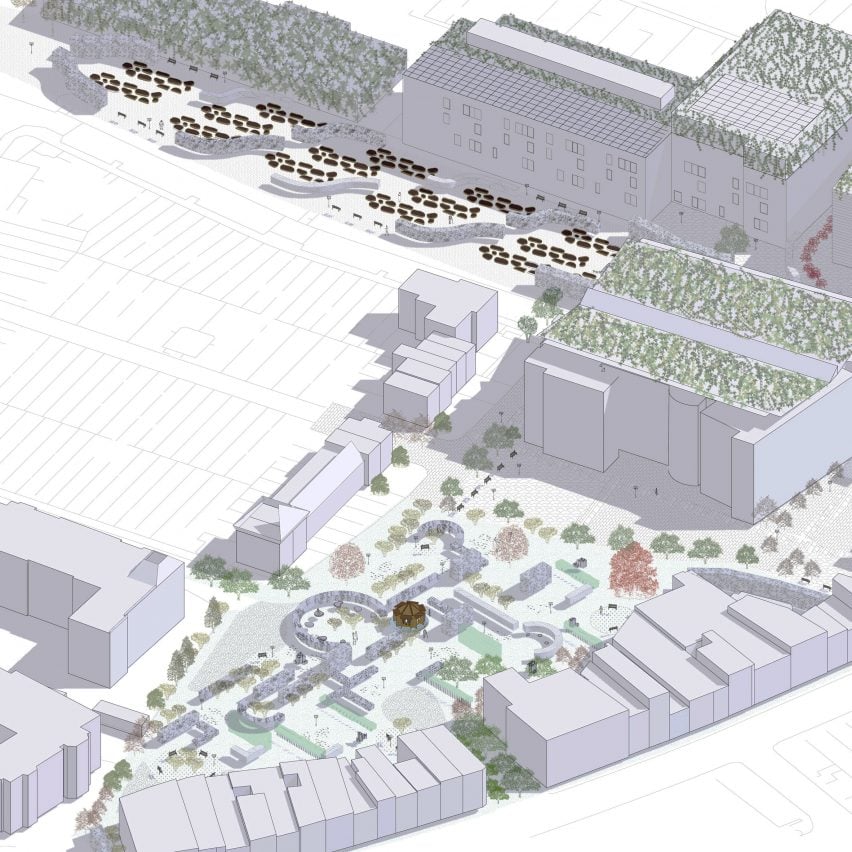
A model of an urban oasis

Urban Oasis Park by Aliyah Chaumoo

"This design is made up of three main parts. Urban Oasis Park, designed for human and non-human interaction; a new Peckham Square to accommodate public events; and a Community Garden, which intends to engage the local community in growing their own produce.

"Participants have their own privacy through vegetal 'rooms' created through varying hedge heights. This promotes better mental and physical health as community cohesion is encouraged whilst people are enjoying the fruits of their own labour."

Student: Aliyah Chaumoo
Course:
BA(Hons) Urban Landscape Architecture
Tutors:
Andrew Ó'Murchú, Hwei-Fan Liang and Darren Stacey
Email: aliyahtc[at]hotmail.co.uk
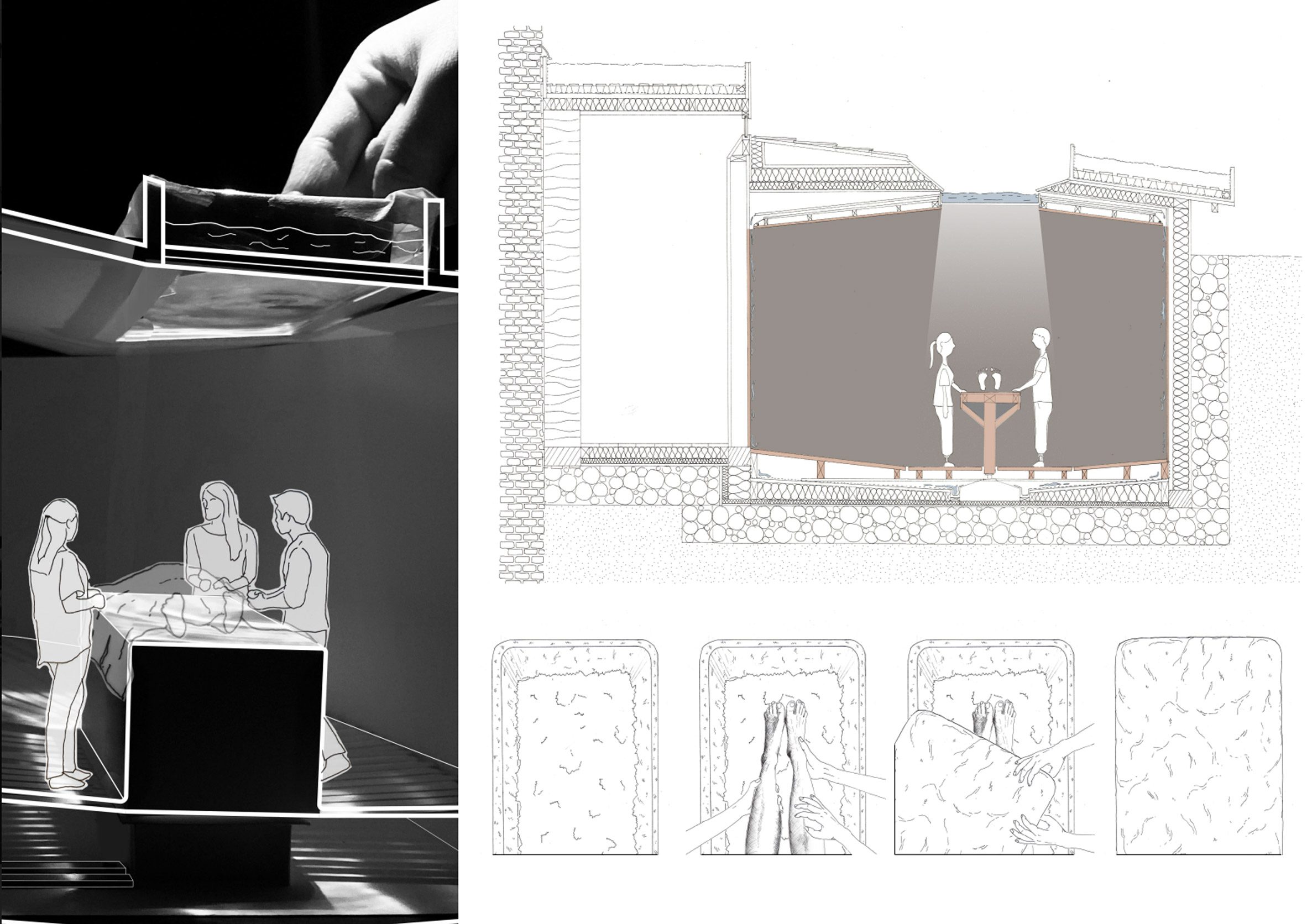

Illustrations of using mycelium

Rethinking Ritual: A Sustainable Approach to Death by Nanchalee Rebecca Waite

"Rethinking Ritual confronts the relationship between the deceased and the living. The project explores the importance and definition of rituals around death by offering a more sustainable alternative to burial systems through the use of a fungus called mycelium."

Student: Nanchalee Rebecca Waite
Course:
BA(Hons) Architecture
Tutors:
Andrew Ó'Murchú, Alberto Villanueva, Hwei-Fan Liang and Darren Stacey
Email: nanchaleewaitep[at]hotmail.com
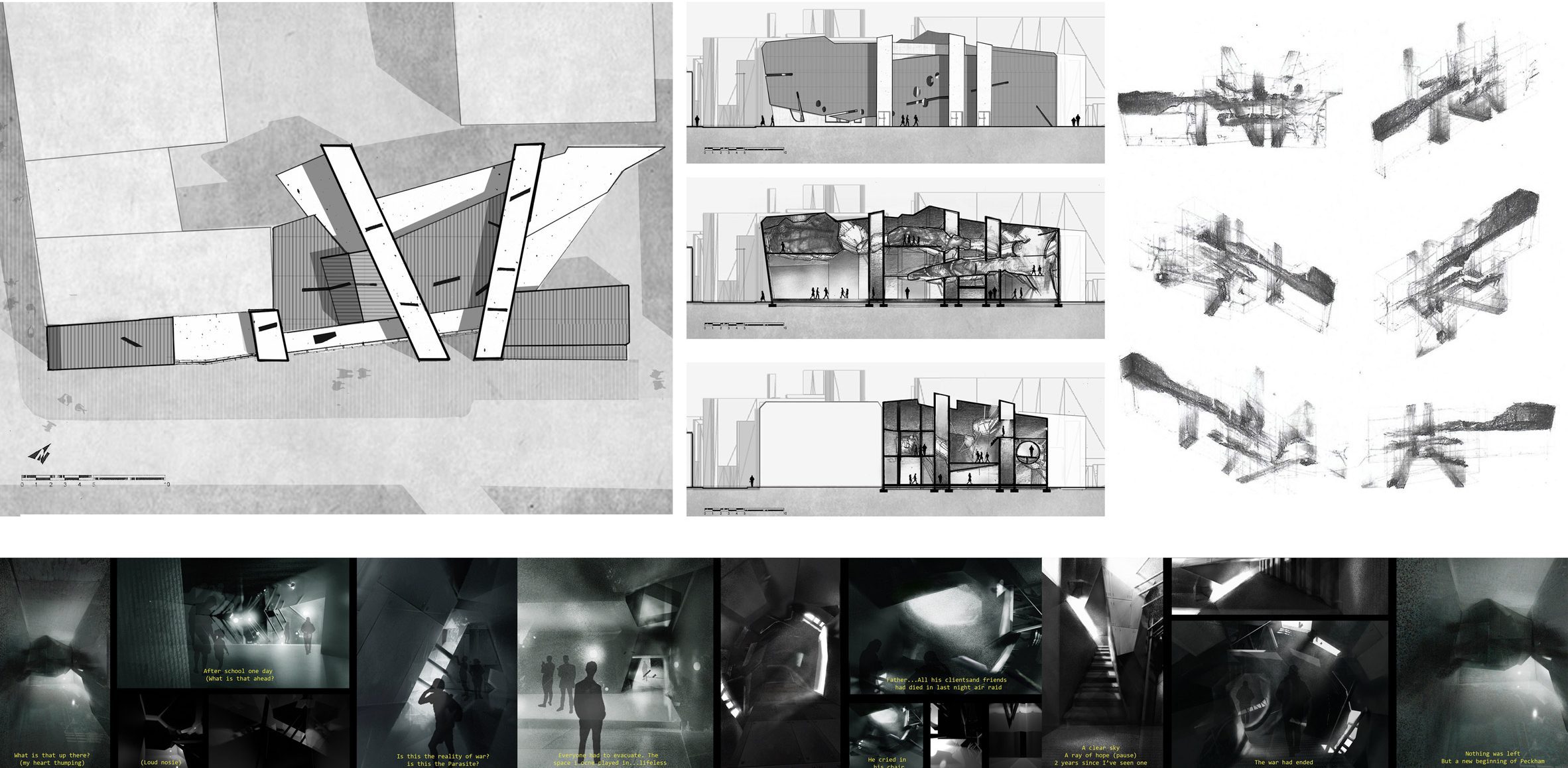

A model of child's experience during World War Two

Rita Nee's Museum by Aaron Chung

"A retelling of Rita Nee – a child at the time in Peckham Rye Lane during world war two. Her story is into architectural forms to recreate the experiences throughout her journey.

"Focusing on light and form, occupants are sent on a visual interactive journey through the spaces. This results in a sometimes unfamiliar, sometimes abstract, but always a unique atmosphere."

Student: Aaron Chung
Course:
BA(Hons) Architecture
Tutors:
Stefano Paiocchi, Hwei-Fan Liang and Darren Stacey
Email: aaroncly1[at]gmail.com
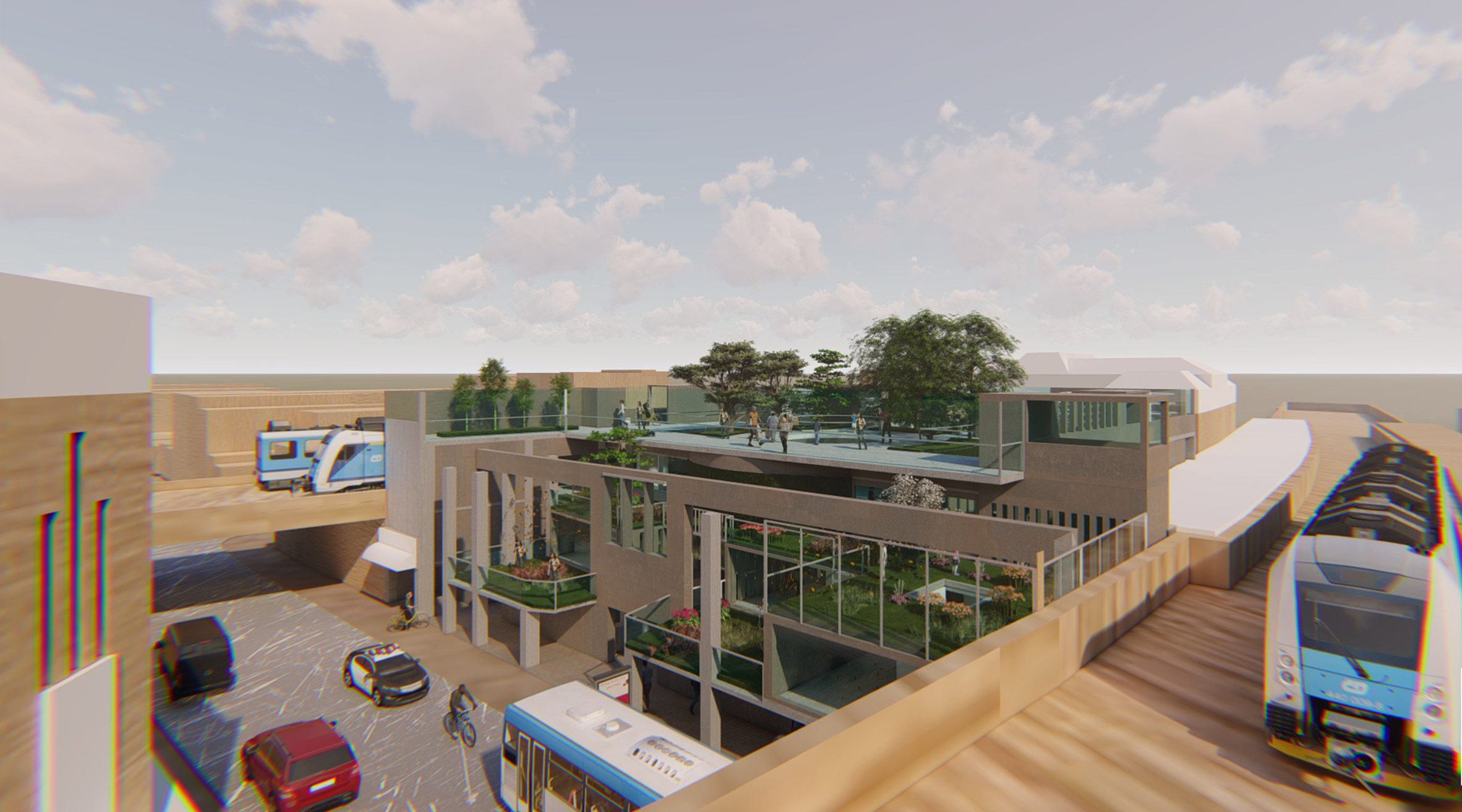

A visualisation of a rooftop in Peckham

Peckham's Masquerade Arcade by Solomon Toby Alfred

"The Peckham's Masquerade Arcade aims to be the solution to Peckham's countless setbacks whilst maintaining the integrity that makes Peckham, Peckham. In addition, it uses multiple strategies that help create spaces for dialogue between people from various cultural backgrounds who spontaneously interact with one another on a day to day basis.

"It targets a range of people from young to old to those who are live in Peckham and who seek new forms of life. The design also embodies multiple levels of physical and symbolic interpretation left for the user to decode."

Student: Solomon Toby Alfred
Course:
BA(Hons) Architecture
Tutors:
Alberto Villanueva, Hwei-Fan Liang and Darren Stacey
Email:
solomoncheck[at]gmail.com
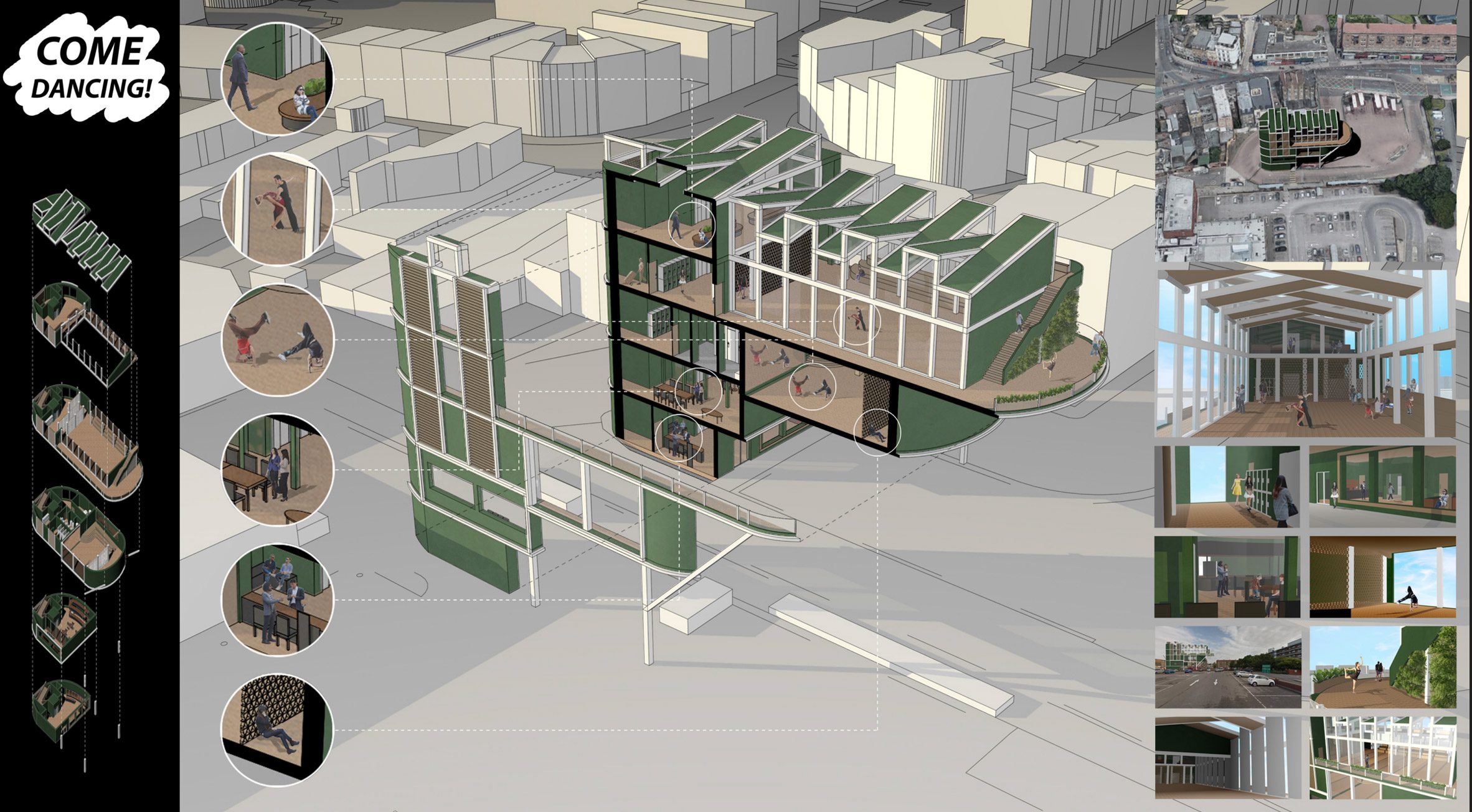

A visualisation of a dance studio in Peckham

Come Dancing! Dance Studio by Ason Chan

"The dance studio's name aims to get all people in Peckham to come and dance together as this is a way to relax and also give people hope and motivation.

"The greenery brings a more eco-friendly environment to the place as Peckham lacks greenery. The dance studio also has all types of dancing styles to learn to allow all ages and all types of classes including performing parkour dance movements and dance battles helping to avoid rivalry."

Student: Ason Chan
Course:
BA(Hons) Architecture
Instagram: asonchan.architects
Tutors:
Felicity Atekpe, Hwei-Fan Liang and Darren Stacey
Email:
asonarchitects[at]gmail.com
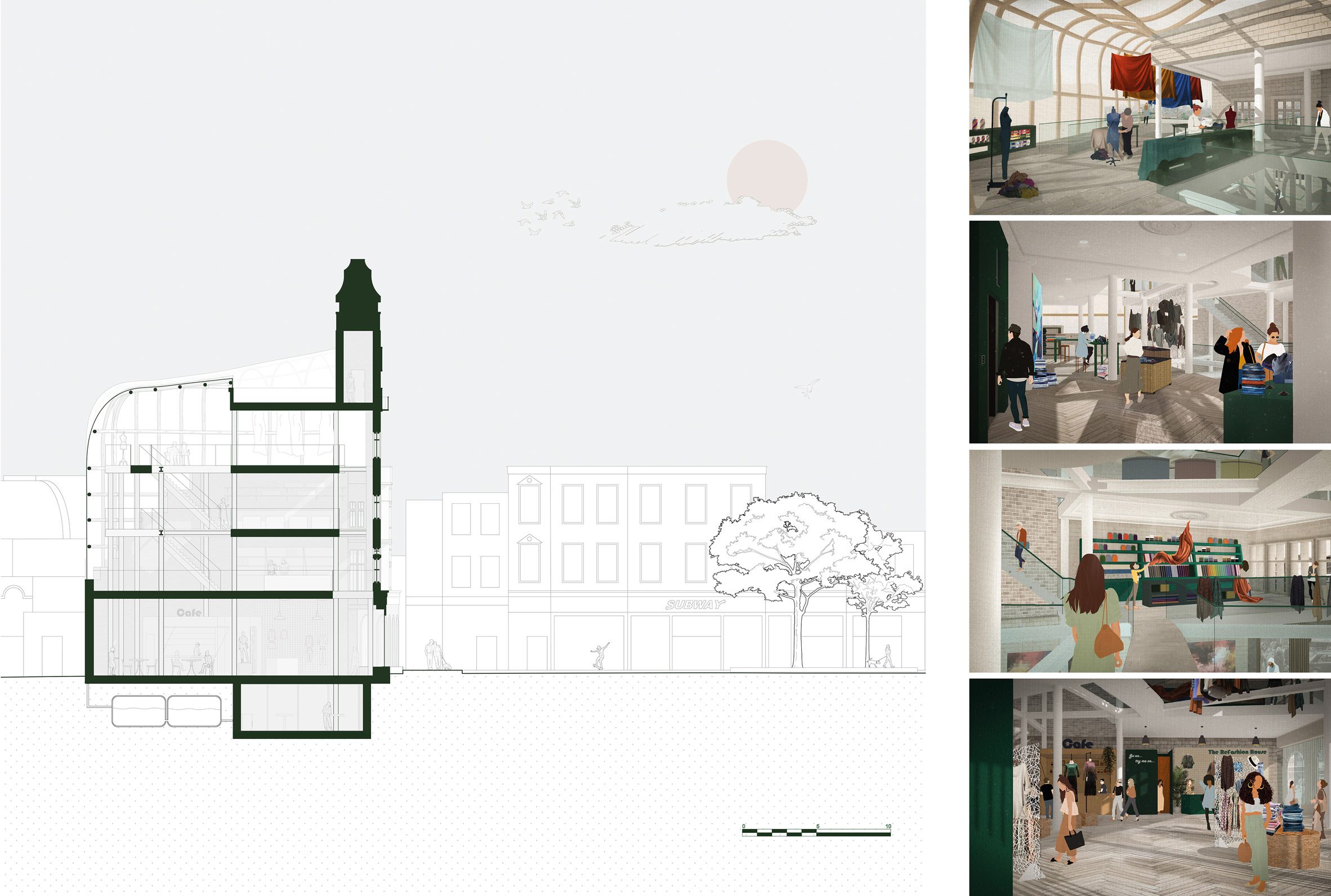

A visualisation of a fashion house

The ReFashion House by Sophie Bennett

"The ReFashion House aims to disrupt the status quo of fast fashion. With the traditional model of fashion and retail on the high street under threat, this project takes notions of the past and applies them to a forgotten Peckham department store to create a hub of refabrication.

"Taking the raw inventiveness from the Victorians, the make-do-and-mend attitude from the store's heyday and the creativity from the Peckham community, the building becomes a new centre for sustainable fashion reinvention."

Student: Sophie Bennett
Course:
BA(Hons) Interior Design Environment Architectures
Instagram: sophie.jay.portfolio
Tutors:
Matthew Lucraft, Hwei-Fan Liang and Darren Stacey
Email:
sophieb_91[at]hotmail.com
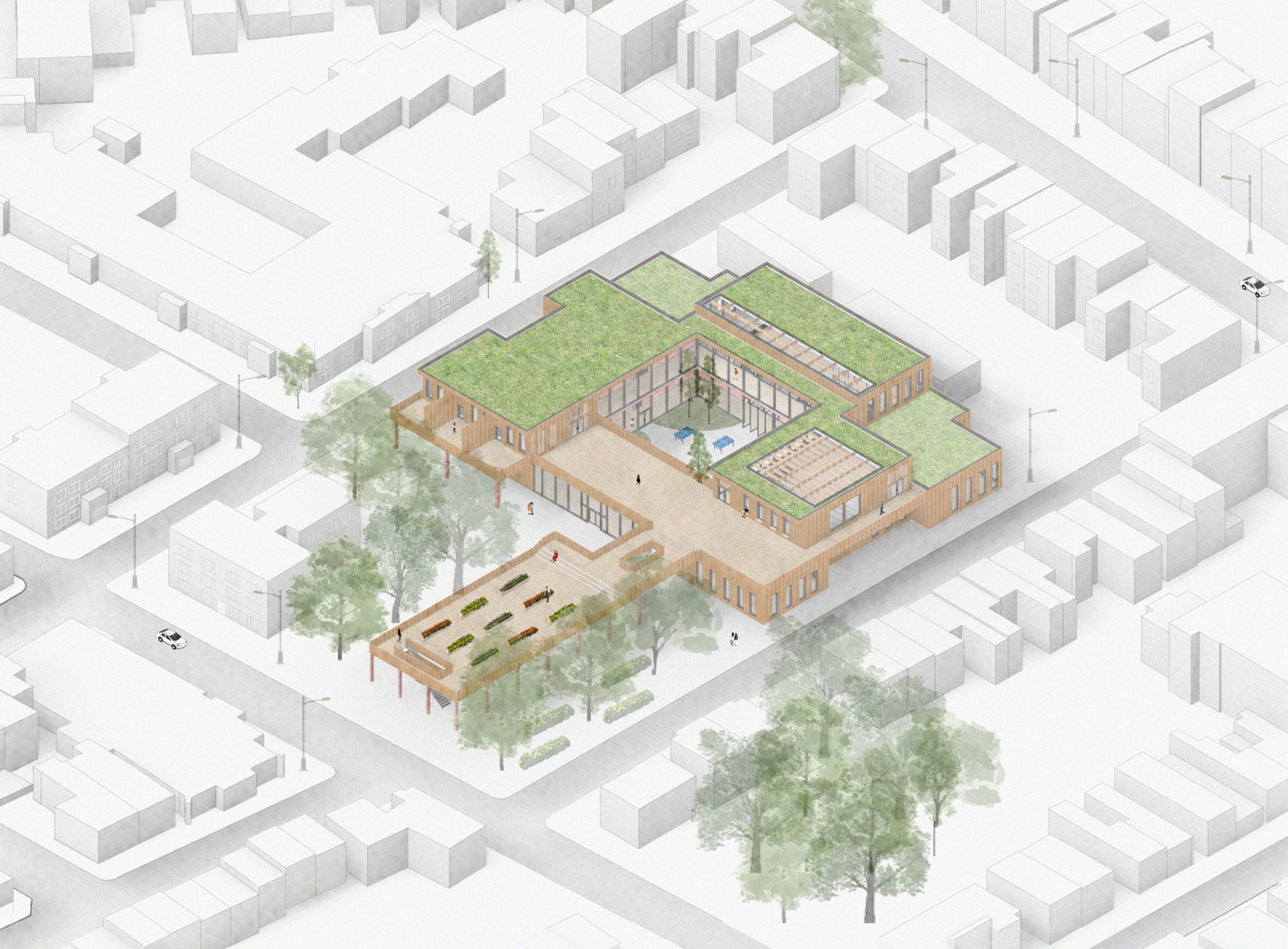

A bird's eye view of a "safe haven" in Peckham

Safe Haven by Myka Cutamora

"Safe Haven is a youth club located in Costa Street by Peckham. The brief explores the idea of a haven where young people can access a place that provides a constant lifeline and a vital safe space outside the family and formal education. This is where young people can develop confidence, resilience and skills.

"This design proposal tackles the idea to guide young people who are vulnerable to gang and knife crime to minimise youth violence in the area. The aim is to engage young people with positive activities that will benefit them.

"This includes developing their self-esteem, encourage healthy eating and fitness, improving employability, supporting them through challenging times, helping them achieve their goals and giving them opportunities to voice their opinion and take responsibility."

Student: Myka Cutamora
Course:
BA(Hons) Architecture
Instagram: masc_tect
Tutors:
Hannah Fothergill, Hwei-Fan Liang and Darren Stacey
Email:
cutamora.myka[at]gmail.com
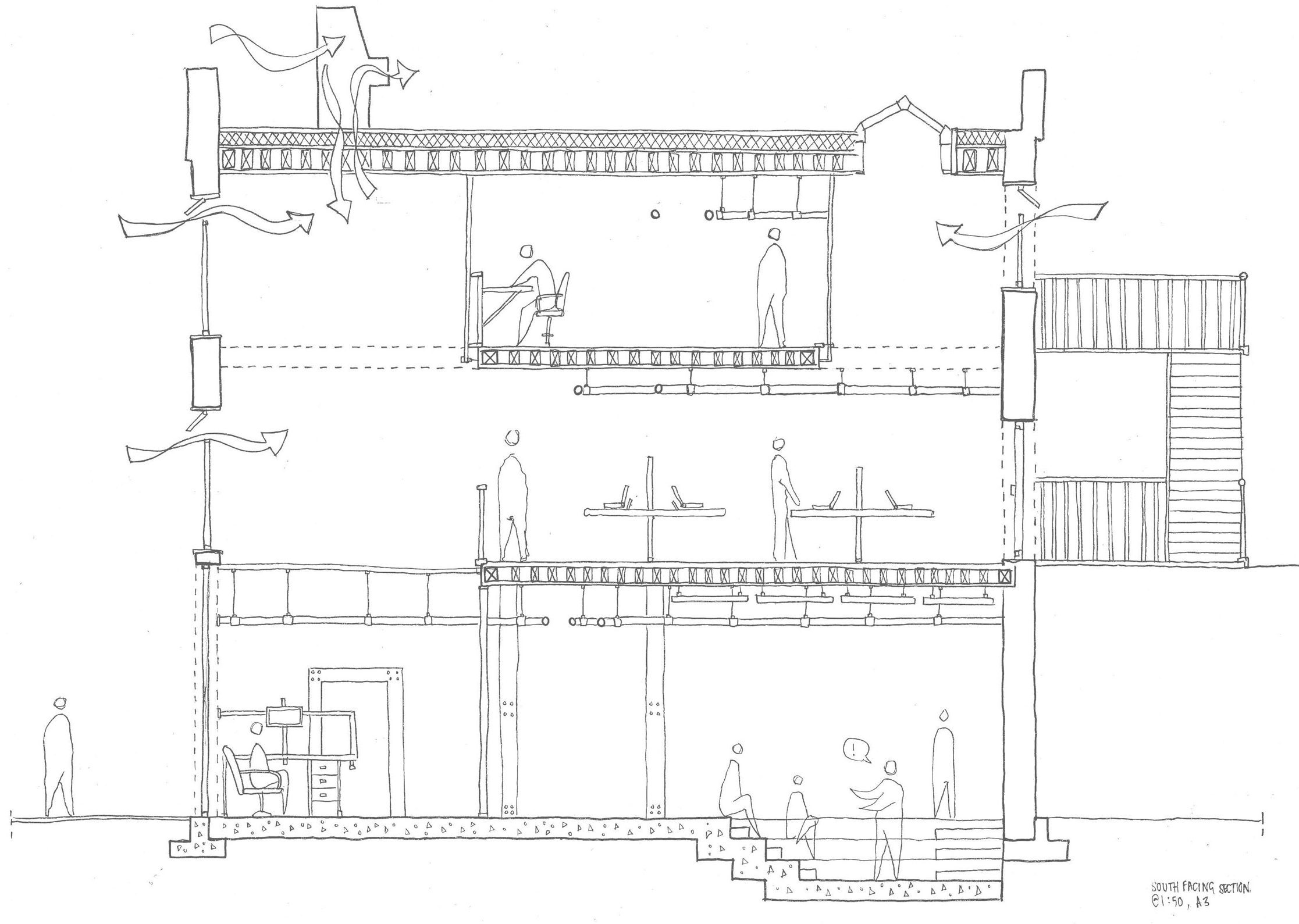

An architectural illustration of a house

Central Buildings by Dominic Drakes

"During the lockdown, one of the disturbing headlines was the 'digital divide' in which many people did not have access to laptops or computers needed to complete their studies or work.

"This proposal aims to repurpose an existing Edwardian building into an electronics repair centre, which will primarily repair devices and sell these items back to the community at lower prices.

"As windows cannot be opened on the ground floor due to air and noise pollution, a wind tower is proposed as the HVAC strategy to encourage passive ventilation through the natural buoyancy-driven displacement."

Student: Dominic Drakes
Course:
BA(Hons) Interior Design Environment Architectures
Instagram: dominicdrakes
Tutors:
Matthew Lucraft, Hwei-Fan Liang and Darren Stacey
Email:
drakesdominic[at]hotmail.com
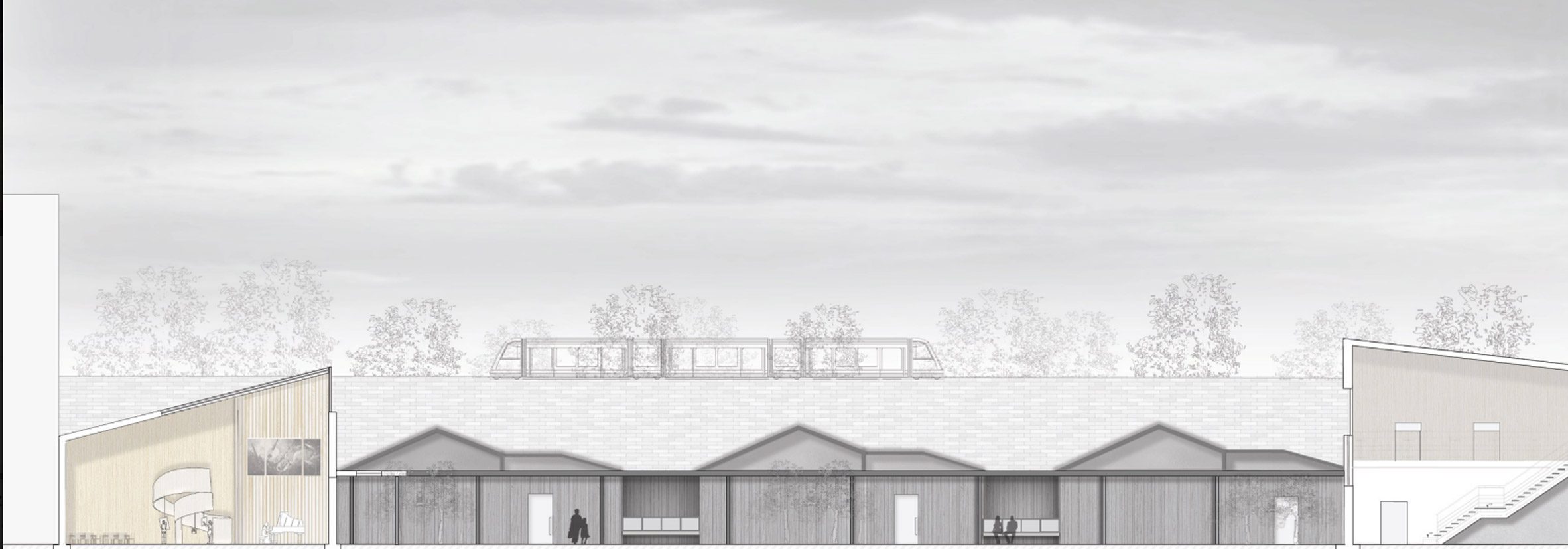

A visualisation of a musical house

Musical Oasis by Reham Elshafei

"The proposal aims to create a musical centre that enables the residents of Peckham to come together and learn from local musicians while enjoying different ethnic music. This space can become an educational centre for classes and seminars – a space for music therapy for targeted age groups and unrepresented people, but also a collaborative space for performance in the style of an open house.

"This will benefit the Peckham community by providing a collective space for people to celebrate the love of music, as it will be a safe place for freedom of expression."

Student: Musical Oasis
Course:
BA(Hons) Architecture
Instagram: architecture.reham
Tutors:
Hannah Fothergill, Hwei-Fan Liang and Darren Stacey
Email:
elshafeireham26[at]gmail.com


Partnership content

This school show is a partnership between Dezeen and Ravensbourne University London. Find out more about Dezeen partnership content here.

The post Ravensbourne University London presents nine student architecture projects appeared first on Dezeen.


from Dezeen https://ift.tt/3jsI15v
iF Design Award spotlights five New Mobility winners

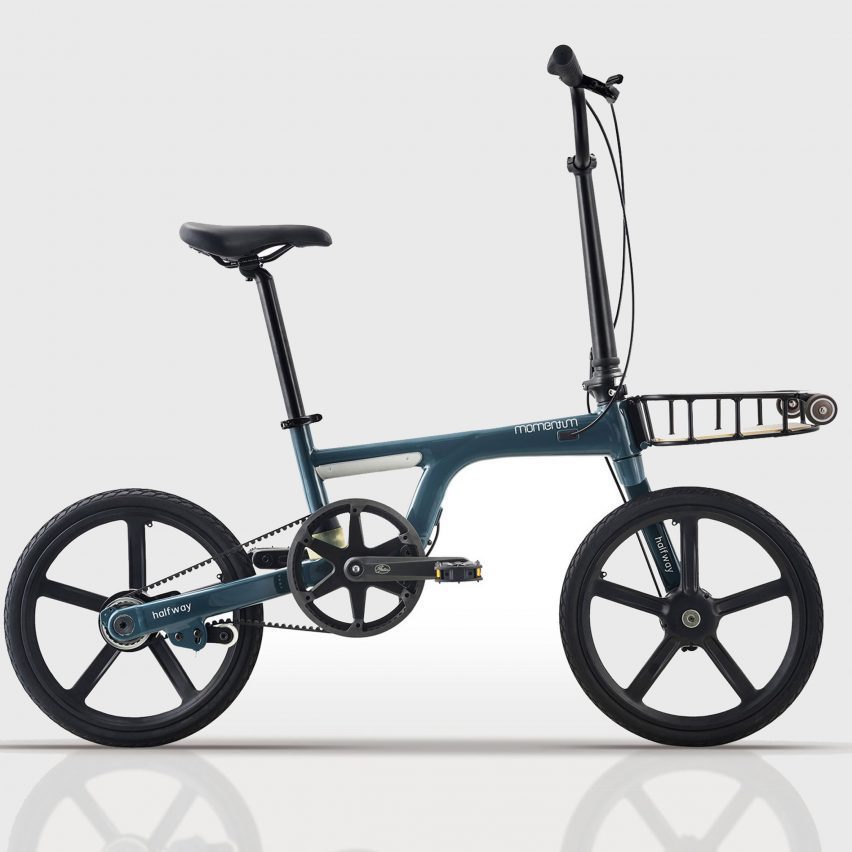
Bike

Dezeen promotion: an all-electric jet developed to connect city centres with rural areas and a robot street sweeper that was designed to be approachable are among the five New Mobility winners at this year's iF Design Award.

Since 1953 the iF Design Award has been evaluating designs across product design, communication, packaging, service design, architecture, interior design, user interface and user experience.

This year, the awards had over 10,000 submissions, which were evaluated by the 98 international independent design experts from 21 countries on the iF jury.

The winners of this years' subject, New Mobility, include human-centred design solutions that aim to improve urban connectivity and infrastructure.

Below are the five iF gold award winners. Explore more winning designs on the iF Design Award's website.


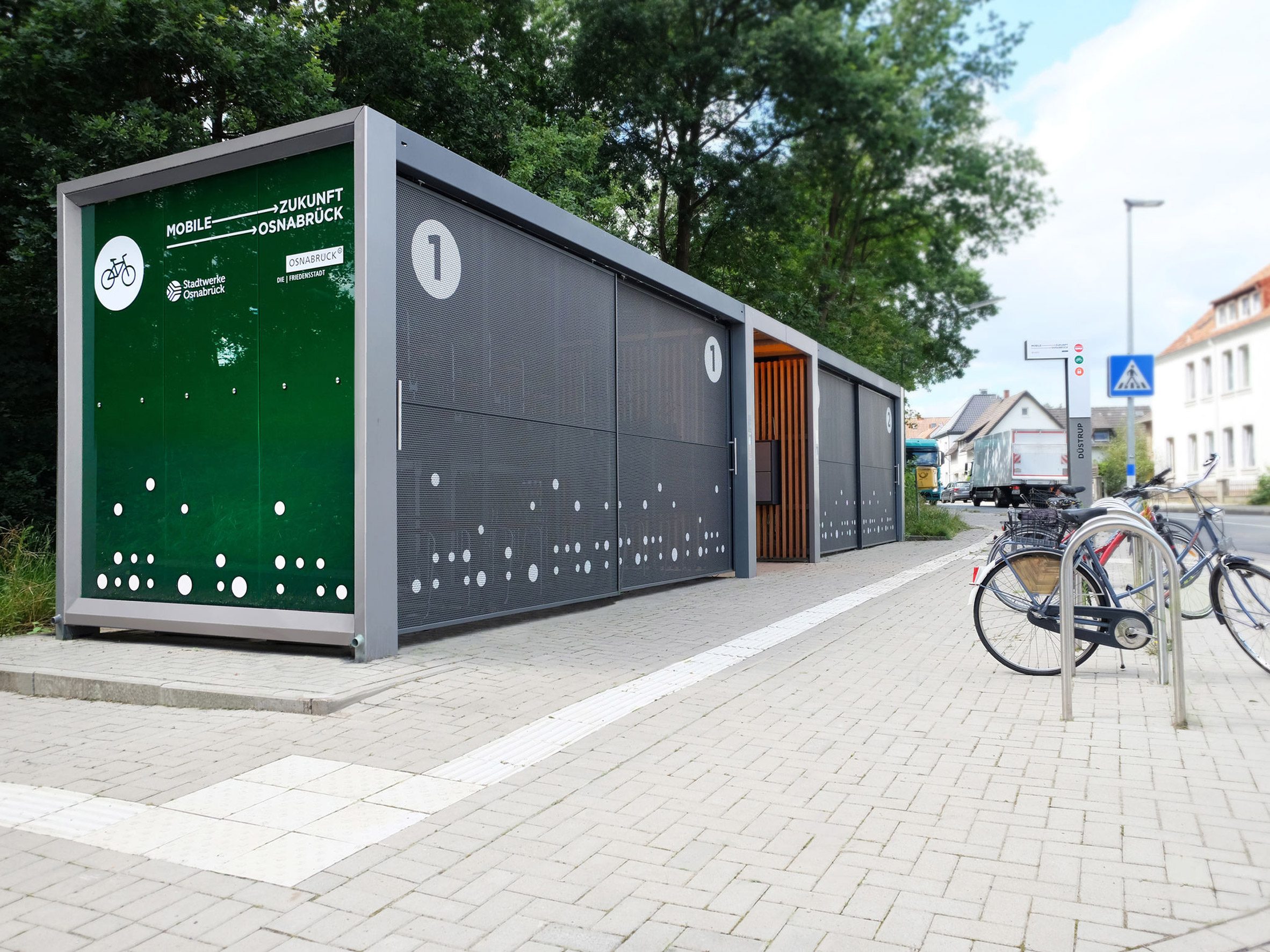
Mobility Stations Osnabrück

German designer André Stocker created a series of modular units in Stadt Osnabrück, Germany, which can be configured as bicycle parking facilities, shelters or charging stations.

Designed to be "urban landmarks", the paired-back units are colour-coded so that users can easily identify their functions.

"The future of mobility is hybrid and Osnabrück is leading the way with this boldly designed mobility station," said the international, independent design experts of the iF jury. "The striking reduction in design and materials creates anchor points full of character, and is a great model of how cities can reduce their C02 emissions."

Project: Mobility Stations Osnabrück
Manufacturer: Stadt Osnabrück, Germany
Designer: André Stocker, Germany
Category:
 Public Design


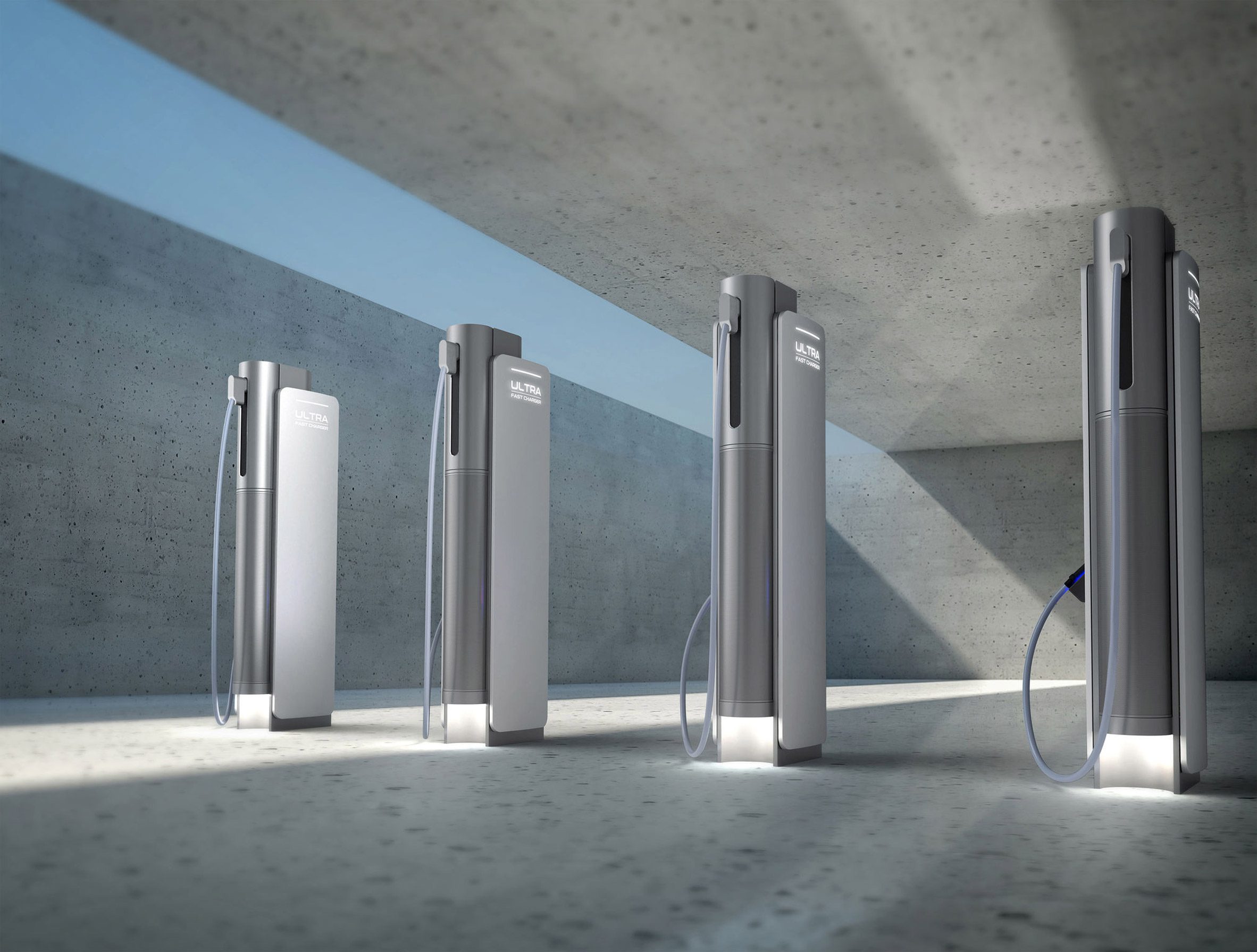
E-PIT Ultra-fast Charger/EV charging station

Circus Design developed the E-PIT electric-car charger for car manufacturer Hyundai Motor Group as part of its focus on human-centred mobility.

The charger was designed to improve user experience by addressing common complaints about electric vehicle chargers: bulky cables, unclear charging statuses, hygiene issues, complicated service use and unclear production and maintenance guidelines.

"Taking cues from a traditional petrol station, this charging station puts the needs of the user first with easy operation and personalised interaction," said the iF jury."Beneath the striking silhouette, all details are addressed from maintenance to hygiene."

Project: E-PIT Ultra-fast Charger/EV charging station
Manufacturer: Hyundai Motor Company, South Korea
Designer:
Citrus Design
Category: 
Automobiles/Vehicles


A foldable bike

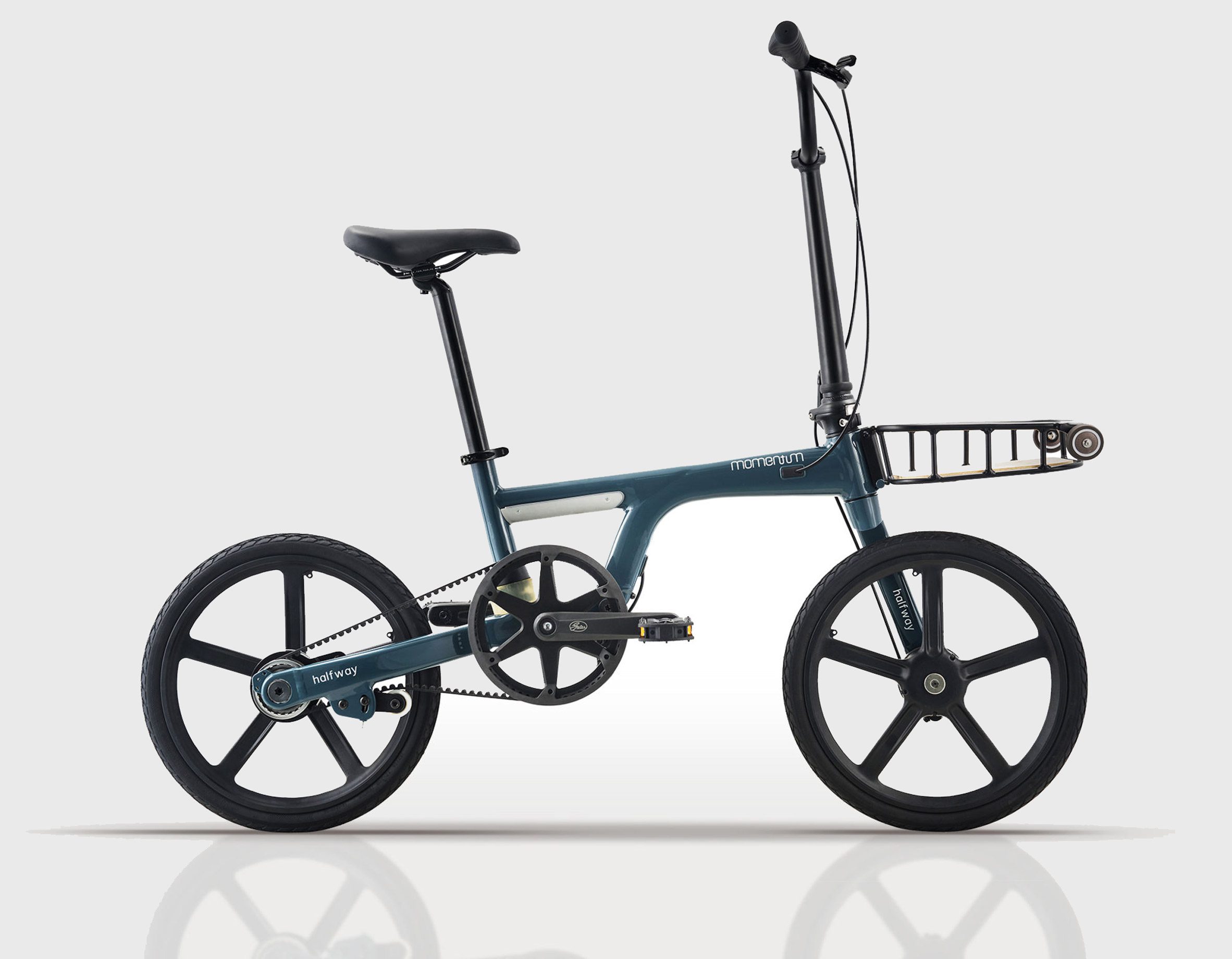
Halfway

Halfway is a foldable bike designed by industrial designer Chang Zan Yu and product engineer Ya Jie Rao. It was created as a user-centric solution to meet the needs of today's urban commuter with a "clean and uninterrupted style".

At the front of the bike, attached to the wheel, is a single-sided fork and chain-stay, allowing the bike to become compact when folded. This enables users to carry it on public transport or pack it into a car.

"This folding bicycle is elegant, intuitive and easy to use and maintain," said the iF jury. "The strong yet compact structure has ingenious features such as a sturdy front basket that doubles as a stand and a magnetic catch to hold it together when folded."

"Last-mile solutions have never been more important than they are today, and the new Halfway design is a winning design in every way."

Project: Halfway
Manufacturer: Giant Co., Ltd, China
Designer: 
Chang Zan Yu and Ya Jie Rao, China
Category: Sports/Outdoor/Bicycles


Interactive Intelligent Unmanned Sweeper / Unmanned street sweeper

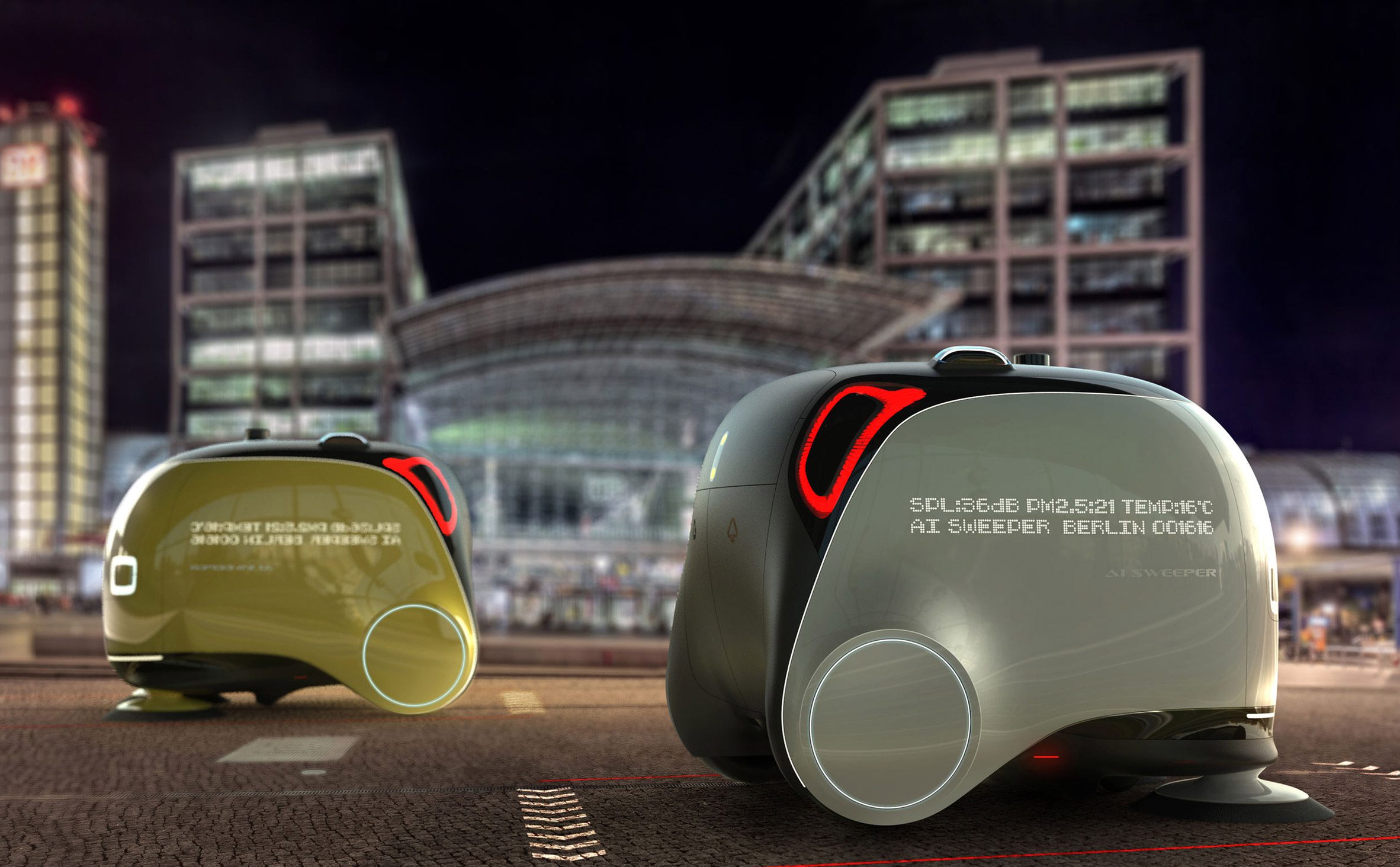
Designed by Chinese designer Lan Wei for Jilin University, the Unmanned sweeper automatically cleans streets using precise sensors. The sweeper was designed to be approachable and not present a danger to people.

"Fascinating – this intelligent robot concept promotes the humble street sweeper to a city ambassador," said the iF jury. "The design fully utilises styling, proportion and lighting to humanise mundane algorithms."

"The strength in the concept is how it presents the incredible possibilities of a utilitarian machine with good design and technology."

Project: Interactive Intelligent Unmanned Sweeper/Unmanned street sweeper
Manufacturer: Jilin University, China
Designer: Lan Wei, China
Category: 
Professional Concept


Lilium/Aircraft

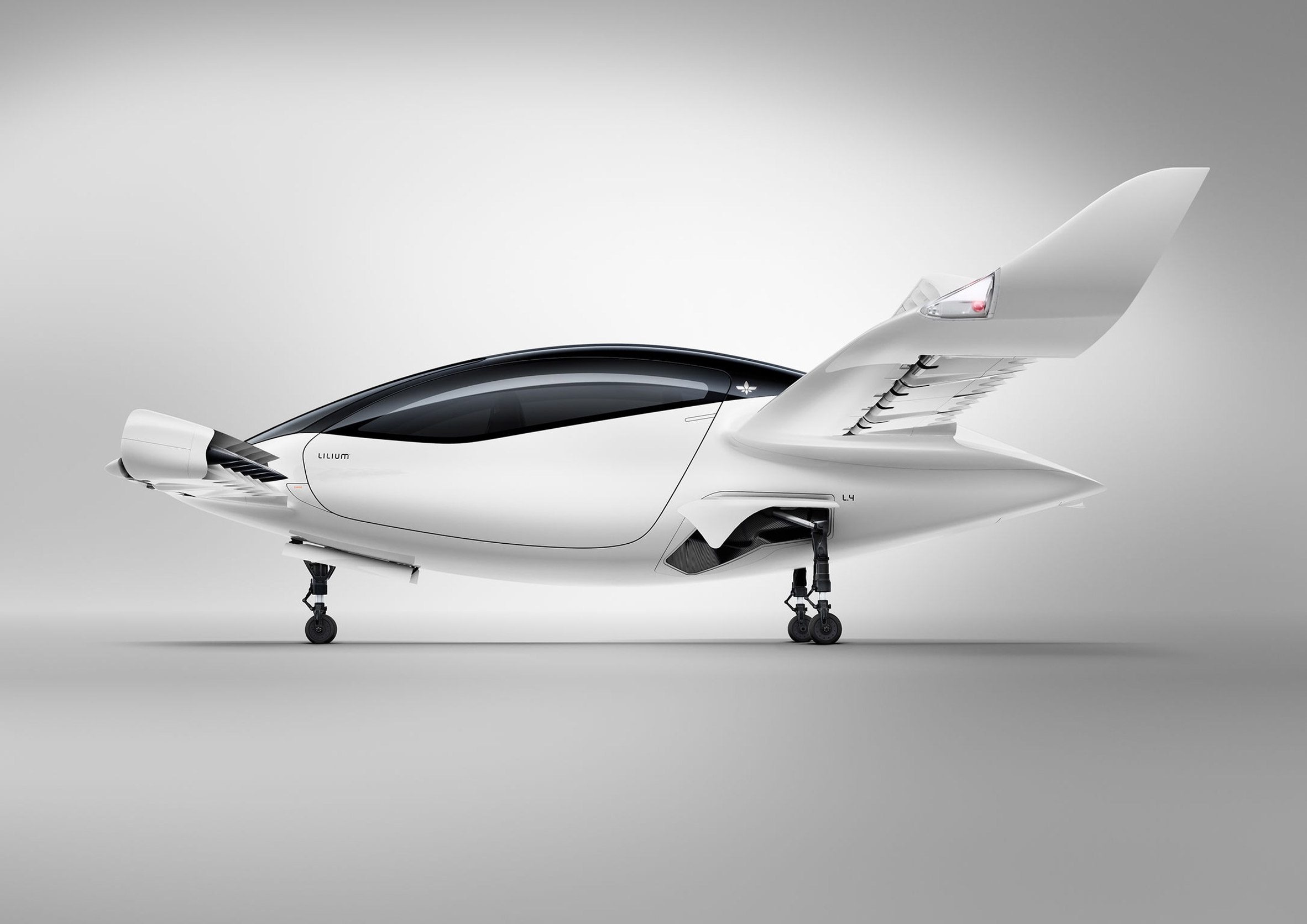
Lilium is an all-electric jet that is being designed to fly up to 300 kilometres in 60 minutes. The aircraft will form part of an electric mobility service designed to connect city centres and rural spaces across the world.

"Beautifully designed, the Lilium electric aircraft marks a giant step towards a new era in mobility," said the international iF jury. "The vertical take-off and landing capabilities and 300-kilometre range promise environmentally sustainable flight at a competitive price. This is a thrilling development in mobility design."

Project: Lilium/Aircraft
Manufacturer: Lilium GmbH, Germany
Designer: Lilium GmbH, Germany
Category: Professional Concept


Partnership content

This article was written by Dezeen for iF Design Awards as part of a partnership. Find out more about Dezeen partnership content here.

The post iF Design Award spotlights five New Mobility winners appeared first on Dezeen.


from Dezeen https://ift.tt/3mI46yL

Splitty Reach desk lamp by Kenneth Ng and Edmund Ng for Koncept

Splitty Reach light by Kenneth Ng and Edmund Ng for Koncept

Dezeen Showroom: lighting manufacturer Koncept has released a new version of its Splitty desk light, designed by Kenneth Ng and Edmund Ng, with a dynamic arm that can be moved into precise positions.

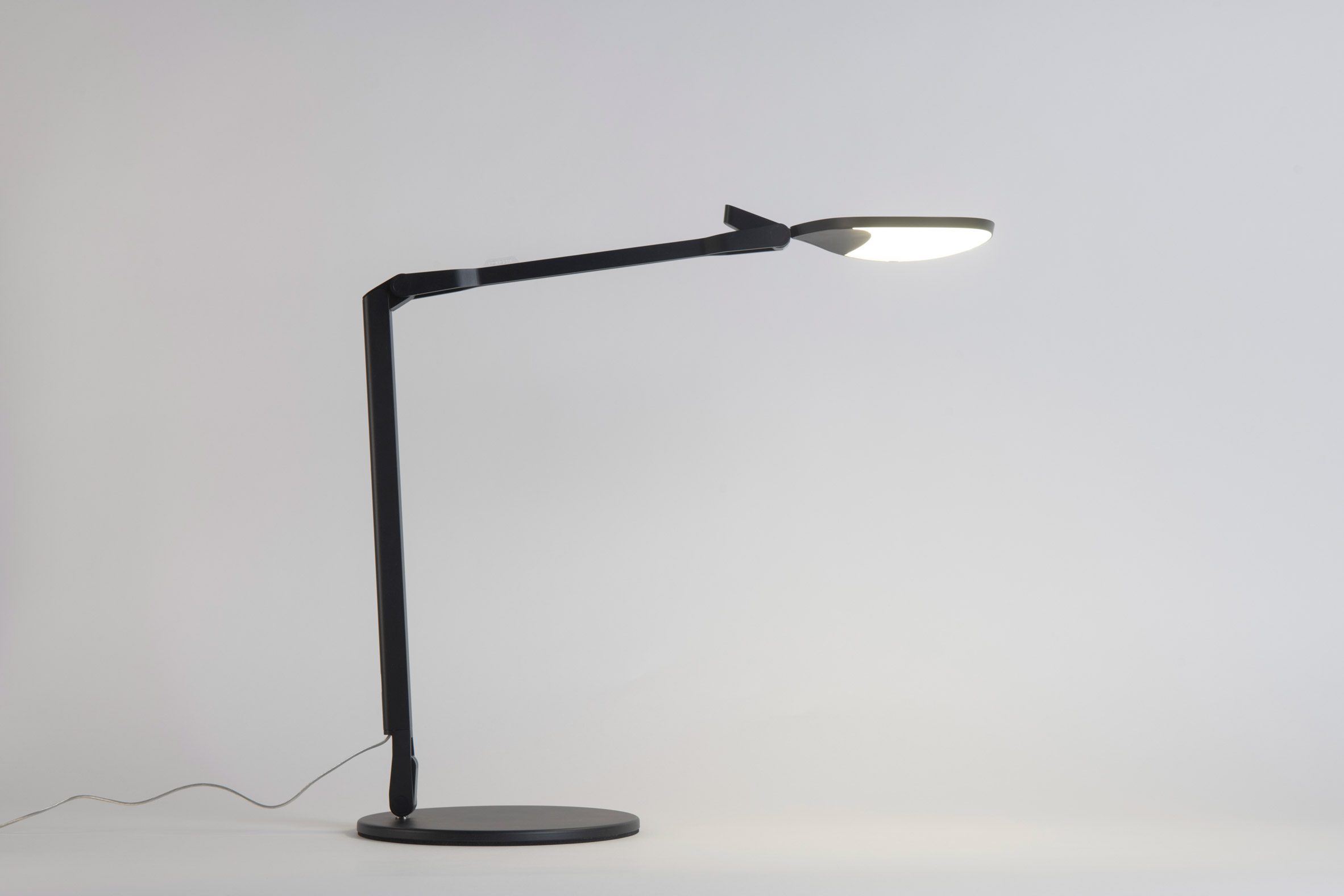
The Splitty Reach carries on the curved, droplet-like head shape of the original but adds a double arm with a special joint mechanism that is highly flexible.

Splitty Reach light by Kenneth Ng and Edmund Ng for Koncept in black
The Splitty Reach desk light has a double arm

The desk lamp can easily be moved from a computer keyboard to blueprints, for instance, and contains a dimmable LED light with a Kelvin rating of 3,500, which Koncept says "promotes productivity but is still inviting and relaxing".

Splitty Reach comes with a nine-hour auto-shutoff mechanism to conserve energy and a USB port for charging devices in its base. There is also the option to upgrade the base to wireless charging.

Splitty Reach light by Kenneth Ng and Edmund Ng for Koncept stretched out nearly flat
It can be manoeuvred into a wide range of positions

A further host of features are included in the Splitty Reach Pro. The lamp has an occupancy sensor that allows it to power off after 15 minutes of no activity, plus its colour can be tuned from warm white to cool white.

The Splitty Reach Pro also has desk and wall mounting options, which is good for people with limited desk space.

Product: Splitty Reach
Designer: Kenneth Ng and Edmund Ng
Brand: Koncept
Contact: bernadette.medina@koncept.com

About Dezeen Showroom: Dezeen Showroom offers an affordable space for brands to launch new products and showcase their designers and projects to Dezeen's huge global audience. For more details email showroom@dezeen.com.

Dezeen Showroom is an example of partnership content on Dezeen. Find out more about partnership content here.

The post Splitty Reach desk lamp by Kenneth Ng and Edmund Ng for Koncept appeared first on Dezeen.


from Dezeen https://ift.tt/3jo1q7e