Sunday, 29 August 2021

The DHaus Company adds hotel and Japanese-informed homes to London pub

The Bull and Last and Woodsome Road duplexes

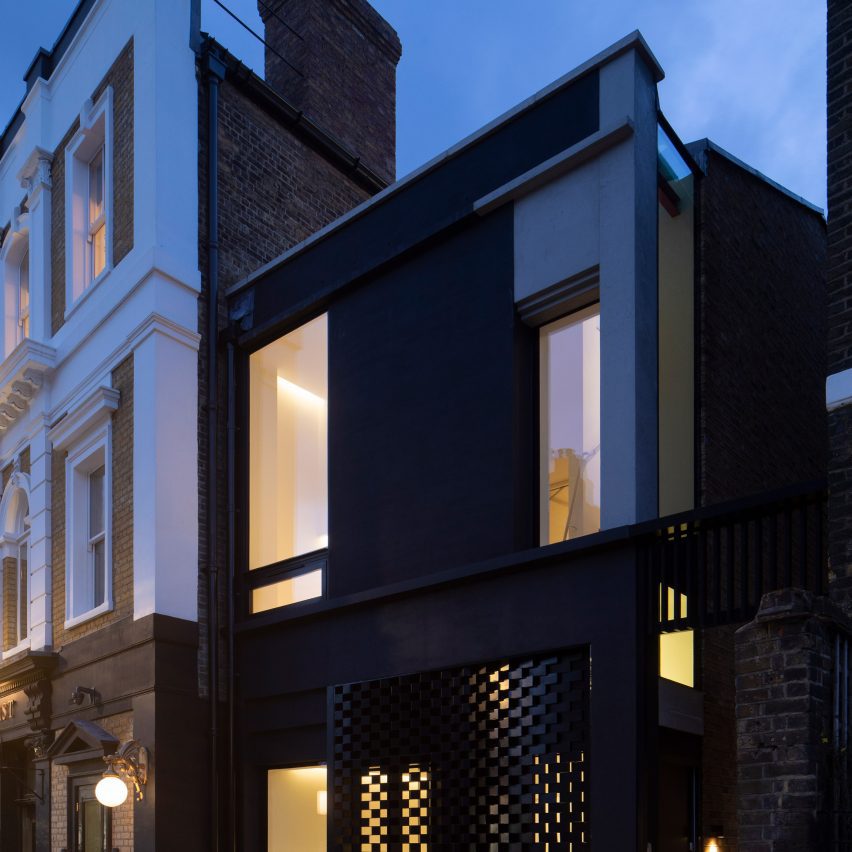
Architecture and design studio The DHaus Company has overhauled The Bull and Last pub in north London, adding boutique hotel rooms and a pair of Japanese-inspired duplex flats.

The project involved a complete renovation of the old pub, which started life as a coaching inn more than 300 years ago.

At a time when many of the UK's pubs are closing down the goal for The DHaus Company was to "help the pub stay a pub".
The Bull and Last and Woodsome Road duplexes
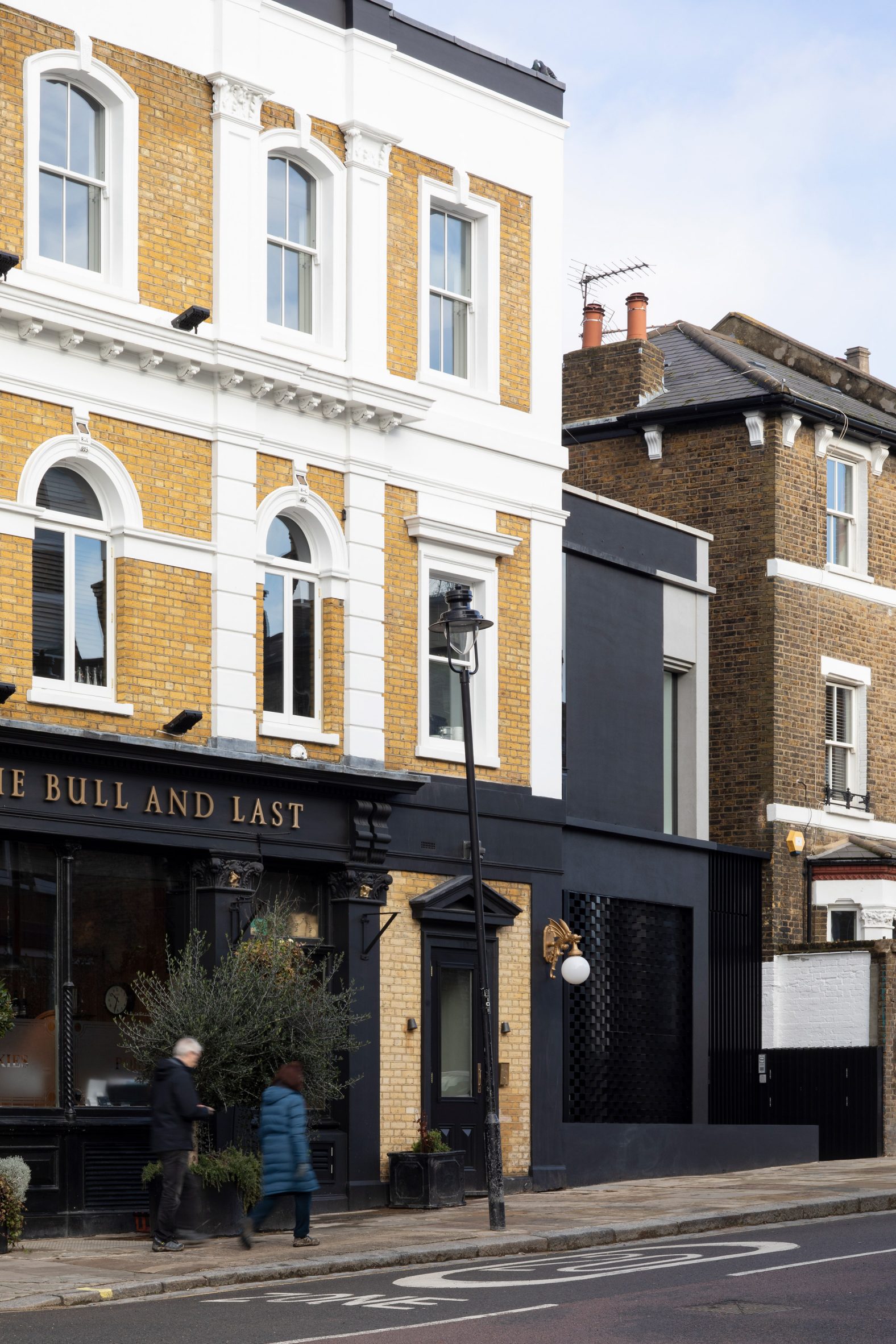
A new residential building has been inserted next to the The Bull and Last pub

This original coaching inn burnt down in a fire in 1883 but was rebuilt as the structure that exists today. The challenge for architects David Ben Grunberg and Daniel Woolfson was to rationalise this building without losing its historic character.

An important change was to remove a separate kitchen and toilet block located to the side of the main building, which freed up space for redevelopment. Here, the architects added a residential building that could be privately sold.
The Bull and Last and Woodsome Road duplexes
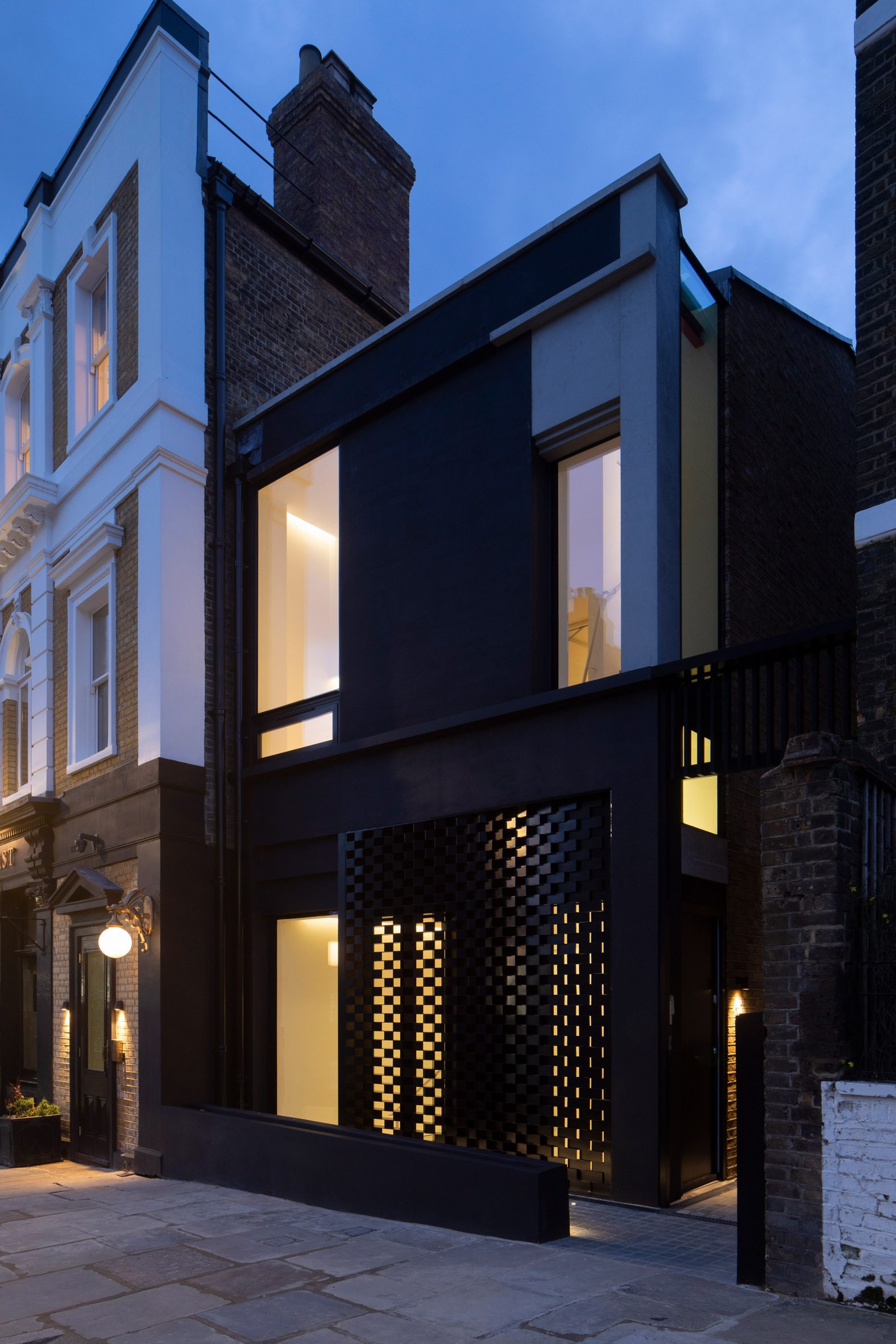
The building takes cues from Japanese courtyard homes and English mews houses

Taking cues from Japanese courtyard homes, as well as traditional English mews houses, this compact extension contains two duplex apartments.

One occupies the ground floor and top-lit basement, while the other is located on the first and second floors.
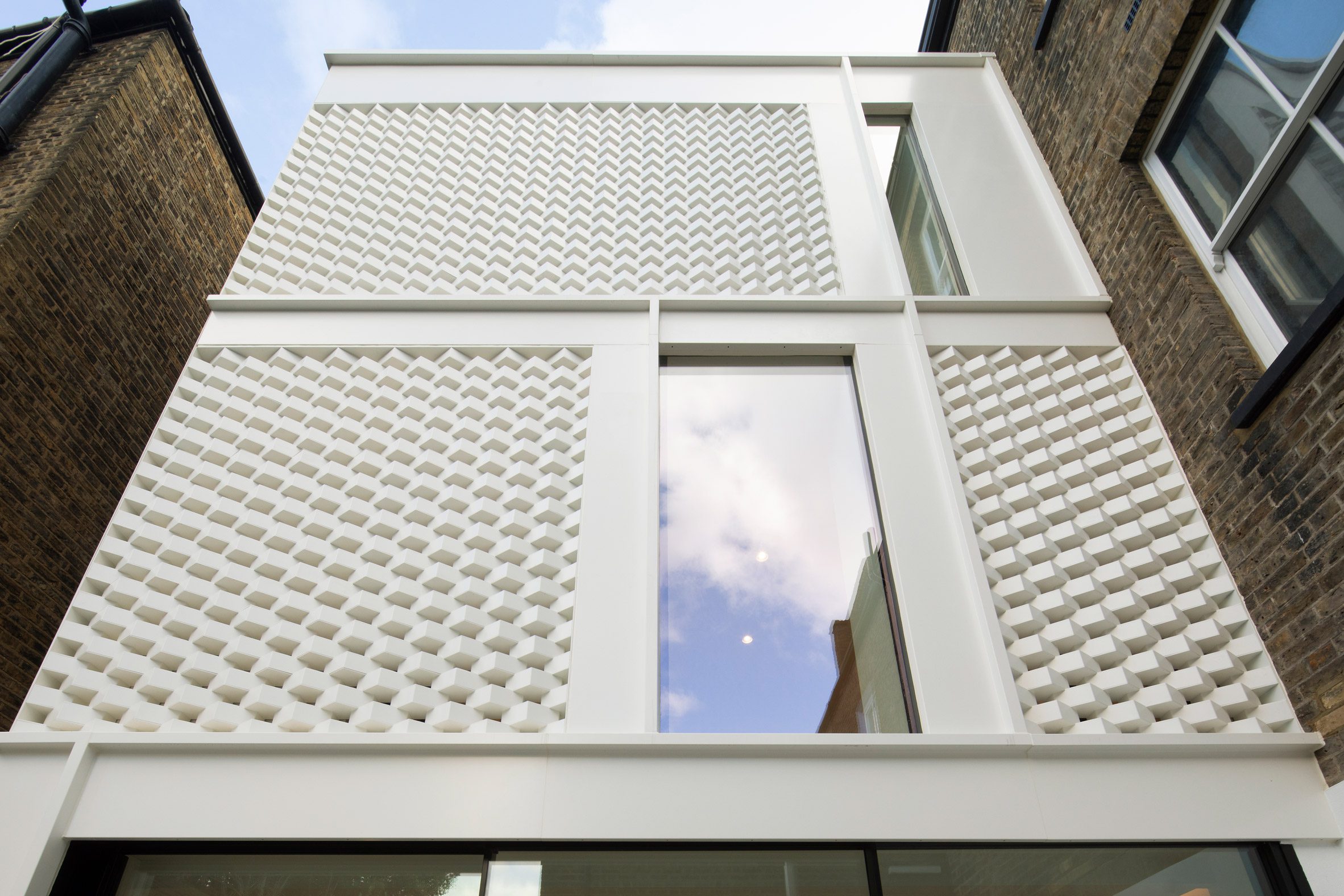
Rear of Woodsome Road duplexes
The patterned facade is designed to give the building a jewellery box quality

"We worked closely with the chief conservation officer of the Camden Planning Department," said Grunberg.

"He really wanted the design to be subservient to the pub, like an old coach mews house, or feel like a younger sibling," he told Dezeen. "He also loved our concept of an ancient Asian jewellery box, as an aspiration of quality and richness."
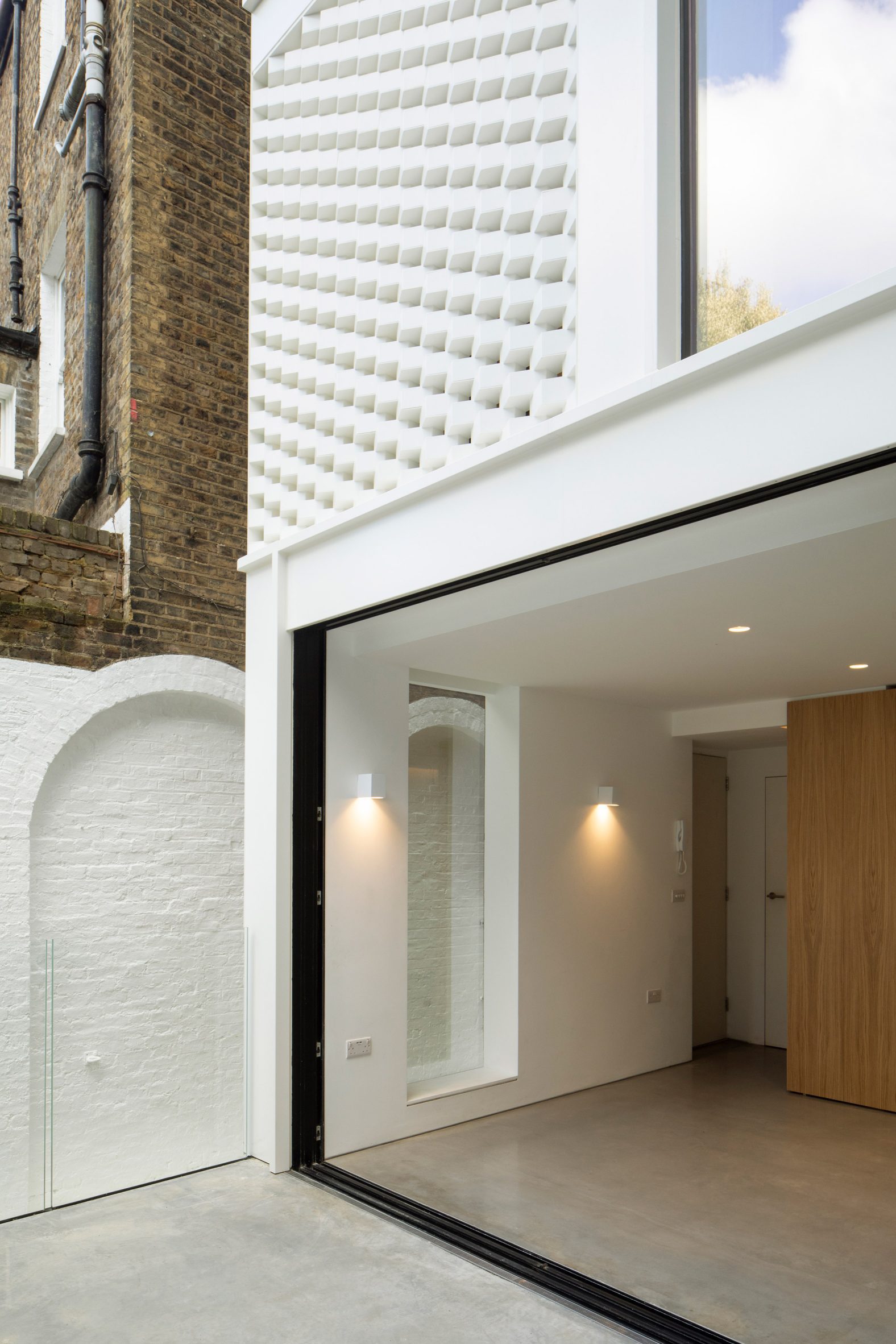
Glazed ground floor room in woodsmen Road
Two duplex apartments are located inside the building

This jewellery box concept was the inspiration behind the chequerboard details that feature on the building's exterior.

This pattern features on the powder-coated aluminium privacy screen on the front facade, which is black to match the colour of the pub.

At the back, where the building becomes white, the pattern is repeated in large sections of brickwork.

"Some people see a movement in the brick screens, like it's mimicking the movement of the street," suggested Grunberg.
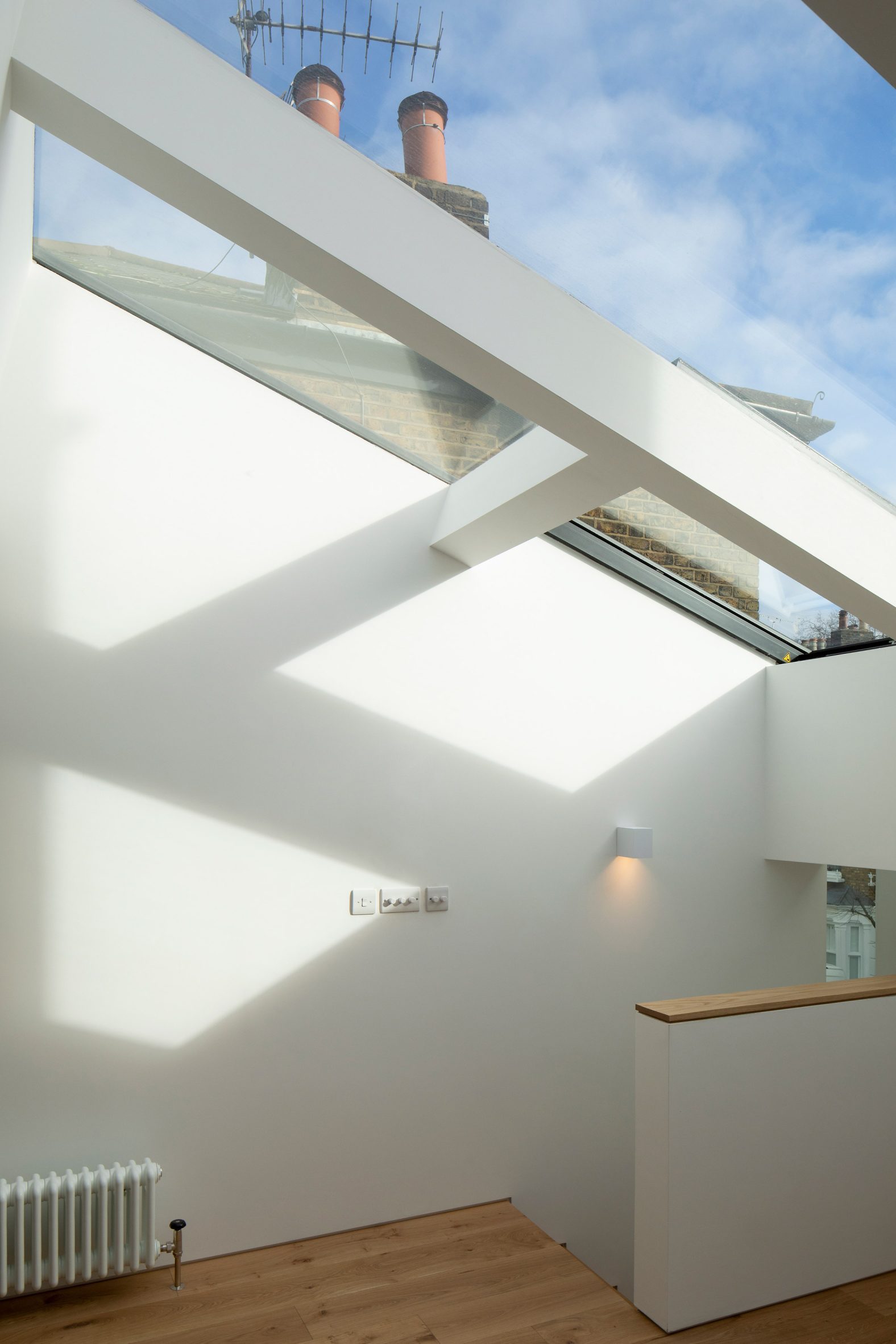
Interior of Woodsome Road
Skylights allow daylight to penetrate both homes

In the main building, facilities were completely modernised through a series of works that included a new basement, a loft extension and the addition of a commercial kitchen.

The architects recall one of the engineers describing the project as "a baptism of construction" due to the scope of work required.
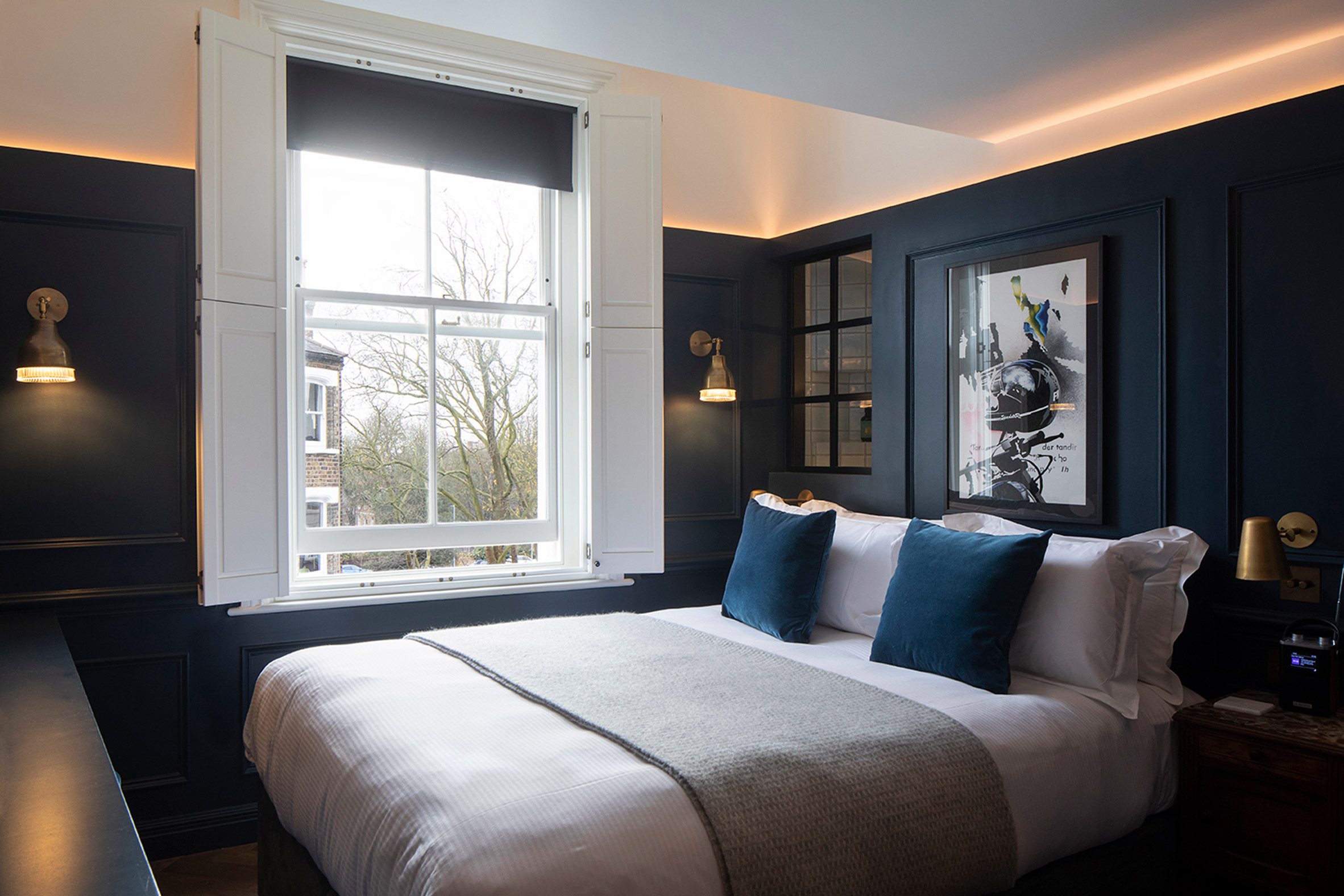
The Bull and Last hotel room
Six hotel rooms have been created on the pub's upper floors

Six hotel rooms were added upstairs, with the idea of reinstating the building's original function as an inn.

The interior design of each room was planned in tribute to a different historical figure from the area including poet John Keats and nightclub hostess Ruth Ellis.

The rooms all feature wood-panelled walls, matching those of the pub below, along with details that include jib doors, vintage desk consoles and roll-top baths.
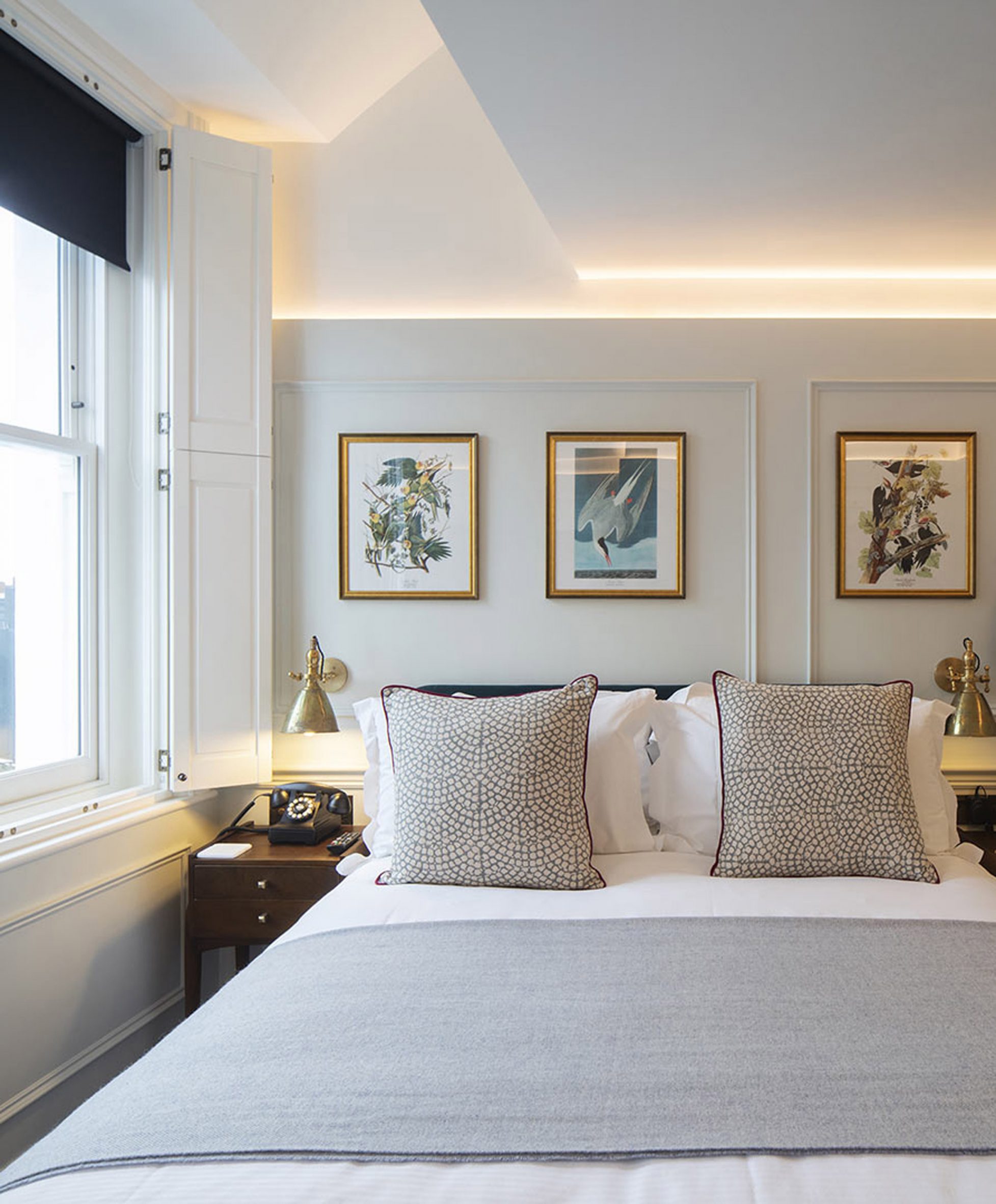
The Bull and Last hotel room
Each room takes inspiration from a historical local figure

In the main bar and dining area, most of The Bull and Last's existing details have been preserved.

Timber lines the walls and bar, while taxidermy bulls take pride of place above the bar.
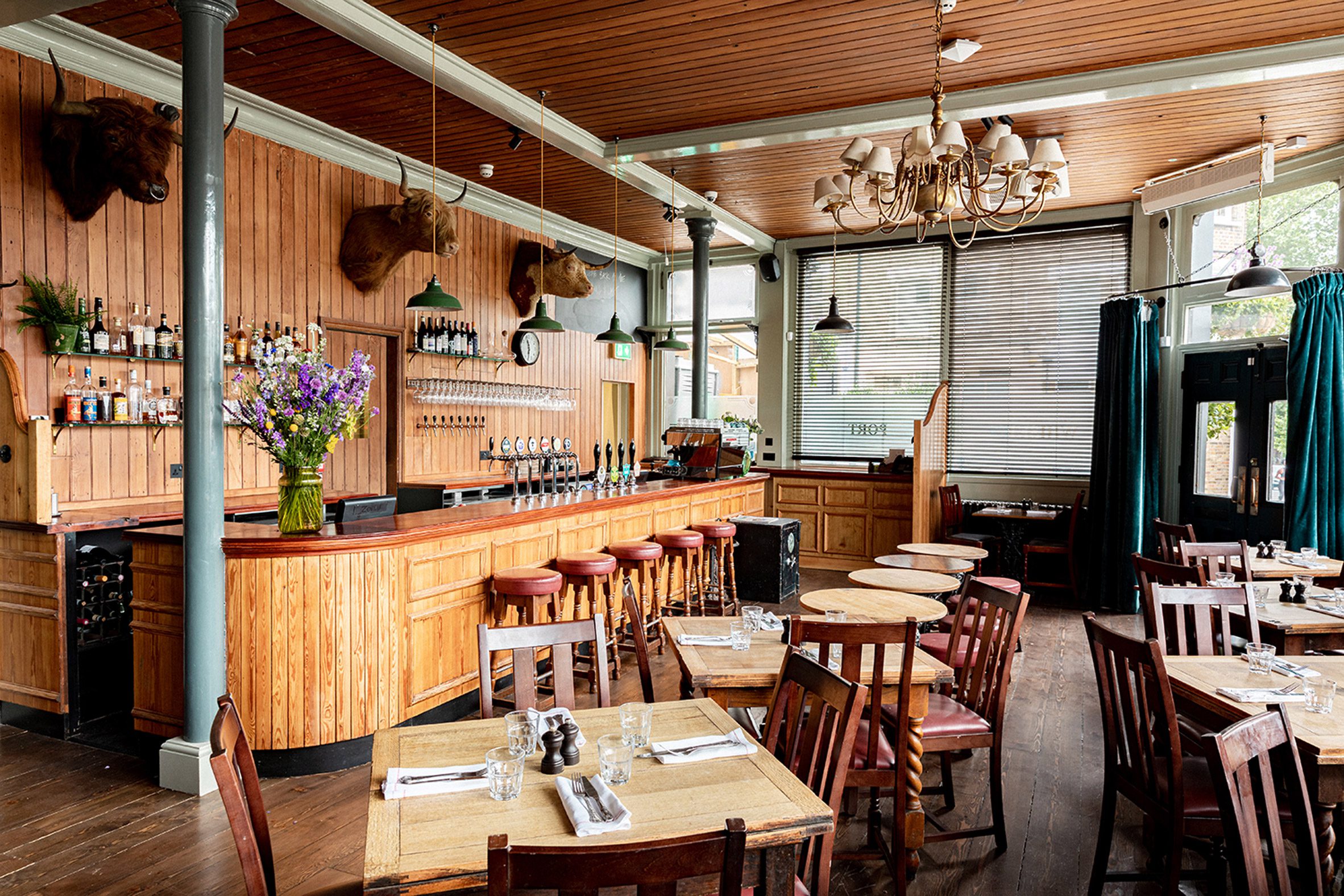
The Bull and Last bar and restaurant
Existing details are preserved in the pub and restaurant

The project has more of a traditional character than others that The DHaus Company has completed in the past. Grunberg and Woolfson's portfolio includes a concept for a shape-shifting house and a Dezeen-competition-winning vision for flood-proof future houses.

The pair got involved in the project after a mutual friend introduced them to the pub's owners, Ollie Pudney and Joe Swiers.

The collaboration has proved so successful that Pudney and Swiers have since decided to move into the two duplex flats themselves, rather than sell them on.

Photography is by Richard Chivers, Joe Howard and Serge Kouperschmidt.

The post The DHaus Company adds hotel and Japanese-informed homes to London pub appeared first on Dezeen.


from Dezeen https://ift.tt/2UWRLeC

L'Abri and Construction Rocket complete Saltbox Passive House in Quebec

Saltbox Passive House

This family house in Quebec is modelled on the region's vernacular architecture and was designed to Passive House standards of energy efficiency.

Canadian architecture firm L'Abri and contractor Construction Rocket collaborated closely on the creation of the Saltbox Passive House, the primary residence for a family of four.

House nestled into sloping site
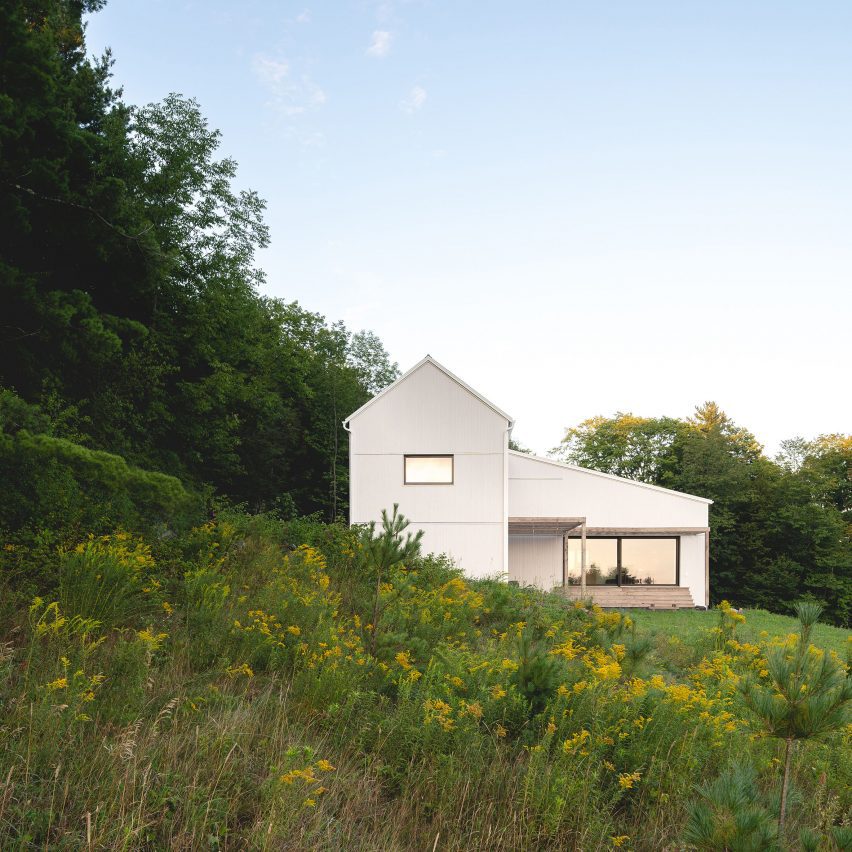
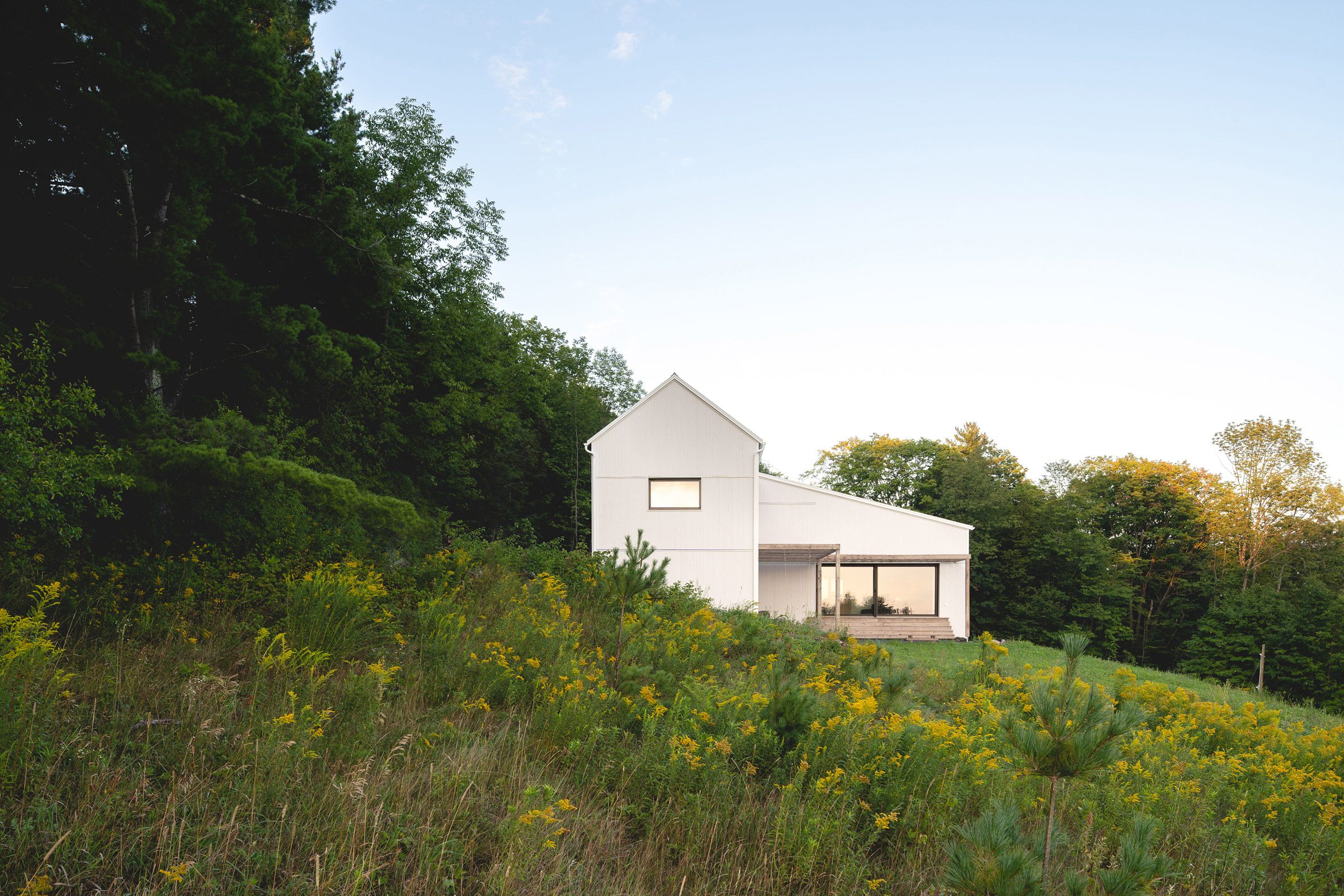
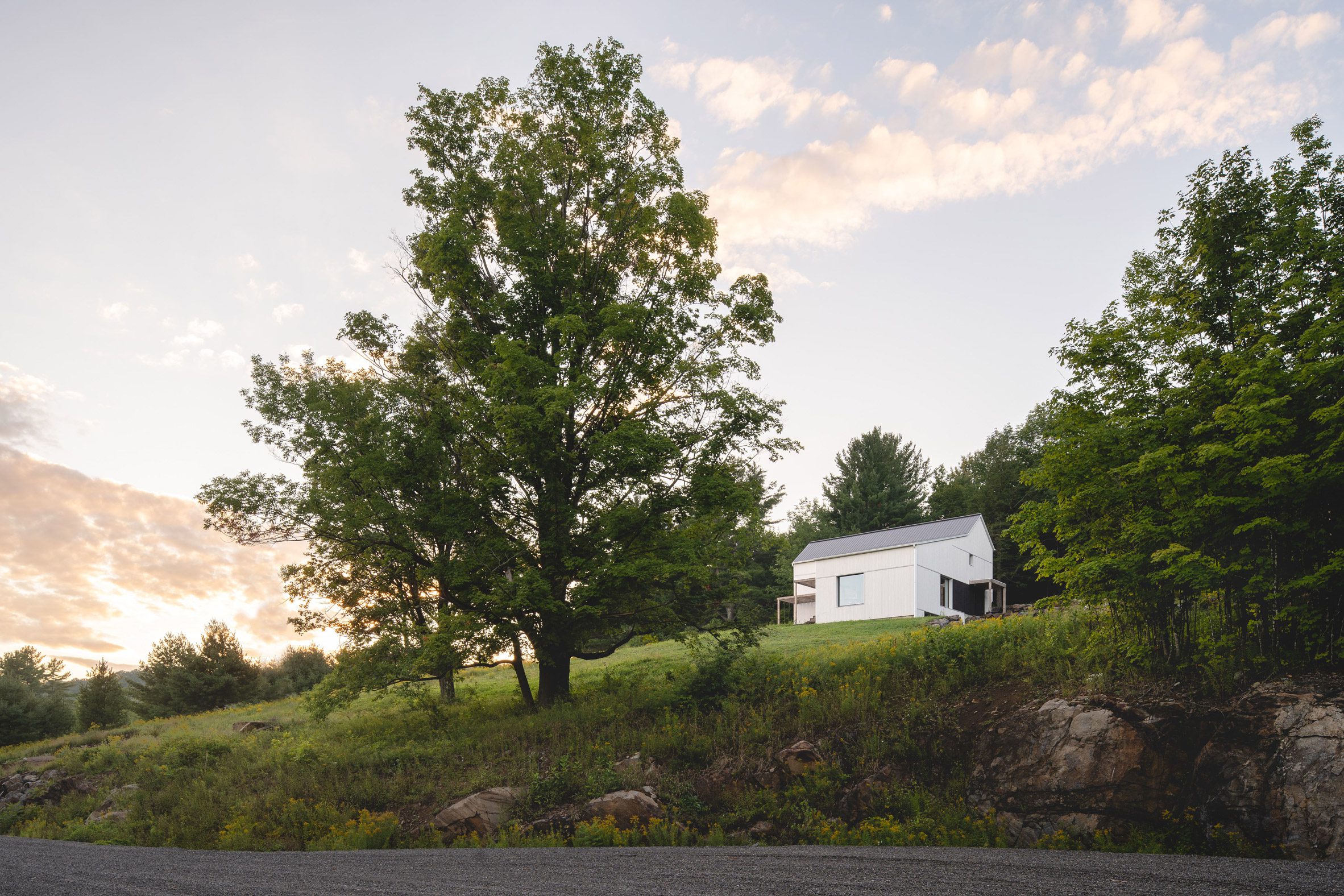
Saltbox Passive House nestles into a slope near Bremont, Quebec

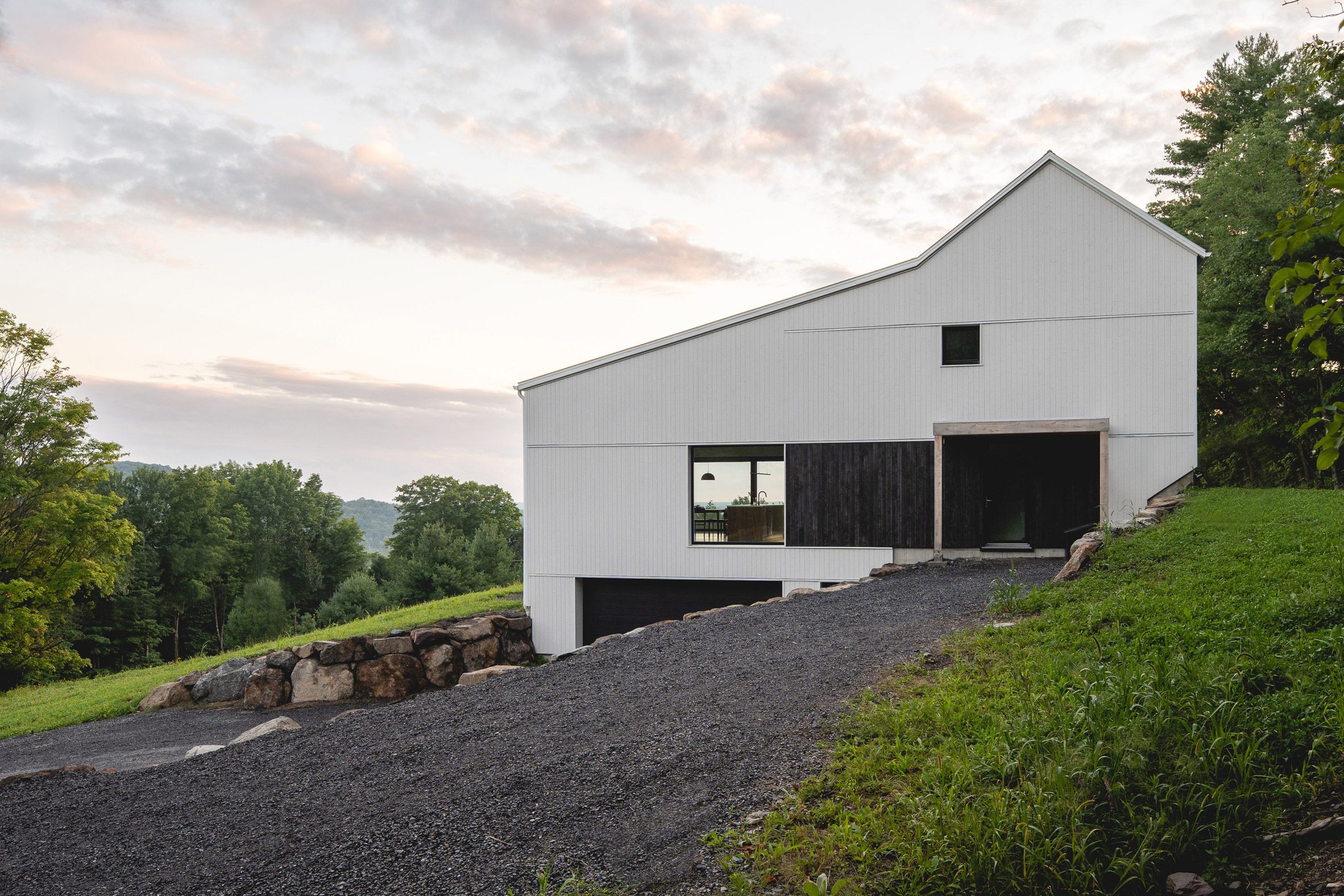
Located on the southern flank of Mont Gale in Bromont, in the Eastern Townships, the 3,100-square-foot home is built over three levels into the sloping 2.5-acre site.

The project achieved LEED Platinum and PHIUS 2018+ certifications, becoming the third house in Quebec to obtain Passive House certification.

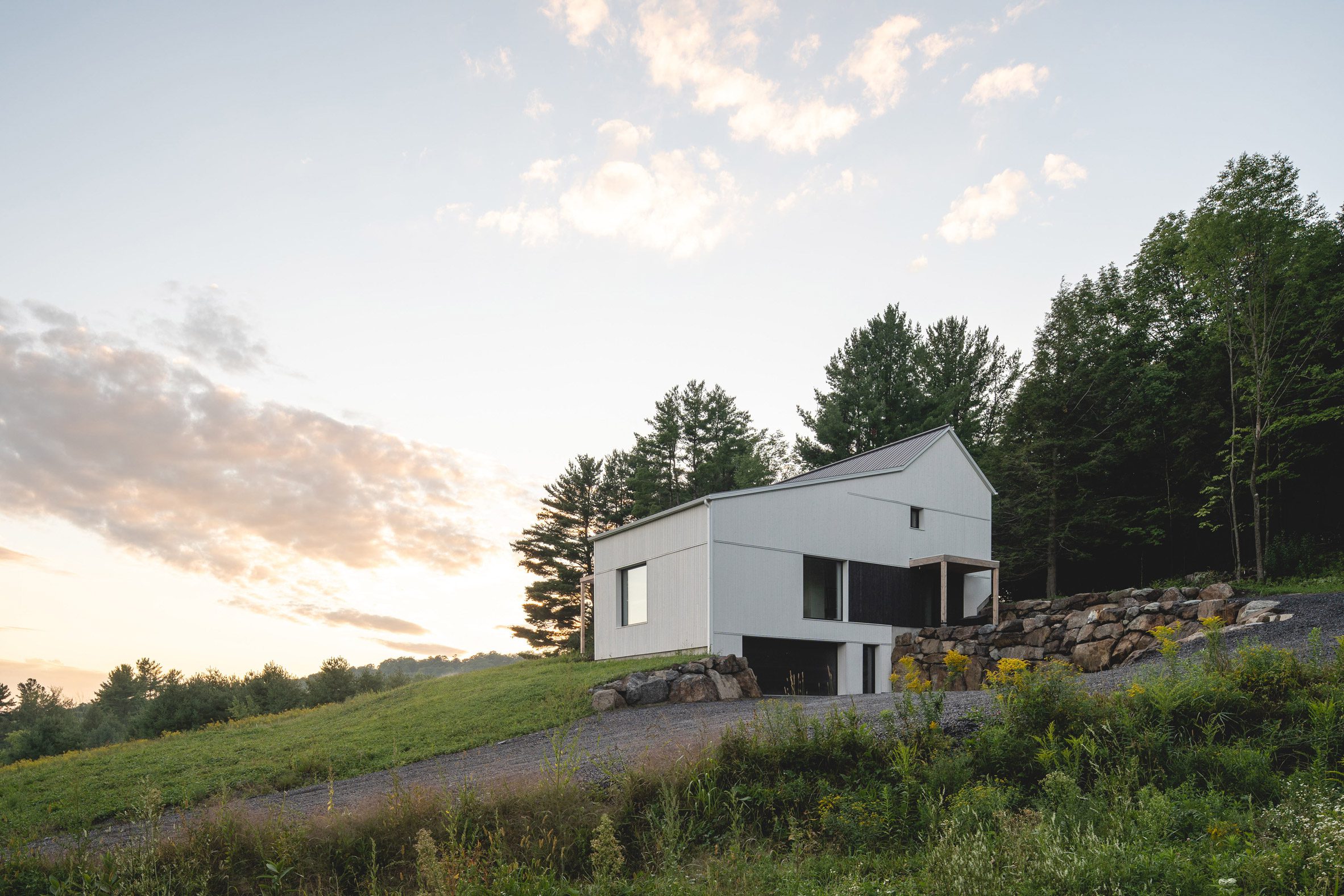
View of the house from the driveway
The house is split over three levels, the lowest of which is partially buried

Passivhaus, as it's also known, is a high-performance building standard that originated in Germany three decades ago.

Qualifying buildings are highly energy efficient and sustainable, achieving heating and cooling energy savings of around 80 per cent.

"The basic principles of the standard are simple: a highly insulated and very airtight envelope, superior heat recovery of the mechanical ventilation system and a design which optimises the orientation and sizing of openings to promote passive heating of the building," said L'Abri.

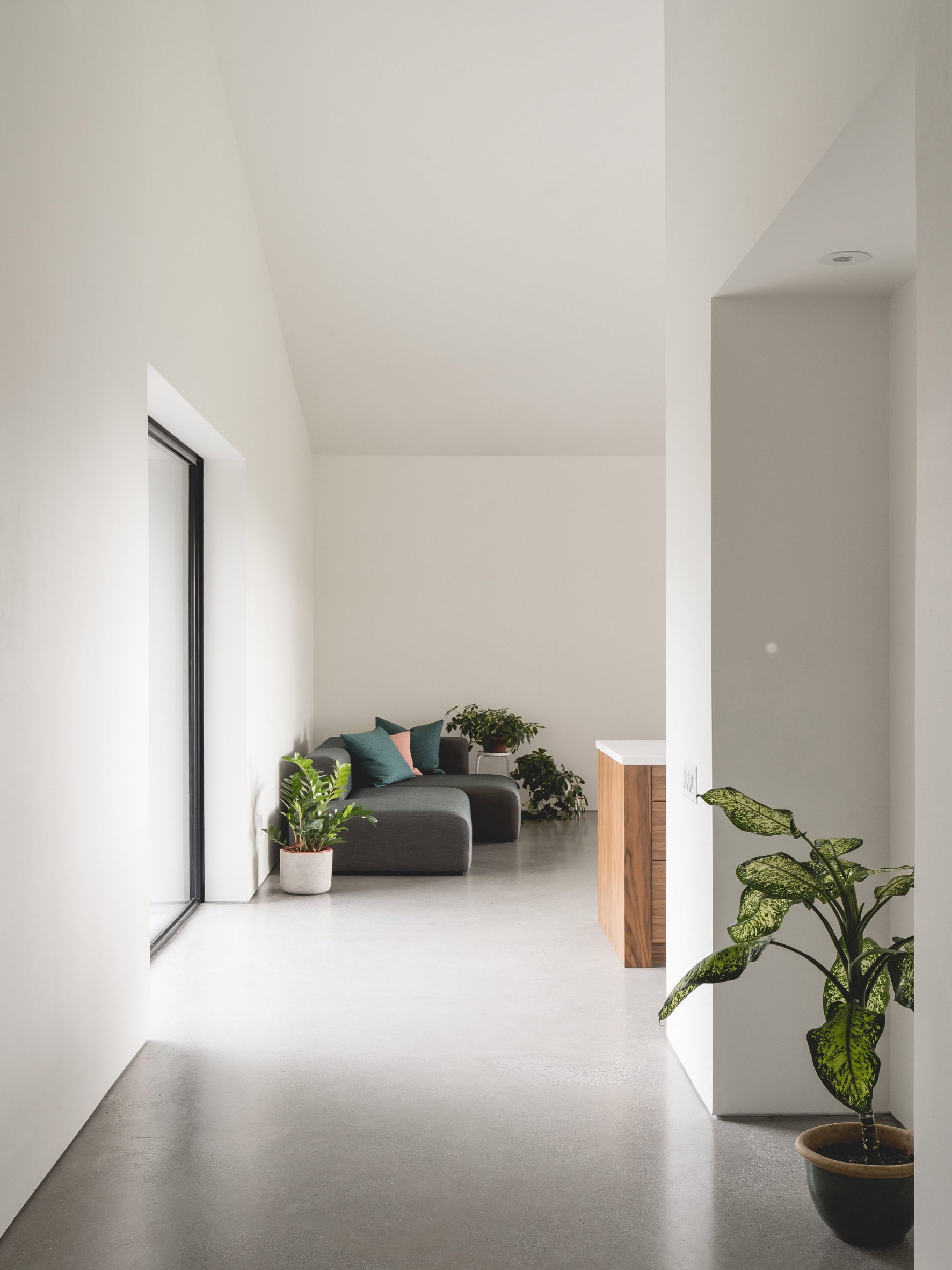
Entrance corridor looking towards the living room
The entrance on the middle level leads into a double-height living space

This residence was designed to reference the region's historic saltbox-style houses, which originated in 17th-century New England and are still prevalent in this part of Canada.

Situated in a meadow surrounded by protected woodland, the home is laid out in a L-shape and has different roof styles over its perpendicular arms.

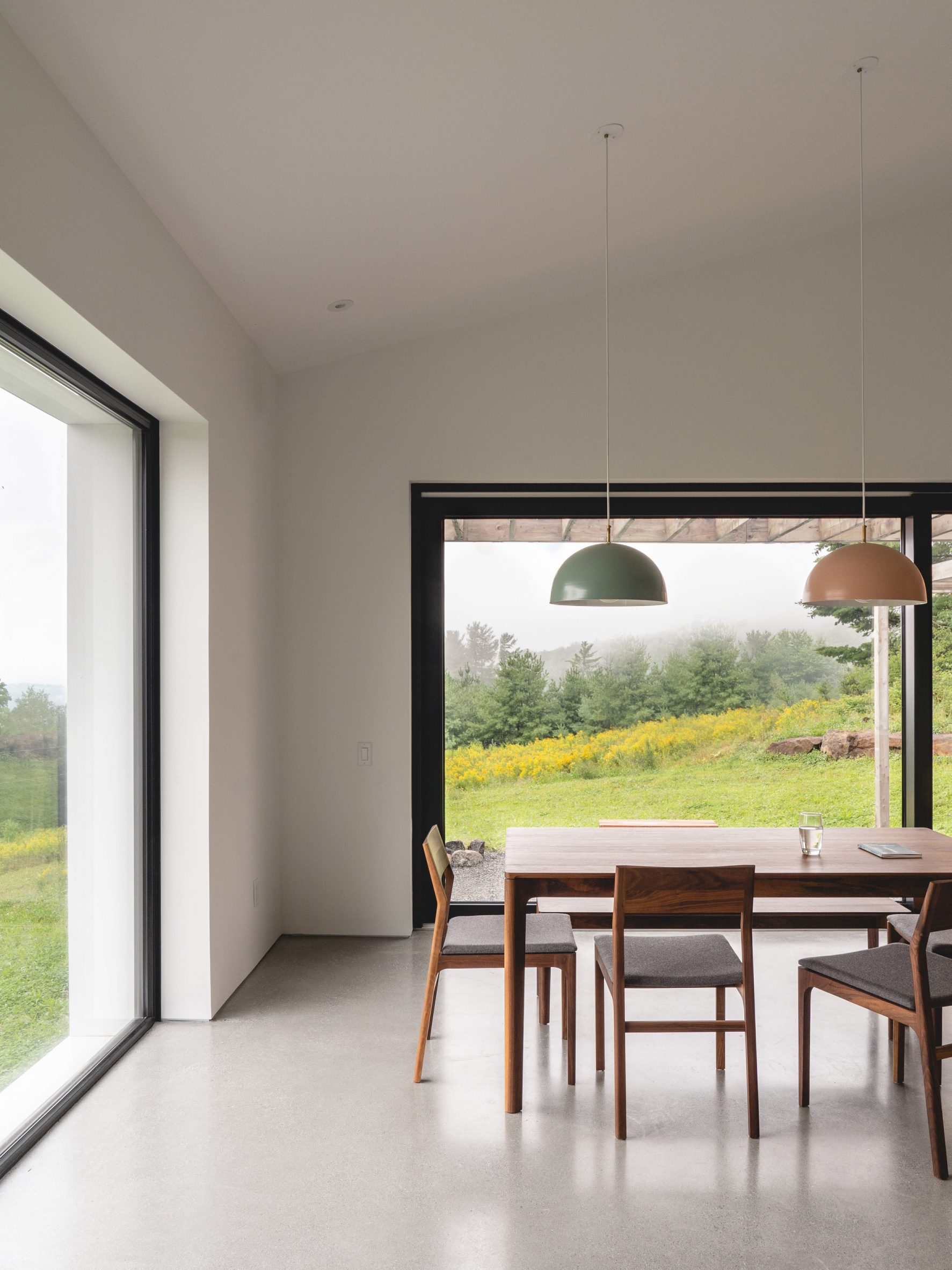
Large dining room windows
Large windows in the dining room offer views of meadows and woodland

"The nature of the site and the local vernacular architecture prompted us to turn to a historical form," said the studio.

"With a gable roof on the main section and single pitch roof on the lower section, this colonial style takes its name from the lidded containers where salt was once kept above the hearth to keep it dry."

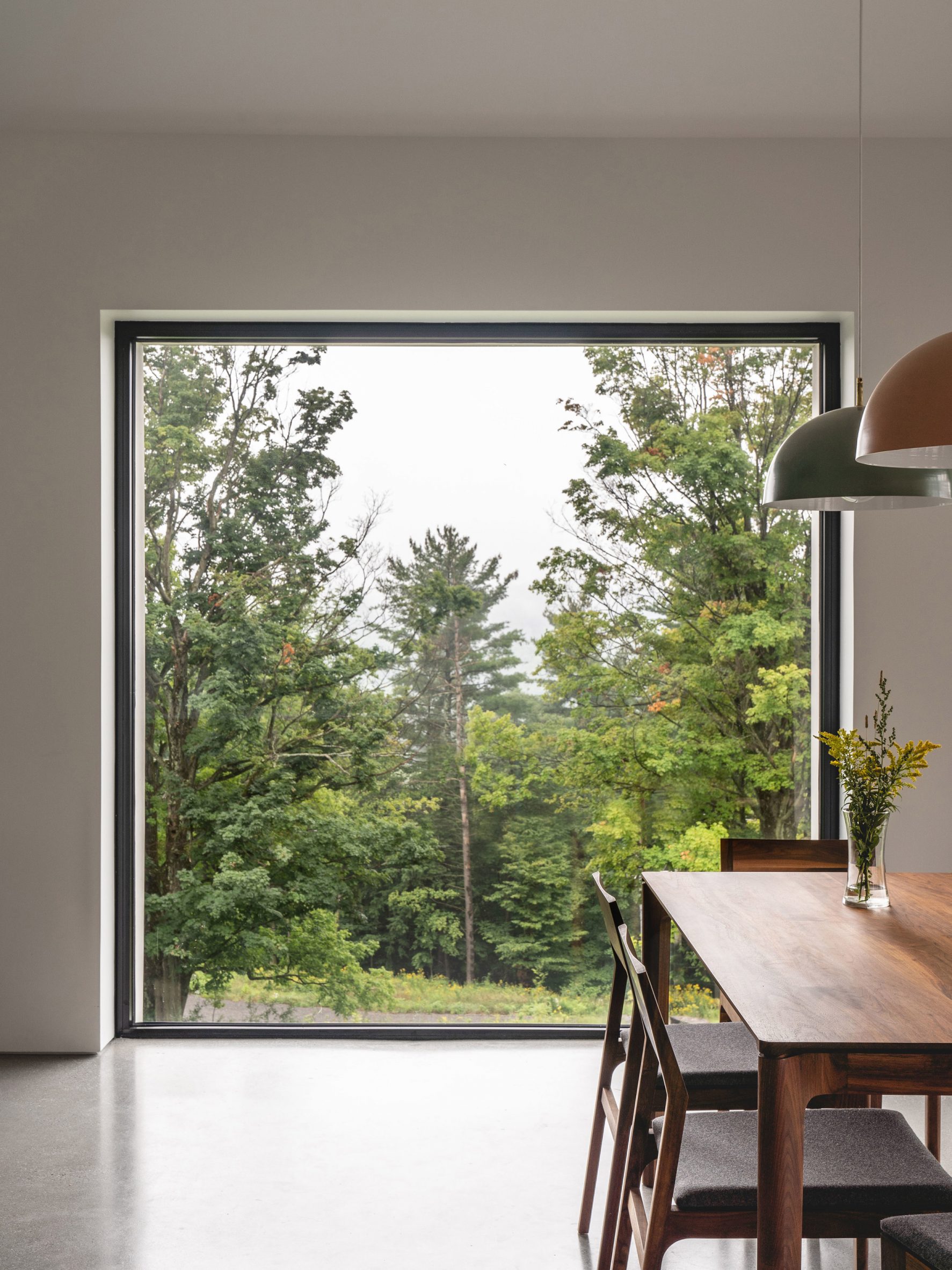
Forest view framed through dining room window
Wooden furniture adds visual warmth to the white interiors

Nestled into the slope, the house faces south to aid passive solar heating and make the most of views.

Retaining walls made from excavated stone are partially hidden by the landscape, as is a basement garage that only appears on the approach up the gravel driveway.

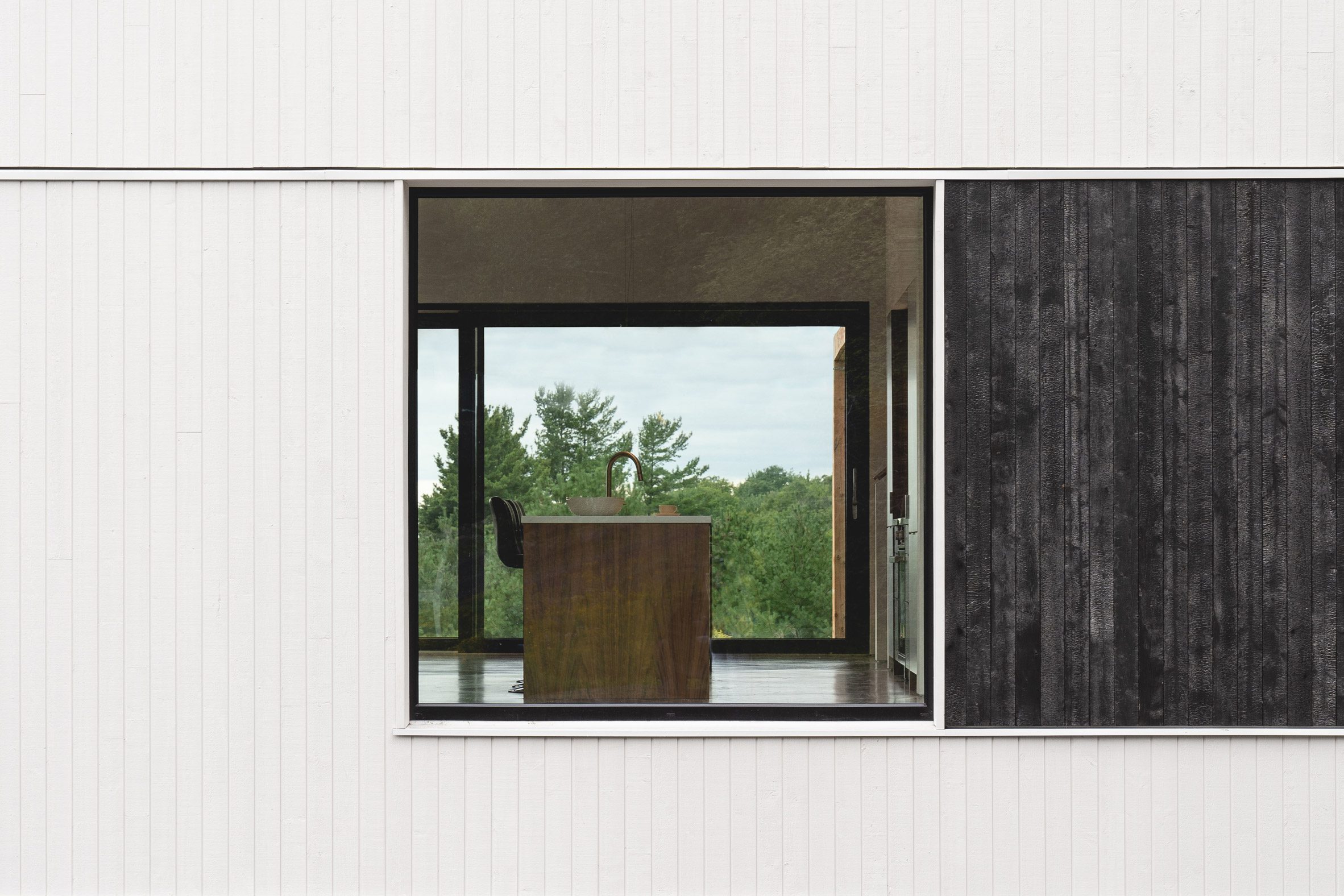
The ground-floor entrance is marked by a panel of burned cedar cladding – a stark contrast to the rest of the white wood-faced exterior.

The lobby leads through to a central double-height room that the architects describe as the heart of the home.

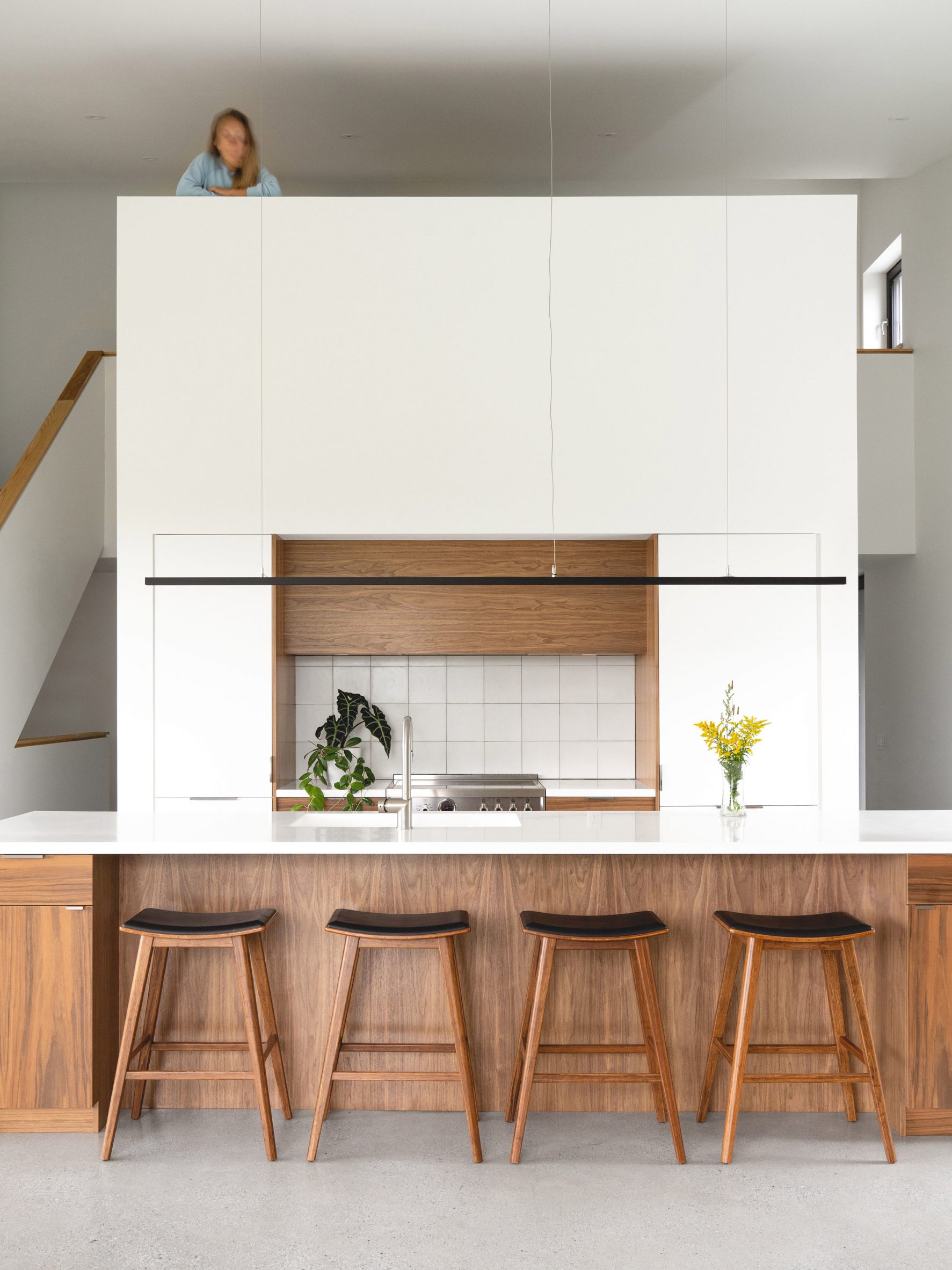
Kitchen with mezzanine space above
The kitchen is part of a central core that is topped with a mezzanine office space

Occupying the southern wing of the L, this space contains the kitchen, living and dining areas, bathed in light from large windows on three sides.

A pantry is tucked behind the kitchen, which is topped by a mezzanine office accessed from the level above, while a media room and guest room join a bathroom and laundry in the other wing.

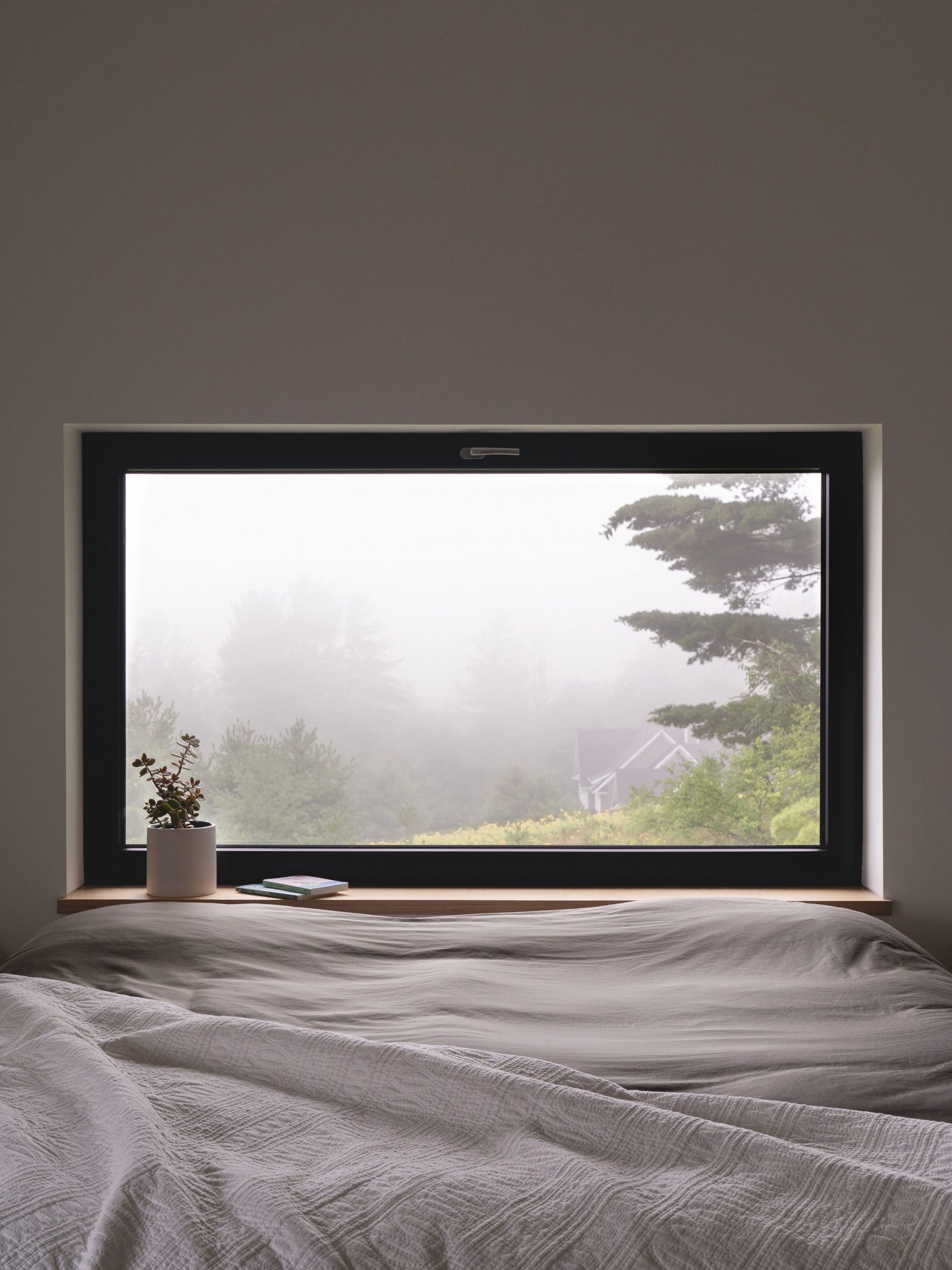
Bedroom window with misty view
Bedroom windows are smaller to reduce heat loss

The pocket of outdoor space formed by the building's shape is accessed from both wings and covered by a wooden pergola, shading an al fresco dining area and passively regulating the internal temperature.

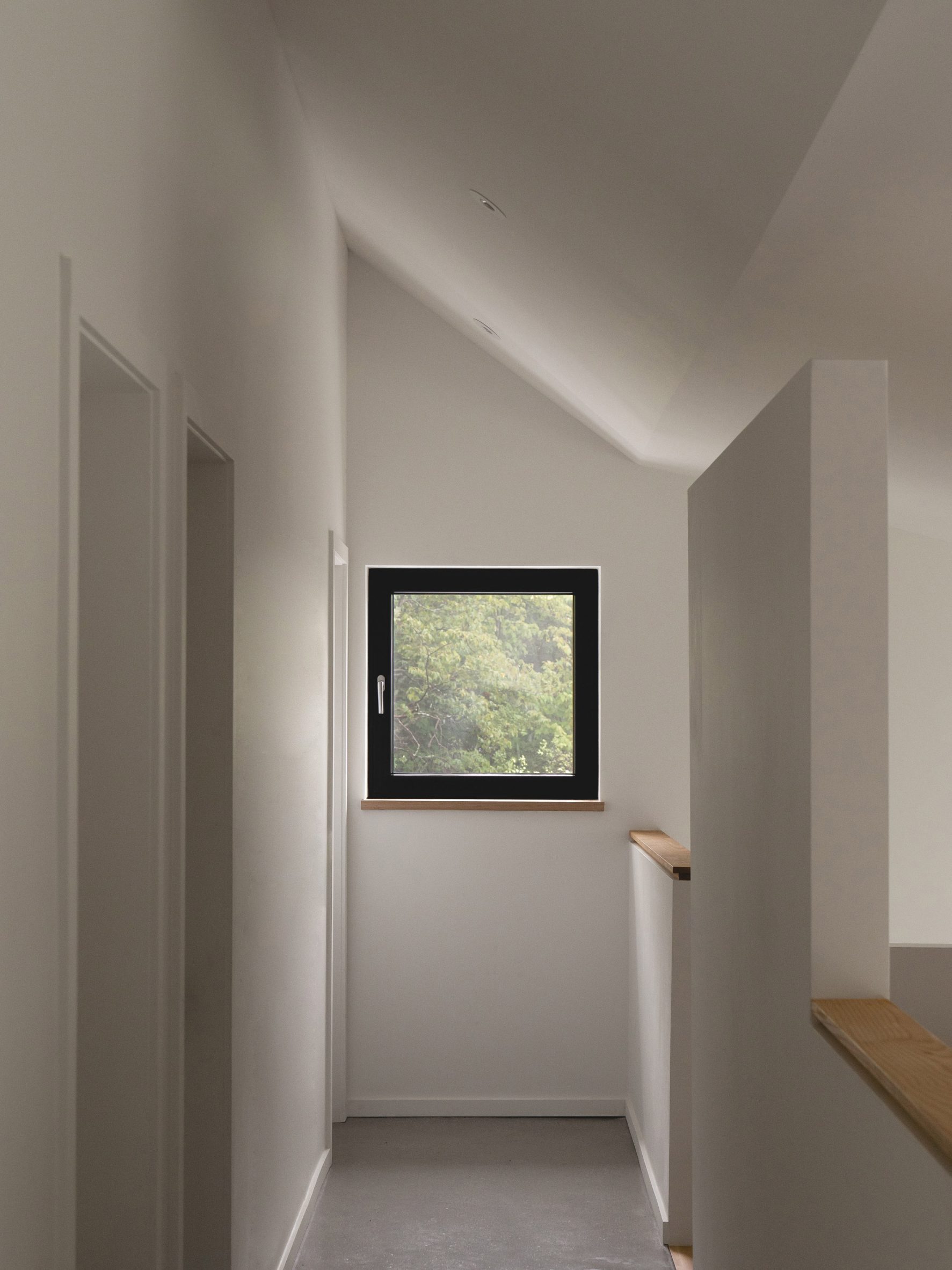
Upstairs, three bedrooms and two bathrooms are lined up under the gabled steel roof, connected by a corridor on one side.

Upstairs corridor
The upstairs corridor connects three bedrooms and two bathrooms

Thin window bands in the children's rooms frame forest views and minimise heat loss on the northern facade.

The majority of the rooms have white walls, black window frames and polished concrete floors. Wooden furniture, kitchen fixtures, stair treads and bannisters add touches of visual warmth.

White wood exterior with burnt cedar panel
A blackened cedar panel marks the entrance on the white-painted exterior

The architects and contractor worked with a consultant from PHIUS, North America's largest Passive House Certification, during the design and construction of the house.

Decisions were tested using an energy model, informing the choice of a double-stud structure for above-ground walls and triple-glazed UPVC windows.
House seen from the driveway
The house was designed to Passive House standards of energy efficiency

Wood siding and cellulose insulation also helped to reduce the building's carbon footprint.

"This experience confirmed to us that a building can be both aesthetic, in harmony with its environment and extremely efficient," said L'Abri.

Saltbox Passive House viewed from the street
The design is modelled on the region's rural vernacular architecture

Although it originated in Germany, Passivhaus has gained traction in North America as a standard for many homes and other types of buildings.

Recently completed examples include a cidery in New York's Catskills Mountains, a townhouse in Brooklyn, and a residence designed by students in South Dakota.

The world's tallest Passivhaus building is also planned to be constructed in Vancouver.

The photography is by Raphaël Thibodeau.


Project credits:

Architects: L'Abri
Architecture team: Francis M Labrecque, Jérôme Codère, Vincent Pasquier, Antoine Mathys
Contractor: Construction Rocket
PHIUS consultant: Sarah Cobb

The post L'Abri and Construction Rocket complete Saltbox Passive House in Quebec appeared first on Dezeen.


from Dezeen https://ift.tt/3DmFiCt

Kazoo Sato designs hemispherical public toilet for Tokyo

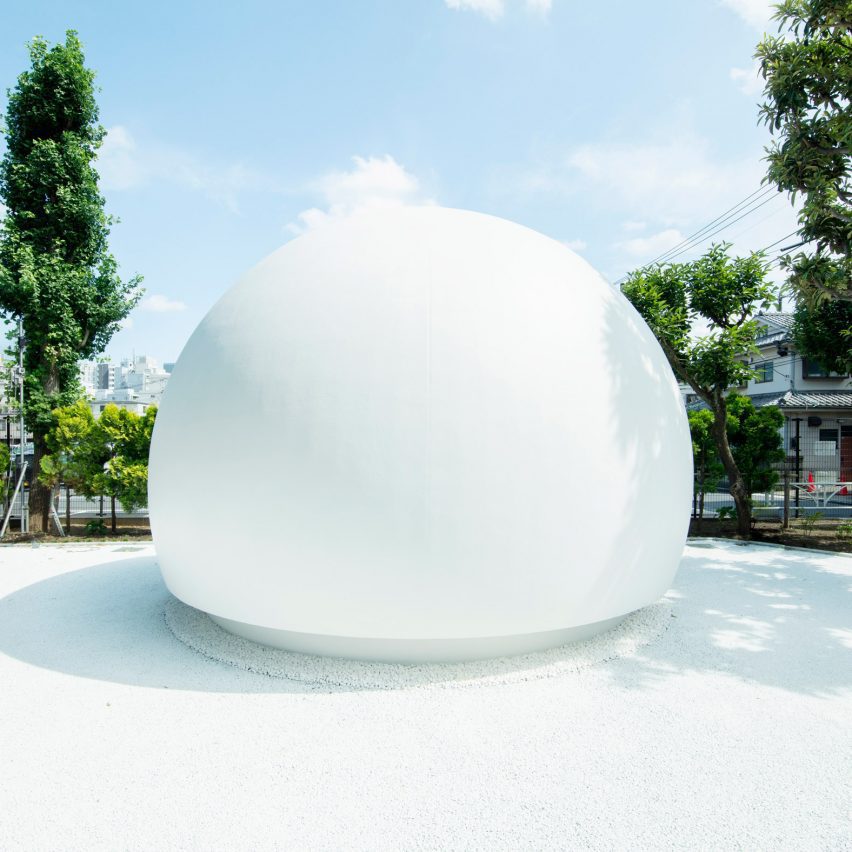
Tokyo Toilet by Kazoo Sato

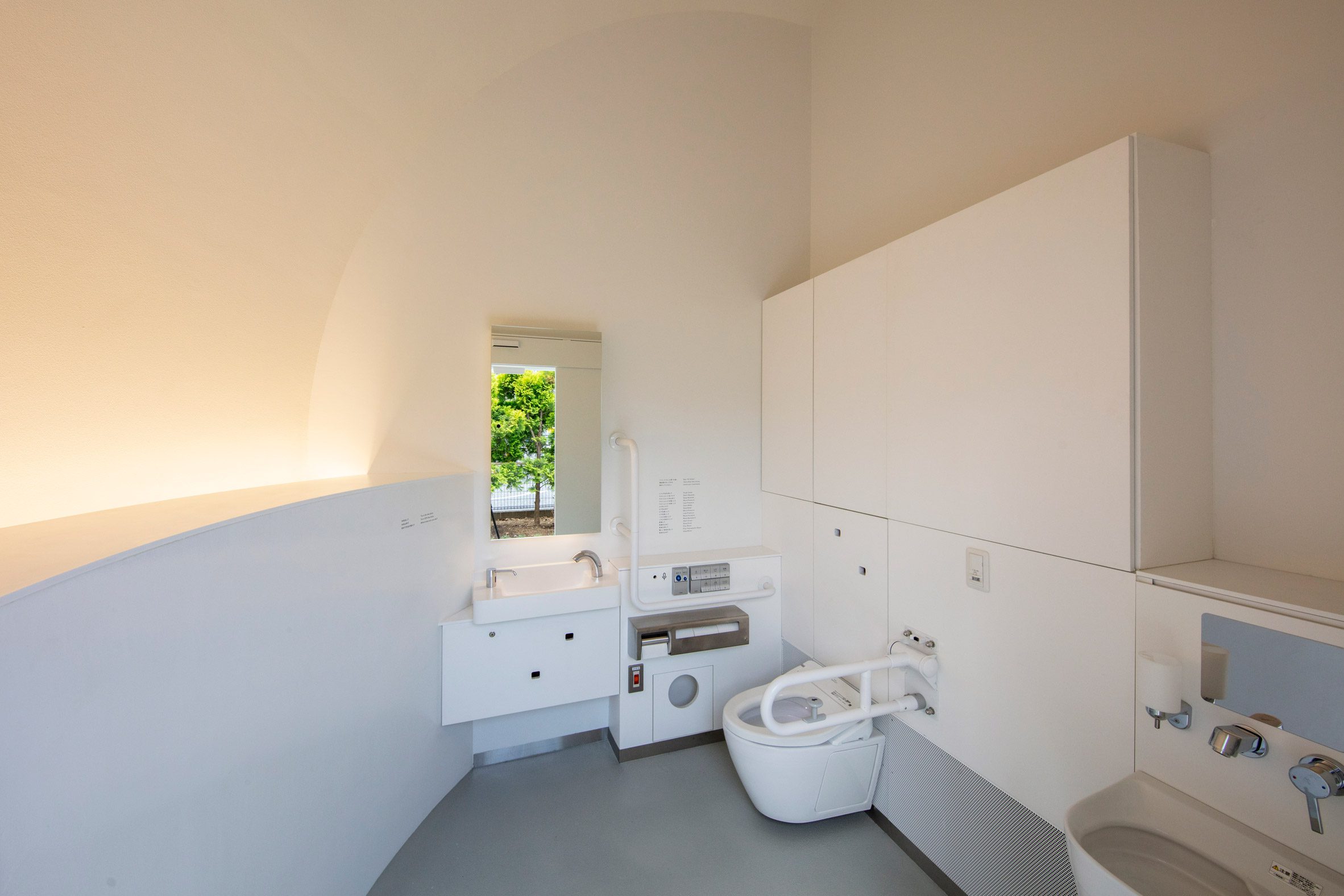
Designer Kazoo Sato has created a public toilet that uses voice commands to control functions including the door, toilet flush, taps and ambient music as part of the Tokyo Toilet project.

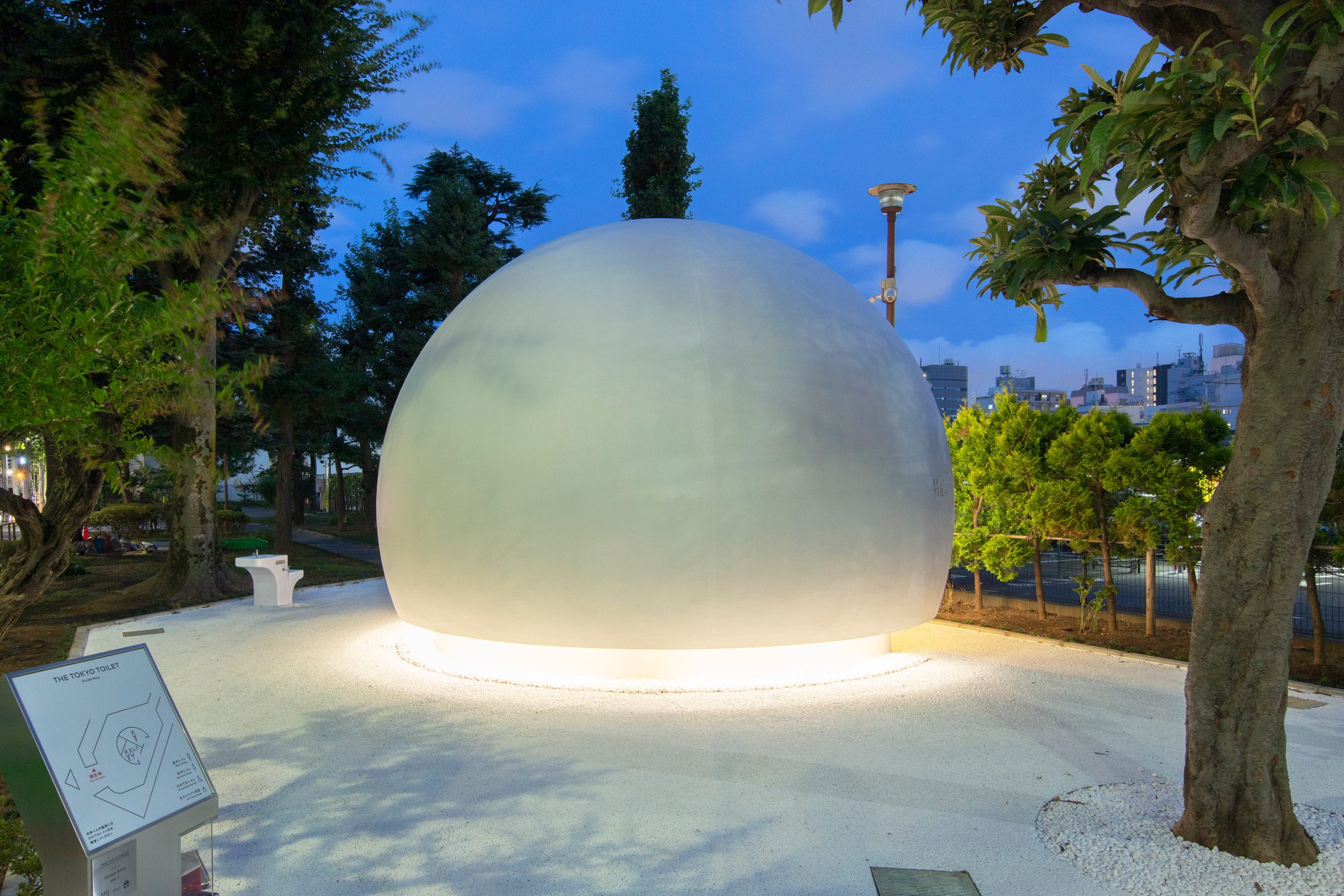
Situated in Nanago Dori Park in the heart of Tokyo's Shibuya financial district, the design of the hemispherical toilet was led by TBWA\HAKUHODO advertising agency chief creative officer Kazoo Sato.

Hemispherical toilet in Tokyo
Kazoo Sato's toilet has a hemispherical shape

Japanese toilets are globally recognised for their technical innovations and Kazoo worked with experts in architecture, acoustics and toilet manufacturing to harness the latest technologies in his design.

Responding to the project brief set by Japan's largest public-sector charitable group, the Nippon Foundation, the design seeks to overcome traditional perceptions of public toilets as being dark, dirty, smelly and scary.

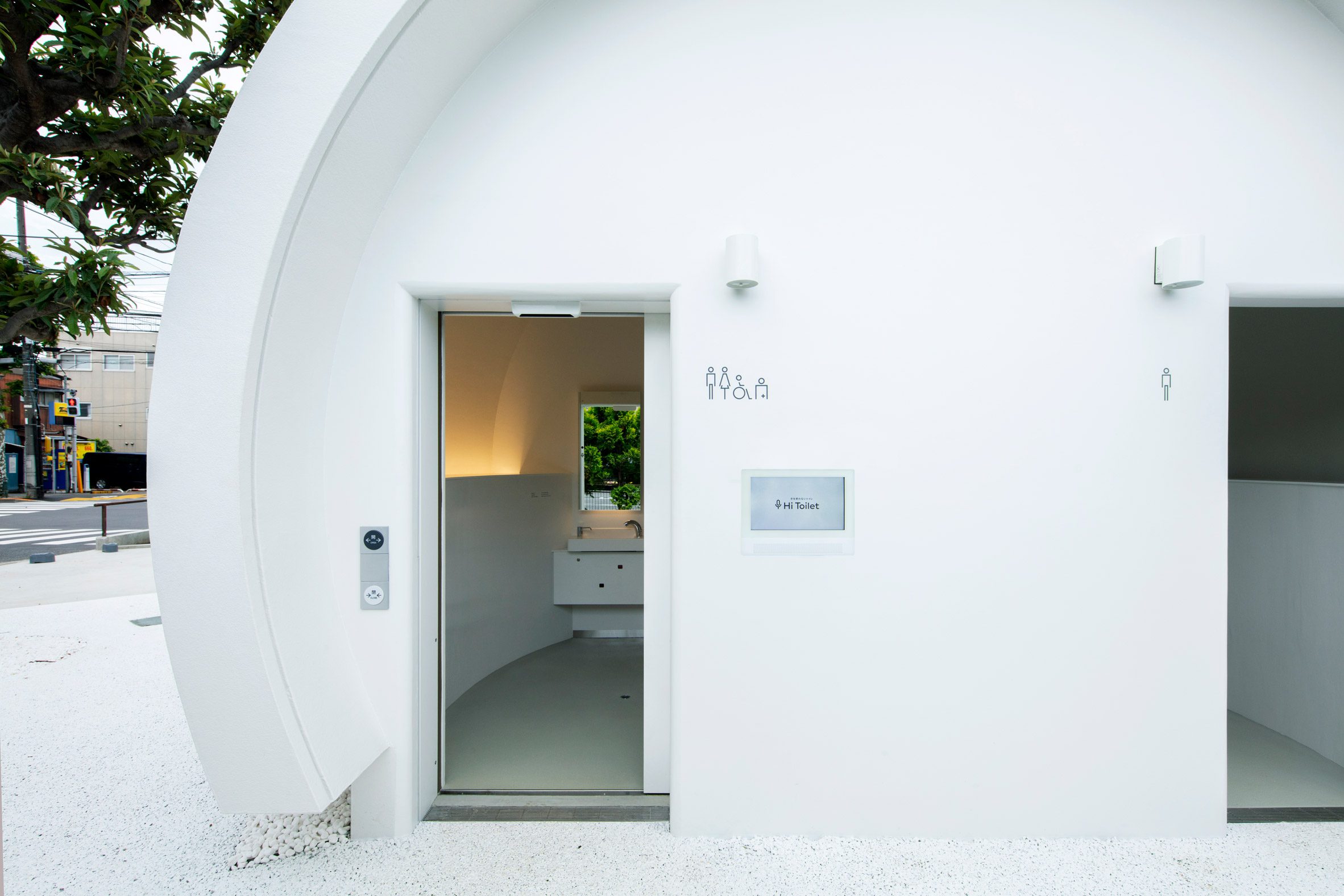
Voice-controlled public facility
Its functions are voice-controlled

The Hi Toilet also responds to increased hygiene concerns around the spread of infection through contact with surfaces, which were heightened during the Covid-19 pandemic.

"After three years of research, planning and designing, we came up with the concept of the voice-command toilet called Hi Toilet, where all commands were activated by voice," explained Sato.

"This idea has been in place long before the arrival of Covid-19, but  Covid accelerated the acceptance of this unique user experience in terms of 'toilets being contactless'."

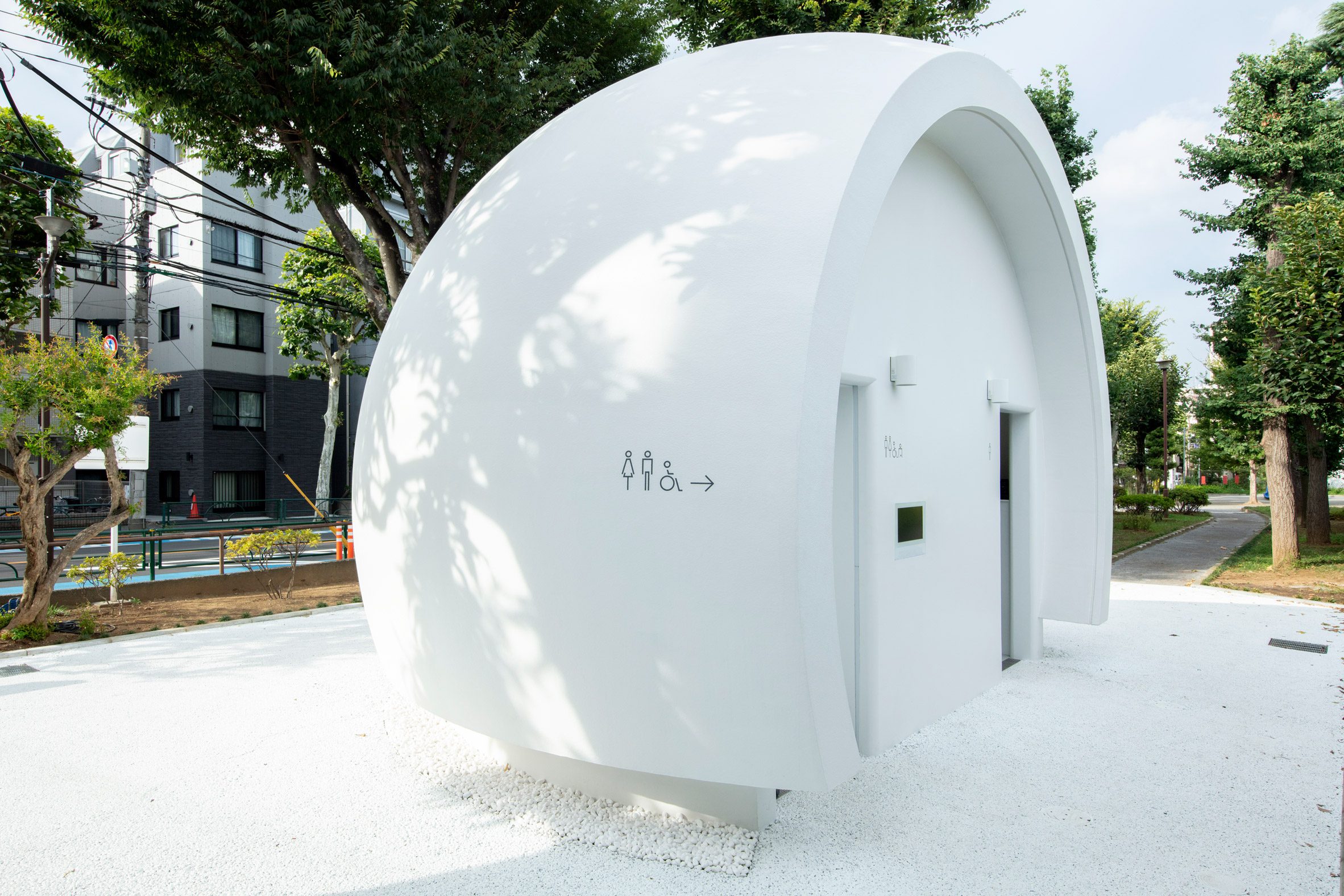
Hemispherical toilet
It was designed to be hygienic

An accessible toilet is housed in one side of the structure, with men's urinals located in the other.

The toilet building features a hemispherical form that was chosen to enhance internal airflow. A 24-hour ventilation system also helps to prevent odours from building up.

Users entering the toilet are greeted by an automated message explaining that they can use voice commands to operate the door, to flush the toilet, to turn the tap on or off, and to play music.

Japanese toilet manufacturer Toto provided one of its high-tech Washlet toilets that includes a cleaning water jet nozzle and automated lid for hands-free operation.

White public toilet in Tokyo
The accessible toilet contains an advanced toilet supplied by Toto

Kazoo Sato worked on the design with members of the TBWA\HAKUHODO Disruption Lab, which develops innovative ideas that involve brands in cultural projects.

The toilet is the twelfth in a series of seventeen public toilets planned as part of the Tokyo Toilet project, which has invited leading Japanese and international creatives to contribute unique designs.

Previous facilities already installed throughout Shibuya include Toyo Ito's mushroom-like toilet pods and a circular toilet by Tadao Ando that is located in a park surrounded by cherry trees.

The post Kazoo Sato designs hemispherical public toilet for Tokyo appeared first on Dezeen.


from Dezeen https://ift.tt/3gG7JBs

Ten home libraries that showcase their owners' book collections

Home libraries

For our latest Dezeen lookbook, we've selected ten compact home libraries that showcase smart, innovative ways to display book collections.

Well-filled bookshelves have been used to create welcoming interiors for all these projects, which include a Chicago penthouse with custom-made double-height bookshelves, a secret library in an English barn and a library in a loft with clever twisting shelves.

This is the latest roundup in our Dezeen Lookbooks series that provide visual inspiration for designers and design enthusiasts. Previous lookbooks include Japandi interiors, minimalist bedrooms and concrete living rooms.


Old Shed New House by Tonkin Liu

Barn conversion, UK, by Tonkin Liu

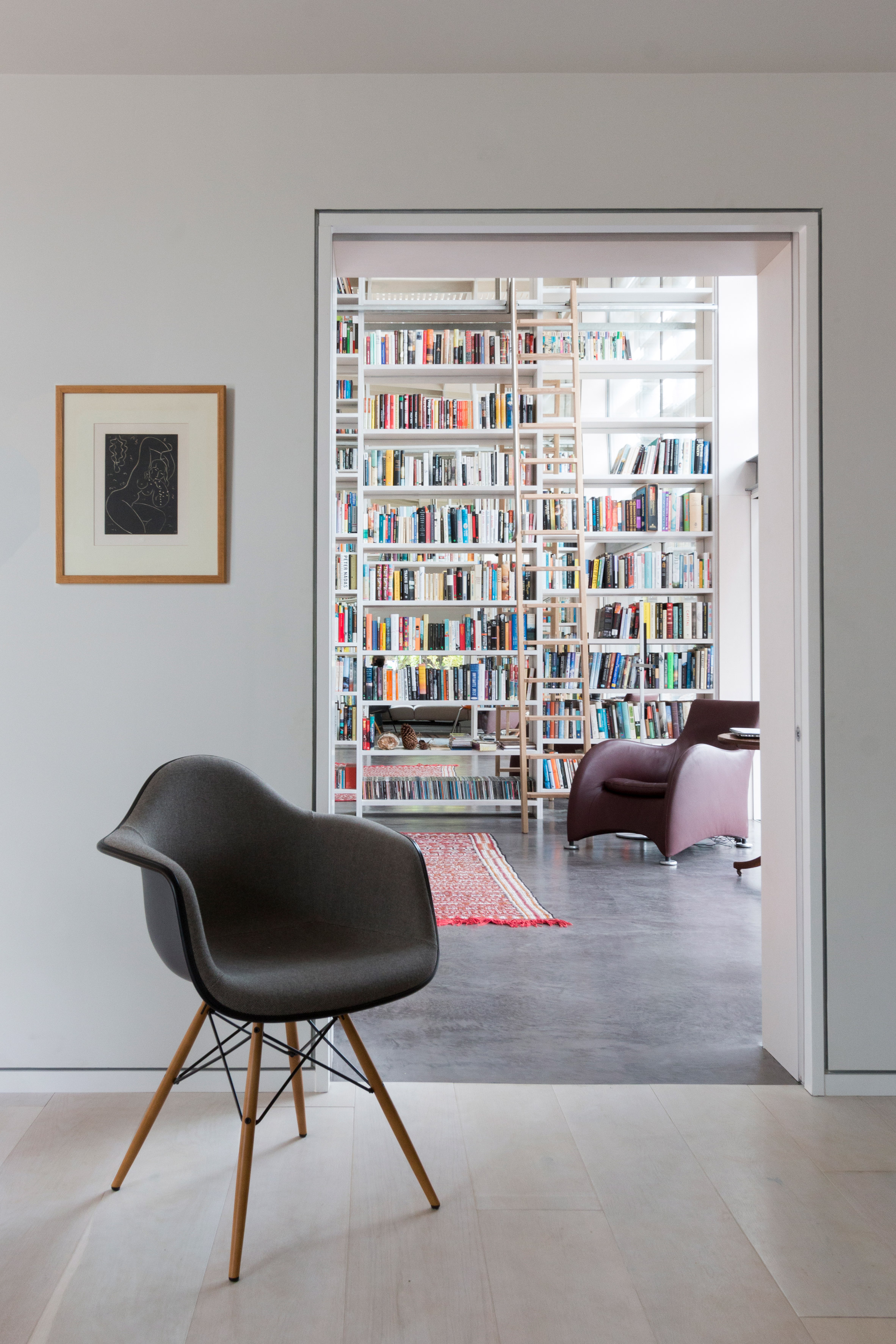
Architecture studio Tonkin Liu's conversion of an agricultural shed in Yorkshire includes a double-height library at the heart of the building.

White-painted open bookshelves are reached by a ladder and function as a wall between two of the rooms in the barn, which the studio transformed into a "container for books and art".

Find out more about the barn conversion ›


Berkley House, Canada, by RSAAW

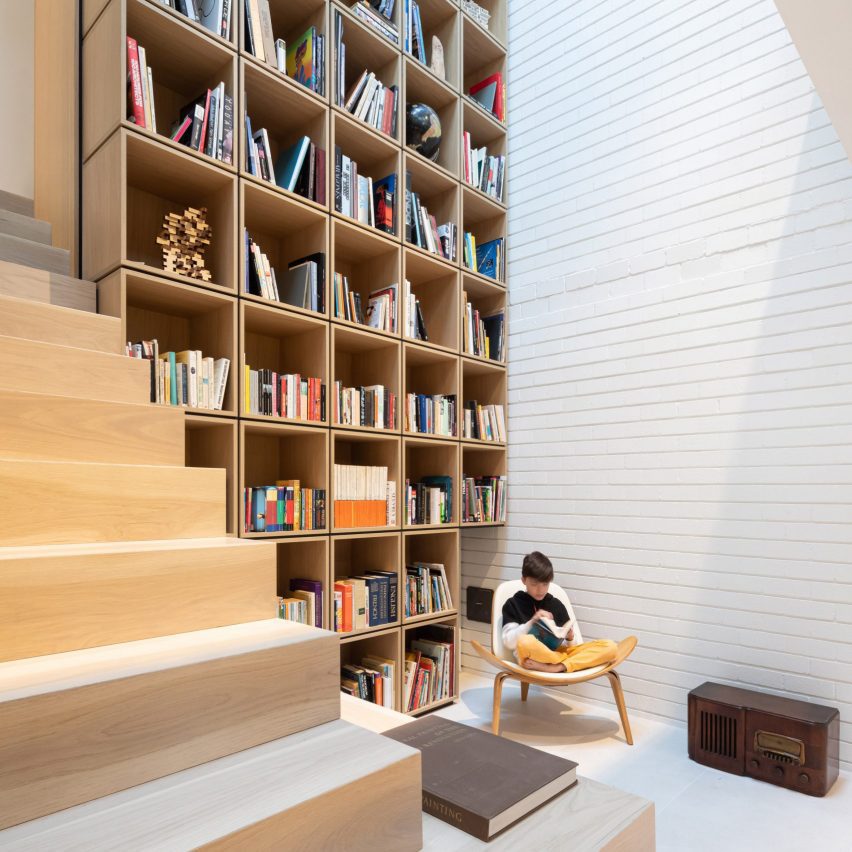
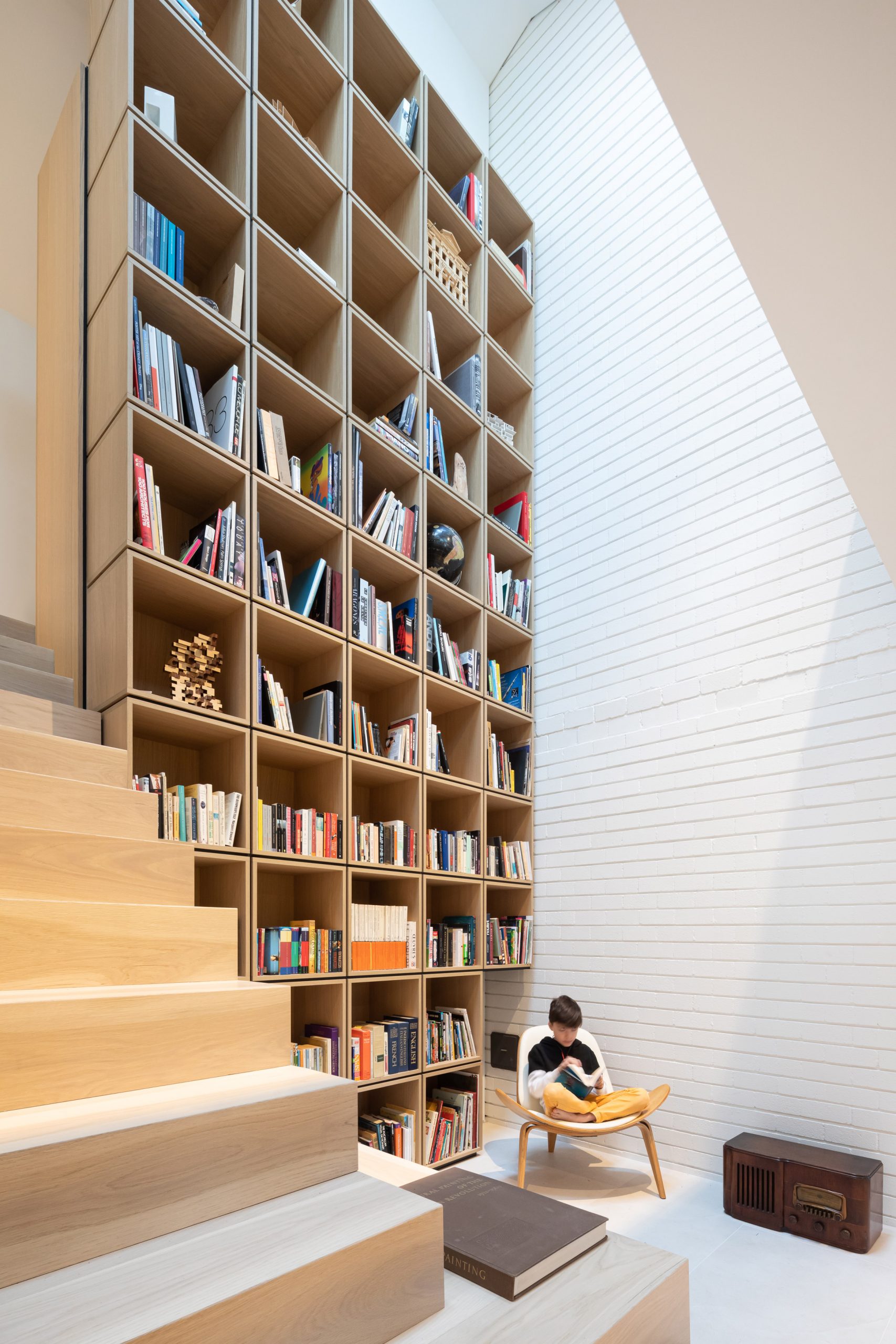
A spacious double-height library was created as part of the renovation of this Vancouver home.

Formed by stacked boxes of light wood, the wooden bookcase is built into the matching staircase that links the house's two levels together.

Find out more about Berkley House ›


Book shelf in living room of Residence for Two Collectors by Wheeler Kearns Architects

Residence for Two Collectors, US, by Wheeler Kearns Architects

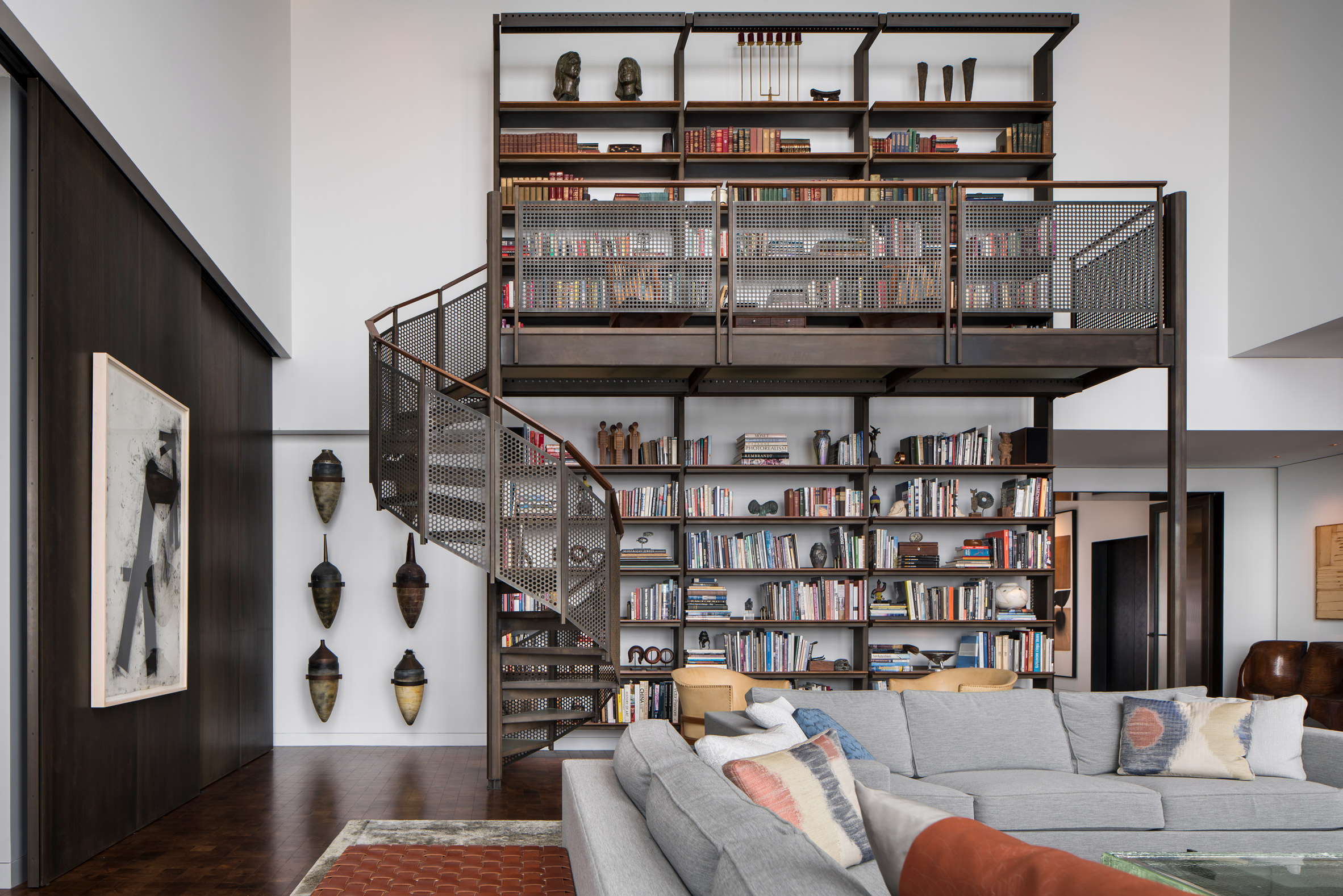
This art-filled Chicago penthouse features a custom-made loft and bookshelf that takes up almost a whole wall in the large living room.

The interior designers used patinated metals and perforated sheet steel for the interiors and the shelf itself, which also picks up the dark-brown hues of the end-grain walnut flooring in the apartment.

Find out more about Residence for Two Collectors ›


Home library in former barn

Old Blecher Farm, UK, by Studio Seilern

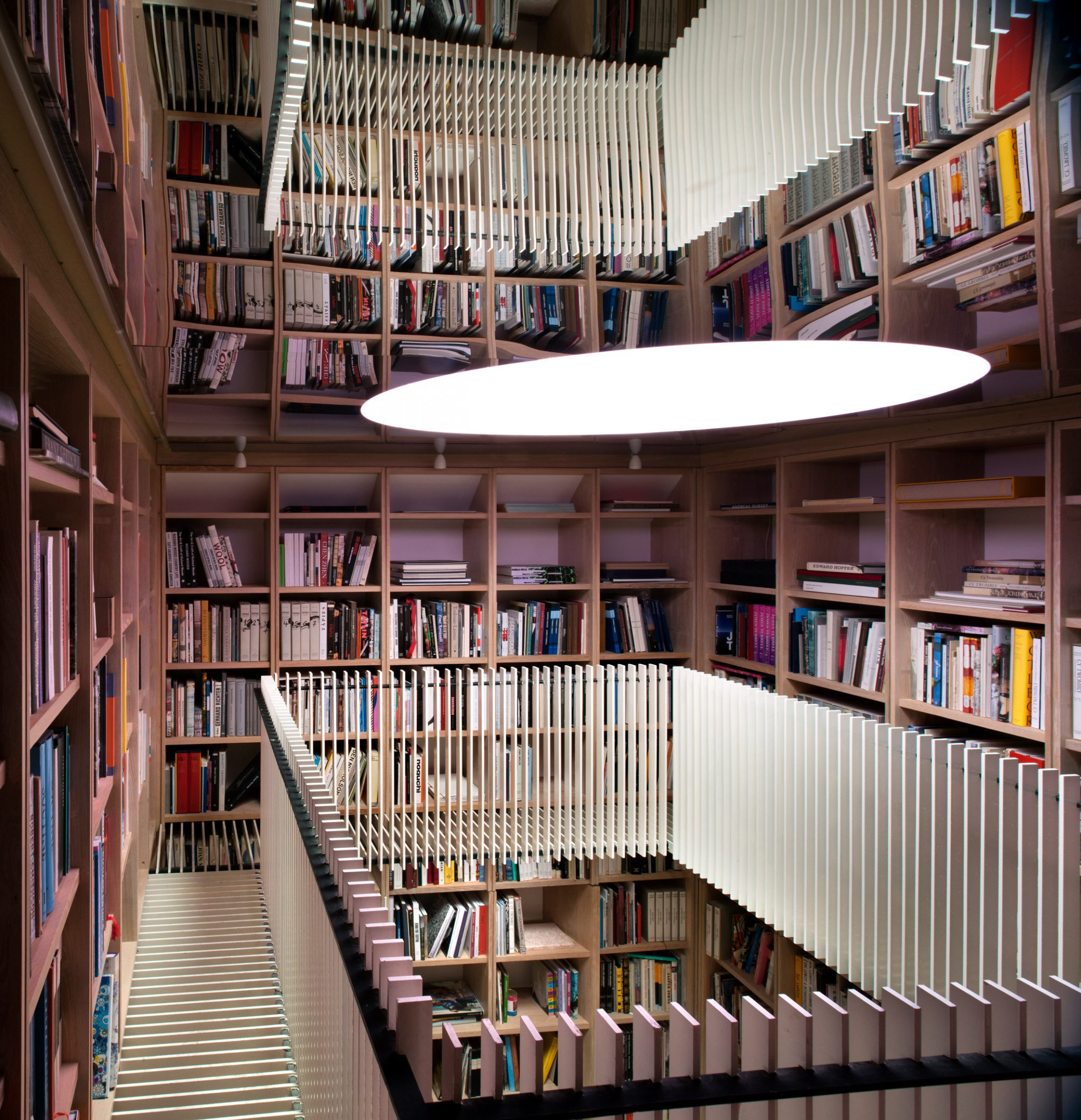
Studio Seilern created a secret library in this 17th-century barn conversion, hidden behind four doors with integrated bookcases. When closed, they create a cosy book-lined room.

The library also has a polished steel ceiling with an oculus in its centre, which gives the illusion of a double-height room.

Find out more about Old Blecher Farm ›


Sausalito Outlook by Feldman Architecture

Sausalito Outlook, US, by Feldman Architecture

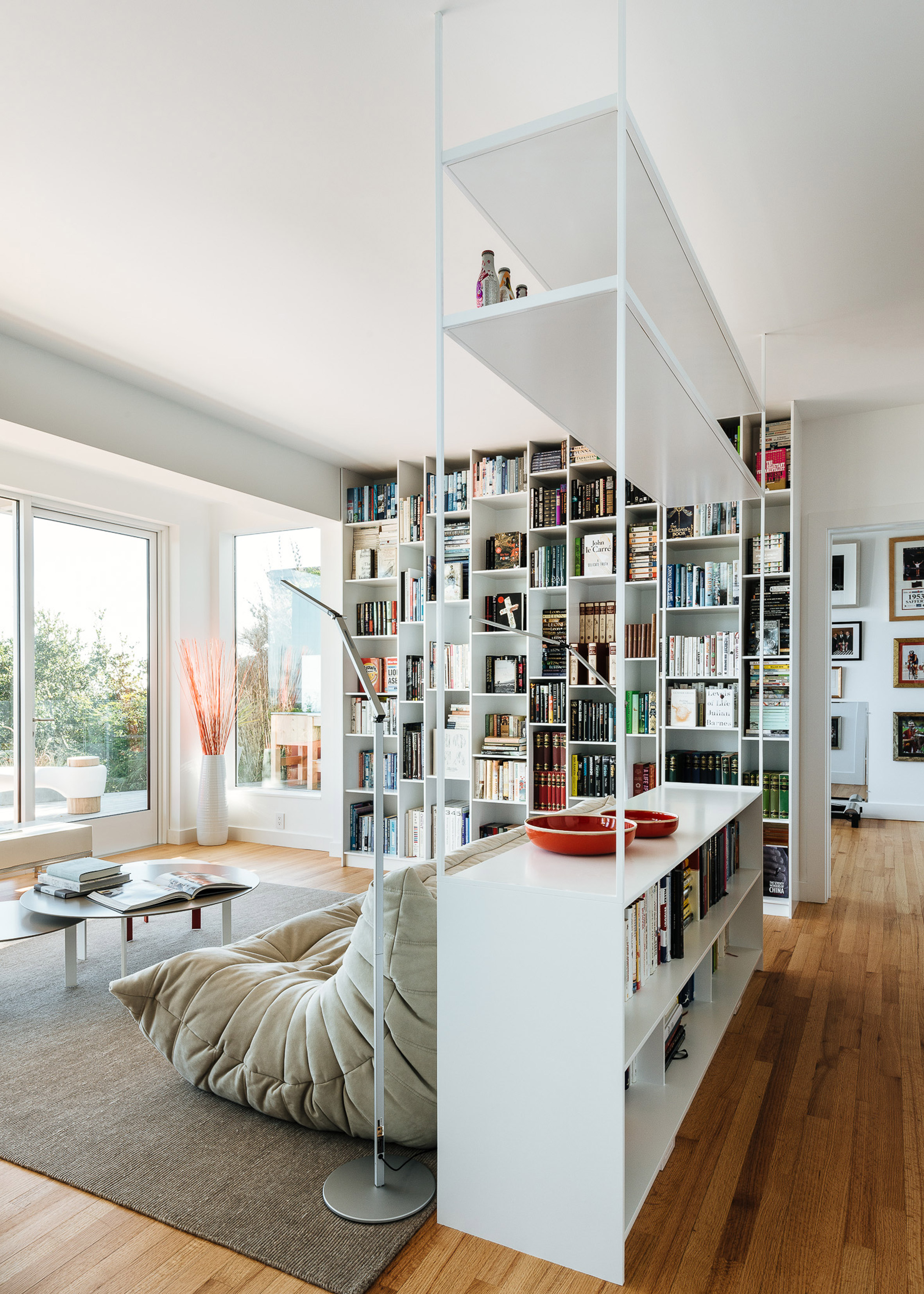
The retired couple living in this home in Sausalito, California, has extensive collections of albums, books and soda bottles. Feldman Architecture replaced a spare bedroom in the house with an open-plan library and sitting room to show them off.

Here, the book collection is housed on floor-to-ceiling shelving, with asymmetrical compartments for objects of different sizes. Sliding white panels make it easy to conceal or reveal elements as needed.

Find out more about Sausalito Outlook ›


Home library

Alfred Street Residence, Australia, by Studio Four

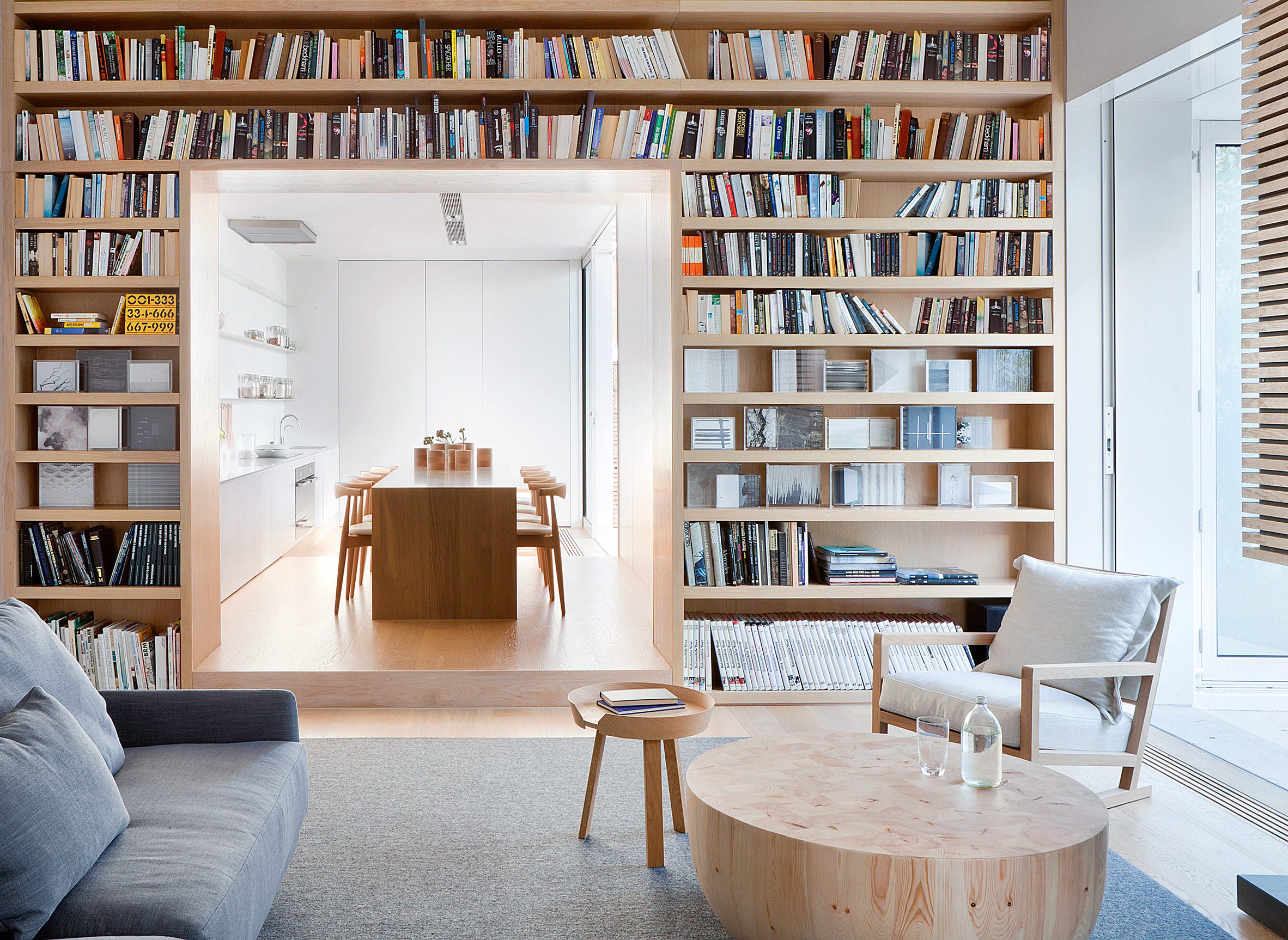
This Melbourne home features an abundance of built-in furniture made from pale American oak. In the library space, floor-to-ceiling shelving displays the owners' book collection.

Matching wooden furniture creates a cohesive and elegant interior design that is perfect for relaxed reading.

Find out more about Alfred Street Residence ›


Publisher's Loft by Buro Koray Duman

Publishers Loft, US, by Buro Koray Duman

The couple who live in this loft in Brooklyn have thousands of books. To fit them all into the flat, Buro Koray Duman designed a library that wraps the perimeter of the entire apartment with custom shelving at a 45-degree angle.

"The angle allows the book collection to be viewed from one direction and in the other, hides the collection," founder Koray Duman said.

Find out more about Publishers Loft ›


6House by Zooco Estudio

House 6, Spain, by Zooco Estudio

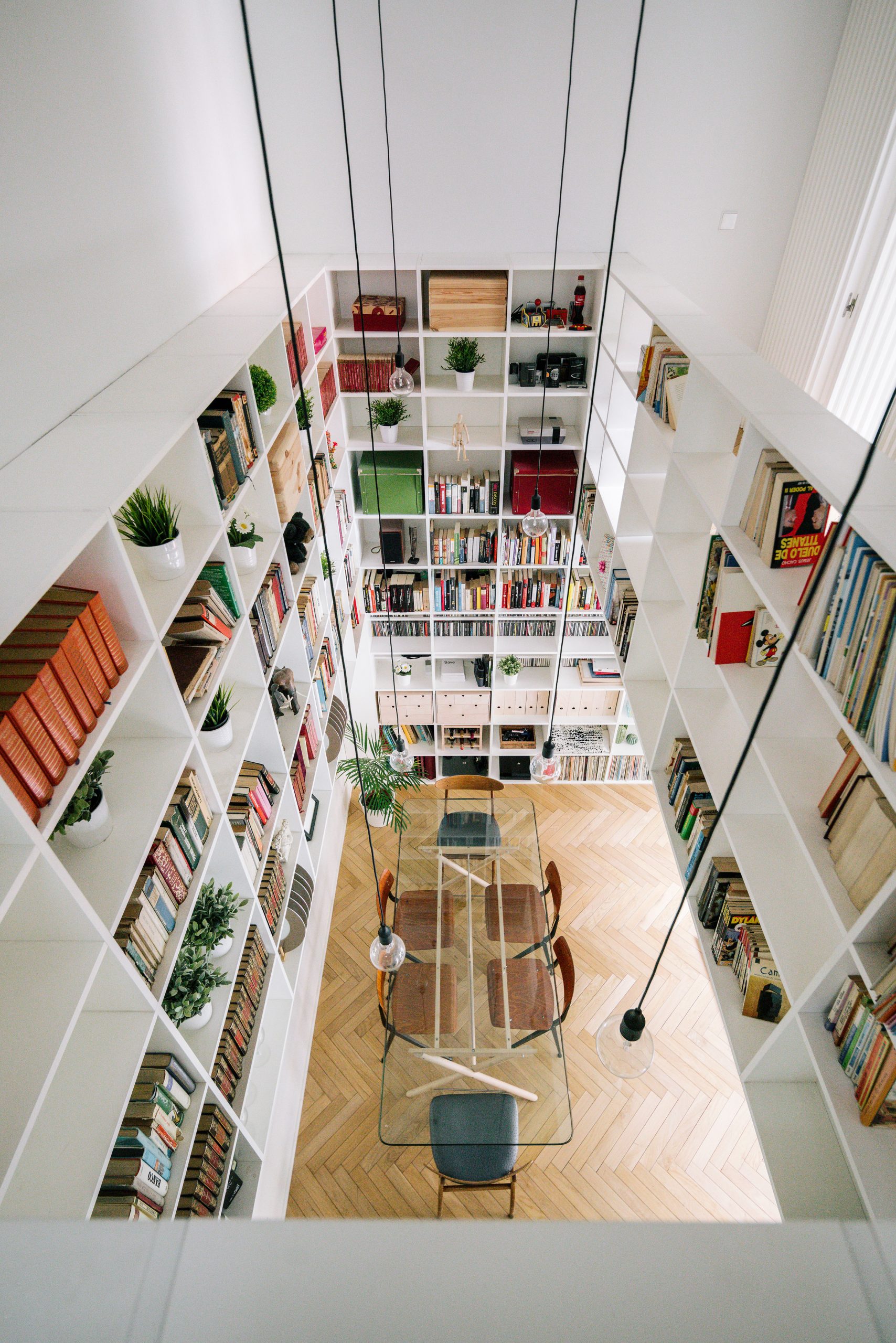
Zooco Estudio covered the walls of this Madrid residence with bookshelves when renovating the single-family home. The white shelving unit extends over two floors and wraps around the walls of the living area.

"This way we integrate aesthetic and functionality in one single element," the studio explained.

Find out more about House 6 ›


Study lined with wood in Kew Residence by John Wardle Architects in Melbourne, Australia

Kew Residence, Australia, by John Wardle

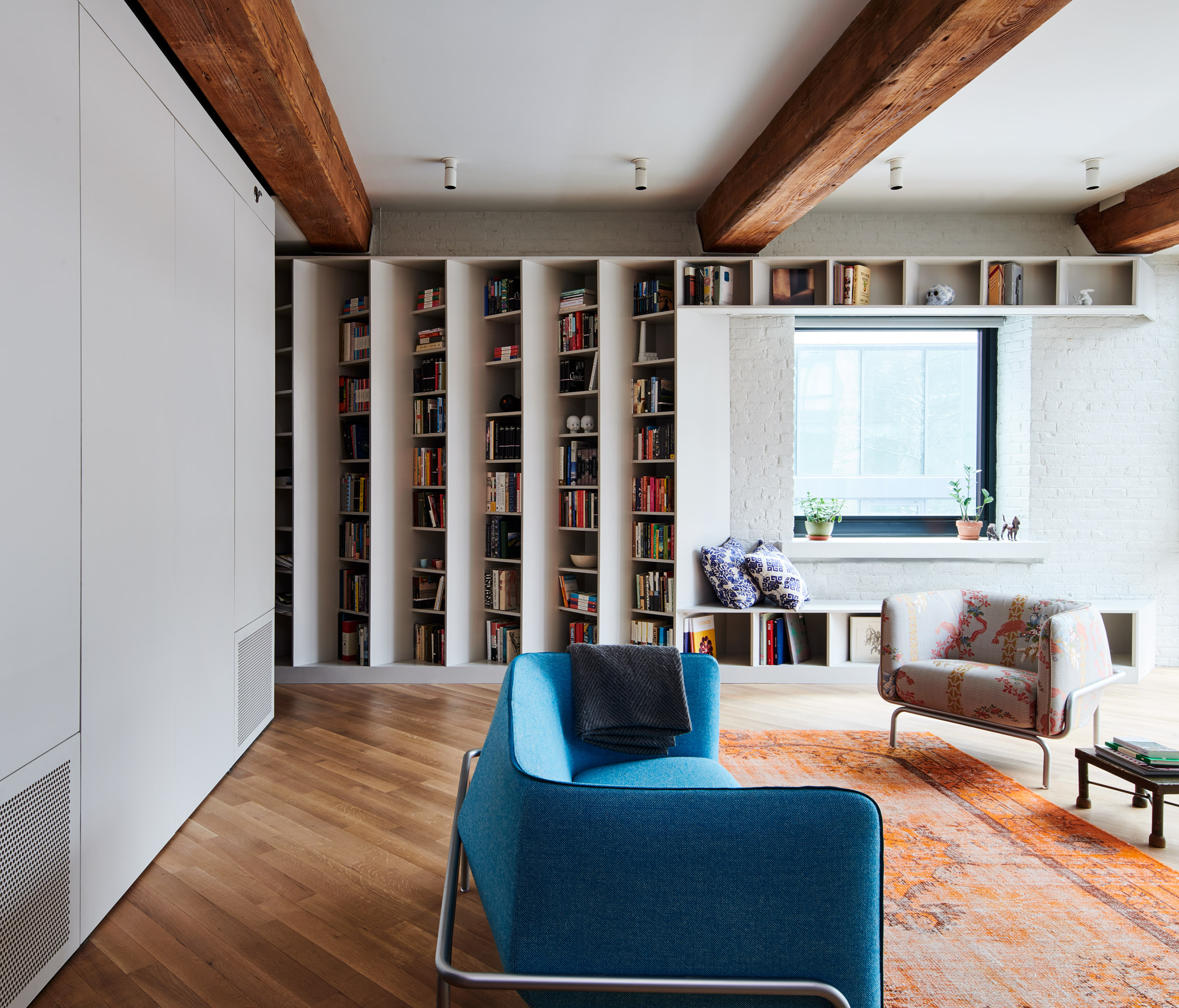
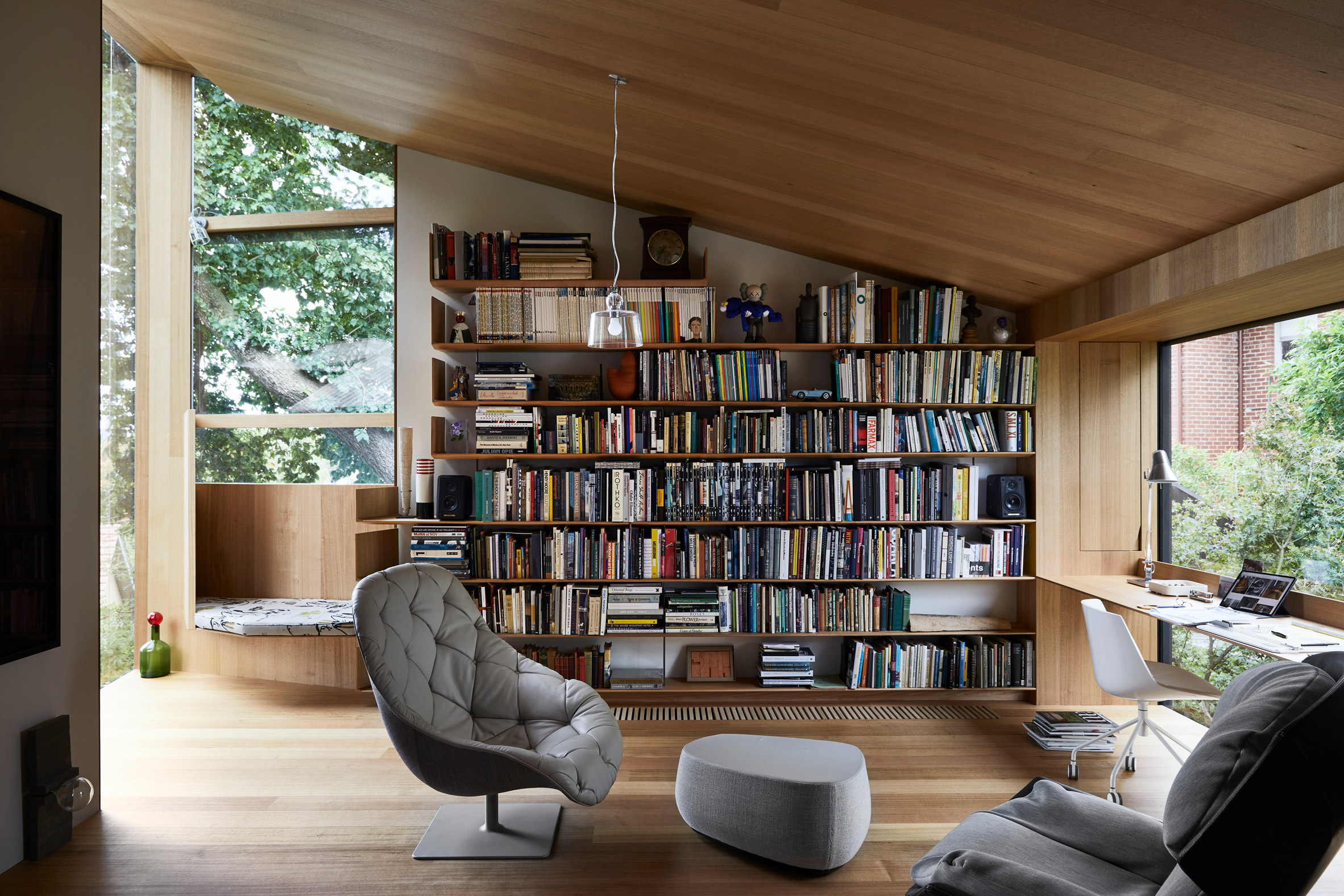
Architect John Wardle's home in Melbourne has a cosy library space where the family's collection of books and art are on display. Wooden bookshelves match the floor and the reading nook, which has a calming view out of a floor-to-ceiling window.

Comfortable chairs and a built-in desk make for a well-designed, beautiful library and workspace.

Find out more about Kew Residence ›


Library House Japan

Library House, Japan, by Shinichi Ogawa & Associates

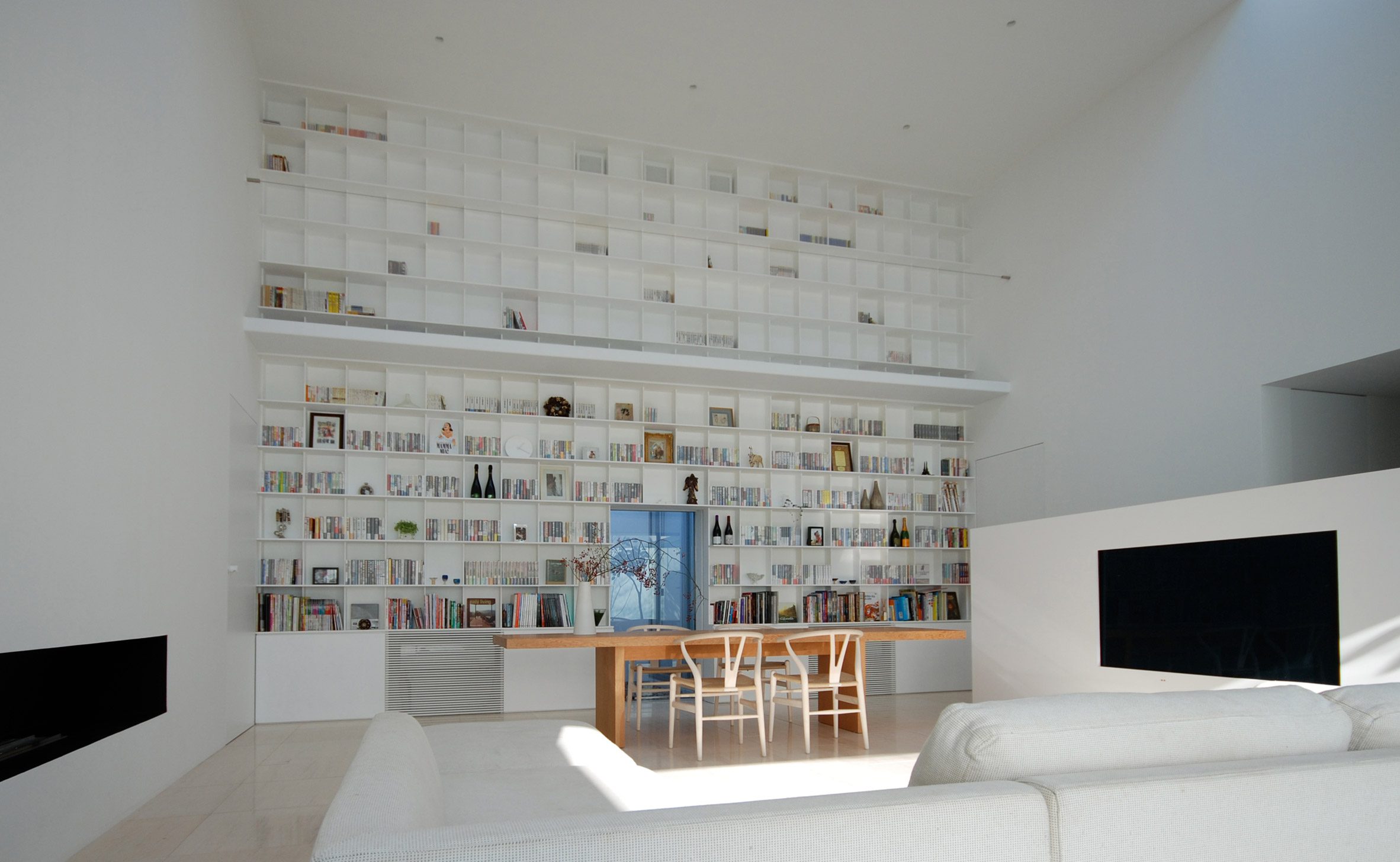
The aptly named Library House in Japan has a stark, minimalist interior broken up by the colourful books and artworks in its gigantic floor-to-ceiling bookshelf.

"It is a house for a client who is a great reader," says Shinichi Ogawa & Associates. "He can live enjoying his reading time in this quiet but rich space."

Find out more about Library House ›


This is the latest in our series of lookbooks providing curated visual inspiration from Dezeen's image archive. For more inspiration see previous lookbooks showcasing Mediterranean-style tiling, minimalist bedrooms and concrete living rooms.

The post Ten home libraries that showcase their owners' book collections appeared first on Dezeen.


from Dezeen https://ift.tt/3mNszTz

Saturday, 28 August 2021

Fettle designs Schwan Locke Hotel in homage to early German modernism

Schwan Locke hotel Munich by Fettle

A proto-Bauhaus association that counted architects Walter Gropius and Mies van der Rohe among its members informed this nostalgic hotel interior in Munich, designed by Fettle for aparthotel chain Locke.

UK studio Fettle's design for the Schwan Locke hotel pays homage to the early modernist principles of the Deutsche Werkbund – an association of architects, designers and craftsmen that was founded in Munich in 1907 and preceded the Bauhaus school, which Gropius went on to found.

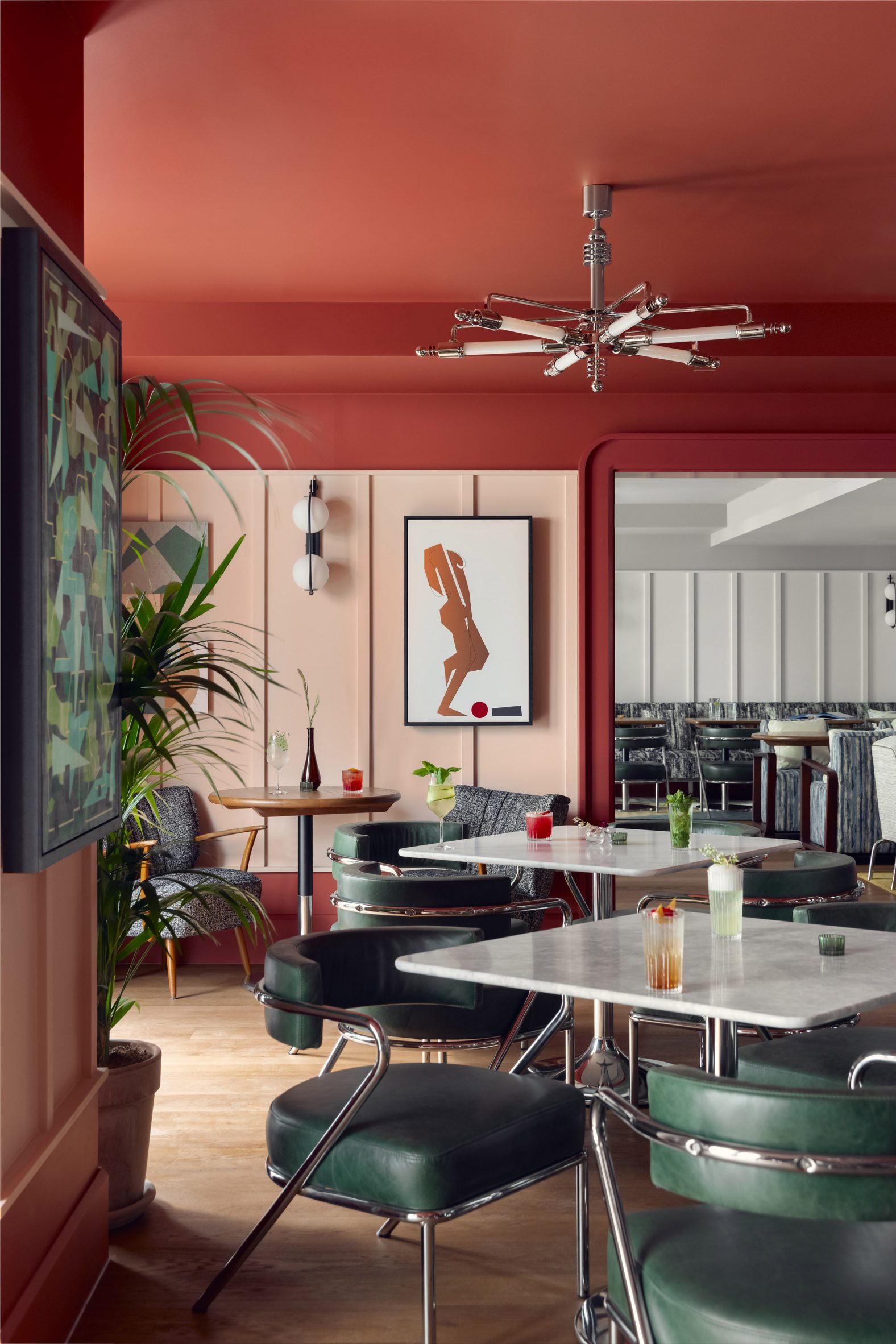
Restaurant of Schwan Locke hotel with red walls, green leather chairs and marble tables
The skirting and architraves in Schwan Locke's communal areas are painted a deep red (top and above)

"The result is an interpretation of modernist principles rather than a pastiche of this iconic style," explained Fettle, which is led by Andy Goodwin and Tom Parker.

"The Werkbund's aim was to combine mass production with traditional craft to make objects that were functional and featured little ornamentation but were also aesthetically pleasing and available to the masses."

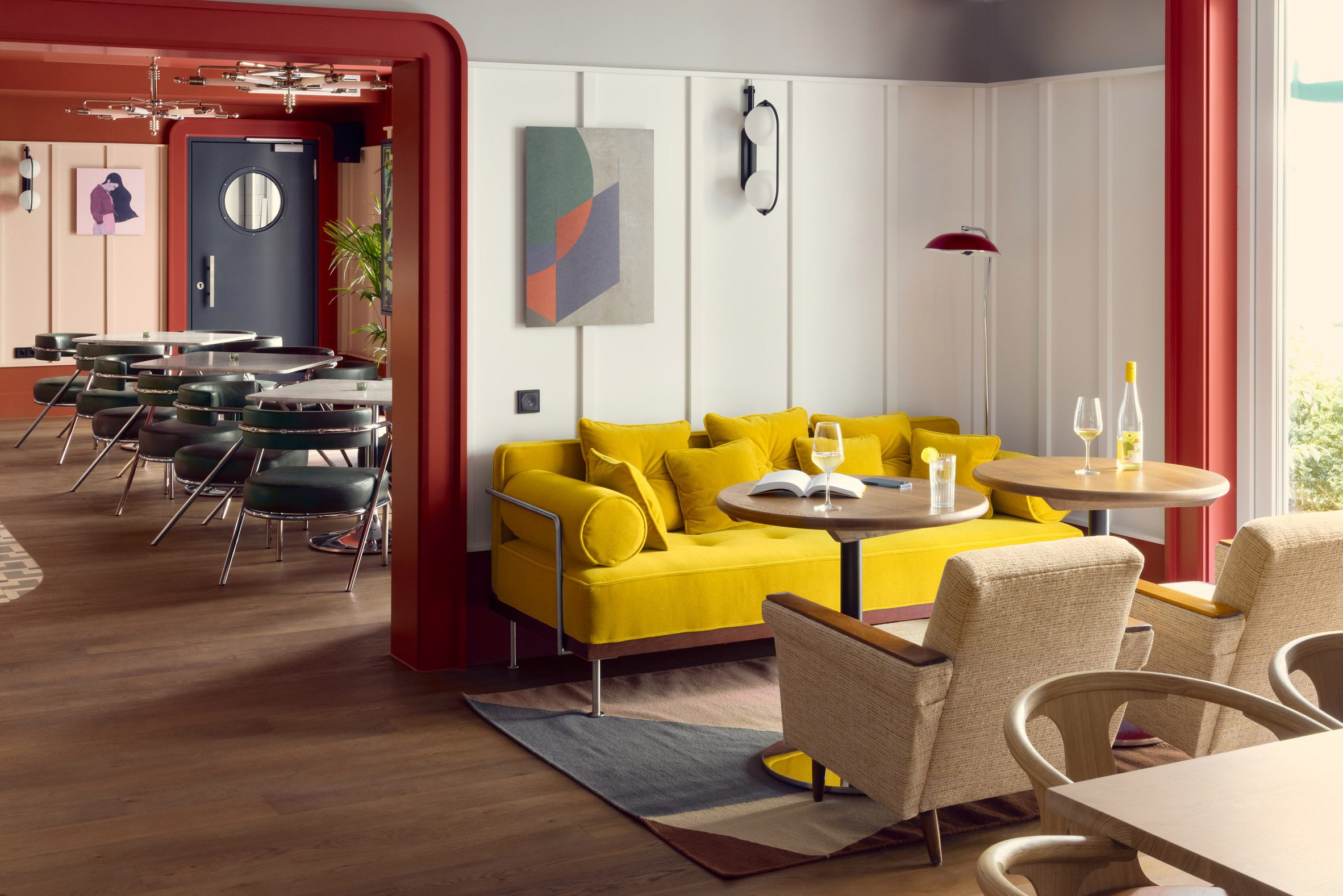
Yellow sofa in hotel interior by Fettle against white wall panels
A bright yellow sofa injects a sense of fun into the scheme

The apartment hotel, which is Locke's first outpost in Germany, has 151 apartments alongside a lobby, coffee shop, guest lounge, bar, courtyard and gym.

For its public areas and guestrooms, the studio chose a "colourful yet relaxing" palette of muted reds, greens, yellows and blues that were popular during that era.

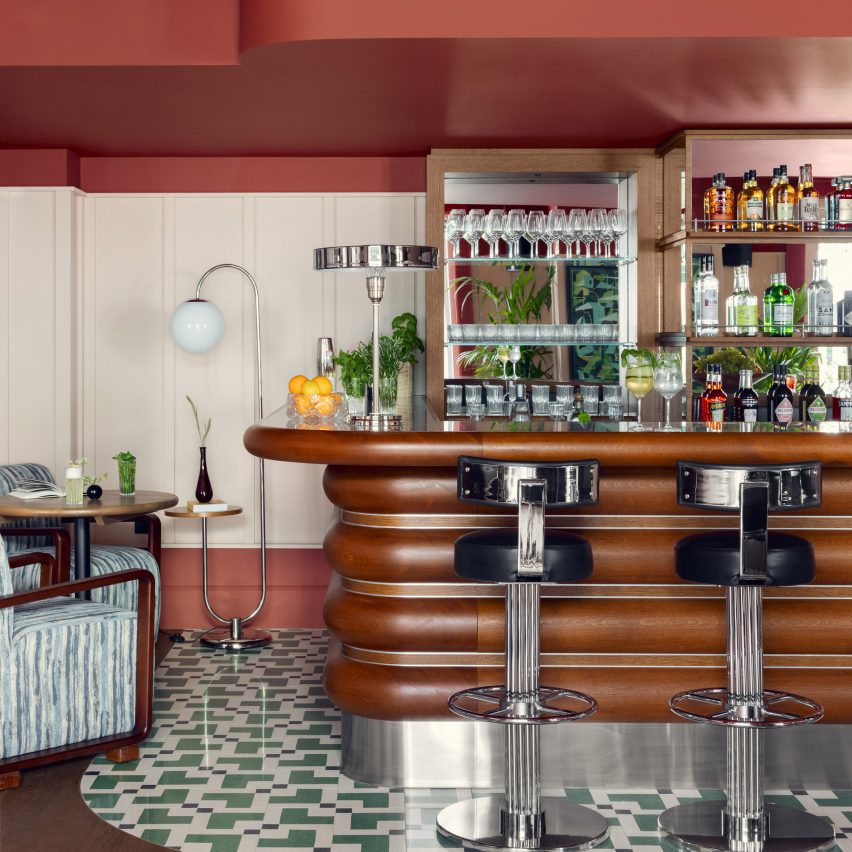
This optimistic palette is paired with light timbers, raw plaster, chrome and steel, contrasted with tactile mohair upholstery.

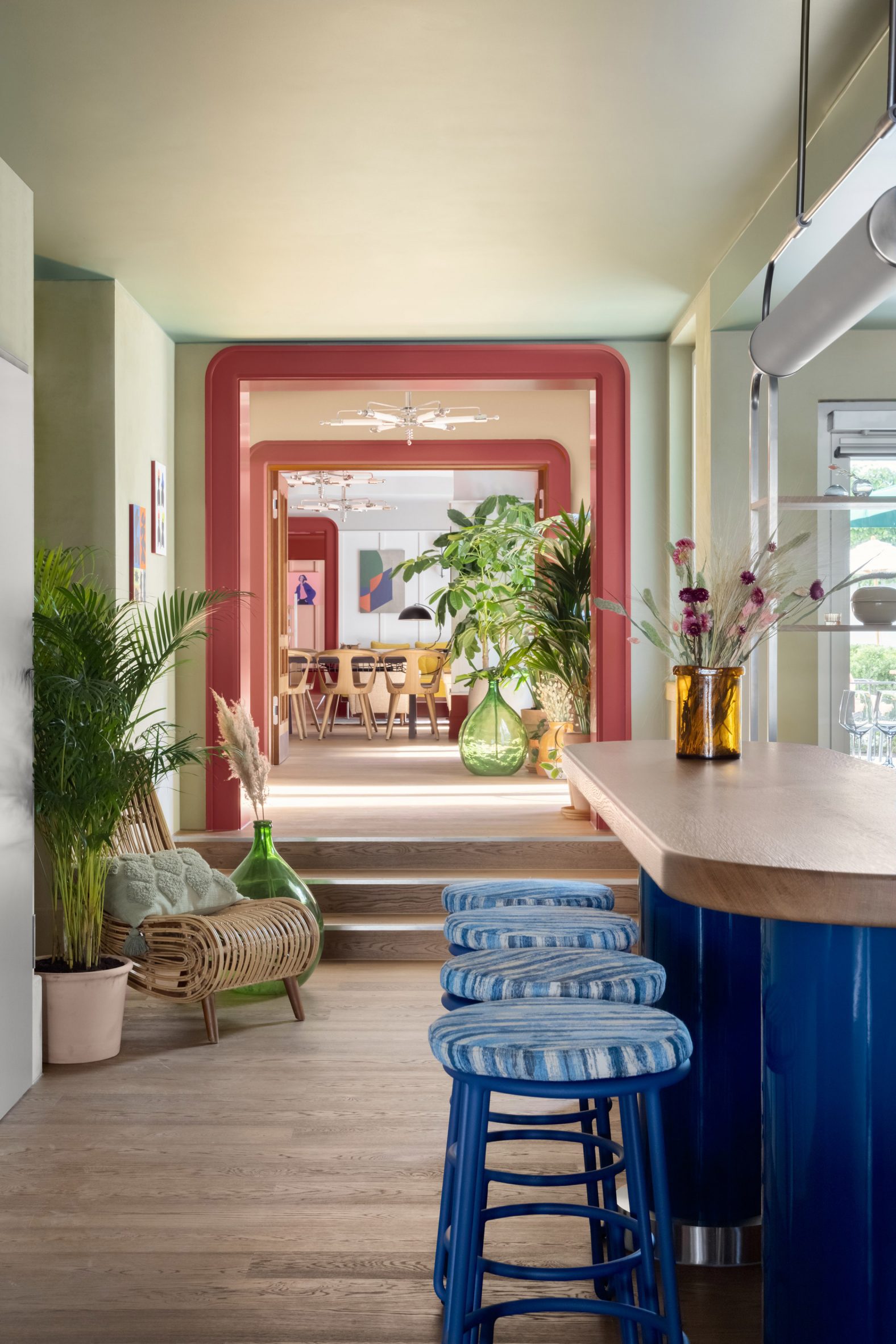
Red arches in Schwan Locke hotel with a blue bar in the front
Bright colours are paired with rough, natural textures to create a sense of balance

"We were keen to inject colour into the various rooms of the building to add a sense of fun to the scheme," Fettle told Dezeen.

"Our colour palette inspiration came from the interiors of Mies van der Rohe's Weissenhof Estate, constructed in 1927 for the Deutscher Werkbund Stuttgart exhibition, as well as from posters and print material that advertised the exhibition and similar events."

Wood and marble bar in hotel interior by Fettle
A bar with a glossy blue base is paired with matching stools

Vibrant portraits of women involved in the Werkbund movement by local artist Veronika Grenzebach are displayed on the walls of the hotel's public spaces and guestrooms.

Among them are Gunta Stölzl, who later became the Bauhaus's head of weaving, and architect and furniture designer Lily Reich, who designed the iconic Barcelona Chair together with van der Rohe.

MIrrored walls and black and white patterned floors in Schwan Locke hotel
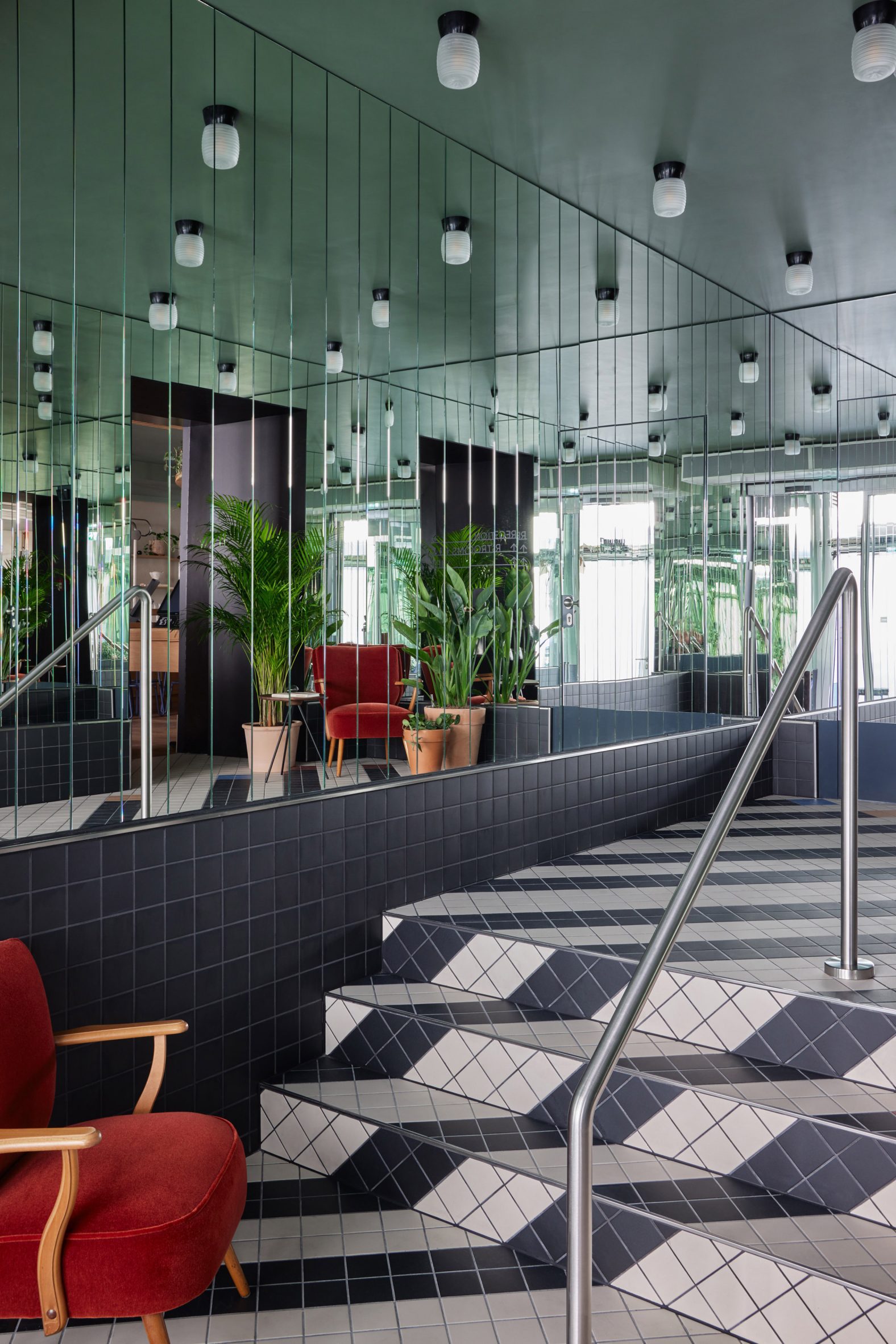
The walls of the lobby are finished with mirrored panels

In the lobby, mirrored panels are applied to the walls and paired with a bold-patterned floor. The scheme nods to details found in the 1914 Werkbund exhibition in Cologne, which featured modernist architecture designed by the likes of Gropius.

The ceiling is painted green and dotted with a series of bulkhead lights, which are reflected in the surrounding mirrors to create an effect reminiscent of Yayoi Kusama's Infinity Mirror Rooms.

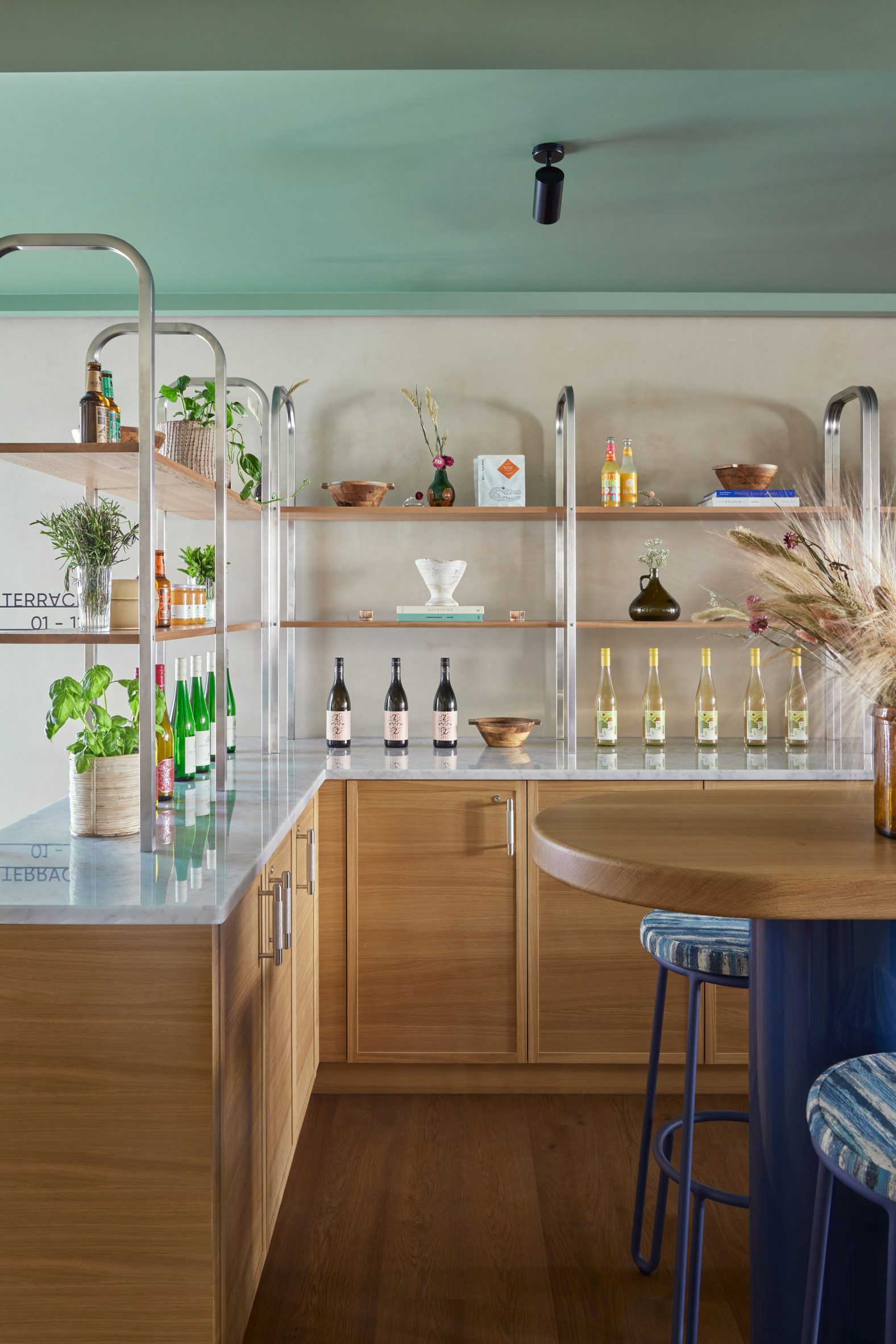
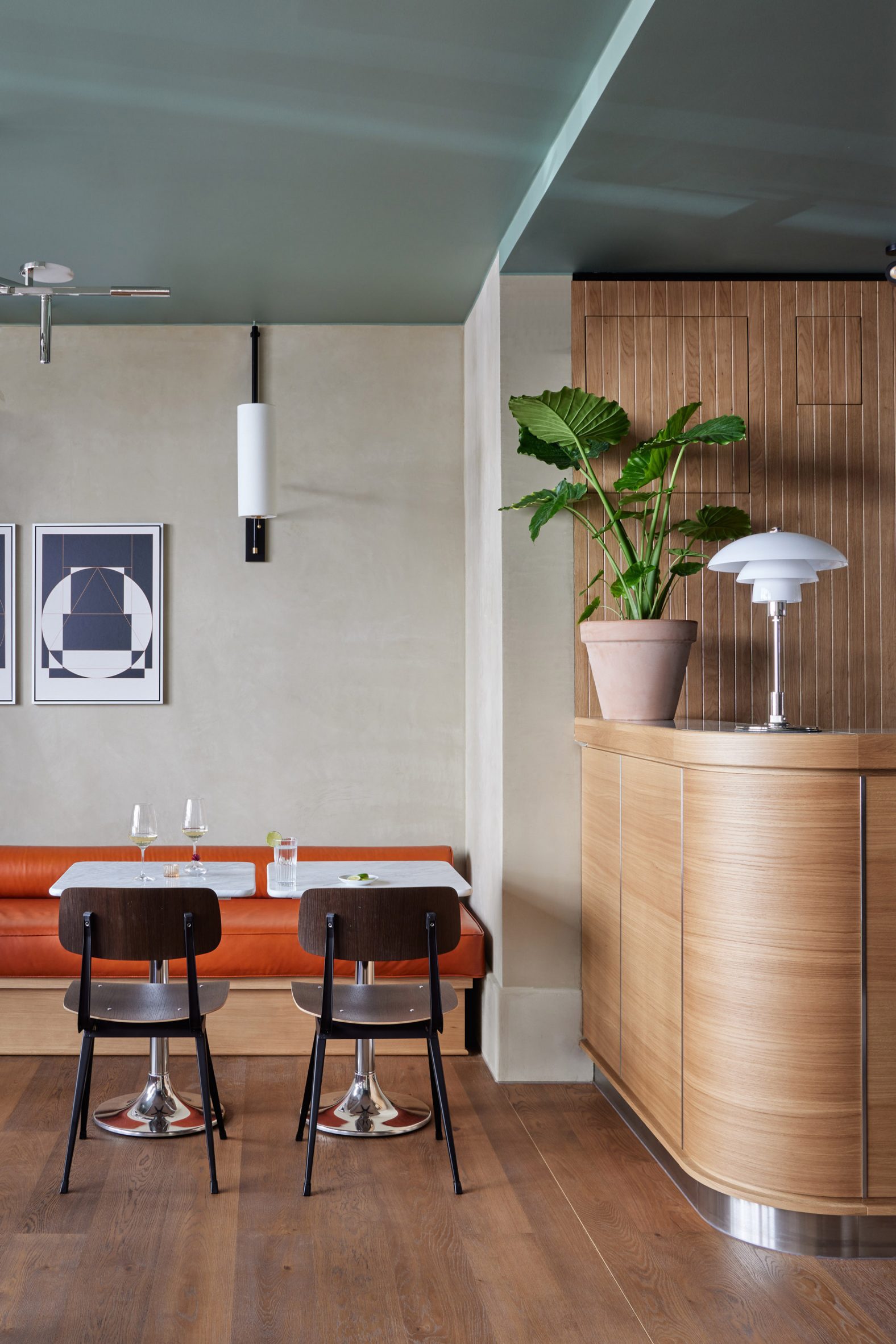
Just off the lobby, a cafe features raw plaster walls, a high-gloss green ceiling and off-white hexagonal mosaic tiles.

Its focal point is a white marble and oak counter with rattan infill panels, reminiscent of the functionalist approach favoured by the Werkbund. The counter is surrounded by timber chairs, marble-topped tables and banquette seating with burnt orange upholstery.

Curved wooden bar and bench seating upholsterd in orange leather in hotel interior by Fettle
Banquette seating with burnt orange upholstery feature in the cafe

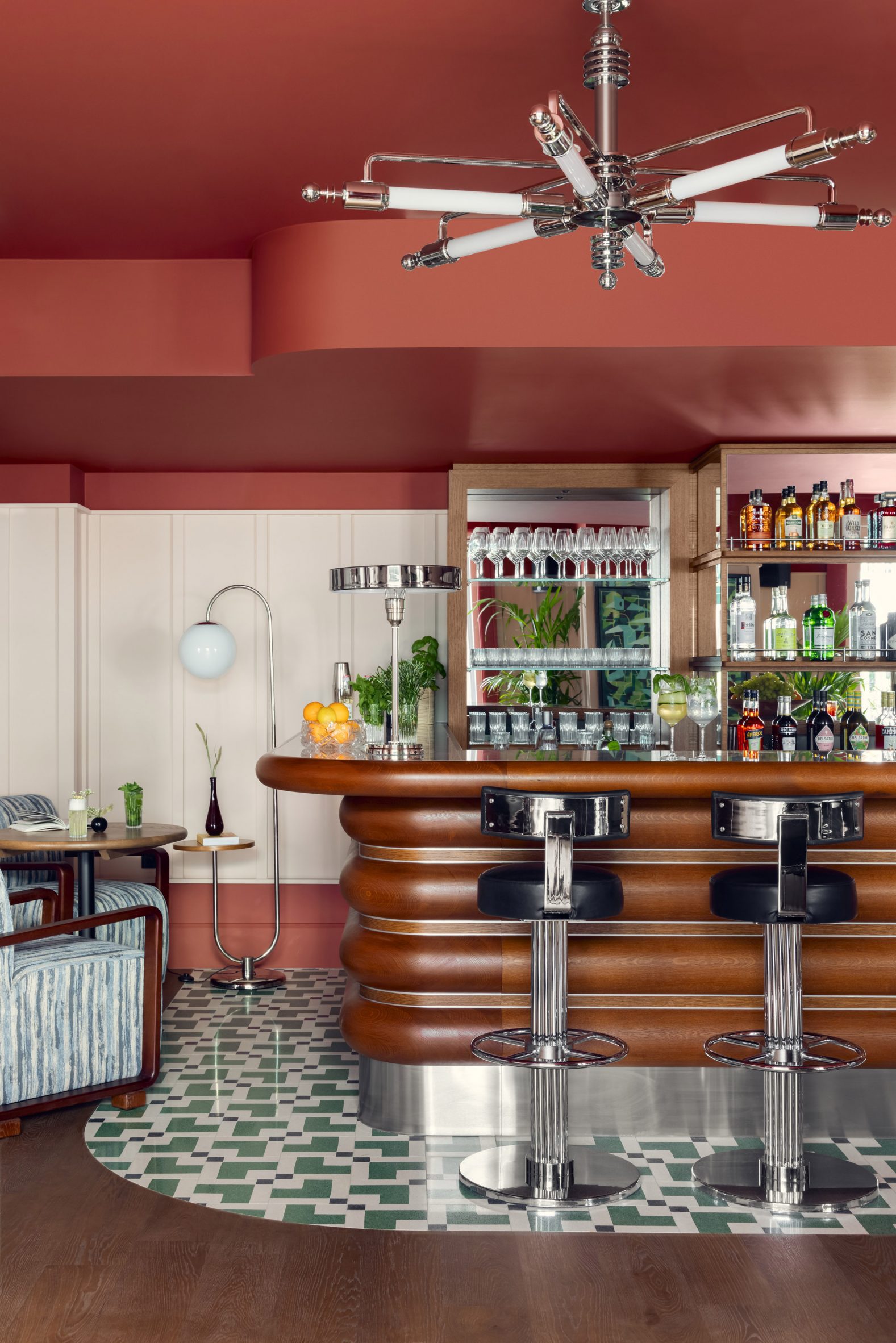
A larder positioned to the left of the cafe leads to a bar and lounge, furnished with a large co-working table in natural oak and an array of lounge furniture upholstered in colourful leather and patterned fabrics.

A curved bar with a white marble top, ribbed-timber base and chrome gantry provides a focal point for the space, fronted by custom-designed bar stools with matching fluted bases.

Curved wooden bar and patterned floor in Schwan Locke hotel
A curved bar acts as the focal point of the lounge

The skirting and architraves in the bar and lounge are painted in a deep red that contrasts with the simple off-white wall panels.

A pair of double doors lead out from the lounge and bar to a large central courtyard, linking the interior and exterior of the hotel.

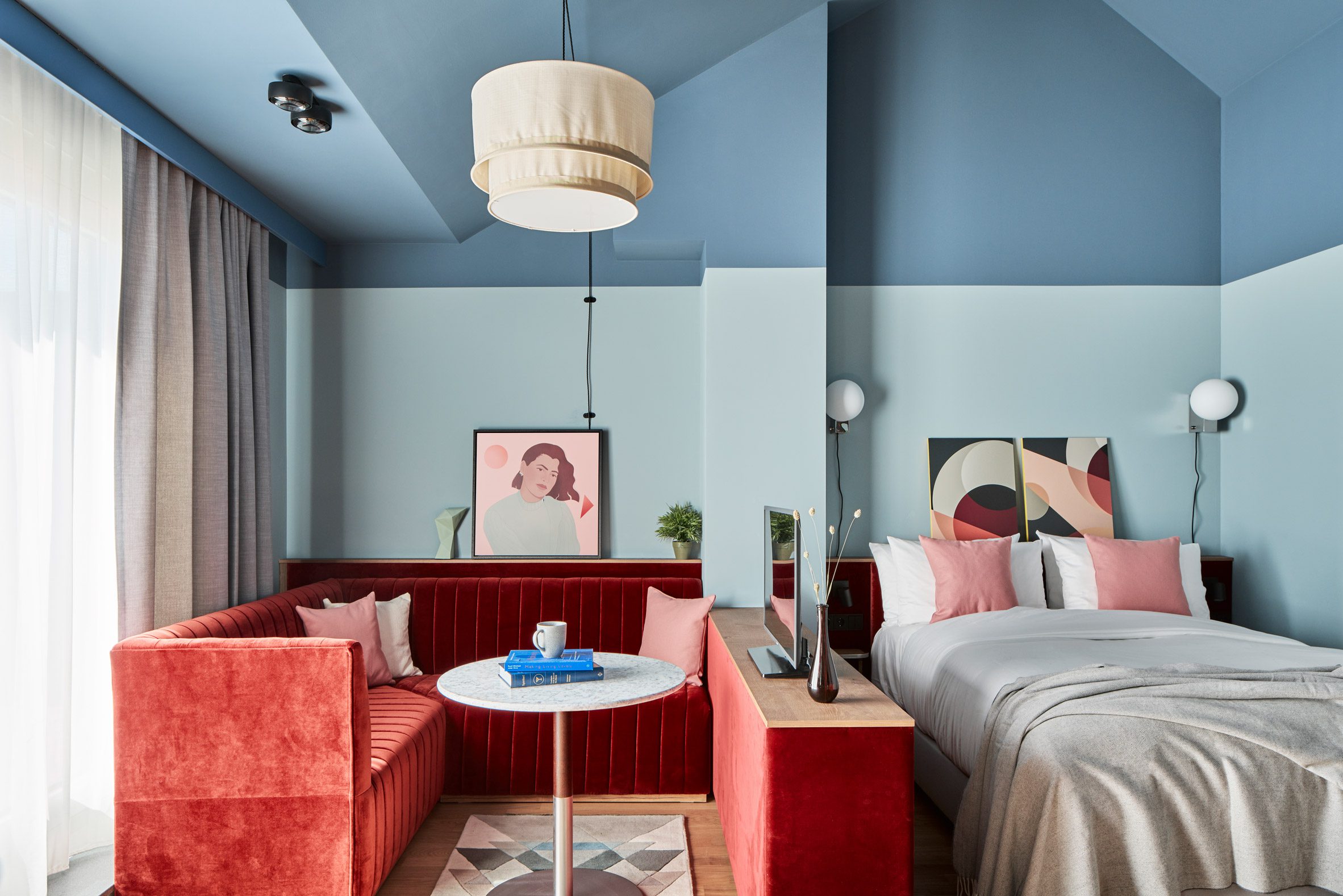
Guest apartment interior by Fettle with two-tone blue walls and red velvet seating nook
Bedrooms are painted in a two-tone finish. Photo is by Lennart Wiedemuth

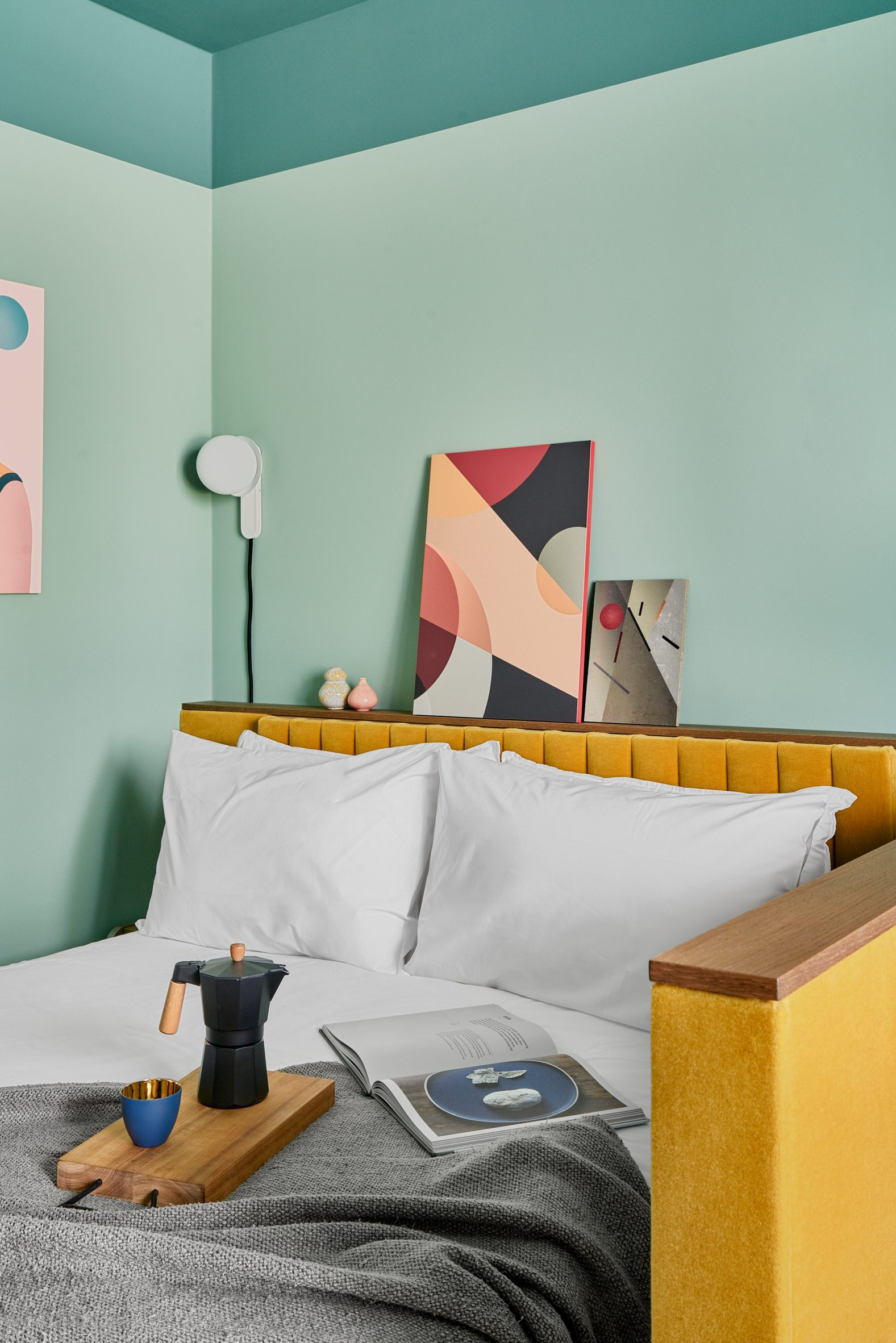
The hotel's guest apartments are decorated with a bold two-tone finish in either green or blue, which contrasts with the upholstery of the mohair headboard, fluted sofa and bespoke chrome lounge furniture.

All apartments feature an integrated kitchen in a corresponding paint finish that sits within the entrance and a low-level shelf to display artwork and plants.

Yellow upholstered bed in guest bedroom of Schwan Locke hotel
Pops of yellow also feature in the guest apartments. Photo is by Lennart Wiedemuth

Since the opening of its first property in London in 2016, Locke has expanded to include sites across the UK, including a converted cotton mill in Manchester and an 18th-century Georgian terraced house in Edinburgh with "sophisticatedly tropical" interiors.

Photography is by Edmund Dabney unless otherwise stated.

The post Fettle designs Schwan Locke Hotel in homage to early German modernism appeared first on Dezeen.


from Dezeen https://ift.tt/3sWhMHA