Saturday, 9 May 2020

Walden exhibition at Schloss Hollenegg explores "our dysfunctional relationship with nature" says curator Alice Stori Liechtenstein

Walden by Schloss Hollenegg for VDF

Today VDF has teamed up with Schloss Hollenegg for the virtual opening of an exhibition exploring the wilder side of nature, including a live tour of the historic castle later today.

Taking place in the rooms of Schloss Hollenegg castle in Austria, Walden has been curated by Alice Stori Liechtenstein to encourage people to stop regarding themselves as "masters of the earth" and exploiting nature as a resource.

The castle, which dates back to 1163, is home to Schloss Hollenegg for Design, a cultural programme established by Stori Liechtenstein in 2015.

The Walden show was due to open today but the public opening has been cancelled due to coronavirus. Instead, it is opening as part of VDF with a virtual tour of the castle by Liechtenstein on Dezeen's Instagram.
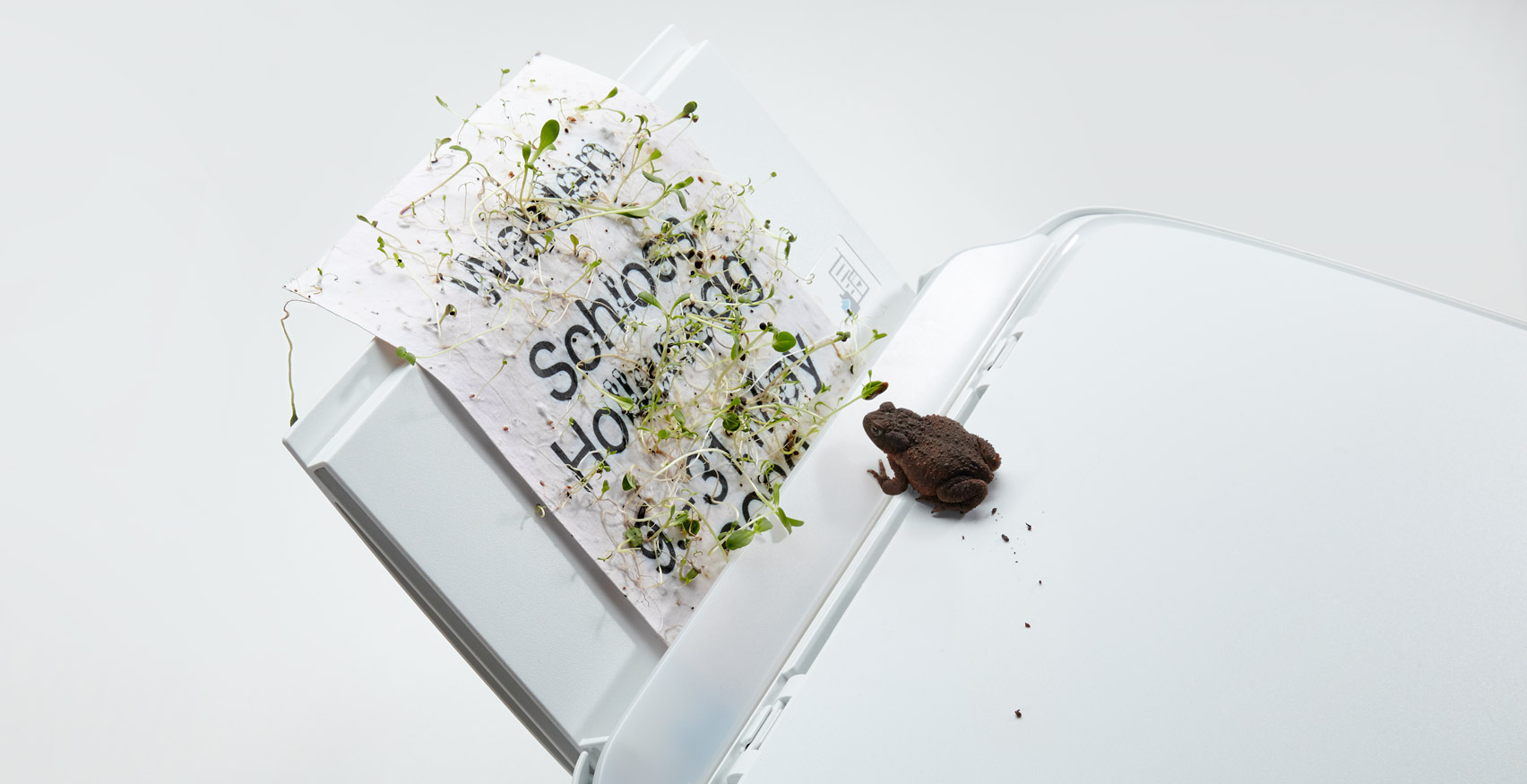
Walden by Schloss Hollenegg for VDF
Walden is the latest design exhibition at Schloss Hollenegg. Photo is by Simone Sandahl

Walden features works by 20 designers that have been selected by Liechtenstein to "make us reflect on our dysfunctional relationship with nature".

The projects span a diverse range of topics including self-sufficiency and eco-materials, but they are unified by an ambition to offer viewers sustainable ways to bring nature into their lives.
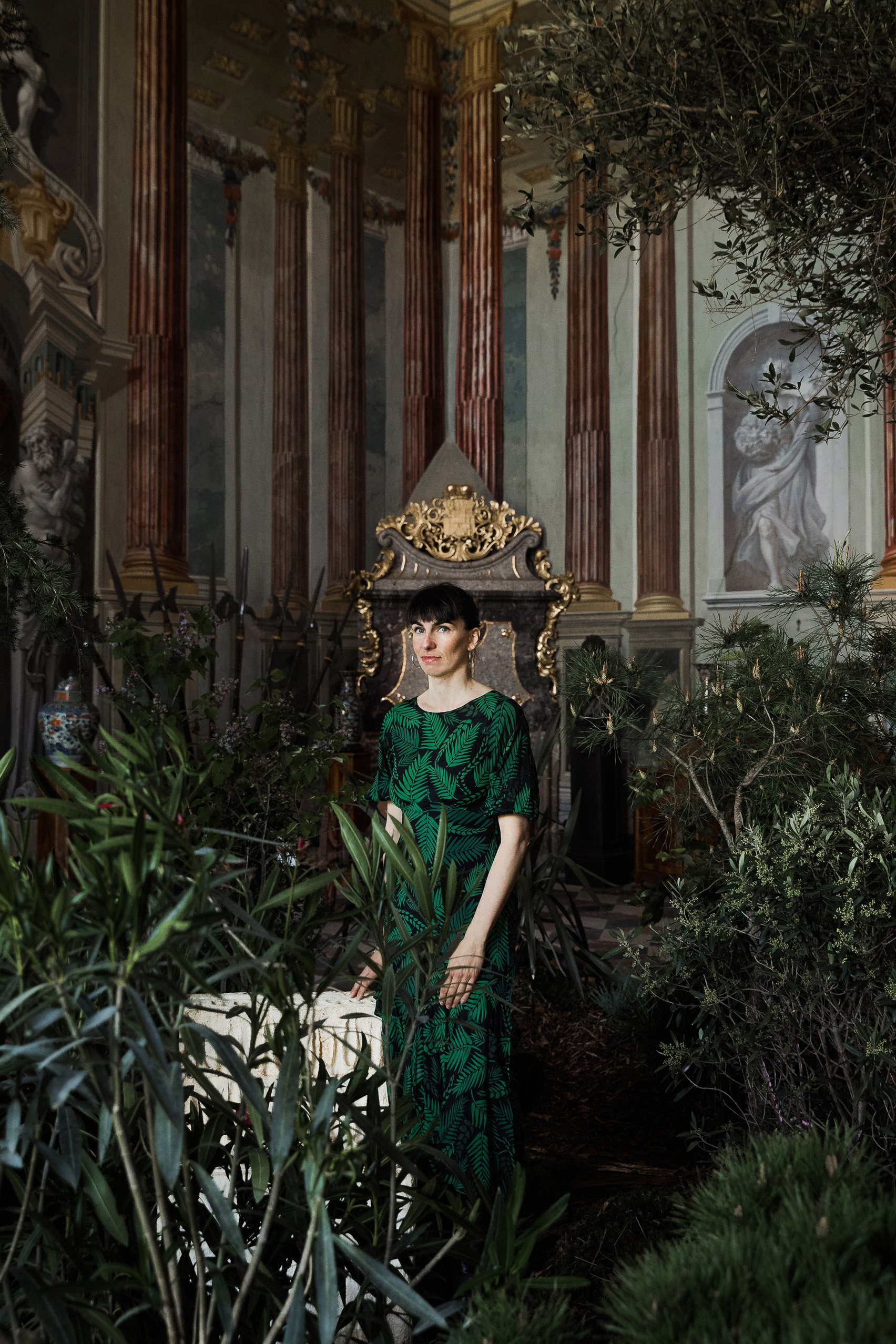
Walden by Schloss Hollenegg for VDF
Its curator Alice Stori Liechtenstein is opening the exhibition in a live tour as part of VDF. Photo is by Lupispuma

"We should really go back to nature and try and immerse ourselves into it," explained Liechtenstein in Walden's introductory video.

"We have to accept we're not the masters of the earth, and that we're only a very small part of a very complex ecosystem," she continued. "We also have to accept that nature is not an idyllic garden that we have to tame, nor do we have to thoughtlessly use the resources for our own benefit."
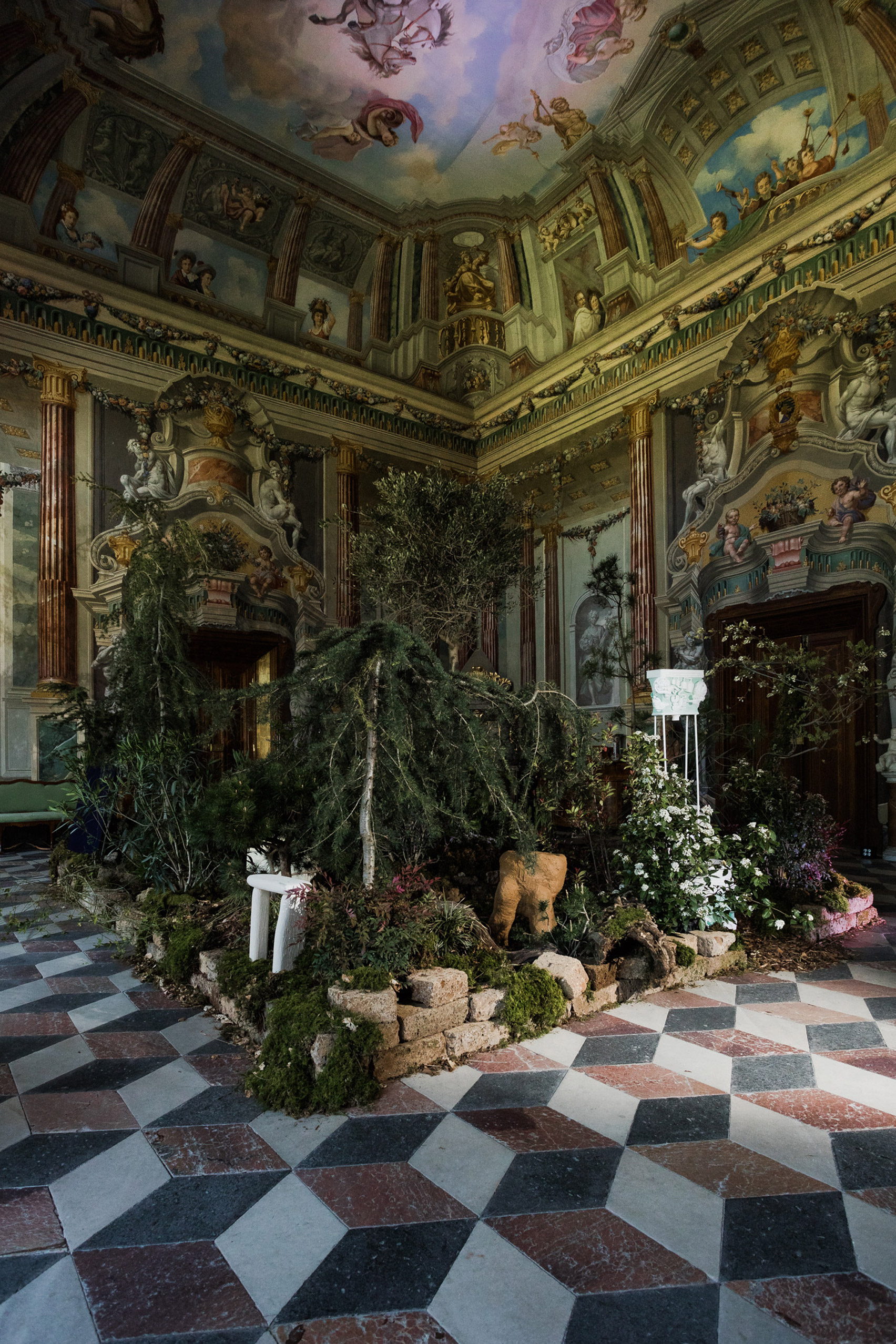
Walden by Schloss Hollenegg for VDF
The exhibition explores humans' relationship with nature and features work by 20 emerging designers. Photo is by Lupispuma

The Walden exhibitors are Crafting Plastics!, Charlap Hyman & Herrero, Marlène Huissoud, Klemens Schillinger, Sophie Dries, Arvid & Marie, BNAG, Thomas Ballouhey, Thomas Barger, Commonplace Studio, Marianne Drews, Jonas Edvard, Linde Freya, Marc Leschelier, Mischer'traxler, Odd Matter, Marylou Petot, Studio B Severin, Studiotut, Study O Portable, Evalie Wagner and Sander Wassink.

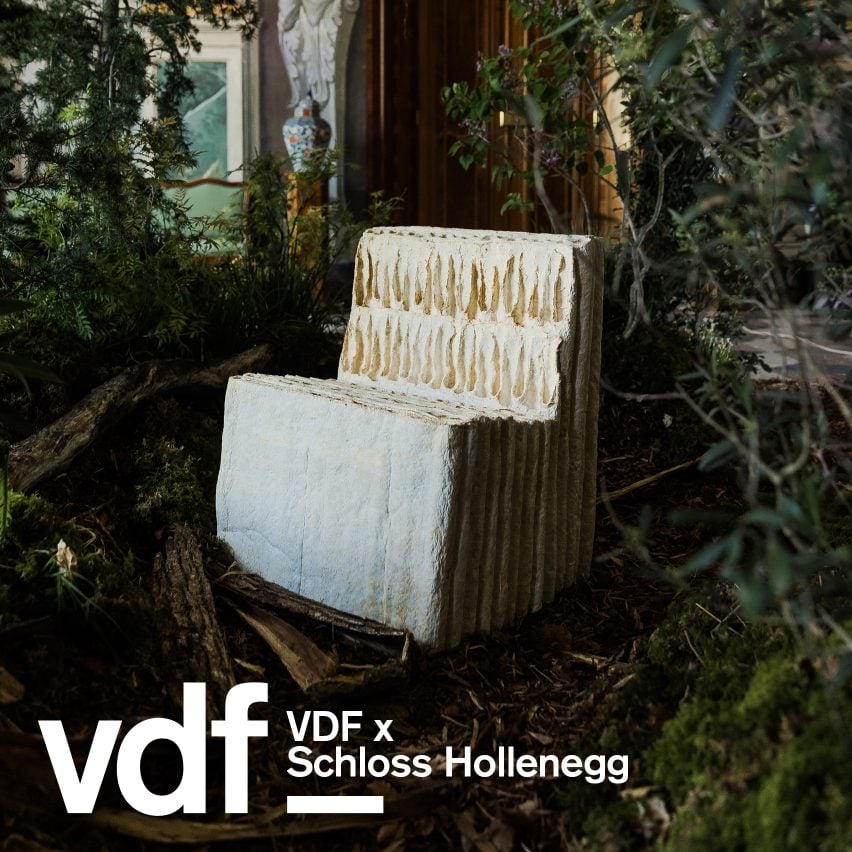
Highlights of the exhibition include a chair made from mushroom mycelium – a biodegradable fungal material – which Jonas Edvard has made to "help us reflect on our need for cohabitation with nature".

Odd Matter has also experimented with natural materials,  presenting a series of vases and planters that are made from mud.
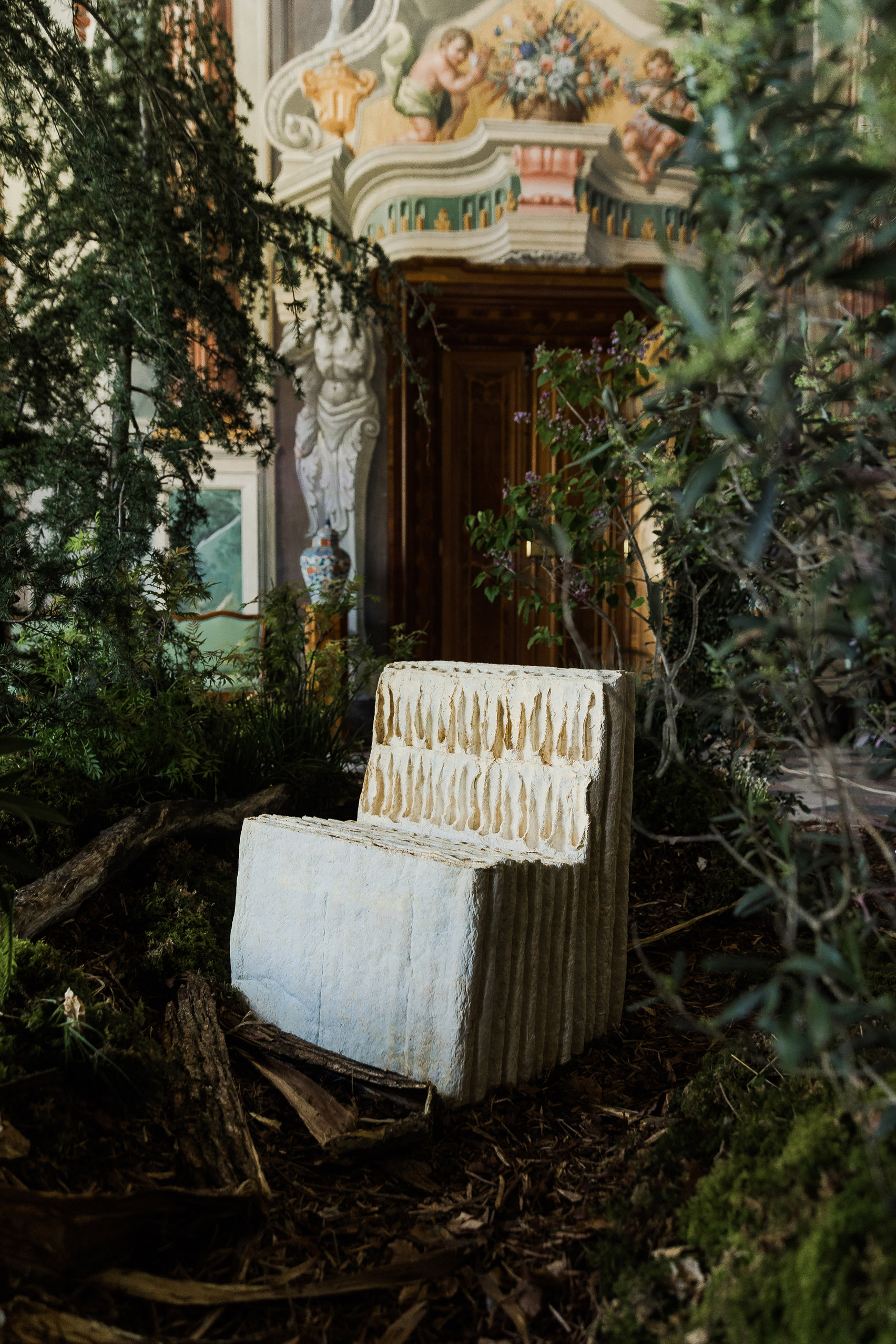
Walden by Schloss Hollenegg for VDF
Highlights of the exhibition include a mycelium chair by Jonas Edvard. Photo is by Lupispuma

Elsewhere, Klemens Schillinger is introducing the Off-grid Lamp – a portable light that needs a person to "produce their own energy" with a hand crank to function.

More abstract projects include a wool rug by Marlène Huissoud's that is modelled on the movement of insects, and a totem-like dry toilet by design duo Arvid & Marie.
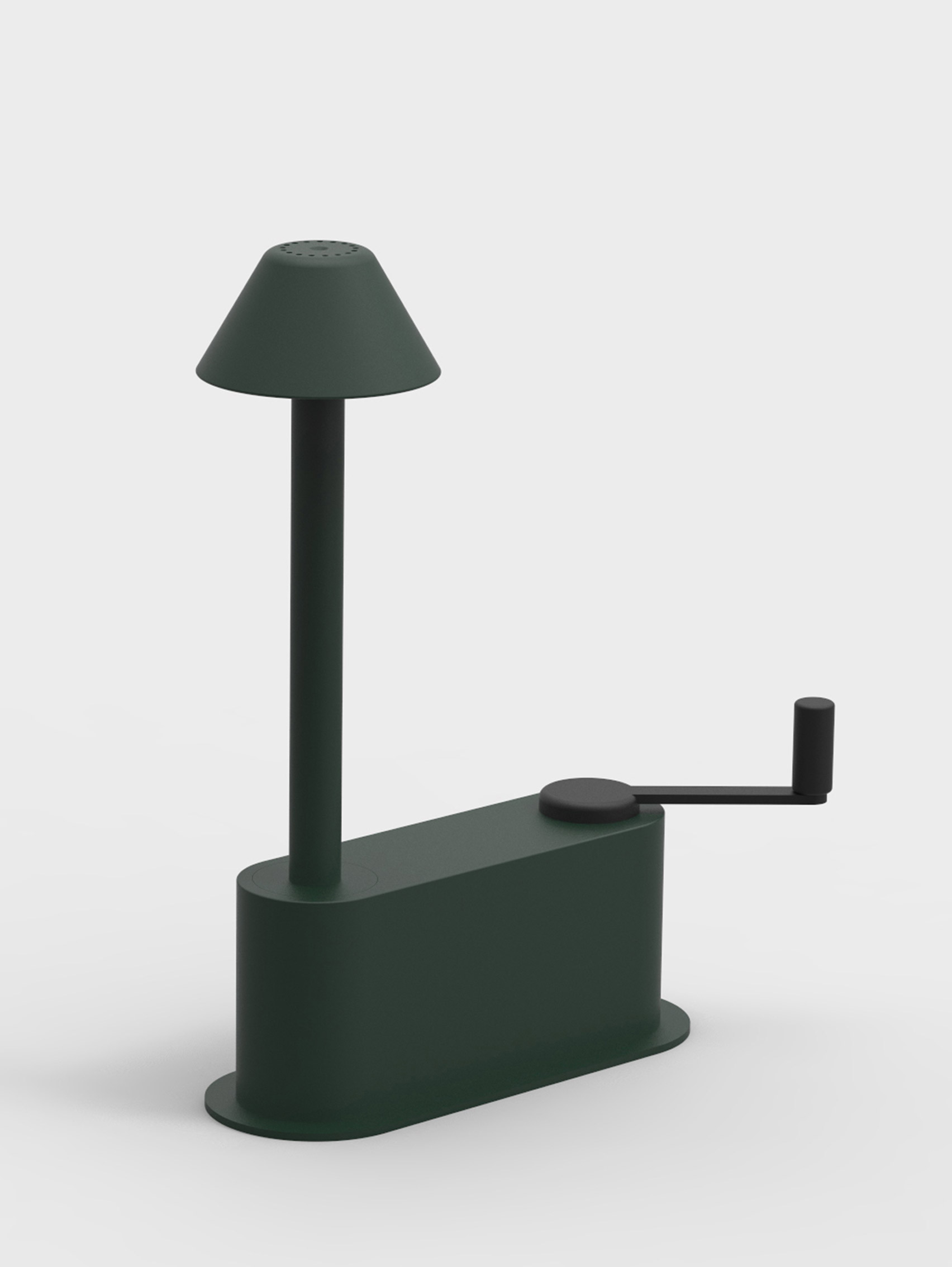
Walden by Schloss Hollenegg for VDF
Klemens Schillinger explores the concept of off-grid living with a lamp powered by a hand crank

Schloss Hollenegg is a platform that exists to support young and emerging designers from around the world by offering residency programs and organising exhibitions, workshops and symposia.

To find out more about the Walden exhibition, join the live stream and virtual tour taking place at Dezeen's Instagram later today.

About Virtual Design Festival

Virtual Design Festival, the world's first digital design festival, runs from 15 April to 30 June 2020. It is a platform that will bring the architecture and design world together to celebrate the culture and commerce of our industry, and explore how it can adapt and respond to extraordinary circumstances.

VDF will host a rolling programme of online talks, lectures, movies, product launches and more, complementing and supporting fairs and festivals around the world that have had to be postponed or cancelled and it will provide a platform for design businesses, so they can, in turn, support their supply chains.

Find out more here or email vdf@dezeen.com for details or to join our mailing list.

The post Walden exhibition at Schloss Hollenegg explores "our dysfunctional relationship with nature" says curator Alice Stori Liechtenstein appeared first on Dezeen.


from Dezeen https://ift.tt/35LelrE

Friday, 8 May 2020

This week, designers imagined ways to socialise in a post-coronavirus world

This week, designers imagined how we'll socialise in a post-coronavirus world

This week on Dezeen, designers focused their efforts on creating objects for life after Covid-19 lockdown, from blankets and frames for social distancing in parks to unconventional face shields.

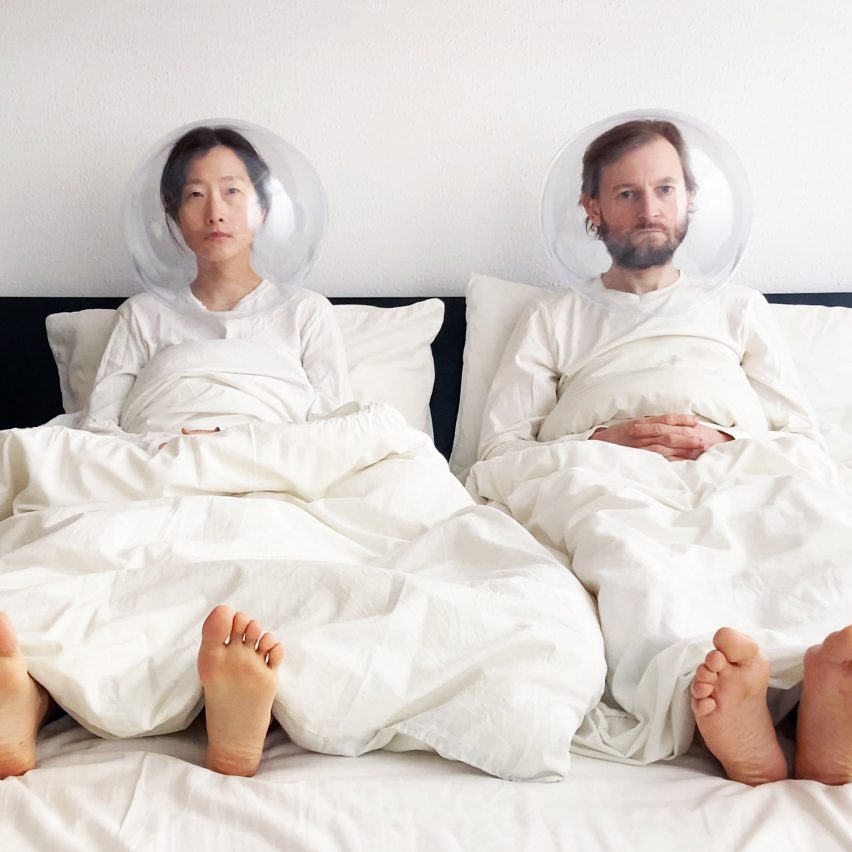
Berlin art collective Plastique Fantastique created an open-source face shield inspired by 1950s science fiction comics and "utopian movements" of the 1960s.

The fish bowl-shaped wearable, called the iSphere, is made up of two transparent, hollow hemispheres that have been taped together.

Inflatable face shield designed for socialising post pandemic

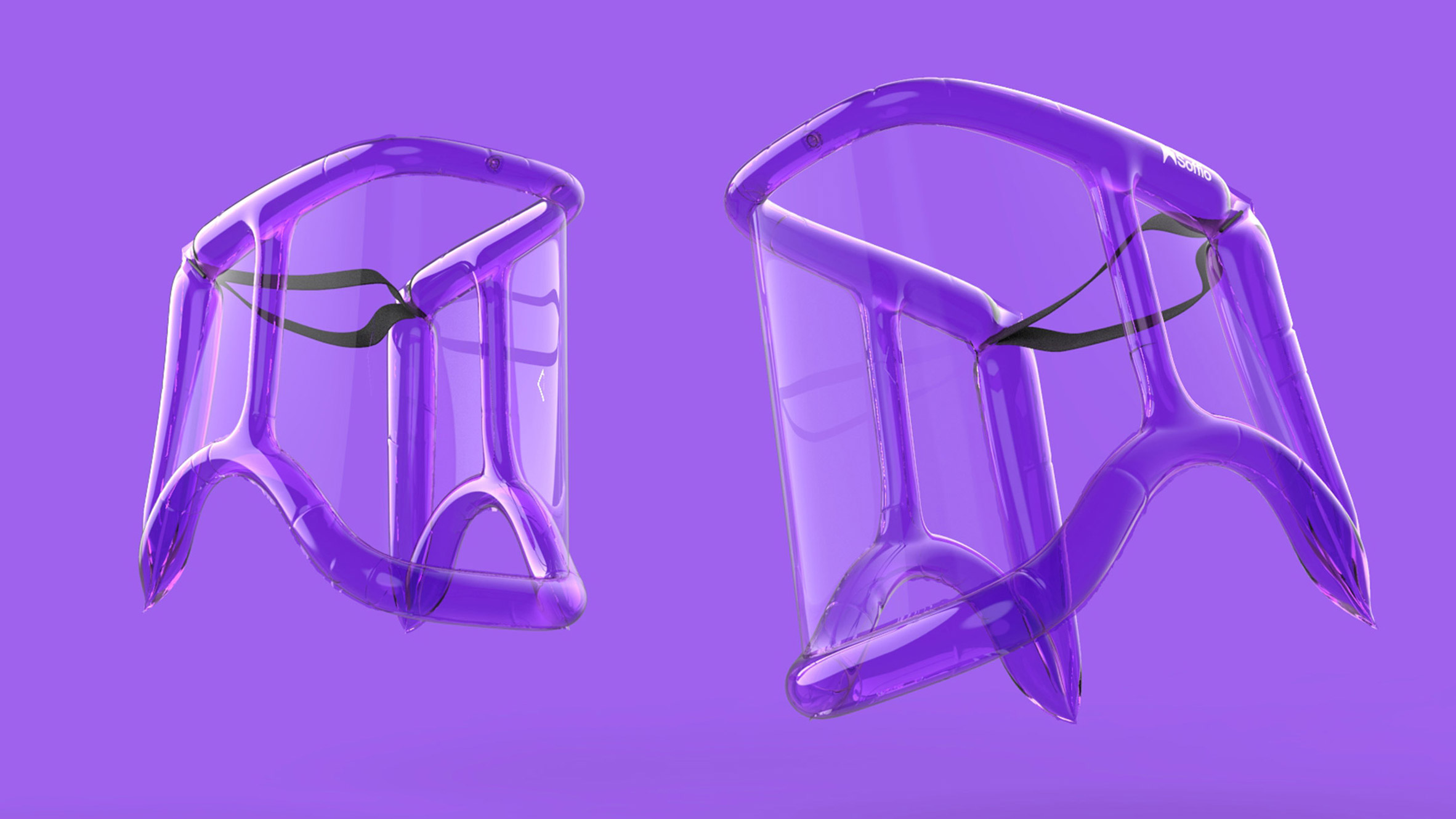
Italian designers MARGstudio, Alessio Casciano Design and Angeletti Ruzza imagined people could wear colourful, inflatable face shields to socialise with friends and family once the peak of the pandemic is over.

The concept design, called Soffio, boasts an inflatable structure made from PVC and secured to the head with an elastic strap. A plastic visor is used to protect the face, and is tilted upwards to allow the user to eat or drink while wearing it.

C'entro is a fibreglass frame to help people social distance in public parks

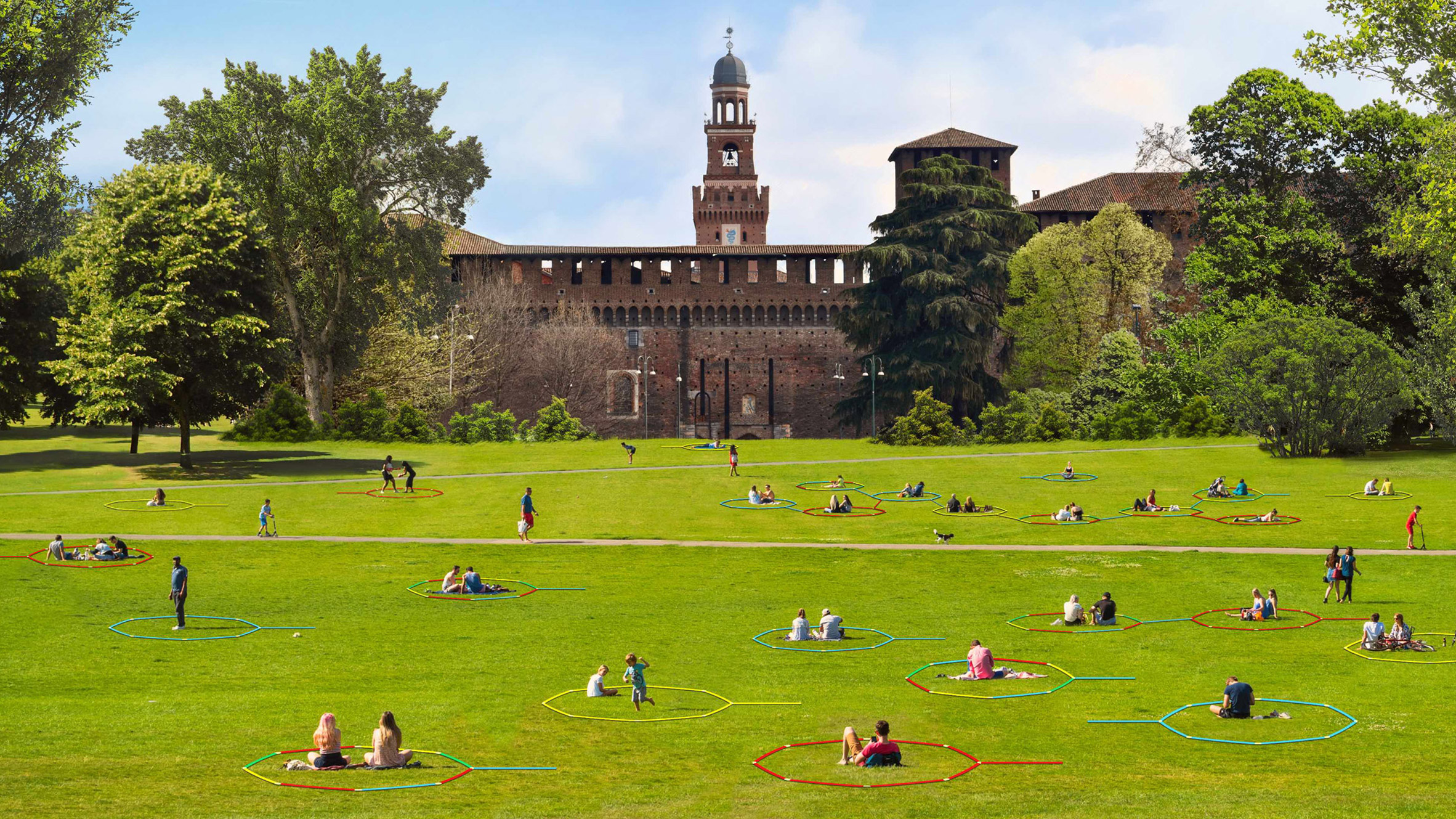
London designer Paul Cocksedge and design studio SBGA Blengini Ghirardelli both envisioned how people will return to public parks after lockdown while still following social-distancing guidelines.

SBGA Blengini Ghirardelli proposed using a modular frame made of colourful fibreglass rods that would snap together to form a circle on the ground for up to two people to sit inside, while Cocksedge suggests using a picnic blanket with circular markers dotted around its perimeter at two metres apart.

Escapist restaurant interiors could be "lasting design legacy of the pandemic" says Roar trends report

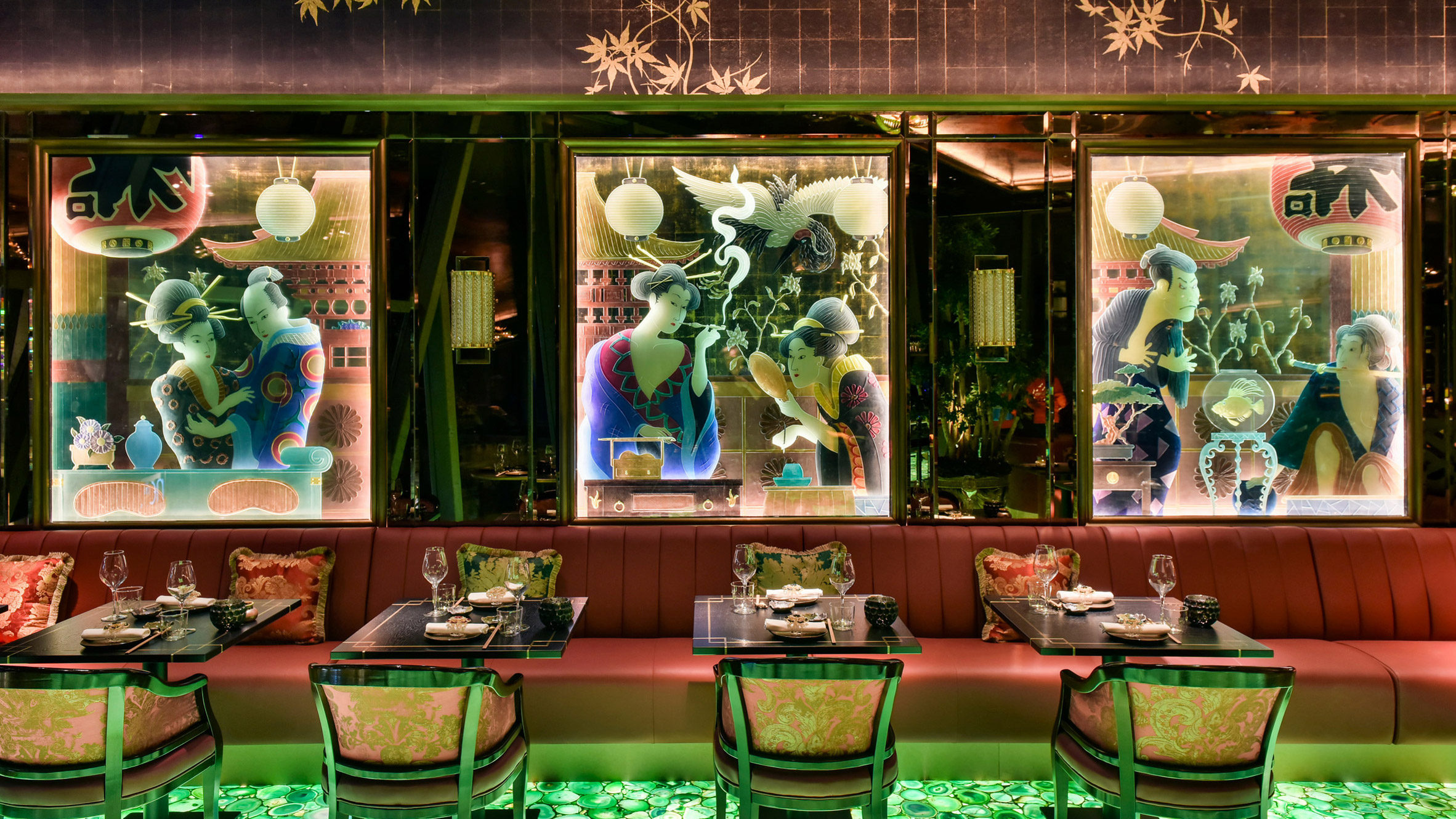
Interior design studio Roar compiled a trends report forecasting how restaurants will change post-Covid this week, which includes "severe but short-lived" layout restrictions.

While physical menus, cash payments and buffets will be a thing of the past, according to panelists, the design of restaurants themselves will be steered more towards "escapism" and we may even see a new-found modernism movement arise.

London, New York, Paris and Milan give streets to cyclists and pedestrians

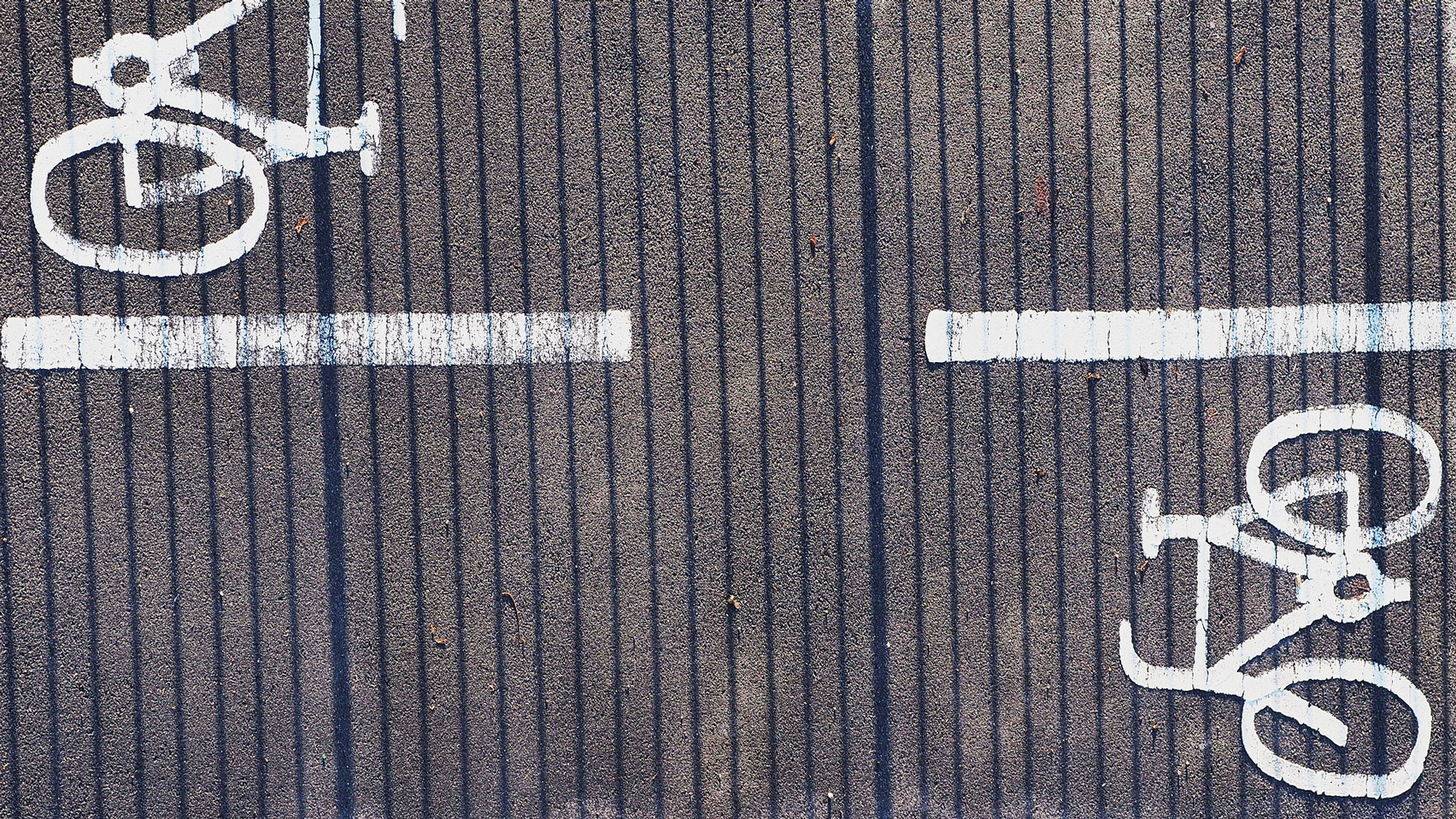
Dezeen also reported that cities across Europe and the Americas – including London, New York, Paris and Milan – are responding to the pandemic with plans to take street space away from cars to make cities more friendly to pedestrians and cyclists.

It is hoped that doing this will enhance freedom of movement without raising the risk of infection, by offering more space for people to maintain social distancing.

Ingenhoven Architects wraps Düsseldorf office with five miles of hedges to create Europe's largest green facade

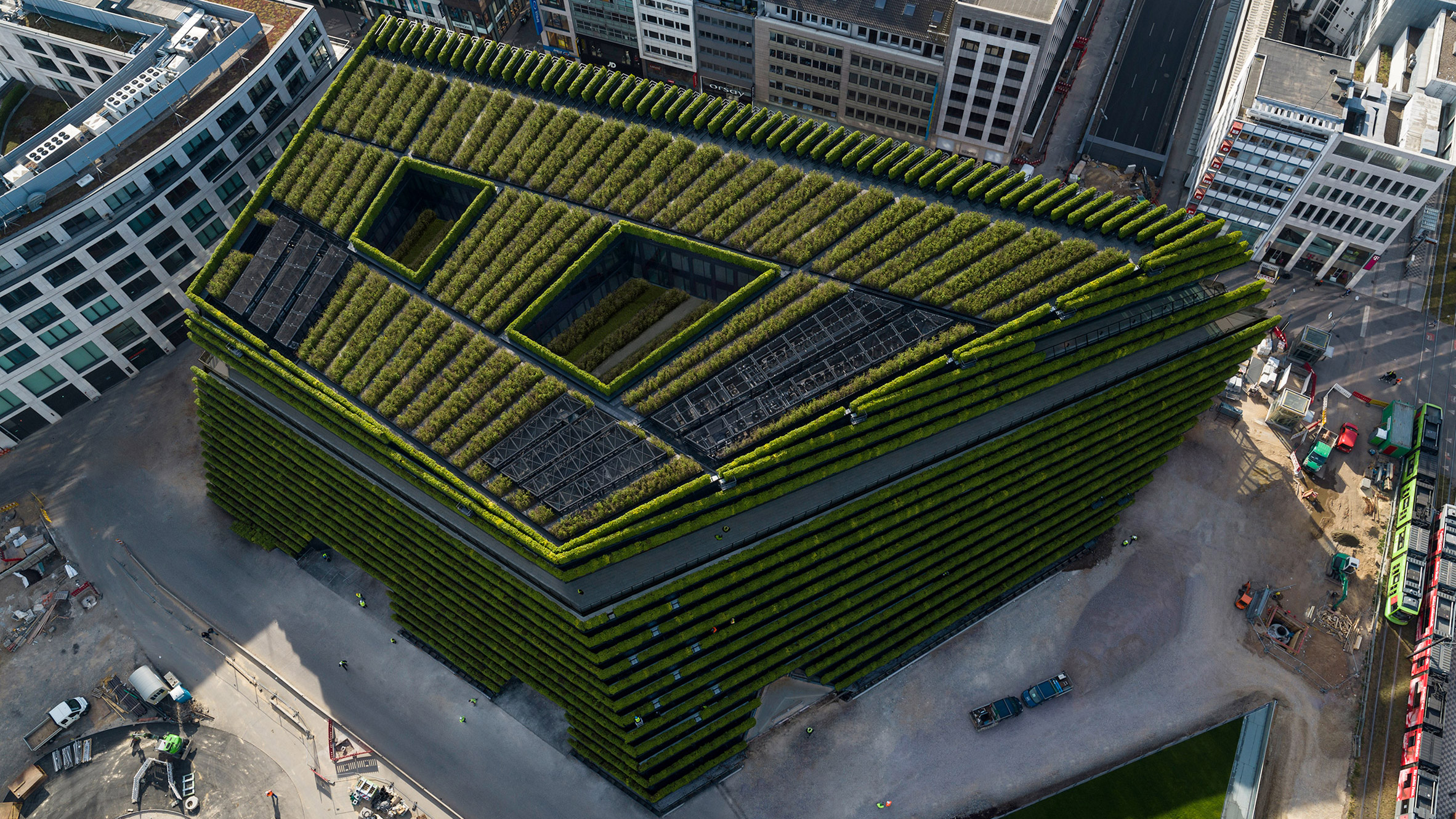
Another project hoping to create a greener environment is the Kö-Bogen II office block in Düsseldorf, Germany, which Ingenhoven Architects has covered with 30,000 plants.

The myriad plants form hedges that would stretch five miles (or eight kilometres) if laid end-to-end. This, according to the architects, Ingenhoven Architects makes it Europe's largest green facade.

Ludwig Godefroy references sacred Mayan roads with Casa Mérida

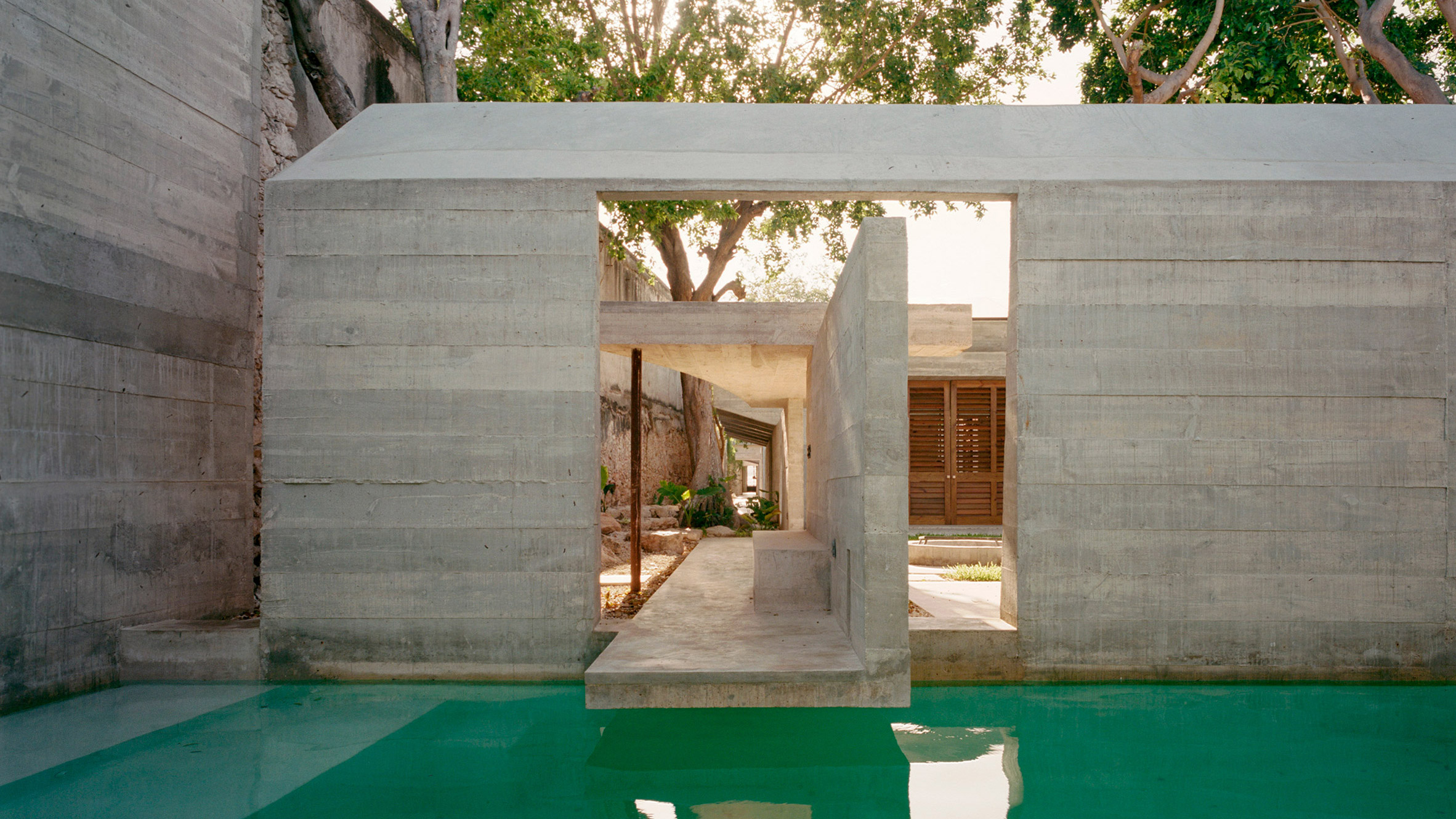
Other projects that have been popular with Dezeen readers this week include a boutique hotel in Bali by Australian architect Nic Brunsdon, an imaginary holiday home by Child Studio and Plenaire, and a fragmented concrete house in Mérida, Mexico.

The post This week, designers imagined ways to socialise in a post-coronavirus world appeared first on Dezeen.


from Dezeen https://ift.tt/3cnZTZi

Squashed-looking concrete bench by Thomas Musca and Duyi Han references brutalist architecture

Concrete furniture by Doesn't Come Out and Cassius Castings

Designers Thomas Musca and Duyi Han have cast reinforced concrete into furniture with chunky angles and geometric voids that take cues from brutalist architecture.

The collection is a collaboration between the two young designers who graduated from Cornell University in May 2019 and went on to found their own practices.

Musca's company Cassius Castings produces concrete furniture, while Han's Doesn't Come Out creates digitally rendered scenes, including the visualised The Saints Wear White mural that honours Covid-19 healthcare workers.

Concrete furniture by Doesn't Come Out and Cassius Castings
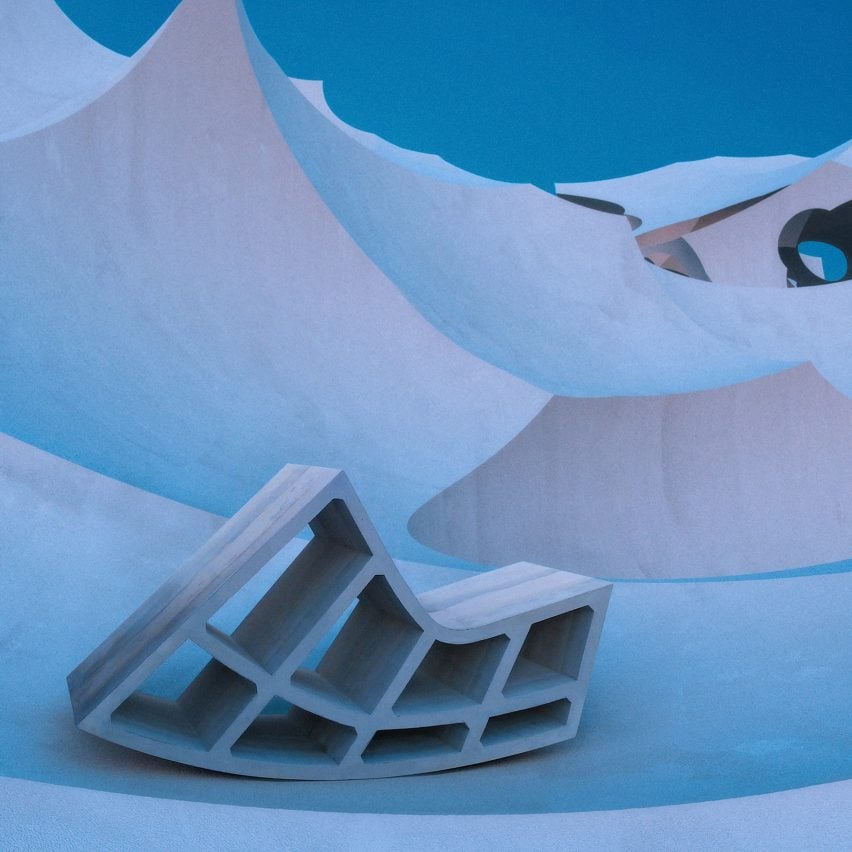
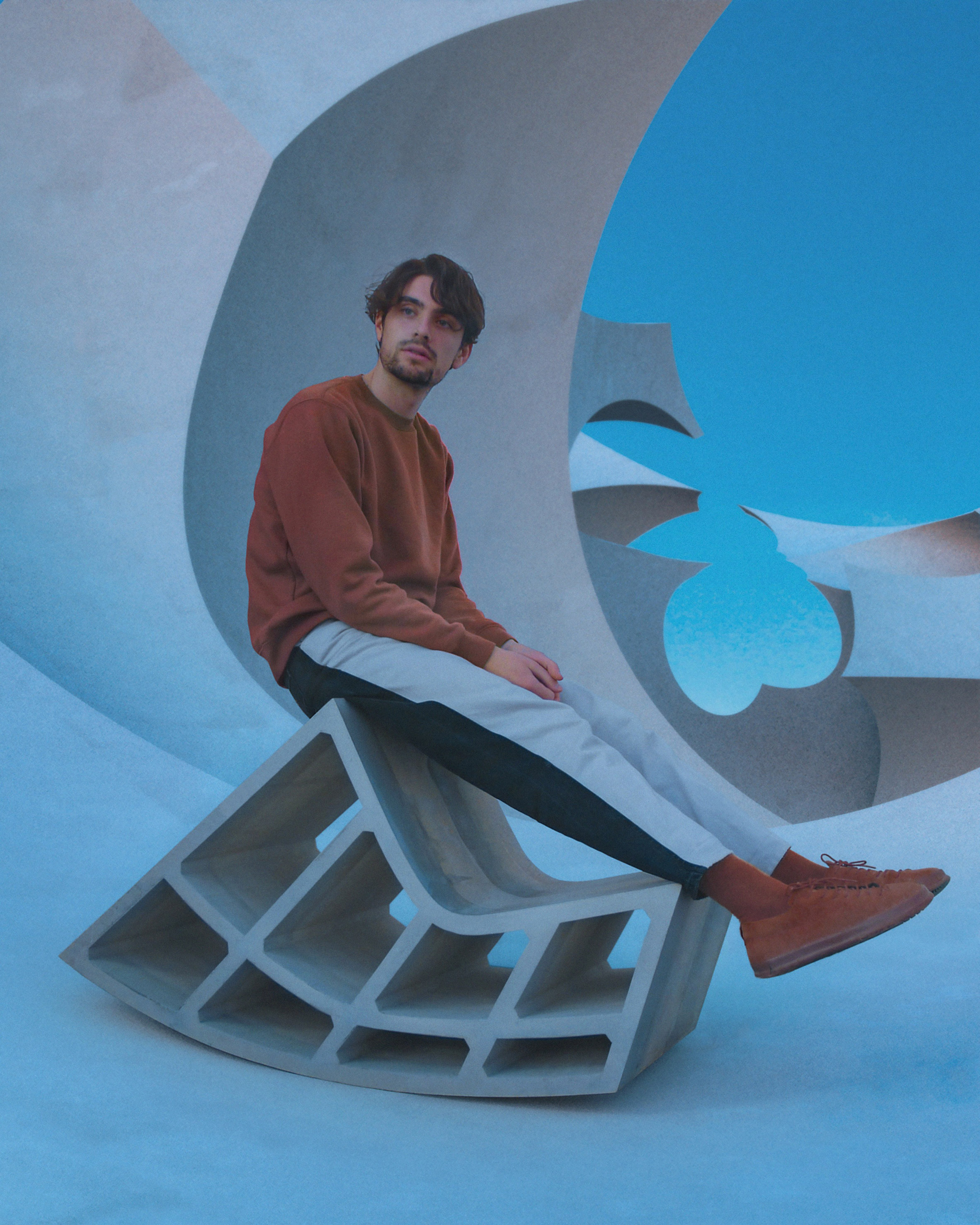
Rockito, a take on the traditional rocking chair, features eight geometric voids under its curved seat

Musca and Han teamed their skills to design the angles, size and proportions that make the monolithic forms. They are intended to draw on the style of brutalist architecture, which emerged in Great Britain in the 1950s.

Each of the pieces is first modelled using digital software and then built as a basswood mould. Inside these, Musca and Han then pour and cast the forms using glass-fibre reinforced concrete.

Designs include Rockito, which is intended as an abstract take on the traditional rocking chair. The design features a sharply curved seat decorated with eight voids of various sizes.

Concrete furniture by Doesn't Come Out and Cassius Castings
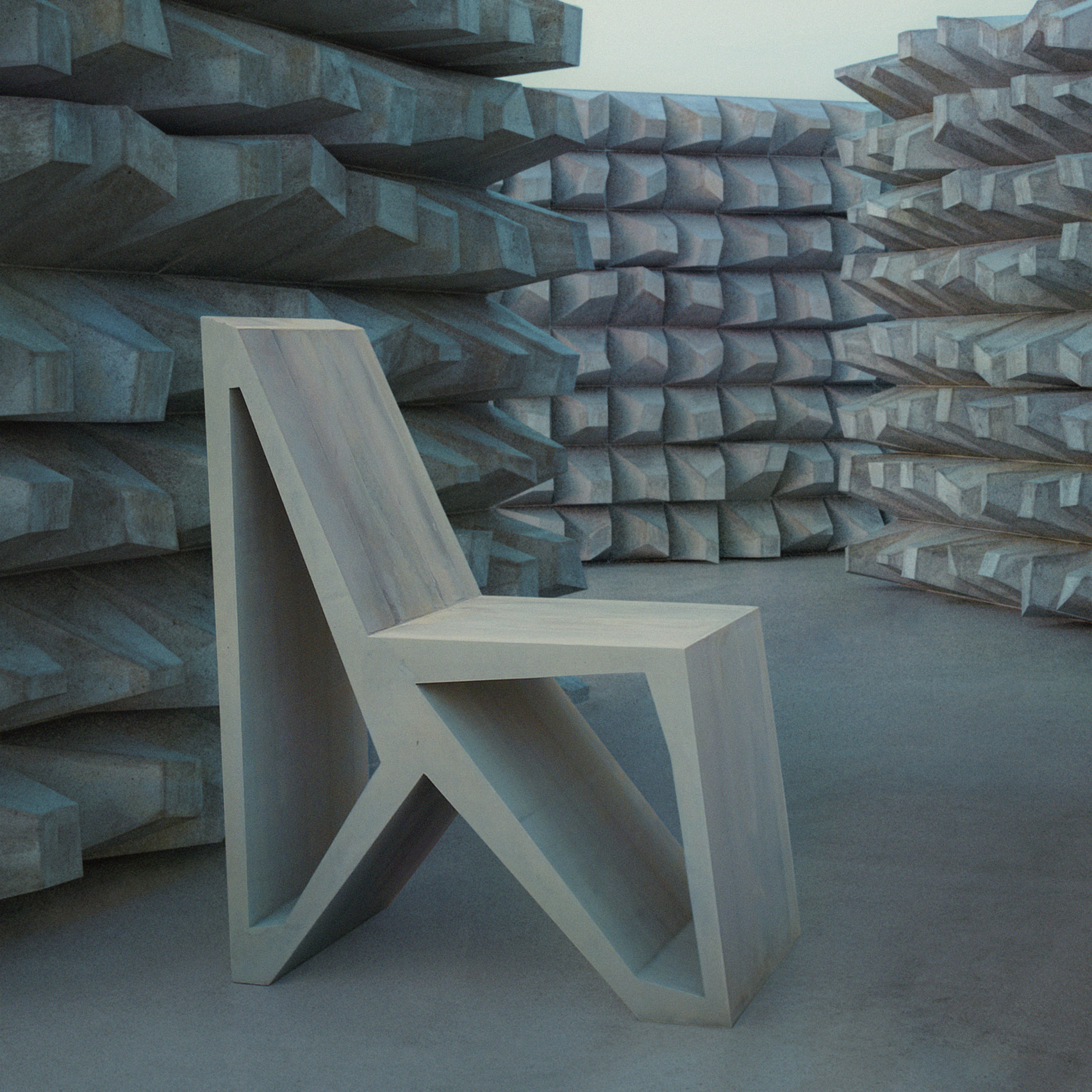
The angular Kink Chair is set against a backdrop of jagged concrete blocks digitally visualised by Han

The similarly designed Rocker chair has a tall upright back and rounded base. Thin triangular and rectangular cutouts accent the sides of the piece, which is staged in a digitally rendered forest of angular concrete columns.

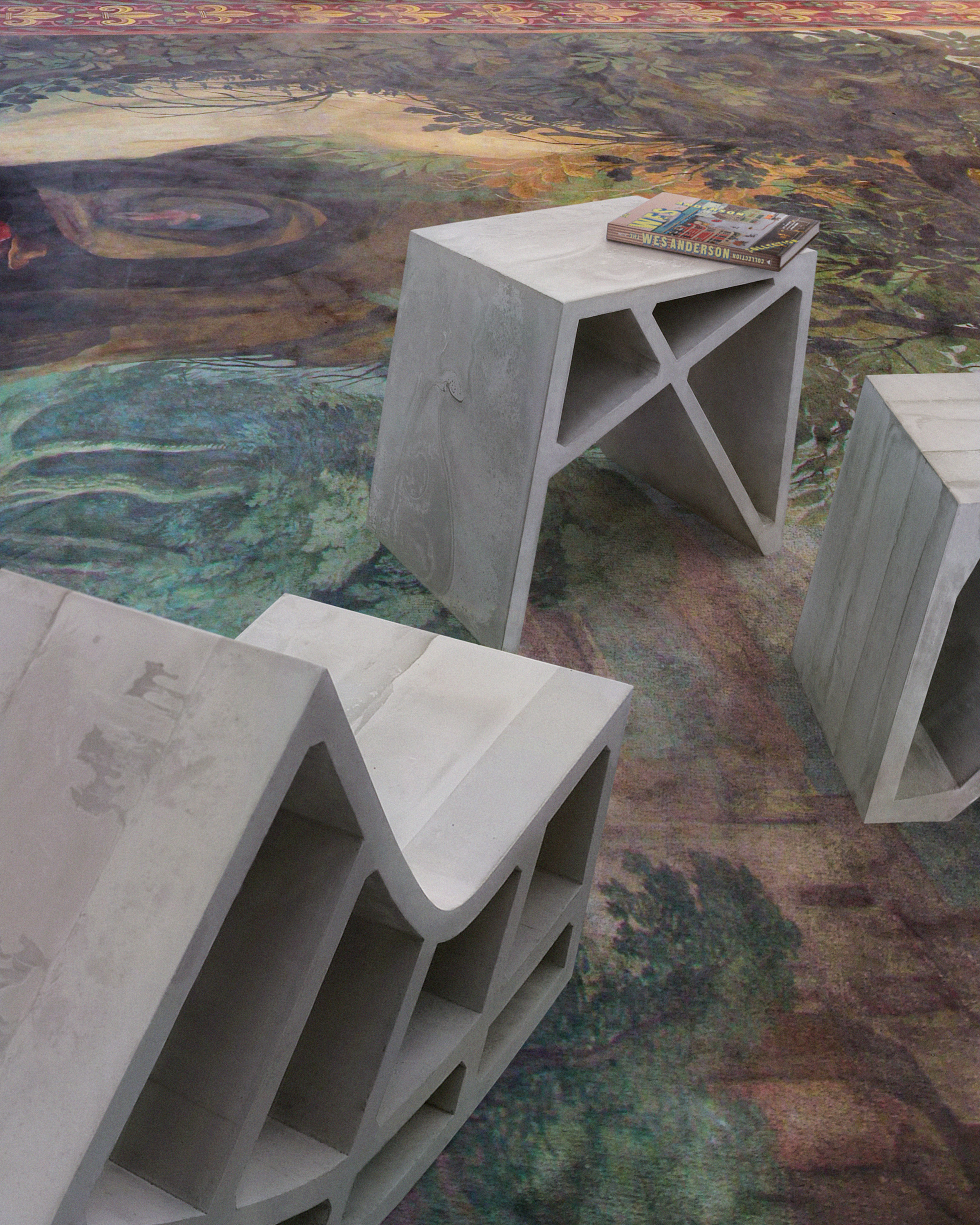
Images of the works present them in an environment that complements its design. Some of the settings are digitally rendered scenes created by Han, while others are photographed in actual locations such as Griffith Park in Los Angeles.

"The goal is to create things that are practical and useful without sacrificing beauty and sleekness," the pair told Dezeen. "These are extremely versatile designs that play well with other styles in all sorts of settings."

Concrete furniture by Doesn't Come Out and Cassius Castings
Stools with geometric designs are among the collection

Two geometric holes form the tilted back and flat seat of the Kink Chair. The designers placed the furniture against a visualised wall of jagged concrete blocks.

In addition to the collaborative collection with Han, Musca independently designed several benches placed in Overlook Park and Rise Park in Irvine, California.

The designs have a flat top and clunky triangle-like legs and are carved with the name Cassius Castings.

Concrete furniture by Doesn't Come Out and Cassius Castings
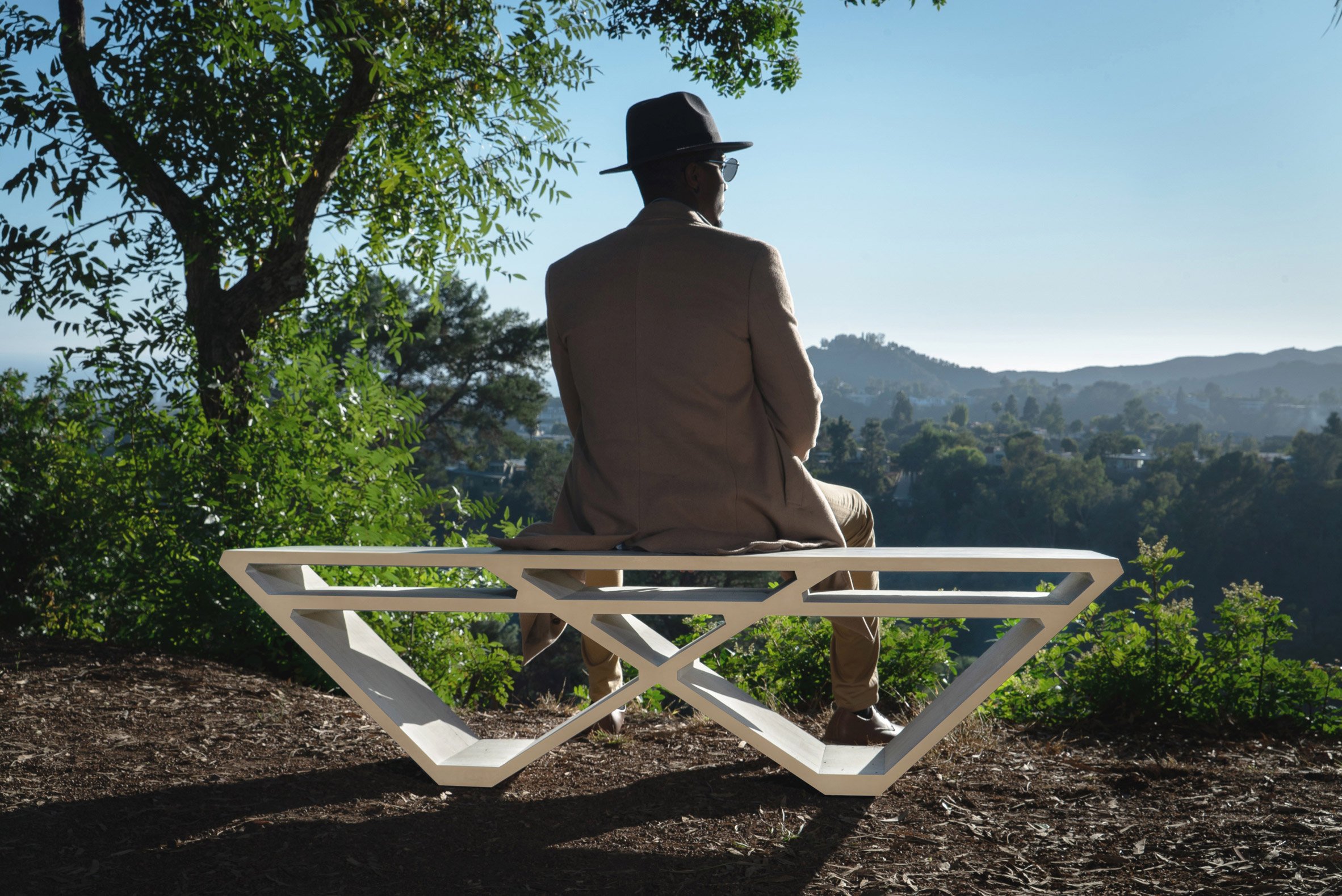
Musca designed the crisscrossing X-Tendo Bench, which was photographed in wooded Griffith Park

Musca's X-Tendo Bench photographed on the wooded Griffith Park overlook has narrow slits along its top edge. Its legs are composed of a crisscrossing structure.

Virgil Abloh also designed a concrete furniture collection that references brutalism.

Other works that use the material include a series of sculptures by Brandon Clifford that references megalithic architecture and a chair by Bower Studios intended to look like it is melting.

Photography is by Duyi Han.

The post Squashed-looking concrete bench by Thomas Musca and Duyi Han references brutalist architecture appeared first on Dezeen.


from Dezeen https://ift.tt/2LdF9qY

Black concrete skylights protrude from House for the Poem of the Right Angle by Smiljan Radić

House for the Poem of the Right Angle by Smiljan Radić

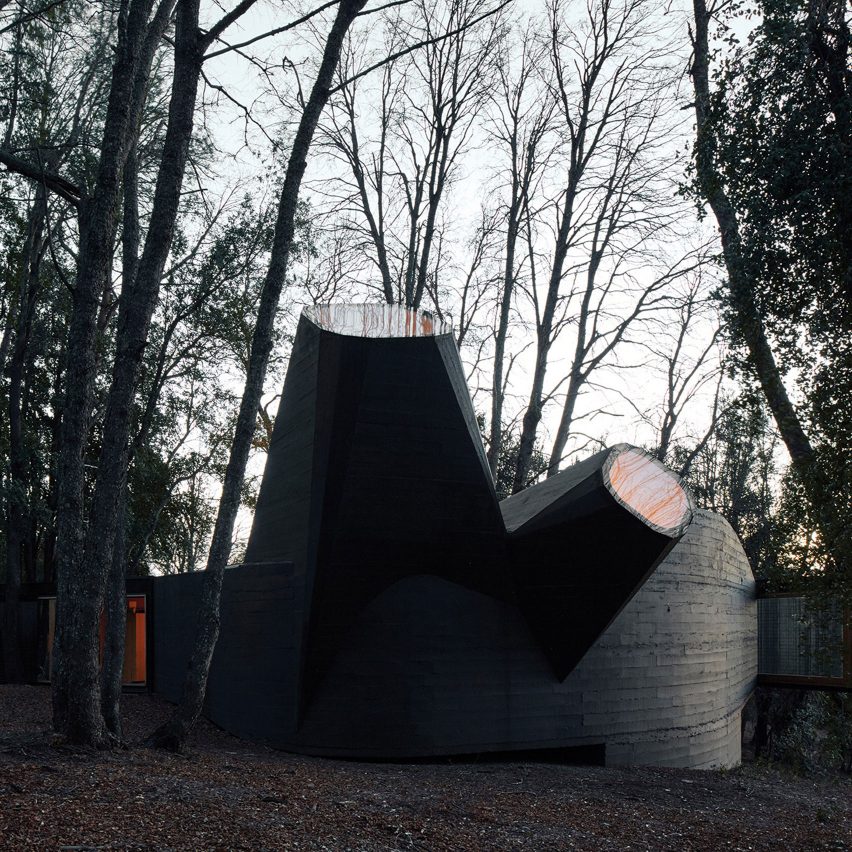
Architect Smiljan Radić has designed this secluded black-concrete house among woodland in Vilches, Chile, to feature three huge rooflights that extend at odd angles.

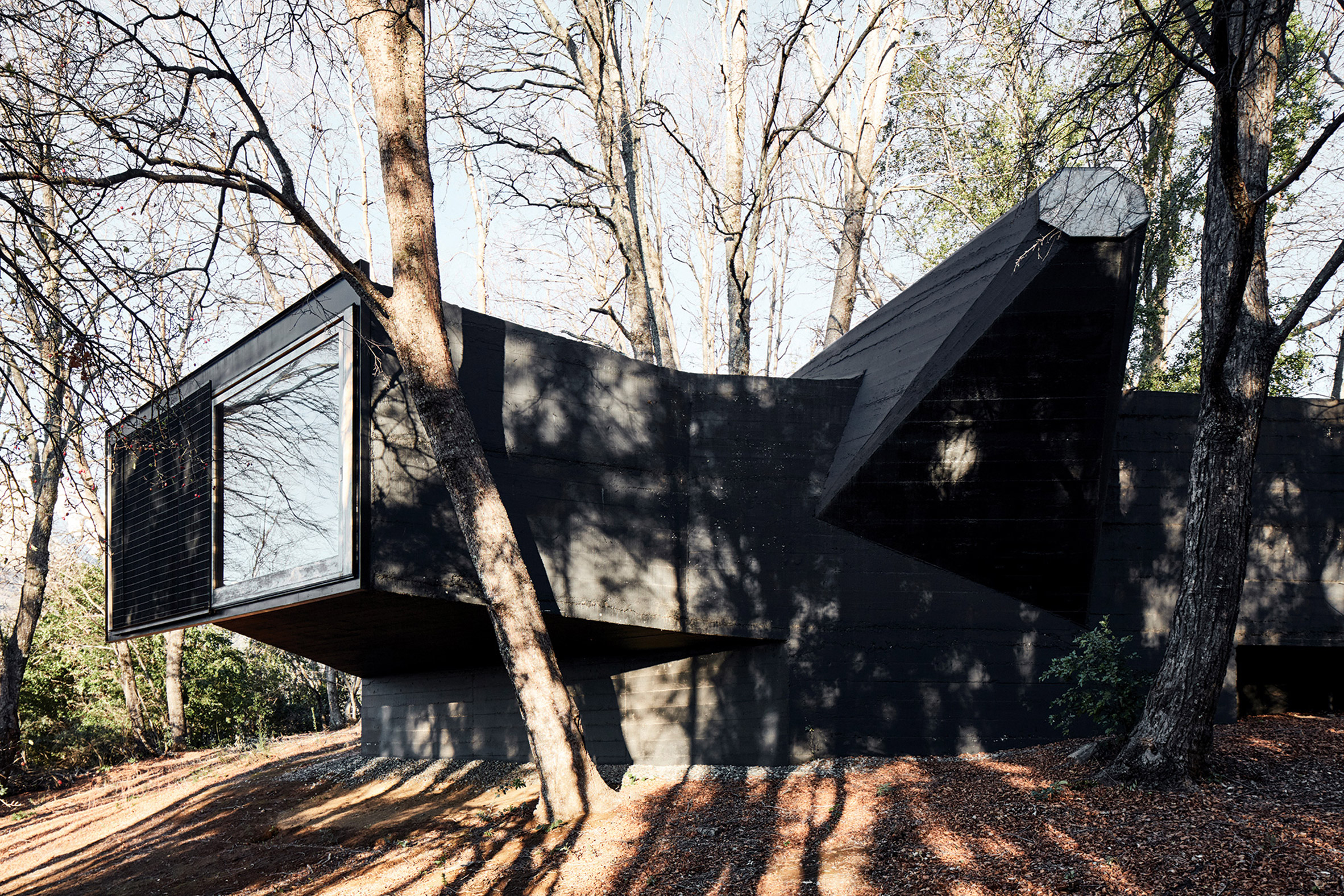
Twelve-centimetre-thick reinforced concrete walls form a mishmash of shapes including the three rooflights, curved walls, harsh right angles and a cantilever.

House for the Poem of the Right Angle by Smiljan Radić

Radić based the unusual forms on one of the abstract paintings in Le Corbusier's series called The Poem of the Right Angle. Called Flesh, the lithograph features a woman, a foot, a large stone and the markings of a hand overhead.

"The observer occupies the body of a man stretched out in an ambiguous setting," said the Chilean architect.

House for the Poem of the Right Angle by Smiljan Radić

"He seems to be looking at an inner landscape in which a woman is kneeling, leaning towards an opening that shows a cloud passing," he explained. "The feet of a man can be seen and a menhir, that is surely his knee or his erect penis."

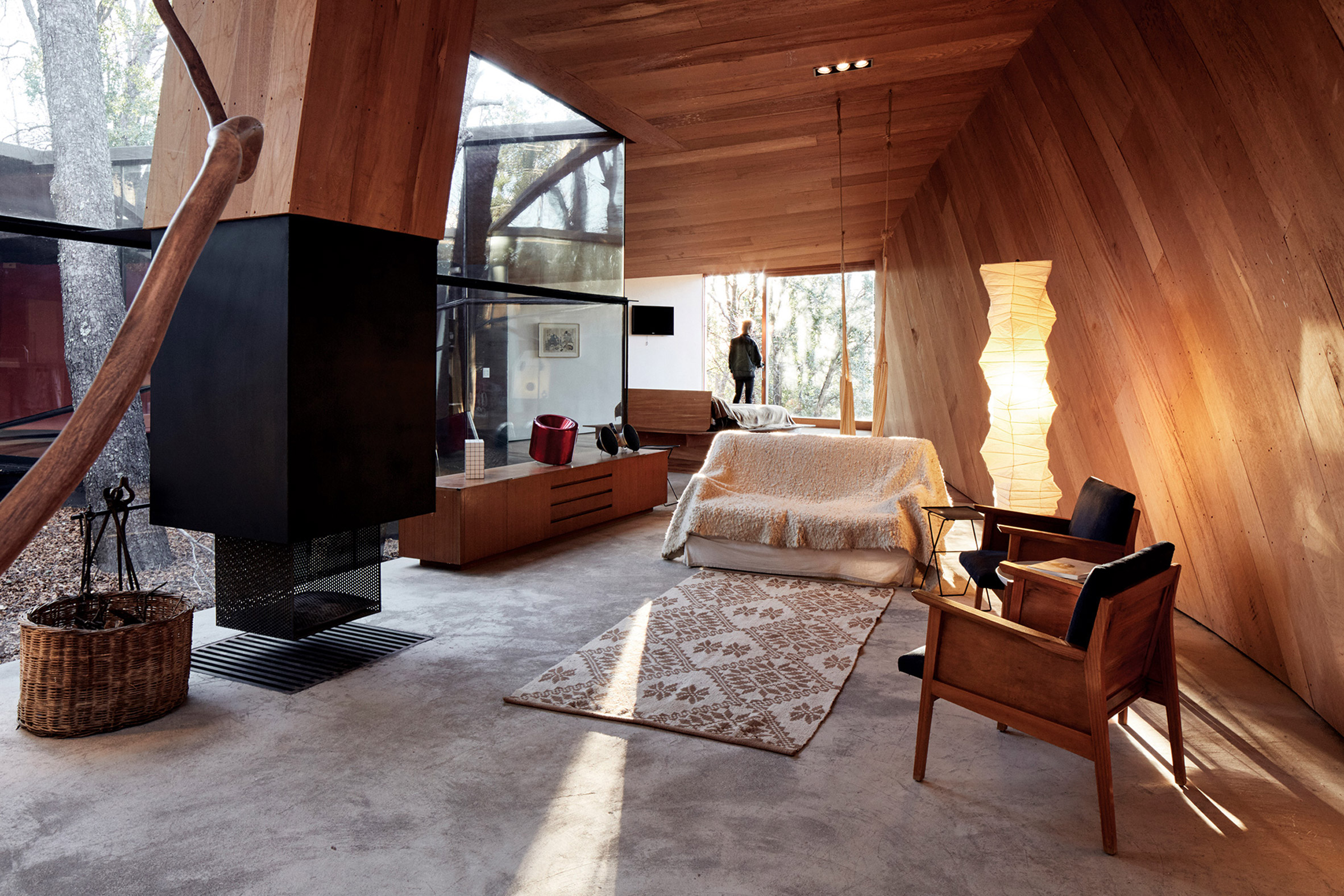
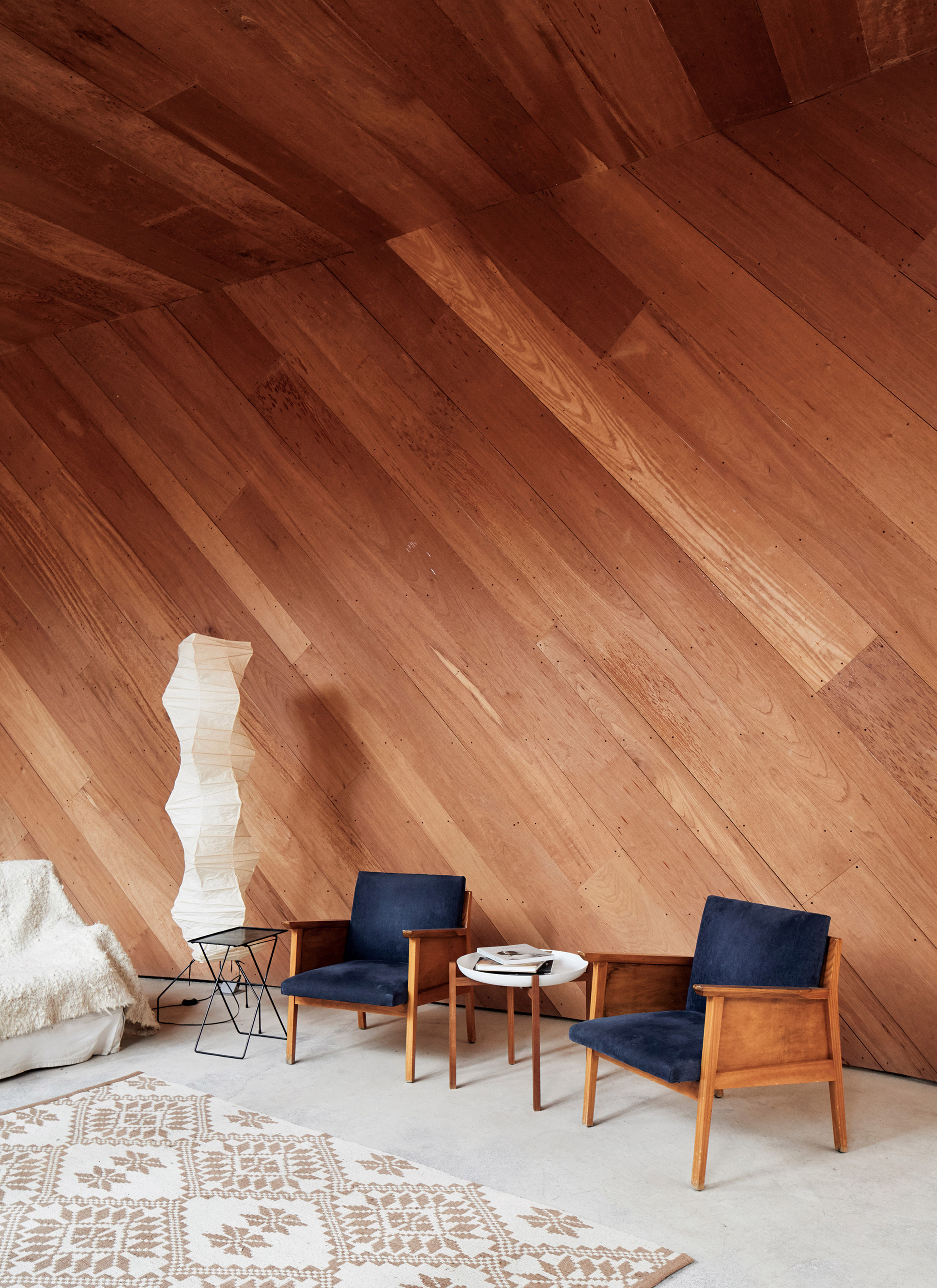
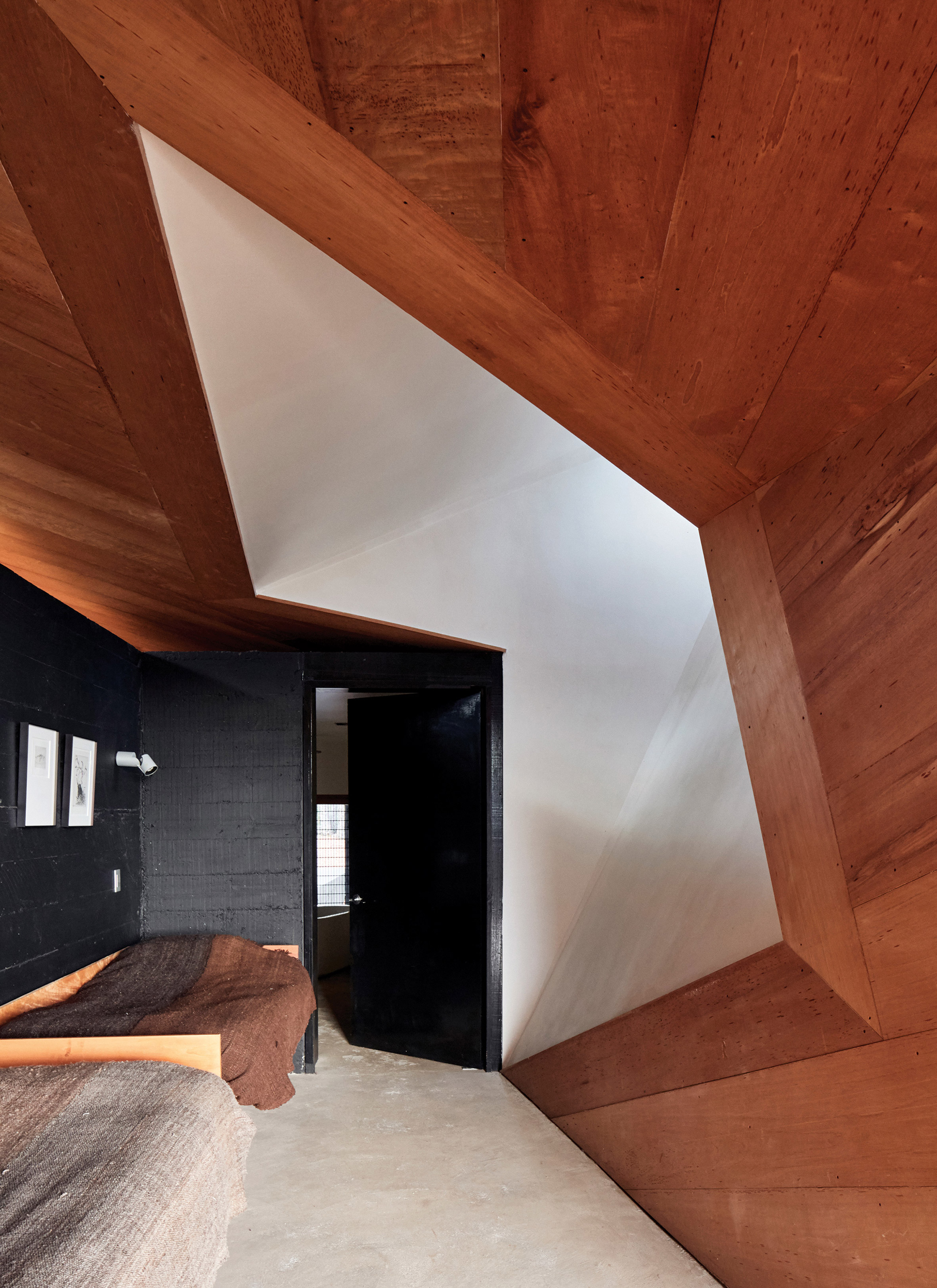
Inside, the black-painted exterior of the property is contrasted by walls and ceilings lined in warm cedar wood. The interiors of the lightwells are painted white and faceted to form monumental features that punctuate the space.

House for the Poem of the Right Angle by Smiljan Radić

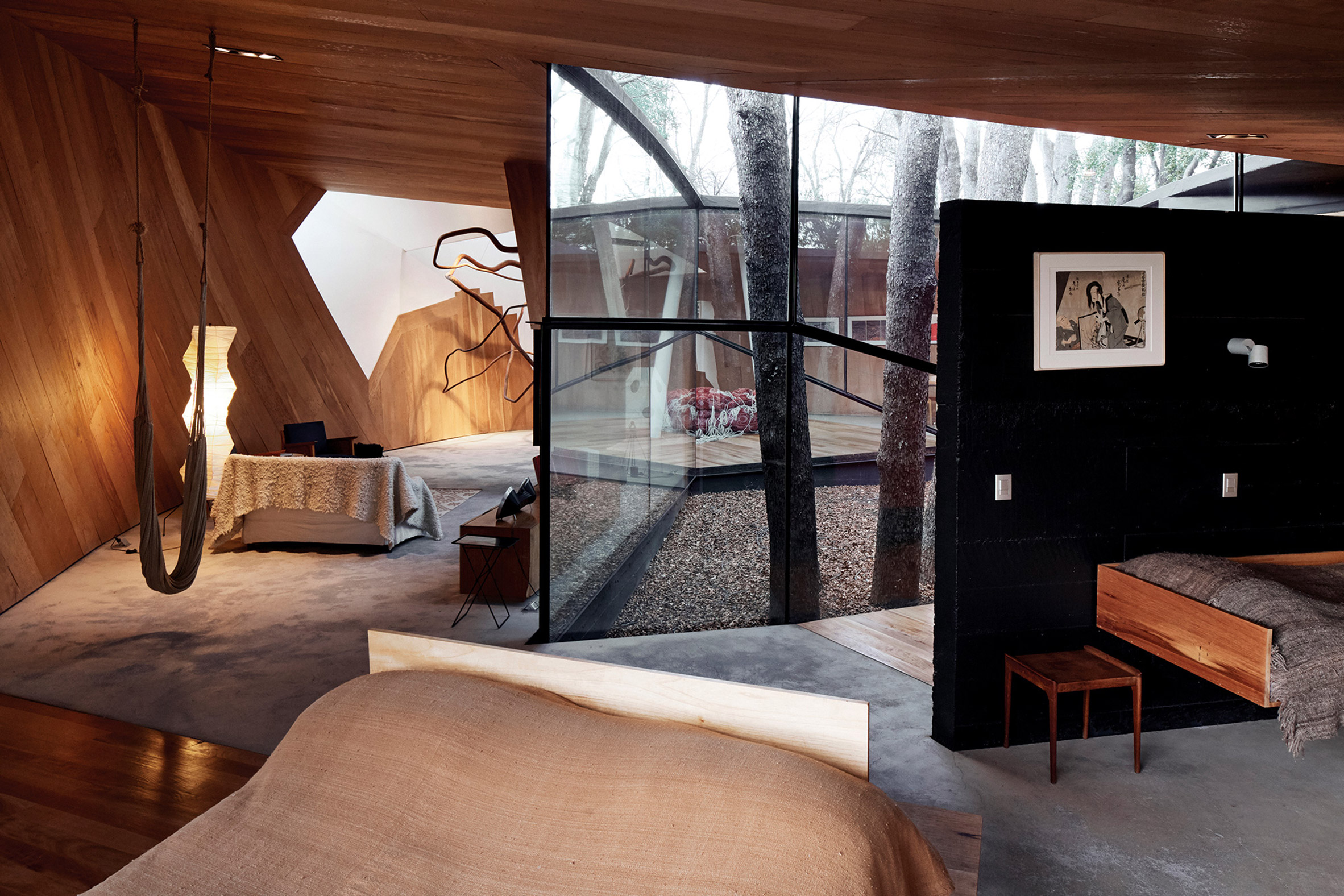
The open-plan interiors are designed as a  continuous walkway around a central courtyard. The walls facing the yard are glazed to offer views into the patio and also across to other areas in the residence.

"Its seclusion accounts for how its inhabitants know the surroundings, as a peasant, a vagrant, or a monk would know them, naturally," said Radić.

House for the Poem of the Right Angle by Smiljan Radić

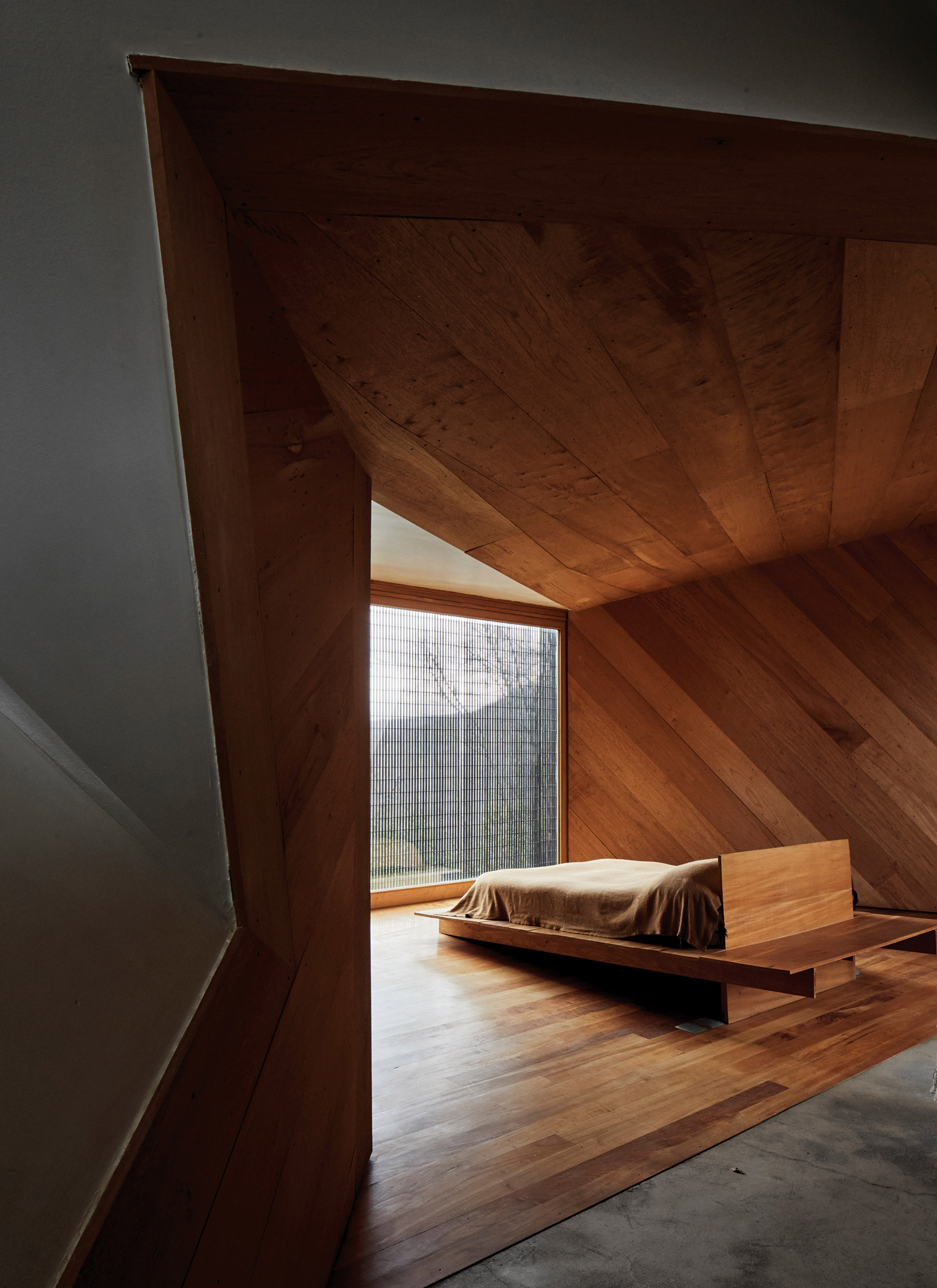
The architect has covered some of the floor in wood to match the walls and ceilings, while other areas are covered in concrete. The materials help to define areas in place of dividing walls.

If residents turn right on entry into the property, they will walk through the kitchen, dining room and living room. A wood-covered chimney extends from the ceiling in the latter to form a suspended fire place.

House for the Poem of the Right Angle by Smiljan Radić

To the left side, a bathroom is enclosed by black concrete walls with a small bedroom adjoining.

The house then culminates in the cantilevered volume occupied by the master bedroom. This features a huge window overlooking the forest fronted by a sliding grate.

House for the Poem of the Right Angle by Smiljan Radić

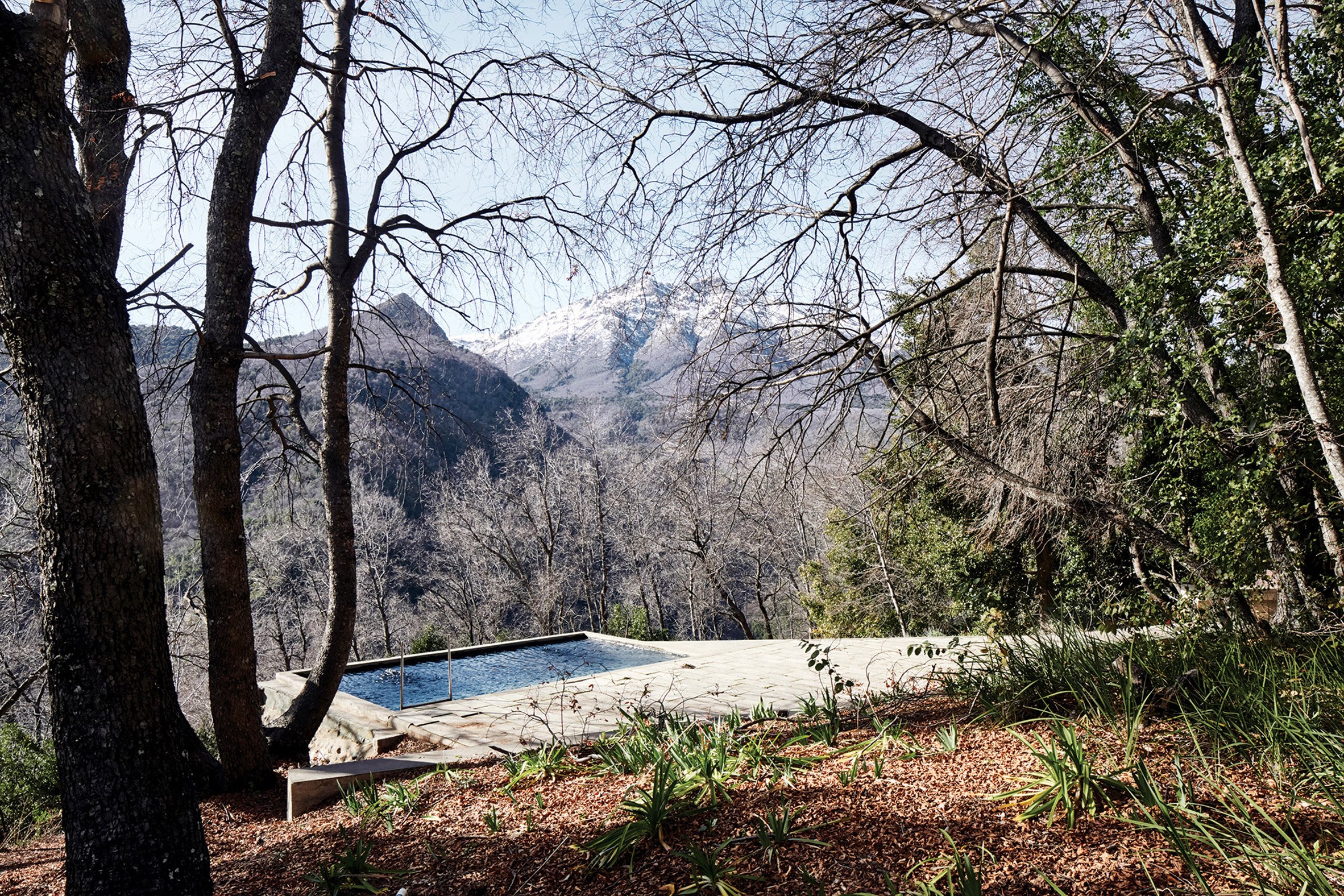
Radić's design continues into the surroundings with a swimming pool that overlooks the mountains and a garden formed of a series of stones.

"It is a blind volume in front of a privileged mountain landscape, encrusted in a wood of oak trees and besieged by the Garden of Leaves formed by 300 basalt stones," he explained.

House for the Poem of the Right Angle by Smiljan Radić

Radić's other projects in Chile include a theatre with a lantern-like skin that he designed for the city of Concepción with Eduardo Castillo and Gabriela Medrano, and a community hub in San Pedro de La Pa.

He also completed the 2014 Serpentine pavilion in London, which consisted of a doughnut-shaped fibreglass shell resting on stacks of quarry stones.

Radić told Dezeen in a video interview that he wanted the pavilion to have the qualities of a giant hand-made model.

Photography is by Cristobal Palma.


Project credits:

Architect: Smiljan Radic
Landscaping: Marcela Correa
Collaborator: Jean Petitpas
Structural engineering: B y B Structural Engineering Ltd.

The post Black concrete skylights protrude from House for the Poem of the Right Angle by Smiljan Radić appeared first on Dezeen.


from Dezeen https://ift.tt/2LefIpc

Herzog & de Meuron's Chelsea FC stadium plans expire

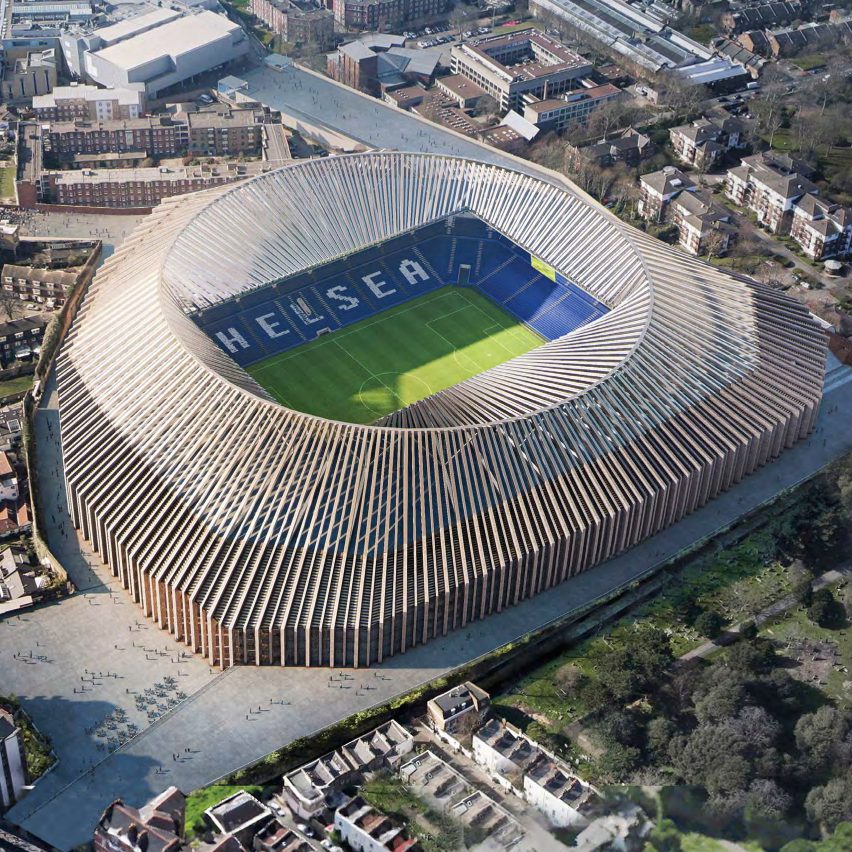
Herzog & de Meuron's update for Chelsea FC's Stamford Bridge stadium is defeated after the planning permission expired.

Planning consent to start the Swiss firm's £500 million renovation plans ran out on March 31, as first reported by Build Design.

As no progress had been made on the project since it was put on hold indefinitely due to an "unfavourable investment climate" in 2018, this means the plans are now dashed.

Project unveiled in 2015

The practice, which was working with London architecture firm Lifschutz Davidson Sandilands on the overhaul, first unveiled its transformation of Stamford Bridge in 2015 and was granted planning permission in 2017.

The project has faced a number of stumbling blocks. Just months before it was shelved in 2018, the local council had to step in to prevent a court injunction against the design after a group of locals claimed it would block natural light to their homes.

Stamford Bridge was completed in the London Borough of Hammersmith and Fulham by Scottish architect Archibald Leitch in 1876, and first used as an athletics club before becoming Chelsea's home ground in 1905.

Renovation added 264 brick piers

The main aim of the renovation project was to increase spectator capacity from 41,837 to 60,000. A key feature of the proposal was the addition of 264 brick piers that would enclose the existing structure to create a covered walkway around its perimeter.

The brickwork, which was intended to reference local architecture, would have supported a steel ring above the pitch, creating the necessary room for extra stands as well as a shop, museum and restaurant.

Herzog & de Meuron was founded in Basel, Switzerland in 1978 by Jacques Herzog and Pierre de Meuron. Its recent projects have included a motorway chapel.

Firm's London and Paris projects face legal battles

This is not the first time that the firm's projects have faced hurdles. Its Tour Triangle skyscraper, which is set to be built in Paris,  passed a final legal hurdle last year. Once completed, it will mark the city's tallest skyscraper.

Tate Modern's Herzog & de Meuron-designed extension in London was also the subject of another legal battle when residents of nearby Neo Bankside said gallery visitors were spying on them from the Viewing Platform.

The case was thrown out in 2019 by a high court judge, who suggested that the residents could take measures to protect their own privacy, including installing net curtains.

The post Herzog & de Meuron's Chelsea FC stadium plans expire appeared first on Dezeen.


from Dezeen https://ift.tt/2WjjjZL