Monday, 26 July 2021

Marshalls Landscape Protection creates protective design-led street furniture

Colourful street furniture

Dezeen promotion: Marshalls Landscape Protection's RhinoGuard decorative and protective street furniture, including planters and seating, has been crash-tested to the latest standards in Hostile Vehicle Mitigation to help create safe outdoor spaces without sacrificing design.

UK-based Marshalls Landscape Protection has a wide selection of products that can be used to ensure safety while blending in with the existing landscape.

Protective street furniture
Benches can be used to create protected areas

The products aim to make public areas feel less fortified while opening spaces to increase footfall in town centres and cities.

Specifically, Marshalls Landscape Protection's protective street furniture is designed to be a decorative addition to urban environments and to prevent hostile or errant vehicles from entering an area.

Bollards, cycle stands, benches and litter bins can all be used to help keep public spaces safer from vehicles, something that Marshalls Landscape Protection believes will become even more important as people start returning to city centres for work and leisure post-pandemic.

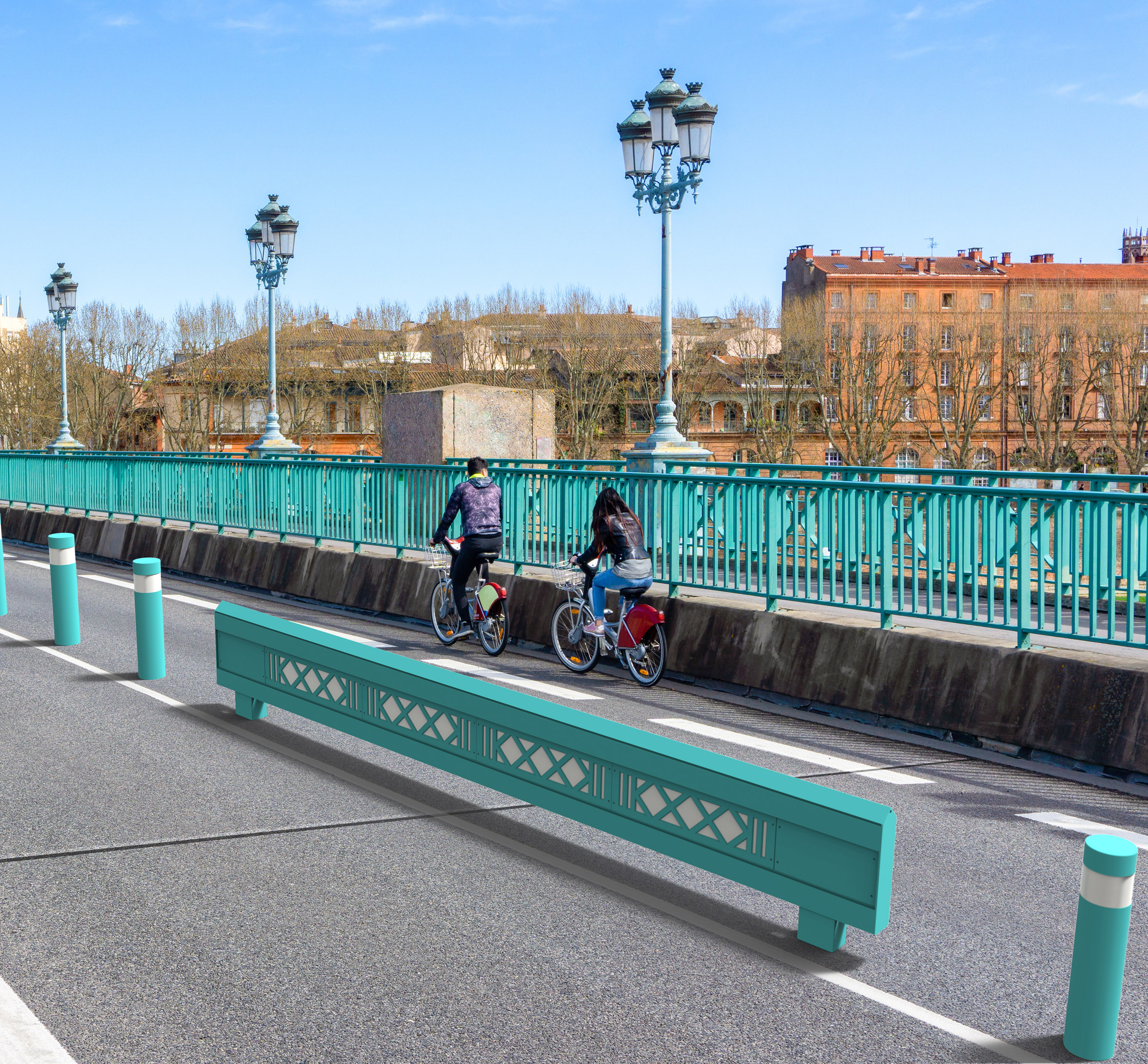
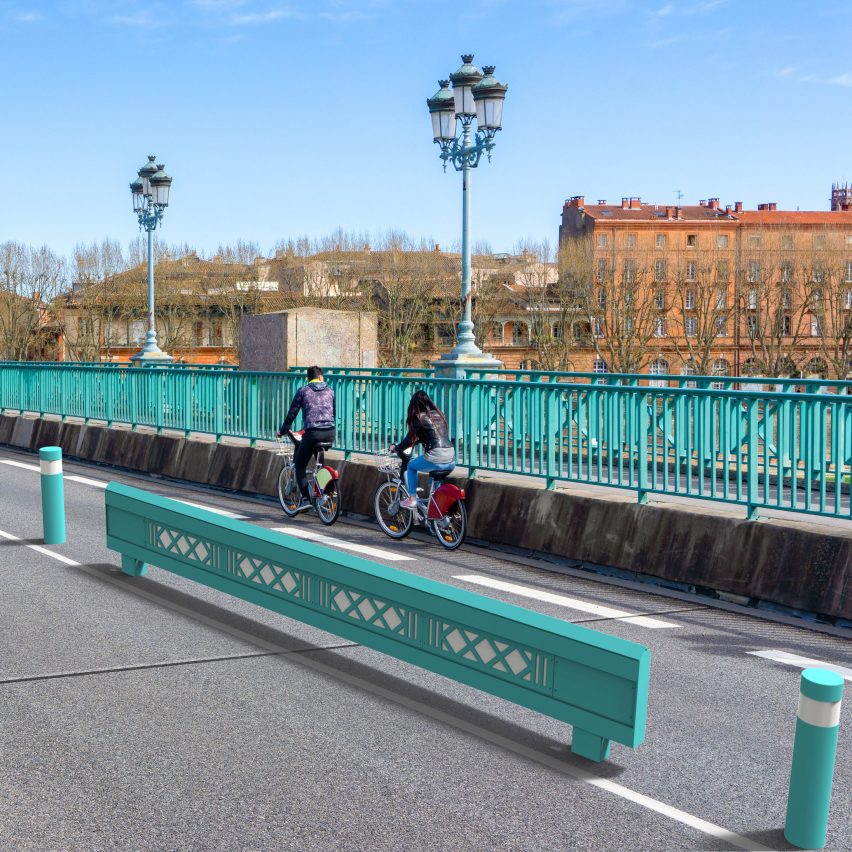
Turquoise protective barriers
They are designed to have minimal visual impact 

The company's products are designed to have a minimal visual impact on the environment while negating the need for harsh measures such as metal barriers or concrete blocks.

Instead, its RhinoGuard street furniture aims to combine safety and aesthetics and can be tailor-made to suit the needs of individual projects.

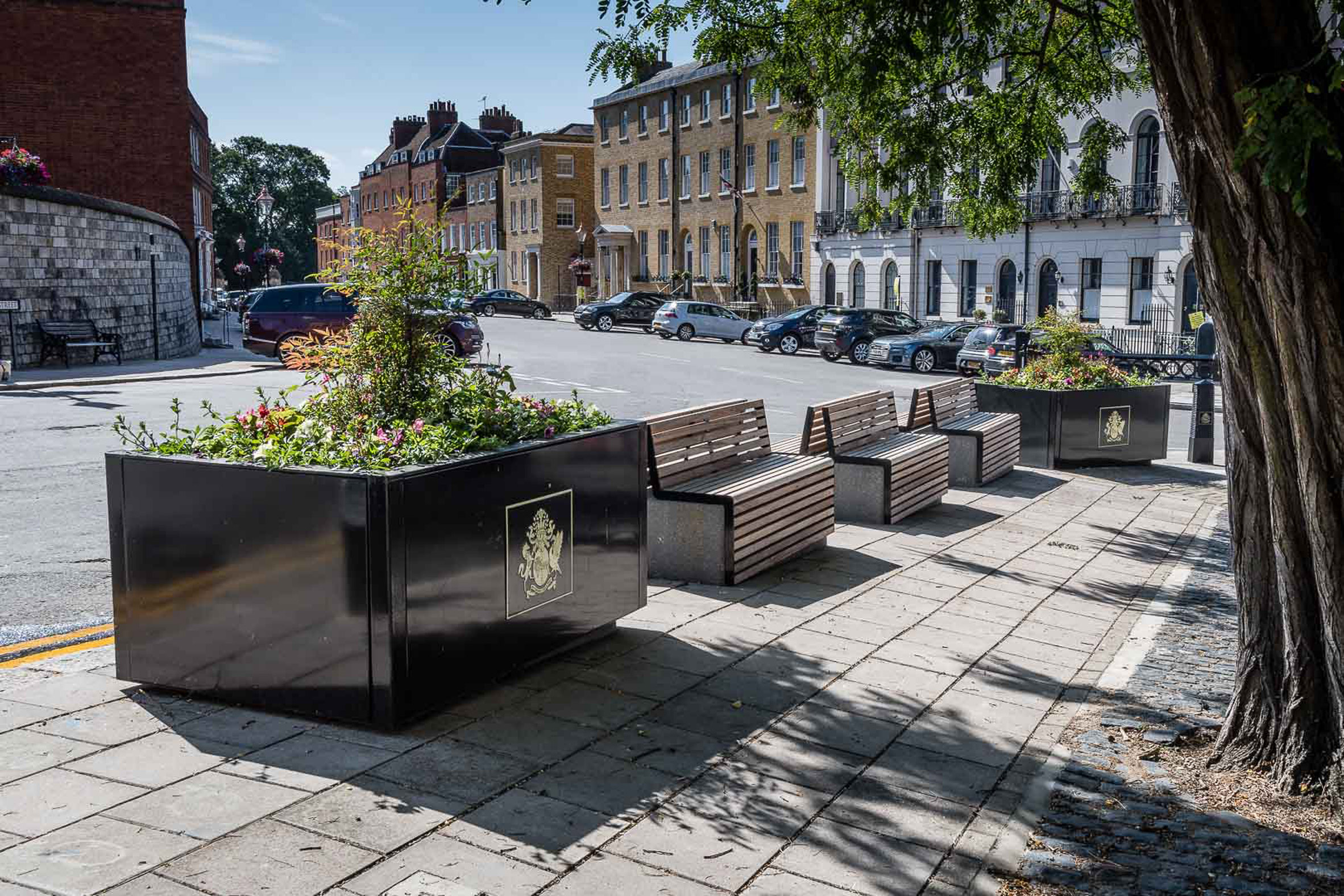
Large planters that function as vehicle protection
Large planters function as vehicle protection

Marshalls Landscape Protection offers a flexible portfolio of crash-tested street furniture products.

From the top levels of Hostile Vehicle Mitigation (HVM) certification, PAS 68/IWA 14.1, which are capable of stopping a 7.5 tonne vehicle travelling at 50 miles per hour, to the PAS 170 accreditation at the other end of the scale.

This protects against vehicles weighing up to 2.5 tonnes travelling up to 10 or 20 miles per hour.

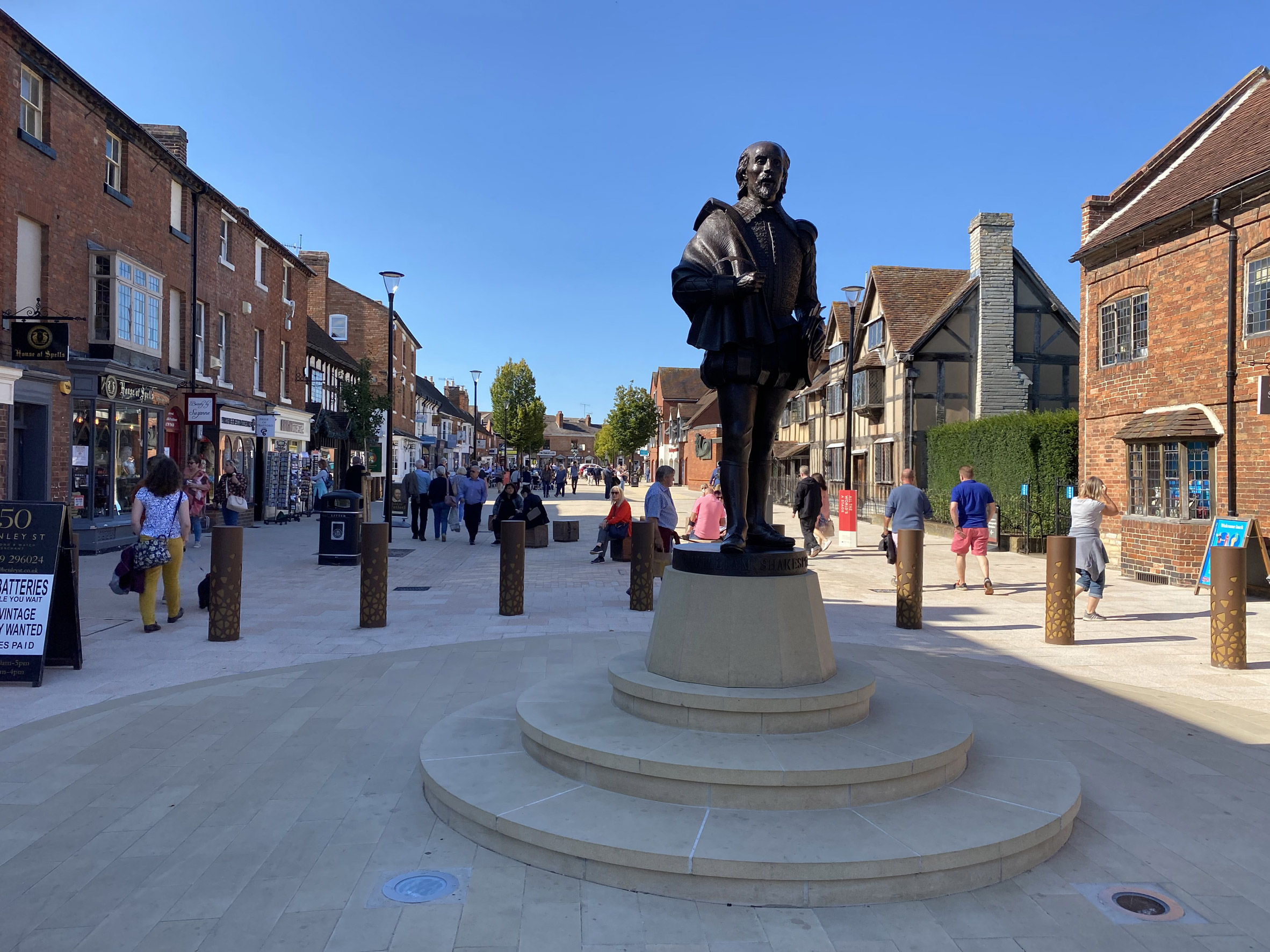
Bollards surrounding a statue
Marshalls Decorative bollards protect a historical site in Stratford upon Avon

The majority of Marshalls Landscape Protection's products are manufactured in the UK, and the company uses ethically sourced materials.

It has also signed up to the Carbon Trust Standard to reduce the carbon footprint in its product manufacturing processes.


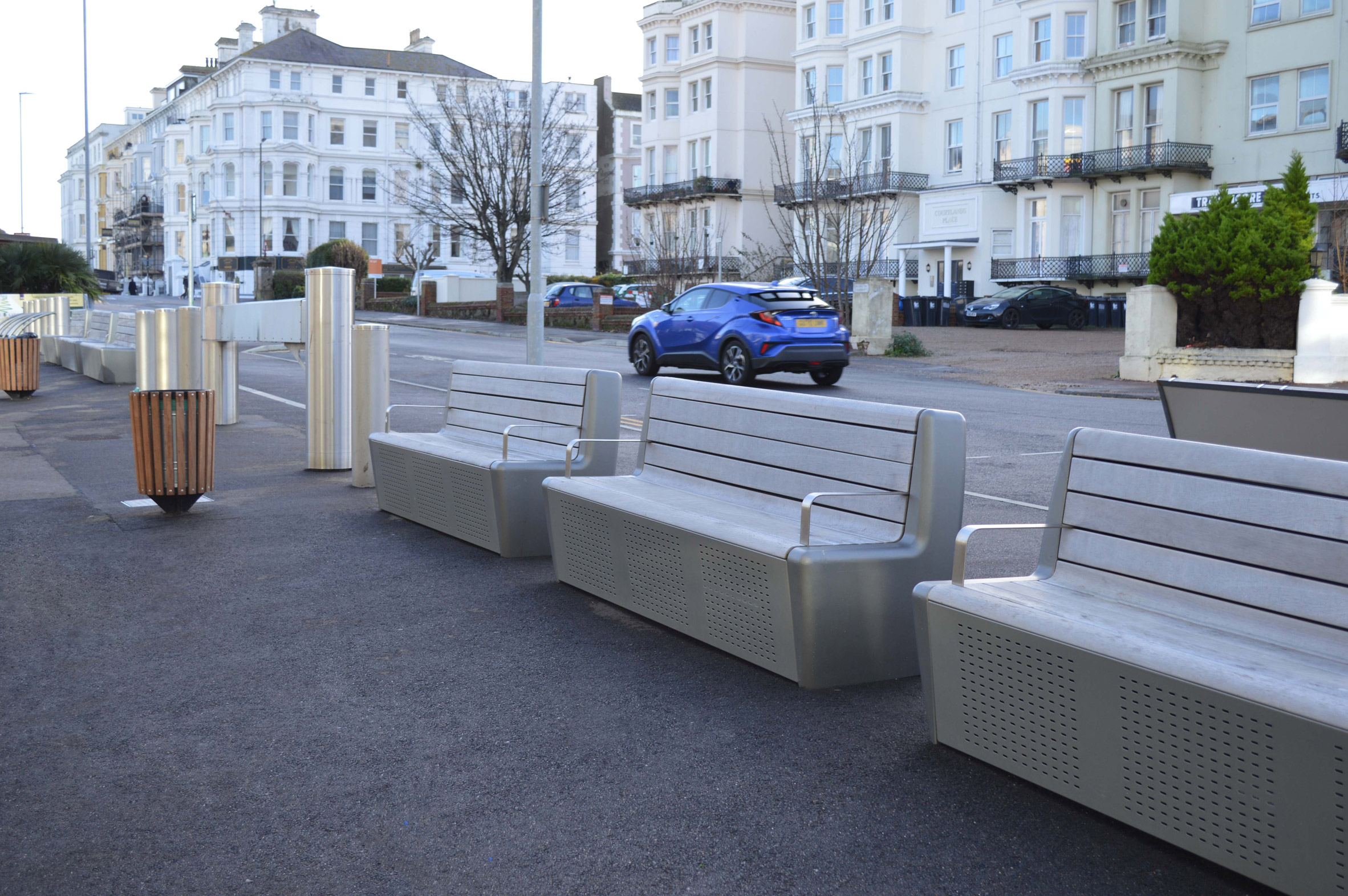
Stone benches
Discreet benches offer protection and a place to rest

The company believes its products will be helpful as pandemic restrictions start to lift and urban areas get busier.

"Architects and landscape designers are in a strong position to create safe and attractive urban spaces that will be crucial for attracting people back into towns and city centres," the brand explained.

"By implementing protective street furniture products and taking a design-led approach to security, our public spaces can be future-proofed in a way, keeping people safe, not scared for years to come."

To learn more about the products on the brand's website.


Partnership content

This article was written by Dezeen for Marshalls Landscape Protection as part of a partnership. Find out more about Dezeen partnership content here.

The post Marshalls Landscape Protection creates protective design-led street furniture appeared first on Dezeen.


from Dezeen https://ift.tt/3wXKc4n

Sunday, 25 July 2021

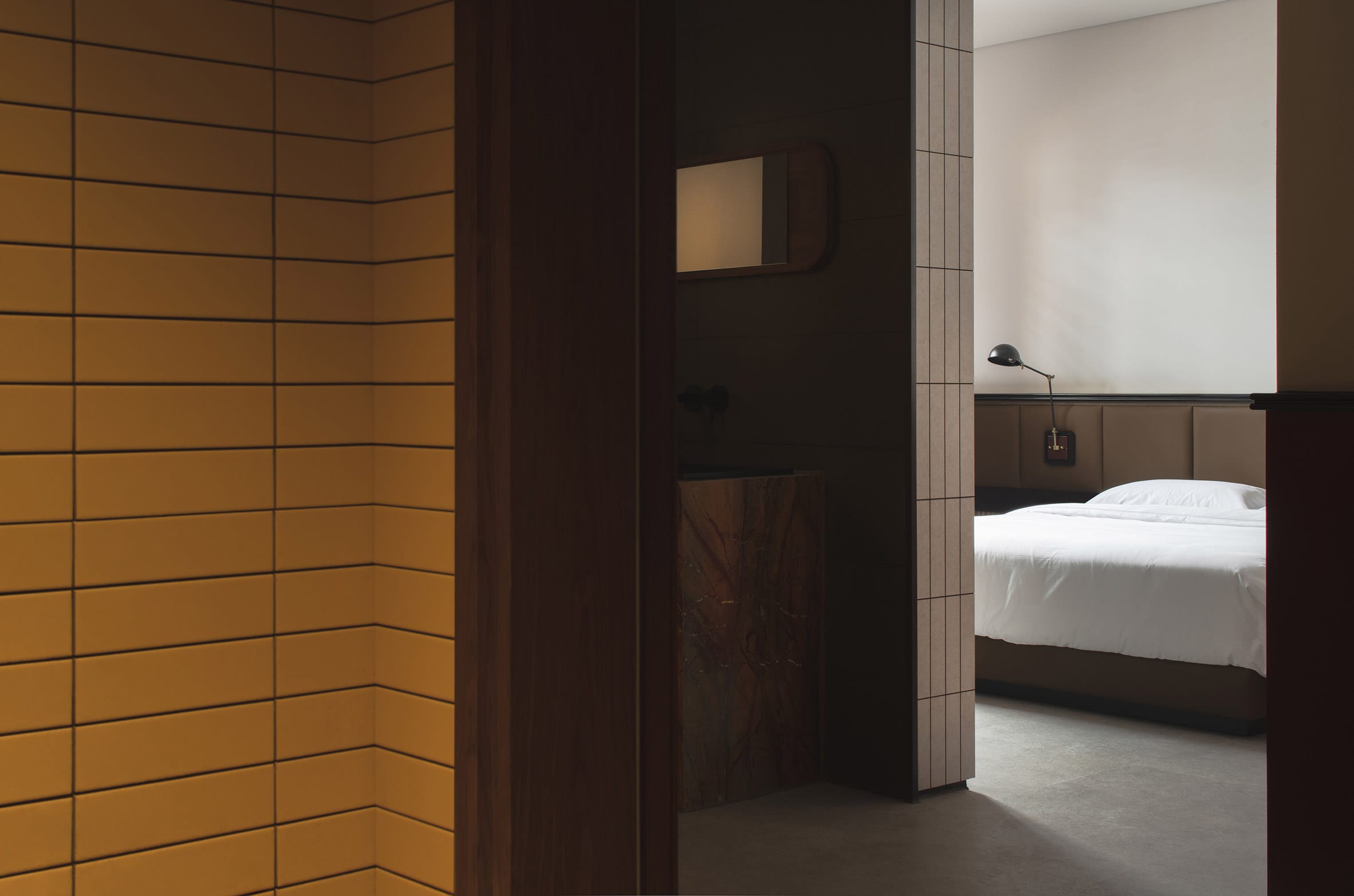
Mustard yellow tiles clad the walls of this Chengdu hotel by Archetype

Buda Hotel interior by Archetype

Grid patterns and crisp lines are softened by an earthy colour palette in this hotel interior in Chengdu, China, by local firm Archetype Design Organization.

Located in a building from 2002 that was previously used as shops and offices, the 3,209-square-metre Buda Hotel is sandwiched between the city's busy Yizhou Avenue and a quiet community neighbourhood.

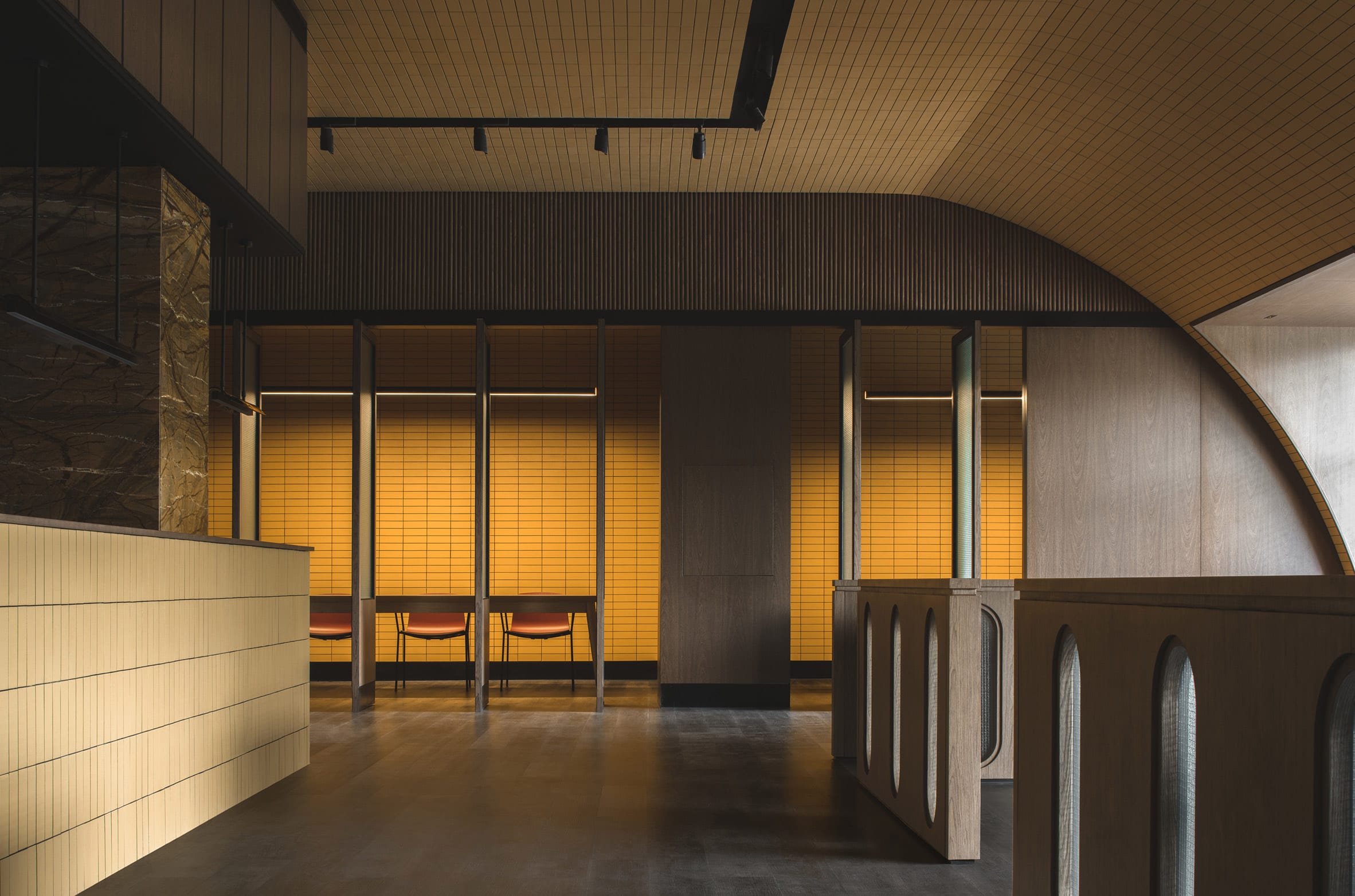
Buda Hotel lobby with counter and curved ceiling clad in yellow tiles
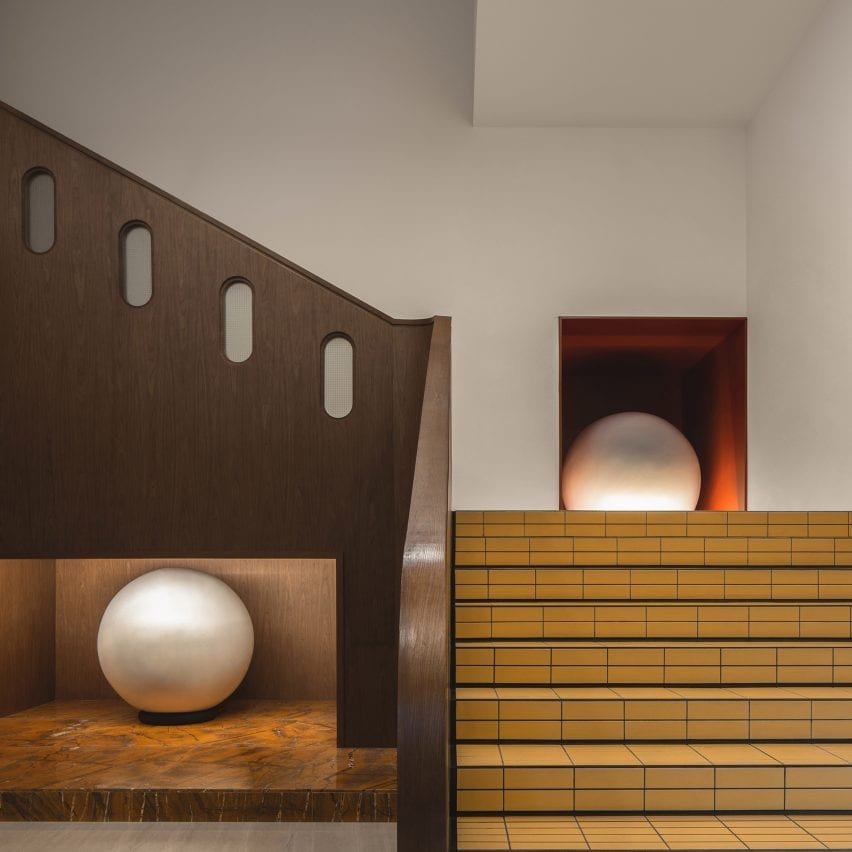
Yellow tiles feature in Buda Hotel's lobby (above) and in the stairwell that leads to the guest rooms (top image)

"For the stay-in hotel, we hope to achieve a process of integration; an experience of memory, and a state of forgetting oneself," the architects told Dezeen.

"[A] warm, delicate, comfortable and relaxing place – we hope it is a selfless experience."

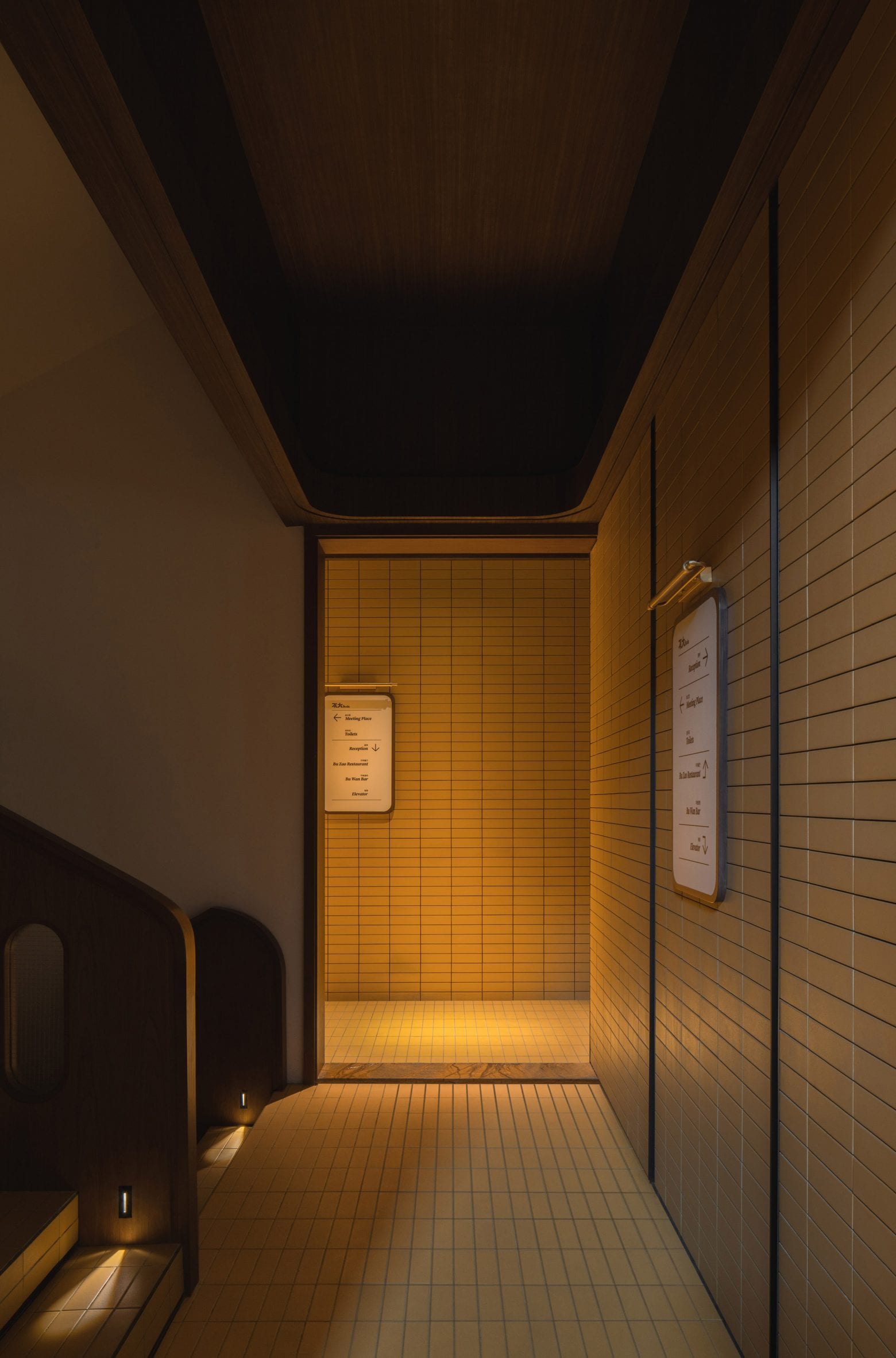
Yellow-tiled hallway with mellow lighting in hotel by Archetype
Hallways are atmospherically lit through recessed low-level spots

The exterior of the hotel is clad in a charcoal-coloured calcium silicate board. An entranceway clad in walnut panelling and rectangular mustard yellow tiles guides travellers inside.

The mustard tiles continue inside the hotel's lobby where they stretch across an arched ceiling that the architects said was installed to evoke a homely atmosphere.

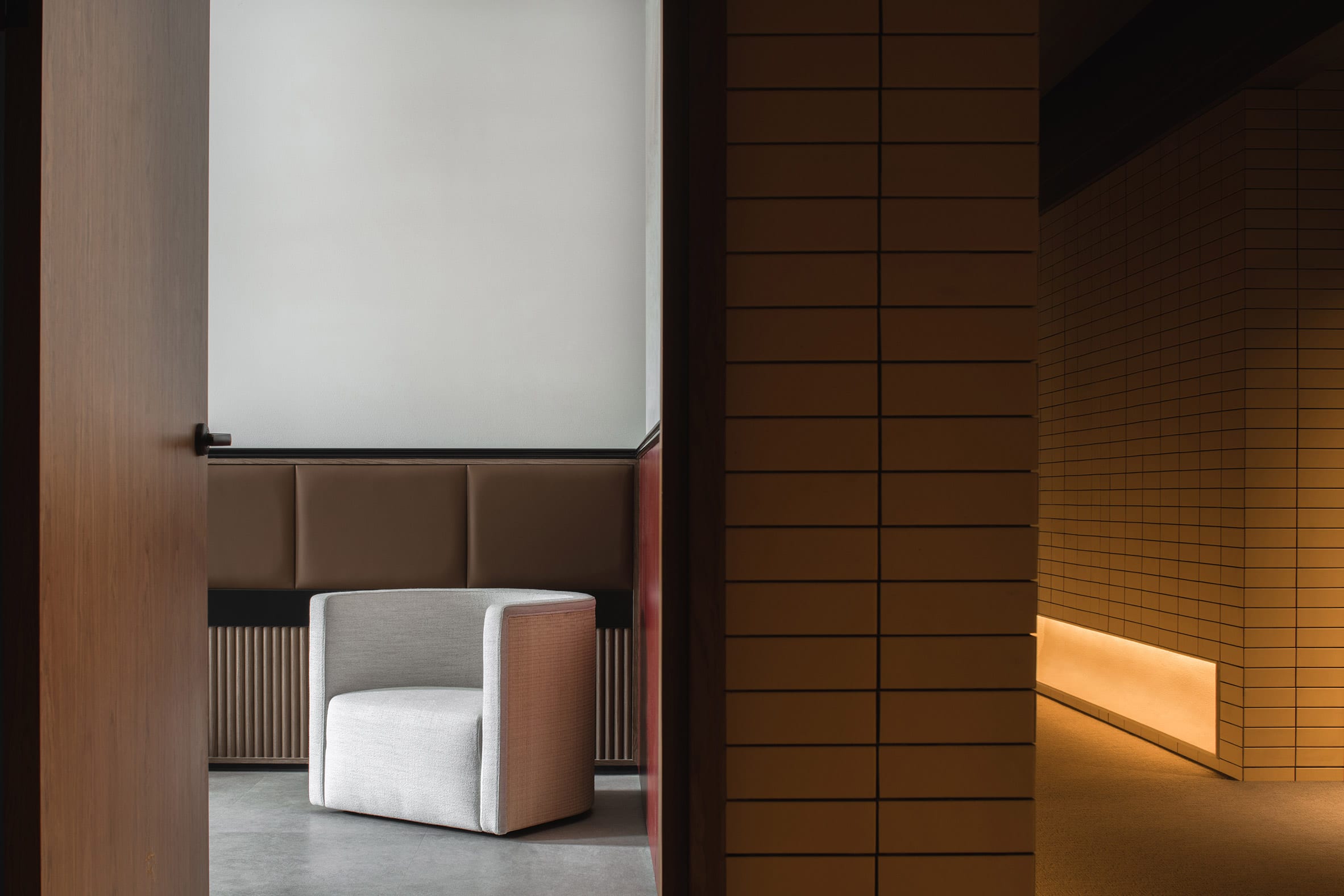
Yellow-tiled hallway and white armchair in a guest bedroom of the Buda Hotel
The hotel rooms are naturally lit and feature light-coloured furniture

"The first purpose is to give depth and bearing for light into the space, and the second purpose is to wrap around the shapes, so as to perceive comfort in mind," the studio said.

"The jump in colours is to define the relaxation and cuteness of the hotel, and we chose yellow to keep the visual temperature of the hotel. The choice of mustard yellow tiles is to increase the meticulous experience while ensuring the durability of the hotel. It also forms a strong contrast between the hotel and the surroundings."

In the lobby, the tiles are combined with crisp white walls and dark walnut wood. A staircase with spotlit spherical sculptures installed in alcoves leads to the hotel's 57 guest rooms.

Dark corridors, atmospherically lit by recessed low-level lighting, are punctuated by walnut-framed doors fitted with frosted wire mesh glass.

Yellow-tiled hallways and bed with white sheets in hotel interior by Archetype
Walnut wood doorframes lead into the bedrooms

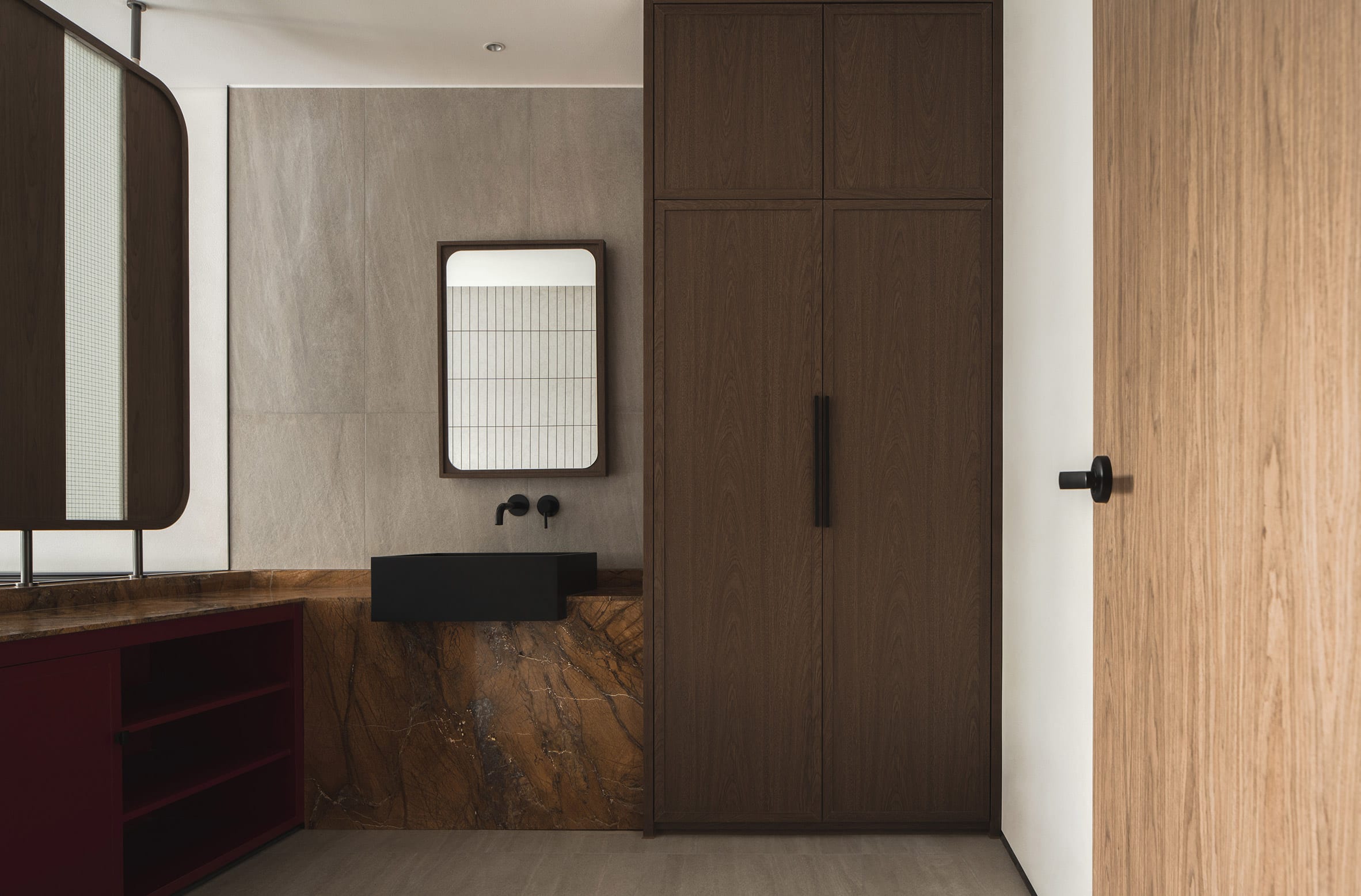
In contrast to the dark corridors and lobby spaces, the hotel's rooms are naturally lit. The dark walnut panelling is continued inside the rooms and used on furniture and window shutters, while off-white rectangular tiles, white bed linen and brown leather create a lighter mood.

The hotel also includes a gym, restaurant, bar, office and meeting rooms.

Wooden doors and red stone counters in bathroom of Buda Hotel
In the bathrooms, wood is contrasted with stone counters

Archetype Design Organization was founded in Chengdu in 2014 by Jinnan Liao.

A curved tiled wall is also used to guide customers inside this minimal patisserie in Hangzhou, while pink tiles were added to the facade of a London flat extension to create an unusual exterior.

Photography is by Chuan HE / Here Space Photography.

The post Mustard yellow tiles clad the walls of this Chengdu hotel by Archetype appeared first on Dezeen.


from Dezeen https://ift.tt/3xftldD

Stüssy's Shibuya store interior by Perron-Roettinger draws upon the clothing brand's surfing roots

Stüssy Shibuya store by Perron-Roettinger

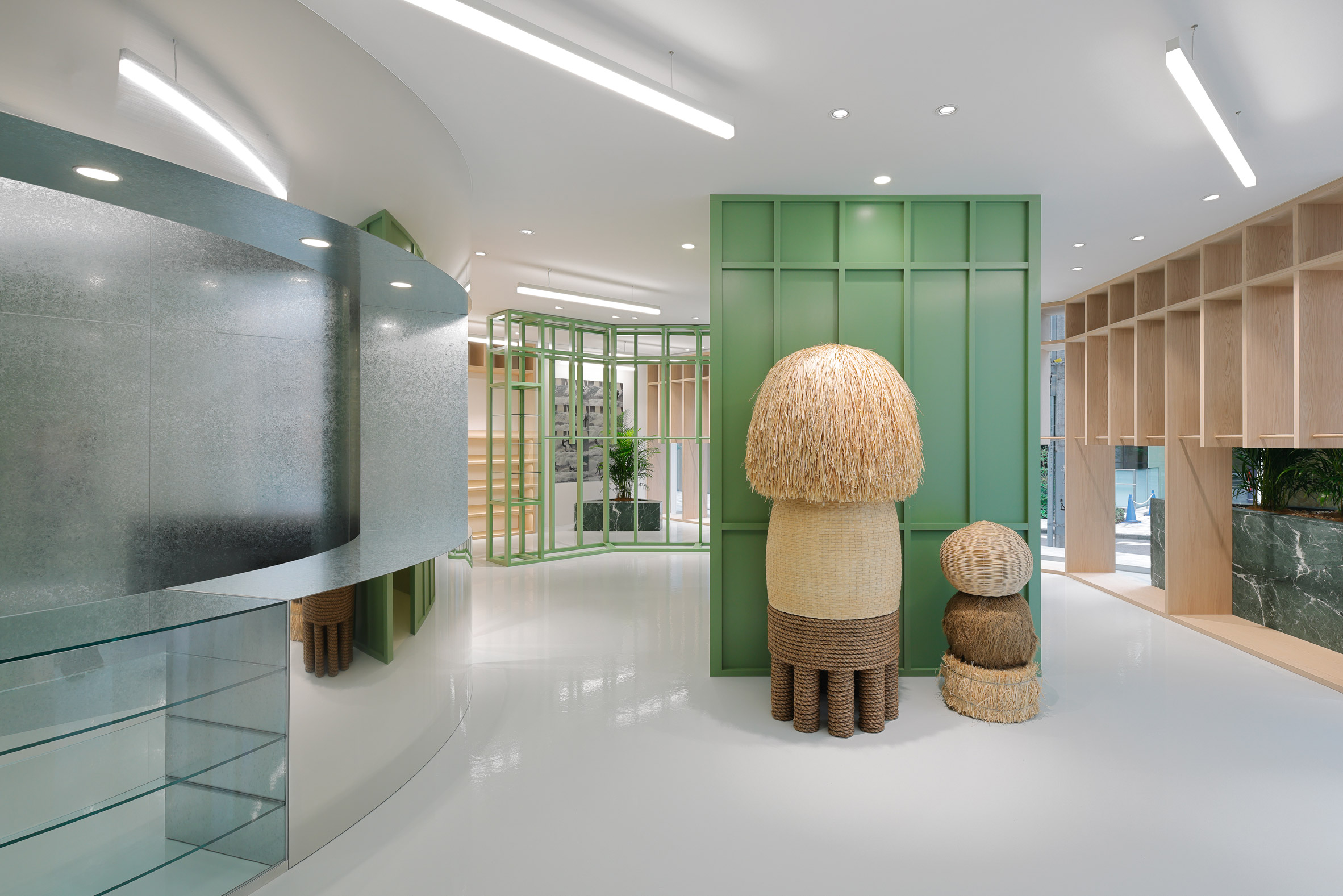
Woven grass "Tiki Totems", timber frameworks and bold geometric shapes that recall surf culture make up Los Angeles-based design studio Perron-Roettinger's latest store for clothing brand Stüssy in Tokyo.

Called the Stüssy Shibuya Chapter, the store is located on a corner plot in the city's bustling Shibuya ward.

Green shelving and mirrored storage in Stüssy Shibuya store
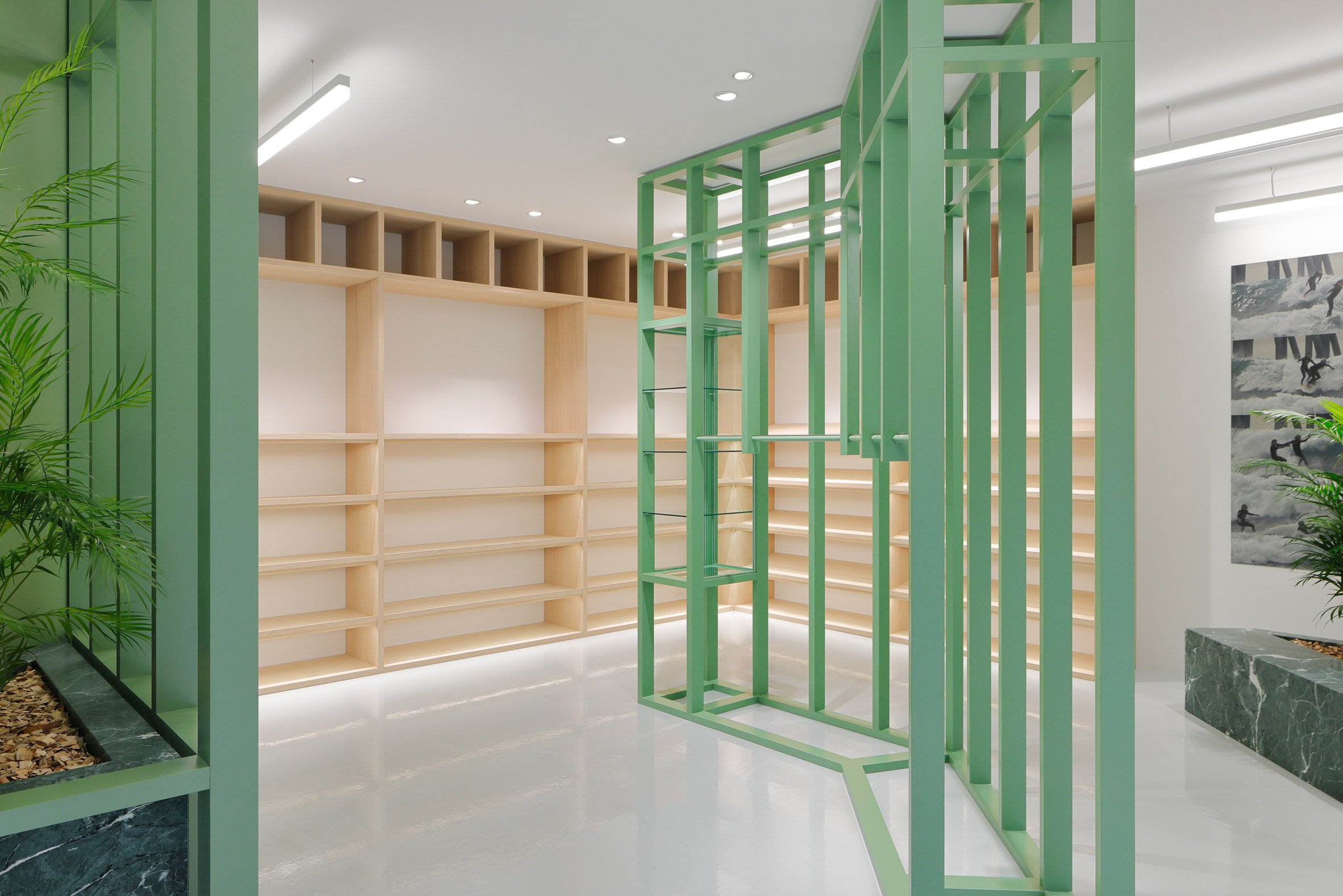
Green timber storage features throughout the store's interior

Perron-Roettinger, founded by Willo Perron and Brian Roettinger, wanted to create a store interior that encourages circulation and interactivity.

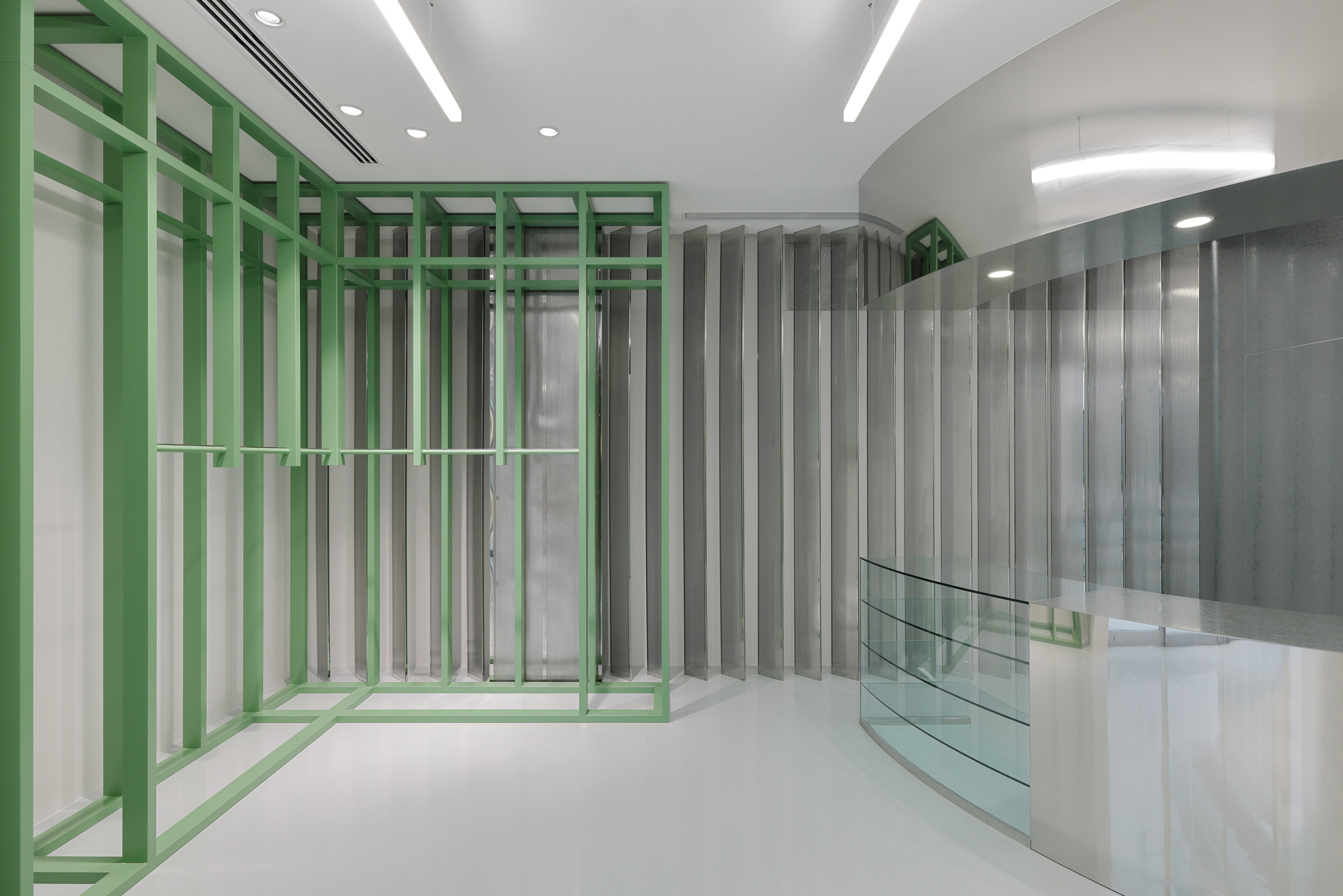
Instead of the large and open floor plan that is typical of luxury clothing stores, the studio created a series of intimate spaces divided by timber frameworks that double as displays with rails and shelving.

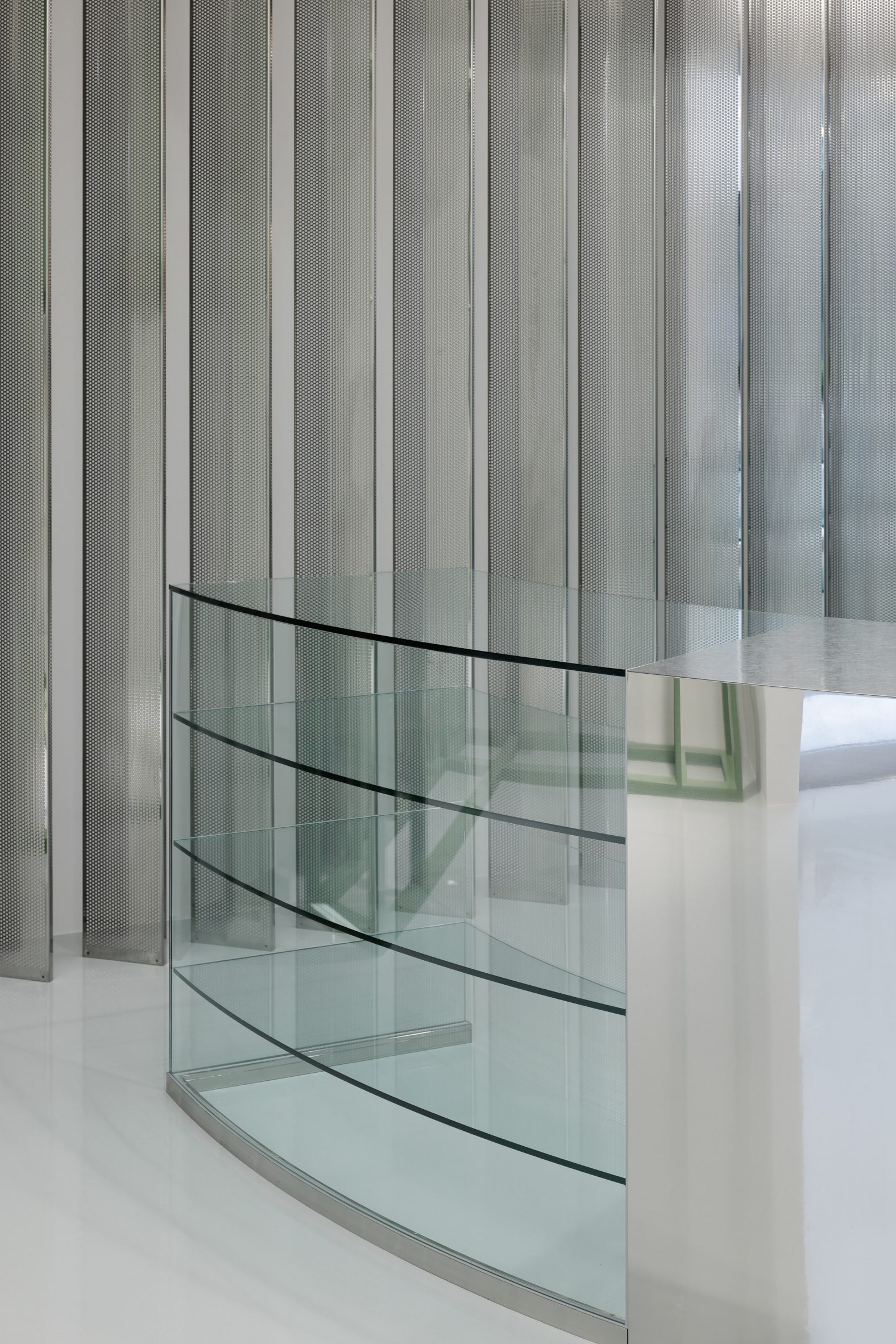
Perforated silver slats and mirrored cupboards in retail interior by Perron-Roettinger
The curved cash desk is clad in mirror-finish stainless steel

"For the layout of this store we wanted to stay away from a linear floorplan and for people to always be met with different options on how to travel through the space," Willo Perron told Dezeen.

"There isn’t a single way to navigate through and shop the space," he continued. "Despite the fact that it's not a huge store, every time you come you can discover something different."

"Traditional layout of spaces is quite boring and it feels like the path is already chosen for you. I like the idea that different spaces create themselves within the store and you have options in your journey every time."

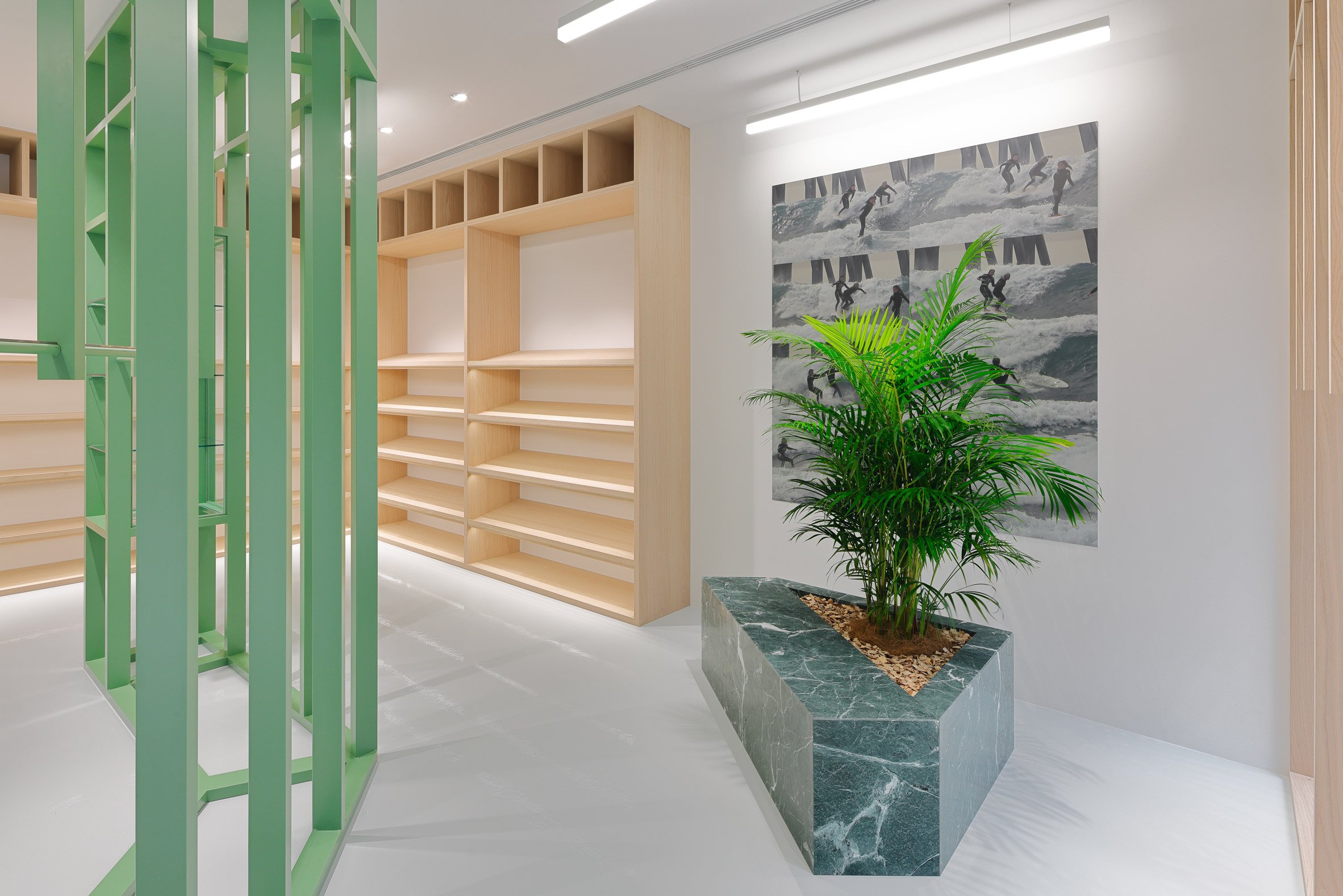
Green and wood shelving with green marble planter in Stüssy Shibuya store
Marble planters match the green storage system

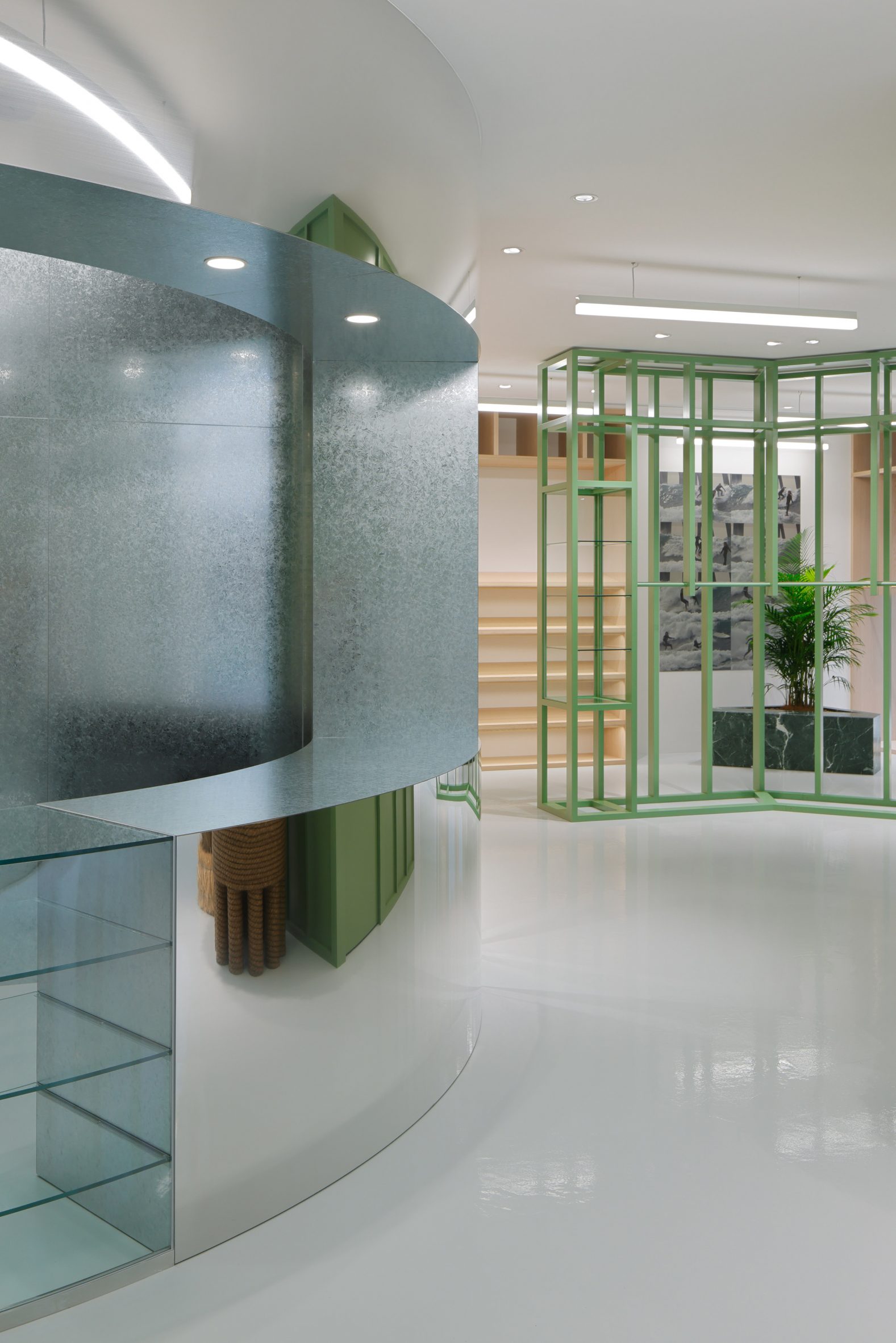
A curved cash desk clad in mirror-finish stainless steel on the outside and galvanized metal on the interior sits to the left of the entrance. Behind the desk, a wall of perforated stainless mesh is used to create a louvre system that serves as a privacy wall.

A fitting room wrapped by green timber panels and clad inside with an acoustic painted wood-wool material sits in the centre of the store.

Green shelving and mirrored counter in Stüssy Shibuya store
The upper part of the cash desk is finished in galvanized metal

"In terms of colours and materials, [the store is] really based on an industrial colour palette," Perron informed.

"We tend to always use warehouse greys, blues and greens that you would see in factories or similar spaces. The materials are also similar; a refined version of base building materials with a fair amount of polish to it."

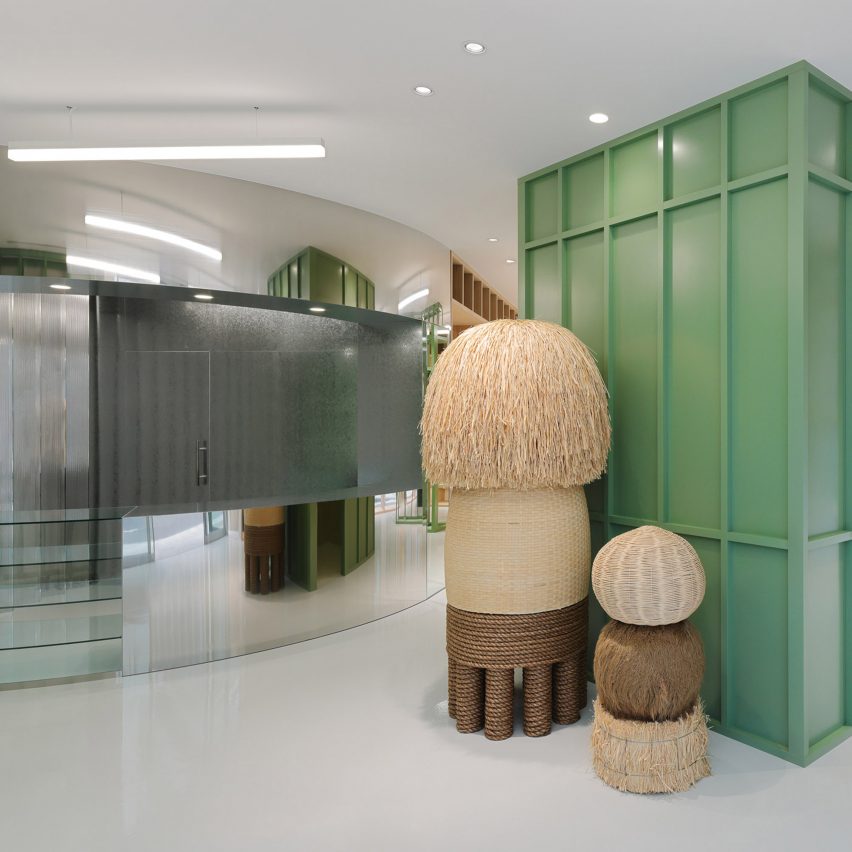
The shop floor is interspersed with a series of angular planters made from green marble and filled with palm plants, as well as a family of Tiki Totems.

Designed by Perron Roettinger and made from woven grasses in Los Angeles, the sculptures nod to Stussy's Californian surfing roots.

Green and wooden shelving in retail interior by Perron-Roettinger
Built-in wooden shelves wrap the store's back wall

"Retail spaces inherently need function; you need to be able to present, fold, and store clothes, have changing rooms and a cash desk, but we're also trying to build iconography into each store," said Perron in reference to the Tiki Totems.

"The DNA of Stüssy, particularly the early t-shirt graphics era, used a lot of tiki references. I thought it'd be great to modernise and hybrid it with a postmodern geometry. It also has a bit of a sense of humour and gives the store some identity."

Mirrored counter, mushroom statues and green shelving in Stüssy Shibuya store
"Tiki Totems" nod to Stüssy's origins in surf culture

The Stüssy Shibuya Chapter store joins the American brand's worldwide Chapter network. This is conceptualised by Perron Roettinger and compliments the design direction of the Shanghai, Nagoya and Kyoto Chapter locations, also designed by the LA-based design studio.

Perron-Roettinger, which also designed Stüssy's Milan and London outposts, works across interiors, branding and identity, print, and live events.

The studio was the creative mind behind Rihanna's Savage X Fenty show, Drake's 3D tour stage, and album covers for Jay-Z & St Vincent. Its interiors portfolio includes projects for Fenty, SKIMS and private residences.

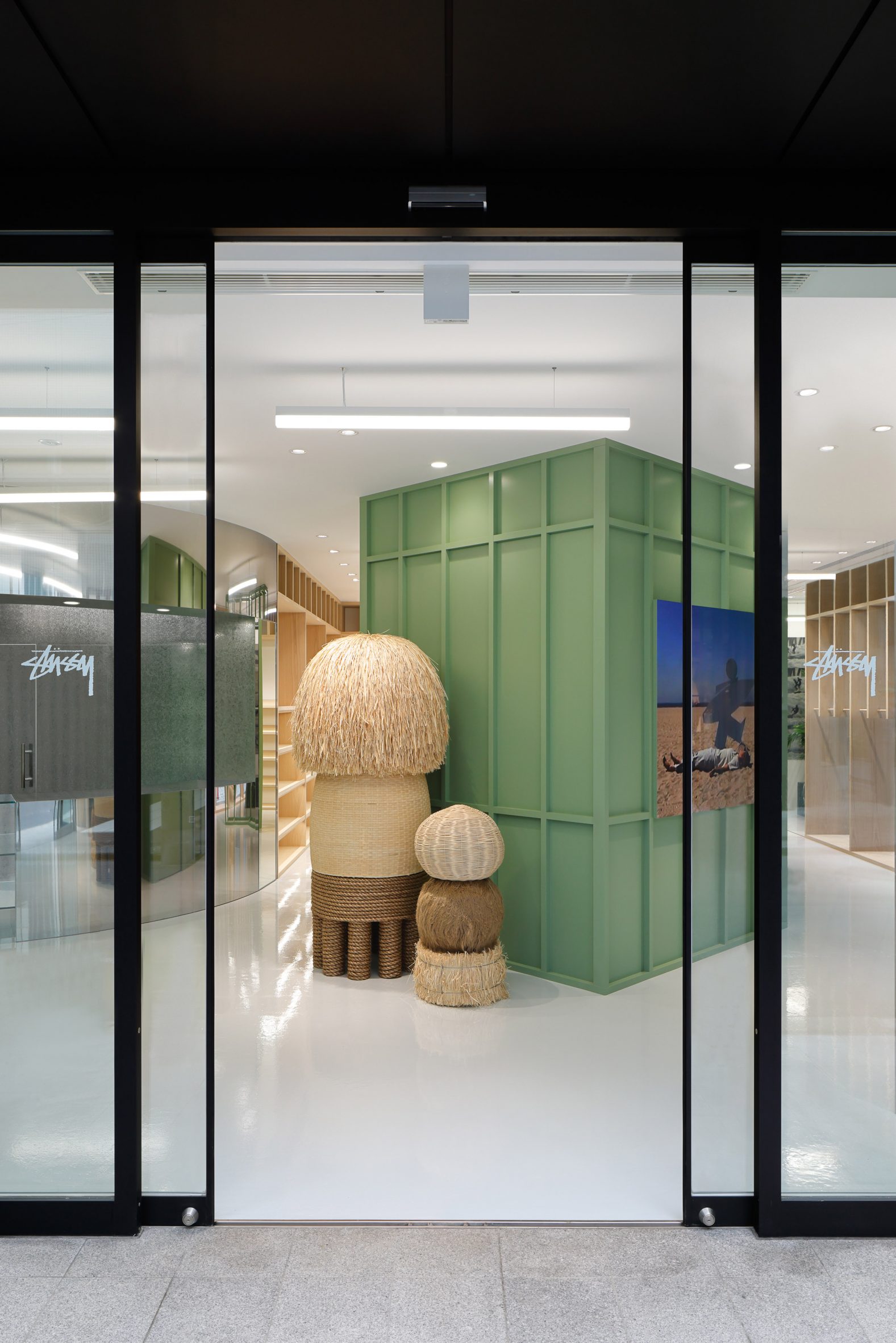
Entrance to retail interior by Perron-Roettinger
The store is located in Shibuya

Another recently-opened luxury streetwear boutique is Axel Arigato's Parisian flagship, where design studio Halleroed has used travertine podiums to display sneakers like sculptures.

Photography is by Munetaka Onodera.

The post Stüssy's Shibuya store interior by Perron-Roettinger draws upon the clothing brand's surfing roots appeared first on Dezeen.


from Dezeen https://ift.tt/3zvts6f

Ten architecture projects from students at the University of Oregon College of Design

University of Oregon College of Design

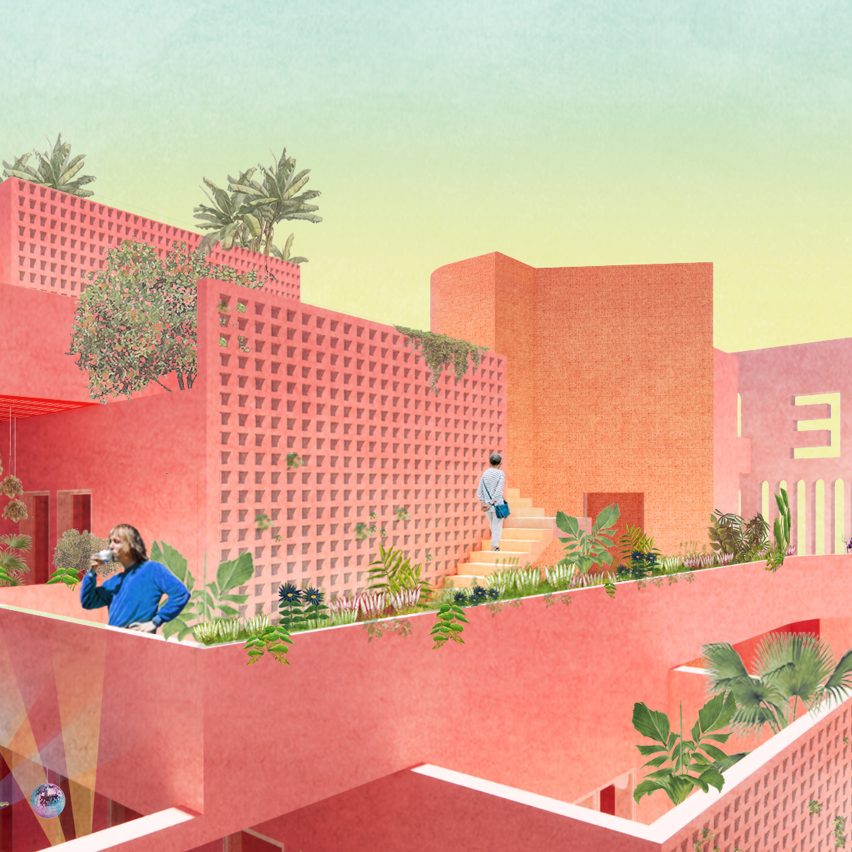
An urban agricultural centre that highlights all aspects of the food cycle and a design that explores the domesticity of public space are included in our latest school show by students at the University of Oregon, College of Design.

Also included are mass timber structural systems, a forest-based education centre and solutions to the housing crises.


University of Oregon, College of Design

School: School of Architecture and Environment
Tutors: Peter Keyes, Judith Sheine, Howard Davis, Mark Donofrio, Hajo Neis, Esther Hagenlocher, Craig Wilkins, Kayin Talton Davis, Cleo Davis and Gerald Gast

School statement:

"University of Oregon's School of Architecture and Environment is nationally recognised for its innovation and sustainability research, including designing buildings, interiors, landscapes and communities.

"We are committed to the principles of civic responsibility, environmental sustainability, international understanding and interdisciplinary education. The School of Architecture and Environment is located on the University of Oregon campus in Eugene and at the historic White Stag Block in Portland. We are a vibrant, collaborative learning community.

"We help students develop the values, knowledge, skills and practices they need to create better architecture and environments that resonate with people and their cultural, physical and ecological worlds. We are dedicated to recognising designers' accountability for their impact on environmental, social and cultural systems.

"We emphasise collaboration and a non-competitive but rigorous learning environment and encourage a supportive studio culture through facilitated peer teaching and teamwork. The School of Architecture and Environment doesn't dictate a specific design aesthetic or ideology for you to follow. Instead, we encourage intellectual inquiry as to the basis from which you forge your design path."

University of Oregon

Feed Your City: Nourish Lents by Hannah Zalusky

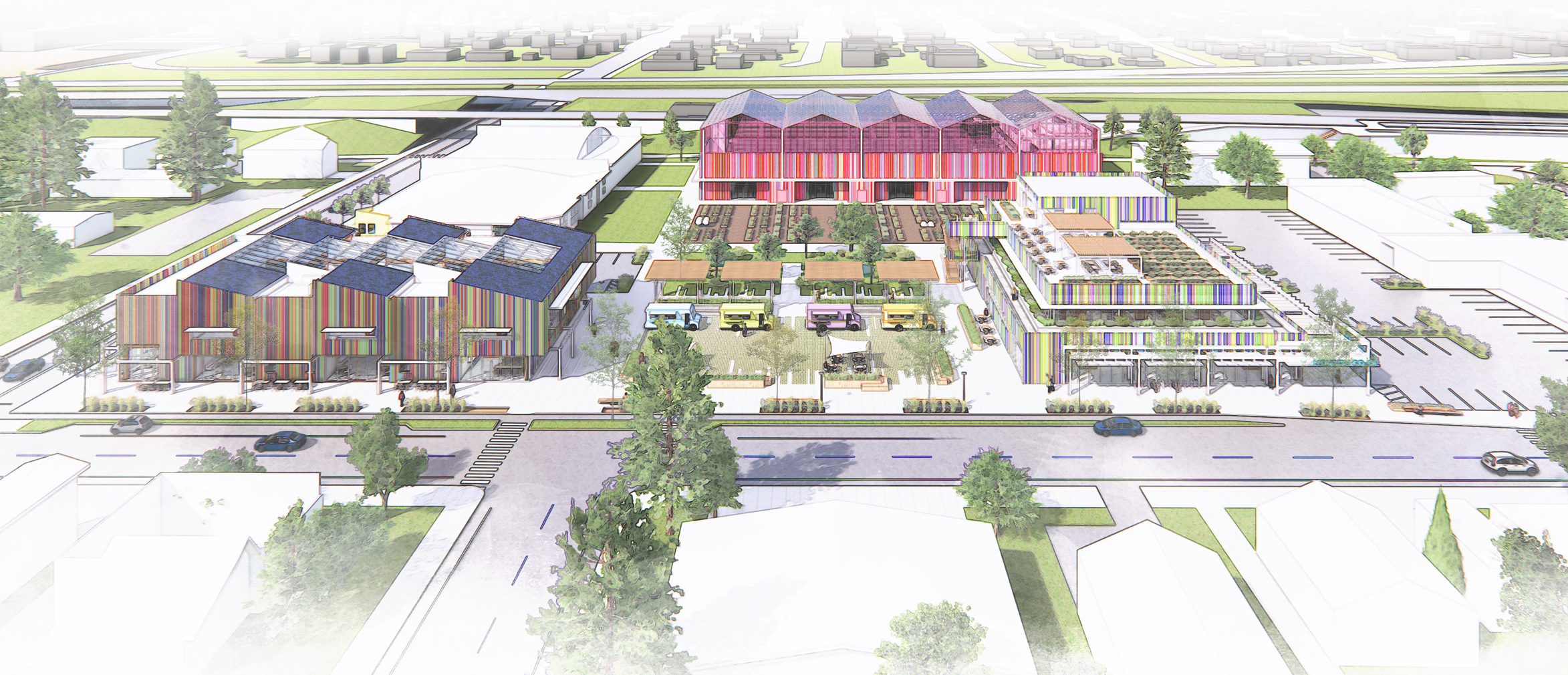
"Nourish Lents is an urban agricultural centre that highlights all aspects of the food cycle, from growing to compost in order to educate and nourish the community.

"As a model sustainable urban food centre, it aims to reduce food-related carbon dioxide emissions by recycling food waste and providing alternatives to animal meat consumption.

"The programme directly addresses the economic and social needs of the Nourish Lents community with a large flexible plaza, grocery store, food pantry and community garden plots.

"The on-site aeroponic vertical farming and insect farming will become resilient food sources for the local restaurant economy, and new food businesses can grow in the rentable kitchen and processing spaces."

Student: Hannah Zalusky
Course: Davis, ARCH 586, Foodspace: food, architecture and the city in the post-Covid 19 era
Tutor: Howard Davis

University of Oregon College of Design

Industrial Metabolism by Brennen Donnelly

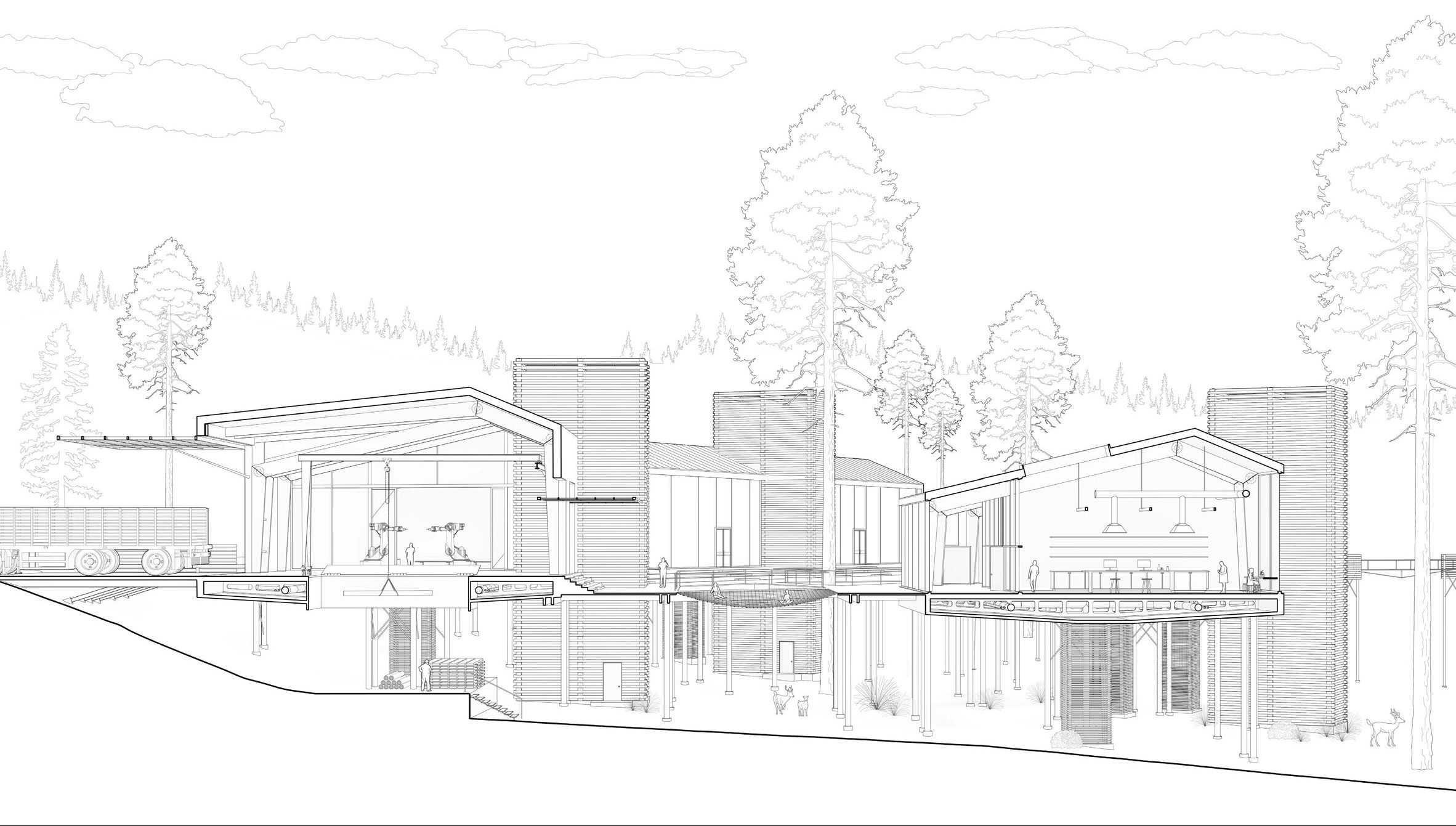
"This thesis project examined the ecological and industrial processes of a town along the Oregon coast where logging and agriculture have historically dominated the local economy.

"A master plan was proposed that introduced facilities to refine logging waste into biochar. This is fueled by an onsite methane digestor, sapling greenhouses irrigated by the effluent from the digestor, dowel-laminated timber manufacturing facilities to expand logging operations, and hangars for industrial drones for seeding and reforestation.

"The building most extensively developed was the Timber Research and Innovation Centre. Inspired by Coastal Oregon vernacular, this building was proposed as a setting for researchers, designers, foresters and fabricators to collaborate to ensure that the natural resource is sustainably optimised on all fronts. The Timber Research and Innovation Centre is the feedback loop for all processes onsite."

Student: Brennen Donnelly
Course: Donofrio, ARCH 586 Building Economy Maintenance Ecology
Tutor: 
Mark Donofrio

University of Oregon College of Design

Landscapes of Care by Josymar Rodriguez

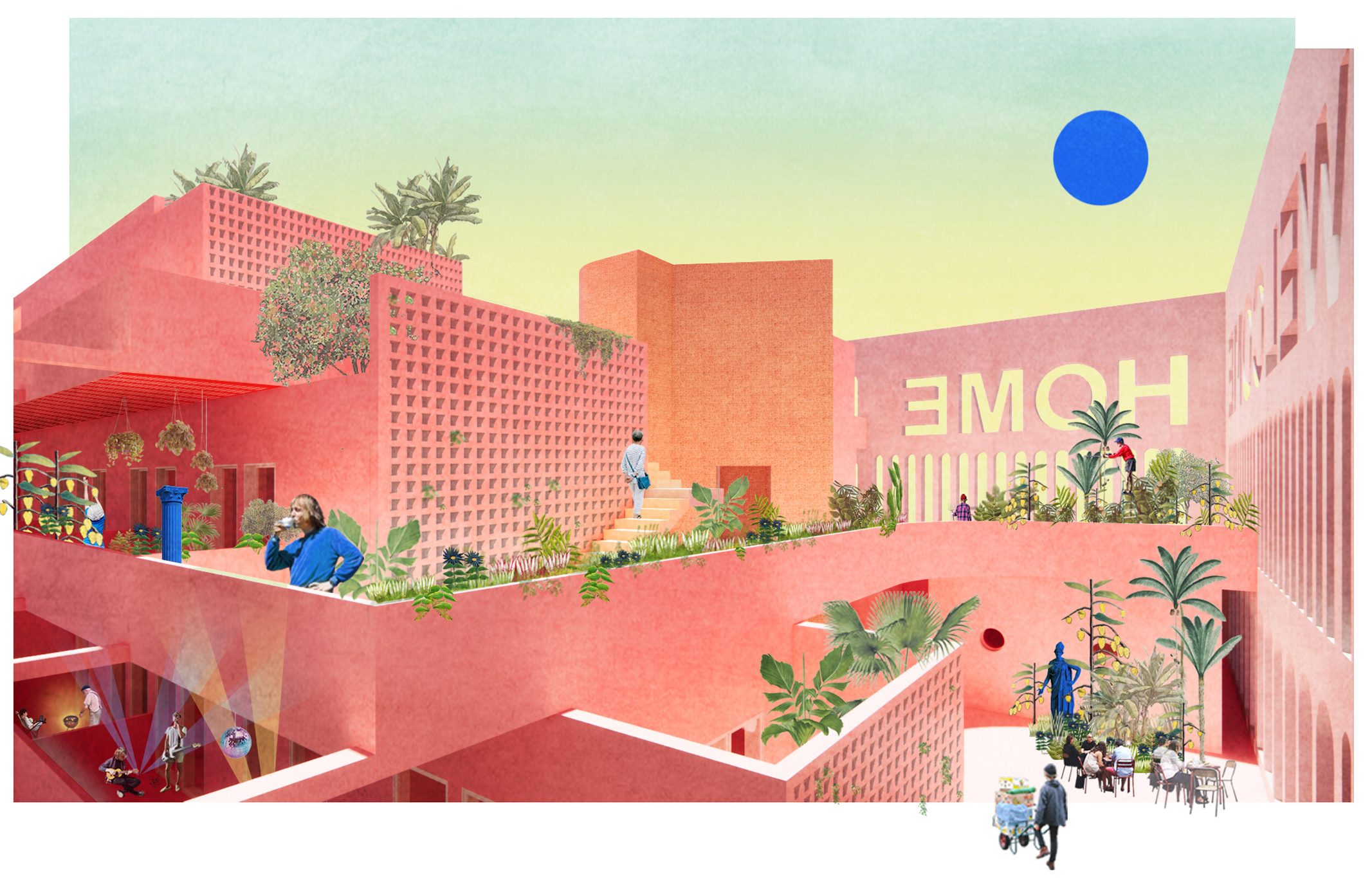
"Landscapes of Care is a research project developed in Oldtown, Portland. This is a neighbourhood where urban blight coexists with new developments, transition housing and numerous organisations catering towards the houseless population.

"It is an area where the public realm is home to many people. The project builds upon these questions: can we design cities beyond the monotone, oppressive and anonymous grey landscapes we are used to? Can we expand the limits of the domestic and transform our cities into landscapes of care?

"The design explores the domesticity of the public realm. It states that the domestic city comes from within, from the intimate and spreads towards the outside. Here, it expands the notion of home and those who comprise it.

"This project is the first step in that direction with public access services on the ground floor and housing at the top. It offers multiple outdoor spaces to build tight communities, connect with nature, enjoy yourself and the company of others.

"The domestic city takes every chance to build a sense of home in the public realm, where you can find spaces for contemplation, meditation, rest, work and make, cook, and eat, cleaning yourself, meeting, and interacting. The domestic city erases the limits of public and private, putting in place structures of care and solidarity to build a just world."

Student: Josymar Rodriguez
Course: Neis, ARCH586 The EU-US International House, Innovation and Re-Generative Design
Tutor: 
Hajo Neis

University of Oregon College of Design

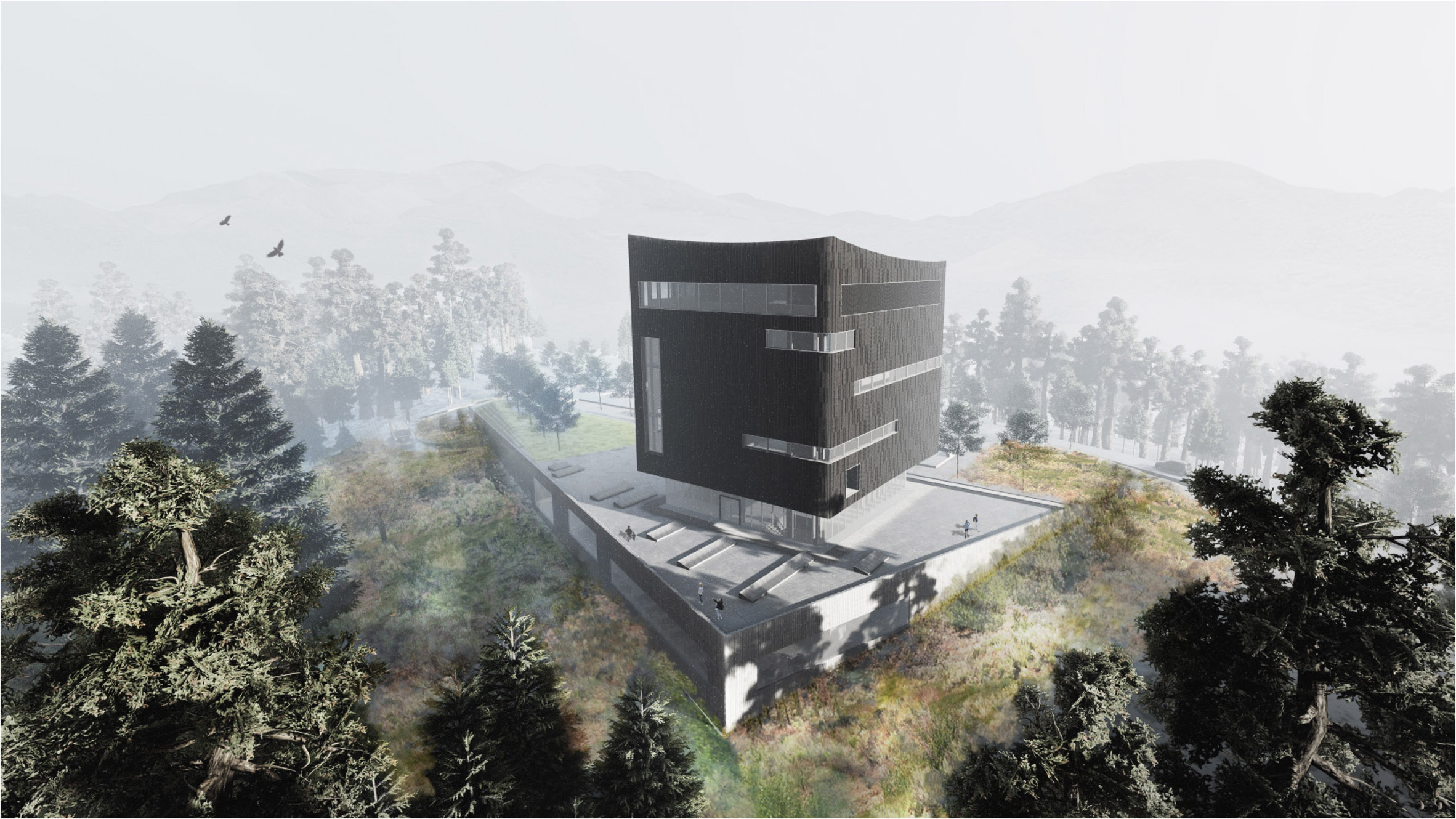
Transcalar Digestion by Billy Guarino

"Transcalar Digestion is the culmination of a two-term research studio that examined the problems associated with water quality and land exploitation in the Tillamook region of The Oregon Coast.

"The building, landscape and climate work in harmony to frame the crucial relationship between the water cycle, land management and water quality. As a result, the building programme is situated atop a hill at the Port of Tillamook Bay to capture views of the watershed and immerse itself in the forest.

"Here, an aquafarm-to-fork restaurant allows people to taste quality seafood that is harvested locally and sustainably, while a museum showcases exhibitions related to ecology, geography, local industries, forests and water quality."

Student: Billy Guarino
Course: Donofrio, ARCH 586 Building Economy Maintenance Ecology
Tutor:
Mark Donofrio

University of Oregon College of Design

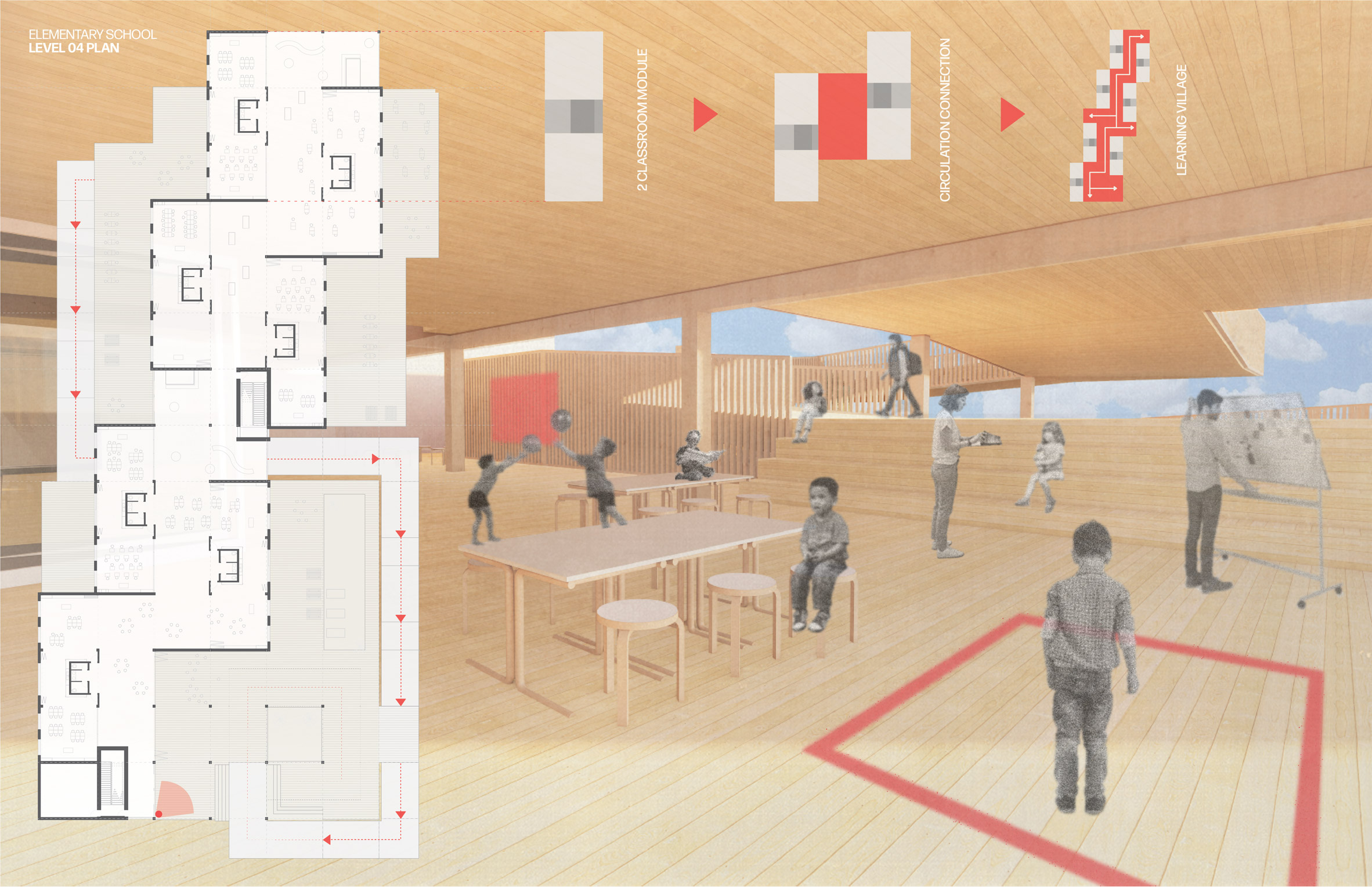
Gateway Elementary School and Civic Centre by Isaac Morris

"A generous ground floor public service and civic centre provide the platform to elevate an urban elementary school which utilises a standardised classroom module to create a village of learning for a free-roaming and self-discovering student experience.

"These elements are brought together via a generous pedestrian ramp which provides secure and universal access to the school, as well as creates spatial nodes of activity along the way."

Student: Isaac Morris
Course: Hagenlocher, ARCH585 House of Learning
Tutor:
Esther Hagenlocher

University of Oregon College of Design

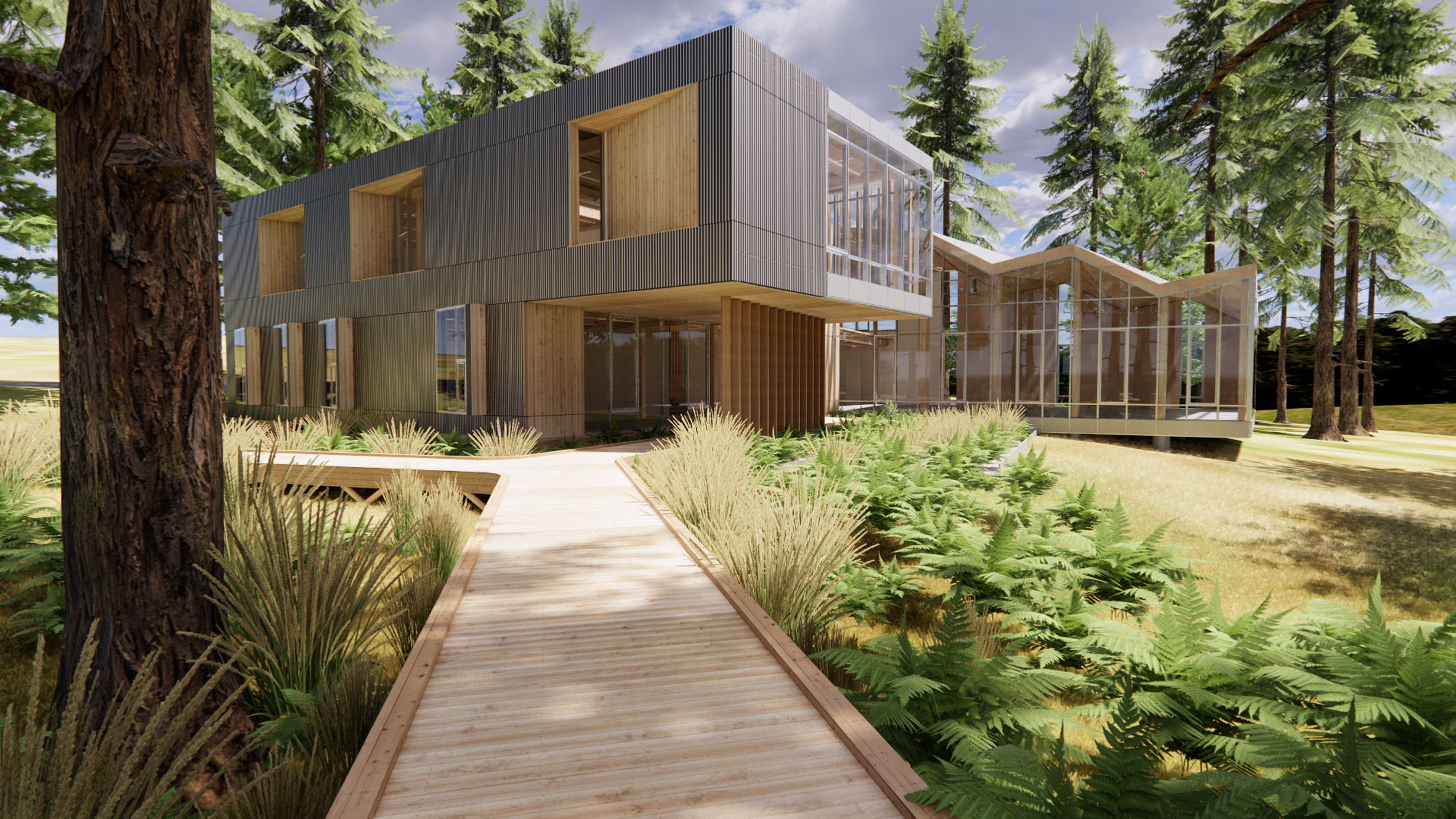
Forest Stewardship Research Centre by Flynn Casey

"Located at the entrance to the McDonald and Dunn Research Forests near Corvallis, OR, the Forest Stewardship Research Centre (FRSC) is a facility for research and education focusing on the relationship between people and forests.

"The building leverages computational design and prefabrication to set a new standard for high-performance timber construction. It makes extremely efficient use of wood fibre, resulting in a lightweight structure that touches lightly on the ground, respecting the roots of the specimen trees surrounding it, as well as the archaeological Kalapuya land it rests on.

"The building is designed to be carbon-neutral in operation as well as construction, with the goal of meeting Living Building Challenge standards."

Student: Flynn Casey
Course: Sheine, ARCH 585/586 Mass Timber Design
Tutor:
Judith Sheine

University of Oregon College of Design

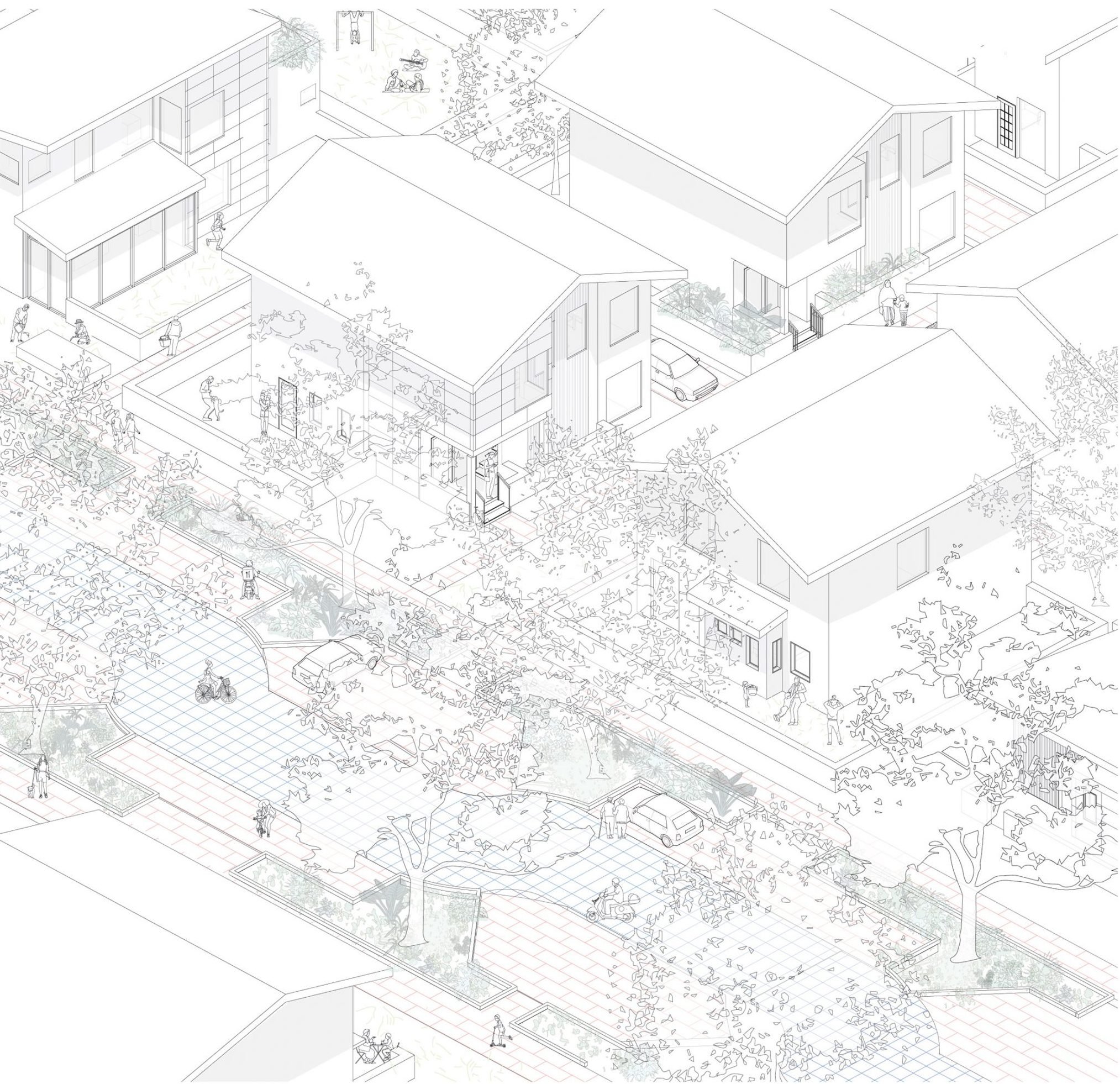
At the Intersection: Suburban Retrofitting by Holly Nuovo

"The single-family detached home, hovering like magnets five feet from the property line, turn their back on public space, privatising what used to be urban functions. Not just social division, these developments result in environmental disconnection.

"Fine-grain textures and proximities become a radical implication of the new urbanism created by banning single-family zoning. My project explores these potentials to conceive of the medium density home not as punishment but opportunity, not as an object but an ecosystem, where the house acts as a field rather than a mass, interacting with and influencing the interconnected forces that form our lives."

Student: Holly Nuovo
Course: Keyes, Arch 585 Reframing Housing and Presentation
Tutor:
Peter Keyes

University of Oregon College of Design

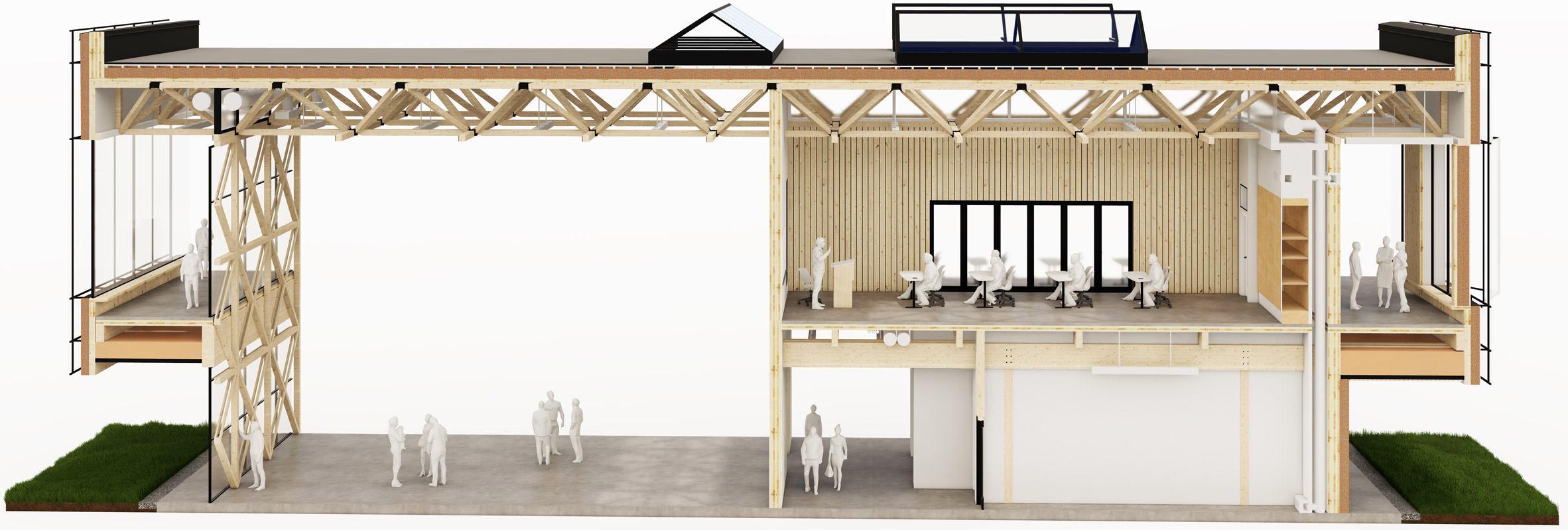
Peavy Lodge Forest Education Centre by Duma Nguyen

"Inspired by the structure of a tree, the Peavy Lodge Forest Education Centre looks to act as a beacon in the forest that also serves as a demonstration for mass timber construction.

"Peavy Lodge creates spaces of shelter similar to that of a tree overhang. The dynamic facade acts as a protective barrier from the elements resembling a tree's bark that breathes life into the building.

"Peavy Lodge's roof structure imitates the complexity of a forest canopy while allowing light to filter through openings in the roof, connecting users back to nature through the architectural structure.

"These elements combined create a beacon in the McDonald-Dunn forest that creates an ethereal, glowing object set in the forest scenery."

Student: Duma Nguyen
Course: Sheine, Arch 585/586 Mass Timber Design
Tutor: 
Judith Sheine

University of Oregon College of Design

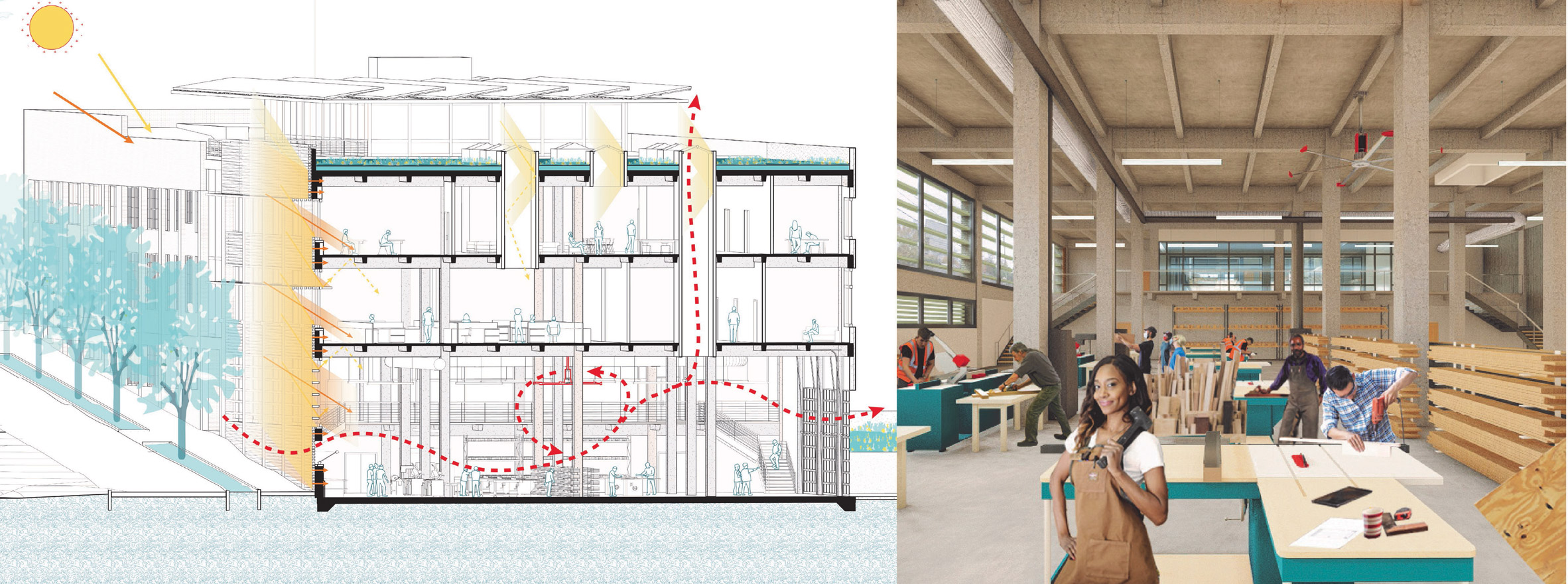
Green Works Progress Administration by Katherine Martin

"This project is about more than just the historic preservation of a beautiful building or a call for social justice in the face of rapid gentrification. It is also about more than providing easier access to a technical college education and more than a programme for America's most vulnerable to reinvent their livelihood.

"This project is about a 100-year-old building whose new life will allow itself (and the rest of us) to make it through the next 100 years. We need to start talking about buildings at the scale of centuries. This project hopes to begin that conversation and ask what it means to be truly sustainable, both for the climate and our communities.

"There is a lot of energy in the SoNo District between midtown and downtown Atlanta for a landmark proposal. From a climate perspective, utilising an empty building is the best strategy. The project preserves as much of the existing structure as possible, and any changes made to the facade or concrete system should have a restorative, performative, or programmatic purpose.

"The architectural strategy explored voids that enhance the daylighting and natural cooling properties of the structure. These voids also created large volumes suitable for workshops, the main programmatic element of the proposal.

"From a social sustainability perspective, this building provided a rich opportunity. In a rapidly gentrifying portion of the city, this project's unique history creates poetic statements about equity and justice in our inner cities. The proposal hopes to spark new life into this historic structure and help an often-ignored community, the homeless."

Student: Katherine Martin
Course: Gast, ARCH 585/586 Linking Education and Architecture
Tutors:
Gerald Gast
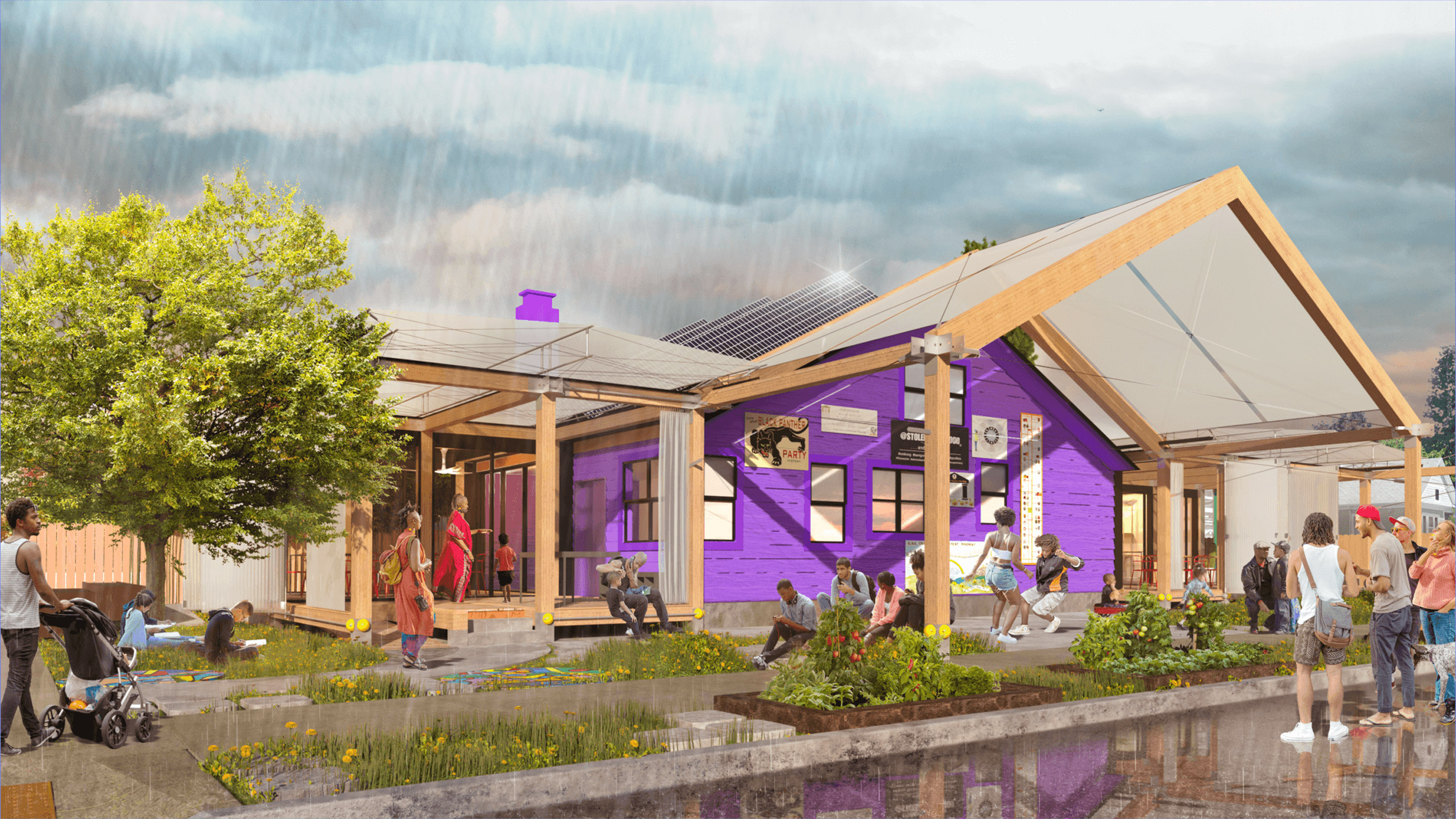

Tools for Albina: Bstrong Learning Hub by Garrett Leaver

"This project is about intergenerational learning and Black youth. The traditional education system in America is broken, especially for students of colour.

"Learning comes from everywhere – it comes from the community and flows between generations. Noni Causey, director of The Black Educational Achievement Movement (BEAM), is rewriting education with Bstrong Learning Hub, situated in her home in Albina.

"As a student of Causey, I'm aware that its important to learn from professionals in our community in order to develop real-life skills. Here, I have imagined open source tools and an architectural tectonic to build momentum and change education.

"Detailed improvements to the site and street start to open up more conversations from the heart: bringing awareness to the history of Albina and other cities.

"Providing a safe, resilient forum for these conversations is first. A large covered forum and changes to the street front bring people in and maintain visibility. Next is introducing a sustainable, open architecture. Where the informality, lightness and tradition of the front porch are elevated. Inviting gathering, eating, and play around the corner.

"Students want to meet professionals and learn directly from the source. So, flexible and accessible maker spaces are available. This is also an opportunity for home improvement for other residents in exchange for them teaching their own classes and community. This architectural system paired with participatory design and making allow for scalable change, that grows with the Black community in Albina."

Student: Garrett Leaver
Course: Wilkins, Davis, Davis, ARCH 585/586 ReBuilding Cornerstones.
Tutors: Craig Wilkins, Kayin Talton Davis and Cleo Davis


Partnership content

This school show is a partnership between Dezeen and the University of Oregon College of Design. Find out more about Dezeen partnership content here

The post Ten architecture projects from students at the University of Oregon College of Design appeared first on Dezeen.


from Dezeen https://ift.tt/3eUOR0K
Estudio Herreros's Munch museum rises above Oslo’s waterfront

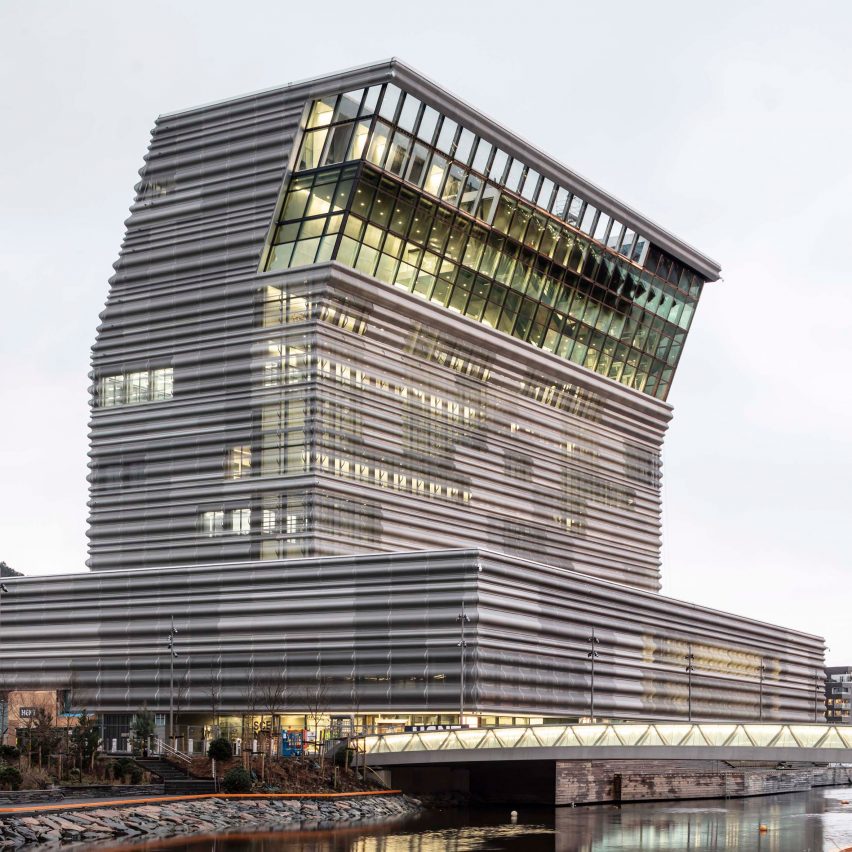
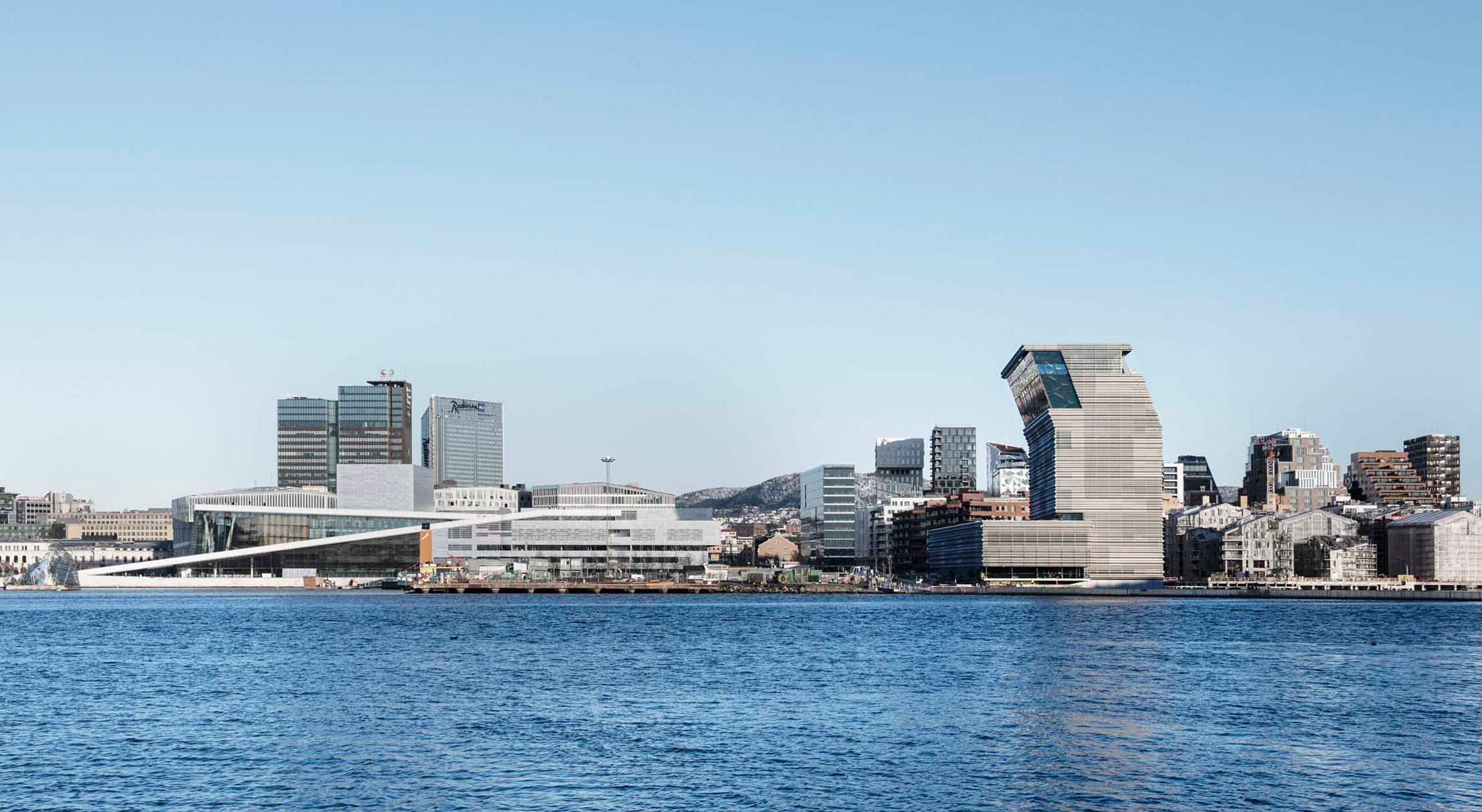
The building has a sloping form

Architecture firm Estudio Herreros has completed a 13-storey museum building dedicated to the work of artist Edvard Munch, which the studio claimed provides "a new reference point in Oslo's skyline".

Estudio Herreros building on the Oslo waterfront houses the world's largest collection of works by the artist best known for painting The Scream.

The munch museum is located on the water front
The museum occupies a prominent location on Oslo's waterfront

The Munch museum occupies a prominent site on the waterfront adjacent to the Oslo Opera House completed by Norwegian firm Snøhetta in 2008.

The building rises to a height of 57.4 metres above the shore and is five times larger than the original museum located in the Norwegian capital's Tøyen area.

the munch museum has a square podium base
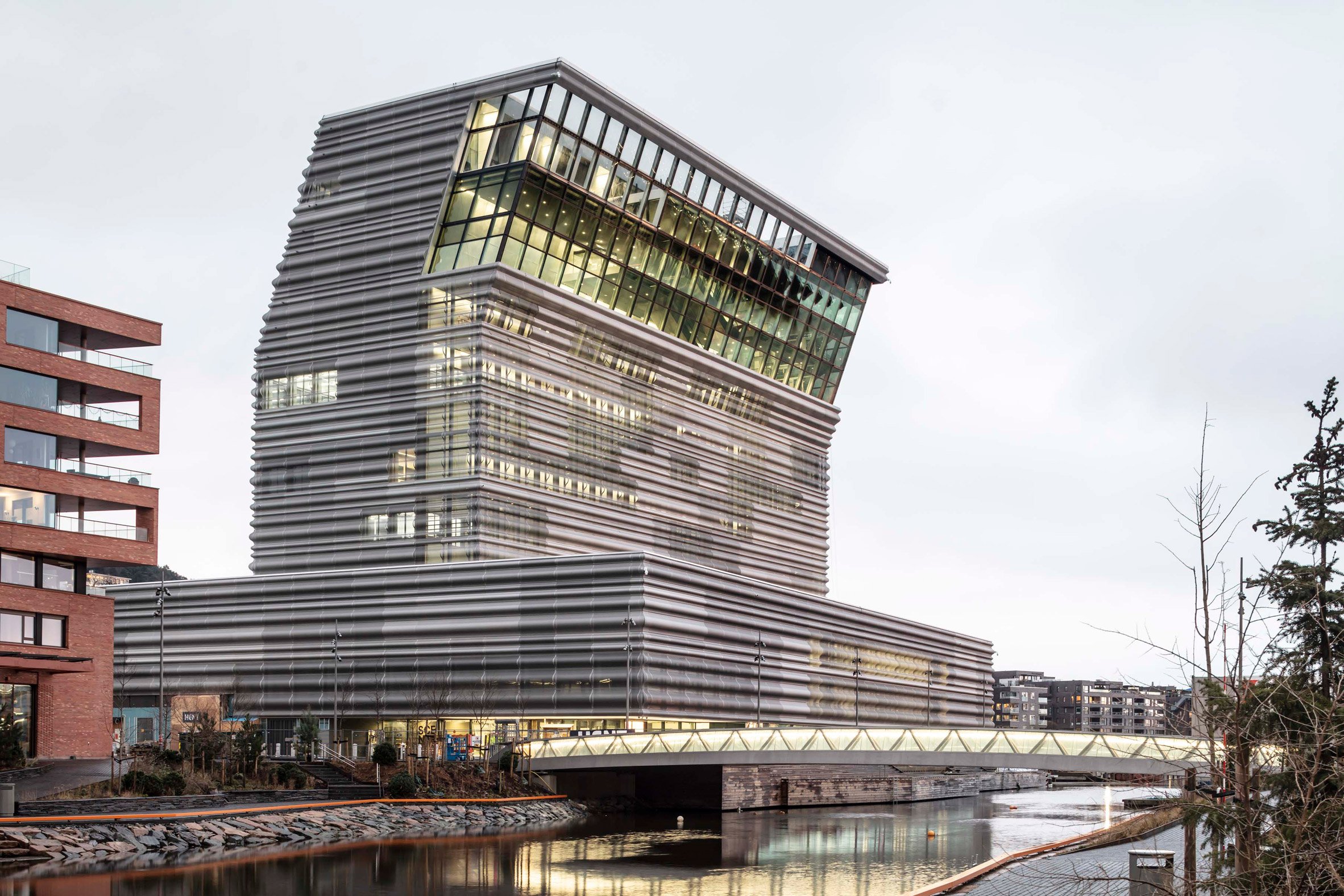
The museum has an angular form

The museum provides over 26,000 square metres of exhibition spaces across its 13 storeys, with the top floor containing an observation deck overlooking the city.

"Greeting people both day and night, Munch is a new reference point in Oslo's skyline that gives locals and visitors an overview and orientation within the city, the surrounding mountains and the Oslo fjord," said lead architect Juan Herreros.

The building's angular form appears to lean towards the nearby opera house and the historical city centre. The form is intended to present a welcoming gesture that invites visitors to enter at all times of the day.

A podium structure at the base contains a lobby that merges with the surrounding public space and anchors the building in the new Bjørvika neighbourhood.

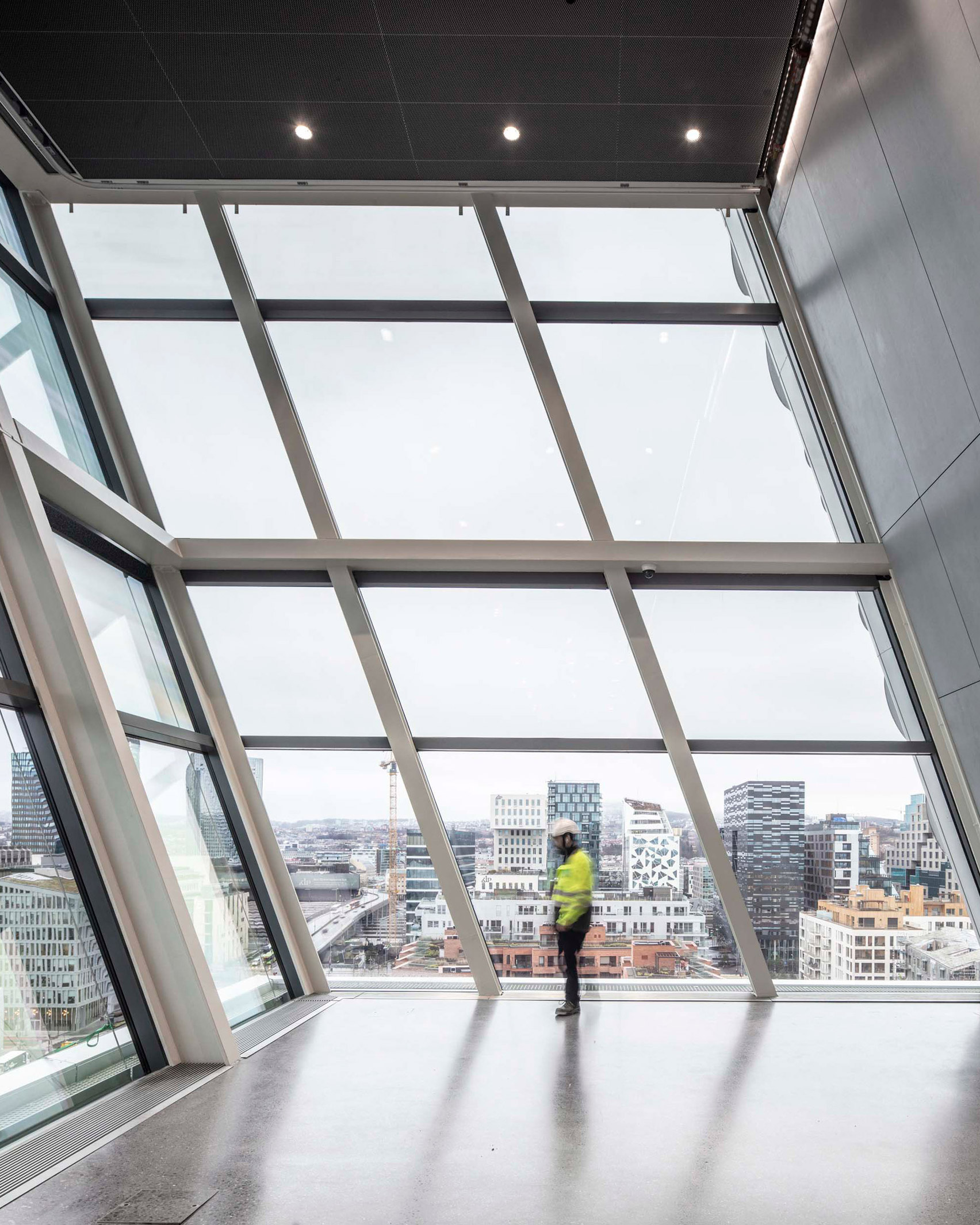
Windows are slanted at the munch museum
It has views across the city from the upper floors

The lobby contains recreational, commercial and cultural spaces that will be used for hosting events such as concerts, lectures or workshops for children.

The museum's main functions are organised by height, with vertical circulation guiding visitors from the lobby through the exhibition spaces and on towards the terraces, observation deck and restaurant on the top floor.

"The new Munch proposes to experience art within a broader set of public spaces and social experiences," said Estudio Herreros.

"It will be an extension of the public urban space in Bjørvika, inviting everybody to enter and transforming the museum into an everyday life facility."

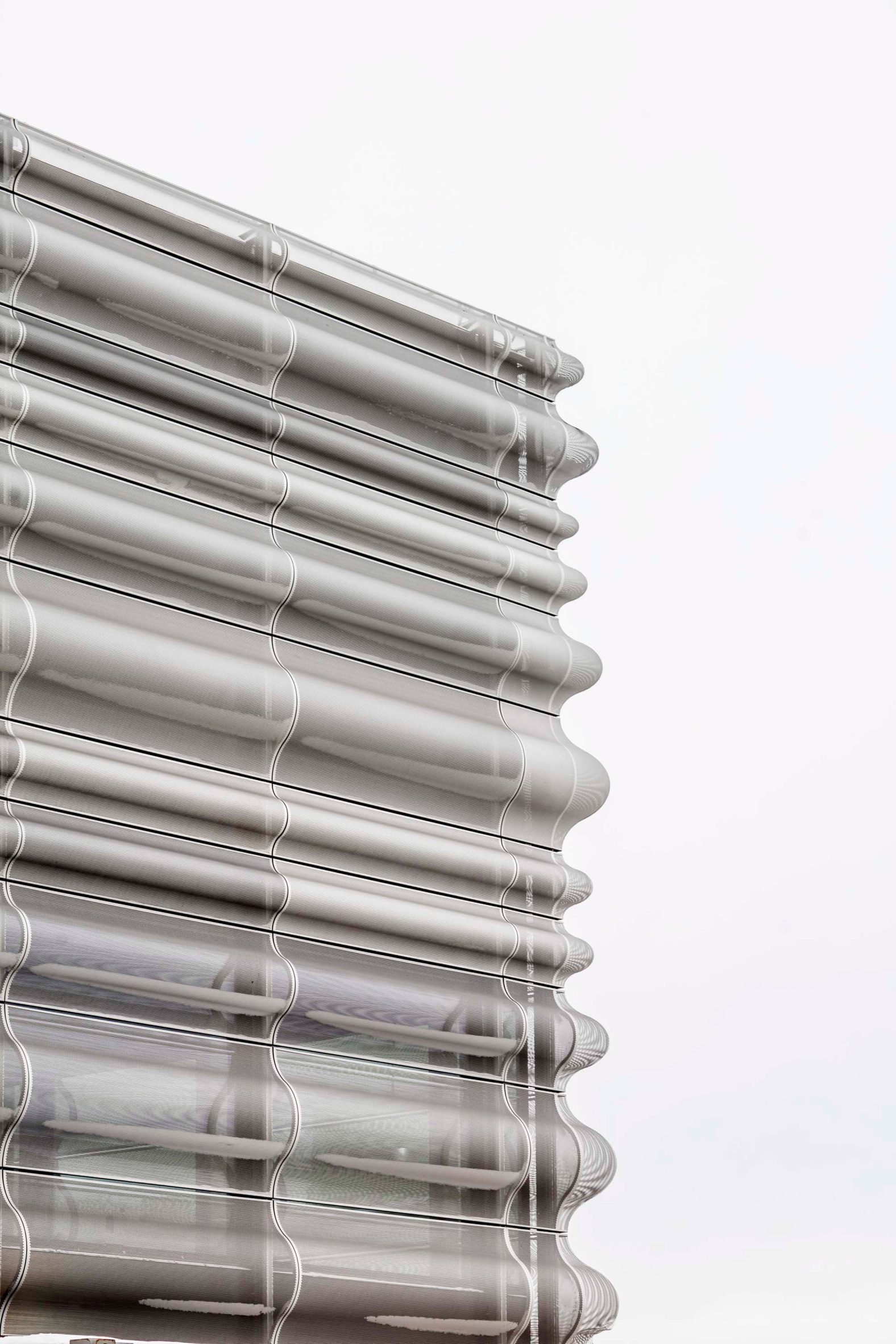
The munch museum is clad in a translucent material
The facade has a rippled effect

Alongside the extensive exhibits dedicated to Munch's oeuvre, the museum will contain spaces outlining the history of Oslo throughout the centuries. Different viewpoints on each level will express the connection between the artist and his native city.

Gallery spaces are designed to display artworks of vastly different scales. The 11 exhibition halls include intimate rooms for presenting smaller works on paper, while enormous paintings such as the 11.5-metre-wide Alma Mater mural will be exhibited in galleries with ceiling heights of up to seven metres.

"The diversity of gallery spaces distributed over an even larger number of storeys allows for wide variations in ceiling heights and room sizes," the architecture studio added.

"The neutrality of the galleries and their integrated design enables optimum facilities to be allocated for both permanent and temporary exhibitions, giving all protagonism to the art."

It has a grey hue
Undulating aluminium panels cover the building

The building is wrapped in a skin made from recycled, perforated aluminium panels with varying levels of transparency.

The metal surfaces reflect the shifting quality of light throughout the days and seasons, whilst allowing artificial light to filter through at night.

Recycled materials are used throughout the building, which is designed to meet Passivhaus standards for environmentally friendly construction along with low-energy heating and cooling.

A view from the interior to the surroundings
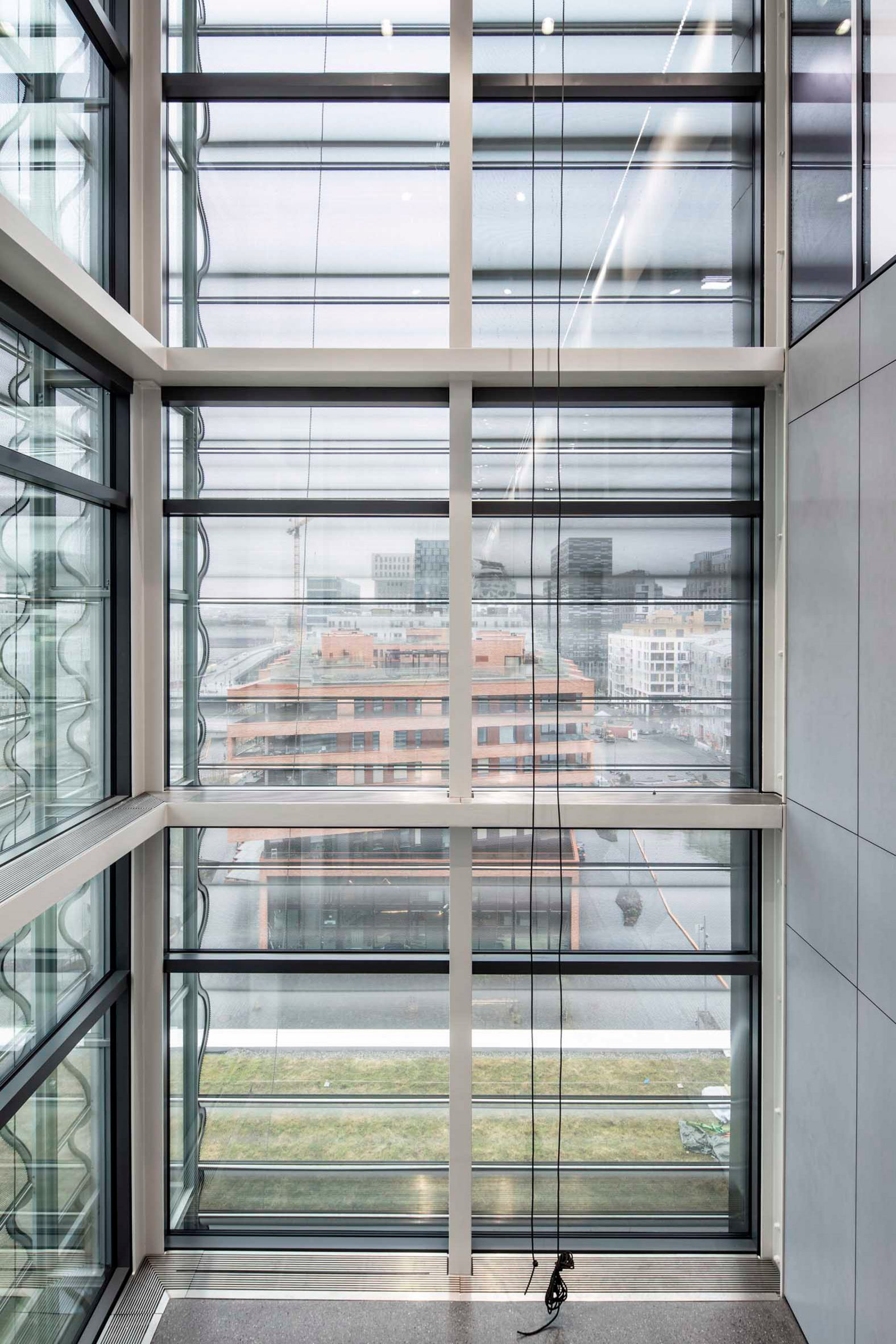
From the interior the mesh is transparent

The Munch museum is scheduled to open to the public on 22 October 2021. Alongside Munch's artworks, it will host temporary exhibitions by both Norwegian and international artists influenced by Munch's work.

Estudio Herreros has offices in Madrid, New York City and Mexico City. Its founder, Juan Herreros, originally worked alongside Inaki Abalos in the 1980s before setting up Herreros Arquitectos. Herreros now runs the studio with partner Jens Richter.

Elsewhere in Oslo, Snøhetta recently unveiled plans to redesign and extend a museum dedicated to Norwegian explorer Thor Heyerdahl.

The post Estudio Herreros's Munch museum rises above Oslo’s waterfront appeared first on Dezeen.


from Dezeen https://ift.tt/3eToIPW