Wednesday, 28 July 2021

Barrault Pressacco uses hempcrete to create social housing in Paris

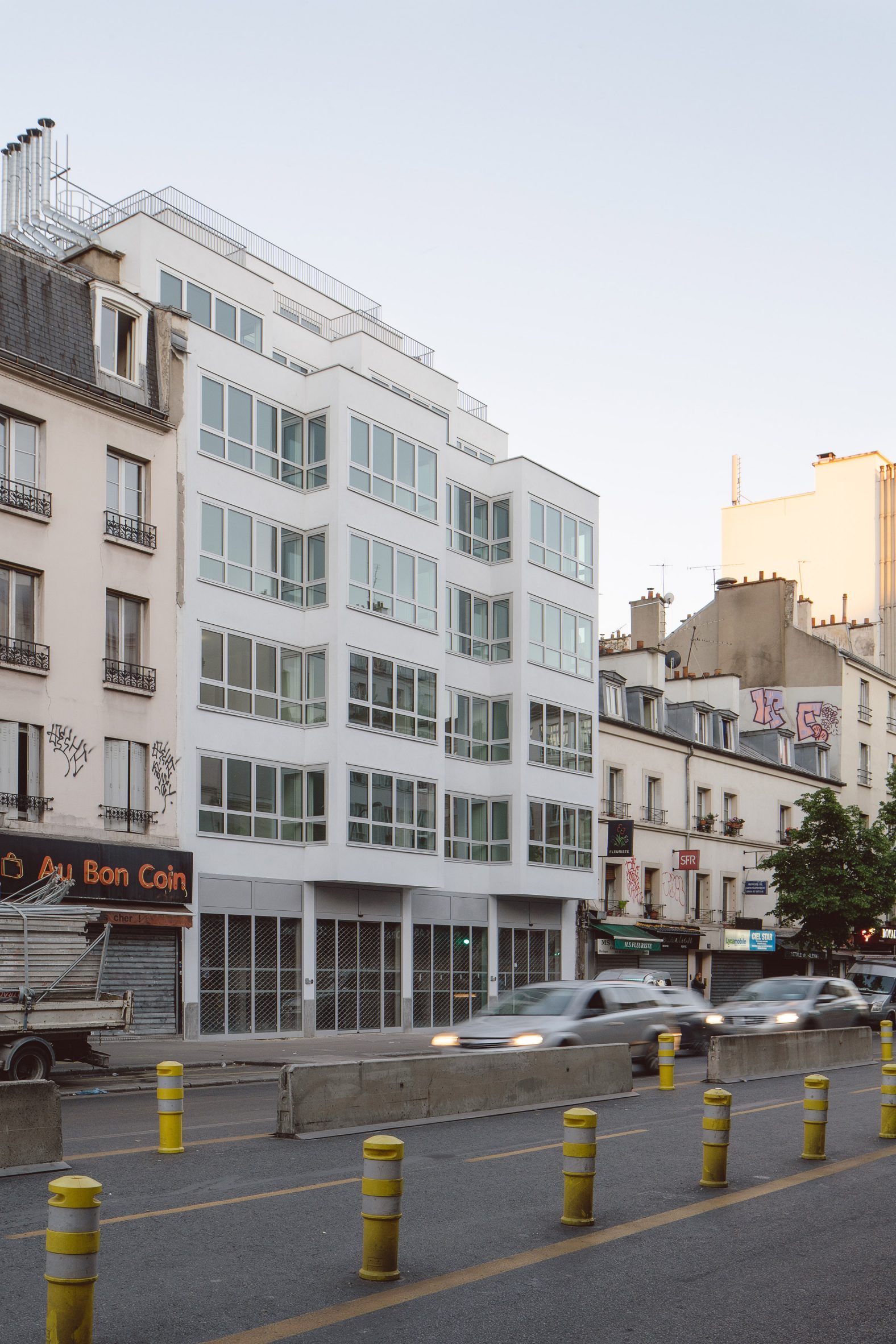
The building has a tiered design

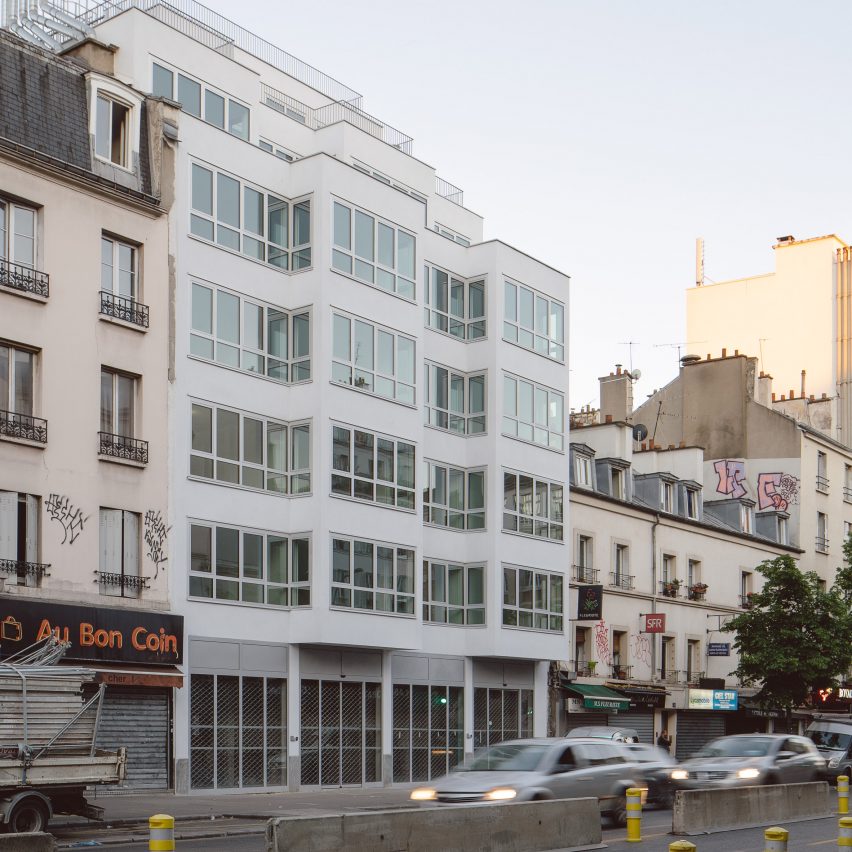
Architecture firm Barrault Pressacco used bio-based materials including wood and hempcrete to construct this mixed-use building that references traditional Parisian apartment blocks.

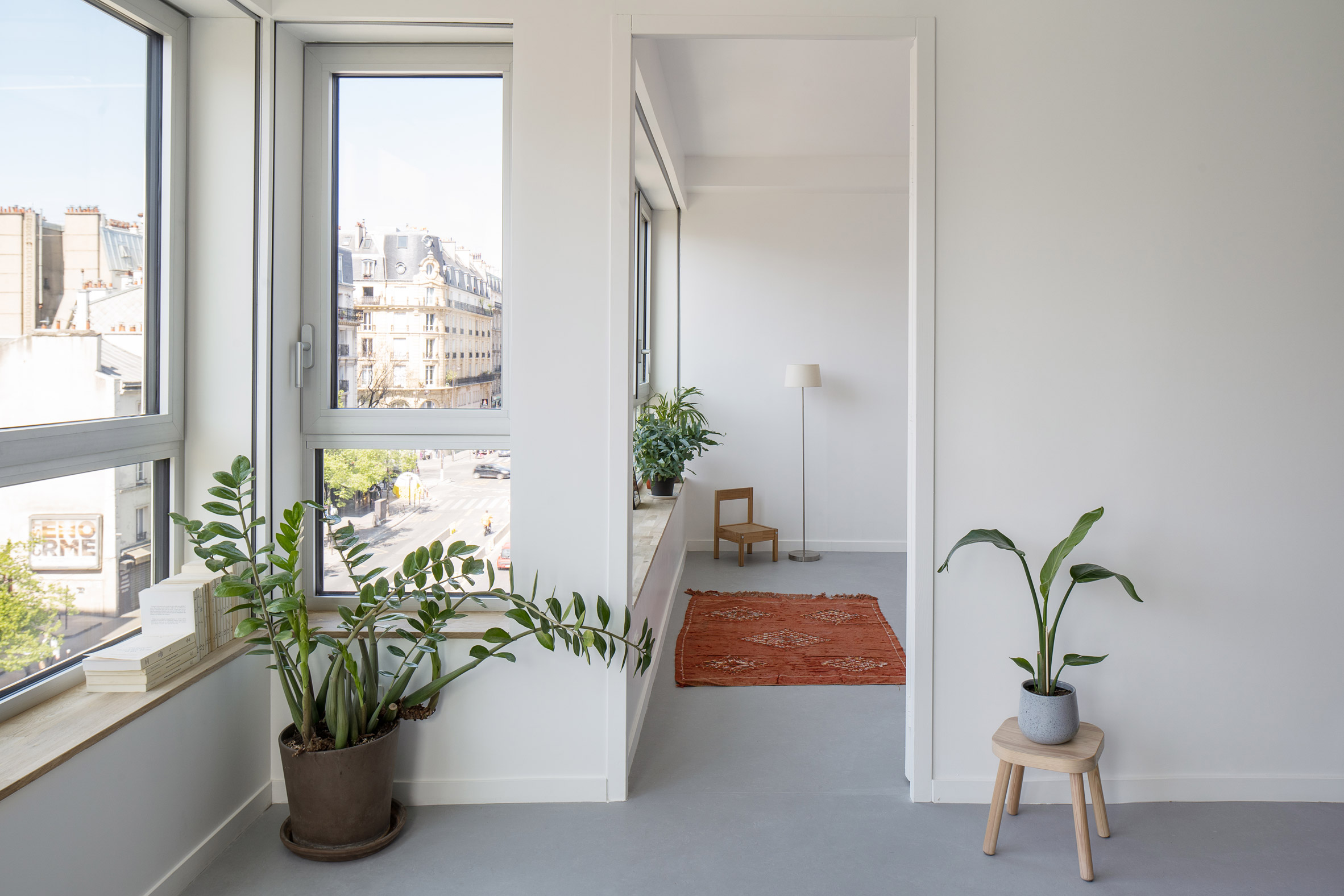
Located on the Rue Marx Dormoy in Paris's 18th arrondissement, the building contains 15 units for social housing along with two shops at ground floor level.

A white social housing block in Paris
Top: each floor contains three apartments. Above: the building was designed to be respectful of its surroundings

Paris studio Barrault Pressacco designed the building to fit in with its heterogeneous urban context, which includes rail yards and buildings of varying architectural styles.

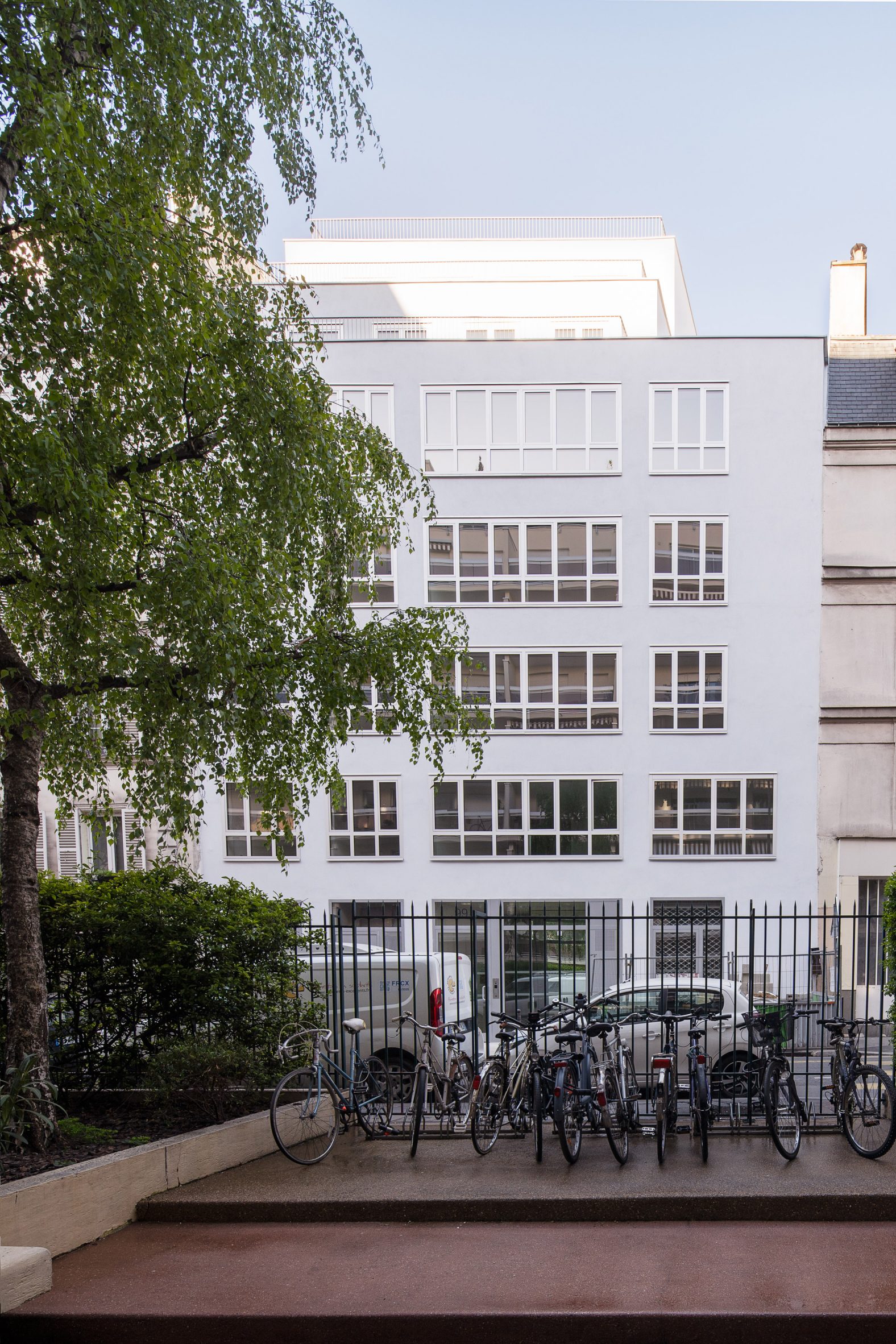
The structure spans the entire depth of its lot with different facades to the Rue Marc Dormoy on one side and Rue Philippe de Girard on the other.

Two small courtyards are inserted into the plan to provide natural light, views and ventilation to the apartments.

A white social housing block in Paris
It was constructed using wood and hempcrete

The project demanded a contemporary yet familiar design that evokes the deep facades and cantilevered balconies found in many traditional Parisian buildings.

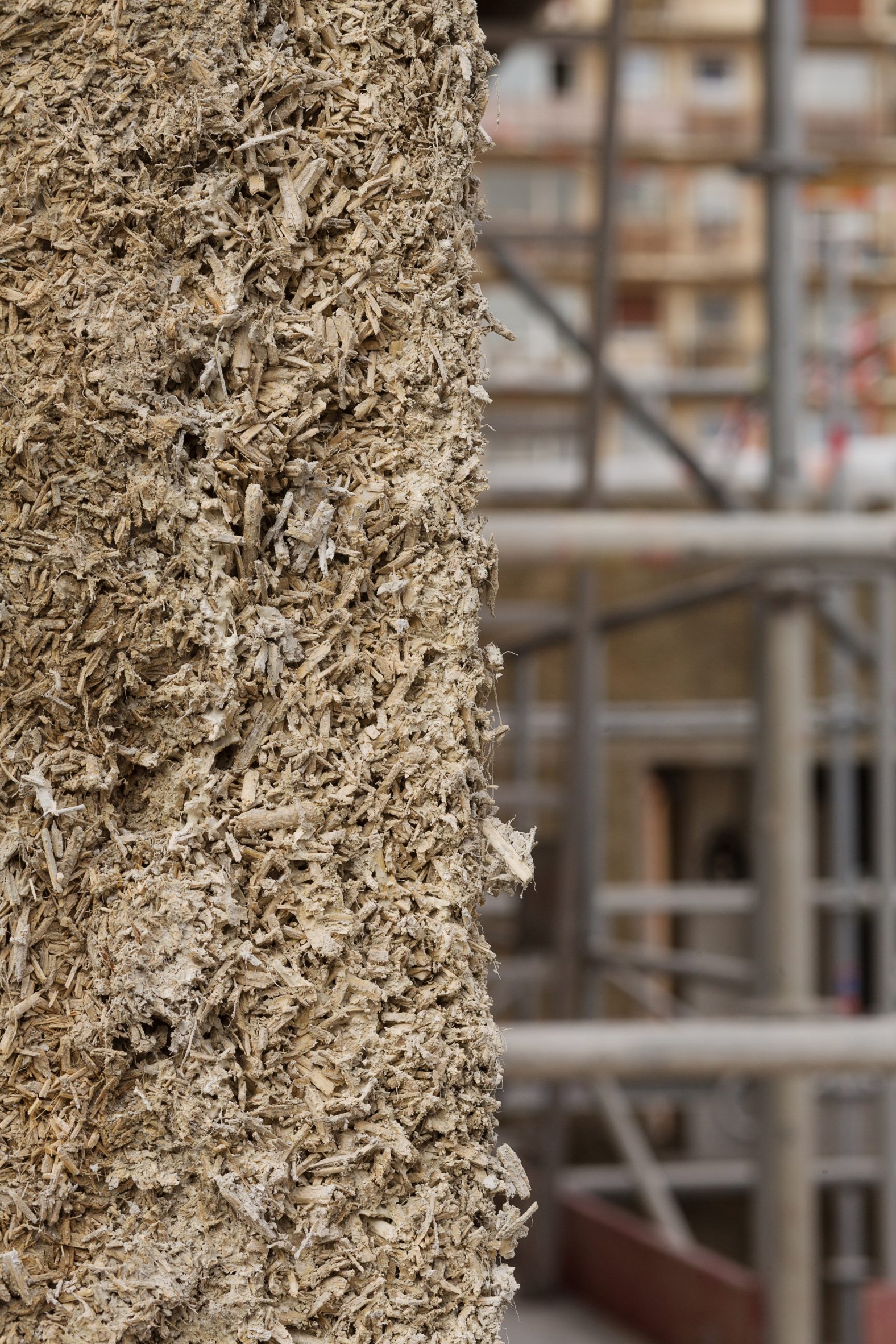
After researching materials suitable for constructing the necessary thick facade, Barrault Pressacco settled on a combination of wood and hempcrete – a concrete alternative with a low carbon footprint made from hemp fibres combined with a lime-based binding agent.

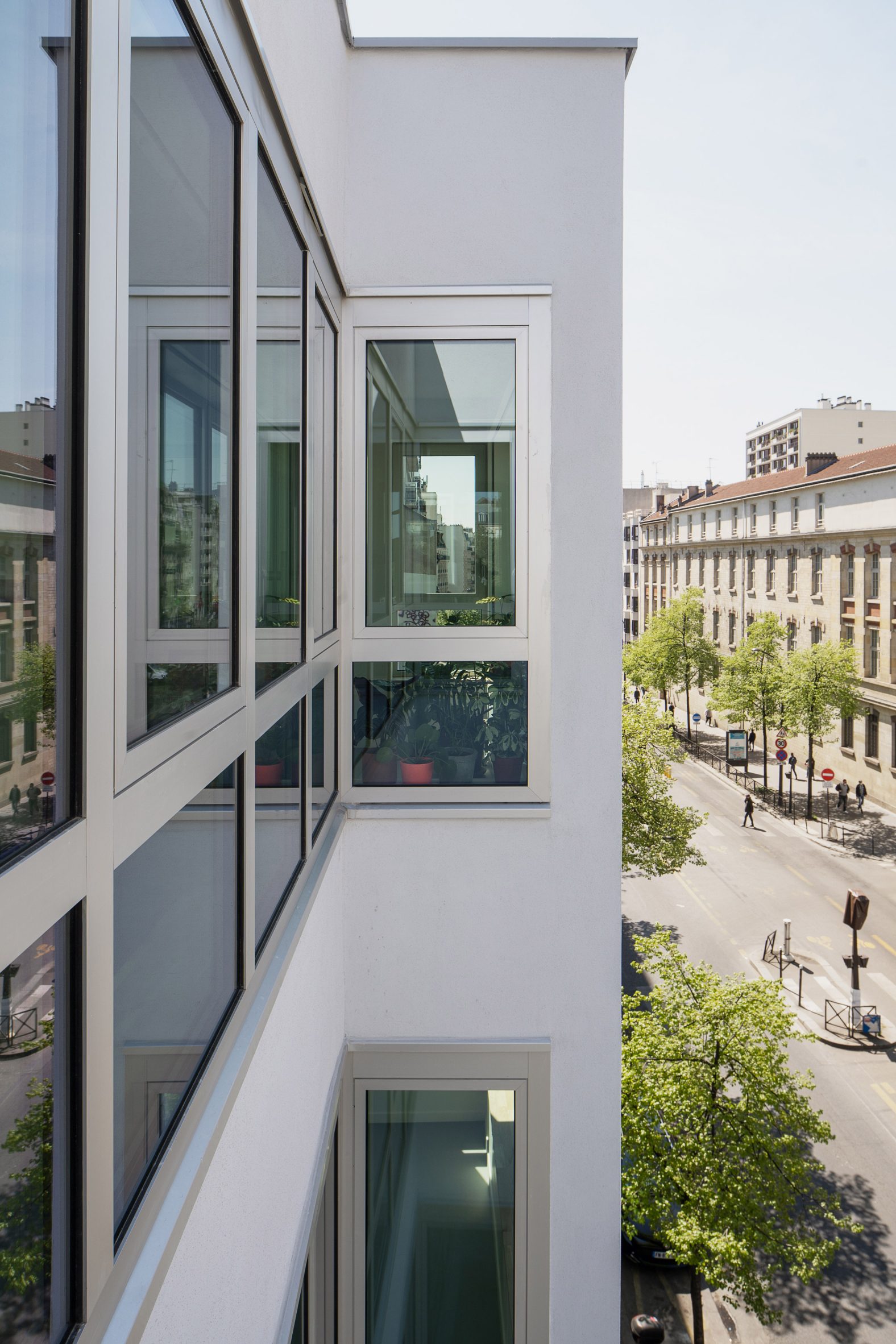
Social housing on a tree lined street
Large windows look out to the Rue Marx Dormoy

"Hempcrete was first considered as a tool to investigate a particular Parisian tradition: the thick facade and the bow window," architect Thibaut Barrault told Dezeen.

"In this way, it links theoretical canons and environmental issues."

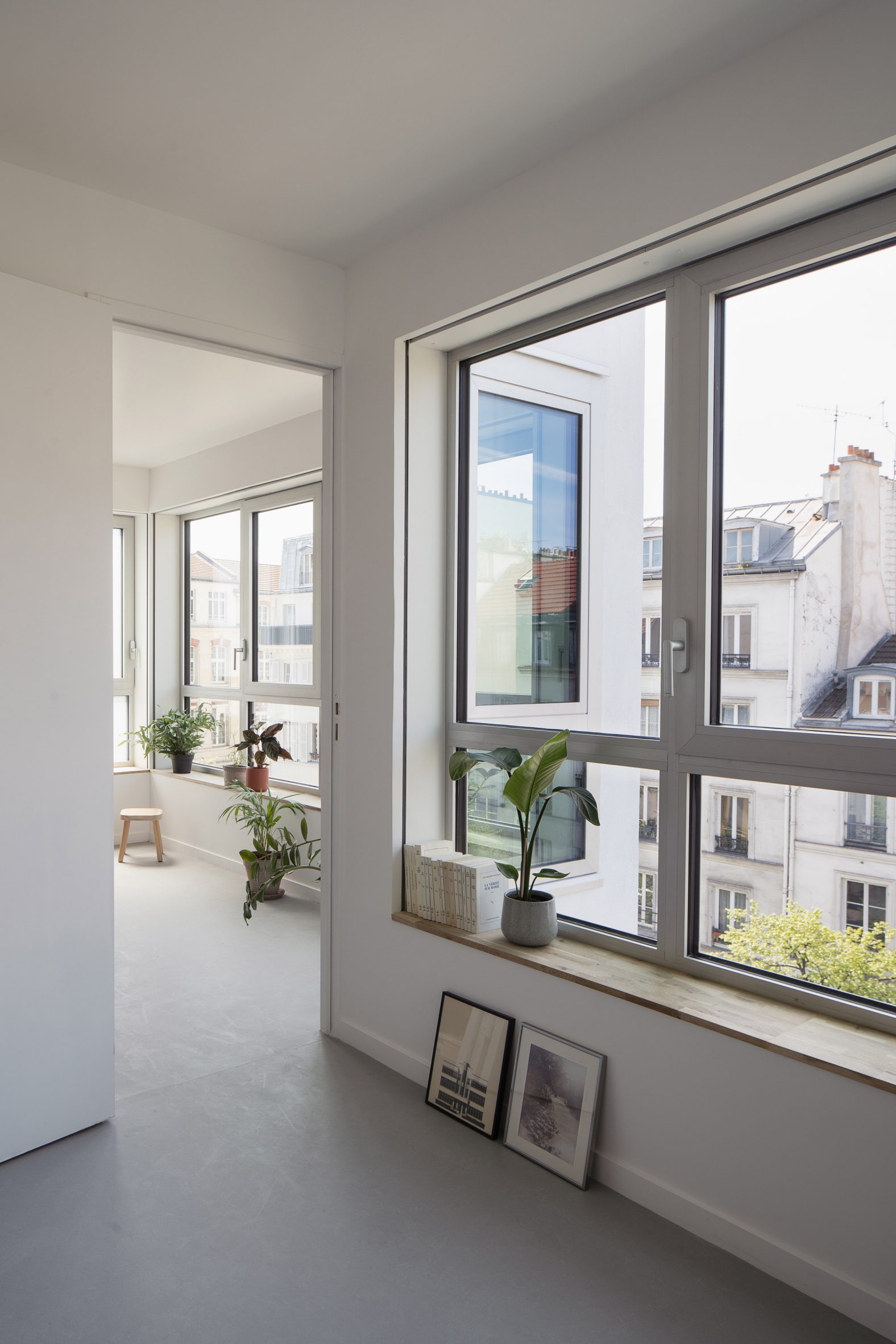
White-walled residential interiors
Interior walls have a lime render finish

The French government recently announced plans for legislation that will ensure all new public buildings are built from at least 50 per cent timber or other natural materials.

According to the studio, the building was designed before the law was put forward but is intended to provide an example of good practice regarding the use of hempcrete.

Barrault explained that he approves of the law as it encourages architects to explore innovative applications for sustainable materials.

"The law is interesting because it forces us to find alternatives to cement and concrete," said the architect.

"It also proposes to find new links and complementarities between different sectors of construction, and between natural materials."

An apartment with grey flooring
Apartments have bay windows

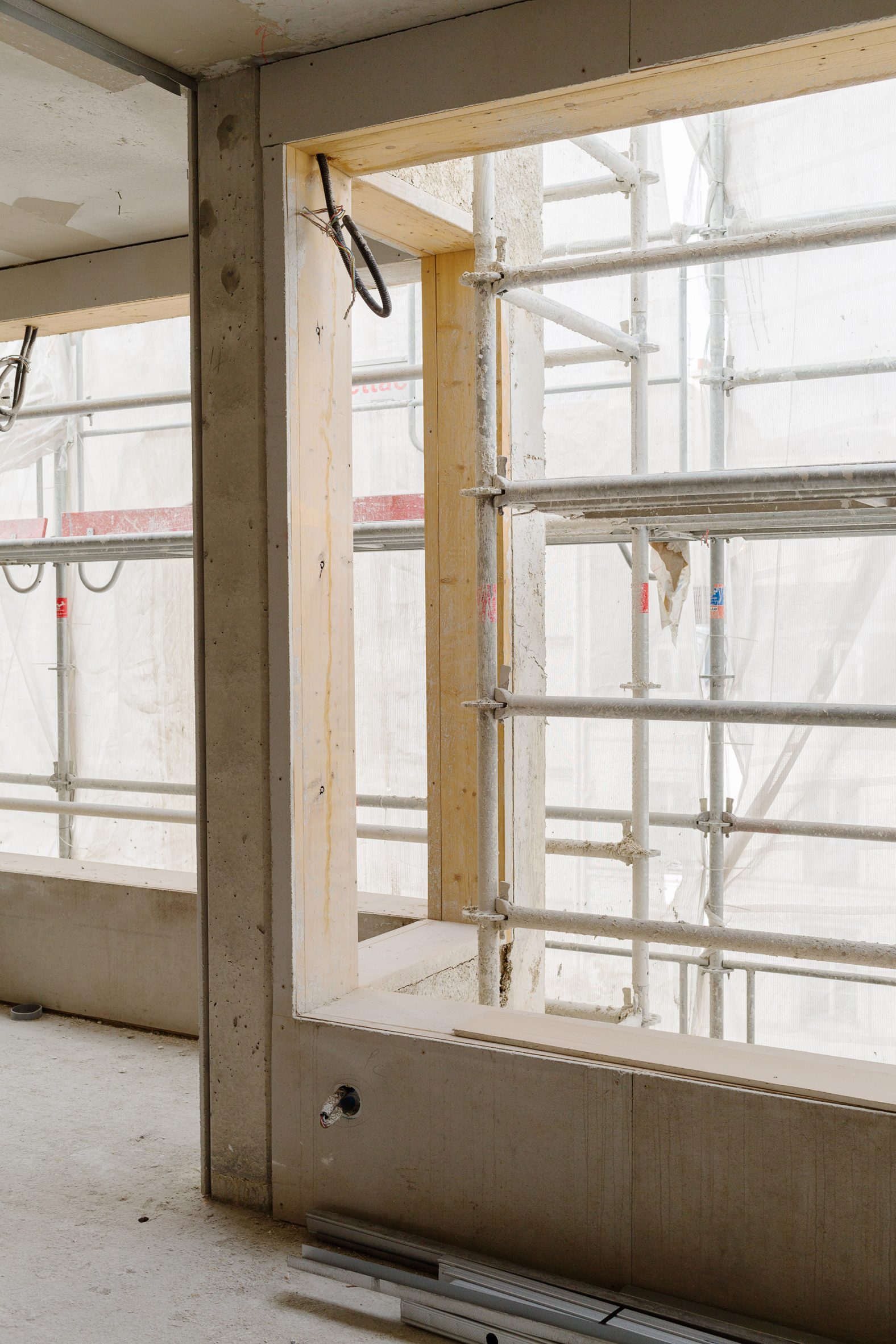
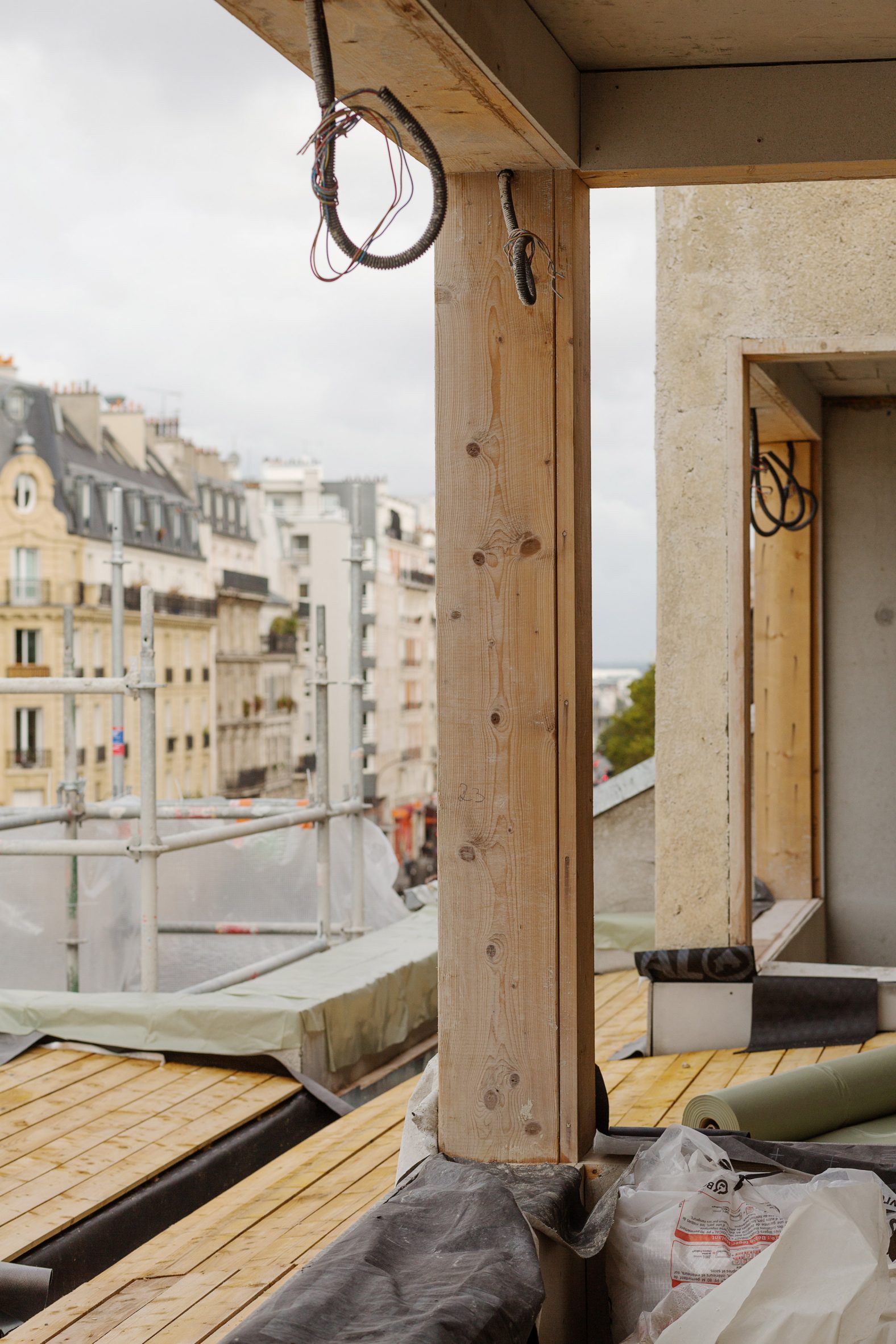
The timber framework of the building at Rue Marc Dormoy is made from standard sections of pine that sit on concrete slabs.

Gypsum-fibre panels fixed to the inside of the wooden structure create a formwork into which the hempcrete is sprayed in layers, before receiving a coat of lime render.

A timber-framed building under construction
The building has a timber framework

Above the shops, each of the building's floors contains three apartments that are cross-ventilated thanks to openings facing onto the street and the courtyards.

The bay windows looking onto the street optimise light and views from the main living areas, while spaces including the bathrooms and kitchens face onto the planted courtyards.

A timber-framed structure
Hempcrete covers the timber frame

France is aiming to become a world leader in the use of bio-based building materials such as wood, hemp and straw, which have significantly lower embodied carbon than more conventional materials like concrete and steel.

The new legislation affecting all buildings financed by the French state aligns with the country's Sustainable City plan launched in 2009, as well as its aim to be carbon neutral by 2050.

Detail image of hempcrete
Hempcrete is made from hemp hurds

Another project that incorporates hempcrete was a house built by film producer Steve Barron using hemp grown on his own farm.

However, although Hemp is gradually becoming more common in construction projects Barron told Dezeen that UK laws are restricting its use in architecture.

Photography is by Giaime Meloni.

The post Barrault Pressacco uses hempcrete to create social housing in Paris appeared first on Dezeen.


from Dezeen https://ift.tt/3f7c9AO

Studio PHH divides lakeside house with double-height glass atrium

La Clairière by Studio PHH

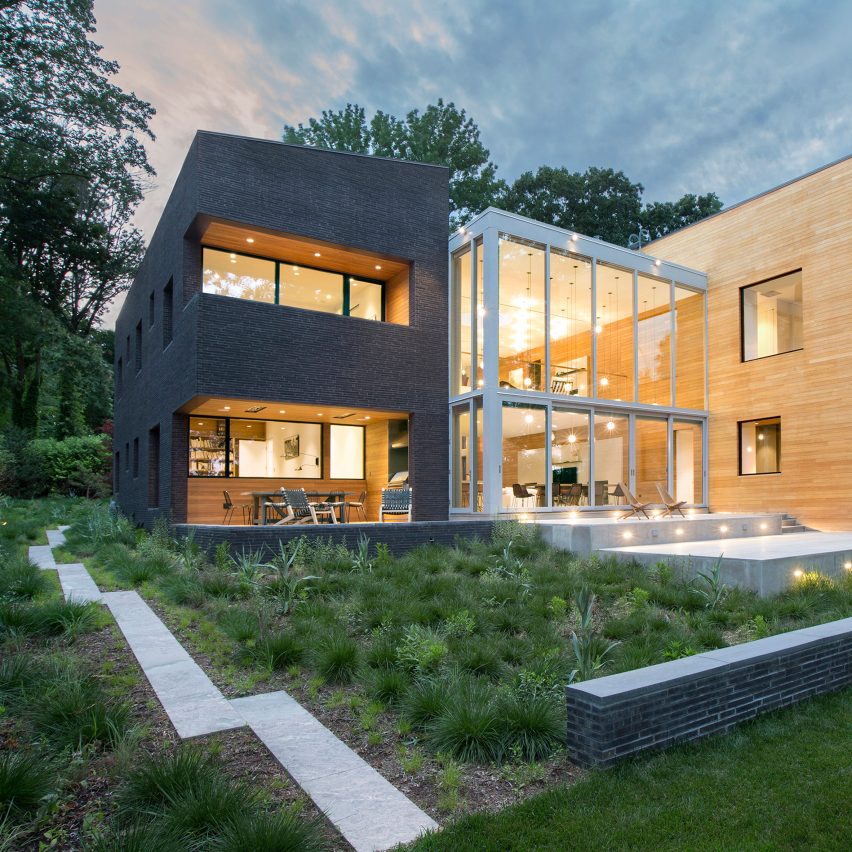
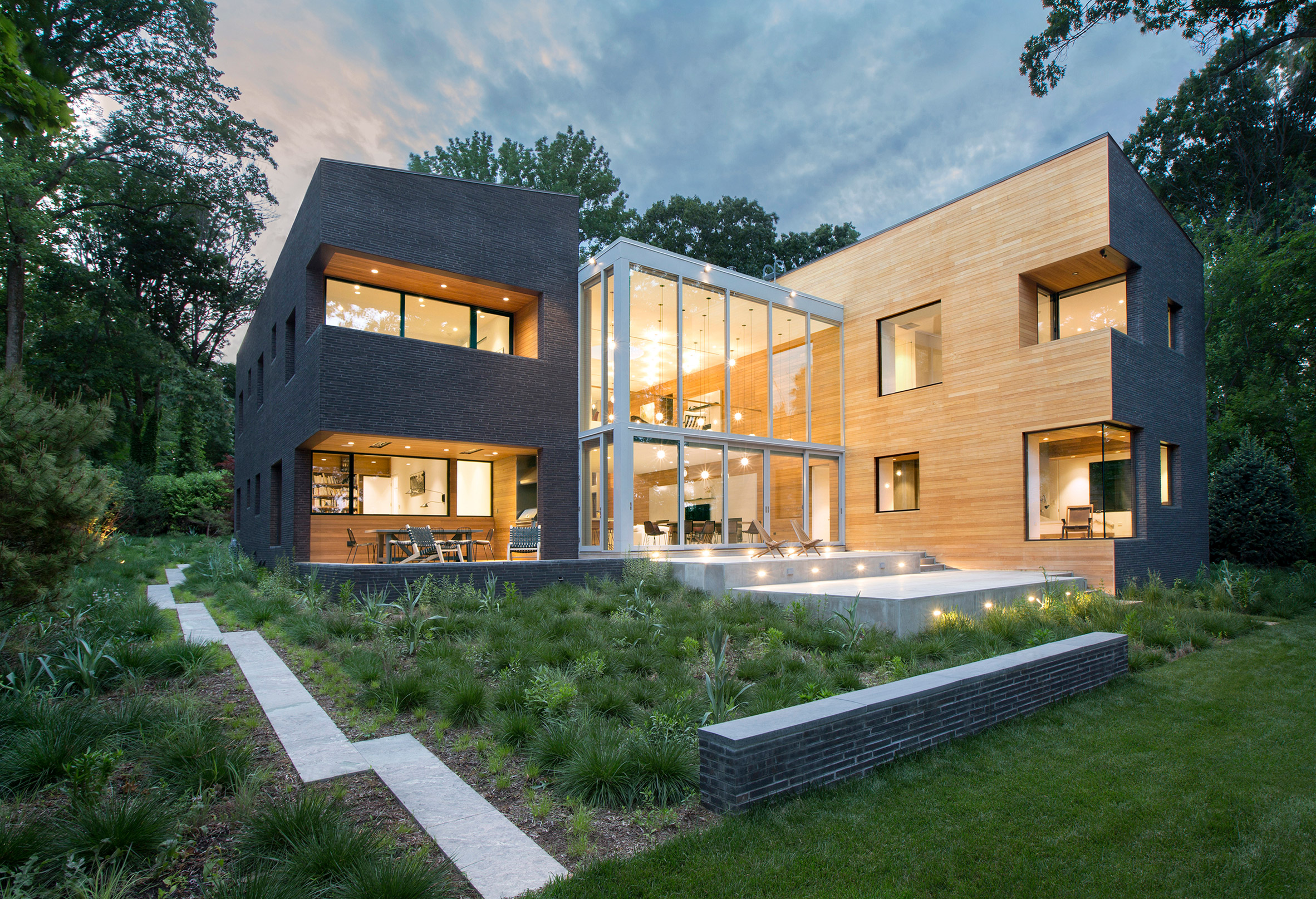
Brooklyn architecture firm Studio PHH has split this waterfront property in Princeton, New Jersey, into two halves connected by a dramatic atrium that offers woodland views through full-height glass walls.

Sited on the shores of Lake Carnegie, the home is named "La Clairière," which is French for "The Glade". The name references the large glazed space in the middle of the home, which separates two volumes on either side.

La Clairière by Studio PHH
La Clairière is split into two halves by a glass volume

Completed in 2021, the home encompasses 7,800 square feet (725 square metres) and was completed as a full-time residence for a couple that often hosts visiting family.

"Nestled within a forest of large oaks on the shore of Carnegie Lake, the house sits like a monolith, split down the center allowing the landscape to run through its core," said Studio PHH founder Pierre-Henri Hoppenot.

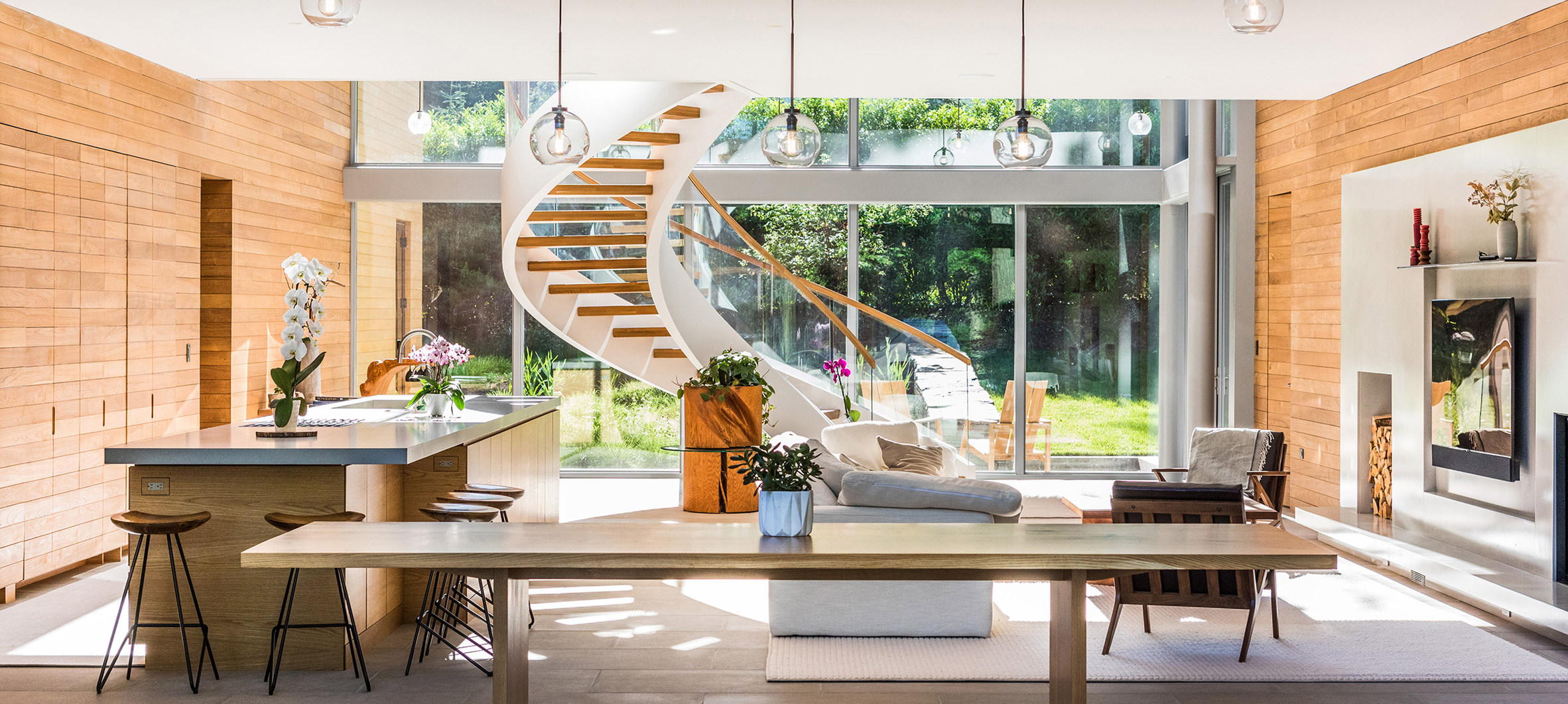
The double-height central space contains the home's main living areas, including the kitchen and dining room on the ground floor, which extend to the outdoors at the front and back of the home, and a mezzanine upstairs.

Spiral staircase living room Princeton Studio PHH
A dramatic spiral staircase connects the living room to a mezzanine above. Photograph is by Glen Gery

"With large window walls at each end, this light-filled 'void' connects back to the landscape on both sides, capturing the sunrise and sunset within the same space," Hoppenot said.

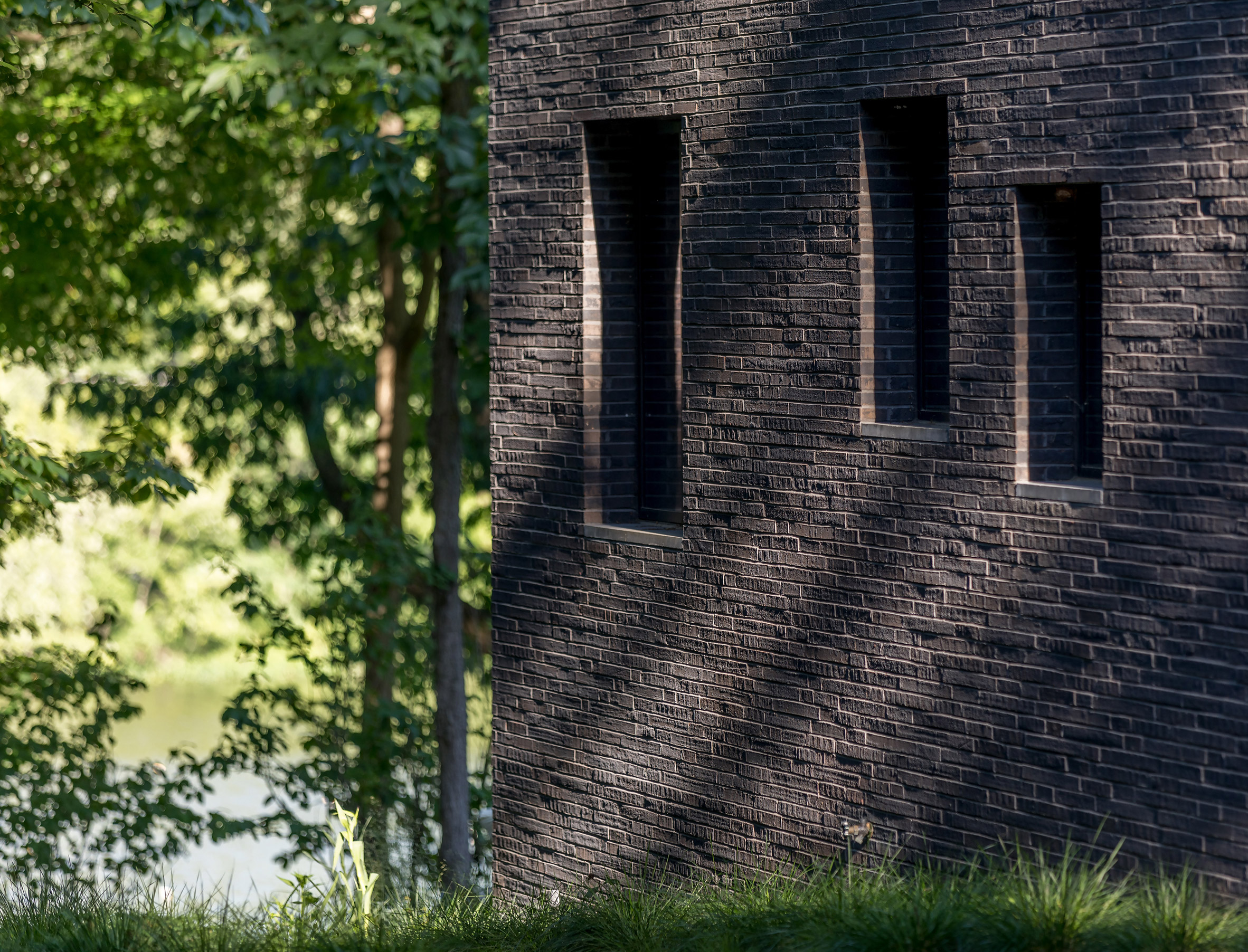
Horizontal wooden siding defines the walls of this expansive space, lending contrast to the other two volumes, which are clad in dark, slender bricks.

According to the architect, the teak boards used in this space were salvaged from previous construction in Myanmar, meaning that the wood was sourced without cutting any trees.

A dramatic spiral staircase leads to the upper level, below several skylights that bring even more light into the space.

Living room Princeton NJ
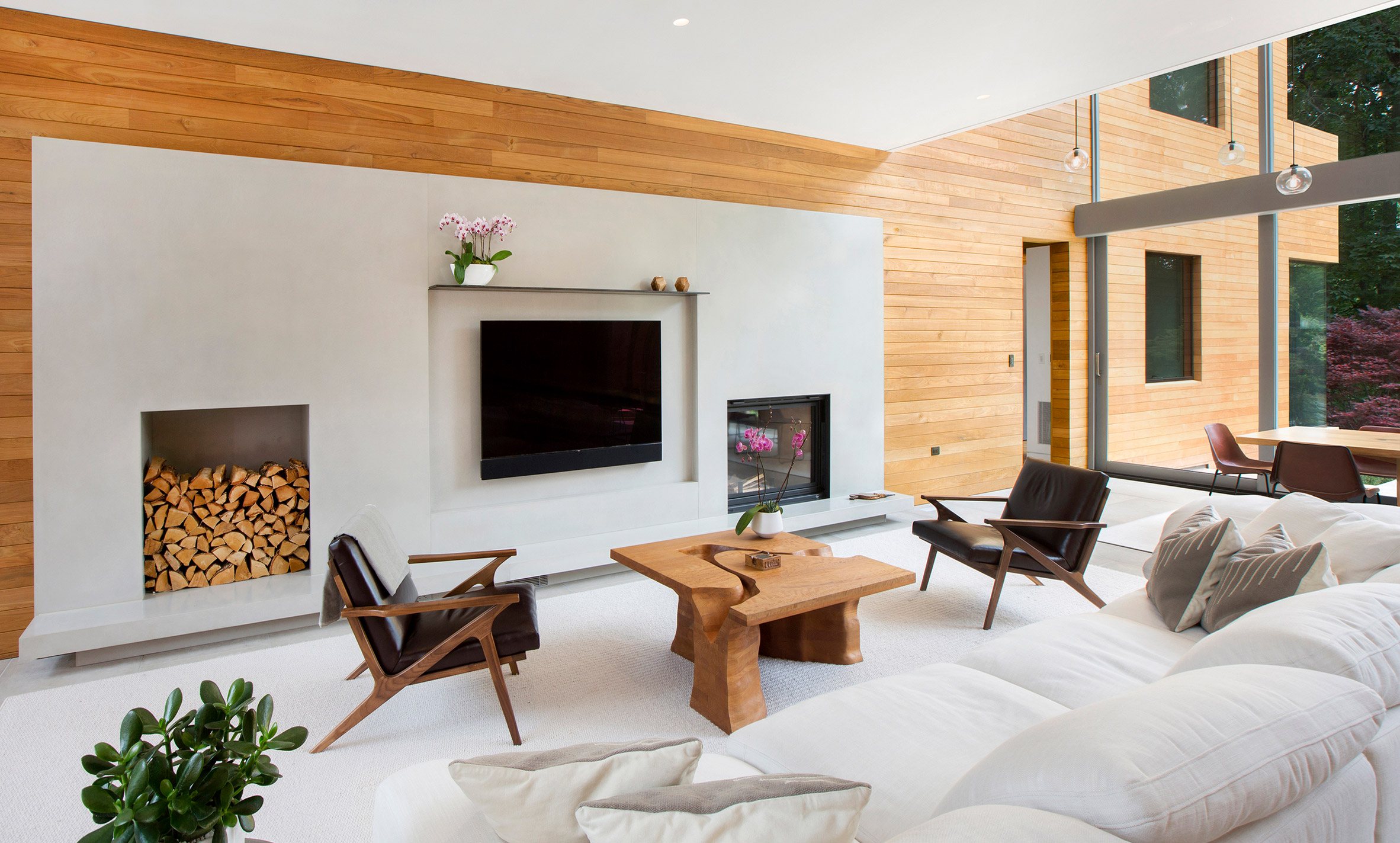
The living room is bright and white, with timber accents that add warmth

The other two volumes contain the home's bedrooms, a home office, and a media room. Unlike the central space, the openings in these rooms are smaller punched windows, providing more privacy as well as offering framed views of the surrounding vegetation.

"The two dark brick volumes on either side are sunken into a deep landscape and emerge out of the ground," said Hoppenot. "These host all the private spaces and were designed to provide peaceful & protected rooms that contrast the center."

Black brick exterior residential design Princeton NJ
The slender black bricks used on the exterior contrast the glazed central portion of the home. Photograph is by Glen Gery

The interiors feature a range of neutral tones that complement the teak finish in the primary living space, including limestone flooring, while darker wooden slats forming an accent wall within the primary bedroom.

Other projects in New Jersey include the careful renovation of a mid-century home by Marcel Breuer, and a former propeller factory that was overhauled by New York studio Fogarty Finger.

The photography is by Tom Grimes unless otherwise stated.


Project credits:

Architect: Studio PHH Architects
Structural engineer: KSI Engineers
Contractor: Lasley Construction
Landscape architect: Andrew Zientek Landscape

The post Studio PHH divides lakeside house with double-height glass atrium appeared first on Dezeen.


from Dezeen https://ift.tt/3xarB5c

Marc Thorpe designs off-grid cabin retreat in the Romanian mountains

Architect Marc Thorpe has unveiled renderings of a holiday retreat in Romania, comprising off-grid wooden cabins informed by rural vernacular architecture.

Called Canton House, the project is designed to extend the Tara Luanei hotel in Romania's Carpathian Mountains, with construction scheduled to begin in summer 2021.

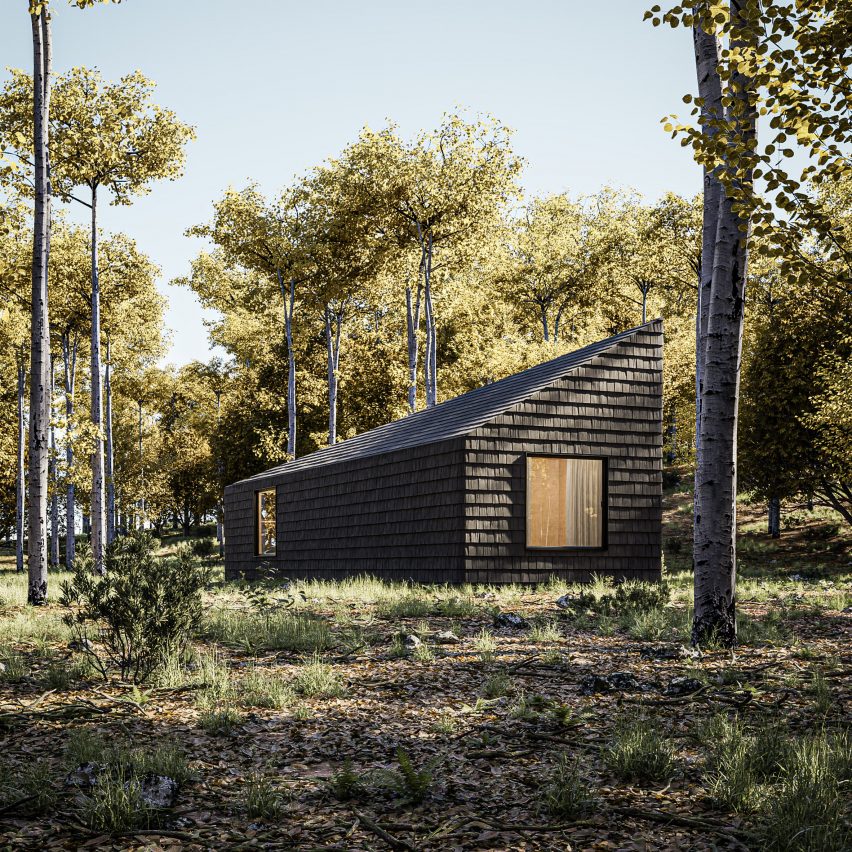
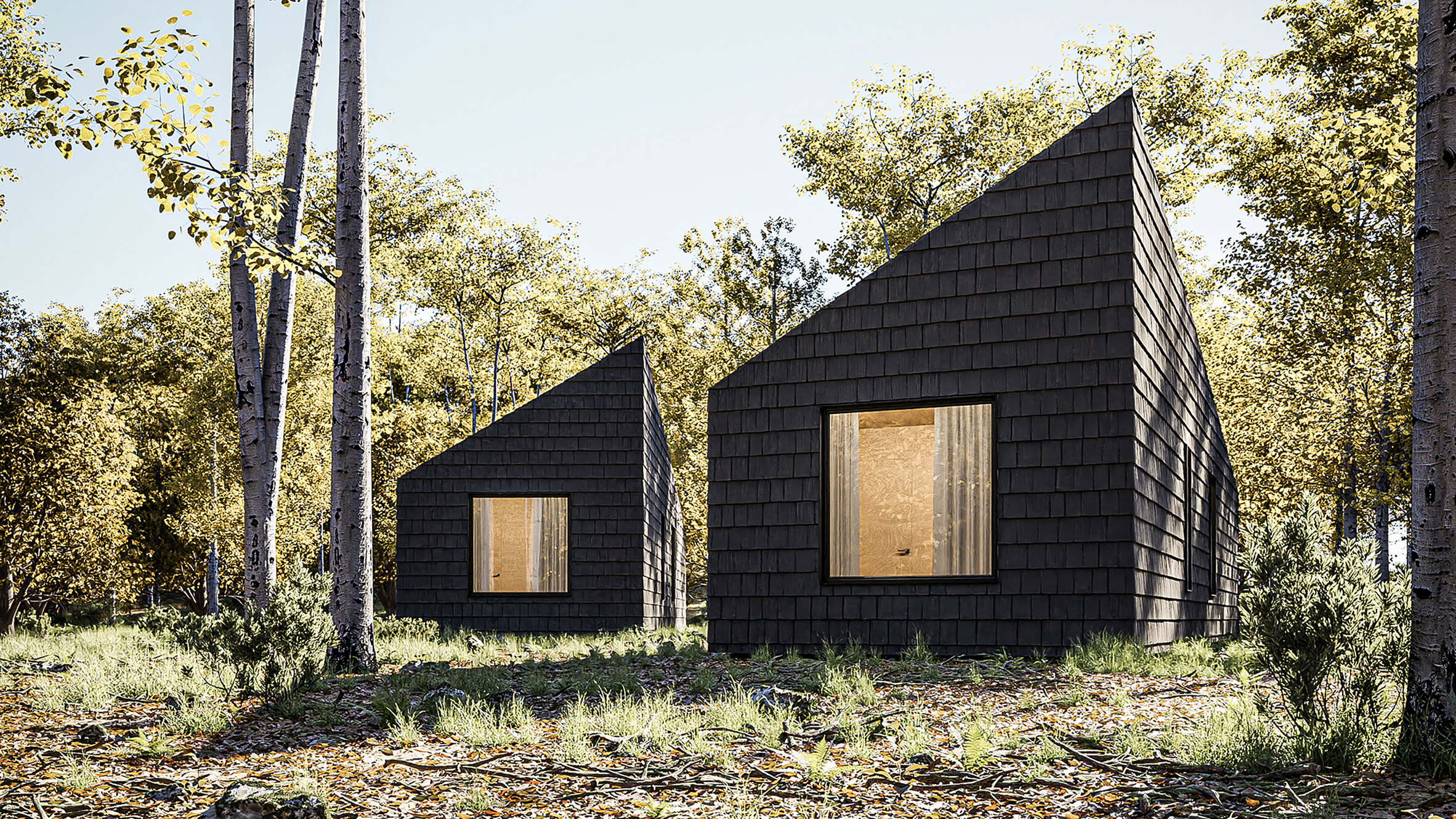
The project includes three cabins
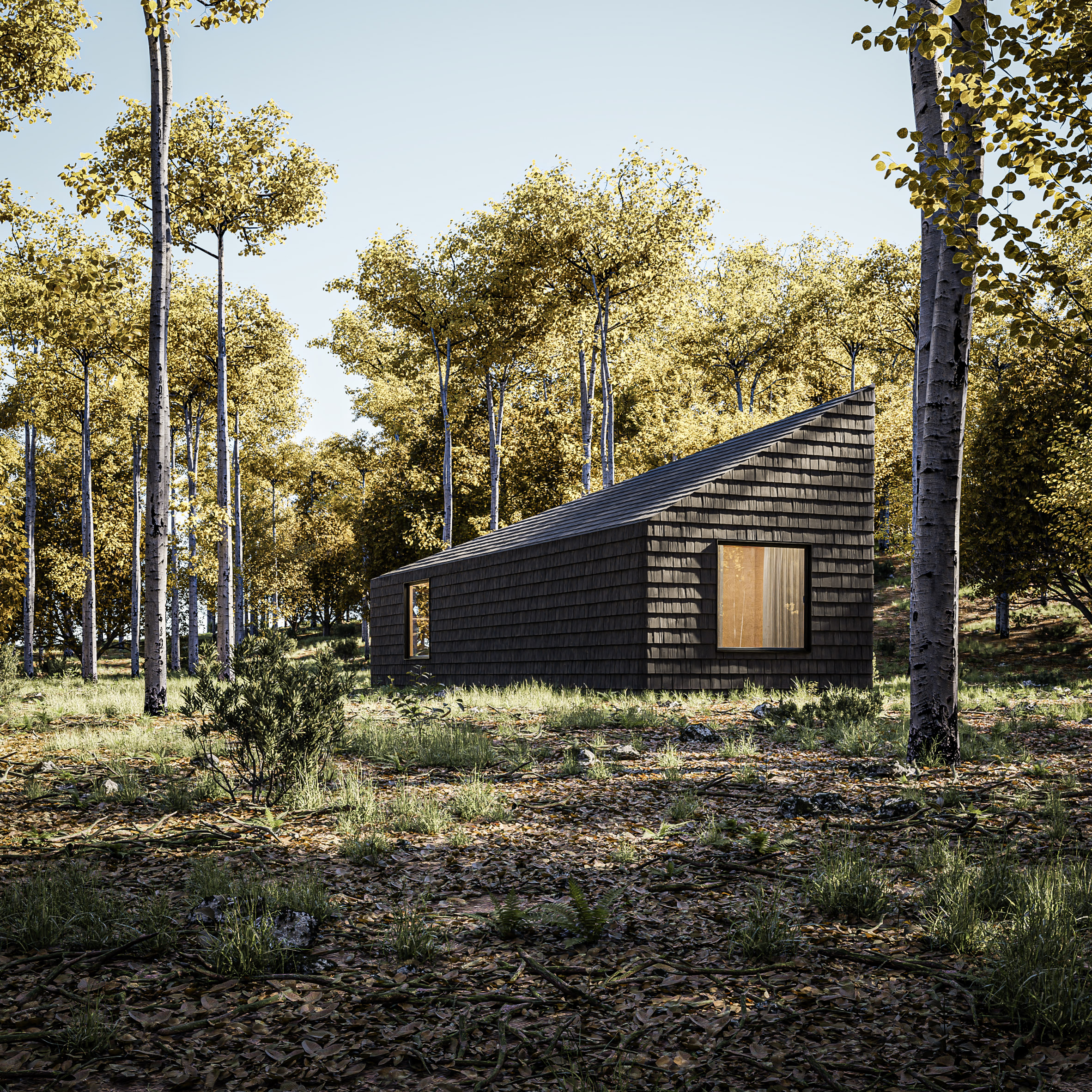
The Canton House project calls for three cabins clad in blackened shingles

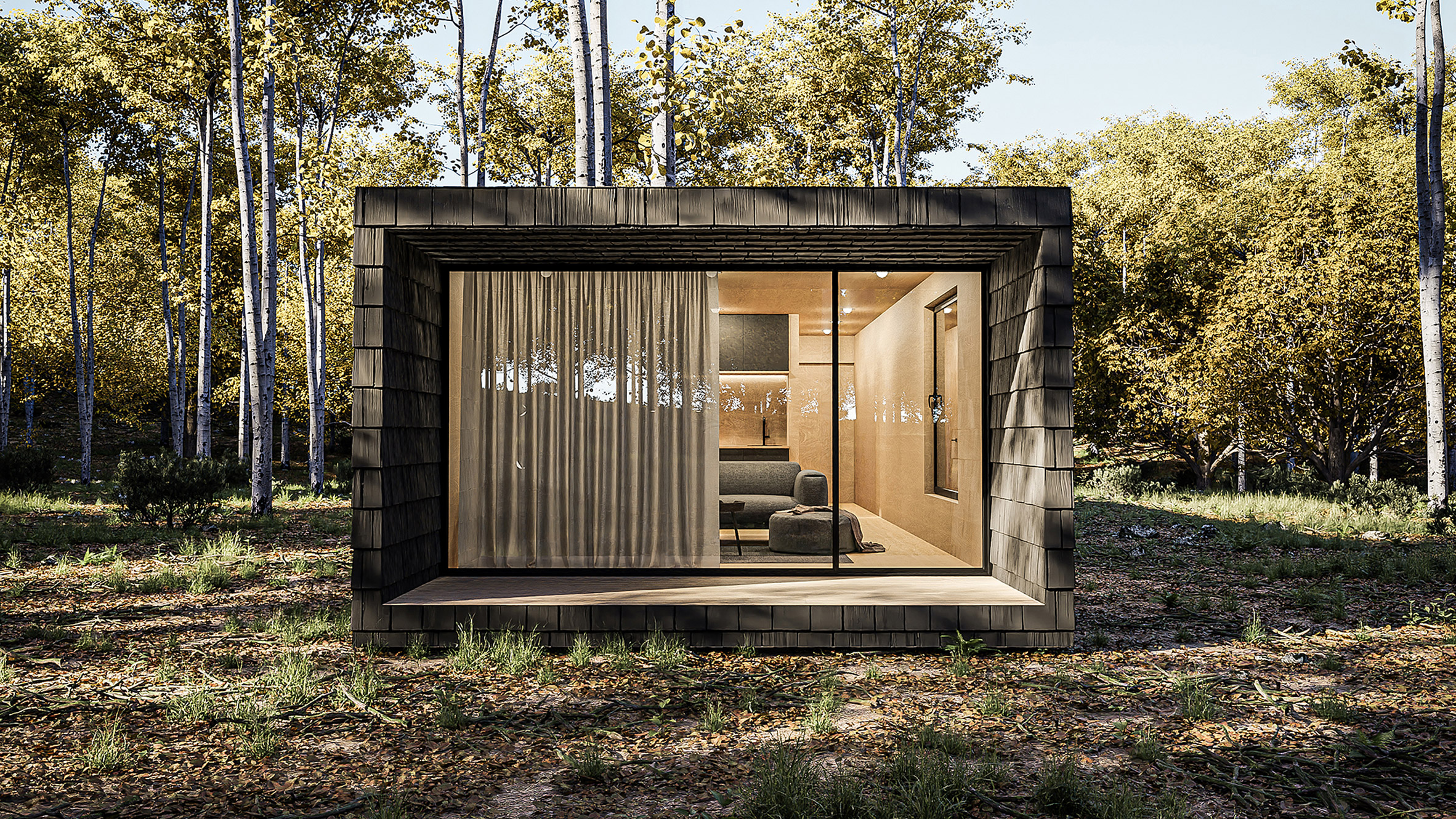
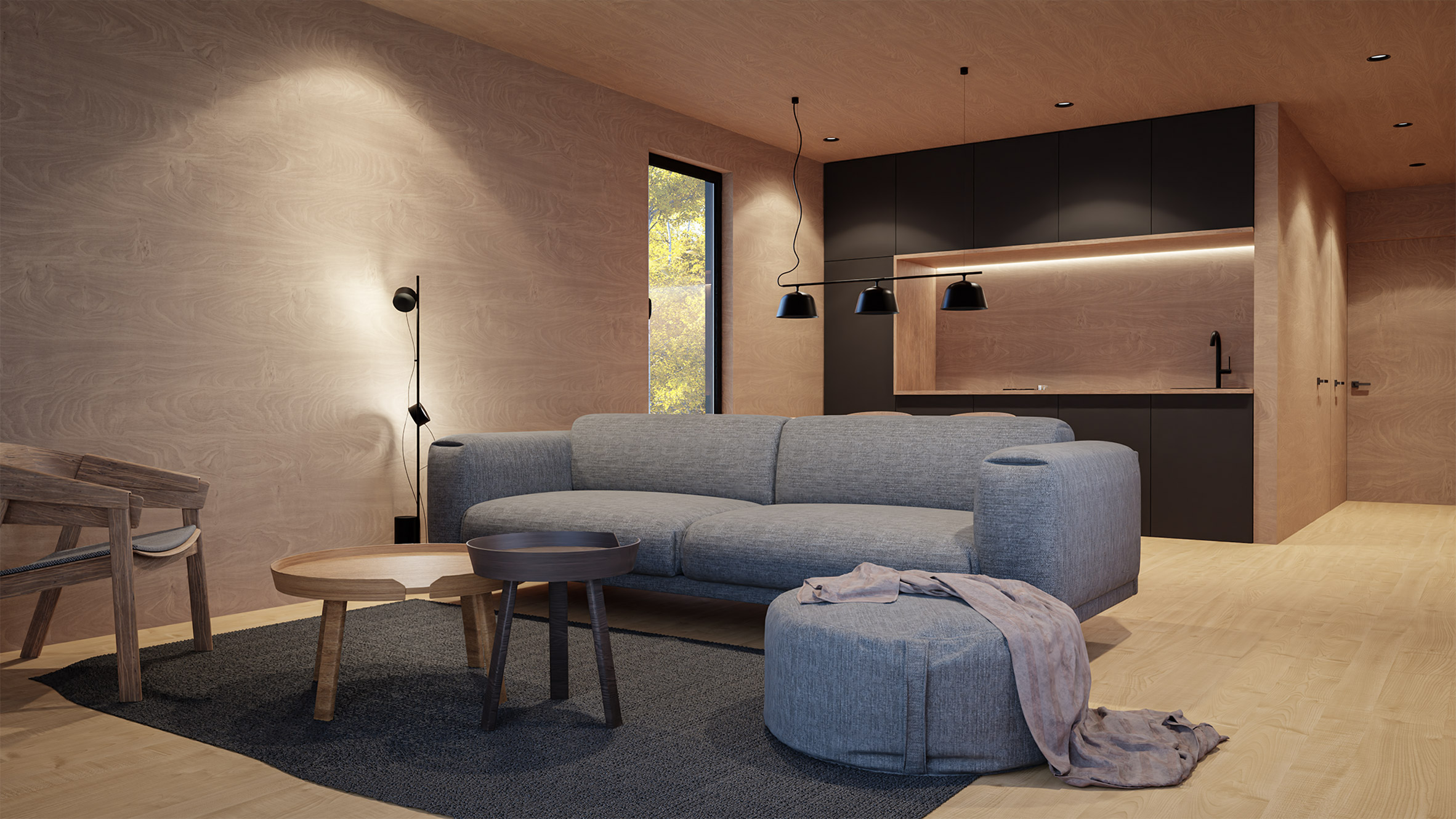
The retreat will include three cabins clad from roof to wall in blackened, locally sourced wood, each featuring a kitchenette, bathroom, bedroom, and utility and storage rooms finished in plywood.

Subtly designed, the cabins will have slanted roofs and take cues from wood shingles often found in Romanian vernacular architecture such as rural towers and church spires.

The cabins are clad in local wood
The cabins are designed to generate their own electricity via solar panels

"The low profile and dark tones of the building do not call for attention, they in fact disappear into the wilderness through the play of shadow and light on the faceted surfaces of the roofline and walls," Thorpe told Dezeen.

The architect explained how the wooden cabins will operate off-grid. "The cabins will be outfitted with individual solar kits to be installed either on the side of the building facing south or away from the cabin on a small array field."

"Each cabin will be unique in its energy usage so depending on the client, the solar kit will be suggested," he added.

According to Thorpe, the design ethos that has governed the project centres on minimalism and ecological responsibility.

The project is designed for Romania
Plywood will line the interior of each cabin

Canton House is based on another of his projects called Edifice, a recently designed off-grid stained cedar cabin located in Upstate New York.

As well as the designs for the Tara Luanei hotel, additional versions of the Canton House cabins are currently available to buy and construct in other locations.

The cabins will function off-grid
Each cabin will have a slanted roof

American architect Thorpe founded his eponymous design practice in 2010. Since then, he has completed a virtual house with vaulted concrete arches and a conceptual installation for Mexico that resembles a spaceship landing on Earth.

The renderings are by DRVR Studio.

The post Marc Thorpe designs off-grid cabin retreat in the Romanian mountains appeared first on Dezeen.


from Dezeen https://ift.tt/3rDp5Dt

University of Huddersfield presents 10 projects that respond to unfamiliar cultural contexts

University of Huddersfield

A post-apocalyptic world where humankind has exhausted the planet's natural resources and an eco learning centre and biodiversity garden are included in Dezeen's latest school show by students at the University of Huddersfield.

Also included is a project that examines how virtual and augmented reality promise to change urban space experience and another explores how Hull might recover if submerged underwater.


University of Huddersfield

School: University of Huddersfield, School of Art, Design and Architecture
Courses: 
BA(Hons) Architecture RIBA Part 1 and Master of Architecture RIBA Part 2
Tutors:
Caterina Benincasa-Sharman, Jonathan Bush, Hilary Chadwick, Nic Clear, Ioanni Delsante, Danilo Di Mascio, Yun Gao, Amir Gohar, Danilo Gomes, Alex Griffin, Spyros Kaprinis, Bea Martin-Gomes, Hyun Jun Park, Adrian Pitts, Vijay Taheem and Hazem Ziada.

School statement:

"The journey through the school's architecture programmes nurtures a student's aspirations in dialogue with crucial contemporary issues, particularly environmental and technological change. By developing their skills and knowledge, their learning experiences shape a professional with transformative skills and visions.

"In BA Arch, culture, context and place frame the scope and inspiration for students' architectural propositions. The programme engages remote, non-western cultures stimulating students to respond to unfamiliar cultural contexts (such as Kunming, China) with propositions both appropriate and visionary.

"The M Arch programme challenges students to reimagine alternative futures and transformative environments. Here, students probe visions for the posthuman condition supported by science fiction, explore futurist technologies of fabrication and visualisation, and/or develop substitutes to capitalist exchange.

"The School of Art, Design and Architecture, University of Huddersfield, offers the full suite of RIBA-validated programmes: BA(Hons) Architecture RIBA Part 1, Master of Architecture RIBA Part 2, and Professional Practice and Management in Architecture RIBA Part 3, along with the MA Advanced Architectural Design, BSc Architecture Technology, and programmes in construction project management."


Making Genus | Exploring Gender Roles Within Utopian Societies by Dariana Nistor

"Viewing the world through a gendered lens creates a hierarchical structure founded on binary terms, entrenching power structures and default identity expectations.

"Such social thresholds prescribe the built environment and how it operates. Concerned with the social and architectural implications of living in a post-gender world, 'Making Genus' is an experimental project rooted in utopian feminist science-fiction.

"It critically assesses the gendered status quo and proposes speculative alternatives. Located in the North Sea and taking the form of a utopian island, the project's architectural language transcends the conventional rigidity of the built environment, proposing a lexis infused with utopian dreams, environmental consciousness, social equality and kinship."

Student: Dariana Nistor
Course: Master of Architecture RIBA Part 2
Tutors: Nic Clear and Hyun Jun Park
Email: nistordariana[at]gmail.com

University of Huddersfield

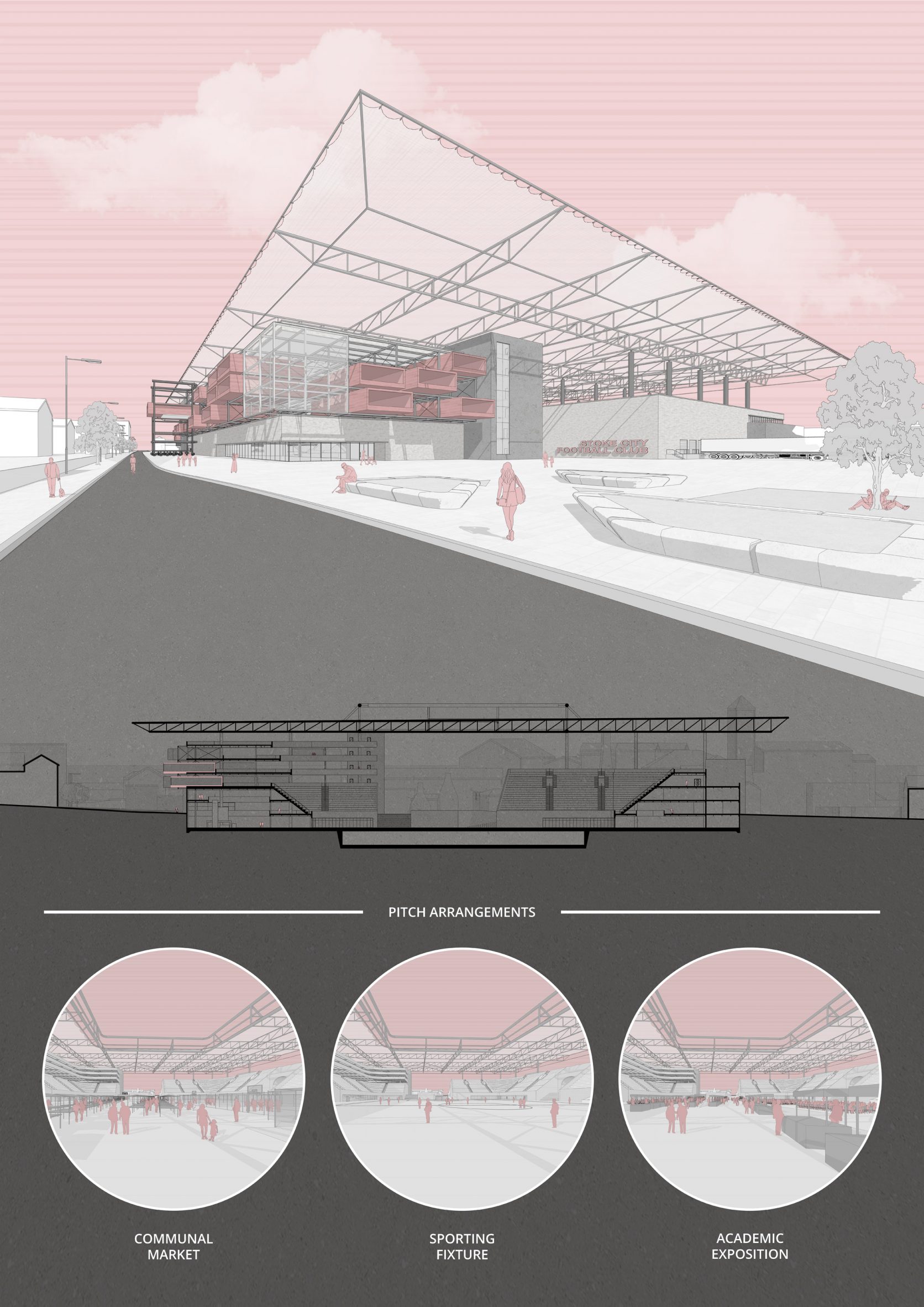
Typological Hybridity | The Integrated Urban Stadium by Jordan Halliday

"A speculative deconstruction of the typology of stadia utilising constructs of hybridity to reimagine the future stadium, beyond mono functionality, as an adaptive venue orientated towards urban socioeconomic processes.

"Stoke-on-Trent is a city with poor socioeconomic conditions limiting future growth. Building on the city's rich industrial heritage, the project proposes a hybrid stadium at the hub of a regional advanced ceramics network, encompassing a ceramic factory, technical college, and sports centre while also uniting disjointed residential communities along an axial route towards the train station.

"Internally, vertical spatial arrangements engender cross experiences among the hybrid sub typologies. Besides their complexity dependent configurations, modularised accommodations enable adaptive responses to live urban conditions, whether a specific event or longer-term socio-economic adjustments."

Student: Jordan Halliday
Course:
Master of Architecture RIBA Part 2
Tutors:
Ioanni Delsante and Hazem Ziada
Email: jordan.halliday[at]aol.com


The Huddersfield Virtual Blueprint by Adam Ownsworth

"In 2019, Kirklees Council launched 'The Huddersfield Blueprint', a 'ten-year vision' to 'create a thriving, modern-day town centre, to address the noticeable decline in retail, business and tourism within Huddersfield's town centre. However, the council's plans remain unambitious and not future-proof.

"Virtual and augmented reality promise to change urban space experience. The Huddersfield Virtual Blueprint critically complements Kirklees Council's strategy. The project explores how the installation of powerful, real-time virtual and augmented reality technologies offer consumers interactive and unique experiences for their town centre visit.

"The Virtual Blueprint has no limits and will generate an exciting, unique USP for Huddersfield, thrusting it into the technological forefront and setting a precedent for cities awaiting the inevitable transition."

Student: Adam Ownsworth
Course:
Master of Architecture RIBA Part 2
Tutors:
Nic Clear and Hyun Jun Park
Email:
adamownsworth[at]outlook.com


Dirtbag Cathedral by Rebecca Jane Smith

"The Dirtbag Cathedral is a speculative project, combining philosophical posthumanism, rock climbing and notation. The proposed structure provides space where the posthuman subject can experience the extreme bodily act of climbing.

"Dirtbag Cathedral is an axiomatic structure, neither building nor landscape yet both sculpture and architectural structure. It is a sculptural-architectural hybrid.

"The thesis highlights the challenges of representing phenomenological experiences through two-dimensional drawings and the posthuman means of communicating such experiences.

"The human species' journey through the 'philosophical cartography' of the Posthuman state has directly impacted the environment. In a world in which posthumans possess advanced collective consciousness that every object is equal, the Dirtbag Cathedral acts as a memoir of the human."

Student: Rebecca Jane Smith
Course:
Master of Architecture RIBA Part 2
Tutors:
Nic Clear and Hyun Jun Park
Email:
becca.smith96[at]hotmail.co.uk


New Life, Neo Hull by Yu Min Teoh

"Architecture as a living archipelago in Hull: a new home and hope to save wildlife, restoring and rewilding them after flooding. An artificial 3D-printed modular self-grows from the estuary bottom upwards through years of tuning and monitoring.

"It uses a composite material: a ceramics-coral cell mimicking coral-reef growth that extracts carbon and nutrition from seawater to self-grow and self-repair into a strong structure. Nanotechnology boosts the sprouting structure far faster than average reef growth.

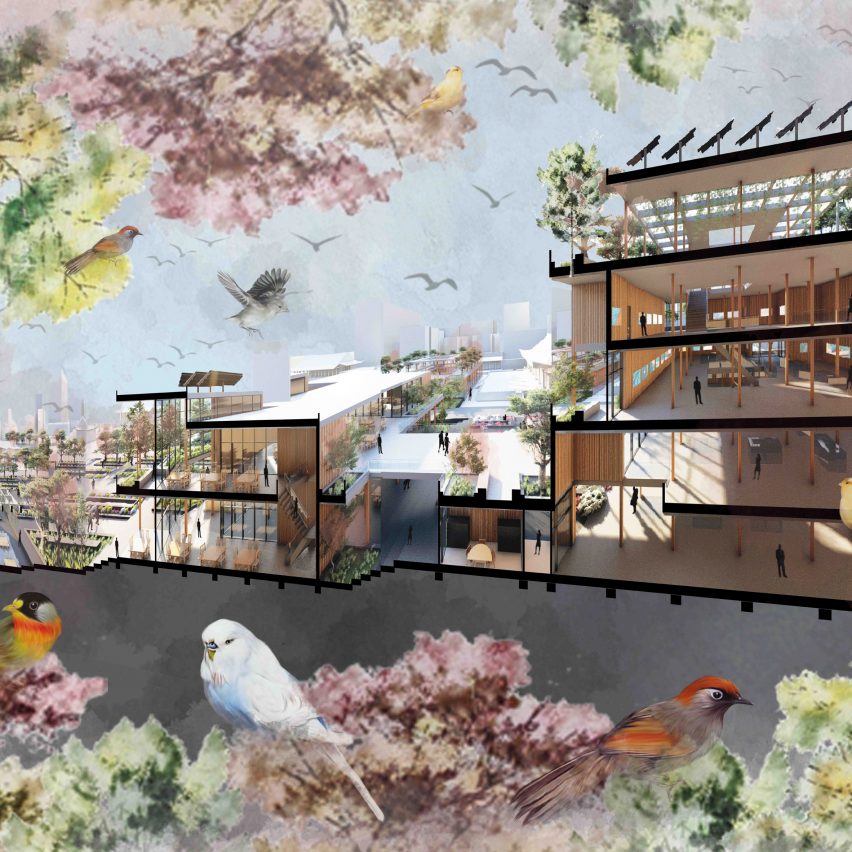
"The underwater foundation will attract the local marine ecology and juvenile coral. Above water, the ground level mimics different habitats for rewilding and attracts visitors to grow Hull's new economy. The upper-floor level shelters nesting birds, while the top-level monorail facilitates travel across the island and connects it to the mainland."

Student: Yu Min Teoh
Course:
Master of Architecture RIBA Part 2
Tutors:
Nic Clear and Hyun Jun Park
Email:
427.yumin[at]gmail.com

University of Huddersfield

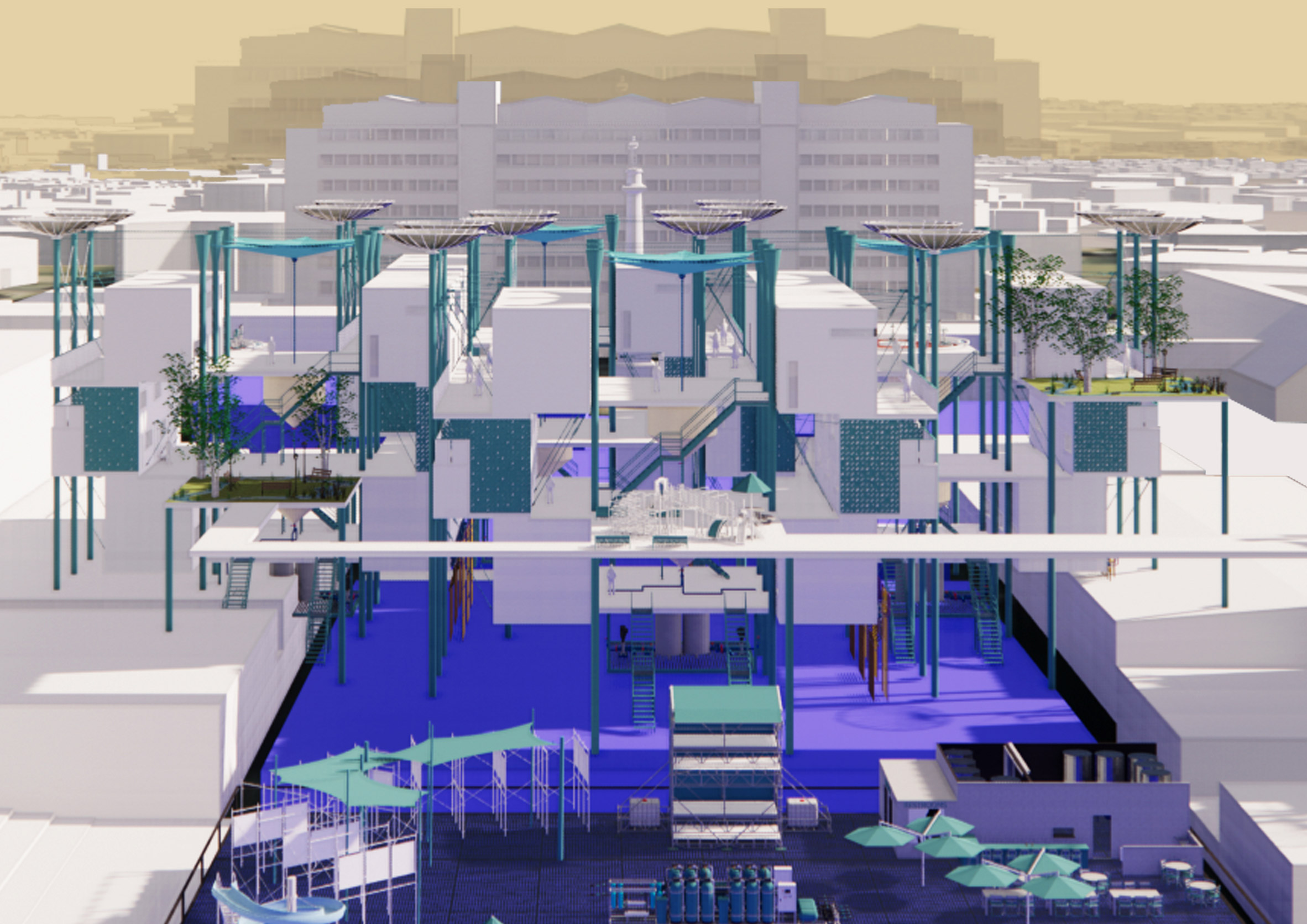
Recovering Submerged City | Commons Of Community Value by Kamila Kudlata

"In a worst-case scenario of global warming in coming decades, where floods become more persistent and recurrent, Hull will be submerged. This project formulates a governance model addressing this environmental crisis, building on the ongoing devaluation of land and incoming flood water as resources for a new commons.

"Living with water is an opportunity for the recovery of a submerged city. It explores the use of underground spaces in devalued sites for public use and the occupation of air space with private living spaces. The project presents Queen's Gardens as an advanced technology hub that optimises the use of floodwater for energy generation and water-sufficiency filtered using nanotechnology. It becomes a pilot site for other Hull neighbourhoods and serves the surrounding region."

Student: Kamila Kudlata
Course:
Master of Architecture RIBA Part 2
Tutors:
Ioanni Delsante and Hazem Ziada
Email:
kamila_kudlata[at]hotmail.com


Perceptions of Sublimity by Wajid Khan

"The project explores our perceptions of the sublime encounter in a post-apocalyptic world, a future where humankind has exhausted the planet's natural resources.

"Drawing on cognitive science and science fiction, the thesis explores the sublime, its modern-day representation and its catastrophic future equivalent.

"The project is positioned between the legible and illegible, between reading and un-reading. It considers the relationship between humans and intrigue, catastrophe and the sublime, or rather the sublimity of a cataclysmic event; in other words, the seduction of Armageddon.

"Hidden within the unconscious, there is an insatiable desire for the unknown. The desire to journey beyond the sensible given, towards the oncoming storm, and the dread of night."

Student: Wajid Khan
Course:
Master of Architecture RIBA Part 2
Tutors:
Nic Clear and Hyun Jun Park
Email:
wajiidkhan[at]gmail.com

University of Huddersfield

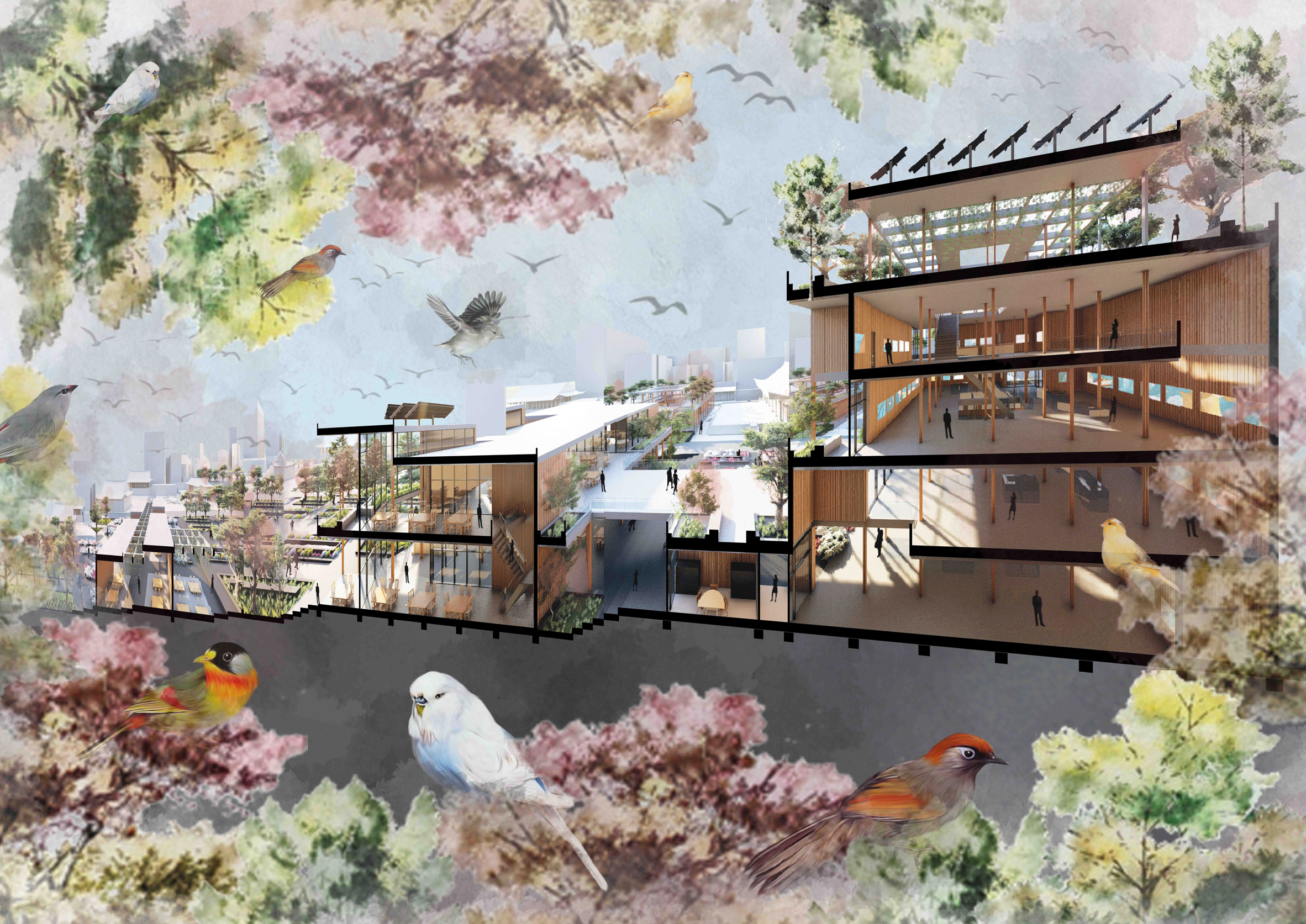
Eco Learning Centre and Biodiversity Garden by Fidelia Florentia

"Kunming is known as the 'City of Perpetual Spring' and famous for its biodiversity. The site is located in the 'Wenming Block', one of two remaining heritage blocks where Confucius Temple sits.

"The Eco Learning Centre and Biodiversity Garden are concentrated in the idea of harmony, hierarchy and symmetry inspired by Fengshui and Chinese architecture.

"With the main design goals to promote biodiversity, preserve history and attract visitors. There are five separate buildings: a game pavilion to play mahjong, an outdoor theatre for taichi and dance, a library, a cafe, and a museum."

Student: Fidelia Florentia
Course:
BA(Hons) Architecture RIBA Part 1
Tutors:
Hilary Chadwick, Yun Gao, Danilo Gomes, Spyros Kaprinis, Bea Martin-Gomes and Vijay Taheem.
Email:
fideliaflorentia[at]yahoo.co.id


Haiyang Village Aquatic Heritage Centre by Alex Costea

"Located at the Southern edge of Haiyan Village, the project proposes a cultural heritage centre that will explore the region's history while teaching locals and tourists alike the importance of Dian Lake.

"As a response to the clean water scarcity in the village and the surrounding region, a water purification plant was integrated into the design.

"The proposal is built around the five water basins, each representing a stage of the water purification process; their scale contributed to the dramatic entrance, enriched by the interior courtyard and the double-height atrium behind the reception."

Student: Alex Costea
Course:
BA(Hons) Architecture RIBA Part 1
Tutors:
Hilary Chadwick, Yun Gao, Danilo Gomes, Spyros Kaprinis, Bea Martin-Gomes and Vijay Taheem
Email:
acostea249[at]gmail.com


Wulong Village Cultural Heritage Centre by Adriana Negrila

"Located at the heart of the Wulong village, the Cultural Heritage Centre welcomes its visitors into an open space, dictated by a game of light and shadow, vertical circulation and fluid atmosphere.

"The interior spatial arrangement is divided by a ramp that leads the guests to the underground level, where controlled artificial light transforms the exhibitions into walk-through, interactive art installations.

"The ancient 'shadow trickery' Chinese technique has been used to produce a transcendental experience, taking the visitors back in time, being paired with sounds, perfumes and fluctuating temperatures."

Student: Adriana Negrila
Course:
BA(Hons) Architecture RIBA Part 1
Tutors:
Hilary Chadwick, Yun Gao, Danilo Gomes, Spyros Kaprinis, Bea Martin-Gomes and Vijay Taheem
Email:
anegrila54[at]yahoo.com


Partnership content

This school show is a partnership between Dezeen and The University of Huddersfield. Find out more about Dezeen partnership content here.

The post University of Huddersfield presents 10 projects that respond to unfamiliar cultural contexts appeared first on Dezeen.


from Dezeen https://ift.tt/3l4fZOC
Kengo Kuma's Japan National Stadium is the centrepiece of the Tokyo 2020 Olympics

The wooden exterior of Japan National Stadium

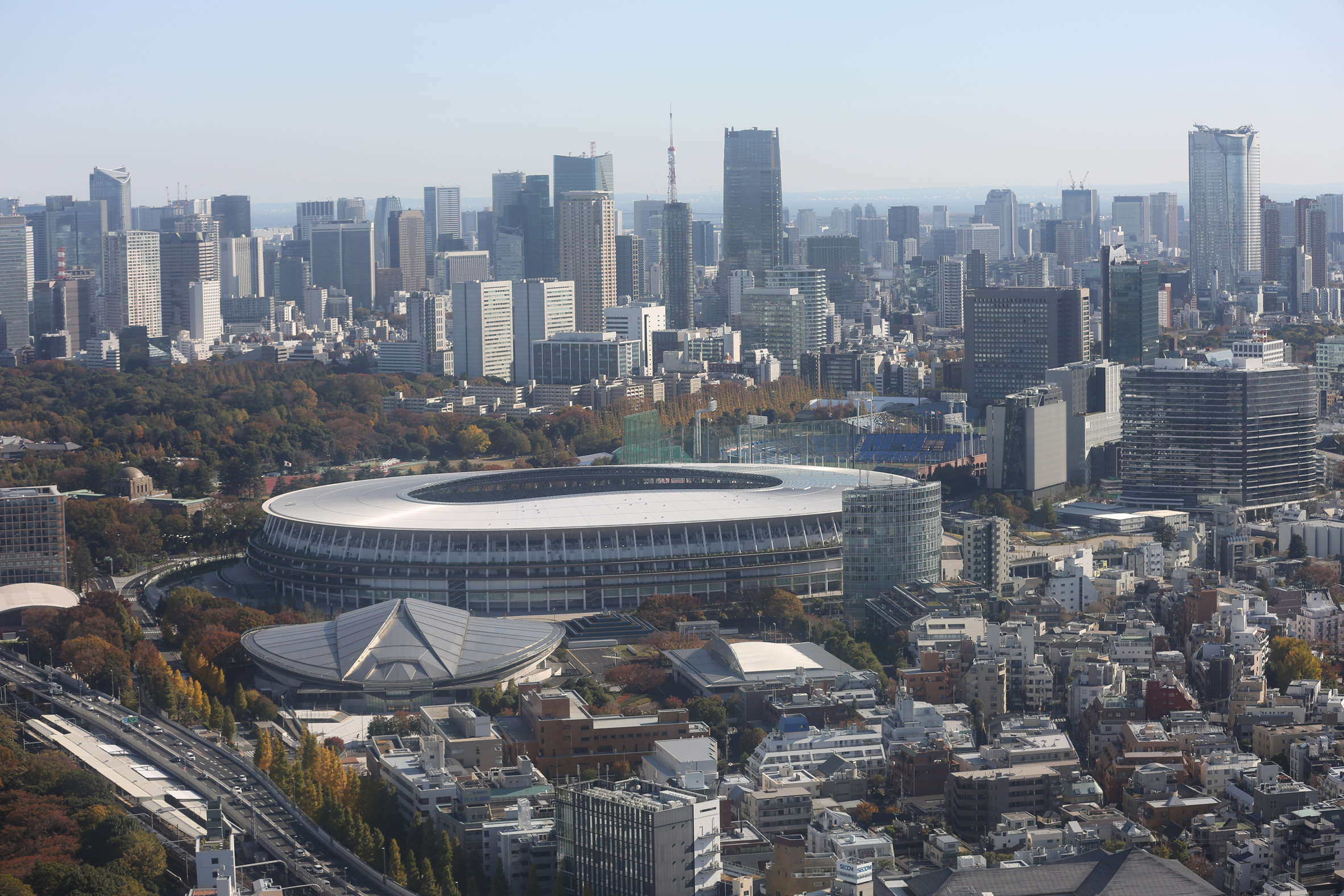
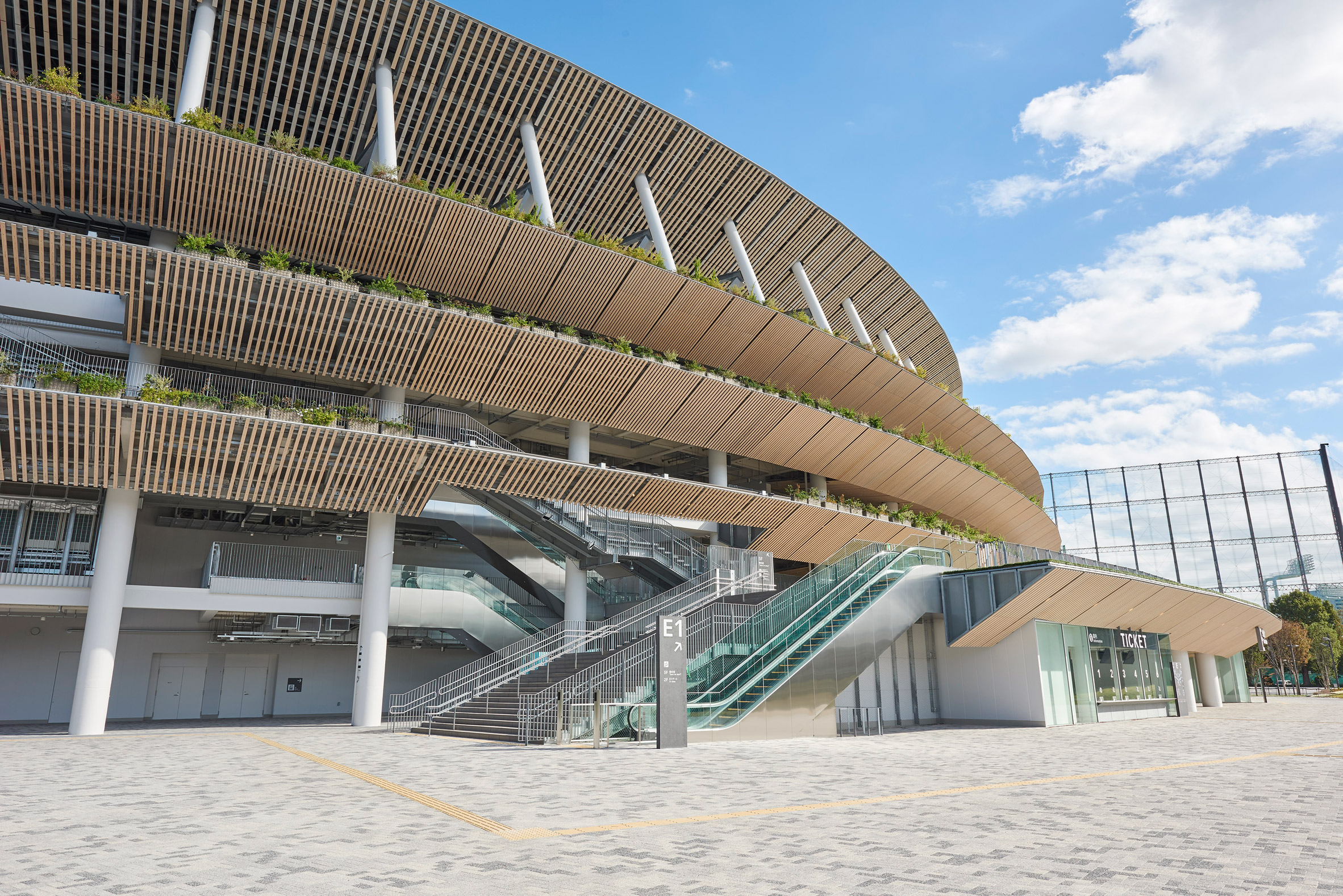
Cedar panels clad the eaves of the 68,000-seat Japan National Stadium, which Japanese studio Kengo Kuma and Associates designed for the Tokyo 2020 Olympics.

The structure in Tokyo's Meiji-Jingu Park by Kengo Kuma and Associates with Taisei Corporation and Azusa Sekkei Co hosted the games' opening ceremony last week and is set to host the track and field athletics events at both the Olympics and Paralympics.

An aerial view of Japan National Stadium
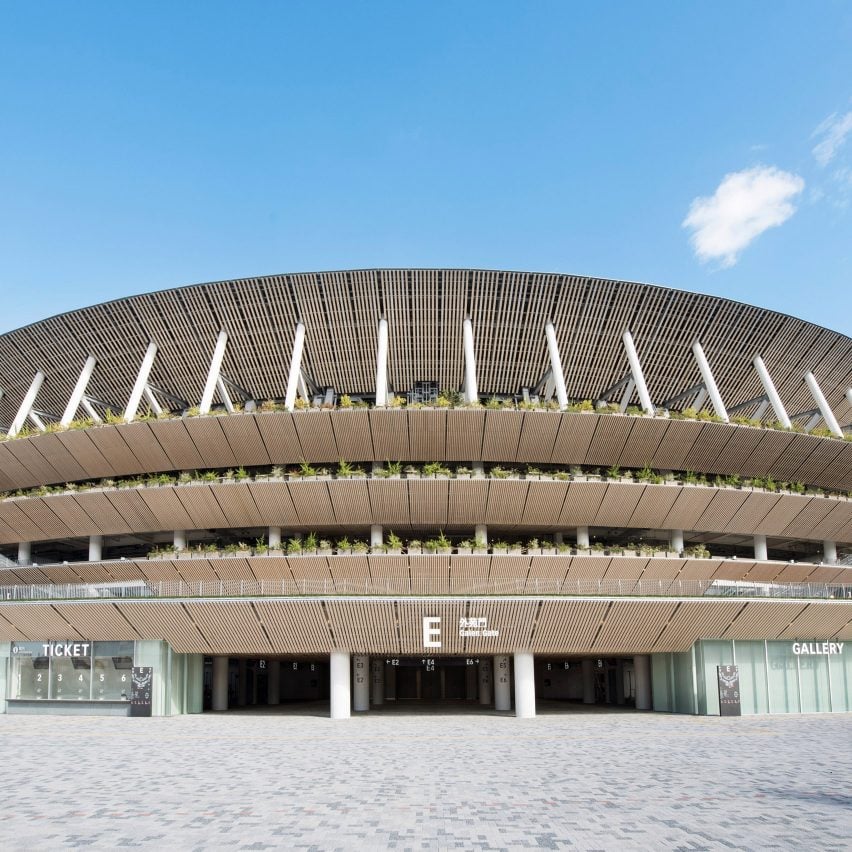
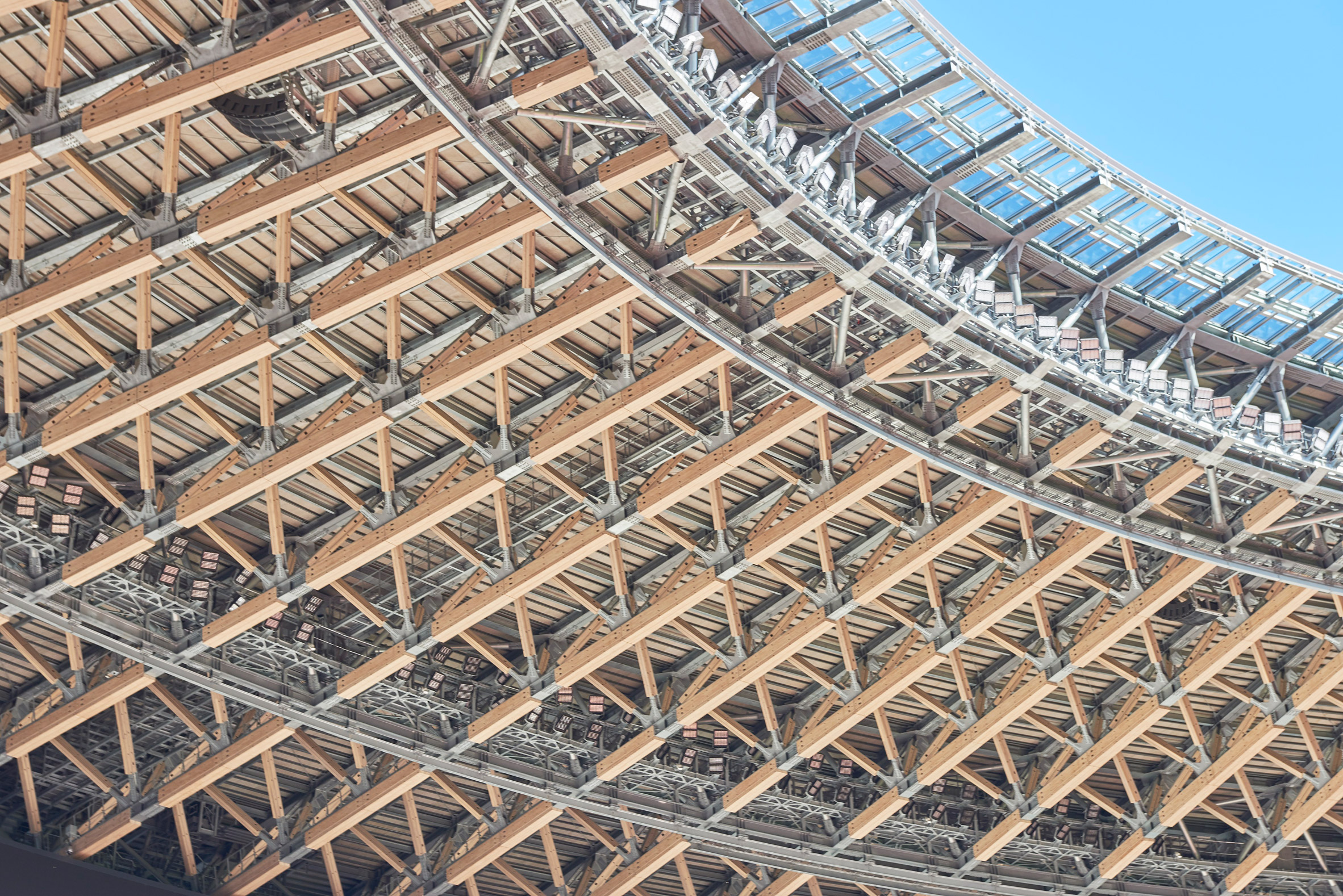
Above: Japan National Stadium is located in Tokyo. Top image: it is surrounded by wooden eaves

Completed in 2019, ahead of the coronavirus-postponed games, the stadium takes the form of a large oval.

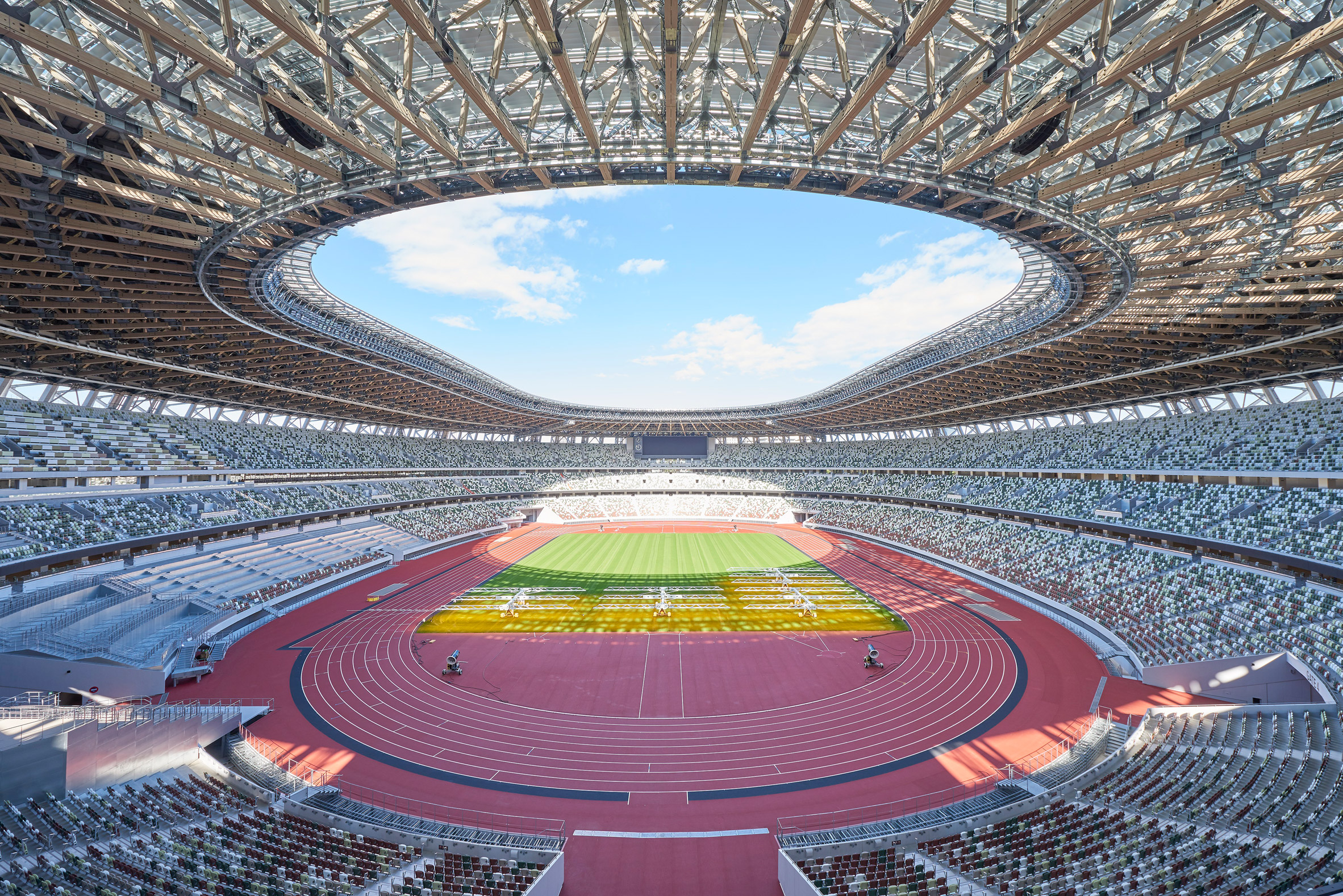
Its main structure is made from reinforced concrete and steel, sheltered by a roof structure made of steel with laminated larch and cedar trusses.

A stadium with wooden cladding
The eaves nod to traditional Japanese architecture

The roof is punctured with a huge oculus above the track but cantilevered to shelter three tiers of spectators seats.

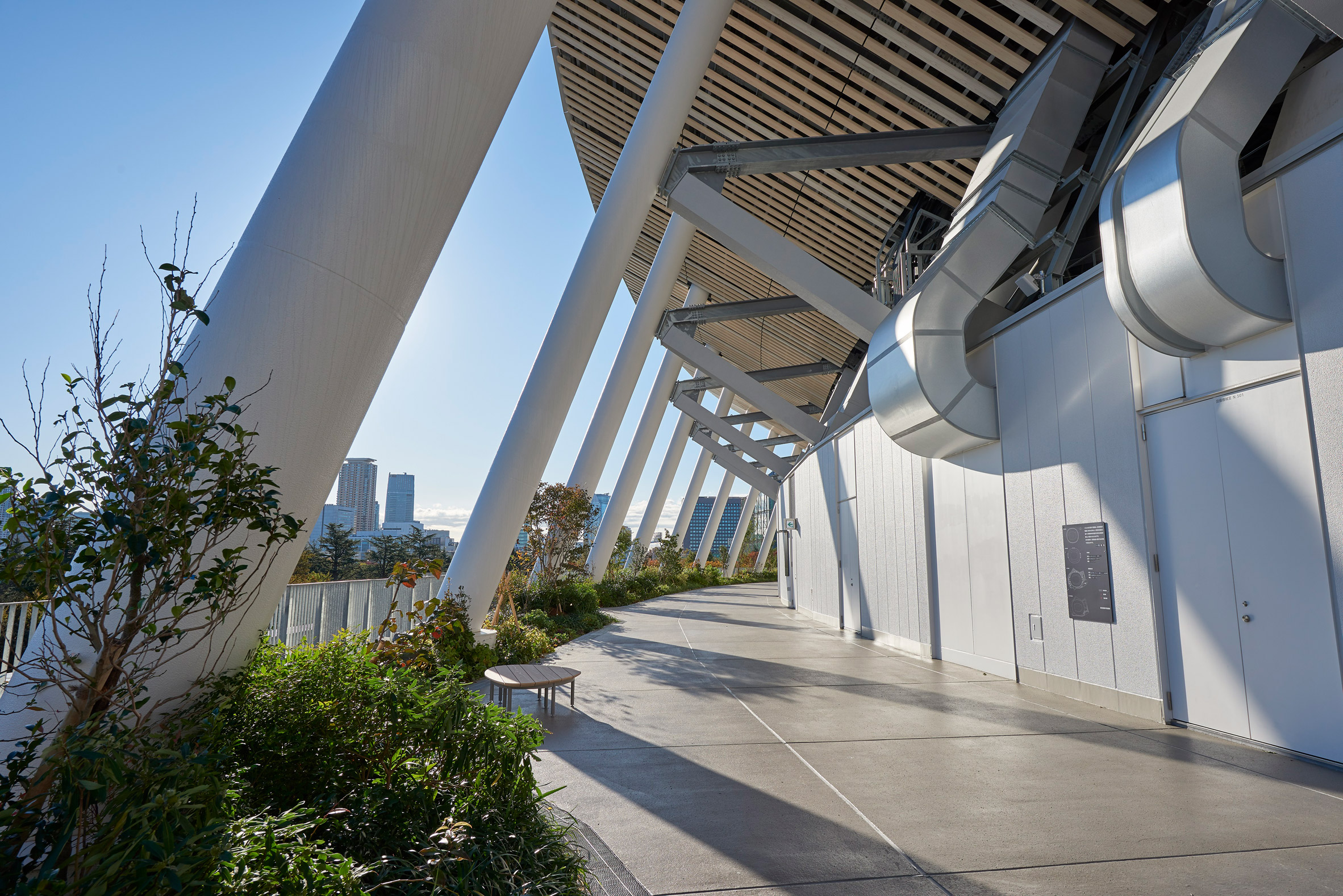
Behind the seating are the circulation areas, which wrap the edges of each level and contain 47,000 plants. This greenery is visible externally and was designed to help the stadium blend in with the surrounding green environment.

Cedar-lined roof eaves
The eaves are positioned below the tree-lined circulation spaces

To reduce the visual impact on the site, the stadium height was minimised by combining a flat roof and a compact arrangement of seats.

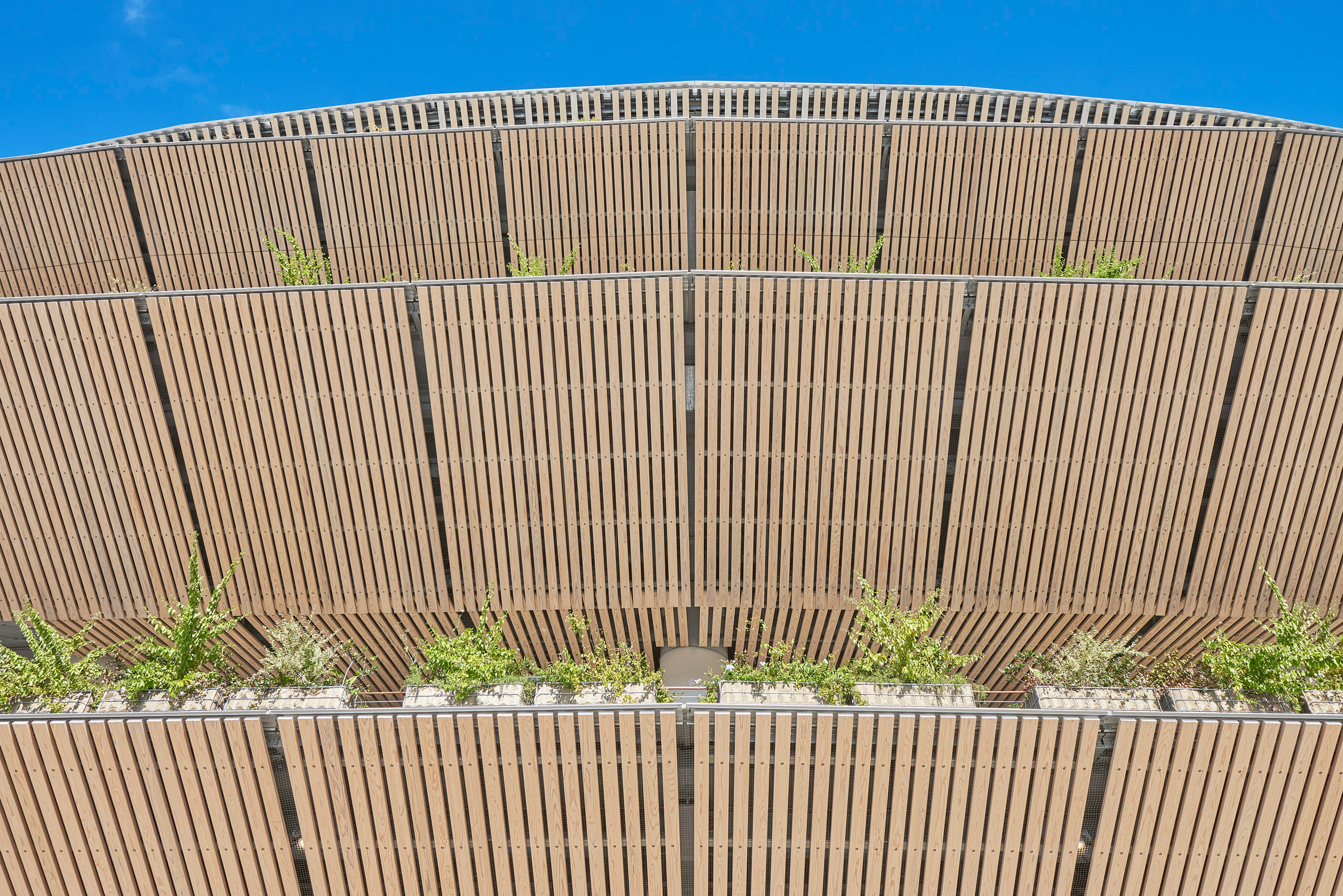
Externally, the structure is distinguished by a series of eaves that are clad in cedar collected from each of Japan's 47 prefectures.

Inside the Tokyo National Stadium
Seating is covered by a roof

The eaves were designed by Kengo Kuma and Associates as a contemporary interpretation of the overhanging eaves of traditional wooden Japanese buildings.

They also offer functional benefits, keeping out the sunlight and rain while encouraging air to circulate and prevailing wind to enter. This helps to cool the building in hot weather in tandem with airflow-creating fans and a mist-cooling system.

Wood also features inside the Japan National Stadium, where it lines the interior spaces to help create a warm and tactile environment. It has also been used to furnish the athletes' dressing rooms and to create benches in recreation spaces.

The stadium is complete with more than 450 places for wheelchair users, solar panels on the roof that generate electricity and rainwater collection points in underground cisterns that are used to irrigate the arena's greenery.

A timber and steel roof structure
The roof structure was built from laminated timber and steel

The Japan National Stadium featured in our roundup of architecturally significant venues hosting the games alongside structures by Japanese architects Kenzo Tange and Fumihiko Maki.

We also featured the stadium during Dezeen's Virtual Design Festival last year, when architecture video blogger Martin van der Linden described it as "quite simple, and definitely not iconic".

A walkway outside Japan National Stadium
Plants line the walkways around the stadium

When Japan National Stadium was first revealed in 2015 it became mired in controversy as it replaced a proposal by UK architect Zaha Hadid that was scrapped over rising costs and opposition.

It came under fire again in 2017 as tropical hardwood linked to deforestation and human rights violations was used as a mould for its concrete elements. This is one of the reasons the Tokyo 2020 Olympics has been accused of greenwashing by promising to be the greenest Olympic event ever.

The photography is courtesy of Japan Sport Council.

The post Kengo Kuma's Japan National Stadium is the centrepiece of the Tokyo 2020 Olympics appeared first on Dezeen.


from Dezeen https://ift.tt/3zI7psV