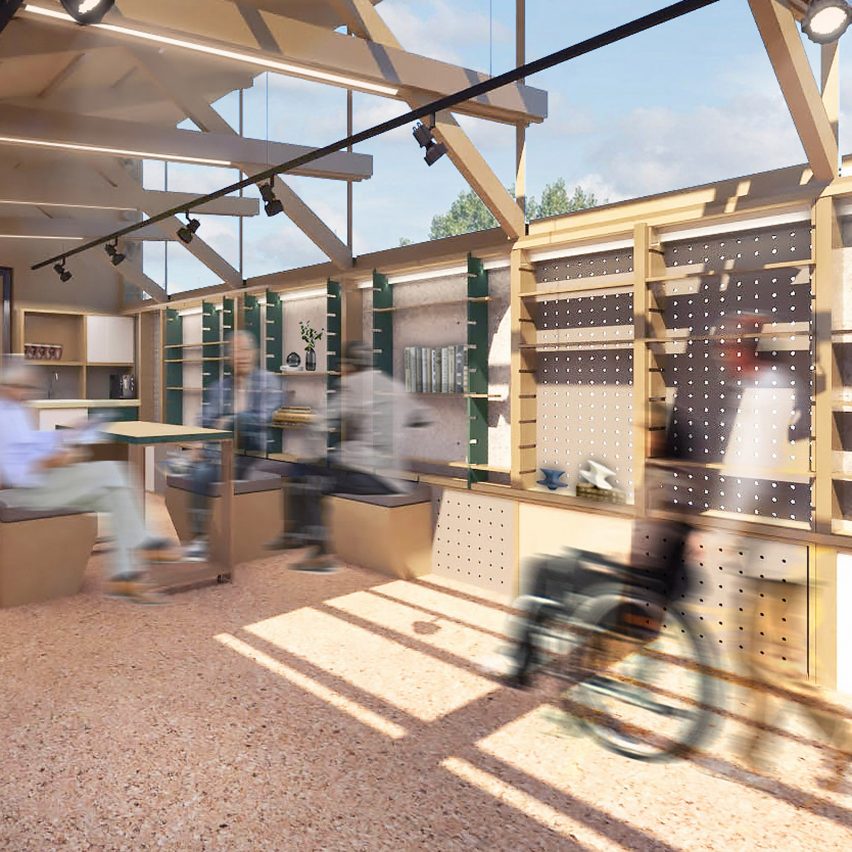
Sunday, 8 August 2021

University of East London students present Shed Life community workshop

University of East London

Ten students from the University of East London present designs for a community workshop that aims to battle social exclusion in Dezeen's latest school show.

Called Shed Life, the group project forms part of the students' interior design master's course. The workshop, which will be built next year, is intended to be a creative space where local people of different generations can collaborate.


University of East London

School: University of East London
Course: MA Interior Design
Tutor:
Dr Anastasia Karandinou
Students: 
Dalal Abdullah, Omnia Al Temnah, Siclania Barroso, Georgette Ivette Wilthew Estefan, Mohammad Farahani, Maria Gradinar, Sonia Nohemy Medina Munoz, Atefeh Sargazi, Cherine Shawa, Gozde Tuncbilek, Teinane Chibuike Jesse Warekuromo and Yesim Yumrutas

School statement:

"Design of any scale responds to – and in parallel leads – cultural, political and social change. Our MA course examines the role of design in forming places, connections, communities in a socially and environmentally sustainable way, through speculative and pragmatic design exercises, some of which lead to real-life built projects."

University of East London

Shed Life community workshop 

"UEL MA Interior Design students have codesigned a community workshop to battle social exclusion. The UEL MA Interior Design Urban Livingroom Studio, led by Dr Anastasia Karandinou, collaborated with the Thames View Tenants Association and the Humourisk artistic director Susie Miller Oduniyi on the Shed Life project.

"This is a community workshop and meeting space, to be built next year. The Urban Livingroom Studio designed the interior of Shed Life as a space for creation and collaboration between local people of different generations.

"Design has been considered as a practice that both pragmatically and metaphorically addresses everyday social and political issues. The aim of this project was to raise awareness on the issue of social exclusion, isolation and loneliness, and actively empower the local community of Barking by designing this space, with them at the centre of the process.
University of East London
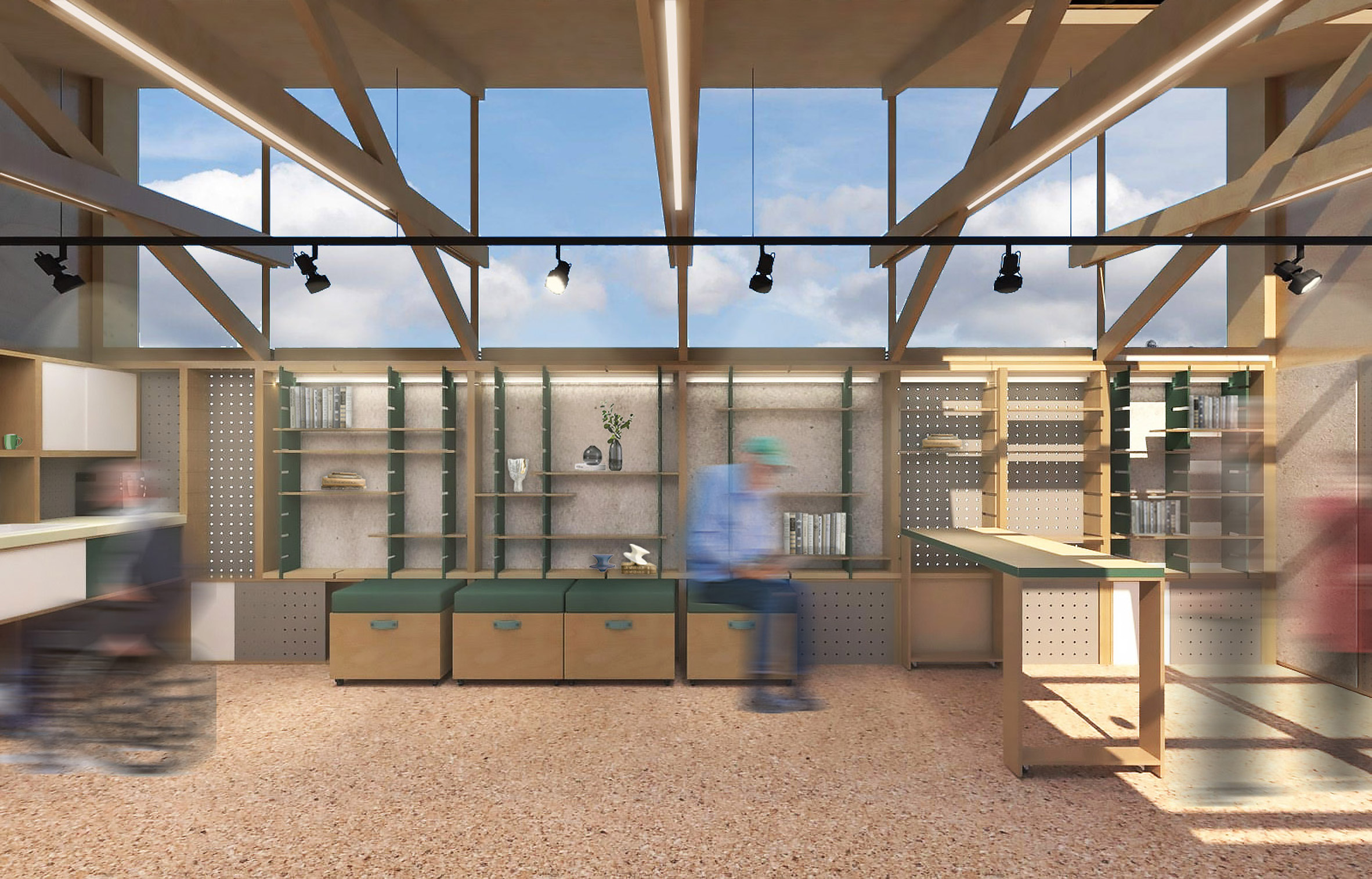
Shed life is a codesigned community workshop that intends to tackle social exclusion

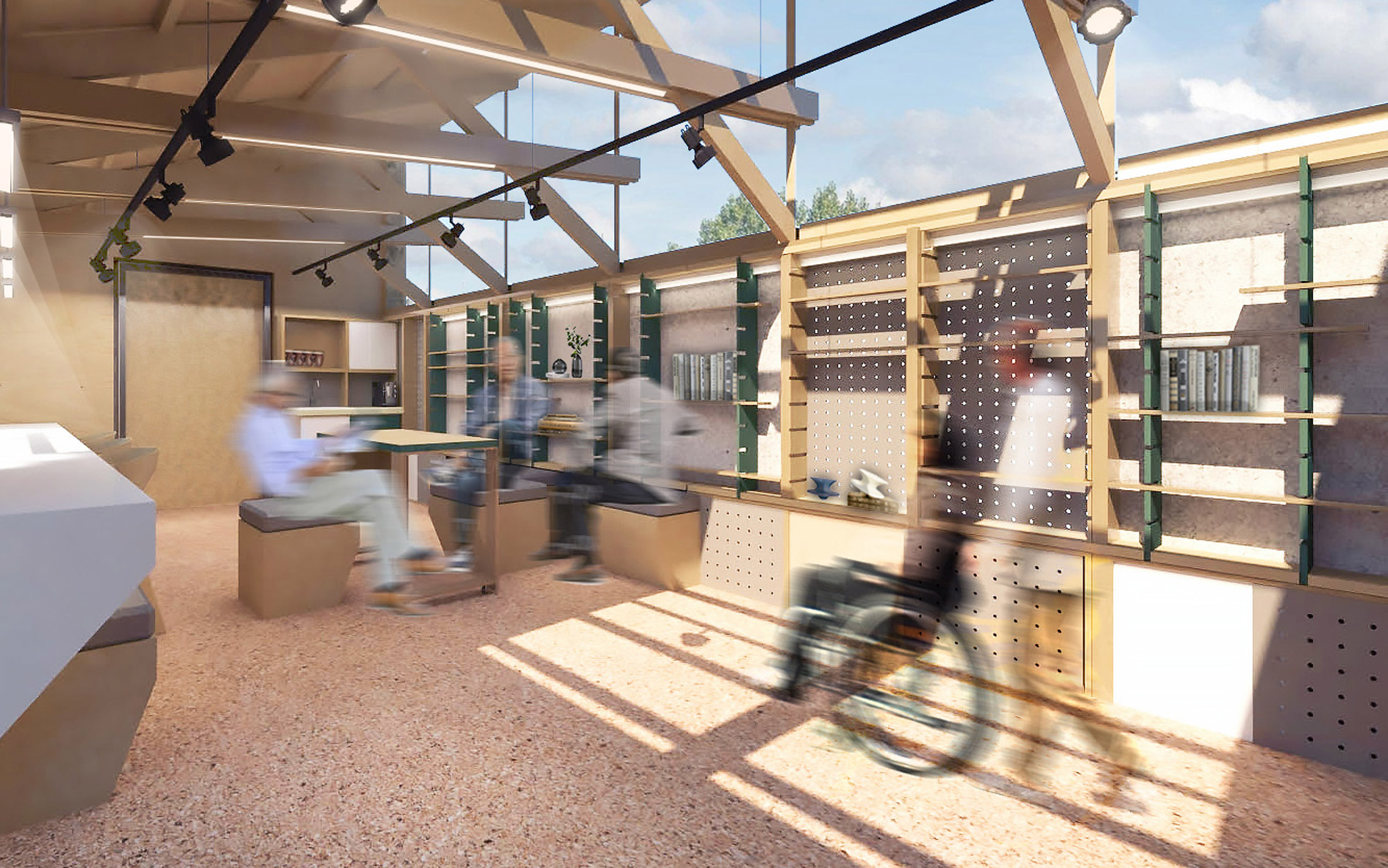
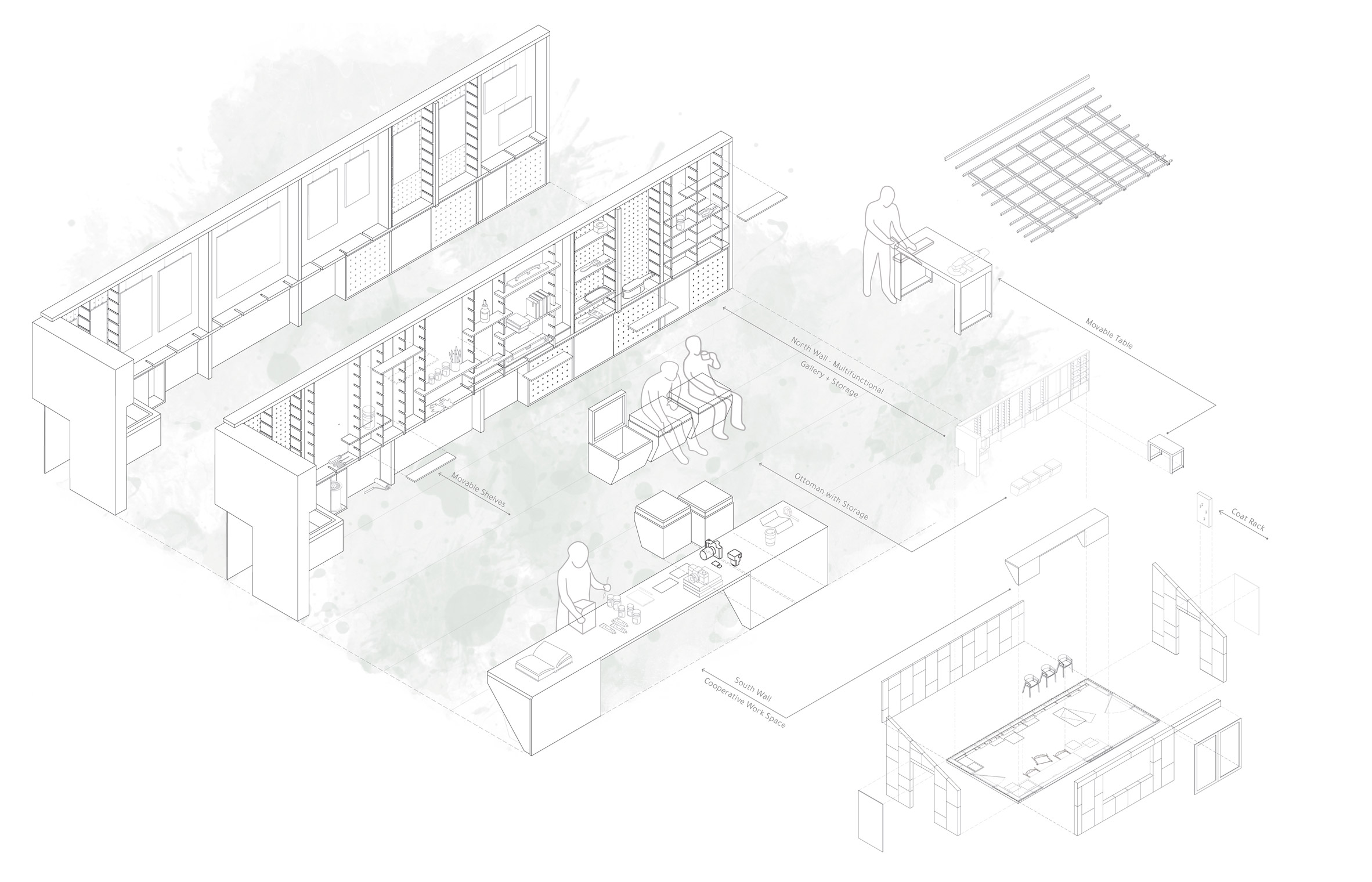
"The main activities to be hosted include a wood workshop, space for seminars, knowledge and skills exchange for small groups, computing and photography workshops, gallery wall, storage of some of the relevant equipment and tea and coffee making facilities. The interior involves elements that are flexible, removable and can be flat-packed.

"The users of this small space can transform it themselves into a gallery with exhibition walls for artwork, into a workshop with shelves and worktop surfaces, or into a more relaxed meeting place for them to share a tea.

"This project is part of an ongoing research and community engagement project aiming to battle loneliness and social isolation by designing and creating a place that welcomes collaboration, creation and interaction between locals. The project was developed in collaboration with a group of locals, with whom online and in-person workshops and consultations were organised.
University of East London
Shed Life is a collaborative project as part of the students' MA Interior Design course

"The exterior shell of the building was designed by the UEL MArch students, led by Alan Chandler. The project is being developed in partnership with the Thames View Tennants association, the Humourisk and its director Susie Miller Oduniyi.

"It is supported by the following funders: National Lottery, Healthy New Towns and Thames Talk (Barking Riverside London), London Borough of Barking and Dagenham, Trust For London, Creekmouth Preservation Society, Barking and Dagenham Giving. All the students involved received the UEL Volunteering and Civic Engagement Award for their work on a meaningful and valuable for the local community real-life project.

"For further information visit the university's website."


Partnership content

This school show is a partnership between Dezeen and the University of East London. Find out more about Dezeen partnership content here

The post University of East London students present Shed Life community workshop appeared first on Dezeen.


from Dezeen https://ift.tt/2VIvuBu

Bernardo Bader Architekten designs extension to timber kindergarten

Kindergarten Am Schlatt

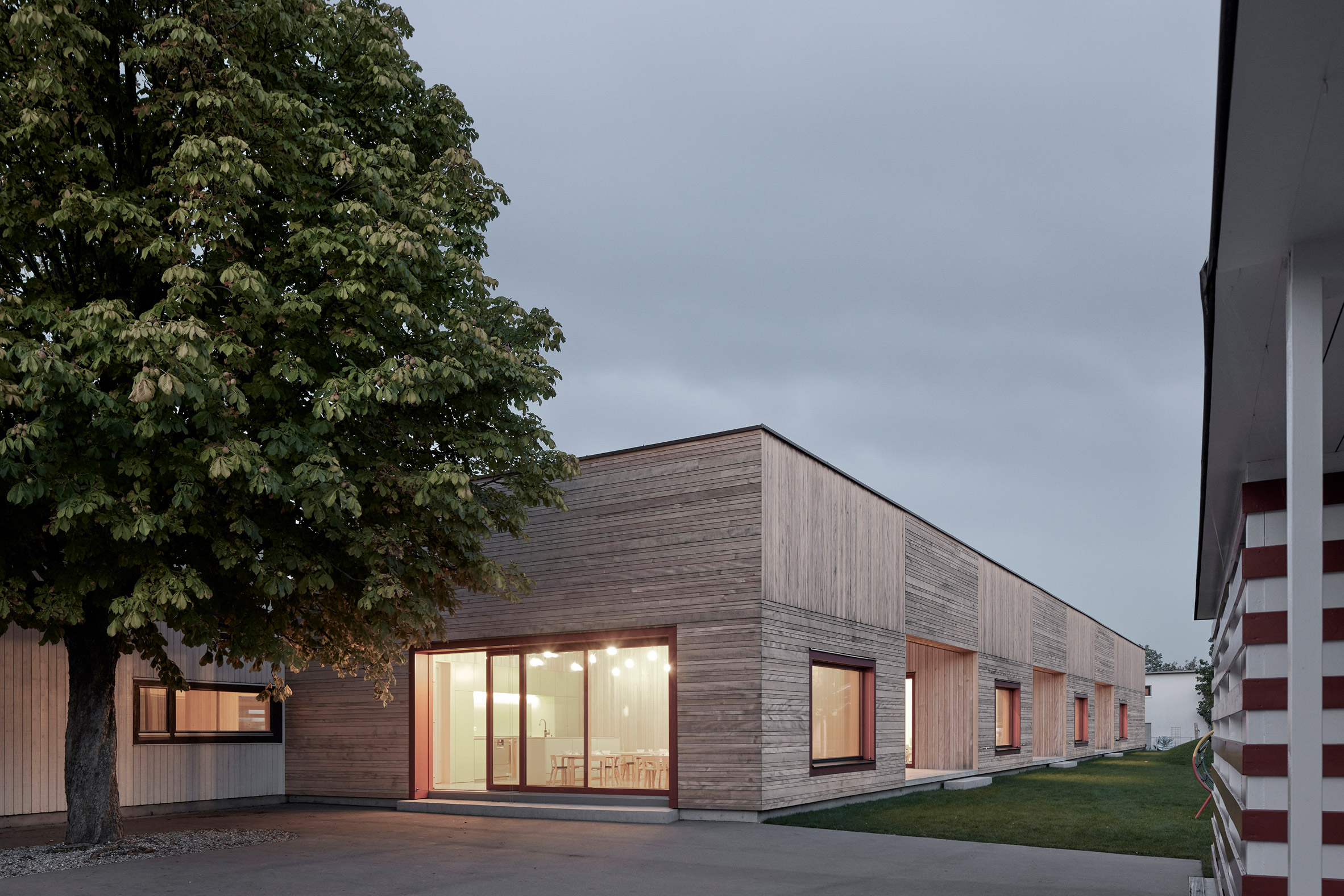
Bregenz-based studio Bernardo Bader Architekten has completed a timber extension to Kindergarten Am Schlatt in Lustenau, Austria, with dark red window frames that reference the colour of the main building.

Bernardo Bader Architekten added space for three more groups of children to the existing single-storey nursery and improved the connection between the classrooms and gardens with a series of external decks.

Kindergarten am Schlatt in Lustenau
Bernardo Bader Architekten designed a timber extension to the Kindergarten Am Schlatt in Lustenau

Designed to align with the existing building while still being distinctive, the extension connects to the kindergarten via a long, timber-clad corridor that runs the full length of the new building's northern edge.

As well as providing access, this corridor doubles as a "playable" space, with storage areas and large window boxes providing seating overlooking a garden.

"The low-lying windows of the access areas create an atmospheric relationship between the interior and exterior," said the studio.

Timber-clad kindergarten extension
The studio added dark red window frames to reference the original building

Directly off this corridor on the building's southern edge are rooms for three groups of 23 children each, along with bathrooms, a dining room and administration spaces.

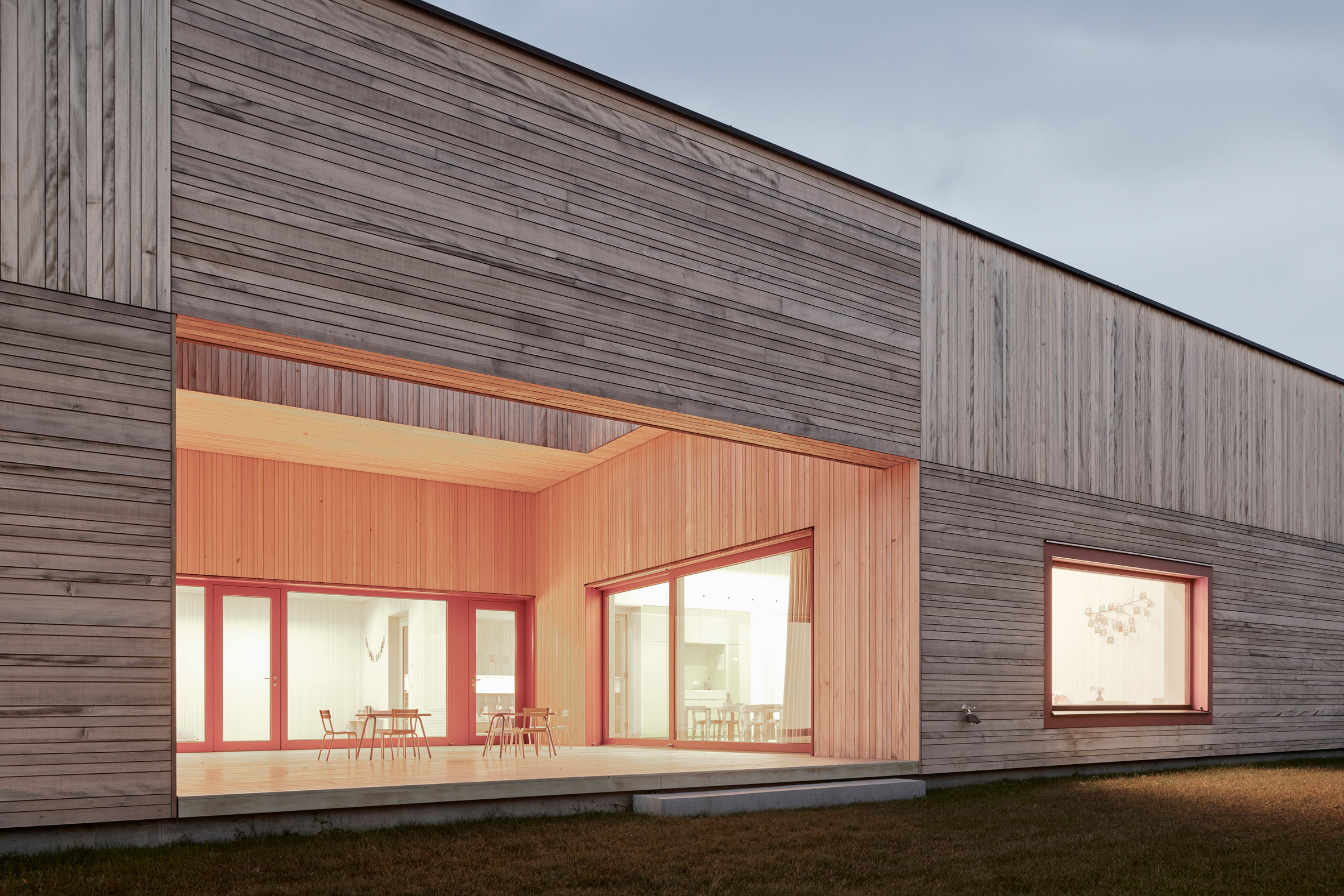
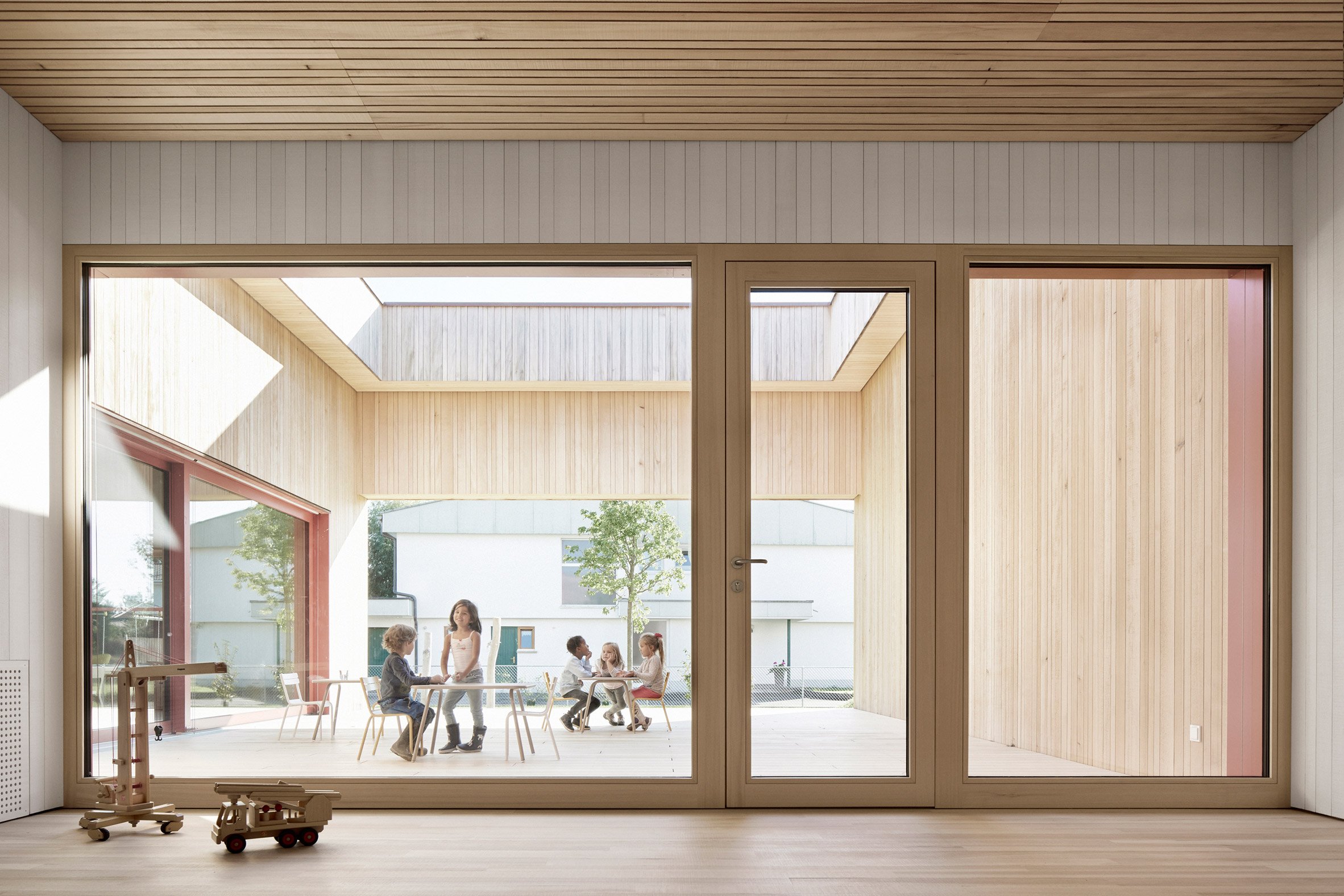
Each of the group's spaces consists of an internal play area as well as a larger room alongside an area of partially-covered decking onto which they open through sliding doors.

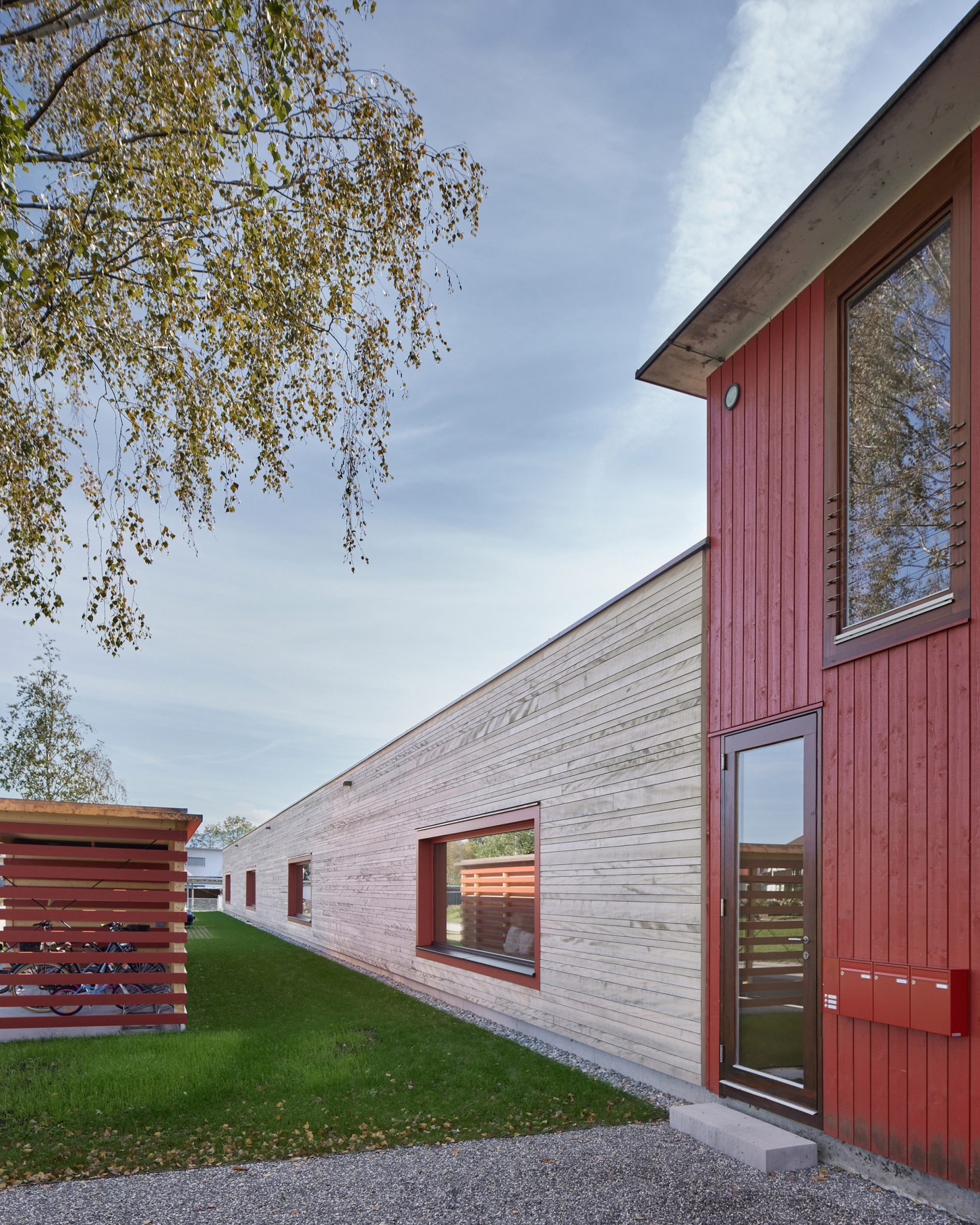
A red kindergarten with timber extension
"Outdoor rooms" have been added next to the garden

"At the heart of each group is an outdoor room at the transition to the garden, around which the group and alternative room are arranged to form a coherent functional unit," described the studio.

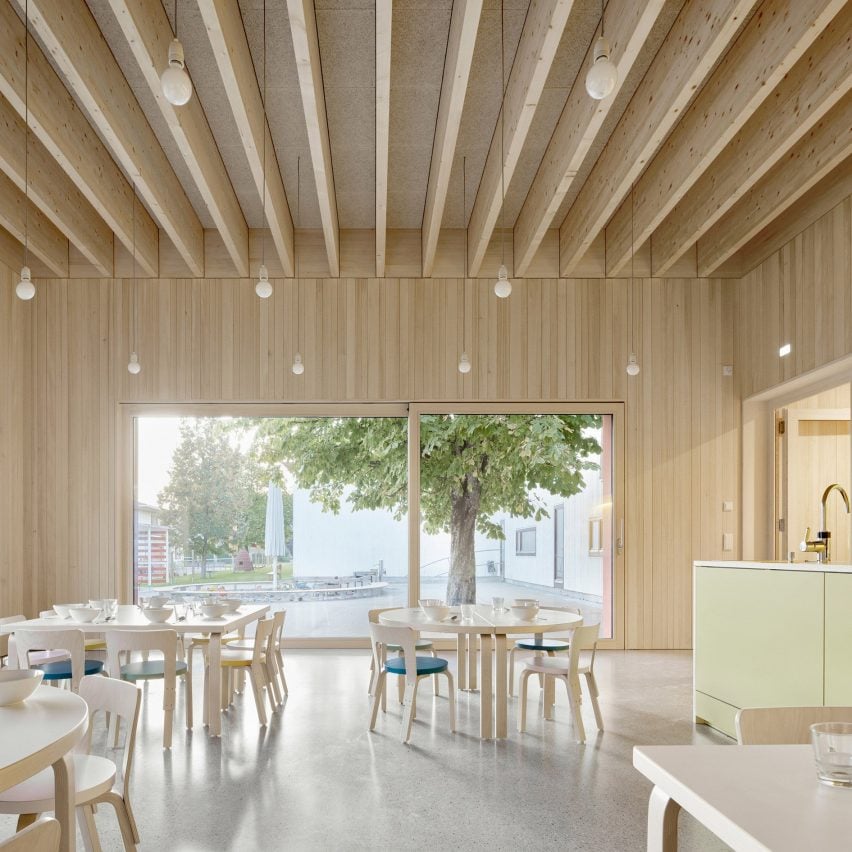
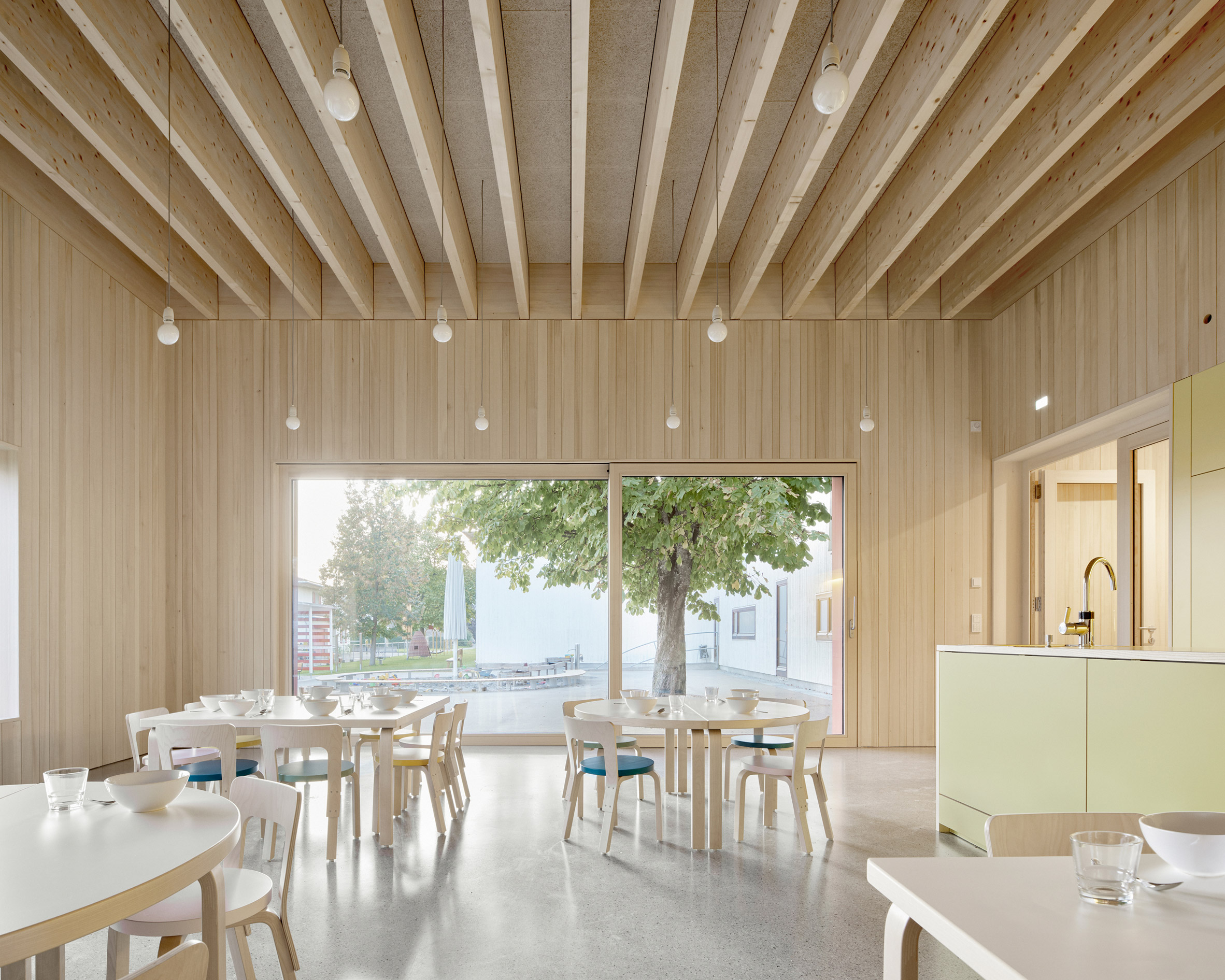
These rooms benefit from high ceilings defined by wooden beams, intended to create a contrasting condition to the lower height of the corridor space.

"While the corridors and side zones are based on the existing room height, the significant elevation of the group and outside rooms creates a new spatial quality," said the studio.

"Visible beams made of local woods and prefabricated external wall elements give the new rooms a robust, studio-like character... the existing and expansion are transformed into a new whole."

Children playing inside Kindergarten am Schlatt
The white timber planks contrast the deep red on the door frames

The classrooms are finished in contrasting white timber planks. Colour has been used sparingly, most noticeably in the deep red used on the exterior of the window and door frames, which picks up on the colour of the existing kindergarten.

To animate the elevations, the cladding of silver fir battens has been applied in alternating horizontal and vertical areas, helping to break up the low, long form.

Timber dining room inside the kindergarten
The rooms have high ceilings with wooden beams

Bernardo Bader Architekten often incorporates wood in its designs, including for a larch-clad home in the Swiss alps that reinterprets a traditional chalet.

The post Bernardo Bader Architekten designs extension to timber kindergarten appeared first on Dezeen.


from Dezeen https://ift.tt/2VBbVen

COS reflects 18th-century frescoes in Bolzano store with mirrors and mesh

COS Bolzano store

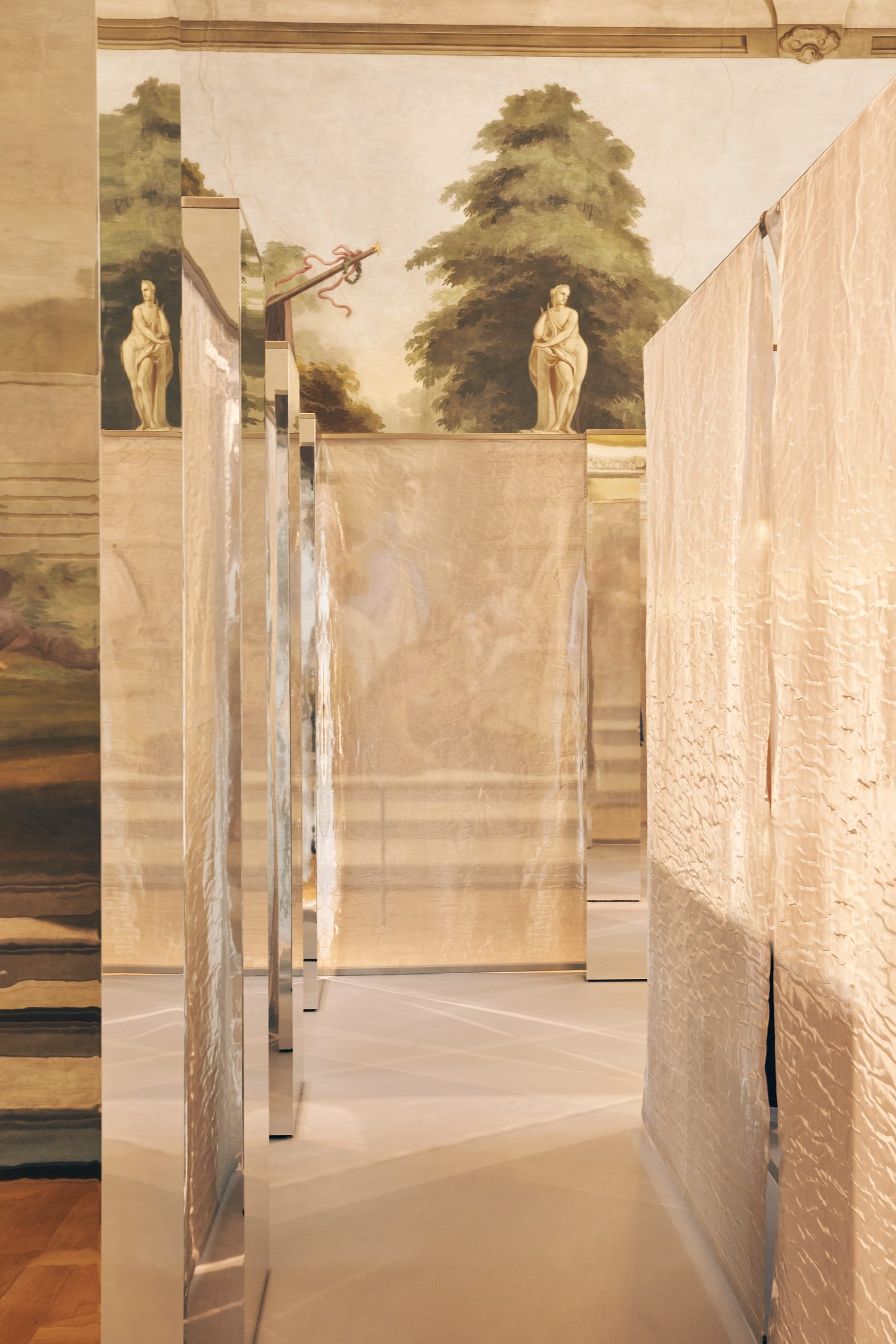
Fashion brand COS added an installation of mirrored plinths and display stands draped in layers of transparent mesh to enhance and contrast the interiors of the historic Palazzo Menz in Bolzano, Italy.

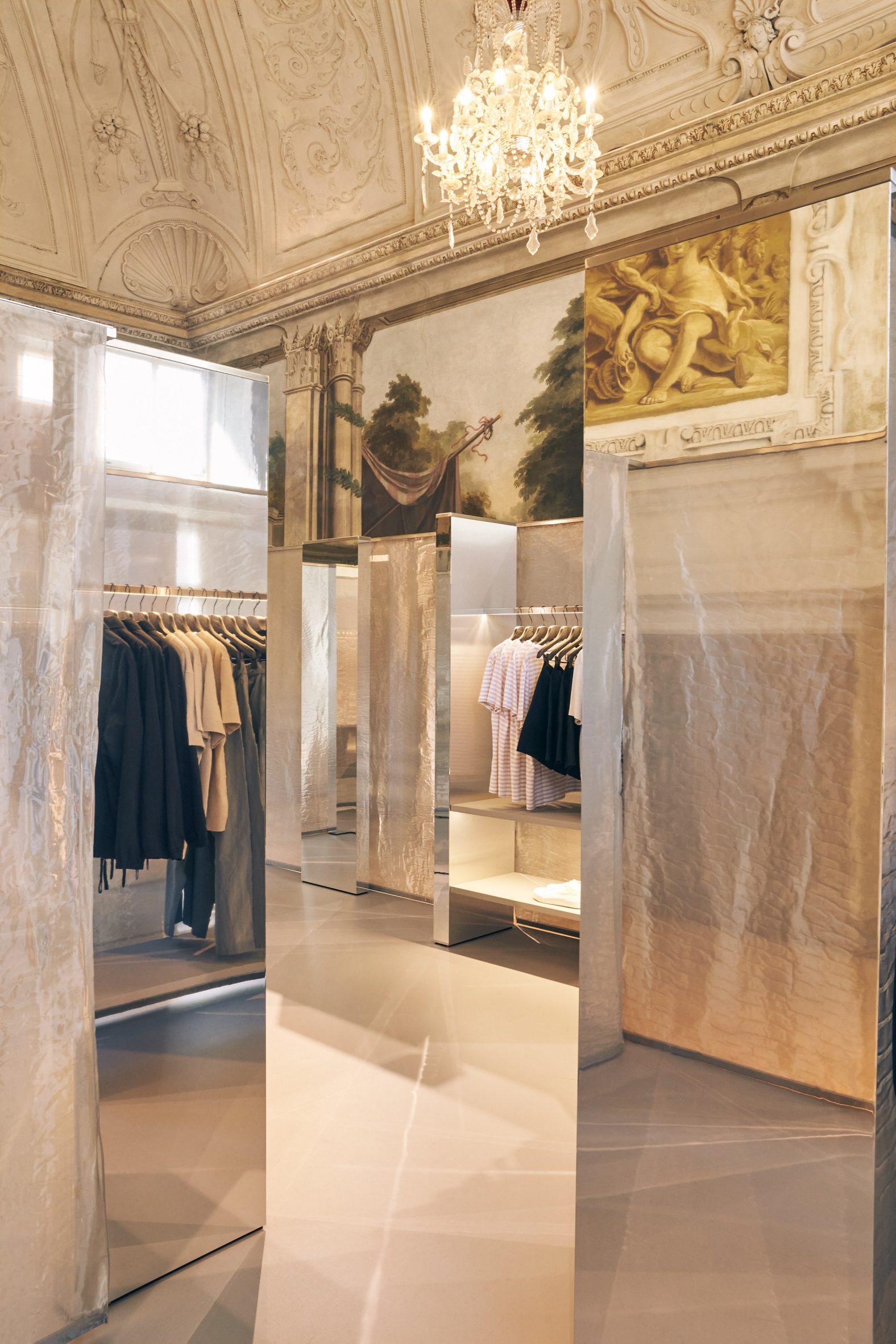
COS's in-house design team inserted the site-specific installation to showcase the brand's latest collection in the opulent ballroom of the palazzo, which was built in 1670.

Mirrored displays with mesh curtains in store
COS has set up an installation of mirrors and mesh in the ballroom of Palazzo Menz

Decorated with a duo of rococo-style frescos called Triumph of Love and Masked Party by Austrian painter Johann Josef Karl Henrici, the space had been used by COS as a viewing room since it took over the over the palazzo in 2019.

It now hosts an immersive, "shoppable experience" that was designed to homage both its immediate context at the Palazzo Menz as well as Bolzano's location on the Austrian border.

Mirror and mesh installation in COS Bolzano store
The installation was designed to reflect and contrast the surrounding frescos

"The installation takes inspiration from the breathtaking setting of the surrounding town – from the peaks of the Dolomites disappearing into a sea of clouds to a beautiful public square in the heart of the Bolzano – using materials to enrich and reflect the works of art," said COS.

"As visitors move through the installation, they are taken on a journey through the history of the Palazzo, with the structure being entirely mirrored to reflect fragments of the surrounding frescos, and the open top of the installation allowing for the ceiling fresco to emerge overhead."

The main ballroom, adorned with layers of transparent mesh and reflective surfaces, is intended to recreate the feeling of being immersed in the clouds.

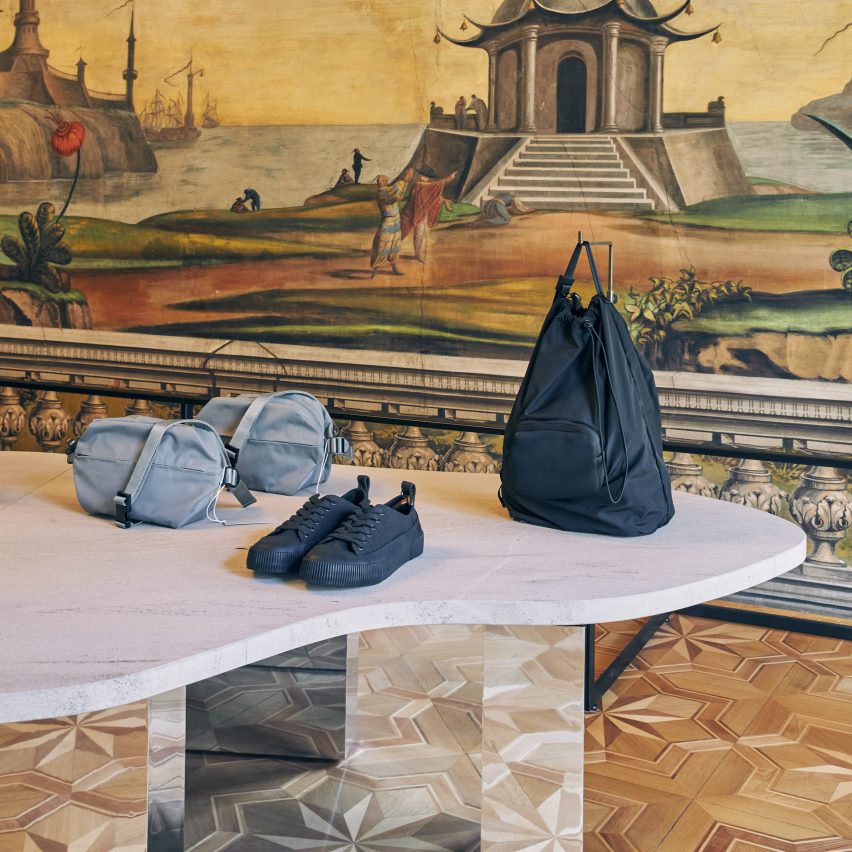
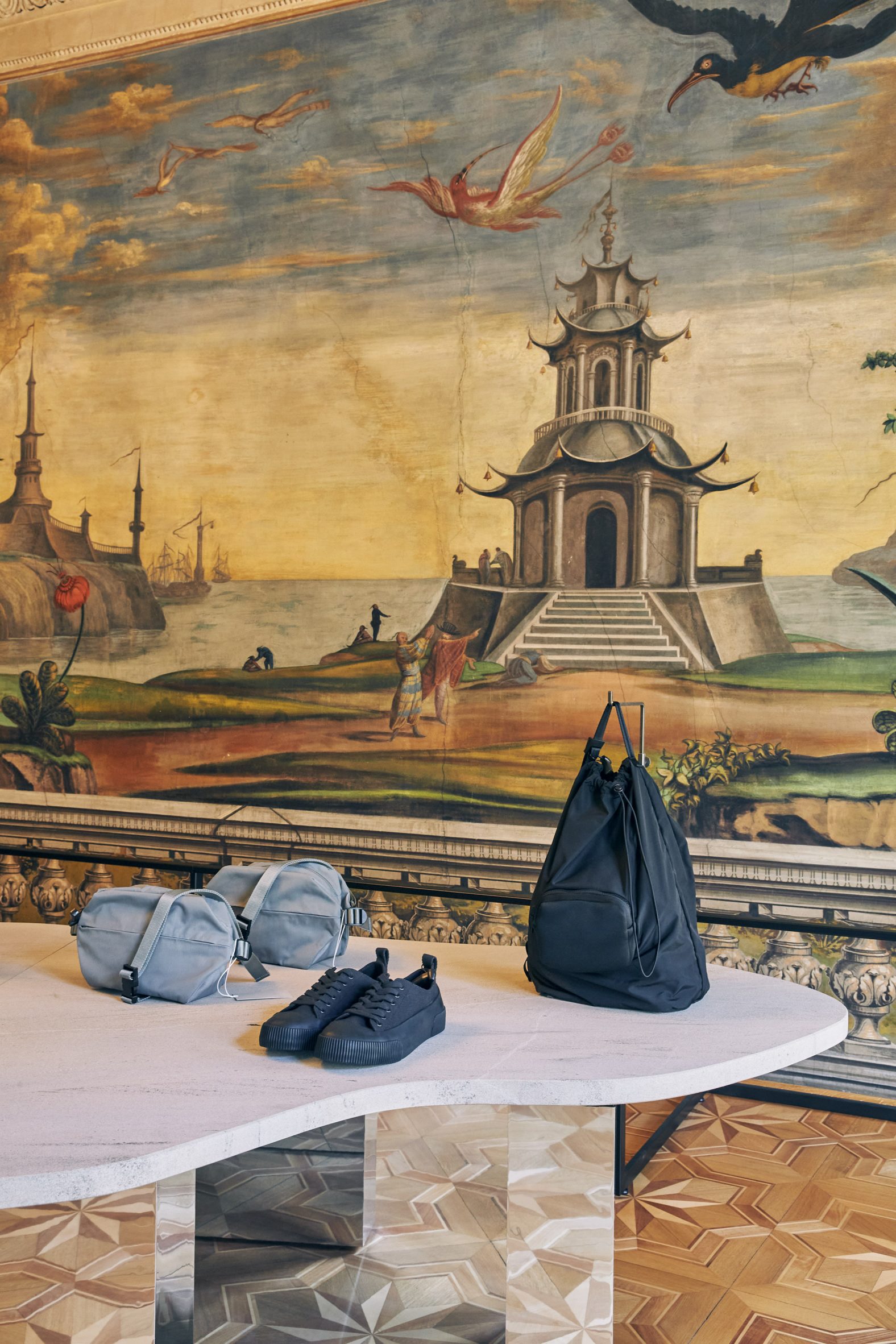
A smaller side room houses organically shaped display tables that were hand-crafted by local stone suppliers Südtirol Stein. The forms are inspired by the contours of the mountains that surround Bolzano.

Bags and shoes displayed on stone table in front of fresco
A smaller side room houses tables with organically shaped stone tops

Renowned for collaborating with creatives to create installations and fashion collections, COS has previously installed a pavilion designed by French architect Arthur Mamou-Mani in the courtyard of a 16th-century palazzo in Milan.

Made up of 700 bioplastic bricks, that were 3D-printed in a mixture of wood and polylactic acid (PLA).

Photography is by Stefan Giftthaler.

The post COS reflects 18th-century frescoes in Bolzano store with mirrors and mesh appeared first on Dezeen.


from Dezeen https://ift.tt/37pJxy7

Saturday, 7 August 2021

Schemata Architects designs Osaka hair salon to recall an industrial facility

LIM hair salon by Schemata Architects

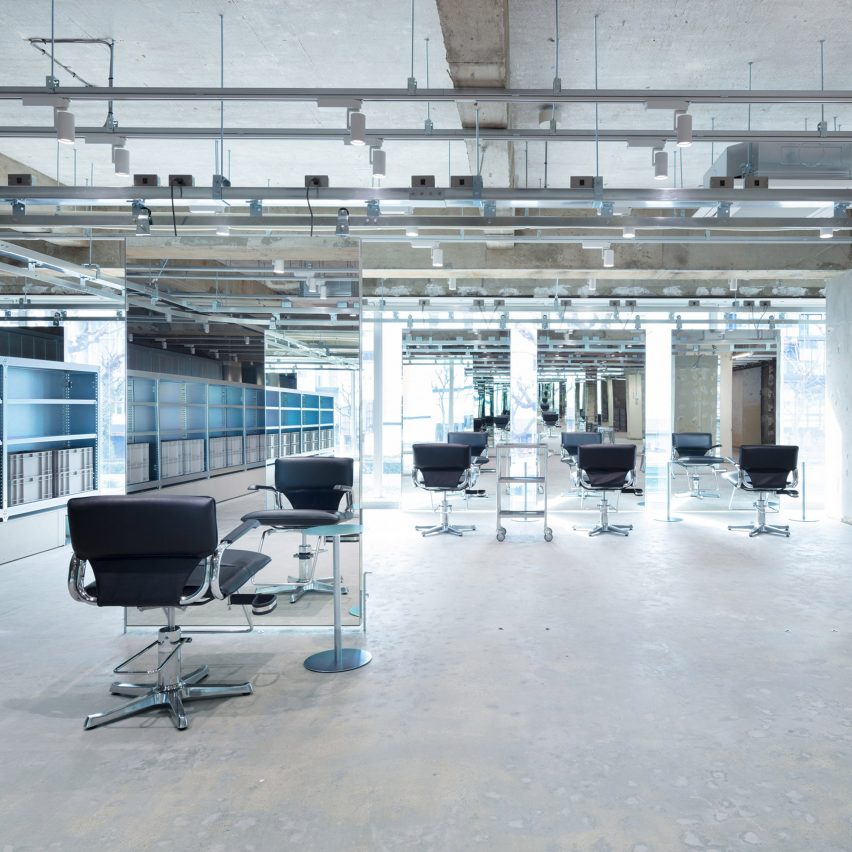
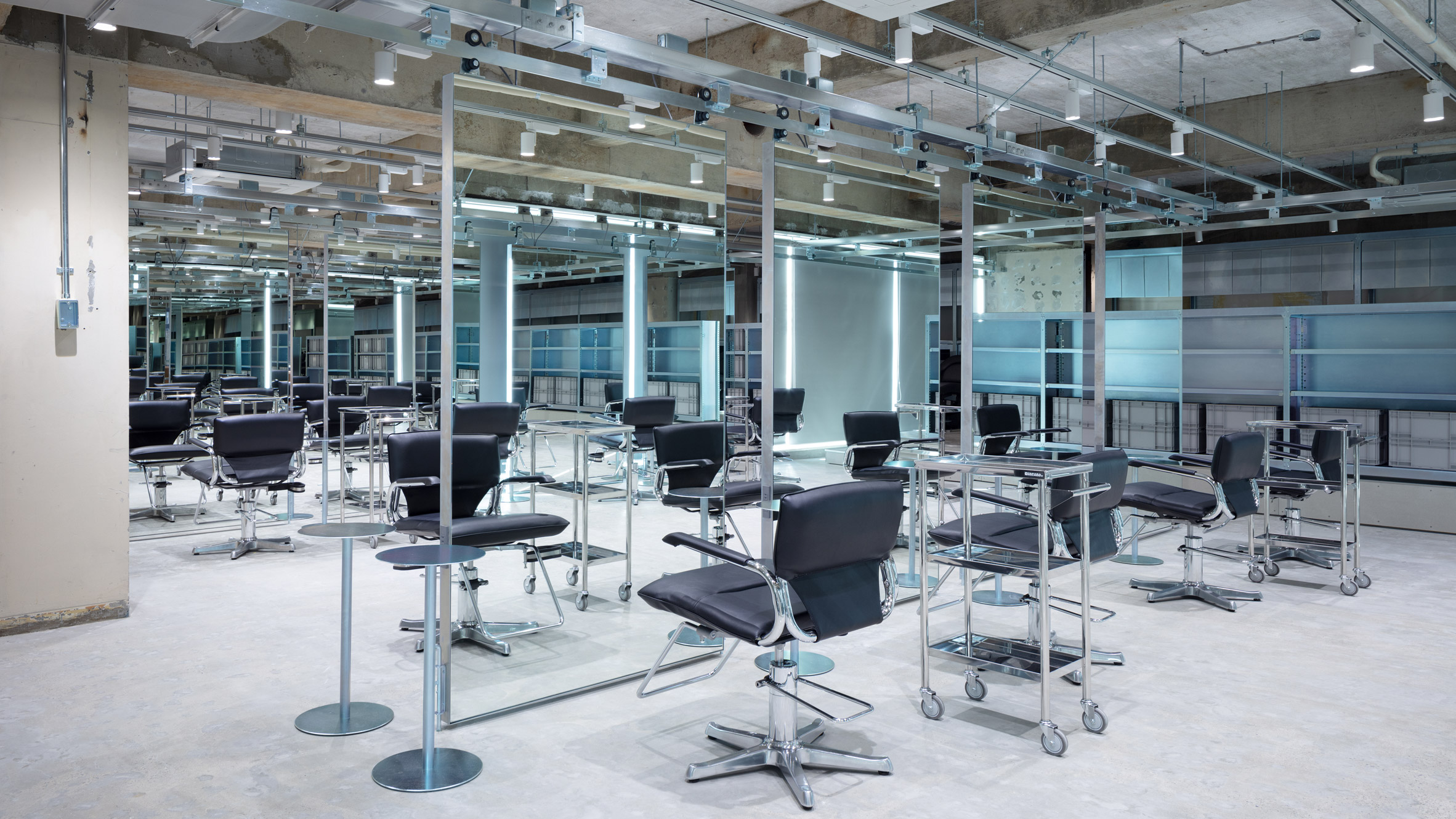
Steel fixtures, clear PVC curtains and mirrors hung on pulleys give this Japanese hair salon by Schemata Architects the feel of an industrial warehouse.

Called LIM, the salon is located in Osaka's Shinsaibashi district and occupies an expansive, 563-square-metre retail space with an open-plan layout punctuated by exposed concrete columns and beams.

Hair dressing setups with suspended mirrors and concrete floors by Schemata Architects
LIM's styling stations are arranged around suspended rectangular mirrors

"Our client explained to us that the name LIM is derived from 'less is more' – a famous quote by the modernist architect Mies van der Rohe," said Schemata Architects, which is headed by Jo Nagasaka.

"For us architects, the maestro's words are like a holy mantra that we feel too embarrassed to even mention. But the client unexpectedly suggested it to us as a theme."

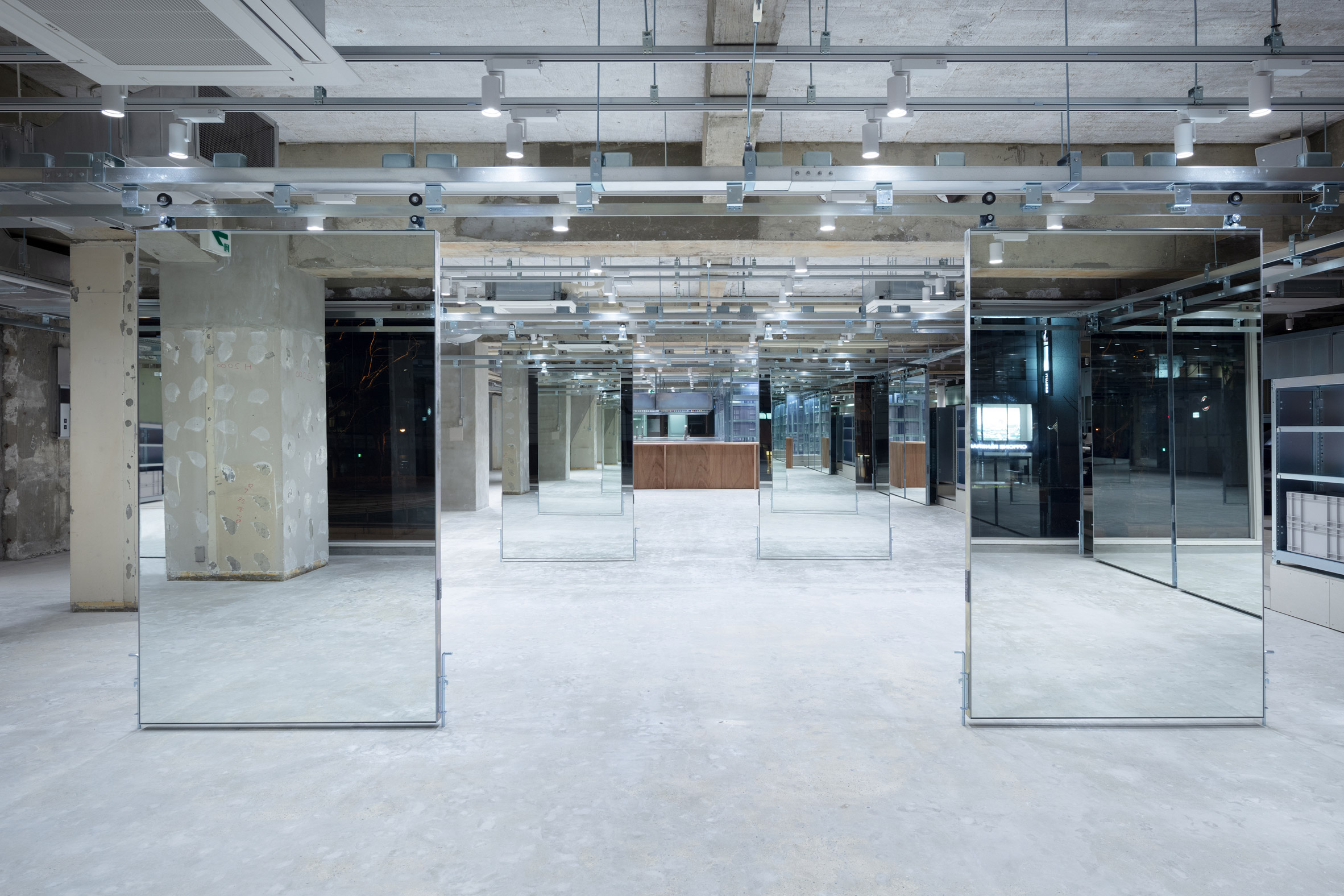
Mirrors suspended from pulley system in LIM salon
The mirrors are hung from the ceiling using a pulley system

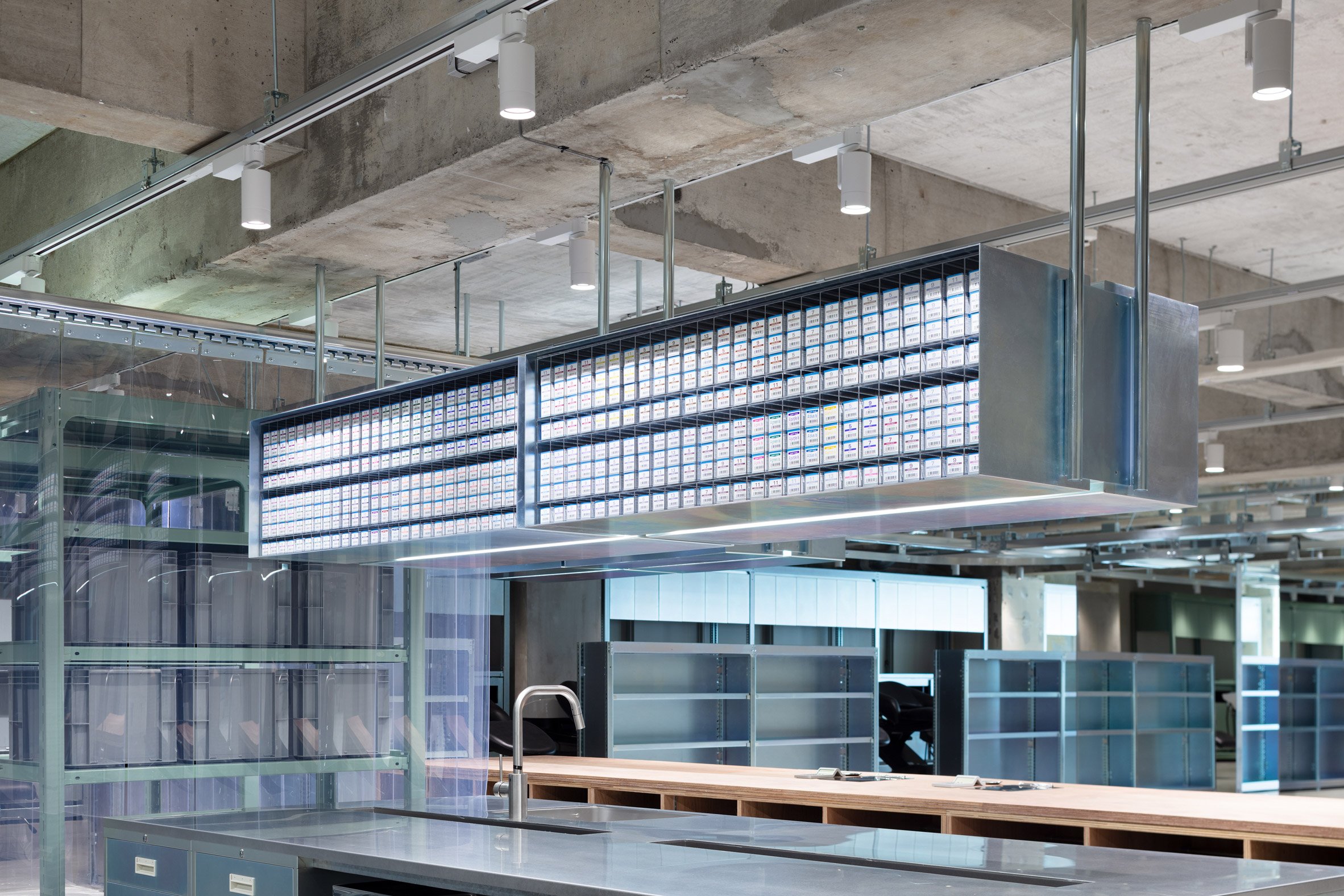
Working within a tight budget, the studio modified off-the-shelf steel storage units with iridescent zinc-nickel plating and used them to create all of the salon's fixtures.

Large rectangular mirrors on a ceiling-mounted pulley system create flexible individual styling stations. The mirrors double as room dividers that can be easily moved to clear the large space for events.

Hair styling units with suspended mirrors and leather and steel chairs by Schemata Architects
Steel and leather chairs feature at every station alongside a moveable trolley for the stylist

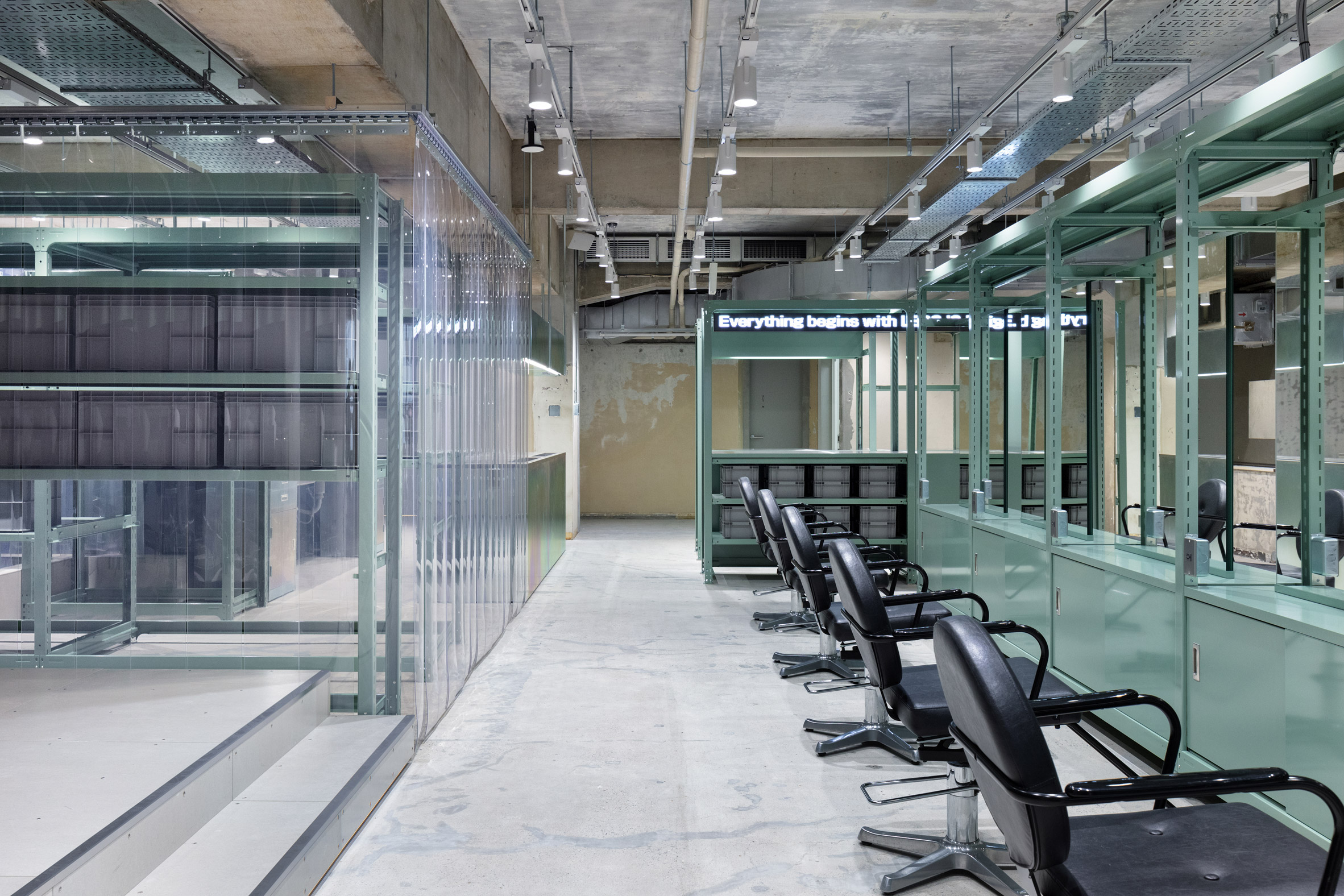
Schemata Architects used plastic strip curtains, more typically found in industrial buildings such as warehouses and factories, to divide the front and back of house.

"We have created a space where people can experience the most refreshing, wide-open space in Kansai," explained the Tokyo-based firm.

A second, smaller salon called Loji sits at the back of the LIM space and offers fashion-forward services at low prices.

"It is a stepping stone for young stylists," explained the practice. "Those who gain young customers and hone their professional skills there will move on to LIM."

Suspended steel storage in LIM and Loji hair salons
Steel storage units are suspended from the ceiling

The Loji space, which is made up of two banks of styling stations, uses the same off-the-shelf storage fixtures as LIM but without the zinc-nickel plating, leaving their original seafoam green finish exposed.

This creates both visual consistency and distinction between the two salons while also saving on cost.

Seafoam green hairdressing stations with black leather seats and clear PVC curtains in Loji hair salon by Schemata Architects
A clear vinyl curtain separates the salon's front and back of house

Also in Osaka but at a much smaller scale is this 59-square-metre beauty salon by design studio Sides Core. Squeezed into a narrow site between two buildings, the architects created a clever narrow floor plan, which makes the most of its slender proportions.

Photography is by Takumi Ota.

The post Schemata Architects designs Osaka hair salon to recall an industrial facility appeared first on Dezeen.


from Dezeen https://ift.tt/3fKwU5k

Gui Paoliello Arquiteto completes curved wooden house in Brazil's Morro Cavado valley

Gui Paoliello Morro Cavado House Brazil

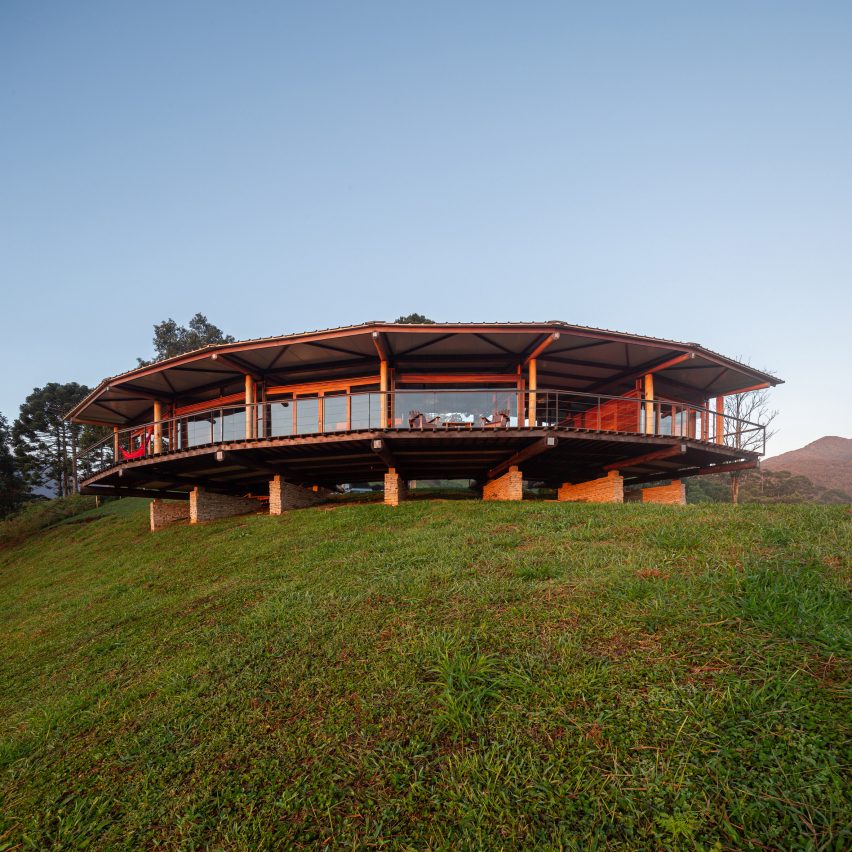
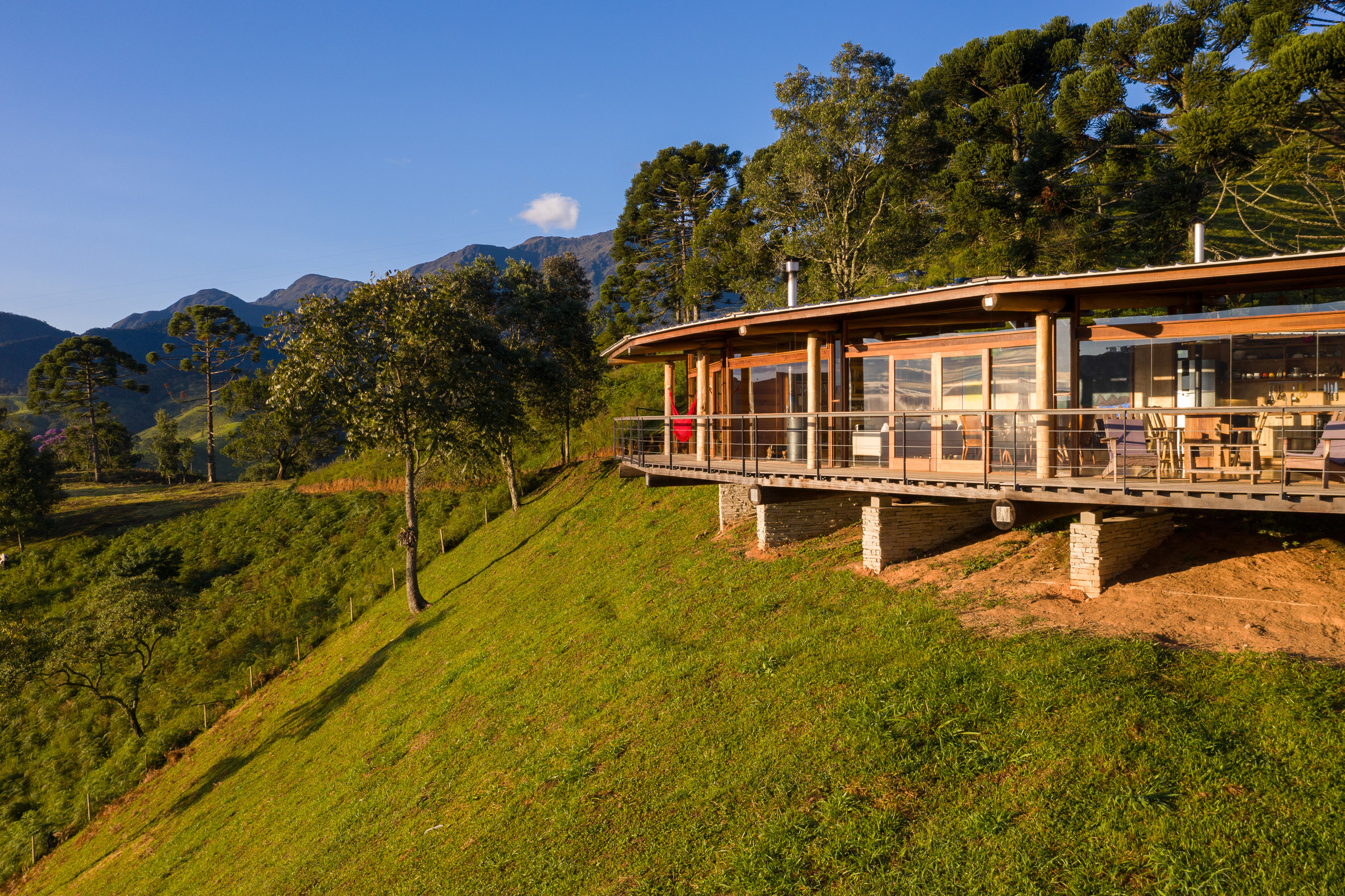
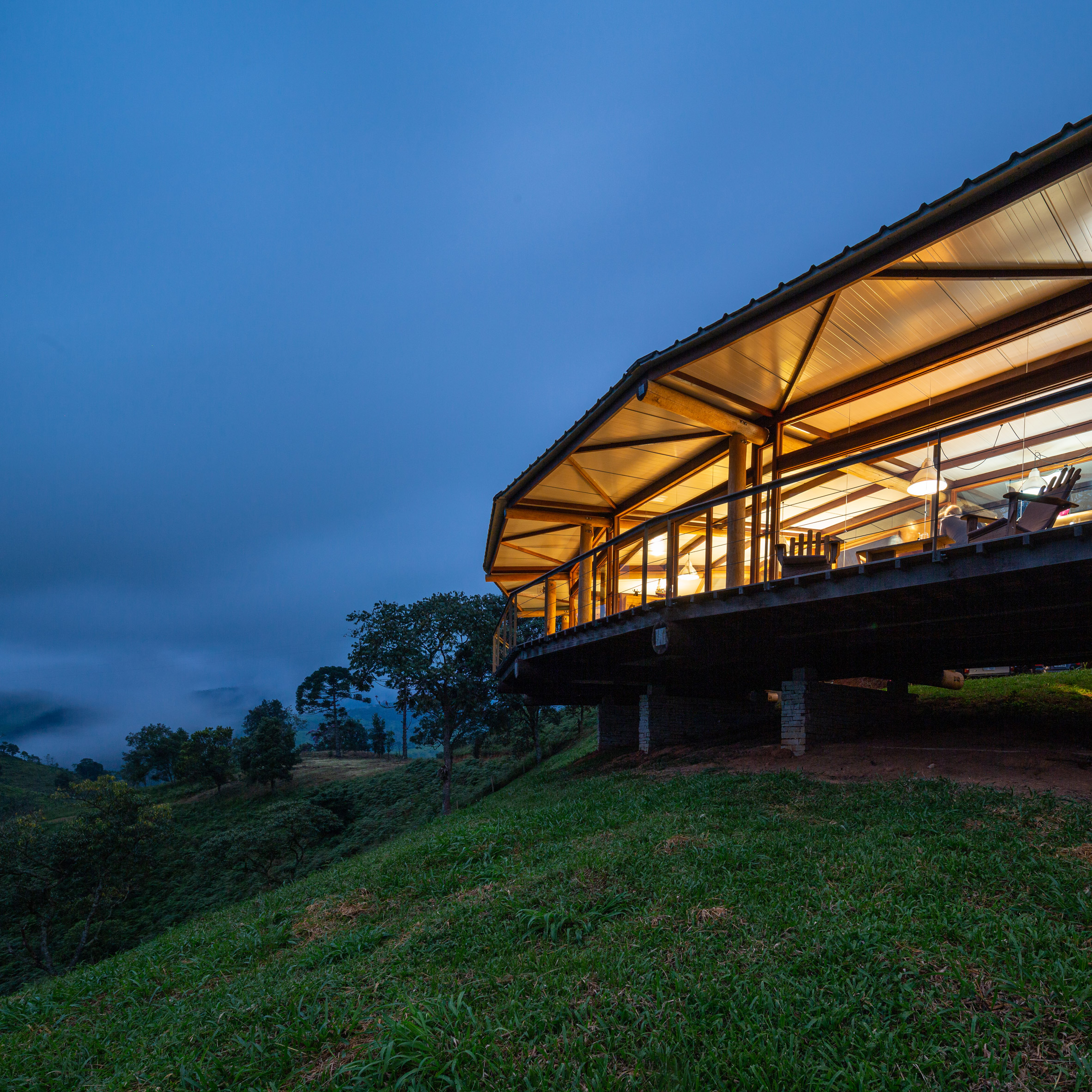
Brazilian architect Gui Paoliello has completed a semi-circular house elevated above the Morro Cavado valley, using simple construction techniques that are suited to the remote site.

Completed in 2019, the Morro Cavado House is a two-bedroom residence located atop a steep slope overlooking the valleys and lush forests of the Itatiaia National Park, which became Brazil's first national park when it was created in 1937.

Gui Paoliello Morro Cavado House Brazil
The residence, set onto a steep slope, is located near Brazil's oldest national park

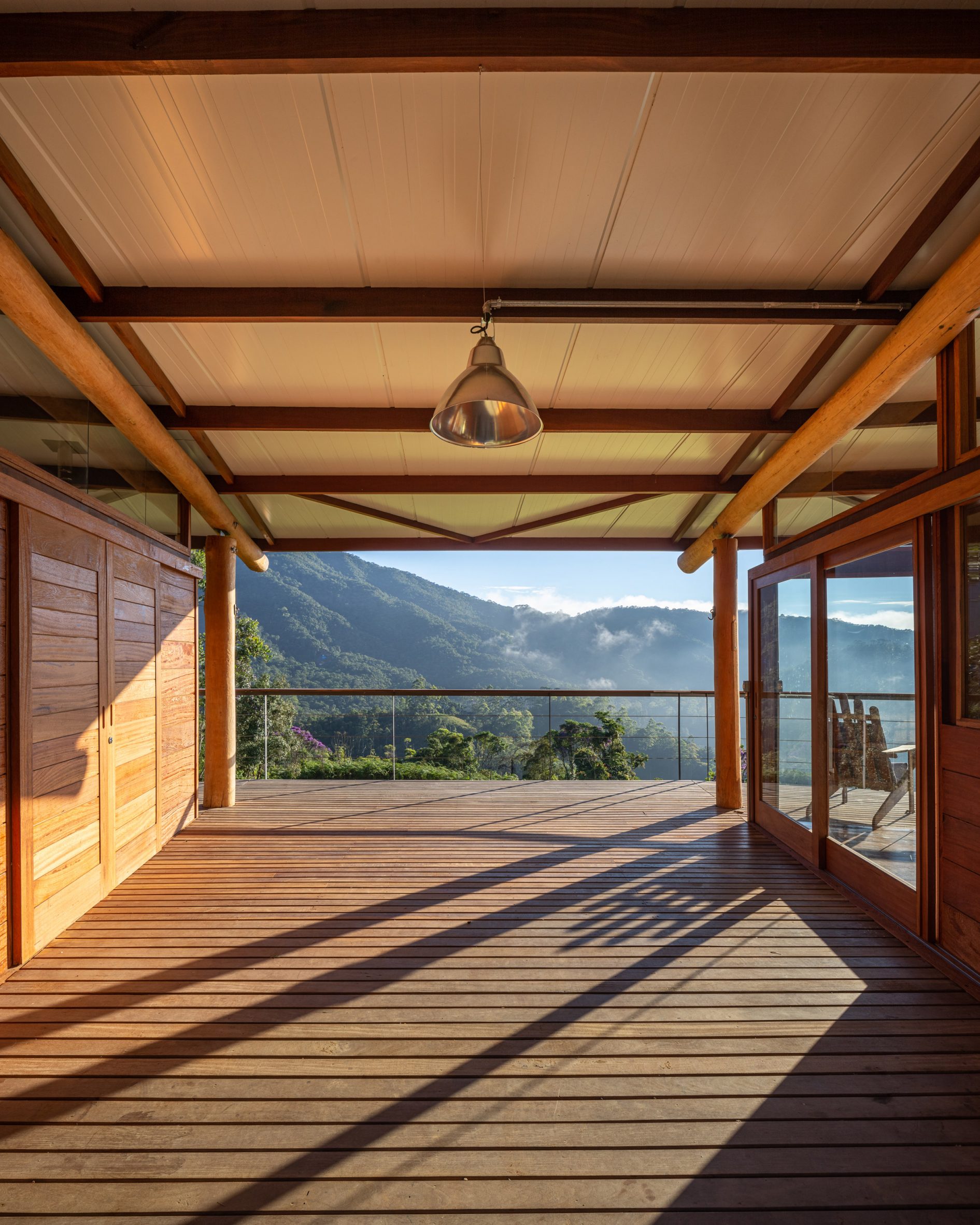
To make the most of its natural surroundings, the house is laid out in a radial floor plan facing the views. "The longest perimeter of the arch faces the landscape, creating a visual plane of almost 180 degrees, which allows contemplation of the view from any room in the house," explained Gui Paoliello Arquiteto in a project description.

Gui Paoliello Morro Cavado House Brazil breezeway entrance
The entrance to the home frames views of the surrounding landscape

Due to the site's remote location and difficult terrain, the architect used locally available timber sections with bespoke steel connections for the structure. "The house was shaped by the design of the topography and built using low environmental impact construction techniques, taking advantage of locally available materials and the knowledge and labor of the region," the architect said.

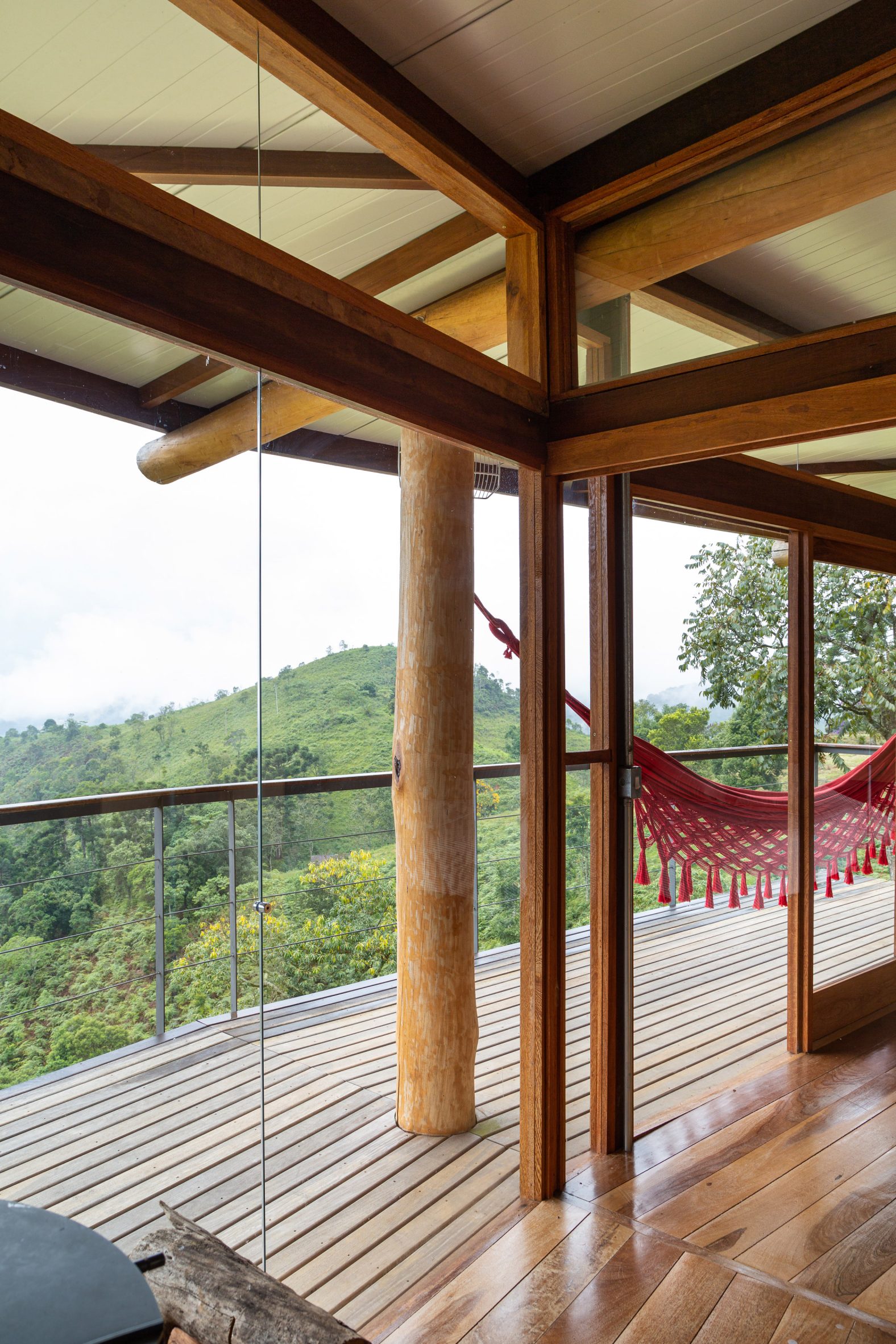
The home is accessed through a wooden walkway from the driveway that is formed by the curvature at the rear the house. At the entrance, a breezeway leads to the home's terrace, which runs the entire length of the facade and is sheltered by the roof's deep overhang.

Gui Paoliello Morro Cavado House Brazil Balcony Wooden Walkway
The porch wraps around the outside of the home, offering a place to sit under the shelter of the roof

This breezeway separates the guest bedroom from the rest of the home, offering more privacy and hinting at the interior-exterior lifestyle that the local climate permits. The owner's bedroom is at the opposite end of the home, and is buffered by an open-concept kitchen, living and dining room.

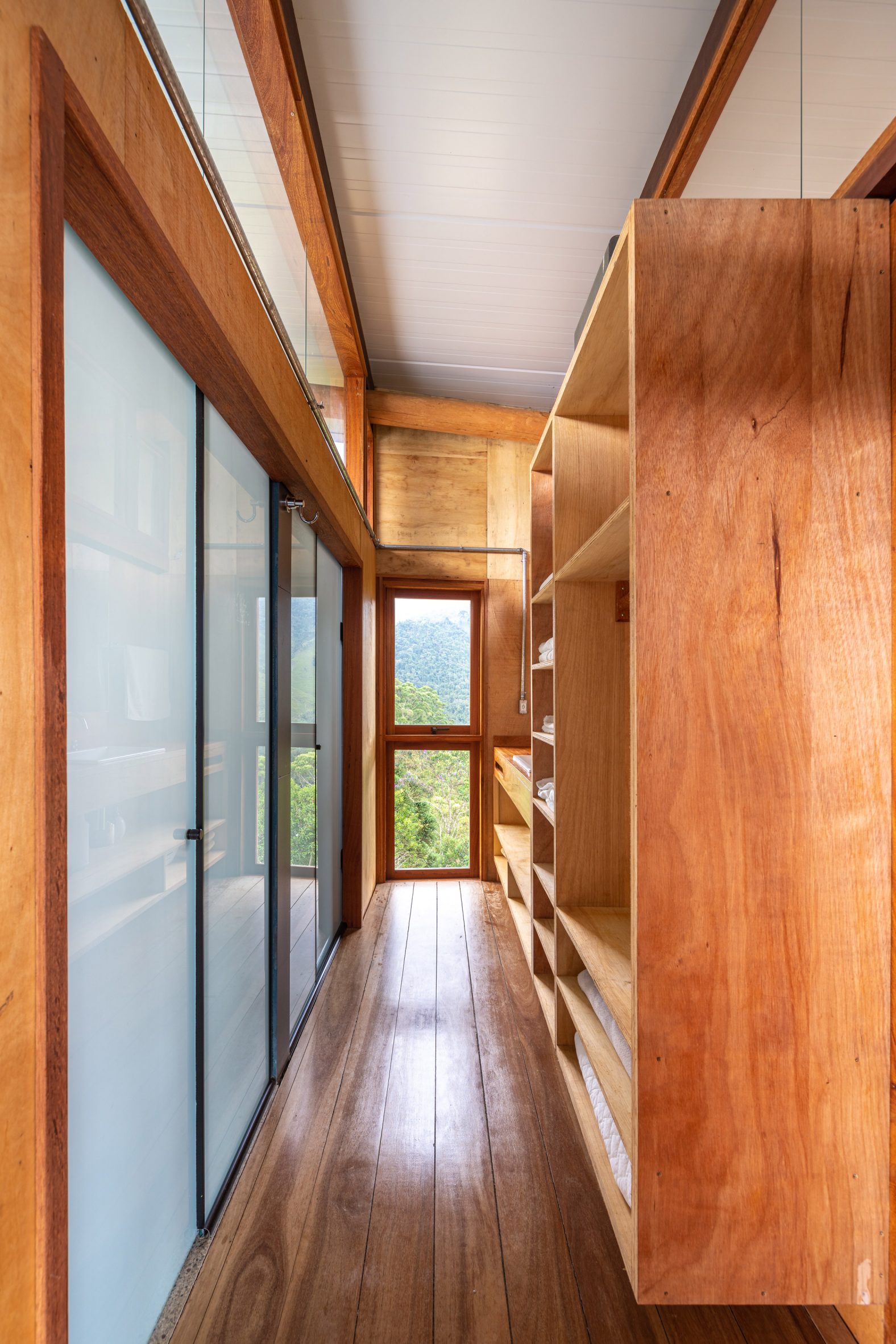
Inside, locally sourced lumber was used for wood finishes across walls and flooring, as well as built-in bookcases and cabinets.

Gui Paoliello Morro Cavado House Brazil
Wood is the primary construction material, and was used for the structure, finishes, and furniture

"The division between each module is delimited by the structural axes, composed of beams and round eucalyptus columns taken from the land itself," said Gui Paoliello. According to the architect, the steel connections between the wooden framing elements were customised for this specific project.

In order to build the low-slung home atop it's uneven site, masonry piers were built into the landscape, which reduces the amount of site leveling required to create a buildable surface. "The arched shape of the house follows the unevenness of the terrain, keeping it level with the access plateau and at the same time slightly elevated from the ground," the architect explained.

Gui Paoliello Morro Cavado House Brazil Night
The house is elevated on stone piers to create a flat building surface on the sloped site

Gui Paoliello Arquiteto was established in 2009, and is based in São Paulo. Other homes in Brazil include an A-frame cabin by Marko Brajovic and a house for a yoga teacher with a tree growing through the roof by Stemmer Rodrigues.

The photography is by Manuel Sá.


Project credits:

Team: Camila Ungaro, Laura Tomiatti, Thiago Benucci

The post Gui Paoliello Arquiteto completes curved wooden house in Brazil's Morro Cavado valley appeared first on Dezeen.


from Dezeen https://ift.tt/3s1tQHd