Gardens carved from this concrete home near Quérétaro, Mexico by Gestalt Associates bring light, air and vegetation into the living spaces.
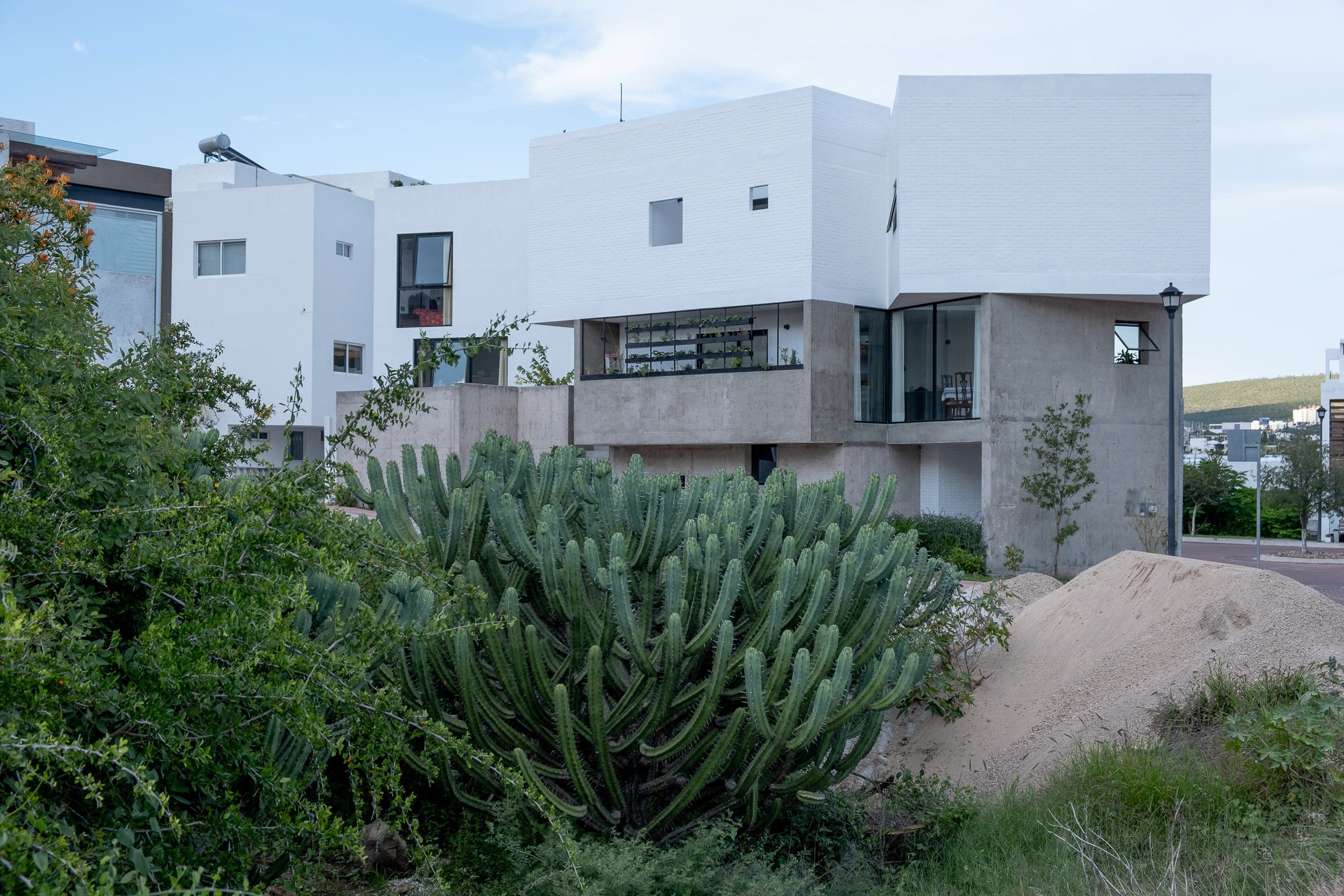
Completed earlier in 2021 by Querétaro-based studio Gestalt Associates, Frame House is a brick-and-concrete structure that is comprised of rectangular volumes arranged asymmetrically around a central courtyard and staircase.
The project is a Mexican house
This feature takes cues from the colonial villas found in the city, which typically reserve their courtyards for gardens that served as a gathering point for various rooms laid out around them.
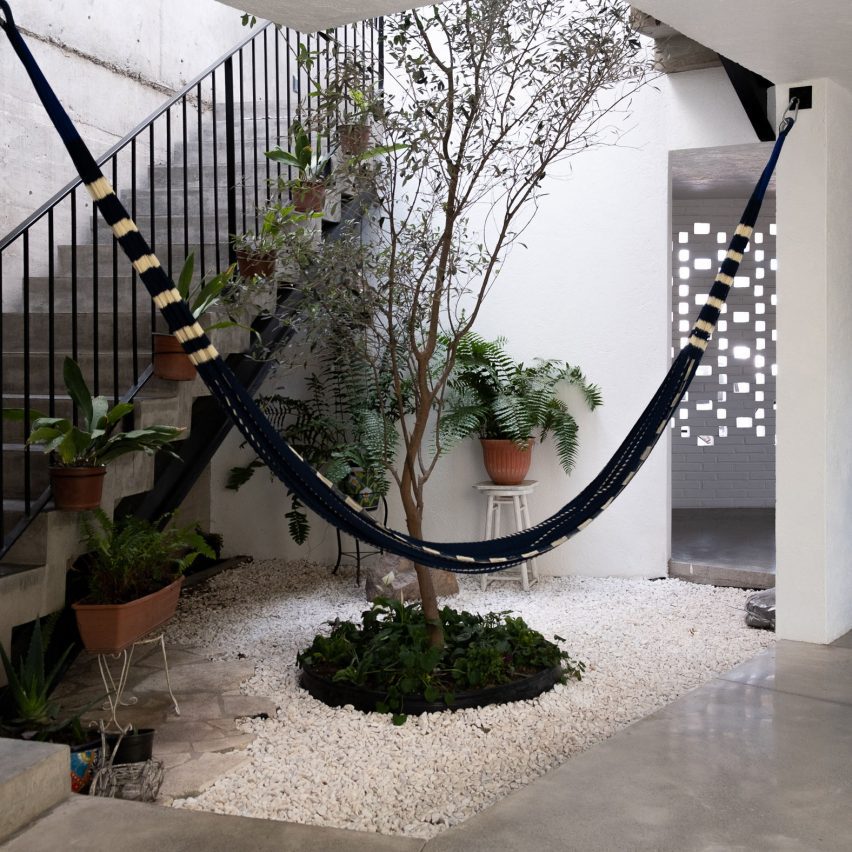
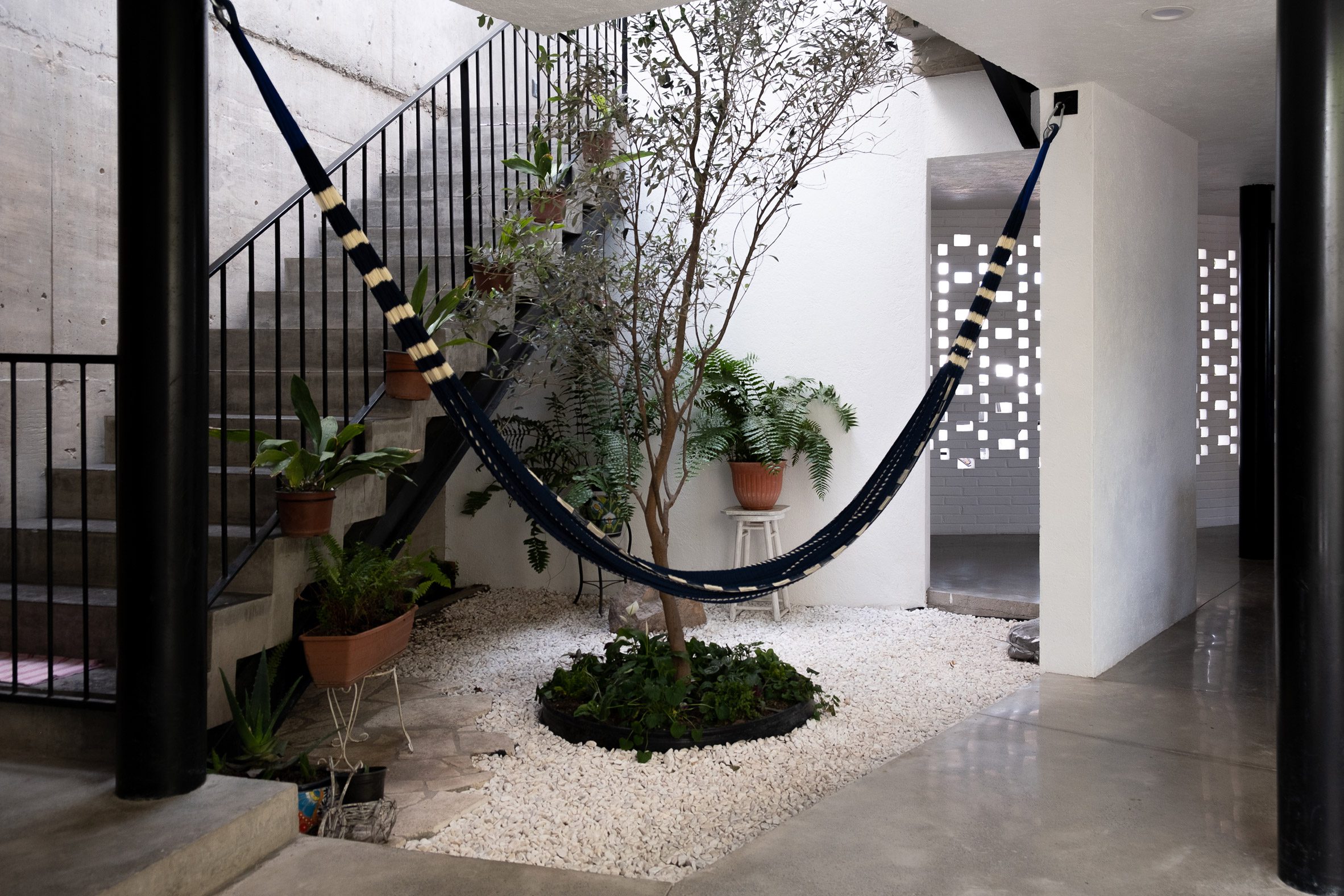
The ground floor of the five-bedroom home contains a living room framed by two garden spaces. The one closest to the entrance contains the main staircase, which is brightly lit by a skylight above.
An olive tree acts as a centrepiece between the stair's levels
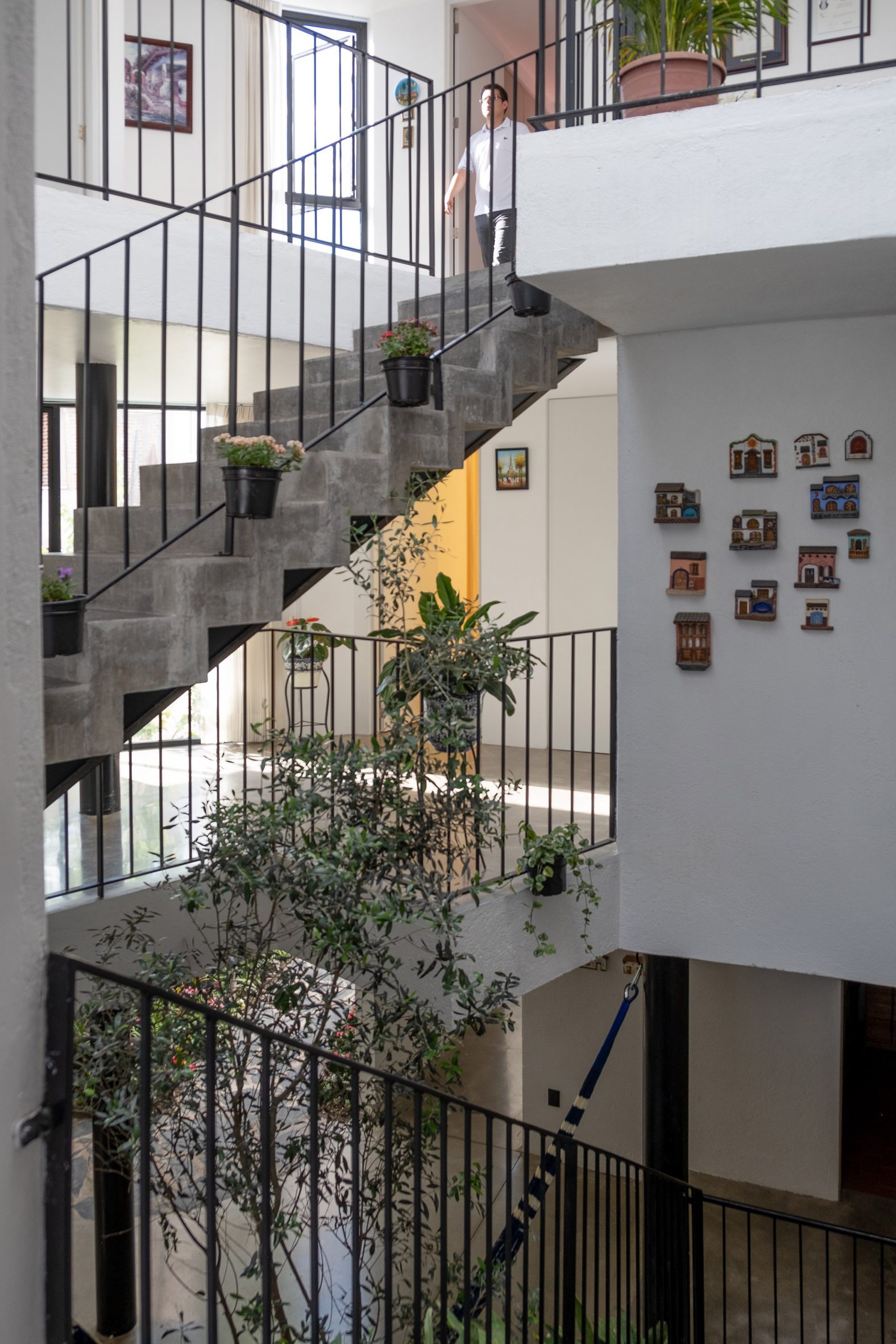
"Both blocks are connected by the nucleus of stairs that go up around an olive tree and the wide dome that allows light to enter the house," said a project description from Gestalt Associates.
Potted plants run up the stair's railing, adding greenery to the core of the home. In addition to balconies facing the surrounding neighbourhood, Gestalt Associates also included terraces that face inwards.
Greenery is at the house's core
"With wide-open spaces towards the interior gardens and through strategically placed windows and lattices, the continuous flow of ventilation and natural lighting is allowed throughout the day," the architects explained.
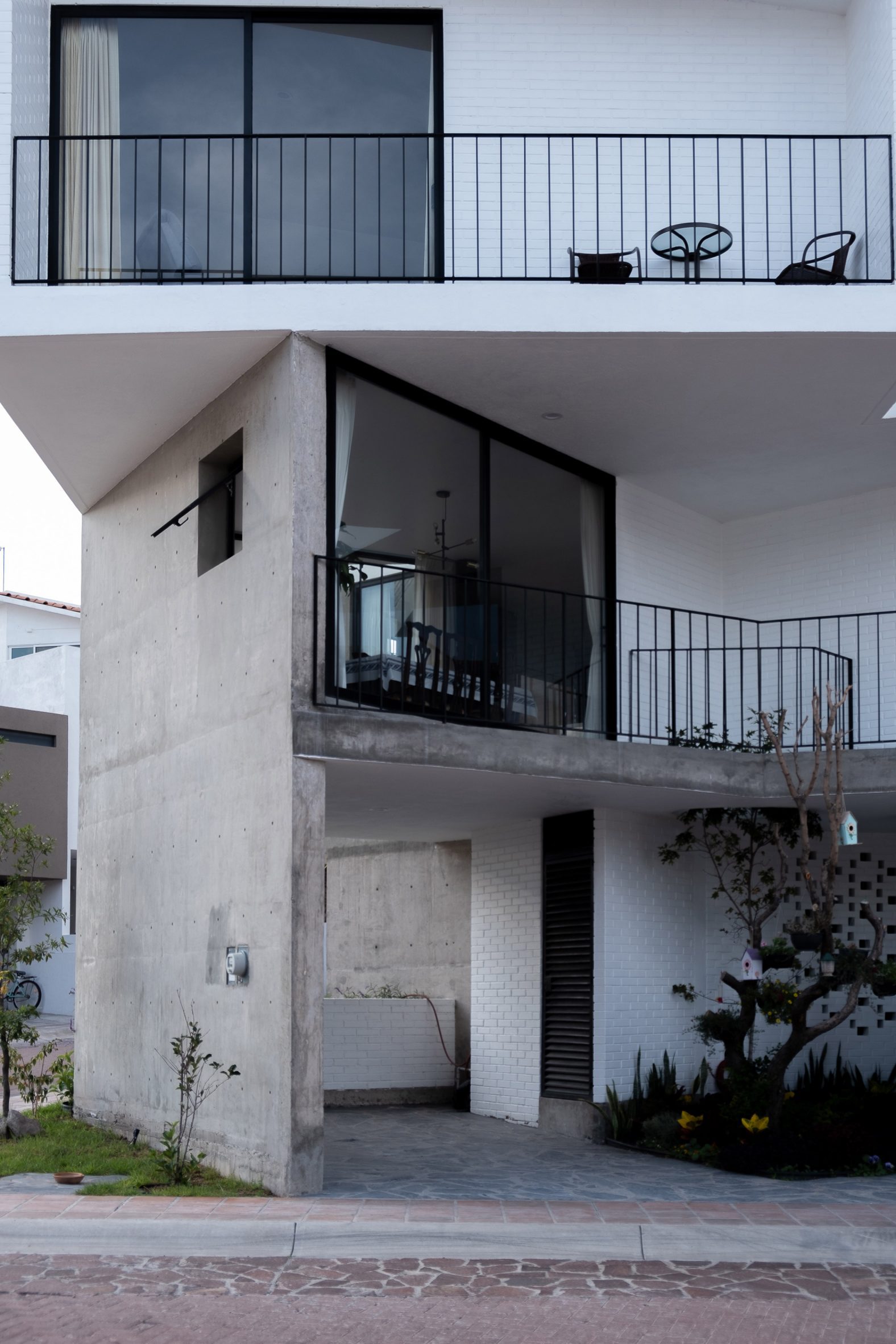
The second and third floors are contained within white brick-covered volumes that are irregularly oriented relative to the ground floor, creating overhangs and terraces within the home's massing.
The open-concept kitchen and living room occupy one end of the first floor, where a more formal dining room is framed by full-height glass walls on both sides.
Opposite the stairwell is a guest bedroom, which enjoys its own ensuite. On the top floor, the architects included four bedrooms, which share a communal landing that doubles as a study and lounge area.
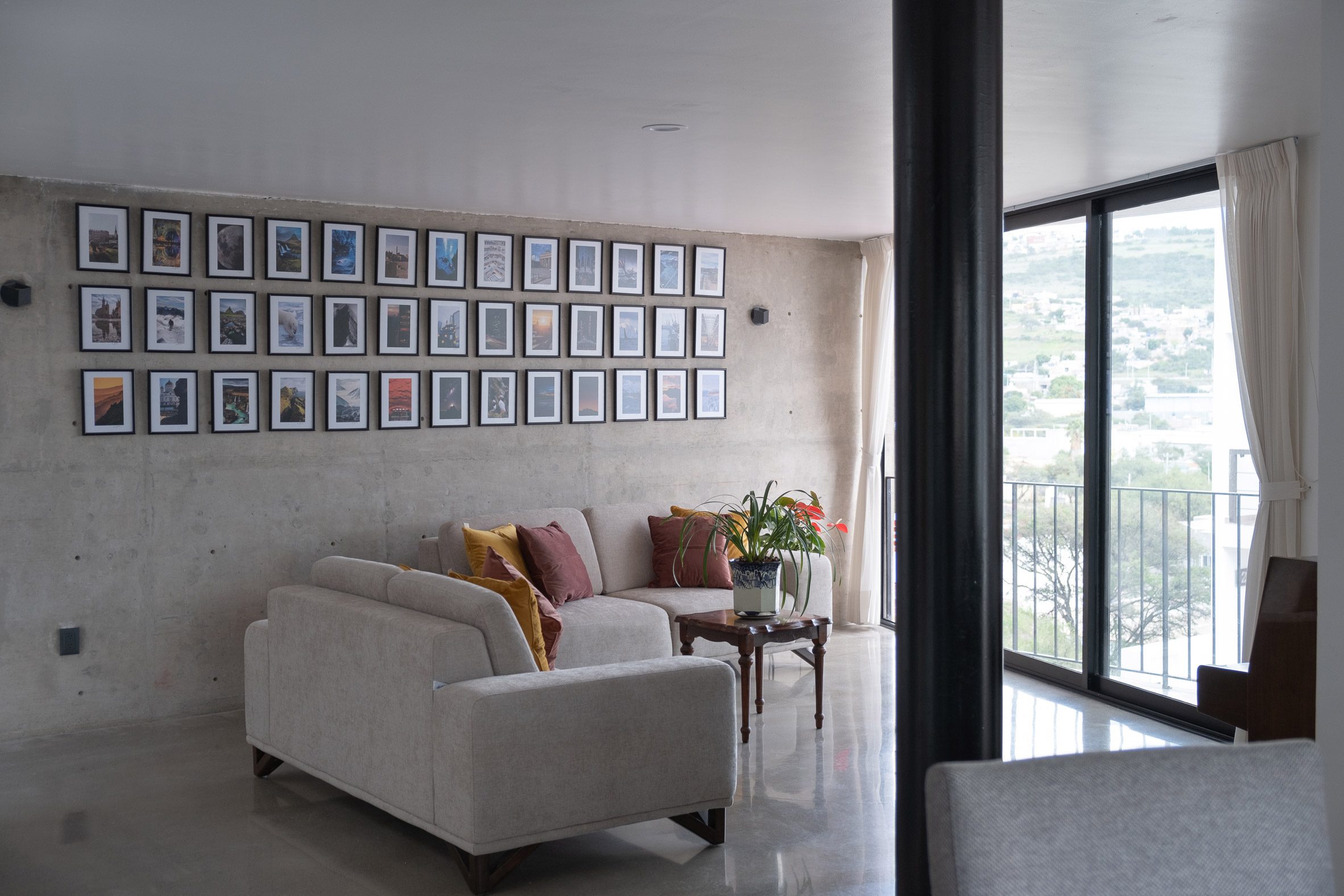
Concrete walls in the living room
A separate staircase leads up to the rooftop, from where the residents can take in views of the mountains surrounding Querétaro. The architects also included solar panels and rainwater collection utilities on the roof.
"[The house] has become a meeting space for two generations, ideal for family gatherings, taking time off and disconnecting with its views of the hills of Corregidora, feeling safe among its gardens and wide concrete walls," Gestalt Associates said..
The house's exterior is defined by concrete
The structural concrete is left exposed in most part of the interior, while simple white walls form partitions.
Breaking news: United Arab Emirates' Wetland pavilion curated by Wael Al Awar and Kenichi Teramoto has won the Golden Lion for Best National Participation at this year's Venice Architecture Biennale.
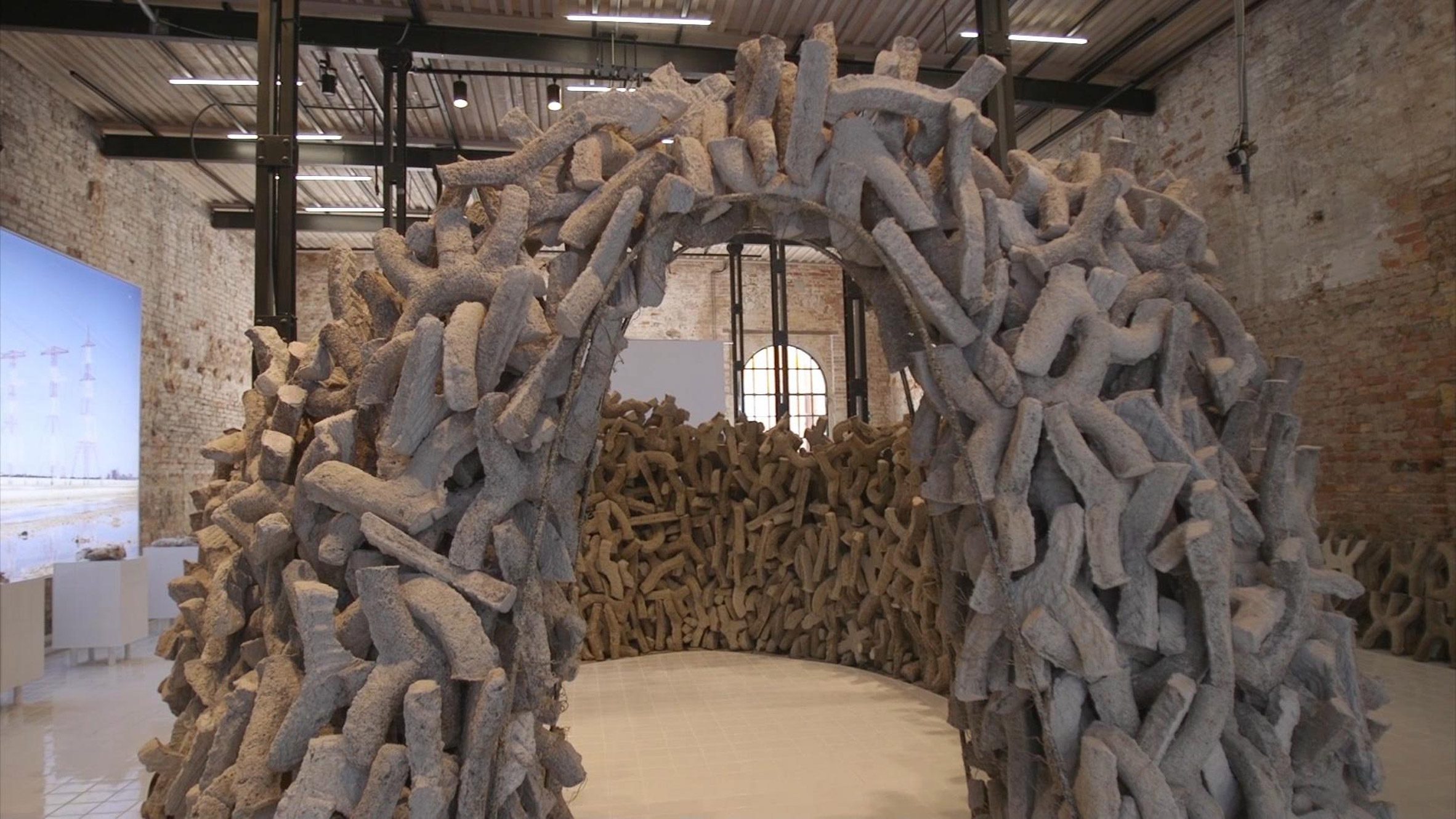
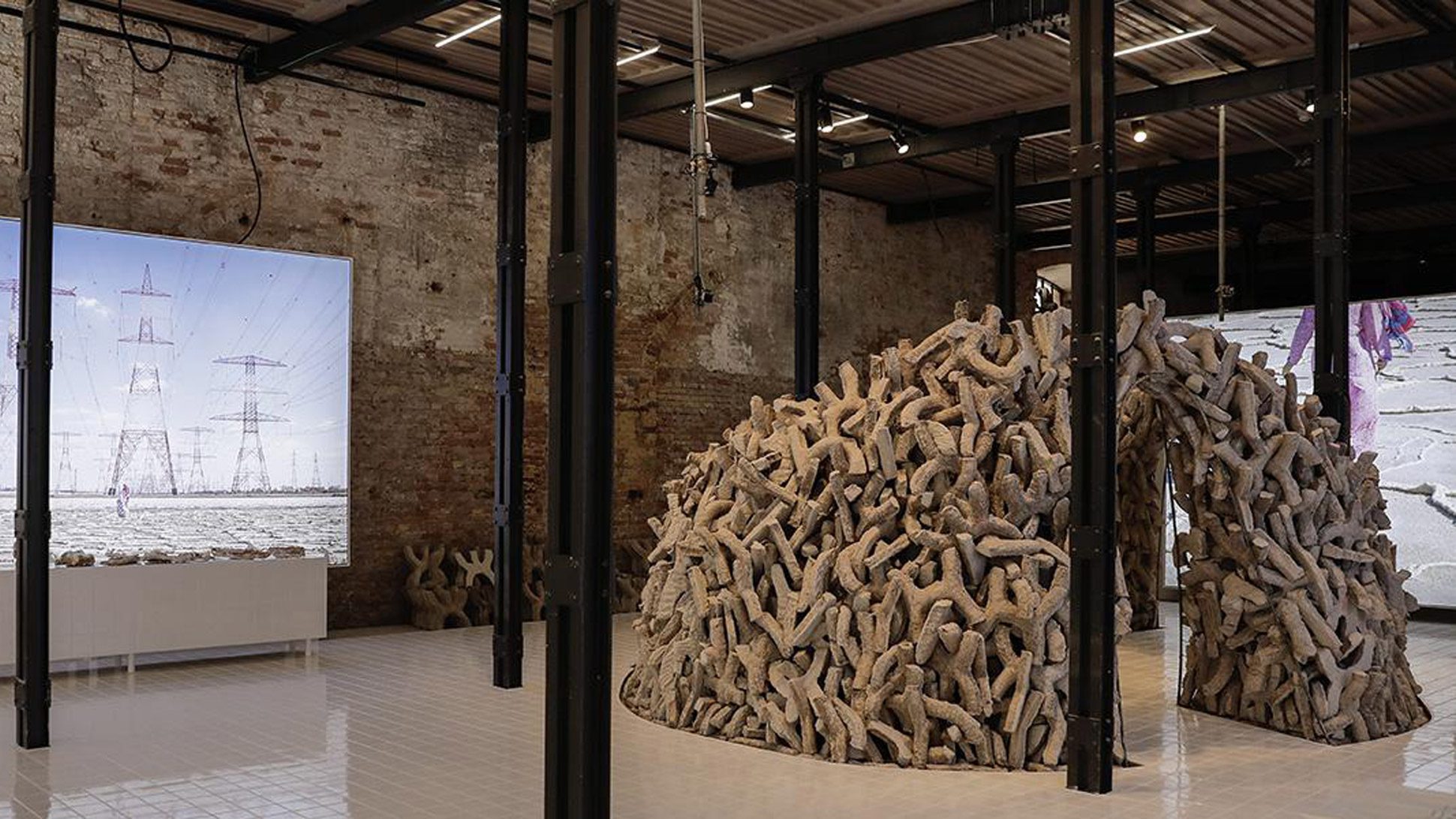
The UAE pavilion, which investigates using salt as an alternative to Portland cement, was named the winner of the Golden Lion today.
United Arab Emirates' Wetland pavilion won the Golden Lion for Best National Participation
Named Wetland, the pavilion won the award for its focus on the construction possibilities of waste materials.
"[It] encourages us to think about the relationship between waste and production at both the local and global scales, and opens to new construction possibilities between craft and high technology," said the judges.
Alongside the UAE's Wetland pavilion, the contributions from Russia and the Philippines were awarded special mentions.
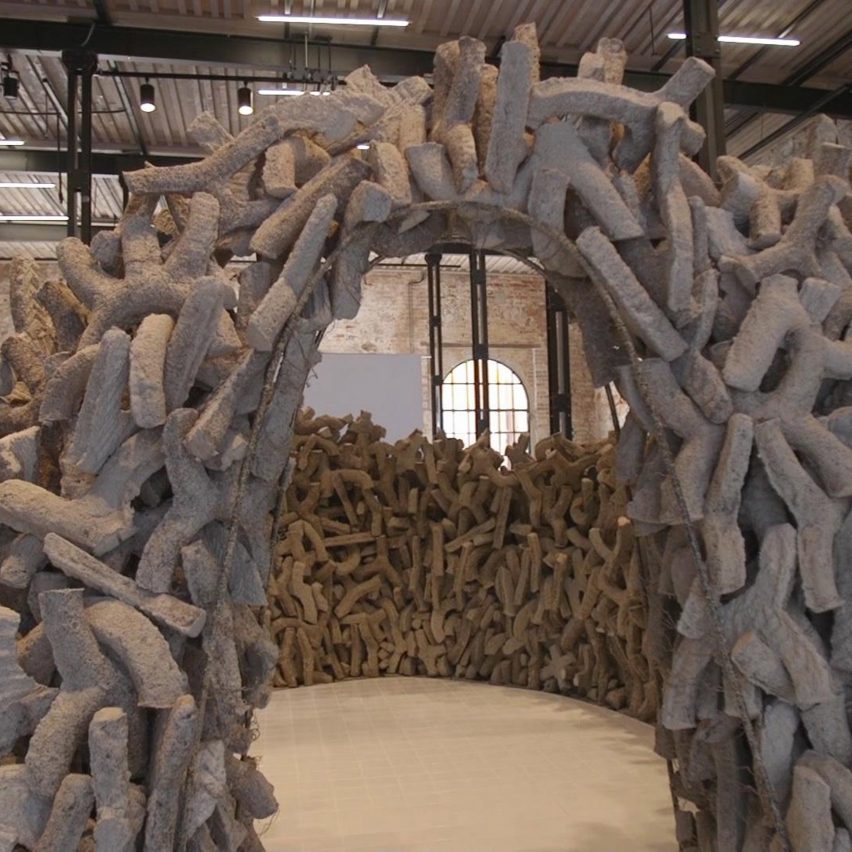
The UAE's pavilion investigates the use of salt as a construction material
German studio Raumlaborberlin also received a Golden Lion for its installation Instances of Urban Practice, which was deemed to be the best contribution to the biennale's main exhibition.
Curated by Hashim Sarkis, the exhibition was based on the theme How will we live together?
The Silver Lion for "a promising young participant" was awarded to Amsterdam-based Foundation for Achieving Seamless Territory (FAST) for its Watermelons, Sardines, Crabs, Sands, and Sediments: Border Ecologies and the Gaza Strip installation.
A special mention was given to Cave_bureau's The Anthropocene Museum: Exhibit 3.0 Obsidian Rain installation.
Japanese studio Kiyoaki Takeda Architects has completed a plant-covered house in Tokyo featuring vaulted slabs filled with soil for growing plants.
Kiyoaki Takeda, founder of Kiyoaki Takeda Architects, designed the Tsuruoka House after reading an article in the scientific journal Nature explaining that the mass of human-made objects had now exceeded that of all living biomass.
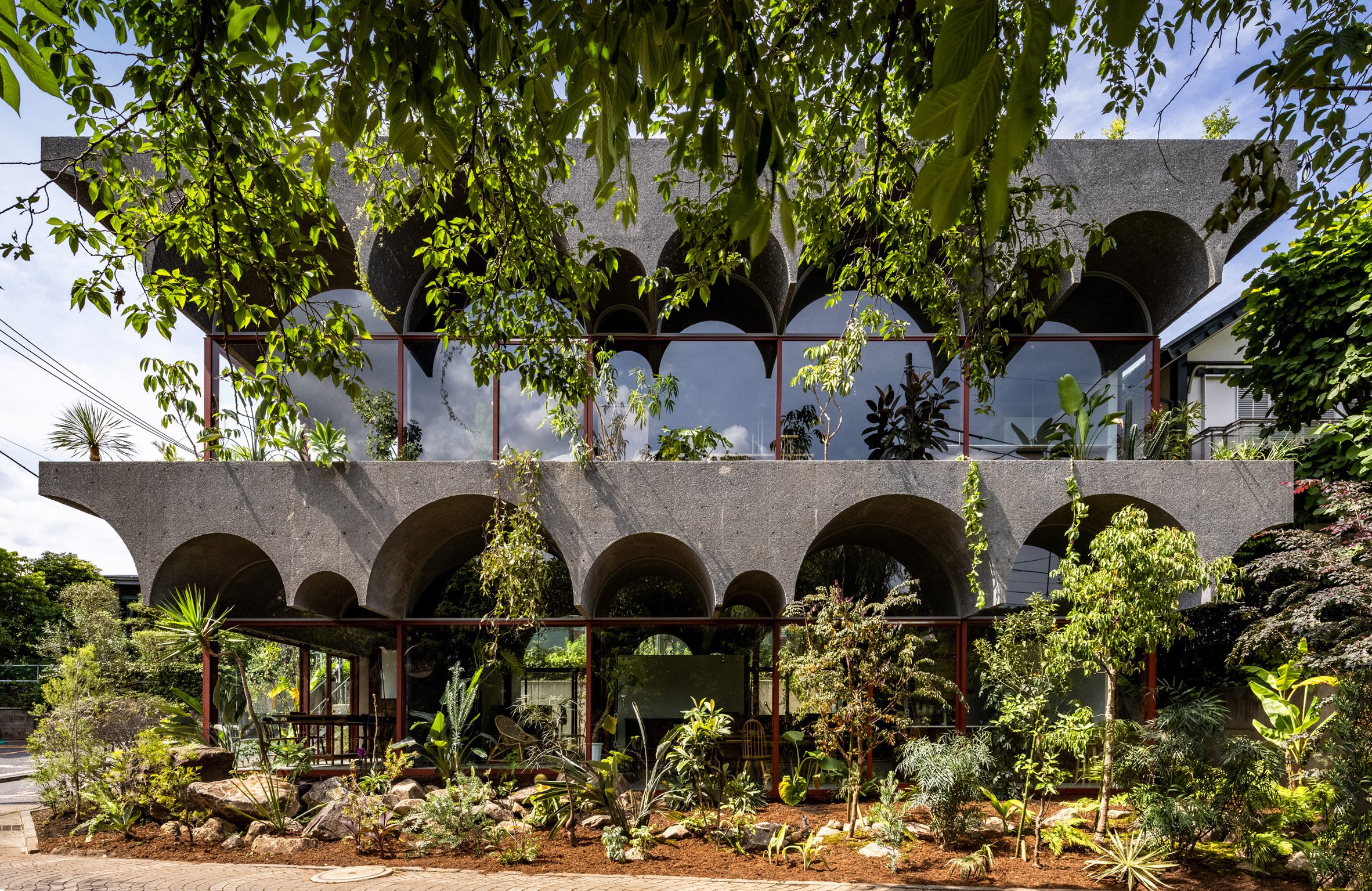
Kiyoaki Takeda Architects' Tsuruoka House was designed to include many plants
Takeda wanted to develop an architectural response to this alarming statistic and chose to design a house incorporating gardens across multiple layers that could support both plants and wildlife.
"Tsuruoka House is an architecture that attempts to hold not only people but also other life forms," Takeda explained.
"By opening the garden to other available life forms, providing them with a place to inhabit, and co-creating the community, the 'garden' becomes an 'environment'."
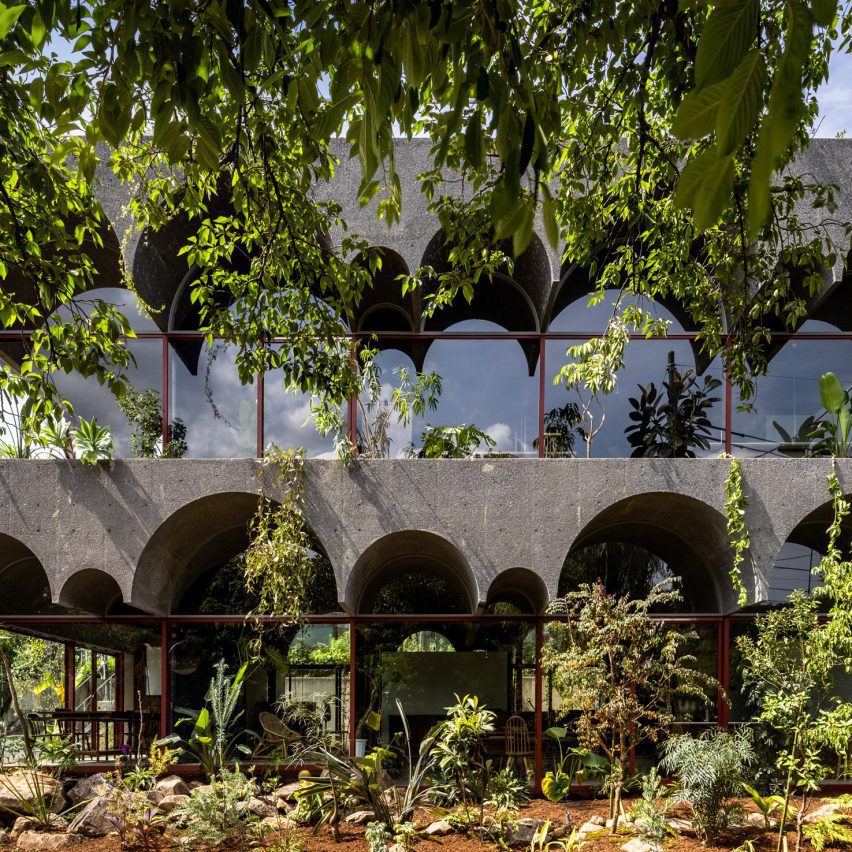
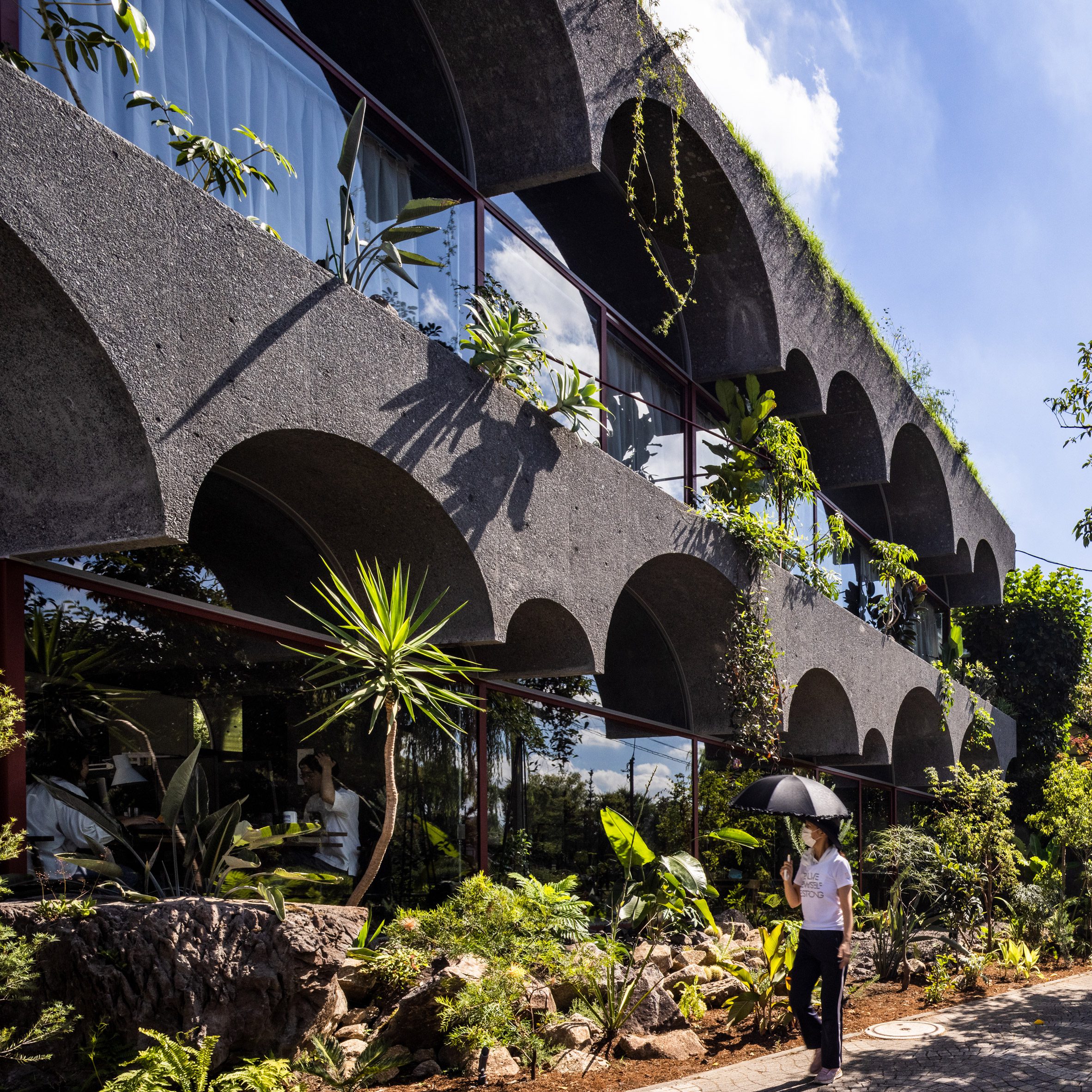
The house's vaulted-floor slabs contain soil for planting
Rather than merely creating a garden that surrounds the base of the building, Takeda chose to stack the gardens vertically to increase the amount of space available for plants.
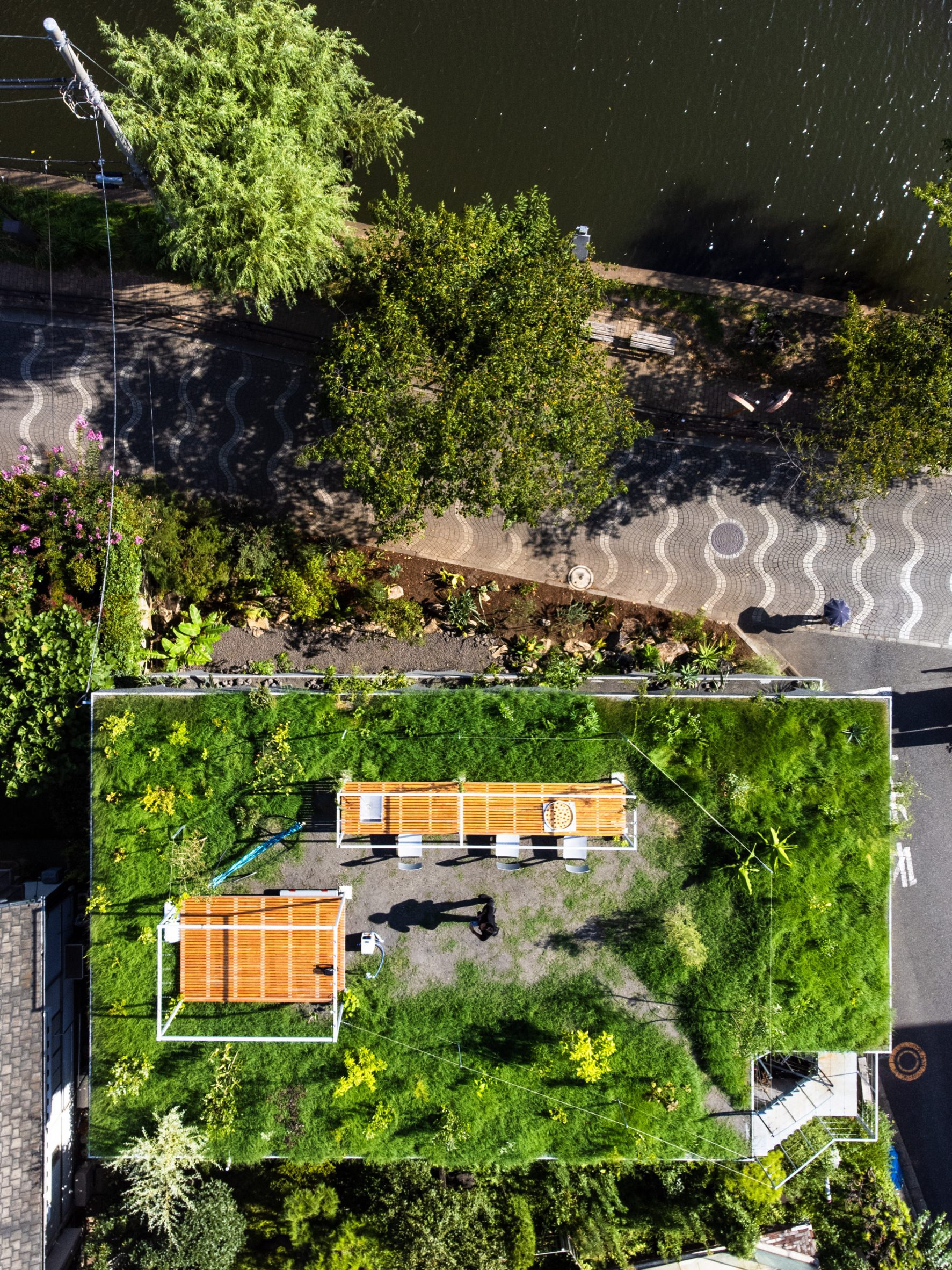
Unlike typical green roofs, which feature a thin layer of soil suitable only for growing grasses, sedum or mosses, Tsuruoka House's vaulted slabs are filled with soil that can support plants and trees with deeper roots.
The roof has deep soil for larger plants
"The thickness of the soil was plotted as deep as possible so that the layered garden would be a small forest hosting a mixture of ground cover plants, shrubs and small trees," the architect added.
"This approach goes against modern rooftop greening, which pursues thinner soil."
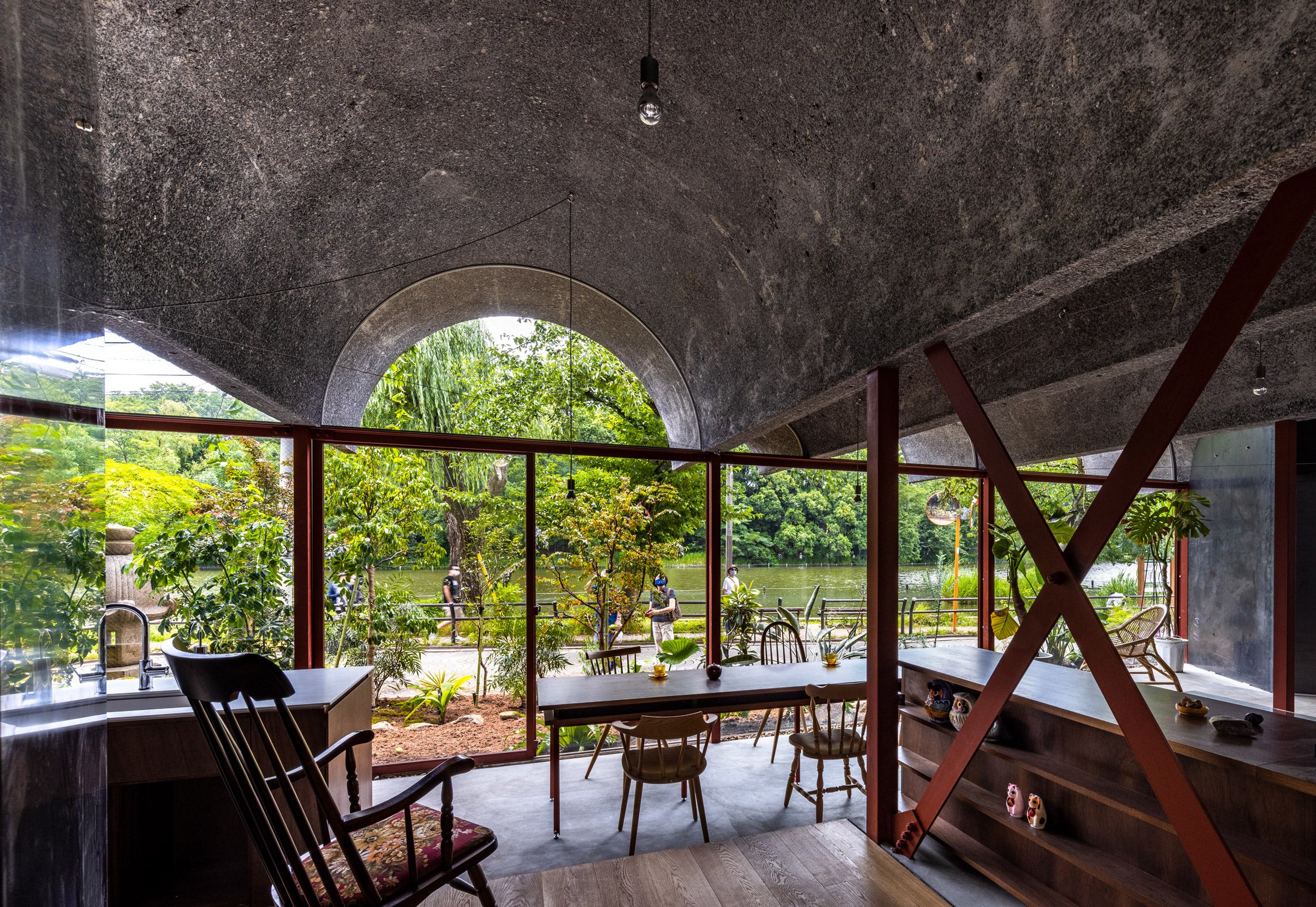
Rooms inside the house have vaulted ceilings
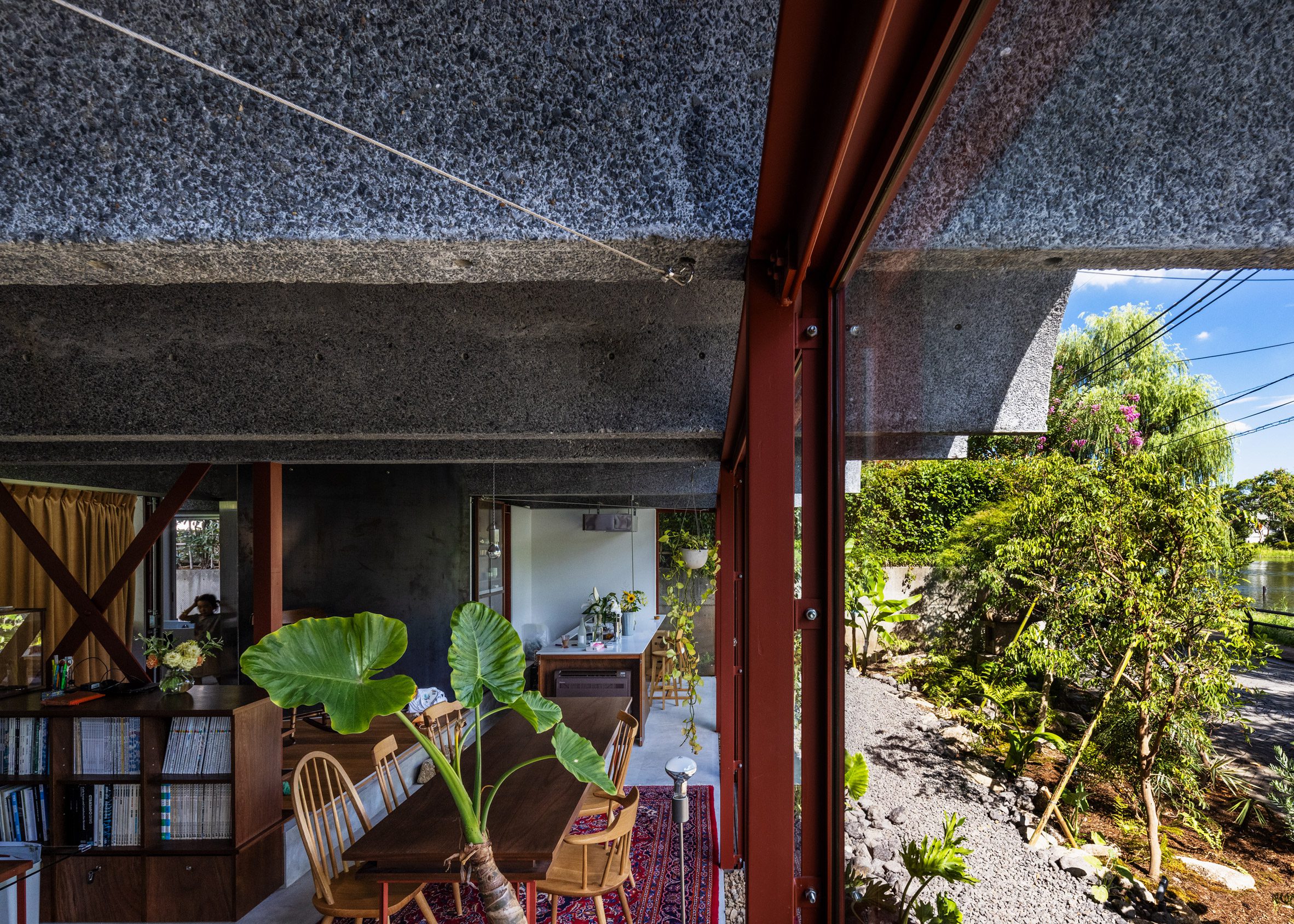
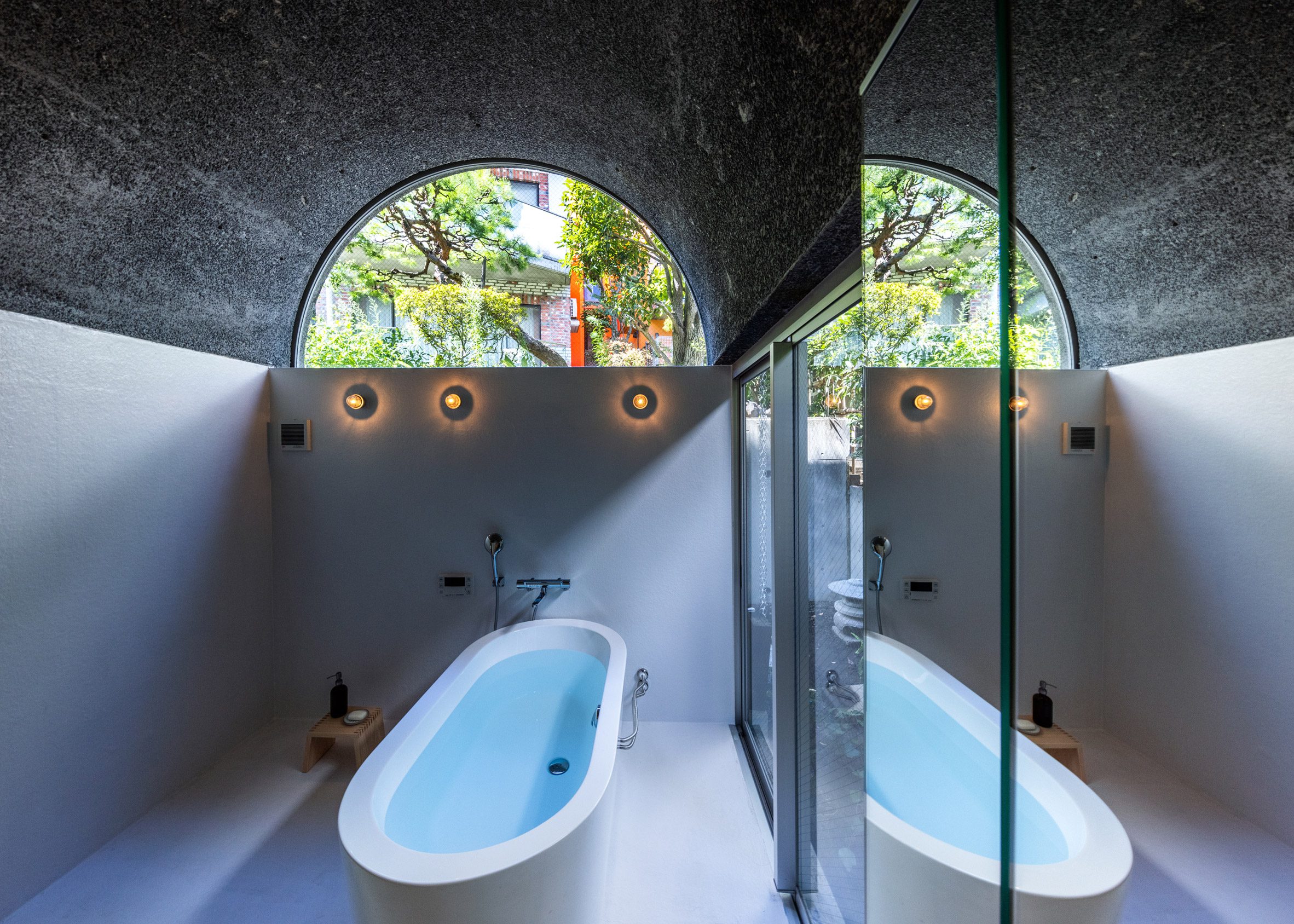
The slabs for the building's first floor and roof feature vaulted profiles that contain soil within their hollow cores.
The shape of the vaults allows rainwater to permeate naturally to the lower sections where it then drains away through channels integrated into the main structure.
Concrete and steel are visible throughout the home
A robust construction was required to manage the weight of the compost, the growing plants and the rain that can soak the soil and increase its density.
The architects responded to the challenges by incorporating overflow pipes that come into effect during heavy rain. The soil is also layered so the dense upper layer retains most of the moisture needed by the plants, while the more permeable lower level facilitates drainage.
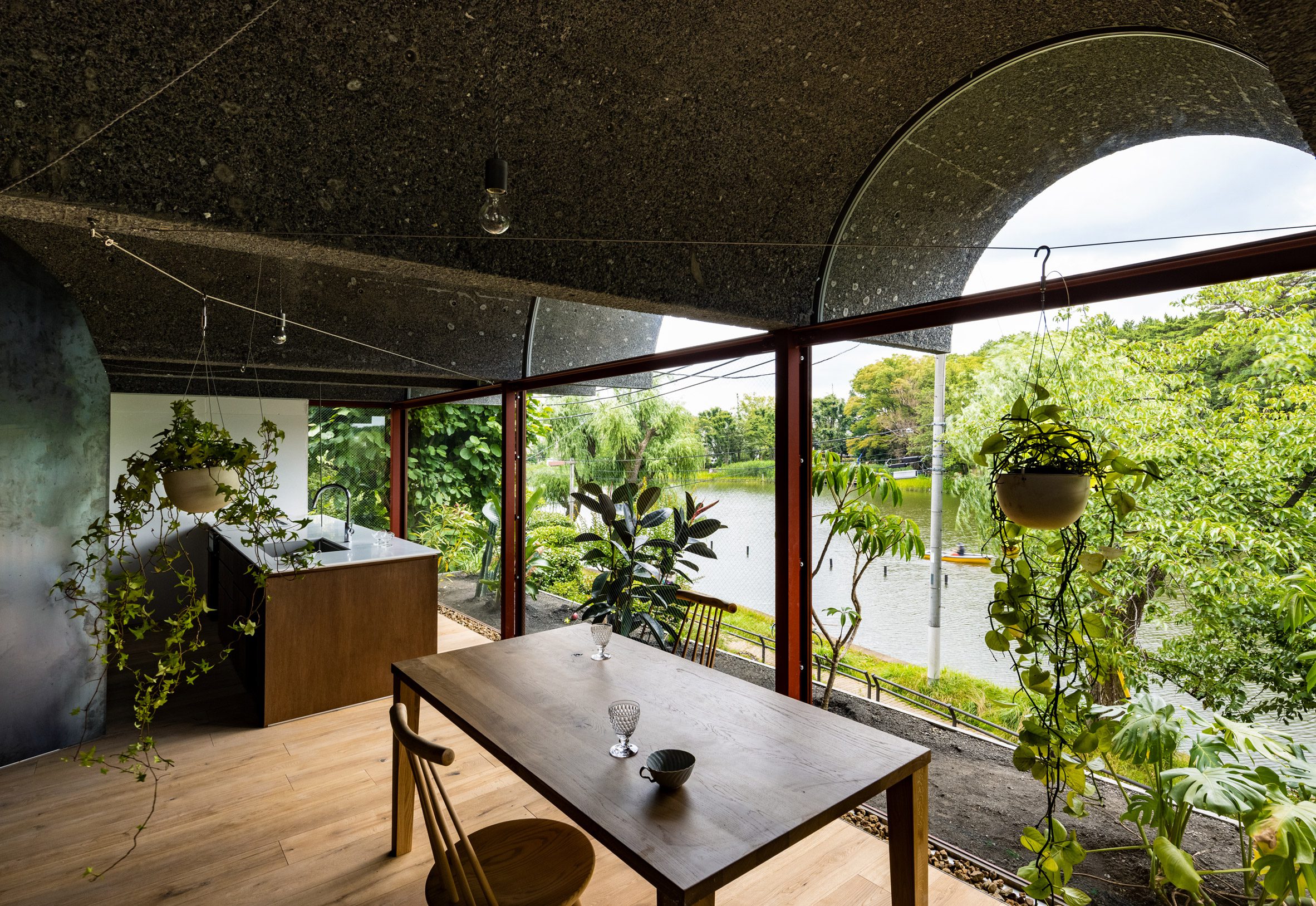
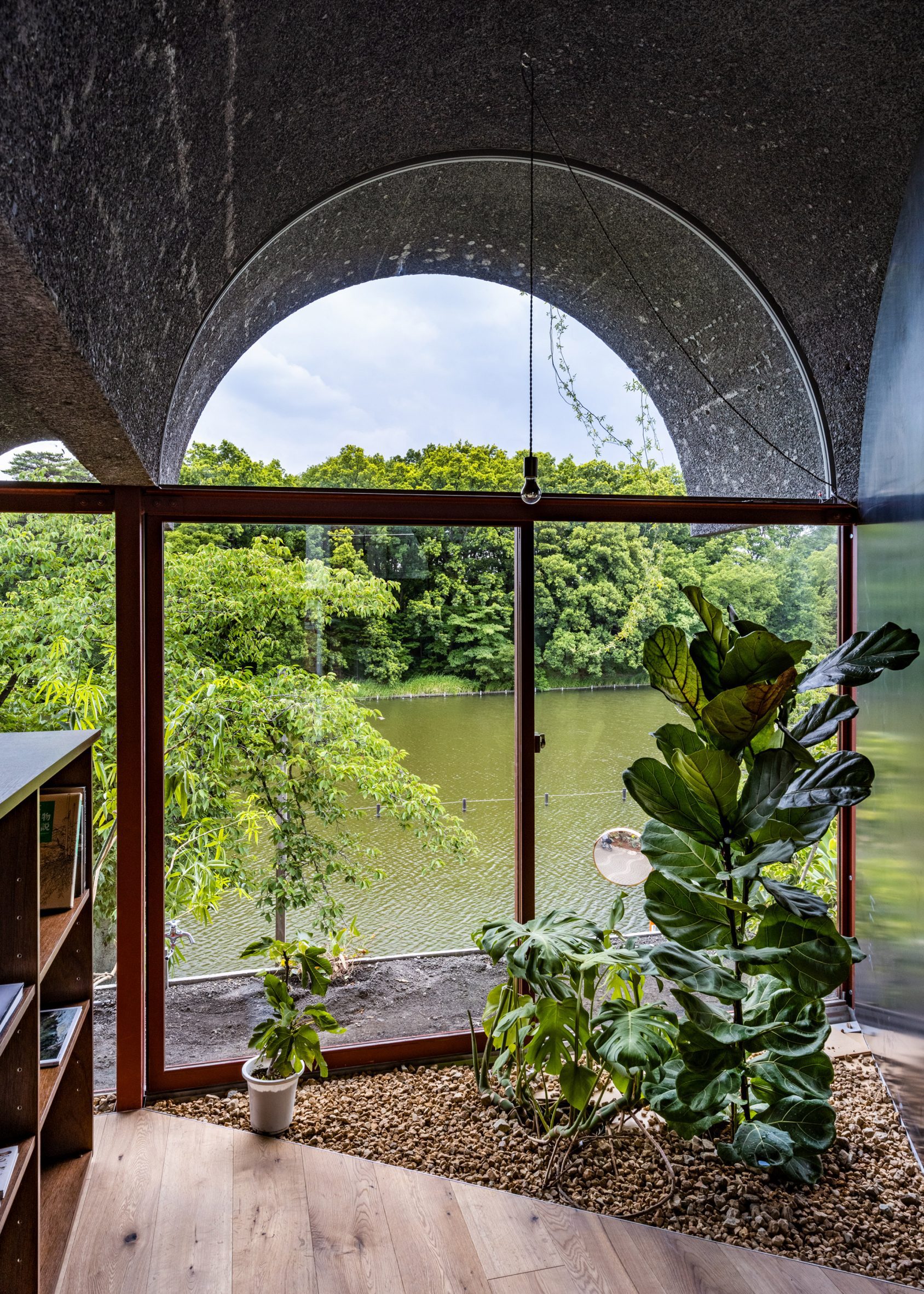
The living spaces have large windows that overlook a river
The thick layer of soil provides other benefits, including protection from the heat in summer and the ability to store and gradually release heat from the underfloor heating in winter.
Inside the living areas, the irregular form of the vaulted ceilings adds visual interest to the spaces as it changes from a maximum height of 3.5 metres to just two metres in some places.
At its lowest points, the ceiling can be touched by reaching up.
In these places, the architect incorporated bolts and other fixings for suspending hammocks, pendant lights or planters.
Angular planters are integrated into the floors
While the majority of the vegetation is located on the roof and in planted areas encircling the first and ground floors, there are also angular planters integrated into the floors of living spaces on both levels.
The large roof garden contains a pergola and an open-air kitchen overlooking the adjacent river and surrounding neighbourhood.
The bathroom occupies another vaulted space
Once matured, the plants will envelop the house and shield the interiors from view, forming a green barrier that will also help to regulate the internal temperature and improve air quality around the building.
"Over time, the plants will grow and birds and insects will introduce unplanned species," Takeda claimed.
"Eventually, a small forest could appear. Then, after decades, existing life forms will grow and hide the building entirely, and ultimately their bio-mass must surpass the mass of the human-made architecture."
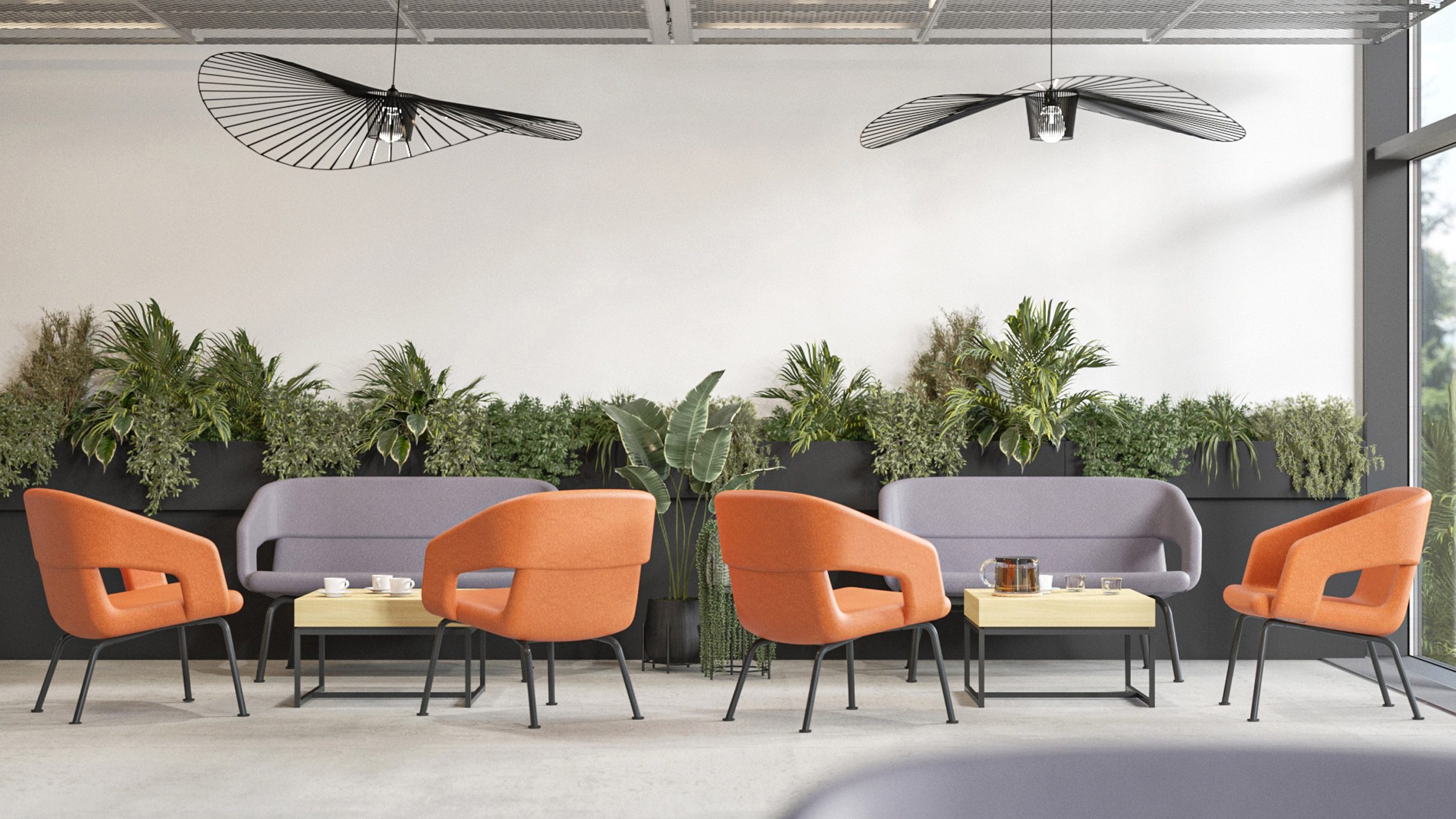
Dezeen Showroom:Narbutas has expanded its collection of Twist&Sit seating by Christina Strand and Niels Hvass, adding soft lounge chairs and sofas ideal for contemporary office spaces.
The upholstered seating range, dubbed Twist&Sit Soft, retains the design features of the existing collection but gives them a more relaxed feeling conducive to collaborative meeting spaces, rest zones and other informal workspaces.
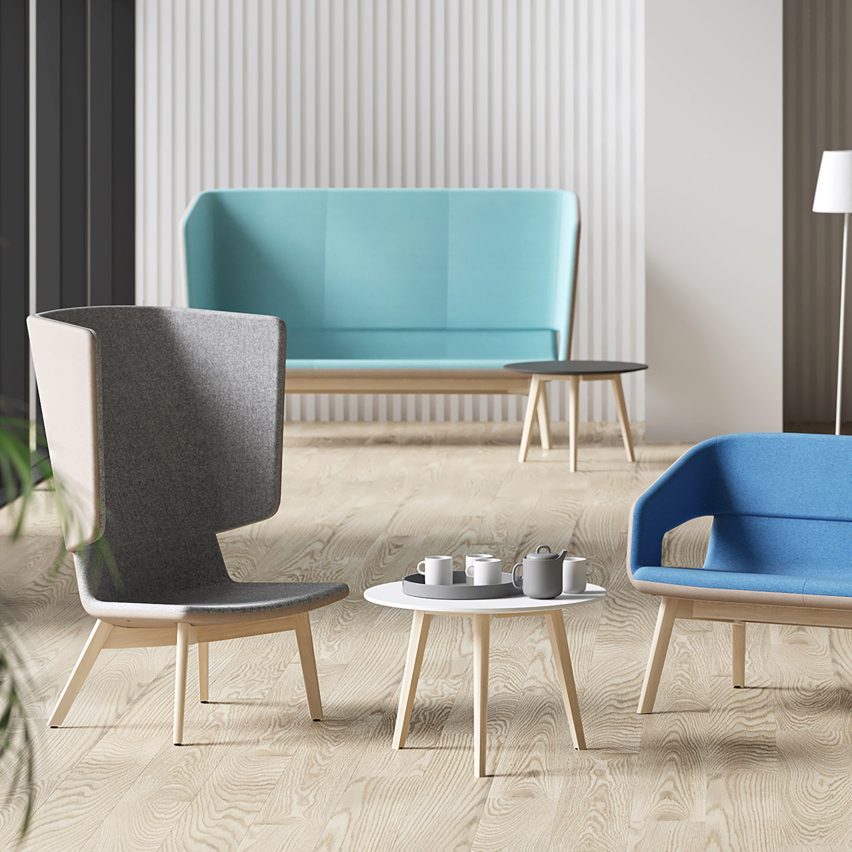
The Twist&Sit Soft collection features seating with high and low backs
Twist&Sit Soft seating comes in sizes ranging from lounge chairs to two- and three-seater sofas, with the option of either high or low backs.
The low-back seating is ideal for reception areas, cafes or any setting where collaboration is encouraged, while the high-back versions create more private spaces for those looking to separate themselves from distraction.
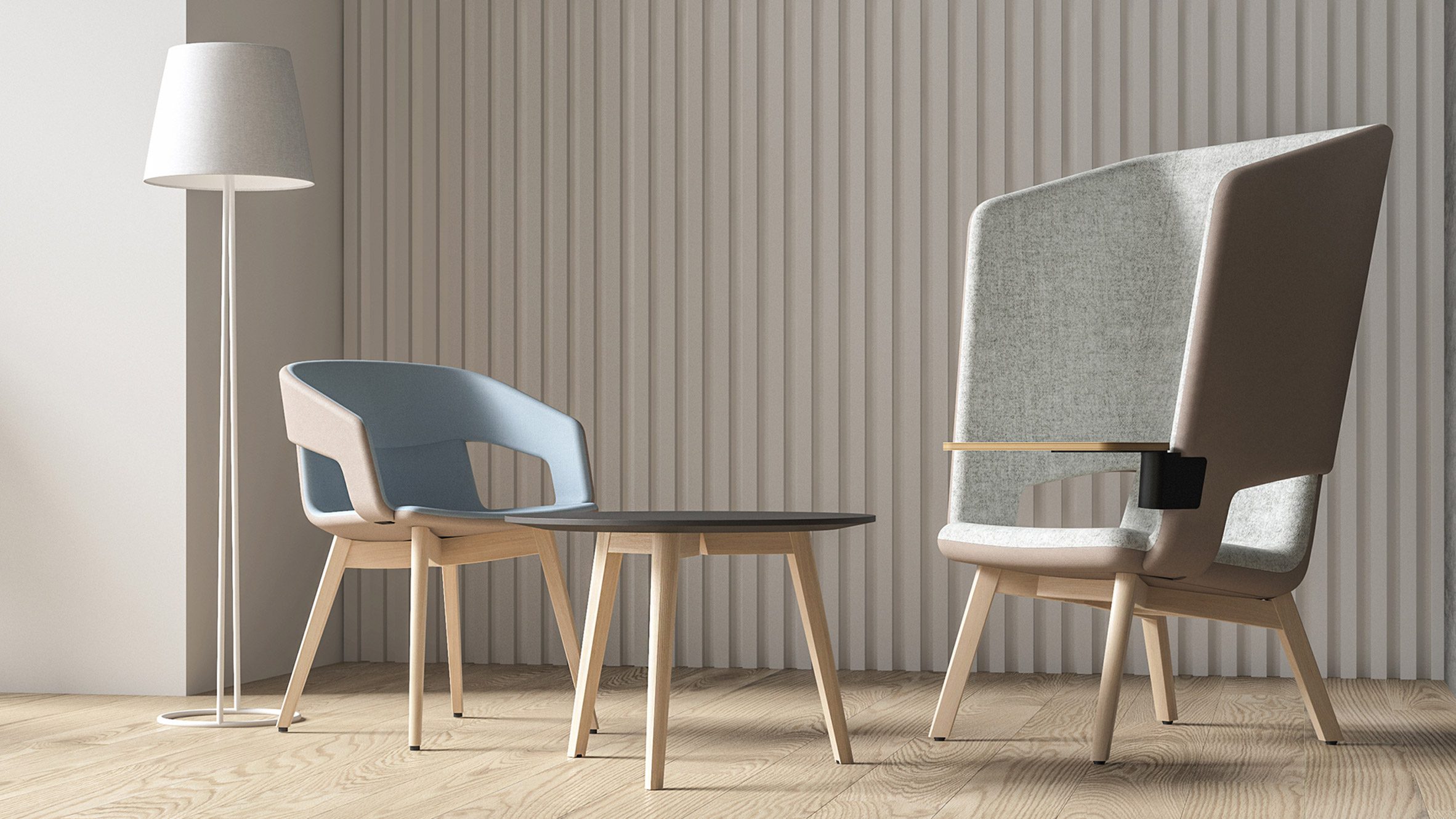
The seating is ideal for office cafes, collaborative spaces and receptions
The high-back sofas and chairs can also be customised with a swivel table or decorative wooden knobs.
"Twist&Sit Soft invites you to stop, sit down and relax," said Strand + Hvass.
"When creating the system, we wanted to reflect the hygge, cosy, warm and homey atmosphere in the office," the design studio added. "A wide variety of colours, low-back and high-back models, and additional practical accessories make you feel welcome."
About Dezeen Showroom:Dezeen Showroom offers an affordable space for brands to launch new products and showcase their designers and projects to Dezeen's huge global audience. For more details email showroom@dezeen.com.
Dezeen Showroom is an example of partnership content on Dezeen. Find out more about partnership content here.
Japanese architect Kengo Kuma has designed significant projects around the world including the Japan National Stadium and V&A Dundee. Editor Philip Jodidio picks ten of the architect's key projects from a new book dedicated to his work.
Using 500 illustrations, including photographs, plans and sketches, Kuma Complete Works 1988-Today covers the architect's career from early designs including the Stone Museum to recent projects like Sydney's The Exchange.
According to architectural historian Jodidio, it was Kuma's varied body of work that made him a suitable subject for the book, which is part of publisher Taschen's XXL series.
"I have found that his approach, often based on sustainable materials with unexpected and innovative designs, which nonetheless are related to Japanese tradition made him a good subject," Jodidio told Dezeen.
"I have written the Taschen monographs on Tadao Ando and Shigeru Ban as well – for these big books, it is also necessary for an architect to have a substantial, interesting body of work and that is the case of Kuma."
Jodidio believes that Kuma's ideas about architecture set him aside from other well-known Japanese architects.
"Kengo Kuma speaks of 'learning to live with less' as one theme of his work, this is somewhat against the prevailing culture, at least where significant international architects are concerned," he said.
The editor hopes that the book, which looks at 41 of Kuma's projects in detail, will give readers an increased understanding of his work, which is less appreciated than other buildings by Japanese architects, including Shigeru Ban and Tadao Ando.
"Kuma is not as celebrated as these other figures, perhaps because his style is more dependent on place and available materials," Jodidio said.
"What I hope the book will convey to readers is that Kengo Kuma is a major contemporary architect who may well be pointing the way to the future."
Below, Jodidio chooses ten of Kuma's most significant projects:
Photo is by Daici Ano
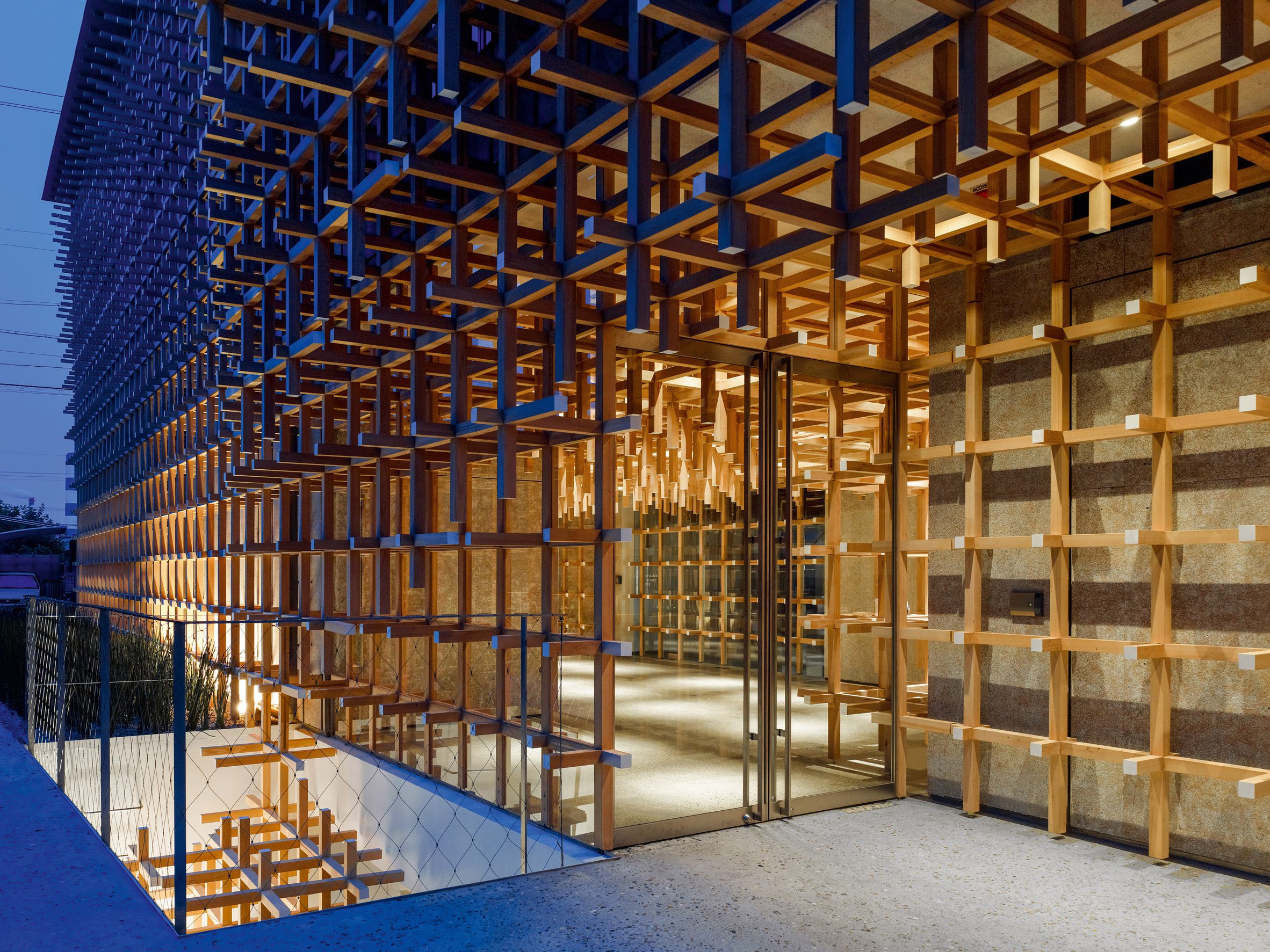
The GC Prostho Museum Research Center, Japan, 2008-10
A striking facade with a wooden grid clads the GC Prostho Museum Research Center in Kasugai, Japan. It was informed by the cidori – a traditional Japanese toy that is assembled out of wooden sticks.
At night, light escapes through the wooden slats, making the 10-metre-high building lantern-like. The grid continues inside the building, where it has been "carved out" to make room for exhibition spaces.
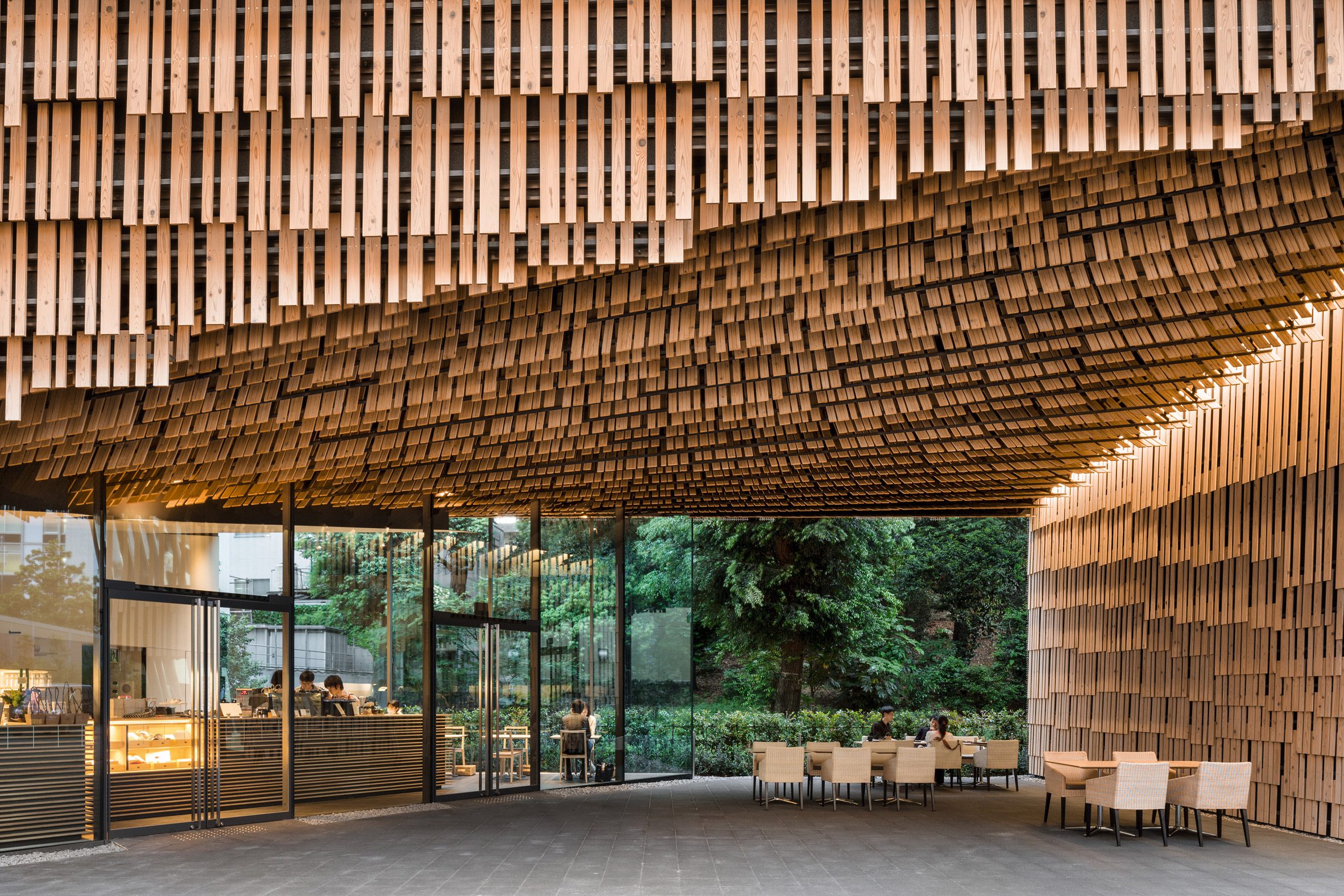
Wooden strips clad the facade of this building, which Kuma designed for the University of Tokyo's computing facility.
The layers, made from cedar wood, give the exterior an organic feel that contrasts with the high-tech subject matters studied here. "Scale-like panels of natural materials gently undulate to form a smooth and organic facade," the studio said.
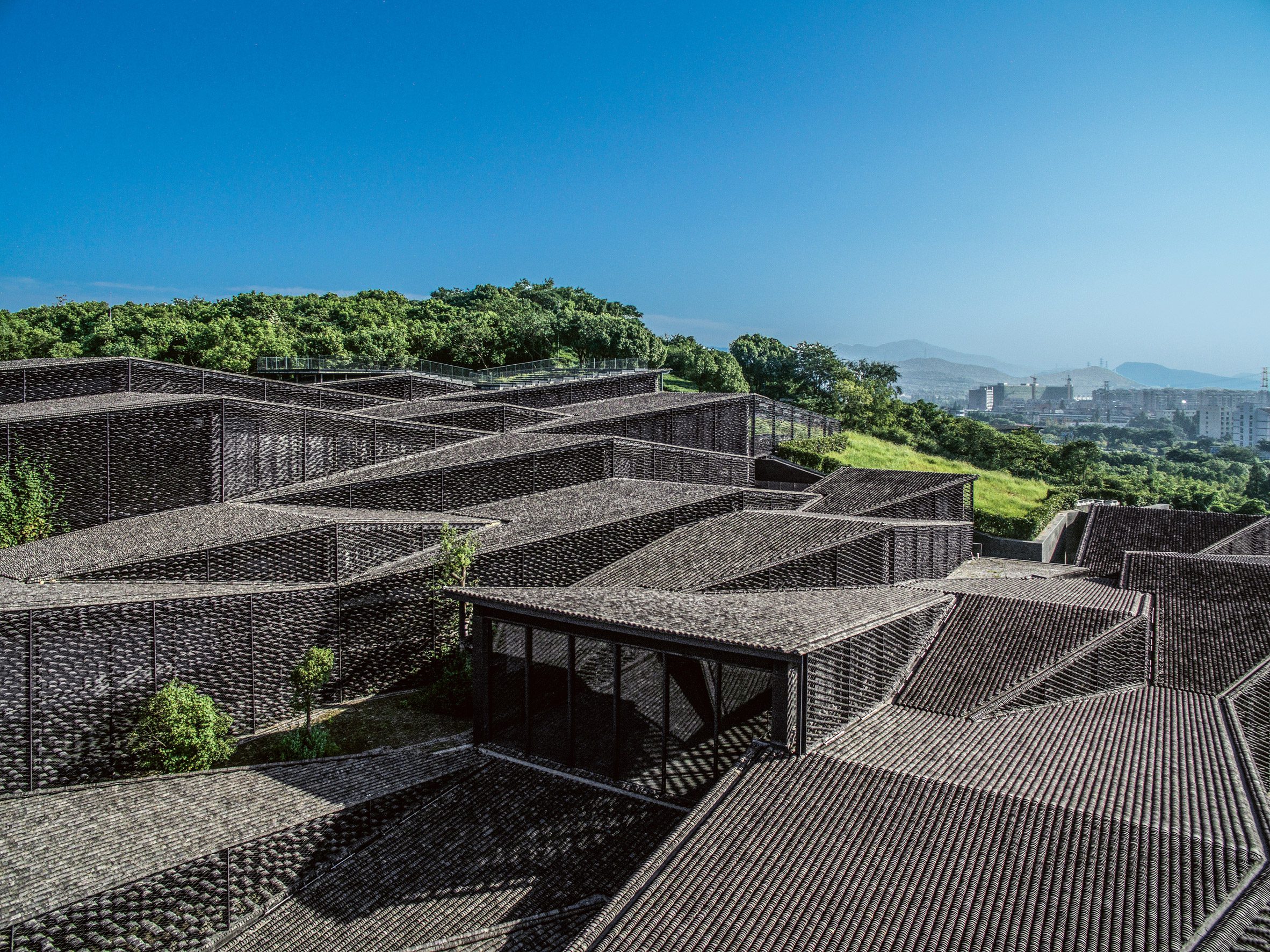
Kuma designed the new galleries at the China Academy of Arts as a "sprawling village". The sloped site, a former tea plantation, now holds the Folk Art Museum, which features many small roofs that create a zigzagging roofline.
These are covered in old ceiling tiles from local homes. Across the museum's glazed facade, stainless steel wire that holds extra roof tiles in a decorative pattern has been strung.
Photo is by Michel Denancé
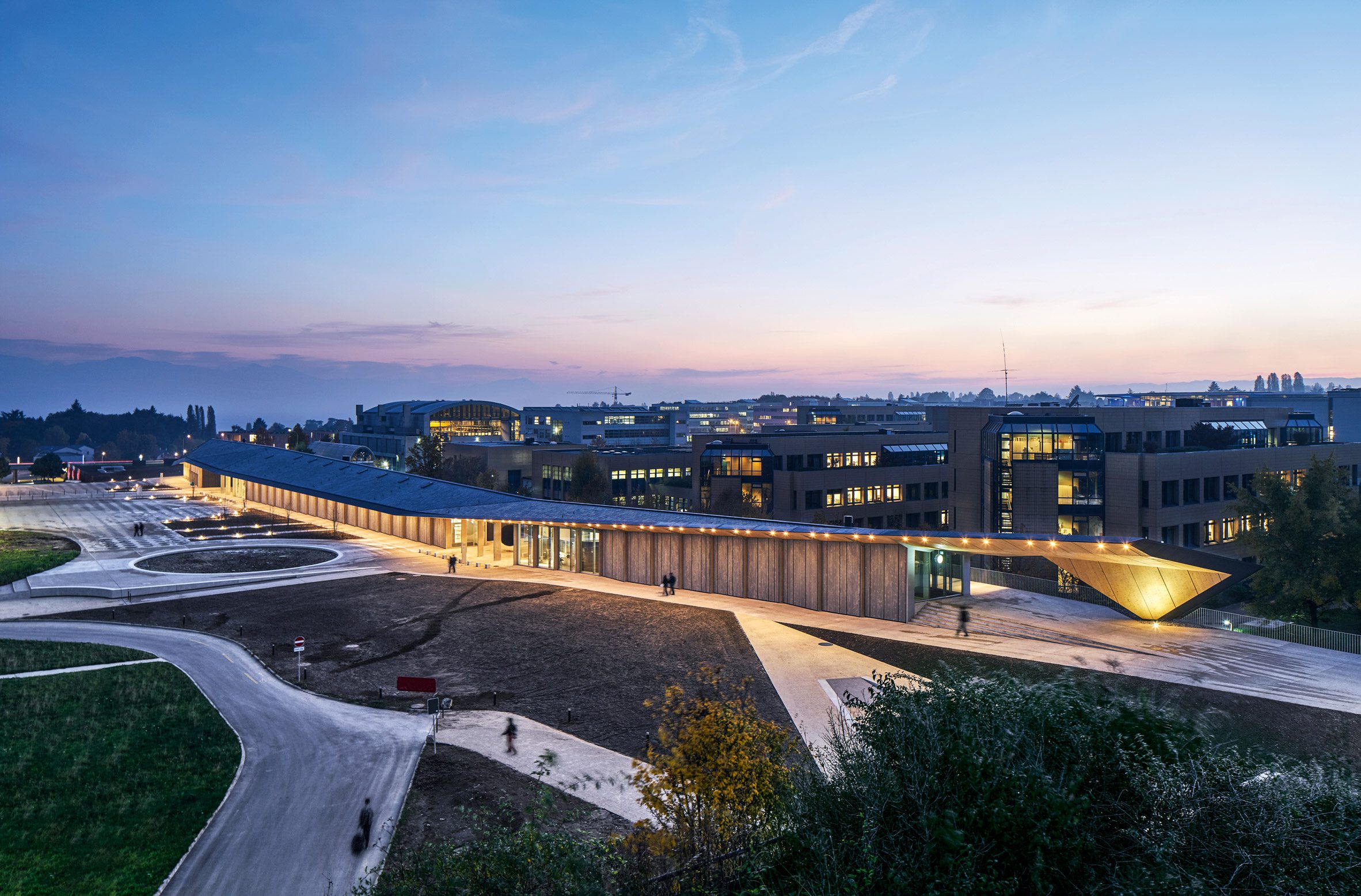
Under One Roof EPFL Artlab, Switzerland, 2013-2016
Made from wood, steel and stone, the Under One Roof building holds an art and science pavilion, a technology and information gallery, and the Montreux Jazz Cafe.
Designed for the Swiss Federal Polytechnic Institute Lausanne, the building consists of three boxes under an angled, 235-metre-long roof. It was made from woods commonly found in Switzerland, including larch.
Photo is by Masaki Hamada
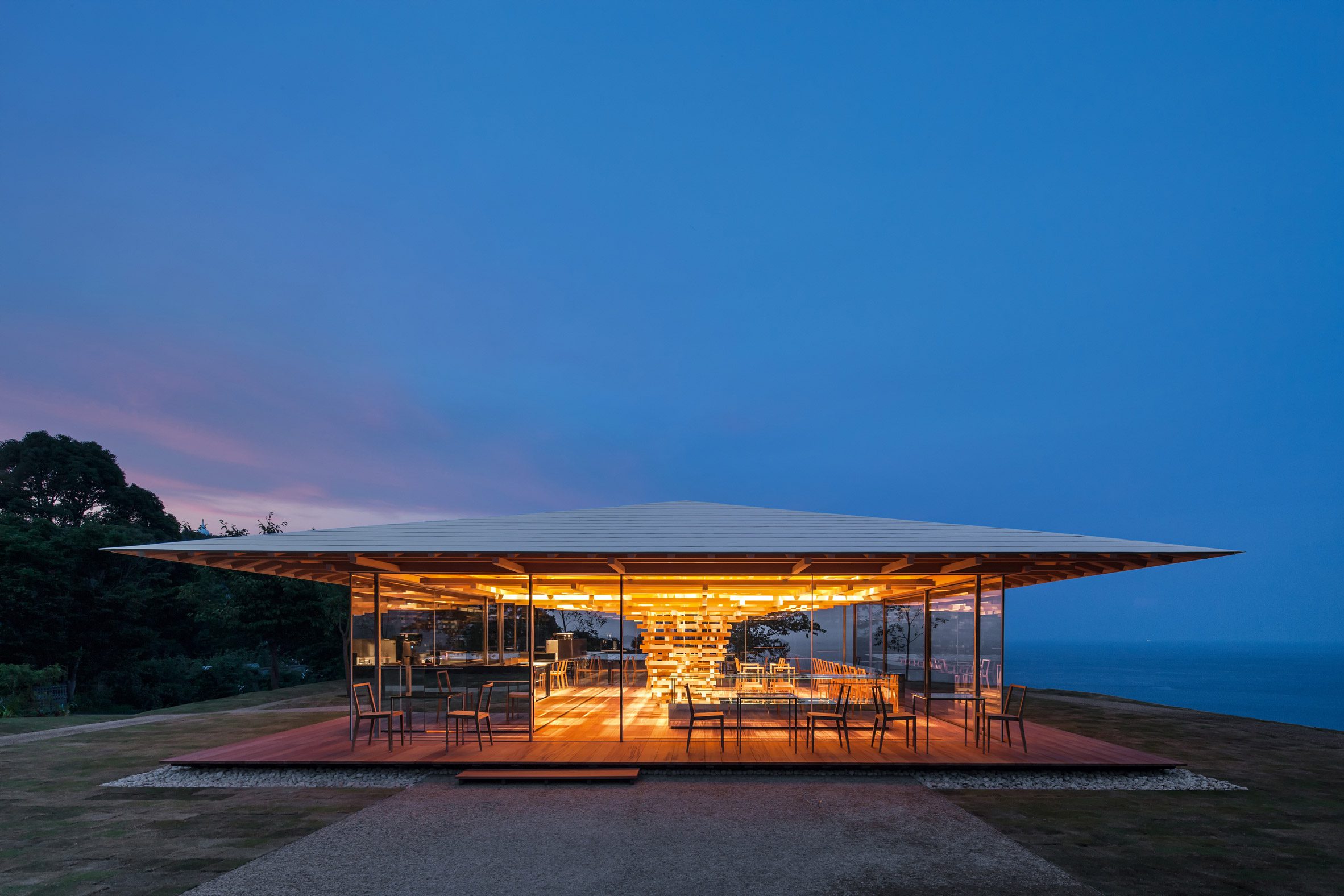
Coeda House, Japan, 2017
The Coeda House cafe is located on Japan's Izu Peninsula, close to the Pacific Ocean. Its tree-like shape was designed by stacking Alaskan cypress boards, creating a building without any peripheral columns.
The cafe was reinforced with carbon-fibre rods and features a grid ceiling and glass walls that open it up to the nearby ocean.
Photo is by Masaki Hamada
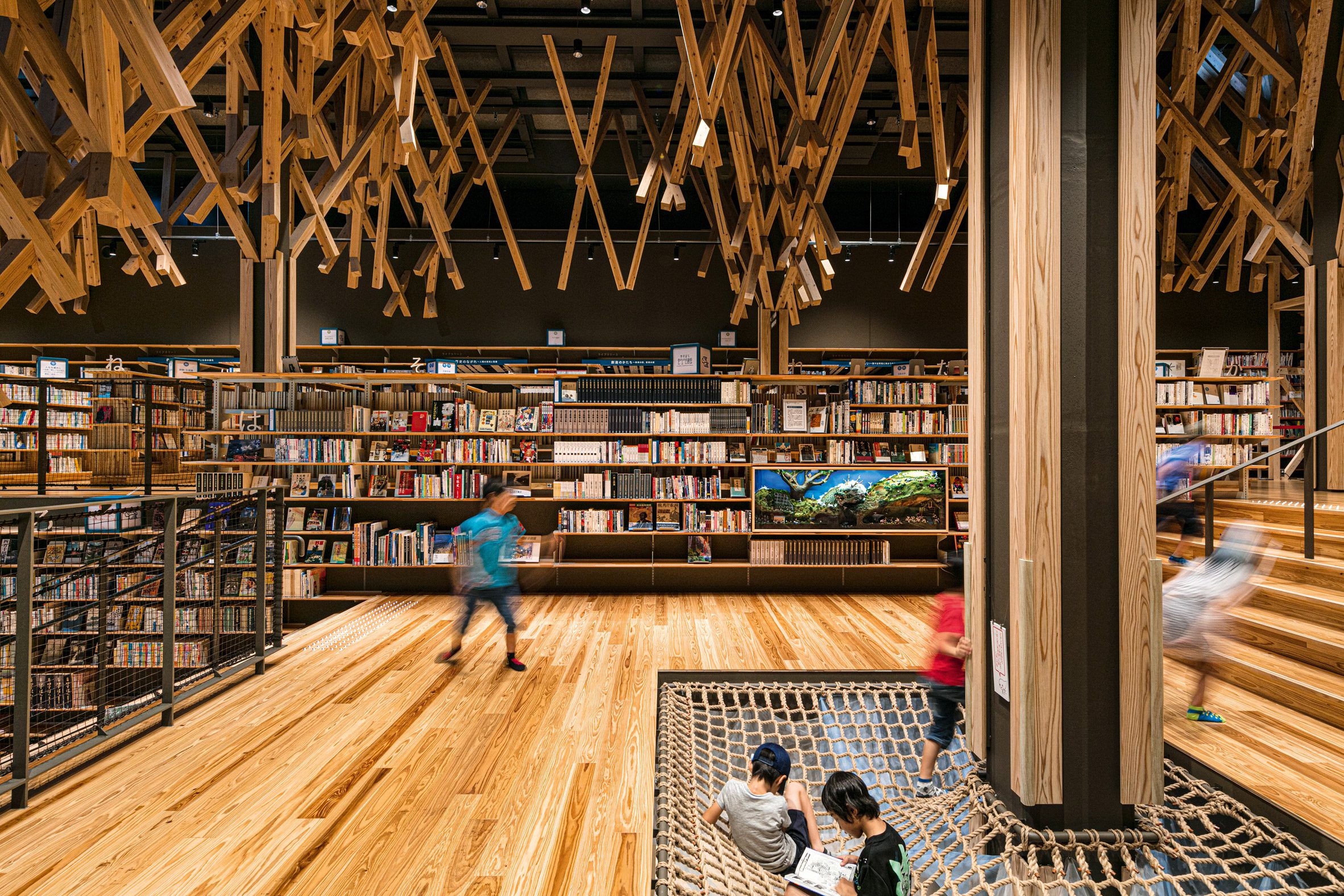
Yusuhara Community Library, Japan, 2018
This community library, made from locally sourced cedar and steel, has an undulating surface instead of a flat floor.
Wood was used liberally throughout the interior, where playful details such as a net-floor creates a space that is welcoming for visitors of every generation.
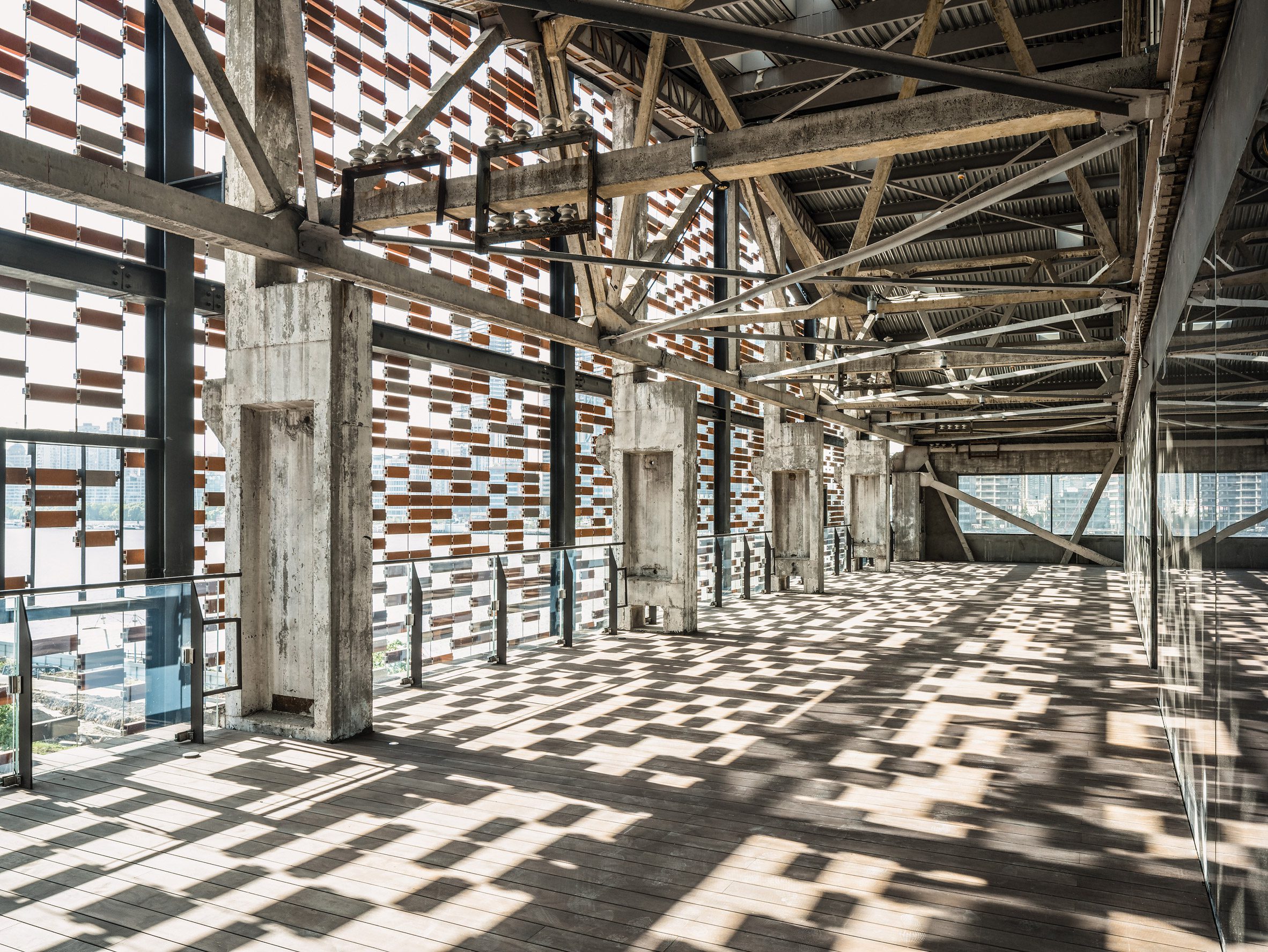
Shipyard 1862, China, 2018
This project in Shanghai, China, involved the renovation of a 1972 brick shipyard that had been used for shipbuilding.
It now holds a theatre and retail space. Stainless steel mesh has been strung to the exterior and decorated with bricks that create an ever-changing pattern of shadows inside the building.
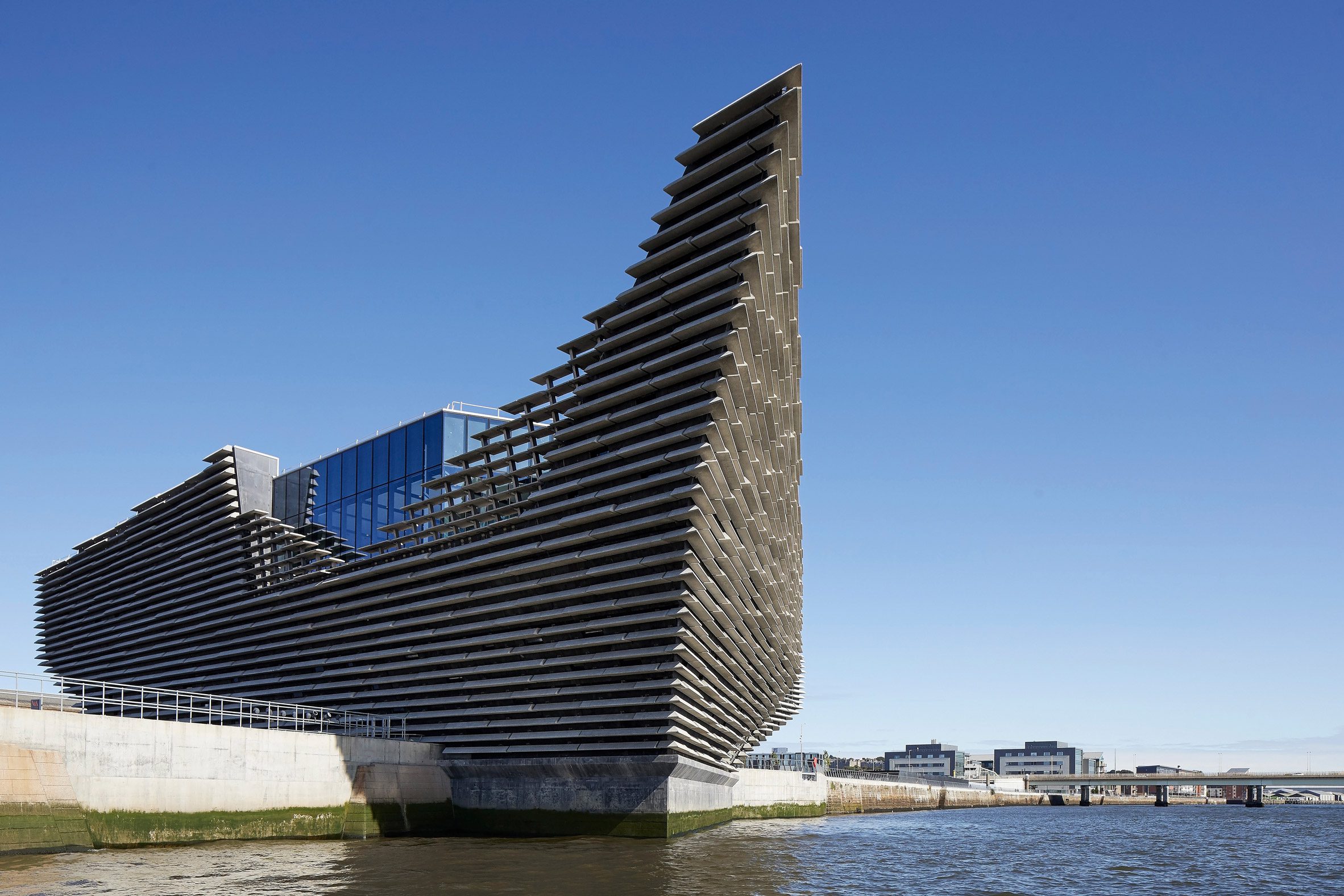
The VA& Dundee museum – an outpost of London's Victoria & Albert Museum – sits, cliff-like, close to the River Tay in Dundee, Scotland.
"The big idea for V&A Dundee was bringing together nature and architecture, to create a new living room for the city," Kuma said of the project.
Two angular volumes clad in horizontal concrete panels connect to form the museum, which houses permanent Scottish design galleries as well as temporary exhibition spaces.
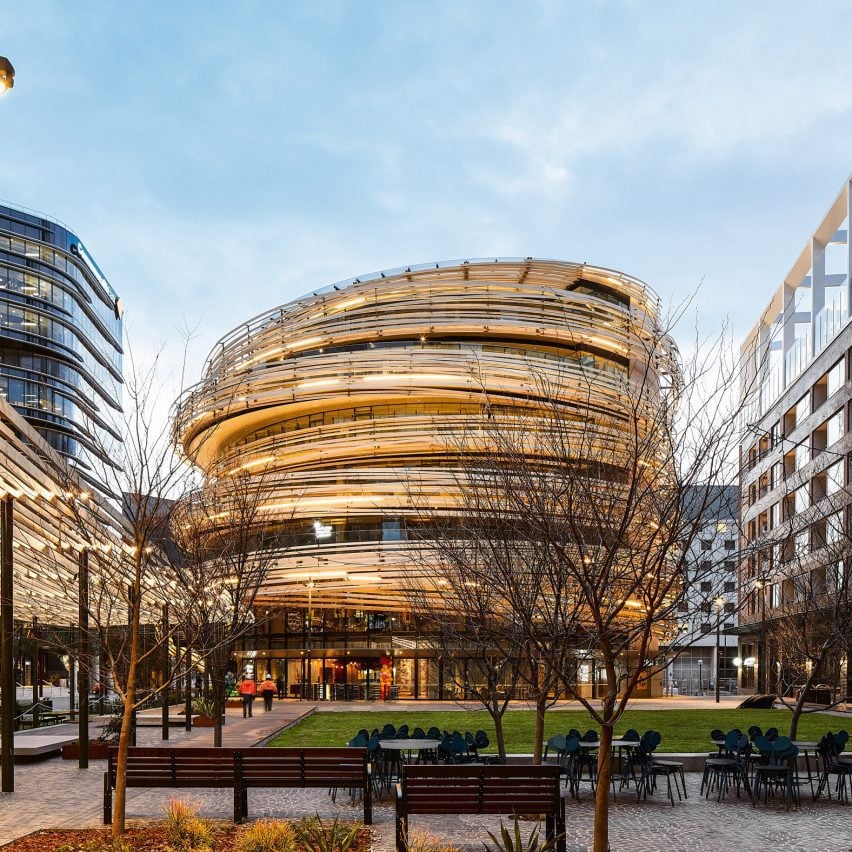
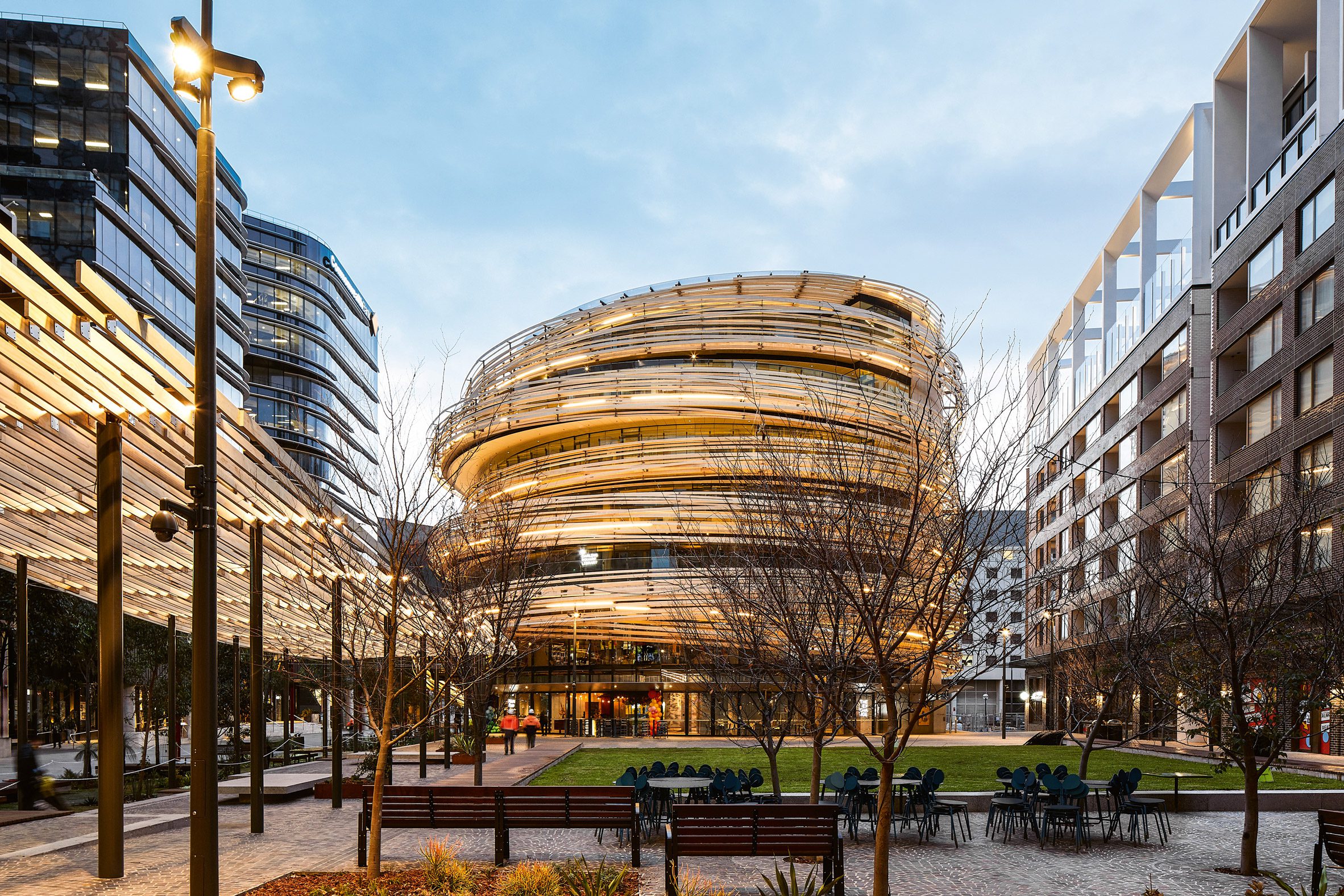
The Exchange in Sydney's East Darling Harbor area was deliberately given a "non-directional architectural form" so that it can be accessible and recognisable from all directions, the studio said.
The six-storey civic centre, which was Kuma's first completed building in Australia, has a fully glazed facade on the ground floor, while a timber screen wraps its exterior to create a nest-like form.
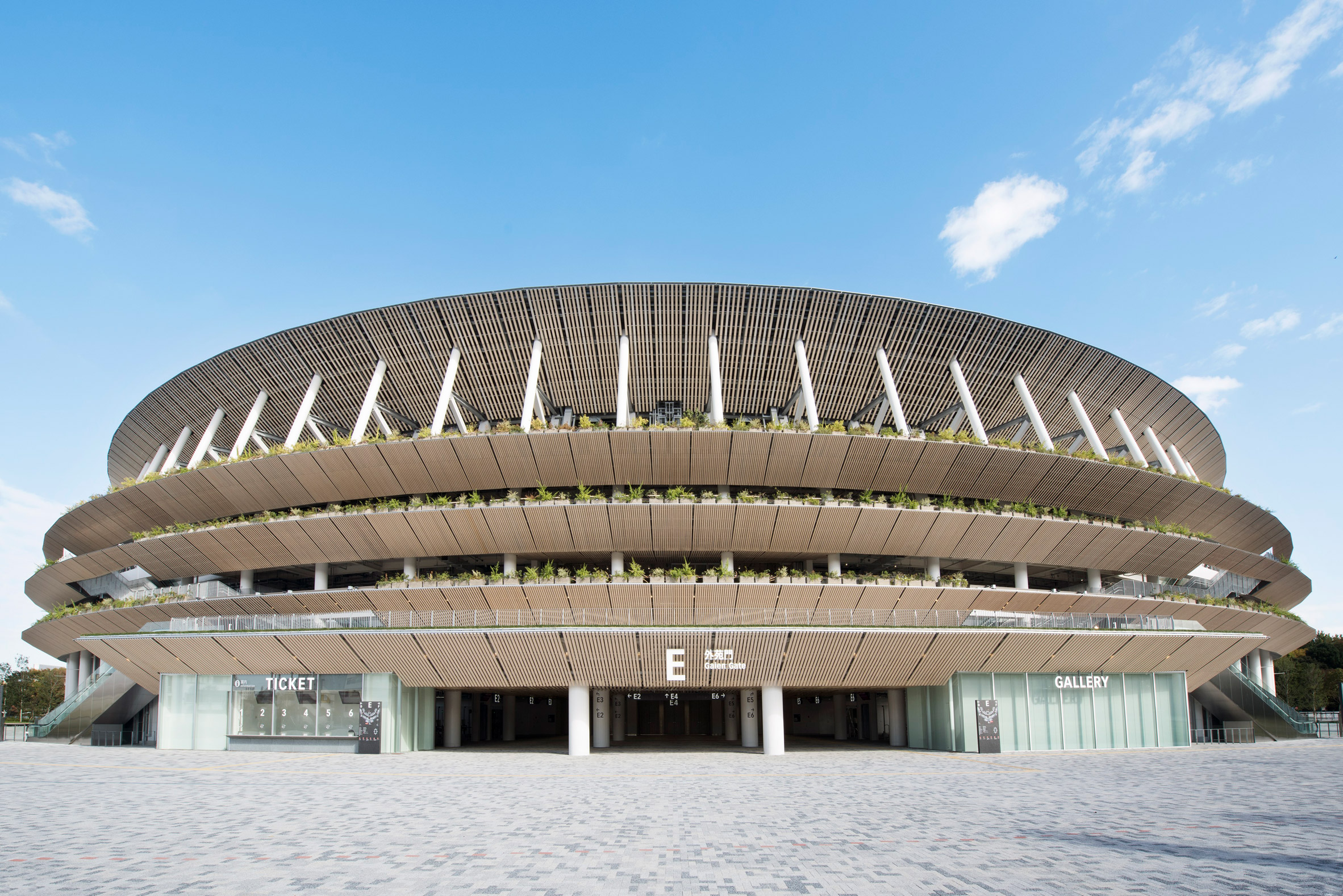
The centrepiece of the Tokyo 2020 Olympics, Kuma's Japan National Stadium seats 68,000 people and features cedar-panel-clad eaves designed to evoke traditional Japanese architecture.
Both the opening and closing ceremonies were held in the stadium, which is shaped like a large oval. Reinforced concrete and steel was used for the main structure, sheltered by a roof structure made of steel with laminated larch and cedar trusses.
Main image: Yusuhara Wooden Bridge Museum, photo by Takumi Ota Photography. All images are courtesy of Taschen.